WO2017168862A1 - Dispositif et procédé de traitement d'informations et procédé de fourniture d'informations - Google Patents
Dispositif et procédé de traitement d'informations et procédé de fourniture d'informations Download PDFInfo
- Publication number
- WO2017168862A1 WO2017168862A1 PCT/JP2016/087116 JP2016087116W WO2017168862A1 WO 2017168862 A1 WO2017168862 A1 WO 2017168862A1 JP 2016087116 W JP2016087116 W JP 2016087116W WO 2017168862 A1 WO2017168862 A1 WO 2017168862A1
- Authority
- WO
- WIPO (PCT)
- Prior art keywords
- learning process
- information processing
- learning
- hardware resource
- processing apparatus
- Prior art date
- Legal status (The legal status is an assumption and is not a legal conclusion. Google has not performed a legal analysis and makes no representation as to the accuracy of the status listed.)
- Ceased
Links
Images




Classifications
-
- G—PHYSICS
- G06—COMPUTING OR CALCULATING; COUNTING
- G06N—COMPUTING ARRANGEMENTS BASED ON SPECIFIC COMPUTATIONAL MODELS
- G06N3/00—Computing arrangements based on biological models
- G06N3/02—Neural networks
- G06N3/08—Learning methods
-
- G—PHYSICS
- G06—COMPUTING OR CALCULATING; COUNTING
- G06F—ELECTRIC DIGITAL DATA PROCESSING
- G06F9/00—Arrangements for program control, e.g. control units
- G06F9/06—Arrangements for program control, e.g. control units using stored programs, i.e. using an internal store of processing equipment to receive or retain programs
- G06F9/46—Multiprogramming arrangements
- G06F9/50—Allocation of resources, e.g. of the central processing unit [CPU]
- G06F9/5005—Allocation of resources, e.g. of the central processing unit [CPU] to service a request
- G06F9/5011—Allocation of resources, e.g. of the central processing unit [CPU] to service a request the resources being hardware resources other than CPUs, Servers and Terminals
-
- G—PHYSICS
- G06—COMPUTING OR CALCULATING; COUNTING
- G06F—ELECTRIC DIGITAL DATA PROCESSING
- G06F9/00—Arrangements for program control, e.g. control units
- G06F9/06—Arrangements for program control, e.g. control units using stored programs, i.e. using an internal store of processing equipment to receive or retain programs
- G06F9/46—Multiprogramming arrangements
- G06F9/50—Allocation of resources, e.g. of the central processing unit [CPU]
- G06F9/5005—Allocation of resources, e.g. of the central processing unit [CPU] to service a request
- G06F9/5027—Allocation of resources, e.g. of the central processing unit [CPU] to service a request the resource being a machine, e.g. CPUs, Servers, Terminals
-
- G—PHYSICS
- G06—COMPUTING OR CALCULATING; COUNTING
- G06F—ELECTRIC DIGITAL DATA PROCESSING
- G06F9/00—Arrangements for program control, e.g. control units
- G06F9/06—Arrangements for program control, e.g. control units using stored programs, i.e. using an internal store of processing equipment to receive or retain programs
- G06F9/46—Multiprogramming arrangements
- G06F9/50—Allocation of resources, e.g. of the central processing unit [CPU]
- G06F9/5061—Partitioning or combining of resources
- G06F9/5072—Grid computing
-
- G—PHYSICS
- G06—COMPUTING OR CALCULATING; COUNTING
- G06F—ELECTRIC DIGITAL DATA PROCESSING
- G06F9/00—Arrangements for program control, e.g. control units
- G06F9/06—Arrangements for program control, e.g. control units using stored programs, i.e. using an internal store of processing equipment to receive or retain programs
- G06F9/46—Multiprogramming arrangements
- G06F9/50—Allocation of resources, e.g. of the central processing unit [CPU]
- G06F9/5083—Techniques for rebalancing the load in a distributed system
-
- G—PHYSICS
- G06—COMPUTING OR CALCULATING; COUNTING
- G06N—COMPUTING ARRANGEMENTS BASED ON SPECIFIC COMPUTATIONAL MODELS
- G06N20/00—Machine learning
-
- G—PHYSICS
- G06—COMPUTING OR CALCULATING; COUNTING
- G06N—COMPUTING ARRANGEMENTS BASED ON SPECIFIC COMPUTATIONAL MODELS
- G06N3/00—Computing arrangements based on biological models
- G06N3/02—Neural networks
-
- G—PHYSICS
- G06—COMPUTING OR CALCULATING; COUNTING
- G06N—COMPUTING ARRANGEMENTS BASED ON SPECIFIC COMPUTATIONAL MODELS
- G06N3/00—Computing arrangements based on biological models
- G06N3/02—Neural networks
- G06N3/08—Learning methods
- G06N3/09—Supervised learning
-
- G—PHYSICS
- G06—COMPUTING OR CALCULATING; COUNTING
- G06N—COMPUTING ARRANGEMENTS BASED ON SPECIFIC COMPUTATIONAL MODELS
- G06N3/00—Computing arrangements based on biological models
- G06N3/02—Neural networks
- G06N3/08—Learning methods
- G06N3/098—Distributed learning, e.g. federated learning
-
- G—PHYSICS
- G06—COMPUTING OR CALCULATING; COUNTING
- G06F—ELECTRIC DIGITAL DATA PROCESSING
- G06F3/00—Input arrangements for transferring data to be processed into a form capable of being handled by the computer; Output arrangements for transferring data from processing unit to output unit, e.g. interface arrangements
- G06F3/01—Input arrangements or combined input and output arrangements for interaction between user and computer
- G06F3/048—Interaction techniques based on graphical user interfaces [GUI]
-
- G—PHYSICS
- G06—COMPUTING OR CALCULATING; COUNTING
- G06F—ELECTRIC DIGITAL DATA PROCESSING
- G06F3/00—Input arrangements for transferring data to be processed into a form capable of being handled by the computer; Output arrangements for transferring data from processing unit to output unit, e.g. interface arrangements
- G06F3/01—Input arrangements or combined input and output arrangements for interaction between user and computer
- G06F3/048—Interaction techniques based on graphical user interfaces [GUI]
- G06F3/0481—Interaction techniques based on graphical user interfaces [GUI] based on specific properties of the displayed interaction object or a metaphor-based environment, e.g. interaction with desktop elements like windows or icons, or assisted by a cursor's changing behaviour or appearance
- G06F3/0482—Interaction with lists of selectable items, e.g. menus
-
- G—PHYSICS
- G06—COMPUTING OR CALCULATING; COUNTING
- G06F—ELECTRIC DIGITAL DATA PROCESSING
- G06F3/00—Input arrangements for transferring data to be processed into a form capable of being handled by the computer; Output arrangements for transferring data from processing unit to output unit, e.g. interface arrangements
- G06F3/01—Input arrangements or combined input and output arrangements for interaction between user and computer
- G06F3/048—Interaction techniques based on graphical user interfaces [GUI]
- G06F3/0484—Interaction techniques based on graphical user interfaces [GUI] for the control of specific functions or operations, e.g. selecting or manipulating an object, an image or a displayed text element, setting a parameter value or selecting a range
-
- G—PHYSICS
- G06—COMPUTING OR CALCULATING; COUNTING
- G06F—ELECTRIC DIGITAL DATA PROCESSING
- G06F9/00—Arrangements for program control, e.g. control units
- G06F9/06—Arrangements for program control, e.g. control units using stored programs, i.e. using an internal store of processing equipment to receive or retain programs
- G06F9/46—Multiprogramming arrangements
- G06F9/50—Allocation of resources, e.g. of the central processing unit [CPU]
Definitions
- the present disclosure relates to an information processing apparatus, an information processing method, and an information providing method.
- Deep Learning can be applied to more difficult tasks by using a neural network having a large number of intermediate layers.
- the user may want to add a hardware resource for executing learning when learning does not progress as expected. Therefore, it is desired to provide a technique that can intuitively add hardware resources for performing learning.
- An information processing apparatus including a display control unit that controls display with an add button is provided.
- the processor dynamically assigns the second hardware resource that executes the learning process to the information indicating the progress of the learning process and the first hardware resource that is executing the learning process.
- An information processing method is provided that includes controlling display with an add button for adding.
- an information providing method including adding the second hardware resource is provided.
- a plurality of constituent elements having substantially the same functional configuration may be distinguished by adding different numerals after the same reference numerals. However, when it is not necessary to particularly distinguish each of a plurality of constituent elements having substantially the same functional configuration, only the same reference numerals are given.
- Deep Learning can be applied to more difficult tasks by using a neural network having a large number of intermediate layers.
- the user may want to add a hardware resource for executing learning when learning does not progress as expected. Therefore, in the present specification, a technique capable of intuitively adding hardware resources for performing learning will be mainly described.
- Deep Learning is used as learning.
- the learning mode is not particularly limited to Deep Learning.
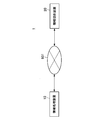
- FIG. 1 is a diagram illustrating a configuration example of an information processing system according to an embodiment of the present disclosure.
- the information processing system 1 according to the present embodiment includes an information processing device 10 and an information providing device 20.
- the information processing apparatus 10 and the information providing apparatus 20 can communicate via the communication network 931.
- the form of the information processing apparatus 10 is not particularly limited.
- the information processing apparatus 10 may be a game machine, a smartphone, a mobile phone, a tablet terminal, or a PC (Personal Computer). May be.
- the information providing apparatus 20 is assumed to be a computer such as a server.
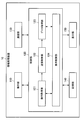
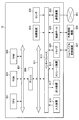
- FIG. 2 is a block diagram illustrating a functional configuration example of the information processing apparatus 10 according to the present embodiment.
- the information processing apparatus 10 includes an operation unit 110, a control unit 120, a communication unit 130, a storage unit 140, and a display unit 150.
- these functional blocks included in the information processing apparatus 10 will be described.
- the operation unit 110 has a function of accepting user operations.
- the operation unit 110 may include an input device such as a mouse and a keyboard.
- the operation part 110 since it should just have the function to receive a user's operation, it may also include a touch panel.
- the method employed by the touch panel is not particularly limited, and may be a capacitance method, a resistance film method, an infrared method, or an ultrasonic method.
- the operation unit 110 may include a camera.
- the control unit 120 executes control of each unit of the information processing apparatus 10. As illustrated in FIG. 2, the control unit 120 includes an operation acquisition unit 121, a transmission control unit 122, a data acquisition unit 123, and a display control unit 124. Details of these functional blocks included in the control unit 120 will be described later.
- the control part 120 may be comprised with CPU (Central Processing Unit; Central processing unit) etc., for example.
- CPU Central Processing Unit
- the control unit 120 is configured by a processing device such as a CPU, the processing device may be configured by an electronic circuit.
- the communication unit 130 has a function of performing communication with the information providing apparatus 20.
- the communication unit 130 is configured by a communication interface.
- the communication unit 130 can communicate with the information providing apparatus 20 via the communication network 931 (FIG. 1).
- the storage unit 140 is a recording medium that stores a program executed by the control unit 120 and stores data necessary for executing the program.
- the storage unit 140 temporarily stores data for calculation by the control unit 120.
- the storage unit 140 may be a magnetic storage unit device, a semiconductor storage device, an optical storage device, or a magneto-optical storage device.
- the display unit 150 has a function of displaying various information.
- the display unit 150 may be a liquid crystal display, an organic EL (Electro-Luminescence) display, or an HMD (Head Mount Display).
- the display unit 150 may be a display of another form as long as it has a function of displaying various types of information.
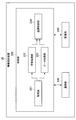
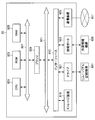
- FIG. 3 is a block diagram illustrating a functional configuration example of the information providing apparatus 20 according to the present embodiment.
- the information providing apparatus 20 includes a control unit 220, a communication unit 230, and a storage unit 240.
- these functional blocks provided in the information providing apparatus 20 will be described.
- the control unit 220 executes control of each unit of the information providing apparatus 20. As illustrated in FIG. 3, the control unit 220 includes an acquisition unit 221, a learning processing unit 222, a data processing unit 223, and a transmission control unit 224. Details of these functional blocks included in the control unit 220 will be described later.
- the control unit 220 may be configured by, for example, a CPU (Central Processing Unit). When the control unit 220 is configured by a processing device such as a CPU, the processing device may be configured by an electronic circuit.
- the communication unit 230 has a function of performing communication with the information processing apparatus 10.
- the communication unit 230 is configured by a communication interface.
- the communication unit 230 can communicate with the information processing apparatus 10 via the communication network 931 (FIG. 1).
- the storage unit 240 is a recording medium that stores a program executed by the control unit 220 and stores data necessary for executing the program.
- the storage unit 240 temporarily stores data for calculation by the control unit 220.
- the storage unit 240 may be a magnetic storage unit device, a semiconductor storage device, an optical storage device, or a magneto-optical storage device.
- a learned network group is generated by performing learning processing of a network group having the learning data set as an input by the learning processing unit 222, and the learned network group having the evaluation data set as an input. Is evaluated. As the evaluation result of the learned network group, the performance (accuracy) and the calculation amount of each learned network group are obtained.
- the learning processing unit 222 searches for a learned network whose performance is higher than the predetermined performance and whose calculation amount is smaller than the predetermined calculation amount.
- Such network group learning processing, evaluation, and search are referred to as network structure automatic search.
- the learning process is executed by the first hardware resource (hereinafter also referred to as “single operation node”).
- the transmission control unit 224 controls transmission of information indicating the progress of the learning process by the learning processing unit 222 (the total amount of learning processing and the completed learning processing amount) to the information processing apparatus 10.
- the data acquisition unit 123 acquires information indicating the progress status via the communication unit 130.
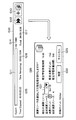
- FIG. 4 is a diagram illustrating a first screen example displayed on the information processing apparatus 10.
- the display control unit 124 controls the display of the progress status screen G ⁇ b> 10 according to the information indicating the progress status acquired by the data acquisition unit 123.
- the progress status screen G10 includes a progress bar G11 indicating the progress status, a progress rate G14 indicating the ratio of the completed learning processing to the entire learning processing, an elapsed time G15 from the start of learning, a remaining time G16 of learning processing, and the entire learning processing Time G17 is included.
- the second hardware resource (hereinafter referred to as “additional calculation”) is used to improve the speed of the learning process.
- the display control unit 124 controls the display of an add button for dynamically adding an additional computation node that executes the learning process when the learning process is being executed. As a result, the user can intuitively add an additional computation node that executes the learning process.
- the display control unit 124 uses, as an add button, a distributed computation resource addition button (first addition button) G12 for causing the single computation node and the additional computation node to perform the same network learning process in a distributed manner. Control the display. Further, the display control unit 124 displays, as an addition button, a parallel computing resource addition button (second addition button) G13 for causing a single computation node and an additional computation node to execute different network learning processes in parallel. To control.
- a distributed computation resource addition button first addition button
- second addition button parallel computing resource addition button
- the operation acquisition unit 121 can acquire a user operation through the operation unit 110. First, it is assumed that the distributed computation resource addition button G12 is pressed. At this time, the operation acquisition unit 121 detects pressing of the distributed computation resource addition button G12 via the operation unit 110. When the operation acquisition unit 121 detects that the distributed calculation resource addition button G12 is pressed, the display control unit 124 may control the display of the distributed calculation confirmation screen G20.
- the display control unit 124 may control the display of “1” as the current number of computing resources because the learning process is currently performed by a single computing node. Further, as shown in FIG. 4, the display control unit 124 estimates the time required for the learning process when the learning process is performed with the current computation resource (hereinafter also referred to as “estimated learning required time”). The display of “19 minutes 30 seconds” may be controlled. The display of the estimated learning end time may be controlled instead of the estimated learning required time or in addition to the estimated learning required time.
- the user can specify the number of additional computation resources on the distributed computation confirmation screen G20.
- the display control unit 124 Controls the display of the number of total computing resources (total of a single computing node and additional computing nodes) “4”.
- the display control unit 124 controls the display of the estimated learning required time “5 minutes 01 seconds” when the learning process is performed using the total calculation resources based on the number of the total calculation resources. You can do it.
- the display of the estimated learning end time may be controlled instead of the estimated learning required time or in addition to the estimated learning required time. That is, the display control unit 124 may control the display of at least one of the estimated learning required time and the estimated learning end time based on the total number of computing resources.
- the cost corresponding to the number of additional computing resources is subtracted from the balance every predetermined time.
- points will be described as an example of costs and points possessed by users as examples of balances. However, costs are not limited to points, and may be currency. Points will be described by taking an example in which a user purchases by a prepaid method, but a method of charging the used points to the user after the fact may be used.
- the display control unit 124 may control the display of the cost according to the number of additional computing resources.
- the display control unit 124 uses a consumption point (consumption point “3 points / minute” in the example shown in FIG. 4) taken every predetermined time and an estimated consumption point (shown in FIG. 4) taken until the learning process is finished.
- the display of the estimated consumption point “15 points”) may be controlled.
- both consumption points and estimated consumption points that are spent every predetermined time are displayed. What are consumption points that are spent every predetermined time and consumption points that are required until the learning process is completed? It is sufficient that at least one of them is displayed.
- the display control unit 124 may control the display of the user's possession point “5024 points”. Then, the user can determine the number of additional computing resources based on the confirmation result of the displayed possession points.
- the distributed computation confirmation screen G20 includes a confirmation button G22 and a cancel button G23, and when the pressing of the confirmation button G22 is detected, a computation node may be added by the learning processing unit 222.
- the learning processing target network learning process executed by the single arithmetic node by the learning processing unit 222 is defined as a single arithmetic node.
- Additional computing nodes may be added that run in a distributed manner. In this specification, an example in which an additional calculation node is added when the pressing of the confirmation button G22 is detected will be mainly described. However, when the distributed calculation confirmation screen G20 is not displayed, the distributed calculation is performed. An additional computation node may be added when pressing of the resource addition button G12 is detected.
- the learning processing unit 222 may wait until the learning process being executed by the single computation node can be temporarily stopped. Then, after the learning process can be temporarily stopped, the learning processing unit 222 may execute the learning process in a distributed manner by a single calculation node and additional calculation nodes corresponding to the number specified by the user.
- the learning processing unit 222 may wait until the learning process being executed by the single computation node can be paused. Then, the learning processing unit 222 may stop the learning process by the additional calculation node and restart the learning process by the single calculation node.
- the display control unit 124 may close the distributed calculation confirmation screen G20 without adding a calculation node.
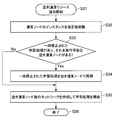
- FIG. 5 is a flowchart illustrating an operation example when the pressing of the distributed computation resource addition button G12 is detected.
- the learning processing unit 222 performs learning processing using a single computation node.
- the transmission control unit 122 transmits a distributed computation resource addition request to the information providing apparatus 20. Be controlled.
- the learning processing unit 222 waits until the learning process can be paused (S12).
- the learning processing unit 222 specifies the number of instances of additional operation nodes that are executed by distributing the learning processing of the target network of the learning processing executed by the single operation node with the single operation nodes. Just start (S13). Then, the learning processing unit 222 resumes the learning processing by a plurality of operation nodes (single operation node and additional operation node) (S14). Subsequently, the operation in the case where pressing of the distributed computation resource addition button G12 and pressing of the confirmation button G22 are detected is terminated (S15).
- FIG. 6 is a flowchart showing an example of learning processing executed after a distributed operation node is added.
- the data processing unit 223 consumes points every minute from the user's possession points according to the number of additional computation nodes (S22).
- the learning processing unit 222 ends the learning process (S23).
- the learning processing unit 222 shifts the operation to S22 if the user's possession points are not exhausted (“No” in S24). If the possessed points are exhausted (“Yes” in S24), the process waits until the learning process can be paused (S25).
- the learning processing unit 222 stops the instance of the additional calculation node (S26), restarts the learning process by the single calculation node (S27), and proceeds to S22. Transition operation.
- FIG. 7 is a diagram illustrating a second screen example displayed on the information processing apparatus 10. As illustrated in FIG. 7, the display control unit 124 controls the display of the progress status screen G ⁇ b> 10 according to the information indicating the progress status acquired by the data acquisition unit 123.
- the operation acquisition unit 121 detects pressing of the parallel computing resource addition button G13 via the operation unit 110.
- the display control unit 124 may control the display of the parallel computation confirmation screen G30.
- the display control unit 124 may control the display of “1” as the current number of computing resources because the learning process is currently being performed by a single computing node. Further, the user can designate the number of additional computation resources on the parallel computation confirmation screen G30. When the user performs an operation of specifying the additional calculation resource number “3” in the additional calculation resource number designation field G31 and the operation acquisition unit 121 acquires the operation of specifying the additional calculation resource number, the display control unit 124 Controls the display of the number of total computing resources (total of a single computing node and additional computing nodes) “4”.
- the display control unit 124 may control the display of the consumption points (consumption points “3 points / minute” in the example shown in FIG. 7) that are required every predetermined time.
- the display control unit 124 may control the display of the user's possession point “5024 points”. Then, the user can determine the number of additional computing resources based on the confirmation result of the displayed possession points.
- the parallel calculation confirmation screen G30 includes a confirmation button G32 and a cancel button G33. When the pressing of the confirmation button G32 is detected, the learning processing unit 222 may add a calculation node.
- the learning processing unit 222 performs a single learning process for a network different from the target network for the learning process executed by the single operation node.
- An additional operation node that is executed in parallel with the learning process by the operation node may be added.
- an additional calculation node is added when the pressing of the confirmation button G32 is detected will be mainly described.
- the parallel calculation confirmation screen G30 is not displayed, the parallel calculation is performed.
- An additional computation node may be added when pressing of the resource addition button G13 is detected.
- the learning processing unit 222 determines that a part or all of the additional calculation nodes are present. One may be assigned to each of the temporarily stopped learning processes. Then, the learning processing unit 222 may resume the temporarily stopped learning process by the additional computation node assigned to the temporarily stopped learning process. In this way, the learning process executed halfway can be used effectively.
- the learning processing unit 222 may individually execute network learning processing for each additional computation node that is not assigned to the suspended learning processing.
- the learning processing unit 222 may stop the learning process by the additional calculation node when the user's possession point falls below a predetermined value.
- the parallel calculation confirmation screen G30 may be closed by the display control unit 124 without adding a calculation node.
- FIG. 8 is a flowchart illustrating an operation example when the pressing of the parallel computing resource addition button G13 is detected.
- the learning processing unit 222 performs learning processing using a single computing node.
- the transmission control unit 122 transmits a parallel computation resource addition request to the information providing apparatus 20. Be controlled.
- the learning processing unit 222 activates the additional computing node instances by the number designated by the user (S32).
- the learning processing unit 222 operates in S35. Transition.
- the learning processing unit 222 is suspended. The learning process is resumed by the empty computation node (S34). As a result, the number of free operation nodes is reduced.
- the learning processing unit 222 creates a network having the number of empty computation nodes, and starts learning processing for the created network (S35). Subsequently, the operation when the pressing of the parallel computing resource addition button G13 and the pressing of the confirmation button G32 is detected is terminated (S36).
- FIG. 9 is a flowchart showing an example of learning processing executed after a parallel operation node is added.
- the data processing unit 223 consumes points every minute from the user's possession points according to the number of additional operation nodes (S42).
- S42 the number of additional operation nodes
- the learning processing unit 222 is suspended.
- the learning process is restarted at the empty computation node (S44), and the operation is shifted to S42.
- the learning processing unit 222 operates in S45 when there is no paused learning process or when there is no free computation node capable of executing the paused learning process ("No" in S43). To migrate. When the learning process is completed (“Yes” in S45), the learning processing unit 222 ends the learning process (S49).
- the learning processing unit 222 shifts the operation to S42. If the possessed points are exhausted (“Yes” in S46), the learning process of the additional calculation node is temporarily stopped (S47), the instance of the additional calculation node is stopped (S48), and the operation is shifted to S42.
- the user's possession points are subtracted according to the number of additional operation nodes.
- the user's possession points can be increased as appropriate.
- the data processing unit 223 may perform addition processing on the user's possession point.
- the addition process for the user's possession points may be triggered by point purchase.
- the point purchase may be made by a prepaid method.
- FIG. 10 is a diagram showing an example of a point purchase screen.
- the display control unit 124 controls the display of the point purchase screen G40.
- a purchase button G41 for purchasing 500 points for 500 yen a purchase button G42 for purchasing 2000 points for 2000 yen, and a purchase button G43 for purchasing 5000 points for 5000 yen. It is displayed.
- the data processing unit 223 subtracts 500 yen from a predetermined balance that the user has and adds 500 yen to the predetermined balance on the service side, Add 500 points to.
- the data processing unit 223 subtracts 2000 yen from the predetermined balance remaining by the user and adds 2000 yen to the predetermined balance on the service side. Add 2000 points to the points.
- the data processing unit 223 detects that the purchase button G43 is pressed, the data processing unit 223 subtracts 5000 yen from the predetermined balance remaining by the user and adds 5000 yen to the predetermined balance on the service side. Add 5000 points to.
- FIG. 10 shows an example in which 1 yen is required for purchase per point
- the correspondence between points and amount is not particularly limited.
- the types of points that can be purchased are not limited to 500 points, 2000 points, and 5000 points.
- the point purchase screen G40 also includes a cancel button G44, and when the pressing of the cancel button G44 is detected, the point purchase screen G40 may be closed by the display control unit 124 without purchasing points. .
- the display control unit 124 controls the display of the point purchase screen G40 when the operation acquisition unit 121 detects a predetermined point purchase operation by the user.
- the timing at which the display control of the point purchase screen G40 is performed is not limited to this example.
- the display control unit 124 urges the user to purchase points by controlling the display of the point purchase screen G40 when the user's possessed points fall below a predetermined value during the execution of the learning process by the additional computation node.
- the learning process by the computation node may be temporarily stopped. At this time, when points are purchased, the learning process using the additional computation resource may be resumed.
- the learning result is used by the user who has executed the learning process, but the learning result may be shared with others. That is, when the pressing of the share button for sharing the network learning result is detected on a predetermined public screen, the data processing unit 223 identifies the network structure and the data set used for the learning process or the identification of the data set. Information and network structure performance may be shared in a range specified by the user.
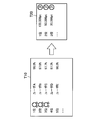
- FIG. 11 is a diagram for explaining an example of addition processing to possessed points by disclosing learning results.
- the data processing unit 223 generates a ranking table T10 in which the names of users who have published learning results in a predetermined period (for example, every month) are arranged in the order of high performance of the network. Also, a network performance ranking and point correspondence table T20 is prepared in advance.
- the data processing unit 223 may add the point to the possessed point of the user located in the order in which the point is described in the correspondence table T20. This promotes research motivation of users who intend to disclose learning results, and improves the efficiency of network search by other users who use the learning results.
- the performance of each network may be calculated by the learning processing unit 222 (for example, an average value of performance obtained by performing multiple learning processes on one network is calculated as the performance of the network. May be).
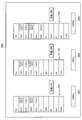
- FIG. 12 is a diagram illustrating an example of a learned network purchase screen.
- the learned network purchase screen G50 includes a combination of the structure of the learned network, the performance of the learned network, the name of the publisher of the learned network, and the purchase point.
- the learned network purchase screen G50 corresponds to the purchase button G51 corresponding to the first learned network, the purchase button G52 corresponding to the second learned network, and the third learned network.
- the purchase button G53 to be included is included.
- the number of learned networks that can be purchased is not limited.
- the data processing unit 223 may selectively purchase a learned network having a performance exceeding a predetermined performance, or may selectively purchase a learned network that indicates a public intention.
- a function may be provided in which a publisher sets purchase points for a learned network.
- the data processing unit 223 subtracts the predetermined purchase point from the user's possession point, and You may provide a learned network. Accordingly, the user can obtain a high-performance technology (for example, an image recognition technology) without having to execute a new learning process.
- a high-performance technology for example, an image recognition technology
- the data processing unit 223 subtracts 2000 points from the possessed points of the user and provides the user with a learned network corresponding to the button.
- the data processing unit 223 subtracts 1000 points from the user's possession points and provides the user with a learned network corresponding to the button.
- the data processing unit 223 subtracts 3000 points from the user's possession points and provides the user with a learned network corresponding to the button.
- the data processing unit 223 may add a part of the sales points (for example, 70%) to the points owned by the publisher (or the sales amount).
- a part for example, 70%, etc.
- the user may attach information (for example, a character string such as a name) that indicates that the learned network is the creator of the learned network.
- information for example, a character string such as a name
- the display control unit 124 may control the display of a problem to be solved by the learned network together with the structure of the learned network.
- a problem to be solved by a learned network may be input from a publisher by text data. Then, a user who purchases a learned network can purchase a learned network in which the problem to be solved is highly similar to the problem he / she wants to solve while looking at the problem to be solved.
- the data processing unit 223 performs an addition process on the possessed points of the user who added or changed the label when the operation acquisition unit 121 detects the addition or change of the label to the input data used for the learning process. It is good to execute. Thereby, it is possible to prompt the user to add or change the label.
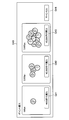
- FIG. 13 is a diagram for explaining the addition of a label to input data.
- the display control unit 124 controls the display of the input data Im10, the input data Im20, the input data Im30, and the input data Im40.
- the input data Im10 is a hamster image
- the input data Im20 is a cat image
- the input data Im30 is a dog image
- the input data Im40 is a cat image. It may be voice data, sensor data detected by a sensor, text data, or other types of data.
- the timing at which these input data are displayed is not limited.
- the display control unit 124 may control the display of input data when a predetermined label editing operation by the user is detected.
- the display control unit 124 may control the display unit 150 so that input data that is highly likely to have a label error is also displayed.
- the input data Im20 that is a cat image is labeled “Cat”
- the input data Im40 that is a cat image is labeled “Cat”.
- the data processing unit 223 confirms that the labels input from a plurality of users match, and then confirms the addition or change of the label and adds it to the possessed point of the user who added or changed the label. It is good to execute processing.
- the display control unit 124 may predict and display the entire label following the first character when the first character of the label is input by the user. Further, here, an example has been described in which the addition process is executed on the possessed points of the user who has added or changed the label. However, the data processing unit 223 may perform addition processing on the possessed points of the user who uploaded the data set with the label added.
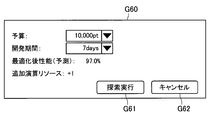
- FIG. 14 is a diagram illustrating an example of a condition input screen.
- the condition input screen G60 includes a selection column for a budget (upper limit cost applied to learning processing by an additional computation node) and a selection column for a development period (upper limit time applied to learning processing).
- the condition input screen G60 includes the prediction performance after being optimized according to the budget and the development period, and the number of additional calculation resources (additional calculation nodes).
- the display control unit 124 sets the upper limit number of additional operation nodes that can be added depending on the point not exceeding the budget and the time not exceeding the development period. Control the display. Further, the display control unit 124 controls the display of the predicted performance of the network after the upper limit number of additional operation nodes are added. In the example shown in FIG. 14, it is determined that the number of additional operation resources (additional operation nodes) is “1” (that is, two parallel executions including one single operation node and one additional operation node) are optimal. ing. This will be described with reference to FIG.
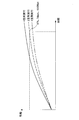
- FIG. 15 is a diagram illustrating an example of the relationship between the elapsed time from the start of the learning process and the network performance.
- the performance increases with time. Also, the performance increase speed increases as the number of parallel executions increases.
- the user designates “10000 points” as the budget and designates “7 days” as the development period. In such a case, in the case of four parallel executions, the performance reaches 97% when 3.5 days have elapsed from the start of the learning process, but the budget is over.
- the display control unit 124 may control the display of “1” as the number of additional calculation nodes.
- FIG. 16 is a block diagram illustrating a hardware configuration example of the information processing apparatus 10 according to the embodiment of the present disclosure.
- the information processing apparatus 10 includes a CPU (Central Processing unit) 801, a ROM (Read Only Memory) 803, and a RAM (Random Access Memory) 805.
- the information processing apparatus 10 may also include a host bus 807, a bridge 809, an external bus 811, an interface 813, an input device 815, an output device 817, a storage device 819, a drive 821, a connection port 823, and a communication device 825.
- the information processing apparatus 10 may include an imaging device 833 and a sensor 835 as necessary.
- the information processing apparatus 10 may have a processing circuit called DSP (Digital Signal Processor) or ASIC (Application Specific Integrated Circuit) instead of or together with the CPU 801.
- DSP Digital Signal Processor
- ASIC Application Specific Integrated Circuit
- the CPU 801 functions as an arithmetic processing device and a control device, and controls all or a part of the operation in the information processing device 10 according to various programs recorded in the ROM 803, the RAM 805, the storage device 819, or the removable recording medium 827.
- the ROM 803 stores programs used by the CPU 801, calculation parameters, and the like.
- the RAM 805 temporarily stores programs used in the execution of the CPU 801, parameters that change as appropriate during the execution, and the like.
- the CPU 801, the ROM 803, and the RAM 805 are connected to each other by a host bus 807 configured by an internal bus such as a CPU bus. Further, the host bus 807 is connected to an external bus 811 such as a PCI (Peripheral Component Interconnect / Interface) bus via a bridge 809.
- PCI Peripheral Component Interconnect / Interface
- the input device 815 is a device operated by the user, such as a mouse, a keyboard, a touch panel, a button, a switch, and a lever.
- the input device 815 may include a microphone that detects the user's voice.
- the input device 815 may be, for example, a remote control device using infrared rays or other radio waves, or may be an external connection device 829 such as a mobile phone corresponding to the operation of the information processing device 10.
- the input device 815 includes an input control circuit that generates an input signal based on information input by the user and outputs the input signal to the CPU 801. The user operates the input device 815 to input various data to the information processing device 10 or instruct a processing operation.
- An imaging device 833 which will be described later, can also function as an input device by imaging a user's hand movement, a user's finger, and the like. At this time, the pointing position may be determined according to the movement of the hand or the direction of the finger.
- the output device 817 is configured by a device that can notify the user of the acquired information visually or audibly.
- the output device 817 includes, for example, an LCD (Liquid Crystal Display), a PDP (Plasma Display Panel), an organic EL (Electro-Luminescence) display, a display device such as a projector, a hologram display device, a sound output device such as a speaker and headphones, As well as a printer device.
- the output device 817 outputs the result obtained by the processing of the information processing device 10 as a video such as text or an image, or outputs it as a sound or sound.
- the output device 817 may include a light or the like for brightening the surroundings.
- the storage device 819 is a data storage device configured as an example of a storage unit of the information processing device 10.
- the storage device 819 includes, for example, a magnetic storage device such as an HDD (Hard Disk Drive), a semiconductor storage device, an optical storage device, or a magneto-optical storage device.
- the storage device 819 stores programs executed by the CPU 801, various data, various data acquired from the outside, and the like.
- the drive 821 is a reader / writer for a removable recording medium 827 such as a magnetic disk, an optical disk, a magneto-optical disk, or a semiconductor memory, and is built in or externally attached to the information processing apparatus 10.
- the drive 821 reads information recorded on the mounted removable recording medium 827 and outputs the information to the RAM 805. Further, the drive 821 writes a record in the attached removable recording medium 827.
- the connection port 823 is a port for directly connecting a device to the information processing apparatus 10.
- the connection port 823 can be, for example, a USB (Universal Serial Bus) port, an IEEE 1394 port, a SCSI (Small Computer System Interface) port, or the like.
- the connection port 823 may be an RS-232C port, an optical audio terminal, an HDMI (registered trademark) (High-Definition Multimedia Interface) port, or the like.
- the communication device 825 is a communication interface configured with a communication device for connecting to the communication network 931, for example.
- the communication device 825 can be, for example, a communication card for wired or wireless LAN (Local Area Network), Bluetooth (registered trademark), or WUSB (Wireless USB).
- the communication device 825 may be a router for optical communication, a router for ADSL (Asymmetric Digital Subscriber Line), or a modem for various communication.
- the communication device 825 transmits and receives signals and the like using a predetermined protocol such as TCP / IP with the Internet and other communication devices, for example.
- the communication network 931 connected to the communication device 825 is a wired or wireless network, such as the Internet, home LAN, infrared communication, radio wave communication, or satellite communication.
- the image pickup apparatus 833 uses various members such as an image pickup element such as a CCD (Charge Coupled Device) or a CMOS (Complementary Metal Oxide Semiconductor), and a lens for controlling the formation of a subject image on the image pickup element. It is an apparatus that images a real space and generates a captured image.
- the imaging device 833 may capture a still image, or may capture a moving image.
- the sensor 835 is, for example, various sensors such as an acceleration sensor, a gyro sensor, a geomagnetic sensor, an optical sensor, and a sound sensor.
- the sensor 835 acquires information about the state of the information processing apparatus 10 itself, such as the attitude of the information processing apparatus 10, and information about the surrounding environment of the information processing apparatus 10, such as brightness and noise around the information processing apparatus 10. To do.
- the sensor 835 may include a GPS sensor that receives a GPS (Global Positioning System) signal and measures the latitude, longitude, and altitude of the apparatus.
- GPS Global Positioning System
- FIG. 17 is a block diagram illustrating a hardware configuration example of the information providing apparatus 20 according to the embodiment of the present disclosure.
- the information providing apparatus 20 includes a CPU (Central Processing unit) 901, a ROM (Read Only Memory) 903, and a RAM (Random Access Memory) 905. Further, the information providing apparatus 20 may include a host bus 907, a bridge 909, an external bus 911, an interface 913, a storage apparatus 919, a drive 921, a connection port 923, and a communication apparatus 925.
- the information processing apparatus 10 may include a processing circuit called a DSP (Digital Signal Processor) or ASIC (Application Specific Integrated Circuit) instead of or in addition to the CPU 901.
- DSP Digital Signal Processor
- ASIC Application Specific Integrated Circuit
- the CPU 901 functions as an arithmetic processing device and a control device, and controls all or a part of the operation within the information providing device 20 according to various programs recorded in the ROM 903, the RAM 905, the storage device 919, or the removable recording medium 927.
- the ROM 903 stores programs and calculation parameters used by the CPU 901.
- the RAM 905 temporarily stores programs used in the execution of the CPU 901, parameters that change as appropriate during the execution, and the like.
- the CPU 901, the ROM 903, and the RAM 905 are connected to each other by a host bus 907 configured by an internal bus such as a CPU bus. Further, the host bus 907 is connected to an external bus 911 such as a PCI (Peripheral Component Interconnect / Interface) bus via a bridge 909.
- PCI Peripheral Component Interconnect / Interface
- the storage device 919 is a data storage device configured as an example of a storage unit of the information providing device 20.
- the storage device 919 includes, for example, a magnetic storage device such as an HDD (Hard Disk Drive), a semiconductor storage device, an optical storage device, or a magneto-optical storage device.
- the storage device 919 stores programs executed by the CPU 901, various data, various data acquired from the outside, and the like.
- the drive 921 is a reader / writer for a removable recording medium 927 such as a magnetic disk, an optical disk, a magneto-optical disk, or a semiconductor memory, and is built in or externally attached to the information providing apparatus 20.
- the drive 921 reads information recorded on the attached removable recording medium 927 and outputs the information to the RAM 905.
- the drive 921 writes a record in the attached removable recording medium 927.
- the connection port 923 is a port for directly connecting a device to the information providing apparatus 20.
- the connection port 923 can be, for example, a USB (Universal Serial Bus) port, an IEEE 1394 port, a SCSI (Small Computer System Interface) port, or the like.
- the connection port 923 may be an RS-232C port, an optical audio terminal, an HDMI (registered trademark) (High-Definition Multimedia Interface) port, or the like.
- the communication device 925 is a communication interface configured with, for example, a communication device for connecting to the communication network 931.
- the communication device 925 can be, for example, a communication card for wired or wireless LAN (Local Area Network), Bluetooth (registered trademark), or WUSB (Wireless USB).
- the communication device 925 may be a router for optical communication, a router for ADSL (Asymmetric Digital Subscriber Line), or a modem for various communication.
- the communication device 925 transmits and receives signals and the like using a predetermined protocol such as TCP / IP with the Internet and other communication devices, for example.
- the communication network 931 connected to the communication device 925 is a wired or wireless network, such as the Internet, a home LAN, infrared communication, radio wave communication, or satellite communication.
- An information processing apparatus 10 includes a display control unit 124 that controls the display of an add button for dynamically adding a button. With this configuration, it is possible to intuitively add hardware resources for executing learning.
- the display control unit 124 may control the display of the distributed calculation confirmation screen G20 or the parallel calculation confirmation screen G30.
- the second hardware resource is added to execute in parallel, The information processing apparatus according to (2). (7)
- the pressing of the second add button is detected and there is one or more suspended learning processes, part or all of the second hardware resource is suspended.
- One process is allocated to each process, and the suspended learning process is resumed by the allocated second hardware resource.
- a network learning process is individually executed by each second hardware resource that is not assigned to the suspended learning process.
- the information processing apparatus according to (7) When the balance falls below a predetermined value, the learning process by the second hardware resource is stopped.
- an addition process is performed on the balance.
- the display control unit based on the number of the second hardware resources, at least one of an estimated learning required time and an estimated learning end time by the first hardware resource and the second hardware resource Control the display, The information processing apparatus according to any one of (1) to (13).
- the display control unit controls display of a cost according to the number of the second hardware resources;
- the cost includes at least one of a cost for every predetermined time and a cost for the learning process to be completed.
- the information processing apparatus includes: An operation acquisition unit that acquires an operation for specifying the number of the second hardware resources;
- the display control unit when the upper limit cost applied to the learning process by the second hardware resource and the upper limit time applied to the learning process are designated by the user, the cost not exceeding the upper limit cost, and Controlling the display of the upper limit number of the second hardware resource that can be added by the time not exceeding the upper limit time;
- the information processing apparatus according to any one of (1) to (17).
- (20) Providing information indicating the progress of the learning process; When an add button for dynamically adding a second hardware resource for executing the learning process is pressed to the first hardware resource for executing the learning process, the second hardware Adding resources, An information providing method.
Landscapes
- Engineering & Computer Science (AREA)
- Theoretical Computer Science (AREA)
- Software Systems (AREA)
- Physics & Mathematics (AREA)
- General Engineering & Computer Science (AREA)
- General Physics & Mathematics (AREA)
- Mathematical Physics (AREA)
- Data Mining & Analysis (AREA)
- Computing Systems (AREA)
- Evolutionary Computation (AREA)
- Artificial Intelligence (AREA)
- Biomedical Technology (AREA)
- Computational Linguistics (AREA)
- Biophysics (AREA)
- Life Sciences & Earth Sciences (AREA)
- General Health & Medical Sciences (AREA)
- Molecular Biology (AREA)
- Health & Medical Sciences (AREA)
- Computer Vision & Pattern Recognition (AREA)
- Medical Informatics (AREA)
- User Interface Of Digital Computer (AREA)
- Information Transfer Between Computers (AREA)
Abstract
Le problème décrit par la présente invention est l'existence d'une demande pour une technologie qui permet à des ressources matérielles d'exécution d'apprentissage d'être ajoutées intuitivement. La solution proposée par l'invention concerne un dispositif de traitement d'informations qui est équipé d'une partie de commande d'affichage permettant de commander l'affichage d'informations indiquant l'état de progression du traitement d'apprentissage et d'un bouton d'ajout permettant d'ajouter de manière dynamique une seconde ressource matérielle afin d'exécuter le traitement d'apprentissage vers une première ressource matérielle en cours d'exécution du traitement d'apprentissage.
Priority Applications (3)
| Application Number | Priority Date | Filing Date | Title |
|---|---|---|---|
| US15/566,284 US11086678B2 (en) | 2016-03-28 | 2016-12-13 | Information processing device, method of processing information, and method of providing information |
| CN201680029420.XA CN107615309B (zh) | 2016-03-28 | 2016-12-13 | 信息处理装置、信息处理方法以及信息提供方法 |
| EP16897078.8A EP3438891A4 (fr) | 2016-03-28 | 2016-12-13 | Dispositif et procédé de traitement d'informations et procédé de fourniture d'informations |
Applications Claiming Priority (2)
| Application Number | Priority Date | Filing Date | Title |
|---|---|---|---|
| JP2016063154A JP2017182114A (ja) | 2016-03-28 | 2016-03-28 | 情報処理装置、情報処理方法および情報提供方法 |
| JP2016-063154 | 2016-03-28 |
Publications (1)
| Publication Number | Publication Date |
|---|---|
| WO2017168862A1 true WO2017168862A1 (fr) | 2017-10-05 |
Family
ID=59963895
Family Applications (1)
| Application Number | Title | Priority Date | Filing Date |
|---|---|---|---|
| PCT/JP2016/087116 Ceased WO2017168862A1 (fr) | 2016-03-28 | 2016-12-13 | Dispositif et procédé de traitement d'informations et procédé de fourniture d'informations |
Country Status (5)
| Country | Link |
|---|---|
| US (1) | US11086678B2 (fr) |
| EP (1) | EP3438891A4 (fr) |
| JP (1) | JP2017182114A (fr) |
| CN (1) | CN107615309B (fr) |
| WO (1) | WO2017168862A1 (fr) |
Families Citing this family (10)
| Publication number | Priority date | Publication date | Assignee | Title |
|---|---|---|---|---|
| JP6901423B2 (ja) * | 2018-03-12 | 2021-07-14 | Kddi株式会社 | 情報処理装置、情報処理端末、及びプログラム |
| US20210166285A1 (en) * | 2018-08-02 | 2021-06-03 | Sony Corporation | Information processing apparatus, information processing method, and information processing system |
| US11836530B2 (en) | 2018-09-18 | 2023-12-05 | Microsoft Technology Licensing, Llc | Automatic suggestion of variation parameters and pre-packaged synthetic datasets |
| JP7083454B2 (ja) * | 2018-10-17 | 2022-06-13 | オムロン株式会社 | センサシステム |
| JP7097006B2 (ja) * | 2018-12-05 | 2022-07-07 | オムロン株式会社 | センサシステム |
| WO2020148959A1 (fr) * | 2019-01-15 | 2020-07-23 | ソニー株式会社 | Serveur et système d'apprentissage |
| US11429434B2 (en) * | 2019-12-23 | 2022-08-30 | International Business Machines Corporation | Elastic execution of machine learning workloads using application based profiling |
| CN115004254A (zh) | 2020-01-28 | 2022-09-02 | 索尼集团公司 | 信息处理装置、信息处理方法和程序 |
| WO2022026940A1 (fr) * | 2020-07-31 | 2022-02-03 | Groman Inc. | Masques faciaux à filtres, plaque faciale destinée à être utilisée avec des masques faciaux, et procédés de traitement |
| CN113222118B (zh) * | 2021-05-19 | 2022-09-09 | 北京百度网讯科技有限公司 | 神经网络训练方法、装置、电子设备、介质和程序产品 |
Citations (2)
| Publication number | Priority date | Publication date | Assignee | Title |
|---|---|---|---|---|
| JPH06215163A (ja) * | 1993-01-18 | 1994-08-05 | Hitachi Ltd | ニューラルネット構築支援方法及び装置、ニューラルネットテスト装置、薬注制御システム |
| JP2015156168A (ja) * | 2014-02-21 | 2015-08-27 | 株式会社日立製作所 | データセンタのリソース配分システム及びデータセンタのリソース配分方法 |
Family Cites Families (8)
| Publication number | Priority date | Publication date | Assignee | Title |
|---|---|---|---|---|
| US7502763B2 (en) * | 2005-07-29 | 2009-03-10 | The Florida International University Board Of Trustees | Artificial neural network design and evaluation tool |
| CN102077636A (zh) * | 2009-05-15 | 2011-05-25 | 思科技术公司 | 用于自组织网络的系统和方法 |
| US20110078303A1 (en) * | 2009-09-30 | 2011-03-31 | Alcatel-Lucent Usa Inc. | Dynamic load balancing and scaling of allocated cloud resources in an enterprise network |
| US8443373B2 (en) * | 2010-01-26 | 2013-05-14 | Microsoft Corporation | Efficient utilization of idle resources in a resource manager |
| CN103019853A (zh) * | 2012-11-19 | 2013-04-03 | 北京亿赞普网络技术有限公司 | 一种作业任务的调度方法和装置 |
| US10102480B2 (en) * | 2014-06-30 | 2018-10-16 | Amazon Technologies, Inc. | Machine learning service |
| US10452992B2 (en) * | 2014-06-30 | 2019-10-22 | Amazon Technologies, Inc. | Interactive interfaces for machine learning model evaluations |
| CN104317658B (zh) * | 2014-10-17 | 2018-06-12 | 华中科技大学 | 一种基于MapReduce的负载自适应任务调度方法 |
-
2016
- 2016-03-28 JP JP2016063154A patent/JP2017182114A/ja active Pending
- 2016-12-13 WO PCT/JP2016/087116 patent/WO2017168862A1/fr not_active Ceased
- 2016-12-13 US US15/566,284 patent/US11086678B2/en active Active
- 2016-12-13 EP EP16897078.8A patent/EP3438891A4/fr not_active Withdrawn
- 2016-12-13 CN CN201680029420.XA patent/CN107615309B/zh not_active Expired - Fee Related
Patent Citations (2)
| Publication number | Priority date | Publication date | Assignee | Title |
|---|---|---|---|---|
| JPH06215163A (ja) * | 1993-01-18 | 1994-08-05 | Hitachi Ltd | ニューラルネット構築支援方法及び装置、ニューラルネットテスト装置、薬注制御システム |
| JP2015156168A (ja) * | 2014-02-21 | 2015-08-27 | 株式会社日立製作所 | データセンタのリソース配分システム及びデータセンタのリソース配分方法 |
Non-Patent Citations (1)
| Title |
|---|
| See also references of EP3438891A4 * |
Also Published As
| Publication number | Publication date |
|---|---|
| CN107615309B (zh) | 2022-05-13 |
| JP2017182114A (ja) | 2017-10-05 |
| EP3438891A4 (fr) | 2019-09-25 |
| US11086678B2 (en) | 2021-08-10 |
| US20180082214A1 (en) | 2018-03-22 |
| EP3438891A1 (fr) | 2019-02-06 |
| CN107615309A (zh) | 2018-01-19 |
Similar Documents
| Publication | Publication Date | Title |
|---|---|---|
| WO2017168862A1 (fr) | Dispositif et procédé de traitement d'informations et procédé de fourniture d'informations | |
| JP6684883B2 (ja) | カメラエフェクトを提供する方法およびシステム | |
| JP7186857B2 (ja) | サービス処理方法および関連装置 | |
| US10638057B2 (en) | Photographing device and control method thereof | |
| US10853907B2 (en) | Fast GPU context switch | |
| EP3441912A1 (fr) | Dispositif de traitement d'informations, procédé de traitement d'informations et procédé de fourniture d'informations | |
| CN113873100B (zh) | 视频录制方法、装置、电子设备及存储介质 | |
| CN110543347A (zh) | 生成截屏图像的方法、装置以及电子设备 | |
| CN113259592A (zh) | 拍摄方法、装置、电子设备及存储介质 | |
| EP3438888A1 (fr) | Dispositif de traitement d'informations, procédé de traitement d'informations, et procédé de fourniture d'informations | |
| WO2021103919A1 (fr) | Procédé de recommandation de composition et dispositif électronique | |
| US20240331426A1 (en) | Automatically selecting from multiple barcodes in a camera system field of view | |
| JP2016109726A (ja) | 情報処理装置、情報処理方法およびプログラム | |
| CN103546677B (zh) | 互动系统及互动方法 | |
| CN116893792A (zh) | 投屏控制方法、装置及电子设备 | |
| CN110457411A (zh) | 计步数据的展示方法、装置、终端和存储介质 | |
| JPWO2020039901A1 (ja) | 情報処理装置、情報処理方法、及びプログラム | |
| KR20130107844A (ko) | 전자 장치에서 자동 초점 기능을 제어하기 위한 장치 및 방법 | |
| WO2015145770A1 (fr) | Système d'assistance à la photographie, dispositif d'imagerie, dispositif de traitement d'informations, programme d'assistance à la photographie, et procédé d'assistance à la photographie | |
| US12361403B2 (en) | Facilitating user selection of one of multiple barcodes in a camera system field of view | |
| EP4304183A1 (fr) | Appareil de détection d'utilisateur d'interruption de service et procédé associé | |
| US20250232393A1 (en) | Terminal state identification method and apparatus | |
| JP7391029B2 (ja) | 情報処理装置、情報処理方法および情報処理システム | |
| CN109753146A (zh) | 一种移动终端启动应用的方法及移动终端 | |
| US20160309054A1 (en) | Asynchronously Requesting Information From A Camera Device |
Legal Events
| Date | Code | Title | Description |
|---|---|---|---|
| WWE | Wipo information: entry into national phase |
Ref document number: 15566284 Country of ref document: US |
|
| NENP | Non-entry into the national phase |
Ref country code: DE |
|
| 121 | Ep: the epo has been informed by wipo that ep was designated in this application |
Ref document number: 16897078 Country of ref document: EP Kind code of ref document: A1 |