WO2017170010A1 - Procédé de partage d'informations - Google Patents
Procédé de partage d'informations Download PDFInfo
- Publication number
- WO2017170010A1 WO2017170010A1 PCT/JP2017/011327 JP2017011327W WO2017170010A1 WO 2017170010 A1 WO2017170010 A1 WO 2017170010A1 JP 2017011327 W JP2017011327 W JP 2017011327W WO 2017170010 A1 WO2017170010 A1 WO 2017170010A1
- Authority
- WO
- WIPO (PCT)
- Prior art keywords
- content list
- terminal
- content
- communication terminal
- transmission timing
- Prior art date
- Legal status (The legal status is an assumption and is not a legal conclusion. Google has not performed a legal analysis and makes no representation as to the accuracy of the status listed.)
- Ceased
Links
Images







Classifications
-
- H—ELECTRICITY
- H04—ELECTRIC COMMUNICATION TECHNIQUE
- H04L—TRANSMISSION OF DIGITAL INFORMATION, e.g. TELEGRAPHIC COMMUNICATION
- H04L67/00—Network arrangements or protocols for supporting network services or applications
- H04L67/01—Protocols
- H04L67/10—Protocols in which an application is distributed across nodes in the network
- H04L67/104—Peer-to-peer [P2P] networks
- H04L67/1074—Peer-to-peer [P2P] networks for supporting data block transmission mechanisms
-
- G—PHYSICS
- G06—COMPUTING OR CALCULATING; COUNTING
- G06F—ELECTRIC DIGITAL DATA PROCESSING
- G06F13/00—Interconnection of, or transfer of information or other signals between, memories, input/output devices or central processing units
-
- H—ELECTRICITY
- H04—ELECTRIC COMMUNICATION TECHNIQUE
- H04L—TRANSMISSION OF DIGITAL INFORMATION, e.g. TELEGRAPHIC COMMUNICATION
- H04L67/00—Network arrangements or protocols for supporting network services or applications
- H04L67/01—Protocols
- H04L67/10—Protocols in which an application is distributed across nodes in the network
- H04L67/104—Peer-to-peer [P2P] networks
-
- H—ELECTRICITY
- H04—ELECTRIC COMMUNICATION TECHNIQUE
- H04L—TRANSMISSION OF DIGITAL INFORMATION, e.g. TELEGRAPHIC COMMUNICATION
- H04L67/00—Network arrangements or protocols for supporting network services or applications
- H04L67/01—Protocols
- H04L67/04—Protocols specially adapted for terminals or networks with limited capabilities; specially adapted for terminal portability
Definitions
- the present invention relates to an information sharing method, and in particular, to sharing of content possessed by a plurality of communication terminals.
- Non-Patent Document 1 a technique for distributing content to a specific node by duplicating the content to different communication nodes has been studied.
- Patent Document 1 relates to an information sharing system including a plurality of communication devices that are wirelessly connected to other communication devices.
- Patent Literature 1 when the information currently held by another communication device is estimated, it is determined whether the information currently held by the estimated other communication device matches the information held by the own device. It has been proposed to transmit a notification message including information held by the own communication device.
- the situation where the communication quality of the link is poor refers to a situation where the packet loss is large, the delay is large, the bandwidth is narrow, and the like.
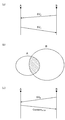
- a method of detecting duplicate possessed content is as shown in FIG.
- the communication terminal A and the communication terminal B that have established communication may exchange content list messages (SV A and SV B in FIG. 19A) of the possessed contents.
- Load1 is calculated by the following equation (1).
- SVsize A and SVsize B are the message sizes of SV A and SV B.
- a set of contents possessed by the communication terminal A and the communication terminal B is shown in FIG.
- the size of the circle represents the number of contents possessed. That is, in this case, the number of contents owned by the communication terminal B is larger than the number of contents owned by the communication terminal A.
- the control load Load1 becomes SVsize B.
- the control load Load1 becomes SVsize A , and the control load is reduced.
- the first problem is that when one of the communication terminals that have established such communication detects duplicate possessed content, the control load increases depending on the situation.
- the control load Load2 is the sum of SVsize A and SVsize B. When one or both of SVsize A and SVsize B increase, the total control load increases.
- the second problem is that the control load becomes large when both parties detect duplicate possessed content between communication terminals where such communication is established.
- FIG. 19 (c) shows the exchange of messages in which the communication terminal A transmits the unowned content of the communication terminal B.
- the control load Load3 required when transmitting unowned content to any one of the communication terminals with which communication has been established is calculated by the following equation (3).
- the control load Load3 is the sum of the sizes of SVsize B and unowned content. At this time, even when Content A ⁇ B does not change, the control load increases as SVsize B increases.
- ⁇ B refers to the content not owned by the terminal B.
- the third problem is that when one of the communication terminals detects duplicate possessed content and transmits unowned content to the other communication terminal between the communication terminals where such communication is established, control is performed. The load is increased.
- An object of the present invention is to provide a communication terminal, a communication system, an information sharing method, and an information sharing program that can reduce the amount of control load when detecting duplicate possessed content among a plurality of communication terminals.
- a communication terminal includes a communication unit that communicates with other terminals, a content holding unit that holds content, a content list transmission / reception unit that transmits and receives a content list related to the held content, And a transmission timing determination unit that determines the transmission timing of the content list based on the number of possessed contents.
- the communication system according to the present invention is based on a communication unit that communicates with other communication terminals, a content holding unit that holds content, a content list transmission / reception unit that transmits and receives a content list related to the held content, and the number of possessed contents And a transmission timing determining unit that determines the transmission timing of the content list.
- An information sharing method is an information sharing method for detecting content duplicated between a plurality of communication terminals, Content is held, a content list is transmitted / received to / from other communication terminals, duplicate possessed content is detected, and the content list transmission timing is determined based on the number of possessed content.
- An information sharing program includes: Computer A communication means for communicating with other terminals, a content holding means for holding content, a content list transmission / reception means for transmitting / receiving a content list relating to the held content, and a transmission timing of the content list based on the number of possessed contents It functions as transmission timing determination means.
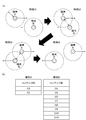
- (A) is a transition diagram showing an assumed scenario 1, and (b) is a diagram showing a possessed content situation.
- (A) is a functional block diagram of the communication terminal of 1st Embodiment which communicates with another communication terminal, (b) is a data format of content DB. It is a functional block diagram which shows the application of the communication terminal of 1st Embodiment. It is a flowchart which shows the whole operation
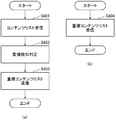
- (A) is a flowchart showing the content list transmission timing determination operation
- (b) is a flowchart showing the content list transmission operation, and (c) is a flowchart showing the content list reception operation. It is a functional block diagram of the communication terminal of 2nd Embodiment.
- (A) is a flowchart which shows the operation
- (b) is a flowchart which shows the operation
- (A) is a functional block diagram of the communication terminal of 3rd Embodiment
- (b) is an example of the Hello message containing the number of possessed contents. It is a flowchart which shows the whole operation
- (A) is a flowchart which shows the operation
- (b) is a flowchart which shows the operation
- FIG. 1 It is a flowchart which shows the whole operation
- (A) is a flowchart which shows the operation
- (b) is a flowchart which shows the operation
- (A) is a flowchart showing an operation of receiving a duplicate content list
- (b) is a flowchart showing an operation of content reception
- (c) is a sequence diagram showing an operation of content reception.
- (A) is a conceptual diagram explaining arrangement
- (b) is a transition diagram which shows the assumption scenario 2.
- (A) is a sequence diagram showing a content list exchanging method
- (b) is a diagram showing a set of contents possessed by communication terminal A and communication terminal B
- (c) is a
- FIG. 1A communication terminal A and communication terminal B are both out of the communication range (time t1), approach each other, enter the communication range at time t2, and establish communication. To do. It is assumed that the connection is maintained until time t3, and then communication is interrupted again at time t4.
- the communication terminal A and the communication terminal B possess contents at the time t1 as shown in FIG. That is, the communication terminal A possesses two contents with content IDs C2 and C3. On the other hand, the communication terminal B possesses a total of eight contents with content IDs C1, C3,.
- the content ID can identify the content, and examples include a content name, a content number (sequential number, etc.), or a hash value thereof.
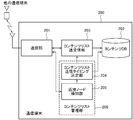
- FIG. 2A is a functional block diagram of the communication terminal according to the first embodiment communicating with another communication terminal
- FIG. 2B is a data format of the content DB.
- the communication terminal 100 according to the first embodiment of the present invention includes a communication unit 101, a content DB 102 (content DataBase 102) possessing content, and a content list transmission / reception unit 103 that performs content list transmission / reception processing.
- the communication terminal 100 includes a content list transmission timing determination unit 104 that determines the transmission timing of the content list.
- the content list management unit 108 includes a content list transmission timing determination unit 104 in the first embodiment, and has a function of instructing the content list transmission / reception unit 103 to transmit a content list at the calculated transmission timing. It does not matter whether the communication link between the communication terminal and another communication terminal is wireless or wired.
- the communication unit 101 has two functions.
- the first function is to receive a content list message from another communication terminal, and output the content list in the received message and the terminal identifier of the content list message transmission source communication terminal to the content list transmission / reception unit 103.
- the content list message is a message including a content list and a terminal identifier of the terminal itself.
- the content list is a list of content IDs, and may include a plurality of content IDs.
- the second function is to create a content list message including the terminal identifier of its own terminal from the content list received from the content list transmission / reception unit 103, and transmit it to any other communication terminal.
- the arbitrary terminal here is a designated communication terminal when designated by the content list transmission / reception unit 103. When there is no designation, it may be selected from known communication terminals in the network, may be selected at random, or may be a plurality of selected communication terminals (multicast). All communication terminals (broadcast) may be used.
- the content DB 102 stores the content by associating the content entity with the content ID, as shown in FIG.
- the content list transmission / reception unit 103 has two functions.
- the first function is to request the communication unit 101 to transmit the content list to an arbitrary communication terminal. Specifically, when a content list transmission instruction is received from the content list transmission timing determination unit 104, a list of content IDs of the content owned by the terminal is acquired from the content DB. Then, the communication unit 101 is requested to transmit the content list to another communication terminal without specifying the destination.
- the second function receives the content list and the terminal identifier of the content list message transmission source communication terminal from the communication unit 101, compares the content list with the own content list of its own terminal, and determines the duplicate possessed content with the content list message transmission source communication terminal. Is to detect. Specifically, the content list transmission / reception unit 103 acquires the possessed content list of the terminal from the content DB 102 and collates with the content list received from the communication unit 101 to detect duplicate possessed content.
- the content list transmission timing determination unit 104 has two functions.
- the first function determines the content list transmission timing based on the number of contents owned by the terminal itself.
- the second function outputs a content list transmission instruction to the content list transmission / reception unit 103 at the determined transmission timing.
- the content list transmission timing is calculated by one of the following three methods.
- the content list transmission timing may be calculated periodically or irregularly. 1. "probability” 2. Interval time 3. “Backoff time”
- a content list transmission instruction is output to the content list transmission / reception unit 103 with a probability p (0 ⁇ p ⁇ 1).
- the probability p is calculated as in the following formula (4).
- X is the number of contents possessed by the terminal, and X threshold is a constant.
- p 0.5, it means that a content list transmission instruction is output to the content list transmission / reception unit 103 with half the probability every time the content list transmission timing is calculated.
- the content list transmission timing determination unit 104 outputs a content list transmission instruction to the content list transmission / reception unit 103 for each interval time update .
- the content list transmission timing calculation and the interval time timer may be operated independently. For example, t update is updated as in the following formulas (5) and (6).
- tprevious is an interval time before update
- the number of contents owned by the terminal and the current content when updated last time are Xprevious and Xupdate , respectively.
- k and a are assumed to be constants.
- the “back-off time” is used for the calculation of the content list transmission timing, it is as follows. That is, the content list transmission timing determination unit 104 outputs a content list transmission instruction to the content list transmission / reception unit 103 after t backoff (seconds) of completion of content list transmission timing calculation. t backoff is calculated, for example, by the following equation (7).
- Any method is merely an example, and any method may be used as long as the transmission timing is calculated so that a communication terminal with a small number of contents transmits the content list first.
- an application processing unit that exchanges the content entity between the communication terminals and processes the content entity may be further included.
- the configuration in that case is shown in FIG.
- the communication terminal 100 in FIG. 3 further includes an application processing unit 109.
- the portions other than those related to the application processing unit 109 are the same as those in FIG.
- the application processing unit 109 in FIG. 3 has two functions.
- the first function is a function for acquiring arbitrary content (content ID and entity) from the content DB 102 and requesting the communication unit 101 to transmit the acquired content to another arbitrary communication terminal.
- the content and the destination communication terminal of the content may be selected at random, selected from a plurality, or all.
- This function may be executed at any timing. For example, it may be executed periodically or at a randomly selected time.
- the second function is a function for storing the content ID and content entity received from the communication unit 101 in the content DB 102.
- the communication unit 101 additionally includes two functions.
- the first function is to receive a content message from another communication terminal and deliver the content entity and content ID to the application processing unit 109.
- the second function is to create a content message from the content ID and entity received from the application processing unit 109 and send it to a designated communication terminal.
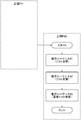
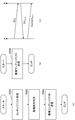
- FIG. 4 shows the entire operation sequence of the embodiment. All the operations in FIG. 4 are roughly divided into “process P11” indicating a series of flow until the content list transmission timing is determined, and “process P12” indicating a series of flow generated from the start of content list transmission. Is done.
- Process P11 includes an operation sequence (operation sequence 11 in FIG. 4) for determining the content list transmission timing, and details thereof will be described with reference to FIG.
- the timing at which this operation sequence is performed does not matter. This embodiment is effective regardless of whether it is performed regularly or irregularly.
- the operation S101 acquires the number of contents in the content DB of the own terminal.
- This operation is that the content list transmission timing determination unit 104 in FIG. 2A acquires the number of contents from the content DB 102.
- Operation S102 determines the content list transmission timing based on the number of contents acquired in operation S101. This operation is performed by the content list transmission timing determination unit 104 in FIG.
- the content list transmission timing based on the number of contents is calculated based on any one of “probability”, “interval time”, and “backoff time”, and uses the equations (4) to (7) in the description of the configuration. Calculated.
- Step P12 in FIG. 4 is an operation sequence from the start of transmission of the content list at the content list transmission timing determined in step P11.
- Step P12 in FIG. 4 includes an operation sequence for transmitting a content list message (operation sequence 12 in FIG. 4) and an operation sequence in which another communication terminal receives the content list message (operation sequence 13 in FIG. 4).
- operation S103 a content list of possessed content is acquired from the content DB of the own terminal. This operation is that the content list transmission / reception unit 103 in FIG. 2A acquires a list of content IDs from the content DB 102.
- Operation S104 transmits the content list acquired in operation S103 to an arbitrary communication terminal.
- the transmission destination of the content list may be selected randomly or from a plurality of known communication terminals in the network in advance.
- the content list transmission / reception unit 103 in FIG. 2 (a) passes a request for transmitting a content list addressed to an arbitrary communication terminal to the communication unit 101, and the communication unit 101 obtains a content list message from the content list and the terminal identifier of the terminal itself. Is created and sent to any communication terminal.
- the communication terminal receives a content list message transmitted from another communication terminal. This operation is performed by the communication unit 101 in FIG.
- Operation S106 compares the content list of the received content list message with the content list owned by the terminal, and detects duplicate content.
- the content transmission / reception unit 103 receives the received content list from the communication unit 101, acquires the content list of its own terminal from the content DB 102, and compares the content lists to detect duplicate content. is there.
- communication terminal A and communication terminal B independently acquire the number of contents of their own terminal (operation S101) and calculate the content list transmission timing (operation S102). At this time, since the communication terminal A has a smaller number of possessed content than the communication terminal B, the calculated content list transmission timing is assumed to be early.
- the communication terminal A whose content list transmission timing is early creates a content list of possessed content from the content DB of its own terminal (operation S103), and transmits the content list to an arbitrary communication terminal (operation S104).
- the content list is transmitted to all communication terminals (broadcast).
- the communication terminal B receives the content list transmitted from the communication terminal A (operation S105), compares the possessed content list of the content DB of the own terminal, and detects that only C3 is duplicate content (operation S106).
- the communication terminal A first transmits the content list including the two content IDs possessed, and the communication terminal B that has received the content list detects C3 that is duplicate content.
- the communication terminals with which communication has been established can detect duplicate possessed content with a low load.
- the load when one communication terminal detects duplicate possessed content is shown in Equation (1). If this embodiment is adopted, the smaller one of SVsize A and SVsize B is sent, so the control load Load1 is as follows.
- FIG. 6 shows a configuration of a communication terminal 200 according to the second embodiment of the present invention that communicates with another communication terminal.
- FIG. 6 has substantially the same configuration as that of the first embodiment of the present invention.
- the communication terminal 200 includes a communication unit 201, a content DB 202 possessing content, and a content list transmission / reception unit 203 that performs content list transmission / reception processing. Furthermore, the communication terminal 200 includes a content list transmission timing determination unit 204 that determines the transmission timing of the content list.
- the content list management unit 208 is newly provided with a proximity node detection unit 205.
- the second embodiment may also include an application processing unit. Since their configuration and operation are the same as those in the first embodiment, description thereof is omitted.
- the content list management unit 208 includes a content list transmission timing determination unit 204 and a proximity node detection unit 205 in the second embodiment, and has a function of instructing the content list transmission / reception unit 203 to transmit the content list at the calculated transmission timing. Have.
- the communication unit 201 has two functions in addition to the function of the communication unit 101.
- the first function is a function for receiving a Hello message from another communication terminal and delivering it to the neighboring node detection unit 205.
- the Hello message here is a message including at least the terminal identifier of the Hello message transmission source communication terminal.
- the destination of the Hello message may be a randomly selected communication terminal, a plurality of selected communication terminals (multicast), or all communication terminals (broadcast).
- the second function is a function that receives a Hello message transmission instruction from the neighboring node detection unit 205, creates a Hello message including the terminal identifier of the own terminal, and transmits it by broadcast.
- a Hello message transmission source communication terminal received from the content list transmission timing determination unit 204 may be specified as a destination.
- the content list transmission timing determination unit 204 has one function different from that of the content list transmission timing determination unit 104.
- the function is to update the transmission timing of the content list when receiving the proximity node detection notification from the proximity node detection unit 205 and the terminal identifier of the Hello message transmission source communication terminal.
- the content list transmission timing update may be performed at any time.
- the content list transmission timing is updated at the timing when a Hello message is received from another communication terminal.
- the calculation method of the content list transmission timing is the same as the calculation method in the content list transmission timing determination unit 104, and thus the description thereof is omitted.
- the terminal identifier of the Hello message transmission source communication terminal may be transferred.
- the proximity node detection unit 205 has two functions.
- the first function is to receive a Hello message from the communication unit 201 and deliver the proximity node detection notification and the terminal identifier of the Hello message transmission source communication terminal to the content list transmission timing determination unit 204.
- the second function is to output a Hello message transmission instruction to the communication unit 201 at regular time intervals. Note that the present embodiment is effective even when the regular time interval is not executed.
- FIG. 7 shows the entire operation sequence of the second embodiment. All the operations in FIG. 7 are roughly divided into two processes, “process P21” indicating a series of flow until the content list transmission timing is determined, and “process P22” indicating a series of flow generated from the start of content list transmission. Is done.
- Process P21 is an operation sequence (operation sequence 21 and operation sequence 22 in FIG. 7) for determining the content list transmission timing, and details thereof will be described with reference to FIGS. 8A and 8B, respectively.
- the operation sequence 21 is an operation for transmitting a Hello message, as shown in FIG.
- Operation S201 is executed at regular time intervals, creates a Hello message including the communication terminal identifier of the terminal itself, and transmits the destination as a broadcast to other communication terminals. This operation is performed by the proximity node detection unit 205 in FIG. 6 outputting a Hello message transmission instruction to the communication unit 201, and the communication unit 201 broadcasting a Hello message including the terminal identifier of the terminal itself.
- the operation sequence 22 is an operation for receiving a Hello message, as shown in FIG.
- the determination of the content list transmission timing may be performed at any time, but in the second embodiment, it is performed when a Hello message is received.
- Operation S202 receives a Hello message from another communication terminal.
- the communication unit 201 receives a Hello message from another communication terminal, and the terminal identifier of the communication terminal that is the source of the Hello message is delivered to the proximity node detection unit 205. Further, the neighboring node detection unit 205 outputs the proximity node detection notification and the terminal identifier of the communication terminal of the Hello message transmission source to the content list transmission timing determination unit to the content list transmission timing determination unit 204.
- Operation S203 and operation S204 are the same as the operation S101 and operation S102 of FIG. 5A of the first embodiment, and a description thereof will be omitted.
- Process P22 is an operation sequence from the start of content list transmission at the content list transmission timing determined in process P21.
- the process P22 includes an operation sequence for transmitting the content list (operation sequence 23 in FIG. 7) and an operation sequence in which another communication terminal receives the content list (operation sequence 24 in FIG. 7). Since the operation sequences 23 and 24 are the same as the operation sequences 12 and 13 of the first embodiment, description thereof is omitted.
- the communication terminal A and the communication terminal B each independently and independently transmit a Hello message including the communication terminal identifier of the own terminal (operation S201). It is assumed that the communication terminal A receives the Hello message of the communication terminal B at time t2 (operation S202). At that time, the communication terminal A acquires the number of contents owned by the terminal (operation S203), and determines the transmission timing of the content list of the terminal itself (operation S204). When the communication terminal B receives the Hello message from the communication terminal A, it determines the content list transmission timing in the same procedure. Since the transmission timing is calculated according to, for example, equations (4) to (7), a communication terminal with a small number of contents transmits a content list message first with a high probability (operation S103 and operation S104 in FIG. 5B). . In this case, the communication terminal A transmits the content list message first with a high probability.
- the communication terminal B performs the content list reception operation shown in FIG. That is, the content list message transmitted by the communication terminal A is received (operation S105 in FIG. 5C), and the list of possessed contents in the content DB 202 of the own terminal is compared, and only C3 is detected as duplicate content (FIG. 5). Operation 5106 (c) S106).
- the communication terminal A first transmits a content list message including two content IDs possessed by the communication terminal A, and the communication terminal B that receives the content list message detects C3 that is duplicate content.
- the communication terminal B that receives the content list message detects C3 that is duplicate content.
- FIG. 9A shows a configuration of a communication terminal 300 according to the third embodiment of the present invention that communicates with another communication terminal.
- FIG. 9B shows an example of a Hello message including the number of possessed contents.
- FIG. 9A shows almost the same configuration as that of the communication terminal 200 according to the second embodiment of the present invention.
- the communication terminal 300 of the present embodiment includes a communication unit 301, a content DB 302 possessing content, and a content list transmission / reception unit 303 that performs content list transmission / reception processing. Furthermore, the communication terminal 300 includes a content list transmission timing determination unit 304 that determines the transmission timing of the content list, and a proximity node detection unit 305.
- the third embodiment may also include an application processing unit. Since their configuration and operation are the same as those in the first embodiment, description thereof is omitted.
- the content list management unit 308 includes a content list transmission timing determination unit 304 and a proximity node detection unit 305, and instructs the content list transmission / reception unit 303 to transmit the content list at the calculated transmission timing. Has function.
- the communication unit 301 has the same function as the communication unit 201, description thereof is omitted. Since the content DB 302 has the same function as the content DB 202, the description is omitted. Since the content list transmission / reception unit 303 has the same function as the content list transmission / reception unit 203, the description thereof is omitted.
- the content list transmission timing determination unit 304 of the present embodiment has the function of the content list transmission timing determination unit 204. In addition to this, the content list transmission timing determination unit 304 determines the content list transmission timing based on the comparison result between the number of contents possessed by other communication terminals received from the proximity node detection unit 305 and the number of contents possessed by the own terminal. It has a function to decide.
- the number of contents owned by the terminal is acquired from the contents DB 302.
- the implementation of the function for determining the transmission timing of the content list may be performed when the proximity node detection unit 305 notifies the number of contents possessed by other communication terminals, or may be performed independently of the proximity node detection unit 305.
- the content list transmission timing is the same as that in the first embodiment, and is calculated by one of “probability”, “backoff time”, and “interval time”.
- the content list transmission timing determination unit 304 sends a content list transmission instruction to the content list transmission / reception unit 303 with a probability p (0 ⁇ p ⁇ 1) every time the transmission timing of the content list is calculated.
- the probability p is calculated by the following formula (9).
- g, h, a, and b are constants.
- the content list transmission timing determination unit 304 outputs a content list transmission instruction to the content list transmission / reception unit 303 for each interval time t update .
- the execution of the content list transmission timing calculation and the interval time timer may operate independently.
- t update is updated, for example, as in the following Expression (12), Expression (13), and Expression (14).
- tprevious is an interval time before update
- the number of contents owned by the terminal and the current number of contents when updated last time are XA_previous and XA_update , respectively.
- X B_previous and X B_update are defined for the communication terminal B. Or you may calculate as follows independently, without using previous tprevious . For example, it is calculated as follows using the ratio value “X A / X B ” and the difference value “X A -X B ” of the number of possessed contents. Or
- i, j, c, and d are assumed to be constants.
- the content list transmission timing determination unit 304 sends a content list transmission instruction to the content list transmission / reception unit 303 after t backoff (seconds) of completion of calculation of the content list transmission timing.
- Output. t backoff is calculated as follows using, for example, the ratio value “X A / X B ” of the number of possessed contents and the difference value “X A ⁇ X B ”.
- k, l, e, and f are constants.
- Any method is merely an example, and any method may be used as long as the transmission timing is calculated so that a communication terminal with a small number of contents transmits the content list first.
- the proximity node detection unit 305 has two functions.
- the first function is to acquire the number of contents owned by the terminal from the contents DB 302 and transmit to the communication unit 301 a Hello message (FIG. 9B) including the number of possessed contents to be sent to an arbitrary communication terminal. Is to ask. Implementation of this function shall be performed periodically. However, the present invention is effective even if this function is not implemented regularly.
- the information on the number of contents may be transmitted as a message different from the Hello message.
- the second function is to hand over the number of contents possessed by other communication terminals included in the Hello message received from the communication unit 301 to the content list transmission timing determination unit 304.
- FIG. 10 shows the entire operation sequence of the third embodiment. All the operations in FIG. 10 are roughly divided into “process P31” showing a series of flow until the content list transmission timing is determined and “process P32” showing a series of flow generated from the start of content list transmission. Is done.
- Process P31 is an operation sequence (operation sequence 31 and operation sequence 32 in FIG. 10) for determining content list transmission timing, and details thereof will be described with reference to FIGS. 11 (a) and 11 (b).
- the operation sequence 31 is an operation for transmitting a Hello message, as shown in FIG.
- operation S301 the number of contents stored in the content DB is acquired from the content DB of the terminal itself. This operation is that the adjacent node detection unit 305 acquires the number of contents from the content DB 302 in FIG.
- Operation S302 broadcasts a Hello message including the number of contents owned by the terminal acquired in Operation S301.
- the proximity node detection unit 305 requests the communication unit 301 to transmit a Hello message including the acquired content number of the own terminal.
- the communication unit 301 broadcasts a Hello message including the number of possessed contents as shown in FIG.
- the operation sequence 32 is an operation for receiving a Hello message, as shown in FIG.
- the communication terminal receives a Hello message from another communication terminal. That is, in FIG. 9A, the communication unit 301 receives a Hello message from another communication terminal.
- the communication unit 301 delivers the received Hello message to the proximity node detection unit 305, and the proximity node detection unit 305 delivers information on the number of contents in the Hello message to the content list transmission timing determination unit 304.
- Operation S304 is the same as operation S203 of FIG. In FIG. 9A, the content list transmission timing determination unit 304 acquires the number of contents owned by the terminal from the content DB 302.
- Operation S305 determines the transmission timing of the content list using the number of contents in the Hello message received from another communication terminal and the number of contents owned by the terminal acquired in the operation S304.
- the content list transmission timing is calculated by one of “probability”, “backoff time”, and “interval time”.
- the transmission timing is calculated by the equations (9) to (16) described in the description of the configuration of the third embodiment. These are merely examples, and it is only necessary to calculate the transmission timing so that a communication terminal with a small number of contents transmits a content list with a high probability.
- Process P32 is an operation sequence from the start of content list transmission at the content list transmission timing determined in process P31.
- the process P32 includes an operation sequence for transmitting a content list (operation sequence 33 in FIG. 10) and an operation sequence for other communication terminals to receive the content list (operation sequence 34 in FIG. 10).
- the communication terminal A and the communication terminal B independently acquire the number of owned contents of the own terminal from the content DB (operation S301), and periodically send a Hello message including the number of owned contents and the own communication terminal identifier. (Operation S302). It is assumed that the communication terminal A receives the Hello message of the communication terminal B at time t2 (operation S303). At that time, the communication terminal A acquires the number of contents owned by itself (operation S304), and determines the transmission timing of the content list of the own terminal based on the comparison result with the number of contents owned by other communication terminals (operation S304). S305). When the communication terminal B receives the Hello message from the communication terminal A, it determines the content list transmission timing in the same procedure.
- a communication terminal with a small number of contents transmits a content list message first with a high probability (FIG. 5).
- the communication terminal A transmits the content list message first with a high probability.
- the communication terminal B receives the content list message transmitted from the communication terminal A (operation S105 in FIG. 5C), compares the possessed content list of the content DB of its own terminal, and detects that only C3 is duplicate content. (Operation S106 in FIG. 5C).
- the communication terminal A transmits the content list message including the two content IDs possessed by the communication terminal A with a high probability, and the communication terminal A that has received the content list message detects C3 that is duplicate content.
- the communication terminal A that has received the content list message detects C3 that is duplicate content.
- FIG. 12 shows a configuration of a communication terminal 400 according to the fourth embodiment of the present invention that communicates with another communication terminal.
- FIG. 12 has almost the same configuration as the communication terminal of the first to third embodiments.
- the communication terminal 400 includes a communication unit 401, a content DB 402 possessing content, an integrated content list transmission / reception unit 403, and a content list management unit 408.
- the communication unit 401 of this embodiment corresponds to the communication unit 301 of the third embodiment
- the content DB 402 corresponds to the content DB 302.
- the integrated content list transmission / reception unit 403 of this embodiment corresponds to the content list transmission / reception unit 303 of the third embodiment, but has different functions.
- the fourth embodiment may also include an application processing unit. Since their configuration and operation are the same as those in the first embodiment, description thereof is omitted.
- the content list management unit 408 has a function of instructing the content list transmission / reception unit 403 to transmit the content list at the calculated transmission timing.
- the content list management unit 408 may be the content list management unit 108 of FIG. 2A of the first embodiment, the content list management unit 208 of FIG. 6 of the second embodiment, or FIG. 9A of the third embodiment. Any content list management unit 308 may be used.
- the communication unit 401 includes the functions of the communication unit 301 and has two functions.
- the first function is to create a duplicate content list message from the duplicate content list received from the integrated content list transmission / reception unit 403 and the terminal identifier of the own terminal, and send it to the designated communication terminal.
- the second function is to deliver the duplicate content list of the duplicate content list message received from another communication terminal and the terminal identifier of the duplicate content list message transmission source terminal to the integrated content list transmission / reception unit 403.
- the integrated content list transmission / reception unit 403 has three functions.
- the first function is to receive the content list transmission instruction from the content list management unit 408, acquire the content list of the own terminal from the content DB 402, and request the communication unit 401 to transmit it to an arbitrary terminal. It is.
- the second function receives a content list from another communication terminal from the communication unit 401 and compares it with a content list possessed by the terminal itself to detect duplicate content. This is to request the communication unit 401 to transmit the detected list of duplicate contents (duplicate content list) to the content list message transmission source communication terminal.
- the third function is to receive the duplicate content list and the terminal identifier of the duplicate content list message transmission source terminal from the communication unit 401, and detect duplicate possessed content with the duplicate content list message transmission source communication terminal.
- FIG. 13 shows the entire operation sequence of the fourth embodiment. All the operations in FIG. 13 are roughly divided into “process P41” indicating a series of flow until the transmission timing of the content list is determined and “process P42” indicating a series of flow generated from the start of content list transmission. Is done.
- the process P41 is an operation sequence for determining the content list transmission timing.
- the process P31 may be replaced with any of them.
- Process P42 is an operation sequence from the start of content list transmission at the content list transmission timing determined in process P41.
- Step P42 includes an operation sequence for transmitting a content list message (operation sequence 41 in FIG. 13) and an operation sequence for other communication terminals to receive the content list message (operation sequence 42 in FIG. 13). Further, the process P42 includes an operation sequence (operation sequence 43 in FIG. 13) for receiving the returned duplicate content list message.
- the operation sequence 41 is the same as the operation sequence 33 of FIG. 10 of the third embodiment, the description thereof is omitted.
- the operation sequence 42 is an operation sequence when a content list message is received, and is as shown in FIG.
- the communication terminal receives a content list message from another communication terminal. That is, in FIG. 12, the communication unit 401 receives a content list message from another communication terminal, and hands over the content list of the received content list message and the terminal identifier of the transmission source communication terminal to the integrated content list transmission / reception unit 403. .
- Operation S402 compares the received content list with the possessed content list of the terminal, and detects duplicate possessed content.
- the integrated content list transmission / reception unit 403 receives the content list from the communication unit 401, acquires the content list of the own terminal from the content DB 402, and compares the content lists to detect duplicate content.
- Operation S403 is to return the duplicate possessed content detected in operation S402 to the content list message transmission source communication terminal.
- the integrated content list transmission / reception unit 403 requests the communication unit 401 to transmit the duplicate possessed content to the content list message transmission source communication terminal, and the communication unit 401 transmits the duplicate content message to the destination communication terminal. It is to be.
- the operation sequence 43 is an operation sequence when a duplicate content list message is received, and is as shown in FIG.
- the communication unit 401 receives the duplicate content list message received from another communication terminal, and passes the duplicate content list of the duplicate content list message and the terminal identifier of the transmission source communication terminal to the integrated content list transmission / reception unit 403.
- operation S404 is that the integrated content list transmission / reception unit 403 detects duplicate possessed content with other communication terminals.
- the communication terminal A and the communication terminal B independently calculate the content list transmission timing (step P41 in FIG. 13).
- a communication terminal with a small number of contents transmits a content list message with high probability.
- the communication terminal A transmits a content list message (operation sequence 41 in FIG. 13).
- the communication terminal B receives the content list message transmitted from the communication terminal A (operation S401), compares the list of possessed contents in the content DB of its own terminal, and detects that only C3 is duplicate content (operation S402).
- the duplicate content list message is returned to communication terminal A that is the communication terminal of the content list message (operation S403).
- the communication terminal A receives the duplicate content list message transmitted from the communication terminal B, and detects the duplicate content (operation S404).
- the communication terminal A first transmits a content list message including two content IDs possessed by the communication terminal A, and the communication terminal B that receives the content list message detects C3 that is duplicate content.
- the communication terminal B returns the list to the communication terminal A, so that the communication terminal A and the communication terminal B can detect overlapping contents with each other with a low load.
- the load when both communication terminals detect duplicate possessed content is shown in Equation (2).
- the content list of the communication terminal A and the content list of the communication terminal B are sent first, and the content list with the smaller size is sent first, and then the duplicate content list is returned, so the control load is as follows: become.
- FIG. 15 shows a configuration of a communication terminal 500 according to the fifth embodiment of the present invention, which communicates with other communication terminals.
- FIG. 15 has substantially the same configuration as that of the fourth embodiment of FIG.
- the communication terminal 500 includes a communication unit 501, a content DB 502 possessing content, an integrated content list transmission / reception unit 503, a content list management unit 508, and an application processing unit 509.
- the communication unit 501 of this embodiment corresponds to the communication unit 401 of the fourth embodiment
- the content DB 502 corresponds to the content DB 402
- the content list management unit 508 corresponds to the content list management unit 408.
- the application processing unit 109 of FIG. 3 may or may not be provided, but in the fifth embodiment, the application processing unit 509 is essential.
- the communication unit 501 has the same function as the communication unit 401, description thereof is omitted. However, unlike the first to fourth embodiments, a function for transmitting content received from the application processing unit 509 to a designated communication terminal and a function for delivering a content message received from another communication terminal to the application processing unit 509 are essential. It is.
- the integrated content list transmission / reception unit 503 has substantially the same function as that of the integrated content list transmission / reception unit 403 of the fourth embodiment. However, the integrated content list transmission / reception unit 503 receives the duplicate content list of the duplicate content list message and the terminal identifier of the transmission source communication terminal from the communication unit. The operation of is different. The integrated content list transmission / reception unit 503 receives the duplicate content list of the duplicate content list message and the terminal identifier of the transmission source communication terminal from the communication unit 501, and detects the duplicate possessed content with the duplicate content list message transmission source communication terminal. Thereafter, in addition to this operation, the duplicate content list and the terminal identifier of the duplicate content list transmission source communication terminal are output to the application processing unit 509.
- the application processing unit 509 has one function in addition to the function of the application processing unit 109.
- the function receives the duplicate content list of the duplicate content list message and the terminal identifier of the transmission source communication terminal from the integrated content list transmission / reception unit 503.
- the content entity having the content ID not described in the duplicate content list is acquired from the content DB 502.
- the application processing unit 509 requests the communication unit 501 to transmit the content entity acquired from the content DB 502 to the transmission source communication terminal of the duplicate content list message.
- FIG. 16 shows the entire operation sequence of the fifth embodiment. All the operations are roughly divided into “process P51” indicating a series of flow until the content list transmission timing is determined and “process P52” indicating a series of flow generated from the start of content list transmission.
- the process P51 is an operation sequence for determining the content list transmission timing.
- the process P31 may be replaced with any of them.
- Process P52 is an operation sequence from the start of content list transmission at the content list transmission timing determined in process P51.
- Step P52 includes an operation sequence for transmitting a content list message (operation sequence 51 in FIG. 16) and an operation sequence for other communication terminals to receive the content list message (operation sequence 52 in FIG. 16).
- the process P52 includes an operation sequence (operation sequence 53 in FIG. 16) for receiving the returned duplicate content list message, an operation sequence (operation sequence 54 in FIG. 16) for other communication terminals to receive an unowned content message, and ,including.
- the operation sequence 53 is an operation sequence for receiving a content list, as shown in FIG.
- the communication terminal receives a duplicate content list message from another communication terminal.
- the communication unit 501 receives a duplicate content list message from another communication terminal, and hands over the duplicate content list of the duplicate content list message and the terminal identifier of the transmission source communication terminal to the integrated content list transmission / reception unit 503.
- Operation S502 grasps duplicate possessed content from the received duplicate content list message.
- the duplicate content list of the duplicate content list message received by the integrated content list transmission / reception unit 503 and the terminal identifier of the transmission source communication terminal are handed over to the application processing unit 509.
- Operation S503 transmits an unowned content message to the duplicate content list message transmission source communication terminal.
- the operation S503 corresponds to the application processing unit 509 acquiring the content entity not described in the duplicate content list from the content DB 502. Further, the operation S503 corresponds to requesting the communication unit 501 to transmit to the duplicate content list transmission source communication terminal in FIG. 15, and the communication unit 501 transmits a message of the content (unowned content).
- the operation sequence 54 is an operation sequence for receiving unowned content, as shown in FIG.
- Operation S504 receives the unowned content transmitted in the operation sequence 53.
- the communication unit 501 receives an unowned content message, delivers the received content to the application processing unit 509, and the application processing unit 509 stores the entity and content ID of the unowned content in the content DB 502.
- communication terminal A and communication terminal B independently calculate the content list transmission timing (step P51 in FIG. 16).
- a communication terminal with a small number of contents transmits a content list message with high probability.
- the communication terminal A transmits a content list message.
- the communication terminal B receives the content list message transmitted from the communication terminal A (operation S401 in FIG. 14A), compares the possessed content list of its own content DB, and detects that only C3 is duplicate content. (Operation S402 in FIG. 14A).
- the duplicate content list message is returned to communication terminal A, which is the communication terminal of the content list (operation S403 in FIG. 14A).
- Communication terminal A receives the duplicate content list message from communication terminal B (operation S501), and detects that C3 is duplicated (operation S502). The communication terminal A knows that the communication terminal B has no content other than C3, and transmits C2 (unowned content) to the communication terminal B (operation S503).
- the communication terminal B receives the unowned content and stores it in the content DB of its own terminal (operation S504).
- the communication terminal A transmits the content list including the two content IDs possessed by the communication terminal A with high probability, and the communication terminal B that has received the content list detects C3 that is duplicate content.
- the communication terminal B returns the list to the communication terminal A, so that the communication terminal A can transmit the unowned content of the communication terminal B, and the communication terminal B acquires the unowned content with a low control load in the entire network. It becomes possible to do.
- FIG. 17C illustrates the exchange of the content list message and the content message according to the fifth embodiment.
- the communication terminal A transmits a content list message (SV A in FIG. 17C) of the content held by the communication terminal A.
- the communication terminal B that has received the content list message returns a duplicate content list message (SV A ⁇ B in FIG. 17C).
- the communication terminal A that has received the duplicate content list message transmits a content message (Content A ⁇ B in FIG. 17C ) that the communication terminal B does not possess.
- the communication terminal A can transmit the content not owned by the communication terminal B with a low control load without receiving the content list of the communication terminal B expected to be large in size.
- the load Load3 when both communication terminals detect duplicate possessed content is shown in Expression (3).
- the communication terminal A transmits the content list first, the communication terminal B transmits the duplicate content list, and the communication terminal A transmits the unowned content of the communication terminal B. become that way.
- the first effect is that any one communication terminal between communication terminals with which communication has been established can detect duplication of possessed content with a small control load. This is because a communication terminal with a small number of contents transmits a list of possessed contents first.
- the second effect is that both communication terminals can detect duplication of contents held by each other with a small control load between communication terminals with which communication has been established. This is because a communication terminal with a small number of contents transmits a list of possessed contents first with a high probability, and a communication terminal with a large number of contents responds with a duplicated content list.
- the third effect is that any one communication terminal between the communication terminals with which communication has been established can transmit unowned content to the other communication terminal with a small control load. This is because a communication terminal with a small number of contents transmits a list of possessed contents first with a high probability. Furthermore, a communication terminal with a large number of contents responds with a duplicated content list, and a communication terminal with a small number of contents transmits a content not described in the duplicated possessed content list.
- the communication terminal of the above-described embodiment can also be realized by an information processing apparatus that can execute a program that realizes the above-described operation.
- This program can be distributed in the form of a computer-readable recording medium. By reading a program recorded in such a recording medium and executing it by the information processing apparatus, the communication terminal of the above-described embodiment can be realized in software.
- the information processing apparatus includes a memory composed of a CPU (Central Processing Unit), a RAM (Random Access Memory), and the like.
- a CPU Central Processing Unit
- RAM Random Access Memory
- the communication terminal according to the embodiment of the present invention can also be realized by causing the information processing apparatus to read and execute an information sharing program that realizes the function of each element.
- this information sharing program can be distributed in the form of a recording medium on which the program is recorded.
- This program is a general-purpose semiconductor recording device such as CF (Compact Flash (registered trademark)) and SD (Secure Digital), a magnetic recording medium such as a flexible disk, or a CD-ROM (Compact Disc Read Only Memory). ) And the like in the form of an optical recording medium.
- a part or all of the above-described embodiment can be described as in the following supplementary notes, but is not limited thereto.
- a communication unit that communicates with other terminals, a content holding unit that holds content, a content list transmission / reception unit that transmits / receives a content list related to the held content, and transmission of the content list based on the number of possessed contents
- a communication terminal comprising: a transmission timing determination unit that determines timing.
- the communication terminal according to supplementary note 1 further comprising a proximity node detection unit that detects a neighboring node.
- (Supplementary note 3) The communication terminal according to supplementary note 2, wherein the content list transmission / reception unit updates the transmission timing of the content list when a neighboring node is detected.
- (Supplementary note 4) The communication terminal according to any one of supplementary notes 1 to 3, wherein the transmission timing determination unit determines whether or not to transmit a content list based on the number of contents owned by the terminal itself.
- (Supplementary note 5) The communication according to any one of supplementary notes 1 to 3, wherein the transmission timing determination unit determines the transmission timing of the content list based on a probability having a negative correlation with the number of possessed contents. Terminal.
- Supplementary note 6 Any one of Supplementary notes 1 to 3, wherein the transmission timing determination unit determines the transmission timing of the content list based on an interval time having a positive correlation with the number of contents owned by the terminal itself.
- the communication terminal described in 1. (Supplementary note 7) In any one of Supplementary notes 1 to 3, the transmission timing determining unit determines the transmission timing of the content list based on a back-off time that monotonously increases with respect to the number of content possessed by the terminal itself. The communication terminal described.
- a control message including the number of contents owned by the own terminal is transmitted, a control message including the number of contents owned by the other terminal is received, and the received number of contents owned by the other terminal and the number of owned contents of the own terminal are determined.
- the communication terminal according to any one of supplementary notes 1 to 3, further comprising a possessed content number comparison unit for comparison.
- the said transmission timing determination part is a communication terminal of Additional remark 8 which determines whether a content list is sent or not based on the number of contents possessed by another terminal, and the number of contents possessed by the own terminal.
- the said transmission timing determination part is the difference value which subtracted the number of contents owned by the other terminal from the ratio value when the number of contents owned by the own terminal is divided by the number of contents owned by the other terminal or the number of contents owned by the own terminal.
- the communication terminal according to appendix 8 wherein the transmission timing of the content list is determined based on a probability of having a negative correlation with at least one of these values.
- the said transmission timing determination part calculates the number of contents possessed by another communication terminal from the ratio value when the number of contents possessed by the terminal is divided by the number of contents possessed by another communication terminal or the number of contents possessed by the own terminal.
- the communication terminal according to appendix 8 wherein the transmission timing of the content list is determined based on the subtracted difference value and an interval time having a positive correlation with at least one of these values.
- the transmission timing determination unit obtains the number of contents owned by another communication terminal from the ratio value when the number of contents owned by the terminal is divided by the number of contents owned by another communication terminal or the number of contents owned by the terminal.
- the said transmission timing determination part is a communication terminal of Additional remark 8 to which a communication terminal with a smaller content number sends a content list previously.
- the said transmission timing determination part is a communication terminal of Additional remark 8 which determines whether a content list is sent or not, by comparing the number of contents possessed by another terminal and the number of possessed contents of the own terminal.
- the said transmission timing determination part is a communication terminal of Additional remark 15 which determines not sending a content list
- the communication terminal according to any one of supplementary notes 1 to 16, wherein the content list transmitting / receiving unit transmits and receives a duplicate content list in addition to the content list.
- the said content list transmission / reception part is a communication terminal of Additional remark 17 which responds to the said duplicate content list to the terminal of a content list transmission origin at the time of content list reception.
- (Supplementary note 19) The communication terminal according to any one of supplementary notes 1 to 18, further comprising a content transmission / reception unit that transmits and receives content.
- (Supplementary note 20) The communication terminal according to supplementary note 19, wherein when the content transmission / reception unit receives a duplicate content list, the content transmission / reception unit replies with a content not described in the duplicate content list to the communication terminal of the duplicate content list transmission source.
- (Supplementary note 22) An information sharing method for detecting content that is duplicated among a plurality of communication terminals, holding the content, transmitting / receiving a content list to / from other communication terminals, and detecting duplicate possessed content And an information sharing method for determining the transmission timing of the content list based on the number of possessed contents.
- (Supplementary note 23) The information sharing method according to supplementary note 22, wherein adjacent nodes are detected.
- (Supplementary note 24) The information sharing method according to supplementary note 23, wherein the transmission timing of the content list is updated when a neighboring node is detected.
- (Supplementary note 25) The information sharing method according to any one of supplementary notes 22 to 24, wherein it is determined whether or not to transmit a content list based on the number of contents owned by the terminal itself.
- (Supplementary note 26) The information sharing method according to any one of supplementary notes 22 to 24, wherein the transmission timing of the content list is determined based on a probability having a negative correlation with the number of contents possessed by the terminal itself.
- (Supplementary note 27) The information sharing method according to any one of supplementary notes 22 to 24, wherein the transmission timing of the content list is determined based on an interval time having a positive correlation with the number of contents owned by the terminal itself.
- (Supplementary note 37) The information sharing method according to supplementary note 36, wherein when the number of contents owned by the terminal is larger than the number of contents owned by another terminal, it is determined not to send the content list.
- (Supplementary note 38) The information sharing method according to any one of supplementary notes 22 to 37, wherein a duplicate content list is transmitted and received in addition to the content list.
- (Supplementary note 39) The information sharing method according to supplementary note 38, wherein when the content list is received, the duplicate content list is returned to the communication terminal of the content list transmission source.
- (Supplementary note 40) The information sharing method according to any one of supplementary notes 22 to 39, wherein content is transmitted and received between communication terminals.
- (Supplementary note 44) The information sharing program according to supplementary note 43, wherein the content list transmitting / receiving means updates the transmission timing of the content list when a neighboring node is detected.
- (Supplementary note 45) The information sharing program according to any one of supplementary notes 42 to 44, wherein the transmission timing determining means determines whether or not to transmit a content list based on the number of contents possessed by the terminal itself.
- (Supplementary note 46) The information according to any one of supplementary notes 42 to 44, wherein the transmission timing determining means determines the transmission timing of the content list based on a probability having a negative correlation with the number of possessed contents. Shared program.
- Supplementary Note 47 Any one of Supplementary Notes 42 to 44, wherein the transmission timing determining means determines the transmission timing of the content list based on an interval time having a positive correlation with the number of contents owned by the terminal itself. Information sharing program described in. (Supplementary Note 48) In any one of Supplementary Notes 42 to 44, the transmission timing determining means determines the transmission timing of the content list based on a backoff time that monotonously increases with respect to the number of content possessed by the terminal itself. The information sharing program described.
- the computer transmits a control message including the number of contents owned by the terminal, receives a control message including the number of contents owned by the other terminal, and receives the number of contents owned by the other terminal and the own terminal.
- the information sharing program according to any one of appendix 42 to appendix 44, further causing it to function as possessed content number comparing means for comparing the possessed content number.
- the information sharing program according to supplementary note 49, wherein the transmission timing determining means determines whether or not to send a content list based on the number of contents owned by another terminal and the number of contents owned by the terminal itself.
- the transmission timing determination means is a ratio value obtained by dividing the number of contents owned by the terminal by the number of contents owned by the other terminal or a difference value obtained by subtracting the number of contents owned by the other terminal from the number of contents owned by the own terminal. 50.
- the transmission timing determining means obtains the number of owned contents of another communication terminal from the ratio value obtained by dividing the number of owned contents of the own terminal by the number of owned contents of another communication terminal or the number of owned contents of the own terminal. 49.
- the information sharing program according to appendix 49 wherein the content list transmission timing is determined based on the subtracted difference value and an interval time having a positive correlation with at least one of these values.
- the transmission timing determination means obtains the number of contents owned by another communication terminal from the ratio value obtained by dividing the number of contents owned by the terminal by the number of contents owned by another communication terminal or the number of contents owned by the own terminal. 50.
Landscapes
- Engineering & Computer Science (AREA)
- Computer Networks & Wireless Communication (AREA)
- Signal Processing (AREA)
- Theoretical Computer Science (AREA)
- Physics & Mathematics (AREA)
- General Engineering & Computer Science (AREA)
- General Physics & Mathematics (AREA)
- Information Transfer Between Computers (AREA)
- Mobile Radio Communication Systems (AREA)
- Two-Way Televisions, Distribution Of Moving Picture Or The Like (AREA)
Abstract
L'invention concerne un terminal de communication, un système de communication, un procédé de partage d'informations et un programme de partage d'informations, qui sont capables de réduire la charge de commande lors de la détection de contenu conservé en double parmi une pluralité de terminaux de communication. Un terminal de communication comporte: une unité de communication qui communique avec un autre terminal; une unité de conservation de contenu qui conserve un contenu; une unité d'émission et de réception de listes de contenu qui émet et reçoit une liste de contenu se rapportant au contenu conservé; et une unité de détermination d'instant d'émission qui détermine l'instant où émettre la liste de contenu d'après le nombre d'éléments de contenu conservés.
Priority Applications (2)
| Application Number | Priority Date | Filing Date | Title |
|---|---|---|---|
| US16/089,550 US11228635B2 (en) | 2016-03-30 | 2017-03-22 | Information sharing method |
| JP2018509109A JP6888615B2 (ja) | 2016-03-30 | 2017-03-22 | 情報共有方式 |
Applications Claiming Priority (2)
| Application Number | Priority Date | Filing Date | Title |
|---|---|---|---|
| JP2016068540 | 2016-03-30 | ||
| JP2016-068540 | 2016-03-30 |
Publications (1)
| Publication Number | Publication Date |
|---|---|
| WO2017170010A1 true WO2017170010A1 (fr) | 2017-10-05 |
Family
ID=59965486
Family Applications (1)
| Application Number | Title | Priority Date | Filing Date |
|---|---|---|---|
| PCT/JP2017/011327 Ceased WO2017170010A1 (fr) | 2016-03-30 | 2017-03-22 | Procédé de partage d'informations |
Country Status (3)
| Country | Link |
|---|---|
| US (1) | US11228635B2 (fr) |
| JP (1) | JP6888615B2 (fr) |
| WO (1) | WO2017170010A1 (fr) |
Families Citing this family (1)
| Publication number | Priority date | Publication date | Assignee | Title |
|---|---|---|---|---|
| WO2017170010A1 (fr) * | 2016-03-30 | 2017-10-05 | 日本電気株式会社 | Procédé de partage d'informations |
Citations (2)
| Publication number | Priority date | Publication date | Assignee | Title |
|---|---|---|---|---|
| WO2011071045A1 (fr) * | 2009-12-09 | 2011-06-16 | 日本電気株式会社 | Système de partage d'informations, dispositif de communication, procédé de régulation et programme |
| JP2014138241A (ja) * | 2013-01-16 | 2014-07-28 | Hiroshima City Univ | モバイルアドホックネットワークアーキテクチャー及びモバイルアドホックネットワークアーキテクチャーの通信方法 |
Family Cites Families (17)
| Publication number | Priority date | Publication date | Assignee | Title |
|---|---|---|---|---|
| CA2486671C (fr) * | 2002-05-31 | 2011-11-15 | Onkyo Corporation | Systeme de reproduction de contenu de type reseau |
| KR100654447B1 (ko) * | 2004-12-15 | 2006-12-06 | 삼성전자주식회사 | 지역별로 존재하는 컨텐츠를 글로벌로 공유하고 거래하는방법 및 시스템 |
| US7647346B2 (en) * | 2005-03-29 | 2010-01-12 | Microsoft Corporation | Automatic rules-based device synchronization |
| KR100823273B1 (ko) * | 2006-06-30 | 2008-04-21 | 삼성전자주식회사 | UPnP 컨텐트 디렉토리 서비스를 동기화하는 방법 및장치 |
| JP2008250569A (ja) * | 2007-03-29 | 2008-10-16 | Brother Ind Ltd | コンテンツ配信システム及びその情報処理方法並びにコンテンツ管理装置及びそのプログラム |
| KR101472785B1 (ko) * | 2008-01-07 | 2014-12-16 | 삼성전자주식회사 | 멀티미디어 콘텐츠의 최적화 공유 방법 및 그를 이용한 모바일 단말기 |
| EP2304777A1 (fr) * | 2008-07-15 | 2011-04-06 | Solvay Fluor und Derivate GmbH | Procédé de fabrication d'articles gravés |
| US8682903B2 (en) * | 2009-06-30 | 2014-03-25 | International Business Machines Corporation | System and method for synchronized content directories on cluster devices |
| CN102741800B (zh) * | 2009-09-18 | 2015-11-25 | 株式会社日立制作所 | 删除复制数据的存储系统 |
| US9606993B2 (en) * | 2009-11-23 | 2017-03-28 | Blackberry Limited | Virtual collection of entities in sync process |
| EP2635983A4 (fr) * | 2010-11-03 | 2017-03-08 | Mobile Imaging in Sweden AB | Synchronisation multimédia progressive |
| FR2988971A1 (fr) * | 2012-03-30 | 2013-10-04 | France Telecom | Procede de delivrance d'un message "localise" a un terminal d'utilisateur destinataire, procede de traitement, dispositifs et programmes d'ordinateurs associes |
| KR101943988B1 (ko) * | 2012-07-27 | 2019-01-31 | 삼성전자주식회사 | 컨텐트 전송 방법 및 시스템, 기기와 그 기록 매체 |
| US9807780B2 (en) * | 2012-11-19 | 2017-10-31 | Nec Corporation | Data sharing system |
| US20150332225A1 (en) * | 2014-05-15 | 2015-11-19 | Matthew Earl Schulz | System and method for sharing media items |
| JPWO2016103567A1 (ja) * | 2014-12-25 | 2017-10-05 | 日本電気株式会社 | 通信端末、コンテンツ配信システム、コンテンツ配信方法および通信端末制御プログラム |
| WO2017170010A1 (fr) * | 2016-03-30 | 2017-10-05 | 日本電気株式会社 | Procédé de partage d'informations |
-
2017
- 2017-03-22 WO PCT/JP2017/011327 patent/WO2017170010A1/fr not_active Ceased
- 2017-03-22 US US16/089,550 patent/US11228635B2/en active Active
- 2017-03-22 JP JP2018509109A patent/JP6888615B2/ja active Active
Patent Citations (2)
| Publication number | Priority date | Publication date | Assignee | Title |
|---|---|---|---|---|
| WO2011071045A1 (fr) * | 2009-12-09 | 2011-06-16 | 日本電気株式会社 | Système de partage d'informations, dispositif de communication, procédé de régulation et programme |
| JP2014138241A (ja) * | 2013-01-16 | 2014-07-28 | Hiroshima City Univ | モバイルアドホックネットワークアーキテクチャー及びモバイルアドホックネットワークアーキテクチャーの通信方法 |
Non-Patent Citations (1)
| Title |
|---|
| SACHIKO TAKENAKA: "Performance Evaluation of Cooperative Information Sharing Methods in Opportunistic Networks due to Different Mobility Patterns", IEICE TECHNICAL REPORT, vol. 115, no. 496, 29 February 2016 (2016-02-29), pages 83 - 88 * |
Also Published As
| Publication number | Publication date |
|---|---|
| JPWO2017170010A1 (ja) | 2019-02-14 |
| US11228635B2 (en) | 2022-01-18 |
| JP6888615B2 (ja) | 2021-06-16 |
| US20200304558A1 (en) | 2020-09-24 |
Similar Documents
| Publication | Publication Date | Title |
|---|---|---|
| JP5772597B2 (ja) | 情報共有システム | |
| WO2004110082B1 (fr) | Systeme et procede pour localiser un dispositif dans un reseau de communication hertzienne | |
| EP2974087A2 (fr) | Procede et appareil pour ameliorer des protocoles de routage dans des reseaux mailles sans fil | |
| JP4805646B2 (ja) | センサ端末、センサ端末の制御方法 | |
| KR101546759B1 (ko) | 지연 허용 네트워크에서 메시지 복사 횟수에 기반한 메시지 전달 방법, 이를 수행하기 위한 기록 매체 및 장치 | |
| CN104704882B (zh) | 用于在通信终端之间交换信息的方法和通信终端 | |
| JP5803904B2 (ja) | 情報共有方法および通信端末 | |
| KR20110116554A (ko) | 가십 기반의 p2p 서비스의 파트너쉽 형성 방법 및 장치 | |
| CN105379317B (zh) | 基于邻近的社交交互的方法和系统 | |
| RU2586598C2 (ru) | Тиражирование данных | |
| JP6888615B2 (ja) | 情報共有方式 | |
| CA2457909A1 (fr) | Methode et systeme d'auto-organisation de la transmission fiable de donnees par trajets multiples sur un reseau | |
| CN111869246B (zh) | 消息传输的方法、ble设备和ble芯片 | |
| WO2022047612A1 (fr) | Procédé de communication de dispositif sans fil, dispositif sans fil et support de stockage lisible par ordinateur | |
| KR101427087B1 (ko) | 지연 허용 네트워크에서의 메시지 전송 장치 및 방법 | |
| CN104901888A (zh) | 一种基于活跃性调节的时延容忍网络数据路由方法 | |
| CN114124275B (zh) | 一种时间同步方法、装置、设备及存储介质 | |
| CN108429678A (zh) | 一种基于历史接触信息和ttl的eer路由协议 | |
| CN112042229B (zh) | 一种数据包传输方法及设备 | |
| Miller et al. | Reliable and efficient reprogramming in sensor networks | |
| US10715390B2 (en) | Service optimization method, transport controller, client controller, and system | |
| KR101534527B1 (ko) | 지연 허용 네트워크에서 노드의 체류 이력에 기반한 메시지 전달 방법, 이를 수행하기 위한 기록 매체 및 장치 | |
| KR102280289B1 (ko) | 메시지 복사 제한을 이용한 지연 허용 네트워크 라우팅 프로토콜 기반의 메시지 전송 방법, 이를 수행하기 위한 기록 매체 및 장치 | |
| CN102201989A (zh) | Wait and Epidemic路由算法 | |
| Xie et al. | Routing for group mobility in mobile ad hoc networks with delay-tolerant approach |
Legal Events
| Date | Code | Title | Description |
|---|---|---|---|
| WWE | Wipo information: entry into national phase |
Ref document number: 2018509109 Country of ref document: JP |
|
| NENP | Non-entry into the national phase |
Ref country code: DE |
|
| 121 | Ep: the epo has been informed by wipo that ep was designated in this application |
Ref document number: 17774551 Country of ref document: EP Kind code of ref document: A1 |
|
| 122 | Ep: pct application non-entry in european phase |
Ref document number: 17774551 Country of ref document: EP Kind code of ref document: A1 |