WO2017170404A1 - Dispositif d'émergence de pensée, procédé d'émergence de pensée et programme d'émergence de pensée - Google Patents
Dispositif d'émergence de pensée, procédé d'émergence de pensée et programme d'émergence de pensée Download PDFInfo
- Publication number
- WO2017170404A1 WO2017170404A1 PCT/JP2017/012398 JP2017012398W WO2017170404A1 WO 2017170404 A1 WO2017170404 A1 WO 2017170404A1 JP 2017012398 W JP2017012398 W JP 2017012398W WO 2017170404 A1 WO2017170404 A1 WO 2017170404A1
- Authority
- WO
- WIPO (PCT)
- Prior art keywords
- substance
- state
- intention
- emotion
- elements
- Prior art date
- Legal status (The legal status is an assumption and is not a legal conclusion. Google has not performed a legal analysis and makes no representation as to the accuracy of the status listed.)
- Ceased
Links
Images



Classifications
-
- A—HUMAN NECESSITIES
- A61—MEDICAL OR VETERINARY SCIENCE; HYGIENE
- A61B—DIAGNOSIS; SURGERY; IDENTIFICATION
- A61B5/00—Measuring for diagnostic purposes; Identification of persons
- A61B5/16—Devices for psychotechnics; Testing reaction times ; Devices for evaluating the psychological state
-
- G—PHYSICS
- G06—COMPUTING OR CALCULATING; COUNTING
- G06N—COMPUTING ARRANGEMENTS BASED ON SPECIFIC COMPUTATIONAL MODELS
- G06N3/00—Computing arrangements based on biological models
Definitions
- the circulation system 200 has 10 circulation systems K1-K10, it may include a plurality of circulation systems other than 10.
- Each circulation system K may further include a plurality of circulation systems.
- the vocal cord circulatory system K1 may have a plurality of circulatory systems that show emotions such as anger, normality, sadness, and joy in humans.
- the cardiac circulatory system K2 may include, for example, a plurality of circulatory systems that indicate a heart rate, heart rate variability, etc. in a human.
- the calculation unit 40 uses, for example, the data acquired by the acquisition unit 10, the coefficient determined by the determination unit 30, and the equation (1), and the emotion and organs when the intention generating device 100 operates as artificial intelligence.
- the energy TE acting on the activity is calculated.
- a i indicates parameter values such as intensity and fundamental frequency in the audio information obtained by the detection unit 20 and parameter values such as blood pressure included in the physiological information measured by the measurement device 1.
- w i indicates a weighting coefficient for the value a i of each parameter.
- M indicates the number of parameters.
- the calculating part 40 calculated energy TE using Formula (1), you may calculate energy TE using the function F (a i , w i ).
- the function F (a i , w i ) is preferably determined as appropriate according to the personality and personality desired to be added to the intention generating device 100.
- the controller 70 monitors the change (constancy) of the state of the substance in each element 51 based on the signal output from each element 51. And the control part 70 has the constancy deteriorated when the amount of change in the state of the substance of at least one of the N elements 51 becomes equal to or less than a predetermined amount over a predetermined time. Is determined.
- the control unit 70 outputs, to all the elements 51, an instruction to change the state of the substance, for example, a phase transition of the solid part to liquid and the liquid part to solid. Thereby, the intention generating apparatus 100 can avoid a decrease in constancy.
- control unit 70 instructs the N elements 51 to perform the phase transition is, for example, in the case of humans, work and discussions are boiled (a reaction such as a double loop in the determination process of the human brain is repeatedly executed). Equivalent to taking a break or taking a walk. By changing the mood, humans may be able to conceive reactions such as double loops in the brain and come up with new perspectives and ideas. Therefore, the control unit 70 instructs each of the N elements 51 to output a signal indicating a change in the state of the substance different from that before the phase transition by instructing the N elements 51 to perform the phase transition.
- the emergence unit 60 determines an emotion and intention different from those before the phase transition. That is, the intention generating device 100 uses the phase change instruction from the control unit 70 as a timing to converge a reaction such as a double loop in the intention generating device 100, and determines a new emotion and intention different from those before the phase transition. Thereby, the intention generating apparatus 100 can determine various intentions, judgments, and the like according to the person's own mood or situation or scene.
- the predetermined amount and the predetermined time are preferably set as appropriate according to the personality and individuality desired to be added to the intention generating device 100. Further, the predetermined amount and the predetermined time may be set to different values for each element 51.
- the number of elements 51 in which the amount of change in the state of the substance when the control unit 70 outputs a phase transition instruction is equal to or less than a predetermined amount is appropriately set according to the personality and individuality desired to be added to the intention generating device 100. It is preferable. For example, as the number of elements 51 is smaller, the intention generating apparatus 100 can react to data input from the subject PA in a shorter time. On the other hand, as the number of elements 51 increases, the intention generating device 100 becomes more responsive to data input from the subject PA, but can show a more appropriate response to the subject PA.
- control unit 70 may output a phase transition instruction to all the elements 51 when the state of the substance in at least one of the N elements 51 is a predetermined state.
- the predetermined state is preferably set as appropriate according to the personality and individuality desired to be added to the intention generating device 100. Further, the predetermined state may be set to be different for each element 51.
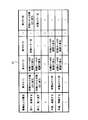
- each of the storage areas of the elements 51 (1) -51 (N) a substance indicated by a signal output from each element 51 for the emergence unit 60 to determine the emotion and intention stored in the emotion and intention storage area A combination of changes in state (constancy) is stored. It should be noted that the storage area storing “-” is not included in the emotion and intention conditions determined by the emergence unit 60.
- the intention generating device 100 outputs the emotion and intention received by the utterance of the subject PA and the impression of the subject PA to the output device 2 based on the emotion and intention result determined by the emergent unit 60. Then, the intention generating device 100 may output communication advice or the like to the subject person PA to the output device 2 so that the subject person PA can read and communicate with the atmosphere of the place. Thereby, the communication capability of the subject person PA can be improved.
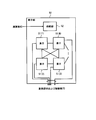
- FIG. 5 shows an example of the intention generating process in the intention generating apparatus 100 shown in FIG.
- the processing illustrated in FIG. 5 is realized by the arithmetic processing device of the intention generating device 100 executing the intention generating program stored in the storage unit 80. That is, the process shown in FIG. 5 shows an embodiment of the intention generating program and the intention generating method. Note that the processing shown in FIG. 5 may be realized by hardware mounted on the intention generating device 100. In this case, the detection unit 20, the determination unit 30, the calculation unit 40, the emergence unit 60, and the control unit 70 illustrated in FIG. 1 are realized by a circuit arranged in the intention creation device 100.
- step S100 the acquisition unit 10 acquires data including voice information and physiological information of the subject person PA measured by the measurement device 1.
- the acquisition unit 10 outputs the acquired data to the detection unit 20.
- step S110 the detection unit 20 detects emotions such as “anger” and “normal” in the subject PA using the voice information of the subject PA among the data acquired in step S100.
- the detection unit 20 outputs the detection result of the emotion of the subject PA to the determination unit 30.
- step S130 the calculation unit 40 uses the data acquired in step S100, the coefficient determined in step S120, and the expression (1) to use the energy that affects the human emotion and organ activity. TE is calculated.
- step S140 the element unit 50 supplies the energy TE calculated in step S130 to the N elements 51 through the supply unit 52.
- Each of the elements 51 changes the state of the substance according to the supplied energy TE, and outputs a signal indicating the change of the state of the substance to the emergence unit 60 and the control unit 70 as constancy in each circulation system K. .
- step S150 the control unit 70 receives the signal output from each element 51 in step S140, and monitors the change (constancy) of the substance state in each element 51.
- the controller 70 determines whether or not the amount of change in the state of the substance in at least one of the N elements 51 is equal to or less than a predetermined amount.
- the process of the intention generating device 100 moves to step S160.
- the process of the intention generating device 100 proceeds to step S170.
- step S160 the control unit 70 outputs an instruction to change the state of the substance to all the elements 51. Then, the process of the intention generating device 100 proceeds to step S170.
- step S170 the emergence unit 60 performs emotion and intention based on the emergence table ET stored in the storage unit 80 and the change in the state of the substance included in the signal output from each of the N elements 51. decide.
- the emergence unit 60 determines the emotion and intention based on the change in the state of the substance included in the signal output from each element 51 and the emergence table ET after the phase transition in step S160.
- the emergence unit 60 outputs the determined emotion and intention result to the output device 2.
- an utterance table storing voice data and character data uttered by the intention generating device 100 according to the utterance contents of the subject PA detected by the detection unit 20 and the determined emotion and intention is stored in the storage unit 80.
- the emergence unit 60 extracts voice data and the like corresponding to the detected utterance content of the subject person PA and the determined emotion and intention from the utterance table.
- the intention generating device 100 outputs the extracted voice data from a speaker included in the output device 2 and has a conversation with the subject PA.
- the intention generating device 100 outputs the emotion and intention received by the subject PA and the impression of the subject PA to the output device 2 based on the emotion and intention result determined by the emergent unit 60. Also good. And the intention generating apparatus 100 improves the communication capability of the subject person PA by outputting the advice of communication for the subject person PA to the output device 2 so that the subject person PA can read and communicate with the atmosphere of the place. Plan.
- the intention generating device 100 When the subject PA is suffering from a mental illness or the like, the intention generating device 100 outputs advice or the like regarding the mental illness or the like for the subject PA according to the emotion and intention result determined by the emergent unit 60. To improve the medical condition of the subject PA.
- the intention generating device 100 ends the intention generating process.
- the intention generating device 100 repeatedly executes the processing from step S100 to step S170 every time it receives the data of the subject PA from the measuring device 1.
- step S100 to step S140 and the process from step S150 to step S170 may be executed in parallel.
- the determination unit 30 is included in the data acquired by the acquisition unit 10 according to the emotion of the subject PA detected by the detection unit 20 from the voice information of the subject PA.
- a weighting coefficient is determined for voice information and physiological information.
- the element unit 50 inputs the energy TE calculated by the calculation unit 40 using the weighting coefficient determined by the determination unit 30 to the N elements 51 via the supply unit 52.
- Each element 51 outputs a signal including a change in the state of the substance to the emergence unit 60 and the control unit 70 as constancy in each of human emotions and organs.
- the emergence unit 60 determines emotion and intention according to the change in the state of the substance indicated by the signal output from each element 51, and the control unit 70 determines the substance in at least one element 51 among the N elements 51.
- the change amount of the state is equal to or less than the predetermined amount, a phase transition instruction is output to the N elements 51 to cause the phase transition of the substance.
- the intention generating device 100 determines a new emotion and intention different from those before the phase transition by using the phase transition instruction from the control unit 70 as a timing for converging a reaction such as a double loop in the intention generating device 100.
- the intention generating apparatus 100 can determine various intentions, judgments, and the like according to the person's own mood or situation or scene.
- the target person PA may be another intention generating device 100 instead of a human being.
- the data acquired by the intention generating device 100 from the other intention generating device 100 may be only the voice information output by the other intention generating device 100, and the signals output by the respective elements 51 of the other intention generating device 100 may be used. It may be used as physiological information.
- the intention generating apparatus 100 can simulate the development of communication in humans.
- the intention generating device 100 shown in FIG. 1 may be applied to psychological counseling such as psychoanalysis, behavior prediction, and behavior analysis, interviews and prescriptions in psychiatry and general medicine.
- the intention generating device 100 may be applied to robots, artificial intelligence, automobiles, call centers, entertainment, the Internet, mobile terminal device applications such as smartphones and tablet terminals, services, and search systems.
- the intention generating device 100 may be applied to a diagnosis device, an automatic inquiry device, a disaster triage, and the like.
- the intention generating device 100 is applied to financial credit management systems, behavior prediction, companies, schools, government agencies, police and military, information analysis in information collection activities, psychological analysis leading to false discovery, and organization group management. Also good.
- the intention generating device 100 is a system that manages mental health and behavior prediction of members of an organization, researchers, employees, managers, etc., a system that controls an environment such as a residence, an office, an airplane or a spacecraft, or It may be applied to means for knowing the state of mind and behavior prediction of family members and friends.
- the intention generating device 100 may be applied to music and movie distribution, general information retrieval, information analysis management and information processing, customer sensitivity preference market analysis, and a system that manages these through a network or stand-alone. Good.
Landscapes
- Health & Medical Sciences (AREA)
- Engineering & Computer Science (AREA)
- Life Sciences & Earth Sciences (AREA)
- Physics & Mathematics (AREA)
- General Health & Medical Sciences (AREA)
- Theoretical Computer Science (AREA)
- Biomedical Technology (AREA)
- Biophysics (AREA)
- Molecular Biology (AREA)
- Software Systems (AREA)
- Educational Technology (AREA)
- Data Mining & Analysis (AREA)
- Computing Systems (AREA)
- General Engineering & Computer Science (AREA)
- General Physics & Mathematics (AREA)
- Mathematical Physics (AREA)
- Computational Linguistics (AREA)
- Artificial Intelligence (AREA)
- Child & Adolescent Psychology (AREA)
- Developmental Disabilities (AREA)
- Evolutionary Computation (AREA)
- Hospice & Palliative Care (AREA)
- Psychiatry (AREA)
- Psychology (AREA)
- Social Psychology (AREA)
- Pathology (AREA)
- Heart & Thoracic Surgery (AREA)
- Medical Informatics (AREA)
- Surgery (AREA)
- Animal Behavior & Ethology (AREA)
- Public Health (AREA)
- Veterinary Medicine (AREA)
- Measurement Of The Respiration, Hearing Ability, Form, And Blood Characteristics Of Living Organisms (AREA)
Priority Applications (6)
| Application Number | Priority Date | Filing Date | Title |
|---|---|---|---|
| CA3017450A CA3017450C (fr) | 2016-03-30 | 2017-03-27 | Dispositif d'emergence de pensee, procede d'emergence de pensee et programme d'emergence de pensee |
| RU2018138038A RU2741934C2 (ru) | 2016-03-30 | 2017-03-27 | Устройство для выявления намерения, способ выявления намерения и программа для выявления намерения |
| KR1020187031012A KR102437264B1 (ko) | 2016-03-30 | 2017-03-27 | 의사 창발 장치, 의사 창발 방법 및 의사 창발 프로그램 |
| EP17774941.3A EP3438886A4 (fr) | 2016-03-30 | 2017-03-27 | Dispositif d'émergence de pensée, procédé d'émergence de pensée et programme d'émergence de pensée |
| CN201780020406.8A CN108885711B (zh) | 2016-03-30 | 2017-03-27 | 意思涌现装置、意思涌现方法及存储介质 |
| US16/083,324 US10325616B2 (en) | 2016-03-30 | 2017-03-27 | Intention emergence device, intention emergence method, and intention emergence program |
Applications Claiming Priority (4)
| Application Number | Priority Date | Filing Date | Title |
|---|---|---|---|
| JP2016068827 | 2016-03-30 | ||
| JP2016-068827 | 2016-03-30 | ||
| JP2017-054238 | 2017-03-21 | ||
| JP2017054238A JP6851871B2 (ja) | 2016-03-30 | 2017-03-21 | 意思創発装置、意思創発方法および意思創発プログラム |
Publications (1)
| Publication Number | Publication Date |
|---|---|
| WO2017170404A1 true WO2017170404A1 (fr) | 2017-10-05 |
Family
ID=59965608
Family Applications (1)
| Application Number | Title | Priority Date | Filing Date |
|---|---|---|---|
| PCT/JP2017/012398 Ceased WO2017170404A1 (fr) | 2016-03-30 | 2017-03-27 | Dispositif d'émergence de pensée, procédé d'émergence de pensée et programme d'émergence de pensée |
Country Status (1)
| Country | Link |
|---|---|
| WO (1) | WO2017170404A1 (fr) |
Cited By (1)
| Publication number | Priority date | Publication date | Assignee | Title |
|---|---|---|---|---|
| CN108491515A (zh) * | 2018-03-26 | 2018-09-04 | 中国科学技术大学 | 一种用于校园心理咨询的句对匹配度预测方法 |
Citations (4)
| Publication number | Priority date | Publication date | Assignee | Title |
|---|---|---|---|---|
| JPH0612401A (ja) * | 1992-06-26 | 1994-01-21 | Fuji Xerox Co Ltd | 感情模擬装置 |
| JP2009294647A (ja) | 2008-05-09 | 2009-12-17 | Agi:Kk | 行動分析装置及びコールセンターシステム |
| JP2015128579A (ja) | 2013-12-05 | 2015-07-16 | Pst株式会社 | 推定装置、プログラム、推定装置の作動方法および推定システム |
| JP2016012341A (ja) * | 2014-06-05 | 2016-01-21 | ソフトバンク株式会社 | 行動制御システム、システム及びプログラム |
-
2017
- 2017-03-27 WO PCT/JP2017/012398 patent/WO2017170404A1/fr not_active Ceased
Patent Citations (4)
| Publication number | Priority date | Publication date | Assignee | Title |
|---|---|---|---|---|
| JPH0612401A (ja) * | 1992-06-26 | 1994-01-21 | Fuji Xerox Co Ltd | 感情模擬装置 |
| JP2009294647A (ja) | 2008-05-09 | 2009-12-17 | Agi:Kk | 行動分析装置及びコールセンターシステム |
| JP2015128579A (ja) | 2013-12-05 | 2015-07-16 | Pst株式会社 | 推定装置、プログラム、推定装置の作動方法および推定システム |
| JP2016012341A (ja) * | 2014-06-05 | 2016-01-21 | ソフトバンク株式会社 | 行動制御システム、システム及びプログラム |
Non-Patent Citations (1)
| Title |
|---|
| See also references of EP3438886A4 * |
Cited By (1)
| Publication number | Priority date | Publication date | Assignee | Title |
|---|---|---|---|---|
| CN108491515A (zh) * | 2018-03-26 | 2018-09-04 | 中国科学技术大学 | 一种用于校园心理咨询的句对匹配度预测方法 |
Similar Documents
| Publication | Publication Date | Title |
|---|---|---|
| US20230309887A1 (en) | System and method for brain modelling | |
| Ramaswamy et al. | Multimodal emotion recognition: A comprehensive review, trends, and challenges | |
| JP5755791B2 (ja) | 推定装置、プログラム、推定装置の作動方法および推定システム | |
| Yannakakis et al. | Psychophysiology in games | |
| JP6851871B2 (ja) | 意思創発装置、意思創発方法および意思創発プログラム | |
| Ankışhan | Blood pressure prediction from speech recordings | |
| FI131057B1 (fi) | Menetelmä ja järjestely yhteydenoton aktivointiin | |
| Pinto et al. | Comprehensive review of depression detection techniques based on machine learning approach | |
| Zhang | Stress recognition from heterogeneous data | |
| Lee et al. | Real-time deep learning-assisted mechano-acoustic system for respiratory diagnosis and multifunctional classification | |
| US20260057899A1 (en) | Systems, devices and methods for hypertension analysis using voice | |
| WO2017170404A1 (fr) | Dispositif d'émergence de pensée, procédé d'émergence de pensée et programme d'émergence de pensée | |
| Ghosh et al. | Your smartphone knows you better than you may think: Emotional assessment ‘on the go’via tapsense | |
| US20250284736A1 (en) | Method, system, and medium for measuring, calibrating and training psychological absorption | |
| KR20250033493A (ko) | 디지털 컨텐츠 정보 제공 방법 및 시스템 | |
| Fong et al. | Longitudinal ambient mobile sensor monitoring for tcm-oriented healthcare assessments: Framework, challenges and applications | |
| HK1263014A1 (en) | Intention emergence device, intention emergence method, and storage medium | |
| HK1263014B (en) | Intention emergence device, intention emergence method, and storage medium | |
| Saraswathi et al. | TRANQUIL-NLP Vision-Based Emotion Analysis Website for Mental Wellness | |
| JP2025534111A (ja) | デジタル治療システムのためのユーザー分析と予測技術 | |
| Zhang | Reconnaissance de stress à partir de données hétérogènes | |
| HK1225941B (zh) | 推定装置、记录介质以及推定系统 |
Legal Events
| Date | Code | Title | Description |
|---|---|---|---|
| ENP | Entry into the national phase |
Ref document number: 3017450 Country of ref document: CA |
|
| NENP | Non-entry into the national phase |
Ref country code: DE |
|
| ENP | Entry into the national phase |
Ref document number: 20187031012 Country of ref document: KR Kind code of ref document: A |
|
| WWE | Wipo information: entry into national phase |
Ref document number: 2017774941 Country of ref document: EP |
|
| ENP | Entry into the national phase |
Ref document number: 2017774941 Country of ref document: EP Effective date: 20181030 |
|
| 121 | Ep: the epo has been informed by wipo that ep was designated in this application |
Ref document number: 17774941 Country of ref document: EP Kind code of ref document: A1 |