WO2017181353A1 - Procédé de traitement d'une migration de réseau central dédié, équipement et système - Google Patents
Procédé de traitement d'une migration de réseau central dédié, équipement et système Download PDFInfo
- Publication number
- WO2017181353A1 WO2017181353A1 PCT/CN2016/079712 CN2016079712W WO2017181353A1 WO 2017181353 A1 WO2017181353 A1 WO 2017181353A1 CN 2016079712 W CN2016079712 W CN 2016079712W WO 2017181353 A1 WO2017181353 A1 WO 2017181353A1
- Authority
- WO
- WIPO (PCT)
- Prior art keywords
- core network
- dedicated core
- auxiliary information
- mobility management
- request message
- Prior art date
- Legal status (The legal status is an assumption and is not a legal conclusion. Google has not performed a legal analysis and makes no representation as to the accuracy of the status listed.)
- Ceased
Links
Images




Classifications
-
- H—ELECTRICITY
- H04—ELECTRIC COMMUNICATION TECHNIQUE
- H04W—WIRELESS COMMUNICATION NETWORKS
- H04W48/00—Access restriction; Network selection; Access point selection
- H04W48/18—Selecting a network or a communication service
-
- H—ELECTRICITY
- H04—ELECTRIC COMMUNICATION TECHNIQUE
- H04W—WIRELESS COMMUNICATION NETWORKS
- H04W48/00—Access restriction; Network selection; Access point selection
- H04W48/08—Access restriction or access information delivery, e.g. discovery data delivery
- H04W48/12—Access restriction or access information delivery, e.g. discovery data delivery using downlink control channel
-
- H—ELECTRICITY
- H04—ELECTRIC COMMUNICATION TECHNIQUE
- H04W—WIRELESS COMMUNICATION NETWORKS
- H04W8/00—Network data management
- H04W8/02—Processing of mobility data, e.g. registration information at HLR [Home Location Register] or VLR [Visitor Location Register]; Transfer of mobility data, e.g. between HLR, VLR or external networks
- H04W8/08—Mobility data transfer
-
- H—ELECTRICITY
- H04—ELECTRIC COMMUNICATION TECHNIQUE
- H04W—WIRELESS COMMUNICATION NETWORKS
- H04W60/00—Affiliation to network, e.g. registration; Terminating affiliation with the network, e.g. de-registration
-
- H—ELECTRICITY
- H04—ELECTRIC COMMUNICATION TECHNIQUE
- H04W—WIRELESS COMMUNICATION NETWORKS
- H04W60/00—Affiliation to network, e.g. registration; Terminating affiliation with the network, e.g. de-registration
- H04W60/04—Affiliation to network, e.g. registration; Terminating affiliation with the network, e.g. de-registration using triggered events
-
- H—ELECTRICITY
- H04—ELECTRIC COMMUNICATION TECHNIQUE
- H04W—WIRELESS COMMUNICATION NETWORKS
- H04W68/00—User notification, e.g. alerting and paging, for incoming communication, change of service or the like
-
- H—ELECTRICITY
- H04—ELECTRIC COMMUNICATION TECHNIQUE
- H04W—WIRELESS COMMUNICATION NETWORKS
- H04W76/00—Connection management
- H04W76/20—Manipulation of established connections
- H04W76/27—Transitions between radio resource control [RRC] states
-
- H—ELECTRICITY
- H04—ELECTRIC COMMUNICATION TECHNIQUE
- H04W—WIRELESS COMMUNICATION NETWORKS
- H04W8/00—Network data management
- H04W8/18—Processing of user or subscriber data, e.g. subscribed services, user preferences or user profiles; Transfer of user or subscriber data
-
- H—ELECTRICITY
- H04—ELECTRIC COMMUNICATION TECHNIQUE
- H04W—WIRELESS COMMUNICATION NETWORKS
- H04W8/00—Network data management
- H04W8/02—Processing of mobility data, e.g. registration information at HLR [Home Location Register] or VLR [Visitor Location Register]; Transfer of mobility data, e.g. between HLR, VLR or external networks
-
- H—ELECTRICITY
- H04—ELECTRIC COMMUNICATION TECHNIQUE
- H04W—WIRELESS COMMUNICATION NETWORKS
- H04W88/00—Devices specially adapted for wireless communication networks, e.g. terminals, base stations or access point devices
- H04W88/08—Access point devices
-
- H—ELECTRICITY
- H04—ELECTRIC COMMUNICATION TECHNIQUE
- H04W—WIRELESS COMMUNICATION NETWORKS
- H04W88/00—Devices specially adapted for wireless communication networks, e.g. terminals, base stations or access point devices
- H04W88/14—Backbone network devices
Definitions
- the present invention relates to communication technologies, and in particular, to a dedicated core network migration processing method, device, and system.
- the operator subscribes to a user equipment (User Equipment, UE) usage type for the terminal type with the same communication feature, and deploys a dedicated DCN network element for the terminal having the same usage type. It is specially deployed on the DCN network element, so that operators can carry out targeted management and maintenance on different types of terminals, and realize dedicated network, thereby improving the efficiency of massive terminal access mobility management and session management, and reducing network efficiency. Maintenance costs.
- UE User Equipment
- the change of the type of the subscription of the UE to the network side causes the DCN network element of the currently serving UE to continue to serve the UE, and the UE needs to be migrated to the DCN network element that can provide the service type for the UE after the update.
- the migration of the private network is implemented by redirecting the UE on the network side.
- the DCN network element requests the UE to initiate a re-access procedure, and initiates a Non-Access Stratum (NAS) in the access procedure initiated by the UE.
- NAS Non-Access Stratum
- the directed procedure redirects the UE to a DCN network element that can support the UE usage type.
- the DCN network element needs to initiate a NAS redirection process to redirect the UE from one DCN network element to another type that can support the UE after the update.
- the DCN network element wastes unnecessary signaling overhead.
- redirecting the UE between different DCNs also affects the isolation between different DCNs deployed by the operator, which is not conducive to the evolution of the 5G network slicing technology.
- the present invention provides a dedicated core network migration processing method, device, and system for saving unnecessary redirection signaling overhead and ensuring isolation between different DCNs.
- an embodiment of the present invention provides a dedicated core network migration processing method, including:
- the mobility management network element acquires a usage type of the user equipment UE subscription
- the mobility management network element determines the auxiliary core network auxiliary information of the UE according to the usage type of the UE subscription;
- the mobility management network element sends a request message to the UE, where the request message is used to indicate that the UE re-initiates the access request, and the request message carries the UE.
- Dedicated core network auxiliary information is used to indicate that the UE re-initiates the access request, and the request message carries the UE.
- the mobility management network element acquires the usage type of the UE subscription, and determines the UE's dedicated core network auxiliary information according to the usage type, after requesting When the UE re-initiates the access procedure, the dedicated core network auxiliary information is sent to the UE, so that the UE may send the dedicated core network auxiliary information to the base station in the RRC connection setup request message that is triggered when the access procedure is initiated.
- the base station can select a dedicated core network corresponding to the dedicated core network auxiliary information for the UE according to the dedicated core network auxiliary information, and directly migrate the UE to the mobility management network element that can serve the UE, thereby preventing the mobile management network element from initiating NAS redirection.
- the process saves unnecessary redirection signaling overhead and also ensures isolation between different DCNs.
- determining the dedicated core network auxiliary information of the UE according to the type of the UE subscription including:
- the mobility management network element determines the dedicated core network auxiliary information of the UE according to the usage type of the UE subscription and the following information: the mapping relationship between the usage type of the UE configured by the operator and the dedicated core network, and the locally configured carrier Policy, context information of the UE.
- the method further includes:
- the mobility management network element sends a paging message to the UE to make the UE into a connected state.
- the mobile management network element sends a request message to the UE, specifically:
- the mobility management network element sends a temporary identity re-allocation request message to the UE, where the temporary identity re-allocation request message carries the non-broadcast location area identifier and the dedicated core network auxiliary information of the UE, where the non-broadcast location area identifier is used to indicate that the UE re-initiates the connection.
- the temporary identity re-allocation request message carries the non-broadcast location area identifier and the dedicated core network auxiliary information of the UE, where the non-broadcast location area identifier is used to indicate that the UE re-initiates the connection.
- the mobile management network element sends a request message to the UE, specifically:
- the mobility management network element sends a connection release command message to the serving base station of the UE, and the connection release command message carries the cause value and the dedicated core network auxiliary information of the UE; the connection release command message is used to indicate that the base station uses the cause value and the dedicated core network of the UE.
- the information carried in the RRC connection release message is sent to the UE, and the reason value is used to indicate that the UE re-initiates the access request.
- the mobile management network element sends a request message to the UE, specifically:
- the mobility management network element sends a detach request message to the UE, where the detach request message carries the re-attachment separation type and the dedicated core network auxiliary information of the UE, and the re-attachment separation type is used to instruct the UE to re-initiate the access request.
- the UE re-initiates the access request, including: an attach request or a location update request.
- the dedicated core network auxiliary information of the UE includes: a dedicated core network type of the mobility management network element and/or a usage type of the UE subscription.
- the embodiment of the present invention provides a dedicated core network migration processing method, including:
- the user equipment UE receives the request message sent by the mobility management network element, where the request message is used to indicate that the UE re-initiates the access request, and the request message carries the dedicated core network auxiliary information determined by the mobility management network element for the UE;
- the UE sends an access request message according to the request message, and the private core network auxiliary information is carried in the radio resource control RRC connection setup request message triggered by the access request message, and is sent to the serving base station of the UE, and the dedicated core network auxiliary information is used by the base station.
- the UE selects to correspond to the dedicated core network auxiliary information.
- Dedicated core network Dedicated core network.
- the foregoing method further includes: the UE saves the dedicated core network auxiliary information, and associates the dedicated core network auxiliary information with the service network of the UE.
- the dedicated core network auxiliary information is determined by the mobility management network element according to the usage type of the UE subscription and at least one of the following information: the usage type and the dedicated mode of the UE configured by the operator The mapping relationship between the core networks, the locally configured carrier policy, and the context information of the UE.
- the method further includes:
- the UE receives the paging message sent by the mobility management network element, and sends a paging response message to establish a connection with the mobility management network element.
- the UE receives the request message sent by the mobility management network element, specifically:
- the UE receives the temporary identity re-allocation request message sent by the mobility management network element, where the temporary identity re-allocation request message carries the non-broadcast location area identifier and the dedicated core network auxiliary information of the UE, where the non-broadcast location area identifier is used to indicate that the UE re-initiates Access request.
- the UE receives the request message sent by the mobility management network element, specifically:
- the UE receives the radio resource control RRC connection release message sent by the base station, where the RRC connection release message carries the cause value and the dedicated core network auxiliary information of the UE; the RRC connection release message is sent by the base station after receiving the connection release command message sent by the mobility management network element.
- the connection release command message carries the cause value and the dedicated core network auxiliary information of the UE, and the cause value is used to instruct the UE to re-initiate the access request.
- the UE receives the request message sent by the mobility management network element, specifically:
- the UE receives the detach request message sent by the mobility management network element, where the detach request message carries the re-attachment separation type and the dedicated core network auxiliary information of the UE, and the re-attachment separation type is used to instruct the UE to re-initiate the access request.
- the access request message includes: an attach request or a location update request.
- the dedicated core network auxiliary information of the UE is a dedicated core network type of the mobility management network element or a usage type subscribed by the UE.
- an embodiment of the present invention provides a mobility management network element, including:
- An obtaining module configured to acquire a usage type of the user equipment UE subscription
- a determining module configured to determine, according to the type of use signed by the UE, the dedicated core network auxiliary information of the UE;
- a sending module configured to send a request message to the UE, if the dedicated core network auxiliary information of the UE does not match the dedicated core network served by the mobility management network element, the request message is used to indicate that the UE re-initiates the access request, and the request message carries The dedicated core network auxiliary information of the UE.
- the determining module is specifically configured to:
- the sending module is further configured to: if the UE is in an idle state, send a paging message to the UE to change the UE into a connected state before sending the request message to the UE.
- the sending module is specifically configured to:
- the sending module is specifically configured to:
- connection release command message carries the cause value and the dedicated core network auxiliary information of the UE; the connection release command message is used to instruct the base station to carry the cause value and the UE's dedicated core network auxiliary information in the wireless
- the resource control RRC connection release message is sent to the UE, and the cause value is used to instruct the UE to re-initiate the access request.
- the sending module is specifically configured to:
- the detach request message is sent to the UE, and the detach request message carries the re-attachment separation type and the dedicated core network auxiliary information of the UE, and the re-attachment separation type is used to instruct the UE to re-initiate the access request.
- the UE re-initiates the access request, including: an attach request or a location update request.
- the dedicated core network auxiliary information of the UE includes: a dedicated core network type of the mobility management network element and/or a usage type of the UE subscription.
- the embodiment of the present invention provides a user equipment UE, including:
- a receiving module configured to receive a request message sent by the mobility management network element, where the request message is used to instruct the UE to re-initiate the access request, where the request message carries the dedicated core network auxiliary information determined by the mobility management network element for the UE;
- a sending module configured to send an access request message according to the request message, and send the dedicated core network auxiliary information to the serving base station sent by the UE in the RRC connection setup request message triggered by the access request message, and the dedicated core network auxiliary information
- the base station selects a dedicated core network corresponding to the dedicated core network auxiliary information for the UE.
- the UE further includes:
- the storage module is configured to save the dedicated core network auxiliary information, and associate the dedicated core network auxiliary information with the UE service network.
- the dedicated core network auxiliary information is determined by the mobility management network element according to the usage type of the UE subscription and at least one of the following information: the usage type and the dedicated mode of the UE configured by the operator The mapping relationship between the core networks, the locally configured carrier policy, and the context information of the UE.
- the receiving module is further configured to:
- the receiving module is specifically configured to:
- the temporary identity re-allocation request message carries the non-broadcast location area identifier and the dedicated core network auxiliary information of the UE, where the non-broadcast location area identifier is used to indicate that the UE re-initiates the connection Into the request.
- the receiving module is specifically configured to:
- the RRC connection release message is sent by the base station after receiving the connection release command message sent by the mobility management network element, and the connection release command message carries the cause value and the dedicated core network of the UE.
- the information, the cause value is used to instruct the UE to re-initiate the access request.
- the receiving module is specifically configured to:
- the detach request message carries the re-attachment separation type and the dedicated core network auxiliary information of the UE, where the re-attach separation type is used to instruct the UE to re-initiate the access request.
- the access request message includes: an attach request or a location update request.
- the dedicated core network auxiliary information of the UE is a dedicated core network type of the mobility management network element or a usage type subscribed by the UE.
- an embodiment of the present invention provides a mobility management network element, including:
- a processor configured to acquire a usage type of the user equipment UE subscription; and determine, according to the usage type of the UE subscription, the UE core network auxiliary information;
- a transmitter configured to send a request message to the UE, if the dedicated core network auxiliary information of the UE does not match the dedicated core network served by the mobility management network element, the request message is used to indicate that the UE re-initiates the access request, and the request message carries The dedicated core network auxiliary information of the UE.
- the processor is specifically configured to:
- the transmitter is further configured to: if the UE is in an idle state, send a paging message to the UE to change the UE into a connected state before sending the request message to the UE.
- the transmitter is specifically configured to:
- the temporary identity re-allocation request message is sent to the UE, where the non-broadcast location area identifier and the dedicated core network auxiliary information of the UE are carried in the non-broadcast location area identifier, and the non-broadcast location area identifier is used to instruct the UE to re-initiate the access request.
- the transmitter is specifically configured to:
- connection release command message Sending a connection release command message to the serving base station of the UE, where the connection release command message carries the cause value and the dedicated core network auxiliary information of the UE; the connection release command message is used to instruct the base station to carry the cause value and the UE's dedicated core network auxiliary information in the wireless
- the resource control RRC connection release message is sent to the UE, and the cause value is used to instruct the UE to re-initiate the access request.
- the transmitter is specifically configured to:
- the detach request message carries the re-attachment separation type and the dedicated core network auxiliary information of the UE, and the re-attachment separation type is used to instruct the UE to re-initiate the access request.
- the UE re-initiates the access request, including: an attach request or a location update request.
- the dedicated core network auxiliary information of the UE includes: a dedicated core network type of the mobility management network element and/or a usage type of the UE subscription.
- an embodiment of the present invention provides a user equipment UE, including:
- a receiver configured to receive a request message sent by the mobility management network element, where the request message is used to indicate that the UE re-initiates the access request, where the request message carries the dedicated core network auxiliary information determined by the mobility management network element for the UE;
- a transmitter configured to send an access request message according to the request message, and carry the dedicated core network auxiliary information in a radio resource control RRC connection setup request message triggered by the access request message, and send the message to the serving base station of the UE, and the dedicated core network auxiliary information
- the base station selects a dedicated core network corresponding to the dedicated core network auxiliary information for the UE.
- the UE further includes: a memory and a processor, where the memory is used to save the dedicated core network auxiliary information; and the processor is configured to associate the dedicated core network auxiliary information with the service network of the UE.
- the dedicated core network auxiliary information is determined by the mobility management network element according to the usage type of the UE subscription and at least one of the following information: the usage type and the dedicated mode of the UE configured by the operator The mapping relationship between the core networks, the locally configured carrier policy, and the context information of the UE.
- the receiver is further configured to:
- the receiver is specifically configured to:
- the temporary identity re-allocation request message carries the non-broadcast location area identifier and the dedicated core network auxiliary information of the UE, where the non-broadcast location area identifier is used to indicate that the UE re-initiates the connection Into the request.
- the receiver is specifically configured to:
- the RRC connection release message is sent by the base station after receiving the connection release command message sent by the mobility management network element.
- the connection release command message carries the cause value and the dedicated core network auxiliary information of the UE, and the cause value is used to indicate that the UE re-initiates the access request.
- the receiver is specifically configured to:
- the detach request message carries the re-attachment separation type and the dedicated core network auxiliary information of the UE, where the re-attach separation type is used to instruct the UE to re-initiate the access request.
- the access request message includes: an attach request or a location update request.
- the dedicated core network auxiliary information of the UE is a dedicated core network type of the mobility management network element or a usage type subscribed by the UE.
- the seventh aspect of the present invention provides a dedicated core network migration processing system, including: the mobility management network element provided by the foregoing third aspect, and the user equipment UE provided by the foregoing fourth aspect.
- the eighth aspect of the present invention provides a dedicated core network migration processing system, including: the mobility management network element provided in the foregoing fifth aspect, and the user equipment UE provided in the foregoing sixth aspect.
- the mobility management network element acquires the usage type of the UE subscription, and according to the usage class
- the dedicated core network auxiliary information is sent to the UE, so that the UE may be in the RRC connection setup request message triggered when the access procedure is initiated.
- FIG. 1 is a schematic diagram of a system architecture provided by the present invention.
- Embodiment 1 is a schematic flowchart of Embodiment 1 of a method for processing a dedicated core network migration according to the present invention
- Embodiment 3 is a schematic flowchart of Embodiment 2 of a method for processing a dedicated core network migration according to the present invention
- Embodiment 4 is a schematic flowchart of Embodiment 3 of a method for processing a dedicated core network migration according to the present invention
- FIG. 5 is a schematic flowchart diagram of Embodiment 4 of a method for processing a dedicated core network migration according to the present invention
- FIG. 6 is a schematic structural diagram of Embodiment 1 of a mobility management network element according to the present invention.
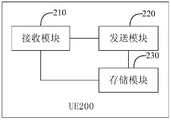
- FIG. 7 is a schematic structural diagram of Embodiment 1 of a UE according to the present invention.
- FIG. 8 is a schematic structural diagram of Embodiment 2 of a mobility management network element provided by the present invention.
- FIG. 9 is a schematic structural diagram of Embodiment 2 of a UE according to the present invention.
- the dedicated core network migration processing method provided by the embodiment of the present invention can be applied to 2G, 3G, 4G.
- 1 is a schematic diagram of a system architecture provided by the present invention. As shown in FIG. 1, the system includes: a user equipment UE, a base station, and a mobility management network element (a mobility management network element is a type of a CN network element), and the UE can pass through a base station and a Or multiple mobile management network elements to communicate.
- a mobility management network element is a type of a CN network element
- each mobility management network element has its DCN type (DCN type), and the DCN type mobility management network element also A DCN network element;
- DCN type DCN type
- a DCN-type mobility management network element can provide services for one or more types of UEs, and a UE usage type can be simultaneously served by multiple DCN network elements supporting different DCN types. Therefore, there may be the following four correspondences between the DCN type of the DCN network element and the usage type of the UE:
- DCN network elements with DCN type for machine type communication can only serve UEs using type smart meter communication;
- DCN network elements with DCN type for machine type communication can simultaneously provide services for UEs using type of smart meter communication and smart water meter communication;
- a DCN network element has two DCN types: machine type communication and smart car communication, and machine type communication can simultaneously provide services for UEs using type of smart meter communication and smart water meter communication; Both class communication and smart car communication require simultaneous service for UEs that use a type of autonomous vehicle communication.
- the DCN type of the mobility management network element and the UE usage type that can be served are mutually equivalent, that is, the DCN type of the mobility management network element is the served UE.
- the usage type for example, the mobility management network element can simultaneously provide services for the UE using the type 1, the usage type 2, and the usage type 3.
- the three DCN types of the mobility management network element are usage type 1, usage type 2, and usage.
- Type 3 wherein the type 1 can be specifically for machine type communication, the type 2 can be specifically for smart car communication, and the type 3 can be for smart home communication.
- a UE is a device that provides voice, short message, and/or data connectivity to a user, and may include, for example, a handheld device having a wireless connection function or a processing device connected to a wireless modem.
- the user equipment can pass through a radio access network (Radio Access Network, Referred to as RAN), it communicates with the core network and exchanges voice and/or data with the RAN.
- the user equipment may include a wireless terminal device, a mobile terminal device, a Subscriber Unit, a Subscriber Station, a Mobile Station, a Mobile, a Remote Station, and an access point. (Access Point, AP), Remote Terminal, Access Terminal, User Terminal, User Agent, User Device, etc.
- the user equipment may also include a mobile telephone (or "cellular" telephone), a computer with a mobile terminal device, a portable, pocket, handheld, computer built-in or vehicle-mounted mobile device, for example, personal communication service (Personal Communication) Service, referred to as PCS) telephone, cordless telephone, Session Initiation Protocol (SIP) telephone, Wireless Local Loop (WLL) station, Personal Digital Assistant (PDA), Subscriber Unit , Personal Computer, Laptop Computer, Tablet Computer, Netbook, Handheld, Data Card, USB Insert Device, Mobile Wireless Fidelity Devices such as Wi-Fi devices such as WiFi devices, smart watches/smart glasses, and Wearable Devices.
- PCS Personal communication service
- SIP Session Initiation Protocol
- WLL Wireless Local Loop
- PDA Personal Digital Assistant
- Wi-Fi devices such as WiFi devices, smart watches/smart glasses, and Wearable Devices.
- the base station may be a base station controller (BSC) in a 2G network, a radio network controller (Radio Network Controller, RNC for short) or a base station (NodeB) in a 3G network. It may be an evolved base station (eNodeB, e-volved Node B, E-UTRAN Node B) or the like in a 4G network, and is not limited in this application.
- BSC base station controller
- RNC Radio Network Controller
- the mobile management network element in the embodiment of the present invention may be a Mobile Switching Centre (MSC)/Visitors Location Register (VLR) in a 2G/3G network, and the MSC and the VLR are usually combined.
- MSC/VLR Mobility Management Entity
- VLR Mobility Management Entity
- the same network element, called MSC/VLR, or simply VLR may also be a Serving General Packet Radio Service Support Node (SGSN) in a 2G/3G network, or may be 4G.
- the mobility management entity (Mobility Management Entity, MME for short) in the network may also include other device types and the like, which is not specifically limited in this application.
- the dedicated core network migration processing method in the embodiment of the present invention is to solve the problem that the DCN network element needs to initiate a NAS redirection process to redirect the UE from one DCN network element to another DCN network capable of supporting the UE usage type.
- a technical problem that wastes unnecessary signaling overhead and affects the isolation between DCNs.
- Embodiment 1 is a schematic flowchart of Embodiment 1 of a method for processing a dedicated core network migration according to the present invention. As shown in FIG. 2, the method provided in this embodiment includes the following steps:
- the mobility management network element acquires a usage type of the UE subscription.
- an operator subscribes to a usage type for a UE having the same communication feature, for example, a handheld device, a smart home, a car, and the like.
- the UE's Home Subscriber Server (HSS) or Home Location Register (HLR) stores the UE subscription type.
- HSS Home Subscriber Server
- HLR Home Location Register
- the mobility management NE can The HSS/HLR obtains the usage type of the updated UE.
- the HSS/HLR actively informs the service mobility management network element of the UE of the updated UE usage type.
- the mobility management network element determines the dedicated core network auxiliary information of the UE according to the usage type of the UE subscription.
- the DCN Assistance Information also known as the DCN Selection Assistance Parameter, is assigned by the operator to a dedicated core network (including mobility management network elements) deployed in its network.
- a mobility management network element represented by a dedicated core network auxiliary information may provide services for one or more types of UEs, and the dedicated core network auxiliary information of the UE is a dedicated core corresponding to the mobility management network element that can serve the same. Network auxiliary information.
- the dedicated core network auxiliary information may be: a DCN type of the mobility management network element and/or a UE subscription type, or other types of DCN types and/or UE subscription types that may indicate the mobility management network element.
- the information as for the specific information name, is not specifically limited in the present invention.
- each mobility management network element has its DCN type, and a DCN type mobility management network element can provide services for one or more usage types of UEs. If a mobility management network element only provides services for a UE of one type of use, the DCN type may also be a usage type of the UE.
- the dedicated core network auxiliary information may be a DCN type or a usage type of the UE; if a mobility management
- the network element provides services for multiple types of UEs, and the dedicated core network auxiliary information is of the DCN type.
- DCN type can be machine type communication MTC, cellular internet of things (Cellular Internet of Things, referred to as CIoT) communication, mobile broadband (MBB) communication, car networking communication and other types, wherein the car network communication DCN can serve a variety of brands (use type) of car services.
- the mobility management network element may determine the dedicated core network auxiliary information of the UE according to the usage type of the UE subscription and the following information: the usage type of the UE configured by the operator and the dedicated core network. The mapping relationship between the two, the locally configured carrier policy, and the context information of the UE.
- the mobility management network element may have a mapping relationship between the usage type of the UE configured by the operator and the dedicated core network, and according to the mapping relationship, the mobility management network element may directly obtain the dedicated core corresponding to the usage type of the UE.
- Network auxiliary information may be used to directly obtain the dedicated core corresponding to the usage type of the UE.
- the mobility management network element may also obtain the dedicated core network auxiliary information corresponding to the usage type of the UE according to the locally configured carrier policy. For example, for a roaming UE, the operator can configure a corresponding access policy, and determine, according to the signed roaming protocol, a dedicated core network that the UE of the usage type can access, and the mobility management network element obtains corresponding to the usage type of the UE.
- Dedicated core network auxiliary information For example, for a roaming UE, the operator can configure a corresponding access policy, and determine, according to the signed roaming protocol, a dedicated core network that the UE of the usage type can access, and the mobility management network element obtains corresponding to the usage type of the UE.
- the mobility management network element may further determine the dedicated core network auxiliary information corresponding to the usage type of the UE according to the context information of the available UE. For example, for the UE using the type of CIoT, the mobility management network element may be supported according to the saved UE. Context information such as CIoT control plane optimization capability or user plane optimization capability is used to determine the dedicated core network assistance information of the UE.
- the mobility management network element sends a request message to the UE.
- the request message is used to indicate that the UE re-initiates the access request, and the request message carries the dedicated core network auxiliary information of the UE.
- the dedicated core network auxiliary information of the UE does not match the dedicated core network served by the mobile management network element currently served by the UE, that is, the mobile currently serving the UE.
- the management network element cannot continue to serve the UE corresponding to the dedicated core network auxiliary information; at this time, the mobility management network element may carry the dedicated core network auxiliary information in the request message and send the message to the UE, and notify the mobile management network that the UE can serve.
- the dedicated core network auxiliary information corresponding to the element; and the UE is requested to re-initiate the access request, so that the base station directly migrates the UE to the mobility management network element that can serve the UE.
- the mobile management network element will determine the brand B smart car corresponding to the dedicated core network auxiliary information brand B car networking Sent to the UE.
- the UE receives a request message sent by the mobility management network element.
- the UE can obtain the dedicated core network auxiliary information corresponding to the mobility management network element that can be served by the UE, and then report the dedicated core network auxiliary information to the base station.
- the UE sends an access request message according to the request message, and sends the dedicated core network auxiliary information to the serving base station of the UE in the RRC connection setup request message triggered by the access request message.
- the dedicated core network auxiliary information is used by the base station to select a dedicated core network DCN corresponding to the dedicated core network auxiliary information for the UE.
- the UE after receiving the request message sent by the mobility management network element, the UE re-initiates the access procedure.
- the UE needs to establish a connection with the serving base station first, that is, the UE first sends an access request message.
- a Radio Resource Control (RRC) connection establishment request message is triggered.
- the UE may send the dedicated core network auxiliary information in the RRC connection setup request message to the base station, so that the base station selects the dedicated core network corresponding to the dedicated core network auxiliary information according to the dedicated core network auxiliary information.
- RRC Radio Resource Control
- the access request re-initiated by the UE may be an attach request or a location update request, which may be determined according to the indication information in the request message sent by the mobility management network element.
- the location update request may be Including a Location Area Updating (LAU) request, a Routing Area Updating (RAU) request, or a Tracking Area Updating (TAU) request.
- LAU Location Area Updating
- RAU Routing Area Updating
- TAU Tracking Area Updating
- the base station selects, for the UE, a dedicated core network corresponding to the dedicated core network auxiliary information.
- the base station receives the RRC connection setup request message sent by the UE, and after establishing a connection with the UE, may select a dedicated core network corresponding to the dedicated core network auxiliary information according to the dedicated core network auxiliary information, to send the request message sent by the UE. Forwarding to the mobility management network element that can serve the UE corresponding to the dedicated core network auxiliary information, the UE is migrated to the mobility management network element that can serve the UE.
- the base station has already stored the configuration relationship between the dedicated core network auxiliary information and the corresponding DCN network element, for example, if the dedicated core network auxiliary information is of the DCN type, the base station saves The DCN type 1 corresponds to the DCN network element A, and the DCN type 2 corresponds to the DCN network element B. If the dedicated core network auxiliary information is the UE usage type, the base station stores the usage type 1 corresponding to the DCN network element A, and the usage type 2 Corresponds to DCN network element B and so on.
- the dedicated core network migration processing method when the usage type of the UE subscription is changed, the mobility management network element acquires the usage type of the UE subscription, and after determining the dedicated core network auxiliary information of the UE according to the usage type, requesting the UE When the access process is re-initiated, the dedicated core network auxiliary information is sent to the UE, so that the UE may send the dedicated core network auxiliary information to the serving base station in the RRC connection setup request message that is triggered when the access process is re-initiated.
- the base station can select a dedicated core network corresponding to the dedicated core network auxiliary information for the UE according to the dedicated core network auxiliary information, and directly migrate the UE to the mobile management network element capable of serving the updated usage type of the UE, thereby avoiding the mobility management network.
- the element initiates the NAS redirection process, which saves unnecessary redirection signaling overhead and ensures isolation between different DCNs.
- Embodiment 3 is a schematic flowchart of Embodiment 2 of a method for processing a dedicated core network migration according to the present invention.
- This embodiment is a detailed description of a specific implementation manner of step S103 in the foregoing embodiment shown in FIG. 2, as shown in FIG.
- the method provided in this embodiment includes the following steps:
- the mobility management network element acquires a usage type of the UE subscription.
- the mobility management network element determines the dedicated core network auxiliary information of the UE according to the usage type of the UE subscription. If the dedicated core network auxiliary information of the UE does not match the dedicated core network served by the mobility management network element, and the UE is in an idle state, Steps S203 and S204 are performed; if the UE is in the connected state, steps S203 and S204 are skipped and step S205 is directly executed.
- the mobility management network element sends a paging message to the UE.
- the UE receives the paging message, and sends a paging response message to establish a connection with the mobility management network element, and becomes a connected state.
- the mobility management network element sends a temporary identity re-allocation request message to the UE.
- the temporary identity re-allocation request message carries the non-broadcast location area identifier and the UE.
- the dedicated core network auxiliary information, the non-broadcast location area identifier is used to instruct the UE to re-initiate the access request.
- the temporary identity re-allocation request message may be a globally unique Temporary Identity (GUTI) re-allocation command (GUTI REALLOCATION COMMAND) message of the UE, in the 2G/3G network, temporary The identity re-allocation request message may be a Temporary Mobile Subscriber Identity (TMSI) re-allocation command (TMSI REALLOCATION COMMAND) message, or a Packet Temporary Mobile Subscriber Identity (P-TMSI) Assign a command (P-TMSI REALLOCATION COMMAND) message, etc.
- TMSI Temporary Mobile Subscriber Identity
- P-TMSI Packet Temporary Mobile Subscriber Identity
- P-TMSI REALLOCATION COMMAND Packet Temporary Mobile Subscriber Identity
- the non-broadcast location area identifier (non-broadcast tracking area identifier, non-broadcast TAI) carried in the temporary identity re-allocation request message is in the 2G/3G network.
- the non-broadcast location area identifier (non-broadcast location area identifier (non-broadcast location area identifier) or the non-broadcast routing area identifier (non-broadcast routing area identifier) is not included in the non-broadcast location area identifier (non-broadcast location area identifier).
- the identity referred to as the non-broadcast RAI, is used to indicate that the UE re-initiates the access request. At this time, the access request re-initiated by the UE is specifically a location update request.
- the UE receives a temporary identity re-allocation request message sent by the mobility management network element.
- the UE saves the dedicated core network auxiliary information, and associates the dedicated core network auxiliary information with the UE service network.
- the UE learns the dedicated core network auxiliary information corresponding to the mobility management network element that can be served by the UE; at this time, the UE may save the dedicated core network auxiliary information, and
- the associated private network auxiliary information and the UE currently serving the Public Land Mobile Network (PLMN), that is, the mobile management network element serving the UE in the current serving PLMN is the DCN network element corresponding to the auxiliary information of the dedicated core network.
- the update of the dedicated core network auxiliary information is implemented, so that the UE subsequently reports the updated dedicated core network auxiliary information when the serving PLMN initiates the access request.
- the UE sends an access request message, and sends the dedicated core network auxiliary information to the serving base station of the UE in the RRC connection setup request message triggered by the access request message.
- the UE A location update procedure is initiated, in which the UE carries the dedicated core network auxiliary information in the RRC connection setup request message and sends it to the serving base station.
- the base station selects, for the UE, a dedicated core network DCN corresponding to the dedicated core network auxiliary information.
- FIG. 4 is a schematic flowchart of a third embodiment of a dedicated core network migration processing method according to the present invention.
- This embodiment is a detailed description of another specific implementation manner of step S103 in the foregoing embodiment shown in FIG. 2, as shown in FIG.
- the method provided in this embodiment includes the following steps:
- the mobility management network element acquires a usage type of the UE subscription.
- the mobility management network element determines the dedicated core network auxiliary information of the UE according to the usage type of the UE subscription. If the dedicated core network auxiliary information of the UE does not match the dedicated core network served by the mobility management network element, and the UE is in an idle state, Steps S303 and S304 are performed; if the UE is in the connected state, steps S303 and S304 are skipped and step S305 is directly executed.
- the mobility management network element sends a paging message to the UE.
- the UE receives the paging message, and sends a paging response message to establish a connection with the mobility management network element, and becomes a connected state.
- the mobility management network element sends a connection release command message to the serving base station of the UE.
- connection release command message carries the cause value and the dedicated core network auxiliary information of the UE, and the connection release command message is used to instruct the base station to carry the cause value and the dedicated core network auxiliary information of the UE in the RRC connection release message.
- the UE, the cause value is used to instruct the UE to re-initiate the access request.
- connection release command message may be a UE context connection release command message (UE Context Release Command), or may be an Iu Release Release Command message (Iu Release Command).
- the message When the mobile management network element sends the connection release command message, the message carries the cause value.
- the cause value may be, for example, DCN reselection, to indicate that the UE re-initiates the access request.
- the reselection of the DCN may also be a cause value indicating that the UE needs to initiate re-access because it needs to perform DCN reselection.
- the base station sends the cause value and the dedicated core network auxiliary information of the UE to the UE in an RRC connection release message.
- the base station after receiving the connection release command message, the base station sends an RRC connection release message to the UE, and the RRC connection release message is sent, the base station may forward the reason value to the UE, and instruct the UE to re-initiate the access request. .
- the access request re-initiated by the UE is specifically a location update request.
- the UE receives an RRC connection release message sent by the base station.
- the UE saves the dedicated core network auxiliary information, and associates the dedicated core network auxiliary information with the UE service network.
- the UE sends an access request message, and sends the dedicated core network auxiliary information to the serving base station of the UE in the RRC connection setup request message triggered by the access request message.
- the UE after receiving the RRC connection release message sent by the mobility management network element, the UE initiates a location update process according to the cause value.
- the UE carries the dedicated core network auxiliary information in the RRC connection setup request message and sends the message to the base station.
- the base station selects, for the UE, a dedicated core network corresponding to the dedicated core network auxiliary information.
- FIG. 5 is a schematic flowchart of Embodiment 4 of a method for processing a dedicated core network migration according to the present invention.
- This embodiment is a detailed description of another specific implementation manner of step S103 in the foregoing embodiment shown in FIG. 2, as shown in FIG. 5.
- the method provided in this embodiment includes the following steps:
- the mobility management network element acquires a usage type of the UE subscription.
- the mobility management network element determines the dedicated core network auxiliary information of the UE according to the usage type of the UE subscription, if the UE's dedicated core network auxiliary information does not match the dedicated core network served by the mobility management network element, and the UE is in an idle state, Steps S403 and S404 are performed; if the UE is in the connected state, steps S403 and S404 are skipped and step S405 is directly executed.
- the mobility management network element sends a paging message to the UE.
- the UE receives the paging message, and sends a paging response message to establish a connection with the mobility management network element.
- the mobility management network element sends a separation request message to the UE.
- the detach request message carries the re-attachment separation type and the dedicated core network auxiliary information of the UE, and the re-attachment separation type is used to instruct the UE to re-initiate the access request (specifically, an attach request).
- the UE receives the separation request message sent by the mobility management network element.
- the UE saves the dedicated core network auxiliary information, and associates the dedicated core network auxiliary information with the UE's service network.
- the UE sends an access request message, and sends the dedicated core network auxiliary information to the serving base station of the UE in the RRC connection setup request message triggered by the access request message.
- the UE after receiving the detach request message sent by the mobility management network element, the UE initiates an attach procedure. In the process, the UE sends the dedicated core network auxiliary information in the RRC connection setup request message to the base station.
- the base station selects, for the UE, a dedicated core network corresponding to the dedicated core network auxiliary information.
- FIG. 6 is a schematic structural diagram of Embodiment 1 of a mobility management network element according to the present invention. As shown in FIG. 6, the mobility management network element 100 in this embodiment includes:
- the obtaining module 110 is configured to acquire a usage type of the user equipment UE subscription
- the determining module 120 is configured to determine, according to the usage type of the UE subscription, the dedicated core network auxiliary information of the UE;
- the sending module 130 is configured to: if the dedicated core network auxiliary information of the UE does not match the dedicated core network served by the mobility management network element, send a request message to the UE, where the request message is used to instruct the UE to re-initiate the access request, in the request message. Carrying the dedicated core network auxiliary information of the UE.
- the determining module 120 is specifically configured to: Dedicated core network auxiliary information of the UE is determined by the type of usage of the UE subscription and the following information: the mapping relationship between the usage type of the UE configured by the operator and the dedicated core network, the locally configured operator policy, and the context of the UE. information.
- the sending module 130 is further configured to: if the UE is in an idle state, send a paging message to the UE to send the UE into a connected state before sending the request message to the UE.
- the sending module 130 is specifically configured to: send a temporary identity re-allocation request message to the UE, where the temporary identity re-allocation request message carries the non-broadcast location area identifier and the dedicated core of the UE.
- the network auxiliary information, the non-broadcast location area identifier is used to instruct the UE to re-initiate the access request.
- the sending module 130 is specifically configured to: send a connection release command message to the serving base station of the UE, where the connection release command message carries the cause value and the dedicated core network auxiliary information of the UE;
- the command message is used to indicate that the base station sends the cause value and the dedicated core network auxiliary information of the UE to the UE in the RRC connection release message, and the reason value is used to indicate that the UE re-initiates the access request.
- the sending module 130 is specifically configured to: send a detach request message to the UE, where the detach request message carries the re-attachment separation type and the dedicated core network auxiliary information of the UE, and the re-attach separation type is used.
- the UE is instructed to re-initiate the access request.
- the access request re-initiated by the UE includes: an attach request or a location update request.
- the dedicated core network auxiliary information of the UE includes: a dedicated core network type of the mobility management network element and/or a usage type of the UE subscription.
- the mobility management network element provided in this embodiment may perform the foregoing method embodiments, and the implementation principles and technical effects thereof are similar, and details are not described herein again.
- FIG. 7 is a schematic structural diagram of Embodiment 1 of a UE according to the present invention. As shown in FIG. 7, the UE 200 in this embodiment includes:
- the receiving module 210 is configured to receive a request message sent by the mobility management network element, where the request message is used to instruct the UE to re-initiate the access request, where the request message carries the dedicated core network auxiliary information determined by the mobility management network element for the UE;
- the sending module 220 is configured to send an access request message according to the request message, and send the dedicated core network
- the auxiliary information is sent to the serving base station of the UE in the RRC connection setup request message triggered by the access request message, and the dedicated core network auxiliary information is used by the base station to select a dedicated core network corresponding to the dedicated core network auxiliary information for the UE.
- the UE 200 further includes: a storage module 230, configured to save the dedicated core network auxiliary information, and associate the dedicated core network auxiliary information with the service network of the UE.
- a storage module 230 configured to save the dedicated core network auxiliary information, and associate the dedicated core network auxiliary information with the service network of the UE.
- the dedicated core network auxiliary information is determined by the mobility management network element according to the usage type of the UE subscription and at least one of the following information: the usage type and the dedicated core of the UE configured by the operator.
- the receiving module 210 is further configured to: receive a paging message sent by the mobility management network element, and send a paging response message to the mobile management network element by using the sending module 220.
- the receiving module 210 is specifically configured to: receive a temporary identity re-allocation request message sent by the mobility management network element, where the temporary identity re-allocation request message carries the non-broadcast location area identifier and The dedicated core network auxiliary information of the UE, the non-broadcast location area identifier is used to instruct the UE to re-initiate the access request.
- the receiving module 210 is specifically configured to: receive a radio resource control RRC connection release message sent by the base station, where the RRC connection release message carries the cause value and the dedicated core network auxiliary information of the UE;
- the connection release message is sent by the base station after receiving the connection release command message sent by the mobility management network element.
- the connection release command message carries the cause value and the dedicated core network auxiliary information of the UE, and the cause value is used to indicate that the UE re-initiates the access request.
- the receiving module 210 is specifically configured to: receive a detach request message sent by the mobility management network element, where the detach request message carries the re-attach separation type and the dedicated core network auxiliary information of the UE, and The attach separation type is used to instruct the UE to re-initiate the access request.
- the access request message includes: an attach request or a location update request.
- the dedicated core network auxiliary information of the UE may be a dedicated core network type of the mobility management network element or a usage type subscribed by the UE.
- the UE provided by the embodiment of the present invention may perform the foregoing method embodiments, and the implementation principles and technical effects thereof are similar, and details are not described herein again.
- FIG. 8 is a schematic structural diagram of Embodiment 2 of a mobility management network element according to the present invention.
- the mobility management network element 300 in this embodiment includes: a processor 310, a memory 320, and a transmitter 330.
- Memory 320 can include read only memory and random access memory and provides instructions and data to processor 310.
- the processor 310 is configured to acquire a type of use that the user equipment UE subscribes to; and determine, according to the type of use signed by the UE, the dedicated core network auxiliary information of the UE;
- the transmitter 330 is configured to send a request message to the UE, if the dedicated core network auxiliary information of the UE does not match the dedicated core network served by the mobility management network element, where the request message is used to instruct the UE to re-initiate the access request, in the request message. Carrying the dedicated core network auxiliary information of the UE.
- the processor 310 is specifically configured to: determine the dedicated core network auxiliary information of the UE according to the usage type of the UE subscription and the following information: the usage type of the UE configured by the operator The mapping relationship with the dedicated core network, the locally configured carrier policy, and the context information of the UE.
- the sender 330 is further configured to: if the UE is in an idle state, send a paging message to the UE to send the UE into a connected state before sending the request message to the UE.
- the transmitter 330 is specifically configured to: send a temporary identity re-allocation request message to the UE, where the temporary identity re-allocation request message carries the non-broadcast location area identifier and the dedicated core of the UE.
- the network auxiliary information, the non-broadcast location area identifier is used to instruct the UE to re-initiate the access request.
- the transmitter 330 is specifically configured to: send a connection release command message to the serving base station of the UE, where the connection release command message carries the cause value and the dedicated core network auxiliary information of the UE;
- the command message is used to indicate that the base station sends the cause value and the dedicated core network auxiliary information of the UE to the UE in the RRC connection release message, and the reason value is used to indicate that the UE re-initiates the access request.
- the transmitter 330 is specifically configured to: send a detach request message to the UE, where the detach request message carries the re-attach separation type and the dedicated core network auxiliary information of the UE, and the re-attach separation type is used.
- the UE is instructed to re-initiate the access request.
- the access request re-initiated by the UE includes: an attach request or a location update request.
- the dedicated core network auxiliary information of the UE includes: a dedicated core network type of the mobility management network element and/or a usage type of the UE subscription.
- the mobility management network element provided in this embodiment may perform the foregoing method embodiments, and the implementation principles and technical effects thereof are similar, and details are not described herein again.
- FIG. 9 is a schematic structural diagram of Embodiment 2 of a UE according to the present invention.
- the UE 400 in this embodiment includes: a processor 410, a memory 420, a receiver 430, and a transmitter 440.
- Memory 420 can include read only memory and random access memory and provides instructions and data to processor 410.
- the receiver 430 is configured to receive a request message sent by the mobility management network element, where the request message is used to instruct the UE to re-initiate the access request, where the request message carries the dedicated core network auxiliary information determined by the mobility management network element for the UE. ;
- the transmitter 440 is configured to send an access request message according to the request message, and send the dedicated core network auxiliary information to the serving base station sent by the UE in the RRC connection setup request message triggered by the access request message, and the dedicated core network assists The information is used by the base station to select a dedicated core network corresponding to the dedicated core network auxiliary information for the UE.
- the UE 400 further includes: a memory 420, configured to save the dedicated core network auxiliary information; the processor 410 is configured to associate the dedicated core network auxiliary information with the UE service by calling a program or an instruction stored in the memory 420.
- the internet is a standard for storing program code.
- the dedicated core network auxiliary information is determined by the mobility management network element according to the usage type of the UE subscription and at least one of the following information: the usage type and the dedicated core of the UE configured by the operator.
- the receiver 430 is further configured to: receive a paging message sent by the mobility management network element, and send a paging response message by using the transmitter 440 to establish a connection with the mobility management network element.
- the receiver 430 is specifically configured to: receive a temporary identity re-allocation request message sent by the mobility management network element, where the temporary identity re-allocation request message carries the non-broadcast location area identifier and The dedicated core network auxiliary information of the UE, the non-broadcast location area identifier is used to instruct the UE to re-initiate the access request.
- the receiver 430 is specifically configured to: receive The RRC connection release message is sent by the RRC connection release message, and the RRC connection release message carries the cause value and the dedicated core network auxiliary information of the UE.
- the RRC connection release message is sent by the base station after receiving the connection release command message sent by the mobility management network element.
- the connection release command message carries the cause value and the dedicated core network auxiliary information of the UE, and the cause value is used to instruct the UE to re-initiate the access request.
- the receiver 430 is specifically configured to: receive a detach request message sent by the mobility management network element, where the detach request message carries the re-attach separation type and the dedicated core network auxiliary information of the UE, and The attach separation type is used to instruct the UE to re-initiate the access request.
- the access request message includes: an attach request or a location update request.
- the dedicated core network auxiliary information of the UE may be a dedicated core network type of the mobility management network element or a usage type subscribed by the UE.
- the UE provided by the embodiment of the present invention may perform the foregoing method embodiments, and the implementation principles and technical effects thereof are similar, and details are not described herein again.
- An embodiment of the present invention provides a dedicated core network migration processing system, which includes: the mobility management network element in the foregoing embodiment shown in FIG. 6 and the user equipment UE in the foregoing embodiment shown in FIG.
- An embodiment of the present invention further provides a dedicated core network migration processing system, which includes: the mobility management network element in the foregoing embodiment shown in FIG. 8 and the user equipment UE in the foregoing embodiment shown in FIG.
- the mobile management network element and the UE are at least one, and the system can perform the foregoing method embodiments, and the implementation principle and technical effects are similar, and details are not described herein again.
Landscapes
- Engineering & Computer Science (AREA)
- Computer Networks & Wireless Communication (AREA)
- Signal Processing (AREA)
- Computer Security & Cryptography (AREA)
- Databases & Information Systems (AREA)
- Mobile Radio Communication Systems (AREA)
Abstract
Priority Applications (6)
| Application Number | Priority Date | Filing Date | Title |
|---|---|---|---|
| BR112018071476A BR112018071476A2 (pt) | 2016-04-20 | 2016-04-20 | método, dispositivo e sistema para processar migração entre redes principais dedicadas |
| PCT/CN2016/079712 WO2017181353A1 (fr) | 2016-04-20 | 2016-04-20 | Procédé de traitement d'une migration de réseau central dédié, équipement et système |
| EP16898941.6A EP3448089A4 (fr) | 2016-04-20 | 2016-04-20 | Procédé de traitement d'une migration de réseau central dédié, équipement et système |
| CN201680083437.3A CN108781402A (zh) | 2016-04-20 | 2016-04-20 | 专用核心网迁移处理方法、设备和系统 |
| KR1020187032544A KR20180132851A (ko) | 2016-04-20 | 2016-04-20 | 전용 코어 네트워크 천이를 처리하는 방법, 장비, 및 시스템 |
| US16/164,875 US20190053037A1 (en) | 2016-04-20 | 2018-10-19 | Method, Device, And System For Processing Migration Between Dedicated Core Networks |
Applications Claiming Priority (1)
| Application Number | Priority Date | Filing Date | Title |
|---|---|---|---|
| PCT/CN2016/079712 WO2017181353A1 (fr) | 2016-04-20 | 2016-04-20 | Procédé de traitement d'une migration de réseau central dédié, équipement et système |
Related Child Applications (1)
| Application Number | Title | Priority Date | Filing Date |
|---|---|---|---|
| US16/164,875 Continuation US20190053037A1 (en) | 2016-04-20 | 2018-10-19 | Method, Device, And System For Processing Migration Between Dedicated Core Networks |
Publications (1)
| Publication Number | Publication Date |
|---|---|
| WO2017181353A1 true WO2017181353A1 (fr) | 2017-10-26 |
Family
ID=60115516
Family Applications (1)
| Application Number | Title | Priority Date | Filing Date |
|---|---|---|---|
| PCT/CN2016/079712 Ceased WO2017181353A1 (fr) | 2016-04-20 | 2016-04-20 | Procédé de traitement d'une migration de réseau central dédié, équipement et système |
Country Status (6)
| Country | Link |
|---|---|
| US (1) | US20190053037A1 (fr) |
| EP (1) | EP3448089A4 (fr) |
| KR (1) | KR20180132851A (fr) |
| CN (1) | CN108781402A (fr) |
| BR (1) | BR112018071476A2 (fr) |
| WO (1) | WO2017181353A1 (fr) |
Families Citing this family (7)
| Publication number | Priority date | Publication date | Assignee | Title |
|---|---|---|---|---|
| CN107295498A (zh) * | 2016-04-01 | 2017-10-24 | 电信科学技术研究院 | 确定提供终端所需的移动性管理支持及处理的方法、装置 |
| JP6804922B2 (ja) * | 2016-10-07 | 2020-12-23 | 日本電気株式会社 | 制御装置、方法及びプログラム |
| WO2019105552A1 (fr) * | 2017-11-30 | 2019-06-06 | Telefonaktiebolaget Lm Ericsson (Publ) | Gestion d'attribution de réseau central |
| US12356391B2 (en) * | 2019-01-25 | 2025-07-08 | Lenovo (Beijing) Limited | Resource configuration |
| GB2592095A (en) * | 2020-02-14 | 2021-08-18 | Samsung Electronics Co Ltd | User confidentiality in network |
| CN115398976B (zh) * | 2020-04-08 | 2025-02-14 | 苹果公司 | 使用ue辅助信息的nr中的ue功率节省 |
| US11991525B2 (en) | 2021-12-02 | 2024-05-21 | T-Mobile Usa, Inc. | Wireless device access and subsidy control |
Citations (3)
| Publication number | Priority date | Publication date | Assignee | Title |
|---|---|---|---|---|
| CN102316523A (zh) * | 2010-06-29 | 2012-01-11 | 中国移动通信集团公司 | 负载重分配、迁移的方法和设备、系统 |
| CN102843741A (zh) * | 2012-08-29 | 2012-12-26 | 中兴通讯股份有限公司 | 源侧、目标侧切换通信装置、通信系统和呼叫切换方法 |
| WO2016056966A1 (fr) * | 2014-10-10 | 2016-04-14 | Telefonaktiebolaget L M Ericsson (Publ) | Procédés et appareil pour un réseau d'accès radio (ran) d'évolution à long terme (lte) autonome utilisant une bande de fréquences non autorisée |
Family Cites Families (4)
| Publication number | Priority date | Publication date | Assignee | Title |
|---|---|---|---|---|
| CN100584093C (zh) * | 2006-08-15 | 2010-01-20 | 华为技术有限公司 | 一种在移动通信系统中转移用户设备的方法及系统 |
| PH12014500671A1 (en) * | 2011-09-30 | 2016-08-24 | Nec Corp | Communication system, method and apparatus |
| US10231176B2 (en) * | 2014-10-06 | 2019-03-12 | Sharp Kabushiki Kaisha | Base station device, terminal device, location management device, and control method |
| EP3407645A4 (fr) * | 2016-01-18 | 2019-07-10 | LG Electronics Inc. -1- | Procédé pour commander une congestion dans un système de communication sans fil et dispositif pour ce dernier |
-
2016
- 2016-04-20 KR KR1020187032544A patent/KR20180132851A/ko not_active Ceased
- 2016-04-20 WO PCT/CN2016/079712 patent/WO2017181353A1/fr not_active Ceased
- 2016-04-20 EP EP16898941.6A patent/EP3448089A4/fr not_active Withdrawn
- 2016-04-20 BR BR112018071476A patent/BR112018071476A2/pt not_active Application Discontinuation
- 2016-04-20 CN CN201680083437.3A patent/CN108781402A/zh active Pending
-
2018
- 2018-10-19 US US16/164,875 patent/US20190053037A1/en not_active Abandoned
Patent Citations (3)
| Publication number | Priority date | Publication date | Assignee | Title |
|---|---|---|---|---|
| CN102316523A (zh) * | 2010-06-29 | 2012-01-11 | 中国移动通信集团公司 | 负载重分配、迁移的方法和设备、系统 |
| CN102843741A (zh) * | 2012-08-29 | 2012-12-26 | 中兴通讯股份有限公司 | 源侧、目标侧切换通信装置、通信系统和呼叫切换方法 |
| WO2016056966A1 (fr) * | 2014-10-10 | 2016-04-14 | Telefonaktiebolaget L M Ericsson (Publ) | Procédés et appareil pour un réseau d'accès radio (ran) d'évolution à long terme (lte) autonome utilisant une bande de fréquences non autorisée |
Non-Patent Citations (1)
| Title |
|---|
| See also references of EP3448089A4 * |
Also Published As
| Publication number | Publication date |
|---|---|
| EP3448089A1 (fr) | 2019-02-27 |
| US20190053037A1 (en) | 2019-02-14 |
| EP3448089A4 (fr) | 2019-02-27 |
| CN108781402A (zh) | 2018-11-09 |
| BR112018071476A2 (pt) | 2019-02-19 |
| KR20180132851A (ko) | 2018-12-12 |
Similar Documents
| Publication | Publication Date | Title |
|---|---|---|
| US20190253935A1 (en) | Method and apparatus for inter-system change in wireless communication | |
| JP6031529B2 (ja) | モバイル通信システム、モバイル通信ネットワーク、インフラストラクチャ機器、モビリティマネージャ、方法およびコンピュータプログラム | |
| WO2017181353A1 (fr) | Procédé de traitement d'une migration de réseau central dédié, équipement et système | |
| CN101932026B (zh) | 业务处理方法、通信设备及通信系统 | |
| CN113613293A (zh) | 用于在wtru中所使用的方法及wtru | |
| CN107018542A (zh) | 网络系统中状态信息的处理方法、装置及存储介质 | |
| CN104066070A (zh) | 终端注册方法、终端发现方法、终端及装置 | |
| WO2009135431A1 (fr) | Procédé, système et équipement pour notifier des données d'utilisateur | |
| CN104066200A (zh) | 一种ue间端到端通信的实现方法及用户设备 | |
| WO2011098040A1 (fr) | Procédé de reprise de réseau 2g/3g, appareils associés et système de communication | |
| WO2017063484A1 (fr) | Procédé et appareil pour effectuer le transfert intercellulaire d'un dispositif terminal vers une cellule cible, et station de base | |
| WO2018000325A1 (fr) | Procédé et dispositif de commande de service basé sur une zone de localisation | |
| EP2296418B1 (fr) | Procédé de traitement, système et appareil de gestion de la mobilité | |
| WO2018059401A1 (fr) | Procédé, dispositif et système de commutation de réseau, et procédé et dispositif d'accès au réseau | |
| WO2016180018A1 (fr) | Procédé d'accès et nœud d'accès, terminal et réseau de communication correspondants | |
| KR20130035143A (ko) | 로컬 네트워크에서 로컬 엑세스와 음성 통화를 지원하기 위한 방법 및 장치 | |
| WO2016095113A1 (fr) | Procédé de radiomessagerie, entité de gestion de mobilité, et station de base | |
| WO2018010583A1 (fr) | Système de réseau | |
| KR20120022022A (ko) | 무선 통신 시스템에서 단말의 접속 제어 정보 설정 방법 및 장치 | |
| CN113439458A (zh) | 用于连接建立的方法和装置 | |
| WO2015043244A1 (fr) | Équipement d'utilisateur, procédé et appareil de réception de message de demande, et système correspondant | |
| WO2013113240A1 (fr) | Procédé de transmission d'informations de rn, procédé d'appel d'ue et appareil correspondant | |
| WO2023104153A1 (fr) | Procédé d'accès au réseau et appareil de communication | |
| JP2020096389A (ja) | 通信方法、通信システム、及び移動管理装置 | |
| CN107018510B (zh) | 一种回落频点配置方法和装置 |
Legal Events
| Date | Code | Title | Description |
|---|---|---|---|
| NENP | Non-entry into the national phase |
Ref country code: DE |
|
| REG | Reference to national code |
Ref country code: BR Ref legal event code: B01A Ref document number: 112018071476 Country of ref document: BR |
|
| ENP | Entry into the national phase |
Ref document number: 20187032544 Country of ref document: KR Kind code of ref document: A |
|
| WWE | Wipo information: entry into national phase |
Ref document number: 2016898941 Country of ref document: EP |
|
| ENP | Entry into the national phase |
Ref document number: 2016898941 Country of ref document: EP Effective date: 20181120 |
|
| 121 | Ep: the epo has been informed by wipo that ep was designated in this application |
Ref document number: 16898941 Country of ref document: EP Kind code of ref document: A1 |
|
| ENP | Entry into the national phase |
Ref document number: 112018071476 Country of ref document: BR Kind code of ref document: A2 Effective date: 20181018 |