WO2017183596A1 - 航空機用タイヤの管理方法及び航空機用タイヤの管理装置 - Google Patents
航空機用タイヤの管理方法及び航空機用タイヤの管理装置 Download PDFInfo
- Publication number
- WO2017183596A1 WO2017183596A1 PCT/JP2017/015415 JP2017015415W WO2017183596A1 WO 2017183596 A1 WO2017183596 A1 WO 2017183596A1 JP 2017015415 W JP2017015415 W JP 2017015415W WO 2017183596 A1 WO2017183596 A1 WO 2017183596A1
- Authority
- WO
- WIPO (PCT)
- Prior art keywords
- tire
- internal pressure
- landing
- temperature
- aircraft
- Prior art date
- Legal status (The legal status is an assumption and is not a legal conclusion. Google has not performed a legal analysis and makes no representation as to the accuracy of the status listed.)
- Ceased
Links
Images

Classifications
-
- B—PERFORMING OPERATIONS; TRANSPORTING
- B60—VEHICLES IN GENERAL
- B60C—VEHICLE TYRES; TYRE INFLATION; TYRE CHANGING; CONNECTING VALVES TO INFLATABLE ELASTIC BODIES IN GENERAL; DEVICES OR ARRANGEMENTS RELATED TO TYRES
- B60C23/00—Devices for measuring, signalling, controlling, or distributing tyre pressure or temperature, specially adapted for mounting on vehicles; Arrangement of tyre inflating devices on vehicles, e.g. of pumps or of tanks; Tyre cooling arrangements
- B60C23/10—Arrangement of tyre-inflating pumps mounted on vehicles
-
- B—PERFORMING OPERATIONS; TRANSPORTING
- B60—VEHICLES IN GENERAL
- B60C—VEHICLE TYRES; TYRE INFLATION; TYRE CHANGING; CONNECTING VALVES TO INFLATABLE ELASTIC BODIES IN GENERAL; DEVICES OR ARRANGEMENTS RELATED TO TYRES
- B60C19/00—Tyre parts or constructions not otherwise provided for
-
- B—PERFORMING OPERATIONS; TRANSPORTING
- B60—VEHICLES IN GENERAL
- B60C—VEHICLE TYRES; TYRE INFLATION; TYRE CHANGING; CONNECTING VALVES TO INFLATABLE ELASTIC BODIES IN GENERAL; DEVICES OR ARRANGEMENTS RELATED TO TYRES
- B60C23/00—Devices for measuring, signalling, controlling, or distributing tyre pressure or temperature, specially adapted for mounting on vehicles; Arrangement of tyre inflating devices on vehicles, e.g. of pumps or of tanks; Tyre cooling arrangements
-
- B—PERFORMING OPERATIONS; TRANSPORTING
- B60—VEHICLES IN GENERAL
- B60C—VEHICLE TYRES; TYRE INFLATION; TYRE CHANGING; CONNECTING VALVES TO INFLATABLE ELASTIC BODIES IN GENERAL; DEVICES OR ARRANGEMENTS RELATED TO TYRES
- B60C23/00—Devices for measuring, signalling, controlling, or distributing tyre pressure or temperature, specially adapted for mounting on vehicles; Arrangement of tyre inflating devices on vehicles, e.g. of pumps or of tanks; Tyre cooling arrangements
- B60C23/001—Devices for manually or automatically controlling or distributing tyre pressure whilst the vehicle is moving
-
- B—PERFORMING OPERATIONS; TRANSPORTING
- B60—VEHICLES IN GENERAL
- B60C—VEHICLE TYRES; TYRE INFLATION; TYRE CHANGING; CONNECTING VALVES TO INFLATABLE ELASTIC BODIES IN GENERAL; DEVICES OR ARRANGEMENTS RELATED TO TYRES
- B60C23/00—Devices for measuring, signalling, controlling, or distributing tyre pressure or temperature, specially adapted for mounting on vehicles; Arrangement of tyre inflating devices on vehicles, e.g. of pumps or of tanks; Tyre cooling arrangements
- B60C23/02—Signalling devices actuated by tyre pressure
- B60C23/04—Signalling devices actuated by tyre pressure mounted on the wheel or tyre
-
- B—PERFORMING OPERATIONS; TRANSPORTING
- B60—VEHICLES IN GENERAL
- B60C—VEHICLE TYRES; TYRE INFLATION; TYRE CHANGING; CONNECTING VALVES TO INFLATABLE ELASTIC BODIES IN GENERAL; DEVICES OR ARRANGEMENTS RELATED TO TYRES
- B60C23/00—Devices for measuring, signalling, controlling, or distributing tyre pressure or temperature, specially adapted for mounting on vehicles; Arrangement of tyre inflating devices on vehicles, e.g. of pumps or of tanks; Tyre cooling arrangements
- B60C23/20—Devices for measuring or signalling tyre temperature only
-
- B—PERFORMING OPERATIONS; TRANSPORTING
- B60—VEHICLES IN GENERAL
- B60S—SERVICING, CLEANING, REPAIRING, SUPPORTING, LIFTING, OR MANOEUVRING OF VEHICLES, NOT OTHERWISE PROVIDED FOR
- B60S5/00—Servicing, maintaining, repairing, or refitting of vehicles
- B60S5/04—Supplying air for tyre inflation
-
- B—PERFORMING OPERATIONS; TRANSPORTING
- B64—AIRCRAFT; AVIATION; COSMONAUTICS
- B64C—AEROPLANES; HELICOPTERS
- B64C25/00—Alighting gear
- B64C25/32—Alighting gear characterised by elements which contact the ground or similar surface
- B64C25/34—Alighting gear characterised by elements which contact the ground or similar surface wheeled type, e.g. multi-wheeled bogies
- B64C25/36—Arrangements or adaptations of wheels, tyres or axles in general
-
- B—PERFORMING OPERATIONS; TRANSPORTING
- B60—VEHICLES IN GENERAL
- B60C—VEHICLE TYRES; TYRE INFLATION; TYRE CHANGING; CONNECTING VALVES TO INFLATABLE ELASTIC BODIES IN GENERAL; DEVICES OR ARRANGEMENTS RELATED TO TYRES
- B60C2200/00—Tyres specially adapted for particular applications
- B60C2200/02—Tyres specially adapted for particular applications for aircrafts
Definitions
- the present invention relates to an aircraft tire management method and apparatus, and more particularly, to adjustment of tire internal pressure at the time of landing of a fuselage.
- the internal pressure of an aircraft tire is checked when it is mounted on a fuselage or before takeoff, and is adjusted to an internal pressure that takes into account the load during takeoff.
- an RF responder provided with a sensor for detecting the tire pressure and temperature is provided in the tire, and the tire internal pressure and
- an aircraft tire monitoring apparatus configured to read temperature data with a reader attached to a fuselage (see, for example, Patent Document 1).
- the present invention has been made in view of conventional problems, and an object of the present invention is to provide an aircraft tire management method and apparatus capable of adjusting the internal pressure of a tire during landing to an appropriate internal pressure.
- the present invention is a method for managing aircraft tires, the step of acquiring the internal pressure of the tire stored in the aircraft in flight and the temperature of the tire, and acquiring the ambient temperature and pressure of the aircraft
- the tire internal pressure was adjusted so that the tire internal pressure at the time of landing becomes the target internal pressure, so that not only during takeoff but also during landing, the tire internal pressure is adjusted so that the tire deflection is appropriate. Can be set to any value. Therefore, the wear resistance of the tire can be improved without impairing the durability of the tire.
- the present invention is an apparatus for managing aircraft tires, tire information acquisition means for acquiring tire internal pressure information stored in a flying aircraft and temperature information of the tire, and surroundings of the aircraft Aircraft information acquisition means for acquiring temperature and pressure information of the vehicle, landing internal pressure setting means for setting a landing internal pressure, which is a target internal pressure of the tire at the time of landing, from the altitude and temperature of the landing point, and during the flight
- Aircraft information acquisition means for acquiring temperature and pressure information of the vehicle
- landing internal pressure setting means for setting a landing internal pressure, which is a target internal pressure of the tire at the time of landing, from the altitude and temperature of the landing point, and during the flight
- the internal pressure information and temperature information of the tire, and the internal pressure calculation means for calculating the internal pressure of the tire in flight from the information on the temperature and pressure around the tire of the aircraft, and the calculated pre-landing tire pressure
- Tire internal pressure adjusting means for adjusting the internal pressure of the tire before landing so that the internal pressure becomes the internal pressure at the time of landing.
- FIG. 1 is a functional block diagram showing a configuration of an aircraft tire management apparatus 10 according to the present embodiment, in which 11 is a sensor unit, 12 is a take-off point information acquisition means, and 13 is tire information.
- An acquisition means 14 is an airframe information acquisition means, 15 is a landing point information acquisition means, 16 is an internal pressure setting means before landing, 17 is an internal pressure calculation means during flight, and 18 is a tire internal pressure adjustment means.
- the sensor unit 11 includes a pressure sensor 11 a and a temperature sensor 11 b, and is integrated with a tire valve 2 of an aircraft tire (hereinafter referred to as a tire 1), so that the tire air chamber of the wheel rim 3 is integrated. 4, the temperature of the gas inside the tire 1 is measured.
- Reference numeral 11 c is a transmitter that transmits the measured temperature of the gas inside the tire 1 to the tire information acquisition unit 13.
- the take-off point information acquisition means 12 acquires the temperature (outside temperature) and altitude (atmospheric pressure) data of the airport before take-off from the airport taking off. In addition, about the outside temperature, you may use the temperature acquired with the outside temperature sensor 14a of the body information acquisition means 14.
- the tire information acquisition unit 13 acquires the temperature of the gas inside the tire 1. Specifically, the temperature of the gas inside the tire 1 sent from the transmitter 11c is stored.
- the airframe information acquisition means 14 includes an outside air temperature sensor 14a and an altimeter 14b attached to an airframe of an aircraft (not shown), and measures the temperature and pressure around the aircraft.
- the landing point information acquisition means 15 acquires the temperature (outside temperature) and altitude (atmospheric pressure) data of the landing airport from the landing airport.
- the pre-landing internal pressure setting means 16 is a deflection in which the deflection of the tire during landing is preset based on the altitude of the airport to land, the outside air temperature and the weight of the aircraft (in the case of radial tire: 35%, in the case of bias tire: 33) %) Tire internal pressure IPA is calculated.
- the weight of the aircraft is obtained by subtracting the weight of fuel consumed during flight from the load acting on the tire 1 before takeoff.
- the in-flight internal pressure calculating means 17 calculates the tire internal pressure IP at the altitude during the flight of the aircraft so that the correction coefficient Y becomes a preset value in the following calculation formulas (1) and (2). IP is calculated, and the tire internal pressure adjusting means 18 adjusts the IP.
- TA is the gas temperature inside the tire during flight
- TI is the gas temperature inside the tire (outside air temperature) expected at the time of landing.
- IP1 ⁇ IP- (a 4 ⁇ TI 4 + a 3 ⁇ TI 3 + a 2 ⁇ TI 2 + a 1 ⁇ TI + Y) ⁇ ⁇ (273 + TA) / (273 + TI) + a 4 ⁇ TA 4 + a 3 ⁇ TA 3 + a 2 ⁇ TA 2 + A 1 ⁇ TA + Y ;
- IP2 IPA + a 4 ⁇ TA 4 + a 3 ⁇ TA 3 + a 2 ⁇ TA 2 + a 1 ⁇ TA + Y .
- the flowchart of the present example includes a tire internal pressure adjusting step (steps S10 to S14) before take-off and a tire internal pressure adjusting step (steps S21 to S24) before landing.
- the tire internal pressure IP before take-off is, for example, 35% for a radial tire and 33% for a bias tire before taking off the aircraft before the aircraft takes off, such as when the tire is mounted. Is set.
- the temperature of the tire before takeoff is the same as the outside temperature of the airport if it is parked for a long time after landing, but if the parking time is short after landing, the temperature of the tire depends on landing and TAXIING It will be higher than the outside temperature due to the heat generated by the tires. Therefore, first, for the setting of the tire internal pressure before take-off, the load acting on the tire is measured based on the number of passengers and the mounted fuel (step S10), and the target internal pressure at the time of take-off (hereinafter referred to as the following) A management target internal pressure IPA) is set (step S11).
- IP1 ⁇ IP- (a 4 ⁇ TI 4 + a 3 ⁇ TI 3 + a 2 ⁇ TI 2 + a 1 ⁇ TI + Y) ⁇ ⁇ (273 + TA) / (273 + TI) + a 4 ⁇ TA 4 + a 3 ⁇ TA 3 + a 2 ⁇ TA 2 + A 1 ⁇ TA + Y ;
- IP1 indicates the relative internal pressure when the outside air temperature is TA and the gas temperature inside the tire is TI
- IP2 is the target value of the internal pressure when the outside air temperature is TA.
- step S14 it is determined whether or not the difference between IP1 and IP2 is within 5 psi.
- step S14 if the difference between IP1 and IP2 is within 5 psi, the IP adjusted in step S13 is the tire internal pressure. Thereby, the deflection of the tire at the time of takeoff can be set to 35% for a radial tire and 33% for a bias tire.
- step S21 external temperature data predicted at the time of landing at the landing airport is acquired (step S21), and a management target internal pressure IPA that is a target internal pressure at the time of landing is set from the external temperature and load (step S22).
- a load acting on the tire a load W obtained by subtracting fuel consumed during flight from a load at takeoff may be used.
- the management target internal pressure IPA is an internal pressure at which the deflection of the tire at the time of landing is 35% for a radial tire and 33% for a bias tire.
- step S23 the tire internal pressure IP in the sky to obtain the tire internal pressure at the time of landing as the management target internal pressure IPA is obtained using the following conversion equations (1) and (2) (step S23).
- IP1 is a target internal pressure set during use, and is calculated from an internal pressure IP measured using the management target internal pressure IPA as an index, a tire temperature TI in the sky, and a tire temperature TA at the time of landing.
- IP2 is a temperature conversion separation setting target internal pressure, which is calculated from the management target internal pressure IPA and the tire temperature TA at the time of landing.
- IP and IPA it is necessary to consider the altitude of each point. This is because as the altitude increases, the internal pressure of the tire increases as the atmospheric pressure decreases.
- step S24 it is determined whether the difference between IP1 and IP2 is within 5 psi. If the difference between IP1 and IP2 exceeds 5 psi, the process returns to step S23 to adjust the tire internal pressure IP.
- Example 1 the test was conducted by replacing the environment and use conditions at the airport to take off and at the airport to land with the test conditions in the room, and the effects were verified.
- the tires used in Examples and Comparative Examples 1 and 2 are A320 main tire 46 ⁇ 17R20 30PR, normal load 46000 Lbs., And normal internal pressure 222 Psi.
- the altitude of the place where the laboratory experiment is carried out is 82m
- the temperature is 25 ° C
- a drum tester having a diameter of 3 m was used.
- Tire usage conditions and airport environment at takeoff are as follows. Tire load 41400Lbs. Gas temperature inside the tire -10 °C Airport elevation 0m Air temperature -30 °C (At the time of take-off, due to TAXIING, the gas temperature inside the tire will be 20 ° C higher than the outside temperature of the airport) ⁇ Tire usage conditions and airport environment at landing are as follows.
- IP1 ⁇ IP- (a 4 ⁇ TI 4 + a 3 ⁇ TI 3 + a 2 ⁇ TI 2 + a 1 ⁇ TI + Y) ⁇ ⁇ (273 + TA) / (273 + TI) + a 4 ⁇ TA 4 + a 3 ⁇ TA 3 + a 2 ⁇ TA 2 + A 1 ⁇ TA + Y ;
- IP2 IPA + a 4 ⁇ TA 4 + a 3 ⁇ TA 3 + a 2 ⁇ TA 2 + a 1 ⁇ TA + Y .
- IP 184 psi
- IP1 184.74 psi
- IP2 184.03 psi
- the difference between IP1 and IP2 is within ⁇ 5 psi, so the internal pressure is 184 psi.
- the internal pressure was 184 psi
- the tire load was 46000 Lbs.
- TAXI running at a speed of 40 km / h for 10 minutes and then stopped, the speed was increased in proportion to 50 seconds, accelerated to 225 km / h and Take Off Let This is one Take Off test.
- the internal pressure at the time of landing is obtained.
- the gas temperature inside the tire is 30 ° C, the same as the outside temperature of the airport.
- IP 231 psi
- IP1 200.29 psi
- IP2 200.28 psi
- the difference between IP1 and IP2 is within ⁇ 5 psi, so the internal pressure is 231 psi.
- the internal pressure is only affected by the change in the gas temperature in the tire ( ⁇ 10 ° C ⁇ 30 ° C), and only from 184 psi to 231 psi. It becomes.
- the landing test will be conducted with an internal pressure of 232.5 psi and a tire load of 32200 Lbs. Under this condition, the tire deflection is 23.4%.
- the landing test is conducted after the take-off test and the tires are cooled indoors. Landing speed is 180km / h, decelerate to 40km / h in 30 seconds, continue to TAXI for 10 minutes at 40km / h and then stop. This is one Landing test. After the landing test is completed, the tire is cooled indoors and then the take-off test is performed again.
- the take-off and landing test is repeated alternately under the above conditions.
- the tire tread was worn away and the center groove disappeared.
- the tire Retread, Take Off test, and Landing test were repeated twice, and a total of 1500 tests were conducted, but no abnormality such as separation was found in the tire.
- the tire internal pressure at the time of landing depends on the tire internal pressure at the time of takeoff, so that the deflection of the tire at the time of landing is as small as 23.4%. You can see that the condition was not met. That is, at the time of landing, a large amount of tread rubber is scraped off on the road surface at the moment when the tire contacts the runway. However, if the tire deflection is small, the contact area of the tire also decreases, and the amount of tire wear increases.
- IP1 ⁇ IP- (a 4 ⁇ TI 4 + a 3 ⁇ TI 3 + a 2 ⁇ TI 2 + a 1 ⁇ TI + Y) ⁇ ⁇ (273 + TA) / (273 + TI) + a 4 ⁇ TA 4 + a 3 ⁇ TA 3 + a 2 ⁇ TA 2 + A 1 ⁇ TA + Y ;
- IP 179 psi
- IP1 155.15 psi
- IP2 155.28 psi
- the difference between IP1 and IP2 is within ⁇ 5 psi
- the internal pressure at takeoff is 177.5 psi even if the drop in internal pressure due to the altitude difference (1000 m) at the airport taking off and landing is taken into account 1.5 psi.
- Example 2 the tire internal pressure during takeoff was reduced in order to improve wear resistance.
- the use conditions during takeoff are the same as those in Comparative Example 1, as shown below.
- the internal pressure is set to 184 psi
- the tire load is set to 4600 Lbs.
- TAXI running for 10 minutes at a speed of 40 km / h the speed is increased in proportion to 50 seconds and accelerated to 225 km / h to take off. This is one Take Off test.
- IP1 ⁇ IP- (a 4 ⁇ TI 4 + a 3 ⁇ TI 3 + a 2 ⁇ TI 2 + a 1 ⁇ TI + Y) ⁇ ⁇ (273 + TA) / (273 + TI) + a 4 ⁇ TA 4 + a 3 ⁇ TA 3 + a 2 ⁇ TA 2 + A 1 ⁇ TA + Y ;
- IP1 199.86psi
- IP2 199.96psi
- the difference between IP1 and IP2 is within ⁇ 5psi
- the internal pressure is 177psi.
- the internal pressure at an altitude of 10,000 m is 191.5 psi.
- the internal pressure at the time of landing is the internal pressure to achieve an appropriate value of 35% for the deflection of the tire at the time of landing.
- IP1 ⁇ IP- (a 4 ⁇ TI 4 + a 3 ⁇ TI 3 + a 2 ⁇ TI 2 + a 1 ⁇ TI + Y) ⁇ ⁇ (273 + TA) / (273 + TI) + a 4 ⁇ TA 4 + a 3 ⁇ TA 3 + a 2 ⁇ TA 2 + A 1 ⁇ TA + Y ;
- IP2 IPA + a 4 ⁇ TA 4 + a 3 ⁇ TA 3 + a 2 ⁇ TA 2 + a 1 ⁇ TA + Y .
- IP 119 psi
- IP1 155.08 psi
- IP2 154.96 psi
- the difference between IP1 and IP2 is within ⁇ 5 psi
- the internal pressure is 119 psi.
- the internal pressure at an altitude of 10000 m is 132 psi.
- the appropriate internal pressure is 155psi (tire) Can be landed with 35% deflection).
- the landing test will be conducted at an internal pressure of 155 psi and a tire load of 32200Lbs. Since the take-off test is the same as Comparative Example 1, description thereof is omitted. The landing test is conducted after the take-off test and after cooling the tire indoors. Landing speed is 180km / h, decelerate to 40km / h in 30 seconds, continue to TAXI for 10 minutes at 40km / h and then stop.
- the present invention describes the case where the altitude and temperature of the airport to take off are high, the altitude and temperature of the airport to land are low, and the altitude and temperature of the airport to take off and land are low. Needless to say, it can be applied to almost the same case.
- the altitude and temperature of the airport to take off are high and the altitude and temperature of the airport to land are low, it will land at an internal pressure lower than the internal pressure set before the aircraft takes off, but at the time of landing,
- the aircraft is lightened by the amount of fuel consumed, and as a result, the load wave acting on the tire is reduced. Therefore, since the tire deflection is usually smaller than 35% which is an appropriate value, it is preferable to further reduce the internal pressure by removing a part of the tire air in the sky as in the above embodiment.
- the absolute target internal pressure (management target internal pressure IPA) is constant, but the IPA may differ depending on the required performance even in the same environment and the same use conditions. Even if the required performance is the same, it depends on the tire size, specs, and the environment and conditions of use of the tire.
Landscapes
- Engineering & Computer Science (AREA)
- Mechanical Engineering (AREA)
- Aviation & Aerospace Engineering (AREA)
- Tires In General (AREA)
- Vehicle Cleaning, Maintenance, Repair, Refitting, And Outriggers (AREA)
Abstract
着陸時におけるタイヤの内圧を適正な内圧に調整するために、飛行中の航空機内に格納されたタイヤの内圧と前記タイヤの温度と、前記航空機の周囲の温度と気圧と、前記航空機の離着陸地点の標高と気温とを取得するとともに、離陸する空港の標高と気温の情報から離陸時における目標内圧を算出した後、前記航空機のタイヤの周囲の温度と気圧、着陸する空港の気温と気圧、及び、着陸時に予想されるタイヤにかかる荷重の情報から、タイヤ内圧が着陸時における目標内圧となるような飛行中のタイヤの内圧を算出し、しかる後に、前記取得された航空機内に格納されたタイヤの内圧が、前記算出された飛行中のタイヤの内圧となるように、飛行中のタイヤの内圧を調整するようにした。
Description
本発明は、航空機用タイヤの管理方法とその装置に関するもので、特に、機体の着陸時におけるタイヤ内圧の調整に関する。
従来、航空機用タイヤの内圧は、機体に装着する際や離陸前にチェックされ、離陸時の荷重を考慮した内圧に調整される。
一方、航空機用タイヤにおいて、タイヤの状態を監視するシステムとして、タイヤ内にタイヤの圧力や温度を検知するセンサーを備えたRF応答機を設けるとともに、応答機からアンテナを介して、タイヤの内圧や温度のデータを、機体に取付けられたリーダで読み取る構成の航空機用タイヤの監視装置が提案されている(例えば、特許文献1参照)。
これにより、動作中のタイヤの状態を監視できるので、必要に応じてタイヤを補修もしくは修理するための適切な処理を講じることができる。
一方、航空機用タイヤにおいて、タイヤの状態を監視するシステムとして、タイヤ内にタイヤの圧力や温度を検知するセンサーを備えたRF応答機を設けるとともに、応答機からアンテナを介して、タイヤの内圧や温度のデータを、機体に取付けられたリーダで読み取る構成の航空機用タイヤの監視装置が提案されている(例えば、特許文献1参照)。
これにより、動作中のタイヤの状態を監視できるので、必要に応じてタイヤを補修もしくは修理するための適切な処理を講じることができる。
ところで、航空機用タイヤの内圧は、離陸時においては適正な内圧に調整されるが、着陸時には必ずしも適正な内圧にはなっていないので、着陸時にタイヤの内圧を適正な内圧に調整する必要がある。
しかしながら、前記の特許文献1では、タイヤの内圧や温度を検知しているだけで、機体の着陸時においてタイヤ内圧を適正な内圧に調整する必要があることについては、開示も示唆もされていなかった。
しかしながら、前記の特許文献1では、タイヤの内圧や温度を検知しているだけで、機体の着陸時においてタイヤ内圧を適正な内圧に調整する必要があることについては、開示も示唆もされていなかった。
本発明は、従来の問題点に鑑みてなされたもので、着陸時におけるタイヤの内圧を適正な内圧に調整することのできる航空機用タイヤの管理方法とその装置を提供することを目的とする。
本発明は、航空機用タイヤを管理する方法であって、飛行中の航空機内に格納されたタイヤの内圧と前記タイヤの温度とを取得するステップと、前記航空機の周囲の温度と気圧とを取得するステップと、前記航空機の離着陸地点の標高と気温とを取得するステップと、離陸する空港の標高と気温の情報から離陸時における目標内圧を算出するステップと、前記航空機のタイヤの周囲の温度と気圧、着陸する空港の気温と気圧、及び、着陸時に予想されるタイヤにかかる荷重の情報から、タイヤ内圧が着陸時における目標内圧となるような飛行中のタイヤの内圧を算出するステップと、前記取得された航空機内に格納されたタイヤの内圧が、前記算出された飛行中のタイヤの内圧となるように、飛行中のタイヤの内圧を調整するステップとを備えることを特徴とする。
このように、飛行中に、着陸時におけるタイヤ内圧が目標内圧となるようにタイヤ内圧を調整したので、離陸時のみならず、着陸時においても、タイヤ内圧を、タイヤの撓みが適正となるような値にすることができる。したがって、タイヤの耐久性を損なうことなく、タイヤの耐摩耗性を向上させることができる。
このように、飛行中に、着陸時におけるタイヤ内圧が目標内圧となるようにタイヤ内圧を調整したので、離陸時のみならず、着陸時においても、タイヤ内圧を、タイヤの撓みが適正となるような値にすることができる。したがって、タイヤの耐久性を損なうことなく、タイヤの耐摩耗性を向上させることができる。
また、本願発明は、航空機用タイヤを管理する装置であって、飛行中の航空機内に格納されたタイヤの内圧情報と前記タイヤの温度情報とを取得するタイヤ情報取得手段と、前記航空機の周囲の温度と気圧の情報を取得する機体情報取得手段と、着陸地点の標高と気温とから、着陸時における前記タイヤの目標内圧である着陸時内圧を設定する着陸時内圧設定手段と、前記飛行中のタイヤの内圧情報と温度情報と、前記航空機のタイヤの周囲の温度と気圧の情報とから、飛行中のタイヤの内圧を算出する飛行中内圧算出手段と、前記算出された着陸前のタイヤの内圧が前記着陸時内圧になるように、着陸前のタイヤの内圧を調整するタイヤ内圧調整手段とを備えることを特徴とする。
このような構成を採ることにより、タイヤの耐久性を損なうことなく、タイヤの耐摩耗性を向上させることができる航空機用タイヤ管理装置を実現できる。
このような構成を採ることにより、タイヤの耐久性を損なうことなく、タイヤの耐摩耗性を向上させることができる航空機用タイヤ管理装置を実現できる。
なお、前記発明の概要は、本発明の必要な全ての特徴を列挙したものではなく、これらの特徴群のサブコンビネーションもまた、発明となり得る。
実施の形態
図1は、本実施の形態に係る航空機用タイヤの管理装置10の構成を示す機能ブロック図で、同図において、11はセンサーユニット、12は離陸地点情報取得手段、13はタイヤ情報取得手段、14は機体情報取得手段、15は着陸地点情報取得手段、16は着陸前内圧設定手段、17は飛行中内圧算出手段、18はタイヤ内圧調整手段である。
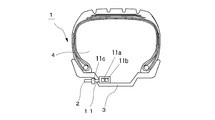
センサーユニット11は、図2に示すように、圧力センサー11aと温度センサー11bとを備え、航空機用タイヤ(以下、タイヤ1という)のタイヤバルブ2と一体となって、ホイールリム3のタイヤ気室4内に取付けられて、タイヤ1の内部の気体の温度を計測する。なお、符号11cは、計測されたタイヤ1の内部の気体の温度をタイヤ情報取得手段13に送信する送信機である。
離陸地点情報取得手段12は、離陸する空港から、離陸前の空港の気温(外気温)と標高(気圧)のデータを取得する。なお、外気温については、機体情報取得手段14の外気温センサー14aで取得した温度を用いてもよい。
タイヤ情報取得手段13は、タイヤ1の内部の気体の温度を取得する。具体的には、送信機11cから送られてきたタイヤ1の内部の気体の温度とを記憶する。
機体情報取得手段14は、図示しない航空機の機体に取付けられる外気温センサー14aと高度計14bとから構成され、航空機の周囲の温度と気圧とを計測する。
着陸地点情報取得手段15は、着陸する空港から、着陸する空港の気温(外気温)と標高(気圧)のデータを取得する。
着陸前内圧設定手段16は、着陸する空港の標高と、外気温及び航空機の重量とから、着陸におけるタイヤの撓みが予め設定された撓み(ラジアルタイヤの場合:35%、バイアスタイヤの場合:33%)となるタイヤ内圧IPAを算出する。なお、航空機の重量は、離陸前のタイヤ1に作用する荷重から飛行中に消費される燃料分の重さを減算して得られる。
飛行中内圧算出手段17は、前記航空機の飛行中の高度におけるタイヤ内圧IPを、以下の計算式(1),(2)で、補正係数Yが予め設定された値となるように、タイヤ内圧IPを算出し、タイヤ内圧調整手段18でIPを調整する。
ここで、TAは飛行中のタイヤ内部の気体温度で、TIは着陸時に予想されるタイヤ内部の気体温度(外気温度)である。
IP1={IP-(a4・TI4+a3・TI3+a2・TI2+a1・TI+Y)}・(273+TA)/(273+TI)+a4・TA4+a3・TA3+a2・TA2+a1・TA+Y ……(1)
IP2=IPA+a4・TA4+a3・TA3+a2・TA2+a1・TA+Y……(2)
但し、a1=33×10-4、a2=4×10⁻⁵、a3=2×10⁻⁶、a4=4×10⁻⁸
なお、補正係数Yは、-0.943773<Y<1.0563の範囲にある。
着陸時には、タイヤに作用する荷重が離陸時よりも小さくなるので、IPは飛行中に測定した内圧よりも低くなる。したがって、タイヤ内圧調整手段18は、タイヤ内の空気を抜くことで、タイヤ内圧を調整する。
図1は、本実施の形態に係る航空機用タイヤの管理装置10の構成を示す機能ブロック図で、同図において、11はセンサーユニット、12は離陸地点情報取得手段、13はタイヤ情報取得手段、14は機体情報取得手段、15は着陸地点情報取得手段、16は着陸前内圧設定手段、17は飛行中内圧算出手段、18はタイヤ内圧調整手段である。
センサーユニット11は、図2に示すように、圧力センサー11aと温度センサー11bとを備え、航空機用タイヤ(以下、タイヤ1という)のタイヤバルブ2と一体となって、ホイールリム3のタイヤ気室4内に取付けられて、タイヤ1の内部の気体の温度を計測する。なお、符号11cは、計測されたタイヤ1の内部の気体の温度をタイヤ情報取得手段13に送信する送信機である。
離陸地点情報取得手段12は、離陸する空港から、離陸前の空港の気温(外気温)と標高(気圧)のデータを取得する。なお、外気温については、機体情報取得手段14の外気温センサー14aで取得した温度を用いてもよい。
タイヤ情報取得手段13は、タイヤ1の内部の気体の温度を取得する。具体的には、送信機11cから送られてきたタイヤ1の内部の気体の温度とを記憶する。
機体情報取得手段14は、図示しない航空機の機体に取付けられる外気温センサー14aと高度計14bとから構成され、航空機の周囲の温度と気圧とを計測する。
着陸地点情報取得手段15は、着陸する空港から、着陸する空港の気温(外気温)と標高(気圧)のデータを取得する。
着陸前内圧設定手段16は、着陸する空港の標高と、外気温及び航空機の重量とから、着陸におけるタイヤの撓みが予め設定された撓み(ラジアルタイヤの場合:35%、バイアスタイヤの場合:33%)となるタイヤ内圧IPAを算出する。なお、航空機の重量は、離陸前のタイヤ1に作用する荷重から飛行中に消費される燃料分の重さを減算して得られる。
飛行中内圧算出手段17は、前記航空機の飛行中の高度におけるタイヤ内圧IPを、以下の計算式(1),(2)で、補正係数Yが予め設定された値となるように、タイヤ内圧IPを算出し、タイヤ内圧調整手段18でIPを調整する。
ここで、TAは飛行中のタイヤ内部の気体温度で、TIは着陸時に予想されるタイヤ内部の気体温度(外気温度)である。
IP1={IP-(a4・TI4+a3・TI3+a2・TI2+a1・TI+Y)}・(273+TA)/(273+TI)+a4・TA4+a3・TA3+a2・TA2+a1・TA+Y ……(1)
IP2=IPA+a4・TA4+a3・TA3+a2・TA2+a1・TA+Y……(2)
但し、a1=33×10-4、a2=4×10⁻⁵、a3=2×10⁻⁶、a4=4×10⁻⁸
なお、補正係数Yは、-0.943773<Y<1.0563の範囲にある。
着陸時には、タイヤに作用する荷重が離陸時よりも小さくなるので、IPは飛行中に測定した内圧よりも低くなる。したがって、タイヤ内圧調整手段18は、タイヤ内の空気を抜くことで、タイヤ内圧を調整する。
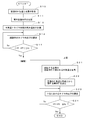
次に、本発明による航空機用タイヤの管理方法について、図3のフローチャートを参照して説明する。
本例のフローチャートは、離陸前におけるタイヤの内圧調整ステップ(ステップS10~S14)と、着陸前におけるタイヤの内圧調整ステップ(ステップS21~S24)とから構成される。
離陸前のタイヤ内圧IPは、例えば、タイヤの装着時など、航空機が離陸する前に、離陸時におけるタイヤの撓みを、ラジアルタイヤの場合:35%、バイアスタイヤの場合:33%となるように設定される。
離陸前のタイヤの温度は、着陸後、長時間駐機していれば、空港の外気温と同じであるが、着陸後からの駐機時間が短ければ、タイヤの温度は、着陸やTAXIINGによるタイヤの発熱の影響を受け、外気温よりも高くなる。
したがって、まず、離陸前のタイヤ内圧の設定に対しては、タイヤに作用する荷重を、乗客数や搭載燃料から算出するか計測し(ステップS10)、この荷重から離陸時における目標内圧(以下、管理目標内圧IPAという)を設定する(ステップS11)。
次に、外気温TAとタイヤ内部の気体温度TIとを測定し(ステップS12)、以下の換算式(1),(2)で、補正係数Yが予め設定された値になるようにタイヤ内圧IPを調整する(ステップS13)。
IP1={IP-(a4・TI4+a3・TI3+a2・TI2+a1・TI+Y)}・(273+TA)/(273+TI)+a4・TA4+a3・TA3+a2・TA2+a1・TA+Y ……(1)
IP2=IPA+a4・TA4+a3・TA3+a2・TA2+a1・TA+Y……(2)
但し、a1=33×10-4、a2=4×10⁻⁵、a3=2×10⁻⁶、a4=4×10⁻⁸
なお、補正係数Yは、-0.943773<Y<1.0563の範囲にある。
IP1は、外気温がTA、タイヤ内部の気体温度がTIの場合の相対的な内圧を示すもので、IP2は、外気温がTAである場合の内圧の目標値である。
ステップS14では、IP1とIP2との差が5psi以内であるか否か判定する。
IP1とIP2との差が5psiを超えた場合には、IP1とIP2との差が5psi以内となるようにタイヤ内圧IPを調整した後、ステップS13に戻って、IP1を再度求める。
ステップS14において、IP1とIP2との差が5psi以内であった場合には、ステップS13で調整したIPがタイヤ内圧となる。
これにより、離陸時におけるタイヤの撓みを、ラジアルタイヤの場合:35%、バイアスタイヤの場合:33%とすることができる。
本例のフローチャートは、離陸前におけるタイヤの内圧調整ステップ(ステップS10~S14)と、着陸前におけるタイヤの内圧調整ステップ(ステップS21~S24)とから構成される。
離陸前のタイヤ内圧IPは、例えば、タイヤの装着時など、航空機が離陸する前に、離陸時におけるタイヤの撓みを、ラジアルタイヤの場合:35%、バイアスタイヤの場合:33%となるように設定される。
離陸前のタイヤの温度は、着陸後、長時間駐機していれば、空港の外気温と同じであるが、着陸後からの駐機時間が短ければ、タイヤの温度は、着陸やTAXIINGによるタイヤの発熱の影響を受け、外気温よりも高くなる。
したがって、まず、離陸前のタイヤ内圧の設定に対しては、タイヤに作用する荷重を、乗客数や搭載燃料から算出するか計測し(ステップS10)、この荷重から離陸時における目標内圧(以下、管理目標内圧IPAという)を設定する(ステップS11)。
次に、外気温TAとタイヤ内部の気体温度TIとを測定し(ステップS12)、以下の換算式(1),(2)で、補正係数Yが予め設定された値になるようにタイヤ内圧IPを調整する(ステップS13)。
IP1={IP-(a4・TI4+a3・TI3+a2・TI2+a1・TI+Y)}・(273+TA)/(273+TI)+a4・TA4+a3・TA3+a2・TA2+a1・TA+Y ……(1)
IP2=IPA+a4・TA4+a3・TA3+a2・TA2+a1・TA+Y……(2)
但し、a1=33×10-4、a2=4×10⁻⁵、a3=2×10⁻⁶、a4=4×10⁻⁸
なお、補正係数Yは、-0.943773<Y<1.0563の範囲にある。
IP1は、外気温がTA、タイヤ内部の気体温度がTIの場合の相対的な内圧を示すもので、IP2は、外気温がTAである場合の内圧の目標値である。
ステップS14では、IP1とIP2との差が5psi以内であるか否か判定する。
IP1とIP2との差が5psiを超えた場合には、IP1とIP2との差が5psi以内となるようにタイヤ内圧IPを調整した後、ステップS13に戻って、IP1を再度求める。
ステップS14において、IP1とIP2との差が5psi以内であった場合には、ステップS13で調整したIPがタイヤ内圧となる。
これにより、離陸時におけるタイヤの撓みを、ラジアルタイヤの場合:35%、バイアスタイヤの場合:33%とすることができる。
次に、着陸前におけるタイヤの内圧調整ステップについて説明する。
まず、着陸する空港の着陸時に予測される外気温のデータを取得し(ステップS21)、外気温と荷重とから着陸時における目標内圧である管理目標内圧IPAを設定する(ステップS22)。
なお、タイヤに作用する荷重としては、離陸時の荷重から飛行中に消費される燃料を差し引いた荷重Wを用いればよい。
管理目標内圧IPAは、着陸時におけるタイヤの撓みがラジアルタイヤの場合:35%、バイアスタイヤの場合:33%ととなるような内圧である。
次に、着陸時のタイヤ内圧を管理目標内圧IPAとするための、上空におけるタイヤ内圧IPを、以下の換算式(1),(2)を用いて求める(ステップS23)。
なお、この場合、TAは、着陸時におけるタイヤ内部の気体温度で、TIは上空におけるタイヤ内部の気体温度である。着陸時におけるタイヤ内部の気体温度は、着陸する空港の外気温と等しい。
IP1={IP-(a4・TI4+a3・TI3+a2・TI2+a1・TI+Y)}・(273+TA)/(273+TI)+a4・TA4+a3・TA3+a2・TA2+a1・TA+Y ……(1)
IP2=IPA+a4・TA4+a3・TA3+a2・TA2+a1・TA+Y……(2)
但し、a1=33×10-4、a2=4×10⁻⁵、a3=2×10⁻⁶、a4=4×10⁻⁸
IP1は使用時設定目標内圧で、管理目標内圧IPAを指標に測定した内圧IPと、上空のタイヤ温度TIと、着陸時のタイヤ温度TAとから算出される。
IP2は温換算離設定目標内圧で、管理目標内圧IPAと着陸時のタイヤ温度TAとから算出される。なお、IPとIPAは、それぞれの地点の高度も考慮する必要がある。これは、高度が高くなれば、気圧の低下に伴い、タイヤの内圧が上昇するからである。
ステップS24では、IP1とIP2との差が5psi以内であるか否か判定する。
IP1とIP2との差が5psiを超えた場合には、ステップS23に戻って、タイヤ内圧IPを調整する。
まず、着陸する空港の着陸時に予測される外気温のデータを取得し(ステップS21)、外気温と荷重とから着陸時における目標内圧である管理目標内圧IPAを設定する(ステップS22)。
なお、タイヤに作用する荷重としては、離陸時の荷重から飛行中に消費される燃料を差し引いた荷重Wを用いればよい。
管理目標内圧IPAは、着陸時におけるタイヤの撓みがラジアルタイヤの場合:35%、バイアスタイヤの場合:33%ととなるような内圧である。
次に、着陸時のタイヤ内圧を管理目標内圧IPAとするための、上空におけるタイヤ内圧IPを、以下の換算式(1),(2)を用いて求める(ステップS23)。
なお、この場合、TAは、着陸時におけるタイヤ内部の気体温度で、TIは上空におけるタイヤ内部の気体温度である。着陸時におけるタイヤ内部の気体温度は、着陸する空港の外気温と等しい。
IP1={IP-(a4・TI4+a3・TI3+a2・TI2+a1・TI+Y)}・(273+TA)/(273+TI)+a4・TA4+a3・TA3+a2・TA2+a1・TA+Y ……(1)
IP2=IPA+a4・TA4+a3・TA3+a2・TA2+a1・TA+Y……(2)
但し、a1=33×10-4、a2=4×10⁻⁵、a3=2×10⁻⁶、a4=4×10⁻⁸
IP1は使用時設定目標内圧で、管理目標内圧IPAを指標に測定した内圧IPと、上空のタイヤ温度TIと、着陸時のタイヤ温度TAとから算出される。
IP2は温換算離設定目標内圧で、管理目標内圧IPAと着陸時のタイヤ温度TAとから算出される。なお、IPとIPAは、それぞれの地点の高度も考慮する必要がある。これは、高度が高くなれば、気圧の低下に伴い、タイヤの内圧が上昇するからである。
ステップS24では、IP1とIP2との差が5psi以内であるか否か判定する。
IP1とIP2との差が5psiを超えた場合には、ステップS23に戻って、タイヤ内圧IPを調整する。
[実施例]
実施例では、離陸する空港及び着陸する空港での環境及び使用条件を、室内での試験条件に置き換えて試験実施し、その効果を検証した。
実施例及び比較例1,2で使用するタイヤは、A320用メインタイヤ46×17R20 30PR、正規荷重 46000Lbs.、正規内圧 222Psiである。
また、室内実験を実施する箇所の標高は82m、気温25℃で、気圧は、海面気圧P0=1013.25hPa(1気圧)を基準に、1003.78hPaとして検証する。
効果を検証する試験は、直径3mのドラム試験機を使用した。
また、ドラム表面を空港の滑走路の凹凸に近づけるため、ドラムスチールの表面にサンドペーパーを貼付けて、トレッドの摩耗を促進するようにした。
以下、機体が離陸する空港は標高が高くかつ低温で、機体が着陸する空港は、標高が低くかつ高温である場合について説明する。
・離陸時のタイヤの使用条件と空港の環境は以下の通りである。
タイヤ荷重 41400Lbs. タイヤ内部の気体温度 -10℃
空港の標高 0m 気温 -30℃
(離陸時には、TAXIINGにより、タイヤ内部の気体温度は、空港の外気温よりも20℃高い状態になる)
・着陸時のタイヤの使用条件と空港の環境は以下の通りである。
タイヤ荷重 32200Lbs. タイヤ内部の気体温度 30℃
空港の標高 1000m 気温 30℃
(離陸後、タイヤ内部の気体は冷却され、着陸時には、着陸時の空港の外気温と同じ状態となる)
実施例では、離陸する空港及び着陸する空港での環境及び使用条件を、室内での試験条件に置き換えて試験実施し、その効果を検証した。
実施例及び比較例1,2で使用するタイヤは、A320用メインタイヤ46×17R20 30PR、正規荷重 46000Lbs.、正規内圧 222Psiである。
また、室内実験を実施する箇所の標高は82m、気温25℃で、気圧は、海面気圧P0=1013.25hPa(1気圧)を基準に、1003.78hPaとして検証する。
効果を検証する試験は、直径3mのドラム試験機を使用した。
また、ドラム表面を空港の滑走路の凹凸に近づけるため、ドラムスチールの表面にサンドペーパーを貼付けて、トレッドの摩耗を促進するようにした。
以下、機体が離陸する空港は標高が高くかつ低温で、機体が着陸する空港は、標高が低くかつ高温である場合について説明する。
・離陸時のタイヤの使用条件と空港の環境は以下の通りである。
タイヤ荷重 41400Lbs. タイヤ内部の気体温度 -10℃
空港の標高 0m 気温 -30℃
(離陸時には、TAXIINGにより、タイヤ内部の気体温度は、空港の外気温よりも20℃高い状態になる)
・着陸時のタイヤの使用条件と空港の環境は以下の通りである。
タイヤ荷重 32200Lbs. タイヤ内部の気体温度 30℃
空港の標高 1000m 気温 30℃
(離陸後、タイヤ内部の気体は冷却され、着陸時には、着陸時の空港の外気温と同じ状態となる)
比較例1
比較例1では、実機体では、離着陸する空港の気温、標高及びタイヤ内部の気体温度によるタイヤ内圧の補正は実施されず、タイヤの内圧は、離陸時におけるタイヤの撓みが35%となるように設定される。
よって、離陸時のタイヤ荷重が41400Lbs.なら、内圧は200psiと設定される。
タイヤ装着時には、タイヤ内部の気体温度が空港の外気温と同じで、離陸時には、タイヤ内部の気体温度が気温よりも20℃高い状態とすると、TI=-10℃、TA=-30℃として、以下の換算式(1),(2)を用い、補正係数がY=0.0563となる内圧IPを求める。
IP1={IP-(a4・TI4+a3・TI3+a2・TI2+a1・TI+Y)}・(273+TA)/(273+TI)+a4・TA4+a3・TA3+a2・TA2+a1・TA+Y ……(1)
IP2=IPA+a4・TA4+a3・TA3+a2・TA2+a1・TA+Y……(2)
但し、a1=33×10-4、a2=4×10⁻⁵、a3=2×10⁻⁶、a4=4×10⁻⁸
結果は、IP=184psi、IP1=184.74psi、IP2=184.03psiとなり、IP1とIP2との差は±5psi以内なので、内圧は184psiとなる。
室内離陸試験では、内圧を184psi、タイヤ荷重を46000Lbs.とし、速度40km/hで10分間TAXI走行した後停止し、50秒間に比例してスピードを上昇させ、225km/hまで加速してTake Offさせる。これをTake Off試験1回とする。
次に、着陸時の内圧を求める。
着陸時には、タイヤ内部の気体温度は空港の外気温と同じ30℃である。一方、離陸時には、タイヤ内部の気体温度は、空港の外気温よりも高いので、TA=-10℃である。したがって、TI=30℃、TA=-10℃として、上記の換算式(1),(2)を用い、補正係数がY=0.0563となる内圧IPを求める。
結果は、IP=231psi、IP1=200.29psi、IP2=200.28psiとなり、IP1とIP2との差は±5psi以内なので、内圧は231psiとなる。
すなわち、着陸する空港の気温、標高及びタイヤ内の気体温度による補正を行わなかった場合は、内圧は、タイヤ内の気体温度の変化(-10℃→30℃)の影響だけで、184psiから231psiとなる。
更に、離着陸する空港の標高違い(1000m)を考慮すると、内圧は1.5psi増加し、最終的には、232.5psiとなる。
したがって、内圧を232.5psi、タイヤ荷重を32200Lbs.として着陸試験を実施する。
本条件では、タイヤの撓みは23.4%となる。
着陸試験は、離陸試験後、タイヤを室内で冷却した後実施する。
着陸速度は180km/hで、30秒間に速度40km/hまで減速し、継続して、速度40km/hで10分間TAXI走行させた後停止させる。これをLanding試験1回とする。
着陸試験終了後は、タイヤを室内で冷却した後、再度離陸試験を実施する。
以降は、上記の条件で離着陸試験を交互に繰り返して実施する。
Take Off試験及びLanding試験をそれぞれ500回行った後では、タイヤのトレッドは摩耗し、センター溝がなくなった。
更に、タイヤのRetread、Take Off試験、Landing試験をそれぞれ2回繰り返し、合計1500回の試験を実施したが、タイヤにセパレーション等の異常は見られなかった。
このように、比較例1では、着陸時のタイヤの内圧は離陸時のタイヤ内圧に依存するため、着陸時のタイヤの撓みが23.4%と小さくなり、その結果、目標となる摩耗を発揮できる使用条件になっていなかったことがわかる。
すなわち、着陸時には、タイヤが滑走路に接地する瞬間に多量のトレッドゴムが路面に削り取られるが、タイヤの撓みが小さいとタイヤの接地面積も小さくなるため、タイヤの摩耗量が大きくなる。
比較例1では、実機体では、離着陸する空港の気温、標高及びタイヤ内部の気体温度によるタイヤ内圧の補正は実施されず、タイヤの内圧は、離陸時におけるタイヤの撓みが35%となるように設定される。
よって、離陸時のタイヤ荷重が41400Lbs.なら、内圧は200psiと設定される。
タイヤ装着時には、タイヤ内部の気体温度が空港の外気温と同じで、離陸時には、タイヤ内部の気体温度が気温よりも20℃高い状態とすると、TI=-10℃、TA=-30℃として、以下の換算式(1),(2)を用い、補正係数がY=0.0563となる内圧IPを求める。
IP1={IP-(a4・TI4+a3・TI3+a2・TI2+a1・TI+Y)}・(273+TA)/(273+TI)+a4・TA4+a3・TA3+a2・TA2+a1・TA+Y ……(1)
IP2=IPA+a4・TA4+a3・TA3+a2・TA2+a1・TA+Y……(2)
但し、a1=33×10-4、a2=4×10⁻⁵、a3=2×10⁻⁶、a4=4×10⁻⁸
結果は、IP=184psi、IP1=184.74psi、IP2=184.03psiとなり、IP1とIP2との差は±5psi以内なので、内圧は184psiとなる。
室内離陸試験では、内圧を184psi、タイヤ荷重を46000Lbs.とし、速度40km/hで10分間TAXI走行した後停止し、50秒間に比例してスピードを上昇させ、225km/hまで加速してTake Offさせる。これをTake Off試験1回とする。
次に、着陸時の内圧を求める。
着陸時には、タイヤ内部の気体温度は空港の外気温と同じ30℃である。一方、離陸時には、タイヤ内部の気体温度は、空港の外気温よりも高いので、TA=-10℃である。したがって、TI=30℃、TA=-10℃として、上記の換算式(1),(2)を用い、補正係数がY=0.0563となる内圧IPを求める。
結果は、IP=231psi、IP1=200.29psi、IP2=200.28psiとなり、IP1とIP2との差は±5psi以内なので、内圧は231psiとなる。
すなわち、着陸する空港の気温、標高及びタイヤ内の気体温度による補正を行わなかった場合は、内圧は、タイヤ内の気体温度の変化(-10℃→30℃)の影響だけで、184psiから231psiとなる。
更に、離着陸する空港の標高違い(1000m)を考慮すると、内圧は1.5psi増加し、最終的には、232.5psiとなる。
したがって、内圧を232.5psi、タイヤ荷重を32200Lbs.として着陸試験を実施する。
本条件では、タイヤの撓みは23.4%となる。
着陸試験は、離陸試験後、タイヤを室内で冷却した後実施する。
着陸速度は180km/hで、30秒間に速度40km/hまで減速し、継続して、速度40km/hで10分間TAXI走行させた後停止させる。これをLanding試験1回とする。
着陸試験終了後は、タイヤを室内で冷却した後、再度離陸試験を実施する。
以降は、上記の条件で離着陸試験を交互に繰り返して実施する。
Take Off試験及びLanding試験をそれぞれ500回行った後では、タイヤのトレッドは摩耗し、センター溝がなくなった。
更に、タイヤのRetread、Take Off試験、Landing試験をそれぞれ2回繰り返し、合計1500回の試験を実施したが、タイヤにセパレーション等の異常は見られなかった。
このように、比較例1では、着陸時のタイヤの内圧は離陸時のタイヤ内圧に依存するため、着陸時のタイヤの撓みが23.4%と小さくなり、その結果、目標となる摩耗を発揮できる使用条件になっていなかったことがわかる。
すなわち、着陸時には、タイヤが滑走路に接地する瞬間に多量のトレッドゴムが路面に削り取られるが、タイヤの撓みが小さいとタイヤの接地面積も小さくなるため、タイヤの摩耗量が大きくなる。
比較例2
比較例2の離陸時の使用条件は、内圧が200psi、タイヤ荷重が41400Lbs.であり、撓みは適正なタイヤ歪(35%)となるように設定される点は、比較例1と同じである。
一方、着陸時の使用条件は、タイヤの摩耗を少なくするため、タイヤの撓みが適正値である35%となるように設定した。
タイヤの撓みを35%とするためには、着陸時内圧をIPA=155psiにする必要がある。
タイヤ内の気体温度をTI=30℃、空港の外気温をTA=-10℃として、以下の式(1),(2)を用い、補正係数がY=0.0563となる内圧IPを求める。
IP1={IP-(a4・TI4+a3・TI3+a2・TI2+a1・TI+Y)}・(273+TA)/(273+TI)+a4・TA4+a3・TA3+a2・TA2+a1・TA+Y ……(1)
IP2=IPA+a4・TA4+a3・TA3+a2・TA2+a1・TA+Y……(2)
但し、a1=33×10-4、a2=4×10⁻⁵、a3=2×10⁻⁶、a4=4×10⁻⁸
結果は、IP=179psi、IP1=155.15psi、IP2=155.28psiとなり、IP1とIP2との差は±5psi以内なので、内圧はIP=179psiとなる。
ここで、離着陸する空港の標高差(1000m)による内圧の低下1.5psiを考慮しても、離陸時の内圧は177.5psiとなる。
離陸時の内圧が177.5psi、タイヤ荷重が41400Lbs.なら、着陸時におけるタイヤの撓みは39%となる。
比較例1と同様に、Take Off試験及びLanding試験を繰り返したところ、それぞれ500を繰り返した後に、ビード部にセパレーションが発生したので試験を終了した。
なお、タイヤのセンター溝は、約7割程度しか摩耗していなかった。
これにより、着陸時のタイヤの撓みが適正値である35%となるように、離陸時のタイヤ内圧IPを低下させた場合には、タイヤの摩耗は改善されるが、タイヤの耐久性が低下してしまうことがわかった。
比較例2の離陸時の使用条件は、内圧が200psi、タイヤ荷重が41400Lbs.であり、撓みは適正なタイヤ歪(35%)となるように設定される点は、比較例1と同じである。
一方、着陸時の使用条件は、タイヤの摩耗を少なくするため、タイヤの撓みが適正値である35%となるように設定した。
タイヤの撓みを35%とするためには、着陸時内圧をIPA=155psiにする必要がある。
タイヤ内の気体温度をTI=30℃、空港の外気温をTA=-10℃として、以下の式(1),(2)を用い、補正係数がY=0.0563となる内圧IPを求める。
IP1={IP-(a4・TI4+a3・TI3+a2・TI2+a1・TI+Y)}・(273+TA)/(273+TI)+a4・TA4+a3・TA3+a2・TA2+a1・TA+Y ……(1)
IP2=IPA+a4・TA4+a3・TA3+a2・TA2+a1・TA+Y……(2)
但し、a1=33×10-4、a2=4×10⁻⁵、a3=2×10⁻⁶、a4=4×10⁻⁸
結果は、IP=179psi、IP1=155.15psi、IP2=155.28psiとなり、IP1とIP2との差は±5psi以内なので、内圧はIP=179psiとなる。
ここで、離着陸する空港の標高差(1000m)による内圧の低下1.5psiを考慮しても、離陸時の内圧は177.5psiとなる。
離陸時の内圧が177.5psi、タイヤ荷重が41400Lbs.なら、着陸時におけるタイヤの撓みは39%となる。
比較例1と同様に、Take Off試験及びLanding試験を繰り返したところ、それぞれ500を繰り返した後に、ビード部にセパレーションが発生したので試験を終了した。
なお、タイヤのセンター溝は、約7割程度しか摩耗していなかった。
これにより、着陸時のタイヤの撓みが適正値である35%となるように、離陸時のタイヤ内圧IPを低下させた場合には、タイヤの摩耗は改善されるが、タイヤの耐久性が低下してしまうことがわかった。
実施例
比較例2では、耐摩耗性を向上させるため、離陸時におけるタイヤ内圧を低下させたが、本発明による実施例では、以下に示すように、離陸時の使用条件を比較例1と同一とし、着陸時におけるタイヤ内圧を適正な内圧に調整することで、タイヤの耐久性を損なうことなく、タイヤの摩耗を向上させるようにしている。
室内離陸試験では、内圧を184psi、タイヤ荷重を4600Lbs.とし、速度40km/hで10分間TAXI走行した後、50秒間に比例してスピードを上昇させ、225km/hまで加速してTake Offさせる。これをTake Off試験1回とする。
着陸時において、適正なタイヤの撓み(35%)を得るために、着陸時における内圧をIPA=155psiにする必要がある。以下に、その手順を示す。
まず、着陸前の高度10000mにおける内圧を求める。
高度10000mの上空では、外気温もタイヤ内部の気体温度もともに-40℃である。したがって、離陸時において、タイヤ内部の気体温度TI=-10℃、標高0mで内圧200psiに設定されたタイヤの内圧は、高度10000m、外気温TA=-40℃の条件下では、IP=177psiとなる。IPは、TI=-40℃、TA=-10℃として、下記の換算式(1),(2)において、補正係数がY=0.0563となるように求める。
IP1={IP-(a4・TI4+a3・TI3+a2・TI2+a1・TI+Y)}・(273+TA)/(273+TI)+a4・TA4+a3・TA3+a2・TA2+a1・TA+Y ……(1)
IP2=IPA+a4・TA4+a3・TA3+a2・TA2+a1・TA+Y……(2)
但し、a1=33×10-4、a2=4×10⁻⁵、a3=2×10⁻⁶、a4=4×10⁻⁸
結果は、IP1=199.86psi、IP2=199.96psiとなり、IP1とIP2との差は±5psi以内なので、内圧は177psiとなる。
ここで、離陸する空港との高度差による増加14.5psiを考慮すると、高度10000mでの内圧は191.5psiとなる。
したがって、着陸する空港の標高1000m、気温30℃(タイヤ内部の気体温度も30℃)で、着陸時の内圧を、着陸時におけるタイヤの撓みを適正値である35%を実現するための内圧である155psiにするためには、高度10000m、外気温TA=-40℃の条件下における内圧を低くするようにタイヤ内圧を調整(減圧)する必要がある。
着陸時の内圧を155psiにするための、高度10000m、外気温TA=-40℃の条件下における内圧IPは、上空でのタイヤ内部の気体温度をTI=-40℃、着陸する空港におけるタイヤ内部の気体温度をTA=30℃とし、以下の換算式(1),(2)を用い、補正係数がY=0.0563となるように求める。
IP1={IP-(a4・TI4+a3・TI3+a2・TI2+a1・TI+Y)}・(273+TA)/(273+TI)+a4・TA4+a3・TA3+a2・TA2+a1・TA+Y ……(1)
IP2=IPA+a4・TA4+a3・TA3+a2・TA2+a1・TA+Y……(2)
但し、a1=33×10-4、a2=4×10⁻⁵、a3=2×10⁻⁶、a4=4×10⁻⁸
結果は、IP=119psi、IP1=155.08psi、IP2=154.96psiとなり、IP1とIP2との差は±5psi以内なので、内圧は119psiとなる。
着陸する空港の高度差(9000m)による増加13.1psiを考慮すると、高度10000mでの内圧は132psiとなる。
したがって、高度10000mの上空で、タイヤの空気の一部を抜くことで、離陸した状態の内圧191.5psiiを、132psiまで低下させれば、着陸空港の使用条件で、適正な内圧である155psi(タイヤの撓み35%)で着陸させることができる。
室内試験では、内圧155psi、タイヤ荷重32200Lbs.で着陸試験を実施する。
離陸試験については比較例1と同じなので、説明を省略する。
なお、着陸試験は、離陸試験後、タイヤを室内で冷却した後実施する。
着陸速度は180km/hで、30秒間に速度40km/hまで減速し、継続して、速度40km/hで10分間TAXI走行させた後停止させる。これをLanding試験1回とする。
着陸試験終了後は、タイヤを室内で冷却した後、再度離陸試験を実施する。
以降は、上記の条件で離着陸試験を交互に繰り返して実施する。
タイヤのトレッドが摩耗し、センター溝がなくなったのは、Take Off試験及びLanding試験をそれぞれ700回行った後であった。
更に、タイヤのRetread、Take Off試験、Landing試験をそれぞれ2回繰り返し、合計2100回の試験を実施したが、タイヤにセパレーション等の異常は見られなかった。
このように、高度10000mの上空で、タイヤの空気の一部を抜いて内圧を低下させれば、着陸空港の使用条件で、適正な内圧である155psi(タイヤの撓み35%)で着陸させることができるので、耐久性を損なうことなく、タイヤの耐摩耗性を向上させることができることが確認された。
比較例2では、耐摩耗性を向上させるため、離陸時におけるタイヤ内圧を低下させたが、本発明による実施例では、以下に示すように、離陸時の使用条件を比較例1と同一とし、着陸時におけるタイヤ内圧を適正な内圧に調整することで、タイヤの耐久性を損なうことなく、タイヤの摩耗を向上させるようにしている。
室内離陸試験では、内圧を184psi、タイヤ荷重を4600Lbs.とし、速度40km/hで10分間TAXI走行した後、50秒間に比例してスピードを上昇させ、225km/hまで加速してTake Offさせる。これをTake Off試験1回とする。
着陸時において、適正なタイヤの撓み(35%)を得るために、着陸時における内圧をIPA=155psiにする必要がある。以下に、その手順を示す。
まず、着陸前の高度10000mにおける内圧を求める。
高度10000mの上空では、外気温もタイヤ内部の気体温度もともに-40℃である。したがって、離陸時において、タイヤ内部の気体温度TI=-10℃、標高0mで内圧200psiに設定されたタイヤの内圧は、高度10000m、外気温TA=-40℃の条件下では、IP=177psiとなる。IPは、TI=-40℃、TA=-10℃として、下記の換算式(1),(2)において、補正係数がY=0.0563となるように求める。
IP1={IP-(a4・TI4+a3・TI3+a2・TI2+a1・TI+Y)}・(273+TA)/(273+TI)+a4・TA4+a3・TA3+a2・TA2+a1・TA+Y ……(1)
IP2=IPA+a4・TA4+a3・TA3+a2・TA2+a1・TA+Y……(2)
但し、a1=33×10-4、a2=4×10⁻⁵、a3=2×10⁻⁶、a4=4×10⁻⁸
結果は、IP1=199.86psi、IP2=199.96psiとなり、IP1とIP2との差は±5psi以内なので、内圧は177psiとなる。
ここで、離陸する空港との高度差による増加14.5psiを考慮すると、高度10000mでの内圧は191.5psiとなる。
したがって、着陸する空港の標高1000m、気温30℃(タイヤ内部の気体温度も30℃)で、着陸時の内圧を、着陸時におけるタイヤの撓みを適正値である35%を実現するための内圧である155psiにするためには、高度10000m、外気温TA=-40℃の条件下における内圧を低くするようにタイヤ内圧を調整(減圧)する必要がある。
着陸時の内圧を155psiにするための、高度10000m、外気温TA=-40℃の条件下における内圧IPは、上空でのタイヤ内部の気体温度をTI=-40℃、着陸する空港におけるタイヤ内部の気体温度をTA=30℃とし、以下の換算式(1),(2)を用い、補正係数がY=0.0563となるように求める。
IP1={IP-(a4・TI4+a3・TI3+a2・TI2+a1・TI+Y)}・(273+TA)/(273+TI)+a4・TA4+a3・TA3+a2・TA2+a1・TA+Y ……(1)
IP2=IPA+a4・TA4+a3・TA3+a2・TA2+a1・TA+Y……(2)
但し、a1=33×10-4、a2=4×10⁻⁵、a3=2×10⁻⁶、a4=4×10⁻⁸
結果は、IP=119psi、IP1=155.08psi、IP2=154.96psiとなり、IP1とIP2との差は±5psi以内なので、内圧は119psiとなる。
着陸する空港の高度差(9000m)による増加13.1psiを考慮すると、高度10000mでの内圧は132psiとなる。
したがって、高度10000mの上空で、タイヤの空気の一部を抜くことで、離陸した状態の内圧191.5psiiを、132psiまで低下させれば、着陸空港の使用条件で、適正な内圧である155psi(タイヤの撓み35%)で着陸させることができる。
室内試験では、内圧155psi、タイヤ荷重32200Lbs.で着陸試験を実施する。
離陸試験については比較例1と同じなので、説明を省略する。
なお、着陸試験は、離陸試験後、タイヤを室内で冷却した後実施する。
着陸速度は180km/hで、30秒間に速度40km/hまで減速し、継続して、速度40km/hで10分間TAXI走行させた後停止させる。これをLanding試験1回とする。
着陸試験終了後は、タイヤを室内で冷却した後、再度離陸試験を実施する。
以降は、上記の条件で離着陸試験を交互に繰り返して実施する。
タイヤのトレッドが摩耗し、センター溝がなくなったのは、Take Off試験及びLanding試験をそれぞれ700回行った後であった。
更に、タイヤのRetread、Take Off試験、Landing試験をそれぞれ2回繰り返し、合計2100回の試験を実施したが、タイヤにセパレーション等の異常は見られなかった。
このように、高度10000mの上空で、タイヤの空気の一部を抜いて内圧を低下させれば、着陸空港の使用条件で、適正な内圧である155psi(タイヤの撓み35%)で着陸させることができるので、耐久性を損なうことなく、タイヤの耐摩耗性を向上させることができることが確認された。
以上、本発明を実施の形態及び実施例を用いて説明したが、本発明の技術的範囲は前記実施の形態に記載の範囲には限定されない。前記実施の形態に、多様な変更または改良を加えることが可能であることが当業者にも明らかである。そのような変更または改良を加えた形態も本発明の技術的範囲に含まれ得ることが、特許請求の範囲から明らかである。
例えば、前記実施例では、機体が離陸する空港の標高及び気温が低く、着陸する空港の標高及び気温が高い場合、すなわち、タイヤ圧の調整を行わない場合には、機体が離陸する前に設定された内圧よりも高い内圧で着陸する場合について説明したが、本発明は、離陸する空港の標高及び気温が高く、着陸する空港の標高及び気温が低い場合や、離着陸する空港の標高及び気温がほぼ同じ場合などにも適用できることはいうまでもない。
すなわち、離陸する空港の標高及び気温が高く、着陸する空港の標高及び気温が低い場合には、機体が離陸する前に設定された内圧よりも低い内圧で着陸することになるが、着陸時には、機体は消費した燃料分だけ軽くなり、その結果、タイヤに作用する荷重波減少する。したがって、通常は、タイヤの撓みは適正値である35%よりも小さくなるので、前記実施の形態と同様に、上空で、タイヤの空気の一部を抜いて内圧を更に低下させることが好ましい。
なお、上空で、タイヤの内部に気体を注入する必要があるのは、例えば、離陸後短時間で緊急着陸するなど消費した燃料が少ない場合に限られる。
また、前記実施の形態では、絶対目標内圧(管理目標内圧IPA)を一定としたが、IPAは、同じ環境・同じ使用条件であっても、求める性能により異なる場合がある。また、求める性能が同じでも、タイヤサイズ、スペック、使用されるタイヤの環境・使用条件によって異なる。
すなわち、離陸する空港の標高及び気温が高く、着陸する空港の標高及び気温が低い場合には、機体が離陸する前に設定された内圧よりも低い内圧で着陸することになるが、着陸時には、機体は消費した燃料分だけ軽くなり、その結果、タイヤに作用する荷重波減少する。したがって、通常は、タイヤの撓みは適正値である35%よりも小さくなるので、前記実施の形態と同様に、上空で、タイヤの空気の一部を抜いて内圧を更に低下させることが好ましい。
なお、上空で、タイヤの内部に気体を注入する必要があるのは、例えば、離陸後短時間で緊急着陸するなど消費した燃料が少ない場合に限られる。
また、前記実施の形態では、絶対目標内圧(管理目標内圧IPA)を一定としたが、IPAは、同じ環境・同じ使用条件であっても、求める性能により異なる場合がある。また、求める性能が同じでも、タイヤサイズ、スペック、使用されるタイヤの環境・使用条件によって異なる。
1 航空機用タイヤ、2 タイヤバルブ、3 ホイールリム、
4 タイヤ気室、10 航空機用タイヤの管理装置、
11 センサーユニット、11a 圧力センサー、
11b 温度センサー、11c 送信機、12 離陸地点情報取得手段、
13 タイヤ情報取得手段、14 機体情報取得手段、
14a 外気温センサー、14b 高度計、
15 着陸地点情報取得手段、16 着陸前内圧設定手段、
17 飛行中内圧設定手段、18 タイヤ内圧調整手段。
4 タイヤ気室、10 航空機用タイヤの管理装置、
11 センサーユニット、11a 圧力センサー、
11b 温度センサー、11c 送信機、12 離陸地点情報取得手段、
13 タイヤ情報取得手段、14 機体情報取得手段、
14a 外気温センサー、14b 高度計、
15 着陸地点情報取得手段、16 着陸前内圧設定手段、
17 飛行中内圧設定手段、18 タイヤ内圧調整手段。
Claims (2)
- 飛行中の航空機内に格納されたタイヤの内圧と前記タイヤの温度とを取得するステップと、
前記航空機の周囲の温度と気圧とを取得するステップと、
前記航空機の離着陸地点の標高と気温とを取得するステップと、
離陸する空港の標高と気温の情報から離陸時における目標内圧を算出するステップと、
前記航空機のタイヤの周囲の温度と気圧、着陸する空港の気温と気圧、及び、着陸時に予想されるタイヤにかかる荷重の情報から、タイヤ内圧が着陸時における目標内圧となるような飛行中のタイヤの内圧を算出するステップと、
前記取得された航空機内に格納されたタイヤの内圧が、前記算出された飛行中のタイヤの内圧となるように、飛行中のタイヤの内圧を調整するステップと
を備えることを特徴とする航空機用タイヤの管理方法。 - 飛行中の航空機内に格納されたタイヤの内圧情報と前記タイヤの温度情報とを取得するタイヤ情報取得手段と、
前記航空機の周囲の温度と気圧の情報を取得する機体情報取得手段と、
着陸地点の標高と気温とから、着陸時における前記タイヤの目標内圧である着陸時内圧を設定する着陸時内圧設定手段と、
前記飛行中のタイヤの内圧情報と温度情報と、前記航空機のタイヤの周囲の温度と気圧の情報とから、飛行中のタイヤの内圧を算出する飛行中内圧算出手段と、
前記算出された着陸前のタイヤの内圧が前記着陸時内圧になるように、着陸前のタイヤの内圧を調整するタイヤ内圧調整手段とを備える航空機用タイヤの管理装置。
Priority Applications (3)
| Application Number | Priority Date | Filing Date | Title |
|---|---|---|---|
| US16/094,550 US10759234B2 (en) | 2016-04-19 | 2017-04-17 | Aircraft tire management method and aircraft tire management device |
| EP17785934.5A EP3446971B1 (en) | 2016-04-19 | 2017-04-17 | Aircraft tire management method and aircract tire management device |
| CN201780024829.7A CN109153443B (zh) | 2016-04-19 | 2017-04-17 | 航空器用轮胎的管理方法以及航空器用轮胎的管理装置 |
Applications Claiming Priority (2)
| Application Number | Priority Date | Filing Date | Title |
|---|---|---|---|
| JP2016-083811 | 2016-04-19 | ||
| JP2016083811A JP6715066B2 (ja) | 2016-04-19 | 2016-04-19 | 航空機用タイヤの管理方法及び航空機用タイヤの管理装置 |
Publications (1)
| Publication Number | Publication Date |
|---|---|
| WO2017183596A1 true WO2017183596A1 (ja) | 2017-10-26 |
Family
ID=60116787
Family Applications (1)
| Application Number | Title | Priority Date | Filing Date |
|---|---|---|---|
| PCT/JP2017/015415 Ceased WO2017183596A1 (ja) | 2016-04-19 | 2017-04-17 | 航空機用タイヤの管理方法及び航空機用タイヤの管理装置 |
Country Status (5)
| Country | Link |
|---|---|
| US (1) | US10759234B2 (ja) |
| EP (1) | EP3446971B1 (ja) |
| JP (1) | JP6715066B2 (ja) |
| CN (1) | CN109153443B (ja) |
| WO (1) | WO2017183596A1 (ja) |
Families Citing this family (9)
| Publication number | Priority date | Publication date | Assignee | Title |
|---|---|---|---|---|
| JP7449664B2 (ja) * | 2019-09-19 | 2024-03-14 | 株式会社ブリヂストン | タイヤ管理装置、タイヤ管理方法、及びタイヤ管理プログラム |
| RU205865U1 (ru) * | 2020-09-28 | 2021-08-11 | Публичное акционерное общество "КАМАЗ" | Система автоматической накачки шин |
| GB2600459A (en) * | 2020-10-30 | 2022-05-04 | Airbus Operations Ltd | Aircraft system and method |
| GB2600460A (en) * | 2020-10-30 | 2022-05-04 | Airbus Operations Ltd | Aircraft system and method |
| GB2601783A (en) * | 2020-12-10 | 2022-06-15 | Airbus Operations Ltd | Apparatus and method for determining aircraft tire pressure |
| EP4011651B1 (en) | 2020-12-10 | 2024-04-10 | Airbus SAS | Apparatus and method for determining aircraft tire pressure |
| JP7667031B2 (ja) * | 2021-08-23 | 2025-04-22 | 株式会社ブリヂストン | タイヤ内圧管理装置、タイヤ内圧管理プログラムおよびタイヤ内圧管理方法 |
| JP7762617B2 (ja) * | 2022-03-31 | 2025-10-30 | 株式会社ブリヂストン | 内圧調整方法、及び内圧調整装置 |
| CN116394683B (zh) * | 2023-04-26 | 2026-04-24 | 东航技术应用研发中心有限公司 | 一种轮胎胎压和胎温智能管理系统 |
Citations (4)
| Publication number | Priority date | Publication date | Assignee | Title |
|---|---|---|---|---|
| JPH04189610A (ja) * | 1990-11-21 | 1992-07-08 | Mazda Motor Corp | 自動車のタイヤ空気圧制御装置 |
| JP2008049999A (ja) | 2006-08-25 | 2008-03-06 | Goodyear Tire & Rubber Co:The | 航空機タイヤ状態監視システムおよび方法 |
| JP2013018483A (ja) * | 2011-07-12 | 2013-01-31 | Messier-Bugatti-Dowty | 航空機ホイールの操向を操作する方法 |
| JP2015526338A (ja) * | 2012-07-24 | 2015-09-10 | ザ・ボーイング・カンパニーTheBoeing Company | 制御式着陸装置タイヤ摩擦システム |
Family Cites Families (12)
| Publication number | Priority date | Publication date | Assignee | Title |
|---|---|---|---|---|
| CA1166277A (en) * | 1979-12-12 | 1984-04-24 | Sundstrand Data Control, Inc. | Aircraft low tire pressure detection system |
| US4550385A (en) | 1982-07-30 | 1985-10-29 | Sundstrand Data Control, Inc. | Dynamic low tire pressure detection system for aircraft |
| TWI283739B (en) * | 2004-12-28 | 2007-07-11 | Delta Electronics Inc | FBAR-based sensing apparatus |
| US20100258678A1 (en) * | 2009-04-09 | 2010-10-14 | Nicholas Jonathan Fermor | Aircraft stall protection system |
| FR2974061B1 (fr) * | 2011-04-13 | 2013-06-07 | Michelin Soc Tech | Procede et dispositif de comptage du nombre d'atterrissages d'un pneumatique d'un aeronef |
| US9381779B2 (en) * | 2012-07-09 | 2016-07-05 | Meggitt (Orange County), Inc. | System and method for thermal mitigation for tire pressure measurement electronics |
| US9505502B2 (en) * | 2014-02-12 | 2016-11-29 | The Boeing Company | Tire pressure monitoring system |
| WO2015143451A1 (en) | 2014-03-21 | 2015-09-24 | Eldec Corporation | Tire pressure cold check system |
| US20150284108A1 (en) * | 2014-04-07 | 2015-10-08 | Goodrich Corporation | Nose wheel tire pressure sensing system and apparatus |
| US20150375577A1 (en) * | 2014-06-27 | 2015-12-31 | GM Global Technology Operations LLC | Pressure system for a tire assembly of a vehicle |
| CN105292512B (zh) * | 2015-10-27 | 2017-11-17 | 林国强 | 飞机着陆器及其着陆系统 |
| AU2017322765A1 (en) * | 2016-09-06 | 2019-04-18 | Aktv8 LLC | Tire management system and method |
-
2016
- 2016-04-19 JP JP2016083811A patent/JP6715066B2/ja active Active
-
2017
- 2017-04-17 WO PCT/JP2017/015415 patent/WO2017183596A1/ja not_active Ceased
- 2017-04-17 US US16/094,550 patent/US10759234B2/en active Active
- 2017-04-17 EP EP17785934.5A patent/EP3446971B1/en active Active
- 2017-04-17 CN CN201780024829.7A patent/CN109153443B/zh active Active
Patent Citations (4)
| Publication number | Priority date | Publication date | Assignee | Title |
|---|---|---|---|---|
| JPH04189610A (ja) * | 1990-11-21 | 1992-07-08 | Mazda Motor Corp | 自動車のタイヤ空気圧制御装置 |
| JP2008049999A (ja) | 2006-08-25 | 2008-03-06 | Goodyear Tire & Rubber Co:The | 航空機タイヤ状態監視システムおよび方法 |
| JP2013018483A (ja) * | 2011-07-12 | 2013-01-31 | Messier-Bugatti-Dowty | 航空機ホイールの操向を操作する方法 |
| JP2015526338A (ja) * | 2012-07-24 | 2015-09-10 | ザ・ボーイング・カンパニーTheBoeing Company | 制御式着陸装置タイヤ摩擦システム |
Non-Patent Citations (1)
| Title |
|---|
| See also references of EP3446971A4 |
Also Published As
| Publication number | Publication date |
|---|---|
| US10759234B2 (en) | 2020-09-01 |
| US20190118587A1 (en) | 2019-04-25 |
| EP3446971B1 (en) | 2021-06-30 |
| CN109153443A (zh) | 2019-01-04 |
| EP3446971A1 (en) | 2019-02-27 |
| CN109153443B (zh) | 2021-10-22 |
| JP2017193225A (ja) | 2017-10-26 |
| EP3446971A4 (en) | 2019-02-27 |
| JP6715066B2 (ja) | 2020-07-01 |
Similar Documents
| Publication | Publication Date | Title |
|---|---|---|
| WO2017183596A1 (ja) | 航空機用タイヤの管理方法及び航空機用タイヤの管理装置 | |
| US9299261B2 (en) | Device and process for determining a runway state, aircraft including such a device and piloting assistance system using said runway state | |
| CA2943345C (en) | Tire pressure cold check system | |
| EP2871079B1 (en) | Tire inflate/deflate indication method and system | |
| US10147331B1 (en) | Assessing runway surface conditions | |
| EP3150408B1 (en) | Aircraft tyre pressure monitoring system | |
| US20140257603A1 (en) | Aircraft braking early warning system | |
| JP2017515716A (ja) | ブレーキ制御システムを用いて滑走路状態を報告する方法 | |
| US20100204909A1 (en) | Method for Aiding the Taxiing of an Aircraft | |
| US7617721B2 (en) | Apparatus and methods for determining a predicted vehicle braking operation | |
| CN111542442B (zh) | 确定飞行器轮胎的推荐充气压力的方法及相关维护方法 | |
| CN110603183B (zh) | 利用车辆轮胎的压力和温度测量值的方法 | |
| GB2536497A (en) | Method of monitoring the pressure of an aircraft tyre | |
| EP2940675B1 (en) | Runway traction estimation and reporting system | |
| US8375781B2 (en) | Arrangement for determining the pressure in an undercarriage tyre of an aircraft | |
| CN114633590A (zh) | 轮胎充气优化设备、确定最佳充气压力的方法以及飞行器 | |
| JP2017185888A (ja) | 航空機用タイヤの管理方法及び航空機用タイヤの管理装置 | |
| US20220185259A1 (en) | Brake temperature estimation | |
| US20230121112A1 (en) | Systems and methods for controlling external brake cooling apparatus according to aircraft and brake status | |
| US20250347615A1 (en) | ESTIMATING A COEFFICIENT OF FRICTION (µ) OF RUNWAYS AND/OR TAXIWAYS | |
| Van Es | Testing for Slipperiness: Review of Flight Test Activities on Wet Runways Using a Cessna Citation 550 and Dassault Falcon 2000 | |
| CN119099875A (zh) | 一种基于起落装置疲劳载荷谱的疲劳试验方法及系统 | |
| Thomas | Sliding AwAy | |
| Gay et al. | Real time tire pressure electronic monitoring system with dashboard possibilities |
Legal Events
| Date | Code | Title | Description |
|---|---|---|---|
| NENP | Non-entry into the national phase |
Ref country code: DE |
|
| WWE | Wipo information: entry into national phase |
Ref document number: 2017785934 Country of ref document: EP |
|
| ENP | Entry into the national phase |
Ref document number: 2017785934 Country of ref document: EP Effective date: 20181119 |
|
| 121 | Ep: the epo has been informed by wipo that ep was designated in this application |
Ref document number: 17785934 Country of ref document: EP Kind code of ref document: A1 |