WO2017191713A1 - 制御装置、制御方法及びコンピュータプログラム - Google Patents
制御装置、制御方法及びコンピュータプログラム Download PDFInfo
- Publication number
- WO2017191713A1 WO2017191713A1 PCT/JP2017/010313 JP2017010313W WO2017191713A1 WO 2017191713 A1 WO2017191713 A1 WO 2017191713A1 JP 2017010313 W JP2017010313 W JP 2017010313W WO 2017191713 A1 WO2017191713 A1 WO 2017191713A1
- Authority
- WO
- WIPO (PCT)
- Prior art keywords
- communication system
- user
- speaker
- translation
- result
- Prior art date
- Legal status (The legal status is an assumption and is not a legal conclusion. Google has not performed a legal analysis and makes no representation as to the accuracy of the status listed.)
- Ceased
Links
Images



















Classifications
-
- G—PHYSICS
- G06—COMPUTING OR CALCULATING; COUNTING
- G06F—ELECTRIC DIGITAL DATA PROCESSING
- G06F3/00—Input arrangements for transferring data to be processed into a form capable of being handled by the computer; Output arrangements for transferring data from processing unit to output unit, e.g. interface arrangements
- G06F3/16—Sound input; Sound output
- G06F3/167—Audio in a user interface, e.g. using voice commands for navigating, audio feedback
-
- G—PHYSICS
- G06—COMPUTING OR CALCULATING; COUNTING
- G06F—ELECTRIC DIGITAL DATA PROCESSING
- G06F3/00—Input arrangements for transferring data to be processed into a form capable of being handled by the computer; Output arrangements for transferring data from processing unit to output unit, e.g. interface arrangements
- G06F3/16—Sound input; Sound output
-
- G—PHYSICS
- G10—MUSICAL INSTRUMENTS; ACOUSTICS
- G10L—SPEECH ANALYSIS TECHNIQUES OR SPEECH SYNTHESIS; SPEECH RECOGNITION; SPEECH OR VOICE PROCESSING TECHNIQUES; SPEECH OR AUDIO CODING OR DECODING
- G10L15/00—Speech recognition
- G10L15/08—Speech classification or search
- G10L15/10—Speech classification or search using distance or distortion measures between unknown speech and reference templates
-
- G—PHYSICS
- G10—MUSICAL INSTRUMENTS; ACOUSTICS
- G10L—SPEECH ANALYSIS TECHNIQUES OR SPEECH SYNTHESIS; SPEECH RECOGNITION; SPEECH OR VOICE PROCESSING TECHNIQUES; SPEECH OR AUDIO CODING OR DECODING
- G10L15/00—Speech recognition
- G10L15/22—Procedures used during a speech recognition process, e.g. man-machine dialogue
-
- G—PHYSICS
- G10—MUSICAL INSTRUMENTS; ACOUSTICS
- G10L—SPEECH ANALYSIS TECHNIQUES OR SPEECH SYNTHESIS; SPEECH RECOGNITION; SPEECH OR VOICE PROCESSING TECHNIQUES; SPEECH OR AUDIO CODING OR DECODING
- G10L15/00—Speech recognition
- G10L15/28—Constructional details of speech recognition systems
Definitions
- the present disclosure relates to a control device, a control method, and a computer program.
- Patent Document 1 discloses an example of a technique in which a translation technique is applied to a signage terminal.
- a person who speaks hereinafter also referred to as “speaker”
- the listener will not be able to process the information, but if the listener forces the speaker to stop speaking, smooth communication Cannot be done.
- the present disclosure proposes a new and improved control device, control method, and computer program capable of allowing the speaker and the listener to grasp the situation of the listener while the speaker is speaking.
- the speaker on the basis of the result of analyzing the utterance content by the result of the speaker speaking to the device, the speaker is allowed to stop speaking to the device on which the speaker is speaking
- a control device including a control unit that executes processing is provided.
- a control method including executing the process.
- a computer program for causing a computer to execute the process is provided.
- Embodiment of the present disclosure [1.1. Overview] Before describing the embodiments of the present disclosure in detail, an outline of the embodiments of the present disclosure will be described.
- Patent Document 1 discloses an example of a technique for facilitating communication between humans by applying a translation technique to a signage terminal having a transparent display.
- the speaker needs to bring his mouth close to the microphone, but if the speaker moves his body close to the microphone or his mouth close to the microphone, the posture of the speaker collapses, and the conversation partner is likely to feel uncomfortable. Further, when a user interface for activating voice recognition is displayed on the display, it is necessary for the speaker to move his / her line of sight or to operate the user interface in order to search for the user interface. As a result, the speaker is looking in a different direction from the conversation person's face when he wants to confront the conversation, and since these actions are originally unnecessary actions for conversation, the situation becomes unnatural as a conversation.
- Talkers often talk while thinking or thinking about what they want to ask, even if they are not comfortable with what they speak. Therefore, even when not speaking, there is often no desire to block the conversation from the listener side. However, it is difficult for the speaker to convey the intention up to that naturally to the listener, such as in an utterance, especially in situations where translation occurs. As a result, there is a possibility that the listener side starts speaking while blocking the speaker's speech.
- the listener side must stop the utterer from speaking.
- the speaker notifies the speaker that he / she feels a large amount of information, communication becomes unnatural and the notification itself tends to hesitate in the first place.
- the speaker is close to the microphone, the state of facing the speaker collapses, so that the receiver side does not actively approach the microphone.
- the present disclosure person enables communication in a human face-to-face communication, particularly in a situation where conversation and translation results are presented, through a signage terminal or the like.
- a signage terminal or the like We conducted an intensive study on the technology.
- the present disclosing person has a technology for enabling natural communication by detecting the situation of the speaker and the interlocutor when communicating with each other through signage terminals. It came to devise.
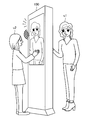
- FIG. 1 is an explanatory diagram illustrating a communication system using a signage terminal 100 according to an embodiment of the present disclosure.
- the signage terminal 100 is an information display terminal equipped with a large display installed in a city, for example, a station, department store, shopping mall, stadium or the like where many people gather.
- the signage terminal 100 according to the present embodiment has a function that allows humans to communicate with each other in a face-to-face relationship, and particularly has a function that analyzes and translates the content of human speech and transmits it to a conversation partner.
- a description will be given on the assumption that two people (users u1 and u2) are interacting with each other with the signage terminal 100 interposed therebetween.
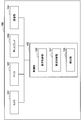
- FIG. 2 is an explanatory diagram illustrating an overall configuration example of the communication system 1 using the signage terminal 100 according to the embodiment of the present disclosure.
- an overall configuration example of the communication system 1 according to the embodiment of the present disclosure will be described with reference to FIG.
- the communication system 1 includes a signage terminal 100, an information processing device 200, a speech information processing device 300, and a translation processing device 400.
- the communication system 1 includes a signage terminal 100, an information processing device 200, a speech information processing device 300, and a translation processing device 400.
- the signage terminal 100 is an information display terminal having a function of helping communication between people.
- the signage terminal 100 includes a camera 101, microphones 102a to 102h, and a display 103 on one surface.
- the camera 101 captures an image of a person using the signage terminal 100.
- the microphones 102a to 102h collect the utterance content of a person using the signage terminal 100.
- the microphones 102a to 102d are provided on one side and the microphones 102e to 102h are provided on the opposite side.
- the number and arrangement of microphones are not limited to this example.
- the microphones 102a to 102h may be simply referred to as the microphone 102 in some cases.
- all the microphones 102a to 102h do not have to be in a state where sound can be collected, and at least one of them may be in a state where sound can be collected according to the positions of the faces of the users u1 and u2. A method of selecting the microphone 102 that can collect sound will be described in detail later.
- the display 103 is a display device that displays various types of information, and includes a liquid crystal display, an organic EL display, and the like.
- the display 103 may be transparent or non-transparent.
- the display 103 displays a translation of the contents of the utterances of the users u1 and u2, and displays information for conveying the utterance status of the users u1 and u2 to the other party.
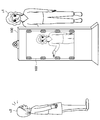
- FIG. 3 is an explanatory diagram showing an example when the signage terminal 100 is viewed from above.
- the signage terminal 100 includes the camera 101, the microphones 102a to 102h, and the display 103 on one surface, and the camera 101 ′, the microphones 102a ′ to 102h ′, and the display 103 ′ on the surface opposite to the surface. Is provided.
- the information processing apparatus 200 is an apparatus that mainly executes processing related to display of information to be displayed on the signage terminal 100.
- the information processing apparatus 200 is connected to the signage terminal 100 by some communication path.
- the communication path may be wired or wireless.
- the communication protocol for communication between the signage terminal 100 and the information processing apparatus 200 is not limited.
- the voice information processing device 300 is a device that mainly performs processing on the voice collected by the microphones 102a to 102h of the signage terminal 100.
- the audio information processing apparatus 300 is connected to the information processing apparatus 200 through some communication path.
- the communication path may be wired or wireless.
- a communication protocol for communication between the information processing apparatus 200 and the voice information processing apparatus 300 is not limited.
- the translation processing device 400 is a device that mainly executes processing related to translation, and in particular, is a device that executes a translation process on the content uttered by the users u1 and u2 and recognized by the voice information processing device 300.
- the translation processing apparatus 400 is connected to the audio information processing apparatus 300 through some communication path.
- the communication path may be wired or wireless.
- a communication protocol in communication between the speech information processing apparatus 300 and the translation processing apparatus 400 is not limited.
- FIG. 2 shows three devices, the information processing device 200, the speech information processing device 300, and the translation processing device 400, but the present disclosure is not limited to such an example, and is provided in any of the devices. At least a part of the functions may be provided in another device.
- FIG. 4 is an explanatory diagram illustrating a functional configuration example of the signage terminal 100 according to the embodiment of the present disclosure.
- the functional configuration example of the signage terminal 100 according to the embodiment of the present disclosure will be described with reference to FIG.
- the signage terminal 100 includes a camera 101, a microphone 102, a display 103, a communication unit 104, and a control unit 105.
- the camera 101 captures a human image using the signage terminal 100 with a moving image.
- a moving image captured by the camera 101 is sent to the control unit 105 or sent to the information processing apparatus 200 via the communication unit 104.
- the microphone 102 collects a voice uttered by a person using the signage terminal 100.
- the sound collected by the microphone 102 is sent to the control unit 105 or sent to the voice information processing apparatus 300 via the communication unit 104.
- the display 103 is a display device that displays various types of information, and includes a liquid crystal display, an organic EL display, or the like.
- the display 103 may be transparent or non-transparent.
- the display 103 displays a translation of the contents of the utterances of the users u1 and u2, and displays information for conveying the utterance status of the users u1 and u2 to the other party.
- the display of information on the display 103 is controlled by, for example, a control unit 105 described later or the information processing apparatus 200.
- the communication unit 104 is a communication interface for exchanging information with other devices.
- the communication unit 104 may perform wired communication with another device or may be wireless communication.
- the communication unit 104 can apply any communication protocol for communication with other devices.
- the control unit 105 includes, for example, a processor such as a CPU (Central Processing Unit), a ROM, a RAM, and the like, and controls the operation of each unit of the signage terminal 100.
- a processor such as a CPU (Central Processing Unit), a ROM, a RAM, and the like, and controls the operation of each unit of the signage terminal 100.
- CPU Central Processing Unit
- ROM Read Only Memory
- RAM Random Access Memory
- control unit 105 includes a display control unit 106, a sound collection control unit 107, and a detection unit 108.
- the display control unit 106 controls display of information on the display 103.
- An example of information displayed on the display 103 by the display control unit 106 will be described in detail later.
- the sound collection control unit 107 performs control to switch the sound collection mechanism on and off with respect to the plurality of microphones 102.
- the sound collection control unit 107 performs a process of turning on the sound collection mechanism only for the microphone 102 determined as the high sensitivity microphone position by the high sensitivity microphone position acquisition flow described later.
- the sound collection control unit 107 selects the microphone 102 that turns on or off the sound collection mechanism based on the position of the human face imaged by the camera 101.
- a specific example of the on / off switching of the sound collection mechanism for the microphone 102 by the sound collection control unit 107 will be described in detail later.
- the detection unit 108 performs various detection processes using images captured by the camera 101.
- detection processing performed by the detection unit 108 includes human detection, face detection, facial part detection, ear position estimation, motion amount detection, and the sound collection control unit 107 turns on the sound collection mechanism. For example, determination of the proximity of the mouth to the microphone 102, detection of the user's line of sight, detection of the user's conflict or nodding, detection of the user's palm, and the like.
- Information detected by the detection unit 108 includes various processes described later, such as an initial process flow, an ear position estimation flow, a high-sensitivity microphone position acquisition flow, a translation mode processing flow, a sphere object animation processing flow, and a translation mode continuation determination process. It can be used for a flow, processing amount overflow judgment processing flow, and the like.
- FIG. 5 is an explanatory diagram illustrating a functional configuration example of the information processing apparatus 200 according to the embodiment of the present disclosure.
- a functional configuration example of the information processing apparatus 200 according to the embodiment of the present disclosure will be described with reference to FIG.
- the information processing apparatus 200 includes a communication unit 210. And a control unit 220.
- the communication unit 210 is a communication interface for exchanging information with other devices.
- the communication unit 210 may perform wired communication with other devices or may be wireless communication.
- the communication unit 210 can apply any communication protocol for communication with other devices.
- the control unit 220 includes, for example, a processor such as a CPU, a ROM, a RAM, and the like, and controls the operation of each unit of the information processing apparatus 200.
- the control unit 220 is a processing flow of the communication system 1 to be described later, for example, an initial processing flow, an ear position estimation flow, a high sensitivity microphone position acquisition flow, a translation mode processing flow, a sphere object animation processing flow, a translation mode continuation determination processing flow, A processing amount overflow determination processing flow or the like is executed.
- control unit 220 includes a display control unit 221, an image generation unit 222, and a determination unit 223.
- the display control unit 221 controls the display of information on the display 103 of the signage terminal 100.
- the display control unit 221 performs image processing on an image in which a person using the signage terminal 100 is captured. The contents of image processing that can be performed by the display control unit 221 will be described in detail later.
- the image generation unit 222 generates an image to be displayed on the display 103 according to the result of image processing that can be performed by the display control unit 221, for example.
- the contents of the image generation processing that can be performed by the image generation unit 222 will be described in detail later.
- the determination unit 223 executes processing related to communication performed in the communication system 1, specifically, various determination processing in the processing flow of the communication system 1 described later.
- the contents of the determination process that can be performed by the determination unit 223 will be described in detail later. For example, when the speaker temporarily stops speaking, for example, whether or not the translation process should be continued It is possible to determine whether or not the receiver receiving the utterance content or the translation result feels a large amount of utterance.
- the determination unit 223 continues the translation processing based on the utterance content and the utterance status of the utterer. Make a decision. If the determination unit 223 determines that the translation process should be continued as a result of performing the translation process continuation determination, the information processing apparatus 200 causes the translation processing apparatus 400 to continue the translation process and ends the translation process. If it is determined that it should be, the translation processing device 400 ends the translation process.
- FIG. 6 is an explanatory diagram illustrating a functional configuration example of the audio information processing apparatus 300 according to the embodiment of the present disclosure.
- a functional configuration example of the audio information processing apparatus 300 according to the embodiment of the present disclosure will be described with reference to FIG.
- the audio information processing apparatus 300 includes a communication unit 310. And a control unit 320.
- the communication unit 310 is a communication interface for exchanging information with other devices.
- the communication unit 310 may perform wired communication with another device or may be wireless communication.
- the communication unit 310 can apply any communication protocol in communication with other devices.
- the control unit 320 includes, for example, a processor such as a CPU, a ROM, a RAM, and the like, and controls the operation of each unit of the audio information processing apparatus 300.
- control unit 320 includes a detection unit 321, an analysis unit 322, and a generation unit 323.
- the detecting unit 321 detects a human voice uttered toward the signage terminal 100.
- the voice detected by the detection unit 321 is analyzed by the analysis unit 322.
- the detecting unit 321 detects speech content, detects speech, detects a predetermined word (filler word), detects an utterance tone, and detects a silent section. sell.
- the analysis unit 322 performs various analysis processes on the human voice detected by the detection unit 321. As the analysis processing executed by the analysis unit 322, for example, analysis of speech information, analysis of language, analysis of morphemes and phrases included in the utterance content, and the like can be performed.
- the generation unit 323 generates a text version of the content issued toward the signage terminal 100 based on the analysis result of the analysis unit 322.
- the text generated by the generation unit 323 is used for translation processing in the translation processing apparatus 400.
- FIG. 7 is an explanatory diagram illustrating a functional configuration example of the translation processing apparatus 400 according to the embodiment of the present disclosure.
- a functional configuration example of the translation processing apparatus 400 according to the embodiment of the present disclosure will be described with reference to FIG.
- the translation processing device 400 includes a communication unit 410. And a control unit 420.
- the communication unit 410 is a communication interface for exchanging information with other devices.
- the communication unit 410 may perform wired communication with another device or may be wireless communication.
- the communication unit 410 can apply any communication protocol for communication with other devices.
- the control unit 420 includes, for example, a processor such as a CPU, ROM, RAM, and the like, and controls the operation of each unit of the translation processing apparatus 400.
- control unit 420 includes a translation processing unit 421 and a score generation unit 422.
- the translation processing unit 421 uses a text generated by the voice information processing apparatus 300 from the human voice uttered toward the signage terminal 100 or another language directly using the human voice uttered toward the signage terminal 100. Perform the translation process.
- the score generation unit 422 generates a score for translation processing in the translation processing unit 421.
- the score generation processing by the score generation unit 422 will be described in detail later.
- FIG. 8 is an explanatory diagram illustrating an operation example of the communication system 1 according to the embodiment of the present disclosure.
- a user u1 from a foreign country is in trouble without knowing how to get to his destination or where to buy food.
- the user u1 is walking around the city, he finds a signage terminal 100 with a message indicating that communication is possible while translating, so he stands in front of it in hopes of telling someone.
- the appearance of the user u1 captured by the camera 101 is displayed on the display 103 '.
- FIG. 9 is an explanatory diagram illustrating an operation example of the communication system 1 according to the embodiment of the present disclosure.
- the user u2 who finds the user u1 standing in front of the signage terminal 100 with a troubled face wants to help the user u1, but is not good at English. However, the user u2 thinks that it may be managed through the signage terminal 100 that can communicate while translating, and stands in front of the signage terminal 100.
- the signage terminal 100 acquires the utterance content of the user u1, and outputs the content of the translation processing in the server at the back to the display on the user u2 side.
- the user u2 can know the content of the utterance of the user u1 by confirming the content of the translation process output by the signage terminal 100.
- the communication system 1 shifts to the conversation mode as an initial process.
- the communication system 1 detects a person from an image captured by the camera 101, detects that a face is directly facing the camera 101, and can detect the face, and further indicates that the person has remained in the place for a predetermined time or more. Transition to conversation mode according to conditions.
- the communication system 1 executes various processes from the image information of the user facing the signage terminal 100 as an initial process.
- the communication system 1 generates, for example, an image that simulates a user's face, a user interface that uses contour information of the user's head, face, and body, and information on the positions of the user's eyes, mouth, and nose. And the calculation of the position of the ear based on the information on the position of the nose in the mouth.
- These initial processes may be executed by the information processing apparatus 200, for example.
- the communication system 1 performs a process of reflecting microphone position information on the user interface as an initial process. Specifically, the communication system 1 uses the information on the position of the microphone 102 provided in the signage terminal 100 and the acquired information on the position of the mouth of the user, and the position of the microphone 102 that allows the user to speak with the mouth approached. Generate a user interface to indicate
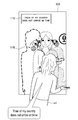
- FIG. 10 is an explanatory diagram illustrating an example of a user interface displayed on the display 103 of the signage terminal 100.
- FIG. 10 shows an example of a user interface when the user u1 stands in front of the signage terminal 100.
- the communication system 1 generates the body contour UI 111 facing the user u 1 from the image information of the user u 1 facing the signage terminal 100 and displays it on the display 103.
- the communication system 1 determines the position of the microphone 102 (referred to as a high-sensitive microphone position) from which the user approaches the mouth and speaks from the information on the position of the microphone 102 and the acquired information on the position of the user's mouth.
- a microphone UI 112 indicating the position of the highly sensitive microphone is generated and displayed on the display 103.
- the communication system 1 may determine the position of the microphone 102 at a position far from the position corresponding to the mouth in the directly facing body contour UI111 as a highly sensitive microphone position where the user approaches the mouth and speaks. This is to prompt the user to speak as far as possible from the body contour UI 111 when speaking.
- the communication system 1 displays the microphone UI 112 on the display 103
- the communication system 1 displays the microphone UI 112 so that the microphone UI 112 is moved from the position corresponding to the mouth in the directly facing body outline UI 111 to the high sensitivity microphone position where the user approaches the mouth and speaks. Also good. Further, the communication system 1 may display the microphone UI 112 on the display 103 so as to blink or move up and down.
- FIG. 11 is an explanatory diagram showing an example of a state where the user u2 stands on the opposite side of the signage terminal 100 as viewed from the user u1.
- 12 shows a display example of the display 103 when the user u2 stands on the opposite side of the signage terminal 100 when viewed from the user u1 when the user interface shown in FIG. 10 is displayed on the display 103. It is explanatory drawing. As described above, the display 103 can display an image captured by the camera 101 ′ provided on the opposite side.
- FIG. 13 is an explanatory diagram showing an example of a user interface displayed on the display 103 ′ of the signage terminal 100.
- FIG. 13 shows an example of a user interface when the user u2 stands in front of the signage terminal 100.
- the communication system 1 generates the body contour UI 111 'facing the user u2 from the image information of the user u2 facing the signage terminal 100, and displays the contour on the display 103'.
- the communication system 1 determines the position of the microphone 102 ′ (highly sensitive microphone position) from which the user speaks with the mouth close based on the information on the position of the microphone 102 ′ and the acquired information on the position of the user's mouth.
- a microphone UI 112 ′ is generated and displayed on the display 103 ′.
- the communication system 1 executes initial processing.
- the communication system 1 subsequently performs a transition to the translation mode and a voice recognition activation process.
- FIG. 14 is an explanatory diagram showing a state in which the user u1 brings his face close to the high sensitivity microphone position. In this way, when the user u1 brings his face close to the high-sensitivity microphone position and the distance between the user's mouth position and the high-sensitivity microphone position is detected to be equal to or less than a predetermined threshold value, the communication system 1 translates Switch to mode.
- the communication system 1 shifts to the translation mode, it activates speech recognition.
- the communication system 1 activates speech recognition, an image simulating the face of the user u1 generated in the initial process is displayed on the partner's display 103 ′ on the opposite body contour UI111 of the user u1. Processing to display at the face position is executed.
- FIG. 15 is an explanatory diagram showing an example of a user interface displayed on the display 103 ′ when the communication system 1 activates voice recognition.
- the communication system 1 displays an image 114 simulating the user u1 face at the position of the user u1 face.
- the communication system 1 is a case where the user u1 brings the face close to the high sensitivity microphone position.
- the user u1 and the user u2 are interacting with each other across the signage terminal 100.
- the communication system 1 may replace part or all of the appearance of the user u1 that is visible to the user u2 with the image 114.
- the image 114 simulating the face of the user u1 may be the entire face, or may be a part of the face such as just the mouth or the eyes.
- the image 114 moves the mouth portion as if speaking or blinks at random intervals. Processing may be performed.
- the communication system 1 may replace part or all of the appearance of the user u1 that is visible to the user u2 with the image 114 when the user u1 faces the signage terminal 100.
- the communication system 1 when the communication system 1 activates speech recognition, the communication system 1 turns off the microphone 102 at a position other than the high sensitivity microphone position. In addition, when the voice recognition is activated, the communication system 1 continues to acquire the line-of-sight information of the user u1 while the voice recognition is activated. Further, when the voice recognition is activated, the communication system 1 continues to acquire the frequency information of the user u1 while the voice recognition is activated.
- the communication system 1 displays a user interface for ending the voice recognition on the display 103 when starting the voice recognition.
- the communication system 1 may, for example, blink the directly-facing body contour UI111 or display information on the current body contour as a body contour user interface.
- the communication system 1 may display a user interface indicating that the content of the speech reaches the partner user u2.
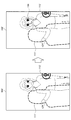
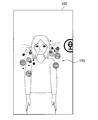
- FIG. 16 is an explanatory diagram showing an example of a user interface displayed on the display 103 on the user u1 side.
- the communication system 1 causes the display 103 to display a sphere UI 115 that displays the recognition result of the speech.
- the sphere UI 115 is a user interface displayed so as to move from the height of the mouth of the user u1 toward the ear of the user u2 displayed on the display 103.
- the communication system 1 can indicate that the content of the utterance of the user u1 has reached the partner user u2.
- the communication system 1 may display the voice recognition result of the speech on the display 103.
- FIG. 16 shows an example in which the speech recognition result 116 of the utterance of the user u1 is displayed on the display 103.
- the voice information processing apparatus 300 recognizes that the user u1 is speaking in English, and the content of the user's utterance is displayed on the display 103 as English. Whether or not the user speaks may be automatically recognized by the voice information processing apparatus 300 or may be determined by the voice information processing apparatus 300 analyzing the utterance content.
- the user may operate the signage terminal 100 so that the signage terminal 100 is designated as to which language to speak.
- the communication system 1 executes a translation process using the voice recognition result of the user u1's utterance.
- the communication system 1 continues to acquire the score of the translation process when executing the translation process.
- the method for obtaining the score will be described in detail later.
- the communication system 1 may translate the entire text of the speech recognition result, or may summarize the speech recognition result after summarizing the speech recognition result.
- the communication system 1 may perform morphological analysis on the speech recognition results and extract parts of speech that seem to be the main points.
- the communication system 1 may display a user interface indicating to the user u2 that the user u1 is speaking.
- FIG. 17 is an explanatory diagram showing an example of a user interface displayed on the display 103 ′ on the user u 2 side.
- the communication system 1 displays a sphere UI117 that displays the recognition result of the speech from the position of the mouth of the image 114 that simulates the face of the user u1. 103 '.
- the communication system 1 can indicate to the partner user u2 that the user u1 is speaking.
- the communication system 1 may display the translation result for the speech recognition result of the speech on the display 103 '.
- FIG. 17 shows an example in which the translation result 118 for the speech recognition result of the user u1's utterance is displayed on the display 103 '.
- the translation result 118 indicates that “the train in my country does not arrive on time”, but when the above summary is translated, for example, the translation result 118 indicates that “the train does not arrive on time” "Can be displayed.
- the communication system 1 displays the translation result 118 on the signage terminal 100, it is desirable that the communication system 1 display the translation result 118 in a position where the confrontation state of the listener does not collapse.
- the translation result 118 is displayed near the speaker's image 114. Since the translation result 118 is displayed near the speaker's image 114, the user u2 who is a listener can check the translation result without breaking the facing state.
- the communication system 1 may display the voice recognition results side by side on the time axis.
- FIG. 18 is an explanatory diagram illustrating an example of a user interface displayed on the display 103 on the user u1 side.
- the communication system 1 may display the voice recognition result 116 of the user u1 side by side on the time axis as shown in FIG. By displaying the voice recognition result of the user u1 in time series, the communication system 1 can make the speaker confirm the past utterance content.
- the communication system 1 may also display a photograph of the speaker as shown in FIG.
- the communication system 1 displays the speech recognition result 116 together with the photograph of the speaker, thereby allowing the speaker to confirm who spoke the content in the past.
- the translation score for the utterance content of the user u 1 is lower than a predetermined value, and the line of sight of the user u 1 who is the speaker is the user u 2. If you are not facing, continue translation mode. This is based on the human psychology that if the information to be communicated is lost, the eyes of the person will not be met or the line of sight will swim.
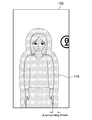
- FIG. 19 is an explanatory diagram for explaining that the communication system 1 determines whether or not to continue the translation mode.
- FIG. 19 illustrates a state where the appearance of the user u2 is displayed on the display 103 on the user u1 side.
- FIG. 19 shows a region 119 obtained by adding a predetermined threshold value d_surrounding_thresh to the directly facing body contour region of the user u2. This area 119 may not be displayed on the display 103.
- the communication system 1 continues the translation mode when the translation score for the utterance content of the user u1 is lower than a predetermined value and the line of sight of the user u1 exists outside the region 119 for a predetermined time t_surrounding_thresh. to decide.
- the communication system 1 Judges cancel.
- a predetermined threshold d_surrounding_thresh is uniformly added to the entire body contour region of the user u2, but this predetermined threshold is determined based on the body of the user u2.
- the communication system 1 may change the predetermined threshold value above and below the neck.
- the communication system 1 may change the judgment as to whether or not to continue the translation mode according to the point of view of the user u1. That is, the communication system 1 changes the judgment as to whether or not to continue the translation mode depending on whether the user u1 is looking at the face of the user u2, looking at the body, looking at the hand, or the like. Also good.
- the communication system 1 may change the determination as to whether or not to continue the translation mode according to the presence or absence of the background movement of the user u2. As a result, the communication system 1 changes the judgment as to whether or not to continue the translation mode depending on whether the user u1 is unaware of what the user speaks and the eyes are swimming in the background of the user u2. it can.
- the communication system 1 may determine whether the translation mode should be continued using the user's bag. For example, if the user easily moves his / her line of sight, it may be determined that the translation mode should be continued even if the user shifts his / her line of sight from the conversation partner.
- the communication system 1 may change a threshold used for determining whether or not to continue the translation mode according to a situation in which users are communicating with each other. For example, the communication system 1 may change the threshold used for determining whether or not to continue the translation mode depending on whether the situation in which the communication is performed is a route guidance, a meeting, or the like. Further, for example, the communication system 1 is used to determine whether or not the translation mode should be continued depending on whether the situation in which the user is communicating is a situation where the user is in a hurry or a situation where time is available. The threshold value may be changed.
- the communication system 1 may change the threshold value used for determining whether or not to continue the translation mode depending on the relationship with the communication partner. For example, whether the communication system 1 should continue the translation mode depending on whether the person who is communicating is the first person to meet, whether it is the opposite sex, or a person with a high job title
- the threshold value used for the determination may be changed.
- the communication system 1 detects, for example, an utterance in the content of the utterance of the user u1 when the voice input is lost, that is, even when the utterance of the user u1 is interrupted, if the sentence uttered by the user u1 is not completed, for example.
- Continue translation mode The communication system 1 includes a predetermined filler word before silence, and continues the translation mode until a predetermined time t_fillerwords_thresh elapses after the filler word is issued.
- FIG. 20 is an explanatory diagram for explaining that the communication system 1 determines whether to continue the translation mode.
- FIG. 20 shows three determination examples of whether or not the communication system 1 should continue the translation mode.
- the first example is an example in which the communication system 1 cancels the translation mode when a predetermined time elapses after the utterance of the user u1 is interrupted.
- the second example is an example in which the communication system 1 continues the translation mode when an utterance is detected even if the user u1 stops speaking.
- the communication system 1 continues the translation mode until a predetermined time t_fillerwords_thresh elapses after the filler word is issued. It is an example.
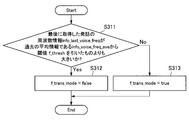
- the communication system 1 determines whether or not to continue the translation mode based on the voice quality of the user even when the voice input is lost, that is, when the user u1 stops speaking. For example, in the communication system 1, even when the voice input is lost, that is, when the utterance of the user u ⁇ b> 1 is interrupted, the frequency information of the last utterance is below a certain threshold compared to the average of the frequencies that have been acquired so far. If yes, continue translation mode.
- the communication system 1 matches the person included in a predetermined database (here, “conversation end determination word database”) as a result of performing the voice recognition before the voice input is lost, the voice input from the user is performed.
- the translation mode is continued until the predetermined time t_convendwords_thresh elapses without any remaining time, and the translation mode is terminated when the predetermined time t_convendwords_thresh elapses.
- FIG. 21 is an explanatory diagram for explaining that the communication system 1 determines whether or not to continue the translation mode.
- FIG. 21 shows an example in which the user utters the phrase “What do you think of that?” Registered in the conversation end determination word database immediately before the utterance is stopped.
- the communication system 1 that has detected the utterance of the phrase continues the translation mode until a predetermined time t_convendwords_thresh elapses without any voice input from the user. Then, the communication system 1 ends the translation mode when a predetermined time t_convendwords_thresh elapses without any voice input from the user.
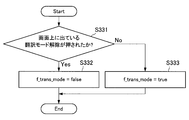
- the communication system 1 cancels the translation mode when the user performs an operation for intentionally canceling the translation mode.
- the operation for intentionally releasing the translation mode may include, for example, pressing an end button displayed on the display 103, returning the body to a confrontation state, finishing the utterance and returning the line of sight to the conversation partner. However, it is not limited to these examples.
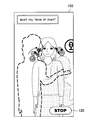
- FIG. 22 is an explanatory diagram illustrating an example of a user interface displayed on the display 103 by the communication system 1.
- FIG. 22 shows an example in which the display 103 displays “STOP” and an end button 120 for canceling the translation mode.
- the communication system 1 detects that the user has touched the end button 120 or has brought a finger close to the end button 120, the communication system 1 cancels the translation mode.
- the language displayed on the end button 120 may be changed according to the language spoken by the user u1.
- the communication system 1 When the communication system 1 detects that the user touches the end button 120 or closes the finger to the end button 120, the communication system 1 uses, for example, a message that prompts the user to return the body to the facing state. It may be displayed on the display 103 or output by voice.
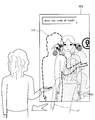
- FIG. 23 is an explanatory diagram for explaining that the communication system 1 determines whether or not to continue the translation mode.
- FIG. 23 shows an example in which the user returns the posture to the position corresponding to the directly facing body outline UI111.
- the communication system 1 cancels the translation mode when it detects that the user has returned the posture to the position corresponding to the directly-facing body contour UI111 and has passed a predetermined time after returning the posture.
- the communication system 1 It may be determined that the body has returned to the facing state.
- the communication system 1 may determine whether or not to continue the translation mode based on, for example, noise around the signage terminal 100 and the presence or absence of noise. If noise or noise is generated around the signage terminal 100 when the speaker stops speaking, the speaker may have been distracted by the noise or noise. Therefore, when the speaker stops speaking, the communication system 1 may determine that the translation mode is continued if noise or noise is generated around the signage terminal 100.
- the communication system 1 may determine whether or not to continue the translation mode based on, for example, the content of the response from the other party. For example, if the answer from the other party is a question, the user tries to utter the answer, and therefore the communication system 1 determines to continue the translation mode even if the user does not utter for a while. On the other hand, if the answer from the other party is not a question, the communication system 1 determines to end the translation mode if the user has not spoken for a while.
- the communication system 1 detects the situation on the listener side and determines whether or not there is a processing overflow on the listener side. If the listener side determines that processing overflow has occurred, the communication system 1 notifies the speaker side to temporarily stop the utterance.
- the line of sight of the user u2 who is the listener is not facing the user u1, and is a distance greater than or equal to a predetermined threshold from the body contour information of the user u1
- a predetermined threshold from the body contour information of the user u1
- FIG. 24 is an explanatory diagram for explaining that the communication system 1 determines the processing overflow on the listener side.
- FIG. 24 illustrates a state where the appearance of the user u1 is displayed on the display 103 'on the user u2 side.
- FIG. 24 shows a region 119 ′ in which a predetermined threshold value d_surrounding_thresh is added to the body contour region facing the user u 1.
- This area 119 ' may not be displayed on the display 103'.
- the user u2 is overflowing in processing when the line of sight of the user u2 exists outside the area 119 ′ for a predetermined time t_surrounding_thresh.
- the communication system 1 determines that the user u2 is overflowing when a predetermined time has elapsed since the user u1 who is the speaker is not speaking and the user u2 who is the listener stops talking. .
- FIG. 25 is an explanatory diagram for explaining that the communication system 1 determines the processing overflow on the listener side.
- the communication system 1 determines that the user u2 has overflowed.
- FIG. 26 is an explanatory diagram for explaining that the communication system 1 determines the processing overflow on the listener side.
- the communication system 1 determines that the user u2 is overflowing.
- the text of the speech recognition result or the text when the speech recognition result is translated satisfies a predetermined condition, and the user u2 overflows processing.
- a predetermined condition for example, as a result of the phrase analysis, the number of phrases exceeds a certain threshold (the number of words exceeds a certain threshold in the case of a spelling language), the morpheme (in English, a word) Among them, the number of nouns and verbs that are main parts of speech exceeded a certain threshold, the number of characters exceeded a certain threshold, and so on.
- FIG. 27 is an explanatory diagram for explaining that the communication system 1 determines the processing overflow on the listener side.
- the communication system 1 determines that the user u2 is overflowing in processing. To do.
- the communication system 1 can reduce the number of the above phrases when the content is difficult because the content uttered by the speaker or the translation result of the utterance content includes a highly specialized word. Good. In addition, when it is difficult for the speaker to speak, the communication system 1 may determine whether or not the listener side is overflowing by weighting highly specialized words.
- the communication system 1 determines whether the listener has caused processing overflow by any one of the methods described above or by combining a plurality of the methods described above. It goes without saying that what has been described above is merely an example for determining whether or not the listener has caused processing overflow.
- the amount until processing overflows depends on the attributes of the listener. For adults, the amount of processing overflow is large, but for children, the amount of processing overflow is small. Therefore, the communication system 1 may change the threshold until it is determined that processing overflow occurs according to the attribute of the listener.
- the communication system 1 may determine whether processing overflow has occurred based on the biometric information on the listener side. For example, by acquiring information such as an increased heart rate and increased sweating with a sensor provided in a device owned by the listener, and obtaining information from the device, the communication system 1 can be It may be determined whether processing overflow has occurred.
- the communication system 1 presents on the display 103 on the speaker side a user interface for telling the speaker side that the listener side is overflowing in processing.
- the communication system 1 shows a user interface in which the sphere UI 115 enters the ear of the listener when the speaker is speaking.
- the communication system 1 displays a user interface in which the ball UI 115 bounces off the listener's ear and spills out. May be.
- FIG. 28 is an explanatory diagram showing an example of a user interface displayed on the display 103 on the user u1 side.
- the communication system 1 determines that the user u2 on the listener side is overflowing by the above-described determination, the communication system 1 displays a user interface such that the ball UI 115 bounces off the user u2 and spills out.
- the communication system 1 can notify the speaker side that the listener side is overflowing.
- the user interface displayed on the display 103 on the user u1 side include stopping the display of the recognition result of the utterance content and stopping the display of the sphere UI 115 itself. Further, the communication system 1 may output a sound that cancels the utterance sound of the speaker in order to notify the speaker side that the listener side is overflowing in processing.
- FIG. 28 shows an example in which a user interface for telling the speaker side that the listener side is overflowing is shown on the display 103 of the speaker side, but the communication system 1 shows the utterance of the speaker.
- a user interface for blocking may be displayed on the listener side.
- the communication system 1 may display the translation result of the utterance content near the position where the listener's confrontation state collapses, for example, near the microphone UI.
- the communication system 1 can tell the listener himself that the listener is overflowing by taking his / her gaze off or changing his / her body direction to deliberately destroy the confrontation of the listener. Become.
- the communication system 1 may change the user interface to be displayed on the display 103 according to the condition that caused the processing overflow. For example, if the communication system 1 determines that the processing overflow has occurred because the line of sight does not face the speaker side, the communication system 1 may display a CG on the display 103 such that sweat appears around the listener side. Good. In addition, for example, if it is determined that processing has overflowed due to the absence of whispering, the communication system 1 may display on the display 103 a CG representing an expression in which the listener is in trouble on the listener's head. .
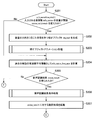
- FIG. 29 is a flowchart illustrating an operation example of the communication system 1 according to the embodiment of the present disclosure.
- FIG. 29 shows the entire flow on the speaker side.
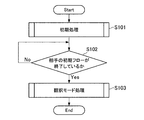
- step S101 When a speaker (user u1 in the above example) stands in front of the signage terminal 100, the communication system 1 executes an initial process (step S101). This initial processing can be executed by the information processing apparatus 200 based on the information acquired by the signage terminal 100. Details of the initial process will be described later.
- step S101 the communication system 1 executes the initial process in step S101, the communication system 1 subsequently determines whether or not the initial flow of the other party (user u2 in the above example) has ended (step S102).
- This determination processing can be executed by, for example, the information processing apparatus 200 (for example, the determination unit 223).
- step S102 determines whether the initial flow on the other side has been completed. If the result of determination in step S102 is that the initial flow on the other side has been completed (step S102, Yes), the communication system 1 executes translation mode processing (step S103). On the other hand, as a result of the determination in step S102, if the other party's initial flow is not completed (No in step S102), the communication system 1 stands by until the other party's initial flow is completed. Note that the communication system 1 may end the initial flow if the other party's initial flow is not completed even after a predetermined time has elapsed, for example, because the other party does not appear.
- step S101 of FIG. 29 is flowcharts illustrating an operation example of the communication system 1 according to the embodiment of the present disclosure.
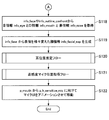
- 30A and 30B show a detailed flow of the initial process shown in step S101 of FIG.
- the information processing apparatus 200 shall perform the initial process shown below based on the information acquired with the signage terminal 100, an initial process may be performed by which apparatus which comprises the communication system 1. good.
- the communication system 1 determines whether a face can be detected by face detection processing using a camera image captured by the camera 101 (step S112).
- step S112 If it is determined in step S112 that a face cannot be detected (step S112, No), the communication system 1 returns to step S111. On the other hand, when the face is detected as a result of the determination in step S112 (step S112, Yes), the communication system 1 then increments the time counter t_stay (step S113).
- step S113 the communication system 1 subsequently determines whether or not the time counter t_stay is greater than the threshold value t_stay_thresh (step S114).
- step S114 If it is determined in step S114 that the time counter t_stay is less than the threshold t_stay_thresh (step S114, No), the communication system 1 returns to the process in step S112. On the other hand, if the time counter t_stay is larger than the threshold value t_stay_thresh as a result of the determination in step S114 (step S114, Yes), the communication system 1 sets the flag f_conv_mode indicating whether or not the conversation mode is true (step S115). Then, the user's face information info_face at the time of identity is acquired (step S116).
- the communication system 1 When the flag f_conv_mode is set to true and the face information info_face of the user at the time of authenticity is acquired, the communication system 1 subsequently generates the contour information info_outline_confront of the person at the time of facing and reflects it on the screen as the facing body contour UI (Step S117).
- the communication system 1 subsequently uses the face information info_face of the user at the time of identity and the contour information info_outline_confront of the person at the time of facing. Eye information info_eye, mouth information info_mouth and nose information info_nose are acquired (step S118).
- the communication system 1 When the eye information info_eye, mouth information info_mouth and nose information info_nose are acquired, the communication system 1 generates face information info_facial_exp in which facial expressions are changed from info_fase (step S119).
- the facial expressions here may include, for example, facial expressions that are not emotional, laughing facial expressions, and uneasy facial expressions, but are not limited to these facial expressions.
- step S119 When the face information info_facial_exp is generated in step S119, the communication system 1 executes the ear position estimation flow (step S120). Details of the ear position estimation flow will be described later.
- step S120 When the ear position estimation flow is executed in step S120, the communication system 1 subsequently executes a high sensitivity microphone position acquisition flow (step S121). Details of the high-sensitivity microphone position acquisition flow will be described later.
- the communication system 1 moves the microphone UI by animation from the mouth position information p_mouth toward the high-sensitivity microphone position p_h_sensitive_mic (step S122).
- step S101 of FIG. 29 The detailed flow of the initial process shown in step S101 of FIG. 29 has been described above. Next, a detailed flow of the ear position estimation flow in step S120 will be described.
- FIG. 31 is a flowchart illustrating an operation example of the communication system 1 according to the embodiment of the present disclosure.
- FIG. 31 shows a detailed flow of the ear position estimation flow in step S120 of FIG. 30B. Note that the ear position estimation flow shown below is executed by the information processing apparatus 200 based on the information acquired by the signage terminal 100, but the ear position estimation flow is performed by any device constituting the communication system 1. It may be done.
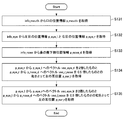
- the communication system 1 When executing the ear position estimation flow, the communication system 1 first acquires mouth position information p_mouth from mouth information info_mouth (step S131). Further, the communication system 1 acquires the left eye position information p_eye_l and the right eye position information p_eye_r from the eye information info_eye (step S132). Furthermore, the communication system 1 acquires the nose bottom position information p_nose_d from the nose information info_nose (step S133).
- FIG. 32 is an explanatory diagram showing mouth position information p_mouth, left eye position information p_eye_l, right eye position information p_eye_r, and nose bottom position information p_nose_d.
- the communication system 1 uses the eye information info_eye, mouth information info_mouth and nose information info_nose of the user standing in front of the signage terminal 100, as shown in FIG. 32, mouth position information p_mouth, left eye position information p_eye_l, and right eye position information. Obtain p_eye_r and nose bottom position information p_nose_d.
- the communication system 1 doubles the vector vec_eye_rl from the right eye position information p_eye_r to the left eye position information p_eye_l, and the vector vec_r_nose from the right eye position information p_eye_r to the lowest nose position information p_nose_d by 0.5.
- the left ear position p_ear_l is obtained by taking the sum with the doubled one (step S134).
- the communication system 1 takes the sum of the vector vec_eye_lr from the left eye position information p_eye_l to the right eye position information p_eye_r twice and the vector vec_l_nose from p_eye_l to p_nose_d multiplied by 0.5.
- the right ear position p_ear_r is acquired (step S135).
- FIG. 33 is an explanatory diagram showing left ear position p_ear_l and right ear position p_ear_r calculated from mouth position information p_mouth, left eye position information p_eye_l, right eye position information p_eye_r, and nose bottom position information p_nose_d. is there.
- the communication system 1 calculates the approximate left ear position p_ear_l and right ear position p_ear_r of the user.
- step S120 of FIG. 30B The detailed flow of the ear position estimation flow shown in step S120 of FIG. 30B has been described above. Subsequently, a detailed flow of the high-sensitivity microphone position acquisition flow in step S121 of FIG. 30B will be described.
- FIG. 34 is a flowchart illustrating an operation example of the communication system 1 according to the embodiment of the present disclosure.
- FIG. 34 shows the detailed flow of the high-sensitivity microphone position acquisition flow in step S121 of FIG. 30B.
- the high sensitivity microphone position acquisition flow shown below shall be performed by the information processing apparatus 200 based on the information acquired by the signage terminal 100
- the high sensitivity microphone position acquisition flow comprises the communication system 1. It can be done with any device.
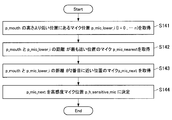
- the communication system 1 subsequently determines the position of the microphone 102 at the position where the distance between the position information p_mouth of the user's mouth and the position p_mic_lower_i of the microphone 102 is the closest.
- p_mic_nearest is acquired (step S142).
- the communication system 1 acquires the position p_mic_next of the microphone 102 at the second closest position between the position information p_mouth of the user's mouth and the position p_mic_lower_i of the microphone 102 (step S143).
- the communication system 1 determines the position p_mic_next of the microphone 102 acquired in step S143 as the high sensitivity microphone position p_h_sensitive_mic (step S144).
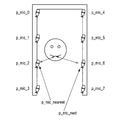
- FIG. 35 is an explanatory diagram for explaining a method of determining a highly sensitive microphone position.
- p_mic_lower_i is p_mic_2, p_mic_3, p_mic_6, and p_mic_7.
- p_mic_nearest becomes p_mic_2, and p_mic_next becomes p_mic_6. Therefore, when the user's face and the microphone 102 are arranged as illustrated in FIG. 35, the communication system 1 determines the microphone at the position p_mic_6 as the high-sensitivity microphone position p_h_sensitive_mic.
- the communication system 1 determines the high-sensitivity microphone position based on the position of the user's face as described above, thereby allowing the user's voice input to succeed without depending on the position of the microphone or the height of the user's back. Is possible.
- step S121 of FIG. 30B The detailed flow of the high-sensitivity microphone position acquisition flow shown in step S121 of FIG. 30B has been described above. Subsequently, a detailed flow of the translation mode processing flow in step S103 of FIG. 29 will be described.
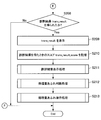
- Translation mode processing flow 36A and 36B are flowcharts illustrating an operation example of the communication system 1 according to the embodiment of the present disclosure.
- FIG. 36A and 36B show the detailed flow of the translation mode processing flow in step S103 of FIG.
- the translation mode process flow shown below is executed by the information processing apparatus 200 based on information acquired by the signage terminal 100 or information generated by the translation processing apparatus 400. May be performed by any device constituting the communication system 1.
- step S152 the communication system 1 subsequently executes a translation mode activation process.
- the translation mode activation process will be described in detail later.
- the communication system 1 determines whether the distance d_mic_mouth between the high sensitivity microphone position p_h_sensitive_mic and the mouth position information p_mouth is smaller than the threshold value d_mic_mouth_thresh (step S153).
- step S153 if the distance d_mic_mouth between the highly sensitive microphone position p_h_sensitive_mic and the mouth position information p_mouth is equal to or greater than the threshold value d_mic_mouth_thresh (step S153, No), the communication system 1 then continues to the body contour at that time It is determined from the information info_outline_current and the contour information info_outline_confront of the person at the time of confrontation whether or not the current body contour information remains more than the threshold value t_stay_confront_thresh in the confrontation contour information (step S154).
- step S154 if the current body contour information remains more than the threshold t_stay_confront_thresh in the facing contour information (step S154, Yes), the communication system 1 executes a translation mode end process (step S155). ). The translation mode end process will be described in detail later.
- step S154 if the current body contour information does not remain in the facing contour information beyond the threshold value t_stay_confront_thresh (step S154, No), the communication system 1 returns to the determination processing in step S153. .
- step S153 Yes
- the communication system 1 continues to face the body contour.
- the fade-in and fade-out animations are repeated for the UI (step S156).
- the communication system 1 When the fade-in and fade-out animations are repeated for the directly-facing body contour UI, the communication system 1 subsequently generates body contour information info_outline_current at that time and reflects it on the screen as the current body contour UI (step S157). .
- the communication system 1 subsequently determines whether the volume of the sound information info_voice collected by the microphone 102 exceeds the voice input determination threshold recognition_vol_thresh. (Step S158).
- step S158 determines whether the volume of the sound information info_voice exceeds the voice input determination threshold recognition_vol_thresh (step S158, Yes). If, as a result of the determination in step S158, the volume of the sound information info_voice exceeds the voice input determination threshold recognition_vol_thresh (step S158, Yes), the communication system 1 executes a speech translation feedback process (step S159). Details of the speech translation feedback process will be described later. When the speech translation feedback process is executed, the communication system 1 returns to the determination process in step S153.
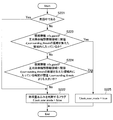
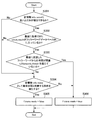
- step S158 if the volume of the sound information info_voice does not exceed the voice input determination threshold recognition_vol_thresh (No in step S158), the communication system 1 executes the translation mode continuation determination process (step S160). .
- the translation mode continuation determination process will be described in detail later.
- step S160 the communication system 1 subsequently determines whether the value of the flag f_trans_mode indicating whether or not the translation mode is true (step S161). If the value of the flag f_trans_mode is true (step S161, Yes), the communication system 1 returns to the determination process of step S153. On the other hand, if the value of the flag f_trans_mode is not true, that is, false (step S161, No), the communication system 1 executes the translation mode end process of step S155.
- step S103 of FIG. 29 has been described above with reference to FIGS. 36A and 36B.
- step S152 of FIG. 36A will be described.
- FIG. 37 is a flowchart illustrating an operation example of the communication system 1 according to the embodiment of the present disclosure.
- FIG. 37 shows a detailed flow of the translation mode activation processing flow in step S152 of FIG. 36A.
- the translation mode activation process flow shown below is executed by the information processing apparatus 200 based on the information acquired by the signage terminal 100.
- the translation mode activation process flow indicates which of the communication systems 1 is configured. It may be performed on the device.
- the communication system 1 determines whether the distance d_mic_mouth between the high-sensitive microphone position p_h_sensitive_mic and the mouth position information p_mouth is smaller than the threshold value d_mic_mouth_thresh (step S171).
- step S171 if the distance d_mic_mouth between the highly sensitive microphone position p_h_sensitive_mic and the mouth position information p_mouth is not smaller than the threshold value d_mic_mouth_thresh (step S171, No), the communication system 1 repeats the process in step S171.
- step S171 if the distance d_mic_mouth between the high-sensitivity microphone position p_h_sensitive_mic and the mouth position information p_mouth is smaller than the threshold value d_mic_mouth_thresh (step S171, Yes), the communication system 1 subsequently determines the user's face information. Reflection of the info_face image on the other party's screen is started (step S172).
- the communication system 1 stops the microphone processing of the microphone that has not reached the high sensitivity microphone position p_h_sensitive_mic, that is, the sound collection processing (step S173).
- the communication system 1 starts to acquire the user's line-of-sight information info_gaze using the image captured by the camera 101 (step S173).
- the communication system 1 starts acquiring the frequency information info_voice_freq of the user's utterance collected by the microphone 102 at the high sensitivity microphone position (step S174).
- the communication system 1 starts voice recognition with the sound information info_voice for the high sensitivity microphone position p_h_sensitive_mic (step S175).
- the communication system 1 sets the value of the flag f_trans_mode indicating whether or not the translation mode is true (step S176). Note that setting the value of the flag f_trans_mode indicating whether or not the translation mode is true is not limited to this timing. Also, the start and activation timing of each process in the process flow shown in FIG. 37 is not limited to the order shown in FIG.
- step S152 of FIG. 36A The detailed flow of the translation mode activation process flow in step S152 of FIG. 36A has been described above. Next, a detailed flow of the translation mode end flow in step S155 of FIG. 36A will be described.
- FIG. 38 is a flowchart illustrating an operation example of the communication system 1 according to the embodiment of the present disclosure.
- FIG. 38 shows a detailed flow of the translation mode end flow in step S155 of FIG. 36A. Note that the translation mode end flow shown below is executed by the information processing apparatus 200 based on the information acquired by the signage terminal 100, but the translation mode end flow is performed by any device constituting the communication system 1. It may be done.
- the communication system 1 When executing the translation mode end flow, the communication system 1 first sets the value of the flag f_trans_mode indicating whether the translation mode is set to false (step S181). Note that setting the value of the flag f_trans_mode indicating whether or not the translation mode is false is not limited to this timing.
- the communication system 1 subsequently stops presenting the user's body contour information info_outline_current on the display 103 (step S182).
- the communication system 1 stops the repetition of the fade-in and fade-out animations for the directly-facing body contour UI (step S183).
- the communication system 1 subsequently stops the voice recognition with the sound information info_voice for the high-sensitive microphone position p_h_sensitive_mic (step S184).
- the communication system 1 subsequently stops the acquisition of the frequency information info_voice_freq of the user's utterance collected by the microphone 102 at the high sensitivity microphone position (step) S185).
- the communication system 1 subsequently stops acquiring the user's line-of-sight information info_gaze (step S186).
- the communication system 1 When the acquisition of the user's line-of-sight information info_gaze is stopped, the communication system 1 subsequently cancels the microphone processing of the microphone that has not reached the high sensitivity microphone position p_h_sensitive_mic, that is, the stop of the sound collection processing (step S187).
- the communication system 1 stops reflecting the image of the user's face information info_face on the other party's screen (step S188).
- timing of stopping each process in the process flow shown in FIG. 38 is not limited to the order shown in FIG.
- step S155 of FIG. 36A The detailed flow of the translation mode end flow in step S155 of FIG. 36A has been described above. Subsequently, a detailed flow of the speech translation feedback process in step S159 of FIG. 36B will be described.
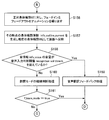
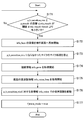
- FIGS. 39A and 39B are flowcharts illustrating an operation example of the communication system 1 according to the embodiment of the present disclosure.
- FIGS. 39A and 39B show the detailed flow of the speech translation feedback process in step S159 of FIG. 36B. Note that the speech translation feedback processing flow shown below is executed by the information processing apparatus 200 based on the information acquired by the signage terminal 100, but the speech translation feedback processing flow indicates which of the communication systems 1 It may be performed on the device.
- the communication system 1 determines whether or not the volume of the sound information info_voice input to the microphone 102 at the high sensitivity microphone position p_h_sensitive_mic exceeds the threshold voice_vol_thresh (step S201).
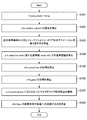
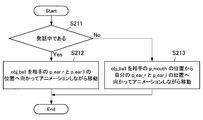
- step S201 if the volume of the sound information info_voice exceeds the threshold voice_vol_thresh (step S201, Yes), the communication system 1 subsequently generates a sphere object obj_ball having a radius corresponding to the volume level. (Step S202). After generating the sphere object obj_ball, the communication system 1 executes the sphere object animation process (step S203). Details of the sphere object animation process will be described later.
- step S203 When the sphere object animation process in step S203 is executed or, as a result of the determination in step S201, if the volume of the sound information info_voice does not exceed the threshold voice_vol_thresh (No in step S201), the communication system 1 continues to Info_voice_freq_ave is calculated as frequency average information of past utterances (step S204).
- the communication system 1 determines whether or not the voice information processing apparatus 300 has obtained the voice recognition result voice_result (step S205).
- step S205 when the voice information processing apparatus 300 has obtained the voice recognition result voice_result (step S205, Yes), the communication system 1 subsequently executes voice recognition result display processing (step S206). . Details of the voice recognition result display processing will be described later.
- the communication system 1 starts a translation process in the translation processing device 400 for the voice recognition result voice_result (step S207).
- the communication system 1 determines whether or not the translation result trans_result in the translation processing apparatus 400 for the voice recognition result voice_result has been obtained (step S208).
- step S208 when the translation result trans_result in the translation processing apparatus 400 for the voice recognition result voice_result is obtained (step S208, Yes), the communication system 1 then translates in the translation processing apparatus 400.
- the result trans_result is displayed on the signage terminal 100 (step S209).
- the communication system 1 stores the score trans_result_score when the translation result trans_result is obtained (step S210).
- the score generation unit 422 of the translation processing apparatus 400 generates the translation score according to the probability of the translation result trans_result.
- the communication system 1 subsequently executes a translation result display process (step S211). Details of the translation result display process will be described later.
- the communication system 1 When the translation result display process is executed, the communication system 1 subsequently executes a process amount overflow determination process (step S212). Details of the processing amount overflow determination processing will be described later.
- the communication system 1 When the processing amount overflow determination processing is executed, the communication system 1 subsequently executes processing amount overflow presentation processing (step S213). Details of the processing amount overflow presentation processing will be described later.
- the processing amount overflow presentation process When the processing amount overflow presentation process is executed, the communication system 1 ends the speech translation feedback process.
- step S205 when the speech information processing apparatus 300 cannot obtain the speech recognition result voice_result (step S205, No), or as a result of the determination in step S208, the translation processing apparatus 400 for the speech recognition result voice_result If the translation result trans_result is not obtained (step S208, No), the communication system 1 ends the speech translation feedback process.
- step S159 of FIG. 36B The detailed flow of the speech translation feedback process in step S159 of FIG. 36B has been described above. Next, a detailed flow of the sphere object animation process in step S203 of FIG. 39A will be described.
- FIG. 40 is a flowchart illustrating an operation example of the communication system 1 according to the embodiment of the present disclosure.
- FIG. 40 shows a detailed flow of the sphere object animation process in step S203 of FIG. 39A.
- the sphere object animation processing flow shown below is executed by the information processing apparatus 200 based on information acquired by the signage terminal 100.
- the sphere object animation processing flow indicates which of the communication systems 1 It may be performed on the device.
- the communication system 1 determines whether or not the user is speaking (step S211).
- step S211 If the result of the determination in step S211 is that the user is speaking (step S211, Yes), the communication system 1 then moves the ball object obj_ball to the position of the opponent's left ear position p_ear_l and right ear position p_ear_r. The image is moved while being animated (step S212).
- step S211 determines the left ear position p_ear_l and the ball object obj_ball from the position information p_mouth of the opponent's mouth.
- the animation is moved toward the right ear position p_ear_r while being animated (step S213).
- step S203 of FIG. 39A The detailed flow of the sphere object animation process in step S203 of FIG. 39A has been described above. Subsequently, a detailed flow of the processing amount overflow determination process in step S212 of FIG. 39B will be described.
- FIG. 41 is a flowchart illustrating an operation example of the communication system 1 according to the embodiment of the present disclosure.
- FIG. 41 shows a detailed flow of the processing amount overflow determination process in step S212 of FIG. 39B. Note that the processing amount overflow determination processing flow described below is executed by the information processing apparatus 200 based on information acquired by the signage terminal 100, but the processing amount overflow determination processing flow is executed by the communication system 1. It may be performed by any device that constitutes.
- the communication system 1 When executing the processing amount overflow determination process, the communication system 1 first determines whether or not the user is speaking (step S221).
- step S221 If the result of the determination in step S221 is that the user is speaking (step S221, Yes), the communication system 1 then sets the value of the flag f_task_over_mode for determining the processing amount overflow to false (step S222). .
- step S221 determines whether or not the user's line-of-sight information info_gaze is contained therein (step S223).
- step S223 if the user's line-of-sight information info_gaze is not included in the area obtained by adding the distance of the threshold d_surrounding_thresh to the opponent's directly-facing body contour information area (step S223, No), then the communication system 1 Determines whether the user's line-of-sight information info_gaze is within the area obtained by adding the distance of the threshold d_surrounding_thresh to the directly-facing body contour information area is greater than the threshold t_surrounding_thresh (step S224).
- step S224 if the user's line-of-sight information info_gaze is within the region obtained by adding the distance of the threshold d_surrounding_thresh to the directly-facing body contour information region is not greater than the threshold t_surrounding_thresh (step S224, No Subsequently, the communication system 1 sets the value of the flag f_task_over_mode for determining the processing amount overflow to false (step S222).
- step S223 if the user's line-of-sight information info_gaze is included in the area obtained by adding the distance of the threshold d_surrounding_thresh to the opponent's directly-facing body contour information area (step S223, Yes), or As a result of the determination in step S224, if the time during which the user's line-of-sight information info_gaze is within the area obtained by adding the distance of the threshold d_surrounding_thresh to the directly-facing body contour information area is greater than the threshold t_surrounding_thresh (step S224, Yes) Subsequently, the communication system 1 sets the value of the flag f_task_over_mode for determining the processing amount overflow to true (step S225).
- FIG. 42 is a flowchart illustrating an operation example of the communication system 1 according to the embodiment of the present disclosure.
- FIG. 42 shows a detailed flow of the processing amount overflow determination process in step S212 of FIG. 39B. Note that the processing amount overflow determination processing flow described below is executed by the information processing apparatus 200 based on information acquired by the signage terminal 100, but the processing amount overflow determination processing flow is executed by the communication system 1. It may be performed by any device that constitutes.
- the communication system 1 When executing the processing amount overflow determination process, the communication system 1 first determines whether the user is speaking (step S231).
- step S231 If the result of the determination in step S231 is that the user is speaking (step S231, Yes), then the communication system 1 sets the value of the flag f_task_over_mode for determining the processing amount overflow to false (step S232). .
- step S231 determines whether or not the user's conflict has been detected (step S233).
- step S233 if the user's conflict cannot be detected (No in step S233), then the communication system 1 determines whether the time from when the conflict was last detected to the current time is greater than the threshold t_nod_thresh. Judgment is made (step S234).
- step S234 if the time from the last time when the conflict was detected to the current time is not greater than the threshold value t_nod_thresh (step S234, No), the communication system 1 subsequently determines the flag f_task_over_mode Is set to false (step S232).
- step S233 If it is determined in step S233 that the user's conflict can be detected (step S233, Yes), then the communication system 1 sets the value of the flag f_task_over_mode for determining the processing amount overflow to false (step S232).
- step S234 if the time from the last time the conflict was detected to the current time is greater than the threshold value t_nod_thresh (step S234, Yes), the communication system 1 subsequently determines the flag for determining the overflow of processing amount.
- the value of f_task_over_mode is set to true (step S235).
- FIG. 43 is a flowchart illustrating an operation example of the communication system 1 according to the embodiment of the present disclosure.
- FIG. 43 shows a detailed flow of the processing amount overflow determination process in step S212 of FIG. 39B. Note that the processing amount overflow determination processing flow described below is executed by the information processing apparatus 200 based on information acquired by the signage terminal 100, but the processing amount overflow determination processing flow is executed by the communication system 1. It may be performed by any device that constitutes.
- the communication system 1 When executing the processing amount overflow determination process, the communication system 1 first determines whether or not the user is speaking (step S241).
- step S241 If the result of the determination in step S241 is that the user is speaking (step S241, Yes), then the communication system 1 sets the value of the flag f_task_over_mode for determining the processing amount overflow to false (step S242). .
- step S241 determines whether the user's palm has been detected (step S243).
- step S243 If the user's palm can be detected as a result of the determination in step S243 (step S243, Yes), the communication system 1 subsequently updates the accumulated time t_palm_accum of the time when the user's palm was detected (step S244). When the accumulated time t_palm_accum of the time when the user's palm is detected is updated, the communication system 1 subsequently determines whether the accumulated time t_palm_accum of the time when the user's palm is detected is greater than the threshold value t_palm_accum_thresh (step S245).
- step S245 If the accumulated time t_palm_accum of the time when the user's palm is detected is not larger than the threshold value t_palm_accum_thresh as a result of the determination in step S245 (step S245, No), the communication system 1 then sets the flag f_task_over_mode for determining the processing amount overflow The value is set to false (step S242).
- step S243 If the user's palm cannot be detected as a result of the determination in step S243 (step S243, Yes), the communication system 1 subsequently sets the value of the flag f_task_over_mode for determining the processing amount overflow to false (step S242). ).
- step S245 if the accumulated time t_palm_accum of the time when the user's palm is detected is larger than the threshold value t_palm_accum_thresh (step S245, Yes) as a result of the determination in step S245, the communication system 1 subsequently determines the flag f_task_over_mode Is set to true (step S246).
- FIG. 44 is a flowchart illustrating an operation example of the communication system 1 according to the embodiment of the present disclosure.
- FIG. 44 shows a detailed flow of the processing amount overflow determination process in step S212 of FIG. 39B. Note that the processing amount overflow determination processing flow described below is executed by the information processing apparatus 200 based on information acquired by the signage terminal 100, but the processing amount overflow determination processing flow is executed by the communication system 1. It may be performed by any device that constitutes.
- the communication system 1 When executing the processing amount overflow determination process, the communication system 1 first determines whether or not the user is speaking (step S251).
- step S251 If the result of the determination in step S251 is that the user is speaking (step S251, Yes), then the communication system 1 sets the value of the flag f_task_over_mode for determining the processing amount overflow to false (step S252). .
- step S251 determines whether the user is not speaking (step S251, No). If the result of the determination in step S251 is that the user is not speaking (step S251, No), then the communication system 1 divides the speech recognition result voice_result into phrases by natural language analysis processing (Ste S253).
- the communication system 1 When the speech recognition result voice_result is divided into phrases by natural language analysis processing, the communication system 1 subsequently adds the number of phrases num_phrase of the speech recognition result voice_result to the cumulative number num_accum_phrase so far (step S254).
- the communication system 1 determines whether or not the cumulative number num_phrase_accum after the addition exceeds the threshold num_phrase_accum_thresh (step S255).
- step S255 the communication system 1 subsequently sets the value of the flag f_task_over_mode for determining the processing amount overflow to false Set (step S252).
- step S255 if the cumulative number num_phrase_accum after addition exceeds the threshold num_phrase_accum_thresh (step S255, Yes) as a result of the determination in step S255, the communication system 1 subsequently sets the value of the flag f_task_over_mode for determining the processing amount overflow Set to true (step S256).
- the communication system 1 may select one of these five flows and execute the processing amount overflow judgment processing. This flow may be selected to execute the processing amount overflow determination processing flow.
- the flow results may be different. Accordingly, when a plurality of flows are selected, the communication system 1 may select an odd number of flows and adopt a method with a larger result of setting the value of the flag f_task_over_mode. Subsequently, a detailed flow of the processing amount overflow presentation processing in step S213 in FIG. 39B will be described.
- FIG. 45 is a flowchart illustrating an operation example of the communication system 1 according to the embodiment of the present disclosure.
- FIG. 45 shows a detailed flow of the processing amount overflow presentation processing in step S213 in FIG. 39B. Note that the processing amount overflow presentation processing flow described below is executed by the information processing apparatus 200 based on information acquired by the signage terminal 100, but the processing amount overflow presentation processing flow is executed by the communication system 1. It may be performed by any device that constitutes.
- the communication system 1 determines whether or not the user is speaking (step S261).
- step S261 If the result of the determination in step S261 is that the user is speaking (step S261, Yes), the communication system 1 sets the ball object obj_ball having a radius corresponding to the volume of the user's utterance to the right of the opponent. It is displayed on the signage terminal 100 so as to move while moving toward the position of the ear position p_ear_r and the left ear position p_ear_l and then moving vertically from that position while animate vertically (step S262).
- step S261 determines whether the user is not speaking (step S261, No). If the result of the determination in step S261 is that the user is not speaking (step S261, No), the communication system 1 ends the processing amount overflow presentation process as it is.
- FIG. 46 is a flowchart illustrating an operation example of the communication system 1 according to the embodiment of the present disclosure.
- FIG. 46 shows a detailed flow of the speech recognition result display process in step S206 of FIG. 39A. Note that the following speech recognition result display processing flow is executed by the information processing apparatus 200 based on the information acquired by the signage terminal 100, but the speech recognition result display processing flow is the communication system 1. It may be performed by any device that constitutes.
- the communication system 1 When executing the speech recognition result display process, the communication system 1 first determines whether or not the user is speaking (step S271).
- step S271 If the result of the determination in step S271 is that the user is speaking (step S271, Yes), the communication system 1 displays the voice recognition result on the signage terminal 100 on the partner's right ear position p_ear_r or left ear. It is displayed near the position p_ear_l (step S272).
- step S271 determines whether the user is not speaking (step S271, No). If the result of determination in step S271 is that the user is not speaking (step S271, No), the communication system 1 ends the speech recognition result display process as it is.
- FIG. 47 is a flowchart illustrating an operation example of the communication system 1 according to the embodiment of the present disclosure.
- FIG. 47 shows a detailed flow of the translation result display process in step S211 of FIG. 39B.
- the translation result display processing flow shown below is executed by the information processing apparatus 200 based on information acquired by the signage terminal 100, but the translation result display processing flow constitutes the communication system 1. Any device may be used.
- the communication system 1 When executing the translation result display process, the communication system 1 first determines whether the user is speaking (step S281).
- step S281 if the user is not speaking (step S281, No), the communication system 1 displays the translation result in the vicinity of the partner mouth position information p_mouth in the signage terminal 100 (step S281). S282).
- step S281 determines whether the user is speaking (step S281, Yes). If the result of the determination in step S281 is that the user is speaking (step S281, Yes), the communication system 1 ends the translation result display process as it is.
- FIG. 48 is a flowchart illustrating an operation example of the communication system 1 according to the embodiment of the present disclosure.
- FIG. 48 shows a detailed flow of the translation mode continuation determination process in step S160 of FIG. 36B. Note that the translation mode continuation determination process flow described below is executed by the information processing apparatus 200 based on information acquired by the signage terminal 100, but the translation mode continuation determination process flow is performed by the communication system 1. It may be performed by any device that constitutes.
- the communication system 1 When executing the translation mode continuation determination processing flow, the communication system 1 first determines whether the translation score trans_score is lower than the threshold trans_score_thresh (step S291).
- step S292 If the translation score trans_score is lower than the threshold trans_score_thresh as a result of the determination in step S291 (step S291, Yes), the communication system 1 sets the value of the flag f_trans_mode indicating whether or not the translation mode is false to determine whether the translation mode is continued The processing flow ends (step S292).
- step S293 the communication system 1 indicates that the user's line-of-sight information info_gaze is within the opponent's directly-facing body contour information area. It is determined whether or not it is present (step S293).
- step S293 if the user's line-of-sight information info_gaze is not within the opponent's directly-facing body contour information area (No in step S293), then the communication system 1 determines that the user's line-of-sight information info_gaze is It is determined whether it is within the area obtained by adding the distance of the threshold d_surrounding_thresh to the directly facing body contour information area (step S294).
- step S294 if the user's line-of-sight information info_gaze is not within the area obtained by adding the distance of the threshold d_surrounding_thresh to the opponent's directly-facing body contour information area (step S294, No), the communication system 1 The value of the flag f_trans_mode indicating whether or not the translation mode is set to false, and the translation mode continuation determination processing flow is ended (step S292).
- step S293 determines whether the user's line-of-sight information info_gaze is within the opposite body contour information area of the opponent (Yes in step S293), or the result of the determination in step S294 is that the user's line of sight
- the communication system 1 sets the value of the flag f_trans_mode indicating whether or not the translation mode is set. It is set to true, and the translation mode continuation determination processing flow is ended (step S295).
- FIG. 49 is a flowchart illustrating an operation example of the communication system 1 according to the embodiment of the present disclosure.
- FIG. 49 shows a detailed flow of the translation mode continuation determination process in step S160 of FIG. 36B. Note that the translation mode continuation determination process flow described below is executed by the information processing apparatus 200 based on information acquired by the signage terminal 100, but the translation mode continuation determination process flow is performed by the communication system 1. It may be performed by any device that constitutes.
- the communication system 1 determines whether or not the user's stagnation can be detected in the sound information info_voice obtained by the user's utterance (step S301).
- step S301 if the user's stagnation can be detected in the sound information info_voice (step S301, Yes), then the communication system 1 indicates that the user's voice recognition result voice_result obtained last is stored in the filler word database. It is determined whether or not it is present (step S302).
- Table 1 is a table showing an example of the contents of the filler word database.
- the communication system 1 may determine whether the voice recognition result voice_result of the user matches not only the filler word group included in the filler word database but also the similar sound filler word group.
- step S302 determines whether the user's voice recognition result voice_result is in the filler word database (step S302, Yes).
- the communication system 1 determines the time from the last spoken filler word as a threshold value. It is determined whether t_fillerwords_thresh is not exceeded (step S303).
- step S301 if the user's stagnation can be detected in the sound information info_voice (No in step S301), or as a result of the determination in step S302, the user's voice recognition result voice_result is included in the filler word database. If there is not (step S302, No), or if the time from the last filler word exceeds the threshold t_fillerwords_thresh (step S303, No) as a result of the determination in the above step S303, the communication system 1 It is determined whether or not a condition for determining a silent section is satisfied as info_voice (step S304). As a condition for determining a silent section, there may be, for example, whether or not a section with a very low volume continues.
- step S304 if the sound information info_voice satisfies the condition for determining a silent section (step S304, Yes), the communication system 1 sets the value of the flag f_trans_mode indicating whether it is the translation mode to false. Then, the translation mode continuation determination processing flow is ended (step S305).
- step S303 if the time from the filler word that has been uttered last does not exceed the threshold t_fillerwords_thresh (step S303, Yes), or as a result of the determination in step S304, Is not satisfied (No in step S304), the communication system 1 sets the value of the flag f_trans_mode indicating whether or not the translation mode is true, and ends the translation mode continuation determination processing flow (step S306). ).
- FIG. 50 is a flowchart illustrating an operation example of the communication system 1 according to the embodiment of the present disclosure.
- FIG. 50 shows a detailed flow of the translation mode continuation determination process in step S160 of FIG. 36B. Note that the translation mode continuation determination process flow described below is executed by the information processing apparatus 200 based on information acquired by the signage terminal 100, but the translation mode continuation determination process flow is performed by the communication system 1. It may be performed by any device that constitutes.
- the communication system 1 When executing the translation mode continuation determination processing flow, the communication system 1 first determines whether or not the frequency information info_last_voice_freq of the last acquired utterance is larger than the past average information info_voice_freq_ave minus the threshold f_thresh (step). S311).
- step S312 If the frequency information info_last_voice_freq of the last acquired utterance is larger than the information obtained by subtracting the threshold f_thresh from the past average information info_voice_freq_ave (Yes in step S311) as a result of the determination in step S311, the communication system 1 The flag f_trans_mode indicating whether or not is set to false, and the translation mode continuation determination processing flow ends (step S312).
- step S313 the frequency information info_last_voice_freq of the last acquired utterance is not larger than the information obtained by subtracting the threshold f_thresh from the past average information info_voice_freq_ave (No in step S311) as a result of the determination in step S311, the communication system 1 Then, the value of the flag f_trans_mode indicating whether or not the translation mode is set to true, and the translation mode continuation determination processing flow is ended (step S313).
- FIG. 51 is a flowchart illustrating an operation example of the communication system 1 according to the embodiment of the present disclosure.
- FIG. 51 shows a detailed flow of the translation mode continuation determination process in step S160 of FIG. 36B. Note that the translation mode continuation determination process flow described below is executed by the information processing apparatus 200 based on information acquired by the signage terminal 100, but the translation mode continuation determination process flow is performed by the communication system 1. It may be performed by any device that constitutes.
- the communication system 1 determines whether or not the voice recognition result voice_result of the user acquired last is included in the conversation end determination word database (step S321).
- Table 2 is a table showing an example of the contents of the conversation end determination word database.
- the communication system 1 determines whether or not the voice recognition result voice_result of the user matches not only the conversation end determination word group in the conversation end determination word database but also the similar sound conversation end determination word group. You may judge.
- step S321 if the voice recognition result voice_result of the user that was finally acquired is in the conversation end determination word database (step S321, Yes), the communication system 1 subsequently uttered It is determined whether the time from the conversation end determination word has not exceeded the threshold value t_convendwords_thresh (step S322).
- step S321 if the voice recognition result voice_result of the user acquired last is not in the conversation end determination word database (No in step S321), or the result of determination in step S322 is the last If the time from the conversation end determination word uttered to exceeds the threshold t_convendwords_thresh (step S322, No), the communication system 1 determines whether or not the sound information info_voice satisfies the condition for determining the silent section (step S323). . As a condition for determining a silent section, there may be, for example, whether or not a section with a very low volume continues.
- step S323 if the sound information info_voice satisfies the condition for determining a silent section (step S323, Yes), the communication system 1 sets the value of the flag f_trans_mode indicating whether or not the translation mode is false. Then, the translation mode continuation determination processing flow is ended (step S324).
- step S322 if the time from the last spoken conversation end determination word does not exceed the threshold value t_convendwords_thresh (step S322, Yes), or as a result of the determination in step S323, the sound information info_voice If the condition for determining the silent section is not satisfied (step S323, No), the communication system 1 sets the value of the flag f_trans_mode indicating whether or not the translation mode is true to end the translation mode continuation determination processing flow ( Step S324).
- FIG. 52 is a flowchart illustrating an operation example of the communication system 1 according to the embodiment of the present disclosure.
- FIG. 52 shows a detailed flow of the translation mode continuation determination process in step S160 of FIG. 36B. Note that the translation mode continuation determination process flow described below is executed by the information processing apparatus 200 based on information acquired by the signage terminal 100, but the translation mode continuation determination process flow is performed by the communication system 1. It may be performed by any device that constitutes.
- the communication system 1 determines whether or not the translation mode release button on the screen has been pressed (step S331).
- step S331 If the result of determination in step S331 is that the translation mode release button has been pressed (step S331, Yes), the communication system 1 sets the value of the flag f_trans_mode indicating whether or not the translation mode is false to continue translation mode. The determination process flow is terminated (step S332).
- step S331 determines whether or not the translation mode is true to the translation.
- step S333 determines whether or not the translation mode is true to the translation.
- the communication system 1 may select one of the five flows and execute the translation mode continuation determination processing. This flow may be selected to execute the translation mode continuation determination processing flow. When selecting a plurality of flows, the flow results may be different. Therefore, when a plurality of flows are selected, the communication system 1 may select an odd number of flows and adopt a method with a larger result of setting the value of the flag f_trans_mode.
- the communication system 1 performs the above-described operation, so that when humans communicate with each other through a signage terminal or the like, the communication system 1 is based on a situation of a speaker or a talker. And natural communication.
- the communication system 1 wants to translate even when the utterer cannot imagine the utterance content by not stopping the translation just because the utterance has stopped. You can tell only the subject to the translation partner and prevent the other party from blocking the utterance.
- the processing amount on the listener side overflows while the speaker side is speaking.
- the communication system 1 is provided to notify the speaker using the signage terminal 100.
- the communication system 1 notifies the speaker side that the processing amount on the listener side is overflowing while the speaker side is speaking by using the signage terminal 100 to the listener side. It is possible to convey the image of the processing amount of information on the side to the speaker side without blocking the speaker's utterance.
- the communication system 1 avoids being blocked by the other person's utterance or tells the speaker that the processing amount on the listener side is overflowing. Enable smooth communication for the speaker and listener.
- the present disclosure is not limited to such an example.
- the present disclosure can also be applied to a system in which humans who are not present communicate with each other via a display, a speaker, and a microphone, such as a video phone system, a video conference system, and a virtual conversation support system using AR (augmented reality). is there.
- the video conferencing system tends to be unnatural when participants in the conference turn to the microphone instead of the camera during the conference. For this reason, in the video conference system to which the present disclosure is applied, when the participant of the conference faces the microphone, it is displayed on the display on the other party instead of the image created in advance as described above. In this way, the video conference system to which the present disclosure is applied can avoid an unnatural situation by replacing it with an image at the time of facing and presenting it on the display of the other party.
- the utterance content of a speaker may be recorded as a log, and the log may be used for translation.
- phrases such as “that” and “sakino” are often spoken, but the video conference system to which the present disclosure is applied has a concrete phrase such as “that” or “sakino”. They may be translated into nouns and translated and presented to the other party.
- each step in the processing executed by each device in this specification does not necessarily have to be processed in chronological order in the order described as a sequence diagram or flowchart.
- each step in the processing executed by each device may be processed in an order different from the order described as the flowchart, or may be processed in parallel.
- a computer system in which a single computer or a plurality of computers performs a series of processes for causing hardware such as a CPU, ROM, and RAM incorporated in each device to exhibit functions equivalent to the configuration of each device described above. It is also possible to create a program to be executed in. A storage medium storing the computer program can also be provided. In addition, by configuring each functional block shown in the functional block diagram with hardware or a hardware circuit, a series of processing can be realized with hardware or hardware circuit.
- each functional block shown in the functional block diagram used in the above description may be realized by a server device connected via a network such as the Internet.
- the configuration of each functional block shown in the functional block diagram used in the above description may be realized by a single device or a system in which a plurality of devices cooperate.
- a system in which a plurality of devices are linked may include, for example, a combination of a plurality of server devices, a combination of a server device and a terminal device, or the like.
- a control unit that executes processing for causing the speaker to stop speaking to the device on which the speaker is speaking based on the result of analyzing the utterance content by the result of the speaker speaking to the device
- a control device comprising: (2) The control device according to (1), wherein the control unit determines a situation of a listener who is listening to the utterance content of the speaker and executes the process. (3) The said control part is a control apparatus as described in said (2) which performs the said process based on the generation
- the said control part is a control apparatus as described in said (2) which performs the said process based on the detection of the gesture for the said speaker to stop the speech by the said listener.
- the control device determines whether to execute the process according to the number of words or parts of speech included in the utterance content.
- the control device determines whether to execute the processing according to a difficulty level of the utterance content.
- the device comprises display devices on the speaker side and the listener side, The control device according to any one of (1) to (7), wherein the control unit outputs information for causing the speaker to stop speaking to the display device on the speaker side.
- the said control part is a control apparatus as described in said (8) which displays the effect that the content of speech does not enter into the listener's ear on the said display apparatus by the side of the said speaker.
- the said control part is a control apparatus as described in said (8) which stops the display of the recognition result of the utterance content currently displayed on the said display apparatus by the said speaker side.
- the said control part is a control apparatus as described in said (8) which makes the sound which cancels the speech by the said speaker output from the said apparatus.
- the device comprises display devices on the speaker side and the listener side, The control device according to any one of (1) to (7), wherein the control unit outputs information for causing the speaker to stop speaking to the display device on the listener side.
Landscapes
- Engineering & Computer Science (AREA)
- Physics & Mathematics (AREA)
- Health & Medical Sciences (AREA)
- Audiology, Speech & Language Pathology (AREA)
- Human Computer Interaction (AREA)
- Multimedia (AREA)
- Theoretical Computer Science (AREA)
- Acoustics & Sound (AREA)
- Computational Linguistics (AREA)
- General Physics & Mathematics (AREA)
- General Health & Medical Sciences (AREA)
- General Engineering & Computer Science (AREA)
- User Interface Of Digital Computer (AREA)
- Information Transfer Between Computers (AREA)
- Machine Translation (AREA)
Priority Applications (4)
| Application Number | Priority Date | Filing Date | Title |
|---|---|---|---|
| EP17792646.6A EP3454332A4 (de) | 2016-05-02 | 2017-03-15 | Steuerungsvorrichtung, steuerungsverfahren und computerprogramm |
| US16/096,754 US10649715B2 (en) | 2016-05-02 | 2017-03-15 | Control device and control method to issue notification on occurrence of processing overflow |
| JP2018515404A JPWO2017191713A1 (ja) | 2016-05-02 | 2017-03-15 | 制御装置、制御方法及びコンピュータプログラム |
| US16/843,501 US11188288B2 (en) | 2016-05-02 | 2020-04-08 | Control device and control method to issue notification on occurrence of processing overflow |
Applications Claiming Priority (2)
| Application Number | Priority Date | Filing Date | Title |
|---|---|---|---|
| JP2016-092413 | 2016-05-02 | ||
| JP2016092413 | 2016-05-02 |
Related Child Applications (2)
| Application Number | Title | Priority Date | Filing Date |
|---|---|---|---|
| US16/096,754 A-371-Of-International US10649715B2 (en) | 2016-05-02 | 2017-03-15 | Control device and control method to issue notification on occurrence of processing overflow |
| US16/843,501 Continuation US11188288B2 (en) | 2016-05-02 | 2020-04-08 | Control device and control method to issue notification on occurrence of processing overflow |
Publications (1)
| Publication Number | Publication Date |
|---|---|
| WO2017191713A1 true WO2017191713A1 (ja) | 2017-11-09 |
Family
ID=60203703
Family Applications (1)
| Application Number | Title | Priority Date | Filing Date |
|---|---|---|---|
| PCT/JP2017/010313 Ceased WO2017191713A1 (ja) | 2016-05-02 | 2017-03-15 | 制御装置、制御方法及びコンピュータプログラム |
Country Status (4)
| Country | Link |
|---|---|
| US (2) | US10649715B2 (de) |
| EP (1) | EP3454332A4 (de) |
| JP (1) | JPWO2017191713A1 (de) |
| WO (1) | WO2017191713A1 (de) |
Cited By (3)
| Publication number | Priority date | Publication date | Assignee | Title |
|---|---|---|---|---|
| JP2019109424A (ja) * | 2017-12-20 | 2019-07-04 | 株式会社日立製作所 | 計算機、言語解析方法、及びプログラム |
| WO2019239656A1 (ja) * | 2018-06-12 | 2019-12-19 | ソニー株式会社 | 情報処理装置および情報処理方法 |
| JP2023119082A (ja) * | 2022-02-16 | 2023-08-28 | 株式会社ジェイテクト | 情報提供システム、方法、および、プログラム |
Families Citing this family (3)
| Publication number | Priority date | Publication date | Assignee | Title |
|---|---|---|---|---|
| EP3454334A4 (de) * | 2016-05-02 | 2019-05-08 | Sony Corporation | Steuerungsvorrichtung, steuerungsverfahren und computerprogramm |
| KR20190091265A (ko) * | 2016-12-05 | 2019-08-05 | 소니 주식회사 | 정보 처리 장치, 정보 처리 방법, 및 정보 처리 시스템 |
| US11256878B1 (en) * | 2020-12-04 | 2022-02-22 | Zaps Labs, Inc. | Directed sound transmission systems and methods |
Citations (3)
| Publication number | Priority date | Publication date | Assignee | Title |
|---|---|---|---|---|
| JP2006085440A (ja) * | 2004-09-16 | 2006-03-30 | Fuji Xerox Co Ltd | 情報処理システム及び情報処理方法、並びにコンピュータ・プログラム |
| JP2009276495A (ja) * | 2008-05-14 | 2009-11-26 | Nippon Telegr & Teleph Corp <Ntt> | 音声誤認識訂正支援装置とその方法と、プログラムとその記録媒体 |
| JP2011141819A (ja) * | 2010-01-08 | 2011-07-21 | Fujitsu Toshiba Mobile Communications Ltd | 情報処理装置 |
Family Cites Families (9)
| Publication number | Priority date | Publication date | Assignee | Title |
|---|---|---|---|---|
| US7822050B2 (en) * | 2007-01-09 | 2010-10-26 | Cisco Technology, Inc. | Buffering, pausing and condensing a live phone call |
| US20090138507A1 (en) * | 2007-11-27 | 2009-05-28 | International Business Machines Corporation | Automated playback control for audio devices using environmental cues as indicators for automatically pausing audio playback |
| US20100283829A1 (en) * | 2009-05-11 | 2010-11-11 | Cisco Technology, Inc. | System and method for translating communications between participants in a conferencing environment |
| JP5211001B2 (ja) * | 2009-09-09 | 2013-06-12 | 日本電信電話株式会社 | 会議通信システム、会議通信方法及びプログラム |
| JP2013191103A (ja) * | 2012-03-14 | 2013-09-26 | Nikon Corp | 電子機器、およびプログラム |
| JP2015219768A (ja) | 2014-05-19 | 2015-12-07 | ソニー株式会社 | 情報処理システム、記憶媒体及び情報処理方法 |
| US9614969B2 (en) * | 2014-05-27 | 2017-04-04 | Microsoft Technology Licensing, Llc | In-call translation |
| US20150347399A1 (en) * | 2014-05-27 | 2015-12-03 | Microsoft Technology Licensing, Llc | In-Call Translation |
| JP6772839B2 (ja) * | 2014-12-25 | 2020-10-21 | ソニー株式会社 | 情報処理装置、情報処理方法およびプログラム |
-
2017
- 2017-03-15 WO PCT/JP2017/010313 patent/WO2017191713A1/ja not_active Ceased
- 2017-03-15 JP JP2018515404A patent/JPWO2017191713A1/ja not_active Abandoned
- 2017-03-15 US US16/096,754 patent/US10649715B2/en active Active
- 2017-03-15 EP EP17792646.6A patent/EP3454332A4/de not_active Withdrawn
-
2020
- 2020-04-08 US US16/843,501 patent/US11188288B2/en active Active
Patent Citations (3)
| Publication number | Priority date | Publication date | Assignee | Title |
|---|---|---|---|---|
| JP2006085440A (ja) * | 2004-09-16 | 2006-03-30 | Fuji Xerox Co Ltd | 情報処理システム及び情報処理方法、並びにコンピュータ・プログラム |
| JP2009276495A (ja) * | 2008-05-14 | 2009-11-26 | Nippon Telegr & Teleph Corp <Ntt> | 音声誤認識訂正支援装置とその方法と、プログラムとその記録媒体 |
| JP2011141819A (ja) * | 2010-01-08 | 2011-07-21 | Fujitsu Toshiba Mobile Communications Ltd | 情報処理装置 |
Non-Patent Citations (1)
| Title |
|---|
| See also references of EP3454332A4 * |
Cited By (5)
| Publication number | Priority date | Publication date | Assignee | Title |
|---|---|---|---|---|
| JP2019109424A (ja) * | 2017-12-20 | 2019-07-04 | 株式会社日立製作所 | 計算機、言語解析方法、及びプログラム |
| WO2019239656A1 (ja) * | 2018-06-12 | 2019-12-19 | ソニー株式会社 | 情報処理装置および情報処理方法 |
| US12062360B2 (en) | 2018-06-12 | 2024-08-13 | Sony Corporation | Information processing device and information processing method |
| JP2023119082A (ja) * | 2022-02-16 | 2023-08-28 | 株式会社ジェイテクト | 情報提供システム、方法、および、プログラム |
| JP7821430B2 (ja) | 2022-02-16 | 2026-02-27 | 株式会社ジェイテクト | 情報提供システム、方法、および、プログラム |
Also Published As
| Publication number | Publication date |
|---|---|
| EP3454332A1 (de) | 2019-03-13 |
| US20190121600A1 (en) | 2019-04-25 |
| US10649715B2 (en) | 2020-05-12 |
| JPWO2017191713A1 (ja) | 2019-03-07 |
| EP3454332A4 (de) | 2019-05-01 |
| US20200233630A1 (en) | 2020-07-23 |
| US11188288B2 (en) | 2021-11-30 |
Similar Documents
| Publication | Publication Date | Title |
|---|---|---|
| WO2017191711A1 (ja) | 制御装置、制御方法およびコンピュータプログラム | |
| JP7100092B2 (ja) | ワードフロー注釈 | |
| US20220254343A1 (en) | System and method for intelligent initiation of a man-machine dialogue based on multi-modal sensory inputs | |
| WO2017191713A1 (ja) | 制御装置、制御方法及びコンピュータプログラム | |
| CN111492328B (zh) | 虚拟助手的非口头接合 | |
| US11468894B2 (en) | System and method for personalizing dialogue based on user's appearances | |
| JP6772023B2 (ja) | ユーザー状態検出による集団相互作用の方法及びシステム | |
| Maatman et al. | Natural behavior of a listening agent | |
| US20170301037A1 (en) | Group discourse architecture | |
| US10877555B2 (en) | Information processing device and information processing method for controlling user immersion degree in a virtual reality environment | |
| KR20190025549A (ko) | 정신 장애들의 치료를 위한 이동 및 착용 가능한 비디오 캡처 및 피드백 플랫-폼들 | |
| CN108596107A (zh) | 基于ar设备的唇语识别方法及其装置、ar设备 | |
| JP2019086858A (ja) | 顧客応対システム及び顧客応対方法 | |
| Goetze et al. | Multimodal human-machine interaction for service robots in home-care environments | |
| CN114792393A (zh) | 视觉辅助方法、装置及计算机可读存储介质 | |
| JP7354344B2 (ja) | 画像解析装置、画像解析方法、およびプログラム | |
| JP2020038432A (ja) | 画像解析装置、画像解析方法、およびプログラム | |
| WO2023080105A1 (ja) | オンライン端末およびプログラム | |
| JP2025006291A (ja) | 情報処理装置、方法、システム、およびプログラム | |
| CN120529042A (zh) | 视频会议方法、装置、设备、存储介质和程序产品 |
Legal Events
| Date | Code | Title | Description |
|---|---|---|---|
| WWE | Wipo information: entry into national phase |
Ref document number: 2018515404 Country of ref document: JP |
|
| NENP | Non-entry into the national phase |
Ref country code: DE |
|
| 121 | Ep: the epo has been informed by wipo that ep was designated in this application |
Ref document number: 17792646 Country of ref document: EP Kind code of ref document: A1 |
|
| ENP | Entry into the national phase |
Ref document number: 2017792646 Country of ref document: EP Effective date: 20181203 |