WO2017191979A1 - 페로브스카이트 구조를 갖는 산화물 분말의 제조 방법 및 이에 의해 제조된 산화물 분말 - Google Patents
페로브스카이트 구조를 갖는 산화물 분말의 제조 방법 및 이에 의해 제조된 산화물 분말 Download PDFInfo
- Publication number
- WO2017191979A1 WO2017191979A1 PCT/KR2017/004651 KR2017004651W WO2017191979A1 WO 2017191979 A1 WO2017191979 A1 WO 2017191979A1 KR 2017004651 W KR2017004651 W KR 2017004651W WO 2017191979 A1 WO2017191979 A1 WO 2017191979A1
- Authority
- WO
- WIPO (PCT)
- Prior art keywords
- oxide powder
- precursor
- perovskite structure
- sol
- sample
- Prior art date
- Legal status (The legal status is an assumption and is not a legal conclusion. Google has not performed a legal analysis and makes no representation as to the accuracy of the status listed.)
- Ceased
Links
Images



Classifications
-
- C—CHEMISTRY; METALLURGY
- C01—INORGANIC CHEMISTRY
- C01G—COMPOUNDS CONTAINING METALS NOT COVERED BY SUBCLASSES C01D OR C01F
- C01G51/00—Compounds of cobalt
- C01G51/04—Oxides
-
- C—CHEMISTRY; METALLURGY
- C01—INORGANIC CHEMISTRY
- C01G—COMPOUNDS CONTAINING METALS NOT COVERED BY SUBCLASSES C01D OR C01F
- C01G51/00—Compounds of cobalt
-
- C—CHEMISTRY; METALLURGY
- C01—INORGANIC CHEMISTRY
- C01G—COMPOUNDS CONTAINING METALS NOT COVERED BY SUBCLASSES C01D OR C01F
- C01G51/00—Compounds of cobalt
- C01G51/80—Compounds containing cobalt, with or without oxygen or hydrogen, and containing one or more other elements
- C01G51/82—Compounds containing cobalt, with or without oxygen or hydrogen, and containing two or more other elements
-
- C—CHEMISTRY; METALLURGY
- C04—CEMENTS; CONCRETE; ARTIFICIAL STONE; CERAMICS; REFRACTORIES
- C04B—LIME, MAGNESIA; SLAG; CEMENTS; COMPOSITIONS THEREOF, e.g. MORTARS, CONCRETE OR LIKE BUILDING MATERIALS; ARTIFICIAL STONE; CERAMICS; REFRACTORIES; TREATMENT OF NATURAL STONE
- C04B35/00—Shaped ceramic products characterised by their composition; Ceramics compositions; Processing powders of inorganic compounds preparatory to the manufacturing of ceramic products
- C04B35/622—Forming processes; Processing powders of inorganic compounds preparatory to the manufacturing of ceramic products
- C04B35/624—Sol-gel processing
-
- C—CHEMISTRY; METALLURGY
- C04—CEMENTS; CONCRETE; ARTIFICIAL STONE; CERAMICS; REFRACTORIES
- C04B—LIME, MAGNESIA; SLAG; CEMENTS; COMPOSITIONS THEREOF, e.g. MORTARS, CONCRETE OR LIKE BUILDING MATERIALS; ARTIFICIAL STONE; CERAMICS; REFRACTORIES; TREATMENT OF NATURAL STONE
- C04B35/00—Shaped ceramic products characterised by their composition; Ceramics compositions; Processing powders of inorganic compounds preparatory to the manufacturing of ceramic products
- C04B35/622—Forming processes; Processing powders of inorganic compounds preparatory to the manufacturing of ceramic products
- C04B35/64—Burning or sintering processes
-
- C—CHEMISTRY; METALLURGY
- C01—INORGANIC CHEMISTRY
- C01P—INDEXING SCHEME RELATING TO STRUCTURAL AND PHYSICAL ASPECTS OF SOLID INORGANIC COMPOUNDS
- C01P2002/00—Crystal-structural characteristics
- C01P2002/30—Three-dimensional structures
- C01P2002/34—Three-dimensional structures perovskite-type (ABO3)
-
- C—CHEMISTRY; METALLURGY
- C01—INORGANIC CHEMISTRY
- C01P—INDEXING SCHEME RELATING TO STRUCTURAL AND PHYSICAL ASPECTS OF SOLID INORGANIC COMPOUNDS
- C01P2004/00—Particle morphology
- C01P2004/60—Particles characterised by their size
- C01P2004/64—Nanometer sized, i.e. from 1-100 nanometer
-
- C—CHEMISTRY; METALLURGY
- C04—CEMENTS; CONCRETE; ARTIFICIAL STONE; CERAMICS; REFRACTORIES
- C04B—LIME, MAGNESIA; SLAG; CEMENTS; COMPOSITIONS THEREOF, e.g. MORTARS, CONCRETE OR LIKE BUILDING MATERIALS; ARTIFICIAL STONE; CERAMICS; REFRACTORIES; TREATMENT OF NATURAL STONE
- C04B2235/00—Aspects relating to ceramic starting mixtures or sintered ceramic products
- C04B2235/02—Composition of constituents of the starting material or of secondary phases of the final product
- C04B2235/30—Constituents and secondary phases not being of a fibrous nature
- C04B2235/32—Metal oxides, mixed metal oxides, or oxide-forming salts thereof, e.g. carbonates, nitrates, (oxy)hydroxides, chlorides
- C04B2235/3205—Alkaline earth oxides or oxide forming salts thereof, e.g. beryllium oxide
- C04B2235/3215—Barium oxides or oxide-forming salts thereof
-
- C—CHEMISTRY; METALLURGY
- C04—CEMENTS; CONCRETE; ARTIFICIAL STONE; CERAMICS; REFRACTORIES
- C04B—LIME, MAGNESIA; SLAG; CEMENTS; COMPOSITIONS THEREOF, e.g. MORTARS, CONCRETE OR LIKE BUILDING MATERIALS; ARTIFICIAL STONE; CERAMICS; REFRACTORIES; TREATMENT OF NATURAL STONE
- C04B2235/00—Aspects relating to ceramic starting mixtures or sintered ceramic products
- C04B2235/02—Composition of constituents of the starting material or of secondary phases of the final product
- C04B2235/30—Constituents and secondary phases not being of a fibrous nature
- C04B2235/32—Metal oxides, mixed metal oxides, or oxide-forming salts thereof, e.g. carbonates, nitrates, (oxy)hydroxides, chlorides
- C04B2235/3224—Rare earth oxide or oxide forming salts thereof, e.g. scandium oxide
- C04B2235/3227—Lanthanum oxide or oxide-forming salts thereof
-
- C—CHEMISTRY; METALLURGY
- C04—CEMENTS; CONCRETE; ARTIFICIAL STONE; CERAMICS; REFRACTORIES
- C04B—LIME, MAGNESIA; SLAG; CEMENTS; COMPOSITIONS THEREOF, e.g. MORTARS, CONCRETE OR LIKE BUILDING MATERIALS; ARTIFICIAL STONE; CERAMICS; REFRACTORIES; TREATMENT OF NATURAL STONE
- C04B2235/00—Aspects relating to ceramic starting mixtures or sintered ceramic products
- C04B2235/02—Composition of constituents of the starting material or of secondary phases of the final product
- C04B2235/30—Constituents and secondary phases not being of a fibrous nature
- C04B2235/32—Metal oxides, mixed metal oxides, or oxide-forming salts thereof, e.g. carbonates, nitrates, (oxy)hydroxides, chlorides
- C04B2235/327—Iron group oxides, their mixed metal oxides, or oxide-forming salts thereof
- C04B2235/3275—Cobalt oxides, cobaltates or cobaltites or oxide forming salts thereof, e.g. bismuth cobaltate, zinc cobaltite
-
- C—CHEMISTRY; METALLURGY
- C04—CEMENTS; CONCRETE; ARTIFICIAL STONE; CERAMICS; REFRACTORIES
- C04B—LIME, MAGNESIA; SLAG; CEMENTS; COMPOSITIONS THEREOF, e.g. MORTARS, CONCRETE OR LIKE BUILDING MATERIALS; ARTIFICIAL STONE; CERAMICS; REFRACTORIES; TREATMENT OF NATURAL STONE
- C04B2235/00—Aspects relating to ceramic starting mixtures or sintered ceramic products
- C04B2235/02—Composition of constituents of the starting material or of secondary phases of the final product
- C04B2235/30—Constituents and secondary phases not being of a fibrous nature
- C04B2235/32—Metal oxides, mixed metal oxides, or oxide-forming salts thereof, e.g. carbonates, nitrates, (oxy)hydroxides, chlorides
- C04B2235/3281—Copper oxides, cuprates or oxide-forming salts thereof, e.g. CuO or Cu2O
-
- C—CHEMISTRY; METALLURGY
- C04—CEMENTS; CONCRETE; ARTIFICIAL STONE; CERAMICS; REFRACTORIES
- C04B—LIME, MAGNESIA; SLAG; CEMENTS; COMPOSITIONS THEREOF, e.g. MORTARS, CONCRETE OR LIKE BUILDING MATERIALS; ARTIFICIAL STONE; CERAMICS; REFRACTORIES; TREATMENT OF NATURAL STONE
- C04B2235/00—Aspects relating to ceramic starting mixtures or sintered ceramic products
- C04B2235/70—Aspects relating to sintered or melt-casted ceramic products
- C04B2235/74—Physical characteristics
- C04B2235/76—Crystal structural characteristics, e.g. symmetry
- C04B2235/768—Perovskite structure ABO3
Definitions
- the present invention relates to a method for producing an oxide powder having a perovskite structure and to an oxide powder produced by the present invention, and more particularly, to a method for producing an oxide powder used as a mixed conductive electrode and having a perovskite structure. It relates to an oxide powder produced by.
- EDTA-citric acid complexing process is a representative method for synthesizing an oxide having a multi-component perovskite structure containing at least three components. It is a kind of sol-gel method.
- EDTA and citric acid are used as chelating agents.
- a metal nitrate-based precursor corresponding to the stoichiometry of the desired composition is dissolved in distilled water and reacted by adding EDTA and citric acid.
- the metal nitride precursor has an advantage of easily ionizing a metal cation by dissolving in distilled water.
- One object of the present invention is to shorten the overall process time, to provide a method for producing an oxide powder having a perovskite structure as a material having a desired composition without aggregation phenomenon and the oxide powder produced thereby.
- Method for producing an oxide powder having a perovskite structure for one purpose of the present invention is a metal precursor solution by mixing the lanthanide metal precursor, barium (Ba) precursor, cobalt (Co) precursor and copper (Cu) precursor with ethanol
- Preparing a step performing a sol-gel reaction by mixing the EDTA solution containing ethylenediaminetetraacetic acid (EDTA) and ammonia water, the metal precursor solution and citric acid (gel) formed by the sol-gel reaction Drying the compound and calcining the dried compound.
- EDTA ethylenediaminetetraacetic acid
- the step of performing the sol-gel reaction may be carried out at the pH 9 to 10 conditions.
- the sol-gel reaction may include mixing the EDTA solution with the metal precursor solution, mixing citric acid in a state where the EDTA solution and the metal precursor solution are mixed, and mixing the citric acid. Thereby gelling the sol formed.
- the oxide powder having a perovskite structure prepared by the above method is a layered perovskite in the form of LnBaCo (2-x) Cu x O 5 + ⁇ (0 ⁇ x ⁇ 2, where Ln represents Pr or Sm). It has a sky structure.
- the diameter of the oxide powder may be 50 nm or less.
- the production method of the oxide powder having a perovskite structure of the present invention it is possible to significantly shorten the time required to gel in the sol state, and to minimize the size of the particles formed initially to finally achieve the particle size of the oxide particles Can be controlled to below 50 nm.
- the specific surface area of the oxide particles finally produced may be increased.
- FIG. 1 is a flowchart illustrating a method of manufacturing an oxide powder having a perovskite structure according to an embodiment of the present invention.
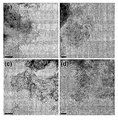
- FIG. 2 is a diagram illustrating transmission electron microscope (TEM) images of a sample prepared according to Example 1 and a comparative sample prepared according to Comparative Example 1.
- TEM transmission electron microscope
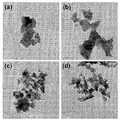
- FIG. 3 is a diagram showing TEM photographs of a sample prepared according to Example 2 of the present invention and a comparative sample prepared according to Comparative Example 2.
- FIG. 3 is a diagram showing TEM photographs of a sample prepared according to Example 2 of the present invention and a comparative sample prepared according to Comparative Example 2.
- FIG. 4 is an X-ray diffraction (XRD) analysis graph of a sample prepared according to Example 2 of the present invention and a comparative sample prepared according to Comparative Example 2.
- XRD X-ray diffraction
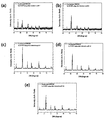
- FIG. 5 is a graph illustrating XRD analysis graphs for explaining a product change according to an acidity change in a process of preparing an oxide powder according to the present invention.
- FIG. 6 is a graph showing polarization resistance characteristics of a sample prepared according to Example 2 and a comparative sample prepared according to Comparative Example 2.
- FIG. 6 is a graph showing polarization resistance characteristics of a sample prepared according to Example 2 and a comparative sample prepared according to Comparative Example 2.
- FIG. 1 is a flowchart illustrating a method of manufacturing an oxide powder having a perovskite structure according to an embodiment of the present invention.
- a metal precursor solution and an ethylenediaminetetraacetic acid (EDTA) solution may be prepared, respectively. Mix.
- the metal precursor solution is prepared by mixing at least three different metal precursors with ethanol (ethanol, ethyl alcohol). Ethanol disperses the metal precursors and simultaneously ionizes the metal precursors to form metal ions.
- ethanol ethanol, ethyl alcohol
- the metal precursors can solve this problem by dispersing in ethanol.
- the metal precursor solution includes a lanthanide metal precursor, a barium (Ba) precursor, a cobalt (Co) precursor, and a copper (Cu) precursor.
- lanthanide metal contained in a lanthanide metal precursor La, Ce, Pr, Nd, Pm, Sm, Eu, Gd, Tb, Dy, Ho, Er, Tm, Yn, or Lu is mentioned.
- Pr, Nd, Pm, Sm, Eu or Gd can be used, and preferably Pr, Nd or Gd can be used.
- It comprises the lanthanide metal precursor, barium (Ba) precursor, cobalt (Co) precursor and copper (Cu) precursor, by using it LnBaCo (2-x) Cu x O 5 + ⁇ form (0 ⁇ x ⁇ 2, Ln represents a lanthanide metal) to produce a four-component oxide having a perovskite structure.
- x may vary depending on the content of the cobalt precursor and the copper precursor to be mixed.
- the perovskite structure may be a layered perovskite structure.
- the EDTA solution (EDTA-NH 3 ) can be prepared by adding ammonia water (NH 4 OH) to EDTA and mixing.
- EDTA solution EDTA-NH 3
- a liquid similar to a sol becomes in a liquid state.
- the addition of citric acid to a mixture with a sol-like liquid phase substantially transforms it into a phase, which can be called a sol, and gels by continuously stirring in this state to form a gel.
- citric acid is mixed into a mixture having a sol-like liquid phase, it is stirred until it becomes a clear or translucent sol, and stirring is continued to form a gel.
- Each of the steps of forming the sol and the step of gelling the sol may be carried out at a temperature of 50 to 70 °C.
- agglomeration occurs between EDTA, which is a chelating agent of the chelation reaction, and a chelate where citric acid binds to the metal cation, and this agglomeration also causes the subsequent crystallization between powders.
- EDTA a chelating agent of the chelation reaction
- a chelate where citric acid binds to the metal cation
- this agglomeration also causes the subsequent crystallization between powders.
- the agglomeration phenomenon can be minimized by using ethanol when preparing the metal precursor solution, so that agglomeration between the crystallized powders can also be minimized.
- pH conditions which form a sol by mixing citric acid are 9-10.
- pH conditions which form a sol by mixing citric acid are 9-10.
- a compound having an additional structure other than the perovskite structure is formed, but when the pH is carried out in the range of pH 9 to 10 perovskite An oxide powder having a wedge structure is formed.
- the gel can then be dried at 200-300 ° C. to obtain a solid product (precursor of solid oxide powder).
- the solid product is calcined at a temperature of at least 450 ° C. or higher, whereby an oxide powder can be formed.
- the solid product is crystallized to form metal oxide particles, thereby forming a metal oxide powder.
- the temperature conditions of the calcination process may be from 450 °C to 1,000 °C.
- the temperature condition of the calcination process should exceed at least 1,000 ° C., but the metal oxide powder can be formed by calcination at 450 ° C. to 1,000 ° C. by using ethanol instead of distilled water. Most preferably, it is calcined at 950 ° C. to form metal oxide powder.
- the powder of the perovskite structure prepared according to the above-described process has a perovskite structure and has a significantly higher dispersibility than the case of forming the perovskite structure powder by a conventional sol-gel method. At the same time, the specific surface area is increased. In addition, the powder of the layered perovskite structure can be stably formed with high dispersibility.
- the powder of the perovskite structure having such characteristics has mixed ionicity and mixed conductivity, and can be used as a conductive oxide electrode of a solid oxide battery to prevent deterioration of the solid oxide battery and to improve characteristics.
- PrBaCo 1 a four-component oxide, using a praseodymium (Pr) precursor, a barium (Ba) precursor, a cobalt (Co) precursor, and a copper (Cu) precursor . 9 Cu 0 . 1 O were weighed stoichiometrically to produce a 5 + ⁇ form, by stirring (stir) by using magnetic bar after dissolving them in ethanol to prepare a precursor solution.
- Pr (NO 3 ) 2 .6H 2 O was used as the praseodymium precursor
- Cu () was used as the barium precursor, the cobalt precursor, and the copper precursor, respectively.
- the mixed solution prepared by mixing EDTA with aqueous ammonia was mixed with the precursor solution prepared above, and citric acid was mixed with the mixed solution and stirred at 60 ° C. to prepare a sol.
- the pH was adjusted to pH 9 using ammonia water, and the molar ratio of total metal cations of praseodymium ions, barium ions, cobalt ions and copper ions, and EDTA and citric acid was 1: 1: 1.5.
- Sample 2 was prepared in the same manner as in the preparation of Sample 1 according to Example 1, but using a calcination process at 950 ° C.
- Comparative Sample 1 was prepared through a process substantially the same as the process of preparing Sample 1 according to Example 1, except that the praseodymium precursor, barium precursor, cobalt precursor, and copper precursor were dissolved in distilled water instead of ethanol.
- Comparative Sample 2 was prepared through a process substantially the same as the process of preparing Sample 2 according to Example 2, except that the praseodymium precursor, the barium precursor, the cobalt precursor, and the copper precursor were dissolved in distilled water instead of ethanol.
- FIG. 2 is a view showing transmission electron microscope (TEM) pictures of a sample prepared according to Example 1 of the present invention and a comparative sample prepared according to Comparative Example 1
- Figure 3 is prepared according to Example 2 of the present invention TEM pictures of a sample and a comparative sample prepared according to Comparative Example 2.
- TEM transmission electron microscope
- FIG. 4 is an X-ray diffraction (XRD) analysis graph of a sample prepared according to Example 2 of the present invention and a comparative sample prepared according to Comparative Example 2.
- XRD X-ray diffraction
- the x axis represents the diffraction angle
- the y axis represents the intensity at that diffraction angle
- the lower graph of FIG. 4 is for comparative sample 2
- the upper graph is for sample 2.
- Samples 3 to 6 were prepared through substantially the same process as Preparation of Sample 2 according to Example 2 of the present invention, except that pH was adjusted to 7, 8, 10, and 11 using ammonia water in the preparation process. It was.
- FIG. 5 is a graph illustrating XRD analysis graphs for explaining a product change according to an acidity change in a process of preparing an oxide powder according to the present invention.
- FIG. 6 is a graph showing polarization resistance characteristics of a sample prepared according to Example 2 and a comparative sample prepared according to Comparative Example 2.
- FIG. 6 is a graph showing polarization resistance characteristics of a sample prepared according to Example 2 and a comparative sample prepared according to Comparative Example 2.
- the resistance of Sample 2 using ethanol as a solvent has a lower value than that of Comparative Sample 2 using distilled water. That is, it can be seen that Sample 2 has a resistance value about 25% lower than that of Comparative Sample 2. This result may be attributed to the increase in specific surface area as the dispersibility of Sample 2 is higher than that of Comparative Sample 2. That is, when Sample 2 was prepared using ethanol, it can be directly confirmed that the dispersibility is more improved than that of Comparative Sample 2 prepared using distilled water.
Landscapes
- Chemical & Material Sciences (AREA)
- Engineering & Computer Science (AREA)
- Organic Chemistry (AREA)
- Manufacturing & Machinery (AREA)
- Ceramic Engineering (AREA)
- Inorganic Chemistry (AREA)
- Materials Engineering (AREA)
- Structural Engineering (AREA)
- Dispersion Chemistry (AREA)
- Inorganic Compounds Of Heavy Metals (AREA)
Abstract
본 발명의 페로브스카이트 구조를 갖는 산화물 분말의 제조 방법은 란탄족 금속 전구체, 바륨(Ba) 전구체, 코발트(Co) 전구체 및 구리(Cu) 전구체를 에탄올을 혼합하여 금속 전구체 용액을 준비하는 단계, EDTA(ethylenediaminetetraacetic acid)와 암모니아수를 포함하는 EDTA 용액, 상기 금속 전구체 용액 및 시트르산(citric acid)을 혼합하여 졸-겔 반응을 수행하는 단계, 상기 졸-겔 반응에 의해 형성된 겔화된 화합물을 건조시키는 단계 및 건조된 화합물을 하소시키는 단계를 포함한다.
Description
본 발명은 페로브스카이트 구조를 갖는 산화물 분말의 제조 방법 및 이에 의해 제조된 산화물 분말에 관한 것으로, 보다 구체적으로는 혼합전도성 전극으로 이용되고 페로브스카이트 구조를 갖는 산화물 분말의 제조 방법 및 이에 의해 제조된 산화물 분말에 관한 것이다.
EDTA(ethylenediaminetetraacetic acid)-시트르산(citric acid) 복합 공정(EDTA-citric acid complexing process)는 적어도 3 성분 이상을 포함하는 다성분계 페로브스카이트(perovskite) 구조를 갖는 산화물을 합성하는 대표적인 방법으로서, 졸-겔(sol-gel)법의 일 종류이다.
EDTA-시트르산 복합 공정에서는, EDTA와 시트르산을 킬레이트제(Chelating agent)로 이용한다. 원하는 조성의 화학량론에 해당하는 금속 질화물계(metal nitrate-based) 전구체를 증류수에 용해시키고 EDTA와 시트르산을 첨가하여 반응시킨다. 금속 질화물계 전구체는 증류수에 용해시킴으로써 금속 양이온을 쉽게 이온화시킬 수 있는 장점이 있다.
그러나 상기와 같은 EDTA-시트르산 복합 공정에 의하면, 물질들을 교반하여 반응시키는 과정에서 증류수가 증발하여 졸(sol) 상태에서 겔화되는 데까지 많은 시간이 소요되어 전체 공정 시간이 길어지는 문제가 있다. 또한, 겔화 공정에서 킬레이트 반응의 킬레이트제인 EDTA와 시트르산이 금속 양이온과 결합하는 킬레이트 사이의 응집 현상이 일어나고, 이러한 응집 현상으로 인해 결정화된 분말들 사이에도 응집이 심하게 발생한다. 그 결과, 약 10 nm 수준의 입도를 갖는 입자들이 합성되기는 하지만, 비표면적이 작은 문제를 갖고 있다.
본 발명의 일 목적은 전체 공정 시간을 단축시키고, 응집 현상 없이 원하는 조성을 갖는 물질로서 페로브스카이트 구조를 갖는 산화물 분말을 제조하는 방법 및 이에 의해 제조된 산화물 분말을 제공하는 것이다.
본 발명의 일 목적을 위한 페로브스카이트 구조를 갖는 산화물 분말의 제조 방법은 란탄족 금속 전구체, 바륨(Ba) 전구체, 코발트(Co) 전구체 및 구리(Cu) 전구체를 에탄올을 혼합하여 금속 전구체 용액을 준비하는 단계, EDTA(ethylenediaminetetraacetic acid)와 암모니아수를 포함하는 EDTA 용액, 상기 금속 전구체 용액 및 시트르산(citric acid)을 혼합하여 졸-겔 반응을 수행하는 단계, 상기 졸-겔 반응에 의해 형성된 겔화된 화합물을 건조시키는 단계 및 건조된 화합물을 하소시키는 단계를 포함한다.
일 실시예에서, 상기 졸-겔 반응을 수행하는 단계는 pH 9 내지 10의 조건에서 수행할 수 있다.
일 실시예에서, 상기 졸-겔 반응을 수행하는 단계는 상기 EDTA 용액을 상기 금속 전구체 용액에 혼합하는 단계, 상기 EDTA 용액과 상기 금속 전구체 용액이 혼합된 상태에서 시트르산을 혼합하는 단계 및 시트르산이 혼합됨으로써 형성된 졸을 겔화시키는 단계를 포함할 수 있다.
상기 방법으로 제조된 페로브스카이트 구조를 갖는 산화물 분말은 LnBaCo(2-x)CuxO5
+δ형태(0<x<2, 이때, Ln은 Pr 또 는 Sm을 나타냄)의 층상 페로브스카이트 구조를 갖는다.
일 실시예에서, 상기 산화물 분말의 직경은 50 nm 이하일 수 있다.
본 발명의 페로브스카이트 구조를 갖는 산화물 분말의 제조 방법에 따르면, 졸 상태에서 겔화되는데 소용되는 시간을 현저하게 단축시킬 수 있고, 초기에 형성되는 입자의 크기를 최소화하여 최종적으로 산화물 입자의 입도가 50 nm 이하로 제어 할 수 있다. 또한, 본 발명의 제조 방법에 따르면 응집 현상이 실질적으로 일어나지 않으므로 최종적으로 생성되는 산화물 입자의 비표면적을 증가시킬 수 있다.
도 1은 본 발명의 일 실시예에 따른 페로브스카이트 구조를 갖는 산화물 분말의 제조 방법을 설명하기 위한 순서도이다.
도 2는 본 발명의 실시예 1에 따라 제조된 샘플과 비교예 1에 따라 제조된 비교 샘플의 투과전자현미경(TEM) 사진들을 나타낸 도면이다.
도 3은 본 발명의 실시예 2에 따라 제조된 샘플과 비교예 2에 따라 제조된 비교 샘플의 TEM 사진들을 나타낸 도면이다.
도 4는 본 발명의 실시예 2에 따라 제조된 샘플과 비교예 2에 따라 제조된 비교 샘플의 X-선 회절(XRD) 분석 그래프이다.
도 5는 본 발명에 따라 산화물 분말을 제조하는 공정에서의 산성도 변화에 따른 생성물 변화를 설명하기 위한 XRD 분석 그래프들을 나타낸 도면이다.
도 6은 본 발명의 실시예 2에 따라 제조된 샘플과 비교예 2에 따라 제조된 비교 샘플의 분극 저항 특성을 나타낸 그래프이다.
이하, 첨부한 도면을 참조하여 본 발명의 실시예에 대해 상세히 설명한다. 본 발명은 다양한 변경을 가할 수 있고 여러 가지 형태를 가질 수 있는 바, 특정 실시예들을 도면에 예시하고 본문에 상세하게 설명하고자 한다. 그러나 이는 본 발명을 특정한 개시 형태에 대해 한정하려는 것이 아니며, 본 발명의 사상 및 기술 범위에 포함되는 모든 변경, 균등물 내지 대체물을 포함하는 것으로 이해되어야 한다. 각 도면을 설명하면서 유사한 참조부호를 유사한 구성요소에 대해 사용하였다.
본 출원에서 사용한 용어는 단지 특정한 실시예를 설명하기 위해 사용된 것으로서 본 발명을 한정하려는 의도가 아니다. 단수의 표현은 문맥상 명백하게 다르게 뜻하지 않는 한, 복수의 표현을 포함한다. 본 출원에서, "포함하다" 또는 "가지다" 등의 용어는 명세서 상에 기재된 특징, 단계, 동작, 구성요소, 부분품 또는 이들을 조합한 것이 존재함을 지정하려는 것이지, 하나 또는 그 이상의 다른 특징들이나 단계, 동작, 구성요소, 부분품 또는 이들을 조합한 것들의 존재 또는 부가 가능성을 미리 배제하지 않는 것으로 이해되어야 한다.
다르게 정의되지 않는 한, 기술적이거나 과학적인 용어를 포함해서 여기서 사용되는 모든 용어들은 본 발명이 속하는 기술 분야에서 통상의 지식을 가진 자에 의해 일반적으로 이해되는 것과 동일한 의미를 가지고 있다. 일반적으로 사용되는 사전에 정의되어 있는 것과 같은 용어들은 관련 기술의 문맥 상 가지는 의미와 일치하는 의미를 가지는 것으로 해석되어야 하며, 본 출원에서 명백하게 정의하지 않는 한, 이상적이거나 과도하게 형식적인 의미로 해석되지 않는다.
도 1은 본 발명의 일 실시예에 따른 페로브스카이트 구조를 갖는 산화물 분말의 제조 방법을 설명하기 위한 순서도이다.
도 1을 참조하면, 적어도 3종 이상의 금속 성분을 포함하는, 페로브스카이트 구조를 갖는 산화물 분말을 제조하기 위해서 금속 전구체 용액과 EDTA(ethylenediaminetetraacetic acid) 용액(EDTA-NH3)을 각각 준비하고 이를 혼합한다.
상기 금속 전구체 용액은 적어도 3종의 서로 다른 금속 전구체와 에탄올(ethanol, ethyl alcohol)을 혼합함으로써 준비한다. 에탄올이 상기 금속 전구체들을 분산시키는 동시에 상기 금속 전구체들을 이온화시켜 금속 이온을 형성한다. 금속 이온을 형성하는 용매로서 증류수를 이용하는 경우에는 졸(sol)을 겔(gel)화 시키는 후속 공정에서 증류수가 증발하여 겔화시키는데 소요되는 시간이 길어져 전체 공정 시간이 길어지게 된다. 따라서 상기 금속 전구체들은 에탄올에 분산시킴으로써 이와 같은 문제를 해결할 수 있다. 상기 금속 전구체 용액은 란탄족 금속 전구체, 바륨(Ba) 전구체, 코발트(Co) 전구체 및 구리(Cu) 전구체를 포함한다. 이때, 란탄족 금속 전구체에 포함되는 란탄족 금속으로서는, La, Ce, Pr, Nd, Pm, Sm, Eu, Gd, Tb, Dy, Ho, Er, Tm, Yn 또는 Lu를 들 수 있다. 특히, 란탄족 금속으로서, Pr, Nd, Pm, Sm, Eu 또는 Gd를 이용할 수 있고, 바람직하게는 Pr, Nd 또는 Gd를 이용할 수 있다.
상기 란탄족 금속 전구체, 바륨(Ba) 전구체, 코발트(Co) 전구체 및 구리(Cu) 전구체를 포함하고, 이를 이용함으로써 LnBaCo(2-x)CuxO5
+
δ형태(0<x<2, Ln은 란탄족 금속을 나타냄)의 페로브스카이트 구조를 갖는 4성분계 산화물을 제조할 수 있다. 이때, x는 혼합되는 코발트 전구체와 구리 전구체의 함량에 따라 달라질 수 있다. 상기 페로브스카이트 구조는 층상의 페로브스카이트 구조일 수 있다.
상기 EDTA 용액(EDTA-NH3)은 암모니아수(NH4OH)를 EDTA에 첨가하여 혼합함으로써 준비할 수 있다.
상기에서와 같이 준비된 금속 전구체 용액에 상기 EDTA 용액(EDTA-NH3)을 혼합하면 액체 상태에서 졸(sol)과 유사한 액상이 된다. 졸과 유사한 액상을 갖는 혼합물에 시트르산(citric acid)을 첨가하면 실질적으로 졸(sol)이라고 할 수 있는 상으로 변화하고, 이 상태에서 연속적으로 교반시킴으로써 겔화되어 겔(gel)을 형성한다. 졸과 유사한 액상을 갖는 혼합물에 시트르산을 혼합한 후, 투명 또는 반투명한 졸(clean sol)이 될 때까지 교반시키고, 계속하여 교반시키면 겔(gel)이 형성될 수 있다. 상기의 졸(sol)을 형성하는 공정 및 졸(sol)을 겔화시키는 공정 각각은 50 내지 70℃의 온도 조건에서 수행될 수 있다.
겔화시키는 공정에서, 금속 전구체 용액이 증류수를 포함하는 경우에는 킬레이트 반응의 킬레이트제인 EDTA와 시트르산이 금속 양이온과 결합하는 킬레이트 사이의 응집 현상이 일어나고, 이러한 응집 현상으로 인해 이후에 결정화된 분말들 사이에도 응집이 심하게 발생하지만, 본 발명에서는 금속 전구체 용액을 제조할 때 에탄올을 이용함으로써 상기 응집 현상을 최소화시킬 수 있으므로 결정화된 분말들 사이의 응집 또한 최소화시킬 수 있다.
시트르산을 혼합하여 졸(sol)을 형성하는 pH 조건은 9 내지 10인 것이 바람직하다. pH 9 내지 10 범위 외의 조건에서 상기 공정이 수행되는 경우, 페로브스카이트 구조 이외의 다른 부수적인 구조를 갖는 화합물이 형성되는 문제가 있으나, pH 9 내지 10 범위 내에서 수행하는 경우에는 페로브스카이트 구조를 갖는 산화물 분말이 형성된다.
이어서, 겔을 200 내지 300℃에서 건조시켜 고체 생성물(고체상의 산화물 분말의 전구체)을 수득할 수 있다.
상기 고체 생성물은 적어도 450℃ 이상의 온도에서 하소됨으로써, 산화물 분말이 형성될 수 있다. 하소 공정에서 고체 생성물이 결정화되어 금속 산화물 입자들이 형성됨에 따라 금속 산화물 분말이 형성된다. 하소 공정의 온도 조건은 450℃ 내지 1,000℃일 수 있다. 금속 전구체 용액에 증류수를 이용하는 경우에는 하소 공정의 온도 조건이 적어도 1,000℃를 초과해야하지만, 증류수 대신 에탄올을 이용함으로써 450℃ 내지 1,000℃에서의 하소에 의해서 금속 산화물 분말을 형성할 수 있다. 가장 바람직하게는, 950℃에서 하소되어 금속 산화물 분말을 형성한다.
상기에서 설명한 공정에 따라 제조된 페로브스카이트 구조의 분말은 페로브스카이트 구조를 가지면서 종래의 졸-겔법에 의해서 페로브스카이트 구조의 분말을 형성하는 경우에 비해서 현저하게 분산성이 높은 동시에 비표면적이 증가하는 특성을 나타낸다. 또한, 층상 페로브스카이트 구조의 분말을 분산성이 높게 안정적으로 형성할 수 있다. 이러한 특성을 갖는 페로브스카이트 구조의 분말은 혼합 이온성 및 혼합 도전성을 갖고, 고체 산화물 전지의 전도성 산화물 전극으로 이용함으로써 고체 산화물 전지의 열화를 방지하고 특성을 향상시킬 수 있다.
실시예
1: 산화물 분말 샘플 1의 제조
프라세오디뮴(Pr) 전구체, 바륨(Ba) 전구체, 코발트(Co) 전구체 및 구리(Cu) 전구체를 이용하여 4성분계 산화물인 PrBaCo1
.
9Cu0
.
1O5
+
δ형태를 제조하기 위해서 화학양론적으로 칭량한 후, 이들을 에탄올에 용해시킨 후 마그네틱 바를 이용하여 교반(stir)함으로써 전구체 용액을 준비하였다. 이때, 프라세오디뮴 전구체로는 Pr(NO3)2·6H2O를 이용하였고, 바륨 전구체, 코발트 전구체 및 구리 전구체로서 각각 Ba(NO3)2, Co(NO3)3·6H2O, Cu(NO3)2·2.5H2O을 이용하였으며, 이들은 각각 1:1:1.9:0.1 몰비로 혼합하였다.
이어서, EDTA를 암모니아수와 혼합하여 제조한 혼합액을, 상기에서 준비한 전구체 용액에 혼합하였고, 혼합된 용액에 시트르산(citric acid)을 혼합하고 이를 60℃에서 교반하여 졸(sol)을 준비하였다. 이때, pH는 암모니아수를 이용하여 pH 9로 조절하였으며, 프라세오디뮴 이온, 바륨 이온, 코발트 이온 및 구리 이온의 전체 금속 양이온과, EDTA 및 시트르산(citric acid)의 몰비는 1:1:1.5로 하였다.
이어서, 60℃에서 졸이 겔(gel)로 될 때까지 계속하여 교반하였고(pH 9 유지), 겔 상태가 되었을 때 250℃에서 건조시킨 후 고체 생성물을 수득하였다. 수득된 상기 고체 생성물을 450℃에서 하소하여 산화물 파우더 샘플 1을 제조하였다.
실시예
2: 샘플 2의 제조
실시예 1에 따라 샘플 1을 제조하는 공정과 동일하되, 하소 공정을 950℃에서 수행하여 본 발명의 실시예 2에 따라 샘플 2를 제조하였다.
비교에 1 및 2: 비교 샘플 1 및 2의 제조
프라세오디뮴 전구체, 바륨 전구체, 코발트 전구체 및 구리 전구체를 에탄올 대신 증류수에 용해시킨 것을 제외하고는, 실시예 1에 따라 샘플 1을 제조하는 공정과 실질적으로 동일한 공정을 통해서 비교 샘플 1을 제조하였다.
또한, 프라세오디뮴 전구체, 바륨 전구체, 코발트 전구체 및 구리 전구체를 에탄올 대신 증류수에 용해시킨 것을 제외하고는, 실시예 2에 따라 샘플 2를 제조하는 공정과 실질적으로 동일한 공정을 통해서 비교 샘플 2를 제조하였다.
구조 분석:
TEM
분석
상기에서 준비된 샘플 1, 2, 비교 샘플 1 및 2 각각에 대해서 TEM 사진을 촬영하였다. 그 결과를 도 2 및 도 3에 나타낸다.
도 2는 본 발명의 실시예 1에 따라 제조된 샘플과 비교예 1에 따라 제조된 비교 샘플의 투과전자현미경(TEM) 사진들을 나타낸 도면이고, 도 3은 본 발명의 실시예 2에 따라 제조된 샘플과 비교예 2에 따라 제조된 비교 샘플의 TEM 사진들을 나타낸 도면이다.
도 2에서 (a) 및 (b)가 비교 샘플 1의 것이고, 도 2의 (c) 및 (d)가 샘플 1의 것이며, 도 3에서 (a) 및 (b)가 비교 샘플 2의 것이고, 도 3의 (c) 및 (d)가 샘플 2의 것이다.
도 2 및 도 3을 참조하면, 도 2의 (a) 및 (b)에 비해서 (c) 및 (d)의 경우 분말에 응집 현상이 없이 미세한 입자로 이루어진 분말이 형성된 것을 확인할 수 있고 도 3의 (a) 및 (b)에 비해서 (c) 및 (d)의 경우 분말의 응집 현상이 없는 것을 확인할 수 있다. 즉, 도 2에서와 같이 용매로서 증류수를 이용한 비교 샘플 1 및 2의 경우에는 분말을 구성하는 입자들끼리 심하게 응집되어 있는 반면, 에탄올을 이용한 샘플 1 및 2의 경우에 합성된 분말의 경우에는 입자들의 미세한 크기로 형성된 것을 직접 TEM 사진을 통해서 확인할 수 있다. 즉, 응집 현상이 현저하게 저하된 것을 확인할 수 있다. 도 3에서는 특히 (a) 및 (b)의 경우, 450℃에서의 하소때에 발생한 응집으로 인해 950℃에서의 열처리에 의해서 입자 성장이 과대하게 발생한 것을 확인할 수 있고, (c) 및 (d)의 경우에는 상대적으로 2차적인 입자 성장이 덜 발생하여 약 50 nm 정도의 균일한 크기를 갖는 입자들이 분포되어 있는 것을 확인할 수 있다.
XRD
분석-1
상기에서 실시예 2에 따라 제조된 샘플 2와 비교예 2에 따라 제조된 비교 샘플 2 각각에 대해서 XRD 분석을 수행하였다. 그 결과를 도 4에 나타낸다.
도 4는 본 발명의 실시예 2에 따라 제조된 샘플과 비교예 2에 따라 제조된 비교 샘플의 X-선 회절(XRD) 분석 그래프이다.
도 4에서, x축은 회절각을 나타내고, y축은 해당 회절각에서 광세기(intensity)를 나타내며, 도 4의 하부 그래프가 비교 샘플 2에 대한 것이고, 상부 그래프가 샘플 2에 대한 것이다.
도 4를 참조하면, 비교 샘플 2 및 샘플 2 각각에서 모두 30°내지 35°의 회절각 부근에서 세기가 강한 회절 피크가 나타나는 것을 알 수 있다. 즉, 용매를 증류수를 이용하는 경우나 에탄올을 이용하는 경우 모두 층상 페로브스카이트 구조의 PrBaCo1.9Cu0.1O5+δ가 형성되는 것을 알 수 있다. 특히, 샘플 2의 경우 비교 샘플 2에 비해서 현저하게 세기가 강한 회절 피크가 나타나는 것을 알 수 있다.
실시예
3 내지 6: 샘플 3 내지 6의 제조
제조 공정 중에서 암모니아수를 이용하여 pH를 7, 8, 10 및 11로 각각 조절한 것을 제외하고는, 본 발명의 실시예 2에 따른 샘플 2의 제조와 실질적으로 동일한 공정을 통해서 샘플 3 내지 6을 제조하였다.
XRD
분석-2
샘플 2 내지 샘플 6 각각에 대해서, XRD 분석을 수행하였다. 그 결과를 도 5에 나타낸다.
도 5는 본 발명에 따라 산화물 분말을 제조하는 공정에서의 산성도 변화에 따른 생성물 변화를 설명하기 위한 XRD 분석 그래프들을 나타낸 도면이다.
도 5에서, (a)는 샘플 3에 관한 것이고, (b) 및 (c)는 샘플 4 및 샘플 5에 관한 것이며, (d)는 샘플 2에 관한 것이고, (e)는 샘플 6에 관한 것이다.
도 5를 참조하면, 도 4에서와 같이 (a) 내지 (e) 모두 30° 내지 35°의 회절각 부근에서 세기가 강한 회절 피크가 나타나는 것을 알 수 있다. 하지만, 도 5의 (a), (b) 및 (e)의 경우에는 층상 페로브스카이트 구조가 형성되기는 하지만, 부수적으로 2차상(second phase)이 형성된 것을 알 수 있다. 즉, 도 5의 (a), (b) 및 (e)의 경우에 (c) 및 (d)에서 나타난 회절 피크와 다른 새로운 피크가 더 많이 나타나거나 30°내지 35°의 회절 피크의 세기가 상대적으로 약하게 나타난 것을 확인할 수 있다. 따라서, 용매로서 에탄올을 이용하는 경우에도, 부수물이 생성되지 않고, 층상 페로브스카이트 구조의 PrBaCo1
.
8Cu0
.
2O5
+δ가 형성되는 가장 바람직한 pH 범위는 9 내지 10인 것을 확인할 수 있다.
분극저항
특성 평가
상기에서 준비된 본 발명의 실시예 2에 따라 제조된 샘플 2와 비교예 2에 따라 제조된 비교샘플 2 각각에 대해서 750℃에서의 분극저항 특성을 평가하였다. 그 결과를 도 6에 나타낸다.
도 6은 본 발명의 실시예 2에 따라 제조된 샘플과 비교예 2에 따라 제조된 비교 샘플의 분극 저항 특성을 나타낸 그래프이다.
도 6에서, "■ ethanol"이 샘플 2에 대한 것이고, "● water"가 비교 샘플 2에 대한 것이다.
도 6을 참조하면, 용매로서 에탄올을 이용한 샘플 2의 저항이 증류수를 이용한 비교 샘플 2의 저항에 비해서 더 낮은 값을 갖는 것을 확인할 수 있다. 즉, 샘플 2이 비교 샘플 2에 비해서 약 25% 낮아진 저항값을 갖는 것을 확인할 수 있다. 이러한 결과는, 샘플 2의 분산성이 비교 샘플 2의 분산성에 비해서 높게 나타남에 따른 비표면적 증가에 기인한 것으로 볼 수 있다. 즉, 에탄올을 이용하여 샘플 2를 제조한 경우, 증류수를 이용하여 비교 샘플 2를 제조한 경우에 비해서 분산성이 더 향상된 것을 직접 확인할 수 있다.
상기에서는 본 발명의 바람직한 실시예를 참조하여 설명하였지만, 해당 기술 분야의 숙련된 당업자는 하기의 특허 청구 범위에 기재된 본 발명의 사상 및 영역으로부터 벗어나지 않는 범위 내에서 본 발명을 다양하게 수정 및 변경시킬 수 있음을 이해할 수 있을 것이다.
Claims (5)
- 란탄족 금속 전구체, 바륨(Ba) 전구체, 코발트(Co) 전구체 및 구리(Cu) 전구체를 에탄올을 혼합하여 금속 전구체 용액을 준비하는 단계;EDTA(ethylenediaminetetraacetic acid)와 암모니아수를 포함하는 EDTA 용액, 상기 금속 전구체 용액 및 시트르산(citric acid)을 혼합하여 졸-겔 반응을 수행하는 단계;상기 졸-겔 반응에 의해 형성된 겔화된 화합물을 건조시키는 단계; 및건조된 화합물을 하소시키는 단계를 포함하는,페로브스카이트 구조를 갖는 산화물 분말의 제조 방법.
- 제1항에 있어서,상기 졸-겔 반응을 수행하는 단계는pH 9 내지 10의 조건에서 수행하는 것을 특징으로 하는,페로브스카이트 구조를 갖는 산화물 분말의 제조 방법.
- 제1항에 있어서,상기 졸-겔 반응을 수행하는 단계는상기 EDTA 용액을 상기 금속 전구체 용액에 혼합하는 단계;상기 EDTA 용액과 상기 금속 전구체 용액이 혼합된 상태에서 시트르산을 혼합하는 단계; 및시트르산이 혼합됨으로써 형성된 졸을 겔화시키는 단계를 포함하는 것을 특징으로 하는,페로브스카이트 구조를 갖는 산화물 분말의 제조 방법.
- 제1항의 방법에 따라 제조된 LnBaCo(2-x)CuxO5 + δ형태(0<x<2, 이때, Ln은 Pr 또는 Sm을 나타냄)의 층상 페로브스카이트 구조를 갖는 산화물 분말.
- 제4항에 있어서,상기 산화물 분말의 직경은 50 nm 이하인 것을 특징으로 하는,층상 페로브스카이트 구조를 갖는 산화물 분말.
Applications Claiming Priority (2)
| Application Number | Priority Date | Filing Date | Title |
|---|---|---|---|
| KR10-2016-0053725 | 2016-05-02 | ||
| KR1020160053725A KR101802067B1 (ko) | 2016-05-02 | 2016-05-02 | 페로브스카이트 구조를 갖는 산화물 분말의 제조 방법 및 이에 의해 제조된 산화물 분말 |
Publications (1)
| Publication Number | Publication Date |
|---|---|
| WO2017191979A1 true WO2017191979A1 (ko) | 2017-11-09 |
Family
ID=60203030
Family Applications (1)
| Application Number | Title | Priority Date | Filing Date |
|---|---|---|---|
| PCT/KR2017/004651 Ceased WO2017191979A1 (ko) | 2016-05-02 | 2017-05-02 | 페로브스카이트 구조를 갖는 산화물 분말의 제조 방법 및 이에 의해 제조된 산화물 분말 |
Country Status (2)
| Country | Link |
|---|---|
| KR (1) | KR101802067B1 (ko) |
| WO (1) | WO2017191979A1 (ko) |
Cited By (2)
| Publication number | Priority date | Publication date | Assignee | Title |
|---|---|---|---|---|
| CN112791692A (zh) * | 2020-12-30 | 2021-05-14 | 大连海事大学 | 一种提高双钙钛矿氧化物氧脱附性能的方法 |
| CN113963881A (zh) * | 2021-09-18 | 2022-01-21 | 上海大学 | 一种钆基高熵钙钛矿氧化物磁致冷材料及其制备方法 |
Citations (2)
| Publication number | Priority date | Publication date | Assignee | Title |
|---|---|---|---|---|
| KR101334903B1 (ko) * | 2012-11-19 | 2013-11-29 | 동의대학교 산학협력단 | 고체 산화물 연료전지용 캐소드 소재, 캐소드용 조성물, 캐소드와 그 제조 방법 및 이 캐소드를 포함하는 연료전지 |
| KR20140104019A (ko) * | 2011-12-15 | 2014-08-27 | 레르 리키드 쏘시에떼 아노님 뿌르 레?드 에렉스뿔라따시옹 데 프로세데 조르즈 클로드 | 셋 이상의 금속염으로부터 졸-겔의 제조 방법 및 세라믹 막 제조 방법의 용도 |
-
2016
- 2016-05-02 KR KR1020160053725A patent/KR101802067B1/ko active Active
-
2017
- 2017-05-02 WO PCT/KR2017/004651 patent/WO2017191979A1/ko not_active Ceased
Patent Citations (2)
| Publication number | Priority date | Publication date | Assignee | Title |
|---|---|---|---|---|
| KR20140104019A (ko) * | 2011-12-15 | 2014-08-27 | 레르 리키드 쏘시에떼 아노님 뿌르 레?드 에렉스뿔라따시옹 데 프로세데 조르즈 클로드 | 셋 이상의 금속염으로부터 졸-겔의 제조 방법 및 세라믹 막 제조 방법의 용도 |
| KR101334903B1 (ko) * | 2012-11-19 | 2013-11-29 | 동의대학교 산학협력단 | 고체 산화물 연료전지용 캐소드 소재, 캐소드용 조성물, 캐소드와 그 제조 방법 및 이 캐소드를 포함하는 연료전지 |
Non-Patent Citations (3)
| Title |
|---|
| CHEN, DENGJIE ET AL.: "intermediate-temperature Electrochemical Performance of a polycrystal Line PrBaCo205+ delta Cathode on Samarium-doped Ceria Electrolyte", JOURNAL OF POWER SOURCES, vol. 188, no. 1, 2009, pages 96 - 105 * |
| RYU, JI SEUNG ET AL.: "Structural Change and Electrical Conductivity According to Sr Content in Cu-doped LSM (La1-xSrxMn0.8Cu0.203", JOURNAL OF THE KOREAN CRYSTAL GROWTH AND CRYSTAL TECHNOLOGY, vol. 22, no. 2, 2012, pages 78 - 83 * |
| ZHU, ZHIWEN ET AL.: "Investigation of SmBaCuCo05+ S Double-perovskite as Cathode for Proton-conducting Solid Oxide Fuel Cells", MATERIALS RESEARCH BULLETIN, vol. 45, no. 11, 2010, pages 1771 - 1774 * |
Cited By (3)
| Publication number | Priority date | Publication date | Assignee | Title |
|---|---|---|---|---|
| CN112791692A (zh) * | 2020-12-30 | 2021-05-14 | 大连海事大学 | 一种提高双钙钛矿氧化物氧脱附性能的方法 |
| CN112791692B (zh) * | 2020-12-30 | 2022-11-18 | 大连海事大学 | 一种提高双钙钛矿氧化物氧脱附性能的方法 |
| CN113963881A (zh) * | 2021-09-18 | 2022-01-21 | 上海大学 | 一种钆基高熵钙钛矿氧化物磁致冷材料及其制备方法 |
Also Published As
| Publication number | Publication date |
|---|---|
| KR20170124173A (ko) | 2017-11-10 |
| KR101802067B1 (ko) | 2017-11-27 |
Similar Documents
| Publication | Publication Date | Title |
|---|---|---|
| DE4447578C2 (de) | Ternäre Lithium-Mischoxide, Verfahren zu deren Herstellung sowie deren Verwendung | |
| DE3526674C2 (de) | Verfahren zur Herstellung einer eine Perowskit-Verbindung enthaltenden Masse und Verfahren zur Herstellung eines im wesentlichen aus einer Perowskit-Verbindung bestehenden Sinterkörpers | |
| CN108367924B (zh) | 用于固体钠离子电池组的具有nasicon结构的电解质材料及其制造方法 | |
| DE3877634T2 (de) | Verfahren zur herstellung eines mischmetalloxidpulvers. | |
| DE60300173T2 (de) | Verfahren zur Herstellung von kristallinem Mischoxidpulver | |
| WO1996037436A1 (de) | Sphäroidisch agglomeriertes basisches kobalt(ii)carbonat und sphäroidisch agglomeriertes kobalt(ii)hydroxid, verfahren zu ihrer herstellung sowie deren verwendung | |
| KR20220081259A (ko) | 금속원소가 도핑된 티탄산바륨 수열합성방법과 이를 이용한 적층형 세라믹 커패시터용 티탄산바륨 나노막대 및 그 제조방법, 적층형 세라믹 커패시터 | |
| DE4023001C2 (ko) | ||
| DE69424291T2 (de) | Verfahren zur herstellung einer elektrodenschicht auf einem festoxidelektrolyten einer festoxidbrennstoffzelle | |
| WO2017191979A1 (ko) | 페로브스카이트 구조를 갖는 산화물 분말의 제조 방법 및 이에 의해 제조된 산화물 분말 | |
| DE4305170C1 (de) | Magnesium und Aluminium enthaltender Spinell, sowie Verfahren zu dessen Synthese und Verwendung des Spinells | |
| Wu et al. | Synthesis of Li1+ xV3O8 by citrate sol–gel route at low temperature | |
| EP0575745B1 (de) | Verfahren zur Herstellung von Blei-Metall-Niobaten | |
| JP3250243B2 (ja) | ジルコニア系ゾルの製造方法 | |
| EP0492334B1 (de) | Verfahren zur Herstellung ionenleitender Keramik | |
| DE3878334T2 (de) | Verfahren zur darstellung zusammengesetzter metalloxide. | |
| KR950004771B1 (ko) | 암모늄 희토류 이중 옥살산염의 제조방법 및 이로부터 얻어진 희토류 산화물 | |
| DE60307905T2 (de) | Mg2mm' 06+x, ( m=y, seltenes erdmetall und m'=sn, sb, zr, hf und ta)-verbindungen und zugehöriges herstellungsverfahren | |
| DE60005999T2 (de) | Verfahren zur herstellung von seltenerdboraten und verwendung der hergestellten boraten in lumineszenz | |
| DE3415324C2 (de) | Verfahren zur Herstellung von sinterfähigem Pulver aus &gamma;-LiAl0&darr;2&darr; und dessen Verwendung | |
| DE68909558T2 (de) | Verfahren zur Herstellung eines Materials aus gemischten Metalloxiden und eines Körpers aus diesem Material. | |
| Xu et al. | Synthesis of SrAl12O19 via citric acid precursor | |
| CN111377734A (zh) | X9r型多层陶瓷电容器介质材料及其制备方法 | |
| EP0573818B1 (de) | Verfahren zur Herstellung von Blei-Perowskiten | |
| JP3149467B2 (ja) | 半導体磁器用微粉末の製造方法 |
Legal Events
| Date | Code | Title | Description |
|---|---|---|---|
| NENP | Non-entry into the national phase |
Ref country code: DE |
|
| 121 | Ep: the epo has been informed by wipo that ep was designated in this application |
Ref document number: 17792881 Country of ref document: EP Kind code of ref document: A1 |
|
| 122 | Ep: pct application non-entry in european phase |
Ref document number: 17792881 Country of ref document: EP Kind code of ref document: A1 |