WO2017193408A1 - Procédé, dispositif, station de base et équipement utilisateur de transmission d'informations de liaison montante - Google Patents
Procédé, dispositif, station de base et équipement utilisateur de transmission d'informations de liaison montante Download PDFInfo
- Publication number
- WO2017193408A1 WO2017193408A1 PCT/CN2016/082153 CN2016082153W WO2017193408A1 WO 2017193408 A1 WO2017193408 A1 WO 2017193408A1 CN 2016082153 W CN2016082153 W CN 2016082153W WO 2017193408 A1 WO2017193408 A1 WO 2017193408A1
- Authority
- WO
- WIPO (PCT)
- Prior art keywords
- information
- uplink information
- uplink
- resource
- priority
- Prior art date
- Legal status (The legal status is an assumption and is not a legal conclusion. Google has not performed a legal analysis and makes no representation as to the accuracy of the status listed.)
- Ceased
Links
Images




Classifications
-
- H—ELECTRICITY
- H04—ELECTRIC COMMUNICATION TECHNIQUE
- H04W—WIRELESS COMMUNICATION NETWORKS
- H04W72/00—Local resource management
- H04W72/20—Control channels or signalling for resource management
- H04W72/21—Control channels or signalling for resource management in the uplink direction of a wireless link, i.e. towards the network
-
- H—ELECTRICITY
- H04—ELECTRIC COMMUNICATION TECHNIQUE
- H04W—WIRELESS COMMUNICATION NETWORKS
- H04W72/00—Local resource management
- H04W72/20—Control channels or signalling for resource management
- H04W72/23—Control channels or signalling for resource management in the downlink direction of a wireless link, i.e. towards a terminal
-
- H—ELECTRICITY
- H04—ELECTRIC COMMUNICATION TECHNIQUE
- H04W—WIRELESS COMMUNICATION NETWORKS
- H04W74/00—Wireless channel access
- H04W74/08—Non-scheduled access, e.g. ALOHA
-
- H—ELECTRICITY
- H04—ELECTRIC COMMUNICATION TECHNIQUE
- H04B—TRANSMISSION
- H04B7/00—Radio transmission systems, i.e. using radiation field
- H04B7/02—Diversity systems; Multi-antenna system, i.e. transmission or reception using multiple antennas
- H04B7/04—Diversity systems; Multi-antenna system, i.e. transmission or reception using multiple antennas using two or more spaced independent antennas
- H04B7/06—Diversity systems; Multi-antenna system, i.e. transmission or reception using multiple antennas using two or more spaced independent antennas at the transmitting station
- H04B7/0613—Diversity systems; Multi-antenna system, i.e. transmission or reception using multiple antennas using two or more spaced independent antennas at the transmitting station using simultaneous transmission
- H04B7/0615—Diversity systems; Multi-antenna system, i.e. transmission or reception using multiple antennas using two or more spaced independent antennas at the transmitting station using simultaneous transmission of weighted versions of same signal
- H04B7/0619—Diversity systems; Multi-antenna system, i.e. transmission or reception using multiple antennas using two or more spaced independent antennas at the transmitting station using simultaneous transmission of weighted versions of same signal using feedback from receiving side
- H04B7/0621—Feedback content
- H04B7/0626—Channel coefficients, e.g. channel state information [CSI]
-
- H—ELECTRICITY
- H04—ELECTRIC COMMUNICATION TECHNIQUE
- H04L—TRANSMISSION OF DIGITAL INFORMATION, e.g. TELEGRAPHIC COMMUNICATION
- H04L1/00—Arrangements for detecting or preventing errors in the information received
- H04L1/12—Arrangements for detecting or preventing errors in the information received by using return channel
- H04L1/16—Arrangements for detecting or preventing errors in the information received by using return channel in which the return channel carries supervisory signals, e.g. repetition request signals
- H04L1/18—Automatic repetition systems, e.g. Van Duuren systems
- H04L1/1812—Hybrid protocols; Hybrid automatic repeat request [HARQ]
-
- H—ELECTRICITY
- H04—ELECTRIC COMMUNICATION TECHNIQUE
- H04L—TRANSMISSION OF DIGITAL INFORMATION, e.g. TELEGRAPHIC COMMUNICATION
- H04L5/00—Arrangements affording multiple use of the transmission path
- H04L5/0001—Arrangements for dividing the transmission path
- H04L5/0014—Three-dimensional division
- H04L5/0023—Time-frequency-space
-
- H—ELECTRICITY
- H04—ELECTRIC COMMUNICATION TECHNIQUE
- H04W—WIRELESS COMMUNICATION NETWORKS
- H04W72/00—Local resource management
- H04W72/04—Wireless resource allocation
- H04W72/044—Wireless resource allocation based on the type of the allocated resource
- H04W72/0446—Resources in time domain, e.g. slots or frames
-
- H—ELECTRICITY
- H04—ELECTRIC COMMUNICATION TECHNIQUE
- H04W—WIRELESS COMMUNICATION NETWORKS
- H04W72/00—Local resource management
- H04W72/12—Wireless traffic scheduling
- H04W72/1263—Mapping of traffic onto schedule, e.g. scheduled allocation or multiplexing of flows
- H04W72/1268—Mapping of traffic onto schedule, e.g. scheduled allocation or multiplexing of flows of uplink data flows
-
- H—ELECTRICITY
- H04—ELECTRIC COMMUNICATION TECHNIQUE
- H04W—WIRELESS COMMUNICATION NETWORKS
- H04W72/00—Local resource management
- H04W72/20—Control channels or signalling for resource management
- H04W72/23—Control channels or signalling for resource management in the downlink direction of a wireless link, i.e. towards a terminal
- H04W72/231—Control channels or signalling for resource management in the downlink direction of a wireless link, i.e. towards a terminal the control data signalling from the layers above the physical layer, e.g. RRC or MAC-CE signalling
-
- H—ELECTRICITY
- H04—ELECTRIC COMMUNICATION TECHNIQUE
- H04W—WIRELESS COMMUNICATION NETWORKS
- H04W72/00—Local resource management
- H04W72/50—Allocation or scheduling criteria for wireless resources
- H04W72/56—Allocation or scheduling criteria for wireless resources based on priority criteria
-
- H—ELECTRICITY
- H04—ELECTRIC COMMUNICATION TECHNIQUE
- H04W—WIRELESS COMMUNICATION NETWORKS
- H04W72/00—Local resource management
- H04W72/50—Allocation or scheduling criteria for wireless resources
- H04W72/56—Allocation or scheduling criteria for wireless resources based on priority criteria
- H04W72/563—Allocation or scheduling criteria for wireless resources based on priority criteria of the wireless resources
-
- H—ELECTRICITY
- H04—ELECTRIC COMMUNICATION TECHNIQUE
- H04W—WIRELESS COMMUNICATION NETWORKS
- H04W72/00—Local resource management
- H04W72/50—Allocation or scheduling criteria for wireless resources
- H04W72/56—Allocation or scheduling criteria for wireless resources based on priority criteria
- H04W72/566—Allocation or scheduling criteria for wireless resources based on priority criteria of the information or information source or recipient
- H04W72/569—Allocation or scheduling criteria for wireless resources based on priority criteria of the information or information source or recipient of the traffic information
-
- H—ELECTRICITY
- H04—ELECTRIC COMMUNICATION TECHNIQUE
- H04W—WIRELESS COMMUNICATION NETWORKS
- H04W74/00—Wireless channel access
- H04W74/002—Transmission of channel access control information
- H04W74/004—Transmission of channel access control information in the uplink, i.e. towards network
-
- H—ELECTRICITY
- H04—ELECTRIC COMMUNICATION TECHNIQUE
- H04W—WIRELESS COMMUNICATION NETWORKS
- H04W74/00—Wireless channel access
- H04W74/08—Non-scheduled access, e.g. ALOHA
- H04W74/0833—Random access procedures, e.g. with 4-step access
-
- H—ELECTRICITY
- H04—ELECTRIC COMMUNICATION TECHNIQUE
- H04L—TRANSMISSION OF DIGITAL INFORMATION, e.g. TELEGRAPHIC COMMUNICATION
- H04L5/00—Arrangements affording multiple use of the transmission path
- H04L5/003—Arrangements for allocating sub-channels of the transmission path
- H04L5/0044—Allocation of payload; Allocation of data channels, e.g. PDSCH or PUSCH
-
- H—ELECTRICITY
- H04—ELECTRIC COMMUNICATION TECHNIQUE
- H04L—TRANSMISSION OF DIGITAL INFORMATION, e.g. TELEGRAPHIC COMMUNICATION
- H04L5/00—Arrangements affording multiple use of the transmission path
- H04L5/003—Arrangements for allocating sub-channels of the transmission path
- H04L5/0048—Allocation of pilot signals, i.e. of signals known to the receiver
-
- H—ELECTRICITY
- H04—ELECTRIC COMMUNICATION TECHNIQUE
- H04L—TRANSMISSION OF DIGITAL INFORMATION, e.g. TELEGRAPHIC COMMUNICATION
- H04L5/00—Arrangements affording multiple use of the transmission path
- H04L5/003—Arrangements for allocating sub-channels of the transmission path
- H04L5/0053—Allocation of signalling, i.e. of overhead other than pilot signals
-
- H—ELECTRICITY
- H04—ELECTRIC COMMUNICATION TECHNIQUE
- H04L—TRANSMISSION OF DIGITAL INFORMATION, e.g. TELEGRAPHIC COMMUNICATION
- H04L5/00—Arrangements affording multiple use of the transmission path
- H04L5/003—Arrangements for allocating sub-channels of the transmission path
- H04L5/0053—Allocation of signalling, i.e. of overhead other than pilot signals
- H04L5/0055—Physical resource allocation for ACK/NACK
-
- H—ELECTRICITY
- H04—ELECTRIC COMMUNICATION TECHNIQUE
- H04L—TRANSMISSION OF DIGITAL INFORMATION, e.g. TELEGRAPHIC COMMUNICATION
- H04L5/00—Arrangements affording multiple use of the transmission path
- H04L5/0091—Signalling for the administration of the divided path, e.g. signalling of configuration information
- H04L5/0094—Indication of how sub-channels of the path are allocated
Definitions
- the embodiments of the present invention relate to a wireless communication technology, and in particular, to a method, an apparatus, a base station, and a user equipment for transmitting uplink information.
- LTE-A Long Term Evolution-Advanced
- UE User Equipment
- carrier aggregation technology specifically, aggregates multiple carriers into A wider carrier transmits data to the UE.
- the carrier in the Time Division Duplexing (TDD) mode supports both uplink transmission and downlink transmission. Since the number of downlink carriers that the UE can support for aggregation is usually larger than the number of uplink carriers, for one UE. It is said that an Evolved NodeB (eNB) may perform downlink transmission scheduling only for the UE to a UE, but does not perform uplink transmission scheduling for the UE.
- eNB Evolved NodeB
- some downlink channel measurements such as a precoding matrix index (PMI) are used to transmit an uplink transmission sounding reference signal (SRS) by using a channel heterogeneity feature.
- the eNB performs detection to obtain downlink channel measurements on the PMI.
- the eNB needs the UE to send some uplink information on the carrier, for example, the eNB needs the UE to send the uplink SRS on the carrier of the Physical Downlink Shared Channel (PDSCH) to obtain the corresponding channel estimation.
- the uplink data (such as the Physical Uplink Shared Channel, PUSCH for short) is not scheduled to be transmitted on the carrier, so that the SRS cannot be transmitted on the carrier, so that the eNB cannot obtain the corresponding channel estimation.
- the carrier switching technology is a method for solving the above problem, and can ensure that uplink information that needs to be transmitted can be transmitted on the carriers.
- the eNB changes the uplink carrier configured for the UE from the original carrier to a new one that needs to transmit uplink information.
- the carrier for example, transmits the uplink information (such as SRS) in a certain subframe without using the carrier originally configured as the uplink carrier, and configures the new carrier that needs to transmit the uplink information as the uplink carrier of the UE.
- the UE needs to use the carrier that is not configured with the uplink transmission (PUSCH) when transmitting the uplink information
- the total number of uplink carriers that the UE needs to use may exceed the maximum number of uplink carriers that can support the aggregation, and the UE cannot simultaneously transmit the
- the transmitted uplink information (such as SRS) and the eNB indicate the uplink information sent by the UE, for example, PUCCH/PUSCH/Physical Random Access Channel (PRACH).
- PRACH Physical Random Access Channel
- the embodiment of the invention provides a method for transmitting uplink information, which is used to guide the behavior of the UE when the carrier collides.
- a first aspect of the present invention provides a method for transmitting uplink information, including:
- the base station sends at least one of the first transmission indication information and the second transmission indication information of the first uplink information to the user equipment UE;
- the first transmission indication information includes a subframe and/or a carrier that the base station instructs the UE to send the first uplink information
- the first transmission indication information and/or the second transmission indication information is used to indicate behavior of the UE when a collision occurs.
- the collision refers to a carrier and a location of the first uplink information in a subframe of the first uplink information indicated by the base station
- the first uplink information is a sounding reference signal SRS or a pilot code Preamble or Sequence Sequence.
- the first uplink information is a periodic An uplink information or a non-periodic first uplink information.
- the second uplink information is a physical uplink control channel PUCCH or physical uplink shared channel PUSCH or physical random access channel PRACH or The channel corresponds.
- the second transmission indication information includes: a priority rule, where the first priority rule includes a priority of the first uplink information and the second uplink information.
- the first priority rule is used to indicate that the UE is configured according to the first priority rule Determining higher priority data from the first uplink information and the second uplink information, and transmitting the higher priority data.
- the first priority rule is further used if the first And the first priority rule is further used to instruct the UE to discard the first uplink information, where the higher priority data of the uplink information and the second uplink information is the second uplink information.
- the first uplink information includes a first uplink information of the periodicity and/or Or a non-periodic first uplink information, where the second uplink information is a PRACH or a PUCCH or a PUSCH, and the first priority rule includes at least one of the following:
- the PRACH has a higher priority than the aperiodic first uplink information
- the priority of the PRACH is higher than the first uplink information of the period
- the priority of the PUCCH is higher than the first uplink information of the period
- the priority of the PUSCH is higher than the first uplink information of the period.
- the first priority rule further includes:
- the priority of the PUCCH including only the channel state information CSI information is lower than the non-period first uplink information.
- the first priority rule further includes:
- the PUCCH containing only CSI information has a higher priority than the non-periodic first uplink information.
- the first priority rule further includes:
- the PUCCH including the HARQ has a higher priority than the non-periodic first uplink information.
- the first priority rule further includes:
- the PUCCH has a higher priority than the non-periodic first uplink information.
- the first priority rule further includes:
- the priority of the PUSCH including the uplink control information UCI is higher than the non-period first uplink information.
- the first priority rule further includes:
- the PUSCH containing the UCI has a lower priority than the non-periodic first uplink information.
- the first priority rule further includes:
- the PUSCH that does not contain UCI has a lower priority than the non-periodic first uplink information.
- the first priority rule further includes:
- the PUSCH that does not contain UCI has a higher priority than the non-period first uplink information.
- the first priority rule further includes:
- the PUSCH has a higher priority than the non-periodic first uplink information.
- the first uplink information is located on a carrier of the primary cell PCell Or located on the carrier of the secondary cell SCell.
- the second uplink information is located on a carrier of the primary cell PCell Or located on the carrier of the secondary cell SCell.
- the first transmission indication information includes:
- the first resource is used to instruct the UE to send a subframe and/or a subframe group of the first uplink information, and/or a carrier and/or a carrier group; and/or,
- the second transmission indication information includes:
- the second priority is used to indicate that when the first resource belongs to a preset priority resource set, the UE sends the first uplink information by using the first resource, where the priority resource is The set includes a subframe and/or a subframe group whose priority of the first uplink information is higher than a priority of the second uplink information, and/or a carrier and/or a carrier group.
- the first transmission indication information includes:
- the first resource is used to instruct the UE to send the first uplink information subframe and/or a subframe group, and/or a carrier and/or a carrier group.
- the first resource belongs to a preset priority resource set
- the priority resource set includes a subframe and/or a subframe group whose priority of the first uplink information is higher than a priority of the second uplink information, and/or a carrier and/or a carrier group.
- the first resource and the second uplink The resource used for the information satisfies the collision avoidance condition, and the collision avoidance condition is that the number of carriers used by the first uplink information and the second uplink information in the same subframe is smaller than the uplink carrier aggregation capability of the UE.
- the resource used by the second uplink information is pre-configured
- the second uplink information includes PUCCH information or PUSCH information or PRACH information.
- the base station passes the high layer signaling Or the physical layer signaling sends the first transmission indication information to the UE.
- the first transmission indication information includes:
- the third resource is used to indicate that the UE sends the time domain resource used by the first uplink information, and/or a frequency domain resource, and/or a spatial domain resource; and/or;
- the The second transmission indication information includes:
- a fourth resource where the fourth resource is used to indicate that the UE sends the time domain resource used by the second uplink information, and/or the frequency domain resource, and/or the spatial domain resource.
- the time domain resource used by the first uplink information And including at least one of subframe position information occupied by the first uplink information, orthogonal frequency division multiplexing OFDM position information, cyclic shift information, and SRS transmission subframe offset.
- the second uplink information is used
- the domain resource includes a time domain location of the physical resource block PRB including the quiet region for transmitting the second uplink information and/or a time domain location of the silence region.
- the time domain location of the quiet zone is located in an uplink pilot time slot physical channel UpPTS.
- the time domain location of the silent region includes The beginning and end of the silent region.
- the frequency domain of the first uplink information includes at least one of frequency domain resource location information, carrier information, bandwidth information, and frequency hopping configuration occupied by the first uplink information.
- the frequency domain of the second uplink information includes a frequency domain location of the PRB including the silence region and/or a frequency domain location of the silence region for transmitting the second uplink information.
- the spatial domain resource is port information.
- the first transmission indication information includes The third resource, the base station sends the first transmission indication information by using the notification signaling of the first uplink information; or the base station sends the first transmission indication information by using the notification signaling of the second uplink information .
- the second transmission indication information includes The fourth resource, the base station sends the second transmission indication information by using the notification signaling of the second uplink information; or the base station sends the second transmission indication information by using the notification signaling of the first uplink information.
- the notification information of the first uplink information is a semi-static configuration, and the base station notifies the first transmission indication information and/or the second transmission indication information by using a broadcast message; or
- the configuration manner of the notification signaling of the first uplink information is dynamically configured, and the base station notifies the first transmission by using at least one of dedicated signaling, high layer signaling, MAC signaling, and physical layer signaling. Indication information and/or the second transmission indication information.
- the notification information of the second uplink information is a semi-static configuration, and the base station notifies the first transmission indication information and/or the second transmission indication information by using a broadcast message; or
- the configuration manner of the notification signaling of the second uplink information is dynamically configured, and the base station notifies the first transmission by using at least one of dedicated signaling, high layer signaling, MAC signaling, and physical layer signaling. Indication information and/or the second transmission indication information.
- the notification information of the first uplink information is dynamic configuration, and the base station sends the first transmission indication information and/or the second transmission indication information to the UE by using extended uplink grant signaling or uplink scheduling signaling.
- the base station uses the extended downlink control information DCI Transmitting the first transmission indication information and/or the second transmission indication information to the UE.
- the type of the DCI is used to indicate that sending the second uplink information includes using silence The physical resource block PRB of the area.
- the second uplink information includes a PUCCH
- Said The base station indicates the first transmission indication information in the notification signaling of the second uplink information
- the configuration manner of the notification signaling of the second uplink information is a semi-static configuration.
- the first transmission indication information includes The carrier identifier of the first uplink information, and/or the second transmission indication information includes a carrier identifier of the second uplink information.
- a second aspect of the present invention provides a method for transmitting an uplink signal, including:
- the user equipment UE receives at least one of the first transmission indication information and/or the second transmission indication information of the first uplink information sent by the base station; the first transmission indication information includes the base station instructing the UE to send the first uplink information. Subframe and/or carrier;
- the collision is performed by using the carrier of the first uplink information in a subframe of the first uplink information indicated by the base station, The sum of the number of carriers used by the second uplink information that the UE needs to transmit exceeds the uplink carrier aggregation capability of the UE.
- the first uplink information is a sounding reference signal SRS or a pilot code Preamble or Sequence Sequence.
- the first uplink information is a periodic An uplink information or a non-periodic first uplink information.
- the second uplink information is a physical uplink control channel PUCCH or physical uplink shared channel PUSCH or physical random access information PRACH.
- the second transmission indication information includes: a priority rule, where the first priority rule includes a priority of the first uplink information and the second uplink information.
- the UE sends a higher priority data, where the higher priority data is based
- the first priority rule is determined from the first uplink information and the second uplink information.
- the first uplink information and the second uplink information are prioritized
- the higher-level data is the second uplink information
- the UE discards the first uplink information.
- the first uplink information includes a periodic and aperiodic first Uplink information
- the second uplink information is a PRACH or a PUCCH or a PUSCH
- the first priority rule includes at least one of the following:
- the PRACH has a higher priority than the aperiodic first uplink information
- the priority of the PRACH is higher than the first uplink information of the period
- the priority of the PUCCH is higher than the first uplink information of the period
- the priority of the PUSCH is higher than the first uplink information of the period.
- the first priority rule further includes:
- the priority of the PUCCH including only the channel state information CSI information is lower than the non-period first uplink information.
- the first priority rule further includes:
- the PUCCH containing only CSI information has a higher priority than the non-periodic first uplink information.
- the first priority rule further includes:
- the PUCCH including the HARQ has a higher priority than the non-periodic first uplink information.
- the first priority rule further includes:
- the PUCCH has a higher priority than the non-periodic first uplink information.
- the first priority rule further includes:
- the PUSCH containing the uplink control information UCI has a higher priority than the non-periodic SRS.
- the first priority rule further includes:
- the PUSCH containing UCI has a lower priority than the aperiodic SRS.
- the first priority rule further includes:
- the PUSCH that does not contain UCI has a lower priority than the non-periodic first uplink information.
- the first priority rule further includes:
- the PUSCH that does not contain UCI has a higher priority than the non-period first uplink information.
- the first priority rule further includes:
- the PUSCH has a higher priority than the aperiodic SRS.
- the first uplink information is located on a carrier of the primary cell PCell Or located on the carrier of the secondary cell SCell.
- the second uplink information is located on a carrier of the primary cell PCell Or located on the carrier of the secondary cell SCell.
- the second transmission indication information includes: a resource, the first resource is used to instruct the UE to send a subframe and/or a subframe group of the first uplink information, and/or a carrier and/or a carrier group;
- the second transmission indication information includes: a second priority, where the second priority is used to indicate a preset priority resource set; the first resource belongs to the preset priority resource set;
- the UE sends the first uplink information by using the first resource.
- the first transmission indication information includes:
- the first resource is used to instruct the UE to send the first uplink information subframe and/or a subframe group, and/or a carrier and/or a carrier group;
- the UE sends the first uplink information by using the first resource.
- the first resource belongs to a preset priority resource set, where the priority resource is The set includes a subframe and/or a subframe group whose priority of the first uplink information is higher than a priority of the second uplink information, and/or a carrier and/or a carrier group.
- the first resource and the second The resource used by the uplink information meets the carrier collision avoidance condition, and the carrier collision avoidance condition is that the number of carriers used by the first uplink information and the second uplink information in the same subframe is smaller than the uplink carrier aggregation of the UE. ability.
- the resource used by the second uplink information is pre-configured,
- the two uplink information includes PUCCH information or PUSCH information or PRACH information.
- any one of the first to the twenty-fourth optional embodiments of the second aspect, in the twenty-fifth alternative implementation manner of the second aspect, Or the physical layer signaling receives the first transmission indication information sent by the base station.
- the first transmission indication information includes: a third resource, where the third resource is used to indicate that the UE sends the time domain resource used by the first uplink information, and/or a frequency domain resource, and/or a spatial domain resource; Transmitting, by the third resource, the first uplink information and/or the second uplink information;
- the second transmission indication information includes: a fourth resource, where the fourth resource is used to indicate that the UE sends the time domain resource used by the second uplink information, and/or the frequency domain resource, and/or space And the UE sends the first uplink information and/or the second uplink information according to the fourth resource.
- the UE sends the first uplink information according to the third resource, / or the second uplink information, including:
- the UE sends the first uplink information on the third resource; and does not send the second uplink information on the time domain resource corresponding to the carrier that collides with the third resource;
- the corresponding time domain resource in the carrier that collides with the third resource is the same as the time domain resource of the third resource.
- the UE sends the first uplink information according to the fourth resource, / or the second uplink information, including:
- the corresponding time domain resource in the carrier that collides with the fourth resource is different from the time domain resource of the fourth resource.
- the first uplink information is used
- the domain resource includes at least one of subframe position information occupied by the first uplink information, orthogonal frequency division multiplexing OFDM position information, cyclic shift information, and SRS transmission subframe offset.
- the time domain of the second uplink information is used
- the resource includes a time domain location of the physical resource block PRB including the quiet region for transmitting the second uplink information, and/or a time domain location of the silence region;
- the UE does not send the second uplink information in a time domain location of the PRB of the protection silence area for transmitting the second uplink information.
- the time domain location of the silent region includes a start time and an end of the silent region time.
- the frequency domain of the first uplink information includes at least one of frequency domain resource location information, carrier information, bandwidth information, and frequency hopping configuration occupied by the first uplink information.
- the frequency domain of the second uplink information includes a frequency domain location of the PRB including the silence region and/or a frequency domain location of the silence region for transmitting the second uplink information.
- the spatial domain resource is port information.
- the first transmission indication information includes The third resource, the UE receives the first transmission indication information by using the notification signaling of the first uplink information; or the UE receives the first transmission indication information by using the notification signaling of the second uplink information.
- the second transmission indication information includes The fourth resource, the UE receives the second transmission indication information by using the notification signaling of the second uplink information; or the UE receives the second transmission indication information by using the notification signaling of the first uplink information.
- the notification information of the first uplink information is a semi-static configuration, and the UE receives the first transmission indication information and/or the second transmission indication information by using a broadcast message; or
- the configuration manner of the notification signaling of the first uplink information is dynamically configured, and the UE receives the first transmission by using at least one of dedicated signaling, high layer signaling, MAC signaling, and physical layer signaling. Indication information and/or the second transmission indication information.
- the notification information of the second uplink information is a semi-static configuration, and the UE receives the first transmission indication information and/or the second transmission indication information by using a broadcast message; or
- the configuration manner of the notification signaling of the second uplink information is dynamically configured, and the UE receives the first transmission by using at least one of dedicated signaling, high layer signaling, MAC signaling, and physical layer signaling. Indication information and/or the second transmission indication information.
- the notification information of the first uplink information is dynamic, and the UE receives the first transmission indication information and/or the second transmission indication information by using uplink authorization signaling or uplink scheduling signaling.
- the UE receives the downlink control information DCI The first transmission indication information and/or the second transmission indication information.
- the forty-first aspect of the second aspect is In a selected implementation manner, the type of the DCI is used to indicate that the second uplink information is sent by using a physical resource block PRB that includes a silence area.
- the second uplink information includes a PUCCH
- the UE receives the first transmission indication information by using the notification signaling of the second uplink information, and the configuration manner of the notification signaling of the second uplink information is a semi-static configuration.
- the first transmission indication information includes The carrier identifier of the first uplink information, and/or the second transmission indication information includes a carrier identifier of the second uplink information.
- a third aspect of the present invention provides an apparatus for transmitting uplink information, including:
- a sending module configured to send, to the user equipment UE, at least one of first transmission indication information and second transmission indication information of the first uplink information
- the first transmission indication information includes a subframe and/or a carrier that the base station instructs the UE to send the first uplink information
- the first transmission indication information and/or the second transmission indication information is used to indicate behavior of the UE when a collision occurs.
- the collision refers to a carrier and a location of the first uplink information in a subframe of the first uplink information indicated by the base station
- the first uplink information is a sounding reference signal SRS or a pilot code Preamble or Sequence Sequence.
- the first uplink information is a periodic An uplink information or a non-periodic first uplink information.
- the second uplink information is a physical uplink control channel PUCCH or physical uplink shared channel PUSCH or physical random access channel PRACH or The channel corresponds.
- the second transmission indication information includes: a priority rule, where the first priority rule includes a priority of the first uplink information and the second uplink information.
- the first priority rule is used to indicate that the UE is configured according to the first priority rule Determining higher priority data from the first uplink information and the second uplink information, and transmitting the higher priority data.
- the first priority rule is further used if the first And the first priority rule is further used to instruct the UE to discard the first uplink information, where the higher priority data of the uplink information and the second uplink information is the second uplink information.
- the first uplink information includes a first uplink information of the periodicity and/or Or a non-periodic first uplink information, where the second uplink information is a PRACH or a PUCCH or a PUSCH, and the first priority rule includes at least one of the following:
- the PRACH has a higher priority than the aperiodic first uplink information
- the priority of the PRACH is higher than the first uplink information of the period
- the priority of the PUCCH is higher than the first uplink information of the period
- the priority of the PUSCH is higher than the first uplink information of the period.
- the first priority rule further includes:
- the priority of the PUCCH including only the channel state information CSI information is lower than the non-period first uplink information.
- the first priority rule further includes:
- the PUCCH containing only CSI information has a higher priority than the non-periodic first uplink information.
- the first priority rule further includes:
- the PUCCH including the HARQ has a higher priority than the non-periodic first uplink information.
- the first priority rule further includes:
- the PUCCH has a higher priority than the non-periodic first uplink information.
- the first priority rule further includes:
- the priority of the PUSCH including the uplink control information UCI is higher than the non-period first uplink information.
- the first priority rule further includes:
- the PUSCH containing the UCI has a lower priority than the non-periodic first uplink information.
- the first priority rule further includes:
- the PUSCH that does not contain UCI has a lower priority than the non-periodic first uplink information.
- the first priority rule further includes:
- the PUSCH that does not contain UCI has a higher priority than the non-period first uplink information.
- the first priority rule further includes:
- the PUSCH has a higher priority than the non-periodic first uplink information.
- the first uplink information is located on a carrier of the primary cell PCell Or located on the carrier of the secondary cell SCell.
- the second uplink information is located on a carrier of the primary cell PCell Or located on the carrier of the secondary cell SCell.
- the first transmission indication information includes:
- the first resource is used to instruct the UE to send a subframe and/or a subframe group of the first uplink information, and/or a carrier and/or a carrier group; and/or,
- the second transmission indication information includes:
- the second priority is used to indicate that when the first resource belongs to a preset priority resource set, the UE sends the first uplink information by using the first resource, where the priority resource is The set includes a subframe and/or a subframe group whose priority of the first uplink information is higher than a priority of the second uplink information, and/or a carrier and/or a carrier group.
- the first transmission indication information includes:
- the first resource is used to instruct the UE to send the first uplink information subframe and/or a subframe group, and/or a carrier and/or a carrier group.
- the first resource belongs to a preset priority resource set
- the priority resource set includes a subframe and/or a subframe group whose priority of the first uplink information is higher than a priority of the second uplink information, and/or a carrier and/or a carrier group.
- the first resource and the second uplink The resource used for the information satisfies the collision avoidance condition, and the collision avoidance condition is that the number of carriers used by the first uplink information and the second uplink information in the same subframe is smaller than the uplink carrier aggregation capability of the UE.
- the resource used by the second uplink information is pre-configured
- the second uplink information includes PUCCH information or PUSCH information or PRACH information.
- the transmitting module is configured to pass The high layer signaling or the physical layer signaling sends the first transmission indication information to the UE.
- the first transmission indication information includes:
- a third resource where the third resource is used to indicate that the UE sends the time domain resource used by the first uplink information, and/or the frequency domain resource, and/or the spatial domain resource.
- the The second transmission indication information includes:
- a fourth resource where the fourth resource is used to indicate that the UE sends the time domain resource used by the second uplink information, and/or the frequency domain resource, and/or the spatial domain resource.
- the time domain resource used by the first uplink information And including at least one of subframe position information occupied by the first uplink information, orthogonal frequency division multiplexing OFDM position information, cyclic shift information, and SRS transmission subframe offset.
- the second uplink information is used
- the domain resource includes a time domain location of the physical resource block PRB including the quiet region for transmitting the second uplink information and/or a time domain location of the silence region.
- the time domain location of the quiet zone is located in an uplink pilot time slot physical channel UpPTS.
- the time domain location of the silent region includes The beginning and end of the silent region.
- the frequency domain of the first uplink information includes at least one of frequency domain resource location information, carrier information, bandwidth information, and frequency hopping configuration occupied by the first uplink information.
- the frequency domain of the second uplink information includes a frequency domain location of the PRB including the silence region and/or a frequency domain location of the silence region for transmitting the second uplink information.
- the spatial domain resource is port information.
- the first transmission indication information includes a third resource, where the sending module is configured to send the first transmission indication information by using the notification signaling of the first uplink information; or, the sending module is configured to send, by using the notification signaling of the second uplink information, Description The first transmission indication information.
- the second transmission indication information includes a fourth resource, where the sending module is configured to send the second transmission indication information by using the notification signaling of the second uplink information; or, the sending module is configured to send, by using the notification signaling of the first uplink information, The second transmission indication information is described.
- the notification information of the first uplink information is a semi-static configuration
- the sending module is configured to notify the first transmission indication information and/or the second transmission indication information by using a broadcast message
- the configuration manner of the notification signaling of the first uplink information is dynamically configured, and the sending module is configured to notify, by using at least one of dedicated signaling, high layer signaling, MAC signaling, and physical layer signaling.
- First transmission indication information and/or the second transmission indication information are dynamically configured, and the sending module is configured to notify, by using at least one of dedicated signaling, high layer signaling, MAC signaling, and physical layer signaling.
- the notification information of the second uplink information is a semi-static configuration
- the sending module is configured to notify the first transmission indication information and/or the second transmission indication information by using a broadcast message
- the configuration manner of the notification signaling of the second uplink information is dynamically configured, and the sending module is configured to notify, by using at least one of dedicated signaling, high layer signaling, MAC signaling, and physical layer signaling. First transmission indication information and/or the second transmission indication information.
- the notification information of the first uplink information is dynamic configuration
- the sending module is configured to send the first transmission indication information and/or the second transmission indication information to the UE by using extended uplink grant signaling or uplink scheduling signaling.
- the sending module is configured to use the extended downlink
- the control information DCI sends the first transmission indication information and/or the second transmission indication information to the UE.
- the type of the DCI is used to indicate that the sending the second uplink information is used to include The physical resource block PRB of the quiet zone.
- the second uplink information includes a PUCCH
- the sending module is configured to indicate the first transmission indication information in the notification signaling of the second uplink information, and the configuration manner of the notification signaling of the second uplink information is a semi-static configuration.
- the first transmission indication information includes The carrier identifier of the first uplink information, and/or the second transmission indication information includes a carrier identifier of the second uplink information.
- a fourth aspect of the present invention provides an apparatus for transmitting an uplink signal, including:
- a receiving module configured to receive at least one of first transmission indication information and/or second transmission indication information of the first uplink information sent by the base station, where the first transmission indication information includes the base station instructing the user equipment UE to send the first Subframe and/or carrier of uplink information;
- a processing module configured to determine, according to the first transmission indication information and/or the second transmission indication information, a behavior of the UE when a collision occurs.
- the collision is performed by using a carrier of the first uplink information in a subframe of the first uplink information indicated by the base station, The sum of the number of carriers used by the second uplink information that the UE needs to transmit exceeds the uplink carrier aggregation capability of the UE.
- the first uplink information is a sounding reference signal SRS or a pilot code Preamble or Sequence Sequence.
- the first uplink information is a periodic An uplink information or a non-periodic first uplink information.
- the second uplink information is a physical uplink control channel PUCCH or physical uplink shared channel PUSCH or physical random access information PRACH.
- the second transmission indication information includes: Priority
- the first priority rule includes a priority of the first uplink information and the second uplink information.
- the device further includes:
- a transmission module configured to send data with a higher priority, where the higher priority data is determined from the first uplink information and the second uplink information according to the first priority rule.
- the processing module is further configured to discard the first uplink information,
- the data with higher priority among the first uplink information and the second uplink information is the second uplink information.
- the first uplink information includes a periodic and an acyclic first Uplink information
- the second uplink information is a PRACH or a PUCCH or a PUSCH
- the first priority rule includes at least one of the following:
- the PRACH has a higher priority than the aperiodic first uplink information
- the priority of the PRACH is higher than the first uplink information of the period
- the priority of the PUCCH is higher than the first uplink information of the period
- the priority of the PUSCH is higher than the first uplink information of the period.
- the first priority rule further includes:
- the priority of the PUCCH including only the channel state information CSI information is lower than the non-period first uplink information.
- the first priority rule further includes:
- the PUCCH containing only CSI information has a higher priority than the non-periodic first uplink information.
- the first priority rule further includes:
- the PUCCH including the HARQ has a higher priority than the non-periodic first uplink information.
- the first priority rule further includes:
- the PUCCH has a higher priority than the non-periodic first uplink information.
- the first priority rule further includes:
- the PUSCH containing the uplink control information UCI has a higher priority than the non-periodic SRS.
- the first priority rule further includes:
- the PUSCH containing UCI has a lower priority than the aperiodic SRS.
- the first priority rule further includes:
- the PUSCH that does not contain UCI has a lower priority than the non-periodic first uplink information.
- the first priority rule further includes:
- the PUSCH that does not contain UCI has a higher priority than the non-period first uplink information.
- the first priority rule further includes:
- the PUSCH has a higher priority than the aperiodic SRS.
- the first uplink information is located on a carrier of the primary cell PCell Or located on the carrier of the secondary cell SCell.
- the second uplink information is located on a carrier of the primary cell PCell Or located on the carrier of the secondary cell SCell.
- the second transmission indication information includes: a resource, the first resource is used to instruct the UE to send a subframe and/or a subframe group of the first uplink information, and/or a carrier and/or a carrier group;
- the second transmission indication information includes: a second priority, where the second priority is used to indicate a preset priority resource set; the first resource belongs to the preset priority resource set;
- the transmitting module is further configured to send the first uplink information by using the first resource.
- the first transmission indication information includes:
- the first resource is used to instruct the UE to send the first uplink information subframe and/or a subframe group, and/or a carrier and/or a carrier group;
- the transmitting module is further configured to send the first uplink information by using the first resource.
- the first resource belongs to a preset priority resource set, and the priority resource The set includes a subframe and/or a subframe group whose priority of the first uplink information is higher than a priority of the second uplink information, and/or a carrier and/or a carrier group.
- the first resource and the second The resource used by the uplink information meets the carrier collision avoidance condition, and the carrier collision avoidance condition is that the number of carriers used by the first uplink information and the second uplink information in the same subframe is smaller than the uplink carrier aggregation of the UE. ability.
- the resource used by the second uplink information is pre-configured,
- the two uplink information includes PUCCH information or PUSCH information or PRACH information.
- the receiving module is further used Receiving, by the UE, the first transmission indication information sent by the base station by using high layer signaling or physical layer signaling.
- the first transmission indication information includes: a third resource, where the third resource is used to indicate that the UE sends the time domain resource used by the first uplink information, and/or a frequency domain resource, and/or a spatial domain resource; Transmitting, according to the third resource, the first uplink information and/or the second uplink information;
- the second transmission indication information includes: a fourth resource, where the fourth resource is used to indicate that the UE sends the time domain resource used by the second uplink information, and/or the frequency domain resource, and/or space And the transmitting module is configured to send the first uplink information and/or the second uplink information according to the fourth resource.
- the transmitting module is configured to send the first uplink information on the third resource, and not send the corresponding time domain resource in a carrier that collides with the third resource.
- Second uplink information is configured to send the first uplink information on the third resource, and not send the corresponding time domain resource in a carrier that collides with the third resource.
- the corresponding time domain resource in the carrier that collides with the third resource is the same as the time domain resource of the third resource.
- the transmitting module is configured to send the Transmitting the first uplink information on the time domain resource corresponding to the carrier that has collided with the fourth resource;
- the corresponding time domain resource in the carrier that collides with the fourth resource is different from the time domain resource of the fourth resource.
- the time domain resource used by the first uplink information includes the first uplink information occupation At least one of subframe position information, orthogonal frequency division multiplexing OFDM position information, cyclic shift information, and SRS transmission subframe offset.
- the time domain of the second uplink information is used
- the resource includes a time domain location of the physical resource block PRB including the quiet region for transmitting the second uplink information, and/or a time domain location of the silence region;
- the transmitting module is configured to not send the second uplink information in a time domain location of a PRB for transmitting a protection silence area of the second uplink information.
- the time domain location of the silence region includes a start time and an end of the silence region time.
- the frequency domain of the first uplink information includes at least one of frequency domain resource location information, carrier information, bandwidth information, and frequency hopping configuration occupied by the first uplink information.
- the frequency domain of the second uplink information Resources include And transmitting a frequency domain location of the PRB including the silence region of the second uplink information and/or a frequency domain location of the silence region.
- the spatial domain resource is port information.
- the first transmission indication information includes And the receiving module is configured to receive the first transmission indication information by using the notification signaling of the first uplink information; or the receiving module is configured to receive, by using the notification signaling of the second uplink information, The first transmission indication information is described.
- the second transmission indication information includes And the receiving module is configured to receive the second transmission indication information by using the notification signaling of the second uplink information; or the receiving module is configured to receive, by using the notification signaling of the first uplink information, The second transmission indication information is described.
- the notification information of the first uplink information is configured to be a semi-static configuration, and the receiving module is configured to receive the first transmission indication information and/or the second transmission indication information by using a broadcast message; or
- the configuration manner of the notification signaling of the first uplink information is dynamically configured, and the receiving module is configured to receive, by using at least one of dedicated signaling, high layer signaling, MAC signaling, and physical layer signaling. First transmission indication information and/or the second transmission indication information.
- the notification information of the second uplink information is configured to be a semi-static configuration, and the receiving module is configured to receive the first transmission indication information and/or the second transmission indication information by using a broadcast message; or
- the configuration manner of the notification signaling of the second uplink information is dynamically configured, and the receiving module is configured to receive, by using at least one of dedicated signaling, high layer signaling, MAC signaling, and physical layer signaling. First transmission indication information and/or the second transmission indication information.
- the notification information of the first uplink information Configuration The mode is dynamically configured, and the receiving module is configured to receive the first transmission indication information and/or the second transmission indication information by using uplink authorization signaling or uplink scheduling signaling.
- the receiving module is configured to pass downlink control information
- the DCI receives the first transmission indication information and/or the second transmission indication information.
- the type of the DCI is used to indicate that sending the second uplink information includes using silence The physical resource block PRB of the area.
- the fourth uplink information of the fourth aspect includes a PUCCH
- the receiving module is configured to receive the first transmission indication information by using the notification signaling of the second uplink information, where the configuration manner of the notification signaling of the second uplink information is a semi-static configuration.
- the first transmission indication information includes The carrier identifier of the first uplink information, and/or the second transmission indication information includes a carrier identifier of the second uplink information.
- a fifth aspect of the present invention provides a base station, comprising the apparatus for transmitting uplink information according to any one of the third aspects.
- a sixth aspect of the present invention provides a user equipment, comprising the apparatus for transmitting uplink information according to any one of the fourth aspects.
- the method for transmitting the uplink information provided by the embodiment of the present invention sends, by the base station, at least one of the first transmission indication information and the second transmission indication information of the first uplink information to the UE, and the UE according to the first transmission indication information and/or the second transmission
- the indication information determines the behavior of the UE when a collision occurs.
- the method for transmitting uplink information provided by the present invention is used to provide an effect of alleviating the impact of carrier collision on the processing efficiency of the UE.
- Embodiment 1 is a flowchart of Embodiment 1 of a method for transmitting uplink information according to an embodiment of the present invention
- Embodiment 2 is a flowchart of Embodiment 2 of a method for transmitting uplink information according to an embodiment of the present invention
- FIG. 3 is a flowchart of Embodiment 3 of a method for transmitting uplink information according to an embodiment of the present disclosure
- Embodiment 4 is a flowchart of Embodiment 4 of a method for transmitting uplink information according to an embodiment of the present invention
- FIG. 5 is a flowchart of Embodiment 5 of a method for transmitting uplink information according to an embodiment of the present disclosure
- FIG. 6 is a schematic diagram of carrier switching in the third embodiment of the method for transmitting uplink information shown in FIG. 5;
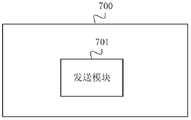
- FIG. 7 is a schematic structural diagram of Embodiment 1 of an apparatus for transmitting uplink information according to an embodiment of the present disclosure
- FIG. 8 is a schematic structural diagram of Embodiment 1 of an apparatus for transmitting uplink information according to an embodiment of the present disclosure
- FIG. 9 is a schematic structural diagram of Embodiment 2 of an apparatus for transmitting uplink information according to an embodiment of the present invention.
- the uplink carrier aggregation capability supported by the UE is usually smaller than the downlink carrier aggregation capability. That is, the UE has only downlink transmission capability and no uplink transmission capability on some carriers. Therefore, when the base station needs to obtain uplink signals of these carriers, for example, detection When referring to the signal SRS, it is necessary to The uplink carrier allocated to the UE performs handover on each carrier of the UE. When performing carrier handover, a carrier collision may occur with a carrier of uplink information (such as PUCCH/PUSCH/PRACH) that the UE needs to transmit.
- a carrier of uplink information such as PUCCH/PUSCH/PRACH
- the carrier collision means that the sum of the number of carriers used by the base station to indicate the first uplink information sent by the UE and the second uplink information that the UE needs to transmit exceeds the uplink carrier aggregation capability of the UE in the same subframe.
- the carrier of the first uplink information sent by the UE does not have a PUSCH transmission.
- an embodiment of the present invention provides a method for transmitting uplink information, which is used to reduce the impact on a UE when a carrier collision occurs.
- FIG. 1 is a flowchart of Embodiment 1 of a method for transmitting uplink information according to an embodiment of the present invention.
- an execution body of an embodiment of the present invention may include a base station and a UE.
- the steps of the embodiment of the present invention may include:
- the base station sends at least one of the first transmission indication information and the second transmission indication information of the first uplink information to the UE.
- the first transmission indication information includes a subframe and/or a carrier that the base station instructs the UE to send the first uplink information.
- the first transmission indication information and/or the second transmission indication information is used to indicate behavior of the UE when a collision occurs.
- the collision is that the sum of the number of carriers used by the carrier of the first uplink information and the second uplink information that the UE needs to send exceeds the UE in the subframe of the first uplink information indicated by the base station.
- Uplink carrier aggregation capability is provided to indicate whether the carrier of the first uplink information and the second uplink information that the UE needs to send.
- the first uplink information may be an uplink signal, for example, a sounding reference signal SRS or a pilot code Preamble or a sequence Sequence.
- the first uplink information is periodic first uplink information or aperiodic first uplink information, for example, a periodic SRS and an aperiodic SRS.
- the second uplink information may be an uplink channel, for example, a physical uplink control channel PUCCH or a physical uplink shared channel PUSCH or a physical random access channel PRACH or information corresponding to the foregoing channel.
- a physical uplink control channel PUCCH or a physical uplink shared channel PUSCH or a physical random access channel PRACH or information corresponding to the foregoing channel.
- the UE determines, according to the first transmission indication information and/or the second transmission indication information, the behavior of the UE when a collision occurs.
- the subframes mentioned in the embodiments of the present invention may be a subframe or a set of subframes or a subframe, and the subframe group may be a set of subframes.
- the carrier may also be a carrier group or a set of carriers, and the carrier group may also be a set of carriers.
- the method for transmitting uplink information provided by the present invention is used to provide an effect of alleviating the impact of carrier collision on the processing efficiency of the UE.
- FIG. 2 is a flowchart of Embodiment 2 of a method for transmitting uplink information according to an embodiment of the present invention.
- the steps of the embodiment of the present invention may include: if the base station sends the second transmission indication information to the UE in the S101, and the second transmission indication information includes: the first priority rule, the S102 may include :
- S201 The UE sends the data with higher priority.
- the data with higher priority is determined according to the first priority rule from the first uplink signal and the uplink information to be sent by the UE.
- the first priority rule includes a priority of the first uplink information and the second uplink information.
- the method further includes:
- the first priority rule may include a priority principle between the first uplink information of the multiple scenarios and the second uplink information of the multiple scenarios.
- the first uplink information of the multiple scenarios may include periodic and aperiodic first uplink information
- the second uplink information in the multiple scenarios may include a PRACH, a PUSCH, and a PUCCH
- the first priority rule is
- the first alternative embodiment may include at least one of the following:
- the PRACH has a higher priority than the aperiodic first uplink information
- the priority of the PRACH is higher than the first uplink information of the period
- the priority of the PUCCH is higher than the first uplink information of the period
- the priority of the PUSCH is higher than the first uplink information of the period.
- the second optional implementation manner of the first priority rule may further include:
- the priority of the PUCCH including only the channel state information CSI information is lower than the non-period first uplink information.
- the PUCCH including only the CSI does not include a hybrid automatic repeat request HARQ response message (HARQ-ACK & SR).
- the third optional implementation manner of the first priority rule may further include:
- the PUCCH containing only CSI information has a higher priority than the non-periodic first uplink information.
- the PUCCH including only the CSI does not include a hybrid automatic repeat request HARQ response message (HARQ-ACK & SR).
- the first Priority rule It can also include:
- the PUCCH including the HARQ has a higher priority than the non-periodic first uplink information.
- the first priority rule may further include:
- the PUCCH has a higher priority than the non-periodic first uplink information.
- the first priority rule may further include:
- the priority of the PUSCH including the uplink control information UCI is higher than the non-period first uplink information.
- the first priority rule may further include:
- the PUSCH containing the UCI has a lower priority than the non-periodic first uplink information.
- the first priority rule may further include:
- the PUSCH that does not contain UCI has a lower priority than the non-periodic first uplink information.
- the first priority rule may further include:
- the PUSCH that does not contain UCI has a higher priority than the non-period first uplink information.
- the first priority rule may further include:
- the PUSCH has a higher priority than the non-periodic first uplink information.
- the first uplink information is located on a carrier of the primary cell PCell or on a carrier of the secondary cell SCell.
- the second uplink information is located on a carrier of the PCell or a carrier of the secondary cell SCell.
- the first uplink signal of the period it is located on the first period of the PCell period.
- the priority of the row signal is higher than the first uplink signal of the period of the SCell; for the non-periodic first uplink signal, the priority of the aperiodic first uplink signal located in the PCell is higher than the first uplink of the aperiod located in the SCell signal.
- the priority relationship between the first uplink signal and the second uplink signal is not affected by the first uplink signal or the second uplink signal is located on the PCell or the SCell.
- the PRACH has a higher priority than the PUCCH
- the PUCCH has a higher priority than the PUSCH.
- Table 1 a preferred embodiment of the first priority provided by the embodiment of the present invention.
- the PUCCH with HARQ-ACK is a PUCCH including hybrid automatic retransmission, PUCCH without HARQ-ACK, and the CSI is a PUCCH that does not include HARQ but includes CSI, and the PUSCH with UCI is a PUSCH that includes uplink control information, and the PUSCH without UCI is not PUSCH with uplink control information.
- the "whether or not" in the above table means that it can be set to Yes in one setting of the first priority, and can be set to No in the setting of another priority.
- FIG. 3 is a flowchart of Embodiment 3 of a method for transmitting uplink information according to an embodiment of the present invention.
- the embodiment of the present invention may include:
- the first transmission indication information in S101 includes a first resource, where the first resource is used to instruct the UE to send the first uplink information subframe and/or a subframe group, and/or a carrier wave and/or Carrier group.
- the first resource belongs to a preset priority resource set, where the priority resource set includes a subframe and/or a subframe group whose priority of the first uplink information is higher than a priority of the second uplink information. , and / or, carrier and / or carrier groups.
- the first resource is a subframe and/or a subframe group that can perform the first uplink information switching, and/or a carrier and/or a carrier group.
- the resource used by the second uplink information is a subframe and/or a subframe group that cannot perform the first uplink information switching, and/or a carrier and/or a carrier group.
- S102 can include:
- S301 The UE sends the first uplink information by using the first resource.
- the resources used by the first resource and the second uplink information meet a carrier collision avoidance condition, and the avoidance carrier collision condition is that the first uplink information and the second uplink information are used in the same subframe.
- the number of carriers is smaller than the uplink carrier aggregation capability of the UE.
- the resources used by the second uplink information are pre-configured, and the second uplink information includes information corresponding to a PUCCH or a PUSCH or a PRACH or the foregoing channels.
- the base station may send the first transmission indication information to the UE by using high layer signaling or physical layer signaling.
- the base station may send the first transmission indication information by using Layer 1 signaling.
- the base station may allocate the preferred resource to the UE to send the first uplink information, where the preferred resource can reduce or avoid the carrier collision, and reduce the impact of the carrier collision on the processing efficiency of the UE.
- FIG. 4 is a flowchart of Embodiment 4 of a method for transmitting uplink information according to an embodiment of the present invention.
- the embodiment of the present invention may include:
- the first transmission indication information that is sent by the base station to the UE in the S101 may include a first resource, where the first resource is used to instruct the UE to send the subframe and/or the subframe group of the first uplink information, where And/or the carrier and/or the carrier group, and the sending, by the base station, the second transmission indication information to the UE in S101 may include:
- the second priority is used to indicate that when the first resource belongs to a preset priority resource set, the UE sends the first uplink information by using the first resource, where the priority resource is The set includes a subframe in which the priority of the first uplink information is higher than the priority of the second uplink information and/or Or a group of subframes, and/or, a carrier and/or a group of carriers.
- S102 can include:
- the first resource belongs to a preset priority resource set, and the priority resource set includes a subframe and/or a subframe group whose priority of the first uplink information is higher than a priority of the second uplink information, and/ Or, carrier and / or carrier group.
- the resources used by the first resource and the second uplink information meet a carrier collision avoidance condition, and the avoidance carrier collision condition is that the first uplink information and the second uplink information are used in the same subframe.
- the number of carriers is smaller than the uplink carrier aggregation capability of the UE.
- the resources used by the second uplink information are pre-configured, and the second uplink information includes PUCCH information or PUSCH information or PRACH information.
- the base station may send the first transmission indication information to the UE by using high layer signaling or physical layer signaling.
- the base station may send the first transmission indication information by using Layer 1 signaling.
- the base station may indicate to the UE that the first uplink signal has a higher priority on the preferred resource, and the UE may quickly determine to send the first uplink signal or the second uplink signal. The impact of small carrier collisions on the processing efficiency of the UE.
- FIG. 5 is a flowchart of Embodiment 5 of a method for transmitting uplink information according to an embodiment of the present invention.
- the embodiment of the present invention may include:
- the SeNB sends the first transmission indication information to the UE, where the first transmission indication information may include:
- a third resource where the third resource is used to indicate that the UE sends the time domain resource used by the first uplink information, and/or the frequency domain resource, and/or the spatial domain resource. and / or;
- the SeNB sends the second transmission indication information to the UE, where the second transmission indication information includes:
- a fourth resource where the fourth resource is used to indicate that the UE sends the time domain resource used by the second uplink information, and/or the frequency domain resource, and/or the spatial domain resource.
- S102 can include S501 and/or S502:
- S501 The UE sends the first uplink information and/or the second uplink information according to the third resource.
- the UE sends the first uplink information on the third resource, and does not send the second uplink information on the time domain resource corresponding to the carrier that collides with the third resource.
- the corresponding time domain resource in the carrier that collides with the third resource is the same as the time domain resource of the third resource.
- the UE sends the first uplink information and/or the second uplink information according to the fourth resource.
- the UE sends the second uplink information on the fourth resource, and sends the first uplink information on a time domain resource corresponding to the carrier that has a carrier collision with the fourth resource.
- the corresponding time domain resource in the carrier that collides with the fourth resource is different from the time domain resource of the fourth resource.
- time domain resource and the frequency domain resource and or the spatial domain resource that are sent by the UE according to the third resource and the fourth resource and that are the second uplink data only include the available part, that is, the first uplink data. Carrier collisions do not occur in time domain resources and or in frequency domain resources or spatial domain resources.
- the time domain resource and the frequency domain resource used by the first uplink data may use only a few OFDM symbols, and the time domain resource and the frequency domain resource used by the second uplink data are used.
- the quiet area may be greater than the time domain resource and or the frequency domain resource used by the first uplink data.
- the time domain resource used by the foregoing first uplink information may include subframe position information occupied by the first uplink information, orthogonal frequency division multiplexing OFDM position information, cyclic shift information, and SRS transmission subframe offset. Move at least one item.
- the time domain resource used by the foregoing second uplink information includes a time domain location of the physical resource block PRB that includes the quiet region for transmitting the second uplink information, and/or a time domain location of the silence region.
- the time domain location of the quiet zone includes a start time and an end time of the silence zone.
- the frequency domain resource of the first uplink information includes at least one of frequency domain resource location information, carrier information, bandwidth information, and frequency hopping configuration occupied by the first uplink information.
- the frequency domain resource of the foregoing second uplink information includes a frequency domain location of the PRB that includes the quiet region for transmitting the second uplink information, and/or a frequency domain location of the silence region.
- the foregoing spatial domain resource is port information.
- S102 may adopt S501; if the base station sends a second transmission to the UE in S102. If the indication message includes the fourth resource, the S102 may adopt the S502. If the S101 sends the first transmission indication message to the UE to include the third resource, and the second transmission indication message includes the fourth resource, the S102 may adopt the S501 or At least one of S502.
- the base station may send the first transmission indication information by using the notification signaling of the first uplink information; or The base station sends the first transmission indication information by using the notification signaling of the second uplink information.
- the base station may send the second transmission indication information by using the notification signaling of the second uplink information; or, the base station passes the The notification signaling of the first uplink information sends the second transmission indication information.
- the base station may send the third resource of the SRS in the notification signaling of the SRS, where the UE
- the time domain resource and/or the frequency domain resource and/or the spatial domain resource used by the SRS may be determined according to the third resource
- the time domain resource and/or the frequency domain resource for transmitting the use of the PUSCH may be determined according to the third resource and/or
- the spatial domain resource is specifically that the PUSCH is not transmitted on the time domain resource that is the same as the time domain resource of the third resource on the carrier of the PUSCH.
- FIG. 6 is a schematic diagram of carrier switching in the third embodiment of the method for transmitting uplink information shown in FIG. 5 .
- the UE may start silence on a carrier of a PUSCH of a subframe in which a carrier collision may occur on a PUSCH.
- the UE stops transmitting data on the carrier where the PUSCH is located at the start time of the SRS indicated by the third resource, and starts to send the SRS on the carrier of the SRS, and stops sending the SRS on the carrier where the SRS is located at the end time.
- the data transmitted on the carrier where the PUSCH is located is restored, which is equivalent to the handover of the uplink carrier supported by the UE.
- the carrier where the PUSCH is located is the carrier before the handover
- the carrier where the SRS is located is the carrier after the handover.
- the time domain location of the quiet zone is located in an uplink pilot time slot physical channel UpPTS.
- the method provided by the embodiment of the present invention is equivalent to the fact that the UE does not exceed the uplink carrier aggregation capability supported by the UE in a different time period, so that the UE can send the first uplink information and the second uplink information on the required carrier.
- the base station may send the third resource of the SRS in the notification signaling of the SRS, or Transmitting a third resource of the SRS in the notification signaling of the PUSCH, for cross-carrier tuning
- the first transmission indication information may further include a carrier identifier of the first uplink information, similarly, in a case where the third resource of the first uplink information is sent in the notification signaling of the second uplink information, similarly,
- the second transmission indication information may further include a carrier identifier of the second uplink information.
- the configuration manner of the notification signaling of the first uplink signal and the notification signaling of the second uplink signal may be semi-statically configured, dynamically configured, or the like.
- the base station may notify the first transmission indication information and/or the second transmission indication information by using a broadcast message.
- the base station When the configuration manner of the notification signaling is dynamically configured, the base station notifies the first transmission indication information and/or by using at least one of dedicated signaling, high layer signaling, MAC signaling, and physical layer signaling.
- the second transmission indication information The proprietary signaling may be physical layer signaling or higher layer signaling.
- the base station may send the first transmission indication information and/or the foregoing to the UE by using extended uplink authorization signaling or uplink scheduling signaling.
- extended uplink authorization signaling or uplink scheduling signaling Two transmission indication information.
- the uplink grant signaling or the uplink scheduling signaling includes extended bits for transmitting first transmission indication information and/or second transmission indication information.
- the base station may send the first transmission indication information and/or the second transmission indication information to the UE by using extended downlink control information DCI.
- the extended DCI includes a newly defined DCI type, for example, DCI5, and the newly defined DCI type is used to indicate that the second uplink information is sent by using a physical resource block PRB that includes a silence area.
- the time domain resource of the silent area includes a start time and an end time of the silent area.
- the DCI is used to activate a new PRB format, and the base station may instruct the UE to transmit a PUSCH or a PUCCH by using a new PRB through the DCI.
- the configuration manner of the notification signaling of the second uplink information is a semi-static configuration
- the base station indicates the first in the notification signaling of the second uplink information.
- Transfer indication information if the second uplink information includes the PUCCH, the configuration manner of the notification signaling of the second uplink information is a semi-static configuration, and the base station indicates the first in the notification signaling of the second uplink information.
- the method for transmitting uplink information provided by the embodiment of the present invention is to perform uplink channel sizing measurement by using uplink SRS and downlink channel information by using channel dissimilarity, thereby performing downlink scheduling and transmission.
- Channel reciprocity in a TDD (time division duplex) carrier is effectively utilized.
- the carrier aggregation capability of the UE is upgraded to 32 carriers, when most component carriers (CCs) are TDD carriers, carrier switching of the SRS or other uplink information indicated by the base station needs to be more.
- CCs component carriers
- the probability of the carrier collision is greatly increased.
- the method for transmitting the uplink signal provided by the embodiment of the present invention can more fully utilize the uplink transmission resource, avoid carrier collision, reduce the impact of the carrier collision on the UE, and improve the processing efficiency of the UE. .
- the first uplink information includes at least two base stations indicating uplink information sent by the UE.
- the base station may separately indicate, to each base station, the uplink information sent by the UE.
- the method for transmitting uplink information in any of 1 to 6 determines the behavior of the UE.
- the base station may send the first transmission indication information and/or the second transmission indication information corresponding to each uplink information in the indication information of one of the uplink information, or may respectively send the corresponding uplink information in the indication information of the different uplink information.
- the first transmission indication information and/or the second transmission indication information may be used to send the first transmission indication information and/or the second transmission indication information.
- FIG. 7 is a schematic structural diagram of Embodiment 1 of an apparatus for transmitting uplink information according to an embodiment of the present invention.
- the transmitting device of the uplink information provided by the present invention may be located at the base station side.
- the uplink information sending apparatus 700 of the embodiment of the present invention may include:
- the sending module 701 is configured to send, to the user equipment UE, at least one of the first transmission indication information and the second transmission indication information of the first uplink information.
- the first transmission indication information includes a subframe and/or a carrier that the base station instructs the UE to send the first uplink information.
- the first transmission indication information and/or the second transmission indication information is used to indicate behavior of the UE when a collision occurs.
- the sum of the number of carriers used by the carrier of the first uplink information and the second uplink information that the UE needs to send exceeds The uplink carrier aggregation capability of the UE.
- the first uplink information is a sounding reference signal SRS or a pilot code Preamble or a sequence Sequence.
- the first uplink information is periodic first uplink information or aperiodic first uplink information.
- the second uplink information is a physical uplink control channel PUCCH or a physical uplink shared channel PUSCH or a physical random access channel PRACH or the foregoing channel corresponding.
- An embodiment of the present invention further provides an optional implementation manner of the uplink information sending apparatus 700.
- the second transmission indication information may include: a first priority rule, where the first priority rule includes a priority of the first uplink information and the second uplink information.
- the first priority rule may be used to indicate that the UE determines data with higher priority from the first uplink information and the second uplink information according to the first priority rule. And sending the higher priority data.
- the first priority rule may be further configured to: if the data with higher priority in the first uplink information and the second uplink information is the second uplink information, the first priority The level rule is further configured to instruct the UE to discard the first uplink information.
- the embodiment of the present invention further provides an alternative embodiment of another uplink information transmitting apparatus 700, in addition to the foregoing embodiment of the uplink information transmitting apparatus 700.
- the first transmission indication information may include: a first resource, where the first resource is used to indicate that the UE sends the subframe and/or the subframe group of the first uplink information, and/or the carrier and/or the carrier group ;and / or,
- the second transmission indication information includes: a second priority, where the second priority is used to indicate that when the first resource belongs to a preset priority resource set, the UE sends the The first uplink information, the priority resource set includes a subframe and/or a subframe group whose priority of the first uplink information is higher than a priority of the second uplink information, and/or a carrier and/or a carrier group.
- the first transmission indication information may include: a first resource, where the first resource is used to instruct the UE to send the first uplink information subframe and/or a subframe group, and/or Carrier and / or carrier group.
- the first resource may belong to a preset priority resource set, and the priority resource set includes a subframe in which the priority of the first uplink information is higher than the priority of the second uplink information. / or subframe group, and / or, carrier and / or carrier group.
- the resource used by the first resource and the second uplink information meets a collision avoidance condition, where the collision avoidance condition is that the first uplink information and the second uplink information are in the same subframe.
- the number of carriers used is less than the uplink carrier aggregation capability of the UE.
- the resources used by the second uplink information are pre-configured, and the second uplink information includes PUCCH information or PUSCH information or PRACH information.
- the sending module is configured to send the first transmission indication information to the UE by using high layer signaling or physical layer signaling.
- An embodiment of the present invention further provides an alternative embodiment of the uplink information transmitting apparatus 700, in addition to the embodiment of the uplink information transmitting apparatus 700 shown in FIG.
- the first transmission indication information includes:
- a third resource where the third resource is used to indicate that the UE sends the time domain resource used by the first uplink information, and/or the frequency domain resource, and/or the spatial domain resource.
- the second transmission indication information includes:
- a fourth resource where the fourth resource is used to indicate that the UE sends the time domain resource used by the second uplink information, and/or the frequency domain resource, and/or the spatial domain resource.
- the time domain resource used by the first uplink information includes subframe position information occupied by the first uplink information, orthogonal frequency division multiplexing OFDM position information, cyclic shift information, and at least one of the SRS transmission subframe offsets.
- the time domain resource used by the second uplink information includes a time domain location of the physical resource block PRB including the quiet region for transmitting the second uplink information, and/or a time domain location of the silence region.
- the time domain location of the quiet zone is located in an uplink pilot time slot physical channel UpPTS.
- the time domain location of the quiet zone includes a start time and an end time of the silence zone.
- the frequency domain resource of the first uplink information includes at least one of frequency domain resource location information, carrier information, bandwidth information, and frequency hopping configuration occupied by the first uplink information.
- the frequency domain resource of the second uplink information includes a frequency domain location of the PRB that includes the quiet region for transmitting the second uplink information, and/or a frequency domain location of the silence region.
- the spatial domain resource is port information.
- the first transmission indication information includes a third resource, where the sending module is configured to send the first transmission indication information by using the notification signaling of the first uplink information; or, the sending module is used by Transmitting, by the notification signaling of the second uplink information, the first transmission indication information.
- the second transmission indication information includes a fourth resource
- the sending module is configured to pass The second signaling information is sent by the notification signaling of the second uplink information, or the sending module is configured to send the second transmission indication information by using the notification signaling of the first uplink information.
- the configuration manner of the notification signaling of the first uplink information is a semi-static configuration
- the sending module is configured to notify the first transmission indication information and/or the second transmission indication information by using a broadcast message
- the configuration manner of the notification signaling of the first uplink information is dynamically configured, and the sending module is configured to notify, by using at least one of dedicated signaling, high layer signaling, MAC signaling, and physical layer signaling.
- First transmission indication information and/or the second transmission indication information are dynamically configured, and the sending module is configured to notify, by using at least one of dedicated signaling, high layer signaling, MAC signaling, and physical layer signaling.
- the configuration manner of the notification signaling of the second uplink information is a semi-static configuration
- the sending module is configured to notify the first transmission indication information and/or the second transmission indication information by using a broadcast message.
- the configuration manner of the notification signaling of the second uplink information is dynamically configured, and the sending module is configured to notify, by using at least one of dedicated signaling, high layer signaling, MAC signaling, and physical layer signaling. First transmission indication information and/or the second transmission indication information.
- the configuration manner of the notification signaling of the first uplink information is dynamically configured, and the sending module is configured to send the first transmission indication to the UE by using extended uplink grant signaling or uplink scheduling signaling.
- Information and/or the second transmission indication information are dynamically configured, and the sending module is configured to send the first transmission indication to the UE by using extended uplink grant signaling or uplink scheduling signaling.
- the sending module is configured to send the first transmission indication information and/or the second transmission indication information to the UE by using extended downlink control information DCI.
- the type of the DCI is used to indicate that the sending the second uplink information uses a physical resource block PRB that includes a silence area.
- the second uplink information includes a PUCCH
- the sending module is configured to indicate, in the notification signaling of the second uplink information, the first transmission indication information, and the notification signaling of the second uplink information.
- the configuration is semi-static.
- the first transmission indication information includes a carrier identifier of the first uplink information
- the second transmission indication information includes a carrier identifier of the second uplink information
- FIG. 8 is a schematic structural diagram of Embodiment 1 of an apparatus for transmitting uplink information according to an embodiment of the present invention.
- the transmitting device of the uplink information provided by the present invention may be located at the UE side.
- the uplink information sending apparatus 800 of the embodiment of the present invention may include:
- the receiving module 801 is configured to receive first transmission indication information of the first uplink information sent by the base station And/or at least one of the second transmission indication information; the first transmission indication information includes a subframe and/or a carrier that the base station indicates that the user equipment UE sends the first uplink information.
- the processing module 802 is configured to determine, according to the first transmission indication information and/or the second transmission indication information, a behavior of the UE when a collision occurs.
- the collision refers to that the sum of the number of carriers used by the carrier of the first uplink information and the second uplink information that the UE needs to send exceeds the UE in the subframe of the first uplink information indicated by the base station.
- Uplink carrier aggregation capability
- the first uplink information may be a sounding reference signal SRS or a pilot code Preamble or a sequence Sequence.
- the first uplink information may be periodic first uplink information or aperiodic first uplink information.
- the second uplink information may be a physical uplink control channel PUCCH or a physical uplink shared channel PUSCH or physical random access information PRACH or information of the foregoing channel.
- FIG. 9 is a schematic structural diagram of Embodiment 2 of an apparatus for transmitting uplink information according to an embodiment of the present invention.
- the uplink information transmitting apparatus 800 of the embodiment of the present invention further includes a transmission module 803.
- An embodiment of the present invention includes an optional implementation manner of several uplink information sending apparatuses 800.
- the second transmission indication information includes: a first priority rule, where the first priority rule includes the first uplink information and the The priority of the second uplink information.
- the transmission module 803 is configured to send data with a higher priority, and the data with higher priority is determined from the first uplink information and the second uplink information according to the first priority rule.
- the processing module is further configured to discard the first uplink information, where the higher priority data in the first uplink information and the second uplink information is the second uplink information.
- the second transmission indication information includes: a first resource, where the first resource is used to indicate that the UE sends Transmitting a subframe and/or a subframe group of the first uplink information, and/or a carrier and/or a carrier group;
- the second transmission indication information includes: a second priority, where the second priority is used to indicate a preset priority resource set; the first resource belongs to the preset priority resource set;
- the transmitting module is further configured to send the first uplink information by using the first resource.
- the first transmission indication information includes:
- the first resource is used to instruct the UE to send the first uplink information subframe and/or a subframe group, and/or a carrier and/or a carrier group;
- the transmitting module is further configured to send the first uplink information by using the first resource.
- the first resource belongs to a preset priority resource set, where the priority resource set includes a subframe in which priority of the first uplink information is higher than priority of the second uplink information, and/or Or a group of subframes, and/or, a carrier and/or a group of carriers.
- the resources used by the first resource and the second uplink information meet a carrier collision avoidance condition, and the avoidance carrier collision condition is that the first uplink information and the second uplink information are used in the same subframe.
- the number of carriers is smaller than the uplink carrier aggregation capability of the UE.
- the resources used by the second uplink information are pre-configured, and the second uplink information includes PUCCH information or PUSCH information or PRACH information.
- the receiving module is further configured to receive, by the UE, the first transmission indication information sent by the base station by using high layer signaling or physical layer signaling.
- the first transmission indication information includes: a third resource, where the third resource is used to indicate that the UE sends the first uplink information to use The time domain resource, and/or the frequency domain resource, and/or the spatial domain resource; the transmission module is configured to send the first uplink information and/or the second uplink information according to the third resource.
- the second transmission indication information includes: a fourth resource, where the fourth resource is used to indicate that the UE sends the time domain resource used by the second uplink information, and/or the frequency domain resource, and/or space And the transmitting module is configured to send the first uplink information and/or the second uplink information according to the fourth resource.
- the transmitting module is configured to send the first uplink information on the third resource, and not send the second uplink on a corresponding time domain resource in a carrier that collides with the third resource.
- the corresponding time domain resource in the carrier that collides with the third resource is the same as the time domain resource of the third resource.
- the transmitting module is configured to send the second uplink information on the fourth resource; and send the first uplink information on a corresponding time domain resource in a carrier that collides with the fourth resource. .
- the corresponding time domain resource in the carrier that collides with the fourth resource is different from the time domain resource of the fourth resource.
- the time domain resource used by the first uplink information includes subframe position information occupied by the first uplink information, orthogonal frequency division multiplexing OFDM position information, cyclic shift information, and at least one of the SRS transmission subframe offsets.
- the time domain resource used by the second uplink information includes a time domain location of the physical resource block PRB including the quiet region for transmitting the second uplink information, and/or a time domain location of the silence region;
- the transmitting module is configured to not send the second uplink information in a time domain location of a PRB for transmitting a protection silence area of the second uplink information.
- the time domain location of the quiet zone includes a start time and an end time of the silence zone.
- the frequency domain resource of the first uplink information includes at least one of frequency domain resource location information, carrier information, bandwidth information, and frequency hopping configuration occupied by the first uplink information.
- the frequency domain resource of the second uplink information includes a frequency domain location of the PRB that includes the quiet region for transmitting the second uplink information, and/or a frequency domain location of the silence region.
- the spatial domain resource is port information.
- the first transmission indication information includes a third resource
- the receiving module is configured to receive the first transmission indication information by using the notification signaling of the first uplink information; or, the receiving module is used by Receiving, by the notification signaling of the second uplink information, the first transmission indication information.
- the second transmission indication information includes a fourth resource, where the receiving module is configured to receive the second transmission indication information by using the notification signaling of the second uplink information; or, the receiving module is configured to: Receiving, by the notification signaling of the first uplink information, the second transmission indication information.
- the configuration manner of the notification signaling of the first uplink information is a semi-static configuration, and the receiving module is configured to receive the first transmission indication information and/or the second transmission indication information by using a broadcast message.
- the configuration manner of the notification signaling of the first uplink information is dynamically configured, and the receiving module is configured to pass at least one of dedicated signaling, high layer signaling, MAC signaling, and physical layer signaling. The signaling receives the first transmission indication information and/or the second transmission indication information.
- the configuration manner of the notification signaling of the second uplink information is a semi-static configuration, and the receiving module is configured to receive the first transmission indication information and/or the second transmission indication information by using a broadcast message.
- the configuration manner of the notification signaling of the second uplink information is dynamically configured, and the receiving module is configured to receive, by using at least one of dedicated signaling, high layer signaling, MAC signaling, and physical layer signaling. The first transmission indication information and/or the second transmission indication information.
- the configuration manner of the notification signaling of the first uplink information is dynamically configured, and the receiving module is configured to receive the first transmission indication information and/or the uplink signaling signaling or uplink scheduling signaling.
- the second transmission indication information is dynamically configured, and the receiving module is configured to receive the first transmission indication information and/or the uplink signaling signaling or uplink scheduling signaling.
- the receiving module is configured to receive the first transmission indication information and/or the second transmission indication information by using downlink control information DCI.
- the type of the DCI is used to indicate that the sending the second uplink information uses a physical resource block PRB that includes a silence area.
- the second uplink information includes a PUCCH
- the receiving module is configured to receive, by using the notification signaling of the second uplink information, the first transmission indication information, and the notification signaling of the second uplink information.
- the configuration is semi-static.
- the first transmission indication information includes a carrier identifier of the first uplink information
- the second transmission indication information includes a carrier identifier of the second uplink information
- the embodiment of the present invention further provides a base station, where the base station includes the uplink information sending apparatus shown in FIG. 7, and the base station can perform the uplink information sending method shown in FIG.
- the embodiment of the present invention further provides a user equipment, where the user equipment includes the uplink information sending apparatus shown in FIG. 8-9, and the user equipment can perform the uplink information sending method shown in FIG.
- the disclosed apparatus and methods may be implemented in other ways.
- the device embodiments described above are merely illustrative.
- the division of the unit or module is only a logical function division.
- there may be another division manner for example, multiple units or modules may be used. Combine or can be integrated into another system System, or some features can be ignored, or not implemented.
- the mutual coupling or direct coupling or communication connection shown or discussed may be an indirect coupling or communication connection through some interface, device or module, and may be electrical, mechanical or otherwise.
- the modules described as separate components may or may not be physically separated.
- the components displayed as modules may or may not be physical modules, that is, may be located in one place, or may be distributed to multiple network units. Some or all of the modules may be selected according to actual needs to achieve the purpose of the solution of the embodiment.
- the aforementioned program can be stored in a computer readable storage medium.
- the program when executed, performs the steps including the foregoing method embodiments; and the foregoing storage medium includes various media that can store program codes, such as a ROM, a RAM, a magnetic disk, or an optical disk.
Landscapes
- Engineering & Computer Science (AREA)
- Signal Processing (AREA)
- Computer Networks & Wireless Communication (AREA)
- Mobile Radio Communication Systems (AREA)
Abstract
Priority Applications (14)
| Application Number | Priority Date | Filing Date | Title |
|---|---|---|---|
| CN201811430839.3A CN109561505B (zh) | 2016-05-13 | 2016-05-13 | 上行信息的发送方法、装置、基站和用户设备 |
| AU2016405921A AU2016405921B2 (en) | 2016-05-13 | 2016-05-13 | Uplink information sending method and apparatus, base station, and user equipment |
| JP2018559988A JP6683842B2 (ja) | 2016-05-13 | 2016-05-13 | アップリンク情報送信方法および装置、基地局、ならびにユーザ機器 |
| EP20179866.7A EP3783992B1 (fr) | 2016-05-13 | 2016-05-13 | Procédé et appareil d'envoi d'informations de liaison montante, station de base et équipement utilisateur |
| PCT/CN2016/082153 WO2017193408A1 (fr) | 2016-05-13 | 2016-05-13 | Procédé, dispositif, station de base et équipement utilisateur de transmission d'informations de liaison montante |
| CN201680029255.8A CN107836134B (zh) | 2016-05-13 | 2016-05-13 | 上行信息的发送方法、装置和用户设备 |
| US16/301,385 US11516779B2 (en) | 2016-05-13 | 2016-05-13 | Uplink information sending method and apparatus, base station, and user equipment |
| ES20179866T ES2934599T3 (es) | 2016-05-13 | 2016-05-13 | Método y aparato de envío de información de enlace ascendente, estación base y equipo de usuario |
| EP16901363.8A EP3457801B1 (fr) | 2016-05-13 | 2016-05-13 | Procédé et dispositif d'envoi d'informations de liaison montante |
| CA3024010A CA3024010C (fr) | 2016-05-13 | 2016-05-13 | Procede, dispositif, station de base et equipement utilisateur de transmission d'informations de liaison montante |
| KR1020187036195A KR102219564B1 (ko) | 2016-05-13 | 2016-05-13 | 업링크 정보 전송 방법, 디바이스, 기지국, 및 사용자 장비 |
| ES16901363T ES2824198T3 (es) | 2016-05-13 | 2016-05-13 | Método y aparato de envío de información de enlace ascendente |
| EP22180013.9A EP4135466A1 (fr) | 2016-05-13 | 2016-05-13 | Procédé et appareil d'envoi des informations de liaison montante, station de base et équipement utilisateur |
| US17/380,898 US11737101B2 (en) | 2016-05-13 | 2021-07-20 | Uplink information sending method and apparatus, base station, and user equipment |
Applications Claiming Priority (1)
| Application Number | Priority Date | Filing Date | Title |
|---|---|---|---|
| PCT/CN2016/082153 WO2017193408A1 (fr) | 2016-05-13 | 2016-05-13 | Procédé, dispositif, station de base et équipement utilisateur de transmission d'informations de liaison montante |
Related Child Applications (2)
| Application Number | Title | Priority Date | Filing Date |
|---|---|---|---|
| US16/301,385 A-371-Of-International US11516779B2 (en) | 2016-05-13 | 2016-05-13 | Uplink information sending method and apparatus, base station, and user equipment |
| US17/380,898 Continuation US11737101B2 (en) | 2016-05-13 | 2021-07-20 | Uplink information sending method and apparatus, base station, and user equipment |
Publications (1)
| Publication Number | Publication Date |
|---|---|
| WO2017193408A1 true WO2017193408A1 (fr) | 2017-11-16 |
Family
ID=60266142
Family Applications (1)
| Application Number | Title | Priority Date | Filing Date |
|---|---|---|---|
| PCT/CN2016/082153 Ceased WO2017193408A1 (fr) | 2016-05-13 | 2016-05-13 | Procédé, dispositif, station de base et équipement utilisateur de transmission d'informations de liaison montante |
Country Status (9)
| Country | Link |
|---|---|
| US (2) | US11516779B2 (fr) |
| EP (3) | EP3457801B1 (fr) |
| JP (1) | JP6683842B2 (fr) |
| KR (1) | KR102219564B1 (fr) |
| CN (2) | CN107836134B (fr) |
| AU (1) | AU2016405921B2 (fr) |
| CA (1) | CA3024010C (fr) |
| ES (2) | ES2824198T3 (fr) |
| WO (1) | WO2017193408A1 (fr) |
Cited By (2)
| Publication number | Priority date | Publication date | Assignee | Title |
|---|---|---|---|---|
| JP2021507624A (ja) * | 2017-12-20 | 2021-02-22 | クゥアルコム・インコーポレイテッドQualcomm Incorporated | Nr−ssにおけるリソース割り振り |
| JP2021536178A (ja) * | 2018-08-24 | 2021-12-23 | 維沃移動通信有限公司Vivo Mobile Communication Co., Ltd. | アップリンク情報の送信方法及び端末 |
Families Citing this family (16)
| Publication number | Priority date | Publication date | Assignee | Title |
|---|---|---|---|---|
| JP6683842B2 (ja) * | 2016-05-13 | 2020-04-22 | 華為技術有限公司Huawei Technologies Co.,Ltd. | アップリンク情報送信方法および装置、基地局、ならびにユーザ機器 |
| CN109923812B (zh) * | 2017-02-25 | 2021-09-24 | 上海朗帛通信技术有限公司 | 一种用户设备、基站中的用于动态调度的方法和装置 |
| US11290304B2 (en) * | 2018-04-13 | 2022-03-29 | Qualcomm Incorporated | SRS carrier switching with sTTI/sPT |
| CN110611918B (zh) * | 2018-06-14 | 2023-01-31 | 成都鼎桥通信技术有限公司 | 载波聚合中上行载波的配置方法、装置和基站 |
| CN110839289B (zh) | 2018-08-17 | 2022-04-12 | 大唐移动通信设备有限公司 | 一种上行波束指示方法及设备 |
| CN116996951A (zh) * | 2018-11-19 | 2023-11-03 | 华为技术有限公司 | 一种上行链路切换的方法、通信装置和通信系统 |
| US10651906B1 (en) * | 2019-02-15 | 2020-05-12 | At&T Intellectual Property I, L.P. | Indicating frequency and time domain resources in communication systems with multiple transmission points |
| CN111835476B (zh) * | 2019-04-22 | 2022-12-06 | 华为技术有限公司 | 通信方法与装置 |
| EP3975640B1 (fr) | 2019-08-20 | 2024-09-25 | Guangdong Oppo Mobile Telecommunications Corp., Ltd. | Procédé de transmission de données, dispositif terminal et dispositif de réseau |
| CN115664612B (zh) | 2019-10-15 | 2025-07-01 | 中兴通讯股份有限公司 | 传输方法、装置、第一通信节点、第二通信节点及介质 |
| WO2021156107A1 (fr) * | 2020-02-03 | 2021-08-12 | Sony Group Corporation | Procédés et dispositifs de communication pour la transmission de signaux de liaison montante en fonction de priorités |
| CN113271189A (zh) * | 2020-02-14 | 2021-08-17 | 维沃移动通信有限公司 | 传输方法及设备 |
| WO2022155505A1 (fr) * | 2021-01-18 | 2022-07-21 | Intel Corporation | Techniques de déclenchement d'un signal de référence de sondage (srs) apériodique et flexible |
| CN115707131A (zh) * | 2021-08-11 | 2023-02-17 | 北京紫光展锐通信技术有限公司 | 载波切换方法及通信装置 |
| CN120693793A (zh) * | 2023-02-16 | 2025-09-23 | Lg电子株式会社 | 在无线通信系统中用于无线信号发送/接收的方法和装置 |
| WO2026024883A1 (fr) * | 2024-07-24 | 2026-01-29 | Intel Corporation | Blocage de ressources pour transmissions en liaison montante |
Citations (7)
| Publication number | Priority date | Publication date | Assignee | Title |
|---|---|---|---|---|
| WO2009107947A1 (fr) * | 2008-02-25 | 2009-09-03 | Lg Electronics Inc. | Procédé d’exécution de procédure d’accès aléatoire dans un système de communication sans fil |
| CN101778482A (zh) * | 2009-01-09 | 2010-07-14 | 华为技术有限公司 | 初始网络接入的方法及装置 |
| CN101883398A (zh) * | 2009-05-07 | 2010-11-10 | 大唐移动通信设备有限公司 | 一种确定上行载波资源的方法、装置和系统 |
| CN101969697A (zh) * | 2009-07-28 | 2011-02-09 | 华为技术有限公司 | 用户设备上行随机接入基站的方法及系统、基站和用户设备 |
| CN101998577A (zh) * | 2009-08-14 | 2011-03-30 | 大唐移动通信设备有限公司 | 随机接入前导码的发送方法、系统及设备 |
| CN102065545A (zh) * | 2009-11-12 | 2011-05-18 | 大唐移动通信设备有限公司 | 资源位置通知与确定方法、系统和设备 |
| CN103037441A (zh) * | 2009-05-07 | 2013-04-10 | 电信科学技术研究院 | 一种确定上行载波资源的方法和系统 |
Family Cites Families (19)
| Publication number | Priority date | Publication date | Assignee | Title |
|---|---|---|---|---|
| US8867455B2 (en) | 2007-10-01 | 2014-10-21 | Qualcomm Incorporated | Enhanced uplink for inactive state in a wireless communication system |
| CN101447826B (zh) | 2008-12-26 | 2012-10-03 | 华为技术有限公司 | 子帧分配方法、处理方法及装置 |
| US9137764B2 (en) * | 2009-03-17 | 2015-09-15 | Htc Corporation | Method of managing timing alignment functionality for multiple component carriers and related communication device |
| CN102045841B (zh) * | 2009-10-16 | 2013-12-18 | 华为技术有限公司 | 资源调度方法、装置及通信系统 |
| CN102088303B (zh) | 2010-02-11 | 2014-11-05 | 电信科学技术研究院 | Srs信号发送方法及其触发方法以及设备 |
| EP3439220B1 (fr) | 2010-04-02 | 2026-02-18 | InterDigital Patent Holdings, Inc. | Configuration et transmission de signaux de référence de sondage de liaison montante |
| US8588252B2 (en) | 2010-05-07 | 2013-11-19 | Qualcomm Incorporated | Transmission of control information on uplink channels |
| US8817647B2 (en) | 2011-02-15 | 2014-08-26 | Mediatek Inc. | Priority rules of periodic CSI reporting in carrier aggregation |
| US9591492B2 (en) * | 2011-11-08 | 2017-03-07 | Qualcomm Incorporated | User equipment, base stations, and methods allowing for handling of colliding channel state information reports |
| CN102572967B (zh) * | 2012-01-13 | 2014-07-30 | 电信科学技术研究院 | 一种传输和接收上行信息的方法、系统和设备 |
| WO2013109073A1 (fr) | 2012-01-17 | 2013-07-25 | 엘지전자 주식회사 | Procédé et appareil pour la transmission d'informations de commande de liaison montante dans un système de communication sans fil |
| WO2013134952A1 (fr) * | 2012-03-16 | 2013-09-19 | 华为技术有限公司 | Procédé, dispositif et système pour affecter des ressources de demande d'ordonnancement |
| JP2016058760A (ja) | 2013-02-05 | 2016-04-21 | シャープ株式会社 | 端末装置、基地局装置、無線通信システムおよび通信方法 |
| JP2015142349A (ja) | 2014-01-30 | 2015-08-03 | 株式会社Nttドコモ | ユーザ装置及び送信制御方法 |
| EP3155782B1 (fr) | 2014-06-12 | 2021-01-13 | LG Electronics Inc. | Procédé et appareil pour configurer une référence de synchronisation dans un système de communication sans fil |
| US10790949B2 (en) | 2014-06-20 | 2020-09-29 | Qualcomm Incorporated | SRS in dual connectivity |
| JP6019199B2 (ja) | 2015-10-28 | 2016-11-02 | 株式会社Nttドコモ | 無線通信システム、ユーザ端末及び無線通信方法 |
| RU2711053C1 (ru) * | 2016-03-30 | 2020-01-14 | Идак Холдингз, Инк. | Обработка плоскости пользователя в беспроводных системах |
| JP6683842B2 (ja) | 2016-05-13 | 2020-04-22 | 華為技術有限公司Huawei Technologies Co.,Ltd. | アップリンク情報送信方法および装置、基地局、ならびにユーザ機器 |
-
2016
- 2016-05-13 JP JP2018559988A patent/JP6683842B2/ja active Active
- 2016-05-13 EP EP16901363.8A patent/EP3457801B1/fr active Active
- 2016-05-13 CA CA3024010A patent/CA3024010C/fr active Active
- 2016-05-13 ES ES16901363T patent/ES2824198T3/es active Active
- 2016-05-13 KR KR1020187036195A patent/KR102219564B1/ko active Active
- 2016-05-13 CN CN201680029255.8A patent/CN107836134B/zh active Active
- 2016-05-13 ES ES20179866T patent/ES2934599T3/es active Active
- 2016-05-13 CN CN201811430839.3A patent/CN109561505B/zh active Active
- 2016-05-13 WO PCT/CN2016/082153 patent/WO2017193408A1/fr not_active Ceased
- 2016-05-13 US US16/301,385 patent/US11516779B2/en active Active
- 2016-05-13 EP EP22180013.9A patent/EP4135466A1/fr active Pending
- 2016-05-13 EP EP20179866.7A patent/EP3783992B1/fr active Active
- 2016-05-13 AU AU2016405921A patent/AU2016405921B2/en active Active
-
2021
- 2021-07-20 US US17/380,898 patent/US11737101B2/en active Active
Patent Citations (7)
| Publication number | Priority date | Publication date | Assignee | Title |
|---|---|---|---|---|
| WO2009107947A1 (fr) * | 2008-02-25 | 2009-09-03 | Lg Electronics Inc. | Procédé d’exécution de procédure d’accès aléatoire dans un système de communication sans fil |
| CN101778482A (zh) * | 2009-01-09 | 2010-07-14 | 华为技术有限公司 | 初始网络接入的方法及装置 |
| CN101883398A (zh) * | 2009-05-07 | 2010-11-10 | 大唐移动通信设备有限公司 | 一种确定上行载波资源的方法、装置和系统 |
| CN103037441A (zh) * | 2009-05-07 | 2013-04-10 | 电信科学技术研究院 | 一种确定上行载波资源的方法和系统 |
| CN101969697A (zh) * | 2009-07-28 | 2011-02-09 | 华为技术有限公司 | 用户设备上行随机接入基站的方法及系统、基站和用户设备 |
| CN101998577A (zh) * | 2009-08-14 | 2011-03-30 | 大唐移动通信设备有限公司 | 随机接入前导码的发送方法、系统及设备 |
| CN102065545A (zh) * | 2009-11-12 | 2011-05-18 | 大唐移动通信设备有限公司 | 资源位置通知与确定方法、系统和设备 |
Cited By (6)
| Publication number | Priority date | Publication date | Assignee | Title |
|---|---|---|---|---|
| JP2021507624A (ja) * | 2017-12-20 | 2021-02-22 | クゥアルコム・インコーポレイテッドQualcomm Incorporated | Nr−ssにおけるリソース割り振り |
| JP7241756B2 (ja) | 2017-12-20 | 2023-03-17 | クゥアルコム・インコーポレイテッド | Nr-ssにおけるリソース割り振り |
| US11800493B2 (en) | 2017-12-20 | 2023-10-24 | Qualcomm Incorporated | Resource assignment in NR-SS |
| JP2021536178A (ja) * | 2018-08-24 | 2021-12-23 | 維沃移動通信有限公司Vivo Mobile Communication Co., Ltd. | アップリンク情報の送信方法及び端末 |
| JP7216804B2 (ja) | 2018-08-24 | 2023-02-01 | 維沃移動通信有限公司 | アップリンク情報の送信方法及び端末 |
| US12058661B2 (en) | 2018-08-24 | 2024-08-06 | Vivo Mobile Communication Co., Ltd. | Uplink information sending method and terminal |
Also Published As
| Publication number | Publication date |
|---|---|
| JP6683842B2 (ja) | 2020-04-22 |
| ES2934599T3 (es) | 2023-02-23 |
| CA3024010C (fr) | 2021-05-18 |
| KR20190002705A (ko) | 2019-01-08 |
| CN107836134A (zh) | 2018-03-23 |
| US11737101B2 (en) | 2023-08-22 |
| US20200329471A1 (en) | 2020-10-15 |
| KR102219564B1 (ko) | 2021-02-25 |
| US20220015090A1 (en) | 2022-01-13 |
| EP3783992B1 (fr) | 2022-10-12 |
| AU2016405921B2 (en) | 2019-06-13 |
| AU2016405921A1 (en) | 2018-12-13 |
| CN109561505A (zh) | 2019-04-02 |
| CN107836134B (zh) | 2020-09-08 |
| CN109561505B (zh) | 2020-03-10 |
| CA3024010A1 (fr) | 2017-11-16 |
| US11516779B2 (en) | 2022-11-29 |
| EP3457801A4 (fr) | 2019-04-24 |
| EP3457801B1 (fr) | 2020-08-19 |
| JP2019518375A (ja) | 2019-06-27 |
| EP3457801A1 (fr) | 2019-03-20 |
| ES2824198T3 (es) | 2021-05-11 |
| EP4135466A1 (fr) | 2023-02-15 |
| EP3783992A1 (fr) | 2021-02-24 |
Similar Documents
| Publication | Publication Date | Title |
|---|---|---|
| US11737101B2 (en) | Uplink information sending method and apparatus, base station, and user equipment | |
| JP6956065B2 (ja) | 無線ネットワークにおけるアップリンク制御情報送/受信 | |
| US10278136B2 (en) | Method and apparatus for scheduling uplink transmissions with reduced latency | |
| US10574421B2 (en) | Method and apparatus for scheduling uplink transmissions with reduced latency | |
| US10813150B2 (en) | Method and apparatus for scheduling uplink transmissions with reduced latency | |
| US10277367B2 (en) | Method and apparatus for scheduling uplink transmissions with reduced latency | |
| US10841066B2 (en) | Terminal configured for feedback transmission | |
| KR102424179B1 (ko) | 상이한 전송 시간 구간 길이들에 기초하여 상이한 전력 헤드룸 보고들을 전송하기 위한 방법 및 장치 | |
| EP3665989A1 (fr) | Gestion dynamique de ressources de signalisation de commande de liaison montante dans un réseau sans fil | |
| KR102309328B1 (ko) | 감소된 레이턴시로 업링크 전송들을 스케줄링하기 위한 방법 및 장치 | |
| CN103782639A (zh) | 用于多小区通信网络中的控制定时配置指配的基站、用户设备及其方法 | |
| CN104040921A (zh) | 用户设备、用户设备的pdsch a/n发送方法、发送/接收点及其pdsch a/n接收方法 | |
| WO2015085477A1 (fr) | Synchronisation souple de harq | |
| JP7357089B2 (ja) | アップリンク情報送信方法および装置、基地局、ならびにユーザ機器 |
Legal Events
| Date | Code | Title | Description |
|---|---|---|---|
| ENP | Entry into the national phase |
Ref document number: 2018559988 Country of ref document: JP Kind code of ref document: A Ref document number: 3024010 Country of ref document: CA |
|
| NENP | Non-entry into the national phase |
Ref country code: DE |
|
| 121 | Ep: the epo has been informed by wipo that ep was designated in this application |
Ref document number: 16901363 Country of ref document: EP Kind code of ref document: A1 |
|
| ENP | Entry into the national phase |
Ref document number: 2016405921 Country of ref document: AU Date of ref document: 20160513 Kind code of ref document: A Ref document number: 20187036195 Country of ref document: KR Kind code of ref document: A |
|
| ENP | Entry into the national phase |
Ref document number: 2016901363 Country of ref document: EP Effective date: 20181211 |