WO2017195842A1 - Dispositif de mesure de quantité de caractéristique, dispositif de calcul d'environnement d'ondes radio, procédé de mesure de quantité de caractéristique, procédé de mesure d'environnement d'ondes radio, et programme - Google Patents
Dispositif de mesure de quantité de caractéristique, dispositif de calcul d'environnement d'ondes radio, procédé de mesure de quantité de caractéristique, procédé de mesure d'environnement d'ondes radio, et programme Download PDFInfo
- Publication number
- WO2017195842A1 WO2017195842A1 PCT/JP2017/017759 JP2017017759W WO2017195842A1 WO 2017195842 A1 WO2017195842 A1 WO 2017195842A1 JP 2017017759 W JP2017017759 W JP 2017017759W WO 2017195842 A1 WO2017195842 A1 WO 2017195842A1
- Authority
- WO
- WIPO (PCT)
- Prior art keywords
- feature amount
- time interval
- feature
- fading
- data
- Prior art date
- Legal status (The legal status is an assumption and is not a legal conclusion. Google has not performed a legal analysis and makes no representation as to the accuracy of the status listed.)
- Ceased
Links
Images






Classifications
-
- H—ELECTRICITY
- H04—ELECTRIC COMMUNICATION TECHNIQUE
- H04W—WIRELESS COMMUNICATION NETWORKS
- H04W4/00—Services specially adapted for wireless communication networks; Facilities therefor
- H04W4/02—Services making use of location information
- H04W4/025—Services making use of location information using location based information parameters
-
- G—PHYSICS
- G01—MEASURING; TESTING
- G01R—MEASURING ELECTRIC VARIABLES; MEASURING MAGNETIC VARIABLES
- G01R29/00—Arrangements for measuring or indicating electric quantities not covered by groups G01R19/00 - G01R27/00
- G01R29/08—Measuring electromagnetic field characteristics
-
- H—ELECTRICITY
- H04—ELECTRIC COMMUNICATION TECHNIQUE
- H04B—TRANSMISSION
- H04B17/00—Monitoring; Testing
- H04B17/20—Monitoring; Testing of receivers
- H04B17/25—Monitoring; Testing of receivers taking multiple measurements
- H04B17/253—Monitoring; Testing of receivers taking multiple measurements measuring at different locations or reception points
-
- H—ELECTRICITY
- H04—ELECTRIC COMMUNICATION TECHNIQUE
- H04B—TRANSMISSION
- H04B17/00—Monitoring; Testing
- H04B17/30—Monitoring; Testing of propagation channels
- H04B17/309—Measuring or estimating channel quality parameters
- H04B17/346—Noise values
-
- H—ELECTRICITY
- H04—ELECTRIC COMMUNICATION TECHNIQUE
- H04B—TRANSMISSION
- H04B17/00—Monitoring; Testing
- H04B17/30—Monitoring; Testing of propagation channels
- H04B17/391—Modelling the propagation channel
- H04B17/3911—Fading models or fading generators
-
- H—ELECTRICITY
- H04—ELECTRIC COMMUNICATION TECHNIQUE
- H04W—WIRELESS COMMUNICATION NETWORKS
- H04W16/00—Network planning, e.g. coverage or traffic planning tools; Network deployment, e.g. resource partitioning or cells structures
- H04W16/18—Network planning tools
Definitions
- the present invention relates to a feature amount measurement device, a radio wave environment calculation device, a feature amount measurement method, a radio wave environment measurement method, and a program.
- Non-Patent Document 1 a technique for implementing radio wave sensing and constructing a radio wave environment database has been proposed.
- the purpose of this technology is to detect interference, search for a free frequency band, and secondary use of frequency resources by analyzing a radio wave environment database.
- Patent Document 1 discloses a method of obtaining the intensity of radio waves by calculation or measurement at a plurality of discrete observation points and obtaining the radio field intensity distribution using the obtained intensity.
- the technique of Patent Document 1 uses a statistical parameter having different characteristics for each signal such as a modulation method. Used for environmental information.
- Patent Document 2 discloses an apparatus for detecting radio wave interference utilizing the fact that the amplitude probability distribution differs for each signal modulation method. Statistical parameters such as amplitude probability distribution can be used as parameters to identify the feature quantity of radio waves. By using this feature quantity, it becomes possible to identify interference and interference compared to the case of observing only the received power intensity. .
- Fading is a phenomenon that affects the intensity level of radio waves due to interference between radio waves that arrive with a time difference in wireless communication.
- the signal time difference is caused by the reflection of radio waves by obstacles or ionosphere on the ground.
- fading occurs spatially and temporally even when a terminal itself that transmits and receives radio waves moves. Due to the fluctuation of the radio wave level due to fading, a characteristic different from the characteristic of the communication signal originally intended to be observed by the radio wave sensor is observed, which is an obstacle to radio wave monitoring.
- Patent Documents 3 to 9 describe techniques related to radio wave monitoring.
- JP 2009-115457 A Japanese Patent No. 5115938 International Publication No. 2014/125931 International Publication No. 2013/008886 JP 2010-109825 A JP-A-10-206515 Japanese Patent Laid-Open No. 08-223108 International Publication No. 2010/125842 JP 2013-009413 A
- an object of the present invention is to provide a feature amount measuring device, a radio wave environment calculating device, a feature amount measuring method, a radio wave environment measuring method, and a program that solve the above-described problems.
- the feature amount measuring apparatus calculates the feature amount based on the acquisition unit that acquires the time series data from the received communication signal and the data of the predetermined time interval in the time series data.
- a similarity calculation unit that calculates a similarity between a feature value based on the data of the time interval and teacher data indicating a feature value when there is a predetermined fading variation, and the similarity
- a fading detection unit that outputs a comparison result indicating a magnitude relationship between the degree and a predetermined threshold; and, based on the comparison result, determines whether the characteristics of the fading variation are included in the time interval,
- a control unit that outputs a feature value in the time interval when it is not included.
- the radio wave environment calculation device does not include the features of the fading fluctuation calculated by the plurality of feature amount measurement devices respectively arranged at different position coordinates in space.
- the feature quantity measuring method acquires time series data from the received communication signal, calculates a feature quantity based on data in a predetermined time interval in the time series data, The similarity between the feature amount based on the data of the time interval and the teacher data indicating the feature amount when there is a predetermined fading variation is calculated, and the magnitude relationship between the similarity and the predetermined threshold value Is output, and based on the comparison result, it is determined whether the characteristics of the fading fluctuation are included in the time interval. If not included, the feature amount in the time interval is output.
- the feature amount in the time interval that does not include the fading variation feature calculated by the feature amount measuring method is acquired and recorded in the database. To do.
- the program is based on data of a predetermined time interval in the time series data, acquisition means for acquiring time series data from the received communication signal, the computer of the feature amount measuring apparatus.
- Feature amount calculating means for calculating the feature amount
- similarity calculating means for calculating the similarity between the feature amount based on the data of the time interval and the teacher data indicating the feature amount when there is a predetermined fading variation
- Fading detection means for outputting a comparison result indicating a magnitude relationship between the similarity and a predetermined threshold value, and determining whether the characteristics of the fading fluctuation are included in the time interval based on the comparison result Then, if it is not included, it is made to function as a control means for outputting the feature value in the time interval.
- the feature amount measurement device, radio wave environment calculation device, feature amount measurement method, radio wave environment measurement method, and program of the present invention utilize the fact that there is a difference between the period of the fading fluctuation and the period of the signal symbol rate. By determining a time interval that is not included and measuring the feature value, it is possible to acquire a feature value that includes only the fluctuation component due to the signal. That is, it is possible to acquire a more accurate feature amount of a communication signal (radio wave signal) that does not include or reduces the influence of fading.
- FIG. 1 is a block diagram showing the configuration of the feature amount measuring apparatus according to the embodiment.
- the feature amount measuring apparatus 100 includes an acquisition unit 101, a feature amount calculation unit 102, a similarity calculation unit 103, a fading detection unit 104, and a time section control unit 105.
- Each of these functions may be realized by a circuit corresponding to each function provided in the feature quantity measuring apparatus 100, or each function provided in the feature quantity measuring apparatus 100 when the feature quantity measuring apparatus 100 executes a program. It may be.
- the acquisition unit 101 is a processing unit that acquires radio wave information of communication signals including disturbances such as noise and converts it into data.
- the acquisition unit 101 acquires radio wave information from a radio wave sensor such as an antenna corresponding to a desired frequency.
- a radio wave sensor is an aspect of a reception interface. Other aspects of the reception interface are a voltmeter, an electric field strength meter, a spectrum analyzer, and the like that can measure the amplitude for each frequency, and the feature amount measuring apparatus 100 may include these reception interfaces.
- the acquisition unit 101 performs measurement (sampling) of radio frequency and amplitude values over a predetermined time.
- the acquisition unit 101 repeats the measurement for each measurement position.
- the acquisition unit 101 converts the waveform change of the measured radio wave frequency and amplitude value over time into measurement data represented by time-series digital values.
- the acquisition unit 101 outputs the measurement data to the feature amount calculation unit 102.
- the feature amount calculation unit 102 acquires measurement data and calculates at least one feature amount from the measurement data.
- the measurement data itself is held and stored in the storage medium in the feature quantity measuring apparatus 100, not only a large memory resource is required, but also the processing becomes very heavy, and the analysis processing of the acquired data is heavily loaded. . Therefore, by converting the measurement data into at least one feature amount, the data amount can be greatly compressed, memory resources can be saved, and information can be easily handled at a later stage.
- the type of feature amount calculated by the feature amount calculation unit 102 can be arbitrarily determined.
- radio wave feature quantities include time statistics for amplitudes such as amplitude probability distribution (APD: Amplitude Probability Distribution) and amplitude histograms, and time statistics for phases such as cross rate distribution (CRD: Crossing Rate Distribution). It may be determined as a feature amount.
- the amplitude probability distribution (APD) shown in Expression (1) is based on the measurement data accompanied by the time series of amplitude values acquired from the acquisition unit 101, and the time T i when the amplitude envelope exceeds the specified amplitude value E k. It is a statistic which shows the ratio with respect to the total measurement time T.
- the amplitude probability distribution is used as an interference wave evaluation measure for digital noise because the relationship between the frequency of occurrence of noise and the amplitude intensity is expressed.
- Crossover rate distribution is a statistic as a percentage to the total measurement time T number N i of the amplitude envelope has crossed the amplitude value E k defined in the positive direction (or negative direction) (Equation (2 )reference).
- the crossing rate distribution represents the relationship between the number of amplitude fluctuations of the noise and the amplitude intensity. If there is no overlap of pulses gives the number per unit of the pulse time with an amplitude greater than the amplitude value E k.
- the feature amount calculation unit 102 can use a single parameter such as an average value or a peak value, or a pulse width distribution (PDD: Pulse Duration Distribution) or a pulse interval distribution (PSD: Pulse Separation). Statistics for different time series such as distribution and waiting time distribution (WTD: Waiting Time Distribution) may be calculated or output alone or in combination.
- PDD Pulse Duration Distribution
- PSD Pulse Separation
- Statistics for different time series such as distribution and waiting time distribution (WTD: Waiting Time Distribution) may be calculated or output alone or in combination.
- the feature amount calculation unit 102 outputs the feature amount information indicating the calculated feature amount and the time interval t used for the calculation of the feature amount to the similarity calculation unit 103.
- the total measurement time T corresponds to the time interval t.
- the similarity calculation unit 103 acquires the teacher data of the fading fluctuation feature amount stored in advance, and the feature amount indicated by the teacher data and the feature amount of the communication signal (radio signal) included in the feature amount information acquired from the feature amount calculation unit 102. Calculate the similarity between the quantities.
- the feature quantity of the received communication signal and the teacher data indicate the same kind of feature quantity (for example, amplitude probability distribution).
- the similarity calculation unit 103 uses a method generally used in statistical calculation to calculate the similarity.
- the similarity calculation unit 103 calculates a correlation coefficient indicating the similarity between the feature amount of the communication signal and the feature amount indicated by the teacher data, and outputs the correlation coefficient to the fading detection unit 104.
- the feature quantity indicated by the teacher data may be fading amplitude / phase statistic data modeled by a theoretical formula, or data measured in a radio wave environment. For example, a feature amount is calculated from radio wave measurement data in an environment simulating a multipath environment, and is specified and used in advance as teacher data for detecting the presence or absence of multipath fading fluctuation.
- the fading detection unit 104 detects whether or not an influence of fading fluctuation is included in the feature amount calculated in the time interval t based on the correlation coefficient indicating the similarity acquired from the similarity calculation unit 103. Specifically, the magnitude relationship between the predetermined threshold Y and the similarity (correlation coefficient) C is compared, and the comparison result, the similarity, the feature amount, and the time interval t are compared with the time interval control unit 105. Output to. The time interval control unit 105 determines the end of recalculation or processing based on whether the influence of fading fluctuation is included based on the comparison result.
- the time interval control unit 105 determines whether to recalculate or end the processing based on the comparison result in the fading detection unit 104. If similarity C is higher than the threshold value, to change the time interval t n to the new time interval t n + 1, and instructs the feature amount calculation unit 102 to perform the calculation of the feature quantity in the new time interval t n + 1. The processing after the feature amount calculation unit 102 is sequentially executed in the same manner for the new time interval t n + 1 , and recalculation is repeated until the fading detection unit 104 determines that the processing is finished.
- the time interval control unit 105 retains the feature amount, the time interval, and the similarity when it is determined that the similarity is equal to or less than the threshold as a result of the comparison between the similarity of the fading detection unit 104 and the threshold. To finish the calculation.
- the time interval control unit 105 shortens the time interval by an arbitrary ratio every time recalculation is performed for the time interval t n . As a result, it is expected that the fluctuation component of the desired communication signal to be observed can be separated from the fluctuation component caused by fading.
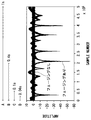
- FIG. 2 is a diagram showing time-series data of the amplitude variation of the communication signal depending on the presence or absence of fading.
- FIG. 2 shows time-series measurement data superimposed on the amplitudes of communication signals when fading occurs and when fading does not occur.
- the amplitude fluctuation due to fading is generally very large with respect to the fluctuation of the communication signal. For this reason, if the feature amount calculation is performed in a long time interval, the variation of the communication signal is buried in the fading feature having a large variation.
- the amplitude fluctuation of a single communication signal is determined by the symbol rate.
- amplitude fluctuation occurs due to a phase difference between communication signals.
- These amplitude fluctuations which are observation targets in radio wave environment monitoring, are generally fluctuations having a high frequency component of several kHz or more.
- amplitude fluctuation due to fading occurs due to movement of the transmission source and fluctuations in the surrounding environment, and therefore, fluctuation of a low frequency component (for example, several tens of Hz or less). Therefore, there is a frequency difference between the communication signal that is the original observation target and the amplitude fluctuation caused by fading that should not be evaluated. Can be removed from the feature quantity.
- FIG. 3 is a diagram showing amplitude probability distributions calculated for different time intervals.
- FIG. 3 shows an amplitude probability distribution that is a feature amount for each time interval of a different length. The lengths of the corresponding time intervals A to D are shown in the upper part of FIG.
- FIG. 3 shows an amplitude probability distribution for each of the time intervals A to D.
- E indicates an amplitude probability distribution when there is no fading.
- the signal component has a small amplitude variation
- the amplitude probability distribution indicates a steep change. It is highly likely that the amplitude probability distribution has such a steep curve in a signal using modulation with respect to a frequency such as frequency modulation (FM) or frequency shift keying (FSK).
- FM frequency modulation
- FSK frequency shift keying
- the amplitude probability distribution indicated by A with a time interval of 1 second shows a completely different curve from that when there is no fading. This is because the characteristic of fading fluctuation appears.
- the time interval is shortened to 0.4 seconds, 0.1 second,..., The amplitude probability distribution curve gradually approaches when there is no fading, and the time interval is 0.04 seconds.
- the amplitude probability distribution indicated by D it can be seen that although there is a difference in amplitude intensity, a steep curve is obtained in substantially the same manner. This is because the fading period is not included in the feature amount calculation time by shortening the time interval t.
- the fading period is not included in the feature quantity in the time interval t obtained from the measurement data, and the communication signal The feature becomes prominent.
- the similarity calculation unit 103 calculates a correlation coefficient (similarity) between the communication signal and the amplitude probability distribution of the fading fluctuation using Expression (3) and the like. At this time, the correlation coefficient becomes high in the calculation of the time interval of 1 second, and the fading detection unit 104 needs to determine that the fading fluctuation is included (that is, “recalculation”). On the other hand, if the time interval is shortened to 0.4 seconds and 0.1 seconds, the correlation coefficient gradually decreases, and the operation of the fading detection unit is not appropriate so as to determine that no fading fluctuation is included at the time of 0.04 seconds.
- the threshold is set. As for the setting of this threshold value, an appropriate value can be adjusted using simulation or prior measurement by actual measurement.
- the teacher data used when fading detection is performed in the similarity calculation unit 103 uses a feature amount indicating a feature when there is fading variation such as a curve of amplitude probability distribution of A in FIG.
- a feature value in order to obtain a highly reliable result up to a sufficiently low probability, it is desirable to use a feature value in a longer time interval or a feature value calculated from a theoretical value.
- the rate of shortening the time interval may be arbitrarily set, such as shortening by 50% for each recalculation.
- the variation [Delta] r n of the correlation coefficient r n is calculated, such as to reduce the rate of shortening the time interval in accordance with [Delta] r n decreases, control may be performed such that the time interval does not become extremely small.
- the feature amount measuring apparatus 100 may include a storage unit that accumulates feature amounts and determination results.
- the storage unit may be provided outside the feature amount measuring apparatus 100.
- the fading feature amount teacher data held in advance by the fading detection unit 104 may be stored in the storage unit.
- the feature amount measuring apparatus 100 may include an output unit that outputs a feature amount, a time interval, a fading detection result, and the like to the outside.
- the output unit is, for example, a display, a printer, or an alarm device that notifies the occurrence of an error, and displays a feature amount and a determination result.
- the feature amount measuring apparatus 100 automatically selects a time interval that does not include fading in the feature amount.
- FIG. 4 is a diagram illustrating a processing flow of the feature amount measuring apparatus according to the first embodiment.
- the operation of the present embodiment will be described in detail with reference to the flowchart of FIG.
- the acquiring unit 101 acquires time-series data (measurement data) of a newly sampled received signal (step S101).
- Next feature amount calculation unit 102 calculates the feature quantity A n with respect to a preset received signal in the time interval t n (step S102).
- a method for calculating the feature amount a generally used method is used according to the type of the feature amount.
- the similarity calculation unit 103 calculates a correlation coefficient r n (similarity) between the radio wave feature quantity An and a preset fading feature quantity X (step S103).
- Fading detection unit 104 determines the magnitude relation between the predetermined threshold value Y and the correlation coefficient r n (step S104). Specifically, the fading detection unit 104, the correlation coefficient r n, it is determined whether or not larger than the threshold Y, and notifies the determination result to the time interval control unit 105.
- the time interval control unit 105 when the correlation coefficient r n is greater than the threshold value Y (step S104-YES), the time series data of the received signal is determined to include a fading variation.
- the time interval control unit 105 determines the new time interval t n + 1 which is shorter than the time interval t n (step S105). The new time interval t n + 1 is shorter than the time interval t n .
- the time interval control unit 105 records the feature quantity A n , the correlation coefficient r n , and the time interval t n in the storage unit. (Step S106), the measurement ends.
- the time interval control unit 105 determines whether or not the newly determined time interval t n + 1 is greater than the preset minimum time interval ⁇ (step S107). When the new time interval t n + 1 is larger than the minimum time interval ⁇ (step S107—YES), the time interval control unit 105 instructs the feature amount calculation unit 102 to recalculate the feature amount in the new time interval t n + 1 . The feature amount calculation unit 102 recalculates the feature amount in the shortened new time interval t n + 1 and continues the procedure from step S102. When the new time interval t n + 1 is less than or equal to the minimum time interval ⁇ (step S107—NO), the time interval control unit 105 outputs an alarm (step S108) and ends the measurement.
- the threshold setting was inappropriate, fading with a very fast period occurred, and fading fluctuation was included even in the minimum time interval ⁇ . It is conceivable that a signal having an amplitude variation similar to fading is detected.
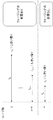
- FIG. 5 is a diagram showing an outline of processing of the feature amount measuring apparatus.
- the time interval control unit 105 sequentially shortens the time intervals as t 0 ,..., T n ⁇ 1 , t n as shown in FIG. Along with this, in the fading environment, the correlation coefficients for each time interval r 0, ..., will become sequentially lower as r n-1, r n. When the correlation coefficient is lower than the threshold value, the calculation is terminated, and it is determined that the feature of fading fluctuation is not included.
- the minimum time interval ⁇ in the feature quantity calculation will be described.
- the shorter the time interval t the better. There is a necessary lower limit.
- FIG. 6 is an example of time-series data of a rectangular wave reception signal measured at a sampling rate of 1 ⁇ 10 5 (sample / s) for 2 seconds.
- SNR Signal to Noise Ratio
- the duty ratio of the rectangular wave is 10%.
- FIG. 7 shows amplitude probability distributions measured in different time intervals with respect to the time series data of the received signal shown in FIG. It can be seen that the amplitude probability distribution curve changes with respect to the change in the time interval t from 0.01 second to 1 second. At this time, since the duty ratio of the rectangular wave is 10%, it can be said that the amplitude probability distribution has a probability of 0.1 and has an inflection point, which represents a statistically correct feature. Therefore, in this example, it can be seen that the amplitude probability distribution in the time interval t shorter than 1 second has low reliability. Although not shown, the amplitude probability distributions coincide with each other for a measurement time of 1 second or longer.
- the amplitude probability distribution is represented by a time rate with the amplitude as a variable, and the total measurement time T is an important parameter.
- the measurement is performed based on the assumption that the time series data of the target signal is stationary, but if the total measurement time T is short and the number of samples of the time series data is not sufficient, the amplitude value E k Are not averaged correctly, and the accuracy as a statistic is reduced.
- the required minimum time interval ⁇ is It is represented by Formula (4). From Equation (4), the acquisition unit 101 determines the minimum time interval ⁇ based on the sampling rate and the probability value P necessary for observation. It can be seen that the lower the probability value that guarantees accuracy, the longer the minimum time interval ⁇ is required.
- the acquisition unit 101 receives a new signal for monitoring the radio wave environment and repeats the measurement.
- the feature amount calculation unit 102 calculates the feature amount and compares it with the teacher data.
- the initial value t 0 of time period but the maximum value of the capture time of the sampling data in the acquisition unit 101, in the second and subsequent processing, always necessary to use the same value as the initial value t 0 of time period Absent. That is, the feature amount may be calculated by adopting the time interval t n determined at the first time.
- the time interval control unit 105 is configured to instruct the time interval used in the feature amount calculation unit 102, but the finally applied time interval t n is newly set in the acquisition unit 101. It is good also as a structure set to the acquisition time of the received signal to acquire. In this configuration, after the time interval is determined, the time series data can be used as a feature amount without waste, so that the processing in the acquisition unit 101 can be reduced.
- the configuration of the feature quantity measuring apparatus 100 according to the second embodiment is the same as that shown in FIG. 1 as in the first embodiment.
- the feature amount measuring apparatus 100 according to the second embodiment is different in operation from the feature amount measuring apparatus 100 according to the first embodiment.
- the feature amount measuring apparatus 100 according to the second embodiment is such that the feature amount calculation unit 102 does not perform recalculation processing by calculating a plurality of feature amounts in a plurality of preset time intervals. This is different from the first embodiment.
- FIG. 8 is a diagram showing a processing flow of the feature quantity measuring apparatus according to the second embodiment.
- the acquisition unit 101 acquires time-series data of a newly sampled received signal (step S201).
- the feature amount calculation unit 102 obtains a preset time interval groups, a plurality of time intervals t 0 to the time interval group shown, t 1, ... feature amount A 0, A 1 based on t n, .., An are calculated (step S202).
- the similarity calculation unit 103 a plurality of time intervals t 0, t 1, ...
- Fading detection unit 104, r 0, r 1, ... determines the magnitude relation between r n and the preset threshold Y (step S204). Specifically, the fading detection unit 104, the correlation coefficient r 0, r 1, either ... r n it is determined whether or not larger than the threshold value Y, notifies the determination result to the time interval control unit 105 To do.
- step S205 When there is no correlation coefficient that is equal to or less than the threshold value Y (step S205—NO), the time interval control unit 105 determines that the fading fluctuation is included and outputs an alarm. On the other hand, when there is at least one correlation coefficient that is equal to or less than the threshold value Y (step S205—YES), the time interval control unit 105 sets the correlation coefficient that the time interval control unit 105 is equal to or less than the threshold value The longest time interval t x is selected from the corresponding time intervals, the corresponding feature amount A x and the correlation coefficient r x are recorded (step S206), and the measurement is terminated.
- the time interval t 0 that is the shortest time in the time intervals t 0 , t 1 ,..., T n be the minimum time interval ⁇ in the first embodiment.
- the second embodiment of the present invention similarly to the first embodiment, even in a fading environment, a period that does not include fading can be automatically determined to measure the characteristic amount of a communication signal to be observed.
- the feature amount measuring apparatus 100 can be provided.
- a series of processing becomes heavy, since recalculation processing is not necessary, there is an advantage that calculation is completed by the same processing regardless of the radio wave environment.
- the configuration of the feature amount measuring apparatus 100 according to the third embodiment is the same as that shown in FIG. 1 as in the first embodiment.
- the feature amount measuring apparatus 100 according to the third embodiment is different in operation from the feature amount measuring apparatus 100 according to the first and second embodiments.
- the feature amount measuring apparatus 100 according to the third embodiment stores a plurality of fading environment feature amounts that are set in advance by the similarity calculation unit 103 as teacher data. The difference is that by calculating a plurality of correlation coefficients (similarities), it is possible to select appropriate teacher data in environments with different fading characteristics.
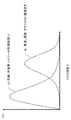
- FIG. 9 is a diagram illustrating a probability density distribution depending on a fading environment. Radio wave fluctuations due to fading are statistically modeled based on radio wave propagation measurements. In a non-line-of-sight environment where there is no incoming wave with high intensity such as a direct wave, the complex envelope of the received signal has a complex Gaussian distribution (FIG. 9A). At this time, the amplitude r of the received signal has a Rayleigh distribution as shown in Equation (5). In Equation (5), ⁇ 2 is the average received power.
- the similarity calculation unit 103 calculates the similarity between the plurality of teacher data and the feature amount of the communication signal.
- the same number of threshold values used by the fading detection unit 104 as the teacher data are prepared, and the fading detection unit 104 compares the magnitude relationship between the similarity and the threshold value for each teacher data.
- the time interval control unit 105 determines that the time interval is shortened and recalculation is performed in the same manner as in the first embodiment when there is a similarity that does not fall below the threshold value. When the condition that the total similarity is equal to or less than the threshold is satisfied, the time interval control unit 105 records the feature amount, the time interval, and the similarity in the storage unit, and ends the measurement.
- FIG. 10 is a diagram showing a processing flow of the feature amount measuring apparatus according to the third embodiment.
- the operation of the third embodiment will be described in detail with reference to the flowchart of FIG.
- the acquisition unit 101 acquires time-series data of a newly sampled received signal (step S301).
- the feature amount calculation unit 102 calculates the feature quantity A n with respect to a preset time interval set t n (step S302).
- the similarity calculating unit 103 the fading characteristic of different rice coefficient set in advance the feature quantity A n of the radio wave for the time interval t n X 0, X 1, ..., each phase relationship between X k Numbers (similarities) r n0 , r n1 ,..., R nk are respectively calculated (step S303).
- the fading detection unit 104 has correlation coefficients (similarities) r n0 , r n1 ,..., R nk and threshold values Y n0 , Y n1 ,. nk is used to determine the correlation coefficient and the magnitude relationship for each threshold value (step S304). Specifically, fading detection section 104 compares correlation coefficient r n0 with threshold value Y n0 , correlation coefficient r n1 with threshold value Y n1 ,..., Correlation coefficient r n1 with threshold value Y n1. . The fading detection unit 104 notifies the time interval control unit 105 of each comparison result.
- the time interval control unit 105 determines that contains fading fluctuation, novel and shorter than the time interval t n A time interval t n + 1 is determined (step S305).
- the time interval control unit 105 determines the feature amount A n , the correlation coefficients r n0 , r n1 ,.
- the time interval t n is recorded in the storage unit (step S306), and the measurement ends. Since the operation after step S307 after shortening the time interval t n is the same as that in the first embodiment, the description thereof is omitted.
- the third embodiment similarly to the first and second embodiments, even in a fading environment, a period that does not include fading can be automatically determined to measure the characteristic amount of a communication signal to be observed.
- a feature amount measuring apparatus can be provided.
- the radio wave environment measurement is performed using a plurality of feature amount measuring apparatuses 100, there is an advantage that the fading environment status at each reception position can be grasped in more detail. Further, even in different fading environments, there is an advantage that it is not necessary to individually set the feature amount measuring apparatus 100.
- the similarity calculated by the similarity calculation unit 103 is not limited to Pearson's correlation coefficient, and other correlation coefficients may be used. Further, distance functions such as Euclidean distance and Manhattan distance may be used as the dissimilarity. In the distance function, values between similar data become smaller. Therefore, it is necessary to reverse the inequality sign with the threshold value in the fading detection unit 104 from the case where the correlation coefficient is used.
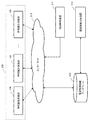
- a radio wave environment calculation apparatus By arranging a plurality of feature quantity measuring devices 100 of the first embodiment described above on spatial coordinates and adding a connection unit that connects wirelessly or wired to a network environment such as the Internet to each feature quantity measuring device 100, You may comprise a radio wave environment calculation apparatus.
- FIG. 11 is a diagram illustrating a configuration example of the radio wave environment calculation apparatus.
- the radio wave environment calculation apparatus shown in FIG. 11 includes a feature quantity measurement device group 200 including a plurality of feature quantity measurement devices 100 each connected to the Internet 210, and observation control for controlling each feature quantity measurement device 100 via the Internet.
- the apparatus 211 includes a radio wave observation information database 212 that acquires and holds a feature quantity observed by each feature quantity measurement apparatus 100 via the Internet, and an environment information analysis apparatus 213 that analyzes the database.
- Each feature quantity measuring device 100 is located at a different position coordinate in space.
- Analyzing the feature quantity stored in the radio wave observation information database 212 by the environment information analysis device 213 makes it possible to search for radio wave usage statuses and free frequency bands.
- the information on the feature amount and the time interval gives very useful information in the analysis. For example, when it is determined that fading fluctuation is included in the feature value when the time interval is short, it is assumed that fading of a fast cycle occurs at the observation point received by the feature value measurement device 100. Judgment can be made. By analyzing this, it is possible to estimate the moving speed and frequency of the signal generation source and specify the signal.
- Each of the above devices has a computer system inside.
- Each process described above is stored in a computer-readable recording medium in the form of a program, and the above process is performed by the computer reading and executing the program.
- the computer-readable recording medium includes a magnetic disk, a magneto-optical disk, a CD-ROM (Compact Disc-Read Only Memory), a DVD-ROM (Digital Versatile Disc Disc-ROM), a semiconductor memory, and the like.
- the computer program may be distributed to the computer via a communication line, and the computer that has received the distribution may execute the program.
- the program may be for realizing a part of the functions described above. Furthermore, what can implement
- This application claims the priority on the basis of Japanese application Japanese Patent Application No. 2016-096962 for which it applied on May 13, 2016, and takes in those the indications of all here.
- the present invention it is possible to provide a system for acquiring high-accuracy signal feature quantities with a simple configuration even in fading environments in radio wave environment monitoring.
- the database of acquired features is used to assist in the design of radio station arrangements, frequency allocation, and optimization of transmission power to promote safer and more equitable use of radio waves. It can also be applied to applications such as systems.
Landscapes
- Engineering & Computer Science (AREA)
- Computer Networks & Wireless Communication (AREA)
- Signal Processing (AREA)
- Physics & Mathematics (AREA)
- Electromagnetism (AREA)
- Quality & Reliability (AREA)
- General Physics & Mathematics (AREA)
- Monitoring And Testing Of Transmission In General (AREA)
Abstract
Selon l'invention, afin d'acquérir à partir de données reçues une quantité de caractéristique comprenant uniquement une composante fluctuante due à un signal radio, un dispositif de mesure de quantité de caractéristique : calcule une quantité de caractéristique sur la base de données dans un segment temporel prescrit dans des données en série chronologique provenant d'un signal de communication reçu ; et calcule un degré de similarité entre la quantité de caractéristique et des données d'apprentissage indiquant la quantité de caractéristique pour un cas dans lequel une fluctuation d'évanouissement prédéterminée est présente. En outre, sur la base du résultat d'une comparaison indiquant une relation d'amplitude entre le degré de similarité et un seuil prédéterminé, une évaluation est effectuée pour déterminer si une caractéristique de fluctuation d'évanouissement est comprise dans le segment temporel, et si la caractéristique de fluctuation évanouissante n'est pas comprise, la quantité de caractéristique dans ledit segment temporel est délivrée en sortie.
Priority Applications (2)
| Application Number | Priority Date | Filing Date | Title |
|---|---|---|---|
| JP2018517063A JP7006587B2 (ja) | 2016-05-13 | 2017-05-10 | 特徴量計測装置、電波環境計算装置、特徴量計測方法、電波環境計測方法、プログラム |
| US16/097,648 US10728705B2 (en) | 2016-05-13 | 2017-05-10 | Feature quantity measuring device, radio wave environment measuring device, feature quantity measuring method, radio wave environment measuring method, and program |
Applications Claiming Priority (2)
| Application Number | Priority Date | Filing Date | Title |
|---|---|---|---|
| JP2016096962 | 2016-05-13 | ||
| JP2016-096962 | 2016-05-13 |
Publications (1)
| Publication Number | Publication Date |
|---|---|
| WO2017195842A1 true WO2017195842A1 (fr) | 2017-11-16 |
Family
ID=60267214
Family Applications (1)
| Application Number | Title | Priority Date | Filing Date |
|---|---|---|---|
| PCT/JP2017/017759 Ceased WO2017195842A1 (fr) | 2016-05-13 | 2017-05-10 | Dispositif de mesure de quantité de caractéristique, dispositif de calcul d'environnement d'ondes radio, procédé de mesure de quantité de caractéristique, procédé de mesure d'environnement d'ondes radio, et programme |
Country Status (3)
| Country | Link |
|---|---|
| US (1) | US10728705B2 (fr) |
| JP (1) | JP7006587B2 (fr) |
| WO (1) | WO2017195842A1 (fr) |
Cited By (4)
| Publication number | Priority date | Publication date | Assignee | Title |
|---|---|---|---|---|
| WO2019107388A1 (fr) * | 2017-11-29 | 2019-06-06 | 日本電気株式会社 | Système d'estimation d'emplacements, procédé d'estimation d'emplacements et programme |
| JP2022520234A (ja) * | 2019-02-11 | 2022-03-29 | イギリス国 | 信号再生のための方法及び装置 |
| JP2022092834A (ja) * | 2020-12-11 | 2022-06-23 | 日本電気株式会社 | 干渉検知装置、干渉検知方法及び干渉検知プログラム |
| CN120064790A (zh) * | 2024-12-26 | 2025-05-30 | 北京自动化控制设备研究所 | 基于多节点相关叠加的航空轴频磁场信号处理方法及系统 |
Families Citing this family (1)
| Publication number | Priority date | Publication date | Assignee | Title |
|---|---|---|---|---|
| US11165512B2 (en) * | 2018-05-23 | 2021-11-02 | Nec Corporation | Wireless communication identification device and wireless communication identification method |
Citations (4)
| Publication number | Priority date | Publication date | Assignee | Title |
|---|---|---|---|---|
| JPH07231286A (ja) * | 1994-02-18 | 1995-08-29 | Oki Electric Ind Co Ltd | 伝搬路推定器及び移動通信受信装置 |
| JPH1070504A (ja) * | 1996-08-28 | 1998-03-10 | Mitsubishi Electric Corp | 移動体通信装置 |
| JP2008167200A (ja) * | 2006-12-28 | 2008-07-17 | Toshiba Corp | 通信装置 |
| US20080240260A1 (en) * | 2006-12-18 | 2008-10-02 | Bce Inc. | Adaptive channel prediction system and method |
Family Cites Families (16)
| Publication number | Priority date | Publication date | Assignee | Title |
|---|---|---|---|---|
| JP2953976B2 (ja) | 1995-02-14 | 1999-09-27 | 富士通株式会社 | フェージングピッチ推定装置 |
| JP3039413B2 (ja) | 1997-01-17 | 2000-05-08 | 日本電気株式会社 | 宇宙電波監視装置 |
| US6509728B1 (en) * | 1998-05-28 | 2003-01-21 | Anritsu Corporation | Spectrum analyzer having function of displaying amplitude probability distribution effectively |
| JP5232442B2 (ja) | 2007-11-01 | 2013-07-10 | 株式会社エヌ・ティ・ティ・ドコモ | 電界強度分布または電力密度分布の評価方法、そのプログラム |
| JP2010109825A (ja) | 2008-10-31 | 2010-05-13 | Advanced Telecommunication Research Institute International | 無線装置およびそれを備えた無線ネットワーク |
| JP5287479B2 (ja) | 2009-04-30 | 2013-09-11 | 富士通株式会社 | 無線通信装置及び無線通信方法 |
| JP5115938B2 (ja) | 2010-02-25 | 2013-01-09 | アンリツ株式会社 | 混信判定回路及び混信判定方法 |
| JP2011257311A (ja) * | 2010-06-10 | 2011-12-22 | Nec Corp | 測定装置、測定方法および測定プログラム |
| JP5282914B2 (ja) * | 2010-06-14 | 2013-09-04 | 日本電気株式会社 | 無線機同定装置 |
| JP5793961B2 (ja) * | 2010-07-26 | 2015-10-14 | 日本電気株式会社 | 電磁波識別装置、電磁波識別方法及びプログラム |
| JP5665695B2 (ja) * | 2011-07-12 | 2015-02-04 | マイティカード株式会社 | Rfidタグ移動識別方法及びrfidタグ移動識別プログラム |
| JP5440669B2 (ja) | 2012-08-28 | 2014-03-12 | 住友電気工業株式会社 | 違法電波の判定方法、判定装置及びコンピュータプログラム |
| WO2014065032A1 (fr) * | 2012-10-24 | 2014-05-01 | 日本電気株式会社 | Dispositif de classification et de présentation des caractéristiques d'un champ électromagnétique |
| US20150382203A1 (en) | 2013-02-12 | 2015-12-31 | Nec Corporation | Radio wave observation system, central station device, and radio wave observation method |
| JP6163811B2 (ja) * | 2013-03-25 | 2017-07-19 | 日本電気株式会社 | 時系列データ処理装置、時系列データ処理方法、及び時系列データ処理プログラム |
| JP6835582B2 (ja) * | 2014-07-23 | 2021-02-24 | 日本電気株式会社 | 電磁妨害波測定装置、電磁妨害波測定方法、および電磁妨害波測定プログラム |
-
2017
- 2017-05-10 WO PCT/JP2017/017759 patent/WO2017195842A1/fr not_active Ceased
- 2017-05-10 US US16/097,648 patent/US10728705B2/en active Active
- 2017-05-10 JP JP2018517063A patent/JP7006587B2/ja active Active
Patent Citations (4)
| Publication number | Priority date | Publication date | Assignee | Title |
|---|---|---|---|---|
| JPH07231286A (ja) * | 1994-02-18 | 1995-08-29 | Oki Electric Ind Co Ltd | 伝搬路推定器及び移動通信受信装置 |
| JPH1070504A (ja) * | 1996-08-28 | 1998-03-10 | Mitsubishi Electric Corp | 移動体通信装置 |
| US20080240260A1 (en) * | 2006-12-18 | 2008-10-02 | Bce Inc. | Adaptive channel prediction system and method |
| JP2008167200A (ja) * | 2006-12-28 | 2008-07-17 | Toshiba Corp | 通信装置 |
Cited By (7)
| Publication number | Priority date | Publication date | Assignee | Title |
|---|---|---|---|---|
| WO2019107388A1 (fr) * | 2017-11-29 | 2019-06-06 | 日本電気株式会社 | Système d'estimation d'emplacements, procédé d'estimation d'emplacements et programme |
| JPWO2019107388A1 (ja) * | 2017-11-29 | 2020-11-19 | 日本電気株式会社 | 位置推定システム、位置推定方法及びプログラム |
| JP2022520234A (ja) * | 2019-02-11 | 2022-03-29 | イギリス国 | 信号再生のための方法及び装置 |
| JP7536776B2 (ja) | 2019-02-11 | 2024-08-20 | イギリス国 | 信号再生のための方法及び装置 |
| JP2022092834A (ja) * | 2020-12-11 | 2022-06-23 | 日本電気株式会社 | 干渉検知装置、干渉検知方法及び干渉検知プログラム |
| JP7571512B2 (ja) | 2020-12-11 | 2024-10-23 | 日本電気株式会社 | 干渉検知装置、干渉検知方法及び干渉検知プログラム |
| CN120064790A (zh) * | 2024-12-26 | 2025-05-30 | 北京自动化控制设备研究所 | 基于多节点相关叠加的航空轴频磁场信号处理方法及系统 |
Also Published As
| Publication number | Publication date |
|---|---|
| US20190166461A1 (en) | 2019-05-30 |
| JP7006587B2 (ja) | 2022-01-24 |
| US10728705B2 (en) | 2020-07-28 |
| JPWO2017195842A1 (ja) | 2019-03-14 |
Similar Documents
| Publication | Publication Date | Title |
|---|---|---|
| JP7006587B2 (ja) | 特徴量計測装置、電波環境計算装置、特徴量計測方法、電波環境計測方法、プログラム | |
| Gururaj et al. | Real-time identification of NLOS range measurements for enhanced UWB localization | |
| JP5760899B2 (ja) | 電磁干渉検出装置、電磁干渉検出方法および電磁干渉検出プログラム | |
| US9032801B2 (en) | Ultrasonic measurement apparatus and method | |
| CN109521404B (zh) | 基于fmcw雷达的振动测量的准确度评估方法和系统 | |
| EP3707489B1 (fr) | Procédés et appareil de détection de fuites | |
| JP6163811B2 (ja) | 時系列データ処理装置、時系列データ処理方法、及び時系列データ処理プログラム | |
| US12562829B2 (en) | Radio wave abnormality detection system, radio wave abnormality detection method, and radio wave abnormality detection program | |
| CN111352004A (zh) | 线缆故障检测方法、装置、系统和可读存储介质 | |
| KR102011959B1 (ko) | 펄스 압축 과정에서 간섭신호를 탐지하는 레이더 수신신호 처리 방법 및 그를 위한 장치 | |
| JPWO2016013190A1 (ja) | 電磁妨害波測定装置、電磁妨害波測定方法、および電磁妨害波測定プログラム | |
| JP2013003084A (ja) | 測位装置及び測位方法 | |
| CN120017189A (zh) | 一种基于数据分析的无线射频数据监测分发平台系统及方法 | |
| JP4784976B2 (ja) | 電波到来方向推定装置、電波到来方向推定プログラム、および記録媒体 | |
| JP5605568B2 (ja) | 過電力検知装置および無線通信装置 | |
| JP2013152112A (ja) | 時間差方位探知装置 | |
| CN108882155B (zh) | 基于粒子群算法的盲信号功率及盲源位置确定方法、系统 | |
| CN112567834B (zh) | 用于检测信号传播类型的方法和装置 | |
| US8886486B2 (en) | Device and method for testing APD measuring device | |
| JP2016136714A (ja) | 無線通信利用状況測定方法 | |
| De Angelis et al. | Design and characterization of an ultrasonic indoor positioning technique | |
| JP2023534534A (ja) | 信号処理方法および信号処理装置 | |
| CN1886673B (zh) | 定位方法和设备 | |
| JP6607190B2 (ja) | 位置推定装置、位置推定システム、方法および記録媒体 | |
| KR102492214B1 (ko) | 측위 장치 및 방법 |
Legal Events
| Date | Code | Title | Description |
|---|---|---|---|
| ENP | Entry into the national phase |
Ref document number: 2018517063 Country of ref document: JP Kind code of ref document: A |
|
| NENP | Non-entry into the national phase |
Ref country code: DE |
|
| 121 | Ep: the epo has been informed by wipo that ep was designated in this application |
Ref document number: 17796201 Country of ref document: EP Kind code of ref document: A1 |
|
| 122 | Ep: pct application non-entry in european phase |
Ref document number: 17796201 Country of ref document: EP Kind code of ref document: A1 |