WO2017204284A1 - Aobgl11ホモログを用いたステビオールおよびステビオール配糖体の製造方法 - Google Patents
Aobgl11ホモログを用いたステビオールおよびステビオール配糖体の製造方法 Download PDFInfo
- Publication number
- WO2017204284A1 WO2017204284A1 PCT/JP2017/019486 JP2017019486W WO2017204284A1 WO 2017204284 A1 WO2017204284 A1 WO 2017204284A1 JP 2017019486 W JP2017019486 W JP 2017019486W WO 2017204284 A1 WO2017204284 A1 WO 2017204284A1
- Authority
- WO
- WIPO (PCT)
- Prior art keywords
- bond
- steviol
- glycoside
- steviol glycoside
- rhamnoside
- Prior art date
- Legal status (The legal status is an assumption and is not a legal conclusion. Google has not performed a legal analysis and makes no representation as to the accuracy of the status listed.)
- Ceased
Links
Images





Classifications
-
- C—CHEMISTRY; METALLURGY
- C12—BIOCHEMISTRY; BEER; SPIRITS; WINE; VINEGAR; MICROBIOLOGY; ENZYMOLOGY; MUTATION OR GENETIC ENGINEERING
- C12P—FERMENTATION OR ENZYME-USING PROCESSES TO SYNTHESISE A DESIRED CHEMICAL COMPOUND OR COMPOSITION OR TO SEPARATE OPTICAL ISOMERS FROM A RACEMIC MIXTURE
- C12P19/00—Preparation of compounds containing saccharide radicals
- C12P19/44—Preparation of O-glycosides, e.g. glucosides
- C12P19/56—Preparation of O-glycosides, e.g. glucosides having an oxygen atom of the saccharide radical directly bound to a condensed ring system having three or more carbocyclic rings, e.g. daunomycin, adriamycin
-
- C—CHEMISTRY; METALLURGY
- C12—BIOCHEMISTRY; BEER; SPIRITS; WINE; VINEGAR; MICROBIOLOGY; ENZYMOLOGY; MUTATION OR GENETIC ENGINEERING
- C12N—MICROORGANISMS OR ENZYMES; COMPOSITIONS THEREOF; PROPAGATING, PRESERVING, OR MAINTAINING MICROORGANISMS; MUTATION OR GENETIC ENGINEERING; CULTURE MEDIA
- C12N15/00—Mutation or genetic engineering; DNA or RNA concerning genetic engineering, vectors, e.g. plasmids, or their isolation, preparation or purification; Use of hosts therefor
- C12N15/09—Recombinant DNA-technology
-
- C—CHEMISTRY; METALLURGY
- C12—BIOCHEMISTRY; BEER; SPIRITS; WINE; VINEGAR; MICROBIOLOGY; ENZYMOLOGY; MUTATION OR GENETIC ENGINEERING
- C12N—MICROORGANISMS OR ENZYMES; COMPOSITIONS THEREOF; PROPAGATING, PRESERVING, OR MAINTAINING MICROORGANISMS; MUTATION OR GENETIC ENGINEERING; CULTURE MEDIA
- C12N15/00—Mutation or genetic engineering; DNA or RNA concerning genetic engineering, vectors, e.g. plasmids, or their isolation, preparation or purification; Use of hosts therefor
- C12N15/09—Recombinant DNA-technology
- C12N15/11—DNA or RNA fragments; Modified forms thereof; Non-coding nucleic acids having a biological activity
- C12N15/52—Genes encoding for enzymes or proenzymes
-
- C—CHEMISTRY; METALLURGY
- C12—BIOCHEMISTRY; BEER; SPIRITS; WINE; VINEGAR; MICROBIOLOGY; ENZYMOLOGY; MUTATION OR GENETIC ENGINEERING
- C12N—MICROORGANISMS OR ENZYMES; COMPOSITIONS THEREOF; PROPAGATING, PRESERVING, OR MAINTAINING MICROORGANISMS; MUTATION OR GENETIC ENGINEERING; CULTURE MEDIA
- C12N15/00—Mutation or genetic engineering; DNA or RNA concerning genetic engineering, vectors, e.g. plasmids, or their isolation, preparation or purification; Use of hosts therefor
- C12N15/09—Recombinant DNA-technology
- C12N15/63—Introduction of foreign genetic material using vectors; Vectors; Use of hosts therefor; Regulation of expression
- C12N15/74—Vectors or expression systems specially adapted for prokaryotic hosts other than E. coli, e.g. Lactobacillus, Micromonospora
-
- C—CHEMISTRY; METALLURGY
- C12—BIOCHEMISTRY; BEER; SPIRITS; WINE; VINEGAR; MICROBIOLOGY; ENZYMOLOGY; MUTATION OR GENETIC ENGINEERING
- C12N—MICROORGANISMS OR ENZYMES; COMPOSITIONS THEREOF; PROPAGATING, PRESERVING, OR MAINTAINING MICROORGANISMS; MUTATION OR GENETIC ENGINEERING; CULTURE MEDIA
- C12N15/00—Mutation or genetic engineering; DNA or RNA concerning genetic engineering, vectors, e.g. plasmids, or their isolation, preparation or purification; Use of hosts therefor
- C12N15/09—Recombinant DNA-technology
- C12N15/63—Introduction of foreign genetic material using vectors; Vectors; Use of hosts therefor; Regulation of expression
- C12N15/79—Vectors or expression systems specially adapted for eukaryotic hosts
- C12N15/80—Vectors or expression systems specially adapted for eukaryotic hosts for fungi
- C12N15/81—Vectors or expression systems specially adapted for eukaryotic hosts for fungi for yeasts
-
- C—CHEMISTRY; METALLURGY
- C12—BIOCHEMISTRY; BEER; SPIRITS; WINE; VINEGAR; MICROBIOLOGY; ENZYMOLOGY; MUTATION OR GENETIC ENGINEERING
- C12N—MICROORGANISMS OR ENZYMES; COMPOSITIONS THEREOF; PROPAGATING, PRESERVING, OR MAINTAINING MICROORGANISMS; MUTATION OR GENETIC ENGINEERING; CULTURE MEDIA
- C12N15/00—Mutation or genetic engineering; DNA or RNA concerning genetic engineering, vectors, e.g. plasmids, or their isolation, preparation or purification; Use of hosts therefor
- C12N15/09—Recombinant DNA-technology
- C12N15/63—Introduction of foreign genetic material using vectors; Vectors; Use of hosts therefor; Regulation of expression
- C12N15/79—Vectors or expression systems specially adapted for eukaryotic hosts
- C12N15/82—Vectors or expression systems specially adapted for eukaryotic hosts for plant cells, e.g. plant artificial chromosomes (PACs)
-
- C—CHEMISTRY; METALLURGY
- C12—BIOCHEMISTRY; BEER; SPIRITS; WINE; VINEGAR; MICROBIOLOGY; ENZYMOLOGY; MUTATION OR GENETIC ENGINEERING
- C12N—MICROORGANISMS OR ENZYMES; COMPOSITIONS THEREOF; PROPAGATING, PRESERVING, OR MAINTAINING MICROORGANISMS; MUTATION OR GENETIC ENGINEERING; CULTURE MEDIA
- C12N5/00—Undifferentiated human, animal or plant cells, e.g. cell lines; Tissues; Cultivation or maintenance thereof; Culture media therefor
- C12N5/10—Cells modified by introduction of foreign genetic material
-
- C—CHEMISTRY; METALLURGY
- C12—BIOCHEMISTRY; BEER; SPIRITS; WINE; VINEGAR; MICROBIOLOGY; ENZYMOLOGY; MUTATION OR GENETIC ENGINEERING
- C12P—FERMENTATION OR ENZYME-USING PROCESSES TO SYNTHESISE A DESIRED CHEMICAL COMPOUND OR COMPOSITION OR TO SEPARATE OPTICAL ISOMERS FROM A RACEMIC MIXTURE
- C12P15/00—Preparation of compounds containing at least three condensed carbocyclic rings
-
- C—CHEMISTRY; METALLURGY
- C12—BIOCHEMISTRY; BEER; SPIRITS; WINE; VINEGAR; MICROBIOLOGY; ENZYMOLOGY; MUTATION OR GENETIC ENGINEERING
- C12P—FERMENTATION OR ENZYME-USING PROCESSES TO SYNTHESISE A DESIRED CHEMICAL COMPOUND OR COMPOSITION OR TO SEPARATE OPTICAL ISOMERS FROM A RACEMIC MIXTURE
- C12P19/00—Preparation of compounds containing saccharide radicals
- C12P19/14—Preparation of compounds containing saccharide radicals produced by the action of a carbohydrase (EC 3.2.x), e.g. by alpha-amylase, e.g. by cellulase, hemicellulase
-
- C—CHEMISTRY; METALLURGY
- C12—BIOCHEMISTRY; BEER; SPIRITS; WINE; VINEGAR; MICROBIOLOGY; ENZYMOLOGY; MUTATION OR GENETIC ENGINEERING
- C12P—FERMENTATION OR ENZYME-USING PROCESSES TO SYNTHESISE A DESIRED CHEMICAL COMPOUND OR COMPOSITION OR TO SEPARATE OPTICAL ISOMERS FROM A RACEMIC MIXTURE
- C12P19/00—Preparation of compounds containing saccharide radicals
- C12P19/44—Preparation of O-glycosides, e.g. glucosides
-
- C—CHEMISTRY; METALLURGY
- C12—BIOCHEMISTRY; BEER; SPIRITS; WINE; VINEGAR; MICROBIOLOGY; ENZYMOLOGY; MUTATION OR GENETIC ENGINEERING
- C12N—MICROORGANISMS OR ENZYMES; COMPOSITIONS THEREOF; PROPAGATING, PRESERVING, OR MAINTAINING MICROORGANISMS; MUTATION OR GENETIC ENGINEERING; CULTURE MEDIA
- C12N9/00—Enzymes; Proenzymes; Compositions thereof; Processes for preparing, activating, inhibiting, separating or purifying enzymes
- C12N9/14—Hydrolases (3)
- C12N9/24—Hydrolases (3) acting on glycosyl compounds (3.2)
-
- C—CHEMISTRY; METALLURGY
- C12—BIOCHEMISTRY; BEER; SPIRITS; WINE; VINEGAR; MICROBIOLOGY; ENZYMOLOGY; MUTATION OR GENETIC ENGINEERING
- C12Y—ENZYMES
- C12Y302/00—Hydrolases acting on glycosyl compounds, i.e. glycosylases (3.2)
Definitions
- the present invention relates to steviol and a method for producing steviol glycosides.
- Stevia rebaudiana leaves contain a secondary metabolite called steviol, a kind of diterpenoid, and some steviol glycosides with sugar added to steviol contain about sugar. Some have a sweetness of 300 times, and they are used in the food industry as calorie-free sweeteners. Obesity has been developed internationally as a serious social problem, and the demand for calorie-free sweeteners is increasing day by day from the viewpoint of promoting health and reducing medical costs.
- artificially synthesized amino acid derivatives such aspartame (Apartame) and acesulfame potassium (Acesulfame Potassium) are used as artificial sweeteners, but naturally occurring caloric-less sweeteners such as steviol glycosides are more popular. It is expected that it will be safe and easy for consumers to understand (Public Acceptance).
- stevioside is a compound in which three glucoses are added to steviol, and it is most abundant in common stevia leaves.
- Stevioside (stv) has a sweetness that is approximately 300 times that of sucrose but exhibits a slight bitter taste.
- Steviol glycoside rebaudioside A is a compound in which four glucoses are added to steviol, and has a sweetness level about 400 times that of sucrose.
- Stevioside and rebaudioside A are the central substances of Stevia's sweetness.
- glycosides such as rebaudioside D (rebaudioside D; rebD) in which five glucoses are added to steviol and rebaudioside M (rebaudioside M; rebM) in which six glucoses are added are also known.
- tea tea contains rubusoside (rub) with one glucose added at each of positions 13 and 19 of steviol, which is known to be the main sweetening ingredient of tea tea.
- rubusoside rub
- glycosides that are considered to be reaction intermediates and analogs with different types of sugars are known (FIG. 1).
- Steviol is also known to have an effect of improving cognitive function.
- steviol glycosides that can act on specific glycosidic bonds can be used, specific glycosides can be selectively produced or unnecessary glycosides can be removed. Therefore, there are great advantages such as improving the taste quality of stevia extract and facilitating the purification of a specific steviol glycoside.
- steviol is useful also in the process of obtaining steviol glycosides by using steviol as a starting material and glycosylating steviol using yeast or the like. When steviol is added to the medium, the yeast can be taken into the cells. Therefore, when yeast in which the steviol glycosyltransferase gene is expressed in the cells is cultured in a medium containing steviol, the yeast is Steviol can be incorporated into and glycosylated.
- Enzymatic activity to hydrolyze steviol glycosides has been reported in several biological species. Among them, aspergillus fungi produce steviol glycoside hydrolase, in raw soy sauce, there is activity to hydrolyze stevioside to rubusoside (Non-patent Document 1), Pectinase enzyme agent and Hesperidinase It has been reported that an enzyme agent, Takadiastase enzyme agent has an activity of hydrolyzing stevioside into steviol (Non-patent Documents 2-4).
- Patent Document 1 a method for producing steviol from stevioside by using a combination of a pectinase enzyme agent derived from Aspergillus fungi and an enzyme agent derived from snail (Helix pomatia) has been reported (Patent Document 1). Aspergillus aculeatus-derived enzyme agent Viscozyme L (novozyme) is described as having an activity of hydrolyzing into stevioside ⁇ rubusoside ⁇ steviol monoglycosyl ester (Non-patent Document 5). Further, it is described that an individual culture extract of Aspergillus aculeatus has an activity of converting stevioside into steviol (Non-patent Document 6).
- Aspergillus filamentous fungi including Neisseria gonorrhoeae have an enzyme gene having steviol glycoside hydrolyzing activity, the enzyme responsible for the enzyme activity and the gene encoding it There is no report.
- Non-patent Document 7 a glycoside hydrolase (GH) 3 family ⁇ -glucosidase encoded by the AO090009000356 gene of Aspergillus hydrolyzes a disaccharide having a ⁇ -glucoside bond.
- GH glycoside hydrolase
- laminaribiose having a ⁇ -1,3 bond, ⁇ -gentiobiose having a ⁇ -1,6 bond, cellobiose having a ⁇ -1,4 bond, and sophorose having a ⁇ -1,2 bond in this order. Specificity of hydrolysis is high. However, it has not been reported whether there is an activity to hydrolyze terpene glycosides including steviol glycosides.
- Naringenase derived from Penicillium decumbens includes an enzyme that hydrolyzes stevioside into steviol via rubusoside, steviolbioside, and steviolmonoglucoside, and this enzyme is a protein having a molecular weight of 121 kDa, pH 2.3-6.0, and temperature 40-. It is reported that the enzyme is stable at 60 ° C. (Non-patent Document 9). However, although all of these have found activity to hydrolyze steviol glycosides, the genes responsible for the activity have not been specified.
- glycoside hydrolase homolog (GH3 family) protein AOBGL11p derived from Aspergillus oryzae var. Brunneus encoded by the AOBGL11 gene or a homologous gene thereof is steviol. It has been found that it has an activity of hydrolyzing glycosides. Furthermore, the protein AOBGL11p was found to cleave the glucoside bond and glucosyl ester bond of steviol glycosides.
- AOBGL11p has the activity of cleaving the O-glucoside bond at position 13, the glucosyl ester bond at position 19, and the glycosidic bond in the side chain of the steviol glycoside for each monosaccharide.
- the present invention has been completed. Furthermore, by selecting the reaction conditions, among the steviol glycosides, the hydrolysis reaction of the branched trisaccharide or sophorose bonded to the 13th position and the hydrolysis reaction of the branched trisaccharide bonded to the 19th position are suppressed. I found. Moreover, it discovered that it cut
- a protein selected from the group consisting of the following (a) to (c) and a first steviol glycoside are reacted to form a glucoside bond at position 13 and a glucosyl at position 19 of the first steviol glycoside.
- a method for producing steviol and / or a second steviol glycoside comprising hydrolyzing at least one of an ester bond and a glycosidic bond in a side chain, wherein the first and second steviols are produced Said method wherein the glycosides are different from each other: (A) a protein comprising the amino acid sequence of SEQ ID NO: 2; (B) a glucoside at position 13 of the first steviol glycoside, comprising an amino acid sequence in which 1 to 83 amino acids are deleted, substituted, inserted and / or added in the amino acid sequence of SEQ ID NO: 2 A protein having an activity of hydrolyzing at least one of a bond, a glucosyl ester bond at position 19, and a glycosidic bond in the side chain (excluding rhamnoside bond); (C) an amino acid sequence having a sequence identity of 90% or more with respect to the amino acid sequence of SEQ ID NO: 2, and a glucoside bond at position 13 and a glucosyl ester bond
- the first steviol glycoside is steviol monoside, steviol monoglucosyl ester, rubusoside, steviolbioside, stevioside, rebaudioside B, rebaudioside A, rebaudioside C, rebaudioside D, rebaudioside E, rebaudioside F and rebaudioside M, zulcoside A
- the method according to [1] wherein the method is selected from the group consisting of Steviol glycoside B, Steviol glycoside C, Steviol glycoside D.
- the second steviol glycoside is selected from the group consisting of steviol monoside, steviolbioside, rebaudioside B, steviol glycoside A, steviol glycoside B, steviol glycoside C, steviol glycoside D.
- the organic solvent is acetonitrile.
- the step of hydrolyzing the first steviol glycoside includes any one or more steps selected from the group consisting of the following (1) to (5): ]
- the production method according to any one of (1) A step of preferentially cleaving a glycoside bond (excluding rhamnoside bond) in a disaccharide or a glucoside bond or a glucosyl ester bond of a glucose monosaccharide over a branched trisaccharide; (2) a step of preferentially cleaving glucose when xylose and glucose or rhamnose and glucose are further bound to glucose bound to aglycone; (3) a step of preferentially cleaving
- the first steviol glycoside is steviol monoside, steviol monoglucosyl ester, rubusoside, steviolbioside, stevioside, rebaudioside A, rebaudioside B, rebaudioside C, rebaudioside D, rebaudioside E, rebaudioside F and rebaudioside M, zulcoside A
- the second steviol glycoside is selected from the group consisting of steviol monoside, steviolbioside, rebaudioside B, steviol glycoside A, steviol glycoside B, steviol glycoside C, steviol glycoside D.
- the method according to any one of [8] to [12], wherein the step of reacting the first steviol glycoside is performed in the presence of an organic solvent.
- the organic solvent is acetonitrile.
- the step of hydrolyzing the first steviol glycoside includes any one or more steps selected from the group consisting of the following (1) to (5): 8] to [14], the production method according to any one of (1) A step of preferentially cleaving a glycoside bond (excluding rhamnoside bond) in a disaccharide or a glucoside bond or a glucosyl ester bond of a glucose monosaccharide over a branched trisaccharide; (2) a step of preferentially cleaving glucose when xylose and glucose or rhamnose and glucose are further bound to glucose bound to aglycone; (3) a step of preferentially cleaving
- a method for producing steviol and / or steviol glycosides comprising culturing a non-human transformant introduced with a polynucleotide selected from the group consisting of the following (a) to (e): (a) SEQ ID NO: A polynucleotide comprising the nucleotide sequence of 1; (B) a polynucleotide encoding a protein consisting of the amino acid sequence of SEQ ID NO: 2; (C) a glucoside at position 13 of the first steviol glycoside, comprising an amino acid sequence in which 1 to 83 amino acids are deleted, substituted, inserted and / or added in the amino acid sequence of SEQ ID NO: 2 A polynucleotide encoding a protein having an activity to hydrolyze at least one of a bond, a glucosyl ester bond at position 19, and a glycosidic bond in the side chain (excluding rhamnoside bond); (D) a glucoside bond
- the method of the present invention provides a new method for producing steviol and steviol glycosides.
- Steviol can be produced by the method of the present invention.
- steviol glycosides can be produced by selecting reaction conditions. Specifically, by selecting the reaction conditions, the hydrolysis of the branched trisaccharide or sophorose bonded to the 13th position or the branched trisaccharide bonded to the 19th position is suppressed, and steviol glycosides having these sugar chains are suppressed. Can be manufactured.
- the branched trisaccharide is one in which two glucoses are further bonded to one glucose bonded to steviol, which is an aglycon, one of which is ⁇ 2 ⁇ 1, and the other is ⁇ 3 ⁇ 1. It means what is.
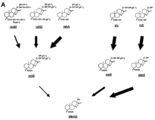
- rebaudioside B rebB
- steviolbioside steB
- steM steviolmonoside
- A Reaction path when no organic solvent is contained in the reaction solution.
- B Reaction path when acetonitrile is contained in the reaction solution.
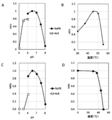
- A The optimum pH of AOBGL11p using pNP- ⁇ -Glc as a substrate.
- B Optimum temperature of AOBGL11p using pNP- ⁇ -Glc as a substrate.
- C pH stability of AOBGL11p using pNP- ⁇ -Glc as a substrate.
- D Thermal stability of AOBGL11p using pNP- ⁇ -Glc as a substrate.
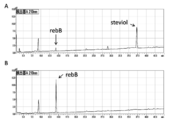
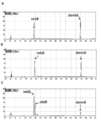
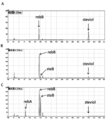
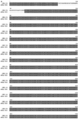
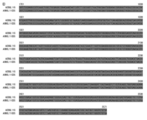
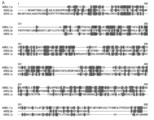
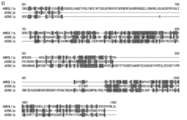
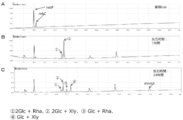
- Comparison of amino acid sequences of AOBGL11p (amino acid sequence: SEQ ID NO: 2), AOBGL3p (amino acid sequence: SEQ ID NO: 5) and AOBGL1p (amino acid sequence: SEQ ID NO: 6). Comparison of amino acid sequences of AOBGL11p (amino acid sequence: SEQ ID NO: 2), AOBGL3p (amino acid sequence: SEQ ID NO: 5) and AOBGL1p (amino acid sequence: SEQ ID NO: 6) (continuation of FIG. 11A). HPLC analysis of the product with BGL11 crude enzyme solution with rebaudioside C (0.05 mg / ml) as substrate. The reaction time is 24 hours. FIG.
- FIG. 12A shows data for only the substrate, and FIGS. 12B, C, and D show differences in the concentration of the protein of the present invention (B: 1/1000 dilution, C: undiluted solution, D: 20-fold concentration), respectively.
- FIG. 13A shows data for only the substrate, and FIGS. 13B and 13C show differences in reaction time (B: 1 hour, C: 24 hours).
- AOBGL11 is ⁇ -glucosidase derived from Aspergillus oryzae, and its CDS sequence (SEQ ID NO: 1), amino acid sequence (SEQ ID NO: 2), ORF sequence (SEQ ID NO: 3) and genomic DNA sequence (SEQ ID NO: 4) are Are shown in the attached sequence listing.
- the present invention relates to a protein selected from the group consisting of the following (a) to (c) (hereinafter referred to as “protein of the present invention”) and a glucoside bond at the 13-position , Reacting a first steviol glycoside having at least one of a glucosyl ester bond at position 19 and a glycosidic bond in a side chain, to form a glucoside bond at position 13 of the first steviol glycoside, 19
- a method for producing steviol and / or a second steviol glycoside comprising hydrolyzing at least one of a glucosyl ester bond at a position and a glycosidic bond in a side chain (excluding rhamnoside bond).
- this invention provides the manufacturing method of the steviol and / or steviol glycoside which contain the organic solvent in a reaction liquid.
- the present invention provides a method for producing steviol and / or steviol glycosides containing acetonitrile in a reaction solution.
- a protein comprising the amino acid sequence of SEQ ID NO: 2;
- B the amino acid sequence of SEQ ID NO: 2, consisting of an amino acid sequence in which 1 to 83 amino acids have been deleted, substituted, inserted and / or added, and a glucoside bond at position 13 of the steviol glycoside, position 19
- C The amino acid sequence of SEQ ID NO: 2 has an amino acid sequence having a sequence identity of 90% or more, and the steviol glycoside has a glucoside bond at position 13, a glucosyl ester bond at position 19, and a side chain Protein having activity of hydrolyzing at least one of glycoside bonds (excluding rhamnoside bonds)
- the protein described in the above (b) or (c) is typically a variant of a protein consisting of the amino acid sequence of SEQ ID NO: 2, but for example, “Sambrook & Russell, Molecular Cloning: A Laboratory Manual Vol. 4, Cold Spring Harbor Laboratory Press 2012 ”,“ Ausubel, Current Protocols in Molecular Biology, John Wiley & Sons 1987-1997 ”,“ Nuc.Acids.Res., 10,6487 (1982) ”,“ Proc.Natl.Acad.Sci.USA 79,6409 (1982) ”,“ Gene, 34,315 (1985) ”,“ Nuc. Acids. Res., 13, 4431 (1985) ”,“ Proc. Natl. Acad. Sci. USA, 82, 488 (1985) ” And the like that can be artificially obtained using the site-directed mutagenesis method described in the above.
- Such a protein includes the amino acid sequence of SEQ ID NO: 2, 90% or more, 91% or more, 92% or more, 93% or more, 94% or more, 95% or more, 96% or more, 97% or more, 98% 99% or more, 99.1% or more, 99.2% or more, 99.3% or more, 99.4% or more, 99.5% or more, 99.6% or more, 99.7% or more, 99. It has an amino acid sequence having a sequence identity of 8% or more, or 99.9% or more, and a glucoside bond at the 13th position, a glucosyl ester bond at the 19th position, and a glycoside bond (rhamnoside) in the side chain of the steviol glycoside. And a protein having an activity of hydrolyzing at least one of (excluding a bond). In general, the larger the sequence identity value, the better.
- the activity of hydrolyzing at least one of the 13-position glucoside bond, the 19-position glucosyl ester bond, and the glycoside bond in the side chain of steviol glycoside means that steviol, which is an aglycon, has a sugar.
- steviol glycosides which are linked glycosides, cleave at least one of steviol's 13-position O-glucoside bond, 19-position glucosyl ester bond and side-chain glycoside bond (except rhamnoside bond) It means activity to (hydrolyze).
- all glucoside bonds (except rhamnoside bonds), glucosyl ester bonds are hydrolyzed to produce steviol from steviol glycosides.
- the first steviol glycoside is one in which a branched trisaccharide, disaccharide or glucose is bonded to position 13 and a branched trisaccharide, disaccharide or glucose is bonded to position 19.
- the hydrolysis reaction of the branched trisaccharide or disaccharide bonded to position 13 of 1 steviol glycoside or the branched trisaccharide bonded to position 19 is suppressed, and the glucoside bond at position 13 and the glucoside in the disaccharide at position 19 are suppressed. Bonds and glucosyl ester bonds are preferentially hydrolyzed.
- the 19-position glucosyl ester bond is cleaved in preference to the 13-position glucoside bond of steviol glycosides.
- the glycosidic bond means a covalent bond formed by dehydration condensation of sugar and sugar or another organic compound with sugar, and among the glycosidic bonds, the bond with the first carbon of glucose is a glucoside bond,
- the bond to the 1st carbon of rhamnose is called a rhamnoside bond
- the bond to the 1st carbon of xylose is called a xyloside bond.
- the protein of the present invention cleaves the bond between steviol (aglycone) of the steviol glycoside and the sugar (13-position glucoside bond, 19-position glucosyl ester bond) and the side-chain split glycoside bond.
- Rhamnoside bonds are removed from bonds that are cleaved.
- the first steviol glycoside has a branched trisaccharide, disaccharide, or glucose monosaccharide at the 13-position and / or a branched trisaccharide, disaccharide, or glucose at the 19-position.
- the monosaccharide is a glucosyl ester bond
- the present invention can perform any one or more cleavages selected from the group consisting of the following (1) to (5).
- the activity of hydrolyzing at least one of the 13-position glucoside bond, the 19-position glucosyl ester bond, and the glycoside bond (except rhamnoside bond) in the side chain of steviol glycosides is compared with the protein of the present invention, for example, steviol. It is obtained by reacting steviol glycosides such as monoside, steviol monoglucosyl ester, rubusoside, steviolbioside, stevioside, rebaudioside B, rebaudioside A, rebaudioside C, rebaudioside D, rebaudioside E and rebaudioside F, rebaudioside M, etc.
- the purified reaction product can be purified, and the purified product can be confirmed by analyzing it using a known technique such as liquid chromatography (LC).
- amino acid residues that can be substituted with each other are shown below. Amino acid residues contained in the same group can be substituted for each other.
- Group A leucine, isoleucine, norleucine, valine, norvaline, alanine, 2-aminobutanoic acid, methionine, o-methylserine, t-butylglycine, t-butylalanine, cyclohexylalanine;
- Group B aspartic acid, glutamic acid, isoaspartic acid, isoglutamic acid, 2-aminoadipic acid, 2-aminosuberic acid;
- Group C asparagine, glutamine;
- Group D lysine, arginine, ornithine, 2,4-diaminobutanoic acid, 2,3-diaminopropionic acid;
- Group E proline, 3-hydroxyproline, 4-hydroxyproline;
- Group F serine, threonine, homoserine;
- Group G phenylalanine, tyrosine.
- the protein of the present invention can be obtained by, for example, expressing a polynucleotide encoding the same (see “polynucleotide of the present invention” described later) in an appropriate host cell.
- the Fmoc method fluorenylmethyl
- the Fmoc method can also be produced by chemical synthesis methods such as the oxycarbonyl method) and the tBoc method (t-butyloxycarbonyl method).
- AAPPPec LLC Perkin Elmer Inc. Manufactured by Protein Technologies Inc. Chemical synthesis can also be carried out using a peptide synthesizer such as manufactured by PerSeptive Biosystems, Applied Biosystems, or SHIMADZU CORPORATION.
- the “steviol glycoside” is a glycoside in which a sugar is bound to steviol, which is an aglycone.
- Examples of steviol and steviol glycosides are represented by the following general formula (I).
- steviol glycosides A and C are products obtained by reacting rebaudioside C with the protein of the present invention
- steviol glycosides B and D are rebaudioside F and the protein of the present invention.
- “Glc” indicates glucose
- “Glc-” indicates that it contains a monoglucoside bond (R 1 position) or a monoglucosyl ester bond (R 2 position).
- Rha and “Xyl” represent rhamnose and xylose, respectively.
- sugar chain bonded to R 1 position or R 2 position is a branched trisaccharide
- two glucoses are further bonded to one glucose bonded to steviol, which is an aglycone, and one bond is ⁇ 1
- Two bonds are present, and the other is branched to this to represent ⁇ 1,3 bonds.
- the “side chain” means a sugar or sugar chain bonded to steviol.
- the enzymatic activity of the present invention can suppress the hydrolysis activity of some glycosidic bonds and glucosyl ester bonds, for example, by adding a solvent such as acetonitrile to the reaction solution. That is, by adding an organic solvent such as acetonitrile to the reaction solution, hydrolysis reaction of the branched trisaccharide or disaccharide side chain bonded to the 13-position or the branched trisaccharide glycoside bond bonded to the 19-position. And the glycoside bond at position 13 of the steviol glycoside, the glycoside bond within the disaccharide at position 19 and the glucosyl ester bond at position 19 are preferentially cleaved.
- rebaudioside B can be obtained from rebaudioside D or rebaudioside A
- steviolbioside can be obtained from stevioside. It is also possible to facilitate the purification of these steviol glycosides by hydrolyzing steviol glycosides other than rebaudioside M, rebaudioside B, steviolbioside to steviol from a mixture of steviol glycosides. It is.
- the 19-position glucosyl ester bond is preferentially cleaved from the 13-position glucoside bond of steviol glycoside means that the 19-position glucosyl ester bond is greater than the 13-position glucoside bond of steviol glycoside.
- Selective preference is to hydrolyze. For example, when rubusoside or stevioside is used as a substrate, steviol monoside or steviolbioside is preferentially produced over steviol or steviol monoglucosyl ester, and when rebaudioside D or rebaudioside A is used as a substrate, rebaudioside is used rather than steviol. B is preferentially generated.
- the substrate in “a step of cleaving a glycoside bond (excluding rhamnoside bond) in a disaccharide or a glucoside bond or a glucosyl ester bond of a glucose monosaccharide in preference to a branched trisaccharide”, the substrate is located at the 13th or 19th position.
- a branched trisaccharide is bound to a disaccharide and a substrate is bound to a disaccharide or a glucose monosaccharide
- the bond in the substrate disaccharide or the bond between the glucose monosaccharide and the aglycone is preferentially hydrolyzed. Will be.
- the branched trisaccharides of the side chains of rebaudioside M, rebaudioside D, rebaudioside A, and rebaudioside B are hardly hydrolyzed, and the disaccharides in the side chain at position 19 are not hydrolyzed.
- the glucoside bond and the 19-position glucosyl ester bond in the 19-position side chain of the steviol glycoside having a glucoside bond and the 19-position glucosyl ester bond are preferably hydrolyzed.
- step of preferentially cleaving glucose when xylose and glucose, or rhamnose and glucose are combined with glucose bound to aglycone for example, glucose binds to steviol at position 13, and the glucose
- a steviol glycoside further formed by xylose ( ⁇ 1,2 bond) and glucose ( ⁇ 1,3 bond) is contacted with the enzyme of the present invention, ⁇ 1,3 bond with glucose is preferentially hydrolyzed.
- rebaudioside F is hydrolyzed by this step, the 19-position glucosyl ester is preferentially hydrolyzed, and then the glucose ( ⁇ 1,3) bond of the 13-position branched trisaccharide is hydrolyzed.
- rebaudioside M Is contacted with the enzyme of the present invention to produce rebaudioside B as an intermediate product, followed by steviol as the final degradation product.
- “Glycosidic bonds within the disaccharide at position 13 are favored by glycosidic bonds at position 19 (except rhamnoside) and glucosyl ester bonds with glucose monosaccharide at position 19
- the rebaudioside M is hydrolyzed under a condition in which the hydrolysis reaction is suppressed by adding an organic solvent such as acetonitrile to the reaction solution, whereby the 19-position branched trisaccharide is hydrolyzed.
- the 19-branched trisaccharide is preferentially hydrolyzed as compared to the 13-branched trisaccharide in that rebaudioside B is produced by decomposition.
- the glucosyl ester bond with the glucose monosaccharide at the 19th position is cleaved preferentially as compared with the hydrolysis of the disaccharide at the 13th position, resulting in steviolbioside. .
- step of preferentially cleaving the glucosyl ester bond of the 19th glucose monosaccharide over the glucoside bond of the 13th glucose monosaccharide for example, when rubusoside is hydrolyzed with the enzyme of the present invention, 19 The glucosyl ester bond with the glucose monosaccharide at the position is cleaved to produce steviol monoside as an intermediate.
- steviol glycoside having at least one of 13-position glucoside bond, 19-position glucosyl ester bond and glycoside bond in side chain as a starting material
- the body is extracted from stevia and tencha (Rubus suauissimus) with an appropriate solvent (aqueous solvent such as water or organic solvent such as alcohol, ether and acetone), ethyl acetate and other organic solvents: water gradient, high performance liquid chromatography.
- solvent aqueous solvent such as water or organic solvent such as alcohol, ether and acetone
- ethyl acetate and other organic solvents water gradient, high performance liquid chromatography.
- HPLC High Performance Liquid Chromatography
- Ultra (High) Performance Liquid Chromatography: UPLC Ultra High Performance Liquid Chromatography
- a steviol glycoside having at least one of a glucoside bond at the 13th position, a glucosyl ester bond at the 19th position, and a glycoside bond in the side chain as a starting material may be commercially available.
- the method for producing steviol glycoside and / or steviol according to the present invention has at least one of the protein of the present invention, a glucoside bond at the 13th position, a glucosyl ester bond at the 19th position, and a glycoside bond in the side chain. It includes a step of reacting steviol glycoside to hydrolyze at least one of a glucoside bond at position 13, a glucosyl ester bond at position 19, and a glycoside bond (excluding rhamnoside bond) in the side chain.
- the method of the present invention may further include a step of purifying the steviol and / or the second steviol glycoside of the present invention produced in the above step.
- Steviol and / or steviol glycosides of the present invention can be extracted with an appropriate solvent (aqueous solvent such as water, or organic solvent such as alcohol, ether or acetone), ethyl acetate or other organic solvents: water gradient, high speed It can be purified by known methods such as liquid chromatography (HPLC), ultra high performance liquid chromatography (Ultra (High) Performance Chromatography: UPLC), and the like.
- aqueous solvent such as water, or organic solvent such as alcohol, ether or acetone
- ethyl acetate or other organic solvents water gradient, high speed
- HPLC liquid chromatography
- Ultra (High) Performance Chromatography: UPLC ultra high performance liquid chromatography
- the method for producing steviol glycosides and / or steviol according to the present invention can be carried out under conditions in which an organic solvent is added to a reaction solution containing a substrate.
- the organic solvent can be in the range of 1% to 20% with respect to the total amount of the reaction solution, preferably 5% to 15%, 6 to 12%, more preferably 8%.
- the organic solvent may be generally available, preferably mixed with water at an arbitrary ratio, and acetonitrile can be used.
- the organic solvent may be added in advance to the reaction solution, or may be added in the middle of the reaction.
- polynucleotide means DNA or RNA.
- Examples of the polynucleotide encoding the protein consisting of the amino acid sequence of SEQ ID NO: 2 include a polynucleotide consisting of the base sequence of SEQ ID NO: 1.
- a glucoside bond at position 13 and a glucosyl at position 19 of the steviol glycoside consisting of an amino acid sequence in which 1 to 83 amino acids have been deleted, substituted, inserted and / or added.
- the “protein having an activity of hydrolyzing at least one of an ester bond and a glycosidic bond (excluding rhamnoside bond) in a side chain” include those described above.
- the amino acid sequence of SEQ ID NO: 2 has an amino acid sequence having a sequence identity of 90% or more, and the steviol glycoside has a glucoside bond at position 13, a glucosyl ester bond at position 19, and a side chain.
- Examples of the “protein having an activity of hydrolyzing at least one of glycoside bonds (excluding rhamnoside bonds)” include those described above.
- a polynucleotide that hybridizes under highly stringent conditions encodes a polynucleotide comprising a nucleotide sequence complementary to the nucleotide sequence of SEQ ID NO: 1 or the amino acid sequence of SEQ ID NO: 2.
- high stringent conditions means, for example, 5 ⁇ SSC, 5 ⁇ Denhardt's solution, 0.5% SDS, 50% formamide, 50 ° C., or 0.2 ⁇ SSC, 0.1% SDS, The conditions are 60 ° C., 0.2 ⁇ SSC, 0.1% SDS, 62 ° C., or 0.2 ⁇ SSC, 0.1% SDS, 65 ° C., but are not limited thereto. Under these conditions, it can be expected that DNA having high sequence identity can be efficiently obtained as the temperature is increased.
- factors affecting the stringency of hybridization include multiple factors such as temperature, probe concentration, probe length, ionic strength, time, and salt concentration, and those skilled in the art can select these factors as appropriate. By doing so, it is possible to achieve the same stringency.
- Alkphos Direct Labeling and Detection System (GE Healthcare) can be used, for example.
- the membrane was subjected to a primary wash containing 0.1% (w / v) SDS at 55-60 ° C. After washing with a buffer, the hybridized DNA can be detected.
- a probe based on a base sequence complementary to the base sequence of SEQ ID NO: 1 or a base sequence complementary to the base sequence encoding the amino acid sequence of SEQ ID NO: 2 commercially available
- DIG digoxigenin
- a reagent for example, PCR labeling mix (Roche Diagnostics)
- hybridization is performed using a DIG nucleic acid detection kit (Roche Diagnostics). Can be detected.
- hybridizable polynucleotide encodes the DNA of the nucleotide sequence of SEQ ID NO: 1 or the amino acid sequence of SEQ ID NO: 2, when calculated by the BLAST homology search software using the default parameters.
- sequence identity of the amino acid sequence and the base sequence is the algorithm BLAST (Basic Local Alignment Search Tool) (Proc. Natl. Acad. Sci. USA 872264-2268, 1990; Proc Natl Acad Sci USA 90: 5873, 1993).
- BLAST Basic Local Alignment Search Tool
- the default parameters of each program are used.
- the above-described polynucleotide of the present invention can be obtained by a known genetic engineering technique or a known synthesis technique.
- the polynucleotide of the present invention may further include a polynucleotide consisting of a base sequence encoding a secretory signal peptide.
- a polynucleotide consisting of a base sequence encoding a secretory signal peptide is included at the 5 'end of the polynucleotide of the present invention.
- the polynucleotide from the secretory signal peptide and the base sequence encoding it is the same as described above.
- the polynucleotide of the present invention is preferably introduced into a host while being inserted into an appropriate expression vector.
- Suitable expression vectors are usually (I) a promoter capable of transcription in a host cell; (Ii) a polynucleotide of the present invention linked to the promoter; and (iii) an expression cassette comprising, as a component, a signal that functions in a host cell for transcription termination and polyadenylation of an RNA molecule. .
- the method for producing the expression vector includes, but is not limited to, a method using a plasmid, phage, cosmid or the like.
- the specific type of the vector is not particularly limited, and a vector that can be expressed in the host cell can be appropriately selected. That is, according to the type of the host cell, a promoter sequence is appropriately selected in order to reliably express the polynucleotide of the present invention, and a vector in which this and the polynucleotide of the present invention are incorporated into various plasmids or the like is used as an expression vector. Good.
- the expression vector of the present invention contains an expression control region (for example, a promoter, a terminator and / or a replication origin) depending on the type of host to be introduced.
- an expression control region for example, a promoter, a terminator and / or a replication origin
- Conventional promoters eg, trc promoter, tac promoter, lac promoter, etc.
- yeast promoters include glyceraldehyde 3-phosphate dehydrogenase promoter, PH05 promoter, etc.
- Examples of the promoter for filamentous fungi include amylase and trpC.
- promoters for expressing a target gene in plant cells include the cauliflower mosaic virus 35S RNA promoter, the rd29A gene promoter, the rbcS promoter, and the enhancer sequence of the cauliflower mosaic virus 35S RNA promoter derived from Agrobacterium. And the mac-1 promoter added to the 5 'side of the mannopine synthase promoter sequence.
- animal cell host promoters include viral promoters (eg, SV40 early promoter, SV40 late promoter, etc.).
- MMTV mouse mammary tumor virus
- the expression vector preferably contains at least one selectable marker.
- markers include auxotrophic markers (ura5, niaD), drug resistance markers (hygromycin, zeocin), geneticin resistance gene (G418r), copper resistance gene (CUP1) (Marin et al., Proc. Natl. Acad. Sci. USA, vol. 81, p. 337, 1984), cerulenin resistance gene (fas2m, PDR4) (respectively, Minoru Ogura et al., Biochemistry, vol. 64, p. 660, 1992; , Gene, vol. 101, p. 149, 1991) can be used.
- the production method (production method) of the transformant of the present invention is not particularly limited, and examples thereof include a method of transforming by introducing an expression vector containing the polynucleotide of the present invention into a host.
- cells or organisms to be transformed various conventionally known cells or organisms can be suitably used.
- cells to be transformed include bacteria such as Escherichia coli, yeast (budding yeast Saccharomyces cerevisiae, fission yeast Schizosaccharomyces pombe), filamentous fungi (gonococci Aspergillus oryzae, Aspergillus sojae), plant cells, and humans. Excluding animal cells and the like.
- the organism to be transformed is not particularly limited, and examples thereof include various microorganisms exemplified in the host cell, animals other than plants or animals.
- the transformant is preferably a yeast or a plant.
- the host used for transformation is preferably one that produces steviol glycosides having at least one of a glucoside bond at position 13, a glucosyl ester bond at position 19, and a glycoside bond in the side chain.
- a gene necessary for the production of a steviol glycoside having at least one of a glucoside bond at position 13, a glucosyl ester bond at position 19, and a glycoside bond in a side chain is described in, for example, WO2011 / 093509 Examples include steviol and genes having steviol glycoside synthesis activity.
- a host cell transformation method As a host cell transformation method, a commonly known method can be used. For example, electroporation method (Mackenxie, DAet al., Appl. Environ. Microbiol., Vol.66, p.4655-4661, 2000), particle delivery method (Japanese Patent Application Laid-Open No. 2005-287403 ), Spheroplast method (Proc. Natl. Acad. Sci. USA, vol.75, p.1929,1978), lithium acetate method (J.Bacteriology, vol.153, p.163,1983) ), Methods in yeast genetics, 2000 Edition: A Cold Spring Harbor Laboratory Course Manual), but not limited thereto.
- electroporation method Mackenxie, DAet al., Appl. Environ. Microbiol., Vol.66, p.4655-4661, 2000
- particle delivery method Japanese Patent Application Laid-Open No. 2005-287403
- Spheroplast method Pro
- the yeast or koji mold transformed with the polynucleotide of the present invention expresses more of the protein of the present invention than the wild type.
- the expressed protein of the present invention has a first steviol arrangement having at least one of a 13-position glucoside bond, a 19-position glucosyl ester bond, and a glycoside bond in the side chain produced in yeast or Neisseria gonorrhoeae.
- Reacting with a saccharide, at least one of the 13th glucoside bond, the 19th glucosyl ester bond, and the glycoside bond (except rhamnoside bond) in the side chain of the first steviol glycoside is cleaved, and steviol And / or the second steviol glycoside is produced in yeast or Neisseria gonorrhoeae cells or in the culture medium, preferably in the culture medium.
- the plant to be transformed in the present invention is the whole plant, plant organ (eg, leaf, petal, stem, root, seed, etc.), plant tissue (eg, epidermis, phloem) , Soft tissue, xylem, vascular bundle, palisade tissue, spongy tissue, etc.) or plant culture cells, or various forms of plant cells (eg, suspension culture cells), protoplasts, leaf sections, callus, etc. Also means.
- the plant used for the transformation may be any plant belonging to the monocotyledonous plant class or the dicotyledonous plant class.
- Whether or not the polynucleotide of the present invention has been introduced into a plant can be confirmed by PCR, Southern hybridization, Northern hybridization, or the like.
- offspring can be obtained by sexual or asexual reproduction of the plant.
- seeds, fruits, cuttings, tubers, tuberous roots, strains, callus, protoplasts, and the like can be obtained from the plant or its progeny, or clones thereof, and the plant can be mass-produced based on them. it can.
- plant of the present invention contains more of the protein of the present invention than its wild type.
- the steviol glycoside in which the protein of the present invention has at least one of the glucoside bond at the 13th position, the glucosyl ester bond at the 19th position, and the glycosidic bond in the side chain produced in the plant of the present invention Reacts with the body, producing steviol in plants.
- the hydrolysis reaction of the branched trisaccharide or disaccharide bonded to the 13th position or the branched trisaccharide bonded to the 19th position is suppressed, and the 13th position is suppressed.
- Steviol glycosides in which the monoglucoside bond or the glycoside bond in the disaccharide bonded to the 19-position or the 19-position glucosyl ester bond is cleaved are produced.
- the transformant of the present invention or the culture solution thereof has a higher content of the steviol glycoside of the present invention than its wild type, and the extract or culture solution contains the steviol glycoside of the present invention.
- Glucose is contained at a high concentration.
- the extract of the transformant of the present invention can be obtained by crushing the transformant using glass beads, a homogenizer, a sonicator or the like, centrifuging the crushed material, and collecting the supernatant. it can.
- the transformant and the culture supernatant are separated by a usual method (for example, centrifugation, filtration, etc.) A culture supernatant containing the steviol glycoside of the present invention can be obtained.
- the thus obtained extract or culture supernatant may be further subjected to a purification step.
- Purification of the steviol glycoside of the present invention can be carried out according to ordinary separation and purification methods. The specific method is the same as described above.
- the protein of the present invention is obtained by expressing the protein of the present invention in a host cell and disrupting the cell. be able to.
- the steviol glycoside and / or steviol of the present invention can also be produced by allowing the protein of the present invention to act.
- the enzyme derived from the transformed cell of the present invention is contacted with a steviol glycoside having at least one of a glucoside bond at position 13, a glucosyl ester bond at position 19, and a glycoside bond in the side chain.
- the hydrolysis reaction of the branched trisaccharide or disaccharide bonded to the 13th position or the branched trisaccharide bonded to the 19th position is suppressed.
- Steviol glycosides in which the monoglucoside bond at position 13 or the glycoside bond in the disaccharide bonded to position 19 or the glucosyl ester bond at position 19 are cleaved are produced. It has been confirmed in the Examples that the protein of the present invention exhibits the same activity when expressed in yeast as in the case of expression in Aspergillus.
- the “enzyme derived from the transformed cell” is not limited as long as it is prepared using the transformed cell and contains the protein of the present invention.
- the present invention provides an enzyme derived from a non-human transformed cell into which a polynucleotide selected from the group consisting of the following (a) to (e) is introduced into a host cell, a glucoside bond at the 13th position, A glucosyl bond at position 13, a glucoside bond at position 13 of the first steviol glycoside, and a glucosyl at position 19
- a method for producing steviol and / or a second steviol glycoside comprising hydrolyzing at least one of an ester bond and a glycosidic bond (excluding rhamnoside bond) in a side chain, wherein The second steviol glycosides provide a different method.
- a polynucleotide comprising the nucleotide sequence of SEQ ID NO: 1;
- B a polynucleotide encoding a protein consisting of the amino acid sequence of SEQ ID NO: 2;
- C the amino acid sequence of SEQ ID NO: 2, consisting of an amino acid sequence in which 1 to 83 amino acids have been deleted, substituted, inserted and / or added, and a glucoside bond at position 13 of the steviol glycoside, position 19
- D a glucoside bond at position 13, a glucosyl ester bond at position 19, and a side chain of steviol glycoside, having an amino acid sequence having 90% or more sequence identity to the amino acid sequence of SEQ ID NO: 2
- the polynucleotide selected from the group consisting of (a) to (e) above is the polynucleotide of the present invention and is the same as described above.
- Contact refers to an enzyme derived from the transformed cell of the present invention and a steviol glycoside having at least one of a glucoside bond at position 13, a glucosyl ester bond at position 19, and a glycoside bond in the side chain.
- Means in the same reaction system or culture system for example, a glucoside bond at position 13, a glucosyl ester bond at position 19, and a glycoside in the side chain in a container containing the enzyme derived from the transformed cell of the present invention
- the enzyme derived from the transformed cell of the present invention is Koshido coupling includes adding to a vessel containing a steviol glycoside having at least one of 19 of the glucosyl ester bond, and a glycoside bond in the side chain.
- Stepviol glycoside “Steviol glycoside having at least one of glucoside bond at position 13, glucosyl ester bond at position 19, and glycoside bond in side chain”, and “position 13 of steviol glycoside The activity of hydrolyzing at least one of the glucoside bond, the glucosyl ester bond at the 19th position, and the glycoside bond (excluding the rhamnoside bond) in the side chain ”is the same as described above.
- the steviol glycoside of the present invention thus obtained is used in accordance with a conventional method, for example, for use in production of foods and drinks, sweeteners, fragrances, pharmaceuticals, industrial raw materials (raw materials such as cosmetics and soaps) and the like. can do.
- “food and beverage” is a general term for solids, fluids, liquids, and mixtures thereof that can be orally consumed.
- Examples of the food and drink of the present invention include nutritional supplement food and drink, health food and drink, functional food and drink, infant food and drink, infant formula, premature infant formula, elderly food and drink, and the like.
- Nutritional supplement foods and drinks are foods and drinks that are enriched with specific nutritional ingredients.
- Healthy foods and drinks refer to foods and drinks that are said to be healthy or healthy, and include nutritional supplements and foods, natural foods and drinks, diet foods and drinks, and the like.
- Functional food and drink refers to food and drink for replenishing nutritional components that fulfill the body's regulatory functions, and is synonymous with food for specified health use.
- Infant food and drink means food and drink for children up to about 6 years old.
- Aged foods and beverages refer to foods and beverages that have been treated to be easier to digest and absorb than untreated food and beverages.
- Infant formula refers to formula for feeding to children up to about 1 year old.
- Premature infant formula refers to formula that is given to premature infants until they are about 6 months old.
- the phrase “at least” means that the number of specific items may be greater than or equal to the number listed.
- the word “about” is present in the range of ⁇ 25%, ⁇ 10%, ⁇ 5%, ⁇ 3%, ⁇ 2%, or ⁇ 1% of the numerical value that the subject follows “about”. It means to do. For example, “about 10” means a range of 7.5 to 12.5.
- AOBGL11-F 5'-ATGCCTCGTCTAGACCGTCGAGAA-3 '(SEQ ID NO: 7)
- AOBGL11-R 5'-TCACAGACCCAACCAGTAGGCGA-3 '(SEQ ID NO: 8)
- Conidia of Aspergillus oryzae var. Brunneus (IFO30102) were added to a liquid medium (1 g, glucose 20 g, bactotryptone 1 g, yeast extract 5 g, NaNO 3 1 g, K 2 HPO 4 0.5 g, MgSO 4 ⁇ 7H 2 O 0 0.5 g, FeSO 4 ⁇ 7H 2 O 0.01 g) was inoculated into 10 ml, and cultured at 30 ° C. for 1 day. Bacteria were collected by filtration, ground in liquid nitrogen, and then genomic DNA was prepared using DNeasy Plant Mini Kit (QIAGEN).
- PCR was performed with KOD-plus (Toyobo) using genomic DNA as a template and primers AOBGL11-F and AOBGL11-R.
- the obtained DNA fragment of about 2.57 kbp was cloned using Zero Blunt TOPO PCR Cloning Kit (Invitrogen) to obtain plasmid pCR-AOBGL11g.
- Koji molds were transformed as follows. As a host, Aspergillus oryzae niaD300 strain (Liquor Research Institute) was used. Host strains were inoculated on PDA plates and cultured at 30 ° C. for approximately 1 week. To obtain a conidial suspension, 0.1% tween 80, 0.8% NaCl was added to suspend the conidia. After filtration through Miracloth, conidia were collected by centrifugation, further washed with 0.1% tween 80, 0.8% NaCl, and suspended in sterile water.
- Conidia were added to CD plates (6 g NaNO 3 , 0.52 g KCl 2, 1.52 g KH 2 PO 4 , 2 g glucose, 1 ml MgSO 4 , trace element solution (1 g FeSO 4 ⁇ 7H 2 O, 1 g ZnSO).
- Agar 20 g (pH 6.5) was applied, and DNA was introduced by a particle delivery method.
- Liquid medium for enzyme production (per 1 liter, maltose 100 g, bactotryptone 1 g, yeast extract 5 g, NaNO 3 1 g, K 2 HPO 4 0.5 g, MgSO 4 .7H 2 O 0.5 g, FeSO 4 ⁇ 7H 2 O 0.01 g) and cultured with shaking at 30 ° C. for 2 days.
- the cells were collected by filtration through Miracloth. About 4 g of the obtained wet cells were frozen with liquid nitrogen and ground in a mortar. The ground cells were suspended in 50 mM sodium phosphate buffer (pH 7.0), mixed well, and then centrifuged. The obtained supernatant was concentrated by ultrafiltration with Amicon Ultra-15 50k (Merck) and replaced with 50 mM sodium phosphate buffer pH 7.0 (buffer A) containing 0.1% CHAPS. 1 ml of crude enzyme solution was obtained.
- the protein concentration of the crude enzyme solution was quantified using a protein assay CBB solution (concentrated 5 times) (Nacalai Tesque). As a result, the BGL11-1 crude enzyme solution was 6.46 mg / ml and the C-1 crude enzyme solution was 4 mg / ml.
- pNP- ⁇ -Glc degradation activity The degradation activity of pNP- ⁇ -Glc was examined. 10 ⁇ L of the crude enzyme solution, 50 ⁇ L of 0.2 M sodium phosphate buffer (pH 7.0), 50 ⁇ L of 20 mM pNP- ⁇ -Glc aqueous solution and water were added to make a total of 200 ⁇ L, followed by reaction at 37 ° C. Since the BGL11-1 crude enzyme solution had high activity, the crude enzyme solution diluted 100-fold with 50 mM sodium phosphate buffer (pH 7.0) containing 0.1% CHAPS was used.
- the optimal temperature, optimal pH, thermal stability, and pH stability of AOBGL11p were examined using pNP- ⁇ -Glc as a substrate (FIG. 2).
- the BGL11-1 crude enzyme solution was diluted 5000 times with buffer A (protein concentration 1.3 ⁇ g / ml).
- the reaction solution is 20 ⁇ l of crude enzyme solution (1.3 ⁇ g / ml), 100 ⁇ l of 0.2 M sodium phosphate buffer (pH 6.5), 20 mM pNP- ⁇ -Glc, and water are added to make a total of 400 ⁇ l.
- 100 ⁇ l was sampled and mixed with 100 ⁇ l 0.2 M sodium carbonate solution, and then the absorbance at 405 nm was measured to obtain ⁇ 405.
- FIG. 2B shows the ratio of ⁇ 405 when the reaction is performed at each temperature with 45 ° C. at which ⁇ 405 is maximized as 1. As a result, it was found that 45-50 ° C. was the optimum temperature for the reaction.
- Optimal pH The reaction solution was adjusted to a total of 400 ⁇ l by adding 20 ⁇ l of crude enzyme solution (1.3 ⁇ g / ml), 100 ⁇ l of 0.2 M buffer, 20 mM pNP- ⁇ -Glc, and water.
- As the buffer sodium acetate buffer was used at pH 4.0-6.0, and sodium phosphate buffer was used at pH 6.0-8.0. Sampling and measurement were performed in the same manner as described above, and the ratio of ⁇ 405 when reacted at each pH with respect to the maximum value of ⁇ 405 is shown in FIG. 2A. As a result, it was found that pH 6.0-7.0 was the optimum reaction pH.
- the crude enzyme solution (1.3 ⁇ g / ml) diluted 5000 times was kept at 30 ° C., 37 ° C., 45 ° C., and 50 ° C. for 10 minutes, and then cooled on ice.
- the reaction solution was 5 ⁇ l of crude enzyme solution (1.3 ⁇ g / ml), 100 ⁇ l of 0.2 M sodium phosphate buffer (pH 6.5), 20 mM pNP- ⁇ -Glc, and water to make a total of 100 ⁇ l, at 37 ° C. for 45 minutes. After the reaction, 100 ⁇ l of 0.2M sodium carbonate solution was added, and the absorbance at 405 nm was measured.
- AOBGL11p was stable up to 37 ° C. when treated for 10 minutes, but was deactivated to about half when treated at 45 ° C., and the activity was almost lost when treated at 50 ° C.
- pH stability The crude enzyme solution was adjusted to pH 4.5, 5.0, 5.5, 6.0 (0.2 M acetate buffer), pH 6.0, 6.5, 7.0, 7.5, 8. The sample was diluted 5000 times with each buffer of 0 (0.2 M sodium phosphate buffer), kept at 37 ° C. for 1 hour, and then ice-cooled.
- the reaction solution was 5 ⁇ l of crude enzyme solution (1.3 ⁇ g / ml), 100 ⁇ l of 0.2 M sodium phosphate buffer (pH 6.5), 20 mM pNP- ⁇ -Glc, and water to make a total of 100 ⁇ l, at 37 ° C. for 45 minutes.
- Steviol glycoside hydrolysis activity Rebaudioside M, rebaudioside D, rebaudioside A, stevioside, rubusoside were used as substrates. Steviol glycosides were analyzed by HPLC or LC-MS. The analysis conditions of HPLC are as follows. Column: Cosmo Seal 5C 18 -AR-II 4.6 mmI. D. x250mm (Nacalai Tesque) Mobile phase: A; acetonitrile, B; 10 mM sodium phosphate buffer (pH 2.6) B conc. 70% ⁇ 30% 40 minutes linear gradient Flow rate: 1 ml / min Temperature: 40 ° C Detection: UV 210nm
- Reaction condition (1)-Organic solvent is not included in the reaction solution- Substrate 50 ⁇ g / ml, BGL11 crude enzyme solution (protein concentration 6.5 mg / ml) 20 ⁇ l, 50 mM sodium phosphate buffer (pH 6.5), total volume 100 ⁇ l, and reacted at 37 ° C. for 24 hours.
- the reaction solution was washed with acetonitrile and then subjected to Sep-PakC18 (Waters) equilibrated with water. Subsequently, the reaction solution was washed with 20% acetonitrile and then eluted with 50% acetonitrile.
- the eluate was dried with a speed bag, redissolved with 100 ⁇ L of water, and subjected to HPLC.
- the substrate was rebM, it was also used for LC-MS.
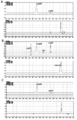
- rebM was used as a substrate, steviol was detected as the main product, and rebD, stv, and rebB were detected as intermediates (FIG. 3A).
- rebD FIG. 4A
- rebA FIG. 5A
- stv, and rub were used as substrates
- the main product was steviol.
- the same reaction was carried out with the C-1 crude enzyme solution, but no substrate was hydrolyzed and no product was detected. Therefore, the steviol glycoside hydrolyzing activity was attributed to AOBGL11p. I thought it was.
- Reaction condition (2)-Acetonitrile is included in the reaction solution- Substrate 50 ⁇ g / ml, enzyme solution 20 ⁇ l, 50 mM sodium phosphate buffer (pH 6.5), 0% or 8% acetonitrile, the total volume was 100 ⁇ l, and reacted at 37 ° C. for 24 hours.
- the reaction solution was washed with acetonitrile and then subjected to Sep-PakC18 (Waters) equilibrated with water. Subsequently, the reaction solution was washed with 20% acetonitrile and then eluted with 50% acetonitrile.
- Reaction conditions (3) Substrate 50 ⁇ g / ml, BGL11 crude enzyme solution (protein concentration 6.5 mg / ml) 20 ⁇ l, 50 mM sodium phosphate buffer (pH 6.5), total volume 100 ⁇ l, and reacted at 50 ° C. for 24 hours.
- the reaction solution was washed with acetonitrile and then subjected to Sep-PakC18 (Waters) equilibrated with water. Subsequently, the reaction solution was washed with 20% acetonitrile and then eluted with 50% acetonitrile.
- the eluate was dried with a speed bag, redissolved with 100 ⁇ L of water, and subjected to HPLC.
- rebM was not hydrolyzed.
- rebD and rebA were partially hydrolyzed to yield rebB, but no further hydrolyzed product was detected.
- Stv was partially hydrolyzed to produce steB, but no further hydrolyzed product could be detected.
- Rub was partially hydrolyzed to form steM and steviol.
- Rebaudio JM Stevia Extract Hydrolysis
- Steviron S-100 Stevia Extract Hydrolysis
- AOBGL11p The reaction conditions were: Rebaudio JM 1 mg / ml (FIG. 8) or 10 mg / ml (FIG. 7), or Steviron S-100 1 mg / ml (FIG. 9), enzyme solution 20 ⁇ l, 50 mM sodium phosphate buffer (pH 6.5). , 0%, 4% or 8% acetonitrile, the total volume was 100 ⁇ l, and the mixture was reacted at 37 ° C. for 24 hours.
- reaction solution was washed with acetonitrile and then subjected to Sep-PakC18 (Waters) equilibrated with water. Subsequently, the reaction solution was washed with 20% acetonitrile and then eluted with 50% acetonitrile. The eluate was dried with a speed bag, redissolved with 100 ⁇ L of water, and subjected to HPLC.
- Sep-PakC18 Waters
- AOBGL11 cDNA Cloning of AOBGL11 cDNA The BGL11-1 strain was cultured in 10 ml of enzyme production medium, and the cells were collected by filtration. The cells were frozen with liquid nitrogen, ground in a mortar, and then total RNA was extracted with RNeasy (QIAGEN). CDNA was synthesized by SuperScript Double-Stranded cDNA Synthesis Kit (Life Technologies). Using this as a template, PCR was performed with KOD-plus (Toyobo) using primers AOBGL11-F and AOBGL11-R.
- the obtained DNA fragment of about 2.52 kbp was cloned by using Zero Blunt TOPO PCR Cloning Kit (Invitrogen) to obtain the cDNA of AOBGL11 to obtain plasmid pCR-AOBGL11 cDNA.
- the CDS sequence was as shown in SEQ ID NO: 1.
- FIG. 10 shows a comparison of the AOBGL11 genomic DNA sequence and the CDS sequence.
- Plasmid pCR-AOBGL11 cDNA was digested with EcoRI, and a DNA fragment of about 2.52 kbp was transformed into yeast expression vector pYE22m (Biosci. Biotech. Biochem., 59, 1221- 1228, 1995), and the one in which AOBGL11 was inserted in such a direction as to express from the GAPDH promoter of the vector pYE22m was selected as pYE-AOBGL3c.
- the EH13-15 strain (trp1, MAT ⁇ ) of S. cerevisiae (Appl. Microbiol. Biotechnol., 30, 515-520, 1989) was used as a parent strain for transformation.
- EH13-15 strain was transformed by lithium acetate method using plasmids pYE22m (control) and pYE-AOBGL11 (for AOBGL11 expression), respectively.
- the transformed strain was SC-Trp (per 1 L, yeast nitrogen base w / o amino acids (DIFCO) 6.7 g, glucose 20 g, and amino acid powder (adenine sulfate 1.25 g, arginine 0.6 g, aspartic acid 3 g, Glutamic acid 3 g, histidine 0.6 g, leucine 1.8 g, lysine 0.9 g, methionine 0.6 g, phenylalanine 1.5 g, serine 11.25 g, tyrosine 0.9 g, valine 4.5 g, threonine 6 g, uracil 0.6 g 1) containing 1.3 g) and those growing on an agar medium (2% agar) were selected.
- SC-Trp per 1 L
- the strain obtained by transformation with plasmid pYE22m was designated as CY strain, and the strain obtained by transformation with plasmid pYE-AOBGL11 was designated as AOBGL11-Y strain.
- the selected CY strain and AOBGL11-Y strain were inoculated with 1 platinum ear in 10 mL of SC-Trp liquid medium supplemented with 1/10 volume of 1M potassium phosphate buffer, and cultured with shaking at 30 ° C. and 125 rpm for 2 days. .
- the obtained culture was separated into a culture supernatant and cells by centrifugation.
- the culture supernatant was concentrated to ultrafiltration with Amicon Ultra-15 50k (Merck), substituted with 50 mM sodium phosphate buffer (pH 7.0) containing 0.1% CHAPS, and about 1 ml of culture supernatant concentrate.
- the cells are suspended in 1 ml of 50 mM sodium phosphate buffer (pH 7.0) and 0.1% CHAPS solution.
- the cells are disrupted with glass beads, and the supernatant obtained by centrifugation is disrupted. Liquid. Take 20 ⁇ l of the culture supernatant concentrate or cell disruption solution, add 1 ⁇ l of 2% X- ⁇ -Glc / DMF solution and react at room temperature for 5 minutes. Only the cell disruption solution derived from AOBGL11-Y strain is blue. And was suggested to have X- ⁇ -Glc activity.
- the absorbance change at 405 nm per minute ( ⁇ 405) based on p-nitrophenol (pNP) released by hydrolysis of pNP- ⁇ -Glc was 0.068 in the AOBGL11-Y crude enzyme solution, and CY crude enzyme.
- the liquid was 0.000.
- Steviol glycoside hydrolyzing activity was examined in the cell disruption fluids of the CY and AOBGL11-Y strains. Substrate 50 ⁇ g / ml, enzyme solution 20 ⁇ l, 50 mM sodium phosphate buffer (pH 6.0), the total volume was 100 ⁇ l, and reacted at 50 ° C. The reaction solution was washed with acetonitrile, then subjected to Sep-PakC18 (Waters) equilibrated with water, subsequently washed with 20% acetonitrile, and eluted with 50% acetonitrile. The eluate was dried with a speed bag, redissolved with 100 ⁇ L of water, and subjected to HPLC.
- Sep-PakC18 Waters
- Rebaudioside C steviol glycoside containing rhamnose
- Rebaudioside C rebC
- the crude enzyme solution used was a protein concentration of 6.5 mg / ml (stock solution, C), a 1/1000 diluted solution (B), and a solution concentrated approximately 20 times by ultrafiltration (C).
- reaction solution was washed with acetonitrile, then subjected to Sep-PakC18 (Waters) equilibrated with water, subsequently washed with 20% acetonitrile, and then eluted with 50% acetonitrile.
- the eluate was evaporated to dryness and then redissolved with 100 ⁇ L of water and subjected to HPLC and LC-MS. The results are shown in FIG.
- RT16.2 minutes and RT17.5 minutes were recognized as hydrolysis products. From the relationship between the amount of enzyme and the product, it was considered that a product of RT16.2 minutes was first produced and further hydrolyzed to produce a product of RT17.5 minutes.
- the peak at RT 16.2 min was m / z 787.4, steviol glycoside (2Glc + Rha), but RT did not match that of dulcoside A.
- BGL11 preferentially hydrolyzes the sugar added at position 19, it is inferred that it is steviol glycoside C (13th position: Rha ⁇ 1,2 (Glu ⁇ 1,3) Glc ⁇ 1-, 19th position: H). It was done. On the other hand, the peak at RT 17.5 min is m / z 625.3, steviol glycoside (Glc + Rha), which is considered to be a hydrolyzate of steviol glycoside C. Therefore, steviol glycoside A (13 Position: Rha ⁇ 1,2Glc ⁇ 1-, 19th position: H). SteM or steE with 1 glucose added to steviol and steviol, which is an aglycon, could not be detected, suggesting that BGL11 cannot hydrolyze the rhamnoside bond.
- rebaudioside F steviol glycoside containing xylose
- rebaudioside F steviol glycoside containing xylose
- BGL11 crude enzyme solution protein concentration 6.5 mg / ml
- 50 mM sodium phosphate buffer pH 6.5
- the reaction solution was washed with acetonitrile, then subjected to Sep-PakC18 (Waters) equilibrated with water, subsequently washed with 20% acetonitrile, and then eluted with 50% acetonitrile.
- the eluate was evaporated to dryness and then redissolved with 100 ⁇ L of water and subjected to HPLC and LC-MS. The results are shown in FIG. 13 and the following table.
- BGL11 could not hydrolyze rebC to steviol, which is an aglycon, and therefore it was considered that BGL11 hydrolyzed rebF to steviol, which is an aglycone. That is, it was suggested that BGL11 can hydrolyze the xyloside bond.
Landscapes
- Life Sciences & Earth Sciences (AREA)
- Health & Medical Sciences (AREA)
- Engineering & Computer Science (AREA)
- Genetics & Genomics (AREA)
- Organic Chemistry (AREA)
- Chemical & Material Sciences (AREA)
- Zoology (AREA)
- Wood Science & Technology (AREA)
- Bioinformatics & Cheminformatics (AREA)
- Biotechnology (AREA)
- General Engineering & Computer Science (AREA)
- Biomedical Technology (AREA)
- Biochemistry (AREA)
- Microbiology (AREA)
- General Health & Medical Sciences (AREA)
- Molecular Biology (AREA)
- Biophysics (AREA)
- Physics & Mathematics (AREA)
- Plant Pathology (AREA)
- Chemical Kinetics & Catalysis (AREA)
- General Chemical & Material Sciences (AREA)
- Cell Biology (AREA)
- Mycology (AREA)
- Preparation Of Compounds By Using Micro-Organisms (AREA)
- Micro-Organisms Or Cultivation Processes Thereof (AREA)
- Seasonings (AREA)
Priority Applications (4)
| Application Number | Priority Date | Filing Date | Title |
|---|---|---|---|
| CN201780031463.6A CN109154012B (zh) | 2016-05-25 | 2017-05-25 | 使用aobgl11同源体的甜菊醇及甜菊醇糖苷的制造方法 |
| US16/303,849 US10988790B2 (en) | 2016-05-25 | 2017-05-25 | Method for producing steviol and steviol glycoside by using AOBGL11 homolog |
| JP2018519599A JP6824975B2 (ja) | 2016-05-25 | 2017-05-25 | Aobgl11ホモログを用いたステビオールおよびステビオール配糖体の製造方法 |
| EP17802870.0A EP3467115A4 (de) | 2016-05-25 | 2017-05-25 | Verfahren zur herstellung von steviol und steviolglycosid unter verwendung eines aobgl1-homologs |
Applications Claiming Priority (2)
| Application Number | Priority Date | Filing Date | Title |
|---|---|---|---|
| JP2016104404 | 2016-05-25 | ||
| JP2016-104404 | 2016-05-25 |
Publications (1)
| Publication Number | Publication Date |
|---|---|
| WO2017204284A1 true WO2017204284A1 (ja) | 2017-11-30 |
Family
ID=60411381
Family Applications (1)
| Application Number | Title | Priority Date | Filing Date |
|---|---|---|---|
| PCT/JP2017/019486 Ceased WO2017204284A1 (ja) | 2016-05-25 | 2017-05-25 | Aobgl11ホモログを用いたステビオールおよびステビオール配糖体の製造方法 |
Country Status (5)
| Country | Link |
|---|---|
| US (1) | US10988790B2 (de) |
| EP (1) | EP3467115A4 (de) |
| JP (1) | JP6824975B2 (de) |
| CN (1) | CN109154012B (de) |
| WO (1) | WO2017204284A1 (de) |
Cited By (3)
| Publication number | Priority date | Publication date | Assignee | Title |
|---|---|---|---|---|
| EP3369824A4 (de) * | 2015-10-30 | 2019-04-03 | Suntory Holdings Limited | Verfahren zur herstellung von steviol und steviolglycosid unter verwendung eines aobgl1-homologs |
| EP3369823A4 (de) * | 2015-10-30 | 2019-04-03 | Suntory Holdings Limited | Verfahren zur herstellung von steviol und steviolglycosid mit einem aobgl3-homolog |
| EP3644758A4 (de) * | 2017-06-30 | 2021-03-31 | Conagen Inc. | Hydrolyse von steviolglykosiden durch beta-glucosidase |
Families Citing this family (2)
| Publication number | Priority date | Publication date | Assignee | Title |
|---|---|---|---|---|
| JP7516395B2 (ja) * | 2019-08-23 | 2024-07-16 | サントリーホールディングス株式会社 | レバウジオシドd含有水性組成物の製造方法、レバウジオシドdを含む甘味組成物、および甘味組成物を含む飲料 |
| CN110656149A (zh) * | 2019-10-30 | 2020-01-07 | 山东三元生物科技股份有限公司 | 一种莱鲍迪苷d的制备方法及其产品和应用 |
Citations (4)
| Publication number | Priority date | Publication date | Assignee | Title |
|---|---|---|---|---|
| CN102250990A (zh) * | 2011-05-31 | 2011-11-23 | 江南大学 | 用β-半乳糖苷酶催化水解甜菊糖苷制备悬钩子苷的方法 |
| KR20140070985A (ko) * | 2012-12-03 | 2014-06-11 | 주식회사 마크로케어 | 스테비올 제조방법 및 스테비올 생산용 배지 조성물 |
| WO2017073717A1 (ja) * | 2015-10-30 | 2017-05-04 | サントリーホールディングス株式会社 | Aobgl1ホモログを用いたステビオール配糖体およびステビオールの製造方法 |
| WO2017073716A1 (ja) * | 2015-10-30 | 2017-05-04 | サントリーホールディングス株式会社 | Aobgl3ホモログを用いたステビオール配糖体およびステビオールの製造方法 |
Family Cites Families (3)
| Publication number | Priority date | Publication date | Assignee | Title |
|---|---|---|---|---|
| JPH10276775A (ja) | 1997-03-31 | 1998-10-20 | Showa Sangyo Co Ltd | グリコシルエステル分解酵素 |
| CN102712940A (zh) | 2010-01-19 | 2012-10-03 | 帝斯曼知识产权资产管理有限公司 | 用酶从甜菊苷中制备甜菊醇的方法 |
| CN102827891B (zh) * | 2012-09-21 | 2014-01-22 | 江南大学 | 用β-葡萄糖苷酶催化水解甜菊苷制备甜菊醇的方法 |
-
2017
- 2017-05-25 WO PCT/JP2017/019486 patent/WO2017204284A1/ja not_active Ceased
- 2017-05-25 US US16/303,849 patent/US10988790B2/en active Active
- 2017-05-25 JP JP2018519599A patent/JP6824975B2/ja active Active
- 2017-05-25 CN CN201780031463.6A patent/CN109154012B/zh active Active
- 2017-05-25 EP EP17802870.0A patent/EP3467115A4/de not_active Withdrawn
Patent Citations (4)
| Publication number | Priority date | Publication date | Assignee | Title |
|---|---|---|---|---|
| CN102250990A (zh) * | 2011-05-31 | 2011-11-23 | 江南大学 | 用β-半乳糖苷酶催化水解甜菊糖苷制备悬钩子苷的方法 |
| KR20140070985A (ko) * | 2012-12-03 | 2014-06-11 | 주식회사 마크로케어 | 스테비올 제조방법 및 스테비올 생산용 배지 조성물 |
| WO2017073717A1 (ja) * | 2015-10-30 | 2017-05-04 | サントリーホールディングス株式会社 | Aobgl1ホモログを用いたステビオール配糖体およびステビオールの製造方法 |
| WO2017073716A1 (ja) * | 2015-10-30 | 2017-05-04 | サントリーホールディングス株式会社 | Aobgl3ホモログを用いたステビオール配糖体およびステビオールの製造方法 |
Non-Patent Citations (3)
| Title |
|---|
| DATABASE UniProt [o] 11 May 2016 (2016-05-11), ANONYMOUS, XP055583645, retrieved from PROTEIN Database accession no. Q2U8Y5 * |
| KAYA, M. ET AL.: "Isoflavone aglycones production from isoflavone glycosides by display of beta-glucosidase from Aspergillus oryzae on yeast cell surface", APPL. MICROBIOL. BIOTECHNOL., vol. 79, no. 1, 2008, pages 51 - 60, XP019623552 * |
| See also references of EP3467115A4 * |
Cited By (3)
| Publication number | Priority date | Publication date | Assignee | Title |
|---|---|---|---|---|
| EP3369824A4 (de) * | 2015-10-30 | 2019-04-03 | Suntory Holdings Limited | Verfahren zur herstellung von steviol und steviolglycosid unter verwendung eines aobgl1-homologs |
| EP3369823A4 (de) * | 2015-10-30 | 2019-04-03 | Suntory Holdings Limited | Verfahren zur herstellung von steviol und steviolglycosid mit einem aobgl3-homolog |
| EP3644758A4 (de) * | 2017-06-30 | 2021-03-31 | Conagen Inc. | Hydrolyse von steviolglykosiden durch beta-glucosidase |
Also Published As
| Publication number | Publication date |
|---|---|
| JP6824975B2 (ja) | 2021-02-03 |
| CN109154012A (zh) | 2019-01-04 |
| CN109154012B (zh) | 2022-04-15 |
| JPWO2017204284A1 (ja) | 2019-03-28 |
| US10988790B2 (en) | 2021-04-27 |
| EP3467115A1 (de) | 2019-04-10 |
| US20190203246A1 (en) | 2019-07-04 |
| EP3467115A4 (de) | 2020-01-08 |
Similar Documents
| Publication | Publication Date | Title |
|---|---|---|
| JP6845244B2 (ja) | モグロールまたはモグロール配糖体の生産方法 | |
| US11293043B2 (en) | Steviol glycoside transport | |
| JP6824975B2 (ja) | Aobgl11ホモログを用いたステビオールおよびステビオール配糖体の製造方法 | |
| US10626430B2 (en) | Method for preparing mogroside having no β-1,6-glucoside bond | |
| US11268118B2 (en) | Method for producing steviol and steviol glycoside using AOBGL1 homolog | |
| US10415071B2 (en) | Method for producing steviol and steviol glycoside using AOBGL3 homolog | |
| JP6916801B2 (ja) | セサミノールまたはセサミノール配糖体の生産方法 | |
| CA2974185C (en) | Method for preparing mogroside | |
| HK40003005B (en) | Method for producing sesaminol or sesaminol glycoside | |
| HK40003005A (en) | Method for producing sesaminol or sesaminol glycoside |
Legal Events
| Date | Code | Title | Description |
|---|---|---|---|
| ENP | Entry into the national phase |
Ref document number: 2018519599 Country of ref document: JP Kind code of ref document: A |
|
| NENP | Non-entry into the national phase |
Ref country code: DE |
|
| 121 | Ep: the epo has been informed by wipo that ep was designated in this application |
Ref document number: 17802870 Country of ref document: EP Kind code of ref document: A1 |
|
| ENP | Entry into the national phase |
Ref document number: 2017802870 Country of ref document: EP Effective date: 20190102 |
|
| WWW | Wipo information: withdrawn in national office |
Ref document number: 2017802870 Country of ref document: EP |