WO2017204306A1 - Inhibiteur de protéines d'adhésion, produit durci, procédé de production de produit durci et article - Google Patents
Inhibiteur de protéines d'adhésion, produit durci, procédé de production de produit durci et article Download PDFInfo
- Publication number
- WO2017204306A1 WO2017204306A1 PCT/JP2017/019594 JP2017019594W WO2017204306A1 WO 2017204306 A1 WO2017204306 A1 WO 2017204306A1 JP 2017019594 W JP2017019594 W JP 2017019594W WO 2017204306 A1 WO2017204306 A1 WO 2017204306A1
- Authority
- WO
- WIPO (PCT)
- Prior art keywords
- monomer
- protein adhesion
- protein
- group
- cured product
- Prior art date
- Legal status (The legal status is an assumption and is not a legal conclusion. Google has not performed a legal analysis and makes no representation as to the accuracy of the status listed.)
- Ceased
Links
Images


Classifications
-
- C—CHEMISTRY; METALLURGY
- C08—ORGANIC MACROMOLECULAR COMPOUNDS; THEIR PREPARATION OR CHEMICAL WORKING-UP; COMPOSITIONS BASED THEREON
- C08F—MACROMOLECULAR COMPOUNDS OBTAINED BY REACTIONS ONLY INVOLVING CARBON-TO-CARBON UNSATURATED BONDS
- C08F265/00—Macromolecular compounds obtained by polymerising monomers on to polymers of unsaturated monocarboxylic acids or derivatives thereof as defined in group C08F20/00
- C08F265/04—Macromolecular compounds obtained by polymerising monomers on to polymers of unsaturated monocarboxylic acids or derivatives thereof as defined in group C08F20/00 on to polymers of esters
- C08F265/06—Polymerisation of acrylate or methacrylate esters on to polymers thereof
-
- A—HUMAN NECESSITIES
- A61—MEDICAL OR VETERINARY SCIENCE; HYGIENE
- A61L—METHODS OR APPARATUS FOR STERILISING MATERIALS OR OBJECTS IN GENERAL; DISINFECTION, STERILISATION OR DEODORISATION OF AIR; CHEMICAL ASPECTS OF BANDAGES, DRESSINGS, ABSORBENT PADS OR SURGICAL ARTICLES; MATERIALS FOR BANDAGES, DRESSINGS, ABSORBENT PADS OR SURGICAL ARTICLES
- A61L27/00—Materials for grafts or prostheses or for coating grafts or prostheses
- A61L27/14—Macromolecular materials
- A61L27/16—Macromolecular materials obtained by reactions only involving carbon-to-carbon unsaturated bonds
-
- A—HUMAN NECESSITIES
- A61—MEDICAL OR VETERINARY SCIENCE; HYGIENE
- A61L—METHODS OR APPARATUS FOR STERILISING MATERIALS OR OBJECTS IN GENERAL; DISINFECTION, STERILISATION OR DEODORISATION OF AIR; CHEMICAL ASPECTS OF BANDAGES, DRESSINGS, ABSORBENT PADS OR SURGICAL ARTICLES; MATERIALS FOR BANDAGES, DRESSINGS, ABSORBENT PADS OR SURGICAL ARTICLES
- A61L27/00—Materials for grafts or prostheses or for coating grafts or prostheses
- A61L27/14—Macromolecular materials
- A61L27/26—Mixtures of macromolecular compounds
-
- A—HUMAN NECESSITIES
- A61—MEDICAL OR VETERINARY SCIENCE; HYGIENE
- A61L—METHODS OR APPARATUS FOR STERILISING MATERIALS OR OBJECTS IN GENERAL; DISINFECTION, STERILISATION OR DEODORISATION OF AIR; CHEMICAL ASPECTS OF BANDAGES, DRESSINGS, ABSORBENT PADS OR SURGICAL ARTICLES; MATERIALS FOR BANDAGES, DRESSINGS, ABSORBENT PADS OR SURGICAL ARTICLES
- A61L27/00—Materials for grafts or prostheses or for coating grafts or prostheses
- A61L27/28—Materials for coating prostheses
- A61L27/34—Macromolecular materials
-
- A—HUMAN NECESSITIES
- A61—MEDICAL OR VETERINARY SCIENCE; HYGIENE
- A61L—METHODS OR APPARATUS FOR STERILISING MATERIALS OR OBJECTS IN GENERAL; DISINFECTION, STERILISATION OR DEODORISATION OF AIR; CHEMICAL ASPECTS OF BANDAGES, DRESSINGS, ABSORBENT PADS OR SURGICAL ARTICLES; MATERIALS FOR BANDAGES, DRESSINGS, ABSORBENT PADS OR SURGICAL ARTICLES
- A61L27/00—Materials for grafts or prostheses or for coating grafts or prostheses
- A61L27/50—Materials characterised by their function or physical properties, e.g. injectable or lubricating compositions, shape-memory materials, surface modified materials
- A61L27/54—Biologically active materials, e.g. therapeutic substances
-
- A—HUMAN NECESSITIES
- A61—MEDICAL OR VETERINARY SCIENCE; HYGIENE
- A61L—METHODS OR APPARATUS FOR STERILISING MATERIALS OR OBJECTS IN GENERAL; DISINFECTION, STERILISATION OR DEODORISATION OF AIR; CHEMICAL ASPECTS OF BANDAGES, DRESSINGS, ABSORBENT PADS OR SURGICAL ARTICLES; MATERIALS FOR BANDAGES, DRESSINGS, ABSORBENT PADS OR SURGICAL ARTICLES
- A61L29/00—Materials for catheters, medical tubing, cannulae, or endoscopes or for coating catheters
- A61L29/04—Macromolecular materials
- A61L29/041—Macromolecular materials obtained by reactions only involving carbon-to-carbon unsaturated bonds
-
- A—HUMAN NECESSITIES
- A61—MEDICAL OR VETERINARY SCIENCE; HYGIENE
- A61L—METHODS OR APPARATUS FOR STERILISING MATERIALS OR OBJECTS IN GENERAL; DISINFECTION, STERILISATION OR DEODORISATION OF AIR; CHEMICAL ASPECTS OF BANDAGES, DRESSINGS, ABSORBENT PADS OR SURGICAL ARTICLES; MATERIALS FOR BANDAGES, DRESSINGS, ABSORBENT PADS OR SURGICAL ARTICLES
- A61L29/00—Materials for catheters, medical tubing, cannulae, or endoscopes or for coating catheters
- A61L29/04—Macromolecular materials
- A61L29/049—Mixtures of macromolecular compounds
-
- A—HUMAN NECESSITIES
- A61—MEDICAL OR VETERINARY SCIENCE; HYGIENE
- A61L—METHODS OR APPARATUS FOR STERILISING MATERIALS OR OBJECTS IN GENERAL; DISINFECTION, STERILISATION OR DEODORISATION OF AIR; CHEMICAL ASPECTS OF BANDAGES, DRESSINGS, ABSORBENT PADS OR SURGICAL ARTICLES; MATERIALS FOR BANDAGES, DRESSINGS, ABSORBENT PADS OR SURGICAL ARTICLES
- A61L29/00—Materials for catheters, medical tubing, cannulae, or endoscopes or for coating catheters
- A61L29/08—Materials for coatings
- A61L29/085—Macromolecular materials
-
- A—HUMAN NECESSITIES
- A61—MEDICAL OR VETERINARY SCIENCE; HYGIENE
- A61L—METHODS OR APPARATUS FOR STERILISING MATERIALS OR OBJECTS IN GENERAL; DISINFECTION, STERILISATION OR DEODORISATION OF AIR; CHEMICAL ASPECTS OF BANDAGES, DRESSINGS, ABSORBENT PADS OR SURGICAL ARTICLES; MATERIALS FOR BANDAGES, DRESSINGS, ABSORBENT PADS OR SURGICAL ARTICLES
- A61L29/00—Materials for catheters, medical tubing, cannulae, or endoscopes or for coating catheters
- A61L29/14—Materials characterised by their function or physical properties, e.g. lubricating compositions
- A61L29/16—Biologically active materials, e.g. therapeutic substances
-
- A—HUMAN NECESSITIES
- A61—MEDICAL OR VETERINARY SCIENCE; HYGIENE
- A61L—METHODS OR APPARATUS FOR STERILISING MATERIALS OR OBJECTS IN GENERAL; DISINFECTION, STERILISATION OR DEODORISATION OF AIR; CHEMICAL ASPECTS OF BANDAGES, DRESSINGS, ABSORBENT PADS OR SURGICAL ARTICLES; MATERIALS FOR BANDAGES, DRESSINGS, ABSORBENT PADS OR SURGICAL ARTICLES
- A61L31/00—Materials for other surgical articles, e.g. stents, stent-grafts, shunts, surgical drapes, guide wires, materials for adhesion prevention, occluding devices, surgical gloves, tissue fixation devices
- A61L31/04—Macromolecular materials
- A61L31/041—Mixtures of macromolecular compounds
-
- A—HUMAN NECESSITIES
- A61—MEDICAL OR VETERINARY SCIENCE; HYGIENE
- A61L—METHODS OR APPARATUS FOR STERILISING MATERIALS OR OBJECTS IN GENERAL; DISINFECTION, STERILISATION OR DEODORISATION OF AIR; CHEMICAL ASPECTS OF BANDAGES, DRESSINGS, ABSORBENT PADS OR SURGICAL ARTICLES; MATERIALS FOR BANDAGES, DRESSINGS, ABSORBENT PADS OR SURGICAL ARTICLES
- A61L31/00—Materials for other surgical articles, e.g. stents, stent-grafts, shunts, surgical drapes, guide wires, materials for adhesion prevention, occluding devices, surgical gloves, tissue fixation devices
- A61L31/08—Materials for coatings
- A61L31/10—Macromolecular materials
-
- A—HUMAN NECESSITIES
- A61—MEDICAL OR VETERINARY SCIENCE; HYGIENE
- A61L—METHODS OR APPARATUS FOR STERILISING MATERIALS OR OBJECTS IN GENERAL; DISINFECTION, STERILISATION OR DEODORISATION OF AIR; CHEMICAL ASPECTS OF BANDAGES, DRESSINGS, ABSORBENT PADS OR SURGICAL ARTICLES; MATERIALS FOR BANDAGES, DRESSINGS, ABSORBENT PADS OR SURGICAL ARTICLES
- A61L31/00—Materials for other surgical articles, e.g. stents, stent-grafts, shunts, surgical drapes, guide wires, materials for adhesion prevention, occluding devices, surgical gloves, tissue fixation devices
- A61L31/14—Materials characterised by their function or physical properties, e.g. injectable or lubricating compositions, shape-memory materials, surface modified materials
- A61L31/16—Biologically active materials, e.g. therapeutic substances
-
- C—CHEMISTRY; METALLURGY
- C09—DYES; PAINTS; POLISHES; NATURAL RESINS; ADHESIVES; COMPOSITIONS NOT OTHERWISE PROVIDED FOR; APPLICATIONS OF MATERIALS NOT OTHERWISE PROVIDED FOR
- C09D—COATING COMPOSITIONS, e.g. PAINTS, VARNISHES OR LACQUERS; FILLING PASTES; CHEMICAL PAINT OR INK REMOVERS; INKS; CORRECTING FLUIDS; WOODSTAINS; PASTES OR SOLIDS FOR COLOURING OR PRINTING; USE OF MATERIALS THEREFOR
- C09D127/00—Coating compositions based on homopolymers or copolymers of compounds having one or more unsaturated aliphatic radicals, each having only one carbon-to-carbon double bond, and at least one being terminated by a halogen; Coating compositions based on derivatives of such polymers
- C09D127/02—Coating compositions based on homopolymers or copolymers of compounds having one or more unsaturated aliphatic radicals, each having only one carbon-to-carbon double bond, and at least one being terminated by a halogen; Coating compositions based on derivatives of such polymers not modified by chemical after-treatment
- C09D127/12—Coating compositions based on homopolymers or copolymers of compounds having one or more unsaturated aliphatic radicals, each having only one carbon-to-carbon double bond, and at least one being terminated by a halogen; Coating compositions based on derivatives of such polymers not modified by chemical after-treatment containing fluorine atoms
-
- C—CHEMISTRY; METALLURGY
- C09—DYES; PAINTS; POLISHES; NATURAL RESINS; ADHESIVES; COMPOSITIONS NOT OTHERWISE PROVIDED FOR; APPLICATIONS OF MATERIALS NOT OTHERWISE PROVIDED FOR
- C09D—COATING COMPOSITIONS, e.g. PAINTS, VARNISHES OR LACQUERS; FILLING PASTES; CHEMICAL PAINT OR INK REMOVERS; INKS; CORRECTING FLUIDS; WOODSTAINS; PASTES OR SOLIDS FOR COLOURING OR PRINTING; USE OF MATERIALS THEREFOR
- C09D4/00—Coating compositions, e.g. paints, varnishes or lacquers, based on organic non-macromolecular compounds having at least one polymerisable carbon-to-carbon unsaturated bond ; Coating compositions, based on monomers of macromolecular compounds of groups C09D183/00 - C09D183/16
- C09D4/06—Organic non-macromolecular compounds having at least one polymerisable carbon-to-carbon unsaturated bond in combination with a macromolecular compound other than an unsaturated polymer of groups C09D159/00 - C09D187/00
-
- C—CHEMISTRY; METALLURGY
- C09—DYES; PAINTS; POLISHES; NATURAL RESINS; ADHESIVES; COMPOSITIONS NOT OTHERWISE PROVIDED FOR; APPLICATIONS OF MATERIALS NOT OTHERWISE PROVIDED FOR
- C09D—COATING COMPOSITIONS, e.g. PAINTS, VARNISHES OR LACQUERS; FILLING PASTES; CHEMICAL PAINT OR INK REMOVERS; INKS; CORRECTING FLUIDS; WOODSTAINS; PASTES OR SOLIDS FOR COLOURING OR PRINTING; USE OF MATERIALS THEREFOR
- C09D5/00—Coating compositions, e.g. paints, varnishes or lacquers, characterised by their physical nature or the effects produced; Filling pastes
-
- A—HUMAN NECESSITIES
- A61—MEDICAL OR VETERINARY SCIENCE; HYGIENE
- A61L—METHODS OR APPARATUS FOR STERILISING MATERIALS OR OBJECTS IN GENERAL; DISINFECTION, STERILISATION OR DEODORISATION OF AIR; CHEMICAL ASPECTS OF BANDAGES, DRESSINGS, ABSORBENT PADS OR SURGICAL ARTICLES; MATERIALS FOR BANDAGES, DRESSINGS, ABSORBENT PADS OR SURGICAL ARTICLES
- A61L2300/00—Biologically active materials used in bandages, wound dressings, absorbent pads or medical devices
- A61L2300/40—Biologically active materials used in bandages, wound dressings, absorbent pads or medical devices characterised by a specific therapeutic activity or mode of action
- A61L2300/416—Anti-neoplastic or anti-proliferative or anti-restenosis or anti-angiogenic agents, e.g. paclitaxel, sirolimus
-
- A—HUMAN NECESSITIES
- A61—MEDICAL OR VETERINARY SCIENCE; HYGIENE
- A61L—METHODS OR APPARATUS FOR STERILISING MATERIALS OR OBJECTS IN GENERAL; DISINFECTION, STERILISATION OR DEODORISATION OF AIR; CHEMICAL ASPECTS OF BANDAGES, DRESSINGS, ABSORBENT PADS OR SURGICAL ARTICLES; MATERIALS FOR BANDAGES, DRESSINGS, ABSORBENT PADS OR SURGICAL ARTICLES
- A61L2420/00—Materials or methods for coatings medical devices
- A61L2420/02—Methods for coating medical devices
-
- A—HUMAN NECESSITIES
- A61—MEDICAL OR VETERINARY SCIENCE; HYGIENE
- A61L—METHODS OR APPARATUS FOR STERILISING MATERIALS OR OBJECTS IN GENERAL; DISINFECTION, STERILISATION OR DEODORISATION OF AIR; CHEMICAL ASPECTS OF BANDAGES, DRESSINGS, ABSORBENT PADS OR SURGICAL ARTICLES; MATERIALS FOR BANDAGES, DRESSINGS, ABSORBENT PADS OR SURGICAL ARTICLES
- A61L2420/00—Materials or methods for coatings medical devices
- A61L2420/06—Coatings containing a mixture of two or more compounds
Definitions
- the present invention relates to a protein adhesion inhibitor, a cured product, a method for producing a cured product, and an article.
- Patent Document 1 a fluoropolymer having a biological membrane-like structure such as a polyethylene glycol chain and having a fluorine atom content of 5 to 60% by mass, and a non-fluorinated curable monomer are used.
- Patent Document 1 a method using a protein adhesion inhibitor contained therein.
- Patent Document 1 it is disclosed that protein adsorption can be suppressed by forming a film using the specific protein adhesion inhibitor and attaching the film to a device surface.
- the protein adhesion preventing agent of Patent Document 1 particularly when a film is formed by curing by UV irradiation, the film may be warped and difficult to be attached to the device surface, which is not small in practical use. Has a problem.
- the present invention uses a protein anti-adhesive agent that exhibits excellent protein non-adsorbability and can form a cured product having excellent shape stability that suppresses the occurrence of warping even when a film is formed. It aims at providing hardened
- the present invention provides a protein adhesion inhibitor, a cured product, a method for producing a cured product, and an article having the following configuration.
- [1] having at least one group selected from the group consisting of a group represented by the following formula (1), a group represented by the following formula (2), and a group represented by the following formula (3);
- a non-polymerizable fluorine-containing polymer having a fluorine atom content Q F of 5 to 60% by mass;
- a protein adhesion preventive agent having a coefficient ⁇ represented by the following formula (I) of 10 or less.
- n is an integer of 1 to 10
- m is a group represented by the formula (1) contained in the side chain in the non-polymerizable fluoropolymer.
- R 1 to R 3 are each independently an alkyl group having 1 to 5 carbon atoms
- a is 1 to 5
- B is an integer of 1 to 5
- R 4 and R 5 are each independently an alkyl group having 1 to 5 carbon atoms
- X ⁇ is a group represented by the following formula (3-1): (A group represented by the following formula (3-2), c is an integer of 1 to 20, and d is an integer of 1 to 5.)
- M 1 is the molecular weight of the vinyl monomer
- N 1 is the number of the polymerizable functional groups of the vinyl monomer having
- W 1 is prevented protein deposition
- M 2 is the molecular weight of the cyclic ether monomer
- N 2 is the polymerizability of the cyclic ether monomer. It is the number of functional groups
- W 2 is the content (mass%) of the cyclic ether monomer relative to the total mass of the protein adhesion inhibitor.
- the cyclic ether monomer is contained as the curable monomer, and the molecular weight of the cyclic ether monomer is 50 to 50,000.
- the protein adhesion inhibitor as described.
- the protein adhesion preventing agent of the present invention By using the protein adhesion preventing agent of the present invention, it is possible to form a cured product exhibiting excellent protein non-adsorbability and having excellent shape stability that can suppress the occurrence of warping even when a film is formed.
- the cured product of the present invention has excellent protein non-adsorbability and shape stability. According to the method for producing a cured product of the present invention, a cured product having excellent protein non-adsorbability and shape stability can be produced.
- the article of the present invention has excellent protein non-adsorbability and shape stability.
- FIG. 3 is a cross-sectional view taken along the line II of the medical device of FIG. It is the perspective view which showed the other example of the medical device which is an article
- non-polymerizable fluoropolymer means a polymer compound having a fluorine atom in the molecule and having no polymerizable functional group.
- Polymerizable functional group means a functional group that contributes to addition polymerization or ring-opening polymerization. Examples of the polymerizable functional group include a vinyl group, a (meth) acryloyl group, an epoxy group, and an oxetane group.
- glass transition temperature (Tg)” of the polymer means a midpoint glass transition temperature when changing from a rubber state to a glass state measured by a differential scanning calorimetry (DSC) method.
- DSC differential scanning calorimetry
- the “number average molecular weight (Mn)” and “mass average molecular weight (Mw)” of the polymer mean values determined in terms of polystyrene by gel permeation chromatography (GPC) method.
- the “unit” means a polymer unit derived from a monomer that exists in the polymer and constitutes the polymer.
- the unit derived from the monomer resulting from addition polymerization of a monomer having a carbon-carbon unsaturated double bond is a divalent unit generated by cleavage of the unsaturated double bond.
- what unitally converted the structure of a unit after polymer formation is also called a unit.
- “Curable monomer” means a compound having one or more polymerizable functional groups in the molecule.
- “Vinyl monomer” means a compound having at least one polymerizable unsaturated group such as a vinyl group or (meth) acryloyl group in the molecule and not having a ring-opening polymerizable cyclic ether group.
- “Cyclic ether monomer” means a compound having at least one ring-opening polymerizable cyclic ether group such as an epoxy group or an oxetane group in the molecule and having no polymerizable unsaturated group.
- (Meth) acryloyl group” is a generic name for acryloyl group and methacryloyl group
- “(meth) acrylate” is a generic name for acrylate and methacrylate.
- a “medical device” is a device used for medical purposes such as treatment, diagnosis, anatomy, or biological examination, and is a medium (blood that is inserted into or brought into contact with a living body such as a human body or taken out of a living body) Etc.) shall be included.
- the “group represented by the formula (1)” may be referred to as “group (1)”. The same applies to groups represented by other formulas.
- the protein adhesion preventing agent of the present invention is a composition for imparting protein non-adsorbability to the surface of an article.
- the protein adhesion preventing agent of the present invention has at least one group selected from the group consisting of group (1), group (2) and group (3), and fluorine atom content Q F is 5 to 60% by mass.
- a non-polymerizable fluoropolymer hereinafter referred to as “fluoropolymer (A)”
- a monomer hereinafter referred to as “curable monomer (B)”).
- the group (1) may be contained in the main chain of the fluoropolymer (A) or in the side chain.
- the group (1) may be linear or branched.
- the group (1) is preferably linear because it has a higher protein adsorption inhibitory effect.
- n is preferably an integer of 1 to 6 and particularly preferably an integer of 1 to 4 from the viewpoint that protein is more difficult to adsorb.
- m is preferably from 1 to 40, particularly preferably from 1 to 20, from the viewpoint of excellent water resistance.
- m is preferably 10 to 200 from the viewpoint of excellent water resistance.
- (C n H 2n O) of the group (1) may be one kind or two or more kinds. In the case of two or more types, the arrangement may be random, block, or alternating. When n is 3 or more, it may be a straight chain structure or a branched structure.
- the group (1) of the fluoropolymer (A) may be one type or two or more types.
- the group (2) is preferably contained in the side chain of the fluoropolymer (A).
- R 1 to R 3 are each independently an alkyl group having 1 to 5 carbon atoms, preferably an alkyl group having 1 to 4 carbon atoms, and particularly preferably a methyl group from the viewpoint of easy availability of raw materials.
- a is an integer of 1 to 5, preferably an integer of 2 to 5 and particularly preferably 2 from the viewpoint of availability of raw materials.
- b is an integer of 1 to 5, and is preferably an integer of 1 to 4 and particularly preferably 2 from the viewpoint that protein is more difficult to adsorb.
- the group (2) of the fluoropolymer (A) may be one type or two or more types.
- Group (3) The group (3) is preferably contained in the side chain of the fluoropolymer (A).
- R 4 and R 5 are each independently an alkyl group having 1 to 5 carbon atoms, and an alkyl group having 1 to 4 carbon atoms is preferred, and a methyl group is particularly preferred from the viewpoint that proteins are more difficult to adsorb.
- c is an integer of 1 to 20, preferably an integer of 1 to 15, more preferably an integer of 1 to 10, and particularly preferably 2, from the viewpoint of excellent flexibility of the fluoropolymer (A).
- d is an integer of 1 to 5, and is preferably an integer of 1 to 4 and more preferably 1 from the viewpoint that protein is more difficult to adsorb.
- the group (3) may be one type or two or more types.
- the fluoropolymer (A) since the protein is more difficult to adsorb, the fluoropolymer (A) has a group (3) in which X ⁇ is a group (3-1) or X ⁇ is a group (3-2). It is preferably any one having a certain group (3).
- the fluoropolymer (A) has a unit having any one of the groups (1) to (3) and having no fluorine atom, and a fluorine atom from the viewpoint that the protein is less likely to be adsorbed on the surface of the article. And units having no groups (1) to (3).
- the proportion of units having fluorine atoms and having no groups (1) to (3) is preferably more than 10 mol% with respect to all units of the fluoropolymer (A).
- the proportion of the unit is more preferably more than 10 mol% and 95 mol% or less, particularly preferably more than 10 mol% and 90 mol% or less. If the ratio of the unit is not more than the upper limit of the range, it is difficult for the protein to be adsorbed on the surface of the article.
- the proportion of units having groups (1) to (3) and having no fluorine atom is preferably less than 90 mol% with respect to the total units of the fluoropolymer (A).
- the proportion of the units is more preferably 5 mol% or more and less than 90 mol%, particularly preferably 10 mol% or more and less than 90 mol%. If the ratio of the unit is not less than the lower limit of the range, it is difficult for the protein to be adsorbed on the article surface.
- the fluorine atom content Q F of the fluoropolymer (A) is 5 to 60% by mass, preferably 5 to 55% by mass, particularly preferably 5 to 50% by mass.
- the fluorine atom content Q F is at least the lower limit of the above range, the fluoropolymer (A) is likely to segregate in the vicinity of the surface of the cured product, so that excellent protein non-adsorbability can be easily obtained. Excellent surface water resistance. If the fluorine atom content Q F is more than the upper limit of the above range, the protein is less likely to adsorb on the surface of the article.
- the fluorine atom content Q F (wt%) is determined by the following equation.
- Q F [19 ⁇ N F / M A ] ⁇ 100
- N F For each type of unit constituting the fluoropolymer (A), the sum of values obtained by multiplying the number of fluorine atoms in the unit and the molar ratio of the unit to the total unit.
- M A For each type of unit constituting the fluoropolymer (A), the total sum of values obtained by multiplying the total atomic weight of all atoms constituting the unit and the molar ratio of the unit to all units.
- a fluorine atom content Q F is as follows.
- the value obtained by multiplying the number of fluorine atoms of TFE units (4) by the molar ratio of TFE units to all units (0.5) is 2, and the number of fluorine atoms of E units (0) and the total number of units Since the value obtained by multiplying the molar ratio (0.5) of the E unit is 0, NF is 2.
- the value obtained by multiplying the total atomic weight (100) of all atoms constituting the TFE unit (100) by the molar ratio (0.5) of the TFE units to all units is 50, and the atomic weight of all atoms constituting the E unit. Since the value obtained by multiplying the total (28) of E and the molar ratio of E units to all units (0.5) is 14, M A is 64. Accordingly, the fluorine atom content Q F of the fluoropolymer becomes 59.4 mass%.
- the fluorine atom content Q can be measured by the method described in the examples. Moreover, it can also calculate from the preparation amount of the monomer and initiator used for manufacture of a fluoropolymer (A).
- the glass transition temperature of the fluoropolymer (A) is preferably ⁇ 100 to 120 ° C., more preferably ⁇ 100 to 80 ° C., further preferably ⁇ 100 to 40 ° C., and particularly preferably ⁇ 50 to 0 ° C.
- the glass transition temperature is not less than the lower limit of the above range, the fluoropolymer (A) has an appropriate viscosity that is easy to mold at room temperature. If the glass transition temperature is equal to or lower than the upper limit of the above range, protein adsorption on the surface of the article can be easily suppressed.
- this glass transition temperature is 40 degrees C or less, since the fluidity
- the group (1) In order to lower the glass transition temperature of the fluoropolymer (A), it is preferable to use the group (1).
- the groups (2) and (3) have both a positive charge and a negative charge, so when these groups increase, the glass transition temperature tends to increase due to the influence of ionic bonds, but the group (1) also has a positive charge. Since there is no negative charge, there is no increase in the glass transition temperature due to ionic bonds.
- the number average molecular weight (Mn) of the fluoropolymer (A) is preferably from 2,000 to 1,000,000, particularly preferably from 2,000 to 800,000. When the number average molecular weight is not less than the lower limit of the above range, the durability of the article is excellent. If the number average molecular weight is not more than the upper limit of the above range, the moldability is excellent.
- the mass average molecular weight (Mw) of the fluoropolymer (A) is preferably from 2,000 to 2,000,000, particularly preferably from 2,000 to 1,000,000.
- Mw mass average molecular weight
- the mass average molecular weight is not less than the lower limit of the above range, the durability of the article is excellent. If the mass average molecular weight is not more than the upper limit of the above range, the moldability is excellent.
- the molecular weight distribution (Mw / Mn) of the fluoropolymer (A) is preferably from 1 to 10, particularly preferably from 1.1 to 5. If the molecular weight distribution is within the above range, the water resistance of the article surface is excellent and the protein is difficult to adsorb on the article surface.
- the fluoropolymer (A) is excellent in water resistance on the surface of the article, the components are not easily eluted, and the protein is difficult to adsorb on the surface of the article, so that the fluoropolymer (A1) and the fluoropolymer (A2) described later are used. ) Is preferred.
- the fluoropolymer (A1) includes a unit derived from the following monomer (m1) (hereinafter also referred to as unit (m1)) and a unit derived from the monomer (m2) (hereinafter referred to as unit (m2)). And at least one unit selected from the group consisting of units derived from the monomer (m3) (hereinafter also referred to as units (m3)).
- R 6 is a hydrogen atom, a chlorine atom or a methyl group
- e is an integer of 0 to 3
- R 7 and R 8 are each independently a hydrogen atom, a fluorine atom or trifluoro A methyl group
- R f1 is a perfluoroalkyl group having 1 to 20 carbon atoms.
- R 9 is a hydrogen atom, a chlorine atom or a methyl group
- Q 1 is —C ( ⁇ O) —O— or —C ( ⁇ O) —NH—
- R 1 to R 3 is each independently an alkyl group having 1 to 5 carbon atoms
- a is an integer of 1 to 5
- b is an integer of 1 to 5.
- R 10 is a hydrogen atom, a chlorine atom or a methyl group
- Q 2 is —C ( ⁇ O) —O— or —C ( ⁇ O) —NH—
- R 4 and R 5 are each independently an alkyl group having 1 to 5 carbon atoms
- X - is a group (3-1) or a group (3-2)
- c is an integer of 1 ⁇ 20
- d is from 1 to 5 Is an integer.
- R 6 is preferably a hydrogen atom or a methyl group from the viewpoint of easy polymerization.
- e is preferably an integer of 1 to 3, particularly preferably 1 or 2, from the viewpoint of excellent flexibility of the fluoropolymer (A1).
- R 7 and R 8 are preferably fluorine atoms from the viewpoint of excellent water resistance of the article surface.
- the perfluoroalkyl group for R f1 may be linear or branched.
- R f1 is preferably a perfluoroalkyl group having 1 to 10 carbon atoms, and particularly preferably a perfluoroalkyl group having 1 to 5 carbon atoms from the viewpoint of easy availability of raw materials.
- the unit (m1) may be one type or two or more types.
- R 9 is preferably a hydrogen atom or a methyl group from the viewpoint of easy polymerization.
- Q 1 is —C ( ⁇ O) —O— or —C ( ⁇ O) —NH—, and —C ( ⁇ O) —O— is preferred from the viewpoint that protein is difficult to adsorb on the surface of the article.
- Specific examples of the monomer (m2) include 2-methacryloyloxyethyl phosphorylcholine, 2-acryloyloxyethyl phosphorylcholine, and the like.
- the unit (m2) may be one type or two or more types.
- R 10 is preferably a hydrogen atom or a methyl group from the viewpoint of easy polymerization.
- Q 2 is —C ( ⁇ O) —O— or —C ( ⁇ O) —NH—, and —C ( ⁇ O) —O— is preferred from the viewpoint that protein is difficult to adsorb on the surface of the article.
- the monomer (m3) N-methacryloyloxyethyl-N, N-dimethylammonium- ⁇ -N-methylcarboxybetaine, or N-acryloyloxyethyl-N, N-dimethylammonium- ⁇ -N-methylcarboxybetaine is preferred.
- the unit (m3) may be one type or two or more types.
- the fluoropolymer (A1) particularly preferably has either one of the unit (m2) or the unit (m3) from the viewpoint that the protein is difficult to adsorb on the surface of the article.
- the fluoropolymer (A1) may have all the units (m1), units (m2), and units (m3).
- the fluoropolymer (A1) can be obtained by performing a polymerization reaction of monomers in a polymerization solvent using a known method.
- the polymerization solvent include ketones, alcohols, esters, ethers, aliphatic hydrocarbons, aromatic hydrocarbons, halogenated hydrocarbons, and the like.
- the polymerization initiator include peroxides and azo compounds.
- a chain transfer agent may be used for the polymerization.
- the fluoropolymer (A2) has the unit (m1) and a unit derived from the following monomer (m4) (hereinafter also referred to as unit (m4)).
- R 11 is a hydrogen atom, a chlorine atom or a methyl group
- Q 3 is —COO— or —COO (CH 2 ) h —NHCOO—
- R 12 is a hydrogen atom or — (CH 2 ) i —R 13 (where R 13 is an alkoxy group having 1 to 8 carbon atoms, a hydrogen atom, a hydroxy group, or a cyano group, and i is F is an integer of 1 to 10, and g is an integer of 1 to 100.
- R 11 is preferably a hydrogen atom or a methyl group, particularly preferably a methyl group, from the viewpoint of easy polymerization.
- Q 3 is preferably —COO—.
- g is 2 or more, the types of (C f H 2f O) present in plural may be the same or different. If they are different, the arrangement may be random, block, or alternating.
- f is 3 or more, it may be a straight chain structure or a branched structure. (C f H 2f O) as the (CH 2 O), (CH 2 CH 2 O), (CH 2 CH 2 CH 2 O), (CH (CH 3) CH 2 O), (CH 2 CH 2 CH 2 CH 2 O), and the like.
- f is preferably an integer of 1 to 6 and particularly preferably an integer of 1 to 4 from the viewpoint that protein is difficult to adsorb on the surface of the article.
- g is preferably an integer of 1 to 50, more preferably an integer of 1 to 30, and particularly preferably an integer of 1 to 20 because the excluded volume effect is high and protein is difficult to adsorb on the surface of the article.
- i is preferably an integer of 1 to 4, particularly preferably 1 or 2, from the viewpoint of excellent flexibility of the fluoropolymer (A2).
- R 13 is preferably a hydroxy group or an alkoxy group, and particularly preferably a hydroxy group, from the viewpoint that proteins are hardly adsorbed on the article surface.
- a monomer (m41) represented by the following formula (m41) is preferable.
- the following compounds are preferable from the viewpoint that proteins are hardly adsorbed on the surface of the article.
- CH 2 CH—COO— (CH 2 O) — (C 2 H 4 O) g1 —CH 2 —OH, CH 2 ⁇ C (CH 3 ) —COO— (C 2 H 4 O) g2 — (C 4 H 8 O) g3 —H.
- g1 in the above compound is an integer of 1 to 10
- g2 is 1 to 10
- g3 is 1 to 10.
- the fluoropolymer (A2) may have a unit derived from a monomer other than the monomer (m1) and the monomer (m4).
- the other monomer is preferably a monomer (m5) represented by the following formula (m5) from the viewpoint of excellent water resistance on the surface of the article.
- CH 2 CR 14 -COO-Q 4 -R 15 (m5)
- R 14 is a hydrogen atom, a chlorine atom or a methyl group
- R 15 is an alkoxy group having 1 to 8 carbon atoms
- Q 4 is a single bond
- R 14 is preferably a hydrogen atom or a methyl group, particularly preferably a hydrogen atom, from the viewpoint of easy polymerization.
- the alkylene group and polyfluoroalkylene group of Q 4 may be linear or branched.
- Q 4 is preferably an alkylene group having 1 to 12 carbon atoms, particularly preferably a methylene group or an isobutylene group, from the viewpoint of excellent flexibility of the fluoropolymer (A2).
- R 15 is preferably a hydrogen atom from the viewpoint of excellent water resistance.
- the monomer (m5) CH 2 ⁇ CH—COO— (CH 2 ) 4 —H, CH 2 ⁇ CH—COO (CH 2 ) 8 —H, or CH 2 ⁇ CH—COO— (CH 2 ) 16 —H is preferred, and CH 2 ⁇ CH—COO— (CH 2 ) 8 —H or CH 2 ⁇ CH—COO— (CH 2 ) 16 —H is particularly preferred.
- the fluoropolymer (A2) has a unit (m5)
- the unit (m5) may be one type or two or more types.
- the fluorine-containing polymer having is particularly preferable.
- the ratio of the unit (m5) to the total of the unit (m1) and the unit (m4) is preferably 5 to 95 mol%, and 10 to 90 mol% Is particularly preferred. If this ratio is more than the lower limit of the said range, it will be excellent in the water resistance of the article surface. If the ratio is not more than the upper limit of the above range, it is difficult for proteins to be adsorbed on the surface of the article.
- the fluorinated polymer (A2) can be produced by the same method as the fluorinated polymer (A1) except that the monomers (m1), (m4) and (m5) are used.
- the fluoropolymer (A) only one of the fluoropolymer (A1) and the fluoropolymer (A2) may be used.
- the fluoropolymer (A1) and the fluoropolymer You may use a polymer (A2) together.
- the fluoropolymer (A) is not limited to the above-mentioned fluoropolymer (A1) and fluoropolymer (A2).
- the curable monomer (B) is at least one monomer selected from the group consisting of vinyl monomers and cyclic ether monomers.
- the vinyl monomer is a vinyl monomer having no fluorine atom in the molecule because the fluoropolymer (A) is easily segregated in the vicinity of the surface of the cured product and easily exhibits protein non-adsorption. Is preferred.
- the number of polymerizable functional groups possessed by the vinyl monomer is preferably from 1 to 20, more preferably from 1 to 10, and particularly preferably from 2 to 6, from the viewpoint that both excellent protein non-adsorption and shape stability can be easily achieved.
- the molecular weight of the vinyl monomer is preferably from 100 to 100,000, more preferably from 200 to 20,000, and particularly preferably from 500 to 5,000, from the viewpoint that both excellent protein non-adsorption and shape stability can be easily achieved. preferable.
- a vinyl monomer As a vinyl monomer, it has a monofunctional vinyl monomer having one polymerizable functional group, a bifunctional vinyl monomer having two polymerizable functional groups, and three or more polymerizable functional groups.
- a polyfunctional vinyl-type monomer is mentioned.
- the monofunctional vinyl-based monomer include a radical polymerizable monomer and a cationic polymerizable monomer.
- radically polymerizable monofunctional vinyl monomers include, for example, alkyl (meth) acrylate (methyl (meth) acrylate, ethyl (meth) acrylate, butyl (meth) acrylate, hexyl (meth) acrylate, dodecyl (meth) Acrylate, 2-ethylhexyl (meth) acrylate, lauryl (meth) acrylate, stearyl (meth) acrylate, etc.), benzyl (meth) acrylate, phenoxyethyl (meth) acrylate, cyclohexyl (meth) acrylate, polyethylene glycol (meth) acrylate, Polypropylene glycol (meth) acrylate, 2-hydroxyethyl (meth) acrylate, 2-hydroxypropyl (meth) acrylate, N, N-dimethylaminoethyl (meth) acrylate, (Meth) acrylate
- Examples of the cationic polymerizable monofunctional vinyl monomer include alkyl vinyl ethers (cyclohexyl methyl vinyl ether, isobutyl vinyl ether, cyclohexyl vinyl ether, ethyl vinyl ether, etc.), 4-hydroxybutyl vinyl ether, and the like.
- Examples of the monofunctional vinyl monomer also include the following compounds.
- CH 2 CHO (CH 2) 3 COOCH 3
- CH 2 CHO (CH 2) 3 CH 2 OH, CH 2 ⁇ CHCOO— (C 2 H 4 O) 2 —CH 3 , CH 2 ⁇ CHCOO— (C 2 H 4 O) 4 —CH 3 , CH 2 ⁇ C (CH 3 ) COO— (C 2 H 4 O) 2 —CH 3 , CH 2 ⁇ C (CH 3 ) COO— (C 2 H 4 O) 4 —CH 3 etc.
- bifunctional vinyl monomer examples include diene (norbornadiene, butadiene, 1,4-pentadiene, etc.), bisphenol A di (meth) acrylate glycidyl, propoxylated ethoxylated bisphenol A di (meth) acrylate, 9, 9-bis [4- (2- (meth) acryloyloxyethoxy) phenyl] fluorene, ethoxylated bisphenol A di (meth) acrylate, 9,9-bis [4- (2- (meth) acryloyloxyethoxy) phenyl] Fluorene, propoxylated bisphenol A di (meth) acrylate, tricyclodecane dimethanol di (meth) acrylate, 1,10-decanediol di (meth) acrylate, 1,6-hexanediol di (meth) acrylate, 1,9 -Nonanediol di (meth) acrylate DOO
- CH 2 CHOCH (CH 3)
- CH 2 CH CH 2
- CH 2 CHCH 2 C (OH ) (CH 3)
- CH 2 CH CH 2
- CH 2 CHCH 2 C (OH ) (CH 3)
- CH CH 2 ⁇ CHCOO— (C 2 H 4 O) 2 —COCH ⁇ CH 2 , CH 2 ⁇ CHCOO— (C 2 H 4 O) 4 —COCH ⁇ CH 2 , CH 2 ⁇ CHCOO— (C 2 H 4 O) 4 —COCH ⁇ CH 2 , CH 2 ⁇ CHCOO—CH 2 CH (OH) CH 2 —OCOC (CH 3 ) ⁇ CH 2 and the like.
- polyfunctional vinyl monomer examples include ethoxylated isocyanuric acid tri (meth) acrylate, ⁇ -caprolactone-modified tris- (2- (meth) acryloxyethyl) isocyanurate, pentaerythritol tri (meth) acrylate, tri Methylolpropane tri (meth) acrylate, ditrimethylolpropane tetra (meth) acrylate, ethoxylated pentaerythritol tetra (meth) acrylate, pentaerythritol tetra (meth) acrylate, dipentaerythritol poly (meth) acrylate, dipentaerythritol hexa (meta) ) Acrylate and the like.
- the vinyl monomer is preferably radically polymerizable from the viewpoint of high reactivity.
- the vinyl monomer is preferably a bifunctional vinyl monomer or a polyfunctional vinyl monomer from the viewpoint of high solvent resistance after crosslinking, and has a low cure shrinkage.
- a polyfunctional vinyl monomer having 6 or less monomers or polymerizable functional groups is particularly preferred. Etc.
- alkyl (meth) acrylate, bisphenol A di (meth) acrylate glycidyl, trimethylolpropane tri (meth) acrylate, or polyethylene since it is easy to achieve both protein non-adsorption and shape stability.
- Glycol di (meth) acrylate is preferred, and alkyl (meth) acrylate, bisphenol A glycidyl di (meth) acrylate, or trimethylolpropane tri (meth) acrylate is more preferred.
- 1 type may be used independently and 2 or more types may be used together.
- the fluorine-containing polymer (A) is easily segregated in the vicinity of the surface of the cured product, and the protein non-adsorbing property is easily expressed.
- a monomer is preferred.
- a vinyl monomer having a fluorine atom in the molecule may be used as the cyclic ether monomer.
- the number of polymerizable functional groups possessed by the cyclic ether monomer is preferably from 1 to 20, more preferably from 1 to 10, and more preferably from 2 to 6 from the viewpoint of achieving both excellent protein non-adsorption and shape stability. Particularly preferred.
- the molecular weight of the cyclic ether monomer is preferably from 50 to 50,000, more preferably from 100 to 10,000, and more preferably from 100 to 5,000, from the viewpoint that both excellent protein non-adsorption and shape stability can be easily achieved. Particularly preferred.
- the cyclic ether monomer includes a monofunctional cyclic ether monomer having one polymerizable functional group, a cyclic ether monomer having two polymerizable functional groups, and three or more polymerizable functional groups. Examples thereof include cyclic ether monomers. Examples of monofunctional cyclic ether monomers include ethylene oxide, propylene oxide, 1,3-butylene oxide, ethyl glycidyl ether, propyl glycidyl ether, butyl glycidyl ether, 3-ethyl-3-hydroxymethyloxetane, and 3-ethyl. -3-Allyloxymethyl oxetane, 3-ethyl-3-methallyloxymethyl oxetane, tetrahydrofuran and the like.
- bifunctional cyclic ether monomer examples include bisphenol A diglycidyl ether.
- polyfunctional cyclic ether monomers include tris- (2,3-epoxypropyl) -isocyanurate, tris- (3,4-epoxybutyl) -isocyanurate, and tris- (4,5-epoxypentyl). ) -Isocyanurate, tris- (5,6-epoxyhexyl) -isocyanurate, tris (glycidyloxyethyl) isocyanurate and the like.
- cyclic ether monomer a bifunctional cyclic ether monomer or a polyfunctional cyclic ether monomer is preferable in that the solvent resistance after crosslinking is high, and in terms of low curing shrinkage, 2
- a functional cyclic ether monomer or a polyfunctional cyclic ether monomer having 6 or less polymerizable functional groups is particularly preferred.
- Cyclic ether monomers include 1,3-butylene oxide, butyl glycidyl ether, bisphenol A diglycidyl ether, and 3-ethyl-3-hydroxymethyloxetane because they are easy to achieve both protein non-adsorption and shape stability.
- 1,3-butylene oxide, butyl glycidyl ether, and bisphenol A diglycidyl ether are more preferable.
- the cyclic ether monomer one type may be used alone, or two or more types may be used in combination.
- the curable monomer may contain only a vinyl monomer, may contain only a cyclic ether monomer, You may contain both cyclic ether type monomers.
- the protein adhesion preventing agent of the present invention preferably contains a polymerization initiator, and particularly preferably contains a photopolymerization initiator.
- the photopolymerization initiator causes a radical reaction or an ionic reaction by light, and a photopolymerization initiator that causes a radical reaction is preferable.
- acetophenone acetophenone, p-tert-butyltrichloroacetophenone, chloroacetophenone, etc.
- benzoin benzyl, benzoin, benzoin methyl ether, benzoin ethyl ether, etc.
- benzophenone benzophenone, benzoylbenzoic acid, etc.
- thioxanthone series thioxanthone, 2-chlorothioxanthone, 2-methylthioxanthone, etc.
- fluorine atom-containing perfluoro (tert-butyl peroxide), perfluorobenzoyl peroxide, etc.
- ⁇ -acyl oxime ester benzyl- (o-ethoxycarbonyl) - ⁇ -monooxime, acyl phosphine oxide, glyoxy ester, 3-ketocoumarin, 2-ethylanthraquinone, camphorquinone, tetramethylthiuram sulfide, azobisiso Butyronitrile, benzoyl peroxide, dialkyl peroxide, tert-butyl peroxypivalate, and the like may be used.
- a photoinitiator may be used individually by 1 type and may use 2 or more types together.
- the protein adhesion preventing agent of the present invention may contain other components other than the fluoropolymer (A), the curable monomer (B), and the polymerization initiator, if necessary.
- other components include a photosensitizer and a leveling agent.
- the content of the fluoropolymer (A) is preferably from 0.01 to 50.00% by mass, more preferably from 0.01 to 10.00% by mass, based on the total mass of the protein adhesion inhibitor. 1 to 10.00% by mass is particularly preferable.
- the content is at least the lower limit of the above range, the protein is less likely to adhere to the article surface.
- the content is not more than the upper limit of the above range, the mechanical strength of the article is excellent.
- the content of the curable monomer (B) is preferably from 50.00 to 99.99% by mass, more preferably from 90.00 to 99.98% by mass, based on the total mass of the protein adhesion inhibitor. 0.000 to 99.90 mass% is particularly preferable.
- the content is not less than the lower limit of the above range, the mechanical strength of the article is excellent.
- the content is not more than the upper limit of the above range, physical properties reflecting the charged composition can be obtained.
- the content of the polymerization initiator is preferably 0.01 to 5.00% by mass with respect to the total mass of the protein adhesion preventing agent, 0.01 to 3.00% by mass is more preferable, and 0.10 to 3.00% by mass is particularly preferable. If the content is not less than the lower limit of the range, curing proceeds sufficiently. If the said content is below the upper limit of the said range, the molecular weight of hardened
- the coefficient ⁇ represented by the following formula (I) is 10 or less.
- the coefficient ⁇ of the protein adhesion preventive agent of the present invention is preferably 1 or more from the viewpoint of facilitating film formation. Among these, the coefficient ⁇ is preferably 1 to 10, and more preferably 5 to 8.
- M 1 is the molecular weight of the vinyl monomer
- N 1 is the number of polymerizable functional groups of the vinyl monomer
- W 1 is the total mass of the protein adhesion inhibitor.
- the content (% by mass) of the vinyl monomer relative to M 2 is the molecular weight of the cyclic ether monomer
- N 2 is the number of polymerizable functional groups of the cyclic ether monomer
- W 2 is the content of the cyclic ether monomer relative to the total weight of protein deposition inhibitor (mass%).
- M 1 is a value obtained by mass-averaged the molecular weight of each vinyl monomer
- N 1 is a value determined by each vinyl monomer.
- the number of polymerizable functional groups to be obtained is a mass average value
- W 1 is the total content of vinyl monomers.
- M 2 is a mass average value of the molecular weight of each cyclic ether monomer
- N 2 is each cyclic
- the number of polymerizable functional groups possessed by the ether monomer is a mass average value
- W 2 is the total content of the cyclic ether monomers.
- the protein adhesion preventing agent of the present invention As a use of the protein adhesion preventing agent of the present invention, a medical device is particularly effective. When the protein is adsorbed on the surface of the medical device, cells further adhere to the adsorbed protein. Therefore, cell adhesion can also be suppressed by suppressing protein adsorption. Thus, the protein adhesion preventing agent of the present invention can be used, for example, to prevent cell adhesion, that is, as a cell adhesion preventing agent.
- the “cell” is the most basic unit constituting a living body, and means a cell having a cytoplasm and various organelles inside a cell membrane. The nucleus containing DNA may or may not be contained inside the cell.
- Animal-derived cells include germ cells (sperm, ova, etc.), somatic cells that make up the living body, stem cells, progenitor cells, cancer cells separated from the living body, acquired from the living body and acquired immortalizing ability, and are stable outside the body.
- Maintained cells cells isolated from living organisms and artificially genetically modified, cells isolated from living organisms and artificially exchanged nuclei, and the like.
- the somatic cells constituting the living body include fibroblasts, bone marrow cells, B lymphocytes, T lymphocytes, neutrophils, erythrocytes, platelets, macrophages, monocytes, bone cells, bone marrow cells, pericytes, dendritic cells , Keratinocytes, adipocytes, mesenchymal cells, epithelial cells, epidermal cells, endothelial cells, vascular endothelial cells, hepatocytes, chondrocytes, cumulus cells, neural cells, glial cells, neurons, oligodendrocytes, microglia, Astrocytes, heart cells, esophageal cells, muscle cells (eg, smooth muscle cells, skeletal muscle cells), pancreatic beta cells, melanocytes, hematopoietic progenitor cells, mononuclear cells and the like are included.
- Somatic cells include skin, kidney, spleen, adrenal gland, liver, lung, ovary, pancreas, uterus, stomach, colon, small intestine, large intestine, bladder, prostate, testis, thymus, muscle, connective tissue, bone, cartilage, vascular tissue , Cells collected from any tissue, such as blood, heart, eye, brain, nerve tissue.
- Stem cells are cells that have the ability to replicate themselves and to differentiate into other types of cells.
- Embryonic stem cells ES cells
- embryonic tumor cells embryonic germ stem cells
- induced pluripotency Examples include stem cells (iPS cells), neural stem cells, hematopoietic stem cells, mesenchymal stem cells, hepatic stem cells, pancreatic stem cells, muscle stem cells, reproductive stem cells, intestinal stem cells, cancer stem cells, hair follicle stem cells and the like.
- a progenitor cell is a cell that is in the process of being differentiated from the stem cell into a specific somatic cell or germ cell. Cancer cells are cells that have been derived from somatic cells and have acquired unlimited proliferative capacity.
- a cell line is a cell that has acquired infinite proliferation ability by artificial manipulation in vitro, and is HCT116, Huh7, HEK293 (human embryonic kidney cell), HeLa (human cervical cancer cell line), HepG2 (human) Hepatoma cell line), UT7 / TPO (human leukemia cell line), CHO (Chinese hamster ovary cell line), MDCK, MDBK, BHK, C-33A, HT-29, AE-1, 3D9, Ns0 / 1, Jurkat, NIH3T3, PC12, S2, Sf9, Sf21, High Five, Vero, and the like are included.
- protein adhesion preventive agent of the present invention for the marine structure, protein adsorption to the marine structure is suppressed.
- adhesion of aquatic organisms such as shellfish (barnacles, etc.) and seaweeds (Aonori, Aosa, etc.) is suppressed.
- the protein adhesion preventing agent of the present invention is a composition containing a fluoropolymer (A) and a curable monomer (B), and can be cured to obtain a cured product. . Since the fluoropolymer (A) has a small surface tension, it segregates near the surface of the cured product. Thereby, any one or more of the groups (1) to (3) of the fluoropolymer (A) are arranged on the surface of the cured product, thereby exhibiting excellent protein non-adsorbability.
- the type and content of the curable monomer (B) are controlled so that the coefficient ⁇ represented by the formula (I) is 10 or less. Thereby, the curing stability of the protein adhesion inhibitor is reduced, and the resulting cured product has excellent shape stability.
- the cured product of the present invention is a cured product obtained by curing the protein adhesion preventive agent of the present invention.
- the shape of the cured product is not particularly limited and can be appropriately determined according to the application, and examples thereof include a film shape. By adhering the cured film to the surface of a substrate such as a cell culture container or a plate, adsorption of proteins on those surfaces can be suppressed.
- the shape of the cured product itself may be a device shape such as a cell culture container.
- the surface of the cured product of the present invention may be subjected to surface fine processing such as an uneven pattern and line and space. Examples of the uneven pattern include a pattern in which a plurality of wells are regularly formed.
- a curing reaction is performed by light irradiation.
- the molding method is not particularly limited, and examples include mold pressing, injection molding, extrusion molding, molding with a 3D printer, and cast molding. In the case of a cured film having a concavo-convex pattern on the surface, it is preferable to employ a production method described later.
- the protein adhesion inhibitor of the present invention When the protein adhesion inhibitor of the present invention is liquid at room temperature (20 to 25 ° C.), the protein adhesion inhibitor can be used as it is as a coating solution.
- a solvent may be added thereto to form a coating solution.
- the solvent include a fluorine-free solvent and a fluorine-containing solvent.
- the fluorine-free solvent include alcohol solvents and halogen-containing solvents.
- Specific examples of the solvent include ethanol, methanol, acetone, chloroform, Asahiklin AK225, AC6000 (registered trademark of Asahi Glass Co., Ltd.) and the like.
- 1 type may be used independently and 2 or more types may be used together.
- the concentration of the protein adhesion preventing agent in the coating solution is preferably 0.001 to 10.00% by mass, particularly preferably 0.01 to 5.00% by mass. If this density
- the method for producing a cured product of the present invention is typically a method for producing a cured film having an uneven pattern on the surface.
- the coating film formed with a coating solution containing a protein adhesion inhibitor is irradiated with light in a state where the uneven surface formed on the surface of the mold is pressed to cure the coating film.
- transferred to the surface is obtained.
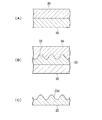
- FIG. 1 a base material sheet, a coating film, etc. are shown by those typical sectional drawings.
- a coating solution 20 is formed by applying a coating solution on a base sheet 10.
- the coating film 20 is cured by irradiating light with the uneven surface 32 of the mold 30 pressed against the coating film 20.
- the base sheet 10 and the mold 30 are removed to obtain a cured film 22 as shown in FIG.
- an uneven pattern 22 a having a shape complementary to the uneven surface 32 of the mold 30 is formed.
- the thickness of the cured film is preferably 1.0 ⁇ m to 5.0 mm, particularly preferably 1.0 ⁇ m to 1.0 mm.
- a known wet coating method can be adopted, and examples thereof include a method of using a coating apparatus such as a brush, a roller, dipping, spraying, a roll coater, a die coater, an applicator, and a spin coater.
- the thickness of the coating film is preferably 1.0 ⁇ m to 5.0 mm, particularly preferably 1.0 ⁇ m to 1.0 mm.
- a known method can be adopted as the light irradiation method.
- cured material of this invention demonstrated above, in addition to the outstanding protein non-adsorbability, it has the shape stability which was excellent, and the cured film by which curvature was suppressed was obtained. Moreover, in the manufacturing method of the hardened
- the article of the present invention has a cured product of the protein adhesion preventing agent of the present invention on at least a part of its surface. Thereby, it can suppress that protein adsorb
- the article of the present invention is preferably a medical device.
- the medical device is not particularly limited, and is a cell culture container, a cell culture sheet, a cell capture filter, a vial, a plastic coated vial, a syringe, a plastic coated syringe, an ampule, a plastic coated ampule, a cartridge, a bottle, a plastic coated bottle, a pouch.
- nebulizer nebulizer, stopper, plunger, cap, lid, needle, stent, catheter, implant, contact lens, microchannel chip, drug delivery system material, artificial blood vessel, artificial organ, hemodialysis membrane, guard wire, blood filter , Blood storage packs, endoscopes, biochips, sugar chain synthesizers, molding aids, packaging materials, and the like.
- a cell culture container preferably used for a cell culture container, a cell culture sheet, a cell capture filter, and a microchannel chip. If the article of the present invention is used as a cell culture container or a cell culture sheet, excellent cell growth ability can be obtained, and more efficient large-scale cell culture becomes possible. Therefore, it can be suitably used in the field of regenerative medicine.
- the article of the present invention preferably includes a base material and a coating layer formed on the base material and made of a cured product of the protein adhesion preventing agent of the present invention.
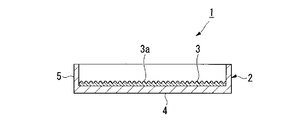
- the medical device 1 illustrated in FIGS. 2 and 3 can be cited.
- the medical device 1 is a petri dish that is one of cell culture containers.
- the medical device 1 includes a base material 2 and a coating layer 3 formed on the base material 2.
- the base material 2 includes a bottom surface portion 4 having a circular shape in plan view, and a side surface portion 5 that rises from the peripheral edge of the bottom surface portion 4 over the entire circumference, and has a container shape with an open top.
- the coating layer 3 is made of a cured product of the protein adhesion preventing agent of the present invention, and is formed on the upper surface of the bottom surface portion 4 of the substrate 2.
- An uneven pattern 3a is formed on the surface of the coating layer 3 in this example.
- the coating layer 3 can be formed, for example, by sticking the cured film 22 obtained by the above manufacturing method to the upper surface of the bottom surface portion 4 of the base material 2.
- the medical device 6 illustrated in FIG. 4 is also exemplified.
- the medical device 6 is a microchannel chip.
- the medical device 6 includes a flat substrate 7 and a coating layer 8 formed on the substrate 7.
- a liquid contact part 9 such as a flow path is formed.
- the coating layer 8 is obtained, for example, by using a mold having a concavo-convex surface provided with a convex portion complementary to the liquid contact portion 9 and pressing the concavo-convex surface against a coating film formed with a coating solution and curing it.
- the cured film can be formed by sticking to the upper surface of the substrate 7.
- the material constituting the base material in the article is not particularly limited, and examples thereof include resins such as polyethylene terephthalate, polystyrene, polycarbonate, polypropylene, tetrafluoroethylene-ethylene copolymer (ETFE), and glass.
- resins such as polyethylene terephthalate, polystyrene, polycarbonate, polypropylene, tetrafluoroethylene-ethylene copolymer (ETFE), and glass.
- resin is preferable from the viewpoint of material cost and processing cost.
- a glass having high transparency of the material itself, low fluorescence, chemically stable and excellent rigidity is desirable.
- the thickness of the coating layer is preferably 100 nm to 10,000 ⁇ m, particularly preferably 100 nm to 1,000 ⁇ m. If the thickness of the coating layer is equal to or greater than the lower limit, it is difficult for protein to be adsorbed. If the thickness of the coating layer is less than or equal to the above upper limit value, the coating layer tends to adhere to the surface of the substrate constituting the device.
- the method for adhering the coating layer and the substrate is not particularly limited, and a material that exhibits a sufficient adhesive force to both the coating layer and the substrate can be used as appropriate.
- a cyanoacrylate adhesive a silicone-modified adhesive
- silicone-modified adhesive examples include acrylic adhesives and epoxy-modified silicone adhesives.
- polystyrene is used as the material for forming the substrate, a cyanoacrylate adhesive is used.
- the article of the present invention described above has excellent protein non-adsorbability, and since the coating layer has excellent shape stability, problems such as peeling are unlikely to occur.
- the article of the present invention is not limited to the one provided with the base material and the coating layer, and may consist only of the cured product of the protein adhesion preventing agent of the present invention.
- Examples 1 to 5, 10 to 14 are examples, and examples 6 to 9 and 15 to 17 are comparative examples.
- Glass transition temperature (Tg) The glass transition temperature of the non-polymerizable fluoropolymer (A) was measured by DSC (manufactured by TA Instruments) by raising and lowering the temperature from ⁇ 30 ° C. to 200 ° C. at a rate of 10 ° C./min. The temperature at which the temperature changed from the rubber state in the second cycle when the temperature decreased to the glass state was defined as the glass transition temperature.
- the number average molecular weight (Mn), mass average molecular weight (Mw) and molecular weight distribution (Mw / Mn) of the non-polymerizable fluoropolymer were measured using a GPC apparatus (HLC8220, manufactured by Tosoh Corporation) using tetrahydrofuran as a solvent. .
- Non-adsorptive protein It was determined by the following procedures (1) to (7).
- the color developing solutions were peroxidase color developing solution (3,3 ′, 5,5′-tetramethylbenzidine (TMBZ), manufactured by KPL) 50 mL and TMB Peroxidase Substrate (manufactured by KPL) 50 mL. And a mixture thereof.
- a protein solution POD-goat anti mouse IgG, Biorad
- D-PBS phosphate buffer solution
- Coloring solution dispensing 2 mL of coloring solution was dispensed into each well of the cured film after washing (2 mL was used for each well), and a coloring reaction was performed for 7 minutes. The color reaction was stopped by adding 1 mL of 2N sulfuric acid (1 mL per well was used). For the blank, dispense 100 ⁇ L of the coloring solution to a 96-well microplate (use 100 ⁇ L per well), perform the color reaction for 7 minutes, and add 50 ⁇ L of 2N sulfuric acid (use 50 ⁇ L per well). ) The color reaction was stopped. (6) Preparation for absorbance measurement Next, 150 ⁇ L of liquid was taken from each well of the cured film and transferred to a 96-well microplate.
- myeloma cells were adjusted with a medium of 10% FBS ⁇ EMEM so as to be 100 cells / mL, seeded at 0.5 mL / well in each well of a 24-well microplate, and cultured in an incubator for 4 hours. Thereafter, all the culture media were extracted and 0.5 mL of the test sample culture solution of each of the above examples was added to each well in which only the myeloma cells were in a state, followed by culturing for 1 day. A quantitative measurement of the proliferation rate of myeloma cells in this culture was performed by the Alamar Blue assay.
- the coating solution was applied to the entire surface of one PMMA sheet having a length of 5 cm, a width of 5 cm, and a thickness of 300 ⁇ m to form a 10 ⁇ m thick coating film.
- UV irradiation was performed under the condition of 3,000 mJ / cm 2 in a nitrogen atmosphere to cure the coating film.
- the cured sheet was placed on a flat surface with the cured film facing upward, and the amount of warpage was measured.
- the amount of warpage was the distance (mm) between the portion farthest from the plane at the periphery of the cured sheet and the plane.
- the shape stability was evaluated according to the following criteria. ⁇ (Good): Warpage amount is 1 mm or less.
- X (defect) The amount of warpage exceeds 1 mm.
- (Curable monomer (B)) Monomer (B-11): Methyl methacrylate (number of polymerizable functional groups N 1 : 1, molecular weight M 1 : 100). Monomer (B-12): Hexyl methacrylate (number of polymerizable functional groups N 1 : 1, molecular weight M 1 : 170). Monomer (B-13): Dodecyl methacrylate (number of polymerizable functional groups N 1 : 1, molecular weight M 1 : 254). Monomer (B-14): Bisphenol A glycidyl dimethacrylate (number of polymerizable functional groups N 1 : 2, molecular weight M 1 : 513).
- Monomer (B-21) 1,2-butylene oxide (number of polymerizable functional groups N 2 : 1; molecular weight M 2 : 72).
- Monomer (B-22) butyl glycidyl ether (number of polymerizable functional groups N 2 : 1, molecular weight M 2 : 130).
- Monomer (B-23) Bisphenol A diglycidyl ether (number of polymerizable functional groups N 2 : 2, molecular weight M 2 : 340).
- V-601 Trade name “V-601” (oil-soluble azo polymerization initiator, manufactured by Wako Pure Chemical Industries, Ltd.).
- IC907 Trade name “IIRGACURE 907” (photopolymerization initiator, manufactured by BASF).
- TTHFP tri-p-tolylsulfonium hexafluorophosphate (photopolymerization initiator, manufactured by Tokyo Chemical Industry Co., Ltd.)
- AIBN Azobisisobutyronitrile (photopolymerization initiator, manufactured by Tokyo Chemical Industry Co., Ltd.).
- the copolymer composition of the obtained fluoropolymer (A-1) was determined, the PEG9A unit, the C6FA unit and the 2-EHA unit were in a molar ratio of 24:14:62 (mass ratio of 40:20:40). Confirmed to have.
- the number average molecular weight (Mn) of the fluoropolymer (A-1) is 17,000, the mass average molecular weight (Mw) is 40,000, and the molecular weight distribution (mass average molecular weight (Mw) / number average).
- the reaction solution was ice-cooled and then added dropwise to diethyl ether to precipitate a polymer.
- the obtained polymer was thoroughly washed with diethyl ether and then dried under reduced pressure to obtain a white powdery fluoropolymer (A-2).
- the fluorine-containing polymer (A-2) had a fluorine atom content Q F of 30.6% by mass and a glass transition temperature of 117 ° C.
- Example 1 The monomer (B-12) as the curable monomer (B), I-907 as the photopolymerization initiator, and the fluoropolymer (A-1), and the mass ratio thereof is 77: 3: 20
- the protein adhesion inhibitor was prepared by mixing as described above.
- Examples 2 to 17 A protein adhesion inhibitor was prepared in the same manner as in Example 1 except that the composition was changed as shown in Tables 1 and 2.
- Table 1 shows the composition and evaluation results of the protein adhesion inhibitor of each example.
- Example 1 and 2 the protein adhesion prevention of Examples 1 to 5 and 10 to 14 containing the fluoropolymer (A) and the curable monomer (B) and having a coefficient ⁇ of 10 or less.
- the agent excellent protein non-adsorbability was obtained, and the amount of warpage of the cured sheet was small, and the shape stability was excellent.
- the protein adhesion preventing agents of Examples 6, 7, 9, and 15 to 17 having a coefficient ⁇ exceeding 10 the amount of warpage of the cured sheet was large and the shape stability was inferior.
- Example 8 which does not contain a fluoropolymer (A), sufficient protein non-adsorption property was not acquired.
Landscapes
- Health & Medical Sciences (AREA)
- Life Sciences & Earth Sciences (AREA)
- Chemical & Material Sciences (AREA)
- Epidemiology (AREA)
- Veterinary Medicine (AREA)
- Public Health (AREA)
- General Health & Medical Sciences (AREA)
- Animal Behavior & Ethology (AREA)
- Medicinal Chemistry (AREA)
- Engineering & Computer Science (AREA)
- Organic Chemistry (AREA)
- Transplantation (AREA)
- Oral & Maxillofacial Surgery (AREA)
- Dermatology (AREA)
- Molecular Biology (AREA)
- Biomedical Technology (AREA)
- Materials Engineering (AREA)
- Wood Science & Technology (AREA)
- Heart & Thoracic Surgery (AREA)
- Surgery (AREA)
- Vascular Medicine (AREA)
- Chemical Kinetics & Catalysis (AREA)
- Polymers & Plastics (AREA)
- Paints Or Removers (AREA)
- Addition Polymer Or Copolymer, Post-Treatments, Or Chemical Modifications (AREA)
- Materials For Medical Uses (AREA)
- Compositions Of Macromolecular Compounds (AREA)
Abstract
L'invention porte sur un inhibiteur de protéines d'adhésion qui présente une excellente non-adsorptivité de protéines et peut former un produit durci ayant une excellente stabilité de forme capable de supprimer l'apparition de gauchissement même lorsqu'un film est formé, ainsi que sur un produit durci l'utilisant et sur un article. Un inhibiteur de protéines d'adhésion contient un polymère de fluor non polymérisable comportant un groupe spécifique tel que –(CnH2nO)- dans lequel la teneur en atomes de fluor QF est de 5 à 60 % en masse, et au moins un monomère durcissable choisi dans le groupe constitué par des monomères de vinyle et des monomères d'éthers cycliques, et ayant un coefficient alpha égal ou inférieur à 10. L'invention concerne également un produit durci à base de l'inhibiteur de protéines d'adhésion. Un dispositif médical (1) est pourvu d'un matériau de base (2) et d'une couche de revêtement (3) constituée d'un produit durci à base de l'inhibiteur de protéines d'adhésion formé sur le matériau de base (2).
Priority Applications (2)
| Application Number | Priority Date | Filing Date | Title |
|---|---|---|---|
| JP2018519613A JPWO2017204306A1 (ja) | 2016-05-27 | 2017-05-25 | タンパク質付着防止剤、硬化物、硬化物の製造方法、および物品 |
| US16/188,358 US20190077966A1 (en) | 2016-05-27 | 2018-11-13 | Protein adhesion inhibitor, cured product, method for producing cured product, and article |
Applications Claiming Priority (2)
| Application Number | Priority Date | Filing Date | Title |
|---|---|---|---|
| JP2016106136 | 2016-05-27 | ||
| JP2016-106136 | 2016-05-27 |
Related Child Applications (1)
| Application Number | Title | Priority Date | Filing Date |
|---|---|---|---|
| US16/188,358 Continuation US20190077966A1 (en) | 2016-05-27 | 2018-11-13 | Protein adhesion inhibitor, cured product, method for producing cured product, and article |
Publications (1)
| Publication Number | Publication Date |
|---|---|
| WO2017204306A1 true WO2017204306A1 (fr) | 2017-11-30 |
Family
ID=60411409
Family Applications (1)
| Application Number | Title | Priority Date | Filing Date |
|---|---|---|---|
| PCT/JP2017/019594 Ceased WO2017204306A1 (fr) | 2016-05-27 | 2017-05-25 | Inhibiteur de protéines d'adhésion, produit durci, procédé de production de produit durci et article |
Country Status (3)
| Country | Link |
|---|---|
| US (1) | US20190077966A1 (fr) |
| JP (1) | JPWO2017204306A1 (fr) |
| WO (1) | WO2017204306A1 (fr) |
Cited By (2)
| Publication number | Priority date | Publication date | Assignee | Title |
|---|---|---|---|---|
| WO2019003558A1 (fr) * | 2017-06-26 | 2019-01-03 | 丸善石油化学株式会社 | Inhibiteur d'adsorption de protéine, et film d'inhibition d'adsorption de protéine ainsi qu'instrument médical mettant en œuvre celui-ci |
| WO2020122193A1 (fr) * | 2018-12-13 | 2020-06-18 | Agc株式会社 | Dispositif médical, procédé de fabrication de dispositif médical et liquide de revêtement |
Families Citing this family (7)
| Publication number | Priority date | Publication date | Assignee | Title |
|---|---|---|---|---|
| US12180581B2 (en) | 2017-09-18 | 2024-12-31 | Waters Technologies Corporation | Use of vapor deposition coated flow paths for improved chromatography of metal interacting analytes |
| US12181452B2 (en) | 2017-09-18 | 2024-12-31 | Waters Technologies Corporation | Use of vapor deposition coated flow paths for improved chromatography of metal interacting analytes |
| US11709155B2 (en) | 2017-09-18 | 2023-07-25 | Waters Technologies Corporation | Use of vapor deposition coated flow paths for improved chromatography of metal interacting analytes |
| US11709156B2 (en) | 2017-09-18 | 2023-07-25 | Waters Technologies Corporation | Use of vapor deposition coated flow paths for improved analytical analysis |
| US11918936B2 (en) | 2020-01-17 | 2024-03-05 | Waters Technologies Corporation | Performance and dynamic range for oligonucleotide bioanalysis through reduction of non specific binding |
| US12352734B2 (en) | 2020-09-24 | 2025-07-08 | Waters Technologies Corporation | Chromatographic hardware improvements for separation of reactive molecules |
| CN112592441B (zh) * | 2020-12-09 | 2022-07-12 | 嘉兴学院 | 一种血液相容性聚合物层及其制备方法 |
Citations (6)
| Publication number | Priority date | Publication date | Assignee | Title |
|---|---|---|---|---|
| JP2007314723A (ja) * | 2006-05-29 | 2007-12-06 | Nof Corp | 表面偏析型プラスチック用添加剤及びその用途 |
| WO2013051479A1 (fr) * | 2011-10-03 | 2013-04-11 | 日産化学工業株式会社 | Inhibiteur d'adhésion pour matériaux biologiques et cellules |
| WO2016002796A1 (fr) * | 2014-06-30 | 2016-01-07 | 旭硝子株式会社 | Inhibiteur d'adhérence de protéines |
| WO2016010147A1 (fr) * | 2014-07-18 | 2016-01-21 | 旭硝子株式会社 | Inhibiteur d'adhérence des protéines |
| JP2016026520A (ja) * | 2014-06-30 | 2016-02-18 | 旭硝子株式会社 | タンパク質付着防止用化合物、塗布液および医療用デバイス |
| WO2016056663A1 (fr) * | 2014-10-10 | 2016-04-14 | ダイキン工業株式会社 | Film de revêtement, procédé de revêtement l'utilisant et article revêtu à l'aide de celui-ci |
-
2017
- 2017-05-25 JP JP2018519613A patent/JPWO2017204306A1/ja active Pending
- 2017-05-25 WO PCT/JP2017/019594 patent/WO2017204306A1/fr not_active Ceased
-
2018
- 2018-11-13 US US16/188,358 patent/US20190077966A1/en not_active Abandoned
Patent Citations (6)
| Publication number | Priority date | Publication date | Assignee | Title |
|---|---|---|---|---|
| JP2007314723A (ja) * | 2006-05-29 | 2007-12-06 | Nof Corp | 表面偏析型プラスチック用添加剤及びその用途 |
| WO2013051479A1 (fr) * | 2011-10-03 | 2013-04-11 | 日産化学工業株式会社 | Inhibiteur d'adhésion pour matériaux biologiques et cellules |
| WO2016002796A1 (fr) * | 2014-06-30 | 2016-01-07 | 旭硝子株式会社 | Inhibiteur d'adhérence de protéines |
| JP2016026520A (ja) * | 2014-06-30 | 2016-02-18 | 旭硝子株式会社 | タンパク質付着防止用化合物、塗布液および医療用デバイス |
| WO2016010147A1 (fr) * | 2014-07-18 | 2016-01-21 | 旭硝子株式会社 | Inhibiteur d'adhérence des protéines |
| WO2016056663A1 (fr) * | 2014-10-10 | 2016-04-14 | ダイキン工業株式会社 | Film de revêtement, procédé de revêtement l'utilisant et article revêtu à l'aide de celui-ci |
Cited By (4)
| Publication number | Priority date | Publication date | Assignee | Title |
|---|---|---|---|---|
| WO2019003558A1 (fr) * | 2017-06-26 | 2019-01-03 | 丸善石油化学株式会社 | Inhibiteur d'adsorption de protéine, et film d'inhibition d'adsorption de protéine ainsi qu'instrument médical mettant en œuvre celui-ci |
| JPWO2019003558A1 (ja) * | 2017-06-26 | 2020-04-23 | 丸善石油化学株式会社 | タンパク質吸着防止剤、タンパク質吸着防止膜及びこれを利用する医療用具 |
| US12180322B2 (en) | 2017-06-26 | 2024-12-31 | Maruzen Petrochemical Co., Ltd. | Protein adsorption preventing agent, protein adsorption preventing film, and medical tool using same |
| WO2020122193A1 (fr) * | 2018-12-13 | 2020-06-18 | Agc株式会社 | Dispositif médical, procédé de fabrication de dispositif médical et liquide de revêtement |
Also Published As
| Publication number | Publication date |
|---|---|
| US20190077966A1 (en) | 2019-03-14 |
| JPWO2017204306A1 (ja) | 2019-05-16 |
Similar Documents
| Publication | Publication Date | Title |
|---|---|---|
| US20190077966A1 (en) | Protein adhesion inhibitor, cured product, method for producing cured product, and article | |
| US10138312B2 (en) | Protein adhesion inhibitor | |
| JP6617704B2 (ja) | タンパク質付着防止剤 | |
| CA2848875C (fr) | Procede de culture de cellules adherentes | |
| JP6580221B2 (ja) | 医療器具、細胞培養方法およびフッ素含有環状オレフィンポリマー組成物 | |
| US20090246871A1 (en) | Container for germ layer formation and method of forming germ layer | |
| US20200299626A1 (en) | Cell culture container | |
| JP6414918B2 (ja) | 医療器具、フッ素含有環状オレフィンポリマー、フッ素含有環状オレフィンポリマー組成物、および細胞培養方法 | |
| US20180296988A1 (en) | Cell-trapping filter | |
| EP3719113A1 (fr) | Récipient de culture cellulaire permettant une culture à long terme et procédé pour sa fabrication | |
| JP6704197B2 (ja) | 細胞構造体の製造方法 | |
| JP2016026520A (ja) | タンパク質付着防止用化合物、塗布液および医療用デバイス | |
| JP7375763B2 (ja) | タンパク質付着抑制用共重合体、共重合体の製造方法、樹脂改質剤、成形材料、共重合体含有組成物、塗膜および物品 | |
| JP2017186291A (ja) | N−フェニルマレイミド誘導体およびその製造方法、n−フェニルマレイミド誘導体の前駆体、重合体、タンパク質付着防止剤、ならびに医療用デバイス | |
| US20220135806A1 (en) | Method for producing polymer compatible with biomaterials | |
| JP7317330B2 (ja) | 三次元培養法、三次元培養構造体、および三次元培養構造体の製造方法 | |
| JP2024151742A (ja) | 細胞培養基材、細胞培養基材の製造方法、コーティング剤、積層体、医療デバイス、積層体の製造方法、イムノクロマトグラフィ装置、及び、イムノクロマトグラフィ装置の製造方法 | |
| US20190322784A1 (en) | Material for cell patterning use | |
| WO2020122193A1 (fr) | Dispositif médical, procédé de fabrication de dispositif médical et liquide de revêtement | |
| JP2018012800A (ja) | 硬化性組成物及び硬化物 |
Legal Events
| Date | Code | Title | Description |
|---|---|---|---|
| ENP | Entry into the national phase |
Ref document number: 2018519613 Country of ref document: JP Kind code of ref document: A |
|
| 121 | Ep: the epo has been informed by wipo that ep was designated in this application |
Ref document number: 17802892 Country of ref document: EP Kind code of ref document: A1 |
|
| NENP | Non-entry into the national phase |
Ref country code: DE |
|
| 122 | Ep: pct application non-entry in european phase |
Ref document number: 17802892 Country of ref document: EP Kind code of ref document: A1 |