WO2017208605A1 - プリプレグシート、及び繊維強化複合材料の製造方法 - Google Patents
プリプレグシート、及び繊維強化複合材料の製造方法 Download PDFInfo
- Publication number
- WO2017208605A1 WO2017208605A1 PCT/JP2017/013330 JP2017013330W WO2017208605A1 WO 2017208605 A1 WO2017208605 A1 WO 2017208605A1 JP 2017013330 W JP2017013330 W JP 2017013330W WO 2017208605 A1 WO2017208605 A1 WO 2017208605A1
- Authority
- WO
- WIPO (PCT)
- Prior art keywords
- prepreg sheet
- chemical formula
- meth
- acrylate
- formula
- Prior art date
- Legal status (The legal status is an assumption and is not a legal conclusion. Google has not performed a legal analysis and makes no representation as to the accuracy of the status listed.)
- Ceased
Links
Images

Classifications
-
- C—CHEMISTRY; METALLURGY
- C08—ORGANIC MACROMOLECULAR COMPOUNDS; THEIR PREPARATION OR CHEMICAL WORKING-UP; COMPOSITIONS BASED THEREON
- C08J—WORKING-UP; GENERAL PROCESSES OF COMPOUNDING; AFTER-TREATMENT NOT COVERED BY SUBCLASSES C08B, C08C, C08F, C08G or C08H
- C08J5/00—Manufacture of articles or shaped materials containing macromolecular substances
- C08J5/24—Impregnating materials with prepolymers which can be polymerised in situ, e.g. manufacture of prepregs
-
- C—CHEMISTRY; METALLURGY
- C08—ORGANIC MACROMOLECULAR COMPOUNDS; THEIR PREPARATION OR CHEMICAL WORKING-UP; COMPOSITIONS BASED THEREON
- C08F—MACROMOLECULAR COMPOUNDS OBTAINED BY REACTIONS ONLY INVOLVING CARBON-TO-CARBON UNSATURATED BONDS
- C08F290/00—Macromolecular compounds obtained by polymerising monomers on to polymers modified by introduction of aliphatic unsaturated end or side groups
- C08F290/02—Macromolecular compounds obtained by polymerising monomers on to polymers modified by introduction of aliphatic unsaturated end or side groups on to polymers modified by introduction of unsaturated end groups
- C08F290/06—Polymers provided for in subclass C08G
- C08F290/067—Polyurethanes; Polyureas
-
- C—CHEMISTRY; METALLURGY
- C08—ORGANIC MACROMOLECULAR COMPOUNDS; THEIR PREPARATION OR CHEMICAL WORKING-UP; COMPOSITIONS BASED THEREON
- C08F—MACROMOLECULAR COMPOUNDS OBTAINED BY REACTIONS ONLY INVOLVING CARBON-TO-CARBON UNSATURATED BONDS
- C08F290/00—Macromolecular compounds obtained by polymerising monomers on to polymers modified by introduction of aliphatic unsaturated end or side groups
- C08F290/02—Macromolecular compounds obtained by polymerising monomers on to polymers modified by introduction of aliphatic unsaturated end or side groups on to polymers modified by introduction of unsaturated end groups
- C08F290/06—Polymers provided for in subclass C08G
-
- C—CHEMISTRY; METALLURGY
- C08—ORGANIC MACROMOLECULAR COMPOUNDS; THEIR PREPARATION OR CHEMICAL WORKING-UP; COMPOSITIONS BASED THEREON
- C08F—MACROMOLECULAR COMPOUNDS OBTAINED BY REACTIONS ONLY INVOLVING CARBON-TO-CARBON UNSATURATED BONDS
- C08F299/00—Macromolecular compounds obtained by interreacting polymers involving only carbon-to-carbon unsaturated bond reactions, in the absence of non-macromolecular monomers
- C08F299/02—Macromolecular compounds obtained by interreacting polymers involving only carbon-to-carbon unsaturated bond reactions, in the absence of non-macromolecular monomers from unsaturated polycondensates
- C08F299/06—Macromolecular compounds obtained by interreacting polymers involving only carbon-to-carbon unsaturated bond reactions, in the absence of non-macromolecular monomers from unsaturated polycondensates from polyurethanes
-
- C—CHEMISTRY; METALLURGY
- C08—ORGANIC MACROMOLECULAR COMPOUNDS; THEIR PREPARATION OR CHEMICAL WORKING-UP; COMPOSITIONS BASED THEREON
- C08J—WORKING-UP; GENERAL PROCESSES OF COMPOUNDING; AFTER-TREATMENT NOT COVERED BY SUBCLASSES C08B, C08C, C08F, C08G or C08H
- C08J5/00—Manufacture of articles or shaped materials containing macromolecular substances
- C08J5/04—Reinforcing macromolecular compounds with loose or coherent fibrous material
-
- C—CHEMISTRY; METALLURGY
- C08—ORGANIC MACROMOLECULAR COMPOUNDS; THEIR PREPARATION OR CHEMICAL WORKING-UP; COMPOSITIONS BASED THEREON
- C08J—WORKING-UP; GENERAL PROCESSES OF COMPOUNDING; AFTER-TREATMENT NOT COVERED BY SUBCLASSES C08B, C08C, C08F, C08G or C08H
- C08J5/00—Manufacture of articles or shaped materials containing macromolecular substances
- C08J5/24—Impregnating materials with prepolymers which can be polymerised in situ, e.g. manufacture of prepregs
- C08J5/241—Impregnating materials with prepolymers which can be polymerised in situ, e.g. manufacture of prepregs using inorganic fibres
- C08J5/243—Impregnating materials with prepolymers which can be polymerised in situ, e.g. manufacture of prepregs using inorganic fibres using carbon fibres
-
- C—CHEMISTRY; METALLURGY
- C08—ORGANIC MACROMOLECULAR COMPOUNDS; THEIR PREPARATION OR CHEMICAL WORKING-UP; COMPOSITIONS BASED THEREON
- C08G—MACROMOLECULAR COMPOUNDS OBTAINED OTHERWISE THAN BY REACTIONS ONLY INVOLVING UNSATURATED CARBON-TO-CARBON BONDS
- C08G18/00—Polymeric products of isocyanates or isothiocyanates
- C08G18/06—Polymeric products of isocyanates or isothiocyanates with compounds having active hydrogen
- C08G18/70—Polymeric products of isocyanates or isothiocyanates with compounds having active hydrogen characterised by the isocyanates or isothiocyanates used
- C08G18/81—Unsaturated isocyanates or isothiocyanates
- C08G18/8141—Unsaturated isocyanates or isothiocyanates masked
- C08G18/815—Polyisocyanates or polyisothiocyanates masked with unsaturated compounds having active hydrogen
- C08G18/8158—Polyisocyanates or polyisothiocyanates masked with unsaturated compounds having active hydrogen with unsaturated compounds having only one group containing active hydrogen
- C08G18/8175—Polyisocyanates or polyisothiocyanates masked with unsaturated compounds having active hydrogen with unsaturated compounds having only one group containing active hydrogen with esters of acrylic or alkylacrylic acid having only one group containing active hydrogen
-
- C—CHEMISTRY; METALLURGY
- C08—ORGANIC MACROMOLECULAR COMPOUNDS; THEIR PREPARATION OR CHEMICAL WORKING-UP; COMPOSITIONS BASED THEREON
- C08J—WORKING-UP; GENERAL PROCESSES OF COMPOUNDING; AFTER-TREATMENT NOT COVERED BY SUBCLASSES C08B, C08C, C08F, C08G or C08H
- C08J2375/00—Characterised by the use of polyureas or polyurethanes; Derivatives of such polymers
- C08J2375/04—Polyurethanes
-
- C—CHEMISTRY; METALLURGY
- C08—ORGANIC MACROMOLECULAR COMPOUNDS; THEIR PREPARATION OR CHEMICAL WORKING-UP; COMPOSITIONS BASED THEREON
- C08J—WORKING-UP; GENERAL PROCESSES OF COMPOUNDING; AFTER-TREATMENT NOT COVERED BY SUBCLASSES C08B, C08C, C08F, C08G or C08H
- C08J2375/00—Characterised by the use of polyureas or polyurethanes; Derivatives of such polymers
- C08J2375/04—Polyurethanes
- C08J2375/14—Polyurethanes having carbon-to-carbon unsaturated bonds
- C08J2375/16—Polyurethanes having carbon-to-carbon unsaturated bonds having terminal carbon-to-carbon unsaturated bonds
Definitions
- the present invention relates to a prepreg sheet and a method for producing a fiber reinforced composite material, and more particularly to a prepreg sheet having excellent mechanical strength and a method for producing a fiber reinforced composite material using the prepreg sheet.
- Fiber Reinforced Plastics is used in various fields because of its light weight, high strength, and long life.
- FRP using carbon fiber or aramid fiber is light and high in strength, and thus is widely used for aircraft and automobile members, concrete reinforcing materials, sports equipment, and the like.
- FRP FRP-regnated resin composition
- examples of molding using a prepreg sheet in which a fiber is impregnated with a resin composition include autoclave molding, oven molding, press molding, and sheet winding molding.
- a molded article using a prepreg sheet is characterized by excellent mechanical strength because of its high fiber content.
- urethane (meth) acrylate compounds are conventionally known to have excellent adhesion to carbon fibers, and are used as sizing agents for carbon fibers (for example, Patent Document 1).
- the urethane (meth) acrylate compound has good adhesion to the reinforcing fiber, it has been proposed to use the urethane (meth) acrylate compound mixed with a resin having poor adhesion to the reinforcing fiber (for example, Patent Document 2).
- the prepreg sheet matrix resin includes epoxy resin, unsaturated polyester resin, vinyl ester resin, and phenol resin, but there is currently no matrix resin that satisfies FRP mechanical properties, curability, surface properties, etc. in a well-balanced manner. It is.
- a prepreg sheet having an epoxy resin as a matrix is excellent in mechanical properties, but at the time of curing, it requires high temperature and a long time, and has poor storage properties.
- Vinyl ester resins and unsaturated polyester resins are Although it has excellent curability and storage properties, it has a problem that mechanical properties are insufficient.
- an object of the present invention is to provide a prepreg sheet that includes the radically polymerizable resin composition that solves the above problems, gives excellent FRP mechanical properties, and is excellent in curability and storage.
- a radical polymerizable resin composition containing a urethane (meth) acrylate compound containing an isocyanate group and an ethylenically unsaturated group is a radical polymerizable resin composition for a prepreg sheet. I found it suitable for things.
- the prepreg sheet of the present invention is a prepreg sheet obtained by impregnating fibers with a radical polymerizable resin composition
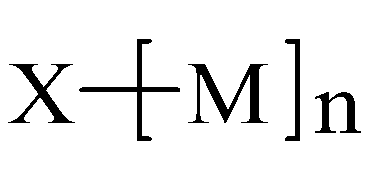
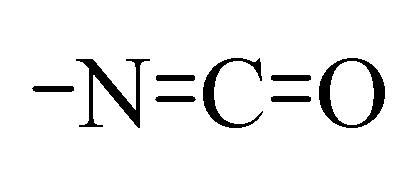
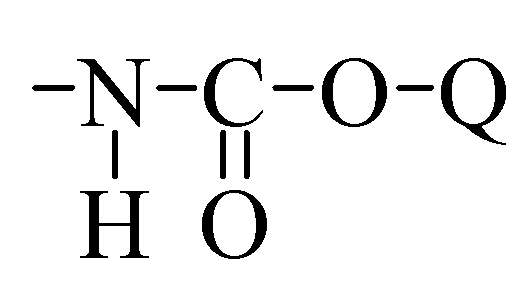
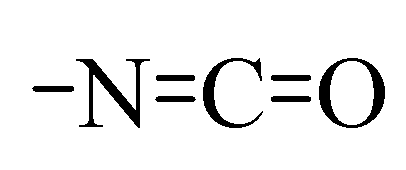
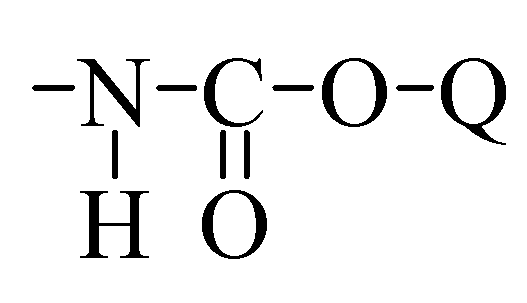
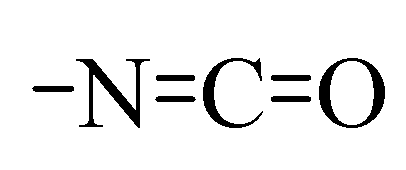
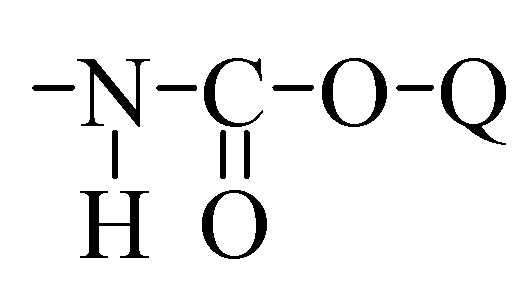
- the radical polymerizable resin composition has at least the following chemical formula [Chemical Formula 1]: (Wherein, n is 2 to 100, X is a compound residue having two or more isocyanate groups, and M is a formula [Chemical Formula 2]: At least, otherwise the formula [Chemical Formula 3]: It is.
- Q represents an ethylenically unsaturated group-containing monoalcohol compound residue. It is characterized by including the urethane (meth) acrylate compound (a) shown by this.
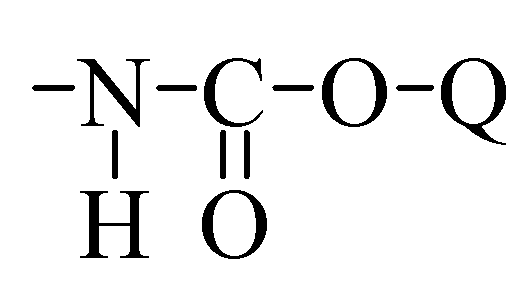
- the chemical formula [Chemical Formula 1] is represented by the following chemical formula [Chemical Formula 4]: (In the formula, n is 1 to 5000, X is a compound residue having two or more isocyanate groups, Y is an alcohol compound residue having two or more hydroxyl groups, and M is a formula [Formula 5]: At least, otherwise the formula [Chemical 6]: It is.
- Q represents an ethylenically unsaturated group-containing monoalcohol compound residue. ).
- the urethane (meth) acrylate compound (a) contains 0.1 to 12% by weight of isocyanate groups.
- the amount of the polymerizable vinyl monomer in the radical polymerizable resin composition is 0 to 50% by weight.
- the polymerizable vinyl monomer in the radical polymerizable resin composition is selected from phenoxyethyl methacrylate, benzyl methacrylate, isobornyl methacrylate, and tricyclodecane dimethanol dimethacrylate. It is characterized by including 1 or more types.
- the method for producing a fiber-reinforced composite material of the present invention includes a step of curing the prepreg sheet of the present invention.
- FIG. 1 is an IR spectrum of a urethane (meth) acrylate component (a) having an isocyanate group and an ethylenically unsaturated group in one embodiment of the present invention (in Synthesis Example 1 in Examples described later). Absorption of isocyanate groups can be confirmed in the vicinity of 2270 cm ⁇ 1 .
- (meth) acrylate means “acrylate” and “methacrylate”.
- (meth) acrylic acid ester indicates “acrylic acid ester” and “methacrylic acid ester”.
- urethane (meth) acrylate resin component (a) constituting the radical polymerizable resin composition contained in the prepreg sheet will be described.
- Component (a) is represented by the following chemical formula: (Wherein, n is 2 to 100, X is a compound residue having two or more isocyanate groups, and M is a formula [Chemical Formula 8]: At least, otherwise the formula [Chemical 9]: It is.
- Q represents an ethylenically unsaturated group-containing monoalcohol compound residue.
- the component (a) is represented by the following chemical formula:
- the urethane (meth) acrylate compound shown by is included at least.
- n is 1 to 5000
- X is a compound residue having two or more isocyanate groups
- Y is an alcohol compound residue having two or more hydroxyl groups
- M is a formula [Chemical Formula 11]: At least, otherwise the formula [Chemical 12]: It is.
- Q represents an ethylenically unsaturated group-containing monoalcohol compound residue.
- the number of moles of the isocyanate group derived from the isocyanate compound is derived from an ethylenically unsaturated group-containing monoalcohol compound and an alcohol compound having two or more hydroxyl groups. More than the total number of moles of hydroxyl groups.
- the synthesis reaction temperature is preferably 40 to 140 ° C., more preferably 70 to 110 ° C., from the viewpoint of preventing gelation during synthesis due to the ethylenically unsaturated group.
- the time required for the synthesis reaction is preferably continued until the amount of remaining isocyanate groups becomes constant, that is, until the hydroxyl groups are consumed.
- the end point of the reaction can be confirmed by quantifying the isocyanate group by titration or by tracking the absorption of the isocyanate group (around 2270 cm ⁇ 1) in an infrared absorption spectrum (hereinafter abbreviated as IR).
- reaction it is possible to synthesize in a system to which a polymerizable monomer that does not react with an isocyanate group or an organic solvent is added, if necessary, and a known catalyst or polymerization inhibitor can be used.
- an acidic catalyst or a basic catalyst can be used, but tin compounds such as dibutyltin dilaurate and dibutyltin diacetate having high activity are preferable.
- the addition amount of the catalyst can be 0 to 200 ppm, preferably 0 to 100 ppm, more preferably 0 to 50 ppm based on the charged weight from the viewpoint of storage stability.
- the weight% of the isocyanate group contained in the component (a) is preferably 0.1 to 12% by weight, more preferably 0.3 to 8% by weight. If it is less than 0.1% by weight, the adhesion with the carbon fiber is inferior, and there is a possibility that sufficient compressive strength and interlaminar shear strength may not be obtained. If it exceeds 12% by weight, the bending strength and tensile strength are reduced, The balance of mechanical properties may be lost.
- the ethylenically unsaturated group equivalent of the urethane (meth) acrylate compound contained in the component (a) is not particularly limited, but when it is 1500 g / eq or more, mechanical properties (bending strength, tensile strength, compressive strength, There is a risk that the balance of the interlaminar shear strength will deteriorate and the heat resistance of the molded product will be lowered.
- isocyanate compound having two or more isocyanate groups examples include 1,3-xylylene diisocyanate, 2,4-tolylene diisocyanate, 2,6-tolylene diisocyanate, 4,4′-diphenyl diisocyanate, 1,5- Aromatic isocyanate compounds such as naphthalene diisocyanate, 4,4′-diphenylmethane diisocyanate, polymethylene polyphenyl polyisocyanate, m-tetramethylxylene diisocyanate, hydrogenated xylylene diisocyanate (1,3-bis (isocyanatomethyl) cyclohexane), Isophorone diisocyanate, norbornene diisocyanate, dicyclohexylmethane diisocyanate, hydrogenated methylenebisphenylene diisocyanate, 1,4-cyclohexane diisocyanate And alicyclic isocyanate
- Examples thereof include an isocyanate prepolymer modified with a polyol. These isocyanate compounds can be used alone or in combination of two or more. From the viewpoints of heat resistance, weather resistance and storage stability, alicyclic isocyanate compounds are particularly preferred.
- Alcohol compound having two or more hydroxyl groups examples include aliphatic alcohols, etherified diphenols, and polyester polyols.
- chain aliphatic alcohols examples include ethylene glycol, 1,2-propanediol, 1,3-propanediol, 1,2-butanediol, 1,3-butanediol, 1,4-butanediol, 2, 3-butanediol, 1,4-butenediol, 2-methyl-1,3-propanediol, 1,5-pentanediol, neopentyl glycol, 2-ethyl-2-methylpropane-1,3-diol, 2 -Butyl-2-ethylpropane-1,3-diol, 1,6-hexanediol, 3-methyl-1,5-pentanediol, 2-ethyl-1,3-hexanediol, 2,4-dimethyl-1 , 5-pentanediol, 2,2,4-trimethyl-1,3-pentanediol, 1,7-heptan
- cyclic aliphatic alcohol examples include hydrogenated bisphenol A, tricyclodecane dimethanol, spiro glycol and the like.
- 1,3-propanediol, 1,4-butanediol, 1,5-pentanediol, and 1,6-hexanediol are preferably used from the viewpoint of resin viscosity and mechanical properties of the cured product.
- Examples of the etherified diphenol include a diol obtained by addition reaction of bisphenol A and alkylene oxide, and a diol obtained by bromination of an adduct of bisphenol A and alkylene oxide.
- the alkylene oxide is preferably ethylene oxide or propylene oxide, and the average added mole number of the alkylene oxide is 2 to 16 moles relative to 1 mole of bisphenol A.
- polyester polyol examples include those obtained by polycondensation of unsaturated and / or saturated acid with the above-mentioned aliphatic alcohol and etherified diphenol.
- unsaturated acid examples include maleic anhydride, maleic acid, and fumaric acid.
- saturated acids include phthalic acid, terephthalic acid, isophthalic acid, 1,4-cyclohexanedicarboxylic acid, adipic acid, succinic acid, sebacic acid, alkyl succinic acid, alkenyl succinic acid, itaconic acid, biphenyldicarboxylic acid, naphthalenedicarboxylic acid
- ester-forming derivatives such as acids, 5-tert-butyl-1,3-benzenedicarboxylic acid and their acid anhydrides, lower alkyl esters, acid halides and the like.
- At least one selected from terephthalic acid, isophthalic acid, and ester-forming derivatives thereof, 1,3-propanediol, 1,4-butanediol, 1,5- Polyester polyols obtained by polycondensation with one or more selected from pentanediol and 1,6-hexanediol are particularly preferred.
- trivalent or higher polyol can be used as long as the effects of the present invention are not impaired.
- examples of the trivalent or higher polyol include glycerin, trimethylolethane, trimethylolpropane, and pentaerythritol. These may be used alone or in combination of two or more.
- the ethylenically unsaturated group-containing monoalcohol compound is a hydroxyl group-containing (meth) acrylic acid ester such as 2-hydroxyethyl (meth) acrylate, 3-hydroxypropyl (meth) acrylate, 4-hydroxybutyl (meta ) Acrylate, polyethylene glycol mono (meth) acrylate, polypropylene glycol mono (meth) acrylate, trimethylolpropane di (meth) acrylate, pentaerythritol tri (meth) acrylate, dipentaerythritol penta (meth) acrylate, diacrylated isocyanurate, etc. Can be mentioned.
- ethylenically unsaturated group-containing monoalcohol compounds can be used alone or in combination of two or more.
- 2-hydroxyethyl (meth) acrylate is preferred from the viewpoint of resin viscosity and mechanical properties of the cured product.
- pentaerythritol tri (meth) acrylate is preferable.
- polymerization inhibitor examples include polyphenol polymerization inhibitors such as hydroquinone, parabenzoquinone, methylhydroquinone and trimethylhydroquinone, heterocyclic compounds such as phenothiazine, 2,2,6,6-tetramethylpiperidine 1-oxyl and the like.
- the nitroxyl radical can be used.
- the addition amount of the polymerization inhibitor is preferably 100 to 2000 ppm with respect to the charged weight from the viewpoint of preventing gelation at the time of synthesis with an ethylenically unsaturated group or a polymerizable monomer.
- the radical polymerizable resin composition of the present invention can mean a resin composition for preparing a prepreg sheet, and comprises a urethane (meth) acrylate compound (a), a polymerizable monomer, a curing agent, and an accelerator. Can do.
- a polymerizable monomer can be mix
- the tackiness can mean the degree of stickiness on the sheet surface.
- the tackiness (the degree of stickiness on the sheet surface) required by the molding method is different, and the stickiness of sticking to the vertical part from the state where there is stringing, and even if it is stacked, it does not adhere at all There is a wide range to the extent.
- Such tackiness varies depending on the kind and amount of the polymerizable vinyl monomer to be used, and can be appropriately set.
- the amount of the necessary polymerizable vinyl monomer and the like varies depending on the molecular weight of the urethane acrylate resin and is not particularly limited.
- the polymerizable monomer preferably does not react with the isocyanate group at room temperature.
- examples of the polymerizable monomer that does not react with the isocyanate group at room temperature include vinyl monomers, monofunctional acrylates, and polyfunctional acrylates. It is done. When a polymerizable monomer that reacts with an isocyanate group is blended, there is a possibility that the viscosity increases due to a reaction during storage and the workability is deteriorated and sufficient mechanical properties cannot be obtained.
- the vinyl monomer include styrene, vinyl toluene, ⁇ -methyl styrene, vinyl acetate and the like.
- Examples of the monofunctional acrylic acid ester include methyl methacrylate, benzyl (meth) acrylate, n-butyl (meth) acrylate, i-butyl (meth) acrylate, t-butyl (meth) acrylate, 2-ethylhexyl (meta ) Acrylate, tetrahydrofurfuryl (meth) acrylate, lauryl (meth) acrylate, tridecyl (meth) acrylate, stearyl (meth) acrylate, 2-methoxyethyl (meth) acrylate, 2-ethoxyethyl (meth) acrylate, cyclohexyl (meth) ) Acrylate, isobornyl (meth) acrylate, norbornyl (meth) acrylate, dicyclopentenyl (meth) acrylate, dicyclopentenyloxyethyl (meth) acrylate, phenoxye
- styrene From the viewpoint of tackiness and mechanical properties when formed into a prepreg sheet, styrene, benzyl methacrylate, tetrahydrofurfuryl methacrylate, cyclohexyl methacrylate, isobornyl methacrylate, norbornyl methacrylate, dicyclopentenyl methacrylate, dicyclopentenyloxyethyl methacrylate, Phenoxyethyl methacrylate and polyfunctional acrylic acid esters include ethylene glycol dimethacrylate, norbornene dimethanol dimethacrylate, tricyclodecane dimethanol dimethacrylate, ethylene oxide-added bisphenol A dimethacrylate, propylene oxide-added bisphenol A dimethacrylate, tris ( 2-acryloyloxyethyl) isocyanurate and other aromatic rings, Ring, a polymerizable monomer having either isocyanurate ring.
- the polymerizable vinyl monomer in the radical polymerizable resin composition is selected from phenoxyethyl methacrylate, benzyl methacrylate, isobornyl methacrylate, and tricyclodecane dimethanol dimethacrylate.
- phenoxyethyl methacrylate, benzyl methacrylate, styrene, and isobornyl methacrylate and tricyclodecane dimethanol dimethacrylate are particularly preferable in terms of heat resistance.
- the compounding amount of the polymerizable vinyl monomer is adjusted in accordance with the tackiness required for the prepreg (stickiness of the sheet surface, which varies depending on the molding method), and is preferably in the range of 0 to 50% by weight. Furthermore, when the molecular weight of the urethane acrylate is 500 to 1500, it is preferably blended in the range of 0 to 25% by weight from the viewpoint of tackiness and physical properties of the molded product. If it exceeds 50% by weight, the urethane acrylate component decreases, which may unfavorably affect the properties of the prepreg and the physical properties of the molded product.
- Examples of the curing agent that can be used in the radical polymerizable resin composition contained in the prepreg sheet of the present invention include organic peroxides such as ketone peroxides such as methyl ethyl ketone peroxide and acetylacetone peroxide, and benzoyl peroxide.
- organic peroxides such as ketone peroxides such as methyl ethyl ketone peroxide and acetylacetone peroxide
- benzoyl peroxide Diacyl peroxides such as t-butyl peroxybenzoate, hydroperoxides such as cumene hydroperoxide, dialkyl peroxides such as dicumyl peroxide, bis (4-tertiarybutyroylhexyl) ) Peroxydicarbonates such as peroxydicarbonate.
- the addition amount of the curing agent can be 0.05 to 5 parts by weight with respect to 100 parts by weight of the radical polymerizable resin composition.
- the radical polymerizable resin composition contained in the prepreg sheet of the present invention can contain an accelerator in order to promote adhesion with fibers.
- the accelerator include dibutyltin dilaurate, dibutyltin diacetate, dibutyltin sulfide, stannous octoate, and the like, but are not limited to these as long as they promote the urethanization reaction.
- the addition amount of the accelerator can be 0.01 to 1.0 part by weight with respect to 100 parts by weight of the radical polymerizable resin composition.
- inorganic particles or rubber particles may be blended in order to adjust viscoelasticity.
- the inorganic particles include, but are not limited to, calcium carbonate, alumina, talc, titanium oxide, and silica.
- the rubber component include, but are not limited to, crosslinked rubber particles and core-shell rubber particles in which the rubber component is encapsulated in a crosslinked polymer. The blending amount of these is 5 to 50% by weight, preferably 10 to 30% by weight, although it depends on the viscosity of the resin used.
- fibers also referred to as reinforcing fibers
- fibers used in the prepreg sheet of the present invention include carbon fibers, glass fibers, aramid fibers, zylon fibers, vinylon fibers, polyethylene fibers, boron fibers, basalt fibers, and cellulose.
- the reinforcing fiber content can be 10 to 90% by weight, and preferably 30 to 80% by weight from the viewpoint of mechanical properties and moldability.
- the surface treatment agent and shape (one direction, cloth, NCF, nonwoven fabric, etc.) of the reinforcing fiber are not particularly limited.
- the prepreg sheet of the present invention can be obtained by a conventional technique such as a wet method or a hot melt method.
- the wet method is a method in which a radically polymerizable resin composition is dissolved in a solvent such as methyl ethyl ketone or toluene, the composition viscosity is lowered and impregnated into fibers, and then the solvent is distilled off by heating to obtain a prepreg sheet.
- the type of the solvent is not particularly limited as long as it does not react with the isocyanate group. Depending on the type of curing agent to be blended, those having a boiling point of 50 to 150 ° C. are preferred.
- the hot melt method is a method of obtaining a prepreg sheet by applying a resin to a resin film with a roll coater, placing reinforcing fibers, and applying heat and pressure. These methods can be selected depending on the fiber thickness and weaving method.
- the prepreg sheet of the present invention can be preferably used for fiber reinforced composite materials including carbon fiber reinforced plastics.
- the resin composition for fiber reinforced composite materials that can be used for the prepreg sheet of the present invention is shown in the above [Chemical Formula 1] or [Chemical Formula 4].
- examples thereof include a resin composition for fiber reinforced composite materials (including a resin composition for carbon fiber reinforced plastics) comprising a urethane (meth) acrylate compound.
- the isocyanate group in the urethane (meth) acrylate compound is preferably 0.1 to 12% by weight.
- the method for producing a fiber-reinforced composite material of the present invention includes a step of curing the prepreg sheet of the present invention.
- the fiber-reinforced composite material of the present invention can be obtained by, for example, laminating the prepreg sheet obtained by the above method until a predetermined thickness is obtained, and applying heat and pressure to heat and cure.
- Examples of the molding method include autoclave molding, oven molding, sheet winding molding, and press molding.
- the molding temperature is 60 to 200 ° C., preferably 100 to 180 ° C., the time is preferably 1 to 120 minutes, and the pressure is preferably ⁇ 1 to 15 Bar.
- part means parts by weight unless otherwise specified.
- the isocyanate group content in the synthesis example was measured by dissolving each resin in dry toluene, adding an excess of di-n-butylamine solution to react, and back titrating the remaining di-n-butylamine with hydrochloric acid.
- Preparation of Prepreg Sheet The radically polymerizable resin composition prepared above was applied to release paper with a roll coater heated to 80 ° C. to obtain a resin film. Subsequently, carbon fibers (plain woven TORAYCA T700) were arranged in one direction on the resin film, and a release paper was put on the carbon fiber. Then, pressure was passed through a roller heated to 90 ° C. to impregnate the resin. One side of the release paper was peeled off and covered with a polyethylene film to obtain a prepreg sheet having a resin weight content of 33 to 35%.
- carbon fibers plain woven TORAYCA T700
- Tackiness Based on the state immediately after prepreg fabrication ⁇ Maintain ⁇ Thickening and tackiness is slightly reduced ⁇ The appearance after molding with a large increase in viscosity and no tackiness is evaluated by visual observation, and ⁇ >> ⁇ >> ⁇ indicates good >> bad.
- FIG. 1 shows an IR chart of the reaction end point of Synthesis Example 1.
- the radically polymerizable resin composition and prepreg sheet of the present invention are lightweight and high in strength, they can be used in a wide variety of applications such as transportation equipment, industrial materials, civil engineering reinforcements, and sports equipment. However, the application range is not limited to these.
Landscapes
- Chemical & Material Sciences (AREA)
- Health & Medical Sciences (AREA)
- Chemical Kinetics & Catalysis (AREA)
- Medicinal Chemistry (AREA)
- Polymers & Plastics (AREA)
- Organic Chemistry (AREA)
- Engineering & Computer Science (AREA)
- Materials Engineering (AREA)
- Manufacturing & Machinery (AREA)
- Inorganic Chemistry (AREA)
- Macromonomer-Based Addition Polymer (AREA)
- Reinforced Plastic Materials (AREA)
Abstract
Description


まず、プリプレグシートに含まれるラジカル重合性樹脂組成物を構成するウレタン(メタ)アクリレート成分(a)(以下、成分(a)ともいう。)について説明する。

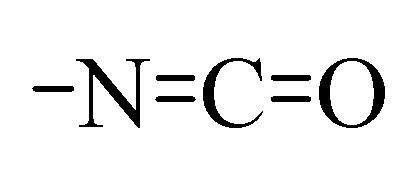


2個以上イソシアネート基を有するイソシアネート化合物としては、例えば、1,3-キシリレンジイソシアネート、2,4-トリレンジイソシアネート、2,6-トリレンジイソシアネート、4,4’-ジフェニルジイソシアネート、1,5-ナフタレンジイソシアネート、4,4’-ジフェニルメタンジイソシアネート、ポリメチレンポリフェニルポリイソシアネート、m-テトラメチルキシレンジイソシアネート等の芳香族イソシアネート化合物、水添キシリレンジイソシアネート(1,3-ビス(イソシアナトメチル)シクロヘキサン)、イソホロンジイソシアネート、ノルボルネンジイソシアネート、ジシクロヘキシルメタンジイソシアネート、水添メチレンビスフェニレンジイソシアネート、1,4-シクロヘキサンジイソシアネート、等の脂環族イソシアネート化合物、1,6-ヘキサメチレンジイソシアネート、トリメチレンジイソシアネート等の脂肪族イソシアネート化合物、2官能イソシアネート化合物が3量化されたイソシアヌレート環を有する3官能イソシアネート、市販されているポリオールで変性されたイソシアネートプレポリマー等を挙げることができる。これらのイソシアネート化合物は、単独で用いることも、2種以上を併用することもできる。耐熱性、耐候性及び貯蔵安定性の観点から脂環族イソシアネート化合物が特に好ましい。
2個以上の水酸基を有するアルコール化合物としては、脂肪族アルコール、エーテル化ジフェノール、及びポリエステルポリオール等を挙げることができる。
エチレン性不飽和基含有モノアルコール化合物とは水酸基含有(メタ)アクリル酸エステルのことであり、例えば、2-ヒドロキシエチル(メタ)アクリレート、3-ヒドロキシプロピル(メタ)アクリレート、4-ヒドロキシブチル(メタ)アクリレート、ポリエチレングリコールモノ(メタ)アクリレート、ポリプロピレングリコールモノ(メタ)アクリレート、トリメチロールプロパンジ(メタ)アクリレート、ペンタエリスリトールトリ(メタ)アクリレート、ジペンタエリスリトールペンタ(メタ)アクリレート、ジアクリル化イソシアヌレートなどを挙げることができる。
本発明のラジカル重合性樹脂組成物とはプリプレグシート作製用の樹脂組成物を意味することができ、ウレタン(メタ)アクリレート化合物(a)、重合性単量体、硬化剤、促進剤からなることができる。これらのうち、重合性単量体は、プリプレグシートに必要とされるタック性に合わせて配合することができる。タック性とは、シート表面のベタつき度合いを意味することができる。
ウレタン(メタ)アクリレート樹脂の合成
反応容器にイソホロンジイソシアネート(エボニック社製)535.3部、フェノキシエチルメタクリレート(共栄社化学社製ライトエステルPO)130.0部、ジブチル錫ジウラレート0.02部、1,3-プロパンジオール(デュポン社製)108.0部、2-ヒドロキシエチルメタクリレート(三菱ガス化学社製)226.4部、トルハイドロキノン0.04部、及び4-メチルー2,6-ジターシャリーブチルフェノール0.26部を仕込み、空気流下(0.2L/min)、温度95~105℃で反応させた。反応はIRにて追跡し、イソシアネート基の吸収(2270m-1付近)が一定になったところを終点とした。反応には3時間を要した。イソシアネート基含有量1.0重量%のウレタン(メタ)アクリレート樹脂を得た(成分(a)中のイソシアネート基は1.2重量%)。
ウレタン(メタ)アクリレート樹脂の合成
反応容器にイソホロンジイソシアネート(エボニック社製)530.6部、フェノキシエチルメタクリレート(共栄社化学社製ライトエステルPO)130.0部、ジブチル錫ジウラレート0.02部、1,3-プロパンジオール(デュポン社製)112.7部、2-ヒドロキシエチルメタクリレート(三菱ガス化学社製)226.4部、トルハイドロキノン0.04部、及び4-メチルー2,6-ジターシャリーブチルフェノール0.26部を仕込み、空気流下(0.2L/min)、温度95~105℃で反応させた。反応はIRにて追跡し、イソシアネート基の吸収(2270m-1付近)が一定になったところを終点とした。反応には3時間を要した。イソシアネート基含有量0.3重量%のウレタン(メタ)アクリレート樹脂を得た(成分(a)中のイソシアネート基は0.35重量%)。
ウレタン(メタ)アクリレート樹脂の合成
反応容器にイソホロンジイソシアネート(エボニック社製)571.1部、フェノキシエチルメタクリレート(共栄社化学社製ライトエステルPO)100.0部、ジブチル錫ジウラレート0.02部、1,3-プロパンジオール(デュポン社製)55.3部、2-ヒドロキシエチルメタクリレート(三菱ガス化学社製)273.3部、トルハイドロキノン0.04部、及び4-メチルー2,6-ジターシャリーブチルフェノール0.26部を仕込み、空気流下(0.2L/min)、温度95~105℃で反応させた。反応はIRにて追跡し、イソシアネート基の吸収(2270m-1付近)が一定になったところを終点とした。反応には3時間を要した。イソシアネート基含有量6.4重量%のウレタン(メタ)アクリレート樹脂を得た(成分(a)中のイソシアネート基は7.4重量%)。
ウレタン(メタ)アクリレート樹脂の合成
反応容器にイソホロンジイソシアネートの三量体(エボニック社製)部、フェノキシエチルメタクリレート(共栄社化学社製ライトエステルPO)140.0部、ジブチル錫ジウラレート0.02部、ペンタエリスリトールトリアクリレート(東亞合成社製アロニックスM-305)248.2部、2-ヒドロキシエチルメタクリレート(三菱ガス化学社製)139.8部、トルハイドロキノン0.04部、4-メチルー2,6-ジターシャルブチルフェノール0.26部を仕込み、空気流下(0.2L/min)、温度を95~105℃に保持し反応させた。反応はIRにて追跡し、イソシアネート基の吸収(2270m-1付近)が一定になったところを終点とした。反応には2.5時間を要した。イソシアネート基含有量1.7重量%のウレタン(メタ)アクリレート樹脂を得た(成分(a)中のイソシアネート基は1.97重量%)。
ウレタン(メタ)アクリレート樹脂の合成
反応容器にイソホロンジイソシアネート(エボニック社製)529.7部、フェノキシエチルメタクリレート(共栄社化学社製ライトエステルPO)130.0部、ジブチル錫ジウラレート0.02部、1,3-プロパンジオール(デュポン社製)115.0部、2-ヒドロキシエチルメタクリレート(三菱ガス化学社製)225.0部、トルハイドロキノン0.04部、及び4-メチルー2,6-ジターシャリーブチルフェノール0.26部を仕込み、空気流下(0.2L/min)、温度95~105℃で反応させた。反応はIRにて追跡し、イソシアネート基の吸収(2270m-1付近)が一定になったところを終点とした。反応には3時間を要した。イソシアネート基含有量0.06重量%のウレタン(メタ)アクリレート樹脂を得た(成分(a)中のイソシアネート基は0.067重量%)。
ウレタン(メタ)アクリレート樹脂の合成
反応容器にイソホロンジイソシアネート(エボニック社製)620.0部、フェノキシエチルメタクリレート(共栄社化学社製ライトエステルPO)100.0部、ジブチル錫ジウラレート0.02部、1,3-プロパンジオール(デュポン社製)29.3部、2-ヒドロキシエチルメタクリレート(三菱ガス化学社製)250.4部、トルハイドロキノン0.04部、及び4-メチルー2,6-ジターシャリーブチルフェノール0.26部を仕込み、空気流下(0.2L/min)、温度95~105℃で反応させた。反応はIRにて追跡し、イソシアネート基の吸収(2270m-1付近)が一定になったところを終点とした。反応には3時間を要した。イソシアネート基含有量12.1重量%のウレタン(メタ)アクリレート樹脂)を得た(成分(a)中のイソシアネート基は13.5重量%)。
エポキシアクリレート樹脂の合成
反応容器にビスフェノールA型エポキシ化合物(JER「#1001」)689.9部、メタクリル酸127.6部、2-メチルイミダゾール1.64部、モノメチルエーテルハイドロキノン0.82部を仕込み、空気流下(0.2L/min)、温度110~120℃に保持し10時間反応させた。その後、フェノキシエチルメタクリレート(共栄社化学社製ライトエステルPO)180.0部で希釈し酸価2.4mg/KOHのエポキシアクリレート樹脂を得た。
エポキシアクリレート樹脂の合成
反応容器にノボラック型エポキシ化合物(DIC製エピクロン「N-740」)622.3部、メタクリル酸294.0部、トリフェニルホスフィン2.75部、トルハイドロキノン0.91部を仕込み、空気流下(0.2L/min)、温度110~120℃に保持し8時間反応させた。その後、フェノキシエチルメタクリレート(共栄社化学社製ライトエステルPO)80.0部で希釈し酸価3.8mg/KOHのエポキシアクリレート樹脂を得た。
不飽和ポリエステル樹脂の合成
反応容器に無水フタル酸360部、フマル酸282部、エチレングリコール90部、プロピレングリコール399部を仕込み、窒素流下(0.5L/min)、、撹拌しながら210℃で11時間、重縮合反応させた。の後、スチレンモノマー430部で希釈し、不飽和ポリエステル樹脂を得た。
ウレタン(メタ)アクリレート樹脂の合成
反応容器にイソホロンジイソシアネート(エボニック社製)615.3部、ジブチル錫ジウラレート0.02部、1,3-プロパンジオール(デュポン社製)124.2部、2-ヒドロキシエチルメタクリレート(三菱ガス化学社製)260.2部、トルハイドロキノン0.05部、及び4-メチルー2,6-ジターシャリーブチルフェノール0.30部を仕込み、空気流下(0.2L/min)、温度105~115℃で反応させた。反応はIRにて追跡し、イソシアネート基の吸収(2270m-1付近)が一定になったところを終点とした。反応には3時間を要した。イソシアネート基含有量1.2重量%のウレタン(メタ)アクリレート樹脂を得た。
ウレタン(メタ)アクリレート樹脂の合成
反応容器にイソホロンジイソシアネート(エボニック社製)504.5部、フェノキシエチルメタクリレート(共栄社化学社製ライトエステルPO)180.0部、ジブチル錫ジウラレート0.02部、1,3-プロパンジオール(デュポン社製)101.8部、2-ヒドロキシエチルメタクリレート(三菱ガス化学社製)213.3部、トルハイドロキノン0.04部、及び4-メチルー2,6-ジターシャリーブチルフェノール0.25部を仕込み、空気流下(0.2L/min)、温度95~105℃で反応させた。反応はIRにて追跡し、イソシアネート基の吸収(2270m-1付近)が一定になったところを終点とした。反応には3時間を要した。イソシアネート基含有量0.98重量%のウレタン(メタ)アクリレート樹脂を得た(成分(a)中のイソシアネート基は1.2重量%)。
合成例1~6、10、11の各樹脂100部に促進剤としてジブチル錫ラウレートを0.02部、硬化剤としてパーブチルE(日油製パーオキシエステル系)1.5部を加え、プリプレグシート用のラジカル重合性樹脂組成物とした。合成例7~9の各樹脂に硬化剤としてパーブチルE(日油製パーオキシエステル系)1.5部を加え、プリプレグシート用のラジカル重合性樹脂組成物とした。
ビスフェノールA型エポキシ樹脂ブレンド品(ジャパンエポキシレジン製エピコート#1001/828=50/50)100部にジシアンジアミド5部、尿素誘導体4部を配合し、エポキシ樹脂組成物を得た。
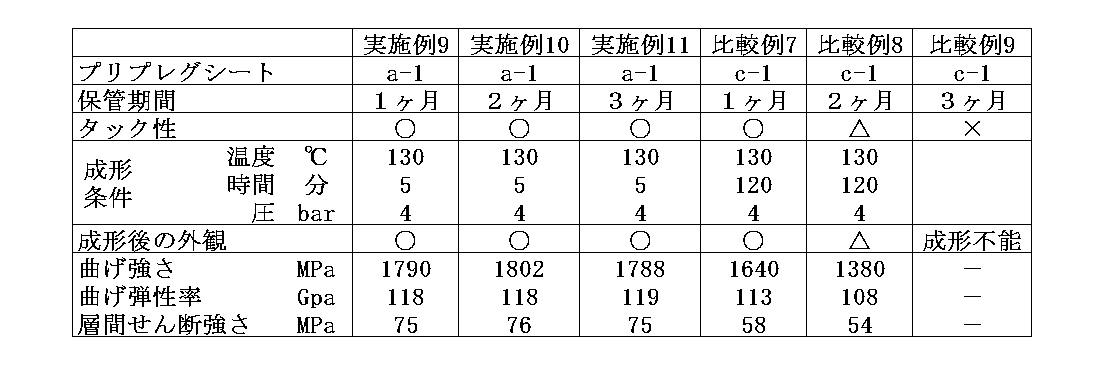
上記で調整したラジカル重合性樹脂組成物を80℃に加熱したロールコーターにて離型紙に塗布し樹脂フィルムを得た。次いで、炭素繊維(平織TORAYCA T700)を樹脂フィルムの上に一方向に並べ、その上から離形紙を被せた。その後、90℃に加熱したローラーに通し圧をかけ樹脂を含浸させた。離形紙の片側を剥がし、ポリエチレンフィルムを被せ、樹脂の重量コンテントが33~35%のプリプレグシートを得た。合成例1~6、10,11の樹脂を用いたプリプレグシートを(a-1~6、a-10、a-11)、合成例7~9の樹脂を用いたプリプレグシートを(b-1~3)、エポキシ樹脂組成物のプリプレグシートを(c-1)とした。
タック性:プリプレグ作製直後の状態を基準
○維持している
△増粘し少しタック性が落ちている
×大増粘し、タック性がなくなっている
成形後の外観は目視で評価し、○>△>×が 良>>悪を示す。
上記で得られた各プリプレグシートを11枚重ね、成形温度130℃、成形圧4barでプレス成形を行った。表1に成形時間と機械物性、表2に保管性、表3にタック性の結果を示す。


Claims (6)
- ラジカル重合性樹脂組成物を繊維に含浸してなるプリプレグシートであって、ラジカル重合性樹脂組成物が少なくとも下記化学式[化1]:

- 前記化学式[化1]が、下記化学式[化4]:

- 前記ウレタン(メタ)アクリレート化合物(a)は、0.1~12重量%のイソシアネート基を含むことを特徴とする請求項1又は2に記載のプリプレグシート。
- 前記ラジカル重合性樹脂組成物中の重合性ビニルモノマー量は、0~50重量%であることを特徴とする請求項1~3のいずれか1項に記載のプリプレグシート。
- 前記ラジカル重合性樹脂組成物中の重合性ビニルモノマーが、フェノキシエチルメタクリレート、ベンジルメタクリレート、イソボルニルメタクリレート、トリシクロデカンジメタノールジメタクリレートから選ばれる1種以上を含むことを特徴とする請求項1~4のいずれか1項に記載のプリプレグシート。
- 請求項1~5のいずれか1項に記載のプリプレグシートを硬化する工程を含むことを特徴とする繊維強化複合材料の製造方法。
Priority Applications (6)
| Application Number | Priority Date | Filing Date | Title |
|---|---|---|---|
| CN201780032945.3A CN109196027A (zh) | 2016-05-30 | 2017-03-30 | 预浸体薄片、及纤维强化复合材料的制造方法 |
| KR1020187034666A KR102338767B1 (ko) | 2016-05-30 | 2017-03-30 | 프리프레그 시트, 및 섬유 강화 복합 재료의 제조 방법 |
| EP17806166.9A EP3467013B1 (en) | 2016-05-30 | 2017-03-30 | Prepreg sheet, and process for producing fiber-reinforced composite material |
| US16/304,610 US20190169387A1 (en) | 2016-05-30 | 2017-03-30 | Prepreg sheet and manufacturing method of fiber-reinforced composite material |
| CN202511343983.3A CN121108728A (zh) | 2016-05-30 | 2017-03-30 | 预浸体薄片、及纤维强化复合材料的制造方法 |
| ES17806166T ES3041000T3 (en) | 2016-05-30 | 2017-03-30 | Prepreg sheet, and process for producing fiber-reinforced composite material |
Applications Claiming Priority (2)
| Application Number | Priority Date | Filing Date | Title |
|---|---|---|---|
| JP2016107930A JP6532840B2 (ja) | 2016-05-30 | 2016-05-30 | プリプレグシート、及び繊維強化複合材料の製造方法 |
| JP2016-107930 | 2016-05-30 |
Publications (1)
| Publication Number | Publication Date |
|---|---|
| WO2017208605A1 true WO2017208605A1 (ja) | 2017-12-07 |
Family
ID=60478286
Family Applications (1)
| Application Number | Title | Priority Date | Filing Date |
|---|---|---|---|
| PCT/JP2017/013330 Ceased WO2017208605A1 (ja) | 2016-05-30 | 2017-03-30 | プリプレグシート、及び繊維強化複合材料の製造方法 |
Country Status (8)
| Country | Link |
|---|---|
| US (1) | US20190169387A1 (ja) |
| EP (1) | EP3467013B1 (ja) |
| JP (1) | JP6532840B2 (ja) |
| KR (1) | KR102338767B1 (ja) |
| CN (2) | CN109196027A (ja) |
| ES (1) | ES3041000T3 (ja) |
| TW (1) | TW201819441A (ja) |
| WO (1) | WO2017208605A1 (ja) |
Cited By (1)
| Publication number | Priority date | Publication date | Assignee | Title |
|---|---|---|---|---|
| JP2021514419A (ja) * | 2018-02-22 | 2021-06-10 | ビーエイエスエフ・ソシエタス・エウロパエアBasf Se | 優れた熱変形耐性および引裂伸びを有するポリウレタンベースのポリマー材料 |
Families Citing this family (4)
| Publication number | Priority date | Publication date | Assignee | Title |
|---|---|---|---|---|
| TWI884967B (zh) * | 2019-07-08 | 2025-06-01 | 日商Dic股份有限公司 | 樹脂組成物及其硬化物、含浸基材、預浸體、積層體、印刷配線板及半導體封裝 |
| TW202124495A (zh) * | 2019-12-25 | 2021-07-01 | 日商Dic股份有限公司 | 預浸體及成形品 |
| US20230108269A1 (en) | 2020-03-17 | 2023-04-06 | Dic Corporation | Prepreg and molded product |
| KR102647123B1 (ko) * | 2021-06-23 | 2024-03-14 | 강남제비스코 주식회사 | 우레탄 변성 아크릴수지 조성물 및 그의 제조방법 |
Citations (4)
| Publication number | Priority date | Publication date | Assignee | Title |
|---|---|---|---|---|
| JPS5853010B2 (ja) * | 1975-09-12 | 1983-11-26 | 東洋紡績株式会社 | ヨウヘンセイウレタンヘンセイアクリレ−トジユシソセイブツ |
| JPH09169862A (ja) * | 1995-08-11 | 1997-06-30 | Takeda Chem Ind Ltd | プリプレグシートおよびそれを用いた成形体 |
| JP2013245268A (ja) * | 2012-05-24 | 2013-12-09 | Dh Material Kk | 炭素繊維強化プラスチック用樹脂組成物、それを用いた成形材料及び炭素繊維強化プラスチック |
| JP2016029133A (ja) * | 2014-07-16 | 2016-03-03 | 日本ユピカ株式会社 | 繊維強化プラスチック成形材料および繊維強化プラスチック成形品 |
Family Cites Families (6)
| Publication number | Priority date | Publication date | Assignee | Title |
|---|---|---|---|---|
| JPS62292839A (ja) | 1986-06-12 | 1987-12-19 | Toa Nenryo Kogyo Kk | 繊維強化複合材料 |
| JP3807066B2 (ja) | 1998-01-06 | 2006-08-09 | 東レ株式会社 | 炭素繊維用サイジング剤およびそれでサイズ処理された炭素繊維およびそれからなる複合材料 |
| KR101441851B1 (ko) * | 2012-09-21 | 2014-09-18 | 닛폰고세이가가쿠고교 가부시키가이샤 | 적층체 및 그 용도 |
| US9518007B2 (en) * | 2013-01-29 | 2016-12-13 | Japan U-Pica Company, Ltd. | Urethane (meth) acrylate compound |
| WO2017086231A1 (ja) * | 2015-11-16 | 2017-05-26 | 日本ユピカ株式会社 | 繊維強化プラスチック成形品、及びその製造方法 |
| EP3434718B1 (en) * | 2016-03-24 | 2021-04-28 | DIC Corporation | Prepreg and molded article |
-
2016
- 2016-05-30 JP JP2016107930A patent/JP6532840B2/ja active Active
-
2017
- 2017-03-30 US US16/304,610 patent/US20190169387A1/en not_active Abandoned
- 2017-03-30 KR KR1020187034666A patent/KR102338767B1/ko active Active
- 2017-03-30 CN CN201780032945.3A patent/CN109196027A/zh active Pending
- 2017-03-30 EP EP17806166.9A patent/EP3467013B1/en active Active
- 2017-03-30 ES ES17806166T patent/ES3041000T3/es active Active
- 2017-03-30 CN CN202511343983.3A patent/CN121108728A/zh active Pending
- 2017-03-30 WO PCT/JP2017/013330 patent/WO2017208605A1/ja not_active Ceased
- 2017-04-19 TW TW106113122A patent/TW201819441A/zh unknown
Patent Citations (4)
| Publication number | Priority date | Publication date | Assignee | Title |
|---|---|---|---|---|
| JPS5853010B2 (ja) * | 1975-09-12 | 1983-11-26 | 東洋紡績株式会社 | ヨウヘンセイウレタンヘンセイアクリレ−トジユシソセイブツ |
| JPH09169862A (ja) * | 1995-08-11 | 1997-06-30 | Takeda Chem Ind Ltd | プリプレグシートおよびそれを用いた成形体 |
| JP2013245268A (ja) * | 2012-05-24 | 2013-12-09 | Dh Material Kk | 炭素繊維強化プラスチック用樹脂組成物、それを用いた成形材料及び炭素繊維強化プラスチック |
| JP2016029133A (ja) * | 2014-07-16 | 2016-03-03 | 日本ユピカ株式会社 | 繊維強化プラスチック成形材料および繊維強化プラスチック成形品 |
Non-Patent Citations (1)
| Title |
|---|
| See also references of EP3467013A4 * |
Cited By (5)
| Publication number | Priority date | Publication date | Assignee | Title |
|---|---|---|---|---|
| JP2021514419A (ja) * | 2018-02-22 | 2021-06-10 | ビーエイエスエフ・ソシエタス・エウロパエアBasf Se | 優れた熱変形耐性および引裂伸びを有するポリウレタンベースのポリマー材料 |
| JP7359520B2 (ja) | 2018-02-22 | 2023-10-11 | ビーエーエスエフ ソシエタス・ヨーロピア | 優れた熱変形耐性および引裂伸びを有するポリウレタンベースのポリマー材料 |
| AU2019225884B2 (en) * | 2018-02-22 | 2024-02-15 | Basf Se | Polyurethane-based polymer material having excellent resistance to heat distortion and elongation at tear |
| AU2019225884C1 (en) * | 2018-02-22 | 2024-06-06 | Basf Se | Polyurethane-based polymer material having excellent resistance to heat distortion and elongation at tear |
| US12037445B2 (en) | 2018-02-22 | 2024-07-16 | Basf Se | Polyurethane-based polymer material having excellent resistance to heat distortion and elongation at tear |
Also Published As
| Publication number | Publication date |
|---|---|
| CN121108728A (zh) | 2025-12-12 |
| JP2017214463A (ja) | 2017-12-07 |
| JP6532840B2 (ja) | 2019-06-19 |
| KR102338767B1 (ko) | 2021-12-10 |
| KR20190013790A (ko) | 2019-02-11 |
| US20190169387A1 (en) | 2019-06-06 |
| CN109196027A (zh) | 2019-01-11 |
| EP3467013A4 (en) | 2020-01-22 |
| TW201819441A (zh) | 2018-06-01 |
| ES3041000T3 (en) | 2025-11-06 |
| EP3467013A1 (en) | 2019-04-10 |
| EP3467013B1 (en) | 2025-07-16 |
Similar Documents
| Publication | Publication Date | Title |
|---|---|---|
| JP6282602B2 (ja) | ウレタン(メタ)アクリレート化合物 | |
| US10793690B2 (en) | Prepreg and molded article | |
| EP3395869B1 (en) | Prepreg and molded article | |
| KR102338767B1 (ko) | 프리프레그 시트, 및 섬유 강화 복합 재료의 제조 방법 | |
| JP6762388B2 (ja) | 繊維強化プラスチック中間基材用液状組成物、繊維強化プラスチック中間基材、及び前記繊維強化プラスチック中間基材の製造方法 | |
| WO2011092962A1 (ja) | 炭素繊維用サイジング剤、炭素繊維、及びその製造方法、ならびに、炭素繊維を含む成形材料及び成形品 | |
| JP6376878B2 (ja) | 繊維強化プラスチック成形材料および繊維強化プラスチック成形品 | |
| US11760849B2 (en) | Prepreg resin composition, prepreg and molded article | |
| WO2020166441A1 (ja) | 繊維強化プラスチック中間基材用液状組成物、繊維強化プラスチック中間基材、及び前記繊維強化プラスチック中間基材の製造方法 | |
| WO2017086231A1 (ja) | 繊維強化プラスチック成形品、及びその製造方法 | |
| JP6626663B2 (ja) | ラジカル重合性樹脂組成物及びその硬化方法 | |
| JP2023158535A (ja) | 繊維強化プラスチック中間基材用液状組成物、繊維強化プラスチック中間基材、及び前記繊維強化プラスチック中間基材の製造方法 | |
| JP7760337B2 (ja) | 液状組成物及び該液状組成物を用いた繊維強化複合材料 | |
| JP2023179148A (ja) | 繊維強化プラスチック中間基材用液状組成物、中間基材、及び前記中間基材の製造方法 | |
| JP2023104543A (ja) | 繊維強化プラスチック中間基材用液状組成物、繊維強化プラスチック中間基材、及び前記繊維強化プラスチック中間基材の製造方法 | |
| JP2023102689A (ja) | 繊維強化プラスチック中間基材用液状組成物、中間基材、及び前記中間基材の製造方法 | |
| JP2006224412A (ja) | ジアリルフタレート樹脂系化粧板 |
Legal Events
| Date | Code | Title | Description |
|---|---|---|---|
| 121 | Ep: the epo has been informed by wipo that ep was designated in this application |
Ref document number: 17806166 Country of ref document: EP Kind code of ref document: A1 |
|
| ENP | Entry into the national phase |
Ref document number: 20187034666 Country of ref document: KR Kind code of ref document: A |
|
| NENP | Non-entry into the national phase |
Ref country code: DE |
|
| ENP | Entry into the national phase |
Ref document number: 2017806166 Country of ref document: EP Effective date: 20190102 |
|
| WWG | Wipo information: grant in national office |
Ref document number: 2017806166 Country of ref document: EP |