WO2017208754A1 - Dispositif de traitement d'informations et procédé de traitement d'informations - Google Patents
Dispositif de traitement d'informations et procédé de traitement d'informations Download PDFInfo
- Publication number
- WO2017208754A1 WO2017208754A1 PCT/JP2017/017664 JP2017017664W WO2017208754A1 WO 2017208754 A1 WO2017208754 A1 WO 2017208754A1 JP 2017017664 W JP2017017664 W JP 2017017664W WO 2017208754 A1 WO2017208754 A1 WO 2017208754A1
- Authority
- WO
- WIPO (PCT)
- Prior art keywords
- information processing
- destination
- vehicle
- processing apparatus
- unmanned air
- Prior art date
- Legal status (The legal status is an assumption and is not a legal conclusion. Google has not performed a legal analysis and makes no representation as to the accuracy of the status listed.)
- Ceased
Links
Images





Classifications
-
- G—PHYSICS
- G08—SIGNALLING
- G08G—TRAFFIC CONTROL SYSTEMS
- G08G5/00—Traffic control systems for aircraft
- G08G5/50—Navigation or guidance aids
-
- G—PHYSICS
- G08—SIGNALLING
- G08G—TRAFFIC CONTROL SYSTEMS
- G08G1/00—Traffic control systems for road vehicles
- G08G1/01—Detecting movement of traffic to be counted or controlled
- G08G1/04—Detecting movement of traffic to be counted or controlled using optical or ultrasonic detectors
-
- B—PERFORMING OPERATIONS; TRANSPORTING
- B64—AIRCRAFT; AVIATION; COSMONAUTICS
- B64C—AEROPLANES; HELICOPTERS
- B64C13/00—Control systems or transmitting systems for actuating flying-control surfaces, lift-increasing flaps, air brakes, or spoilers
- B64C13/02—Initiating means
- B64C13/16—Initiating means actuated automatically, e.g. responsive to gust detectors
- B64C13/18—Initiating means actuated automatically, e.g. responsive to gust detectors using automatic pilot
-
- B—PERFORMING OPERATIONS; TRANSPORTING
- B64—AIRCRAFT; AVIATION; COSMONAUTICS
- B64D—EQUIPMENT FOR FITTING IN OR TO AIRCRAFT; FLIGHT SUITS; PARACHUTES; ARRANGEMENT OR MOUNTING OF POWER PLANTS OR PROPULSION TRANSMISSIONS IN AIRCRAFT
- B64D47/00—Equipment not otherwise provided for
- B64D47/08—Arrangements of cameras
-
- G—PHYSICS
- G01—MEASURING; TESTING
- G01C—MEASURING DISTANCES, LEVELS OR BEARINGS; SURVEYING; NAVIGATION; GYROSCOPIC INSTRUMENTS; PHOTOGRAMMETRY OR VIDEOGRAMMETRY
- G01C21/00—Navigation; Navigational instruments not provided for in groups G01C1/00 - G01C19/00
- G01C21/26—Navigation; Navigational instruments not provided for in groups G01C1/00 - G01C19/00 specially adapted for navigation in a road network
- G01C21/34—Route searching; Route guidance
-
- G—PHYSICS
- G05—CONTROLLING; REGULATING
- G05D—SYSTEMS FOR CONTROLLING OR REGULATING NON-ELECTRIC VARIABLES
- G05D1/00—Control of position, course, altitude or attitude of land, water, air or space vehicles, e.g. using automatic pilots
- G05D1/0011—Control of position, course, altitude or attitude of land, water, air or space vehicles, e.g. using automatic pilots associated with a remote control arrangement
-
- G—PHYSICS
- G05—CONTROLLING; REGULATING
- G05D—SYSTEMS FOR CONTROLLING OR REGULATING NON-ELECTRIC VARIABLES
- G05D1/00—Control of position, course, altitude or attitude of land, water, air or space vehicles, e.g. using automatic pilots
- G05D1/10—Simultaneous control of position or course in three dimensions
- G05D1/101—Simultaneous control of position or course in three dimensions specially adapted for aircraft
-
- G—PHYSICS
- G06—COMPUTING OR CALCULATING; COUNTING
- G06V—IMAGE OR VIDEO RECOGNITION OR UNDERSTANDING
- G06V20/00—Scenes; Scene-specific elements
- G06V20/50—Context or environment of the image
- G06V20/56—Context or environment of the image exterior to a vehicle by using sensors mounted on the vehicle
- G06V20/58—Recognition of moving objects or obstacles, e.g. vehicles or pedestrians; Recognition of traffic objects, e.g. traffic signs, traffic lights or roads
- G06V20/586—Recognition of moving objects or obstacles, e.g. vehicles or pedestrians; Recognition of traffic objects, e.g. traffic signs, traffic lights or roads of parking space
-
- G—PHYSICS
- G08—SIGNALLING
- G08G—TRAFFIC CONTROL SYSTEMS
- G08G1/00—Traffic control systems for road vehicles
- G08G1/09—Arrangements for giving variable traffic instructions
- G08G1/0962—Arrangements for giving variable traffic instructions having an indicator mounted inside the vehicle, e.g. giving voice messages
- G08G1/0968—Systems involving transmission of navigation instructions to the vehicle
- G08G1/096805—Systems involving transmission of navigation instructions to the vehicle where the transmitted instructions are used to compute a route
- G08G1/096827—Systems involving transmission of navigation instructions to the vehicle where the transmitted instructions are used to compute a route where the route is computed onboard
-
- G—PHYSICS
- G08—SIGNALLING
- G08G—TRAFFIC CONTROL SYSTEMS
- G08G1/00—Traffic control systems for road vehicles
- G08G1/14—Traffic control systems for road vehicles indicating individual free spaces in parking areas
- G08G1/141—Traffic control systems for road vehicles indicating individual free spaces in parking areas with means giving the indication of available parking spaces
- G08G1/143—Traffic control systems for road vehicles indicating individual free spaces in parking areas with means giving the indication of available parking spaces inside the vehicles
-
- G—PHYSICS
- G08—SIGNALLING
- G08G—TRAFFIC CONTROL SYSTEMS
- G08G1/00—Traffic control systems for road vehicles
- G08G1/14—Traffic control systems for road vehicles indicating individual free spaces in parking areas
- G08G1/145—Traffic control systems for road vehicles indicating individual free spaces in parking areas where the indication depends on the parking areas
- G08G1/146—Traffic control systems for road vehicles indicating individual free spaces in parking areas where the indication depends on the parking areas where the parking area is a limited parking space, e.g. parking garage, restricted space
-
- G—PHYSICS
- G08—SIGNALLING
- G08G—TRAFFIC CONTROL SYSTEMS
- G08G5/00—Traffic control systems for aircraft
- G08G5/30—Flight plan management
-
- G—PHYSICS
- G08—SIGNALLING
- G08G—TRAFFIC CONTROL SYSTEMS
- G08G5/00—Traffic control systems for aircraft
- G08G5/50—Navigation or guidance aids
- G08G5/55—Navigation or guidance aids for a single aircraft
-
- B—PERFORMING OPERATIONS; TRANSPORTING
- B64—AIRCRAFT; AVIATION; COSMONAUTICS
- B64U—UNMANNED AERIAL VEHICLES [UAV]; EQUIPMENT THEREFOR
- B64U2101/00—UAVs specially adapted for particular uses or applications
- B64U2101/30—UAVs specially adapted for particular uses or applications for imaging, photography or videography
Definitions
- This technology relates to an information processing apparatus and an information processing method, and makes it possible to improve convenience when using a destination facility or the like.
- Japanese Patent Application Laid-Open No. 2004-133620 discloses that a telephone call is automatically made to a destination facility so that prior confirmation and contact can be made so that necessary information can be acquired before arrival at the destination.
- this technology provides an information processing apparatus and an information processing method that can improve convenience when using a destination facility or the like.
- the first aspect of this technology is Flight control of the unmanned air vehicle, and movement control related to the destination based on an image captured by the unmanned air vehicle by moving the unmanned air vehicle to the destination by the flight control and imaging the destination or the vicinity of the destination
- the information processing apparatus includes a control unit for performing the operation.
- an information processing device is provided in a vehicle, and a control unit of the information processing device performs flight control of the unmanned air vehicle and moves to a destination, and images the destination or the vicinity of the destination with the unmanned air vehicle.
- the control unit discriminates the congestion status of the facility at the destination or the like based on the captured image of the destination or around the destination, and performs the movement control for controlling the moving route or speed of the vehicle based on the determination result of the congestion status. And adjust the arrival time to the destination.
- control unit searches for an empty space based on a captured image of the parking lot, and moves the unmanned air vehicle, for example, from the position of the vehicle to the position of the empty space detected. , Guide the movement to the detected empty space.
- control unit moves the unmanned air vehicle within the destination to perform imaging, searches for a moving route within the destination based on the captured image within the destination, and converts the detected moving route into movement within the destination. Set the mobile unit to be used.
- control unit changes the control authority of the flight control of the unmanned air vehicle to the information processing apparatus of the passenger who gets off when the passenger gets off the vehicle, and the change of the control authority includes, for example, flight control of the unmanned air vehicle
- the change of the control authority includes, for example, flight control of the unmanned air vehicle
- a display unit is provided in the information processing apparatus, and the control unit sets the imaging direction of the unmanned air vehicle according to the arrangement of the display unit and generates the unmanned air vehicle according to the image display size in the display unit. Sets the image size of the captured image.
- the second aspect of this technology is The flight control of the unmanned air vehicle is performed by a control unit, and the destination is based on an image captured around the destination or the destination around which the unmanned air vehicle is moved to the destination by the flight control and captured by the unmanned air vehicle.
- the information processing method includes performing the movement control relating to the control unit with the control unit.
- the flight control of the unmanned air vehicle and the movement control related to the destination based on the captured image of the destination or the vicinity of the destination imaged by the unmanned air vehicle by moving the unmanned air vehicle to the destination by the flight control. Is performed by the control unit. For this reason, the convenience at the time of using the facility etc. of the destination can be improved. Note that the effects described in the present specification are merely examples and are not limited, and may have additional effects.
- an unmanned air vehicle such as a drone is moved to a destination by an information processing apparatus.
- the unmanned aerial vehicle images the destination or the vicinity of the destination, and the information processing device performs movement control based on the captured image captured by the unmanned aerial vehicle, so that the facility at the destination is used.
- the information processing apparatus may be integrated with the vehicle or may be provided individually.
- FIG. 1 illustrates the configuration of the information processing system.
- the information processing system 10 includes an information processing apparatus 20, a vehicle 40, and an unmanned flying object 50 such as a drone.
- the information processing device 20 may be integrated with the vehicle 40 (or incorporated in the vehicle), or may be configured as a device physically independent of the vehicle 40.
- the information processing apparatus can be configured in such a manner that a part of the functional modules is also used as an apparatus incorporated in the vehicle.
- a vehicle information processing device 20c an information processing device provided integrally with a vehicle
- a portable information processing device 20p an information processing device provided integrally with a vehicle
- a portable information processing device 20p an information processing device provided integrally with a vehicle
- a portable information processing device 20p an information processing device provided integrally with a vehicle
- a portable information processing device 20p an information processing device provided integrally with a vehicle
- a portable information processing device 20p an information processing device provided integrally with a vehicle
- a portable information processing device 20p an information processing
- the information processing apparatus 20 transmits the position information of the destination and the flight control information to the unmanned aerial vehicle 50 to cause the unmanned aerial vehicle 50 to move to the destination and to be imaged by the unmanned aerial vehicle 50. Further, the information processing apparatus 20 acquires a captured image of the destination or the vicinity of the destination from the unmanned air vehicle 50, and performs control of the vehicle 40, setting of a small mobile body described later, and the like based on the acquired captured image.
- the unmanned aerial vehicle 50 is provided in the vehicle 40 or a specific base, communicates with the information processing apparatus 20, and moves to the destination, takes an image, or the like based on an instruction from the information processing apparatus 20.
- FIG. 2 illustrates the functional configuration of the information processing apparatus according to the present technology.
- the information processing apparatus 20 includes an input unit 21, a display unit 22, a position information acquisition unit 23, a communication unit 24, and a control unit 25.
- the information processing device 20 may be integrated with the vehicle 40 as described above, or may be a device that is physically independent of the vehicle 40, for example, an information terminal device such as a smartphone possessed by the user. It may be used as
- the input unit 21 is a device for a user to input information to the information processing device 20.
- the user can input information used when selecting a destination, destination arrival time, travel purpose, travel route, and stop-in place to the information processing apparatus 20 via the input unit 21.
- the input unit 21 may have a touch panel and a voice input function, for example. Further, the information terminal device may also be used as the input unit 21.
- the user mentioned here includes a driver and a passenger other than the driver.
- the display unit 22 displays a captured image acquired by the information processing apparatus 20 from the unmanned air vehicle 50, a setting screen for destination position information, unmanned air vehicle control information, and the like.
- the display unit 22 includes a touch panel, for example, and may be configured integrally with the input unit 21. Further, an in-vehicle device such as an on-board display, a head-up display, or a car navigation may be used as the display unit 22, or a screen of an information terminal device possessed by a user may be used as the display unit 22.
- an in-vehicle device such as an on-board display, a head-up display, or a car navigation may be used as the display unit 22, or a screen of an information terminal device possessed by a user may be used as the display unit 22.
- the location information acquisition unit 23 acquires information on the current location.
- the position information acquisition unit 23 receives a GNSS signal from a GNSS (Global Navigation Satellite System) satellite (for example, a GPS signal from a GPS (Global Positioning System) satellite), performs positioning, and performs latitude, longitude of the current location. And location information including altitude.
- the position information acquisition unit 23 may specify the current location based on information from the wireless access point using PlaceEngine (registered trademark) or the like.
- PlaceEngine registered trademark
- the position information acquisition unit 23 may acquire position information from a positioning unit of the vehicle or an information terminal device possessed by the user.
- the communication unit 24 is, for example, a cellular communication protocol such as GSM (registered trademark) (Global System of Mobile communications), WiMAX, LTE (Long Term Evolution) or LTE-A (LTE-Advanced), Wi-Fi (registered trademark), etc.
- GSM Global System of Mobile communications
- WiMAX Wireless Fidelity
- LTE Long Term Evolution
- LTE-A Long Term Evolution-Advanced
- Wi-Fi registered trademark
- a general-purpose communication interface such as wireless LAN, Bluetooth (registered trademark), etc.
- a device for example, an application server or a control server, management
- the communication unit 24 communicates with the unmanned aerial vehicle 50 to acquire control images of the unmanned aerial vehicle 50 and captured images from the unmanned aerial vehicle 50.
- Communication between the information processing device 20 and the unmanned air vehicle 50 may be performed wirelessly between the information processing device 20 and the unmanned air vehicle 50, or may be performed via a network.
- the information processing apparatus 20 performs wireless communication with the unmanned air vehicle 50 without using a network.
- the unmanned aerial vehicle 50 is provided at a specific base, the information processing apparatus 20 communicates with the unmanned aerial vehicle 50 via a network.
- the control unit 25 controls the overall operation of the information processing apparatus 20.
- the control unit 25 includes an information display process of the display unit 22 based on information input from the user via the input unit 21 and a GUI (Graphical User Interface) for facilitating the user to perform an input operation. It communicates with the unmanned air vehicle 50 via the processing and communication unit 24, and performs flight control, image capture, sensor information acquisition, and the like.
- the audio output unit 26 is provided, and the control unit 25 uses the input unit 21, the display unit 22, and the audio output unit 26 to select a destination, change the selected destination, select a route to the destination, Make changes interactively using display and audio.
- control unit 25 may perform operation control based on the captured image acquired from the unmanned aerial vehicle 50, for example, during automatic driving along the selected route, or the unmanned air vehicle 50 during manual driving. Operation control may be automatically performed based on the captured image acquired from the above.
- control unit 25 may perform air conditioning control in the vehicle based on sensor information acquired from the unmanned air vehicle 50 so as to obtain an optimal air conditioning environment that matches the surrounding environmental conditions when the destination arrives.
- the information processing apparatus 20 may further include an in-vehicle state detection unit 27, an out-of-vehicle information detection unit 28, and a vehicle state detection unit 29.
- the in-vehicle state detection unit 27 includes, for example, an in-vehicle camera (in-vehicle camera) that images the inside of the vehicle, a load applied to the driver's seat and other seats (passenger seat, rear seat, etc.) It includes a load sensor that detects changes in the weight of the device, and a voice sensor such as a microphone.
- an in-vehicle camera in-vehicle camera
- a load applied to the driver's seat and other seats passingenger seat, rear seat, etc.
- a voice sensor such as a microphone.
- the presence or absence of the user can be confirmed based on the recognition result of the image captured by the in-vehicle camera and the weight change of the seat or the passenger compartment by the load sensor. Further, the passenger compartment situation can be estimated based on the recognition result of the image captured by the in-vehicle camera.
- In-vehicle information is generated based on the face recognition result of the image captured by the in-vehicle camera, the content of the conversation in the vehicle collected by the voice sensor, the detection result of the biometric sensor, and the like.
- the outside information detection unit 28 is, for example, an environmental sensor for detecting the current weather or weather, a surrounding information detection sensor for detecting surrounding vehicles, obstacles, passers-by, situations of accidents occurring around the vehicle, and the like. Etc.
- the control unit 25 may appropriately change the information provided in the vehicle interior based on the detection result of the vehicle exterior information detection unit 28. For example, destination candidates and the like may be presented on the display unit 22 according to the weather, road congestion, or the like.
- the vehicle state detection unit 29 includes, for example, a gyro sensor that detects the angular velocity of the rotational movement of the vehicle body, an acceleration sensor that detects the acceleration of the vehicle, or an accelerator pedal operation amount, a brake pedal operation amount, a steering A sensor for detecting the steering angle of the wheel, the engine speed or the rotational speed of the wheel is included.
- the information processing apparatus 20 may be provided with an information storage unit 30 to store various information. For example, by storing the map information in the information storage unit 30, the control unit 25 navigates to the destination based on the map information stored in the information storage unit 30 and the position information acquired by the position information acquisition unit 23. It is possible to determine the approaching state to the destination and the like. In addition, the control unit 25 sets a scheduled flight route to the destination when the unmanned air vehicle 50 is used, and stores information such as the set planned flight route and the already-routed route in the information storage unit 30.
- FIG. 3 illustrates the functional configuration of the unmanned air vehicle.
- the unmanned aerial vehicle 50 includes a communication unit 51, a position information acquisition unit 52, an aircraft control unit 53, a drive unit 54, an imaging unit 55, and a sensor unit 56.
- the communication unit 51 communicates with the information processing apparatus 20 and outputs the received information to the flying object control unit 53. In addition, the communication unit 51 transmits the captured image generated by the imaging unit 55 and the sensor information generated by the sensor unit 56 to the information processing apparatus 20.
- the position information acquisition unit 52 acquires information on the current location of the unmanned air vehicle 50. Similar to the position information acquisition unit 23 of the information processing device 20, the position information acquisition unit 52 receives a GNSS signal and the like, performs positioning, and generates position information including the current latitude, longitude, and altitude. Alternatively, the position information acquisition unit 52 may specify the current location based on information from the wireless access point.
- the flying object control unit 53 generates a drive signal based on the information received from the communication unit 51 from the information processing apparatus 20 and the position information acquired by the position information acquisition unit 52, and outputs the drive signal to the drive unit 54.
- the body 50 is moved to the destination indicated by the information from the information processing apparatus 20.
- the flying object control unit 53 controls the operation of the imaging unit 55 to image the destination and the vicinity of the destination. Further, the flying object control unit 53 performs processing for transmitting the generated captured image to the information processing apparatus 20.
- the flying object control unit 53 performs control for moving the unmanned flying object 50 to the accommodation position.
- the drive unit 54 includes a mechanism for floating and moving the unmanned air vehicle 50, such as a propeller and a motor for rotating the propeller.
- the driving unit 54 drives a motor or the like based on a driving signal from the flying object control unit 53 to float or move the unmanned flying object 50.
- the imaging unit 55 performs an imaging operation based on a control signal from the flying object control unit 53, and generates a captured image of, for example, the destination, the vicinity of the destination, or the destination.
- the sensor unit 56 is configured using a sensor capable of measuring environmental conditions such as temperature, humidity, and the amount of ultraviolet rays, and generates sensor information indicating a measurement result.
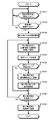
- FIG. 4 is a flowchart showing a first operation example.
- the information processing apparatus sets a destination.
- the information processing apparatus 20 sets the destination set by the user to the unmanned air vehicle 50 and proceeds to step ST2.
- step ST2 the information processing apparatus starts using the unmanned air vehicle.
- the information processing apparatus 20 starts flight control through communication with the unmanned air vehicle 50, causes the unmanned air vehicle 50 to fly toward the destination, and proceeds to step ST3.
- step ST3 the information processing apparatus acquires position information from the unmanned air vehicle and displays it.
- the information processing apparatus 20 acquires position information from the position information acquisition unit 52 of the unmanned air vehicle 50. Further, the information processing apparatus 20 displays the flight position of the unmanned air vehicle 50 on the display unit 22 based on the acquired position information, and proceeds to step ST4.
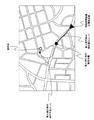
- FIG. 5 shows a display example of the flight position of the unmanned air vehicle.
- the display of the flight position for example, the destination, the position of the unmanned air vehicle 50, the completed flight route, the scheduled flight route, and the position of the information processing device 20 (vehicle) are displayed on the map.
- Information on the scheduled flight route is stored in the information storage unit 30. Further, the flight schedule route may be changed by the user, and the unmanned air vehicle 50 may be caused to fly to the destination along the route desired by the user.
- the display resolution, the search range of the unmanned air vehicle, etc. may be changed according to the user operation.
- FIG. 6 is a diagram for explaining an operation for changing the display resolution, the search range of the unmanned air vehicle, and the like.
- the input unit 21 and the display unit 22 are configured by a touch panel, for example.
- the information processing apparatus sets the search range to the wide area ARa when the user's push operation force is strong with respect to the destination position, and sets the search range to the narrow area ARb when the push operation force is weak. Further, the information processing apparatus may be able to adjust the imaging time in the imaging unit 55 of the unmanned air vehicle 50 in accordance with a user operation.
- step ST4 the information processing apparatus determines whether the unmanned air vehicle has arrived at the destination.
- the information processing apparatus 20 proceeds to step ST5 when the position information acquired from the unmanned air vehicle 50 indicates the position of the destination, and returns to step ST3 when the position information does not indicate the position of the destination.
- step ST5 the information processing apparatus acquires and displays a captured image from the unmanned aerial vehicle.
- the information processing apparatus 20 acquires the captured image including the destination and the destination and the surrounding area captured by the imaging unit 55 provided in the unmanned air vehicle 50, and proceeds to step ST6.
- step ST6 the information processing apparatus acquires peripheral information.
- the information processing apparatus 20 performs subject recognition using the captured image acquired from the unmanned aerial vehicle 50, acquires peripheral information indicating, for example, the number of people or vehicles lined up at the destination facility, etc., and proceeds to step ST7. move on.
- step ST7 the information processing apparatus determines whether the destination is crowded. Based on the peripheral information acquired in step ST6, the information processing apparatus 20 determines the congestion status of the destination facility, for example, and proceeds to step ST8 when determining that the destination is congested. If so, the process proceeds to step ST9.
- step ST8 the information processing apparatus performs movement control. Since the destination of the information processing apparatus 20 is congested, it is assumed that the waiting time when using the facility at the destination becomes long. Therefore, the travel speed is adjusted and the travel route is changed so that the vehicle can arrive at the destination while avoiding the congestion state, and the process proceeds to step ST9.
- step ST9 the information processing apparatus determines whether or not the use of the unmanned air vehicle has ended.
- the information processing apparatus 20 proceeds to step ST10 when, for example, the confirmation of the congestion status of the destination is completed and the use of the unmanned air vehicle 50 is finished, and the congestion status of the destination is continuously monitored to change the congestion status. When grasping, it returns to step ST5.
- step ST10 the information processing apparatus performs use termination processing of the unmanned air vehicle.
- the information processing apparatus 20 controls the unmanned air vehicle 50 to return the unmanned air vehicle 50 to the accommodation point.
- the congestion status of the destination can be grasped before arriving at the destination, so that it is possible to reduce useless waiting time and the like, and the facility at the destination is used. Convenience can be improved.
- the information processing apparatus 20 may display the captured image captured by the imaging unit 55 of the unmanned air vehicle 50 on the display unit 22 until arrival at the destination. If the captured image is displayed in this manner, the vehicle occupant can sequentially observe the situation of the destination and the surrounding area. Further, the information processing apparatus 20 may display guidance information regarding the destination on the display unit 22. If the guidance information is displayed in this manner, the vehicle occupant can acquire information on the destination in advance. The information processing apparatus 20 displays such an image so that the passenger can effectively use the time until arrival at the destination.
- the information processing apparatus 20 can optimally display the captured images of the destination and the surrounding area by generating the captured images with the unmanned air vehicle according to the arrangement and display size of the display unit 22.
- the information processing device 20 displays an image taken in front of the unmanned air vehicle 50 in the traveling direction in correspondence with the display unit 22 provided in front of the driver. 50 and displayed on the display unit 22.
- the captured image acquired by the information processing apparatus 20 has an image size corresponding to the number of display pixels of the display unit 22. In this way, the captured image in the traveling direction of the unmanned air vehicle 50 can be optimally displayed on the display unit 22.
- the information processing device 20 captures an image of the surroundings of the unmanned air vehicle 50 in accordance with the arrangement and display size of the display unit 22 provided in the car. Is acquired from the unmanned air vehicle 50 and displayed on the display unit 22.
- the information processing apparatus 20 includes a captured image of the traveling direction of the unmanned air vehicle 50 on the display unit 22 located on the front side in the vehicle, and a traveling direction of the unmanned air vehicle 50 on the display unit 22 located on the right side of the vehicle. Is displayed in the right direction. Furthermore, a captured image in a direction corresponding to another display unit is displayed. By performing such display, the information processing apparatus 20 can optimally display an image such that a vehicle occupant is on the unmanned air vehicle 50.
- Second example of operation> a case where the information providing system is used for parking will be described as a second operation example.
- the second operation example by detecting an empty space based on an image of a parking lot imaged by an unmanned air vehicle, and performing movement guidance to the detected empty space using the unmanned air vehicle, Improve convenience when using a parking lot.
- the information processing apparatus is provided in the vehicle as a configuration integrated with the vehicle or as a configuration possessed by a passenger of the vehicle.
- FIG. 7 is a flowchart showing a second operation example.
- the information processing apparatus determines that the vehicle has approached the parking lot.
- the information processing apparatus 20 determines whether the vehicle has approached the parking lot based on the position information and the map information.
- the information processing apparatus 20 proceeds to step ST22 when determining that it has approached the parking lot, and returns to step ST21 when it has not determined that it has approached the parking lot.
- step ST22 the information processing apparatus determines whether to park in the parking lot.
- the information processing apparatus 20 proceeds to step ST23 when it is determined that the user instruction for parking the vehicle in the approaching parking lot is performed, and returns to step ST21 when it is not determined that the user instruction is performed. .
- FIG. 8 illustrates a user instruction input screen for using a parking lot.
- the information processing apparatus 20 displays the dialog box DBa on the display unit 22.
- an instruction button “Yes” when the vehicle is parked in the parking lot and an instruction button “No” when the vehicle is not parked in the parking lot are provided.
- the information processing device 20 detects which instruction button is operated by the user (passenger), and determines whether or not a user instruction for parking the vehicle is made based on the detection result.
- step ST23 the information processing apparatus starts using the unmanned air vehicle.
- the information processing apparatus 20 starts the flight control of the unmanned air vehicle 50, starts the flight toward the parking lot where the unmanned air vehicle 50 approaches, and proceeds to step ST24.
- step ST24 the information processing apparatus acquires position information and a captured image from the unmanned air vehicle and displays them.
- the information processing apparatus 20 acquires position information from the position information acquisition unit 52 of the unmanned air vehicle 50. Further, the information processing apparatus 20 acquires a captured image from the imaging unit 55 of the unmanned air vehicle 50. In addition, the information processing apparatus 20 displays the flight position of the unmanned air vehicle 50 and the captured image on the display unit 22 based on the acquired position information, and proceeds to step ST25.
- step ST25 the information processing apparatus searches for an empty space.
- the information processing apparatus 20 performs image processing using the captured image acquired in step ST24, and searches for an empty space where the vehicle is not parked. For example, the information processing apparatus 20 performs subject recognition and the like to determine the vehicle and the parking surface, detects an empty space based on the determination result, and proceeds to step ST26.
- step ST26 the information processing apparatus determines whether an empty space is specified.
- the information processing apparatus determines whether an empty space for parking the vehicle has been specified.
- the information processing apparatus 20 proceeds to step ST29 when the empty space is not specified because the empty space cannot be detected, and when there is a user instruction not to use the detected empty space.
- the information processing apparatus 20 proceeds to step ST27.
- the user may specify the empty space, or may automatically specify the empty space.
- the information processing apparatus 20 displays the detected empty space on the display unit 22 and sets the empty space selected according to the user input from the input unit 21 as the specific empty space. Further, when automatically specifying a free space, the information processing apparatus 20 sets the widest free space or a free space close to an entrance as a specific free space.
- FIG. 9 shows an example of an empty space specifying operation screen.
- the information processing apparatus 20 displays the dialog box DBb on the display unit 22.
- an instruction button “Yes” for parking the vehicle in the detected empty space and an instruction button “No” for not parking the vehicle in the detected empty space are provided.
- the information processing apparatus 20 detects which instruction button the user has operated, and determines whether or not an empty space for parking the vehicle is specified based on the detection result.
- the information processing apparatus 20 may display a captured image of the detected empty space on the specific operation screen for the empty space. Thus, if the captured image of the detected empty space is displayed, the user can appropriately determine whether or not to park the vehicle in the empty space based on the captured image of the empty space.
- step ST27 the information processing apparatus moves the unmanned air vehicle to the guidance start position.
- the information processing apparatus 20 moves the unmanned air vehicle 50 to the guidance start position, for example, the position of the vehicle or a nearby position that is visible from the vehicle, and proceeds to step ST28.
- step ST28 the information processing apparatus starts guidance by an unmanned air vehicle.
- the information processing apparatus 20 sets the position of the specific empty space in the unmanned air vehicle 50 and then moves the unmanned air vehicle 50 from the guidance start position to the position of the specific empty space, thereby guiding the vehicle to the empty space and performing a step. Proceed to ST29.
- step ST29 the information processing apparatus determines whether or not the use of the unmanned air vehicle has ended.
- the information processing apparatus 20 proceeds to step ST30 when the vehicle has moved to the position of the specific empty space, or when the use of the unmanned air vehicle 50 is completed after the parking of the vehicle in the specific empty space is completed, and the unmanned air vehicle.
- the process returns to step ST24.
- step ST30 the information processing apparatus performs use termination processing of the unmanned air vehicle.
- the information processing apparatus 20 controls the unmanned air vehicle 50 to return the unmanned air vehicle 50 to the accommodation point.
- the unmanned air vehicle 50 can be used to guide to a specific empty space, the vehicle can be parked quickly. Therefore, the convenience at the time of using a parking lot can be improved.
- the information processing apparatus 20 searches for a moving route in the destination based on the captured image in the destination that is captured by moving the unmanned air vehicle 50. Furthermore, the information processing apparatus 20 sets the detected moving route as a moving body used for moving within the destination, and thereafter starts the movement of the small moving body from the vehicle 40 along the set moving route.
- FIG. 10 illustrates a small mobile object.
- the small movable body 45 is provided with a rain guard 452 in front of the seat 451.
- a flexible display is used in the rain guard 452 so that various information can be presented to a person sitting on the seat 451.
- the rain guard 452 is configured to be stowable.
- a traveling unit 453 is attached to the seat 451.
- the travel unit 453 includes a position information acquisition unit, a travel drive unit, a control unit, a power supply unit, and the like.
- the position information acquisition unit acquires the current position of the small mobile body.
- the travel drive unit is composed of a drive motor, tires, and the like, and travels a small movable body.
- the control unit performs drive control of the travel drive unit based on the current position and map information acquired by the position information acquisition unit so that the small mobile body travels on the set travel route. Further, storage of the rain guard 452 and information display using the rain guard 452 are performed.
- FIG. 11 shows a vehicle and a small moving body
- FIG. 11A shows a case where the small moving body 45 is accommodated in the vehicle 40.
- the small mobile body 45 is stored in the vehicle 40, it is used as a seat in the vehicle, and the rain guard 452 is in the stored state. Further, when the small moving body 45 starts moving from the vehicle 40 along the set moving route, as shown in FIG. Displays various information related to points.
- 11B illustrates the case where the small moving body 45 is taken out from the back surface portion of the vehicle 40, the small moving body 45 is configured to be taken out from the front surface portion and the side surface portion of the vehicle 40. Also good.
- FIG. 12 is a flowchart showing a third operation example, and illustrates the processing until the moving route is set for the small moving body 45.
- step ST41 the information processing apparatus sets a destination.
- the information processing apparatus 20 sets the destination set by the user to the unmanned air vehicle 50, and proceeds to step ST42.
- step ST42 the information processing apparatus starts using the unmanned air vehicle.
- the information processing apparatus 20 starts flight control through communication with the unmanned air vehicle 50, causes the unmanned air vehicle 50 to fly toward the set destination, and proceeds to step ST43.
- step ST43 the information processing apparatus acquires position information from the unmanned air vehicle and displays it.
- the information processing apparatus 20 acquires position information from the position information acquisition unit 52 of the unmanned air vehicle 50. Further, the information processing apparatus 20 displays the flight position of the unmanned air vehicle 50 on the display unit 22 based on the acquired position information, and proceeds to step ST44.
- step ST44 the information processing apparatus determines whether the unmanned air vehicle has arrived at the destination.
- the information processing apparatus 20 proceeds to step ST45 when the position information acquired from the unmanned air vehicle 50 indicates the position of the destination, and returns to step ST43 when the position information does not indicate the position of the destination.
- step ST45 the information processing apparatus acquires a captured image from an unmanned air vehicle and displays it.
- the information processing apparatus 20 causes the imaging unit 55 provided in the unmanned air vehicle 50 to image the destination. Further, the information processing apparatus 20 acquires a captured image generated by the unmanned air vehicle 50 and proceeds to step ST46.
- step ST46 the information processing apparatus searches for a route within the destination.
- the information processing apparatus 20 performs subject recognition using a captured image obtained by imaging the inside of the destination with the unmanned air vehicle 50, and determines the arrangement of the building, the passage situation, the obstacle, and the like in the destination. Furthermore, the information processing apparatus 20 searches for a travel route that can be passed by a small mobile body, which will be described later, based on the determination result, and proceeds to step ST47.
- a moving route with little wetness may be searched by searching for a rainy spot such as a building or under a tree.
- step ST47 the information processing apparatus determines whether a route has been determined.
- the information processing apparatus 20 proceeds to step ST48 when the travel route through which the small mobile body can pass within the destination is determined, and returns to step ST46 when the travel route is not determined.
- FIG. 13 illustrates a user instruction input screen for route determination.
- the information processing apparatus 20 displays the dialog box DBc on the display unit 22.
- an instruction button “Yes” when the searched route is adopted and an instruction button “No” when the searched route is not adopted are provided.
- the information processing device 20 detects which instruction button the user has operated, and determines whether or not a route has been determined based on the detection result.
- a route image (broken line) indicating the searched route is superimposed on a captured image indicating the destination facility, and the small mobile body moves inside the destination facility. It is clear how they plan to move.
- step ST48 the information processing apparatus performs an unmanned air vehicle use end process.
- the information processing device 20 controls the unmanned aerial vehicle 50, returns the unmanned aerial vehicle 50 to the accommodation point, and proceeds to step ST49.
- step ST49 the information processing apparatus performs navigation setting for the small mobile body.
- the information processing apparatus 20 sets navigation for the small mobile body so that the small mobile body can move along the travel route determined in step ST47.
- the moving route is determined in advance, so that the convenience when using the facility at the destination is improved. It can be improved.
- the small moving body 45 separated from the vehicle 40 can easily perform sightseeing or the like by performing automatic driving along the set moving route.
- the case where a small mobile body is used has been described. However, in the case of moving on foot, a route that can be moved on foot is searched, and the information terminal device possessed by the user moving on foot Notify the travel route.
- FIG. 14 and 17 are flowcharts showing a fourth operation example.
- 14 shows an operation example of the vehicle information processing apparatus
- FIG. 17 shows an operation example of the portable information processing apparatus.
- the vehicle information processing apparatus starts using the unmanned air vehicle.
- the vehicle information processing apparatus 20c starts flight control through communication with the unmanned air vehicle 50, causes the unmanned air vehicle 50 to fly, and proceeds to step ST62.
- step ST62 the vehicle information processing apparatus acquires position information from the unmanned air vehicle and displays it.
- the vehicle information processing apparatus 20 c acquires position information from the position information acquisition unit 52 of the unmanned air vehicle 50. Moreover, the vehicle information processing apparatus 20c displays the flight position of the unmanned air vehicle 50 on the display unit 22 based on the acquired position information, and proceeds to step ST63.
- FIG. 15 illustrates the display of the flight position of the unmanned air vehicle.
- the unmanned air vehicle accommodation point and the estimated arrival time for example, the unmanned air vehicle 50, the completed flight route, the planned flight route, and the position of the information processing device 20 (vehicle) are displayed on the map.
- Information on the scheduled flight route is stored in the information storage unit 30.
- the user may change the planned flight route, and the unmanned air vehicle 50 may be caused to fly to the unmanned air vehicle accommodation point along the route desired by the user.
- step ST63 the vehicle information processing apparatus determines whether there is a user input.
- the vehicle information processing apparatus 20c proceeds to step ST64 when it is determined that there is a user input, and proceeds to step ST65 when it is not determined that there is a user input.
- step ST64 the vehicle information processing apparatus performs flight control according to the user input.
- the vehicle information processing apparatus 20c generates a control signal so that the operation according to the user input is performed by the unmanned air vehicle 50, transmits the control signal to the unmanned air vehicle 50, and proceeds to step ST68.
- the vehicle information processing apparatus determines whether to change the control authority. For example, when the vehicle information processing apparatus 20c detects that the vehicle 40 is stopped and the door is opened or the engine is stopped, etc., the vehicle information processing apparatus 20c determines that the passenger gets off and displays the control authority change instruction screen. indicate.
- FIG. 16 illustrates a control authority change instruction screen.
- the information processing apparatus 20 displays the dialog box DBd on the display unit 22.
- an instruction button “Yes” when switching the control of the unmanned air vehicle in flight to the portable information processing apparatus and an instruction button “No” when not switching the control are provided.
- the vehicle information processing device 20c detects which instruction button the user has operated, and determines whether or not to change the control authority based on the detection result.
- the vehicle information processing apparatus 20c proceeds to step ST66 when it is determined that the control authority is changed, and proceeds to step ST68 when it is determined that the control authority is not changed.
- step ST66 the vehicle information processing apparatus performs control authority change processing.
- the vehicle information processing device 20c communicates with the portable information processing device 20p, and transmits a flight control switching request to the portable information processing device 20p.
- the flight control switching request includes information necessary for continuously performing the flight control.
- the vehicle information processing apparatus 20c ends the flight control of the unmanned air vehicle 50 in response to receiving the permission notification in response to the flight control switching request, and proceeds to step ST67.
- step ST67 the vehicle information processing apparatus determines whether to obtain control authority.
- the vehicle information processing apparatus 20c determines that the control authority is acquired when the flight control switching request is transmitted from the portable information processing apparatus 20p, and transmits a permission notice for the flight control switching request to the portable information processing apparatus 20p.
- the vehicle information processing apparatus 20c returns to step ST67 when the flight control switching request is not transmitted.
- the vehicle information processing apparatus 20c may acquire control authority according to detecting a user's boarding. In this case, the vehicle information processing apparatus 20c makes a request for control authority to the portable information processing apparatus 20p, and acquires information necessary for continuously performing flight control.
- step ST68 the vehicle information processing apparatus determines whether the use of the unmanned air vehicle has ended.
- the vehicle information processing apparatus 20c proceeds to step ST69 when the use of the unmanned aerial vehicle 50 is terminated due to the achievement of the purpose using the unmanned aerial vehicle 50, and proceeds to step ST62 when the unmanned aerial vehicle 50 is continuously used.
- step ST69 the vehicle information processing apparatus performs use termination processing of the unmanned air vehicle.
- the vehicle information processing apparatus 20c controls the unmanned aerial vehicle 50, returns the unmanned aerial vehicle 50 to a predetermined position, and ends the operation.
- FIG. 17 shows the operation of the portable information processing apparatus.
- the portable information processing apparatus determines whether a switching request has been received.
- the portable information processing device 20p proceeds to step ST72 when receiving a flight control switching request from the vehicle information processing device 20c, and returns to step ST71 when not receiving it.
- step ST72 the portable information processing apparatus performs control authority reception processing.
- the portable information processing device 20p transmits a permission notice to the flight control switching request to the vehicle information processing device 20c.
- the portable information processing device 20p starts flight control of the unmanned air vehicle 50 using information included in the switching request.
- the portable information processing device 20p starts control of the unmanned air vehicle 50 by starting an application for performing flight control of the unmanned air vehicle 50 in response to a flight control switching request from the vehicle information processing device 20c. Then, the process proceeds to step ST73.
- step ST73 the portable information processing apparatus acquires position information from the unmanned air vehicle and displays it.
- the portable information processing device 20p acquires position information from the position information acquisition unit 52 of the unmanned air vehicle 50. Further, the portable information processing device 20p displays the flight position of the unmanned air vehicle 50 on the display unit based on the acquired position information, and proceeds to step ST74.
- FIG. 18 illustrates the display of the flight position of the unmanned air vehicle.
- the unmanned air vehicle landing point and the estimated arrival time the position of the unmanned air vehicle 50, the completed flight route, the planned flight route, and the position of the information processing device 20 (vehicle) are displayed on the map.
- Information on the scheduled flight route is stored in the information storage unit 30.
- the user may change the planned flight route, and the unmanned air vehicle 50 may be caused to fly to the unmanned air vehicle accommodation point along the route desired by the user.
- the unmanned air vehicle accommodation point in the configuration in which the unmanned air vehicle 50 accommodates the vehicle 40 is unmanned with respect to the user of the portable information processing device. This is the landing site of the flying object. Therefore, the unmanned air vehicle accommodation point shown in FIG. 15 is displayed as an unmanned air vehicle landing point in FIG.
- step ST74 the portable information processing apparatus determines whether there is a user input.
- the portable information processing device 20p proceeds to step ST75 when it is determined that there is a user input, and returns to step ST73 when it is not determined that there is a user input.
- step ST75 the portable information processing apparatus performs flight control according to the user input.
- the portable information processing device 20p generates a control signal so that the operation according to the user input is performed by the unmanned air vehicle 50, transmits the control signal to the unmanned air vehicle 50, and proceeds to step ST76.
- step ST76 the portable information processing device determines whether to change the control authority.
- the portable information processing device 20p changes the control authority when an operation for changing the control authority to the vehicle information processing device 20c is performed based on a user input or when the control authority is requested from the vehicle information processing device 20c. If it is determined that it is to be performed, the process proceeds to step ST77.
- the portable information processing device 20p returns to step ST73 when there is no control authority change operation or control authority request.
- the portable information processing apparatus performs control authority change processing.
- the portable information processing device 20p communicates with the vehicle information processing device 20c and transmits a flight control switching request.
- the flight control switching request includes information necessary for continuously performing the flight control.
- the portable information processing device 20p transmits a request permission notice including information necessary for continuously performing flight control to the vehicle information processing device 20c in response to a request for control authority from the vehicle information processing device 20c. .
- the unmanned flying object can be controlled and the captured image can be acquired. Convenience when using can be improved.
- the series of processes described in the specification can be executed by hardware, software, or a combined configuration of both.
- a program in which a processing sequence is recorded is installed and executed in a memory in a computer incorporated in dedicated hardware.
- the program can be installed and executed on a general-purpose computer capable of executing various processes.
- the program can be recorded in advance on a hard disk, SSD (Solid State Drive), or ROM (Read Only Memory) as a recording medium.
- the program is a flexible disk, a CD-ROM (Compact Disc Read Only Memory), an MO (Magneto optical disc), a DVD (Digital Versatile Disc), a BD (Blu-Ray Disc (registered trademark)), a magnetic disk, or a semiconductor memory card. It can be stored (recorded) in a removable recording medium such as temporarily or permanently. Such a removable recording medium can be provided as so-called package software.
- the program may be transferred from the download site to the computer wirelessly or by wire via a network such as a LAN (Local Area Network) or the Internet.
- the computer can receive the program transferred in this way and install it on a recording medium such as a built-in hard disk.
- the information processing apparatus of the present technology can have the following configuration.
- (1) The flight control of the unmanned air vehicle and the destination based on the captured image of the destination or the vicinity of the destination imaged by the unmanned air vehicle by moving the unmanned air vehicle to the destination by the flight control
- An information processing apparatus including a control unit that performs movement control.
- (2) The information processing apparatus is provided in a vehicle, The information processing apparatus according to (1), wherein the control unit performs movement control of the vehicle to the destination based on a captured image around the destination or the destination.
- (3) The control unit according to (2), wherein the control unit determines a congestion state based on a captured image of the destination or around the destination, and performs movement control to the destination based on the determination result of the congestion state.
- Information processing device is provided in a vehicle, The information processing apparatus according to (1), wherein the control unit performs movement control of the vehicle to the destination based on a captured image around the destination or the destination.
- (3) The control unit according to (2), wherein the control unit determine
- the information processing apparatus controls a travel route or a speed of the vehicle based on a determination result of the congestion state and adjusts an arrival time at the destination.
- the information processing apparatus is provided in a vehicle, The control unit sets a parking lot as the destination, searches for an empty space based on a captured image of the parking lot, and moves the unmanned air vehicle to the position of the detected empty space.
- the information processing apparatus according to any one of (1) to (4), which guides movement to an empty space.
- (6) The information processing apparatus according to (5), wherein the control unit moves the unmanned air vehicle from the position of the vehicle to the position of the detected empty space.
- the control unit searches for a moving route in the destination based on a captured image in the destination obtained by moving the unmanned air vehicle in the destination and capturing an image.
- An information processing apparatus according to claim 1.
- the information processing apparatus according to (7), wherein the control unit sets a moving route detected by the search as a moving body used for movement in the destination.
- the information processing apparatus is provided in a vehicle, The control unit according to any one of (1) to (8), wherein when the passenger gets out of the vehicle, the control authority of the flight control of the unmanned air vehicle is changed to the information processing device of the passenger who gets off the vehicle. Information processing device.
- the information processing apparatus includes a display unit, The information processing apparatus according to any one of (1) to (10), wherein the control unit displays the captured image on the display unit. (12) The information processing apparatus according to (11), wherein the control unit sets an imaging direction of the unmanned air vehicle according to the arrangement of the display unit. (13) The information processing apparatus according to any one of (11) and 812), wherein the control unit sets an image size of a captured image generated by the unmanned air vehicle according to an image display size in the display unit.
- the information processing apparatus and information processing method of this technology based on the flight control of the unmanned air vehicle and the captured image of the destination or the vicinity of the destination imaged by the unmanned air vehicle by moving the unmanned air vehicle to the destination by the flight control. Movement control related to the destination is performed by the control unit. For this reason, the convenience at the time of using the facility etc. of the destination can be improved. Therefore, it is suitable for a navigation system.
- DESCRIPTION OF SYMBOLS 10 ... Information processing system 20 ... Information processing apparatus 20c ... Vehicle information processing apparatus 20p ... Portable information processing apparatus 21 ... Input part 22 ... Display part 23 ... Position information acquisition part 24 ... Communication unit 25 ... Control unit 26 ... Audio output unit 27 ... In-vehicle state detection unit 28 ... Out-vehicle information detection unit 29 ... Vehicle state detection unit 30 ... Information storage unit DESCRIPTION OF SYMBOLS 40 ... Vehicle 45 ... Small mobile body 50 ... Unmanned air vehicle 51 ... Communication part 52 ... Position information acquisition part 53 ... Flying object control part 54 ... Drive part 55 ... ⁇ Imaging part 56 ... sensor part 451 ... seat 452 ... rain protection 453 ... traveling part
Landscapes
- Engineering & Computer Science (AREA)
- General Physics & Mathematics (AREA)
- Physics & Mathematics (AREA)
- Aviation & Aerospace Engineering (AREA)
- Radar, Positioning & Navigation (AREA)
- Remote Sensing (AREA)
- Automation & Control Theory (AREA)
- Multimedia (AREA)
- Theoretical Computer Science (AREA)
- Navigation (AREA)
- Traffic Control Systems (AREA)
- Health & Medical Sciences (AREA)
- Medical Informatics (AREA)
- Game Theory and Decision Science (AREA)
- Evolutionary Computation (AREA)
- Artificial Intelligence (AREA)
- Business, Economics & Management (AREA)
- Control Of Position, Course, Altitude, Or Attitude Of Moving Bodies (AREA)
Abstract
La présente invention concerne un dispositif de traitement d'informations (20) qui est prévu, par exemple, sur un véhicule (40). Une unité de commande du dispositif de traitement d'informations (20) fournit une commande de vol d'un véhicule aérien sans pilote (50), le déplace vers une destination, et acquiert une image en provenance du véhicule aérien sans pilote (50). En fonction d'une image de la destination ou des environnements de la destination, l'unité de commande peut, par exemple, ajuster un temps d'arrivée à la destination selon des conditions d'encombrement, ou fournir un guidage de mouvement du véhicule vers un espace ouvert au niveau de la destination. En outre, en fonction d'une image qui a été prise après avoir déplacé le véhicule aérien sans pilote à l'intérieur de la destination, l'unité de commande recherche un itinéraire de déplacement à l'intérieur de la destination et établit un itinéraire de déplacement détecté pour le corps mobile, qui est utilisé pour se déplacer à l'intérieur de la destination. Lorsqu'un occupant du véhicule sort, l'unité de commande transfère l'autorité de commande sur le véhicule aérien sans pilote à un dispositif de traitement d'informations de l'occupant qui sort, et continue de fournir une commande de vol au véhicule aérien sans pilote. La direction d'imagerie du véhicule aérien sans pilote et la taille de l'image sont établies selon la disposition et la taille d'une unité d'affichage qui est prévue sur le dispositif de traitement d'informations. Il est ainsi possible d'améliorer la commodité lors de l'utilisation d'une destination.
Priority Applications (4)
| Application Number | Priority Date | Filing Date | Title |
|---|---|---|---|
| US16/301,614 US10984661B2 (en) | 2016-06-02 | 2017-05-10 | Information processing device and information processing method |
| JP2018520751A JP7031581B2 (ja) | 2016-06-02 | 2017-05-10 | 情報処理装置と情報処理方法 |
| CN201780031935.8A CN109313035A (zh) | 2016-06-02 | 2017-05-10 | 信息处理装置和信息处理方法 |
| EP17806312.9A EP3467438A4 (fr) | 2016-06-02 | 2017-05-10 | Dispositif de traitement d'informations et procédé de traitement d'informations |
Applications Claiming Priority (2)
| Application Number | Priority Date | Filing Date | Title |
|---|---|---|---|
| JP2016110807 | 2016-06-02 | ||
| JP2016-110807 | 2016-06-02 |
Publications (1)
| Publication Number | Publication Date |
|---|---|
| WO2017208754A1 true WO2017208754A1 (fr) | 2017-12-07 |
Family
ID=60479352
Family Applications (1)
| Application Number | Title | Priority Date | Filing Date |
|---|---|---|---|
| PCT/JP2017/017664 Ceased WO2017208754A1 (fr) | 2016-06-02 | 2017-05-10 | Dispositif de traitement d'informations et procédé de traitement d'informations |
Country Status (5)
| Country | Link |
|---|---|
| US (1) | US10984661B2 (fr) |
| EP (1) | EP3467438A4 (fr) |
| JP (1) | JP7031581B2 (fr) |
| CN (1) | CN109313035A (fr) |
| WO (1) | WO2017208754A1 (fr) |
Cited By (5)
| Publication number | Priority date | Publication date | Assignee | Title |
|---|---|---|---|---|
| WO2019130056A1 (fr) * | 2017-12-27 | 2019-07-04 | 日産自動車株式会社 | Système de gestion de véhicules, dispositif de gestion de véhicules et procédé de gestion de véhicules |
| JP2019184343A (ja) * | 2018-04-05 | 2019-10-24 | トヨタ自動車株式会社 | 情報処理装置および情報処理方法 |
| JP2021068025A (ja) * | 2019-10-18 | 2021-04-30 | トヨタ自動車株式会社 | 情報処理装置、プログラム及び制御方法 |
| WO2021145215A1 (fr) * | 2020-01-15 | 2021-07-22 | ソニーグループ株式会社 | Dispositif de traitement d'informations, procédé de traitement d'informations, programme et système de traitement d'informations |
| JP2021181938A (ja) * | 2020-05-19 | 2021-11-25 | マツダ株式会社 | 車両先導システム |
Families Citing this family (20)
| Publication number | Priority date | Publication date | Assignee | Title |
|---|---|---|---|---|
| US11173910B2 (en) | 2018-04-11 | 2021-11-16 | Hyundai Motor Company | Lane change controller for vehicle system including the same, and method thereof |
| US11084491B2 (en) | 2018-04-11 | 2021-08-10 | Hyundai Motor Company | Apparatus and method for providing safety strategy in vehicle |
| US11597403B2 (en) | 2018-04-11 | 2023-03-07 | Hyundai Motor Company | Apparatus for displaying driving state of vehicle, system including the same and method thereof |
| US11548509B2 (en) | 2018-04-11 | 2023-01-10 | Hyundai Motor Company | Apparatus and method for controlling lane change in vehicle |
| EP3552901B1 (fr) | 2018-04-11 | 2025-07-02 | Hyundai Motor Company | Appareil et procédé pour fournir une stratégie de sécurité dans un véhicule |
| US10843710B2 (en) | 2018-04-11 | 2020-11-24 | Hyundai Motor Company | Apparatus and method for providing notification of control authority transition in vehicle |
| US11334067B2 (en) | 2018-04-11 | 2022-05-17 | Hyundai Motor Company | Apparatus and method for providing safety strategy in vehicle |
| US11084490B2 (en) | 2018-04-11 | 2021-08-10 | Hyundai Motor Company | Apparatus and method for controlling drive of vehicle |
| US11077854B2 (en) | 2018-04-11 | 2021-08-03 | Hyundai Motor Company | Apparatus for controlling lane change of vehicle, system having the same and method thereof |
| ES2889930T3 (es) | 2018-04-11 | 2022-01-14 | Hyundai Motor Co Ltd | Aparato y método para el control para habilitar un sistema autónomo en un vehículo |
| US11351989B2 (en) | 2018-04-11 | 2022-06-07 | Hyundai Motor Company | Vehicle driving controller, system including the same, and method thereof |
| EP3552902B1 (fr) | 2018-04-11 | 2025-05-28 | Hyundai Motor Company | Appareil et procédé permettant de fournir une trajectoire à un véhicule |
| EP3569460B1 (fr) | 2018-04-11 | 2024-03-20 | Hyundai Motor Company | Appareil et procédé de contrôle de la conduite dans un véhicule |
| JP7063723B2 (ja) * | 2018-05-22 | 2022-05-09 | 本田技研工業株式会社 | 表示制御装置及びプログラム |
| US11851179B1 (en) | 2019-04-09 | 2023-12-26 | Alarm.Com Incorporated | Imaging controls for unmanned aerial vehicles |
| EP4046911A4 (fr) * | 2019-10-15 | 2022-11-16 | Sony Group Corporation | Dispositif de traitement d'informations, système de traitement d'informations, procédé de traitement d'informations, et programme |
| CN113034969B (zh) * | 2020-05-11 | 2022-08-23 | 路特迩科技(杭州)有限公司 | 基于区域的停车服务与管理方法、系统 |
| CN112578817A (zh) * | 2021-02-26 | 2021-03-30 | 北京三快在线科技有限公司 | 无人机的控制方法、装置、存储介质和电子设备 |
| KR20230084991A (ko) * | 2021-12-06 | 2023-06-13 | 라인플러스 주식회사 | 사용자 운전 경로 기반 내비게이션 서비스 제공 방법 및 시스템 |
| JP7605190B2 (ja) * | 2022-06-28 | 2024-12-24 | トヨタ自動車株式会社 | 情報処理装置、方法、及び、システム |
Citations (4)
| Publication number | Priority date | Publication date | Assignee | Title |
|---|---|---|---|---|
| JP2009530185A (ja) * | 2006-03-22 | 2009-08-27 | ザ・ボーイング・カンパニー | マルチモード無人有人輸送手段システムおよび方法 |
| JP2015184821A (ja) * | 2014-03-20 | 2015-10-22 | ヤフー株式会社 | 情報処理装置、情報提供方法、および情報提供プログラム |
| JP5819555B1 (ja) * | 2015-04-01 | 2015-11-24 | ライトブレインラボ合同会社 | 車両運転支援システム |
| JP2016506561A (ja) * | 2012-11-27 | 2016-03-03 | クラウドパーク インコーポレイテッド | 複数のカメラを用いた単一の複数車両用駐車スペースの使用制御 |
Family Cites Families (18)
| Publication number | Priority date | Publication date | Assignee | Title |
|---|---|---|---|---|
| JPS5225263B2 (fr) | 1972-09-06 | 1977-07-06 | ||
| JPS5819555A (ja) | 1981-07-27 | 1983-02-04 | Olympus Optical Co Ltd | 超音波顕微鏡における円柱試料の走査方法 |
| JPH11142174A (ja) | 1997-11-13 | 1999-05-28 | Nitsuko Corp | ナビゲーションシステム |
| ATE477565T1 (de) * | 2005-06-30 | 2010-08-15 | Planum Vision Ltd | Überwachungssystem und -verfahren zum detektieren einer verbotenen bewegung auf einem vorbestimmten weg |
| US8686326B1 (en) * | 2008-03-26 | 2014-04-01 | Arete Associates | Optical-flow techniques for improved terminal homing and control |
| IL201682A0 (en) * | 2009-10-22 | 2010-11-30 | Bluebird Aero Systems Ltd | Imaging system for uav |
| CA2872698C (fr) * | 2012-05-04 | 2018-07-24 | Aeryon Labs Inc. | Systeme et procede pour commander des vehicules aeriens sans equipage |
| US9019375B1 (en) * | 2012-07-10 | 2015-04-28 | The Boeing Company | Target locator and interceptor imaging and sensing assembly, system and method |
| US9061102B2 (en) * | 2012-07-17 | 2015-06-23 | Elwha Llc | Unmanned device interaction methods and systems |
| US10019000B2 (en) * | 2012-07-17 | 2018-07-10 | Elwha Llc | Unmanned device utilization methods and systems |
| US8698896B2 (en) * | 2012-08-06 | 2014-04-15 | Cloudparc, Inc. | Controlling vehicle use of parking spaces and parking violations within the parking spaces using multiple cameras |
| US10112710B2 (en) * | 2013-10-15 | 2018-10-30 | Elwha Llc | Motor vehicle with captive aircraft |
| CN104183153A (zh) * | 2014-07-23 | 2014-12-03 | 陈嘉延 | 基于四旋翼无人机做引导的智能停车引导系统 |
| US9170117B1 (en) * | 2014-08-21 | 2015-10-27 | International Business Machines Corporation | Unmanned aerial vehicle navigation assistance |
| DE102015001861A1 (de) * | 2014-09-25 | 2016-03-31 | Daimler Ag | Verfahren zur Umgebungsüberwachung |
| CN104699102B (zh) * | 2015-02-06 | 2017-07-18 | 东北大学 | 一种无人机与智能车协同导航与侦查监控系统及方法 |
| CN105318888B (zh) * | 2015-12-07 | 2018-08-14 | 北京航空航天大学 | 基于无人机感知的无人驾驶车辆路径规划方法 |
| CN105460218A (zh) * | 2015-12-18 | 2016-04-06 | 苏州贝多环保技术有限公司 | 新型智能汽车 |
-
2017
- 2017-05-10 JP JP2018520751A patent/JP7031581B2/ja active Active
- 2017-05-10 US US16/301,614 patent/US10984661B2/en active Active
- 2017-05-10 EP EP17806312.9A patent/EP3467438A4/fr not_active Withdrawn
- 2017-05-10 CN CN201780031935.8A patent/CN109313035A/zh active Pending
- 2017-05-10 WO PCT/JP2017/017664 patent/WO2017208754A1/fr not_active Ceased
Patent Citations (4)
| Publication number | Priority date | Publication date | Assignee | Title |
|---|---|---|---|---|
| JP2009530185A (ja) * | 2006-03-22 | 2009-08-27 | ザ・ボーイング・カンパニー | マルチモード無人有人輸送手段システムおよび方法 |
| JP2016506561A (ja) * | 2012-11-27 | 2016-03-03 | クラウドパーク インコーポレイテッド | 複数のカメラを用いた単一の複数車両用駐車スペースの使用制御 |
| JP2015184821A (ja) * | 2014-03-20 | 2015-10-22 | ヤフー株式会社 | 情報処理装置、情報提供方法、および情報提供プログラム |
| JP5819555B1 (ja) * | 2015-04-01 | 2015-11-24 | ライトブレインラボ合同会社 | 車両運転支援システム |
Non-Patent Citations (1)
| Title |
|---|
| See also references of EP3467438A4 * |
Cited By (12)
| Publication number | Priority date | Publication date | Assignee | Title |
|---|---|---|---|---|
| WO2019130056A1 (fr) * | 2017-12-27 | 2019-07-04 | 日産自動車株式会社 | Système de gestion de véhicules, dispositif de gestion de véhicules et procédé de gestion de véhicules |
| CN111771103A (zh) * | 2017-12-27 | 2020-10-13 | 日产自动车株式会社 | 车辆管理系统、车辆管理装置以及车辆管理方法 |
| JPWO2019130056A1 (ja) * | 2017-12-27 | 2021-03-11 | 日産自動車株式会社 | 車両管理システム、車両管理装置、及び車両管理方法 |
| CN111771103B (zh) * | 2017-12-27 | 2024-02-09 | 日产自动车株式会社 | 车辆管理系统、车辆管理装置以及车辆管理方法 |
| US12001979B2 (en) | 2017-12-27 | 2024-06-04 | Nissan Motor Co., Ltd. | Vehicle management system, vehicle management device, and vehicle management method |
| JP2019184343A (ja) * | 2018-04-05 | 2019-10-24 | トヨタ自動車株式会社 | 情報処理装置および情報処理方法 |
| JP7081279B2 (ja) | 2018-04-05 | 2022-06-07 | トヨタ自動車株式会社 | 情報処理装置および情報処理方法 |
| JP2021068025A (ja) * | 2019-10-18 | 2021-04-30 | トヨタ自動車株式会社 | 情報処理装置、プログラム及び制御方法 |
| JP7156242B2 (ja) | 2019-10-18 | 2022-10-19 | トヨタ自動車株式会社 | 情報処理装置、プログラム及び制御方法 |
| WO2021145215A1 (fr) * | 2020-01-15 | 2021-07-22 | ソニーグループ株式会社 | Dispositif de traitement d'informations, procédé de traitement d'informations, programme et système de traitement d'informations |
| US12277863B2 (en) | 2020-01-15 | 2025-04-15 | Sony Group Corporation | Information processing apparatus, information processing method, program, and information processing system |
| JP2021181938A (ja) * | 2020-05-19 | 2021-11-25 | マツダ株式会社 | 車両先導システム |
Also Published As
| Publication number | Publication date |
|---|---|
| JP7031581B2 (ja) | 2022-03-08 |
| JPWO2017208754A1 (ja) | 2019-03-28 |
| US20190325758A1 (en) | 2019-10-24 |
| EP3467438A4 (fr) | 2019-06-26 |
| EP3467438A1 (fr) | 2019-04-10 |
| CN109313035A (zh) | 2019-02-05 |
| US10984661B2 (en) | 2021-04-20 |
Similar Documents
| Publication | Publication Date | Title |
|---|---|---|
| JP7031581B2 (ja) | 情報処理装置と情報処理方法 | |
| US11373528B2 (en) | Parking management system and parking management method | |
| US10906531B2 (en) | Information processing device and information processing method | |
| CN104442807B (zh) | 用于上车点取车时间设置的方法和装置 | |
| CN111619569B (zh) | 车辆控制系统、车辆控制方法及存储介质 | |
| US10487564B2 (en) | Door actuator adjustment for autonomous vehicles | |
| CN111376853B (zh) | 车辆控制系统、车辆控制方法及存储介质 | |
| JP7115282B2 (ja) | 交通管理装置、交通管理システム、交通管理方法、及び交通管理用コンピュータプログラム | |
| US20180224860A1 (en) | Autonomous vehicle movement around stationary vehicles | |
| CN111833644A (zh) | 停车管理装置、停车管理装置的控制方法及存储介质 | |
| US11257374B2 (en) | Information processing apparatus, information processing method, and moving object | |
| JP7372868B2 (ja) | 収容領域管理装置 | |
| CN111932927B (zh) | 管理装置、管理方法及存储介质 | |
| JP2026050407A (ja) | 情報処理装置、情報処理方法およびプログラム | |
| JP2019008587A (ja) | 自動連携システム | |
| JP7074125B2 (ja) | 情報処理装置と情報処理方法 | |
| US20210304606A1 (en) | Accommodation area management device | |
| JP2022185266A (ja) | 自動駐車システム及び自動駐車システムの制御方法 | |
| US12072196B2 (en) | Mobile-object control device, mobile-object control method, mobile object, information processing apparatus, information processing method, and program | |
| KR20230072922A (ko) | 자율 주행 차량의 실내 온도 제어 장치, 그를 포함한 시스템 및 그 방법 | |
| KR101764025B1 (ko) | 차량 운전 보조장치 및 이의 차량 운전 보조방법 | |
| JP7800496B2 (ja) | 情報処理装置、情報処理方法およびプログラム | |
| KR20240136229A (ko) | 정보 처리 장치, 정보 처리 방법 및 비일시적 기억 매체 | |
| KR20240122312A (ko) | 정보 처리 장치, 정보 처리 방법 및 기억 매체 | |
| JP2023176653A (ja) | 案内装置、案内方法およびプログラム |
Legal Events
| Date | Code | Title | Description |
|---|---|---|---|
| ENP | Entry into the national phase |
Ref document number: 2018520751 Country of ref document: JP Kind code of ref document: A |
|
| 121 | Ep: the epo has been informed by wipo that ep was designated in this application |
Ref document number: 17806312 Country of ref document: EP Kind code of ref document: A1 |
|
| NENP | Non-entry into the national phase |
Ref country code: DE |
|
| ENP | Entry into the national phase |
Ref document number: 2017806312 Country of ref document: EP Effective date: 20190102 |