WO2017209102A1 - 3-ヒドロキシアジピン酸の製造方法 - Google Patents
3-ヒドロキシアジピン酸の製造方法 Download PDFInfo
- Publication number
- WO2017209102A1 WO2017209102A1 PCT/JP2017/020018 JP2017020018W WO2017209102A1 WO 2017209102 A1 WO2017209102 A1 WO 2017209102A1 JP 2017020018 W JP2017020018 W JP 2017020018W WO 2017209102 A1 WO2017209102 A1 WO 2017209102A1
- Authority
- WO
- WIPO (PCT)
- Prior art keywords
- serratia
- acid
- coa
- hydroxyadipic
- hydroxyadipic acid
- Prior art date
- Legal status (The legal status is an assumption and is not a legal conclusion. Google has not performed a legal analysis and makes no representation as to the accuracy of the status listed.)
- Ceased
Links
Classifications
-
- C—CHEMISTRY; METALLURGY
- C12—BIOCHEMISTRY; BEER; SPIRITS; WINE; VINEGAR; MICROBIOLOGY; ENZYMOLOGY; MUTATION OR GENETIC ENGINEERING
- C12P—FERMENTATION OR ENZYME-USING PROCESSES TO SYNTHESISE A DESIRED CHEMICAL COMPOUND OR COMPOSITION OR TO SEPARATE OPTICAL ISOMERS FROM A RACEMIC MIXTURE
- C12P7/00—Preparation of oxygen-containing organic compounds
- C12P7/40—Preparation of oxygen-containing organic compounds containing a carboxyl group including Peroxycarboxylic acids
- C12P7/44—Polycarboxylic acids
-
- C—CHEMISTRY; METALLURGY
- C12—BIOCHEMISTRY; BEER; SPIRITS; WINE; VINEGAR; MICROBIOLOGY; ENZYMOLOGY; MUTATION OR GENETIC ENGINEERING
- C12N—MICROORGANISMS OR ENZYMES; COMPOSITIONS THEREOF; PROPAGATING, PRESERVING, OR MAINTAINING MICROORGANISMS; MUTATION OR GENETIC ENGINEERING; CULTURE MEDIA
- C12N1/00—Microorganisms; Compositions thereof; Processes of propagating, maintaining or preserving microorganisms or compositions thereof; Processes of preparing or isolating a composition containing a microorganism; Culture media therefor
- C12N1/20—Bacteria; Culture media therefor
-
- C—CHEMISTRY; METALLURGY
- C12—BIOCHEMISTRY; BEER; SPIRITS; WINE; VINEGAR; MICROBIOLOGY; ENZYMOLOGY; MUTATION OR GENETIC ENGINEERING
- C12N—MICROORGANISMS OR ENZYMES; COMPOSITIONS THEREOF; PROPAGATING, PRESERVING, OR MAINTAINING MICROORGANISMS; MUTATION OR GENETIC ENGINEERING; CULTURE MEDIA
- C12N1/00—Microorganisms; Compositions thereof; Processes of propagating, maintaining or preserving microorganisms or compositions thereof; Processes of preparing or isolating a composition containing a microorganism; Culture media therefor
- C12N1/38—Chemical stimulation of growth or activity by addition of chemical compounds which are not essential growth factors; Stimulation of growth by removal of a chemical compound
-
- C—CHEMISTRY; METALLURGY
- C12—BIOCHEMISTRY; BEER; SPIRITS; WINE; VINEGAR; MICROBIOLOGY; ENZYMOLOGY; MUTATION OR GENETIC ENGINEERING
- C12N—MICROORGANISMS OR ENZYMES; COMPOSITIONS THEREOF; PROPAGATING, PRESERVING, OR MAINTAINING MICROORGANISMS; MUTATION OR GENETIC ENGINEERING; CULTURE MEDIA
- C12N15/00—Mutation or genetic engineering; DNA or RNA concerning genetic engineering, vectors, e.g. plasmids, or their isolation, preparation or purification; Use of hosts therefor
- C12N15/09—Recombinant DNA-technology
- C12N15/11—DNA or RNA fragments; Modified forms thereof; Non-coding nucleic acids having a biological activity
- C12N15/52—Genes encoding for enzymes or proenzymes
-
- C—CHEMISTRY; METALLURGY
- C12—BIOCHEMISTRY; BEER; SPIRITS; WINE; VINEGAR; MICROBIOLOGY; ENZYMOLOGY; MUTATION OR GENETIC ENGINEERING
- C12R—INDEXING SCHEME ASSOCIATED WITH SUBCLASSES C12C - C12Q, RELATING TO MICROORGANISMS
- C12R2001/00—Microorganisms ; Processes using microorganisms
- C12R2001/01—Bacteria or Actinomycetales ; using bacteria or Actinomycetales
- C12R2001/425—Serratia
Definitions
- the present invention relates to a method for producing 3-hydroxyadipic acid using a Serratia microorganism.
- 3-Hydroxyadipic acid (IUPAC name: 3-hydroxyhexanedioic acid) is a dicarboxylic acid having 6 carbon atoms and a molecular weight of 162.14. 3-Hydroxyadipic acid can be used as a polyester by polymerizing with a polyhydric alcohol and as a raw material for polyamide by polymerizing with a polyvalent amine. Further, by adding ammonia to the terminal of 3-hydroxyadipic acid to make lactam, it can be used alone as a raw material for polyamide.
- a report related to a method for producing 3-hydroxyadipic acid using microorganisms includes biosynthesis of adipic acid in the course of a method for producing adipic acid by a non-naturally occurring microorganism using succinyl CoA and acetyl CoA as starting materials.
- 3-oxoadipic acid (3-oxoadipate) can be reduced by an enzymatic reaction (3-oxoadipate reductase) to produce 3-hydroxyadipic acid as an intermediate of the pathway.
- Patent Document 1 n-decane is metabolized by Pseudomonas X2 to produce a very small amount of 3-hydroxyadipic acid ( ⁇ -hydroxyadipic acid)
- Patent Document 2 describes a method for producing adipic acid, adipic acid ester or adipic acid thioester using a biocatalyst or a microorganism, and 3-hydroxyadipic acid ester or 3-hydroxyadipic acid thioester as an intermediate compound. Is described. 3-hydroxyadipic acid esters or 3-hydroxyadipic acid thioesters are described as being prepared by selective hydrogenation of 3-oxo groups in 3-oxoadipic acid esters or 3-oxoadipic acid thioesters.
- Patent Document 1 in a microorganism artificially improved so that adipic acid can be produced, 3-oxoadipic acid (3-oxoadipate) is reduced by an enzymatic reaction as an intermediate of adipic acid to be produced.
- 3-oxoadipic acid 3-hydroxyadipate
- metabolism is stopped by 3-hydroxyadipic acid and secreted into the culture medium.
- 3-oxoadipic acid reductase from 3-oxoadipic acid to 3-hydroxyadipic acid. It has not been verified whether it can be manufactured.
- 3-oxoadipate reductase is not known to those skilled in the art, 3-hydroxyadipate could not be produced using succinyl CoA and acetyl CoA as starting materials according to the description in Patent Document 1.
- Non-Patent Document 1 reports that Pseudomonas X2 produces 3-hydroxyadipic acid, its productivity is only slightly detectable by NMR, and a method for producing 3-hydroxyadipic acid That is not to say.
- Patent Document 2 does not describe a method for obtaining 3-hydroxyadipic acid from 3-hydroxyadipic acid ester or 3-hydroxyadipic acid thioester, but 3-hydroxyadipyl--as a specific example of 3-hydroxyadipic acid thioester. There is no description of how to obtain 3-hydroxyadipic acid from CoA.
- an object of the present invention is to provide a method for producing 3-hydroxyadipic acid using the metabolic pathway of Serratia microorganisms.
- the present invention comprises the following (1) to (7).
- a method for producing 3-hydroxyadipic acid comprising a step of culturing a Serratia microorganism having an ability to produce 3-hydroxyadipic acid.
- the Serratia genus microorganism is Serratia grimesii, Serratia ficaria, Serratia fonticola, Serratia odorifera, Serratia plymutica, Serratia entomophila or Nea acid. .
- the medium for culturing the Serratia microorganism comprises at least one or two or more carbon sources selected from the group consisting of saccharides, succinic acid, 2-oxoglutaric acid and glycerol (1) to (3 3)
- the Serratia microorganism contains at least one or more inducers selected from the group consisting of ferulic acid, p-coumaric acid, benzoic acid, cis, cis-muconic acid, protocatechuic acid and catechol
- a Serratia genus microorganism capable of producing 3-hydroxyadipic acid characterized in that the activity of an enzyme that catalyzes a reaction for producing 3-oxoadipyl CoA and CoA from succinyl CoA and acetyl CoA is enhanced.
- a Serratia microorganism (7) The Serratia genus microorganism is Serratia grimesii, Serratia ficaria, Serratia fontico, Serratia odorifera, Serratia pymuthica, Serratia entomophila or erra.
- 3-hydroxyadipic acid can be obtained using the metabolic pathway of Serratia microorganisms.
- the method for producing 3-hydroxyadipic acid according to the present invention includes a step of culturing a Serratia genus microorganism capable of producing 3-hydroxyadipic acid. More specifically, the method is characterized in that 3-hydroxyadipic acid is produced by culturing a Serratia genus microorganism capable of producing 3-hydroxyadipic acid by utilizing the metabolic pathway of the microorganism.
- microorganisms belonging to the genus Serratia having the ability to produce 3-hydroxyadipic acid include Serratia grimesii, Serratia ficaria, Serratia fonticola, Serratia odoriferatia, Serratia plentiatum, and Serratia peas.
- Serratia microorganisms may be used in wastewater treatment methods that reduce the excess sludge discharged. (See JP 2002-18469 A), which has a complicated metabolic pathway different from microorganisms generally used for substance production, and is estimated to produce 3-hydroxyadipic acid based on the metabolic pathway.
- Serratia microorganisms are all known as Serratia microorganisms existing in nature and can be isolated from the natural environment such as soil. It can also be purchased from a microbial distribution organization such as NBRC.
- the Serratia genus microorganism may be one obtained by recombining a gene according to a known technique so as to increase the productivity of 3-hydroxyadipic acid, or one mutated by an artificial mutation means. Good.
- Serratia microorganisms when Serratia microorganisms are cultured, Serratia microorganisms capable of producing 1.0 mg / L or more of 3-hydroxyadipic acid in the culture supernatant within 48 hours, It is preferable to use it as a Serratia genus microorganism. More preferably, it is a Serratia genus microorganism having an ability to produce 1.0 mg / L or more of 3-hydroxyadipic acid in the culture supernatant in a wild type state that has not been subjected to gene mutation treatment or gene recombination. is there.
- Serratia microorganism can produce 1.0 mg / L or more of 3-hydroxyadipic acid in the culture supernatant within 48 hours is determined by the following method.
- Pre-culture medium medium composition: tryptone 10 g / L, yeast extract 5 g / L, sodium chloride 5 g / L
- Pre-culture medium medium composition: tryptone 10 g / L, yeast extract 5 g / L, sodium chloride 5 g / L
- the target Serratia genus microorganism is adjusted to pH 7
- 10 mL of 0.9% sodium chloride is added to the obtained preculture, and the cells are centrifuged three times to remove the supernatant, and the cells are washed.
- the washed cells were suspended in 1 mL of 0.9% sodium chloride and 0.5 mL of the suspension was adjusted to pH 6.5 (medium composition: succinic acid 10 g / L, glucose 10 g / L, ammonium sulfate 1 g / L, potassium phosphate 50 mM, magnesium sulfate 0.025 g / L, iron sulfate 0.0625 mg / L, manganese sulfate 2.7 mg / L, calcium chloride 0.33 mg / L, sodium chloride 1.25 g / L, Bacto tryptone 2.5 g / L, yeast extract (1.25 g / L) is added to 5 mL and cultured at 30 ° C. for 48 hours, and the main culture solution up to 48 hours is collected over time.
- succinic acid 10 g / L succinic acid 10 g / L
- glucose 10 g / L ammonium sulfate 1 g / L
- the cells are centrifuged from the main culture and the supernatant is analyzed by LC-MS / MS.
- the analysis conditions by LC-MS / MS are as follows. 1290 Infinity (manufactured by Agilent Technologies) can be used for HPLC, and Triple-Quad LC / MS (manufactured by Agilent Technologies) can be used for MS / MS.
- Synergy hydro-RP manufactured by Phenomenex
- Serratia microorganisms are cultured in a medium containing a carbon source that can be metabolized by normal microorganisms, preferably in a liquid medium.
- “metabolism” in the present invention means that a certain chemical substance taken from outside the cell by a Serratia microorganism or produced from another chemical substance in the cell is converted into another chemical substance by an enzymatic reaction. Refers to that.
- a medium containing a nitrogen source, an inorganic salt, and if necessary organic micronutrients such as amino acids and vitamins is used. Any of a natural medium and a synthetic medium can be used as long as the nutrient source is contained.
- saccharides can be preferably used as a carbon source that can be metabolized by Serratia microorganisms.
- specific examples of the saccharide include monosaccharides such as glucose, sucrose, fructose, galactose, mannose, xylose, and arabinose, disaccharides and polysaccharides to which these monosaccharides are bonded, and starch saccharified solution, molasses, and cellulose containing these Examples include biomass saccharified liquid.
- any carbon source that can be used for growth by Serratia microorganisms can be preferably used.
- carboxylic acids such as acetic acid, succinic acid, lactic acid, fumaric acid, citric acid, propionic acid, malic acid, malonic acid, 2-oxoglutaric acid and pyruvic acid
- monohydric alcohols such as methanol, ethanol and propanol
- glycerin examples thereof include polyhydric alcohols such as ethylene glycol and propanediol, hydrocarbons, fatty acids, oils and fats, and preferred are succinic acid, 2-oxoglutaric acid and glycerol.
- the carbon sources listed above may be used alone or in combination. Specifically, among these carbon sources, 3-hydroxyadipic acid can be efficiently produced by metabolizing one or more selected from the group consisting of sugars, succinic acid, 2-oxoglutaric acid, and glycerol. Can do.
- the concentration of the carbon source in the medium is not particularly limited, and can be appropriately set according to the type of the carbon source, and is preferably 5 g / L to 300 g / L.
- Nitrogen sources used for culturing Serratia microorganisms include, for example, ammonia gas, aqueous ammonia, ammonium salts, urea, nitrates, and other auxiliary organic nitrogen sources such as oil meal, soybean hydrolysate, casein Decomposed products, other amino acids, vitamins, corn steep liquor, yeast or yeast extract, meat extract, peptides such as peptone, various fermented cells and hydrolysates thereof can be used.
- the concentration of the nitrogen source in the medium is not particularly limited, but is preferably 0.1 g / L to 50 g / L.
- inorganic salts used for culturing Serratia genus microorganisms for example, phosphates, magnesium salts, calcium salts, iron salts, manganese salts and the like can be appropriately added and used.
- the culture conditions of the Serratia genus microorganism for producing 3-hydroxyadipic acid include the medium of the above component composition, the culture temperature, the stirring speed, the pH, the aeration amount, the inoculation amount, etc. Depending on the above, it is set by adjusting or selecting as appropriate. When there is foaming in liquid culture, an antifoaming agent such as mineral oil, silicone oil and surfactant can be appropriately added to the medium.
- an antifoaming agent such as mineral oil, silicone oil and surfactant can be appropriately added to the medium.
- 3-hydroxyadipic acid can be produced by culturing using the Serratia genus microorganism used in the present invention in the medium and culture conditions shown above, the metabolic pathway necessary for producing 3-hydroxyadipic acid is determined. By culturing the Serratia microorganism in an activated state, 3-hydroxyadipic acid can be more efficiently produced.
- the method for activating the metabolic pathway is not particularly limited.
- a method for increasing the expression level of enzyme gene (s) in the metabolic pathway for producing 3-hydroxyadipic acid, and producing 3-hydroxyadipic acid A method for inducing the expression of the enzyme gene (s) by culturing the microorganism in a medium containing a substance that activates a metabolic pathway (hereinafter also referred to as an inducer), and a gene according to a known technique Examples include a method of increasing the activity of the enzyme (group) encoded by the enzyme gene (group) by modifying the enzyme gene (group) by breeding techniques such as recombination or gene mutation treatment. These methods may be performed alone or in combination.
- a method of increasing the expression level of the enzyme gene (s) for example, a method of increasing the copy number of the enzyme gene (s) present in the cells in the Serratia genus microorganism used in the present invention by a gene modification technique. And a method of modifying a functional region around the coding region of the gene (s), and the like, and a method of increasing the copy number of the gene (s) is preferred.
- the inducer used in the method for inducing the expression of the enzyme gene (s) by culturing the Serratia microorganism used in the present invention in a medium containing the inducer is a metabolic pathway necessary for the production of 3-hydroxyadipic acid.
- a metabolic pathway necessary for the production of 3-hydroxyadipic acid is not particularly limited as long as it is a substance that can be activated, for example, an aromatic compound that is metabolized to a compound having fewer carbon atoms using 3-oxoadipyl CoA as an intermediate, an aliphatic compound having 6 or more carbon atoms, and the like Can be used.
- Examples of such compounds can be known using databases such as KEGG (Kyoto Encyclopedia of Genes and Genomes), specifically, benzoic acid, cis, cis-muconic acid, terephthalic acid, protocatechuic acid, Catechol, vanillin, coumaric acid, ferulic acid and the like can be mentioned, and ferulic acid, p-coumaric acid and benzoic acid are preferable.
- the above inducers may be used alone or in combination of two or more according to the Serratia genus microorganism used for the production of 3-hydroxyadipic acid.
- the inducer may be contained in a medium used for culture (preculture) for growing Serratia microorganisms as a pre-stage of 3-hydroxyadipic acid production, or used for 3-hydroxyadipic acid production. It may be contained in the medium.
- the concentration of the inducer is not particularly limited, but preferably 1 mg / L to 10 g / L, more preferably 5 mg / L to 1 g / L.
- the gene corresponding to the enzyme gene (s) include a gene encoding an enzyme having an activity of catalyzing a reaction for producing 3-oxoadipyl CoA and CoA from succinyl CoA and acetyl CoA.
- a gene encoding an enzyme having an activity of catalyzing a reaction for producing 3-oxoadipyl CoA and CoA from succinyl CoA and acetyl CoA by enhancing the activity of an enzyme having an activity of catalyzing a reaction for producing 3-oxoadipyl CoA and CoA from succinyl CoA and acetyl CoA of a Serratia genus microorganism capable of producing 3-hydroxyadipic acid, In particular, 3-hydroxyadipic acid can be produced.
- the enzyme is not particularly limited as long as it has the above-mentioned activity, and specifically, it is acetyl-CoA acyltransferase, ⁇ -ketoacylCoA acyltransferase, 3-oxadipyl-CoA acyltransferase-, ⁇ -ketoadipyl-CoAcyltransferase, ⁇ -ketoadipyl-CoAcyltransferase -CoA thiolase, beta-acetoacetyl coenzyme A thiolase, 2-methylacetoacetyl-CoA thiolase, 3-oxothiolase, acetyl coenzyme A thiolase, acetic-CoA aa cetyltransferase, acetyl-CoA: N-acetyltransferase, acetyl-CoA C-acyltransferase, beta-ketoth
- a BLAST search is performed on a site such as NCBI (National Center for Biotechnology Information) to determine whether it corresponds to the enzyme. Can be estimated.
- a gene encoding an enzyme having an activity of catalyzing a reaction for producing 3-oxoadipyl CoA and CoA from succinyl CoA and acetyl CoA is introduced into a Serratia microorganism, and the Serratia microorganism used in the present invention
- the activity of an enzyme that catalyzes a reaction that produces 3-oxoadipyl CoA and CoA from succinyl CoA and acetyl CoA is not particularly limited
- the organism that serves as the gene source of the gene that encodes the enzyme is not limited, and naturally occurring microorganisms Genes collected from the above, artificially synthesized genes, genes whose codon usage frequency is optimized so that genes collected from microorganisms can be easily expressed in the Serratia genus microorganisms of the present invention can be used.
- a microorganism that is a gene source of a gene that encodes an enzyme that catalyzes a reaction that generates 3-oxoadipyl CoA and CoA from succinyl CoA and acetyl CoA is not particularly limited, and examples thereof include microorganisms belonging to Acinetobacter such as Acinetobacter bayleyi and Acinetobacter radioresistens, Aerobacter microorganisms belonging to the genus Aerobacter such as cloacae, microorganisms belonging to the genus Alcaligenes such as Alcaligenes faecalis, microorganisms belonging to the genus Bacillus such as Bacillus badius, Bacillus magnesium, Bacillus roseus, and Brevibacterium bacterium.
- Acinetobacter such as Acinetobacter bayleyi and Acinetobacter radioresistens
- Aerobacter microorganisms belonging to the genus Aerobacter such as cloacae
- Corynebacterium acetoacidophilum Corynebacterium acetoglutamicum, Corynebacterium ammoniagenes
- Corynebacterium microorganisms of the genus such as Corynebacterium glutamicum, Cupriavidus metallidurans, Cupriavidus necator, Cupriavidus numazuensis, Cupriavidus a microorganism belonging to the genus, such as Cupriavidus oxalaticus
- Delftia a microorganism belonging to the genus such as Delftia acidovorans, Escherichia coli, Escherichia fergu Escherichia microorganisms of the genus, such as onii, Hafnia microorganisms of the genus, such as Hafnia alvei
- Microbacterium microorganism belonging to the genus such as Microbacterium am
- a Serratia genus microorganism having enhanced activity of an enzyme that catalyzes a reaction that generates 3-oxoadipyl CoA and CoA from succinyl CoA and acetyl CoA refers to a reaction that generates 3-oxoadipyl CoA and CoA from succinyl CoA and acetyl CoA.
- the specific activity (Unit / mg) of the enzyme that catalyzes refers to a Serratia genus microorganism that is increased compared to a control that does not enhance the activity of the enzyme.
- a Serratia genus microorganism in which an expression system of an enzyme that catalyzes a reaction for producing 3-oxoadipyl CoA and CoA from succinyl CoA and acetyl CoA is not genetically modified.
- the specific activity of the enzyme that catalyzes the reaction that produces 3-oxoadipyl CoA and CoA from succinyl CoA and acetyl CoA of Serratia microorganisms is determined by culturing Serertia microorganisms, preparing a cell-free extract (CFE), Measure as a solution.
- CFE cell-free extract
- medium composition tryptone 10 g / L, yeast extract 5 g / L, sodium chloride 5 g / L
- the washed cells were suspended in 1 mL of 0.9% sodium chloride and 0.5 mL of the suspension was adjusted to pH 6.5 (medium composition: succinic acid 10 g / L, glucose 10 g / L, ammonium sulfate 1 g / L, potassium phosphate 50 mM, magnesium sulfate 0.025 g / L, iron sulfate 0.0625 mg / L, manganese sulfate 2.7 mg / L, calcium chloride 0.33 mg / L, sodium chloride 1.25 g / L, Bacto tryptone 2.5 g / L, yeast extract (1.25 g / L) is added to 5 mL, and cultured with shaking at 30 ° C. for 3 hours.
- the obtained main culture broth (5 mL) was collected by centrifugation, suspended in 1 mL of Tris-HCl buffer consisting of 100 mM Tris-HCl (pH 8.0) and 1 mM dithiothreitol and glass beads ( ⁇ 0.1 mm) were obtained. ) And crush the cells at 4 ° C. using an ultrasonic crusher. The obtained cell disruption solution is centrifuged, and a cell-free extract (CFE) collected as a supernatant is used as an enzyme solution.
- Tris-HCl buffer consisting of 100 mM Tris-HCl (pH 8.0) and 1 mM dithiothreitol and glass beads ( ⁇ 0.1 mm) were obtained.
- crush the cells at 4 ° C. using an ultrasonic crusher.
- the obtained cell disruption solution is centrifuged, and a cell-free extract (CFE) collected as a supernatant is used as an enzyme solution.
- CFE cell-free extract
- the specific activity was determined by reacting NADH-dependent 3-hydroxyacyl CoA dehydrogenase having substrate specificity for 3-oxoadipyl CoA produced by the condensation reaction of succinyl CoA and acetyl CoA using the enzyme solution prepared by the above method.
- the consumption rate of NADH accompanying the reduction of 3-oxoadipyl CoA is measured and calculated according to Equation 1.
- the enzyme solution concentration (mg / ml) is the protein concentration in the enzyme solution.
- Enzyme reaction solution A (Composition: Tris-HCl (pH 8.0) 200 mM, MgCl 2 40 mM, NADH 0.8 mM, DTT 2 mM, Escherichia coli derived 3-hydroxyacyl CoA dehydrogenase (PaaH) 4.4 ⁇ g) 50 ⁇ L enzyme solution And incubate at 30 ° C. for 2 min. Then, add the total amount of the above mixture of enzyme reaction solution A and enzyme solution to a quartz cell pre-incubated at 30 ° C. with 25 ⁇ L of enzyme reaction solution B (composition: acetyl CoA 2 mM, succinyl CoA 0.4 mM).
- the value of the decrease in absorbance at 340 nm at 30 ° C. of the prepared reaction solution is measured with a spectrophotometer, and the obtained ⁇ 340 value is calculated according to the equation (1) to calculate the specific activity (Unit / mg).
- the protein concentration in the enzyme solution can be measured using a Quick Start Bradford protein assay (manufactured by BIO-RAD) or the like.
- spectrophotometer Ultraspec 3300Pro (manufactured by GE Healthcare) can be used.
- the produced 3-hydroxyadipic acid can be recovered.
- the recovery for example, isolation of the produced 3-hydroxyadipic acid should be performed according to a general method for stopping the culture when the accumulated amount has increased moderately and collecting the fermentation product from the culture. Can do. Specifically, after separating the cells by centrifugation, filtration, etc., 3-hydroxyadipic acid is isolated from the culture by column chromatography, ion exchange chromatography, activated carbon treatment, crystallization, membrane separation, distillation, etc. Can be separated.
- the culture is concentrated by using a reverse osmosis membrane or an evaporator to remove water to increase the concentration of 3-hydroxyadipic acid, followed by cooling crystallization or adiabatic crystallization.
- Example 1 3-Hydroxyadipic acid production test
- the production ability of 3-hydroxyadipic acid of Serratia microorganisms shown in Table 1 was examined. It was. Inoculate one platinum ear of each Serratia microorganism in 5 mL of medium containing tryptone 10 g / L, yeast extract 5 g / L, and sodium chloride 5 g / L, adjusted to pH 7, and shake at 30 ° C. until fully suspended. Cultured (preculture). After 10 ml of 0.9% sodium chloride was added to the culture solution, the cells were centrifuged, and the supernatant was completely removed to wash the cells three times.
- HPLC 1290 Infinity (manufactured by Agilent Technologies)
- MS / MS Triple-Quad LC / MS (manufactured by Agilent Technologies)
- Ionization method ESI negative mode.
- Table 1 shows the results of quantitative analysis of 3-hydroxyadipic acid accumulated in the culture supernatant. From these results, it was confirmed that all Serratia microorganisms have the ability to produce 3-hydroxyadipic acid.
- Example 2 3-Hydroxyadipic acid production test using inducer
- inducer for the Serratia genus microorganisms shown in Table 2, as the inducer, ferulic acid, p-coumaric acid, benzoic acid, cis, Pre-culture and main culture were carried out under the same conditions as in Example 1 except that cis-muconic acid, protocatechuic acid and catechol were added to 2.5 mM, respectively, and quantitative analysis of 3-hydroxyadipic acid in the culture supernatant Did. The results are shown in Table 2, respectively. From these results, it was found that the production amount of 3-hydroxyadipic acid was improved by adding an inducer to the preculture medium.
- Example 3 3-Hydroxyadipic acid production test using two types of carbon sources
- Serratia genus microorganisms shown in Table 3 After pre-culture using the same medium as in Example 2, carbon Culture was performed in a medium containing 10 g / L of each of the compounds shown in Table 3 as a source under the same conditions as in Example 2, and quantitative analysis of 3-hydroxyadipic acid in the culture supernatant was performed. The results are shown in Table 3, respectively. From these results, it was found that 3-hydroxyadipic acid can be produced efficiently even when cultivated using carbon other than glucose and succinic acid.
- Example 4 3-Hydroxyadipic acid production test using two types of carbon sources at various concentrations
- Pre-culture was performed using the same medium as in Example 2 for the Serratia genus microorganisms shown in Table 4. After that, the cells are cultured for 48 to 120 hours in the same conditions as in Example 2 in media containing the compounds at the concentrations shown in Table 4 as carbon sources, and quantitative analysis of 3-hydroxyadipic acid in the culture supernatant is performed. did. The results are shown in Table 4, respectively. From these results, it was found that 3-hydroxyadipic acid can be produced even if the addition ratio of the carbon source is changed.
- Example 5 3-Hydroxyadipic acid production test using a single carbon source
- Serratia genus microorganisms shown in Table 5 preculture using the same medium as in Example 1, followed by carbon
- the cells were cultured in a medium containing 10 g / L of succinic acid, glucose, or glycerol as a source under the same conditions as in Example 1, and quantitative analysis of 3-hydroxyadipic acid in the culture supernatant was performed.
- the results are shown in Table 5, respectively.
- the same experiment was carried out by changing only the preculture medium to Example 2, and the production amount of 3-hydroxyadipic acid when an inducer was added to the preculture medium is shown in Table 6.
- Example 6 3-Hydroxyadipic acid production test using various concentrations of ferulic acid as inducer For Serratia microorganisms shown in Table 7, added to preculture medium as inducer in Examples 2 to 5 Of these substances, ferulic acid was added to the preculture medium of Example 1 so as to have the concentration shown in Table 7, and preculture was performed. Other than that, pre-culture and main culture were performed under the same conditions as in Example 1, and quantitative analysis of 3-hydroxyadipic acid in the culture supernatant was performed. The results are shown in Table 7, respectively. From these results, it was found that even when ferulic acid alone was added to the preculture medium as an inducer, the production amount of 3-hydroxyadipic acid was improved.
- Example 7 3-Hydroxyadipic acid production test using various concentrations of p-coumaric acid as an inducer
- preculture medium as an inducer in Examples 2 to 5
- P-coumaric acid was added to the preculture medium of Example 1 so as to have the concentration shown in Table 7, and preculture was performed.
- pre-culture and main culture were performed under the same conditions as in Example 1, and quantitative analysis of 3-hydroxyadipic acid in the culture supernatant was performed.
- the results are shown in Table 8, respectively. From these results, it was found that even when only p-coumaric acid was added to the preculture medium as an inducer, the production amount of 3-hydroxyadipic acid was improved.
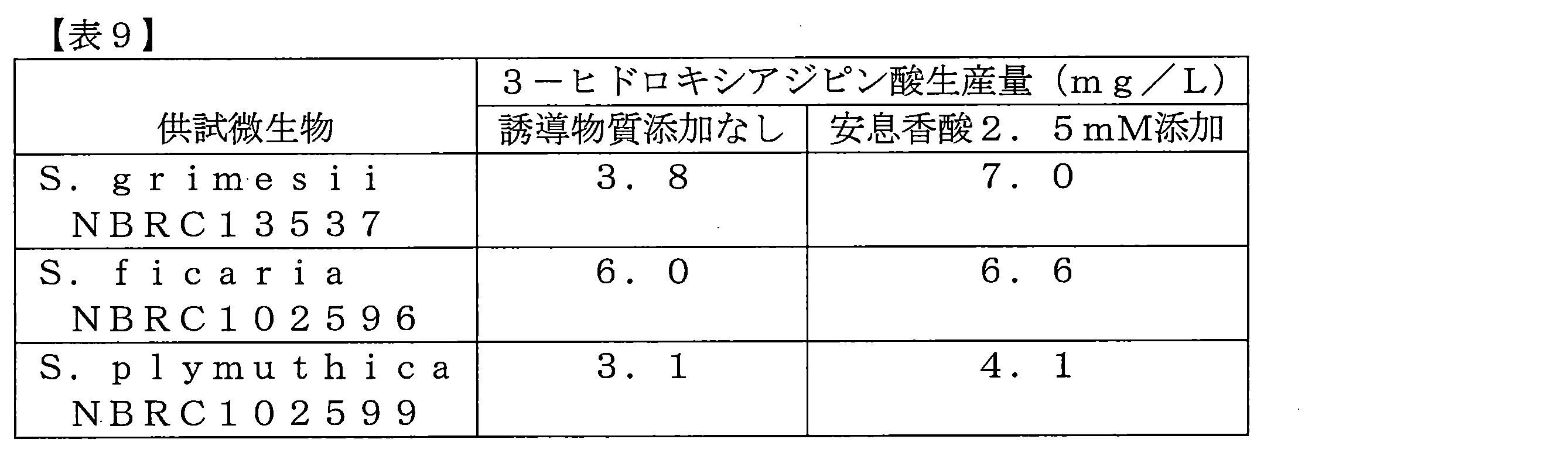
- Example 8 3-Hydroxyadipic acid production test using benzoic acid as inducer Among the substances added to the preculture medium as inducer in Examples 2 to 5 for the Serratia microorganisms shown in Table 9 From this, benzoic acid was added to the preculture medium of Example 1 so as to be 2.5 mM, and preculture was performed. Other than that, pre-culture and main culture were performed under the same conditions as in Example 1, and quantitative analysis of 3-hydroxyadipic acid in the culture supernatant was performed. The results are shown in Table 9, respectively. From these results, it was found that the production amount of 3-hydroxyadipic acid was improved even when benzoic acid alone was added to the preculture medium as an inducer.
- Example 9 Production Example of 3-Hydroxyadipic Acid
- the microorganism was a Serratia genus microorganism capable of producing 3-hydroxyadipic acid.
- Grimesii NBRC13537 was inoculated into 5 mL of LB medium by one platinum ear and cultured with shaking at 30 ° C. until fully suspended. 2 mL of the culture solution was added to 100 mL of a medium containing tryptone 10 g / L, yeast extract 5 g / L, sodium chloride 5 g / L, and ferulic acid 0.5 mM, and cultured with shaking at 30 ° C. until fully suspended (preculture ).
- Example 2 After washing the precultured solution with 200 mL of 0.9% sodium chloride three times in the same manner as in Example 1, the cells were suspended in 10 mL of 0.9% sodium chloride. 10 mL of the suspension was added to 100 mL of the medium described in Example 1 using 100 g / L of glucose and 20 g / L of succinic acid as a carbon source, and cultured with shaking at 30 ° C. for 120 hours. The supernatant obtained by centrifuging cells from the culture was analyzed by LC-MS / MS in the same manner as in Example 1. As a result, the concentration of 3-hydroxyadipic acid accumulated in the culture supernatant was 26 mg / L. there were.
- the culture supernatant was concentrated under reduced pressure to obtain 11 mL of a concentrated solution having a 3-hydroxyadipic acid concentration of 230 mg / L.
- This concentrated solution was injected into HPLC connected with a preparative device, and a fraction having an elution time corresponding to a sample of 3-hydroxyadipic acid was collected. This operation was repeated 10 times to obtain a 3-hydroxyadipic acid aqueous solution from which impurities in the culture medium were removed.
- the preparative HPLC used for collecting 3-hydroxyadipic acid was performed under the following conditions.
- Example 10 Construction of a plasmid for expression of an enzyme gene that catalyzes the reaction that produces 3-oxoadipyl CoA and CoA from succinyl CoA and acetyl CoA derived from Plymuthica. It was presumed that the gene sequence of SEQ ID NO: 4 possessed by plymuthica NBRC102599 encodes 3-oxodipyl CoA thiolase (PcaF), an enzyme that catalyzes the reaction that produces 3-oxoadipyl CoA and CoA from succinyl CoA and acetyl CoA. .
- Plasmid pBBR1MCS-2 was constructed for expression of the above gene.
- the vector pBBR1MCS-2 (ME Kovach, (1995), Gene 166: 175-176) capable of autonomous replication in the genus Serratia was cut with XhoI to obtain pBBR1MCS-2 / XhoI.
- Primers for PCR amplification of the ORA upstream region 200b (SEQ ID NO: 1) of the gapA gene were designed using the genome of Escherichia coli K-12 MG1655 as a template (SEQ ID NO: 2), and a PCR reaction was performed according to a conventional method.
- pBBR1MCS-2 / XhoI were ligated using In-Fusion HD Cloning Kit (Clontech), and a plasmid whose base sequence was confirmed by a conventional method was designated as pBBR1MCS-2 :: PgapA. Subsequently, pBBR1MCS-2 :: PgapA was cleaved with ScaI to obtain pBBR1MCS-2 :: PgapA / ScaI. S.
- Primers for PCR amplification of the ORF (SEQ ID NO: 4), an enzyme gene that catalyzes the reaction to produce 3-oxoadipyl CoA and CoA from succinyl CoA and acetyl CoA, using the genome of plymuthica NBRC102599 as a template (SEQ ID NOs: 5, 6) ), A PCR reaction was performed according to a conventional method.
- the obtained fragment and pBBR1MCS-2 :: PgapA / ScaI were ligated using In-Fusion HD Cloning Kit, and a plasmid whose base sequence was confirmed by a conventional method was designated as pBBR1MCS-2 :: SppcaF.
- Example 11 C.I. Construction of a plasmid for expression of an enzyme gene that catalyzes the reaction that produces 3-oxoadipyl CoA and CoA from glutamicum-derived succinyl CoA and acetyl CoA Enzyme that catalyzes the reaction that produces 3-oxoadipyl CoA and CoA from succinyl CoA and acetyl CoA of Corynebacterium glutamicum ATCC13032 Primers for PCR amplification of the ORF (GenBank accession number NC_003450, GI number 19553591) of the acyl-CoA acyltransferase gene (pcaF) using the genome of Corynebacterium glutamicum ATCC13032 as a template 8) According to the ordinary method The PCR reactions were performed Te.
- the obtained fragment and pBBR1MCS-2 :: PgapA / ScaI were ligated using In-Fusion HD Cloning Kit, and a plasmid whose base sequence was confirmed by a conventional method was designated as pBBR1MCS-2 :: CgpcaF.
- Example 12 Plasmid introduction into Serratia microorganisms Plasmids pBBR1MCS-2 :: SppcaF, pBBR1MCS-2 :: CgpcaF constructed in Examples 10 and 11 and vector pBBR1MCS-2 as controls were introduced into Serratia microorganisms shown in Table 11 It was introduced by electroporation (NM Calvin, PC Hanawalt. J. Bacteriol, 170 (1988), pp. 2796-2801). The transformed Serratia sp. Microorganism was incubated at 30 ° C. on an LB agar medium containing 25 ⁇ g / mL kanamycin and grown for 1-2 days.
- Example 13 Activity measurement of an enzyme that catalyzes a reaction for producing 3-oxoadipyl CoA and CoA from succinyl CoA and acetyl CoA Using the transformant of Serratia microorganism obtained in Example 12, succinyl CoA and acetyl CoA The specific activities of the enzymes catalyzing the reaction to produce 3-oxoadipyl CoA and CoA from were compared.
- E.E. Overexpression and purification of E. coli-derived PaaH Overexpression and purification of PaaH used to measure the activity of the enzyme that catalyzes the reaction that produces 3-oxoadipyl CoA and CoA from succinyl CoA and acetyl CoA.
- pCDF-1b was cleaved with BamHI to obtain pCDF-1b / BamHI.
- a primer for PCR amplification of the paaH gene (GenBank accession number NC_000913, GI number 945940) was designed using the genome of Escherichia coli K-12 MG1655 as a template (SEQ ID NOs: 9 and 10), and a PCR reaction was performed according to a conventional method.
- pCDF-1b EcpaaH
- PCDF-1b EcpaaH is introduced into E. coli BL21 (DE3), and the resulting transformant is aerobically cultured in LB containing 50 ⁇ g / mL of streptomycin (37 ° C.), and when OD600 is around 0.3. Isopropylthiogalactoside was added to a final concentration of 1 mM to induce paaH expression (aerobic, 37 ° C. overnight).
- the cells after centrifugation were suspended in 20 mM Tris-HCl (pH 8.0), and the cells were disrupted with an ultrasonic homogenizer while cooling with ice. Then, the centrifuged supernatant was recovered as a cell-free extract. The obtained cell-free extract was purified using His Bind Resin (Merck), centrifuged with Amicon Ultra 3K (Merck), and the concentrated solution was diluted with 20 mM Tris-HCL (pH 8.0). The enzyme solution (0.31 mg / mL) was used. Enzyme concentration was determined using the Quick Start Bradford protein assay (BIO-RAD).
- pBBR1MCS-2 as a microorganism belonging to the genus Serratia described in Table 11 into which pBBR1MCS-2 has been introduced, and a Serratia genus microorganism having an enhanced activity of an enzyme that catalyzes a reaction for producing 3-oxoadipyl CoA and CoA from succinyl CoA and acetyl CoA: :
- One Serratia microorganisms listed in Table 11 introduced with CgpcaF were inoculated into one platinum ear and cultured at 30 ° C. with shaking until fully suspended. After 10 ml of 0.9% sodium chloride was added to the culture solution, the cells were centrifuged, and the supernatant was completely removed to wash the cells three times. Suspended in 9% sodium chloride. 0.5 mL of the suspension was added to 5 mL of the main culture medium having the composition shown below, and cultured with shaking at 30 ° C. for 3 hours.
- the above culture solution (5 mL) was collected by centrifugation and then suspended in 1 mL of the following Tris-HCl buffer. Glass beads ( ⁇ 0.1 mm) were added to the cell suspension, and the cells were crushed at 4 ° C. using Micro Smash (manufactured by TOMY). After disrupting the cells as described above, the cell-free extract (CFE) of the supernatant obtained by centrifugation was used as an enzyme solution for the following experiments.
- CFE cell-free extract
- Pre-culture medium Tryptone 10g / L Yeast extract 5g / L Sodium chloride 5g / L pH 7.
- Main culture medium Succinic acid 10g / L Glucose 10g / L Ammonium sulfate 1g / L Potassium phosphate 50 mM Magnesium sulfate 0.025g / L Iron sulfate 0.0625mg / L Manganese sulfate 2.7mg / L Calcium chloride 0.33mg / L Sodium chloride 1.25g / L Bacto tryptone 2.5g / L Yeast extract 1.25 g / L pH 6.5.
- Tris-HCl buffer Tris-HCl (pH 8.0) 100 mM dithiothreitol 1 mM.
- Enzyme reaction solution A Tris-HCl (pH 8.0) 200 mM MgCl2 40 mM NADH 0.8 mM DTT 2 mM PaaH 4.4 ⁇ g.
- Enzyme reaction solution B Acetyl CoA 2 mM Succinyl CoA 0.4 mM
- Example 14 3-Hydroxyadipic acid production test using Serratia microorganisms expressing enzymes that catalyze the reaction to produce 3-oxoadipyl CoA and CoA from succinyl CoA and acetyl CoA by genetic recombination
- the ability to produce 3-hydroxyadipic acid of a Serratia genus microorganism and a Serratia genus microorganism into which an enzyme that catalyzes a reaction that generates 3-oxoadipyl CoA and CoA from succinyl CoA and acetyl CoA by genetic recombination prepared in Example 12 I investigated. Inoculate one platinum ear of each Serratia spp.
- Example 15 Confirmation of enzyme activity of PcaF derived from Plymuthica NBRC102599 PcaF encoded by the gene sequence of SEQ ID NO: 4 cloned in Example 10 has an activity of catalyzing a reaction to produce 3-oxoadipyl CoA and CoA from succinyl CoA and acetyl CoA I confirmed.
- A S.M. Overexpression and purification of PcaF-derived PcaF pRSF-1b was cleaved with SacI to obtain pRSF-1b / SacI. S.
- Primers for PCR amplification of the pcaF gene ORF were designed using the genome of plymuthica NBRC102599 as a template (SEQ ID NOs: 11 and 12), and PCR was performed according to a conventional method.
- the obtained fragment and pRSF-1b / SacI were ligated using In-Fusion HD Cloning Kit, and the plasmid whose base sequence was confirmed by a conventional method was designated as pRSF-1b: SppcaF.
- PRSF-1b SppcaF was introduced into E.
- the resulting cell-free extract was purified using His Bind Resin (Merck), centrifuged with Amicon Ultra 3K (Merck), and the concentrated solution was diluted with 20 mM Tris-HCL (pH 8.0) to obtain PcaF.
- the enzyme solution 0.52 mg / mL was used. Enzyme concentration was determined using the Quick Start Bradford protein assay (BIO-RAD).
- 3-hydroxyadipic acid can be produced using a Serratia microorganism.
- the obtained 3-hydroxyadipic acid can be used as various polymer raw materials.
Landscapes
- Chemical & Material Sciences (AREA)
- Life Sciences & Earth Sciences (AREA)
- Engineering & Computer Science (AREA)
- Health & Medical Sciences (AREA)
- Organic Chemistry (AREA)
- Genetics & Genomics (AREA)
- Zoology (AREA)
- Wood Science & Technology (AREA)
- Biotechnology (AREA)
- Bioinformatics & Cheminformatics (AREA)
- General Engineering & Computer Science (AREA)
- Microbiology (AREA)
- General Health & Medical Sciences (AREA)
- Biochemistry (AREA)
- Biomedical Technology (AREA)
- General Chemical & Material Sciences (AREA)
- Tropical Medicine & Parasitology (AREA)
- Virology (AREA)
- Chemical Kinetics & Catalysis (AREA)
- Medicinal Chemistry (AREA)
- Molecular Biology (AREA)
- Physics & Mathematics (AREA)
- Biophysics (AREA)
- Plant Pathology (AREA)
- Preparation Of Compounds By Using Micro-Organisms (AREA)
- Micro-Organisms Or Cultivation Processes Thereof (AREA)
Abstract
Description
(1)3-ヒドロキシアジピン酸の生産能を有するSerratia属微生物を培養する工程を含む、3-ヒドロキシアジピン酸の製造方法。
(2)前記Serratia属微生物のスクシニルCoAおよびアセチルCoAから3-オキソアジピルCoAおよびCoAを生じる反応を触媒する酵素の活性が強化されていることを特徴とする(1)に記載の3-ヒドロキシアジピン酸の製造方法。
(3)前記Serratia属微生物が、Serratia grimesii、Serratia ficaria、Serratia fonticola、Serratia odorifera、Serratia plymuthica、Serratia entomophilaまたはSerratia nematodiphilaである、(1)または(2)に記載の3-ヒドロキシアジピン酸の製造方法。
(4)前記Serratia属微生物を培養する培地が、糖類、コハク酸、2-オキソグルタル酸およびグリセロールからなる群から選択される少なくとも1種または2種以上の炭素源を含む、(1)~(3)のいずれかに記載の3-ヒドロキシアジピン酸の製造方法。
(5)前記Serratia属微生物を、フェルラ酸、p-クマル酸、安息香酸、cis,cis-ムコン酸、プロトカテク酸およびカテコールからなる群から選択される少なくとも1種類または2種類以上の誘導物質を含む培地で培養する、(1)~(4)のいずれかに記載の3-ヒドロキシアジピン酸の製造方法。
(6)3-ヒドロキシアジピン酸の生産能を有するSerratia属微生物であって、スクシニルCoAおよびアセチルCoAから3-オキソアジピルCoAおよびCoAを生じる反応を触媒する酵素の活性が強化されていることを特徴とする、Serratia属微生物。
(7)前記Serratia属微生物が、Serratia grimesii、Serratia ficaria、Serratia fonticola、Serratia odorifera、Serratia plymuthica、Serratia entomophilaまたはSerratia nematodiphilaである、(6)に記載のSerratia属微生物。
HPLC分析条件:
カラム:長さ100mm、内径3mm、粒径2.5μm
移動相:0.1%ギ酸水溶液/メタノール=70/30
流速:0.3mL/分
カラム温度:40℃
LC検出器:DAD(210nm)
MS/MS分析条件:
イオン化法:ESI ネガティブモード。

後述の実施例の分析に用いた3-ヒドロキシアジピン酸は化学合成により準備した。まず、コハク酸モノメチルエステル13.2g(0.1mol)(和光純薬株式会社製)に超脱水テトラヒドロフラン1.5L(和光純薬株式会社製)を加え、攪拌しながらカルボニルジイミダゾール16.2g(0.1mol)(和光純薬株式会社製)添加し、窒素雰囲気下1時間室温で攪拌した。この懸濁液にマロン酸モノメチルエステルカリウム塩15.6g(0.1mol)および塩化マグネシウム9.5g(0.1mol)を添加し、窒素雰囲気下1時間室温で攪拌した後、40℃で12時間攪拌した。反応終了後、1mol/L塩酸を0.05L加え、酢酸エチルにより抽出し、シリカゲルカラムクロマトグラフィー(ヘキサン:酢酸エチル=1:5)で分離精製することで、純粋な3-オキソヘキサンジカルボン酸ジメチルエステル13.1gを得た。収率70%。
1H-NMR(400MHz、CD3OD):δ1.70(m、1H)、δ1.83(m、1H)、δ2.42(m、4H)、δ4.01(m、1H)。
表1に示したSerratia属微生物(いずれも微生物分与機関より購入。購入先は株名に記載。)の3-ヒドロキシアジピン酸の生産能を調べた。トリプトン10g/L、酵母エキス5g/L、塩化ナトリウム5g/Lを含み、pH7に調整した培地5mLに、それぞれのSerratia属微生物を一白金耳植菌し、十分懸濁するまで30℃で振とう培養した(前培養)。その培養液に10mLの0.9%塩化ナトリウムを加え、菌体を遠心分離したのち上清を完全に取り除くことで菌体を洗浄する操作を3回行ったのち、菌体を1mLの0.9%塩化ナトリウムに懸濁した。懸濁液0.5mLを以下に示した組成の培地5mLに添加し、30℃で48時間振とう培養した。
コハク酸10g/L
グルコース10g/L
硫酸アンモニウム1g/L
リン酸カリウム50mM
硫酸マグネシウム0.025g/L
硫酸鉄0.0625mg/L
硫酸マンガン2.7mg/L
塩化カルシウム0.33mg/L
塩化ナトリウム1.25g/L
Bactoトリプトン2.5g/L
酵母エキス1.25g/L
pH6.5。
本培養液より菌体を遠心分離した上清を、LC-MS/MSにて分析した。LC-MS/MSによる3-ヒドロキシアジピン酸の定量分析は以下の条件で行った。
HPLC:1290Infinity(Agilent Technologies社製)
カラム:Synergi hydro-RP(Phenomenex社製)、長さ100mm、内径3mm、粒径2.5μm
移動相:0.1%ギ酸水溶液/メタノール=70/30
流速:0.3mL/分
カラム温度:40℃
LC検出器:DAD(210nm)
MS/MS:Triple-Quad LC/MS(Agilent Technologies社製)
イオン化法:ESI ネガティブモード。
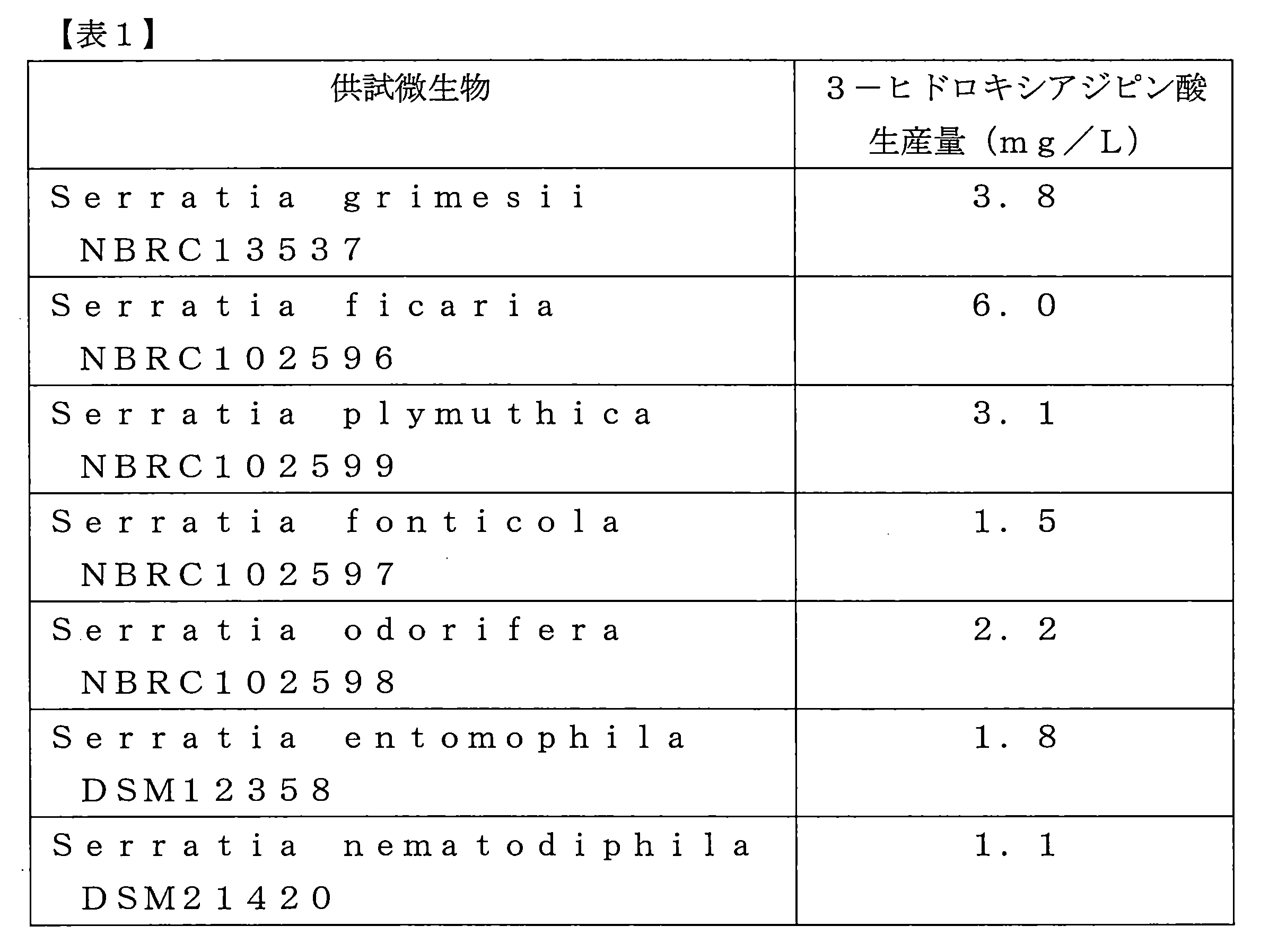
表2に示したSerratia属微生物を対象に、誘導物質として、前培養培地にフェルラ酸、p-クマル酸、安息香酸、cis,cis-ムコン酸、プロトカテク酸およびカテコールをそれぞれ2.5mMとなるように添加した以外は実施例1と同様条件で前培養、本培養を行い、培養上清中の3-ヒドロキシアジピン酸の定量分析をした。結果をそれぞれ表2に示す。これらの結果から、前培養培地に誘導物質を添加することによって、3-ヒドロキシアジピン酸の生産量が向上することがわかった。

表3に示したSerratia属微生物を対象に、実施例2と同様の培地を用いて前培養を行ったのち、炭素源として表3に示した化合物をそれぞれ10g/L含む培地にて実施例2と同様の条件にて培養し、培養上清中の3-ヒドロキシアジピン酸の定量分析をした。結果をそれぞれ表3に示す。これらの結果から、グルコースとコハク酸以外を炭素原として培養しても、3-ヒドロキシアジピン酸を効率よく生産できることがわかった。
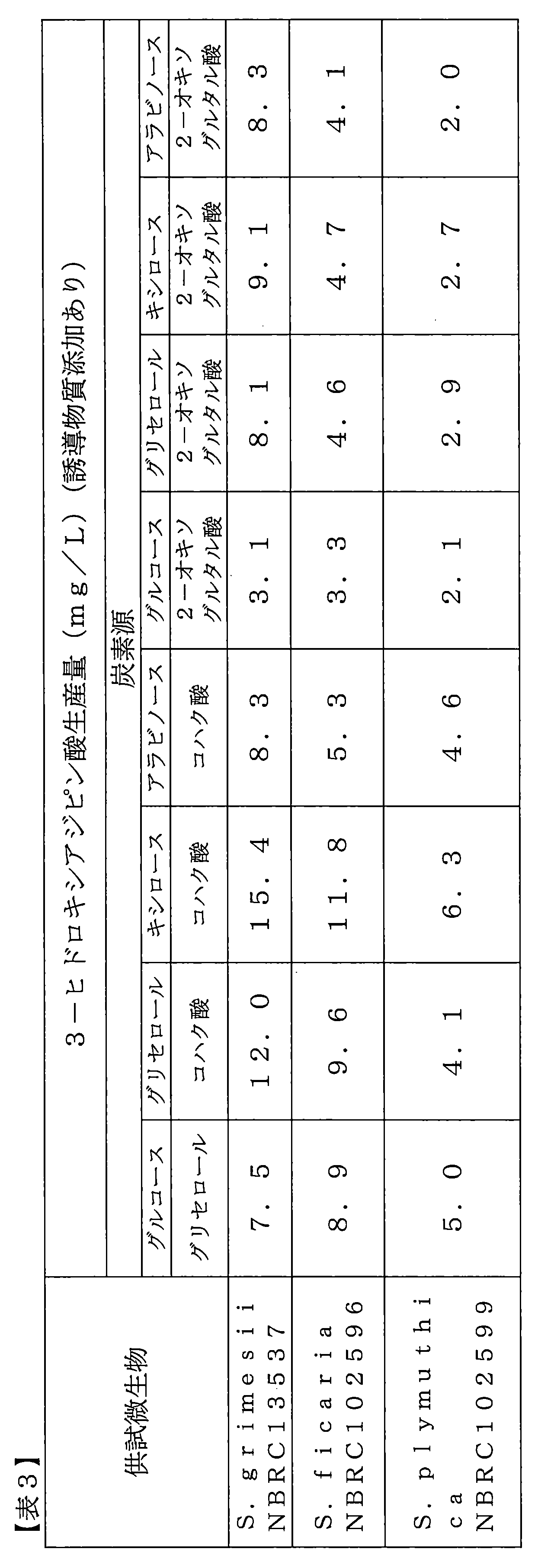
表4に示したSerratia属微生物を対象に、実施例2と同様の培地を用いて前培養を行ったのち、炭素源として表4に示した濃度の化合物をそれぞれ含む培地にて実施例2と同様の条件にて48~120時間培養し、培養上清中の3-ヒドロキシアジピン酸の定量分析をした。結果をそれぞれ表4に示す。これらの結果から、炭素源の添加割合を変更しても、3-ヒドロキシアジピン酸を生産できることがわかった。

表5に示したSerratia属微生物を対象に、実施例1と同様の培地を用いて前培養を行ったのち、炭素源としてコハク酸、グルコース、グリセロールのいずれか1種類を10g/L含む培地にて実施例1と同様の条件にて培養し、培養上清中の3-ヒドロキシアジピン酸の定量分析をした。結果をそれぞれ表5に示す。さらに、同様の実験について、前培養培地のみ実施例2に変更して行い、前培養培地に誘導物質を添加した場合の3-ヒドロキシアジピン酸の生産量について、表6に示す。これらの結果から、単一の炭素源を用いた場合でも、3-ヒドロキシアジピン酸を生産できること、また、単一の炭素源を用いた場合も、誘導物質を前培養培地に添加することで、3-ヒドロキシアジピン酸の生産量が向上することがわかった。


表7に示したSerratia属微生物を対象に、実施例2から5で誘導物質として前培養培地に添加した物質の中から、フェルラ酸を表7に示した濃度になるよう実施例1の前培養培地に添加し、前培養を行った。それ以外は実施例1と同様の条件で前培養、本培養を行い、培養上清中の3-ヒドロキシアジピン酸の定量分析をした。結果をそれぞれ表7に示す。これらの結果から、フェルラ酸のみを誘導物質として前培養培地に添加した場合でも、3-ヒドロキシアジピン酸の生産量が向上することがわかった。

表8に示したSerratia属微生物を対象に、実施例2から5で誘導物質として前培養培地に添加した物質の中から、p-クマル酸を表7に示した濃度になるよう実施例1の前培養培地に添加し、前培養を行った。それ以外は、実施例1と同様の条件で前培養、本培養を行い、培養上清中の3-ヒドロキシアジピン酸の定量分析をした。結果をそれぞれ表8に示す。これらの結果から、p-クマル酸のみを誘導物質として前培養培地に添加した場合も、3-ヒドロキシアジピン酸の生産量が向上することがわかった。

表9に示したSerratia属微生物を対象に、実施例2から5で誘導物質として前培養培地に添加した物質の中から、安息香酸を2.5mMとなるように実施例1の前培養培地に添加し、前培養を行った。それ以外は、実施例1と同様の条件で前培養、本培養を行い、培養上清中の3-ヒドロキシアジピン酸の定量分析をした。結果をそれぞれ表9に示す。これらの結果から、安息香酸のみを誘導物質として前培養培地に添加した場合も、3-ヒドロキシアジピン酸の生産量が向上することがわかった。
実施例1で3-ヒドロキシアジピン酸の生産能を有するSerratia属微生物であることが確認できたS.grimesii NBRC13537を、LB培地5mLに一白金耳植菌し、十分懸濁するまで30℃で振とう培養した。該培養液2mLをトリプトン10g/L、酵母エキス5g/L、塩化ナトリウム5g/L、フェルラ酸0.5mMを含む培地100mLに添加し、十分懸濁するまで30℃で振とう培養した(前培養)。前培養液を200mLの0.9%塩化ナトリウムで実施例1と同様に3回洗浄したのち、菌体を10mLの0.9%塩化ナトリウムに懸濁した。懸濁液10mLをグルコース100g/Lおよびコハク酸20g/Lを炭素源とする実施例1記載の培地100mLに添加し、30℃で120時間振とう培養した。該培養液より菌体を遠心分離した上清を、実施例1と同様にLC-MS/MSにて分析した結果、培養上清中に蓄積した3-ヒドロキシアジピン酸の濃度は26mg/Lであった。
HPLC:SHIMADZU 20A(株式会社島津製作所製)
カラム:Synergi hydro-RP(Phenomenex社製)、長さ250mm、内径10mm、粒径4μm
移動相:5mM ギ酸水溶液/アセトニトリル=98/2
流速:4mL/分
注入量:1mL
カラム温度:45℃
検出器:UV-VIS(210nm)
分取装置:FC204(Gilson社製)。
表2に示したSerratia属微生物を用いて、グルコースおよびコハク酸を添加しない組成の培地を用いた他は実施例1と同様の条件で培養し、3-ヒドロキシアジピン酸の定量分析をした結果、培養上清中に3-ヒドロキシアジピン酸は検出されなかった。これらの結果から、実施例1~8でSerratia属微生物が生産した3-ヒドロキシアジピン酸は、グルコース、コハク酸、アラビノース、2-オキソグルタル酸、キシロースまたはグリセロールを炭素源とする代謝により得られたものであることがわかった。
表10に示した微生物の3-ヒドロキシアジピン酸の生産能を確認するべく、実施例1と同様の条件で培養し、3-ヒドロキシアジピン酸の定量分析をした結果、いずれも検出限界以下となり、培養上清中に3-ヒドロキシアジピン酸は検出されなかった。なお、検出限界は0.1mg/Lである。

BLAST検索の結果により、S.plymuthica NBRC102599が有する配列番号4の遺伝子配列がスクシニルCoAおよびアセチルCoAから3-オキソアジピルCoAおよびCoAを生じる反応を触媒する酵素である3-oxoadipyl CoA thiolase(PcaF)をコードしていることが推定された。上記遺伝子の発現のためにプラスミドpBBR1MCS-2::SppcaFを構築した。Serratia属で自立複製可能なベクターpBBR1MCS-2(ME Kovach, (1995), Gene 166: 175-176)をXhoIで切断し、pBBR1MCS-2/XhoIを得た。Escherichia coli K-12 MG1655のゲノムを鋳型としてgapA遺伝子のORF上流域200b(配列番号1)をPCR増幅するためのプライマーを設計し(配列番号2,3)、常法に従ってPCR反応を行った。得られた断片およびpBBR1MCS-2/XhoI を、In-Fusion HD Cloning Kit(Clontech社製)を用いて連結し、常法により塩基配列を確認したプラスミドをpBBR1MCS-2::PgapAとした。続いてpBBR1MCS-2::PgapAをScaIで切断し、pBBR1MCS-2::PgapA/ScaI を得た。S.plymuthica NBRC102599のゲノムを鋳型としてスクシニルCoAおよびアセチルCoAから3-オキソアジピルCoAおよびCoAを生じる反応を触媒する酵素遺伝子のORF(配列番号4)をPCR増幅するためのプライマーを設計し(配列番号5,6)、常法に従ってPCR反応を行った。得られた断片およびpBBR1MCS-2::PgapA/ScaIを、In-Fusion HD Cloning Kitを用いて連結し、常法により塩基配列を確認したプラスミドをpBBR1MCS-2::SppcaFとした。
Corynebacterium glutamicum ATCC13032のスクシニルCoAおよびアセチルCoAから3-オキソアジピルCoAおよびCoAを生じる反応を触媒する酵素を発現させるために、Corinebacterium glutamicum ATCC13032のゲノムを鋳型としてacetyl-CoA acetyltransferase遺伝子(pcaF)のORF(GenBankアクセッション番号NC_003450、GI番号19553591)をPCR増幅するためのプライマーを設計し(配列番号7,8)、常法に従ってPCR反応を行った。得られた断片およびpBBR1MCS-2::PgapA/ScaIを、In-Fusion HD Cloning Kitを用いて連結し、常法により塩基配列を確認したプラスミドをpBBR1MCS-2::CgpcaFとした。
実施例10および11で構築したプラスミドpBBR1MCS-2::SppcaF、pBBR1MCS-2::CgpcaFおよびコントロールとしてベクターpBBR1MCS-2を表11に示すSerratia属微生物にエレクトロポレーション(NM Calvin, PC Hanawalt. J. Bacteriol, 170 (1988), pp. 2796-2801)で導入した。形質転換したセラチア属微生物は、カナマイシン25μg/mLを含有するLB寒天培地上で30℃に保温し、1~2日間生育させた。
実施例12で得られたセラチア属微生物の形質転換体を用いて、スクシニルCoAおよびアセチルCoAから3-オキソアジピルCoAおよびCoAを生じる反応を触媒する酵素の比活性を比較した。
スクシニルCoAおよびアセチルCoAから3-オキソアジピルCoAおよびCoAを生じる反応を触媒する酵素の活性測定に用いるPaaHの過剰発現および精製を行った。まずpCDF-1bをBamHIで切断し、pCDF-1b/BamHIを得た。Escherichia coli K-12 MG1655のゲノムを鋳型としてpaaH遺伝子(GenBankアクセッション番号NC_000913、GI番号945940)をPCR増幅するためのプライマーを設計し(配列番号9,10)、常法に従ってPCR反応を行った。得られた断片およびpCDF-1b/BamHIを、In-Fusion HD Cloning Kitを用いて連結し、常法により塩基配列を確認したプラスミドをpCDF-1b:EcpaaHとした。大腸菌BL21(DE3)にpCDF-1b:EcpaaHを導入し、得られた形質転換体をストレプトマイシン50μg/mLを含むLBで好気的に培養し(37℃)、OD600が0.3付近の時点でイソプロピルチオガラクトシドを終濃度が1mMとなるよう添加し、paaHの発現を誘導した(好気的、37℃、一晩)。遠心分離後の菌体を20mM Tris-HCl(pH8.0)で懸濁し、氷冷しながら超音波ホモジナイザーで細胞を破砕したのち、遠心分離した上清を無細胞抽出液として回収した。得られた無細胞抽出液をHis Bind Resin(Merck社製)を用いて精製し、Amicon Ultra 3K(Merck社製)で遠心した濃縮液を20mM Tris-HCL(pH8.0)で希釈し、PaaH酵素溶液(0.31mg/mL)とした。酵素濃度はQuick Start Bradfordプロテインアッセイ(BIO-RAD社製)を用いて決定した。
下記に示した組成の前培養培地5mLに、スクシニルCoAおよびアセチルCoAから3-オキソアジピルCoAおよびCoAを生じる反応を触媒する酵素の活性が強化されていないSerratia属微生物として、pBBR1MCS-2が導入された表11に記載のSerratia属微生物と、スクシニルCoAおよびアセチルCoAから3-オキソアジピルCoAおよびCoAを生じる反応を触媒する酵素の活性が強化されたSerratia属微生物としてpBBR1MCS-2::CgpcaFが導入された表11に記載のSerratia属微生物を一白金耳植菌し、十分懸濁するまで30℃で振とう培養した。その培養液に10mLの0.9%塩化ナトリウムを加え、菌体を遠心分離したのち上清を完全に取り除くことで菌体を洗浄する操作を3回行ったのち、菌体を1mLの0.9%塩化ナトリウムに懸濁した。懸濁液0.5mLを以下に示した組成の本培養培地5mLに添加し、30℃で3時間振とう培養した。
(b)で得られたCFE中のタンパク質濃度を、Quick Start Bradfordプロテインアッセイ(BIO-RAD社製)により測定した。次に、以下に示す組成の酵素反応溶液A25μLおよびCFE50μLを混合し、インキュベートした(30℃、2min)。その後、酵素反応溶液B25μLを入れた状態で予め30℃でプレインキュベートした石英セルに酵素反応溶液AとCFEを含む上記の溶液を全量添加し、すばやく混合し活性測定を開始した(30℃)。340nmにおける吸光度の減少を分光光度計(Ultrospec3300Pro GEヘルスケア社製)で測定し、得られたΔ340の値を式(1)にあてはめ、それぞれ比活性を算出した。算出結果を表11に示す。
トリプトン10g/L
酵母エキス5g/L
塩化ナトリウム5g/L
pH7。
コハク酸 10g/L
グルコース 10g/L
硫酸アンモニウム 1g/L
リン酸カリウム 50mM
硫酸マグネシウム 0.025g/L
硫酸鉄 0.0625mg/L
硫酸マンガン 2.7mg/L
塩化カルシウム 0.33mg/L
塩化ナトリウム 1.25g/L
Bactoトリプトン 2.5g/L
酵母エキス 1.25g/L
pH6.5。
Tris-HCl(pH8.0) 100mM
dithiothreitol 1mM。
Tris-HCl(pH8.0) 200mM
MgCl2 40mM
NADH 0.8mM
DTT 2mM
PaaH 4.4μg。
アセチルCoA 2mM
スクシニルCoA 0.4mM

表12に示した、Serratia属微生物および、実施例12で作成した遺伝子組換えによりスクシニルCoAおよびアセチルCoAから3-オキソアジピルCoAおよびCoAを生じる反応を触媒する酵素を導入したSerratia属微生物の3-ヒドロキシアジピン酸の生産能を調べた。トリプトン10g/L、酵母エキス5g/L、塩化ナトリウム5g/L、カナマイシン25μg/mLを含み、pH7に調整した培地5mLに、それぞれのSerratia属微生物を一白金耳植菌し、十分懸濁するまで30℃で振とう培養した(前培養)。その培養液0.25mLを以下に示した組成の培地5mLに添加し、30℃で24時間振とう培養し、本培養を行った。
コハク酸10g/L
グルコース10g/L
硫酸アンモニウム1g/L
リン酸カリウム50mM
硫酸マグネシウム0.025g/L
硫酸鉄0.0625mg/L
硫酸マンガン2.7mg/L
塩化カルシウム0.33mg/L
塩化ナトリウム1.25g/L
Bactoトリプトン2.5g/L
酵母エキス1.25g/L
カナマイシン25μg/mL
pH6.5。

実施例10でクローニングした配列番号4の遺伝子配列がコードするPcaFが、スクシニルCoAおよびアセチルCoAから3-オキソアジピルCoAおよびCoAを生じる反応を触媒する活性を有していることを確認した。
(a)S.plymuthica由来PcaFの過剰発現および精製
pRSF-1bをSacIで切断し、pRSF-1b/SacIを得た。S.plymuthica NBRC102599のゲノムを鋳型としてpcaF遺伝子のORF(配列番号4)をPCR増幅するためのプライマーを設計し(配列番号11,12)、常法に従ってPCR反応を行った。得られた断片およびpRSF-1b/SacIを、In-Fusion HD Cloning Kitを用いて連結し、常法により塩基配列を確認したプラスミドをpRSF-1b:SppcaFとした。大腸菌BL21(DE3)にpRSF-1b:SppcaFを導入し、得られた形質転換体をカナマイシン25μg/mLを含むLBで好気的に培養し(37℃)、OD600が0.3付近の時点でイソプロピルチオガラクトシドを終濃度が1mMとなるよう添加し、pcaFの発現を誘導した(好気的、37℃、一晩)。遠心分離後の菌体を20mM Tris-HCl(pH8.0)で懸濁し、氷冷しながら超音波ホモジナイザーで細胞を破砕したのち、遠心分離した上清を無細胞抽出液として回収した。得られた無細胞抽出液をHis Bind Resin(Merck社製)を用いて精製し、Amicon Ultra 3K(Merck社製)で遠心した濃縮液を20mM Tris-HCL(pH8.0)で希釈し、PcaF酵素溶液(0.52mg/mL)とした。酵素濃度はQuick Start Bradfordプロテインアッセイ(BIO-RAD社製)を用いて決定した。
PcaF酵素溶液を酵素液として、実施例13と同様の手順にて酵素活性測定を行った。測定の結果、比活性は0.170Unit/mgであり、精製された酵素は、スクシニルCoAおよびアセチルCoAから3-オキソアジピルCoAおよびCoAを生じる反応を触媒する活性を有していることが確認できた。
Claims (7)
- 3-ヒドロキシアジピン酸の生産能を有するSerratia属微生物を培養する工程を含む、3-ヒドロキシアジピン酸の製造方法。
- 前記Serratia属微生物のスクシニルCoAおよびアセチルCoAから3-オキソアジピルCoAおよびCoAを生じる反応を触媒する酵素の活性が強化されていることを特徴とする、請求項1に記載の3-ヒドロキシアジピン酸の製造方法。
- 前記Serratia属微生物が、Serratia grimesii、Serratia ficaria、Serratia fonticola、Serratia odorifera、Serratia plymuthica、Serratia entomophilaまたはSerratia nematodiphilaである、請求項1または2に記載の3-ヒドロキシアジピン酸の製造方法。
- 前記Serratia属微生物を培養する培地が、糖類、コハク酸、2-オキソグルタル酸およびグリセロールからなる群から選択される少なくとも1種または2種以上の炭素源を含む、請求項1~3のいずれかに記載の3-ヒドロキシアジピン酸の製造方法。
- 前記Serratia属微生物を、フェルラ酸、p-クマル酸、安息香酸、cis,cis-ムコン酸、プロトカテク酸およびカテコールからなる群から選択される少なくとも1種類または2種類以上の誘導物質を含む培地で培養する、請求項1~4のいずれかに記載の3-ヒドロキシアジピン酸の製造方法。
- 3-ヒドロキシアジピン酸の生産能を有するSerratia属微生物であって、スクシニルCoAおよびアセチルCoAから3-オキソアジピルCoAおよびCoAを生じる反応を触媒する酵素の活性が強化されていることを特徴とする、Serratia属微生物。
- 前記Serratia属微生物が、Serratia grimesii、Serratia ficaria、Serratia fonticola、Serratia odorifera、Serratia plymuthica、Serratia entomophilaまたはSerratia nematodiphilaである、請求項6に記載のSerratia属微生物。
Priority Applications (7)
| Application Number | Priority Date | Filing Date | Title |
|---|---|---|---|
| CA3025885A CA3025885A1 (en) | 2016-05-31 | 2017-05-30 | Method for producing 3-hydroxyadipic acid |
| JP2017537998A JP6999090B2 (ja) | 2016-05-31 | 2017-05-30 | 3-ヒドロキシアジピン酸の製造方法 |
| EP17806656.9A EP3498852A4 (en) | 2016-05-31 | 2017-05-30 | METHOD FOR PRODUCING 3-HYDROXYADIPIC ACID |
| BR112018074477A BR112018074477A2 (pt) | 2016-05-31 | 2017-05-30 | método de produção de ácido 3-hidroxiadípico e micro-organismo pertencente ao gênero serratia capaz de produzir ácido 3-hidroxiadípico |
| CN201780032374.3A CN109154008B (zh) | 2016-05-31 | 2017-05-30 | 3-羟基己二酸的制造方法 |
| US16/304,916 US11078503B2 (en) | 2016-05-31 | 2017-05-30 | Method for producing 3-hydroxyadipic acid |
| MX2018014764A MX2018014764A (es) | 2016-05-31 | 2017-05-30 | Metodo para producir acido 3-hidroxiadipico. |
Applications Claiming Priority (2)
| Application Number | Priority Date | Filing Date | Title |
|---|---|---|---|
| JP2016-108639 | 2016-05-31 | ||
| JP2016108639 | 2016-05-31 |
Publications (1)
| Publication Number | Publication Date |
|---|---|
| WO2017209102A1 true WO2017209102A1 (ja) | 2017-12-07 |
Family
ID=60478603
Family Applications (1)
| Application Number | Title | Priority Date | Filing Date |
|---|---|---|---|
| PCT/JP2017/020018 Ceased WO2017209102A1 (ja) | 2016-05-31 | 2017-05-30 | 3-ヒドロキシアジピン酸の製造方法 |
Country Status (8)
| Country | Link |
|---|---|
| US (1) | US11078503B2 (ja) |
| EP (1) | EP3498852A4 (ja) |
| JP (1) | JP6999090B2 (ja) |
| CN (1) | CN109154008B (ja) |
| BR (1) | BR112018074477A2 (ja) |
| CA (1) | CA3025885A1 (ja) |
| MX (1) | MX2018014764A (ja) |
| WO (1) | WO2017209102A1 (ja) |
Cited By (4)
| Publication number | Priority date | Publication date | Assignee | Title |
|---|---|---|---|---|
| WO2020196459A1 (ja) | 2019-03-25 | 2020-10-01 | 東レ株式会社 | 3-ヒドロキシアジピン酸-3,6-ラクトンの製造方法 |
| JPWO2020230718A1 (ja) * | 2019-05-10 | 2020-11-19 | ||
| JPWO2020230719A1 (ja) * | 2019-05-10 | 2020-11-19 | ||
| WO2023182322A1 (ja) | 2022-03-23 | 2023-09-28 | 東レ株式会社 | 3-ヒドロキシアジピン酸および/または3-オキソアジピン酸を生産するための遺伝子改変微生物および当該化学品の製造方法 |
Families Citing this family (4)
| Publication number | Priority date | Publication date | Assignee | Title |
|---|---|---|---|---|
| CN108368524B (zh) * | 2015-12-11 | 2022-05-06 | 东丽株式会社 | 3-氧代己二酸的制造方法 |
| BR112020010328A2 (pt) * | 2017-11-30 | 2020-11-17 | Toray Industries, Inc. | micro-organismo geneticamente modificado e métodos de produção de ácido 3-hidroxiadípico, ácido a-hidromucônico e ácido adípico |
| CN115279890A (zh) * | 2020-03-18 | 2022-11-01 | 东丽株式会社 | 用于生产3-羟基己二酸和/或α-氢化己二烯二酸的基因修饰微生物以及该化学品的制造方法 |
| US20250075237A1 (en) * | 2021-12-29 | 2025-03-06 | Daesang Corporation | Novel promoter variant for constitutive expression and use thereof |
Citations (9)
| Publication number | Priority date | Publication date | Assignee | Title |
|---|---|---|---|---|
| JPS4867491A (ja) * | 1971-12-15 | 1973-09-14 | ||
| JPH06319590A (ja) * | 1993-02-15 | 1994-11-22 | Daicel Chem Ind Ltd | 光学活性エポキシドの製造方法 |
| JPH08140670A (ja) * | 1994-11-15 | 1996-06-04 | Daicel Chem Ind Ltd | ニトリル加水分解能を有する微生物およびそれを用いた光学活性α−ヒドロキシカルボン酸の製造方法 |
| JP2004215586A (ja) * | 2003-01-15 | 2004-08-05 | Daicel Chem Ind Ltd | 4−ヒドロキシ安息香酸の製法 |
| JP2011512868A (ja) * | 2008-03-11 | 2011-04-28 | ディーエスエム アイピー アセッツ ビー.ブイ. | アジピン酸(エステルまたはチオエステル)の合成 |
| WO2014043182A2 (en) * | 2012-09-14 | 2014-03-20 | Bioamber Inc. | Alternative pathways to adipates and adipic acid by combined fermentation and catalytic methods |
| WO2016068108A1 (ja) * | 2014-10-30 | 2016-05-06 | 東レ株式会社 | ε-カプロラクタムの製造方法 |
| WO2016199858A1 (ja) * | 2015-06-10 | 2016-12-15 | 東レ株式会社 | α-ヒドロムコン酸の製造方法 |
| WO2016199856A1 (ja) * | 2015-06-10 | 2016-12-15 | 東レ株式会社 | 3-ヒドロキシアジピン酸の製造方法 |
Family Cites Families (6)
| Publication number | Priority date | Publication date | Assignee | Title |
|---|---|---|---|---|
| DE69432576T2 (de) | 1993-02-15 | 2004-03-18 | Daicel Chemical Industries, Ltd., Sakai | Verfahren zur Herstellung von optischaktiven Epoxiden |
| AU756507B2 (en) * | 1998-03-18 | 2003-01-16 | Ajinomoto Co., Inc. | L-glutamic acid-producing bacterium and method for producing L-glutamic acid |
| JP5210634B2 (ja) * | 2004-09-30 | 2013-06-12 | イノジェネティックス・ナムローゼ・フェンノートシャップ | スペーサー領域を使用するセラチア(Serratia)種の検出、同定および鑑別 |
| US8101399B2 (en) * | 2006-12-12 | 2012-01-24 | The Regents Of The University Of California | Artemisinic epoxide and methods for producing same |
| ES2656790T3 (es) | 2008-03-27 | 2018-02-28 | Genomatica, Inc. | Microorganismos para la producción de ácido adípico y otros compuestos |
| FR2990696B1 (fr) * | 2012-05-16 | 2016-02-12 | Roquette Freres | Souche productrice de turanose et utilisations |
-
2017
- 2017-05-30 CA CA3025885A patent/CA3025885A1/en not_active Abandoned
- 2017-05-30 MX MX2018014764A patent/MX2018014764A/es unknown
- 2017-05-30 BR BR112018074477A patent/BR112018074477A2/pt not_active Application Discontinuation
- 2017-05-30 EP EP17806656.9A patent/EP3498852A4/en active Pending
- 2017-05-30 CN CN201780032374.3A patent/CN109154008B/zh active Active
- 2017-05-30 WO PCT/JP2017/020018 patent/WO2017209102A1/ja not_active Ceased
- 2017-05-30 US US16/304,916 patent/US11078503B2/en active Active
- 2017-05-30 JP JP2017537998A patent/JP6999090B2/ja active Active
Patent Citations (9)
| Publication number | Priority date | Publication date | Assignee | Title |
|---|---|---|---|---|
| JPS4867491A (ja) * | 1971-12-15 | 1973-09-14 | ||
| JPH06319590A (ja) * | 1993-02-15 | 1994-11-22 | Daicel Chem Ind Ltd | 光学活性エポキシドの製造方法 |
| JPH08140670A (ja) * | 1994-11-15 | 1996-06-04 | Daicel Chem Ind Ltd | ニトリル加水分解能を有する微生物およびそれを用いた光学活性α−ヒドロキシカルボン酸の製造方法 |
| JP2004215586A (ja) * | 2003-01-15 | 2004-08-05 | Daicel Chem Ind Ltd | 4−ヒドロキシ安息香酸の製法 |
| JP2011512868A (ja) * | 2008-03-11 | 2011-04-28 | ディーエスエム アイピー アセッツ ビー.ブイ. | アジピン酸(エステルまたはチオエステル)の合成 |
| WO2014043182A2 (en) * | 2012-09-14 | 2014-03-20 | Bioamber Inc. | Alternative pathways to adipates and adipic acid by combined fermentation and catalytic methods |
| WO2016068108A1 (ja) * | 2014-10-30 | 2016-05-06 | 東レ株式会社 | ε-カプロラクタムの製造方法 |
| WO2016199858A1 (ja) * | 2015-06-10 | 2016-12-15 | 東レ株式会社 | α-ヒドロムコン酸の製造方法 |
| WO2016199856A1 (ja) * | 2015-06-10 | 2016-12-15 | 東レ株式会社 | 3-ヒドロキシアジピン酸の製造方法 |
Non-Patent Citations (2)
| Title |
|---|
| HARWOOD, C. S. ET AL.: "THE beta- KETOADIPATE PATHWAY AND THE BIOLOGY OF SELF- IDENTITY", ANNU. REV. MICROBIOL., vol. 50, 1996, pages 553 - 590, XP055125634 * |
| See also references of EP3498852A4 * |
Cited By (11)
| Publication number | Priority date | Publication date | Assignee | Title |
|---|---|---|---|---|
| WO2020196459A1 (ja) | 2019-03-25 | 2020-10-01 | 東レ株式会社 | 3-ヒドロキシアジピン酸-3,6-ラクトンの製造方法 |
| JPWO2020196459A1 (ja) * | 2019-03-25 | 2020-10-01 | ||
| US11760739B2 (en) | 2019-03-25 | 2023-09-19 | Toray Industries, Inc. | Method of producing 3-hydroxyadipic acid-3,6-lactone |
| JP7567479B2 (ja) | 2019-03-25 | 2024-10-16 | 東レ株式会社 | 3-ヒドロキシアジピン酸-3,6-ラクトンの製造方法 |
| JPWO2020230718A1 (ja) * | 2019-05-10 | 2020-11-19 | ||
| JPWO2020230719A1 (ja) * | 2019-05-10 | 2020-11-19 | ||
| WO2020230718A1 (ja) | 2019-05-10 | 2020-11-19 | 東レ株式会社 | 3-ヒドロキシアジピン酸、α-ヒドロムコン酸および/またはアジピン酸を生産するための遺伝子改変微生物および当該化学品の製造方法 |
| WO2020230719A1 (ja) | 2019-05-10 | 2020-11-19 | 東レ株式会社 | 3-ヒドロキシアジピン酸、α-ヒドロムコン酸および/またはアジピン酸を生産するための遺伝子改変微生物および当該化学品の製造方法 |
| JP7530554B2 (ja) | 2019-05-10 | 2024-08-08 | 東レ株式会社 | 3-ヒドロキシアジピン酸、α-ヒドロムコン酸および/またはアジピン酸を生産するための遺伝子改変微生物および当該化学品の製造方法 |
| JP7646119B2 (ja) | 2019-05-10 | 2025-03-17 | 東レ株式会社 | 3-ヒドロキシアジピン酸、α-ヒドロムコン酸および/またはアジピン酸を生産するための遺伝子改変微生物および当該化学品の製造方法 |
| WO2023182322A1 (ja) | 2022-03-23 | 2023-09-28 | 東レ株式会社 | 3-ヒドロキシアジピン酸および/または3-オキソアジピン酸を生産するための遺伝子改変微生物および当該化学品の製造方法 |
Also Published As
| Publication number | Publication date |
|---|---|
| EP3498852A1 (en) | 2019-06-19 |
| US11078503B2 (en) | 2021-08-03 |
| JPWO2017209102A1 (ja) | 2019-03-28 |
| MX2018014764A (es) | 2019-04-29 |
| US20190276860A1 (en) | 2019-09-12 |
| CN109154008B (zh) | 2022-05-31 |
| JP6999090B2 (ja) | 2022-01-18 |
| EP3498852A4 (en) | 2020-04-29 |
| BR112018074477A2 (pt) | 2019-05-28 |
| CN109154008A (zh) | 2019-01-04 |
| CA3025885A1 (en) | 2017-12-07 |
Similar Documents
| Publication | Publication Date | Title |
|---|---|---|
| JP6999090B2 (ja) | 3-ヒドロキシアジピン酸の製造方法 | |
| JP7331691B2 (ja) | 3-ヒドロキシアジピン酸、α-ヒドロムコン酸および/またはアジピン酸を生産するための遺伝子改変微生物および当該化学品の製造方法 | |
| US10689673B2 (en) | Bioconversion process for producing nylon-7, nylon-7,7 and polyesters | |
| RU2710714C9 (ru) | Композиции и способы для биологического получения лактата из с1-соединений с применением трансформантов лактат дегидрогеназы | |
| US20110151530A1 (en) | Enzymatic production of 2-hydroxy-isobutyrate (2-hiba) | |
| JP6948595B2 (ja) | α−ヒドロムコン酸の製造方法 | |
| TW201002824A (en) | Adipate (ester or thioester) synthesis | |
| JP5142268B2 (ja) | 改良型没食子酸合成酵素および没食子酸の製造法 | |
| JP5140848B2 (ja) | 没食子酸の製造法 | |
| WO2020230718A1 (ja) | 3-ヒドロキシアジピン酸、α-ヒドロムコン酸および/またはアジピン酸を生産するための遺伝子改変微生物および当該化学品の製造方法 | |
| JP7784060B2 (ja) | 3-ヒドロキシアジピン酸および/またはα-ヒドロムコン酸を生産するための遺伝子改変微生物および当該化学品の製造方法 | |
| JP7646119B2 (ja) | 3-ヒドロキシアジピン酸、α-ヒドロムコン酸および/またはアジピン酸を生産するための遺伝子改変微生物および当該化学品の製造方法 | |
| CN116406420A (zh) | 用于生产3-羟基己二酸和/或α-氢化己二烯二酸的基因修饰微生物以及该化学品的制造方法 | |
| CN103890186A (zh) | 通过高丝氨酸生产丙烯酸酯和其它产品的微生物和方法 | |
| CN120843398B (zh) | 一种重组盐单胞菌、其构建方法和生产聚羟基脂肪酸酯的应用 | |
| JP2024092581A (ja) | カルボン酸生産能を有する好塩性の組換え微生物 | |
| JP2024090463A (ja) | 3-ヒドロキシアジピン酸および/またはα-ヒドロムコン酸を生産するための遺伝子改変微生物および当該化学品の製造方法 | |
| Alibeckoff | Activation of 3-Hydroxypropionate by Addition of Coenzyme A by Rhodobacter sphaeroides | |
| WO2014090923A1 (en) | Process for producing 3-hydroxytyrosol from 3,4-dihydroxyphenylacetic acid|employing a carboxylic acid reductase |
Legal Events
| Date | Code | Title | Description |
|---|---|---|---|
| ENP | Entry into the national phase |
Ref document number: 2017537998 Country of ref document: JP Kind code of ref document: A |
|
| 121 | Ep: the epo has been informed by wipo that ep was designated in this application |
Ref document number: 17806656 Country of ref document: EP Kind code of ref document: A1 |
|
| ENP | Entry into the national phase |
Ref document number: 3025885 Country of ref document: CA |
|
| NENP | Non-entry into the national phase |
Ref country code: DE |
|
| REG | Reference to national code |
Ref country code: BR Ref legal event code: B01A Ref document number: 112018074477 Country of ref document: BR |
|
| ENP | Entry into the national phase |
Ref document number: 2017806656 Country of ref document: EP Effective date: 20190102 |
|
| REG | Reference to national code |
Ref country code: BR Ref legal event code: B01E Ref document number: 112018074477 Country of ref document: BR Free format text: APRESENTE A TRADUCAO SIMPLES DA FOLHA DE ROSTO DA CERTIDAO DE DEPOSITO DA PRIORIDADE JP 2016-108639; OU DECLARACAO DE QUE OS DADOS DO PEDIDO INTERNACIONAL ESTAO FIELMENTE CONTIDOS NA PRIORIDADE REIVINDICADA, CONTENDO TODOS OS DADOS IDENTIFICADORES DESTA (TITULARES, NUMERO DE REGISTRO, DATA E TITULO), CONFORME O PARAGRAFO UNICO DO ART. 25 DA RESOLUCAO 77/2013, UMA VEZ QUE A DECLARACAO APRESENTADA NAO DEIXA CLARO SE OS DADOS SAO DA PRIORIDADE OU DEPOSITO PCT |
|
| ENP | Entry into the national phase |
Ref document number: 112018074477 Country of ref document: BR Kind code of ref document: A2 Effective date: 20181127 |