WO2017209224A1 - Procédé de production d'un article doté d'un lustre métallique, et toner destiné à des couleurs de lustre métallique et procédé d'impression le mettant en œuvre - Google Patents
Procédé de production d'un article doté d'un lustre métallique, et toner destiné à des couleurs de lustre métallique et procédé d'impression le mettant en œuvre Download PDFInfo
- Publication number
- WO2017209224A1 WO2017209224A1 PCT/JP2017/020373 JP2017020373W WO2017209224A1 WO 2017209224 A1 WO2017209224 A1 WO 2017209224A1 JP 2017020373 W JP2017020373 W JP 2017020373W WO 2017209224 A1 WO2017209224 A1 WO 2017209224A1
- Authority
- WO
- WIPO (PCT)
- Prior art keywords
- film
- metallic luster
- article
- resin
- thiophene
- Prior art date
- Legal status (The legal status is an assumption and is not a legal conclusion. Google has not performed a legal analysis and makes no representation as to the accuracy of the status listed.)
- Ceased
Links
Images



















Classifications
-
- B—PERFORMING OPERATIONS; TRANSPORTING
- B29—WORKING OF PLASTICS; WORKING OF SUBSTANCES IN A PLASTIC STATE IN GENERAL
- B29C—SHAPING OR JOINING OF PLASTICS; SHAPING OF MATERIAL IN A PLASTIC STATE, NOT OTHERWISE PROVIDED FOR; AFTER-TREATMENT OF THE SHAPED PRODUCTS, e.g. REPAIRING
- B29C59/00—Surface shaping of articles, e.g. embossing; Apparatus therefor
- B29C59/02—Surface shaping of articles, e.g. embossing; Apparatus therefor by mechanical means, e.g. pressing
-
- C—CHEMISTRY; METALLURGY
- C08—ORGANIC MACROMOLECULAR COMPOUNDS; THEIR PREPARATION OR CHEMICAL WORKING-UP; COMPOSITIONS BASED THEREON
- C08J—WORKING-UP; GENERAL PROCESSES OF COMPOUNDING; AFTER-TREATMENT NOT COVERED BY SUBCLASSES C08B, C08C, C08F, C08G or C08H
- C08J3/00—Processes of treating or compounding macromolecular substances
- C08J3/12—Powdering or granulating
-
- C—CHEMISTRY; METALLURGY
- C08—ORGANIC MACROMOLECULAR COMPOUNDS; THEIR PREPARATION OR CHEMICAL WORKING-UP; COMPOSITIONS BASED THEREON
- C08J—WORKING-UP; GENERAL PROCESSES OF COMPOUNDING; AFTER-TREATMENT NOT COVERED BY SUBCLASSES C08B, C08C, C08F, C08G or C08H
- C08J7/00—Chemical treatment or coating of shaped articles made of macromolecular substances
-
- G—PHYSICS
- G03—PHOTOGRAPHY; CINEMATOGRAPHY; ANALOGOUS TECHNIQUES USING WAVES OTHER THAN OPTICAL WAVES; ELECTROGRAPHY; HOLOGRAPHY
- G03G—ELECTROGRAPHY; ELECTROPHOTOGRAPHY; MAGNETOGRAPHY
- G03G9/00—Developers
- G03G9/08—Developers with toner particles
-
- G—PHYSICS
- G03—PHOTOGRAPHY; CINEMATOGRAPHY; ANALOGOUS TECHNIQUES USING WAVES OTHER THAN OPTICAL WAVES; ELECTROGRAPHY; HOLOGRAPHY
- G03G—ELECTROGRAPHY; ELECTROPHOTOGRAPHY; MAGNETOGRAPHY
- G03G9/00—Developers
- G03G9/08—Developers with toner particles
- G03G9/09—Colouring agents for toner particles
Definitions
- the present invention relates to a method for producing an article having a metallic luster, a metallic luster toner using the same, and a printing method.
- Metals are generally hard and are used not only for parts that require mechanical strength, such as home appliances and automobiles, but also because they have a metallic luster, they are excellent in texture and are used in every kind of everyday life such as furniture and sundries. . Gold is particularly popular because it can give a sense of quality. However, not only is the metal itself expensive, but it is not easy to process, and the metal is expensive.
- a metal plating method for coating a metal thin film on the surface of an article such as a polymer or glass, or a paint added with fine particles or flaky metal is applied to the surface of the article.
- There are surface treatment techniques such as methods. When this technique is used, an article having a metallic luster can be produced at low cost by manufacturing an article with a polymer compound and coating the surface thereof with a metal thin film or a paint containing a metal.
- the metal plating method has many limitations on the materials that can be surface treated.
- the surface technique uses a metal after all, and it is less expensive than the case where the entire article is used with a metal, but it becomes expensive.
- the coating material to which the above metal is added has a problem that due to the difference in specific gravity between the polymer binder and the metal in the coating material, the metal particles are settled, and spots are easily formed when the coating film is formed.
- Patent Document 1 discloses. There are techniques described.
- Patent Document 1 gives a metallic luster by dissolving in a solvent and uniformly coating on an article, and requires dissolution with a solvent. That is, the range of application is further expanded if a metallic luster can be obtained without using a solvent.
- the present invention provides a method for producing an article having a novel metallic luster that does not use a solvent when forming an article having a metallic luster, and a metallic gloss color toner and a printing method using the same.
- the purpose is to provide.
- the method for producing an article having a metallic luster according to one aspect of the present invention that solves the above-described problems involves pressurizing a thiophene polymer.
- the thiophene polymer is preferably formed by chemical polymerization or electrolytic polymerization.
- the metallic gloss color toner according to another aspect of the present invention contains a thiophene polymer.
- a printing method is to fix a metallic glossy color toner containing a thiophene polymer on a paper and pressurize the metallic glossy color toner.
- a method for producing an article having a new metallic luster that does not use a solvent when forming an article having a metallic luster, and a toner for metallic luster color and a printing method using the same. it can.
- FIG. It is a figure which shows the outline of the article
- FIG. It is a figure which shows the outline of another example of the articles
- FIG. It is a figure which shows the image of the manufacturing process of the articles
- FIG. It is a figure which shows the image of the manufacturing process of the articles
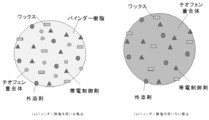
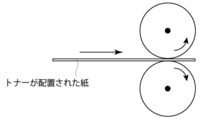
- FIG. It is a figure which shows the image of the toner particle which concerns on an application example. It is a figure which shows the image in the case of printing using the toner particle which concerns on an application example.
- FIG. It is a figure which shows the outline of the article
- FIG. It is a figure which shows an example of the other shape of the articles
- FIG. It is a figure which shows the film
- FIG. 1 is a schematic cross-sectional view of an article (hereinafter referred to as “article having metallic luster”) formed with a film having metallic luster containing a thiophene polymer according to the present embodiment.
- the article according to the present embodiment is not particularly limited as long as it has a metallic luster, not only electronic machine parts such as home appliances and automobiles, but also miscellaneous goods, clothes used in daily life such as furniture and toys, Although there are various kinds of paper products and the like, a flat surface is a preferable example from the viewpoint of easily applying pressure evenly. In the example of this figure, an example of paper is shown. Further, as described later, the entire article itself may be an article having a metallic luster.
- the thickness of the film having a metallic luster is not limited as long as the metallic luster can be exhibited, but if it is 0.1 ⁇ m or more, the film having the metallic luster can be obtained. More preferably, the thickness is 0.3 ⁇ m or more, and even more preferably 0.6 ⁇ m or more, the film has a more sufficient metallic luster.
- the film having metallic luster according to the present embodiment includes a thiophene polymer.
- the “thiophene polymer” refers to a polymer in which two or more thiophenes are bonded to each other and is a compound represented by the following general formula.
- R is a substituent and is not limited as long as it can impart a metallic luster to the film, but is not limited to an alkoxy group, an amino group, an alkyl group, a hydroxyl group, a hydroxyalkyl group, an aryl group, a cyano group, Or it is preferable that it is either halogen.
- R may be one or two per thiophene ring.
- the Rs of the thiophenes may be the same or different.
- thiophene is a heterocyclic compound containing sulfur, and is a compound represented by the following general formula.
- R is the same as described above.
- R when R is an alkoxy group, it is not limited, but the number of carbon atoms is preferably 1 or more and 8 or less, more specifically, 3-methoxythiophene, 3,4-dimethoxy. Examples include thiophene, 3-ethoxythiophene, 3,4-diethoxythiophene, 3-propoxythiophene, 3-butoxythiophene, 3-hydroxythiophene, 3,4-ethylenedioxythiophene, 3,4-propylenedioxythiophene can do.
- R in the above formula is an alkyl group
- the number of carbon atoms is preferably 1 or more and 12 or less, more specifically, 3-methylthiophene, 3,4-dimethyl.
- R is an amino group
- 3-aminothiophene, 3,4-diaminothiophene, 3-methylaminothiophene, 3-dimethylaminothiophene, 3-thiophenecarboxamide, 4- (thiophene-3- Il) Aniline and the like can be exemplified.
- the molecular weight of the “thiophene polymer” is not limited as long as it can have a metallic luster and can be formed as a film, but is determined by a GPC measurement method.
- the peak of the weight average molecular weight distribution is preferably in the range of 200 or more and 30000 or less, more preferably in the range of 500 or more and 10,000 or less.
- the article having a metallic luster according to the present embodiment may be configured by an article including a thiophene polymer having a metallic luster instead of forming a film having a metallic luster on the article surface. It is.
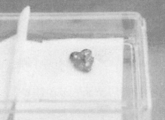
- a thiophene polymer may be molded so as to have a desired shape of the article itself to give a metallic luster. As an example of this, an example of a tablet-shaped article is shown in FIG.
- the method for producing an article having a metallic luster made of a thiophene polymer in this embodiment is a method in which a thiophene polymer powder is placed on an article and the thiophene polymer is pressurized. is there.
- the thiophene polymer is preferably formed by chemical polymerization or electrolytic polymerization.
- the thiophene polymer can also be produced using chemical polymerization.
- the “chemical polymerization method” refers to polymerization performed in at least one of a liquid phase and a solid phase using an oxidizing agent.
- the reason why the thiophene polymer exhibits a metallic luster is the same as in the case of electrolytic polymerization, but the reason is that the molecules constituting the thiophene polymer are regularly oriented and reflect a specific wavelength. It is believed that there is. This is supported by the fact that the produced film shows a sharp peak in X-ray diffraction. The details will be apparent from the examples described later, but in the X-ray diffraction measurement of the thiophene polymer, there are no halo patterns due to amorphous, and there are three peaks that are considered to be derived from the regular structure of the thiophene polymer. It means that it can be clearly observed in the range of diffraction angle (2 ⁇ ) from 5 degrees to 30 degrees.
- the article in the present embodiment is formed with a film made of the above thiophene polymer.
- This thiophene polymer is very stable in the air, hardly deteriorates even if left in the air for a long time, and is long. It can show a metallic luster over time.
- the present method a method for producing a film having metallic luster using the chemical polymerization method in the present embodiment (hereinafter simply referred to as “the present method”) will be described.
- This method includes (1) a step of polymerizing thiophene using an oxidizing agent to obtain a solution containing a thiophene polymer, and (2) a step of removing the solution containing the thiophene polymer to obtain a thiophene polymer powder. . That is, in this embodiment, chemical polymerization is performed to produce a thiophene polymer.
- thiophene is polymerized using an oxidizing agent, and a solution containing this thiophene polymer is prepared.
- the “thiophene” used here and the resulting “thiophene polymer” are those described above.
- the thiophene polymer is preferably in the range of a so-called oligomer, and specifically, the polymerization is preferably performed so that the distribution peak of the weight average molecular weight is in the range of 200 to 30000.
- the oxidizing agent is not limited as long as the thiophene polymer can be produced, and various ones can be used.
- ferric salt, cupric salt, cerium salt, dichromic acid examples thereof include salts, permanganate, ammonium persulfate, boron trifluoride, bromate, hydrogen peroxide, chlorine, bromine and iodine.
- ferric salt is preferable. Hydrates may also be used. In this case, the pair of ions can be appropriately adjusted and is not limited.
- perchlorate ion, hexafluorophosphate ion, and tetrafluoroborate ion is used, a metal close to gold Gloss can be obtained, which is preferable.
- the polymerization is preferably performed in a solvent using a solvent.
- the solvent to be used is not limited as long as the oxidizing agent and thiophene can be sufficiently dissolved and polymerized efficiently, but the organic solvent has a high polarity and a certain degree of volatility.
- acetonitrile, nitromethane, ⁇ -butyrolactone, propylene carbonate, nitromethane, 1-methyl-2-pyrrolidinone, dimethyl sulfoxide, 2-butanone, tetrahydrofuran, acetone, methanol, anisole, chloroform, ethyl acetate, hexane, trichloroethylene, cyclohexanone, Dichloromethane, chloroform, dimethylformamide, ethanol, butanol, pyridine, dioxane, and mixtures thereof can be used, but acetonitrile, nitromethane, ⁇ -butyrolactone, carbonate Lopylene is preferable because it has a soluble thiophene polymer and tends to form a film with better metallic luster.
- the amount of thiophene and oxidizing agent used for the solvent can be adjusted as appropriate and is not limited.
- the weight of the solvent is 1, the weight of thiophene is 0.00007 or more and 7 or less. More preferably, it is 0.0007 or more and 0.7 or less, and in the case of iron (III) perchlorate n hydrate, the weight is preferably 0.0006 or more and 6 or less, more preferably 0. 0.006 or more and 0.6 or less.
- the ratio of the thiophene to the oxidizing agent used is preferably 0.1 or more and 1000 or less, and more preferably 1 or more and 100 or less, when the weight of thiophene is 1.
- thiophene and oxidant may be added to the solvent all at once, but two types of solutions are separately prepared: a solution in which thiophene is added to the solvent and a solution in which the oxidant is added to the solvent.
- the polymerization reaction may be performed by combining them.
- the thiophene polymer produced as described above is preferably prepared as a powdered thiophene polymer (thiophene polymer powder) by removing the solvent. In this way, an article having a metallic luster can be easily produced only by pressing.
- an oxidizing agent containing the above-mentioned perchlorate ion, hexafluorophosphate ion, tetrafluoroborate ion, or chloride ion is used, it remains stably because it is stably bonded to the polymer. This state can be stably maintained.
- electrolytic polymerization is a method of dissolving a solution insoluble polymer film on a conductor by dissolving a substance (monomer) that is a precursor of a polymer in a solution containing a supporting electrolyte, and then subjecting the monomer to electrode oxidation.
- the technique to form is a method of dissolving a solution insoluble polymer film on a conductor by dissolving a substance (monomer) that is a precursor of a polymer in a solution containing a supporting electrolyte, and then subjecting the monomer to electrode oxidation. The technique to form.
- the potential sweep method is a treatment in which a pair of electrodes is immersed in a solution containing a supporting electrolyte and applied while changing the potential at a constant rate.
- the solvent of the solution used in this embodiment is not particularly limited.
- a mixed solvent of various solvents is also preferable.
- the supporting electrolyte of the solution used in the present embodiment is an essential component in electrolysis, and preferably has a cation or an anion that is sufficiently dissolved in a solvent and hardly electrolyzed, and is not limited thereto.
- the concentration of the supporting electrolyte is not limited, but is preferably 0.001 M or more and solubility or less, and more preferably 0.01 M or more and 1 M or less.
- the concentration of the thiophene monomer used in the electrolytic polymerization in the electrolytic solution is not limited, but is preferably 0.1 mM or more and less than or equal to the solubility, and more specifically 1 mM or more and 1M. The following is more preferable.
- the electropolymerization is performed by immersing a conductor (functioning as an operating electrode) in an electrolytic container containing a solution, and counter electrodes, and if necessary, three electrodes of a reference electrode serving as a potential reference Can be employed, or a two-electrode system using only a conductor and a counter electrode can be employed.
- a conductor functioning as an operating electrode
- three electrodes of a reference electrode serving as a potential reference Can or a two-electrode system using only a conductor and a counter electrode can be employed.
- the three-electrode system that can strictly regulate the electric potential of the conductor with respect to the reference electrode as a reference is used to produce an article having a metallic luster that contains the thiophene polymer formed by this method with good reproducibility. Is more preferable in that
- the conductor as the working electrode is not limited as long as it is a substance that is stable against electrode oxidation in both the three-electrode type and the two-electrode type.
- a transparent glass electrode, a metal electrode, a glassy carbon electrode or the like coated with indium tin (hereinafter abbreviated as “ITO”) or tin oxide can be suitably used.
- ITO indium tin
- a metal electrode such as stainless steel or a copper plate can be suitably used.
- the reference electrode is not limited, but for example, a silver / silver chloride electrode (Ag / AgCl electrode) or a saturated calomel electrode can be preferably used.
- the potential sweep method in the electropolymerization is preferably sweeping between a negative potential and a positive potential.
- the negative potential is preferably in the range of ⁇ 1.5V to ⁇ 0.01V, more preferably in the range of ⁇ 1.0V to ⁇ 0.1V, and still more preferably ⁇ 0.7V. It is the range of -0.2V or less.
- the positive potential is preferably in the range of + 1.0V to + 3.0V, more preferably in the range of + 1.0V to + 2.0V, and still more preferably in the range of + 1.0V to + 1.5V. It is.
- the potential sweep method is not limited as long as the sweep rate can produce an article having a metallic luster, but within a range of 0.1 mV / second to 10 V / second. More preferably, it is in the range of 1 mV / second to 1 V / second, and more preferably in the range of 2 mV / second to 300 mV / second.
- the time for the electropolymerization is not limited as long as an article having a metallic luster can be deposited, but it is preferably performed within the range of 1 second to 5 hours within the range of the applied voltage. More preferably, it is carried out within a range of 10 seconds to 1 hour.
- the temperature of this electrolysis is not limited as long as an article having a metallic luster can be deposited by electrolytic polymerization, but it is preferably in the range of ⁇ 20 ° C. or more and 60 ° C. or less.
- this electrolysis is a reaction in which constituent substances in the atmosphere are rarely involved, and since it is carried out at a relatively low potential, it can be carried out in the atmosphere. From the viewpoint of avoiding the possibility of contaminating the formed film, such as oxidation of impurities in the electrolytic solution, it is preferable to carry out in an atmosphere of nitrogen gas or argon gas, but there is almost no fear of contamination. Nevertheless, in the case of forming electropolymerization, bubbling with an inert gas (nitrogen gas or argon gas) is also useful because there is a possibility that the electrode reaction may be affected if a large amount of oxygen is present in the solution. is there.
- the thiophene polymer produced as described above is placed on an article and pressurized.
- pressurization refers to applying pressure to the membrane, and so-called “rubbing” is also included in the pressurization of the membrane.
- the thiophene polymer produced in this case is a powder. An image diagram relating to the manufacture of this article is shown in FIG.
- the article itself can be formed with only the thiophene polymer by placing the thiophene polymer prepared as described above in a mold made of metal or the like and pressurizing it.
- An image diagram relating to the manufacture of this article is shown in FIG.
- the range of the pressure at the time of pressurizing in this method is not particularly limited, but is preferably 10 kg / cm 2 or more, and more preferably 50 kg / cm 2 or more, for example.
- the upper limit is not limited as long as the film or article having metallic luster is not destroyed, but it is preferably in the range of 1.0 ⁇ 10 5 kg / cm 2 or less, more preferably 5.
- the range is 0 ⁇ 10 4 kg / cm 2 or less.
- the surface roughness can be reduced and glossiness can be better shown by setting it to 50 kg / cm 2 or more, and the destruction of the structure of the article can be prevented by setting it to 5.0 ⁇ 10 4 kg / cm 2 or less. be able to.
- the toner particles can be dissolved and stably fixed to an article such as paper.
- the heating temperature is not particularly limited as long as it is not higher than the thermal decomposition temperature.
- Patent Document 1 the inventors synthesized a deep blue polythiophene-based conductive polymer and dissolved it in a solvent to apply a coating solution on an article to form a gold-colored coating film. Have found to be. This is the world's first organic material that does not contain metals and dissolves in a solvent to give a gold-colored film. On the other hand, this time is based on the finding that a metal color tone is exhibited by applying pressure to this material. That is, the color change (chromism) based on a new principle that a deep blue powder exhibits a metallic color such as a gold color by pressure stimulation.
- an application example of the thiophene polymer according to the present embodiment is wide and not limited as apparent from the above description, but an example considered to be very effective is a toner for metallic gloss color. That is, the metallic glossy color toner according to this application example described below is one in which a thiophene polymer is externally or internally added (or both types of addition) to binder resin particles, or does not contain a binder resin. The coalescence itself becomes the toner body.
- the present toner is one in which the thiophene polymer is externally or internally added to the binder resin particles (or both addition modes), or the binder resin does not contain the thiophene polymer itself as the toner body.
- a component necessary as a toner may be included as long as the formation of an article having a metallic luster by the thiophene polymer is not hindered.
- a magnetic material such as iron powder, a wax, a charge control agent, an external additive, and the like can be included, but the invention is not limited thereto. An image diagram in this case is shown in FIG.
- the amount of the thiophene polymer to be included is limited as long as a metallic luster can be expressed. However, it is preferably 0.1% by weight or more, preferably 1% by weight or more based on the total amount of toner. Further, when no binder resin is used, the thiophene polymer occupies most of the weight of the toner.
- the printing method according to this application example is one in which a metallic gloss color toner containing a thiophene polymer is placed on an article, and the metallic gloss color toner is pressed to fix the toner.
- the toner binder and the like can be melted and fixed more easily on an article such as paper.
- FIG. 6 shows an image diagram of this process.
- a method for producing an article having a new metallic luster that does not use a solvent when forming an article having a metallic luster, and a toner for metallic luster color and a printing method using the same. it can.
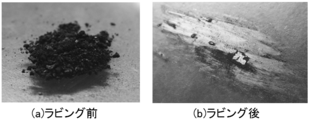
- the method according to this embodiment manufactures an article having a metallic luster by rubbing the thiophene polymer.
- “rubbing” also referred to as “rubbing” specifically means that a force is applied in a direction (lateral direction) different from the direction in which pressure is applied in a pressurized state, more specifically.
- a thiophene polymer powder is placed on a substrate, and the pressure product is moved on the substrate in a state where the powder is pressurized by the pressure product.
- the pressurized material is not particularly limited, but for example, it is preferable that a weight is placed on the plate-like member itself or the plate-like member because a force can be applied uniformly.
- the value of pressurization can be greatly reduced compared to the case of only pressurization. More specifically, a metallic (golden) gloss can be obtained by rubbing even at a pressure of 500 g / cm 2 or less.
- the lower limit of pressurization may be a level that can be said to be pressurization, for example, 3 g / cm 2 or more. That is, when rubbing, the pressure range is 3 g / cm 2 or more and 500 g / cm 2 or less, more preferably 300 g / cm 2 or less.
- the pressure value can be further reduced, and a film having a metallic luster can be manufactured more easily.
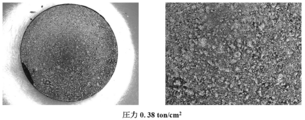
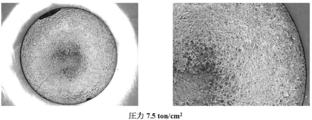
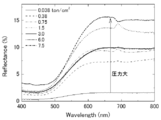
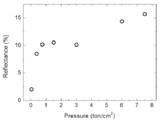
- the weights applied to the case 50kg, 0.5t, 1t, 2t, 4t, 8t, 10t and changed (each as a pressure 0.038ton / cm 2, 0.38ton / cm 2, 0.75ton / cm 2 , 1.5 ton / cm 2 , 3.0 ton / cm 2 , 6.0 ton / cm 2 , 7.5 ton / cm 2 ), each of which was applied for 10 minutes to produce a plurality of tablets (50 kg sample was pressure For 1 minute). Then, the regular reflectance and surface roughness of the obtained tablet were measured.
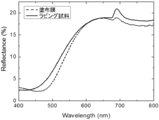
- the regular reflection spectrum of the tablet showed the same outline as that of the oligomer coating film.
- the maximum reflectivity increased as the pressure applied during pressing increased.
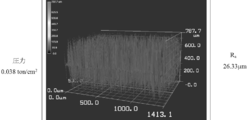
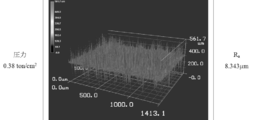
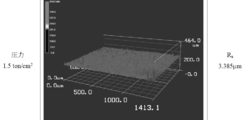
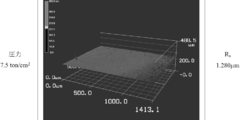
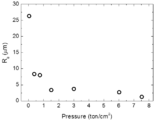
- the arithmetic average roughness Ra which is a representative parameter of the surface roughness, was calculated for the manufactured article.
- a laser microscope VK-9700 manufactured by Keyence Corporation and its analysis software were used, and the average value of 10 line roughnesses per 500 ⁇ m fixed length was calculated.
- FIGS. 16 to 22 show a 3D image and arithmetic average roughness Ra by a laser microscope
- FIG. 23 shows a relationship between the pressure applied during pressing and Ra.
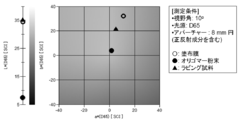
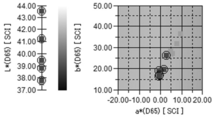
- the brightness and saturation of the non-glossy 3MeOT oligomer powder were small, whereas in the rubbing sample ( ⁇ ) and coating film ( ⁇ ), the brightness was significantly increased and the saturation was also in the first quadrant. It confirmed that it extended in the direction. Moreover, when the rubbing sample was compared with the coating film, it was confirmed that although the hue was almost the same, the saturation was slightly smaller. This is probably because the rubbing sample has a larger surface roughness than the coating film, and thus diffuse reflection is large, and as a result, the glossy yellow color is observed to fade.
- the color of the 3MeOT oligomer powder is a subtractive color mixture of yellow and magenta, which is brown, and is actually very dark brown, so it is close to black.
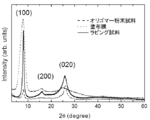
- the peak intensity is low in this powder, the number density of the lamella structure is extremely small, and it can be seen that there are many amorphous parts in the powder.
- the (100) peak is remarkably increased compared to that, and since a sharp peak with a small half-value width is shown compared with the coating film, an edge-on lamella with a large crystal size is formed. (See FIG. 28). That is, rubbing has the effect of increasing the number density of edge-on lamellae and face-on lamellae contained in the powder sample, and it is considered that gold-colored gloss was developed especially by increasing the number density and size of edge-on lamellae.
- Metals are generally hard and are used not only for parts that require mechanical strength, such as home appliances and automobiles, but also because they have a metallic luster, they are excellent in texture and are used in every kind of everyday life such as furniture and sundries. . Gold is particularly popular because it can give a sense of quality. However, not only is the metal itself expensive, but it is not easy to process, and the metal is expensive.
- a metal plating method for coating a metal thin film on the surface of an article such as a polymer or glass, or a paint added with fine particles or flaky metal is applied to the surface of the article.
- There are surface treatment techniques such as methods. When this technique is used, an article having a metallic luster can be produced at low cost by manufacturing an article with a polymer compound and coating the surface thereof with a metal thin film or a paint containing a metal.
- the metal plating method has many limitations on the materials that can be surface treated.
- the surface technique uses a metal after all, and it is less expensive than the case where the entire article is used with a metal, but it becomes expensive.
- paints with the above metals added have metal particles that settle due to the difference in specific gravity between the polymer binder and the metal in the paint, making it easy to produce spots, and the metal is corroded and glossy. There are also problems such as loss and heavy coating.
- an object of the present invention is to provide an article and a toner having a metallic luster having high strength and a method for producing an article having a metallic luster.
- the weight of the thiophene polymer is preferably in the range of 0.1 to 99.9 when the weight of the article is 100.
- the article is preferably a three-dimensional object.
- a toner according to another aspect of the present invention includes a thiophene polymer mixed with at least one of a polyester resin, a polycarbonate resin, a polyvinyl pyrrolidone resin, a polystyrene resin, a polymethyl methacrylate resin, and a styrene acrylic copolymer resin. It has a metallic luster.
- the weight of the thiophene polymer is preferably in the range of 0.1 to 99.9 when the weight of the article is 100.
- a method for manufacturing an article according to another aspect of the present invention includes a polyester resin, a polycarbonate resin, a polyvinyl pyrrolidone resin, a polystyrene resin, a polymethyl methacrylate resin, and a styrene acrylic copolymer resin and a thiophene polymer. , Having a metallic luster that is solidified by mixing with a solvent and removing the solvent.
- the weight of the thiophene polymer is preferably in the range of 0.1 to 99.9 when the weight of the article is 100.
- a method for producing an article according to another aspect of the present invention includes a polyester resin, a polycarbonate resin, a polyvinyl pyrrolidone resin, a polystyrene resin, a polymethyl methacrylate resin, and a styrene acrylic copolymer resin, and a thiophene polymer. And a solvent for producing an article having a metallic luster.
- a three-dimensional object according to another aspect of the present invention is a polyester resin, a polycarbonate resin, a polyvinyl pyrrolidone resin, a polystyrene resin, a polymethyl methacrylate resin, and a styrene acrylic copolymer resin, a thiophene polymer, Are mixed.
- the toner having metallic luster includes a polyester resin, a polycarbonate resin, a polyvinylpyrrolidone resin, a polystyrene resin, a polymethyl methacrylate resin, and a styrene acrylic copolymer resin, and a thiophene polymer.
- the union is a mixture.
- a method for producing a three-dimensional object having metallic luster is a polyester resin, a polycarbonate resin, a polyvinyl pyrrolidone resin, a polystyrene resin, a polymethyl methacrylate resin, or a styrene acrylic copolymer resin.
- the heel thiophene polymer is mixed using a solvent and solidified by removing the solvent.
- a solution for producing an article having a metallic luster includes a polyester resin, a polycarbonate resin, a polyvinylpyrrolidone resin, a polystyrene resin, a polymethyl methacrylate resin, and a styrene acrylic copolymer resin. It has at least one, a thiophene polymer, and a solvent.
- FIG. 29 is a schematic view of an article (hereinafter, also referred to as “this article”) 1 having a metallic luster according to the present embodiment.
- This article in this figure is a mixture of polyester resin, polycarbonate resin, polyvinyl pyrrolidone resin, polystyrene resin, polymethyl methacrylate resin and styrene acrylic copolymer resin, and thiophene polymer, although this is an example in the form of a film in which an article is formed on a substrate, for example, a more three-dimensional and complicated shape shown in FIG. 30 is also possible.
- the polyester resin refers to a resin comprising a polycondensate of a polyvalent carboxylic acid and a polyhydric alcohol, and is not limited to this, but for example, polyethylene terephthalate, polytrimethylene terephthalate, polybutylene.
- examples include, but are not limited to, terephthalate, polyethylene naphthalate, polybutylene naphthalate, polycyclohexanedimethyl terephthalate, polytrimethylene naphthalate, polycyclohexanedimethylene terephthalate, polytritetramethylene naphthalate, and mixtures thereof. .
- the average molecular weight of the polyester resin is not limited as long as it has a metallic luster, but is preferably 1000 or more and 1000000 or less, more preferably 3000 or more and 100000 or less.
- the polycarbonate resin is a resin having a carbonate group as a constituent element, and can be produced by, for example, bisphenol A and phosgene.
- the average molecular weight of the polycarbonate resin is not limited as long as it has a metallic luster, but it is preferably 1000 or more and 1000000 or less, more preferably 3000 or more and 100000 or less.
- the polyvinyl pyrrolidone resin refers to a resin obtained by polymerizing N-vinyl-2-pyrrolidone. Moreover, in this article, the average molecular weight of the polyvinylpyrrolidone resin is not limited as long as it has a metallic luster, but it is preferably 1,000 or more and 1,000,000 or less, more preferably 3000 or more and 100,000 or less.
- the polystyrene resin refers to a resin obtained by polymerizing styrene.
- the average molecular weight of the polystyrene resin is not limited as long as it has a metallic luster, but it is preferably 1000 or more and 1000000 or less, more preferably 3000 or more and 500000 or less, and more preferably Is 300,000 or less.
- polymethyl methacrylate resin (acrylic resin)
- PMMA polymethyl methacrylate resin
- the average molecular weight of the polymethyl methacrylate resin is not limited as long as it has a metallic luster, but is preferably 1000 or more and 1000000 or less, more preferably 3000 or more and 500000 or less.
- the styrene acrylic copolymer resin refers to a copolymer compound of acrylonitrile and styrene.
- the average molecular weight of the styrene acrylic copolymer resin is not limited as long as it has a metallic luster, but it is preferably 1000 or more and 1000000 or less, more preferably 3000 or more and 500000 or less.
- Thiophene polymer In the present article, the “thiophene polymer” refers to a polymer in which two or more thiophenes are bonded to each other and refers to a compound represented by the following general formula.
- R is a substituent and is not limited as long as it can impart a metallic luster to the film, but is not limited to an alkoxy group, an amino group, an alkyl group, a hydroxyl group, a hydroxyalkyl group, an aryl group, a cyano group, Or it is preferable that it is either halogen.
- R may be one or two per thiophene ring.
- the Rs of the thiophenes may be the same or different.
- the thiophene polymer when the thiophene polymer is doped with anions, it exhibits a gold color and copper color similar to gold and copper.
- Anions include perchlorate ion, hexafluorophosphate ion, tetrafluoroborate ion, chloride ion, bromide ion, sulfate ion, acetate ion, nitrate ion, citrate ion, oxalate ion, p-toluenesulfonic acid Ion, polystyrene sulfonate ion and the like.
- thiophene is a heterocyclic compound containing sulfur, and is a compound represented by the following general formula.
- R is the same as described above.
- R when R is an alkoxy group, it is not limited, but the number of carbon atoms is preferably 1 or more and 8 or less, more specifically, 3-methoxythiophene, 3,4-dimethoxy.
- Examples thereof include thiophene, 3,4-ethylenedioxythiophene, 3,4-propylenedioxythiophene, and the like.
- R in the above formula is an alkyl group
- the number of carbon atoms is preferably 1 or more and 12 or less, more specifically, 3-methylthiophene, 3,4-dimethyl.
- R is an amino group
- 3-aminothiophene, 3,4-diaminothiophene, 3-methylaminothiophene, 3-dimethylaminothiophene, 3-thiophenecarboxamide, 4- (thiophene-3- Il) Aniline and the like can be exemplified.
- the molecular weight of the “thiophene polymer” is not limited as long as it can have a metallic luster and can be formed as a film, but the weight required by the GPC measurement method.
- the average molecular weight distribution peak is preferably in the range of 200 to 30,000, more preferably in the range of 500 to 10,000.
- the weight of the thiophene polymer is preferably in the range of 0.1 to 99.9, more preferably 0.5 to 99, when the total weight of the article is 100. Range.
- the thiophene polymer is not limited as long as it can be produced, and various methods can be adopted.
- thiophene polymers can be made by chemical polymerization or electrolytic polymerization.
- the “chemical polymerization method” refers to polymerization performed in at least one of a liquid phase and a solid phase using an oxidizing agent.
- a step of polymerizing thiophene using an oxidizing agent to obtain a solution containing a thiophene polymer (2) removing unreacted raw materials and by-products from the solution containing the thiophene polymer. And obtaining a thiophene polymer powder.
- thiophene is polymerized using an oxidizing agent to prepare a solution containing this thiophene polymer.
- the “thiophene” used here and the resulting “thiophene polymer” are those described above.
- the thiophene polymer is preferably in the range of a so-called oligomer, and specifically, the polymerization is preferably performed so that the distribution peak of the weight average molecular weight is in the range of 200 to 30000.
- the oxidizing agent is not limited as long as the thiophene polymer can be produced, and various ones can be used.
- ferric salt, cupric salt, cerium salt, dichromic acid examples thereof include salts, permanganate, ammonium persulfate, boron trifluoride, bromate, hydrogen peroxide, chlorine, bromine and iodine.
- ferric salt is preferable. Hydrates may also be used.
- the pair of ions can be appropriately adjusted and is not limited. For example, chloride ion, bromide ion, citrate ion, oxalate ion, paratoluenesulfonate ion, perchloric acid.
- the polymerization is preferably performed in a solvent using a solvent.
- the solvent to be used is not limited as long as the oxidizing agent and thiophene can be sufficiently dissolved and polymerized efficiently, but the organic solvent has a high polarity and a certain degree of volatility.
- acetonitrile, nitromethane, ⁇ -butyrolactone, propylene carbonate, nitromethane, 1-methyl-2-pyrrolidinone, dimethyl sulfoxide, 2-butanone, tetrahydrofuran, acetone, methanol, anisole, chloroform, ethyl acetate, hexane, trichloroethylene, cyclohexanone, Dichloromethane, chloroform, dimethylformamide, ethanol, butanol, pyridine, dioxane, and mixtures thereof can be used, but acetonitrile, nitromethane, ⁇ -butyrolactone, carbonate Lopylene is preferable because it has a soluble thiophene polymer and tends to form a film with better metallic luster.
- the amount of thiophene and oxidizing agent used for the solvent can be adjusted as appropriate and is not limited.
- the weight of the solvent is 1, the weight of thiophene is 0.00007 or more and 7 or less. More preferably, it is 0.0007 or more and 0.7 or less, and in the case of iron (III) perchlorate n hydrate, the weight is preferably 0.0006 or more and 6 or less, more preferably 0. 0.006 or more and 0.6 or less.
- the ratio of the thiophene to the oxidizing agent used is preferably 0.1 or more and 1000 or less, and more preferably 1 or more and 100 or less, when the weight of thiophene is 1.
- thiophene and oxidant may be added to the solvent all at once, but two types of solutions are separately prepared: a solution in which thiophene is added to the solvent and a solution in which the oxidant is added to the solvent.
- the polymerization reaction may be performed by combining them.
- the thiophene polymer produced as described above is preferably prepared as a powdered thiophene polymer (thiophene polymer powder) by removing the solvent. By doing so, it is possible to produce an article having metallic luster by mixing with a polyester resin while being dissolved in a solvent described later.
- an oxidizing agent containing the perchlorate ion, hexafluorophosphate ion, tetrafluoroborate ion, chloride ion, bromide ion, or paratoluenesulfonate ion is used, the polymer is stably used. Since it is bonded, the remaining metal gloss can be stably maintained.
- electrolytic polymerization refers to a solution-insoluble polymer film on a conductor by dissolving a substance (monomer) serving as a polymer precursor in a solution containing a supporting electrolyte, and then subjecting the monomer to electrode oxidation. Is a method of forming
- the potential sweep method is a treatment in which a pair of electrodes is immersed in a solution containing a supporting electrolyte and applied while changing the potential at a constant rate.
- the solvent of the solution used in this embodiment is not particularly limited.
- a mixed solvent of various solvents is also preferable.
- an anionic surfactant such as sodium dodecyl sulfate, a cationic surfactant such as dodecyltrimethylammonium bromide, and a nonionic surfactant such as polyoxyethylene lauryl ether, numerical evaluation using a colorimeter
- regulated by (1) can be obtained and it is preferable.
- the supporting electrolyte of the solution used in the present embodiment is an essential component in electrolysis, and preferably has a cation or an anion that is sufficiently dissolved in a solvent and hardly electrolyzed, and is not limited thereto.
- the concentration of the supporting electrolyte is not limited, but is preferably 0.001M or more and solubility or less, and more preferably 0.01M or more and 5M or less.
- the concentration of the thiophene monomer used in the electropolymerization in the electrolytic solution is not limited, but is preferably 0.1 mM or more and less than or equal to the solubility, more specifically 0.5 mM. More preferably, it is 1 M or less.
- the electropolymerization is performed by immersing a conductor (functioning as an operating electrode) in an electrolytic container containing a solution, and counter electrodes, and if necessary, three electrodes of a reference electrode serving as a potential reference Can be employed, or a two-electrode system using only a conductor and a counter electrode can be employed.
- a conductor functioning as an operating electrode
- three electrodes of a reference electrode serving as a potential reference Can or a two-electrode system using only a conductor and a counter electrode can be employed.
- the three-electrode system that can strictly regulate the electric potential of the conductor with respect to the reference electrode as a reference is used to produce an article having a metallic luster that contains the thiophene polymer formed by this method with good reproducibility. Is more preferable in that
- the conductor as the working electrode is not limited as long as it is a substance that is stable against electrode oxidation in both the three-electrode type and the two-electrode type.
- a transparent glass electrode coated with indium tin (hereinafter abbreviated as “ITO”) or tin oxide, a metal electrode, an alloy electrode such as stainless steel, a glassy carbon electrode, or the like can be suitably used.
- ITO indium tin
- a metal electrode such as stainless steel or a copper plate
- the reference electrode is not limited, but for example, a silver / silver chloride electrode (Ag / AgCl electrode) or a saturated calomel electrode can be preferably used.
- the potential sweep method in the electropolymerization is preferably sweeping between a negative potential and a positive potential.
- the negative potential is preferably in the range of ⁇ 1.5V to ⁇ 0.01V, more preferably in the range of ⁇ 1.0V to ⁇ 0.1V, and still more preferably ⁇ 0.7V. It is the range of -0.2V or less.
- the positive potential is preferably in the range of + 1.0V to + 3.0V, more preferably in the range of + 1.0V to + 2.0V, and still more preferably in the range of + 1.0V to + 1.5V. It is.
- the potential sweep method is not limited as long as the sweep rate can produce an article having a metallic luster, but within a range of 0.1 mV / second to 10 V / second. More preferably, it is in the range of 1 mV / second to 1 V / second, and more preferably in the range of 2 mV / second to 300 mV / second.
- the time for the electropolymerization is not limited as long as an article having a metallic luster can be deposited, but it is preferably performed within the range of 1 second to 5 hours within the range of the applied voltage. More preferably, it is carried out within a range of 10 seconds to 1 hour.
- the temperature of this electrolysis is not limited as long as an article having a metallic luster can be deposited by electrolytic polymerization, but it is preferably in the range of ⁇ 20 ° C. or more and 60 ° C. or less.
- this electrolysis is a reaction in which constituent substances in the atmosphere are rarely involved, and since it is carried out at a relatively low potential, it can be carried out in the atmosphere. From the viewpoint of avoiding the possibility of contaminating the formed film, such as oxidation of dissolved oxygen in the electrolytic solution, it is preferably performed in a nitrogen gas or argon gas atmosphere, but there is little concern about contamination. Nevertheless, in the case of forming electropolymerization, bubbling with an inert gas (nitrogen gas or argon gas) is also useful because there is a possibility that the electrode reaction may be affected if a large amount of oxygen is present in the solution. is there.
- This article is a mixture of the thiophene polymer synthesized by the above chemical polymerization or electrolytic polymerization and at least one of polyester resin, polycarbonate resin, polyvinyl pyrrolidone resin, polystyrene resin, polymethyl methacrylate resin and styrene acrylic copolymer resin.
- a solvent is not limited as long as the thiophene polymer can be mixed with at least one of the polyester resin, polycarbonate resin, polyvinyl pyrrolidone resin, polystyrene resin, polymethyl methacrylate resin and styrene acrylic copolymer resin.
- nitromethane, ⁇ -butyrolactone, acetonitrile, propylene carbonate, dimethyl sulfoxide, N-methyl-2-pyrrolidone and a mixture thereof can be used, but are not limited thereto.
- the ratio of the thiophene polymer to the ratio of at least one of polyester resin, polycarbonate resin, polyvinyl pyrrolidone resin, polystyrene resin, polymethyl methacrylate resin and styrene acrylic copolymer resin may be in the above range, but the concentration of the solvent and this mixture The ratio of is not limited as long as it can be dissolved and can be appropriately adjusted as long as the necessary viscosity can be obtained. For example, when the total weight of the polyester resin and the thiophene polymer is 1, It is preferably 0.1 or more and 500 or less.
- the three-dimensional shape includes a film, and the strength of the film has a very high strength, as will be apparent from Examples described later.
- the reason why the thiophene polymer exhibits a metallic luster is in the range of speculation, but it is considered that the molecules constituting the thiophene polymer are regularly oriented and reflect a specific wavelength. This is supported by the fact that the prepared film containing the thiophene polymer shows a sharp peak in X-ray diffraction.
- polyester resin polycarbonate resin, polyvinyl pyrrolidone resin, polystyrene resin, polymethyl methacrylate resin, and styrene-acrylic copolymer resin are used, among other resins.
- At least one of a resin, a polyvinyl pyrrolidone resin, a polystyrene resin, a polymethyl methacrylate resin and a styrene acrylic copolymer resin enters, the metallic luster is not lost.
- at least one of polyester resin, polycarbonate resin, polyvinyl pyrrolidone resin, polystyrene resin, polymethyl methacrylate resin and styrene acrylic copolymer resin can be appropriately adjusted in molecular weight, and by adjusting the solvent to be mixed, It is possible to adjust the viscosity of the solution.
- the article according to the present embodiment is a mixture of a thiophene polymer and at least one of a polyester resin, a polycarbonate resin, a polyvinyl pyrrolidone resin, a polystyrene resin, a polymethyl methacrylate resin, and a styrene acrylic copolymer resin.
- the polyester resin itself is used as a binder for toner used in, for example, printers and copiers, and this article can be used as toner for printers and the like.
- the toner it can be realized by making the mixture of the polyester resin and the thiophene polymer into fine particles.
- an article in which the polyester resin and the thiophene polymer are mixed can be crushed to obtain a desired particle size.
- the viscosity of the prepared solution is lowered, and an inkjet nozzle is used.
- a droplet having a size slightly larger than the desired particle size is formed by spraying used, and the solvent can be removed from the droplet to obtain a dried particle.
- other resins polycarbonate resins, polyvinyl pyrrolidone resins, polystyrene resins, polymethyl methacrylate resins, styrene acrylic copolymer resins, and the like can be used as long as possible.
- an article having a higher metallic luster can be obtained.
- a monomer of 3-methoxythiophene (hereinafter referred to as “3MeOT”) was distilled before polymerization to remove impurities. 5.418 g of the distilled monomer was stirred with a propeller stirrer for 30 minutes while bubbling nitrogen into 475 ml of acetonitrile to prepare a monomer solution of 0.1 mol / l.
- the solution was dropped onto a well-washed glass substrate with a dropper.
- the coating film of nitromethane solvent was dried at room temperature for 1 hour (20 ° C., 40% RH), and the coating film of GBL solvent was dried for 30 minutes (45 ° C.) with a constant temperature hot air dryer.
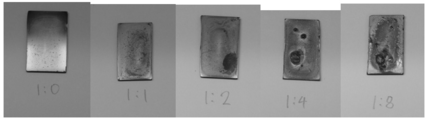
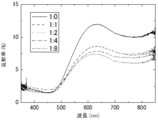
- FIG. 31 shows a film prepared from the nitromethane solution shown in Table 1 above.
- the ratio in the figure is the mass ratio of 3MeOT: PES. 1: 0 is an oligomer-only film that does not contain PES.
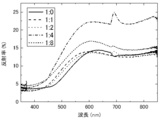
- FIG. 32 shows a film prepared from the GBL solution shown in Table 2 above.
- the ratio in the figure is the mass ratio of 3MeOT: PES. 1: 0 is an oligomer-only film that does not contain PES.
- the coating film prepared from the nitromethane solution shown in FIG. 33 According to the specular reflection spectrum of the coating film prepared from the nitromethane solution shown in FIG. 33, it was confirmed that the coating film showed a slight decrease in reflectance due to the addition of the polymer resin, but no rising wavelength shift was observed.
- the coating film prepared from the GBL solution shown in FIG. 34 had improved reflectance by the addition of the polymer resin.
- the rising wavelength is shifted by a short wavelength by the addition of the polymer resin, it was found that the color can be changed by the addition of the resin.
- Tables 5 and 6 show values compared with gold films prepared by vacuum deposition.
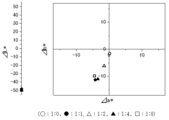
- ⁇ E * ab represents a color difference (a distance in the color space).
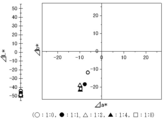
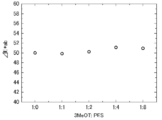
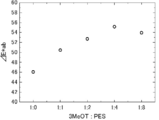
- FIGS. 37 and 38 show the difference between the coating film and the gold deposition film in the case of the nitromethane solution and the GBL solution.
- FIGS. 39 and 40 show the coating film and the gold deposition in the case of the nitromethane solution and the GBL solution, respectively. The color difference ⁇ E * ab from the film will be described.
- the coating strength was improved by increasing the amount of polymer resin added.
- the prepared coating solution was dropped onto a well-washed glass substrate with a dropper and applied, and the coating film was dried with a constant temperature hot air dryer for 1 hour (60 ° C.). In all cases, the film thickness was about 18 ⁇ m.
- FIG. 42 shows a photograph of the prepared coating film and a coating film not containing resin as a comparative example.
- a coating film not containing a resin (nitromethane solvent) as a comparative example a coating film not containing a resin (GBL solvent), PES-N, and PES-G as comparative examples are shown.
- PVP, PS, PMMA, and StAc respectively.
- PS, PMMA, and StAc since the back side of the film developed a gold color, it was taken as a photograph of the back side.
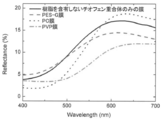
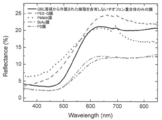
- FIG. 43 shows total reflection spectra of a film not containing a resin and a PEN-N film prepared from a nitromethane solvent
- FIG. 44 is a film not containing a resin and a PES-G film, a PC film and a PVP prepared from a GBL solvent.
- 45 shows the total reflection spectrum of the film
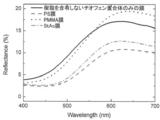
- FIG. 45 shows the total reflection spectrum of the film not containing the resin made from the GBL solvent, the PES film, the PMMA film, and the StAc film, respectively.
- ⁇ represents a gold vapor-deposited film
- ⁇ 1 represents a gold-colored film containing no resin prepared from a nitromethane solvent
- ⁇ 2 represents a PES-N film.
- ⁇ represents a gold vapor deposition film
- ⁇ 1 represents a gold-tone film not containing a resin prepared from a GBL solvent
- ⁇ 2 represents a PES-G film
- 3 represents a PC film
- 4 represents a PVP.
- ⁇ represents a gold deposited film
- ⁇ 1 represents a gold-colored film containing no resin prepared from a GBL solvent
- ⁇ 2 represents a PS film
- ⁇ 3 represents a PMMA film
- ⁇ 4 represents a StAc film.
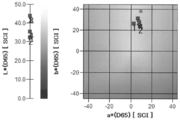
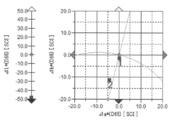
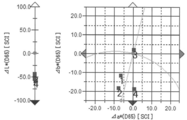
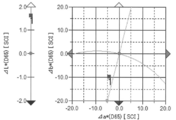
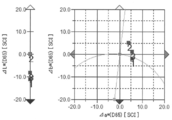
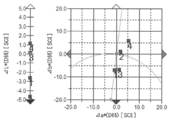
- the color difference ⁇ E * ab based on the colorimetric value of the gold vapor-deposited film and L * , a
- the values ⁇ L * , ⁇ a * and ⁇ b * between the values of * and b * are shown in Table 11 below, and the results plotted in FIGS. 49 to 51 are shown.
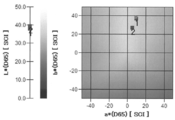
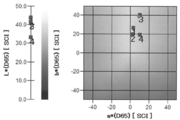
- the color difference ⁇ E * ab is a linear distance from the reference color (gold vapor deposition film) in the L * a * b * space, and is given by the following equation. 49 shows the color difference from the gold vapor deposition film.
- ⁇ represents a gold vapor deposition film
- ⁇ 1 represents a gold-tone film not containing a resin prepared from a nitromethane solvent
- ⁇ 2 represents a PES-N film.
- FIG. 50 also shows the color difference from the gold vapor deposition film.
- ⁇ represents a gold vapor deposition film
- ⁇ 1 represents a gold-tone film not containing a resin prepared from a GBL solvent
- ⁇ 2 represents a PES-G film.
- ⁇ 3 indicates a PC film
- ⁇ 4 indicates a PVP film.
- ⁇ indicates a gold deposited film
- ⁇ 1 indicates a gold-colored film containing no resin prepared from a GBL solvent
- ⁇ 2 indicates a PS film
- ⁇ 3 indicates a PMMA film
- ⁇ 4 indicates a StAc film.
- ⁇ represents a gold vapor deposition film
- ⁇ 1 represents a gold-colored film not containing a resin prepared from a GBL solvent
- ⁇ 2 represents a PES-G film
- ⁇ 3 indicates a PC film
- ⁇ 4 indicates a PVP film.
- ⁇ indicates a gold deposited film
- ⁇ 1 indicates a gold-colored film containing no resin prepared from a GBL solvent
- ⁇ 2 indicates a PS film
- ⁇ 3 indicates a PMMA film
- ⁇ 4 indicates a StAc film.
- the thiophene polymer was performed in the same manner as in the above example. Also, 80 mg of various resins shown in Table 13 below were completely dissolved in 1.0 g of GBL, and 10 mg of the prepared 3MeOT oligomer was mixed with the solution and stirred. Next, the solution was dropped onto a well-washed glass substrate with a dropper and applied, and the coating film was dried with a constant temperature hot air dryer for 1 hour (60 ° C.). The film thickness was about 50 ⁇ m.
- FIG. 55 shows a photograph of the film prepared above and a film not containing resin (dried at 60 ° C.).
- PS, PMMA, and StAc are images of the bonding surface (back surface) with the glass substrate.
- FIG. 56 shows a specular reflection spectrum of the surface of PES and the adhesive surface (back surface) of PS, PMMA, and StAc among the prepared coating films.
- the results measured with MSV-370) manufactured by the company are respectively shown. Comparing the results shown in this figure with the same results as described above, there was no difference in the rising wavelength and the reflectance, so that it was confirmed that even when the resin was excessively mixed with the oligomer, golden gloss was developed.
- ⁇ is a gold vapor deposition film
- ⁇ 1 is a gold-tone film not containing a resin made from GBL solvent
- ⁇ 2 is a PES film
- ⁇ 3 is a PS film
- ⁇ 4 is a PMMA film
- (5) indicates a StAc film, respectively.
- FIG. 59 shows the results plotted in FIG.
- ⁇ is a gold vapor deposition film
- ⁇ 1 is a gold-tone film not containing a resin made from GBL solvent
- ⁇ 2 is a PES film
- ⁇ 3 is a PS film
- ⁇ 4 is a PMMA film
- (5) indicates a StAc film, respectively.
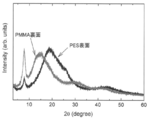
- FIG. 60 shows these XRD patterns. In any pattern, a sharp peak was confirmed around 7.79 degrees, and lamella crystals were present in the film, producing a lamellar correlation distance of 1.13 nm.
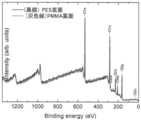
- XPS X-ray photoelectron spectroscopy
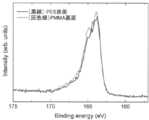
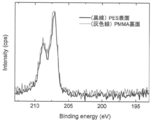
- Fig. 60 shows the wide scan spectrum. According to this, only peaks of oxygen O, carbon C, chlorine Cl, and sulfur S were confirmed in both PES and PMMA.
- Signals of sulfur derived from thiophene ring and chlorine derived from dopant perchloric acid were clearly observed within 2.5 nm in depth on both PES surface and PMMA surface exhibiting golden luster. That is, it was found that a thiophene polymer was present on the outermost surface and the rearmost surface of a 50 ⁇ m-thick film, and it was found that a golden tone was developed by lamellar crystals formed by the thiophene polymer.
- the chlorine and sulfur atom number concentrations obtained from the obtained spectrum are shown in Table 17 below. From this concentration, it was found that the thiophene polymer obtained in this example was doped with about 3 chloride ions per 10 units of the thiophene ring.
- the present invention has industrial applicability as an article having a metallic luster and a method for producing the same.
Landscapes
- Chemical & Material Sciences (AREA)
- Physics & Mathematics (AREA)
- General Physics & Mathematics (AREA)
- Health & Medical Sciences (AREA)
- Chemical Kinetics & Catalysis (AREA)
- Medicinal Chemistry (AREA)
- Polymers & Plastics (AREA)
- Organic Chemistry (AREA)
- Engineering & Computer Science (AREA)
- Mechanical Engineering (AREA)
- Laminated Bodies (AREA)
Abstract
L'invention concerne un nouveau procédé de production d'un article doté d'un lustre métallique, un solvant n'étant pas mis en œuvre lorsqu'un article doté d'un lustre métallique est formé ; et un toner destiné à des couleurs de lustre métallique et un procédé d'impression, chacun ayant recours à ce procédé. Un mode de réalisation de la présente invention consiste en un procédé de production d'un article doté d'un lustre métallique par application d'une pression sur un polymère de thiophène. Dans ce cas, il est préférable que le polymère de thiophène soit obtenu par électropolymérisation ou par polymérisation chimique. Un autre mode de réalisation de la présente invention concerne un toner destiné à des couleurs de lustre métallique, qui comporte un polymère de thiophène. Un autre mode de réalisation de la présente invention consiste en un procédé d'impression, un toner destiné à des couleurs de lustre métallique, qui comporte un polymère de thiophène, étant placé sur un article et le toner destiné à des couleurs de lustre métallique est fixé sur ce dernier par application d'une pression sur le toner destiné à des couleurs de lustre métallique.
Priority Applications (1)
| Application Number | Priority Date | Filing Date | Title |
|---|---|---|---|
| US16/305,241 US11048182B2 (en) | 2016-05-31 | 2017-05-31 | Method for producing articles having a metallic luster, and toners with a metallic luster using the same and a printing method using the same |
Applications Claiming Priority (6)
| Application Number | Priority Date | Filing Date | Title |
|---|---|---|---|
| JP2016-109631 | 2016-05-31 | ||
| JP2016109631 | 2016-05-31 | ||
| JP2016136489 | 2016-07-11 | ||
| JP2016-136489 | 2016-07-11 | ||
| JP2016-223667 | 2016-11-16 | ||
| JP2016223667A JP6961197B2 (ja) | 2016-05-31 | 2016-11-16 | 金属光沢を備えた物品を製造する方法、並びに、これを用いる金属光沢色用トナー及び印刷方法。 |
Publications (1)
| Publication Number | Publication Date |
|---|---|
| WO2017209224A1 true WO2017209224A1 (fr) | 2017-12-07 |
Family
ID=60477523
Family Applications (1)
| Application Number | Title | Priority Date | Filing Date |
|---|---|---|---|
| PCT/JP2017/020373 Ceased WO2017209224A1 (fr) | 2016-05-31 | 2017-05-31 | Procédé de production d'un article doté d'un lustre métallique, et toner destiné à des couleurs de lustre métallique et procédé d'impression le mettant en œuvre |
Country Status (1)
| Country | Link |
|---|---|
| WO (1) | WO2017209224A1 (fr) |
Cited By (1)
| Publication number | Priority date | Publication date | Assignee | Title |
|---|---|---|---|---|
| US20210179773A1 (en) * | 2019-12-13 | 2021-06-17 | Fuji Xerox Co., Ltd. | Composition for forming metallic luster film, metallic luster film, and article |
Citations (5)
| Publication number | Priority date | Publication date | Assignee | Title |
|---|---|---|---|---|
| JPS6372726A (ja) * | 1986-09-16 | 1988-04-02 | Res Inst For Prod Dev | ポリ(2−アミノチオフエン)系導電体およびその製造法 |
| JPS6386206A (ja) * | 1986-09-29 | 1988-04-16 | 花王株式会社 | 絶縁性又は半導電性共役系高分子膜の製造法 |
| JPH1088030A (ja) * | 1996-08-19 | 1998-04-07 | Bayer Ag | 引つ掻き抵抗性伝導性コーテイング |
| JP2007529094A (ja) * | 2004-03-11 | 2007-10-18 | バイエル・ベタイリグングスフェアヴァルトゥング・ゴスラー・ゲゼルシャフト・ミット・ベシュレンクテル・ハフツング | ポリチオフェンに基づく光学用途のための機能層 |
| JP2014153691A (ja) * | 2013-02-14 | 2014-08-25 | Fuji Xerox Co Ltd | 静電荷像現像用トナー、静電荷像現像剤、トナーカートリッジ、画像形成方法、及び、画像形成装置 |
-
2017
- 2017-05-31 WO PCT/JP2017/020373 patent/WO2017209224A1/fr not_active Ceased
Patent Citations (5)
| Publication number | Priority date | Publication date | Assignee | Title |
|---|---|---|---|---|
| JPS6372726A (ja) * | 1986-09-16 | 1988-04-02 | Res Inst For Prod Dev | ポリ(2−アミノチオフエン)系導電体およびその製造法 |
| JPS6386206A (ja) * | 1986-09-29 | 1988-04-16 | 花王株式会社 | 絶縁性又は半導電性共役系高分子膜の製造法 |
| JPH1088030A (ja) * | 1996-08-19 | 1998-04-07 | Bayer Ag | 引つ掻き抵抗性伝導性コーテイング |
| JP2007529094A (ja) * | 2004-03-11 | 2007-10-18 | バイエル・ベタイリグングスフェアヴァルトゥング・ゴスラー・ゲゼルシャフト・ミット・ベシュレンクテル・ハフツング | ポリチオフェンに基づく光学用途のための機能層 |
| JP2014153691A (ja) * | 2013-02-14 | 2014-08-25 | Fuji Xerox Co Ltd | 静電荷像現像用トナー、静電荷像現像剤、トナーカートリッジ、画像形成方法、及び、画像形成装置 |
Cited By (4)
| Publication number | Priority date | Publication date | Assignee | Title |
|---|---|---|---|---|
| US20210179773A1 (en) * | 2019-12-13 | 2021-06-17 | Fuji Xerox Co., Ltd. | Composition for forming metallic luster film, metallic luster film, and article |
| CN112980299A (zh) * | 2019-12-13 | 2021-06-18 | 富士胶片商业创新有限公司 | 金属光泽膜形成用组合物、金属光泽膜及物品 |
| JP2021095426A (ja) * | 2019-12-13 | 2021-06-24 | 富士フイルムビジネスイノベーション株式会社 | 金属光沢膜形成用組成物、金属光沢膜、及び物品 |
| US11708450B2 (en) * | 2019-12-13 | 2023-07-25 | Fujifilm Business Innovation Corp. | Composition for forming metallic luster film, metallic luster film, and article |
Similar Documents
| Publication | Publication Date | Title |
|---|---|---|
| JP6410374B2 (ja) | 金色又は銅色の光沢を有する膜が形成される溶液 | |
| Korent et al. | A correlative study of polyaniline electropolymerization and its electrochromic behavior | |
| TWI305219B (en) | Color shifting pigment flakes and foils,method of fabricating color shifting pigment flakes and color shifting foil device | |
| Najafi-Ashtiani et al. | A dual electrochromic film based on nanocomposite of copolymer and WO3 nanoparticles: Enhanced electrochromic coloration efficiency and switching response | |
| Arjomandi et al. | Electrochemical synthesis and In situ spectroelectrochemistry of conducting NMPy‐TiO2 and ZnO polymer nanocomposites for Li secondary battery applications | |
| Guzel et al. | A new way to obtain black electrochromism: Appropriately covering whole visible regions by absorption spectra of copolymers composed of EDOT and carbazole derivatives | |
| Kao et al. | High contrast and low-driving voltage electrochromic device containing triphenylamine dendritic polymer and zinc hexacyanoferrate | |
| Asami et al. | Electrochemical redox-based tuning of near infrared localized plasmons of CuS nanoplates | |
| Dalavi et al. | Efficient maximization of coloration by modification in morphology of electrodeposited NiO thin films prepared with different surfactants | |
| JP7161161B2 (ja) | 金属光沢を有する物品及びトナー並びに金属光沢を有する物品の製造方法 | |
| JP6881743B2 (ja) | 黒色光沢を有する物品及びトナー並びに黒色光沢を有する物品の製造方法 | |
| WO2017209224A1 (fr) | Procédé de production d'un article doté d'un lustre métallique, et toner destiné à des couleurs de lustre métallique et procédé d'impression le mettant en œuvre | |
| Gumusay et al. | Electrochemistry of secondary amine substituted 2, 5-di (2-thienyl) pyrrole derivative and its copolymer | |
| US11048182B2 (en) | Method for producing articles having a metallic luster, and toners with a metallic luster using the same and a printing method using the same | |
| TW201204789A (en) | Manganese vanadium tantalum oxide and pigments having a black metallic effect coated with the same | |
| JP6961197B2 (ja) | 金属光沢を備えた物品を製造する方法、並びに、これを用いる金属光沢色用トナー及び印刷方法。 | |
| JP7665172B2 (ja) | 金属光沢を発現する膜及びその膜を生成する塗料 | |
| JP6800568B2 (ja) | 金属光沢膜を製造する方法。 | |
| Harish et al. | Interaction between gold (III) chloride and potassium hexacyanoferrate (II/III)—does it lead to gold analogue of Prussian blue? | |
| Pang et al. | Electrochromic properties of poly (3-chlorothiophene) film electrodeposited on a nanoporous TiO2 surface via a room temperature ionic liquid and its application in an electrochromic device | |
| Deng et al. | Electrochromic properties of WO3 thin film onto gold nanoparticles modified indium tin oxide electrodes | |
| Mortimer et al. | Synthesis, characterisation and in situ colorimetry of electrochromic Ruthenium purple thin films | |
| Xu et al. | Tricolor electrochromism of copolymer based on selenophene and 3, 4-ethylenedioxythiophene | |
| Liu et al. | Multicolor electrochromic films based on 2, 2’: 5’, 2’’-trithiophene and indole-6-carboxylic acid | |
| JP2024117298A (ja) | 金属光沢を発現する膜、その膜を生成する塗料およびそれらに用いることができる新規な共重合体 |
Legal Events
| Date | Code | Title | Description |
|---|---|---|---|
| 121 | Ep: the epo has been informed by wipo that ep was designated in this application |
Ref document number: 17806774 Country of ref document: EP Kind code of ref document: A1 |
|
| NENP | Non-entry into the national phase |
Ref country code: DE |
|
| 122 | Ep: pct application non-entry in european phase |
Ref document number: 17806774 Country of ref document: EP Kind code of ref document: A1 |