WO2017221919A1 - Dispositif de gestion de connexions de communication, sous-système multimédia ip, dispositif d'inscription, procédé de gestion de connexions de communication et support d'enregistrement sur lequel est enregistré un programme - Google Patents
Dispositif de gestion de connexions de communication, sous-système multimédia ip, dispositif d'inscription, procédé de gestion de connexions de communication et support d'enregistrement sur lequel est enregistré un programme Download PDFInfo
- Publication number
- WO2017221919A1 WO2017221919A1 PCT/JP2017/022636 JP2017022636W WO2017221919A1 WO 2017221919 A1 WO2017221919 A1 WO 2017221919A1 JP 2017022636 W JP2017022636 W JP 2017022636W WO 2017221919 A1 WO2017221919 A1 WO 2017221919A1
- Authority
- WO
- WIPO (PCT)
- Prior art keywords
- communication
- version information
- sip
- indicated
- uri
- Prior art date
- Legal status (The legal status is an assumption and is not a legal conclusion. Google has not performed a legal analysis and makes no representation as to the accuracy of the status listed.)
- Ceased
Links
Images


Classifications
-
- H—ELECTRICITY
- H04—ELECTRIC COMMUNICATION TECHNIQUE
- H04M—TELEPHONIC COMMUNICATION
- H04M3/00—Automatic or semi-automatic exchanges
-
- H—ELECTRICITY
- H04—ELECTRIC COMMUNICATION TECHNIQUE
- H04M—TELEPHONIC COMMUNICATION
- H04M3/00—Automatic or semi-automatic exchanges
- H04M3/42—Systems providing special services or facilities to subscribers
Definitions
- the present invention relates to a communication connection management device, an IP multimedia subsystem, a registration device, a communication connection management method, and a program.
- IMS Internet Protocol Multimedia Subsystem
- SIP Session Initiation Protocol
- the gateway function For interconnection between IP (Internet Protocol) Multimedia Subsystem (IMS) networks, connectivity is guaranteed by differences in IP versions, transport protocols used, and differences in SIP (Session Initiation Protocol) compliance recommendations It may not be done. For this reason, such a difference in specifications is detected by the gateway function and connected to each other.
- the IMS network hereinafter referred to as the destination IMS network
- the receiving side device hereinafter referred to as the destination side device
- the IP version of the signal sent from the IMS network (hereinafter referred to as the originating IMS network) to which the originating device (hereinafter referred to as the originating device) is connected to the destination IMS network cannot be determined.
- the originating IMS network the IP version of the signal sent from the IMS network (hereinafter referred to as the originating IMS network) to which the originating device (hereinafter referred to as the originating device) is connected to the destination IMS network.
- IPv6 / IPv4 fallback function As a related technique, when the calling side device once tries to connect to the called side device using the IPv6 communication protocol and cannot connect to the called side device using the IPv6 communication protocol, the calling side device again performs the IPv4 communication.
- IPv6 / IPv4 fallback function There is a technology that attempts to connect to a destination device using a protocol. This technique is called an IPv6 / IPv4 fallback function.
- communication generated by the connection may be connected via a plurality of servers in the network, and there is a possibility that a signal connection delay occurs.
- the IPv6 / IPv4 fallback function is not an essential function in IMS network connection. Accordingly, there are many IMS networks that do not support the IPv6 / IPv4 fallback function, which may be a barrier to interconnection between IMS networks.
- Patent Document 1 is disclosed as a related technique.
- the technique of the above-mentioned patent document 1 is an example of an IMS network system, and the version of the communication protocol used by the called-side device connected to the called-side communication network and the calling-side device connected to the calling-side communication network is different. It is not an easy way to solve the problem of communication connection by.
- an object of the present invention is to provide a communication connection management device, an IP multimedia subsystem, a registration device, a communication connection management method, and a program that solve the above-described problems.
- the communication connection management device obtains version information of the communication protocol used in the domain indicated by the domain information based on the domain information indicated by the SIP_URI (Uniform Resource Identifier) of the communication destination device.
- the communication connection management device indicates the domain information based on the domain information indicated by the SIP_URI of the communication destination device.
- a version information acquisition unit that acquires version information of a communication protocol used in a domain, and outputs a connection request acquired from a communication source device to a communication network to which the communication destination device is connected using the communication protocol indicated by the version information A communication unit.
- the registration device acquires the version information of the communication protocol used in the domain indicated by the domain information based on the domain information indicated by the SIP_URI of the communication destination device.
- a communication unit that outputs a connection request acquired from a communication source device to a communication network to which the communication destination device is connected using a communication protocol indicated by the version information, and is connected to a communication connection management device, Based on the registration request including the device number from the communication destination device, the device number included in the registration request and the SIP_URI assigned to the communication destination device detected in the registration request are associated with each other and registered in the number management server.
- a number management unit is provided.
- the communication connection management method acquires version information of a communication protocol used in the domain indicated by the domain information based on the domain information indicated by the SIP_URI of the communication destination device, and performs communication.
- the connection request acquired from the source device is output to the communication network to which the destination device is connected using the communication protocol indicated by the version information.
- the program acquires version information of a communication protocol used in the domain indicated by the domain information based on the domain information indicated by the SIP_URI of the communication destination device.
- An acquisition unit functions as a communication unit that outputs a connection request acquired from a communication source device to a communication network connected to the communication destination device using a communication protocol indicated by the version information.
- the program includes a version information acquisition unit that acquires version information of a communication protocol used in a domain indicated by the domain information based on domain information indicated by the SIP_URI of the communication destination device.
- a communication unit that outputs a connection request acquired from a communication source device to a communication network to which the communication destination device is connected using a communication protocol indicated by the version information, and a computer connected to the communication connection management device.
- the number management server Based on the registration request including the device number from the communication destination device, the number management server associates the device number included in the registration request with the SIP_URI assigned to the communication destination device detected in the registration request. Function as number management means registered in
- the call can be received with a simple connection procedure.
- the side device and the calling side communication network can be connected for communication.
- FIG. 1 is a block diagram illustrating a configuration of an IP multimedia subsystem according to an embodiment of the present invention.
- FIG. It is a functional block diagram of GW between networks by one Embodiment of this invention.
- FIG. 1 is a block diagram showing a configuration of an IP multimedia subsystem according to the embodiment.
- the originating IMS network 11 and the terminating IMS network 21 are connected via an inter-network GW (gateway) 31 that is an aspect of the communication connection management device.
- An originating side UE (User Equipment) 12 (communication source device), which is an originating side device, is communicatively connected to the originating side IMS network 11.
- a destination UE 22-1 communication destination device
- a destination UE 22-2 which are destination devices, are communicatively connected to the destination IMS network 21.
- the destination UEs 22-1 and 22-2 connected to the destination IMS network 21 are collectively referred to as the destination UE 22.
- the destination UE 22 For convenience of explanation, one source UE 12 and two destination UEs 22 are shown in FIG. 1, but actually more UEs may be connected to each IMS network.
- the destination IMS network 21, the inter-network GW 31, and the number management server 23 each have both a function of relaying an IPv4 communication protocol and a function of relaying an IPv6 communication protocol. That is, the destination IMS network 21, the network GW 31, and the number management server 23 each have a dual stack function.
- the originating UE 12 and each network device such as the SIP server 111 constituting the originating IMS network 11 communicate using an IPv4 communication protocol.
- the destination UE 22-1 communicates using the IPv4 communication protocol
- the destination UE 22-2 communicates using the IPv6 communication protocol to configure the SIP constituting the destination IMS network 21.
- Each network device such as the server 211 performs communication using IPv4 and IPv6 communication protocols.
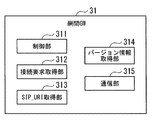
- FIG. 2 is a functional block diagram of the inter-network GW.
- the inter-network GW 31 includes a control unit 311, a connection request acquisition unit 312, a SIP_URI acquisition unit 313, a version information acquisition unit 314, and a communication unit 315 by executing a stored program.
- the control unit 311 controls other functional units provided in the inter-network GW 31.
- the connection request acquisition unit 312 acquires a communication connection request including the device number (telephone number) of the called UE 22 from the calling UE 12.
- the SIP_URI acquisition unit 313 acquires the SIP_URI corresponding to the device number included in the connection request from the number management server 23 that stores the device number of the called UE 22 and the SIP_URI in association with each other.
- the version information acquisition unit 314 acquires version information of a communication protocol used in the domain indicated by the domain information based on the domain information indicated by the SIP_URI of the called device.
- the communication unit 315 uses the communication protocol indicated by the version information acquired by the version information acquisition unit 314 to communicate each communication such as a connection request addressed to the destination UE 22 transmitted from the source UE 12. To the destination IMS network 21.
- FIG. 3 is a functional block diagram of the SIP server.
- the SIP server 211 is provided inside the destination IMS network 21.
- the SIP server 211 is communicatively connected to the inter-network GW 31.
- the SIP server 211 acquires a registration request including at least the device number of the destination UE 22 from the destination UE 22 connected to the network in the incoming network IMS21.
- the SIP server 211 includes functions of a control unit 2111, a number management unit 2112, and a communication unit 2113 by executing a program stored in its own device.
- the control unit 2111 controls the SIP function as the SIP server 211 and the like.
- the number management unit 2112 assigns the device number (telephone number recommended in E.164) included in the registration request acquired from the destination UE 22 and the destination UE 22 that issued the registration request detected when the registration request was acquired. Are registered in the number management server 23 in association with each other.
- the communication unit 2113 communicates with other devices.
- the SIP server 111 may have the same function as the SIP server 211.
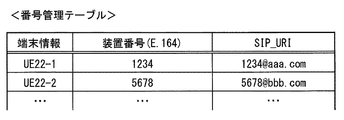
- FIG. 4 is a diagram showing a number management table stored in the number management server 23.
- the number management server 23 stores the device number and the SIP_URI in association with each other.
- the device number is the telephone number of the called UE 22.
- the telephone number is a recommendation from E.T.
- the telephone number determined based on 164.
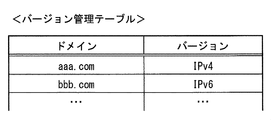
- FIG. 5 is a diagram showing a version management table stored in the inter-network GW 31.
- the network GW 31 stores a version management table in advance.
- domain information and IP version information used in the domain are recorded in association with each other.
- the IP version information is information indicating IPv4 or IPv6, for example.
- the domain information is domain information that can be identified from the SIP_URI.
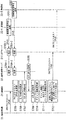
- FIG. 6 is a diagram showing an outline of a communication flow according to the present embodiment.
- the inter-network GW 31 receives the INVITE request (IPv4) transmitted from the originating UE 12 via the originating IMS network 11 (step S601).
- the inter-network GW 31 receives the E.E. device number of the called UE 22 from the INVITE request.
- the 164 number is detected (step S602).
- the inter-network GW 31 is an E.I.
- the SIP_URI inquiry including the 164 number is output to the number management server 23 (step S603).
- the number management server 23 returns the SIP_URI for the inquiry to the inter-network GW 31 (step S604).
- the inter-network GW 31 acquires the SIP_URI from the number management server 23 (step S605).
- the inter-network GW 31 specifies domain information from the acquired SIP_URI (step S606).
- the inter-network GW 31 acquires the IP version information (IPv4 or IPv6) corresponding to the domain information from the version management table (step S607).
- the inter-network GW 31 outputs each communication such as an INVITE request transmitted from the originating UE 12 to the terminating IMS network 21 using the communication protocol (IP) of the acquired version information (step S608).
- IP communication protocol
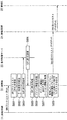
- FIG. 7 is a diagram showing details of the communication flow according to the present embodiment.
- the destination UE 22 registers its own device number in the number management server 23.
- the callee UE 22 has its own device number (telephone number).
- the registration request including the 164 number and the SIP_URI is transmitted to the SIP server 211 (registration device) provided in the destination IMS network 21.
- the SIP server 211 is an aspect of a registration device.
- the called UE 22-1 transmits a registration request to the SIP server 211 using the IPv4 protocol (step S701).
- the destination UE 22-2 transmits a registration request to the SIP server 211 using the IPv6 protocol (step S702).
- the SIP server 211 transfers each registration request to the number management server 23 (steps S703-1 and S703-2).
- the number management server 23 registers the device number and SIP_URI included in the registration request in the number management table in association with each other (steps S704-1 and S704-2).
- the registration request may include the device number of the called UE 22 without including the SIP_URI.
- the SIP server 211 or the number management server 23 extracts a device number included in the registration request, automatically generates a SIP_URI corresponding to the device number, and associates the SIP_URI with the device number in a number management table. You may register with.
- the originating UE 12 outputs an INVITE request (IPv4) as a connection request to the terminating UE 22-2, for example.
- This INVITE request includes the device number (telephone number) of the called UE 22-2.
- the connection request acquisition unit 312 of the inter-network GW 31 receives the INVITE request (IPv4) via the originating IMS network 11 (step S705).
- the control unit 311 of the inter-network GW 31 receives the E.E.
- the 164 number is detected (step S706).
- the SIP_URI acquisition unit 313 of the inter-network GW 31 receives the E.E.
- the SIP_URI inquiry including the 164 number is output to the number management server 23 (step S707).
- the number management server 23 determines the E.D.
- the SIP_URI corresponding to the 164 number is acquired from the number management table.
- the number management server 23 receives the E.E.
- the SIP_URI corresponding to the 164 number is returned to the inter-network GW 31 (step S708).
- the inter-network GW 31 acquires the SIP_URI from the number management server 23 (step S709).
- the version information acquisition unit 314 of the inter-network GW 31 specifies domain information from the acquired SIP_URI (step S710). For example, when the SIP_URI is “5678@bbb.com”, the character string after the character indicated by “@” is specified as the domain information. Then, the version information acquisition unit 314 of the inter-network GW 31 uses the version information of the IP version information (IPv4 or IPv6, here IPv6 which is the communication protocol of the destination UE 22-2) corresponding to the specified domain information. (Step S711).
- the communication unit 315 of the inter-network GW 31 uses the communication protocol (IP) of the acquired version information to send an INVITE request (IPv6) transmitted from the originating UE 12 to the terminating UE 22-2 connected to the terminating IMS network 21. (Step S712).
- IP communication protocol
- IPv6 INVITE request
- the IP version of IP used for communication is different between IMS networks
- the IP version is usually converted between the IMS networks by a SIP (Session Initiation Protocol) gateway function.
- SIP Session Initiation Protocol
- the IP version used in the opposite IMS network is fixed, it can be converted to the IP version.
- the opposite IMS network is an IPv6 / IPv4 dual stack
- there is a problem that it is not possible to connect because it is unknown which version of IP to connect and as a solution, there is a method of connecting with the IPv6 / IPv4 fallback function. is there.
- the fallback function activates the fallback function by receiving and analyzing the error response in which the Warning header is set from the destination IMS network after the originating IMS network tries to connect using IPv6, and restarts again with IPv4. This is a function to connect. Since this fallback function is not an essential function for the IMS network, the originating IMS network may not have the fallback function. In addition, when connecting with the fallback function, a connection delay occurs. On the other hand, in the IP multimedia subsystem 1 according to the present embodiment, by performing the above-described processing in connection with the IPv6 / IPv4 dual stack IMS network, the IP of the destination UE 22 in the originating IMS network 11 is performed. Version information can be distinguished.
- connection to an IPv6 / IPv4 dual stack communication network can be performed with simple communication without using a fallback function.
- the IP multimedia subsystem 1 of the present embodiment can be connected without using the IPv6 / IPv4 fallback function, connection delay during call connection can be suppressed.
- the inter-network GW 31 does not belong to either the originating IMS network 11 or the terminating IMS network 21, but the inter-network GW 31 is the originating side. Either the IMS network 11 or the destination IMS network 21 may be provided. Further, the inter-network GW 31 may be provided in both the originating IMS network 11 and the terminating IMS network 21. In this case, the inter-network GW 31 may perform processing equivalent to the above-described processing via the inter-network GW 31 belonging to the opposite IMS network. Further, in the IP multimedia subsystem 1 shown in FIG.
- the inside of the SIP server provided in either the originating IMS network 11 or the terminating IMS network 21 has the function of the inter-network GW 31 so that the originating IMS network is provided.
- 11 or the destination IMS network 21 may exhibit the function of the above-described inter-network GW 31.
- the number management server 23 described above may be provided inside the SIP server provided in the destination IMS network 21.
- the originating UE 12 and the terminating UE 22 and the originating IMS network 11 and the terminating IMS network 21 are distinguished from each other. It can also transition to the callee side.
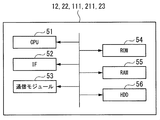
- FIG. 8 is a diagram illustrating a hardware configuration of a computer.
- the above-described originating UE 12, terminating UE 22, SIP servers 111, 211, and number management server 23 are computers.
- the computer has a CPU (Central Processing Unit) 51, an IF (Interface) 52, a communication module 53, a ROM (Read Only Memory) 54, a RAM (Random Access Memory) 55, an HDD (Hard Disk Drive). 56 etc. are provided.
- a CPU Central Processing Unit
- IF Interface
- a communication module 53 a ROM (Read Only Memory) 54
- RAM Random Access Memory
- HDD Hard Disk Drive
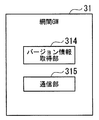
- FIG. 9 is a diagram showing a minimum configuration of the inter-network GW 31.
- the inter-network GW 31 may include at least the version information acquisition unit 314 and the communication unit 315 described with reference to FIG.
- the connection request acquisition unit 312 and the SIP_URI acquisition unit 313 may be provided in other devices.
Landscapes
- Engineering & Computer Science (AREA)
- Signal Processing (AREA)
- Telephonic Communication Services (AREA)
- Data Exchanges In Wide-Area Networks (AREA)
Abstract
La présente invention a pour objet de réaliser une interconnexion de réseaux IMS selon une procédure de communication simple. Pour ce faire, une passerelle (GW) inter-réseau acquiert, sur la base d'informations de domaine indiquées par un SIP_URI d'un équipement d'utilisateur (UE) appelé, des informations de version d'un protocole de communication utilisé dans un domaine indiqué par les informations de domaine. La GW inter-réseau utilise le protocole de communication indiqué par les informations de version acquises pour délivrer une demande de connexion, acquise en provenance d'un UE appelant, à un réseau IMS auquel l'UE appelé est connecté.
Applications Claiming Priority (2)
| Application Number | Priority Date | Filing Date | Title |
|---|---|---|---|
| JP2016125149A JP2019165266A (ja) | 2016-06-24 | 2016-06-24 | 通信接続管理装置、ipマルチメディアサブシステム、登録装置、通信接続管理方法、プログラム |
| JP2016-125149 | 2016-06-24 |
Publications (1)
| Publication Number | Publication Date |
|---|---|
| WO2017221919A1 true WO2017221919A1 (fr) | 2017-12-28 |
Family
ID=60784024
Family Applications (1)
| Application Number | Title | Priority Date | Filing Date |
|---|---|---|---|
| PCT/JP2017/022636 Ceased WO2017221919A1 (fr) | 2016-06-24 | 2017-06-20 | Dispositif de gestion de connexions de communication, sous-système multimédia ip, dispositif d'inscription, procédé de gestion de connexions de communication et support d'enregistrement sur lequel est enregistré un programme |
Country Status (2)
| Country | Link |
|---|---|
| JP (1) | JP2019165266A (fr) |
| WO (1) | WO2017221919A1 (fr) |
Citations (5)
| Publication number | Priority date | Publication date | Assignee | Title |
|---|---|---|---|---|
| JP2004364141A (ja) * | 2003-06-06 | 2004-12-24 | Hitachi Communication Technologies Ltd | Ipアドレス変換装置およびパケット転送装置 |
| JP2005086467A (ja) * | 2003-09-09 | 2005-03-31 | Hitachi Ltd | セッション制御装置、情報通信端末、サーバ、及び端末 |
| JP2013059100A (ja) * | 2005-10-21 | 2013-03-28 | Telefon Ab L M Ericsson | Tel−uriを用いた、ims呼のルーティング |
| JP2015159408A (ja) * | 2014-02-24 | 2015-09-03 | 日本電信電話株式会社 | 番号解決システムおよび番号解決方法 |
| JP2015220483A (ja) * | 2014-05-14 | 2015-12-07 | 西日本電信電話株式会社 | DNS−Proxy機能を有する中継装置 |
-
2016
- 2016-06-24 JP JP2016125149A patent/JP2019165266A/ja active Pending
-
2017
- 2017-06-20 WO PCT/JP2017/022636 patent/WO2017221919A1/fr not_active Ceased
Patent Citations (5)
| Publication number | Priority date | Publication date | Assignee | Title |
|---|---|---|---|---|
| JP2004364141A (ja) * | 2003-06-06 | 2004-12-24 | Hitachi Communication Technologies Ltd | Ipアドレス変換装置およびパケット転送装置 |
| JP2005086467A (ja) * | 2003-09-09 | 2005-03-31 | Hitachi Ltd | セッション制御装置、情報通信端末、サーバ、及び端末 |
| JP2013059100A (ja) * | 2005-10-21 | 2013-03-28 | Telefon Ab L M Ericsson | Tel−uriを用いた、ims呼のルーティング |
| JP2015159408A (ja) * | 2014-02-24 | 2015-09-03 | 日本電信電話株式会社 | 番号解決システムおよび番号解決方法 |
| JP2015220483A (ja) * | 2014-05-14 | 2015-12-07 | 西日本電信電話株式会社 | DNS−Proxy機能を有する中継装置 |
Also Published As
| Publication number | Publication date |
|---|---|
| JP2019165266A (ja) | 2019-09-26 |
Similar Documents
| Publication | Publication Date | Title |
|---|---|---|
| US20020042832A1 (en) | System and method for interoperability of H.323 video conferences with network address translation | |
| US11310293B2 (en) | Enhanced media plane optimization in web real time communication scenarios | |
| WO2017161965A1 (fr) | Procédé, dispositif et système de redirection d'un système de noms de domaine (dns) dynamique | |
| DK2044747T3 (en) | Technique for providing access to a media resource connected to a network detected devices | |
| CN102025718A (zh) | Sip端点增强器 | |
| WO2020063911A1 (fr) | Procédé, appareil, et système de communication | |
| JP2008236130A (ja) | 通信を確立してメッセージを中継する装置、通信を確立する方法およびプログラム | |
| CN106559504B (zh) | 一种地址转换方法及装置 | |
| US20050105525A1 (en) | Method of detecting the type of network address translator | |
| US8966089B2 (en) | Supporting proxy discovery | |
| CN103618739B (zh) | 一种增强的s‑cscf服务器的数据处理方法及装置 | |
| WO2017221919A1 (fr) | Dispositif de gestion de connexions de communication, sous-système multimédia ip, dispositif d'inscription, procédé de gestion de connexions de communication et support d'enregistrement sur lequel est enregistré un programme | |
| US7966406B2 (en) | Supporting a response to a mid-dialog failure | |
| JP6605149B2 (ja) | 共有端末の検出方法及びその装置 | |
| US20180159823A1 (en) | Network address translation server and network address translation method thereof | |
| JP4372629B2 (ja) | Fw制御を行うsip通信制御装置およびそのfw制御方法 | |
| JP5289345B2 (ja) | アドレス変換装置、通信システム、メッセージ通信方法、及びプログラム | |
| CN106209407A (zh) | 进行会话备份的方法与设备 | |
| CN111654390A (zh) | 一种数据传输方法、装置、终端设备和存储介质 | |
| JP6001512B2 (ja) | 通信制御システム及び通信制御方法 | |
| JP5084716B2 (ja) | Vpn接続装置、dnsパケット制御方法、及びプログラム | |
| US20170195850A1 (en) | Inter-network connection control device, and connection control method | |
| CN100574254C (zh) | 穿越网络地址转换装置的处理方法及通话启始协议服务器 | |
| CN101554035B (zh) | 用于地址转换的方法和设备 | |
| CN103957152A (zh) | IPv4与IPv6网络通信方法及NAT-PT网关 |
Legal Events
| Date | Code | Title | Description |
|---|---|---|---|
| 121 | Ep: the epo has been informed by wipo that ep was designated in this application |
Ref document number: 17815387 Country of ref document: EP Kind code of ref document: A1 |
|
| NENP | Non-entry into the national phase |
Ref country code: DE |
|
| 122 | Ep: pct application non-entry in european phase |
Ref document number: 17815387 Country of ref document: EP Kind code of ref document: A1 |
|
| NENP | Non-entry into the national phase |
Ref country code: JP |