WO2018003866A1 - 走行支援装置、撮像装置、撮像システム、走行支援システム、車両、および走行支援方法 - Google Patents
走行支援装置、撮像装置、撮像システム、走行支援システム、車両、および走行支援方法 Download PDFInfo
- Publication number
- WO2018003866A1 WO2018003866A1 PCT/JP2017/023771 JP2017023771W WO2018003866A1 WO 2018003866 A1 WO2018003866 A1 WO 2018003866A1 JP 2017023771 W JP2017023771 W JP 2017023771W WO 2018003866 A1 WO2018003866 A1 WO 2018003866A1
- Authority
- WO
- WIPO (PCT)
- Prior art keywords
- information
- vehicle
- road
- processor
- width
- Prior art date
- Legal status (The legal status is an assumption and is not a legal conclusion. Google has not performed a legal analysis and makes no representation as to the accuracy of the status listed.)
- Ceased
Links
Images






Classifications
-
- G—PHYSICS
- G08—SIGNALLING
- G08G—TRAFFIC CONTROL SYSTEMS
- G08G1/00—Traffic control systems for road vehicles
- G08G1/16—Anti-collision systems
- G08G1/161—Decentralised systems, e.g. inter-vehicle communication
- G08G1/163—Decentralised systems, e.g. inter-vehicle communication involving continuous checking
-
- G—PHYSICS
- G08—SIGNALLING
- G08G—TRAFFIC CONTROL SYSTEMS
- G08G1/00—Traffic control systems for road vehicles
- G08G1/01—Detecting movement of traffic to be counted or controlled
- G08G1/0104—Measuring and analyzing of parameters relative to traffic conditions
- G08G1/0125—Traffic data processing
-
- B—PERFORMING OPERATIONS; TRANSPORTING
- B60—VEHICLES IN GENERAL
- B60R—VEHICLES, VEHICLE FITTINGS, OR VEHICLE PARTS, NOT OTHERWISE PROVIDED FOR
- B60R21/00—Arrangements or fittings on vehicles for protecting or preventing injuries to occupants or pedestrians in case of accidents or other traffic risks
-
- B—PERFORMING OPERATIONS; TRANSPORTING
- B60—VEHICLES IN GENERAL
- B60W—CONJOINT CONTROL OF VEHICLE SUB-UNITS OF DIFFERENT TYPE OR DIFFERENT FUNCTION; CONTROL SYSTEMS SPECIALLY ADAPTED FOR HYBRID VEHICLES; ROAD VEHICLE DRIVE CONTROL SYSTEMS FOR PURPOSES NOT RELATED TO THE CONTROL OF A PARTICULAR SUB-UNIT
- B60W30/00—Purposes of road vehicle drive control systems not related to the control of a particular sub-unit, e.g. of systems using conjoint control of vehicle sub-units
- B60W30/08—Active safety systems predicting or avoiding probable or impending collision or attempting to minimise its consequences
- B60W30/095—Predicting travel path or likelihood of collision
-
- B—PERFORMING OPERATIONS; TRANSPORTING
- B60—VEHICLES IN GENERAL
- B60W—CONJOINT CONTROL OF VEHICLE SUB-UNITS OF DIFFERENT TYPE OR DIFFERENT FUNCTION; CONTROL SYSTEMS SPECIALLY ADAPTED FOR HYBRID VEHICLES; ROAD VEHICLE DRIVE CONTROL SYSTEMS FOR PURPOSES NOT RELATED TO THE CONTROL OF A PARTICULAR SUB-UNIT
- B60W50/00—Details of control systems for road vehicle drive control not related to the control of a particular sub-unit, e.g. process diagnostic or vehicle driver interfaces
- B60W50/08—Interaction between the driver and the control system
- B60W50/14—Means for informing the driver, warning the driver or prompting a driver intervention
-
- G—PHYSICS
- G08—SIGNALLING
- G08G—TRAFFIC CONTROL SYSTEMS
- G08G1/00—Traffic control systems for road vehicles
-
- G—PHYSICS
- G08—SIGNALLING
- G08G—TRAFFIC CONTROL SYSTEMS
- G08G1/00—Traffic control systems for road vehicles
- G08G1/01—Detecting movement of traffic to be counted or controlled
- G08G1/0104—Measuring and analyzing of parameters relative to traffic conditions
- G08G1/0108—Measuring and analyzing of parameters relative to traffic conditions based on the source of data
- G08G1/0112—Measuring and analyzing of parameters relative to traffic conditions based on the source of data from the vehicle, e.g. floating car data [FCD]
-
- G—PHYSICS
- G08—SIGNALLING
- G08G—TRAFFIC CONTROL SYSTEMS
- G08G1/00—Traffic control systems for road vehicles
- G08G1/09—Arrangements for giving variable traffic instructions
-
- G—PHYSICS
- G08—SIGNALLING
- G08G—TRAFFIC CONTROL SYSTEMS
- G08G1/00—Traffic control systems for road vehicles
- G08G1/09—Arrangements for giving variable traffic instructions
- G08G1/091—Traffic information broadcasting
-
- G—PHYSICS
- G08—SIGNALLING
- G08G—TRAFFIC CONTROL SYSTEMS
- G08G1/00—Traffic control systems for road vehicles
- G08G1/16—Anti-collision systems
-
- G—PHYSICS
- G08—SIGNALLING
- G08G—TRAFFIC CONTROL SYSTEMS
- G08G1/00—Traffic control systems for road vehicles
- G08G1/16—Anti-collision systems
- G08G1/164—Centralised systems, e.g. external to vehicles
-
- G—PHYSICS
- G08—SIGNALLING
- G08G—TRAFFIC CONTROL SYSTEMS
- G08G1/00—Traffic control systems for road vehicles
- G08G1/16—Anti-collision systems
- G08G1/165—Anti-collision systems for passive traffic, e.g. including static obstacles, trees
-
- G—PHYSICS
- G08—SIGNALLING
- G08G—TRAFFIC CONTROL SYSTEMS
- G08G1/00—Traffic control systems for road vehicles
- G08G1/16—Anti-collision systems
- G08G1/166—Anti-collision systems for active traffic, e.g. moving vehicles, pedestrians, bikes
-
- H—ELECTRICITY
- H04—ELECTRIC COMMUNICATION TECHNIQUE
- H04N—PICTORIAL COMMUNICATION, e.g. TELEVISION
- H04N7/00—Television systems
- H04N7/18—Closed-circuit television [CCTV] systems, i.e. systems in which the video signal is not broadcast
- H04N7/183—Closed-circuit television [CCTV] systems, i.e. systems in which the video signal is not broadcast for receiving images from a single remote source
-
- G—PHYSICS
- G06—COMPUTING OR CALCULATING; COUNTING
- G06V—IMAGE OR VIDEO RECOGNITION OR UNDERSTANDING
- G06V20/00—Scenes; Scene-specific elements
- G06V20/50—Context or environment of the image
- G06V20/56—Context or environment of the image exterior to a vehicle by using sensors mounted on the vehicle
- G06V20/58—Recognition of moving objects or obstacles, e.g. vehicles or pedestrians; Recognition of traffic objects, e.g. traffic signs, traffic lights or roads
-
- G—PHYSICS
- G06—COMPUTING OR CALCULATING; COUNTING
- G06V—IMAGE OR VIDEO RECOGNITION OR UNDERSTANDING
- G06V20/00—Scenes; Scene-specific elements
- G06V20/50—Context or environment of the image
- G06V20/56—Context or environment of the image exterior to a vehicle by using sensors mounted on the vehicle
- G06V20/588—Recognition of the road, e.g. of lane markings; Recognition of the vehicle driving pattern in relation to the road
Definitions
- the present disclosure relates to a driving support device, an imaging device, an imaging system, a driving support system, a vehicle, and a driving support method.
- the vehicle driving support apparatus described in Patent Literature 1 can pass along the side of an object based on the width of the own vehicle and the width of an object such as a parked vehicle when the vehicle travels on a narrow road? Determine whether or not.
- an object of the present disclosure made paying attention to these points is to provide a driving support device, an imaging device, an imaging system, a driving support system, a vehicle, and a driving support method that reduce the difficulty of driving on a narrow road.
- the travel support device includes a communication interface and a processor.
- the communication interface acquires information related to the position of the vehicle and road information related to the road.
- the processor determines whether or not road traffic is possible based on the information on the position and the road information.
- the imaging device includes a lens, an imaging device, and a travel support device.
- the driving support device includes a communication interface and a processor.
- the communication interface acquires information related to the position of the vehicle and road information related to the road.
- the processor determines whether the road is passable based on the information regarding the position and the road information.
- the imaging system of the present disclosure is an imaging system mounted on a vehicle, and includes a position sensor, an imaging device, and a driving support device.
- the position sensor outputs information related to the position.
- the imaging device images a road on which the vehicle is traveling and outputs road information related to the road.
- the driving support device includes a communication interface and a processor.
- the communication interface acquires information on the position and the road information.
- the processor determines whether or not traffic on the road is possible based on the information on the position and the road information.
- the travel support system includes a travel support device mounted on a plurality of vehicles and an information processing device provided outside the plurality of vehicles.
- Each of the travel support devices includes an information acquisition unit, a first processor, and a first communication unit.
- the information acquisition unit acquires information regarding the position of the mounted vehicle and travel path information regarding the road on which the vehicle is traveling.
- the first processor generates first information indicating the position of the vehicle based on the information regarding the position, and generates second information based on the travel path information.
- the first communication unit transmits the first information to the information processing apparatus under the control of the first processor, and can receive the peripheral road information related to the road around the position of the vehicle as the third information, and the second information Can be transmitted to the information processing apparatus.
- the first processor generates information related to whether or not a surrounding road can pass based on the third information.
- the information processing apparatus includes a second communication unit, a storage unit, and a second processor.
- the second communication unit receives the first information and the second information from the vehicle, and transmits the third information to the vehicle.
- the storage unit stores a plurality of positions and surrounding road information respectively corresponding to the plurality of positions as fourth information.
- the second processor acquires the first information from the second communication unit, and based on the position of the vehicle included in the first information, a plurality of positions around the vehicle position from the fourth information stored in the storage unit
- the surrounding road information associated with is extracted as the third information.
- the second processor updates the fourth information stored in the storage unit based on the first information and the second information received from the respective driving support devices.
- the vehicle of the present disclosure includes a travel support device.
- the driving support device includes a communication interface and a processor.
- the communication interface acquires information related to the position of the vehicle and road information related to the road.
- the processor determines whether or not traffic on the road is possible based on the information on the position and the road information.
- the driving support method of the present disclosure is a driving support method executed by the driving support device.
- the travel support device acquires information about the position of the vehicle and road information about the road.
- the driving support device determines whether or not the road is allowed to pass based on the position information and the road information.
- the driving support device, the imaging device, the imaging system, the driving support system, the vehicle, and the driving support method can reduce the difficulty of driving on a narrow road.
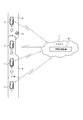
- FIG. 1 is a block diagram illustrating a schematic configuration of a driving support system according to the first embodiment.
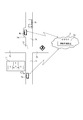
- FIG. 2 is a diagram illustrating a schematic configuration of a driving support device mounted on a vehicle.
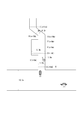
- FIG. 3 is a diagram illustrating a first example process by communication between a vehicle traveling on a road and the information processing apparatus.
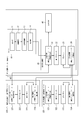
- FIG. 4 is a diagram illustrating a second example process by communication between a vehicle traveling on a road and the information processing apparatus.
- FIG. 5 is a flowchart illustrating an example of a processing flow of the driving support device according to the first embodiment.
- FIG. 6 is a flowchart illustrating an example of the warning information output process of FIG.
- FIG. 7 is a flowchart showing an example of the road width detection process of FIG. FIG.
- FIG. 8 is a flowchart illustrating an example of processing of the information processing apparatus.
- FIG. 9 is a block diagram illustrating a schematic configuration of the driving support system according to the second embodiment.
- FIG. 10 is a schematic diagram showing a road on which a vehicle travels.
- FIG. 11 is a conceptual diagram showing an example of travel history information stored in the memory.
- FIG. 12 is a flowchart illustrating an example of a processing flow of the state travel support apparatus according to the second embodiment.
- FIG. 13 is a block diagram illustrating a schematic configuration of a travel support system according to the third embodiment.
- FIG. 14 is a flowchart illustrating an example of a processing flow of the driving support system in the third embodiment.
- FIG. 15 is a block diagram illustrating a schematic configuration of a driving support system according to the fourth embodiment.
- FIG. 16 is a flowchart illustrating an example of a processing flow of the driving support system according to the fourth embodiment.
- a driving support system 1 includes a driving support device 20 and an information processing device 50. There are a plurality of driving support devices 20 corresponding to the information processing device 50. In FIG. 1, only one of the plurality of driving support devices 20 is shown. For example, hundreds to millions of driving support devices 20 may exist for the information processing device 50.
- the driving support system 1 may include a camera 10 and a position sensor 30 that are imaging devices as an information acquisition unit. Furthermore, the driving support system 1 may include a display device 40.
- the imaging system 2 includes a camera 10, a driving support device 20, and a position sensor 30. The imaging system 2 may further include a display device 40.
- the information processing apparatus 50 may be provided on a cloud computing system provided by a business operator.
- the camera 10, the driving support device 20, the position sensor 30, and the display device 40 are mounted on the vehicle 4 as shown in FIG.
- the camera 10, the driving support device 20, the position sensor 30, and the display device 40 may be connected to each other via a network 5 of the vehicle 4 such as a communication cable and CAN (Control Area Network).
- a network 5 of the vehicle 4 such as a communication cable and CAN (Control Area Network).
- Vehicle in the present disclosure includes, but is not limited to, automobiles and industrial vehicles.
- the vehicle may include an airplane traveling on a runway.
- the automobile includes, but is not limited to, a passenger car, a truck, a bus, a two-wheeled vehicle, a trolley bus, and the like, and may include other vehicles that travel on the road.
- Industrial vehicles include industrial vehicles for agriculture and construction.
- Industrial vehicles include but are not limited to forklifts and golf carts.
- Industrial vehicles for agriculture include, but are not limited to, tractors, tillers, transplanters, binders, combines, and lawn mowers.
- Industrial vehicles for construction include, but are not limited to, bulldozers, scrapers, excavators, crane trucks, dump trucks, and road rollers.
- Vehicle power engines include, but are not limited to, internal combustion engines including diesel engines, gasoline engines, and hydrogen engines, and electrical engines including motors. Vehicles include those that travel by human power.
- the vehicle classification is not limited to the above.
- an automobile may include an industrial vehicle capable of traveling on a road, and the same vehicle may be included in a plurality of classifications.
- the camera 10 is installed so as to take an image of the traveling road ahead of the vehicle 4.
- the camera 10 can be arranged in the vehicle interior of the vehicle 4 and image the outside of the vehicle 4 via the windshield of the vehicle 4.
- the camera 10 may be fixed to any of the front bumper, fender grille, side fender, light module, and bonnet of the vehicle 4.
- the camera 10 includes an optical system 11, an image sensor 12, a signal processing unit 13, an output unit 14, and the like.
- the optical system 11 is a lens that collects light so that the light incident on the optical system 11 is imaged by the imaging device 12.
- the optical system 11 may be composed of, for example, a fisheye lens or a super wide angle lens.
- the optical system 11 may be composed of a single lens or may be composed of a plurality of lenses.
- the image sensor 12 is an image sensor that captures an image formed by the optical system 11.
- the imaging element 12 includes a CCD (Charge-Coupled Device) image sensor and a CMOS (Complementary Metal Oxide Semiconductor) image sensor.
- the image sensor 12 can acquire an image formed by the optical system 11 by converting it into an electrical signal.
- the signal processing unit 13 is one or a plurality of processors that process an electrical signal of an image acquired by the image sensor 12.
- the processor included in the signal processing unit 13 is, for example, a dedicated microprocessor formed to execute a specific function or a processor that executes a specific function by reading a specific program.
- the signal processing unit 13 generates an image signal representing an image from the electrical signal acquired by the image sensor 12. Further, the signal processing unit 13 may perform arbitrary processing such as distortion correction, brightness adjustment, contrast adjustment, and gamma correction on the image.
- the output unit 14 outputs the image signal generated by the signal processing unit 13 to the driving support device 20.
- the output unit 14 can include a physical connector, a wireless communication device, and the like. Physical connectors include electrical connectors, optical connectors, and electromagnetic connectors.
- the wireless communication device includes a wireless communication device that conforms to each standard including Bluetooth (registered trademark) and IEEE802.11, and an antenna.
- the output unit 14 can be connected to the network 5 of the vehicle 4.
- the camera 10 can be connected to the driving support device 20 and the display device 40 via the network 5.
- the camera 10 and the driving support device 20 may be directly connected without passing through the network 5 of the vehicle 4.
- the driving support device 20 includes an input / output unit 21 (information acquisition unit), a first processor 22 (processor), a first memory 23, a first communication unit 24 (communication unit), and the like.
- the input / output unit 21 can have a physical connector, a wireless communication device, and the like, similar to the output unit 14 of the camera 10.
- the input / output unit 21 is connected to the network 5 of the vehicle 4 and can receive an image signal output by the camera 10 and information on a position detected by the position sensor 30.
- the camera 10 captures an image of a travel path during travel of the vehicle 4.
- the image signal output by the camera 10 indicates road information regarding the road.
- the road information indicated in the image signal output by the camera 10 includes travel path information regarding the road on which the vehicle 4 is traveling.
- the traveling road information is information relating to the road on which the vehicle 4 can travel while traveling.
- the travel path information is information acquired in real time in many cases.
- the traveling road information is an image obtained by capturing an image of a traveling road.
- the travel path information is used to generate second information described later.
- the input / output unit 21 can acquire the acquisition time when the travel route information is acquired.
- the acquisition time may be acquired from the camera 10.
- the acquisition time may be acquired from a clock of any device including the driving support device 20.
- the input / output unit 21 can output information acquired, calculated, and generated by the first processor 22 to the display device 40.
- the input / output unit 21 can output warning information from the first processor 22.
- the input / output unit 21 functions as an information acquisition unit of the driving support device 20.
- the input / output unit 21 can function as an output unit of the driving support device 20.
- the functional unit including the input / output unit 21 and the first communication unit 24 is referred to as a communication interface.
- the first processor 22 controls the entire travel support device 20.
- the process performed by the driving support device 20 can be regarded as a process performed by the first processor 22.
- the first processor 22 performs various calculations, determinations, and image processing.
- the first processor 22 can include a plurality of processors.
- the processor includes a general-purpose processor that reads a specific program and executes a specific function, and a dedicated processor specialized for a specific process.
- the dedicated processor includes an application specific IC (ASIC; Application Specific Circuit).
- the processor includes a programmable logic device (PLD).
- PLD includes FPGA (Field-ProgrammablemGate Array).
- the first processor 22 may be one of SoC (System-on-a-Chip) and SiP (System-In-a-Package) in which one or more processors cooperate.
- the first processor 22 generates first information indicating the position of the vehicle 4 based on the information regarding the position acquired from the position sensor 30.
- the first information can be position coordinates such as the latitude and longitude of the vehicle 4.
- the first processor 22 can control the start and stop of the camera 10 by transmitting a signal to the signal processing unit 13 of the camera 10.
- the first processor 22 generates second information based on the travel route information acquired from the camera 10.
- the second information includes the width of the running road. Information including the road width is called road width information.
- the second information includes information on the presence or absence of an object that may be an obstacle on the running road. When there is an object that can obstruct traffic, the second information can include information on the width of the object (hereinafter referred to as object width). Information including the presence / absence of an object and the object width is referred to as object information.
- the first processor 22 may determine whether the object is moving.
- the object information can include information on whether or not the object is moving.
- the road width information may include the road width of a road that can be traveled by removing the object width from the road width of the road being traveled. That is, the second information includes road width information and object information. The second information may include the acquisition time of the travel route information that is the source of the second information.
- the first processor 22 can recognize roads and obstacles from images captured by the camera 10.
- the first processor 22 may detect markers (eg, lane markings) on the road and determine both ends of the road.
- the first processor 22 can detect an edge from an image and recognize an object using a technique such as pattern matching.
- the first processor 22 estimates the distance from the vertical position on the image, and estimates the road width and the object width based on the distance and the number of pixels in the horizontal direction.
- the first processor 22 may acquire the road width using sonar sensors provided on the left and right side surfaces of the vehicle 4.
- the first processor 22 can acquire road width information and object information by any method without being limited to these methods.
- the first processor 22 may detect the road width and the object width based on the parallax between two images captured by the two cameras 10. Therefore, the camera 10 may be a stereo camera.
- the first processor 22 transmits / receives information to / from an external information processing apparatus 50 via the first communication unit 24.
- the first processor 22 transmits first information to the information processing device 50 and receives road information as third information.
- the road information received by the first processor 22 via the first communication unit 24 includes surrounding road information related to roads around the position of the vehicle 4.
- the surrounding road information includes road width information and object information associated with a plurality of positions.
- the surrounding road information corresponding to the position on the road around the vehicle 4 is called third information.
- the third information is based on information obtained by aggregating the second information acquired and transmitted to the information processing apparatus 50 by a plurality of vehicles.
- the third information may include the acquisition time of the travel route information that is the source of the related second information.
- the third information may include information related to construction of a surrounding road, traffic jam, and the like in addition to road width information and object information.
- Nearby roads include a road that is running and a road that is branched from the road that is running.
- the “periphery” can include a certain distance range centered on the position of the vehicle 4. The fixed distance range can be arbitrarily determined. The certain distance range may be 100 m, 1 km, 10 km, or the like. The certain distance range may change according to the amount of information that can be acquired as the third information.
- the “periphery” may include only the road on which the vehicle 4 may travel.
- the first processor 22 generates information related to whether or not the surrounding road is passable based on the third information.
- the first processor 22 can control images and characters displayed on the display device 40.
- the first processor 22 can cause the display device 40 to display information related to whether or not the surrounding road is passable.
- the first processor 22 may determine whether or not it can pass by itself.
- the first processor 22 can display the road width information on the display device 40 and assist the driver of the vehicle 4 in determining whether or not the vehicle can pass.
- the first processor 22 can activate the camera 10 and generate the second information based on the third information.
- the first processor 22 activates the camera 10 when it is determined from the third information that the road width of the running road is narrower than a predetermined width, or when there is a possibility that there is an object on the road. To get an image of the road ahead.
- the first processor 22 may generate second information from the image from the camera 10 and transmit the second information together with the first information to the information processing apparatus 50 via the first communication unit 24.
- the first processor 22 may activate the camera 10 without being based on the third information. If the first processor 22 determines that the road width has narrowed based on information other than the third information, the first processor 22 may activate the camera 10. For example, the first processor 22 may determine that there is a possibility that the vehicle 4 is decelerating because the road width is narrowed when the change per time in the position information from the position sensor 30 becomes small. Also in this case, the first processor 22 generates the second information and transmits it to the information processing apparatus 50. The first processor 22 activates the camera 10 when receiving a signal related to a driving operation peculiar to a narrow road width from an ECU (Electronic Control Unit) 45 of various devices mounted on the vehicle 4. One piece of information may be generated. Such driving operations include braking operation, steering operation, and the like by the driver of the vehicle 4. The first processor 22 may stop the camera 10 and stop generating the second information when the road width of the running road acquired from the camera 10 becomes wider than a predetermined value.
- ECU Electronic Control Unit
- the first memory 23 stores programs for various processes performed by the first processor 22 and information being calculated.
- the first memory 23 includes a volatile memory and a nonvolatile memory.
- the first memory 23 includes a memory independent of the processor and a built-in memory of the processor.
- the first memory 23 stores information for determining whether or not the vehicle can pass, for example, information on the width of the vehicle 4 that is the host vehicle.
- the first communication unit 24 is a communication unit that communicates with the information processing apparatus 50 via a network such as the Internet.
- the first communication unit 24 includes means for communicating with the outside of the vehicle 4.
- the first communication unit 24 includes, for example, Bluetooth (registered trademark), DSRC (Dedicated Short Range Communications) (registered trademark), IEEE802.11, GSM (registered trademark) global system for mobile communications (registered trademark), LTE (Long). Term Evolution) (registered trademark) and WiMAX (Worldwide Interoperability for Microwave Access) (registered trademark) are included.
- the wireless communication device includes at least one antenna.
- the first communication unit 24 can transmit first information to the information processing apparatus 50 and receive third information related to roads around the vehicle 4 under the control of the first processor 22. Based on the third information, when the road width is narrower than a predetermined width and the first processor 22 activates the camera 10, the first communication unit 24 can transmit the second information to the information processing device 50.
- the position sensor 30 is a sensor that is mounted on the vehicle 4 and detects the position of the vehicle 4.
- the position sensor 30 detects the absolute position.
- the absolute position can include latitude and longitude information.
- a GPS (Global Positioning System) receiver can be adopted.
- the position sensor 30 may be a combination of a GPS receiver, a gyro sensor, a vehicle speed sensor, and the like.
- a sensor of a navigation system provided in the vehicle 4 may be shared.
- the display device 40 displays information such as warning information output from the input / output unit 21 of the driving support device 20.
- the display device 40 includes, for example, a liquid crystal display (LCD), an organic EL (Electro-Luminescence) display, an inorganic EL display, a plasma display (PDP: Plasma Display Panel), and a field emission display (FED: Field Display).
- LCD liquid crystal display
- OLED Electro-Luminescence
- PDP Plasma Display Panel
- FED Field Display
- Various flat panel displays such as an electrophoretic display and a twist ball display can be employed.
- the display device 40 can be arranged on a dashboard, an instrument panel, or the like of the vehicle 4.
- HUD HeadUp (Display) can be adopted as the display device 40.
- HUD HeadUp
- an image can be projected on a windshield or a combiner disposed in front of the driver's seat.
- a display device of another system such as a navigation system may be shared.
- the information processing apparatus 50 includes a second communication unit 51, a second memory 52, and a second processor 53.
- the information processing apparatus 50 may be realized by a single computer.
- the information processing apparatus 50 may be realized by a plurality of computers distributed in the cloud 3.
- the second communication unit 51 communicates with the driving support device 20 mounted on a large number of vehicles including the vehicle 4.
- the second communication unit 51 corresponds to various communication means included in the first communication unit 24.
- the second communication unit 51 receives first information and second information from the vehicle 4.
- the second communication unit 51 can transmit the third information to the vehicle 4.
- the second memory 52 is a storage unit that stores programs for various processes performed by the second processor 53 and information being calculated.
- the second memory 52 includes a volatile memory and a nonvolatile memory.
- the second memory 52 can include a memory independent of the second processor 53 and a built-in memory of the second processor 53.
- the second memory 52 can include a mass storage device using a magnetic memory, an optical memory, or the like.
- the magnetic memory may include, for example, a hard disk and a magnetic tape.
- the optical memory may include, for example, a CD (Compact Disc), a DVD (Digital Versatile Disc), and a BD (Blu-ray (registered trademark) Disc).
- the second memory 52 can be a storage array device such as a disk array device.
- the second memory 52 stores the position on the road collected from many vehicles including the vehicle 4 and the road width information and object information of the road corresponding to the position.
- the second memory 52 may further store construction information and traffic jam information associated with a position on the road.
- Information such as road width information, object information, construction, and traffic jam associated with a position on the road stored in the second memory 52 is referred to as fourth information.
- the fourth information is wide-area information having a positional spread.
- the position stored as the fourth information is a position satisfying predetermined requirements such as a position where the road width has changed beyond a predetermined value, a position where an obstacle is present, construction information, a position determined to be inaccessible from traffic jam information, etc. Can do.
- the position stored as the fourth information may be arranged at predetermined intervals on the road.
- the second processor 53 is a processor that controls the entire information processing apparatus 50.
- the process performed by the information processing apparatus 50 can be regarded as the process performed by the second processor 53.
- the second processor 53 performs various calculations, determination processing, and operation of the second memory 52.
- the second processor 53 can include a plurality of processors.
- the processor includes a general-purpose processor that reads a specific program and executes a specific function, and a dedicated processor specialized for a specific process.
- the dedicated processor includes an application specific IC (ASIC).
- the processor includes a programmable logic device (PLD).
- PLD includes FPGA.
- the second processor 53 may be either SoC or SiP in which one or a plurality of processors cooperate.
- the second processor 53 can acquire the first information of the vehicle 4 via the second communication unit 51.
- the second processor 53 extracts information corresponding to a plurality of positions around the position of the vehicle 4 as the third information from the fourth information stored in the second memory 52. .
- the second processor 53 transmits the third information to the first communication unit 24 of the travel support device 20 of the vehicle 4 via the second communication unit 51.
- the second processor 53 can acquire the second information of the vehicle 4 via the second communication unit 51.
- the second processor 53 updates the fourth information according to the first information acquired at the same time as the second information and the second information.
- the second processor 53 updates the road width information at a specific position to the latest information according to the second information.
- the second processor 53 stores object information indicating that there is an object that may become a traffic obstacle at a specific position according to the second information.
- the second processor 53 may also acquire information such as construction and traffic jams from various information sources and add them to the fourth information in association with the position on the road.
- the process performed by the driving support device 20 can be read as the process performed by the first processor 22.
- the process performed by the information processing apparatus 50 can be read as the process performed by the second processor 53.
- FIG. 3 is a diagram illustrating a state in which the vehicle 4 travels on the road 61.
- the vehicle 4 travels sequentially from the position indicated by (1) in FIG. 3 to the positions indicated by (2), (3), and (4).
- the road 61 is partially narrow. Further, the object 62 is stationary on the road 61.
- the driving support device 20 transmits the first information to the information processing device 50.
- the information processing apparatus 50 transmits the third information including the road width information of the positions around the vehicle 4 to the travel support apparatus 20 of the vehicle 4 from the position information of the first information.
- the information processing apparatus 50 may determine the traveling direction of the vehicle 4 from the change in the position information included in the first information, and extract only the information on the peripheral position in front of the vehicle 4 from the fourth information. Further, the traveling direction may be included in the first information from the driving support device 20 instead of being determined by the information processing device 50.
- the third information includes road width information wider than a predetermined value of, for example, 5 m at the position (1).
- the third information includes information on a position in front of the vehicle 4 and a road width narrower than a predetermined value.
- the road width is wider than the lateral width of the vehicle 4 stored in the first memory 23.
- the driving support device 20 determines that it can pass through the road 61. In determining whether or not the vehicle can pass, the driving support device 20 may consider a margin for safety.
- the camera 10 is not yet activated in the vehicle 4.
- the vehicle 4 travels on the road 61 without operating the camera 10.
- the driving assistance device 20 may display on the display device 40 that the road width ahead is narrow.
- the first processor 22 recognizes that the point where the road 61 becomes narrower is approaching based on the third information, and causes the camera 10 to start acquiring images.
- the driving support device 20 detects the road width based on the image acquired from the camera 10. The driving support device 20 transmits the detected road width information to the information processing device 50 as the second information together with the first information.
- the driving support device 20 may continuously transmit the second information to the information processing device 50 without receiving the third information from the information processing device 50 while the camera 10 is activated.
- the traveling support device 20 receives the third information from the information processing device 50 even while the camera 10 is being activated, and the traveling road width included in the third information is detected from the image of the camera 10.
- the second information may be transmitted only when it is different from the width of the road.
- the information processing apparatus 50 updates the fourth information included in the second memory 52 based on the received second information. As a result, the fourth information is kept up-to-date.
- the driving support device 20 can detect the front object 62 from the image of the camera 10.
- the driving support device 20 recognizes the width of the object 62, subtracts the width of the object 62 from the width of the road 61, and calculates a width in which the road 61 can pass.
- the width of the road 61, the width of the object 62, the width of the road that can be passed, and information that the object 62 is a stationary object are transmitted to the information processing apparatus 50 as second information.
- the driving support device 20 stops the camera 10 and the second information Cancel transmission of.
- the first vehicle 4a and the second vehicle 4b are different vehicles.
- the first vehicle 4 a is traveling on the travel path 71.
- the traveling road 71 is divided at an intersection 72 into a left turn road 73, a straight road 74, and a right turn road 75.
- the second vehicle 4 b travels on the straight path 74 before the first vehicle 4 a arrives at the intersection 72.
- the second vehicle 4 b faces the large vehicle 76 and retreats in a retreat space 74 a on the straight path 74.
- the second vehicle 4b facing the large vehicle 76 receives a braking operation and a steering operation when retreating to the retreat space 74a.
- the driving support device 20 of the second vehicle 4b acquires signals related to these operations from the ECU 45 and activates the camera 10. Based on the image from the camera 10, the travel support device 20 of the second vehicle 4 b acquires the road width of the straight path 74, the lateral width of the large vehicle 76, and the road width that can be passed. In this case, the road width that can be passed is narrower than the lateral width of the first vehicle 4a and the second vehicle 4b.
- the second vehicle 4b includes a large vehicle 76 on the straight road 74, a movement of the large vehicle 76, a road width of the straight road 74, a lateral width of the large vehicle 76, a passable road width, and a large vehicle.
- Information on the acquisition time when 76 is detected is set as second information.
- the second vehicle 4b transmits the first information that is position information and the second information to the information processing apparatus 50.
- the information processing apparatus 50 receives the first information and the second information from the second vehicle 4 b and updates the fourth information stored in the second memory 52.
- the information processing apparatus 50 acquires information indicating that road construction is being performed on the right turn road 75 from an external information source.
- the information processing apparatus 50 may acquire construction information and road width information that can be passed from other vehicles that have passed through the right turn road 75 first.
- the construction information is associated with position information where construction on the right turn road is performed, and is stored in the second memory 52 as fourth information.
- the travel support device 20 of the first vehicle 4 a traveling on the travel path 71 transmits the first information to the information processing device 50 before the intersection 72 and receives the third information from the information processing device 50.
- the third information includes object information indicating that there is a moving large vehicle 76 in association with the position on the straight path 74, road width information including a road width that can be passed, and information on acquisition time when the large vehicle is detected. It is.
- the driving support device 20 can determine from the lateral width of the first vehicle 4 a stored in the first memory 23 that the large vehicle 76 hinders the traveling of the host vehicle.
- the third information includes information on the fact that construction is being performed and the road width that can be passed in association with the position on the right turn path 75.
- the third information may include surrounding road information associated with other positions on the left turn road 73, the straight road 74, and the right turn road 75.
- the driving support device 20 of the first vehicle 4a displays warning information on the display device 40 via the input / output unit 21 based on the third information.
- a display screen 77 in FIG. 4 shows an image displayed on the display device 40.
- the display device 40 may include a display A, a display B, and a display C for each of the left turn road 73, the straight road 74, and the right turn road 75.
- Display B displays the presence of a moving object (large vehicle 76) that is an obstacle on the straight path 74 and the acquisition time of the moving object.
- the driver of the first vehicle 4a can see the display B and determine whether to proceed to the straight path 74. If the elapsed time from the acquisition time is long, it can be determined that the moving object has already turned the intersection 72 and is not on the straight path 74. If the elapsed time from the acquisition time is short, it can be determined that the moving object is still on the straight path 74. Such a determination may be made by the driving support device 20 instead of the driver.
- the display B may display “not going straight”, “can go straight”, or the like.
- the driving support device 20 may present on the display B the predicted position where the moving object is encountered when the vehicle travels straight on the intersection 72.
- the display C indicates that there is a construction site on the right turn road 75.
- the driving support system 1 collects the second information acquired from the plurality of vehicles 4 in the information processing device 50.
- the travel support device 20 of each vehicle 4 uses, as the third information, information on the surrounding road including road width information, object information, construction information, traffic jam information, and the like for the road in the direction in which the host vehicle will travel from the information processing device 50. get. This makes it possible to avoid roads and the like that are difficult to pass at points before the vehicle 4 reaches a point where it is difficult to pass.
- the driving support device 20 transmits the first information including the current position information to the information processing device 50 in a state where the camera 10 is not activated (step S101).
- the driving support device 20 receives the third information including the position on the surrounding road and the road width information from the information processing device 50 (step S102).
- the driving support device 20 determines whether or not there is an object that may become an obstacle in the direction in which the vehicle 4 can travel from the received third information (step S103). When there is an object that may become an obstacle (step S103: Y), the driving support device 20 executes a warning information output process (step S104). Details of the warning information output process are shown in FIG.
- the driving support device 20 first determines whether warning information related to the object has already been output (step S201). This is to avoid displaying the same warning information multiple times. If the warning information about the object has not been output yet, the driving support device 20 determines whether the object is moving or stopped (step S202). Information on whether or not the object is moving is included in the third information.
- step S202 when an object that may become an obstacle has stopped (S202: N), the driving support device 20 determines whether the vehicle 4 can pass through the passable road width included in the third information. Judgment is made (step S203).
- the passable road width may be included in the third information as road width information.
- the driving support device 20 can determine that the vehicle cannot pass when the road width that allows passage is narrower than the lateral width of the vehicle 4 stored in the first memory 23.
- the driving support device 20 displays on the display device 40 whether or not the road on which the vehicle is traveling is allowed to pass (step S204).
- the travel support device 20 acquires the third information for each branched road.
- the driving support device 20 can determine whether or not each branch road is allowed to pass.
- step S202 when an object that may become an obstacle is moving (S202: Y), the driving support device 20 displays information such as the presence of the object, the width that can be passed, and the information acquisition time for the object. Then, it is displayed on the display device 40 (step S205). After the warning information is displayed in steps S204 and S205, the warning information output process in FIG. 6 ends.
- step S103 when there is no obstacle in the traveling direction in step S103 (step S103: N), and after the warning information output process (step S104), the traveling support device 20 has a narrow road width on the traveling road. (Step S105). Information on the road width of the running road is included in the third information.
- the driving support device 20 starts the road width detection process (step S106) when the road width during driving becomes narrower compared to a predetermined value. Details of the road width detection process are shown in FIG.
- the driving support device 20 activates the camera 10 (step S301).
- the driving support device 20 detects the road width information of the road that is running from the image acquired from the camera 10 (step S302).
- the driving support device 20 determines whether there is information to be updated in the road width information as compared with the information acquired as the third information (step S303).
- the driving support device 20 transmits the position and road width information to the information processing device 50 as second information (step S304).
- step S303: N the driving support device 20 proceeds to the next process S305 as it is.
- the driving support device 20 repeats the processing from step S302 to S305 unless the road width is larger than the predetermined value for a predetermined period or longer (step S305: N).
- step S305: N the driving support device 20 stops the camera 10 and stops road width information acquisition during driving.
- step S105 when the road width of the running road is not narrower than the predetermined value (step S105: N) and when the road width detection process (S106) is completed, the driving support device 20 performs the next step.
- the process proceeds to S107.
- step S107: N the driving support device 20 repeatedly executes the processes of steps S101 to S107.
- step S107: Y the driving support device 20 ends the process.
- the predetermined end process includes when the driving support device 20 is turned off, when the vehicle 4 stops traveling, and the like.
- the driving assistance apparatus 20 acquires only road width information from the image of the camera 10 which is driving path information.
- the driving support device 20 can also acquire object information.
- the driving support device 20 can determine whether or not there is update information in the object information. When the object information includes update information, the driving support device 20 transmits the acquired object information to the information processing device 50.
- the driving support device 20 may be configured to read and execute the program recorded in the non-transitory computer-readable medium, as shown in FIGS.
- Non-transitory computer readable media include, but are not limited to, magnetic storage media, optical storage media, magneto-optical storage media, and semiconductor storage media.
- Magnetic storage media includes magnetic disks, hard disks, and magnetic tapes.
- the optical storage medium includes an optical disc such as a CD, a DVD, or a BD.
- the semiconductor storage medium includes ROM (Read Only Memory), EEPROM (Electrically Erasable Programmable Read-Only Memory), flash memory, and the like.
- the information processing apparatus 50 receives information from a plurality of vehicles (step S401).
- the information processing apparatus 50 determines whether the acquired information includes the second information (step S402).
- the information processing device 50 receives only the first information indicating the position from the driving support device 20.
- the information processing device 50 extracts, from the fourth information stored in the second memory 52, the third information including the road width information associated with the position and the position on the surrounding road for the position included in the first information (Ste S403).
- the information processing device 50 transmits the third information to the travel support device 20 that has transmitted the first information (step S404).
- step S402 when the received information includes the second information (step S402: Y), the information processing apparatus 50 updates the position and road width information included in the fourth information stored in the second memory 52 ( Step S405).
- the information processing apparatus 50 associates information indicating the position included in the first information with the road width information included in the second information and stores the information in the second memory 52.
- the information processing apparatus 50 can store object information in the second memory 52.
- step S404 or step S405 the information processing apparatus 50 repeats the processing of steps S401 to S406 unless there is an end instruction (step S406: N).
- the information processing apparatus 50 can always operate.
- the information processing apparatus 50 ends the process when there is an end instruction (step S406: Y).
- the termination instruction for the information processing apparatus 50 includes a power stop of the information processing apparatus 50 and the like.
- the information processing apparatus 50 receives the position and information associated with the position from the large number of driving support apparatuses 20 mounted on the large number of vehicles 4 and aggregates the information. Can do.
- the driving support device 20 can acquire the position of the vehicle 4 and the peripheral road information of the peripheral position from the information processing device 50 and determine whether or not the road on which the vehicle is going to travel can be traveled. Therefore, the travel support system 1 of the present disclosure contributes to smooth road traffic.
- the imaging system 2 of the first embodiment does not need to always operate the camera 10 and perform image recognition processing. Therefore, the computer resources of the camera 10 and the driving support device 20 can be used effectively.
- the driving support device 20 can determine with high certainty whether the road on which the vehicle 4 is about to enter can pass. Furthermore, the driving support device 20 can determine earlier whether the road on which it is traveling can pass forward or before reaching a point where it is difficult to travel.
- the driving support system 200 according to the second embodiment includes a camera 10, a driving support device 20, a display device 40, and the like, similar to the driving support system 1 according to the first embodiment. Consists of including. Unlike the driving support system 1 according to the first embodiment, the driving support system 200 according to the second embodiment may not include the position sensor 30 and the information processing device 50. Similar to the first embodiment, the camera 10, the driving support device 20, the position sensor 30, and the display device 40 can be mounted on the vehicle 4 as shown in FIG. The camera 10, the driving support device 20, the position sensor 30 and the display device 40, and each component described below that configures these components are similar in hardware to the components of the first embodiment. The same reference numerals as those in the first embodiment are given. However, as described below, each of these components is different from the first embodiment in the content of information to be acquired or stored, the content of information processing to be executed, and the content and method of information to be output. Is different.
- the driving support device 20 includes an input / output unit 21 (information acquisition unit), a first processor 22, a first memory 23, and the like.
- the first processor 22 can acquire travel history information about the road on which the vehicle 4 is traveling.
- the travel history information includes each position on the road on which the vehicle 4 has traveled and travel path information at each position.
- the travel route information is information regarding the road.
- the travel path information may include, for example, a road width W1, an object width W2, a passable width W3, a steering angle, and an image captured by the camera 10.
- the road width W1 is the width of the road.
- the object width W2 is the width of an object such as another vehicle, an obstacle, or a power pole on the road.
- the passable width W3 is a width that can be passed on the road.
- the rudder angle is an angle at which the steering wheel is steered.
- the first processor 22 can acquire the road width W1 based on the number of pixels in the horizontal direction of pixels representing the road in the image captured by the camera 10 and input by the input / output unit 21.
- the first processor 22 can acquire the road width W ⁇ b> 1 using sonar sensors provided on the left and right side surfaces of the vehicle 4.
- the first processor 22 can acquire the road width W1 by any method without being limited to these methods.
- the first processor 22 can detect the object based on the parallax between the two images captured by the two cameras 10 and acquire the object width W2.
- the first processor 22 can acquire the object width W2 by any method without being limited to this method.
- the first processor 22 can calculate the passable width W3 based on the acquired road width W1 and object width W2. For example, the first processor 22 can calculate the traversable width W3 by W1-W2 obtained by subtracting the object width W2 from the road width W1. The first processor 22 may calculate W1- (W2 + W4) obtained by subtracting the object width W2 and the margin width W4 from the road width W1 as the passable width W3.
- the first processor 22 can determine whether or not the road width W1 acquired as described above is less than a predetermined threshold value W1th. When the first processor 22 determines that the road width W1 is less than the predetermined threshold value W1th, it is assumed that the vehicle 4 starts to travel on a narrow road. Then, the first processor 22 acquires the road width W1, the object width W2, and the passable width W3 at a predetermined interval (for example, at an interval of 2 m) with respect to the road on which the vehicle 4 travels, and the first memory 23 can be stored. Assuming that the vehicle 4 starts traveling on a narrow road, the first processor 22 starts to store the image captured by the camera 10 in the first memory 23 in association with the position P where the image is captured.
- a predetermined threshold value W1th for example, at an interval of 2 m
- the first processor 22 acquires the road width W1 at the position A as 10.0 m. Further, the first processor 22 determines whether or not the road width W1 is less than 5.0 m which is a predetermined threshold value W1th. At the position A, the road width W1 is not less than the threshold value W1th. In this case, the first processor 22 continuously acquires the road width W1 while traveling.
- the first processor 22 acquires the road width W1 as 4.0 m for the position B where the vehicle 4 travels. Then, the first processor 22 determines whether or not the road width W1 of 4.0 m is less than 5.0 m which is a predetermined threshold value W1th. At the position B, the road width W1 is less than the threshold value W1th. In this case, thereafter, the first processor 22 obtains the road width W1, the object width W2, and the passable width W3 at predetermined intervals as described above. Alternatively, the first processor 22 starts to store the image captured by the camera 10 in the first memory 23.
- the first processor 22 can store the road width W1, the object width W2, and the passable width W3 at the position P in the first memory 23 in association with the position P of the vehicle 4 as shown in FIG.
- the position of the vehicle 4 is represented, for example, by a travel distance x from a position where the road width W1 is first determined to be less than a predetermined threshold.
- the method for representing the position of the vehicle 4 is not limited to this.
- the vehicle 4 includes a GPS receiver, and the position of the vehicle 4 can be represented by coordinates for identifying the position specified by the GPS receiver.
- the first processor 22 stores the image captured by the camera 10 at the position P in the first memory 23 in association with the position P as travel path information. start.
- the first processor 22 can acquire the steering angle of the steering wheel of the vehicle 4 measured by a steering angle sensor or the like and input to the ECU for controlling the vehicle 4 from the ECU. Then, the first processor 22 can store the steering angle in the first memory 23 in association with the position P of the vehicle 4 together with the road width W1, the object width W2, and the passable width W3.
- the first memory 22 stores the road information such as the road width W1, the object width W2, the passable width W3, the steering angle, and the image in the first memory 23.
- the first processor 22 continuously acquires a road width W1 equal to or greater than a predetermined threshold W1th for a predetermined number of times (N times) or more, it can be estimated that the vehicle 4 has started to travel on a wide road. For this reason, the first processor 22 determines that the vehicle 4 has finished traveling on the narrow road.
- the first processor 22 acquires the road width W1 as 8.0 m and the object width W2 as 0 m for the position D where the vehicle 4 travels.
- the first processor 22 obtains the passable width W3 as 8.0 m when the road width W1 is 8.0 m and the object width W2 is 0 m.
- the first processor 22 determines that the road width W1 of 8.0 m is equal to or greater than 5.0 m which is a predetermined threshold value W1th.
- the first processor 22 ends the process of acquiring the object width W2 and the passable width W3 and the process of storing the image.
- the first processor 22 acquires a road width W1 of 8.0 m at the subsequent positions E and F, and further sets 4.0 m, which is shorter than the threshold value W1th, at the next position G. The road width W1 is acquired. Therefore, the first processor 22 continues the process of storing the travel route information.
- the first processor 22 can detect the oncoming vehicle 104 when the vehicle 4 starts traveling on a narrow road. Specifically, the first processor 22 can detect the oncoming vehicle 104 based on the image captured by the camera 10 and input by the input / output unit 21. For example, the first processor 22 can detect the vehicle 4 captured in the image using pattern matching or the like. The first processor 22 can detect the oncoming vehicle 104 based on two images having parallax taken by the two cameras 10. The first processor 22 can detect the oncoming vehicle 104 by any method without being limited to these methods.
- the first processor 22 continues to acquire the road width W1, the object width W2, and the passable width W3 and store them in the first memory 23.
- the first processor 22 can perform a passing determination to determine whether or not it can pass the oncoming vehicle 104. Specifically, the first processor 22 can calculate the width W5 of the oncoming vehicle 104 based on an image captured by the camera 10. The first processor 22 can determine whether or not it can pass the oncoming vehicle 104 based on the passable width W3, the width W5 of the oncoming vehicle 104, and the width W6 of the vehicle 4. For example, the first processor 22 determines whether or not the passing width that is the sum of the width W5 of the oncoming vehicle 104 and the width W6 of the vehicle 4 is less than the passable width W3. The first processor 22 determines that the vehicle 4 can pass the oncoming vehicle 104 when the total is less than the passable width W3. The first processor 22 determines that the vehicle 4 cannot pass the oncoming vehicle 104 when the total is equal to or greater than the passable width W3.
- the first processor 22 can extract the passable width W ⁇ b> 3 that is equal to or greater than the pass width from the travel history information stored in the first memory 23. .
- the first processor 22 can determine whether or not the position P equal to or greater than the passing width is continuous over the entire length of the vehicle 4.
- the first processor 22 can extract a region including the continuous position as a passable region when the position of the passing width is continuous over the length of the vehicle 4 or more.
- This passing area corresponds to an area such as an intersection, a T-junction, and a retreat space in the real space.
- the first processor 22 can output and display the first passable position Pp1 included in the passable area on the display device 40 via the input / output unit 21.
- the first processor 22 moves to each position P stored in the first memory 23 by moving the vehicle 4 backward.
- the rudder angle stored in association with the position P can be extracted.
- the first processor 22 can output the extracted steering angle to the display device 40 via the input / output unit 21.
- the display device 40 displays the output steering angle.
- the first processor 22 can output the steering angle to the ECU of the vehicle 4 via the input / output unit 21. Thereby, for example, when the vehicle 4 moves backward and reaches each position P, the ECU can assist the driving based on the steering angle of each position output from the input / output unit 21.
- the first memory 23 can store the position P of the vehicle 4 and the travel route information of the position P in association with each other as travel history information.
- the road information includes the road width W1, the object width W2, and the passable width W3 at the position P.
- the first memory 23 can store an image captured at the position P as travel path information.
- the travel path information may include the steering angle of the steering wheel of the vehicle 4 at the position P.
- the first memory 23 has a road width W1 of 4.0 (m) and an object width W2 of 1.0 (m) at a position where the vehicle 4 has traveled 2 (m) from the reference position. It is stored that the passable width W3 is 3.0 (m) and the rudder angle is 0 °.
- the display device 40 includes first position information including the current position of the vehicle 4 output from the driving support device 20, the first passable position Pp1, the travel distance L1 from the current position to the first passable position Pp1, and the like. It can be displayed on the display panel 33.
- the display processor 32 can cause the display panel 33 to display the steering angle at each position P up to the first passable position Pp1.
- the first processor 22 of the travel support device 20 acquires the road width W1 of the road on which the vehicle 4 is traveling based on the image captured by the camera 10 (step S501).
- the first processor 22 determines whether or not the road width W1 is less than a predetermined threshold value W1th (step S502).
- step S502 When it is determined that the road width W1 is less than the predetermined threshold W1th (step S502: Y), the first memory 23 starts to store the image captured by the camera 10 in association with the position P where the image is captured. (Step S503). If it is determined that the road width W1 is equal to or larger than the predetermined threshold W1th (step S502: N), the process returns to step S501, and the first processor 22 obtains the road width W1 again.
- the first processor 22 acquires the road width W1, the object width W2, and the passable width W3 at predetermined intervals for the road on which the vehicle 4 travels. First, storage in the memory 23 is started (step S504).
- the first processor 22 performs a process of detecting the oncoming vehicle 104 and determines whether the oncoming vehicle 104 is detected (step). S505).
- step S505 When the oncoming vehicle 104 is not detected in step S505 (step S505: N), the first processor 22 repeats the processes of step S504 and step S505.
- step S505 step S505: Y
- the first processor 22 determines whether or not the vehicle 4 can pass the oncoming vehicle 104 (step S506).
- step S506 If it is determined in step S506 that the vehicle can pass the oncoming vehicle 104 (step S506: Y), the first processor 22 returns to step S504 and repeats the process. At this time, the first processor 22 may output to the display device 40 that it can pass. The display device 40 may display that it can pass. As a result, the driver of the vehicle 4 referring to the display on the display device 40 drives to travel forward so as to pass the oncoming vehicle 104.
- step S506 If it is determined in step S506 that it is impossible to pass the oncoming vehicle 104 (step S506: N), the first processor 22 is greater than or equal to the passing width from the travel history information stored in the first memory 23.
- the passable width W3 is extracted.
- the first processor 22 extracts a position P stored in association with the passable width W3. Further, when the position P is continuous over a length equal to or longer than the entire length of the vehicle 4, the first processor 22 extracts as the first passable position Pp1 included in the passable area including the continuous position P. To do. Then, the first processor 22 displays the first passable position Pp1 on the display device 40 (step S507).
- the first processor 22 outputs an image captured while the vehicle 4 travels forward from the first passable position Pp1 to the current position and stored in the first memory 23 to the display device 40. Can be displayed.
- the first processor 22 reads the steering angle stored in the first memory 23 in association with each position P and outputs it to the display device 40 at the timing when the vehicle 4 starts moving backward and reaches each position P. Can be displayed.
- the driving support apparatus 20 may be configured to read and execute the program shown in FIG. 12 recorded on a non-transitory computer-readable medium.
- the first memory 23 stores the position of the vehicle 4 and the travel route information of the position in association with each other as travel history information.
- the first processor 22 can detect the oncoming vehicle 104.
- the first processor 22 can extract the first passable position Pp ⁇ b> 1 based on the travel history information in the first memory 23. Therefore, when the oncoming vehicle 104 appears on a narrow road and the vehicle 4 moves backward, the driving support device 20 drives the first passable position Pp1 based on the situation of the road on which the vehicle 4 has actually traveled. Can be displayed. Accordingly, the driver can grasp at an early stage a position where the driver can surely pass the oncoming vehicle 104, and can perform an operation for moving the vehicle 4 backward with peace of mind.
- the driving support device 20 can extract the first passable position Pp1 based on the width of the oncoming vehicle 104 and the width and length of the vehicle 4. Therefore, the driver can grasp the position where the oncoming vehicle 104 and the vehicle 4 can reliably pass each other. For example, it is possible to avoid a situation in which the width or length of the vehicle 4 does not fit in the evacuation area and cannot pass each other, and the driving support device 20 searches for a position where the vehicle can pass each other. Therefore, the driver can efficiently move the vehicle 4 to the first passable position Pp1.
- the driving support device 20 can store an image captured when the vehicle 4 is traveling on a narrow road. Therefore, when the vehicle 4 detects the oncoming vehicle 104 and moves backward, the driving support device 20 can display an image representing the surrounding situation from the current position to the first passable position Pp1. Accordingly, the driver can move backward after grasping the surrounding situation, and can perform safer driving.
- the driving support device 20 can display steering angle information indicating the steering angle at each position of the vehicle 4 when the vehicle 4 is traveling. Therefore, when the vehicle 4 detects the oncoming vehicle 104 and moves backward to the first passable position Pp1, the driver can grasp how much and at what position the steering should be performed. Therefore, the driver can perform safer driving.
- the first processor 22 continuously acquires a road width W1 that is equal to or greater than a predetermined number of times and is equal to or greater than a predetermined threshold W1th, the road width W1, the object width W2, the passable width W3, the steering angle Then, the process of storing the image or the like in the first memory 23 is terminated.
- the vehicle 4 has finished traveling on the narrow road. That is, it can be estimated that the vehicle 4 is traveling on a wide road.
- the driving support device 20 does not store information for supporting driving when passing the oncoming vehicle 104. Accordingly, the storage capacity of the first memory 23 can be saved.
- a driving support system 300 includes a camera 10, a driving support device 20, a display device 40, and the like, similar to the driving support system 200 according to the second embodiment. Consists of including.
- the driving support device 20 of the third embodiment includes an input / output unit 21 (information acquisition unit), a first processor 22, a first memory 23, and the like. Composed. Unlike the travel support device 20 of the second embodiment, the travel support device 20 of the third embodiment includes a first communication unit 24 (communication unit).
- the 1st communication part 24 can transmit / receive information via the 1st communication part 124 of the driving assistance device 120 with which the oncoming vehicle 104 is provided, and a vehicle-to-vehicle communication network.
- the first communication unit 24 can receive the passing information from the first communication unit 124 of the oncoming vehicle 104.
- the passing information includes the current position of the oncoming vehicle 104 and a second possible passing position Pp2, which is a position that can be passed when the oncoming vehicle 104 moves backward, extracted by the first processor 122 of the oncoming vehicle 104.
- the first communication unit 24 can transmit to the first communication unit 124 of the oncoming vehicle 104 pass information including the first passable position Pp1, which is a passable position when the vehicle 4 moves backward.
- the first processor 22 of the third embodiment has a function similar to that of the first processor 22 of the second embodiment.
- the first processor 22 of the third embodiment detects the oncoming vehicle 104 and determines that it cannot pass, the first processor 22 can determine whether the vehicle 4 moves forward or backward, or advances or retreats. That is, the first processor 22 of the third embodiment can determine which of the first passable position Pp1 and the second passable position Pp2 passes the oncoming vehicle 104.
- the first processor 22 compares the travel distance L1 with the travel distance L2.
- the travel distance L1 is a distance from the current position of the vehicle 4 to the first passable position Pp1.
- the travel distance L2 is a distance from the current position of the oncoming vehicle 104 to the second passable position Pp2. Then, the first processor 22 determines whether or not the travel distance L1 is greater than or equal to the travel distance L2. If the first processor 22 determines that the travel distance L1 is equal to or greater than the travel distance L2, the first processor 22 outputs information indicating that the vehicle 4 should move forward and the oncoming vehicle 104 should move backward to the display device 40. When the first processor 22 determines that the travel distance L1 is less than the travel distance L2, the first processor 22 outputs information indicating that the vehicle 4 moves backward and the oncoming vehicle 104 moves forward to the display device 40.
- the first processor 22 of the traveling support device 20 acquires the road width W1 of the road on which the vehicle 4 is traveling based on the image captured by the camera 10 (step S601).
- the first processor 22 determines whether or not the road width W1 is less than a predetermined threshold value W1th (step S602).
- step S602 If it is determined in step S602 that the road width W1 is less than the predetermined threshold W1th (step S602: Y), the first memory 23 associates the image captured by the camera 10 with the position P where the image is captured. Storage is started (step S603). If it is determined in step S602 that the road width W1 is greater than or equal to the predetermined threshold value W1th (step S602: N), the process returns to step S601, and the first processor 22 obtains the road width W1 again.
- step S602 When it is determined in step S602 that the road width W1 is less than the predetermined threshold value W1th (step S602: N), the first processor 22 sets the road width W1 at a predetermined interval (for example, 2 m interval) on the road on which the vehicle 4 travels. The object width W2 and the passable width W3 are acquired. Then, the first processor 22 stores the acquired road width W1, object width W2, and passable width W3 in the first memory 23 (step S604).
- a predetermined interval for example, 2 m interval
- the first processor 22 performs processing for detecting the oncoming vehicle 104 and determines whether the oncoming vehicle 104 has been detected (step). S605).
- step S605 When the oncoming vehicle 104 is not detected in step S605 (step S605: N), the first processor 22 repeats the processes of step S604 and step S605.
- step S605 step S605: Y
- the first processor 22 determines whether or not the vehicle 4 can pass the oncoming vehicle 104 (step S606).
- step S606 If it is determined in step S606 that the vehicle can pass the oncoming vehicle 104 (step S606: Y), the first processor 22 returns to step S604 and repeats the process. At this time, the input / output unit 21 may output a message indicating that the user can pass each other to the display device 40 and display that the display device 40 can be passed. If it is determined in step S606 that it is not possible to pass the oncoming vehicle 104 (step S605: N), the first processor 22 determines the vehicle 4 based on the travel history information stored in the first memory 23. The first passable position Pp1 is extracted when the vehicle moves backward. Then, the first processor 22 calculates a travel distance L1 from the current position to the first passable position Pp1 (step S607).
- the first communication unit 24 When it is determined in step S606 that it is impossible to pass the oncoming vehicle 104, the first communication unit 24 sends the current position of the vehicle 104 and the second passable position to the driving support device 120 of the oncoming vehicle 104. Request passing information including Pp2. Then, the first communication unit 24 receives the passing information transmitted from the oncoming vehicle 104 based on the request (step S608). Further, the first communication unit 24 transmits passing information including the current position of the vehicle 4 and the first passable position Pp1 extracted in step S606 in response to a request from the driving support device 120 (step S608). ).
- the first processor 22 determines whether or not the travel distance L1 is longer than the travel distance L2 (step S609).
- step S609 When it is determined in step S609 that the travel distance L1 is longer than the travel distance L2 (step S609: Y), the first processor 22 displays information indicating that the vehicle 4 moves forward via the input / output unit 21. Output to 40. Then, the display device 40 displays information (step S610). When information is displayed on the display device 40 in step S610, the process returns to step S604 and the process is repeated.
- step S609 determines whether the travel distance L1 is less than the travel distance L2.
- step S611 If it is determined in step S611 that the travel distance L1 is less than the travel distance L2 (step S611: Y), the first processor 22 displays information indicating that the vehicle 4 moves backward via the input / output unit 21. Output to 40. Then, the display device 40 displays information (step S612).
- the first processor 22 When the information is displayed on the display device 40 in step S612, the first processor 22 outputs the first passable position Pp1 to the display device 40 via the input / output unit 21. Then, the display device 40 displays the first passable position Pp1 (step S613).
- step S611 If it is determined in step S611 that the travel distance L1 is not less than the travel distance L2 (step S611: N), that is, the travel distance L1 and the travel distance L2 are equal, the first communication unit 24 receives the second distance from the oncoming vehicle 104. The passable width W32 at the passable position Pp2 is received. Then, the first processor 22 determines whether or not the passable width W31 at the first passable position Pp1 is longer than the passable width W32 (step S614).
- step S614 When it is determined in step S614 that the passable width W31 is longer than the passable width W32 (step S614: Y), the first processor 22 displays information indicating that the vehicle 4 moves backward via the input / output unit 21. Output to the device 40. Then, the display device 40 displays information (step S612).
- step S614 If it is determined in step S614 that the passable width W31 is less than the passable width W32 (step S614: N), the first processor 22 provides information that the vehicle 4 moves forward via the input / output unit 21. The information is output to the display device 40, and the display device 40 displays the information (step S610).
- the first processor 22 advances or retreats the vehicle 4 based on whether or not the first statistical value is longer than the second statistical value. You may judge.
- the first statistical value is a statistical value (an average value, a median value, or the like) of the passable width W3 of each position P on the travel path from the current position of the vehicle 4 to the first passable position Pp1.
- the second statistical value is a statistical value of the passable width W3 of each position P on the travel path from the current position of the oncoming vehicle 104 to the second passable position Pp2.
- the first processor 22 determines the passable width W31 at the passable position Pp1 and the passable width W32 at the passable position Pp2.
- the advance / retreat of the vehicle 4 may be determined.
- the first processor 22 is not limited to these methods, and may determine advance / retreat by any method.
- step S608 when the input / output unit 21 transmits the passing information of the vehicle 4 to the driving support device 120, the first processor 22 advances and retreats the driving support device 120 of the oncoming vehicle 104 based on the driving distance L1 and the driving distance L2. Can be determined.
- the driving support apparatus 20 may be configured to read and execute the program shown in FIG. 14 recorded on a non-transitory computer-readable medium.
- the driving support device 20 detects the oncoming vehicle 104 on a narrow road and the vehicle 4 actually moves backward, the situation of the road on which the vehicle 4 has actually traveled.
- the first passable position Pp1 can be extracted based on the above.
- the driver can grasp the position where the driver can surely pass the oncoming vehicle 104 at an early stage, and can perform an operation similar to the second embodiment for reversing the vehicle 4 with peace of mind. can get.
- the driving support device 20 moves backward and the oncoming vehicle 104 moves forward, or the vehicle 4 moves forward and moves on the oncoming vehicle 104. Can be determined based on the travel distances L1 and L2. Therefore, the travel support device 20 can determine the smaller one of the travel distance L1 in which the vehicle 4 moves backward and the travel distance L2 in which the oncoming vehicle 104 moves backward. For this reason, the driving support device 20 can display a moving method with a small amount of moving backward in the display device 40. Therefore, the vehicle 4 and the oncoming vehicle 104 can smoothly move to the first passable position Pp1 or the second passable position Pp2 and pass each other.
- a driving support system 400 includes a camera 10, a driving support device 20, a display device 40, and the like, similar to the driving support system 200 according to the second embodiment. Consists of including.
- the travel support apparatus 20 includes an input / output unit 21 (information acquisition unit), a first processor 22, a first memory 23, and a first memory.
- the communication unit 24 is included.
- the first communication unit 24 can transmit and receive information via the first communication unit 124 of the driving support device 120 included in the oncoming vehicle 104 and the inter-vehicle communication network.
- the 1st communication part 24 can transmit / receive information via the 1st communication part 224 of the driving assistance device 220 with which the succeeding vehicle 204 is equipped, and a vehicle-to-vehicle communication network.
- the first processor 22 can determine whether there is a subsequent vehicle 204 traveling in the same direction as the vehicle 4 travels.
- the method for determining whether or not the following vehicle 204 exists may be any method such as determination based on an image captured by the camera 10 that captures the rear of the vehicle 4.
- the first communication unit 24 transmits the passing information to the subsequent vehicle 204. This is requested to the driving support device 220.
- the first communication unit 24 receives the passing information transmitted from the driving support device 220 based on the request.
- the passing information includes the current position of the following vehicle 204 and a third possible passing position Pp3 detected by the driving support device 220 when the following vehicle 204 moves backward.
- the first processor 22 can determine advance / retreat based on the passing information received from the driving support device 120 of the oncoming vehicle 104 and the passing information received from the driving support device 220 of the following vehicle 204. That is, the first processor 22 can determine whether the vehicle 4 passes the oncoming vehicle 104 at the first passable position Pp1, the third passable position Pp3, or the second passable position Pp2. .
- the first processor 22 calculates the travel distance L2 from the current position of the oncoming vehicle 104 included in the passing information received from the driving support device 120 to the second passable position Pp2.
- the first processor 22 calculates a travel distance L3 from the current position of the following vehicle 204 to the third passable position Pp3. Then, the first processor 22 moves forward or backward based on the travel distance L1, the travel distance L2, and the travel distance L3 from the current position of the vehicle 4 to the first passable position Pp1. Determine whether.
- the first processor 22 determines whether or not the sum of the travel distance L1 and the travel distance L3 is equal to or greater than the travel distance L2. When the first processor 22 determines that the sum of the travel distance L1 and the travel distance L3 is equal to or greater than the travel distance L2, the display device displays information that the vehicle 4 and the following vehicle 204 move forward and the oncoming vehicle 104 moves backward. Output to 40. When the first processor 22 determines that the sum of the travel distance L1 and the travel distance L3 is less than the travel distance L2, the display device displays information indicating that the vehicle 4 and the following vehicle 204 move backward and the oncoming vehicle 104 moves forward. Output to 40.
- the algorithm used for the first processor 22 to determine advance / retreat based on the travel distances L1, L2, and L3 is not limited to this. The first processor 22 may make the determination using an arbitrary algorithm.
- the first processor 22 of the travel support device 20 acquires the road width W1 of the road on which the vehicle 4 is traveling based on the image captured by the camera 10 (step S701).
- the first processor 22 determines whether or not the road width W1 is less than a predetermined threshold value W1th (step S702).
- step S702 If it is determined in step S702 that the road width W1 is less than the predetermined threshold value W1th (step S702: Y), the first memory 23 starts storing an image captured by the camera 10 (step S703).
- the first processor 22 sets the road width W1, the object width W2, and the passable width W3 at predetermined intervals (for example, 2 m intervals) for the road on which the vehicle 4 travels. Is stored in the first memory 23 (step S704).
- the first processor 22 performs processing for detecting the oncoming vehicle 104 and determines whether the oncoming vehicle 104 has been detected (step). S705).
- step S705 If the oncoming vehicle 104 is not detected in step S705, the first processor 22 repeats the processes of step S704 and step S705. When the oncoming vehicle 104 is detected in step S705, the first processor 22 determines whether or not the vehicle 4 can pass the oncoming vehicle 104 (step S706).
- step S706 If it is determined in step S706 that the vehicle can pass the oncoming vehicle 104 (step S706: Y), the first processor 22 returns to step S704 again and repeats the process. At this time, the first processor 22 may output information indicating that it can pass each other to the display device 40 via the input / output unit 21, and the display device 40 may display the information.
- step S706 When it is determined in step S706 that it is impossible to pass the oncoming vehicle 104 (step S706: N), the first processor 22 determines the vehicle 4 based on the travel history information stored in the first memory 23. The first passable position Pp1 is extracted when the vehicle moves backward. Then, the first processor 22 calculates a travel distance L1 from the current position to the first passable position Pp1 (step S707).
- step S706 If it is determined in step S706 that it is impossible to pass the oncoming vehicle 104, the first communication unit 24 requests and receives the passing information from the driving support device 120 of the oncoming vehicle 104 (step S708).
- step S706 When it is determined in step S706 that it is impossible to pass the oncoming vehicle 104, the first processor 22 determines whether or not the following vehicle 204 exists (step S709).
- step S709 When it is determined in step S709 that the following vehicle 204 exists (step S709: Y), the first communication unit 24 requests the passing information including the third passing position Pp3 from the driving support device 220 of the following vehicle 204, and Receive (step S710).
- the first processor 22 determines whether or not the sum of the driving distance L1 and the driving distance L3 is longer than the driving distance L2 (step S711).
- the travel distance L3 is a distance from the current position of the succeeding vehicle 204 to the third passable position Pp3.
- step S711 If it is determined in step S711 that the sum of the travel distance L1 and the travel distance L3 is longer than the travel distance L2 (step S711: Y), the first processor 22 moves the vehicle 4 forward via the input / output unit 21. Information to that effect is output to the display device 40.
- the display device 40 displays information indicating that the vehicle 4 moves forward (step S712).
- the first communication unit 24 transmits information indicating that the vehicle 4 moves forward to the driving support device 120 and the driving support device 220 (step S712).
- step S712 When display and transmission to the effect that the vehicle 4 moves forward is performed in step S712, the first processor 22 returns to step S704 and repeats the process.
- step S711 If it is determined in step S711 that the sum of the travel distance L1 and the travel distance L3 is equal to or less than the travel distance (step S711: N), the first processor 22 determines whether the travel distance L1 is less than the travel distance L2. Is determined (step S713).
- step S713 When it is determined in step S713 that the total of the travel distance L1 and the travel distance L3 is less than the travel distance L2 (step S713: Y), the first processor 22 moves the vehicle 4 backward via the input / output unit 21. Information to that effect is output to the display device 40. The display device 40 displays information (step S714). The first communication unit 24 transmits information indicating that the vehicle 4 moves backward to the driving support device 120 and the driving support device 220 (step S714).
- step S714 when the information indicating that the vehicle 4 moves backward is displayed on the display device 40 and transmitted by the first communication unit 24, the first processor 22 extracts the first passable position Pp1. Then, the first processor 22 outputs the extracted first passable position Pp1 to the display device 40 via the input / output unit 21, and the display device 40 displays the first passable position Pp1 ( Step S715).
- step S713 When it is determined in step S713 that the sum of the travel distance L1 and the travel distance L3 is not less than the travel distance L2, that is, the sum of the travel distance L1 and the travel distance L3 is equal to the travel distance L2 (step S713: N).
- the 1 communication unit 24 receives the passable width W32.
- the first processor 22 determines whether or not the passable width W31 at the first passable position Pp1 is longer than the passable width W32 (step S716).
- step S716 When it is determined in step S716 that the passable width W31 is longer than the passable width W32 (step S716: Y), the first processor 22 displays information indicating that the vehicle 4 moves backward via the input / output unit 21. Output to the device 40. Then, the display device 40 displays information (step S714).
- step S716 If it is determined in step S716 that the passable width W31 is less than the passable width W32 (step S716: N), the first processor 22 provides information indicating that the vehicle 4 moves forward via the input / output unit 21. The information is output to the display device 40, and the display device 40 displays the information (step S712).
- step S716 when it is determined that the passable width W31 is equal to the passable width W32, the first processor 22 may determine advance / retreat based on whether or not the first statistical value is longer than the second statistical value. . The first processor 22 may determine whether to advance or retreat based on the number of subsequent vehicles of the vehicle 4 and the oncoming vehicle 104.
- the first processor 22 may determine whether to advance or retreat in step S716 based on the number of subsequent vehicles or the statistical value of the possible passing width W3.
- the first processor 22 is not limited to these methods, and may determine advance / retreat by any method.
- step S709 determines whether or not the travel distance L1 is longer than the travel distance L2 (step S717).
- step S717 If it is determined in step S717 that the travel distance L1 is longer than the travel distance L2, the first processor 22 outputs information indicating that the vehicle 4 moves forward to the display device 40 via the input / output unit 21. Then, the display device 40 displays information (step 58). When information indicating that the vehicle 4 moves forward is displayed on the display device 40 in step S718, the first processor 22 returns to step S704 and repeats the processing.
- step S717 determines whether the travel distance L1 is less than the travel distance L2 (step S719).
- step S719 If it is determined in step S719 that the travel distance L1 is less than the travel distance L2, the first processor 22 outputs information indicating that the vehicle 4 moves backward to the display device 40 via the input / output unit 21. Then, the display device 40 displays information (step S720).
- step S719 If it is determined in step S719 that the travel distance L1 is not less than the travel distance L2, that is, the travel distance L1 is equal to the travel distance L2, the first communication unit 24 can pass from the oncoming vehicle 104 at the second passable position Pp2. The width W32 is received. Then, the first processor 22 determines whether or not the passable width W31 at the first passable position Pp1 is longer than the passable width W32 (step S721).
- step S721 If it is determined in step S721 that the passable width W31 is longer than the passable width W32, the first processor 22 outputs information indicating that the vehicle 4 moves backward to the display device 40 via the input / output unit 21. Then, the display device 40 displays information (step S720).
- step S721 If it is determined in step S721 that the passable width W31 is less than the passable width W32, the first processor 22 outputs information indicating that the vehicle 4 moves forward to the display device 40 via the input / output unit 21.
- the display device 40 displays information (step S718).
- step S720 when the display device 40 displays that the vehicle 4 is moving backward, the first processor 22 extracts the first passable position Pp1. Then, the first processor 22 outputs the extracted first passable position Pp1 to the display device 40 via the input / output unit 21, and the display device 40 displays the first passable position Pp1 (step). S715).
- step S721 when it is determined that the passable width W31 is equal to the passable width W32, the first processor 22 determines advance / retreat based on whether the first statistical value is longer than the second statistical value. It's okay.
- the first processor 22 may determine whether to advance or retreat based on whether there is a following vehicle in the oncoming vehicle 104.
- the first processor 22 is not limited to these methods, and may determine advance / retreat by any method.
- the driving support device 20 may be configured to read and execute the program shown in FIG. 16 recorded on a non-transitory computer-readable medium.
- the fourth embodiment when the oncoming vehicle 104 appears on the narrow road of the driving support device 20 and the vehicle 4 moves backward, based on the situation of the road on which the vehicle 4 actually traveled.
- the first passable position Pp1 can be extracted.
- the driver can quickly grasp the position where the vehicle can surely pass the oncoming vehicle 104, and can perform an operation for reversing the vehicle 4 with peace of mind, which has an effect similar to that of the second embodiment. can get.
- the driving support device 20 determines whether the vehicle 4 and the following vehicle 204 are retreated or the oncoming vehicle 104 is retreated. It can be determined based on the travel distances L1, L2, and L3. Therefore, it is possible to grasp a method in which the total amount of movement of the vehicle 4, the oncoming vehicle 104, and the following vehicle 204 is small, and it is possible to pass each other smoothly.
- a driving support system 500 according to the fifth embodiment is similar to the driving support system 200 according to the second embodiment shown in FIG. 9 and includes a camera 10, a driving support device 20, a display device 40, and the like. Is done.
- the travel support device 20 acquires the road width W1, the object width W2, and the like acquired when the vehicle 4 travels, and stores it in the first memory 23 together with the image captured by the camera 10 as travel path information. .
- the driving assistance device 20 of 2nd Embodiment will detect the oncoming vehicle 104, and it will be 1st passing based on driving
- the driving support device 20 of the fifth embodiment includes the first memory 23 as travel history information including travel path information including only an image captured by the camera 10 and a position where the image is captured when the vehicle 4 travels. To remember.
- the driving support device 20 of the fifth embodiment detects the oncoming vehicle 104, the driving support device 20 acquires the road width W1, the object width W2, the passable width W3, and the like based on the image stored in the first memory 23.
- the first passable position Pp1 may be extracted.
- the driving support device 20 determines the situation of the road on which the vehicle 4 has actually traveled.
- the first passable position Pp1 can be extracted based on the above.
- the driver can quickly grasp the position where the vehicle can surely pass the oncoming vehicle 104, and can perform an operation for reversing the vehicle 4 with peace of mind, which has an effect similar to that of the second embodiment. can get.
- the driving support apparatus 20 stores only the image captured by the camera 10 in the first memory 23 without acquiring the road width W1, the object width W2, and the like during driving. Then, the first processor 22 acquires the road width W1, the object width W2, and the like based on the image stored in the first memory 23. Thereby, for example, when the first processor 22 does not detect the oncoming vehicle 104 while the vehicle 4 is traveling on a narrow road, it is not necessary to perform a process of acquiring the road width W1, the object width W2, and the like. Therefore, the processing load on the first processor 22 can be reduced.
- the driving support device 20 acquires surrounding road information from the information processing device 50 of the cloud 3 and generates information regarding whether or not the surrounding road is passable.
- the driving support device 20 calculates an area that can pass the oncoming vehicle based on the driving history information stored in the memory and information received from other vehicles.
- the process of the first embodiment and the process of the second embodiment may be executed by the same driving support device 20 mounted on the same vehicle 4. That is, the driving support device 20 can be configured to support driving based on both information acquired from the external information processing device 50 and information acquired while the host vehicle 4 or another vehicle is driving.
- the first communication unit 24 of the vehicle 4 transmits information to the first communication unit 124 of the oncoming vehicle 104 and the first communication unit 224 of the following vehicle 204 via the inter-vehicle communication network.
- the first communication unit 24 may transmit / receive information to / from the first communication unit 124 and the first communication unit 224 via a communication base station.
- the first processor 22 determines whether or not passing is possible, and the passing width that is the sum of the width W5 of the oncoming vehicle 104 and the width W6 of the vehicle 4 is the passable width W3. Although it was determined whether it is less than this, it is not this limitation. The first processor 22 determines whether or not the sum of the width W5 of the oncoming vehicle 104, the width W6 of the vehicle 4, and the width required between the vehicle 4 and the oncoming vehicle 104 is less than the passable width W3. Good.
- the first communication unit 24 of the vehicle 4 receives the passing information of the oncoming vehicle 104 output from the first communication unit 124 of the oncoming vehicle 104, but this is not restrictive.
- the first communication unit 24 may receive the travel distance L2 calculated by the travel support device 120 of the oncoming vehicle 104.
- the first communication unit 24 may receive the travel distance L3 calculated by the travel support device 220 of the subsequent vehicle 204, not the passing information of the subsequent vehicle 204.
- the display device 40 displays the first passable position Pp1 after displaying that the vehicle 4 moves backward, but this is not a limitation.
- the first processor 22 simultaneously outputs information indicating that the vehicle 4 moves backward and the first passable position Pp1. And the display apparatus 40 may display these simultaneously.
- the first processor 22 determines the following vehicles 204.
- the advance / retreat determination may be performed based on the information.
- the camera 10 and the driving support device 20 are configured separately, but the camera 10 may include a first processor 22 and a first memory 23 included in the driving support device 20.
- the travel path information stored in the first memory 23 includes the road width W1, the object width W2, and the passable width W3 at the position P. Absent.
- the first memory 23 may store only the road width W1 and the object width W2 as travel path information. In this case, after detecting the oncoming vehicle 104, the first processor 22 calculates the passable width W3 based on the road width W1 and the object width W2 stored in the first memory 23, and can the two pass each other? Determine whether or not.
- the camera 10 outputs an image obtained by capturing a road that is being traveled to the travel support device 20 as travel path information.
- the driving support device 20 generates road width information and object information by image recognition from the road information captured by the camera 10.
- the signal processing unit 13 of the camera 10 may generate road width information and object information by image processing and transmit them to the driving support device 20.
- the road width information and the object information output from the camera 10 are the travel path information.
- the camera 10 may transmit intermediate information before processing the image and generating road width information and object information to the driving support device 20 as driving road information.
Landscapes
- General Physics & Mathematics (AREA)
- Physics & Mathematics (AREA)
- Engineering & Computer Science (AREA)
- Multimedia (AREA)
- Mechanical Engineering (AREA)
- Automation & Control Theory (AREA)
- Chemical & Material Sciences (AREA)
- Analytical Chemistry (AREA)
- Transportation (AREA)
- Signal Processing (AREA)
- Human Computer Interaction (AREA)
- Theoretical Computer Science (AREA)
- Traffic Control Systems (AREA)
Abstract
走行支援装置(20)は、通信インターフェースと、プロセッサ(22)とを備える。通信インターフェースは、車両の位置に関する情報と道路に関する道路情報とを取得する。プロセッサ(22)は位置に関する情報と道路情報とに基づいて道路の通行が可能か否かを判定する。
Description
本出願は、2016年6月29日出願の日本国特許出願2016-128720、および2017年4月26日出願の日本国特許出願2017-087721の優先権を主張するものであり、当該出願の開示全体を、ここに参照のために取り込む。
本開示は、走行支援装置、撮像装置、撮像システム、走行支援システム、車両、および走行支援方法に関する。
従来、道路を走行する車両に対して、自車両に接触する可能性のある障害物に関する情報を提供することによって運転を支援する装置およびシステムが知られている。
例えば、特許文献1に記載の車両運転支援装置は、車両が狭路を走行するにあたって、自車両の幅と、駐車車両等の物体幅とに基づいて、物体の横を通過することができるか否かを判定する。
しかしながら、従来技術では、車両が狭路を走行することが困難である場合があった。例えば、車両が狭路を走行して物体に遭遇してはじめてその横を通過できないと判定しうるため、通行が困難な狭路の情報を予め取得して、当該狭路への侵入または接近を回避することが困難であった。例えば、狭路において前進し続けると対向車両と接触してしまう状況である場合に、すれ違いのために適切な場所に退避することが困難であった。
したがって、これらの点に着目してなされた本開示の目的は、狭路における運転の困難性を低減させる走行支援装置、撮像装置、撮像システム、走行支援システム、車両、および走行支援方法を提供することにある。
本開示の走行支援装置は、通信インターフェースと、プロセッサとを備える。前記通信インターフェースは、車両の位置に関する情報と道路に関する道路情報とを取得する。前記プロセッサは、前記位置に関する情報と前記道路情報とに基づいて道路の通行が可能か否かを判定する。
本開示の撮像装置は、レンズと、撮像素子と、走行支援装置とを備える。前記走行支援装置は、通信インターフェースと、プロセッサとを備える。前記通信インターフェースは、車両の位置に関する情報と道路に関する道路情報とを取得する。前記プロセッサは、前記位置に関する情報と前記道路情報とに基づいて前記道路が通行可能か否かを判定する。
本開示の撮像システムは、車両に搭載される撮像システムであって、位置センサと、撮像装置と、走行支援装置とを備える。前記位置センサは、位置に関する情報を出力する。前記撮像装置は、前記車両の走行中の道路を撮像し、道路に関する道路情報を出力する。前記走行支援装置は、通信インターフェースと、プロセッサとを含む。前記通信インターフェースは、前記位置に関する情報と前記道路情報とを取得する。前記プロセッサは、前記位置に関する情報と前記道路情報とに基づいて前記道路の通行が可能か否かを判定する。
本開示の走行支援システムは、複数の車両に搭載された走行支援装置と、複数の車両の外部に設けられた情報処理装置とを備える。それぞれの前記走行支援装置は、情報取得部と、第1プロセッサと、第1通信部とを有する。情報取得部は、搭載された車両の位置に関する情報と車両の走行中の道路に関する走行路情報とを取得する。第1プロセッサは、位置に関する情報に基づき車両の位置を示す第1情報を生成し、走行路情報に基づき第2情報を生成する。第1通信部は、第1プロセッサの制御により、情報処理装置に対し第1情報を送信し、車両の位置の周辺の道路に関する周辺道路情報を第3情報として受信可能であるとともに、第2情報を情報処理装置に対して送信可能に構成される。第1プロセッサは、第3情報に基づいて周辺の道路が通行可能か否かに関する情報を生成する。情報処理装置は、第2通信部と、記憶部と、第2プロセッサとを有する。第2通信部は、第1情報および第2情報を車両から受信し、第3情報を車両に送信する。記憶部は、複数の位置と該複数の位置にそれぞれ対応する周辺道路情報を第4情報として記憶する。第2プロセッサは、第2通信部から第1情報を取得し、該第1情報に含まれる車両の位置に基づいて、記憶部に記憶された第4情報から車両の位置の周辺の複数の位置に対応付けられた周辺道路情報を第3情報として抽出する。第2プロセッサは、それぞれの走行支援装置から受信した第1情報および第2情報に基づいて、記憶部に記憶される第4情報を更新する。
本開示の車両は、走行支援装置を備える。走行支援装置は、通信インターフェースと、プロセッサとを有する。前記通信インターフェースは、車両の位置に関する情報と道路に関する道路情報とを取得する。前記プロセッサは、前記位置に関する情報と前記道路情報とに基づいて前記道路の通行が可能か否かを判定する。
本開示の走行支援方法は、走行支援装置が実行する走行支援方法である。前記走行支援装置は、車両の位置に関する情報と道路に関する道路情報とを取得する。前記走行支援装置は、前記位置に関する情報と前記道路情報とに基づいて前記道路の通行が可能か否かを判定する。
本開示の一実施形態によれば、走行支援装置、撮像装置、撮像システム、走行支援システム、車両、および走行支援方法は、狭路における運転の困難性を低減させることができる。
<第1の実施形態>
以下、本開示の第1の実施形態について、図面を参照して説明する。
以下、本開示の第1の実施形態について、図面を参照して説明する。
図1に示すように、複数の実施形態の1つに係る走行支援システム1は、走行支援装置20と情報処理装置50とを含む。情報処理装置50に対応して走行支援装置20は複数存在する。図1では、複数の走行支援装置20のうち1つのみ示す。例えば、情報処理装置50に対し、数百台から数百万台の走行支援装置20が存在しうる。走行支援システム1は、走行支援装置20および情報処理装置50に加え、情報取得部として撮像装置であるカメラ10および位置センサ30を含んでよい。さらに、走行支援システム1は、表示装置40を含んでよい。撮像システム2は、カメラ10、走行支援装置20および位置センサ30を含む。撮像システム2は、さらに表示装置40を含んでよい。情報処理装置50は、事業者の提供するクラウドコンピューティングシステム上に設けられてよい。
カメラ10、走行支援装置20、位置センサ30および表示装置40は、図2に示すように車両4に搭載される。カメラ10、走行支援装置20、位置センサ30および表示装置40は、通信ケーブルおよびCAN(Control Area Network)等の車両4のネットワーク5により相互に接続されてよい。
本開示における「車両」には、自動車、および産業車両を含むが、これに限られない。例えば、車両には、滑走路を走行する飛行機を含めてよい。自動車は、乗用車、トラック、バス、二輪車、およびトロリーバス等を含むがこれに限られず、道路上を走行する他の車両を含んでよい。産業車両は、農業および建設向けの産業車両を含む。産業車両には、フォークリフト、およびゴルフカートを含むがこれに限られない。農業向けの産業車両には、トラクター、耕耘機、移植機、バインダー、コンバイン、および芝刈り機を含むが、これに限られない。建設向けの産業車両には、ブルドーザー、スクレーバー、ショベルカー、クレーン車、ダンプカー、およびロードローラを含むが、これに限られない。車両の動力機関は、ディーゼル機関、ガソリン機関、および水素機関を含む内燃機関、並びにモーターを含む電気機関を含むが、これに限られない。車両は、人力で走行するものを含む。なお、車両の分類は、上述に限られない。例えば、自動車には、道路を走行可能な産業車両を含んでよく、複数の分類に同じ車両が含まれてよい。
カメラ10は、車両4の前方の走行路を撮像するように設置される。複数の実施形態の1つにおいて、カメラ10は、車両4の車室内に配置して車両4のウィンドシールドを介して車両4の外部を撮像できる。他の実施形態において、カメラ10は、車両4のフロントバンパー、フェンダーグリル、サイドフェンダー、ライトモジュール、およびボンネットのいずれかに固定されていてよい。
図1に示すように、カメラ10は、光学系11、撮像素子12、信号処理部13、および出力部14等を含んで構成される。
光学系11は、該光学系11に入射した光が撮像素子12で結像するように集光するレンズである。光学系11は、例えば、魚眼レンズ、または超広角レンズで構成されてよい。光学系11は、単レンズで構成されてよいし、複数枚のレンズで構成されてよい。
撮像素子12は、光学系11によって結像された画像を撮像する撮像素子である。撮像素子12は、CCD(Charge-Coupled Device)イメージセンサ、およびCMOS(Complementary Metal Oxide Semiconductor)イメージセンサを含む。撮像素子12は、光学系11により結像された画像を、電気信号に変換して取得することができる。
信号処理部13は、撮像素子12により取得した画像の電気信号を処理する1つまたは複数のプロセッサである。信号処理部13の有するプロセッサは、例えば特定の機能を実行するように形成した専用のマイクロプロセッサ、または特定のプログラムを読出すことにより特定の機能を実行するプロセッサである。
信号処理部13は、撮像素子12で取得された電気信号から画像を表す画像信号を生成する。また、信号処理部13は、画像について、歪み補正、明度調整、コントラスト調整、ガンマ補正等の任意の処理を行ってもよい。
出力部14は、信号処理部13によって生成された画像信号を走行支援装置20に出力する。出力部14は、物理コネクタ、無線通信機等を有することができる。物理コネクタには、電気コネクタ、光コネクタ、および電磁コネクタが含まれる。また、無線通信機には、Bluetooth(登録商標)、およびIEEE802.11を含む各規格に準拠する無線通信機、並びにアンテナが含まれる。複数の実施形態の1つにおいて、出力部14は、車両4のネットワーク5に接続しうる。カメラ10は、ネットワーク5を介して走行支援装置20、表示装置40等に接続されうる。カメラ10と走行支援装置20との間は、車両4のネットワーク5を介さず直接接続されてよい。
走行支援装置20は、入出力部21(情報取得部)、第1プロセッサ22(プロセッサ)、第1メモリ23および第1通信部24(通信部)等を含んで構成される。
入出力部21は、カメラ10の出力部14に類似して、物理コネクタ、無線通信機等を有することができる。
一実施形態において、入出力部21は、車両4のネットワーク5に接続し、カメラ10によって出力された画像信号、および位置センサ30が検出した位置に関する情報を受けることができる。カメラ10は、車両4の走行中の走行路を撮像する。カメラ10によって出力された画像信号は、道路に関する道路情報を示す。カメラ10によって出力された画像信号に示される道路情報には、車両4の走行中の道路に関する走行路情報が含まれる。走行路情報は、車両4が走行中に取得可能な、走行中の道路に関する情報である。走行路情報は、多くの場合リアルタイムに取得された情報である。本実施形態において走行路情報は、走行中の道路を撮像した画像である。走行路情報は、後述する第2情報を生成するために用いられる。入出力部21は、走行路情報を取得した取得時刻を取得しうる。取得時刻はカメラ10から取得してよい。取得時刻は、走行支援装置20を含む任意の装置の有する時計から取得してよい。
また、入出力部21は、第1プロセッサ22が取得、算出、および生成した情報を表示装置40に出力しうる。入出力部21は、第1プロセッサ22からの警告情報を出力しうる。
入出力部21は、走行支援装置20の情報取得部として機能する。入出力部21は、走行支援装置20の出力部として機能しうる。入出力部21と、第1通信部24とを含む機能部は、通信インターフェースと称される。
第1プロセッサ22は、走行支援装置20全体を制御する。走行支援装置20が行う処理は、第1プロセッサ22が行う処理とみなしうる。第1プロセッサ22は、各種の演算、判断、画像処理を行う。第1プロセッサ22は、複数のプロセッサを含みうる。プロセッサには、特定のプログラムを読み込ませて特定の機能を実行する汎用のプロセッサ、特定の処理に特化した専用のプロセッサが含まれる。専用のプロセッサには、特定用途向けIC(ASIC;Application Specific Integrated Circuit)が含まれる。プロセッサには、プログラマブルロジックデバイス(PLD;Programmable Logic Device)が含まれる。PLDには、FPGA(Field-Programmable Gate Array)が含まれる。第1プロセッサ22は、一つまたは複数のプロセッサが協働するSoC(System-on-a-Chip)、およびSiP(System In a Package)のいずれかであってよい。
第1プロセッサ22は、位置センサ30から取得した位置に関する情報に基づき、車両4の位置を示す第1情報を生成する。第1情報は、車両4の緯度、経度等の位置座標としうる。
第1プロセッサ22は、カメラ10の信号処理部13に信号を送信して、カメラ10の起動および停止を制御することができる。第1プロセッサ22は、カメラ10から取得した走行路情報に基づいて第2情報を生成する。第2情報は、走行中の道路の道幅を含む。道路の道幅を含む情報を道幅情報とよぶ。第2情報は、走行中の道路上の障害となり得る物体の有無の情報を含む。通行の障害となりうる物体が有る場合、第2情報はその物体の幅(以下、物体幅とよぶ)の情報を含みうる。物体の有無および物体幅を含む情報を物体情報とよぶ。第1プロセッサ22は、物体が移動しているか否かを判断しうる。物体情報は、物体が移動しているか否かの情報を含みうる。道幅情報は、走行中の道路の道幅から物体幅を除いた走行可能な道路の道幅を含んでよい。すなわち、第2情報は、道幅情報と物体情報とを含む。第2情報は、第2情報の元となった走行路情報の取得時刻を含んでよい。
第1プロセッサ22は、カメラ10で撮像された画像から道路および障害物を認識しうる。第1プロセッサ22は、道路上のマーカー(例えば、区画線)を検出し、道路の両端を判断しうる。第1プロセッサ22は、画像からエッジを検出し、パターンマッチング等の手法を用いて物体を認識しうる。第1プロセッサ22は、画像上の上下方向の位置から距離を推定し、この距離と水平方向の画素数に基づいて道幅および物体幅を推定する。第1プロセッサ22は、車両4の左右の側面に設けられたソナーセンサを用いて道幅を取得してもよい。第1プロセッサ22は、これらの方法に限られることなく任意の方法で道幅情報および物体情報を取得することができる。例えば、第1プロセッサ22は、2台のカメラ10によって撮像された2つの画像の視差に基づいて道幅および物体幅を検出してよい。したがって、カメラ10は、ステレオカメラであってよい。
第1プロセッサ22は、第1通信部24を介して外部の情報処理装置50と情報を送受信する。第1プロセッサ22は、情報処理装置50に対して第1情報を送信し、道路情報を第3情報として受信する。第1プロセッサ22が第1通信部24を介して受信する道路情報には、車両4の位置の周辺の道路に関する周辺道路情報が含まれる。周辺道路情報は、複数の位置に対応付けられた道幅情報、物体情報を含む。車両4の周辺の道路上の位置に対応する周辺道路情報を第3情報とよぶ。第3情報は、後述するように、複数の車両が取得して情報処理装置50に送信した第2情報を集約した情報に基づく。第3情報は、関連する第2情報の元となった走行路情報の取得時刻を含んでよい。第3情報は、道幅情報および物体情報以外に周辺道路の工事、渋滞等に関する情報を含んでよい。「周辺の道路」は、走行中の道路および走行中の道路から分岐した道路を含む。「周辺」は、車両4の位置を中心として一定の距離範囲を含みうる。一定の距離範囲は、任意に定めうる。一定の距離範囲は、100m、1kmまたは10km等とすることができる。一定の距離範囲は、第3情報として取得しうる情報量に応じて変化しうる。「周辺」は、車両4の走行する可能性がある道路上のみを含んでよい。
第1プロセッサ22は、第3情報に基づいて、周辺の道路が通行可能か否かに関する情報を生成する。第1プロセッサ22は、表示装置40に表示する画像および文字を制御することができる。第1プロセッサ22は、周辺道路が通行可能か否かに関する情報を、表示装置40に表示させることができる。第1プロセッサ22は、自ら通行可否の判断を行ってよい。第1プロセッサ22は、道幅情報を表示装置40に表示させ、車両4の運転者による通行可否の判断を支援しうる。
第1プロセッサ22は、第3情報に基づいて、カメラ10を起動させ第2情報を生成することができる。第1プロセッサ22は、第3情報から、走行中の道路の道幅が所定の幅より狭いと判断したとき、または、道路上に物体が有る可能性があると判断したとき、カメラ10を起動して前方の走行路の画像を取得する。第1プロセッサ22は、カメラ10からの画像から第2情報を生成し、第1情報と共に第1通信部24を介して情報処理装置50に送信してよい。
第1プロセッサ22は、第3情報に基づかずにカメラ10を起動してよい。第1プロセッサ22は、第3情報以外の情報を基に道幅が狭くなったと判断した場合、カメラ10を起動してよい。例えば、第1プロセッサ22は、位置センサ30からの位置情報の時間当たりの変化が小さくなったとき、道幅が狭くなったため車両4が減速している可能性が有るものと判断しうる。この場合も、第1プロセッサ22は、第2情報を生成して情報処理装置50に送信する。第1プロセッサ22は、車両4に搭載されている種々の装置のECU(Electronic Control Unit)45から、道幅が狭くなった場合に特有な運転操作に関する信号を受けた場合、カメラ10を起動させ第1情報を生成してよい。そのような運転操作としては、車両4の運転者による制動操作、ステアリング操作等が含まれる。第1プロセッサ22は、カメラ10から取得した走行中の道路の道幅が、所定の値よりも広くなったとき、カメラ10を停止し第2情報の生成を中止してよい。
第1メモリ23は、第1プロセッサ22が行う種々の処理のためのプログラムおよび演算中の情報を記憶する。第1メモリ23は、揮発性メモリおよび不揮発性メモリが含まれる。第1メモリ23は、プロセッサと独立しているメモリ、およびプロセッサの内蔵メモリが含まれる。第1メモリ23は、通過可否を判断するための情報、例えば自車両である車両4の横幅の情報を記憶する。
第1通信部24は、情報処理装置50とインターネット等のネットワークを介して通信を行う通信部である。第1通信部24は、車両4の外部との通信手段を備える。第1通信部24は、例えば、Bluetooth(登録商標)、DSRC(Dedicated Short Range Communications)(登録商標)、IEEE802.11、GSM(登録商標)global system for mobile communications)(登録商標)、LTE(Long Term Evolution)(登録商標)、および、WiMAX(Worldwide Interoperability for Microwave Access)(登録商標)を含む各規格に準拠する無線通信機を含む。無線通信機は、少なくとも1つのアンテナを含む。
第1通信部24は、第1プロセッサ22の制御により、情報処理装置50に対し、第1情報を送信し、車両4の周辺の道路に関する第3情報を受信可能である。第3情報に基づき、道幅が所定の広さより狭く、第1プロセッサ22がカメラ10を起動した場合、第1通信部24は、第2情報を情報処理装置50に送信することができる。
位置センサ30は、車両4に搭載され車両4の位置を検出するセンサである。位置センサ30が検出するのは、絶対位置である。絶対位置には緯度および経度の情報を含みうる。位置センサ30としては、GPS(Global Positioning System)受信機を採用しうる。位置センサ30には、GPS受信機に、ジャイロセンサおよび車速センサ等を組み合わせて使用してよい。位置センサ30としては、車両4に備えられたナビゲーションシステムのセンサを共用してよい。
表示装置40は、走行支援装置20の入出力部21から出力された、警告情報等の情報を表示する。表示装置40は、例えば、液晶ディスプレイ(LCD:Liquid Crystal Display)、有機EL(Electro-Luminescence)ディスプレイ、無機ELディスプレイ、プラズマディスプレイ(PDP:Plasma Display Panel)、電界放出ディスプレイ(FED:Field Emission Display)、電気泳動ディスプレイ、ツイストボールディスプレイ等の種々のフラットパネルディスプレイを採用しうる。表示装置40は、車両4のダッシュボード、インストルメントパネル等に配置しうる。また、表示装置40として、HUD(HeadUp Display)を採用しうる。表示装置40としてHUDを採用した場合、画像は、フロントウィンドシールドまたは運転席前に配置したコンバイナに投影されうる。表示装置40としては、ナビゲーションシステムなどの他のシステムの表示装置を共用してよい。
情報処理装置50は、第2通信部51、第2メモリ52および第2プロセッサ53を備える。情報処理装置50は、単一のコンピュータで実現されてよい。情報処理装置50は、クラウド3内に分散配置された複数のコンピュータにより実現されてよい。
第2通信部51は、車両4を含む多数の車両に搭載された走行支援装置20との間で通信を行う。第2通信部51は、第1通信部24の有する種々の通信手段に対応する。第2通信部51は、車両4から第1情報および第2情報を受信する。第2通信部51は、第3情報を車両4に送信しうる。
第2メモリ52は、第2プロセッサ53が行う種々の処理のためのプログラムおよび演算中の情報を記憶する記憶部である。第2メモリ52は、揮発性メモリおよび不揮発性メモリが含まれる。第2メモリ52は、第2プロセッサ53と独立しているメモリ、および第2プロセッサ53の内蔵メモリが含まれうる。第2メモリ52は、磁気メモリおよび光メモリ等を用いた大容量記憶装置を含みうる。磁気メモリは、例えばハードディスクおよび磁気テープ等を含んでよい。光メモリは、例えばCD(Compact Disc)、DVD(Digital Versatile Disc)、およびBD(Blu-ray (登録商標)Disc)等を含んでよい。第2メモリ52は、ディスクアレイ装置等のストレージアレイ装置としうる。第2メモリ52は、車両4を含む多くの車両から収集した道路上の位置とその位置に対応する道路の道幅情報および物体情報を記憶する。第2メモリ52は、さらに、道路上の位置と対応付けられた工事情報および渋滞情報を記憶してよい。第2メモリ52に格納される、道路上の位置と関連付けられた道幅情報、物体情報、および工事、渋滞等の情報を第4情報と呼ぶ。第4情報は、位置的な広がりを有する広域的な情報である。
第4情報として格納される位置は、道幅が所定値を超えて変化した位置、障害物がある位置、工事情報、渋滞情報から通行難と判断される位置等の、所定の要件を満たす位置とすることとができる。第4情報として格納される位置は、道路上の所定の間隔ごとに配置してよい。
第2プロセッサ53は、情報処理装置50全体を制御するプロセッサである。情報処理装置50が行う処理は第2プロセッサ53が行う処理とみなしうる。第2プロセッサ53は、各種の演算、判断処理、および第2メモリ52の操作を行う。第2プロセッサ53は、複数のプロセッサを含みうる。プロセッサには、特定のプログラムを読み込ませて特定の機能を実行する汎用のプロセッサ、特定の処理に特化した専用のプロセッサが含まれる。専用のプロセッサには、特定用途向けIC(ASIC)が含まれる。プロセッサには、プログラマブルロジックデバイス(PLD)が含まれる。PLDには、FPGAが含まれる。第2プロセッサ53は、一つまたは複数のプロセッサが協働するSoC、およびSiPのいずれかであってよい。
第2プロセッサ53は、第2通信部51を介して、車両4の第1情報を取得しうる。第2プロセッサ53は、車両4の第1情報を取得すると、第2メモリ52に記憶された第4情報から、車両4の位置の周辺の複数の位置に対応する情報を第3情報として抽出する。第2プロセッサ53は、第2通信部51を介して、車両4の走行支援装置20の第1通信部24に第3情報を送信する。
第2プロセッサ53は、第2通信部51を介して、車両4の第2情報を取得しうる。第2情報を取得した場合、第2プロセッサ53は、第4情報を第2情報および第2情報と同時に取得した第1情報に従って更新する。例えば、第2プロセッサ53は、第2情報に従って特定の位置の道幅情報を最新の情報に更新する。例えば、第2プロセッサ53は、第2情報に従って、特定の位置に通行の障害となり得る物体が存在することを示す物体情報を記憶する。第2プロセッサ53は、また、種々の情報源から工事および渋滞等の情報を取得し、道路上の位置と関連付けて第4情報に付加してよい。
次に、図3および図4を用いて、走行支援システム1の具体的な動作例について説明する。以下の説明で、走行支援装置20の行う処理は、第1プロセッサ22の行う処理と読み替えうる。情報処理装置50の行う処理は、第2プロセッサ53の行う処理と読み替えうる。
図3は、車両4が道路61上を走行する様子を示す図である。車両4は、図3の(1)で示す位置から、順次(2)、(3)、(4)に示す位置へ走行する。道路61には一部道幅の狭い位置がある。また、道路61上には、物体62が静止している。
車両4が(1)の位置にあるとき、走行支援装置20は、情報処理装置50に第1情報を送信する。情報処理装置50は、第1情報の位置情報から、車両4の周辺の位置の道幅情報を含む第3情報を車両4の走行支援装置20に送信する。情報処理装置50は、第1情報に含まれる位置情報の変化から、車両4の進行方向を判断し、第4情報から車両4の前方の周辺位置の情報のみを抽出してよい。また、進行方向は、情報処理装置50が判断するのではなく、走行支援装置20からの第1情報に含まれてよい。
第3情報は、(1)の位置において、例えば5mの所定値よりも広い道幅情報を含む。第3情報は、車両4の前方の位置と所定値よりも狭い道幅の情報を含む。車両4の前方において、道幅は第1メモリ23に記憶される車両4の横幅よりも広い。このため、走行支援装置20は道路61を通過可能と判断する。通過可能か否かの判断において、走行支援装置20は、安全のための余裕幅を考慮してよい。このとき、車両4ではカメラ10は未だ起動されない。車両4は、カメラ10を動作させること無く、道路61上を走行する。走行支援装置20は、表示装置40に前方の道幅が狭くなっていることを表示してよい。
車両4が(2)の位置にあるとき、第1プロセッサ22は、第3情報に基づき道路61の道幅が狭くなる地点が近づいたことを認識し、カメラ10に画像の取得を開始させる。車両4が(3)の位置にあるとき、走行支援装置20は、カメラ10から取得した画像に基づいて道幅を検出する。走行支援装置20は、第1情報とともに、検出した道幅情報を第2情報として、情報処理装置50に送信する。
なお、走行支援装置20は、カメラ10の起動中に情報処理装置50から第3情報を受信せず、情報処理装置50に第2情報を連続的に送信してよい。あるいは、走行支援装置20は、カメラ10の起動中も、情報処理装置50から第3情報を受信し、第3情報に含まれる走行中の道路の道幅が、カメラ10の画像から検出した走行中の道路の道幅と異なるときのみ、第2情報を送信してよい。情報処理装置50は、受信した第2情報に基づいて第2メモリ52に含まれる第4情報を更新する。これにより、第4情報は最新の情報に保たれる。
車両4が(3)の位置にあるとき、走行支援装置20は、カメラ10の画像から前方の物体62を検出しうる。走行支援装置20は、物体62の幅を認識し、道路61の幅から物体62の幅を減算し、道路61の通行可能な幅を算出する。道路61の幅、物体62の幅および通行可能な道路の幅、および、物体62が静止物体であることの情報は、第2情報として情報処理装置50に送信される。
車両4が(4)の位置にあるとき、物体62の横を通過後、道路61の道幅が所定値を超える状態が所定期間続くと、走行支援装置20はカメラ10を停止させ、第2情報の送信を中止する。
次に、図4を用いて、走行支援システム1の他の動作例を説明する。図4において、第1車両4aおよび第2車両4bは、異なる車両である。第1車両4aは、走行路71を走行中である。走行路71は、交差点72で、左折路73、直進路74および右折路75に分かれる。第2車両4bは、第1車両4aが交差点72に到着する前に直進路74上を走行している。第2車両4bは、大型車両76と対面し直進路74上の退避スペース74aに退避している。また、右折路75の先には工事箇所がある。
大型車両76と対面した第2車両4bは、退避スペース74aへ退避するにあたり、制動操作、ステアリング操作を受ける。第2車両4bの走行支援装置20は、これらの操作に関する信号をECU45から取得して、カメラ10を起動させる。カメラ10からの画像に基づいて、第2車両4bの走行支援装置20は、直進路74の道幅、大型車両76の横幅、通行可能な道幅を取得する。この場合、通行可能な道幅は、第1車両4a、第2車両4bの横幅よりも狭いものとする。第2車両4bは、直進路74の道路上に大型車両76が存在すること、大型車両76が移動すること、直進路74の道幅、大型車両76の横幅、通行可能な道幅、および、大型車両76を検出した取得時刻の情報を、第2情報とする。第2車両4bは、位置情報である第1情報および上記第2情報を、情報処理装置50に送信する。
情報処理装置50は、第2車両4bから第1情報および第2情報を受信し、第2メモリ52に記憶された第4情報を更新する。情報処理装置50は、外部の情報源から右折路75上で道路工事が行われていることの情報を取得する。情報処理装置50は、右折路75を先に通行した他の車両から、工事情報と通行可能な道幅の情報を取得してよい。工事情報は、右折路上の工事が行われる位置情報と関連付けられ、第4情報として第2メモリ52に記憶される。
走行路71を走行する第1車両4aの走行支援装置20は、交差点72の手前で第1情報を情報処理装置50に送信し、情報処理装置50から第3情報を受信する。第3情報には、直進路74上の位置に関連付けて、移動する大型車両76が存在することを示す物体情報、通行可能な道幅を含む道幅情報、大型車を検出した取得時刻の情報が含まれる。走行支援装置20は、第1メモリ23に記憶する第1車両4aの横幅から、大型車両76が自車両の走行の妨げとなることを判断しうる。また、第3情報は、右折路75上の位置に関連付けて、工事が行われていることおよび通行可能な道幅の情報を含む。第3情報は、左折路73、直進路74および右折路75上の他の位置に関連付けられた周辺道路情報を含んでよい。
第1車両4aの走行支援装置20は、第3情報に基づいて入出力部21を介して表示装置40に警告情報を表示させる。図4の表示画面77は、表示装置40に表示される画像のイメージを示す。表示装置40には、左折路73、直進路74および右折路75の各道路についての表示A、表示Bおよび表示Cを含んでよい。
表示Aには、左折路73上には走行の障害となる物体が無いことが示される。表示Bには、直進路74上に障害となる移動物体(大型車両76)が存在することおよびその移動物体の取得時刻を表示する。この場合、第1車両4aの運転者は表示Bを見て直進路74に進むべきか判断しうる。取得時刻からの経過時間が長ければ、移動物体は既に交差点72を曲がり、直進路74にはいなくなっていると判断しうる。取得時刻からの経過時間が短ければ、移動物体は未だ直進路74上にいると判断しうる。このような判断は、運転者ではなく走行支援装置20が行ってよい。その場合、表示Bには、「直進不可」、「直進可能」等の表示がなされうる。移動物体が未だ直進路74上にいると判断されるとき、走行支援装置20は、交差点72を直進した場合の移動物体と遭遇する予測位置を表示Bに提示してよい。表示Cには、右折路75上に工事箇所があることが表示される。
このように、走行支援システム1は、情報処理装置50に複数の車両4から取得される、第2情報を集約する。各車両4の走行支援装置20は、情報処理装置50から、自車両がこれから走行する方向の道路について、道幅情報、物体情報、工事情報、および渋滞情報等を含む周辺道路情報を第3情報として取得する。これにより、車両4が通行困難な地点に到達するよりも前の地点で、通行困難な道路等を回避することが可能になる。
次に、一実施の形態に係る走行支援システム1の走行支援装置20および情報処理装置50の行う処理の一例について、図5~図8のフローチャートを参照して説明する。
図5に示すように、走行支援装置20は、カメラ10が起動していない状態で、現在の位置情報を含む第1情報を情報処理装置50に送信する(ステップS101)。ステップS101における第1情報の送信への応答として、走行支援装置20は、情報処理装置50から周辺の道路上の位置および道幅情報を含む第3情報を受信する(ステップS102)。
走行支援装置20は、受信した第3情報から車両4の走行可能な方向に障害となる可能性がある物体が存在するか否かを判断する(ステップS103)。障害となる可能性がある物体が存在する場合(ステップS103:Y)、走行支援装置20は、警告情報出力処理(ステップS104)を実行する。警告情報出力処理の詳細は、図6に示される。
警告情報出力処理において、走行支援装置20は、まず、当該物体に関する警告情報が既に出力されているか判断する(ステップS201)。同じ警告情報を複数回表示するのを避けるためである。当該物体についての警告情報が未だ出力されていない場合、走行支援装置20は、その物体が移動しているか止まっているかを判断する(ステップS202)。物体が移動しているか否かの情報は、第3情報に含まれている。
ステップS202で、障害となる可能性がある物体が止まっている場合(S202:N)、走行支援装置20は、第3情報に含まれている通行可能な道路幅から、車両4が通行可能か判断する(ステップS203)。通行可能な道幅は、道幅情報として第3情報に含まれうる。走行支援装置20は、通行可能な道幅が、第1メモリ23に記憶された車両4の横幅と対比して狭いとき、通行できないと判断しうる。走行支援装置20は、走行する道路の通行可否を表示装置40に表示させる(ステップS204)。
なお、車両4の走行する道路が、前方で複数の道路に分岐している場合、走行支援装置20は、それぞれの分岐した道路について第3情報を取得する。走行支援装置20は、分岐した道路ごとに通行可否を判断しうる。
ステップS202で、障害となる可能性がある物体が動いている場合(S202:Y)、走行支援装置20は、物体の存在、通行可能な幅等の情報を、当該物体についての情報取得時間とともに、表示装置40に表示させる(ステップS205)。上記ステップS204およびステップS205による警告情報の表示の後、図6の警告情報出力処理は終了する。
図5に戻り、ステップS103において走行方向に障害物が無い場合(ステップS103:N)、および、警告情報出力処理(ステップS104)の後、走行支援装置20は、走行中の道路の道幅が狭いか判断する(ステップS105)。走行中の道路の道幅の情報は、第3情報に含まれる。走行支援装置20は、予め定めた所定値と比較して走行中の道路幅が狭くなったとき、道幅検出処理(ステップS106)を開始する。道幅検出処理の詳細は、図7に示される。
道幅検出処理において、走行支援装置20はカメラ10を起動させる(ステップS301)。走行支援装置20は、カメラ10から取得した画像から走行中の道路の道幅情報を検出する(ステップS302)。
続いて、走行支援装置20は、道幅情報の中に、第3情報として取得している情報と対比して、更新すべき情報があるか否かを判断する(ステップS303)。更新情報がある場合(ステップS303:Y)、走行支援装置20は、その位置および道幅情報を第2情報として情報処理装置50に送信する(ステップS304)。更新情報が無い場合(ステップS303:N)、走行支援装置20はそのまま次の処理S305に進む。
走行支援装置20は、所定期間以上道幅が所定値より広くならない限り(ステップS305:N)、ステップS302からS305の処理を繰り返す。走行支援装置20は、所定期間以上道幅が所定値よりも広い場合、カメラ10を停止して走行中の道幅情報取得を停止する(ステップS306)。
図5に戻り、ステップS105において、走行中の道路の道幅が所定値より狭くないとき(ステップS105:N)、および、道幅検出処理(S106)を終了したとき、走行支援装置20は次のステップS107の処理に進む。ステップS107において特に終了指示を受けない限り(ステップS107:N)、走行支援装置20は、ステップS101~S107の処理を繰り返し実行する。所定の終了指示を受けたとき(ステップS107:Y)、走行支援装置20は処理を終了する。所定の終了処理は、走行支援装置20の電源が切られたとき、車両4が走行を停止したとき、等を含む。
なお、図7において走行支援装置20は、走行路情報であるカメラ10の画像から道幅情報のみを取得するものとして説明した。図7のステップS302において、走行支援装置20は、物体情報も取得しうる。走行支援装置20は、ステップS303において、物体情報に更新情報があるか否かを含めて判断しうる。物体情報に更新情報があるとき、走行支援装置20は、取得した物体情報を情報処理装置50に送信する。
走行支援装置20は、図5~図7に示した処理を、非一時的なコンピュータ可読媒体に記録されたプログラムを読み込んで実行するように構成されてよい。非一時的なコンピュータ可読媒体は、磁気記憶媒体、光学記憶媒体、光磁気記憶媒体、半導体記憶媒体を含むがこれらに限られない。磁気記憶媒体は、磁気ディスク、ハードディスク、磁気テープを含む。光学記憶媒体は、CD、DVD、BD等の光ディスクを含む。半導体記憶媒体は、ROM(Read Only Memory)、EEPROM(Electrically Erasable Programmable Read-Only Memory)、フラッシュメモリ等を含む。
図8に示すように、情報処理装置50は、複数の車両から情報を受信する(ステップS401)。情報処理装置50は、取得した情報が第2情報を含むか否か判断する(ステップS402)。受信した情報が第2情報を含まない場合(ステップ402:N)、情報処理装置50は、走行支援装置20から位置を示す第1情報のみを受信する。情報処理装置50は、第1情報に含まれる位置について、第2メモリ52に記憶された第4情報からその位置および周辺道路上の位置に関連付けられた道幅情報を含む第3情報を抽出する(ステップS403)。情報処理装置50は、第3情報を第1情報を送信した走行支援装置20に送信する(ステップS404)。
ステップS402において、受信した情報が第2情報を含むとき(ステップS402:Y)、情報処理装置50は、第2メモリ52に記憶される第4情報に含まれる位置および道幅の情報を更新する(ステップS405)。情報処理装置50は、第1情報に含まれる位置を示す情報と、第2情報に含まれる道幅情報を関連づけて、第2メモリ52に記憶する。情報処理装置50は、物体情報を第2メモリ52に記憶しうる。
ステップS404またはステップS405の後、情報処理装置50は、終了指示のない限り(ステップS406:N)、ステップS401~S406の処理を繰り返す。情報処理装置50は、常時稼働しうる。情報処理装置50は、終了指示があったとき(ステップS406:Y)処理を終了する。情報処理装置50に対する終了指示は、情報処理装置50の電源停止等を含む。
第1の実施形態によれば、情報処理装置50は多数の車両4に搭載された多数の走行支援装置20から、位置および位置に関連付けられた情報を受信して、これらの情報を集約することができる。走行支援装置20は、情報処理装置50から車両4の位置および周辺位置の周辺道路情報を取得して、走行しようとする道路の走行可否を判断することができる。したがって、本開示の走行支援システム1は、円滑な道路交通に資するものである。また、第1の実施形態の撮像システム2は、常時カメラ10を動作させ画像認識処理を行う必要が無い。したがって、カメラ10および走行支援装置20のコンピュータ資源を有効に利用することができる。また、走行支援装置20は、車両4が進入しようとしている道路が通行可能か、確実性高く判断することが可能になる。さらに、走行支援装置20は、走行中の道路が、前方で通り抜け可能になっているか、走行困難な地点に到達する前により早く判断することが可能になる。
<第2の実施形態>
以下、本開示の第2の実施形態について、図面を参照して説明する。
以下、本開示の第2の実施形態について、図面を参照して説明する。
図9に示すように、第2の実施形態に係る走行支援システム200は、第1の実施形態に係る走行支援システム1に類似して、カメラ10、走行支援装置20、および表示装置40等を含んで構成される。第2の実施形態に係る走行支援システム200は、第1の実施形態に係る走行支援システム1と異なり、位置センサ30および情報処理装置50を備えなくてもよい。カメラ10、走行支援装置20、位置センサ30および表示装置40は、第1の実施形態に類似して、図2に示すように車両4に搭載されうる。カメラ10、走行支援装置20、位置センサ30および表示装置40、ならびに、これらの構成要素を構成する以下に説明する各構成要素は、ハードウェアにおいて第1の実施の形態の各構成要素と類似し、第1実施の形態と同一の符号を付している。しかし、これらの各構成要素は、以下に説明するように、取得しまたは格納する情報の内容、実行する情報処理の内容、ならびに、出力する情報の内容および方法が、第1実施の形態とは異なっている。
走行支援装置20は、入出力部21(情報取得部)、第1プロセッサ22、第1メモリ23等を含んで構成される。
第1プロセッサ22は、車両4が走行している道路についての走行履歴情報を取得しうる。走行履歴情報には、車両4が走行した道路上の各位置と、各位置の走行路情報が含まれる。走行路情報は、道路に関する情報である。走行路情報には、例えば、道幅W1、物体幅W2、通行可能幅W3、舵角、およびカメラ10によって撮像された画像等が含まれうる。道幅W1は、道路の幅である。物体幅W2は、道路上にある他車両、障害物、電柱等の物体の幅である。通行可能幅W3は、道路において通行されうる幅である。舵角は、ハンドルを操舵した角度である。
具体的には、第1プロセッサ22は、カメラ10によって撮像され、入出力部21が入力した画像における、道路を表す画素の水平方向の画素数に基づいて道幅W1を取得しうる。第1プロセッサ22は、車両4の左右の側面に設けられたソナーセンサを用いて道幅W1を取得しうる。第1プロセッサ22は、これらの方法に限られることなく任意の方法で道幅W1を取得しうる。
第1プロセッサ22は、2台のカメラ10によって撮像された2つの画像の視差に基づいて物体を検出し、物体幅W2を取得しうる。第1プロセッサ22は、この方法に限られることなく任意の方法で物体幅W2を取得しうる。
第1プロセッサ22は、取得した道幅W1および物体幅W2に基づいて通行可能幅W3を算出しうる。例えば、第1プロセッサ22は、道幅W1から物体幅W2を減じたW1-W2を通行可能幅W3として算出しうる。第1プロセッサ22は、道幅W1から物体幅W2および余裕幅W4を減じたW1-(W2+W4)を通行可能幅W3として算出しうる。
第1プロセッサ22は、上記のように取得した道幅W1が所定の閾値W1th未満であるか否かを判定しうる。第1プロセッサ22は、道幅W1が所定の閾値W1th未満であると判定した場合、車両4が狭路を走行し始めたとする。そして、第1プロセッサ22は、車両4の走行する道路について所定の間隔(例えば、2m間隔)で、上述のように、道幅W1、物体幅W2、および通行可能幅W3を取得し、第1メモリ23に記憶させうる。第1プロセッサ22は、車両4が狭路を走行し始めたとすると、カメラ10によって撮像された画像を、画像が撮像された位置Pに関連付けて第1メモリ23に記憶させ始める。
例えば、車両4が、図10に示すような道路を走行する場合を例にして説明する。まず、車両4が、図10の下部に示す道路を紙面の左側に向かって走行していたとする(図10の(1)参照)。この場合、第1プロセッサ22は、位置Aの道幅W1を10.0mとして取得する。さらに、第1プロセッサ22は、道幅W1を所定の閾値W1thである5.0m未満であるか否かを判定する。位置Aでは、道幅W1は閾値W1th以上である。この場合、第1プロセッサ22は、引き続き、走行しながら道幅W1を取得する。
そして、車両4が位置Aを通過した後、右折すると(図10の(2)参照)、第1プロセッサ22が、車両4が走行する位置Bについて、道幅W1を4.0mとして取得する。そして、第1プロセッサ22は、4.0mの道幅W1を所定の閾値W1thである5.0m未満であるか否かを判定する。位置Bでは、道幅W1は閾値W1th未満である。この場合、以降、第1プロセッサ22は、上述のように、所定の間隔で、道幅W1、物体幅W2、および通行可能幅W3を取得する。または、第1プロセッサ22は、カメラ10によって撮像された画像を第1メモリ23に記憶させ始める。
第1プロセッサ22は、図11のように、車両4の位置Pに関連付けて、位置Pにおける道幅W1、物体幅W2、および通行可能幅W3を第1メモリ23に記憶させうる。車両4の位置は、例えば、最初に道幅W1が所定の閾値未満であると判定された位置からの走行距離xによって表される。車両4の位置を表す方法はこれに限られない。例えば、車両4がGPS受信機を備え、車両4の位置は、GPS受信機により特定した、位置を識別するための座標で表されうる。
第1プロセッサ22は、道幅W1が所定の閾値W1th未満であると判定されると、位置Pにおいてカメラ10によって撮像された画像を走行路情報として、位置Pに関連付けて第1メモリ23に記憶させ始める。
第1プロセッサ22は、舵角センサ等によって測定され、車両4を制御するためのECUに入力された、車両4のハンドルの舵角をECUから取得しうる。そして、第1プロセッサ22は、車両4の位置Pに関連付けて、道幅W1、物体幅W2、および通行可能幅W3とともに舵角を第1メモリ23に記憶させうる。
第1プロセッサ22は、車両4が狭路の走行を終了したと判定すると、道幅W1、物体幅W2、通行可能幅W3、舵角、画像等の走行路情報を第1メモリ23に記憶させる処理を終了する。第1プロセッサ22が、例えば、所定の閾値W1th以上の道幅W1が連続して所定の回数(N回)以上、取得された場合に、車両4は広い道路を走行し始めたと推定されうる。このため、第1プロセッサ22は、車両4が狭路の走行を終了したと判定する。
再び、図10に示す例を用いて、走行路情報を記憶させる処理の終了について説明する。第1プロセッサ22は、車両4が走行する位置Dについて、道幅W1を8.0m、物体幅W2を0mと取得する。第1プロセッサ22は、道幅W1が8.0mであり、物体幅W2が0mであることにより、通行可能幅W3を8.0mと取得する。そして、第1プロセッサ22は、8.0mの道幅W1が所定の閾値W1thである5.0m以上であると判定する。以降、連続して所定の回数以上、道幅W1が閾値W1th以上であると判定されると、第1プロセッサ22は物体幅W2、通行可能幅W3を取得する処理、画像を記憶する処理を終了する。しかし、N>3である場合、この例において、第1プロセッサ22は、以降の位置E,Fで8.0mの道幅W1を取得し、さらに次の位置Gで閾値W1thより短い4.0mとして道幅W1を取得する。そのため、第1プロセッサ22は、走行路情報を記憶する処理を継続する。
第1プロセッサ22は、車両4が狭路を走行し始めると、対向車両104を検出しうる。具体的には、第1プロセッサ22は、カメラ10によって撮像され、入出力部21によって入力された画像に基づいて対向車両104を検出しうる。第1プロセッサ22は、例えば、画像に撮像されている車両4を、パターンマッチング等を用いて検出しうる。第1プロセッサ22は、2台のカメラ10によって撮像された互いに視差を有する2つの画像に基づいて対向車両104を検出しうる。第1プロセッサ22は、これらの方法に限られることなく任意の方法で対向車両104を検出しうる。
第1プロセッサ22は、対向車両104が検出されなかった場合、引き続き、道幅W1、物体幅W2、および通行可能幅W3を取得して、第1メモリ23に記憶させる。
第1プロセッサ22は、対向車両104が検出された場合、対向車両104とすれ違うことが可能か否かを判定するすれ違い判定を行いうる。具体的には、第1プロセッサ22は、カメラ10によって撮像された画像に基づいて対向車両104の幅W5を算出しうる。第1プロセッサ22は、通行可能幅W3、対向車両104の幅W5、および車両4の幅W6に基づいて、対向車両104とすれ違うことが可能か否かを判定しうる。例えば、第1プロセッサ22は、対向車両104の幅W5および車両4の幅W6の合計であるすれ違い幅が通行可能幅W3未満であるか否かを判定する。第1プロセッサ22は、合計が通行可能幅W3未満である場合に車両4が対向車両104とすれ違うことが可能であると判定する。第1プロセッサ22は、合計が通行可能幅W3以上である場合に車両4が対向車両104とすれ違うことが不可能であると判定する。
第1プロセッサ22は、車両4が対向車両104とすれ違うことが不可能であると判定すると、すれ違い幅以上である通行可能幅W3を第1メモリ23に記憶されている走行履歴情報から抽出しうる。
第1プロセッサ22は、すれ違い幅以上である通行可能幅W3を抽出した場合、車両4の全長以上の長さにわたってすれ違い幅以上の位置Pが連続しているか否かを判定しうる。第1プロセッサ22は、車両4の全長以上の長さにわたってすれ違い幅以上の位置が連続している場合、その連続している位置を含む領域をすれ違い可能領域として抽出しうる。このすれ違い領域は、実空間においては、交差点、T字路、退避スペースといった領域に相当する。
第1プロセッサ22は、すれ違い可能領域に含まれる第1のすれ違い可能位置Pp1を、入出力部21を介して表示装置40に出力して表示させうる。車両4が現在位置から第1のすれ違い可能位置Pp1まで後退する場合、第1プロセッサ22は、車両4が後退することによって第1メモリ23に記憶されている各位置Pに到達したときに、各位置Pに関連付けて記憶されている舵角を抽出しうる。第1プロセッサ22は、抽出された舵角を、入出力部21を介して表示装置40に出力しうる。この場合、表示装置40は、出力された舵角を表示する。第1プロセッサ22は、入出力部21を介して、舵角を車両4のECUに出力しうる。これにより、例えば、ECUは、車両4が後退して各位置Pに到達したとき、入出力部21から出力された各位置の舵角に基づいて運転を支援することができる。
第1メモリ23は、図11に示すように、車両4の位置Pと、位置Pの走行路情報とを関連付けて走行履歴情報として記憶しうる。上述のように、走行路情報には、位置Pにおける道幅W1、物体幅W2、および通行可能幅W3が含まれる。図11には示されていないが、第1メモリ23は、位置Pで撮像された画像を走行路情報として記憶しうる。走行路情報には、位置Pにおける車両4のハンドルの舵角が含まれてよい。図11に示す例においては、第1メモリ23には、車両4が基準位置から2(m)走行した位置における道幅W1が4.0(m)、物体幅W2が1.0(m)、通行可能幅W3が3.0(m)であり、舵角が0°であることが記憶されている。
表示装置40は、走行支援装置20から出力された車両4の現在位置、第1のすれ違い可能位置Pp1、現在位置から第1のすれ違い可能位置Pp1までの走行距離L1等を含む第1位置情報を表示パネル33に表示させうる。表示用プロセッサ32は、第1のすれ違い可能位置Pp1までの各位置Pでの舵角を表示パネル33に表示させうる。
第2の実施形態におけるその他の構成、作用は第1の実施形態と類似しているので、同一または対応する構成要素には、同一参照符号を付して説明を省略する。
続いて、第2の実施形態の走行支援システム200の走行支援方法について、図12を参照して説明する。
まず、車両4の走行中に、走行支援装置20の第1プロセッサ22は、カメラ10によって撮像された画像に基づいて車両4が走行している道路の道幅W1を取得する(ステップS501)。
道幅W1が取得されると、第1プロセッサ22は、道幅W1が所定の閾値W1th未満であるか否かを判定する(ステップS502)。
道幅W1が所定の閾値W1th未満であると判定されると(ステップS502:Y)、第1メモリ23は、カメラ10によって撮像された画像を、画像が撮像された位置Pに関連付けて記憶し始める(ステップS503)。道幅W1が所定の閾値W1th以上であると判定されると(ステップS502:N)、ステップS501に戻って、第1プロセッサ22は、ふたたび道幅W1を取得する。
道幅W1が所定の閾値W1th未満であると判定されると、第1プロセッサ22は、車両4の走行する道路について所定の間隔で道幅W1、物体幅W2、および通行可能幅W3を取得し、第1メモリ23に記憶させ始める(ステップS504)。
ステップS504で道幅W1、物体幅W2、および通行可能幅W3が記憶され始めると、第1プロセッサ22は対向車両104を検出する処理を行い、対向車両104が検出されたか否かを判定する(ステップS505)。
ステップS505で対向車両104が検出されなかった場合(ステップS505:N)、第1プロセッサ22は、ステップS504およびステップS505の処理を繰り返す。ステップS505で対向車両104が検出された場合(ステップS505:Y)、第1プロセッサ22は、車両4が対向車両104とすれ違うことが可能であるか否かを判定する(ステップS506)。
ステップS506で対向車両104とすれ違うことが可能であると判定された場合(ステップS506:Y)、第1プロセッサ22は再びステップS504に戻って処理を繰り返す。このとき、第1プロセッサ22は、すれ違い可能である旨を表示装置40に出力してよい。表示装置40は、すれ違い可能である旨を表示してよい。これにより、表示装置40の表示を参照した、車両4の運転者は対向車両104とすれ違うようにして前方に走行するよう運転する。
ステップS506で対向車両104とすれ違うことが不可能であると判定された場合(ステップS506:N)、第1プロセッサ22は、第1メモリ23に記憶されている走行履歴情報からすれ違い幅以上である通行可能幅W3を抽出する。第1プロセッサ22は、当該通行可能幅W3に関連付けて記憶されている位置Pを抽出する。さらに、第1プロセッサ22は、位置Pが、車両4の全長以上の長さにわたって連続している場合、連続している位置Pを含むすれ違い可能領域に含まれる第1のすれ違い可能位置Pp1として抽出する。そして、第1プロセッサ22は、表示装置40が第1のすれ違い可能位置Pp1を表示する(ステップS507)。
ここで、第1プロセッサ22は、第1のすれ違い可能位置Pp1から現在位置を車両4が前進して走行する間に撮像され、第1メモリ23に記憶されている画像を表示装置40に出力して表示させうる。第1プロセッサ22は、車両4が後退を開始して、各位置Pに到達したタイミングで、各位置Pに関連付けて第1メモリ23に記憶されている舵角を読み出して、表示装置40に出力し表示させうる。
走行支援装置20は、図12に示した処理を、非一時的なコンピュータ可読媒体に記録されたプログラムを読み込んで実行するように構成されてよい。
以上、説明したように、第2の実施形態においては、車両4の走行時に、第1メモリ23が、該車両4の位置と該位置の走行路情報とを関連付けて走行履歴情報として記憶し、第1プロセッサ22は、対向車両104を検出しうる。第1プロセッサ22は、対向車両104を検出すると、第1メモリ23の走行履歴情報に基づいて第1のすれ違い可能位置Pp1を抽出しうる。そのため、狭路において対向車両104が現れて、車両4が後退する場合に、走行支援装置20は、車両4が実際に走行してきた道路の状況に基づいて、第1のすれ違い可能位置Pp1を運転者に表示することができる。これにより、運転者は、対向車両104と確実にすれ違うことができる位置を早期に把握することができ、安心して車両4を後退させるための操作をすることができる。
第2の実施形態によれば、走行支援装置20は、対向車両104の幅と車両4の幅および長さとに基づいて第1のすれ違い可能位置Pp1を抽出しうる。そのため、運転者は、対向車両104と車両4が確実にすれ違うことができる位置を把握することができる。例えば、車両4の幅または長さが退避エリアに収まらずにすれ違うことができず、走行支援装置20が、すれ違いができる位置を探し直すといった事態を回避することができる。したがって、運転者は効率的に第1のすれ違い可能位置Pp1まで車両4を移動させることができる。
第2の実施形態によれば、走行支援装置20は、車両4が狭路を走行しているときに撮像された画像を記憶しうる。そのため、走行支援装置20は、車両4が対向車両104を検出して後退することになった場合、現在位置から第1のすれ違い可能位置Pp1までの周辺状況を表す画像を表示することができる。これにより、運転者は周辺状況を把握したうえで後退することができ、より安全な運転を行うことが可能となる。
第2の実施形態によれば、走行支援装置20は、車両4の走行時に車両4の位置それぞれにおける舵角を表す舵角情報を表示しうる。そのため、車両4が対向車両104を検出して第1のすれ違い可能位置Pp1まで後退する場合に、運転者は、どの位置でどの程度、操舵すればいいのかを把握することができる。したがって、運転者は、より安全な運転をすることが可能となる。
第2の実施形態によれば、第1プロセッサ22は、連続して所定の回数以上、所定の閾値W1th以上の道幅W1を取得した場合、道幅W1、物体幅W2、通行可能幅W3、舵角、画像等を第1メモリ23に記憶させる処理を終了する。この場合、車両4が狭路の走行を終了したと推定されうる。すなわち、車両4が幅広の道路を走行していると推定されうる。そして、走行支援装置20は、対向車両104とのすれ違いにおける運転を支援するための情報を記憶しない。したがって、第1メモリ23の記憶容量が節減されうる。
<第3の実施形態>
続いて、本開示の第3の実施形態について、図面を参照して説明する。
続いて、本開示の第3の実施形態について、図面を参照して説明する。
図13に示すように、第3の実施形態に係る走行支援システム300は、第2の実施形態に係る走行支援システム200に類似して、カメラ10、走行支援装置20、および表示装置40等を含んで構成される。
第3の実施形態の走行支援装置20は、第2の実施形態の走行支援装置20に類似して、入出力部21(情報取得部)、第1プロセッサ22、第1メモリ23等を含んで構成される。第3の実施形態の走行支援装置20は、第2の実施形態の走行支援装置20と異なり、第1通信部24(通信部)を備える。
第1通信部24は、対向車両104が備える走行支援装置120の第1通信部124と車車間通信ネットワークを介して情報を送受信しうる。
具体的には、第1通信部24は、すれ違い情報を、対向車両104の第1通信部124から受信しうる。すれ違い情報は、対向車両104の現在位置、および対向車両104の第1プロセッサ122によって抽出された、対向車両104が後退した場合のすれ違い可能位置である第2のすれ違い可能位置Pp2を含む。第1通信部24は、車両4が後退した場合のすれ違い可能位置である第1のすれ違い可能位置Pp1を含むすれ違い情報を、対向車両104の第1通信部124に送信しうる。
第3の実施形態の第1プロセッサ22は、第2の実施形態の第1プロセッサ22と類似の機能を有する。
さらに、第3の実施形態の第1プロセッサ22は、対向車両104を検出して、すれ違い不可能であると判定すると、車両4が前進するか後退するか、進退を判定しうる。すなわち、第3の実施形態の第1プロセッサ22は、第1のすれ違い可能位置Pp1と第2のすれ違い可能位置Pp2との何れで対向車両104とすれ違うかを判定しうる。
具体的には、第1プロセッサ22は、走行距離L1と、走行距離L2とを比較する。走行距離L1は、車両4の現在位置から第1のすれ違い可能位置Pp1までの距離である。走行距離L2は、対向車両104の現在位置から第2のすれ違い可能位置Pp2までの距離である。そして、第1プロセッサ22は、走行距離L1が走行距離L2以上であるか否かを判定する。第1プロセッサ22は、走行距離L1が走行距離L2以上であると判定した場合、車両4が前進して、対向車両104が後退するべき旨を表す情報を表示装置40に出力する。第1プロセッサ22は、走行距離L1が走行距離L2未満であると判定した場合、車両4が後退して、対向車両104が前進する旨を表す情報を表示装置40に出力する。
第3の実施形態におけるその他の構成、作用は第2の実施形態と類似しているため、同一または対応する構成要素には、同一参照符号を付して説明を省略する。
続いて、第3の実施形態の走行支援システム300の走行支援方法について図14を参照して説明する。
まず、車両4の走行中に、走行支援装置20の第1プロセッサ22は、カメラ10によって撮像された画像に基づいて車両4が走行している道路の道幅W1を取得する(ステップS601)。
ステップS601で道幅W1が取得されると、第1プロセッサ22は、道幅W1が所定の閾値W1th未満であるか否かを判定する(ステップS602)。
ステップS602で道幅W1が所定の閾値W1th未満であると判定されると(ステップS602:Y)、第1メモリ23は、カメラ10によって撮像された画像を、画像が撮像された位置Pに関連付けて記憶し始める(ステップS603)。ステップS602で道幅W1が所定の閾値W1th以上であると判定されると(ステップS602:N)、ステップS601に戻って、第1プロセッサ22は、ふたたび道幅W1を取得する。
ステップS602で道幅W1が所定の閾値W1th未満であると判定されると(ステップS602:N)、第1プロセッサ22は、車両4の走行する道路について所定の間隔(例えば、2m間隔)で道幅W1、物体幅W2、および通行可能幅W3を取得する。そして、第1プロセッサ22は、取得した道幅W1、物体幅W2、および通行可能幅W3を、第1メモリ23に記憶させる(ステップS604)。
ステップS604で道幅W1、物体幅W2、および通行可能幅W3が取得されると、第1プロセッサ22は対向車両104を検出する処理を行い、対向車両104が検出されたか否かを判定する(ステップS605)。
ステップS605で対向車両104が検出されなかった場合(ステップS605:N)、第1プロセッサ22は、ステップS604およびステップS605の処理を繰り返す。ステップS605で対向車両104が検出された場合(ステップS605:Y)、第1プロセッサ22は、車両4が対向車両104とすれ違うことが可能であるか否かを判定する(ステップS606)。
ステップS606で対向車両104とすれ違うことが可能であると判定された場合(ステップS606:Y)、第1プロセッサ22は再びステップS604に戻って処理を繰り返す。このとき、入出力部21は、すれ違い可能である旨を表示装置40に出力して、表示装置40がすれ違い可能である旨を表示してよい。ステップS606で対向車両104とすれ違うことが不可能であると判定された場合(ステップS605:N)、第1プロセッサ22は、第1メモリ23に記憶されている走行履歴情報に基づいて、車両4が後退した場合の第1のすれ違い可能位置Pp1を抽出する。そして、第1プロセッサ22は、現在位置から第1のすれ違い可能位置Pp1までの走行距離L1を算出する(ステップS607)。
ステップS606で対向車両104とすれ違うことが不可能であると判定された場合、第1通信部24は、対向車両104の走行支援装置120に、該車両104の現在位置および第2のすれ違い可能位置Pp2を含むすれ違い情報を要求する。そして、第1通信部24は要求に基づいて対向車両104から送信されたすれ違い情報を受信する(ステップS608)。また、第1通信部24は、走行支援装置120からの要求に伴い、車両4の現在位置と、ステップS606で抽出された第1のすれ違い可能位置Pp1とを含むすれ違い情報を送信する(ステップS608)。
ステップS608で対向車両104からすれ違い情報を受信すると、第1プロセッサ22は、走行距離L1が走行距離L2より長いか否かを判定する(ステップS609)。
ステップS609で、走行距離L1が走行距離L2より長いと判定されると(ステップS609:Y)、第1プロセッサ22は、入出力部21を介して、車両4が前進する旨の情報を表示装置40に出力する。そして、表示装置40が情報を表示する(ステップS610)。ステップS610で表示装置40によって情報が表示されると、ステップS604に戻って処理が繰り返される。
一方、ステップS609で、走行距離L1が走行距離L2以下であると判定されると(ステップS609:N)、第1プロセッサ22は、走行距離L1が走行距離L2未満であるか否かを判定する(ステップS611)。
ステップS611で走行距離L1が走行距離L2未満であると判定されると(ステップS611:Y)、第1プロセッサ22は、入出力部21を介して、車両4が後退する旨の情報を表示装置40に出力する。そして、表示装置40は情報を表示する(ステップS612)。
ステップS612で、表示装置40によって情報が表示されると、第1プロセッサ22は、入出力部21を介して、第1のすれ違い可能位置Pp1を表示装置40に出力する。そして、表示装置40が第1のすれ違い可能位置Pp1を表示する(ステップS613)
ステップS611で走行距離L1が走行距離L2未満でない(ステップS611:N)、すなわち走行距離L1と走行距離L2とが等しいと判定されると、第1通信部24は、対向車両104から第2のすれ違い可能位置Pp2における通行可能幅W32を受信する。そして、第1プロセッサ22は第1のすれ違い可能位置Pp1における通行可能幅W31が通行可能幅W32より長いか否かを判定する(ステップS614)。
ステップS614で通行可能幅W31が通行可能幅W32より長いと判定されると(ステップS614:Y)、第1プロセッサ22は、入出力部21を介して、車両4が後退する旨の情報を表示装置40に出力する。そして、表示装置40は情報を表示する(ステップS612)。
ステップS614で通行可能幅W31が通行可能幅W32未満であると判定されると(ステップS614:N)、第1プロセッサ22は、入出力部21を介して、車両4が前進する旨の情報を表示装置40に出力し、表示装置40が情報を表示する(ステップS610)。
ステップS614で、通行可能幅W31が通行可能幅W32と等しいと判定された場合、第1プロセッサ22は、第1統計値が第2統計値より長いか否かに基づいて、車両4の進退を判定してよい。第1統計値は、車両4の現在位置から第1のすれ違い可能位置Pp1までの走行路における各位置Pのすれ違い可能幅W3の統計値(平均値、中央値等)である。第2統計値は、対向車両104の現在位置から第2のすれ違い可能位置Pp2までの走行路における各位置Pの通行可能幅W3の統計値である。
第1統計値が第2統計値と等しいと判定された場合に、第1プロセッサ22は、すれ違い可能位置Pp1でのすれ違い可能幅W31とすれ違い可能位置Pp2での通行可能幅W32とに基づいて、車両4の進退を判定してよい。
第1プロセッサ22は、これらの方法に限られず任意の方法で進退を判定してよい。
ステップS608で入出力部21が車両4のすれ違い情報を走行支援装置120に送信することによって、第1プロセッサ22は、対向車両104の走行支援装置120も走行距離L1および走行距離L2に基づいて進退の判定を行うことができる。
走行支援装置20は、図14に示した処理を、非一時的なコンピュータ可読媒体に記録されたプログラムを読み込んで実行するように構成されてよい。
以上説明したように、第3の実施形態によれば、走行支援装置20は、狭路において対向車両104を検出して車両4が後退する場合に、車両4が実際に走行してきた道路の状況に基づいて第1のすれ違い可能位置Pp1を抽出しうる。これにより、運転者は、対向車両104と確実にすれ違うことができる位置を早期に把握し、安心して車両4を後退させるための操作をすることができるという第2の実施形態と類似の効果が得られる。
第Uの実施形態によれば、走行支援装置20は、車両4が対向車両104を検出した場合に、車両4が後退して対向車両104が前進するか、車両4が前進して対向車両104が後退するかを走行距離L1、L2に基づいて判定しうる。そのため、走行支援装置20は、車両4が後退して移動する走行距離L1と対向車両104が後退して移動する走行距離L2とのうち少ない方を判定することができる。このため、走行支援装置20は、後退して移動する量が少ない移動方法を表示装置40に表示させることができる。したがって、車両4および対向車両104はスムーズに第1のすれ違い可能位置Pp1または第2のすれ違い可能位置Pp2まで移動してすれ違うことが可能となる。
<第4の実施形態>
続いて、本開示の第4の実施形態について、図面を参照して説明する。
続いて、本開示の第4の実施形態について、図面を参照して説明する。
図15に示すように、第4の実施形態に係る走行支援システム400は、第2の実施形態に係る走行支援システム200に類似して、カメラ10、走行支援装置20、および表示装置40等を含んで構成される。
第4の実施形態の走行支援装置20は、第2の実施形態に係る走行支援装置20に類似して、入出力部21(情報取得部)、第1プロセッサ22、第1メモリ23、第1通信部24等を含んで構成される。
第1通信部24は、対向車両104が備える走行支援装置120の第1通信部124と車車間通信ネットワークを介して、情報を送受信しうる。
第1通信部24は、後続車両204が備える走行支援装置220の第1通信部224と車車間通信ネットワークを介して情報を送受信しうる。
第1プロセッサ22は、車両4が進行する方向と同じ方向に進行している後続車両204が存在するか否かを判定しうる。後続車両204が存在するか否かを判定する方法は、例えば、車両4の後方を撮像するカメラ10によって撮像された画像に基づいて判定する等、任意の方法でよい。
第1プロセッサ22によって、対向車両104とすれ違うことができないと判定された場合であって、後続車両204が存在すると判定した場合、第1通信部24は、すれ違い情報を送信するよう後続車両204の走行支援装置220に要求する。第1通信部24は、要求に基づいて走行支援装置220から送信されたすれ違い情報を受信する。すれ違い情報は、後続車両204の現在位置と、走行支援装置220によって検出された、後続車両204が後退した場合の第3のすれ違い可能位置Pp3とを含む。
第1プロセッサ22は、対向車両104の走行支援装置120から受信したすれちがい情報、および後続車両204の走行支援装置220から受信したすれちがい情報に基づいて進退を判定しうる。すなわち、第1プロセッサ22は、車両4が、第1のすれ違い可能位置Pp1および第3のすれ違い可能位置Pp3と、第2のすれ違い可能位置Pp2との何れで対向車両104とすれ違うかを判定しうる。
具体的には、第1プロセッサ22は、走行支援装置120から受信したすれ違い情報に含まれる対向車両104の現在位置から第2のすれ違い可能位置Pp2までの走行距離L2を算出する。第1プロセッサ22は、後続車両204の現在位置から第3のすれ違い可能位置Pp3までの走行距離L3を算出する。そして、第1プロセッサ22は、車両4の現在位置から第1のすれ違い可能位置Pp1までの走行距離L1と、走行距離L2と、走行距離L3とに基づいて、車両4が前進するか、後退するかを判定する。
例えば、第1プロセッサ22は、走行距離L1と走行距離L3との合計が走行距離L2以上であるか否かを判定する。第1プロセッサ22は、走行距離L1と走行距離L3との合計が走行距離L2以上であると判定した場合、車両4および後続車両204が前進し、対向車両104が後退する旨の情報を表示装置40に出力する。第1プロセッサ22は、走行距離L1と走行距離L3との合計が走行距離L2未満であると判定した場合、車両4および後続車両204が後退し、対向車両104が前進する旨の情報を表示装置40に出力する。第1プロセッサ22が走行距離L1、L2、およびL3に基づいて進退を判定するために用いられるアルゴリズムは、これに限られない。第1プロセッサ22は任意のアルゴリズムを用いて判定を行ってよい。
第4の実施形態におけるその他の構成、作用は第3の実施形態と類似しているので、同一または対応する構成要素には、同一参照符号を付して説明を省略する。
続いて、第4の実施形態の走行支援システム400の走行支援方法について図16を参照して説明する。
まず、車両4の走行中に、走行支援装置20の第1プロセッサ22は、カメラ10によって撮像された画像に基づいて車両4が走行している道路の道幅W1を取得する(ステップS701)。
ステップS701で道幅W1が取得されると、第1プロセッサ22は、道幅W1が所定の閾値W1th未満であるか否かを判定する(ステップS702)。
ステップS702で道幅W1が所定の閾値W1th未満であると判定されると(ステップS702:Y)、第1メモリ23は、カメラ10によって撮像された画像を記憶し始める(ステップS703)。
ステップS703で画像が第1メモリ23に記憶され始めると、第1プロセッサ22は、車両4の走行する道路について所定の間隔(例えば、2m間隔)で道幅W1、物体幅W2、および通行可能幅W3を取得し、第1メモリ23に記憶させる(ステップS704)。
ステップS704で道幅W1、物体幅W2、および通行可能幅W3が取得されると、第1プロセッサ22は対向車両104を検出する処理を行い、対向車両104が検出されたか否かを判定する(ステップS705)。
ステップS705で対向車両104が検出されなかった場合、第1プロセッサ22は、ステップS704およびステップS705の処理を繰り返す。ステップS705で対向車両104が検出された場合、第1プロセッサ22は、車両4が対向車両104とすれ違うことが可能であるか否かを判定する(ステップS706)。
ステップS706で対向車両104とすれ違うことが可能であると判定された場合(ステップS706:Y)、第1プロセッサ22は再びステップS704に戻って処理を繰り返す。このとき、第1プロセッサ22は、入出力部21を介して、すれ違い可能である旨の情報を表示装置40に出力し、表示装置40が情報を表示してよい。
ステップS706で対向車両104とすれ違うことが不可能であると判定された場合(ステップS706:N)、第1プロセッサ22は、第1メモリ23に記憶されている走行履歴情報に基づいて、車両4が後退した場合の第1のすれ違い可能位置Pp1を抽出する。そして、第1プロセッサ22は、現在位置から第1のすれ違い可能位置Pp1までの走行距離L1を算出する(ステップS707)。
ステップS706で対向車両104とすれ違うことが不可能であると判定された場合、第1通信部24は対向車両104の走行支援装置120にすれ違い情報を要求して、受信する(ステップS708)。
ステップS706で対向車両104とすれ違うことが不可能であると判定された場合、第1プロセッサ22は、後続車両204が存在するか否かを判定する(ステップS709)。
ステップS709で後続車両204が存在すると判定されると(ステップS709:Y)、第1通信部24は後続車両204の走行支援装置220に第3のすれ違い位置Pp3を含むすれ違い情報を要求して、受信する(ステップS710)。
ステップS710で走行支援装置220からすれ違い情報を受信すると、第1プロセッサ22は、走行距離L1と走行距離L3との合計が、走行距離L2より長いか否かを判定する(ステップS711)。走行距離L3は、後続車両204の現在位置から第3のすれ違い可能位置Pp3までの距離である。
ステップS711で、走行距離L1と走行距離L3との合計が走行距離L2より長いと判定されると(ステップS711:Y)、第1プロセッサ22は、入出力部21を介して、車両4が前進する旨の情報を表示装置40に出力する。表示装置40は車両4が前進する旨の情報を表示する(ステップS712)。第1通信部24は、走行支援装置120および走行支援装置220に対して、車両4が前進する旨の情報を送信する(ステップS712)。ステップS712で車両4が前進する旨の表示および送信が行われると、第1プロセッサ22は、ステップS704に戻って処理を繰り返す。
ステップS711で、走行距離L1と走行距離L3との合計が走行距離以下であると判定されると(ステップS711:N)、第1プロセッサ22は、走行距離L1が走行距離L2未満であるか否かを判定する(ステップS713)。
ステップS713で走行距離L1と走行距離L3との合計が走行距離L2未満であると判定されると(ステップS713:Y)、第1プロセッサ22は、入出力部21を介して、車両4が後退する旨の情報を表示装置40に出力する。表示装置40は情報を表示する(ステップS714)。第1通信部24は、走行支援装置120および走行支援装置220に対して、車両4が後退する旨の情報を送信する(ステップS714)。
ステップS714で、車両4が後退する旨の情報が表示装置40によって表示され、第1通信部24によって送信されると、第1プロセッサ22は、第1のすれ違い可能位置Pp1を抽出する。そして、第1プロセッサ22は、入出力部21を介して、抽出された第1のすれ違い可能位置Pp1を表示装置40に出力して、表示装置40が第1のすれ違い可能位置Pp1を表示する(ステップS715)。
ステップS713で走行距離L1と走行距離L3との合計が走行距離L2未満でない、すなわち走行距離L1と走行距離L3との合計が走行距離L2に等しいと判定されると(ステップS713:N)、第1通信部24は、通行可能幅W32を受信する。第1プロセッサ22は、第1のすれ違い可能位置Pp1における通行可能幅W31が通行可能幅W32より長いか否かを判定する(ステップS716)。
ステップS716で通行可能幅W31が通行可能幅W32より長いと判定されると(ステップS716:Y)、第1プロセッサ22は、入出力部21を介して、車両4が後退する旨の情報を表示装置40に出力する。そして、表示装置40は情報を表示する(ステップS714)。
ステップS716で通行可能幅W31が通行可能幅W32未満であると判定されると(ステップS716:N)、第1プロセッサ22は、入出力部21を介して、車両4が前進する旨の情報を表示装置40に出力し、表示装置40が情報を表示する(ステップS712)。
ステップS716では、通行可能幅W31が通行可能幅W32と等しいと判定された場合、第1プロセッサ22は、第1統計値が第2統計値より長いか否かに基づいて進退を判定してよい。第1プロセッサ22は、車両4、対向車両104それぞれの後続車の数に基づいて進退を判定してよい。
第1プロセッサ22は、ステップS716で後続車の数、またはすれ違い可能幅W3の統計値に基づいて、進退を判定してよい。第1プロセッサ22は、これらの方法に限られず任意の方法で進退を判定してよい。
一方、ステップS709で後続車両204が存在しないと判定されると(ステップS706:N)、第1プロセッサ22は、走行距離L1が走行距離L2より長いか否かを判定する(ステップS717)。
ステップS717で、走行距離L1が走行距離L2より長いと判定されると、第1プロセッサ22は、入出力部21を介して、車両4が前進する旨の情報を表示装置40に出力する。そして、表示装置40は情報を表示する(ステップ58)。ステップS718で表示装置40による車両4が前進する旨の情報が表示されると、第1プロセッサ22は、ステップS704に戻って処理を繰り返す。
一方、ステップS717で、走行距離L1が走行距離L2以下であると判定されると、第1プロセッサ22は、走行距離L1が走行距離L2未満であるか否かを判定する(ステップS719)。
ステップS719で走行距離L1が走行距離L2未満であると判定されると、第1プロセッサ22は、入出力部21を介して車両4が後退する旨の情報を表示装置40に出力する。そして、表示装置40は情報を表示する(ステップS720)。
ステップS719で走行距離L1が走行距離L2未満でない、すなわち走行距離L1が走行距離L2に等しいと判定されると、第1通信部24は、対向車両104から第2のすれ違い可能位置Pp2における通行可能幅W32を受信する。そして、第1プロセッサ22は第1のすれ違い可能位置Pp1における通行可能幅W31が通行可能幅W32より長いか否かを判定する(ステップS721)。
ステップS721で通行可能幅W31が通行可能幅W32より長いと判定されると、第1プロセッサ22は、入出力部21を介して、車両4が後退する旨の情報を表示装置40に出力する。そして、表示装置40は情報を表示する(ステップS720)。
ステップS721で通行可能幅W31が通行可能幅W32未満であると判定されると、第1プロセッサ22は、入出力部21を介して、車両4が前進する旨の情報を表示装置40に出力し、表示装置40が情報を表示する(ステップS718)。
ステップS720で、表示装置40によって車両4が後退する旨が表示されると、第1プロセッサ22は、第1のすれ違い可能位置Pp1を抽出する。そして、第1プロセッサ22は、入出力部21を介して、抽出された第1のすれ違い可能位置Pp1を表示装置40に出力し、表示装置40が第1のすれ違い可能位置Pp1を表示する(ステップS715)。
なお、ステップS721では、通行可能幅W31が通行可能幅W32と等しいと判定された場合、第1プロセッサ22は、第1統計値が第2統計値より長いか否かに基づいて進退を判定してよい。第1プロセッサ22は、対向車両104に後続車が存在するか否かに基づいて進退を判定してよい。第1プロセッサ22は、これらの方法に限られず任意の方法で進退を判定してよい。
走行支援装置20は、図16に示した処理を、非一時的なコンピュータ可読媒体に記録されたプログラムを読み込んで実行するように構成されてよい。
以上説明したように、第4の実施形態によれば、走行支援装置20狭路において対向車両104が現れて、車両4が後退する場合に、車両4が実際に走行してきた道路の状況に基づいて第1のすれ違い可能位置Pp1を抽出しうる。これにより、運転者は、対向車両104と確実にすれ違うことができる位置を早期に把握し、安心して車両4を後退させるための操作をすることができ、第2の実施形態と類似の効果が得られる。
第4の実施形態によれば、走行支援装置20は、車両4が対向車両104および後続車両204を検出した場合に、車両4および後続車両204が後退するか、対向車両104が後退するかを走行距離L1、L2、L3に基づいて判定しうる。そのため、車両4、対向車両104、および後続車両204の移動の合計が少ない方法を把握することができ、互いにスムーズにすれ違うことが可能となる。
<第5の実施形態>
続いて、本開示の第5の実施形態について、図面を参照して説明する。
続いて、本開示の第5の実施形態について、図面を参照して説明する。
第5の実施形態に係る走行支援システム500は、図9に示す第2の実施形態に係る走行支援システム200に類似して、カメラ10、走行支援装置20、および表示装置40等を含んで構成される。
第2の実施形態の走行支援装置20は、車両4の走行時に取得された道幅W1、物体幅W2等を取得し、カメラ10によって撮像された画像とともに走行路情報として第1メモリ23に記憶する。そして、第2の実施形態の走行支援装置20は、対向車両104を検出すると、走行路情報に係る画像が撮像された各位置と走行路情報とを含む走行履歴情報に基づいて第1のすれ違い可能位置Pp1を抽出する。しかし、第5の実施形態の走行支援装置20は車両4の走行時にはカメラ10によって撮像された画像のみを含む走行路情報と、画像が撮像された位置とを含む走行履歴情報として第1メモリ23に記憶する。そして、第5の実施形態の走行支援装置20は、対向車両104を検出すると、第1メモリ23に記憶されている画像に基づいて道幅W1、物体幅W2、通行可能幅W3等を取得して第1のすれ違い可能位置Pp1を抽出してよい。
以上説明したように、第5の実施形態によれば、狭路において対向車両104が現れて、車両4が後退する場合に、走行支援装置20は、車両4が実際に走行してきた道路の状況に基づいて第1のすれ違い可能位置Pp1を抽出することができる。これにより、運転者は、対向車両104と確実にすれ違うことができる位置を早期に把握し、安心して車両4を後退させるための操作をすることができ、第2の実施形態と類似の効果が得られる。
第5の実施形態によれば、走行支援装置20は、走行中に道幅W1、物体幅W2等を取得せず、カメラ10によって撮像された画像のみを第1メモリ23に記憶させる。そして、第1プロセッサ22は、第1メモリ23に記憶された画像に基づいて道幅W1、物体幅W2等を取得する。これにより、例えば、車両4が狭路を走行中に、第1プロセッサ22が対向車両104を検出しなかった場合、道幅W1、物体幅W2等を取得する処理を行う必要はない。したがって、第1プロセッサ22の処理負荷を軽減することができる。
上述の実施形態は代表的な例として説明した。しかし、本開示の趣旨および範囲内で、多くの変更および置換ができることは当業者に明らかである。したがって、本開示は、上述の実施形態および実施例によって制限するものと解するべきではなく、特許請求の範囲から逸脱することなく、種々の変形および変更が可能である。例えば、実施形態および実施例に記載の複数の構成ブロックを1つに組み合わせたり、あるいは1つの構成ブロックを分割したりすることが可能である。
第1の実施形態に係る走行支援装置20は、クラウド3の情報処理装置50から周辺道路情報を取得して、周辺道路が通行可能か否かに関する情報を生成する。一方、第2~第5実施の形態においては、走行支援装置20はメモリに格納した走行履歴情報および他車両から受信した情報に基づいて、対向車両とすれ違い可能な領域を算出する。第1の実施形態の処理と第2の実施形態の処理とは、同一の車両4に搭載した同一の走行支援装置20によって実行されてよい。すなわち、走行支援装置20は、外部の情報処理装置50から取得した情報と、自車両4または他車両が走行中に取得した情報との双方に基づいて、走行を支援するように構成しうる。
第3および第4の実施形態において、車両4の第1通信部24は、対向車両104の第1通信部124、および後続車両204の第1通信部224と車車間通信ネットワークを介して情報を送受信するとしたが、この限りでない。例えば、第1通信部24は、通信基地局を介して第1通信部124および第1通信部224と情報を送受信してよい。
第3および第4の実施形態において、第1プロセッサ22は、すれ違い可能か否かを判定する処理で、対向車両104の幅W5および車両4の幅W6の合計であるすれ違い幅が通行可能幅W3未満であるか否かを判定したが、この限りではない。第1プロセッサ22は、対向車両104の幅W5、車両4の幅W6、および車両4と対向車両104との間に要する幅との合計が通行可能幅W3未満であるか否かを判定してよい。
第3および第4の実施形態において、車両4の第1通信部24は、対向車両104の第1通信部124から出力された対向車両104のすれ違い情報を受信するとしたが、この限りではない。例えば、第1通信部24は、対向車両104の走行支援装置120によって算出した走行距離L2を受信してよい。第4の実施形態においても、第1通信部24は、後続車両204のすれ違い情報ではなく、後続車両204の走行支援装置220が算出した走行距離L3を受信してよい。
第3および第4の実施形態において、表示装置40は、車両4が後退する旨が表示された後、第1のすれ違い可能位置Pp1を表示するとしたが、この限りではない。例えば、第1プロセッサ22は、車両4が後退する旨の情報、および第1のすれ違い可能位置Pp1を同時に出力する。そして、表示装置40は同時にこれらを表示してよい。
第4の実施形態において、車両4の後方に2台以上の後続車両204がある場合、または、対向車両104の後方に後続車両204がある場合、第1プロセッサ22は、それらの後続車両204についての情報に基づいて、進退の判定を行ってよい。
上述の実施形態において、カメラ10と走行支援装置20とは別体として構成されているが、カメラ10が、走行支援装置20に含まれる第1プロセッサ22および第1メモリ23を備えてよい。
上述の第2~第5の実施形態において、第1メモリ23が記憶する走行路情報には、位置Pにおける道幅W1、物体幅W2、および通行可能幅W3が含まれるとしたが、この限りではない。例えば、第1メモリ23は、道幅W1および物体幅W2のみを走行路情報として記憶してよい。この場合、第1プロセッサ22は、対向車両104を検出してから、第1メモリ23に記憶されている道幅W1および物体幅W2に基づいて通行可能幅W3を算出して、すれ違うことが可能か否かを判定する。
上述の実施形態において、カメラ10は走行中の道路を撮像した画像を走行路情報として走行支援装置20に出力した。走行支援装置20は、カメラ10が撮像した走行路情報から、画像認識により道幅情報および物体情報生成した。しかし、本開示の実施形態はこれに限られない。カメラ10の信号処理部13が、画像処理により道幅情報および物体情報を生成して、走行支援装置20に送信してよい。この場合、カメラ10の出力する道幅情報および物体情報が走行路情報となる。カメラ10は、画像を処理して道幅情報および物体情報を生成する前の中間的な情報を走行路情報として走行支援装置20に送信してよい。
1,200,300,400 走行支援システム
2 撮像システム
3 クラウド
4 車両
4a 第1車両
4b 第2車両
5 ネットワーク
10 カメラ(撮像装置)
11 光学系
12 撮像素子
13 信号処理部
14 出力部
20 走行支援装置
21 入出力部(情報取得部/出力部)
22,122,222 第1プロセッサ(プロセッサ)
23,123,223 第1メモリ
24,124,224 第1通信部(通信部)
30 位置センサ
40 表示装置
50 情報処理装置
51 第2通信部
52 第2メモリ(記憶部)
53 第2プロセッサ
61 道路
62 物体
71 走行路
72 交差点
73 左折路
74 直進路
75 右折路
76 大型車両
77 表示画面
104 対向車両
204 後続車両
2 撮像システム
3 クラウド
4 車両
4a 第1車両
4b 第2車両
5 ネットワーク
10 カメラ(撮像装置)
11 光学系
12 撮像素子
13 信号処理部
14 出力部
20 走行支援装置
21 入出力部(情報取得部/出力部)
22,122,222 第1プロセッサ(プロセッサ)
23,123,223 第1メモリ
24,124,224 第1通信部(通信部)
30 位置センサ
40 表示装置
50 情報処理装置
51 第2通信部
52 第2メモリ(記憶部)
53 第2プロセッサ
61 道路
62 物体
71 走行路
72 交差点
73 左折路
74 直進路
75 右折路
76 大型車両
77 表示画面
104 対向車両
204 後続車両
Claims (24)
- 車両の位置に関する情報と道路に関する道路情報とを取得する通信インターフェースと、
前記位置に関する情報と前記道路情報とに基づいて前記道路の通行が可能か否かを判定するプロセッサと、
を備える走行支援装置。 - 前記通信インターフェースは、通信部を含み、
前記プロセッサは、前記位置に関する情報に基づき前記車両の位置を示す第1情報を生成し、前記通信部を介して、前記車両の外部の情報処理装置に対し前記第1情報を送信し、前記道路情報として、前記車両の位置の周辺の道路に関する周辺道路情報を第3情報として受信可能に構成され、前記第3情報に基づいて前記周辺の道路が通行可能か否かに関する情報を生成する請求項1に記載の走行支援装置。 - 前記通信インターフェースは、前記道路情報として、前記車両の走行中の道路に関する走行路情報を取得する情報取得部を含み、
前記プロセッサは、前記走行路情報に基づき第2情報を生成し、前記第2情報を前記車両の外部の情報処理装置に対して送信可能に構成される請求項2に記載の走行支援装置。 - 前記情報取得部は、前記走行路情報の取得時刻をさらに取得し、前記通信部は、前記情報処理装置に対し、前記第2情報とともに前記取得時刻を送信可能に構成される、請求項3に記載の走行支援装置。
- 前記第2情報は、前記走行中の道路の道幅情報を含む請求項3または4に記載の走行支援装置。
- 前記第2情報は、前記走行中の道路上の通行の障害となり得る物体の有無、および、該物体が有るときは該物体の幅の情報を含む請求項3から5のいずれか一項に記載の走行支援装置。
- 前記第2情報は、前記物体が移動しているか否かの情報をさらに含む請求項6に記載の走行支援装置。
- 前記プロセッサは、前記第3情報に基づいて前記情報取得部に前記走行路情報の取得を開始させる請求項3から7のいずれか一項に記載の走行支援装置。
- 前記第3情報は、前記車両の周辺の道路上の位置と該位置に対応した道幅情報を含み、前記プロセッサは、前記第3情報に基づき前記車両の走行中の前記道路の前記道幅が所定の広さよりも狭くなるとき、前記情報取得部に前記走行路情報の取得を開始させる請求項8に記載の走行支援装置。
- 出力部をさらに備え、前記プロセッサは、前記周辺の道路が通行可能か否かに関する情報に基づいて前記出力部に警告情報を出力する請求項2から9のいずれか一項に記載の走行支援装置。
- 前記第3情報は、前記車両の位置の周辺の道路上の前記車両の通行の障害となり得る物体の位置、該物体の幅、および、該物体が移動しているか否かの情報を含む物体情報、並びに、該物体情報の取得時刻を含み、前記プロセッサは、前記第3情報に基づいて前記物体が前記車両の通行の障害となるか否かに関する情報を生成する請求項2から10のいずれか一項に記載の走行支援装置。
- 前記情報処理装置は、クラウドコンピューティングシステム上に配置されている請求項2から11のいずれか一項に記載の走行支援装置。
- 前記通信インターフェースは、前記道路情報として、前記車両の走行中の道路に関する走行路情報を取得する情報取得部を含み、
前記車両の位置に関する情報と前記走行路情報とを関連付けて走行履歴情報として記憶するメモリをさらに備え、
前記プロセッサは、前記車両の対向車両を検出すると、前記メモリに記憶されている前記走行履歴情報に基づいて、前記車両と前記対向車両とのすれ違いが可能な領域を抽出し、該領域の位置を含む第1のすれ違い可能位置に係る情報を出力する、請求項1に記載の走行支援装置。 - 前記プロセッサは、前記対向車両の幅と、前記車両の幅および長さとに基づいて前記すれ違いが可能な領域を抽出する請求項13に記載の走行支援装置。
- 前記情報取得部は、カメラによって撮像された前記道路の画像を前記走行路情報として取得し、
前記プロセッサは、前記画像に基づいて、前記車両が走行している道路の道幅を算出し、
前記メモリは、前記プロセッサによって算出された前記道幅を記憶し、
前記プロセッサは、前記対向車両を検出すると、前記メモリに記憶されている各位置の前記道幅に基づいて前記第1のすれ違い可能位置に係る情報を出力する、請求項13または14に記載の走行支援装置。 - 前記情報取得部は、カメラによって撮像された前記道路の画像を取得し、
前記メモリは、前記画像を前記走行路情報として記憶し、
前記プロセッサは、前記対向車両を検出すると、前記メモリに記憶されている前記画像に基づいて前記車両が走行した道路の各位置の道幅を算出し、前記各位置の道幅に基づいて前記第1のすれ違い可能位置に係る情報を出力する、請求項13または14に記載の走行支援装置。 - 前記車両の走行時に前記車両の舵角を表す舵角情報を入力する入出力部をさらに備え、
前記メモリは、前記入出力部によって入力された前記舵角情報を該舵角情報に係る前記位置に関連付けて前記走行路情報としてさらに記憶し、
前記プロセッサは、前記車両の現在位置から前記第1のすれ違い可能位置までの前記位置と該位置に関連付けられている前記舵角情報を出力する請求項13から16のいずれか一項に記載の走行支援装置。 - 前記通信インターフェースは、前記プロセッサによって前記対向車両が検出されると、前記対向車両から、前記対向車両が後退した場合のすれ違い可能位置である第2のすれ違い可能位置を受信する通信部をさらに含み、
前記プロセッサは、前記第1のすれ違い可能位置と前記第2のすれ違い可能位置との何れで前記対向車両とすれ違うかを判定する請求項13から16のいずれか一項に記載の走行支援装置。 - 前記通信部は、前記プロセッサによって前記対向車両とすれ違うことができないと判定された場合に前記車両の後続車両が検出されると、前記後続車両から、前記後続車両が後退した場合の前記対向車両と前記後続車両とのすれ違い可能位置である第3のすれ違い可能位置を含むすれちがい情報を受信し、
前記プロセッサは、前記第1のすれ違い可能位置と、前記第2のすれ違い可能位置と、前記第3のすれ違い可能位置とに基づいて、前記第1のすれ違い可能位置と前記第2のすれ違い可能位置との何れで前記対向車両とすれ違うかを判定する請求項18に記載の走行支援装置。 - レンズと、
撮像素子と、
車両の位置に関する情報と道路に関する道路情報とを取得する通信インターフェースと、前記位置に関する情報と前記道路情報とに基づいて前記道路の通行が可能か否かを判定するプロセッサと、を含む走行支援装置と、
を備える撮像装置。 - 車両に搭載される撮像システムであって、
位置に関する情報を出力する位置センサと、
前記車両の走行中の道路を撮像し、道路に関する道路情報を出力する撮像装置と、
前記位置に関する情報と前記道路情報とを取得する通信インターフェースと、前記位置に関する情報と前記道路情報とに基づいて前記道路の通行が可能か否かを判定するプロセッサと、を備える走行支援装置と、
を備える撮像システム。 - 複数の車両に搭載された走行支援装置と、
前記複数の車両の外部に位置する情報処理装置と
を備え、
それぞれの前記走行支援装置は、
搭載された車両の位置に関する情報と前記車両の走行中の道路に関する走行路情報とを取得する情報取得部と、
前記位置に関する情報に基づき前記車両の位置を示す第1情報を生成し、前記走行路情報に基づき第2情報を生成する第1プロセッサと、
前記第1プロセッサの制御により、前記情報処理装置に対し前記第1情報を送信し、前記車両の位置の周辺の道路に関する周辺道路情報を第3情報として受信可能であるとともに、前記第2情報を前記情報処理装置に対して送信可能に構成された第1通信部とを備え、
前記第1プロセッサは、前記第3情報に基づいて前記周辺の道路が通行可能か否かに関する情報を生成し、
前記情報処理装置は、
前記第1情報および前記第2情報を車両から受信し、前記第3情報を前記車両に送信する第2通信部と
複数の位置と該複数の位置にそれぞれ対応する周辺道路情報を第4情報として記憶する記憶部と、
前記第2通信部から前記第1情報を取得し、該第1情報に含まれる前記車両の位置に基づいて、前記記憶部に記憶された前記第4情報から前記車両の位置の周辺の複数の位置対応付けられた周辺道路情報を第3情報として抽出する第2プロセッサと、
を備え、
前記第2プロセッサは、それぞれの前記走行支援装置から受信した前記第1情報および前記第2情報に基づいて、前記記憶部に記憶される第4情報を更新する
走行支援システム。 - 車両の位置に関する情報と道路に関する道路情報とを取得する通信インターフェースと、前記位置に関する情報と前記道路情報とに基づいて前記道路の通行が可能か否かを判定するプロセッサと、を備える走行支援装置
を備える車両。 - 走行支援装置が実行する走行支援方法であって、
前記走行支援装置が、車両の位置に関する情報と道路に関する道路情報とを取得し、
前記走行支援装置が、前記位置に関する情報と前記道路情報とに基づいて前記道路の通行が可能か否かを判定する、
走行支援方法。
Priority Applications (2)
| Application Number | Priority Date | Filing Date | Title |
|---|---|---|---|
| EP17820220.6A EP3480800A4 (en) | 2016-06-29 | 2017-06-28 | Traveling assistance device, imaging device, imaging system, traveling assistance system, vehicle, and traveling assistance method |
| US16/314,589 US10916126B2 (en) | 2016-06-29 | 2017-06-28 | Driving assistance apparatus, imaging apparatus, imaging system, driving assistance system, vehicle, and driving assistance method |
Applications Claiming Priority (4)
| Application Number | Priority Date | Filing Date | Title |
|---|---|---|---|
| JP2016-128720 | 2016-06-29 | ||
| JP2016128720A JP6789010B2 (ja) | 2016-06-29 | 2016-06-29 | 走行支援装置、走行支援方法、撮像装置、及び車両 |
| JP2017087721A JP6824809B2 (ja) | 2017-04-26 | 2017-04-26 | 走行支援装置、撮像システム、車両、及び走行支援システム |
| JP2017-087721 | 2017-04-26 |
Publications (1)
| Publication Number | Publication Date |
|---|---|
| WO2018003866A1 true WO2018003866A1 (ja) | 2018-01-04 |
Family
ID=60785227
Family Applications (1)
| Application Number | Title | Priority Date | Filing Date |
|---|---|---|---|
| PCT/JP2017/023771 Ceased WO2018003866A1 (ja) | 2016-06-29 | 2017-06-28 | 走行支援装置、撮像装置、撮像システム、走行支援システム、車両、および走行支援方法 |
Country Status (3)
| Country | Link |
|---|---|
| US (1) | US10916126B2 (ja) |
| EP (1) | EP3480800A4 (ja) |
| WO (1) | WO2018003866A1 (ja) |
Cited By (4)
| Publication number | Priority date | Publication date | Assignee | Title |
|---|---|---|---|---|
| EP3533656A1 (en) * | 2018-03-02 | 2019-09-04 | Panasonic Intellectual Property Corporation of America | Vehicle travel information processing device and program for avoiding collisions |
| US10834552B1 (en) | 2019-06-25 | 2020-11-10 | International Business Machines Corporation | Intelligent vehicle pass-by information sharing |
| US11587434B2 (en) | 2019-06-25 | 2023-02-21 | International Business Machines Corporation | Intelligent vehicle pass-by information sharing |
| WO2024127524A1 (ja) * | 2022-12-13 | 2024-06-20 | パイオニア株式会社 | 情報処理装置、情報処理方法、および、情報処理プログラム |
Families Citing this family (6)
| Publication number | Priority date | Publication date | Assignee | Title |
|---|---|---|---|---|
| US10979142B2 (en) * | 2018-12-06 | 2021-04-13 | Universal City Studios Llc | Vehicle data transfer system |
| JP7354922B2 (ja) * | 2020-05-12 | 2023-10-03 | トヨタ自動車株式会社 | 情報処理装置、情報処理方法、及び、システム |
| US12272245B2 (en) * | 2020-07-24 | 2025-04-08 | Autobrains Technologies Ltd | Bypass assistance |
| JP7380652B2 (ja) * | 2021-05-26 | 2023-11-15 | セイコーエプソン株式会社 | 報知方法、情報処理装置、表示システム |
| DE102023200467A1 (de) * | 2023-01-23 | 2024-07-25 | Volkswagen Aktiengesellschaft | Verfahren und Steuergerät für ein Kraftfahrzeug und Verfahren und Steuereinheit zum Ermitteln von Ausweichstellen |
| US12576851B2 (en) | 2023-12-05 | 2026-03-17 | Ford Global Technologies, Llc | Vehicle pass maneuvering |
Citations (9)
| Publication number | Priority date | Publication date | Assignee | Title |
|---|---|---|---|---|
| JP2002288795A (ja) * | 2001-03-27 | 2002-10-04 | Clarion Co Ltd | 道路情報処理装置、方法及び道路情報処理用ソフトウェア、ナビゲーションシステム及び方法、並びに道路情報データベースの作成方法 |
| JP2005182753A (ja) | 2003-11-28 | 2005-07-07 | Denso Corp | 車両運転支援装置 |
| JP2006113836A (ja) * | 2004-10-15 | 2006-04-27 | Fuji Heavy Ind Ltd | 道路情報提供システム |
| JP2006154967A (ja) * | 2004-11-25 | 2006-06-15 | Nissan Motor Co Ltd | リスク最小軌跡生成装置およびこれを用いた危険状況警報装置 |
| JP2012113431A (ja) * | 2010-11-22 | 2012-06-14 | Mitsubishi Fuso Truck & Bus Corp | 車両の前方障害物検出装置 |
| JP2013196632A (ja) * | 2012-03-22 | 2013-09-30 | Hitachi Kokusai Electric Inc | 通信システム |
| JP2016001170A (ja) * | 2014-05-19 | 2016-01-07 | 株式会社リコー | 処理装置、処理プログラム、及び、処理方法 |
| JP2016031570A (ja) * | 2014-07-28 | 2016-03-07 | アイシン・エィ・ダブリュ株式会社 | 自動運転支援装置、自動運転支援方法及びプログラム |
| JP2016038837A (ja) * | 2014-08-11 | 2016-03-22 | 日産自動車株式会社 | 車両の走行制御装置及び方法 |
Family Cites Families (9)
| Publication number | Priority date | Publication date | Assignee | Title |
|---|---|---|---|---|
| US8255144B2 (en) | 1997-10-22 | 2012-08-28 | Intelligent Technologies International, Inc. | Intra-vehicle information conveyance system and method |
| US20050125121A1 (en) | 2003-11-28 | 2005-06-09 | Denso Corporation | Vehicle driving assisting apparatus |
| JP2008174023A (ja) | 2007-01-16 | 2008-07-31 | Denso Corp | すれ違い自動走行制御装置及び運転支援システム |
| US9751527B2 (en) * | 2014-07-09 | 2017-09-05 | Alcatel-Lucent Usa Inc. | In-the-road, passable obstruction avoidance arrangement |
| US9430944B2 (en) * | 2014-11-12 | 2016-08-30 | GM Global Technology Operations LLC | Method and apparatus for determining traffic safety events using vehicular participative sensing systems |
| US10248120B1 (en) * | 2016-09-16 | 2019-04-02 | Amazon Technologies, Inc. | Navigable path networks for autonomous vehicles |
| US10259452B2 (en) * | 2017-01-04 | 2019-04-16 | International Business Machines Corporation | Self-driving vehicle collision management system |
| US20180307245A1 (en) * | 2017-05-31 | 2018-10-25 | Muhammad Zain Khawaja | Autonomous Vehicle Corridor |
| US20190095725A1 (en) * | 2017-09-22 | 2019-03-28 | Aurora Flight Sciences Corporation | Detection System for a Vehicle |
-
2017
- 2017-06-28 EP EP17820220.6A patent/EP3480800A4/en not_active Withdrawn
- 2017-06-28 US US16/314,589 patent/US10916126B2/en active Active
- 2017-06-28 WO PCT/JP2017/023771 patent/WO2018003866A1/ja not_active Ceased
Patent Citations (9)
| Publication number | Priority date | Publication date | Assignee | Title |
|---|---|---|---|---|
| JP2002288795A (ja) * | 2001-03-27 | 2002-10-04 | Clarion Co Ltd | 道路情報処理装置、方法及び道路情報処理用ソフトウェア、ナビゲーションシステム及び方法、並びに道路情報データベースの作成方法 |
| JP2005182753A (ja) | 2003-11-28 | 2005-07-07 | Denso Corp | 車両運転支援装置 |
| JP2006113836A (ja) * | 2004-10-15 | 2006-04-27 | Fuji Heavy Ind Ltd | 道路情報提供システム |
| JP2006154967A (ja) * | 2004-11-25 | 2006-06-15 | Nissan Motor Co Ltd | リスク最小軌跡生成装置およびこれを用いた危険状況警報装置 |
| JP2012113431A (ja) * | 2010-11-22 | 2012-06-14 | Mitsubishi Fuso Truck & Bus Corp | 車両の前方障害物検出装置 |
| JP2013196632A (ja) * | 2012-03-22 | 2013-09-30 | Hitachi Kokusai Electric Inc | 通信システム |
| JP2016001170A (ja) * | 2014-05-19 | 2016-01-07 | 株式会社リコー | 処理装置、処理プログラム、及び、処理方法 |
| JP2016031570A (ja) * | 2014-07-28 | 2016-03-07 | アイシン・エィ・ダブリュ株式会社 | 自動運転支援装置、自動運転支援方法及びプログラム |
| JP2016038837A (ja) * | 2014-08-11 | 2016-03-22 | 日産自動車株式会社 | 車両の走行制御装置及び方法 |
Non-Patent Citations (1)
| Title |
|---|
| See also references of EP3480800A4 |
Cited By (7)
| Publication number | Priority date | Publication date | Assignee | Title |
|---|---|---|---|---|
| EP3533656A1 (en) * | 2018-03-02 | 2019-09-04 | Panasonic Intellectual Property Corporation of America | Vehicle travel information processing device and program for avoiding collisions |
| CN110223508A (zh) * | 2018-03-02 | 2019-09-10 | 松下电器(美国)知识产权公司 | 信息处理装置以及记录介质 |
| CN110223508B (zh) * | 2018-03-02 | 2022-11-11 | 松下电器(美国)知识产权公司 | 信息处理装置以及记录介质 |
| US10834552B1 (en) | 2019-06-25 | 2020-11-10 | International Business Machines Corporation | Intelligent vehicle pass-by information sharing |
| US11587434B2 (en) | 2019-06-25 | 2023-02-21 | International Business Machines Corporation | Intelligent vehicle pass-by information sharing |
| WO2024127524A1 (ja) * | 2022-12-13 | 2024-06-20 | パイオニア株式会社 | 情報処理装置、情報処理方法、および、情報処理プログラム |
| JPWO2024127524A1 (ja) * | 2022-12-13 | 2024-06-20 |
Also Published As
| Publication number | Publication date |
|---|---|
| EP3480800A1 (en) | 2019-05-08 |
| EP3480800A4 (en) | 2020-03-18 |
| US10916126B2 (en) | 2021-02-09 |
| US20190318619A1 (en) | 2019-10-17 |
Similar Documents
| Publication | Publication Date | Title |
|---|---|---|
| WO2018003866A1 (ja) | 走行支援装置、撮像装置、撮像システム、走行支援システム、車両、および走行支援方法 | |
| US10761534B2 (en) | Fused sensor view for self-driving truck | |
| US10871780B2 (en) | Intermediate mounting component and sensor system for a Mansfield bar of a cargo trailer | |
| CN108227703B (zh) | 信息处理装置和方法、被操作车辆及记录程序的记录介质 | |
| KR102073496B1 (ko) | 주차 스페이스의 프레임선의 검출 방법 및 장치 | |
| JP6601696B2 (ja) | 予測装置、予測方法、およびプログラム | |
| CN111373333A (zh) | 用于自主半卡车的传感器配置 | |
| US20190315348A1 (en) | Vehicle control device, vehicle control method, and storage medium | |
| CN110531752B (zh) | 用于自主车辆地图维护的众包施工区域检测 | |
| JP7116924B2 (ja) | 情報処理装置及び情報処理装置を備える自動走行制御システム | |
| CN112224199A (zh) | 遥控泊车控制方法、装置、车辆及存储介质 | |
| US20220277647A1 (en) | Systems and methods for analyzing the in-lane driving behavior of a road agent external to a vehicle | |
| CN111936364A (zh) | 停车辅助装置 | |
| WO2019181492A1 (ja) | 車両制御装置および車両制御システム | |
| EP3771620B1 (en) | Parking assistance device and control method of parking assistance device | |
| CN111443705A (zh) | 车载处理装置及车载处理装置的控制方法 | |
| CN112240774B (zh) | 车载处理装置 | |
| US20210150904A1 (en) | Driver notification system | |
| US20210387615A1 (en) | Driving Assistance Method and Driving Assistance Device | |
| CA3064011C (en) | Driving assistance method and driving assistance apparatus | |
| EP4019371B1 (en) | Vehicle control system and vehicle control method | |
| CN116890818A (zh) | 高级驾驶员辅助系统及具有该系统的车辆 | |
| US10628687B1 (en) | Parking spot identification for vehicle park-assist | |
| US11495029B2 (en) | Estimation device, estimation method, and storage medium | |
| US10864856B2 (en) | Mobile body surroundings display method and mobile body surroundings display apparatus |
Legal Events
| Date | Code | Title | Description |
|---|---|---|---|
| 121 | Ep: the epo has been informed by wipo that ep was designated in this application |
Ref document number: 17820220 Country of ref document: EP Kind code of ref document: A1 |
|
| NENP | Non-entry into the national phase |
Ref country code: DE |
|
| ENP | Entry into the national phase |
Ref document number: 2017820220 Country of ref document: EP Effective date: 20190129 |