WO2018034192A1 - Dispositif de traitement d'informations, procédé de traitement d'informations et support d'informations - Google Patents
Dispositif de traitement d'informations, procédé de traitement d'informations et support d'informations Download PDFInfo
- Publication number
- WO2018034192A1 WO2018034192A1 PCT/JP2017/028648 JP2017028648W WO2018034192A1 WO 2018034192 A1 WO2018034192 A1 WO 2018034192A1 JP 2017028648 W JP2017028648 W JP 2017028648W WO 2018034192 A1 WO2018034192 A1 WO 2018034192A1
- Authority
- WO
- WIPO (PCT)
- Prior art keywords
- identifier
- data
- information processing
- processing apparatus
- target
- Prior art date
- Legal status (The legal status is an assumption and is not a legal conclusion. Google has not performed a legal analysis and makes no representation as to the accuracy of the status listed.)
- Ceased
Links
Images



Classifications
-
- G—PHYSICS
- G06—COMPUTING OR CALCULATING; COUNTING
- G06F—ELECTRIC DIGITAL DATA PROCESSING
- G06F21/00—Security arrangements for protecting computers, components thereof, programs or data against unauthorised activity
- G06F21/60—Protecting data
- G06F21/62—Protecting access to data via a platform, e.g. using keys or access control rules
- G06F21/6218—Protecting access to data via a platform, e.g. using keys or access control rules to a system of files or objects, e.g. local or distributed file system or database
- G06F21/6227—Protecting access to data via a platform, e.g. using keys or access control rules to a system of files or objects, e.g. local or distributed file system or database where protection concerns the structure of data, e.g. records, types, queries
-
- G—PHYSICS
- G06—COMPUTING OR CALCULATING; COUNTING
- G06F—ELECTRIC DIGITAL DATA PROCESSING
- G06F21/00—Security arrangements for protecting computers, components thereof, programs or data against unauthorised activity
- G06F21/60—Protecting data
- G06F21/62—Protecting access to data via a platform, e.g. using keys or access control rules
- G06F21/6218—Protecting access to data via a platform, e.g. using keys or access control rules to a system of files or objects, e.g. local or distributed file system or database
- G06F21/6245—Protecting personal data, e.g. for financial or medical purposes
-
- G—PHYSICS
- G06—COMPUTING OR CALCULATING; COUNTING
- G06F—ELECTRIC DIGITAL DATA PROCESSING
- G06F16/00—Information retrieval; Database structures therefor; File system structures therefor
-
- G—PHYSICS
- G06—COMPUTING OR CALCULATING; COUNTING
- G06F—ELECTRIC DIGITAL DATA PROCESSING
- G06F21/00—Security arrangements for protecting computers, components thereof, programs or data against unauthorised activity
- G06F21/30—Authentication, i.e. establishing the identity or authorisation of security principals
- G06F21/31—User authentication
- G06F21/32—User authentication using biometric data, e.g. fingerprints, iris scans or voiceprints
-
- G—PHYSICS
- G06—COMPUTING OR CALCULATING; COUNTING
- G06F—ELECTRIC DIGITAL DATA PROCESSING
- G06F21/00—Security arrangements for protecting computers, components thereof, programs or data against unauthorised activity
- G06F21/30—Authentication, i.e. establishing the identity or authorisation of security principals
- G06F21/31—User authentication
- G06F21/42—User authentication using separate channels for security data
- G06F21/43—User authentication using separate channels for security data wireless channels
Definitions
- the present invention relates to information processing, and more particularly, to an information processing apparatus, an information processing method, and a recording medium for accessing data.
- An authentication method using a password or biometric information is widely used.
- a service provider who provides a service to a user stores an identifier (Identifier (ID)) related to the user and authentication data such as a password in advance in providing the service. Then, when authenticating the user, the service provider collates the authentication data associated with the identifier previously presented by the user with the authentication data presented by the user at the time of use.
- ID identifier
- biometric information for example, information extracted from a user's biometric
- cloud As cloud computing (hereinafter referred to as “cloud”) becomes more widespread, service providers use services that manage data using computer resources that are communicably connected to a communication network to provide services. It has become. As an example of using the cloud, a service provider stores data stored in a service for authenticating a user on a cloud storage. In this case, the service user also uses the cloud storage.
- the user data stored for authentication is often sensitive information such as a password or biometric information. If sensitive information is disclosed as it is, a privacy problem occurs. That is, the user data is often information that needs to be concealed.
- data is stored on cloud storage, there is concern about data leakage from the cloud and cloud administrator fraud. Therefore, secrecy is often required when storing user data on cloud storage.
- the contents of the user data can be concealed even if the user data is stored in the cloud.
- Non-Patent Document 1 describes that privacy information leaks from an access history to a website that handles sensitive information such as information on assets or information on health.
- the Obvious Random Access Machine (ORAM) proposed in Non-Patent Document 2 is one technique for concealing access history.
- the ORAM hides which processing has been executed for which data from the server in the reading processing, rewriting processing, and data writing processing to the server. Technology.
- PIR Private Information Retrieval
- service users can conceal access histories to data stored in the cloud. For example, when storing information necessary for authentication on the cloud, a device used by a user operates as an ORAM or PIR client, and a device used by a service provider operates as an ORAM or PIR server. Then, the access history (for example, accessed data) of the user using the user device (client) can be kept secret from the cloud (server).
- the cloud server
- Patent Document 1 adds not only information related to data to be queried but also information related to extra data to the query.
- Patent Document 1 uses such a mechanism to conceal target data in each query.
- Patent Document 1 The invention described in Patent Document 1 is an invention in which extra information is generated and added to a query as described above.
- the added information is newly created data. That is, in the invention described in Patent Document 1, the information to be added is information that is not included in the previous query, that is, the past query. Therefore, when the target data is the data requested as a past query, the third party observing the query communication narrows down the target data based on the new query and the past query. Can do. This is because the data included in the past query in each query is the data to be processed.
- user authentication is a process executed many times. That is, the authentication data is often data that has been the object of past queries. For this reason, in accessing data used for authentication, it is important to conceal whether or not the query target data matches the past query target data.
- Patent Document 1 cannot conceal whether or not the query target data matches the past query target data.
- Patent Document 1 has a problem in that it is not possible to conceal whether or not the query target data matches the past query target data.
- Non-Patent Documents 1 to 3 are difficult to put into practical use to solve the above problems because the access cost increases as described above.
- An object of the present invention is to solve the above-mentioned problems, and without increasing the cost of access, an information processing apparatus for concealing whether or not the data targeted for a new query matches the data targeted for a past query, An information processing method and a recording medium are provided.
- An information processing apparatus includes a first identifier and a second identifier that is different from the first identifier in the identifier transmitted to the data management device that stores the data and the data identifier in association with each other.
- Identifier transmitting means for transmitting to the data management apparatus; and data selection means for selecting data corresponding to the first identifier from the data corresponding to the first identifier and the second identifier received from the data management apparatus.
- An information processing method includes a first identifier and a second identifier that is different from the first identifier in the identifier transmitted to the data management device that stores the data and the data identifier in association with each other.
- Data corresponding to the first identifier is selected from the data corresponding to the first identifier and the second identifier transmitted to the data management device and received from the data management device.
- a recording medium includes a first identifier and a second identifier that is different from the first identifier in the identifier transmitted to the data management device that stores the data and the data identifier in association with each other.
- a program that causes a computer to execute processing to be transmitted to the management device and processing to select data corresponding to the first identifier from data corresponding to the first identifier and the second identifier received from the data management device Is recorded in a computer-readable manner.
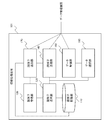
- FIG. 1 is a block diagram showing an example of the configuration of the information processing apparatus according to the first embodiment of the present invention.
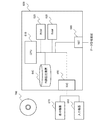
- FIG. 2 is a block diagram illustrating an example of a configuration of an information processing system including the information processing apparatus according to the first embodiment.
- FIG. 3 is a sequence diagram illustrating an example of the operation of the information processing apparatus according to the first embodiment.
- FIG. 4 is a block diagram illustrating an example of the configuration of the information processing apparatus according to the outline of the first embodiment.
- FIG. 5 is a block diagram illustrating an example of the configuration of the information processing apparatus according to the second embodiment.
- FIG. 6 is a sequence diagram illustrating an example of the operation of the information processing apparatus according to the second embodiment.
- FIG. 7 is a block diagram illustrating an exemplary configuration of an information processing apparatus according to an exemplary hardware configuration.
- identifier information for identifying data
- the identifier may be a specific numerical value, a data name, or a data address. In the following description, these are collectively described as “identifiers”.
- FIG. 2 is a block diagram illustrating an example of the configuration of the information processing system 300 including the information processing apparatus 100 according to the first embodiment.
- the information processing system 300 includes the information processing apparatus 100 according to the first embodiment and a data management apparatus 200.
- the information processing apparatus 100 is connected to the data management apparatus 200 via a predetermined communication path (for example, the Internet).
- the data management apparatus 200 receives the identifier of the target data from the information processing apparatus 100 as a query. Then, the data management apparatus 200 transmits data corresponding to the identifier to the information processing apparatus 100 as a response.
- the data management device 200 includes a data storage unit 210 and a data search unit 220.
- the data storage unit 210 stores data in association with an identifier corresponding to the data.
- the data storage unit 210 may store a data set including data and an identifier as data to be stored.
- the data storage unit 210 may store the data and the identifier using a predetermined database (Database (DB)).
- DB Database
- the data search unit 220 receives one or a plurality of identifiers from the information processing apparatus 100 as a query.
- the data search unit 220 searches the data storage unit 210 for data corresponding to the identifier. Then, the data search unit 220 transmits the searched data to the information processing apparatus 100.
- the data search unit 220 transmits data in accordance with the specifications of the information processing apparatus 100, as will be described later. For example, when the information processing apparatus 100 identifies data based on the identifier, the data search unit 220 transmits a combination of the data and the identifier to the information processing apparatus 100. Alternatively, when the information processing apparatus 100 identifies data based on the order in data communication, the data search unit 220 transmits data according to the order of the received identifiers.
- the information processing apparatus 100 transmits an identifier corresponding to data to be acquired and an additional identifier to the data management apparatus 200, and receives data from the data management apparatus 200. However, as will be described in detail later, the information processing apparatus 100 transmits the identifier of the target data and the additional identifier so as to keep the target data secret.
- data to be acquired in the information processing apparatus 100 is not particularly limited.
- this data is data for authenticating the user of the information processing apparatus 100.
- the data is a password or biological information (for example, information extracted from a user's biological body).
- the data of this embodiment is not limited to a password and biometric information.
- FIG. 1 is a block diagram showing an example of the configuration of the information processing apparatus 100 according to the first embodiment of the present invention.
- the information processing apparatus 100 includes an identifier storage unit 110, an identifier reception unit 120, an identifier selection unit 130, an identifier transmission unit 140, a data reception unit 150, and a data selection unit 160. Including.
- the identifier receiving unit 120 is an identifier of data to be processed from a predetermined device (for example, a user terminal (not shown)) or an application (for example, an application (not shown) operating on the information processing apparatus 100) (hereinafter, “target identifier”). Called). Then, the identifier receiving unit 120 transmits the received target identifier to the identifier selecting unit 130.
- a predetermined device for example, a user terminal (not shown)
- an application for example, an application (not shown) operating on the information processing apparatus 100
- the target identifier is an example of a “first identifier”. Furthermore, in the following description, the target identifier is an identifier that has been transmitted to the data management apparatus 200. Further, there may be one or more target identifiers.
- the identifier storage unit 110 stores an identifier transmitted from the information processing apparatus 100 to the data management apparatus 200. Therefore, the identifier storage unit 110 also stores a target identifier.
- the identifier storage unit 110 may store a part of the identifier transmitted from the information processing apparatus 100 to the data management apparatus 200. For example, the identifier storage unit 110 may store a predetermined number of identifiers from the identifiers transmitted at the nearest time. Alternatively, the identifier storage unit 110 may store an identifier transmitted in a predetermined time range. Alternatively, the identifier storage unit 110 may store a predetermined number of identifiers among identifiers transmitted in a predetermined time range.
- the identifier selection unit 130 selects an identifier different from the target identifier (hereinafter referred to as “repeat identifier”) from the identifiers stored in the identifier storage unit 110.
- the identifier selection unit 130 selects one or a predetermined number of repeat identifiers.
- the method by which the identifier selection unit 130 selects a repeat identifier is not particularly limited.
- the identifier selection unit 130 may select a repeat identifier at random.
- the identifier selecting unit 130 may select a repeat identifier using round robin.
- repeat identifier is an example of a “second identifier”.
- the identifier selecting unit 130 selects a predetermined number of repeat identifiers
- the number of repeat identifiers is set in the identifier selecting unit 130 in advance.
- the identifier receiving unit 120 may receive the number of repeat identifiers in accordance with the reception of the target identifier.
- the confidentiality of the target identifier increases as the number of repeat identifiers increases.
- the load on the information processing apparatus 100 increases as the number of repeat identifiers increases. Therefore, the user of the information processing apparatus 100 may determine a predetermined number in consideration of confidentiality and load.
- the identifier selection unit 130 transmits the target identifier and the repeat identifier to the identifier transmission unit 140.
- the identifier transmission unit 140 creates a query including the target identifier and the repeat identifier, and transmits the query to the data management apparatus 200. That is, the identifier transmission unit 140 transmits a repeat identifier to the data management apparatus 200 in addition to the target identifier.
- the repeat identifier is an identifier transmitted to the data management apparatus 200 in the past query.
- the target identifier is also an identifier transmitted to the data management device 200. Therefore, the data management apparatus 200 cannot determine which identifier is the target identifier among the identifiers included in the new query. That is, the data management device 200 cannot determine whether the data that is the target of the new query matches the data that is the target of the past query.
- the information processing apparatus 100 can conceal whether or not the data corresponding to the target identifier that is the target of the new query matches the data that is the target of the past query.
- the identifier transmission unit 140 randomly change the order of the target identifier and the repeat identifier in the query. This operation lowers the specificity of the target identifier. Therefore, based on this operation, the information processing apparatus 100 can further improve the confidentiality of the target identifier.
- the identifier transmitting unit 140 may change the order of the target identifier and the repeat identifier based on the processing rules.
- the identifier transmission unit 140 may divide the target identifier and the repeat identifier into a plurality of queries and transmit them.
- the identifier transmission unit 140 creates a query including the target identifier and the first repeat identifier as the first query.
- the identifier transmission unit 140 creates a query including the target identifier and the second repeat identifier as the second query.
- the identifier transmission unit 140 may transmit the first query and the second query.
- the information processing apparatus 100 may transmit the target identifier not only once but multiple times.
- the identifier transmission unit 140 may create a query including a target identifier, a first repeat identifier, and a second repeat identifier as the third query, and transmit the query to the data management apparatus 200.
- the information processing apparatus 100 may change the number of repeat identifiers included in the query. Note that the information processing apparatus 100 may change the number of target identifiers included in a query, not limited to a repeat identifier.
- the identifier transmission unit 140 may create a query including the first repeat identifier and the second repeat identifier as the fourth query and transmit the query to the data management apparatus 200.
- the information processing apparatus 100 may transmit a query that does not include a target identifier to the data management apparatus 200.
- the identifier storage unit 110 may update the stored identifier.
- the identifier storage unit 110 may store a predetermined number of identifiers instead of storing all the identifiers transmitted to the data management apparatus 200. In this case, the identifier storage unit 110 may update a part of the stored identifier using the target identifier and / or the repeat identifier.
- storage part 110 memorize
- storage part 110 changes a part of identifier to memorize
- the identifier selection unit 130 or the identifier transmission unit 140 may update the identifier stored in the identifier storage unit 110 using the transmitted target identifier and / or repeat identifier.
- the data receiving unit 150 receives data corresponding to the target identifier and the repeat identifier from the data management device 200.
- the data selection unit 160 selects data corresponding to the target identifier from the received data.
- the data selection unit 160 transmits the selected data to the transmission source of the target identifier (for example, the user terminal or application).
- the method by which the data selection unit 160 selects data is not particularly limited.
- the data selection unit 160 may select data using the target identifier.
- the data selection unit 160 may acquire the target identifier from the identifier selection unit 130 or the identifier transmission unit 140 in data selection.
- the data selection unit 160 may select data based on the order of identifiers in the query transmitted by the identifier transmission unit 140.
- the data selection unit 160 may execute a predetermined process using data corresponding to the target identifier (hereinafter referred to as “target data”). For example, when the data is a password, the data selection unit 160 compares the password acquired as the target data with the password transmitted together with the target identifier by the transmission source (for example, the user's terminal) that transmitted the target identifier. The origin may be authenticated. That is, the information processing apparatus 100 may authenticate the transmission source that has transmitted the target identifier based on the target data.
- target data data corresponding to the target identifier
- FIG. 3 is a sequence diagram illustrating an example of the operation of the information processing apparatus 100 according to the first embodiment.
- FIG. 3 shows the overall operation of the information processing system 300 including the operation of the data management device 200 in addition to the operation of the information processing device 100 in order to clarify the operation.
- the data storage unit 210 of the data management device 200 is assumed to have saved the data and the identifier.
- the data stored in the data management device 200 is not particularly limited.
- the stored data may be data entrusted to be stored by a user who uses the information processing apparatus 100.
- the stored data may be information (for example, a password or biometric information for authenticating the service user) stored by the service provider managing the information processing apparatus 100 for providing the service.
- the stored data may be encrypted data or unencrypted data.
- the identifier storage unit 110 of the information processing apparatus 100 stores an identifier transmitted in the past in advance.
- the identifier receiving unit 120 of the information processing apparatus 100 receives a target identifier of data to be read (A1).
- the transmission source of the target identifier is, for example, a user terminal.
- the identifier selection unit 130 selects one or a predetermined number of repeat identifiers from the identifier storage unit 110 (A2). However, the identifier selection unit 130 selects a repeat identifier so as to be different from the target identifier.
- the identifier transmission unit 140 transmits a query including the target identifier and the repeat identifier to the data management apparatus 200 (A5).
- the identifier transmission unit 140 may change the order of the target identifier and the repeat identifier in a query in a predetermined rule or randomly.
- the query is l + n. Contains identifiers. However, the query may include other information.
- the data search unit 220 of the data management device 200 receives a query from the information processing device 100 (C1).
- the data search unit 220 searches the data storage unit 210 for data corresponding to the identifier included in the query, and creates a response that summarizes the searched data (C2).
- the response is data including a set of l + n identifiers and data corresponding to the identifiers.
- the response may be data arranged in the order of identifiers included in the query.
- the data search unit 220 transmits a response to the information processing apparatus 100 (C3).
- the data receiving unit 150 of the information processing apparatus 100 receives data as a response (A6).
- the data selection unit 160 selects data (target data) corresponding to the target identifier from the data included in the response (A7).
- the data selection unit 160 may execute a predetermined process using the target data as described above.
- the information processing apparatus 100 can provide an effect of concealing whether or not the data that is the target of the new query matches the data that is the target of the past query without increasing the access cost.
- the information processing apparatus 100 includes the following configuration. That is, the identifier receiving unit 120 receives the target identifier. Then, the identifier selection unit 130 selects one or a predetermined number of repeat identifiers different from the target identifier from the identifiers transmitted to the data management apparatus 200 in the past stored in the identifier storage unit 110. Then, the identifier transmission unit 140 transmits the target identifier and the repeat identifier to the data management apparatus 200. Then, the data receiving unit 150 receives data corresponding to the target identifier and the repeat identifier. Then, the data selection unit 160 selects data corresponding to the target identifier.
- the information processing apparatus 100 transmits the repeat identifier and the target identifier, so that the identifier associated with the target data in the transmitted identifier can be concealed.
- the information processing apparatus 100 selects a repeat identifier from the identifiers transmitted to the data management apparatus 200 in the past, it is possible to conceal whether or not the new target data matches the past target data.
- the information processing apparatus 100 transmits a repeat identifier and a target identifier as a query and receives corresponding data, the information processing apparatus 100 can reduce costs such as data capacity, calculation amount, and communication amount as compared with ORAM and PIR. .
- FIG. 4 is a block diagram illustrating an example of the configuration of the information processing apparatus 102 that is an outline of the first embodiment.
- the information processing apparatus 102 includes an identifier transmission unit 140 and a data selection unit 160.
- the identifier transmission unit 140 acquires a target identifier and a repeat identifier from a configuration that operates in the same manner as the identifier selection unit 130 (not shown). Alternatively, the identifier transmission unit 140 may read in advance the target identifier and the repeat identifier stored in the data storage unit (not shown) by the identifier selection unit 130 (not shown).
- the identifier transmission unit 140 transmits the target identifier and the repeat identifier to the data management apparatus 200.
- the identifier transmission unit 140 may transmit the target identifier and the repeat identifier to an application corresponding to the data management apparatus 200 operating on the information processing apparatus 102 (not shown).
- the identifier transmission unit 140 transmits to the data management device 200 the target identifier and a repeat identifier that is different from the target identifier in the identifier transmitted to the data management device 200.
- the data selection unit 160 selects the data corresponding to the target identifier from the data received from the data management device 200 by the configuration that operates in the same manner as the data reception unit 150 (not shown). Alternatively, the data selection unit 160 may select data corresponding to the target identifier from data stored in a data storage unit (not shown) having a configuration that operates in the same manner as the data reception unit 150 (not shown). Alternatively, the data selection unit 160 may select data corresponding to the target identifier from data selected by an application corresponding to the data management apparatus 200 operating on the information processing apparatus 102 (not shown).
- the data selection unit 160 selects data corresponding to the target identifier from the data corresponding to the target identifier and the repeat identifier received from the data management apparatus 200.
- the information processing apparatus 102 configured in this way can obtain the same effects as the information processing apparatus 100.
- the identifier transmission unit 140 of the information processing apparatus 102 transmits the target identifier and the repeat identifier to the data management apparatus 200 or a configuration corresponding to the data management apparatus 200. For this reason, the information processing apparatus 102 can conceal the identifier of the target data in the identifier passed to acquire the data.
- the data selection unit 160 selects data corresponding to the target identifier from data received from the data management device 200 or a configuration corresponding to the data management device 200. Therefore, the information processing apparatus 102 can acquire the target data while concealing the identifier of the target data.
- the information processing apparatus 102 is the minimum configuration in the embodiment of the present invention.
- the target data is data that has never been included in a past query
- the target data can be specified by using all the past queries.
- the data management apparatus 200 or a third party monitoring communication first knows that the information processing apparatus 100 according to the embodiment is an apparatus that uses an identifier used in a past query, This possibility increases.
- the information processing apparatus 101 does not reduce confidentiality even when the target data is new data.
- FIG. 5 is a block diagram illustrating an example of the configuration of the information processing apparatus 101 according to the second embodiment.
- the information processing apparatus 101 includes an identifier adding unit 170 in addition to the configuration of the information processing apparatus 100. Therefore, the description of the same configuration in the first embodiment is omitted, and the configuration related to the identifier adding unit 170 will be described.
- the identifier adding unit 170 creates or selects an identifier to be added as an identifier to be transmitted to the data management apparatus 200 (hereinafter referred to as “dummy identifier”) in addition to the target identifier and the repeat identifier. However, the identifier adding unit 170 creates or selects an identifier different from the identifier stored in the target identifier and identifier storage unit 110 as a dummy identifier.
- the dummy identifier is an example of a “third identifier”.
- the method for creating or selecting a dummy identifier in the identifier adding unit 170 is not particularly limited.
- the identifier adding unit 170 may calculate the dummy identifier from the target identifier or the repeat identifier using a predetermined calculation formula. Alternatively, the identifier adding unit 170 may use the method described in Patent Document 1. Alternatively, the identifier adding unit 170 may select a dummy identifier from identifiers stored in a storage unit (not shown).
- the identifier adding unit 170 may create or select a dummy identifier different from the target identifier and the identifier transmitted to the data management device 200. Note that the identifier adding unit 170 may change the number of dummy identifiers to be selected using a predetermined method or randomly.
- the data management device 200 cannot transmit data corresponding to the dummy identifier, the data management device 200 and a third party monitoring the communication may be able to determine the dummy identifier using this fact.
- data for user authentication is normally stored in the data management device 200. Therefore, an identifier for which there is no data corresponding to the data management apparatus 200 may be determined as a dummy identifier.
- the identifier adding unit 170 may select a dummy identifier from the identifiers stored in the data management device 200. For example, the identifier adding unit 170 acquires an identifier stored in the data storage unit 210 from the data management device 200. Then, the identifier adding unit 170 may use an identifier different from the identifiers stored in the target identifier and the identifier storage unit 110 from the identifiers acquired as dummy identifiers.
- the information processing apparatus 101 transmits an identifier stored in the data management apparatus 200 as a dummy identifier. Therefore, the information processing apparatus 101 can reduce the possibility of determining the dummy identifier for the data management apparatus 200 and a third party.
- the identifier transmission unit 140 transmits a dummy identifier to the data management device 200 in addition to the target identifier and the repeat identifier.
- the identifier selection unit 130 or the identifier transmission unit 140 stores the target identifier in the identifier storage unit 110.
- each component operates in the same manner as in the first embodiment.
- FIG. 6 is a sequence diagram illustrating an example of the operation of the information processing apparatus 101 according to the second embodiment. As shown in FIG. 6, the operation of the information processing apparatus 101 is compared with the operation of the information processing apparatus 100. The operation of adding a dummy identifier indicated by B3 in the sequence and the operation of saving the target identifier indicated by B4 And have been added. Other operations are the same as those in the first embodiment. Therefore, detailed description of similar operations will be omitted as appropriate, and operations related to B3 and B4 of the sequence will be described in detail.
- the identifier receiving unit 120 receives a target identifier (A1).
- the identifier selection unit 130 selects a repeat identifier (A2).
- the identifier selection unit 130 transmits the target identifier and the repeat identifier to the identifier transmission unit 140.
- the identifier adding unit 170 creates a dummy identifier to be added (B3).
- the identifier adding unit 170 transmits the dummy identifier to the identifier transmitting unit 140.
- the operation in which the identifier adding unit 170 creates a dummy identifier may be before the operation in which the identifier selecting unit 130 selects a repeat identifier.
- at least a part of the operation of creating the dummy identifier by the identifier adding unit 170 may be performed simultaneously with the operation of selecting the repeat identifier by the identifier selecting unit 130.
- the identifier selection unit 130 or the identifier transmission unit 140 stores the target identifier in the identifier storage unit 110 (B4). That is, the identifier storage unit 110 stores the target identifier transmitted to the data management apparatus 200 as a new identifier. However, when the identifier storage unit 110 has already stored the target identifier, that is, when the target identifier has been transmitted to the data management device 200, the identifier selection unit 130 or the identifier transmission unit 140 stores the target identifier in the identifier storage unit 110. It is not necessary to add to.
- the target identifier need not be saved before sending the query.
- the communication between the information processing apparatus 101 and the data management apparatus 200 is not always successful. Therefore, after the identifier transmission unit 140 transmits a query to the data management apparatus 200, the identifier transmission unit 140 may store the target identifier with which communication is possible in the identifier storage unit 110.
- the identifier selection unit 130 or the identifier transmission unit 140 may store the target identifier in the identifier storage unit 110 at any timing.
- the identifier transmission unit 140 transmits a query including a target identifier, a repeat identifier, and a dummy identifier to the data management apparatus 200 (A5). Note that the identifier transmission unit 140 may change the order of the target identifier, the repeat identifier, and the dummy identifier in the query in a predetermined rule or randomly.
- the number of target identifiers is “l”
- the number of repeat identifiers selected by the identifier selection unit 130 is “n”
- the number of dummy identifiers created by the identifier addition unit 170 is “m (m is an integer of 1 or more)”.
- the query includes 1 + n + m identifiers.
- the query may include other information.
- the data management apparatus 200 operates in the same manner as in the first embodiment (C1 to C3).
- the data receiving unit 150 receives data corresponding to the target identifier, the repeat identifier, and the dummy identifier from the data management device 200 (A6).
- the data selection unit 160 acquires data corresponding to the target identifier from the received data (A7).
- the information processing apparatus 101 according to the second embodiment has an effect of further improving the confidentiality of the target data in addition to the effect of the information processing apparatus 100 according to the first embodiment.
- the identifier adding unit 170 of the information processing apparatus 101 adds a dummy identifier as an identifier to be transmitted to the data management apparatus 200 in addition to the target identifier and the repeat identifier. That is, the information processing apparatus 101 adds a dummy identifier different from the repeat identifier as an identifier for concealing the target identifier.
- the dummy identifier is an identifier different from the identifier transmitted to the data management apparatus 200 in the past. For this reason, even when data corresponding to the target identifier is not included in the past query, the data management device 200 and the third party cannot distinguish the target identifier from the dummy identifier.
- the information processing apparatus 100, the information processing apparatus 101, and the information processing apparatus 102 described above are configured as follows.
- each component of the information processing apparatus 100, the information processing apparatus 101, and the information processing apparatus 102 may be configured with a hardware circuit.
- each component may be configured using a plurality of apparatuses connected via a network.
- the plurality of components may be configured by a single piece of hardware.
- the information processing apparatus 100, the information processing apparatus 101, and the information processing apparatus 102 may be realized as a computer apparatus including a central processing unit (CPU) and a read only memory (ROM). Furthermore, the information processing apparatus 100, the information processing apparatus 101, and the information processing apparatus 102 may be realized as a computer apparatus including a Random Access Memory (RAM).
- the information processing apparatus 100, the information processing apparatus 101, and the information processing apparatus 102 may be realized as a computer apparatus that further includes an input / output connection circuit (Input / Output Circuit (IOC)) in addition to the above configuration.
- the information processing apparatus 100, the information processing apparatus 101, and the information processing apparatus 102 may be realized as a computer apparatus that further includes a network interface circuit (Network Interface Circuit (NIC)) in addition to the above configuration.
- NIC Network Interface Circuit
- FIG. 7 is a block diagram illustrating an exemplary configuration of the information processing apparatus 600 according to an exemplary hardware configuration.
- the information processing apparatus 600 includes a CPU 610, a ROM 620, a RAM 630, an internal storage device 640, an IOC 650, and a NIC 680, and constitutes a computer device.
- the CPU 610 reads a program from ROM 620.
- the CPU 610 controls the RAM 630, the internal storage device 640, the IOC 650, and the NIC 680 based on the read program.
- the computer including the CPU 610 controls these configurations, and the identifier receiving unit 120, the identifier selecting unit 130, the identifier transmitting unit 140, the data receiving unit 150, and the data selecting unit shown in FIG. Each function as 160 is realized.
- the computer including the CPU 610 controls these configurations, and the identifier reception unit 120, the identifier selection unit 130, the identifier transmission unit 140, the data reception unit 150, and the data selection unit illustrated in FIG. 160 and each function as the identifier adding unit 170 are realized.
- the computer including the CPU 610 controls these configurations to realize the functions as the identifier transmission unit 140 and the data selection unit 160 shown in FIG.
- the CPU 610 may use the RAM 630 or the internal storage device 640 as a temporary storage medium for the program when realizing each function.
- the CPU 610 may read a program included in the storage medium 700 storing the program so as to be readable by a computer by using a storage medium reading device (not shown). Alternatively, the CPU 610 may receive a program from an external device (not shown) via the NIC 680, store the program in the RAM 630, and operate based on the stored program.
- ROM 620 stores programs executed by CPU 610 and fixed data.
- the ROM 620 is, for example, a programmable-ROM (P-ROM) or a flash ROM.
- the RAM 630 temporarily stores programs executed by the CPU 610 and data.
- the RAM 630 is, for example, a dynamic-RAM (D-RAM).
- the internal storage device 640 stores data and programs stored in the information processing device 600 for a long period of time.
- the internal storage device 640 operates as the identifier storage unit 110. Further, the internal storage device 640 may operate as a temporary storage device for the CPU 610.
- the internal storage device 640 is, for example, a hard disk device, a magneto-optical disk device, a solid state drive (SSD), or a disk array device.
- the ROM 620 and the internal storage device 640 are non-transitory storage media.
- the RAM 630 is a volatile storage medium.
- the CPU 610 can operate based on a program stored in the ROM 620, the internal storage device 640, or the RAM 630. That is, the CPU 610 can operate using a nonvolatile storage medium or a volatile storage medium.
- the IOC 650 mediates data between the CPU 610, the input device 660, and the display device 670.
- the IOC 650 is, for example, an IO interface card or a Universal Serial Bus (USB) card. Further, the IOC 650 is not limited to a wired connection such as a USB, but may be wireless.
- the input device 660 is a device that receives an input instruction from the user of the information processing apparatus 600.
- the input device 20 may operate as the identifier receiving unit 120.
- the input device 660 is, for example, a keyboard, a mouse, or a touch panel.
- the display device 670 is a device that displays information to the user of the information processing apparatus 600.
- the display device 670 is a liquid crystal display, for example.
- the NIC 680 relays data exchange with an external device (not shown) via the network.
- the NIC 680 operates as part of the identifier transmission unit 140 and the data reception unit 150. Further, the NIC 680 may operate as a part of the identifier adding unit 170.
- the NIC 680 may operate as the identifier receiving unit 120.
- the NIC 680 is, for example, a local area network (LAN) card. Furthermore, the NIC 680 is not limited to a wired line, and may use wireless.
- the information processing apparatus 600 configured in this way can obtain the same effects as those of the information processing apparatus 100, the information processing apparatus 101, and the information processing apparatus 102.
- the CPU 610 of the information processing apparatus 600 can realize the same functions as those of the information processing apparatus 100, the information processing apparatus 101, and the information processing apparatus 102 based on the program.
- the present invention can be applied to authentication using a network such as a cloud.
- the present invention can be applied to a case where information related to a user (for example, a biometric template or a hash value of a password) used for user authentication is stored in a storage placed on a network such as a cloud.
- the present invention can be applied to access of data stored in a storage placed on a network such as a cloud.
- the present invention can be applied to a password manager that stores and manages passwords used for a plurality of services in a storage on a network.
- DESCRIPTION OF SYMBOLS 100 Information processing apparatus 101 Information processing apparatus 102 Information processing apparatus 110 Identifier storage part 120 Identifier reception part 130 Identifier selection part 140 Identifier transmission part 150 Data reception part 160 Data selection part 170 Identifier addition part 200 Data management apparatus 210 Data storage part 220 Data Search unit 300 Information processing system 600 Information processing device 610 CPU 620 ROM 630 RAM 640 Internal storage device 650 IOC 660 Input device 670 Display device 680 NIC 700 storage media
Landscapes
- Engineering & Computer Science (AREA)
- Theoretical Computer Science (AREA)
- Computer Security & Cryptography (AREA)
- General Physics & Mathematics (AREA)
- General Engineering & Computer Science (AREA)
- Physics & Mathematics (AREA)
- Software Systems (AREA)
- Computer Hardware Design (AREA)
- Health & Medical Sciences (AREA)
- General Health & Medical Sciences (AREA)
- Bioethics (AREA)
- Databases & Information Systems (AREA)
- Medical Informatics (AREA)
- Computer Networks & Wireless Communication (AREA)
- Data Mining & Analysis (AREA)
- Information Retrieval, Db Structures And Fs Structures Therefor (AREA)
- Storage Device Security (AREA)
Abstract
Afin de dissimuler si des données qui font l'objet d'une nouvelle interrogation correspondent à des données qui ont fait l'objet d'une interrogation passée, sans augmenter les coûts d'accès, le dispositif de traitement d'informations de la présente invention comporte : un moyen de transmission d'identifiant destiné à transmettre, à un dispositif de gestion de données qui associe et stocke des données et des identifiants de données, un premier identifiant et un second identifiant qui diffère du premier identifiant parmi les identifiants qui ont été transmis au dispositif de gestion de données ; et un moyen de sélection de données destiné à sélectionner des données correspondant au premier identifiant à partir des données correspondant au premier identifiant et au second identifiant reçues en provenance du dispositif de gestion de données.
Priority Applications (2)
| Application Number | Priority Date | Filing Date | Title |
|---|---|---|---|
| US16/322,531 US20210374267A1 (en) | 2016-08-19 | 2017-08-07 | Information processing device, information processing method, and recording medium |
| JP2018534356A JP6965885B2 (ja) | 2016-08-19 | 2017-08-07 | 情報処理装置、情報処理方法、及び、プログラム |
Applications Claiming Priority (2)
| Application Number | Priority Date | Filing Date | Title |
|---|---|---|---|
| JP2016-161326 | 2016-08-19 | ||
| JP2016161326 | 2016-08-19 |
Publications (1)
| Publication Number | Publication Date |
|---|---|
| WO2018034192A1 true WO2018034192A1 (fr) | 2018-02-22 |
Family
ID=61196623
Family Applications (1)
| Application Number | Title | Priority Date | Filing Date |
|---|---|---|---|
| PCT/JP2017/028648 Ceased WO2018034192A1 (fr) | 2016-08-19 | 2017-08-07 | Dispositif de traitement d'informations, procédé de traitement d'informations et support d'informations |
Country Status (3)
| Country | Link |
|---|---|
| US (1) | US20210374267A1 (fr) |
| JP (1) | JP6965885B2 (fr) |
| WO (1) | WO2018034192A1 (fr) |
Cited By (1)
| Publication number | Priority date | Publication date | Assignee | Title |
|---|---|---|---|---|
| JP2023516541A (ja) * | 2020-09-29 | 2023-04-20 | グーグル エルエルシー | プライバシー保護のための加法性雑音および減法性雑音 |
Citations (3)
| Publication number | Priority date | Publication date | Assignee | Title |
|---|---|---|---|---|
| WO2011013490A1 (fr) * | 2009-07-28 | 2011-02-03 | インターナショナル・ビジネス・マシーンズ・コーポレーション | Dispositif de traitement d'informations, procédé de traitement d'informations, programme et système web |
| JP2014044551A (ja) * | 2012-08-27 | 2014-03-13 | Sharp Corp | コンテンツ取得装置、コンテンツ取得システム、コンテンツを取得するための方法、端末にコンテンツを取得させるためのプログラム |
| JP2016081522A (ja) * | 2014-10-10 | 2016-05-16 | ザ・ボーイング・カンパニーThe Boeing Company | メモリからの情報漏洩を低減するためのシステム及び方法 |
Family Cites Families (7)
| Publication number | Priority date | Publication date | Assignee | Title |
|---|---|---|---|---|
| JP2000215172A (ja) * | 1999-01-20 | 2000-08-04 | Nec Corp | 個人認証システム |
| US7535906B2 (en) * | 2003-05-28 | 2009-05-19 | International Business Machines Corporation | Packet classification |
| US8799311B2 (en) * | 2010-11-05 | 2014-08-05 | Apple Inc. | Intelligent data caching |
| US20150006479A1 (en) * | 2013-07-01 | 2015-01-01 | Theplatform For Media, Inc. | Systems And Methods For Data Management |
| WO2015009288A1 (fr) * | 2013-07-16 | 2015-01-22 | Empire Technology Development, Llc | Identification de processeur pour machines virtuelles |
| FR3030083B1 (fr) * | 2014-12-12 | 2017-07-14 | Cie Ind Et Financiere D'ingenierie Ingenico | Procede d'authentification d'un utilisateur, serveur, terminal de communication et programmes correspondants |
| CN107463693B (zh) * | 2017-08-11 | 2020-05-01 | 深圳乐信软件技术有限公司 | 一种数据处理方法、装置、终端及计算机可读存储介质 |
-
2017
- 2017-08-07 JP JP2018534356A patent/JP6965885B2/ja active Active
- 2017-08-07 WO PCT/JP2017/028648 patent/WO2018034192A1/fr not_active Ceased
- 2017-08-07 US US16/322,531 patent/US20210374267A1/en not_active Abandoned
Patent Citations (3)
| Publication number | Priority date | Publication date | Assignee | Title |
|---|---|---|---|---|
| WO2011013490A1 (fr) * | 2009-07-28 | 2011-02-03 | インターナショナル・ビジネス・マシーンズ・コーポレーション | Dispositif de traitement d'informations, procédé de traitement d'informations, programme et système web |
| JP2014044551A (ja) * | 2012-08-27 | 2014-03-13 | Sharp Corp | コンテンツ取得装置、コンテンツ取得システム、コンテンツを取得するための方法、端末にコンテンツを取得させるためのプログラム |
| JP2016081522A (ja) * | 2014-10-10 | 2016-05-16 | ザ・ボーイング・カンパニーThe Boeing Company | メモリからの情報漏洩を低減するためのシステム及び方法 |
Cited By (3)
| Publication number | Priority date | Publication date | Assignee | Title |
|---|---|---|---|---|
| JP2023516541A (ja) * | 2020-09-29 | 2023-04-20 | グーグル エルエルシー | プライバシー保護のための加法性雑音および減法性雑音 |
| JP7448663B2 (ja) | 2020-09-29 | 2024-03-12 | グーグル エルエルシー | プライバシー保護のための加法性雑音および減法性雑音 |
| US12210647B2 (en) | 2020-09-29 | 2025-01-28 | Google Llc | Additive and subtractive noise for privacy protection |
Also Published As
| Publication number | Publication date |
|---|---|
| JPWO2018034192A1 (ja) | 2019-06-13 |
| JP6965885B2 (ja) | 2021-11-10 |
| US20210374267A1 (en) | 2021-12-02 |
Similar Documents
| Publication | Publication Date | Title |
|---|---|---|
| US20220343017A1 (en) | Provision of risk information associated with compromised accounts | |
| JP7545419B2 (ja) | 統合された隔離されたアプリケーションにおけるランサムウェアの被害の軽減 | |
| CN113196702B (zh) | 使用区块链进行分布式数据存储和传送的系统和方法 | |
| CN111783075B (zh) | 基于密钥的权限管理方法、装置、介质及电子设备 | |
| EP4220465B1 (fr) | Système sécurisé d'identité et de profilage | |
| US10949555B2 (en) | Encryption and decryption system and method | |
| EP2731046B1 (fr) | Ordinateur client permettant d'interroger une base de données stockée sur un serveur via un réseau | |
| JP6431037B2 (ja) | ネットワーク接続時に安全なアプリケーションを識別するためのシステム及び方法 | |
| US9558366B2 (en) | Computer system for storing and retrieval of encrypted data items, client computer, computer program product and computer-implemented method | |
| AU2018391625B2 (en) | Re-encrypting data on a hash chain | |
| CN109495426B (zh) | 一种数据访问方法、装置及电子设备 | |
| CN105516059B (zh) | 一种资源访问控制方法和装置 | |
| WO2020123926A1 (fr) | Systèmes informatiques décentralisés et procédés pour effectuer des actions à l'aide de données privées stockées | |
| US20180053018A1 (en) | Methods and systems for facilitating secured access to storage devices | |
| Neela et al. | An improved RSA technique with efficient data integrity verification for outsourcing database in cloud | |
| JP6965885B2 (ja) | 情報処理装置、情報処理方法、及び、プログラム | |
| Suthar et al. | Encryscation: An secure approach for data security using encryption and obfuscation techniques for iaas and daas services in cloud environment | |
| Rastogi et al. | Secured identity management system for preserving data privacy and transmission in cloud computing | |
| WO2024120636A1 (fr) | Gestion d'autorisations pour un partage d'objet local et une protection d'intégrité | |
| Waqar et al. | User privacy issues in eucalyptus: A private cloud computing environment | |
| Shekar et al. | Security Threats and Privacy Issues in Cloud Data | |
| US10389719B2 (en) | Parameter based data access on a security information sharing platform | |
| Stingl et al. | Health records and the cloud computing paradigm from a privacy perspective | |
| US20250365129A1 (en) | Ciphertext Header-Based Data Security | |
| Pilania et al. | ENCRYPTO: A Reliable and Efficient Mobile App for Password Management |
Legal Events
| Date | Code | Title | Description |
|---|---|---|---|
| 121 | Ep: the epo has been informed by wipo that ep was designated in this application |
Ref document number: 17841417 Country of ref document: EP Kind code of ref document: A1 |
|
| ENP | Entry into the national phase |
Ref document number: 2018534356 Country of ref document: JP Kind code of ref document: A |
|
| NENP | Non-entry into the national phase |
Ref country code: DE |
|
| 122 | Ep: pct application non-entry in european phase |
Ref document number: 17841417 Country of ref document: EP Kind code of ref document: A1 |