WO2018094872A1 - Procédé, dispositif et système de planification de ressources de liaison latérale - Google Patents
Procédé, dispositif et système de planification de ressources de liaison latérale Download PDFInfo
- Publication number
- WO2018094872A1 WO2018094872A1 PCT/CN2017/072289 CN2017072289W WO2018094872A1 WO 2018094872 A1 WO2018094872 A1 WO 2018094872A1 CN 2017072289 W CN2017072289 W CN 2017072289W WO 2018094872 A1 WO2018094872 A1 WO 2018094872A1
- Authority
- WO
- WIPO (PCT)
- Prior art keywords
- user equipment
- message
- information
- mac
- network server
- Prior art date
- Legal status (The legal status is an assumption and is not a legal conclusion. Google has not performed a legal analysis and makes no representation as to the accuracy of the status listed.)
- Ceased
Links
Images


Classifications
-
- H—ELECTRICITY
- H04—ELECTRIC COMMUNICATION TECHNIQUE
- H04L—TRANSMISSION OF DIGITAL INFORMATION, e.g. TELEGRAPHIC COMMUNICATION
- H04L5/00—Arrangements affording multiple use of the transmission path
- H04L5/0091—Signalling for the administration of the divided path, e.g. signalling of configuration information
- H04L5/0094—Indication of how sub-channels of the path are allocated
-
- H—ELECTRICITY
- H04—ELECTRIC COMMUNICATION TECHNIQUE
- H04W—WIRELESS COMMUNICATION NETWORKS
- H04W72/00—Local resource management
- H04W72/20—Control channels or signalling for resource management
-
- H—ELECTRICITY
- H04—ELECTRIC COMMUNICATION TECHNIQUE
- H04L—TRANSMISSION OF DIGITAL INFORMATION, e.g. TELEGRAPHIC COMMUNICATION
- H04L5/00—Arrangements affording multiple use of the transmission path
- H04L5/003—Arrangements for allocating sub-channels of the transmission path
- H04L5/0053—Allocation of signalling, i.e. of overhead other than pilot signals
-
- H—ELECTRICITY
- H04—ELECTRIC COMMUNICATION TECHNIQUE
- H04W—WIRELESS COMMUNICATION NETWORKS
- H04W72/00—Local resource management
- H04W72/04—Wireless resource allocation
- H04W72/044—Wireless resource allocation based on the type of the allocated resource
- H04W72/0453—Resources in frequency domain, e.g. a carrier in FDMA
-
- H—ELECTRICITY
- H04—ELECTRIC COMMUNICATION TECHNIQUE
- H04W—WIRELESS COMMUNICATION NETWORKS
- H04W72/00—Local resource management
- H04W72/12—Wireless traffic scheduling
-
- H—ELECTRICITY
- H04—ELECTRIC COMMUNICATION TECHNIQUE
- H04W—WIRELESS COMMUNICATION NETWORKS
- H04W72/00—Local resource management
- H04W72/20—Control channels or signalling for resource management
- H04W72/23—Control channels or signalling for resource management in the downlink direction of a wireless link, i.e. towards a terminal
-
- H—ELECTRICITY
- H04—ELECTRIC COMMUNICATION TECHNIQUE
- H04W—WIRELESS COMMUNICATION NETWORKS
- H04W88/00—Devices specially adapted for wireless communication networks, e.g. terminals, base stations or access point devices
- H04W88/02—Terminal devices
- H04W88/04—Terminal devices adapted for relaying to or from another terminal or user
-
- Y—GENERAL TAGGING OF NEW TECHNOLOGICAL DEVELOPMENTS; GENERAL TAGGING OF CROSS-SECTIONAL TECHNOLOGIES SPANNING OVER SEVERAL SECTIONS OF THE IPC; TECHNICAL SUBJECTS COVERED BY FORMER USPC CROSS-REFERENCE ART COLLECTIONS [XRACs] AND DIGESTS
- Y02—TECHNOLOGIES OR APPLICATIONS FOR MITIGATION OR ADAPTATION AGAINST CLIMATE CHANGE
- Y02D—CLIMATE CHANGE MITIGATION TECHNOLOGIES IN INFORMATION AND COMMUNICATION TECHNOLOGIES [ICT], I.E. INFORMATION AND COMMUNICATION TECHNOLOGIES AIMING AT THE REDUCTION OF THEIR OWN ENERGY USE
- Y02D30/00—Reducing energy consumption in communication networks
- Y02D30/70—Reducing energy consumption in communication networks in wireless communication networks
Definitions
- the present application relates to the field of communications technologies, and in particular, to a sidelink resource scheduling method, apparatus, and system.
- the device-to-device (D2D) communication mode refers to the communication mode in which the sender sends data directly to the receiver without transiting through the base station or the network.
- a special mode of the D2D communication mode is that a User Equipment (UE) connects to the network through another UE with a relay function.
- the former is called a remote user equipment (Remote UE), the latter is called a relay user equipment (Relay UE), and the link between the remote user equipment and the base station is called a cellular link, and the remote user equipment is The link between relay user equipments is called a sidelink.
- the Remote UE sends the sidelink buffer status report directly to the base station through the cellular link, and the base station directly sends the sidelink scheduling information to the Remote UE through the cellular link, and the voice, video, data, etc. are in the Send on the sidelink without going through the base station. That is, the Remote UE needs to maintain both the sidelink and the cellular link at the same time, because the implementation scheme of simultaneously monitoring the sidelink and the cellular link and receiving the control signaling and data messages on the two links is complicated, and on the cellular link The transmission power of the existing Remote UE is higher than the transmission power of the sidelink. Therefore, the implementation scheme of the existing Remote UE is high in complexity and power consumption is large.
- the present application provides a sidelink resource scheduling method, apparatus, and system.
- the application provides a sidelink resource scheduling method, which is applied to a first user equipment side, and includes:
- the first user equipment determines at least one according to the first message
- the second message corresponding to the second user equipment corresponding to the second user equipment sends the at least one second message to the corresponding second user equipment, where the second message includes the first information of the second user equipment.
- the first user equipment receives a first message indicating a sidelink resource allocated by the network server for each second user equipment, and determines a second message forwarded to each second user equipment according to the first message, so that the second user
- the device can receive the sidelink scheduling information on the sidelink link, so that the cellular link between the network server and the network server is not needed, and the sidelink resource can be obtained, which reduces the complexity of the second user equipment and reduces the power consumption of the second user equipment.
- the first message further includes second information, where the second information indicates a sidelink resource of the control channel allocated by the network server to the corresponding second user equipment.
- the first message further includes third information that is allocated by the network server to the at least one second user equipment, where the third information indicates that the first user equipment forwards the second message of the at least one second user equipment.
- the first information and the second information of the at least one second user equipment are sent in the first MAC CE of the first message, and the first MAC CE further includes the identifier of the at least one second user equipment; at least one The third information of the second user equipment is encapsulated in the second MAC CE of the first message, and the second MAC CE further includes an identifier of the at least one second user equipment.
- the second link can be configured for the second user equipment at the same time, and the physical layer technology is not required to be modified, and if the forwarding resource is not configured in the first message form, the direct The second MAC CE is configured to be flexible. Only two MAC CEs are required. When there are more second user devices, the overhead is small.
- the first message further includes third information that is allocated by the network server to the at least one second user equipment, where the third information is used by the first user equipment to forward the second message of the at least one second user equipment.
- the first information, the second information, and the third information of the second user equipment are sent in the first MAC CE of the first message, and the first MAC CE further includes the identifier of the second user equipment.
- the first information and the second information of the at least one second user equipment are sent in a first MAC CE of the first message, where the first MAC CE further includes an identifier of the at least one second user equipment.
- the first information and the second information in the first message are directly used to forward the second message, and the forwarding resource is not required to be configured, and the bandwidth resource occupation is reduced compared to the forms of the foregoing two first messages.
- the first user equipment receives the first message sent by the network server, including:
- the first user equipment receives the first message sent by the network server on the at least one physical downlink control channel; the first message further includes an identifier of the at least one second user equipment.
- the above implementable implementation method proposes a sidelink resource scheduling method for transmitting a first message at a physical layer.
- the technical solution for transmitting the first message at the physical layer provided by the foregoing embodiment is small in modification to the existing communication protocol, and is easy to understand and implement.
- the first user equipment receives the first message sent by the network server, including:
- Determining, by the first user equipment, the second message corresponding to the at least one second user equipment according to the first message including:
- the first user equipment performs descrambling on the physical downlink control channel according to the sidelink radio network temporary identifier of the second user equipment, and determines a correspondence between the first message sent on the physical downlink control channel and the second user equipment.
- the above implementable implementation proposes another sidelink resource scheduling method for transmitting the first message at the physical layer.
- the technical solution for transmitting the first message at the physical layer provided by the foregoing embodiment is small in modification to the existing communication protocol, and is easy to understand and implement.
- the method before sending the second message corresponding to the at least one second user equipment to the corresponding second user equipment, the method further includes:
- the first user equipment acquires a forwarding resource used by the network server to forward the second message of the at least one second user equipment.
- the forwarding resource needs to be additionally obtained.
- the sending the second message corresponding to the at least one second user equipment to the corresponding second user equipment includes:
- the first user equipment sends the second message corresponding to the at least one second user equipment to the corresponding second user equipment by using the forwarding resource.
- the obtained forwarding resource is used to send the second message.
- the sending the second message corresponding to the at least one second user equipment to the corresponding second user equipment includes:
- the first user equipment sends the second message corresponding to the at least one second user equipment to the corresponding second user equipment by using the resources indicated by the first information and the second information in the first message.
- the second message is directly sent according to the first information and the second information.
- the first information encapsulation of the second user equipment is sent in the sidelink control information of the second message, and the sidelink control information further includes at least one of the following: an identifier of the corresponding second user equipment, The frequency hopping identifier, the time resource mode, and the modulation and coding mode; the second message corresponding to the at least one second user equipment is sent to the corresponding second user equipment, including:
- the first user equipment sends the second message to the corresponding second user equipment on the physical side-link control channel by using the sidelink resource of the control channel corresponding to the second user equipment indicated by the second information.
- a specific implementation manner of sending a second message at a physical layer is provided. Since the second user equipment only needs to send a data message without sending sidelink control information, the data may be in a sidelink control period. After the message is sent, the fast scheduling is implemented, the scheduling delay is reduced, and the signaling overhead is reduced.
- the method before sending the second message corresponding to the at least one second user equipment to the corresponding second user equipment, the method further includes:
- the first user equipment receives the maximum forwarding duration sent by the network server, where the maximum forwarding duration is used to indicate the maximum duration of the second user message sent by the first user equipment;
- Sending the second message corresponding to the at least one second user equipment to the corresponding second user equipment including:
- the first user equipment autonomously selects a resource from a resource pool configured by the network server, and sends at least one second message to the corresponding second user equipment within a maximum forwarding time.
- an autonomously selected resource configuration mode may be adopted, and the first user equipment sends the second message within the received maximum forwarding time.
- the method before sending the second message corresponding to the at least one second user equipment to the corresponding second user equipment, the method further includes:
- the first user equipment receives the maximum forwarding duration sent by the network server, and the maximum forwarding duration is used to indicate the maximum duration of the second user message sent by the first user equipment.
- the maximum forwarding duration is sent by radio resource control signaling.
- radio resource control signaling By using radio resource control signaling, the number of signaling interactions can be saved.
- the first message when there is information encapsulated in the first MAC CE of the first message, the first message is further encapsulated with a maximum forwarding duration.
- the sending priority of the second message is higher than the sending priority of other messages sent by the first user equipment.
- the timeline of sidelink resource scheduling can be guaranteed.
- the first message further includes a logical channel identifier value corresponding to the MAC CE; Determining, by the user equipment, the second message corresponding to the at least one second user equipment according to the first message, including:
- the first user equipment reads the MAC CE in the first message according to the logical channel identifier value in the first message, and the first user equipment determines the second message corresponding to the at least one second user equipment according to the MAC CE.
- the second message further includes the second information of the second user equipment
- the first information and the second information of the second user equipment are encapsulated and sent in the third MAC CE of the second message
- the third MAC CE further includes an identifier of the second user equipment
- the second message further includes a logical channel identifier value corresponding to the third MAC CE.
- the present application provides a sidelink resource scheduling method, which is applied to a network server side, and includes: sending a first message to a first user equipment, where the first message is used to determine a second message corresponding to the at least one second user equipment;
- the first message includes the first information and the second information, where the first information indicates a sidelink resource of the data channel allocated by the network server for the corresponding second user equipment, and the second information indicates that the network server allocates the second user equipment for the corresponding second user equipment.
- the sidelink resource of the control channel is applied to a network server side, and includes: sending a first message to a first user equipment, where the first message is used to determine a second message corresponding to the at least one second user equipment;
- the first message includes the first information and the second information, where the first information indicates a sidelink resource of the data channel allocated by the network server for the corresponding second user equipment, and the second information indicates that the network server allocates the second user equipment for the corresponding second user equipment.
- the first message further includes third information that is allocated by the network server to the at least one second user equipment, where the third information is used by the first user equipment to forward the second message of the at least one second user equipment.
- the first information and the second information of the at least one second user equipment are sent in the first MAC CE of the first message, and the first MAC CE further includes the identifier of the at least one second user equipment; at least one The third information encapsulation of the second user equipment is sent in the second MAC CE of the first message, and the second MAC CE further includes the identifier of the at least one second user equipment.
- the first message further includes third information that is allocated by the network server to the at least one second user equipment, where the third information is used by the first user equipment to forward the second message of the at least one second user equipment.
- the first information, the second information, and the third information of the second user equipment are sent in the first MAC CE in the first message, and the first MAC CE further includes an identifier of the at least one second user equipment.
- the first information and the second information of the at least one second user equipment are sent in a first MAC CE of the first message, where the first MAC CE further includes an identifier of the at least one second user equipment.
- the first message further includes the identifier of the second user equipment corresponding to the first information and the second information, and the network server sends the first message to the first user equipment, including:
- the network server sends the first message to the first user equipment on the at least one physical downlink control channel.
- the network server sends the first message to the first user equipment, including:
- the network server sends the first message to the first user equipment on the physical downlink control channel scrambled by the at least one sidelink wireless network temporary identifier of the second user equipment.
- the method further includes:
- the network server sends, to the first user equipment, a forwarding resource used by the second message forwarding the at least one second user equipment.
- the method further includes:
- the network server sends a maximum forwarding duration to the first user equipment, where the maximum forwarding duration is used to indicate the maximum duration of the second message that the first household device forwards the at least one second user equipment.
- the maximum forwarding duration is sent by radio resource control signaling.
- the first MAC CE when there is a sidelink resource that is sent in the first MAC CE of the first message, the first MAC CE is further encapsulated with a maximum forwarding duration.
- the first message further includes a logical channel identifier value corresponding to the MAC CE.
- the present application provides a sidelink resource scheduling method, which is applied to a second user equipment side, and receives a message sent by a first user equipment, where the message includes first information, where the first information indicates that the network server is a corresponding second user equipment.
- the sidelink resource of the allocated data channel; the second user equipment sends a data message to the first user equipment according to the message.
- the first information is encapsulated in the sidelink control information of the message, and the sidelink control information includes at least one of the following: an identifier of the corresponding second user equipment, a frequency hopping identifier, a time resource mode, Modulation coding mode; sending a data message to the first user equipment, including:
- the second user equipment uses the data corresponding to the second user equipment indicated by the first information according to the first information and at least one of the following: the identifier of the corresponding second user equipment, the frequency hopping identifier, the time resource mode, and the modulation and coding mode.
- the sidelink resource of the channel transmits a data message to the first user equipment on the physical side link shared channel.
- the message further includes second information, where the second information indicates a sidelink resource of the control channel allocated by the network server to the corresponding second user equipment; the first information and the second information encapsulation of the second user equipment
- the MAC CE is sent in the MAC CE of the second message.
- the MAC CE further includes an identifier of the second user equipment.
- the message further includes a logical channel identifier value corresponding to the MAC CE.
- the second user equipment reads the MAC CE in the message to obtain the first information and the second information according to the logical channel identifier value in the message.
- the fourth aspect to the sixth aspect of the present application further provides a sidelink resource scheduling apparatus, which is configured to perform the sidelink resource scheduling method of the foregoing first to third aspects, which have the same technical features and technical effects, and the application does not Narration.
- the application provides a relay user equipment, including:
- a receiving unit configured to receive a first message sent by the network server, where the first message includes first information, where the first information indicates a sidelink resource of the data channel allocated by the network server to the corresponding remote user equipment;
- a processing unit configured to determine, according to the first message, a second message corresponding to the at least one remote user equipment,
- the sending unit sends a second message corresponding to the at least one remote user equipment to the corresponding remote user equipment, where the second message includes the first information of the remote user equipment.
- the first message further includes second information, where the second information indicates a sidelink resource of the control channel allocated by the network server to the corresponding remote user equipment.
- the first message further includes third information that is allocated by the network server to the at least one remote user equipment, and the third information is used by the relay user equipment to forward the second message of the at least one remote user equipment. Forwarding resources;
- the first information and the second information of the at least one remote user equipment are sent in a first MAC CE of the first message, and the first MAC CE further includes an identifier of the at least one remote user equipment.
- the third information encapsulation of the at least one remote user equipment is sent in a second MAC CE of the first message, and the second MAC CE further includes an identifier of the at least one remote user equipment.
- the first message further includes third information that is allocated by the network server to the at least one remote user equipment, and the third information is used by the relay user equipment to forward the second message of the at least one remote user equipment. Forwarding resources;
- the first information, the second information, and the third information of the remote user equipment are sent in a first MAC CE of the first message, where the first MAC CE further includes an identifier of the remote user equipment.
- the first information and the second information of the at least one remote user equipment are sent in a first MAC CE of the first message, where the first MAC CE further includes an identifier of the at least one remote user equipment.
- the receiving unit is specifically configured to: receive, by the network server, the first message sent on the at least one physical downlink control channel;
- the first message also includes an identification of the at least one remote user device.
- the receiving unit is specifically configured to: receive, by the network server, the first message sent on the at least one physical downlink control channel;
- the processing unit is specifically configured to: perform descrambling on the physical downlink control channel according to the sidelink radio network temporary identifier of the remote user equipment, and determine a correspondence between the first message sent on the physical downlink control channel and the remote user equipment.
- the receiving unit is further configured to: acquire, by the network server, a forwarding resource that is used by the network server to forward the second message of the at least one remote user equipment.
- the sending unit is configured to send, by using a forwarding resource, a second message corresponding to the at least one remote user equipment to the corresponding remote user equipment.
- the sending unit is configured to send, by using the resources indicated by the first information and the second information in the first message, the second message corresponding to the at least one remote user equipment to the corresponding remote user. device.
- the first information of the remote user equipment is encapsulated in the sidelink control information of the second message, and the sidelink control information further includes at least one of the following: the identifier of the corresponding remote user equipment, Frequency hopping identification, time resource mode, modulation and coding mode;
- the sending unit is configured to send the second message to the corresponding remote user equipment on the physical side-link control channel by using the sidelink resource of the control channel corresponding to the remote user equipment indicated by the second information.
- the receiving unit is further configured to: receive a maximum forwarding duration sent by the network server, where the maximum forwarding duration is used to indicate a maximum duration of the second user message sent by the relay user equipment;
- the sending unit is configured to: automatically select a resource from the resource pool configured by the network server, and send the second message corresponding to the at least one remote user equipment to the corresponding remote user equipment in the maximum forwarding time.
- the receiving unit is further configured to: receive a maximum forwarding duration sent by the network server, where the maximum forwarding duration is used to indicate a maximum duration for the relay user equipment to send each second message.
- the maximum forwarding duration is sent by radio resource control signaling.
- the first message when there is information encapsulated in the first MAC CE of the first message, the first message is further encapsulated with a maximum forwarding duration.
- the sending priority of the second message is higher than the sending priority of other messages sent by the relay user equipment.
- the first message further includes a logical channel identifier value corresponding to the MAC CE
- the processing unit is configured to: read, according to the logical channel identifier value in the first message, the MAC CE in the first message;
- the second message further includes the second information of the remote user equipment
- the first information of the remote user equipment and the second information are encapsulated and sent in the third MAC CE of the second message;
- Three MAC CE also Including the identifier of the remote user equipment;
- the second message further includes a logical channel identifier value corresponding to the third MAC CE.
- the application provides a network server, including:
- a sending unit configured to send a first message to the relay user equipment, where the first message is used to determine a second message corresponding to the at least one remote user equipment;
- the first message includes the first information and the second information, where the first information indicates a sidelink resource of the data channel allocated by the network server for the corresponding remote user equipment, and the second information indicates that the network server allocates the corresponding remote user equipment.
- the sidelink resource of the control channel includes the first information and the second information, where the first information indicates a sidelink resource of the data channel allocated by the network server for the corresponding remote user equipment, and the second information indicates that the network server allocates the corresponding remote user equipment.
- the first message further includes third information that is allocated by the network server to the at least one remote user equipment, and the third information is used by the relay user equipment to forward the second message of the at least one remote user equipment. Forwarding resources;
- the first information and the second information of the at least one remote user equipment are sent in a first MAC CE of the first message, and the first MAC CE further includes an identifier of the at least one remote user equipment.
- the third information encapsulation of the at least one remote user equipment is sent in a second MAC CE of the first message, and the second MAC CE further includes an identifier of the at least one remote user equipment.
- the first message further includes third information that is allocated by the network server to the at least one remote user equipment, and the third information is used by the relay user equipment to forward the second message of the at least one remote user equipment. Forwarding resources;
- the first information, the second information, and the third information of the remote user equipment are sent in a first MAC CE in the first message, and the first MAC CE further includes an identifier of the at least one remote user equipment.
- the first information and the second information of the at least one remote user equipment are sent in a first MAC CE of the first message, where the first MAC CE further includes an identifier of the at least one remote user equipment.
- the first message further includes the identifier of the remote user equipment corresponding to the first information and the second information, where the sending unit is configured to send, to the relay user equipment, the at least one physical downlink control channel.
- the first message further includes the identifier of the remote user equipment corresponding to the first information and the second information, where the sending unit is configured to send, to the relay user equipment, the at least one physical downlink control channel.
- the sending unit is configured to send the first message to the relay user equipment on the physical downlink control channel that is scrambled by the at least one sidelink wireless network temporary identifier of the remote user equipment.
- the network server further includes:
- a receiving unit configured to receive a forwarding resource request message sent by the relay user equipment
- the sending unit is further configured to send, to the relay user equipment, a forwarding resource used by the second message forwarding the at least one remote user equipment.
- the sending unit is further configured to send a maximum forwarding duration to the relay user equipment, where the maximum forwarding duration is used to indicate a maximum duration of the second message that the first household device forwards the at least one remote user equipment.
- the maximum forwarding duration is sent by radio resource control signaling.
- the first MAC CE when there is a sidelink resource that is sent in the first MAC CE of the first message, the first MAC CE is further encapsulated with a maximum forwarding duration.
- the first message further includes a logical channel identifier value corresponding to the MAC CE.
- the application provides a remote user equipment, including:
- a receiving unit configured to receive a message sent by the relay user equipment, where the message includes the first information, where the first information indicates that the network The sidelink resource of the data channel allocated by the network server to the corresponding remote user equipment;
- a sending unit configured to send a data message to the relay user equipment according to the message.
- the first information is encapsulated in the sidelink control information of the message, and the sidelink control information includes at least one of the following: an identifier of the corresponding remote user equipment, a frequency hopping identifier, a time resource mode, Modulation coding method;
- the sending unit is configured to: according to the first information and at least one of the following: the identifier of the corresponding remote user equipment, the frequency hopping identifier, the time resource mode, and the modulation and coding mode, where the remote user equipment indicated by the first information corresponds
- the sidelink resource of the data channel transmits a data message to the relay user equipment on the physical side link shared channel.
- the message further includes second information, where the second information indicates a sidelink resource of the control channel allocated by the network server to the corresponding remote user equipment; the first information and the second information encapsulation of the remote user equipment
- the MAC CE is sent in the MAC CE of the second message; the MAC CE further includes an identifier of the remote user equipment; the message further includes a logical channel identifier value corresponding to the MAC CE;
- the remote user equipment also includes:
- a processing unit configured to: according to the logical channel identifier value in the message, read the MAC CE in the message to obtain the first information and the second information.
- the present application further provides a relay user equipment, a network server, and a remote user equipment, which are used to perform the sidelink resource scheduling method in the first to third aspects, and have the same technical features and technical effects. Narration.
- the application provides a relay user equipment, including:
- a receiver configured to receive a first message sent by the network server, where the first message is first information, where the first information indicates a sidelink resource of the data channel allocated by the network server to the corresponding remote user equipment;
- a processor configured to determine, according to the first message, a second message corresponding to the at least one remote user equipment,
- the transmitter sends a second message corresponding to the at least one remote user equipment to the corresponding remote user equipment, where the second message includes the first information of the remote user equipment.
- the first message further includes second information, where the second information indicates a sidelink resource of the control channel allocated by the network server to the corresponding remote user equipment.
- the first message further includes third information that is allocated by the network server to the at least one remote user equipment, and the third information is used by the relay user equipment to forward the second message of the at least one remote user equipment. Forwarding resources;
- the first information and the second information of the at least one remote user equipment are sent in a first MAC CE of the first message, and the first MAC CE further includes an identifier of the at least one remote user equipment.
- the third information encapsulation of the at least one remote user equipment is sent in a second MAC CE of the first message, and the second MAC CE further includes an identifier of the at least one remote user equipment.
- the first message further includes third information that is allocated by the network server to the at least one remote user equipment, and the third information is used by the relay user equipment to forward the second message of the at least one remote user equipment. Forwarding resources;
- the first information, the second information, and the third information of the remote user equipment are sent in a first MAC CE of the first message, where the first MAC CE further includes an identifier of the remote user equipment.
- the first information and the second information of the at least one remote user equipment are encapsulated in the first
- the first MAC CE is sent in the first MAC CE of the message, and the first MAC CE further includes an identifier of the at least one remote user equipment.
- the receiver is specifically configured to receive, by the network server, the first message sent on the at least one physical downlink control channel;
- the first message also includes an identification of the at least one remote user device.
- the receiver is specifically configured to receive, by the network server, the first message sent on the at least one physical downlink control channel;
- the processor is specifically configured to: perform descrambling on the physical downlink control channel according to the sidelink radio network temporary identifier of the remote user equipment, and determine a correspondence between the first message sent on the physical downlink control channel and the remote user equipment.
- the receiver is further configured to acquire, by the network server, a forwarding resource that is used by the network server to forward the second message of the at least one remote user equipment.
- the transmitter is configured to send, by using a forwarding resource, a second message corresponding to the at least one remote user equipment to the corresponding remote user equipment.
- the transmitter is configured to send, by using the resources indicated by the first information and the second information in the first message, the second message corresponding to the at least one remote user equipment to the corresponding remote user. device.
- the first information of the remote user equipment is encapsulated in the sidelink control information of the second message, and the sidelink control information further includes at least one of the following: the identifier of the corresponding remote user equipment, Frequency hopping identification, time resource mode, modulation and coding mode;
- the transmitter is specifically configured to send the second message to the corresponding remote user equipment on the physical side link control channel by using the sidelink resource of the control channel corresponding to the remote user equipment indicated by the second information.
- the receiver is further configured to: receive a maximum forwarding duration sent by the network server, where the maximum forwarding duration is used to indicate a maximum duration of the second user message sent by the relay user equipment;
- the transmitter is specifically configured to: autonomously select a resource from a resource pool configured by the network server, and send a second message corresponding to the at least one remote user device to the corresponding remote user device in the maximum forwarding time.
- the receiver is further configured to receive a maximum forwarding duration sent by the network server, where the maximum forwarding duration is used to indicate a maximum duration for the relay user equipment to send each second message.
- the maximum forwarding duration is sent by radio resource control signaling.
- the first message when there is information encapsulated in the first MAC CE of the first message, the first message is further encapsulated with a maximum forwarding duration.
- the sending priority of the second message is higher than the sending priority of other messages sent by the relay user equipment.
- the first message further includes a logical channel identifier value corresponding to the MAC CE
- the processor is specifically configured to: read the MAC CE in the first message according to the logical channel identifier value in the first message;
- the second message further includes the second information of the remote user equipment
- the first information of the remote user equipment and the second information are encapsulated and sent in the third MAC CE of the second message;
- the third MAC CE also includes the identifier of the remote user equipment;
- the second message further includes a logical channel identifier value corresponding to the third MAC CE.
- the application provides a network server, including:
- a transmitter configured to send a first message to the relay user equipment, where the first message is used to determine at least one remote user setting Prepare a corresponding second message;
- the first message includes the first information and the second information, where the first information indicates a sidelink resource of the data channel allocated by the network server for the corresponding remote user equipment, and the second information indicates that the network server allocates the corresponding remote user equipment.
- the sidelink resource of the control channel includes the first information and the second information, where the first information indicates a sidelink resource of the data channel allocated by the network server for the corresponding remote user equipment, and the second information indicates that the network server allocates the corresponding remote user equipment.
- the first message further includes third information that is allocated by the network server to the at least one remote user equipment, and the third information is used by the relay user equipment to forward the second message of the at least one remote user equipment. Forwarding resources;
- the first information and the second information of the at least one remote user equipment are sent in a first MAC CE of the first message, and the first MAC CE further includes an identifier of the at least one remote user equipment.
- the third information encapsulation of the at least one remote user equipment is sent in a second MAC CE of the first message, and the second MAC CE further includes an identifier of the at least one remote user equipment.
- the first message further includes third information that is allocated by the network server to the at least one remote user equipment, and the third information is used by the relay user equipment to forward the second message of the at least one remote user equipment. Forwarding resources;
- the first information, the second information, and the third information of the remote user equipment are sent in a first MAC CE in the first message, and the first MAC CE further includes an identifier of the at least one remote user equipment.
- the first information and the second information of the at least one remote user equipment are sent in a first MAC CE of the first message, where the first MAC CE further includes an identifier of the at least one remote user equipment.
- the first message further includes the identifier of the remote user equipment corresponding to the first information and the second information, where the transmitter is configured to send the information to the relay user equipment on the at least one physical downlink control channel.
- the first message further includes the identifier of the remote user equipment corresponding to the first information and the second information, where the transmitter is configured to send the information to the relay user equipment on the at least one physical downlink control channel.
- the transmitter is configured to send the first message to the relay user equipment on the physical downlink control channel that is scrambled by the at least one sidelink wireless network temporary identifier of the remote user equipment.
- the network server further includes:
- a receiver configured to receive a forwarding resource request message sent by the relay user equipment
- the transmitter is further configured to send, to the relay user equipment, a forwarding resource used by the second message forwarding the at least one remote user equipment.
- the transmitter is further configured to send a maximum forwarding duration to the relay user equipment, where the maximum forwarding duration is used to indicate a maximum duration of the second message that the first household device forwards the at least one remote user equipment.
- the maximum forwarding duration is sent by radio resource control signaling.
- the first MAC CE when there is a sidelink resource that is sent in the first MAC CE of the first message, the first MAC CE is further encapsulated with a maximum forwarding duration.
- the first message further includes a logical channel identifier value corresponding to the MAC CE.
- the application provides a remote user equipment, including:
- a receiver configured to receive a message sent by the relay user equipment, where the message includes first information, where the first information indicates a sidelink resource of the data channel allocated by the network server to the corresponding remote user equipment;
- the sender is configured to send a data message to the relay user equipment according to the message.
- the first information is encapsulated in the sidelink control information of the message, and the sidelink control information includes at least one of the following: an identifier of the corresponding remote user equipment, a frequency hopping identifier, a time resource mode, Modulation coding method;
- the transmitter is specifically configured to: according to the first information and at least one of the following: the identifier of the corresponding remote user equipment, the frequency hopping identifier, the time resource mode, and the modulation and coding mode, where the remote user equipment indicated by the first information corresponds
- the sidelink resource of the data channel transmits a data message to the relay user equipment on the physical side link shared channel.
- the message further includes second information, where the second information indicates a sidelink resource of the control channel allocated by the network server to the corresponding remote user equipment; the first information and the second information encapsulation of the remote user equipment
- the MAC CE is sent in the MAC CE of the second message; the MAC CE further includes an identifier of the remote user equipment; the message further includes a logical channel identifier value corresponding to the MAC CE;
- the remote user equipment also includes:
- the processor is configured to: according to the logical channel identifier value in the message, read the MAC CE in the message to obtain the first information and the second information.
- the application provides a sidelink resource scheduling system, comprising the relay user equipment according to the above fourth aspect, the network server according to the fifth aspect, and the remote end according to the sixth aspect User equipment.
- the application provides a computer readable storage medium comprising instructions, when executed on a computer, causing a computer to perform a sidelink resource scheduling method as described in the first aspect above.
- the present application provides a computer readable storage medium comprising instructions, when executed on a computer, causing a computer to perform a sidelink resource scheduling method as described in the second aspect above.
- the present application provides a computer readable storage medium comprising instructions, when executed on a computer, causing a computer to perform a sidelink resource scheduling method as described in the third aspect above.
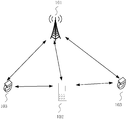
- FIG. 1 is a schematic diagram of an application scenario of a sidelink resource scheduling method provided by the present application
- FIG. 2 is a schematic flowchart of a sidelink resource scheduling method provided by the present application.
- FIG. 3 is a schematic structural diagram of a MAC CE according to the first application
- FIG. 4 is a schematic structural diagram of a MAC CE provided by the second application.
- FIG. 5 is a schematic structural diagram of a MAC CE provided by the third application.
- FIG. 6 is a schematic structural diagram of a MAC CE provided by the fourth application.
- FIG. 7 is a schematic structural diagram of a SL-SCH MAC PDU provided by the fourth application.
- FIG. 8 is a schematic structural diagram of a relay user equipment according to the first application.
- FIG. 9 is a schematic structural diagram of a network server according to the first application.
- FIG. 10 is a schematic structural diagram of a network server provided by the second application.
- FIG. 11 is a schematic structural diagram of a remote user equipment according to the first application.
- FIG. 12 is a schematic structural diagram of a remote user equipment provided by the second application.
- FIG. 13 is a schematic structural diagram of a relay user equipment according to the second application.
- FIG. 14 is a schematic structural diagram of a network server provided by the third application.
- 15 is a schematic structural diagram of a network server provided by the fourth application.
- 16 is a schematic structural diagram of a remote user equipment provided by the third application.
- FIG. 17 is a schematic structural diagram of a remote user equipment according to the fourth application.
- FIG. 1 is a schematic diagram of an application scenario of a sidelink resource scheduling method provided by the present application.
- the network server 101 the relay user equipment 102, and the at least one remote user equipment 103 are included.
- the network server 101 is configured to provide a communication network and allocate uplink and downlink dynamic resources of the user equipment.
- the network server 101 may be a base station.
- the user equipment is a device that can be connected to a communication network provided by the network server 101, capable of transmitting and receiving data, and communicating with other user equipments in the network.
- the user device can be a wearable device such as a computer, a tablet, a mobile phone, a headset, a wristband, and a watch.
- the remote user equipment 103 can be a common wearable device such as a headset or a wristband. Multiple remote user devices 103 can access the network through the same relay user device 102.
- the remote user equipment 103 when the remote user equipment 103 is in a Radio Resource Management (RRC) connection state, data needs to be transmitted through the relay user equipment 102 and the network server 101, that is, communication data transmission is performed through the sidelink.
- the process in which the remote user equipment 103 obtains the control signaling and obtains the sidelink resource is the process of scheduling the sidelink resource.
- the present application provides a new resource scheduling method.
- the existing resource scheduling is directly obtained through the cellular link provided by the network server, so that the remote user equipment 103 needs to maintain two links at the same time, while listening to the sidelink and the cellular link and receiving.
- the implementation of the control signaling and the data message on the two links is complicated, which results in a complicated implementation scheme of the remote user equipment and a high power consumption problem.
- the present application provides a method for scheduling sidelink resources.
- the sidelink resource scheduling method provided by the present application is described in detail below in conjunction with specific embodiments.
- FIG. 2 is a schematic flowchart of a method for scheduling a sidelink resource according to the first embodiment of the present application. As shown in FIG. 2, the method includes:
- the network server sends a first message to the first user equipment, where the first message includes the first information, where the first information indicates a sidelink resource of the data channel allocated by the network server to the corresponding second user equipment.
- the first user equipment receives the first message sent by the network server, and determines, according to the first message, the second message corresponding to the at least one second user equipment.
- the first user equipment sends the at least one second message to the corresponding second user equipment, where the second message includes the first information of the second user equipment.
- the second user equipment receives the second message sent by the first user equipment, and the second user equipment sends a data message to the first user equipment according to the received second message.
- the data message sent by the second user equipment to the first user equipment may be exemplified by voice, video, data collected by various types of sensors, and the like.
- the network server may be the network server 101 shown in FIG. 1
- the first user equipment may be the relay user equipment 102 shown in FIG. 1
- the second user equipment may be the remote user equipment 103 shown in FIG.
- Figure 2 only A second user equipment is described as an example, rather than a limitation on the number of second user equipments.
- the network server allocates a sidelink resource to the at least one second user equipment, and the network server sends a first message to the first user equipment, where the first message includes sidelink resource scheduling information indicating the sidelink resource.
- the first message may be sent at the Medium Access Control (MAC) layer or at the physical layer.
- the first message includes a MAC Protocol Data Unit (MAC PDU), and one MAC PDU includes at least one MAC Control Element (MAC CE).
- MAC PDU Medium Access Control
- MAC CE MAC Control Element
- the first message includes the first information, and the first information indicates the sidelink resource of the data channel corresponding to the second user equipment.
- the first message further includes second information, where the second information indicates a sidelink resource of the control channel allocated by the network server to the corresponding second user equipment.
- the network server sends the first information and the second information of each second user equipment to the relay user equipment.
- the first user equipment after receiving the first message sent by the network server, acquires the second message corresponding to the at least one second user equipment according to the first message. For example, when the identifier of the at least one second user equipment is included in the first message, the first user equipment may obtain, according to the identifier of the at least one second user equipment, and the correspondence between the identifier and the first information in the first message. The first information corresponding to the second user equipments is used as the second message.
- the identifier of the second user equipment may be a device number of the second user equipment.
- the first user equipment sends a corresponding second message to the at least one second user equipment.
- the second message may be sent at the MAC layer or at the physical layer.
- the second message includes the first information and the second information of the second user equipment.
- the control may be indicated according to the second information.
- the sidelink resource of the channel sends the second message including the first information to the corresponding second user equipment.
- the second user equipment may send a data message to the first user equipment according to the second message.
- the second message is sent by the MAC layer
- the second user equipment sends a data message to the first user equipment according to the first information and the second information.
- the second message is sent by the physical layer
- the second user equipment sends a data message to the first user equipment according to the first information.
- the sidelink resource scheduling method provided by the present application includes: the network server sends a first message to the first user equipment, where the first message indicates a sidelink resource allocated by the network server to the at least one second user equipment, and the first user equipment receives the first Determining, by a message, a second message corresponding to the at least one second user equipment, and sending a corresponding second message to the at least one second user equipment, where the second message includes a sidelink resource allocated by the network server, and the second user equipment receives the second message After the message, the data message is sent to the first user equipment according to the second message.
- the sidelink resource allocated by the network server to the at least one second user equipment is forwarded by the first user equipment, so that the second user equipment does not need to maintain the cellular link with the network server, and the sidelink resource can also be obtained, and the second resource is reduced.
- the complexity of the user equipment reduces the power consumption of the second user equipment.
- the sidelink resource scheduling method provided by the present application further includes:
- the at least one second user equipment sends a sidelink buffer status report to the network server, and the network server allocates a sidelink resource to each second user equipment according to the sidelink buffer status report of each second user equipment.
- the second user equipment may send a sidelink buffer status report to the first user equipment, and The first user equipment forwards the sidelink buffer status report, and may also send the sidelink buffer status report to the network server directly for the second user equipment.
- the sidelink buffer status report is used to reflect how much data shared by the second user equipment is waiting to be sent in the uplink buffer, and the network server allocates an appropriate amount of resources to the second user equipment according to the data volume of the buffer.
- the second user equipment may also send a sidelink scheduling request to the network server to directly request a certain number of sidelink resources.
- the resource allocation speed is faster and the rationality is higher.
- the resource allocation flexibility is strong. .
- the second user equipment may also carry the identifier of the second user equipment when sending the sidelink buffer status report.
- the first message sent by the network server to the first user equipment, and the first user equipment is sent to the second
- the second message of the user equipment may be sent as MAC layer signaling or physical layer signaling, and different layers correspond to different resource scheduling methods.
- the first message and the second message can be sent at different layers.
- the sidelink resource scheduling manner includes the following four schemes: scheme 1, the first message is sent at the MAC layer, and the second message is sent at the MAC layer; and the second message is sent at the MAC layer, and the second message is at the physical layer.
- the resource used by the first user equipment to forward the second message has two resource allocation modes: a resource allocation mode selected by the user equipment and a resource allocation mode scheduled.
- the resource allocation mode independently selected by the user equipment means that the network server configures a resource pool for the user equipment through broadcast messages or dedicated signaling, and the user equipment can autonomously select resource transmission data in the resource pool; the scheduled resource allocation manner refers to the connection state.
- the user equipment needs to request resources from the network server through dedicated signaling, and the network server schedules sidelink dedicated resources to transmit data to the user equipment. Different resource allocation methods also correspond to different sidelink resource scheduling methods.
- the sidelink resource scheduling method provided by the present application is described in detail below with reference to the specific embodiments for the four schemes, and the manner in which the base station allocates resources to the first user equipment.
- the first message from the network server to the first user equipment is sent at the MAC layer.
- the first message specifically includes the following forms:
- the first message further includes third information that is allocated by the network server to the at least one second user equipment, where the third information indicates the forwarding resource used by the first user equipment to forward the second message of the at least one second user equipment;
- the third information encapsulation of the at least one second user equipment is sent in a second MAC CE of the first message, and the second MAC CE further includes an identifier of the at least one second user equipment.
- the first message may include one MAC PDU, and the MAC PDU includes at least two MAC control units.
- the first MAC CE includes an identifier of the at least one second user equipment and sidelink resource scheduling information of the second user equipment.
- an identifier of the second user equipment (identity 1), sidelink resource scheduling information of the second user equipment, and then an identifier of another second user equipment (identification 2), another The sidelink resource scheduling information of the second user equipment.
- the identifier length of the second user equipment may be 8 bits, and the sidelink resource scheduling information of each second user equipment is 32 bits.
- the identifier length of the second user equipment and the number of bits of the sidelink resource scheduling information may also be based on actual The situation is changed, and this application does not limit this.
- the second MAC CE includes an identifier of all the second user equipments and third information indicating that the first user equipment forwards the forwarding resources adopted by the at least one second user equipment's sidelink resource. That is, all sidelink resource scheduling information is stored in one MAC CE, and all third information is stored in another MAC CE.
- LCIDs logical channel identifier values
- the second user equipment or the first user equipment establishes a logical channel identifier value table.
- the table stores a plurality of MAC CE types and a logical channel identifier value corresponding to each MAC CE. For example, when the first user equipment receives the first message, the LCID in the first message is first read, and the type of the MAC CE in the first message is determined according to the pre-stored logical channel identifier value table, and then according to the type of the MAC CE.
- MAC CE read.
- FIG. 3 is a schematic structural diagram of a MAC CE provided by the first application.
- the left side of FIG. 3 shows a downlink shared channel (Downlink Shared Channel: DL-SCH) logical channel identifier value table, and the left side of the table is an index index of a part of the MAC CE and the MAC SDU.
- the right side is the LCID value corresponding to the different indexes, and the different LCID values correspond to different MAC CEs and MAC SDUs, and the table is stored in the network server and the first user equipment.
- the right side of Fig. 3 shows one possible first MAC CE and second MAC CE, and each Oct (Octet) in the figure represents one octet.
- the first message further includes third information that is allocated by the network server to the at least one second user equipment, where the third information indicates the forwarding resource used by the first user equipment to forward the second message of the at least one second user equipment;
- the first information, the second information, and the third information of the second user equipment are sent in a first MAC CE of the first message, where the first MAC CE further includes an identifier of the at least one second user equipment.
- FIG. 4 is a schematic structural diagram of a MAC CE provided by the second application.
- the sidelink resource scheduling information of the same second user equipment and the third information of the first user equipment forwarding the second user equipment are stored in one In the first MAC CE, a second user equipment occupies a first MAC CE, that is, the number of the first MAC CE in the MAC PDU is the same as the number of the second user equipment.
- FIG. 4 shows an embodiment of a structure of a first MAC CE.
- the first information and the second information of the at least one second user equipment are sent in a first MAC CE of the first message, and the first MAC CE further includes an identifier of the at least one second user equipment.
- FIG. 5 is a schematic structural diagram of a MAC CE provided by the third application.
- the third first message includes only the sidelink resource scheduling information of the second user equipment, and the second user indicated by the sidelink resource scheduling information is compared with the first type and the second type of the first message.
- the first message sent by the network server to the first user equipment does not need to include the third information, that is, the first user equipment does not need to be allocated to forward at least one second.
- the forwarding resource used by the second message of the user equipment may be as shown in the first MAC CE on the right side of FIG. 3 or the first MAC CE in FIG.
- the place of the three information can be filled with bits instead.
- sidelink scheduling when the first message is sent by the MAC layer, sidelink scheduling may be performed on multiple second user equipments at the same time, and the physical layer technology does not need to be modified.
- the first message When the first message is in the first form, since the sidelink scheduling resource information and the forwarding resource of all the second user equipments are separately stored in the two MAC CEs, only two MAC CEs are needed, so that it is suitable for both The case where the second user equipment performs sidelink resource scheduling.
- the sidelink scheduling resource information and the forwarding resource of each second user equipment occupy one MAC CE. Since each MAC CE has a corresponding identifier and header, the number of MAC CEs is increased. Many, the first message occupies more resources, so this form is applicable to the case where sidelink resource scheduling is performed for less second user equipment at the same time.
- the first message adopts the third form the first message does not need to encapsulate the forwarding resource of the first user equipment, which saves resources.
- the first message from the network server to the first user equipment is sent at the physical layer, so that the first user equipment determines the received sidelink resource scheduling information (ie, the first message) and the second user equipment.
- the first user equipment determines the received sidelink resource scheduling information (ie, the first message) and the second user equipment.
- the first message further includes the identifier of each second user equipment; the first user equipment in S201 receives the first message sent by the network server, and specifically includes:
- the first user equipment receives the first message sent by the network server on the at least one physical downlink control channel (PDCCH); and the first message sent on one PDCCH can only schedule one second user equipment;
- PDCCH physical downlink control channel
- the first user equipment in S202 determines, according to the first message, the second message that is corresponding to the at least one second user equipment, and specifically includes:
- the network server sends a first message to the first user equipment, where the first message includes sidelink resource scheduling information allocated by the network server to each second user equipment, and an identifier of the second user equipment, and therefore, the first user equipment
- the identifier of the second user equipment may be used to determine which second user equipment the first message sent on the PDCCH corresponds to.
- the first user equipment in S201 receives the first message sent by the network server, and specifically includes:
- the first user equipment in S202 determines, according to the first message, the second message corresponding to each second user equipment, which specifically includes:
- the first user equipment acquires the second message corresponding to the second user equipment according to the correspondence between the first message sent by the PDCCH and the second user equipment.
- the network server sends a first message to the first user equipment, where the first message includes sidelink resource scheduling information allocated by the network server to each second user equipment.
- the PDCCH may be scrambled by using a sidelink-Radio Network Tempory Identity (SL-RNTI) of the second user equipment, and Sending, by the PDCCH, the first message of the second user equipment to the first user equipment, where the first user equipment receives the first In the message, the pre-stored SL-RNTI of each second user equipment attempts to descramble the scrambled PDCCH, and finds a SL-RNTI that can descramble the PDCCH, thereby determining that the first message sent on the PDCCH corresponds to The second user equipment corresponding to the SL-RNTI.
- SL-RNTI sidelink-Radio Network Tempory Identity
- the technical solution for transmitting the first message at the physical layer provided by the foregoing embodiment is small in modification to the existing communication protocol, and is easy to understand and implement.
- the network server configures the scheduled resource allocation mode for the first user equipment
- the first message is sent by the physical layer and the second message is sent by the MAC layer
- the second message is sent to the corresponding second.
- the user equipment it also includes:
- the first user equipment acquires a forwarding resource used by the network server to forward the second message of each second user equipment.
- the first message when the first message is sent by the physical layer, the first message cannot carry the forwarding resource used by the network server to forward the second message of each second user equipment.
- the first user equipment may separately The network server requests to forward the forwarding resource used by the second message of each second user equipment. Thereby the second message can be sent at the MAC layer.
- the manner in which the first user equipment forwards the second message includes the following:
- the first mode is: when the second message is sent by the MAC layer, and the first user equipment acquires the forwarding resource, the at least one second message sent by the S203 to the corresponding second user equipment, specifically:
- the first user equipment uses the forwarding resource to send the at least one second message to the corresponding second user equipment.
- the first user equipment directly uses the received forwarding resource.
- the forwarding resource may be encapsulated in the first message.
- the forwarding resource may be separately. Obtain.
- the second mode when the second message is sent by the MAC layer, and the first user equipment does not obtain the forwarding resource, that is, the first message in the foregoing scheme 1 and scheme 2 is the third form, the S203 is at least A second message is sent to the corresponding second user equipment, specifically:
- the first user equipment sends the at least one second message to the corresponding second user equipment by using the sidelink resource indicated by the sidelink resource scheduling information in the first message.
- the second message when the second message is sent by the MAC layer, the second message further includes second information of the second user equipment.
- the first message in this case can be sent at the MAC layer or at the physical layer.
- the third mode is: when the second message is sent by the physical layer, the forwarding resource is not required to be obtained, and the first information is encapsulated in the Sidelink Control Information (SCI) of the second message, and the SCI includes the following: At least one of the following: an identifier of the corresponding second user equipment, a frequency hopping identifier, a time resource mode, and a modulation and coding mode;
- SCI Sidelink Control Information
- the first user equipment sends the second message to the corresponding second user equipment on the physical side-link control channel by using the sidelink resource of the control channel corresponding to the second user equipment indicated by the second information.
- the second message when the second message is sent by the physical layer, whether the first message is sent by the MAC layer or the physical layer, the second message includes only the first information, and the first user equipment indicates according to the second information in the first message.
- the sidelink resource of the control channel corresponding to the second user equipment sends each second message to the corresponding physical downlink control channel Second user device.
- the second user equipment is enabled to send a data message to the first user equipment according to the second message.
- the first information indicates a resource used for scheduling a physical sidelink shared channel (PSSCH), and the PSSCH is a channel used by the second user equipment to transmit data between the first user equipment and the second user equipment;
- the information indicates a resource for scheduling a physical side link control channel (PSCCH), and the PSCCH is a channel used by the second user equipment to send control signaling between the first user equipment and the first user equipment.
- the portion of the PSSCH resource that is scheduled, that is, the first information can be encapsulated in the SCI.
- the first user equipment may use the part of the scheduled PSCCH resource in the sidelink resource indication information, on the corresponding PSCCH.
- the following table provides a new SCI, that is, SCI format 2, for carrying the first information, that is, indicating part of the content of the PSSCH resource in the sidelink resource.
- the reserved bit portion is used as a padding bit to ensure that the length of the SCI format 2 is the same as the length of the SCI format 0.
- the second message is sent at the physical layer, and the second user equipment only needs to send the data message without sending the sidelink control information, so the data message can be sent in a sidelink control period, thereby Fast scheduling is implemented, scheduling delay is reduced, and signaling overhead is reduced.
- the S203 sends the at least one second message to the corresponding second user equipment.
- the first user equipment receives the maximum forwarding duration sent by the network server, where the maximum forwarding duration is used to indicate the maximum duration of the second user message sent by the first user equipment;
- the first user equipment autonomously selects resources from the resource pool configured by the network server, and sends the second message to the corresponding second user equipment within the maximum forwarding time.
- the network server configures the first user equipment with the resource allocation mode selected by the first user equipment
- the first user equipment selects resources autonomously from the resource pool configured by the network server, because the network server does not know the first The user device autonomous behavior, that is, the specific time-frequency location of the resource that the first user equipment transmits data, and the network server cannot reserve the corresponding resource may cause the resource to collide.
- the network server needs to determine the time when the first user equipment forwards the second message, thereby reserving resources to avoid collision.
- the network server sends the maximum forwarding time to the relay user equipment, and the first user equipment needs to be in the network server to reserve the corresponding sidelink resource to the second user equipment for sidelink communication until the maximum time limit is exhausted.
- the second time message is forwarded to the second user equipment in the time period of the maximum time limit - the first preset time length.
- the maximum time limit is greater than the first preset time length, and the first preset time length may be an example value. 6.
- the first preset duration depends on the length of time that the second user equipment needs to parse the received second message, that is, the parsing
- the length of a MAC PDU is approximately 6 milliseconds.
- the network server sends the first message to the first user equipment.
- the network server receives the confirmation response message fed back by the first user equipment, the network server starts counting until the maximum time limit is exhausted.
- the first user equipment feeds back the confirmation response to the network server.
- the message starts counting after the message expires until the maximum time limit is exceeded.
- the first message sent by the network server to the first user equipment is not
- the third information needs to be included, that is, the forwarding resource used by the first user equipment to forward the second message of the at least one second user equipment is not required.
- the format of the first message may be the first MAC CE on the right side of FIG. As shown, or as shown by the first MAC CE as shown in FIG. 4, where the third information is placed, the bits may be padded instead.
- the first message when the first message is in the first form, if the forwarding resource is not configured, the second MAC CE may not be directly configured. Therefore, the first form of the first message is more flexible.
- the first user equipment can receive the maximum forwarding duration sent by the network server.
- the maximum forwarding duration By configuring the maximum forwarding duration, packet collisions can be avoided, which improves data transmission efficiency.
- the maximum forwarding duration may be configured by using the first message.
- the maximum forwarding time is encapsulated in the first message. Or send with the first message at the same time.
- the maximum forwarding duration can be configured through RRC signaling. Since the maximum forwarding duration depends only on the speed of the second user equipment to parse the received signaling, it does not dynamically change during the scheduling process. Therefore, it is not required to configure the first message in each scheduling, and may be configured in advance through RRC signaling. once.
- the sending priority of the second message may be set to be higher than the sending priority of the first user equipment to send other messages.
- the first message and the second message in any of the foregoing embodiments may be encapsulated in a Downlink Control Information (DCI) format 5.
- DCI Downlink Control Information
- the first message when the first message is sent by the MAC layer, the first message further includes a logical channel identifier value corresponding to each MAC CE;
- the first user equipment in S202 determines, according to the first message, the second message that is corresponding to the at least one second user equipment, and specifically includes:
- the first user equipment reads each MAC CE in the first message according to the logical channel identifier value in the first message;
- the first user equipment determines, according to each MAC CE, a second message corresponding to the at least one second user equipment.
- FIG. 6 is a schematic structural diagram of a MAC CE provided by the fourth application.
- the left side of FIG. 6 shows a Sidelink Shared Channel (SL-SCH) logical channel identifier value table, which is stored in the second user equipment and the first user equipment.
- the right side of Figure 6 shows a possible third MAC CE, in which each Oct (Octet) represents an octet.
- SL-SCH Sidelink Shared Channel
- FIG. 6 shows a possible third MAC CE, in which each Oct (Octet) represents an octet.
- the second message further includes a logical channel identifier value corresponding to the third MAC CE.
- FIG. 7 is a schematic structural diagram of a SL-SCH MAC PDU provided by the fourth application.
- the MAC PDU includes a MAC header, and a MAC payload.
- the MAC header includes at least one sub-header, wherein the first sub-header is a SL-SCH Sub-header, and the sub-header is included. Contains the logical channel identification value.
- the MAC payload includes one or more of a MAC CE, a MAC Service Data Unit (SDU), and a padding.
- SDU MAC Service Data Unit
- the logical channel identifier values in the respective subheaders are consistent with the corresponding order of the respective MAC CE, MAC SDU, and Padding.
- the embodiment of the present application further provides a relay user equipment, a network server, and a remote user equipment, which are respectively used to perform the sidelink resource scheduling method in the foregoing embodiments, and have the same technical features and technical effects. This will not be repeated here.
- FIG. 8 is a schematic structural diagram of a relay user equipment according to Embodiment 1 of the present application. As shown in FIG. 8, the relay user equipment includes:
- the receiving unit 801 is configured to receive a first message sent by the network server, where the first message includes first information, where the first information indicates a sidelink resource of the data channel allocated by the network server to the corresponding remote user equipment;
- the processing unit 802 is configured to determine, according to the first message, a second message corresponding to the at least one remote user equipment,
- the sending unit 803 sends a second message corresponding to the at least one remote user equipment to the corresponding remote user equipment, where the second message includes the first information of the remote user equipment.
- the first message further includes second information, where the second information indicates a sidelink resource of the control channel allocated by the network server to the corresponding remote user equipment.
- the first message further includes third information that is allocated by the network server to the at least one remote user equipment, where the third information indicates a forwarding resource used by the relay user equipment to forward the second message of the at least one remote user equipment;
- the first information and the second information of the at least one remote user equipment are sent in a first MAC CE of the first message, and the first MAC CE further includes an identifier of the at least one remote user equipment.
- the third information encapsulation of the at least one remote user equipment is sent in a second MAC CE of the first message, and the second MAC CE further includes an identifier of the at least one remote user equipment.
- the first message further includes third information that is allocated by the network server to the at least one remote user equipment, where the third information indicates a forwarding resource used by the relay user equipment to forward the second message of the at least one remote user equipment;
- the first information, the second information, and the third information of the remote user equipment are sent in a first MAC CE of the first message, where the first MAC CE further includes an identifier of the remote user equipment.
- the first information and the second information of the at least one remote user equipment are sent in a first MAC CE of the first message, where the first MAC CE further includes an identifier of the at least one remote user equipment.
- the receiving unit 801 is specifically configured to: receive, by the network server, the first message sent on the at least one physical downlink control channel;
- the first message also includes an identification of the at least one remote user device.
- the receiving unit 801 is specifically configured to: receive, by the network server, the first message sent on the at least one physical downlink control channel;
- the processing unit 802 is specifically configured to perform descrambling on the physical downlink control channel according to the sidelink radio network temporary identifier of the remote user equipment, and determine a correspondence between the first message sent on the physical downlink control channel and the remote user equipment.
- the receiving unit 801 is further configured to: acquire, by the network server, a forwarding resource that is used by the network server to forward the second message of the at least one remote user equipment.
- the sending unit 803 is configured to send, by using the forwarding resource, the second message corresponding to the at least one remote user equipment to the corresponding remote user equipment.
- the sending unit 803 is configured to send the second message corresponding to the at least one remote user equipment to the corresponding remote user equipment by using the resources indicated by the first information and the second information in the first message.
- the first information of the remote user equipment is encapsulated and sent in the sidelink control information of the second message, where the sidelink control information further includes at least one of the following: the identifier of the corresponding remote user equipment, the frequency hopping identifier, and the time. Resource mode, modulation and coding mode;
- the sending unit 803 is specifically configured to send the second message to the corresponding remote user equipment on the physical side-link control channel by using the sidelink resource of the control channel corresponding to the remote user equipment indicated by the second information.
- the receiving unit 801 is further configured to: receive a maximum forwarding duration sent by the network server, where the maximum forwarding duration is used to indicate a maximum duration of the second user message sent by the relay user equipment;
- the sending unit 803 is specifically configured to: automatically select a resource from a resource pool configured by the network server, and send a second message corresponding to the at least one remote user equipment to the corresponding remote user equipment in the maximum forwarding time.
- the receiving unit 801 is further configured to: receive a maximum forwarding duration sent by the network server, where the maximum forwarding duration is used to indicate a maximum duration of the second user message sent by the relay user equipment.
- the maximum forwarding duration is sent by using radio resource control signaling.
- the first message is further encapsulated with a maximum forwarding duration.
- the sending priority of the second message is higher than the sending priority of other messages sent by the relay user equipment.
- the first message further includes a logical channel identifier value corresponding to the MAC CE;
- the processing unit 802 is specifically configured to: read, according to the logical channel identifier value in the first message, the MAC CE in the first message;
- the second message further includes the second information of the remote user equipment
- the first information and the second information of the remote user equipment are encapsulated and sent in the third MAC CE of the second message; Including the identifier of the remote user equipment;
- the second message further includes a logical channel identifier value corresponding to the third MAC CE.
- FIG. 9 is a schematic structural diagram of a network server according to Embodiment 1 of the present application. As shown in FIG. 9, the network server includes:
- the sending unit 901 is configured to send a first message to the relay user equipment, where the first message is used to determine a second message corresponding to the at least one remote user equipment;
- the first message includes the first information and the second information, where the first information indicates a sidelink resource of the data channel allocated by the network server for the corresponding remote user equipment, and the second information indicates that the network server allocates the corresponding remote user equipment.
- the sidelink resource of the control channel includes the first information and the second information, where the first information indicates a sidelink resource of the data channel allocated by the network server for the corresponding remote user equipment, and the second information indicates that the network server allocates the corresponding remote user equipment.
- the first message further includes third information that is allocated by the network server to the at least one remote user equipment, where the third information indicates a forwarding resource used by the relay user equipment to forward the second message of the at least one remote user equipment;
- the first information and the second information of the at least one remote user equipment are sent in a first MAC CE of the first message, and the first MAC CE further includes an identifier of the at least one remote user equipment.
- the third information encapsulation of the at least one remote user equipment is sent in a second MAC CE of the first message, and the second MAC CE further includes an identifier of the at least one remote user equipment.
- the first message further includes third information that is allocated by the network server to the at least one remote user equipment, and third.
- the information indicates a forwarding resource used by the relay user equipment to forward the second message of the at least one remote user equipment;
- the first information, the second information, and the third information of the remote user equipment are sent in a first MAC CE in the first message, and the first MAC CE further includes an identifier of the at least one remote user equipment.
- the first information and the second information of the at least one remote user equipment are sent in a first MAC CE of the first message, where the first MAC CE further includes an identifier of the at least one remote user equipment.
- the first message further includes the identifier of the remote user equipment corresponding to the first information and the second information
- the sending unit 901 is configured to send the first message to the relay user equipment on the at least one physical downlink control channel.
- the sending unit 901 is specifically configured to: send, to the relay user equipment, the first message on the physical downlink control channel that is scrambled by the at least one sidelink wireless network temporary identifier of the remote user equipment.
- FIG. 10 is a schematic structural diagram of a network server according to Embodiment 2 of the present application.
- the network server further includes:
- the receiving unit 902 is configured to receive a forwarding resource request message sent by the relay user equipment.
- the sending unit 901 is further configured to send, to the relay user equipment, a forwarding resource used by the second message forwarding the at least one remote user equipment.
- the sending unit 901 is further configured to send a maximum forwarding duration to the relay user equipment, where the maximum forwarding duration is used to indicate a maximum duration of the second message that the first household device forwards the at least one remote user equipment.
- the maximum forwarding duration is sent by using radio resource control signaling.
- the first MAC CE is further encapsulated with a maximum forwarding duration.
- the first message further includes a logical channel identifier value corresponding to the MAC CE.
- FIG 11 is a schematic structural diagram of a remote user equipment according to Embodiment 1 of the present application. As shown in Figure 11, the remote user equipment includes:
- the receiving unit 1101 is configured to receive a message sent by the relay user equipment, where the message includes the first information, where the first information indicates a sidelink resource of the data channel allocated by the network server to the corresponding remote user equipment;
- the sending unit 1102 is configured to send a data message to the relay user equipment according to the message.
- the first information is encapsulated in the sidelink control information of the message, where the sidelink control information includes at least one of the following: an identifier of the corresponding remote user equipment, a frequency hopping identifier, a time resource mode, and a modulation and coding mode;
- the sending unit 1102 is specifically configured to: according to the first information and at least one of the following: the identifier of the corresponding remote user equipment, the frequency hopping identifier, the time resource mode, the modulation and coding mode, and the remote user equipment indicated by the first information
- the sidelink resource of the corresponding data channel sends a data message to the relay user equipment on the physical side link shared channel.
- FIG. 12 is a schematic structural diagram of a remote user equipment according to Embodiment 2 of the present application, as shown in FIG.
- the message further includes second information, where the second information indicates a sidelink resource of the control channel allocated by the network server to the corresponding remote user equipment; the first information and the second information of the remote user equipment are encapsulated and sent in the MAC CE of the second message.
- the MAC CE further includes an identifier of the remote user equipment; the message further includes a logical channel identifier value corresponding to the MAC CE;
- the remote user equipment also includes:
- the processing unit 1103 is configured to: read, according to the logical channel identifier value in the message, the MAC CE in the message. One message and second message.
- FIG. 13 is a schematic structural diagram of a relay user equipment according to Embodiment 2 of the present application. As shown in FIG. 13, the relay user equipment includes:
- the receiver 1301 is configured to receive a first message sent by the network server, where the first message includes first information, where the first information indicates a sidelink resource of the data channel allocated by the network server to the corresponding remote user equipment;
- the processor 1302 is configured to determine, according to the first message, a second message corresponding to the at least one remote user equipment,
- the transmitter 1303 sends a second message corresponding to the at least one remote user equipment to the corresponding remote user equipment, where the second message includes the first information of the remote user equipment.
- the first message further includes second information, where the second information indicates a sidelink resource of the control channel allocated by the network server to the corresponding remote user equipment.
- the first message further includes third information that is allocated by the network server to the at least one remote user equipment, where the third information indicates a forwarding resource used by the relay user equipment to forward the second message of the at least one remote user equipment;
- the first information and the second information of the at least one remote user equipment are sent in a first MAC CE of the first message, and the first MAC CE further includes an identifier of the at least one remote user equipment.
- the third information encapsulation of the at least one remote user equipment is sent in a second MAC CE of the first message, and the second MAC CE further includes an identifier of the at least one remote user equipment.
- the first message further includes third information that is allocated by the network server to the at least one remote user equipment, where the third information indicates a forwarding resource used by the relay user equipment to forward the second message of the at least one remote user equipment;
- the first information, the second information, and the third information of the remote user equipment are sent in a first MAC CE of the first message, where the first MAC CE further includes an identifier of the remote user equipment.
- the first information and the second information of the at least one remote user equipment are sent in a first MAC CE of the first message, where the first MAC CE further includes an identifier of the at least one remote user equipment.
- the receiver 1301 is specifically configured to: receive, by the network server, the first message sent on the at least one physical downlink control channel;
- the first message also includes an identification of the at least one remote user device.
- the receiver 1301 is specifically configured to: receive, by the network server, the first message sent on the at least one physical downlink control channel;
- the processor 1302 is specifically configured to: perform descrambling on the physical downlink control channel according to the sidelink radio network temporary identifier of the remote user equipment, and determine a correspondence between the first message sent on the physical downlink control channel and the remote user equipment.
- the receiver 1301 is further configured to: acquire, by the network server, a forwarding resource that is used by the network server to forward the second message of the at least one remote user equipment.
- the transmitter 1303 is configured to send, by using a forwarding resource, a second message corresponding to the at least one remote user equipment to the corresponding remote user equipment.
- the sender 1303 is configured to send, by using the resources indicated by the first information and the second information in the first message, the second message corresponding to the at least one remote user equipment to the corresponding remote user equipment.
- the first information of the remote user equipment is encapsulated and sent in the sidelink control information of the second message, where the sidelink control information further includes at least one of the following: the identifier of the corresponding remote user equipment, the frequency hopping identifier, and the time. Resource mode, modulation and coding mode;
- the transmitter 1303 is configured to send the second message to the corresponding remote user equipment on the physical side-link control channel by using the sidelink resource of the control channel corresponding to the remote user equipment indicated by the second information.
- the receiver 1301 is further configured to: receive a maximum forwarding duration sent by the network server, where the maximum forwarding duration is used to indicate a maximum duration of the second user message sent by the relay user equipment;
- the transmitter 1303 is specifically configured to: autonomously select a resource from a resource pool configured by the network server, and send a second message corresponding to the at least one remote user equipment to the corresponding remote user equipment in the maximum forwarding time.
- the receiver 1301 is further configured to receive a maximum forwarding duration sent by the network server, where the maximum forwarding duration is used to indicate a maximum duration for the relay user equipment to send each second message.
- the maximum forwarding duration is sent by using radio resource control signaling.
- the first message is further encapsulated with a maximum forwarding duration.
- the sending priority of the second message is higher than the sending priority of other messages sent by the relay user equipment.
- the first message further includes a logical channel identifier value corresponding to the MAC CE;
- the processor 1302 is specifically configured to: read, according to the logical channel identifier value in the first message, the MAC CE in the first message;
- the second message further includes the second information of the remote user equipment
- the first information and the second information of the remote user equipment are encapsulated and sent in the third MAC CE of the second message; Including the identifier of the remote user equipment;
- the second message further includes a logical channel identifier value corresponding to the third MAC CE.
- FIG. 14 is a schematic structural diagram of a network server according to Embodiment 3 of the present application. As shown in FIG. 14, the network server includes:
- the sender 1401 is configured to send a first message to the relay user equipment, where the first message is used to determine a second message corresponding to the at least one remote user equipment;
- the first message includes the first information and the second information, where the first information indicates a sidelink resource of the data channel allocated by the network server for the corresponding remote user equipment, and the second information indicates that the network server allocates the corresponding remote user equipment.
- the sidelink resource of the control channel includes the first information and the second information, where the first information indicates a sidelink resource of the data channel allocated by the network server for the corresponding remote user equipment, and the second information indicates that the network server allocates the corresponding remote user equipment.
- the first message further includes third information that is allocated by the network server to the at least one remote user equipment, where the third information indicates a forwarding resource used by the relay user equipment to forward the second message of the at least one remote user equipment;
- the first information and the second information of the at least one remote user equipment are sent in a first MAC CE of the first message, and the first MAC CE further includes an identifier of the at least one remote user equipment.
- the third information encapsulation of the at least one remote user equipment is sent in a second MAC CE of the first message, and the second MAC CE further includes an identifier of the at least one remote user equipment.
- the first message further includes third information that is allocated by the network server to the at least one remote user equipment, where the third information indicates a forwarding resource used by the relay user equipment to forward the second message of the at least one remote user equipment;
- the first information, the second information, and the third information of the remote user equipment are sent in a first MAC CE in the first message, and the first MAC CE further includes an identifier of the at least one remote user equipment.
- the first information and the second information of the at least one remote user equipment are sent in a first MAC CE of the first message, where the first MAC CE further includes an identifier of the at least one remote user equipment.
- the first message further includes the identifier of the remote user equipment corresponding to the first information and the second information.
- the sender 1401 is specifically configured to send the first message to the relay user equipment on the at least one physical downlink control channel.
- the transmitter 1401 is specifically configured to: send, to the relay user equipment, the first message on the physical downlink control channel that is scrambled by the at least one sidelink wireless network temporary identifier of the remote user equipment.
- FIG. 15 is a schematic structural diagram of a network server according to Embodiment 4 of the present application.
- the network server further includes:
- the receiver 1402 is configured to receive a forwarding resource request message sent by the relay user equipment.
- the transmitter 1401 is further configured to send, to the relay user equipment, a forwarding resource used by the second message forwarding the at least one remote user equipment.
- the sender 1401 is further configured to send a maximum forwarding duration to the relay user equipment, where the maximum forwarding duration is used to indicate a maximum duration of the second message that the first user equipment forwards the at least one remote user equipment.
- the maximum forwarding duration is sent by using radio resource control signaling.
- the first MAC CE is further encapsulated with a maximum forwarding duration.
- the first message further includes a logical channel identifier value corresponding to the MAC CE.
- FIG 16 is a schematic structural diagram of a remote user equipment according to Embodiment 3 of the present application. As shown in Figure 16, the remote user equipment includes:
- the receiver 1601 is configured to receive a message sent by the relay user equipment, where the message includes the first information, where the first information indicates a sidelink resource of the data channel allocated by the network server to the corresponding remote user equipment;
- the sender 1602 is configured to send a data message to the relay user equipment according to the message.
- the first information is encapsulated in the sidelink control information of the message, where the sidelink control information includes at least one of the following: an identifier of the corresponding remote user equipment, a frequency hopping identifier, a time resource mode, and a modulation and coding mode;
- the transmitter 1602 is specifically configured to: according to the first information and at least one of the following: the identifier of the corresponding remote user equipment, the frequency hopping identifier, the time resource mode, and the modulation and coding mode, and the remote user equipment indicated by the first information
- the sidelink resource of the corresponding data channel sends a data message to the relay user equipment on the physical side link shared channel.
- FIG. 17 is a schematic structural diagram of a remote user equipment according to Embodiment 4 of the present application.
- the message further includes second information, and the second information indicates The first link information of the control channel allocated by the network server to the corresponding remote user equipment; the first information and the second information of the remote user equipment are encapsulated and sent in the MAC CE of the second message; the MAC CE further includes the remote user equipment.
- the identifier further includes a logical channel identifier value corresponding to the MAC CE;
- the remote user equipment also includes:
- the processor 1603 is configured to: according to the logical channel identifier value in the message, read the MAC CE in the message to obtain the first information and the second information.
- the embodiment of the present application further provides a sidelink resource scheduling system, including the relay user equipment as shown in FIG. 8 above, the network server as shown in FIG. 9 or FIG. 10 above, and the foregoing FIG. 11 or FIG. Remote user device.
- a sidelink resource scheduling system including the relay user equipment as shown in FIG. 8 above, the network server as shown in FIG. 9 or FIG. 10 above, and the foregoing FIG. 11 or FIG. Remote user device.
- the embodiment of the present application further provides a computer readable storage medium, including instructions, when executed on a computer, causing the computer to execute a sidelink resource scheduling method performed by the relay user equipment as shown in FIG. 8 above.
- the embodiment of the present application further provides a computer readable storage medium, including instructions, when running on a computer, The computer is caused to execute a sidelink resource scheduling method executed by the network server as shown in FIG. 9 or FIG. 10 described above.
- the embodiment of the present application further provides a computer readable storage medium, including instructions, when executed on a computer, causing the computer to execute a sidelink resource scheduling method executed by the remote user equipment as shown in FIG. 11 or FIG. 12 above.
Landscapes
- Engineering & Computer Science (AREA)
- Signal Processing (AREA)
- Computer Networks & Wireless Communication (AREA)
- Mobile Radio Communication Systems (AREA)
Abstract
La présente invention concerne un procédé, un dispositif et un système de planification de ressources de liaison latérale. Le procédé comprend : la réception par un premier équipement utilisateur d'un premier message envoyé par un serveur de réseau, le premier message comprenant des premières informations attribuées par le serveur de réseau à au moins un deuxième équipement utilisateur, et les premières informations indiquant une ressource de liaison latérale d'un canal de données correspondant au deuxième équipement utilisateur ; et la détermination par le premier équipement utilisateur d'un deuxième message correspondant auxdits deuxièmes équipements utilisateur en fonction du premier message, et l'envoi du deuxième message correspondant auxdits deuxièmes équipements utilisateur au deuxième équipement utilisateur correspondant, le deuxième message comprenant les premières informations. Dans le procédé de planification de ressources de liaison latérale de la présente invention, le deuxième équipement utilisateur peut également obtenir la ressource de liaison latérale sans maintenir une liaison cellulaire avec le serveur de réseau, ce qui permet de réduire la complexité et la consommation d'énergie du deuxième équipement utilisateur.
Priority Applications (3)
| Application Number | Priority Date | Filing Date | Title |
|---|---|---|---|
| EP17874908.1A EP3537841B1 (fr) | 2016-11-26 | 2017-01-23 | Dispositifs de planification de ressources de liaison latérale |
| US16/464,453 US11089576B2 (en) | 2016-11-26 | 2017-01-23 | Sidelink resource scheduling method, apparatus, and system |
| CN201780044373.0A CN109479297B (zh) | 2016-11-26 | 2017-01-23 | sidelink资源调度方法、装置和系统 |
Applications Claiming Priority (2)
| Application Number | Priority Date | Filing Date | Title |
|---|---|---|---|
| CN201611057252.3 | 2016-11-26 | ||
| CN201611057252 | 2016-11-26 |
Publications (1)
| Publication Number | Publication Date |
|---|---|
| WO2018094872A1 true WO2018094872A1 (fr) | 2018-05-31 |
Family
ID=62194782
Family Applications (1)
| Application Number | Title | Priority Date | Filing Date |
|---|---|---|---|
| PCT/CN2017/072289 Ceased WO2018094872A1 (fr) | 2016-11-26 | 2017-01-23 | Procédé, dispositif et système de planification de ressources de liaison latérale |
Country Status (4)
| Country | Link |
|---|---|
| US (1) | US11089576B2 (fr) |
| EP (1) | EP3537841B1 (fr) |
| CN (1) | CN109479297B (fr) |
| WO (1) | WO2018094872A1 (fr) |
Cited By (12)
| Publication number | Priority date | Publication date | Assignee | Title |
|---|---|---|---|---|
| CN110809322A (zh) * | 2018-08-06 | 2020-02-18 | 现代自动车株式会社 | 用于在通信系统中配置侧链路资源的方法和用于该方法的装置 |
| WO2020034335A1 (fr) * | 2018-09-28 | 2020-02-20 | Zte Corporation | Procédé et appareil de configuration et de planification de ressources de liaison latérale |
| CN110932827A (zh) * | 2018-09-19 | 2020-03-27 | 华为技术有限公司 | 一种侧行信息的传输方法、通信设备和网络设备 |
| WO2020150876A1 (fr) * | 2019-01-21 | 2020-07-30 | Oppo广东移动通信有限公司 | Procédé d'établissement de session, dispositif terminal et dispositif de réseau |
| CN111726770A (zh) * | 2019-03-18 | 2020-09-29 | 成都华为技术有限公司 | 通信方法及其装置 |
| WO2020192474A1 (fr) * | 2019-03-27 | 2020-10-01 | 华为技术有限公司 | Procédé d'établissement de connexion et dispositif de communication |
| WO2020220910A1 (fr) * | 2019-04-30 | 2020-11-05 | Telefonaktiebolaget Lm Ericsson (Publ) | Procédé et appareil de gestion de rapports de liaison latérale |
| WO2020221015A1 (fr) * | 2019-04-30 | 2020-11-05 | 中兴通讯股份有限公司 | Procédé et appareil de communication de liaison latérale, et support de stockage |
| WO2020256860A1 (fr) * | 2019-06-17 | 2020-12-24 | Qualcomm Incorporated | Système et procédé de planification de liaison latérale basée sur un modèle |
| WO2021068259A1 (fr) * | 2019-10-12 | 2021-04-15 | 华为技术有限公司 | Procédé et appareil de planification conjointe |
| CN113924809A (zh) * | 2019-06-14 | 2022-01-11 | 高通股份有限公司 | 用于集中式侧链路调度的系统和方法 |
| CN116709517A (zh) * | 2023-07-26 | 2023-09-05 | 上海山源电子科技股份有限公司 | 基于uwb定位系统的通信方法、装置和标签 |
Families Citing this family (16)
| Publication number | Priority date | Publication date | Assignee | Title |
|---|---|---|---|---|
| WO2020209699A1 (fr) * | 2019-04-12 | 2020-10-15 | 엘지전자 주식회사 | Procédé et dispositif pour la réalisation de rlm dans nr v2x |
| WO2021046703A1 (fr) * | 2019-09-10 | 2021-03-18 | Qualcomm Incorporated | Réseau d'accès et programmation simultanée de liaison latérale |
| CN113038416B (zh) * | 2019-12-25 | 2023-03-28 | 维沃移动通信有限公司 | 一种信道测量参考信号传输方法及终端 |
| WO2021134732A1 (fr) * | 2019-12-31 | 2021-07-08 | 华为技术有限公司 | Système, appareil, et procédé de planification de ressource |
| CN111277973B (zh) * | 2020-01-21 | 2023-09-29 | 北京紫光展锐通信技术有限公司 | 辅链路通信方法、设备和存储介质 |
| KR102918906B1 (ko) * | 2020-02-20 | 2026-01-28 | 삼성전자 주식회사 | V2x 시스템에서 단말 간 협력을 통한 자원 할당 방법 및 장치 |
| US11576156B2 (en) | 2020-02-25 | 2023-02-07 | Qualcomm Incorporated | Techniques for relaying resource reservation information on a sidelink |
| US12137489B2 (en) * | 2020-04-17 | 2024-11-05 | Qualcomm Incorporated | Dynamic control of sidelink resources in a communication network |
| WO2022019608A1 (fr) * | 2020-07-20 | 2022-01-27 | 엘지전자 주식회사 | Procédé et appareil de détermination de la priorité de transmission de pdu mac de liaison montante de terminal relais dans nr v2x |
| CN114071473A (zh) * | 2020-08-05 | 2022-02-18 | 索尼公司 | 电子设备、无线通信方法和计算机可读存储介质 |
| US11490435B2 (en) * | 2020-08-28 | 2022-11-01 | At&T Intellectual Property I, L.P. | Facilitating sidelink-based relaying and multi-connectivity in advanced networks |
| US20220322230A1 (en) * | 2020-10-21 | 2022-10-06 | Apple Inc. | Power Saving for User Equipment Through Sidelink Scheduling Offloading |
| WO2022122422A1 (fr) * | 2020-12-11 | 2022-06-16 | Telefonaktiebolaget Lm Ericsson (Publ) | Systèmes et procédés de coordination de transmissions de liaison latérale entre des dispositifs sur la base d'un mac ce |
| WO2022213237A1 (fr) * | 2021-04-05 | 2022-10-13 | Oppo广东移动通信有限公司 | Procédé et appareil d'envoi de messages, procédé et appareil de réception de messages, dispositif et support d'enregistrement |
| CN115696273A (zh) * | 2021-07-29 | 2023-02-03 | 华为技术有限公司 | 通信方法、装置及系统 |
| US20250119895A1 (en) * | 2021-10-29 | 2025-04-10 | Qualcomm Incorporated | User equipment scheduling under network control |
Citations (4)
| Publication number | Priority date | Publication date | Assignee | Title |
|---|---|---|---|---|
| CN104954976A (zh) * | 2015-06-30 | 2015-09-30 | 宇龙计算机通信科技(深圳)有限公司 | 一种资源调度方法、终端、基站及系统 |
| CN105594293A (zh) * | 2013-09-27 | 2016-05-18 | 瑞典爱立信有限公司 | 设备到设备(d2d)控制信息中继 |
| US20160234754A1 (en) * | 2015-02-10 | 2016-08-11 | Qualcomm Incorporated | Relay signaling between ue and network |
| CN106063352A (zh) * | 2014-03-20 | 2016-10-26 | Lg 电子株式会社 | 无线通信系统中发送和接收信号的方法及其装置 |
Family Cites Families (15)
| Publication number | Priority date | Publication date | Assignee | Title |
|---|---|---|---|---|
| US6999432B2 (en) * | 2000-07-13 | 2006-02-14 | Microsoft Corporation | Channel and quality of service adaptation for multimedia over wireless networks |
| US9191170B2 (en) * | 2011-11-03 | 2015-11-17 | Lg Electronics Inc. | Method for transreceiving reference signal in wireless access system and apparatus for same |
| US8982895B2 (en) * | 2012-09-21 | 2015-03-17 | Blackberry Limited | Inter-device communication in wireless communication systems |
| GB2513345B (en) * | 2013-04-23 | 2017-07-26 | Gurulogic Microsystems Oy | Data communication system and method |
| EP3097735B1 (fr) * | 2014-01-23 | 2017-12-06 | Telefonaktiebolaget LM Ericsson (publ) | Gestion de brouillage de dispositif à dispositif (d2d) |
| US9883513B2 (en) * | 2014-03-19 | 2018-01-30 | Qualcomm Incorporated | Scheduling of device-to-device scheduling assignment for mode1 |
| WO2015152580A1 (fr) * | 2014-03-30 | 2015-10-08 | 엘지전자(주) | Procédé permettant d'émettre et de recevoir un signal dans un système de communication sans fil et appareil associé |
| WO2015170866A1 (fr) * | 2014-05-06 | 2015-11-12 | Lg Electronics Inc. | Procédé et appareil de configuration d'une transmission d'informations de commande d2d dans un système de communication sans fil |
| US20170171690A1 (en) * | 2014-07-20 | 2017-06-15 | Lg Electronics Inc. | Method for terminal-condition-based d2d communication, and apparatus therefor in wireless communication system |
| JPWO2016142974A1 (ja) * | 2015-03-06 | 2017-12-21 | 日本電気株式会社 | 近接サービス通信のための装置及び方法 |
| US10064212B2 (en) | 2015-05-14 | 2018-08-28 | Blackberry Limited | Transmitting a scheduling request for a device-to-device transmission |
| EP3295758B1 (fr) | 2015-05-14 | 2021-04-14 | Apple Inc. | Réduction de signalisation concurrement dans un équipement utilisateur relais |
| EP3148284B1 (fr) * | 2015-09-25 | 2020-10-21 | ASUSTek Computer Inc. | Procedes et appareil destines a resoudre un defaut d'appariement entre un rapport d'etat de tampon de liaison laterale (bsr) et une transmission de liaison laterale disponible dans un systeme de communication sans fil |
| KR101726521B1 (ko) * | 2015-12-30 | 2017-04-12 | 숭실대학교산학협력단 | 비면허 대역을 보조대역으로 사용하는 단말 간 직접 통신 시스템 및 그 방법 |
| CN108521851B (zh) * | 2016-03-30 | 2021-06-29 | Oppo广东移动通信有限公司 | 中继传输的方法、装置和计算机可读存储介质 |
-
2017
- 2017-01-23 CN CN201780044373.0A patent/CN109479297B/zh active Active
- 2017-01-23 EP EP17874908.1A patent/EP3537841B1/fr active Active
- 2017-01-23 WO PCT/CN2017/072289 patent/WO2018094872A1/fr not_active Ceased
- 2017-01-23 US US16/464,453 patent/US11089576B2/en active Active
Patent Citations (4)
| Publication number | Priority date | Publication date | Assignee | Title |
|---|---|---|---|---|
| CN105594293A (zh) * | 2013-09-27 | 2016-05-18 | 瑞典爱立信有限公司 | 设备到设备(d2d)控制信息中继 |
| CN106063352A (zh) * | 2014-03-20 | 2016-10-26 | Lg 电子株式会社 | 无线通信系统中发送和接收信号的方法及其装置 |
| US20160234754A1 (en) * | 2015-02-10 | 2016-08-11 | Qualcomm Incorporated | Relay signaling between ue and network |
| CN104954976A (zh) * | 2015-06-30 | 2015-09-30 | 宇龙计算机通信科技(深圳)有限公司 | 一种资源调度方法、终端、基站及系统 |
Non-Patent Citations (1)
| Title |
|---|
| See also references of EP3537841A4 * |
Cited By (18)
| Publication number | Priority date | Publication date | Assignee | Title |
|---|---|---|---|---|
| CN110809322A (zh) * | 2018-08-06 | 2020-02-18 | 现代自动车株式会社 | 用于在通信系统中配置侧链路资源的方法和用于该方法的装置 |
| CN110932827B (zh) * | 2018-09-19 | 2021-11-19 | 华为技术有限公司 | 一种侧行信息的传输方法、通信设备和网络设备 |
| CN110932827A (zh) * | 2018-09-19 | 2020-03-27 | 华为技术有限公司 | 一种侧行信息的传输方法、通信设备和网络设备 |
| US11902185B2 (en) | 2018-09-19 | 2024-02-13 | Huawei Technologies Co., Ltd. | Sidelink information transmission method, communications device, and network device |
| WO2020034335A1 (fr) * | 2018-09-28 | 2020-02-20 | Zte Corporation | Procédé et appareil de configuration et de planification de ressources de liaison latérale |
| US11963171B2 (en) | 2018-09-28 | 2024-04-16 | Zte Corporation | Method and apparatus for configuration and scheduling of sidelink resources |
| WO2020150876A1 (fr) * | 2019-01-21 | 2020-07-30 | Oppo广东移动通信有限公司 | Procédé d'établissement de session, dispositif terminal et dispositif de réseau |
| CN111726770A (zh) * | 2019-03-18 | 2020-09-29 | 成都华为技术有限公司 | 通信方法及其装置 |
| CN111726770B (zh) * | 2019-03-18 | 2023-09-12 | 成都华为技术有限公司 | 通信方法及其装置 |
| WO2020192474A1 (fr) * | 2019-03-27 | 2020-10-01 | 华为技术有限公司 | Procédé d'établissement de connexion et dispositif de communication |
| WO2020220910A1 (fr) * | 2019-04-30 | 2020-11-05 | Telefonaktiebolaget Lm Ericsson (Publ) | Procédé et appareil de gestion de rapports de liaison latérale |
| US12096264B2 (en) | 2019-04-30 | 2024-09-17 | Telefonaktiebolaget Lm Ericsson (Publ) | Method and apparatus for handling sidelink reports |
| WO2020221015A1 (fr) * | 2019-04-30 | 2020-11-05 | 中兴通讯股份有限公司 | Procédé et appareil de communication de liaison latérale, et support de stockage |
| CN113924809A (zh) * | 2019-06-14 | 2022-01-11 | 高通股份有限公司 | 用于集中式侧链路调度的系统和方法 |
| WO2020256860A1 (fr) * | 2019-06-17 | 2020-12-24 | Qualcomm Incorporated | Système et procédé de planification de liaison latérale basée sur un modèle |
| US12309747B2 (en) | 2019-06-17 | 2025-05-20 | Qualcomm Incorporated | System and method for pattern-based sidelink scheduling |
| WO2021068259A1 (fr) * | 2019-10-12 | 2021-04-15 | 华为技术有限公司 | Procédé et appareil de planification conjointe |
| CN116709517A (zh) * | 2023-07-26 | 2023-09-05 | 上海山源电子科技股份有限公司 | 基于uwb定位系统的通信方法、装置和标签 |
Also Published As
| Publication number | Publication date |
|---|---|
| EP3537841A1 (fr) | 2019-09-11 |
| US20190364554A1 (en) | 2019-11-28 |
| EP3537841B1 (fr) | 2021-03-10 |
| CN109479297A (zh) | 2019-03-15 |
| CN109479297B (zh) | 2021-06-15 |
| EP3537841A4 (fr) | 2019-11-06 |
| US11089576B2 (en) | 2021-08-10 |
Similar Documents
| Publication | Publication Date | Title |
|---|---|---|
| CN109479297B (zh) | sidelink资源调度方法、装置和系统 | |
| US12010592B2 (en) | Sidelink communications method and apparatus | |
| EP3681071B1 (fr) | Procédé de transmission de données, dispositif terminal et dispositif de réseau | |
| US9713030B2 (en) | Transmission data processing method and devices | |
| CN109691197B (zh) | 一种数据传输方法、设备及系统 | |
| US11457468B2 (en) | Communication method, communications apparatus, and system | |
| CN111356172B (zh) | 通信方法、装置、终端、网络设备及存储介质 | |
| US12250703B2 (en) | Data transmission method, centralized unit, and distributed unit | |
| CN114902745B (zh) | 一种上下文管理方法及装置 | |
| TW201735718A (zh) | 中繼傳輸的方法和裝置 | |
| US9288794B2 (en) | Communications systems, communications device, infrastructure equipment and method | |
| WO2019104685A1 (fr) | Procédé de communication et dispositif de communication | |
| WO2013152743A1 (fr) | Procédé et dispositif de transmission de signaux | |
| JP2024501702A (ja) | Nr v2xにおける端末タイプによるsl drx動作方法及び装置 | |
| WO2025065605A1 (fr) | Procédé de communication sans fil, dispositif terminal et dispositif réseau | |
| WO2024165436A1 (fr) | Procédés, dispositifs de communication et équipement d'infrastructure | |
| WO2024034306A1 (fr) | Dispositif et procédé | |
| WO2025137893A1 (fr) | Procédé de communication sans fil et dispositif de communication | |
| KR20230136383A (ko) | 데이터 처리 방법 및 장치 | |
| KR20230136395A (ko) | 멀티모달 트래픽 제어 방법 및 장치 | |
| WO2024024970A1 (fr) | Dispositif et procédé | |
| JP2025131951A (ja) | 装置及び方法 | |
| CN120640419A (zh) | 通信处理方法及通信装置 | |
| CN120512220A (zh) | 一种通信方法及装置 | |
| WO2023085031A1 (fr) | Appareil de station de base, dispositif de communication, système de communication, et procédé de communication |
Legal Events
| Date | Code | Title | Description |
|---|---|---|---|
| 121 | Ep: the epo has been informed by wipo that ep was designated in this application |
Ref document number: 17874908 Country of ref document: EP Kind code of ref document: A1 |
|
| NENP | Non-entry into the national phase |
Ref country code: DE |
|
| ENP | Entry into the national phase |
Ref document number: 2017874908 Country of ref document: EP Effective date: 20190603 |