WO2018099256A1 - Application de substitution de base site dirigée médiée par crispr/ncas9 dans des plantes - Google Patents
Application de substitution de base site dirigée médiée par crispr/ncas9 dans des plantes Download PDFInfo
- Publication number
- WO2018099256A1 WO2018099256A1 PCT/CN2017/110349 CN2017110349W WO2018099256A1 WO 2018099256 A1 WO2018099256 A1 WO 2018099256A1 CN 2017110349 W CN2017110349 W CN 2017110349W WO 2018099256 A1 WO2018099256 A1 WO 2018099256A1
- Authority
- WO
- WIPO (PCT)
- Prior art keywords
- gene
- plant
- sequence
- deaminase
- promoter
- Prior art date
- Legal status (The legal status is an assumption and is not a legal conclusion. Google has not performed a legal analysis and makes no representation as to the accuracy of the status listed.)
- Ceased
Links
Images


Classifications
-
- C—CHEMISTRY; METALLURGY
- C12—BIOCHEMISTRY; BEER; SPIRITS; WINE; VINEGAR; MICROBIOLOGY; ENZYMOLOGY; MUTATION OR GENETIC ENGINEERING
- C12N—MICROORGANISMS OR ENZYMES; COMPOSITIONS THEREOF; PROPAGATING, PRESERVING, OR MAINTAINING MICROORGANISMS; MUTATION OR GENETIC ENGINEERING; CULTURE MEDIA
- C12N15/00—Mutation or genetic engineering; DNA or RNA concerning genetic engineering, vectors, e.g. plasmids, or their isolation, preparation or purification; Use of hosts therefor
- C12N15/09—Recombinant DNA-technology
- C12N15/63—Introduction of foreign genetic material using vectors; Vectors; Use of hosts therefor; Regulation of expression
- C12N15/79—Vectors or expression systems specially adapted for eukaryotic hosts
- C12N15/82—Vectors or expression systems specially adapted for eukaryotic hosts for plant cells, e.g. plant artificial chromosomes (PACs)
- C12N15/8216—Methods for controlling, regulating or enhancing expression of transgenes in plant cells
- C12N15/8222—Developmentally regulated expression systems, tissue, organ specific, temporal or spatial regulation
-
- C—CHEMISTRY; METALLURGY
- C12—BIOCHEMISTRY; BEER; SPIRITS; WINE; VINEGAR; MICROBIOLOGY; ENZYMOLOGY; MUTATION OR GENETIC ENGINEERING
- C12N—MICROORGANISMS OR ENZYMES; COMPOSITIONS THEREOF; PROPAGATING, PRESERVING, OR MAINTAINING MICROORGANISMS; MUTATION OR GENETIC ENGINEERING; CULTURE MEDIA
- C12N15/00—Mutation or genetic engineering; DNA or RNA concerning genetic engineering, vectors, e.g. plasmids, or their isolation, preparation or purification; Use of hosts therefor
- C12N15/09—Recombinant DNA-technology
- C12N15/63—Introduction of foreign genetic material using vectors; Vectors; Use of hosts therefor; Regulation of expression
- C12N15/79—Vectors or expression systems specially adapted for eukaryotic hosts
- C12N15/82—Vectors or expression systems specially adapted for eukaryotic hosts for plant cells, e.g. plant artificial chromosomes (PACs)
- C12N15/8201—Methods for introducing genetic material into plant cells, e.g. DNA, RNA, stable or transient incorporation, tissue culture methods adapted for transformation
-
- C—CHEMISTRY; METALLURGY
- C12—BIOCHEMISTRY; BEER; SPIRITS; WINE; VINEGAR; MICROBIOLOGY; ENZYMOLOGY; MUTATION OR GENETIC ENGINEERING
- C12N—MICROORGANISMS OR ENZYMES; COMPOSITIONS THEREOF; PROPAGATING, PRESERVING, OR MAINTAINING MICROORGANISMS; MUTATION OR GENETIC ENGINEERING; CULTURE MEDIA
- C12N2810/00—Vectors comprising a targeting moiety
- C12N2810/10—Vectors comprising a non-peptidic targeting moiety
Definitions
- the present invention relates to the field of biotechnology, and in particular to a CRISPR/nCas9-mediated application of site-directed base substitution in plants.
- CRISPR/Cas9-mediated genome editing technology has become one of the most powerful tools in molecular biology. First discovered in bacteria, it consists of two parts, sgRNA and Cas9 (Jinek et al., 2012). CRISPR/Cas9 causes double-strand breaks (DSBs) of target site DNA sequences through its own endonuclease activity, followed by non-homologous end joining (NHEJ) or homologous recombination Mutations were introduced in two ways, homology-directed repair (HDR).
- DSBs double-strand breaks
- NHEJ non-homologous end joining
- HDR homology-directed repair
- CRISPR/Cas9 Most of the mutations induced by the NHEJ pathway are nucleotide insertions or deletions, resulting in frameshift mutations, while HDR is mediated by homologous donor DNA-mediated fragment insertion or nucleotide modification (Jinek et al., 2012).
- the recognition of the target site by the CRISPR/Cas9 system relies on base-pair pairing between nucleic acids, and can edit any 20 bp target sequence immediately following PAM (NGG), and its target frequency is highly distributed in the genome. Therefore, it is easier to find a suitable target site for a target gene that requires site-specific editing.
- the CRISPR/Cas9 system can simultaneously edit the positions of different sites or multiple genes of the same gene to make it more flexible.
- the CRISPR/Cas9 system is simple and fast to operate, and only needs to replace the 20-30 bp nucleotide sequence on the original vector for each target, which is more suitable for large-scale, high-throughput operation (Cong et al., 2013; Feng et al. , 2014; Gao and Zhao, 2014; Zhou et al., 2014; Lawrenson et al., 2015; Liu et al., 2015; Ma et al., 2015; Wang et al., 2015; Xie et al., 2015 ;Paul III and Qi, 2016).
- CRISPR/Cas9 With the establishment and application of CRISPR/Cas9 technology in human and animal cell lines, the engineered CRISPR/Cas9 system has also been rapidly applied to directed editing of different plant genomes such as Arabidopsis thaliana, tobacco, sorghum, rice, wheat, and corn.
- plant genomes such as Arabidopsis thaliana, tobacco, sorghum, rice, wheat, and corn.
- Puchta and Fauser, 2014 Voytas and Gao, 2014
- Li et al., 2015; Ma et al. , 2015; Svitashev et al., 2015; Endo et al., 2016; Gao et al., 2016; Sun et al., 2016 In the study, and to obtain higher induced mutation rates and stable genetically engineered genome editing plants (Shan et al., 2013; Puchta and Fauser, 2014; Voytas and Gao, 2014; Li et al., 2015; Ma
- CRISPR/Cas9 as a new targeted gene modification technology, has shown broad development potential and application prospects, and has been widely used in crop improvement, it is currently limited to random mutation and knockout of genes. A large number of agronomic traits in crops are caused by single base mutations.
- AID activation-induced cytidine deaminase
- the plant gene expression promoter initiates expression of Cas9 nuclease and cytidine deaminase in the CRISPR/Cas9 system;
- a fusion protein consisting of Cas9 nuclease and cytidine deaminase, to be edited Application of sgRNA and plant gene expression promoters in site-directed editing of plant or crop genes;
- the plant gene expression promoter drives expression of a fusion protein gene consisting of the Cas9 nuclease and the cytidine deaminase;
- the plant gene expression promoter initiates expression of Cas9 nuclease, cytidine deaminase and uracil DNA glycosylase inhibitory protein in the CRISPR/Cas9 system;
- fusion protein consisting of Cas9 nuclease, cytidine deaminase and uracil DNA glycosylase inhibitory protein, sgRNA of a gene to be edited, and a plant gene expression promoter in a site-editing plant or crop gene;
- the plant gene expression promoter drives expression of a gene encoding a fusion protein consisting of the Cas9 nuclease, the cytidine deaminase, and the uracil DNA glycosylase inhibitor protein;
- a fusion protein consisting of a Cas9 nuclease, a deaminase, a linker peptide linked to the Cas9 nuclease to the deaminase, and a uracil DNA glycosylase inhibitory protein, an sgRNA of a gene to be edited, and a plant gene Expression of a promoter in a site-editing plant or crop gene;
- the plant gene expression promoter drives expression of a gene encoding a fusion protein consisting of the Cas9 nuclease, the cytidine deaminase, the linker peptide, and the uracil DNA glycosylase inhibitory protein.
- the cytidine deaminase is APOBEC1, and the coding gene sequence thereof is position 4838-5524 of sequence 1.
- the uracil DNA glycosylase inhibitory protein is Uracil DNA glycosylase inhibitor, and the coding gene sequence thereof is position 429-688 of sequence 1.
- the plant gene expression promoter is the maize Ubiquitin promoter, and the nucleotide sequence thereof is from positions 5545-7535 of sequence 1.
- the Cas9 nuclease is nCas9 (D10A), and the coding gene sequence thereof is position 689-4789 of the sequence 1.
- the coding sequence of the linker peptide is sequence 4790-4837;
- the coding gene sequence of the fusion protein is position 392-5524 of sequence 1;
- the genes to be edited are OsSBEIIb and OsPDS;
- the nucleotide sequence of the sgRNA is position 7875-8268 of sequence 1 or position 7785-8268 of sequence 2 or position 7785-8268 of sequence 3.
- Another object of the present invention is to provide a method of site-editing a plant or crop gene or a method of site-editing a plant or crop nucleic acid molecule.
- the method provided by the present invention is as follows (1) or (2):
- the method comprises the steps of: introducing a Cas9 nuclease encoding gene, a cytidine deaminase encoding gene, a coding gene of a sgRNA of a gene to be edited, and a plant gene promoter into a starting plant to realize a fixed point of a target gene in the starting plant. edit;
- the method comprises the steps of: a Cas9 nuclease encoding gene, a cytidine deaminase encoding gene, a gene encoding a linker peptide of the Cas9 nuclease and the cytidine deaminase, and a uracil DNA sugar
- the coding gene of the enzyme inhibitor protein, the coding gene of the sgRNA of the gene to be edited, and the plant gene promoter are introduced into the starting plant to realize the site-directed editing of the target gene in the starting plant.
- the Cas9 nuclease encoding gene, the cytidine deaminase encoding gene, the coding gene of the sgRNA of the gene to be edited, and the plant gene promoter are introduced into a starting plant through a recombinant plasmid;
- the recombinant plasmid comprises a gene encoding a fusion protein consisting of Cas9 nuclease and cytidine deaminase, a gene encoding the sgRNA of the gene to be edited, and a plant gene promoter;
- the plant gene promoter drives expression of a fusion protein gene consisting of the Cas9 nuclease and the cytidine deaminase;
- the recombinant plasmid includes a gene encoding a fusion protein consisting of a Cas9 nuclease, a cytidine deaminase, a linker peptide linking the Cas9 nuclease to the cytidine deaminase, and a uracil DNA glycosylase inhibitory protein. a gene encoding the sgRNA of the gene to be edited and a plant gene promoter;
- the plant gene promoter drives the Cas9 nuclease, the cytidine deaminase, the linker peptide linking the Cas9 nuclease to the cytidine deaminase, and the uracil DNA sugar Expression of a gene encoding a fusion protein consisting of a protein inhibitor.
- the cytidine deaminase is APOBEC1
- the coding gene sequence thereof is position 4838-5524 of the sequence 1.
- the uracil DNA glycosylase inhibitory protein is Uracil DNA glycosylase inhibitor, and the coding gene sequence thereof is position 429-688 of sequence 1.
- the plant gene expression promoter is a maize Ubiquitin promoter, and the nucleotide sequence thereof is from positions 5545-7535 of the sequence 1.
- the Cas9 nuclease is nCas9 (D10A), and the coding gene sequence thereof is position 689-4789 of the sequence 1.
- the coding gene sequence of the linker peptide is position 4790-4837 of sequence 1;
- the coding gene sequence of the fusion protein is position 392-5524 of sequence 1;
- the genes to be edited are OsSBEIIb and OsPDS;
- the nucleotide sequence of the sgRNA is position 7875-8268 of sequence 1 or position 7785-8268 of sequence 2 or position 7785-8268 of sequence 3.
- nucleotide sequence of the recombinant plasmid is Sequence 1, Sequence 2 or Sequence 3.
- the plant is a monocot or a dicot; the monocot may specifically be rice; and the rice variety may specifically be Kitaake (Oryza sativa L. subsp. japonica).
- Still another object of the present invention is to provide a system for fixed point editing of plant genomes or a system for site editing of plant nucleic acid molecules.
- the system provided by the present invention includes the above recombinant plasmid.
- a final object of the present invention is to provide a novel use of the above recombinant plasmid or the above system.
- the present invention provides the use of the above recombinant plasmid or the above system for site-directed editing of plant or crop genes.
- the fixed point editing is a fixed point base substitution; the substitution is a mutation from C to T, or a mutation of G to A.
- the CRISPR/Cas9 system is a CRISPR/nCas9 system, and the CRISPR/nCas9 system is specifically a CRISPR/nCas9 (D10A) system.
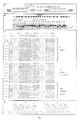
- Figure 1 is a diagram of the pCXUN-BE3 vector framework.
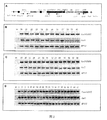
- Figure 2 shows the identification of transgenic plants.
- A is the carrier T-DNA structure map and the location of the primer.
- B, C and D are the detection of Cas9 (D10A), gRNA and hptII genes of P2, S3 and S5 transgenic plants, respectively.
- Figure 3 shows the identification of transgenic plants and sequences of the S5 target of the OsSBEIIb gene.
- A is the schematic diagram of the BE3 fixed point mutation system.
- B is the OsSBEIIb gene structure map and the location of the S5 target, and the PCR product is digested and identified. "+” indicates that the PCR product was cleaved, and "-” indicates that the PCR product was not digested.
- C is the result of cloning and sequencing of PCR products of all plants.
- D is the sequencing map of the genotypes of the two strains S5-17 and S5-26.
- the PAM is represented by blue, and the base to be mutated is expected to be represented by red, and the unintended mutated base is represented by green.
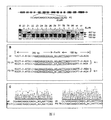
- Figure 4 shows the identification of transgenic plants and sequences of the S3 target of the OsSBEIIb gene.
- A is the OsSBEIIb gene structure map and the location of the S3 target, and the electrophoresis pattern of the PCR product.
- B is the result of cloning and sequencing of PCR products of all plants.
- C is the sequencing map of the genotypes of the two strains S3-1 and S3-18.
- the PAM is represented by blue, and the base to be mutated is expected to be represented by red, and the unintended mutated base is represented by green.
- Figure 5 shows the identification of transgenic plants and sequences of the P2 target of the OsSBEIIb gene.
- A is the OsSBEIIb gene structure map and the location of the P2 target, and the PCR product digestion map. "+” indicates that the PCR product was cleaved, and "-” indicates that the PCR product was not digested.
- C is the result of cloning and sequencing of PCR products of all plants.
- D is a genotype sequencing peak map of two strains of P2-21 and P2-79. The PAM is represented by blue, and the base to be mutated is expected to be represented by red, and the unintended mutated base is represented by green.
- the rice material for rice transformation in the following examples was Kitaake (Oryza sativa L. subsp. japonica), obtained from the Crop Science Research Institute of the Chinese Academy of Agricultural Sciences.
- the pCMV-BE3 vector in the following examples is in the literature "Komor AC, Kim YB, Packer MS, Zuris JA, Liu DR. 2016. Programmable editing of a target base in genomic DNA without double-stranded DNA cleavage. Nature.” Publicly available, the public can Obtained from the Crop Science Institute of the Chinese Academy of Agricultural Sciences.
- endonucleases, kits and PCR enzymes used in the following examples were purchased from the reagent company, and all other reagents were domestically analyzed.
- the AAM medium (pH 5.2) in the following examples is a medium obtained by mixing MS salts & vitamins salt, sucrose, MES, glucose, casein amino acid, acetosyringone and 100 ml of 10 x AA amino acids, each of which The concentration of solute in AAM medium was 4.3 g/L MS salts & vitamins salt, 68.5 g/L sucrose, 0.5 g/L MES, 36 g/L glucose, 500 mg/L casein amino acid, 40 mg/L acetosyringone .
- the above 10x AA amino acids solution is a solution obtained by mixing L-glutamine, L-aspartate, L-arginine, glycine and water, wherein each solute is in a 10x AA amino acid solution.
- concentrations were: 8.76 g/L L-glutamine, 2.66 g/L L-day (-)-Aspartic acid, 1.74 g/L L-arginine, and 75 mg/L glycine.
- the R1 medium (pH 5.8) in the following examples is a medium obtained by mixing MS & Vitamins salt, sucrose, MES, casein amino acid, L-valine, 2,4-D, plant gel and water.
- concentrations of each solute in R1 medium were: 4.3g/L MS& Vitamins salt, 30g/L sucrose, 0.5g/L MES, 300mg/L casein amino acid, 2.8g/L L-valine, 2mg /L 2,4-D, 4 g/L plant gel.
- the R2 medium (pH 5.2) in the following examples is a medium obtained by mixing MS & Vitamins salt, sucrose, MES, casein amino acid, 2,4-D, phytogel, acetosyringone and water, each of which The concentrations of solutes in R2 medium were: 4.3 g/L MS & Vitamins salt, 30 g/L sucrose, 0.5 g/L MES, 300 mg/L casein amino acid, 2 mg/L 2,4-D, 4 g/L plants Gel, 20 mg/ml acetosyringone.
- the R1 screening medium (pH 5.8) in the following examples is a medium obtained by mixing MS & Vitamins salt, sucrose, MES, casein amino acid, L-valine, 2,4-D, plant gel and water. , wherein the concentration of each solute in the R1 screening medium is: 4.3 g / L MS & Vitamins salt, 30 g / L sucrose, 0.5 g / L MES, 300 mg / L casein amino acid, 2.8 g / L L-valine, 2 mg/L 2,4-D, 4 g/L plant gel.
- the R4 differentiation medium (pH 5.8) in the following examples was prepared by mixing MS & Vitamins salt, sucrose, MES, casein amino acid, sorbitol, kinetin, NAA, plant gel and water.
- the medium to which the solute was present in the R4 differentiation medium was: 4.3 g/L MS& Vitamins salt, 30 g/L sucrose, 0.5 g/L MES, 2 g/L casein amino acid, 30 g/L sorbitol 2 mg/L kinetin, 1 mg/L NAA, 4 g/L plant gel.
- the R5 medium (pH 5.8) in the following examples is a medium obtained by mixing MS & Vitamins salt, sucrose, MES, vegetable gel and water, wherein the concentration of each solute in the R5 medium is 2.15 g, respectively. /L MS& Vitamins salt, 15 g/L sucrose, 0.5 g/L MES, 2 g/L plant gel.
- the PAM site is represented by a wavy line
- the deaminase target is represented by a bold black body
- G # and C # # represents the position of the base
- the starting site away from the PAM site is the first base.
- the cleavage site is indicated by an underline.
- the linearized vector obtained in the step (1) and the PCR product obtained in the step (2) were ligated by homologous recombination using the pEASY-Uni Seamless Cloning and Assembly Kit of the full-scale gold company to obtain the vector pCXUN-BE3 ( Figure 1), it can be seen from Figure 1 that the pCXUN-BE3 vector includes an expression cassette, which in turn includes the maize Ubiquitin promoter (Ubi promoter), the coding gene for cytidine deaminase (APOBEC1), and the linkage.
- Ubi promoter maize Ubiquitin promoter
- APOBEC1 coding gene for cytidine deaminase
- the pCXUN-BE3 vector was digested with restriction endonuclease Pme I to obtain a linearized vector;
- PCR amplification was performed using primers S5-F/hrpme-u3R and hrpme-u3F/S5-R, respectively, and the amplified product was mixed 1:1 and used as a template, with primer hrpme. -u3F/hrpme-u3R for amplification, recovery of PCR product;
- step C The linearized vector obtained in step A and the PCR product obtained in step B were ligated by homologous recombination using the pEASY-Uni Seamless Cloning and Assembly Kit of the full-scale gold company, and the positive clone was identified and verified by sequencing to obtain the gRNA of S5.
- nucleotide sequence of the gRNA expression cassette pCXUN-BE3-S5 of S5 was sequence 1, in which position 392-5524 of sequence 1 was composed of nCas9 (D10A) nuclease, deaminase (APOBEC1), and nCas9.
- D10A nuclease and deaminase-linked peptide (XTEN Linker), uracil DNA glycosylase inhibitory protein (UGI) fusion protein BE3 coding gene sequence, 5545-7535 is plant gene expression promoter
- the nucleotide sequence of Ubi, positions 7785-8268 are sgRNA sequences.
- the pCXUN-BE3 vector was digested with restriction endonuclease Pme I to obtain a linearized vector;
- PCR amplification was performed using primers S3-F/hrpme-u3R and hrpme-u3F/S3-R, respectively, and the amplification products were mixed 1:1 and used as a template. Amplification of hrpme-u3F/hrpme-u3R to recover PCR product;
- step C The linearized vector obtained in step A and the PCR product obtained in step B were ligated by homologous recombination using the pEASY-Uni Seamless Cloning and Assembly Kit of the full-scale gold company, and the positive clone was identified and verified by sequencing to obtain the gRNA of S3.
- nucleotide sequence of the gRNA expression cassette pCXUN-BE3-S3 of S3 is sequence 2, wherein position 392-5524 of sequence 2 is composed of nCas9 (D10A) nuclease, deaminase (APOBEC1), and nCas9 (D10A) nuclease and cytidine deaminase-binding peptide (XTEN Linker), uracil DNA glycosylase inhibitory protein (UGI) fusion gene BE3 encoding gene sequence, 5545-7535 for plant gene expression
- the nucleotide sequence of the promoter Ubi, and positions 7785-8268 are sgRNA sequences.
- the pCXUN-BE3 vector was digested with restriction endonuclease Pme I to obtain a linearized vector;
- PCR amplification was performed using primers P2-F/hrpme-u3R and hrpme-u3F/P2-R, respectively, and the amplified product was mixed 1:1 and used as a template, using primer hrpme. -u3F/hrpme-u3R for amplification, recovery of PCR product;
- step C The linearized vector obtained in step A and the PCR product obtained in step B were ligated by homologous recombination using the pEASY-Uni Seamless Cloning and Assembly Kit of the full-scale gold company, and the positive clone was identified and verified by sequencing to obtain the gRNA of P2.
- nucleotide sequence of p2 gRNA expression cassette pCXUN-BE3-P2 was sequence 3, wherein position 392-5524 of sequence 3 was composed of nCas9 (D10A) nuclease, deaminase (APOBEC1), and nCas9 (D10A) nuclease and cytidine deaminase-binding peptide (XTEN Linker), uracil DNA glycosylase inhibitory protein (UGI) fusion gene BE3 encoding gene sequence, 5545-7535 for plant gene expression
- the nucleotide sequence of the promoter Ubi, and positions 7785-8268 are sgRNA sequences.
- the recombinant plasmids pCXUN-BE3-S5, pCXUN-BE3-S3 and pCXUN-BE3-P2 obtained in the first step were introduced into Agrobacterium EHA105, respectively, to obtain recombinant Agrobacterium pCXUN-BE3-S5/EHA105, pCXUN-BE3-S3/EHA105, respectively. And pCXUN-BE3-P2/EHA105.
- the BE3, gRNA and hptII gene primers BE3-F/R, U3-F/R and HPTII-F/R were designed and tested according to the vector sequence, and all T 0 generation S5 rice plants obtained, T 0 generation were obtained.
- Transgenic S3 rice plants and T 0 transgenic P2 rice plants were identified by PCR and statistical results were obtained.
- the primers S5testF/R were used to amplify the genomic DNA of 52 positive T 0 transgenic S5 rice plants obtained in step 3, and the PCR product was obtained.
- the PCR product was digested with BstNI, and the target sequence occurred in the transgenic rice plants of S5. In the expected mutation, the PCR product corresponding to the S5 rice plant will not be digested by the corresponding restriction enzyme BstNI.
- the sequencing results are shown in Figure 3.
- 23 plants with site-directed mutagenesis can be divided into the following three types: the first group has 10 plants, and the fifth and sixth bases are mutated from G to A (G 5 is mutated into A 5 and G 6 is mutated to A 6 ), wherein 3 plants are homozygous (the fifth and sixth bases of both homologous chromosomes are mutated from G to A, S5-17, S5-36, and S5-46), 6 are heterozygous types (S5-1, S5-8, S5-21, S5-33, S5-42, and S5-43), and 1 is a double allele type (S5-34)
- the first category (expected mutation type) accounted for 43% (10/23) of all mutation types, and the efficiency reached 20% (10/52) relative to all transgenic plants; the second category had 8 plants at the same time.
- the fifth and/or sixth bases are mutated from G to A and G to C or T, one of which is homozygous (S5-26) and the other 7 is heterozygous (S5) -10, S5-25, S5-44, S5-45, S5-48, S5-50 and S5-52); there are 5 plants in the third category.
- This type of mutation is a non-expected type, mainly a locus. Insertion and deletion, 3 are biallelic mutations (S5-18, S5-31 and S4-47) and 2 are heterozygous (S5-16 and S5-23).
- Other G was also contained in the S5 target, but no corresponding mutation occurred.
- the sequencing results are shown in Figure 4.
- the sequencing results showed that there were 11 plants with site-directed mutations in 38 positive T 0 transgenic plants.
- 11 plants with site-directed mutagenesis could be divided into the following three categories: the first group contained 4 plants, which were only Contains the expected type of mutation (C mutation to T), which are S3-1, S3-4, S3-26 and S3-29, respectively, wherein S3-1, S3-4 and S3-29 are homozygous plants, S3-26 is a heterozygous plant, and all three target sites on a homologous chromosome of heterozygous S3-26 are mutated (the first, second and seventh bases are all changed from C to T).
- the other three homologous chromosomes are all wild-type; the second type has only one plant, which is S3-6, and the seventh base of a homologous chromosome of S3-6 is mutated from C to T.
- the seventh base of another homologous chromosome is mutated from C to G;
- the third class has 6 plants, all of which are unexpected types, of which 4 are homozygous and the seventh base is C.
- the mutation is G, and the other two plants are one strand.
- the first base and the seventh base are both mutated from C to G, and the other base is only the seventh base is mutated from C to G.
- the primers P2testF/R were used to amplify the genomic DNA of 88 positive T 0 transgenic P2 rice plants, and the PCR product was obtained.
- the PCR product was digested with EcoRI, and the expected mutation occurred in the target sequence in the transgenic P2 rice plant.
- the PCR product corresponding to the transgenic P2 rice plant will not be digested by the corresponding restriction endonuclease BstNI.
- the sequencing results are shown in Figure 5.
- the results showed that both P2-21 and P2-79 were heterozygous.
- a homologous chromosome of P2-21 was mutated from G to A in the eighth and tenth bases of the target sequence, and another homologue.
- the chromosome is wild type.
- a homologous chromosome of P2-79 is mutated from G to C in the eighth base of the target sequence, the tenth base does not change, and the other homologous chromosome is wild type.
- the present invention provides a system for site-directed editing of a plant genome comprising a BE3 plant expression vector expressed by nCas9 (D10A), deaminase (APOBEC1) and uracil DNA glycosylase inhibitory protein (UGI)
- nCas9 D10A
- APOBEC1 deaminase
- UMI uracil DNA glycosylase inhibitory protein
- the fusion protein is composed and the system is verified by rice OsPDS and OsSBEIIb as target genes. The results showed that among the selected three targets, the expected site-directed mutant plants were obtained, and C was mutated to T (or G to A) in the 4-8 position of the target sequence, and was achieved in rice.
Landscapes
- Health & Medical Sciences (AREA)
- Genetics & Genomics (AREA)
- Life Sciences & Earth Sciences (AREA)
- Engineering & Computer Science (AREA)
- Biomedical Technology (AREA)
- Biotechnology (AREA)
- Zoology (AREA)
- Bioinformatics & Cheminformatics (AREA)
- Organic Chemistry (AREA)
- General Engineering & Computer Science (AREA)
- Chemical & Material Sciences (AREA)
- Wood Science & Technology (AREA)
- Molecular Biology (AREA)
- Microbiology (AREA)
- Plant Pathology (AREA)
- Cell Biology (AREA)
- Biophysics (AREA)
- Biochemistry (AREA)
- General Health & Medical Sciences (AREA)
- Physics & Mathematics (AREA)
- Breeding Of Plants And Reproduction By Means Of Culturing (AREA)
- Micro-Organisms Or Cultivation Processes Thereof (AREA)
Abstract
L'invention concerne une substitution de base site dirigée médiée par CRISPR/nCas9 appliquée à des plantes. La substitution de base site dirigée est obtenue par un système d'édition site dirigée de génomes de plantes, et le système comprend un vecteur d'expression de plante BE3 exprimant une protéine de fusion composée de nCas9 (D10A), de la désaminase, et d'une protéine inhibitrice de l'uracile-ADN glycosylase, et le système a été vérifié en utilisant les OsPDS et OsSBEIIb du riz en tant que gènes cibles. Les résultats ont montré que, parmi trois sites cibles sélectionnés, les plantes mutantes site dirigées attendues étaient toutes obtenues, une mutation de site précise de la base dans le riz a été obtenue, et l'efficacité la plus élevée a atteint environ 20 %, offrant ainsi un procédé réalisable et efficace de substitution de base pour l'amélioration génétique des cultures Le procédé a un fort potentiel pour une application dans l'amélioration génétique agricole et fournit une base pour l'amélioration rapide des traits agronomiques importants de cultures.
Applications Claiming Priority (2)
| Application Number | Priority Date | Filing Date | Title |
|---|---|---|---|
| CN201611091107.7 | 2016-12-01 | ||
| CN201611091107 | 2016-12-01 |
Publications (1)
| Publication Number | Publication Date |
|---|---|
| WO2018099256A1 true WO2018099256A1 (fr) | 2018-06-07 |
Family
ID=59545361
Family Applications (1)
| Application Number | Title | Priority Date | Filing Date |
|---|---|---|---|
| PCT/CN2017/110349 Ceased WO2018099256A1 (fr) | 2016-12-01 | 2017-11-10 | Application de substitution de base site dirigée médiée par crispr/ncas9 dans des plantes |
Country Status (2)
| Country | Link |
|---|---|
| CN (1) | CN107043779B (fr) |
| WO (1) | WO2018099256A1 (fr) |
Cited By (39)
| Publication number | Priority date | Publication date | Assignee | Title |
|---|---|---|---|---|
| US10323236B2 (en) | 2011-07-22 | 2019-06-18 | President And Fellows Of Harvard College | Evaluation and improvement of nuclease cleavage specificity |
| US10465176B2 (en) | 2013-12-12 | 2019-11-05 | President And Fellows Of Harvard College | Cas variants for gene editing |
| US10508298B2 (en) | 2013-08-09 | 2019-12-17 | President And Fellows Of Harvard College | Methods for identifying a target site of a CAS9 nuclease |
| CN110878305A (zh) * | 2019-12-09 | 2020-03-13 | 安徽省农业科学院水稻研究所 | 一种高效的宽窗口单碱基编辑基因及其应用和育种方法 |
| US10597679B2 (en) | 2013-09-06 | 2020-03-24 | President And Fellows Of Harvard College | Switchable Cas9 nucleases and uses thereof |
| US10682410B2 (en) | 2013-09-06 | 2020-06-16 | President And Fellows Of Harvard College | Delivery system for functional nucleases |
| US10704062B2 (en) | 2014-07-30 | 2020-07-07 | President And Fellows Of Harvard College | CAS9 proteins including ligand-dependent inteins |
| US10745677B2 (en) | 2016-12-23 | 2020-08-18 | President And Fellows Of Harvard College | Editing of CCR5 receptor gene to protect against HIV infection |
| US10858639B2 (en) | 2013-09-06 | 2020-12-08 | President And Fellows Of Harvard College | CAS9 variants and uses thereof |
| CN112239756A (zh) * | 2019-07-01 | 2021-01-19 | 科稷达隆生物技术有限公司 | 一组来源于植物的胞嘧啶脱氨酶和其在碱基编辑系统中的应用 |
| US10947530B2 (en) | 2016-08-03 | 2021-03-16 | President And Fellows Of Harvard College | Adenosine nucleobase editors and uses thereof |
| US11046948B2 (en) | 2013-08-22 | 2021-06-29 | President And Fellows Of Harvard College | Engineered transcription activator-like effector (TALE) domains and uses thereof |
| US11214780B2 (en) | 2015-10-23 | 2022-01-04 | President And Fellows Of Harvard College | Nucleobase editors and uses thereof |
| US11268082B2 (en) | 2017-03-23 | 2022-03-08 | President And Fellows Of Harvard College | Nucleobase editors comprising nucleic acid programmable DNA binding proteins |
| CN114317518A (zh) * | 2020-09-30 | 2022-04-12 | 北京市农林科学院 | SpRYn-CBE碱基编辑系统在植物基因组碱基替换中的应用 |
| CN114317590A (zh) * | 2020-09-30 | 2022-04-12 | 北京市农林科学院 | 一种将植物基因组中的碱基c突变为碱基t的方法 |
| US11306324B2 (en) | 2016-10-14 | 2022-04-19 | President And Fellows Of Harvard College | AAV delivery of nucleobase editors |
| US11319532B2 (en) | 2017-08-30 | 2022-05-03 | President And Fellows Of Harvard College | High efficiency base editors comprising Gam |
| US11447770B1 (en) | 2019-03-19 | 2022-09-20 | The Broad Institute, Inc. | Methods and compositions for prime editing nucleotide sequences |
| US11542496B2 (en) | 2017-03-10 | 2023-01-03 | President And Fellows Of Harvard College | Cytosine to guanine base editor |
| US11542509B2 (en) | 2016-08-24 | 2023-01-03 | President And Fellows Of Harvard College | Incorporation of unnatural amino acids into proteins using base editing |
| US11560566B2 (en) | 2017-05-12 | 2023-01-24 | President And Fellows Of Harvard College | Aptazyme-embedded guide RNAs for use with CRISPR-Cas9 in genome editing and transcriptional activation |
| CN115747252A (zh) * | 2021-09-06 | 2023-03-07 | 武汉大学 | 一种基于基因编辑技术创制水稻新型两系不育系的方法 |
| US11661590B2 (en) | 2016-08-09 | 2023-05-30 | President And Fellows Of Harvard College | Programmable CAS9-recombinase fusion proteins and uses thereof |
| US11732274B2 (en) | 2017-07-28 | 2023-08-22 | President And Fellows Of Harvard College | Methods and compositions for evolving base editors using phage-assisted continuous evolution (PACE) |
| US11795443B2 (en) | 2017-10-16 | 2023-10-24 | The Broad Institute, Inc. | Uses of adenosine base editors |
| US11898179B2 (en) | 2017-03-09 | 2024-02-13 | President And Fellows Of Harvard College | Suppression of pain by gene editing |
| US11912985B2 (en) | 2020-05-08 | 2024-02-27 | The Broad Institute, Inc. | Methods and compositions for simultaneous editing of both strands of a target double-stranded nucleotide sequence |
| CN118853704A (zh) * | 2024-06-21 | 2024-10-29 | 扬州大学 | 水稻OsSBEIIb基因突变体及其在改良水稻淀粉组分中的应用和改良方法 |
| US12157760B2 (en) | 2018-05-23 | 2024-12-03 | The Broad Institute, Inc. | Base editors and uses thereof |
| CN119842802A (zh) * | 2025-03-19 | 2025-04-18 | 中国农业科学院作物科学研究所 | 一种通过定点碱基突变玉米ZmGRF3基因提高玉米生物量和/或籽粒产量的方法 |
| US12281338B2 (en) | 2018-10-29 | 2025-04-22 | The Broad Institute, Inc. | Nucleobase editors comprising GeoCas9 and uses thereof |
| CN119955812A (zh) * | 2025-03-14 | 2025-05-09 | 中国农业科学院作物科学研究所 | 一种通过定点碱基突变玉米ZmGRF1基因改良玉米生物量与籽粒产量的育种方法与应用 |
| US12351837B2 (en) | 2019-01-23 | 2025-07-08 | The Broad Institute, Inc. | Supernegatively charged proteins and uses thereof |
| US12390514B2 (en) | 2017-03-09 | 2025-08-19 | President And Fellows Of Harvard College | Cancer vaccine |
| US12406749B2 (en) | 2017-12-15 | 2025-09-02 | The Broad Institute, Inc. | Systems and methods for predicting repair outcomes in genetic engineering |
| US12435330B2 (en) | 2019-10-10 | 2025-10-07 | The Broad Institute, Inc. | Methods and compositions for prime editing RNA |
| US12473543B2 (en) | 2019-04-17 | 2025-11-18 | The Broad Institute, Inc. | Adenine base editors with reduced off-target effects |
| US12522807B2 (en) | 2018-07-09 | 2026-01-13 | The Broad Institute, Inc. | RNA programmable epigenetic RNA modifiers and uses thereof |
Families Citing this family (27)
| Publication number | Priority date | Publication date | Assignee | Title |
|---|---|---|---|---|
| EP3538661A4 (fr) * | 2016-11-14 | 2020-04-15 | Institute Of Genetics And Developmental Biology, Chinese Academy Of Sciences | Procédé d'édition de base dans des plantes |
| CN107043779B (zh) * | 2016-12-01 | 2020-05-12 | 中国农业科学院作物科学研究所 | 一种CRISPR/nCas9介导的定点碱基替换在植物中的应用 |
| EP3712272A4 (fr) * | 2017-07-25 | 2021-10-13 | Shanghai Institutes for Biological Sciences, Chinese Academy of Sciences | Procédé de modulation de l'épissage de l'arn par induction d'une mutation de base au niveau d'un site d'épissage ou d'une substitution de base dans une région de polypyrimidine |
| CN109321584B (zh) * | 2017-12-27 | 2021-07-16 | 华东师范大学 | 一种简单定性/定量检测单碱基基因编辑技术工作效率的报告系统 |
| KR20250133482A (ko) * | 2018-05-11 | 2025-09-05 | 빔 테라퓨틱스, 인크. | 프로그래밍가능한 염기 편집기 시스템을 이용하여 단일 뉴클레오티드 다형성을 편집하는 방법 |
| AU2019265019B2 (en) | 2018-05-11 | 2025-11-06 | Beam Therapeutics Inc. | Methods of substituting pathogenic amino acids using programmable base editor systems |
| CN110835634B (zh) * | 2018-08-15 | 2022-07-26 | 华东师范大学 | 一种新型碱基转换编辑系统及其应用 |
| CN110835632B (zh) * | 2018-08-15 | 2022-01-11 | 华东师范大学 | 新型碱基转换编辑系统用于基因治疗的应用 |
| CN110835629B (zh) * | 2018-08-15 | 2022-07-26 | 华东师范大学 | 一种新型碱基转换编辑系统的构建方法及其应用 |
| WO2020051562A2 (fr) | 2018-09-07 | 2020-03-12 | Beam Therapeutics Inc. | Compositions et procédés d'amélioration de l'édition de base |
| EP3847254A4 (fr) | 2018-09-07 | 2022-08-10 | Beam Therapeutics Inc. | Compositions et procédés d'administration d'un système d'édition de nucléobase |
| CN113913454B (zh) * | 2018-11-07 | 2023-07-21 | 中国农业科学院植物保护研究所 | 一套用于水稻的人工基因编辑系统 |
| JP2022511508A (ja) * | 2018-12-04 | 2022-01-31 | シンジェンタ クロップ プロテクション アクチェンゲゼルシャフト | ゲノム編集による遺伝子サイレンシング |
| CN109593781B (zh) * | 2018-12-20 | 2021-02-23 | 华中农业大学 | 陆地棉基因组的精准高效编辑方法 |
| CN109652439A (zh) * | 2018-12-27 | 2019-04-19 | 宜春学院 | 利用CRISPR/Cas9介导的腺嘌呤碱基编辑系统改良水稻稻瘟病广谱抗性的方法 |
| CN109652440A (zh) * | 2018-12-28 | 2019-04-19 | 北京市农林科学院 | VQRn-Cas9&PmCDA1&UGI碱基编辑系统在植物基因编辑中的应用 |
| CN109666693B (zh) * | 2018-12-29 | 2022-08-16 | 北京市农林科学院 | Mg132在碱基编辑系统编辑受体基因组中的应用 |
| CN120174005A (zh) | 2019-02-13 | 2025-06-20 | 比姆医疗股份有限公司 | 具有用于修饰靶标序列中核碱基的腺苷脱氨酶碱基编辑器的经修饰的免疫细胞 |
| CN112280771A (zh) * | 2019-07-10 | 2021-01-29 | 中国科学院遗传与发育生物学研究所 | 双功能基因组编辑系统及其用途 |
| WO2021032108A1 (fr) * | 2019-08-20 | 2021-02-25 | 中国科学院天津工业生物技术研究所 | Systèmes d'édition de bases pour obtenir une mutation de base c à a et c à g et application de associée |
| EP4034138A4 (fr) | 2019-09-27 | 2024-07-31 | Beam Therapeutics, Inc. | Compositions et procédés pour le traitement de cancers liquides |
| CN112779265B (zh) * | 2019-11-11 | 2022-11-08 | 中国科学院遗传与发育生物学研究所 | 一种对植物特定基因进行饱和碱基编辑的育种方法 |
| BR112022017704A2 (pt) * | 2020-03-04 | 2022-11-01 | Suzhou Qi Biodesign Biotechnology Company Ltd | Método e sistema de edição de genoma multiplex |
| CA3196831A1 (fr) | 2020-09-25 | 2022-03-31 | Beam Therapeutics Inc. | Cellules immunitaires modifiees resistantes au fratricide et leurs methodes d'utilisation |
| CN112538492B (zh) * | 2020-12-14 | 2022-10-11 | 安徽省农业科学院水稻研究所 | 一种识别PAM序列为NRTH的SpCas9n变体及相应碱基编辑系统 |
| CN116262927B (zh) * | 2021-12-13 | 2024-04-26 | 中国科学院微生物研究所 | 基于CRISPR/Cas系统调控基因表达的方法及其应用 |
| CN114591977B (zh) * | 2022-02-28 | 2023-05-16 | 中国农业科学院作物科学研究所 | 通过精准编辑内源epsps基因获得抗草甘膦水稻的方法及其所用系统 |
Citations (8)
| Publication number | Priority date | Publication date | Assignee | Title |
|---|---|---|---|---|
| WO2014186686A2 (fr) * | 2013-05-17 | 2014-11-20 | Two Blades Foundation | Mutagénèse ciblée et ingénierie génomique dans des plantes à l'aide de nucléases cas guidées par arn |
| WO2015133554A1 (fr) * | 2014-03-05 | 2015-09-11 | 国立大学法人神戸大学 | Procédé de modification de séquence génomique permettant la conversion de façon spécifique de bases d'acide nucléique de séquences d'adn ciblées et complexe moléculaire destiné à être utilisée dans ce dernier |
| CN105934516A (zh) * | 2013-12-12 | 2016-09-07 | 哈佛大学的校长及成员们 | 用于基因编辑的cas变体 |
| WO2017070632A2 (fr) * | 2015-10-23 | 2017-04-27 | President And Fellows Of Harvard College | Éditeurs de nucléobases et leurs utilisations |
| CN106609282A (zh) * | 2016-12-02 | 2017-05-03 | 中国科学院上海生命科学研究院 | 一种用于植物基因组定点碱基替换的载体 |
| WO2017090761A1 (fr) * | 2015-11-27 | 2017-06-01 | 国立大学法人神戸大学 | Procédé de conversion de séquence de génome de monocotylédone convertissant spécifiquement une base d'acide nucléique d'une séquence adn ciblée, et complexe moléculaire mettant en œuvre celui-ci |
| CN106834341A (zh) * | 2016-12-30 | 2017-06-13 | 中国农业大学 | 一种基因定点突变载体及其构建方法和应用 |
| CN107043779A (zh) * | 2016-12-01 | 2017-08-15 | 中国农业科学院作物科学研究所 | 一种CRISPR/nCas9介导的定点碱基替换在植物中的应用 |
-
2017
- 2017-02-23 CN CN201710098892.7A patent/CN107043779B/zh active Active
- 2017-11-10 WO PCT/CN2017/110349 patent/WO2018099256A1/fr not_active Ceased
Patent Citations (8)
| Publication number | Priority date | Publication date | Assignee | Title |
|---|---|---|---|---|
| WO2014186686A2 (fr) * | 2013-05-17 | 2014-11-20 | Two Blades Foundation | Mutagénèse ciblée et ingénierie génomique dans des plantes à l'aide de nucléases cas guidées par arn |
| CN105934516A (zh) * | 2013-12-12 | 2016-09-07 | 哈佛大学的校长及成员们 | 用于基因编辑的cas变体 |
| WO2015133554A1 (fr) * | 2014-03-05 | 2015-09-11 | 国立大学法人神戸大学 | Procédé de modification de séquence génomique permettant la conversion de façon spécifique de bases d'acide nucléique de séquences d'adn ciblées et complexe moléculaire destiné à être utilisée dans ce dernier |
| WO2017070632A2 (fr) * | 2015-10-23 | 2017-04-27 | President And Fellows Of Harvard College | Éditeurs de nucléobases et leurs utilisations |
| WO2017090761A1 (fr) * | 2015-11-27 | 2017-06-01 | 国立大学法人神戸大学 | Procédé de conversion de séquence de génome de monocotylédone convertissant spécifiquement une base d'acide nucléique d'une séquence adn ciblée, et complexe moléculaire mettant en œuvre celui-ci |
| CN107043779A (zh) * | 2016-12-01 | 2017-08-15 | 中国农业科学院作物科学研究所 | 一种CRISPR/nCas9介导的定点碱基替换在植物中的应用 |
| CN106609282A (zh) * | 2016-12-02 | 2017-05-03 | 中国科学院上海生命科学研究院 | 一种用于植物基因组定点碱基替换的载体 |
| CN106834341A (zh) * | 2016-12-30 | 2017-06-13 | 中国农业大学 | 一种基因定点突变载体及其构建方法和应用 |
Non-Patent Citations (1)
| Title |
|---|
| PLOSKY, B. S.: "CRISPR-Mediated Base Editing without DNA Double-Strand Breaks", MOLECULAR CELL, 19 May 2016 (2016-05-19), XP029552452 * |
Cited By (73)
| Publication number | Priority date | Publication date | Assignee | Title |
|---|---|---|---|---|
| US10323236B2 (en) | 2011-07-22 | 2019-06-18 | President And Fellows Of Harvard College | Evaluation and improvement of nuclease cleavage specificity |
| US12006520B2 (en) | 2011-07-22 | 2024-06-11 | President And Fellows Of Harvard College | Evaluation and improvement of nuclease cleavage specificity |
| US10954548B2 (en) | 2013-08-09 | 2021-03-23 | President And Fellows Of Harvard College | Nuclease profiling system |
| US10508298B2 (en) | 2013-08-09 | 2019-12-17 | President And Fellows Of Harvard College | Methods for identifying a target site of a CAS9 nuclease |
| US11920181B2 (en) | 2013-08-09 | 2024-03-05 | President And Fellows Of Harvard College | Nuclease profiling system |
| US11046948B2 (en) | 2013-08-22 | 2021-06-29 | President And Fellows Of Harvard College | Engineered transcription activator-like effector (TALE) domains and uses thereof |
| US12473573B2 (en) | 2013-09-06 | 2025-11-18 | President And Fellows Of Harvard College | Switchable Cas9 nucleases and uses thereof |
| US10682410B2 (en) | 2013-09-06 | 2020-06-16 | President And Fellows Of Harvard College | Delivery system for functional nucleases |
| US10858639B2 (en) | 2013-09-06 | 2020-12-08 | President And Fellows Of Harvard College | CAS9 variants and uses thereof |
| US12559737B2 (en) | 2013-09-06 | 2026-02-24 | President And Fellows Of Harvard College | Cas9 variants and uses thereof |
| US10912833B2 (en) | 2013-09-06 | 2021-02-09 | President And Fellows Of Harvard College | Delivery of negatively charged proteins using cationic lipids |
| US12584118B2 (en) | 2013-09-06 | 2026-03-24 | President And Fellows Of Harvard College | Cas9 variants and uses thereof |
| US10597679B2 (en) | 2013-09-06 | 2020-03-24 | President And Fellows Of Harvard College | Switchable Cas9 nucleases and uses thereof |
| US11299755B2 (en) | 2013-09-06 | 2022-04-12 | President And Fellows Of Harvard College | Switchable CAS9 nucleases and uses thereof |
| US11053481B2 (en) | 2013-12-12 | 2021-07-06 | President And Fellows Of Harvard College | Fusions of Cas9 domains and nucleic acid-editing domains |
| US11124782B2 (en) | 2013-12-12 | 2021-09-21 | President And Fellows Of Harvard College | Cas variants for gene editing |
| US12215365B2 (en) | 2013-12-12 | 2025-02-04 | President And Fellows Of Harvard College | Cas variants for gene editing |
| US10465176B2 (en) | 2013-12-12 | 2019-11-05 | President And Fellows Of Harvard College | Cas variants for gene editing |
| US10704062B2 (en) | 2014-07-30 | 2020-07-07 | President And Fellows Of Harvard College | CAS9 proteins including ligand-dependent inteins |
| US12398406B2 (en) | 2014-07-30 | 2025-08-26 | President And Fellows Of Harvard College | CAS9 proteins including ligand-dependent inteins |
| US11578343B2 (en) | 2014-07-30 | 2023-02-14 | President And Fellows Of Harvard College | CAS9 proteins including ligand-dependent inteins |
| US12344869B2 (en) | 2015-10-23 | 2025-07-01 | President And Fellows Of Harvard College | Nucleobase editors and uses thereof |
| US11214780B2 (en) | 2015-10-23 | 2022-01-04 | President And Fellows Of Harvard College | Nucleobase editors and uses thereof |
| US12043852B2 (en) | 2015-10-23 | 2024-07-23 | President And Fellows Of Harvard College | Evolved Cas9 proteins for gene editing |
| US11999947B2 (en) | 2016-08-03 | 2024-06-04 | President And Fellows Of Harvard College | Adenosine nucleobase editors and uses thereof |
| US11702651B2 (en) | 2016-08-03 | 2023-07-18 | President And Fellows Of Harvard College | Adenosine nucleobase editors and uses thereof |
| US10947530B2 (en) | 2016-08-03 | 2021-03-16 | President And Fellows Of Harvard College | Adenosine nucleobase editors and uses thereof |
| US11661590B2 (en) | 2016-08-09 | 2023-05-30 | President And Fellows Of Harvard College | Programmable CAS9-recombinase fusion proteins and uses thereof |
| US12084663B2 (en) | 2016-08-24 | 2024-09-10 | President And Fellows Of Harvard College | Incorporation of unnatural amino acids into proteins using base editing |
| US11542509B2 (en) | 2016-08-24 | 2023-01-03 | President And Fellows Of Harvard College | Incorporation of unnatural amino acids into proteins using base editing |
| US11306324B2 (en) | 2016-10-14 | 2022-04-19 | President And Fellows Of Harvard College | AAV delivery of nucleobase editors |
| US10745677B2 (en) | 2016-12-23 | 2020-08-18 | President And Fellows Of Harvard College | Editing of CCR5 receptor gene to protect against HIV infection |
| US11820969B2 (en) | 2016-12-23 | 2023-11-21 | President And Fellows Of Harvard College | Editing of CCR2 receptor gene to protect against HIV infection |
| US12390514B2 (en) | 2017-03-09 | 2025-08-19 | President And Fellows Of Harvard College | Cancer vaccine |
| US11898179B2 (en) | 2017-03-09 | 2024-02-13 | President And Fellows Of Harvard College | Suppression of pain by gene editing |
| US12516308B2 (en) | 2017-03-09 | 2026-01-06 | President And Fellows Of Harvard College | Suppression of pain by gene editing |
| US11542496B2 (en) | 2017-03-10 | 2023-01-03 | President And Fellows Of Harvard College | Cytosine to guanine base editor |
| US12435331B2 (en) | 2017-03-10 | 2025-10-07 | President And Fellows Of Harvard College | Cytosine to guanine base editor |
| US11268082B2 (en) | 2017-03-23 | 2022-03-08 | President And Fellows Of Harvard College | Nucleobase editors comprising nucleic acid programmable DNA binding proteins |
| US11560566B2 (en) | 2017-05-12 | 2023-01-24 | President And Fellows Of Harvard College | Aptazyme-embedded guide RNAs for use with CRISPR-Cas9 in genome editing and transcriptional activation |
| US12359218B2 (en) | 2017-07-28 | 2025-07-15 | President And Fellows Of Harvard College | Methods and compositions for evolving base editors using phage-assisted continuous evolution (PACE) |
| US11732274B2 (en) | 2017-07-28 | 2023-08-22 | President And Fellows Of Harvard College | Methods and compositions for evolving base editors using phage-assisted continuous evolution (PACE) |
| US11932884B2 (en) | 2017-08-30 | 2024-03-19 | President And Fellows Of Harvard College | High efficiency base editors comprising Gam |
| US11319532B2 (en) | 2017-08-30 | 2022-05-03 | President And Fellows Of Harvard College | High efficiency base editors comprising Gam |
| US11795443B2 (en) | 2017-10-16 | 2023-10-24 | The Broad Institute, Inc. | Uses of adenosine base editors |
| US12406749B2 (en) | 2017-12-15 | 2025-09-02 | The Broad Institute, Inc. | Systems and methods for predicting repair outcomes in genetic engineering |
| US12157760B2 (en) | 2018-05-23 | 2024-12-03 | The Broad Institute, Inc. | Base editors and uses thereof |
| US12522807B2 (en) | 2018-07-09 | 2026-01-13 | The Broad Institute, Inc. | RNA programmable epigenetic RNA modifiers and uses thereof |
| US12281338B2 (en) | 2018-10-29 | 2025-04-22 | The Broad Institute, Inc. | Nucleobase editors comprising GeoCas9 and uses thereof |
| US12351837B2 (en) | 2019-01-23 | 2025-07-08 | The Broad Institute, Inc. | Supernegatively charged proteins and uses thereof |
| US12281303B2 (en) | 2019-03-19 | 2025-04-22 | The Broad Institute, Inc. | Methods and compositions for prime editing nucleotide sequences |
| US11795452B2 (en) | 2019-03-19 | 2023-10-24 | The Broad Institute, Inc. | Methods and compositions for prime editing nucleotide sequences |
| US12509680B2 (en) | 2019-03-19 | 2025-12-30 | The Broad Institute, Inc. | Methods and compositions for prime editing nucleotide sequences |
| US11447770B1 (en) | 2019-03-19 | 2022-09-20 | The Broad Institute, Inc. | Methods and compositions for prime editing nucleotide sequences |
| US11643652B2 (en) | 2019-03-19 | 2023-05-09 | The Broad Institute, Inc. | Methods and compositions for prime editing nucleotide sequences |
| US12570972B2 (en) | 2019-03-19 | 2026-03-10 | The Broad Institute, Inc. | Methods and compositions for prime editing nucleotide sequences |
| US12473543B2 (en) | 2019-04-17 | 2025-11-18 | The Broad Institute, Inc. | Adenine base editors with reduced off-target effects |
| CN112239756A (zh) * | 2019-07-01 | 2021-01-19 | 科稷达隆生物技术有限公司 | 一组来源于植物的胞嘧啶脱氨酶和其在碱基编辑系统中的应用 |
| CN112239756B (zh) * | 2019-07-01 | 2022-04-19 | 科稷达隆(北京)生物技术有限公司 | 一组来源于植物的胞嘧啶脱氨酶和其在碱基编辑系统中的应用 |
| US12435330B2 (en) | 2019-10-10 | 2025-10-07 | The Broad Institute, Inc. | Methods and compositions for prime editing RNA |
| CN110878305B (zh) * | 2019-12-09 | 2022-04-12 | 安徽省农业科学院水稻研究所 | 一种宽窗口单碱基编辑基因及其应用和育种方法 |
| CN110878305A (zh) * | 2019-12-09 | 2020-03-13 | 安徽省农业科学院水稻研究所 | 一种高效的宽窗口单碱基编辑基因及其应用和育种方法 |
| US11912985B2 (en) | 2020-05-08 | 2024-02-27 | The Broad Institute, Inc. | Methods and compositions for simultaneous editing of both strands of a target double-stranded nucleotide sequence |
| US12031126B2 (en) | 2020-05-08 | 2024-07-09 | The Broad Institute, Inc. | Methods and compositions for simultaneous editing of both strands of a target double-stranded nucleotide sequence |
| CN114317590B (zh) * | 2020-09-30 | 2024-01-16 | 北京市农林科学院 | 一种将植物基因组中的碱基c突变为碱基t的方法 |
| CN114317518B (zh) * | 2020-09-30 | 2024-01-12 | 北京市农林科学院 | SpRYn-CBE碱基编辑系统在植物基因组碱基替换中的应用 |
| CN114317590A (zh) * | 2020-09-30 | 2022-04-12 | 北京市农林科学院 | 一种将植物基因组中的碱基c突变为碱基t的方法 |
| CN114317518A (zh) * | 2020-09-30 | 2022-04-12 | 北京市农林科学院 | SpRYn-CBE碱基编辑系统在植物基因组碱基替换中的应用 |
| CN115747252A (zh) * | 2021-09-06 | 2023-03-07 | 武汉大学 | 一种基于基因编辑技术创制水稻新型两系不育系的方法 |
| CN118853704A (zh) * | 2024-06-21 | 2024-10-29 | 扬州大学 | 水稻OsSBEIIb基因突变体及其在改良水稻淀粉组分中的应用和改良方法 |
| CN119955812A (zh) * | 2025-03-14 | 2025-05-09 | 中国农业科学院作物科学研究所 | 一种通过定点碱基突变玉米ZmGRF1基因改良玉米生物量与籽粒产量的育种方法与应用 |
| CN119842802B (zh) * | 2025-03-19 | 2025-06-27 | 中国农业科学院作物科学研究所 | 一种通过定点碱基突变玉米ZmGRF3基因提高玉米生物量和/或籽粒产量的方法 |
| CN119842802A (zh) * | 2025-03-19 | 2025-04-18 | 中国农业科学院作物科学研究所 | 一种通过定点碱基突变玉米ZmGRF3基因提高玉米生物量和/或籽粒产量的方法 |
Also Published As
| Publication number | Publication date |
|---|---|
| CN107043779A (zh) | 2017-08-15 |
| CN107043779B (zh) | 2020-05-12 |
Similar Documents
| Publication | Publication Date | Title |
|---|---|---|
| WO2018099256A1 (fr) | Application de substitution de base site dirigée médiée par crispr/ncas9 dans des plantes | |
| CN104846010B (zh) | 一种删除转基因水稻筛选标记基因的方法 | |
| CN108795972B (zh) | 不使用转基因标记序列分离细胞的方法 | |
| CN107988229B (zh) | 一种利用CRISPR-Cas修饰OsTAC1基因获得分蘖改变的水稻的方法 | |
| CN109652422B (zh) | 高效的单碱基编辑系统OsSpCas9-eCDA及其应用 | |
| CN107267524B (zh) | 用于基因打靶和性状堆叠的工程化转基因整合平台(etip) | |
| CN105063083B (zh) | 防止基因漂移的水稻工程保持系的创制方法及其应用 | |
| Shimatani et al. | Inheritance of co-edited genes by CRISPR-based targeted nucleotide substitutions in rice | |
| Hsu et al. | Application of Cas12a and nCas9-activation-induced cytidine deaminase for genome editing and as a non-sexual strategy to generate homozygous/multiplex edited plants in the allotetraploid genome of tobacco | |
| CN104846009B (zh) | 一种水稻工程保持系的构建方法及其应用 | |
| Rather et al. | Advances in protoplast transfection promote efficient CRISPR/Cas9-mediated genome editing in tetraploid potato | |
| WO2018098935A1 (fr) | Vecteur pour substitution de base dirigée du génome d'une plante | |
| CN108034671B (zh) | 一种质粒载体及利用其建立植物群体的方法 | |
| CN119020395A (zh) | 一种诱导植物无融合生殖的方法和应用 | |
| JP2022549430A (ja) | Dna塩基編集のための方法及び組成物 | |
| WO2019014917A1 (fr) | Système d'édition de gène et méthode d'édition de génome de plante à l'aide de celui-ci | |
| CN116376934A (zh) | NLR基因对Pm55/SuPm55及其抗小麦白粉病育种利用 | |
| CN107435044B (zh) | 水稻雄蕊特异表达的启动子及其应用 | |
| CN107365772B (zh) | 一种植物花粉特异性启动子psp1及其应用 | |
| KR20250005091A (ko) | 자가절제를 위한 식물 조절 요소 및 이의 용도 | |
| CN118127073A (zh) | 水稻烷基嘌呤糖基化酶及其突变体在植物A-to-K单碱基编辑中的应用 | |
| CN116732070A (zh) | 一种能够实现碱基颠换的cgbe单碱基编辑器及其应用 | |
| CN113429467B (zh) | Npf7.6蛋白在调控豆科植物根瘤耐氮性中的应用 | |
| CN112522299A (zh) | 一种利用OsTNC1基因突变获得分蘖增加的水稻的方法 | |
| Weiss et al. | Efficient transgene-free multiplexed genome editing via viral delivery of an engineered TnpB. |
Legal Events
| Date | Code | Title | Description |
|---|---|---|---|
| 121 | Ep: the epo has been informed by wipo that ep was designated in this application |
Ref document number: 17877094 Country of ref document: EP Kind code of ref document: A1 |
|
| NENP | Non-entry into the national phase |
Ref country code: DE |
|
| 122 | Ep: pct application non-entry in european phase |
Ref document number: 17877094 Country of ref document: EP Kind code of ref document: A1 |