WO2018110258A1 - 固体撮像素子 - Google Patents
固体撮像素子 Download PDFInfo
- Publication number
- WO2018110258A1 WO2018110258A1 PCT/JP2017/042400 JP2017042400W WO2018110258A1 WO 2018110258 A1 WO2018110258 A1 WO 2018110258A1 JP 2017042400 W JP2017042400 W JP 2017042400W WO 2018110258 A1 WO2018110258 A1 WO 2018110258A1
- Authority
- WO
- WIPO (PCT)
- Prior art keywords
- charge holding
- solid
- light receiving
- unit
- imaging device
- Prior art date
- Legal status (The legal status is an assumption and is not a legal conclusion. Google has not performed a legal analysis and makes no representation as to the accuracy of the status listed.)
- Ceased
Links
Images









Classifications
-
- H—ELECTRICITY
- H10—SEMICONDUCTOR DEVICES; ELECTRIC SOLID-STATE DEVICES NOT OTHERWISE PROVIDED FOR
- H10F—INORGANIC SEMICONDUCTOR DEVICES SENSITIVE TO INFRARED RADIATION, LIGHT, ELECTROMAGNETIC RADIATION OF SHORTER WAVELENGTH OR CORPUSCULAR RADIATION
- H10F39/00—Integrated devices, or assemblies of multiple devices, comprising at least one element covered by group H10F30/00, e.g. radiation detectors comprising photodiode arrays
- H10F39/80—Constructional details of image sensors
- H10F39/803—Pixels having integrated switching, control, storage or amplification elements
- H10F39/8037—Pixels having integrated switching, control, storage or amplification elements the integrated elements comprising a transistor
-
- H—ELECTRICITY
- H04—ELECTRIC COMMUNICATION TECHNIQUE
- H04N—PICTORIAL COMMUNICATION, e.g. TELEVISION
- H04N25/00—Circuitry of solid-state image sensors [SSIS]; Control thereof
- H04N25/50—Control of the SSIS exposure
- H04N25/57—Control of the dynamic range
- H04N25/59—Control of the dynamic range by controlling the amount of charge storable in the pixel, e.g. modification of the charge conversion ratio of the floating node capacitance
-
- H—ELECTRICITY
- H04—ELECTRIC COMMUNICATION TECHNIQUE
- H04N—PICTORIAL COMMUNICATION, e.g. TELEVISION
- H04N23/00—Cameras or camera modules comprising electronic image sensors; Control thereof
- H04N23/50—Constructional details
- H04N23/55—Optical parts specially adapted for electronic image sensors; Mounting thereof
-
- H—ELECTRICITY
- H04—ELECTRIC COMMUNICATION TECHNIQUE
- H04N—PICTORIAL COMMUNICATION, e.g. TELEVISION
- H04N25/00—Circuitry of solid-state image sensors [SSIS]; Control thereof
- H04N25/60—Noise processing, e.g. detecting, correcting, reducing or removing noise
- H04N25/62—Detection or reduction of noise due to excess charges produced by the exposure, e.g. smear, blooming, ghost image, crosstalk or leakage between pixels
- H04N25/621—Detection or reduction of noise due to excess charges produced by the exposure, e.g. smear, blooming, ghost image, crosstalk or leakage between pixels for the control of blooming
- H04N25/622—Detection or reduction of noise due to excess charges produced by the exposure, e.g. smear, blooming, ghost image, crosstalk or leakage between pixels for the control of blooming by controlling anti-blooming drains
-
- H—ELECTRICITY
- H04—ELECTRIC COMMUNICATION TECHNIQUE
- H04N—PICTORIAL COMMUNICATION, e.g. TELEVISION
- H04N25/00—Circuitry of solid-state image sensors [SSIS]; Control thereof
- H04N25/70—SSIS architectures; Circuits associated therewith
-
- H—ELECTRICITY
- H10—SEMICONDUCTOR DEVICES; ELECTRIC SOLID-STATE DEVICES NOT OTHERWISE PROVIDED FOR
- H10F—INORGANIC SEMICONDUCTOR DEVICES SENSITIVE TO INFRARED RADIATION, LIGHT, ELECTROMAGNETIC RADIATION OF SHORTER WAVELENGTH OR CORPUSCULAR RADIATION
- H10F39/00—Integrated devices, or assemblies of multiple devices, comprising at least one element covered by group H10F30/00, e.g. radiation detectors comprising photodiode arrays
- H10F39/10—Integrated devices
- H10F39/12—Image sensors
-
- H—ELECTRICITY
- H10—SEMICONDUCTOR DEVICES; ELECTRIC SOLID-STATE DEVICES NOT OTHERWISE PROVIDED FOR
- H10F—INORGANIC SEMICONDUCTOR DEVICES SENSITIVE TO INFRARED RADIATION, LIGHT, ELECTROMAGNETIC RADIATION OF SHORTER WAVELENGTH OR CORPUSCULAR RADIATION
- H10F39/00—Integrated devices, or assemblies of multiple devices, comprising at least one element covered by group H10F30/00, e.g. radiation detectors comprising photodiode arrays
- H10F39/10—Integrated devices
- H10F39/12—Image sensors
- H10F39/18—Complementary metal-oxide-semiconductor [CMOS] image sensors; Photodiode array image sensors
-
- H—ELECTRICITY
- H10—SEMICONDUCTOR DEVICES; ELECTRIC SOLID-STATE DEVICES NOT OTHERWISE PROVIDED FOR
- H10F—INORGANIC SEMICONDUCTOR DEVICES SENSITIVE TO INFRARED RADIATION, LIGHT, ELECTROMAGNETIC RADIATION OF SHORTER WAVELENGTH OR CORPUSCULAR RADIATION
- H10F39/00—Integrated devices, or assemblies of multiple devices, comprising at least one element covered by group H10F30/00, e.g. radiation detectors comprising photodiode arrays
- H10F39/80—Constructional details of image sensors
- H10F39/802—Geometry or disposition of elements in pixels, e.g. address-lines or gate electrodes
-
- H—ELECTRICITY
- H10—SEMICONDUCTOR DEVICES; ELECTRIC SOLID-STATE DEVICES NOT OTHERWISE PROVIDED FOR
- H10F—INORGANIC SEMICONDUCTOR DEVICES SENSITIVE TO INFRARED RADIATION, LIGHT, ELECTROMAGNETIC RADIATION OF SHORTER WAVELENGTH OR CORPUSCULAR RADIATION
- H10F39/00—Integrated devices, or assemblies of multiple devices, comprising at least one element covered by group H10F30/00, e.g. radiation detectors comprising photodiode arrays
- H10F39/80—Constructional details of image sensors
- H10F39/805—Coatings
- H10F39/8057—Optical shielding
-
- H—ELECTRICITY
- H10—SEMICONDUCTOR DEVICES; ELECTRIC SOLID-STATE DEVICES NOT OTHERWISE PROVIDED FOR
- H10F—INORGANIC SEMICONDUCTOR DEVICES SENSITIVE TO INFRARED RADIATION, LIGHT, ELECTROMAGNETIC RADIATION OF SHORTER WAVELENGTH OR CORPUSCULAR RADIATION
- H10F39/00—Integrated devices, or assemblies of multiple devices, comprising at least one element covered by group H10F30/00, e.g. radiation detectors comprising photodiode arrays
- H10F39/80—Constructional details of image sensors
- H10F39/807—Pixel isolation structures
-
- H—ELECTRICITY
- H04—ELECTRIC COMMUNICATION TECHNIQUE
- H04N—PICTORIAL COMMUNICATION, e.g. TELEVISION
- H04N25/00—Circuitry of solid-state image sensors [SSIS]; Control thereof
- H04N25/70—SSIS architectures; Circuits associated therewith
- H04N25/76—Addressed sensors, e.g. MOS or CMOS sensors
Definitions
- the technology described in this specification relates to a solid-state imaging device.
- a global shutter type solid-state imaging device including a charge holding unit
- photoelectric conversion is not performed in the charge holding unit even when light is incident on the pixel region during a period in which the charge is held in the charge holding unit. It is done. Therefore, for example, in order to block incident light from above, a light shielding film made of metal as exemplified in Patent Document 1 is provided above the charge holding portion.
- Patent Document 2 proposes that an insulating film embedded in a trench is provided and incident light is reflected inside the semiconductor substrate due to a difference in refractive index between the semiconductor substrate and the insulating film.
- the technique disclosed in this specification is intended to provide a solid-state imaging device capable of greatly reducing optical crosstalk.
- the solid-state imaging device disclosed in this specification includes an imaging region in which a plurality of pixels are arranged.
- a light receiving portion provided on a semiconductor substrate and generating charges by photoelectric conversion
- a charge holding portion provided on the semiconductor substrate and storing charges generated in the light receiving portion
- the charge holding portion A gate electrode provided on the light-receiving portion for transferring the charge generated in the light-receiving portion to the charge holding portion; and a first electrode formed in a region of the semiconductor substrate between the light-receiving portion and the charge holding portion.
- a first insulating film provided in the first trench, a second trench formed in a region between light receiving portions of adjacent pixels of the semiconductor substrate, and the first trench A second insulating film provided in the trench of 2 and an end of a boundary between the light receiving unit and the charge holding unit provided in contact with the first insulating film, from the light receiving unit to the charge holding unit
- a transfer section serving as a charge transfer path to the Holding portion, and a light shielding film is provided to cover the transfer unit and the gate electrode electrode.
- the distance from the end of the light shielding film to the charge holding unit across the transfer unit in the direction from the light receiving unit to the charge holding unit is the first distance from the end of the light shielding film to the first holding unit. Longer than the distance to the charge holding portion across the trench.
- optical crosstalk can be significantly reduced.
- FIG. 1 is a circuit diagram illustrating a configuration of a pixel circuit of a solid-state imaging device according to an embodiment of the present disclosure.
- FIG. 2 is a plan view schematically showing the solid-state imaging device according to the embodiment.
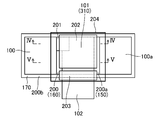
- FIG. 3 is a plan view showing a configuration of a pixel in the solid-state imaging device according to the embodiment.
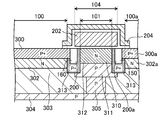
- 4 is a cross-sectional view showing a cross section taken along line IV-IV of the solid-state imaging device shown in FIG.
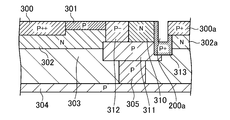
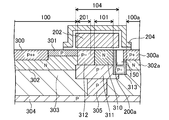
- FIG. 5 is a cross-sectional view showing a cross section taken along line VV of the solid-state imaging device shown in FIG.
- FIG. 6A is a cross-sectional view illustrating the method for manufacturing the solid-state imaging device according to the embodiment.
- FIG. 1 is a circuit diagram illustrating a configuration of a pixel circuit of a solid-state imaging device according to an embodiment of the present disclosure.
- FIG. 2 is a plan view schematically showing the solid-state imaging device according to the embodiment.
- FIG. 6B is a cross-sectional view illustrating the method for manufacturing the solid-state imaging device according to the embodiment.
- FIG. 7 is a plan view showing a solid-state imaging device according to a first modification of the embodiment.
- FIG. 8 is a plan view showing a solid-state imaging device according to a second modification of the embodiment.
- FIG. 9 is a plan view showing a solid-state imaging device used for effect measurement.
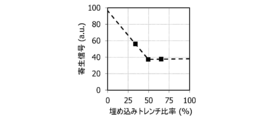
- FIG. 10A is a diagram illustrating a relationship between a buried trench ratio and a parasitic signal.
- FIG. 10B is a diagram showing the relationship between the buried trench ratio and the afterimage.
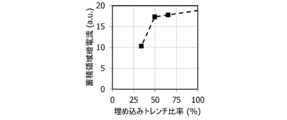
- FIG. 10C is a diagram showing the relationship between the buried trench ratio and the dark current in the accumulation region.
- FIG. 10A is a diagram illustrating a relationship between a buried trench ratio and a parasitic signal.
- FIG. 10B is a diagram showing the relationship between the buried trench ratio and the afterimage.
- FIG. 10C is a diagram showing the
- FIG. 11 is a plan view showing a solid-state imaging device used for effect measurement.
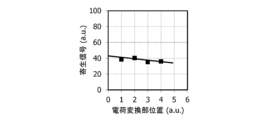
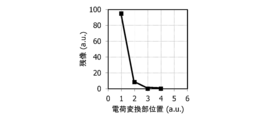
- FIG. 12 is a diagram illustrating the relationship between the position of the charge holding unit 101 and the magnitude of the parasitic signal.
- FIG. 13 is a plan view showing a solid-state imaging device used for effect measurement.
- FIG. 14A is a diagram illustrating the relationship between the position 404 of the protruding portion of the light receiving unit 100 and the parasitic signal.
- FIG. 14B is a diagram illustrating a relationship between the position 404 of the protruding portion of the light receiving unit 100 and the afterimage.
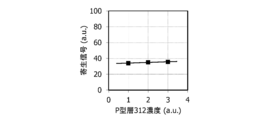
- FIG. 15A is a diagram illustrating changes in parasitic signals when the p-type impurity concentration of the p-type layer 312 of the transfer unit 201 is changed in the solid-state imaging device.
- FIG. 15B is a diagram illustrating a change in the afterimage when the p-type impurity concentration of the p-type layer 312 of the transfer unit 201 is changed in the solid-state
- FIG. 1 is a circuit diagram illustrating a configuration of a pixel circuit of a solid-state imaging device according to an embodiment of the present disclosure.
- FIG. 2 is a plan view schematically showing the solid-state imaging device of the present embodiment.
- FIG. 3 is a plan view showing a configuration of a pixel in the solid-state imaging device of the present embodiment, and
- FIG. 4 is a cross-sectional view showing a cross section taken along line IV-IV of the solid-state imaging device shown in FIG.
- FIG. 5 is a cross-sectional view showing a cross section taken along line VV of the solid-state imaging device shown in FIG.
- members provided under the light shielding film 204 are also shown for easy understanding of the configuration.
- the solid-state imaging device of the present embodiment includes an imaging region (not shown) in which a plurality of pixels are arranged in a matrix, for example.
- each pixel includes a light receiving unit 100 that generates charges by photoelectric conversion, a charge holding unit 101 that accumulates charges generated by the light receiving unit 100, and charge holding of charges generated by the light receiving unit 100.
- a first charge transfer transistor 104 that controls transfer to the unit 101 and a second charge transfer transistor 105 that controls transfer of charges accumulated in the charge holding unit 101 are provided.
- Each pixel has a global reset transistor 103 having one end (drain) connected to the first power supply VDD1 and the other end (source) connected to the light receiving unit 100 and the first charge transfer transistor 104, and a gate electrode.
- a reset transistor 106 connected to the charge transfer transistor 105 and an output row select transistor 108 connected to the source of the source follower transistor 107 are provided.
- a third power supply VDD 3 is connected to the drain of the source follower transistor 107.
- a plurality of pixels are arranged in a matrix.
- the gate electrodes of the plurality of global reset transistors 103 provided in the pixels in the same row may be connected to the signal line 113 in common.
- the operation of the first charge transfer transistor 104 is controlled by the signal line 114 corresponding thereto.
- the operation of the second charge transfer transistor 105 is controlled by the signal line 115 corresponding thereto.
- the operation of the reset transistor 106 is controlled by the signal line 116 corresponding thereto.
- the operation of the output row select transistor 108 is controlled by the signal line 118 corresponding thereto.
- the light receiving unit 100 includes, for example, a p-type layer (first and second surface p-type layers 300 and 301) and an n-type layer 310 and stores electrons in the n-type layer 310.
- the structure is not limited as long as it has a function of storing electrons or holes generated by photoelectric conversion.
- the charge holding unit 101 only needs to have a configuration capable of holding a charge, and may be configured by, for example, an n-type layer 310 (floating diffusion layer) containing an n-type impurity of about 1 ⁇ 10 20 / cm 3. .
- the conductivity type of the global reset transistor 103, the reset transistor 106, the first charge transfer transistor 104, and the second charge transfer transistor 105 may be an n-channel type or a p-channel type.
- the voltage of the first power supply VDD1 is about 3.3 V, for example.
- the global reset transistor 103 becomes conductive and the light receiving unit 100 is reset. Is done.
- the voltage of the first power supply VDD1 only needs to be higher than the electrostatic potential when the light receiving unit 100 is depleted.
- a low voltage is applied to the gate electrode of the global reset transistor 103 to control the electrostatic potential between the first power supply VDD1 and the signal charge generated excessively in the light receiving unit 100 to the first power supply.
- An anti-blooming function may be provided that sweeps out to VDD1 and prevents signal charges from overflowing from the light receiving unit 100 to the charge holding unit 101.
- the global reset transistor 103 it is not always necessary to provide the global reset transistor 103 with an anti-blooming function, and the p-type impurity is set so that the electrostatic potential between the light receiving unit 100 and the n-type semiconductor substrate becomes 0V.
- an anti-blooming function by a vertical overflow drain can be provided.
- an electrostatic potential of about ⁇ 0.3 V is formed between the light receiving unit 100 and the charge holding unit 101 while the first charge transfer transistor 104 is off to prevent the transfer of electrons. But you can.
- a high voltage is applied to the gate electrode 202 of the first charge transfer transistor 104, and the electrostatic potential between the light receiving unit 100 and the charge holding unit 101 is changed. It should be higher than the maximum electrostatic potential at the time of depletion.
- the signal line Pixout provided for each column extends in the vertical direction, and the signal line 115 extends in the horizontal direction.
- the signal lines 113 and 114 may be arranged in parallel to the signal line Pixout.
- the direction in which the other signal lines and power supply lines extend can be changed as appropriate according to the layout.
- the power supply lines 121, 122, 123 corresponding to the power supply VDD2 and the third power supply VDD3 may be shared by a plurality of pixels.
- the output row select transistor 108 is not necessary when the power supply wirings 121, 122, and 123 are independent from each other.
- the charge holding unit via the second charge transfer transistor 105 in the selected row A signal is transferred from 101 to the charge-voltage converter 102.
- the output of the source follower transistor 107 in the corresponding row is read out to the signal line Pixout by the output row select transistor 108 in the selected row.
- the process from resetting the charge-voltage converter 102 to reading out the output signal is performed to read out the outputs of all the two-dimensionally arranged pixels.
- a global reset operation is performed by the global reset transistor 103 has been described.
- the global reset transistor 103 Even if the global reset transistor 103 is not provided, a vertical overflow drain is formed, and the first charges of all pixels before photoelectric conversion are performed.
- the gate electrode 202 of the transfer transistor 104 By setting the gate electrode 202 of the transfer transistor 104 to a high voltage, the charge of the light receiving unit 100 can be swept out. In this case, the above-described operation may be performed after the exposure time.
- a p-type layer 304 provided on an n-type substrate region (not shown) and electrically separating the substrate region and the light receiving unit 100, and a p-type layer An n-type layer 303 and a p-type layer 305 over the layer 304 are provided.
- the light receiving unit 100 provided on the semiconductor substrate includes an n-type layer 303, an n-type layer 302 provided on the n-type layer 303, a first surface p-type layer 300 provided on the n-type layer 302, and The second surface p-type layer 301 is constituted.
- the planar shape of the light receiving unit 100 is not particularly limited, but FIG. 3 shows an example of a quadrilateral shape.
- the charge holding unit 101 (that is, the n-type layer 310) is a p-type provided between the p-type layer (first p-type impurity region) 311 provided under the n-type layer 310 and the light receiving unit 100.
- the light receiving unit 100 is electrically separated by the layer.
- the p-type impurity concentration of the first surface p-type layer 300 is about 1 ⁇ 10 18 to 10 20 / cm 3
- the second surface p having a lower impurity concentration than the first surface p-type layer 300 is used.
- the p-type impurity concentration of the mold layer 301 is about 1 ⁇ 10 16 to 10 18 / cm 3 .
- the n-type impurity concentration of the n-type layer 302 is about 1 ⁇ 10 16 to 1 ⁇ 10 18 / cm 3
- the n-type impurity concentration of the n-type layer 303 is 1 ⁇ 10 14 to 1 ⁇ 10 17 / cm 3.
- the p-type impurity concentration of the p-type layer 304 is about 1 ⁇ 10 16 to 1 ⁇ 10 18 / cm 3
- the p-type impurity concentration of the p-type layer 305 is about 1 ⁇ 10 16 to 1 ⁇ 10 18 / cm 3
- the n-type impurity concentration of the n-type layer 310 is about 1 ⁇ 10 16 to 1 ⁇ 10 18 / cm 3 .
- the p-type impurity concentration of the p-type layer 311 is about 1 ⁇ 10 16 to 1 ⁇ 10 18 / cm 3 .
- the impurity concentration of the p-type layer (second p-type impurity region) 312 is lower than the impurity concentration of the p-type layers 301 and 311 and is about 1 ⁇ 10 16 to 1 ⁇ 10 18 / cm 3 .
- the first trench 200 formed in a region between the light receiving unit 100 and the charge holding unit 101 (n-type layer 310) in the semiconductor substrate and the semiconductor substrate out of each other.
- a second trench 200a formed in a region between the light receiving portions 100 and 100a of adjacent pixels is provided.
- the first insulating film 160 is provided.
- a metal layer or the like may be provided in the second insulating film 150.
- the depth of the first trench 200 and the second trench 200a may be about 50 to 300 nm, for example, and the width may be about 100 to 300 nm.
- the depths of the first trench 200 and the second trench 200a may be substantially the same as the depth of the n-type layer 310.
- a third trench 200b that surrounds the outer periphery of the light receiving units 100 and 100a and the charge holding unit 101, and a third insulating film 170 formed in the third trench 200b may be formed.
- an insulating film having a refractive index lower than that of the semiconductor substrate in the third trench 200b oblique light is reflected at the interface between the semiconductor substrate and the insulating film, and light incident on the light receiving unit 100 can be increased. it can.
- oblique light incident on the charge holding unit 101 can be further reduced.
- a transfer unit 201 that is provided in contact with the first insulating film 160 and serves as a charge transfer path from the light receiving unit 100 to the charge holding unit 101 is provided at the end of the boundary between the light receiving unit 100 and the charge holding unit 101. It has been.
- the transfer unit 201 is provided at a corner portion facing the charge holding unit 101. Since the transfer unit 201 is a region where the first trench 200 is not formed, the light shielding property of the charge holding unit 101 against oblique light is inferior to the region where the first trench 200 is provided.
- the amount of photoelectric conversion occurring in the transfer unit 201 can be suppressed, the parasitic signal can be reduced, and the image quality can be reduced. The influence can be suppressed. Further, by reducing the transfer unit 201 that cannot reflect the incident light by the first insulating film 160 from the center of the light receiving unit 100, it is possible to suppress a decrease in the incident light amount.
- the transfer unit 201 may be provided on the side opposite to the side in contact with the charge-voltage conversion unit 102 (position away from the charge-voltage conversion unit 102) when viewed from the center of the charge holding unit 101.
- the width of the portion of the n-type layer 310 adjacent to the transfer unit 201 is narrower than the width of the portion of the n-type layer 310 adjacent to the first trench 200, and the electrostatic potential at the time of depletion is reduced. Even when the voltage becomes low, charge transfer is unlikely to be hindered by being connected to the second charge transfer transistor 105 through a high electrostatic potential portion and a high electrostatic potential portion.
- the gate electrode 202 of the first charge transfer transistor 104 is provided on the charge holding portion 101 with a gate insulating film interposed therebetween.
- a light shielding film 204 is provided on the gate electrode 202 to cover the transfer portion and the gate electrode 202.
- the light shielding film 204 may be made of a metal such as tungsten.
- a gate electrode 203 of the second charge transfer transistor 105 is provided on a region between the charge holding unit 101 and the charge-voltage conversion unit 102 with a gate insulating film interposed therebetween.
- the planar shape of the light shielding film 204 is a quadrilateral, but is not limited to this shape.
- the light shielding film 204 only needs to cover at least the entire upper part of the charge holding unit 101 and the entire upper part of the transfer unit 201.
- the light shielding film 204 can prevent photoelectric conversion from being performed in the charge holding unit 101.
- the transfer unit 201 is moved from the end of the light shielding film 204 in the direction from the light receiving unit 100 to the charge holding unit 101 (the direction from left to right in FIG. 3) in plan view.
- the distance from the end of the light shielding film 204 to the charge holding unit 101 is longer than the distance from the end of the light shielding film 204 to the charge holding unit 101 through the first trench 200.
- the charge holding unit 100 and the charge holding unit are held by an electrostatic potential lower than ⁇ 0.3V, for example.
- the part 101 can be electrically separated.
- the width of the p-type layer 312 in the transfer unit 201 is preferably about 200 nm to 400 nm.
- the concentration of the n-type impurity contained in the portion in contact with the transfer unit 201 may be higher than the concentration of the n-type impurity contained in the other portion of the charge holding unit 101. Good.
- the corner portion of the charge holding unit 101 in contact with the transfer unit 201 has a recessed shape, if the n-type impurity concentration is uniform in the charge holding unit 101, Of these, the portion in contact with the transfer unit 201 has a narrow width, and therefore the amount of charge that can be accumulated is small.
- the electrostatic potential at the time of depletion is made lower than that of the n-type layer 310 adjacent to the first trench 200 by increasing the concentration of the n-type impurity contained in the portion of the charge holding unit 101 in contact with the transfer unit 201.
- the amount of charge that can be held in the charge holding unit 101 can be increased as long as the condition is maintained.
- a p-type layer 313 may be provided so as to surround the first trench 200 and the second trench 200a.
- the p-type layer 313 contains a p-type impurity of, for example, about 1 ⁇ 10 18 to 1 ⁇ 10 19 / cm 3 .
- the p-type impurity concentration included in the p-type layer 312 may be lower than the p-type impurity concentration included in the p-type layers 301 and 311.
- a depletion region formed by the p-type layer 312 and the n-type layer 302 is extended toward the charge holding unit 101, and charges generated by oblique light incident on the p-type layer 312 are moved to the light receiving unit 100.
- the movement of charges to the charge holding unit 101 can be prevented, and electronic crosstalk due to charge movement can be suppressed.
- the p-type impurity concentration of the p-type layer 312 is low, the charge transfer from the light receiving unit 100 to the charge holding unit 101 by the first charge transfer transistor 104 can be facilitated.
- the gate electrode 202 of the first charge transfer transistor 104 covers the upper portion of the charge holding unit 101, but the gate electrode 202 is formed between the light receiving unit 100 and the charge holding unit 101 in the semiconductor substrate. It may be provided above the p-type layer 312. In that case, a gate electrode to which another applied voltage is applied may be disposed above the charge holding portion 101, or the gate electrode may not be provided.
- a p-type layer containing a p-type impurity of about 1 ⁇ 10 16 to 1 ⁇ 10 18 / cm 3 is provided between the n-type layer 310 of the charge holding portion 101 and the gate insulating film below the gate electrode 202. It may be. Thereby, the dark current generated from the gate insulating film can be suppressed.
- FIG. 6A and FIG. 6B are cross-sectional views showing a method for manufacturing the solid-state imaging device of the present embodiment.
- a semiconductor substrate such as silicon containing n-type impurities is prepared.
- a p-type layer 304, a p-type layer 305, and a p-type layer 311 are formed in the semiconductor substrate using a known ion implantation method.
- a portion on the p-type layer 304 where the p-type layer 305 is not provided becomes an n-type layer 303.
- the first surface p-type layer 300, the second surface p-type layer 302, the p-type layers 312, 300a, 313, and the n-type Layers 302, 310, and 302a are formed, respectively. Thereby, the light receiving unit 100 and the charge holding unit 101 are formed.
- the first insulating film 160 is formed in the first trench 200, and the second trench 200a is formed in the second trench 200a.
- the insulating film 150 is embedded in the third trench 200b.
- the first trench 200, the second trench 200a, and the third trench 200b may be formed before the p-type layer and the n-type layer are formed.
- gate electrodes 202 and 203 made of polysilicon or the like are formed on the gate insulating film by a known method.
- a light shielding film 204 made of a metal such as tungsten covering the transfer portion 201 and the charge holding portion 101 is formed on the gate electrode 202 by a known method such as sputtering.
- FIG. 7 is a plan view showing a solid-state imaging device according to a first modification of the present embodiment.
- the gate electrode 202 is not shown.
- the part of the light receiving unit 100 that contacts the transfer unit 201 may protrude from the other part facing the charge holding unit 101.
- the light receiving unit 100 is extended to a region where the first trench 200 is not provided, it is possible to easily make light entering from the end of the light shielding film 204 enter the light receiving unit 100. For this reason, as will be described later, parasitic signals can be reduced. In addition, afterimage generation can be effectively suppressed.
- FIG. 8 is a plan view showing a solid-state imaging device according to a second modification of the present embodiment. As shown in the drawing, a portion of the light shielding film 204 provided above the transfer unit 201 may protrude toward the light receiving unit 100 as compared to a portion provided above the first trench 200. .
- FIG. 9 is a plan view showing a solid-state imaging device used for effect measurement.
- FIG. 10A, FIG. 10B, and FIG. 10C are diagrams showing the relationship between the buried trench ratio, the parasitic signal, the afterimage, and the dark current in the accumulation region, respectively.
- the buried trench ratio is assumed to be a value obtained by (length of the first trench 200) / (length of the light receiving unit 100 in the direction in which the first trench 200 extends).
- the inventors of the present application produced a plurality of solid-state imaging devices in which the length of the first trench 200 was changed, and measured parasitic signals and afterimages.
- the parasitic signal was measured by the following method. First, a high voltage is applied to the gate electrode of the global reset transistor 103, light is irradiated to the light receiving unit 100 without accumulating charges generated by photoelectric conversion, and the first charge transfer transistor 104 is turned off. Then, the charge accumulated in the charge holding portion 101 is output to the signal line 116 by the second charge transfer transistor 105. A parasitic signal photoelectrically converted by the charge holding unit 101 was measured by subtracting a signal that was operated in the same manner without irradiating light from the output signal.
- the afterimage was measured by the following method. First, the light that was photoelectrically converted by the light receiving unit 100 was irradiated so that a certain amount of charge was accumulated, and the signal was read to the signal line by a normal procedure. Next, in a state where light was not irradiated, the signal was read again to the signal line by a normal procedure, and the signal amount detected at this time was used as an afterimage.
- the optimum value of the buried trench ratio is considered to be about 50%.
- FIG. 11 is a plan view showing a solid-state imaging device used for effect measurement.
- FIG. 12 is a diagram illustrating the relationship between the position of the charge holding unit 101 and the magnitude of the parasitic signal.
- FIG. 12 shows the measurement results of the parasitic signals when the end position 403 of the charge holding unit 101 is changed to the positions 1 to 5 shown in FIG.
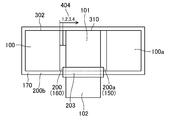
- FIG. 13 is a plan view showing a solid-state imaging device used for effect measurement.
- 14A is a diagram showing the relationship between the protruding portion position 404 of the light receiving unit (charge converting unit in the drawing) 100 and the parasitic signal
- FIG. 14B shows the relationship between the protruding portion position 404 of the light receiving unit 100 and the afterimage. It is a figure which shows a relationship.
- the protruding portion of the light receiving unit 100 specifically means a protruding portion of the n-type layer 302 to the transfer unit 201.
- FIG. 15A is a diagram illustrating a change in a parasitic signal when the p-type impurity concentration of the p-type layer 312 of the transfer unit 201 is changed in the solid-state image sensor
- FIG. 15B is a diagram illustrating the transfer unit 201 in the solid-state image sensor. It is a figure which shows the change of the afterimage when the p-type impurity density
- the parasitic signal gradually increased as the impurity concentration of the p-type layer 312 increased.
- an afterimage was generated when the impurity concentration of the p-type layer 312 became a predetermined value or more. From the above results, it can be said that the p-type impurity concentration of the p-type layer 312 is preferably low.
- the light incident on the charge holding unit 101 is blocked by the light shielding film 204, the first insulating film 160, and the second insulating film 150. Since charge transfer from the light receiving unit 100 to the charge holding unit 101 is possible, excellent image quality can be realized while taking advantage of the global shutter method.
- the solid-state imaging device disclosed in this specification is used in various imaging devices such as a camera.
- Second insulating film 100, 100a Light receiving unit 101 Charge holding unit 102 Charge voltage converting unit 103 Global reset transistor 104 First charge transfer transistor 105 Second charge transfer transistor 106 Reset transistor 107 Source follower transistor 108 Output row select transistor 113, 114, 116, 118 Signal lines 121, 122, 123 Power supply wiring 150 Second insulating film 160 First insulating film 170 Third insulating film 200 First trench 200a Second trench 200b Third trench 201 Transfer unit 202, 203 Gate Electrode 204 Light shielding film 300 First surface p-type layer 300a, 304, 305, 312, 313 p-type layer 301 Second surface p-type layer 302, 310, 302a, 303, 31 n-type layer
Landscapes
- Engineering & Computer Science (AREA)
- Multimedia (AREA)
- Signal Processing (AREA)
- Solid State Image Pick-Up Elements (AREA)
- Transforming Light Signals Into Electric Signals (AREA)
Abstract
固体撮像素子は、受光部(100)と、電荷保持部(101)と、ゲート電極(202)と、受光部と電荷保持部との間の領域に形成された第1のトレンチ(200)と、第1のトレンチ内に設けられた第1の絶縁膜(160)と、転送部(201)と、電荷保持部、転送部及びゲート電極上を覆う遮光膜(204)とが設けられた画素を備える。平面視において、受光部から電荷保持部へと向かう方向の、遮光膜の端から転送部を挟んで電荷保持部に至るまでの距離は、遮光膜の端から第1のトレンチを挟んで電荷保持部に至るまでの距離よりも長い。
Description
本明細書に記載された技術は、固体撮像素子に関するものである。
画素が2次元状に配置されたMOS型固体撮像素子において、ローリングシャッター方式を用いた場合、高速に動く被写体を撮影する際に画像歪が発生してしまう。そこで、画像歪を無くすために、画素の撮像開始時と終了時を全画素で同時に行うグローバルシャッター方式を用いることが提案されている。
グローバルシャッター動作のためには、画素内に光電変換を行う光電変換部とは別に、撮像終了時から電荷読み出し時までの間、一時的に電荷を保持しておく電荷保持部が必要となる。光電変換部と電荷保持部のレイアウトとの関係は、例えば特許文献1に提案されている。
電荷保持部を備えたグローバルシャッター方式の固体撮像素子においては、電荷保持部に電荷が保持される期間に画素領域に光が入射した場合でも、電荷保持部において光電変換が行われないことが求められる。そこで、例えば、上方からの入射光を遮るために、特許文献1に例示されているような、金属からなる遮光膜が電荷保持部の上方に設けられる。
しかし、電荷保持部の上方に設けられた遮光膜では、斜めに電荷保持部に入射する光を遮ることは難しい。半導体基板内部では光は直進してしまうため、遮光膜によって斜め入射光を遮るためには、電荷保持部の深さに応じて、電荷保持部の上方から光電変換部の上方に向かう方向に遮光膜を広げ、光電変換部の一部まで遮光膜で覆わなくてはならない。さらに、遮光膜端では光が回折するために、半導体基板に垂直に入射された光でも半導体基板中では斜めに進む光成分を持ってしまう。この斜めに進む光が電荷保持部に入射されてしまうことによる寄生信号は、光学的クロストークと呼ばれている。光学的クロストークの抑制はグローバルシャッター素子の画質改善のためには必須である。特許文献2には、トレンチ内に埋め込まれた絶縁膜を設け、半導体基板と絶縁膜との間の屈折率差によって半導体基板内部で入射光を反射させることが提案されている。
特許文献1及び特許文献2に記載の技術では、いずれも光学的クロストークを効果的に低減することは難しい。
本明細書に開示された技術は、光学的クロストークを大幅に低減できる固体撮像素子を提供することを目的とする。
本明細書に開示された固体撮像素子は、複数の画素が配置された撮像領域を備えている。前記画素の各々には、半導体基板に設けられ、光電変換により電荷を発生させる受光部と、前記半導体基板に設けられ、前記受光部で生じた電荷を蓄積する電荷保持部と、前記電荷保持部上に設けられ、前記受光部で生じた電荷を前記電荷保持部へと転送させるゲート電極と、前記半導体基板のうち、前記受光部と前記電荷保持部との間の領域に形成された第1のトレンチと、前記第1のトレンチ内に設けられた第1の絶縁膜と、前記半導体基板のうち、互いに隣接する画素の受光部の間の領域に形成された第2のトレンチと、前記第2のトレンチ内に設けられた第2の絶縁膜と、前記受光部と前記電荷保持部との境界の端部に前記第1の絶縁膜に接して設けられ、前記受光部から前記電荷保持部への電荷の転送経路となる転送部と、前記電荷保持部、前記転送部及び前記ゲート電極上を覆う遮光膜とが設けられている。平面視において、前記受光部から前記電荷保持部へと向かう方向の、前記遮光膜の端から前記転送部を挟んで前記電荷保持部に至るまでの距離は、前記遮光膜の端から前記第1のトレンチを挟んで前記電荷保持部に至るまでの距離よりも長い。
本明細書に開示された固体撮像素子によれば、光学的クロストークを大幅に低減しうる。
以下、本発明の実施形態を図面に基づいて詳細に説明する。
(実施形態)
図1は、本開示の実施形態に係る固体撮像素子の画素回路の構成を示す回路図である。図2は、本実施形態の固体撮像素子を模式的に示す平面図である。図3は、本実施形態の固体撮像素子における画素の構成を示す平面図であり、図4は、図3に示す固体撮像素子のIV-IV線での断面を示す断面図であり、図5は、図3に示す固体撮像素子のV-V線での断面を示す断面図である。図3では、構成が理解しやすいように、遮光膜204の下に設けられた部材も示している。
図1は、本開示の実施形態に係る固体撮像素子の画素回路の構成を示す回路図である。図2は、本実施形態の固体撮像素子を模式的に示す平面図である。図3は、本実施形態の固体撮像素子における画素の構成を示す平面図であり、図4は、図3に示す固体撮像素子のIV-IV線での断面を示す断面図であり、図5は、図3に示す固体撮像素子のV-V線での断面を示す断面図である。図3では、構成が理解しやすいように、遮光膜204の下に設けられた部材も示している。
本実施形態の固体撮像素子は、複数の画素が例えば行列状に配置された撮像領域(図示せず)を備えている。各画素には、図1に示すように、光電変換により電荷を発生させる受光部100と、受光部100で生じた電荷を蓄積する電荷保持部101と、受光部100で生じた電荷の電荷保持部101への転送を制御する第1の電荷転送トランジスタ104と、電荷保持部101に蓄積された電荷の転送を制御する第2の電荷転送トランジスタ105とが設けられている。また、各画素には、一端(ドレイン)が第1の電源VDD1に接続され、他端(ソース)が受光部100及び第1の電荷転送トランジスタ104に接続されたグローバルリセットトランジスタ103と、ゲート電極が電荷電圧変換部102を挟んで第2の電荷転送トランジスタ105に接続されたソースフォロワートランジスタ107と、一端が第2の電源VDD2に接続され、他端が電荷電圧変換部102を挟んで第2の電荷転送トランジスタ105に接続されたリセットトランジスタ106と、ソースフォロワートランジスタ107のソースに接続された出力行セレクトトランジスタ108とが設けられている。ソースフォロワートランジスタ107のドレインには、第3の電源VDD3が接続されている。
図2に示すように、複数の画素は行列状に配置されている。同一行の画素内に設けられた複数のグローバルリセットトランジスタ103のゲート電極は、信号線113に共通に接続されていてもよい。第1の電荷転送トランジスタ104の動作は、これに対応する信号線114によって制御される。第2の電荷転送トランジスタ105の動作は、これに対応する信号線115によって制御される。リセットトランジスタ106の動作は、これに対応する信号線116によって制御される。出力行セレクトトランジスタ108の動作は、これに対応する信号線118によって制御される。
図3に示すように、受光部100は、例えばp型層(第1及び第2の表面p型層300、301)とn型層310とで構成され、n型層310に電子を蓄える埋め込み型フォトダイオードであってもよいが、光電変換により生じた電子又はホールを蓄える機能を有していれば、その構成は限定されない。電荷保持部101は、電荷を保持できる構成を有していればよく、例えば1×10²⁰/cm3程度のn型不純物を含むn型層310(フローティング拡散層)により構成されていてもよい。
グローバルリセットトランジスタ103、リセットトランジスタ106、第1の電荷転送トランジスタ104及び第2の電荷転送トランジスタ105の導電型はnチャネル型であってもよいし、pチャネル型であってもよい。
グローバルリセットトランジスタ103がnチャネル型の場合、第1の電源VDD1の電圧が例えば3.3V程度であり、ゲート電極に高電圧が印加されるとグローバルリセットトランジスタ103が導通し、受光部100がリセットされる。第1の電源VDD1の電圧は、受光部100の空乏化時の静電ポテンシャルよりも高ければよい。
光電変換時にはグローバルリセットトランジスタ103のゲート電極に低い電圧を印加し、第1の電源VDD1との間の静電ポテンシャルを制御することで、受光部100において過剰に発生した信号電荷を第1の電源VDD1へと掃出し、受光部100から電荷保持部101へ信号電荷があふれ出さないようにする、アンチブルーミング機能を持たせてもよい。ただし、n型半導体基板を用いる場合は、必ずしもグローバルリセットトランジスタ103にアンチブルーミング機能を持たせる必要は無く、受光部100とn型半導体基板間の静電ポテンシャルを0Vになるようにp型不純物の濃度を制御することで、縦型オーバーフロードレインによるアンチブルーミング機能を持たせることもできる。
信号電荷が電子である場合、第1の電荷転送トランジスタ104がオフの期間、受光部100と電荷保持部101との間に-0.3V程度の静電ポテンシャルを形成し、電子の転送を防いでもよい。受光部100から電荷を転送する際には、第1の電荷転送トランジスタ104のゲート電極202に高電圧を印加し、受光部100と電荷保持部101の間の静電ポテンシャルを、受光部100の空乏時の静電ポテンシャルの最大値よりも高くなるようにする。
図2に示すように、列ごとに設けられた信号線Pixoutは縦方向に延びており、信号線115は横方向に延びている。信号線113、114は、信号線Pixoutに対して平行に配置されていてもよい。他の信号線や電源配線の延びる方向は、レイアウトに応じて適宜変更可能である。なお、電荷電圧変換部102、リセットトランジスタ106、ソースフォロワートランジスタ107、出力行セレクトトランジスタ108や、各トランジスタを制御するための信号線113、114、116、118、第1の電源VDD1、第2の電源VDD2、第3の電源VDD3にそれぞれ対応した電源配線121、122、123は、複数の画素で共有されてもよい。出力行セレクトトランジスタ108は、電源配線121、122、123が互いに独立した配線である場合には、不要である。
次に、固体撮像素子の動作を説明する。まず、グローバルリセットトランジスタ103のゲート電極に高電圧を印加することにより、受光部100で生じた電荷を全て掃き出す。その後、光電変換を開始する。ある露光時間が過ぎた後、全画素内の第2の電荷転送トランジスタ105とリセットトランジスタ106を導通状態にして電荷保持部101の電荷を全て掃き出す。その後、第2の電荷転送トランジスタ105を非導通状態にして、第1の電荷転送トランジスタ104のゲート電極に高電圧を印加することで、受光部100から電荷保持部101へと信号電荷を転送する。ここで、グローバルリセットトランジスタ103による電荷の掃出しと、第1の電荷転送トランジスタ104による電荷の転送を全ての画素で同時に行うことで、画素の撮像開始時と終了時を全画素で同時に行うグローバルシャッター動作が実現される。
次に、特定行のリセットトランジスタ106を介して電荷電圧変換部102の電圧を第2の電源の電圧にリセットした後に、選択された行の第2の電荷転送トランジスタ105を介して、電荷保持部101から電荷電圧変換部102へと信号を転送する。次いで、選択された行の出力行セレクトトランジスタ108により該当行のソースフォロワートランジスタ107の出力のみを信号線Pixoutへと読み出す。行を変えながら、上記の電荷電圧変換部102のリセットから出力信号の読み出しまでを行い、2次元配置されたすべての画素の出力を読み出す。ここでは、グローバルリセットトランジスタ103によりグローバルリセット動作を行う例を説明したが、グローバルリセットトランジスタ103が無くても、縦型オーバーフロードレインを形成し、光電変換を行う前にすべての画素の第1の電荷転送トランジスタ104のゲート電極202を高い電圧にすることで、受光部100の電荷を掃き出すことは可能である。この場合、露光時間後、上述した動作を行えばよい。
次に、本実施形態の固体撮像素子のより具体的な構成を説明する。
図3~図5に示すように、半導体基板において、n型の基板領域(図示せず)上に設けられ、基板領域と受光部100とを電気的に分離するp型層304と、p型層304上のn型層303及びp型層305が設けられている。
半導体基板に設けられた受光部100は、n型層303と、n型層303上に設けられたn型層302と、n型層302上に設けられた第1の表面p型層300及び第2の表面p型層301とにより構成されている。受光部100の平面形状は特に限定されないが、図3では、四辺形状である例を示している。
電荷保持部101(すなわちn型層310)は、n型層310の下に設けられたp型層(第1のp型不純物領域)311と、受光部100との間に設けられたp型層とによって、受光部100と電気的に分離されている。なお、第1の表面p型層300のp型不純物濃度は、1×10¹⁸~1020/cm3程度であり、第1の表面p型層300よりも不純物濃度の低い第2の表面p型層301のp型不純物濃度は、1×1016~1018/cm3程度である。n型層302のn型不純物濃度は、1×1016~1×1018/cm3程度であり、n型層303のn型不純物濃度は、1×1014~1×1017/cm3程度である。p型層304のp型不純物濃度は、1×1016~1×1018/cm3程度である。p型層305のp型不純物濃度は、1×1016~1×1018/cm3程度である。n型層310のn型不純物濃度は、1×1016~1×1018/cm3程度である。p型層311のp型不純物濃度は、1×1016~1×1018/cm3程度である。p型層(第2のp型不純物領域)312の不純物濃度はp型層301、311の不純物濃度よりも低く、1×1016~1×1018/cm3程度である。
本実施形態の固体撮像素子では、半導体基板のうち、受光部100と電荷保持部101(n型層310)との間の領域に形成された第1のトレンチ200と、半導体基板のうち、互いに隣接する画素の受光部100、100aの間の領域に形成された第2のトレンチ200aとが設けられている。第1のトレンチ200内及び第2のトレンチ200a内には、シリコン酸化物等、半導体基板よりも屈折率の低い材料からなる第1の絶縁膜160、第2の絶縁膜150がそれぞれ埋め込まれている。ここで、受光部100と電荷保持部101との間の電気的分離、及び互いに隣接する受光部100と受光部100aとの間の電気的分離が確保されていれば、第1の絶縁膜160及び第2の絶縁膜150内に金属層等が設けられていてもよい。
第1のトレンチ200及び第2のトレンチ200aの深さは例えば50~300nm程度であり、幅は100~300nm程度であってもよい。第1のトレンチ200及び第2のトレンチ200aの深さは、n型層310の深さと同程度であってもよい。
受光部100、100aと電荷保持部101の外周を囲む第3のトレンチ200bと、第3のトレンチ200b内に形成された第3の絶縁膜170とが形成されていてもよい。第3のトレンチ200b内に半導体基板よりも屈折率の低い絶縁膜を形成することにより、半導体基板と当該絶縁膜との界面で斜め光を反射させ、受光部100に入射する光を増やすことができる。また、電荷保持部101に入射する斜め光をより低減することができる。
受光部100と電荷保持部101との境界の端部には、第1の絶縁膜160に接して設けられ、受光部100から電荷保持部101への電荷の転送経路となる転送部201が設けられている。受光部100の平面形状が四辺形の場合、転送部201は、電荷保持部101に面したコーナー部に設けられることになる。転送部201は第1のトレンチ200が形成されない領域であるので、斜め光に対する電荷保持部101の遮光性が、第1のトレンチ200が設けられる領域に比べて劣る。入射光強度は、受光部100の中心から離れるに従って落ちるので、転送部201を上記位置に配置することにより、転送部201において光電変換が発生する量を抑制し、寄生信号を小さくし、画質に対する影響を抑制することができる。また、第1の絶縁膜160により入射光を反射させることができない転送部201を受光部100の中心から離すことにより、入射光量の減少を抑えることもできる。
平面視において、転送部201は、電荷保持部101の中心から見て、電荷電圧変換部102に接する辺と反対側(電荷電圧変換部102から離れた位置)に設けられていてもよい。この構造により、n型層310のうち転送部201に隣接する部分の幅が、n型層310のうち第1のトレンチ200に隣接する部分の幅よりも狭くなり、空乏化時の静電ポテンシャルが低くなる場合でも、静電ポテンシャルが低い部分から高い部分を介して第2の電荷転送トランジスタ105へと接続されることにより、電荷転送が阻害されにくくなる。
また、電荷保持部101上には、ゲート絶縁膜を挟んで第1の電荷転送トランジスタ104のゲート電極202が設けられる。ゲート電極202上には、転送部及びゲート電極202を覆う遮光膜204が設けられている。遮光膜204は、例えばタングステン等の金属により構成されていてもよい。また、電荷保持部101と電荷電圧変換部102との間の領域上には、ゲート絶縁膜を挟んで第2の電荷転送トランジスタ105のゲート電極203が設けられている。
図3に示す例では、遮光膜204の平面形状は四辺形であるが、この形に限定されない。遮光膜204は少なくとも電荷保持部101の上方全体と転送部201の上方全体を覆っていればよい。遮光膜204により、電荷保持部101で光電変換が行われるのを防ぐことができる。
また、本実施形態の固体撮像素子では、平面視において、受光部100から電荷保持部101へと向かう方向(図3の左から右へ向かう方向)の、遮光膜204の端から転送部201を挟んで電荷保持部101に至るまでの距離は、遮光膜204の端から第1のトレンチ200を挟んで電荷保持部101に至るまでの距離よりも長くなっている。この構成により、遮光膜204の端部から回折によって回り込む光を電荷保持部101に入射させにくくすることができるので、光学的クロストークを生じにくくすることができる。n型層302と電荷保持部101との距離を大きくすることにより、p型層312のp型不純物濃度を低くしても例えば-0.3Vよりも低い静電ポテンシャルによって受光部100と電荷保持部101とを電気的に分離することが可能となる。転送部201におけるp型層312の幅は、200nm以上400nm以下程度であることが好ましい。電荷保持部101のうち、第1のトレンチ200に隣接する部分の幅をできるだけ大きくすることで、電荷保持部101に蓄積できる電荷量を大きくすることができる。
なお、電荷保持部101の平面面積が小さくなると、蓄積できる電荷量が減ってしまうため、遮光膜204の端から第1のトレンチ200を挟んで電荷保持部101に至るまでの距離は、後述のように適切な値にすることが好ましい。
電荷保持部101(n型層310)のうち、転送部201に接する部分に含まれるn型不純物の濃度は、電荷保持部101の他の部分に含まれるn型不純物の濃度よりも高くてもよい。図3に示す例では、転送部201と接する電荷保持部101のコーナー部が凹んだ形状となっているので、電荷保持部101内でn型不純物濃度が均一であると、電荷保持部101のうち転送部201に接する部分は、その幅が狭いため、蓄積できる電荷量が小さくなる。電荷保持部101のうち、転送部201に接する部分に含まれるn型不純物の濃度を高くすることにより、第1のトレンチ200に隣接するn型層310より空乏化時の静電ポテンシャルを低くする条件を保つ範囲で、電荷保持部101に保持可能な電荷量を増やすことができる。
また、図4、5に示すように、第1のトレンチ200、第2のトレンチ200aを囲むようにp型層313が設けられていてもよい。p型層313には、例えば1×10¹⁸~1×10¹⁹/cm3程度のp型不純物が含まれる。p型層313が設けられることにより、第1のトレンチ200、第2のトレンチ200aにおいて、第1の絶縁膜160と半導体基板との界面、及び第2の絶縁膜150と半導体基板との界面にそれぞれ発生する暗電流を抑制することができる。
転送部201において、p型層312に含まれるp型不純物濃度をp型層301、311に含まれるp型不純物濃度よりも低くしてもよい。この構成により、p型層312とn型層302とにより形成される空乏領域を電荷保持部101の方へ延伸させ、p型層312に入射した斜め光によって生じる電荷を受光部100へと移動しやすくすることができる。これにより、電荷保持部101への電荷の移動を防止し、電荷移動による電子的クロストークを抑制することができる。さらに、p型層312のp型不純物濃度が低いことにより、第1の電荷転送トランジスタ104による受光部100から電荷保持部101への電荷の転送を容易にすることができる。
なお、本実施形態では、第1の電荷転送トランジスタ104のゲート電極202が電荷保持部101の上方を覆っているが、ゲート電極202は、半導体基板のうち受光部100と電荷保持部101との間であって、p型層312の上方に設けられていてもよい。その場合、電荷保持部101の上方には別の印加電圧を与えられたゲート電極を配置してもよいし、ゲート電極が設けられていなくてもよい。
なお、電荷保持部101のn型層310とゲート電極202下のゲート絶縁膜との間に、1×10¹⁶~1×10¹⁸/cm3程度のp型不純物を含むp型層が設けられていてもよい。これにより、ゲート絶縁膜から発生する暗電流を抑制することができる。
図6A、図6Bは、本実施形態の固体撮像素子の製造方法を示す断面図である。
固体撮像素子を作製するには、図6Aに示すように、例えばn型不純物を含むシリコン等の半導体基板を準備する。次いで、公知のイオン注入法を用いて半導体基板内にp型層304、p型層305、p型層311を形成する。p型層304上のp型層305が設けられない部分はn型層303となる。次いで、n型不純物イオン及びp型不純物イオンを適宜半導体基板に注入することで、第1の表面p型層300、第2の表面p型層302、p型層312、300a、313及びn型層302、310、302aをそれぞれ形成する。これにより、受光部100及び電荷保持部101とが形成される。次に、第1のトレンチ200、第2のトレンチ200a、第3のトレンチ200bを形成した後、第1のトレンチ200内に第1の絶縁膜160を、第2のトレンチ200a内に第2の絶縁膜150を、第3のトレンチ200b内に第3の絶縁膜170をそれぞれ埋め込む。なお、第1のトレンチ200、第2のトレンチ200a及び第3のトレンチ200bの形成は、上記p型層やn型層を形成する前に行ってもよい。
次いで、図6Bに示すように、半導体基板上にゲート絶縁膜を形成した後、公知の方法によりゲート絶縁膜上にポリシリコン等からなるゲート電極202、203を形成する。続いて、スパッタリング等の公知の方法により、ゲート電極202上に、転送部201及び電荷保持部101上を覆うタングステン等の金属からなる遮光膜204を形成する。以上の方法により、本実施形態の固体撮像素子が形成できる。
図7は、本実施形態の第1の変形例に係る固体撮像素子を示す平面図である。同図では、ゲート電極202の図示は省略している。図7に示すように、受光部100のうち、転送部201に接する部分は、電荷保持部101に面した他の部分から突出していてもよい。
この構成によれば、第1のトレンチ200が設けられない領域に受光部100を広げているので、遮光膜204の端部から回り込む光を受光部100に入射させやすくすることができる。このため、後述するように、寄生信号を低減することができる。また、残像の発生を効果的に抑えることができる。
図8は、本実施形態の第2の変形例に係る固体撮像素子を示す平面図である。同図に示すように、遮光膜204のうち、転送部201の上方に設けられた部分は、第1のトレンチ200の上方に設けられた部分に比べて受光部100側に突出していてもよい。
第1のトレンチ200が設けられていない転送部201では、斜め光や回折光が入射しやすくなっているが、本変形例では、遮光膜204を突出させることにより、転送部201に光が入射するのを効果的に抑えながら、受光部100に入射する光を遮らないようにしている。このため、本変形例に係る固体撮像素子によれば、感度を落とすことなく光学的クロストークの低減を図ることができる。
図9は、効果の測定に用いられる固体撮像素子を示す平面図である。図10A、図10B及び図10Cは、埋め込みトレンチ比率と寄生信号、残像、蓄積領域での暗電流との関係をそれぞれ示す図である。ここで、埋め込みトレンチ比率は、(第1のトレンチ200の長さ)/(第1のトレンチ200が延びる方向の受光部100の長さ)で求められる値であるとする。
本願発明者らは、第1のトレンチ200の長さを変更した複数の固体撮像素子を作製し、寄生信号や残像等を測定した。寄生信号は、次の方法で測定した。まず、グローバルリセットトランジスタ103のゲート電極に高い電圧を印加し、受光部100に光電変換により生じた電荷が蓄積されない状態にしたまま光を照射し、第1の電荷転送トランジスタ104をオフにしたまま、電荷保持部101に蓄積された電荷を第2の電荷転送トランジスタ105により信号線116に出力させる。ここで出力された信号から、光を照射しないで同じ動作をさせた信号を差し引くことにより、電荷保持部101で光電変換される寄生信号を測定した。
また、残像は、次の方法で測定した。まず、受光部100にて光電変換された電荷がある一定量蓄積されるような光を照射し、通常の手順で信号を信号線に読み出した。次いで、光を照射しない状態で、再度通常の手順で信号を信号線に読み出し、このときに検出された信号量を残像とした。
この結果、図10Aに示すように、埋め込みトレンチ比率が50%までは寄生信号が低減していき、埋め込み比率が50%以上では寄生信号が65%程度低減できることが分かった。
しかし、残像は埋め込みトレンチ比率が50%を超えると発生し、トレンチ比率が大きくなる程大きくなっていた。また、蓄積領域(電荷保持部101)の暗電流は、埋め込みトレンチ比率が30%を超えると発生し、埋め込みトレンチ比率が50%を超えると緩やかに増加していくことが分かった。
以上の結果から、埋め込みトレンチ比率を最適な値にすることで、寄生信号を抑えつつ、残像や暗電流を低いレベルに保つことができることが確認できた。図9に示す固体撮像素子の例では、埋め込みトレンチ比率の最適値は約50%であると考えられる。
図11は、効果の測定に用いられる固体撮像素子を示す平面図である。図12は、電荷保持部101の位置と寄生信号の大きさとの関係を示す図である。図12は、電荷保持部101の端部位置403を図11に示す1~5の位置に変化させた場合での寄生信号をそれぞれ測定した結果を示す。
図12に示す結果から、電荷保持部101の端部位置を遮光膜204の端部から遠ざけることにより、寄生信号の生成を低減できることが分かった。
図13は、効果の測定に用いられる固体撮像素子を示す平面図である。図14Aは、受光部(図中の電荷変換部)100の突出部分の位置404と寄生信号との関係を示す図であり、図14Bは、受光部100の突出部分の位置404と残像との関係を示す図である。なお、受光部100の突出部分は、具体的にはn型層302の転送部201への突出部分を意味する。
図14A、14Bに示す結果から、受光部100(n型層302)の突出部分を電荷保持部101に近づけることにより、寄生信号が低減されるとともに、残像も低減できることが分かった。
図15Aは、固体撮像素子において、転送部201のp型層312のp型不純物濃度を変化させた場合の寄生信号の変化を示す図であり、図15Bは、固体撮像素子において、転送部201のp型層312のp型不純物濃度を変化させた場合の残像の変化を示す図である。
図15Aに示す結果から、p型層312の不純物濃度が高くなるにつれて寄生信号は少しずつ大きくなることが確認できた。また、図15Bに示す結果から、p型層312の不純物濃度が所定値以上になると、残像が発生することが確認できた。以上の結果から、p型層312のp型不純物濃度は低い方が好ましいと言える。
以上の結果から、本実施形態の固体撮像素子及びその変形例によれば、電荷保持部101に入射される光を遮光膜204、第1の絶縁膜160、第2の絶縁膜150により遮りながら、受光部100から電荷保持部101への電荷の転送が可能となるので、グローバルシャッター方式の長所を活かしつつ、優れた画質を実現することができる。
なお、以上の実施形態及びその変形例は、本質的に好ましい例示であって、本発明、その適用物、あるいはその用途の範囲を制限することを意図するものではない。
以上説明したように、本明細書に開示された固体撮像素子は、カメラ等種々の撮像装置に用いられる。
100、100a 受光部
101 電荷保持部
102 電荷電圧変換部
103 グローバルリセットトランジスタ
104 第1の電荷転送トランジスタ
105 第2の電荷転送トランジスタ
106 リセットトランジスタ
107 ソースフォロワートランジスタ
108 出力行セレクトトランジスタ
113、114、116、118 信号線
121、122、123 電源配線
150 第2の絶縁膜
160 第1の絶縁膜
170 第3の絶縁膜
200 第1のトレンチ
200a 第2のトレンチ
200b 第3のトレンチ
201 転送部
202、203 ゲート電極
204 遮光膜
300 第1の表面p型層
300a、304、305、312、313 p型層
301 第2の表面p型層
302、310、302a、303、310 n型層
101 電荷保持部
102 電荷電圧変換部
103 グローバルリセットトランジスタ
104 第1の電荷転送トランジスタ
105 第2の電荷転送トランジスタ
106 リセットトランジスタ
107 ソースフォロワートランジスタ
108 出力行セレクトトランジスタ
113、114、116、118 信号線
121、122、123 電源配線
150 第2の絶縁膜
160 第1の絶縁膜
170 第3の絶縁膜
200 第1のトレンチ
200a 第2のトレンチ
200b 第3のトレンチ
201 転送部
202、203 ゲート電極
204 遮光膜
300 第1の表面p型層
300a、304、305、312、313 p型層
301 第2の表面p型層
302、310、302a、303、310 n型層
Claims (6)
- 複数の画素が配置された撮像領域を備えた固体撮像素子であって、
前記画素の各々には、
半導体基板に設けられ、光電変換により電荷を発生させる受光部と、
前記半導体基板に設けられ、前記受光部で生じた電荷を蓄積する電荷保持部と、
前記電荷保持部上に設けられ、前記受光部で生じた電荷を前記電荷保持部へと転送させるゲート電極と、
前記半導体基板のうち、前記受光部と前記電荷保持部との間の領域に形成された第1のトレンチと、
前記第1のトレンチ内に設けられた第1の絶縁膜と、
前記半導体基板のうち、互いに隣接する画素の受光部の間の領域に形成された第2のトレンチと、
前記第2のトレンチ内に設けられた第2の絶縁膜と、
前記受光部と前記電荷保持部との境界の端部に前記第1の絶縁膜に接して設けられ、前記受光部から前記電荷保持部への電荷の転送経路となる転送部と、
前記電荷保持部、前記転送部及び前記ゲート電極上を覆う遮光膜と
が設けられており、
平面視において、前記受光部から前記電荷保持部へと向かう方向の、前記遮光膜の端から前記転送部を挟んで前記電荷保持部に至るまでの距離は、前記遮光膜の端から前記第1のトレンチを挟んで前記電荷保持部に至るまでの距離よりも長い固体撮像素子。 - 請求項1に記載の固体撮像素子において、
前記受光部のうち、前記転送部に接する部分は、前記電荷保持部に面した他の部分から突出していることを特徴とする固体撮像素子。 - 請求項1又は2に記載の固体撮像素子において、
前記遮光膜のうち、前記転送部の上方に設けられた部分は、前記第1のトレンチの上方に設けられた部分に比べて前記受光部側に突出していることを特徴とする固体撮像素子。 - 請求項1~3のうちいずれか1つに記載の固体撮像素子において、
前記電荷保持部のうち、前記転送部に接する部分に含まれるn型不純物の濃度は、前記電荷保持部の他の部分に含まれるn型不純物の濃度よりも高いことを特徴とする固体撮像素子。 - 請求項1~4のうちいずれか1つに記載の固体撮像素子において、
前記第1の絶縁膜及び前記第2の絶縁膜の屈折率は、前記半導体基板の屈折率よりも低いことを特徴とする固体撮像素子。 - 請求項1~5のうちいずれか1つに記載の固体撮像素子において、
前記電荷保持部は、第1のp型不純物領域上に形成されたn型不純物領域により構成されており、
前記転送部は、前記第1のp型不純物領域よりもp型不純物濃度の低い第2のp型不純物領域により構成されていることを特徴とする固体撮像素子。
Priority Applications (4)
| Application Number | Priority Date | Filing Date | Title |
|---|---|---|---|
| CN201780077327.0A CN110073494A (zh) | 2016-12-15 | 2017-11-27 | 固体摄像元件 |
| EP17880839.0A EP3557626A4 (en) | 2016-12-15 | 2017-11-27 | SEMICONDUCTOR IMAGE CAPTURE MEMBER |
| JP2018556534A JP6743181B2 (ja) | 2016-12-15 | 2017-11-27 | 固体撮像素子 |
| US16/441,489 US11012645B2 (en) | 2016-12-15 | 2019-06-14 | Solid-state image sensor |
Applications Claiming Priority (2)
| Application Number | Priority Date | Filing Date | Title |
|---|---|---|---|
| JP2016-243353 | 2016-12-15 | ||
| JP2016243353 | 2016-12-15 |
Related Child Applications (1)
| Application Number | Title | Priority Date | Filing Date |
|---|---|---|---|
| US16/441,489 Continuation US11012645B2 (en) | 2016-12-15 | 2019-06-14 | Solid-state image sensor |
Publications (1)
| Publication Number | Publication Date |
|---|---|
| WO2018110258A1 true WO2018110258A1 (ja) | 2018-06-21 |
Family
ID=62558339
Family Applications (1)
| Application Number | Title | Priority Date | Filing Date |
|---|---|---|---|
| PCT/JP2017/042400 Ceased WO2018110258A1 (ja) | 2016-12-15 | 2017-11-27 | 固体撮像素子 |
Country Status (5)
| Country | Link |
|---|---|
| US (1) | US11012645B2 (ja) |
| EP (1) | EP3557626A4 (ja) |
| JP (1) | JP6743181B2 (ja) |
| CN (1) | CN110073494A (ja) |
| WO (1) | WO2018110258A1 (ja) |
Cited By (2)
| Publication number | Priority date | Publication date | Assignee | Title |
|---|---|---|---|---|
| CN113923382A (zh) * | 2020-07-07 | 2022-01-11 | 爱思开海力士有限公司 | 图像感测装置 |
| KR20230006263A (ko) * | 2021-07-02 | 2023-01-10 | 주식회사 디비하이텍 | 이미지 센서 |
Families Citing this family (3)
| Publication number | Priority date | Publication date | Assignee | Title |
|---|---|---|---|---|
| CN117080233A (zh) * | 2019-03-29 | 2023-11-17 | 索尼半导体解决方案公司 | 固态摄像装置和电子设备 |
| TWI720682B (zh) * | 2019-11-08 | 2021-03-01 | 友達光電股份有限公司 | 畫素陣列基板 |
| CN112820746A (zh) * | 2020-10-30 | 2021-05-18 | 天津大学 | 无图像拖尾的栅上双电极型传输管cmos图像传感器 |
Citations (8)
| Publication number | Priority date | Publication date | Assignee | Title |
|---|---|---|---|---|
| JP2007294531A (ja) * | 2006-04-21 | 2007-11-08 | Nikon Corp | 固体撮像装置 |
| JP2009253149A (ja) * | 2008-04-09 | 2009-10-29 | Canon Inc | 光電変換装置及びそれを用いた撮像システム |
| JP2009272374A (ja) | 2008-05-01 | 2009-11-19 | Canon Inc | 固体撮像装置 |
| JP2011233589A (ja) | 2010-04-23 | 2011-11-17 | Sony Corp | 固体撮像デバイス及び電子機器 |
| JP2012129798A (ja) * | 2010-12-15 | 2012-07-05 | Sony Corp | 固体撮像素子および駆動方法、並びに電子機器 |
| JP2014165270A (ja) * | 2013-02-22 | 2014-09-08 | Sony Corp | イメージセンサおよび電子機器 |
| JP2015023250A (ja) * | 2013-07-23 | 2015-02-02 | ソニー株式会社 | 固体撮像素子及びその駆動方法、並びに電子機器 |
| JP2015176969A (ja) * | 2014-03-14 | 2015-10-05 | キヤノン株式会社 | 固体撮像装置及び撮像システム |
Family Cites Families (12)
| Publication number | Priority date | Publication date | Assignee | Title |
|---|---|---|---|---|
| JP3659122B2 (ja) * | 2000-03-22 | 2005-06-15 | 日本電気株式会社 | 電荷転送装置 |
| JP4942283B2 (ja) * | 2003-05-07 | 2012-05-30 | ソニー株式会社 | 固体撮像素子および固体撮像素子の製造方法 |
| JP4496753B2 (ja) * | 2003-10-20 | 2010-07-07 | ソニー株式会社 | 固体撮像素子とその製造方法 |
| JP4479759B2 (ja) | 2007-07-17 | 2010-06-09 | コニカミノルタビジネステクノロジーズ株式会社 | 画像形成装置 |
| JP5651976B2 (ja) * | 2010-03-26 | 2015-01-14 | ソニー株式会社 | 固体撮像素子およびその製造方法、並びに電子機器 |
| JP5948837B2 (ja) * | 2011-03-29 | 2016-07-06 | ソニー株式会社 | 固体撮像素子及び電子機器 |
| JP2013016676A (ja) * | 2011-07-05 | 2013-01-24 | Sony Corp | 固体撮像装置及びその製造方法、電子機器 |
| JP2014150230A (ja) * | 2013-02-04 | 2014-08-21 | Toshiba Corp | 固体撮像装置の製造方法および固体撮像装置 |
| JP2015053411A (ja) * | 2013-09-09 | 2015-03-19 | ソニー株式会社 | 固体撮像素子、固体撮像素子の製造方法、および電子機器 |
| KR102174650B1 (ko) * | 2013-10-31 | 2020-11-05 | 삼성전자주식회사 | 이미지 센서 |
| JP2016062915A (ja) * | 2014-09-12 | 2016-04-25 | 株式会社東芝 | 固体撮像装置及び固体撮像装置の製造方法 |
| US9484370B2 (en) * | 2014-10-27 | 2016-11-01 | Omnivision Technologies, Inc. | Isolated global shutter pixel storage structure |
-
2017
- 2017-11-27 CN CN201780077327.0A patent/CN110073494A/zh active Pending
- 2017-11-27 WO PCT/JP2017/042400 patent/WO2018110258A1/ja not_active Ceased
- 2017-11-27 JP JP2018556534A patent/JP6743181B2/ja active Active
- 2017-11-27 EP EP17880839.0A patent/EP3557626A4/en not_active Withdrawn
-
2019
- 2019-06-14 US US16/441,489 patent/US11012645B2/en active Active
Patent Citations (8)
| Publication number | Priority date | Publication date | Assignee | Title |
|---|---|---|---|---|
| JP2007294531A (ja) * | 2006-04-21 | 2007-11-08 | Nikon Corp | 固体撮像装置 |
| JP2009253149A (ja) * | 2008-04-09 | 2009-10-29 | Canon Inc | 光電変換装置及びそれを用いた撮像システム |
| JP2009272374A (ja) | 2008-05-01 | 2009-11-19 | Canon Inc | 固体撮像装置 |
| JP2011233589A (ja) | 2010-04-23 | 2011-11-17 | Sony Corp | 固体撮像デバイス及び電子機器 |
| JP2012129798A (ja) * | 2010-12-15 | 2012-07-05 | Sony Corp | 固体撮像素子および駆動方法、並びに電子機器 |
| JP2014165270A (ja) * | 2013-02-22 | 2014-09-08 | Sony Corp | イメージセンサおよび電子機器 |
| JP2015023250A (ja) * | 2013-07-23 | 2015-02-02 | ソニー株式会社 | 固体撮像素子及びその駆動方法、並びに電子機器 |
| JP2015176969A (ja) * | 2014-03-14 | 2015-10-05 | キヤノン株式会社 | 固体撮像装置及び撮像システム |
Non-Patent Citations (1)
| Title |
|---|
| See also references of EP3557626A4 |
Cited By (3)
| Publication number | Priority date | Publication date | Assignee | Title |
|---|---|---|---|---|
| CN113923382A (zh) * | 2020-07-07 | 2022-01-11 | 爱思开海力士有限公司 | 图像感测装置 |
| KR20230006263A (ko) * | 2021-07-02 | 2023-01-10 | 주식회사 디비하이텍 | 이미지 센서 |
| KR102673856B1 (ko) * | 2021-07-02 | 2024-06-10 | 주식회사 디비하이텍 | 이미지 센서 |
Also Published As
| Publication number | Publication date |
|---|---|
| EP3557626A4 (en) | 2020-04-15 |
| US11012645B2 (en) | 2021-05-18 |
| EP3557626A1 (en) | 2019-10-23 |
| CN110073494A (zh) | 2019-07-30 |
| JP6743181B2 (ja) | 2020-08-19 |
| US20190297282A1 (en) | 2019-09-26 |
| JPWO2018110258A1 (ja) | 2019-07-25 |
Similar Documents
| Publication | Publication Date | Title |
|---|---|---|
| US8692303B2 (en) | Solid-state imaging device, electronic device, and manufacturing method for solid-state imaging device | |
| CN102208424B (zh) | 固体摄像装置、固体摄像装置的制造方法及电子装置 | |
| TWI479887B (zh) | 背向照明固態成像裝置及照相機 | |
| JP5335271B2 (ja) | 光電変換装置及びそれを用いた撮像システム | |
| TWI495095B (zh) | 固態攝像裝置及照相機 | |
| US8395194B2 (en) | Solid-state imaging device | |
| JP6743181B2 (ja) | 固体撮像素子 | |
| TWI478331B (zh) | 具有減少暈光及電遮光器之背側照射式影像感測器 | |
| US9466641B2 (en) | Solid-state imaging device | |
| JP2012084644A (ja) | 裏面照射型固体撮像装置 | |
| KR20230157334A (ko) | 촬상 소자 및 촬상 장치 | |
| CN102208423A (zh) | 固体摄像装置、制造固体摄像装置的方法和电子设备 | |
| WO2014002361A1 (ja) | 固体撮像装置及びその製造方法 | |
| TW201523853A (zh) | 固態成像器件及其製造方法以及電子裝置 | |
| TW201312740A (zh) | 固體攝像元件 | |
| TWI617014B (zh) | Solid-state imaging device, manufacturing method, and electronic device | |
| US12080747B2 (en) | Solid-state imaging apparatus, method of manufacturing the same, and electronic device | |
| TWI464867B (zh) | 固態影像拾取器件及其製造方法,以及影像拾取裝置 | |
| US8754456B2 (en) | Miniature image sensor | |
| TWI525801B (zh) | 具有經摻雜之傳輸閘極的影像感測器 | |
| KR100833609B1 (ko) | 씨모스 이미지 센서 및 그 제조 방법 | |
| JP5701344B2 (ja) | 光電変換装置及びそれを用いた撮像システム | |
| JP4247235B2 (ja) | 固体撮像装置およびその駆動方法 | |
| JP2006210680A (ja) | 固体撮像素子 | |
| US20230420475A1 (en) | Photoelectric conversion device |
Legal Events
| Date | Code | Title | Description |
|---|---|---|---|
| 121 | Ep: the epo has been informed by wipo that ep was designated in this application |
Ref document number: 17880839 Country of ref document: EP Kind code of ref document: A1 |
|
| ENP | Entry into the national phase |
Ref document number: 2018556534 Country of ref document: JP Kind code of ref document: A |
|
| NENP | Non-entry into the national phase |
Ref country code: DE |
|
| ENP | Entry into the national phase |
Ref document number: 2017880839 Country of ref document: EP Effective date: 20190715 |