WO2018128177A1 - Promoteur d'induction de la différenciation en cellules produisant de l'insuline - Google Patents
Promoteur d'induction de la différenciation en cellules produisant de l'insuline Download PDFInfo
- Publication number
- WO2018128177A1 WO2018128177A1 PCT/JP2018/000019 JP2018000019W WO2018128177A1 WO 2018128177 A1 WO2018128177 A1 WO 2018128177A1 JP 2018000019 W JP2018000019 W JP 2018000019W WO 2018128177 A1 WO2018128177 A1 WO 2018128177A1
- Authority
- WO
- WIPO (PCT)
- Prior art keywords
- cells
- insulin
- differentiation
- medium
- pluripotent stem
- Prior art date
- Legal status (The legal status is an assumption and is not a legal conclusion. Google has not performed a legal analysis and makes no representation as to the accuracy of the status listed.)
- Ceased
Links
Images


Classifications
-
- C—CHEMISTRY; METALLURGY
- C12—BIOCHEMISTRY; BEER; SPIRITS; WINE; VINEGAR; MICROBIOLOGY; ENZYMOLOGY; MUTATION OR GENETIC ENGINEERING
- C12N—MICROORGANISMS OR ENZYMES; COMPOSITIONS THEREOF; PROPAGATING, PRESERVING, OR MAINTAINING MICROORGANISMS; MUTATION OR GENETIC ENGINEERING; CULTURE MEDIA
- C12N5/00—Undifferentiated human, animal or plant cells, e.g. cell lines; Tissues; Cultivation or maintenance thereof; Culture media therefor
- C12N5/10—Cells modified by introduction of foreign genetic material
Definitions
- the present invention relates to a differentiation induction promoter, a differentiation induction medium and a differentiation induction method that promote differentiation of pluripotent stem cells into insulin-producing cells.
- pancreas is an organ that has an endocrine gland (endocrine cell) and an exocrine line (exocrine cell) and plays an important role in both.
- Exocrine cells mainly secrete digestive enzymes such as pancreatic lipase, trypsin, elastase and pancreatic amylase.
- Endocrine cells secrete pancreatic hormones and are known to secrete glucagon from pancreatic ⁇ cells, insulin from pancreatic ⁇ cells, somatostatin from pancreatic ⁇ cells, and pancreatic polypeptide (PP) from PP cells.
- Diabetes mellitus is a disease that develops when insulin is deficient or loses its function, and is difficult to cure once it develops. Diabetes can be broadly classified into two types: type I diabetes (insulin-dependent diabetes) and type II diabetes (non-insulin-dependent diabetes).
- One of the treatments that have been tried for diabetes is a method of regenerating and transplanting the patient's insulin-producing cells themselves. This method can produce insulin in the patient's own body. In addition, since it is a patient-derived cell, the problem of rejection is solved, which is advantageous in terms of safety.
- Known methods for obtaining insulin-producing cells include a method of differentiation from pluripotent stem cells such as ES cells and iPS cells, a method of differentiation from tissue stem cells of the patient's pancreas, and the like.
- pluripotent stem cells such as ES cells and iPS cells
- tissue stem cells of the patient's pancreas
- Kume et al. Have reported a method of inducing differentiation of insulin-producing cells from stem cells
- Arakawa et al. Have reported a method of inducing differentiation of insulin-producing cells from iPS cells (Non-Patent Document 1).
- An object of the present invention is to provide a method and means that can induce differentiation into insulin-producing cells more efficiently in a system that induces differentiation of pluripotent stem cells such as iPS cells into insulin-producing cells.
- the present inventors have treated untreated by treating with a specific tyrosine kinase inhibitor when inducing insulin-producing cells from pluripotent stem cells, particularly iPS cells. It was found that differentiation into insulin-producing cells was enhanced as compared with the case.
- iPS cells As a differentiation induction system from iPS cells to insulin-producing cells, iPS cells ⁇ definitive endoderm (DE) cell (stage 1 (S1)) ⁇ primitive gut (PG) cell: stage 2 (S2)) ⁇ pancreatic progenitor (PP) cell: stage 3 (S3)) ⁇ endocrine progenitor (EP) cell: stage 4 (S4)) ⁇ insulin producing cell (stage 5 (S5)) ), which mimics the five-stage development process, is known, and by applying the agent of the present invention to the cells after stage 3, it is possible to improve the efficiency of inducing differentiation into insulin-producing cells. It came to complete. That is, the present invention is as follows.
- a differentiation-inducing promoter from pluripotent stem cells to insulin-producing cells comprising a compound having an ABL1 tyrosine kinase inhibitory action.
- the compound is at least one selected from the group consisting of imatinib, nilotinib and dasatinib.
- the pluripotent stem cell is an iPS cell.
- a method for promoting differentiation induction from a pluripotent stem cell to an insulin-producing cell, wherein a compound in which expression of a gastrointestinal cell marker is confirmed after initiation of differentiation is a compound having an ABL1 tyrosine kinase inhibitory action A method comprising: [5] The method described in [4] above, wherein the compound is at least one selected from the group consisting of imatinib, nilotinib and dasatinib. [6] The method according to [4] or [5] above, wherein the pluripotent stem cell is an iPS cell.
- gastrointestinal tract cell marker is at least one selected from the group consisting of FOXA2, HNF1b and HNF4a.
- a medium additive for inducing differentiation from pluripotent stem cells to insulin-producing cells comprising a compound having an ABL1 tyrosine kinase inhibitory action.
- the compound is at least one selected from the group consisting of imatinib, nilotinib and dasatinib.
- [8-1] A compound having an ABL1 tyrosine kinase inhibitory action to be added to a medium for inducing differentiation from pluripotent stem cells to insulin-producing cells.
- [8-2] The compound according to [8-1] above, which is at least one selected from the group consisting of imatinib, nilotinib and dasatinib.
- [8-3] The compound according to [8-1] or [8-2] above, wherein the pluripotent stem cell is an iPS cell.
- a medium for inducing differentiation into insulin-producing cells comprising the medium additive according to any one of [8] to [10] above.
- the present invention it is possible to induce differentiation into insulin-producing cells more efficiently in a system that induces differentiation of pluripotent stem cells such as iPS cells into insulin-producing cells. Therefore, a larger number of insulin-producing cells can be easily obtained, and a large amount of the cells can be supplied for use in research, medical treatment, and the like.
- FIG. 1 is a graph showing the effect of imatinib to promote differentiation induction in differentiation induction from iPS cells to insulin-producing cells. The degree of differentiation induction into insulin-producing cells was measured using insulin gene expression as an index.
- FIG. 2 is a graph showing the differentiation induction promoting effect of dasatinib in the induction of differentiation from iPS cells to insulin producing cells. The degree of differentiation induction into insulin-producing cells was measured using insulin gene expression as an index.
- FIG. 3 is a graph showing the differentiation induction promoting effect of nilotinib in the induction of differentiation from iPS cells to insulin-producing cells. The degree of differentiation induction into insulin-producing cells was measured using insulin gene expression as an index.
- FIG. 1 is a graph showing the effect of imatinib to promote differentiation induction in differentiation induction from iPS cells to insulin-producing cells. The degree of differentiation induction into insulin-producing cells was measured using insulin gene expression as an index.
- FIG. 2 is a graph showing the differentiation induction
- FIG. 4 is a graph showing the effect of sorafenib to induce differentiation in induction of differentiation from iPS cells to insulin-producing cells.
- the degree of differentiation induction into insulin-producing cells was measured using insulin gene expression as an index.
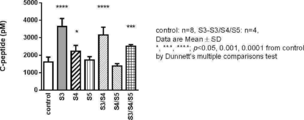
- FIG. 5 is a graph showing the differentiation induction promoting effect when the addition stage of nilotinib is changed in the induction of differentiation from iPS cells to insulin-producing cells.
- the degree of differentiation induction into insulin-producing cells was measured using the amount of C-peptide in the culture supernatant as an index.
- a pluripotent stem cell means a cell having self-renewal ability and differentiation / proliferation ability and capable of differentiating into all tissues and cells constituting a living body.
- Pluripotent stem cells include embryonic stem cells (ES cells), embryonic germ cells (EG cells), induced pluripotent stem cells (iPS cells), pluripotent stem cells induced and selected by stress or cell stimulation, etc. I can list them.
- ES cells embryonic stem cells
- EG cells embryonic germ cells
- iPS cells induced pluripotent stem cells
- Stem cells established by culturing early embryos produced by nuclear transfer of somatic cell nuclei are also preferred as pluripotent stem cells (Nature, 385, 810 (1997); Science, 280, 1256 (1998) Nature Biotechnology, 17, 456 (1999); Nature, 394, 369 (1998); Nature Genetics, 22, 127 (1999); Proc.
- iPS cells are preferred as pluripotent stem cells. Confirmation of iPS cells can be performed using as an index an undifferentiated marker resulting from the undifferentiated nature of iPS cells. Examples of undifferentiated markers include alkaline phosphatase, Oct3 / 4, Sox2, Nanog, ERas, Esgl and the like. Examples of methods for detecting these undifferentiated markers include methods for detecting mRNA (utilization of primers and probes), immunological detection methods (utilization of antibodies and labels), and the like.
- Insulin producing cell means a cell having the ability to produce insulin.
- the insulin-producing cells do not always have to produce insulin, as long as they have the ability to produce insulin. Therefore, the amount of insulin produced is not particularly limited. Normally, insulin-producing cells are synonymous with pancreatic ⁇ cells. Confirmation of an insulin-producing cell can be performed using the insulin-producing ability as an index. Examples of methods for detecting the ability of cells to produce insulin include a method for detecting mRNA (using primers and probes), an immunological detection method (using antibodies and labels), and the like. The ability of cells to produce insulin can also be evaluated by measuring the amount of secreted C-peptide, which is a component of insulin precursor (proinsulin).
- Abelson murine leukemia viral oncogene homolog 1 (hereinafter, also referred to as ABL1) is one tyrosine kinases, enzymes that specifically phosphorylate tyrosine residues of proteins It is.
- CML chronic myelogenous leukemia
- chromosome 9 and chromosome 22 undergo a mutual translocation, whereby the BCR gene and the ABL1 gene are combined to form a fusion gene called BCR-ABL.
- the tyrosine kinase activity of ABL1 protein is constitutively activated and causes hematopoietic cell neoplasia.
- a compound having an ABL1 inhibitory action is an effective therapeutic agent for CML.
- the present invention includes a differentiation induction promoter from pluripotent stem cells to insulin-producing cells (hereinafter also referred to as the differentiation induction promoter according to the present invention), including a compound having an ABL1 tyrosine kinase inhibitory activity (hereinafter also referred to as an ABL1 inhibitor). I will provide a.
- the ABL1 inhibitor used in the present invention is not particularly limited as long as it has an ABL1 inhibitory action, and examples include imatinib, nilotinib, dasatinib, bosutinib and the like.
- imatinib Preferred are imatinib, nilotinib and dasatinib represented by the following structure (Henkes, M., H. et al., Ther Clin Risk Manag, 2008. 4 (1): p. 163-87.).
- the ABL1 inhibitor used in the present invention means not only a free form but also a salt form.
- the salt form include acid addition salts and salts with bases, and are preferably pharmaceutically acceptable salts that do not exhibit cytotoxicity.
- acids that form such salts include inorganic acids such as hydrogen chloride, hydrogen bromide, sulfuric acid, and phosphoric acid, acetic acid, lactic acid, citric acid, tartaric acid, maleic acid, fumaric acid, mesylic acid, and monomethyl sulfuric acid.
- bases that form such salts include metal hydroxides or carbonates such as sodium, potassium, and calcium, inorganic bases such as ammonia, ethylenediamine, propylenediamine, Organic bases such as ethanolamine, monoalkylethanolamine, dialkylethanolamine, diethanolamine, and triethanolamine are listed.
- the salt may be a hydrate (hydrated salt).
- ABL1 inhibitors (including salts thereof) are commercially available and can also be prepared according to known literature.
- the present invention comprises a step of treating pluripotent stem cells with an ABL1 inhibitor, and a method for promoting differentiation induction from pluripotent stem cells to insulin producing cells. (Hereinafter also referred to as the differentiation induction promoting method of the present invention).
- Various reports have been made on the process of differentiation from pluripotent stem cells to insulin-producing cells, but generally, the process consists of several stages of differentiation. Differentiation induction at each stage is not particularly limited as long as desired differentiated cells can be obtained, and can be performed according to a previous report.
- iPS cells ⁇ embryonic endoderm cells (DE cells: S1) ⁇ gastrointestinal cells (PG cells: S2) ⁇ A system that mimics the five-stage development process of pancreatic progenitor cells (PP cell: S3) ⁇ endocrine progenitor cells (EP cell: S4) ⁇ insulin producing cells (S5) is known.
- DE cells embryonic endoderm cells
- PG cells gastrointestinal cells
- EP cell endocrine progenitor cells
- S5 insulin producing cells
- the main differentiation inducing methods are WO 2011/081222 A1; WO 2015/020113 ⁇ 1; Russ HA, et al., The EMBO Journal (2015) 34: 1759-1772; Nostro MC, et al., Stem Cell Reports 2015 4: 591-604; Hannan NR, et al., Stem Cell Reports. 2013 1: 293-306; Takeuchi H, et al., SCIENTIFIC REPORTS 2014 4: 4488; Pagliuca FW, et al., Cell. 2014; 159 (2): 428-39 and the like.
- the differentiation induction promoting method of the present invention will be described using such a differentiation induction system, but the differentiation induction promoting method of the present invention can also be used for other differentiation induction systems.
- the ABL1 inhibitor may be used at any stage as long as induction of differentiation into insulin-producing cells is promoted, but is preferably between stages 3 to 5, more preferably between stages 3 to 4, particularly preferably. Is used at least during stage 3. That is, it is preferable to apply the ABL1 inhibitor to cells that have differentiated into gastrointestinal cells via stage 2. Whether or not iPS cells have differentiated into gastrointestinal cells via endoderm cells can be confirmed using the expression of gastrointestinal cell markers as an index.
- the gastrointestinal tract cell marker is a protein or gene expressed specifically in the gastrointestinal tract cell, and fluctuations in the expression thereof are evaluated at the gene level or protein level.
- Examples of the cell marker include FOXA2, HNF1b, HNF4a and the like.
- the ABL1 inhibitor can also be applied to cells that have differentiated into pancreatic progenitor cells via stage 3. Whether or not it has differentiated into pancreatic progenitor cells can be confirmed using the expression of pancreatic progenitor cell markers as an indicator.
- a pancreatic progenitor cell marker is a protein or gene that is expressed specifically in pancreatic progenitor cells, and changes in their expression are evaluated at the gene level or protein level. Examples of the cell marker include PDX1, HNF6, SOX9 and the like.
- the ABL1 inhibitor can also be applied to cells that have differentiated into endocrine precursor cells via stage 4. Whether or not the cells have differentiated into endocrine precursor cells can be confirmed using the expression of the endocrine precursor cell marker as an indicator.
- Endocrine progenitor cell markers are proteins and genes that are expressed specifically in endocrine precursor cells, and their expression fluctuations are evaluated at the gene level or protein level. Examples of the cell marker include NGN3, PAX4, NEUROD1, and the like.
- Examples of methods for evaluating the variation in expression of each cell marker at the gene level or protein level include methods for detecting mRNA (using primers and probes), immunological detection methods (using antibodies and labels), and the like.
- the present invention is characterized in that a pluripotent stem cell, preferably a cell in a stage of differentiation into gastrointestinal tract cells after initiation of differentiation, is treated with an ABL1 inhibitor.
- the method of treating cells with an ABL1 inhibitor is not particularly limited as long as differentiation induction into insulin-producing cells is promoted.
- an ABL1 inhibitor is added to the medium in which the cells are cultured, or ABL1 inhibition is performed. It is carried out by replacing the medium with a medium containing the agent. During the treatment period (culture period), an ABL1 inhibitor is added as necessary, or the medium is replaced with a medium containing a new ABL1 inhibitor.
- the concentration of the ABL1 inhibitor in the medium varies depending on the type of ABL1 inhibitor to be used, and is appropriately set, but is usually 0.01 to 10000 nM, preferably 0.05 to 5000 nM, more preferably 0.1 to 3000 nM. is there.
- imatinib 300 nM or more, preferably 1000 nM or more, more preferably about 3000 nM, in the case of dasatinib, 0.1 nM or more, preferably 0.5 nM or more, more preferably about 1 nM, and in the case of nilotinib, 10 nM or more , Preferably 30 nM or more, more preferably about 100 nM.
- the medium used in the differentiation induction promoting method of the present invention is not particularly limited except that it contains an ABL1 inhibitor as long as differentiation induction from pluripotent stem cells to insulin-producing cells is promoted. ) Depends on. For example, in each stage, a medium in which the following factors are added to the basal medium is used. Each factor (compound) is commercially available and can be obtained, but when it is not available as a commercial product, it can also be prepared according to known literature.
- S1 an activin receptor-like kinase-4,7 activator (eg, activin, Nodal, Myostatin, preferably activin A) and a GSK3 inhibitor (eg, CHIR99021, SB216673, SB415286, CHIR99021), then activin receptor-like Kinase-4, 7 activator only (S1 (-C))
- S2 Hedgehog signaling inhibitor (eg, cyclopamine, jervin, SANT-1, hedgehog pathway blocking antibody, preferably SANT-1) and FGF (eg, FGF-1, FGF-2 (bFGF), FGF-3 FGF-4, FGF-5, FGF-6, FGF-7, FGF-8, FGF-9, FGF-10, FGF-11, FGF-12, FGF-13, FGF-14, FGF-15, FGF -16, FGF-17, FGF-18, FGF-19, FGF-20, FGF-21, FGF-22, FGF-23, preferably FGF-10)
- S3 Retinoic acid
- the basal medium used in the present invention may be any known per se, and is not particularly limited as long as it does not inhibit the proliferation of pluripotent stem cells.
- Gasgow's MEM RPMI-1640, ⁇ -MEM, Ham's Medium F-12, Ham's Medium F-10, Ham's Medium F12K, Medium 199, ATCC-CRCM30, DM-160, DM-201, BME, Fischer, McCoy's 5A , Leibovitz's L-15, RITC80-7, MCDB105, MCDB107, MCDB131, MCDB153, MCDB201, NCTC109, NCTC135, Waymouth's MB752 / 1, CMRL-1066, Williams' medium E, Brinster's BMOC-3 Medium, E8 medium (Nature Methods, 2011, 8, 424-429), ReproFF2 medium (Reprocell), StemFit (registered trademark) AK medium (Ajinomoto), and mixed media thereof.
- the medium used in the present invention may contain additives known per se.
- the additive is not particularly limited as long as it does not inhibit the proliferation of stem cells.
- growth factors such as insulin
- iron sources such as transferrin
- polyamines such as putrescine
- minerals such as sodium selenate) Etc.
- saccharides eg glucose etc.
- organic acids eg pyruvic acid, lactic acid etc.
- amino acids eg L-glutamine etc.
- reducing agents eg 2-mercaptoethanol etc.
- vitamins eg ascorbic acid, d- Biotin etc.
- steroids eg ⁇ -estradiol, progesterone etc.
- antibiotics eg streptomycin, penicillin, gentamicin etc.
- buffering agents eg HEPES etc.
- the medium used in the present invention may contain serum.
- the serum is not particularly limited as long as it is an animal-derived serum, as long as it does not inhibit the proliferation of stem cells, but is preferably a mammal-derived serum (eg, fetal bovine serum, human serum, etc.).
- the serum concentration may be within a concentration range known per se.
- serum components are known to contain human ES cell differentiation factors and the like, and the culture results may vary due to differences between serum lots, the serum content is A lower value is preferable, and most preferably no serum is contained.
- the xenogeneic component does not contain serum since it may become an infection source of a blood-borne pathogen or a heterologous antigen.
- serum substitute additives for example, Knockout Serum Replacement (KSR) (Invitrogen), Chemically-defined Lipid concentrated (Gibco), Glutamax (Gibco), B-27 supplement, etc.
- KSR Knockout Serum Replacement
- Sibco Chemically-defined Lipid concentrated
- Glutamax Gibco
- B-27 supplement etc.
- Pluripotent stem cells preferably after initiating differentiation induction, can be efficiently induced to differentiate into insulin-producing cells by culturing cells in a stage differentiated into gastrointestinal cells in the presence of an ABL1 inhibitor.
- the incubator used for culturing the cells is not particularly limited as long as it can culture pluripotent stem cells and induce differentiation into insulin-producing cells. Flask, tissue culture flask, dish, petri dish, tissue A culture dish, a multi-dish, a microplate, a microwell plate, a multiplate, a multiwell plate, a microslide, a chamber slide, a petri dish, a tube, a tray, a culture bag, and a roller bottle may be mentioned.
- the incubator may be cell-adhesive or non-cell-adhesive and is appropriately selected according to the purpose.
- a cell-adhesive incubator is preferable.
- the cell-adhesive incubator can be coated with any cell-supporting substrate such as an extracellular matrix (ECM) for the purpose of improving adhesion with cells on the surface of the incubator.
- ECM extracellular matrix
- Known proteins serving as scaffolds for pluripotent stem cells include laminin 511-E8, laminin 521, vitronectin, fibronectin, and matrigel.
- the culture temperature is not particularly limited, but may be about 30-40 ° C., preferably about 37 ° C.
- the CO 2 concentration can be about 1-10%, preferably about 2-5%.
- the oxygen partial pressure can be 1-10%.
- the present invention also provides an insulin-producing cell composition obtained by the differentiation induction promoting method of the present invention.
- Cell composition means a composite material comprising cells (in the present invention, insulin-producing cells) and at least another component.
- the “other component” include components necessary for cell culture such as a culture solution, and components necessary when using insulin-producing cells such as a pharmaceutically acceptable carrier as a preparation. It is not limited. Furthermore, cells other than insulin-producing cells may be included as long as the function of insulin-producing cells is not adversely affected.
- the cell composition of the present invention is, for example, 10%, preferably 20% of the cell composition. More preferably 30%, still more preferably 40%, and even more preferably 50% are insulin-producing cells.
- the proportion of insulin-producing cells in the cell composition is higher than when differentiation is induced in the absence of an ABL1 inhibitor.
- confirmation of an insulin-producing cell can be performed using the insulin-producing ability as an index.
- the insulin-producing cells obtained by the differentiation induction promoting method of the present invention can be suitably used for medical purposes such as cell medicine.
- animals that are subject to cell therapy include laboratory animals such as rodents such as mice, rats, hamsters, guinea pigs, and rabbits, domestic animals such as pigs, cows, goats, horses, sheep, minks, dogs, cats, etc. Primates such as pets, humans, monkeys, rhesus monkeys, marmosets, orangutans, chimpanzees, etc., preferably humans.
- the dose and administration method of the cells in the cell therapy are not particularly limited as long as a desired effect can be obtained, and should be appropriately set according to the disease or symptom to be treated, the animal to be administered, etc. Can do.
- the present invention is a medium additive for inducing differentiation from pluripotent stem cells to insulin producing cells containing an ABL1 inhibitor (hereinafter referred to as medium addition of the present invention) Also referred to as an agent).
- the culture medium additive of the present invention is for addition to a culture medium. Differentiation induction promoters can be used.
- the medium additive of the present invention can be used by adding to the medium in a system for inducing differentiation from pluripotent stem cells to insulin-producing cells.
- differentiation induction from a pluripotent stem cell to an insulin-producing cell is promoted by preparing a medium for differentiation induction by adding the medium additive of the present invention and exchanging the medium using the medium.
- the addition of the medium additive of the present invention to the medium varies depending on the type of ABL1 inhibitor used and is appropriately set.
- the final concentration of the ABL1 inhibitor in the medium is 0.01 to 10,000 nM, preferably It is carried out so as to be 0.05 to 5000 nM, more preferably 0.1 to 3000 nM.
- the concentration is 300 nM or more, preferably 1000 nM or more, more preferably about 3000 nM, and in the case of dasatinib, it is 0.1 nM or more, preferably 0.5 nM or more, more preferably about 1 nM. In the case of nilotinib, it is 10 nM or more, preferably 30 nM or more, more preferably about 100 nM.
- the culture medium additive of the present invention may or may not contain other components as long as it contains an ABL1 inhibitor as an active ingredient. From the viewpoints of ease of handling, storage stability, and the like, various additives may be included in terms of addition to the medium and use.
- the dosage form of the medium additive of the present invention is not particularly limited, and is in the form of a solution (including dosage forms such as suspension and emulsion), solid (including dosage forms such as powder), and semi-solid (gel form). Etc.).
- the medium additive of the present invention in the form of a solution is preferable because it can be easily added to a liquid medium.
- the medium additive of the present invention in a solid or semi-solid form is preferable from the viewpoints of ease of handling, storage stability, and the like.
- the solid or semi-solid medium additive of the present invention can be added to the medium as it is, or can be used after dissolving before addition to the medium, if necessary.
- the present invention is a medium for inducing differentiation from pluripotent stem cells to insulin producing cells containing an ABL1 inhibitor (hereinafter also referred to as differentiation inducing medium of the present invention) )I will provide a.
- the shape of the culture medium for induction of differentiation of the present invention is not particularly limited, and is in a solution state (including suspension, emulsion, etc.), solid (including powder, etc.), semi-solid (including gel, etc.). possible.
- the differentiation-inducing medium of the present invention in the form of a solution is a solution-like medium obtained by adding a desired medium component in addition to an ABL1 inhibitor, and can be used as it is for cell culture.
- the differentiation-inducing medium of the present invention in a solid or semi-solid form contains a desired medium component (1 to 2 or more, preferably all) in addition to an ABL1 inhibitor, and is dissolved in purified water before use. It can be used for cell culture after adjusting the pH according to the conditions. Either embodiment is a category of the differentiation-inducing medium of the present invention.
- the differentiation induction medium of the present invention is a medium obtained by adding an ABL1 inhibitor to a normal differentiation induction medium. In addition, the above 3.
- a medium formed by adding a culture medium additive for differentiation induction may be used.
- “ordinary medium for inducing differentiation” means a medium that can be used for inducing differentiation from pluripotent stem cells to insulin-producing cells, and those usually used in this field can be used.
- Differentiation induction from pluripotent stem cells to insulin-producing cells consists of several stages, and usually the medium used varies depending on the stage.
- the differentiation-inducing medium of the present invention can be used at any stage, it is preferably used as a medium for inducing differentiation of cells at a stage where differentiation has been induced to a certain stage.
- “Stage cells that have been induced to differentiate to a certain stage” include stage 2 in the differentiation-inducing system shown in “2.
- Method for promoting differentiation induction from pluripotent stem cells to insulin-producing cells examples thereof include cells obtained through the passage, that is, cells in which expression of gastrointestinal tract cell markers (FOXA2, HNF1b, HNF4a, etc.) has been confirmed. The cells are induced to differentiate into insulin-producing cells via stage 3, stage 4 and stage 5.
- An example of the medium used in stage 3 is a medium in which the differentiation-inducing factor used in S3 of “2.
- Method for promoting differentiation induction from pluripotent stem cells to insulin-producing cells” is added to the basal medium.
- An example of the medium used in stage 4 is a medium in which the differentiation-inducing factor used in S4 of “2.
- Method for promoting differentiation induction from pluripotent stem cells to insulin-producing cells is added to the basal medium.
- An example of the medium used in stage 5 is a medium in which the differentiation-inducing factor used in S5 of “2. Method for promoting differentiation induction from pluripotent stem cells to insulin-producing cells” is added to the basal medium.
- the basal medium those exemplified in the above “2. Method for promoting differentiation induction from pluripotent stem cells to insulin-producing cells” can be preferably used.
- ABL1 inhibitor is added to the medium used in each stage so that the final concentration is 0.01 to 10000 nM, preferably 0.05 to 5000 nM, more preferably 0.1 to 3000 nM.
- the concentration is 300 nM or more, preferably 1000 nM or more, more preferably about 3000 nM, and in the case of dasatinib, it is 0.1 nM or more, preferably 0.5 nM or more, more preferably about 1 nM.
- nilotinib it is 10 nM or more, preferably 30 nM or more, more preferably about 100 nM.
- Example 1 Examination of differentiation induction promoting effect by tyrosine kinase inhibitor (imatinib, dasatinib, nilotinib, sorafenib)
- the 1231A3 strain was used as the iPS cell.
- the culture was performed at 37 ° C. under 5% CO 2 conditions.
- StemFit (registered trademark) AK medium (Ajinomoto) was used for maintenance culture.
- Accutase Nacalai Tesque
- cells were seeded at a concentration of 13,000 cells / well in a 6-well plate coated with Laminine-511 E8 (Nippi), and passaged every 7 days.
- the method for inducing insulin-producing cells from iPS cells was performed using the protocol of Arakawa et al. (Arakawa A, et al., Journal of Analytical & Bioanalytical Techniques. 2016; 7 (1).).
- Cells are seeded in a 24-well plate coated with Laminin-511 E8 at a concentration of 1.5 ⁇ 10 5 cells / well, and from the next day, the following differentiation induction medium is used in a medium different for each stage (S1-S5) for the number of days in parentheses.
- Cell differentiation was induced by culturing.
- the frequency of medium exchange was set to be at least once every two days.
- DMSO as a vehicle was added to the control group instead of the compound.
- RNA was extracted from the obtained cells, cDNA was reverse transcribed from the extracted RNA using SuperScript VILO Master Mix (Thermo Fisher Scientific), and expression of the insulin gene was evaluated by real-time PCR.
- TaqMan Gene Expression Assays (Applied Biosystems) were used for real-time PCR.
- FIG. 1 shows the results of imatinib
- FIG. 2 shows the results of dasatinib
- FIG. 3 shows the results of nilotinib
- FIG. 4 shows the results of sorafenib.
- the expression level of the gene was corrected by the expression level of the GAPDH gene, and the expression level in human islets was expressed as a relative value.
- imatinib, dasatinib or nilotinib When differentiation induction was performed by adding imatinib, dasatinib or nilotinib to the medium, an increase in insulin gene expression was observed. In sorafenib, there was no increase in insulin gene expression, but it decreased at higher concentrations. From the above results, among tyrosine kinase inhibitors, imatinib, dasatinib and nilotinib showed a differentiation promoting effect, but not sorafenib.
- the compound addition concentrations at which 3-fold or higher insulin gene expression enhancement was observed were 300 nM, 1 nM, and 100 nM for imatinib, dasatinib, and nilotinib, respectively.
- the IC 50 value of an inhibitor in a cell system is several times greater than the Kd value of the inhibitor for the enzyme in a cell-free system.
- the Kd values of imatinib and nilotinib for the kinase KIT in the cell-free system are 13 nM and 29 nM, respectively, but Manley, PW et al. (Manley PW, et al., Bioorganic & medicinal chemistry.
- the IC 50 for inhibition of kinase autophosphorylation in cell lines is 97 nM and 217 nM, respectively, and the ratio of IC 50 to Kd is 7.46 and 7.48, respectively. is there. Therefore, in order for the kinase to actually be inhibited by more than half in the cell line, it is necessary in this case for the inhibitor to be present in the medium about 7.5 times or more. Further, in order to exert biological activity such as enhanced differentiation into insulin-producing cells, it is necessary to inhibit more than half of specific kinases in the cells. Table 2 shows the magnification of the compound concentration at which 3-fold or more insulin gene expression enhancement was observed with respect to the Kd value. Calculated from Table 1.
- Example 2 Examination of addition timing affecting differentiation induction promoting effect by ABL1 inhibitor (Nilotinib) Using Nilotinib as an ABL1 inhibitor, an addition stage where the differentiation induction promoting effect was exhibited was examined. IPS cells were seeded at a concentration of 4 ⁇ 10 4 cells / well in a 96-well plate, and cell differentiation was induced by the method of Example 1. Nilotinib was added in various combinations at each stage of S3, S4 and S5, and DMSO was added to the control group. The culture supernatant of the differentiated cells was collected, and the C-peptide in the supernatant was quantified with a C-peptide ELISA kit (ALPCO).
- ALPCO C-peptide ELISA kit
- FIG. 5 shows the result of examination of the addition timing. When added to S3, S4, S3 / S4, S3 / S4 / S5, differentiation induction promoting effects were observed. In particular, the strongest effect was observed when added to S3.
- the present invention it is possible to induce differentiation into insulin-producing cells more efficiently in a system that induces differentiation of pluripotent stem cells such as iPS cells into insulin-producing cells. Therefore, a larger number of insulin-producing cells can be easily obtained, and a large amount of the cells can be supplied for use in research, medical treatment, and the like.
Landscapes
- Health & Medical Sciences (AREA)
- Genetics & Genomics (AREA)
- Life Sciences & Earth Sciences (AREA)
- Engineering & Computer Science (AREA)
- Chemical & Material Sciences (AREA)
- Biomedical Technology (AREA)
- Biotechnology (AREA)
- Organic Chemistry (AREA)
- Bioinformatics & Cheminformatics (AREA)
- Wood Science & Technology (AREA)
- Zoology (AREA)
- Microbiology (AREA)
- Biochemistry (AREA)
- General Engineering & Computer Science (AREA)
- General Health & Medical Sciences (AREA)
- Cell Biology (AREA)
- Micro-Organisms Or Cultivation Processes Thereof (AREA)
Abstract
La présente invention concerne un procédé/moyen d'induire plus efficacement la différenciation en cellules produisant de l'insuline, dans un système d'induction de la différenciation à partir de cellules souches pluripotentes, telles que les cellules (iPS), en cellules produisant de l'insuline. Un composé ayant un effet inhibiteur tyrosine kinase (ABL1) sert à promouvoir l'induction de la différenciation à partir de cellules souches pluripotentes en cellules produisant de l'insuline, et ainsi peut être utilisé comme agent d'induction de la différenciation en cellules produisant de l'insuline.
Priority Applications (1)
| Application Number | Priority Date | Filing Date | Title |
|---|---|---|---|
| JP2018560399A JP7139951B2 (ja) | 2017-01-05 | 2018-01-04 | インスリン産生細胞分化誘導促進剤 |
Applications Claiming Priority (2)
| Application Number | Priority Date | Filing Date | Title |
|---|---|---|---|
| JP2017-000779 | 2017-01-05 | ||
| JP2017000779 | 2017-01-05 |
Publications (1)
| Publication Number | Publication Date |
|---|---|
| WO2018128177A1 true WO2018128177A1 (fr) | 2018-07-12 |
Family
ID=62791049
Family Applications (1)
| Application Number | Title | Priority Date | Filing Date |
|---|---|---|---|
| PCT/JP2018/000019 Ceased WO2018128177A1 (fr) | 2017-01-05 | 2018-01-04 | Promoteur d'induction de la différenciation en cellules produisant de l'insuline |
Country Status (2)
| Country | Link |
|---|---|
| JP (1) | JP7139951B2 (fr) |
| WO (1) | WO2018128177A1 (fr) |
Cited By (1)
| Publication number | Priority date | Publication date | Assignee | Title |
|---|---|---|---|---|
| WO2020090903A1 (fr) * | 2018-10-31 | 2020-05-07 | 国立大学法人京都大学 | Procédé de production d'une cellule souche pluripotente ayant une résistance à la différenciation mésendodermique libérée |
Citations (1)
| Publication number | Priority date | Publication date | Assignee | Title |
|---|---|---|---|---|
| WO2010051223A1 (fr) * | 2008-10-31 | 2010-05-06 | Centocor Ortho Biotech Inc. | Différenciation de cellules souches embryonnaires humaines en la lignée endocrine pancréatique |
-
2018
- 2018-01-04 JP JP2018560399A patent/JP7139951B2/ja active Active
- 2018-01-04 WO PCT/JP2018/000019 patent/WO2018128177A1/fr not_active Ceased
Patent Citations (1)
| Publication number | Priority date | Publication date | Assignee | Title |
|---|---|---|---|---|
| WO2010051223A1 (fr) * | 2008-10-31 | 2010-05-06 | Centocor Ortho Biotech Inc. | Différenciation de cellules souches embryonnaires humaines en la lignée endocrine pancréatique |
Non-Patent Citations (5)
Cited By (3)
| Publication number | Priority date | Publication date | Assignee | Title |
|---|---|---|---|---|
| WO2020090903A1 (fr) * | 2018-10-31 | 2020-05-07 | 国立大学法人京都大学 | Procédé de production d'une cellule souche pluripotente ayant une résistance à la différenciation mésendodermique libérée |
| JPWO2020090903A1 (ja) * | 2018-10-31 | 2021-09-30 | 国立大学法人京都大学 | 中内胚葉系への分化抵抗性が解除された多能性幹細胞の作製方法 |
| JP7437766B2 (ja) | 2018-10-31 | 2024-02-26 | 国立大学法人京都大学 | 中内胚葉系への分化抵抗性が解除された多能性幹細胞の作製方法 |
Also Published As
| Publication number | Publication date |
|---|---|
| JP7139951B2 (ja) | 2022-09-21 |
| JPWO2018128177A1 (ja) | 2019-11-07 |
Similar Documents
| Publication | Publication Date | Title |
|---|---|---|
| RU2673750C2 (ru) | Дифференцирование плюрипотентных стволовых клеток | |
| JP6516724B2 (ja) | 軟骨細胞系統細胞及び/又は軟骨様組織を作製するための方法及び組成物 | |
| JP6161603B2 (ja) | 膵臓ホルモン産生細胞の生産方法及び膵臓ホルモン産生細胞、並びに分化誘導促進剤 | |
| WO2018062269A1 (fr) | Procédé de production d'une cellule somatique, cellule somatique et composition | |
| JP6596708B2 (ja) | インスリン産生細胞の分化誘導方法 | |
| Rodprasert et al. | Tailored generation of insulin producing cells from canine mesenchymal stem cells derived from bone marrow and adipose tissue | |
| US12584110B2 (en) | Functional feline pancreatic cells from adipose tissue | |
| JP7139951B2 (ja) | インスリン産生細胞分化誘導促進剤 | |
| US12516295B2 (en) | Generation of pancreatic progenitor cells and beta cells from human pluripotent stem cells | |
| JP7318636B2 (ja) | インスリン産生細胞分化誘導促進剤 | |
| CN112119154A (zh) | 褐色脂肪细胞的产生 | |
| WO2019151098A1 (fr) | Procédé de production de cellules produisant de l'insuline | |
| WO2019094873A1 (fr) | Dérivation de cellules somatotropes à partir de cellules souches et leurs utilisations | |
| WO2025170529A1 (fr) | Procédé de dérivation d'une cellule progénitrice neuromésodermique multipotente et/ou de lignées filles et compositions associées | |
| US9856304B2 (en) | Peptide and application thereof | |
| NZ713111B2 (en) | Methods and compositions for generating chondrocyte lineage cells and/or cartilage like tissue |
Legal Events
| Date | Code | Title | Description |
|---|---|---|---|
| 121 | Ep: the epo has been informed by wipo that ep was designated in this application |
Ref document number: 18736512 Country of ref document: EP Kind code of ref document: A1 |
|
| ENP | Entry into the national phase |
Ref document number: 2018560399 Country of ref document: JP Kind code of ref document: A |
|
| NENP | Non-entry into the national phase |
Ref country code: DE |
|
| 122 | Ep: pct application non-entry in european phase |
Ref document number: 18736512 Country of ref document: EP Kind code of ref document: A1 |