WO2018142904A1 - Procédé de modification de membrane d'osmose inverse, membrane d'osmose inverse, procédé de traitement d'eau contenant une substance non chargée, procédé de fonctionnement pour membrane d'osmose inverse et dispositif de membrane d'osmose inverse - Google Patents
Procédé de modification de membrane d'osmose inverse, membrane d'osmose inverse, procédé de traitement d'eau contenant une substance non chargée, procédé de fonctionnement pour membrane d'osmose inverse et dispositif de membrane d'osmose inverse Download PDFInfo
- Publication number
- WO2018142904A1 WO2018142904A1 PCT/JP2018/000844 JP2018000844W WO2018142904A1 WO 2018142904 A1 WO2018142904 A1 WO 2018142904A1 JP 2018000844 W JP2018000844 W JP 2018000844W WO 2018142904 A1 WO2018142904 A1 WO 2018142904A1
- Authority
- WO
- WIPO (PCT)
- Prior art keywords
- reverse osmosis
- osmosis membrane
- bromine
- water
- modified
- Prior art date
- Legal status (The legal status is an assumption and is not a legal conclusion. Google has not performed a legal analysis and makes no representation as to the accuracy of the status listed.)
- Ceased
Links
Images

Classifications
-
- B—PERFORMING OPERATIONS; TRANSPORTING
- B01—PHYSICAL OR CHEMICAL PROCESSES OR APPARATUS IN GENERAL
- B01D—SEPARATION
- B01D65/00—Accessories or auxiliary operations, in general, for separation processes or apparatus using semi-permeable membranes
-
- B—PERFORMING OPERATIONS; TRANSPORTING
- B01—PHYSICAL OR CHEMICAL PROCESSES OR APPARATUS IN GENERAL
- B01D—SEPARATION
- B01D67/00—Processes specially adapted for manufacturing semi-permeable membranes for separation processes or apparatus
-
- B—PERFORMING OPERATIONS; TRANSPORTING
- B01—PHYSICAL OR CHEMICAL PROCESSES OR APPARATUS IN GENERAL
- B01D—SEPARATION
- B01D71/00—Semi-permeable membranes for separation processes or apparatus characterised by the material; Manufacturing processes specially adapted therefor
- B01D71/06—Organic material
- B01D71/56—Polyamides, e.g. polyester-amides
-
- C—CHEMISTRY; METALLURGY
- C02—TREATMENT OF WATER, WASTE WATER, SEWAGE, OR SLUDGE
- C02F—TREATMENT OF WATER, WASTE WATER, SEWAGE, OR SLUDGE
- C02F1/00—Treatment of water, waste water, or sewage
- C02F1/44—Treatment of water, waste water, or sewage by dialysis, osmosis or reverse osmosis
Definitions
- the present invention relates to a method for modifying a polyamide-based reverse osmosis membrane, a reverse osmosis membrane modified by the modification method, a method for treating uncharged substance-containing water using the reverse osmosis membrane, a method for operating a reverse osmosis membrane, and
- the present invention relates to a reverse osmosis membrane device.
- RO membrane reverse osmosis membrane
- Patent Document 1 in a membrane separation apparatus equipped with a reverse osmosis membrane element having a polyamide skin layer, after filling the reverse osmosis membrane element into a pressure vessel in the membrane separation apparatus, bromine is added to the reverse osmosis membrane element.
- a method for treating a reverse osmosis membrane element in which a free chlorine aqueous solution is brought into contact is described.
- Patent Document 2 describes a method for modifying a reverse osmosis membrane in which a hypobromite stabilizing composition is brought into contact with a polyamide-based reverse osmosis membrane as a modifier.
- Patent Documents 1 and 2 since the reforming is managed by time, the blocking rate of the reverse osmosis membrane cannot be adjusted to a predetermined value, and the blocking performance difference after the modification depends on the membrane type. There was a problem that was large. Patent Documents 1 and 2 do not discuss how much the blocking performance of uncharged substances is improved by the contact condition of the modifier.
- Non-Patent Document 1 describes that when a halogen-based oxidant is brought into contact with a polyamide-based reverse osmosis membrane on the acidic side, the amount of permeated water decreases.
- Non-Patent Document 1 does not describe the relationship between the amount of permeated water and the blocking performance of uncharged substances.
- Non-Patent Document 2 describes that when the pore size of the reverse osmosis membrane is reduced, the removal rate of boron is improved.
- Non-Patent Document 2 does not describe the relationship between the modification of the reverse osmosis membrane and the removal rate of boron, which is an uncharged substance.
- the reverse osmosis membrane device when the reverse osmosis membrane device is operated for a long period of time, the reverse osmosis membrane is alkali-washed with an alkaline aqueous solution or the like because of biofouling or the like.
- the reverse osmosis membrane spiral element has a problem in that slime is generated in a mesh-like spacer forming a narrow raw water flow path or concentrated water flow path having a thickness of about 1 mm, thereby blocking the flow path.
- alkali cleaning is generally known.
- An object of the present invention is to provide a reverse osmosis membrane modification method capable of adjusting the rejection rate of the uncharged substance of the reverse osmosis membrane to a predetermined value, a reverse osmosis membrane modified by the modification method, and the The object is to provide a method for treating uncharged substance-containing water using a reverse osmosis membrane.
- the present invention provides a method for reforming a reverse osmosis membrane in which a halogen-based oxidant is brought into contact with a polyamide-based reverse osmosis membrane to change the rejection rate of an uncharged substance. This is a method for modifying a reverse osmosis membrane in which a modification treatment is performed based on a measured value.
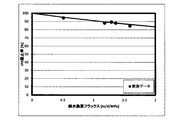
- the modification treatment is performed based on a correlation formula between a pure water equivalent flux of the reverse osmosis membrane and a blocking rate of the non-charged substance.
- the uncharged substance is preferably a low-molecular substance having a molecular weight of 200 or less.
- the contact is performed in a pH range of 4 to 6.5.
- the concentration of the halogen-based oxidant in the contact is preferably in the range of 0.1 to 100 mg / L.
- the contact is performed under a pressure in the range of 0.1 to 20 MPa.
- the present invention is a reverse osmosis membrane modified by the method for modifying a reverse osmosis membrane.
- the present invention is a method for treating uncharged substance-containing water, wherein the uncharged substance-containing water is treated with a reverse osmosis membrane using the reverse osmosis membrane modified by the reverse osmosis membrane modification method.
- the present invention relates to a reverse osmosis membrane treatment step in which permeated water and concentrated water are obtained by passing water to be treated through a modified reverse osmosis membrane modified by bringing a bromine-based oxidant into contact with a polyamide-based reverse osmosis membrane. And an alkaline cleaning step of alkali cleaning the modified reverse osmosis membrane at pH 8 or higher.
- the operation method of the reverse osmosis membrane preferably includes a re-reforming step of re-modifying the alkali-washed modified reverse osmosis membrane by bringing a bromine-based oxidant into contact therewith.
- the contact of the bromine-based oxidant is preferably performed at a pH lower than the pH of the water to be treated.
- the bromine-based oxidant preferably includes a stabilized hypobromite composition containing a bromine-based oxidant and a sulfamic acid compound.
- the bromine-based oxidizing agent preferably contains a stabilized hypobromite composition containing bromine and a sulfamic acid compound.
- the present invention also includes a modified reverse osmosis membrane that is modified by bringing a bromine-based oxidant into contact with a polyamide-based reverse osmosis membrane, and passes the water to be treated to obtain permeated water and concentrated water.
- the apparatus further comprises a re-reformer for re-modifying the alkali-washed modified reverse osmosis membrane by bringing a brominated oxidant into contact therewith.
- the bromine-based oxidant is contacted at a pH lower than the pH of the water to be treated.
- the bromine-based oxidant preferably includes a stabilized hypobromite composition containing a bromine-based oxidant and a sulfamic acid compound.
- the bromine-based oxidant preferably includes a stabilized hypobromite composition containing bromine and a sulfamic acid compound.
- a reverse osmosis membrane modification method capable of adjusting the rejection rate of uncharged substances in a reverse osmosis membrane to a predetermined value, a reverse osmosis membrane modified by the modification method, and a reverse osmosis thereof
- An uncharged substance-containing water treatment method using a membrane can be provided.
- reverse osmosis membrane operation method and reverse osmosis membrane apparatus of the present invention it is possible to suppress a decrease in the ability to prevent alkali washing in a modified polyamide-based reverse osmosis membrane.
- a method for modifying a reverse osmosis membrane according to an embodiment of the present invention is a method for modifying a reverse osmosis membrane in which a halogen-based oxidant is brought into contact with a polyamide-based reverse osmosis membrane to change the rejection rate of uncharged substances.
- This is a method for performing the reforming treatment based on the measured value of the flux of the reverse osmosis membrane in terms of pure water. In this reforming method, it is preferable to perform the reforming process based on a correlation formula between the pure water equivalent flux of the reverse osmosis membrane and the blocking rate of the uncharged substance prepared in advance.
- the reverse osmosis membrane according to the embodiment of the present invention is a reverse osmosis membrane modified by the method for modifying a reverse osmosis membrane.
- “reforming” a reverse osmosis membrane refers to an improvement in the rejection rate of uncharged substances.
- the present inventors control the flux in terms of pure water (hereinafter sometimes referred to as “pure water equivalent flux”) by bringing a halogen-based oxidant into contact with a reverse osmosis membrane whose membrane material is polyamide.
- pure water equivalent flux a halogen-based oxidant into contact with a reverse osmosis membrane whose membrane material is polyamide.
- the technology to improve the blocking performance (blocking rate) of any uncharged substance was established. According to the study by the present inventors, it was found that there is a correlation between the blocking rate of the non-charged substance of the reverse osmosis membrane and the pure water equivalent flux regardless of the type of the reverse osmosis membrane or the presence or absence of modification. .
- the reforming treatment is preferably performed in advance.
- the reforming is performed by setting the concentration and pH of a predetermined halogen-based oxidant, for example, passing water through a reverse osmosis membrane under pressure, monitoring the flow rate with a flow meter or the like, and calculating the pure water equivalent flux, What is necessary is just to adjust the rejection rate of the uncharged substance of a reverse osmosis membrane to a predetermined value.
- a predetermined halogen-based oxidant for example, passing water through a reverse osmosis membrane under pressure, monitoring the flow rate with a flow meter or the like, and calculating the pure water equivalent flux, What is necessary is just to adjust the rejection rate of the uncharged substance of a reverse osmosis membrane to a predetermined value.
- a predetermined halogen-based oxidant for example, pass water through a reverse osmosis membrane under pressure, monitor the flow rate with a flow meter, etc., and create in advance while calculating the pure water equivalent flux Based on the above-described correlation equation, it may be adjusted to a pure water equivalent flux that becomes a target rejection rate of uncharged substances of the reverse osmosis membrane. When a plurality of uncharged substances are targeted, the pure water equivalent flux may be adjusted to a target value based on the uncharged substance having the lowest rejection rate.
- the rejection rate of uncharged substances in the reverse osmosis membrane can be adjusted to a predetermined value.
- it is decided how much the reform should be done that is, what the rejection rate of uncharged substances should be, and the target rejection rate What is necessary is just to modify
- the concentration of uncharged substances at the inlet and outlet to the reverse osmosis membrane device may be monitored and reformed so as to have a predetermined uncharged substance outlet concentration. Since it takes time to measure the concentration (for example, TOC concentration in the case of organic substances, ICP emission analysis in the case of inorganic substances such as boron), the reverse osmosis membrane is It is difficult to adjust the rejection rate of uncharged substances to a predetermined value.
- the reforming method of the reverse osmosis membrane according to the present embodiment the reverse osmosis membrane is instantly obtained by simply monitoring the flow rate with a flow meter or the like and performing the reforming while calculating the pure water equivalent flux. It is possible to adjust the rejection rate of the uncharged substance to a predetermined value.
- uncharged substance means non-electrolyte organic substance or boron that does not dissociate in the neutral region (pH 6-8).
- Examples of the low-molecular non-electrolyte organic substance include organic substances having a molecular weight of 200 or less such as alcohol compounds such as methanol, ethanol and isopropyl alcohol, amine compounds such as urea, and tetraalkylammonium salts such as tetramethylammonium hydroxide. .
- a halogen-based oxidant is present in the water supplied to the reverse osmosis membrane, the washing water, and the like. Then, it may be brought into contact with the reverse osmosis membrane.
- the halogen-based oxidant is not particularly limited as long as it contains halogen such as chlorine and bromine and has an oxidizing action.
- halogen such as chlorine and bromine
- a chlorine-based oxidant, a bromine-based oxidant, and stabilized hypochlorous acid for example, a chlorine-based oxidant, a bromine-based oxidant, and stabilized hypochlorous acid.
- An acid composition, a stabilized hypobromite composition, etc. are mentioned.
- Examples of the chlorine-based oxidizing agent include chlorine gas, chlorine dioxide, hypochlorous acid or a salt thereof, chlorous acid or a salt thereof, chloric acid or a salt thereof, perchloric acid or a salt thereof, chlorinated isocyanuric acid or a salt thereof.
- examples of the salt include alkali metal hypochlorites such as sodium hypochlorite and potassium hypochlorite, alkaline earth hypochlorite such as calcium hypochlorite and barium hypochlorite.
- alkali metal chlorites such as sodium chlorite and potassium chlorite
- alkaline earth metal chlorites such as barium chlorite
- other metal chlorites such as nickel chlorite
- Alkali metal chlorates such as ammonium chlorate, sodium chlorate and potassium chlorate
- alkaline earth metal chlorates such as calcium chlorate and barium chlorate.
- chlorine-based oxidants may be used alone or in combination of two or more.
- sodium hypochlorite is preferably used from the viewpoint of handleability.
- bromine-based oxidizing agents examples include bromine (liquid bromine), bromine chloride, bromic acid, bromate, and hypobromite.
- Hypobromous acid may be produced by reacting a bromide such as sodium bromide with a chlorine-based oxidizing agent such as hypochlorous acid.
- the stabilized hypochlorous acid composition contains a chlorine-based oxidizing agent and a sulfamic acid compound.
- the “stabilized hypochlorous acid composition containing a chlorinated oxidant and a sulfamic acid compound” is a stabilized hypochlorous acid composition containing a mixture of a “chlorine oxidant” and a “sulfamic acid compound”. Alternatively, it may be a stabilized hypochlorous acid composition containing a “reaction product of a chlorinated oxidant and a sulfamic acid compound”.
- the stabilized hypobromite composition contains a bromine-based oxidizing agent and a sulfamic acid compound.
- the “stabilized hypobromite composition containing a bromine-based oxidant and a sulfamic acid compound” is a stabilized hypobromite composition containing a mixture of a “bromine-based oxidant” and a “sulfamic acid compound”. Alternatively, it may be a stabilized hypobromite composition containing a “reaction product of a bromine-based oxidant and a sulfamic acid compound”.
- a stabilized hypochlorous acid composition or a stabilized hypobromite composition is preferable, and a stabilized hypobromite composition is more preferable.
- Stabilized hypochlorous acid composition or stabilized hypobromite composition, especially stabilized hypobromite composition also exhibits a modification effect equivalent to or better than chlorine-based oxidizing agents such as hypochlorous acid. Regardless, the deterioration effect on the reverse osmosis membrane is lower than that of the chlorine-based oxidant, and membrane deterioration due to repeated reforming can be suppressed. Therefore, the stabilized hypochlorous acid composition or the stabilized hypobromite composition, particularly the stabilized hypobromite composition used in the method for modifying a reverse osmosis membrane according to the present embodiment is a modifier. Is suitable.
- a stabilized hypobromite composition and a chlorine-based oxidation containing a bromine-based oxidant and a sulfamic acid compound in a polyamide-based reverse osmosis membrane preferably, a stabilized hypobromite composition and a chlorine-based oxidation containing a bromine-based oxidant and a sulfamic acid compound in a polyamide-based reverse osmosis membrane.
- a mixture of “bromine-based oxidant” and “sulfamic acid compound” or “chlorine” A mixture of “system oxidizing agent” and “sulfamic acid compound” may be present.
- a stabilized hypobromite composition or a stabilized hypochlorous acid composition is generated in the water supply to the reverse osmosis membrane.
- a “reaction product of a bromine-based oxidant and a sulfamic acid compound” is used as a modifier.
- a stabilized hypochlorous acid composition or a stabilized hypochlorous acid composition that is a “reaction product of a chlorinated oxidant and a sulfamic acid compound” may be present.
- a reverse osmosis membrane for example, in the water supply to the reverse osmosis membrane, as a modifier, “bromine”, “bromine chloride”, “hypobromite”
- a mixture of “reaction product of sodium bromide and hypochlorous acid” and “sulfamic acid compound” may be present.
- a mixture of “hypochlorous acid” and “sulfamic acid compound” may be present as a modifier in the water supply to the reverse osmosis membrane.
- reaction product of bromine and sulfamic acid compound for example, in the water supply to the reverse osmosis membrane, as a modifier, "reaction product of bromine and sulfamic acid compound", "bromine chloride and Reaction product of sulfamic acid compound "," Reaction product of hypobromous acid and sulfamic acid compound ", or” Reaction product of sodium bromide and hypochlorous acid and sulfamic acid compound "
- the stabilized hypobromite composition which is a product, may be present.
- a stabilized hypochlorous acid composition that is a “reaction product of hypochlorous acid and a sulfamic acid compound” may be present as a modifier in the water supply to the reverse osmosis membrane.
- the contact of the halogen-based oxidant with the reverse osmosis membrane is preferably performed in the range of more than pH 3 and less than 8, preferably in the range of pH 4 to 6.5. More preferably. If the contact of the halogen-based oxidant with the reverse osmosis membrane is performed at a pH of 3 or less, the reverse osmosis membrane deteriorates when the contact of the halogen-based oxidant with the reverse osmosis membrane is performed over a long period of time, and the blocking rate is reduced. When it is carried out at a pH of 8 or more, the reforming effect may be insufficient.
- the pH of the water supply to the reverse osmosis membrane may be maintained in the above range.
- reaction product of bromine-based oxidant and sulfamic acid compound or “reaction product of chlorinated oxidant and sulfamic acid compound” is a chemical injection pump, etc. May be injected.
- the modification with the halogen-based oxidant is, for example, continuously or intermittently supplying the halogen-based oxidant into the water supplied to the reverse osmosis membrane, the washing water, or the like during the operation of the reverse osmosis membrane device including the reverse osmosis membrane. It may be added, or when the blocking rate of the reverse osmosis membrane is lowered, a halogen-based oxidant may be added continuously or intermittently into the water supplied to the reverse osmosis membrane, washing water or the like.
- the contact of the halogen-based oxidant with the reverse osmosis membrane may be performed under normal pressure, pressurized or reduced pressure, but the modification can be performed without stopping the reverse osmosis membrane device. From the viewpoint that the reverse osmosis membrane can be reliably modified, it is preferable to perform the treatment under pressure.
- the contact of the halogen-based oxidant with the reverse osmosis membrane is preferably performed under a pressure condition in the range of 0.1 to 20 MPa, for example, and is performed under a pressure condition in the range of 0.1 MPa to 8.0 MPa. Is more preferable.
- the contact of the halogen-based oxidant with the reverse osmosis membrane may be performed, for example, under a temperature condition in the range of 5 ° C to 35 ° C.
- the ratio of the equivalent of “sulfamic acid compound” to the equivalent of “bromine-based oxidant” or “chlorine-based oxidant” is preferably 1 or more. A range of 2 or less is more preferable. If the ratio of the equivalent of the “sulfamic acid compound” to the equivalent of the “bromine-based oxidizing agent” or “chlorine-based oxidizing agent” is less than 1, the reverse osmosis membrane may be deteriorated. May increase.
- the concentration of the halogen-based oxidant (total chlorine concentration) in contact with the reverse osmosis membrane is preferably in the range of 0.1 to 100 mg / L in terms of effective chlorine concentration. If the concentration of the halogen-based oxidant in contact with the reverse osmosis membrane (total chlorine concentration) is less than 0.1 mg / L, a sufficient modification effect may not be obtained. It may cause deterioration of the osmotic membrane and corrosion of piping.
- bromine and sulfamic acid compound (mixture of bromine and sulfamic acid compound)” or “reaction product of bromine and sulfamic acid compound” using bromine is composed of “hypochlorous acid, bromine compound and sulfamic acid”. Compared to preparations and preparations of “bromine chloride and sulfamic acid”, etc., there is less by-product of bromic acid, and the reverse osmosis membrane is not further deteriorated.
- the polyamide-based reverse osmosis membrane is brought into contact with a stabilized hypobromite composition containing bromine and a sulfamic acid compound.
- the reforming process is performed based on the measured value of the pure water equivalent flux of the reverse osmosis membrane.
- bromine and a sulfamic acid compound are present (a mixture of bromine and sulfamic acid compound is present) in the water supply to the reverse osmosis membrane.
- a reaction product of bromine and a sulfamic acid compound is present in the water supply to the reverse osmosis membrane.
- bromine compounds include sodium bromide, potassium bromide, lithium bromide, ammonium bromide and hydrobromic acid. Of these, sodium bromide is preferable from the viewpoint of formulation cost and the like.
- the sulfamic acid compound is a compound represented by the following general formula (1).
- R 2 NSO 3 H (1) (In the formula, R is independently a hydrogen atom or an alkyl group having 1 to 8 carbon atoms.)
- sulfamic acid compound examples include sulfamic acid (amidosulfuric acid) in which both two R groups are hydrogen atoms, N-methylsulfamic acid, N-ethylsulfamic acid, N-propylsulfamic acid, N- A sulfamic acid compound in which one of two R groups such as isopropylsulfamic acid and N-butylsulfamic acid is a hydrogen atom and the other is an alkyl group having 1 to 8 carbon atoms, N, N-dimethylsulfamic acid, N, Two R groups such as N-diethylsulfamic acid, N, N-dipropylsulfamic acid, N, N-dibutylsulfamic acid, N-methyl-N-ethylsulfamic acid, N-methyl-N-propylsulfamic acid, etc.
- sulfamic acid amidosulfuric
- One of two R groups such as a sulfamic acid compound, N-phenylsulfamic acid and the like, both of which are alkyl groups having 1 to 8 carbon atoms Is a hydrogen atom and the other sulfamic acid compound or a salt thereof, such as an aryl group having 6 to 10 carbon atoms.
- the sulfamate include alkali metal salts such as sodium salt and potassium salt, alkaline earth metal salts such as calcium salt, strontium salt and barium salt, manganese salt, copper salt, zinc salt, iron salt, cobalt salt, Other metal salts such as nickel salts, ammonium salts, guanidine salts and the like can be mentioned.
- the sulfamic acid compounds and salts thereof may be used alone or in combination of two or more.
- sulfamic acid compound sulfamic acid (amidosulfuric acid) is preferably used from the viewpoint of environmental load.
- At least one of a stabilized hypobromite composition and a stabilized hypochlorous acid composition is used as a modifier in water supply to the reverse osmosis membrane.
- an alkali may be further present.
- the alkali include alkali hydroxides such as sodium hydroxide and potassium hydroxide. From the viewpoint of product stability at low temperatures, sodium hydroxide and potassium hydroxide may be used in combination. Further, the alkali is not solid and may be used as an aqueous solution.
- the method for reforming a reverse osmosis membrane according to this embodiment is applied to a polyamide-based polymer membrane that is currently mainstream.
- Polyamide polymer membranes have a relatively low resistance to oxidizing agents, and when free chlorine or the like is continuously brought into contact with the polyamide polymer membrane, the membrane performance may be significantly reduced.
- at least one of a stabilized hypobromite composition and a stabilized hypochlorous acid composition, particularly a stabilized hypobromite composition is used. As a result, even in a polyamide polymer film, such a remarkable decrease in film performance hardly occurs.
- a dispersant is used in combination with a halogen-based oxidant to suppress the scale. May be.
- the dispersant include polyacrylic acid, polymaleic acid, and phosphonic acid.
- the amount of the dispersant added to the water supply or the like is, for example, in the range of 0.1 to 1,000 mg / L as the concentration in the RO concentrated water.
- Examples of the use of the reverse osmosis membrane device including the polyamide-based reverse osmosis membrane modified by the reverse osmosis membrane modification method according to this embodiment include seawater desalination and wastewater recovery.
- the rejection rate of uncharged substances is significantly improved.
- the reverse osmosis membrane device 1 of FIG. 1 includes a reverse osmosis membrane treatment device 10 having a modified reverse osmosis membrane modified by bringing a bromine-based oxidant into contact with a polyamide-based reverse osmosis membrane.
- a water pipe 12 to be treated is connected to the inlet of the reverse osmosis membrane treatment device 10.
- a permeated water pipe 14 is connected to the permeated water outlet of the reverse osmosis membrane treatment apparatus 10, and a concentrated water pipe 16 is connected to the concentrated water outlet.
- the treated water is supplied to the reverse osmosis membrane treatment device 10 through the treated water pipe 12, and the reverse osmosis membrane treatment device 10 uses the modified reverse osmosis membrane modified by contacting with the bromine-based oxidant.
- a reverse osmosis membrane treatment of treated water is performed (reverse osmosis membrane treatment step).
- the permeated water obtained by the reverse osmosis membrane treatment is discharged through the permeated water pipe 14, and the concentrated water is discharged through the concentrated water pipe 16.
- the modified reverse osmosis membrane After passing the treated water through the modified reverse osmosis membrane for a predetermined time and performing the reverse osmosis membrane treatment, the modified reverse osmosis membrane is alkali washed at pH 8 or more (alkali washing step).
- alkali washing step By modifying the polyamide-based reverse osmosis membrane by bringing it into contact with a bromine-based oxidant, it is possible to suppress a decrease in the blocking performance against alkali cleaning in the modified polyamide-based reverse osmosis membrane.
- Alkali washing can be performed, for example, by bringing an alkaline solution such as an alkaline aqueous solution into contact with the modified reverse osmosis membrane.
- an alkaline solution such as an alkaline aqueous solution may be passed through the modified reverse osmosis membrane for a predetermined time, or the modified reverse osmosis membrane may be immersed in an alkaline solution such as an alkaline aqueous solution for a predetermined time.
- alkali examples include sodium hydroxide, tetrasodium ethylenediaminetetraacetate, sodium dodecyl sulfate, sodium tripolyphosphate, and the like.
- an alkali solution such as an aqueous alkali solution may be used.
- the pH in the alkali cleaning step is 8 or more, preferably 8 or more and 13 or less, and more preferably 10 or more and 12 or less.
- the pH in the alkali cleaning step is less than 8, the cleaning effect is low, and when it exceeds 13, the reverse osmosis membrane may be deteriorated.
- the temperature in the alkali cleaning step is not particularly limited, but is, for example, in the range of 5 ° C to 45 ° C, and preferably in the range of 20 ° C to 35 ° C. If the temperature in the alkali cleaning step is less than 5 ° C, the cleaning effect is low, and if it exceeds 45 ° C, the reverse osmosis membrane may deteriorate.
- the reformed reverse osmosis membrane washed with alkali may be contacted with a bromine-based oxidant and re-reformed (re-reforming step). Even if alkali cleaning and modification are repeated, the degradation of the polyamide-based reverse osmosis membrane is suppressed, and therefore the reverse osmosis membrane device can be stably operated even for a long period of operation.
- the reverse osmosis membrane treatment apparatus 10 includes, for example, a polyamide-type reverse osmosis membrane filled with a modified reverse osmosis membrane that has been modified by bringing a bromine-based oxidant into contact therewith, and the water to be treated is allowed to pass through to be permeated and concentrated. This is a reverse osmosis membrane module for obtaining water.
- the polyamide-based reverse osmosis membrane used in the reverse osmosis membrane treatment apparatus 10 is a modified reverse osmosis membrane modified by bringing a bromine-based oxidant into contact therewith.
- “reformation” of the reverse osmosis membrane in the present specification refers to improvement of permeated water quality, that is, improvement of the rejection rate.
- brominated oxidant used for reforming there are no particular restrictions on the brominated oxidant used for reforming (and re-modification, the same shall apply hereinafter).
- bromine-based oxidizing agents include “hypobromite”, “reaction product of chlorine-based oxidizing agent and bromide ions”, “stabilized hypobromite composition”, etc. “Stabilized hypobromite composition”.
- the “stabilized hypobromite composition” has a particularly small adverse effect on the blocking rate of the reverse osmosis membrane, and can be stably operated for a long period of time even when continuously contacted with the reverse osmosis membrane.
- the modified reverse osmosis membrane in the operation method of the reverse osmosis membrane according to the present embodiment includes a bromine-based oxidant, for example, “bromine-based oxidation” as a modifier in water supply to the polyamide-based reverse osmosis membrane, washing water, and the like. It is a membrane modified by a method in which a mixture of an “agent” and a “sulfamic acid compound” is present and brought into contact with a polyamide-based reverse osmosis membrane. Thereby, it is thought that the stabilized hypobromite composition produces
- the modified reverse osmosis membrane in the reverse osmosis membrane operation method according to the present embodiment includes, for example, “bromine-based oxidant and modifier” as a modifier in feed water, washing water, and the like to the polyamide-based reverse osmosis membrane. It is a membrane modified by a method in which a stabilized hypobromite composition, which is a reaction product with a sulfamic acid compound, is present and brought into contact with a polyamide-based reverse osmosis membrane.
- the modified reverse osmosis membrane in the operation method of the reverse osmosis membrane according to the present embodiment includes, for example, “bromine”, “bromine chloride”, “next” in the water supply to the polyamide-type reverse osmosis membrane.
- a membrane modified by a method in which a mixture of “bromine acid” or “reaction product of sodium bromide and hypochlorous acid” and “sulfamic acid compound” is present and brought into contact with a polyamide-based reverse osmosis membrane. is there.
- the modified reverse osmosis membrane in the reverse osmosis membrane operation method includes, for example, “reaction product of bromine and a sulfamic acid compound” in water supply to the polyamide-based reverse osmosis membrane, etc.
- “Reaction product of bromine chloride and sulfamic acid compound” “Reaction product of hypobromite and sulfamic acid compound”, or “Reaction product of sodium bromide and hypochlorous acid, and sulfamic acid compound”
- This is a membrane modified by a method in which a stabilized hypobromite composition, which is a reaction product of, is present and brought into contact with a polyamide-based reverse osmosis membrane.
- the modification of the reverse osmosis membrane in the operation method of the reverse osmosis membrane according to the present embodiment is, for example, in the water supply to the reverse osmosis membrane during the operation of the reverse osmosis membrane device including the polyamide-based reverse osmosis membrane.
- a bromine-based oxidant for example, “bromine-based oxidant” and “sulfamic acid compound” may be injected as a modifier by a chemical pump or the like.
- the “bromine-based oxidant” and the “sulfamic acid compound” may be added separately to the water supply or the like, or may be added to the water supply after mixing the stock solutions.
- a polyamide-based reverse osmosis membrane is immersed in water for a predetermined time in water to which a bromine-based oxidant such as “bromine-based oxidant” and “sulfamic acid compound” is added as a modifier. Also good.
- reaction product of bromine-based oxidant and sulfamic acid compound or “reaction product of bromine-based compound and chlorine-based oxidant and sulfamine” You may inject
- reaction product of bromine-based oxidant and sulfamic acid compound or “reaction product of bromine-based compound and chlorine-based oxidant and sulfamic acid compound” is added.
- the polyamide-based reverse osmosis membrane may be immersed and contacted for a predetermined time.
- the reforming with a bromine-based oxidant is performed, for example, by continuously or intermittently supplying a bromine-based oxidant into the water supply to the reverse osmosis membrane during operation of a reverse osmosis membrane device having a polyamide-based reverse osmosis membrane. It may be added, or when the blocking rate of the reverse osmosis membrane is lowered, a bromine-based oxidant is added continuously or intermittently into the water supply to the reverse osmosis membrane, or a bromine-based oxidant is contained.
- a reverse osmosis membrane may be immersed in water.
- reverse osmosis is possible for pipes that add bromine-based oxidants to the water supply to reverse osmosis membranes, immersion tanks for immersing reverse osmosis membranes or modified reverse osmosis membranes in water containing bromine-based oxidants, etc. It functions as a reforming means for reforming by bringing a bromine-based oxidant into contact with the membrane, or as a reforming means for reforming by bringing a bromine-based oxidant into contact with a modified reverse osmosis membrane washed with an alkali.
- the contact of the bromine-based oxidant with the reverse osmosis membrane may be performed under normal pressure, pressurized or reduced pressure, but the modification can be performed without stopping the reverse osmosis membrane device. From the viewpoint that the reverse osmosis membrane can be reliably modified, it is preferable to perform the treatment under pressure.
- the contact of the bromine-based oxidant with the reverse osmosis membrane is preferably performed under a pressurized condition in the range of 0.1 MPa to 8.0 MPa, for example.
- the contact of the bromine-based oxidant with the reverse osmosis membrane may be performed, for example, under a temperature condition in the range of 5 ° C to 35 ° C.
- the ratio of the equivalent of the “sulfamic acid compound” to the equivalent of the “bromine-based oxidant” is preferably 1 or more, and is preferably in the range of 1 or more and 2 or less. More preferred. If the ratio of the equivalent amount of the “sulfamic acid compound” to the equivalent amount of the “bromine-based oxidizing agent” is less than 1, the reverse osmosis membrane may be deteriorated, and if it exceeds 2, the production cost may increase.
- the total chlorine concentration in contact with the reverse osmosis membrane is preferably 0.01 to 100 mg / L in terms of effective chlorine concentration. If it is less than 0.01 mg / L, a sufficient reforming effect may not be obtained. If it exceeds 100 mg / L, reverse osmosis membrane deterioration and piping corrosion may occur.
- bromine-based oxidant used in the stabilized hypobromite composition examples include bromine (liquid bromine), bromine chloride, bromate, bromate, and hypobromite.
- Hypobromous acid may be produced by reacting a bromide such as sodium bromide with a chlorine-based oxidizing agent such as hypochlorous acid.
- the preparation of “bromine and sulfamic acid compound (mixture of bromine and sulfamic acid compound)” or “reaction product of bromine and sulfamic acid compound” using bromine is composed of “hypochlorous acid and bromine compound and Compared to sulfamic acid preparations and bromine chloride and sulfamic acid preparations, etc., there is less chloride ion, which does not degrade polyamide reverse osmosis membranes more and may cause corrosion of metal materials such as piping. Since it is low, it is more preferable.
- the reverse osmosis membrane in the operation method of the reverse osmosis membrane according to the present embodiment brings bromine and a sulfamic acid compound into contact with a polyamide-based reverse osmosis membrane (contacts a mixture of bromine and a sulfamic acid compound), or A membrane modified by a method of bringing a reaction product of bromine and a sulfamic acid compound into contact with each other is preferable.
- the bromine compound, chlorine-based oxidant, and sulfamic acid compound are as described above.
- an alkali may be further present.
- the alkali include alkali hydroxides such as sodium hydroxide and potassium hydroxide. From the viewpoint of product stability at low temperatures, sodium hydroxide and potassium hydroxide may be used in combination. Further, the alkali is not solid and may be used as an aqueous solution.
- the operation method of the reverse osmosis membrane according to the present embodiment is applied to a polyamide-based polymer membrane which is currently mainstream as a reverse osmosis membrane.
- Polyamide polymer membranes have a relatively low resistance to oxidizing agents, and when free chlorine or the like is continuously brought into contact with the polyamide polymer membrane, the membrane performance is significantly reduced.
- a bromine-based oxidant particularly a stabilized hypobromite composition
- the contact of the bromine-based oxidant with the polyamide-based reverse osmosis membrane is performed at a pH lower than the pH of the water to be treated.
- the pH of the treated water is higher than the pH at the time of reforming (i.e. When the quality is lower than the pH of the water to be treated), the reforming effect is maintained and fluctuations in the permeate flow rate of the water to be treated can be suppressed.
- the pH of the water to be treated is lower than the pH at the time of reforming (i.e. When the quality is higher than the pH of the water to be treated), the reforming effect and fluctuations in the permeate flow rate of the water to be treated may occur.
- the contact of the bromine-based oxidant with the polyamide-based reverse osmosis membrane is performed, for example, in the range of more than pH 3 and less than 8, or in the range of pH 4 to 6.5. The lower the pH at the time of contact with the bromine-based oxidant, the higher the membrane modification effect, the higher the rejection rate, and the permeated water quality.
- a dispersant when scale is generated at pH 5.5 or higher of water supplied to the reverse osmosis membrane, a dispersant may be used in combination with a bromine-based oxidant to suppress scale.
- the dispersant include polyacrylic acid, polymaleic acid, and phosphonic acid.
- the amount of the dispersant added to the feed water is, for example, in the range of 0.1 to 1,000 mg / L as the concentration in the RO concentrated water.
- Examples of the use of the reverse osmosis membrane device include pure water production, seawater desalination, and wastewater collection.
- the reverse osmosis membrane operation method and the reverse osmosis membrane device 1 among the deaeration treatment device, the ion exchange treatment device, and the UV sterilization treatment device that treats the water to be treated of the reverse osmosis membrane treatment device 10.
- the reverse osmosis membrane treatment apparatus 10 reverse osmosis membrane treatment step
- water to be treated may be subjected to at least one of degassing treatment, ion exchange treatment, and UV sterilization treatment. .
- an ion exchange treatment device an electrical desalination treatment device, a UV sterilization treatment device, and a UV oxidation treatment device that perform treatment on the permeated water of the reverse osmosis membrane treatment device 10.
- At least one of processing, UV sterilization processing, UV oxidation processing, particulate removal processing, and second reverse osmosis membrane processing may be performed.
- the modifier for reverse osmosis membrane according to this embodiment contains a halogen-based oxidizing agent.
- the reverse osmosis membrane modifier according to this embodiment is preferably a stabilized hypobromite composition containing a mixture of “bromine-based oxidant” and “sulfamic acid compound”, or “chlorine-based oxidant”. It contains a stabilized hypochlorous acid composition including a mixture with a “sulfamic acid compound”, and may further contain an alkali.
- the reverse osmosis membrane modifier according to this embodiment is preferably a stabilized hypobromite composition containing a “reaction product of a bromine-based oxidant and a sulfamic acid compound”, or a “chlorine-based oxidant”. It contains a stabilized hypochlorous acid composition containing a reaction product of sulfamic acid compound and may further contain an alkali.
- the bromine-based oxidizing agent, bromine compound, chlorine-based oxidizing agent, and sulfamic acid compound are as described above.
- Examples of commercially available stabilized hypochlorous acid compositions containing a chlorine-based oxidizing agent and a sulfamic acid compound include “Kuriverter IK-110” manufactured by Kurita Kogyo Co., Ltd.
- the reverse osmosis membrane modifier according to the present embodiment contains bromine and a sulfamic acid compound because the polyamide-based reverse osmosis membrane is not further deteriorated and the amount of effective halogen leaked into the RO permeate is smaller.
- a mixture of bromine and sulfamic acid compound for example, a mixture of bromine, sulfamic acid compound, alkali and water, or containing a reaction product of bromine and sulfamic acid compound, for example, A mixture of a reaction product of bromine and a sulfamic acid compound, an alkali, and water is preferable.
- a modifier containing a stabilized hypobromite composition containing a bromine-based oxidant and a sulfamic acid compound, particularly containing bromine and a sulfamic acid compound.
- a modifier containing a stabilized hypobromite composition has higher oxidizing power than a modifier (such as chlorosulfamic acid) containing a chlorinated oxidant and a sulfamic acid compound. In spite of remarkably high inhibitory power and slime peeling power, it hardly causes significant film deterioration like hypochlorous acid having high oxidizing power.
- the reverse osmosis membrane modifier containing the stabilized hypobromite or stabilized hypochlorous acid composition is almost permeable to the reverse osmosis membrane. Therefore, there is almost no impact on the quality of treated water. Further, since the concentration can be measured on site in the same manner as hypochlorous acid or the like, more accurate concentration management is possible.
- the pH of the reverse osmosis membrane modifier containing the stabilized hypobromite composition is, for example, more than 13.0, and more preferably more than 13.2.
- the pH of the modifier for reverse osmosis membrane is 13.0 or less, the effective halogen in the modifier may become unstable.
- the concentration of bromic acid in the reverse osmosis membrane modifier containing the stabilized hypobromite composition is preferably less than 5 mg / kg. If the bromate concentration in the modifier is 5 mg / kg or more, the concentration of bromate ions in the RO permeate may increase.
- the modifier for a reverse osmosis membrane containing the stabilized hypobromite composition or the stabilized hypochlorous acid composition is obtained by mixing a bromine-based oxidant or a chlorine-based oxidant and a sulfamic acid compound, Further, an alkali may be mixed.
- bromine is an inert gas in a mixed solution containing water, an alkali and a sulfamic acid compound. It is preferable to include a step of adding and reacting under an atmosphere or a step of adding bromine to a mixed solution containing water, an alkali and a sulfamic acid compound under an inert gas atmosphere.
- the inert gas to be used is not limited, at least one of nitrogen and argon is preferable from the viewpoint of manufacturing and the like, and nitrogen is particularly preferable from the viewpoint of manufacturing cost and the like.
- the oxygen concentration in the reactor during the addition of bromine is preferably 6% or less, more preferably 4% or less, further preferably 2% or less, and particularly preferably 1% or less. If the oxygen concentration in the reactor during the bromine reaction exceeds 6%, the amount of bromic acid produced in the reaction system may increase.
- the addition ratio of bromine is preferably 25% by weight or less, more preferably 1% by weight or more and 20% by weight or less, based on the total amount of the modifier. If the bromine addition rate exceeds 25% by weight with respect to the total amount of the reverse osmosis membrane modifier, the amount of bromic acid produced in the reaction system may increase. If it is less than 1% by weight, the reforming effect may be inferior.
- the reaction temperature at the time of bromine addition is preferably controlled in the range of 0 ° C. to 25 ° C., but more preferably in the range of 0 ° C. to 15 ° C. from the viewpoint of production cost.
- the reaction temperature at the time of bromine addition exceeds 25 degreeC, the production amount of the bromic acid in a reaction system may increase, and when it is less than 0 degreeC, it may freeze.
- the pH of the resulting solution was 14 as measured by the glass electrode method.
- the bromine content of the resulting solution was 16.9% as measured by a redox titration method using sodium thiosulfate after bromine was converted to iodine with potassium iodide, and the theoretical content (16.9% ) Of 100.0%.
- the oxygen concentration in the reaction vessel during the bromine reaction was measured using “Oxygen Monitor JKO-02 LJDII” manufactured by Zico Corporation.
- the bromic acid concentration was less than 5 mg / kg.
- Electrode type Glass electrode type pH meter: IOL-30, manufactured by Toa DKK Corporation
- Electrode calibration Neutral phosphate pH (6.86) standard solution (type 2) manufactured by Kanto Chemical Co., boric acid manufactured by the same company Salt temperature (9.18) Standard solution (type 2) was measured by two-point calibration
- Measurement value Immerse the electrode in the measurement solution and use the value after stabilization as the measurement value.
- IPA isopropyl alcohol
- Example 1 Polyamide-based polymer reverse osmosis membrane using sodium hypochlorite (Example 1) and the stabilized hypobromite composition prepared above (Example 2) as a modifier (halogen-based oxidant), respectively. (Nitto Denko Corporation, SWC5) was modified. In the modification, water with 10 ppm of the above modifier added at an operating pressure of 2.0 MPa was passed through the reverse osmosis membrane apparatus including the reverse osmosis membrane at pH 4 and 25 ⁇ 1 ° C. The target IPA rejection was set to 97%, and the set pure water equivalent flux was set to 0.28 m / d / MPa based on the correlation equation (FIG. 1) prepared in advance.
- the modification is based on the measured value of the pure water equivalent flux.
- the rejection rate of the uncharged substance of the reverse osmosis membrane could be adjusted to a predetermined value.
- Example 3 Using the stabilized hypobromite composition prepared above as a modifier, a polyamide polymer reverse osmosis membrane (“SWC4” manufactured by Nitto Denko Corporation) (Example 3), polyamide polymer reverse osmosis Each of the membranes (“SWC5” manufactured by Nitto Denko Corporation) was modified (Example 4).
- the reforming was carried out on a reverse osmosis membrane device equipped with this reverse osmosis membrane at an operating pressure of 2.0 MPa, water added with 10 ppm of the above modifier at pH 4, 25 ⁇ 1 ° C. while monitoring the flow rate with a flow meter. It carried out by passing water until the water equivalent flux became 0.28 m / d / MPa.
- the rejection rate of the non-charged substance of the reverse osmosis membrane is set to a predetermined value. The value could be adjusted.
- the target TOC blocking performance is not achieved, and the modification effect varies depending on the type of polyamide polymer reverse osmosis membrane.
- the difference in the rejection rate of substances has increased.
- the rejection rate of the uncharged substance in the reverse osmosis membrane could be adjusted to a predetermined value by performing the reforming treatment based on the measured value of the pure water equivalent flux as in the example.
- Example 5 Stabilized hypobromite composition (Example 5) prepared above, hypobromite (mixture of sodium bromide and hypochlorous acid) (Example 6), hypochlorous acid (Comparative Example 3)
- the polyamide polymer reverse osmosis membrane (“SWC5” manufactured by Nitto Denko Corporation) was modified by using each as a modifier.
- a polyamide polymer reverse osmosis membrane (“SWC5” manufactured by Nitto Denko Corporation) (Comparative Example 4) without modification was also prepared.
- reverse osmosis membranes modified with bromine-based oxidants showed a significant reduction in blocking performance due to alkali cleaning.
- Examples 7 and 8, Comparative Example 5 The membranes used in Example 5, Example 6, and Comparative Example 3 were modified again by the above-described method to give Example 7, Example 8, and Comparative Example 5, respectively.
- the urea rejection rate of the film after re-modification was evaluated in the same manner as in Examples 5 and 6 and Comparative Example 3. The results are shown in Table 5.
- reverse osmosis membrane device 10 reverse osmosis membrane treatment device, 12 treated water piping, 14 permeate piping, 16 concentrated water piping.
Landscapes
- Chemical & Material Sciences (AREA)
- Chemical Kinetics & Catalysis (AREA)
- Engineering & Computer Science (AREA)
- Manufacturing & Machinery (AREA)
- Life Sciences & Earth Sciences (AREA)
- Hydrology & Water Resources (AREA)
- Environmental & Geological Engineering (AREA)
- Water Supply & Treatment (AREA)
- Organic Chemistry (AREA)
- Separation Using Semi-Permeable Membranes (AREA)
Abstract
L'invention concerne un procédé de modification d'une membrane d'osmose inverse avec lequel il est possible de réguler la membrane d'osmose inverse de manière à avoir un rejet donné de substances non chargées. Le procédé, qui est destiné à modifier une membrane d'osmose inverse à base de polyamide, consiste à amener un oxydant à base d'halogène en contact avec la membrane d'osmose inverse pour ainsi modifier le rejet de substances non chargées, la modification étant effectuée sur la base de valeurs d'écoulement trouvées, en termes d'eau pure, de la membrane d'osmose inverse. En outre, l'invention concerne un procédé de fonctionnement pour une membrane d'osmose inverse dans lequel une membrane d'osmose inverse à base de polyamide modifié peut être empêchée de souffrir d'une diminution de la performance de rejet due au nettoyage alcalin. Le procédé de fonctionnement pour une membrane d'osmose inverse comprend : une étape de traitement de membrane d'osmose inverse dans laquelle de l'eau à traiter est passée à travers une membrane d'osmose inverse à base de polyamide qui a été modifiée par contact avec un oxydant composé de brome, ce qui permet d'obtenir de l'eau pénétrante et de l'eau concentrée; et une étape de nettoyage alcalin dans laquelle la membrane d'osmose inverse modifiée est nettoyée avec un alcali à un pH de 8 ou plus.
Applications Claiming Priority (4)
| Application Number | Priority Date | Filing Date | Title |
|---|---|---|---|
| JP2017-017643 | 2017-02-02 | ||
| JP2017017643A JP6933902B2 (ja) | 2017-02-02 | 2017-02-02 | 逆浸透膜の改質方法、および、非荷電物質含有水の処理方法 |
| JP2017092872A JP7144922B2 (ja) | 2017-05-09 | 2017-05-09 | 逆浸透膜の運転方法および逆浸透膜装置 |
| JP2017-092872 | 2017-05-09 |
Publications (1)
| Publication Number | Publication Date |
|---|---|
| WO2018142904A1 true WO2018142904A1 (fr) | 2018-08-09 |
Family
ID=63040587
Family Applications (1)
| Application Number | Title | Priority Date | Filing Date |
|---|---|---|---|
| PCT/JP2018/000844 Ceased WO2018142904A1 (fr) | 2017-02-02 | 2018-01-15 | Procédé de modification de membrane d'osmose inverse, membrane d'osmose inverse, procédé de traitement d'eau contenant une substance non chargée, procédé de fonctionnement pour membrane d'osmose inverse et dispositif de membrane d'osmose inverse |
Country Status (2)
| Country | Link |
|---|---|
| TW (1) | TWI786081B (fr) |
| WO (1) | WO2018142904A1 (fr) |
Cited By (1)
| Publication number | Priority date | Publication date | Assignee | Title |
|---|---|---|---|---|
| JP2020142211A (ja) * | 2019-03-07 | 2020-09-10 | オルガノ株式会社 | 逆浸透膜を用いる水処理方法および水処理装置 |
Families Citing this family (1)
| Publication number | Priority date | Publication date | Assignee | Title |
|---|---|---|---|---|
| JP6973565B1 (ja) * | 2020-05-28 | 2021-12-01 | 栗田工業株式会社 | 逆浸透膜処理方法 |
Citations (6)
| Publication number | Priority date | Publication date | Assignee | Title |
|---|---|---|---|---|
| JP2008246448A (ja) * | 2007-03-30 | 2008-10-16 | Kurita Water Ind Ltd | 透過膜の阻止率向上方法、阻止率向上透過膜、透過膜処理方法および装置 |
| JP2015117216A (ja) * | 2013-12-19 | 2015-06-25 | 栗田工業株式会社 | 水系の殺菌方法 |
| JP2015217353A (ja) * | 2014-05-19 | 2015-12-07 | 栗田工業株式会社 | 循環冷却水系における冷却水処理薬剤の濃度調整方法、冷却排出水の回収方法及び水処理設備 |
| JP2016073915A (ja) * | 2014-10-06 | 2016-05-12 | 栗田工業株式会社 | 逆浸透膜の洗浄剤、洗浄液、および洗浄方法 |
| WO2016136304A1 (fr) * | 2015-02-24 | 2016-09-01 | オルガノ株式会社 | Procédé pour la modification de membrane d'osmose inverse, membrane d'osmose inverse, procédé de traitement pour de l'eau contenant du bore et procédé pour la mise en œuvre d'une membrane d'osmose inverse |
| JP2016155071A (ja) * | 2015-02-24 | 2016-09-01 | オルガノ株式会社 | 分離膜の殺菌方法 |
Family Cites Families (1)
| Publication number | Priority date | Publication date | Assignee | Title |
|---|---|---|---|---|
| JP2016128142A (ja) * | 2015-01-09 | 2016-07-14 | 東レ株式会社 | 半透膜の阻止率向上方法 |
-
2018
- 2018-01-15 WO PCT/JP2018/000844 patent/WO2018142904A1/fr not_active Ceased
- 2018-01-25 TW TW107102621A patent/TWI786081B/zh active
Patent Citations (6)
| Publication number | Priority date | Publication date | Assignee | Title |
|---|---|---|---|---|
| JP2008246448A (ja) * | 2007-03-30 | 2008-10-16 | Kurita Water Ind Ltd | 透過膜の阻止率向上方法、阻止率向上透過膜、透過膜処理方法および装置 |
| JP2015117216A (ja) * | 2013-12-19 | 2015-06-25 | 栗田工業株式会社 | 水系の殺菌方法 |
| JP2015217353A (ja) * | 2014-05-19 | 2015-12-07 | 栗田工業株式会社 | 循環冷却水系における冷却水処理薬剤の濃度調整方法、冷却排出水の回収方法及び水処理設備 |
| JP2016073915A (ja) * | 2014-10-06 | 2016-05-12 | 栗田工業株式会社 | 逆浸透膜の洗浄剤、洗浄液、および洗浄方法 |
| WO2016136304A1 (fr) * | 2015-02-24 | 2016-09-01 | オルガノ株式会社 | Procédé pour la modification de membrane d'osmose inverse, membrane d'osmose inverse, procédé de traitement pour de l'eau contenant du bore et procédé pour la mise en œuvre d'une membrane d'osmose inverse |
| JP2016155071A (ja) * | 2015-02-24 | 2016-09-01 | オルガノ株式会社 | 分離膜の殺菌方法 |
Cited By (3)
| Publication number | Priority date | Publication date | Assignee | Title |
|---|---|---|---|---|
| JP2020142211A (ja) * | 2019-03-07 | 2020-09-10 | オルガノ株式会社 | 逆浸透膜を用いる水処理方法および水処理装置 |
| WO2020179789A1 (fr) * | 2019-03-07 | 2020-09-10 | オルガノ株式会社 | Procédé de traitement d'eau et système de traitement d'eau utilisant une membrane d'osmose inverse |
| CN113507981A (zh) * | 2019-03-07 | 2021-10-15 | 奥加诺株式会社 | 使用反渗透膜的水处理方法和水处理装置 |
Also Published As
| Publication number | Publication date |
|---|---|
| TW201834739A (zh) | 2018-10-01 |
| TWI786081B (zh) | 2022-12-11 |
Similar Documents
| Publication | Publication Date | Title |
|---|---|---|
| KR101990231B1 (ko) | 역침투막의 개질 방법, 역침투막, 붕소 함유수의 처리 방법, 및 분리막의 운전 방법 | |
| JP6807219B2 (ja) | 逆浸透膜処理システムおよび逆浸透膜処理方法 | |
| JP6622424B2 (ja) | 逆浸透膜処理方法および逆浸透膜処理システム | |
| JP2016120466A (ja) | ろ過処理システムおよびろ過処理方法 | |
| JP2018153749A (ja) | 逆浸透膜を用いる水処理方法および水処理システム | |
| KR102291224B1 (ko) | 역침투막을 이용하는 수처리 방법 및 수처리 장치 | |
| JP7013141B2 (ja) | 逆浸透膜を用いる水処理方法 | |
| JP6779706B2 (ja) | 逆浸透膜を用いる水処理方法 | |
| JP6837301B2 (ja) | 逆浸透膜処理方法および逆浸透膜処理システム | |
| JP6823401B2 (ja) | 低分子有機物含有水の処理方法および逆浸透膜の改質方法 | |
| JP7008470B2 (ja) | 逆浸透膜処理方法および逆浸透膜処理システム | |
| WO2018142904A1 (fr) | Procédé de modification de membrane d'osmose inverse, membrane d'osmose inverse, procédé de traitement d'eau contenant une substance non chargée, procédé de fonctionnement pour membrane d'osmose inverse et dispositif de membrane d'osmose inverse | |
| JP6506987B2 (ja) | 逆浸透膜の改質方法、およびホウ素含有水の処理方法 | |
| JP7050414B2 (ja) | 逆浸透膜を用いる水処理方法 | |
| JP6974936B2 (ja) | 逆浸透膜を用いる水処理方法 | |
| JP6933902B2 (ja) | 逆浸透膜の改質方法、および、非荷電物質含有水の処理方法 | |
| JP7144922B2 (ja) | 逆浸透膜の運転方法および逆浸透膜装置 | |
| JP2020075219A (ja) | 逆浸透膜処理方法、逆浸透膜処理システム、水処理方法、および水処理システム | |
| JP7492876B2 (ja) | 水処理方法および水処理装置 |
Legal Events
| Date | Code | Title | Description |
|---|---|---|---|
| 121 | Ep: the epo has been informed by wipo that ep was designated in this application |
Ref document number: 18748216 Country of ref document: EP Kind code of ref document: A1 |
|
| NENP | Non-entry into the national phase |
Ref country code: DE |
|
| 122 | Ep: pct application non-entry in european phase |
Ref document number: 18748216 Country of ref document: EP Kind code of ref document: A1 |