WO2018164254A1 - Composition pour favoriser l'augmentation quantitative de bdnf dans le corps - Google Patents
Composition pour favoriser l'augmentation quantitative de bdnf dans le corps Download PDFInfo
- Publication number
- WO2018164254A1 WO2018164254A1 PCT/JP2018/009138 JP2018009138W WO2018164254A1 WO 2018164254 A1 WO2018164254 A1 WO 2018164254A1 JP 2018009138 W JP2018009138 W JP 2018009138W WO 2018164254 A1 WO2018164254 A1 WO 2018164254A1
- Authority
- WO
- WIPO (PCT)
- Prior art keywords
- leu
- ile
- composition
- bdnf
- val
- Prior art date
- Legal status (The legal status is an assumption and is not a legal conclusion. Google has not performed a legal analysis and makes no representation as to the accuracy of the status listed.)
- Ceased
Links
Images

Classifications
-
- A—HUMAN NECESSITIES
- A23—FOODS OR FOODSTUFFS; TREATMENT THEREOF, NOT COVERED BY OTHER CLASSES
- A23L—FOODS, FOODSTUFFS OR NON-ALCOHOLIC BEVERAGES, NOT OTHERWISE PROVIDED FOR; PREPARATION OR TREATMENT THEREOF
- A23L33/00—Modifying nutritive qualities of foods; Dietetic products; Preparation or treatment thereof
- A23L33/10—Modifying nutritive qualities of foods; Dietetic products; Preparation or treatment thereof using additives
- A23L33/17—Amino acids, peptides or proteins
- A23L33/18—Peptides; Protein hydrolysates
-
- A—HUMAN NECESSITIES
- A61—MEDICAL OR VETERINARY SCIENCE; HYGIENE
- A61K—PREPARATIONS FOR MEDICAL, DENTAL OR TOILETRY PURPOSES
- A61K35/00—Medicinal preparations containing materials or reaction products thereof with undetermined constitution
- A61K35/12—Materials from mammals; Compositions comprising non-specified tissues or cells; Compositions comprising non-embryonic stem cells; Genetically modified cells
- A61K35/20—Milk; Whey; Colostrum
-
- A—HUMAN NECESSITIES
- A61—MEDICAL OR VETERINARY SCIENCE; HYGIENE
- A61K—PREPARATIONS FOR MEDICAL, DENTAL OR TOILETRY PURPOSES
- A61K38/00—Medicinal preparations containing peptides
- A61K38/01—Hydrolysed proteins; Derivatives thereof
-
- A—HUMAN NECESSITIES
- A61—MEDICAL OR VETERINARY SCIENCE; HYGIENE
- A61K—PREPARATIONS FOR MEDICAL, DENTAL OR TOILETRY PURPOSES
- A61K38/00—Medicinal preparations containing peptides
- A61K38/04—Peptides having up to 20 amino acids in a fully defined sequence; Derivatives thereof
- A61K38/05—Dipeptides
-
- A—HUMAN NECESSITIES
- A61—MEDICAL OR VETERINARY SCIENCE; HYGIENE
- A61P—SPECIFIC THERAPEUTIC ACTIVITY OF CHEMICAL COMPOUNDS OR MEDICINAL PREPARATIONS
- A61P25/00—Drugs for disorders of the nervous system
- A61P25/28—Drugs for disorders of the nervous system for treating neurodegenerative disorders of the central nervous system, e.g. nootropic agents, cognition enhancers, drugs for treating Alzheimer's disease or other forms of dementia
-
- A—HUMAN NECESSITIES
- A61—MEDICAL OR VETERINARY SCIENCE; HYGIENE
- A61P—SPECIFIC THERAPEUTIC ACTIVITY OF CHEMICAL COMPOUNDS OR MEDICINAL PREPARATIONS
- A61P3/00—Drugs for disorders of the metabolism
- A61P3/04—Anorexiants; Antiobesity agents
-
- A—HUMAN NECESSITIES
- A61—MEDICAL OR VETERINARY SCIENCE; HYGIENE
- A61P—SPECIFIC THERAPEUTIC ACTIVITY OF CHEMICAL COMPOUNDS OR MEDICINAL PREPARATIONS
- A61P3/00—Drugs for disorders of the metabolism
- A61P3/08—Drugs for disorders of the metabolism for glucose homeostasis
-
- A—HUMAN NECESSITIES
- A61—MEDICAL OR VETERINARY SCIENCE; HYGIENE
- A61P—SPECIFIC THERAPEUTIC ACTIVITY OF CHEMICAL COMPOUNDS OR MEDICINAL PREPARATIONS
- A61P3/00—Drugs for disorders of the metabolism
- A61P3/08—Drugs for disorders of the metabolism for glucose homeostasis
- A61P3/10—Drugs for disorders of the metabolism for glucose homeostasis for hyperglycaemia, e.g. antidiabetics
-
- A—HUMAN NECESSITIES
- A61—MEDICAL OR VETERINARY SCIENCE; HYGIENE
- A61P—SPECIFIC THERAPEUTIC ACTIVITY OF CHEMICAL COMPOUNDS OR MEDICINAL PREPARATIONS
- A61P43/00—Drugs for specific purposes, not provided for in groups A61P1/00-A61P41/00
Definitions
- the present invention relates to a composition having an action of promoting an increase in the amount of brain-derived neurotrophic factor (BDNF) (hereinafter simply referred to as “BDNF” in the present invention) in the body. More specifically, the present invention relates to a composition capable of promoting an increase in the amount of BDNF in the body, particularly in muscle, with or without exercise.
- BDNF brain-derived neurotrophic factor
- Non-patent Document 1 calcium and magnesium that are abundant in milk and dairy products have a preventive effect on dementia
- whey contained in milk and dairy products has Alzheimer-type dementia. It has been reported or suggested to improve insulin resistance, which is a risk factor for the disease (Non-patent Document 2).
- Non-Patent Document 3 is one of the neurotrophic factors involved in the generation, growth, maintenance or regeneration of neurons, and to improve performance such as memory and learning.
- BDNF is one of the neurotrophic factors involved in the generation, growth, maintenance or regeneration of neurons, and to improve performance such as memory and learning.
- Patent Documents 4 to 6 it is known from many epidemiological studies and experiments that exercise can suppress a decline in cognitive function of the elderly.
- Non-Patent Documents 4 to 6 Recently, animal experiments have confirmed that hippocampal BDNF increases due to forced exercise load through transient electrical stimulation (Non-patent Document 7).
- the expression level of BDNF in the brain is decreased in patients with depression and Alzheimer's dementia (Non-patent Documents 8 and 9).
- BDNF which increases with exercise, is effective in preventing mental illness such as depression and dementia.
- Non-patent Document 10 It has also been reported that BDNF is administered intraventricularly, subcutaneously or intraperitoneally to suppress weight gain and improve glucose metabolism.
- an object of the present invention is to efficiently increase the amount of BDNF in the body related to improvement of cognitive function and sugar metabolism by using food and drink, or combining exercise and food and drink. It was developed.
- an object of the present invention is to provide a composition used for promoting an increase in the amount of BDNF in the body, particularly in the muscle, in other words, a composition for promoting an increase in the amount of BDNF in the body, particularly in the muscle.
- Another object of the present invention is to provide a method for promoting an increase in the amount of BDNF in the body, particularly in the muscle.
- a whey protein hydrolyzate containing at least one dipeptide selected from the group consisting of Ile-Leu, Leu-Leu, and Val-Leu is obtained. It was found that the amount of BDNF in the muscle significantly increased by ingestion. Since such an effect is not significantly recognized in the whey protein before hydrolysis, it is considered that a dipeptide which is a component unique to the whey protein hydrolyzate not contained in the whey protein contributes. As mentioned above, BDNF has been suggested to be effective in preventing mental illnesses such as depression and dementia, and in improving cognitive function, and is effective in suppressing weight gain and reducing glucose metabolism. Has also been reported. For this reason, the whey protein hydrolyzate containing the dipeptide is considered to be useful for prevention of mental illness such as depression and dementia, improvement of cognitive function, suppression of weight gain, and / or improvement of decrease in glucose metabolism.
- whey protein hydrolyzate (Whey Protein Hydrolysate) is simply abbreviated as “WPH”.
- WPH whey Protein Hydrolysate
- the amino acid sequence constituting the dipeptide is described as “Xxx-Yyy” using a three-letter code of amino acids.
- composition for promoting increase in BDNF amount in the body (I-1) Composition for promoting increase in BDNF amount in the body, preferably muscle, comprising WPH as an active ingredient, The amount of BDNF in which the WPH contains at least one dipeptide selected from the group consisting of Ile-Leu (Isoleucil-Leucine), Leu-Leu (Leucyl-Leucine), and Val-Leu (Valyl-Leucine) Composition for promoting increase.
- I-2) The composition for promoting the increase in BDNF amount according to (I-1), wherein the WPH contains Ile-Leu, Leu-Leu, and Val-Leu.
- the WPH is further selected from the group consisting of Ile-Val (isoleucil-valine), Ile-Ile (isoleucil-isoleucine), Leu-Val (leucyl-valine), and Leu-Ile (leucyl-isoleucine).
- I-6) The composition for promoting an increase in BDNF amount according to (I-5), which promotes an increase in intramuscular BDNF amount during or after exercise.
- I-7) The composition for promoting BDNF increase according to any one of (I-1) to (I-4), which is orally administered or ingested to mammals including non-exercise humans.
- (I-12) It consists of a unit package form per administration (intake), and the unit packaging form contains 0.1 to 40 g of the above WPH as a single dose (intake) in terms of total protein (I -1) to (I-11), the composition for promoting the increase in the amount of BDNF.
- (I-13) The composition for promoting an increase in the amount of BDNF according to any one of (I-1) to (I-12), which is a food or drink.
- (II) Method for increasing the amount of BDNF in the body (II-1)
- a composition containing WPH containing at least one dipeptide selected from the group consisting of Ile-Leu, Leu-Leu, and Val-Leu is administered to a subject. Or increasing the amount of BDNF in the body, preferably muscle, of the subject.
- (II-2) The method according to (II-1), wherein the WPH contains Ile-Leu, Leu-Leu, and Val-Leu.
- the WPH further contains at least one dipeptide selected from the group consisting of Ile-Val, Ile-Ile, Leu-Val, and Leu-Ile, (II-1) or The method described in (II-2).
- (II-4) Described in (II-1) or (II-2), wherein the WPH further contains a dipeptide consisting of Ile-Val, Ile-Ile, Leu-Val, and Leu-Ile.
- Method. (II-5) The method according to any one of (II-1) to (II-4), wherein the subject is a mammal including a human before or during exercise.
- III-6) The method according to (II-5), which is a method of increasing the amount of intramuscular BDNF during or after exercise.
- (II-7) The method according to any one of (II-1) to (II-4), wherein the subject is a mammal including a non-motorized human.
- (II-8) The method according to any one of (II-1) to (II-7), wherein the subject is a cognitively impaired person or a reserve group thereof.
- (II-9) The method according to (II-8), which is a method for suppressing or improving a decrease in cognitive function of the subject.
- (II-10) The method according to any one of (II-1) to (II-8), which is a method for enhancing memory or learning performance of mammals including humans.
- (II-11) The method according to any one of (II-1) to (II-7), wherein the subject is an obese person and / or a person with reduced glucose metabolism, or a reserve group thereof.
- the composition comprises a unit package form per administration (ingestion), and 0.1-40 g in terms of total protein with WPH as a single administration (intake) in the unit package form.
- composition is food or drink, preferably health food, functional food, nutritional supplement, functional labeling food, food for specified health use, food for the sick, infant formula, pregnant woman or lactating woman
- (III) WPH used to promote an increase in the amount of BDNF in the body (III-1) A composition used for promoting an increase in the amount of BDNF in the body of a subject, preferably in a muscle, The above-mentioned composition, which contains WPH containing at least one dipeptide selected from the group consisting of Ile-Leu, Leu-Leu, and Val-Leu as an active ingredient. (III-2) The composition described in (III-1), wherein the WPH contains Ile-Leu, Leu-Leu, and Val-Leu.
- the WPH further contains at least one dipeptide selected from the group consisting of Ile-Val, Ile-Ile, Leu-Val, and Leu-Ile, (III-1) or The composition described in (III-2).
- III-4) Described in (III-1) or (III-2), wherein the WPH further contains a dipeptide consisting of Ile-Val, Ile-Ile, Leu-Val, and Leu-Ile Composition.
- III-5) The composition according to any one of (III-1) to (III-4), wherein the subject is a mammal including a human before or during exercise.
- III-6 The composition according to (III-5), which is used for promoting an increase in the amount of intramuscular BDNF during or after exercise.
- III-8) The composition according to any one of (III-1) to (III-7), wherein the subject is a cognitively impaired person or a reserve group thereof.
- III-9) The composition according to (III-8), which is used for suppressing or improving a decline in cognitive function.
- III-10) The composition according to any one of (III-1) to (III-7), wherein the subject is an obese person and / or a person with reduced glucose metabolism, or a reserve group thereof.
- III-11 The composition according to (III-10), which is used for suppressing or improving obesity or / and suppressing or improving a decrease in glucose metabolism.
- compositions comprising a unit package form per administration (intake), and containing 0.1 to 40 g of the above WPH as a single dose (intake) in terms of total protein in the unit package form.
- (III-13) Food and drink preferably health foods, functional foods, nutritional supplements, functional labeling foods, foods for specified health use, foods for the sick, infant formulas, milk powders for pregnant or lactating women, or exercise
- the composition according to any one of (III-1) to (III-12) which is a food or drink with a notation that it is used to promote an increase in the amount of BDNF in the body due to sucrose.
- (IV) Use of WPH for producing a composition for promoting BDNF increase in body (IV-1) Use of WPH for producing a composition for promoting BDNF increase in the body of a subject, preferably intramuscularly The use as described above, wherein the WPH contains at least one dipeptide selected from the group consisting of Ile-Leu, Leu-Leu, and Val-Leu. (IV-2) The use according to (IV-1), wherein the WPH contains Ile-Leu, Leu-Leu, and Val-Leu. (IV-3) The WPH further contains at least one dipeptide selected from the group consisting of Ile-Val, Ile-Ile, Leu-Val, and Leu-Ile, (IV-1) or Use as described in (IV-2).
- (IV-4) Described in (IV-1) or (IV-2), wherein the WPH further contains a dipeptide consisting of Ile-Val, Ile-Ile, Leu-Val, and Leu-Ile use.
- IV-5) The use according to any one of (IV-1) to (IV-4), wherein the subject is a mammal including a human before or during exercise.
- IV-6) The use according to (IV-5), wherein the composition is for promoting an increase in the amount of intramuscular BDNF during or after exercise of the subject.
- IV-7) The use according to any one of (IV-1) to (IV-4), wherein the subject is a mammal including a non-motorized human.
- the composition comprises a unit packaging form per administration (ingestion), and 0.1-40 g in terms of total protein in the unit packaging form with the WPH as a single administration (intake).
- the composition is a food or drink, preferably a health food, a functional food, a nutritional supplement, a functional label food, a food for specified health use, a food for the sick, an infant formula, a pregnant woman or a lactating woman
- composition of the present invention containing WPH as an active ingredient.
- BDNF has also been reported to have an inhibitory effect on weight gain and an improvement in glucose metabolism. For this reason, according to this invention, the said effect can be anticipated by ingesting the composition of this invention.
- WPH contained in the composition of the present invention uses milk protein that has been used as a raw material for food for many years.
- the composition of the present invention is advantageous in that there is no concern about side effects even when taken continuously over a long period of time, and the safety is high.
- whey protein is usually discharged after the curdling process of raw milk in the process of producing natural cheese, and is discarded to become industrial waste. Since WPH contained as an active ingredient in the composition of the present invention can be used as a raw material by reusing whey as industrial waste, it can be said that the present invention is useful in terms of environment and economy.
- test animals male SD rats are divided into (a) “dipeptide non-administered / non-exercise group”, (b) “dipeptide non-administered / exercise group”, and (c) “dipeptide administered / exercise group”, (a) BDNF in muscle (ng / g) (mean ⁇ standard error, the same shall apply hereinafter) when no exercise load is given without ingesting WPH, and exercise load without ingesting WPH in (b) The results of comparing the same BDNF amount in the case of the same and the same BDNF amount after giving exercise load by ingesting WPH in (c) are shown.
- * means that there is a significant difference of p ⁇ 0.05 with respect to (a) by Dunnett test.
- the test animals male SD rats
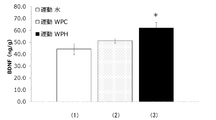
- the test animals are divided into (1) “water administration / exercise group”, (2) “WPC administration / exercise group”, and (3) “WPH administration / exercise group”.
- BDNF in muscle after ingestion and giving exercise load (ng / g) (mean ⁇ standard error, the same applies hereinafter), (2) giving WPC (whey protein concentrate) and giving exercise load
- * means that there is a significant difference of p ⁇ 0.05 with respect to (1) by Dunnett test.
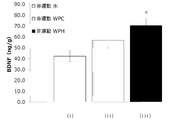
- test animals male SD rats are divided into (i) "water administration / non-exercise group", (ii) “WPC administration / non-exercise group”, and (iii) "WPH administration / non-exercise group” (I) BDNF amount after ingesting water (ng / g) (mean ⁇ standard error, the same applies hereinafter), (ii) the same BDNF amount after ingesting WPC, and (Iii) shows the results of measuring the same BDNF after ingesting WPH.
- * means that there is a significant difference of p ⁇ 0.05 with respect to (i) by Dunnett test.
- composition for promoting the increase in the amount of BDNF in the body targeted by the present invention is a WPH containing at least one dipeptide selected from the group consisting of Ile-Leu, Leu-Leu, and Val-Leu. (Hereinafter sometimes referred to as “the WPH of the present invention”) as an active ingredient.
- WPH is obtained by hydrolyzing all or part of whey protein as a raw material, and is also called whey peptide.
- Whey protein is a mixture of globular proteins contained in whey, which is a liquid part obtained by removing casein and fat from milk.
- ⁇ -lactalbumin ( ⁇ -La) ⁇ -lactoglobulin ( ⁇ -Lg) Proteins such as immunoglobulin, lactoferrin, bovine serum albumin are included.
- the whey protein used as a raw material for the preparation of WPH may be whey protein purified from milk or whey, or a crude whey protein separated from milk or whey (containing whey protein) ).
- food / beverage products containing whey protein and raw materials thereof for example, compositions containing other components in addition to milk protein
- the food and drink and its raw materials may contain casein in addition to whey protein.
- the purified whey protein examples include ⁇ -lactalbumin ( ⁇ -La), ⁇ -lactoglobulin ( ⁇ -Lg), immunoglobulin, lactoferrin, and a mixture of proteins containing at least one of these, and whey protein purified product (WPI And the like.
- the purified whey protein (whey protein-containing product) is prepared from milk, for example, whey stock solutions (sweet whey, acid whey, etc.), concentrates, dried products (whey powder etc.), frozen And reduced products thereof. These can also include desalted whey, whey protein concentrate (WPC), and reduced products thereof.
- Examples of the food or drink containing whey protein or its raw materials include raw milk, pasteurized milk (milk, etc.), skim milk, component-adjusted milk, processed milk, dairy products (concentrated milk, powdered milk, condensed milk, fermented milk (yogurt, etc.) ), Lactic acid bacteria beverages, processed cheeses, ice creams, creams) and milk protein concentrates (MPC), and concentrates thereof, dried products thereof, frozen products thereof, and the like.
- the raw material and food / beverage products containing the said whey protein may acquire and use a commercial item, and may prepare and use them themselves.
- the WPH of the present invention can be prepared by hydrolyzing the whey protein described above one or more times.
- the means and / or method is not particularly limited.
- whey protein may be partially hydrolyzed and then further hydrolyzed.
- the hydrolysis can be carried out by a known hydrolysis method, but preferably a hydrolysis method using a proteolytic enzyme can be used.
- the proteolytic enzyme is not particularly limited as long as it produces WPH that hydrolyzes whey protein and exhibits the effects of the present invention.
- the type and reaction conditions can be arbitrarily set.
- a proteolytic enzyme derived from a microorganism belonging to the genus Bacillus or Aspergillus a proteolytic enzyme derived from a plant such as papain derived from papaya, bromelain derived from pineapple, actinidine derived from kiwi; pancreatin, trypsin
- Examples include animal-derived proteolytic enzymes such as pepsin and chymotrypsin.
- proteolytic enzymes include, for example, protease M Amano (Amanoenzyme), protease N Amano (Amanoenzyme), protease P Amano (Amanoenzyme), protease A Amano (Amanoenzyme), trypsin (Novo) ), Pepsin (Wako Pure Chemical Industries), Umamizyme (Amanoenzyme), and Flavorzyme (Novo), but are not limited thereto.
- the proteolytic enzyme used for hydrolyzing whey protein is composed of Bacillus derived proteolytic enzyme, Aspergillus derived proteolytic enzyme, trypsin, pepsin and flavorzyme (Novo). It is 1 type, or 2 or more types selected from the group.
- the WPH of the present invention is hydrolyzed containing abundantly at least one dipeptide selected from the group consisting of Ile-Leu, Leu-Leu, and Val-Leu by using a proteolytic enzyme that hydrolyzes whey protein.
- a protease derived from the genus Bacillus and a protease derived from the genus Aspergillus it is preferable to hydrolyze whey protein in combination with a protease derived from the genus Bacillus and a protease derived from the genus Aspergillus.
- whey protein In order to hydrolyze the whey protein to produce a Leu-Leu dipeptide, it is preferable to react the whey protein with pepsin and then with a protease derived from the genus Aspergillus. According to the method, whey protein may be hydrolyzed to produce Leu-Val or Gly-Leu dipeptides. Further, in order to hydrolyze the whey protein to produce a Val-Leu dipeptide, it is preferable to hydrolyze the whey protein using a protease derived from Aspergillus. According to this method, whey protein may be hydrolyzed to produce Ile-Val, Ile-Ile, and Leu-Ile dipeptides. In addition, in order to hydrolyze whey protein to produce an Ala-Leu dipeptide, it is preferable to react whey protein with trypsin and then react with a protease derived from the genus Bacillus.
- the reaction temperature for hydrolyzing the whey protein with a proteolytic enzyme to produce the desired dipeptide is preferably 20 to 80 ° C., more preferably 25 to 75 ° C., still more preferably 30 to 70 ° C., and still more preferably 35 It is ⁇ 65 ° C., more preferably 40 to 60 ° C., particularly preferably 45 to 55 ° C. If reaction temperature is 20 degreeC or more, a whey protein can be efficiently hydrolyzed with a proteolytic enzyme. Moreover, if reaction temperature is 80 degrees C or less, the deactivation by the modification
- the reaction temperature may be set to a constant temperature (one stage) or two or more different temperatures (two stages or more) in view of the optimum temperature of the protein hydrolase used. . When two or more reaction temperatures are set, the order is arbitrary.
- the reaction time for hydrolyzing the whey protein with a protein hydrolase to produce the desired dipeptide is not limited, but is preferably 2 to 48 hours, more preferably 2 to 36 hours, still more preferably 2 to 24 hours. Further, it is preferably 2 to 18 hours, more preferably 2 to 14 hours, further preferably 4 to 12 hours, further preferably 6 to 10 hours, and particularly preferably 7 to 9 hours.
- the reaction time is preferably within 48 hours. In the case where the reaction temperature is set in two or more stages, the reaction temperature can be arbitrarily set in two or more stages within the reaction time range.
- the amount of the proteolytic enzyme added to hydrolyze the whey protein with a proteolytic enzyme to produce a desired dipeptide is not particularly limited as long as WPH that exhibits the effects of the present invention can be generated.
- WPH that exhibits the effects of the present invention can be generated.
- 0.5 to 10 g, more preferably 0.7 to 5 g, still more preferably 0.8 to 4 g, and particularly preferably 1 to 2 g can be mentioned.
- the reaction pH for hydrolyzing the whey protein with a proteolytic enzyme to produce the desired dipeptide is preferably in the pH range where the proteolytic enzyme used reacts, more preferably at or near its optimal pH.
- a proteolytic enzyme derived from the genus Bacillus and a proteolytic enzyme derived from the genus Aspergillus are used in combination, it is preferably pH 5-9, more preferably pH 5.5-8.5, still more preferably pH 6-8, and particularly preferably Has a pH of 6.5 to 7.5.
- the reaction pH may be set to a certain pH condition (one stage) in view of the optimum pH of the protein hydrolase used, or to two or more different pH conditions (two stages or more). You can also. When two or more pH conditions are set, the order is arbitrary.
- the WPH of the present invention is characterized by containing at least one dipeptide selected from the group consisting of Ile-Leu, Leu-Leu, and Val-Leu. Preferably, it contains two or more of these dipeptides, and more preferably contains three of these dipeptides. Examples of combinations when two or more types are included include Ile-Leu and Leu-Leu, Ile-Leu and Val-Leu, Leu-Leu and Val-Leu, or Ile-Leu and Leu-Leu and Val-Leu can do.
- the WPH of the present invention can be indexed to contain the specific dipeptide.
- These dipeptides contained in the WPH of the present invention can be measured by LC / MS or LC / MS / MS. Specifically, it can be measured by the method described in Production Example 1 described later.
- the WPH of the present invention containing these dipeptides can be produced by referring to the examples described in Production Examples 1 to 11 below, in addition to the hydrolysis reaction conditions as described above.
- the content (mg) per gram of WPH of these dipeptides can be set as follows. Ile-Leu: 0.1 to 25 mg / g WPH, preferably 0.5 to 15 mg / g WPH, more preferably 1 to 10 mg / g WPH. Leu-Leu: 0.5-50 mg / g WPH, preferably 1-25 mg / g WPH, more preferably 2-10 mg / g WPH. Val-Leu: 0.5 to 50 mg / g WPH, preferably 1 to 25 mg / g WPH, more preferably 2 to 10 mg / g WPH.
- the WPH of the present invention may contain at least one of the above-mentioned dipeptides at a ratio per 1 g of protein content of WPH shown below.
- Ile-Leu 0.09 to 22.5 mg / g protein, preferably 0.45 to 13.5 mg / g protein, more preferably 0.9 to 9 mg / g protein.
- Leu-Leu 0.45-45 mg / g protein, preferably 0.9-22.5 mg / g protein, more preferably 1.8-9 mg / g protein.
- Val-Leu 0.45-45 mg / g protein, preferably 0.9-22.5 mg / g protein, more preferably 1.8-9 mg / g protein.
- the “protein content of WPH” means the total amount of amino acids constituting the amino acids contained in WPH and the proteins and peptides contained in WPH.
- Such protein content can be calculated by measuring by the Kjeldahl method.
- the nitrogen contained in the target WPH is measured, and the value can be calculated by multiplying the value by a nitrogen-protein conversion factor (usually 6.25).
- a nitrogen-protein conversion factor usually 6.25.
- the WPH of the present invention includes at least one selected from the group consisting of Ile-Leu, Leu-Leu, and Val-Leu, preferably two or more, more preferably three dipeptides. Furthermore, it may further contain at least one dipeptide selected from the group consisting of Ile-Val, Ile-Ile, Leu-Val, and Leu-Ile. Preferably, it contains 2 or more of these dipeptides, more preferably contains 3 or more of these dipeptides, and more preferably contains 4 of these dipeptides.
- Ile-Val and Ile-Ile When two or more types are included, combinations of Ile-Val and Ile-Ile, Ile-Val and Leu-Val, Ile-Val and Leu-Ile, Ile-Ile and Leu-Val, Ile-Ile and Leu- Ile, Leu-Val and Leu-Ile, Ile-Val and Ile-Ile and Leu-Val, Ile-Val and Ile-Ile and Leu-Val, Ile-Ile and Leu-Val and Leu-Ile and Ile-Val Examples include Ile-Ile, Leu-Val, and Leu-Ile. Such WPH of the present invention can be used as an indicator that it contains the specific dipeptide.
- dipeptides contained in the WPH of the present invention can also be measured by LC / MS or LC / MS / MS.
- the content per WPH of these dipeptides can be set as follows. Ile-Val: 0.1 to 10 mg / g WPH, preferably 0.2 to 5 mg / g WPH, more preferably 0.5 to 1.5 mg / g WPH, Ile-Ile: 0.05 to 10 mg / g WPH, preferably 0.1 to 5 mg / g WPH, more preferably 0.2 to 1 mg / g WPH Leu-Val: 0.1 to 10 mg / g WPH, preferably 0.2 to 5 mg / g WPH, more preferably 0.5 to 1.5 mg / g WPH Leu-Ile: 0.01 to 10 mg / g WPH, preferably 0.02 to 5 mg / g WPH, more preferably 0.05 to 0.2 mg / g WPH.
- the WPH of the present invention may contain at least one of the above-mentioned dipeptides at a ratio per 1 g of protein content of WPH shown below.
- the meaning of “protein content of WPH” is as described above.
- Ile-Val 0.09-9 mg / g protein, preferably 0.18-4.5 mg / g protein, more preferably 0.45-1.35 mg / g protein
- Ile-Ile 0.045-9 mg Protein, preferably 0.09 to 4.5 mg / g protein, more preferably 0.18 to 0.9 mg / g protein
- Leu-Val 0.09 to 9 mg / g protein, preferably 0.
- the total amount of Ile-Leu, Leu-Leu, and Val-Leu dipeptides is 1.1 to 125 mg / g WPH, preferably 2.5 to 65 mg / g WPH, more preferably, per gram of WPH. What is contained in the ratio of 5-30 mg / g WPH can be mentioned.
- the total amount of these dipeptides contained in the WPH is 0.99 to 112.5 mg / g protein, preferably 2.25 to 58.5 mg / g protein, more preferably when converted to a ratio per 1 g of protein content of WPH. It can be 4.5-27 mg / g protein.
- the WPH of the present invention has a total amount of Ile-Val, Ile-Ile, Leu-Val, and Leu-Ile dipeptides of 0.26 to 40 mg / g WPH, preferably 0.52 to 20 mg / g WPH per g of WPH. More preferably, it may be one containing 1.25 to 4.2 mg / g WPH.
- These dipeptides contained in the WPH are 0.234 to 36 mg / g protein, preferably 0.468 to 18 mg / g protein, more preferably 1.125 to 3. It can be 8 mg / g protein.
- the WPH of the present invention is in a liquid state immediately after preparation, in order to enhance its storage stability, it is cryopreserved, dried (spray dried, freeze dried), concentrated, heat sterilized (plate heat sterilization, tube heat sterilization, Batch heat sterilization, electric heat sterilization, microwave heat sterilization, indirect heat sterilization such as retort heating, direct heat sterilization such as steam injection and steam infusion), or non-heat sterilization (light irradiation sterilization, radiation irradiation sterilization, High voltage pulse sterilization).
- a dry solid after drying spray drying, freeze drying
- the composition of the present invention containing WPH can be administered or ingested to mammals (including humans and non-human animals), and exercised in the body.
- the amount of BDNF in the muscle can be increased (see FIGS. 1 and 2). Further, the amount of increase is higher than the amount of BDNF in the body, particularly in the muscle, which increases when exercised without causing the mammal to administer or ingest the composition of the present invention. Therefore, the composition of the present invention containing the WPH is useful as a composition for promoting an increase in the amount of BDNF in the body, particularly in muscle (a composition for promoting an increase in the amount of BDNF in the body, particularly in muscle).
- the composition for promoting the increase in the BDNF amount is preferably administered or ingested by the mammal before or during exercise to increase the amount of BDNF in the body after exercise, particularly intramuscular. Can be used.
- “promoting increase in the amount of BDNF” refers to BDNF in the body after exercise, particularly muscle, when the composition of the present invention is administered (ingested) to the mammal before or during exercise. The amount is meant to be higher than the amount when the composition of the present invention is not administered (intake).
- “when the composition of the present invention is not administered (taken)” includes the case where the composition of the present invention is not administered (taken) or exercise load, and the case where the composition of the present invention is not administered (taken).
- both are included when loaded. More specifically, by administering (ingesting) the composition of the present invention before or during exercise, the amount of intramuscular BDNF when exercised without administering (ingesting) the composition of the present invention is increased. This means that the amount of BDNF in the muscle is larger than the increase when exercised without administering (ingesting) the composition of the present invention.
- “exercise” may be anything that involves more energy consumption than at rest due to contraction of the skeletal muscle, that is, a load on the muscle. There are no particular restrictions on this, but specifically, exercises to maintain and improve physical fitness, walking, fast walking, jogging, running, dancing, underwater exercise, skating, cycling, gymnastics, yoga, stretching, weight training, training Examples include pressure training, swimming, mountain climbing, climbing, and various sports (eg, ball games, badminton, ballet, etc.).
- the composition of the present invention containing WPH increases the amount of BDNF in the body, particularly in the muscle, when administered or ingested to a mammal even when there is no exercise load.
- “increase in the amount of BDNF” means that the amount of BDNF in the body, particularly in the muscle when the composition of the present invention is administered (ingested) to a mammal without exercise load, the composition of the present invention without exercise load. It means that it is higher than the amount when it is not administered (intake). Therefore, the composition of the present invention containing the WPH is useful as a composition that promotes an increase in the amount of BDNF in the body, particularly in the muscle, only when it is taken into the body even when no exercise load is applied.
- administration or ingestion may be a method of entering into the body of mammals (including humans and non-human animals), and although it is not limited, oral administration or ingestion, enteral administration, and gastric fistula are preferred. Examples of the digestion and absorption in the intestine can be exemplified, and can be appropriately selected depending on the state and use of the target mammal. Ingestion is preferred. For this reason, the composition of this invention has the form for oral administration or ingestion, the form for enteral administration, and the form for gastric fistula, and can prepare it in the said form.
- the composition of the present invention is a composition for assisting in improving the performance of memory or learning, such as those who need to improve memory ability, learning ability or learning efficiency (for example, examinees, memory ability / learning ability, Such as those who are concerned about the decline in learning efficiency).
- Non-patent Documents 8 and 9 are the composition of the present invention taken as a composition for improving cognitive function, suppressing cognitive function decline, or improving cognitive function in patients with dementia, particularly Alzheimer type dementia, or a reserve group thereof? Or can be administered.
- “cognitive function” means a function for correctly understanding and properly executing things, such as memory ability, language ability, judgment ability (including orientation and attention), computation ability, and / or Includes performance.
- the dementia reserve group also includes people with mild cognitive impairment.
- elderly people over 65 years old can be included in the dementia reserve group in the present invention.
- the composition of the present invention can be ingested or administered to a patient with depression (including new type of depression) or a preparatory group that is depressed or prone to depression as a composition for improving depression.
- Non-patent Document 10 BDNF is administered intraventricularly, subcutaneously or intraperitoneally to suppress weight gain and improve glucose metabolism.
- the composition of the present invention can be ingested or administered to an obese person, a person prone to obesity, or a reserve group thereof as a composition for suppressing or improving obesity.
- the composition of the present invention can be ingested or administered to diabetic patients, borderline diabetic patients, or a reserve group thereof as a composition for suppressing a decrease in glucose metabolism or improving a glucose metabolism.
- composition of the present invention can be added with other food raw materials and / or food additive raw materials in addition to the WPH of the present invention as long as the effects of the present invention can be exhibited.
- sweeteners sucgars, liquid sugars, fructose, maltose, tri-sugar, etc.
- sugar alcohols erythritol, etc.
- high-sensitivity sweeteners stevia, aspartame
- acidulant flavor, fruit juice, vegetable juice, thickening polysaccharide, emulsifier, flavoring agent, flavoring agent and the like.
- minerals calcium, iron, manganese, magnesium, zinc, etc.
- vitamins for the purpose of imparting additional functions (nutrient function, physiological function) to the composition of the present invention To the composition of the present invention.
- the composition of the present invention can be in the form of a container for the purpose of providing in the market.
- Examples of the form in a container include an embodiment in which the composition of the present invention is prepared in a solid state and filled in a container.
- Such solid forms include powders and granules.
- known containers such as paper, bags, boxes, cans and bottles can be used.
- the inner volume of the container at this time is not particularly limited, and for example, 1 to 5000 g, 2 to 4000 g, 3 to 3000 g, 4 to 2000 g, 4 to 1000 g, 4 to 500 g, 4 to 250 g, 4 to 200 g, 4 to 200 g 100 g, 4-50 g, 4-30 g.
- a family size for example, 300 to 5000 g, 300 to 4000 g, 300 to 3000 g, 300 to 2000 g, 300 to 1500 g, 300 to 1400 g, 300 to 1300 g, 300 to 1200 g, 300 to 1100 g.
- personal size 1 to 500 g, 2 to 250 g, 3 to 200 g, 4 to 100 g, 4 to 50 g, 4 to 40 g, 4 to 30 g, 5 to 30 g, 10 to 30 g, 15 to 30 g.
- the composition of the present invention can be in the form of a containerized beverage for the purpose of providing on the market.
- the container may be a container filled with a beverage and can be used as it is, and a known container such as a paper container, a soft bag, a plastic bottle, a can, or a bottle can be used.
- the beverage can be prepared by dispersing and dissolving the powder or granule in drinking water.
- the inner volume of the container is not particularly limited, and is, for example, 1 to 5000 g, 2 to 4000 g, 3 to 3000 g, 4 to 2000 g, 5 to 1000 g, 6 to 800 g, 7 to 1300 g, 80 to 1200 g, 90 to 1100 g. .
- a family size for example, 300 to 5000 g, 300 to 4000 g, 300 to 3000 g, 300 to 2000 g, 300 to 1500 g, 300 to 1400 g, 300 to 1300 g, 300 to 1200 g, 300 to 1100 g
- it is 10 to 500 g, 20 to 500 g, 30 to 500 g, 40 to 500 g, 50 to 500 g, 60 to 500 g, 70 to 500 g, 80 to 500 g, 90 to 500 g.
- the total protein content of WPH is 0.1 g or more (preferably 1 g or more) per administration (ingestion) ( Administration).
- the total protein content per administration (ingestion) is 0.1 to 40 g, more preferably 0.1 to 30 g, still more preferably 1 to 30 g.
- the “single dose (intake) amount” means an amount for each time in a state requiring an increase in the amount of BDNF in the body. For example, when performing a series of exercises at a predetermined time of the day, it means the total amount administered or ingested before or during the exercise, and it is not taken in one mouth (at a time) but taken in several times In this case, the total amount administered (intake) in these several times is referred to as “single administration (intake)”.
- composition of the present invention When the composition of the present invention is administered (ingested) to a subject (mammal) in need of an increase in the amount of BDNF in the body, particularly in the muscle, from the viewpoint of promoting the increase in the amount of BDNF due to exercise, Before or during exercise. Preferably, it can be ingested 15 to 240 minutes before exercise, more preferably 30 to 180 minutes before exercise, and even more preferably 45 to 135 minutes before exercise. If you are not exercising, you can administer (take) at any time, but if you are relatively hungry, such as before meals or between meals, it will be more easily absorbed, so it will be more effective. Can do.
- the composition of the present invention may be provided in a unit package form per single administration (intake).
- the composition of the present invention having the unit packaging form is prepared by adjusting the WPH to 0.1 g or more (preferably 1 g or more) in terms of the total protein content as a single administration (intake) amount in the unit.
- a single dose (intake) is preferably adjusted to 40 g or less (preferably 30 g or less) in terms of total protein content. That is, the content of the WPH of the present invention per unit package is 0.1 to 40 g, preferably 0.1 to 30 g, more preferably 1 to 30 g in terms of the total protein content as a single administration (intake) amount. can do.
- “consisting of a unit packaging form per single administration (ingestion)” is a form in which the amount per single administration (ingestion) is determined in advance.
- the product means not only general foods but also beverages (drinks, etc.), health supplements, health functional foods, supplements and the like.
- “unit packaging form per administration (ingestion)” for example, liquid beverages, gel-like, paste-like, paste-like jelly, powder-like, granule-like, capsule-like, block-like solid foods, etc.
- a specific amount (dose) can be prescribed in a packaging container such as a metal can, a glass bottle (such as a bottle), a plastic container (such as a plastic bottle), a pack, a pouch, a film container, or a paper box.
- composition of the present invention can be specified by displaying the amount (usage, dose) on a packaging container or homepage. Since the composition of the present invention uses WPH as an active ingredient, it is less gelled by heating than whey protein, and can therefore maintain suitable physical properties in the production process of beverages, jellies and the like. In addition, the composition of the present invention has the effect of the present invention even if it is ingested in a small amount, so that it can be taken in any form, such as a bite-sized block, a mini can drink that can be ingested, Ingestion and swallowing are easy, and convenience for children and the elderly can be improved.
- composition of the present invention can be provided in the form of a composition in which a plurality of components are blended.
- the form of the composition of the present invention is not particularly limited as long as the effects of the present invention are exhibited.
- the composition is solid (powder, granule, capsule, block, etc.), liquid, gel, paste
- the shape may be in the form of a paste or paste, preferably in the form of a powder.
- Compositions include food compositions and pharmaceutical compositions.
- a food or drink for promoting BDNF amount increase containing WPH as an active ingredient there is provided a food or drink for promoting BDNF amount increase containing WPH as an active ingredient.
- the form of the food is not particularly limited as long as it is a form that can be taken orally, such as a solution, suspension, emulsion, powder, or solid molded product.
- soft drink, fruit juice drink, vegetable drink, soy milk drink, coffee drink, tea Beverages such as beverages, powdered beverages, concentrated beverages, alcoholic beverages
- flour products such as bread, pasta, noodles, cake mixes, bread crumbs
- milk drinks, yogurts, lactic acid bacteria drinks, ice creams, creams How dairy products; agricultural canning, jam, marmalade such, processed agricultural products such as serial; such as frozen food, and the like.
- the food or drink is a dairy product, more preferably
- Foods and drinks are classified as health foods, functional foods, dietary supplements, functional labeling foods, foods for specified health use, foods for the sick, infant formula, milk powder for pregnant women or lactating women. Are also included.
- the food and drink of the present invention may be labeled as “increase BDNF in the body”, “promote increase in BDNF in the body”, “help increase BDNF in the body”, etc. .
- the term “inside” includes the meaning of “intramuscular”.
- a method for promoting an increase in the amount of BDNF in the body, particularly in muscle comprising ingesting or administering WPH to a mammal (including a human or non-human animal).
- WPH a mammal
- the method for promoting the increase in the amount of BDNF of the present invention can be carried out according to the description of the composition of the present invention.
- non-therapeutic means that it does not include an act of operating, treating or diagnosing a human (ie, a medical act on a human). Specifically, a doctor or a person who has received instructions from a doctor It means not including methods for performing surgery, treatment or diagnosis on humans.
- Production Example 1 (1) Production of Whey Protein Hydrolyzate (Dry Powder) 50 g of a commercially available whey protein concentrate (hereinafter simply referred to as “WPC”) is dissolved in 1 L of water to prepare an aqueous WPC solution, and this is adjusted to pH. The pH was adjusted to 7 with an agent. 500 mg of protease derived from the genus Bacillus (Protease M Amano, Amanoenzyme) and 500 mg of protease derived from the genus Aspergillus (Protease N Amano, Amanoenzyme) are added to this and treated at 50 ° C. for 8 hours. Was hydrolyzed. This was heated to inactivate the protease, and then subjected to lyophilization treatment to obtain powder, which was designated as whey protein hydrolyzate (WPH) (dry powder).
- WPH whey protein hydrolyzate
- Table 1 shows the content of the dipeptide contained in the WPH (dried powder) prepared in Production Example 1.
- a WPC aqueous solution was prepared by dissolving 50 g of commercially available WPC (same as WPC used in Production Example 1) in 1 L of water, and this was adjusted to pH 7 with a pH adjuster. To this was added 500 mg of protease derived from Bacillus (Protease M Amano, Amano Enzyme) and treated at 50 ° C. for 8 hours to hydrolyze the whey protein in the aqueous WPC solution. Next, this was heated to inactivate the protease, and then subjected to freeze-drying to make powder, which was designated as WPH (dry powder) in Production Example 2.
- WPH dry powder
- a WPC aqueous solution was prepared by dissolving 50 g of commercially available WPC (same as WPC used in Production Example 1) in 1 L of water, and this was adjusted to pH 7 with a pH adjuster. To this, 500 mg of protease derived from the genus Aspergillus (protease N Amano, Amano Enzyme) was added and treated at 50 ° C. for 8 hours to hydrolyze the whey protein in the aqueous WPC solution. Next, this was heated to inactivate the protease, and then subjected to lyophilization treatment to obtain powder, which was designated as WPH (dry powder) in Production Example 3.
- WPH dry powder
- a WPC aqueous solution was prepared by dissolving 50 g of commercially available WPC (same as WPC used in Production Example 1) in 1 L of water, and this was adjusted to pH 7 with a pH adjuster. 500 mg of trypsin (Novo) was added thereto and reacted at 37 ° C. for 4 hours, and then 500 mg of a protease derived from the genus Bacillus (protease M Amano, Amano Enzyme) was added, and the mixture was further reacted at 50 ° C. for 4 hours. The whey protein inside was hydrolyzed. Next, this was heated to inactivate the protease, and then subjected to lyophilization treatment to obtain powder, which was designated as WPH (dry powder) in Production Example 4.
- WPH dry powder
- a WPC aqueous solution was prepared by dissolving 50 g of commercially available WPC (same as WPC used in Production Example 1) in 1 L of water, and this was adjusted to pH 7 with a pH adjuster. To this was added 500 mg of trypsin (Novo), and after reacting at 37 ° C. for 4 hours, 500 mg of protease derived from the genus Aspergillus (protease N Amano, Amano Enzyme) was added, and the mixture was further reacted at 50 ° C. for 4 hours. The whey protein was hydrolyzed. Next, this was heated to inactivate the protease, and then subjected to freeze-drying to make powder, which was designated as WPH (dry powder) in Production Example 5.
- WPH dry powder
- a WPC aqueous solution was prepared by dissolving 50 g of commercially available WPC (same as WPC used in Production Example 1) in 1 L of water, and this was adjusted to pH 7 with a pH adjuster. To this was added 500 mg of pepsin (Wako Pure Chemical Industries, Ltd.) and reacted at 37 ° C. for 4 hours. Then, 500 mg of protease derived from the genus Bacillus (Protease M Amano, Amano Enzyme) was added, and further reacted at 50 ° C. for 4 hours. Then, the whey protein in the WPC aqueous solution was hydrolyzed. Next, this was heated to inactivate the protease, and then subjected to lyophilization treatment to obtain powder, which was designated as WPH (dry powder) of Production Example 6.
- WPH dry powder
- a WPC aqueous solution was prepared by dissolving 50 g of commercially available WPC (same as WPC used in Production Example 1) in 1 L of water, and this was adjusted to pH 7 with a pH adjuster. To this was added 500 mg of pepsin (Wako Pure Chemical Industries, Ltd.) and reacted at 37 ° C. for 4 hours, followed by addition of 500 mg of Aspergillus-derived protease (Protease N Amano, Amano Enzyme) and further reacted at 50 ° C. for 4 hours. Then, the whey protein in the whey protein aqueous solution was hydrolyzed. Next, this was heated to inactivate the protease, and then subjected to lyophilization treatment to obtain powder, which was designated as WPH (dry powder) in Production Example 7.
- WPH dry powder
- Production Example 8 A WPC aqueous solution was prepared by dissolving 50 g of commercially available WPC (same as WPC used in Production Example 1) in 1 L of water, and this was adjusted to pH 7 with a pH adjuster. To this, 500 mg of flavorzyme (Novo) was added and reacted at 50 ° C. for 6 hours to hydrolyze the whey protein in the aqueous whey protein solution. Next, this was heated to inactivate the protease, and then subjected to lyophilization treatment to obtain powder, which was designated as WPH (dry powder) in Production Example 8.
- WPH dry powder
- a WPC aqueous solution was prepared by dissolving 50 g of commercially available WPC (same as WPC used in Production Example 1) in 1 L of water, and this was adjusted to pH 7 with a pH adjuster. To this, 500 mg of protease derived from Aspergillus (Ummamizyme, Amano Enzyme) was added and reacted at 50 ° C. for 6 hours to hydrolyze the whey protein in the aqueous WPC solution. Next, this was heated to inactivate the protease, and then subjected to lyophilization treatment to obtain powder, which was designated as WPH (dry powder) in Production Example 9.
- WPH dry powder
- a WPC aqueous solution was prepared by dissolving 50 g of commercially available WPC (same as WPC used in Production Example 1) in 1 L of water, and this was adjusted to pH 7 with a pH adjuster. To this was added 500 mg of protease derived from Aspergillus (Protease A Amano, Amano Enzyme) and reacted at 50 ° C. for 6 hours to hydrolyze the whey protein in the aqueous WPC solution. Next, this was heated to inactivate the protease, and then subjected to freeze-drying treatment to obtain powder, which was designated as WPH (dry powder) in Production Example 10.
- WPH dry powder
- Production Example 11 A WPC aqueous solution was prepared by dissolving 50 g of commercially available WPC (same as WPC used in Production Example 1) in 1 L of water, and this was adjusted to pH 7 with a pH adjuster. To this was added 500 mg of protease derived from Aspergillus (protease P Amano, Amano Enzyme) and reacted at 50 ° C. for 6 hours to hydrolyze the whey protein in the aqueous whey protein solution. Next, this was heated to inactivate the protease, and then subjected to lyophilization treatment to obtain powder, which was designated as WPH (dry powder) of Production Example 11.
- WPH dry powder
- Test example 1 This study was conducted to evaluate the effect on the cognitive function by combining the intake of whey protein hydrolyzate, which is a milk material, and exercise, using BDNF concentration in muscle as an index. The test was carried out using rats, ingesting whey protein hydrolyzate and exercising, ingesting without ingesting WPH, and ingesting neither whey protein hydrolyzate nor exercising. The concentration of BDNF contained in skeletal muscle was measured and compared.
- Test method (1-1) Preparation of test sample (test meal)
- the test meal of Test Example 1 is obtained by hydrolyzing commercially available WPC (same as WPC used in Production Example 1) with protease.
- WPH dry powder
- the WPH contains about 89.3% by mass of protein per 100% by mass of the solid content.
- the WPH was dissolved in distilled water so that the solid content concentration was 10 w / v%, and this was used as a test sample (test meal).
- test animals 8-week-old male SD rats were used. Pre-breeding was performed for 4-5 days in advance, and after the pre-breeding, the right lower leg was depilated under isoflurane anesthesia by the day before the test. In addition, fasting was performed for 16 hours from the day before the test.
- test sample (test meal) prepared above was tested at 10 ml / kg body weight (WPH containing dipeptide) for the test animals in the “dipeptide administration / exercise group”. 1.0 g / kg body weight) was orally administered once. Thirty minutes after administration, exercise load (details will be described later) was forcibly given to the right hind limb under isoflurane anesthesia.
- distilled water was orally administered at a rate of 10 ml / kg body weight instead of the test sample (test meal), and 30 minutes after the administration, Similarly, exercise load by electrical stimulation was forcibly given to the right hind limb under isoflurane anesthesia. Furthermore, for the test animals in the “dipeptide non-administered / non-exercise group”, distilled water was administered orally at a rate of 10 ml / kg body weight instead of the test sample (test meal) and then rested under isoflurane anesthesia. I was allowed to.
- BDNF concentration (ng / g), which is an evaluation index of cognitive function, was measured.
- WPH containing the dipeptide targeted by the present invention exerts an effect of promoting BDNF production in skeletal muscle by combining its internal use and exercise.
- BDNF is known to cross the blood-brain barrier (Pardridge WM et al. Pharm Res. 11 (5): 738-46 (1994). Therefore, BDNF produced in muscle is blood brain. It is thought that it moves into the brain through the barrier and contributes to the suppression of cognitive decline, that is, expecting the effect of suppressing the cognitive decline by ingesting and exercising the whey protein hydrolyzate of the present invention. Can do.
- Test example 2 This test was conducted to evaluate the effect of WPH intake on cognitive function using the BDNF concentration in muscle as an index.
- the test measures the concentration of BDNF contained in skeletal muscle when rats are fed WPH and water or hydrolyzed whey protein is used instead of whey protein hydrolyzate. And compared.
- the concentration of BDNF contained in skeletal muscle is measured when the exercise load is obtained by ingesting water or whey protein before hydrolyzate instead of WPH. In comparison, the effect of the combined use with exercise was also confirmed.
- Test method (1-1) Preparation of test sample (test meal, comparative test meal)
- the test meal of the test example 2 includes the commercially available WPC (the WPC used in the manufacture example 1).
- WPH dry powder obtained by hydrolyzing the same) with protease was used (see Table 12).
- the WPH was dissolved in distilled water so that the solid content concentration was 10 w / v%, and this was used as a test sample (test meal).
- whey protein before hydrolysis commercially available WPC, the same as WPC used in Production Example 1 was used as a comparative test meal.
- the test meal (WPH) and the comparative test meal (whey protein) were both prepared so that the dose converted to the protein content was 1.0 g protein / kg body weight.
- test animals 8-week-old male SD rats were used. Pre-breeding was performed for 4-5 days in advance, and after the pre-breeding, the right lower leg was depilated under isoflurane anesthesia by the day before the test. In addition, fasting was performed for 16 hours from the day before the test.
- test animals in the exercise group were given an exercise load by electrical stimulation forcibly on the right lower leg under isoflurane anesthesia 15 minutes after a single oral administration of water or a test sample.
- the exercise load method is as described in Test Example 1.
- the test animals in the non-exercise group were given a single oral dose of water or test sample, and then anesthetized with isoflurane for 15 minutes after the same time as in the exercise group.
- all blood was collected from the descending vena cava under isoflurane anesthesia and sacrificed. Thereafter, the lower limb skeletal muscle was quickly collected and weighed. Using the collected skeletal muscle, the BDNF concentration (ng / g), which is an evaluation index of cognitive function, was measured.
- FIGS. 2 and 3 The results of the exercise group and the non-exercise group are shown in FIGS. 2 and 3, respectively.
- the dipeptide-containing WPH of the present invention is taken in combination with exercise (for example, intake before exercise or during exercise) or in combination with exercise (intake under non-exercise), and the skeleton It was confirmed that BDNF production in muscle was promoted and the content of BDNF in the body increased. As described above, BDNF has been suggested to be effective in suppressing cognitive decline, improving memory and learning performance, inhibiting obesity, or inhibiting glucose metabolism. Therefore, it is considered that the dipeptide-containing WPH of the present invention is effective in suppressing cognitive decline, improving memory and learning performance, inhibiting obesity, or inhibiting glucose metabolism through the action of promoting BDNF production in the body.
Landscapes
- Health & Medical Sciences (AREA)
- Life Sciences & Earth Sciences (AREA)
- Engineering & Computer Science (AREA)
- Chemical & Material Sciences (AREA)
- General Health & Medical Sciences (AREA)
- Bioinformatics & Cheminformatics (AREA)
- Medicinal Chemistry (AREA)
- Pharmacology & Pharmacy (AREA)
- Veterinary Medicine (AREA)
- Public Health (AREA)
- Animal Behavior & Ethology (AREA)
- Diabetes (AREA)
- Nuclear Medicine, Radiotherapy & Molecular Imaging (AREA)
- Organic Chemistry (AREA)
- General Chemical & Material Sciences (AREA)
- Chemical Kinetics & Catalysis (AREA)
- Immunology (AREA)
- Proteomics, Peptides & Aminoacids (AREA)
- Epidemiology (AREA)
- Obesity (AREA)
- Biomedical Technology (AREA)
- Hematology (AREA)
- Neurology (AREA)
- Neurosurgery (AREA)
- Endocrinology (AREA)
- Emergency Medicine (AREA)
- Mycology (AREA)
- Hospice & Palliative Care (AREA)
- Virology (AREA)
- Child & Adolescent Psychology (AREA)
- Polymers & Plastics (AREA)
- Food Science & Technology (AREA)
- Nutrition Science (AREA)
- Gastroenterology & Hepatology (AREA)
- Zoology (AREA)
- Cell Biology (AREA)
- Biotechnology (AREA)
- Molecular Biology (AREA)
- Developmental Biology & Embryology (AREA)
- Psychiatry (AREA)
Abstract
L'invention fournit une composition destinée à favoriser l'augmentation de la quantité de facteurs neurotrophiques dérivés du cerveau (BDNF) dans le corps, et particulièrement dans les muscles. Plus précisément, l'invention concerne une composition pour favoriser l'augmentation quantitative de BDNF dans le corps ayant pour principe actif un hydrolysat de protéine du petit-lait. Cette composition est caractéristique en ce que l'hydrolysat de protéine du petit-lait comprend au moins un peptide choisi dans un groupe constitué de Ile-Leu, Leu-Leu et Val-Leu.
Priority Applications (2)
| Application Number | Priority Date | Filing Date | Title |
|---|---|---|---|
| JP2018530630A JP6435079B1 (ja) | 2017-03-10 | 2018-03-09 | 体内bdnf量増加促進用組成物 |
| CN201880016219.7A CN110381965A (zh) | 2017-03-10 | 2018-03-09 | 用于促进体内bdnf量增加的组合物 |
Applications Claiming Priority (2)
| Application Number | Priority Date | Filing Date | Title |
|---|---|---|---|
| JP2017046378 | 2017-03-10 | ||
| JP2017-046378 | 2017-03-10 |
Publications (1)
| Publication Number | Publication Date |
|---|---|
| WO2018164254A1 true WO2018164254A1 (fr) | 2018-09-13 |
Family
ID=63448663
Family Applications (1)
| Application Number | Title | Priority Date | Filing Date |
|---|---|---|---|
| PCT/JP2018/009138 Ceased WO2018164254A1 (fr) | 2017-03-10 | 2018-03-09 | Composition pour favoriser l'augmentation quantitative de bdnf dans le corps |
Country Status (4)
| Country | Link |
|---|---|
| JP (2) | JP6435079B1 (fr) |
| CN (1) | CN110381965A (fr) |
| TW (1) | TWI773739B (fr) |
| WO (1) | WO2018164254A1 (fr) |
Cited By (3)
| Publication number | Priority date | Publication date | Assignee | Title |
|---|---|---|---|---|
| JP2020058346A (ja) * | 2018-10-05 | 2020-04-16 | 公立大学法人名古屋市立大学 | 認知機能改善用組成物 |
| EP3975733B1 (fr) * | 2019-05-29 | 2023-08-09 | Arla Foods amba | Hydrolysats de protéines de lactosérum fortement hydrolysés au goût agréable |
| WO2025178066A1 (fr) * | 2024-02-21 | 2025-08-28 | 雪印メグミルク株式会社 | Composition pour maintenir et/ou améliorer la capacité de mémorisation/d'apprentissage, et aliment, médicament et aliment pour animaux contenant ladite composition |
Families Citing this family (2)
| Publication number | Priority date | Publication date | Assignee | Title |
|---|---|---|---|---|
| JP7011984B2 (ja) * | 2018-07-13 | 2022-01-27 | キリンホールディングス株式会社 | 注意機能および判断機能向上用組成物 |
| JP2020176100A (ja) * | 2019-04-22 | 2020-10-29 | 株式会社明治 | 運動誘発性筋損傷を抑制するための組成物 |
Citations (3)
| Publication number | Priority date | Publication date | Assignee | Title |
|---|---|---|---|---|
| WO2007123200A1 (fr) * | 2006-04-21 | 2007-11-01 | Meiji Seika Kaisha, Ltd. | Composition contenant un peptide comme principe actif |
| WO2015194564A1 (fr) * | 2014-06-16 | 2015-12-23 | キリン株式会社 | Composition pour améliorer une fonction d'apprentissage par mémorisation et/ou une fonction cognitive |
| WO2017026429A1 (fr) * | 2015-08-10 | 2017-02-16 | 株式会社明治 | Agent favorisant la synthèse du muscle |
Family Cites Families (1)
| Publication number | Priority date | Publication date | Assignee | Title |
|---|---|---|---|---|
| EP3079485B2 (fr) * | 2013-12-13 | 2022-03-30 | Société des Produits Nestlé S.A. | Utilisation d'un lactosérum doux modifié et de lait maternisé contenant du lactosérum doux modifié pour favoriser le développement post-natal du système nerveux central et des fonctions cognitives associées de nourrissons |
-
2018
- 2018-03-09 JP JP2018530630A patent/JP6435079B1/ja active Active
- 2018-03-09 WO PCT/JP2018/009138 patent/WO2018164254A1/fr not_active Ceased
- 2018-03-09 CN CN201880016219.7A patent/CN110381965A/zh active Pending
- 2018-03-09 TW TW107108071A patent/TWI773739B/zh active
- 2018-11-08 JP JP2018210546A patent/JP7108521B2/ja active Active
Patent Citations (3)
| Publication number | Priority date | Publication date | Assignee | Title |
|---|---|---|---|---|
| WO2007123200A1 (fr) * | 2006-04-21 | 2007-11-01 | Meiji Seika Kaisha, Ltd. | Composition contenant un peptide comme principe actif |
| WO2015194564A1 (fr) * | 2014-06-16 | 2015-12-23 | キリン株式会社 | Composition pour améliorer une fonction d'apprentissage par mémorisation et/ou une fonction cognitive |
| WO2017026429A1 (fr) * | 2015-08-10 | 2017-02-16 | 株式会社明治 | Agent favorisant la synthèse du muscle |
Cited By (4)
| Publication number | Priority date | Publication date | Assignee | Title |
|---|---|---|---|---|
| JP2020058346A (ja) * | 2018-10-05 | 2020-04-16 | 公立大学法人名古屋市立大学 | 認知機能改善用組成物 |
| EP3975733B1 (fr) * | 2019-05-29 | 2023-08-09 | Arla Foods amba | Hydrolysats de protéines de lactosérum fortement hydrolysés au goût agréable |
| WO2025178066A1 (fr) * | 2024-02-21 | 2025-08-28 | 雪印メグミルク株式会社 | Composition pour maintenir et/ou améliorer la capacité de mémorisation/d'apprentissage, et aliment, médicament et aliment pour animaux contenant ladite composition |
| JP2025127912A (ja) * | 2024-02-21 | 2025-09-02 | 雪印メグミルク株式会社 | 記憶・学習能維持および/または向上用組成物及び該組成物を含む食品、医薬品、飼料 |
Also Published As
| Publication number | Publication date |
|---|---|
| TWI773739B (zh) | 2022-08-11 |
| JPWO2018164254A1 (ja) | 2019-03-22 |
| JP6435079B1 (ja) | 2018-12-05 |
| JP2019043956A (ja) | 2019-03-22 |
| CN110381965A (zh) | 2019-10-25 |
| JP7108521B2 (ja) | 2022-07-28 |
| TW201842924A (zh) | 2018-12-16 |
Similar Documents
| Publication | Publication Date | Title |
|---|---|---|
| JP7108521B2 (ja) | 体内bdnf量増加促進用組成物 | |
| WO2015037720A1 (fr) | Promoteur de la réparation musculaire | |
| JP6728071B2 (ja) | 筋肉合成促進剤 | |
| AU2018338277B2 (en) | Composition for promoting energy consumption | |
| WO2017026429A1 (fr) | Agent favorisant la synthèse du muscle | |
| WO2018012582A1 (fr) | Agent favorisant l'élévation de la concentration d'acides aminés dans le sang | |
| JPH02128670A (ja) | アミノ酸類含有食品組成物 | |
| CN111821418A (zh) | 用于抑制运动引发性肌肉损伤的组合物 | |
| JP2019031466A (ja) | 血糖値上昇の抑制又は改善用組成物 | |
| JP2006273850A (ja) | 血中乳酸値上昇抑制組成物及びそれを含有する飲食品 | |
| HK1255012A1 (zh) | 含氨基酸的组合物 | |
| JP6848962B2 (ja) | 行動体力向上剤 | |
| JPH02128669A (ja) | アミノ酸類含有食品組成物 | |
| EP1123013A1 (fr) | Produit et procede d'apport de glutamine | |
| JP2012062309A (ja) | 筋肉増加用組成物 | |
| JPWO2018123873A1 (ja) | 発汗促進用組成物 | |
| WO2018139624A1 (fr) | Composition pour favoriser la sécrétion d'insuline | |
| JP2020200242A (ja) | 運動耐容能改善用組成物 | |
| WO2007029834A1 (fr) | Composition alimentaire | |
| Cherry | Medical Detective MD/Products | |
| Peach | Medical Detective MD/Products | |
| HK1237217A1 (en) | Fatigue ameliorating agent | |
| HK1225290A1 (en) | Muscle repair promoter | |
| HK1225233A1 (en) | Bodily moisture retaining agent |
Legal Events
| Date | Code | Title | Description |
|---|---|---|---|
| ENP | Entry into the national phase |
Ref document number: 2018530630 Country of ref document: JP Kind code of ref document: A |
|
| 121 | Ep: the epo has been informed by wipo that ep was designated in this application |
Ref document number: 18763422 Country of ref document: EP Kind code of ref document: A1 |
|
| NENP | Non-entry into the national phase |
Ref country code: DE |
|
| 122 | Ep: pct application non-entry in european phase |
Ref document number: 18763422 Country of ref document: EP Kind code of ref document: A1 |