WO2018198768A1 - Composition de résine durcissable par rayonnement d'énergie active, stratifié antibuée et antisalissure, son procédé de production, article et procédé anti-buée - Google Patents
Composition de résine durcissable par rayonnement d'énergie active, stratifié antibuée et antisalissure, son procédé de production, article et procédé anti-buée Download PDFInfo
- Publication number
- WO2018198768A1 WO2018198768A1 PCT/JP2018/015171 JP2018015171W WO2018198768A1 WO 2018198768 A1 WO2018198768 A1 WO 2018198768A1 JP 2018015171 W JP2018015171 W JP 2018015171W WO 2018198768 A1 WO2018198768 A1 WO 2018198768A1
- Authority
- WO
- WIPO (PCT)
- Prior art keywords
- antifogging
- antifouling
- active energy
- resin composition
- curable resin
- Prior art date
- Legal status (The legal status is an assumption and is not a legal conclusion. Google has not performed a legal analysis and makes no representation as to the accuracy of the status listed.)
- Ceased
Links
Images






Classifications
-
- C—CHEMISTRY; METALLURGY
- C09—DYES; PAINTS; POLISHES; NATURAL RESINS; ADHESIVES; COMPOSITIONS NOT OTHERWISE PROVIDED FOR; APPLICATIONS OF MATERIALS NOT OTHERWISE PROVIDED FOR
- C09D—COATING COMPOSITIONS, e.g. PAINTS, VARNISHES OR LACQUERS; FILLING PASTES; CHEMICAL PAINT OR INK REMOVERS; INKS; CORRECTING FLUIDS; WOODSTAINS; PASTES OR SOLIDS FOR COLOURING OR PRINTING; USE OF MATERIALS THEREFOR
- C09D5/00—Coating compositions, e.g. paints, varnishes or lacquers, characterised by their physical nature or the effects produced; Filling pastes
- C09D5/16—Antifouling paints; Underwater paints
- C09D5/1693—Antifouling paints; Underwater paints as part of a multilayer system
-
- C—CHEMISTRY; METALLURGY
- C09—DYES; PAINTS; POLISHES; NATURAL RESINS; ADHESIVES; COMPOSITIONS NOT OTHERWISE PROVIDED FOR; APPLICATIONS OF MATERIALS NOT OTHERWISE PROVIDED FOR
- C09D—COATING COMPOSITIONS, e.g. PAINTS, VARNISHES OR LACQUERS; FILLING PASTES; CHEMICAL PAINT OR INK REMOVERS; INKS; CORRECTING FLUIDS; WOODSTAINS; PASTES OR SOLIDS FOR COLOURING OR PRINTING; USE OF MATERIALS THEREFOR
- C09D4/00—Coating compositions, e.g. paints, varnishes or lacquers, based on organic non-macromolecular compounds having at least one polymerisable carbon-to-carbon unsaturated bond ; Coating compositions, based on monomers of macromolecular compounds of groups C09D183/00 - C09D183/16
-
- B—PERFORMING OPERATIONS; TRANSPORTING
- B32—LAYERED PRODUCTS
- B32B—LAYERED PRODUCTS, i.e. PRODUCTS BUILT-UP OF STRATA OF FLAT OR NON-FLAT, e.g. CELLULAR OR HONEYCOMB, FORM
- B32B27/00—Layered products comprising a layer of synthetic resin
- B32B27/16—Layered products comprising a layer of synthetic resin specially treated, e.g. irradiated
-
- B—PERFORMING OPERATIONS; TRANSPORTING
- B32—LAYERED PRODUCTS
- B32B—LAYERED PRODUCTS, i.e. PRODUCTS BUILT-UP OF STRATA OF FLAT OR NON-FLAT, e.g. CELLULAR OR HONEYCOMB, FORM
- B32B27/00—Layered products comprising a layer of synthetic resin
- B32B27/30—Layered products comprising a layer of synthetic resin comprising vinyl (co)polymers; comprising acrylic (co)polymers
-
- C—CHEMISTRY; METALLURGY
- C03—GLASS; MINERAL OR SLAG WOOL
- C03C—CHEMICAL COMPOSITION OF GLASSES, GLAZES OR VITREOUS ENAMELS; SURFACE TREATMENT OF GLASS; SURFACE TREATMENT OF FIBRES OR FILAMENTS MADE FROM GLASS, MINERALS OR SLAGS; JOINING GLASS TO GLASS OR OTHER MATERIALS
- C03C17/00—Surface treatment of glass, not in the form of fibres or filaments, by coating
- C03C17/34—Surface treatment of glass, not in the form of fibres or filaments, by coating with at least two coatings having different compositions
- C03C17/3405—Surface treatment of glass, not in the form of fibres or filaments, by coating with at least two coatings having different compositions with at least two coatings of organic materials
-
- C—CHEMISTRY; METALLURGY
- C08—ORGANIC MACROMOLECULAR COMPOUNDS; THEIR PREPARATION OR CHEMICAL WORKING-UP; COMPOSITIONS BASED THEREON
- C08F—MACROMOLECULAR COMPOUNDS OBTAINED BY REACTIONS ONLY INVOLVING CARBON-TO-CARBON UNSATURATED BONDS
- C08F222/00—Copolymers of compounds having one or more unsaturated aliphatic radicals, each having only one carbon-to-carbon double bond, and at least one being terminated by a carboxyl radical and containing at least one other carboxyl radical in the molecule; Salts, anhydrides, esters, amides, imides, or nitriles thereof
- C08F222/10—Esters
- C08F222/1006—Esters of polyhydric alcohols or polyhydric phenols
- C08F222/103—Esters of polyhydric alcohols or polyhydric phenols of trialcohols, e.g. trimethylolpropane tri(meth)acrylate
-
- C—CHEMISTRY; METALLURGY
- C09—DYES; PAINTS; POLISHES; NATURAL RESINS; ADHESIVES; COMPOSITIONS NOT OTHERWISE PROVIDED FOR; APPLICATIONS OF MATERIALS NOT OTHERWISE PROVIDED FOR
- C09D—COATING COMPOSITIONS, e.g. PAINTS, VARNISHES OR LACQUERS; FILLING PASTES; CHEMICAL PAINT OR INK REMOVERS; INKS; CORRECTING FLUIDS; WOODSTAINS; PASTES OR SOLIDS FOR COLOURING OR PRINTING; USE OF MATERIALS THEREFOR
- C09D133/00—Coating compositions based on homopolymers or copolymers of compounds having one or more unsaturated aliphatic radicals, each having only one carbon-to-carbon double bond, and at least one being terminated by only one carboxyl radical, or of salts, anhydrides, esters, amides, imides, or nitriles thereof; Coating compositions based on derivatives of such polymers
- C09D133/04—Homopolymers or copolymers of esters
- C09D133/14—Homopolymers or copolymers of esters of esters containing halogen, nitrogen, sulfur or oxygen atoms in addition to the carboxy oxygen
-
- C—CHEMISTRY; METALLURGY
- C09—DYES; PAINTS; POLISHES; NATURAL RESINS; ADHESIVES; COMPOSITIONS NOT OTHERWISE PROVIDED FOR; APPLICATIONS OF MATERIALS NOT OTHERWISE PROVIDED FOR
- C09D—COATING COMPOSITIONS, e.g. PAINTS, VARNISHES OR LACQUERS; FILLING PASTES; CHEMICAL PAINT OR INK REMOVERS; INKS; CORRECTING FLUIDS; WOODSTAINS; PASTES OR SOLIDS FOR COLOURING OR PRINTING; USE OF MATERIALS THEREFOR
- C09D135/00—Coating compositions based on homopolymers or copolymers of compounds having one or more unsaturated aliphatic radicals, each having only one carbon-to-carbon double bond, and at least one being terminated by a carboxyl radical, and containing at least another carboxyl radical in the molecule, or of salts, anhydrides, esters, amides, imides or nitriles thereof; Coating compositions based on derivatives of such polymers
- C09D135/02—Homopolymers or copolymers of esters
-
- C—CHEMISTRY; METALLURGY
- C09—DYES; PAINTS; POLISHES; NATURAL RESINS; ADHESIVES; COMPOSITIONS NOT OTHERWISE PROVIDED FOR; APPLICATIONS OF MATERIALS NOT OTHERWISE PROVIDED FOR
- C09D—COATING COMPOSITIONS, e.g. PAINTS, VARNISHES OR LACQUERS; FILLING PASTES; CHEMICAL PAINT OR INK REMOVERS; INKS; CORRECTING FLUIDS; WOODSTAINS; PASTES OR SOLIDS FOR COLOURING OR PRINTING; USE OF MATERIALS THEREFOR
- C09D5/00—Coating compositions, e.g. paints, varnishes or lacquers, characterised by their physical nature or the effects produced; Filling pastes
- C09D5/16—Antifouling paints; Underwater paints
- C09D5/1656—Antifouling paints; Underwater paints characterised by the film-forming substance
- C09D5/1662—Synthetic film-forming substance
- C09D5/1668—Vinyl-type polymers
-
- C—CHEMISTRY; METALLURGY
- C03—GLASS; MINERAL OR SLAG WOOL
- C03C—CHEMICAL COMPOSITION OF GLASSES, GLAZES OR VITREOUS ENAMELS; SURFACE TREATMENT OF GLASS; SURFACE TREATMENT OF FIBRES OR FILAMENTS MADE FROM GLASS, MINERALS OR SLAGS; JOINING GLASS TO GLASS OR OTHER MATERIALS
- C03C2217/00—Coatings on glass
- C03C2217/70—Properties of coatings
- C03C2217/75—Hydrophilic and oleophilic coatings
-
- C—CHEMISTRY; METALLURGY
- C03—GLASS; MINERAL OR SLAG WOOL
- C03C—CHEMICAL COMPOSITION OF GLASSES, GLAZES OR VITREOUS ENAMELS; SURFACE TREATMENT OF GLASS; SURFACE TREATMENT OF FIBRES OR FILAMENTS MADE FROM GLASS, MINERALS OR SLAGS; JOINING GLASS TO GLASS OR OTHER MATERIALS
- C03C2217/00—Coatings on glass
- C03C2217/70—Properties of coatings
- C03C2217/76—Hydrophobic and oleophobic coatings
-
- C—CHEMISTRY; METALLURGY
- C03—GLASS; MINERAL OR SLAG WOOL
- C03C—CHEMICAL COMPOSITION OF GLASSES, GLAZES OR VITREOUS ENAMELS; SURFACE TREATMENT OF GLASS; SURFACE TREATMENT OF FIBRES OR FILAMENTS MADE FROM GLASS, MINERALS OR SLAGS; JOINING GLASS TO GLASS OR OTHER MATERIALS
- C03C2218/00—Methods for coating glass
- C03C2218/30—Aspects of methods for coating glass not covered above
- C03C2218/32—After-treatment
Definitions
- the present invention provides an anti-fogging and antifouling laminate that can be used in a wide range of architectural uses, industrial uses, automobile uses, optical uses, solar battery panels, etc., and a method for producing the same, an article using the antifogging and antifouling laminate,
- the present invention relates to an antifogging method using an antifogging and antifouling laminate and an active energy ray-curable resin composition applicable to the formation of an antifogging and antifouling layer of the antifogging and antifouling laminate.
- a resin film, glass, or the like is attached to the surface.
- the visibility and aesthetics of the article may deteriorate due to fogging of the resin film, glass, etc. that decorates and protects the surface of the article. Therefore, in order to prevent the visibility and aesthetic deterioration of such articles, the resin film and glass are subjected to an antifogging treatment.
- the present invention provides an antifogging and antifouling laminate excellent in appearance, antifouling properties and durability, and further having no deterioration in appearance even in a high temperature and high humidity state, and excellent in antifogging properties, its production method, Article using defogging / antifouling laminate, antifogging method using defogging / antifouling laminate, and active energy ray curable resin applicable to formation of antifogging / antifouling layer of antifogging / antifouling laminate
- An object is to provide a composition.
- Means for solving the problems are as follows. That is, ⁇ 1> A substrate, a primer layer on the substrate, and an antifogging and antifouling layer having a smooth surface on the primer layer,
- the primer layer has an average thickness of more than 0.5 ⁇ m;
- the anti-fogging and antifouling layer has a Martens hardness of 10 N / mm 2 or more, a dynamic friction coefficient of 0.40 or less, and an average thickness of 10 ⁇ m or more;
- the antifogging and antifouling layer is a cured product of the active energy ray-curable resin composition,
- the active energy ray-curable resin composition comprises a hydrophilic monomer having an alkylene oxide equivalent of less than 100 and an acrylic equivalent of 200 to 500, and a non-polymer having an alkylene oxide equivalent of 100 or more and an acrylic equivalent of less than 400.
- the content of the crosslinking agent in the active energy ray-curable resin composition is 5% by mass to 40% by mass with respect to the nonvolatile content of the active energy ray-curable resin composition
- the content of the water-repellent monomer in the active energy ray-curable resin composition is 0.001% by mass to 10% by mass with respect to the nonvolatile content of the active energy ray-curable resin composition. This is an anti-fogging and antifouling laminate.
- ⁇ 2> The antifogging and antifouling laminate according to ⁇ 1>, wherein a pure water contact angle on the surface of the antifogging and antifouling layer is 80 ° or more and a hexadecane contact angle is 35 ° or more. . ⁇ 3>
- ⁇ Antifogging evaluation method> After standing in a room temperature environment for 2 hours, it is exposed to 35 ° C. and 85% RH (high temperature and high humidity environment) for 15 minutes.
- ⁇ 5> The antifogging and antifouling laminate according to any one of ⁇ 1> to ⁇ 4>, wherein the base material is a glass base material.
- ⁇ 6> The antifogging and antifouling laminate according to any one of ⁇ 1> to ⁇ 5>, wherein an average thickness of the antifogging and antifouling layer is 10 ⁇ m to 100 ⁇ m.
- ⁇ 7> The antifogging and antifouling laminate according to any one of ⁇ 1> to ⁇ 6>, wherein the primer layer has an average thickness of 1 ⁇ m to 10 ⁇ m.
- the antifogging and antifouling layer according to any one of ⁇ 1> to ⁇ 7> is heated to a normal temperature or higher to improve the antifogging property of the antifogging and antifouling layer. This is an anti-fogging method.
- Maintaining the antifogging property of the antifogging and antifouling layer by cleaning the antifogging and antifouling layer of the antifogging and antifouling laminate according to any one of ⁇ 1> to ⁇ 7>.
- An active energy ray-curable resin composition comprising a hydrophilic monomer, a water repellent monomer, a non-alicyclic crosslinking agent, and a photopolymerization initiator,
- the hydrophilic monomer has an alkylene oxide equivalent of less than 100 and an acrylic equivalent of 200 to 500;
- the water repellent monomer has at least one of fluorine and silicon;
- the alkylene oxide equivalent of the cross-linking agent is 100 or more and the acrylic equivalent is less than 400,
- the content of the water repellent monomer is 0.001% by mass to 10% by mass with respect to the nonvolatile content of the active energy ray-curable resin composition,
- the active energy ray-curable resin composition is characterized in that the content of the crosslinking agent is 5% by mass to 40% by mass with respect to the nonvolatile content of the active energy ray curable resin composition.
- the Martens hardness of the surface of the antifogging and antifouling layer having a smooth surface obtained by curing the active energy ray-curable resin composition with active energy rays is 10 N / mm 2 or more, and the dynamic friction coefficient is 0. .
- the content of the hydrophilic monomer in the active energy ray-curable resin composition is 55% by mass to 90% by mass with respect to the nonvolatile content of the active energy ray-curable resin composition.
- the above-mentioned problems can be solved and the object can be achieved, and the appearance, antifouling property, and durability are excellent, and the appearance is not deteriorated even in a high temperature and high humidity state.
- Anti-fogging and antifouling laminate excellent in fogging property, production method thereof, article using the antifogging and antifouling laminate, antifogging method using the antifogging and antifouling laminate, and antifogging and antifouling laminate It is possible to provide an active energy ray-curable resin composition applicable to the formation of an antifogging and antifouling layer.
- FIG. 1 is a schematic sectional view of an example of the anti-fogging and antifouling laminate of the present invention.
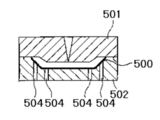
- FIG. 2A is a process diagram for explaining an example of producing the article of the present invention by in-mold molding.
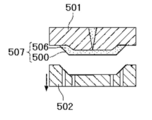
- FIG. 2B is a process diagram for explaining an example of producing the article of the present invention by in-mold molding.
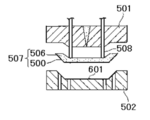
- FIG. 2C is a process diagram for explaining an example of manufacturing the article of the present invention by in-mold molding.
- FIG. 2D is a process diagram for explaining an example of manufacturing the article of the present invention by in-mold molding.
- FIG. 2E is a process diagram for explaining an example of producing the article of the present invention by in-mold molding.
- FIG. 2A is a process diagram for explaining an example of producing the article of the present invention by in-mold molding.
- FIG. 2B is a process diagram for explaining an example of producing the article of the present invention by in-mold molding.
- FIG. 2C is a process diagram for
- FIG. 2F is a process diagram for explaining an example of manufacturing the article of the present invention by in-mold molding.
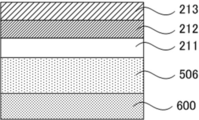
- FIG. 3 is a schematic sectional drawing of an example of the articles
- FIG. 4 is a schematic sectional view of an example of the article of the present invention (No. 2).
- FIG. 5 is a schematic sectional drawing of an example of the articles
- FIG. 6 is a schematic sectional drawing of an example of the articles
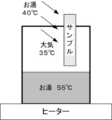
- FIG. 7A is a schematic diagram for explaining a method of a haze test using steam.
- FIG. 7B is a schematic diagram for explaining a method of a haze test using steam.
- the anti-fogging and antifouling laminate of the present invention has at least a substrate, a primer layer, and an antifogging and antifouling layer, and further includes other members as necessary.
- the antifogging and antifouling laminate has the following characteristics.
- the average thickness of the primer layer is more than 0.5 ⁇ m.
- the dynamic friction coefficient of the anti-fogging and antifouling layer is 0.40 or less.
- the average thickness of the antifogging and antifouling layer is 10 ⁇ m or more.
- the Martens hardness of the anti-fogging and antifouling layer is 10 N / mm 2 or more.
- the antifogging and antifouling layer is a cured product of the active energy ray-curable resin composition.
- the active energy ray-curable resin composition comprises a hydrophilic monomer having an alkylene oxide equivalent of less than 100 and an acrylic equivalent of 200 to 500, a non-polymer having an alkylene oxide equivalent of 100 or more and an acrylic equivalent of less than 400. It contains an alicyclic crosslinking agent and a water-repellent monomer having at least one of fluorine and silicon.
- the content of the crosslinking agent in the active energy ray-curable resin composition is 5% by mass to 40% by mass with respect to the nonvolatile content of the active energy ray-curable resin composition.
- the content of the water repellent monomer in the active energy ray curable resin composition is 0.001% by mass to 10% by mass with respect to the nonvolatile content of the active energy ray curable resin composition.
- the anti-fogging and antifouling laminate is excellent in appearance, antifouling properties and durability by having the above-mentioned characteristics, and further, the appearance is not deteriorated even in a high temperature and high humidity state and is excellent in antifogging properties.
- “durability” is a general term for scratch resistance, chemical resistance, coat adhesion, and pencil hardness, and “excellent in durability” means scratch resistance, It means that good results are shown in each evaluation of chemical properties, coat adhesion, and pencil hardness.
- Base material> There is no restriction
- Inorganic base material examples include a glass substrate, a quartz substrate, and a sapphire substrate.
- the glass substrate may be tempered glass, laminated glass, heat resistant glass, or the like.
- the glass substrate may be used for any application such as automotive window glass, architectural window glass, lens, mirror, and goggles.
- the shape of the glass substrate is usually a plate shape, but may be any shape such as a sheet shape or a curved shape.
- Resin base material a triacetyl cellulose (TAC), polyester (TPEE), a polyethylene terephthalate (PET), a polyethylene naphthalate ( PEN), polyimide (PI), polyamide (PA), aramid, polyethylene (PE), polyacrylate, polyether sulfone, polysulfone, polypropylene (PP), polystyrene, diacetyl cellulose, polyvinyl chloride, acrylic resin (PMMA), Polycarbonate (PC), epoxy resin, urea resin, urethane resin, melamine resin, phenol resin, acrylonitrile-butadiene-styrene copolymer, cycloolefin polymer (COP), cycloolefin copolymer (CO ), PC / PMMA laminate, such as rubber additives PMMA and the like.
- TAC triacetyl cellulose
- TPEE polyester
- PET polyethylene terephthalate
- PET polyethylene naphthalate
- the substrate has transparency.
- the substrate is in the form of a film
- the average thickness of the substrate is not particularly limited and may be appropriately selected depending on the intended purpose, but is preferably 5 ⁇ m to 1,000 ⁇ m, more preferably 50 ⁇ m to 500 ⁇ m.
- a character, pattern, image or the like may be printed on the surface of the substrate.
- a binder layer may be provided.
- various adhesives can be used in addition to various binders such as acrylic, urethane, polyester, polyamide, ethylene butyl alcohol, and ethylene vinyl acetate copolymer systems.
- Two or more binder layers may be provided.
- the binder to be used one having heat sensitivity and pressure sensitivity suitable for the molding material can be selected.
- the surface of the base material on the side opposite to the antifogging and antifouling layer side may have a wrinkle pattern.
- the wrinkle pattern can be formed by wrinkle processing, for example.
- blocking means that it is difficult to separate each sheet when a plurality of sheets are stacked.
- ⁇ Primer layer> The antifogging and antifouling layer does not have sufficient adhesion to the substrate. Therefore, in the anti-fogging and antifouling laminate, a primer layer for improving the adhesion of the antifogging and antifouling layer to the base material is disposed between the base material and the antifogging and antifouling layer. ing.
- the average thickness of the primer layer is more than 0.5 ⁇ m.
- the average thickness of the primer layer is not particularly limited as long as it exceeds 0.5 ⁇ m, and can be appropriately selected according to the purpose, but is preferably 1 ⁇ m to 20 ⁇ m, more preferably 1 ⁇ m to 10 ⁇ m, and more preferably 2 ⁇ m to 5 ⁇ m. Is particularly preferred.
- the average thickness of the primer layer is within a preferable range, it can be exposed to high temperature steam (for example, 60 ° C. or more), thermal shock (for example, rapid change from ⁇ 20 ° C. to 80 ° C.), or an alkaline detergent. Adhesiveness is hardly lowered and peeling of the antifogging and antifouling layer can be prevented.
- the average thickness is determined by the following method.
- the thickness of the antifogging and antifouling layer can be measured by observing the cross section of the antifogging and antifouling laminate with a field emission scanning electron microscope S-4700 (trade name; manufactured by Hitachi High-Technologies Corporation). Measurement is performed at any 10 points, and the average value is defined as the average thickness. Moreover, you may measure with the film metrics Co., Ltd. F20 film thickness measurement system.
- the primer layer can be formed, for example, by applying an active energy ray-curable resin composition. That is, the primer layer is, for example, a cured product obtained by curing an active energy ray-curable resin composition with active energy rays.
- the active energy ray-curable resin composition includes, for example, at least urethane (meth) acrylate and a photopolymerization initiator, and further contains other components such as a solvent as necessary. For example, a functional resin composition.
- urethane (meth) acrylate there is no restriction
- Specific examples of the photopolymerization initiator include specific examples of the photopolymerization initiator exemplified in the description of the anti-fogging and antifouling layer described later.
- Specific examples of the solvent include, for example, specific examples of the solvent exemplified in the description of the antifogging and antifouling layer described later.
- the active energy ray-curable resin composition preferably further contains (meth) acrylate having an ethylene oxide structure.
- (meth) acrylate having an ethylene oxide structure examples include pentaerythritol ethoxytetra (meth) acrylate and trimethylolpropane ethoxytri (meth) acrylate.
- coating method there is no restriction
- coating method For example, wire bar coating, blade coating, spin coating, reverse roll coating, die coating, spray coating, roll coating, gravure coating , Micro gravure coating, lip coating, air knife coating, curtain coating, comma coating method, dipping method and the like.
- the dynamic friction coefficient of the anti-fogging and antifouling layer is 0.40 or less.
- the average thickness of the antifogging and antifouling layer is 10 ⁇ m or more.
- the Martens hardness of the anti-fogging and antifouling layer is 10 N / mm 2 or more.
- the antifogging and antifouling layer is a cured product of the active energy ray-curable resin composition.
- the active energy ray-curable resin composition comprises a hydrophilic monomer having an alkylene oxide equivalent of less than 100 and an acrylic equivalent of 200 to 500, a non-polymer having an alkylene oxide equivalent of 100 or more and an acrylic equivalent of less than 400.
- the content of the crosslinking agent in the active energy ray-curable resin composition is 5% by mass to 40% by mass with respect to the nonvolatile content of the active energy ray-curable resin composition.
- the content of the water repellent monomer in the active energy ray curable resin composition is 0.001% by mass to 10% by mass with respect to the nonvolatile content of the active energy ray curable resin composition.
- the pure water contact angle on the surface of the anti-fogging and antifouling layer is preferably 80 ° or more.
- the hexadecane contact angle on the surface of the antifogging and antifouling layer is preferably 35 ° or more.
- the antifogging and antifouling layer is disposed on the primer layer.
- the antifogging and antifouling layer has a smooth surface.
- that the surface is smooth means that there are no intentionally formed convex portions or concave portions on the surface.
- fine convex portions or concave portions by physical processing are formed on the surface. Absent.
- the anti-fogging and antifouling layer does not have fine convex portions or concave portions on the surface, so that water-based stains and / or oily stains such as magic ink, fingerprints, sweat, cosmetics (foundation, UV protector, etc.) are difficult to adhere. . Moreover, even if those stains adhere, they can be easily removed with a tissue or the like.
- Martens hardness The Martens hardness of the anti-fogging and antifouling layer can be measured using PICODETOR HM500 (trade name; manufactured by Fisher Instruments). At that time, the load is 1 mN / 20 s, a diamond cone is used as the needle, and the surface angle is 136 °.
- Martens hardness of the Bokumoribo stain layer is 10 N / mm 2 or more, 20 N / mm 2 or more. When the Martens hardness is less than 10 N / mm 2 , the antifogging and antifouling layer is easily damaged.
- the upper limit of the Martens hardness of the anti-fogging and antifouling layer is not particularly limited and may be appropriately selected depending on the purpose.
- the Martens hardness of the antifogging and antifouling layer is, for example, 40 N / mm 2 or less. , 50 N / mm 2 or less, 100 N / mm 2 or less, and the like.
- the dynamic friction coefficient is obtained by the following method.
- the dynamic friction coefficient is measured using Triboster TS501 (trade name; manufactured by Kyowa Interface Science Co., Ltd.).
- a BEMCOT (registered trademark) M-3II (trade name; manufactured by Asahi Kasei Co., Ltd.) was attached to the surface contact with a double-sided tape, the measurement load was 50 g / cm 2 , the measurement speed was 1.7 mm / s, and the measurement distance was 20 mm. The measurement is made at 12 locations, and the average value is taken as the dynamic friction coefficient.
- the dynamic friction coefficient of the anti-fogging and antifouling layer is 0.40 or less, preferably 0.37 or less, and more preferably 0.30 or less.
- the lower limit value of the dynamic friction coefficient of the anti-fogging and antifouling layer is not particularly limited and can be appropriately selected according to the purpose.
- the dynamic friction coefficient of the antifogging and antifouling layer is, for example, 0.10 or more. preferable.
- the average thickness is determined by the following method.
- the thickness of the antifogging and antifouling layer can be measured by observing the cross section of the antifogging and antifouling laminate with a field emission scanning electron microscope S-4700 (trade name; manufactured by Hitachi High-Technologies Corporation). Measurement is performed at any 10 points, and the average value is defined as the average thickness. Moreover, you may measure with the film metrics Co., Ltd. F20 film thickness measurement system.
- the average thickness of the anti-fogging and antifouling layer is 10 ⁇ m or more, preferably 20 ⁇ m or more, and more preferably 26 ⁇ m or more.
- the average thickness of the anti-fogging and antifouling layer is not particularly limited because it does not adversely affect the high resilience when the antifogging and antifouling layer is deformed by the pressure applied during wiping. It can be selected as appropriate according to the conditions.
- the said average thickness is 30 micrometers or less, 40 micrometers or less, 100 micrometers or less, etc. are mentioned. .
- the pure water contact angle on the surface of the anti-fogging and antifouling layer is preferably 80 ° or more, more preferably 90 ° or more, and particularly preferably 100 ° or more.
- the pure water contact angle is 130 degrees or less, 150 degrees or less, 170 degrees or less, etc. are mentioned. It is done.
- the pure water contact angle is measured under the following conditions using a contact angle meter PCA-1 (manufactured by Kyowa Interface Chemical Co., Ltd.). Distilled water is put in a plastic syringe, and a stainless steel needle is attached to the tip of the distilled water and dropped onto the evaluation surface (antifogging and antifouling layer surface). Amount of water dropped: 2 ⁇ L Measurement temperature: 25 ° C The contact angle after 5 seconds from dropping water is measured at any 10 locations on the surface of the anti-fogging and antifouling layer, and the average value is defined as the pure water contact angle.
- PCA-1 manufactured by Kyowa Interface Chemical Co., Ltd.
- the hexadecane contact angle on the surface of the anti-fogging and antifouling layer is preferably 35 ° or more, more preferably 40 ° or more, and particularly preferably 60 ° or more.
- the hexadecane contact angle is 100 degrees or less, 120 degrees or less, 150 degrees or less, etc. are mentioned. .
- the hexadecane contact angle is measured under the following conditions using PCA-1 (Kyowa Interface Chemical Co., Ltd.) which is a contact angle meter. Hexadecane is put in a plastic syringe, and a Teflon-coated stainless steel needle is attached to the tip of the hexadecane and dropped onto the evaluation surface (antifogging and antifouling layer surface). Hexadecane drop volume: 1 ⁇ L Measurement temperature: 25 ° C Hexadecane is dropped and the contact angle after 20 seconds is measured at any 10 locations on the surface of the anti-fogging and antifouling layer, and the average value is taken as the hexadecane contact angle.
- PCA-1 Korean Industrial Chemical Co., Ltd.
- aqueous stains and / or oily stains such as magic ink, fingerprints, sweat, cosmetics (foundation, UV protector, etc.) Even if it adheres, those stains are prevented from penetrating into the lower layer of the bulk, and in addition to antifogging properties, they are excellent in antifouling properties.
- the antifogging and antifouling layer is a cured product of the active energy ray-curable resin composition.
- the active energy ray-curable resin composition contains a hydrophilic monomer, a crosslinking agent, and a water repellent monomer, and further contains other components such as a photopolymerization initiator and a solvent as necessary.
- the hydrophilic monomer has an alkylene oxide equivalent of less than 100 and an acrylic equivalent of 200-500.
- the alkylene oxide equivalent is the monomer mass per 1 mol of the alkylene oxide group, and is obtained by dividing the molecular weight of the monomer by the number of alkylene oxides per 1 molecule of the monomer.
- the acrylic equivalent is the monomer mass per mol of (meth) acrylic group, and is obtained by dividing the molecular weight of the monomer by the number of (meth) acrylic groups (also referred to as (meth) acryloyl groups) per molecule of the monomer. It is done.
- the number of carbon atoms of the alkylene group in the alkylene oxide is preferably 1 to 12, and more preferably 1 to 4.
- Examples of the alkylene oxide include methylene oxide (carbon number 1), 1,2-ethylene oxide (carbon number 2), 1,3-propylene oxide (carbon number 3), 1,2-propylene oxide (carbon number 3). 1,4-butylene oxide (carbon number 4).
- the lower limit of the alkylene oxide equivalent in the hydrophilic monomer is not particularly limited and may be appropriately selected depending on the intended purpose.
- Examples of the alkylene oxide equivalent include 30 or more and 40 or more.
- the hydrophilic monomer has a (meth) acryloyl group.
- the number of the (meth) acryloyl groups in the hydrophilic monomer is not particularly limited and may be appropriately selected depending on the intended purpose, but is preferably 2 to 6, and more preferably 2 to 4.
- the (meth) acryloyl group means an acryloyl group or a methacryloyl group.
- the hydrophilic monomer is not particularly limited as long as the alkylene oxide equivalent is less than 100 and the acrylic equivalent is 200 to 500, and can be appropriately selected according to the purpose.
- alkoxylated trimethylolpropane tri Examples include (meth) acrylate, alkoxylated glycerin tri (meth) acrylate, alkoxylated pentaerythritol tetra (meth) acrylate, and polyalkylene glycol di (meth) acrylate.
- the molecular weight of the hydrophilic monomer is not particularly limited and may be appropriately selected depending on the intended purpose, but is preferably 300 to 2,500, more preferably 400 to 2,000, and particularly preferably 600 to 1,500. preferable.
- the anti-fogging and anti-fouling layer is less likely to be fogged, less likely to be damaged, and less susceptible to chemicals.
- the crosslinking agent has an alkylene oxide equivalent of 100 or more. Furthermore, the crosslinking agent has an acrylic equivalent of less than 400.
- a crosslinking agent having no alkylene oxide is also included in the crosslinking agent.
- the crosslinking agent is non-alicyclic. That is, the crosslinking agent does not have an alicyclic structure.
- An alicyclic structure is a ring structure composed of three or more carbons.
- alkylene oxide examples include ethylene oxide and 1,2-propylene oxide.
- the lower limit of the acrylic equivalent in the cross-linking agent is not particularly limited and may be appropriately selected depending on the intended purpose.
- Examples of the acrylic equivalent include 100 or more.
- the cross-linking agent has a (meth) acryloyl group.
- the number of the (meth) acryloyl groups in the crosslinking agent is not particularly limited and may be appropriately selected depending on the intended purpose, but is preferably 2 to 6.
- the crosslinking agent is not particularly limited as long as the alkylene oxide equivalent is 100 or more and the acrylic equivalent is less than 400, and can be appropriately selected according to the purpose.
- the alkylene oxide equivalent is 100 or more and the acrylic equivalent is less than 400, and can be appropriately selected according to the purpose.
- pentaerythritol alkoxytetra (meth) acrylate ethoxylated bisphenol A diacrylate, and the like.
- the molecular weight of the crosslinking agent is not particularly limited and may be appropriately selected depending on the intended purpose, but is preferably 300 to 2,500, more preferably 400 to 2,000, and particularly preferably 500 to 1,900. .
- the content of the crosslinking agent in the active energy ray-curable resin composition is 5% by mass to 40% by mass, and 20% by mass to 35% by mass with respect to the nonvolatile content of the active energy ray curable resin composition. % Is preferable, and 20% by mass to 30% by mass is particularly preferable. When the content is less than 5% by mass, scratch resistance and chemical resistance are lowered. When the content exceeds 40% by mass, the antifogging property decreases.
- hydrophilic monomer and the crosslinking agent examples of the hydrophilic monomer and the crosslinking agent, their alkylene oxide equivalents, and acrylic equivalents are listed below.
- AO represents an alkylene oxide. Details of the monomers listed in Table 1 are as follows. (Hydrophilic monomer) SR9035: manufactured by Sartomer, ethoxylated (15) trimethylolpropane triacrylate (15) represents that the average number of ethylene oxide groups contained per mole is 15.
- ATM-35E Shin-Nakamura Chemical Co., Ltd., ethoxylated pentaerythritol tetraacrylate
- A-GLY-20E Shin-Nakamura Chemical Co., Ltd., ethoxylated glycerin triacrylate A-600: Shin-Nakamura Chemical Co., Ltd.
- the water repellent monomer has at least one of fluorine and silicon.
- the water repellent monomer has at least one of fluorine and silicon, while the hydrophilic monomer and the cross-linking agent do not have fluorine and silicon.
- the water-repellent monomer has, for example, a fluoroalkyl group, a fluoroalkyl ether group, a dimethylsiloxane group and the like.
- the water repellent monomer has a (meth) acryloyl group.
- the number of the (meth) acryloyl groups in the water repellent monomer is not particularly limited and may be appropriately selected depending on the intended purpose, but is preferably 2 to 6.
- Examples of the water repellent monomer include fluorinated (meth) acrylate having a fluoroalkyl group or fluoroalkyl ether group, and silicone (meth) acrylate having a dimethylsiloxane group.
- Examples of commercially available products of the fluorinated (meth) acrylate include KY-1200 series manufactured by Shin-Etsu Chemical Co., Ltd., MegaFac RS series manufactured by DIC Corporation, and OPTOOL DAC manufactured by Daikin Industries, Ltd.
- Examples of commercially available silicone (meth) acrylates include X-22-164 series manufactured by Shin-Etsu Chemical Co., Ltd., and TEGO Rad series manufactured by Evonik.
- the molecular weight of the water repellent monomer is not particularly limited and can be appropriately selected according to the purpose.
- the content of the water repellent monomer in the active energy ray-curable resin composition is 0.001% by mass to 10% by mass with respect to the nonvolatile content of the active energy ray curable resin composition, and 0.001 % By mass to 5.0% by mass is preferable, 0.01% by mass to 5.0% by mass is more preferable, and 0.01% by mass to 4.0% by mass is particularly preferable.
- the content is less than 0.001% by mass, the antifouling property is inferior.
- the content exceeds 10% by mass, the appearance (whitening, cloudiness) of the antifogging and antifouling layer is reduced.
- photopolymerization initiator examples include a photoradical polymerization initiator, a photoacid generator, a bisazide compound, hexamethoxymethylmelamine, and tetramethoxyglycolyl.
- a photoradical polymerization initiator a photoacid generator
- a bisazide compound a bisazide compound
- hexamethoxymethylmelamine a bisazide compound
- hexamethoxymethylmelamine hexamethoxymethylmelamine
- tetramethoxyglycolyl There is no restriction
- the photopolymerization initiator preferably does not contain a nitrogen atom as a constituent element from the viewpoint of preventing yellowing in appearance.
- the photopolymerization initiator may contain only C, H, and O as constituent elements, or only C, H, P, and O as constituent elements from the viewpoint of preventing yellowing in appearance. preferable.
- the content of the photopolymerization initiator in the active energy ray-curable resin composition is not particularly limited and may be appropriately selected depending on the intended purpose, but is preferably 0.1% by mass to 10% by mass, It is more preferably 0.1% by mass to 5% by mass, and particularly preferably 1% by mass to 5% by mass.
- an organic solvent is mentioned.
- the organic solvent include aromatic solvents, alcohol solvents, ester solvents, ketone solvents, glycol ether solvents, glycol ether ester solvents, chlorine solvents, ether solvents, N-methylpyrrolidone, dimethyl
- the organic solvent include aromatic solvents, alcohol solvents, ester solvents, ketone solvents, glycol ether solvents, glycol ether ester solvents, chlorine solvents, ether solvents, N-methylpyrrolidone, dimethyl
- a solvent having a boiling point of 80 ° C. or more is preferable from the viewpoint of obtaining an antifogging and antifouling layer having a better appearance.
- the solvent having a boiling point of 80 ° C. or higher include 1-propanol, 2-propanol, 1-butanol, 2-butanol, 2-methyl-2-propanol, 1,3-butanediol, 1,4-butanediol, 2-ethyl-1-hexanol, normal propyl acetate, isopropyl acetate, butyl acetate, methyl isobutyl ketone, cyclohexanone, diisobutyl ketone, diacetone alcohol, propylene glycol monomethyl ether, methyl cellosolve, ethyl cellosolve, butyl cellosolve, 1,4-dioxane, Examples thereof include methyl carbitol, ethyl carbitol
- the content of the solvent in the active energy ray curable resin composition is not particularly limited and may be appropriately selected depending on the intended purpose.
- the active energy ray-curable resin composition is cured when irradiated with active energy rays.
- active energy ray There is no restriction
- the antifogging and antifouling laminate preferably has a result of ⁇ when the antifogging property is evaluated by the following evaluation method.
- ⁇ Antifogging evaluation method> After standing in a room temperature environment for 2 hours, it is exposed to 35 ° C. and 85% RH (high temperature and high humidity environment) for 15 minutes. While exposed to a high temperature and high humidity environment, the surface is visually observed and the antifogging property is evaluated according to the following evaluation criteria.
- ⁇ The area clouded until 10 minutes later is 30% or less.
- X The area clouded in 5 minutes is larger than 30%.
- the active energy ray-curable resin composition has the water-repellent monomer and the hydrophilic monomer, so that in the antifogging and antifouling layer obtained, the low surface energy component is localized on the surface.
- a hydrophilic component water absorbing component
- water droplets are made water repellent on the surface of the anti-fogging and antifouling layer, and water vapor is easily trapped in the antifogging and antifouling layer. As a result, better antifogging properties can be obtained.
- the said anti-fog antifouling layer is formed from the said active energy ray curable resin composition.
- the uncured layer is preferably obtained by irradiating with ultraviolet rays in an atmosphere having an oxygen concentration of less than 0.1% by volume. By doing so, as a result of excellent curability, an antifogging and antifouling layer having a low coefficient of dynamic friction and a high contact angle is obtained.
- the atmosphere having an oxygen concentration of less than 0.1% by volume include an inert gas atmosphere such as a nitrogen atmosphere.
- FIG. 1 is a schematic sectional view of an example of the anti-fogging and antifouling laminate of the present invention.
- the anti-fogging and antifouling laminate of FIG. 1 has a resin base material 11, a primer layer 12, and an antifogging and antifouling layer 13.
- the method for producing an antifogging and antifouling laminate of the present invention includes at least an antifogging and antifouling layer forming step, preferably including a primer layer forming step, and further including other steps as necessary.
- the method for producing the anti-fogging and antifouling laminate is a preferred method for producing the antifogging and antifouling laminate of the present invention.
- the primer layer forming step is not particularly limited as long as it is a step for forming the primer layer, and can be appropriately selected according to the purpose.
- the active energy beam for forming the primer layer is formed on the substrate. Examples include a step of applying the curable resin composition and irradiating with ultraviolet rays to form the primer layer.
- Anti-fog antifouling layer forming step In the antifogging and antifouling layer forming step, ultraviolet light is used in an atmosphere having an oxygen concentration of less than 0.1% by volume with respect to the uncured layer formed from the active energy ray-curable resin composition on the primer layer. If it is the process of irradiating and forming the said anti-fogging antifouling layer, there will be no restriction
- UV irradiation is performed in an atmosphere having an oxygen concentration of less than 0.1% by volume, resulting in excellent curability, resulting in a low dynamic friction coefficient and an antifogging and antifouling property having a high contact angle.
- the atmosphere having an oxygen concentration of less than 0.1% by volume include an inert gas atmosphere such as a nitrogen atmosphere.
- the active energy ray-curable resin composition of the present invention contains at least a hydrophilic monomer, a water repellent monomer, a crosslinking agent, and a photopolymerization initiator, and further contains other components such as a solvent as necessary. contains.
- hydrophilic monomer Details of the hydrophilic monomer, the water-repellent monomer, the crosslinking agent, the photopolymerization initiator, and the solvent are the hydrophilic monomer in the description of the anti-fogging and antifouling layer of the antifogging and antifouling laminate, The details of the water-repellent monomer, the crosslinking agent, the photopolymerization initiator, and the solvent are the same, and the preferred embodiments are also the same.
- the Martens hardness of the surface of the anti-fogging and antifouling layer having a smooth surface obtained by curing the active energy ray-curable resin composition with active energy rays is 10 N / mm 2 or more.
- the coefficient of dynamic friction on the surface of the anti-fogging and antifouling layer is preferably 0.40 or less.
- the pure water contact angle on the surface of the anti-fogging and antifouling layer is preferably 80 ° or more, and the hexadecane contact angle is preferably 35 ° or more.
- the measurement method, preferred range, etc. of the Martens hardness, the dynamic friction coefficient, the pure water contact angle, and the hexadecane contact angle are the same as the measurement method, preferred range, etc. in the description of the anti-fogging and antifouling layer.
- the article of the present invention has the anti-fogging and antifouling laminate of the present invention on the surface, and further includes other members as necessary.
- the article is not particularly limited and can be appropriately selected according to the purpose. Examples thereof include glass windows, refrigerated / frozen showcases, window materials such as automobile windows, bathroom mirrors, automobile side mirrors, and the like. Mirrors, bathroom floors and walls, solar panels, security surveillance cameras, etc.
- the article may be glasses, goggles, a helmet, a lens, a microlens array, an automobile headlight cover, a front panel, a side panel, a rear panel, and the like. These are preferably formed by in-mold molding, insert molding, or overlay molding.
- the antifogging and antifouling laminate may be formed on a part of the surface of the article, or may be formed on the entire surface.
- the method for manufacturing the article is not particularly limited and may be appropriately selected depending on the intended purpose. However, the method for manufacturing the article of the present invention described later is preferable.
- the method for producing an article according to the present invention includes at least a heating process and an anti-fogging and antifouling laminate molding process, and further includes other processes such as an injection molding process and a cast molding process as necessary.
- the manufacturing method of the article is the manufacturing method of the article of the present invention.
- the heating step is not particularly limited as long as it is a step for heating the anti-fogging and antifouling laminate, and can be appropriately selected according to the purpose.
- the antifogging and antifouling laminate is the antifogging and antifouling laminate of the present invention.
- heating there is no restriction
- the anti-fogging and antifouling laminate forming step is not particularly limited as long as it is a step for forming the heated antifogging and antifouling laminate into a desired shape, and can be appropriately selected according to the purpose.
- mold into a desired shape with an air pressure etc. are mentioned.
- an injection molding step may be performed as necessary.
- the injection molding step is not particularly limited as long as it is a step of injecting a molding material onto the resin substrate side of the anti-fogging and antifouling laminate molded into a desired shape and molding the molding material, It can be appropriately selected according to the purpose.
- Examples of the molding material include resin.
- Examples of the resin include olefin resins, styrene resins, ABS resins (acrylonitrile-butadiene-styrene copolymers), AS resins (acrylonitrile-styrene copolymers), acrylic resins, urethane resins, unsaturated polyesters.
- Resin epoxy resin, polyphenylene oxide / polystyrene resin, polycarbonate, polycarbonate-modified polyphenylene ether, polyethylene terephthalate, polysulfone, polyphenylene sulfide, polyphenylene oxide, polyetherimide, polyimide, polyamide, liquid crystal polyester, polyallyl heat-resistant resin, various composite resins, Various modified resins are exemplified.
- the injection method is not particularly limited and can be appropriately selected depending on the purpose.
- the injection method is melted on the resin base material side of the anti-fogging and anti-stain laminate adhered to a predetermined mold.
- examples thereof include a method of pouring the molding material.
- a cast forming step may be performed as necessary.
- a resin material dissolved in a solution is poured into the resin base side of the antifogging and antifouling laminate molded into a desired shape, and the resin material is solidified and molded. If there is, there is no restriction
- the manufacturing method of the article is preferably performed using an in-mold molding apparatus, an insert molding apparatus, and an overlay molding apparatus.
- This manufacturing method is a manufacturing method using an in-mold molding apparatus.
- the anti-fogging and antifouling laminate 500 is heated.
- the heating is preferably infrared heating or exposure to a high temperature atmosphere.
- the heated anti-fogging and antifouling laminate 500 is disposed at a predetermined position between the first mold 501 and the second mold 502.
- the first mold 501 is a fixed mold
- the second mold 502 is a movable mold.
- the first mold 501 and the second mold 502 are clamped. Subsequently, the antifogging / antifouling laminate 500 is sucked into the cavity surface of the second mold 502 by sucking the antifogging / antifouling laminate 500 through the suction hole 504 opened in the cavity surface of the second mold 502. To do. By doing so, the cavity surface is shaped by the anti-fogging and antifouling laminate 500. At this time, the outer periphery of the anti-fogging / anti-stain laminate 500 may be fixed and positioned by a film pressing mechanism (not shown).
- the molten molding material 506 is injected from the gate 505 of the first mold 501 toward the resin base material of the anti-fogging and antifouling laminate 500, and the first mold 501 and the second mold 502 are molded. Injection into the cavity formed by tightening (FIG. 2C). Thereby, the molten molding material 506 is filled in the cavity (FIG. 2D). Further, after the filling of the molten molding material 506 is completed, the molten molding material 506 is cooled to a predetermined temperature and solidified.
- the second mold 502 is moved to open the first mold 501 and the second mold 502 (FIG. 2E).
- an anti-fogging and antifouling laminate 500 is formed on the surface of the molding material 506, and an article 507 in-mold molded into a desired shape is obtained.
- the protruding pin 508 is pushed out from the first mold 501 and the obtained article 507 is taken out.
- a manufacturing method in the case of using the overlay molding apparatus is as follows. This is a step of directly decorating the surface of the molding material with the anti-fogging and anti-stain laminate, and an example thereof is a TOM (Threee Dimension Over Method) method.
- TOM Three Dimension Over Method
- An example of a method for producing the article of the present invention using the TOM method will be described below.
- air is sucked by a vacuum pump or the like in both spaces in the apparatus divided by the anti-fogging and antifouling laminate fixed to the fixed frame, and the two spaces are evacuated.
- a molding material that has been injection molded in advance is placed in a space on one side.
- the anti-fogging / anti-fouling laminate is firmly attached to the three-dimensional shape of the molding material in a vacuum atmosphere by sending air to the side of the equipment space where there is no molding material Adhere closely. If necessary, compressed air pressing from the side where the atmosphere is sent may be used in combination.
- Vacuum forming is usually performed at 80 ° C to 200 ° C, preferably about 110 ° C to 160 ° C.
- an adhesive layer is provided on the surface opposite to the antifogging and antifouling layer surface of the antifogging and antifouling laminate in order to bond the antifogging and antifouling laminate and the molding material. Also good.
- an acrylic adhesive, a hot-melt-adhesive etc. are mentioned.
- the said adhesion layer there is no restriction
- FIG. 3 to 6 are schematic cross-sectional views of an example of the article of the present invention.
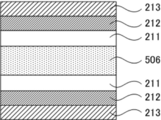
- the article in FIG. 3 includes a molding material 506, a resin base material 211, a primer layer 212, and an anti-fogging and antifouling layer 213, and the resin base material 211 and the primer layer 212 are formed on the molding material 506. And an anti-fogging and anti-fouling layer 213 are laminated in this order.
- This article can be manufactured, for example, by insert molding.
- a resin base material is provided on the molding material 506, a resin base material is provided. 211, the primer layer 212, and the anti-fogging antifouling layer 213 are laminated
- a hard coat layer 600 is formed on the side of the molding material 506 opposite to the resin substrate 211 side. For example, after the article shown in FIG. 3 is manufactured, a protective layer is formed on the anti-fogging and antifouling layer 213, the hard coat layer 600 is formed on the surface of the molding material 506, and the molding material 506 is used as the hard coating liquid.
- the antifogging and antifouling layer can be produced by dipping, then drying, curing, etc., and further by peeling off the protective layer.
- the antifogging and antifouling layer is a smooth surface, the pure water contact angle is larger than 80 °, and the hexadecane contact angle is larger than 35 °, the antifogging and antifouling layer repels the hard coat liquid. Even if it is not formed, a hard coat is not formed on the anti-fogging and anti-smudge layer, and the hard coat layer 600 is formed only on the side opposite to the resin base material 211 side of the molding material 506, so that the productivity is excellent.
- the article in FIG. 5 includes a molding material 506, a resin base material 211, a primer layer 212, and an anti-fogging and antifouling layer 213, and a resin base material 211 and a primer layer on both sides of the molding material 506. 212 and an anti-fogging and antifouling layer 213 are laminated in this order.
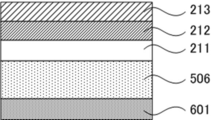
- the article in FIG. 6 includes a molding material 506, a resin base material 211, a primer layer 212, an antifogging and antifouling layer 213, and an optical film 601, and a resin base material 211 on the molding material 506.
- the primer layer 212 and the antifogging and antifouling layer 213 are laminated in this order.
- An optical film 601 is formed on the side of the molding material 506 opposite to the resin substrate 211 side. Examples of the optical film 601 include a hard coat film, an antireflection film, an antiglare film, and a polarizing film.
- the article shown in FIG. 5 or 6 can be manufactured by, for example, double insert molding. Double insert molding is a method of molding a double-sided laminated film integrated product, and can be performed using, for example, the method described in JP-A-03-114718.
- One aspect of the antifogging method of the present invention is an antifogging method for improving the antifogging property of the antifogging and antifouling layer by heating the antifogging and antifouling laminate of the present invention to room temperature or higher.
- the antifogging property By heating the anti-fogging and antifouling layer to room temperature or higher, the antifogging property can be improved, and fogging of the antifogging and antifouling layer can be prevented for a certain time or more.
- the reason why the antifogging property is improved by heating is considered to be that condensation on the surface of the antifogging and antifouling layer is suppressed by heating, and moisture is efficiently absorbed and released repeatedly.
- Examples of the heating method include a method of keeping the atmosphere at 30 ° C. or higher and a method of applying hot water of 30 ° C. or higher to the anti-fogging and antifouling layer.
- Anti-fogging method (2)> Another aspect of the antifogging method of the present invention is an antifogging method that maintains the antifogging property of the antifogging and antifouling layer by cleaning the antifogging and antifouling layer of the antifogging and antifouling laminate of the present invention. Is the method.
- ⁇ Anti-fogging property is reduced when scale or oil stains adhere to the surface of the anti-fogging and anti-staining layer. Therefore, the antifogging property of the antifogging and antifouling layer can be maintained by cleaning the antifogging and antifouling layer.
- the cleaning method is not particularly limited and may be appropriately selected depending on the intended purpose. Examples thereof include wiping with a sponge. Examples of the sponge include a commercially available urethane sponge and melamine sponge. When wiping with the sponge, the sponge may be moistened with tap water, or a detergent (for example, a commercially available neutral detergent, alkaline detergent, or acidic detergent) may be applied to the sponge.
- a detergent for example, a commercially available neutral detergent, alkaline detergent, or acidic detergent
- ⁇ Pure water contact angle> The pure water contact angle was measured under the following conditions using a contact angle meter PCA-1 (manufactured by Kyowa Interface Chemical Co., Ltd.). Distilled water was put into a plastic syringe, and a stainless steel needle was attached to the tip thereof and dropped onto the evaluation surface (antifogging and antifouling layer surface). Amount of water dropped: 2 ⁇ L Measurement temperature: 25 ° C The contact angle after 5 seconds from dropping water was measured at any 10 locations on the surface of the anti-fogging and antifouling layer, and the average value was defined as the pure water contact angle.
- ⁇ Hexadecane contact angle> The hexadecane contact angle was measured under the following conditions using a contact angle meter PCA-1 (manufactured by Kyowa Interface Chemical Co., Ltd.). Hexadecane was placed in a plastic syringe, a Teflon-coated stainless steel needle was attached to the tip, and the solution was dropped onto the evaluation surface (antifogging and antifouling layer surface). Hexadecane drop volume: 1 ⁇ L Measurement temperature: 25 ° C Hexadecane was dropped and the contact angle after 20 seconds was measured at any 10 locations on the surface of the antifogging and antifouling layer, and the average value was defined as the hexadecane contact angle.
- PCA-1 manufactured by Kyowa Interface Chemical Co., Ltd.
- a BEMCOT (registered trademark) M-3II (trade name; manufactured by Asahi Kasei Co., Ltd.) was attached to the surface contact with a double-sided tape, the measurement load was 50 g / cm 2 , the measurement speed was 1.7 mm / s, the measurement distance was 20 mm Measurements were made at 12 locations, and the average value was taken as the dynamic friction coefficient.
- Martens hardness The Martens hardness of the anti-fogging and antifouling layer was measured using PICODERTOR HM500 (trade name; manufactured by Fisher Instruments). The load was 1 mN / 20 s, a diamond cone was used as the needle, and the surface angle was 136 °.
- ⁇ Anti-fogging property> After being left in a normal temperature environment for 2 hours, it was exposed to 35 ° C. and 85% RH (high temperature and high humidity environment) for 15 minutes. While exposed to a high temperature and high humidity environment, the surface was visually observed, and the antifogging property was evaluated according to the following evaluation criteria.
- ⁇ Less than 30% of the area clouded until 5 minutes later.
- X The area clouded in 5 minutes is larger than 30%.
- a melamine sponge (trade name: Kageki-kun) is dampened with tap water and placed on the surface of the anti-fogging and antifouling layer, and is slid 10,000 reciprocally at a load of 300 gf / cm 2 (sliding stroke: 3 cm, sliding speed: 6 cm / s), and scratch resistance was evaluated according to the following evaluation criteria.
- X There were changes such as scratches and cloudiness in the appearance.
- Example 1 ⁇ Formation of primer layer>
- the following primer layer-forming resin composition was applied on a glass substrate (manufactured by Nippon Sheet Glass Co., Ltd., float plate glass, average thickness 5 mm) so that the average thickness after drying and curing was 1 ⁇ m. After coating, it was dried in an oven at 80 ° C. for 2 minutes. Using a high-pressure mercury lamp, ultraviolet rays were irradiated in an air atmosphere at an irradiation amount of 500 mJ / cm 2 to obtain a primer layer.
- the active energy ray-curable resin composition described in Table 2-1 was applied onto the primer layer so that the average thickness after drying and curing was 26 ⁇ m. After coating, it was dried in an oven at 80 ° C. for 2 minutes. Using a metal halide lamp, an antifogging and antifouling laminate was obtained by curing the antifogging and antifouling layer by irradiating ultraviolet rays at an irradiation amount of 500 mJ / cm 2 in a nitrogen atmosphere (oxygen concentration less than 0.1% by volume).
- Example 2 (Examples 2 to 3)
- Example 1 a laminate was obtained in the same manner as Example 1 except that the average thickness of the primer layer was changed to the average thickness shown in Table 2-1.
- the obtained laminate was evaluated in the same manner as in Example 1. The results are shown in Table 2-1.
- Example 1 (Comparative Example 1) In Example 1, a laminate was obtained in the same manner as in Example 1 except that the average thickness of the primer layer and the average thickness of the antifogging and antifouling layer were changed to the average thicknesses shown in Table 2-1. . The obtained laminate was evaluated in the same manner as in Example 1. The results are shown in Table 2-1.
- Example 2 Comparative Example 2, Examples 4-5, Comparative Examples 3-4.
- the contents of the hydrophilic monomer and the crosslinking agent in the active energy ray-curable resin composition for forming the antifogging and antifouling layer were changed to the contents shown in Table 2-2.
- a laminate was obtained.
- the obtained laminate was evaluated in the same manner as in Example 1. The results are shown in Table 2-2.
- Example 2 was the same as Example 2 except that the type of crosslinking agent in the active energy ray-curable resin composition for forming the anti-fogging and antifouling layer was changed to the crosslinking agent described in Table 2-2. Thus, a laminate was obtained. The obtained laminate was evaluated in the same manner as in Example 1. The results are shown in Table 2-2.
- Example 6 Comparative Example 6
- Example 2 A laminate was obtained in the same manner as in Example 2, except that the average thickness of the anti-fogging and antifouling layer was changed to the average thickness shown in Table 2-3.
- the obtained laminate was evaluated in the same manner as in Example 1. The results are shown in Table 2-3.
- Example 9 the photopolymerization initiator in the active energy ray-curable resin composition for forming the antifogging and antifouling layer was changed to the photopolymerization initiator shown in Table 2-4, and further the antifogging and antifouling layer was formed.
- a laminate was obtained in the same manner as in Example 2 except that the average thickness of the layer was changed to 30 ⁇ m.
- the obtained laminate was evaluated in the same manner as in Example 1. The results are shown in Table 2-4.
- Example 7 (Comparative Example 7) In Example 9, a laminate was obtained in the same manner as in Example 9 except that the atmosphere during curing of the anti-fogging and antifouling layer was changed to an air atmosphere. The obtained laminate was evaluated in the same manner as in Example 1. The results are shown in Table 2-5.
- Example 8 In Example 2, the water-repellent monomer in the active energy ray-curable resin composition for forming the anti-fogging and antifouling layer was changed to 0 part by mass, and the average thickness of the antifogging and antifouling layer was changed to 35 ⁇ m. In the same manner as in Example 2, a laminate was obtained. The obtained laminate was evaluated in the same manner as in Example 1. The results are shown in Table 2-6.
- Example 17 In Example 2, the content of the water-repellent monomer in the active energy ray-curable resin composition for forming the anti-fogging and antifouling layer was changed to the content shown in Table 2-6, and the antifogging and antifouling layer was further changed.
- a laminate was obtained in the same manner as in Example 2 except that the average thickness of the layers was changed to the average thickness shown in Table 2-6.
- the obtained laminate was evaluated in the same manner as in Example 1. The results are shown in Table 2-6.
- Example 2 the content of the water repellent monomer in the active energy ray-curable resin composition for forming the anti-fogging and antifouling layer was changed to the content described in Table 2-6, but the content of Example 2 was changed. In the same manner, a laminate was obtained. The obtained laminate was evaluated in the same manner as in Example 1. The results are shown in Table 2-6.
- Example 2 (Examples 22 to 25, Comparative Example 9)
- the contents of the hydrophilic monomer, the crosslinking agent, and the water repellent monomer in the active energy ray-curable resin composition for forming the anti-fogging and antifouling layer are the contents shown in Table 2-7. Except having changed, it carried out similarly to Example 2, and obtained the laminated body. The obtained laminate was evaluated in the same manner as in Example 1. The results are shown in Table 2-7.
- Example 2 (Examples 26 to 28, Comparative Example 10)
- the type and content of the hydrophilic monomer and the content of the crosslinking agent in the active energy ray-curable resin composition for forming the antifogging and antifouling layer are as shown in Table 2-8. Except having changed, it carried out similarly to Example 2, and obtained the laminated body. The obtained laminate was evaluated in the same manner as in Example 1. The results are shown in Table 2-8.
- Example 29 In Example 2, the cross-linking agent in the active energy ray-curable resin composition for forming the antifogging and antifouling layer was changed to the cross-linking agent shown in Table 2-8, and was the same as in Example 2. A laminate was obtained. The obtained laminate was evaluated in the same manner as in Example 1. The results are shown in Table 2-8.
- Example 30 In Example 2, a laminate was obtained in the same manner as in Example 2 except that the base material was changed to a PET base material (A4300, average thickness 75 ⁇ m, manufactured by Toyobo Co., Ltd.). The obtained laminate was evaluated in the same manner as in Example 1. The results are shown in Table 2-8.
- Tables 2-1 to 2-8 the unit of the content of each component of the active energy ray-curable resin composition is parts by mass. Details of the materials described in Table 2-1 to Table 2-8 are as follows. Note that in the comparative example, “ ⁇ ” was not evaluated because the results were insufficient in other evaluations.
- SR9035 Sartomer, ethoxylated (15) trimethylolpropane triacrylate
- ATM-35E Shin-Nakamura Chemical Co., Ltd., ethoxylated pentaerythritol tetraacrylate
- A-GLY-20E Shin-Nakamura Chemical Co., Ltd.
- Ethoxylated glycerol triacrylate A-600: Shin-Nakamura Chemical Co., Ltd., polyethylene glycol diacrylate ⁇ other >> A-1000: Shin-Nakamura Chemical Co., Ltd., polyethylene glycol diacrylate
- EBECRYL40 manufactured by Daicel Ornex Co., Ltd., pentaerythritol alkoxytetraacrylate PU610: manufactured by Miwon, aliphatic urethane acrylate (acrylic group number 6, molecular weight: 1800) ⁇ Other >> A-DCP: Shin-Nakamura Chemical Co., Ltd., tricyclodecane dimethanol diacrylate
- Irgacure 184 BASF, 1-hydroxy-cyclohexyl-phenyl-ketone
- IRGACURE 127 BASF, 2-hydroxy-1- ⁇ 4- [4- (2-hydroxy-2-methyl-propionyl) -benzyl Phenyl ⁇ -2-methyl-propan-1-one •
- Irgacure 651 manufactured by BASF, 2,2-dimethoxy-1,2-diphenylethane-1-one •
- Irgacure 1173 manufactured by BASF, 2-hydroxy-2 -Methyl-1-phenyl-propan-1-one •
- Irgacure 2959 1- [4- (2-hydroxyethoxy) -phenyl] -2-hydroxy-2-methyl-1-propan-1-one manufactured by BASF ⁇
- Irgacure MBF Phenyl glyoxylic acid methyl ester manufactured by BASF
- Irgacure 754 a mixture of oxyphenylacetic acid, 2- [2-o
- the antifogging and antifouling laminates of Examples 1 to 30 were excellent in antifouling property and durability as a result of having the following characteristics, and further, the appearance was not deteriorated even in a high temperature and high humidity state, and the antifogging property was excellent. .
- the antifogging and antifouling laminate has the following characteristics.
- the average thickness of the primer layer is more than 0.5 ⁇ m.
- the dynamic friction coefficient of the anti-fogging and antifouling layer is 0.40 or less.
- the average thickness of the antifogging and antifouling layer is 10 ⁇ m or more.
- the Martens hardness of the anti-fogging and antifouling layer is 10 N / mm 2 or more.
- the antifogging and antifouling layer is a cured product of the active energy ray-curable resin composition.
- the active energy ray-curable resin composition comprises a hydrophilic monomer having an alkylene oxide equivalent of less than 100 and an acrylic equivalent of 200 to 500, a non-polymer having an alkylene oxide equivalent of 100 or more and an acrylic equivalent of less than 400. It contains an alicyclic crosslinking agent and a water-repellent monomer having at least one of fluorine and silicon.
- the content of the crosslinking agent in the active energy ray-curable resin composition is 5% by mass to 40% by mass with respect to the nonvolatile content of the active energy ray-curable resin composition.
- the content of the water repellent monomer in the active energy ray curable resin composition is 0.001% by mass to 10% by mass with respect to the nonvolatile content of the active energy ray curable resin composition.
- the laminate of Comparative Example 1 had insufficient coat adhesion because the average thickness of the primer layer was as thin as 0.5 ⁇ m.
- the laminate of Comparative Example 2 had insufficient scratch resistance and chemical resistance because the content of the crosslinking agent in the active energy ray-curable resin composition for forming the antifogging and antifouling layer was small.
- the laminates of Comparative Examples 3 and 4 had insufficient antifogging properties because the content of the crosslinking agent in the active energy ray-curable resin composition for forming the antifogging and antifouling layer was too large.
- the laminate of Comparative Example 5 had insufficient antifogging properties because the crosslinking agent in the active energy ray-curable resin composition for forming the antifogging and antifouling layer had an alicyclic structure.
- the laminate of Comparative Example 6 had insufficient antifogging properties because the antifogging and antifouling layer was as thin as 5 ⁇ m.
- the laminate of Comparative Example 7 was insufficient in antifouling properties and scratch resistance because the dynamic friction coefficient increased as a result of UV irradiation in an air atmosphere when forming an antifogging and antifouling layer.
- the laminate of Comparative Example 8 had insufficient antifouling property because the active energy ray-curable resin composition for forming the antifogging and antifouling layer did not contain a water repellent monomer.
- the laminate of Comparative Example 9 had an insufficient appearance because the content of the water repellent monomer in the active energy ray-curable resin composition for forming the antifogging and antifouling layer was too large.
- the laminate of Comparative Example 10 had insufficient scratch resistance and hardness because the acrylic equivalent of the hydrophilic monomer of the active energy ray-curable resin composition for forming the antifogging and antifouling layer was large.
- the pencil hardness was low.
- the anti-fogging and antifouling laminate of the present invention includes glass windows, refrigerated / frozen showcases, window materials such as automobile windows, window sashes and door sashes, bathrooms, washrooms, kitchens, kitchens, food factories, toilets, etc.
- Mirrors mirrors such as automobile side mirrors, other mirrors, bathtub body, bathtub apron, flooring and wall materials of houses such as bathrooms, washrooms and kitchens, faucet fittings, faucets, drainage fittings, drainage outlets, currants, showers Head, shower bar, hoses, racks, hooks, holders, handrails, dishwashers, washing machines, kitchen sinks, partitions, kitchen hood components, workbench, hand basin, wash basin, flush toilet, toilet seat And toilet seat members such as toilet lids, nozzles and nozzle covers, solar battery panel surfaces, security surveillance cameras, and the like.
- houses such as bathrooms, washrooms and kitchens, faucet fittings, faucets, drainage fittings, drainage outlets, currants, showers Head, shower bar, hoses, racks, hooks, holders, handrails, dishwashers, washing machines, kitchen sinks, partitions, kitchen hood components, workbench, hand basin, wash basin, flush toilet, toilet seat And toilet seat members such as toilet lids, nozzles and nozzle covers, solar battery
- the anti-fogging and antifouling laminate of the present invention is easy to be molded, glasses, goggles, helmets, lenses, microlens arrays, automobile headlight covers are used by using in-mold molding and insert molding. It can be used for front panels, side panels, rear panels and the like.
Landscapes
- Chemical & Material Sciences (AREA)
- Organic Chemistry (AREA)
- Engineering & Computer Science (AREA)
- Materials Engineering (AREA)
- Life Sciences & Earth Sciences (AREA)
- Wood Science & Technology (AREA)
- Chemical Kinetics & Catalysis (AREA)
- General Chemical & Material Sciences (AREA)
- Geochemistry & Mineralogy (AREA)
- Health & Medical Sciences (AREA)
- Polymers & Plastics (AREA)
- Medicinal Chemistry (AREA)
- Laminated Bodies (AREA)
- Paints Or Removers (AREA)
- Polymerisation Methods In General (AREA)
Abstract
Stratifié antibuée et antisalissure comportant un matériau de base, une couche d'apprêt et une couche antibuée et antisalissure ayant une surface lisse : l'épaisseur moyenne de la couche d'apprêt est supérieure à 0,5 µm, la couche anti-buée et antisalissure a une dureté Martens de 10 N/mm2 ou plus, un coefficient de frottement dynamique de 0,40 ou moins et une épaisseur moyenne de 10 µm ou plus ; la couche antibuée et antisalissure est un produit durci d'une composition de résine durcissable par rayonnement d'énergie active contenant un monomère hydrophile, un agent de réticulation et un monomère hydrofuge ; la teneur de l'agent de réticulation dans la composition de résine durcissable par rayonnement d'énergie active est de 5 à 40 % en masse par rapport à des composants non volatils ; et la teneur du monomère hydrofuge est de 0,001 à 10 % en masse par rapport à des composants non volatils.
Priority Applications (3)
| Application Number | Priority Date | Filing Date | Title |
|---|---|---|---|
| US16/607,796 US20200181428A1 (en) | 2017-04-26 | 2018-04-11 | Active Energy Ray-Curable Resin Composition, Anti-Fogging and Anti-Fouling Laminate, Method for Producing Same, Article and Anti-Fogging Method |
| CN201880027578.2A CN110582402A (zh) | 2017-04-26 | 2018-04-11 | 活性能量线固化性树脂组合物、防雾防污层叠体及其制造方法、物品以及防雾方法 |
| EP18791548.3A EP3616911A4 (fr) | 2017-04-26 | 2018-04-11 | Composition de résine durcissable par rayonnement d'énergie active, stratifié antibuée et antisalissure, son procédé de production, article et procédé anti-buée |
Applications Claiming Priority (2)
| Application Number | Priority Date | Filing Date | Title |
|---|---|---|---|
| JP2017087437A JP6298191B1 (ja) | 2017-04-26 | 2017-04-26 | 活性エネルギー線硬化性樹脂組成物、防曇防汚積層体、及びその製造方法、物品、並びに防曇方法 |
| JP2017-087437 | 2017-04-26 |
Publications (1)
| Publication Number | Publication Date |
|---|---|
| WO2018198768A1 true WO2018198768A1 (fr) | 2018-11-01 |
Family
ID=61629120
Family Applications (1)
| Application Number | Title | Priority Date | Filing Date |
|---|---|---|---|
| PCT/JP2018/015171 Ceased WO2018198768A1 (fr) | 2017-04-26 | 2018-04-11 | Composition de résine durcissable par rayonnement d'énergie active, stratifié antibuée et antisalissure, son procédé de production, article et procédé anti-buée |
Country Status (6)
| Country | Link |
|---|---|
| US (1) | US20200181428A1 (fr) |
| EP (1) | EP3616911A4 (fr) |
| JP (1) | JP6298191B1 (fr) |
| CN (1) | CN110582402A (fr) |
| TW (1) | TWI666111B (fr) |
| WO (1) | WO2018198768A1 (fr) |
Cited By (2)
| Publication number | Priority date | Publication date | Assignee | Title |
|---|---|---|---|---|
| WO2020149189A1 (fr) * | 2019-01-16 | 2020-07-23 | 東レ株式会社 | Stratifié de couche antibuée, article moulé et procédé de production d'article moulé à l'aide d'un stratifié de couche antibuée |
| WO2021235248A1 (fr) | 2020-05-22 | 2021-11-25 | ダイキン工業株式会社 | Composition polymérisable |
Families Citing this family (3)
| Publication number | Priority date | Publication date | Assignee | Title |
|---|---|---|---|---|
| US20220011595A1 (en) * | 2020-07-10 | 2022-01-13 | Facebook Technologies, Llc | Prescription lens manufacturing |
| JP2023121715A (ja) * | 2022-02-21 | 2023-08-31 | 住友化学株式会社 | 積層体、ウインドウフィルム及びタッチパネル |
| JP2023121714A (ja) * | 2022-02-21 | 2023-08-31 | 住友化学株式会社 | 積層体、ウインドウフィルム及びタッチパネル |
Citations (8)
| Publication number | Priority date | Publication date | Assignee | Title |
|---|---|---|---|---|
| JPS5469097U (fr) * | 1977-10-26 | 1979-05-16 | ||
| JPH03215589A (ja) * | 1989-05-26 | 1991-09-20 | Panelgraphic Corp | 防曇被覆 |
| JPH03114718U (fr) | 1990-03-09 | 1991-11-26 | ||
| JP2002105433A (ja) * | 2000-10-02 | 2002-04-10 | Lion Corp | フッ素含有表面処理剤 |
| JP2005097031A (ja) * | 2003-09-24 | 2005-04-14 | Central Glass Co Ltd | 防曇性部材 |
| JP3760669B2 (ja) | 1999-04-22 | 2006-03-29 | 株式会社Nhvコーポレーション | ハードコートシートとその製造方法 |
| WO2016143522A1 (fr) * | 2015-03-09 | 2016-09-15 | デクセリアルズ株式会社 | Stratifié antibuée et antisalissure et son procédé de production, article et procédé de production associés et procédé antisalissure |
| JP2017030347A (ja) * | 2015-04-28 | 2017-02-09 | デクセリアルズ株式会社 | 活性エネルギー線硬化性樹脂組成物、防曇防汚積層体、物品、及びその製造方法、並びに防汚方法 |
Family Cites Families (8)
| Publication number | Priority date | Publication date | Assignee | Title |
|---|---|---|---|---|
| JPH0770508A (ja) * | 1993-06-30 | 1995-03-14 | Japan Synthetic Rubber Co Ltd | フッ素塗料用組成物 |
| JP2006258880A (ja) * | 2005-03-15 | 2006-09-28 | Konica Minolta Opto Inc | 反射防止フィルムの製造方法、反射防止フィルム |
| TWI355404B (en) * | 2007-09-28 | 2012-01-01 | Eternal Chemical Co Ltd | Modified acrylic oligomer and anti-fouling coating |
| CN101602913A (zh) * | 2009-06-26 | 2009-12-16 | 广州慧谷化学有限公司 | 一种紫外光固化防雾涂料组合物及其配制方法 |
| JP5629025B2 (ja) * | 2013-01-23 | 2014-11-19 | デクセリアルズ株式会社 | 親水性積層体、及びその製造方法、防汚用積層体、物品、及びその製造方法、並びに防汚方法 |
| WO2016175054A1 (fr) * | 2015-04-28 | 2016-11-03 | デクセリアルズ株式会社 | Composition de résine durcissable par un rayonnement d'énergie active, stratifié anti-salissure et anti-condensation, article, procédé pour sa production, et procédé anti-salissure |
| US11104813B2 (en) * | 2015-06-02 | 2021-08-31 | Asahi Kasei Kabushiki Kaisha | Dispersion |
| JP6154053B2 (ja) * | 2015-10-27 | 2017-06-28 | デクセリアルズ株式会社 | 防曇積層体、物品、及びその製造方法、並びに防曇方法 |
-
2017
- 2017-04-26 JP JP2017087437A patent/JP6298191B1/ja active Active
-
2018
- 2018-04-11 US US16/607,796 patent/US20200181428A1/en not_active Abandoned
- 2018-04-11 EP EP18791548.3A patent/EP3616911A4/fr not_active Withdrawn
- 2018-04-11 CN CN201880027578.2A patent/CN110582402A/zh not_active Withdrawn
- 2018-04-11 WO PCT/JP2018/015171 patent/WO2018198768A1/fr not_active Ceased
- 2018-04-16 TW TW107112872A patent/TWI666111B/zh active
Patent Citations (8)
| Publication number | Priority date | Publication date | Assignee | Title |
|---|---|---|---|---|
| JPS5469097U (fr) * | 1977-10-26 | 1979-05-16 | ||
| JPH03215589A (ja) * | 1989-05-26 | 1991-09-20 | Panelgraphic Corp | 防曇被覆 |
| JPH03114718U (fr) | 1990-03-09 | 1991-11-26 | ||
| JP3760669B2 (ja) | 1999-04-22 | 2006-03-29 | 株式会社Nhvコーポレーション | ハードコートシートとその製造方法 |
| JP2002105433A (ja) * | 2000-10-02 | 2002-04-10 | Lion Corp | フッ素含有表面処理剤 |
| JP2005097031A (ja) * | 2003-09-24 | 2005-04-14 | Central Glass Co Ltd | 防曇性部材 |
| WO2016143522A1 (fr) * | 2015-03-09 | 2016-09-15 | デクセリアルズ株式会社 | Stratifié antibuée et antisalissure et son procédé de production, article et procédé de production associés et procédé antisalissure |
| JP2017030347A (ja) * | 2015-04-28 | 2017-02-09 | デクセリアルズ株式会社 | 活性エネルギー線硬化性樹脂組成物、防曇防汚積層体、物品、及びその製造方法、並びに防汚方法 |
Non-Patent Citations (1)
| Title |
|---|
| See also references of EP3616911A4 |
Cited By (3)
| Publication number | Priority date | Publication date | Assignee | Title |
|---|---|---|---|---|
| WO2020149189A1 (fr) * | 2019-01-16 | 2020-07-23 | 東レ株式会社 | Stratifié de couche antibuée, article moulé et procédé de production d'article moulé à l'aide d'un stratifié de couche antibuée |
| WO2021235248A1 (fr) | 2020-05-22 | 2021-11-25 | ダイキン工業株式会社 | Composition polymérisable |
| KR20230009439A (ko) | 2020-05-22 | 2023-01-17 | 다이킨 고교 가부시키가이샤 | 중합성 조성물 |
Also Published As
| Publication number | Publication date |
|---|---|
| EP3616911A1 (fr) | 2020-03-04 |
| US20200181428A1 (en) | 2020-06-11 |
| TWI666111B (zh) | 2019-07-21 |
| CN110582402A (zh) | 2019-12-17 |
| JP2018183939A (ja) | 2018-11-22 |
| JP6298191B1 (ja) | 2018-03-20 |
| EP3616911A4 (fr) | 2021-01-27 |
| TW201841750A (zh) | 2018-12-01 |
Similar Documents
| Publication | Publication Date | Title |
|---|---|---|
| JP6231237B2 (ja) | 防曇積層体、物品、及びその製造方法、並びに防曇方法 | |
| JP6375360B2 (ja) | 活性エネルギー線硬化性樹脂組成物、防曇防汚積層体、物品、及びその製造方法、並びに防汚方法 | |
| WO2018198768A1 (fr) | Composition de résine durcissable par rayonnement d'énergie active, stratifié antibuée et antisalissure, son procédé de production, article et procédé anti-buée | |
| JP6637243B2 (ja) | 防曇防汚積層体、及びその製造方法、物品、及びその製造方法、並びに防汚方法 | |
| JP7161836B2 (ja) | 防曇防汚積層体、物品、及びその製造方法 | |
| US10987899B2 (en) | Active energy ray curable resin composition, laminate, manufacturing method thereof, and product | |
| JP6568294B2 (ja) | 活性エネルギー線硬化性樹脂組成物、防曇防汚積層体、及びその製造方法、物品、並びに防曇方法 | |
| WO2016175054A1 (fr) | Composition de résine durcissable par un rayonnement d'énergie active, stratifié anti-salissure et anti-condensation, article, procédé pour sa production, et procédé anti-salissure | |
| WO2017073262A1 (fr) | Stratifié antibuée, article, son procédé de fabrication et procédé antibuée | |
| JP6518374B2 (ja) | 活性エネルギー線硬化性樹脂組成物、積層体、及びその製造方法、並びに物品 | |
| WO2019163638A1 (fr) | Composition de résine durcissable par rayonnement d'énergie active, stratifié antisalissure antibuée, et procédé de fabrication, article et procédé antibuée de celui-ci | |
| HK40012957A (en) | Active energy ray-curable resin composition, anti-fogging and anti-fouling laminate, method for producing same, article and anti-fogging method | |
| WO2017104612A1 (fr) | Stratifié anti-opalescence et anti-tâches, produit et son procédé de fabrication |
Legal Events
| Date | Code | Title | Description |
|---|---|---|---|
| 121 | Ep: the epo has been informed by wipo that ep was designated in this application |
Ref document number: 18791548 Country of ref document: EP Kind code of ref document: A1 |
|
| NENP | Non-entry into the national phase |
Ref country code: DE |
|
| ENP | Entry into the national phase |
Ref document number: 2018791548 Country of ref document: EP Effective date: 20191126 |