WO2018201876A1 - Capteur d'image, module de caméra et dispositif électronique - Google Patents
Capteur d'image, module de caméra et dispositif électronique Download PDFInfo
- Publication number
- WO2018201876A1 WO2018201876A1 PCT/CN2018/083046 CN2018083046W WO2018201876A1 WO 2018201876 A1 WO2018201876 A1 WO 2018201876A1 CN 2018083046 W CN2018083046 W CN 2018083046W WO 2018201876 A1 WO2018201876 A1 WO 2018201876A1
- Authority
- WO
- WIPO (PCT)
- Prior art keywords
- light
- area
- region
- light intensity
- light sensing
- Prior art date
- Legal status (The legal status is an assumption and is not a legal conclusion. Google has not performed a legal analysis and makes no representation as to the accuracy of the status listed.)
- Ceased
Links
Images


Classifications
-
- H—ELECTRICITY
- H04—ELECTRIC COMMUNICATION TECHNIQUE
- H04N—PICTORIAL COMMUNICATION, e.g. TELEVISION
- H04N23/00—Cameras or camera modules comprising electronic image sensors; Control thereof
- H04N23/50—Constructional details
- H04N23/55—Optical parts specially adapted for electronic image sensors; Mounting thereof
-
- H—ELECTRICITY
- H04—ELECTRIC COMMUNICATION TECHNIQUE
- H04N—PICTORIAL COMMUNICATION, e.g. TELEVISION
- H04N23/00—Cameras or camera modules comprising electronic image sensors; Control thereof
- H04N23/70—Circuitry for compensating brightness variation in the scene
- H04N23/71—Circuitry for evaluating the brightness variation
-
- H—ELECTRICITY
- H04—ELECTRIC COMMUNICATION TECHNIQUE
- H04M—TELEPHONIC COMMUNICATION
- H04M1/00—Substation equipment, e.g. for use by subscribers
- H04M1/02—Constructional features of telephone sets
- H04M1/0202—Portable telephone sets, e.g. cordless phones, mobile phones or bar type handsets
- H04M1/026—Details of the structure or mounting of specific components
- H04M1/0264—Details of the structure or mounting of specific components for a camera module assembly
-
- H—ELECTRICITY
- H04—ELECTRIC COMMUNICATION TECHNIQUE
- H04N—PICTORIAL COMMUNICATION, e.g. TELEVISION
- H04N23/00—Cameras or camera modules comprising electronic image sensors; Control thereof
- H04N23/57—Mechanical or electrical details of cameras or camera modules specially adapted for being embedded in other devices
-
- H—ELECTRICITY
- H04—ELECTRIC COMMUNICATION TECHNIQUE
- H04N—PICTORIAL COMMUNICATION, e.g. TELEVISION
- H04N23/00—Cameras or camera modules comprising electronic image sensors; Control thereof
- H04N23/90—Arrangement of cameras or camera modules, e.g. multiple cameras in TV studios or sports stadiums
-
- H—ELECTRICITY
- H04—ELECTRIC COMMUNICATION TECHNIQUE
- H04N—PICTORIAL COMMUNICATION, e.g. TELEVISION
- H04N25/00—Circuitry of solid-state image sensors [SSIS]; Control thereof
- H04N25/10—Circuitry of solid-state image sensors [SSIS]; Control thereof for transforming different wavelengths into image signals
- H04N25/11—Arrangement of colour filter arrays [CFA]; Filter mosaics
-
- H—ELECTRICITY
- H04—ELECTRIC COMMUNICATION TECHNIQUE
- H04N—PICTORIAL COMMUNICATION, e.g. TELEVISION
- H04N25/00—Circuitry of solid-state image sensors [SSIS]; Control thereof
- H04N25/70—SSIS architectures; Circuits associated therewith
- H04N25/702—SSIS architectures characterised by non-identical, non-equidistant or non-planar pixel layout
-
- H—ELECTRICITY
- H04—ELECTRIC COMMUNICATION TECHNIQUE
- H04N—PICTORIAL COMMUNICATION, e.g. TELEVISION
- H04N25/00—Circuitry of solid-state image sensors [SSIS]; Control thereof
- H04N25/70—SSIS architectures; Circuits associated therewith
- H04N25/703—SSIS architectures incorporating pixels for producing signals other than image signals
- H04N25/706—Pixels for exposure or ambient light measuring
Definitions
- the present invention relates to the field of electronic device technologies, and in particular, to an image sensor, a camera module, and an electronic device.
- the front camera can be set on the mobile phone to achieve the purpose of self-timer, and the light sensor is set at the same time to adjust the brightness of the screen of the mobile phone according to the ambient light brightness.
- the space required for the front camera and the light sensor is also arranged at the same time. Larger, the proportion of space available in the mobile phone for arranging the display is small, and the proportion of the mobile phone screen is low.
- Embodiments of the present invention provide an image sensor, a camera module, and an electronic device.
- a pixel array including a light sensing region for detecting light intensity, and an imaging region for acquiring an image
- control circuit configured to receive a first instruction to control the light sensing region to detect an illumination intensity, and the control circuit is configured to receive a second instruction to control the imaging region to acquire an image, and the control circuit can simultaneously Receiving the first instruction and the second instruction.
- the imaging zone is continuously distributed and located intermediate the pixel array, the light sensitive zone being located at a peripheral location of the imaging zone.
- the light sensing region includes a plurality of sub-light sensing regions, the plurality of sub-light sensing regions having equal and spaced intervals.
- the sub-light sensing region includes a left light sensing region located on a left side of the imaging region and a right light sensing region located on a right side of the imaging region, the left light sensing region and the right
- the light sensing region is symmetrically distributed, the left light sensing region detects a left light intensity, the right light sensing region detects a right light intensity, and the light sensing region detects the light intensity as the left light intensity and the right The average of the light intensity; or
- the sub-photosensitive region includes an upper photosensitive region on an upper side of the imaging region and a lower photosensitive region on a lower side of the imaging region, and the upper photosensitive region and the lower photosensitive region are symmetrically distributed.
- the upper light-sensing zone detects the upper light intensity
- the light-sensing zone detects the light intensity
- the light intensity detected by the light-sensing zone is the average of the upper light intensity and the lower light intensity; or
- the sub-light sensing region includes a left light sensing region, a right light sensing region, a light sensing region, and a lower light sensing region respectively located on the left side, the right side, the upper side, and the lower side of the imaging area, and the left light feeling
- the area is symmetrically distributed with the right light sensing area
- the upper light sensing area is symmetrically distributed with the lower light sensing area
- the left light sensing area detects a left light intensity
- the right light sensitive area detects a right light intensity.
- the upper light-sensing area detects the upper light intensity
- the lower light-sensing area detects the lower light intensity
- the light-sensing area detects the light intensity as the left light intensity, the right light intensity, and the The mean of the upper light intensity and the lower light intensity.
- the pixel array is circular or elliptical
- the imaging area is a rectangle inscribed with the pixel array
- the circle or the ellipse removes the inscribed rectangle
- the outer area is the light sensitive area
- the pixel array has a rectangular shape, and the imaging area has a circular or elliptical shape inscribed with the rectangle, and the area of the rectangle except the inscribed circular or elliptical shape is the photosensitive area.
- the imaging regions are continuously distributed, the photosensitive regions are continuously distributed, and the imaging regions and the photosensitive regions are separated by a straight line.
- the ratio of the area of the imaging zone to the area of the pixel array is greater than or equal to 0.6, and/or
- the ratio of the area of the photosensitive region to the area of the pixel array is greater than or equal to 0.1.
- a filter disposed corresponding to the imaging region, the light passing through the filter and reaching the imaging region.
- a processor coupled to the control circuit, the processor for generating the first instruction and the second instruction.
- the number of the camera modules is two, one of the camera modules is a front camera module, and the other of the camera modules is a rear camera module, the front The light sensing area of the camera module detects the light intensity to obtain the front light intensity, the light sensing area of the rear camera module detects the light intensity to obtain the back light intensity, and the processor is further used to The larger of the light intensity and the back light intensity is selected as the final light intensity.
- the control circuit can realize the function of detecting the illumination intensity and acquiring the image by controlling one pixel array, avoiding simultaneously setting an imaging element and a light sensing element, and reducing the number of components.
- the proportion of the space for arranging the display screen can be increased, and the screen ratio of the electronic device can be increased.
- FIG. 1 is a perspective view of an electronic device according to an embodiment of the present invention.
- FIG. 2 is a side view of an electronic device according to an embodiment of the present invention.
- FIG. 3 is a schematic structural diagram of a camera module according to an embodiment of the present invention.
- FIG. 4 is a schematic plan view of a pixel array according to an embodiment of the present invention.
- FIG. 5 is a schematic plan view of a pixel array according to an embodiment of the present invention.
- FIG. 6 is a schematic plan view of a pixel array according to an embodiment of the present invention.
- FIG. 7 is a schematic plan view of a pixel array according to an embodiment of the present invention.
- FIG. 8 is a schematic plan view of a pixel array according to an embodiment of the present invention.
- FIG. 9 is a schematic plan view of a pixel array according to an embodiment of the present invention.
- FIG. 10 is a schematic plan view of a pixel array according to an embodiment of the present invention.
- FIG. 11 is a schematic plan view of a pixel array according to an embodiment of the present invention.
- FIG. 12 is a schematic plan view of a pixel array according to an embodiment of the present invention.
- the electronic device 1000 the camera module 100, the front camera module 100a, the rear camera module 100b, the image sensor 10, the pixel array 12, the light sensing area 122, the sub-light sensing area 1221, the left light sensing area 1222, and the right light Sensing area 1223, glazing area 1224, lower sensation area 1225, imaging area 124, control circuit 14, filter 20, visible filter 30, processor 200, display screen 300, front side 400, back side 500.
- the first feature "on” or “under” the second feature may be a direct contact of the first and second features, or the first and second features may be indirectly through an intermediate medium, unless otherwise explicitly stated and defined. contact.
- the first feature "above”, “above” and “above” the second feature may be that the first feature is directly above or above the second feature, or only that the first feature level is higher than the second feature.
- the first feature “below”, “below” and “below” the second feature may be that the first feature is directly below or obliquely below the second feature, or merely that the first feature level is less than the second feature.
- an image sensor 10 of an embodiment of the present invention includes a pixel array 12 and a control circuit 14.
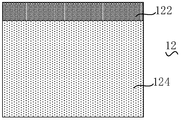
- the pixel array 12 includes a light sensitive region 122 and an imaging region 124.
- the light sensitive area 122 is used to detect the light intensity
- the imaging area 124 is used to acquire an image.
- the control circuit 14 is configured to receive a first command to control the light sensitive area 122 to detect the light intensity
- the control circuit 14 is configured to receive the second command to control the imaging area 124 to acquire an image
- the control circuit 14 can simultaneously receive the first instruction and the second instruction.
- the image sensor 10 of the embodiment of the present invention can be applied to the camera module 100 of the embodiment of the present invention.
- the camera module 100 includes an image sensor 10 and a filter 20.
- the filter 20 is disposed corresponding to the imaging area 124, and the light L passes through the filter 20 to reach the imaging area 124.
- the camera module 100 of the embodiment of the present invention can be applied to the electronic device 1000 of the embodiment of the present invention.
- the electronic device 1000 includes a camera module 100 and a processor 200.
- the processor 200 is coupled to a control circuit 14 for generating a first instruction and a second instruction.
- the electronic device 1000 further includes a display screen 300 for displaying data information such as video, images, text, icons, and the like.
- the control circuit 14 can realize the function of detecting the illumination intensity and acquiring the image by controlling one pixel array 12, thereby avoiding simultaneously setting one imaging element and one light sensing element, thereby reducing
- the number of components which in turn increases the proportion of space used to arrange the display screen 300, increases the screen ratio of the electronic device 1000.
- the filter 20 can be an RBG filter, and the RGB filters can be arranged in a Bayer array such that the light L passes through the filter 20 and then acquires a color image through the imaging region 124.
- the camera module 100 further includes a visible filter 30.
- the visible filter 30 is disposed corresponding to the photosensitive region 122.
- the light L passes through the visible filter 30 and reaches the photosensitive region 122.
- the visible light portion of the light L reaches the light sensing region 122, and the light sensing region 122 can be used to detect the light intensity of the visible light, and avoid the invisible light in the light L, such as infrared light or ultraviolet light. Interference.
- the electronic device 1000 includes a single camera module 100, and the single camera module 100 is a front camera module 100a.
- the front camera module 100a and the display screen 300 are disposed on the front side 400 of the electronic device 1000.
- the front camera module 100a can be used to simultaneously detect the light intensity of the front side 400 and acquire an image opposite to the front side 400.
- the electronic device 1000 includes two camera modules 100.
- the two camera modules 100 are a front camera module 100a and a rear camera module 100b, and a front camera module.
- 100a and display screen 300 are disposed on the front side 400 of the electronic device 1000.
- the rear camera module 100b is disposed on the back surface 500 of the electronic device 1000, and the back surface 500 is opposite to the front surface 400.
- the front camera module 100a can be used to simultaneously detect the illumination intensity of the front side 400 to obtain the front illumination intensity and to acquire an image that is opposite the front side 400.
- the rear camera module 100b can be used to simultaneously detect the illumination intensity of the back side 500 to obtain a rear illumination intensity and to acquire an image opposite the back side 500.
- the processor 200 is further configured to use the front light intensity detected from the front camera module 100a, and the rear light intensity detected by the rear camera module 100b is selected to be larger.
- the final light intensity Taking the electronic device 1000 as a mobile phone as an example, the user may have a large difference in the light intensity between the front side 400 and the back side 500 of the electronic device 1000 in use, for example, the user may place the mobile phone face down on the desktop, etc., if only based on the front
- the front light intensity detected by the camera module 100a controls the display brightness of the display screen 300. At this time, the display screen 300 may be in a state of not displaying or displaying a very low brightness.
- the electronic device 1000 When the user suddenly picks up the electronic device 1000 and uses it, The electronic device 1000 needs to re-awake the display screen 300 or increase the brightness of the display screen 300 in a short time. When the user frequently picks up and puts down, the electronic device 1000 needs to consume more power in order to control the switching of the brightness of the display screen 300. many.
- the electronic device 1000 of the embodiment of the present invention can simultaneously detect the rear light intensity. When the user places the mobile phone face down on the desktop, the brightness of the display screen 300 can be displayed according to the brightness of the rear light intensity within a certain time range, when the user When the electronic device 1000 is picked up again, the display screen 300 does not need to switch the display brightness, and is convenient to use and saves electric energy.
- the electronic device 1000 can control the display brightness of the display screen 300 according to a larger one of the front light intensity and the rear light intensity.
- the back surface 500 may face the light source of the ceiling (such as a chandelier) or the like, so that the rear light intensity is greater than the front light intensity, and the electronic device 1000 can adjust according to the rear light intensity.
- the display brightness of the display screen 300 is more conducive to the user to see the display content and reduce the eye fatigue of the user.
- the electronic device 1000 can be an electronic device 1000 such as a mobile phone, a tablet computer, or a smart watch.
- the embodiment of the present invention will be described by taking the electronic device 1000 as a mobile phone as an example.
- the illumination intensity obtained by the image sensor 10 can be used as a basis for adjusting the display brightness of the display screen 300 of the electronic device 1000. For example, when the illumination intensity is large, the display brightness of the display screen 300 is increased, or the illumination intensity changes from a large value to less than a certain threshold. It is judged that the user is answering the call and turns off the display screen 300.
- the image acquired by the image sensor 10 may be displayed on the display screen 300 or stored in a storage medium of the electronic device 1000 for reading or dumping.
- the processor 200 is configured to generate a first instruction and a second instruction. Further, the processor 200 transmits the first instruction and the second instruction to the control circuit 14. Specifically, the processor 200 may separately generate and transmit the first instruction, or separately generate or transmit the second instruction, or simultaneously generate and transmit the first instruction and the second instruction.
- the first instruction and the second instruction may be generated by the processor 200 when receiving the input operation, and the input operation may be an operation input by the user or an input of an application environment, for example, in the mobile phone of the embodiment of the present invention, the first instruction and the first instruction
- the second instruction may be generated after the processor 200 receives the operation of the user touching or pressing the specified function key on the mobile phone.
- the first instruction and the second instruction may also be generated after the processor 200 reaches the predetermined time point according to the system time of the mobile phone.
- the control circuit 14 is capable of simultaneously receiving the first command and the second command, that is, the control circuit 14 is capable of simultaneously controlling the light sensitive region 122 to detect the illumination intensity and control the imaging region 124 to acquire the image.
- the control circuit 14 can also be used to separately receive the first command to control the light sensitive region 122 to detect the light intensity, or to separately receive the second command to control the imaging region 124 to acquire the image.
- the light sensing region 122 and the imaging region 124 may both be in an inoperative state.
- the pixel array 12 is composed of a plurality of pixels arranged in an array.
- the pixels located in the light sensing area 122 are used to detect the light intensity, and the pixels located in the imaging area 124 are used to acquire images, and each pixel can be obtained according to the arrival.
- the light intensity of the light of the pixel produces a corresponding amount of power.
- the control circuit 14 is electrically connected to each pixel, and the control circuit 14 acquires the electric quantity generated by the corresponding pixel according to the received first instruction or the second instruction, and further analyzes the amount of the electric quantity by the processor 200 to obtain the illumination of the light reaching the pixel.
- the intensity, or further, is further analyzed by the processor 200 to analyze the illumination intensity of the light reaching the plurality of pixels to obtain an image.
- the ratio of the area of imaging region 124 to the area of pixel array 12 is greater than or equal to 0.6, and/or the ratio of the area of photosensitive region 122 to the area of pixel array 12 is greater than or equal to 0.1.
- the ratio of the area of the imaging area 124 to the area of the pixel array 12 may be 0.6, 0.7, 0.77, 0.8, 0.9, etc.
- the ratio of the area of the photosensitive area 122 to the area of the pixel array 12 may be 0.1, 0.2, 0.22. , 0.4, etc. In this way, the image sensor 10 is ensured to have a better imaging effect on the basis of the function of detecting the illumination intensity.
- the imaging zone 124 is continuously distributed and located at an intermediate position of the pixel array 12 , and the light sensing zone 122 is located at a peripheral location of the imaging zone 124 .
- the continuously distributed imaging zone 124 facilitates the formation of a continuous, complete image.
- the center of the imaging region 124 may coincide with the center of the pixel array 12, the imaging region 124 may be in a centrally symmetrical shape, and the light sensing region 122 may be located on one or more sides of the imaging region 124.
- the light-sensitive region 122 includes a plurality of sub-light-sensing regions 1221 having equal and spaced intervals.
- the illumination intensity finally detected by the light-sensing area 122 needs to comprehensively consider the illumination intensity detected by all the pixel points in the light-sensing area 122. Therefore, in order to obtain a more objective ambient light intensity, the light-sensitive area 122 can be dispersed as much as possible. That is, the photosensitive region 122 can be dispersed into a plurality of spaced sub-light sensing regions 1221.
- the plurality of sub-photosensitive regions 1221 are spaced apart to increase the detection range of the photosensitive region 122 while improving the accuracy of the detection of the photosensitive region 122.
- the number of sub-photosensitive regions 1221 is four, the ratio of the area of each sub-photosensitive region 1221 to the pixel array 12 may be 0.05, and the plurality of sub-photosensitive regions 1221 may be respectively distributed on the imaging region 124. Side, bottom, left and right.
- the specific number and location of the sub-photosensitive regions 1221 are not limited to the discussion of the above embodiments.
- the sub-light sensing region 1221 includes a left light sensing region 1222 and a right light sensing region 1223 .
- the left light sensing area 1222 is located on the left side of the imaging area 124
- the right light sensing area 1223 is located on the right side of the imaging area 124
- the left light sensing area 1222 and the right light sensing area 1223 are symmetrically distributed
- the left light sensing area 1222 detects the left light intensity, right.
- the light-sensing area 1223 detects the right light intensity
- the light-sensing area 122 detects the light intensity as the average of the left light intensity and the right light intensity.
- the left light sensing region 1222 and the right light sensing region 1223 have substantially the same effect on the light intensity ultimately detected by the light sensing region 122, and the light sensing region 122 is prevented from being too sensitive to light changes on the left or right side of the imaging region 124. The overall test results are inaccurate.
- the sub-photosensitive region 1221 includes a glare zone 1224 and a lower sensation zone 1225.
- the upper photosensitive region 1224 is located on the upper side of the imaging region 124
- the lower photosensitive region 1225 is located on the lower side of the imaging region 124
- the upper photosensitive region 1224 is symmetrically distributed with the lower photosensitive region 1225
- the upper photosensitive region 1224 detects the upper light intensity
- the light-sensing area 1225 detects the light intensity
- the light intensity detected by the light-sensitive area 122 is the average of the upper light intensity and the lower light intensity.
- the effects of the light-sensing region 1224 and the lower light-sensing region 1225 on the illumination intensity ultimately detected by the light-sensitive region 122 are substantially the same, and the light-sensitive region 122 is prevented from being too sensitive to light changes on the upper or lower side of the imaging region 124. The overall test results are inaccurate.
- the sub-light sensing region 1221 includes the left light sensing region 1222, the right light sensing region 1223, the upper light sensing region 1224, and the lower light sensing region 1225, and the left light sensing region 1222 and the right light sensing region. 1223 is symmetrically distributed, and the glazing area 1224 is symmetric with the lower light sensing area 1225.
- the left light sensing area 1222, the right light sensing area 1223, the upper light sensing area 1224 and the lower light sensing area 1225 are symmetrically distributed in the center, left.
- the light-sensing area 1222 detects the left light intensity
- the right light-sensitive area 1223 detects the right light intensity
- the upper light-sensing area 1224 detects the upper light intensity
- the lower light-sensitive area 1225 detects the lower light intensity
- the light-sensing area 122 detects the obtained light intensity.
- the light intensity is the mean of left light intensity, right light intensity, upper light intensity, and lower light intensity.
- the left light sensing region 1222, the right light sensing region 1223, the upper light sensing region 1224, and the lower light sensing region 1225 have substantially the same influence on the light intensity finally detected by the light sensing region 122, and the light sensing region 122 is prevented from being imaged.
- the light changes on the left, right, upper or lower side of 124 are too sensitive, resulting in inaccurate overall detection results.
- the above symmetric distribution refers to that both the area and the shape are symmetrically distributed and both are symmetric about the imaging area 124.
- the pixel array 12 is circular or elliptical, and the imaging area 124 is in a rectangular shape inscribed with the pixel array 12, and the circular or elliptical shape is removed from the inscribed rectangle.
- the area is the light sensitive area 122.
- the imaging region 124 is in the middle of the pixel array 12, and the image is easily acquired.
- the light-sensitive region 122 is relatively dispersed.
- the left side of the imaging region 124 is symmetric with the right-side light-sensing region 122, and the light-sensitive region 122 is opposite to the imaging region 124.
- the light changes on the left side and the right side are the same, while the upper side of the imaging area 124 is symmetrical with the light sensitive area 122 on the lower side, and the light sensitive area 122 is sensitive to the change of the light on the upper side and the lower side of the imaging area 124.
- the detection result of the light sensing area 122 is relatively accurate.
- the pixel array 12 has a rectangular shape
- the imaging area 124 has a circular or elliptical shape inscribed with a rectangle.
- the area except the inscribed circular or elliptical shape of the rectangle is the photosensitive area 122.
- the shape of the imaging area 124 is circular or elliptical, and the user can directly obtain a circular or elliptical picture through the imaging area 124, thereby eliminating the need for processing the photo in the later stage to meet the individual needs of the user.
- the light sensing area 122 is more dispersed, and the accuracy of the light intensity detected by the light sensing area 122 is improved.
- the imaging region 124 is at an intermediate position of the pixel array 12, and the image is easily acquired while being symmetric with the light sensing region 122 on the lower side of the imaging region 124, and the light sensing region 122 on the left and right sides of the imaging region 124. symmetry.
- the imaging regions 124 are continuously distributed, the light sensing regions 122 are continuously distributed, and the imaging regions 124 and the light sensing regions 122 are separated by a straight line.
- the structure of the pixel array 12 is simple, and the control circuit 14 can easily locate the pixels of the corresponding imaging area 124 or the light sensing area 122 after receiving the first instruction or the second instruction.
- the ratio of the area of the imaging region 124 to the area of the pixel array 12 is 0.8
- the ratio of the area of the photosensitive region 122 to the area of the pixel array 12 is 0.2.
- the imaging area 124 may be rectangular, such that the imaging area 124 acquires a rectangular image, and the light sensing area 122 may also be rectangular.
- the long side of the light sensing area 122 may intersect the long side of the imaging area 124 or the length of the photosensitive area 122.
- the edges intersect the short sides of the imaging zone 124.
- first and second are used for descriptive purposes only and are not to be construed as indicating or implying a relative importance or implicitly indicating the number of technical features indicated.
- features defining “first” or “second” may include at least one of the features, either explicitly or implicitly.
- the meaning of "a plurality” is at least two, such as two, three, etc., unless specifically defined otherwise.
- a "computer-readable medium” can be any apparatus that can contain, store, communicate, propagate, or transport a program for use in an instruction execution system, apparatus, or device, or in conjunction with such an instruction execution system, apparatus, or device.
- computer readable media include the following: electrical connections (electronic devices) having one or more wires, portable computer disk cartridges (magnetic devices), random access memory (RAM), Read only memory (ROM), erasable editable read only memory (EPROM or flash memory), fiber optic devices, and portable compact disk read only memory (CDROM).
- the computer readable medium may even be a paper or other suitable medium on which the program can be printed, as it may be optically scanned, for example by paper or other medium, followed by editing, interpretation or, if appropriate, other suitable The method is processed to obtain the program electronically and then stored in computer memory.
- portions of the invention may be implemented in hardware, software, firmware or a combination thereof.
- multiple steps or methods may be implemented in software or firmware stored in a memory and executed by a suitable instruction execution system.
- a suitable instruction execution system For example, if implemented in hardware, as in another embodiment, it can be implemented by any one or combination of the following techniques well known in the art: having logic gates for implementing logic functions on data signals. Discrete logic circuits, application specific integrated circuits with suitable combinational logic gates, programmable gate arrays (PGAs), field programmable gate arrays (FPGAs), etc.
- each functional unit in each embodiment of the present invention may be integrated into one processing module, or each unit may exist physically separately, or two or more units may be integrated into one module.
- the above integrated modules can be implemented in the form of hardware or in the form of software functional modules.
- the integrated modules, if implemented in the form of software functional modules and sold or used as stand-alone products, may also be stored in a computer readable storage medium.
- the above mentioned storage medium may be a read only memory, a magnetic disk or an optical disk or the like.
Landscapes
- Engineering & Computer Science (AREA)
- Signal Processing (AREA)
- Multimedia (AREA)
- Studio Devices (AREA)
Abstract
La présente invention concerne un capteur d'image (10), un module de caméra (100) et un dispositif électronique (1000). Le capteur d'image (10) comprend une matrice de pixels (12) et un circuit de commande (14). La matrice de pixels (12) comprend une zone de détection de lumière (122) et une zone d'imagerie (124).
La zone de détection de lumière (122) est configurée pour détecter une intensité d'éclairage, et la zone d'imagerie (124) est configurée pour acquérir une image. Le circuit de commande (14) est configuré pour commander, lors de la réception d'une première instruction, à la zone de détection de lumière (122) de détecter une intensité d'éclairage, et pour commander, lors de la réception d'une seconde instruction, à la zone d'imagerie (124) d'acquérir une image.
Le circuit de commande (14) peut recevoir la première instruction et la seconde instruction en même temps.
Priority Applications (2)
| Application Number | Priority Date | Filing Date | Title |
|---|---|---|---|
| EP18793991.3A EP3606028B1 (fr) | 2017-05-03 | 2018-04-13 | Capteur d'image, module de caméra et dispositif électronique |
| US16/603,766 US11310434B2 (en) | 2017-05-03 | 2018-04-13 | Image sensor for camera module of electronic device having a pixel array with an imaging area and a light sensing area |
Applications Claiming Priority (2)
| Application Number | Priority Date | Filing Date | Title |
|---|---|---|---|
| CN201710305890.0A CN107222591B (zh) | 2017-05-03 | 2017-05-03 | 影像传感器、相机模组和电子装置 |
| CN201710305890.0 | 2017-05-03 |
Publications (1)
| Publication Number | Publication Date |
|---|---|
| WO2018201876A1 true WO2018201876A1 (fr) | 2018-11-08 |
Family
ID=59944718
Family Applications (1)
| Application Number | Title | Priority Date | Filing Date |
|---|---|---|---|
| PCT/CN2018/083046 Ceased WO2018201876A1 (fr) | 2017-05-03 | 2018-04-13 | Capteur d'image, module de caméra et dispositif électronique |
Country Status (4)
| Country | Link |
|---|---|
| US (1) | US11310434B2 (fr) |
| EP (1) | EP3606028B1 (fr) |
| CN (1) | CN107222591B (fr) |
| WO (1) | WO2018201876A1 (fr) |
Cited By (1)
| Publication number | Priority date | Publication date | Assignee | Title |
|---|---|---|---|---|
| CN117373402A (zh) * | 2023-12-08 | 2024-01-09 | 深圳市华远显示器件有限公司 | 一种控制液晶显示屏显示方法及系统 |
Families Citing this family (8)
| Publication number | Priority date | Publication date | Assignee | Title |
|---|---|---|---|---|
| CN107249109B (zh) * | 2017-05-03 | 2021-02-05 | Oppo广东移动通信有限公司 | 影像传感器、相机模组和电子装置 |
| CN107222591B (zh) * | 2017-05-03 | 2021-02-05 | Oppo广东移动通信有限公司 | 影像传感器、相机模组和电子装置 |
| CN107426471B (zh) | 2017-05-03 | 2021-02-05 | Oppo广东移动通信有限公司 | 相机模组和电子装置 |
| US10983652B2 (en) * | 2018-04-13 | 2021-04-20 | Samsung Electronics Co., Ltd. | Display having opaque member disposed in area surrounded by pixels and electronic apparatus having the same |
| CN108600537A (zh) * | 2018-04-23 | 2018-09-28 | Oppo广东移动通信有限公司 | 接近传感器、人体遮挡判断方法、电子装置及可读存储介质 |
| CN109543558B (zh) * | 2018-10-30 | 2023-12-26 | Oppo广东移动通信有限公司 | 指纹图像处理方法及相关产品 |
| CN114125240A (zh) * | 2021-11-30 | 2022-03-01 | 维沃移动通信有限公司 | 图像传感器、摄像模组、电子设备及拍摄方法 |
| US12464207B2 (en) * | 2022-12-28 | 2025-11-04 | Motorola Solutions, Inc. | Image sensor with an integrated infrared cut-off filter |
Citations (8)
| Publication number | Priority date | Publication date | Assignee | Title |
|---|---|---|---|---|
| US20080316330A1 (en) * | 2007-06-22 | 2008-12-25 | Canon Kabushiki Kaisha | Image sensing apparatus and control method for same, and image sensing system |
| CN103973945A (zh) * | 2013-01-25 | 2014-08-06 | 三星电机株式会社 | 照相机模块 |
| CN104486987A (zh) * | 2012-07-26 | 2015-04-01 | 橄榄医疗公司 | 具有最小面积单片式cmos图像传感器的相机系统 |
| CN104519327A (zh) * | 2013-10-07 | 2015-04-15 | 联咏科技股份有限公司 | 图像传感器及图像采集系统 |
| CN107222591A (zh) * | 2017-05-03 | 2017-09-29 | 广东欧珀移动通信有限公司 | 影像传感器、相机模组和电子装置 |
| CN107249109A (zh) * | 2017-05-03 | 2017-10-13 | 广东欧珀移动通信有限公司 | 影像传感器、相机模组和电子装置 |
| CN107426471A (zh) * | 2017-05-03 | 2017-12-01 | 广东欧珀移动通信有限公司 | 相机模组和电子装置 |
| CN107426470A (zh) * | 2017-05-03 | 2017-12-01 | 广东欧珀移动通信有限公司 | 相机模组和电子装置 |
Family Cites Families (9)
| Publication number | Priority date | Publication date | Assignee | Title |
|---|---|---|---|---|
| CA2330433A1 (fr) * | 2000-01-21 | 2001-07-21 | Symagery Microsystems Inc. | Determination intelligente de l'exposition pour imageurs |
| US20080122821A1 (en) * | 2006-11-24 | 2008-05-29 | Sony Ericsson Mobile Communications Ab | Luminance control for a display |
| EP2472853A1 (fr) * | 2011-01-03 | 2012-07-04 | STMicroelectronics (Grenoble 2) SAS | Dispositif d'imagerie doté d'un moyen de détection de lumière ambiante |
| CN102595030A (zh) * | 2011-01-12 | 2012-07-18 | 英属开曼群岛商恒景科技股份有限公司 | 具环境光感测的数字摄像装置 |
| US8735795B2 (en) * | 2012-01-20 | 2014-05-27 | Omnivision Technologies, Inc. | Image sensor with integrated ambient light detection |
| CN202798942U (zh) * | 2012-08-09 | 2013-03-13 | 广东欧珀移动通信有限公司 | 图像传感器及应用该图像传感器的摄像头和电子产品 |
| US20140168372A1 (en) * | 2012-12-17 | 2014-06-19 | Eminent Electronic Technology Corp. Ltd. | Sensing apparatus and sensing method for generating three-dimensional image information |
| US9277144B2 (en) * | 2014-03-12 | 2016-03-01 | Apple Inc. | System and method for estimating an ambient light condition using an image sensor and field-of-view compensation |
| US9692968B2 (en) * | 2014-07-31 | 2017-06-27 | Invisage Technologies, Inc. | Multi-mode power-efficient light and gesture sensing in image sensors |
-
2017
- 2017-05-03 CN CN201710305890.0A patent/CN107222591B/zh active Active
-
2018
- 2018-04-13 EP EP18793991.3A patent/EP3606028B1/fr active Active
- 2018-04-13 WO PCT/CN2018/083046 patent/WO2018201876A1/fr not_active Ceased
- 2018-04-13 US US16/603,766 patent/US11310434B2/en active Active
Patent Citations (8)
| Publication number | Priority date | Publication date | Assignee | Title |
|---|---|---|---|---|
| US20080316330A1 (en) * | 2007-06-22 | 2008-12-25 | Canon Kabushiki Kaisha | Image sensing apparatus and control method for same, and image sensing system |
| CN104486987A (zh) * | 2012-07-26 | 2015-04-01 | 橄榄医疗公司 | 具有最小面积单片式cmos图像传感器的相机系统 |
| CN103973945A (zh) * | 2013-01-25 | 2014-08-06 | 三星电机株式会社 | 照相机模块 |
| CN104519327A (zh) * | 2013-10-07 | 2015-04-15 | 联咏科技股份有限公司 | 图像传感器及图像采集系统 |
| CN107222591A (zh) * | 2017-05-03 | 2017-09-29 | 广东欧珀移动通信有限公司 | 影像传感器、相机模组和电子装置 |
| CN107249109A (zh) * | 2017-05-03 | 2017-10-13 | 广东欧珀移动通信有限公司 | 影像传感器、相机模组和电子装置 |
| CN107426471A (zh) * | 2017-05-03 | 2017-12-01 | 广东欧珀移动通信有限公司 | 相机模组和电子装置 |
| CN107426470A (zh) * | 2017-05-03 | 2017-12-01 | 广东欧珀移动通信有限公司 | 相机模组和电子装置 |
Non-Patent Citations (1)
| Title |
|---|
| See also references of EP3606028A4 |
Cited By (2)
| Publication number | Priority date | Publication date | Assignee | Title |
|---|---|---|---|---|
| CN117373402A (zh) * | 2023-12-08 | 2024-01-09 | 深圳市华远显示器件有限公司 | 一种控制液晶显示屏显示方法及系统 |
| CN117373402B (zh) * | 2023-12-08 | 2024-02-20 | 深圳市华远显示器件有限公司 | 一种控制液晶显示屏显示方法及系统 |
Also Published As
| Publication number | Publication date |
|---|---|
| US20210099629A1 (en) | 2021-04-01 |
| EP3606028A1 (fr) | 2020-02-05 |
| US11310434B2 (en) | 2022-04-19 |
| EP3606028B1 (fr) | 2022-06-29 |
| CN107222591B (zh) | 2021-02-05 |
| EP3606028A4 (fr) | 2020-03-25 |
| CN107222591A (zh) | 2017-09-29 |
Similar Documents
| Publication | Publication Date | Title |
|---|---|---|
| WO2018201876A1 (fr) | Capteur d'image, module de caméra et dispositif électronique | |
| AU2018263021B2 (en) | Camera assembly and mobile electronic device | |
| WO2018201875A1 (fr) | Capteur d'image, module de caméra, et dispositif électronique | |
| AU2018263022B2 (en) | Camera assembly and mobile electronic device | |
| JP6801114B2 (ja) | カメラアセンブリ及び携帯電子機器 | |
| CN107135341B (zh) | 影像传感器、相机模组及电子装置 | |
| CN106155693A (zh) | 控制方法及控制装置 | |
| CN106201254A (zh) | 控制方法、控制装置及电子装置 | |
| HK1244139A1 (zh) | 相机模组及电子装置 | |
| HK1244140B (zh) | 相机模组及电子装置 |
Legal Events
| Date | Code | Title | Description |
|---|---|---|---|
| 121 | Ep: the epo has been informed by wipo that ep was designated in this application |
Ref document number: 18793991 Country of ref document: EP Kind code of ref document: A1 |
|
| NENP | Non-entry into the national phase |
Ref country code: DE |
|
| ENP | Entry into the national phase |
Ref document number: 2018793991 Country of ref document: EP Effective date: 20191030 |