WO2019031475A1 - 醸造酒の減圧蒸留方法及び熟成方法、並びにアルコール飲料 - Google Patents
醸造酒の減圧蒸留方法及び熟成方法、並びにアルコール飲料 Download PDFInfo
- Publication number
- WO2019031475A1 WO2019031475A1 PCT/JP2018/029524 JP2018029524W WO2019031475A1 WO 2019031475 A1 WO2019031475 A1 WO 2019031475A1 JP 2018029524 W JP2018029524 W JP 2018029524W WO 2019031475 A1 WO2019031475 A1 WO 2019031475A1
- Authority
- WO
- WIPO (PCT)
- Prior art keywords
- sake
- liquor
- brewed
- brewed liquor
- alcohol
- Prior art date
- Legal status (The legal status is an assumption and is not a legal conclusion. Google has not performed a legal analysis and makes no representation as to the accuracy of the status listed.)
- Ceased
Links
Images

Classifications
-
- C—CHEMISTRY; METALLURGY
- C12—BIOCHEMISTRY; BEER; SPIRITS; WINE; VINEGAR; MICROBIOLOGY; ENZYMOLOGY; MUTATION OR GENETIC ENGINEERING
- C12H—PASTEURISATION, STERILISATION, PRESERVATION, PURIFICATION, CLARIFICATION OR AGEING OF ALCOHOLIC BEVERAGES; METHODS FOR ALTERING THE ALCOHOL CONTENT OF FERMENTED SOLUTIONS OR ALCOHOLIC BEVERAGES
- C12H6/00—Methods for increasing the alcohol content of fermented solutions or alcoholic beverages
- C12H6/02—Methods for increasing the alcohol content of fermented solutions or alcoholic beverages by distillation
-
- C—CHEMISTRY; METALLURGY
- C12—BIOCHEMISTRY; BEER; SPIRITS; WINE; VINEGAR; MICROBIOLOGY; ENZYMOLOGY; MUTATION OR GENETIC ENGINEERING
- C12G—WINE; PREPARATION THEREOF; ALCOHOLIC BEVERAGES; PREPARATION OF ALCOHOLIC BEVERAGES NOT PROVIDED FOR IN SUBCLASSES C12C OR C12H
- C12G3/00—Preparation of other alcoholic beverages
- C12G3/02—Preparation of other alcoholic beverages by fermentation
- C12G3/021—Preparation of other alcoholic beverages by fermentation of botanical family Poaceae, e.g. wheat, millet, sorghum, barley, rye, or corn
- C12G3/022—Preparation of other alcoholic beverages by fermentation of botanical family Poaceae, e.g. wheat, millet, sorghum, barley, rye, or corn of botanical genus Oryza, e.g. rice
-
- C—CHEMISTRY; METALLURGY
- C12—BIOCHEMISTRY; BEER; SPIRITS; WINE; VINEGAR; MICROBIOLOGY; ENZYMOLOGY; MUTATION OR GENETIC ENGINEERING
- C12H—PASTEURISATION, STERILISATION, PRESERVATION, PURIFICATION, CLARIFICATION OR AGEING OF ALCOHOLIC BEVERAGES; METHODS FOR ALTERING THE ALCOHOL CONTENT OF FERMENTED SOLUTIONS OR ALCOHOLIC BEVERAGES
- C12H1/00—Pasteurisation, sterilisation, preservation, purification, clarification, or ageing of alcoholic beverages
- C12H1/22—Ageing or ripening by storing, e.g. lagering of beer
Definitions
- the present invention relates to a method for vacuum distillation of brewed wine manufactured in advance, in particular, to a method for vacuum distillation of brewed wine capable of increasing the alcohol concentration without losing its aroma and taste, a method for aging the brewed liquor, and decompressing the brewed liquor. It relates to an alcoholic beverage obtained by distillation.
- Non-patent Document 1 Non-patent Document 1
- Sake which is a type of brewed sake, is an alcoholic beverage that produces alcohol or umami or flavor by fermentation, but there is a limit to raising the alcohol concentration only by fermentation.
- Patent Document 1 describes a technology for enhancing umami components in alcoholic beverages such as sake at low temperatures using a zeolite membrane.
- Patent No. 6105923 gazette
- the present invention has been made in view of the above problems, and the object of the present invention is to increase the alcohol concentration without impairing the smell or taste in sake, particularly in pre-made brews such as sake. It is an object of the present invention to provide a method for vacuum distillation of brewed liquor, a method for aging brewed liquor, and an alcoholic beverage obtained by vacuum distillation of the previously prepared brewed liquor, which can be aged for a long time.
- the present inventors have made alcoholic beverages which are excellent in aroma and taste and can be aged for a long time by vacuum distillation of sake, which is brewed sake, using a vacuum drying apparatus at low temperatures. It has been found that it is possible to obtain the present invention.
- the subject is a method for vacuum distillation of brewed liquor prepared in advance, which comprises: producing alcohol vapor from the brewed liquor at a temperature of 55 ° C. or less by reducing the pressure of the brewed liquor. And a condensing step of cooling the vapor generated in the alcohol vapor generation step to generate a condensate, and a recovery step of recovering the condensate generated in the condensation step.
- the reduced-pressure distillation method of the present invention has the advantage of using less energy and requiring a shorter time as compared to the conventional method of increasing the alcohol concentration.
- the pressure it is preferable to reduce the pressure to -85 kPa or less in the alcohol vapor generation step.
- By reducing the pressure to ⁇ 85 kPa or less it is possible to generate a brew-derived steam at a low temperature, and therefore it is possible to increase the alcohol concentration in a short time and in a short time without losing the aroma or taste.
- the condensation step may be performed by cooling the vapor to 15 ° C. or more and 30 ° C. or less.
- the condensation of the vapor can be reliably performed, and further pressure reduction can be generated as the volume decreases due to the condensation of the vapor. it can.
- the brewed sake is sake, and it is more preferable that the sake is sake.
- Sake, especially sake is produced by fermentation, so it has a low alcohol concentration, but according to the reduced-pressure distillation method of brewed sake of the present invention, it is processed at low temperature under reduced pressure, so the alcohol does not lose its aroma or taste. The concentration can be increased.
- the sake is pure rice wine. Brewing alcohol is not likely to change with age, and the feeling of irritation remains even after time passes. When pure rice liquor is used, the effect of improving the aroma and taste by ripening is greater than in pure sake added with brewer's alcohol.
- the above-mentioned subject is solved by the aging method of brewed sake, further comprising a ripening step of ripening the condensate obtained in the method of vacuum distillation of brewed sake for one year or more.
- Ru a ripening step of ripening the condensate obtained in the method of vacuum distillation of brewed sake for one year or more.
- an alcoholic beverage characterized in that it is obtained by distillation under a reduced pressure of -85 kPa or less and at a temperature of 55 ° C. or less.
- An alcoholic beverage obtained by decompressing a previously prepared brewed liquor and distilling at a low temperature of 55 ° C. or less has the advantage that the aroma and taste are improved without the aroma and taste being lost. .
- the method for vacuum distillation of brewed wine according to the present invention has the advantage of using less energy and requiring a shorter time as compared to the conventional method of increasing the alcohol concentration.
- the condensed liquid of a brewed liquor such as sake obtained by the vacuum distillation method of the brewed wine according to the present invention can improve its aroma and taste by aging for a long time because the alcohol concentration is increased. is there.
- the alcoholic beverage obtained by decompressing the previously produced sake and distilling it at a low temperature of 55 ° C. or less has an advantage that the aroma and taste are improved without losing the aroma and taste.
- the present invention relates to a method for vacuum distillation of brewed liquor, a method for aging brewed liquor, and an alcoholic beverage obtained by vacuum distillation of brewed liquor.
- a method for vacuum distillation of brewed liquor according to an embodiment of the present invention (hereinafter, referred to as the present embodiment) will be described with reference to FIGS. 1 and 2.
- an apparatus to be used is not limited to a specific apparatus.
- examples of the pre-produced brewed liquor to be subjected to the reduced pressure distillation include brewed liquor, mixed liquor using the brewed liquor, and the like. It is preferable to use, as a target of reduced-pressure distillation, brewer's liquor whose aroma and taste are lost by heating, in particular sake and sake, but it is not limited thereto.
- Brewing liquor is an alcoholic beverage produced by fermenting the raw material as it is or after saccharifying the raw material. Brewing liquor is roughly divided into mono-fermented liquor and double-fermented liquor. Examples of the single-fermented liquor include, but are not limited to, wines made from fruits containing sugar and the like as raw materials, ciders and the like. In the case of double-fermented liquor, when the raw material is cereals such as rice and wheat, starch contained in the raw material grain etc. may be saccharified and then alcohol-fermented beer or sake may be mentioned, but it is not limited thereto. . In the reduced pressure distillation method of a brewed liquor according to the present embodiment, the brewed liquor to be subjected to the reduced pressure distillation is preferably sake, particularly preferably sake.
- Sake is a generic term for brewed sake made from rice, and includes sake, sake, sake, moromi shu and so on.
- Sake refers to sake, which is rice, rice bran, liquor that is fermented using water as a raw material and filtered (except turbid sake, turbid sake, moromi shu). Furthermore, in the Japanese liquor tax law, sake is defined as "fermented and fermented using rice, rice bran and water as raw materials" and having an alcohol content of less than 22 degrees.
- the raw material and manufacturing method meet a fixed standard, and the specific name sake which displayed specific names, such as Ginjo sake, pure rice liquor, this brewing liquor, is mentioned.
- "Ginjo sake” refers to refined sake manufactured by examining white rice, rice koji and water at a rice content of 60% or less, or these and brewed alcohol as raw materials and having a good intrinsic flavor and color sore.
- the term "pure rice sake” refers to sake produced with white rice, rice koji and water as its raw material and having good flavor and color, and pure rice wine, pure rice ginjo liquor, pure rice dainjyo wine in Table 1 below. Special 4 types of pure rice wine.
- This brewed liquor is a sake produced with white rice, rice koji, brewed alcohol and water as raw materials having a rice content of 70% or less, and having a good flavor and color.
- the amount of brewing alcohol used as the sake to be subjected to vacuum distillation is 50% or less of the weight of the raw material rice (including rice used for rice koji) It is preferable that the sake is sake, and it is more preferable that the amount of brewing alcohol used is 10/100 or less of the weight of the raw material rice (including rice used for rice koji), and that the sake not using the brewer alcohol, Particularly preferred is pure rice wine.
- Brewing alcohol is hard to change with age, and it remains irritating over time, so it is not possible to achieve good ripening. Therefore, when the sake is aged after being subjected to vacuum distillation, when the sake is pure rice liquor, the effect of improving the aroma and taste thereof is greater than that of sake added with a brewer's alcohol.
- Wine wine liquor, wine
- wine is a kind of fruit liquor, which is obtained by fermenting grape juice by the action of yeast and storing it in barrels or bottles as necessary.
- wines to be subjected to reduced-pressure distillation are red wine, white wine, rose wine, and the like, but are not limited thereto.
- a mixed liquor is an alcoholic beverage which uses ingredients such as plant skins and fruits, herbs, herbs, spices, sweeteners, flavors and the like from brewing liquor and distilled liquor as raw materials.
- the mixed liquor to be subjected to reduced-pressure distillation is, for example, vermot made from brewed liquor, but is not limited thereto.
- FIG. 1 is a schematic explanatory drawing which shows the structure of the vacuum-drying apparatus D which can be used by the reduced-pressure distillation method of the brewed liquor which concerns on this embodiment.
- the vacuum drying apparatus D mainly includes a container 10 for containing the object to be treated, a condenser 20 for cooling the vapor emitted from the container 10, and an ejector 30 as a pressure reducing means for reducing the pressure in the container 10.
- the vessel 10 is provided with a steam chamber 11 for heating the vessel 10 by supplying steam from a steam boiler (not shown), which is a heating means of steam, around the lower part thereof.
- a discharge pipe 12 connected to a discharge port for taking out the processed object is provided, and a discharge valve 13 for discharging the dried object to a discharge box 14 is provided.
- a stirring blade 15 for stirring an object to be treated, and on the upper part of the container 10 is provided an inlet 16 having a lid that can be opened and closed. 16 into the container 10.
- An exhaust port 17 for the vapor sucked by the ejector 30 is provided on the upper side surface of the container 10, and an exhaust pipe 18 connected to the cooling pipe 21 in the condenser 20 is connected to the exhaust port 17.
- the condenser 20 cools and condenses the steam passing through the cooling pipe 21 by the cooling water sent from the cooling unit 22 through the feed water pipe 23.
- the condenser 20 is connected with a drainage pipe 24 for discharging the cooling water flowing from the water supply pipe 23.
- the set temperature of the cooling water circulated through the cooling unit 22 and the water supply pipe 23 is set to be 5 ° C. or more lower than the evaporation temperature, and is set to, for example, 20 ° C. or more and 30 ° C. or less.
- the amount of cooling water depends on the throughput, that is, the amount of steam generated in the vessel 10.
- the fluid inlet 30 a of the ejector 30 is connected to the water tank 34 via a water supply pipe 32 provided with a pump 31, and a silencer (not shown) is attached to the end of the drainage pipe 33 of the ejector 30. It is submerged and installed in the water.
- the fluid suction port 30 b of the ejector 30 is connected to the cooling pipe 21 of the condenser 20 via a pipe 40. Further, to a portion of the pipe 40 between the vacuum valve 44 and the condenser 20, a condensate recovery pipe 41 having a recovery valve 42 for recovering the condensate is connected.
- the operation of the vacuum drying device D is performed as follows. Cooling water is supplied to the condenser 20 from the cooling unit 22 at the start of work. Further, the water tank 34 is filled with water to a predetermined water level. First, an object to be treated is put into the container 10 through the inlet 16 and the lid is closed. When the start switch (not shown) is turned on, the drive mechanism (not shown) is activated to rotate the stirring blade 15, thereby stirring the object in the container 10. At the same time as stirring, heating is performed by supplying heating steam from the steam boiler (not shown) into the steam chamber 11. The heat applied to the container 10 is transferred to the object to be treated, and the object to be treated is agitated by the stirring blade 15 to be effectively transferred to the entire object to promote the generation of steam.
- the pump 31 for the ejector 30 is driven, jet water is ejected in the ejector 30, and the jet water is silently discharged to the water in the water tank 34 through the drainage pipe 33.
- the fluid suction port 30 b of the ejector 30 exerts a fluid suction force.
- the vacuum valve 44 is opened, the suction force acting on the fluid suction port 30b of the ejector 30 acts on the inside of the container 10 through the exhaust pipe 18, the cooling pipe 21 and the pipe 40, so the vapor and air in the container 10 It is sucked.
- the pressure in the container 10 can be reduced from atmospheric pressure to, for example, 20 to 40 Torr (-98.6 kPa to -96.0 kPa).
- the water contained in the object to be processed in the container 10 and the liquid such as ethanol are evaporated even at a low temperature.
- the boiling point of the moisture of the object in the container 10 is about 25 ° C.
- the boiling point of ethanol is about 10 ° C. Therefore, when heating under reduced pressure, evaporation of water and ethanol contained in the object in the container 10 starts.
- the vapor generated by the evaporation of water and ethanol is drawn into the ejector 30 by the suction force acting on the fluid suction port 30b of the ejector 30, so evaporation of the water and ethanol contained in the object in the container 10 continues. It will be.
- the condenser 20 In the condenser 20, all or a part of the vapor generated by evaporation of water and ethanol contained in the object in the container 10 is transferred from the cooling unit 22 through the water supply pipe 23 to the cooling medium and circulated with the cooling medium. Exchange takes place and cools rapidly and condenses to liquid.
- the collection valve 42 When the collection valve 42 is opened after the flow of the condensate from the condenser 20 is started, the suction force generated by the ejector 30 is accumulated in the condensate collection tank 43 from the condensate collection piping 41 through the piping 40.
- the water vapor of the object to be treated evaporates and the generated vapor can be returned to water and recovered without being diffused into the atmosphere.
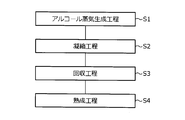
- the reduced-pressure distillation method of a brewed wine according to the present embodiment includes the step of producing an alcohol vapor from the brewed liquor by reducing the pressure of the previously produced brewed liquor at a temperature of 55 ° C. or less, and producing the alcohol vapor-producing step. And a recovery step of recovering the condensate produced in the condensation step.
- the reduced-pressure distillation method of a brewed wine according to the present embodiment includes the step of producing an alcohol vapor from the brewed liquor by reducing the pressure of the previously produced brewed liquor at a temperature of 55 ° C. or less, and producing the alcohol vapor-producing step. And a recovery step of recovering the condensate produced in the condensation step.
- the brewed liquor produced in advance is depressurized, and a brewed liquor-derived vapor is produced at a temperature of 55 ° C. or less (step S1).
- the pressure of reduced pressure is preferably -85 kPa or less, more preferably -90 kPa or less, still more preferably -92 kPa or less, and particularly preferably -95 kPa or less. Absent.
- the lower the depressurization pressure the lower the temperature at which brew-derived vapor is produced.
- the pressure is usually reduced to -101.3 kPa or more which is an absolute vacuum.
- the expression of pressure is described by a gauge pressure where atmospheric pressure is zero. That is, -85 kPa means that the pressure is 85 kPa lower than 101.3 kPa (one atmospheric pressure).
- the pressure reduction is preferably performed using an ejector that requires less energy.
- Latent heat is required to evaporate the liquid to a gas. Because the latent heat of water vapor has more energy than the sensible heat of warm water, when giving the latent heat to the brewed wine using water vapor at 100 ° C to 105 ° C, the sensible heat was given to the brewed water using hot water at 45 to 60 ° C The processing time can be shorter than in the case.
- the evaporation temperature of ethanol which is an alcohol component contained in the brewed liquor is determined by the degree of vacuum (degree of vacuum). It is preferable that the pressure and temperature which process the brewing liquor manufactured beforehand in the alcohol vapor production process be the pressure and temperature which can control the quality change of the ingredient contained in brewing liquor, and can carry out distillation fractionation of the alcohol ingredient.
- the pressure and temperature conditions may be from -98 kPa to -85 kPa and from 20 ° C. to 55 ° C., preferably from -98 kPa to -92 kPa and from 25 ° C. to 45 ° C., more preferably from -98 kPa to -94 kPa And 30 ° C. or more and 40 ° C. or less, particularly preferably ⁇ 98 kPa and 35 ° C.
- the brewed liquor generates steam derived from the brewed liquor.
- the vapor contains, as a main component, an alcohol component that is more easily evaporated than water, and also contains components of umami and aroma that are soluble in the alcohol component.
- the condensation step the vapor generated in the alcohol vapor generation step is cooled to form a condensate (step S2).
- the steam derived from the brewed liquor generated in the alcohol vapor producing step is transferred using a reduced pressure, and is condensed by cooling to a temperature lower than the temperature of the steam.
- the cooling temperature at the time of condensing the steam is 5 ° C. or more lower than the evaporation temperature of the brew-derived steam, preferably 10 ° C. or more and 35 ° C. or less, more preferably 15 ° C. or more and 30 ° C. or less, particularly preferably Although it is 15 ° C or more and 25 ° C or less, it is not limited to these temperature ranges.
- the condensation efficiency of the steam is unfavorably poor.
- the cooling temperature is low, the condensation efficiency of the steam is improved, but the energy required for cooling is increased, which is not preferable.
- the condensate generated in the condensation step is recovered (step S3). Specifically, the condensate produced by the cooling in the condensation step is moved using reduced pressure, and recovered using a container such as a recovery tank. The condensate recovered in the recovery step has a higher alcohol concentration than the original brewed liquor.
- the reduced-pressure distillation method according to the present embodiment can separate and recover the alcohol component under low temperature and in a closed condition with less oxygen, so it is possible to suppress deterioration, degeneration or decomposition of components contained in the wine. .
- a vacuum drying apparatus manufactured by F.E.C., trade name "vacuum dryer FED-50" as shown in FIG. 1 is used as a vacuum distillation apparatus. Is preferred.
- the vacuum drying apparatus D shown in FIG. 1 can carry out vacuum distillation of the brewed liquor inside, keeping the inside of the container 10 low temperature (for example, 20 degreeC or more and 55 degrees C or less). Therefore, denaturation and decomposition of the aroma component and the like contained in the brewed liquor are suppressed, and the alcohol concentration can be increased while retaining the aroma component of the brewed liquor.
- Vacuum-drying apparatus D which is an example of the decompression drying apparatus of the brewed liquor which concerns on this embodiment can be set as an apparatus structure of a comparatively small scale. Therefore, the vacuum drying apparatus D may be attached to and installed in a sake brewer producing sake, and a novel alcoholic beverage having an increased alcohol concentration can be produced using sake manufactured in the sake brewer.
- the time required for the vacuum distillation process varies depending on the apparatus used for the vacuum distillation and the amount and type of liquor to be treated, but usually, it is preferably about 2 to 6 hours with 50 to 3000 liters of treatment . It corresponds to 25 to 500 L / hour when converted to the processing speed of brewed liquor.
- the condensed liquid (distilled fraction) obtained by the reduced-pressure distillation method of the brewed wine according to the present embodiment has the alcohol concentration increased by being reduced-pressure distillation at a low temperature, and the aroma and taste are not impaired. It can be used as brewed liquor.
- the ripening method of the brewed liquor according to the present embodiment is a ripening step (step S4 of FIG. 2) in which the condensate obtained in the above-described vacuum distillation method of brewed liquor (steps S1 to S3 of FIG. 2) And the like.
- the period of ripening is preferably 1 year or more, more preferably 2 years or more, further preferably 3 years or more, particularly preferably 5 years or more, but is not limited to these periods.
- the period of ripening is preferably 1 year or more, more preferably 2 years or more, further preferably 3 years or more, particularly preferably 5 years or more, but is not limited to these periods.
- Example 1 A vacuum dryer (manufactured by F.E.C., trade name "vacuum dryer FED-50”) was used as a vacuum distillation apparatus. Into the vessel was charged 10 L of previously produced sake, and the pressure was reduced to -98 kPa, and distillation under reduced pressure was performed for 30 minutes at a temperature in the vessel of 35 ° C. The condensate collected was 2 L, and 8 L of liquid remained in the container. The collected condensate (alcohol beverage having an alcohol content of about 50 degrees) was subjected to the evaluation.
- Example 2 The condensate of Example 1 was stored and aged at 20 ° C. for 12 months. The condensate after ripening (alcoholic beverage after ripening) was subjected to evaluation.
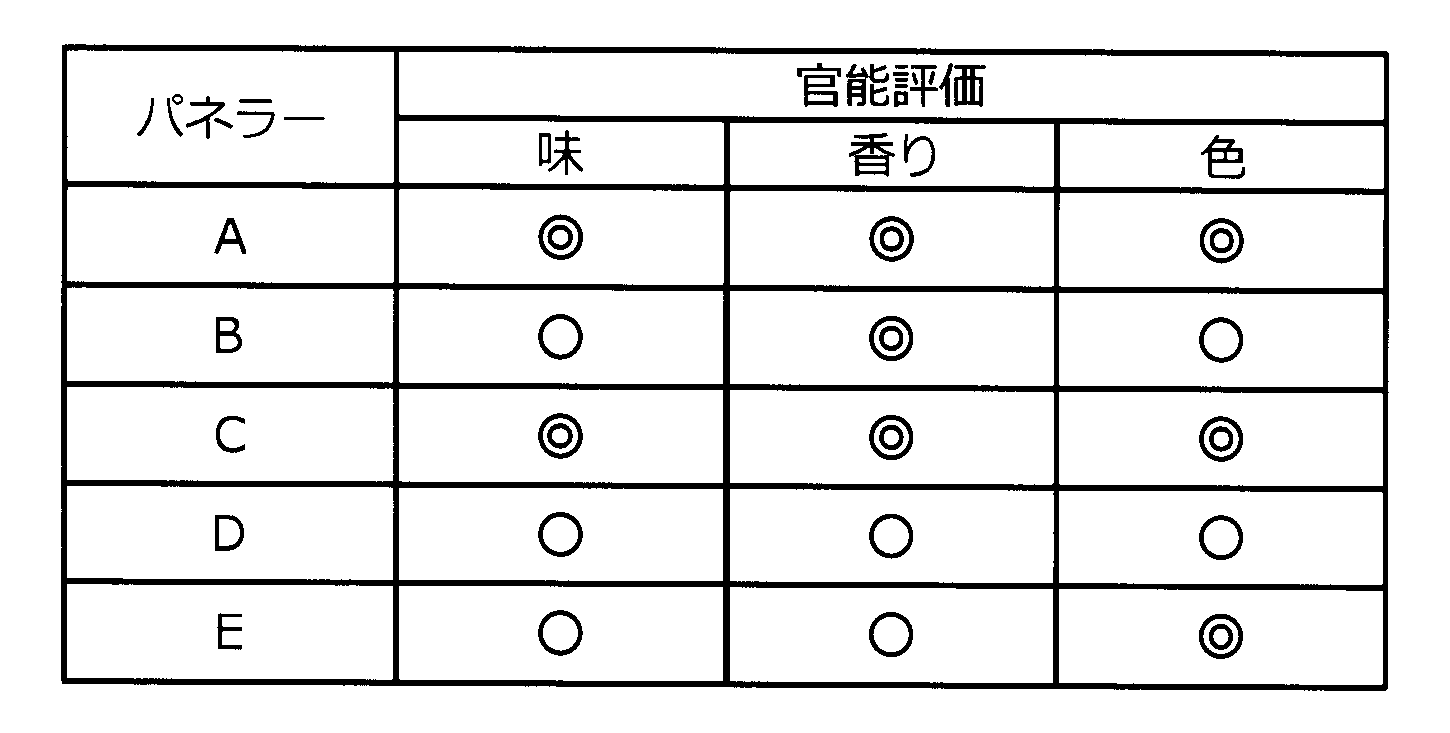
- ⁇ Test 1 Sensory Evaluation of the Alcoholic Beverage of Example 1> About the item of "a taste, a color, an aroma" of the alcoholic beverage (recovered condensate) of Example 1 obtained by vacuum distillation, sensory evaluation by five panelists was performed. The results are shown in Table 2. In the table, ⁇ is extremely good, ⁇ is good, ⁇ is normal, and x is somewhat poor.
- ⁇ Test 2 Sensory Evaluation of the Alcoholic Beverage of Example 2> After the distillation under reduced pressure, sensory evaluation was performed by a panel of five persons in the same manner as in Test 1 with respect to the aged alcoholic beverage of Example 2 (a product obtained by ripening the recovered condensate). The results are shown in Table 3.
- Vacuum drying apparatus 10 container 11 steam chamber 12 discharge pipe 14 discharge box 13 discharge valve 15 stirring blade 16 inlet 17 exhaust port 18 exhaust piping 20 condenser 21 cooling pipe 22 cooling unit 23 water supply piping 24 drainage piping 30 ejector 30a fluid inlet 30b Fluid suction port 31 Pump 32 Water supply piping 33 Drainage piping 34 Water tank 40 Piping 41 Condensate collection piping 42 Collection valve 43 Condensate collection tank 44 Vacuum valve
Landscapes
- Chemical & Material Sciences (AREA)
- Organic Chemistry (AREA)
- Engineering & Computer Science (AREA)
- Bioinformatics & Cheminformatics (AREA)
- Life Sciences & Earth Sciences (AREA)
- Biochemistry (AREA)
- Health & Medical Sciences (AREA)
- General Engineering & Computer Science (AREA)
- General Health & Medical Sciences (AREA)
- Genetics & Genomics (AREA)
- Wood Science & Technology (AREA)
- Zoology (AREA)
- Food Science & Technology (AREA)
- Distillation Of Fermentation Liquor, Processing Of Alcohols, Vinegar And Beer (AREA)
- Alcoholic Beverages (AREA)
Abstract
予め製造された日本酒などの醸造酒において、香りや味わいを損なうことなく、低エネルギーかつ短時間でアルコール濃度を高めることが可能な醸造酒の減圧蒸留方法を提供する。 予め製造された醸造酒を減圧し、55℃以下の温度で醸造酒由来の蒸気を生成するアルコール蒸気生成工程と、前記アルコール蒸気生成工程で生成した前記蒸気を冷却して凝縮液を生成する凝縮工程と、前記凝縮工程で生成した前記凝縮液を回収する回収工程と、を備えたことを特徴とする醸造酒の減圧蒸留方法である。
Description
本発明は、予め製造された醸造酒の減圧蒸留方法、特に、香りや味わいを損なうことなくアルコール濃度を高めることが可能な醸造酒の減圧蒸留方法、醸造酒の熟成方法、及び醸造酒を減圧蒸留して得られるアルコール飲料に関する。
アルコール飲料の分野において、商品の差別化や多様化など様々な観点から、アルコール濃度を高める試みが行われてきた。アルコール飲料のアルコール濃度を高める技術としては、蒸留法、アルコール添加法、膜透過法、凍結乾燥法などの技術が知られている(非特許文献1)。
醸造酒の一種である日本酒は、発酵によってアルコールや旨味や香りを生み出したアルコール飲料であるが、発酵のみでアルコール濃度を高めるには限界がある。一方、焼酎などの蒸留酒のように、加熱でアルコール濃度を高める方法を採用した場合、熱によって旨味や香りが変性してしまうことも多い。そこで、高温に加熱せずにアルコール飲料を濃縮する技術として、特許文献1には、ゼオライト膜を用いて、低温で日本酒などのアルコール飲料における旨味成分を増強する技術が記載されている。しかし、特許文献1の技術では、特殊なゼオライト膜を用意する必要があった。
また、アルコール飲料を長期間熟成させると、味が円やかになり旨味や香りが向上するといわれており、日本酒でも3~30年の長期熟成酒が市販されている。しかし、日本酒(清酒)などの醸造酒は、20度以下のアルコール濃度しか有していないため、長期間熟成には適さないとされてきた。アルコール濃度の低い日本酒(清酒)を常温で熟成させる際に、酸度が少ない場合や、菌が育成するための栄養分が残存しているといった環境が整ってしまうと、乳酸菌の一種である火落ち菌が繁殖してしまい白濁してしまうことがあった。
したがって、予め製造された日本酒(清酒)などの醸造酒において、その香りや味わいを損なうことなくアルコール濃度を高める技術や、長期間熟成させることが可能なものにする技術の開発が望まれている。
松田章、「凍結濃縮法を用いた清酒の濃縮」、いしかわ工試 技術ニュース、vоl.39、No.2(2014)
本発明は、上記の課題に鑑みてなされたものであり、本発明の目的は、日本酒、特に清酒などの予め製造された醸造酒において、香りや味わいを損なうことなくアルコール濃度を高めることが可能で、長期間熟成させることが可能なものとする醸造酒の減圧蒸留方法、醸造酒の熟成方法、及び予め製造された醸造酒を減圧蒸留して得られるアルコール飲料を提供することにある。
本発明者らは、上記課題を解決すべく鋭意研究した結果、醸造酒である日本酒を真空乾燥装置を用いて、低温で減圧蒸留すると、香りや味わいに優れ、長期間熟成可能なアルコール飲料を得ることができることを見出し、本発明を完成するに至った。
従って、前記課題は、本発明によれば、予め製造された醸造酒の減圧蒸留方法であって、醸造酒を減圧し、55℃以下の温度で醸造酒由来の蒸気を生成するアルコール蒸気生成工程と、前記アルコール蒸気生成工程で生成した前記蒸気を冷却して凝縮液を生成する凝縮工程と、前記凝縮工程で生成した前記凝縮液を回収する回収工程と、を備えたことにより解決される。
醸造酒を、減圧して55℃以下の低温度で蒸留を行うことで、香りや味わいが損なわれることなく、むしろ、香りや味わいが向上させることが可能となる。また、本発明の醸造酒の減圧蒸留方法は、従来のアルコール濃度を高める方法と比較して、用いるエネルギーが少なく、必要な時間も短いという利点を有する。
醸造酒を、減圧して55℃以下の低温度で蒸留を行うことで、香りや味わいが損なわれることなく、むしろ、香りや味わいが向上させることが可能となる。また、本発明の醸造酒の減圧蒸留方法は、従来のアルコール濃度を高める方法と比較して、用いるエネルギーが少なく、必要な時間も短いという利点を有する。
このとき、前記アルコール蒸気生成工程は-85kPa以下に減圧するとよい。
-85kPa以下の減圧とすることで、低温度で醸造酒由来の蒸気を生成させることができるため、香りや味わいを損なうことなく、低エネルギーかつ短時間でアルコール濃度を高めることが可能となる。
-85kPa以下の減圧とすることで、低温度で醸造酒由来の蒸気を生成させることができるため、香りや味わいを損なうことなく、低エネルギーかつ短時間でアルコール濃度を高めることが可能となる。
このとき、前記凝縮工程は、前記蒸気を15℃以上30℃以下に冷却して行うとよい。
アルコール蒸気の温度よりも十分に低い温度で醸造酒由来の蒸気を冷却することで、蒸気の凝縮が確実に行われ、蒸気の凝縮によって生じる体積の減少に伴って更なる減圧を発生させることができる。
アルコール蒸気の温度よりも十分に低い温度で醸造酒由来の蒸気を冷却することで、蒸気の凝縮が確実に行われ、蒸気の凝縮によって生じる体積の減少に伴って更なる減圧を発生させることができる。
このとき、前記醸造酒が日本酒であると好適であり、特に前記日本酒が清酒であるとより好適である。
日本酒、特に清酒は、発酵によって製造されるため、アルコール濃度が低いが、本発明の醸造酒の減圧蒸留方法によれば、減圧下において低温で処理を行うため、香りや味わいを損なうことなくアルコール濃度を高めることができる。
日本酒、特に清酒は、発酵によって製造されるため、アルコール濃度が低いが、本発明の醸造酒の減圧蒸留方法によれば、減圧下において低温で処理を行うため、香りや味わいを損なうことなくアルコール濃度を高めることができる。
さらに、前記清酒が純米酒であるであるとよい。
醸造用アルコールは経年変化しにくいものであり、時間が経過しても刺激感が残る。純米酒を用いると、醸造用アルコールを添加した清酒と比べて、熟成による香りや味わいの向上効果が大きいものとなる。
醸造用アルコールは経年変化しにくいものであり、時間が経過しても刺激感が残る。純米酒を用いると、醸造用アルコールを添加した清酒と比べて、熟成による香りや味わいの向上効果が大きいものとなる。
また、前記課題は、本発明によれば、前記醸造酒の減圧蒸留方法において得られた前記凝縮液を1年以上熟成させる熟成工程をさらに備えることを特徴とする醸造酒の熟成方法により解決される。
日本酒などの醸造酒はアルコール濃度が低いため、長期間熟成に向いていないとされていたが、本発明の醸造酒の減圧蒸留方法によって回収された凝縮液はアルコール濃度が高められているため、熟成させることで香りや味わいを向上させることが可能である。
日本酒などの醸造酒はアルコール濃度が低いため、長期間熟成に向いていないとされていたが、本発明の醸造酒の減圧蒸留方法によって回収された凝縮液はアルコール濃度が高められているため、熟成させることで香りや味わいを向上させることが可能である。
また、前記課題は、本発明によれば、予め製造された醸造酒を-85kPa以下の減圧下、55℃以下の温度で減圧蒸留して得られることを特徴とするアルコール飲料により解決される。
予め製造された醸造酒を減圧して、55℃以下の低温度で蒸留して得られるアルコール飲料は、香りや味わいが損なわれることなく、むしろ、香りや味わいが向上しているという利点を有する。
予め製造された醸造酒を減圧して、55℃以下の低温度で蒸留して得られるアルコール飲料は、香りや味わいが損なわれることなく、むしろ、香りや味わいが向上しているという利点を有する。
本発明によれば、予め製造された醸造酒のアルコール濃度を高めるとともに、香りや味わいを向上させることができる。
また、本発明に係る醸造酒の減圧蒸留方法は、従来のアルコール濃度を高める方法と比較して、用いるエネルギーが少なく、必要な時間も短いという利点を有する。
本発明に係る醸造酒の減圧蒸留方法で得られる日本酒などの醸造酒の凝縮液は、アルコール濃度が高められているため、長期間熟成させることで、その香りや味わいを向上させることが可能である。
予め製造された清酒を減圧して、55℃以下の低温度で蒸留して得られるアルコール飲料は、香りや味わいが損なわれることなく、むしろ、香りや味わいが向上しているという利点を有する。
また、本発明に係る醸造酒の減圧蒸留方法は、従来のアルコール濃度を高める方法と比較して、用いるエネルギーが少なく、必要な時間も短いという利点を有する。
本発明に係る醸造酒の減圧蒸留方法で得られる日本酒などの醸造酒の凝縮液は、アルコール濃度が高められているため、長期間熟成させることで、その香りや味わいを向上させることが可能である。
予め製造された清酒を減圧して、55℃以下の低温度で蒸留して得られるアルコール飲料は、香りや味わいが損なわれることなく、むしろ、香りや味わいが向上しているという利点を有する。
本発明は、醸造酒の減圧蒸留方法、醸造酒の熟成方法、及び醸造酒を減圧蒸留して得られるアルコール飲料に関する。
以下、図1及び2を参照しながら、本発明の実施形態(以下、本実施形態という)に係る醸造酒の減圧蒸留方法について説明する。本実施形態に係る醸造酒の減圧蒸留方法として、真空乾燥装置を用いて減圧蒸留を行う例を挙げて説明することとするが、用いる装置は特定の装置に限定されるものではない。
以下、図1及び2を参照しながら、本発明の実施形態(以下、本実施形態という)に係る醸造酒の減圧蒸留方法について説明する。本実施形態に係る醸造酒の減圧蒸留方法として、真空乾燥装置を用いて減圧蒸留を行う例を挙げて説明することとするが、用いる装置は特定の装置に限定されるものではない。
本実施形態に係る醸造酒の減圧蒸留方法において、減圧蒸留の対象とする予め製造された醸造酒としては、醸造酒、醸造酒を用いた混成酒等が挙げられる。加熱することによって香りや味わいが損なわれてしまう醸造酒、特に日本酒や清酒を減圧蒸留の対象とすることが好ましいが、これらに限定されるものではない。
(醸造酒)
醸造酒とは、原料をそのまま、または原料を糖化させたものを発酵させたアルコール飲料である。醸造酒は単発酵酒と複発酵酒とに大別される。単発酵酒としては、糖分を含む果実等を原料にしたワイン、シードル等が挙げられるがこれらに限定されるものではない。複発酵酒としては、原料が米や麦等の穀類の場合、原料の穀物等に含まれるデンプンを糖化し、その後にアルコール発酵させたビールや日本酒が挙げられるがこれらに限定されるものではない。本実施形態に係る醸造酒の減圧蒸留方法において、減圧蒸留の対象となる醸造酒は、好ましくは日本酒、特に好ましくは清酒である。
醸造酒とは、原料をそのまま、または原料を糖化させたものを発酵させたアルコール飲料である。醸造酒は単発酵酒と複発酵酒とに大別される。単発酵酒としては、糖分を含む果実等を原料にしたワイン、シードル等が挙げられるがこれらに限定されるものではない。複発酵酒としては、原料が米や麦等の穀類の場合、原料の穀物等に含まれるデンプンを糖化し、その後にアルコール発酵させたビールや日本酒が挙げられるがこれらに限定されるものではない。本実施形態に係る醸造酒の減圧蒸留方法において、減圧蒸留の対象となる醸造酒は、好ましくは日本酒、特に好ましくは清酒である。
(日本酒)
日本酒とは、米から作られる醸造酒の総称であり、清酒、濁酒(どぶろく)、濁り酒、もろみ酒などを含む。
日本酒とは、米から作られる醸造酒の総称であり、清酒、濁酒(どぶろく)、濁り酒、もろみ酒などを含む。
(清酒)
清酒とは、日本酒のうち、米、米麹、水を原料として発酵させて濾した酒類のことをいう(濁酒(どぶろく)、濁り酒、もろみ酒を除く)。また、日本の酒税法において、清酒は「米、米こうじ及び水を原料として発酵させて、こしたもの」で、アルコール分が22度未満ものと定義されている。
清酒とは、日本酒のうち、米、米麹、水を原料として発酵させて濾した酒類のことをいう(濁酒(どぶろく)、濁り酒、もろみ酒を除く)。また、日本の酒税法において、清酒は「米、米こうじ及び水を原料として発酵させて、こしたもの」で、アルコール分が22度未満ものと定義されている。
清酒の例として、原料や製法が一定の基準を満たし、吟醸酒、純米酒、本醸造酒などの特定名称を表示した特定名称酒が挙げられる。
「吟醸酒」とは、精米歩合60%以下の白米、米こうじ及び水、又はこれらと醸造アルコールを原料とし、吟味して製造した清酒で、固有の香味及び色沢が良好なものをいう。
「純米酒」とは、白米、米こうじ及び水を原料として製造した清酒で、香味及び色沢が良好なものをいい、下記表1における純米酒、純米吟醸酒、純米大吟醸酒、特別純米酒の4種類をいう。
「本醸造酒」とは、精米歩合70%以下の白米、米こうじ、醸造アルコール及び水を原料として製造した清酒で、香味及び色沢が良好なものをいう。
「吟醸酒」とは、精米歩合60%以下の白米、米こうじ及び水、又はこれらと醸造アルコールを原料とし、吟味して製造した清酒で、固有の香味及び色沢が良好なものをいう。
「純米酒」とは、白米、米こうじ及び水を原料として製造した清酒で、香味及び色沢が良好なものをいい、下記表1における純米酒、純米吟醸酒、純米大吟醸酒、特別純米酒の4種類をいう。
「本醸造酒」とは、精米歩合70%以下の白米、米こうじ、醸造アルコール及び水を原料として製造した清酒で、香味及び色沢が良好なものをいう。
国税庁による「清酒の製法品質表示基準」によれば、特定名称は、原料、製造方法等の違いによって吟醸酒、大吟醸酒、純米酒、純米吟醸酒、純米大吟醸酒、特別純米酒、本醸造酒、及び特別本醸造酒の8種類に分類されている(表1)。

本実施形態に係る醸造酒の減圧蒸留方法において、減圧蒸留の対象となる清酒としては、醸造アルコールの使用量が原料の米(米こうじに用いた米を含む)重量の100分の50以下の清酒であることが好ましく、醸造アルコールの使用量が原料の米(米こうじに用いた米を含む)重量の100分の10以下の清酒であることがさらに好ましく、醸造アルコールを使用しない清酒、すなわち純米酒であることが特に好ましい。
醸造用アルコールは経年変化しにくいものであり、時間が経過しても刺激感が残るため、質の良い熟成を達成することができない。したがって、清酒を減圧蒸留した後に熟成させる際に、清酒が純米酒であると、醸造用アルコールを添加した清酒と比べて、その香りや味わいを向上させる効果が大きいものとなる。
(ワイン)
ワイン(葡萄酒、ぶどう酒)とは、果実酒の一種であり、ブドウの果汁を酵母の作用により発酵し、必要に応じて樽または瓶に貯蔵して得られるものである。本実施形態に係る醸造酒の減圧蒸留方法において、減圧蒸留の対象となるワインは、赤ワイン、白ワイン、ロゼワイン等であるが、これに限定されるものではない。ワインに用いられるブドウの品種や産地、発酵に用いる酵母の種類、製造条件等は制限されるものではない。
ワイン(葡萄酒、ぶどう酒)とは、果実酒の一種であり、ブドウの果汁を酵母の作用により発酵し、必要に応じて樽または瓶に貯蔵して得られるものである。本実施形態に係る醸造酒の減圧蒸留方法において、減圧蒸留の対象となるワインは、赤ワイン、白ワイン、ロゼワイン等であるが、これに限定されるものではない。ワインに用いられるブドウの品種や産地、発酵に用いる酵母の種類、製造条件等は制限されるものではない。
(混成酒)
混成酒とは、醸造酒や蒸留酒を原料に、植物の皮や果実、薬草、ハーブ、香辛料、甘味料、香料等の成分を配合したアルコール飲料である。本実施形態に係る醸造酒の減圧蒸留方法において、減圧蒸留の対象となる混成酒は、醸造酒を原料としたベルモット等であるが、これに限定されるものではない。
混成酒とは、醸造酒や蒸留酒を原料に、植物の皮や果実、薬草、ハーブ、香辛料、甘味料、香料等の成分を配合したアルコール飲料である。本実施形態に係る醸造酒の減圧蒸留方法において、減圧蒸留の対象となる混成酒は、醸造酒を原料としたベルモット等であるが、これに限定されるものではない。
<真空乾燥装置>
図1は本実施形態に係る醸造酒の減圧蒸留方法で用いることができる真空乾燥装置Dの構成を示す概略説明図である。真空乾燥装置Dは、被処理物を収容する容器10と、容器10から出る蒸気を冷却するコンデンサ20と、容器10内を減圧する減圧手段としてのエゼクタ30と、を主要構成用とする。
図1は本実施形態に係る醸造酒の減圧蒸留方法で用いることができる真空乾燥装置Dの構成を示す概略説明図である。真空乾燥装置Dは、被処理物を収容する容器10と、容器10から出る蒸気を冷却するコンデンサ20と、容器10内を減圧する減圧手段としてのエゼクタ30と、を主要構成用とする。
容器10は、その下部の周囲に蒸気の加熱手段である不図示の蒸気ボイラからの水蒸気が供給されて容器10を加熱する蒸気室11が形成されている。容器10の底部には、処理後の被処理物を取り出す排出口に接続された排出管12が設けられ、乾燥後の被処理物を排出箱14に排出するための排出用バルブ13が設けられている。容器10の内部には、被処理物を撹拌するための攪拌羽根15が設けられ、容器10の上部には開閉可能な蓋を備えた投入口16が設けられており、被処理物は投入口16を介して容器10内に投入される。容器10の上部側面にはエゼクタ30によって吸引される蒸気の排気口17が設けられ、この排気口17にはコンデンサ20内の冷却管21につながる排気配管18が接続されている。
図1において、コンデンサ20は、冷却管21を通過する蒸気を、冷却ユニット22から給水配管23を通して送られる冷却水により冷却して凝縮させるものである。コンデンサ20には給水配管23から流入した冷却水を排出するための排水配管24が接続されている。冷却ユニット22および給水配管23を通じて循環される冷却水の設定温度は蒸発温度より5℃以上低く設定されており、例えば、20℃以上30℃以下に設定されている。冷却水の水量は処理量、つまり容器10で発生する蒸気の量によって異なる。
エゼクタ30の流体入口30aは、ポンプ31を備えた給水配管32を介して水タンク34と接続され、エゼクタ30の排水配管33の先端には不図示の消音器が取付けられて水タンク34内の水中に沈めて設置されている。エゼクタ30の流体吸引口30bは、コンデンサ20の冷却管21に、配管40を介して接続されている。また、この配管40における真空バルブ44とコンデンサ20との間の部分には、凝縮液回収のための回収バルブ42を備えた凝縮液回収配管41が接続されている。
真空乾燥装置Dの動作は以下のように行なわれる。作業開始にあたり、コンデンサ20に冷却ユニット22から冷却水が供給される。また、水タンク34には水が所定の水位まで、満たされている。まず、処理しようとする被処理物を投入口16から容器10内に投入して蓋を閉じる。そして不図示の起動スイッチをオンにすると、不図示の駆動機構が作動して攪拌羽根15を回転させ、これにより容器10内の被処理物を攪拌する。攪拌と同時に、不図示の蒸気ボイラから蒸気室11内に加熱用水蒸気を供給することにより加熱する。容器10に加えられる熱は、被処理物に伝達され、この被処理物が攪拌羽根15によって攪拌されることにより、被処理物全体に有効に伝達され、蒸気の発生が促進される。
また、エゼクタ30用のポンプ31を駆動しておき、エゼクタ30においてジェット水を噴出させ、排水配管33を通して水タンク34内の水に静かに流出させる。これにより、エゼクタ30の流体吸引口30bに流体の吸引力を作用させる。真空バルブ44を開くと、エゼクタ30の流体吸引口30bに働く吸引力が、排気配管18、冷却管21、配管40を介して容器10内へと作用するため、容器10内の蒸気および空気が吸引される。これによって容器10内の圧力を大気圧から例えば20~40Torr(-98.6kPa~-96.0kPa)の圧力に減圧することができる。
このようにして、容器10内が減圧されるため、容器10内の被処理物に含まれる水分やエタノールなどの液体は低温であっても蒸発する。例えば、-98kPaの減圧下では、容器10内の被処理物の水分の沸点は約25℃となり、エタノールの沸点は約10℃となる。従って、減圧下で加熱すると、容器10内の被処理物に含まれている水分やエタノールの蒸発が始まる。水分やエタノールの蒸発により発生した蒸気は、エゼクタ30の流体吸引口30bに働く吸引力により、エゼクタ30に吸引されるので、容器10内の被処理物に含まれる水分やエタノールの蒸発が継続することとなる。
なお、容器10内の被処理物に含まれる水分やエタノールが蒸発して発生した蒸気の全部または一部は、コンデンサ20において、冷却ユニット22から給水配管23を通じて循環する冷却媒体との間で熱交換が行われ急速に冷却され、凝縮して液体となる。コンデンサ20から凝縮液の流出が開始した後に回収バルブ42を開くと、エゼクタ30によって発生する吸引力により配管40を通って凝縮液回収配管41から凝縮液回収タンク43に溜められる。これにより、被処理物の水分が蒸発して発生した蒸気を大気中に拡散させないようにして水に戻して回収することができる。
エタノールは水よりも沸点が低いため、水よりも蒸発しやすいため、被処理物である醸造酒からエタノールを回収することができ、エタノールを回収した後の残りの水分等は排出管12から排出する。
真空乾燥装置Dを用いた場合、容器10内を減圧状態にしながら低温で蒸気を発生させて冷却によって凝縮することにより得られた凝縮液は、高温での加熱による変質がないので、良好な風味を有しているという利点がある。
真空乾燥装置Dを用いた場合、容器10内を減圧状態にしながら低温で蒸気を発生させて冷却によって凝縮することにより得られた凝縮液は、高温での加熱による変質がないので、良好な風味を有しているという利点がある。
<醸造酒の減圧蒸留方法>
次に、本実施形態に係る醸造酒の減圧蒸留方法について、説明する。
本実施形態の醸造酒の減圧蒸留方法は、予め製造された醸造酒を55℃以下の温度で、減圧し、醸造酒由来の蒸気を生成するアルコール蒸気生成工程と、前記アルコール蒸気生成工程で生成した前記蒸気を冷却して凝縮液を生成する凝縮工程と、前記凝縮工程で生成した前記凝縮液を回収する回収工程と、を備えたことを特徴とする。
以下、各工程について図2を参照して詳細に説明する。
次に、本実施形態に係る醸造酒の減圧蒸留方法について、説明する。
本実施形態の醸造酒の減圧蒸留方法は、予め製造された醸造酒を55℃以下の温度で、減圧し、醸造酒由来の蒸気を生成するアルコール蒸気生成工程と、前記アルコール蒸気生成工程で生成した前記蒸気を冷却して凝縮液を生成する凝縮工程と、前記凝縮工程で生成した前記凝縮液を回収する回収工程と、を備えたことを特徴とする。
以下、各工程について図2を参照して詳細に説明する。
(アルコール蒸気生成工程)
アルコール蒸気生成工程では、予め製造された醸造酒を減圧し、55℃以下の温度で醸造酒由来の蒸気を生成する(ステップS1)。
具体的には、まず、容器に投入した醸造酒を減圧する。減圧の圧力は、好ましくは-85kPa以下であり、より好ましくは-90kPa以下であり、さらに好ましくは-92kPa以下であり、特に好ましくは-95kPa以下であるが、これらの圧力に限定されるものではない。減圧の圧力が低いほど、より低い温度で醸造酒由来の蒸気が生成する。なお、通常は絶対真空である-101.3kPa以上で減圧することになる。本明細書において圧力の表記は、大気圧を0としたゲージ圧で記す。つまり、-85kPaとは、101.3kPa(1気圧)に対し、85kPa低い圧力であることを意味する。圧力の減圧は、用いるエネルギーが少なくてすむエゼクタを用いて行われることが望ましい。
アルコール蒸気生成工程では、予め製造された醸造酒を減圧し、55℃以下の温度で醸造酒由来の蒸気を生成する(ステップS1)。
具体的には、まず、容器に投入した醸造酒を減圧する。減圧の圧力は、好ましくは-85kPa以下であり、より好ましくは-90kPa以下であり、さらに好ましくは-92kPa以下であり、特に好ましくは-95kPa以下であるが、これらの圧力に限定されるものではない。減圧の圧力が低いほど、より低い温度で醸造酒由来の蒸気が生成する。なお、通常は絶対真空である-101.3kPa以上で減圧することになる。本明細書において圧力の表記は、大気圧を0としたゲージ圧で記す。つまり、-85kPaとは、101.3kPa(1気圧)に対し、85kPa低い圧力であることを意味する。圧力の減圧は、用いるエネルギーが少なくてすむエゼクタを用いて行われることが望ましい。
液体を蒸発させて気体にするには潜熱が必要である。水蒸気の潜熱は温水の顕熱よりもエネルギーが大きいため、100℃~105℃の水蒸気を用いて醸造酒に潜熱を与える場合、45~60℃の温水を用いて醸造酒に顕熱を与えた場合よりも処理時間を短くすることができる。
醸造酒に含まれるアルコール成分であるエタノールの蒸発温度は減圧度(真空度)によって決まる。アルコール蒸気生成工程における予め製造された醸造酒を処理する圧力及び温度は、醸造酒に含まれる成分の変質等を抑制でき、かつアルコール成分を蒸留分別できる圧力及び温度であることが好ましい。
圧力及び温度の条件は、-98kPa以上-85kPa以下かつ20℃以上55℃以下であればよく、好ましくは-98kPa以上-92kPa以下かつ25℃以上45℃以下、より好ましくは-98kPa以上-94kPa以下かつ30℃以上40℃以下、特に-98kPaかつ35℃であることが好ましい。
圧力及び温度の条件は、-98kPa以上-85kPa以下かつ20℃以上55℃以下であればよく、好ましくは-98kPa以上-92kPa以下かつ25℃以上45℃以下、より好ましくは-98kPa以上-94kPa以下かつ30℃以上40℃以下、特に-98kPaかつ35℃であることが好ましい。
そして、-85Pa以下の減圧下、55℃以下の温度において醸造酒からは、当該醸造酒由来の蒸気が発生する。当該蒸気には、水分よりも蒸発しやすいアルコール成分が主成分として含まれ、アルコール成分に可溶な旨味や香りの成分も含まれている。
(凝縮工程)
凝縮工程では、前記アルコール蒸気生成工程で生成した前記蒸気を冷却して凝縮液を生成する(ステップS2)。
具体的には、前記アルコール蒸気生成工程で生成した醸造酒由来の蒸気を、減圧を利用して移動させ、該蒸気の温度よりも低い温度に冷却することで凝縮させる。
ここで、蒸気を凝縮させる際の冷却温度は、醸造酒由来の蒸気の蒸発温度よりも5℃以上低く、好ましくは10℃以上35℃以下、より好ましくは15℃以上30℃以下、特に好ましくは15℃以上25℃以下であるが、これらの温度範囲に限定されるものではない。冷却温度が高く、蒸気の加熱温度に近い場合、蒸気の凝縮効率が悪いものとなるため好ましくない。また、冷却温度が低い場合、蒸気の凝縮効率はよくなるが、冷却に必要なエネルギーが大きくなるため好ましくない。
凝縮工程では、前記アルコール蒸気生成工程で生成した前記蒸気を冷却して凝縮液を生成する(ステップS2)。
具体的には、前記アルコール蒸気生成工程で生成した醸造酒由来の蒸気を、減圧を利用して移動させ、該蒸気の温度よりも低い温度に冷却することで凝縮させる。
ここで、蒸気を凝縮させる際の冷却温度は、醸造酒由来の蒸気の蒸発温度よりも5℃以上低く、好ましくは10℃以上35℃以下、より好ましくは15℃以上30℃以下、特に好ましくは15℃以上25℃以下であるが、これらの温度範囲に限定されるものではない。冷却温度が高く、蒸気の加熱温度に近い場合、蒸気の凝縮効率が悪いものとなるため好ましくない。また、冷却温度が低い場合、蒸気の凝縮効率はよくなるが、冷却に必要なエネルギーが大きくなるため好ましくない。
(回収工程)
回収工程では、前記凝縮工程で生成した前記凝縮液を回収する(ステップS3)。
具体的には、前記凝縮工程で冷却によって生じた凝縮液を、減圧を利用して移動させ、回収タンクなどの容器を用いて回収する。
回収工程で回収される凝縮液は、当初の醸造酒よりもアルコール濃度が高いものとなっている。
回収工程では、前記凝縮工程で生成した前記凝縮液を回収する(ステップS3)。
具体的には、前記凝縮工程で冷却によって生じた凝縮液を、減圧を利用して移動させ、回収タンクなどの容器を用いて回収する。
回収工程で回収される凝縮液は、当初の醸造酒よりもアルコール濃度が高いものとなっている。
本実施形態に係る醸造酒の減圧蒸留方法は低温下、さらに酸素が少ない密閉条件下でアルコール成分を分離回収できるので、醸造酒に含まれる成分の変質、変性、または分解を抑制することができる。
本発明において醸造酒の減圧蒸留を行なう装置として、図1に示したような真空乾燥装置(株式会社F・E・C製、商品名「真空乾燥機 FED-50」)を減圧蒸留装置として用いることが好適である。
図1に示した真空乾燥装置Dは、容器10内を低温(例えば、20℃以上55℃以下)に保ったまま、その内部の醸造酒を減圧蒸留することができる。したがって、醸造酒に含まれる香気成分等の変性や分解が抑制され、醸造酒の香気成分を保持したまま、アルコール濃度を高めることができる。
本実施形態に係る醸造酒の減圧乾燥装置の一例である真空乾燥装置Dは、比較的小規模の装置構成とすることができる。したがって、日本酒を製造する酒蔵に真空乾燥装置Dを付設して設置して、当該酒蔵で製造された日本酒を用い、アルコール濃度を高めた新規なアルコール飲料を製造することもできる。
減圧蒸留の処理に必要な時間は、減圧蒸留に用いる装置や、処理対象となる醸造酒の量、種類等によって異なるが、通常、50~3000Lの処理で約2~6時間とすることが好ましい。醸造酒の処理速度に換算すると25~500L/時間に相当する。
本実施形態に係る醸造酒の減圧蒸留方法により得られる凝縮液(蒸留画分)は、低温で減圧蒸留されることでアルコール濃度が高められており、香りや味わいが損なわれていないため、そのまま醸造酒として利用することができる。
また、回収される凝縮液(蒸留画分)は当初の醸造酒と比べてアルコール濃度が高められているため、熟成させることができる。
本実施形態に係る醸造酒の熟成方法は、上述の醸造酒の減圧蒸留方法(図2のステップS1~S3)において得られた前記凝縮液を1年以上熟成させる熟成工程(図2のステップS4)をさらに備えることを特徴とする。
本実施形態に係る醸造酒の熟成方法は、上述の醸造酒の減圧蒸留方法(図2のステップS1~S3)において得られた前記凝縮液を1年以上熟成させる熟成工程(図2のステップS4)をさらに備えることを特徴とする。
(熟成工程)
熟成の期間は、好ましくは1年以上、より好ましくは2年以上、更に好ましくは3年以上、特に好ましくは5年以上であるが、これらの期間に限定されるものではない。熟成の期間を長くすることで香りや味わいが深く、熟成されたものとなる。
熟成の期間は、好ましくは1年以上、より好ましくは2年以上、更に好ましくは3年以上、特に好ましくは5年以上であるが、これらの期間に限定されるものではない。熟成の期間を長くすることで香りや味わいが深く、熟成されたものとなる。
以下、具体的実施例に基づいて本発明を具体的に説明するが、本発明はこれらに限定されるものではない。
以下の実施例では、減圧蒸留で濃縮した日本酒、減圧蒸留後に熟成させた日本酒について、高温で加熱して蒸留を行った日本酒や、ゼオライト膜透過法または凍結濃縮法によって処理された日本酒の官能評価を行った。
以下の実施例では、減圧蒸留で濃縮した日本酒、減圧蒸留後に熟成させた日本酒について、高温で加熱して蒸留を行った日本酒や、ゼオライト膜透過法または凍結濃縮法によって処理された日本酒の官能評価を行った。
<実施例1>
真空乾燥装置(株式会社F・E・C製、商品名「真空乾燥機 FED-50」)を減圧蒸留装置として用いた。容器内に10Lの予め製造された清酒を投入し、-98kPaに減圧、容器内温度35℃で、30分間減圧蒸留を行った。回収された凝縮液は2Lであり、容器内には8Lの液体が残っていた。回収された凝縮液(アルコール度数約50度のアルコール飲料)を評価の対象とした。
真空乾燥装置(株式会社F・E・C製、商品名「真空乾燥機 FED-50」)を減圧蒸留装置として用いた。容器内に10Lの予め製造された清酒を投入し、-98kPaに減圧、容器内温度35℃で、30分間減圧蒸留を行った。回収された凝縮液は2Lであり、容器内には8Lの液体が残っていた。回収された凝縮液(アルコール度数約50度のアルコール飲料)を評価の対象とした。
<実施例2>
実施例1の凝縮液を12月間、20℃で保存して熟成させた。熟成後の凝縮液(熟成後のアルコール飲料)を評価の対象とした。
実施例1の凝縮液を12月間、20℃で保存して熟成させた。熟成後の凝縮液(熟成後のアルコール飲料)を評価の対象とした。
<試験1:実施例1のアルコール飲料の官能評価>
減圧蒸留によって得られた実施例1のアルコール飲料(回収された凝縮液)の「味、色、香り」の項目について、5人のパネラーによる官能評価を行った。結果を表2に示す。表中の◎は極めて良好、○は良好、△は普通、×はやや不良を表す。
減圧蒸留によって得られた実施例1のアルコール飲料(回収された凝縮液)の「味、色、香り」の項目について、5人のパネラーによる官能評価を行った。結果を表2に示す。表中の◎は極めて良好、○は良好、△は普通、×はやや不良を表す。
<試験2:実施例2のアルコール飲料の官能評価>
減圧蒸留後、熟成させた実施例2のアルコール飲料(回収された凝縮液を熟成させたもの)について、試験1と同様に、5人のパネラーによる官能評価を行った。結果を表3に示す。
減圧蒸留後、熟成させた実施例2のアルコール飲料(回収された凝縮液を熟成させたもの)について、試験1と同様に、5人のパネラーによる官能評価を行った。結果を表3に示す。

以上の試験結果から、減圧蒸留方法によってアルコール濃度が高められた醸造酒が、香りや味わいに優れていることがわかった。また、減圧蒸留を行った後に熟成させることで、香りや味わいがより良いものとなることがわかった。
D 真空乾燥装置
10 容器
11 蒸気室
12 排出管
14 排出箱
13 排出用バルブ
15 攪拌羽根
16 投入口
17 排気口
18 排気配管
20 コンデンサ
21 冷却管
22 冷却ユニット
23 給水配管
24 排水配管
30 エゼクタ
30a 流体入口
30b 流体吸引口
31 ポンプ
32 給水配管
33 排水配管
34 水タンク
40 配管
41 凝縮液回収配管
42 回収バルブ
43 凝縮液回収タンク
44 真空バルブ
10 容器
11 蒸気室
12 排出管
14 排出箱
13 排出用バルブ
15 攪拌羽根
16 投入口
17 排気口
18 排気配管
20 コンデンサ
21 冷却管
22 冷却ユニット
23 給水配管
24 排水配管
30 エゼクタ
30a 流体入口
30b 流体吸引口
31 ポンプ
32 給水配管
33 排水配管
34 水タンク
40 配管
41 凝縮液回収配管
42 回収バルブ
43 凝縮液回収タンク
44 真空バルブ
Claims (8)
- 予め製造された醸造酒の減圧蒸留方法であって、
醸造酒を減圧し、55℃以下の温度で醸造酒由来の蒸気を生成するアルコール蒸気生成工程と、
前記アルコール蒸気生成工程で生成した前記蒸気を冷却して凝縮液を生成する凝縮工程と、
前記凝縮工程で生成した前記凝縮液を回収する回収工程と、
を備えたことを特徴とする醸造酒の減圧蒸留方法。 - 前記アルコール蒸気生成工程は-85kPa以下に減圧することを特徴とする請求項1に記載の醸造酒の減圧蒸留方法。
- 前記凝縮工程は、前記蒸気を15℃以上30℃以下に冷却して行うことを特徴とする請求項1又は2に記載の醸造酒の減圧蒸留方法。
- 前記醸造酒が日本酒であることを特徴とする請求項1乃至3いずれか一項に記載の醸造酒の減圧蒸留方法。
- 前記日本酒が清酒であることを特徴とする請求項4に記載の醸造酒の減圧蒸留方法。
- 前記清酒が純米酒であることを特徴とする請求項5に記載の醸造酒の減圧蒸留方法。
- 請求項1乃至6のいずれか一項に記載の醸造酒の減圧蒸留方法において得られた前記凝縮液を1年以上熟成させる熟成工程をさらに備えることを特徴とする醸造酒の熟成方法。
- 予め製造された醸造酒を-85kPa以下の減圧下、55℃以下の温度で減圧蒸留して得られることを特徴とするアルコール飲料。
Priority Applications (3)
| Application Number | Priority Date | Filing Date | Title |
|---|---|---|---|
| CN201880051979.1A CN111133092A (zh) | 2017-08-08 | 2018-08-07 | 酿造酒的减压蒸馏方法和陈化方法及酒精饮料 |
| EP18843701.6A EP3666877A4 (en) | 2017-08-08 | 2018-08-07 | PROCEDURE FOR VACUUM DISTILLATION AND AGING BREW AND ALCOHOLIC BEVERAGE |
| US16/636,958 US20200369994A1 (en) | 2017-08-08 | 2018-08-07 | Method for distilling brewage under reduced pressure, method for aging brewage, and alcoholic beverage |
Applications Claiming Priority (2)
| Application Number | Priority Date | Filing Date | Title |
|---|---|---|---|
| JP2017153625A JP6592703B2 (ja) | 2017-08-08 | 2017-08-08 | 醸造酒の減圧蒸留方法及び熟成方法、並びにアルコール飲料 |
| JP2017-153625 | 2017-08-08 |
Publications (1)
| Publication Number | Publication Date |
|---|---|
| WO2019031475A1 true WO2019031475A1 (ja) | 2019-02-14 |
Family
ID=65272287
Family Applications (1)
| Application Number | Title | Priority Date | Filing Date |
|---|---|---|---|
| PCT/JP2018/029524 Ceased WO2019031475A1 (ja) | 2017-08-08 | 2018-08-07 | 醸造酒の減圧蒸留方法及び熟成方法、並びにアルコール飲料 |
Country Status (5)
| Country | Link |
|---|---|
| US (1) | US20200369994A1 (ja) |
| EP (1) | EP3666877A4 (ja) |
| JP (1) | JP6592703B2 (ja) |
| CN (1) | CN111133092A (ja) |
| WO (1) | WO2019031475A1 (ja) |
Families Citing this family (5)
| Publication number | Priority date | Publication date | Assignee | Title |
|---|---|---|---|---|
| US12318718B2 (en) * | 2020-07-27 | 2025-06-03 | True Essence Foods Inc. | Systems and methods for rehabilitating alcohol compositions and rehabilitated alcoholic products |
| CN112066262B (zh) * | 2020-09-07 | 2021-05-11 | 普瑞特机械制造股份有限公司 | 一种可控速度的旋转量水自动加注装置 |
| CN113214900A (zh) * | 2021-05-12 | 2021-08-06 | 劲牌有限公司 | 一种适用于酒体调香的玫瑰花香基的制备工艺 |
| JP2023131573A (ja) * | 2022-03-09 | 2023-09-22 | アサヒグループホールディングス株式会社 | ビールテイスト飲料の蒸留脱香気処理液及びアルコール飲料ベース |
| KR102709604B1 (ko) * | 2023-09-27 | 2024-09-25 | 주식회사 대영 | 대용량 감압식 증류장치 및 이를 이용한 증류주 제조방법 |
Citations (4)
| Publication number | Priority date | Publication date | Assignee | Title |
|---|---|---|---|---|
| JPS615923B2 (ja) | 1978-11-16 | 1986-02-22 | Daikin Mfg Co Ltd | |
| JPH08290002A (ja) * | 1995-04-19 | 1996-11-05 | Nakano Kimie | 乙類焼酎用真空蒸溜装置 |
| JP2016054662A (ja) * | 2014-09-08 | 2016-04-21 | 三和酒類株式会社 | 蒸留酒の製造方法および製造装置 |
| JP2017006081A (ja) * | 2015-06-25 | 2017-01-12 | 三和酒類株式会社 | 蒸留酒の製造方法および装置 |
Family Cites Families (4)
| Publication number | Priority date | Publication date | Assignee | Title |
|---|---|---|---|---|
| JP3328018B2 (ja) * | 1993-08-02 | 2002-09-24 | 宝ホールディングス株式会社 | 酒類の製造方法 |
| JP2006280359A (ja) * | 2005-04-04 | 2006-10-19 | Joho Kagaku Kenkyusho:Kk | 酒類の還元熟成方法と還元熟成酒 |
| US7780999B2 (en) * | 2006-06-01 | 2010-08-24 | Bacardi & Company Limited | Reduced pressure distillation of an alcoholic mixture |
| CN104293632B (zh) * | 2014-04-25 | 2017-06-06 | 广东石湾酒厂集团有限公司 | 一种白酒减压蒸馏系统及蒸馏方法 |
-
2017
- 2017-08-08 JP JP2017153625A patent/JP6592703B2/ja active Active
-
2018
- 2018-08-07 WO PCT/JP2018/029524 patent/WO2019031475A1/ja not_active Ceased
- 2018-08-07 EP EP18843701.6A patent/EP3666877A4/en not_active Withdrawn
- 2018-08-07 CN CN201880051979.1A patent/CN111133092A/zh active Pending
- 2018-08-07 US US16/636,958 patent/US20200369994A1/en not_active Abandoned
Patent Citations (4)
| Publication number | Priority date | Publication date | Assignee | Title |
|---|---|---|---|---|
| JPS615923B2 (ja) | 1978-11-16 | 1986-02-22 | Daikin Mfg Co Ltd | |
| JPH08290002A (ja) * | 1995-04-19 | 1996-11-05 | Nakano Kimie | 乙類焼酎用真空蒸溜装置 |
| JP2016054662A (ja) * | 2014-09-08 | 2016-04-21 | 三和酒類株式会社 | 蒸留酒の製造方法および製造装置 |
| JP2017006081A (ja) * | 2015-06-25 | 2017-01-12 | 三和酒類株式会社 | 蒸留酒の製造方法および装置 |
Non-Patent Citations (5)
| Title |
|---|
| AKIRA MATSUDA: "Concentration of Sake Using Freeze Concentration", INDUSTRIAL RESEARCH INSTITUTE OF ISHIKAWA, IRII TECHNICAL NEWS, vol. 39, no. 2, 2014 |
| ANONYMOUS: "Vacuum Separator", ENVIRONMENT-RELATED TECHNOLOGY DATABASE IN THE KANSAI REGION 2013, 2013, pages 1, XP009519279, Retrieved from the Internet <URL:http://www.kansai.meti.go.jp/kankyo.html> * |
| RED VOLTAGE: "RV Urawa's Tears", 7 June 2012 (2012-06-07), pages 1 - 4, XP009519276, Retrieved from the Internet <URL:http://www.urawa-reds.co.jp/red-voltage/2012/06/07> [retrieved on 20181029] * |
| See also references of EP3666877A4 * |
| YOSHIZAWA, KIYOSHI, ET AL.: "Brandy", SCIENCE OF LIQUOR, 10 April 1998 (1998-04-10), pages 154 - 164, XP009519287, ISBN: 4-254-43037-X * |
Also Published As
| Publication number | Publication date |
|---|---|
| JP6592703B2 (ja) | 2019-10-23 |
| CN111133092A (zh) | 2020-05-08 |
| EP3666877A1 (en) | 2020-06-17 |
| US20200369994A1 (en) | 2020-11-26 |
| EP3666877A4 (en) | 2020-08-19 |
| JP2019030258A (ja) | 2019-02-28 |
Similar Documents
| Publication | Publication Date | Title |
|---|---|---|
| WO2019031475A1 (ja) | 醸造酒の減圧蒸留方法及び熟成方法、並びにアルコール飲料 | |
| Piornos et al. | Alcohol‐free and low‐alcohol beers: Aroma chemistry and sensory characteristics | |
| WO2008143372A1 (en) | Home-brewed liquor manufacturing apparatus | |
| US10428298B1 (en) | Methanol slicing of wine | |
| CN113811595A (zh) | 啤酒味发酵麦芽饮料 | |
| JP6510780B2 (ja) | ビールテイスト発酵飲料及びその製造方法 | |
| JPWO2011162118A1 (ja) | 麦芽飲料の製造方法 | |
| JP6604779B2 (ja) | ホップ加工品の製造方法、及びビールテイスト飲料 | |
| JP2022010409A (ja) | 蒸留酒類、甲類焼酎、清酒、及び果汁含有アルコール飲料 | |
| CN116390653A (zh) | 发酵的饮料组合物 | |
| US20220259531A1 (en) | Method and apparatus for preparation of an alcoholic beverage | |
| JP6040204B2 (ja) | 蒸留酒の製造方法および製造装置 | |
| CN108285848A (zh) | 一种半甜型玫瑰酒及其制备方法 | |
| WO2018147154A1 (ja) | 山椒成分を含有した蒸留酒の製造方法 | |
| JP6951071B2 (ja) | 蒸留酒類、混和焼酎、及び蒸留酒類の製造方法 | |
| RU2013134946A (ru) | Напитки на основе киноа и способ приготовления напитков на основе киноа | |
| WO2020218295A1 (ja) | 飲料の製造方法 | |
| JP7357472B2 (ja) | 芳香液の製造方法及び芳香液 | |
| CN224040052U (zh) | 一种葡萄酒真空负压蒸馏系统 | |
| JP2023131573A (ja) | ビールテイスト飲料の蒸留脱香気処理液及びアルコール飲料ベース | |
| JP2018198554A (ja) | 麦芽飲料及びその製造方法 | |
| US20230416660A1 (en) | Vacuum Distillation Process for Cocktails | |
| JP4866043B2 (ja) | 焼酎の製造方法 | |
| JP2012135277A (ja) | ビール様飲料の製造方法 | |
| WO2025063838A1 (es) | Proceso para la producción de bebidas fermentadas de agave utilizando destilación al vacío |
Legal Events
| Date | Code | Title | Description |
|---|---|---|---|
| 121 | Ep: the epo has been informed by wipo that ep was designated in this application |
Ref document number: 18843701 Country of ref document: EP Kind code of ref document: A1 |
|
| NENP | Non-entry into the national phase |
Ref country code: DE |
|
| ENP | Entry into the national phase |
Ref document number: 2018843701 Country of ref document: EP Effective date: 20200309 |