WO2019047085A1 - Procédé et station de base pour éviter un brouillage inter-cellules - Google Patents
Procédé et station de base pour éviter un brouillage inter-cellules Download PDFInfo
- Publication number
- WO2019047085A1 WO2019047085A1 PCT/CN2017/100809 CN2017100809W WO2019047085A1 WO 2019047085 A1 WO2019047085 A1 WO 2019047085A1 CN 2017100809 W CN2017100809 W CN 2017100809W WO 2019047085 A1 WO2019047085 A1 WO 2019047085A1
- Authority
- WO
- WIPO (PCT)
- Prior art keywords
- base station
- time
- target
- frequency resource
- resource range
- Prior art date
- Legal status (The legal status is an assumption and is not a legal conclusion. Google has not performed a legal analysis and makes no representation as to the accuracy of the status listed.)
- Ceased
Links
Images




Classifications
-
- H—ELECTRICITY
- H04—ELECTRIC COMMUNICATION TECHNIQUE
- H04W—WIRELESS COMMUNICATION NETWORKS
- H04W72/00—Local resource management
- H04W72/50—Allocation or scheduling criteria for wireless resources
- H04W72/54—Allocation or scheduling criteria for wireless resources based on quality criteria
- H04W72/541—Allocation or scheduling criteria for wireless resources based on quality criteria using the level of interference
-
- H—ELECTRICITY
- H04—ELECTRIC COMMUNICATION TECHNIQUE
- H04W—WIRELESS COMMUNICATION NETWORKS
- H04W72/00—Local resource management
- H04W72/04—Wireless resource allocation
- H04W72/044—Wireless resource allocation based on the type of the allocated resource
- H04W72/0446—Resources in time domain, e.g. slots or frames
-
- H—ELECTRICITY
- H04—ELECTRIC COMMUNICATION TECHNIQUE
- H04L—TRANSMISSION OF DIGITAL INFORMATION, e.g. TELEGRAPHIC COMMUNICATION
- H04L5/00—Arrangements affording multiple use of the transmission path
- H04L5/003—Arrangements for allocating sub-channels of the transmission path
- H04L5/0053—Allocation of signalling, i.e. of overhead other than pilot signals
-
- H—ELECTRICITY
- H04—ELECTRIC COMMUNICATION TECHNIQUE
- H04L—TRANSMISSION OF DIGITAL INFORMATION, e.g. TELEGRAPHIC COMMUNICATION
- H04L5/00—Arrangements affording multiple use of the transmission path
- H04L5/003—Arrangements for allocating sub-channels of the transmission path
- H04L5/0058—Allocation criteria
- H04L5/0064—Rate requirement of the data, e.g. scalable bandwidth, data priority
-
- H—ELECTRICITY
- H04—ELECTRIC COMMUNICATION TECHNIQUE
- H04L—TRANSMISSION OF DIGITAL INFORMATION, e.g. TELEGRAPHIC COMMUNICATION
- H04L5/00—Arrangements affording multiple use of the transmission path
- H04L5/003—Arrangements for allocating sub-channels of the transmission path
- H04L5/0058—Allocation criteria
- H04L5/0073—Allocation arrangements that take into account other cell interferences
-
- H—ELECTRICITY
- H04—ELECTRIC COMMUNICATION TECHNIQUE
- H04L—TRANSMISSION OF DIGITAL INFORMATION, e.g. TELEGRAPHIC COMMUNICATION
- H04L5/00—Arrangements affording multiple use of the transmission path
- H04L5/14—Two-way operation using the same type of signal, i.e. duplex
-
- H—ELECTRICITY
- H04—ELECTRIC COMMUNICATION TECHNIQUE
- H04W—WIRELESS COMMUNICATION NETWORKS
- H04W72/00—Local resource management
- H04W72/04—Wireless resource allocation
- H04W72/044—Wireless resource allocation based on the type of the allocated resource
- H04W72/0453—Resources in frequency domain, e.g. a carrier in FDMA
-
- H—ELECTRICITY
- H04—ELECTRIC COMMUNICATION TECHNIQUE
- H04W—WIRELESS COMMUNICATION NETWORKS
- H04W74/00—Wireless channel access
- H04W74/002—Transmission of channel access control information
Definitions
- the present disclosure relates to the field of communications technologies, and in particular, to a method and a base station for avoiding inter-cell interference.
- 5G NR New Radio
- each carrier frequency range in a 5G NR system may be larger than each carrier frequency range in a 4G LTE (Long Term Evoluttion) system. a lot of.
- the bandwidth of a single-band band is close to 1 GHz, and the bandwidth level of a single carrier is between 80 MHz and 400 MHz.
- a single carrier can be divided into multiple BWPs (Band Width Part) for consideration of energy saving of the user equipment (User Equipment) of the 5G network.
- the base station can schedule UEs on one or more BWPs.
- inter-cell interference may occur, including: inter-base station interference; and interference between different cell UEs in which the base station signal covers and is close.
- TDD Time Division Duplexing
- the first base station 100 schedules its first UE, such as UE1, covering the cell A boundary by using the BWP, while the second base station 200 schedules its coverage cell B adjacent to the cell A boundary by the same BWP.
- the uplink transmission of the second UE may cause downlink transmission of the first UE.
- the downlink transmission of the first base station also causes interference to the uplink transmission of the second base station.
- the related technology adopts the inter-frequency network to avoid the occurrence of the inter-cell interference, that is, the neighboring base station is instructed to use different BWPs to schedule the UEs in the interference area, but this method may cause some frequency resources to be effectively utilized, which wastes valuable Frequency resource.
- the embodiments of the present disclosure provide a method and a base station for avoiding inter-cell interference, which reduce or eliminate inter-cell interference.
- a method for circumventing inter-cell interference is provided, which is applied to a first base station, where the method includes:
- each base station includes: the inter-cell interference involved, The first base station and a second base station adjacent to the first base station;
- the determining a target time period in which inter-cell interference may occur includes:
- the adjusting, by the base station, the time-frequency resource range allocated by the target BWP to the target user equipment in the target time period, and determining the reconfiguration time-frequency resource range including:
- Determining the first scheduled scheduling configuration information of the first base station, where the first planned scheduling configuration information comprises: the first base station planning to allocate to the first target user on the target bandwidth segment BWP in the target time period The first time-frequency resource range of the device;
- the second planned scheduling configuration information includes: the second base station is scheduled to be allocated to the second target user on the target BWP in the target time period.
- the second time-frequency resource range of the device includes: the second base station is scheduled to be allocated to the second target user on the target BWP in the target time period.
- the first time-frequency resource range includes: a first frequency resource range and a first time domain resource range
- the second time-frequency resource range includes: a second frequency resource range and a second time domain resource range
- Determining, according to the first scheduled scheduling configuration information and the second scheduled scheduling configuration information, whether inter-cell interference will occur in the target time period including any one of the following:
- the first base station allocates a first frequency resource range for the first target user equipment on the target BWP and the second base station allocates the second target user equipment on the target BWP If there is a coincident portion between the two frequency resource ranges, it is determined that inter-cell interference will occur within the target time period;
- the first base station is configured for the first target user within a preset frequency range of the target BWP
- the second time domain resource range t1 allocated to the second target user equipment and the second time base resource range t2 allocated by the second base station in the same frequency range of the target BWP is satisfied: t1+t2>T Where T is the duration of the target time period, then it is determined that inter-cell interference will occur within the target time period.
- the adjusting a time-frequency resource range allocated by each base station to the target user equipment on the target BWP includes:
- the determining the reference time-frequency range based on the first scheduled scheduling configuration information includes:
- the first time-frequency resource range is determined as a reference time-frequency range.
- the adjusting a time-frequency resource range allocated by each base station to the target user equipment on the target BWP includes:
- the reference time-frequency range determined by the second base station includes: the second time-frequency resource range; or the second re-determination determined by the second base station after adjusting the second time-frequency resource range Time-frequency resource range.
- the adjusting a time-frequency resource range allocated by each base station to the target user equipment on the target BWP includes:
- the first time-frequency resource range is adjusted according to a preset adjustment manner to obtain a reconfiguration time-frequency resource range.
- the determining, according to the reconfiguration time-frequency resource range, the target scheduling configuration information used to circumvent the inter-cell interference including:
- the source range determines the target scheduling configuration information according to the reconfiguration time-frequency resource range.
- the target scheduling configuration information includes: a reconfiguration time-frequency resource range determined according to different adjustment manners in the target time period and different time ranges; the different adjustment manners include: frequency adjustment mode and time domain Adjustment method.
- a base station that avoids inter-cell interference includes:
- An interference period determining module configured to determine a target period in which inter-cell interference may occur
- the adjusting module is configured to: adjust a time-frequency resource range allocated by the base station to the target user equipment according to the target bandwidth segment BWP in the target time period, and determine a reconfiguration time-frequency resource range, where each base station includes: The first base station and the second base station adjacent to the first base station involved in the small interval interference;
- a target configuration determining module configured to determine, according to the reconfigured time-frequency resource range, target scheduling configuration information used to circumvent the inter-cell interference
- the scheduling module is configured to schedule the first target user equipment on the target BWP according to the target scheduling configuration information.
- the interference period determining module includes:
- a resource ratio acquisition sub-module configured to acquire uplink and downlink time domain resource ratio information of the second base station in a time division duplex TDD mode
- the target period determining submodule is configured to determine, according to the uplink and downlink time domain resource ratio information of the time division duplex TDD mode and the uplink and downlink time domain resource ratio information of the second base station, to determine a target that may occur inter-cell interference Time period.
- the adjusting module includes:
- a first plan configuration determining submodule configured to determine first plan scheduling configuration information of the first base station, where the first plan scheduling configuration information includes: the first base station is scheduled to be in the target time period a first time-frequency resource range allocated to the first target user equipment on the target bandwidth segment BWP;
- a second plan configuration determining submodule configured to acquire second plan scheduling configuration information of the second base station, where the second plan scheduling configuration information includes: the second base station is planned to be in the target time period a second time-frequency resource range allocated to the second target user equipment on the target BWP;
- the interference determination submodule is configured to determine, according to the first scheduled scheduling configuration information and the second scheduled scheduling configuration information, whether inter-cell interference will occur in the target time period;
- the resource range adjustment submodule is configured to adjust a time-frequency resource range allocated by each base station to the corresponding target user equipment on the target BWP, and determine a reconfiguration time-frequency resource range, in a case where inter-cell interference occurs.
- the first time-frequency resource range determined by the first plan configuration determining sub-module includes: a frequency resource range and a first time domain resource range;
- the second time-frequency resource range determined by the second plan configuration determining sub-module includes: a second frequency resource range and a second time domain resource range;
- the interference determination submodule includes any of the following units:
- a first interference determining unit configured to: if the first base station allocates a first frequency resource range for the first target user equipment on the target BWP and the second base station is at the target BWP If there is a coincident portion between the second frequency resource ranges allocated by the second target user equipment, it is determined that inter-cell interference occurs in the target time period;
- a second interference determining unit configured to: if the first base station allocates the first time domain resource range t1 for the first target user equipment in the preset frequency range of the target BWP, with the second base station The second time domain resource range t2 allocated to the second target user equipment in the same frequency range of the target BWP satisfies: t1+t2>T, where T is the duration of the target time period, and the target is determined. Inter-cell interference will occur during the time period.
- the resource range adjustment submodule includes:
- a first reference time-frequency determining unit configured to determine a reference time-frequency range based on the first scheduled scheduling configuration information
- the first indication generating unit is configured to generate first adjustment indication information according to the reference time-frequency range
- the first indication sending unit is configured to send the first adjustment indication information to the second base station, so that the second base station performs time-frequency range adjustment based on the reference time-frequency range.
- the first reference time-frequency determining unit includes:
- the active adjustment subunit is configured to adjust the first time-frequency resource range to obtain a first reconfiguration time-frequency resource range
- a first determining subunit configured to determine the first reconfiguration time-frequency resource range as a reference time-frequency range
- a second determining subunit configured to determine the first time-frequency resource range as a reference time-frequency range.
- the resource range adjustment submodule includes:
- a second indication receiving unit configured to receive second adjustment indication information sent by the second base station
- the passive adjustment unit is configured to adjust a time-frequency resource range allocated to the first target user equipment according to the second adjustment indication information and a reference time-frequency range determined by the second base station.
- the reference time-frequency range determined by the second base station includes: the second time-frequency resource range; or the second re-determination determined by the second base station after adjusting the second time-frequency resource range Time-frequency resource range.
- the resource range adjustment sub-module is configured to adjust the first time-frequency resource range according to a preset adjustment manner to obtain a re-allocation time-frequency resource range.
- the target configuration determining module includes:
- a re-allocation resource range sending sub-module configured to send the re-configured time-frequency resource range determined by the first base station to perform time-frequency resource adjustment, to the second base station;
- the feedback information receiving sub-module is configured to receive the preset feedback information of the second base station, where the preset feedback information is used to indicate whether the second base station supports the reconfiguration time-frequency resource range determined by the first base station ;
- a target configuration determining submodule configured to: if the preset feedback information indicates that the second base station supports the reconfiguration time-frequency resource range determined by the first base station, determine a target scheduling configuration according to the reconfigured time-frequency resource range information.
- the target scheduling configuration information that is determined by the target configuration determining module includes: a reconfiguration time-frequency resource range determined according to different adjustment manners in the target time period and different time ranges; the different adjustment manners Including: frequency adjustment method and time domain adjustment method.
- a non-transitory computer readable storage medium having stored thereon computer instructions that, when executed by a processor, implement the steps of any of the methods of any of the above aspects.
- a base station comprising: a processor; a memory for storing processor-executable instructions; wherein the processor is configured to:
- each of the base stations includes: The first base station and the second base station adjacent to the first base station involved in inter-cell interference;
- a target period in which inter-cell interference may occur may be first determined. Then, adjusting a time-frequency resource range allocated by the base station to the target UE based on the target BWP in the target time period, and determining target scheduling configuration information for avoiding inter-cell interference according to the adjusted time-frequency resource range; and then scheduling the target The configuration information is sent to the corresponding target UE, and the target UE is configured for transmission.
- the first base station allocates time-frequency resources to the first target UE on the target BWP according to the scheduling configuration information for the first target UE. For information transmission.
- the time domain resource range or the frequency resource range allocated by the base station to the target UE is avoided as much as possible. Therefore, when the target UE at the edge of the neighboring cell uses different time-frequency resources in the same target BWP, When transmitting information, it can effectively reduce or eliminate inter-cell interference, improve communication quality and performance of cell edge user equipment, and improve 5G. User experience of network devices.
- FIG. 1 is a schematic diagram of inter-cell interference according to an exemplary embodiment.
- FIG. 2 is a flow chart of a method for avoiding inter-cell interference according to an exemplary embodiment of the present disclosure.
- FIG. 3 is a flow chart of another method for avoiding inter-cell interference according to an exemplary embodiment of the present disclosure.
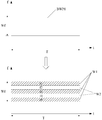
- 4-1 is a schematic diagram of a target time period according to an exemplary embodiment of the present disclosure.
- 4-2 is a schematic diagram of another circumvention of inter-cell interference according to an exemplary embodiment of the present disclosure.
- 4-3 is a schematic diagram of another circumvention of inter-cell interference according to an exemplary embodiment of the present disclosure.
- 4-4 is a schematic diagram of another circumvention of inter-cell interference according to an exemplary embodiment of the present disclosure.
- FIGS. 4-5 are schematic diagrams showing another circumvention of inter-cell interference according to an exemplary embodiment of the present disclosure.
- FIG. 5 is a flow chart of another method for avoiding inter-cell interference according to an exemplary embodiment of the present disclosure.
- FIG. 6 is a flowchart of another method for avoiding inter-cell interference according to an exemplary embodiment of the present disclosure.
- FIG. 7 is a flowchart of another method for avoiding inter-cell interference according to an exemplary embodiment of the present disclosure.
- FIG. 8 is a flow chart of another method for avoiding inter-cell interference according to an exemplary embodiment of the present disclosure.
- FIG. 9 is a flowchart of another method for avoiding inter-cell interference according to an exemplary embodiment of the present disclosure.
- FIG. 10 is a block diagram of a device of a base station according to an exemplary embodiment of the present disclosure.
- FIG. 11 is a block diagram of an apparatus of another base station according to an exemplary embodiment of the present disclosure.
- FIG. 12 is a block diagram of an apparatus of another base station according to an exemplary embodiment of the present disclosure.
- FIG. 13 is a block diagram of an apparatus of another base station according to an exemplary embodiment of the present disclosure.
- FIG. 14 is a block diagram of an apparatus of another base station according to an exemplary embodiment of the present disclosure.
- FIG. 15 is a block diagram of an apparatus of another base station according to an exemplary embodiment of the present disclosure.
- FIG. 16 is a block diagram of an apparatus of another base station according to an exemplary embodiment of the present disclosure.
- FIG. 17 is a block diagram of an apparatus of another base station according to an exemplary embodiment of the present disclosure.
- FIG. 18 is a schematic structural diagram of a base station according to an exemplary embodiment of the present disclosure.
- the execution body involved in the present disclosure includes: a first base station and a second base station, wherein the second base station is a base station adjacent to the location of the first base station.
- Any of the above base stations may be a macro base station, or may be a micro base station with a small signal coverage.
- the above macro base station may be a base station, a sub base station or the like provided with a large-scale antenna array.
- the above micro base stations may be micro base stations, pico base stations, femto base stations, and the like.
- the first base station and the second base station are independent of each other and are in contact with each other to jointly implement the technical solution provided by the present disclosure.
- FIG. 2 is a flowchart of a method for avoiding inter-cell interference, which is applied to a first base station according to an exemplary embodiment, where the method includes:
- step 11 determining a target time period in which inter-cell interference may occur
- the base station uses the TDD mode as an example, if the uplink and downlink time domain resource ratios of the neighboring base stations are not synchronized, the time zone resource ratio relationship of each base station may be determined to determine the coverage between the UEs under different base station coverage and adjacent cell edges. A target period in which inter-cell interference may occur.
- Each of the foregoing base stations includes: a first base station and a second base station adjacent to the first base station involved in inter-cell interference.
- the first base station may be configured according to its own uplink and downlink time domain resource allocation ratio.
- a target time period in which inter-cell interference may occur when the first base station and the second base station respectively use the same BWP to schedule UEs, with the uplink and downlink time domain resource ratio status of the second base station.
- FIG. 3 is a flowchart of a method for avoiding inter-cell interference according to an exemplary embodiment.
- the foregoing step 11 may include:
- step 111 acquiring uplink and downlink time domain resources of the second base station in time division duplex TDD mode Ratio information
- the configured unit time domain resource may be a subframe subframe, a slot slot, a mini slot mini slot, a symbol symbol, and the like.
- step 111 may include two cases:
- the interface can be used for direct interaction between the base stations, such as an X2 interface, and the first base station can perform the interaction between the preset base stations.
- the interface obtains uplink and downlink time domain resource ratio information configured by the second base station.
- the first base station may indirectly obtain the uplink and downlink time domain resource ratio information of the second base station, for example, through the MME (The Mobility Management Entity (Mobility Management Entity) indirectly acquires the uplink and downlink time domain resource ratio information of the second base station.
- MME Mobility Management Entity
- the target time period in which inter-cell interference may occur is determined according to the uplink and downlink time domain resource ratio information of the uplink and downlink time domain resource ratio information in the time division duplex TDD mode and the uplink and downlink time domain resource ratio information of the second base station.
- the first base station has different transmission configuration information for the cell where the first target UE is located and the transmission configuration information of the second base station for the cell where the second target UE is located, that is, the uplink and downlink time domain resource ratios of the two cells are different, It can be determined according to the time domain resource ratio of the two: during the same time range, the period of inter-cell interference may occur.
- FIG. 4-1 a schematic diagram of a target time period is shown according to an exemplary embodiment.
- the uplink and downlink time domain resource ratio of the first base station is 8:2, that is, at the above time. 8ms downlink and 2ms uplink are configured in the range T0; and the uplink and downlink time domain resource ratio of the second base station is 2:8, that is, 2ms downlink and 8ms uplink are configured in the time range T0; then there is a 6ms interference period in the middle.
- the time range corresponding to the unit time domain resources of 2 to 7 is 6 ms, which is the target time period in which the inter-cell interference may occur.
- the time range T0 may represent a frame frame of the LTE system, and any unit time domain resource represented by the labels 0-9 may be a subframe subframe.
- the time range T0 can be a TTI (Transmission Time Interval)
- the unit time domain resource can be a slot slot, a mini slot mini slot, a symbol symbol, and the like.
- the uplink and downlink ratio information and the label of the unit time domain resource in the time range may be simply adopted, that is, A target time period in which inter-cell interference may occur in the same time range can be accurately determined in the full frequency range.
- step 12 adjusting a time-frequency resource range allocated by the base station to the target user equipment based on the target bandwidth segment BWP in the target time period, and determining a reconfiguration time-frequency resource range;
- each of the base stations includes: the first base station and a second base station adjacent to the first base station involved in the inter-cell interference;
- the target device is a user equipment in a neighboring cell that is respectively covered by a neighboring base station, and the number of target UEs that may cause inter-cell interference in each cell is greater than or equal to 1.
- the target UEs in different cells are described by taking one example as an example.
- UE1 and UE2 in FIG. 1 are not to be construed as limiting the disclosure.
- the user equipment UE may be a user terminal, a user node, a mobile terminal, a wearable device, a tablet, or the like.
- the condition that the inter-cell interference may occur is that the neighboring base station schedules the user equipment at the edge of the neighboring cell in the BWP of the same frequency range and in the target time period.
- step 12 may include the following steps:
- the first scheduled scheduling configuration information of the first base station is determined, where the first planned scheduling configuration information includes: the first base station is scheduled to be on the target bandwidth segment BWP in the target time period. a first time-frequency resource range allocated to the first target user equipment;
- the first time-frequency resource range includes: a first time domain resource range and a first frequency resource range.
- the first time domain resource range is a time domain resource range that the first base station plans to allocate to the first target UE on the target bandwidth segment BWP in the target time period.
- the first frequency resource range is a frequency resource range that the first base station plans to allocate to the first target UE on the target bandwidth segment BWP during the target time period.
- step 122 the second scheduled scheduling configuration information of the second base station is obtained, where the second scheduled scheduling configuration information includes: the second base station plans to allocate on the target BWP in the target time period. a second time-frequency resource range for the second target user equipment;
- the first base station may acquire scheduled scheduling configuration information of the second base station by using a preset inter-base station interface or a preset transit platform such as an MME.
- the second time-frequency resource range includes: a second time domain resource range and a second frequency resource range.
- the second time domain resource range is a time domain resource range that the second base station plans to allocate to the second target UE on the target bandwidth segment BWP in the target time period.
- the second frequency resource range is a frequency resource range that the second base station plans to allocate to the second target UE on the target bandwidth segment BWP during the target time period.
- step 123 determining, according to the first scheduled scheduling configuration information and the second scheduled scheduling configuration information, whether inter-cell interference will occur in the target time period;
- the first case is applicable to the case where the first base station and the second base station respectively allocate partial frequency resources of the same BWP to the target UE in the target time period T, as shown in the above figure in FIG. 4-3, according to the two Whether there is a coincidence part of the frequency resource range can quickly and accurately determine whether inter-cell interference will occur in the target time period, and provide an accurate basis for whether the subsequent order adjusts resource allocation and which adjustment method is adopted.
- Case 2 If the first time domain resource range t1 and the second time domain resource range t2 satisfy: t1+t2>T, it is determined that cell interference will occur in the target time period. Where T is the duration of the target period.
- the first base station and the second base station respectively allocate partial time domain resources in the target time period to the target UE on the same BWP, as shown in the above figure in Figure 4-2, according to the two parts.
- the time length corresponding to the time domain resources is used to quickly determine whether inter-cell interference will occur in the target time period, and provide an accurate basis for whether the subsequent order adjusts resource allocation and which adjustment method is adopted.
- step 124 if inter-cell interference occurs, the time-frequency resource range allocated by each base station to the corresponding target user equipment on the target BWP is adjusted, and the reconfiguration time-frequency resource range is determined.
- the first base station can accurately determine whether inter-cell interference will occur in the target time period according to the scheduled scheduling configuration information of the first base station and the second base station, and in the case that it is determined that inter-cell interference will occur,
- the time-frequency resource range of at least one base station is precisely adjusted based on the original scheduled scheduling configuration information, to minimize or eliminate inter-cell interference, and to effectively utilize time-frequency resources.
- the time-frequency resource range that is planned to be allocated to the target UE is adjusted in at least three ways:
- the first base station is the dominant, that is, the information transmission requirement between the first base station and the first target UE is preferentially satisfied, and the second base station can adaptively adjust itself according to the adjusted time-frequency resource range of the first base station.
- the range of time-frequency resources are the dominant, that is, the information transmission requirement between the first base station and the first target UE is preferentially satisfied, and the second base station can adaptively adjust itself according to the adjusted time-frequency resource range of the first base station. The range of time-frequency resources.
- FIG. 6 is a flowchart of another method for avoiding inter-cell interference according to an exemplary embodiment.
- the foregoing step 124 may include the following steps:
- step 124-11 determining a reference time-frequency range based on the first scheduled scheduling configuration information
- the reference time-frequency range determined by the first base station may include the following two conditions according to whether the first base station adjusts the first time-frequency resource range:
- the first base station may first adjust the first time-frequency resource range, and actively reduce the time-frequency resource range allocated to the first target UE, and obtain the first re-configuration time-frequency resource range;
- the first reconfiguration time-frequency resource range is determined as a reference time-frequency range.
- the first plan may be allocated to the first time of the first target UE.
- the frequency resource range is determined as the reference time-frequency range.
- the principle of rationally utilizing resources may be taken according to the requirements of the service transmission of the first base station, and the flexible decision may be made before the second base station is instructed to perform time-frequency resource adjustment. First adjust its own resource allocation to improve the rationality of resource utilization.
- step 124-12 generating first adjustment indication information according to the reference time-frequency range
- the first adjustment indication information may include: reference time-frequency range information; or may include: time-frequency range information that is determined by the second base station according to the reference time-frequency range, for example, may be The complementary range of the above reference time-frequency range.
- the time-frequency range information in the first adjustment indication information may be a specific time-frequency range value, an endpoint value, or the like; or may be a label for identifying a time-frequency range, such as a label of a sub-bandwidth segment determined after the BWP is equally divided, And/or a label of a unit time domain resource in the target period; or a bitmap bitmap indicating a time-frequency resource range.
- the use of labels or bitmaps to represent the time-frequency resource range, which occupies less resources, can save resources and signaling overhead.
- step 124-13 the first adjustment indication information is sent to the second base station, so that the second base station performs time-frequency range adjustment based on the reference time-frequency range.
- the first base station may send the first adjustment indication information to the second base station by using a preset inter-base station interaction interface or a transit platform, such as an MME.
- the second base station may adjust the time-frequency resource range allocated to the second target UE based on the reference time-frequency range determined by the first base station to ensure effective avoidance of inter-cell interference. Effective use of wireless resources.
- the two base stations in FIG. 1 plan to simultaneously schedule target UEs on BWP0 of the same frequency range.
- the bandwidth of BWP0 is 20MHz
- the specific frequency range is: 3900MHz to 3920MHz.
- the first planned scheduling configuration information is a time-frequency resource range that the first base station 100 plans to allocate to the UE1 on the BWP0 in the target time period T;
- the second planned scheduling configuration information is the second base station. 200 plans the time-frequency resource range allocated to UE2 on BWP0 within the target time period T.
- the first scheduled scheduling configuration information includes: Frequency resource range: 3900MHz ⁇ 3920MHz, first time domain resource range: 5ms.
- the second planned scheduling configuration information includes: a second frequency resource range: 3900 MHz to 3920 MHz, and a second time domain resource range of 4 ms.
- the first base station first shortens the first time domain resource range 5ms planned to be allocated to UE1 to 4 ms.
- the adjusted time domain resource range 4ms is used as the reference time domain resource, and the first adjustment indication information is generated.
- the first adjustment indication information may include: 4ms, to indicate that the second base station 200 adjusts the time domain resource range allocated to the UE2 according to the 4ms that the first base station reconfigures for the UE1.
- the first adjustment indication information includes: 2 ms to instruct the second base station to shorten the second time domain resource range from 4 ms planned to be allocated to 2 ms.
- the reconfiguration time domain resource range may also be represented in the form of a bitmap bitmap.
- the target time period T is specifically a time period corresponding to the unit time domain resource labeled 2 to 7, if the first base station in the first case is reconfigured in the 4 ms time domain.
- the unit time domain resource labels corresponding to the resources are respectively: 2, 3, 4, and 5.
- the first adjustment indication information may include a time domain resource bitmap, and the time domain resource bitmap has a total of 6 bits, and the mapping labels are respectively 2 to
- the unit time domain resource of 7 may set the value of the corresponding bit of the labels 2, 3, 4, and 5 to 1, for example, 111100, indicating that the first base station determines the time domain resource range corresponding to the labels 2, 3, 4, and 5. To reconfigure the range of time domain resources.
- the unconfigured time domain resources represented by the numbers 6 and 7 indicate that the first base station configures the transmission of UE1 in the time domain resources labeled 6 and 7, and does not configure the transmission of UE1 on BWP0; or, indicates that the first base station is labeled 6 and In the time domain resource of 7, at least not the data transmission of UE1 is configured on BWP0.
- the second base station may determine the time domain resource represented by the complementary bitmap, such as 000011, that is, the time domain resource represented by the labels 6 and 7, as the second reconfiguration time domain resource.
- the first adjustment indication information may further include: a time domain resource bitmap 000011, to indicate that the second base station is two units labeled as 6, 7 according to the time domain resource bitmap 000011.
- the domain resource is determined to be a time domain resource that is reassigned to UE2.
- the bitmap mode in the case that the base station allocates time domain resources in a discontinuous manner, can be used to more conveniently, simply and clearly represent the reconfiguration time domain resource range, and save radio resources.
- the first base station when the first base station is dominant, the first base station may further determine the reference time domain resource according to the preset timing, for example, in the target time period T including the six unit time domain resources,
- the four time domain resources of the preamble that is, the time domain resources indicated by the labels 2, 3, 4, and 5, are determined as the first reconfiguration time domain resources.
- the first scheduled scheduling configuration information includes: the first frequency range W10 is 3905 MHz to 3920 MHz, and the first time domain range is 6 ms.
- the second planned scheduling configuration information includes: the second frequency range W20 is 3900 MHz to 3915 MHz, and the second time domain range is 6 ms. The above 6ms is the duration of the entire target time period T.
- the first base station may actively adjust the first frequency range W10 to the first reconfiguration frequency range W1: 3910 MHz to 3920 MHz; and use the first reconfiguration frequency range as the reference frequency range to generate the first
- the adjustment indication information is sent to the second base station, so that the second base station adjusts the frequency resource range allocated to the UE2 according to the reference frequency range, for example, the second frequency range W20 is adjusted to the second reconfiguration frequency range W2.
- the base station can also represent the reconfiguration frequency resource range in a bitmap manner.
- the entire bandwidth Wf of the target BWP that is, BWP0
- BWP0 can be divided into a preset number of sub-bandwidth segments according to a preset manner, as shown in Figure 4-4. It is assumed that Wf is equally divided into five sub-bandwidth segments, and the labels are: f1, f2, f3, f4, and f5.
- the first adjustment indication information may include a frequency resource bitmap: 10101, which is determined by the first base station. Reference frequency resource range.
- the first adjustment indication information may also include a frequency resource bitmap: 01010, indicating that the first base station instructs the second base station to determine the sub-bandwidth segments labeled f2 and f4 as the second reconfiguration frequency range W2.
- the manner of reconfiguring the frequency domain resource may be determined according to the workload of the self.
- the first base station may determine the proportion between the downlink service and the uplink service between the first base station and the UE1 according to the downlink buffer status of the UE1 or the Buffer Status Report (BSR).
- BSR Buffer Status Report
- the above is the case where the first base station actively adjusts the first time-frequency resource range and then sends the first adjustment indication information.
- the first base station may not directly adjust the current first time-frequency resource range, but directly generate the first adjustment indication by using the first time-frequency resource range as the reference time-frequency range.
- the information indicates that the second base station performs adaptive adjustment according to the reference time-frequency range determined by the first base station.
- the time-frequency resource range is adjusted by using the first base station, and the application scenario of the first base station being the macro base station and the second base station being the micro base station is convenient for centralized control and effective use of the wireless resources.
- the application scenario is applicable to the second base station in which multiple inter-cell interferences may occur with the first base station, and the base station can be prevented from repeatedly adjusting the time-frequency resource range for balancing resource allocation, thereby improving the efficiency of time-frequency resource adjustment. Efficiently avoid inter-cell interference.
- the second base station is the first one, that is, the information transmission requirement between the second base station and the second target UE is preferentially satisfied, and the first base station adaptively adjusts its own according to the adjusted time-frequency resource range of the second base station. Time-frequency resource range.
- FIG. 7 is a flowchart of another method for avoiding inter-cell interference according to an exemplary embodiment.
- the foregoing step 124 may include the following steps:
- step 124-21 receiving second adjustment indication information sent by the second base station
- the second adjustment indication information is used to indicate that the first base station adaptively adjusts its first time-frequency resource range according to the reference time-frequency range determined by the second base station.
- the second adjustment indication information is generated by the second base station.
- the manner in which the second base station generates the second adjustment indication information is similar to the manner in which the first base station generates the first adjustment indication information, and details are not described herein again.
- the second case whether the active time adjustment is performed according to the second base station determining the reference time-frequency range based on the second time-frequency resource range, where the reference time-frequency range determined by the second base station may include: the second a second reconfiguration time-frequency resource range determined by the base station after adjusting the second time-frequency resource range; or the second time-frequency resource range.
- the principle of rationally utilizing resources may be taken according to its own service transmission requirement, and the flexible decision may be made before the first base station is instructed to perform time-frequency resource adjustment. Whether to adjust its own resource allocation first, and improve the rationality of resource utilization.
- step 124-22 the time-frequency resource range allocated to the first target user equipment is adjusted according to the second adjustment indication information and the reference time-frequency range determined by the second base station.
- the first base station when the first base station adjusts the first time-frequency resource range, the first base station adjusts according to the reference time-frequency range determined by the second base station.
- steps 124-22 may include the following implementation manners:
- the first base station adjusts the first time-frequency range by using the reference time-frequency range information to obtain the first reconfiguration time-frequency resource range. So that the first reconfiguration time-frequency resource range and the reference time-frequency range determined by the second base station are in the time-frequency range of the target BWP The overlap in the circumference is reduced, and it is best to complement each other.
- Embodiment 2 if the second adjustment indication information includes: time-frequency range information that is determined by the second base station according to the reference time-frequency range, indicating that the first base station adjusts; if the first base station completely obeys the adjustment indication of the second base station, the first The base station can adjust according to the time-frequency range information indicated by the second base station.
- the time-frequency resource range is adjusted by using the second base station, and is applicable to the application scenario where the traffic of the second base station is relatively large, and the service guarantee is dominant. It is still assumed that the second base station belongs to the micro base station, and the first base station belongs to the macro base station, and the traffic of the second base station may be larger than the macro base station traffic.
- the second base station is a micro base station set in the stadium, and the current time needs to be In order to ensure the hotspot coverage of the stadium, when the inter-cell interference adjustment is circumvented, the second base station is preferred to adjust the time-frequency resource range, thereby preferentially guaranteeing the service transmission quality of the second base station and improving the intelligence of the base station in the 5G NR system. degree.
- the first base station and the second base station respectively perform time-frequency resource range adjustment according to a preset adjustment manner.
- the foregoing preset adjustment manner may be: when inter-cell interference may occur, each time-frequency resource range of the planned configuration is reduced, so that the adjusted re-allocation time-frequency resource range is complementary within the target BWP range.
- a certain resource adjustment mode such as a compromise adjustment mode
- a compromise adjustment mode may be agreed between the first base station and the second base station.
- FIG. 4-5 another schematic diagram of avoiding inter-cell interference according to an exemplary embodiment
- the first base station may use the first time.
- the domain resource range is shortened to 3ms in 5ms.
- the second base station can also automatically shorten the second time domain resource range 4ms to 3ms according to the preset adjustment manner, so that the time domain resource ranges of the two are complementary within the target time period T.
- the first base station and the second base station do not need to send the adjustment indication information, and the time-frequency resource range can be automatically adjusted according to the preset adjustment manner, which can reduce the control signaling overhead and reduce the interaction delay.
- the foregoing process is a process in which the first base station determines a reconfiguration time-frequency resource range allocated to the first target UE in a case where it is determined that inter-cell interference will occur.
- step 13 determining, according to the reconfiguration time-frequency resource range, target scheduling configuration information used to circumvent the inter-cell interference
- the first base station may determine the target scheduling configuration information according to the reconfiguration time-frequency resource range in any of the following manners:
- the reconfiguration time-frequency resource range determined after the adjustment is performed according to the foregoing three methods, and the target scheduling configuration information is determined.
- the first base station may further send the reconfiguration time-frequency resource range.
- the second base station is inquired whether the second base station supports the current adjustment result. If the second base station does not support, the two parties can re-adjust the time-frequency resource range according to any of the foregoing manners, until the second base station supports the adjustment result of the first base station, and The target scheduling configuration information is determined according to the reconfiguration time-frequency resource range supported by the second base station.
- FIG. 8 is a flowchart of another method for avoiding inter-cell interference according to an exemplary embodiment.
- the foregoing step 13 may include the following steps:
- step 131 the reconfiguration time-frequency resource range determined by the first base station after the time-frequency resource adjustment is sent to the second base station;
- the reconfiguration time-frequency resource range determined by the first base station may be the reference time-frequency range determined in the foregoing step 124-11; or may be the adjusted time-frequency resource range in the foregoing step 124-22.
- the first base station repeatedly adjusts the reconfiguration time-frequency resource range after adjusting the time-frequency resource range.
- step S132 the preset feedback information of the second base station is received, and determining, according to the preset feedback information, whether the second base station supports the reconfiguration time-frequency resource range determined by the first base station;
- the preset feedback information is used to indicate whether the second base station supports the reconfiguration time-frequency resource range determined by the first base station.
- the preset feedback information may include: positive feedback information indicating support, indicating negative feedback information that is not supported.
- step 133 if the preset feedback information indicates that the second base station supports the reconfiguration time-frequency resource range determined by the first base station, the target scheduling configuration information is determined according to the re-allocation time-frequency resource range.
- the target scheduling configuration information for the first target UE may be generated according to the currently determined reconfiguration time-frequency resource range.
- the foregoing target scheduling configuration information includes: the first base station scheduling a time-frequency resource range of the first target UE.
- the foregoing step 124 may be repeatedly performed according to any of the foregoing manners, and the first base station is allocated to the first target UE.
- the time-frequency resource range is further queried whether the second base station supports the adjustment scheme of the first base station until the second base station supports the adjustment result of the first base station.
- the first base station sends the adjusted reconfiguration time-frequency resource range to the second base station for confirmation, which may prevent each base station from inconsistent to the protocol interpretation.
- the third mode adjustment taking the time domain adjustment as an example, assuming that the target time period is 7 unit time domain resources, according to the preset compromise adjustment mode, 3.5 unit time domain resources should be allocated respectively. If the protocol stipulates that the first base station can allocate 3 unit time domain resources, the second base station can allocate 4 unit time domain resources. However, because the two parties are inconsistent in the interpretation of the protocol, the time domain resources reconfigured by the first base station are also 4 unit time domain resources, so that the adjusted time-frequency resource range still causes inter-cell interference and cannot completely eliminate inter-cell interference.
- the first base station will reconfigure the time domain resources
- the range is sent to the second base station for pre-acknowledgment, and the second base station can discover the foregoing problem, so that the information is fed back to the first base station, and the first base station is notified to re-adjust the resource range or adaptively re-adjust its own resource range.
- the above situation occurs to ensure effective avoidance of inter-cell interference.
- step 14 the first target user equipment is scheduled on the target BWP according to the target scheduling configuration information.
- FIG. 9 is a flowchart of another method for avoiding inter-cell interference according to an exemplary embodiment.
- the foregoing step 14 may include the following steps:
- step 141 the target scheduling configuration information is sent to the first target UE
- the first target UE After receiving the target scheduling configuration information, the first target UE performs transmission configuration according to the time-frequency resource range reconfigured by the first base station, for example, adjusting the working frequency range to the reconfiguration frequency resource range before the target time period T is reached.
- the first base station may send the target scheduling configuration information to the first target UE by using the broadcast signaling, the upper layer signaling, or the PDCCH (Physical Downlink Control Channel) signaling of the physical layer.
- the upper layer signaling may be RRC (Radio Resource Control) signaling, and MAC (Medium Access Control) CE (Control Element) signaling.
- step 142 during the target time period, the first target user equipment is allocated time-frequency resources according to the target scheduling configuration information, and information transmission is performed.
- the first base station schedules the first target UE on the reconfiguration frequency range W1, and implements uplink and downlink information transmission between the first base station and the first target UE.
- the second base station may schedule the second target UE on the frequency range W2 of the BWP0 to implement uplink and downlink information transmission between the second base station and the second target UE.
- the information transmission between the first base station and the first target UE and the information transmission between the second base station and the second target UE occur in different frequency ranges of the same BWP, which can effectively avoid inter-cell interference.
- the target scheduling configuration information may further include: a reconfiguration time-frequency resource range determined according to different adjustment manners in the target time period and different time ranges; the different adjustment manners include: Frequency adjustment method and time domain adjustment method.
- the present disclosure may also adjust the time-frequency resource range in a combination of frequency adjustment and time domain adjustment in the target time period T to avoid inter-cell interference occurrence.
- the target time period T can be divided into two time ranges: T1 and T2.
- the first base station determines the first scheduling configuration information by using the time domain adjustment manner; in the time range T2, A base station determines the second scheduling configuration information by using a frequency adjustment manner.
- the first target UE may perform two or more transmission configurations according to the scheduling configuration information in the foregoing target period to adapt to the time-frequency resource adjustment manner in the different time ranges.
- the implementation of the foregoing step 142 is: in a time range T1 included in the target time period T, the first base station allocates time-frequency resources to the first target user equipment according to the first scheduling configuration information, and performs information transmission.
- the first base station allocates time-frequency resources to the first target user equipment according to the second scheduling configuration information, and performs information transmission in another time range T2 included in the target time period T.
- the present disclosure adopts a combination of different adjustment modes, which can enhance the flexible adjustment mode of the base station based on the BWP to avoid inter-cell interference.
- a neighboring base station plans to schedule user equipment at a neighboring cell edge on a target BWP of the same frequency range, in order to reduce or eliminate inter-cell interference, it may first determine the possibility. a target time period in which inter-cell interference occurs, and then adjust a time-frequency resource range allocated by the base station to the target UE based on the target BWP in the target time period, and determine a target scheduling for avoiding inter-cell interference according to the adjusted time-frequency resource range.
- the target scheduling configuration information is sent to the corresponding target UE, and the target UE is configured for transmission.
- the first base station is configured on the target BWP according to the scheduling configuration information for the first target UE.
- the first target UE allocates time-frequency resources for information transmission. In the process of adjusting the time-frequency resource range, it is ensured that the time domain resource range or the frequency resource range allocated by the base station to the target UE is avoided as much as possible.
- the target UE at the edge of the neighboring cell uses different time-frequency resources in the same target BWP, When transmitting information, the inter-cell interference can be effectively reduced or eliminated, the communication quality and performance of the user equipment at the edge of the cell are improved, and the user experience of the 5G network device is improved.
- the second base station can use the same method to avoid inter-cell interference.
- the implementation of the second base station side method refer to the implementation process of the first base station.
- the present disclosure also provides an application function implementation apparatus and an embodiment of the corresponding terminal.
- FIG. 10 is a block diagram of a device of a base station according to an exemplary embodiment, where the base station may include:
- the interference period determining module 21 is configured to determine a target period in which inter-cell interference may occur
- the adjusting module 22 is configured to adjust a time-frequency resource range allocated by the base station to the target user equipment according to the target bandwidth segment BWP in the target time period, and determine a reconfiguration time-frequency resource range, where each base station includes: The first base station and the second base station adjacent to the first base station involved in inter-cell interference;
- the target configuration determining module 23 is configured to determine, according to the reconfiguration time-frequency resource range, target scheduling configuration information used to circumvent the inter-cell interference;
- the scheduling module 24 is configured to schedule the first target user equipment on the target BWP according to the target scheduling configuration information.
- the interference period determining module 21 may include:
- the resource matching acquisition sub-module 211 is configured to acquire uplink and downlink time domain resource ratio information of the second base station in a time division duplex TDD mode;
- the target period determining sub-module 212 is configured to determine, according to the uplink and downlink time domain resource ratio information of the time division duplex TDD mode and the uplink and downlink time domain resource ratio information of the second base station, to determine that inter-cell interference may occur. Target time period.
- the adjusting module 22 may include:
- a first plan configuration determining sub-module 221, configured to determine first scheduled scheduling configuration information of the first base station, where the first planned scheduling configuration information includes: the first base station plans within the target time period a first time-frequency resource range allocated to the first target user equipment on the target bandwidth segment BWP;
- a second plan configuration determining sub-module 222 configured to acquire second scheduled scheduling configuration information of the second base station, where the second planned scheduling configuration information includes: the second base station plans within the target time period a second time-frequency resource range allocated to the second target user equipment on the target BWP;
- the interference determination sub-module 223 is configured to determine, according to the first scheduled scheduling configuration information and the second scheduled scheduling configuration information, whether inter-cell interference will occur in the target time period;
- the resource range adjustment sub-module 224 is configured to adjust a time-frequency resource range allocated by each base station to the corresponding target user equipment on the target BWP, and determine a re-allocation time-frequency resource range, in a case where inter-cell interference occurs.
- the first time-frequency resource range determined by the first plan configuration determining sub-module 221 may include: a first frequency resource range and a first time domain resource range;
- the second time-frequency resource range determined by the configuration determining sub-module 222 may include: a second frequency resource range and a second time domain resource range.
- the interference determining sub-module 223 may include any one of the following units:
- the first interference determining unit 2231 is configured to: if the first base station allocates a first frequency resource range for the first target user equipment on the target BWP, and the second base station is on the target BWP If there is a coincident portion between the second frequency resource ranges allocated by the second target user equipment, it is determined that inter-cell interference occurs within the target time period;
- the second interference determining unit 2232 is configured to: if the first base station is in the preset frequency range of the target BWP, the first time domain resource range t1 allocated to the first target user equipment, and the second base station And the second time domain resource range t2 allocated to the second target user equipment in the same frequency range of the target BWP satisfies: t1+t2>T, where T is the duration of the target time period, and then determining the Inter-cell interference will occur during the target time period.
- the resource range adjustment sub-module 224 may include:
- the first reference time-frequency determining unit 2011 is configured to determine a reference time-frequency range based on the first scheduled scheduling configuration information
- the first indication generating unit 2012 is configured to generate first adjustment indication information according to the reference time-frequency range
- the first indication sending unit 2013 is configured to send the first adjustment indication information to the second base station, so that the second base station performs time-frequency range adjustment based on the reference time-frequency range.
- the first reference time-frequency determining unit 2011 may include:
- the active adjustment subunit 201-1 is configured to adjust the first time-frequency resource range to obtain a first reconfiguration time-frequency resource range.
- the first determining subunit 201-2 is configured to determine the first reconfiguration time-frequency resource range as a reference time-frequency range;
- the second determining subunit 201-3 is configured to determine the first time-frequency resource range as a reference time-frequency range.
- the resource range adjustment sub-module 224 may include:
- the second indication receiving unit 2021 is configured to receive second adjustment indication information sent by the second base station
- the passive adjustment unit 2022 is configured to adjust a time-frequency resource range allocated to the first target user equipment according to the second adjustment indication information and a reference time-frequency range determined by the second base station.
- the reference time-frequency range determined by the second base station includes: the second time-frequency resource range; or the second re-configuration time-frequency determined by the second base station after adjusting the second time-frequency resource range The scope of resources.
- the resource range adjustment sub-module 224 may be further configured to adjust the first time-frequency resource range according to a preset adjustment manner to obtain a reconfiguration time-frequency resource range.
- the first base station may further send the adjusted reconfiguration time-frequency resource range to the second base station to determine whether the second base station supports the first base station determining, before determining the target scheduling configuration information. Reconfigure the range of time-frequency resources.
- FIG. 17 is a block diagram of another base station according to an exemplary embodiment.
- the target configuration determining module 23 may include:
- the re-allocation resource range transmission sub-module 231 is configured to send the re-allocation time-frequency resource range determined by the first base station after the time-frequency resource adjustment to the second base station;
- the feedback information receiving sub-module 232 is configured to receive the preset feedback information of the second base station, where the preset feedback information is used to indicate whether the second base station supports the reconfiguration time-frequency resource determined by the first base station. range;
- the target configuration determining sub-module 233 is configured to: if the preset feedback information indicates that the second base station supports the reconfiguration time-frequency resource range determined by the first base station, determine a target scheduling according to the re-allocation time-frequency resource range Configuration information.
- the target scheduling configuration information determined by the target configuration determining module 23 may include: a reconfiguration time-frequency determined according to different adjustment manners in the target time period and corresponding to different time ranges.
- the range of resources; the different adjustment methods include: frequency adjustment mode and time domain adjustment mode.
- the device embodiment since it basically corresponds to the method embodiment, reference may be made to the partial description of the method embodiment.
- the device embodiments described above are merely illustrative, wherein the units described as separate components may or may not be physically separated, and the components displayed as units may or may not be physical units, ie may be located in one Places, or they can be distributed to multiple network elements. Some or all of the modules may be selected according to actual needs to achieve the objectives of the present disclosure. Those of ordinary skill in the art can understand and implement without any creative effort.
- the present disclosure also provides a base station, including: a processor; a memory for storing processor-executable instructions; wherein the processor is configured to:
- each base station Adjusting, by each base station, the target user equipment allocation according to the target bandwidth segment BWP in the target time period And determining, by the time-frequency resource range, the re-configured time-frequency resource range, where each of the base stations includes: the first base station and a second base station adjacent to the first base station involved in the inter-cell interference;
- FIG. 18 is a schematic structural diagram of a base station 1800 according to an exemplary embodiment.
- base station 1800 includes a processing component 1822, a wireless transmit/receive component 1824, an antenna component 1826, and a signal processing portion specific to the wireless interface.
- Processing component 1822 can further include one or more processors.
- One of the processing components 1822 can be configured to:
- each base station includes: the inter-cell interference involved, The first base station and a second base station adjacent to the first base station;
- non-transitory computer readable storage medium comprising instructions stored thereon with computer instructions executable by processing component 1822 of base station 1800 to perform FIGS. 2-9 A method for avoiding inter-cell interference as described.
- the non-transitory computer readable storage medium can be a ROM, a random access memory (RAM), a CD-ROM, a magnetic tape, a floppy disk, and an optical data storage device.
Landscapes
- Engineering & Computer Science (AREA)
- Signal Processing (AREA)
- Computer Networks & Wireless Communication (AREA)
- Quality & Reliability (AREA)
- Mobile Radio Communication Systems (AREA)
Abstract
La présente invention concerne un procédé et une station de base pour éviter un brouillage inter-cellules. Le procédé comporte les étapes consistant à: déterminer une période cible pendant laquelle un brouillage inter-cellules est susceptible de se produire; régler une plage de ressources temps-fréquence attribuée à une unité d'équipement d'utilisateur cible par chaque station de base au cours d'une période cible et sur la base d'une partie de bande passante (BWP) cible pour déterminer une plage de ressources temps-fréquence réattribuée, ladite station de base comportant une première station de base et une seconde station de base adjacente à la première station de base, toutes deux étant liées au brouillage inter-cellules; déterminer, d'après la plage de ressources temps-fréquence réattribuée, des informations de configuration cible de programmation à utiliser pour éviter le brouillage inter-cellules; et programmer, d'après les informations de configuration cible de programmation et sur la BWP cible, une première unité d'équipement d'utilisateur cible. Le procédé pour éviter un brouillage inter-cellules selon la présente invention peut être adopté pour atténuer efficacement ou éliminer le brouillage inter-cellules, améliorant ainsi l'agrément d'utilisation des appareils de réseau 5G.
Priority Applications (5)
| Application Number | Priority Date | Filing Date | Title |
|---|---|---|---|
| EP17924215.1A EP3672344B1 (fr) | 2017-09-07 | 2017-09-07 | Procédé et station de base pour éviter un brouillage inter-cellules |
| PCT/CN2017/100809 WO2019047085A1 (fr) | 2017-09-07 | 2017-09-07 | Procédé et station de base pour éviter un brouillage inter-cellules |
| ES17924215T ES2951578T3 (es) | 2017-09-07 | 2017-09-07 | Método y estación base para evitar interferencia entre celdas |
| CN201780001096.5A CN108352974B (zh) | 2017-09-07 | 2017-09-07 | 规避小区间干扰的方法及基站 |
| US16/642,301 US11337223B2 (en) | 2017-09-07 | 2017-09-07 | Method and base station for avoiding inter-cell interference |
Applications Claiming Priority (1)
| Application Number | Priority Date | Filing Date | Title |
|---|---|---|---|
| PCT/CN2017/100809 WO2019047085A1 (fr) | 2017-09-07 | 2017-09-07 | Procédé et station de base pour éviter un brouillage inter-cellules |
Publications (1)
| Publication Number | Publication Date |
|---|---|
| WO2019047085A1 true WO2019047085A1 (fr) | 2019-03-14 |
Family
ID=62961546
Family Applications (1)
| Application Number | Title | Priority Date | Filing Date |
|---|---|---|---|
| PCT/CN2017/100809 Ceased WO2019047085A1 (fr) | 2017-09-07 | 2017-09-07 | Procédé et station de base pour éviter un brouillage inter-cellules |
Country Status (5)
| Country | Link |
|---|---|
| US (1) | US11337223B2 (fr) |
| EP (1) | EP3672344B1 (fr) |
| CN (1) | CN108352974B (fr) |
| ES (1) | ES2951578T3 (fr) |
| WO (1) | WO2019047085A1 (fr) |
Cited By (4)
| Publication number | Priority date | Publication date | Assignee | Title |
|---|---|---|---|---|
| CN110913487A (zh) * | 2019-11-20 | 2020-03-24 | 京信通信系统(中国)有限公司 | 资源分配方法、装置、基站和存储介质 |
| WO2020254714A1 (fr) * | 2019-06-19 | 2020-12-24 | Nokia Solutions And Networks Oy | Traduction d'informations de domaine de fréquence spécifiques à un équipement utilisateur parmi des cellules dans des réseaux sans fil de cinquième génération |
| EP3886498A1 (fr) * | 2020-03-27 | 2021-09-29 | Nokia Technologies Oy | Sélection de porteuses dans un réseau sans fil |
| WO2022116195A1 (fr) * | 2020-12-04 | 2022-06-09 | 华为技术有限公司 | Procédé anti-interférence pour réseau nouvelle radio |
Families Citing this family (15)
| Publication number | Priority date | Publication date | Assignee | Title |
|---|---|---|---|---|
| CN111132278B (zh) | 2018-10-31 | 2021-06-22 | 华为技术有限公司 | Bwp的分配方法及装置 |
| CN109656949B (zh) * | 2018-11-15 | 2020-11-10 | 金蝶软件(中国)有限公司 | 位图的索引搜索方法、装置、计算机设备和存储介质 |
| CN111865527B (zh) * | 2019-04-29 | 2021-10-01 | 华为技术有限公司 | 一种通信方法及装置 |
| KR102893763B1 (ko) * | 2019-11-08 | 2025-12-02 | 주식회사 케이티 | 대역폭 파트를 제어하는 방법 및 장치 |
| CN113498087B (zh) * | 2020-04-08 | 2023-07-04 | 维沃移动通信有限公司 | 资源确定方法及终端 |
| CN111526518B (zh) * | 2020-04-10 | 2022-10-14 | 北京星网锐捷网络技术有限公司 | 一种带宽分配方法及装置 |
| CN114466462A (zh) * | 2020-11-09 | 2022-05-10 | 华为技术有限公司 | 一种调度终端的方法及装置 |
| KR20230157396A (ko) * | 2021-05-11 | 2023-11-16 | 엘지전자 주식회사 | 무선 통신 시스템에서 무선 신호 송수신 방법 및 장치 |
| WO2022243730A1 (fr) | 2021-05-19 | 2022-11-24 | Telefonaktiebolaget Lm Ericsson (Publ) | Planification d'utilisateurs de bord de cellule pour éviter une interférence de liaison croisée |
| CN115941140B (zh) * | 2021-08-30 | 2025-03-07 | 中国移动通信集团设计院有限公司 | 资源优化配置方法、装置、设备及计算机可读存储介质 |
| CN113630888B (zh) * | 2021-09-18 | 2024-11-15 | 江苏亨鑫科技有限公司 | 一种bwp切换方法及相关设备 |
| US12082231B2 (en) * | 2021-11-02 | 2024-09-03 | Qualcomm Incorporated | Sidelink assisted cross link interference determination |
| US12021622B2 (en) * | 2021-11-30 | 2024-06-25 | Qualcomm Incorporated | DL and UL collision handling |
| CN114585096B (zh) * | 2022-05-05 | 2022-10-18 | 深圳国人无线通信有限公司 | 一种通过bwp切换功能降低干扰的方法和系统 |
| US12538162B2 (en) | 2022-10-12 | 2026-01-27 | T-Mobile Usa, Inc. | Traffic reconfiguration for user throughput |
Citations (4)
| Publication number | Priority date | Publication date | Assignee | Title |
|---|---|---|---|---|
| WO2009121010A2 (fr) * | 2008-03-28 | 2009-10-01 | Qualcomm Incorporated | Mesure de chargement de cellule voisine dans des communications sans fil |
| CN103931258A (zh) * | 2011-11-14 | 2014-07-16 | 高通股份有限公司 | 具有干扰减轻的上行链路数据传输 |
| CN104703201A (zh) * | 2013-12-10 | 2015-06-10 | 北京智谷睿拓技术服务有限公司 | 异构网络上行资源调度方法及调度装置 |
| CN106230542A (zh) * | 2012-03-01 | 2016-12-14 | 华为技术有限公司 | 干扰协调的方法和装置 |
Family Cites Families (18)
| Publication number | Priority date | Publication date | Assignee | Title |
|---|---|---|---|---|
| JP4440909B2 (ja) * | 2006-09-25 | 2010-03-24 | 京セラ株式会社 | 無線通信システム、無線通信端末及び基地局並びに無線通信方法 |
| JP4976543B2 (ja) * | 2007-04-27 | 2012-07-18 | エルジー エレクトロニクス インコーポレイティド | 移動通信システムにおいて下り制御チャネルを伝送する方法並びにブロックインターリーバを用いて制御チャネルを物理リソースにマッピングする方法 |
| US8086180B2 (en) * | 2009-04-21 | 2011-12-27 | Chunghwa Telecom Co., Ltd. | Method for restraining inter-cell interference in a mobile communication system |
| JP2011066874A (ja) | 2009-08-17 | 2011-03-31 | Sony Corp | 通信システム、通信装置及び通信方法、並びにコンピューター・プログラム |
| US8817723B2 (en) * | 2010-11-17 | 2014-08-26 | Futurewei Technologies, Inc. | Methods and apparatus for inter-cell interference coordination self-organized network |
| WO2012108605A1 (fr) * | 2011-02-09 | 2012-08-16 | (주)엘지전자 | Procédé pour éviter l'interférence intercellulaire dans un système d'accès sans fil |
| US9426811B2 (en) * | 2011-02-09 | 2016-08-23 | Lg Electronics Inc. | Method and device for avoiding inter-cell interference in a wireless access system |
| EP2695481B1 (fr) | 2011-04-01 | 2017-10-18 | Intel Corporation | Configuration flexible de rapport liaison montante-liaison descendante par échange d'informations à l'aide d'une interface x2 |
| US9538543B2 (en) | 2012-03-19 | 2017-01-03 | Alcatel Lucent | Interference indicator for wireless communication systems |
| US9167434B2 (en) | 2012-08-08 | 2015-10-20 | Telefonaktiebolaget L M Ericsson (Publ) | Inter-radio access technology interference coordination for multi-standard radio access networks |
| US8874127B2 (en) * | 2012-11-27 | 2014-10-28 | At&T Mobility Ii, Llc | Facilitation of self-adjusting network uplink noise balancing |
| US9918314B2 (en) * | 2015-04-14 | 2018-03-13 | Cisco Technology, Inc. | System and method for providing uplink inter cell interference coordination in a network environment |
| EP3332580B1 (fr) * | 2015-08-05 | 2020-04-01 | Telefonaktiebolaget LM Ericsson (PUBL) | Procédé et noeud de réseau pour l'attribution dynamique de ressources à des canaux de commande |
| US11212689B2 (en) * | 2016-11-04 | 2021-12-28 | Xi'an Zhongxing New Software Co., Ltd. | Interference processing method and device, apparatus and storage medium |
| CN106899993B (zh) * | 2017-04-02 | 2020-10-09 | 上海无线通信研究中心 | 面向大规模mimo网络的网络优化方法及其基站 |
| JP7095068B2 (ja) * | 2017-07-19 | 2022-07-04 | 北京小米移動軟件有限公司 | 情報を送信する方法および装置 |
| JP7071997B2 (ja) * | 2017-07-19 | 2022-05-19 | 北京小米移動軟件有限公司 | 情報伝送の方法、装置、プログラム及び記憶媒体 |
| US11395313B2 (en) * | 2019-01-10 | 2022-07-19 | Qualcomm Incorporated | Handling packets with different priorities in sidelink systems |
-
2017
- 2017-09-07 ES ES17924215T patent/ES2951578T3/es active Active
- 2017-09-07 WO PCT/CN2017/100809 patent/WO2019047085A1/fr not_active Ceased
- 2017-09-07 US US16/642,301 patent/US11337223B2/en active Active
- 2017-09-07 CN CN201780001096.5A patent/CN108352974B/zh active Active
- 2017-09-07 EP EP17924215.1A patent/EP3672344B1/fr active Active
Patent Citations (4)
| Publication number | Priority date | Publication date | Assignee | Title |
|---|---|---|---|---|
| WO2009121010A2 (fr) * | 2008-03-28 | 2009-10-01 | Qualcomm Incorporated | Mesure de chargement de cellule voisine dans des communications sans fil |
| CN103931258A (zh) * | 2011-11-14 | 2014-07-16 | 高通股份有限公司 | 具有干扰减轻的上行链路数据传输 |
| CN106230542A (zh) * | 2012-03-01 | 2016-12-14 | 华为技术有限公司 | 干扰协调的方法和装置 |
| CN104703201A (zh) * | 2013-12-10 | 2015-06-10 | 北京智谷睿拓技术服务有限公司 | 异构网络上行资源调度方法及调度装置 |
Cited By (6)
| Publication number | Priority date | Publication date | Assignee | Title |
|---|---|---|---|---|
| WO2020254714A1 (fr) * | 2019-06-19 | 2020-12-24 | Nokia Solutions And Networks Oy | Traduction d'informations de domaine de fréquence spécifiques à un équipement utilisateur parmi des cellules dans des réseaux sans fil de cinquième génération |
| CN110913487A (zh) * | 2019-11-20 | 2020-03-24 | 京信通信系统(中国)有限公司 | 资源分配方法、装置、基站和存储介质 |
| CN110913487B (zh) * | 2019-11-20 | 2022-11-01 | 京信网络系统股份有限公司 | 资源分配方法、装置、基站和存储介质 |
| EP3886498A1 (fr) * | 2020-03-27 | 2021-09-29 | Nokia Technologies Oy | Sélection de porteuses dans un réseau sans fil |
| US11711760B2 (en) | 2020-03-27 | 2023-07-25 | Nokia Technologies Oy | Carrier selection in wireless network |
| WO2022116195A1 (fr) * | 2020-12-04 | 2022-06-09 | 华为技术有限公司 | Procédé anti-interférence pour réseau nouvelle radio |
Also Published As
| Publication number | Publication date |
|---|---|
| CN108352974B (zh) | 2021-02-19 |
| CN108352974A (zh) | 2018-07-31 |
| EP3672344B1 (fr) | 2023-05-10 |
| ES2951578T3 (es) | 2023-10-24 |
| US11337223B2 (en) | 2022-05-17 |
| US20200205161A1 (en) | 2020-06-25 |
| EP3672344A4 (fr) | 2020-08-12 |
| EP3672344A1 (fr) | 2020-06-24 |
Similar Documents
| Publication | Publication Date | Title |
|---|---|---|
| CN108352974B (zh) | 规避小区间干扰的方法及基站 | |
| US9854600B2 (en) | Method for controlling transmission of uplink control information on plurality of serving cells, and apparatus therefor | |
| CN104126328B (zh) | 针对新载波类型的聚合 | |
| JP5951876B2 (ja) | 拡張物理下りリンク制御チャネル(ePDCCH)セル間干渉協調(ICIC) | |
| US11197251B2 (en) | Techniques and apparatuses for synchronization, scheduling, bandwidth allocation, and reference signal transmission in a 5th generation network | |
| JP6406777B2 (ja) | ビーム構成方法、基地局、およびユーザ機器 | |
| JP7134964B2 (ja) | ニューラジオにおける対応するアップリンク制御情報の送信を構成するための技法および装置 | |
| US8958809B2 (en) | Hybrid coordinated scheduling scheme for use in a radio access network | |
| US10637728B2 (en) | Configuration method and apparatus | |
| US9781728B2 (en) | Method and apparatus for coordinating schedulers in a coordinated multi-point communication system | |
| US10498500B2 (en) | Network node, communication device and methods therein for handling dynamic subframe configurations | |
| EP3185633B1 (fr) | Procédé et dispositif pour envoyer un signal de découverte sur une porteuse non autorisée, et point d'accès | |
| US10342036B2 (en) | Secondary scheduling request | |
| AU2013259087B2 (en) | Communication control device, communication control method, and terminal device | |
| US10149292B2 (en) | Systems and methods for efficient resource allocation in wireless communication networks | |
| CN107950054A (zh) | 蜂窝系统中的子帧配置 | |
| JPWO2012026601A1 (ja) | 無線基地局及び通信制御方法 | |
| WO2018228096A1 (fr) | Procédés et dispositifs de transmission et de réception d'informations de commande de liaison descendante | |
| EP3150016A1 (fr) | Procédé de fonctionnement d'un réseau sans fil, réseau sans fil et station de base | |
| WO2014108028A1 (fr) | Procédé et dispositif de communication sans fil | |
| JP2024540816A (ja) | 周波数領域リソースのリソースブロック(rb)構成 | |
| JP2024540816A5 (fr) | ||
| EP3949628B1 (fr) | Attribution de ressources sur la base d'un regroupement de dispositifs sans fil | |
| KR102612167B1 (ko) | 통신 시스템에서 빔 요소 반송파의 전송 우선순위 결정 방법 및 장치 | |
| JP5504083B2 (ja) | 無線基地局及び通信制御方法 |
Legal Events
| Date | Code | Title | Description |
|---|---|---|---|
| 121 | Ep: the epo has been informed by wipo that ep was designated in this application |
Ref document number: 17924215 Country of ref document: EP Kind code of ref document: A1 |
|
| NENP | Non-entry into the national phase |
Ref country code: DE |
|
| ENP | Entry into the national phase |
Ref document number: 2017924215 Country of ref document: EP Effective date: 20200319 |