WO2019056276A1 - Procédé de transmission d'informations, dispositif terminal et dispositif de réseau - Google Patents
Procédé de transmission d'informations, dispositif terminal et dispositif de réseau Download PDFInfo
- Publication number
- WO2019056276A1 WO2019056276A1 PCT/CN2017/102786 CN2017102786W WO2019056276A1 WO 2019056276 A1 WO2019056276 A1 WO 2019056276A1 CN 2017102786 W CN2017102786 W CN 2017102786W WO 2019056276 A1 WO2019056276 A1 WO 2019056276A1
- Authority
- WO
- WIPO (PCT)
- Prior art keywords
- logical channel
- field
- bsr
- channel group
- subfield
- Prior art date
- Legal status (The legal status is an assumption and is not a legal conclusion. Google has not performed a legal analysis and makes no representation as to the accuracy of the status listed.)
- Ceased
Links
Images



Classifications
-
- H—ELECTRICITY
- H04—ELECTRIC COMMUNICATION TECHNIQUE
- H04W—WIRELESS COMMUNICATION NETWORKS
- H04W28/00—Network traffic management; Network resource management
- H04W28/02—Traffic management, e.g. flow control or congestion control
- H04W28/06—Optimizing the usage of the radio link, e.g. header compression, information sizing, discarding information
Definitions
- the embodiments of the present application relate to the field of wireless communications, and in particular, to a method, a terminal device, and a network device for transmitting information.
- a terminal device In a Long Term Evolution (LTE) communication system, a terminal device periodically or aperiodically reports a Buffer Status Report (BSR), and the network device can know the resource configuration of the terminal device in real time according to the buffer status report. In the case, the network device can perform uplink resource allocation and scheduling in real time.
- BSR Buffer Status Report
- the embodiment of the present application provides a method for transmitting information, a terminal device, and a network device, which can reasonably utilize resources in a buffer status report report, and reduce signaling overhead.
- the first aspect provides a method for transmitting information, including: determining, by a terminal device, a first message, where the first message includes a first field and a second field, where the first field includes a buffer of a logical channel group to be transmitted. a status report BSR, the second field includes a first sub-field, where the first sub-field is used to indicate a type of the BSR, where the first field includes a logic if the type of the BSR is a truncated BSR
- the first subfield of the BSR of the channel group is the same as the first subfield when the first field includes the BSRs of the plurality of logical channel groups; the terminal device sends the first message to the network device.
- the first field may for example be a MAC SDU, the first field comprising a BSR of a logical channel group to be transmitted.
- the second field may be, for example, a sub-packet header of the MAC SDU, and includes a first sub-field, where the first sub-field may be, for example, an LCID, where the first sub-field is used to indicate which type of BSR the first field carries.
- the type of the BSR carried in a field may be, for example, the foregoing short BSR, Truncated BSR, long BSR, and the like.
- the terminal device reports a logic.
- the BSR of the channel and the BSR of the multiple logical channels can use the same LCID, and display or implicitly indicate that a logic is currently reported by reporting the difference between the structure or content of the data unit when reporting a BSR and reporting multiple BSRs.
- the BSR of the channel also reports the BSR of multiple logical channels at the same time, thereby reducing the overhead of the first subfield.
- the second field further includes a second sub-field, where the second sub-field is used to indicate whether the first field includes a BSR of a logical channel group or multiple logical channel groups. BSR.
- a BSR of each logical channel group in the first field includes each of the logics Information about the buffer resource size of the channel group.
- the information of the buffer resource size of the multiple logical channel groups in the first field is sequentially arranged, wherein the first field further includes a first bitmap,
- the first bitmap includes N bits, the N bits are in one-to-one correspondence with the N logical channel groups, and the value on each of the N bits is used to represent the buffer of the corresponding logical channel group.
- the BSR of each logical channel group further includes a logical channel group identifier of each logical channel group.
- the second field when the first field includes a BSR of multiple logical channel groups, the second field further includes a third sub-field, where the third sub-field is used to represent the first field. Length; when the first field includes a BSR of a logical channel group, the second field does not include the third subfield.
- the BSR of each logical channel group in the first field includes a logical channel group identifier of each logical channel group, and information about a buffer resource size of each logical channel group. .
- the first message is a medium access control service data unit MAC SDU
- the second field is a sub-packet header of the MAC SDU
- the first sub-field is the MAC SDU.
- the logical channel in the sub-header identifies the PCID field.
- a second aspect provides a method for transmitting information, including: receiving, by a network device, a first message sent by a terminal device, where the first message includes a first field and a second field, where the first field packet includes a buffer status report BSR including a logical channel group to be transmitted, the second field includes a first subfield, and the first sub field is used to indicate a type of the BSR, wherein if the type of the BSR is a truncated BSR a first subfield when the first field includes a BSR of a logical channel group, and is the same as a first subfield when the first field includes a BSR of a plurality of logical channel groups; The two fields determine whether the first field includes a BSR of a logical channel group or a BSR including a plurality of logical channel groups.
- the terminal device can report the BSR of the logical channel and the BSR of the multiple logical channels, and the network device can use the BSR reported by the terminal device as the Truncated BSR.
- the terminal device When the BSR is reported and the difference in the structure or content of the data unit when the multiple BSRs are reported, it is determined whether the terminal device currently reports the BSR of one logical channel or the BSR of the multiple logical channels at the same time, thereby lowering the first sub-sub The overhead of the field.
- the second field further includes a second sub-field, where the second sub-field is used to indicate whether the first field includes a BSR of a logical channel group or multiple logical channel groups.
- the BSR wherein the network device determines, according to the second field, that the first field includes a BSR of a logical channel group or a BSR that includes multiple logical channel groups, including: the network device according to the The two subfields determine whether the first field includes a BSR of a logical channel group or a BSR including a plurality of logical channel groups.
- a BSR of each logical channel group in the first field includes each of the logics Information about the buffer resource size of the channel group.
- the information of the buffer resource size of the multiple logical channel groups in the first field is sequentially arranged, wherein the first field further includes a first bitmap,
- the first bitmap includes N bits, the N bits are in one-to-one correspondence with the N logical channel groups, and the value on each of the N bits is used to represent the buffer of the corresponding logical channel group.
- the BSR of each logical channel group further includes a logical channel group identifier of each logical channel group.
- the network device determines, according to the second field, the The first field includes a BSR of a logical channel group, or a BSR including a plurality of logical channel groups, including: if the second field further includes a third subfield, the network device determines that the first field includes multiple a BSR of the logical channel group, wherein the third subfield is used to indicate the length of the first field; if the second field does not include the third subfield, the network device determines the first The field includes a BSR for a logical channel group.
- the BSR of each logical channel group in the first field includes a logical channel group identifier of each logical channel group, and information about a buffer resource size of each logical channel group. .
- the first message is a medium access control service data unit MAC SDU
- the second field is a sub-packet header of the MAC SDU
- the first sub-field is the MAC SDU.
- the logical channel in the sub-header identifies the PCID field.
- a terminal device which can perform the operations of the terminal device in the above first aspect or any optional implementation manner of the first aspect.
- the terminal device may comprise a modular unit for performing the operations of the terminal device in any of the possible implementations of the first aspect or the first aspect described above.
- a network device which can perform the operations of the network device in any of the foregoing optional implementations of the second aspect or the second aspect.
- the network device may comprise a modular unit for performing the operations of the network device in any of the possible implementations of the second aspect or the second aspect described above.
- a terminal device comprising: a processor, a transceiver, and a memory.
- the processor, the transceiver, and the memory communicate with each other through an internal connection path.
- the memory is for storing instructions for executing instructions stored by the memory.
- the processor executes the instruction stored by the memory, the executing causes the terminal device to perform the method in the first aspect or any possible implementation manner of the first aspect, or the execution causes the terminal device to implement the terminal provided by the third aspect device.
- a network device comprising: a processor, a transceiver, and a memory.
- the processor, the transceiver, and the memory communicate with each other through an internal connection path.
- the memory is for storing instructions for executing instructions stored by the memory.
- the processor executes the instruction stored by the memory, the executing causes the network device to perform the method in any of the possible implementations of the second aspect or the second aspect, or the execution causes the network device to implement the network provided by the fourth aspect device.
- a seventh aspect a computer readable storage medium storing a program, the program causing a terminal device to perform the first aspect described above, and any one of the various implementations of the transmission information Methods.
- a computer readable storage medium storing a program causing a network device to perform the second aspect described above, and transmitting the information in any of the various implementations thereof Methods.
- a system chip comprising an input interface, an output interface, a processor, and a memory
- the processor is configured to execute an instruction stored by the memory, and when the instruction is executed, the processor can implement the foregoing The method of any of the first aspect or any of the possible implementations of the first aspect.
- a system chip includes an input interface, an output interface, a processor, and a memory
- the processor is configured to execute an instruction stored by the memory, and when the instruction is executed, the processor can implement the foregoing The method of any of the second aspect or any possible implementation of the second aspect.
- a computer program product comprising instructions for causing a computer to execute the method of any of the first aspect or the first aspect of the first aspect, when the computer program product is run on a computer.
- a computer program product comprising instructions which, when executed on a computer, cause the computer to perform the method of any of the second aspect or the second aspect of the second aspect.
- FIG. 1 is a schematic structural diagram of an application scenario of an embodiment of the present application.
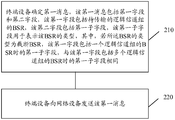
- FIG. 2 is a schematic flowchart of a method for transmitting information according to an embodiment of the present application.
- FIG. 3 is a schematic diagram of a BSR including a logical channel group in a first field.
- FIG. 4 is a schematic diagram of a BSR including a plurality of logical channel groups in a first field.
- FIG. 5 is a schematic diagram of a BSR including a plurality of logical channel groups in a first field.
- FIG. 6 is a schematic diagram of a BSR including a plurality of logical channel groups in a first field.
- FIG. 7 is a schematic flowchart of a method for transmitting information according to an embodiment of the present application.
- FIG. 8 is a schematic block diagram of a terminal device according to an embodiment of the present application.
- FIG. 9 is a schematic block diagram of a network device according to an embodiment of the present application.
- FIG. 10 is a schematic structural diagram of a communication device according to an embodiment of the present application.
- FIG. 11 is a schematic structural diagram of a system chip according to an embodiment of the present application.
- GSM Global System of Mobile Communication
- CDMA Code Division Multiple Access
- WCDMA Wideband Code Division Multiple Access
- LTE Long Term Evolution
- FDD Frequency Division Duplex
- TDD Time Division Duplex
- UMTS Universal Mobile Telecommunication System
- the present application describes various embodiments in connection with a terminal device.
- the terminal device may also refer to a user equipment (User Equipment, UE), an access terminal, a subscriber unit, a subscriber station, a mobile station, a mobile station, a remote station, a remote terminal, a mobile device, a user terminal, a terminal, a wireless communication device, and a user agent.
- the access terminal may be a cellular phone, a cordless phone, a Session Initiation Protocol (SIP) phone, a Wireless Local Loop (WLL) station, a Personal Digital Assistant (PDA), with wireless communication.
- PLMN public land mobile network
- the present application describes various embodiments in connection with a network device.
- the network device may be a device for communicating with the terminal device, for example, may be a base station (Base Transceiver Station, BTS) in the GSM system or CDMA, or may be a base station (NodeB, NB) in the WCDMA system, or may be An evolved base station (Evolutional Node B, eNB or eNodeB) in an LTE system, or the network device may be a relay station, an access point, an in-vehicle device, a wearable device, and a network side device in a future 5G network or a future evolved PLMN network. Network side devices, etc.
- FIG. 1 is a schematic diagram of an application scenario of an embodiment of the present application.
- the communication system in FIG. 1 may include a network device 10 and a terminal device 20.
- the network device 10 is configured to provide communication services for the terminal device 20 and access the core network, and the terminal device 20 can search for the synchronization signal sent by the network device 10,
- a broadcast signal or the like is connected to the network to perform communication with the network.
- the arrows shown in FIG. 1 may represent uplink/downlink transmissions by a cellular link between the terminal device 20 and the network device 10.
- the network in the embodiment of the present application may refer to a Public Land Mobile Network (PLMN) or a Device to Device (D2D) network or a Machine to Machine/Man (M2M) network.
- PLMN Public Land Mobile Network
- D2D Device to Device
- M2M Machine to Machine/Man
- FIG. 1 is only a simplified schematic diagram of an example, and other terminal devices may also be included in the network, which are not shown in FIG.
- the types of BSRs used to report logical channel groups include short BSRs, truncated BSRs, and long BSRs. Different types of BSRs use different logical channel identifiers (LCIDs). To distinguish.
- LTE Long Term Evolution
- the terminal device can only report the BSR of one logical channel group at a time.
- the terminal device can report the BSRs of the multiple logical channel groups at the same time, for example, the BSRs of the 2, 4, and 8 logical channel groups are reported at the same time.
- the terminal device may report only the BSR of one logical channel group, or report the BSRs of multiple logical channel groups at the same time. In this way, two different LCIDs are required to indicate that the terminal device only reports the BSR of one logical channel group and the BSR of multiple logical channel groups at the same time, thus increasing the overhead of the LCID.
- the terminal device may report the same LCID when reporting the BSR of the logical channel and the BSR of the multiple logical channels, and report the data when reporting a BSR and reporting multiple BSRs.
- the difference in the unit structure or content indicates whether the terminal device currently reports a BSR of a logical channel or a BSR of a plurality of logical channels at the same time, thereby reducing the overhead of the first subfield.
- FIG. 2 is a schematic flowchart of a method for transmitting information according to an embodiment of the present application.
- the method shown in FIG. 2 can be performed by a terminal device, which can be, for example, the terminal device 20 shown in FIG. 1.
- the method for transmitting information includes:
- the terminal device determines a first message, where the first message includes a first field and a second field, where the first field includes a BSR of a logical channel group to be transmitted, and the second field includes a first subfield, the first A subfield is used to indicate the type of the BSR.
- the first subfield includes the first subfield of the BSR of the logical channel group, and is the same as the first subfield when the first field includes the BSRs of the multiple logical channel groups. .
- the terminal device sends the first message to the network device.
- the terminal device sends a first message to the network device to implement reporting of the BSR of the logical channel group to be transmitted.
- the first message includes a first field and a second field, and the first field may be, for example, a Medium Access Control (MAC) Service Data Unit (SDU), where the first field includes logic to be transmitted.
- the second field may be, for example, a MAC Subheader of the MAC SDU, and includes a first sub-field, which may be, for example, a Logical Channel IDentifier (LCID), where the first sub-field is used.
- the type of the BSR carried in the first field may be, for example, the foregoing short BSR, Truncated BSR, long BSR, and the like.
- the terminal device may report only the BSR of one logical channel group, or may report the BSRs of multiple logical channel groups at the same time.
- the reported BSR is a Truncated BSR
- the first subfield when the terminal device reports the BSR of one logical channel and the BSR that reports multiple logical channels is the same. It is determined whether the terminal device reports a BSR of a logical channel group or a BSR of multiple logical channel groups. Thereby the bit overhead of the first subfield can be saved.
- the terminal device can report the BSR of the logical channel and the BSR of the multiple logical channels, and can use the same LCID, and report the data unit structure when reporting a BSR and reporting multiple BSRs. Or a difference in content, indicating or implicitly indicating whether a BSR that currently reports a logical channel or a BSR that simultaneously reports multiple logical channels, since there is no need to configure more bits for the first subfield to represent different types of BSRs , thereby reducing the overhead of the first subfield.
- the type of the BSR may also be referred to as a BSR format.
- the format of the BSR may include a short BSR, a Truncated BSR, a long BSR, etc., wherein the Truncated BSR may have the same format as the short BSR, or the Truncated BSR may have the same format as the short BSR.
- the embodiment of the present application provides two methods to determine whether the terminal device reports a BSR of a logical channel group or a BSR of multiple logical channel groups by using the first message. The details are described below.
- the second field further includes a second sub-field, where the second sub-field is used to indicate whether the first field includes a BSR of a logical channel group or a BSR that includes multiple logical channel groups.
- the terminal device reports the BSR of one or more logical channel groups
- different settings are set.
- the content of the second sub-field so that according to the content of the second sub-field, it can be known whether the terminal device reports a BSR of a logical channel group or a BSR of multiple logical channel groups.
- the second subfield may be, for example, a reserved bit (Reserved, R) in a sub-packet header of the MAC SDU.
- a value of 1 on the reserved bit indicates a BSR including a logical channel group in the first field, and a value of 0 on the reserved bit indicates a BSR including multiple logical channel groups in the first field; or
- a value of 0 on the reserved bit indicates a BSR including a logical channel group in the first field, and a value of 1 on the reserved bit indicates a BSR including a plurality of logical channel groups in the first field.
- the first field and the second field in the first message may be, for example, as shown in FIG. 3.
- the first field shown in FIG. 3 includes a Logical Channel Group IDentifier (LCG ID) field of the logical channel group, and an indication field of a size of a buffer resource of the logical channel group, where the indication field includes the The information of the Buffer Size (BS) of the logical channel group (or the cache size, etc.).
- the 3 includes a first sub-field, that is, an LCID field, which can be used to indicate that the BSR of the logical channel group carried in the first field is a Truncated BSR, and the second field further includes a reserved bit, that is, an R field. . Since the terminal device only reports the BSR of a logical channel group, the value of the R field indicates that the BSR includes only one logical channel group in the first field. For example, when the R field is set to 0, the first field includes only one logical channel group.
- BSR when the R field is set to 1, indicates that the BSR includes multiple logical channel groups in the first field, or 0 indicates that the BSR includes multiple logical channel groups in the first field, and when set to 1, indicates that the first field includes A BSR of a logical channel group.
- the first field and the second field in the first message may be, for example, as shown in FIGS. 4 to 6.
- the second sub-field indicates that the first field includes a BSR of the multiple logical channel groups, and the BSR of each logical channel group in the first field includes a buffer resource size of each logical channel group. Information.
- the BSR of each logical channel group of the multiple logical channel groups further includes a logical channel group identifier LCG ID of each logical channel group, and the LCGID of each logical channel group is used to identify Each logical channel group.
- the terminal device reports information about the buffer resource size of the four logical channel groups.
- the BSR type of the logical channel group is a Truncated BSR
- the BS size information of the four logical channel groups is BS#0 and BS, respectively. #1, BS#2 and BS#3.
- the information of the buffer resource size of the logical channels also includes the LCG ID field of the logical channel.
- the BSR of each logical channel group of the multiple logical channel groups does not include the LCG ID of each logical channel group, and the information of the buffer resource size of the multiple logical channel groups is in the first field. It is arranged in order.
- the first field further includes a first bitmap, where the first bitmap includes N bits, and the N bits are in one-to-one correspondence with the N logical channel groups, and each of the N bits The value on the bit is used to indicate whether the information of the buffer resource size of the corresponding logical channel group exists in the first field, and the value on the plurality of bits corresponding to the plurality of logical channel groups among the N bits indicates the Information of the buffer resource size of the plurality of logical channel groups exists in the first field.
- the terminal device simultaneously reports the BSRs of the eight logical channel groups.
- the BSR types of the logical channel groups are Truncated BSRs, and each logical channel group includes each logical channel group in the BSR.
- the information of the buffer resource size, the buffer resource size information of the eight logical channel groups are BS#0, BS#1, BS#2, BS#3, BS#4, BS#5, BS#6, BS, respectively. #7, where BS#0 to BS#7 are arranged in order.
- the BSR types of the logical channel groups are Truncated BSRs, and each logical channel group includes each logic in the BSR.
- the information of the buffer resource size of the channel group, the buffer resource size information of the four logical channel groups are BS#0, BS#2, BS#4, BS#6, respectively, where BS#0, BS#2, BS# 4. BS#6 is arranged in order.
- the indication is performed by using the reserved bit, so that the value of the reserved bit can be determined according to the value.
- the second field further includes a third subfield, where the third subfield is used to indicate the length of the first field; the first field includes a first field When the BSR of the logical channel group, the second field does not include the third subfield.
- the BSR of each logical channel group in the first field includes a logical channel group identifier of each logical channel group, and information about a buffer resource size of each logical channel group.
- the second field does not include a field for indicating the length of the first message.
- the terminal device When the terminal device reports the BSRs of the plurality of logical channel groups, for example, as shown in FIG. 4, the terminal device reports the information of the buffer resource size BSs of the four logical channel groups (BS#0, BS#1, BS#2, and BS#3). ).
- the second field in the first message further includes a length (Length, L) field, which is used to indicate the length of the first field, such as the number of bits in the first field.
- the BSR type of the logical channel group reported by the terminal device is a Truncated BSR
- whether the terminal device reports the BSR of one or more logical channel groups by carrying the indication field for indicating the length of the first message thereby The signaling overhead of the first subfield is saved and does not cause overhead of other signaling.
- FIG. 7 is a schematic flowchart of a method for transmitting information according to an embodiment of the present application.
- the method illustrated in FIG. 7 may be performed by a network device, such as network device 10 shown in FIG.
- the method for transmitting information includes:
- the network device receives a first message sent by the terminal device, where the first message includes a first field and a second field, where the first field includes a buffer status report BSR of the logical channel group to be transmitted, where the The two fields include a first subfield, and the first subfield is used to indicate the type of the BSR.
- the first field includes a first sub-field of a BSR of a logical channel group, and the first sub-field when the first field includes a BSR of multiple logical channel groups
- the fields are the same.
- the network device determines, according to the second field, whether the first field includes a BSR of a logical channel group or a BSR that includes multiple logical channel groups.
- the terminal device reports a logic.
- the BSR of the channel and the BSR of the multiple logical channels can use the same LCID.
- the network device can report a BSR and report the data unit when multiple BSRs are reported.
- the difference between the structure and the content determines whether the terminal device currently reports a BSR of a logical channel or a BSR of a plurality of logical channels at the same time, thereby reducing the overhead of the first subfield.
- the network device can determine whether the terminal device currently reports the BSR of one logical channel or the BSR of multiple logical channels at the same time.
- the second field further includes a second sub-field, where the second sub-field is used to indicate whether the first field includes a BSR of a logical channel group or a BSR that includes multiple logical channel groups, where The network device determines, according to the second field, that the first field includes a BSR of a logical channel group or a BSR that includes multiple logical channel groups, including:
- the network device determines, according to the second subfield, whether the first field includes a BSR of a logical channel group or a BSR that includes multiple logical channel groups.
- a BSR of each logical channel group in the first field includes a buffer resource of each logical channel group. Size information.
- the BSR of each logical channel group further includes a logical channel group identifier of each logical channel group.
- the information of the buffer resource size of the plurality of logical channel groups in the first field is sequentially arranged.
- the first field further includes a first bitmap, where the first bitmap includes N bits, and the N bits are in one-to-one correspondence with N logical channel groups, where the N bits are A value on each bit is used to indicate whether information of a buffer resource size of the corresponding logical channel group exists in the first field, and a plurality of bits corresponding to the plurality of logical channel groups among the N bits A value on the bit indicating that the buffer resource size information of the plurality of logical channel groups exists in the first field, and N is a positive integer greater than one.
- the network device determines whether the first field includes a BSR of a logical channel group or a BSR that includes multiple logical channel groups, including:
- the network device determines the first field a BSR including a plurality of logical channel groups, wherein the third subfield is used to indicate a length of the first field;
- the network device determines that the first field includes a BSR of a logical channel group.
- the BSR of each logical channel group in the first field includes a logical channel group identifier of each logical channel group, and a buffer resource size of each logical channel group. information.
- the first message is a medium access control service data unit MAC SDU
- the second field is a sub-packet header of the MAC SDU
- the first sub-field is a logic in a sub-packet header of the MAC SDU.
- the channel identifies the PCID field.
- the network device determines the specific details of the process of reporting the BSR of a logical channel or the BSR of the multiple logical channels, and may refer to the related description of the terminal device in FIG. 2 to FIG. 6 for brevity. No longer.
- the size of the sequence numbers of the above processes does not mean the order of execution, and the order of execution of each process should be determined by its function and internal logic, and should not be implemented in the present application.
- the implementation of the examples constitutes any limitation.
- FIG. 8 is a schematic block diagram of a terminal device 800 according to an embodiment of the present application. As shown in FIG. 8, the terminal device 800 includes a determining unit 810 and a transceiver unit 820.
- the determining unit 810 is configured to: determine the first message, where the first message includes a first field and a second field, where the first field includes a buffer status report BSR of the logical channel group to be transmitted, the second field
- the first sub-field is used to indicate the type of the BSR, wherein if the type of the BSR is a truncated BSR, the first field includes a first sub-time of a BSR of a logical channel group a field, which is the same as a first subfield when the first field includes a BSR of multiple logical channel groups;
- the sending unit 820 is configured to send, by the network device, the first message that is determined by the determining unit 810.
- the terminal device can use the same LCID when reporting the BSR of a logical channel and reporting the BSR of multiple logical channels.
- the difference between the data unit structure or the content when a BSR is reported and the multiple BSRs are reported, whether the BSR that currently reports a logical channel or the BSR that simultaneously reports multiple logical channels is displayed or implicitly, thereby reducing the first sub-sub The overhead of the field.
- the second field further includes a second sub-field, where the second sub-field is used to indicate whether the first field includes a BSR of a logical channel group or a BSR that includes multiple logical channel groups, where Determining, according to the second field, that the first field includes a BSR of a logical channel group or a BSR that includes multiple logical channel groups, where the network device determines that the network device determines according to the second subfield
- the first field includes a BSR of a logical channel group or a BSR including a plurality of logical channel groups.
- a BSR of each logical channel group in the first field includes a buffer resource of each logical channel group. Size information.
- the information about the buffer resource size of the multiple logical channel groups in the first field is sequentially arranged, wherein the first field further includes a first bitmap, where the first bitmap includes N bits, the N bits are in one-to-one correspondence with N logical channel groups, and the value on each of the N bits is used to indicate whether the information of the buffer resource size of the corresponding logical channel group is And the first field, the value of the plurality of bits corresponding to the plurality of logical channel groups among the N bits, and the information indicating the buffer resource size of the plurality of logical channel groups are The first field, N is a positive integer greater than one.
- the BSR of each logical channel group further includes a logical channel group identifier of each logical channel group.
- the network device determines whether the first field includes a BSR of a logical channel group or a BSR that includes multiple logical channel groups, including: if the second field further includes a third subfield, the network device determining that the first field includes a BSR of a plurality of logical channel groups, wherein the third subfield is used to indicate a length of the first field; if the second field is not Including the third subfield, the network device determines that the first field includes a BSR of a logical channel group.
- the BSR of each logical channel group in the first field includes a logical channel group identifier of each logical channel group, and information about a buffer resource size of each logical channel group.
- the first message is a medium access control service data unit MAC SDU
- the second field is a sub-packet header of the MAC SDU
- the first sub-field is the MAC SDU
- the logical channel in the sub-header identifies the PCID field.
- FIG. 9 is a schematic block diagram of a network device 900 in accordance with an embodiment of the present application.
- the network device 900 includes a receiving unit 910 and a determining unit 920. among them:
- the receiving unit 910 is configured to: receive a first message sent by the terminal device, where the first message includes a first field and a second field, where the first field includes a buffer status report BSR of the logical channel group to be transmitted, where the The second field includes a first sub-field, where the first sub-field is used to indicate the type of the BSR, where, if the type of the BSR is a truncated BSR, the first field includes a BSR of a logical channel group a subfield, which is the same as the first subfield when the first field includes multiple BSRs of logical channel groups;
- the determining unit 920 is configured to: according to the second field, determine whether the first field includes a BSR of one logical channel group or a BSR that includes multiple logical channel groups.
- the terminal device can report the BSR of the logical channel and the BSR of the multiple logical channels, and the network device can use the BSR reported by the terminal device as the Truncated BSR.
- the terminal device When the BSR is reported and the difference in the structure or content of the data unit when the multiple BSRs are reported, it is determined whether the terminal device currently reports the BSR of one logical channel or the BSR of the multiple logical channels at the same time, thereby lowering the first sub-sub The overhead of the field.
- the second field further includes a second sub-field, where the second sub-field is used to indicate whether the first field includes a BSR of a logical channel group or a BSR that includes multiple logical channel groups, where
- the determining unit 920 is specifically configured to: according to the second subfield, determine whether the first field includes a BSR of a logical channel group or a BSR that includes multiple logical channel groups.
- a BSR of each logical channel group in the first field includes a buffer resource of each logical channel group. Size information.
- the information about the buffer resource size of the multiple logical channel groups in the first field is sequentially arranged, wherein the first field further includes a first bitmap, where the first bitmap includes N bits, the N bits are in one-to-one correspondence with N logical channel groups, and the value on each of the N bits is used to indicate whether the information of the buffer resource size of the corresponding logical channel group is And the first field, the value of the plurality of bits corresponding to the plurality of logical channel groups among the N bits, and the information indicating the buffer resource size of the plurality of logical channel groups are The first field.
- the BSR of each logical channel group further includes a logical channel group identifier of each logical channel group.
- the determining unit 920 is specifically configured to: if the second field further includes a third subfield, determine that the first field includes a BSR of multiple logical channel groups, where the third subfield And indicating a length of the first field; if the second field does not include the third sub-field, determining that the first field includes a BSR of a logical channel group.
- the BSR of each logical channel group in the first field includes a logical channel group identifier of each logical channel group, and information about a buffer resource size of each logical channel group.
- the first message is a medium access control service data unit MAC SDU
- the second field is a sub-packet header of the MAC SDU
- the first sub-field is a logic in a sub-packet header of the MAC SDU.
- the channel identifies the PCID field.
- FIG. 10 is a schematic structural diagram of a communication device 1000 according to an embodiment of the present application.
- the communication device includes a processor 1010, a transceiver 1020, and a memory 1030, wherein the processor 1010, the transceiver 1020, and the memory 1030 communicate with each other through an internal connection path.
- the memory 1030 is configured to store instructions for executing the instructions stored by the memory 1030 to control the transceiver 1020 to receive signals or transmit signals.
- the processor 1010 can call the program code stored in the memory 1030 to perform the corresponding operations of the method 200 performed by the terminal device in the method embodiment.
- the processor 1010 can call the program code stored in the memory 1030 to perform the corresponding operations of the method 200 performed by the terminal device in the method embodiment.
- the processor 1010 can call the program code stored in the memory 1030 to perform the corresponding operations of the method 700 performed by the network device in the method embodiment.
- the processor 1010 can call the program code stored in the memory 1030 to perform the corresponding operations of the method 700 performed by the network device in the method embodiment.
- the processor of the embodiment of the present application may be an integrated circuit chip with signal processing capability.
- each step of the foregoing method embodiments may be completed by an integrated logic circuit of hardware in a processor or an instruction in a form of software.
- the processor may be a general-purpose processor, a digital signal processor (DSP), an application specific integrated circuit (ASIC), a Field Programmable Gate Array (FPGA), or the like. Programming logic devices, discrete gates or transistor logic devices, discrete hardware components.
- the methods, steps, and logical block diagrams disclosed in the embodiments of the present application can be implemented or executed.
- the general purpose processor may be a microprocessor or the processor or any conventional processor or the like.
- the steps of the method disclosed in the embodiments of the present application may be directly
- the hardware decoding processor is now executed or completed by a combination of hardware and software modules in the decoding processor.
- the software module can be located in a conventional storage medium such as random access memory, flash memory, read only memory, programmable read only memory or electrically erasable programmable memory, registers, and the like.
- the storage medium is located in the memory, and the processor reads the information in the memory and combines the hardware to complete the steps of the above method.
- the memory in the embodiments of the present application may be a volatile memory or a non-volatile memory, or may include both volatile and non-volatile memory.
- the non-volatile memory may be a read-only memory (ROM), a programmable read only memory (PROM), an erasable programmable read only memory (Erasable PROM, EPROM), or an electric Erase programmable read only memory (EEPROM) or flash memory.
- the volatile memory can be a Random Access Memory (RAM) that acts as an external cache.
- RAM Random Access Memory
- many forms of RAM are available, such as static random access memory (SRAM), dynamic random access memory (DRAM), synchronous dynamic random access memory (Synchronous DRAM).
- SDRAM Double Data Rate Synchronous Dynamic Random Access Memory
- DDRSDRAM Double Data Rate Synchronous Dynamic Random Access Memory
- ESDRAM Enhanced Synchronous Dynamic Random Access Memory
- SDRAM Synchronous Connection Dynamic Random Access Memory
- DR RAM direct memory bus random access memory
- FIG. 11 is a schematic structural diagram of a system chip according to an embodiment of the present application.
- the system chip 1100 of FIG. 11 includes an input interface 1101, an output interface 1102, at least one processor 1103, and a memory 1104.
- the input interface 1101, the output interface 1102, the processor 1103, and the memory 1104 are interconnected by an internal connection path.
- the processor 1103 is configured to execute code in the memory 1104.
- the processor 1103 can implement the method 200 performed by the terminal device in the method embodiment. For the sake of brevity, it will not be repeated here.
- the processor 1103 can implement the method 700 performed by the network device in the method embodiments. For the sake of brevity, it will not be repeated here.
- the disclosed systems, devices, and methods may be implemented in other manners.
- the device embodiments described above are merely illustrative.
- the division of the unit is only a logical function division.
- there may be another division manner for example, multiple units or components may be combined or may be Integrate into another system, or some features can be ignored or not executed.
- the mutual coupling or direct coupling or communication connection shown or discussed may be an indirect coupling or communication connection through some interface, device or unit, and may be in an electrical, mechanical or other form.
- the units described as separate components may or may not be physically separated, and the components displayed as units may or may not be physical units, that is, may be located in one place, or may be distributed to multiple network units. Some or all of the units may be selected according to actual needs to achieve the purpose of the solution of the embodiment.
- each functional unit in each embodiment of the present application may be integrated into one monitoring unit, or each unit may exist physically separately, or two or more units may be integrated into one unit.
- the functions may be stored in a computer readable storage medium if implemented in the form of a software functional unit and sold or used as a standalone product.
- the technical solution of the present application which is essential or contributes to the prior art, or a part of the technical solution, may be embodied in the form of a software product, which is stored in a storage medium, including
- the instructions are used to cause a computer device (which may be a personal computer, server, or network device, etc.) to perform all or part of the steps of the methods described in various embodiments of the present application.
- the foregoing storage medium includes: a U disk, a mobile hard disk, a read-only memory (ROM), a random access memory (RAM), a magnetic disk, or an optical disk, and the like. .
Landscapes
- Engineering & Computer Science (AREA)
- Computer Networks & Wireless Communication (AREA)
- Signal Processing (AREA)
- Mobile Radio Communication Systems (AREA)
Abstract
La présente invention concerne un procédé de transmission d'informations, un dispositif terminal et un dispositif de réseau. Le procédé comprend les étapes suivantes : un dispositif terminal détermine un premier message, le premier message comprenant un premier champ et un second champ, le premier champ comprenant un rapport d'état de tampon (BSR) d'un groupe de canaux logiques à transmettre, le second champ comprenant un premier sous-champ, le premier sous-champ étant utilisé pour indiquer le type du BSR, et si le BSR est un BSR de type tronqué, le premier sous-champ lorsque le premier champ comprend un BSR d'un groupe de canaux logiques étant identique au premier sous-champ lorsque le premier champ comprend des BSR de multiples groupes de canaux logiques ; et le dispositif terminal envoie le premier message au dispositif de réseau. En conséquence, si un BSR rapporté par le dispositif terminal est un BSR tronqué, un même LCID peut être utilisé lorsque le dispositif terminal rapporte un BSR d'un canal logique ou signale des BSR de multiples canaux logiques, réduisant ainsi les surdébits binaires du LCID.
Priority Applications (2)
| Application Number | Priority Date | Filing Date | Title |
|---|---|---|---|
| CN201780046948.2A CN110115062B (zh) | 2017-09-21 | 2017-09-21 | 传输信息的方法、终端设备和网络设备 |
| PCT/CN2017/102786 WO2019056276A1 (fr) | 2017-09-21 | 2017-09-21 | Procédé de transmission d'informations, dispositif terminal et dispositif de réseau |
Applications Claiming Priority (1)
| Application Number | Priority Date | Filing Date | Title |
|---|---|---|---|
| PCT/CN2017/102786 WO2019056276A1 (fr) | 2017-09-21 | 2017-09-21 | Procédé de transmission d'informations, dispositif terminal et dispositif de réseau |
Publications (1)
| Publication Number | Publication Date |
|---|---|
| WO2019056276A1 true WO2019056276A1 (fr) | 2019-03-28 |
Family
ID=65809912
Family Applications (1)
| Application Number | Title | Priority Date | Filing Date |
|---|---|---|---|
| PCT/CN2017/102786 Ceased WO2019056276A1 (fr) | 2017-09-21 | 2017-09-21 | Procédé de transmission d'informations, dispositif terminal et dispositif de réseau |
Country Status (2)
| Country | Link |
|---|---|
| CN (1) | CN110115062B (fr) |
| WO (1) | WO2019056276A1 (fr) |
Families Citing this family (1)
| Publication number | Priority date | Publication date | Assignee | Title |
|---|---|---|---|---|
| CN110798863B (zh) * | 2019-11-07 | 2022-06-28 | 成都威爱新经济技术研究院有限公司 | 一种基于脑波数据的vr交互控制方法 |
Citations (3)
| Publication number | Priority date | Publication date | Assignee | Title |
|---|---|---|---|---|
| CN101867871A (zh) * | 2009-04-17 | 2010-10-20 | 大唐移动通信设备有限公司 | 一种选择逻辑信道进行数据处理的方法、系统和设备 |
| WO2011160283A1 (fr) * | 2010-06-21 | 2011-12-29 | Alcatel-Lucent Shanghai Bell Co., Ltd. | Procédé et dispositif de diffusion d'informations bsr pour favoriser un ordonnancement efficace |
| CN107046697A (zh) * | 2017-05-04 | 2017-08-15 | 电信科学技术研究院 | 一种进行mac控制单元传输的方法和设备 |
Family Cites Families (10)
| Publication number | Priority date | Publication date | Assignee | Title |
|---|---|---|---|---|
| KR20100005375A (ko) * | 2008-07-07 | 2010-01-15 | 삼성전자주식회사 | 이동통신 시스템에서 맥 프로토콜 데이터 유닛을 생성하기위한 장치 및 방법 |
| CN102118858B (zh) * | 2009-12-31 | 2013-09-11 | 电信科学技术研究院 | 分配逻辑信道号和确定逻辑信道的方法、系统和装置 |
| CN102104905B (zh) * | 2010-08-13 | 2014-02-05 | 电信科学技术研究院 | 载波聚合场景下的功率余量上报方法和设备 |
| CN104247541B (zh) * | 2013-03-12 | 2018-04-20 | 华为技术有限公司 | 传输数据处理方法及设备 |
| CN104620660B (zh) * | 2013-08-02 | 2019-04-12 | 华为技术有限公司 | 空闲状态随机接入方法及设备 |
| CN105474684B (zh) * | 2013-08-09 | 2019-05-17 | 株式会社Kt | 终端之间直接通信中缓冲状态报告传输方法及其装置 |
| US9661492B2 (en) * | 2014-08-08 | 2017-05-23 | Telefonaktiebolaget Lm Ericsson (Publ) | Wireless device, network node, and methods therein for sending a message comprising one or more populated fields |
| CN106412794B (zh) * | 2015-07-21 | 2020-01-07 | 电信科学技术研究院 | 一种资源分配的方法和设备 |
| CN106535246B (zh) * | 2015-09-11 | 2021-03-16 | 中兴通讯股份有限公司 | 一种缓冲区状态报告的上报方法、装置及系统 |
| WO2017078296A1 (fr) * | 2015-11-04 | 2017-05-11 | Lg Electronics Inc. | Procédé permettant de transmettre un rapport d'état de mémoire tampon de liaison latérale dans un système de communication dispositif à dispositif (d2d) et dispositif associé |
-
2017
- 2017-09-21 CN CN201780046948.2A patent/CN110115062B/zh active Active
- 2017-09-21 WO PCT/CN2017/102786 patent/WO2019056276A1/fr not_active Ceased
Patent Citations (3)
| Publication number | Priority date | Publication date | Assignee | Title |
|---|---|---|---|---|
| CN101867871A (zh) * | 2009-04-17 | 2010-10-20 | 大唐移动通信设备有限公司 | 一种选择逻辑信道进行数据处理的方法、系统和设备 |
| WO2011160283A1 (fr) * | 2010-06-21 | 2011-12-29 | Alcatel-Lucent Shanghai Bell Co., Ltd. | Procédé et dispositif de diffusion d'informations bsr pour favoriser un ordonnancement efficace |
| CN107046697A (zh) * | 2017-05-04 | 2017-08-15 | 电信科学技术研究院 | 一种进行mac控制单元传输的方法和设备 |
Non-Patent Citations (2)
| Title |
|---|
| LG ELECTRONICS INC: "BSR format with increased LCG", 3GPP TSG-RAN WG2 MEETING #99, R2-1709149, 25 August 2017 (2017-08-25), XP051318938 * |
| OPPO: "Discussion on BSR format", 3GPP TSG-RAN2 #99, R2-1707778, 25 August 2017 (2017-08-25), XP051317738 * |
Also Published As
| Publication number | Publication date |
|---|---|
| CN110115062A (zh) | 2019-08-09 |
| CN110115062B (zh) | 2020-06-09 |
Similar Documents
| Publication | Publication Date | Title |
|---|---|---|
| US12137398B2 (en) | Feedback channel sending method and apparatus, and feedback channel receiving method and apparatus | |
| US11129217B2 (en) | Data sending method and apparatus, and base station | |
| WO2019091143A1 (fr) | Procédé de configuration de ressources en communication dispositif à dispositif (d2d), dispositif de terminal et dispositif de réseau | |
| US20260089714A1 (en) | Method for data transmission, terminal device and network device | |
| JP6863485B2 (ja) | データ指示方法、装置及び通信システム | |
| US11477307B2 (en) | Media access control protocol data unit processing method and apparatus | |
| CN109565897B (zh) | 传输信息的方法和设备 | |
| CN115968040A (zh) | 无线通信方法、通信设备、芯片和系统 | |
| AU2017436699B2 (en) | Method for transmitting data, terminal device and network device | |
| WO2020211096A1 (fr) | Procédé de communication sans fil, dispositif terminal et dispositif de réseau | |
| US12133196B2 (en) | Communications method and apparatus | |
| WO2019056390A1 (fr) | Procédé de communication sans fil, dispositif de réseau, et terminal | |
| CN116436862A (zh) | 一种通信方法及通信装置 | |
| WO2021087827A1 (fr) | Procédé d'activation ou de mise à jour de rs d'affaiblissement de propagation de pusch et dispositif | |
| WO2019019057A1 (fr) | Procédé de communication sans fil, dispositif terminal et dispositif de réseau | |
| US20200059820A1 (en) | Wireless communication method and device | |
| US11576162B2 (en) | Method and device for radio communication | |
| WO2019084928A1 (fr) | Procédé et dispositif de communication sans fil | |
| CN110115062B (zh) | 传输信息的方法、终端设备和网络设备 | |
| WO2020220357A1 (fr) | Procédé de détermination de livre de codes harq, appareil terminal et appareil de réseau | |
| WO2022151427A1 (fr) | Procédé de transmission, dispositif terminal et dispositif de réseau | |
| CN115707025B (zh) | 辅小区组的缓冲数据状态信息传输方法及装置 | |
| CN115811804B (zh) | 一种信息处理方法、装置、终端设备及网络设备 | |
| WO2019178833A1 (fr) | Procédé et dispositif d'autorisation de ressources | |
| WO2019061354A1 (fr) | Procédé et dispositif de communication radio |
Legal Events
| Date | Code | Title | Description |
|---|---|---|---|
| 121 | Ep: the epo has been informed by wipo that ep was designated in this application |
Ref document number: 17925792 Country of ref document: EP Kind code of ref document: A1 |
|
| NENP | Non-entry into the national phase |
Ref country code: DE |
|
| 122 | Ep: pct application non-entry in european phase |
Ref document number: 17925792 Country of ref document: EP Kind code of ref document: A1 |