WO2019069731A1 - Dispositif de traitement d'informations, procédé de traitement d'informations, et corps mobile - Google Patents
Dispositif de traitement d'informations, procédé de traitement d'informations, et corps mobile Download PDFInfo
- Publication number
- WO2019069731A1 WO2019069731A1 PCT/JP2018/035260 JP2018035260W WO2019069731A1 WO 2019069731 A1 WO2019069731 A1 WO 2019069731A1 JP 2018035260 W JP2018035260 W JP 2018035260W WO 2019069731 A1 WO2019069731 A1 WO 2019069731A1
- Authority
- WO
- WIPO (PCT)
- Prior art keywords
- command
- user
- voice
- driving
- driver
- Prior art date
- Legal status (The legal status is an assumption and is not a legal conclusion. Google has not performed a legal analysis and makes no representation as to the accuracy of the status listed.)
- Ceased
Links
Images









Classifications
-
- B—PERFORMING OPERATIONS; TRANSPORTING
- B60—VEHICLES IN GENERAL
- B60R—VEHICLES, VEHICLE FITTINGS, OR VEHICLE PARTS, NOT OTHERWISE PROVIDED FOR
- B60R16/00—Electric or fluid circuits specially adapted for vehicles and not otherwise provided for; Arrangement of elements of electric or fluid circuits specially adapted for vehicles and not otherwise provided for
- B60R16/02—Electric or fluid circuits specially adapted for vehicles and not otherwise provided for; Arrangement of elements of electric or fluid circuits specially adapted for vehicles and not otherwise provided for electric constitutive elements
-
- B—PERFORMING OPERATIONS; TRANSPORTING
- B60—VEHICLES IN GENERAL
- B60W—CONJOINT CONTROL OF VEHICLE SUB-UNITS OF DIFFERENT TYPE OR DIFFERENT FUNCTION; CONTROL SYSTEMS SPECIALLY ADAPTED FOR HYBRID VEHICLES; ROAD VEHICLE DRIVE CONTROL SYSTEMS FOR PURPOSES NOT RELATED TO THE CONTROL OF A PARTICULAR SUB-UNIT
- B60W50/00—Details of control systems for road vehicle drive control not related to the control of a particular sub-unit, e.g. process diagnostic or vehicle driver interfaces
- B60W50/08—Interaction between the driver and the control system
- B60W50/10—Interpretation of driver requests or demands
-
- G—PHYSICS
- G06—COMPUTING OR CALCULATING; COUNTING
- G06F—ELECTRIC DIGITAL DATA PROCESSING
- G06F3/00—Input arrangements for transferring data to be processed into a form capable of being handled by the computer; Output arrangements for transferring data from processing unit to output unit, e.g. interface arrangements
- G06F3/16—Sound input; Sound output
-
- G—PHYSICS
- G10—MUSICAL INSTRUMENTS; ACOUSTICS
- G10L—SPEECH ANALYSIS TECHNIQUES OR SPEECH SYNTHESIS; SPEECH RECOGNITION; SPEECH OR VOICE PROCESSING TECHNIQUES; SPEECH OR AUDIO CODING OR DECODING
- G10L15/00—Speech recognition
- G10L15/22—Procedures used during a speech recognition process, e.g. man-machine dialogue
Definitions
- the present technology relates to an information processing apparatus, an information processing method, a program, and a moving object, and more particularly, to an information processing apparatus, an information processing method, a program, and a moving object capable of appropriately receiving a voice command.
- Patent Document 1 discloses a technology for changing the behavior by determining whether the user who utters a command is a driver, such as enabling screen operation of a car navigation system when the speaker of a voice command is not a driver. It is disclosed.
- the operation of the accelerator and the brake may pose a danger inside and outside the vehicle if the operation is mistaken.
- the passenger can not operate the vehicle instead in an emergency.
- an emergency such as when the driver has become unable to drive due to a sudden illness or when the driver makes a mistake in the driving operation, such operation by a passenger is required.
- the present technology has been made in view of such a situation, and is configured to be able to appropriately receive a voice command.
- An information processing apparatus includes a receiving unit that receives a type of a voice command related to control of a device, and a user who does not receive the command when the type of the voice command is an emergency command. And a control unit that receives the voice command to be an input person.
- the voice whose input person is a user who does not receive the command when it is not an emergency command is accepted.
- a voice command can be appropriately received.
- FIG. 1 is a view showing interiors in the vicinity of a driver's seat of a vehicle 1 equipped with on-vehicle devices according to an embodiment of the present technology.
- a display 11 is provided substantially in the center of the dashboard in front of the user (driver) who sits in the driver's seat.
- the display 11 displays various information such as a map of an area including the current position and a menu screen used for BGM operation.
- the microphones 12-1 to 12-4 constituting the microphone array are provided at a predetermined distance. Each microphone detects the voice of the user sitting in each of the driver's seat, the passenger's seat, and the rear seat.
- Two or more microphones are provided to estimate the direction of the speaker from the speech. Although four microphones are shown in FIG. 1, the vehicle 1 is also provided with microphones at positions other than the dashboard.
- the in-vehicle device provided at a predetermined position such as the inside of the dashboard identifies the direction of the speaker by analyzing the voice of the user detected by the microphone, detects the voice command, and detects the voice command according to the voice command. Execute the process The user can operate the on-vehicle device hands-free.
- FIG. 2 is a diagram showing an example of voice commands that can be received by the on-vehicle device.
- the voice command includes an operation command, a navigation operation command, a music reproduction operation command, and an air conditioning command.
- the driving command is a voice command related to driving.
- the driving command includes, for example, “start” instructing start, “stop” instructing stop, “turn left” instructing to turn left, and “turn right” instructing to turn right , “Increase in speed”, which instructs to increase the speed, and “Decrease in speed”, which instructs to decrease the speed.
- the on-vehicle device controls the drive of the vehicle 1 by executing the driving command, and starts or stops the vehicle 1 regardless of the operation by the driver using the hands and feet.
- the driver can drive not only by operating the steering or the pedal (accelerator pedal, brake pedal), etc., but also by using the driving command.
- the vehicle 1 is also equipped with a function of automatic driving that travels according to a driving command.
- the operation commands include a normal operation command and an emergency operation command.
- the emergency operation command is, for example, an emergency operation command used when avoiding a danger.
- Operation commands other than emergency operation commands are normal operation commands.
- the navigation operation command is a voice command related to the operation of the navigation system.
- the navigation operation command includes a command to instruct setting of a destination, such as “go to ⁇ ”, “go home”, “guide a nearby parking lot”, and the like.
- the command for music reproduction operation is a voice command related to the operation of BGM.
- the music playback operation command includes, for example, “play back OO” instructing to start playback of a song, and “stop playback” instructing to stop playback of a song.
- commands relating to the operation of various media such as commands relating to the operation of a radio and commands relating to the operation of a television may be included in the command for music reproduction operation.
- the air conditioning command is a voice command related to the operation of the air conditioner (air conditioner).
- the air conditioning command includes, for example, “turn on the air conditioner” instructing to turn on the air conditioner, “turn up the temperature” to instruct to raise the temperature in the car, and “turn off temperature to instruct to lower the temperature in the car “Increase the air flow” to instruct to increase the air flow, and “Decrease the air flow” to instruct to decrease the air flow.
- the user When performing an operation by such a voice command, the user utters an activation word, operates a voice recognition start button, takes a predetermined gesture, or makes a gaze in a predetermined direction in order to distinguish it from conversation in a car Enter a trigger, such as pointing at.
- the user speaks a voice command after performing such a trigger operation.
- the trigger operation may be omitted when the emergency operation command is input.
- the user can operate the vehicle 1 using various voice commands.
- Other types of commands may be included as voice commands.
- the in-vehicle device has a function of controlling acceptance of the operation command according to who the input person is.
- the command for the driving command input by the user is limited. Is accepted. For example, only the emergency operation command is accepted, and the normal operation command is not accepted.
- limiting of such reception is only the driving command considered to pose danger to a periphery etc., when there exists an error in operation.
- Other voice commands, such as a navigation operation command, a music reproduction operation command, and an air conditioning command, are always accepted regardless of who input.
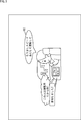
- FIG. 3 is a diagram showing an example of an operation using a driving command.
- the in-vehicle device receives and executes the normal driving command.
- the in-vehicle device performs control to reduce the speed of the vehicle 1.
- the normal operation command instructing to reduce the speed is input by making an utterance such as "Drop some more speed and drive" as shown in the balloon # 11 of FIG.
- the fact that the user who has input the normal driving command is the driver is specified based on the fact that the direction of the sound source specified based on the sound detected by the microphone array is the direction of the driver's seat.
- the fact that the user who has input the normal driving command is the driver is specified based on the fact that the voice detected by the microphone array is a voice registered in advance.
- the voice of the user who has a driver's license, which may become a driver, is pre-registered in the on-vehicle device, and speaker recognition is performed based on the registered voice.
- the on-vehicle device determines whether the user who has input the voice command based on the sound source direction of the speech is the driver or the user sitting in the front passenger seat or the user sitting in the rear seat It is identified if there is. In addition, with regard to at least the driver, it is specified by speaker recognition whether or not the user is a user registered in advance.
- the voice command by the driver can be received more reliably by determining whether the input person of the voice command is the driver based on the estimation of the sound source direction and the result of the speaker recognition. It will be possible.
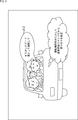
- FIG. 4 is a diagram showing another example of the operation using the driving command.
- the in-vehicle apparatus when the normal driving command instructing to reduce the speed is input by the mother in the front passenger seat, the in-vehicle apparatus is that the input person of the normal driving command is the driving assistant. On the basis of this, it refuses to accept the normal driving command. By refusing reception of the normal operation command, control for reducing the speed is not performed.
- the driving assistant is one of the attributes of the user. As described later, the user on the vehicle 1 is classified into any one of a driver's license holder, a driving assistant, and a passenger.
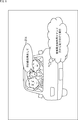
- FIG. 5 is a diagram showing another example of the operation using the driving command.
- the state shown in FIG. 5 is the same as the state described with reference to FIG.
- the driver is a father, and a mother and a child sit in the front passenger seat and the rear seat respectively.
- the on-vehicle device receives the emergency operation command based on the input operation command being an emergency operation command. ,Run.
- the in-vehicle device performs control for stopping the vehicle 1 in an emergency.
- the emergency operation command instructing an emergency stop is input by making an utterance such as "Stop and !!" as shown in the balloon # 13 of FIG.
- Whether the input driving command is a normal driving command or an emergency driving command is specified based on, for example, the tone of the speech, the volume, the content of the speech, and the like. Even if it is specified whether the driving command is the normal driving command or the emergency driving command based on the analysis result of the image taken by the camera and the analysis result of the sensor data detected by the various sensors. Good.
- the emergency driving command is accepted and executed even if it is the driving command input by the driving assistant.
- the driving assistant can drive the vehicle 1 using the driving command in an emergency such as when the driver has become unable to drive due to a sudden illness or when the driver erroneously performs the driving operation. it can.
- the father who is the driver is not aware of the danger, and the mother who is the driving assistant is aware of the danger.
- the on-vehicle device stops the vehicle 1 on the spot when the vehicle 1 is traveling on a general road.
- the on-vehicle device performs control such as bringing it to a road shoulder and stopping it, and notifying a subsequent vehicle of the emergency stop with a tail lamp.
- FIG. 6 is a diagram showing an example of an operation using a voice command other than the driving command.
- the in-vehicle device receives and executes the command for music playback operation.
- the in-vehicle device performs control to reproduce the next song of the song being reproduced.
- the music playback operation command instructing playback of the next song of the song being played is input by making an utterance such as "play the next song” as shown in a balloon # 14 of FIG. .
- voice commands other than driving commands are accepted and executed regardless of the user. Whether or not to receive the voice command is determined based on the type of voice command, the attribute of the user, the sitting position specified based on the speech direction, and the like.
- FIG. 7 is a view showing a configuration example of the vehicle 1.
- the vehicle 1 is provided with a camera 22, a sensor 23, a speaker 24, a drive control unit 25, and an air conditioning control unit 26 in addition to the in-vehicle device 21, the display 11 and the microphone array 12.
- a camera 22 As shown in FIG. 7, the vehicle 1 is provided with a camera 22, a sensor 23, a speaker 24, a drive control unit 25, and an air conditioning control unit 26 in addition to the in-vehicle device 21, the display 11 and the microphone array 12.
- Each unit is connected to an on-vehicle device 21 as an information processing apparatus.
- the camera 22 is an in-vehicle camera attached near the rearview mirror of the vehicle 1 or the like.
- the camera 22 captures an image of the inside of the vehicle, and outputs image data obtained by the capturing to the on-vehicle device 21.
- the sensor 23 is a seating sensor attached to each seat of the vehicle 1.
- the sensor 23 detects the seating state of the user and outputs sensor data to the on-vehicle device 21.
- the sensor data represents, for example, the presence or absence of seating.
- the sensor data may include weight data. In this case, it is possible to estimate not only the presence or absence of seating but also whether a seated user is an adult or a child based on sensor data.
- the camera 22 and the sensor 23 may not be provided in the vehicle 1, and only audio data from the microphone array 12 may be output to the on-vehicle device 21.
- the speaker 24 outputs various sounds such as music and synthesized voice of the navigation system.
- the speaker 24 may use, for example, the in-vehicle device 21.
- the generated synthesized voice is also output.
- the drive control unit 25 outputs a control signal to a device related to the drive system of the vehicle 1 according to control by the on-vehicle device 21 to drive the device.
- a control signal to a device related to the drive system of the vehicle 1 according to control by the on-vehicle device 21 to drive the device.
- each unit such as an engine, a steering, and a brake is driven.
- the air conditioning control unit 26 outputs a control signal to an apparatus related to the air conditioning system of the vehicle 1 such as an air conditioner according to control by the on-vehicle device 21 to drive the apparatus.
- the air conditioner is driven according to the output of the control signal from the drive control unit 25.
- the operation control unit 31 the voice command execution control unit 32, the navigation control unit 33, and the music reproduction control unit 34 are realized. At least one of these configurations is realized by execution of a predetermined program by a computer configuring the on-vehicle device 21.
- the drive control unit 31 controls the drive control unit 25 and performs control related to traveling according to the driver's operation, control related to drive support, and the like.
- control related to driving support for example, control for realizing the function of an advanced driver assistance system (ADAS) including collision avoidance, collision mitigation, follow-up traveling based on inter-vehicle distance, vehicle speed maintenance traveling, collision warning, lane departure warning, etc. To be done.
- ADAS advanced driver assistance system
- the driving control unit 31 performs control for traveling autonomously without the operation of the driver.
- the voice command execution control unit 32 detects and executes a voice command by analyzing the voice of the user collected by the microphone array 12.
- the voice command execution control unit 32 causes each of the drive control unit 25, the air conditioning control unit 26, the navigation control unit 33, and the music reproduction control unit 34 to perform processing according to the voice command, for example.
- the navigation control unit 33 controls the navigation system of the vehicle 1. For example, the navigation control unit 33 measures the current position of the vehicle 1 by GPS (Global Positioning System), and causes the display 11 to display a map near the current position.
- GPS Global Positioning System
- the navigation control unit 33 sets a destination input by the user, and guides a route to the destination.
- the route guidance is performed using the display on the display 11 and the sound from the speaker 24.
- the music reproduction control unit 34 controls processing related to music reproduction using an audio device (car stereo) mounted on the vehicle 1.
- the music reproduction control unit 34 reproduces music stored in, for example, a memory provided in the in-vehicle device 21.
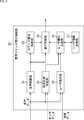
- FIG. 8 is a block diagram showing an example of a functional configuration of the voice command execution control unit 32 of FIG.
- the voice command execution control unit 32 includes a voice recognition unit 51, a command type determination unit 52, a speaker position specification unit 53, a user identification unit 54, a user rank determination unit 55, an execution control unit 56, and a user information storage unit 57. Be done.
- the voice recognition unit 51 performs voice recognition using voice data supplied from the microphone array 12 to detect a voice command.
- the voice command detected by the voice recognition unit 51 is supplied to the command type determination unit 52 and the execution control unit 56.
- the command type determination unit 52 determines the type of voice command detected by the voice recognition unit 51. In the command type determination unit 52, information representing the type of voice command is generated and acquired (received). Information on the command type determined by the command type determination unit 52 is supplied to the execution control unit 56.
- the information of the command type output from the command type determination unit 52 indicates which of the operation command, the navigation operation command, the music reproduction operation command, and the air conditioning command the input voice command is. .
- the voice recognition unit 51 may not be provided in the voice command execution control unit 32, and voice commands may be recognized using a voice recognition function of an external server.
- the voice data detected by the microphone array 12 is sent to the server via the communication unit (not shown), and the result of the voice recognition by the server is sent to the on-vehicle device 21.
- the speech recognition result includes information indicating the content and type of the speech command.
- Information representing the content of the voice command is received by the execution control unit 56, and information representing the type of the voice command is received by the command type determination unit 52.
- the speaker position specifying unit 53 estimates the sound source direction of the speech based on the voice data supplied from each of the microphones of the microphone array 12.
- the speaker position specifying unit 53 specifies the sitting position of the user who made the speech based on the estimated sound source direction, and outputs information representing the sitting position to the user order determining unit 55.
- the information output from the speaker position identification unit 53 indicates which of the driver's seat, the assistant's seat, and the rear seat the user who made the speech is sitting at.
- the user identification unit 54 identifies a speaker based on voice data supplied from each microphone.
- the user identification unit 54 has information on the voice of the user who holds the driver's license.
- the voice of the user who holds the driver's license is registered in advance, for example, when the vehicle 1 is purchased.
- the user identification unit 54 estimates the age of the user who uttered the voice based on the voice data. Do.
- the user identification unit 54 outputs information indicating the speaker (information indicating who the speaker is) or information indicating the age of the speaker to the user ranking determination unit 55.
- the identification information of the user is supplied to the user ranking determination unit 55, and when the voice of the user who does not have the driver's license is input, Information indicating the age of the user is supplied to the user ranking determination unit 55.
- identification of a speaker or estimation of the age may be performed.
- information representing the features of the face of each user and information used to estimate the age are registered in the user identification unit 54 in advance.
- the user may be identified by communicating between the mobile phone possessed by each user and the in-vehicle device 21, or the user may be identified based on the user's operation on the in-vehicle device 21. .
- the user rank determination unit 55 determines the reception order of driving commands based on the seating position of the speaker identified by the speaker position identification unit 53 and the attribute of the user identified by the user identification unit 54.
- the user ranking determination unit 55 determines which of the rankings the user who has input the voice command is the person who always receives the driving command, the person who receives the limited reception, and the person who receives the restriction.
- the user ranking determination unit 55 outputs, to the execution control unit 56, the ranking information of the user who has input the voice command.
- the determination result of the user rank by the user rank determination unit 55 is also supplied to the user information storage unit 57 and stored.
- the execution control unit 56 specifies the order of the input person of the voice command based on the information supplied from the user order determination unit 55. In addition, the execution control unit 56 identifies the type of voice command based on the information supplied from the command type determination unit 52, and receives the voice command based on the type of voice command and the operation command acceptance order of the input person. Control.
- the navigation operation command As described above, among the voice commands, the navigation operation command, the music reproduction operation command, and the air conditioning command can be accepted by anyone who has input the voice command. In addition, the acceptance of the operation command is appropriately limited.
- FIG. 9 is a diagram showing an example of a reception pattern of each voice command including the driving command.
- the voice command inputted by the user (driver) who is the target of regular reception of the driving command is a normal driving command, an emergency driving command, a navigation operation command, a music reproduction operation command, an air conditioning command All of are accepted.
- the voice command input by the user as the target of limited reception of the operation command is not accepted for the normal operation command, and the emergency operation command, the navigation operation command, the music reproduction operation command, and the air conditioning command are received.
- the voice command input by the user who is the object of rejection of acceptance of the operation command is the acceptance rejection for the normal operation command and the emergency operation command, and the navigation operation command, the music reproduction operation command, and the air conditioning command are accepted.
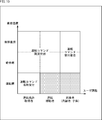
- FIG. 10 is a diagram showing an example of a reception pattern of a driving command.
- the vertical axis in FIG. 10 indicates the seating position, and the horizontal axis indicates the attribute of the user.
- the seating position is classified into three: driver's seat, passenger's seat, and rear seat.
- the attributes of the user are classified into three: driver's licensee, driver's assistant, and passenger.
- the driver's license holder is a user who has obtained a driver's license.
- the voice of the user who has obtained the driver's license is registered in advance in the on-vehicle device 21 and is identified by the user identification unit 54.
- the driving assistant is determined by the age estimated by the user identification unit 54.
- the passenger is a user (a simple passenger) other than the driver's license holder and the driver's assistant among the users in the vehicle 1. Children under the age of 18 and elderly people over the age of 65 are assumed as passengers. The passenger is determined by the age estimated by the user identification unit 54.
- the driving command reception pattern is provided with three stages: regular reception, limited reception, and reception refusal.
- the driving command inputted by the driver's license holder sitting in the driver's seat is always targeted for reception.
- the driving command input by the driver's license holder sitting in the front passenger seat and the driving command input by the driver's license holder sitting in the rear seat are targets of limited reception.
- the driving command input by the driving assistant sitting in the front passenger seat and the driving command input by the driving assistant sitting in the rear seat are targets of limited reception.
- the normal operation command is not accepted, and only the emergency operation command is accepted because it is a target of limited acceptance.
- the driving command input by the passenger sitting in the front passenger seat and the driving command input by the passenger sitting in the rear seat are subject to reception refusal.
- the execution control unit 56 of FIG. 8 controls the reception of the driving command based on the information of the reception pattern.
- the execution control unit 56 executes the received voice command, and controls each unit to perform processing according to the voice command.
- the execution control unit 56 causes the operation control unit 31 to perform processing corresponding to the operation command when the operation command is executed. In addition, when the navigation control command is executed, the execution control unit 56 causes the navigation control unit 33 to perform processing in accordance with the navigation control command.
- the execution control unit 56 When the music reproduction operation command is executed, the execution control unit 56 causes the music reproduction control unit 34 to perform processing in accordance with the music reproduction operation command. When the air conditioning command is executed, the execution control unit 56 causes the air conditioning control unit 26 to perform a process according to the air conditioning command.
- the user information storage unit 57 stores user information including the determination result of the order by the user order determination unit 55.
- the seating position specified by the speaker position specifying unit 53 in addition to the driving command acceptance order of each user who input the voice command and the presence or absence of the driver's license acquisition Information such as the age of the user estimated by the identification unit 54 is also included.
- the user information including the sitting position and the estimated age may be specified based on the conversation between the users in the car and stored in the user information storage unit 57. For example, when a certain destination is set, user information is accumulated from departure to arrival.
- priority is set to each user who is subject to limited reception based on the information stored in the user information storage unit 57. .
- acceptance of the emergency command is controlled in accordance with the priority.
- FIG. 11 is a diagram illustrating an example of the priority.
- the driver's license sitting in the rear seat to the driver's license seat sitting in the front passenger seat Priority is set higher than the acquirer.
- the driver's licensee when the driver's licensee is sitting in the front passenger seat or the rear seat, the driver's licensee is set to have a higher priority than the driver's assistant.
- the emergency driving command input by the former driver's license holder is preferentially received.
- the order regarding reception of the driving command is set.
- Both the driver's licensee and the driver's assistant may be sitting at the front passenger seat or the rear seat, and both may input an emergency driving command.
- both the driver's licensee and the driver's assistant may be sitting at the front passenger seat or the rear seat, and both may input an emergency driving command.
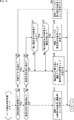
- Control processing> The process of the on-vehicle device 21 that controls each unit according to the voice command will be described with reference to the flowchart of FIG. 12.
- the process of FIG. 12 is started, for example, when a sound is detected by the microphone array 12.
- step S1 the speech recognition unit 51 determines whether or not a speech command is input based on the result of speech recognition, and waits until it is determined that a speech command is input.
- step S1 If it is determined in step S1 that a voice command has been input, the process proceeds to steps S2 and S3. The processes of step S2 and step S3 are performed in parallel.
- the input voice command is supplied to the command type determination unit 52 and the execution control unit 56.
- step S2 the command type determination unit 52 determines the type of the input voice command.
- step S3 the speaker position specifying unit 53 estimates the sound source direction.
- step S4 the user identification unit 54 identifies the speaker based on the voice data supplied from each microphone.
- the user identification unit 54 identifies that the input of the voice command is not due to the speech of the user who has registered the voice in advance unlike the voice in which the input voice is registered, the user identification unit 54 speaks based on the voice data. Estimate the age of the person.
- step S5 the user rank determination unit 55 performs user rank determination processing.
- the user priority determination process determines the priority of the user in receiving the driving command. The details of the user rank determination process will be described later with reference to the flowchart of FIG.
- step S5 When the order of the user is determined in the user rank determination process of step S5 and the type of the voice command is specified in step S2, the process proceeds to step S6.
- step S6 the execution control unit 56 performs voice command execution control processing.
- the voice command execution control process performs a process according to the input voice command. Details of the voice command execution control process will be described later with reference to the flowchart of FIG.
- step S6 When the voice command execution control process is performed in step S6, the process returns to step S1 and the subsequent processes are repeated. The processes after step S1 are repeated while the vehicle 1 is traveling.
- step S11 the user rank determination unit 55 determines whether the user attribute of the voice commander is the driver's license acquirer. If the user identification unit 54 specifies that the input voice is a registered voice, it is determined that the user attribute of the voice commander is the driver's license acquirer.
- step S12 the user order determining unit 55 determines that the sound source direction estimated by the speaker position specifying unit 53 is the driver's seat. It is determined whether or not it is a direction.
- step S13 the user rank determination unit 55 determines that the person who inputs the voice command is a driver, and the rank is a target for always receiving a driving command. Be determined as
- step S14 the user ranking determination unit 55 determines that the age estimated by the user identification unit 54 is 18 or more. , Determine if you are under 65 years old. Here, a range of 18 years old or older and less than 65 years old is used, but other age ranges may be used.
- step S14 If it is determined in step S14 that the estimated age is 18 years or older and less than 65 years, it is determined that the user attribute of the voice commander is the driving assistant, and the process proceeds to step S15. Further, even if it is determined in step S12 that the sound source direction is not the driver's seat direction, the process proceeds to step S15.
- step S15 the user order determination unit 55 determines whether the sound source direction estimated by the speaker position specification unit 53 is the direction of the front passenger seat.
- step S16 the user rank determination unit 55 determines the rank of the input person of the voice command as the driving command limitation reception target person having the highest priority. Do.
- step S15 when it is determined in step S15 that the sound source direction is not the direction of the assistant driver's seat, the seating position of the voice commander is the rear seat, and the process proceeds to step S17.
- step S17 the user rank determination unit 55 determines whether there is a driving command limited reception subject in another seat.
- the processing in steps S17 and S18 is processing performed after user information including the driving command reception priority of each user is stored in the user information storage unit 57.
- step S18 the user ranking determination unit 55 limits the driving command in which the priority of the user who input the voice command is in another seat. It is determined whether it is lower than the priority of the person to be accepted.
- step S18 If it is determined in step S18 that the priority of the user who has input the voice command is lower than the priority of the driving command limited receptionist in another seat, the user priority determination unit 55 inputs the voice command in step S19.
- the person's rank is determined as the driving command limited reception target person.
- step S20 the rank of the input person of the voice command is determined as the driving command acceptance denial target person.
- step S17 If it is determined in step S17 that there is no driving command limited reception target person in another seat, or in step S18, the driving command limit reception in which the priority of the user who input the voice command is in another seat If it is determined that the priority is higher than the priority of the target person, in step S16, the rank of the input person of the voice command is determined as the driving command limited reception target who has the highest priority.
- step S13, S16, S19, and S20 the process returns to step S5 in FIG. 12 and the subsequent processing is performed.
- the seating position is taken into consideration as the determination criterion of the user's rank.
- the priority of the seating position is higher in the front passenger seat than in the rear seat. That is, the priority of the front passenger seat is set higher from the viewpoint of the driver's easy understanding of the situation, the degree of visibility in the traveling direction, and the like.
- user attributes are used as determination criteria of the user's rank. Whether or not the driver has a license and the age of the user are used to determine the user attribute.
- the age of the user may be pre-registered as attribute information instead of being estimated based on the analysis result of the voice or the analysis result of the image.
- the limited reception target person of the driving command may be determined in consideration of the number of passengers, the sex of the user, the traveling history, and the like.
- the following three basic rules are set as how to decide the limited acceptance target of the driving command.
- the person who can receive the emergency command is the person who is the limited reception target of the operation command with the highest priority, in principle 1 person.
- the limited reception target person of the driving command is determined based on the sitting position.
- a user whose user attribute is a driver's license acquirer or a driving assistant is a candidate for a driving command limited reception subject.
- the first rule is set because the danger of unintended emergency stop and the like will increase if the emergency operation commands from all the operation command limited reception target persons are always received.
- the priority of the front passenger seat is set higher than the priority of the rear seat.
- priority is also set for each of a plurality of rear seats.
- Each rear seat is prioritized by the vehicle designer or by the user, depending on the seat conditions (such as folding a part of the rear seat or placing luggage) and the number of passengers (number of rear seats) Be done.
- the third rule is that the driver's license does not matter as long as the age is in the range of 18 years old or more and less than 65 years old.
- the range of 18 years old or older and less than 65 years is a range of age where it is presumed that the danger during driving can be predicted.
- children under the age of 18 and elderly people over the age of 65 will be exempted from those who are eligible to receive driving commands.
- FIG. 14 is a diagram for explaining the priority of the driving command limited reception subject.
- FIG. 14 the arrangement of each seat of the vehicle 1 is schematically shown.
- the circle surrounding the letter “Luck” indicates the driver's seat, and the circle surrounding the number “1” indicates the passenger seat.
- the rounded rectangles surrounding the numbers “2", “3” and “4" indicate the rear seats, respectively.
- the numbers assigned to each seat represent the priority of each seat. Among the users aged 18 to 65, one user sitting in the seat with the highest priority in FIG. 14 is determined as the driving command limited reception target person.
- Such determination is made, for example, when the father inputs a driving command such as "start driving” and the child and the mother have input a music reproduction operation command such as "playing a song of ". To be done.
- user information indicating that the father is a driver's license acquirer and is sitting in the driver's seat is stored.
- user information indicating that they are sitting in the front passenger seat and the rear seat (2) is not stored, and the mother information is stored.
- User information is stored that satisfies age requirements and represents sitting in the back seat (3).
- the mother sitting in the rear seat (3) at the right end is determined as the driving command limited reception subject.
- Mr. A who is a male in his twenties, sits in the driver's seat and the passenger seat is vacant.
- Mr. B who is a woman in her twenties, sits in the left rear seat (2)
- Mr. C who is a man in her twenties, sits in the right rear seat (3)
- Mr. D who is a female, is sitting. In this case, Mr. B sitting in the left rear seat (2) is determined as the driving command limited reception target person.
- Mr. A inputs a driving command such as "Start driving”
- Mr. B, Mr. C and Mr. D input an air conditioning command such as "Turn on the temperature of the air conditioner” If done.
- the user information storage unit 57 stores user information indicating that Mr. A is a driver's license acquirer and is sitting in the driver's seat.
- Mr. B and Mr. C a user who meets the condition of the age range of 18 years old or older and less than 65 years, and represents that they are sitting in the left rear seat (2) and the right rear seat (3) Information is stored.
- Mr. D user information is stored that satisfies the condition of the age range of 18 years old or older and less than 65 years old, and represents sitting in the central rear seat (4).
- Mr. B sitting in the rear seat (2) at the left end is determined as the driving command limited reception target person.
- the attribute can not be determined unless the user speaks.
- the attribute of the user may be determined based on the in-vehicle image captured by the camera 22 or sensor data output from a seating sensor that constitutes the sensor 23.
- each determination described with reference to FIG. 13 is performed based on the age of the user identified by analyzing the image and the seating position.
- step S31 the execution control unit 56 determines whether the input voice command is a driving command.
- step S32 the execution control unit 56 determines whether the driver's utterance is made.
- step S33 the execution control unit 56 receives and executes the input driving command. That is, it is determined that the input driving command is the driving command by the user who is always the target of reception, and is received.
- step S34 the execution control unit 56 determines whether or not the user is the target of the limited acceptance. .
- step S35 the execution control unit 56 determines whether the input driving command is an emergency driving command.
- step S35 If it is determined in step S35 that the input operation command is an emergency operation command, the process proceeds to step S33. That is, it is determined that the input emergency operation command is an operation command by the user who is the target of limited acceptance, and is accepted.
- step S34 when it is determined that the user does not speak by the user who is the target of limited acceptance, or when it is determined in step S35 that the input driving command is not the emergency driving command but the normal driving command, The process proceeds to step S36.
- step S36 the execution control unit 56 refuses to receive the input operation command and does not execute it.
- step S31 determines whether the input voice command is a driving command.
- step S33 a navigation operation command, a music reproduction operation command, and an air conditioning command are accepted and executed.
- step S33 After the process according to the voice command is performed in step S33, or after the acceptance of the voice command is rejected in step S36, the process returns to step S8 in FIG. 12, and the subsequent processes are performed.
- the driver is the highest ranked user, and for other users, the ranking which is the reference of the reception of the driving command is set according to the attribute and the sitting position.
- the accident frequently occurring area is identified from information such as a near-miss hat map managed by the navigation control unit 33.
- the case where the upper limit number of the driving command limited reception target persons with high priority is 2 is considered.
- the seat arrangement shown in FIG. 14 it is assumed that a 20-year-old man A sits in the driver's seat and a 20-year-old woman B sits in the passenger seat.
- a female C in her twenties sits in the rear seat (2) on the left end and a male D in her twenties sits in the rear seat (3) on the right end.
- Mr. B sitting in the assistant driver's seat is determined as a driving command limited reception target person of high priority.
- Mr. C sitting in the rear seat (2) at the left end is also determined as a driving command limited reception subject who is given the same priority as Mr. B.
- the order of the driving command limited reception subject may be determined according to the attribute of the user other than the age and the travel history.
- the user of the rear seat Is also determined as a driving command limited reception target person having the same priority as the user at the front passenger seat.
- the driving history is specified based on the user's attribute information.
- the travel experience of the area being traveled is specified based on the travel history.
- the information of the travel history of each user is managed, for example, by being included in the attribute information of each user.
- the travel history includes information such as a travel route and travel date and time.
- the case where the upper limit number of the driving command limited reception target persons with high priority is 2 is considered. It is assumed that a 45-year-old man sits in the driver's seat and an 18-year-old woman who does not have a driver's license in the passenger seat. In addition, it is assumed that a 43-year-old woman with a driver's license is sitting in the back seat.
- the 18-year-old woman sitting in the front passenger seat is not only determined as a target person for driving command limitation reception according to the basic rule, but also the 43-year-old woman sitting in the back seat is a user sitting in the front passenger seat It is determined as a driving command limited acceptance target person having the same priority as in the above.
- Such a determination of a driving command limited receptionist is based on the assumption that a person having a driver's license has knowledge of driving hazards. Also, it is based on the assumption that people who are rich in driving experience in the area currently traveling (for example, people who have traveled 10 hours or more) are familiar with the dangers of diving in the area.
- the degree of tension may be estimated from the image at the time of speech or voice such as cry and be used as a trigger for emergency stop. Good.
- the timing of acceptance of the emergency operation command by the user who is subject to limited acceptance is limited only to the timing when traffic accidents are likely to occur, such as intersections, roads with poor visibility, parking lots, starting of vehicles, etc. You may do so.
- the situation where a traffic accident is likely to occur is determined by, for example, the execution control unit 56 based on the information on the current location and the traveling situation of the vehicle.
- the number of users to be subjected to the limited reception of the emergency operation command may be limited.
- the number of such users may be set to one in the same vehicle.
- the result of the user's ranking may be used other than limiting the acceptance of the driving command.
- BGM at a loud volume when the vehicle is traveling may interfere with driving.
- the volume operation of BGM using the command for music reproduction operation the operation of the driver is more favored than the operation of other users in the vehicle based on the result of the ranking.
- the information terminal having the agent function may be determined as the driving command limitation reception target person.
- the on-vehicle device 21 accepts and executes limitedly the emergency operation command uttered by the information terminal having the agent function judging the situation.
- the mobile unit on which the user is riding is assumed to be a car, it may be another mobile unit equipped with the on-vehicle device 21 such as a bicycle, a motorcycle, a train, or an airplane.
- the above-described technology can also be applied when driving various moving bodies.
- the devices to be controlled by the voice command are not limited to the devices mounted on the mobile.
- the reception of the voice command described above is applied also in the case of operating a control device serving as a gateway of each device installed in a room such as a television receiver, an air conditioner (air conditioner), and a lighting device by a voice command. Is possible.
- a disaster prevention device such as a sprinkler
- a voice command such as "to extinguish"
- the voice command for operating the sprinkler is accepted when an adult is a person who satisfies the condition of a predetermined age.
- a child who does not satisfy the condition of the age is used as the input person, it can be accepted when a fire actually occurs, that is, in an emergency, but not accepted normally when a fire does not occur.
- the control device is equipped with a function of controlling the reception of the voice command as described above as well as a function of detecting the occurrence of a fire.
- the above-described process can be applied to the case where devices other than the device mounted on the mobile object are controlled by the voice command.
- FIG. 16 is a block diagram showing an example of a hardware configuration of a computer that executes the series of processes described above according to a program.
- the on-vehicle device 21 is configured by, for example, a computer having a configuration as shown in FIG.
- a central processing unit (CPU) 1001, a read only memory (ROM) 1002, and a random access memory (RAM) 1003 are mutually connected by a bus 1004.
- An input / output interface 1005 is further connected to the bus 1004.
- the input / output interface 1005 is connected to an input unit 1006 including a keyboard, a mouse and the like, and an output unit 1007 including a display, a speaker and the like.
- a storage unit 1008 such as a hard disk and a non-volatile memory
- a communication unit 1009 such as a network interface
- a drive 1010 for driving the removable medium 1011.
- the CPU 1001 loads, for example, the program stored in the storage unit 1008 into the RAM 1003 via the input / output interface 1005 and the bus 1004, and executes the above-described series of processes. Is done.
- the program executed by the CPU 1001 is provided, for example, via a wired or wireless transmission medium such as a local area network, the Internet, or digital broadcasting, recorded in the removable medium 1011 or installed in the storage unit 1008.
- a wired or wireless transmission medium such as a local area network, the Internet, or digital broadcasting
- the program executed by the computer may be a program that performs processing in chronological order according to the order described in this specification, in parallel, or when processing is performed such as when a call is made. It may be a program to be performed.
- the present technology can have a cloud computing configuration in which one function is shared and processed by a plurality of devices via a network.
- each step described in the above-described flowchart can be executed by one device or in a shared manner by a plurality of devices.
- the plurality of processes included in one step can be executed by being shared by a plurality of devices in addition to being executed by one device.
- the present technology can also have the following configuration.
- a receiver that receives a type of voice command related to control of the device;
- An information processing apparatus comprising: a control unit that accepts the voice command whose input person is a user who does not receive the type of the voice command when the type of the voice command is an emergency command.
- the information processing apparatus according to (1) further including: a voice recognition unit that detects the voice command by performing voice recognition.
- the position specifying unit specifies a position of an input person of the voice command by estimating a sound source.
- the voice command is a command related to control of a device mounted on a vehicle,
- the control unit always receives the driving command when the attribute of the input person is a driver's license acquirer and the seating position is a driver's seat.
- the control unit receives the operation command when the seating position is a seat other than the driver's seat, when the operation command is an emergency command, and does not receive the operation command when the operation command is not an emergency command.
- the control unit receives the driving command when the driving command is an emergency command, and the control unit The information processing apparatus according to (7), which does not receive the command when it is not a command.
- the information processing apparatus according to (8) further including: a determination unit that determines an attribute of a user of a predetermined age who does not have a driver's license as the driving assistant.
- the control unit sets a priority for each user according to at least one of an attribute and a seating position when there are a plurality of users who receive when the operation command is an emergency command.
- the information processing apparatus according to (8) or (9), wherein the driving command is received according to the priority.
- the control unit switches the user who receives the driving command when the driving command is an emergency command, according to at least one of the driving condition and the driver's condition. Any one of (8) to (10) Information processor as described.
- the control unit does not receive the driving command when the attribute of the input person is a passenger other than the driver's license holder and the driving assistant, the information according to any one of (8) to (11) Processing unit.
- the information processing apparatus Receive the type of voice command related to control of the device, When the type of the voice command is an emergency command, the voice command whose input person is a user who does not receive the command when the type of the voice command is not an emergency command is received.
- a receiver that receives a type of voice command related to control of the device;
- a mobile unit equipped with an information processing apparatus comprising: a control unit that accepts a voice command whose input person is a user who is not accepted when the type of the voice command is a command for emergency or not a command for emergency.
- Reference Signs List 1 vehicle 11 display 12 microphone array 21 in-vehicle device 22 camera 23 sensor 24 speaker 25 drive control unit 26 air conditioning control unit 51 voice recognition unit 52 command type determination unit 53 speaker position specification unit , 54 user identification unit, 55 user order determination unit, 56 execution control unit, 57 user information storage unit
Landscapes
- Engineering & Computer Science (AREA)
- Human Computer Interaction (AREA)
- Theoretical Computer Science (AREA)
- Mechanical Engineering (AREA)
- Audiology, Speech & Language Pathology (AREA)
- Automation & Control Theory (AREA)
- Physics & Mathematics (AREA)
- Health & Medical Sciences (AREA)
- Multimedia (AREA)
- General Health & Medical Sciences (AREA)
- General Engineering & Computer Science (AREA)
- General Physics & Mathematics (AREA)
- Acoustics & Sound (AREA)
- Computational Linguistics (AREA)
- Transportation (AREA)
- Navigation (AREA)
- Fittings On The Vehicle Exterior For Carrying Loads, And Devices For Holding Or Mounting Articles (AREA)
Abstract
La présente invention concerne un dispositif de traitement d'informations, un procédé de traitement d'informations, un programme et un corps mobile destinés à recevoir de manière appropriée une instruction vocale. Le dispositif de traitement d'informations selon un aspect de la présente invention identifie un type d'une instruction vocale reçue pour commander un dispositif, et si le type de l'instruction vocale est une instruction à caractère d'urgence, le dispositif de traitement d'informations accepte une instruction vocale qui est entrée par un utilisateur qui ne possède pas d'autorisation d'entrer une instruction sans caractère d'urgence. La présente invention est applicable à une automobile sur laquelle est monté un dispositif embarqué qui peut être actionné à l'aide d'une instruction vocale.
Applications Claiming Priority (2)
| Application Number | Priority Date | Filing Date | Title |
|---|---|---|---|
| JP2017-196347 | 2017-10-06 | ||
| JP2017196347 | 2017-10-06 |
Publications (1)
| Publication Number | Publication Date |
|---|---|
| WO2019069731A1 true WO2019069731A1 (fr) | 2019-04-11 |
Family
ID=65994777
Family Applications (1)
| Application Number | Title | Priority Date | Filing Date |
|---|---|---|---|
| PCT/JP2018/035260 Ceased WO2019069731A1 (fr) | 2017-10-06 | 2018-09-25 | Dispositif de traitement d'informations, procédé de traitement d'informations, et corps mobile |
Country Status (1)
| Country | Link |
|---|---|
| WO (1) | WO2019069731A1 (fr) |
Cited By (13)
| Publication number | Priority date | Publication date | Assignee | Title |
|---|---|---|---|---|
| KR20190107288A (ko) * | 2019-08-30 | 2019-09-19 | 엘지전자 주식회사 | 화자인식 기반 차량 제어 방법 및 지능형 차량 |
| JP2021041800A (ja) * | 2019-09-10 | 2021-03-18 | 株式会社Subaru | 車両用制御装置 |
| CN113053034A (zh) * | 2019-12-27 | 2021-06-29 | 本田技研工业株式会社 | 车辆操作权管理装置、车辆操作权管理方法及存储介质 |
| CN115356682A (zh) * | 2022-08-21 | 2022-11-18 | 嘉晨云控新能源(上海)有限公司 | 一种基于精确定位的声源位置感知装置及方法 |
| CN115917642A (zh) * | 2020-09-18 | 2023-04-04 | 松下知识产权经营株式会社 | 声音处理系统、声音处理装置以及声音处理方法 |
| WO2023090057A1 (fr) * | 2021-11-17 | 2023-05-25 | ソニーグループ株式会社 | Dispositif de traitement d'informations, procédé de traitement d'informations et programme de traitement d'informations |
| JP2023129151A (ja) * | 2022-03-04 | 2023-09-14 | フォルシアクラリオン・エレクトロニクス株式会社 | 車載器及びサーバ |
| WO2024009465A1 (fr) * | 2022-07-07 | 2024-01-11 | パイオニア株式会社 | Dispositif de reconnaissance vocale, programme, procédé de reconnaissance vocale et système de reconnaissance vocale |
| WO2024048180A1 (fr) * | 2022-08-30 | 2024-03-07 | ソニーセミコンダクタソリューションズ株式会社 | Dispositif de traitement d'informations, procédé de traitement d'informations et système de commande de véhicule |
| JP2025088482A (ja) * | 2023-11-30 | 2025-06-11 | トヨタ自動車株式会社 | 制御装置、車両、制御方法、及びプログラム |
| WO2025249432A1 (fr) * | 2024-05-29 | 2025-12-04 | パナソニックIpマネジメント株式会社 | Procédé de traitement d'informations, dispositif de traitement d'informations et programme |
| WO2026023564A1 (fr) * | 2024-07-22 | 2026-01-29 | パイオニア株式会社 | Dispositif de traitement d'informations, procédé de traitement d'informations et programme |
| CN115917642B (en) * | 2020-09-18 | 2026-05-05 | 松下汽车电子系统株式会社 | Sound processing system, sound processing device, and sound processing method |
Citations (6)
| Publication number | Priority date | Publication date | Assignee | Title |
|---|---|---|---|---|
| JP2000188795A (ja) * | 1998-12-22 | 2000-07-04 | Matsushita Electric Ind Co Ltd | マイクロホン装置とそれを用いた音声認識装置、カーナビゲーションシステム、自動車の自動運転システム |
| JP2004354930A (ja) * | 2003-05-30 | 2004-12-16 | Calsonic Kansei Corp | 音声認識システム |
| US20150110287A1 (en) * | 2013-10-18 | 2015-04-23 | GM Global Technology Operations LLC | Methods and apparatus for processing multiple audio streams at a vehicle onboard computer system |
| JP2016090655A (ja) * | 2014-10-30 | 2016-05-23 | シャープ株式会社 | 音声認識ロボットシステム、音声認識ロボット、音声認識ロボットの制御装置、音声認識ロボットを制御するための通信端末、およびプログラム |
| JP2016179810A (ja) * | 2015-03-23 | 2016-10-13 | 株式会社デンソー | 自動走行制御装置及び自動走行制御システム |
| WO2016183825A1 (fr) * | 2015-05-20 | 2016-11-24 | 华为技术有限公司 | Procédé de positionnement d'emplacement sonore, et dispositif terminal |
-
2018
- 2018-09-25 WO PCT/JP2018/035260 patent/WO2019069731A1/fr not_active Ceased
Patent Citations (6)
| Publication number | Priority date | Publication date | Assignee | Title |
|---|---|---|---|---|
| JP2000188795A (ja) * | 1998-12-22 | 2000-07-04 | Matsushita Electric Ind Co Ltd | マイクロホン装置とそれを用いた音声認識装置、カーナビゲーションシステム、自動車の自動運転システム |
| JP2004354930A (ja) * | 2003-05-30 | 2004-12-16 | Calsonic Kansei Corp | 音声認識システム |
| US20150110287A1 (en) * | 2013-10-18 | 2015-04-23 | GM Global Technology Operations LLC | Methods and apparatus for processing multiple audio streams at a vehicle onboard computer system |
| JP2016090655A (ja) * | 2014-10-30 | 2016-05-23 | シャープ株式会社 | 音声認識ロボットシステム、音声認識ロボット、音声認識ロボットの制御装置、音声認識ロボットを制御するための通信端末、およびプログラム |
| JP2016179810A (ja) * | 2015-03-23 | 2016-10-13 | 株式会社デンソー | 自動走行制御装置及び自動走行制御システム |
| WO2016183825A1 (fr) * | 2015-05-20 | 2016-11-24 | 华为技术有限公司 | Procédé de positionnement d'emplacement sonore, et dispositif terminal |
Cited By (23)
| Publication number | Priority date | Publication date | Assignee | Title |
|---|---|---|---|---|
| KR20190107288A (ko) * | 2019-08-30 | 2019-09-19 | 엘지전자 주식회사 | 화자인식 기반 차량 제어 방법 및 지능형 차량 |
| KR102696262B1 (ko) * | 2019-08-30 | 2024-08-21 | 엘지전자 주식회사 | 화자인식 기반 차량 제어 방법 및 지능형 차량 |
| JP2021041800A (ja) * | 2019-09-10 | 2021-03-18 | 株式会社Subaru | 車両用制御装置 |
| CN112550219A (zh) * | 2019-09-10 | 2021-03-26 | 株式会社斯巴鲁 | 车辆用控制装置 |
| CN112550219B (zh) * | 2019-09-10 | 2025-07-08 | 株式会社斯巴鲁 | 车辆用控制装置 |
| US11783823B2 (en) | 2019-09-10 | 2023-10-10 | Subaru Corporation | Vehicle control apparatus |
| JP7534076B2 (ja) | 2019-09-10 | 2024-08-14 | 株式会社Subaru | 車両用制御装置 |
| JP7198741B2 (ja) | 2019-12-27 | 2023-01-04 | 本田技研工業株式会社 | 車両操作権管理装置、車両操作権管理方法及びプログラム |
| CN113053034B (zh) * | 2019-12-27 | 2023-02-28 | 本田技研工业株式会社 | 车辆操作权管理装置、车辆操作权管理方法及存储介质 |
| JP2021107173A (ja) * | 2019-12-27 | 2021-07-29 | 本田技研工業株式会社 | 車両操作権管理装置、車両操作権管理方法及びプログラム |
| CN113053034A (zh) * | 2019-12-27 | 2021-06-29 | 本田技研工业株式会社 | 车辆操作权管理装置、车辆操作权管理方法及存储介质 |
| CN115917642A (zh) * | 2020-09-18 | 2023-04-04 | 松下知识产权经营株式会社 | 声音处理系统、声音处理装置以及声音处理方法 |
| CN115917642B (en) * | 2020-09-18 | 2026-05-05 | 松下汽车电子系统株式会社 | Sound processing system, sound processing device, and sound processing method |
| WO2023090057A1 (fr) * | 2021-11-17 | 2023-05-25 | ソニーグループ株式会社 | Dispositif de traitement d'informations, procédé de traitement d'informations et programme de traitement d'informations |
| JP2023129151A (ja) * | 2022-03-04 | 2023-09-14 | フォルシアクラリオン・エレクトロニクス株式会社 | 車載器及びサーバ |
| JP7805821B2 (ja) | 2022-03-04 | 2026-01-26 | フォルシアクラリオン・エレクトロニクス株式会社 | 車載器 |
| JPWO2024009465A1 (fr) * | 2022-07-07 | 2024-01-11 | ||
| WO2024009465A1 (fr) * | 2022-07-07 | 2024-01-11 | パイオニア株式会社 | Dispositif de reconnaissance vocale, programme, procédé de reconnaissance vocale et système de reconnaissance vocale |
| CN115356682A (zh) * | 2022-08-21 | 2022-11-18 | 嘉晨云控新能源(上海)有限公司 | 一种基于精确定位的声源位置感知装置及方法 |
| WO2024048180A1 (fr) * | 2022-08-30 | 2024-03-07 | ソニーセミコンダクタソリューションズ株式会社 | Dispositif de traitement d'informations, procédé de traitement d'informations et système de commande de véhicule |
| JP2025088482A (ja) * | 2023-11-30 | 2025-06-11 | トヨタ自動車株式会社 | 制御装置、車両、制御方法、及びプログラム |
| WO2025249432A1 (fr) * | 2024-05-29 | 2025-12-04 | パナソニックIpマネジメント株式会社 | Procédé de traitement d'informations, dispositif de traitement d'informations et programme |
| WO2026023564A1 (fr) * | 2024-07-22 | 2026-01-29 | パイオニア株式会社 | Dispositif de traitement d'informations, procédé de traitement d'informations et programme |
Similar Documents
| Publication | Publication Date | Title |
|---|---|---|
| WO2019069731A1 (fr) | Dispositif de traitement d'informations, procédé de traitement d'informations, et corps mobile | |
| US12240502B2 (en) | Presentation control device, presentation control program, and driving control device | |
| US9613639B2 (en) | Communication system and terminal device | |
| JP7068986B2 (ja) | エージェントシステム、エージェント制御方法、およびプログラム | |
| JP4380541B2 (ja) | 車両用エージェント装置 | |
| JP7119846B2 (ja) | 車両の走行制御方法及び走行制御装置 | |
| CN111661068B (zh) | 智能体装置、智能体装置的控制方法及存储介质 | |
| US20200152203A1 (en) | Agent device, agent presentation method, and storage medium | |
| JP6604151B2 (ja) | 音声認識制御システム | |
| US20250234126A1 (en) | Acoustic control method and acoustic control device | |
| CN105895095A (zh) | 自适应交互语音系统 | |
| JP6075577B2 (ja) | 運転支援装置 | |
| JP2018163112A (ja) | 自動駐車制御方法およびそれを利用した自動駐車制御装置、プログラム | |
| KR20220055214A (ko) | 운전자 보조 시스템 및 그를 가지는 차량 | |
| JP7235554B2 (ja) | エージェント装置、エージェント装置の制御方法、およびプログラム | |
| JP2019131096A (ja) | 車両制御支援システムおよび車両制御支援装置 | |
| JP2021096717A (ja) | 情報提供装置、情報提供方法、およびプログラム | |
| EP3906706B1 (fr) | Système de réalité augmentée acoustique de casque d'écoute embarqué | |
| WO2023153314A1 (fr) | Dispositif de commande d'équipement embarqué et procédé de commande d'équipement embarqué | |
| US20250006200A1 (en) | Information processing device, information processing method, and information processing program | |
| CN111731320A (zh) | 智能体系统、智能体服务器及其控制方法、存储介质 | |
| JP7715028B2 (ja) | 情報提供装置及び情報提供方法 | |
| JP2024067341A (ja) | 車両の情報提示方法及び情報提示装置 | |
| JP2022165339A (ja) | エージェント装置 | |
| JP2017111493A (ja) | 対話装置 |
Legal Events
| Date | Code | Title | Description |
|---|---|---|---|
| 121 | Ep: the epo has been informed by wipo that ep was designated in this application |
Ref document number: 18863973 Country of ref document: EP Kind code of ref document: A1 |
|
| NENP | Non-entry into the national phase |
Ref country code: DE |
|
| 122 | Ep: pct application non-entry in european phase |
Ref document number: 18863973 Country of ref document: EP Kind code of ref document: A1 |
|
| NENP | Non-entry into the national phase |
Ref country code: JP |