WO2019088271A1 - Procédé d'estimation de surface d'inflammation de poche parodontale - Google Patents
Procédé d'estimation de surface d'inflammation de poche parodontale Download PDFInfo
- Publication number
- WO2019088271A1 WO2019088271A1 PCT/JP2018/040916 JP2018040916W WO2019088271A1 WO 2019088271 A1 WO2019088271 A1 WO 2019088271A1 JP 2018040916 W JP2018040916 W JP 2018040916W WO 2019088271 A1 WO2019088271 A1 WO 2019088271A1
- Authority
- WO
- WIPO (PCT)
- Prior art keywords
- bacteria
- streptococcus
- pisa
- value
- amount
- Prior art date
- Legal status (The legal status is an assumption and is not a legal conclusion. Google has not performed a legal analysis and makes no representation as to the accuracy of the status listed.)
- Ceased
Links
- 0 C*(C)C(/C=C/C=*1*****)=C(C)C=*C=CC=C2C=CC1=CC2 Chemical compound C*(C)C(/C=C/C=*1*****)=C(C)C=*C=CC=C2C=CC1=CC2 0.000 description 4
Images






Classifications
-
- C—CHEMISTRY; METALLURGY
- C12—BIOCHEMISTRY; BEER; SPIRITS; WINE; VINEGAR; MICROBIOLOGY; ENZYMOLOGY; MUTATION OR GENETIC ENGINEERING
- C12Q—MEASURING OR TESTING PROCESSES INVOLVING ENZYMES, NUCLEIC ACIDS OR MICROORGANISMS; COMPOSITIONS OR TEST PAPERS THEREFOR; PROCESSES OF PREPARING SUCH COMPOSITIONS; CONDITION-RESPONSIVE CONTROL IN MICROBIOLOGICAL OR ENZYMOLOGICAL PROCESSES
- C12Q1/00—Measuring or testing processes involving enzymes, nucleic acids or microorganisms; Compositions therefor; Processes of preparing such compositions
- C12Q1/68—Measuring or testing processes involving enzymes, nucleic acids or microorganisms; Compositions therefor; Processes of preparing such compositions involving nucleic acids
- C12Q1/6813—Hybridisation assays
- C12Q1/6834—Enzymatic or biochemical coupling of nucleic acids to a solid phase
- C12Q1/6837—Enzymatic or biochemical coupling of nucleic acids to a solid phase using probe arrays or probe chips
-
- C—CHEMISTRY; METALLURGY
- C12—BIOCHEMISTRY; BEER; SPIRITS; WINE; VINEGAR; MICROBIOLOGY; ENZYMOLOGY; MUTATION OR GENETIC ENGINEERING
- C12Q—MEASURING OR TESTING PROCESSES INVOLVING ENZYMES, NUCLEIC ACIDS OR MICROORGANISMS; COMPOSITIONS OR TEST PAPERS THEREFOR; PROCESSES OF PREPARING SUCH COMPOSITIONS; CONDITION-RESPONSIVE CONTROL IN MICROBIOLOGICAL OR ENZYMOLOGICAL PROCESSES
- C12Q1/00—Measuring or testing processes involving enzymes, nucleic acids or microorganisms; Compositions therefor; Processes of preparing such compositions
- C12Q1/68—Measuring or testing processes involving enzymes, nucleic acids or microorganisms; Compositions therefor; Processes of preparing such compositions involving nucleic acids
- C12Q1/6876—Nucleic acid products used in the analysis of nucleic acids, e.g. primers or probes
- C12Q1/6883—Nucleic acid products used in the analysis of nucleic acids, e.g. primers or probes for diseases caused by alterations of genetic material
-
- C—CHEMISTRY; METALLURGY
- C12—BIOCHEMISTRY; BEER; SPIRITS; WINE; VINEGAR; MICROBIOLOGY; ENZYMOLOGY; MUTATION OR GENETIC ENGINEERING
- C12Q—MEASURING OR TESTING PROCESSES INVOLVING ENZYMES, NUCLEIC ACIDS OR MICROORGANISMS; COMPOSITIONS OR TEST PAPERS THEREFOR; PROCESSES OF PREPARING SUCH COMPOSITIONS; CONDITION-RESPONSIVE CONTROL IN MICROBIOLOGICAL OR ENZYMOLOGICAL PROCESSES
- C12Q1/00—Measuring or testing processes involving enzymes, nucleic acids or microorganisms; Compositions therefor; Processes of preparing such compositions
- C12Q1/68—Measuring or testing processes involving enzymes, nucleic acids or microorganisms; Compositions therefor; Processes of preparing such compositions involving nucleic acids
- C12Q1/6876—Nucleic acid products used in the analysis of nucleic acids, e.g. primers or probes
- C12Q1/6888—Nucleic acid products used in the analysis of nucleic acids, e.g. primers or probes for detection or identification of organisms
- C12Q1/689—Nucleic acid products used in the analysis of nucleic acids, e.g. primers or probes for detection or identification of organisms for bacteria
-
- G—PHYSICS
- G16—INFORMATION AND COMMUNICATION TECHNOLOGY [ICT] SPECIALLY ADAPTED FOR SPECIFIC APPLICATION FIELDS
- G16B—BIOINFORMATICS, i.e. INFORMATION AND COMMUNICATION TECHNOLOGY [ICT] SPECIALLY ADAPTED FOR GENETIC OR PROTEIN-RELATED DATA PROCESSING IN COMPUTATIONAL MOLECULAR BIOLOGY
- G16B20/00—ICT specially adapted for functional genomics or proteomics, e.g. genotype-phenotype associations
- G16B20/20—Allele or variant detection, e.g. single nucleotide polymorphism [SNP] detection
-
- G—PHYSICS
- G16—INFORMATION AND COMMUNICATION TECHNOLOGY [ICT] SPECIALLY ADAPTED FOR SPECIFIC APPLICATION FIELDS
- G16B—BIOINFORMATICS, i.e. INFORMATION AND COMMUNICATION TECHNOLOGY [ICT] SPECIALLY ADAPTED FOR GENETIC OR PROTEIN-RELATED DATA PROCESSING IN COMPUTATIONAL MOLECULAR BIOLOGY
- G16B40/00—ICT specially adapted for biostatistics; ICT specially adapted for bioinformatics-related machine learning or data mining, e.g. knowledge discovery or pattern finding
- G16B40/20—Supervised data analysis
-
- C—CHEMISTRY; METALLURGY
- C12—BIOCHEMISTRY; BEER; SPIRITS; WINE; VINEGAR; MICROBIOLOGY; ENZYMOLOGY; MUTATION OR GENETIC ENGINEERING
- C12N—MICROORGANISMS OR ENZYMES; COMPOSITIONS THEREOF; PROPAGATING, PRESERVING, OR MAINTAINING MICROORGANISMS; MUTATION OR GENETIC ENGINEERING; CULTURE MEDIA
- C12N15/00—Mutation or genetic engineering; DNA or RNA concerning genetic engineering, vectors, e.g. plasmids, or their isolation, preparation or purification; Use of hosts therefor
- C12N15/09—Recombinant DNA-technology
-
- G—PHYSICS
- G16—INFORMATION AND COMMUNICATION TECHNOLOGY [ICT] SPECIALLY ADAPTED FOR SPECIFIC APPLICATION FIELDS
- G16B—BIOINFORMATICS, i.e. INFORMATION AND COMMUNICATION TECHNOLOGY [ICT] SPECIALLY ADAPTED FOR GENETIC OR PROTEIN-RELATED DATA PROCESSING IN COMPUTATIONAL MOLECULAR BIOLOGY
- G16B30/00—ICT specially adapted for sequence analysis involving nucleotides or amino acids
- G16B30/10—Sequence alignment; Homology search
-
- G—PHYSICS
- G16—INFORMATION AND COMMUNICATION TECHNOLOGY [ICT] SPECIALLY ADAPTED FOR SPECIFIC APPLICATION FIELDS
- G16H—HEALTHCARE INFORMATICS, i.e. INFORMATION AND COMMUNICATION TECHNOLOGY [ICT] SPECIALLY ADAPTED FOR THE HANDLING OR PROCESSING OF MEDICAL OR HEALTHCARE DATA
- G16H10/00—ICT specially adapted for the handling or processing of patient-related medical or healthcare data
- G16H10/40—ICT specially adapted for the handling or processing of patient-related medical or healthcare data for data related to laboratory analysis, e.g. patient specimen analysis
-
- G—PHYSICS
- G16—INFORMATION AND COMMUNICATION TECHNOLOGY [ICT] SPECIALLY ADAPTED FOR SPECIFIC APPLICATION FIELDS
- G16H—HEALTHCARE INFORMATICS, i.e. INFORMATION AND COMMUNICATION TECHNOLOGY [ICT] SPECIALLY ADAPTED FOR THE HANDLING OR PROCESSING OF MEDICAL OR HEALTHCARE DATA
- G16H50/00—ICT specially adapted for medical diagnosis, medical simulation or medical data mining; ICT specially adapted for detecting, monitoring or modelling epidemics or pandemics
- G16H50/20—ICT specially adapted for medical diagnosis, medical simulation or medical data mining; ICT specially adapted for detecting, monitoring or modelling epidemics or pandemics for computer-aided diagnosis, e.g. based on medical expert systems
-
- G—PHYSICS
- G16—INFORMATION AND COMMUNICATION TECHNOLOGY [ICT] SPECIALLY ADAPTED FOR SPECIFIC APPLICATION FIELDS
- G16H—HEALTHCARE INFORMATICS, i.e. INFORMATION AND COMMUNICATION TECHNOLOGY [ICT] SPECIALLY ADAPTED FOR THE HANDLING OR PROCESSING OF MEDICAL OR HEALTHCARE DATA
- G16H50/00—ICT specially adapted for medical diagnosis, medical simulation or medical data mining; ICT specially adapted for detecting, monitoring or modelling epidemics or pandemics
- G16H50/30—ICT specially adapted for medical diagnosis, medical simulation or medical data mining; ICT specially adapted for detecting, monitoring or modelling epidemics or pandemics for calculating health indices; for individual health risk assessment
-
- Y—GENERAL TAGGING OF NEW TECHNOLOGICAL DEVELOPMENTS; GENERAL TAGGING OF CROSS-SECTIONAL TECHNOLOGIES SPANNING OVER SEVERAL SECTIONS OF THE IPC; TECHNICAL SUBJECTS COVERED BY FORMER USPC CROSS-REFERENCE ART COLLECTIONS [XRACs] AND DIGESTS
- Y02—TECHNOLOGIES OR APPLICATIONS FOR MITIGATION OR ADAPTATION AGAINST CLIMATE CHANGE
- Y02A—TECHNOLOGIES FOR ADAPTATION TO CLIMATE CHANGE
- Y02A50/00—TECHNOLOGIES FOR ADAPTATION TO CLIMATE CHANGE in human health protection, e.g. against extreme weather
- Y02A50/30—Against vector-borne diseases, e.g. mosquito-borne, fly-borne, tick-borne or waterborne diseases whose impact is exacerbated by climate change
Definitions
- the present invention relates to a method of estimating periodontal pocket inflammation area.
- Patent Document 1 discloses a periodontal disease diagnosis method using a protein contained in gingival crevicular fluid as a periodontal disease marker.
- Patent Document 2 discloses a method of predicting the depth of a periodontal pocket (PPD) and the gum bleeding index (BOP) by analyzing a plurality of proteins in saliva.
- PPD periodontal pocket
- BOP gum bleeding index
- Patent Document 3 measurement of periodontitis bacteria present in gingival crevicular fluid and measurement of periodontitis bacteria in saliva are carried out.
- an inflammation area (PISA value) calculated from the depth of periodontal pocket (PPD) and gingival bleeding index (BOP) has been proposed (PISA value) Patent Document 1).
- the PISA value is calculated by multiplying the PESA value (surface area in periodontal pocket) calculated from the depth of periodontal pocket (PPD) by the gum bleeding index (BOP).
- Non-Patent Document 2 This index is, as described in the literature, from the attachment level to the clinical root surface area (sum of the surface area of the root located on the apical side from the gingival margin; Clinical Area of Tooth Root Surface; CARS), and from that value the effective root surface area Calculated by subtracting a value.
- the position of the gingival margin is calculated by replacing all cases with the anatomical neck line, which is identical to the value of PESA shown in Fig. 1 (b) of Non-Patent Document 1 Conceivable.
- the gingival bleeding index (BOP) is not taken into account in the calculation, the CAPRS value approximately captures the area itself as an inflammation area on the inner surface of the pocket as described in the literature and should be considered as a "periodontal pocket inflammation area" together with the PISA value. Can.
- Periodontal inflamed surface area quantifying inflammatory burden. J Clin Periodontol. 2008 Aug; 35 (8): 668-73. "Clinical significance of the periodontal pocket area evaluation method as a test marker for systemic disease related to periodontal disease" Journal of Japan Oral Examination Society Volume 1 No. 1: 7-12, 2009
- the present invention has been made in consideration of the above situation, and provides a method for estimating the periodontal pocket inflammation area and a method for comprehensively estimating the degree of inflammation of periodontal tissue shown below.
- [1] A method for detecting the bacterial amount of two or more kinds of bacteria in saliva and estimating the periodontal pocket inflammation area using the obtained detection result as an index, wherein the bacteria to be detected are the bacterial amount of the bacteria Bacteria showing positive correlation with periodontal pocket inflammation area, A method comprising the bacteria showing a negative correlation between the bacterial amount of the bacteria and the periodontal pocket inflammation area. [2] The method according to [1], wherein the periodontal pocket inflammation area is represented by the value of PISA or CAPRS. [3] Bacteria showing positive correlation are Treponema denticola, Tannerella forsythia, Fusobacterium nucleatum subsp.
- Streptococcus intermedius Capnocytophaga ochracea, Capnocytophaga spumblea, Aggregatibacter actinomycetemcomitans, Fusobacterium nucleatum subsp. polymorphum, Fusobacterium periodonticum, SR1 sp.
- OT 345 Porphyromonas catoniae, Selenomonas sproda, Neisseria flavescens, Streptococcus sobrinus, Parvimonas micra, Peptostreptococcus stomatis, Treponema socranskii, Eubacterium [1] or [2], which is at least one member selected from the group consisting of saphenum, Eubacterium nodatum, Treponema medium, Filifactor alocis, and Porphyromonas endodontalis.
- [4] Bacteria that show a negative correlation are Streptococcus mutans, Actinomyces odontolyticus, Streptococcus mitis bv 2, Streptococcus mitis, Campylobacter concisus, Capnocytophaga gingalis, Prevotella salivani, which are used.
- [7] A method for comprehensively estimating the degree of inflammation of periodontal tissue by detecting the amount of bacteria of one or more bacteria in saliva and using the obtained detection result as an index.
- the method according to [7], wherein the degree of inflammation of periodontal tissue is the value of PISA or CAPRS.
- the method according to [7] or [8], wherein the amount of bacteria detected is the copy number of the bacteria in saliva.
- the method according to any one of [7] to [8], wherein the amount of bacteria to be detected is the amount of bacteria based on 16S rRNA sequence information of the bacteria in saliva.
- the bacteria to be detected are selected from Porphyromonas, Tannerella, Treponema, Prevotella, Campylobacter, Fusobacterium, Streptococcus, Aggregatibacter, Capnocytophaga, Eikenella, Actinomyces, Veillonella and The method according to any one of [7] to [10], which is a bacterium belonging to at least one genus.
- the bacteria to be detected are Streptococcus mutans, Actinomyces odontolyticus, Streptococcus mitis bv 2, Streptococcus mitis, Campylobacter concisus, Prevotella intermedia, Campylobacter showi, Prevotella ceruvateh, and the Eikenella secretoryus. , Fusobacterium periodonticum, Fusobacterium nucleatum subsp. polymorphum, Aggregatibacter actinomycetemcomitans, Capnocytophaga sproda, Capnocytophaga ochracea, Streptococcus intermedius, Fusobacterium nucleatum subsp.
- the above-mentioned positive-cognition bacteria may be used as the above-mentioned positive bacteria.
- the following factors may be used: bacteria;
- the method according to any one of [7] to [12], wherein the bacteria to be detected include bacteria in which the bacterial amount of the bacteria and the degree of inflammation of the periodontal tissue may be negatively correlated.
- the bacteria that may be negatively correlated include Streptococcus mutans, Actinomyces odontolyticus, Streptococcus mitis bv 2, Streptococcus mitis, Campylobacter concisus, Prevotella intermedia, Campylobacter showae, Prevotella nigechitives, Contiguchitechl
- the method according to [15] which is at least one selected from Constellatus and Campylobacter gracilis.
- the periodontal pocket inflammation area can be easily predicted based on the detection result of the amount of bacteria in saliva. That is, the degree of inflammation of the entire oral cavity can be easily estimated using collected saliva without precise periodontal disease examination (pocket measurement or imaging). Furthermore, according to the present invention, it is possible to simply predict the degree of inflammation of periodontal tissue such as the area of inflammation (PISA value, CAPRS value) based on the detection result of the amount of bacteria in saliva. That is, even without precise periodontal disease examination (pocket measurement or imaging), it is possible to simply estimate the degree of inflammation (inflation index numerical value) of the entire oral cavity using collected saliva.
- the degree of inflammation of periodontal tissue such as the area of inflammation (PISA value, CAPRS value)
- FIG. 10 shows a scatter plot of PISA actual values and the ratio of bacteria showing a positive correlation to the bacteria showing a negative correlation (“balance index”).
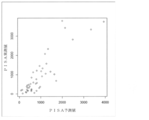
- the test was performed on 56 samples, and the amount of bacteria of bacterial species with statistically significant correlation with the PISA value (horizontal axis) was used as an explanatory variable, and a prediction model formula was created by multiple regression analysis to predict the PISA value ( It is a scatter diagram of the result of having made the vertical axis
- the invention of a method for estimating periodontal pocket inflammation area which is the first aspect of the present invention (hereinafter also referred to as "first invention group”) includes the following steps. i) detecting bacterial amounts of two or more kinds of bacteria in saliva, and ii) estimating periodontal pocket inflammation area using the obtained detection result as an index.
- the invention of the method of comprehensively estimating the degree of inflammation of periodontal tissue which is the second aspect of the present invention (hereinafter also referred to as "the second invention group”) includes the following steps: . i) detecting the bacterial amount of one or more bacteria in saliva (subject, particularly in human saliva); and ii) comprehensively measuring the degree of inflammation of periodontal tissue using the obtained detection result as an index Step of estimating.
- a DNA chip can be used when measuring the amount of bacteria in the oral cavity from saliva collected from a subject.
- the following probes (a) (bacteria-specific probes) can be mounted on the DNA chip, and furthermore, the probes (b) (total amount index probes) and probes (c) (absolute amount index probes) It can also be installed.
- Bacteria-specific probe A probe consisting of a nucleic acid that specifically hybridizes to a bacterial gene (or a part thereof) to be detected
- a total mass index probe From nucleic acids that hybridize to all bacterial genes
- C absolute quantity index probe: a probe consisting of a nucleic acid that specifically hybridizes to one or more absolute quantity indices
- a DNA chip is a generic term for a substrate on which a probe is disposed.
- the names of the DNA chip and the DNA microarray are not distinguished from each other, but are synonymous.
- bacteria in saliva to be detected are not limited, but, for example, belong to each genus listed below Bacteria, ie, Porphyromonas, Tannerella, Treponema, Prevotella, Campylobacter, Fusobacterium, Streptococcus, Aggregatibacter, Capnocytophaga, Eikenellaces, Veillonella, Serenomonas, etc.
- the bacterium belongs to at least one genus selected from the genus Haemophilus, Alloprevotella, Sorobacterium, Rothia, Peptostreptococcosis, Gemella, Corynebacterium, Neisseria, Granulicatella, Megasphaera and SR1. . More specifically, it is more preferable to detect at least one or more selected from various bacteria listed below.
- Porphyromonas gingivalis Tannerella forsythia Treponema denticola Campylobacter gracilis Campylobacter rectus Campylobacter showae Fusobacterium nucleatum subsp. Vincentii Fusobacterium nucleatum subsp. Fusobacterium nucleatum subsp. Animalis Fusobacterium nucleatum subsp.
- Nucleatum Fusobacterium periodonticum Prevotella intermedia Prevotella nigrescens Streptococcus constellatus Aggregatibacter actinomycetemcomitans Campylobacter concisus Capnocytophaga gingivalis Capnocytophaga ochracea Capnocytopha spumblea Eikenella corrodens Streptococcus gordonii Streptococcus intermedius Streptococcus mitis Streptococcus mitis bv 2 Actinomyces odontolyticus Veillonella parvula Actinomyces naeslundii II Selenomonas noxia Streptococcus mutans Eubacterium nodatum Parvimonas micra Filifactor alocis Streptococcus sobrinus Porphyromonas pasteri Veillonella atypica Haemophilus parainfluenzae Alloprevotella spp
- bacteria showing a positive correlation the relationship between the periodontal pocket inflammation area increases as the amount of bacteria increases
- the bacterial volume of bacteria and the periodontal pocket inflammation area (hereinafter referred to as “bacteria that show positive correlation”)
- bacteria that show positive correlation the relationship between the periodontal pocket inflammation area increases as the amount of bacteria increases
- bacteria that show positive correlation the relationship between the periodontal pocket inflammation area increases as the amount of bacteria increases
- bacteria negative correlation there is a negative correlation between bacterial quantity of bacteria and periodontal pocket inflammation area
- a bacterium showing a decreasing relationship hereinafter sometimes abbreviated as "a bacterium showing a negative correlation”
- the periodontal pocket inflammation area is an area showing inflammation including PISA (periodontal inflamed surface area: periodal inflammation surface area) or CAPRS (conccaled area in periodontal pocket of tooth root surfase: periodontal pocket internal root surface area); If there is an indicator of the concept of the indicator is included.
- the PISA value indicates the inflammation area of periodontal tissue in the entire oral cavity in square millimeters (mm 2 ), and from the presence of periodontal pocket surface area (PESA) and bleeding on probing (BOP) It can be calculated.
- the periodontal pocket surface area (PESA) can be calculated from the area defined in advance for each tooth type and the depth of periodontal pocket (PPD).
- An automatic calculation spreadsheet (Excel file) in the case of the six-point method is distributed as additional information in Non-Patent Document 1 (https://www.parsprototo.info/pisa.html), and the above calculation method is in the Excel file.
- Anyone can check it by looking at the formula shown.
- the CAPRS value is determined from the attachment root surface surface area (total surface area of the tooth root located on the apical side from the gingival margin; Clinical Area of Tooth Root Surface; CARS), and then the effective root surface area is obtained. Calculated by subtracting the value of.
- the position of the gingival margin is calculated by replacing all cases with the anatomical neck line, which is identical to the value of PESA shown in Fig. 1 (b) of Non-Patent Document 1 Conceivable.
- the gingival bleeding index (BOP) is not taken into account in the calculation, the CAPRS value approximately captures the area itself as an inflammation area on the inner surface of the pocket as described in the literature and should be considered as a "periodontal pocket inflammation area" together with the PISA value.
- the periodontal pocket inflammation area is preferably represented by the value of PISA or CAPRS.
- Bacteria that show a positive correlation and bacteria that show a negative correlation can be identified by a tool that can measure the amount of bacteria (or a measured amount that is proportional to the amount of bacteria such as the SN ratio).
- the tool is not particularly limited, and for example, a DNA chip can be used.
- the intraoral sample is measured with a DNA chip, and then the correlation coefficient between the periodontal pocket inflammation area and the measured amount such as the bacterial amount or SN ratio of each bacterium is calculated. It can be classified and specified as a bacteria group whose number is a positive value and a bacteria group whose number is a negative value.
- the absolute value of the correlation coefficient is preferably 0.02 or more when the number of measurements is 40 or more, more preferably 0.1 or more, and 0.2 or more. More preferably, it is particularly preferably 0.4 or more, and most preferably 0.6 or more.
- the data after experimental error correction is also used for classification of bacteria groups.
- Preferred examples of bacteria that show positive correlation include the bacteria listed below. It is more preferable to detect at least one of these, preferably two or more.
- Preferred examples of the bacteria showing negative correlation include the bacteria listed below. It is more preferable to detect at least one of these, preferably two or more.
- Streptococcus mutans Actinomyces odontolyticus Streptococcus mitis bv 2 Streptococcus mitis Campylobacter concisus Capnocytophaga gingivalis Prevotella pallens Streptococcus salivarius Eubacterium sulci Rothia mucilaginosa Prevotella denticola Veillonella atypica Prevotella histicola Megasphaera micronuciformis Streptococcus parasanguinis
- the amount of bacteria in the bacteria has a positive correlation or a negative correlation with the degree of inflammation of periodontal tissue, etc. (PISA value or CAPRS value) Bacteria are preferably mentioned respectively.
- the bacteria having the positive correlation preferably include, for example, the bacteria listed below, and it is more preferable to detect at least one, preferably two or more of them.
- bacteria which have the said negative correlation the bacteria listed below are mentioned preferably, for example, It is more preferable to make at least 1 sort (s), preferably 2 or more sorts of these as detection object.
- Streptococcus mutans Actinomyces odontolyticus Streptococcus mitis bv 2 Streptococcus mitis Campylobacter concisus Capnocytophaga gingivalis
- an oligo DNA that can be used as a bacteria-specific probe can be hybridized with a base sequence in a specific region of a base sequence of a bacteria-derived nucleic acid in saliva.
- the nucleic acid may be any of DNA and RNA including chromosomal DNA, plasmid DNA and the like, and is not limited, but is preferably chromosomal DNA.
- the oligonucleotide used as a probe in the present invention is capable of hybridizing to the base sequence of 16S rRNA gene in chromosomal DNA of the above-mentioned bacteria.
- the probe that can be used in the present invention, it is preferable to select a region that is a nucleotide sequence specific to an individual bacterium to be detected and design the nucleotide sequence of that region.
- Tm melting temperatures
- Specific base sequences corresponding to each species of bacteria in saliva can be found, for example, by means of multiple alignment, designing probes in different regions between species, and the like.
- an algorithm for alignment There is no particular limitation on an algorithm for alignment, but as a more specific analysis program, for example, a program such as Clustal X 1.8 can be used. Parameters for alignment may be executed in the default state of each program, but can be appropriately adjusted according to the type of program and the like.
- the specificity of the probe may be a batch detection of bacteria of the same genus based on the genus level specificity, or may be a specificity detectable at the individual species level, for detection purposes It is possible to appropriately select and design accordingly. Examples of bacteria specific probes that can be used in the present invention are shown in Table A below (SEQ ID NOS: 1-29).
- the total volume index probe is a probe for the purpose of capturing all bacteria in a sample (in saliva) which can be amplified by a specific primer pair. In order to detect bacteria, what proportion of the bacteria to be detected is among the total bacteria including non-detection bacteria, and how many bacteria are originally present in the sample From the point of view, it is also important to detect the total amount of bacteria.
- the non-detection target bacteria can be understood as the sum (sum) of bacteria whose existence and type are known but may not be detected, and bacteria whose existence and type are unknown.
- a base sequence common to many types of bacterial species may be used as the probe. If such a sequence can not be found, a plurality of relatively common sequences may be designed, and they may be comprehensively judged to be a total amount index probe.
- the total amount index probe is preferably a probe that hybridizes to a nucleic acid derived from bacteria contained in the sample, specifically, a plurality of types of bacteria to be detected among base sequences amplified by the specific primer pair It is a probe containing the base sequence which it has in common.
- An example of a total volume index probe is shown in Table A below (SEQ ID NO: 31).
- the total amount index represents the total amount of amplification products specific to individual species, the amount of signal generally increases, so the target signal intensity may exceed the range of detectable signal intensities. . In order to prevent such a situation, it is desirable to limit the amount of sample to be subjected to hybridization.
- the Tm value of the probe is lowered. Specifically, methods for reducing the GC content and shortening the probe sequence length itself are conceivable.
- a nucleic acid for example, a nucleic acid having the same sequence as that of the total amount index probe, or a nucleic acid having all or partially the complementary sequence of the total amount index probe, etc. can be mentioned.
- the absolute amount index probe is a probe that hybridizes only to the absolute amount index nucleic acid.
- the absolute amount index is a nucleic acid added to a sample in a predetermined amount before an amplification reaction or a hybridization reaction.
- the absolute amount index is a nucleic acid for which an amplification reaction is surely performed if a normal amplification reaction is performed, and serves as a so-called positive control. Therefore, if a probe specific to the absolute amount index is mounted on the DNA chip, it can be confirmed from the detection result whether the amplification reaction, hybridization, etc. were properly carried out.
- the correction coefficient can be calculated by comparing the signal intensities of the absolute amount index when amplification efficiency and hybridization efficiency slightly increase and decrease. The corrected signal intensities can be compared in multiple DNA chips.
- an absolute amount index is added before the amplification reaction, it is a nucleic acid amplified by a specific primer pair, that is, possessing a base sequence complementary to the primer pair, and detected by hybridization. For this purpose, it is necessary to possess a base sequence which is not possessed by either the bacteria to be detected or the bacteria not to be detected.
- the specific primer means that the sequence to be amplified is limited, and the primer pair does not necessarily have to be one. Multiplex methods using two or more primer pairs can also be applied as needed. Examples of primer pairs are shown in Table B below. It is possible to use a primer pair for bacterial amplification (SEQ ID NOS: 32, 33) and a primer pair for absolute amount index (SEQ ID NOS: 34, 35).
- the absolute amount index may be, for example, a nucleic acid standard substance for quantitative analysis developed by the National Institute of Advanced Industrial Science and Technology, or may be newly designed.
- EXCEL software “manufactured by MICROSOFT”
- X is an arbitrary number
- sequences in which the sum of G and T is equal to the sum of A and T are extracted, and the extracted sequences are blasted against a database such as NCBI GenBank to obtain nucleic acids derived from organisms.
- a database such as NCBI GenBank
- the length of the base amplified by the bacteria to be detected and the length of the amplified base of the absolute amount index do not have a large difference.
- the amplification product of the bacteria to be detected is about 500 bp
- the amplification product of the absolute amount index is preferably about 300 to 1000 bp.
- the amplification product derived from the absolute amount index is designed after being designed to be an amplification product of a length different from that of the detection target bacteria.
- stringency conditions are, for example, hybridization under conditions of 50 to 60 ° C. for tight conditions, and hybridization under conditions of 30 to 40 ° C. for mild conditions.
- stringent conditions include, for example, “0.24 M Tris ⁇ HCl / 0.24 M NaCl / 0.05% Tween-20, 40 ° C.”, “0.24 M Tris ⁇ HCl / 0.
- the length of the probe used in the present invention is not limited, for example, 10 bases or more are preferable, more preferably 16 to 50 bases, and still more preferably 18 to 35 bases. If the length of the probe is appropriate (if it is within the above range), nonspecific hybridization (mismatch) can be suppressed and used for specific detection.
- Tm means the temperature at which 50% of any nucleic acid strand hybridizes to its complementary strand, and the temperature of hybridization is sufficient for the template DNA or RNA and the probe to form a double strand for hybridization. Need to be optimized. On the other hand, it is desirable that the temperature be as high as possible, since nonspecific reactions are likely to occur if the temperature is lowered too much. Therefore, the Tm of the nucleic acid fragment to be designed is an important factor in carrying out the hybridization.
- Known probe design software can be used to confirm Tm, and examples of software that can be used in the present invention include Probe Quest (registered trademark; Dynacom).
- Tm confirmation can also be performed by self-calculation without using software. In that case, it is possible to use a calculation formula based on the nearest neighbor method, the wallance method, the GC% method or the like.
- the probe of the present invention is preferably, but not limited to, an average Tm of about 35-70 ° C. or 45-60 ° C.
- there are GC content etc. and the conditions are well known to those skilled in the art.
- the nucleotides constituting the probe used in the present invention may be either DNA and RNA or PNA, and may be a hybrid of two or more of DNA, RNA and PNA.
- probe used in the present invention preferably include those containing the base sequence of the following (d) or (e) DNA.
- the sequences shown in Table A SEQ ID NOS: 1-31 listed above can be used as probes, and SEQ ID NOS: 1-31.
- it is preferable to use at least two sequences selected from the nucleotide sequences shown in In addition, it may be a complementary sequence of at least two sequences selected from the nucleotide sequences shown in SEQ ID NOs: 1-31, and is substantially identical to at least two sequences selected from the nucleotide sequences shown in SEQ ID NOs: 1-31.
- substantially identical is one that specifically hybridizes under stringent conditions to the sequence described in SEQ ID NO: 1 to 31 or a complementary sequence.
- the description of Table A given above can be referred to for their specific base sequences, probe names, and bacteria in the oral cavity to be detected.
- the DNA of (e) above is a DNA comprising the various DNAs of (d) above or a nucleotide sequence complementary thereto, or a fragment thereof, as a probe, colony hybridization, plaque hybridization, and Southern hybridization.
- a known hybridization method such as blot can be performed and obtained from a cDNA library or a genomic library.
- the library one prepared by a known method may be used, or a commercially available cDNA library or genomic library may be used without limitation. The same procedures as described above can be referred to for the detailed procedures of the hybridization method.
- stringent conditions are conditions at the time of hybridization, and the salt concentration of the buffer is 24 to 390 mM, the temperature is 40 to 65 ° C., preferably the salt concentration is 48.8. It means a condition of ⁇ 195 mM and a temperature of 45 to 60 ° C. Specifically, for example, conditions such as 97.5 mM and 50 ° C. can be mentioned. Furthermore, in addition to the conditions such as the salt concentration and temperature, various conditions such as the probe concentration, the length of the probe, the reaction time and the like are also taken into consideration, and the conditions for obtaining the DNA of (e) are appropriately set. Can.
- the hybridizing DNA is preferably a nucleotide sequence having at least 60% or more homology to the nucleotide sequence of the DNA of (d), more preferably 80% or more, still more preferably 90% or more. More preferably, it is 95% or more, particularly preferably 98% or more, and most preferably 99% or more.
- the probe used in the present invention can be prepared, for example, by chemical synthesis using conventional oligonucleotide synthesis methods (purification is performed by HPLC etc.). Such a probe can be designed, for example, by Probe Quest (registered trademark: manufactured by Dynacom).
- the probe of the present invention may contain, for example, an additional sequence such as a tag sequence.
- the base sequence of the nucleic acid possessed by the above-mentioned bacteria in saliva to be detected does not have to be the base sequence itself, and a part of the base sequence is mutated by deletion, substitution, insertion, etc. It may be generated.
- the nucleotide sequence of the nucleic acid to be detected is hybridized with a sequence complementary to the nucleotide sequence under stringent conditions, and a mutant gene having a function or activity derived from each nucleotide sequence is also targeted.
- the probe can also be designed based on the nucleotide sequence of such mutant gene.
- stringent conditions here, the same conditions as described above can be applied.
- a DNA chip can be used to detect and measure the amount of bacteria in saliva.
- the DNA chip is used for the purpose of comprehensively estimating the degree of inflammation of periodontal tissue, and a plurality of the oligonucleotide probes described in the section 1 above are arranged on a base serving as a support. It is.
- the thing of any form such as a flat plate (a glass plate, a resin board, a silicon plate etc.), a rod shape, and a bead, can be used.
- a flat plate a glass plate, a resin board, a silicon plate etc.
- a rod shape a rod shape
- a bead a bead
- a predetermined probe can be fixed for each type at a predetermined interval on the flat plate (see spotting method, etc .; Science 270, 467-470 (1995), etc.) .
- predetermined probes can be sequentially synthesized for each type at specific positions on a flat plate (see, for example, photolithography method; Science 251, 767-773 (1991)).
- Other preferred support forms include those using hollow fibers.
- a DNA chip is obtained by fixing predetermined probes to each hollow fiber for each type, focusing and fixing all the hollow fibers, and then repeatedly cutting in the longitudinal direction of the fibers.
- fiber type DNA chip can be preferably exemplified.
- This microarray can also be described as a type in which nucleic acids are immobilized on a through-hole substrate, and is also referred to as a so-called "through-hole type DNA chip" (see, for example, Japanese Patent No. 3510882).
- the method of fixing the probe to the support is not limited, and any binding mode may be used.
- the present invention is not limited to direct fixation to a support, and for example, the support may be previously coated with a polymer such as polylysine and the probe may be fixed to the treated support.
- the support may be previously coated with a polymer such as polylysine and the probe may be fixed to the treated support.
- a tubular body such as a hollow fiber as a support
- the fiber type DNA chip which is one form of a DNA chip is demonstrated in detail. This DNA chip can be produced, for example, through the following steps (i) to (iv).
- the material used for the hollow fiber is not limited, but preferably includes, for example, the materials described in JP-A-2004-163211.
- the hollow fibers are three-dimensionally arranged so that the lengths in the longitudinal direction are the same (step (i)).
- an arrangement method for example, a method of arranging a plurality of hollow fibers in parallel at a predetermined interval on a sheet-like article such as an adhesive sheet and forming a sheet, and then winding the sheet in a spiral (Japanese Patent Laid-Open No. 11- No.
- the manufactured array is embedded so that the array is not disordered (step (ii)).
- a method of embedding in addition to a method of pouring a polyurethane resin, an epoxy resin or the like into a gap between fibers, a method of bonding fibers by heat fusion is preferably mentioned.
- the hollow portion of each hollow fiber is filled with a gel precursor polymerizable solution (gel forming solution) containing an oligonucleotide probe, and the polymerization reaction is carried out in the hollow portion (step (iii)) .
- the gel-like substance to which the probe is fixed can be held in the hollow portion of each hollow fiber.
- the gel precursor polymerizable solution is a solution containing a reactive substance such as a gel-forming polymerizable monomer, and the solution is capable of becoming a gel-like product by polymerizing and crosslinking the monomer and the like.
- a reactive substance such as a gel-forming polymerizable monomer
- the solution is capable of becoming a gel-like product by polymerizing and crosslinking the monomer and the like.
- a monomer include acrylamide, dimethyl acrylamide, vinyl pyrrolidone, methylene bis acrylamide and the like.
- the solution may contain a polymerization initiator and the like.
- the block is cut and exfoliated in a direction (preferably, a direction perpendicular to) the longitudinal direction of the hollow fiber (step (iv)).
- the slice obtained in this manner can be used as a DNA chip.
- the thickness of the DNA chip is preferably about 0.01 mm to 1 mm.
- Cleavage of the block can be carried out, for example, by a microtome and a laser etc.
- a DNA chip (GenopalTM) manufactured by Mitsubishi Chemical Corp. is preferably mentioned.
- the probes are three-dimensionally arrayed in the gel, and it becomes possible to maintain the three-dimensional structure.
- the number of types of probes arranged in the DNA chip is preferably 500 or less, preferably 250 or less, more preferably 100 or less per DNA chip. By limiting the number (types) of probes thus arranged to some extent, it is possible to detect the target intraoral bacteria with higher sensitivity.
- the types of probes are distinguished by the base sequence. Therefore, usually, even if the base sequence is different even if the probe is derived from the same gene, it is specified as another type.
- a method of detecting the bacteria to measure the amount of bacteria in saliva is, for example, a method comprising the following steps.
- step of extracting saliva as a sample from saliva as an intraoral sample collected from a subject and extracting nucleic acid in the sample (in saliva) (ii) the extracted nucleic acid according to the oligonucleotide probe of the present invention or the DNA of the present invention Step of contacting the chip (iii) Step of calculating the amount of bacteria from the signal intensity obtained from the DNA chip
- Step (i) saliva as an intraoral sample collected from a subject or an organism is used as a sample, and nucleic acid of bacteria contained in the sample (in saliva) is extracted.
- the method of collecting saliva is not particularly limited, and examples thereof include a method of using a commercially available saliva collecting kit, a method of collecting a saliva by containing a cotton swab in the mouth, and a method of collecting saliva directly in a container.
- the subject from which saliva is collected is not particularly limited.
- the patient may be a patient with a systemic disease or a pregnant woman who is suggested to be related to the patient, or a healthy person who is not suspected of being afflicted with periodontal disease.
- nucleic acid extraction of bacteria present in the obtained saliva is performed.
- the method of extraction is not limited, and known methods can be used.
- nucleic acid may not be extracted from the sample in particular, and the process may proceed to the next step.
- the nucleic acid obtained from the sample may be directly contacted with a DNA chip or the like, or the desired base sequence region may be amplified by PCR or the like, and the amplified fragment may be contacted with a DNA chip or the like, without limitation.
- the region for amplification using the obtained nucleic acid as a template is a region encoding a nucleic acid region including the base sequence of the probe used in the present invention or the oligonucleotide disposed on the DNA chip.
- the desired region to be amplified is not limited, and can be obtained by amplifying a large number of mixtures at one time using the base sequence of a highly conserved region regardless of bacterial species.
- the sequence for such amplification may be experimentally isolated and purified, and the base sequence of the isolated polynucleotide may be analyzed and determined based on the sequence, or the base sequence etc. It may be determined in In Silico by searching known bases in various databases and taking alignments. Databases such as nucleic acids or amino acids are not particularly limited. For example, DDBJ (DNA Data Bank of Japan), EMBL (European Molecular Biology Laboratory, EMBL nucleic acid sequence data library), GenBank (Genetic sequence data bank) And the Taxonomy database of NCBI (National Center for Biotechnology Information).
- a desired site to be amplified is preferably a ribosomal RNA (16S rRNA) gene in bacterial chromosomal DNA.
- a PCR primer which can be used for amplification of the said area
- amplification of the nucleic acid by PCR method can be performed according to a usual method. The nucleic acid and its amplified fragment extracted in this step can be appropriately labeled and used in the detection process after hybridization.
- a method in which the end of the PCR primer is labeled with various reporter dyes a method in which a reactive nucleotide analog is incorporated during reverse transcription reaction, a method in which a biotin-labeled nucleotide is incorporated, and the like can be considered.
- a fluorescent labeling reagent for labeling.
- various reporter dyes eg, Cy5, Cy3, VIC, FAM, HEX, TET, fluorescein, FITC, TAMRA, Texas red, Yakima Yellow, etc.
- Step (ii) the nucleic acid obtained in step (i) or the amplified fragment thereof is brought into contact with the probe or DNA chip used in the present invention.
- a hybridization solution is prepared, and nucleic acids and the like in the solution are bound (hybridized) to an oligonucleotide probe mounted on a DNA chip.
- the hybridization solution can be appropriately prepared according to a conventional method using a buffer such as SDS or SSC.
- the hybridization reaction is carried out under the reaction conditions (type of buffer, pH, temperature, etc.) so that the nucleic acid etc. in the hybridization solution can hybridize under stringent conditions with the oligonucleotide probe loaded on the DNA chip. It can be set appropriately.
- hybridization reaction refers to the washing conditions of the DNA chip at times or after hybridization.
- the reaction temperature is preferably 35 to 70 ° C., more preferably 40 to 65 ° C.
- the hybridization time is preferably about 1 minute to 16 hours.
- the washing solution composition is preferably 0.24 M Tris ⁇ HCl / 0.24 M NaCl / 0.05% Tween-20, and the temperature at the washing is 35
- the temperature is ⁇ 80 ° C or 40-65 ° C, more preferably 45-60 ° C.
- the salt (sodium) concentration is 48 to 780 mM and the temperature is 37 to 80 ° C.
- the salt concentration is 97.5 to 390 mM
- the temperature is 45 to 60 ° C.
- the detection intensity is measured for each spot by a device capable of detecting a label such as nucleic acid bound to the probe.
- a device capable of detecting a label such as nucleic acid bound to the probe.
- various fluorescence detection devices such as CRBIO (manufactured by Hitachi Software Engineering), arrayWoRx (manufactured by GE Healthcare), Affymetrix 428 Array Scanner (manufactured by Affymetrix, manufactured by GenePix)
- the fluorescence intensity can be measured using (Axon Instruments), ScanArray (PerkinElmer), Genopal Reader (Mitsubishi Chemical), or the like.
- a fluorescence scanner for example, scanning can be performed by appropriately adjusting the laser output and the sensitivity of the detection unit, and in the case of a CCD camera type scanner, the exposure time is appropriately adjusted. You can do a scan.
- the quantification method based on the scan result is performed by quantification software. There is no particular limitation on the quantification software, and quantification can be performed using the average value, median value, etc. of the fluorescence intensities of the spots. Further, in quantitative determination, it is preferable to perform adjustment such as using the fluorescence intensity of a spot not equipped with a probe as a background, in consideration of the dimensional accuracy of the spot range of the DNA fragment and the like.
- Step (iii) the amount of bacteria of bacteria to be detected is calculated from the signal intensity obtained in the above procedure.
- the signal intensity obtained in the above procedure there is a method shown as an SN ratio from the signal intensity of the probe for detecting the bacteria to be detected and the signal intensity of the background.
- a conversion factor (calibration curve) is used to calculate the chromosomal DNA concentration for each bacterium based on the signal intensity obtained by changing the concentration of the chromosomal DNA of the bacterium in advance and changing the concentration of the bacterial chromosomal DNA for each bacteria
- the concentration of chromosomal DNA is calculated from the signal intensities obtained under the respective conditions.
- the amount of bacteria from the signal intensity based on 16S rRNA sequence information of the bacteria to be detected.
- the genome copy number can be calculated by multiplying the signal intensity detected by the DNA chip by each bacterial mass calculation coefficient determined in advance (and by multiplying the dilution ratio of the detection sample, if necessary).
- Each bacterial mass calculation coefficient can measure signal intensity when detecting each bacterial origin genomic DNA, prepare a standard curve, and can be calculated as a coefficient to calculate each bacterial mass from signal intensity of each bacterial . In any case, it is preferable to consider the correction factor in the signal intensity of the bacteria to be detected in each DNA chip.
- the method of the present invention is a method of estimating the periodontal pocket inflammation area using the detection result of the amount of bacteria in the saliva as an index. Further, the method of the present invention is a method for comprehensively estimating the degree of inflammation of periodontal tissue, using the detection result as an index. Any tool may be used to detect the bacterial amount of bacteria in saliva, as described in the section 3. above, a method using a DNA chip, and other methods for confirming the presence of bacteria by enzyme activity, electricity Methods of measuring specific resistance, measuring the total amount of bacteria, counting bacteria by phase contrast microscope and staining, measuring viable cell count by culturing, measuring individual bacterial counts by real time PCR, etc. may be mentioned. .
- the periodontal pocket inflammation area and the degree of inflammation of periodontal tissue are estimated based on the count value etc. which were counted up visually.
- Specific methods for estimating the periodontal pocket inflammation area include the following methods. (1) The amount of bacteria of various bacteria in saliva is detected from a saliva sample of a subject (which can be calculated from the measured PPD etc.) whose periodontal pocket inflammation area (PISA value, CAPRS value etc.) is known. (2) With regard to the amount of bacteria of the various bacteria concerned, the correlation coefficient with the periodontal pocket inflammation area specific to each bacteria is determined, and the relational expression between the amount of bacteria of various bacteria and the periodontal pocket inflammation area is built and a prediction model Create (3) The amount of bacteria of various bacteria in saliva is detected from a saliva sample of a subject whose periodontal pocket inflammation area is unknown. (4) The periodontal pocket inflammation area is estimated by putting the amounts of various bacteria obtained in (3) into the relational expression obtained in (2).
- the method of creating a prediction model is not particularly limited, but various statistical analysis methods such as linear regression, regression tree, model tree, neural network, support vector machine, bagging, boosting, machine learning algorithm such as random forest, etc.
- the method to use is mentioned.
- the model tree shown in the embodiment described later there is no need to predefine a model.
- the “M5” using the “caret” package of statistical software “R” (R Development Core Team) Optimization in the '' method is preferably mentioned.
- the saliva sample of the subject whose periodontal pocket inflammation area is actually measured is preferably a number greater than the number of bacteria (variables) used to create the prediction model.
- the prediction model may be updated each time the number of data is accumulated.
- the amount of bacteria in the bacteria and the periodontal pocket inflammation area positively correlates with the amount of bacteria in the bacteria and the amount of bacteria in the periodontal pocket as bacteria used for creating a prediction model to be detected
- bacteria showing positive correlation with periodontal pocket inflammation area are often not detected (become the number of bacteria is 0), and only bacteria showing positive correlation are The reason is that a prediction model can not be created for a range of values where the periodontal pocket inflammation area is small.
- bacteria used for prediction model creation are the above-mentioned 1. As described in Section, but eventually the accuracy of the prediction is improved, the bacteria respond not only to the magnitude of the correlation coefficient of the bacteria alone but also to changes in the bacteria in response to fluctuations in the periodontal pocket inflammation area It is selected in consideration of the accuracy of the amount and the correlation coefficient of the amount of bacteria among bacteria (avoid multicollinear relations).
- bacteria showing positive correlation preferably the following bacteria are mentioned.
- Porphyromonas gingivalis, Tannerella forsythia, Treponema denticola, Campylobacter rectus Fusobacterium nucleatum subsp.
- Vincentii Fusobacterium nucleatum subsp.
- Polymorphum Fusobacterium nucleatum subsp. Animalis, Fusobacterium nucleatum subsp.
- bacteria More preferably, the following bacteria are mentioned as bacteria showing a positive correlation. Gleida, Porephylogonas gingivalis, Tannerella, sychnicum, Sporella romano sve svelia, Tranella eta, T.
- the negatively correlating bacteria preferably the following bacteria are mentioned.
- the following bacteria can be mentioned as the negatively correlated bacteria.
- Actinomyces odontolyticus, Streptococcus mutans, Prevotella pallens It is preferable to use 1 or more types as bacteria which show a negative correlation, It is more preferable to use 2 or more types, It is more preferable to use 4 or more types, It is especially preferable to use 8 or more types.
- it is preferable to use 100 or less types It is more preferable to use 75 types or less, It is more preferable to use 50 types or less, It is especially preferable to use 25 types or less.
- the present invention statistical analysis processing is performed on a predetermined number of subjects (primary mother samples) and stored in a database. Then, from the analysis result of the correlation between the degree of inflammation of the periodontal tissue and the amount of bacteria in the saliva, what degree of inflammation of the periodontal tissue each subject has or the root surface area of the root in the periodontal pocket You can estimate what you have. Therefore, when the subject individual (one person) is examined, the data of the subject individual is located or applies to the data of the mother sample stored in the database, using the data derived from the plurality of subjects as the mother sample The degree of inflammation of the periodontal tissue or the periodontal pocket internal root surface area can be estimated by examining the subject. The individual subject's data may be incorporated into the value of the mother sample, and after statistical analysis processing again, it may be checked where the subject individual is located in the mother sample.
- the degree of inflammation (PISA value, CAPRS value) of periodontal tissue can be estimated and predicted based on bacterial species in the saliva and the amount of the bacteria, conventionally, PISA values and CAPRS have been known.
- the degree of inflammation of periodontal tissue can be calculated under a constant calculation standard, even for a large number of subjects, much more simply than in the case where the value is actually measured. Further, in the present invention, the degree of inflammation of periodontal tissue is included in the range of estimation / prediction for not only the positive degree but also the negative degree.
- the ratio of the bacterial species in which the amount of bacteria correlates to the degree of inflammation in the periodontal tissue may be used as an index.
- Periodontal pocket depth Indicates the distance from the gingival edge to the tip of the probe when the periodontal probe is inserted into the pocket.
- the buccal side, the buccal center, the buccal side, the lingual side, the lingual side, and the lingual side were measured by the 6-point method, and they were quantified in 1 mm units.
- Bleeding at probing BOP: indicates the presence or absence of bleeding when the periodontal probe is inserted into the pocket. The case where there is no bleeding at the position corresponding to the above six points method is 0, and the case where there is bleeding is 1.
- Periodontal pocket depth (PPD) and (ii) Bleeding at probing (BOP) are summarized in Table 1.
- PCR ⁇ Amplification reaction of bacterial DNA>
- the above DNA solution was diluted to 20 pg / ⁇ l and used as a PCR template.
- PCR was performed under the following reaction solution composition and reaction conditions.
- the kit for PCR was performed by ProFlex (TM) PCR System (manufactured by Thermo Fisher Scientific) using Premix Ex Taq (TM) Hot Start Version (manufactured by Takara).
- the primer used was a primer having the following sequence.
- the forward primer used was one whose 5 'end was labeled with Cy5.
- ⁇ Reaction liquid composition > 2 x Premix Ex Taq (R) Hot Start Version 10 ⁇ L 4 ⁇ M forward primer (for bacterial amplification) 1 ⁇ L 4 ⁇ M reverse primer (for bacterial amplification) 1 ⁇ L 4 ⁇ M forward primer (for absolute index amplification) 1 ⁇ L 4 ⁇ M reverse primer (for absolute index amplification) 1 ⁇ L Template DNA 5 ⁇ L Absolute quantity indicator 1 ⁇ L 20 ⁇ L in total
- ⁇ DNA chip manufacture of DNA chip for detection of bacteria in oral cavity>
- the through-hole type DNA chip was manufactured by the same method as that described in Example 1 of JP-A-2007-74950 (Method for detecting methylated DNA and / or non-methylated DNA).
- a probe having the sequence information shown in Table 4 was used as the loaded oligonucleotide probe.
- An automated hybridization cleaner (model: AHF-200, manufactured by Mitsubishi Chemical Corporation) was used for hybridization and washing of the DNA chip. 200 ⁇ L of the hybridization solution was brought into contact with the DNA chip and hybridized at 50 ° C. for 16 hours. After hybridization, the DNA chip was washed under the following conditions. Repeat washing for 12 seconds with 1000 ⁇ L of 0.24 M Tris ⁇ HCl / 0.24 M NaCl / 0.05% Tween-20 solution, followed by washing for 220 seconds with 1000 ⁇ L 0.24 M Tris ⁇ HCl / 0.24 M NaCl Was repeated four times. After washing, each chip was transferred to a 0.24 M Tris.HCl / 0.24 M NaCl mixed solution at room temperature.
- ⁇ Detection condition> Center excitation wavelength: 633 nm Exposure time: 0.1, 1, 4, 40 seconds
- the fluorescence intensity of the spot carrying the probe for bacteria to be detected is divided by the background value (median value of the fluorescence intensity of the spot not carrying the probe), and the fluorescence intensity derived from hybridization (hereinafter referred to as signal intensity)
- the SN ratio of was calculated.
- Streptococcus mutans, Actinomyces odontolyticus, Streptococcus mitis bv 2, Streptococcus mitis, Campylobacter concisus were shown to show inverse correlation. These were considered to be indicators of overall oral health.
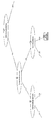
- Constellatus ⁇ 1.75: LM15 (3 / 14.832%) Streptococcus. Constellatus> 1.75:
- Porphyromonas.gingivalis ⁇ 1.35: LM16 (2 / 9.58%)
- LM num: 1 .outcome 5.9609 * Treponema.denticola + 2.719 * Streptococcus.gordonii -2. 4637 * Actinomyces. Odontolyticus -43.3698 * Streptococcus. Mutans + 161.5714 * Capnocytophaga.
- nucleatum + 1294.0756 LM num: 10 .outcome 15.293 * Treponema.denticola + 2.719 * Streptococcus.gordonii -2. 4637 * Actinomyces. Odontolyticus -30.4289 * Streptococcus. Mutans -0.4833 * Control.
- DNA + 5.5586 * Tannerella.forsythia + 1320.5275 LM num: 11 .outcome 3.3786 * Treponema.denticola + 5.1956 * Streptococcus.gordonii -2.8861 * Actinomyces.odontolyticus -0.5662 * Control.
- Streptococcus mutans Actinomyces odontolyticus, Campylobacter concisus, Actinomyces. Having a negative correlation coefficient between the SN ratio showing each bacterial amount shown in Table 6 and the PISA value in the entire oral cavity.
- naes Ausi. II Streptococcus. Constellatus, Capnocytophaga spumblea with positive correlation coefficient, Tannerella forsythia, Streptococcus gordonii, Treponema denticola, Fusobacterium nucleatum subsp. . It was shown that the PISA value can be predicted from the SN ratio of bacterial groups of nucleatum and Porphyromonas gingivalis.
- Example 7 The same detection results as in Example 1 were used to predict the PISA value based on the amount of bacteria. ⁇ Correlation analysis of PISA value and amount of bacteria> First, for each sample, the PISA value and the SN ratio data indicating the amount of each bacterium were matched. Then, the median of the signal-to-noise ratio of the absolute quantity index probe of all the samples was calculated, and the signal-to-noise ratio of the absolute quantity index probe of each sample was divided by this median. Let this be an inter-chip correction value. Subsequently, the SN ratio data between chips was normalized by dividing the SN ratio data of all bacteria of each sample by the interchip correction value of each sample. The results are shown in Table 7.
- the correlations are in the descending order of Tannerella forsythia, Treponema denticola, Porphyromonas gingivalis, Fusobacterium nucleatum subsp. rectus, Fusobacterium nucleatum subsp. It was nucleatum. These included "Red Complex" and were considered to be indicators of the degree of inflammation in the entire oral cavity.
- Streptococcus mutans Actinomyces odontolyticus, Streptococcus mitis bv 2, Streptococcus mitis, Campylobacter concisus were shown to show inverse correlation. These were considered to be indicators of overall oral health.
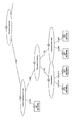
- Rectus ⁇ 6.4:
- Tannerella.forsythia ⁇ 11.5: LM15 (2 / 8.205%)
- Total.bacteria ⁇ 1916.55: LM18 (2 / 4.176%)
- LM num: 1 .outcome 0.1154 * Total.bacteria -87.6234 * Porphyromonas.gingivalis + 32.2177 * Tannerella.forsythia + 3.4246 * Treponema.denticola + 10.3816 * Fusobacterium. Nucleatum. Subsp .. animalis + 4.5488 * Streptococcus.gordonii -2.8479 * Actinomyces. Odontolyticus -4.1907 * Streptococcus.
- Odontolyticus + 33.5894 LM num: 8 .outcome 0.1154 * Total.bacteria -87.6234 * Porphyromonas.gingivalis + 27.5903 * Tannerella.forsythia + 3.4246 * Treponema.denticola + 10.3816 * Fusobacterium. Nucleatum. Subsp .. animalis + 4.5488 * Streptococcus.gordonii -0.6784 * Actinomyces.
- Bacteria -87.6234 * Porphyromonas.gingivalis + 43.0191 * Tannerella.forsythia + 3.4246 * Treponema.denticola + 10.3816 * Fusobacterium. Nucleatum. Subsp .. animalis + 4.5488 * Streptococcus.gordonii -0.6784 * Actinomyces. Odontolyticus + 93.2371 LM num: 11 .outcome 0.0785 * Total. Bacteria -87.6234 * Porphyromonas.gingivalis + 45. 0694 * Tannerella.
- Odontolyticus + 93.4098 LM num: 14 .outcome -0.0279 * Total.bacteria -142.0103 * Porphyromonas.gingivalis + 9.7177 * Tannerella.forsythia + 5.5503 * Treponema.denticola + 24. 5588 * Campylobacter. Rectus + 16.8253 * Fusobacterium. Nucleatum. Subsp ..
- Streptococcus mutans Actinomyces odontolyticus, Campylobacter concisus, which have a negative correlation coefficient between the SN ratio showing the amount of each bacteria shown in Table 8 and the PISA value in the entire oral cavity, have a positive correlation coefficient.
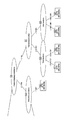
- Sponyma ⁇ 1.786:
- Eikenella.corrodens ⁇ 1.067:
- Fusobacterium.periodonticum ⁇ 1.502: LM6 (3 / 2.054%)
- Fusobacterium.periodonticum> 1.502: Streptococcus.mitis ⁇ 3.972: LM7 (2 / 7.05%)
- Aggregatibacter.actinomycetemcomitans ⁇ 1.334: LM8 (3 // 5.01%)
- Sproda -197.1112 * Eikenella.corrodens -5.6233 * Streptococcus. Mitis + 637.0725 LM num: 7 .outcome 0.1528 * Total.bacteria + 6.7947 * Tannerella.forsythia + 6.5901 * Treponema. Denticola + 32.1268 * Aggregatibacter. Actinomycetemcomitans + 74.536 * Capnocytophaga. Sproda -197.1112 * Eikenella.corrodens -5.6233 * Streptococcus.
- Sproda -197.1112 * Eikenella.corrodens -5.6233 * Streptococcus. Mitis + 627.9978 LM num: 10 .outcome 0.1528 * Total.bacteria + 6.7947 * Tannerella.forsythia + 6.5901 * Treponema. Denticola + 22.9812 * Aggregatibacter.
- the correlation coefficient between the actual PISA value and the predicted value was 0.5986115.
- the results are shown in the scatter diagram of FIG. The results show that the value of PISA can be predicted even for unknown data.
- Streptococcus mitis which has a negative correlation coefficient
- Tannerella forsythia which has a positive correlation coefficient
- Treponema denticola which has a positive correlation coefficient
- the PISA value can be predicted from the SN ratio of the bacterial groups of Capnocytophaga ochracea, Capnocytophaga spumblea, Eikenella corrodens, Aggregatibacter actinomycetemcomitans, Prevotella intermedia, and Fusobacterium periodonticum.
- the ratio of the SN ratio of the total bacteria indicating the total amount of bacteria and the SN ratio of the red complex Porphyromonas gingivalis, Tannerella forsythia and Treponema denticola is calculated.
- As an existing indicator Based on this indicator, the aforementioned "mild”, “moderate” and “severe” were determined.
- the determination results and the PISA actual measurement values, the PISA predicted values based on the results of Example 3, the SN ratios of the three bacteria, and the SN ratios of Total bacteria are summarized in Table 9.
- the graph which made the PISA actual value shown in Table 9 the X-axis, and made the existing "ratio of 3 microorganisms" the Y-axis is shown in the left graph of FIG.
- a graph in which the PISA actual measurement value is taken as the X axis and the PISA predicted value is taken as the Y axis is shown in the right graph of FIG.
- the determination coefficient with the PISA actual measurement value is about 0.41 for the existing method and about 0.66 for the method according to the present invention, and it has been shown that the periodontal disease state can be predicted more accurately than the existing method.
- the average value of the “PISA prediction” of the samples determined to be “severe” by the existing method is 1424
- the average value of the PISA predictions of the samples determined to be “medium” is 736, which corresponds to the conventional index. It has been shown that comparisons can also be made.
- Forward primer for bacterial amplification: 5'-Cy5-TACGGGAGGCAGCAG-3 '(SEQ ID NO: 72)
- Reverse primer for bacterial amplification: 5'-CRGGGTATCTAATCCYGTT-3 '(SEQ ID NO: 73)
- Forward primer for absolute index amplification: 5'-Cy5-GAGAAGCCCTACACAAACGTAACGTC-3 '(SEQ ID NO: 34
- Reverse primer for absolute index amplification: 5'- CTCTAAAAGACCGCTCTATCTCGG-3 '(SEQ ID NO: 35)
- the hybridization temperature was set to 50 ° C. for 16 hours.
- the resulting fluorescence intensities were processed as follows. The fluorescence intensity of the spot carrying the probe for bacteria to be detected was subtracted by the background value (the median value of the fluorescence intensities of the spots not carrying the probe) to calculate the signal intensity derived from the hybridization. At this time, a signal intensity below a certain threshold is judged as noise and set to “0”.
- the threshold value a value three times the standard deviation of 20 values excluding the upper and lower five out of the tendency intensities of the 30 spots with no probe mounted was used.
- the correlation coefficient between PISA and the value of log10 (relative ratio to the total amount) of each bacterium was calculated for all 36 types, and further, the bacterial species whose absolute value of the correlation coefficient was larger than 0.2 were selected.
- the correlation coefficients showing positive values and negative values are shown below (Table 12).
- the group of bacteria showing a negative correlation coefficient was 9 species of Prevotella pallens, Streptococcus salivarius, Eubacterium sulci, Rothia mucilaginosa, Prevotella denticola, Veillonella aticica, Prevotella histicola, Megasphaera micronuciformis, Streptococcus paranisuis.
- the group of bacteria showing positive values of correlation coefficient is SR1 sp. OT 345, Porphyromonas catoniae, Selenomonas sproda, Neisseria flavescens, Streptococcus sobrinus, Parvimonas micra, Peptostreptococcosis, Treponema socranskii, Eubacteriumetiumumium alocis, Porphyromonas endodontalis 13 species of bacteria.
Landscapes
- Chemical & Material Sciences (AREA)
- Life Sciences & Earth Sciences (AREA)
- Engineering & Computer Science (AREA)
- Health & Medical Sciences (AREA)
- Organic Chemistry (AREA)
- Proteomics, Peptides & Aminoacids (AREA)
- Analytical Chemistry (AREA)
- Physics & Mathematics (AREA)
- Zoology (AREA)
- Wood Science & Technology (AREA)
- Bioinformatics & Cheminformatics (AREA)
- Biotechnology (AREA)
- General Health & Medical Sciences (AREA)
- Biophysics (AREA)
- Genetics & Genomics (AREA)
- Molecular Biology (AREA)
- General Engineering & Computer Science (AREA)
- Biochemistry (AREA)
- Immunology (AREA)
- Microbiology (AREA)
- Medical Informatics (AREA)
- Data Mining & Analysis (AREA)
- Theoretical Computer Science (AREA)
- Bioinformatics & Computational Biology (AREA)
- Evolutionary Biology (AREA)
- Spectroscopy & Molecular Physics (AREA)
- Public Health (AREA)
- Computer Vision & Pattern Recognition (AREA)
- Bioethics (AREA)
- Artificial Intelligence (AREA)
- Software Systems (AREA)
- Databases & Information Systems (AREA)
- Evolutionary Computation (AREA)
- Epidemiology (AREA)
- Pathology (AREA)
- Measuring Or Testing Involving Enzymes Or Micro-Organisms (AREA)
- Investigating Or Analysing Biological Materials (AREA)
Abstract
Priority Applications (7)
| Application Number | Priority Date | Filing Date | Title |
|---|---|---|---|
| BR112020008566-9A BR112020008566A2 (pt) | 2017-11-02 | 2018-11-02 | método para estimar área de inflamação de bolsas periodontais |
| CN201880084885.4A CN111542617B (zh) | 2017-11-02 | 2018-11-02 | 牙周袋炎症面积的推定方法 |
| AU2018361590A AU2018361590B2 (en) | 2017-11-02 | 2018-11-02 | Method for estimating periodontal pocket inflammation area |
| JP2019550508A JP7224297B2 (ja) | 2017-11-02 | 2018-11-02 | 歯周ポケット炎症面積の推定方法 |
| US16/760,199 US12258622B2 (en) | 2017-11-02 | 2018-11-02 | Method for estimating inflammation area of periodontal pockets |
| EP18872517.0A EP3705583A4 (fr) | 2017-11-02 | 2018-11-02 | Procédé d'estimation de surface d'inflammation de poche parodontale |
| CA3084010A CA3084010A1 (fr) | 2017-11-02 | 2018-11-02 | Procede d'estimation de surface d'inflammation de poche parodontale |
Applications Claiming Priority (2)
| Application Number | Priority Date | Filing Date | Title |
|---|---|---|---|
| JP2017-212403 | 2017-11-02 | ||
| JP2017212403 | 2017-11-02 |
Publications (1)
| Publication Number | Publication Date |
|---|---|
| WO2019088271A1 true WO2019088271A1 (fr) | 2019-05-09 |
Family
ID=66332003
Family Applications (1)
| Application Number | Title | Priority Date | Filing Date |
|---|---|---|---|
| PCT/JP2018/040916 Ceased WO2019088271A1 (fr) | 2017-11-02 | 2018-11-02 | Procédé d'estimation de surface d'inflammation de poche parodontale |
Country Status (8)
| Country | Link |
|---|---|
| US (1) | US12258622B2 (fr) |
| EP (1) | EP3705583A4 (fr) |
| JP (1) | JP7224297B2 (fr) |
| CN (1) | CN111542617B (fr) |
| AU (1) | AU2018361590B2 (fr) |
| BR (1) | BR112020008566A2 (fr) |
| CA (1) | CA3084010A1 (fr) |
| WO (1) | WO2019088271A1 (fr) |
Cited By (4)
| Publication number | Priority date | Publication date | Assignee | Title |
|---|---|---|---|---|
| JP2021009040A (ja) * | 2019-06-28 | 2021-01-28 | サンスター スイス エスエー | 歯周病進行リスク測定方法及びキット |
| JP2021129531A (ja) * | 2020-02-20 | 2021-09-09 | 三井化学株式会社 | 歯周病検査方法、歯周病検査システム、歯周病検査キット、機械学習装置、及びデータ構造 |
| JP2024516184A (ja) * | 2021-04-22 | 2024-04-12 | ベースポーズ | 飼いネコ、イヌ、及びその他の哺乳動物の歯科疾患状態の検出のための口腔スワブ基盤検査 |
| WO2025083016A1 (fr) * | 2023-10-19 | 2025-04-24 | Mooh Gmbh | Signature métagénomique pour détecter des maladies buccodentaires et autres |
Families Citing this family (2)
| Publication number | Priority date | Publication date | Assignee | Title |
|---|---|---|---|---|
| WO2023133083A1 (fr) * | 2022-01-07 | 2023-07-13 | CellectGen, Inc. | Système de dépistage diagnostique à base de liquide biologique et méthodes d'utilisation |
| CN116994070B (zh) * | 2023-09-25 | 2023-12-01 | 四川大学 | 基于可度量子空间动态分类器的牙齿图像处理方法及设备 |
Citations (12)
| Publication number | Priority date | Publication date | Assignee | Title |
|---|---|---|---|---|
| JPS4917815B1 (fr) | 1970-11-17 | 1974-05-04 | ||
| JPS51882B1 (fr) | 1970-12-30 | 1976-01-12 | ||
| JPH11108928A (ja) | 1997-10-01 | 1999-04-23 | Dainakomu:Kk | 生体高分子配列シートの製造方法 |
| JP2001133453A (ja) | 1999-08-26 | 2001-05-18 | Mitsubishi Rayon Co Ltd | 生体高分子配列薄片の製造方法 |
| JP2004051536A (ja) | 2002-07-19 | 2004-02-19 | Univ Nihon | 歯周病疾患マーカー蛋白質及びそれを利用した歯周病診断方法 |
| JP2004163211A (ja) | 2002-11-12 | 2004-06-10 | Mitsubishi Rayon Co Ltd | 中空繊維へのゲル充填方法、ゲル充填中空繊維及びそれを用いた生体関連物質マイクロアレイ |
| JP2007074950A (ja) | 2005-09-13 | 2007-03-29 | Mitsubishi Rayon Co Ltd | メチル化dna及び/又は非メチル化dnaの検出方法 |
| US20070269813A1 (en) * | 2005-11-03 | 2007-11-22 | Dewhirst Floyd E | Methods and arrays for identifying human microflora |
| JP5869323B2 (ja) | 2011-12-01 | 2016-02-24 | 花王株式会社 | 歯周病マーカー |
| JP2017023093A (ja) * | 2015-07-27 | 2017-02-02 | 三菱レイヨン株式会社 | 歯周病及び齲蝕のリスクの判定方法 |
| JP2017085944A (ja) * | 2015-11-06 | 2017-05-25 | ライオン商事株式会社 | イヌの歯周病の評価方法 |
| WO2018012011A1 (fr) * | 2016-07-11 | 2018-01-18 | 三菱ケミカル株式会社 | Procédé d'examen de l'intérieur de la cavité buccale |
Family Cites Families (3)
| Publication number | Priority date | Publication date | Assignee | Title |
|---|---|---|---|---|
| JP4917815B2 (ja) | 2006-02-27 | 2012-04-18 | 株式会社ビー・エム・エル | 歯周病菌の検出方法 |
| JP5683804B2 (ja) * | 2009-11-26 | 2015-03-11 | 花王株式会社 | 歯周炎モデル作製方法及び歯周炎モデル非ヒト動物 |
| US20170211131A1 (en) * | 2015-11-02 | 2017-07-27 | General Biologicals Corporation | Method for evaluating oral health |
-
2018
- 2018-11-02 BR BR112020008566-9A patent/BR112020008566A2/pt unknown
- 2018-11-02 EP EP18872517.0A patent/EP3705583A4/fr active Pending
- 2018-11-02 JP JP2019550508A patent/JP7224297B2/ja active Active
- 2018-11-02 US US16/760,199 patent/US12258622B2/en active Active
- 2018-11-02 AU AU2018361590A patent/AU2018361590B2/en active Active
- 2018-11-02 CA CA3084010A patent/CA3084010A1/fr active Pending
- 2018-11-02 CN CN201880084885.4A patent/CN111542617B/zh active Active
- 2018-11-02 WO PCT/JP2018/040916 patent/WO2019088271A1/fr not_active Ceased
Patent Citations (12)
| Publication number | Priority date | Publication date | Assignee | Title |
|---|---|---|---|---|
| JPS4917815B1 (fr) | 1970-11-17 | 1974-05-04 | ||
| JPS51882B1 (fr) | 1970-12-30 | 1976-01-12 | ||
| JPH11108928A (ja) | 1997-10-01 | 1999-04-23 | Dainakomu:Kk | 生体高分子配列シートの製造方法 |
| JP2001133453A (ja) | 1999-08-26 | 2001-05-18 | Mitsubishi Rayon Co Ltd | 生体高分子配列薄片の製造方法 |
| JP2004051536A (ja) | 2002-07-19 | 2004-02-19 | Univ Nihon | 歯周病疾患マーカー蛋白質及びそれを利用した歯周病診断方法 |
| JP2004163211A (ja) | 2002-11-12 | 2004-06-10 | Mitsubishi Rayon Co Ltd | 中空繊維へのゲル充填方法、ゲル充填中空繊維及びそれを用いた生体関連物質マイクロアレイ |
| JP2007074950A (ja) | 2005-09-13 | 2007-03-29 | Mitsubishi Rayon Co Ltd | メチル化dna及び/又は非メチル化dnaの検出方法 |
| US20070269813A1 (en) * | 2005-11-03 | 2007-11-22 | Dewhirst Floyd E | Methods and arrays for identifying human microflora |
| JP5869323B2 (ja) | 2011-12-01 | 2016-02-24 | 花王株式会社 | 歯周病マーカー |
| JP2017023093A (ja) * | 2015-07-27 | 2017-02-02 | 三菱レイヨン株式会社 | 歯周病及び齲蝕のリスクの判定方法 |
| JP2017085944A (ja) * | 2015-11-06 | 2017-05-25 | ライオン商事株式会社 | イヌの歯周病の評価方法 |
| WO2018012011A1 (fr) * | 2016-07-11 | 2018-01-18 | 三菱ケミカル株式会社 | Procédé d'examen de l'intérieur de la cavité buccale |
Non-Patent Citations (11)
| Title |
|---|
| "Clinical Significance of Periodontal Pocket Inflammation Area Evaluation Method as Systemic Disease-Related Test Marker for Periodontal Disease (in Japanese", JOURNAL OF JAPANESE SOCIETY FOR EVIDENCE AND THE DENTAL PROFESSIONAL: JJSEDP, vol. 1, 2009, pages 7 - 12 |
| "Current Protocols in Molecular Biology", 1987, JOHN WILEY & SONS |
| "Molecular Cloning, A Laboratory Manual", 2012, COLD SPRING HARBOR PRESS |
| "Periodontal inflamed surface area: quantifying inflammatory burden", J CLIN PERIODONTOL., vol. 35, no. 8, August 2008 (2008-08-01), pages 668 - 73 |
| MIKIBE, MASATO: "Clinical significance of periodontal pocket area assessment method as a systemic disease", JOURNAL OF JAPANESE SOCIETY OF ORAL EXAMINATION, vol. 1, 2009, pages 7 - 12, XP009520769, ISSN: 1883-3888 * |
| NESSE, W. ET AL.: "Periodontal inflamed surface area: quantifying inflammatory burden", J. CLIN. PERIODONTOL ., vol. 35, 2008, pages 668 - 673, XP55612985 * |
| NESSE, W.ABBAS, F.VAN DER PLOEG, I.SPIJKERVET, F. K.DIJKSTRA, P.U.VISSINK, A.: "Periodontal inflamed surface area: quantifying inflammatory burden", JOURNAL OF CLINICAL PERIODONTOLOGY, vol. 35, 2008, pages 668 - 673, XP055612985, DOI: 10.1111/j.1600-051X.2008.01249.x |
| PARK, SHIN-YOUNG ET AL.: "Periodontal inflamed surface area as a novel numerical variable describing periodontal conditions", J. PERIODONTAL IMPLANT SCI., vol. 47, 30 October 2017 (2017-10-30), pages 328 - 338, XP55612988 * |
| SCIENCE, vol. 251, 1991, pages 767 - 773 |
| SCIENCE, vol. 270, 1995, pages 467 - 470 |
| See also references of EP3705583A4 |
Cited By (6)
| Publication number | Priority date | Publication date | Assignee | Title |
|---|---|---|---|---|
| JP2021009040A (ja) * | 2019-06-28 | 2021-01-28 | サンスター スイス エスエー | 歯周病進行リスク測定方法及びキット |
| JP7271341B2 (ja) | 2019-06-28 | 2023-05-11 | サンスター スイス エスエー | 歯周病進行リスク測定方法及びキット |
| JP2021129531A (ja) * | 2020-02-20 | 2021-09-09 | 三井化学株式会社 | 歯周病検査方法、歯周病検査システム、歯周病検査キット、機械学習装置、及びデータ構造 |
| JP7527807B2 (ja) | 2020-02-20 | 2024-08-05 | 三井化学株式会社 | 歯周病検査方法、歯周病検査システム、歯周病検査キット、機械学習装置、及びデータ構造 |
| JP2024516184A (ja) * | 2021-04-22 | 2024-04-12 | ベースポーズ | 飼いネコ、イヌ、及びその他の哺乳動物の歯科疾患状態の検出のための口腔スワブ基盤検査 |
| WO2025083016A1 (fr) * | 2023-10-19 | 2025-04-24 | Mooh Gmbh | Signature métagénomique pour détecter des maladies buccodentaires et autres |
Also Published As
| Publication number | Publication date |
|---|---|
| CA3084010A1 (fr) | 2019-05-09 |
| AU2018361590A1 (en) | 2020-06-18 |
| EP3705583A1 (fr) | 2020-09-09 |
| JPWO2019088271A1 (ja) | 2020-11-26 |
| AU2018361590B2 (en) | 2024-10-10 |
| CN111542617A (zh) | 2020-08-14 |
| EP3705583A4 (fr) | 2021-01-20 |
| CN111542617B (zh) | 2024-05-28 |
| JP7224297B2 (ja) | 2023-02-17 |
| US12258622B2 (en) | 2025-03-25 |
| US20210164028A1 (en) | 2021-06-03 |
| BR112020008566A2 (pt) | 2020-10-06 |
Similar Documents
| Publication | Publication Date | Title |
|---|---|---|
| JP7122337B2 (ja) | 口腔内検査方法 | |
| JP7224297B2 (ja) | 歯周ポケット炎症面積の推定方法 | |
| JP7307683B2 (ja) | 臨床的指標と関連性のある細菌群の情報を利用した口腔内検査方法 | |
| JP2017023093A (ja) | 歯周病及び齲蝕のリスクの判定方法 | |
| CN108690881A (zh) | 用于诊断皮肤癣菌病的测定法 | |
| WO2007056680A2 (fr) | Procedes et batteries d'identification de la microflore humaine | |
| JP7575460B2 (ja) | ポリヌクレオチド、ポリヌクレオチドセット、ポルフィロモナス・ジンジバリス検出方法、歯周病罹患可能性の評価方法、ポルフィロモナス・ジンジバリス検出用キット、及び歯周病の罹患可能性評価用キット | |
| JP2021010343A (ja) | 口腔内細菌による健康状態の予測方法 | |
| EP3597770B1 (fr) | Puce à adn pour la détection de bactéries de caries dentaires | |
| KR20220141658A (ko) | 피부색 판단용 유전자 다형성 마커 및 이의 용도 | |
| KR102432475B1 (ko) | 형광표지법 기반 병원균 신속 검출용 조성물, 이를 포함하는 키트 및 검출방법 | |
| Orrù et al. | Clinical Practice & Epidemiology in Mental Health | |
| KR20220141659A (ko) | 피부색 판단용 유전자 다형성 마커 및 이의 용도 |
Legal Events
| Date | Code | Title | Description |
|---|---|---|---|
| 121 | Ep: the epo has been informed by wipo that ep was designated in this application |
Ref document number: 18872517 Country of ref document: EP Kind code of ref document: A1 |
|
| ENP | Entry into the national phase |
Ref document number: 2019550508 Country of ref document: JP Kind code of ref document: A |
|
| NENP | Non-entry into the national phase |
Ref country code: DE |
|
| ENP | Entry into the national phase |
Ref document number: 3084010 Country of ref document: CA |
|
| ENP | Entry into the national phase |
Ref document number: 2018872517 Country of ref document: EP Effective date: 20200602 |
|
| ENP | Entry into the national phase |
Ref document number: 2018361590 Country of ref document: AU Date of ref document: 20181102 Kind code of ref document: A |
|
| REG | Reference to national code |
Ref country code: BR Ref legal event code: B01A Ref document number: 112020008566 Country of ref document: BR |
|
| ENP | Entry into the national phase |
Ref document number: 112020008566 Country of ref document: BR Kind code of ref document: A2 Effective date: 20200429 |
|
| WWG | Wipo information: grant in national office |
Ref document number: 16760199 Country of ref document: US |