WO2019092927A1 - 情報処理装置、プログラム及び情報処理方法 - Google Patents
情報処理装置、プログラム及び情報処理方法 Download PDFInfo
- Publication number
- WO2019092927A1 WO2019092927A1 PCT/JP2018/027365 JP2018027365W WO2019092927A1 WO 2019092927 A1 WO2019092927 A1 WO 2019092927A1 JP 2018027365 W JP2018027365 W JP 2018027365W WO 2019092927 A1 WO2019092927 A1 WO 2019092927A1
- Authority
- WO
- WIPO (PCT)
- Prior art keywords
- data
- user
- feature
- feature data
- control unit
- Prior art date
- Legal status (The legal status is an assumption and is not a legal conclusion. Google has not performed a legal analysis and makes no representation as to the accuracy of the status listed.)
- Ceased
Links
Images








Classifications
-
- G—PHYSICS
- G06—COMPUTING OR CALCULATING; COUNTING
- G06V—IMAGE OR VIDEO RECOGNITION OR UNDERSTANDING
- G06V40/00—Recognition of biometric, human-related or animal-related patterns in image or video data
- G06V40/10—Human or animal bodies, e.g. vehicle occupants or pedestrians; Body parts, e.g. hands
- G06V40/16—Human faces, e.g. facial parts, sketches or expressions
- G06V40/168—Feature extraction; Face representation
- G06V40/169—Holistic features and representations, i.e. based on the facial image taken as a whole
-
- G—PHYSICS
- G06—COMPUTING OR CALCULATING; COUNTING
- G06V—IMAGE OR VIDEO RECOGNITION OR UNDERSTANDING
- G06V40/00—Recognition of biometric, human-related or animal-related patterns in image or video data
- G06V40/10—Human or animal bodies, e.g. vehicle occupants or pedestrians; Body parts, e.g. hands
- G06V40/16—Human faces, e.g. facial parts, sketches or expressions
-
- G—PHYSICS
- G06—COMPUTING OR CALCULATING; COUNTING
- G06F—ELECTRIC DIGITAL DATA PROCESSING
- G06F21/00—Security arrangements for protecting computers, components thereof, programs or data against unauthorised activity
- G06F21/30—Authentication, i.e. establishing the identity or authorisation of security principals
- G06F21/31—User authentication
- G06F21/32—User authentication using biometric data, e.g. fingerprints, iris scans or voiceprints
-
- G—PHYSICS
- G06—COMPUTING OR CALCULATING; COUNTING
- G06F—ELECTRIC DIGITAL DATA PROCESSING
- G06F21/00—Security arrangements for protecting computers, components thereof, programs or data against unauthorised activity
- G06F21/60—Protecting data
- G06F21/62—Protecting access to data via a platform, e.g. using keys or access control rules
- G06F21/6218—Protecting access to data via a platform, e.g. using keys or access control rules to a system of files or objects, e.g. local or distributed file system or database
- G06F21/6245—Protecting personal data, e.g. for financial or medical purposes
-
- G—PHYSICS
- G06—COMPUTING OR CALCULATING; COUNTING
- G06T—IMAGE DATA PROCESSING OR GENERATION, IN GENERAL
- G06T7/00—Image analysis
-
- G—PHYSICS
- G06—COMPUTING OR CALCULATING; COUNTING
- G06V—IMAGE OR VIDEO RECOGNITION OR UNDERSTANDING
- G06V40/00—Recognition of biometric, human-related or animal-related patterns in image or video data
- G06V40/20—Movements or behaviour, e.g. gesture recognition
-
- G—PHYSICS
- G06—COMPUTING OR CALCULATING; COUNTING
- G06V—IMAGE OR VIDEO RECOGNITION OR UNDERSTANDING
- G06V40/00—Recognition of biometric, human-related or animal-related patterns in image or video data
- G06V40/40—Spoof detection, e.g. liveness detection
-
- G—PHYSICS
- G06—COMPUTING OR CALCULATING; COUNTING
- G06V—IMAGE OR VIDEO RECOGNITION OR UNDERSTANDING
- G06V40/00—Recognition of biometric, human-related or animal-related patterns in image or video data
- G06V40/50—Maintenance of biometric data or enrolment thereof
-
- G—PHYSICS
- G06—COMPUTING OR CALCULATING; COUNTING
- G06V—IMAGE OR VIDEO RECOGNITION OR UNDERSTANDING
- G06V40/00—Recognition of biometric, human-related or animal-related patterns in image or video data
- G06V40/70—Multimodal biometrics, e.g. combining information from different biometric modalities
-
- H—ELECTRICITY
- H04—ELECTRIC COMMUNICATION TECHNIQUE
- H04L—TRANSMISSION OF DIGITAL INFORMATION, e.g. TELEGRAPHIC COMMUNICATION
- H04L63/00—Network architectures or network communication protocols for network security
- H04L63/08—Network architectures or network communication protocols for network security for authentication of entities
- H04L63/0861—Network architectures or network communication protocols for network security for authentication of entities using biometrical features, e.g. fingerprint, retina-scan
Definitions
- the present disclosure relates to an information processing device, a program, and an information processing method.
- biometric authentication technology is often used as a technology for authenticating whether a user to be authenticated matches a user who has registered in advance.
- biometric authentication technology is a technology that is highly convenient for the user because authentication can be performed without the user storing a personal identification number or the like.
- Patent Document 1 discloses a biometric authentication technology that performs access control based on whether an image captured and registered in advance matches an image captured at the time of authentication.
- the present disclosure proposes a new and improved information processing apparatus, program, and information processing method that can prevent unauthorized collation.
- a plurality of user data is automatically acquired, and a plurality of feature data having different timings acquired by a data acquisition unit that acquires user feature data based on time-series changes of the plurality of user data And a determination unit that determines whether a plurality of the feature data indicate the same feature of the user, and the authentication process of the user according to a first determination result that is a determination result of the determination unit.
- An information processing apparatus including: a control unit that controls
- a computer a plurality of user data is automatically acquired, and a plurality of data acquisition units acquiring characteristic data of the user based on time-series changes of the plurality of user data;
- a determination unit that compares the feature data of the two, and determines whether a plurality of the feature data indicates the same feature of the user, and the first determination result that is a determination result of the determination unit;
- a program is provided to function as a control unit that controls user authentication processing.
- acquiring a plurality of user data automatically, acquiring a user's feature data based on a time-series change of the plurality of the user data, and acquiring a plurality of the characteristic data having different acquired timings
- the authentication process of the user is controlled according to comparison and determining whether a plurality of the feature data indicates the same feature of the user and the first determination result which is the determination result of the determining unit.
- a processor-implemented information processing method is provided.
- FIG. 1 is an explanatory view showing an outline of an authentication system according to an embodiment of the present disclosure.
- the authentication system is a system for acquiring user data of the user 10 and controlling the authentication process based on the acquired user data.
- a mobile phone 100 in which a program of an authentication system is installed will be described.
- the authentication program installed in the mobile phone realizes the authentication system by cooperating with the components of the mobile phone, but the form of the authentication system is not limited.
- an authentication program may be installed and realized as an authentication device independent of other devices.
- the authentication program may be installed on the robot.
- the user 10 in FIG. 1 causes the mobile phone 100 to automatically acquire user data by pointing the distance image acquisition unit 120 (data acquisition unit) included in the mobile phone 100 to the user's face, but acquisition of user data is performed.
- the method is not particularly limited. For example, even if the user 10 does not intentionally point the distance image acquisition unit 120 toward the user 10, the distance image acquisition unit 120 can automatically detect the user 10 if the distance image acquisition unit 120 can detect the user 10. You may get data.
- the user 10 may cause the authentication device to acquire user data instead of the mobile phone 100.
- an external device installed on a wall of a room or the like may automatically acquire user data.
- the external device detects a user, the external device automatically acquires user data without intervention of the user 10, and transmits the acquired user data to the mobile phone 100.
- the mobile phone 100 can perform an authentication process based on user data automatically acquired by the external device.
- First embodiment An example will be described in which an authentication program is installed and a mobile phone provided with a distance image acquisition unit for acquiring user data is used. First, with reference to FIG. 2, an example of a functional configuration of a mobile phone according to the first embodiment of the present disclosure will be described.
- FIG. 2 is a block diagram showing an example of a functional configuration of the mobile phone 100-1 in which the authentication program is installed. Hereinafter, with reference to FIG. 2, an example of a functional configuration of the mobile phone 100-1 will be described.
- the mobile phone 100-1 includes a control unit 102, a communication unit 104, an antenna 106, a display unit 108, an operation unit 110, a memory 112, an external connection terminal 114, an external device connection unit 116, and an imaging control unit.
- a distance image acquisition unit 120, a remote controller control unit 122, an IR transmission / reception unit 124, an audio control unit 126, a speaker 127, and a microphone 128 are provided.
- Control unit 102 has a function of controlling the function of each unit of the mobile phone 100-1 via a control line.
- the control unit 102 may control a function of each unit of the mobile phone 100-1 by reading a program (software) stored in the memory 112 through a control line and executing the read program.
- the control unit 102 executes an authentication program stored in the memory 112, controls distance image data acquisition processing in the distance image acquisition unit 120, and extracts feature data of the user 10. Control is performed, control of determination processing based on feature data of the user 10, and control of authentication processing based on determination results.
- the control unit 102 is configured by, for example, a CPU (Central Processing Unit) or the like. Note that the control unit 102 may include the function of a detection unit that detects that the authentication process has been started.
- the communication unit 104 has a function of performing transmission processing and reception processing of a wireless signal under the control of the control unit 102.
- the mobile phone 100-1 includes an antenna 106 for performing wireless communication with a base station, and the antenna 106 is connected to the communication unit 104.
- the communication unit 104 may perform transmission or reception processing under the control of the control unit 102.
- the data received by the communication unit 104 is stored in the memory 112, and the control of the control unit 102 performs processing such as display based on the stored data.
- data stored in the memory 112 is supplied to the communication unit 104 and wirelessly transmitted.
- the display unit 108 has a function of displaying various display screens such as a home screen and a lock screen on the display panel under the control of the control unit 102.
- the display panel for example, a liquid crystal display panel or an organic EL (Electro-Luminescence) display panel is used.
- the mobile phone 100-1 includes an operation key, a power switch, and the like as the operation unit 110. Operation information of the operation key is transmitted to the control unit 102.
- the display unit 108 may function as the operation unit 110 by using a touch panel in the display unit 108 of the mobile phone 100-1.
- the touch panel detects a touched position when the surface (detection surface) of the display panel is touched with an object such as a finger or a pen.
- the touch panel detects that a finger or a pen is in contact with an area where the display panel displays an image or the like.
- the touch panel may be configured to be stacked on the display panel, or may be configured integrally with the display panel.
- the touch panel may be, for example, a capacitance type. In this case, the touch of the surface of the display panel with a finger or the like is detected from a change in capacitance.
- the control unit 102 executes the activated application based on the supplied touch position.
- the touch position is indicated by coordinate positions of, for example, X axis (horizontal axis) and Y axis (vertical axis) which are two orthogonal axes.
- the coordinate position detected by the touch panel is not limited to one point.
- the control unit 102 performs control based on the plurality of detected points.
- the control unit 102 detects the entire touched range.
- the memory 112 has a function of storing previously prepared data such as a program.
- the authentication program is stored in the memory 112.
- the memory 112 also stores data generated by the operation of the user 10. Storage of data in the memory 112 and reading of data from the memory 112 are performed under the control of the control unit 102.
- External device connection unit 116 External connection terminal 114
- the external device connection unit 116 is a part for connecting the mobile phone 100-1 and the external device, and the mobile phone 100-1 is provided with a plurality of external device connection units 116. Furthermore, the external device connection unit 116 is provided with an external connection terminal 114 which is a terminal for connecting the main body of the mobile phone 100-1 to another device.
- the portable telephone 100-1 and the external device are connected using a cable or the like corresponding to the external device, and the cable or the like is connected to the external connection terminal 114 provided in the external device connection unit 116.
- the external connection terminal 114 is connected to a Universal Serial Bus (USB) port of the PC using a USB cable.
- USB Universal Serial Bus
- Imaging control unit 118 has a function of controlling the operation of the distance image acquisition unit 120 based on an instruction from the control unit 102. For example, when instructed to acquire an image from the control unit 102, the imaging control unit 118 activates the distance image acquisition unit 120, and causes the distance image acquisition unit 120 to acquire an image. Then, the imaging control unit 118 outputs the image acquired by the distance image acquisition unit 120 to the control unit 102 via the data line and the control line.
- the imaging control unit 118 may store the image acquired by the distance image acquisition unit 120 in the memory 112 via the data line so that the control unit 102 can access the image.
- the distance image acquisition unit 120 has a function of photographing the user 10 using a camera capable of measuring the shape of an object.
- the distance image acquiring unit 120 acquires a plurality of pieces of distance image data of the user 10 by continuously photographing the user 10 based on an instruction from the control unit 102. Then, the plurality of pieces of distance image data captured by the distance image acquisition unit 120 are output to the control unit 102.
- the distance image data acquired by the distance image acquisition unit 120 includes image data in which the user 10 is photographed, and Depth data (shape data) indicating the distance to the user 10.
- Depth data shape data
- photographs the user 10 continuously is not specifically limited, Arbitrary frequency may be set.
- the shape data acquired by the distance image acquisition unit 120 is not limited to the depth data, and the distance image acquisition unit 120 may acquire any type of shape data.
- the type of distance image acquisition device used by the distance image acquisition unit 120 is not particularly limited, and any distance image acquisition device may be used.
- the distance image acquisition unit 120 may use a stereo camera and a polarization camera as the distance image acquisition device.
- the method of measuring the shape of the imaging target used by the distance image acquisition unit 120 is not particularly limited, and any method may be used.
- the distance image acquisition unit 120 may use a Structured Light method and a ToF (Time of Flight) method.
- IR transmitting and receiving unit 124 remote controller control unit 122
- An IR (Infrared) transmission / reception unit 124 has a function of transmitting / receiving an infrared signal to / from another mobile phone or the like.
- the IR transmission and reception unit 124 outputs an infrared signal received from the outside to the remote controller control unit 122.
- the remote controller control unit 122 analyzes the infrared signal and outputs the analysis result to the control unit 102 through the data line.
- the control unit 102 controls the processing of the function of each unit of the mobile phone 100-1 based on the analysis result of the infrared signal.
- the type of signal transmitted and received by the IR transmission and reception unit 124 is not particularly limited.
- Voice control unit 126, speaker 127, microphone 128 The voice control unit 126 demodulates the supplied voice data to obtain an analog voice signal.
- the voice data supplied to the voice control unit 126 may be voice data for a call received by the communication unit 104.
- the communication unit 104 supplies voice data to the voice control unit 126 via the data line.
- the analog audio signal obtained by the audio control unit 126 is supplied to the speaker 127, and audio is output from the speaker 127.
- the voice control unit 126 converts the voice signal output from the microphone 128 into voice data of a transmission format. Then, the audio data converted by the audio control unit 126 is supplied to the communication unit 104 via the data line. Also, the audio data supplied to the communication unit 104 is packetized and transmitted wirelessly.
- FIG. 3 is a block diagram showing an example of a functional configuration of the mobile phone 200 in the comparative example.
- a functional configuration example of the mobile phone 200 in the comparative example will be described. In the following, only differences between the functional configuration examples of the mobile phone 200 and the mobile phone 100-1 will be described in order to avoid redundant description.
- the functional configuration example of the mobile phone 200 in the comparative example is different from the functional configuration example of the mobile phone 100-1 in two points.
- the first point is that the camera unit 220 is provided instead of the distance image acquisition unit.
- the control unit 202 of the mobile phone 200 can obtain only image data from an image captured by the camera unit, and does not have a function of obtaining shape data such as Depth data as in the distance image obtaining unit.
- the second point is that the processing in the control unit 202 is different.
- the control unit 202 since the control unit 202 only needs to be able to extract feature data from one image data, the control unit 102 has a function of extracting feature data such as shape data from distance image data, and a plurality of images. There is no function to extract feature data based on sequence change.
- the other components of the mobile phone 200 are the same as the components and functions of the mobile phone 100-1 having the same component name except for the reference numerals, and the detailed description of the functions is omitted in order to avoid duplicate descriptions. I omit it.
- the control unit 202 of the mobile phone 200 in the comparative example has a function of extracting feature data such as shape data from distance image data as the control unit 102, and feature data based on time series change of a plurality of images. It has no function to extract. Therefore, since the mobile phone 200 in the comparative example can not extract feature data such as shape data, it can not recognize a three-dimensional object, and illegal matching is performed by an image showing a feature data, a moving image, a printed matter, etc. .
- the mobile phone 200 can not extract feature data such as a change in movement based on time-series change, it can not distinguish between a human and an artificially created three-dimensional object, and is created by a 3D printer or the like. Incorrect matching with three-dimensional objects is performed.
- control unit 102 controls the authentication process based on the distance image data acquired by the distance image acquisition unit 120, whereby the mobile phone 100-1 can prevent an illegal collation.
- control unit 102 controls the authentication process based on the distance image data acquired by the distance image acquisition unit 120, whereby the mobile phone 100-1 can prevent an illegal collation.
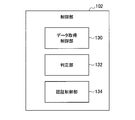
- FIG. 4 is a block diagram showing an example of a functional configuration of the control unit 102 of the mobile phone 100-1.
- FIG. 4 is a block diagram showing an example of a functional configuration of the control unit 102 of the mobile phone 100-1.
- an example of functional configuration of the control unit 102 of the mobile phone 100-1 will be described with reference to FIG.
- control unit 102 of the mobile phone 100-1 includes a data acquisition control unit 130, a determination unit 132, and an authentication control unit 134.
- the data acquisition control unit 130 has a function of controlling the operation of the distance image acquisition unit 120 and extracting feature data of the user 10 from the plurality of pieces of distance image data acquired by the distance image acquisition unit 120. Regarding control of the operation of the distance image acquisition unit 120, when the data acquisition control unit 130 detects registration processing and collation processing based on the operation of the user 10, the distance image acquisition unit 120 is activated, and the distance image acquisition unit 120 The distance image data of the user 10 is acquired.
- the change of the motion of the user 10 is extracted as the feature data based on the time-series change of the depth data included in the plurality of pieces of distance image data acquired by the distance image acquisition unit 120.
- the data acquisition control unit 130 outputs the feature data (first feature data) extracted during the registration process to the memory 112, and outputs the feature data (second feature data) extracted during the matching process to the determination unit 132. Do.
- Changes in movement of the user 10 extracted by the data acquisition control unit 130 as feature data include, for example, changes in face movement, mouth movement, eye movement, neck movement, hair movement, and the like.
- the data acquisition control unit 130 may extract not the change of movement but the physical condition and the complexion due to the change of emotion, the change of emotion, etc. as the feature data.
- the data acquisition control unit 130 may extract, for example, hand gestures, walking directions, physical conditions, and the like as feature data.
- the target from which the data acquisition control unit 130 extracts feature data is not limited to a person, and the motion of a robot that is an artificial object, the motion of a decoration of the user 10, and the like can also be targets of feature data.
- the data acquisition control unit 130 can identify the color when the distance image acquisition unit 120 uses the RGB camera, the data acquisition control unit 130 is not limited to the change in movement, and changes in the face color (makeup) of the user 10, And changes in clothes (prevention, glasses, ties, jackets, etc.) can be extracted as feature data based on the change in color.
- the determination unit 132 has a function of comparing the first feature data obtained at the time of registration processing with the second feature data obtained at the time of matching processing to determine whether both the features are the same as the user 10. . Specifically, the determination unit 132 calculates a correlation value between the first feature data and the second feature data, and the two features are identical based on whether the calculated correlation value is larger than a predetermined threshold value. It is determined whether or not. As a result of comparing the correlation value and the threshold, the determination unit 132 determines that the two features are the same if the correlation value is larger than the threshold, and determines that the two features are not the same if the correlation value is not larger than the threshold.
- the calculation method of a correlation value is not specifically limited, You may calculate by arbitrary methods. Further, the setting value of the threshold is not particularly limited, and an arbitrary value may be set.
- the authentication control unit 134 has a function of controlling the operation of the mobile phone 100-1 based on the determination result of the determination unit 132. Specifically, the authentication control unit 134 controls the operation of the mobile phone 100-1 based on the first determination result that is the determination result based on the feature data of the distance image data. For example, if the first determination result indicates that the features of the first feature data and the second feature data are the same, the authentication control unit 134 unlocks the mobile phone 100-1. , And enable the mobile phone 100-1. Also, for example, when the first determination result indicates that the features of the first feature data and the second feature data are not the same, the authentication control unit 134 releases the lock of the mobile phone 100-1. Alternatively, the mobile phone 100-1 may be left unusable.
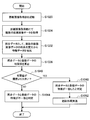
- FIG. 5 is a flowchart showing the registration process in the authentication process of the mobile phone 100-1.
- the control unit 102 instructs the imaging control unit 118, and the imaging control unit 118 activates the distance image acquisition unit 120 (step S1000).
- the distance image acquisition unit 120 photographs the user 10 a plurality of times, and acquires a plurality of distance image data (step S1004).
- the imaging control unit 118 outputs the plurality of distance image data acquired by the distance image acquisition unit 120 to the control unit 102.
- the control unit 102 that has acquired the plurality of distance image data extracts, in the data acquisition control unit 130, feature data indicating the feature of the user 10 from the time-series change of the plurality of distance image data (step S1012).
- the data acquisition control unit 130 outputs the extracted feature data to the determination unit 132.
- the determination unit 132 determines whether the feature data includes a sufficient feature amount (step S1014). If it is determined in step S1014 that the feature data includes a sufficient feature amount, the control unit 102 outputs the feature data as registration data to the memory 112, and stores the registration data in the memory 112 (step S1016). After the memory 112 stores the registration data, the mobile phone 100-1 ends the registration process. If it is determined in step S1014 that the feature data does not include a sufficient feature amount, the data acquisition control unit 130 causes the distance image acquisition unit 120 to acquire distance image data again.
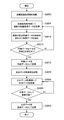
- FIG. 6 is a flowchart showing the verification process in the authentication process of the mobile phone 100-1.
- the control unit 102 issues an instruction to the imaging control unit 118, and the imaging control unit 118 activates the distance image acquisition unit 120 (step S1020).
- the distance image acquisition unit 120 photographs the user 10 a plurality of times, and acquires a plurality of distance image data (step S1024).
- the imaging control unit 118 outputs the plurality of distance image data acquired by the distance image acquisition unit 120 to the control unit 102.
- the control unit 102 which has acquired the plurality of distance image data extracts, in the data acquisition control unit 130, the feature data indicating the feature of the user 10 from the time-series change of the plurality of distance image data.
- the data acquisition control unit 130 outputs the extracted feature data as collation data to the determination unit 132 (step S1032).
- the determination unit 132 acquires feature data from the data acquisition control unit 130, the determination unit 132 acquires registration data from the memory 112. The determination unit 132 compares the verification data with the registered data to calculate a correlation value (step S1036). The determination unit 132 determines whether the calculated correlation value satisfies a predetermined condition (step S1040). If the correlation value is not larger than the threshold value in step S1040, the determination unit 132 determines that the features of the verification data and the registration data do not match, and ends the process (step S1044).
- step S1040 determines that the correlation value is larger than the predetermined value. If it is determined in step S1040 that the correlation value is larger than the predetermined value, the determination unit 132 determines that the features of the verification data and the registered data match (step S1048), and the authentication control unit 134 performs the authentication process. (Step S1052). After the authentication control unit 134 performs the authentication process, the mobile phone 100-1 ends the verification process.
- FIG. 7 is a flowchart showing the registration process in the authentication process of the mobile phone 200.
- the control unit 202 instructs the imaging control unit 218, and the imaging control unit 218 activates the camera unit 220 (step S2000).
- the camera unit 220 captures an image of the user 10 and acquires image data (step S2004).
- the imaging control unit 218 outputs the image data acquired by the camera unit 220 to the control unit 202.
- the control unit 202 that has acquired the image data determines whether the image data includes the face image of the user 10 (step S2008). If the control unit 202 determines in step S2008 that the image data does not include a face image, the control unit 202 causes the camera unit 220 to acquire the image data again, and performs determination processing.
- step S2008 determines in step S2008 that the image data includes a face image
- the control unit 202 extracts feature data from the image data (step S2012).
- the control unit 202 determines whether the extracted feature data includes a sufficient feature amount (step S2014). If it is determined in step S2014 that the feature data contains a sufficient feature amount, the control unit 202 outputs the feature data as registration data to the memory 212, and stores the registration data in the memory 212 (step S2016). After the memory 212 stores the registration data, the mobile phone 200 ends the registration process.
- step S2014 determines in step S2014 that the feature data does not include a sufficient feature amount
- the control unit 202 causes the camera unit 220 to obtain image data again.
- FIG. 8 is a flowchart showing the verification process in the authentication process of the mobile phone 200.
- the control unit 202 instructs the imaging control unit 218, and the imaging control unit 218 activates the camera unit 220 (step S2020).
- the camera unit 220 captures an image of the user 10 and acquires image data (step S2024).
- the imaging control unit 218 outputs the image data acquired by the camera unit 220 to the control unit 202.
- the control unit 202 that has acquired the image data determines whether the image data includes the face image of the user 10 (step S2028). If the control unit 202 determines in step S2028 that the image data does not include a face image, the control unit 202 causes the camera unit 220 to acquire the image data again, and performs determination processing. If the control unit 202 determines in step S2028 that the image data includes a face image, the control unit 202 extracts feature data from the image data as matching data (step S2032).
- the control unit 202 After acquiring the collation data, the control unit 202 acquires registration data from the memory 212, compares the collation data with the registration data, and calculates a correlation value (step S2036). The control unit 202 determines whether the calculated correlation value satisfies a predetermined threshold (step S2040). If the correlation value is not larger than the predetermined threshold value in step S2040, the control unit 202 determines that the features of the collation data and the registration data do not match, and ends the processing (step S2044). If the correlation value is larger than the predetermined threshold value in step S2040, the control unit 202 determines that the features of the verification data and the registration data match (step S2048), and performs the authentication process (step S2052). After the control unit 202 performs the authentication process, the mobile phone 200 ends the verification process.
- the mobile phone 100-1 can recognize whether the object is a three-dimensional object by using distance image data including shape data for collation. Therefore, when an image, a moving image, a printed matter, or the like showing the same feature data as the user 10 is used, it is possible to recognize that they are neither a solid nor a person, and to prevent illegal collation.
- the mobile phone 100-1 can extract a change in movement based on a time-series change of a plurality of distance images as feature data, and can use it for matching to recognize features due to a change in movement of an object. It is possible to distinguish three-dimensional objects and artificially created by the presence or absence of movement. Therefore, even when a user's face model created by a 3D printer or the like is used for matching, it is possible to recognize that the user is not the user since there is no change in motion, and to prevent an incorrect matching. .
- Second embodiment in addition to the authentication processing using the distance image data of the first embodiment of the present disclosure, the authentication system performs biometric processing using biometric data. By adding the biometric authentication process, it is possible to improve the accuracy of preventing unauthorized collation.
- FIG. 9 shows an example of a functional configuration of the mobile phone 100-2 according to the second embodiment of the present disclosure.
- biometric data is acquired as compared with the cellular phone 100-1 in the first embodiment, with the addition of the biometric authentication process by the biometric data.
- the part 121 is added.
- the control unit 102 is changed to the control unit 103 because the control unit 102 of the mobile phone 100-1 has a function to perform the biometric authentication process added.
- the mobile phone 100-1 and the mobile phone 100-2 differ only in the presence or absence of the biometric data acquisition unit 121 and in that the control unit 103 is added with a function.
- the control unit 103 is added with a function.
- the functions of the biometric data acquisition unit 121 and the control unit 103 will be described in order to avoid duplication with the description in the first embodiment. Descriptions of other components are ⁇ 2.1. The same as the contents described in the functional configuration example>, the description in this chapter is omitted.
- the biometric data acquisition unit 121 has a function of acquiring biometric data to be used for biometric authentication.
- the biometric data acquisition unit 121 may acquire, for example, data for face authentication, data for iris authentication, data for voice authentication, and the like as biological data.
- the apparatus used for acquisition of biometric data and the kind of biometric data used for biometric authentication are not specifically limited, You may use apparatus and biometric data of arbitrary types.
- Control unit 103 has a function of performing biometric authentication based on biometric data, in addition to authentication processing based on distance image data.
- the authentication process based on the distance image data is the same as the process described in the control unit 102, and thus the description thereof is omitted.
- control unit 103 of the mobile phone 100-2 includes a data acquisition control unit 140, a determination unit 142, and an authentication control unit 144.
- the data acquisition control unit 140 has a function of controlling the operation of the biological data acquisition unit 121, in addition to the function of the data acquisition control unit 130. Specifically, when the data acquisition control unit 140 detects the registration processing and the collation processing based on the operation of the user 10, the data acquisition control unit 140 activates the biometric data acquisition unit 121, and the biometric data acquisition unit 121 The biometric data of the user 10 is acquired.
- the data acquisition control unit 140 outputs the biological data (first biological data) acquired during the registration process to the memory 112, and outputs the biological data (second biological data) acquired during the verification process to the determination unit 132.
- the determination unit 142 In addition to the function of the determination unit 132, the determination unit 142 compares the first biometric data acquired during the registration process with the second biometric data acquired during the verification process, and the characteristics indicated by both of the biometric data are identical to those of the user 10. It has a function of determining whether or not it is a feature. Specifically, the determination unit 142 calculates the correlation value between the first biological data and the second biological data, and based on whether the calculated correlation value is larger than a predetermined threshold value, both biological data are identical. Determine if there is.
- the determination unit 142 determines that both features are the same when the correlation value is larger than the threshold, and determines that the two features are not the same when the correlation value is not larger than the threshold.
- the calculation method of a correlation value is not specifically limited, You may calculate by arbitrary methods.
- the setting value of the threshold is not particularly limited, and an arbitrary value may be set.
- Authentication control unit 144 has a function of controlling the operation of mobile phone 100-2 based on the determination result of determination unit 142. Specifically, the authentication control unit 144 uses the mobile phone 100-2 based on the first determination result that is the determination result based on the feature data of the distance image data and the second determination result that is the determination result based on the biometric data. Control the operation of For example, if both the first determination result and the second determination result indicate that the features of the first biometric data and the second biometric data are the same, the authentication control unit 144 determines The telephone 100-2 is unlocked, and the mobile telephone 100-2 becomes available.
- the authentication control unit may be kept in the unusable state without unlocking the mobile phone 100-2.
- FIG. 11 is a flowchart showing the registration process in the authentication process of the mobile phone 100-2.
- the processing contents of step S3000, step S3004, step S3012, step S3014, and step S3016 shown in FIG. 11 are the same as the processing contents of step S1000, step S1004, step S1012, step S1014, and step S1016 shown in FIG. It is the same. Therefore, in the following, the description thereof will be omitted, and the description will start from step S3020.
- the cellular phone 100-2 After acquiring registration data based on a plurality of distance image data in step S3000, step S3004, step S3012, step S3014, and step S3016, the cellular phone 100-2 acquires biological data in the process from step S3020. Specifically, after storing the registration data in step S3016, the control unit 103 activates the biometric data acquisition unit 121 (step S3020). The biometric data acquisition unit 121 acquires biometric data of the user 10 (step S3024). The biometric data acquisition unit 121 outputs the acquired biometric data to the control unit 103.
- the control unit 103 that has acquired the biometric data determines, in the data acquisition control unit 140, whether or not the acquired biometric data can be registered as data for biometric authentication (step S3028). If the data acquisition control unit 140 determines in step S3028 that the biometric data can be registered, the data acquisition control unit 140 outputs the biometric data as registration data to the memory 112 and stores the registration data in the memory 112 (step S3032). After the memory 112 stores the registration data, the mobile phone 100-2 ends the registration process. If the data acquisition control unit 140 determines in step S3028 that the biometric data can not be registered, the data acquisition control unit 140 causes the biometric data acquisition unit 121 to acquire biometric data again.
- FIG. 12 is a flowchart showing the verification process in the authentication process of the mobile phone 100-2.
- the processing contents of step S3036, step S3040, step S3048, step S3052, step S3056 and step S3060 shown in FIG. 12 are the same as step S1020, step S1024, step S1032, step S1036, step S1040 and step
- the contents are the same as the processing contents of S1044. Therefore, in the following, the description thereof will be omitted, and the description will start from step S 3064.
- step S3060 When mobile phone 100-2 determines in step S3060 that the correlation value is larger than the threshold and the registration data based on the plurality of distance image data and the matching data match, the living body by biological data is processed in step S3064.
- Implement authentication process Specifically, after acquiring the registration data based on the plurality of distance image data and the determination result to the effect that the collation data match in step S3060, the control unit 103 activates the biological data acquisition unit 121 (step S3064).
- the biometric data acquisition unit 121 acquires biometric data of the user 10 (step S3068).
- the biometric data acquisition unit 121 outputs the acquired biometric data to the control unit 103.
- the control unit 103 that has acquired the biometric data determines, in the data acquisition control unit 140, whether the acquired biometric data can be used as collation data (Step S3072). In step S3072, when the acquired biometric data can not be used as collation data, the control unit 103 causes the biometric data acquisition unit 121 to acquire biometric data again. In step S3072, when the acquired biometric data can be used as collation data, the determination unit 142 compares the collation data with the registration data to calculate a correlation value (step S3076).
- the determining unit 142 determines whether the calculated correlation value satisfies a predetermined condition (step S 3080). If the correlation value is not larger than the threshold in step S3080, the determination unit 142 determines that the features of the verification data and the registration data do not match, and ends the process (step S3060). If the correlation value is larger than the predetermined value in step S3080, the determination unit 142 determines that the features of the verification data and the registration data match (step S3084), and the authentication control unit 144 performs the authentication process (step S3088). . After the authentication control unit 144 performs the authentication process, the mobile phone 100-2 ends the verification process.
- the mobile phone 100-2 can improve the accuracy of the authentication process in addition to preventing the illegal matching which is the effect of the mobile phone 100-1 according to the first embodiment. .
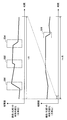
- the correlation values of the first feature data and the second feature data may differ greatly depending on the acquisition timing of the second feature data, even if they are correlation values for the same first feature data. Therefore, the determination unit 132 may perform comparison using a comprehensive feature amount by viewing correlation values of a plurality of feature data instead of viewing only the correlation value regarding one feature data. As a result, the determination unit 132 can also lower the false acceptance rate FAR, which is the rate at which the false recognition is made when another person attempts authentication. For example, looking at the correlation values of the facial shape feature data shown in FIG. 13 and the facial color feature data shown in FIG. 14, if one of the correlation values is larger than a predetermined threshold value, the person is the person. You may judge.
- the graphs shown in FIG. 13 and FIG. 14 show the time series change of the correlation value of the feature data on a daily basis in the upper part and the time series change of the correlation value of the feature data on a monthly basis in the lower part .
- the horizontal axis of the graph indicates time, and the vertical axis indicates the correlation value when the second feature data at a certain time is acquired.
- FIG. 13 shows the relationship between the time-series change of the face shape and the correlation value.
- the upper graph in FIG. 13 will be described.
- a period 400 indicates a period in which the face shape approaches the first feature data and the correlation value largely changes as the user 10 arranges the hairstyle in the morning posture.
- a period 402 indicates a period in which the correlation value changes small due to the user 10 taking a bath and the hairstyle being broken.
- the correlation value greatly differs depending on at which timing before and after each period the data acquisition control unit 130 acquires the feature data.
- the correlation value changes as a whole due to the change in the extension of the hair.
- a period 404 indicates a period in which the correlation value temporarily decreases as the user 10 changes the hair style.
- a period 406 indicates a period in which the correlation value is reduced because the hair style has largely changed due to haircut.
- the correlation value greatly differs depending on at which timing during each period and before or after each period the data acquisition control unit 130 acquires feature data.
- FIG. 14 shows the relationship between the time-series change of the complexion (makeup) and the correlation value.
- the upper graph in FIG. 14 will be described.
- a period 500 indicates a period in which the complexion approaches the first feature data and the correlation value becomes large as the user 10 makeup in the morning posture.
- a period 502 indicates a period in which the complex color approaches the first feature data again and the correlation value is increased by correcting the broken-down makeup of the user 10.
- a period 504 indicates a period in which the correlation value is reduced because the makeup is dropped after the user 10 comes home.
- the correlation value greatly differs depending on at which timing before and after each period the data acquisition control unit 130 acquires the feature data.
- a facial color at an arbitrary time point is registered as the first feature data. Even if the user 10 tries to make the same makeup every day, the complexion after makeup does not always completely match the first feature data due to the condition of the skin and the force of the user 10 or the like. Therefore, the correlation value on a monthly basis is repeating a slight change on the whole.
- a period 506 indicates a period in which the correlation value is reduced by the fact that the complexion after makeup has largely changed due to the user 10 changing the method of cosmetics and makeup. The correlation value greatly differs depending on at which timing before and after the period 506 the data acquisition control unit 130 acquires the feature data.
- the determination unit 132 may automatically add second feature data such as makeup, a hair style, clothes, etc. as new first feature data.
- second feature data such as makeup, a hair style, clothes, etc.
- FIG. 15 The configuration of FIG. 15 is the same as the configurations of FIG. 13 and FIG. 14 described above.
- FIG. 15 shows the relationship between the time-series change of clothes and the correlation value.
- the upper graph in FIG. 15 will be described.
- a period 600 indicates a period in which the clothes approaches the first feature data and the correlation value increases due to the user 10 changing into clothes for work in the morning.
- a period 602 indicates a period in which the correlation value is reduced by the user 10 removing the jacket.
- a period 604 indicates a period in which the correlation value is reduced due to the user 10 removing the tie.
- a period 606 indicates a period in which the correlation value returns to the same size as that at work when the user 10 comes home, by tightening a tie and wearing a jacket.
- a period 608 indicates a period in which the correlation value is reduced because the user 10 changes into a room arrival after returning home. The correlation value greatly differs depending on at which timing before and after each period the data acquisition control unit 130 acquires the feature data.
- the determination unit 132 since the determination unit 132 registers clothes and accessories with high appearance frequency as the first feature data, the number of third days decreases and the number of second days increases as the days pass. Then, as the first feature data increases, the determination unit 132 can perform matching from the comprehensive feature amount of the plurality of feature data, and in the period 612, a half or more of one week is the first Day and there is no third day.
- control unit 102 performs access control based on the authentication process for the lock release when the user 10 uses the mobile phone 100-1, but the access control target is the lock release It is not limited to.
- an authentication standard may be set according to the target of access control.
- the control unit 102 may set a security level for each application installed in a mobile phone as an authentication standard, and may set feature data according to the security level at the time of authentication.
- a weight is set for each, and the security level and the feature data for which the same weight is set are set to correspond to each other.
- the setting of the security level and the weight of feature data may be manually set by the user 10.
- AI Artificial Intelligence
- AI is installed on the terminal where the authentication system is installed, and AI is made to analyze the past data, and the security level and feature data weight are automatically based on the analysis result. It may be set.
- a GPS Global Positioning System
- authentication using position information of the user 10 acquired by the GPS may be combined with authentication using distance image data.
- voice data such as the voice of the user 10 may be acquired from the microphone 128, and authentication using the acquired voice data may be combined with authentication using distance image data.
- the daily unit and the monthly unit are used as the time unit of the horizontal axis of the graph in FIGS. 13 to 15, the time unit is not particularly limited, and an arbitrary time unit may be used. For example, minutes, hours, weeks, and years may be used.
- IoT Internet of Things
- the technology according to the present disclosure when the technology according to the present disclosure is applied to a camera device such as a wearable camera, the user sets the use right of the camera device by access control by the authentication system, and a captured image (still image / moving image) It becomes possible to set the viewing authority such as
- the user sets the drone use authority by access control by the authentication system, and limits on drone flight (speed limitation, altitude It is possible to set restrictions etc. for each user.
- the authentication system can automatically acquire a plurality of user data, and acquire user feature data based on time-series changes of the plurality of user data.
- the authentication system according to the present disclosure can compare a plurality of feature data acquired at different timings, and determine whether the plurality of feature data indicates the same user feature, and the determination result In response to this, it is possible to control the authentication process of the user.
- the authentication system described in the present specification may be realized as a single device, or some or all may be realized as separate devices.
- the data acquisition control unit 130, the determination unit 132, and the authentication control unit 134 of the control unit 102 shown in FIG. 4 are provided in an apparatus such as a server that can be connected to the mobile phone 100-1 via a network. Good.
- each device described in the present specification may be realized using any of software, hardware, and a combination of software and hardware.
- the programs that configure the software are stored in advance in, for example, recording media (non-transitory media) provided inside or outside each device. And each program is read into RAM at the time of execution by a computer, for example, and is executed by a processor such as a CPU.
- a data acquisition unit that automatically acquires a plurality of user data and acquires user feature data based on time-series changes of the plurality of user data;
- a determination unit that compares a plurality of pieces of feature data acquired at different timings and determines whether the plurality of pieces of feature data indicate the same feature of the user;
- a control unit configured to control an authentication process of the user according to a first determination result that is a determination result of the determination unit;
- An information processing apparatus comprising: (2) The determination unit calculates a correlation value between the first feature data acquired at the time of registration of the feature data and the second feature data acquired at the time of collation of the feature data, and whether the correlation value satisfies a predetermined condition The information processing apparatus according to (1), wherein it is determined whether or not the first feature data and the second feature data indicate the same feature of the user based on whether or not it is not.
- the determination unit determines that the first feature data and the second feature data indicate the same feature of the user, and the correlation value is the predetermined feature.
- the information processing apparatus according to (2) wherein it is determined that the first feature data and the second feature data do not indicate the same feature of the user if the condition is not satisfied.
- the determination unit performs the determination a plurality of times using the same second feature data, and the correlation value does not satisfy the predetermined condition in any of the determinations.
- the data acquisition unit acquires a plurality of user images as the plurality of user data, and acquires a change in the user's operation as the feature data based on a time-series change of the plurality of user images.
- the information processing apparatus according to any one of (4) to (4).
- (6) The information processing apparatus according to (5), wherein the data acquisition unit acquires, as feature data, time-series change of the user's operation based on time-series change of image data and shape data included in the user image. .
- the information processing apparatus (11) The information processing apparatus according to (10), wherein the control unit sets different authentication criteria in the authentication process according to a process controlled based on a first determination result. (12) The information processing apparatus according to (11), wherein the control unit performs the authentication process using the feature data in which a weight corresponding to a weight set for each of the authentication criteria is set. (13) The data acquisition unit acquires biometric data of the user, The determination unit compares a plurality of pieces of biometric data having different acquired timings, and obtains a second determination result which is a determination result as to whether or not the plurality of pieces of biometric data indicate the same feature of the user.
- the information processing apparatus controls an authentication process of the user based on the first determination result and the second determination result.
- the data acquisition unit acquires the user data using an apparatus capable of acquiring biometric data.
- a data acquisition unit that automatically acquires a plurality of user data and acquires user feature data based on time-series changes of the plurality of user data;
- a determination unit that compares a plurality of pieces of feature data acquired at different timings and determines whether the plurality of pieces of feature data indicate the same feature of the user;
- a control unit configured to control an authentication process of the user according to a first determination result that is a determination result of the determination unit;
Landscapes
- Engineering & Computer Science (AREA)
- Theoretical Computer Science (AREA)
- Physics & Mathematics (AREA)
- General Physics & Mathematics (AREA)
- Health & Medical Sciences (AREA)
- General Health & Medical Sciences (AREA)
- Multimedia (AREA)
- Human Computer Interaction (AREA)
- Computer Security & Cryptography (AREA)
- General Engineering & Computer Science (AREA)
- Computer Hardware Design (AREA)
- Oral & Maxillofacial Surgery (AREA)
- Computer Vision & Pattern Recognition (AREA)
- Bioethics (AREA)
- Software Systems (AREA)
- Biomedical Technology (AREA)
- Computing Systems (AREA)
- Computer Networks & Wireless Communication (AREA)
- Signal Processing (AREA)
- Medical Informatics (AREA)
- Databases & Information Systems (AREA)
- Social Psychology (AREA)
- Psychiatry (AREA)
- Telephone Function (AREA)
- Collating Specific Patterns (AREA)
Abstract
【課題】不正な照合を防止することが可能な情報処理装置を提供する。 【解決手段】複数のユーザデータを自動で取得し、複数の前記ユーザデータの時系列変化に基づき、ユーザの特徴データを取得するデータ取得部と、取得したタイミングが異なる複数の前記特徴データを比較し、複数の前記特徴データが同一の前記ユーザの特徴を示すか否かを判定する判定部と、前記判定部の判定結果である第1の判定結果に応じて、前記ユーザの認証処理を制御する制御部と、を備える、情報処理装置。
Description
本開示は、情報処理装置、プログラム及び情報処理方法に関する。
近年、認証を受けるユーザが事前に登録を行ったユーザと一致するか否かを認証する技術として、生体認証技術が多く用いられている。かかる生体認証技術は、ユーザが暗証番号などを記憶しなくても認証が行われ得るため、ユーザにとって利便性が高い技術である。その一例として、特許文献1では、あらかじめ撮像されて登録された画像と、認証時に撮像された画像が一致するか否かに基づき、アクセス制御を行う生体認証技術が開示されている。
しかし、顔や虹彩の特徴を読み取る生体認証においては、登録画像と同一の顔や虹彩を印刷した印刷物等を用いて不正に照合できる問題があった。上述の印刷物等を用いた認証に対する解決策として、動きに着目した認証方法、例えば、まばたきの検出、または瞳孔の動きの検出等による方法が提案されている。しかし、スマートフォンやタブレット等の電子機器の普及により、録画したまばたきや瞳孔の動きを再生することで、不正に照合することが可能となっている。
そこで、本開示では、不正な照合を防止することが可能な、新規かつ改良された情報処理装置、プログラム及び情報処理方法を提案する。
本開示によれば、複数のユーザデータを自動で取得し、複数の前記ユーザデータの時系列変化に基づき、ユーザの特徴データを取得するデータ取得部と、取得したタイミングが異なる複数の前記特徴データを比較し、複数の前記特徴データが同一の前記ユーザの特徴を示すか否かを判定する判定部と、前記判定部の判定結果である第1の判定結果に応じて、前記ユーザの認証処理を制御する制御部と、を備える、情報処理装置が提供される。
また本開示によれば、コンピュータを、複数のユーザデータを自動で取得し、複数の前記ユーザデータの時系列変化に基づき、ユーザの特徴データを取得するデータ取得部と、取得したタイミングが異なる複数の前記特徴データを比較し、複数の前記特徴データが同一の前記ユーザの特徴を示すか否かを判定する判定部と、前記判定部の判定結果である第1の判定結果に応じて、前記ユーザの認証処理を制御する制御部と、として機能させるための、プログラムが提供される。
また本開示によれば、複数のユーザデータを自動で取得し、複数の前記ユーザデータの時系列変化に基づき、ユーザの特徴データを取得することと、取得したタイミングが異なる複数の前記特徴データを比較し、複数の前記特徴データが同一の前記ユーザの特徴を示すか否かを判定することと、判定部の判定結果である第1の判定結果に応じて、前記ユーザの認証処理を制御することと、を含む、プロセッサにより実行される、情報処理方法が提供される。
以上説明したように本開示によれば、不正な照合を防止することが可能な、新規かつ改良された情報処理装置、情報処理方法及びプログラムを提供することが可能である。
なお、上記の効果は必ずしも限定的なものではなく、上記の効果とともに、または上記の効果に代えて、本明細書に示されたいずれかの効果、または本明細書から把握され得る他の効果が奏されてもよい。
以下に添付図面を参照しながら、本開示の好適な実施形態について詳細に説明する。なお、本明細書及び図面において、実質的に同一の機能構成を有する構成要素については、同一の符号を付することにより重複説明を省略する。
なお、説明は以下の順序で行うものとする。
1.認証システム
2.第1の実施形態
2.1.機能構成例
2.2.動作例
2.3.効果
3.第2の実施形態
3.1.機能構成例
3.2.動作例
3.3.効果
4.変形例
5.応用例
6.まとめ
1.認証システム
2.第1の実施形態
2.1.機能構成例
2.2.動作例
2.3.効果
3.第2の実施形態
3.1.機能構成例
3.2.動作例
3.3.効果
4.変形例
5.応用例
6.まとめ
<<1.認証システム>>
図1は、本開示の一実施形態に係る認証システムの概要を示す説明図である。認証システムは、ユーザ10のユーザデータを取得し、取得したユーザデータに基づき、認証処理の制御を行うためのシステムである。本開示の一実施形態においては、認証システムのプログラムがインストールされた携帯電話100の例について説明する。なお、本開示の一実施形態では、携帯電話にインストールされた認証プログラムが、携帯電話の構成要素と共働することで認証システムを実現しているが、認証システムの形態については限定されない。例えば、認証プログラムがインストールされ、他の装置とは独立した認証装置として実現されてもよい。また、認証プログラムはロボットにインストールされてもよい。
図1は、本開示の一実施形態に係る認証システムの概要を示す説明図である。認証システムは、ユーザ10のユーザデータを取得し、取得したユーザデータに基づき、認証処理の制御を行うためのシステムである。本開示の一実施形態においては、認証システムのプログラムがインストールされた携帯電話100の例について説明する。なお、本開示の一実施形態では、携帯電話にインストールされた認証プログラムが、携帯電話の構成要素と共働することで認証システムを実現しているが、認証システムの形態については限定されない。例えば、認証プログラムがインストールされ、他の装置とは独立した認証装置として実現されてもよい。また、認証プログラムはロボットにインストールされてもよい。
図1のユーザ10は、携帯電話100が備える距離画像取得部120(データ取得部
)を自分の顔へ向けることで、携帯電話100に自動でユーザデータを取得させているが、ユーザデータの取得方法は特に限定されない。例えば、ユーザ10が距離画像取得部120を意図的にユーザ10の方へ向けていなくても、距離画像取得部120がユーザ10を検知できる状態にある場合、距離画像取得部120は自動でユーザデータを取得してよい。
)を自分の顔へ向けることで、携帯電話100に自動でユーザデータを取得させているが、ユーザデータの取得方法は特に限定されない。例えば、ユーザ10が距離画像取得部120を意図的にユーザ10の方へ向けていなくても、距離画像取得部120がユーザ10を検知できる状態にある場合、距離画像取得部120は自動でユーザデータを取得してよい。
また、例えば、上述した他の装置とは独立した認証装置を用いる場合、ユーザ10は携帯電話100ではなく、認証装置にユーザデータを取得させてもよい。具体的には、部屋の壁等に設置された外部装置が自動でユーザデータを取得してもよい。外部装置は、ユーザを検知した際にユーザ10の操作を介さずに自動でユーザデータを取得し、取得したユーザデータを携帯電話100に送信する。携帯電話100は、外部装置が自動で取得したユーザデータに基づき、認証処理を行うことが可能である。
以上、図1を参照しながら認証システムの概要について説明した。続いて、第1の実施形態について説明する。
<<2.第1の実施形態>>
第1の実施形態では、認証プログラムがインストールされ、かつユーザデータを取得するための距離画像取得部を備えた携帯電話を用いる例について説明する。まず、図2を参照しながら、本開示の第1の実施形態における携帯電話の機能構成例について説明する。
第1の実施形態では、認証プログラムがインストールされ、かつユーザデータを取得するための距離画像取得部を備えた携帯電話を用いる例について説明する。まず、図2を参照しながら、本開示の第1の実施形態における携帯電話の機能構成例について説明する。
<2.1.機能構成例>
[2.1.1.携帯電話100-1の機能構成例]
図2は、認証プログラムをインストールした携帯電話100-1の機能構成例を示すブロック図である。以下、図2を参照しながら、携帯電話100-1の機能構成例について説明する。
[2.1.1.携帯電話100-1の機能構成例]
図2は、認証プログラムをインストールした携帯電話100-1の機能構成例を示すブロック図である。以下、図2を参照しながら、携帯電話100-1の機能構成例について説明する。
図2に示すように、携帯電話100-1は、制御部102、通信部104、アンテナ106、表示部108、操作部110、メモリ112、外部接続端子114、外部装置接続部116、撮像制御部118、距離画像取得部120、リモートコントローラ制御部122、IR送受信部124、音声制御部126、スピーカ127、マイク128を備える。
(1)制御部102
制御部102は、制御ラインを介して、携帯電話100-1の各部の機能を制御する機能を有する。また、制御部102は、メモリ112に記憶されたプログラム(ソフトウェア)を、制御ラインを介して読み出し、読み出したプログラムを実行することにより、携帯電話100-1の各部の機能を制御してもよい。例えば、本開示の一実施形態において、制御部102は、メモリ112に記憶された認証プログラムを実行し、距離画像取得部120における距離画像データ取得処理の制御、ユーザ10の特徴データの抽出処理の制御、ユーザ10の特徴データに基づく判定処理の制御、及び判定結果に基づく認証処理の制御を行う。また、制御部102は、例えばCPU(Central Processing Unit)等で構成される。なお、制御部102は、認証処理が開始されたことを検知する検知部の機能を含んでもよい。
制御部102は、制御ラインを介して、携帯電話100-1の各部の機能を制御する機能を有する。また、制御部102は、メモリ112に記憶されたプログラム(ソフトウェア)を、制御ラインを介して読み出し、読み出したプログラムを実行することにより、携帯電話100-1の各部の機能を制御してもよい。例えば、本開示の一実施形態において、制御部102は、メモリ112に記憶された認証プログラムを実行し、距離画像取得部120における距離画像データ取得処理の制御、ユーザ10の特徴データの抽出処理の制御、ユーザ10の特徴データに基づく判定処理の制御、及び判定結果に基づく認証処理の制御を行う。また、制御部102は、例えばCPU(Central Processing Unit)等で構成される。なお、制御部102は、認証処理が開始されたことを検知する検知部の機能を含んでもよい。
(2)通信部104、アンテナ106
通信部104は、制御部102の制御下で、無線信号の送信処理、及び受信処理を行う機能を有する。また、携帯電話100-1は、基地局と無線通信を行うためのアンテナ106を備え、アンテナ106は、通信部104に接続される。
通信部104は、制御部102の制御下で、無線信号の送信処理、及び受信処理を行う機能を有する。また、携帯電話100-1は、基地局と無線通信を行うためのアンテナ106を備え、アンテナ106は、通信部104に接続される。
また、携帯電話100-1がインターネット等のネットワークを経由してデータ通信またはメールの送受信を行う場合には、制御部102の制御下で、通信部104が送信または受信の処理を行ってもよい。例えば、通信部104で受信されたデータがメモリ112に記憶され、制御部102の制御によって、記憶されたデータに基づいた表示などの処理が行われる。また、メモリ112に記憶されたデータは、通信部104に供給され、無線送信される。
(3)表示部108、操作部110
表示部108は、制御部102の制御下で、表示パネルにホーム画面、ロック画面等の多様な表示画面を表示する機能を有する。表示パネルとしては、例えば液晶表示パネルや有機EL(Electro-Luminescence)表示パネルが使用される。また、携帯電話100-1は、操作部110として、操作キー、及び電源スイッチ等を備える。操作キーの操作情報は、制御部102に伝送される。
表示部108は、制御部102の制御下で、表示パネルにホーム画面、ロック画面等の多様な表示画面を表示する機能を有する。表示パネルとしては、例えば液晶表示パネルや有機EL(Electro-Luminescence)表示パネルが使用される。また、携帯電話100-1は、操作部110として、操作キー、及び電源スイッチ等を備える。操作キーの操作情報は、制御部102に伝送される。
なお、携帯電話100-1の表示部108にタッチパネルを用いることで、表示部108は操作部110として機能してもよい。タッチパネルは、指またはペンなどの物体で表示パネルの表面(検出面)がタッチされたとき、タッチされた位置を検出する。例えば、タッチパネルは、表示パネルが画像などを表示するエリア等に、指またはペンが接触したことを検出する。なお、タッチパネルは、表示パネルに積層された状態で構成されてもよく、また表示パネルと一体的に構成されてもよい。タッチパネルは、例えば静電容量式であってもよく、この場合、指などで表示パネルの表面がタッチされたことが静電容量の変化から検出される。
タッチパネルが検出したタッチ位置のデータは、制御部102に伝送される。制御部102は、供給されるタッチ位置に基づいて、起動中のアプリケーションを実行する。タッチ位置は、例えば直交する2つの軸であるX軸(横軸)とY軸(縦軸)の座標位置で示される。タッチパネルが検出する座標位置は、1点に限られない。複数の点が同時にタッチされた場合、制御部102は、検出される複数の点に基づく制御を行う。また、タッチパネルの広い範囲が同時にタッチされたとき、制御部102は、タッチされた範囲全体を検出する。
(4)メモリ112
メモリ112は、プログラムなどの予め用意されたデータを記憶する機能を有する。例えば、認証プログラムはメモリ112に記憶される。また、メモリ112は、ユーザ10の操作によって生成されたデータを記憶する。メモリ112へのデータの記憶、及びメモリ112からのデータの読み出しは、制御部102の制御下で行われる。
メモリ112は、プログラムなどの予め用意されたデータを記憶する機能を有する。例えば、認証プログラムはメモリ112に記憶される。また、メモリ112は、ユーザ10の操作によって生成されたデータを記憶する。メモリ112へのデータの記憶、及びメモリ112からのデータの読み出しは、制御部102の制御下で行われる。
(5)外部装置接続部116、外部接続端子114
外部装置接続部116は、携帯電話100-1と外部装置を接続する部位であり、携帯電話100-1には複数の外部装置接続部116が備えられている。さらに、外部装置接続部116には、携帯電話100-1の本体を他の機器と接続するための端子である外部接続端子114が備えられている。携帯電話100-1と外部装置は、外部装置に応じたケーブル等を用いて接続され、ケーブル等は外部装置接続部116に備えられた外部接続端子114に接続される。例えば、携帯電話100-1とパーソナルコンピュータ(PC)を接続してデータをやり取りする時には、外部接続端子114は、USBケーブルを用いてPCのUSB(Universal Serial Bus)ポートと接続される。
外部装置接続部116は、携帯電話100-1と外部装置を接続する部位であり、携帯電話100-1には複数の外部装置接続部116が備えられている。さらに、外部装置接続部116には、携帯電話100-1の本体を他の機器と接続するための端子である外部接続端子114が備えられている。携帯電話100-1と外部装置は、外部装置に応じたケーブル等を用いて接続され、ケーブル等は外部装置接続部116に備えられた外部接続端子114に接続される。例えば、携帯電話100-1とパーソナルコンピュータ(PC)を接続してデータをやり取りする時には、外部接続端子114は、USBケーブルを用いてPCのUSB(Universal Serial Bus)ポートと接続される。
(6)撮像制御部118
撮像制御部118は、制御部102からの指示に基づき、距離画像取得部120の動作を制御する機能を有する。例えば、制御部102から画像を取得するように指示があった場合、撮像制御部118は距離画像取得部120を起動し、距離画像取得部120に画像を取得させる。そして、撮像制御部118は、データライン、及び制御ラインを介して、距離画像取得部120が取得した画像を制御部102へ出力する。なお、撮像制御部118は、データラインを介して、距離画像取得部120が取得した画像をメモリ112に記憶し、制御部102が画像にアクセスできるようにしてもよい。
撮像制御部118は、制御部102からの指示に基づき、距離画像取得部120の動作を制御する機能を有する。例えば、制御部102から画像を取得するように指示があった場合、撮像制御部118は距離画像取得部120を起動し、距離画像取得部120に画像を取得させる。そして、撮像制御部118は、データライン、及び制御ラインを介して、距離画像取得部120が取得した画像を制御部102へ出力する。なお、撮像制御部118は、データラインを介して、距離画像取得部120が取得した画像をメモリ112に記憶し、制御部102が画像にアクセスできるようにしてもよい。
(7)距離画像取得部120
距離画像取得部120は、対象の形状を計測できるカメラを用いて、ユーザ10を撮影する機能を有する。距離画像取得部120は、制御部102からの指示に基づき、ユーザ10を連続して撮影することにより、ユーザ10の距離画像データを複数枚取得する。そして、距離画像取得部120が撮影した複数枚の距離画像データは、制御部102へ出力される。
距離画像取得部120は、対象の形状を計測できるカメラを用いて、ユーザ10を撮影する機能を有する。距離画像取得部120は、制御部102からの指示に基づき、ユーザ10を連続して撮影することにより、ユーザ10の距離画像データを複数枚取得する。そして、距離画像取得部120が撮影した複数枚の距離画像データは、制御部102へ出力される。
距離画像取得部120が取得した距離画像データは、ユーザ10が写された画像データ、及びユーザ10までの距離を示すDepthデータ(形状データ)が含まれる。なお、距離画像取得部120がユーザ10を連続して撮影する回数は特に限定されず、任意の回数が設定されてよい。また、距離画像取得部120が取得する形状データはDepthデータに限定されず、距離画像取得部120は任意の種類の形状データを取得してもよい。
なお、距離画像取得部120が用いる距離画像取得装置の種類は特に限定されず、任意の距離画像取得装置を用いてよい。例えば、距離画像取得部120は、距離画像取得装置としてステレオカメラ、及び偏光カメラを用いてよい。また、距離画像取得部120が用いる撮影対象の形状を計測する方式は特に限定されず、任意の方式を用いてよい。例えば、距離画像取得部120は、Structured Light方式、及びToF(Time of Flight)方式を用いてよい。
(8)IR送受信部124、リモートコントローラ制御部122
IR(Infrared)送受信部124は、他の携帯電話等と赤外線信号の送受信を行う機能を有する。例えば、IR送受信部124は、外部から受信した赤外線信号をリモートコントローラ制御部122へ出力する。リモートコントローラ制御部122は、赤外線信号を解析し、データラインを介して制御部102へ解析結果を出力する。制御部102は、赤外線信号の解析結果に基づき、携帯電話100-1の各部の機能の処理を制御する。なお、IR送受信部124が送受信する信号の種類は特に限定されない。
IR(Infrared)送受信部124は、他の携帯電話等と赤外線信号の送受信を行う機能を有する。例えば、IR送受信部124は、外部から受信した赤外線信号をリモートコントローラ制御部122へ出力する。リモートコントローラ制御部122は、赤外線信号を解析し、データラインを介して制御部102へ解析結果を出力する。制御部102は、赤外線信号の解析結果に基づき、携帯電話100-1の各部の機能の処理を制御する。なお、IR送受信部124が送受信する信号の種類は特に限定されない。
(9)音声制御部126、スピーカ127、マイク128
音声制御部126は、供給される音声データの復調処理を行い、アナログ音声信号を得る。音声制御部126に供給される音声データは、通信部104が受信した通話用の音声データであってもよい。このとき通信部104は、データラインを介して音声データを音声制御部126に供給する。音声制御部126で得られたアナログ音声信号は、スピーカ127に供給され、スピーカ127から音声が出力される。
音声制御部126は、供給される音声データの復調処理を行い、アナログ音声信号を得る。音声制御部126に供給される音声データは、通信部104が受信した通話用の音声データであってもよい。このとき通信部104は、データラインを介して音声データを音声制御部126に供給する。音声制御部126で得られたアナログ音声信号は、スピーカ127に供給され、スピーカ127から音声が出力される。
また、音声制御部126は、マイク128が出力した音声信号を送信フォーマットの音声データに変換する。そして、音声制御部126で変換された音声データは、データラインを介して通信部104に供給される。また、通信部104に供給された音声データは、パケット化されて無線送信される。
以上、図2を参照しながら、携帯電話100-1の機能構成例について説明した。続いて、比較例の携帯電話200の機能構成例について説明する。
[2.1.2.比較例における携帯電話200の機能構成例]
図3は、比較例における携帯電話200の機能構成例を示すブロック図である。以下、図3を参照しながら、比較例における携帯電話200の機能構成例について説明する。なお、以下では、重複した説明をさけるため、携帯電話200と携帯電話100-1の機能構成例の中で異なる点のみを説明する。
図3は、比較例における携帯電話200の機能構成例を示すブロック図である。以下、図3を参照しながら、比較例における携帯電話200の機能構成例について説明する。なお、以下では、重複した説明をさけるため、携帯電話200と携帯電話100-1の機能構成例の中で異なる点のみを説明する。
比較例における携帯電話200の機能構成例が、携帯電話100-1の機能構成例と異なる点は2点ある。まず、1点目は、距離画像取得部ではなくカメラ部220を備えている点である。携帯電話200の制御部202は、カメラ部が撮影する画像から画像データしか取得できず、距離画像取得部のようにDepthデータ等の形状データを取得する機能は有していない。2点目は、制御部202における処理が異なる点である。具体的に、制御部202は、1枚の画像データから特徴データを抽出できればよいため、制御部102のように距離画像データから形状データ等の特徴データを抽出する機能、及び複数の画像の時系列変化に基づく特徴データを抽出する機能は有していない。
なお、携帯電話200のその他の構成要素については、符号を除く構成要素名が一致する携帯電話100-1の構成要素と機能は同一であり、重複した説明を避けるためにその機能の詳細説明を省略する。
以上、図3を参照しながら、比較例における携帯電話200の機能構成例について説明した。上述したとおり、比較例における携帯電話200の制御部202は、制御部102のように距離画像データから形状データ等の特徴データを抽出する機能、及び複数の画像の時系列変化に基づく特徴データを抽出する機能を有していない。よって、比較例における携帯電話200は、形状データ等の特徴データを抽出できないことから、立体物の認識ができず、特徴データを示す画像、動画、及び印刷物等による不正な照合が行われてしまう。
また、携帯電話200は、時系列変化に基づく動きの変化等の特徴データを抽出することができないことから、人と人工的に作成された立体物の区別ができず、3Dプリンタ等で作成された立体物による不正な照合が行われてしまう。
そこで、携帯電話100-1を用いることにより、上述した不正な照合を防止することができる。具体的に、距離画像取得部120が取得した距離画像データに基づき、制御部102が認証処理の制御を行うことにより、携帯電話100-1は不正な照合を防止することができる。以下では、制御部102の詳細な機能構成例について説明する。
[2.1.3.制御部102の機能構成例]
図4は、携帯電話100-1の制御部102の機能構成例を示すブロック図である。以下、図4を参照しながら、携帯電話100-1の制御部102の機能構成例について説明する。
図4は、携帯電話100-1の制御部102の機能構成例を示すブロック図である。以下、図4を参照しながら、携帯電話100-1の制御部102の機能構成例について説明する。
図4に示したように、携帯電話100-1の制御部102は、データ取得制御部130、判定部132、認証制御部134を備える。
・データ取得制御部130
データ取得制御部130は、距離画像取得部120の動作の制御、及び距離画像取得部120が取得した複数枚の距離画像データから、ユーザ10の特徴データを抽出する機能を有する。距離画像取得部120の動作の制御については、ユーザ10の操作に基づく登録処理、及び照合処理をデータ取得制御部130が検知した際に、距離画像取得部120を起動し、距離画像取得部120にユーザ10の距離画像データを取得させる。
データ取得制御部130は、距離画像取得部120の動作の制御、及び距離画像取得部120が取得した複数枚の距離画像データから、ユーザ10の特徴データを抽出する機能を有する。距離画像取得部120の動作の制御については、ユーザ10の操作に基づく登録処理、及び照合処理をデータ取得制御部130が検知した際に、距離画像取得部120を起動し、距離画像取得部120にユーザ10の距離画像データを取得させる。
ユーザ10の特徴データの抽出については、距離画像取得部120が取得した複数枚の距離画像データに含まれるDepthデータの時系列変化に基づき、ユーザ10の動きの変化を特徴データとして抽出する。なお、データ取得制御部130は、登録処理時に抽出した特徴データ(第1の特徴データ)をメモリ112へ出力し、照合処理時に抽出した特徴データ(第2の特徴データ)を判定部132へ出力する。
データ取得制御部130が特徴データとして抽出するユーザ10の動きの変化には、例えば、顔の動き、口の動き、目の動き、首の動き、及び髪の毛の動き等の変化がある。また、データ取得制御部130は、動きの変化ではなく、体調、及び感情の変化に起因する顔色、及び感情の変化等も特徴データとして抽出してもよい。さらに、例えば、ユーザ10の全身に関する情報を取得可能な場合、データ取得制御部130は、例えば、手のしぐさ、歩き方、及び身のこなし等も特徴データとして抽出してもよい。なお、データ取得制御部130が特徴データを抽出する対象は人に限らず、人工物であるロボットの動き、ユーザ10の装飾物の動き等も特徴データの対象とすることが可能である。
また、データ取得制御部130は、距離画像取得部120がRGBカメラを用いている場合、色を識別することが可能なため、動きの変化に限らず、ユーザ10の顔色(化粧)の変化、及び服装(防止、眼鏡、ネクタイ、及びジャケット等)の変化等を、色の変化に基づき特徴データとして抽出することが可能である。
・判定部132
判定部132は、登録処理時に取得した第1の特徴データと照合処理時に取得した第2の特徴データを比較し、両特徴がユーザ10の同一の特徴であるか否かを判定する機能を有する。具体的には、判定部132は、第1の特徴データと第2の特徴データの相関値を算出し、算出した相関値が所定の閾値より大きいか否かに基づき、両特徴が同一であるか否かを判定する。判定部132は、相関値と閾値を比較した結果、相関値が閾値より大きい場合は両特徴が同一であると判定し、相関値が閾値より大きくない場合は両特徴が同一でないと判定する。なお、相関値の算出方法は特に限定されず、任意の方法により算出されてよい。また、閾値の設定値は特に限定されず、任意の値が設定されてよい。
判定部132は、登録処理時に取得した第1の特徴データと照合処理時に取得した第2の特徴データを比較し、両特徴がユーザ10の同一の特徴であるか否かを判定する機能を有する。具体的には、判定部132は、第1の特徴データと第2の特徴データの相関値を算出し、算出した相関値が所定の閾値より大きいか否かに基づき、両特徴が同一であるか否かを判定する。判定部132は、相関値と閾値を比較した結果、相関値が閾値より大きい場合は両特徴が同一であると判定し、相関値が閾値より大きくない場合は両特徴が同一でないと判定する。なお、相関値の算出方法は特に限定されず、任意の方法により算出されてよい。また、閾値の設定値は特に限定されず、任意の値が設定されてよい。
・認証制御部134
認証制御部134は、判定部132における判定結果に基づき、携帯電話100-1の動作を制御する機能を有する。具体的に、認証制御部134は、距離画像データの特徴データに基づく判定結果である第1の判定結果に基づき、携帯電話100-1の動作を制御する。例えば、第1の判定結果が、第1の特徴データと第2の特徴データの特徴が同一である旨を示す判定結果である場合、認証制御部134は携帯電話100-1のロックを解除し、携帯電話100-1を使用可能な状態にする。また、例えば、第1の判定結果が、第1の特徴データと第2の特徴データの特徴が同一でない旨を示す判定結果である場合、認証制御部134は携帯電話100-1のロックを解除せず、携帯電話100-1を使用不可能な状態のままにしてもよい。
認証制御部134は、判定部132における判定結果に基づき、携帯電話100-1の動作を制御する機能を有する。具体的に、認証制御部134は、距離画像データの特徴データに基づく判定結果である第1の判定結果に基づき、携帯電話100-1の動作を制御する。例えば、第1の判定結果が、第1の特徴データと第2の特徴データの特徴が同一である旨を示す判定結果である場合、認証制御部134は携帯電話100-1のロックを解除し、携帯電話100-1を使用可能な状態にする。また、例えば、第1の判定結果が、第1の特徴データと第2の特徴データの特徴が同一でない旨を示す判定結果である場合、認証制御部134は携帯電話100-1のロックを解除せず、携帯電話100-1を使用不可能な状態のままにしてもよい。
以上、図2~4を参照しながら、携帯電話100-1の機能構成例を説明した。続いて、携帯電話100-1の動作例について説明する。
<2.2.動作例>
[2.2.1.携帯電話100-1の認証処理]
本開示の第1の実施形態に係る携帯電話100-1の認証処理における、登録処理、及び照合処理について説明する。以下、図5を参照しながら、携帯電話100-1の登録処理について説明する。
[2.2.1.携帯電話100-1の認証処理]
本開示の第1の実施形態に係る携帯電話100-1の認証処理における、登録処理、及び照合処理について説明する。以下、図5を参照しながら、携帯電話100-1の登録処理について説明する。
(1)登録処理
図5は、携帯電話100-1の認証処理における登録処理を示すフローチャートである。まず、制御部102が撮像制御部118へ指示を出し、撮像制御部118は距離画像取得部120を起動する(ステップS1000)。距離画像取得部120は、ユーザ10を複数回撮影し、複数の距離画像データを取得する(ステップS1004)。撮像制御部118は、距離画像取得部120が取得した複数の距離画像データを制御部102へ出力する。複数の距離画像データを取得した制御部102は、データ取得制御部130にて、複数の距離画像データの時系列変化から、ユーザ10の特徴を示す特徴データを抽出する(ステップS1012)。データ取得制御部130は、抽出した特徴データを判定部132へ出力する。
図5は、携帯電話100-1の認証処理における登録処理を示すフローチャートである。まず、制御部102が撮像制御部118へ指示を出し、撮像制御部118は距離画像取得部120を起動する(ステップS1000)。距離画像取得部120は、ユーザ10を複数回撮影し、複数の距離画像データを取得する(ステップS1004)。撮像制御部118は、距離画像取得部120が取得した複数の距離画像データを制御部102へ出力する。複数の距離画像データを取得した制御部102は、データ取得制御部130にて、複数の距離画像データの時系列変化から、ユーザ10の特徴を示す特徴データを抽出する(ステップS1012)。データ取得制御部130は、抽出した特徴データを判定部132へ出力する。
判定部132は、特徴データが十分な特徴量を含むか否かを判定する(ステップS1014)。ステップS1014にて、特徴データが十分な特徴量を含むと判定された場合、制御部102は特徴データを登録データとしてメモリ112に出力し、メモリ112に登録データを記憶させる(ステップS1016)。メモリ112が登録データを記憶した後、携帯電話100-1は登録処理を終了する。なお、ステップS1014にて、特徴データが十分な特徴量を含まないと判定された場合、データ取得制御部130は、距離画像取得部120に距離画像データを再度取得させる。
以上、図5を参照しながら、携帯電話100-1の認証処理における登録処理について説明した。続いて、以下、図6を参照しながら、携帯電話100-1の認証処理における照合処理について説明する。
(2)照合処理
図6は、携帯電話100-1の認証処理における照合処理を示すフローチャートである。まず、制御部102が撮像制御部118へ指示を出し、撮像制御部118は距離画像取得部120を起動する(ステップS1020)。距離画像取得部120は、ユーザ10を複数回撮影し、複数の距離画像データを取得する(ステップS1024)。撮像制御部118は、距離画像取得部120が取得した複数の距離画像データを制御部102へ出力する。複数の距離画像データを取得した制御部102は、データ取得制御部130にて、複数の距離画像データの時系列変化から、ユーザ10の特徴を示す特徴データを抽出する。データ取得制御部130は、抽出した特徴データを照合データとして判定部132へ出力する(ステップS1032)。
図6は、携帯電話100-1の認証処理における照合処理を示すフローチャートである。まず、制御部102が撮像制御部118へ指示を出し、撮像制御部118は距離画像取得部120を起動する(ステップS1020)。距離画像取得部120は、ユーザ10を複数回撮影し、複数の距離画像データを取得する(ステップS1024)。撮像制御部118は、距離画像取得部120が取得した複数の距離画像データを制御部102へ出力する。複数の距離画像データを取得した制御部102は、データ取得制御部130にて、複数の距離画像データの時系列変化から、ユーザ10の特徴を示す特徴データを抽出する。データ取得制御部130は、抽出した特徴データを照合データとして判定部132へ出力する(ステップS1032)。
判定部132は、データ取得制御部130から特徴データを取得すると、メモリ112から登録データを取得する。判定部132は、照合データと登録データを比較して相関値を算出する(ステップS1036)。判定部132は、算出した相関値が所定の条件を満たすか否かを判定する(ステップS1040)。ステップS1040にて、相関値が閾値より大きくない場合、判定部132は照合データと登録データの特徴が不一致と判定し、処理を終了する(ステップS1044)。ステップS1040にて、相関値が所定値より大きいと判定された場合、判定部132は照合データと登録データの特徴が一致したと判定し(ステップS1048)、認証制御部134は認証処理を実施する(ステップS1052)。認証制御部134が認証処理を実施した後、携帯電話100-1は照合処理を終了する
以上、図5、及び図6を参照しながら、携帯電話100-1の認証処理における登録処理、及び照合処理を説明した。続いて、図7、及び図8を参照しながら、比較例における携帯電話200の認証処理について説明する。
[2.2.2.携帯電話200の認証処理]
比較例の携帯電話200の認証処理における、登録処理、及び照合処理について説明する。以下、図7を参照しながら、比較例の携帯電話200の認証処理における登録処理について説明する。
比較例の携帯電話200の認証処理における、登録処理、及び照合処理について説明する。以下、図7を参照しながら、比較例の携帯電話200の認証処理における登録処理について説明する。
(1)登録処理
図7は、携帯電話200の認証処理における登録処理を示すフローチャートである。まず、制御部202が撮像制御部218へ指示を出し、撮像制御部218はカメラ部220を起動する(ステップS2000)。カメラ部220は、ユーザ10を撮影し、画像データを取得する(ステップS2004)。撮像制御部218は、カメラ部220が取得した画像データを制御部202へ出力する。画像データを取得した制御部202は、画像データがユーザ10の顔画像を含むか否かを判定する(ステップS2008)。ステップS2008にて、制御部202は、画像データが顔画像を含まないと判定した場合、カメラ部220に画像データを再度取得させ、判定処理を行う。ステップS2008にて、制御部202は、画像データが顔画像を含むと判定した場合、制御部202は、画像データから特徴データを抽出する(ステップS2012)。制御部202は、抽出した特徴データが十分な特徴量を含むか否かを判定する(ステップS2014)。ステップS2014にて、特徴データが十分な特徴量を含むと判定された場合、制御部202は特徴データを登録データとしてメモリ212に出力し、メモリ212に登録データを記憶させる(ステップS2016)。メモリ212が登録データを記憶した後、携帯電話200は登録処理を終了する。なお、ステップS2014にて、特徴データが十分な特徴量を含まないと判定された場合、制御部202は、カメラ部220に画像データを再度取得させる。
図7は、携帯電話200の認証処理における登録処理を示すフローチャートである。まず、制御部202が撮像制御部218へ指示を出し、撮像制御部218はカメラ部220を起動する(ステップS2000)。カメラ部220は、ユーザ10を撮影し、画像データを取得する(ステップS2004)。撮像制御部218は、カメラ部220が取得した画像データを制御部202へ出力する。画像データを取得した制御部202は、画像データがユーザ10の顔画像を含むか否かを判定する(ステップS2008)。ステップS2008にて、制御部202は、画像データが顔画像を含まないと判定した場合、カメラ部220に画像データを再度取得させ、判定処理を行う。ステップS2008にて、制御部202は、画像データが顔画像を含むと判定した場合、制御部202は、画像データから特徴データを抽出する(ステップS2012)。制御部202は、抽出した特徴データが十分な特徴量を含むか否かを判定する(ステップS2014)。ステップS2014にて、特徴データが十分な特徴量を含むと判定された場合、制御部202は特徴データを登録データとしてメモリ212に出力し、メモリ212に登録データを記憶させる(ステップS2016)。メモリ212が登録データを記憶した後、携帯電話200は登録処理を終了する。なお、ステップS2014にて、特徴データが十分な特徴量を含まないと判定された場合、制御部202は、カメラ部220に画像データを再度取得させる。
以上、図7を参照しながら、比較例の携帯電話200の認証処理における登録処理について説明した。続いて、以下、図8を参照しながら、比較例の携帯電話200の認証処理における照合処理について説明する。
(2)照合処理
図8は、携帯電話200の認証処理における照合処理を示すフローチャートである。まず、制御部202が撮像制御部218へ指示を出し、撮像制御部218はカメラ部220を起動する(ステップS2020)。カメラ部220は、ユーザ10を撮影し、画像データを取得する(ステップS2024)。撮像制御部218は、カメラ部220が取得した画像データを制御部202へ出力する。画像データを取得した制御部202は、画像データがユーザ10の顔画像を含むか否かを判定する(ステップS2028)。ステップS2028にて、制御部202は、画像データが顔画像を含まないと判定した場合、カメラ部220に画像データを再度取得させ、判定処理を行う。ステップS2028にて、制御部202は、画像データが顔画像を含むと判定した場合、制御部202は、画像データから特徴データを照合データとして抽出する(ステップS2032)。
図8は、携帯電話200の認証処理における照合処理を示すフローチャートである。まず、制御部202が撮像制御部218へ指示を出し、撮像制御部218はカメラ部220を起動する(ステップS2020)。カメラ部220は、ユーザ10を撮影し、画像データを取得する(ステップS2024)。撮像制御部218は、カメラ部220が取得した画像データを制御部202へ出力する。画像データを取得した制御部202は、画像データがユーザ10の顔画像を含むか否かを判定する(ステップS2028)。ステップS2028にて、制御部202は、画像データが顔画像を含まないと判定した場合、カメラ部220に画像データを再度取得させ、判定処理を行う。ステップS2028にて、制御部202は、画像データが顔画像を含むと判定した場合、制御部202は、画像データから特徴データを照合データとして抽出する(ステップS2032)。
制御部202は照合データを取得した後、メモリ212から登録データを取得し、照合データと登録データを比較して相関値を算出する(ステップS2036)。制御部202は、算出した相関値が所定の閾値を満たすか否かを判定する(ステップS2040)。ステップS2040にて、相関値が所定の閾値より大きくない場合、制御部202は、照合データと登録データの特徴が不一致と判定し、処理を終了する(ステップS2044)。ステップS2040にて、相関値が所定の閾値より大きい場合、制御部202は、照合データと登録データの特徴が一致したと判定し(ステップS2048)、認証処理を実施する(ステップS2052)。制御部202が認証処理を実施した後、携帯電話200は照合処理を終了する。
以上、図7、及び図8を参照しながら、比較例の携帯電話200の認証処理における登録処理、及び照合処理を説明した。
<2.3.効果>
上述の説明より、携帯電話100-1は、形状データが含まれる距離画像データを照合に用いることで、対象が立体物であるか否かを認識可能である。よって、ユーザ10と同じ特徴データを示す画像、動画、及び印刷物等を用いた場合、それらが立体物ではなく人でもないと認識し、不正な照合を防止することが可能である。
上述の説明より、携帯電話100-1は、形状データが含まれる距離画像データを照合に用いることで、対象が立体物であるか否かを認識可能である。よって、ユーザ10と同じ特徴データを示す画像、動画、及び印刷物等を用いた場合、それらが立体物ではなく人でもないと認識し、不正な照合を防止することが可能である。
また、携帯電話100-1は、複数の距離画像の時系列変化に基づく動きの変化等を特徴データとして抽出し、照合に用いることで、対象の動きの変化による特徴を認識可能であり、人と人工的に作成された立体物を動きの有無により区別することが可能である。よって、3Dプリンタ等で作成されたユーザの顔模型を照合に使用した場合であっても、動きの変化がないことからユーザ本人ではないと認識し、不正な照合を防止することが可能である。
以上、図2~8を参照しながら、第1の実施形態について説明した。続いて、本開示の第2の実施形態について説明する。
<<3.第2の実施形態>>
本開示の第2の実施形態では、認証システムは、本開示の第1の実施形態の距離画像データを用いた認証処理に加え、生体データを用いた生体認証処理を実施する。生体認証処理を追加することで、不正な照合を防止する精度を向上することが可能となる。
本開示の第2の実施形態では、認証システムは、本開示の第1の実施形態の距離画像データを用いた認証処理に加え、生体データを用いた生体認証処理を実施する。生体認証処理を追加することで、不正な照合を防止する精度を向上することが可能となる。
<3.1.機能構成例>
図9は、本開示の第2の実施形態に係る携帯電話100-2の機能構成例を示している。図9に示すように、第2の実施形態の携帯電話100-2には、生体データによる生体認証処理の追加に伴い、第1の実施形態における携帯電話100-1と比較して生体データ取得部121が追加されている。また、携帯電話100-1の制御部102に生体認証処理を行う機能が追加されているため、制御部102が制御部103に変更されている。
図9は、本開示の第2の実施形態に係る携帯電話100-2の機能構成例を示している。図9に示すように、第2の実施形態の携帯電話100-2には、生体データによる生体認証処理の追加に伴い、第1の実施形態における携帯電話100-1と比較して生体データ取得部121が追加されている。また、携帯電話100-1の制御部102に生体認証処理を行う機能が追加されているため、制御部102が制御部103に変更されている。
以上より、携帯電話100-1と携帯電話100-2は、生体データ取得部121の有無と制御部103に機能が追加された点のみが異なる。以下では、第1の実施形態での説明との重複を避けるため、生体データ取得部121と制御部103の機能についてのみを説明する。その他の構成要素に関する説明は<2.1.機能構成例>にて説明した内容と同一のため、本章での説明を省略する。
[3.1.1.携帯電話100-2の機能構成例]
(1)生体データ取得部121
生体データ取得部121は、生体認証に用いるための生体データを取得する機能を有する。生体データ取得部121は、生体データとして、例えば、顔認証用データ、虹彩認証用データ、声認証用データ等を取得してよい。なお、生体データの取得に用いる装置、及び生体認証に用いる生体データの種類は特に限定せず、任意の種類の装置、及び生体データを使用してよい。
(1)生体データ取得部121
生体データ取得部121は、生体認証に用いるための生体データを取得する機能を有する。生体データ取得部121は、生体データとして、例えば、顔認証用データ、虹彩認証用データ、声認証用データ等を取得してよい。なお、生体データの取得に用いる装置、及び生体認証に用いる生体データの種類は特に限定せず、任意の種類の装置、及び生体データを使用してよい。
[3.1.2.制御部103の機能構成例]
(1)制御部103
制御部103は、距離画像データに基づく認証処理に加え、生体データに基づく生体認証を行う機能を有する。なお、距離画像データに基づく認証処理は、制御部102で説明した処理と同一のため、その説明を省略する。
(1)制御部103
制御部103は、距離画像データに基づく認証処理に加え、生体データに基づく生体認証を行う機能を有する。なお、距離画像データに基づく認証処理は、制御部102で説明した処理と同一のため、その説明を省略する。
図10に示したように、本開示の実施形態に係る携帯電話100-2の制御部103は、データ取得制御部140、判定部142、認証制御部144を備える。
・データ取得制御部140
データ取得制御部140は、データ取得制御部130が備える機能に加え、生体データ取得部121の動作を制御する機能を有する。具体的に、データ取得制御部140は、ユーザ10の操作に基づく登録処理、及び照合処理をデータ取得制御部140が検知した際に、生体データ取得部121を起動し、生体データ取得部121にユーザ10の生体データを取得させる。
データ取得制御部140は、データ取得制御部130が備える機能に加え、生体データ取得部121の動作を制御する機能を有する。具体的に、データ取得制御部140は、ユーザ10の操作に基づく登録処理、及び照合処理をデータ取得制御部140が検知した際に、生体データ取得部121を起動し、生体データ取得部121にユーザ10の生体データを取得させる。
データ取得制御部140は、登録処理時に取得した生体データ(第1の生体データ)をメモリ112へ出力し、照合処理時に取得した生体データ(第2の生体データ)を判定部132へ出力する。
・判定部142
判定部142は、判定部132の機能に加え、登録処理時に取得した第1の生体データと照合処理時に取得した第2の生体データを比較し、両生体データが示す特徴がユーザ10の同一の特徴であるか否かを判定する機能を有する。具体的には、判定部142は、第1の生体データと第2の生体データの相関値を算出し、算出した相関値が所定の閾値より大きいか否かに基づき、両生体データが同一であるか否かを判定する。判定部142は、相関値と閾値を比較した結果、相関値が閾値より大きい場合は両特徴が同一であると判定し、相関値が閾値より大きくない場合は両特徴が同一でないと判定する。なお、相関値の算出方法は特に限定されず、任意の方法により算出されてよい。また、閾値の設定値は特に限定されず、任意の値が設定されてよい。
判定部142は、判定部132の機能に加え、登録処理時に取得した第1の生体データと照合処理時に取得した第2の生体データを比較し、両生体データが示す特徴がユーザ10の同一の特徴であるか否かを判定する機能を有する。具体的には、判定部142は、第1の生体データと第2の生体データの相関値を算出し、算出した相関値が所定の閾値より大きいか否かに基づき、両生体データが同一であるか否かを判定する。判定部142は、相関値と閾値を比較した結果、相関値が閾値より大きい場合は両特徴が同一であると判定し、相関値が閾値より大きくない場合は両特徴が同一でないと判定する。なお、相関値の算出方法は特に限定されず、任意の方法により算出されてよい。また、閾値の設定値は特に限定されず、任意の値が設定されてよい。
・認証制御部144
認証制御部144は、判定部142における判定結果に基づき、携帯電話100-2の動作を制御する機能を有する。具体的に、認証制御部144は、距離画像データの特徴データに基づく判定結果である第1の判定結果と、生体データに基づく判定結果である第2の判定結果に基づき、携帯電話100-2の動作を制御する。例えば、第1の判定結果、及び第2の判定結果の両方が、第1の生体データと第2の生体データの特徴が同一である旨を示す判定結果である場合、認証制御部144は携帯電話100-2のロックを解除し、携帯電話100-2を使用可能な状態にする。また、例えば、第1の判定結果、及び第2の判定結果の何れか一方が、第1の生体データと第2の生体データの特徴が同一でない旨を示す判定結果である場合、認証制御部144は携帯電話100-2のロックを解除せず、携帯電話100-2を使用不可能な状態のままにしてもよい。
認証制御部144は、判定部142における判定結果に基づき、携帯電話100-2の動作を制御する機能を有する。具体的に、認証制御部144は、距離画像データの特徴データに基づく判定結果である第1の判定結果と、生体データに基づく判定結果である第2の判定結果に基づき、携帯電話100-2の動作を制御する。例えば、第1の判定結果、及び第2の判定結果の両方が、第1の生体データと第2の生体データの特徴が同一である旨を示す判定結果である場合、認証制御部144は携帯電話100-2のロックを解除し、携帯電話100-2を使用可能な状態にする。また、例えば、第1の判定結果、及び第2の判定結果の何れか一方が、第1の生体データと第2の生体データの特徴が同一でない旨を示す判定結果である場合、認証制御部144は携帯電話100-2のロックを解除せず、携帯電話100-2を使用不可能な状態のままにしてもよい。
<3.2.動作例>
[3.2.1.携帯電話100-2の認証処理]
本開示の第2の実施形態に係る携帯電話100-2の認証処理における、登録処理、及び照合処理について説明する。以下、図11を参照しながら、携帯電話100-2の認証処理における登録処理について説明する。
[3.2.1.携帯電話100-2の認証処理]
本開示の第2の実施形態に係る携帯電話100-2の認証処理における、登録処理、及び照合処理について説明する。以下、図11を参照しながら、携帯電話100-2の認証処理における登録処理について説明する。
(1)登録処理
図11は、携帯電話100-2の認証処理における登録処理を示すフローチャートである。なお、図11に示すステップS3000、ステップS3004、ステップS3012、ステップS3014、及びステップS3016の処理内容は、図5に示すステップS1000、ステップS1004、ステップS1012、ステップS1014、及びステップS1016の処理内容とそれぞれ同一である。よって、以下では、その説明を省略し、ステップS3020から説明する。
図11は、携帯電話100-2の認証処理における登録処理を示すフローチャートである。なお、図11に示すステップS3000、ステップS3004、ステップS3012、ステップS3014、及びステップS3016の処理内容は、図5に示すステップS1000、ステップS1004、ステップS1012、ステップS1014、及びステップS1016の処理内容とそれぞれ同一である。よって、以下では、その説明を省略し、ステップS3020から説明する。
携帯電話100-2は、ステップS3000、ステップS3004、ステップS3012、ステップS3014、及びステップS3016にて、複数の距離画像データに基づく登録データを取得後、ステップS3020からの処理で生体データを取得する。具体的に、ステップS3016で登録データを記憶後、制御部103は生体データ取得部121を起動する(ステップS3020)。生体データ取得部121は、ユーザ10の生体データを取得する(ステップS3024)。生体データ取得部121は、取得した生体データを制御部103へ出力する。
生体データを取得した制御部103は、データ取得制御部140にて、取得した生体データが生体認証用のデータとして登録可能か否かを判定する(ステップS3028)。ステップS3028にて、データ取得制御部140は、生体データを登録可能と判定した場合、生体データを登録データとしてメモリ112に出力し、メモリ112に登録データを記憶させる(ステップS3032)。メモリ112が登録データを記憶した後、携帯電話100-2は登録処理を終了する。なお、ステップS3028にて、データ取得制御部140は、生体データを登録不可能と判定した場合、生体データ取得部121に生体データを再度取得させる。
以上、図11を参照しながら、第2の実施形態に係る携帯電話100-2の認証処理における登録処理について説明した。続いて、以下、図12を参照しながら、第2の実施形態に係る携帯電話100-2の認証処理における照合処理について説明する。
(2)照合処理
図12は、携帯電話100-2の認証処理における照合処理を示すフローチャートである。なお、図12に示すステップS3036、ステップS3040、ステップS3048、ステップS3052、ステップS3056、及びステップS3060の処理内容は、図6に示すステップS1020、ステップS1024、ステップS1032、ステップS1036、ステップS1040、及びステップS1044の処理内容とそれぞれ同一である。よって、以下では、その説明を省略し、ステップS3064から説明する。
図12は、携帯電話100-2の認証処理における照合処理を示すフローチャートである。なお、図12に示すステップS3036、ステップS3040、ステップS3048、ステップS3052、ステップS3056、及びステップS3060の処理内容は、図6に示すステップS1020、ステップS1024、ステップS1032、ステップS1036、ステップS1040、及びステップS1044の処理内容とそれぞれ同一である。よって、以下では、その説明を省略し、ステップS3064から説明する。
携帯電話100-2は、ステップS3060にて、相関値が閾値より大きく、複数の距離画像データに基づく登録データ、及び照合データが一致したと判定した場合、ステップS3064からの処理で生体データによる生体認証処理を実施する。具体的に、ステップS3060にて、複数の距離画像データに基づく登録データ、及び照合データが一致した旨の判定結果を取得後、制御部103は生体データ取得部121を起動する(ステップS3064)。生体データ取得部121は、ユーザ10の生体データを取得する(ステップS3068)。生体データ取得部121は、取得した生体データを制御部103へ出力する。
生体データを取得した制御部103は、データ取得制御部140にて、取得した生体データが照合データとして使用可能か否かを判定する(ステップS3072)。ステップS3072にて、取得した生体データが照合データとして使用不可能な場合、制御部103は生体データ取得部121に生体データを再度取得させる。ステップS3072にて、取得した生体データが照合データとして使用可能な場合、判定部142は、照合データと登録データを比較して相関値を算出する(ステップS3076)。
判定部142は、算出した相関値が所定の条件を満たすか否かを判定する(ステップS3080)。ステップS3080にて、相関値が閾値より大きくない場合、判定部142は照合データと登録データの特徴が不一致と判定し、処理を終了する(ステップS3060)。ステップS3080にて、相関値が所定値より大きい場合、判定部142は照合データと登録データの特徴が一致したと判定し(ステップS3084)、認証制御部144が認証処理を実施する(ステップS3088)。認証制御部144が認証処理を実施した後、携帯電話100-2は照合処理を終了する。
以上、図11、及び図12を参照しながら、本開示の第2の実施形態に係る携帯電話100-2における登録処理、及び照合処理を説明した。
<3.3.効果>
上述の説明より、携帯電話100-2は、第1の実施形態に係る携帯電話100-1の効果である不正な照合を防止することに加え、認証処理の精度を向上することが可能である。
上述の説明より、携帯電話100-2は、第1の実施形態に係る携帯電話100-1の効果である不正な照合を防止することに加え、認証処理の精度を向上することが可能である。
以上、図9~12を参照しながら、本開示の第2の実施形態について説明した。続いて、本開示の一実施形態に係る変形例について説明する。
<4.変形例>
以下では、本開示の一実施形態に係る変形例を説明する。なお、以下に説明する変形例は、単独で本開示の実施形態に適用されてもよいし、組み合わせで本開示の実施形態に適用されてもよい。また、変形例は、本開示の実施形態で説明した構成に代えて適用されてもよいし、本開示の実施形態で説明した構成に対して追加的に適用されてもよい。
以下では、本開示の一実施形態に係る変形例を説明する。なお、以下に説明する変形例は、単独で本開示の実施形態に適用されてもよいし、組み合わせで本開示の実施形態に適用されてもよい。また、変形例は、本開示の実施形態で説明した構成に代えて適用されてもよいし、本開示の実施形態で説明した構成に対して追加的に適用されてもよい。
(第1の変形例)
相関値に関する変形例について説明する。第1の特徴データと第2の特徴データの相関値は、第2の特徴データの取得タイミングによって、同じ第1の特徴データに対する相関値であっても、その値が大きく異なる場合がある。よって、判定部132は、1つの特徴データに関する相関値だけを見るのではなく、複数の特徴データの相関値を見ることにより、総合的な特徴量により照合を行ってもよい。その結果、判定部132は、他人が認証を試みたときに本人であると誤認してしまう割合である他人受入率FARを下げることもできる。例えば、図13に示す顔形状の特徴データと、図14に示す顔色の特徴データのそれぞれの相関値を見て、何れか一方の相関値が所定の閾値より大きい場合には、本人であると判定してもよい。
相関値に関する変形例について説明する。第1の特徴データと第2の特徴データの相関値は、第2の特徴データの取得タイミングによって、同じ第1の特徴データに対する相関値であっても、その値が大きく異なる場合がある。よって、判定部132は、1つの特徴データに関する相関値だけを見るのではなく、複数の特徴データの相関値を見ることにより、総合的な特徴量により照合を行ってもよい。その結果、判定部132は、他人が認証を試みたときに本人であると誤認してしまう割合である他人受入率FARを下げることもできる。例えば、図13に示す顔形状の特徴データと、図14に示す顔色の特徴データのそれぞれの相関値を見て、何れか一方の相関値が所定の閾値より大きい場合には、本人であると判定してもよい。
以下では、図13、及び図14を参照しながら、相関値が大きく異なるタイミングの具体例について説明する。図13、及び図14に示す各グラフは、上段には日単位での特徴データの相関値の時系列変化を、下段には月単位での特徴データの相関値の時系列変化を示している。また、グラフの横軸は時間を、縦軸はある時間における第2の特徴データを取得した場合の相関値を示している。
図13は、顔形状の時系列変化と相関値の関係を示している。まず、図13の上段のグラフについて説明する。図13の上段に示す日単位の変化では、例えば、第1の特徴データとして、ユーザ10が髪型を整えた状態が登録されているとする。期間400は、ユーザ10が朝の身支度にて髪型を整えることにより、顔形状が第1の特徴データに近づき、相関値が大きく変化する期間を示している。また、期間402は、ユーザ10が入浴して髪型がくずれたことで、相関値が小さく変化する期間を示している。各期間の前後の内、どのタイミングでデータ取得制御部130が特徴データを取得したかにより、相関値は大きく異なる。
次に、図13の下段のグラフについて説明する。図13の下段に示す月単位の変化では、例えば、第1の特徴データとして、任意の時点の顔形状が登録されているとする。まず、髪の毛が伸びることの変化により、全体的に相関値が変化している。期間404は、ユーザ10が髪型を変えたことにより、相関値が一時的に小さくなる期間を示している。また、期間406は、散髪により髪型が大きく変化したことで、相関値が小さくなる期間を示している。各期間の間、及び各期間の前後の内、どのタイミングでデータ取得制御部130が特徴データを取得したかにより、相関値は大きく異なる。
図14は、顔色(化粧)の時系列変化と相関値の関係を示している。まず、図14の上段のグラフについて説明する。図14の上段に示す日単位の変化では、例えば、第1の特徴データとして、ユーザ10が化粧をしている状態の顔色が登録されているとする。期間500は、ユーザ10が朝の身支度にて化粧をしたことにより、顔色が第1の特徴データに近づき、相関値が大きくなる期間を示している。また、期間502は、ユーザ10がくずれた化粧を直すことにより、顔色が第1の特徴データに再度近づき、相関値が大きくなる期間を示している。また、期間504は、ユーザ10が帰宅後に化粧を落としたことで、相関値が小さくなる期間を示している。各期間の前後の内、どのタイミングでデータ取得制御部130が特徴データを取得したかにより、相関値は大きく異なる。
次に、図14の下段のグラフについて説明する。図14の下段に示す月単位の変化では、例えば、第1の特徴データとして、任意の時点の顔色が登録されているとする。ユーザ10が、毎日同じ化粧をしようとしても、肌の状態、及びユーザ10の力加減等により、化粧後の顔色が第1の特徴データと完全に一致するとは限らない。よって、月単位の相関値は、全体的にわずかな変化を繰り返している。なお、期間506は、ユーザ10が化粧品と化粧の方法を変えたことにより、化粧後の顔色が大きく変化したことで、相関値が小さくなる期間を示している。期間506の前後の内、どのタイミングでデータ取得制御部130が特徴データを取得したかにより、相関値は大きく異なる。
(第2の変形例)
化粧、髪型、服装等の日々変化する可能性がある特徴である。例えば、服装においては、服と小物の組み合わせを変えることで、毎日の相関値が変わってしまう。そこで、複数ある服と小物の中で、その登場頻度が高い服または小物がある場合、その服または小物をユーザ10の特徴と捉え、判定部132は、新しい特徴データとして自動的に追加してもよい。また、化粧、髪型、服装等の第2の特徴データと第1の特徴データの相関値が所定の条件を満たしていなくても、相関値が所定の基準以上の値を維持している場合、及び複数日にまたがって相関値が所定の基準以上である場合がある。その場合、判定部132は、化粧、髪型、服装等の第2の特徴データを、新しい第1の特徴データとして自動的に追加してもよい。以下では、図15を参照しながら、特徴データを自動で追加した際の相関値の変化について具体的に説明する。なお、図15の構成については、上述した図13、及び図14の構成と同一である。
化粧、髪型、服装等の日々変化する可能性がある特徴である。例えば、服装においては、服と小物の組み合わせを変えることで、毎日の相関値が変わってしまう。そこで、複数ある服と小物の中で、その登場頻度が高い服または小物がある場合、その服または小物をユーザ10の特徴と捉え、判定部132は、新しい特徴データとして自動的に追加してもよい。また、化粧、髪型、服装等の第2の特徴データと第1の特徴データの相関値が所定の条件を満たしていなくても、相関値が所定の基準以上の値を維持している場合、及び複数日にまたがって相関値が所定の基準以上である場合がある。その場合、判定部132は、化粧、髪型、服装等の第2の特徴データを、新しい第1の特徴データとして自動的に追加してもよい。以下では、図15を参照しながら、特徴データを自動で追加した際の相関値の変化について具体的に説明する。なお、図15の構成については、上述した図13、及び図14の構成と同一である。
図15は、服装の時系列変化と相関値の関係を示している。まず、図15の上段のグラフについて説明する。図15の上段に示す日単位の変化では、例えば、第1の特徴データとして、ユーザ10のある日の出勤時の服装が登録されているとする。期間600は、ユーザ10が朝の身支度にて出勤用の服装に着替えたことにより、服装が第1の特徴データに近づき、相関値が大きくなる期間を示している。また、期間602は、ユーザ10がジャケットを脱いだことにより、相関値が小さくなる期間を示している。また、期間604は、ユーザ10がネクタイを外したことにより、相関値が小さくなる期間を示している。また、期間606は、ユーザ10が帰宅する際に、ネクタイを締め、ジャケットを着たことにより、相関値が出勤時と同じ大きさに戻る期間を示している。また、期間608は、ユーザ10が帰宅後に部屋着に着替えたことで、相関値が小さくなる期間を示している。各期間の前後の内、どのタイミングでデータ取得制御部130が特徴データを取得したかにより、相関値は大きく異なる。
次に、図15の下段のグラフについて説明する。図15の下段に示す月単位の変化では、例えば、第1の特徴データとして、任意の時点の服装が登録されているとする。また、図15の下段のグラフでは、相関値の大きさのパターンとして、服装の全部が第1の特徴データと一致したことで相関値が高い第1の日、服装の一部が第1の特徴データと一致したことで相関値がやや高い第2の日、服装が第1の特徴データとほとんど一致しなかったことで相関値が低い第3の日の3パターンがあるとする。ユーザ10は、日々様々な組み合わせの服装をしているため、期間610では、1週間の半分以上が第3の日である。しかし、判定部132は、登場頻度の高い服と小物を第1の特徴データとして登録するため、日が経つにつれて第3の日の数が減り、第2の日の数が増えていく。そして、第1の特徴データが増えたことにより、判定部132は複数の特徴データの総合的な特徴量から照合を行うことができるようになり、期間612では、1週間の半分以上が第1の日であり、第3の日がない状態となっている。
(第3の変形例)
上述した実施形態では、ユーザ10が携帯電話100-1を使用する際のロック解除を対象に、制御部102が認証処理に基づくアクセス制御を行う例を説明したが、アクセス制御の対象はロック解除に限定されない。さらに、アクセス制御の対象に応じた、認証基準を設定してもよい。例えば、制御部102は、認証基準として、携帯電話に搭載されたアプリケーションごとにセキュリティレベルを設定し、認証の際にはセキュリティレベルに応じた特徴データを用いるように設定してよい。
上述した実施形態では、ユーザ10が携帯電話100-1を使用する際のロック解除を対象に、制御部102が認証処理に基づくアクセス制御を行う例を説明したが、アクセス制御の対象はロック解除に限定されない。さらに、アクセス制御の対象に応じた、認証基準を設定してもよい。例えば、制御部102は、認証基準として、携帯電話に搭載されたアプリケーションごとにセキュリティレベルを設定し、認証の際にはセキュリティレベルに応じた特徴データを用いるように設定してよい。
セキュリティレベルと特徴データの対応付けは、それぞれに重みを設定し、同じ重みが設定されたセキュリティレベルと特徴データ同士が対応するように設定する。なお、セキュリティレベル、及び特徴データの重みの設定は、ユーザ10により手動で設定されてよい。また、認証システムがインストールされた端末に、AI(Artificial Intelligence:人工知能)を搭載し、AIに過去のデータの解析を行わせ、その解析結果に基づきセキュリティレベル、及び特徴データの重みを自動で設定させてもよい。
(第4の変形例)
上述の第2の実施形態では、距離画像データを用いた認証と生体データを用いた生体認証を組み合わせる例を説明したが、生体データではなく、他のデータを用いた認証と組み合わせてもよい。例えば、携帯電話100-2の機能構成にGPS(Global Positioning System)を追加し、GPSが取得したユーザ10の位置情報を用いた認証と、距離画像データを用いた認証を組み合わせてもよい。また、例えば、マイク128からユーザ10の声等の音声データを取得し、取得した音声データを用いた認証と、距離画像データを用いた認証を組み合わせてもよい。
上述の第2の実施形態では、距離画像データを用いた認証と生体データを用いた生体認証を組み合わせる例を説明したが、生体データではなく、他のデータを用いた認証と組み合わせてもよい。例えば、携帯電話100-2の機能構成にGPS(Global Positioning System)を追加し、GPSが取得したユーザ10の位置情報を用いた認証と、距離画像データを用いた認証を組み合わせてもよい。また、例えば、マイク128からユーザ10の声等の音声データを取得し、取得した音声データを用いた認証と、距離画像データを用いた認証を組み合わせてもよい。
以上、図13~15を参照しながら、本開示の一実施形態に係る変形例について説明した。なお、図13~15では、グラフの横軸の時間単位として、日単位、及び月単位を用いたが、時間単位は特に限定されず、任意の時間単位を用いてよい。例えば、分単位、時間単位、週単位、及び年単位を用いてもよい。
<5.応用例>
続いて、本開示の一実施形態に係る技術の応用例として、携帯電話のような通信端末以外の装置に対して、本開示に係る技術を応用する場合の例について説明する。
続いて、本開示の一実施形態に係る技術の応用例として、携帯電話のような通信端末以外の装置に対して、本開示に係る技術を応用する場合の例について説明する。
近年では、IoT(Internet of Things)と呼ばれる、多様なモノをネットワークにつなげる技術が注目されており、携帯電話やタブレット端末以外の装置についても、通信に利用可能となる場合が想定される。そのため、例えば、移動可能な構成である各種装置に対して、本開示に係る技術を応用することで、当該装置についても、認証システムによるアクセス制御により不正な照合を防止し、当該装置の不正利用を防止することが可能となる。
例えば、本開示に係る技術をウェアラブルカメラ等のカメラデバイスに応用した場合、ユーザは、認証システムによるアクセス制御により、カメラデバイスの使用権限を設定すること、及び撮影した画像(静止画像/動画像)等の閲覧権限を設定すること等が可能となる。
また、本開示に係る技術をドローンと呼ばれる無人航空機等にも応用した場合、ユーザは、認証システムによるアクセス制御により、ドローンの使用権限を設定すること、及びドローンの飛行に関する制限(速度制限、高度制限等)をユーザごと設定すること等が可能となる。
以上、本開示の一実施形態に係る技術の応用例として、携帯電話のよう携帯端末以外の装置に対して、本開示に係る技術を応用する場合の一例について説明した。
<6.まとめ>
上述の説明より、本開示に係る認証システムは、複数のユーザデータを自動で取得し、複数のユーザデータの時系列変化に基づき、ユーザの特徴データを取得することが可能である。また、本開示に係る認証システムは、取得したタイミングが異なる複数の特徴データを比較し、複数の特徴データが同一のユーザの特徴を示すか否かを判定することが可能であり、その判定結果に応じて、ユーザの認証処理を制御することが可能である。以上より、不正な照合を防止することが可能な、新規かつ改良された情報処理装置、プログラム及び情報処理方法を提供することが可能である。
上述の説明より、本開示に係る認証システムは、複数のユーザデータを自動で取得し、複数のユーザデータの時系列変化に基づき、ユーザの特徴データを取得することが可能である。また、本開示に係る認証システムは、取得したタイミングが異なる複数の特徴データを比較し、複数の特徴データが同一のユーザの特徴を示すか否かを判定することが可能であり、その判定結果に応じて、ユーザの認証処理を制御することが可能である。以上より、不正な照合を防止することが可能な、新規かつ改良された情報処理装置、プログラム及び情報処理方法を提供することが可能である。
以上、添付図面を参照しながら本開示の好適な実施形態について詳細に説明したが、本開示の技術的範囲はかかる例に限定されない。本開示の技術分野における通常の知識を有する者であれば、請求の範囲に記載された技術的思想の範疇内において、各種の変更例または修正例に想到し得ることは明らかであり、これらについても、当然に本開示の技術的範囲に属するものと了解される。
なお、本明細書において説明した認証システムは、単独の装置として実現されてもよく、一部または全部が別々の装置として実現されても良い。例えば、図4に示した制御部102のデータ取得制御部130、判定部132、認証制御部134が、携帯電話100-1とネットワークを介して接続可能なサーバ等の装置に備えられていてもよい。
また、本明細書において説明した各装置による一連の処理は、ソフトウェア、ハードウェア、及びソフトウェアとハードウェアとの組合せのいずれを用いて実現されてもよい。ソフトウェアを構成するプログラムは、例えば、各装置の内部又は外部に設けられる記録媒体(非一時的な媒体:non-transitory media)に予め格納される。そして、各プログラムは、例えば、コンピュータによる実行時にRAMに読み込まれ、CPUなどのプロセッサにより実行される。
また、本明細書においてフローチャート及びシーケンス図を用いて説明した処理は、必ずしも図示された順序で実行されなくてもよい。いくつかの処理ステップは、並列的に実行されてもよい。また、追加的な処理ステップが採用されてもよく、一部の処理ステップが省略されてもよい。
また、本明細書に記載された効果は、あくまで説明的または例示的なものであって限定的ではない。つまり、本開示に係る技術は、上記の効果とともに、または上記の効果に代えて、本明細書の記載から当業者には明らかな他の効果を奏しうる。
なお、以下のような構成も本開示の技術的範囲に属する。
(1)
複数のユーザデータを自動で取得し、複数の前記ユーザデータの時系列変化に基づき、ユーザの特徴データを取得するデータ取得部と、
取得したタイミングが異なる複数の前記特徴データを比較し、複数の前記特徴データが同一の前記ユーザの特徴を示すか否かを判定する判定部と、
前記判定部の判定結果である第1の判定結果に応じて、前記ユーザの認証処理を制御する制御部と、
を備える、情報処理装置。
(2)
前記判定部は、前記特徴データの登録時に取得した第1の特徴データと、前記特徴データの照合時に取得した第2の特徴データの相関値を算出し、前記相関値が所定の条件を満たすか否かに基づき、前記第1の特徴データと前記第2の特徴データが同一の前記ユーザの特徴を示すか否かを判定する、前記(1)に記載の情報処理装置。
(3)
前記判定部は、前記相関値が前記所定の条件を満たす場合、前記第1の特徴データと前記第2の特徴データは同一の前記ユーザの特徴を示すと判定し、前記相関値が前記所定の条件を満たさない場合、前記第1の特徴データと前記第2の特徴データは同一の前記ユーザの特徴を示さないと判定する、前記(2)に記載の情報処理装置。
(4)
前記判定部は、同一の第2の特徴データを用いて前記判定を複数回行い、いずれの前記判定においても前記相関値が前記所定の条件を満たさなかった場合であっても、前記相関値が所定の基準以上の値を維持している場合には、前記第2の特徴データを前記第1の特徴データとして自動的に追加する、前記(3)に記載の情報処理装置。
(5)
前記データ取得部は、複数の前記ユーザデータとして複数のユーザ画像を取得し、複数の前記ユーザ画像の時系列変化に基づき、前記ユーザの動作の変化を前記特徴データとして取得する、前記(1)~(4)のいずれか一項に記載の情報処理装置。
(6)
前記データ取得部は、前記ユーザ画像に含まれる画像データ、及び形状データの時系列変化に基づき、前記ユーザの動作の時系列変化を特徴データとして取得する、前記(5)に記載の情報処理装置。
(7)
前記データ取得部は、前記画像データ、及び前記形状データを含む前記ユーザ画像を取得できる撮像装置を用いて、前記ユーザを撮影する、前記(6)に記載の情報処理装置。
(8)
前記データ取得部は、前記形状データとして前記撮像装置から対象までの距離を示すDepthデータを含む前記ユーザ画像を前記撮像装置で取得する、前記(7)に記載の情報処理装置。
(9)
前記判定部は、第2の特徴データとして使用された頻度が高い特徴データを、第1の特徴データとして自動的に追加する、前記(1)~(8)のいずれか一項に記載の情報処理装置。
(10)
前記制御部は、前記判定部が第1の特徴データと第2の特徴データが同一の前記ユーザの特徴を示すと判定した場合、前記ユーザが前記情報処理装置を使用可能な状態とする制御を行う、前記(1)~(9)のいずれか一項に記載の情報処理装置。
(11)
前記制御部は、第1の判定結果に基づき制御される処理に応じて、前記認証処理において異なる認証基準を設定する、前記(10)に記載の情報処理装置。
(12)
前記制御部は、前記認証基準ごとに設定された重みと対応する重みが設定された前記特徴データを用いて前記認証処理を行う、前記(11)に記載の情報処理装置。
(13)
前記データ取得部は、前記ユーザの生体認証データを取得し、
前記判定部は、取得したタイミングが異なる複数の前記生体認証データを比較し、複数の前記生体認証データが同一の前記ユーザの特徴を示すか否かの判定結果である第2の判定結果を取得し、
前記制御部は、前記第1の判定結果、及び前記第2の判定結果に基づき、前記ユーザの認証処理を制御する、前記(1)~(12)のいずれか一項に記載の情報処理装置。
(14)
前記データ取得部は、生体認証データを取得できる装置を用いて前記ユーザデータを取得する、前記(1)~(13)のいずれか一項に記載の情報処理装置。
(15)
コンピュータを、
複数のユーザデータを自動で取得し、複数の前記ユーザデータの時系列変化に基づき、ユーザの特徴データを取得するデータ取得部と、
取得したタイミングが異なる複数の前記特徴データを比較し、複数の前記特徴データが同一の前記ユーザの特徴を示すか否かを判定する判定部と、
前記判定部の判定結果である第1の判定結果に応じて、前記ユーザの認証処理を制御する制御部と、
として機能させるための、プログラム。
(16)
複数のユーザデータを自動で取得し、複数の前記ユーザデータの時系列変化に基づき、ユーザの特徴データを取得することと、
取得したタイミングが異なる複数の前記特徴データを比較し、複数の前記特徴データが同一の前記ユーザの特徴を示すか否かを判定することと、
判定部の判定結果である第1の判定結果に応じて、前記ユーザの認証処理を制御することと、
を含む、プロセッサにより実行される情報処理方法。
(1)
複数のユーザデータを自動で取得し、複数の前記ユーザデータの時系列変化に基づき、ユーザの特徴データを取得するデータ取得部と、
取得したタイミングが異なる複数の前記特徴データを比較し、複数の前記特徴データが同一の前記ユーザの特徴を示すか否かを判定する判定部と、
前記判定部の判定結果である第1の判定結果に応じて、前記ユーザの認証処理を制御する制御部と、
を備える、情報処理装置。
(2)
前記判定部は、前記特徴データの登録時に取得した第1の特徴データと、前記特徴データの照合時に取得した第2の特徴データの相関値を算出し、前記相関値が所定の条件を満たすか否かに基づき、前記第1の特徴データと前記第2の特徴データが同一の前記ユーザの特徴を示すか否かを判定する、前記(1)に記載の情報処理装置。
(3)
前記判定部は、前記相関値が前記所定の条件を満たす場合、前記第1の特徴データと前記第2の特徴データは同一の前記ユーザの特徴を示すと判定し、前記相関値が前記所定の条件を満たさない場合、前記第1の特徴データと前記第2の特徴データは同一の前記ユーザの特徴を示さないと判定する、前記(2)に記載の情報処理装置。
(4)
前記判定部は、同一の第2の特徴データを用いて前記判定を複数回行い、いずれの前記判定においても前記相関値が前記所定の条件を満たさなかった場合であっても、前記相関値が所定の基準以上の値を維持している場合には、前記第2の特徴データを前記第1の特徴データとして自動的に追加する、前記(3)に記載の情報処理装置。
(5)
前記データ取得部は、複数の前記ユーザデータとして複数のユーザ画像を取得し、複数の前記ユーザ画像の時系列変化に基づき、前記ユーザの動作の変化を前記特徴データとして取得する、前記(1)~(4)のいずれか一項に記載の情報処理装置。
(6)
前記データ取得部は、前記ユーザ画像に含まれる画像データ、及び形状データの時系列変化に基づき、前記ユーザの動作の時系列変化を特徴データとして取得する、前記(5)に記載の情報処理装置。
(7)
前記データ取得部は、前記画像データ、及び前記形状データを含む前記ユーザ画像を取得できる撮像装置を用いて、前記ユーザを撮影する、前記(6)に記載の情報処理装置。
(8)
前記データ取得部は、前記形状データとして前記撮像装置から対象までの距離を示すDepthデータを含む前記ユーザ画像を前記撮像装置で取得する、前記(7)に記載の情報処理装置。
(9)
前記判定部は、第2の特徴データとして使用された頻度が高い特徴データを、第1の特徴データとして自動的に追加する、前記(1)~(8)のいずれか一項に記載の情報処理装置。
(10)
前記制御部は、前記判定部が第1の特徴データと第2の特徴データが同一の前記ユーザの特徴を示すと判定した場合、前記ユーザが前記情報処理装置を使用可能な状態とする制御を行う、前記(1)~(9)のいずれか一項に記載の情報処理装置。
(11)
前記制御部は、第1の判定結果に基づき制御される処理に応じて、前記認証処理において異なる認証基準を設定する、前記(10)に記載の情報処理装置。
(12)
前記制御部は、前記認証基準ごとに設定された重みと対応する重みが設定された前記特徴データを用いて前記認証処理を行う、前記(11)に記載の情報処理装置。
(13)
前記データ取得部は、前記ユーザの生体認証データを取得し、
前記判定部は、取得したタイミングが異なる複数の前記生体認証データを比較し、複数の前記生体認証データが同一の前記ユーザの特徴を示すか否かの判定結果である第2の判定結果を取得し、
前記制御部は、前記第1の判定結果、及び前記第2の判定結果に基づき、前記ユーザの認証処理を制御する、前記(1)~(12)のいずれか一項に記載の情報処理装置。
(14)
前記データ取得部は、生体認証データを取得できる装置を用いて前記ユーザデータを取得する、前記(1)~(13)のいずれか一項に記載の情報処理装置。
(15)
コンピュータを、
複数のユーザデータを自動で取得し、複数の前記ユーザデータの時系列変化に基づき、ユーザの特徴データを取得するデータ取得部と、
取得したタイミングが異なる複数の前記特徴データを比較し、複数の前記特徴データが同一の前記ユーザの特徴を示すか否かを判定する判定部と、
前記判定部の判定結果である第1の判定結果に応じて、前記ユーザの認証処理を制御する制御部と、
として機能させるための、プログラム。
(16)
複数のユーザデータを自動で取得し、複数の前記ユーザデータの時系列変化に基づき、ユーザの特徴データを取得することと、
取得したタイミングが異なる複数の前記特徴データを比較し、複数の前記特徴データが同一の前記ユーザの特徴を示すか否かを判定することと、
判定部の判定結果である第1の判定結果に応じて、前記ユーザの認証処理を制御することと、
を含む、プロセッサにより実行される情報処理方法。
100 携帯電話
200 携帯電話
102 制御部
103 制御部
120 距離画像取得部
121 生体データ取得部
130 データ取得制御部
132 判定部
134 認証制御部
140 データ取得制御部
142 判定部
144 認証制御部
200 携帯電話
102 制御部
103 制御部
120 距離画像取得部
121 生体データ取得部
130 データ取得制御部
132 判定部
134 認証制御部
140 データ取得制御部
142 判定部
144 認証制御部
Claims (16)
- 複数のユーザデータを自動で取得し、複数の前記ユーザデータの時系列変化に基づき、ユーザの特徴データを取得するデータ取得部と、
取得したタイミングが異なる複数の前記特徴データを比較し、複数の前記特徴データが同一の前記ユーザの特徴を示すか否かを判定する判定部と、
前記判定部の判定結果である第1の判定結果に応じて、前記ユーザの認証処理を制御する制御部と、
を備える、情報処理装置。 - 前記判定部は、前記特徴データの登録時に取得した第1の特徴データと、前記特徴データの照合時に取得した第2の特徴データの相関値を算出し、前記相関値が所定の条件を満たすか否かに基づき、前記第1の特徴データと前記第2の特徴データが同一の前記ユーザの特徴を示すか否かを判定する、請求項1に記載の情報処理装置。
- 前記判定部は、前記相関値が前記所定の条件を満たす場合、前記第1の特徴データと前記第2の特徴データは同一の前記ユーザの特徴を示すと判定し、前記相関値が前記所定の条件を満たさない場合、前記第1の特徴データと前記第2の特徴データは同一の前記ユーザの特徴を示さないと判定する、請求項2に記載の情報処理装置。
- 前記判定部は、同一の第2の特徴データを用いて前記判定を複数回行い、いずれの前記判定においても前記相関値が前記所定の条件を満たさなかった場合であっても、前記相関値が所定の基準以上の値を維持している場合には、前記第2の特徴データを前記第1の特徴データとして自動的に追加する、請求項3に記載の情報処理装置。
- 前記データ取得部は、複数の前記ユーザデータとして複数のユーザ画像を取得し、複数の前記ユーザ画像の時系列変化に基づき、前記ユーザの動作の変化を前記特徴データとして取得する、請求項1に記載の情報処理装置。
- 前記データ取得部は、前記ユーザ画像に含まれる画像データ、及び形状データの時系列変化に基づき、前記ユーザの動作の時系列変化を特徴データとして取得する、請求項5に記載の情報処理装置。
- 前記データ取得部は、前記画像データ、及び前記形状データを含む前記ユーザ画像を取得する撮像装置を用いて、前記ユーザを撮影する、請求項6に記載の情報処理装置。
- 前記データ取得部は、前記形状データとして前記撮像装置から対象までの距離を示すDepthデータを含む前記ユーザ画像を前記撮像装置で取得する、請求項7に記載の情報処理装置。
- 前記判定部は、第2の特徴データとして使用された頻度が高い特徴データを、第1の特徴データとして自動的に追加する、請求項1に記載の情報処理装置。
- 前記制御部は、前記判定部が第1の特徴データと第2の特徴データが同一の前記ユーザの特徴を示すと判定した場合、前記ユーザが前記情報処理装置を使用可能な状態とする制御を行う、請求項1に記載の情報処理装置。
- 前記制御部は、第1の判定結果に基づき制御される処理に応じて、前記認証処理時に異なる認証基準を用いる、請求項10に記載の情報処理装置。
- 前記制御部は、前記認証基準ごとに設定された重みと対応する重みが設定された前記特徴データを用いて前記認証処理を行う、請求項11に記載の情報処理装置。
- 前記データ取得部は、前記ユーザの生体認証データを取得し、
前記判定部は、取得したタイミングが異なる複数の前記生体認証データを比較し、複数の前記生体認証データが同一の前記ユーザの特徴を示すか否かの判定結果である第2の判定結果を取得し、
前記制御部は、前記第1の判定結果、及び前記第2の判定結果に基づき、前記ユーザの認証処理を制御する、請求項1に記載の情報処理装置。 - 前記データ取得部は、生体認証データを取得する装置を用いて前記ユーザデータを取得する、請求項1に記載の情報処理装置。
- コンピュータを、
複数のユーザデータを自動で取得し、複数の前記ユーザデータの時系列変化に基づき、ユーザの特徴データを取得するデータ取得部と、
取得したタイミングが異なる複数の前記特徴データを比較し、複数の前記特徴データが同一の前記ユーザの特徴を示すか否かを判定する判定部と、
前記判定部の判定結果である第1の判定結果に応じて、前記ユーザの認証処理を制御する制御部と、
として機能させるための、プログラム。 - 複数のユーザデータを自動で取得し、複数の前記ユーザデータの時系列変化に基づき、ユーザの特徴データを取得することと、
取得したタイミングが異なる複数の前記特徴データを比較し、複数の前記特徴データが同一の前記ユーザの特徴を示すか否かを判定することと、
判定部の判定結果である第1の判定結果に応じて、前記ユーザの認証処理を制御することと、
を含む、プロセッサにより実行される情報処理方法。
Priority Applications (3)
| Application Number | Priority Date | Filing Date | Title |
|---|---|---|---|
| EP18875738.9A EP3678092A4 (en) | 2017-11-09 | 2018-07-20 | INFORMATION PROCESSING DEVICE, PROGRAM, AND INFORMATION PROCESSING PROCESS |
| US16/760,462 US11430258B2 (en) | 2017-11-09 | 2018-07-20 | Information processing apparatus, program, and information processing method |
| JP2019551881A JP6904431B2 (ja) | 2017-11-09 | 2018-07-20 | 情報処理装置、プログラム及び情報処理方法 |
Applications Claiming Priority (2)
| Application Number | Priority Date | Filing Date | Title |
|---|---|---|---|
| JP2017216281 | 2017-11-09 | ||
| JP2017-216281 | 2017-11-09 |
Publications (1)
| Publication Number | Publication Date |
|---|---|
| WO2019092927A1 true WO2019092927A1 (ja) | 2019-05-16 |
Family
ID=66437688
Family Applications (1)
| Application Number | Title | Priority Date | Filing Date |
|---|---|---|---|
| PCT/JP2018/027365 Ceased WO2019092927A1 (ja) | 2017-11-09 | 2018-07-20 | 情報処理装置、プログラム及び情報処理方法 |
Country Status (4)
| Country | Link |
|---|---|
| US (1) | US11430258B2 (ja) |
| EP (1) | EP3678092A4 (ja) |
| JP (1) | JP6904431B2 (ja) |
| WO (1) | WO2019092927A1 (ja) |
Families Citing this family (1)
| Publication number | Priority date | Publication date | Assignee | Title |
|---|---|---|---|---|
| EP4659125A1 (en) * | 2023-02-02 | 2025-12-10 | Corephotonics Ltd. | Sensors, systems and methods for compact face identification polarization cameras |
Citations (6)
| Publication number | Priority date | Publication date | Assignee | Title |
|---|---|---|---|---|
| JP2000222361A (ja) * | 1999-02-04 | 2000-08-11 | Toshiba Corp | モーションを利用した認証方法及び装置 |
| JP2007188321A (ja) | 2006-01-13 | 2007-07-26 | Sony Corp | 通信装置および通信方法、プログラム、並びに記録媒体 |
| JP2010061528A (ja) * | 2008-09-05 | 2010-03-18 | Fujitsu Ltd | 生体認証装置、生体認証プログラム及び生体認証方法 |
| JP2011203992A (ja) * | 2010-03-25 | 2011-10-13 | Sony Corp | 情報処理装置、情報処理方法、およびプログラム |
| JP2015036895A (ja) * | 2013-08-13 | 2015-02-23 | Kddi株式会社 | 更新装置、方法及びプログラム |
| JP2015069495A (ja) * | 2013-09-30 | 2015-04-13 | 富士フイルム株式会社 | 人物認識装置、人物認識方法、人物認識プログラムおよびその記録媒体 |
Family Cites Families (7)
| Publication number | Priority date | Publication date | Assignee | Title |
|---|---|---|---|---|
| JP5010905B2 (ja) * | 2006-12-13 | 2012-08-29 | パナソニック株式会社 | 顔認証装置 |
| KR101709497B1 (ko) * | 2010-07-29 | 2017-02-23 | 엘지전자 주식회사 | 휴대 단말기 및 그 동작 제어방법 |
| US9323912B2 (en) * | 2012-02-28 | 2016-04-26 | Verizon Patent And Licensing Inc. | Method and system for multi-factor biometric authentication |
| JP6244643B2 (ja) * | 2013-04-15 | 2017-12-13 | オムロン株式会社 | 表情推定装置、制御方法、制御プログラム、および記録媒体 |
| US9294475B2 (en) | 2013-05-13 | 2016-03-22 | Hoyos Labs Ip, Ltd. | System and method for generating a biometric identifier |
| JP2015121874A (ja) | 2013-12-20 | 2015-07-02 | 富士通株式会社 | 生体認証装置、照合用データ検証方法及び照合用データ検証用コンピュータプログラム |
| JP6467965B2 (ja) * | 2015-02-13 | 2019-02-13 | オムロン株式会社 | 感情推定装置及び感情推定方法 |
-
2018
- 2018-07-20 JP JP2019551881A patent/JP6904431B2/ja active Active
- 2018-07-20 WO PCT/JP2018/027365 patent/WO2019092927A1/ja not_active Ceased
- 2018-07-20 US US16/760,462 patent/US11430258B2/en active Active
- 2018-07-20 EP EP18875738.9A patent/EP3678092A4/en not_active Withdrawn
Patent Citations (6)
| Publication number | Priority date | Publication date | Assignee | Title |
|---|---|---|---|---|
| JP2000222361A (ja) * | 1999-02-04 | 2000-08-11 | Toshiba Corp | モーションを利用した認証方法及び装置 |
| JP2007188321A (ja) | 2006-01-13 | 2007-07-26 | Sony Corp | 通信装置および通信方法、プログラム、並びに記録媒体 |
| JP2010061528A (ja) * | 2008-09-05 | 2010-03-18 | Fujitsu Ltd | 生体認証装置、生体認証プログラム及び生体認証方法 |
| JP2011203992A (ja) * | 2010-03-25 | 2011-10-13 | Sony Corp | 情報処理装置、情報処理方法、およびプログラム |
| JP2015036895A (ja) * | 2013-08-13 | 2015-02-23 | Kddi株式会社 | 更新装置、方法及びプログラム |
| JP2015069495A (ja) * | 2013-09-30 | 2015-04-13 | 富士フイルム株式会社 | 人物認識装置、人物認識方法、人物認識プログラムおよびその記録媒体 |
Non-Patent Citations (1)
| Title |
|---|
| See also references of EP3678092A4 |
Also Published As
| Publication number | Publication date |
|---|---|
| US11430258B2 (en) | 2022-08-30 |
| US20200349343A1 (en) | 2020-11-05 |
| EP3678092A1 (en) | 2020-07-08 |
| EP3678092A4 (en) | 2020-10-14 |
| JP6904431B2 (ja) | 2021-07-14 |
| JPWO2019092927A1 (ja) | 2020-11-12 |
Similar Documents
| Publication | Publication Date | Title |
|---|---|---|
| US11551482B2 (en) | Facial recognition-based authentication | |
| CN105518710B (zh) | 视频检测方法、视频检测系统以及计算机程序产品 | |
| US20140380446A1 (en) | Method and apparatus for protecting browser private information | |
| WO2019024717A1 (zh) | 防伪处理方法及相关产品 | |
| CN107832784B (zh) | 一种图像美化的方法和一种移动终端 | |
| CN105912912B (zh) | 一种终端用户身份登录方法和系统 | |
| CN109190509B (zh) | 一种身份识别方法、装置和计算机可读存储介质 | |
| CN108549802A (zh) | 一种基于人脸识别的解锁方法、装置以及移动终端 | |
| CN108550117A (zh) | 一种图像处理方法、装置以及终端设备 | |
| CN108206892B (zh) | 联系人隐私的保护方法、装置、移动终端及存储介质 | |
| JP6267025B2 (ja) | 通信端末及び通信端末の認証方法 | |
| CN105407069B (zh) | 活体认证方法、装置、客户端设备及服务器 | |
| WO2016115786A1 (zh) | 终端解锁方法、装置、终端及计算机存储介质 | |
| CN109635622A (zh) | 身份识别方法、装置及电子设备 | |
| JP6904431B2 (ja) | 情報処理装置、プログラム及び情報処理方法 | |
| CN115171175B (zh) | 人脸识别方法、装置、设备及可读存储介质 | |
| Huang et al. | Signing in the air w/o constraints: robust gesture-based authentication for wrist wearables | |
| CN109063462A (zh) | 一种权限管理方法及终端设备 | |
| CN113239887B (zh) | 活体检测方法及装置、计算机可读存储介质和电子设备 | |
| CN106325468B (zh) | 设备间的交互方法以及用户设备 | |
| CN106293040B (zh) | 设备间的交互方法以及近眼设备 | |
| KR20060002571A (ko) | 개인용 휴대단말기의 영상인식을 이용한 생체인증방법 | |
| Castiglione¹ et al. | Walking on the Cloud: Gait Recognition | |
| Krishna et al. | Security of Image for Internet of Things Device (Camera) | |
| CN117978501A (zh) | 确定核验方式的方法、核身方法及系统 |
Legal Events
| Date | Code | Title | Description |
|---|---|---|---|
| 121 | Ep: the epo has been informed by wipo that ep was designated in this application |
Ref document number: 18875738 Country of ref document: EP Kind code of ref document: A1 |
|
| ENP | Entry into the national phase |
Ref document number: 2019551881 Country of ref document: JP Kind code of ref document: A |
|
| ENP | Entry into the national phase |
Ref document number: 2018875738 Country of ref document: EP Effective date: 20200330 |
|
| NENP | Non-entry into the national phase |
Ref country code: DE |