WO2019092927A1 - Dispositif de traitement d'informations, programme, et procédé de traitement d'informations - Google Patents
Dispositif de traitement d'informations, programme, et procédé de traitement d'informations Download PDFInfo
- Publication number
- WO2019092927A1 WO2019092927A1 PCT/JP2018/027365 JP2018027365W WO2019092927A1 WO 2019092927 A1 WO2019092927 A1 WO 2019092927A1 JP 2018027365 W JP2018027365 W JP 2018027365W WO 2019092927 A1 WO2019092927 A1 WO 2019092927A1
- Authority
- WO
- WIPO (PCT)
- Prior art keywords
- data
- user
- feature
- feature data
- control unit
- Prior art date
- Legal status (The legal status is an assumption and is not a legal conclusion. Google has not performed a legal analysis and makes no representation as to the accuracy of the status listed.)
- Ceased
Links
Images








Classifications
-
- G—PHYSICS
- G06—COMPUTING OR CALCULATING; COUNTING
- G06V—IMAGE OR VIDEO RECOGNITION OR UNDERSTANDING
- G06V40/00—Recognition of biometric, human-related or animal-related patterns in image or video data
- G06V40/10—Human or animal bodies, e.g. vehicle occupants or pedestrians; Body parts, e.g. hands
- G06V40/16—Human faces, e.g. facial parts, sketches or expressions
- G06V40/168—Feature extraction; Face representation
- G06V40/169—Holistic features and representations, i.e. based on the facial image taken as a whole
-
- G—PHYSICS
- G06—COMPUTING OR CALCULATING; COUNTING
- G06V—IMAGE OR VIDEO RECOGNITION OR UNDERSTANDING
- G06V40/00—Recognition of biometric, human-related or animal-related patterns in image or video data
- G06V40/10—Human or animal bodies, e.g. vehicle occupants or pedestrians; Body parts, e.g. hands
- G06V40/16—Human faces, e.g. facial parts, sketches or expressions
-
- G—PHYSICS
- G06—COMPUTING OR CALCULATING; COUNTING
- G06F—ELECTRIC DIGITAL DATA PROCESSING
- G06F21/00—Security arrangements for protecting computers, components thereof, programs or data against unauthorised activity
- G06F21/30—Authentication, i.e. establishing the identity or authorisation of security principals
- G06F21/31—User authentication
- G06F21/32—User authentication using biometric data, e.g. fingerprints, iris scans or voiceprints
-
- G—PHYSICS
- G06—COMPUTING OR CALCULATING; COUNTING
- G06F—ELECTRIC DIGITAL DATA PROCESSING
- G06F21/00—Security arrangements for protecting computers, components thereof, programs or data against unauthorised activity
- G06F21/60—Protecting data
- G06F21/62—Protecting access to data via a platform, e.g. using keys or access control rules
- G06F21/6218—Protecting access to data via a platform, e.g. using keys or access control rules to a system of files or objects, e.g. local or distributed file system or database
- G06F21/6245—Protecting personal data, e.g. for financial or medical purposes
-
- G—PHYSICS
- G06—COMPUTING OR CALCULATING; COUNTING
- G06T—IMAGE DATA PROCESSING OR GENERATION, IN GENERAL
- G06T7/00—Image analysis
-
- G—PHYSICS
- G06—COMPUTING OR CALCULATING; COUNTING
- G06V—IMAGE OR VIDEO RECOGNITION OR UNDERSTANDING
- G06V40/00—Recognition of biometric, human-related or animal-related patterns in image or video data
- G06V40/20—Movements or behaviour, e.g. gesture recognition
-
- G—PHYSICS
- G06—COMPUTING OR CALCULATING; COUNTING
- G06V—IMAGE OR VIDEO RECOGNITION OR UNDERSTANDING
- G06V40/00—Recognition of biometric, human-related or animal-related patterns in image or video data
- G06V40/40—Spoof detection, e.g. liveness detection
-
- G—PHYSICS
- G06—COMPUTING OR CALCULATING; COUNTING
- G06V—IMAGE OR VIDEO RECOGNITION OR UNDERSTANDING
- G06V40/00—Recognition of biometric, human-related or animal-related patterns in image or video data
- G06V40/50—Maintenance of biometric data or enrolment thereof
-
- G—PHYSICS
- G06—COMPUTING OR CALCULATING; COUNTING
- G06V—IMAGE OR VIDEO RECOGNITION OR UNDERSTANDING
- G06V40/00—Recognition of biometric, human-related or animal-related patterns in image or video data
- G06V40/70—Multimodal biometrics, e.g. combining information from different biometric modalities
-
- H—ELECTRICITY
- H04—ELECTRIC COMMUNICATION TECHNIQUE
- H04L—TRANSMISSION OF DIGITAL INFORMATION, e.g. TELEGRAPHIC COMMUNICATION
- H04L63/00—Network architectures or network communication protocols for network security
- H04L63/08—Network architectures or network communication protocols for network security for authentication of entities
- H04L63/0861—Network architectures or network communication protocols for network security for authentication of entities using biometrical features, e.g. fingerprint, retina-scan
Definitions
- the present disclosure relates to an information processing device, a program, and an information processing method.
- biometric authentication technology is often used as a technology for authenticating whether a user to be authenticated matches a user who has registered in advance.
- biometric authentication technology is a technology that is highly convenient for the user because authentication can be performed without the user storing a personal identification number or the like.
- Patent Document 1 discloses a biometric authentication technology that performs access control based on whether an image captured and registered in advance matches an image captured at the time of authentication.
- the present disclosure proposes a new and improved information processing apparatus, program, and information processing method that can prevent unauthorized collation.
- a plurality of user data is automatically acquired, and a plurality of feature data having different timings acquired by a data acquisition unit that acquires user feature data based on time-series changes of the plurality of user data And a determination unit that determines whether a plurality of the feature data indicate the same feature of the user, and the authentication process of the user according to a first determination result that is a determination result of the determination unit.
- An information processing apparatus including: a control unit that controls
- a computer a plurality of user data is automatically acquired, and a plurality of data acquisition units acquiring characteristic data of the user based on time-series changes of the plurality of user data;
- a determination unit that compares the feature data of the two, and determines whether a plurality of the feature data indicates the same feature of the user, and the first determination result that is a determination result of the determination unit;
- a program is provided to function as a control unit that controls user authentication processing.
- acquiring a plurality of user data automatically, acquiring a user's feature data based on a time-series change of the plurality of the user data, and acquiring a plurality of the characteristic data having different acquired timings
- the authentication process of the user is controlled according to comparison and determining whether a plurality of the feature data indicates the same feature of the user and the first determination result which is the determination result of the determining unit.
- a processor-implemented information processing method is provided.
- FIG. 1 is an explanatory view showing an outline of an authentication system according to an embodiment of the present disclosure.
- the authentication system is a system for acquiring user data of the user 10 and controlling the authentication process based on the acquired user data.
- a mobile phone 100 in which a program of an authentication system is installed will be described.
- the authentication program installed in the mobile phone realizes the authentication system by cooperating with the components of the mobile phone, but the form of the authentication system is not limited.
- an authentication program may be installed and realized as an authentication device independent of other devices.
- the authentication program may be installed on the robot.
- the user 10 in FIG. 1 causes the mobile phone 100 to automatically acquire user data by pointing the distance image acquisition unit 120 (data acquisition unit) included in the mobile phone 100 to the user's face, but acquisition of user data is performed.
- the method is not particularly limited. For example, even if the user 10 does not intentionally point the distance image acquisition unit 120 toward the user 10, the distance image acquisition unit 120 can automatically detect the user 10 if the distance image acquisition unit 120 can detect the user 10. You may get data.
- the user 10 may cause the authentication device to acquire user data instead of the mobile phone 100.
- an external device installed on a wall of a room or the like may automatically acquire user data.
- the external device detects a user, the external device automatically acquires user data without intervention of the user 10, and transmits the acquired user data to the mobile phone 100.
- the mobile phone 100 can perform an authentication process based on user data automatically acquired by the external device.
- First embodiment An example will be described in which an authentication program is installed and a mobile phone provided with a distance image acquisition unit for acquiring user data is used. First, with reference to FIG. 2, an example of a functional configuration of a mobile phone according to the first embodiment of the present disclosure will be described.
- FIG. 2 is a block diagram showing an example of a functional configuration of the mobile phone 100-1 in which the authentication program is installed. Hereinafter, with reference to FIG. 2, an example of a functional configuration of the mobile phone 100-1 will be described.
- the mobile phone 100-1 includes a control unit 102, a communication unit 104, an antenna 106, a display unit 108, an operation unit 110, a memory 112, an external connection terminal 114, an external device connection unit 116, and an imaging control unit.
- a distance image acquisition unit 120, a remote controller control unit 122, an IR transmission / reception unit 124, an audio control unit 126, a speaker 127, and a microphone 128 are provided.
- Control unit 102 has a function of controlling the function of each unit of the mobile phone 100-1 via a control line.
- the control unit 102 may control a function of each unit of the mobile phone 100-1 by reading a program (software) stored in the memory 112 through a control line and executing the read program.
- the control unit 102 executes an authentication program stored in the memory 112, controls distance image data acquisition processing in the distance image acquisition unit 120, and extracts feature data of the user 10. Control is performed, control of determination processing based on feature data of the user 10, and control of authentication processing based on determination results.
- the control unit 102 is configured by, for example, a CPU (Central Processing Unit) or the like. Note that the control unit 102 may include the function of a detection unit that detects that the authentication process has been started.
- the communication unit 104 has a function of performing transmission processing and reception processing of a wireless signal under the control of the control unit 102.
- the mobile phone 100-1 includes an antenna 106 for performing wireless communication with a base station, and the antenna 106 is connected to the communication unit 104.
- the communication unit 104 may perform transmission or reception processing under the control of the control unit 102.
- the data received by the communication unit 104 is stored in the memory 112, and the control of the control unit 102 performs processing such as display based on the stored data.
- data stored in the memory 112 is supplied to the communication unit 104 and wirelessly transmitted.
- the display unit 108 has a function of displaying various display screens such as a home screen and a lock screen on the display panel under the control of the control unit 102.
- the display panel for example, a liquid crystal display panel or an organic EL (Electro-Luminescence) display panel is used.
- the mobile phone 100-1 includes an operation key, a power switch, and the like as the operation unit 110. Operation information of the operation key is transmitted to the control unit 102.
- the display unit 108 may function as the operation unit 110 by using a touch panel in the display unit 108 of the mobile phone 100-1.
- the touch panel detects a touched position when the surface (detection surface) of the display panel is touched with an object such as a finger or a pen.
- the touch panel detects that a finger or a pen is in contact with an area where the display panel displays an image or the like.
- the touch panel may be configured to be stacked on the display panel, or may be configured integrally with the display panel.
- the touch panel may be, for example, a capacitance type. In this case, the touch of the surface of the display panel with a finger or the like is detected from a change in capacitance.
- the control unit 102 executes the activated application based on the supplied touch position.
- the touch position is indicated by coordinate positions of, for example, X axis (horizontal axis) and Y axis (vertical axis) which are two orthogonal axes.
- the coordinate position detected by the touch panel is not limited to one point.
- the control unit 102 performs control based on the plurality of detected points.
- the control unit 102 detects the entire touched range.
- the memory 112 has a function of storing previously prepared data such as a program.
- the authentication program is stored in the memory 112.
- the memory 112 also stores data generated by the operation of the user 10. Storage of data in the memory 112 and reading of data from the memory 112 are performed under the control of the control unit 102.
- External device connection unit 116 External connection terminal 114
- the external device connection unit 116 is a part for connecting the mobile phone 100-1 and the external device, and the mobile phone 100-1 is provided with a plurality of external device connection units 116. Furthermore, the external device connection unit 116 is provided with an external connection terminal 114 which is a terminal for connecting the main body of the mobile phone 100-1 to another device.
- the portable telephone 100-1 and the external device are connected using a cable or the like corresponding to the external device, and the cable or the like is connected to the external connection terminal 114 provided in the external device connection unit 116.
- the external connection terminal 114 is connected to a Universal Serial Bus (USB) port of the PC using a USB cable.
- USB Universal Serial Bus
- Imaging control unit 118 has a function of controlling the operation of the distance image acquisition unit 120 based on an instruction from the control unit 102. For example, when instructed to acquire an image from the control unit 102, the imaging control unit 118 activates the distance image acquisition unit 120, and causes the distance image acquisition unit 120 to acquire an image. Then, the imaging control unit 118 outputs the image acquired by the distance image acquisition unit 120 to the control unit 102 via the data line and the control line.
- the imaging control unit 118 may store the image acquired by the distance image acquisition unit 120 in the memory 112 via the data line so that the control unit 102 can access the image.
- the distance image acquisition unit 120 has a function of photographing the user 10 using a camera capable of measuring the shape of an object.
- the distance image acquiring unit 120 acquires a plurality of pieces of distance image data of the user 10 by continuously photographing the user 10 based on an instruction from the control unit 102. Then, the plurality of pieces of distance image data captured by the distance image acquisition unit 120 are output to the control unit 102.
- the distance image data acquired by the distance image acquisition unit 120 includes image data in which the user 10 is photographed, and Depth data (shape data) indicating the distance to the user 10.
- Depth data shape data
- photographs the user 10 continuously is not specifically limited, Arbitrary frequency may be set.
- the shape data acquired by the distance image acquisition unit 120 is not limited to the depth data, and the distance image acquisition unit 120 may acquire any type of shape data.
- the type of distance image acquisition device used by the distance image acquisition unit 120 is not particularly limited, and any distance image acquisition device may be used.
- the distance image acquisition unit 120 may use a stereo camera and a polarization camera as the distance image acquisition device.
- the method of measuring the shape of the imaging target used by the distance image acquisition unit 120 is not particularly limited, and any method may be used.
- the distance image acquisition unit 120 may use a Structured Light method and a ToF (Time of Flight) method.
- IR transmitting and receiving unit 124 remote controller control unit 122
- An IR (Infrared) transmission / reception unit 124 has a function of transmitting / receiving an infrared signal to / from another mobile phone or the like.
- the IR transmission and reception unit 124 outputs an infrared signal received from the outside to the remote controller control unit 122.
- the remote controller control unit 122 analyzes the infrared signal and outputs the analysis result to the control unit 102 through the data line.
- the control unit 102 controls the processing of the function of each unit of the mobile phone 100-1 based on the analysis result of the infrared signal.
- the type of signal transmitted and received by the IR transmission and reception unit 124 is not particularly limited.
- Voice control unit 126, speaker 127, microphone 128 The voice control unit 126 demodulates the supplied voice data to obtain an analog voice signal.
- the voice data supplied to the voice control unit 126 may be voice data for a call received by the communication unit 104.
- the communication unit 104 supplies voice data to the voice control unit 126 via the data line.
- the analog audio signal obtained by the audio control unit 126 is supplied to the speaker 127, and audio is output from the speaker 127.
- the voice control unit 126 converts the voice signal output from the microphone 128 into voice data of a transmission format. Then, the audio data converted by the audio control unit 126 is supplied to the communication unit 104 via the data line. Also, the audio data supplied to the communication unit 104 is packetized and transmitted wirelessly.
- FIG. 3 is a block diagram showing an example of a functional configuration of the mobile phone 200 in the comparative example.
- a functional configuration example of the mobile phone 200 in the comparative example will be described. In the following, only differences between the functional configuration examples of the mobile phone 200 and the mobile phone 100-1 will be described in order to avoid redundant description.
- the functional configuration example of the mobile phone 200 in the comparative example is different from the functional configuration example of the mobile phone 100-1 in two points.
- the first point is that the camera unit 220 is provided instead of the distance image acquisition unit.
- the control unit 202 of the mobile phone 200 can obtain only image data from an image captured by the camera unit, and does not have a function of obtaining shape data such as Depth data as in the distance image obtaining unit.
- the second point is that the processing in the control unit 202 is different.
- the control unit 202 since the control unit 202 only needs to be able to extract feature data from one image data, the control unit 102 has a function of extracting feature data such as shape data from distance image data, and a plurality of images. There is no function to extract feature data based on sequence change.
- the other components of the mobile phone 200 are the same as the components and functions of the mobile phone 100-1 having the same component name except for the reference numerals, and the detailed description of the functions is omitted in order to avoid duplicate descriptions. I omit it.
- the control unit 202 of the mobile phone 200 in the comparative example has a function of extracting feature data such as shape data from distance image data as the control unit 102, and feature data based on time series change of a plurality of images. It has no function to extract. Therefore, since the mobile phone 200 in the comparative example can not extract feature data such as shape data, it can not recognize a three-dimensional object, and illegal matching is performed by an image showing a feature data, a moving image, a printed matter, etc. .
- the mobile phone 200 can not extract feature data such as a change in movement based on time-series change, it can not distinguish between a human and an artificially created three-dimensional object, and is created by a 3D printer or the like. Incorrect matching with three-dimensional objects is performed.
- control unit 102 controls the authentication process based on the distance image data acquired by the distance image acquisition unit 120, whereby the mobile phone 100-1 can prevent an illegal collation.
- control unit 102 controls the authentication process based on the distance image data acquired by the distance image acquisition unit 120, whereby the mobile phone 100-1 can prevent an illegal collation.
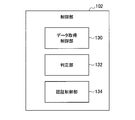
- FIG. 4 is a block diagram showing an example of a functional configuration of the control unit 102 of the mobile phone 100-1.
- FIG. 4 is a block diagram showing an example of a functional configuration of the control unit 102 of the mobile phone 100-1.
- an example of functional configuration of the control unit 102 of the mobile phone 100-1 will be described with reference to FIG.
- control unit 102 of the mobile phone 100-1 includes a data acquisition control unit 130, a determination unit 132, and an authentication control unit 134.
- the data acquisition control unit 130 has a function of controlling the operation of the distance image acquisition unit 120 and extracting feature data of the user 10 from the plurality of pieces of distance image data acquired by the distance image acquisition unit 120. Regarding control of the operation of the distance image acquisition unit 120, when the data acquisition control unit 130 detects registration processing and collation processing based on the operation of the user 10, the distance image acquisition unit 120 is activated, and the distance image acquisition unit 120 The distance image data of the user 10 is acquired.
- the change of the motion of the user 10 is extracted as the feature data based on the time-series change of the depth data included in the plurality of pieces of distance image data acquired by the distance image acquisition unit 120.
- the data acquisition control unit 130 outputs the feature data (first feature data) extracted during the registration process to the memory 112, and outputs the feature data (second feature data) extracted during the matching process to the determination unit 132. Do.
- Changes in movement of the user 10 extracted by the data acquisition control unit 130 as feature data include, for example, changes in face movement, mouth movement, eye movement, neck movement, hair movement, and the like.
- the data acquisition control unit 130 may extract not the change of movement but the physical condition and the complexion due to the change of emotion, the change of emotion, etc. as the feature data.
- the data acquisition control unit 130 may extract, for example, hand gestures, walking directions, physical conditions, and the like as feature data.
- the target from which the data acquisition control unit 130 extracts feature data is not limited to a person, and the motion of a robot that is an artificial object, the motion of a decoration of the user 10, and the like can also be targets of feature data.
- the data acquisition control unit 130 can identify the color when the distance image acquisition unit 120 uses the RGB camera, the data acquisition control unit 130 is not limited to the change in movement, and changes in the face color (makeup) of the user 10, And changes in clothes (prevention, glasses, ties, jackets, etc.) can be extracted as feature data based on the change in color.
- the determination unit 132 has a function of comparing the first feature data obtained at the time of registration processing with the second feature data obtained at the time of matching processing to determine whether both the features are the same as the user 10. . Specifically, the determination unit 132 calculates a correlation value between the first feature data and the second feature data, and the two features are identical based on whether the calculated correlation value is larger than a predetermined threshold value. It is determined whether or not. As a result of comparing the correlation value and the threshold, the determination unit 132 determines that the two features are the same if the correlation value is larger than the threshold, and determines that the two features are not the same if the correlation value is not larger than the threshold.
- the calculation method of a correlation value is not specifically limited, You may calculate by arbitrary methods. Further, the setting value of the threshold is not particularly limited, and an arbitrary value may be set.
- the authentication control unit 134 has a function of controlling the operation of the mobile phone 100-1 based on the determination result of the determination unit 132. Specifically, the authentication control unit 134 controls the operation of the mobile phone 100-1 based on the first determination result that is the determination result based on the feature data of the distance image data. For example, if the first determination result indicates that the features of the first feature data and the second feature data are the same, the authentication control unit 134 unlocks the mobile phone 100-1. , And enable the mobile phone 100-1. Also, for example, when the first determination result indicates that the features of the first feature data and the second feature data are not the same, the authentication control unit 134 releases the lock of the mobile phone 100-1. Alternatively, the mobile phone 100-1 may be left unusable.
- FIG. 5 is a flowchart showing the registration process in the authentication process of the mobile phone 100-1.
- the control unit 102 instructs the imaging control unit 118, and the imaging control unit 118 activates the distance image acquisition unit 120 (step S1000).
- the distance image acquisition unit 120 photographs the user 10 a plurality of times, and acquires a plurality of distance image data (step S1004).
- the imaging control unit 118 outputs the plurality of distance image data acquired by the distance image acquisition unit 120 to the control unit 102.
- the control unit 102 that has acquired the plurality of distance image data extracts, in the data acquisition control unit 130, feature data indicating the feature of the user 10 from the time-series change of the plurality of distance image data (step S1012).
- the data acquisition control unit 130 outputs the extracted feature data to the determination unit 132.
- the determination unit 132 determines whether the feature data includes a sufficient feature amount (step S1014). If it is determined in step S1014 that the feature data includes a sufficient feature amount, the control unit 102 outputs the feature data as registration data to the memory 112, and stores the registration data in the memory 112 (step S1016). After the memory 112 stores the registration data, the mobile phone 100-1 ends the registration process. If it is determined in step S1014 that the feature data does not include a sufficient feature amount, the data acquisition control unit 130 causes the distance image acquisition unit 120 to acquire distance image data again.
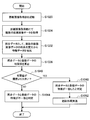
- FIG. 6 is a flowchart showing the verification process in the authentication process of the mobile phone 100-1.
- the control unit 102 issues an instruction to the imaging control unit 118, and the imaging control unit 118 activates the distance image acquisition unit 120 (step S1020).
- the distance image acquisition unit 120 photographs the user 10 a plurality of times, and acquires a plurality of distance image data (step S1024).
- the imaging control unit 118 outputs the plurality of distance image data acquired by the distance image acquisition unit 120 to the control unit 102.
- the control unit 102 which has acquired the plurality of distance image data extracts, in the data acquisition control unit 130, the feature data indicating the feature of the user 10 from the time-series change of the plurality of distance image data.
- the data acquisition control unit 130 outputs the extracted feature data as collation data to the determination unit 132 (step S1032).
- the determination unit 132 acquires feature data from the data acquisition control unit 130, the determination unit 132 acquires registration data from the memory 112. The determination unit 132 compares the verification data with the registered data to calculate a correlation value (step S1036). The determination unit 132 determines whether the calculated correlation value satisfies a predetermined condition (step S1040). If the correlation value is not larger than the threshold value in step S1040, the determination unit 132 determines that the features of the verification data and the registration data do not match, and ends the process (step S1044).
- step S1040 determines that the correlation value is larger than the predetermined value. If it is determined in step S1040 that the correlation value is larger than the predetermined value, the determination unit 132 determines that the features of the verification data and the registered data match (step S1048), and the authentication control unit 134 performs the authentication process. (Step S1052). After the authentication control unit 134 performs the authentication process, the mobile phone 100-1 ends the verification process.
- FIG. 7 is a flowchart showing the registration process in the authentication process of the mobile phone 200.
- the control unit 202 instructs the imaging control unit 218, and the imaging control unit 218 activates the camera unit 220 (step S2000).
- the camera unit 220 captures an image of the user 10 and acquires image data (step S2004).
- the imaging control unit 218 outputs the image data acquired by the camera unit 220 to the control unit 202.
- the control unit 202 that has acquired the image data determines whether the image data includes the face image of the user 10 (step S2008). If the control unit 202 determines in step S2008 that the image data does not include a face image, the control unit 202 causes the camera unit 220 to acquire the image data again, and performs determination processing.
- step S2008 determines in step S2008 that the image data includes a face image
- the control unit 202 extracts feature data from the image data (step S2012).
- the control unit 202 determines whether the extracted feature data includes a sufficient feature amount (step S2014). If it is determined in step S2014 that the feature data contains a sufficient feature amount, the control unit 202 outputs the feature data as registration data to the memory 212, and stores the registration data in the memory 212 (step S2016). After the memory 212 stores the registration data, the mobile phone 200 ends the registration process.
- step S2014 determines in step S2014 that the feature data does not include a sufficient feature amount
- the control unit 202 causes the camera unit 220 to obtain image data again.
- FIG. 8 is a flowchart showing the verification process in the authentication process of the mobile phone 200.
- the control unit 202 instructs the imaging control unit 218, and the imaging control unit 218 activates the camera unit 220 (step S2020).
- the camera unit 220 captures an image of the user 10 and acquires image data (step S2024).
- the imaging control unit 218 outputs the image data acquired by the camera unit 220 to the control unit 202.
- the control unit 202 that has acquired the image data determines whether the image data includes the face image of the user 10 (step S2028). If the control unit 202 determines in step S2028 that the image data does not include a face image, the control unit 202 causes the camera unit 220 to acquire the image data again, and performs determination processing. If the control unit 202 determines in step S2028 that the image data includes a face image, the control unit 202 extracts feature data from the image data as matching data (step S2032).
- the control unit 202 After acquiring the collation data, the control unit 202 acquires registration data from the memory 212, compares the collation data with the registration data, and calculates a correlation value (step S2036). The control unit 202 determines whether the calculated correlation value satisfies a predetermined threshold (step S2040). If the correlation value is not larger than the predetermined threshold value in step S2040, the control unit 202 determines that the features of the collation data and the registration data do not match, and ends the processing (step S2044). If the correlation value is larger than the predetermined threshold value in step S2040, the control unit 202 determines that the features of the verification data and the registration data match (step S2048), and performs the authentication process (step S2052). After the control unit 202 performs the authentication process, the mobile phone 200 ends the verification process.
- the mobile phone 100-1 can recognize whether the object is a three-dimensional object by using distance image data including shape data for collation. Therefore, when an image, a moving image, a printed matter, or the like showing the same feature data as the user 10 is used, it is possible to recognize that they are neither a solid nor a person, and to prevent illegal collation.
- the mobile phone 100-1 can extract a change in movement based on a time-series change of a plurality of distance images as feature data, and can use it for matching to recognize features due to a change in movement of an object. It is possible to distinguish three-dimensional objects and artificially created by the presence or absence of movement. Therefore, even when a user's face model created by a 3D printer or the like is used for matching, it is possible to recognize that the user is not the user since there is no change in motion, and to prevent an incorrect matching. .
- Second embodiment in addition to the authentication processing using the distance image data of the first embodiment of the present disclosure, the authentication system performs biometric processing using biometric data. By adding the biometric authentication process, it is possible to improve the accuracy of preventing unauthorized collation.
- FIG. 9 shows an example of a functional configuration of the mobile phone 100-2 according to the second embodiment of the present disclosure.
- biometric data is acquired as compared with the cellular phone 100-1 in the first embodiment, with the addition of the biometric authentication process by the biometric data.
- the part 121 is added.
- the control unit 102 is changed to the control unit 103 because the control unit 102 of the mobile phone 100-1 has a function to perform the biometric authentication process added.
- the mobile phone 100-1 and the mobile phone 100-2 differ only in the presence or absence of the biometric data acquisition unit 121 and in that the control unit 103 is added with a function.
- the control unit 103 is added with a function.
- the functions of the biometric data acquisition unit 121 and the control unit 103 will be described in order to avoid duplication with the description in the first embodiment. Descriptions of other components are ⁇ 2.1. The same as the contents described in the functional configuration example>, the description in this chapter is omitted.
- the biometric data acquisition unit 121 has a function of acquiring biometric data to be used for biometric authentication.
- the biometric data acquisition unit 121 may acquire, for example, data for face authentication, data for iris authentication, data for voice authentication, and the like as biological data.
- the apparatus used for acquisition of biometric data and the kind of biometric data used for biometric authentication are not specifically limited, You may use apparatus and biometric data of arbitrary types.
- Control unit 103 has a function of performing biometric authentication based on biometric data, in addition to authentication processing based on distance image data.
- the authentication process based on the distance image data is the same as the process described in the control unit 102, and thus the description thereof is omitted.
- control unit 103 of the mobile phone 100-2 includes a data acquisition control unit 140, a determination unit 142, and an authentication control unit 144.
- the data acquisition control unit 140 has a function of controlling the operation of the biological data acquisition unit 121, in addition to the function of the data acquisition control unit 130. Specifically, when the data acquisition control unit 140 detects the registration processing and the collation processing based on the operation of the user 10, the data acquisition control unit 140 activates the biometric data acquisition unit 121, and the biometric data acquisition unit 121 The biometric data of the user 10 is acquired.
- the data acquisition control unit 140 outputs the biological data (first biological data) acquired during the registration process to the memory 112, and outputs the biological data (second biological data) acquired during the verification process to the determination unit 132.
- the determination unit 142 In addition to the function of the determination unit 132, the determination unit 142 compares the first biometric data acquired during the registration process with the second biometric data acquired during the verification process, and the characteristics indicated by both of the biometric data are identical to those of the user 10. It has a function of determining whether or not it is a feature. Specifically, the determination unit 142 calculates the correlation value between the first biological data and the second biological data, and based on whether the calculated correlation value is larger than a predetermined threshold value, both biological data are identical. Determine if there is.
- the determination unit 142 determines that both features are the same when the correlation value is larger than the threshold, and determines that the two features are not the same when the correlation value is not larger than the threshold.
- the calculation method of a correlation value is not specifically limited, You may calculate by arbitrary methods.
- the setting value of the threshold is not particularly limited, and an arbitrary value may be set.
- Authentication control unit 144 has a function of controlling the operation of mobile phone 100-2 based on the determination result of determination unit 142. Specifically, the authentication control unit 144 uses the mobile phone 100-2 based on the first determination result that is the determination result based on the feature data of the distance image data and the second determination result that is the determination result based on the biometric data. Control the operation of For example, if both the first determination result and the second determination result indicate that the features of the first biometric data and the second biometric data are the same, the authentication control unit 144 determines The telephone 100-2 is unlocked, and the mobile telephone 100-2 becomes available.
- the authentication control unit may be kept in the unusable state without unlocking the mobile phone 100-2.
- FIG. 11 is a flowchart showing the registration process in the authentication process of the mobile phone 100-2.
- the processing contents of step S3000, step S3004, step S3012, step S3014, and step S3016 shown in FIG. 11 are the same as the processing contents of step S1000, step S1004, step S1012, step S1014, and step S1016 shown in FIG. It is the same. Therefore, in the following, the description thereof will be omitted, and the description will start from step S3020.
- the cellular phone 100-2 After acquiring registration data based on a plurality of distance image data in step S3000, step S3004, step S3012, step S3014, and step S3016, the cellular phone 100-2 acquires biological data in the process from step S3020. Specifically, after storing the registration data in step S3016, the control unit 103 activates the biometric data acquisition unit 121 (step S3020). The biometric data acquisition unit 121 acquires biometric data of the user 10 (step S3024). The biometric data acquisition unit 121 outputs the acquired biometric data to the control unit 103.
- the control unit 103 that has acquired the biometric data determines, in the data acquisition control unit 140, whether or not the acquired biometric data can be registered as data for biometric authentication (step S3028). If the data acquisition control unit 140 determines in step S3028 that the biometric data can be registered, the data acquisition control unit 140 outputs the biometric data as registration data to the memory 112 and stores the registration data in the memory 112 (step S3032). After the memory 112 stores the registration data, the mobile phone 100-2 ends the registration process. If the data acquisition control unit 140 determines in step S3028 that the biometric data can not be registered, the data acquisition control unit 140 causes the biometric data acquisition unit 121 to acquire biometric data again.
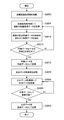
- FIG. 12 is a flowchart showing the verification process in the authentication process of the mobile phone 100-2.
- the processing contents of step S3036, step S3040, step S3048, step S3052, step S3056 and step S3060 shown in FIG. 12 are the same as step S1020, step S1024, step S1032, step S1036, step S1040 and step
- the contents are the same as the processing contents of S1044. Therefore, in the following, the description thereof will be omitted, and the description will start from step S 3064.
- step S3060 When mobile phone 100-2 determines in step S3060 that the correlation value is larger than the threshold and the registration data based on the plurality of distance image data and the matching data match, the living body by biological data is processed in step S3064.
- Implement authentication process Specifically, after acquiring the registration data based on the plurality of distance image data and the determination result to the effect that the collation data match in step S3060, the control unit 103 activates the biological data acquisition unit 121 (step S3064).
- the biometric data acquisition unit 121 acquires biometric data of the user 10 (step S3068).
- the biometric data acquisition unit 121 outputs the acquired biometric data to the control unit 103.
- the control unit 103 that has acquired the biometric data determines, in the data acquisition control unit 140, whether the acquired biometric data can be used as collation data (Step S3072). In step S3072, when the acquired biometric data can not be used as collation data, the control unit 103 causes the biometric data acquisition unit 121 to acquire biometric data again. In step S3072, when the acquired biometric data can be used as collation data, the determination unit 142 compares the collation data with the registration data to calculate a correlation value (step S3076).
- the determining unit 142 determines whether the calculated correlation value satisfies a predetermined condition (step S 3080). If the correlation value is not larger than the threshold in step S3080, the determination unit 142 determines that the features of the verification data and the registration data do not match, and ends the process (step S3060). If the correlation value is larger than the predetermined value in step S3080, the determination unit 142 determines that the features of the verification data and the registration data match (step S3084), and the authentication control unit 144 performs the authentication process (step S3088). . After the authentication control unit 144 performs the authentication process, the mobile phone 100-2 ends the verification process.
- the mobile phone 100-2 can improve the accuracy of the authentication process in addition to preventing the illegal matching which is the effect of the mobile phone 100-1 according to the first embodiment. .
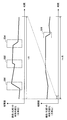
- the correlation values of the first feature data and the second feature data may differ greatly depending on the acquisition timing of the second feature data, even if they are correlation values for the same first feature data. Therefore, the determination unit 132 may perform comparison using a comprehensive feature amount by viewing correlation values of a plurality of feature data instead of viewing only the correlation value regarding one feature data. As a result, the determination unit 132 can also lower the false acceptance rate FAR, which is the rate at which the false recognition is made when another person attempts authentication. For example, looking at the correlation values of the facial shape feature data shown in FIG. 13 and the facial color feature data shown in FIG. 14, if one of the correlation values is larger than a predetermined threshold value, the person is the person. You may judge.
- the graphs shown in FIG. 13 and FIG. 14 show the time series change of the correlation value of the feature data on a daily basis in the upper part and the time series change of the correlation value of the feature data on a monthly basis in the lower part .
- the horizontal axis of the graph indicates time, and the vertical axis indicates the correlation value when the second feature data at a certain time is acquired.
- FIG. 13 shows the relationship between the time-series change of the face shape and the correlation value.
- the upper graph in FIG. 13 will be described.
- a period 400 indicates a period in which the face shape approaches the first feature data and the correlation value largely changes as the user 10 arranges the hairstyle in the morning posture.
- a period 402 indicates a period in which the correlation value changes small due to the user 10 taking a bath and the hairstyle being broken.
- the correlation value greatly differs depending on at which timing before and after each period the data acquisition control unit 130 acquires the feature data.
- the correlation value changes as a whole due to the change in the extension of the hair.
- a period 404 indicates a period in which the correlation value temporarily decreases as the user 10 changes the hair style.
- a period 406 indicates a period in which the correlation value is reduced because the hair style has largely changed due to haircut.
- the correlation value greatly differs depending on at which timing during each period and before or after each period the data acquisition control unit 130 acquires feature data.
- FIG. 14 shows the relationship between the time-series change of the complexion (makeup) and the correlation value.
- the upper graph in FIG. 14 will be described.
- a period 500 indicates a period in which the complexion approaches the first feature data and the correlation value becomes large as the user 10 makeup in the morning posture.
- a period 502 indicates a period in which the complex color approaches the first feature data again and the correlation value is increased by correcting the broken-down makeup of the user 10.
- a period 504 indicates a period in which the correlation value is reduced because the makeup is dropped after the user 10 comes home.
- the correlation value greatly differs depending on at which timing before and after each period the data acquisition control unit 130 acquires the feature data.
- a facial color at an arbitrary time point is registered as the first feature data. Even if the user 10 tries to make the same makeup every day, the complexion after makeup does not always completely match the first feature data due to the condition of the skin and the force of the user 10 or the like. Therefore, the correlation value on a monthly basis is repeating a slight change on the whole.
- a period 506 indicates a period in which the correlation value is reduced by the fact that the complexion after makeup has largely changed due to the user 10 changing the method of cosmetics and makeup. The correlation value greatly differs depending on at which timing before and after the period 506 the data acquisition control unit 130 acquires the feature data.
- the determination unit 132 may automatically add second feature data such as makeup, a hair style, clothes, etc. as new first feature data.
- second feature data such as makeup, a hair style, clothes, etc.
- FIG. 15 The configuration of FIG. 15 is the same as the configurations of FIG. 13 and FIG. 14 described above.
- FIG. 15 shows the relationship between the time-series change of clothes and the correlation value.
- the upper graph in FIG. 15 will be described.
- a period 600 indicates a period in which the clothes approaches the first feature data and the correlation value increases due to the user 10 changing into clothes for work in the morning.
- a period 602 indicates a period in which the correlation value is reduced by the user 10 removing the jacket.
- a period 604 indicates a period in which the correlation value is reduced due to the user 10 removing the tie.
- a period 606 indicates a period in which the correlation value returns to the same size as that at work when the user 10 comes home, by tightening a tie and wearing a jacket.
- a period 608 indicates a period in which the correlation value is reduced because the user 10 changes into a room arrival after returning home. The correlation value greatly differs depending on at which timing before and after each period the data acquisition control unit 130 acquires the feature data.
- the determination unit 132 since the determination unit 132 registers clothes and accessories with high appearance frequency as the first feature data, the number of third days decreases and the number of second days increases as the days pass. Then, as the first feature data increases, the determination unit 132 can perform matching from the comprehensive feature amount of the plurality of feature data, and in the period 612, a half or more of one week is the first Day and there is no third day.
- control unit 102 performs access control based on the authentication process for the lock release when the user 10 uses the mobile phone 100-1, but the access control target is the lock release It is not limited to.
- an authentication standard may be set according to the target of access control.
- the control unit 102 may set a security level for each application installed in a mobile phone as an authentication standard, and may set feature data according to the security level at the time of authentication.
- a weight is set for each, and the security level and the feature data for which the same weight is set are set to correspond to each other.
- the setting of the security level and the weight of feature data may be manually set by the user 10.
- AI Artificial Intelligence
- AI is installed on the terminal where the authentication system is installed, and AI is made to analyze the past data, and the security level and feature data weight are automatically based on the analysis result. It may be set.
- a GPS Global Positioning System
- authentication using position information of the user 10 acquired by the GPS may be combined with authentication using distance image data.
- voice data such as the voice of the user 10 may be acquired from the microphone 128, and authentication using the acquired voice data may be combined with authentication using distance image data.
- the daily unit and the monthly unit are used as the time unit of the horizontal axis of the graph in FIGS. 13 to 15, the time unit is not particularly limited, and an arbitrary time unit may be used. For example, minutes, hours, weeks, and years may be used.
- IoT Internet of Things
- the technology according to the present disclosure when the technology according to the present disclosure is applied to a camera device such as a wearable camera, the user sets the use right of the camera device by access control by the authentication system, and a captured image (still image / moving image) It becomes possible to set the viewing authority such as
- the user sets the drone use authority by access control by the authentication system, and limits on drone flight (speed limitation, altitude It is possible to set restrictions etc. for each user.
- the authentication system can automatically acquire a plurality of user data, and acquire user feature data based on time-series changes of the plurality of user data.
- the authentication system according to the present disclosure can compare a plurality of feature data acquired at different timings, and determine whether the plurality of feature data indicates the same user feature, and the determination result In response to this, it is possible to control the authentication process of the user.
- the authentication system described in the present specification may be realized as a single device, or some or all may be realized as separate devices.
- the data acquisition control unit 130, the determination unit 132, and the authentication control unit 134 of the control unit 102 shown in FIG. 4 are provided in an apparatus such as a server that can be connected to the mobile phone 100-1 via a network. Good.
- each device described in the present specification may be realized using any of software, hardware, and a combination of software and hardware.
- the programs that configure the software are stored in advance in, for example, recording media (non-transitory media) provided inside or outside each device. And each program is read into RAM at the time of execution by a computer, for example, and is executed by a processor such as a CPU.
- a data acquisition unit that automatically acquires a plurality of user data and acquires user feature data based on time-series changes of the plurality of user data;
- a determination unit that compares a plurality of pieces of feature data acquired at different timings and determines whether the plurality of pieces of feature data indicate the same feature of the user;
- a control unit configured to control an authentication process of the user according to a first determination result that is a determination result of the determination unit;
- An information processing apparatus comprising: (2) The determination unit calculates a correlation value between the first feature data acquired at the time of registration of the feature data and the second feature data acquired at the time of collation of the feature data, and whether the correlation value satisfies a predetermined condition The information processing apparatus according to (1), wherein it is determined whether or not the first feature data and the second feature data indicate the same feature of the user based on whether or not it is not.
- the determination unit determines that the first feature data and the second feature data indicate the same feature of the user, and the correlation value is the predetermined feature.
- the information processing apparatus according to (2) wherein it is determined that the first feature data and the second feature data do not indicate the same feature of the user if the condition is not satisfied.
- the determination unit performs the determination a plurality of times using the same second feature data, and the correlation value does not satisfy the predetermined condition in any of the determinations.
- the data acquisition unit acquires a plurality of user images as the plurality of user data, and acquires a change in the user's operation as the feature data based on a time-series change of the plurality of user images.
- the information processing apparatus according to any one of (4) to (4).
- (6) The information processing apparatus according to (5), wherein the data acquisition unit acquires, as feature data, time-series change of the user's operation based on time-series change of image data and shape data included in the user image. .
- the information processing apparatus (11) The information processing apparatus according to (10), wherein the control unit sets different authentication criteria in the authentication process according to a process controlled based on a first determination result. (12) The information processing apparatus according to (11), wherein the control unit performs the authentication process using the feature data in which a weight corresponding to a weight set for each of the authentication criteria is set. (13) The data acquisition unit acquires biometric data of the user, The determination unit compares a plurality of pieces of biometric data having different acquired timings, and obtains a second determination result which is a determination result as to whether or not the plurality of pieces of biometric data indicate the same feature of the user.
- the information processing apparatus controls an authentication process of the user based on the first determination result and the second determination result.
- the data acquisition unit acquires the user data using an apparatus capable of acquiring biometric data.
- a data acquisition unit that automatically acquires a plurality of user data and acquires user feature data based on time-series changes of the plurality of user data;
- a determination unit that compares a plurality of pieces of feature data acquired at different timings and determines whether the plurality of pieces of feature data indicate the same feature of the user;
- a control unit configured to control an authentication process of the user according to a first determination result that is a determination result of the determination unit;
Landscapes
- Engineering & Computer Science (AREA)
- Theoretical Computer Science (AREA)
- Physics & Mathematics (AREA)
- General Physics & Mathematics (AREA)
- Health & Medical Sciences (AREA)
- General Health & Medical Sciences (AREA)
- Multimedia (AREA)
- Human Computer Interaction (AREA)
- Computer Security & Cryptography (AREA)
- General Engineering & Computer Science (AREA)
- Computer Hardware Design (AREA)
- Oral & Maxillofacial Surgery (AREA)
- Computer Vision & Pattern Recognition (AREA)
- Bioethics (AREA)
- Software Systems (AREA)
- Biomedical Technology (AREA)
- Computing Systems (AREA)
- Computer Networks & Wireless Communication (AREA)
- Signal Processing (AREA)
- Medical Informatics (AREA)
- Databases & Information Systems (AREA)
- Social Psychology (AREA)
- Psychiatry (AREA)
- Telephone Function (AREA)
- Collating Specific Patterns (AREA)
Abstract
L'invention traite le problème consistant à réaliser un dispositif de traitement d'informations permettant la prévention d'une validation illicite. La solution selon l'invention fait intervenir un dispositif de traitement d'informations comportant: une partie d'acquisition de données servant à acquérir automatiquement une pluralité d'instances de données d'utilisateur, et à acquérir des données caractéristiques d'utilisateur sur la base d'une évolution au fil du temps de la pluralité d'instances des données d'utilisateur; une partie d'évaluation servant à comparer une pluralité d'instances des données caractéristiques acquises à différents instants, et à évaluer si la pluralité d'instances des données caractéristiques indique une caractéristique d'un seul et même utilisateur; et une partie de commande servant à commander un processus d'authentification de l'utilisateur selon un premier résultat d'évaluation constitué par le résultat de l'évaluation par la partie d'évaluation.
Priority Applications (3)
| Application Number | Priority Date | Filing Date | Title |
|---|---|---|---|
| EP18875738.9A EP3678092A4 (fr) | 2017-11-09 | 2018-07-20 | Dispositif de traitement d'informations, programme, et procédé de traitement d'informations |
| US16/760,462 US11430258B2 (en) | 2017-11-09 | 2018-07-20 | Information processing apparatus, program, and information processing method |
| JP2019551881A JP6904431B2 (ja) | 2017-11-09 | 2018-07-20 | 情報処理装置、プログラム及び情報処理方法 |
Applications Claiming Priority (2)
| Application Number | Priority Date | Filing Date | Title |
|---|---|---|---|
| JP2017216281 | 2017-11-09 | ||
| JP2017-216281 | 2017-11-09 |
Publications (1)
| Publication Number | Publication Date |
|---|---|
| WO2019092927A1 true WO2019092927A1 (fr) | 2019-05-16 |
Family
ID=66437688
Family Applications (1)
| Application Number | Title | Priority Date | Filing Date |
|---|---|---|---|
| PCT/JP2018/027365 Ceased WO2019092927A1 (fr) | 2017-11-09 | 2018-07-20 | Dispositif de traitement d'informations, programme, et procédé de traitement d'informations |
Country Status (4)
| Country | Link |
|---|---|
| US (1) | US11430258B2 (fr) |
| EP (1) | EP3678092A4 (fr) |
| JP (1) | JP6904431B2 (fr) |
| WO (1) | WO2019092927A1 (fr) |
Families Citing this family (1)
| Publication number | Priority date | Publication date | Assignee | Title |
|---|---|---|---|---|
| EP4659125A1 (fr) * | 2023-02-02 | 2025-12-10 | Corephotonics Ltd. | Capteurs, systèmes et procédés pour appareils de prise de vues à polarisation d'identification de visage compacts |
Citations (6)
| Publication number | Priority date | Publication date | Assignee | Title |
|---|---|---|---|---|
| JP2000222361A (ja) * | 1999-02-04 | 2000-08-11 | Toshiba Corp | モーションを利用した認証方法及び装置 |
| JP2007188321A (ja) | 2006-01-13 | 2007-07-26 | Sony Corp | 通信装置および通信方法、プログラム、並びに記録媒体 |
| JP2010061528A (ja) * | 2008-09-05 | 2010-03-18 | Fujitsu Ltd | 生体認証装置、生体認証プログラム及び生体認証方法 |
| JP2011203992A (ja) * | 2010-03-25 | 2011-10-13 | Sony Corp | 情報処理装置、情報処理方法、およびプログラム |
| JP2015036895A (ja) * | 2013-08-13 | 2015-02-23 | Kddi株式会社 | 更新装置、方法及びプログラム |
| JP2015069495A (ja) * | 2013-09-30 | 2015-04-13 | 富士フイルム株式会社 | 人物認識装置、人物認識方法、人物認識プログラムおよびその記録媒体 |
Family Cites Families (7)
| Publication number | Priority date | Publication date | Assignee | Title |
|---|---|---|---|---|
| JP5010905B2 (ja) * | 2006-12-13 | 2012-08-29 | パナソニック株式会社 | 顔認証装置 |
| KR101709497B1 (ko) * | 2010-07-29 | 2017-02-23 | 엘지전자 주식회사 | 휴대 단말기 및 그 동작 제어방법 |
| US9323912B2 (en) * | 2012-02-28 | 2016-04-26 | Verizon Patent And Licensing Inc. | Method and system for multi-factor biometric authentication |
| JP6244643B2 (ja) * | 2013-04-15 | 2017-12-13 | オムロン株式会社 | 表情推定装置、制御方法、制御プログラム、および記録媒体 |
| US9294475B2 (en) | 2013-05-13 | 2016-03-22 | Hoyos Labs Ip, Ltd. | System and method for generating a biometric identifier |
| JP2015121874A (ja) | 2013-12-20 | 2015-07-02 | 富士通株式会社 | 生体認証装置、照合用データ検証方法及び照合用データ検証用コンピュータプログラム |
| JP6467965B2 (ja) * | 2015-02-13 | 2019-02-13 | オムロン株式会社 | 感情推定装置及び感情推定方法 |
-
2018
- 2018-07-20 JP JP2019551881A patent/JP6904431B2/ja active Active
- 2018-07-20 WO PCT/JP2018/027365 patent/WO2019092927A1/fr not_active Ceased
- 2018-07-20 US US16/760,462 patent/US11430258B2/en active Active
- 2018-07-20 EP EP18875738.9A patent/EP3678092A4/fr not_active Withdrawn
Patent Citations (6)
| Publication number | Priority date | Publication date | Assignee | Title |
|---|---|---|---|---|
| JP2000222361A (ja) * | 1999-02-04 | 2000-08-11 | Toshiba Corp | モーションを利用した認証方法及び装置 |
| JP2007188321A (ja) | 2006-01-13 | 2007-07-26 | Sony Corp | 通信装置および通信方法、プログラム、並びに記録媒体 |
| JP2010061528A (ja) * | 2008-09-05 | 2010-03-18 | Fujitsu Ltd | 生体認証装置、生体認証プログラム及び生体認証方法 |
| JP2011203992A (ja) * | 2010-03-25 | 2011-10-13 | Sony Corp | 情報処理装置、情報処理方法、およびプログラム |
| JP2015036895A (ja) * | 2013-08-13 | 2015-02-23 | Kddi株式会社 | 更新装置、方法及びプログラム |
| JP2015069495A (ja) * | 2013-09-30 | 2015-04-13 | 富士フイルム株式会社 | 人物認識装置、人物認識方法、人物認識プログラムおよびその記録媒体 |
Non-Patent Citations (1)
| Title |
|---|
| See also references of EP3678092A4 |
Also Published As
| Publication number | Publication date |
|---|---|
| US11430258B2 (en) | 2022-08-30 |
| US20200349343A1 (en) | 2020-11-05 |
| EP3678092A1 (fr) | 2020-07-08 |
| EP3678092A4 (fr) | 2020-10-14 |
| JP6904431B2 (ja) | 2021-07-14 |
| JPWO2019092927A1 (ja) | 2020-11-12 |
Similar Documents
| Publication | Publication Date | Title |
|---|---|---|
| US11551482B2 (en) | Facial recognition-based authentication | |
| CN105518710B (zh) | 视频检测方法、视频检测系统以及计算机程序产品 | |
| US20140380446A1 (en) | Method and apparatus for protecting browser private information | |
| WO2019024717A1 (fr) | Procédé de traitement anti-contrefaçon et produit associé | |
| CN107832784B (zh) | 一种图像美化的方法和一种移动终端 | |
| CN105912912B (zh) | 一种终端用户身份登录方法和系统 | |
| CN109190509B (zh) | 一种身份识别方法、装置和计算机可读存储介质 | |
| CN108549802A (zh) | 一种基于人脸识别的解锁方法、装置以及移动终端 | |
| CN108550117A (zh) | 一种图像处理方法、装置以及终端设备 | |
| CN108206892B (zh) | 联系人隐私的保护方法、装置、移动终端及存储介质 | |
| JP6267025B2 (ja) | 通信端末及び通信端末の認証方法 | |
| CN105407069B (zh) | 活体认证方法、装置、客户端设备及服务器 | |
| WO2016115786A1 (fr) | Procédé et dispositif de déverrouillage de terminal, terminal et support de stockage informatique | |
| CN109635622A (zh) | 身份识别方法、装置及电子设备 | |
| JP6904431B2 (ja) | 情報処理装置、プログラム及び情報処理方法 | |
| CN115171175B (zh) | 人脸识别方法、装置、设备及可读存储介质 | |
| Huang et al. | Signing in the air w/o constraints: robust gesture-based authentication for wrist wearables | |
| CN109063462A (zh) | 一种权限管理方法及终端设备 | |
| CN113239887B (zh) | 活体检测方法及装置、计算机可读存储介质和电子设备 | |
| CN106325468B (zh) | 设备间的交互方法以及用户设备 | |
| CN106293040B (zh) | 设备间的交互方法以及近眼设备 | |
| KR20060002571A (ko) | 개인용 휴대단말기의 영상인식을 이용한 생체인증방법 | |
| Castiglione¹ et al. | Walking on the Cloud: Gait Recognition | |
| Krishna et al. | Security of Image for Internet of Things Device (Camera) | |
| CN117978501A (zh) | 确定核验方式的方法、核身方法及系统 |
Legal Events
| Date | Code | Title | Description |
|---|---|---|---|
| 121 | Ep: the epo has been informed by wipo that ep was designated in this application |
Ref document number: 18875738 Country of ref document: EP Kind code of ref document: A1 |
|
| ENP | Entry into the national phase |
Ref document number: 2019551881 Country of ref document: JP Kind code of ref document: A |
|
| ENP | Entry into the national phase |
Ref document number: 2018875738 Country of ref document: EP Effective date: 20200330 |
|
| NENP | Non-entry into the national phase |
Ref country code: DE |