WO2019104631A1 - Système de véhicule aérien sans pilote, et procédé de communication - Google Patents
Système de véhicule aérien sans pilote, et procédé de communication Download PDFInfo
- Publication number
- WO2019104631A1 WO2019104631A1 PCT/CN2017/113919 CN2017113919W WO2019104631A1 WO 2019104631 A1 WO2019104631 A1 WO 2019104631A1 CN 2017113919 W CN2017113919 W CN 2017113919W WO 2019104631 A1 WO2019104631 A1 WO 2019104631A1
- Authority
- WO
- WIPO (PCT)
- Prior art keywords
- communication system
- drone
- communication
- controller
- control
- Prior art date
- Legal status (The legal status is an assumption and is not a legal conclusion. Google has not performed a legal analysis and makes no representation as to the accuracy of the status listed.)
- Ceased
Links
Images





Classifications
-
- G—PHYSICS
- G05—CONTROLLING; REGULATING
- G05D—SYSTEMS FOR CONTROLLING OR REGULATING NON-ELECTRIC VARIABLES
- G05D1/00—Control of position, course, altitude or attitude of land, water, air or space vehicles, e.g. using automatic pilots
- G05D1/0011—Control of position, course, altitude or attitude of land, water, air or space vehicles, e.g. using automatic pilots associated with a remote control arrangement
- G05D1/0038—Control of position, course, altitude or attitude of land, water, air or space vehicles, e.g. using automatic pilots associated with a remote control arrangement by providing the operator with simple or augmented images from one or more cameras located onboard the vehicle, e.g. tele-operation
-
- H—ELECTRICITY
- H04—ELECTRIC COMMUNICATION TECHNIQUE
- H04L—TRANSMISSION OF DIGITAL INFORMATION, e.g. TELEGRAPHIC COMMUNICATION
- H04L65/00—Network arrangements, protocols or services for supporting real-time applications in data packet communication
- H04L65/1066—Session management
- H04L65/1069—Session establishment or de-establishment
-
- H—ELECTRICITY
- H04—ELECTRIC COMMUNICATION TECHNIQUE
- H04B—TRANSMISSION
- H04B7/00—Radio transmission systems, i.e. using radiation field
- H04B7/14—Relay systems
- H04B7/15—Active relay systems
- H04B7/185—Space-based or airborne stations; Stations for satellite systems
- H04B7/18502—Airborne stations
- H04B7/18504—Aircraft used as relay or high altitude atmospheric platform
-
- G—PHYSICS
- G05—CONTROLLING; REGULATING
- G05D—SYSTEMS FOR CONTROLLING OR REGULATING NON-ELECTRIC VARIABLES
- G05D1/00—Control of position, course, altitude or attitude of land, water, air or space vehicles, e.g. using automatic pilots
- G05D1/0011—Control of position, course, altitude or attitude of land, water, air or space vehicles, e.g. using automatic pilots associated with a remote control arrangement
- G05D1/0022—Control of position, course, altitude or attitude of land, water, air or space vehicles, e.g. using automatic pilots associated with a remote control arrangement characterised by the communication link
-
- G—PHYSICS
- G05—CONTROLLING; REGULATING
- G05D—SYSTEMS FOR CONTROLLING OR REGULATING NON-ELECTRIC VARIABLES
- G05D1/00—Control of position, course, altitude or attitude of land, water, air or space vehicles, e.g. using automatic pilots
- G05D1/10—Simultaneous control of position or course in three dimensions
- G05D1/101—Simultaneous control of position or course in three dimensions specially adapted for aircraft
-
- H—ELECTRICITY
- H04—ELECTRIC COMMUNICATION TECHNIQUE
- H04L—TRANSMISSION OF DIGITAL INFORMATION, e.g. TELEGRAPHIC COMMUNICATION
- H04L65/00—Network arrangements, protocols or services for supporting real-time applications in data packet communication
- H04L65/60—Network streaming of media packets
- H04L65/61—Network streaming of media packets for supporting one-way streaming services, e.g. Internet radio
-
- H—ELECTRICITY
- H04—ELECTRIC COMMUNICATION TECHNIQUE
- H04W—WIRELESS COMMUNICATION NETWORKS
- H04W4/00—Services specially adapted for wireless communication networks; Facilities therefor
- H04W4/30—Services specially adapted for particular environments, situations or purposes
- H04W4/40—Services specially adapted for particular environments, situations or purposes for vehicles, e.g. vehicle-to-pedestrians [V2P]
-
- B—PERFORMING OPERATIONS; TRANSPORTING
- B64—AIRCRAFT; AVIATION; COSMONAUTICS
- B64U—UNMANNED AERIAL VEHICLES [UAV]; EQUIPMENT THEREFOR
- B64U10/00—Type of UAV
- B64U10/10—Rotorcrafts
- B64U10/13—Flying platforms
- B64U10/14—Flying platforms with four distinct rotor axes, e.g. quadcopters
-
- B—PERFORMING OPERATIONS; TRANSPORTING
- B64—AIRCRAFT; AVIATION; COSMONAUTICS
- B64U—UNMANNED AERIAL VEHICLES [UAV]; EQUIPMENT THEREFOR
- B64U2101/00—UAVs specially adapted for particular uses or applications
- B64U2101/20—UAVs specially adapted for particular uses or applications for use as communications relays, e.g. high-altitude platforms
-
- B—PERFORMING OPERATIONS; TRANSPORTING
- B64—AIRCRAFT; AVIATION; COSMONAUTICS
- B64U—UNMANNED AERIAL VEHICLES [UAV]; EQUIPMENT THEREFOR
- B64U2101/00—UAVs specially adapted for particular uses or applications
- B64U2101/30—UAVs specially adapted for particular uses or applications for imaging, photography or videography
-
- B—PERFORMING OPERATIONS; TRANSPORTING
- B64—AIRCRAFT; AVIATION; COSMONAUTICS
- B64U—UNMANNED AERIAL VEHICLES [UAV]; EQUIPMENT THEREFOR
- B64U2201/00—UAVs characterised by their flight controls
- B64U2201/20—Remote controls
-
- H—ELECTRICITY
- H04—ELECTRIC COMMUNICATION TECHNIQUE
- H04W—WIRELESS COMMUNICATION NETWORKS
- H04W84/00—Network topologies
- H04W84/02—Hierarchically pre-organised networks, e.g. paging networks, cellular networks, WLAN [Wireless Local Area Network] or WLL [Wireless Local Loop]
- H04W84/10—Small scale networks; Flat hierarchical networks
- H04W84/12—WLAN [Wireless Local Area Networks]
-
- H—ELECTRICITY
- H04—ELECTRIC COMMUNICATION TECHNIQUE
- H04W—WIRELESS COMMUNICATION NETWORKS
- H04W88/00—Devices specially adapted for wireless communication networks, e.g. terminals, base stations or access point devices
- H04W88/02—Terminal devices
- H04W88/04—Terminal devices adapted for relaying to or from another terminal or user
-
- H—ELECTRICITY
- H04—ELECTRIC COMMUNICATION TECHNIQUE
- H04W—WIRELESS COMMUNICATION NETWORKS
- H04W88/00—Devices specially adapted for wireless communication networks, e.g. terminals, base stations or access point devices
- H04W88/02—Terminal devices
- H04W88/06—Terminal devices adapted for operation in multiple networks or having at least two operational modes, e.g. multi-mode terminals
Definitions
- the present disclosure relates to the field of data communications, and more particularly, to a drone system and corresponding communication method.
- a drone with one or more cameras can track the desired object and transmit the captured image and/or video to the user in real time in a wireless communication.
- a drone used as a relay drone has two communication systems in which one communication system can communicate with a remote drone, and another communication system can communicate with a remote controller. Thereby, the data transmitted by the remote drone can be relayed to the remote controller of the remote drone.
- two sets of communication systems can work in duplex mode without affecting each other.
- a drone comprising: a first communication system configured to communicate according to a private communication protocol; a second communication system configured to communicate according to a standard communication protocol; and a controller Configuring to control operation of the first communication system and the second communication system such that one of the first communication system and the second communication system communicates with another drone, and the first communication system and the second communication Another communication system in the system communicates with the first remote control.
- an unmanned aerial vehicle system including a drone and a first remote control
- the drone includes: a first communication system configured to communicate according to a private communication protocol; a second communication system configured to communicate according to a standard communication protocol; and a controller configured to control the first communication system and the The operation of the second communication system enables one of the first communication system and the second communication system to communicate with another drone, and the first pass The communication system and another communication system in the second communication system communicate with the first remote controller.
- the first remote is configured to control the drone or to control another drone by communicating with the drone.
- a method performed by a drone comprising a first communication system, a second communication system, and a controller, the method comprising: the first communication system according to a private communication protocol Communicating; the second communication system communicates according to a standard communication protocol; and controls operation of the first communication system and the second communication system by the controller such that one of the first communication system and the second communication system is coupled to another
- the drone communicates, and the other communication system of the first communication system and the second communication system communicates with the first remote controller.
- a method performed by an unmanned aerial vehicle system including a drone and a first remote control comprises: the first communication system of the drone communicates according to a private communication protocol; the second communication system of the drone communicates according to a standard communication protocol; the controller of the drone controls the first communication system and the second communication system The operation of causing one of the first communication system and the second communication system to communicate with another drone, and the other of the first communication system and the second communication system communicates with the first remote controller .
- the first remote controls the drone or controls another drone by communicating with the drone.
- a computer readable storage medium storing a computer program, when executed by at least one processor, causes at least one processor to perform the method described above.
- the relay communication of the drone can be realized by the consumer-grade drone, and the scope and capability of the drone communication are enhanced.
- FIG. 1 is a block diagram showing a drone according to an embodiment of the present disclosure.
- FIG. 2 is a flow chart showing a method performed by a drone in accordance with one embodiment of the present disclosure.
- FIG. 3 is a block diagram showing a drone system in accordance with one embodiment of the present disclosure.
- FIG. 4 is a flow chart showing a method performed by a drone system in accordance with one embodiment of the present disclosure.
- FIG. 5 is a schematic diagram showing a computer readable storage medium in accordance with one embodiment of the present disclosure.
- FIG. 6 is a schematic diagram showing a drone relay communication according to an embodiment of the present disclosure.
- FIG. 7 is a schematic diagram showing a drone relay communication according to an embodiment of the present disclosure.
- FIG. 8 is a schematic diagram showing a drone relay communication according to an embodiment of the present disclosure.
- FIG. 9 is a schematic diagram showing a drone relay communication according to an embodiment of the present disclosure.
- the present disclosure proposes to employ a drone having two sets of communication systems as relay drones, wherein one set of communication systems can communicate according to a private communication protocol and another set of communication systems can communicate according to standard communication protocols.
- the drone has two sets of communication systems: one is a communication system that communicates according to a private map transfer protocol, and the other is a communication system that performs communication according to a WIFI communication protocol.
- FIG. 1 is a block diagram showing a drone according to an embodiment of the present disclosure.
- the drone 10 includes a first communication system 110, a second communication system 120, and a controller 130.
- the first communication system 110 is configured to communicate in accordance with a proprietary communication protocol.
- the first communication system 110 can communicate with a remote controller or other drone according to a private map transfer protocol, Information such as image/video data and/or signaling is transmitted.
- the private map transfer protocol may be an Ocusync image protocol.
- the second communication system 120 is configured to communicate in accordance with a standard communication protocol.
- the second communication system 120 can communicate with a remote control or other drone in accordance with a WIFI communication protocol to transmit information such as image/video data and/or signaling.
- the controller 130 is configured to control operations of the first communication system 110 and the second communication system 120 such that one of the first communication system 110 and the second communication system 120 communicates with another drone, and first Another of the communication system 110 and the second communication system 120 is in communication with the first remote control.
- the "first remote controller” may be configured to control the operation of the drone 10 or to control the operation of another drone by means of (relay) communication with the drone.
- the controller 130 can be configured to control the first communication system 110 to communicate with the first remote control and to control the second communication system 120 to communicate with another drone.
- the drone 10 communicates with the first remote controller through a private communication protocol, and communicates with another drone through a standard communication protocol.
- controller 130 may be further configured to control the first communication system 110 to communicate with the second remote controller such that the first remote controller can control another drone, and the second remote controller can control the drone 10. That is, in this scenario, communication is performed with both the first remote controller and the second remote controller through a private communication protocol.
- the controller 130 can be configured to control the first communication system 110 to communicate with another drone and to control the second communication system 120 to communicate with the first remote control.
- the drone 10 communicates with another drone through a private communication protocol, and communicates with the first remote controller through a standard communication protocol.
- controller 130 may be further configured to control the second communication system 120 to communicate with the second remote controller such that the first remote controller can control another drone and the second remote controller can control the drone 10 . That is, in this scenario, communication is performed with both the first remote controller and the second remote controller through a standard communication protocol.
- the first communication system 110 and the second communication system 120 can operate on different frequency bands in order to achieve mutual interference during duplex communication.
- the first communication system 110 communicates according to the Ocusync private map transfer protocol
- the second communication system 120 communicates according to WIFI communication
- the protocol communicates
- the communication according to the OcuSync private map protocol can use the 5.8 GHz band
- the communication according to the WIFI communication protocol can use the 2.4 GHz band
- the communication according to the OcuSync private map transfer protocol can use the 2.4 GHz band
- the communication according to the WIFI communication protocol can use the 5.8 GHz band, and so on.
- the controller 130 can be configured to control a communication system in the first communication system 110 and the second communication system 120 that is in communication with another drone to receive image information from another drone and control the first
- the communication system in communication system 110 and second communication system 120 communicating with the first remote controller forwards the image information to the first remote controller. That is, at this time, the drone 10 functions as a relay drone of another drone, so that image information acquired by another drone can reach the first remote controller via the drone 10.
- the controller 130 may be further configured to control the communication system of the first communication system 110 and the second communication system 120 that communicates with the first remote controller to forward the image information captured by the drone 10 itself to the first remote controller. That is, in this scenario, image information from the drone 10 can be directly transmitted to the first remote controller, and image information from another drone can also be transmitted to the drone 10 as a relay drone. The first remote control.
- the consumer-class drone can be utilized as the relay drone, and the range and capability of the drone communication are enhanced.
- the above technical solution can solve the communication problem in a scene such as occlusion.
- FIG. 2 is a flow chart showing a method performed by a drone in accordance with one embodiment of the present disclosure.
- the method can be performed by the drone including the first communication system, the second communication system, and the controller shown in FIG.
- the various parts of the method in Fig. 2 are described in detail. It should be noted that the various parts (boxes) of the method are not necessarily performed in the order shown in the figures. Rather, these portions can be performed in a different order, and executed separately and/or in parallel.
- the first communication system of the drone communicates in accordance with a private communication protocol.
- the first communication system can communicate with a remote control or other drone based on the Ocusync private map transfer protocol.
- the second communication system of the drone communicates in accordance with a standard communication protocol.
- the second communication system can communicate with a remote controller or other drone in accordance with the WIFI communication protocol.
- the controller of the drone controls the operations of the first communication system and the second communication system
- the communication system of the first communication system and the second communication system communicates with another drone, and the other communication system of the first communication system and the second communication system communicates with the first remote controller.
- the controller can control the first communication system to communicate with the first remote control and control the second communication system to communicate with another drone.
- the controller can also control the first communication system to communicate with the second remote control such that the first remote control can control another drone and the second remote control can control the drone.
- the controller may control the first communication system to communicate with another drone and control the second communication system to communicate with the first remote control.
- the controller can also control the second communication system to communicate with the second remote control such that the first remote control can control another drone and the second remote control can control the drone.
- the first communication system and the second communication system operate on different frequency bands.
- the first communication system can communicate using the 5.8 GHz band
- the second communication system can communicate using the 2.4 GHz band and vice versa.
- the controller may control the communication system communicating with the other drone in the first communication system and the second communication system to receive image information from another drone, and control the first communication system and the second communication system
- the communication system in communication with the first remote controller forwards the image information to the first remote controller.
- the drone is used as a relay drone of another drone, so that the image information acquired by the other drone can reach the first remote controller via the drone.
- the controller may control the communication system that communicates with the first remote controller in the first communication system and the second communication system to forward the image information captured by the relay drone itself to the first remote controller.
- the image information from the relay drone can be directly transmitted to the first remote controller, and the image information from the other drone can also be transmitted to the first remote controller by means of the relay drone.
- FIG. 3 is a block diagram showing a drone system in accordance with one embodiment of the present disclosure.
- the drone system 30 includes a drone 10 and a first remote controller 310.
- the drone 10 can be the drone 10 shown in FIG.
- the operation of each component in the unmanned aerial vehicle system 30 shown in Fig. 3 will be described in detail.
- the drone 10 can include a first communication system 110, a second communication system 120, and a controller 130, as shown in FIG.
- the first communication system 110 can be configured to communicate in accordance with a proprietary communication protocol (eg, an Ocusync private graphics protocol), and the second communication system 120 can be configured to operate in accordance with a standard communication protocol (eg, a WIFI communication protocol). Communication.
- a proprietary communication protocol eg, an Ocusync private graphics protocol
- a standard communication protocol eg, a WIFI communication protocol
- the controller 130 in the drone 10 may be configured to control the operations of the first communication system 110 and the second communication system 120 such that one of the first communication system 110 and the second communication system 120 is connected to another The machine communicates, and the other communication system of the first communication system 110 and the second communication system 120 communicates with the first remote controller 310.
- the first remote controller 310 may be configured to control the operation of the drone 10 or to control the operation of another drone by means of (relay) communication with the drone 10.
- the controller 130 can be configured to control the first communication system 110 to communicate with the first remote control and to control the second communication system 120 to communicate with another drone. Further, the controller 130 may be further configured to control the first communication system 110 to communicate with a second remote controller (not shown in FIG. 3) such that the first remote controller can control another drone, and the second remote control The device can control the drone 10.
- the controller 130 can be configured to control the first communication system 110 to communicate with another drone and to control the second communication system 120 to communicate with the first remote control. Further, the controller 130 may be further configured to control the second communication system 120 to communicate with a second remote controller (not shown in FIG. 3) such that the first remote controller is capable of controlling another drone, and the second remote control The device can control the drone 10.
- the first communication system 110 and the second communication system 120 of the drone 10 can operate on different frequency bands in order to avoid interference with each other during duplex communication.
- the first communication system 110 can communicate using a frequency band of 5.8 GHz
- the second communication system 120 can communicate using a frequency band of 2.4 GHz, and vice versa.
- the drone 10 can be used as a relay drone for another drone such that image information acquired by another drone can reach the first remote control 310 via the drone 10.
- the image information acquired by the drone 10 itself may be directly transmitted to the first remote controller 310, and the image information from the other drone may also be transmitted to the first by the drone 10 as a relay drone.
- Remote controller 310 the image information acquired by the drone 10 itself may be directly transmitted to the first remote controller 310, and the image information from the other drone may also be transmitted to the first by the drone 10 as a relay drone.
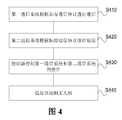
- FIG. 4 is a flow chart showing a method performed by a drone system in accordance with one embodiment of the present disclosure.
- the method can be performed by the drone system including the drone and the first remote controller shown in FIG.
- the various parts of the method in Fig. 4 are described in detail. It should be noted that the various parts (boxes) of the method are not necessarily performed in the order shown in the figures. Rather, these portions can be performed in a different order, and executed separately and/or in parallel.
- the first communication system of the drone communicates in accordance with a proprietary communication protocol.
- the first communication system can communicate with a remote control or other drone based on the Ocusync private map transfer protocol.
- the second communication system of the drone communicates in accordance with a standard communication protocol.
- the second communication system can communicate with a remote controller or other drone in accordance with the WIFI communication protocol.
- the controller of the drone controls the operations of the first communication system and the second communication system such that one of the first communication system and the second communication system communicates with another drone, and Another communication system in the communication system and the second communication system communicates with the first remote controller.
- the first remote control controls the drone or controls another drone by communicating with the drone.
- the controller can control the first communication system to communicate with the first remote control and control the second communication system to communicate with another drone.
- the controller can also control the first communication system to communicate with the second remote control such that the first remote control can control another drone and the second remote control can control the drone.
- the controller may control the first communication system to communicate with another drone and control the second communication system to communicate with the first remote control.
- the controller can also control the second communication system to communicate with the second remote control such that the first remote control can control another drone and the second remote control can control the drone.
- the first communication system and the second communication system can operate on different frequency bands.
- the first communication system can communicate using the 5.8 GHz band
- the second communication system can communicate using the 2.4 GHz band and vice versa.
- the controller may control the communication system in the first communication system and the second communication system to communicate with another drone to receive image information from another drone and control the first pass
- the communication system and the communication system in communication with the first remote controller in the second communication system forward the image information to the first remote controller.
- the drone is used as a relay drone of another drone, so that the image information acquired by the other drone can reach the first remote controller via the drone.
- the controller may control the communication system that communicates with the first remote controller in the first communication system and the second communication system to forward the image information captured by the relay drone itself to the first remote controller.
- the image information from the relay drone can be directly transmitted to the first remote controller, and the image information from the other drone can also be transmitted to the first remote controller by means of the relay drone.
- FIG. 6 is a schematic diagram showing a drone relay communication according to an embodiment of the present disclosure.
- the relay drone e.g., can be implemented using the drone 10 shown in Figure 1
- the remote control and relay drones use the OcuSync communication protocol to establish a connection.
- the 2.4 GHz band can be used for WIFI communication and the 5.8 GHz band for OcuSync communication. Or, use the 2.4 GHz band for OcuSync communication, 5.8 GHz band for WIFI communication, and so on.
- the flight of the relay drone or the remote drone can be controlled by the remote controller, which can be selected by the setting of the remote controller.
- the images taken by the relay drone itself can be sent directly to the remote control via OcuSync communication. Images taken by the remote drone can be relayed to the relay drone via WIFI communication, and then the relay drone is transmitted to the remote via OcuSync communication.
- the relay drone can be configured with the remote control to transmit only images captured by the unit, or to forward only images taken by the remote drone, or to simultaneously transfer images taken by the unit and the remote drone.
- FIG. 7 is a schematic diagram showing a drone relay communication according to an embodiment of the present disclosure.
- the relay drone e.g., can be implemented using the drone 10 shown in Figure 1
- the remote control and the relay drone establish a connection using the WIFI communication protocol.
- the 2.4 GHz band can be used for WIFI communication and the 5.8 GHz band for OcuSync communication. Or, use the 2.4 GHz band for OcuSync communication, 5.8 GHz band for WIFI communication, and so on.
- the flight of the relay drone or the remote drone can be controlled by the remote controller, which can be selected by the setting of the remote controller.
- the images taken by the relay drone itself can be sent directly to the remote control. Images taken by the remote drone can be relayed to the relay drone via OcuSync communication, and then the relay drone is transmitted to the remote via WIFI communication.
- the relay drone can be configured with the remote control to transmit only images captured by the unit, or to forward only images taken by the remote drone, or to simultaneously transfer images taken by the unit and the remote drone.
- FIG. 8 is a schematic diagram showing a drone relay communication according to an embodiment of the present disclosure.
- the relay drone e.g., can be implemented using the drone 10 shown in Figure 1
- a remote controller there are two remote controllers, namely a relay remote controller and a remote remote controller, both of which use the OcuSync communication protocol and the relay drone. establish connection.
- the relay remote control is used to control the flight of the relay drone, and the remote remote control is used to control the flight of the remote drone. That is, the two remote controllers shown in Fig. 8 are used to control the respective drones (so-called dual control mode).
- the 2.4 GHz band can be used for WIFI communication and the 5.8 GHz band for OcuSync communication. Or, use the 2.4 GHz band for OcuSync communication, 5.8 GHz band for WIFI communication, and so on.
- the image taken by the relay drone itself can be directly sent to the relay remote controller through OcuSync communication. Images taken by the remote drone can be relayed to the relay drone via WIFI communication, and then the relay drone transmits it to the remote remote via OcuSync communication. That is, in the scenario shown in FIG. 8, the relay remote controller and the remote remote controller can receive image information taken from the relay drone and the remote drone, respectively.
- the relay drone can be configured to relay only the images captured by the unit, or only forward images taken by the remote drone, or simultaneously transfer images taken by the local and remote drones. .
- FIG. 9 is a schematic diagram showing a drone relay communication according to an embodiment of the present disclosure.
- the relay drone e.g., can be implemented using the drone 10 shown in Figure 1
- the remote controller there are two remote controllers, namely a relay remote controller and a remote remote controller, both of which use a WIFI communication protocol and a relay drone. establish connection.
- the relay remote control is used to control the flight of the relay drone, and the remote remote control is used to control the flight of the remote drone. That is, the two remote controllers shown in Fig. 9 are used to control the respective drones (so-called dual control mode).
- the 2.4 GHz band can be used for WIFI communication and the 5.8 GHz band for OcuSync communication. Or, use the 2.4 GHz band for OcuSync communication, 5.8 GHz band for WIFI communication, and so on.
- the image taken by the relay drone itself can be directly sent to the relay remote controller through WIFI communication. Images taken by the remote drone can be relayed to the relay drone via OcuSync communication, and then the relay drone transmits it to the remote remote via WIFI communication. That is, in the scenario shown in FIG. 9, the relay remote controller and the remote remote controller can receive image information taken from the relay drone and the remote drone, respectively.
- the relay drone can be configured to relay only the images captured by the unit, or only forward images taken by the remote drone, or simultaneously transfer images taken by the local and remote drones. .
- the present disclosure is capable of utilizing a consumer drone having a dual communication system as a relay drone, thereby enhancing the range and capabilities of drone communication.
- embodiments of the present disclosure may be implemented by means of a computer program product.
- the computer program product can be a computer readable storage medium.
- a computer program is stored on a computer readable storage medium, and when executed on a computing device, related operations can be performed to implement the above-described aspects of the present disclosure.
- Figure 5 is a block diagram showing a computer readable storage medium 50 in accordance with one embodiment of the present disclosure.
- computer readable storage medium 50 includes computer program 510.
- the computer program 510 when executed by at least one processor, causes at least one processor to perform various portions of the method, such as described in accordance with FIGS. 2 and 4.
- examples of computer readable storage medium 50 include, but are not limited to, a semiconductor storage medium, an optical storage medium, a magnetic storage medium, or any other form of computer readable storage medium.
- Such an arrangement of the present disclosure is typically provided as software, code, and/or other data structures, such as one or more, that are arranged or encoded on a computer readable medium such as an optical medium (eg, CD-ROM), floppy disk, or hard disk.
- a computer readable medium such as an optical medium (eg, CD-ROM), floppy disk, or hard disk.
- Software or firmware or such a configuration may be installed on the computing device such that one or more processors in the computing device perform the technical solutions described in the embodiments of the present disclosure.
- each functional module or individual feature of the device used in each of the above embodiments may be implemented or executed by circuitry, typically one or more integrated circuits.
- Circuitry designed to perform the various functions described in this specification can include general purpose processors, digital signal processors (DSPs), application specific integrated circuits (ASICs) or general purpose integrated circuits, field programmable gate arrays (FPGAs), or others.
- a general purpose processor may be a microprocessor, or the processor may be an existing processor, controller, microcontroller, or state machine.
- the above general purpose processor or each circuit may be configured by a digital circuit or may be configured by a logic circuit.
- the present disclosure may also use integrated circuits obtained using the advanced technology.
- the program running on the device may be a program that causes a computer to implement the functions of the embodiments of the present invention by controlling a central processing unit (CPU).
- the program or information processed by the program may be temporarily stored in a volatile memory (such as a random access memory RAM), a hard disk drive (HDD), a non-volatile memory (such as a flash memory), or other memory system.
- a program for realizing the functions of the embodiments of the present invention can be recorded on a computer readable recording medium.
- the corresponding functions can be realized by causing a computer system to read programs recorded on the recording medium and execute the programs.
- the so-called "computer system” herein may be a computer system embedded in the device, and may include an operating system or hardware (such as a peripheral device).
Landscapes
- Engineering & Computer Science (AREA)
- Aviation & Aerospace Engineering (AREA)
- General Physics & Mathematics (AREA)
- Physics & Mathematics (AREA)
- Remote Sensing (AREA)
- Computer Networks & Wireless Communication (AREA)
- Signal Processing (AREA)
- Radar, Positioning & Navigation (AREA)
- Automation & Control Theory (AREA)
- Multimedia (AREA)
- Astronomy & Astrophysics (AREA)
- Business, Economics & Management (AREA)
- General Business, Economics & Management (AREA)
- Mobile Radio Communication Systems (AREA)
- Control Of Position, Course, Altitude, Or Attitude Of Moving Bodies (AREA)
- Selective Calling Equipment (AREA)
Abstract
L'invention concerne un véhicule aérien sans pilote, comprenant : un premier système de communication, configuré pour mettre en œuvre une communication sur la base d'un protocole de communication privé; un second système de communication, configuré pour mettre en œuvre une communication sur la base d'un protocole de communication standard; et un dispositif de commande, configuré pour commander le fonctionnement du premier système de communication et du second système de communication de telle sorte qu'un système de communication parmi le premier système de communication et le second système de communication communique avec un autre véhicule aérien sans pilote, l'autre système de communication parmi le premier système de communication et le second système de communication communiquant avec un premier dispositif de commande à distance. L'invention concerne également un système de véhicule aérien sans pilote, et un procédé correspondant. La solution technique décrite dans la présente invention peut mettre en œuvre une communication relais par véhicule aérien sans pilote au moyen d'un véhicule aérien sans pilote grand public, ce qui réduit le coût d'une communication relais.
Priority Applications (3)
| Application Number | Priority Date | Filing Date | Title |
|---|---|---|---|
| CN201780014652.2A CN108702201A (zh) | 2017-11-30 | 2017-11-30 | 无人机系统和通信方法 |
| PCT/CN2017/113919 WO2019104631A1 (fr) | 2017-11-30 | 2017-11-30 | Système de véhicule aérien sans pilote, et procédé de communication |
| US16/883,823 US20200285230A1 (en) | 2017-11-30 | 2020-05-26 | Unmanned aerial vehicle system and communication method |
Applications Claiming Priority (1)
| Application Number | Priority Date | Filing Date | Title |
|---|---|---|---|
| PCT/CN2017/113919 WO2019104631A1 (fr) | 2017-11-30 | 2017-11-30 | Système de véhicule aérien sans pilote, et procédé de communication |
Related Child Applications (1)
| Application Number | Title | Priority Date | Filing Date |
|---|---|---|---|
| US16/883,823 Continuation US20200285230A1 (en) | 2017-11-30 | 2020-05-26 | Unmanned aerial vehicle system and communication method |
Publications (1)
| Publication Number | Publication Date |
|---|---|
| WO2019104631A1 true WO2019104631A1 (fr) | 2019-06-06 |
Family
ID=63844169
Family Applications (1)
| Application Number | Title | Priority Date | Filing Date |
|---|---|---|---|
| PCT/CN2017/113919 Ceased WO2019104631A1 (fr) | 2017-11-30 | 2017-11-30 | Système de véhicule aérien sans pilote, et procédé de communication |
Country Status (3)
| Country | Link |
|---|---|
| US (1) | US20200285230A1 (fr) |
| CN (1) | CN108702201A (fr) |
| WO (1) | WO2019104631A1 (fr) |
Cited By (1)
| Publication number | Priority date | Publication date | Assignee | Title |
|---|---|---|---|---|
| CN112578815A (zh) * | 2020-12-17 | 2021-03-30 | 中国航空工业集团公司成都飞机设计研究所 | 一种面向多平台异构遥控数据词典的系统及方法 |
Families Citing this family (4)
| Publication number | Priority date | Publication date | Assignee | Title |
|---|---|---|---|---|
| US20210080948A1 (en) * | 2019-09-12 | 2021-03-18 | Transportation Ip Holdings, Llc | Vehicle control system |
| EP4586039A3 (fr) * | 2020-05-04 | 2025-11-05 | Auterion AG | Système et procédé pour drones définis par logiciel |
| WO2022094842A1 (fr) * | 2020-11-05 | 2022-05-12 | 深圳市大疆创新科技有限公司 | Procédé de communication, véhicule aérien sans pilote et support de stockage |
| CN116545499A (zh) * | 2023-04-23 | 2023-08-04 | 青岛新松机器人自动化有限公司 | 一种双无人机在巷道中飞行时的信号中继系统及应用 |
Citations (6)
| Publication number | Priority date | Publication date | Assignee | Title |
|---|---|---|---|---|
| CN104898693A (zh) * | 2015-05-12 | 2015-09-09 | 南通新城电力科技有限公司 | 一种无人机巡检系统 |
| US20160144959A1 (en) * | 2014-11-21 | 2016-05-26 | Oil & Gas IT, LLC | Systems, Methods and Devices for Collecting Data at Remote Oil and Natural Gas Sites |
| CN106774429A (zh) * | 2016-12-05 | 2017-05-31 | 北京邮电大学 | 一种数据传输方法及系统 |
| CN106878688A (zh) * | 2017-04-17 | 2017-06-20 | 浙江南瑞飞翼航空技术有限公司 | 无人机图像处理系统 |
| CN106941372A (zh) * | 2017-05-04 | 2017-07-11 | 国网浙江省电力公司杭州供电公司 | 一种无人机数据传输系统 |
| CN107079365A (zh) * | 2017-01-17 | 2017-08-18 | 深圳市大疆创新科技有限公司 | 无人机、遥控器及其控制方法 |
Family Cites Families (7)
| Publication number | Priority date | Publication date | Assignee | Title |
|---|---|---|---|---|
| CN103687074A (zh) * | 2013-11-11 | 2014-03-26 | 中国航天科技集团公司第五研究院第五一三研究所 | 一种集群飞行器通信系统 |
| EP3346618B1 (fr) * | 2014-02-10 | 2021-09-15 | SZ DJI Technology Co., Ltd. | Commutation de mode de communication adaptatif |
| US10039114B2 (en) * | 2015-04-14 | 2018-07-31 | Verizon Patent And Licensing Inc. | Radio access network for unmanned aerial vehicles |
| CN105007115B (zh) * | 2015-07-24 | 2019-01-18 | 华南理工大学 | 无人直升机中继数据链系统及其控制方法 |
| CN106921425B (zh) * | 2015-12-25 | 2020-10-30 | 顺丰科技有限公司 | 一种数据转发方法、装置及设备 |
| CN106325298A (zh) * | 2016-09-12 | 2017-01-11 | 珠海市杰理科技有限公司 | 无人机增程控制系统和方法 |
| CN106970650B (zh) * | 2017-04-28 | 2023-11-24 | 暨南大学 | 多无人机通信控制系统及控制方法 |
-
2017
- 2017-11-30 WO PCT/CN2017/113919 patent/WO2019104631A1/fr not_active Ceased
- 2017-11-30 CN CN201780014652.2A patent/CN108702201A/zh active Pending
-
2020
- 2020-05-26 US US16/883,823 patent/US20200285230A1/en not_active Abandoned
Patent Citations (6)
| Publication number | Priority date | Publication date | Assignee | Title |
|---|---|---|---|---|
| US20160144959A1 (en) * | 2014-11-21 | 2016-05-26 | Oil & Gas IT, LLC | Systems, Methods and Devices for Collecting Data at Remote Oil and Natural Gas Sites |
| CN104898693A (zh) * | 2015-05-12 | 2015-09-09 | 南通新城电力科技有限公司 | 一种无人机巡检系统 |
| CN106774429A (zh) * | 2016-12-05 | 2017-05-31 | 北京邮电大学 | 一种数据传输方法及系统 |
| CN107079365A (zh) * | 2017-01-17 | 2017-08-18 | 深圳市大疆创新科技有限公司 | 无人机、遥控器及其控制方法 |
| CN106878688A (zh) * | 2017-04-17 | 2017-06-20 | 浙江南瑞飞翼航空技术有限公司 | 无人机图像处理系统 |
| CN106941372A (zh) * | 2017-05-04 | 2017-07-11 | 国网浙江省电力公司杭州供电公司 | 一种无人机数据传输系统 |
Cited By (1)
| Publication number | Priority date | Publication date | Assignee | Title |
|---|---|---|---|---|
| CN112578815A (zh) * | 2020-12-17 | 2021-03-30 | 中国航空工业集团公司成都飞机设计研究所 | 一种面向多平台异构遥控数据词典的系统及方法 |
Also Published As
| Publication number | Publication date |
|---|---|
| US20200285230A1 (en) | 2020-09-10 |
| CN108702201A (zh) | 2018-10-23 |
Similar Documents
| Publication | Publication Date | Title |
|---|---|---|
| WO2019104631A1 (fr) | Système de véhicule aérien sans pilote, et procédé de communication | |
| AU2020308337B2 (en) | Plug and play at sites using TLOC-extension | |
| US20200264602A1 (en) | Unmanned aerial vehicle system and communication method | |
| US11018982B2 (en) | Data flow scheduling between processors | |
| US11246177B2 (en) | Unmanned aerial vehicle system and method | |
| CN111279691B (zh) | 多负载多路图传方法、控制系统和终端、无人机和服务器 | |
| US20180107627A1 (en) | Gpu remote communication with triggered operations | |
| US11758267B2 (en) | Device and method for controlling image of vehicle | |
| CN106452873A (zh) | 软件定义网络中的控制方法,控制设备和处理器 | |
| CN108513738A (zh) | 数据传输方法、设备、机器可读存储介质以及系统 | |
| WO2018001239A1 (fr) | Accès à un paquet partiellement différé | |
| US20160292104A1 (en) | Setting method, communication device, and master device | |
| CN113791792B (zh) | 应用调用信息的获取方法、设备以及存储介质 | |
| JP2019129539A (ja) | 移動体を制御する制御装置及び移動体 | |
| CN105378692B (zh) | 通用串行总线数据路由 | |
| US12316770B2 (en) | Blockchain based facial anonymization system | |
| US9811149B2 (en) | Information processing apparatus, non-transitory computer readable medium, and information processing method | |
| US20170230637A1 (en) | Multiple camera computing system having camera-to-camera communications link | |
| CN111625022A (zh) | 可控制无人机跟随车辆的控制方法、系统、介质及服务端 | |
| CN209070404U (zh) | 负载控制电路及可移动平台 | |
| US20120221176A1 (en) | Control device and method for adjusting flight direction of unmanned aerial vehicle using the same | |
| CN110770672A (zh) | 负载控制方法、装置及可移动平台 | |
| CN113012456B (zh) | 自主泊车方法及装置 | |
| EP4274214A1 (fr) | Appareil d'envoi, système de transmission de données et procédé de transmission de données | |
| US20210327079A1 (en) | Depth sensing apparatus and operating method of depth sensing apparatus |
Legal Events
| Date | Code | Title | Description |
|---|---|---|---|
| 121 | Ep: the epo has been informed by wipo that ep was designated in this application |
Ref document number: 17933195 Country of ref document: EP Kind code of ref document: A1 |
|
| NENP | Non-entry into the national phase |
Ref country code: DE |
|
| 122 | Ep: pct application non-entry in european phase |
Ref document number: 17933195 Country of ref document: EP Kind code of ref document: A1 |