WO2019124782A2 - Procédé de production d'acétoïne, de butanediol ou de butanol à partir d'éthanol - Google Patents
Procédé de production d'acétoïne, de butanediol ou de butanol à partir d'éthanol Download PDFInfo
- Publication number
- WO2019124782A2 WO2019124782A2 PCT/KR2018/014538 KR2018014538W WO2019124782A2 WO 2019124782 A2 WO2019124782 A2 WO 2019124782A2 KR 2018014538 W KR2018014538 W KR 2018014538W WO 2019124782 A2 WO2019124782 A2 WO 2019124782A2
- Authority
- WO
- WIPO (PCT)
- Prior art keywords
- fls
- mutant
- ddh
- butanediol
- amino acid
- Prior art date
- Legal status (The legal status is an assumption and is not a legal conclusion. Google has not performed a legal analysis and makes no representation as to the accuracy of the status listed.)
- Ceased
Links
Images
Classifications
-
- C—CHEMISTRY; METALLURGY
- C12—BIOCHEMISTRY; BEER; SPIRITS; WINE; VINEGAR; MICROBIOLOGY; ENZYMOLOGY; MUTATION OR GENETIC ENGINEERING
- C12N—MICROORGANISMS OR ENZYMES; COMPOSITIONS THEREOF; PROPAGATING, PRESERVING, OR MAINTAINING MICROORGANISMS; MUTATION OR GENETIC ENGINEERING; CULTURE MEDIA
- C12N11/00—Carrier-bound or immobilised enzymes; Carrier-bound or immobilised microbial cells; Preparation thereof
- C12N11/14—Enzymes or microbial cells immobilised on or in an inorganic carrier
-
- C—CHEMISTRY; METALLURGY
- C12—BIOCHEMISTRY; BEER; SPIRITS; WINE; VINEGAR; MICROBIOLOGY; ENZYMOLOGY; MUTATION OR GENETIC ENGINEERING
- C12N—MICROORGANISMS OR ENZYMES; COMPOSITIONS THEREOF; PROPAGATING, PRESERVING, OR MAINTAINING MICROORGANISMS; MUTATION OR GENETIC ENGINEERING; CULTURE MEDIA
- C12N15/00—Mutation or genetic engineering; DNA or RNA concerning genetic engineering, vectors, e.g. plasmids, or their isolation, preparation or purification; Use of hosts therefor
- C12N15/09—Recombinant DNA-technology
- C12N15/63—Introduction of foreign genetic material using vectors; Vectors; Use of hosts therefor; Regulation of expression
-
- C—CHEMISTRY; METALLURGY
- C12—BIOCHEMISTRY; BEER; SPIRITS; WINE; VINEGAR; MICROBIOLOGY; ENZYMOLOGY; MUTATION OR GENETIC ENGINEERING
- C12N—MICROORGANISMS OR ENZYMES; COMPOSITIONS THEREOF; PROPAGATING, PRESERVING, OR MAINTAINING MICROORGANISMS; MUTATION OR GENETIC ENGINEERING; CULTURE MEDIA
- C12N9/00—Enzymes; Proenzymes; Compositions thereof; Processes for preparing, activating, inhibiting, separating or purifying enzymes
-
- C—CHEMISTRY; METALLURGY
- C12—BIOCHEMISTRY; BEER; SPIRITS; WINE; VINEGAR; MICROBIOLOGY; ENZYMOLOGY; MUTATION OR GENETIC ENGINEERING
- C12N—MICROORGANISMS OR ENZYMES; COMPOSITIONS THEREOF; PROPAGATING, PRESERVING, OR MAINTAINING MICROORGANISMS; MUTATION OR GENETIC ENGINEERING; CULTURE MEDIA
- C12N9/00—Enzymes; Proenzymes; Compositions thereof; Processes for preparing, activating, inhibiting, separating or purifying enzymes
- C12N9/88—Lyases (4.)
-
- C—CHEMISTRY; METALLURGY
- C12—BIOCHEMISTRY; BEER; SPIRITS; WINE; VINEGAR; MICROBIOLOGY; ENZYMOLOGY; MUTATION OR GENETIC ENGINEERING
- C12P—FERMENTATION OR ENZYME-USING PROCESSES TO SYNTHESISE A DESIRED CHEMICAL COMPOUND OR COMPOSITION OR TO SEPARATE OPTICAL ISOMERS FROM A RACEMIC MIXTURE
- C12P7/00—Preparation of oxygen-containing organic compounds
- C12P7/02—Preparation of oxygen-containing organic compounds containing a hydroxy group
- C12P7/04—Preparation of oxygen-containing organic compounds containing a hydroxy group acyclic
- C12P7/16—Butanols
-
- C—CHEMISTRY; METALLURGY
- C12—BIOCHEMISTRY; BEER; SPIRITS; WINE; VINEGAR; MICROBIOLOGY; ENZYMOLOGY; MUTATION OR GENETIC ENGINEERING
- C12P—FERMENTATION OR ENZYME-USING PROCESSES TO SYNTHESISE A DESIRED CHEMICAL COMPOUND OR COMPOSITION OR TO SEPARATE OPTICAL ISOMERS FROM A RACEMIC MIXTURE
- C12P7/00—Preparation of oxygen-containing organic compounds
- C12P7/40—Preparation of oxygen-containing organic compounds containing a carboxyl group including Peroxycarboxylic acids
- C12P7/42—Hydroxy-carboxylic acids
-
- Y—GENERAL TAGGING OF NEW TECHNOLOGICAL DEVELOPMENTS; GENERAL TAGGING OF CROSS-SECTIONAL TECHNOLOGIES SPANNING OVER SEVERAL SECTIONS OF THE IPC; TECHNICAL SUBJECTS COVERED BY FORMER USPC CROSS-REFERENCE ART COLLECTIONS [XRACs] AND DIGESTS
- Y02—TECHNOLOGIES OR APPLICATIONS FOR MITIGATION OR ADAPTATION AGAINST CLIMATE CHANGE
- Y02E—REDUCTION OF GREENHOUSE GAS [GHG] EMISSIONS, RELATED TO ENERGY GENERATION, TRANSMISSION OR DISTRIBUTION
- Y02E50/00—Technologies for the production of fuel of non-fossil origin
- Y02E50/10—Biofuels, e.g. bio-diesel
Definitions
- the present invention relates to a process for the production of acetone, butanediol or butanol in ethanol and its various applications.
- bioethanol Although interest in bioethanol, biodiesel, biogas, and butanol represented by bioenergy is increasing, all of the types of bioenergy mentioned above can be used as a fuel for power generation or transportation, but some disadvantages of practical application and production methods There is growing interest in hydrocarbon-based compounds, new renewable energy sources.
- Acetone, butanediol or butanol is very useful as an intermediate compound having a wide range of applications such as cosmetics, perfume, hormone, hygiene agent, industrial coating agent, paint additive, fiber, plastic monomer, medical supplies, vitamins, antibiotics and pesticides .
- Butanediol or butanol in ethanol Butanediol or butanol in ethanol.
- the method for producing acetone, butanediol or butanol in ethanol of the present invention is a method for producing an acetone, butanediol or butanol by designing an artificial synthetic pathway so that NOX, EtDH, FLS, BDH and DDH proteins and their mutant proteins are displayed as multi- -free catalyst method.
- the production method of the present invention can produce butanol efficiently because it is not necessary to grow the cells as compared with the conventional microbial fermentation method and can easily control a short synthesis route, a fast reaction rate, a high yield and productivity, and a desired reaction condition .
- the protein is fixed to nanoparticles and can be reused in a large number, and is also effective in producing acetone, butanediol or butanol, which is economical.
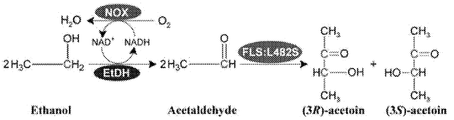
- FIG. 1A shows a method for producing acetone in ethanol using a cell-free multi-catalytic system comprising the optimum enzyme of the present invention
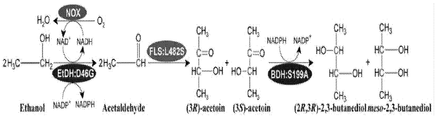
- FIG. 1B shows a method for producing 2,3-butanediol from ethanol
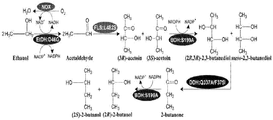
- FIG. This is a schematic diagram of a method for producing butanol.
- the present invention provides FLS mutant amino acids comprising at least one mutation selected from the group consisting of mutations in which the 482nd leucine is substituted with serine, arginine and glutamic acid in the FLS (formolase) amino acid represented by SEQ ID NO: 8.
- FLS (formolase) in the present invention catalyzes the carbolination of three 1-carbon formaldehyde molecules into one 3-carbon dihydroxyacetone molecule.
- FLS and its variants produce acetone using acetaldehyde produced in the course of alcohol metabolism as a substrate, and use it as a substrate to produce 2,3-butanediol and to use 2,3-butanediol as the substrate But is not limited thereto.
- FLS-mutated amino acid in the present invention means substitution, insertion, deletion or modification of one or more amino acids of the wild-type FLS amino acid.
- FLS: L482S is represented by the amino acid sequence of SEQ ID NO: 10
- the 482nd leucine is replaced with arginine
- FLS: L482R is represented by the amino acid of SEQ ID NO: 11
- the mutant in which the 482nd leucine is replaced by glutamic acid is represented by amino acid of SEQ ID NO: 12 (FLS: L482E).
- the FLS mutant amino acid may further include at least one selected from the group consisting of mutation at position 396, mutation at position 446, mutation at position 473, mutation at position 477, mutation at position 499, But is not limited thereto, so as to achieve the purpose of converting acetaldehyde produced in the metabolism into acetone.
- the FLS is derived from, but is not limited to, Pseudomonas fluorescens .
- the FLS mutation of the present invention has analyzed the structure of the FLS and found six remaining six hotspots (T396, T446, M473, S477, L482 and L499). Among them, molecular interactions with acetaldehyde, substrate, confirmed that W480 was the active site residue, and FLS: L482S binds more strongly to substrate than FLS, confirming hydrogen bonding.
- the present invention also provides a gene coding for the FLS mutant amino acid.
- the present invention also relates to a gene encoding the above-mentioned FLS-mutated amino acid, a 2,3-butanediol dehydrogenase (BDH) gene, a BDH gene, an NADH oxidase gene, EtDH , A gene for a mutation of a DDH gene, a gene for a DDH (diol dehydratase), and a gene for a DDH mutation.
- BDH 2,3-butanediol dehydrogenase
- NADH oxidase uses oxygen as a substrate and oxidizes NADH to regenerate NAD + .
- the regenerated NAD < + > can be used as coenzyme in EtDH.
- EtDH ethanol dehydrogenase
- NAD + and / or NADP + as a coenzyme using ethanol as a substrate.
- the production of acetaldehyde can be induced, and FLS using the acetaldehyde as a substrate can be produced to produce acetone.
- BDH (2,3-butanediol dehydrogenase) in the present invention catalyzes the production of 2,3-butanediol using acetophenone as a substrate and NADPH as a coenzyme.
- BDH 2,3-butanediol dehydrogenase
- DDH diol dehydratase
- the NOX gene is derived from Lactobacillus rhamnosus and the EtDH gene or EtDH mutation gene can be derived from Cupriavidus necator .
- the BDH gene or the BDH mutant gene may be derived from Clostridium autoethanogenum
- the DDH (diol dehydratase) gene and the DDH mutant gene may be derived from Lactobacillus brevis , But is not limited to, for the production of an enzyme for butanol production of the present invention.
- the NOX gene is the nucleotide sequence of SEQ ID NO: 1
- the EtDH gene is the nucleotide sequence of SEQ ID NO: 3
- the mutant of EtDH is the 46th aspartic acid of EtDH represented by the amino acid sequence of SEQ ID NO: 4 (EtDH: D46G), the nucleotide sequence of SEQ ID NO: 5 and the amino acid sequence of SEQ ID NO: 6.
- the BDH gene may be a variant of the BDH wherein the 199th serine of BDH represented by the amino acid sequence of SEQ ID NO: 14 is substituted with alanine (BDH: S199A), the nucleotide sequence of SEQ ID NO: 15 and the amino acid of SEQ ID NO: have.
- DDH: S302A in which the 302th serine of DDH amino acid sequence of SEQ ID NO: 18 is substituted with alanine
- 337th mutant in which glutamine is replaced with alanine
- DDH: F375I in which the 375th phenylalanine is substituted with isoleucine, but not limited to, one or more single or multiple mutants selected from the group consisting of:
- DDH DDH: Q337A / F375I
- 337th glutamine of the DDH amino acid of SEQ ID NO: 18 is alanine and the 375th phenylalanine is replaced by isoleucine
- Mutants in which the 302nd serine alanine and 37th glutamine are substituted with alanine S302A / F375I
- the mutant of DDH can express dhaR which is a reactivating factor of DDH.
- plasmids were prepared to express each protein and its variants.
- FLS L482S
- BDH S199A
- DDH Q337A / F375I expression plasmids and vector maps were prepared (Tables 1 and 2).
- the structure of the DDH of the present invention and mutants thereof were analyzed. As a result, it was confirmed that the active site residue was E171 in the molecular interaction with the substrate 2,3-butanediol, and DDH: Q337A / F375I binds more strongly to the substrate, confirming hydrogen bonding and water bridges.
- the DDH of the present invention and its variants exhibit stereoselectivity and do not generate butanone with (2R, 3R) -2,3-butanediol and (2S, 3S) -2,3-butanediol was used as a substrate to produce butanone.
- EtDH: D46G, EtDH: D46G, EtDH: D46G, FLS, FLS: L482S, BDH: EtDH, D46G and D46G were obtained as a result of confirming thermostability when the protein of the present invention was used as an enzyme in the present invention.
- S199A, BDH: S199A, DHH with dhaR: Q337A / F375 and NOX proteins exhibited thermal stability even at high 30 to 45 degrees, and particularly excellent activity at 30 degrees.
- the present invention also provides a transformed microorganism into which the recombinant vector has been introduced.
- the transformant of the present invention can be constructed by introducing the vector into the host cell in such a manner that the promoter can function.
- the present invention provides a method for producing butanol, which comprises purifying and reacting a protein produced in the transforming microorganism.
- the butanol may be at least one selected from the group consisting of 2-butanol, n-butanol, isobutanol and tert-butanol, preferably 2-butanol.
- the production method is a method for producing butanol by using a protein produced in the transformed microorganism in a cell-free state by performing a multistage catalysis, and using ethanol as a substrate, but is not limited thereto.
- the production method further includes at least one kind of coenzyme selected from the group consisting of coenzyme NAD + , NADP + , vitamin B 12, and thiamine pyrophosphate (TPP), but its treatment concentration or throughput is also not limited.
- the production method further comprises at least one metal ion selected from the group consisting of metal ions Mg 2+ , Mn 2+ , Ca 2+ , Fe 2+ , Ni 2+ , Cu 2+ and Zn 2+ , Mg 2+ , Mn 2+ , Ca 2+ , Fe 2+ and Ni 2+ can induce the catalytic reaction more efficiently, but this is not limited to produce butanol.
- the production method produces butanol at a pH of from 5.0 to 9.0, preferably from 6.5 to 8.5, but is not limited thereto in order to achieve the objective of producing butanol.
- the production method produces butanol at 16 to 45 degrees, preferably 25 to 42 degrees, but is not limited thereto.
- an artificial synthetic pathway using cascade enzymes was designed to produce C 4 compound, butanol, from ethanol.
- the multi-step enzymes include NOX, EtDH, FLS, BDH and DDH and their mutants Respectively.
- NOX uses oxygen as a substrate and oxidizes NADH to regenerate NAD + .
- the regenerated NAD + uses EtDH as a coenzyme.
- EtDH and its variants induce acetaldehyde production by using ethanol as a substrate and dehydrogenating ethanol using NAD + and / or NADP + as coenzyme.
- FLS and its mutants induce the production of acetone using acetaldehyde as a substrate.
- BDH catalyzes the formation of 2,3-butanediol using acetyl as a substrate and NADPH as a coenzyme.
- DDH catalyzes the formation of butanone when 2,3-butanediol is used as a substrate and vitamin B12 is used as a coenzyme.
- the BDH catalyzes the catalytic reaction of BDH using catalytic butanone as a substrate to finally produce butanol.
- the present invention achieves the objective of artificial synthesis of butanol in ethanol using a simplified pathway in vitro using a cell-free multi-enzyme catalysis (CFME) method.
- CFME cell-free multi-enzyme catalysis
- the optimal method for producing butanol according to the method of Example 7-6 uses a cell-free multi-enzyme catalyst according to the artificial synthetic pathway designed in the present invention and uses ethanol as a substrate .
- NAD + , NADP + , TPP, vitamin B 12 and Mg 2+ were added as a coenzyme using NOX, EtDH: D46G, FLS: L482S, BDH: S199A and DDH: Q337A / F375I as enzymes.
- -Butanol production can be effectively induced.
- the present invention also provides a method for producing butanol, which comprises immobilizing and reacting a protein produced in the transforming microorganism with nanoparticles.
- the nanoparticles are attached to silicon oxide and are reacted with glutaraldehyde.
- the nanoparticles are not limited thereto, so as to achieve the purpose of producing butanol by attaching the protein of the present invention to nanoparticles.
- the fixed protein nanoparticles are reusable, preferably 1 to 30 times reusable, more preferably 1 to 20 times, but not limited thereto.
- the optimal method for producing butanol according to the method of Example 7-6 uses a cell-free multi-enzyme catalyst according to the artificial synthetic pathway designed in the present invention and uses ethanol as a substrate .
- NAD + , NADP + , TPP, vitamin B 12 and Mg 2+ were added as a coenzyme using NOX, EtDH: D46G, FLS: L482S, BDH: S199A and DDH: Q337A / F375I as enzymes.
- -Butanol production can be effectively induced.
- the enzyme was attached to the nanoparticles to fix and induce butanol production.
- DNA Polymerase High Fidelity and T4 DNA ligase were purchased from TaKaRa Biotech (Shiga, Japan) and New England Biolabs (Ipswich, MA, USA). DNA and protein markers were purchased from Tiangen Biotech (Shanghai, China). (IPTG), dithiothreitol (DTT) and dimethyl sulfoxide (DMSO) were purchased from Sigma-Aldrich (St. Louis, MO, USA) and Sinopharm (Shanghai, China).
- (3S / 3R) -acetone was prepared by reacting (2S, 3S) -2,3-butanediol, (2R, 3R) -2,3-butanediol, meso Butanediol, butanone and 2-butanol were purchased from Sigma-Aldrich. All other reagents were of analytical grade and commercially available unless otherwise specified.
- the strains and plasmids used in the present invention are shown in Table 1 below.
- Escherichia coli DH5? And BL21 (DE3) were used as cloning and expression expression hosts and cultured at 37 ⁇ ⁇ .
- An expression vector was constructed using the plasmid pET28a.
- Luria-Bertani (LB) medium was used for strain culture and recombinant protein expression, and kanamycin was added to the medium to cultivate a recombinant strain at a final concentration of 50 ⁇ g mL -1 .
- Protein expression plasmids were introduced into E. coli BL21 (DE3), and each of the pET-EtDH, pET-FLS, pET-BDH, pET-DDH, pET-dhaR, pET-DDH-dhaR, and pET- Recombinant E. coli BL21 (DE3) was cultured at 37 ° C in LB medium containing 0.5 mM IPTG at an optical density of 0.6 at 600 nm. After induction at 18 ° C for 24 hours, cells were obtained by centrifugation and disrupted by sonication in an ice bath. Cell lysates were centrifuged at 8000 ⁇ g for 10 min to remove cell debris.
- EtDH D46G and BDH: S199A mutants were subjected to site-directed mutagenesis using EtDH1 / EtDH2 and BDH1 / BDH2 primers shown in Table 3 below to construct EtDH or BDH variants Respectively.
- Recombinant plasmids pET-EtDH and pET-BDH containing wild-type EtDH and BDH genes were used as DNA templates for PCR amplification, respectively. After transformation of the recombinant plasmid containing the correct mutant gene into E. coli BL21 (DE3), the colonies were selected for kanamycin resistance and used for protein expression.
- the cells were obtained by centrifugation and incubated for 6 hours at 30 ° C. in a reaction mixture containing 50 mM phosphate buffer (pH 8.0), 100 mM acetaldehyde and 40 g L -1 wet cell weight (WCW) Catalytic activity was performed.
- DDH mutants were prepared and used for the expression of dhaR, which is a reactivating factor of DDH, including S302A, Q337A, F375I, S302A / Q337A, S302A / F375I, Q337A / F375I and S302A / Q337A /
- the DDH variants were prepared to confirm the catalytic efficiency as compared to the wild type DDH enzyme.
- DDH1-DDH6 primer shown in Table 2 below to induce site-specific mutagenesis.
- the pET-DDH-dhaR recombinant plasmid containing wild-type DDH and its activator dhaR gene were used as DNA templates for PCR amplification.
- the PCR product was transformed into E. coli BL21 (DE3) and cultured in LB medium containing 0.5 mM IPTG at 18 degrees for 24 hours.
- the mutants were used for the evaluation of catalytic activity using total-cell biocatalysis analysis using meso-2,3-butanediol as a substrate.
- the reaction mixture contained 50 mM HEPES buffer (pH 7.0), 50 mM meso-2,3-b butanediol, 20 ⁇ M coenzyme B12 and 40 g L -1 wet cell weight, It was carried out at 30 degrees for 6 hours.
- the butanone product was quantified using gas chromatography. The origins and nucleotide sequences of the respective enzymes and some variants thereof are shown in Table 4.
- the EtDH enzyme activity assay For the EtDH enzyme activity assay, the EtDH enzyme activity and its variants were incubated with the reaction mixture containing 100 mM glycine-NaOH buffer (pH 9.5), 5 mM Mg 2+ , 3 mM NAD + / NADP + Respectively. The activity was confirmed by NAD + / NADP + reduction at 340 nm using a spectrophotometer (UV-1800, MAPADA, Shanghai, China). One unit of EtDH activity was identified by the amount of enzyme required to reduce 1 ⁇ mol of NAD + / NADP + per minute.
- FLS enzyme activity analysis FLS enzyme activity and its variants were assayed with a reaction mixture containing 100 mM phosphate buffer (pH 8.0), 1 mM Mg + , 0.1 mM TPP and 20 mM acetaldehyde, The concentration of acetone in acetaldehyde was measured by VP reaction and calculated by the standard acetone calibration curve.
- FLS enzyme activity and its variants were assayed in 50 mM Tris-HCl buffer (pH 7.5), 0.2 mM NADPH, 1 mM DTT; And 20 mM acetone or 5 mM butanone at room temperature.
- the activity was confirmed by the rate of oxidation of NADPH at 340 nm using a spectrophotometer (UV-1800, MAPADA).
- One unit of BDH activity was defined as the amount of enzyme required to oxidize 1 ⁇ mol NADPH per minute.
- mutants containing DDH enzyme activity and dhaR activator were incubated in 50 mM phosphate buffer (pH 7.0), 1 mM coenzyme B12, 100 mM ATP, 1 mM Mg 2+ and 50 mM meso-2,3 ≪ / RTI > butanediol.
- NOX enzyme activity assay NOX enzyme activity was measured at room temperature with a reaction mixture containing 50 mM HEPES-NaOH buffer (pH 8.0) and 0.2 mM NADH. The activity was confirmed by the NADH oxidation rate at 340 nm using a spectrophotometer (UV-1800, MAPADA). One unit of NOX activity was determined by the amount of enzyme required to oxidize 1 ⁇ mol NADH per minute.
- Each treatment group was centrifuged at 10,000 ⁇ g for 5 minutes at 4 ° C.
- 0.3 mL of diluted samples, 0.3 mL of 0.5% creatine, 0.3 mL of 5% alpha-naphthol and 0.3 mL of 5% NaOH were added to each 10 mL tube to analyze the acetone concentration in each treatment group and quantify in the VP reaction.
- Gently shaken The optical density of the reaction solution was measured at 520 nm using a spectrophotometer (UV-1800, MAPADA) and the concentration of acetone was calculated from the calibration curve.
- the calibration curve was measured between the standard acetone concentration and the optical density at 520 nm after the VP reaction in the range of 0.04-0.4 mM.
- the kinetic parameters of EtDH and EtDH: D46G were determined at room temperature with the reaction mixture containing 100 mM glycine-NaOH buffer (pH 9.5), 5 mM Mg 2+ , 3 mM NAD + / NADP + and 0.5-100 mM ethanol .
- the kinetic parameters of FLS and its variants were confirmed at room temperature with a reaction mixture containing 100 mM phosphate buffer (pH 8.0), 1 mM Mg + , 0.1 mM TPP and 0.5-20 mM acetaldehyde.
- BDH and BDH The kinetic parameters of S199A were: 50 mM Tris-HCl buffer (pH 7.5), 0.2 mM NADPH, 1 mM DTT; And 0.5-100 mM acetone or 0.5-10 mM butanone at room temperature. The Km and kcat values were confirmed by nonlinear regression fitting of Michaelis-Menten equation and were repeated three times.
- acetone, 2,3-butanediol or 2-butanol from ethanol using an amoebic cell multi-enzyme catalyst was carried out in the presence of substrate, coenzyme, metal ion and 0.5 -mL reaction mixture.
- the reaction conditions including temperature, pH, coenzyme and metal ion were performed under optimum conditions to increase the flux of the artificial reaction path.
- the optimum reaction conditions are as follows.
- Acetone production was performed in 50 mM HEPES buffer (pH 8.0), 1 mM NAD + , 0.1 mg mL -1 EtDH, 0.2 mg mL -1 FLS: L482S, 0.1 mg mL -1 NOX, 0.1 mM TPP, 1 mM Mg 2+ , 1 mM DTT, 20% DMSO and 100 mM ethanol at 30 [deg.] C.
- 2,3-butanediol was dissolved in 50 mM HEPES buffer (pH 8.0), 1 mM NAD + , 1 mM NADP + , 0.1 mg mL -1 EtDH: D46G, 0.2 mg mL -1 FLS: L482S, 0.1 mg mL -1 NOX, A 0.5-mL reaction mixture containing 0.1 mg mL -1 BDH: S199A, 0.1 mM TPP, 1 mM Mg 2+ , 1 mM DTT, 20% DMSO and 100 mM ethanol was run at 30 ° C.
- 2-butanol is 50 mM HEPES buffer (pH 8.0) , 1 mM NAD +, 1 mM NADP +, 0.1 mg mL -1 EtDH: D46G, 0.2 mg mL -1 FLS: L482S, 0.1 mg mL -1 NOX, 0.1 mg mL -1 BDH: S199A, 0.2 mg mL -1 DDH: Q337A / F375I, 0.2 mg mL -1 dhaR, 0.1 mM TPP, 1 mM Mg 2+, 1 mM DTT, 20% DMSO, 1 mM coenzyme B12, 100 mM ATP and 100 mM ethanol at 30 [deg.] C.
- the purified enzyme was mixed with active silicon oxide particles and cultured for 12 hours at 4 ° C.
- silicon oxide particles 4830HT; Nanostructured & Amorphous Materials, Houston, TX, USA
- ⁇ i is the total activity of the immobilized enzyme
- ⁇ f is the total activity of the free enzyme
- Pi is the total protein content of the coenzyme preparation
- Pw and Ps are the protein concentrations of the washing solution or supernatant after fixation.
- acetone 50 mM HEPES buffer (pH 8.0), 1 mM NAD + , 1.06 U mL -1 EtDH, 0.05 U mL -1 FLS: L482S, 0.98 U mL -1 NOX, 0.1 mM TPP, 1 mM Mg 2+ , 1 mM DTT, 20% DMSO, and 100 mM ethanol.
- the immobilized enzyme was removed by centrifugation at 4000 x g for 30 minutes. The immobilized enzyme was collected and washed with deionized water and buffer. For the second-order reaction cycle, the immobilized enzyme was dissolved in a new buffer, the substrate was added, and then treated in the same manner as the first-order reaction cycle.
- GC-MS analysis was performed using a gas chromatograph system (Agilent GC9860, Santa Clara, CA, USA) equipped with a chiral column (Supelco ⁇ -DEX TM 120, 30-m length, 0.25- Respectively.
- the operating conditions were as follows: N2 was used as the carrier gas at a flow rate of 1.2 mL min < -1 & gt ;; The injector temperature and the detector temperature were set at 215 and 245 degrees, respectively; The column temperature was maintained at 50 ° C for 1.5 minutes and then increased to 180 ° C at a rate of 15 ° C min -1 .
- the cells were induced by centrifugation at 18 ° C for 24 hours and then disrupted by ultrasonication in an ice bath. Cell lysates were centrifuged at 8000 ⁇ g for 10 min to remove cell debris. To obtain NOX, EtDH, FLS, BDH and dhaR enzymes, soluble fractions were purified using HisTrap HP column according to purification protocol (GE Healthcare, Little Chalfont, UK). DDH purification was performed in a conventional manner [M. Seyfried, et al., J. Bacteriol., 1996, 178, 5793].
- Each of the purified enzymes was concentrated by ultrafiltration and de-chlorinated, and then detected by SDS-PAGE. As a result, it was confirmed that EtDH and EtDH: D46G proteins and BDH and BDH: S199A proteins were expressed at the same molecular weight, and it was confirmed that there was no difference in molecular weight expressed between wild type and mutant type.
- NOX proteins derived from Lactobacillus rhamnosus or Lactobacillus brevis have different molecular weights, and thus it has been confirmed that proteins expressed according to their origins are different even if they are the same genes.
- FLS gene was correctly expressed.
- a VP reaction was carried out, and 50 or 100 nM acetaldehyde as a substrate was treated, or treated with FLS enzyme for 0 or 6 hours And each condition was set. As a result, it was confirmed that acetone was produced, and the concentration of acetone obtained when the FLS enzyme was treated and the substrate acetaldehyde was changed at different concentrations was confirmed through the darkness of the color change.
- the multistage enzymes of the present invention was synthesized using acetylation, 2,3-butanediol and 2-butanol by artificial synthetic pathway using a cell-free multi-enzyme catalytic system.
- the analysis results using the multi-step enzyme according to the present invention of the present invention were carried out by GC / GC-MS analysis.
- the kinetic parameters of EtDH and EtDH: D46G were determined at room temperature with a reaction mixture containing 100 mM glycine-NaOH buffer (pH 9.5), 5 mM Mg 2+ , 3 mM NAD + / NADP + and 0.5-100 mM ethanol Respectively.
- the kinetic parameters of FLS and its variants were confirmed at room temperature with a reaction mixture containing 100 mM phosphate buffer (pH 8.0), 1 mM Mg + , 0.1 mM TPP and 0.5-20 mM acetaldehyde.
- BDH and BDH The kinetic parameters of S199A were: 50 mM Tris-HCl buffer (pH 7.5), 0.2 mM NADPH, 1 mM DTT; And 0.5-100 mM acetone or 0.5-10 mM butanone at room temperature.
- the results are shown in Table 5.
- EtDH and EtDH D46G enzymes were found to have kcat / Km values of 17.09 and 9.97 s -1 mM -1 when using ethanol as a substrate and NAD + as a coenzyme.
- NADP + It has been confirmed that the use of NAD + can increase the catalyst efficiency.
- the kcat / Km value of the FLS enzyme was 7.69 ⁇ 10 -3 s -1 mM -1 when acetaldehyde was used as a substrate and thiamine pyrophosphate (TPP) was used as a coenzyme.
- FLS: L482S, FLS: L482R and FLS: L482E which are variants thereof, confirmed that the kcat / Km values were 1.33 x 10 -2 , 1.06 x 10 -2 and 9.66 x 10 -3 s -1 mM -1 , It was confirmed that the catalytic efficiency was increased to 72.95%, 37.84% and 25.62%, respectively, as compared with the wild-type FLS enzyme.
- BDH S199A enzyme was compared with wild type BDH, it was confirmed that the catalyst efficiency was increased when butanone was used as a substrate and NADPH was used as a coenzyme.
- the present inventors analyzed the stereoselectivity of the DDH enzyme of the present invention and found that 20.56 mM butanone was generated from 50 mM meso-2,3-butanediol. On the other hand, it was confirmed that butanone was not detected when (2R, 3R) -2,3-butanediol and (2S, 3S) -2,3-butanediol were used as a substrate. Therefore, the DDH enzyme including dhaR exhibited a high catalytic activity in meso-2,3-butanediol in vivo, confirming excellent stereoselectivity.
- the thermal stability of the EtDH, FLS and NOX enzymes at 30 ° C was 87.91%, 70.43%, and 91.30%, respectively.
- the NOX enzyme showed continuous thermal stability.
- the initial reaction is 50 mM HEPES buffer (pH 7.0), 0.1 mg mL -1 EtDH, 0.2 mg mL -1 FLS, 0.1 mg mL -1 NOX, 4 mM NAD +, 0.1 mM TPP, 1 mM Mg 2+ , 1 mM DTT, 20% DMSO, and a 0.5-mL reaction mixture containing 100 mM ethanol as an initial substrate.
- the reaction was carried out under the conditions of 30 ° C. for 6 hours and 17.98 mM of acetone, which is 35.96% of the theoretical yield, was produced.
- the temperature was set to 20, 25, 30, 37, and 42 degrees in order to find the optimal reaction conditions, depending on the conditions of temperature, pH, coenzyme (NAD + and TPP) and metal ion.
- the NAD + at 1, 2, 4, 6, and 8 mM concentrations of TPP were found to be 1, 0.1, 0.2, 0.3, 0.4, and 0.5 at pH 6.0, 6.5, 7.0, 7.5, 8.0,
- the optimum conditions for the metal ions were determined by treating Mg 2+ , Mn 2+ , Ca 2+ , Fe 2+ , Ni 2+ , Cu 2+ and Zn 2+ .
- the optimum condition for the metal ion Mg 2+ was the pH condition at 8.0, the temperature at 30 ° C, the NAD + concentration at 1 mM and the TPP at 0.1 mM concentration, and the reaction flux from ethanol to acetone .
- each EtDH, FLS or NOX enzyme was reduced to a concentration of 1/10, and the remaining amount of the enzyme was maintained at a constant concentration to confirm the amount of acetone.
- the concentration of FLS enzyme is lower than that of EtDH or NOX enzyme, it affects the production of acetone. Therefore, it was confirmed that the FLS enzyme is an enzyme important for the production of acetone.
- a mutated hot spot of the FLS amino acid sequence was analyzed using the HotSpot Wizard 2.0 server.
- the Hotspot Wizard 2.0 server we confirmed the saturation mutagenesis of six sites of hot spot residues (T396, T446, M473, S477, L482 and L499) and confirmed their structural models. As a result, 482 sites in FLS It is confirmed that it plays an important role.
- FLS and its mutants L482S, L482R and L482E were subjected to the VP-method using acetaldehyde (100 mM) as a substrate using the all-cell biocatalytic method Respectively.
- the activity (%) of each mutant was compared with 0.16 U / mg, which is the specific activity of FLS, and the mean ⁇ standard deviation was calculated by repeating 3 times.
- the FLS mutant It was confirmed that it further produced acetone.
- the FLS mutations L482S, L482R and L482E increased to 59.03%, 36.89% and 34.12%, respectively, from the FLS intrinsic activity. Therefore, it was confirmed that L482S was most effective for the production of acetone during the FLS mutation.
- Wild type FLS and its mutations To compare the structure and activity of FLS: L482S, a molecular dynamics simulation analysis of 100 ns was used to confirm the correlation between the structural changes of wild type FLS and its mutant FLS: L482S and enzyme activity. As a result, the wild-type FLS and its mutant FLS: L482S have a strong interaction with acetaldehyde (2.8 ⁇ ), which is a substrate mutant FLS: L482S, ). Furthermore, it was confirmed that the mutant FLS: L482S was more hydrogen-bonded than the wild-type FLS.
- BDH: S199A is a conventional method [DJ Maddock, et al., Protein Eng. Des. Sel., 2015, 28, 251].
- the thermal stability of the mutant was confirmed at 30, 37 and 45 degrees.
- the EtDH: D46G mutant was cultured at 30 degrees for 6 hours when acetaldehyde was used as a substrate having coenzyme NAD + and NADP + And the activity levels were maintained at 86.53% and 86.67%, respectively.
- the activity level of BDH: S199A mutant was maintained at 80.81% for 6 hours at 30 ° C. when NADPH coenzyme and acetone were used as a substrate.
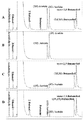
- the DDH enzyme catalyzes only butanoyl meso-2,3-butanediol, which is not (2R, 3R) -butanediol and (2S, 3S) -butanediol, And the form of acetone and 2,3-butanediol produced in the reaction was confirmed. Specifically, the form of acetone and 2,3-butanediol was confirmed using a GC system equipped with a chiral column.
- DDH and NOX including EtDH: D46G, FLS: L482S, BDH: S199A and dhaR as a reactivity factor were used as enzymes with 100 mM as a substrate .
- concentration of DDH containing BDH: S199A or dhaR as a reactivity factor was reduced to a concentration of 1/10, and the remaining enzyme was maintained at a constant concentration and repeated three times to determine the concentration (mM) of 2-butanol .
- the molecular interaction with the substrate, 2,3-butanediol was found to be the active site residue E171 in the mutant DDH: Q337A / F375I and bound to the substrate at 1.9 ⁇ .
- 100 ns molecular dynamics analysis confirmed that the active site residue E171 in the wild type DDH contained substrate and hydrogen bonds and water bridges.
- the active site residue E171 was mainly hydrogen bonded. Therefore, it was confirmed that the mutant DDH: Q337A / F375I binds more strongly to the substrate than the wild type DDH, and thus the catalytic activity is excellent.
- BDH S199A mutant enzymes were found to be 51.13 ⁇ 3.74 and 57.55 ⁇ 2.65 U mg -1 , respectively, when acetone or butanone was used as a substrate and NADPH was used as a coenzyme.
- each enzyme for the production of acetone or each enzyme for the production of 2,3-butanediol was prepared according to the method of Example 1-8
- the active silicon oxide particles were mixed and cultured for 12 hours at 4 ° C.
- silicon oxide particles 4830HT; Nanostructured & Amorphous Materials, Houston, Tex., USA
- the immobilization yield (%) and immobilization efficiency (%) were confirmed.
- acetone was effectively produced in ethanol.
Landscapes
- Chemical & Material Sciences (AREA)
- Life Sciences & Earth Sciences (AREA)
- Organic Chemistry (AREA)
- Health & Medical Sciences (AREA)
- Engineering & Computer Science (AREA)
- Genetics & Genomics (AREA)
- Zoology (AREA)
- Wood Science & Technology (AREA)
- Bioinformatics & Cheminformatics (AREA)
- Biotechnology (AREA)
- General Engineering & Computer Science (AREA)
- Microbiology (AREA)
- Biochemistry (AREA)
- General Health & Medical Sciences (AREA)
- Biomedical Technology (AREA)
- Molecular Biology (AREA)
- Chemical Kinetics & Catalysis (AREA)
- Medicinal Chemistry (AREA)
- General Chemical & Material Sciences (AREA)
- Biophysics (AREA)
- Physics & Mathematics (AREA)
- Inorganic Chemistry (AREA)
- Plant Pathology (AREA)
- Preparation Of Compounds By Using Micro-Organisms (AREA)
- Micro-Organisms Or Cultivation Processes Thereof (AREA)
- Organic Low-Molecular-Weight Compounds And Preparation Thereof (AREA)
Abstract
Dans un procédé de production d'acétoïne, de butanediol ou de butanol à partir d'éthanol selon la présente invention, un procédé de catalyse sans cellules a été utilisé grâce à la conception d'une voie de synthèse artificielle de sorte que les protéines NOX, EtDH, FLS, BDH et DDH et des protéines mutantes de celles-ci présentent une activité catalytique en plusieurs étapes en tant qu'enzymes. Par comparaison avec les procédés de fermentation existants utilisant des micro-organismes, le procédé de production selon la présente invention ne nécessite pas de croissance cellulaire et est caractérisé par une voie de synthèse courte, une vitesse de réaction rapide, un rendement et une productivité élevés, un ajustement commode des conditions réactionnelles ciblées et une production efficace de butanol. De plus, le tout peut être réutilisé à de nombreuses reprises en fixant les protéines à des nanoparticules et se révèle également efficace pour produire de l'acétoïne, du butanediol ou du butanol, ce qui est économique. Par conséquent, ce procédé de production peut être utilement adopté dans les secteurs concernés nécessitant de l'acétoïne, du butanediol ou du butanol.
Priority Applications (1)
| Application Number | Priority Date | Filing Date | Title |
|---|---|---|---|
| US16/956,064 US11441142B2 (en) | 2017-12-20 | 2018-11-23 | FLS variant having increased activity |
Applications Claiming Priority (8)
| Application Number | Priority Date | Filing Date | Title |
|---|---|---|---|
| KR10-2017-0176269 | 2017-12-20 | ||
| KR20170176269 | 2017-12-20 | ||
| KR1020180006982A KR102013058B1 (ko) | 2018-01-19 | 2018-01-19 | 에탄올에서 부탄디올의 생산방법 |
| KR10-2018-0006982 | 2018-01-19 | ||
| KR1020180007006A KR102013059B1 (ko) | 2018-01-19 | 2018-01-19 | 에탄올에서 부탄올의 생산방법 |
| KR10-2018-0007006 | 2018-01-19 | ||
| KR10-2018-0020623 | 2018-02-21 | ||
| KR1020180020623A KR102093546B1 (ko) | 2017-12-20 | 2018-02-21 | 에탄올에서 아세토인의 생산방법 |
Publications (2)
| Publication Number | Publication Date |
|---|---|
| WO2019124782A2 true WO2019124782A2 (fr) | 2019-06-27 |
| WO2019124782A3 WO2019124782A3 (fr) | 2019-08-15 |
Family
ID=66993722
Family Applications (1)
| Application Number | Title | Priority Date | Filing Date |
|---|---|---|---|
| PCT/KR2018/014538 Ceased WO2019124782A2 (fr) | 2017-12-20 | 2018-11-23 | Procédé de production d'acétoïne, de butanediol ou de butanol à partir d'éthanol |
Country Status (1)
| Country | Link |
|---|---|
| WO (1) | WO2019124782A2 (fr) |
Cited By (1)
| Publication number | Priority date | Publication date | Assignee | Title |
|---|---|---|---|---|
| CN115838714A (zh) * | 2022-12-07 | 2023-03-24 | 福建农林大学 | 一种乙醛裂合酶、乙醛裂合酶融合蛋白及其制备方法和应用 |
Family Cites Families (5)
| Publication number | Priority date | Publication date | Assignee | Title |
|---|---|---|---|---|
| CN104017758A (zh) * | 2014-06-05 | 2014-09-03 | 江南大学 | 适度表达新型枯草芽孢杆菌nadh氧化酶高效发酵生产乙偶姻 |
| AU2015293864B2 (en) * | 2014-07-25 | 2019-07-11 | Alderys | Method for producing acetoin |
| KR101819189B1 (ko) * | 2015-12-03 | 2018-01-16 | 서울대학교산학협력단 | 아세토인 생산능을 갖는 유전적으로 조작된 효모 세포 및 그를 사용하여 아세토인을 생산하는 방법 |
| CN107129959B (zh) * | 2017-06-28 | 2020-12-18 | 广西科学院 | 生产(r)-乙偶姻基因工程菌株的构建方法及其应用 |
| CN107475281B (zh) * | 2017-09-06 | 2020-10-13 | 福建农林大学 | 一种生物转化甲醇代谢途径 |
-
2018
- 2018-11-23 WO PCT/KR2018/014538 patent/WO2019124782A2/fr not_active Ceased
Cited By (1)
| Publication number | Priority date | Publication date | Assignee | Title |
|---|---|---|---|---|
| CN115838714A (zh) * | 2022-12-07 | 2023-03-24 | 福建农林大学 | 一种乙醛裂合酶、乙醛裂合酶融合蛋白及其制备方法和应用 |
Also Published As
| Publication number | Publication date |
|---|---|
| WO2019124782A3 (fr) | 2019-08-15 |
Similar Documents
| Publication | Publication Date | Title |
|---|---|---|
| Lang et al. | Metabolic engineering of Pseudomonas sp. strain VLB120 as platform biocatalyst for the production of isobutyric acid and other secondary metabolites | |
| Kostichka et al. | Cloning and characterization of a gene cluster for cyclododecanone oxidation in Rhodococcus ruber SC1 | |
| JP4886775B2 (ja) | 補酵素再生によるグリコール酸の生産方法 | |
| Dudek et al. | Extending the substrate scope of a Baeyer–Villiger monooxygenase by multiple-site mutagenesis | |
| Patel et al. | Mutation of Thermoanaerobacter ethanolicus secondary alcohol dehydrogenase at Trp-110 affects stereoselectivity of aromatic ketone reduction | |
| CN110551771B (zh) | 一种手性3-氨基-1-丁醇的合成方法 | |
| JP4954985B2 (ja) | 補酵素合成強化によるグリコール酸の生産方法 | |
| CN109825538B (zh) | 一种手性2-氨基-1-丁醇的合成方法 | |
| CN112852895B (zh) | 一种双酶级联催化合成(r)-3-氨基-1-丁醇的方法 | |
| Hummel et al. | Towards a large‐scale asymmetric reduction process with isolated enzymes: Expression of an (S)‐alcohol dehydrogenase in E. coli and studies on the synthetic potential of this biocatalyst | |
| TWI824995B (zh) | 用於改良氣體醱酵產乙酸菌之效率的精胺酸增補 | |
| US11441142B2 (en) | FLS variant having increased activity | |
| CA2935979C (fr) | Micro-organisme recombine ayant une productivite accrue de d(-) butanediol-2,3, et procede de production de d(-) butanediol-2,3 l'utilisant | |
| Yu et al. | A catalyst from Burkholderia cenocepacia for efficient anti-Prelog’s bioreduction of 3, 5-bis (trifluoromethyl) acetophenone | |
| CN107653259B (zh) | 一种体外酶反应生产d-(-)-乙偶姻的方法 | |
| JP2022536500A (ja) | ケトレダクターゼ突然変異体及びキラルアルコールの生産方法 | |
| WO2019124782A2 (fr) | Procédé de production d'acétoïne, de butanediol ou de butanol à partir d'éthanol | |
| KR102013058B1 (ko) | 에탄올에서 부탄디올의 생산방법 | |
| CN113293152A (zh) | 短链脱氢酶突变体及其用途 | |
| Nanduri et al. | Purification of a stereospecific 2-ketoreductase from Gluconobacter oxydans | |
| CN114760980A (zh) | 针对10-乙酰基-3,7-二羟基吩噁嗪的过氧化物酶活性 | |
| EP3922728B1 (fr) | Procédé de production du (1r,3r)-3-(trifluorométhyl)cyclohexan-1-ol et d'un intermédiaire correspondant | |
| CN115927219B (zh) | 一种烯还原酶及其在不对称还原中长链α-/β-不饱和酮酯中的应用 | |
| CN117660392A (zh) | 一种辅酶自足型底盘细胞在生物合成中的应用 | |
| KR102013059B1 (ko) | 에탄올에서 부탄올의 생산방법 |
Legal Events
| Date | Code | Title | Description |
|---|---|---|---|
| 121 | Ep: the epo has been informed by wipo that ep was designated in this application |
Ref document number: 18890034 Country of ref document: EP Kind code of ref document: A2 |
|
| NENP | Non-entry into the national phase |
Ref country code: DE |
|
| 122 | Ep: pct application non-entry in european phase |
Ref document number: 18890034 Country of ref document: EP Kind code of ref document: A2 |