WO2019137555A1 - Procédé et dispositif de gestion de fonction de commande de politique - Google Patents
Procédé et dispositif de gestion de fonction de commande de politique Download PDFInfo
- Publication number
- WO2019137555A1 WO2019137555A1 PCT/CN2019/071763 CN2019071763W WO2019137555A1 WO 2019137555 A1 WO2019137555 A1 WO 2019137555A1 CN 2019071763 W CN2019071763 W CN 2019071763W WO 2019137555 A1 WO2019137555 A1 WO 2019137555A1
- Authority
- WO
- WIPO (PCT)
- Prior art keywords
- pcf
- request message
- npcf
- policy
- function
- Prior art date
- Legal status (The legal status is an assumption and is not a legal conclusion. Google has not performed a legal analysis and makes no representation as to the accuracy of the status listed.)
- Ceased
Links
Images




Classifications
-
- H—ELECTRICITY
- H04—ELECTRIC COMMUNICATION TECHNIQUE
- H04L—TRANSMISSION OF DIGITAL INFORMATION, e.g. TELEGRAPHIC COMMUNICATION
- H04L12/00—Data switching networks
- H04L12/02—Details
- H04L12/14—Charging, metering or billing arrangements specially adapted for data communications, e.g. authentication, authorisation and accounting [AAA] framework
- H04L12/1403—Architecture for metering, charging or billing
- H04L12/1407—Policy-and-charging control [PCC] architecture
-
- H—ELECTRICITY
- H04—ELECTRIC COMMUNICATION TECHNIQUE
- H04L—TRANSMISSION OF DIGITAL INFORMATION, e.g. TELEGRAPHIC COMMUNICATION
- H04L41/00—Arrangements for maintenance, administration or management of data switching networks, e.g. of packet switching networks
- H04L41/08—Configuration management of networks or network elements
- H04L41/0894—Policy-based network configuration management
-
- H—ELECTRICITY
- H04—ELECTRIC COMMUNICATION TECHNIQUE
- H04L—TRANSMISSION OF DIGITAL INFORMATION, e.g. TELEGRAPHIC COMMUNICATION
- H04L12/00—Data switching networks
- H04L12/02—Details
- H04L12/14—Charging, metering or billing arrangements specially adapted for data communications, e.g. authentication, authorisation and accounting [AAA] framework
-
- H—ELECTRICITY
- H04—ELECTRIC COMMUNICATION TECHNIQUE
- H04L—TRANSMISSION OF DIGITAL INFORMATION, e.g. TELEGRAPHIC COMMUNICATION
- H04L41/00—Arrangements for maintenance, administration or management of data switching networks, e.g. of packet switching networks
- H04L41/40—Arrangements for maintenance, administration or management of data switching networks, e.g. of packet switching networks using virtualisation of network functions or resources, e.g. SDN or NFV entities
-
- H—ELECTRICITY
- H04—ELECTRIC COMMUNICATION TECHNIQUE
- H04L—TRANSMISSION OF DIGITAL INFORMATION, e.g. TELEGRAPHIC COMMUNICATION
- H04L67/00—Network arrangements or protocols for supporting network services or applications
- H04L67/14—Session management
-
- H—ELECTRICITY
- H04—ELECTRIC COMMUNICATION TECHNIQUE
- H04L—TRANSMISSION OF DIGITAL INFORMATION, e.g. TELEGRAPHIC COMMUNICATION
- H04L67/00—Network arrangements or protocols for supporting network services or applications
- H04L67/14—Session management
- H04L67/146—Markers for unambiguous identification of a particular session, e.g. session cookie or URL-encoding
-
- H—ELECTRICITY
- H04—ELECTRIC COMMUNICATION TECHNIQUE
- H04L—TRANSMISSION OF DIGITAL INFORMATION, e.g. TELEGRAPHIC COMMUNICATION
- H04L67/00—Network arrangements or protocols for supporting network services or applications
- H04L67/50—Network services
- H04L67/51—Discovery or management thereof, e.g. service location protocol [SLP] or web services
-
- H—ELECTRICITY
- H04—ELECTRIC COMMUNICATION TECHNIQUE
- H04W—WIRELESS COMMUNICATION NETWORKS
- H04W8/00—Network data management
- H04W8/02—Processing of mobility data, e.g. registration information at HLR [Home Location Register] or VLR [Visitor Location Register]; Transfer of mobility data, e.g. between HLR, VLR or external networks
Definitions
- the present disclosure relates to the field of communications, for example, to a policy control function management method and apparatus.
- the industry is researching the 5th Generation mobile communication technology (5G) when the Access and Mobility Management Function (AMF) interacts with the Policy Control Function (PCF).
- the AMF sends a Network Function Discovery Request (NF Discovery Request) message to the Network Repository Function (NRF) to request a PCF entity.
- NF Discovery Request Network Function Discovery Request
- NRF Network Repository Function
- the NRF returns to the AMF instead of the PCF address, but a proxy function.
- SMF Session Management Function
- the present disclosure proposes a policy control function management method and apparatus to solve the problem that AMF and SMF cannot select the same PCF.
- the present disclosure provides a method for managing a policy control function, the method comprising:
- the Policy Control Function-Select Function receives the session management control policy Npcf_SMPolicyControl_Get request message sent by the session management function SMF.
- the Npcf_SMPolicyControl_Get request message carries the user equipment (User Equipment, UE). Corresponding user identification and indication information Same PCF;
- the PCF-SF determines that the PCF entity has been selected for the UE according to the correspondence between the UE and the policy control function PCF entity recorded in the locally saved information; according to the indication information Same PCF, the PCF-SF A PCF entity corresponding to the UE that has been recorded is selected for the UE.
- the present disclosure further provides a policy control function management method, where the method includes:
- the network function function NRF receives the access and mobility management function AMF sends a network function to discover an NF discovery request message; wherein the NF discovery request message sent by the AMF carries a network function (NF) type parameter requirement, And the NF type parameter of the AMF itself;
- NF network function
- the NRF returns an address or identification information of a policy control function-selection function PCF-SF corresponding to the NF discovery request message sent by the AMF to the AMF according to the received NF discovery request message sent by the AMF.
- the present disclosure further provides a policy control function management method, where the method includes:
- the access and mobility management function AMF sends an access and mobility management control policy Npcf_AMPolicyControl_Get request message to the policy control function-selection function PCF-SF; wherein the Npcf_AMPolicyControl_Get request message carries the user identifier corresponding to the user equipment UE;
- the AMF receives the Npcf_AMPolicyControl_Get response message sent by the PCF-SF; the Npcf_AMPolicyControl_Get response message carries the access and mobility management control policy of the UE.
- the present disclosure further provides a policy control function management method, where the method includes:
- the session management function SMF sends a session management control policy Npcf_SMPolicyControl_Get request message to the policy control function-selection function PCF-SF; wherein the Npcf_SMPolicyControl_Get request message carries the user identifier corresponding to the user equipment UE;
- the SMF receives the Npcf_SMPolicyControl_Get response message sent by the PCF-SF; the Npcf_SMPolicyControl_Get response message carries a Policy and Charging Control (PCC) policy corresponding to the UE.
- PCC Policy and Charging Control
- the present disclosure further provides a policy control function management apparatus, which is disposed on a policy control function-selection function PCF-SF, and the apparatus includes:
- a receiving unit configured to receive a session management control policy Npcf_SMPolicyControl_Get request message sent by the session management function SMF; wherein the Npcf_SMPolicyControl_Get request message carries a user identifier and indication information Same PCF corresponding to the user equipment UE;
- a PCF entity determining unit configured to determine that a PCF entity has been selected for the UE according to a correspondence between the UE and the policy control function PCF entity recorded in the locally saved information; and, according to the indication information Same PCF, The UE selects a recorded PCF entity corresponding to the UE.
- the present disclosure further provides a policy control function management apparatus, which is disposed on a network storage function NRF, and the apparatus includes:
- a receiving unit configured to receive a network function discovery NF discovery request message sent by the access and mobility management function AMF, where the NF discovery request message sent by the AMF carries a requirement of an NF type parameter, and the AMF itself NF type parameter;
- a returning unit configured to return, according to the received NF discovery request message sent by the AMF, a policy control function corresponding to the NF discovery request message sent by the AMF to the AMF, or an address or identifier information of the selection function PCF-SF .
- the present disclosure also provides a slight control function management device, which is disposed on the access and mobility management function AMF, and the device includes:
- a requesting unit configured to send an access and mobility management control policy Npcf_AMPolicyControl_Get request message to the policy control function-selection function PCF-SF; wherein the Npcf_AMPolicyControl_Get request message carries a user identifier corresponding to the UE;
- the receiving unit is configured to receive an Npcf_AMPolicyControl_Get response message sent by the PCF-SF, where the Npcf_AMPolicyControl_Get response message carries an access and mobility management control policy of the UE.
- the present disclosure further provides a policy control function management apparatus, which is disposed on a session management function SMF, and the apparatus includes:
- a requesting unit configured to send a session management control policy Npcf_SMPolicyControl_Get request message to the policy control function-selection function PCF-SF; wherein the Npcf_SMPolicyControl_Get request message carries a user identifier corresponding to the UE;
- the receiving unit is configured to receive an Npcf_SMPolicyControl_Get response message sent by the PCF-SF, where the Npcf_SMPolicyControl_Get response message carries a PCC policy corresponding to the UE.
- the present disclosure also provides a policy control function management apparatus including a memory, a processor, and a computer program stored on the memory and executable on the processor, the processor executing the The method described in any of the above embodiments is implemented when the computer program is described.
- FIG. 1 is a schematic structural diagram of a 5G network in the related art
- FIG. 2 is a schematic structural diagram of a policy control function management system of the present disclosure
- FIG. 3 is a schematic flowchart of a method for managing a policy control function in an embodiment of the present disclosure
- FIG. 4 is a schematic flowchart diagram of another method for managing a policy control function in an embodiment of the present disclosure
- FIG. 5 is a schematic flowchart of still another method for managing a policy control function in an embodiment of the present disclosure
- FIG. 6 is a schematic flowchart of still another method for managing a policy control function in an embodiment of the present disclosure
- FIG. 7 is a flowchart of acquiring PCF entity information by a PCF_SF in an embodiment of the present disclosure
- FIG. 8 is a flowchart of a PCF_SF selecting a PCF for an AMF in a non-roaming scenario in an embodiment of the present disclosure
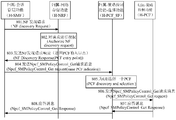
- FIG. 9 is a flowchart of selecting, by a PCF_SF, a same PCF for an SMF in a non-roaming scenario in an embodiment of the present disclosure
- FIG. 10 is a flowchart of roaming V-/home H-PCF_SF for roaming PCFV-PCF and home PCFH-PCF for AMF in a roaming scenario according to an embodiment of the present disclosure
- FIG. 11 is a flowchart of selecting a V-PCF for a V-SMF by a V-PCF_SF in a locally-distributed Local Breakout roaming scenario according to an embodiment of the present disclosure
- FIG. 12 is a flowchart of selecting, by the H-PCF_SF, the same H-PCF for the H-SMF in the home routed Home-routed roaming scenario in the embodiment of the present disclosure
- FIG. 13 is a schematic structural diagram of a policy control function management apparatus according to an embodiment of the present disclosure.
- FIG. 14 is a schematic structural diagram of another policy control function management apparatus in an embodiment of the present disclosure.
- 15 is a schematic structural diagram of still another policy control function management apparatus in an embodiment of the present disclosure.
- 16 is a schematic structural diagram of still another policy control function management apparatus in an embodiment of the present disclosure.
- FIG. 17 is a schematic structural diagram of still another policy control function management apparatus in an embodiment of the present disclosure.
- FIG. 1 is a schematic diagram of a 5G architecture, and the functions of the included functional entities are as follows:
- the base station (Radio Access Node, RAN) is configured to allocate air interface resources of the terminal access network and connection management of air interfaces.
- the access and mobility management functions AMF are set to access authentication, authorization, and mobility management.
- the session management function SMF is set to be responsible for session management and IP address allocation.
- the User Plane Function is a connection point of a Protocol Data Unit (PDU) session, and is set to route, forward, and perform policy execution of packet data.
- PDU Protocol Data Unit
- the policy control function PCF is set as a policy decision.
- the network storage function NRF is set to support the discovery of network functions.
- Application Function is set to provide service information to the network at the application layer, and request the network to allocate resources for the application.
- the AMF and the SMF interact with the PCF) to obtain a policy for execution, and the AF requests the resource reservation directly or through the Network Exposure Function (NEF) to interact with the PCF.
- NEF Network Exposure Function
- PLMN Public Land Mobile Network
- the AMF wants to interact with the PCF, the AMF sends a Network Function Discovery Request (NF discovery request) message to the NRF, requesting a PCF entity, and the NRF provides the AMF with the address of the PCF entity according to the saved information (such as the Internet Protocol (Internet Protocol). IP) address or identity), and the AMF sends an associated service service request message to the PCF entity.
- NF discovery request Network Function Discovery Request
- IP Internet Protocol
- the SMF when the SMF is to interact with the PCF, the SMF sends a Network Function Discovery Request (NF discovery request) message to the NRF requesting a PCF entity, and the NRF provides the SMF with the address (such as an IP address or address) of the PCF entity according to the saved information. The SMF then sends a related service service request message to the PCF entity. If the SMF selects a PCF that is the same as the AMF according to the local policy, then the AMF first provides the AMF with the AMF selected by the SMF, and the SMF directly sends the relevant service service request message to the PCF.
- NF discovery request Network Function Discovery Request
- Nnssf, Nnef, Nnrf, Npcf, Nudm, Naf, Nausf, Namf, Nsmf in the figures are all service-based interfaces.
- FIG. 1 further includes an Authentication Server Function (AUSF), a Network Slice Selection Function (NSSF), and a Unified Data Manager (UDM).
- AUSF Authentication Server Function
- NSSF Network Slice Selection Function
- UDM Unified Data Manager
- N1 in the drawing denotes a reference point between the UE and the AMF
- N2 denotes a reference point between the RAN and the AMF
- N3 denotes a reference point between the RAN and the UPF
- N4 denotes between the SMF and the UPF Reference point
- N6 represents the reference point between the UPF and the data network (DN).
- PCF-SF PCF Selection Function
- the present disclosure provides a policy control function management method, as shown in FIG. 3, including steps 3100 to 3300.
- the policy control function-selection function PCF-SF receives the session management control policy Npcf_SMPolicyControl_Get request message sent by the session management function SMF; wherein the session management control policy request message carries the user identifier corresponding to the user equipment UE and Instructions for Same PCF.
- the PCF-SF determines that the PCF entity has been selected for the UE according to the correspondence between the UE and the policy control function PCF entity recorded in the locally saved information.
- the PCF-SF selects a recorded PCF entity corresponding to the UE for the UE.
- the method before the PCF-SF receives the Npcf_SMPolicyControl_Get request message sent by the SMF, the method further includes:
- the PCF-SF receives an access and mobility management control policy Npcf_AMPolicyControl_Get request message sent by the access and mobility management function AMF, where the access and mobility management control policy request message carries the UE corresponding User ID;
- the PCF-SF determines that the PCF entity has not been selected for the UE according to the locally saved information, the PCF-SF selects a PCF entity for the UE, and records between the UE and the selected PCF entity. Correspondence.
- the method further includes:
- the PCF-SF returns an Npcf_SMPolicyControl_Get response message to the SMF, where the Npcf_SMPolicyControl_Get response message carries the PCC policy.
- the acquiring a PCC policy corresponding to the UE includes:
- the PCF-SF sends the Npcf_SMPolicyControl_Get request message to the selected PCF entity, where the user identifier carried in the Npcf_SMPolicyControl_Get request message is such that the PCF entity is corresponding to the user identifier according to the user identifier.
- the UE formulates a PCC policy
- the PCF-SF receives the Npcf_AMPolicyControl_Get response message returned by the PCF entity; the Npcf_AMPolicyControl_Get response message returned by the PCF entity carries a PCC policy formulated for the UE.
- the method further includes:
- the PCF-SF returns an Npcf_AMPolicyControl_Get response message to the AMF; the Npcf_AMPolicyControl_Get response message carries the access and mobility management control policy.
- the acquiring the access and mobility management control policy corresponding to the UE includes:
- the PCF-SF sends the Npcf_AMPolicyControl_Get request message to the selected PCF entity, where the user identifier carried in the Npcf_AMPolicyControl_Get request message is such that the PCF entity is corresponding to the user identifier according to the user identifier.
- the UE formulates an access and mobility management control strategy
- the PCF-SF receives the Npcf_AMPolicyControl_Get response message returned by the PCF entity; the Npcf_AMPolicyControl_Get response message returned by the PCF entity carries an access and mobility management control policy formulated for the UE.
- the method further includes:
- the PCF-SF sends a subscription entity notification to the network storage function NRF;
- the PCF-SF receives the notification information related to the new PCF instance sent by the NRF.
- the present disclosure further provides a policy control function management method, as shown in FIG. 4, including step 4100 and step 4200.
- the network storage function NRF receives the network function discovery NF discovery request message sent by the access and mobility management function AMF; wherein the NF discovery request message sent by the AMF carries the requirement of the network function NF type parameter, And the NF type parameter of the AMF itself.
- the NRF returns an address of a policy control function-selection function PCF-SF corresponding to the NF discovery request message sent by the AMF to the AMF according to the received NF discovery request message sent by the AMF. Or identification information.
- the method further includes:
- the NRF sends a notification information related to the new PCF instance to the PCF-SF if the policy control function PCF instance is updated.
- the method further includes:
- the NRF receives an NF discovery request message sent by the session management function SMF, where the NF discovery request message sent by the SMF carries a requirement of an NF type parameter, and an NF type parameter of the SMF itself;
- the NRF returns an address or identification information of the PCF-SF corresponding to the NF discovery request message sent by the SMF to the SMF according to the received NF discovery request message sent by the SMF.
- the embodiment of the present disclosure further provides a policy control function management method, as shown in FIG. 5, including step 5100 and step 5200.
- the access and mobility management function AMF sends an access and mobility management control policy Npcf_AMPolicyControl_Get request message to the policy control function-selection function PCF-SF; wherein the Npcf_AMPolicyControl_Get request message carries the user equipment UE corresponding User ID.
- the AMF receives the Npcf_AMPolicyControl_Get response message sent by the PCF-SF; the Npcf_AMPolicyControl_Get response message carries the access and mobility management control policy of the UE.
- the method before the sending, by the AMF, the Npcf_AMPolicyControl_Get request message to the PCF-SF, the method further includes:
- the AMF sends a network function discovery NF discovery request message to the network storage function NRF; wherein the NF discovery request message carries a requirement of an NF type parameter, and an NF type parameter of the AMF itself;
- the AMF receives the reply message of the NRF to the NF discovery request message, where the reply message carries the address or identification information of the PCF-SF corresponding to the NF discovery request message, so that the AMF is based on the
- the address or identification information of the PCF-SF sends an Npcf_AMPolicyControl_Get request message to the PCF-SF corresponding to the address or the identification information of the PCF-SF.
- the present disclosure further includes a policy control function management method, as shown in FIG. 6, including step 6100 and step 6200.
- the session management function SMF sends a session management control policy Npcf_SMPolicyControl_Get request message to the policy control function-selection function PCF-SF.
- the Npcf_SMPolicyControl_Get request message carries the user identifier corresponding to the user equipment UE.
- the SMF receives the Npcf_SMPolicyControl_Get response message sent by the PCF-SF; the Npcf_SMPolicyControl_Get response message carries the policy and the charging control PCC policy corresponding to the UE.
- the method before the sending, by the SMF, the Npcf_SMPolicyControl_Get request message to the PCF-SF, the method further includes:
- the SMF sends a network function discovery NF discovery request message to the network storage function NRF; wherein the NF discovery request message carries a requirement of an NF type parameter, and an NF type parameter of the SMF itself;
- the SMF receives the reply message of the NRF to the NF discovery request message, where the reply message carries the address or identification information of the PCF-SF corresponding to the NF discovery request message, so that the SMF is based on the SMF
- the address or identification information of the PCF-SF sends an Npcf_SMPolicyControl_Get request message to the PCF-SF corresponding to the address or the identification information of the PCF-SF.
- an embodiment of the present disclosure provides a method for acquiring PCF entity information by a PCF_SF (ie, PCF-SF), where the method includes:
- Step 301 A subscription relationship is established between the PCF_SF and the NRF, that is, the subscription entity notifies that, after a new PCF instance is created, the NRF notifies the PCF_SF of the information of the new PCF instance.
- the subscription information of the PCF_SF may carry slice information (Slice Information) and/or data network information (such as Data Network Name (DNN)) of the PSF_SF service.
- Step 302 The NRF obtains instance information of the PCF.
- NRF learned that a new PCF instance was created.
- NRF can obtain PCF instance information from Network Management and Orchestration (MANO) in Network Function Virtualization (NFV).
- the information can include PCF.
- the address of the instance (such as IP address or identity), the slice information of the PCF service, the data network information, and the processing capability.
- Step 303 The NRF provides the obtained instance information of the PCF to the PCF_SF according to the subscription information before the PCF_SF.
- the present disclosure provides a policy control function management method, where the method includes:
- Step 401 After receiving the trigger, the AMF sends an NF discovery request to the NRF, where the message carries the requirement of the type parameter of the NF, and the MF type parameter of the AMF itself.
- the message may also carry slice information and the like.
- Step 402 The NRF authorizes the request. Based on the local configuration of the NRF, the NRF determines whether the AMF allows the discovery of the PCF.
- Step 403 If the NRF determines that the AMF allows the PCF to be found, the NRF returns the entry point of the PCF, that is, the address or identification information of the PCF_SF to the AMF.
- Step 404 The AMF sends an Npcf_AMPolicyControl_Get request message to the PCF_SF, where the message carries the user identifier, and may also carry the slice information.
- Step 405 The PCF_SF determines that the PCF has not been selected for the user according to the locally saved information, and the PCF_SF selects a PCF for the UE, and saves a correspondence (user identifier, PCF address or identifier).
- Step 406 The PCF_SF sends an Npcf_AMPolicyControl_Get request message to the selected PCF, where the message carries the user identifier, and may also carry the slice information.
- Step 407 After formulating an access and mobility management control policy for the user by using the identifier or the like, the PCF returns a response message to the PCF_SF. It is possible for the PCF to interact with the UDM to obtain the user's subscription information.
- Step 408 The PCF_SF returns an Npcf_AMPolicyControl_Get response message to the AMF.
- the AMF performs an access and mobility management control policy based on the returned Npcf_AMPolicyControl_Get response message.
- FIG. 9 is a flowchart of selecting the same PCF as the AMF for the SMF on the basis of FIG.
- Step 501 After receiving the trigger, the SMF sends an NF discovery request to the NRF, where the message carries the requirement of the type parameter of the NF (ie, PCF), and the MF type parameter of the SMF itself.
- the message may also carry slice information and the like.
- Step 502 The NRF authorizes the request. Based on the local configuration, the NRF determines whether the SMF allows the discovery of PCF.
- Step 503 If the NRF determines that the SMF allows the PCF to be found, the NRF returns the entry point of the PCF, that is, the address or identification information of the PCF_SF to the SMF.
- Step 504 The SMF sends an Npcf_SMPolicyControl_Get request message to the PCF_SF, where the message carries the user identifier, and the DNN may also carry the slice information and the IP address allocated for the UE.
- the local policy of the SMF needs to select the same PCF, so the SMF carries the indication information (Same PCF Indication) in the request message.
- Step 505 The PCF_SF determines that the PCF has been selected for the user according to the locally saved information, and selects the same PCF according to the Same PCF Indication.
- the PCF_SF sends an Npcf_SMPolicyControl_Get request message to the PCF selected in FIG. 8 , where the message carries the user identifier, and the DNN may also carry the slice information and the IP address allocated for the UE.
- PCF_SF saves a correspondence (user ID, DNN, UE IP address, PCF address or identifier).
- Step 506 The PCF_SF sends an Npcf_SMPolicyControl_Get request message to the selected PCF, where the message carries the user identifier, and the message carries the user identifier, the DNN, and may also carry the slice information and the IP address allocated for the UE.
- Step 507 After formulating the PCC policy according to the information such as the identifier, the PCF returns a response message to the PCF_SF. It is possible for the PCF to interact with the UDM to obtain the user's subscription information.
- Step 508 The PCF_SF returns an Npcf_SMPolicyControl_Get response message to the SMF.
- the SMF implements a PCC policy.
- FIG. 10 is a flowchart of AMF selecting a roaming PCF (Virtual-PCF, V-PCF) and a home PCF (Home-PCF, H-PCF) in a roaming scenario.
- V- indicates roaming
- H- indicates attribution or attribution.
- Step 601 After receiving the trigger, the AMF sends an NF discovery request to the V-NRF, where the message carries the requirement of the type parameter of the NF, and the MF type parameter of the AMF itself.
- the message may also carry slice information and the like.
- Step 602 The V-NRF authorizes the request.
- V-NRF is based on local configuration, and V-NRF determines whether AMF allows discovery of PCF.
- Step 603 If the V-NRF determines that the AMF allows the PCF to be found, the V-NRF returns the entry point of the V-PCF, that is, the address or identification information of the V-PCF_SF to the AMF.
- Step 604 The AMF sends an Npcf_AMPolicyControl_Get request message to the V-PCF_SF, where the message carries the user identifier, and may also carry the slice information.
- Step 605 The V-PCF_SF determines that the V-PCF has not been selected for the user according to the locally saved information, and the V-PCF_SF selects a V-PCF for the UE, and saves a corresponding relationship (user identifier, V-PCF address or identifier). ).
- Step 606 The V-PCF_SF sends an Npcf_AMPolicyControl_Get request message to the selected V-PCF, where the message carries the user identifier, and may also carry the slice information.
- Step 607 The V-PCF determines that the user is a roaming user according to the identifier, and the V-PCF sends an NF discovery request to the H-NRF of the user network according to the roaming protocol and the user identifier, and the message carries the type parameter requirement of the NF (ie, PCF). , AMF's own NF type parameters.
- the message may also carry slice information and the like.
- Step 608 The H-NRF authorizes the request.
- H-NRF is based on local configuration, and H-NRF determines whether AMF allows discovery of PCF.
- Step 609 If the H-NRF determines that the AMF allows the PCF to be found, the H-NRF returns the entry point of the H-PCF, that is, the address or identification information of the H-PCF_SF to the V-PCF.
- Step 610 The V-PCF sends an Npcf_AMPolicyControl_Get request message to the H-PCF_SF, where the message carries the user identifier, and may also carry the slice information.
- Step 611 The H-PCF_SF determines that the HV-PCF has not been selected for the user according to the locally saved information, and the H-PCF_SF selects an H-PCF for the UE, and saves a corresponding relationship (user identifier, H-PCF address or identifier). ).
- Step 612 The H-PCF_SF sends an Npcf_AMPolicyControl_Get request message to the selected H-PCF, where the message carries the user identifier, and may also carry the slice information.
- Step 613 After the H-PCF formulates an access and mobility management control policy for the user, the H-PCF returns a response message to the H-PCF_SF. It is possible for the H-PCF to interact with the UDM to obtain the user's subscription information.
- Step 614 The H-PCF_SF returns an Npcf_AMPolicyControl_Get response message to the V-PCF.
- Step 615 The V-PCF returns a response message to the V-PCF_SF.
- Step 616 the V-PCF_SF returns a response message to the AMF.
- the AMF performs the policy in the reply message.
- FIG. 11 is a flow chart of the V-SMF selecting the same PCF as the AMF in the local Breakout roaming scenario based on FIG. 10.
- Step 701 The V-SMF receives the trigger (the trigger may be a session management request message from the AMF), and sends an NF discovery request to the V-NRF, where the message carries the requirement of the type parameter of the NF (ie, PCF), and the V-SMF itself NF type parameter.
- the message may also carry slice information and the like.
- Step 702 The V-NRF authorizes the request.
- V-NRF is based on local configuration, and V-NRF determines whether V-SMF allows discovery of PCF.
- Step 703 If the V-NRF determines that the V-SMF allows the PCF to be found, the V-NRF returns the entry point of the PCF, that is, the address or identification information of the V-PCF_SF to the V-SMF.
- Step 704 The V-SMF sends an Npcf_SMPolicyControl_Get request message to the PCF_SF, where the message carries the user identifier, and the DNN may also carry the slice information and the IP address allocated for the UE.
- the local policy of the V-SMF needs to select the same PCF, so the V-SMF carries the indication information (Same PCF Indication) in the request message.
- Step 705 The V-PCF_SF judges that the PCF has been selected for the user according to the locally saved information, and selects the same PCF according to the Same PCF Indication.
- the V-PCF_SF sends an Npcf_SMPolicyControl_Get request message to the V-PCF selected in FIG. 10, where the message carries the user identifier, and the DNN may also carry the slice information and the IP address allocated for the UE.
- V-PCF_SF saves a correspondence (user ID, DNN, UE IP address, V-PCF address or identifier).
- Step 706 The V-PCF_SF sends an Npcf_SMPolicyControl_Get request message to the selected V-PCF, where the message carries the user identifier, and the message carries the user identifier, and the DNN may also carry the slice information and the IP address allocated for the UE.
- Step 707 The V-PCF returns a response message to the V-PCF_SF after formulating the PCC policy based on the information such as the identifier. It is possible for the V-PCF to interact with the UDM to obtain the user's subscription information.
- Step 708 The V-PCF_SF returns an Npcf_SMPolicyControl_Get response message to the SMF.
- the SMF implements a PCC policy.
- FIG. 12 is a flow chart of the H-SMF selecting the same PCF as the AMF in the Home-routed roaming scenario on the basis of FIG.
- Step 801 The H-SMF receives the trigger (the trigger may be a session management request message from the V-SMF), and then sends an NF discovery Request to the H-NRF, where the message carries the requirement of the type parameter of the NF (ie, PCF), H- The MF type parameter of the SMF itself.
- the message may also carry slice information and the like.
- Step 802 The H-NRF authorizes the request.
- the H-NRF is based on the local configuration, and the H-NRF determines whether the H-SMF allows the discovery of the PCF.
- Step 803 If the H-NRF determines whether the H-SMF allows the PCF to be found, the H-NRF returns the entry point of the PCF, that is, the address or identification information of the H-PCF_SF to the H-SMF.
- Step 804 The H-SMF sends an Npcf_SMPolicyControl_Get request message to the PCF_SF, where the message carries the user identifier, and the DNN may also carry the slice information and the IP address allocated for the UE.
- the local policy of the H-SMF is to select the same PCF, so the V-SMF carries the indication information (Same PCF Indication) in the request message.
- Step 805 The H-PCF_SF judges that the PCF has been selected for the user according to the locally saved information, and selects the same PCF according to the Same PCF Indication.
- the H-PCF_SF sends an Npcf_SMPolicyControl_Get request message to the H-PCF selected in FIG. 10, where the message carries the user identifier, and the DNN may also carry the slice information and the IP address allocated for the UE.
- V-PCF_SF saves a correspondence (user ID, DNN, UE IP address, V-PCF address or identifier).
- Step 806 The H-PCF_SF sends an Npcf_SMPolicyControl_Get request message to the selected H-PCF, where the message carries the user identifier, and the message carries the user identifier, the DNN, and may also carry the slice information and the IP address allocated for the UE.
- Step 807 The H-PCF returns a response message to the H-PCF_SF after formulating the PCC policy based on the information such as the identifier. It is possible for the H-PCF to interact with the UDM to obtain the user's subscription information.
- Step 808 The H-PCF_SF returns an Npcf_SMPolicyControl_Get response message to the SMF.
- the SMF implements a PCC policy.
- the embodiment of the present disclosure further provides a policy control function management method, where the method includes:
- Step 11 The PCF-SF receives the Npcf_AMPolicyControl_Get request message sent by the access and mobility management function AMF, where the message carries the user identifier corresponding to the user.
- Step 12 The PCF-SF determines, according to the locally saved information, whether the PCF has been selected for the UE corresponding to the request message.
- Step 13 In the case that the policy control function PCF entity has not been selected for the UE, the PCF-SF selects a PCF entity for the UE, and records a correspondence between the UE and the PCF entity.
- Step 14 The PCF-SF obtains a corresponding access and mobility management control policy by using the PCF entity.
- step 14 includes:
- Step 141 The PCF-SF sends an Npcf_AMPolicyControl_Get request message to the selected PCF, where the message carries a user identifier, so that the PCF establishes access and mobility management control according to the user identifier for the corresponding user equipment.
- Step 142 The PCF-SF receives an Npcf_AMPolicyControl_Get response message returned by the PCF, where the response message carries an access and mobility management control policy defined for the user equipment.
- Step 15 The PCF-SF returns the Npcf_AMPolicyControl_Get response information to the AMF, where the response information carries the access and mobility management control policy.
- Step 16 The PCF-SF receives the Npcf_SMPolicyControl_Get request message sent by the SMF, where the message carries the user identifier and the indication information Same PCF corresponding to the user equipment UE.
- Step 17 The PCF-SF determines, according to the locally saved information, whether the PCF has been selected for the UE.
- the locally stored information records the correspondence between the UE and the PCF entity.
- Step 18 In the case that the PCF has been selected for the UE, the PCF-SF selects a corresponding PCF entity in the record for the UE, and acquires a corresponding PCC policy by using the PCF entity.
- obtaining the corresponding PCC policy by using the PCF entity in step 18 includes:
- Step 181 The PCF-SF sends an Npcf_SMPolicyControl_Get request message to the selected PCF.
- the user identifier carried in the message causes the PCF to formulate a PCC policy for the corresponding user equipment according to the user identifier.
- Step 182 The PCF-SF receives the Npcf_AMPolicyControl_Get response message returned by the PCF, where the response message carries a PCC policy formulated for the user equipment.
- Step 19 The PCF-SF returns an Npcf_SMPolicyControl_Get response message to the SMF, where the response message carries a PCC policy.
- the PCF-SF sends a subscription entity notification to the NRF;
- the PCF-SF receives the notification information related to the new PCF instance sent by the NRF.
- the embodiment of the present disclosure further provides a policy control function management method, where the method includes:
- Step 21 The network storage function NRF receives the NF discovery request message sent by the access and mobility management function AMF.
- the NF discovery request message sent by the AMF carries the requirement of the NF type parameter, and the NF of the AMF itself. Type parameter.
- Step 22 The NRF returns, according to the received NF discovery request message sent by the AMF, the address or identifier information of the policy control function-selection function PCF-SF corresponding to the NF discovery request message sent by the AMF to the AMF.
- Step 23 The NRF receives the NF discovery request message sent by the session management function SMF.
- the NF discovery request message sent by the SMF carries the requirement of the NF type parameter and the NF type parameter of the SMF itself.
- Step 24 The NRF returns an address or identifier information of the PCF-SF corresponding to the NF discovery request message sent by the SMF to the SMF according to the received NF discovery request message sent by the SMF.
- the NRF receives the PCF-SF to notify the sending subscription entity
- the NRF sends a notification information related to the new PCF instance to the PCF-SF in the case that the PCF instance is updated.
- the embodiment of the present disclosure further provides a policy control function management method, where the method includes:
- Step 31 The AMF sends an NF discovery request message to the network storage function NRF.
- the message carries the requirement of the NF type parameter and the NF type parameter of the AMF itself.
- Step 32 The AMF receives the NF discovery request message of the NRF reply, where the request message carries the address or identification information of the corresponding PCF_SF, so that the AMF sends the address or the identifier information of the PCF_SF to the corresponding PCF-
- the SF sends an Npcf_AMPolicyControl_Get request message.
- Step 33 The AMF sends an Npcf_AMPolicyControl_Get request message to the PCF-SF, where the message carries the user identifier corresponding to the user;
- Step 34 The AMF receives the Npcf_AMPolicyControl_Get response message sent by the PCF-SF; the response information carries the access and mobility management control policy.
- the embodiment of the present disclosure further provides a policy control function management method, where the method includes:
- Step 41 The SMF sends an NF discovery request message to the network storage function NRF.
- the message carries the requirement of the NF type parameter and the NF type parameter of the SMF itself.
- Step 42 The SMF receives the NF discovery request message of the NRF reply, where the request message carries the address or the identifier information of the corresponding PCF_SF, so that the SMF sends the address or the identifier information of the PCF_SF to the corresponding PCF-
- the SF sends an Npcf_SMPolicyControl_Get request message.
- Step S43 The SMF sends an Npcf_SMPolicyControl_Get request message to the policy control function-selection function PCF-SF.
- the message carries the user identifier corresponding to the user.
- Step 44 The SMF receives the Npcf_SMPolicyControl_Get response information sent by the PCF-SF, where the response information carries a PCC policy corresponding to the user.
- the embodiment of the present disclosure further provides a policy control function management apparatus, which is disposed on the policy control function-selection function PCF-SF. As shown in FIG. 13, the apparatus includes:
- the first receiving unit 1310 is configured to receive the session management control policy Npcf_SMPolicyControl_Get request message sent by the session management function SMF; wherein the Npcf_SMPolicyControl_Get request message carries the user identifier and the indication information Same PCF corresponding to the user equipment UE;
- the PCF entity determining unit 1320 is configured to determine that the PCF entity has been selected for the UE according to the correspondence between the UE and the policy control function PCF entity recorded in the locally saved information; and, according to the indication information Same PCF, In the case that the PCF has been selected for the UE, the recorded PCF entity corresponding to the UE is selected for the UE.
- the first receiving unit is further configured to receive an Npcf_AMPolicyControl_Get request message sent by the access and mobility management function AMF before receiving the access and mobility management control policy Npcf_SMPolicyControl_Get request message sent by the SMF;
- the Npcf_AMPolicyControl_Get request message carries the user identifier corresponding to the UE;
- the PCF entity determining unit is further configured to determine, according to locally saved information, that the PCF entity is not selected for the UE, the PCF-SF selects a PCF entity for the UE, and records the UE and the selected Correspondence between PCF entities;
- the apparatus further includes a first return unit, the first return unit is configured to
- the PCF entity After the PCF-SF selects the recorded PCF entity corresponding to the UE, the PCF entity obtains a PCC policy corresponding to the UE by using the PCF entity;
- the first return unit is set to:
- the PCF-SF sends an Npcf_SMPolicyControl_Get request message to the selected PCF entity, where the user identifier carried in the Npcf_SMPolicyControl_Get request message is such that the PCF entity formulates a PCC policy according to the user identifier as a UE corresponding to the user identifier. ;
- the PCF-SF receives the Npcf_AMPolicyControl_Get response message returned by the PCF entity; the Npcf_AMPolicyControl_Get response message returned by the PCF entity carries a PCC policy formulated for the UE.
- the apparatus further includes a policy return unit; the policy return unit is configured to:
- the PCF-SF selects a PCF entity for the UE, acquiring, by the PCF entity, an access and mobility management control policy corresponding to the UE;
- the Npcf_AMPolicyControl_Get response message carries the access and mobility management control policy.
- the policy return unit is set to:
- the Npcf_AMPolicyControl_Get response message returned by the PCF entity carries an access and mobility management control policy formulated for the UE.
- the device further includes:
- An entity management unit configured to send a subscription entity notification to the NRF; and receive notification information related to the new PCF instance sent by the NRF.
- the embodiment of the present disclosure further provides a policy control function management apparatus, which is disposed on the network storage function NRF. As shown in FIG. 14, the apparatus includes:
- the second receiving unit 1410 is configured to receive an NF discovery request message sent by the access and mobility management function AMF, where the NF discovery request message sent by the AMF carries a requirement of an NF type parameter, and the AMF itself NF type parameter;
- the second returning unit 1420 is configured to return, according to the received NF discovery request message sent by the AMF, a policy control function corresponding to the NF discovery request message sent by the AMF to the AMF, and select an address of the function PCF-SF. Or identification information.
- the device further includes:
- An instance management unit configured to receive a subscription entity notification sent by the PCF-SF; and, in case the PCF instance has an update, send the notification information related to the new PCF instance to the PCF-SF.
- the second receiving unit is further configured to receive an NF discovery request message sent by the session management function SMF, where the NF discovery request message sent by the SMF carries a requirement of an NF type parameter, and an NF type parameter of the SMF itself ;
- the second returning unit is further configured to return, according to the received NF discovery request message sent by the SMF, the address or the identification information of the PCF-SF corresponding to the NF discovery request message sent by the SMF to the SMF.
- the embodiment of the present disclosure further provides a policy control function management apparatus, which is disposed on the access and mobility management function AMF. As shown in FIG. 15, the apparatus includes:
- the first requesting unit 1510 is configured to send an access and mobility management control policy Npcf_AMPolicyControl_Get request message to the policy control function-selection function PCF-SF; wherein the Npcf_AMPolicyControl_Get request message carries the user identifier corresponding to the user equipment UE;
- the third receiving unit 1520 is configured to receive an Npcf_AMPolicyControl_Get response message sent by the PCF-SF, where the Npcf_AMPolicyControl_Get response message carries an access and mobility management control policy of the UE.
- the first requesting unit is further configured to send an NF discovery request message to the network storage function NRF before sending the Npcf_AMPolicyControl_Get request message to the PCF-SF; wherein the NF discovery request message carries the NF type The requirements of the parameters, and the NF type parameters of the AMF itself;
- the third receiving unit is further configured to receive the NRF response message to the NF discovery request message, where the reply message carries the address or identification information of the corresponding PCF-SF, so that the AMF is based on the PCF-
- the address or identification information of the SF sends an Npcf_AMPolicyControl_Get request message to the PCF-SF corresponding to the address or the identification information of the PCF-SF.
- the embodiment of the present disclosure further provides a policy control function management apparatus, which is disposed on the session management function SMF. As shown in FIG. 16, the apparatus includes:
- the second requesting unit 1610 is configured to send a session management control policy Npcf_SMPolicyControl_Get request message to the policy control function-selection function PCF-SF; wherein the Npcf_SMPolicyControl_Get request message carries a user identifier corresponding to the user equipment;
- the fourth receiving unit 1620 is configured to receive an Npcf_SMPolicyControl_Get response message sent by the PCF-SF, where the Npcf_SMPolicyControl_Get response message carries a PCC policy corresponding to the user equipment.
- the second requesting unit is further configured to send an NF discovery request message to the network storage function NRF before the SMF sends the Npcf_SMPolicyControl_Get request message to the PCF-SF; wherein the NF discovery request message is carried in the message There is a requirement for an NF type parameter, and an NF type parameter of the SMF itself;
- the fourth receiving unit is further configured to receive a reply message of the NRF to the NF discovery request message, where the reply message carries an address or identifier information of the PCF-SF corresponding to the NF discovery request message, so that The SMF sends an Npcf_SMPolicyControl_Get request message to the PCF-SF corresponding to the address or the identification information of the PCF-SF according to the address or the identification information of the PCF-SF.
- an embodiment of the present disclosure further provides a policy control function management apparatus, as shown in FIG. 17, including a memory 1710, a processor 1720, and a computer program stored on the memory 1710 and operable on the processor 1720.
- a policy control function management apparatus as shown in FIG. 17, including a memory 1710, a processor 1720, and a computer program stored on the memory 1710 and operable on the processor 1720.
- the method of any one of the embodiments provided by the embodiments of the present disclosure is implemented when the processor 1720 executes the computer program.
- the present disclosure also provides a storage medium having stored thereon a computer program that, when executed by a processor, implements the method of any of the embodiments of the present disclosure.
- Storage medium any one or more types of memory devices or storage devices.
- the term "storage medium” is intended to include: a mounting medium, a read-only memory (ROM), such as a Compact Disc Read-Only Memory (CD-ROM), a floppy disk or a tape device; Or random access memory, such as Dynamic Random Access Memory (DRAM), (Double Data Rate Random Access Memory, DDR RAM), Static Random Access Memory (SRAM), extended data Output Data Output Random Access Memory (EDO RAM), Rambus Random Access Memory (Rambus RAM), etc.; non-volatile memory such as flash memory, magnetic media (such as hard disk or Optical storage); registers or other similar types of memory elements, and the like.
- the storage medium may also include other types of memory or a combination thereof.
- the PCF_SF selects a corresponding PCF instance for the AMF, records the correspondence between the UE and the PCF instance, and sends a request to the proxy function in the SMF.
- the PCF instance corresponding to the already recorded UE is selected for the SMF, thereby ensuring that the same PCF instance as the AMF is found when the SMF sends the request message to the proxy function.
Landscapes
- Engineering & Computer Science (AREA)
- Computer Networks & Wireless Communication (AREA)
- Signal Processing (AREA)
- Databases & Information Systems (AREA)
- Mobile Radio Communication Systems (AREA)
Abstract
L'invention concerne un procédé de gestion de fonction de commande de politique (PCF) comprenant les étapes suivantes : une fonction de commande-fonction de sélection de politique (PCF-SF) reçoit un message de demande de politique de commande de gestion de session Npcf_SMPolicyControl_Get envoyé par une SMF, le message de demande de politique de commande de gestion de session contenant des informations d'identification d'utilisateur et des informations d'indication de même PCF correspondant à un équipement utilisateur (UE) ; la PCF-SF détermine, selon une correspondance entre l'UE et une entité PCF enregistrée dans des informations sauvegardées localement, qu'une entité PCF a été sélectionnée pour l'UE ; la PCF-SF sélectionne pour l'UE, selon les informations d'indication de même PCF, l'entité PCF enregistrée correspondant à l'UE. L'invention concerne également un dispositif de gestion de PCF.
Applications Claiming Priority (2)
| Application Number | Priority Date | Filing Date | Title |
|---|---|---|---|
| CN201810037040.1A CN110048867A (zh) | 2018-01-15 | 2018-01-15 | 一种策略控制功能管理方法和装置 |
| CN201810037040.1 | 2018-01-15 |
Publications (1)
| Publication Number | Publication Date |
|---|---|
| WO2019137555A1 true WO2019137555A1 (fr) | 2019-07-18 |
Family
ID=67219400
Family Applications (1)
| Application Number | Title | Priority Date | Filing Date |
|---|---|---|---|
| PCT/CN2019/071763 Ceased WO2019137555A1 (fr) | 2018-01-15 | 2019-01-15 | Procédé et dispositif de gestion de fonction de commande de politique |
Country Status (2)
| Country | Link |
|---|---|
| CN (1) | CN110048867A (fr) |
| WO (1) | WO2019137555A1 (fr) |
Cited By (5)
| Publication number | Priority date | Publication date | Assignee | Title |
|---|---|---|---|---|
| CN112788593A (zh) * | 2019-11-04 | 2021-05-11 | 阿里巴巴集团控股有限公司 | 安全策略的更新方法及装置、系统 |
| CN114095987A (zh) * | 2021-11-22 | 2022-02-25 | 中国联合网络通信集团有限公司 | 一种业务处理方法、装置及存储介质 |
| US20220417724A1 (en) * | 2020-03-03 | 2022-12-29 | Huawei Technologies Co., Ltd. | Method for Determining Policy Control Network Element, Apparatus, and System |
| US20230156094A1 (en) * | 2020-04-03 | 2023-05-18 | Interdigital Patent Holdings, Inc. | Methods, apparatus, and systems for discovery of edge network management servers |
| WO2025008844A1 (fr) * | 2023-07-02 | 2025-01-09 | Jio Platforms Limited | Système et procédé de changement de règle de politique dans un réseau de communication |
Families Citing this family (7)
| Publication number | Priority date | Publication date | Assignee | Title |
|---|---|---|---|---|
| CN112312539B (zh) * | 2019-07-30 | 2022-01-14 | 华为技术有限公司 | 策略控制功能网元的选择方法、装置、系统及存储介质 |
| WO2021046794A1 (fr) | 2019-09-12 | 2021-03-18 | Zte Corporation | Procédé pour influencer un routage de trafic de données dans des réseaux centraux par des applications de service |
| TW202119798A (zh) * | 2019-11-13 | 2021-05-16 | 財團法人資訊工業策進會 | 服務通訊代理裝置及方法 |
| CN113055207A (zh) * | 2019-12-27 | 2021-06-29 | 中国移动通信集团北京有限公司 | 业务确定方法、装置和系统 |
| CN115696299B (zh) * | 2021-07-30 | 2026-04-21 | 华为技术有限公司 | 通信方法、通信装置及通信系统 |
| CN117158022A (zh) * | 2022-03-29 | 2023-12-01 | 北京小米移动软件有限公司 | 一种业务处理方法及业务处理装置 |
| CN120857226A (zh) * | 2024-04-25 | 2025-10-28 | 维沃移动通信有限公司 | 设备选择方法、装置、网络侧设备及存储介质 |
Citations (4)
| Publication number | Priority date | Publication date | Assignee | Title |
|---|---|---|---|---|
| CN102148689A (zh) * | 2010-02-09 | 2011-08-10 | 中兴通讯股份有限公司 | 策略和计费规则功能实体的选择方法、装置及系统 |
| CN103139762A (zh) * | 2011-11-22 | 2013-06-05 | 中兴通讯股份有限公司 | 一种策略控制实体的选择方法及系统 |
| CN103491517A (zh) * | 2012-06-13 | 2014-01-01 | 电信科学技术研究院 | 一种pcc规则获取方法及设备 |
| US20170359768A1 (en) * | 2016-06-10 | 2017-12-14 | Lg Electronics Inc. | Method and apparatus for receiving authorization information on network slice |
-
2018
- 2018-01-15 CN CN201810037040.1A patent/CN110048867A/zh active Pending
-
2019
- 2019-01-15 WO PCT/CN2019/071763 patent/WO2019137555A1/fr not_active Ceased
Patent Citations (4)
| Publication number | Priority date | Publication date | Assignee | Title |
|---|---|---|---|---|
| CN102148689A (zh) * | 2010-02-09 | 2011-08-10 | 中兴通讯股份有限公司 | 策略和计费规则功能实体的选择方法、装置及系统 |
| CN103139762A (zh) * | 2011-11-22 | 2013-06-05 | 中兴通讯股份有限公司 | 一种策略控制实体的选择方法及系统 |
| CN103491517A (zh) * | 2012-06-13 | 2014-01-01 | 电信科学技术研究院 | 一种pcc规则获取方法及设备 |
| US20170359768A1 (en) * | 2016-06-10 | 2017-12-14 | Lg Electronics Inc. | Method and apparatus for receiving authorization information on network slice |
Non-Patent Citations (1)
| Title |
|---|
| ZTE ET AL: "23.502: Network Slicing Roaming Support (0I#2 and 0I#3)", SA WG2 MEETING #123 S2-177920, 23 October 2017 (2017-10-23), Ljubljana, Slovenia, XP051346585 * |
Cited By (8)
| Publication number | Priority date | Publication date | Assignee | Title |
|---|---|---|---|---|
| CN112788593A (zh) * | 2019-11-04 | 2021-05-11 | 阿里巴巴集团控股有限公司 | 安全策略的更新方法及装置、系统 |
| US20220417724A1 (en) * | 2020-03-03 | 2022-12-29 | Huawei Technologies Co., Ltd. | Method for Determining Policy Control Network Element, Apparatus, and System |
| US12549934B2 (en) * | 2020-03-03 | 2026-02-10 | Huawei Technologies Co., Ltd. | Method for determining policy control network element, apparatus, and system |
| US20230156094A1 (en) * | 2020-04-03 | 2023-05-18 | Interdigital Patent Holdings, Inc. | Methods, apparatus, and systems for discovery of edge network management servers |
| US12537879B2 (en) * | 2020-04-03 | 2026-01-27 | Interdigital Patent Holdings, Inc. | Methods, apparatus, and systems for discovery of edge network management servers |
| CN114095987A (zh) * | 2021-11-22 | 2022-02-25 | 中国联合网络通信集团有限公司 | 一种业务处理方法、装置及存储介质 |
| CN114095987B (zh) * | 2021-11-22 | 2023-06-06 | 中国联合网络通信集团有限公司 | 一种业务处理方法、装置及存储介质 |
| WO2025008844A1 (fr) * | 2023-07-02 | 2025-01-09 | Jio Platforms Limited | Système et procédé de changement de règle de politique dans un réseau de communication |
Also Published As
| Publication number | Publication date |
|---|---|
| CN110048867A (zh) | 2019-07-23 |
Similar Documents
| Publication | Publication Date | Title |
|---|---|---|
| WO2019137555A1 (fr) | Procédé et dispositif de gestion de fonction de commande de politique | |
| CN116057924B (zh) | 用于提供网络功能发现服务增强的方法、系统和计算机可读介质 | |
| EP4383779B1 (fr) | Élément de réseau de contrôle de fédération pour la découverte d'un serveur de configuration edge | |
| US20220247839A1 (en) | Service Subscription Method and System for Reporting Service Change in Communication System | |
| US20250274359A1 (en) | Communication method and communications device | |
| US11425225B2 (en) | Method, apparatus, and equipment for exposing edge network capability, and storage medium | |
| US11258822B2 (en) | Network function service discovery method and device | |
| EP3809766B1 (fr) | Procédé et dispositif d'acquisition d'informations mec | |
| US20240056496A1 (en) | Method and Apparatus for Selecting Edge Application Server | |
| CN113115480A (zh) | 地址信息发送方法、获取方法、装置、设备及介质 | |
| CN114071649B (zh) | 访问本地网络的方法和装置 | |
| CN115361183A (zh) | 一种代理订阅的授权方法及装置 | |
| JP7723828B2 (ja) | セッション管理機能エンティティ発見方法、電子デバイス、および、コンピュータ可読記憶媒体 | |
| WO2022022322A1 (fr) | Procédé et dispositif pour accéder à un réseau local | |
| KR102796634B1 (ko) | 서비스 요청 처리 | |
| CN113709677A (zh) | 加入组播广播业务mbs会话的方法及装置 | |
| WO2021051420A1 (fr) | Procédé et appareil de détermination d'un enregistrement de cache dns | |
| WO2020015649A1 (fr) | Procédé, dispositif et système de traitement de relation d'exclusion mutuelle de tranches de réseau, et support | |
| WO2017166252A1 (fr) | Procédé, appareil et système de sélection et d'interrogation de nœuds de service | |
| WO2020220919A1 (fr) | Procédé et dispositif d'autorisation pour abonnement mandataire | |
| WO2021197175A1 (fr) | Procédé de découverte de serveur d'application et dispositif associé | |
| WO2021052109A1 (fr) | Procédé et appareil de communication | |
| CN112243224A (zh) | 一种边缘计算网络实现方法及装置 | |
| CN117939454A (zh) | 信息传输方法、设备及存储介质 | |
| WO2023216274A1 (fr) | Procédé et appareil de gestion de clé, dispositif et support de stockage |
Legal Events
| Date | Code | Title | Description |
|---|---|---|---|
| 121 | Ep: the epo has been informed by wipo that ep was designated in this application |
Ref document number: 19738453 Country of ref document: EP Kind code of ref document: A1 |
|
| NENP | Non-entry into the national phase |
Ref country code: DE |
|
| 32PN | Ep: public notification in the ep bulletin as address of the adressee cannot be established |
Free format text: NOTING OF LOSS OF RIGHTS PURSUANT TO RULE 112(1) EPC (EPO FORM 1205A DATED 17/11/2020) |
|
| 122 | Ep: pct application non-entry in european phase |
Ref document number: 19738453 Country of ref document: EP Kind code of ref document: A1 |