WO2019146444A1 - Support pour culture cellulaire et récipient de culture cellulaire - Google Patents
Support pour culture cellulaire et récipient de culture cellulaire Download PDFInfo
- Publication number
- WO2019146444A1 WO2019146444A1 PCT/JP2019/000880 JP2019000880W WO2019146444A1 WO 2019146444 A1 WO2019146444 A1 WO 2019146444A1 JP 2019000880 W JP2019000880 W JP 2019000880W WO 2019146444 A1 WO2019146444 A1 WO 2019146444A1
- Authority
- WO
- WIPO (PCT)
- Prior art keywords
- cell culture
- active substance
- carrier
- external signal
- responsive
- Prior art date
- Legal status (The legal status is an assumption and is not a legal conclusion. Google has not performed a legal analysis and makes no representation as to the accuracy of the status listed.)
- Ceased
Links
Images






Classifications
-
- C—CHEMISTRY; METALLURGY
- C12—BIOCHEMISTRY; BEER; SPIRITS; WINE; VINEGAR; MICROBIOLOGY; ENZYMOLOGY; MUTATION OR GENETIC ENGINEERING
- C12M—APPARATUS FOR ENZYMOLOGY OR MICROBIOLOGY; APPARATUS FOR CULTURING MICROORGANISMS FOR PRODUCING BIOMASS, FOR GROWING CELLS OR FOR OBTAINING FERMENTATION OR METABOLIC PRODUCTS, i.e. BIOREACTORS OR FERMENTERS
- C12M29/00—Means for introduction, extraction or recirculation of materials, e.g. pumps
- C12M29/04—Filters; Permeable or porous membranes or plates, e.g. dialysis
-
- C—CHEMISTRY; METALLURGY
- C12—BIOCHEMISTRY; BEER; SPIRITS; WINE; VINEGAR; MICROBIOLOGY; ENZYMOLOGY; MUTATION OR GENETIC ENGINEERING
- C12M—APPARATUS FOR ENZYMOLOGY OR MICROBIOLOGY; APPARATUS FOR CULTURING MICROORGANISMS FOR PRODUCING BIOMASS, FOR GROWING CELLS OR FOR OBTAINING FERMENTATION OR METABOLIC PRODUCTS, i.e. BIOREACTORS OR FERMENTERS
- C12M41/00—Means for regulation, monitoring, measurement or control, e.g. flow regulation
- C12M41/30—Means for regulation, monitoring, measurement or control, e.g. flow regulation of concentration
- C12M41/32—Means for regulation, monitoring, measurement or control, e.g. flow regulation of concentration of substances in solution
-
- C—CHEMISTRY; METALLURGY
- C12—BIOCHEMISTRY; BEER; SPIRITS; WINE; VINEGAR; MICROBIOLOGY; ENZYMOLOGY; MUTATION OR GENETIC ENGINEERING
- C12M—APPARATUS FOR ENZYMOLOGY OR MICROBIOLOGY; APPARATUS FOR CULTURING MICROORGANISMS FOR PRODUCING BIOMASS, FOR GROWING CELLS OR FOR OBTAINING FERMENTATION OR METABOLIC PRODUCTS, i.e. BIOREACTORS OR FERMENTERS
- C12M23/00—Constructional details, e.g. recesses, hinges
- C12M23/20—Material Coatings
-
- C—CHEMISTRY; METALLURGY
- C12—BIOCHEMISTRY; BEER; SPIRITS; WINE; VINEGAR; MICROBIOLOGY; ENZYMOLOGY; MUTATION OR GENETIC ENGINEERING
- C12M—APPARATUS FOR ENZYMOLOGY OR MICROBIOLOGY; APPARATUS FOR CULTURING MICROORGANISMS FOR PRODUCING BIOMASS, FOR GROWING CELLS OR FOR OBTAINING FERMENTATION OR METABOLIC PRODUCTS, i.e. BIOREACTORS OR FERMENTERS
- C12M31/00—Means for providing, directing, scattering or concentrating light
- C12M31/02—Means for providing, directing, scattering or concentrating light located outside the reactor
-
- C—CHEMISTRY; METALLURGY
- C12—BIOCHEMISTRY; BEER; SPIRITS; WINE; VINEGAR; MICROBIOLOGY; ENZYMOLOGY; MUTATION OR GENETIC ENGINEERING
- C12M—APPARATUS FOR ENZYMOLOGY OR MICROBIOLOGY; APPARATUS FOR CULTURING MICROORGANISMS FOR PRODUCING BIOMASS, FOR GROWING CELLS OR FOR OBTAINING FERMENTATION OR METABOLIC PRODUCTS, i.e. BIOREACTORS OR FERMENTERS
- C12M33/00—Means for introduction, transport, positioning, extraction, harvesting, peeling or sampling of biological material in or from the apparatus
- C12M33/04—Means for introduction, transport, positioning, extraction, harvesting, peeling or sampling of biological material in or from the apparatus by injection or suction, e.g. using pipettes, syringes, needles
-
- C—CHEMISTRY; METALLURGY
- C12—BIOCHEMISTRY; BEER; SPIRITS; WINE; VINEGAR; MICROBIOLOGY; ENZYMOLOGY; MUTATION OR GENETIC ENGINEERING
- C12M—APPARATUS FOR ENZYMOLOGY OR MICROBIOLOGY; APPARATUS FOR CULTURING MICROORGANISMS FOR PRODUCING BIOMASS, FOR GROWING CELLS OR FOR OBTAINING FERMENTATION OR METABOLIC PRODUCTS, i.e. BIOREACTORS OR FERMENTERS
- C12M37/00—Means for sterilizing, maintaining sterile conditions or avoiding chemical or biological contamination
- C12M37/04—Seals
-
- C—CHEMISTRY; METALLURGY
- C12—BIOCHEMISTRY; BEER; SPIRITS; WINE; VINEGAR; MICROBIOLOGY; ENZYMOLOGY; MUTATION OR GENETIC ENGINEERING
- C12M—APPARATUS FOR ENZYMOLOGY OR MICROBIOLOGY; APPARATUS FOR CULTURING MICROORGANISMS FOR PRODUCING BIOMASS, FOR GROWING CELLS OR FOR OBTAINING FERMENTATION OR METABOLIC PRODUCTS, i.e. BIOREACTORS OR FERMENTERS
- C12M41/00—Means for regulation, monitoring, measurement or control, e.g. flow regulation
- C12M41/12—Means for regulation, monitoring, measurement or control, e.g. flow regulation of temperature
-
- C—CHEMISTRY; METALLURGY
- C12—BIOCHEMISTRY; BEER; SPIRITS; WINE; VINEGAR; MICROBIOLOGY; ENZYMOLOGY; MUTATION OR GENETIC ENGINEERING
- C12N—MICROORGANISMS OR ENZYMES; COMPOSITIONS THEREOF; PROPAGATING, PRESERVING, OR MAINTAINING MICROORGANISMS; MUTATION OR GENETIC ENGINEERING; CULTURE MEDIA
- C12N5/00—Undifferentiated human, animal or plant cells, e.g. cell lines; Tissues; Cultivation or maintenance thereof; Culture media therefor
- C12N5/0068—General culture methods using substrates
-
- C—CHEMISTRY; METALLURGY
- C12—BIOCHEMISTRY; BEER; SPIRITS; WINE; VINEGAR; MICROBIOLOGY; ENZYMOLOGY; MUTATION OR GENETIC ENGINEERING
- C12M—APPARATUS FOR ENZYMOLOGY OR MICROBIOLOGY; APPARATUS FOR CULTURING MICROORGANISMS FOR PRODUCING BIOMASS, FOR GROWING CELLS OR FOR OBTAINING FERMENTATION OR METABOLIC PRODUCTS, i.e. BIOREACTORS OR FERMENTERS
- C12M25/00—Means for supporting, enclosing or fixing the microorganisms, e.g. immunocoatings
- C12M25/14—Scaffolds; Matrices
-
- C—CHEMISTRY; METALLURGY
- C12—BIOCHEMISTRY; BEER; SPIRITS; WINE; VINEGAR; MICROBIOLOGY; ENZYMOLOGY; MUTATION OR GENETIC ENGINEERING
- C12N—MICROORGANISMS OR ENZYMES; COMPOSITIONS THEREOF; PROPAGATING, PRESERVING, OR MAINTAINING MICROORGANISMS; MUTATION OR GENETIC ENGINEERING; CULTURE MEDIA
- C12N2533/00—Supports or coatings for cell culture, characterised by material
- C12N2533/70—Polysaccharides
- C12N2533/76—Agarose, agar-agar
Definitions
- the present invention relates to a carrier for cell culture and a cell culture vessel.
- Non-Patent Document 1 describes a method in which a carrier carrying an active substance such as a cytokine is placed around cells in a culture vessel, and the active substance is supplied by diffusion from the carrier into the medium.
- Patent Document 1 describes a method for placing a small amount of cells at a desired position in a minute flow channel device and effectively performing a drug sensitivity test for an anticancer agent or the like.
- a microfluidic device is used, and an agent such as a cytokine is supplied to the medium in the device using a pump.
- Non-patent Document 1 only requires placing the carrier in the culture medium, and can be carried out by a simple operation. However, since the active substance continues to be released by diffusion, there is a problem that the supply control of the active substance is difficult.
- the method described in Patent Document 1 can perform the supply control of the active substance in detail by controlling the driving of the pump outside the microfluidic device. However, there is a problem that the microfluidic device provided with such a mechanism has a complicated structure and high production cost. Furthermore, since the area occupied by a mechanism such as a pump is increased, a large culture space can not be secured, and a large amount of cells can not be cultured.
- the present invention has been made in view of the above circumstances, and provides a carrier for cell culture and a cell culture vessel, which can be controlled in detail supply of active substance, can culture a large amount of cells, and can be manufactured at low cost. To be a task.
- the present invention includes the inventions of the following [1] to [14].
- a carrier for cell culture characterized in that an active substance is carried on a stimulus-responsive substrate for cell culture having a stimulus-responsive polymer and an external signal receiving material.
- the active substance is contained in a porous base material, and the porous base material and the active substance are carried on the stimulation-responsive base material for cell culture, as described in [1].
- Carrier for cell culture of [3] The carrier for cell culture according to [1] or [2], wherein the stimulus-responsive polymer is a temperature-responsive polymer.
- the active substance is a protein such as an enzyme, a cytokine, a differentiation inducer, an antibody or the like, a peptide such as a hormone, an antibiotic, an amino acid or a low molecular weight compound such as glucose or retinoic acid, a nucleic acid such as DNA, nanoparticles or liposomes.
- a part of the porous base material containing the active substance is coated with the cell culture stimulation responsive base material, and the other part is coated with an active substance impermeable layer.
- the carrier for cell culture as described in [2].
- a stimulus-responsive substrate for cell culture comprising a stimulus-responsive polymer and an external signal receiving material, comprising: a carrier for cell culture carrying an active substance; and a cell culture section.
- Cell culture vessels [12] The active substance is contained in a porous base material, and the porous base material and the active substance are carried on the stimulation-responsive base material for cell culture, as described in [11].
- Cell culture vessel [13] The cell culture vessel according to [11] or [12], wherein the stimulus-responsive polymer is a temperature-responsive polymer.
- the external signal receiving material is an organic compound, a metal structure, or a carbon material.
- the metal structure is a gold nanorod.
- the active substance is a protein such as an enzyme, a cytokine, a differentiation inducer, an antibody or the like, a peptide such as a hormone, an antibiotic, an amino acid or low molecular weight compound such as glucose or retinoic acid, a nucleic acid such as DNA, nanoparticles or liposomes
- the cell culture vessel according to any one of [11] to [15] which is characterized in that [17]
- a part of the porous base material containing the active substance is coated with the cell culture stimulation responsive base material, and the other part is coated with an active substance impermeable layer.
- the cell culture vessel as described in [12]. [19] The cell culture vessel according to [11], wherein the external signal reception material is blended in the cell culture stimulus-responsive substrate so as to form a concentration distribution. [20] An injection port for injecting the active substance, and a sealing portion formed of a material impermeable to the active substance and sealing the injection port, [11] The cell culture vessel as described in. Further features and aspects of the present invention will become apparent from the detailed description of the embodiments set forth below with reference to the accompanying drawings.
- a carrier for cell culture and a cell culture vessel capable of detailed supply control of an active substance, capable of culturing a large amount of cells, and capable of being manufactured at low cost.
- the present embodiment is a carrier for cell culture in which an active substance is carried on a stimulus-responsive substrate for cell culture having a stimulus-responsive polymer and an external signal receiving material.
- the theory assumed as the reason which can switch the diffusion of the active substance in the aggregation state and swelling state of the stimulus-responsive polymer will be described.
- the present invention is not bound by this theory.
- the active substance is carried on a stimulus-responsive substrate for cell culture.
- the stimulus-responsive polymer in the stimulus-responsive substrate for cell culture is aggregated before receiving the external signal.
- the polymer In this state of aggregation, the polymer has a high density and a high hydrophobicity, and therefore has low water solubility.
- the active substance carried by the carrier for cell culture does not diffuse out of the carrier, the active substance remains supported by the carrier for cell culture.
- the active substance is stored in the carrier for cell culture.
- the carrier for cell culture of the present embodiment can control the diffusion of the active substance in detail by controlling the input of the external signal.
- the carrier for cell culture of the present embodiment will be described in detail.
- FIG. 1 is a schematic view showing a cross section of the carrier for cell culture 40 of the first embodiment.
- the carrier 40 for cell culture shown in FIG. 1 is in a state in which the active substance 32 is carried on the stimulus-responsive substrate 33 for cell culture.
- the structure becomes simple, and efficient production can be achieved.
- an external signal is input to the carrier for cell culture 40, the swelling state 41 is obtained as a whole.
- symbol (X) in FIG. 1 is a state which the stimulus-responsive polymer has aggregated and the spreading
- symbol (Y) in FIG. 1 is a state which a stimulus-responsive polymer swells, and an active substance can be diffused.
- the diffusion state (Y) of the active substance and the diffusion stop (X) can be reversibly controlled by controlling the input of the external signal. Also in the following drawings, (X) and (Y) mean the same state.
- the external signal is received, and the stimulus-responsive polymer in the cell culture stimulation-responsive substrate 33 is in the non-aggregation state 41 ( Or, when it becomes a swollen state, the solubility in water is improved. As a result, the supported active substance 32 diffuses out of the carrier.
- the non-aggregated state shown by the symbol (Y) before the input of the external signal the external signal is received, and the stimulus-responsive polymer in the cell culture responsive substrate 33 is in the aggregated state. If so, the solubility in water decreases. As a result, the loaded active substance 32 remains in the carrier.
- the stimulus responsive polymer may be a linear polymer or a branched polymer.
- the stimuli-responsive polymer molecules may be used by being crosslinked.
- a polymer brush structure using a stimulus-responsive polymer may be formed and used.
- the molecular size of the active substance is small, it is preferable in terms of sealing efficiency that the stimulus-responsive polymer has a high density due to crosslinking, a polymer brush structure or the like.
- the stimulus responsive polymer those which respond to various stimuli such as temperature, light, pH, magnetic field, electric field, ultrasound, redox, molecular concentration and the like can be suitably used.
- the temperature responsive polymer can be used because even if it is locally heated, it can be converged to the culture temperature by thermal equilibrium and there is little adverse effect on the cells since the influence on the culture environment is small. preferable.
- LCST lower critical solution temperature
- UST critical solution temperature
- LCST lower critical solution temperature
- LCST higher critical solution temperature
- LCST lower limit critical solution temperature
- LCST polyamide type LCST type polymer
- polyether type LCST type polymer a polyether type LCST type polymer
- phosphoester type LCST type polymer a polymer incorporating a protein, and the like
- poly (N-isopropylacrylamide), poloxamer, poly (N-vinylcaprolactam), polymethylvinylether, methylcellulose, an elastin-containing polymer etc. may be used as the lower critical solution temperature (LCST) type polymer it can.
- the upper critical solution temperature (UCST) type polymer poly (allylamine-co-allylurea), poly (acrylamido-co-acrylonitrile), hydroxypropyl cellulose, poloxamer such as poloxamer 407, methacrylamide polymer, and sulfobetaine group
- UST upper critical solution temperature
- polymers can be used alone or in combination of two or more.
- LCST type polymers or UCST type polymers are selected from the group consisting of isopropyl acrylamide, caprolactam, allylamine, allyl urea, sulfobetaine, ethylene glycol, methacrylate, styrene, norbornene, phosphazene, methyl vinyl ether, acrylonitrile, and lactide 2 It may be a block copolymer formed using the above monomers. The phase transition temperature of these block copolymers can be adjusted by the type and amount ratio of monomers used.
- the LCST type polymer and the UCST type polymer can be used in combination as a temperature responsive polymer.
- phase transition temperature of these temperature responsive materials can be appropriately adjusted depending on the amount of functional group to be introduced.
- a functional group to be introduced an alkyl group, an amide group, a piperazine group, a pyrrolidine group, an acetal group, a ketal group, an oxazoline group, an oxyethylene group, a sulfonate group, an alcohol group, a sulfobetaine group, a uracil group, a ureido group, And a glycinamide group can be used.
- the stimulation response temperature is preferably in the range of 20 ° C to 60 ° C.
- the stimulation response temperature of the temperature responsive polymer is equal to or higher than the culture temperature.
- the stimulation response temperature is preferably 38 ° C. or more and 50 ° C. or less.
- the external signal is preferably light or a magnetic field from the viewpoint that wiring is unnecessary.
- As light near-infrared light which hardly affects cells is preferable.
- the wavelength of light used as an external signal is preferably a wavelength at which water molecules are difficult to absorb.
- the wavelength of light used as the external signal may be a wavelength of 650 nm to 950 nm; 1000 nm to 1350 nm; 1500 nm to 1800 nm.
- the external signal receiving material is appropriately determined by the combination of the external signal and the stimulus responsive polymer.
- organic and inorganic materials capable of efficiently converting near-infrared light to heat are used for the external signal reception material Used.
- an organic compound, a metal structure or a carbon structure may be used.
- the metal structure and the carbon structure are preferably fine. By making the metal structure and the carbon structure finer, these structures can be made uniform without settling and can be made uniform, and the surface area can be increased, thereby improving the near infrared light absorption efficiency. be able to.
- the signal is received, and the structure of the temperature responsive polymer is changed by locally heating the periphery of the external signal receiving material, and the diffusion and the diffusion stop of the active substance Can be reversibly controlled.
- an organic dye is preferable as the organic compound.
- organic dyes cyanine dyes, phthalocyanine dyes, naphthalocyanine compounds, nickel dithiolene complexes, squalium dyes, quinone compounds, diimmonium compounds, azo compounds, porphyrin compounds, dithiol metal complexes, naphthoquinone compounds, diimmonium compounds, etc. are used. Good.
- resin particles containing an organic dye may be used as the organic compound.
- the shape of the organic compound may not be limited to particles.
- metal nanorods are preferable as the metal structure because the absorption wavelength of light can be controlled with an aspect ratio, and gold nanorods are particularly preferable.
- Carbon Material As a carbon material, a carbon structure is preferable.
- a carbon nanotube, a fullerene, a carbon nanowire etc. can be used as a carbon structure.
- the external signal uses a magnetic field
- a magnetic substance such as magnetic nanoparticles for the external signal reception substance.
- the loading of the alternating magnetic field causes the magnetic nanoparticles to generate heat.
- Various functional groups and various functional groups are used to connect the stimulus-responsive polymer and the external signal receiving material, to crosslink the molecules of the stimulus-responsive polymer, and to fix the stimulus-responsive substrate for cell culture and the active substance. It can be carried out using a reactive crosslinking agent.
- the crosslinking agent may be a homobifunctional crosslinking agent, a heterobifunctional crosslinking agent, or three or more multifunctional crosslinking agents.
- the functional group is a primary amine, it includes NHS ester, carbodiimide, aldehyde, isothiocyanate, isocyanate, acyl azide, sulfonyl chloride, glyoxal, epoxide, oxirane, carbonate, aryl halide, imido ester, anhydride, fluoro ester, etc.
- Crosslinkers can be used.
- the functional group is a carboxyl group, carbodiimide or the like can be used. If the functional group is a sulfhydryl group, crosslinking agents including maleimide, haloacetic acid, pyridyl disulfide, thiosulfone, vinyl sulfone and the like can be used. If the functional group is an aldehyde group, a crosslinking agent containing hydrazide, alkoxyamine or the like can be used.
- photoreactive groups such as diazirine and aryl azide may be used.
- Chemoselective ligation such as azide-alkyne or azide-phosphine may be used.
- a molecule such as polyethylene glycol or DNA may be used as a spacer.
- various members may be activated by energy application such as electron beam irradiation and used for bonding or crosslinking.
- the active substance 22 includes proteins such as enzymes, cytokines, differentiation inducers, antibodies, peptides such as hormones, antibiotics, low molecular weight compounds such as amino acids, glucose, retinoic acid, etc. Nucleic acids, nanoparticles, liposomes and the like can be used without particular limitation.
- the active substance 22 may also be a biomaterial extract or a cell secretion.
- the active substance 22 is not limited to a chemical substance, and may be a virus.
- the cell secretion may be supplied by embedding cells for secretion of an active substance in a porous substrate and co-culturing with cells to be cultured. This makes it possible to supply unknown active substances to cells to be cultured.
- FIG. 2 is a schematic view showing a cross section of the carrier for cell culture 30 of the second embodiment.
- the carrier for cell culture 30 shown in FIG. 2 includes a cell culture stimulation responsive substrate 33, a porous substrate 34, an active substance 32, and an active substance impermeable layer 31.
- the active substance 32 is contained in the porous substrate 34.
- a part of the porous substrate 34 containing the active substance 32 is coated with the cell culture stimulation-responsive base material 33, and the other part is coated with the active substance impermeable layer 31.
- the active substance impermeable layer 31 is preferably an organic material such as a hydrophobic polymer, and it is preferable that the active substance 32 is not released from other than the portion coated with the cell culture stimulation responsive substrate 33.
- the active substance impermeable layer 31 may be any substance as long as it is impermeable and non-adsorbed to the active substance, and an inorganic material such as a metal thin film may be used other than the hydrophobic polymer. Good. If necessary, a coating such as hydrophilization may be applied.
- the amount and direction of diffusion of the active substance 32 can be controlled to a desired supply amount by adjusting the place where the stimulus-responsive substrate 33 for cell culture is placed and the covering area. As shown in FIG. 2 (Y), when an external signal is input to the carrier for cell culture 30, only the place where the stimulus-responsive substrate for cell culture 33 is disposed is in the swollen state 33a. Since the active substance 32 is released by diffusion only from the part in the swollen state 33a, the diffusion amount and the diffusion direction of the active substance 32 can be controlled to a desired supply amount.
- the active substance 32 is contained in the substrate.
- a porous substrate is preferred.
- the porous substrate may be a chemical gel based on covalent bonding, a physical gel based on non-covalent intermolecular force or the like, or a gel in which both contribute to the formation of a gel structure.
- a hydrogel formed from sugar chains such as agarose, dextrin, pectin, sodium alginate, xanthan gum, etc.
- a hydrogel formed from proteins such as collagen, hyaluronic acid, elastin, gelatin
- Hydrogels formed from synthetic polymers such as polyacrylamide and polyethylene glycol, silicone hydrogels, and inorganic materials such as mesoporous carbon, mesoporous aluminosilicate, and mesoporous silica
- these composite materials may be used as the porous substrate.
- the active substance 32 is preferably contained in the porous substrate 34.
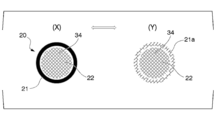
- FIG. 3 is a schematic view showing a cross section of the carrier for cell culture 20 of the third embodiment.
- the carrier for cell culture 20 shown in FIG. 3 comprises a cell culture stimulation responsive substrate 21, a porous substrate 34 and an active substance 22.
- the active substance 22 is contained in the porous substrate 34.
- the active substance 22 is coated on the cell culture stimulation responsive substrate 21 and stored.
- symbol (X) in FIG. 3 is a state which the stimulus-responsive polymer has aggregated and the spreading
- symbol (Y) in FIG. 3 is a state which a stimulus-responsive polymer swells, and an active substance can be spread
- the diffusion state (Y) of the active substance and the diffusion stop (X) can be reversibly controlled by controlling the input of the external signal. For example, in the case of the aggregation state shown by the symbol (X) before the input of the external signal, the external signal is received, and the stimulus-responsive polymer in the cell culture stimulation response substrate 21 is in the non-aggregation state 21a. Then, the solubility in water is improved.
- the active substance 22 which has been supported diffuses out of the carrier.
- the external signal is received, and the stimulus-responsive polymer in the cell culture responsive substrate 21 is in the aggregated state. If so, the solubility in water decreases. As a result, the active substance 22 which has been carried remains in the carrier.
- FIG. 4 is a schematic view showing a cross section of the carrier for cell culture 50 of the fourth embodiment.
- the carrier 50 for cell culture shown in FIG. 4 mixes the external signal receiving material 52 with the stimulation-responsive base material 51 for cell culture so that concentration distribution is formed, and covers the porous base 34 containing the active substance.
- Reference numeral 51a indicates the gradient of the concentration distribution. Due to the concentration distribution, it is possible to differentiate the diffusion rate of the active substance even with the same external signal input. Thus, the concentration distribution of the active substance can be spatially controlled in the cell culture vessel.
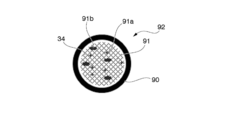
- FIG. 5 is a schematic view showing a cross section of the carrier 92 for cell culture of the fifth embodiment.
- an active substance 91 is coated with a stimulus-responsive substrate 90 for cell culture.
- the active substance 91 is contained in the porous substrate 34.
- a plurality of active substances 91a and active substances 91b are stored in a mixed state.
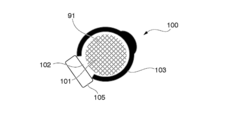
- FIG. 6 is a schematic view showing a cross section of the carrier for cell culture 100 of the sixth embodiment.
- a porous substrate 101 containing an active substance is coated with a stimulus-responsive substrate 103 for cell culture.
- the carrier for cell culture 100 has an injection port 102 on the surface, and can inject a desired active substance 91.
- the injection port 102 is sealed with a sealing portion 105 formed of an active substance impermeable material such as a hydrophobic polymer after the active substance is injected, an effect that the leakage of the active substance 91 is reduced can be obtained.
- the cell culture container of the present embodiment includes the carrier for cell culture of the present embodiment and a cell culture unit.
- FIG. 7 is a schematic view showing a cross-sectional view of an example of the cell culture vessel 1 of the present embodiment.
- the cell culture vessel 1 includes a cell culture unit 11 and carriers 3 and 4 for cell culture.
- the cell culture unit 11 includes a cell storage unit 2.
- known materials such as existing culture dishes, wells of culture plates, Lab-on-a-chip and the like can be used.
- the surface of the cell storage part 2 may be coated for adhesion or detachment of cells, prevention of nonspecific adsorption of proteins, and the like.
- a cell culture method using the cell culture container 1 of the present embodiment will be described while describing the cell culture container 1 of the present embodiment.
- the carrier for cell culture 3 carries a cell inducer 9 as an active substance
- the carrier for cell culture 4 carries a growth factor 10 as an active substance.
- the suspension 6 a is introduced into the cell storage unit 2 using the pipette 6.
- the cell culture unit 11 is covered with a lid 7 to culture the cells.
- the cells adhere to the cell storage part 2 to form a cell population 8.
- the carrier for cell culture 3 contains gold nanorods having an absorption peak at a wavelength around 780 nm as an external signal receiving material.
- the carrier for cell culture 4 contains a gold nanorod having an absorption peak at a wavelength of around 900 nm as an external signal receiving material.
- FIG. 7 (e) when the near infrared light A of 780 nm is irradiated as an external signal, the cell inducer factor 9 diffuses from the carrier 3 for cell culture. In addition, when the irradiation of the near infrared light A is stopped, the diffusion of the cell trigger factor 9 is stopped. As shown in FIG. 7 (f), the cell population 8 moves in the direction of the carrier for cell culture 3 by the diffusion of the cell inducer factor 9.
- the growth factor 10 diffuses from the carrier 4 for cell culture. In addition, when the irradiation of the near infrared light B is stopped, the diffusion of the growth factor 10 is stopped. Diffusion of growth factor 10 causes cells to proliferate.
- the cells to be subjected to cell culture may be stem cells or progenitor cells such as mesenchymal stem cells, ES cells or iPS cells, differentiated cells such as liver, cells established from tumors, etc., and cells other than mammalian cells It may be a cell. It may be bacteria, yeast or fungus.
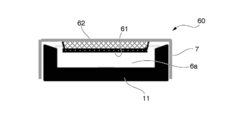
- FIG. 8 shows an embodiment of a cell culture vessel.
- the cell culture vessel 60 is provided with a cell culture stimulation responsive substrate 61 and a porous substrate 62 containing an active substance inside the vessel of the lid 7.
- the porous substrate 62 is disposed in contact with the lid 7.
- the cell culture stimulation responsive substrate 61 is arranged to be in contact with the cell suspension 6 a in the cell culture unit 11.
- the active substance contained in the porous substrate 62 may have a concentration gradient in the porous substrate 62.
- FIG. 9 shows an embodiment of a cell culture vessel.
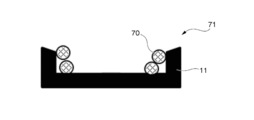
- a plurality of bead-like cell culture carriers 70 are provided in the cell culture unit 11 of the cell culture vessel 71.
- Various types of active substances can be supplied to the carrier for cell culture 70 by loading different active substances.
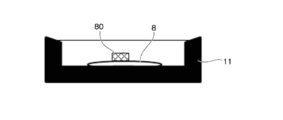
- FIG. 10 is a diagram showing an embodiment of a cell culture vessel.
- the cell culture carrier 80 When the cell culture carrier 80 is placed in the cell culture unit 11, the cell culture carrier 80 may be placed on the top of the cell population 8.
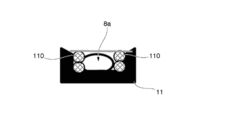
- FIG. 11 is a diagram showing an embodiment of a cell culture vessel.
- the cell population may be a steric cell population 8a present in the cell culture unit 11.
- the carrier for cell culture 110 may not be in contact with the stereoscopic cell population 8a.
- a plurality of cell culture carriers 110 may be in contact with the steric cell population 8a.
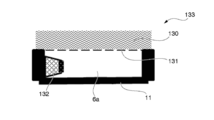
- FIG. 13 shows an embodiment of a cell culture vessel.
- the cell culture vessel 133 includes a cell culture unit 11, a carrier for cell culture 132, a semipermeable membrane 131, a culture medium 130, and a cell suspension 6a.
- the culture medium 130 is refluxing on the semipermeable membrane 131.
- small molecules such as nutrients and wastes can be exchanged through the semipermeable membrane.
- the environment in the cell culture unit 11 can be maintained in a state suitable for survival.
- the culture medium 130 is refluxed on the semipermeable membrane 131, replacement of the culture medium 130 becomes unnecessary.
- the polymeric material which can not permeate the semipermeable membrane 131 can be supplied by supporting it on the carrier 132 for cell culture.
- FIG. 14 is a diagram showing an embodiment of a cell culture vessel.
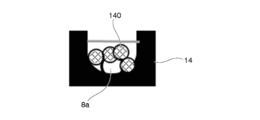
- the cell accommodating portion 14 has a concave shape at the bottom. While being able to form the three-dimensional cell population 8a using the concave shape of the cell storage part 14, stimulation from the carrier 140 for cell culture becomes possible continuously.
- FIG. 15 is a diagram showing an embodiment of a cell culture vessel.
- a spacer layer 152 is provided between the three-dimensional cell population 8a present in the cell culture unit 11 and the carrier 150 for cell culture. This makes the cells less susceptible to heating during input of external signals.
- the culture space can be widely secured, and a large amount of cells can be cultured. Moreover, since it is not a complicated structure, it can manufacture at low cost. In addition to this, by adjusting the input of an external signal, it is possible to control in detail the addition amount of the active substance, the timing of addition, the type and the like.
- the cell culture vessel of the present embodiment is subjected to culture of a complicated protocol over a long period of time, and is suitable for cell production of a regenerative medicine product that requires high-efficiency mass production.
- a regenerative medicine product that requires high-efficiency mass production.
- the required number of cells is estimated to be about 10 9 to 10 10 , and efficient cell production at high density is desired.
- the cell culture vessel of this embodiment does not have to have a wiring or a flow passage, and can cope with a complicated protocol requiring various active substances by a simple mechanism, and a large amount of culture can be performed. It becomes possible.
- Example 1 Each material used for Example 1 is as follows.
- Porous Substrate As a porous substrate, carboxyl groups were present on the surface, and 4% agarose gel particles (CarboxyLink; Thermo Fisher Scientific) were used.
- poly (allylamine-co-allylurea) gel was used.
- the gel introduced a ureide group to a primary amine of 93% allylamine relative to poly (allylamine) having a molecular weight of 15,000 (Nittobo Medical), referring to pages 182-184 of DDS carrier preparation protocol collection (CMC publication). It produced by doing. Since the ureido group also contains an amino group, it could be gelled by glutaraldehyde by crosslinking the amino groups between only some of the molecules and between molecules.
- the gel is rich in amino groups. Therefore, depending on the temperature, their hydrogen bond partner can be switched to an amino group in a poly (allylamine-co-allylurea) molecule or to a water molecule in a solvent to cause phase transition of aggregation and swelling.
- the phase transition temperature of the gel is 44 ° C. under physiological conditions of 150 mM NaCl and pH 7.5. Swelling occurs when the temperature is higher than the phase transition temperature, the permeability of the substance is increased, and the solubility in water is increased.
- External Signal Receiving Material As an external signal receiving material, a 10 nm diameter gold nanorod (Sigma-Aldrich) having an absorption peak at a wavelength of 808 nm and an amino group modified on the surface was used.
- External signal A high power fiber output LD light source 808 nm (as one) was used as an external signal source.
- TC-treated 96-well plate (Corning) was used as a cell storage unit.
- VEGF-A Vascular endothelial cell growth factor VEGF-A was used as an active substance and cultured cell active substance.
- Human umbilical vein endothelial cells HUVEC were used as cultured cells. HUVECs are used in physiological and pharmacological tests such as blood coagulation, angiogenesis.
- EBM TM Endothelial Cell Basal medium VEGF was not added (LONZA).
- the obtained complex 1 was immersed in pH 7.5, 10 mM HEPES buffer to which 10 mM NaCl was added. Under these conditions, the phase transition temperature decreases, and the stimulus-responsive polymer swells at room temperature, allowing the active substance to be taken up. The supernatant was removed so that particles remained, and HEPES buffer in which VEGF was dissolved was added as an active substance. VEGF permeated the stimulus-responsive polymer in the swollen state by diffusion and was incorporated into the porous substrate. Thus, a carrier for cell culture was produced.
- the carrier for cell culture was transferred to the medium.
- the concentration of NaCl increases, and the phase transition temperature becomes 40 ° C. or higher, so that VEGF can be retained in the porous substrate.
- Particles loaded with VEGF were stored at 4 ° C. until use.
- Cell culture HUVEC suspended in culture medium was seeded on a culture plate, and cells were allowed to adhere by culturing at 37 ° C., 5% CO 2 in an incubator. After replacing with fresh medium, a carrier for cell culture was introduced. Near infrared light irradiation locally heats the stimulus-responsive polymer, swells it, and increases its solubility in water.
- HUVEC accelerated the proliferation when the encapsulated VEGF was released into the culture medium by diffusion.
- the emission of VEGF could be stopped by stopping the irradiation of near infrared light.
Landscapes
- Health & Medical Sciences (AREA)
- Life Sciences & Earth Sciences (AREA)
- Chemical & Material Sciences (AREA)
- Engineering & Computer Science (AREA)
- Bioinformatics & Cheminformatics (AREA)
- Organic Chemistry (AREA)
- Wood Science & Technology (AREA)
- Zoology (AREA)
- Biomedical Technology (AREA)
- Biotechnology (AREA)
- Genetics & Genomics (AREA)
- General Engineering & Computer Science (AREA)
- Biochemistry (AREA)
- General Health & Medical Sciences (AREA)
- Microbiology (AREA)
- Sustainable Development (AREA)
- Analytical Chemistry (AREA)
- Molecular Biology (AREA)
- Thermal Sciences (AREA)
- Physics & Mathematics (AREA)
- Cell Biology (AREA)
- Immunology (AREA)
- Clinical Laboratory Science (AREA)
- Apparatus Associated With Microorganisms And Enzymes (AREA)
- Micro-Organisms Or Cultivation Processes Thereof (AREA)
Abstract
Un support pour culture cellulaire est caractérisé en ce qu'une substance active est transportée sur un substrat sensible à un stimulus pour la culture cellulaire ayant un polymère sensible à un stimulus et un matériau de réception de signal externe.
Priority Applications (3)
| Application Number | Priority Date | Filing Date | Title |
|---|---|---|---|
| US16/961,846 US20200385666A1 (en) | 2018-01-24 | 2019-01-15 | Cell culture carrier and cell culture container |
| EP19743730.4A EP3744824A4 (fr) | 2018-01-24 | 2019-01-15 | Support pour culture cellulaire et récipient de culture cellulaire |
| CN201980009226.9A CN111630147B (zh) | 2018-01-24 | 2019-01-15 | 细胞培养用载体和细胞培养容器 |
Applications Claiming Priority (2)
| Application Number | Priority Date | Filing Date | Title |
|---|---|---|---|
| JP2018009460 | 2018-01-24 | ||
| JP2018-009460 | 2018-01-24 |
Publications (1)
| Publication Number | Publication Date |
|---|---|
| WO2019146444A1 true WO2019146444A1 (fr) | 2019-08-01 |
Family
ID=67394612
Family Applications (1)
| Application Number | Title | Priority Date | Filing Date |
|---|---|---|---|
| PCT/JP2019/000880 Ceased WO2019146444A1 (fr) | 2018-01-24 | 2019-01-15 | Support pour culture cellulaire et récipient de culture cellulaire |
Country Status (4)
| Country | Link |
|---|---|
| US (1) | US20200385666A1 (fr) |
| EP (1) | EP3744824A4 (fr) |
| CN (1) | CN111630147B (fr) |
| WO (1) | WO2019146444A1 (fr) |
Families Citing this family (3)
| Publication number | Priority date | Publication date | Assignee | Title |
|---|---|---|---|---|
| TWI662125B (zh) * | 2018-02-05 | 2019-06-11 | 中原大學 | 細胞貼附裝置以及該細胞貼附裝置之製造方法 |
| TWI879952B (zh) * | 2021-05-04 | 2025-04-11 | 財團法人國家衛生研究院 | 具磁性之生物載體結合無動力生物反應器之系統 |
| TWI793671B (zh) * | 2021-07-09 | 2023-02-21 | 中國醫藥大學 | 細胞治療用生物晶片及其製造方法 |
Citations (2)
| Publication number | Priority date | Publication date | Assignee | Title |
|---|---|---|---|---|
| JP5881031B2 (ja) | 2010-03-18 | 2016-03-09 | 国立研究開発法人産業技術総合研究所 | 薬剤感受性試験用バイオチップ |
| WO2017081152A1 (fr) * | 2015-11-10 | 2017-05-18 | Administracion General De La Comunidad Autonoma De Euskadi | Procédés et dispositifs de diagnostic |
Family Cites Families (12)
| Publication number | Priority date | Publication date | Assignee | Title |
|---|---|---|---|---|
| US6428811B1 (en) * | 1998-03-11 | 2002-08-06 | Wm. Marsh Rice University | Temperature-sensitive polymer/nanoshell composites for photothermally modulated drug delivery |
| US7470266B2 (en) * | 2003-09-16 | 2008-12-30 | I-Flow Corporation | Fluid medication delivery device |
| WO2008068676A1 (fr) * | 2006-12-04 | 2008-06-12 | Koninklijke Philips Electronics N. V. | Dispositif biotechnologique comprenant une couche de perméation d'hydrogel structurée |
| CN102083412A (zh) * | 2008-04-25 | 2011-06-01 | 杰伊·N·沙皮拉 | 编程释放的用于刺激组织再生用细胞植入的纳米结构生物构建体 |
| EP2421951B1 (fr) * | 2009-04-23 | 2013-07-17 | Hemarina | Bioréacteur utilisant des molécules de transport d'oxygène |
| US9907906B2 (en) * | 2011-07-28 | 2018-03-06 | The Trustees Of Columbia University In The City Of New York | Systems, methods, and devices for in vivo delivery using remote actuation of implantable hydrogel MEMS devices |
| AU2013271364B2 (en) * | 2012-06-07 | 2017-03-02 | The University Of Queensland | Release media |
| US20150352209A1 (en) * | 2013-01-11 | 2015-12-10 | National Institute For Materials Science | Nanofiber having self-heating properties and biologically active substance release properties, production method for same, and nonwoven fabric having self-heating properties and biologically active substance release capabilities |
| AU2014246657A1 (en) * | 2013-04-02 | 2015-11-19 | University Of South Australia | Stimulus responsive substrates |
| CN104928180A (zh) * | 2015-06-29 | 2015-09-23 | 重庆大学 | 基于微柱阵列型拓扑结构基底的培养皿装置及其在增强靶标响应性中的应用方法 |
| CN105534957B (zh) * | 2016-02-26 | 2018-05-08 | 暨南大学 | 一种还原/酶/pH多重响应性释药的核壳结构纳米粒子 |
| CN107151319B (zh) * | 2017-04-26 | 2019-02-19 | 哈尔滨工业大学无锡新材料研究院 | 一种多重刺激响应交联型聚合物纳米水凝胶、其制备方法及应用 |
-
2019
- 2019-01-15 CN CN201980009226.9A patent/CN111630147B/zh active Active
- 2019-01-15 EP EP19743730.4A patent/EP3744824A4/fr active Pending
- 2019-01-15 WO PCT/JP2019/000880 patent/WO2019146444A1/fr not_active Ceased
- 2019-01-15 US US16/961,846 patent/US20200385666A1/en not_active Abandoned
Patent Citations (2)
| Publication number | Priority date | Publication date | Assignee | Title |
|---|---|---|---|---|
| JP5881031B2 (ja) | 2010-03-18 | 2016-03-09 | 国立研究開発法人産業技術総合研究所 | 薬剤感受性試験用バイオチップ |
| WO2017081152A1 (fr) * | 2015-11-10 | 2017-05-18 | Administracion General De La Comunidad Autonoma De Euskadi | Procédés et dispositifs de diagnostic |
Non-Patent Citations (3)
| Title |
|---|
| LOTZ, S ET AL.: "Sustained Levels of FGF2 Maintain Undifferentiated Stem Cell Cultures with Biweekly Feeding", PLOS ONE., vol. 8, no. 2, 2013, pages e56289, XP055086481, DOI: 10.1371/journal.pone.0056289 |
| LOTZ, S. ET AL.: "Sustained levels of FGF2 maintain undifferentiated stem cell cultures with biweekly feeding", PLOS ONE, vol. 8, no. 2, 20 February 2013 (2013-02-20), pages 1 - 10, XP055086481 * |
| SANROMAN-IGLESIAS, M. ET AL.: "Conjugated polymers as molecular gates for light-controlled release of gold nanoparticles", ACS APPLIED MATERIALS & INTERFACES, vol. 7, 15 July 2015 (2015-07-15), pages 15692 - 15695, XP055330123, doi:10.1021/acsami.5b05087 * |
Also Published As
| Publication number | Publication date |
|---|---|
| EP3744824A1 (fr) | 2020-12-02 |
| CN111630147A (zh) | 2020-09-04 |
| EP3744824A4 (fr) | 2021-10-27 |
| US20200385666A1 (en) | 2020-12-10 |
| CN111630147B (zh) | 2023-11-10 |
Similar Documents
| Publication | Publication Date | Title |
|---|---|---|
| Borovjagin et al. | From microscale devices to 3D printing: advances in fabrication of 3D cardiovascular tissues | |
| Jafarkhani et al. | Bioprinting in vascularization strategies | |
| US9115340B2 (en) | Microfluidic continuous flow device | |
| Wang et al. | Constructing tissuelike complex structures using cell-laden DNA hydrogel bricks | |
| Ewald et al. | The vascular niche in next generation microphysiological systems | |
| CN111630147B (zh) | 细胞培养用载体和细胞培养容器 | |
| JPS6251984A (ja) | 発酵槽内で人及び動物の細胞を培養するためのキヤリヤ | |
| Cecen et al. | Selection of natural biomaterials for micro‐tissue and organ‐on‐chip models | |
| Ermis et al. | Hydrogels as a new platform to recapitulate the tumor microenvironment | |
| Vunjak-Novakovic et al. | Cell seeding of polymer scaffolds | |
| US12270018B2 (en) | Culture additive diffusion mechanism, culture container, culture system, and method of producing cells | |
| Pörtner et al. | An overview on bioreactor design, prototyping and process control for reproducible three-dimensional tissue culture | |
| Sreepadmanabh et al. | Design approaches for 3D cell culture and 3D bioprinting platforms | |
| Ahn et al. | Microfabrication methods for 3D spheroids formation and their application in biomedical engineering | |
| CN114939446A (zh) | 一种平行通道微栅栏共培养多种细胞的微流控芯片及其应用 | |
| JPS63196286A (ja) | 細胞培養用基材 | |
| Ishihara | Advances in bioinspired polymer hydrogel systems with biomedical functionalities | |
| Cha et al. | Recent advances in 3D cell culture models in cancer drug development | |
| Wilson et al. | Biofunctional hydrogels for Three-dimensional stem cell culture | |
| CN104789547B (zh) | 一种高密度rgd肽修饰材料的制备方法及应用 | |
| CN111534489B (zh) | 一种基于3d打印的t淋巴细胞扩增方法 | |
| Freitag | Synthetic polymers for biotechnology and medicine | |
| Markvicheva et al. | Microcarriers for animal cell culture | |
| Kreß et al. | Application of scaffold-free 3D models | |
| US20250101359A1 (en) | 3d hydrogel system for cell scale-up and bioproduction |
Legal Events
| Date | Code | Title | Description |
|---|---|---|---|
| 121 | Ep: the epo has been informed by wipo that ep was designated in this application |
Ref document number: 19743730 Country of ref document: EP Kind code of ref document: A1 |
|
| NENP | Non-entry into the national phase |
Ref country code: DE |
|
| ENP | Entry into the national phase |
Ref document number: 2019743730 Country of ref document: EP Effective date: 20200824 |