WO2019148588A9 - Traitement de déchets textiles amélioré - Google Patents
Traitement de déchets textiles amélioré Download PDFInfo
- Publication number
- WO2019148588A9 WO2019148588A9 PCT/CN2018/078576 CN2018078576W WO2019148588A9 WO 2019148588 A9 WO2019148588 A9 WO 2019148588A9 CN 2018078576 W CN2018078576 W CN 2018078576W WO 2019148588 A9 WO2019148588 A9 WO 2019148588A9
- Authority
- WO
- WIPO (PCT)
- Prior art keywords
- cotton
- textile waste
- textile
- pretreatment
- glucose
- Prior art date
- Legal status (The legal status is an assumption and is not a legal conclusion. Google has not performed a legal analysis and makes no representation as to the accuracy of the status listed.)
- Ceased
Links
Images
Classifications
-
- C—CHEMISTRY; METALLURGY
- C08—ORGANIC MACROMOLECULAR COMPOUNDS; THEIR PREPARATION OR CHEMICAL WORKING-UP; COMPOSITIONS BASED THEREON
- C08J—WORKING-UP; GENERAL PROCESSES OF COMPOUNDING; AFTER-TREATMENT NOT COVERED BY SUBCLASSES C08B, C08C, C08F, C08G or C08H
- C08J11/00—Recovery or working-up of waste materials
- C08J11/04—Recovery or working-up of waste materials of polymers
- C08J11/10—Recovery or working-up of waste materials of polymers by chemically breaking down the molecular chains of polymers or breaking of crosslinks, e.g. devulcanisation
- C08J11/105—Recovery or working-up of waste materials of polymers by chemically breaking down the molecular chains of polymers or breaking of crosslinks, e.g. devulcanisation by treatment with enzymes
-
- C—CHEMISTRY; METALLURGY
- C08—ORGANIC MACROMOLECULAR COMPOUNDS; THEIR PREPARATION OR CHEMICAL WORKING-UP; COMPOSITIONS BASED THEREON
- C08B—POLYSACCHARIDES; DERIVATIVES THEREOF
- C08B15/00—Preparation of other cellulose derivatives or modified cellulose, e.g. complexes
- C08B15/02—Oxycellulose; Hydrocellulose; Cellulosehydrate, e.g. microcrystalline cellulose
-
- C—CHEMISTRY; METALLURGY
- C08—ORGANIC MACROMOLECULAR COMPOUNDS; THEIR PREPARATION OR CHEMICAL WORKING-UP; COMPOSITIONS BASED THEREON
- C08B—POLYSACCHARIDES; DERIVATIVES THEREOF
- C08B16/00—Regeneration of cellulose
-
- C—CHEMISTRY; METALLURGY
- C08—ORGANIC MACROMOLECULAR COMPOUNDS; THEIR PREPARATION OR CHEMICAL WORKING-UP; COMPOSITIONS BASED THEREON
- C08G—MACROMOLECULAR COMPOUNDS OBTAINED OTHERWISE THAN BY REACTIONS ONLY INVOLVING UNSATURATED CARBON-TO-CARBON BONDS
- C08G63/00—Macromolecular compounds obtained by reactions forming a carboxylic ester link in the main chain of the macromolecule
- C08G63/02—Polyesters derived from hydroxycarboxylic acids or from polycarboxylic acids and polyhydroxy compounds
- C08G63/12—Polyesters derived from hydroxycarboxylic acids or from polycarboxylic acids and polyhydroxy compounds derived from polycarboxylic acids and polyhydroxy compounds
- C08G63/16—Dicarboxylic acids and dihydroxy compounds
- C08G63/18—Dicarboxylic acids and dihydroxy compounds the acids or hydroxy compounds containing carbocyclic rings
- C08G63/181—Acids containing aromatic rings
- C08G63/183—Terephthalic acids
-
- C—CHEMISTRY; METALLURGY
- C08—ORGANIC MACROMOLECULAR COMPOUNDS; THEIR PREPARATION OR CHEMICAL WORKING-UP; COMPOSITIONS BASED THEREON
- C08J—WORKING-UP; GENERAL PROCESSES OF COMPOUNDING; AFTER-TREATMENT NOT COVERED BY SUBCLASSES C08B, C08C, C08F, C08G or C08H
- C08J11/00—Recovery or working-up of waste materials
- C08J11/04—Recovery or working-up of waste materials of polymers
- C08J11/06—Recovery or working-up of waste materials of polymers without chemical reactions
- C08J11/08—Recovery or working-up of waste materials of polymers without chemical reactions using selective solvents for polymer components
-
- C—CHEMISTRY; METALLURGY
- C12—BIOCHEMISTRY; BEER; SPIRITS; WINE; VINEGAR; MICROBIOLOGY; ENZYMOLOGY; MUTATION OR GENETIC ENGINEERING
- C12P—FERMENTATION OR ENZYME-USING PROCESSES TO SYNTHESISE A DESIRED CHEMICAL COMPOUND OR COMPOSITION OR TO SEPARATE OPTICAL ISOMERS FROM A RACEMIC MIXTURE
- C12P19/00—Preparation of compounds containing saccharide radicals
- C12P19/02—Monosaccharides
-
- C—CHEMISTRY; METALLURGY
- C12—BIOCHEMISTRY; BEER; SPIRITS; WINE; VINEGAR; MICROBIOLOGY; ENZYMOLOGY; MUTATION OR GENETIC ENGINEERING
- C12P—FERMENTATION OR ENZYME-USING PROCESSES TO SYNTHESISE A DESIRED CHEMICAL COMPOUND OR COMPOSITION OR TO SEPARATE OPTICAL ISOMERS FROM A RACEMIC MIXTURE
- C12P19/00—Preparation of compounds containing saccharide radicals
- C12P19/14—Preparation of compounds containing saccharide radicals produced by the action of a carbohydrase (EC 3.2.x), e.g. by alpha-amylase, e.g. by cellulase, hemicellulase
-
- D—TEXTILES; PAPER
- D06—TREATMENT OF TEXTILES OR THE LIKE; LAUNDERING; FLEXIBLE MATERIALS NOT OTHERWISE PROVIDED FOR
- D06M—TREATMENT, NOT PROVIDED FOR ELSEWHERE IN CLASS D06, OF FIBRES, THREADS, YARNS, FABRICS, FEATHERS OR FIBROUS GOODS MADE FROM SUCH MATERIALS
- D06M16/00—Biochemical treatment of fibres, threads, yarns, fabrics, or fibrous goods made from such materials, e.g. enzymatic
- D06M16/003—Biochemical treatment of fibres, threads, yarns, fabrics, or fibrous goods made from such materials, e.g. enzymatic with enzymes or microorganisms
-
- C—CHEMISTRY; METALLURGY
- C08—ORGANIC MACROMOLECULAR COMPOUNDS; THEIR PREPARATION OR CHEMICAL WORKING-UP; COMPOSITIONS BASED THEREON
- C08J—WORKING-UP; GENERAL PROCESSES OF COMPOUNDING; AFTER-TREATMENT NOT COVERED BY SUBCLASSES C08B, C08C, C08F, C08G or C08H
- C08J2301/00—Characterised by the use of cellulose, modified cellulose or cellulose derivatives
- C08J2301/02—Cellulose; Modified cellulose
-
- C—CHEMISTRY; METALLURGY
- C08—ORGANIC MACROMOLECULAR COMPOUNDS; THEIR PREPARATION OR CHEMICAL WORKING-UP; COMPOSITIONS BASED THEREON
- C08J—WORKING-UP; GENERAL PROCESSES OF COMPOUNDING; AFTER-TREATMENT NOT COVERED BY SUBCLASSES C08B, C08C, C08F, C08G or C08H
- C08J2367/00—Characterised by the use of polyesters obtained by reactions forming a carboxylic ester link in the main chain; Derivatives of such polymers
- C08J2367/02—Polyesters derived from dicarboxylic acids and dihydroxy compounds
- C08J2367/03—Polyesters derived from dicarboxylic acids and dihydroxy compounds the dicarboxylic acids and dihydroxy compounds having the hydroxy and the carboxyl groups directly linked to aromatic rings
-
- C—CHEMISTRY; METALLURGY
- C12—BIOCHEMISTRY; BEER; SPIRITS; WINE; VINEGAR; MICROBIOLOGY; ENZYMOLOGY; MUTATION OR GENETIC ENGINEERING
- C12Y—ENZYMES
- C12Y302/00—Hydrolases acting on glycosyl compounds, i.e. glycosylases (3.2)
- C12Y302/01—Glycosidases, i.e. enzymes hydrolysing O- and S-glycosyl compounds (3.2.1)
- C12Y302/01004—Cellulase (3.2.1.4), i.e. endo-1,4-beta-glucanase
Definitions
- the present disclosure relates generally to textile waste treatment. More specifically, the present disclosure provides a textile waste treatment method with improved efficiency in the enzymatic hydrolysis of textile cotton into glucose.
- Bioconversion of cellulose into glucose is an environmental approach to withdraw useful products from cotton based waste textile.
- Pretreatment of the feedstock is a primary and critical step to increase the cellulose accessibility to cellulase before enzymatic hydrolysis.
- Many pretreatment processes have been developed to reduce the recalcitrance of textile waste to enzymatic hydrolysis and furthermore decrease the consumption of cellulase.
- the basic approaches can be classified into four categories, i.e., chemical, biological, physical, and physico-chemical processes. Different pretreatment processes may result in different types and levels of structural modification and improve enzymatic hydrolysis after different mechanisms.
- Acid pretreatment is currently the most widely studied and applied approach for the pretreatment of cellulose fibre and the other related feedstock.
- the key mechanisms of the acid pretreatment are the decomposition of the microstructure of cellulose fibres.
- the amorphous region of cellulose can be hydrolyzed while the crystalline regions with more reducing ends and non-reducing ends can be exposed to the enzymes, which facilitates the enzyme to perform degradation process.
- Acid pretreatment process requires special reactors/container to prevent corrosion at elevated concentrations; and the acid reagents used are difficult to recycle. Both those factors can considerably increase the operation costs and environmental impacts of the overall biorefinery process.
- high severity acid pretreatment i.e., high acid doses, high temperature, and extended reaction time
- sugar dehydration by-products i.e., furan-type inhibitors; 5-hydroxy methyl-furfural
- ILs ionic liquid
- the cation structure the symmetrical array, the influence of alkylphosphonate and hydrophobic groups
- the anion delocalization degree Some ILs have shown outstanding characteristics for industrial application, i.e. high chemical and thermal stabilities, liquid form in wide range of temperature, low vapour pressure, and low viscosity operation which reduces the cost of mixing. ILs have been tested in pretreating certain cotton or textile wastes, although its feasibility to large scale application is still unclear and needs further investigation.
- NMMO 4-methylmorpholine 4-oxide
- heating at 80°C under low water content leads to dissolution of higher molecular weight cotton fibres.
- NMMO concentrations above 5 and 25 g/L showed inhibition effects on enzymatic hydrolysis and fermentation.
- the treated materials must be washed before enzymatic hydrolysis and techno-economic studies showed that efficient recycling of NMMO is required in order to have an economically feasible process for pretreatment of cotton materials with NMMO.
- Certain side reactions present in the Lyocell process might affect the pretreatment system as well and lead to decomposition of NMMO, furthermore increasing the consumption of stabilizer.
- efficient removal of NMMO from the treated material by washing requires high amounts of water. This significant amount of water must be evaporated in an energy consuming process before reusing NMMO, which is an energy intensive process.
- Supercritical fluid is a phase of reagents of which both gas and liquid phases coexist under a specific pressure and temperature. It shows liquid like density and gas like diffusing/penetrating ability to solid materials.
- supercritical carbon dioxide which has a critical temperature at 31°C, has shown to be suitable for pretreatment of cellulosic feedstock.
- Supercritical carbon dioxide (SC-CO 2 ) has been widely used as an extraction solvent. In aqueous solution, CO 2 forms carbonic acid and can improve the hydrolysis of polymers. CO 2 molecule is similar in size as the molecules of water or ammonia, and therefore, they can penetrate through the same pathway to the small pores of the cellulose.
- Alkaline pretreament of textile waste can also be performed.
- the first reactions that occur are solvation and saponification, of intermolecular ester bonds cross-linking which swells the textile to expose more accessible areas for the enzymes to hydrolyse the cellulose.
- a noticeable disadvantage of alkaline pretreatment is the formation of irrecoverable salts from alkaline or the combination of salts into the biomass which hinders the enzymatic hydrolysis. And alkaline pretreatment also works as another mechanism at ambient temperature at longer pretreatment time.
- the amount of enzyme loading required for the hydrolysis step is typically 20-30FPU/g glucan. Accordingly, there remains a need for an improved textile waste treatment method that is more efficient, cheaper and which requires a lower enzyme loading.
- the present disclosure provides a method of processing cotton containing textile waste comprising dissolution of textile waste in a NaOH/Urea solution at a predetermined temperature until freezing of the textile waste; adding an amount of an anti-solvent to regenerate cotton from the frozen textile waste; and hydrolysing said cotton with cellulase to produce a solution containing glucose.
- the textile waste may be immersed in NaOH/Urea solution at or below 0 °C, optionally for 6 hours.
- the anti-solvent used in the regeneration step can be boiling water or ethanol.
- the cotton may be hydrolysed using an enzyme loading of ⁇ 10 FPU/g glucan, and preferably an enzyme loading of 1-10 FPU/g glucan, and more preferably an enzyme loading of 5-10 FPU/g glucan.
- an enzymatic hydrolysis yield of cotton to glucose of over 80% is obtained following enzymatic hydrolysis.
- the method may further comprise the step of blending the textile waste, preferably by using a blender for 10-15 seconds.
- recovering PET fiber, and optionally recycling the recovered PET fiber may be preferred.
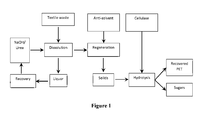
- FIG. 1 is a block flow diagram of the textile waste process according to an embodiment of the disclosure. Dissolution and Regeneration in combination are being referred herein as the pretreatment step.
- the textile waste, following the pretreatment step, is subjected to hydrolysis by cellulose to recover PET and sugars.
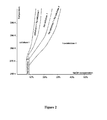
- Figure 2 is a Na-cellulose phase diagram from cotton soaking in NaOH solutions.
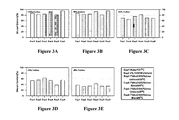
- Figures 3A to 3E depict the released glucose concentration (g/L) of textile waste after being treated under different pretreatment experiment conditions (no. 1-6) as measured using NREL procedures. Since glucan is a polysaccharide of D-glucose monomers, the glucan content instead of the cellulose content was measured for evaluating the theoretical glucose amount yielded from the samples.
- the five cotton textile waste percentages are as follows: 100%cotton textile waste ( Figure 3A) , 99%cotton textile waste percentage, 80%cotton textile waste (Figure 3C) , 60%cotton textile waste ( Figure 3D) , and 40%cotton textile waste (Figure 3E) .
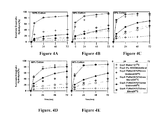
- Figures 4A-4E show the substrate enzymatic hydrolysis (enzymatic hydrolysis yield) of different textiles samples pretreated under different experiment conditions (no. 1-6) as measured at different time points (6, 24, 48 and 72 hours) .
- the five cotton textile waste percentages are as follows: 100%cotton textile waste (Figure 3A) , 99%cotton textile waste percentage, 80%cotton textile waste (Figure 3C) , 60%cotton textile waste ( Figure 3D) , and 40%cotton textile waste ( Figure 3E) .
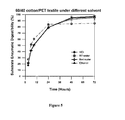
- Figure 5 depicts the substrate enzymatic digestibility (enzymatic hydrolysis yield) of 60/40 cotton/PET textile pretreated with NAOH/urea at freezing temperature followed by regeneration using different anti-solvents.
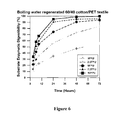
- Figure 6 depicts the substrate enzymatic digestibility (enzymatic hydrolysis yield) of pretreated 60/40 cotton/PET textile under different enzyme loading.
- the 60/40 cotton/PET textile was pretreated with NAOH/urea at freezing temperature followed by a regeneration step using boiling water.
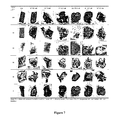
- Figure 7 is a set of photos showing the appearance changes of waste textile after pretreatment of water, dilute acid and NaOH/urea.
- DA denotes “dilute acid treatment (2%sulfuric acid) ”
- w denotes “water”
- SU denotes “sodium hydroxide (7%) and urea (12%)
- T denotes temperature
- nB denotes “not blended
- wB denotes “after blending) .
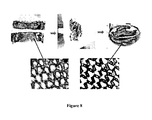
- Figure 8 is a set of photos showing the appearance of textile waste (Example 6: 80%cotton, 20%polyester under 0°C with blending operation) before and after NaOH/urea pretreatment process.
- the microscopic images showed that after enzymatic digestion, the residue PET fiber was well preserved, indicating the possibility of recycling the PET for other uses.
- the present disclosure provides a novel method of treating recycled textile waste (such as cotton/PET textile waste) , which involves a modified alkaline pretreatment method.
- the modified method comprises the steps of subjecting a textile waste to alkaline pretreatment with NaOH/urea at freezing temperatures, followed by a regeneration process.
- the modified method is able to enhance cellulase digestion of cellulose to glucose.
- substrate enzymatic digestibility SED
- the conversion yield of cotton to glucose could be improved to over 80%, and over 90%for textile waste with high cotton percentage. It is also envisaged that the residue PET fiber can be extracted for other applications.
- the textile waste Prior to enzymatic hydrolysis in recovery of glucose from the textile waste, the textile waste is first subjected to the novel pretreatment method which essentially comprises two steps as described below (and as shown in Figure 1) :
- Dissolution of textile waste in NaOH/Urea solution is preferred at freezing temperatures, for example, at or under 0 °C, and more preferably between -5°C to 0 until the textile waste is frozen.
- the textile waste is immersed in 7%NaOH/12%Urea solution at 0 °C.
- This process typically takes 1-6 hours, and the alkaline is expected to cause a swelling effect to the cellulose, breaking down the inter and intra chains of cellulose molecules, resulting in more amorphous regions for enzymatic hydrolysis.
- This process reduces the DP and crystallinity index (CrI) of cellulose, increasing the cellulose accessibility to cellulase by creating more porous space for enzymatic hydrolysis.
- Regeneration process has only been used in combination with textile waste pretreatment using ionic liquid (ILs) in the past. Regeneration using adding anti-solvents such as water, ethanol, or acetone in the regeneration process is necessary when the IL pretreatment has a dissolution effect on the cellulose.
- ILs ionic liquid
- anti-solvent preferably boiling water or ethanol.
- the suitable amount of anti-solvent should be 2.5 times solvent mixture in volume.
- the regenerated cellulose with a lower degree of polymerization (DP from 2-6) has more ⁇ -glucosidic bonds accessible to cellulase. Regenerated cellulose is more water soluble than native cellulose prior to the regeneration. Therefore, it is expected that the regenerated cellulose can be hydrolyzed to short glucose oligomers in a shorter amount of time, contributing to an increased substrate enzyme digestibility (SED) and allowing a significantly lower enzyme loading to be used in the hydrolysis step
- SED substrate enzyme digestibility
- the textile waste is then subjected to enzyme hydrolysis using cellulase.
- the hydrolysis step may be performed at any appropriate conditions, and preferable under 50°C, at pH 4.8 for 72 hours.
- the remaining residue is mainly PET fiber, allowing simple extraction process to be performed in order to recycle the PET fiber in the textile waste.
- an enzyme loading of as low as 5FPU/g glucan (and more preferably 5-10 FPU/g glucan) is sufficient to obtain a conversion yield that can normally be obtained using an enzyme loading is around 20-30FPU/g glucan.
- Thse present disclosure can solve the problem of achieving high enzymatic digestibility by decreasing the crystallinity of cotton.
- the significant increase in the disordered or amorphous fraction enhance the enzymatic digestibility as the cellulase protein can have greater accessibility to cellulose.
- the enzymatic digestibility can be over 80%for different cotton/PET composite fibres.
- NMMO NMMO in textile waste pretreatment
- a pretreatment step at an elevated temperature of 80 to 120°C as well as a step of NMMO solvent recycling, which involves high energy consumption. Both of these steps led to an increase in the total production cost.
- the improved pretreatmemt process of the present disclosure includes a dissolution step performed at freezing temperatures (e.g. 0 to -5°C) , which can be easily accomplished in a standard, non-industrial freezer or in relatively cold countries.
- freezing temperatures e.g. 0 to -5°C
- the use of such lower temperatures not only reduces energy consumption, but also avoids side reactions that may damage the PET, allowing the recycling of PET fiber from the textile waste with a simple extraction process.
- the application of boiling water or ethanol as anti-solvent can lower the distillation energy.
- the new pretreatment solution is stable in room temperature and low temperature (0°C) , therefore eliminating the need for chemical stabilizers, which are often required by other pretreatment methods. Therefore, the total cost of the chemicals required in the pretreatment process is also reduced.
- Waste textiles of five Cotton/PET ratios (i.e., 100%cotton, 99%cotton, 80%cotton, 60%cotton, and 40%cotton) as list in Table 1 were used as starting materials. These are being referred to as Samples 1-5 herein. All textile scrap samples were provided by H&M Far East. The samples were cut into rectangular pieces with 1 cm in dimension before further tests or analysis. Cellic CTEC II cellulase was generously provided by Novozymes China (Beijing) . The initial activities towards filter paper and cellubioase were 70 FPU/mL and 450 CBU/mL. Commercial NaOH pellet (97%) and urea pellet (99%) were purchased from Sigma without any purification before use.
- the samples obtained are kept under different temperatures, namely, 121°C, 25 °C and 0°C as shown in Table 2 below.
- Each of the five textile samples (100%cotton, 99%cotton, 80%cotton, 60%cotton, 40%cotton) are subjected to six different experiment conditions, providing a total of 30 test samples.
- the dissolved cellulose of all samples are regenerated by using boiling water as anti-solvent (amount of boiling water being 2.5 folds of solvent mixture in volume) .
- the regenerated solids are then stirred using a 2-L lab-scale blender.
- the substrate is washed with deionised water until the sample pH is neutral, whereby the mixture is then filtrated to collect the solid, which is stored at 4°C for further use.
- the overall pretreatment and regeneration process is shown in Figure. 1.
- the pretreated substrate is freeze-dried and stored in a desiccator for following steps.
- the experiment design is shown in Table 2.
- compositional analysis for all five samples is carried out by using the NREL procedure following by a HPAEC-PAD analysis.
- the untreated textile samples and pretreated substrates were ground into powder (by passing through a 60-mesh screen) .
- acid insoluble content was calculated gravimetrically after digestion, and the concentrations of monosaccharides was determined by using a high-performance liquid chromatography (HPLC, Shimadzu) equipped with refractive index detector (RID) .
- the monosaccharides i.e., glucose
- the monosaccharides were analyzed using an Aminex HPX-87P column (Bio-Rad) at 85°C with 0.6 ml/min eluent of deionized water.
- the glucose concentration of the five samples following dissolution under different parameters are measured through HPLC and the results are shown in Table 3.
- the conversion of glucose can be calculated by using the equation 1 below.
- G glucose (mg/ml) concentration from HPLC analysis
- V is the initial volume of biomass slurry (mL)
- W is the initial dry biomass weight.
- 0.9 is the conversion factor of glucose to equivalent glucan.
- Figure 3 showed the cellulose content in different types of textile waste by using NREL standard procedure.
- Enzymatic hydrolysis of lignocellulosic substrates was conducted at 2%(w/v) in 50 mL total volume which contains 2.5mL 50 mM acetate buffer (pH 4.8) , 0.4ml Tetracycline in a shaking incubator at 50°C and 200 rpm.
- the CTecII loading was 5 FPU/g glucan.
- Cotton/PET 80/20 textile waste was pretreated as mentioned above using six different dissolution parameters and regenerated with boiling water as anti-solvent.
- the solid was further hydrolysed as mentioned in Section 4.4.
- the glucose obtained during enzymatic hydrolysis was measured by a commercial enzymatic assay kit.
- the substrate digestibilities at different time points (6, 24, 48 and 72 hours) were recorded. The results are shown in Table 6.
- Cotton/PET 60/40 textile waste was pretreated as mentioned above using six different dissolution parameters and regenerated with boiling water as anti-solvent.
- the solid was further hydrolysed as mentioned in Section 4.4.
- the glucose obtained during enzymatic hydrolysis was measured by a commercial enzymatic assay kit.
- the substrate digestibilities at different time points (6, 24, 48 and 72 hours) were recorded. The results are shown in Table 7.
- Cotton/PET 40/60 textile waste was pretreated as mentioned above using six different dissolution parameters and regenerated with boiling water as anti-solvent.
- the solid was further hydrolysed as mentioned in Section 4.4.
- the glucose obtained during enzymatic hydrolysis was measured by a commercial enzymatic assay kit.
- the substrate digestibility at different time points (6, 24, 48 and 72 hours) were recorded. The results are shown in Table 8.
- the textile wastes treated with this novel pretreatment process demonstrate better effect on increasing the cotton digestibility and further allow the PET residue to be more easily collected after the digestion of cotton.
- the new pretreatment process can be performed at a more efficient manner, since the textile wastes are only immersed in NaOH/urea for 6 hours.
- Figure 4 shows comparison on substrate enzymatic hydrolysis of different textile with different pretreatments within 72 hours.
- Table 9 shows the glucan content of the samples after different solvent methods. It was observed that the HCL neutralization method resulted in the highest loss of glucan content (around 17%) due to the missing step of regeneration. By contrast, the boiling water regeneration process recovered the highest content of the glucan.
- Figure 7 is a set of photos recording the textile appearance throughout the pretreatment process.
- a 80%cotton/20%PET sample has been observed under microscope to investigate the difference in appearance before and after NaOH/urea pretreatment (7%NaOH/12%Urea, under 0°C with blending operation) .
- the photos showed that after enzymatic digestion, the residue PET fiber was still preserved, indicating the potential of such being recycled for other applications.
- the experimental data presented herein demonstrates that, by subjecting textile waste to a modified pretreatment process combining a dissolution step with NaOH/urea at freezing temperature and a regeneration step, it is possible to achieve high conversion yield of cotton to glucose with a reduced enzyme loading. It has been shown that an enzyme loading of 5FPU/g –10FPU/g glucan (and as low as 5FPU/g glucan) is sufficient to achieve a conversion yield of 90%, therefore significantly reducing the amount of enzyme loading required.
- the presently claimed pretreatment method allows the substrate enzyme digestibility of textile waste to be achieved in a more efficient and effective manner, and at a reduced overall cost.
Landscapes
- Chemical & Material Sciences (AREA)
- Organic Chemistry (AREA)
- Life Sciences & Earth Sciences (AREA)
- Engineering & Computer Science (AREA)
- Chemical Kinetics & Catalysis (AREA)
- Health & Medical Sciences (AREA)
- Wood Science & Technology (AREA)
- Zoology (AREA)
- Biochemistry (AREA)
- Microbiology (AREA)
- Medicinal Chemistry (AREA)
- Polymers & Plastics (AREA)
- General Chemical & Material Sciences (AREA)
- Biotechnology (AREA)
- Bioinformatics & Cheminformatics (AREA)
- General Engineering & Computer Science (AREA)
- General Health & Medical Sciences (AREA)
- Genetics & Genomics (AREA)
- Sustainable Development (AREA)
- Materials Engineering (AREA)
- Textile Engineering (AREA)
- Chemical Or Physical Treatment Of Fibers (AREA)
- Processing Of Solid Wastes (AREA)
Abstract
L'invention concerne un procédé de traitement de déchets textiles contenant du coton qui comprend un prétraitement alcalin à des températures de congélation et un processus de régénération. Le procédé améliore la digestion de la cellulose du coton en glucose et produit une solution contenant du glucose. Dans certains aspects des procédés décrits, le rendement de conversion du coton en glucose peut être aussi élevé que 80 % ou même 90 %.
Priority Applications (2)
| Application Number | Priority Date | Filing Date | Title |
|---|---|---|---|
| CN201880002908.2A CN110520559B (zh) | 2018-02-01 | 2018-03-09 | 改善的纺织品废料加工 |
| EP18836447.5A EP3555351B1 (fr) | 2018-02-01 | 2018-03-09 | Traitement de déchets textiles amélioré |
Applications Claiming Priority (2)
| Application Number | Priority Date | Filing Date | Title |
|---|---|---|---|
| US15/886,018 US10611891B2 (en) | 2018-02-01 | 2018-02-01 | Textile waste processing |
| US15/886,018 | 2018-02-01 |
Publications (2)
| Publication Number | Publication Date |
|---|---|
| WO2019148588A1 WO2019148588A1 (fr) | 2019-08-08 |
| WO2019148588A9 true WO2019148588A9 (fr) | 2019-09-12 |
Family
ID=67392767
Family Applications (1)
| Application Number | Title | Priority Date | Filing Date |
|---|---|---|---|
| PCT/CN2018/078576 Ceased WO2019148588A1 (fr) | 2018-02-01 | 2018-03-09 | Traitement de déchets textiles amélioré |
Country Status (4)
| Country | Link |
|---|---|
| US (1) | US10611891B2 (fr) |
| EP (1) | EP3555351B1 (fr) |
| CN (1) | CN110520559B (fr) |
| WO (1) | WO2019148588A1 (fr) |
Families Citing this family (7)
| Publication number | Priority date | Publication date | Assignee | Title |
|---|---|---|---|---|
| CN108264569B (zh) * | 2017-01-03 | 2020-01-03 | 中国科学院金属研究所 | 一种纤维素ii型纳米晶粒子及其制备方法和应用 |
| EP3990500A4 (fr) * | 2019-07-01 | 2024-01-03 | Cotton Incorporated | Tissu de déchets textiles en coton utilisé comme biomasse pour la production de sucre |
| CN112358642B (zh) * | 2020-10-12 | 2022-11-04 | 武汉纺织大学 | 一种采用废旧纺织品制备纤维素/聚酯纤维复合气凝胶的方法 |
| US12611841B2 (en) | 2020-11-03 | 2026-04-28 | Refiberd, Inc. | Method for producing regenerated cellulose-based threads and felted cloths |
| WO2022146219A1 (fr) * | 2021-01-04 | 2022-07-07 | Sharetex Ab | Procédé polyvalent pour valoriser des déchets textiles cellulosiques |
| CN113564731B (zh) * | 2021-06-17 | 2023-05-02 | 武汉纺织大学 | 一种回收利用牛仔激光废灰的方法及回收物 |
| JPWO2023167314A1 (fr) * | 2022-03-03 | 2023-09-07 |
Family Cites Families (16)
| Publication number | Priority date | Publication date | Assignee | Title |
|---|---|---|---|---|
| EP0360736B1 (fr) | 1988-09-01 | 1994-09-28 | Ciba-Geigy Ag | Composition aqueuse mouillante et détergente, stable dans l'eau dure, sa préparation et utilisation dans le prétraitment des matières textiles |
| CA2213172A1 (fr) | 1996-08-15 | 1998-02-15 | Clariant Finance (Bvi) Limited | Solutions aqueuses concentrees d'acide carboxylique et de sel de sodium, leur production et leur utilisation |
| US20060286268A1 (en) | 2005-06-14 | 2006-12-21 | Circle Group Holdings, Inc. | Amorphous insoluble cellulosic fiber and method for making same |
| DE102008023014A1 (de) | 2008-05-09 | 2009-11-12 | Henkel Ag & Co. Kgaa | Wäßriges Textilbehandlungsmittel |
| US9885127B2 (en) * | 2010-04-12 | 2018-02-06 | Paradigm One, Llc | Processes for using recycled waste cotton material in producing a textile product and textile products produced from waste cotton material |
| CN104169491B (zh) * | 2012-02-20 | 2015-11-25 | 勒纽赛尔卢克斯责任有限公司 | 再生纤维素 |
| CN102911395A (zh) | 2012-10-15 | 2013-02-06 | 四川农业大学 | 一种废弃棉织物资源化回收利用的方法 |
| CN103556475B (zh) | 2013-10-23 | 2015-06-17 | 浙江省纺织测试研究院 | 一种废旧纺织品中的蛋白质纤维酶处理回收法 |
| CN104294609B (zh) | 2014-10-09 | 2016-10-05 | 北京服装学院 | 一种降低废旧织物中纱线拔出力的纺织品预处理方法 |
| CN104531234B (zh) | 2014-11-26 | 2016-05-11 | 河南工程学院 | 一种利用废旧纺织品生产燃料和道路沥青改性剂的方法 |
| CN104499266A (zh) | 2014-12-15 | 2015-04-08 | 民勤县家兴节能服务有限公司 | 一种废旧棉质衣物的预处理方法 |
| CN104532409B (zh) | 2014-12-18 | 2017-02-22 | 民勤县家兴节能服务有限公司 | 废旧衣物回收再利用预处理工艺 |
| CN105002730A (zh) * | 2015-08-14 | 2015-10-28 | 太仓天龙化纤有限公司 | 一种棉毛混纺织物的低温染整工艺 |
| CN105369637B (zh) | 2015-12-18 | 2017-09-29 | 江南大学 | 一种纯淀粉上浆棉织物的一浴退浆精练方法 |
| CN105780201B (zh) | 2016-04-29 | 2018-05-29 | 华南再生棉纱(梧州)有限公司 | 纺织品废弃物再生棉的加工方法 |
| CN105887249B (zh) * | 2016-04-29 | 2018-03-16 | 华南再生棉纱(梧州)有限公司 | 利用废旧纺织品生产毛巾的方法 |
-
2018
- 2018-02-01 US US15/886,018 patent/US10611891B2/en active Active
- 2018-03-09 EP EP18836447.5A patent/EP3555351B1/fr active Active
- 2018-03-09 CN CN201880002908.2A patent/CN110520559B/zh active Active
- 2018-03-09 WO PCT/CN2018/078576 patent/WO2019148588A1/fr not_active Ceased
Also Published As
| Publication number | Publication date |
|---|---|
| EP3555351B1 (fr) | 2025-05-07 |
| CN110520559B (zh) | 2022-03-22 |
| EP3555351A4 (fr) | 2020-08-19 |
| EP3555351C0 (fr) | 2025-05-07 |
| US10611891B2 (en) | 2020-04-07 |
| WO2019148588A1 (fr) | 2019-08-08 |
| CN110520559A (zh) | 2019-11-29 |
| US20190233610A1 (en) | 2019-08-01 |
| EP3555351A1 (fr) | 2019-10-23 |
Similar Documents
| Publication | Publication Date | Title |
|---|---|---|
| US10611891B2 (en) | Textile waste processing | |
| Li et al. | Lignocellulose pretreatment by deep eutectic solvents and related technologies: A review | |
| Yuan et al. | A biorefinery scheme to fractionate bamboo into high-grade dissolving pulp and ethanol | |
| Yan et al. | Enhanced lignin removal and enzymolysis efficiency of grass waste by hydrogen peroxide synergized dilute alkali pretreatment | |
| Jeihanipour et al. | Enhancement of ethanol and biogas production from high‐crystalline cellulose by different modes of NMO pretreatment | |
| Zhu et al. | Pretreatment of sugarcane bagasse with NH4OH–H2O2 and ionic liquid for efficient hydrolysis and bioethanol production | |
| Hu et al. | Pretreatment and lignocellulosic chemistry | |
| Hou et al. | Separation and characterization of waste cotton/polyester blend fabric with hydrothermal method | |
| EP2254913B1 (fr) | Procédé pour le prétraitement de lignocellulose à l'aide d'un solvant pour super-cellulose et de solvants très volatils | |
| He et al. | Significantly improving enzymatic saccharification of high crystallinity index’s corn stover by combining ionic liquid [Bmim] Cl–HCl–water media with dilute NaOH pretreatment | |
| Zeng et al. | Cellulose esterification with carboxylic acid in deep eutectic solvent pretreatment inhibits enzymatic hydrolysis | |
| CN101864683A (zh) | 一种木质纤维原料的预处理方法 | |
| Tang et al. | Combined sulfuric acid and choline chloride/glycerol pretreatment for efficiently enhancing enzymatic saccharification of reed stalk | |
| An et al. | A two-stage pretreatment using acidic dioxane followed by dilute hydrochloric acid on sugar production from corn stover | |
| Yang et al. | Co-producing xylo-oligosaccharides, furfural, organic acids, and reducing sugars from rape straw through efficient dilute alkali-assisted hydrothermal treatment | |
| Wang et al. | Sustainable recycling of phenol-assisted deep eutectic solvent for efficient lignocellulose fractionation and enzymatic hydrolysis | |
| Hu et al. | Promoting the disassemble and enzymatic saccharification of bamboo shoot shells via efficient hydrated alkaline deep eutectic solvent pretreatment | |
| EP4621060A1 (fr) | Procédé d'amélioration de l'efficacité de l'hydrolyse enzymatique de la lignocellulose | |
| Cui et al. | Enhanced enzymatic hydrolysis of lignocellulose by integrated decrystallization and fed-batch operation | |
| Zhang et al. | Structural characterization of lignin from the green pretreatments for co-producing xylo-oligosaccharides and glucose: Toward full biomass utilization | |
| Yang et al. | Densification pretreatment with p-toluene sulfonic acid promotes comprehensive separation and utilization of whole components of corn stover | |
| Li et al. | A novel seawater hydrothermal-deep eutectic solvent pretreatment enhances the production of fermentable sugars and tailored lignin nanospheres from Pinus massoniana | |
| Bai et al. | A designed ZrOCl2/ethylene glycol deep eutectic solvent for efficient lignocellulose valorization | |
| Zheng et al. | The co-production of xylose, fermentable glucose and β-O-4 linkage-rich lignin through efficiently dismantling sugarcane bagasse | |
| Ma et al. | Promoting efficient high-solids formic acid pretreatment of poplar for enzymatic saccharification via pre-impregnation strategy |
Legal Events
| Date | Code | Title | Description |
|---|---|---|---|
| ENP | Entry into the national phase |
Ref document number: 2018836447 Country of ref document: EP Effective date: 20190718 |
|
| NENP | Non-entry into the national phase |
Ref country code: DE |
|
| WWG | Wipo information: grant in national office |
Ref document number: 2018836447 Country of ref document: EP |