WO2019156432A1 - 코폴리카보네이트 및 이의 제조방법 - Google Patents
코폴리카보네이트 및 이의 제조방법 Download PDFInfo
- Publication number
- WO2019156432A1 WO2019156432A1 PCT/KR2019/001384 KR2019001384W WO2019156432A1 WO 2019156432 A1 WO2019156432 A1 WO 2019156432A1 KR 2019001384 W KR2019001384 W KR 2019001384W WO 2019156432 A1 WO2019156432 A1 WO 2019156432A1
- Authority
- WO
- WIPO (PCT)
- Prior art keywords
- formula
- bis
- copolycarbonate
- hydroxyphenyl
- independently
- Prior art date
- Legal status (The legal status is an assumption and is not a legal conclusion. Google has not performed a legal analysis and makes no representation as to the accuracy of the status listed.)
- Ceased
Links
- HUYKZYIAFUBPAQ-UHFFFAOYSA-N Oc(cc1)ccc1C(c(cccc1)c1O)=O Chemical compound Oc(cc1)ccc1C(c(cccc1)c1O)=O HUYKZYIAFUBPAQ-UHFFFAOYSA-N 0.000 description 1
Classifications
-
- C—CHEMISTRY; METALLURGY
- C08—ORGANIC MACROMOLECULAR COMPOUNDS; THEIR PREPARATION OR CHEMICAL WORKING-UP; COMPOSITIONS BASED THEREON
- C08G—MACROMOLECULAR COMPOUNDS OBTAINED OTHERWISE THAN BY REACTIONS ONLY INVOLVING UNSATURATED CARBON-TO-CARBON BONDS
- C08G64/00—Macromolecular compounds obtained by reactions forming a carbonic ester link in the main chain of the macromolecule
- C08G64/04—Aromatic polycarbonates
- C08G64/06—Aromatic polycarbonates not containing aliphatic unsaturation
- C08G64/14—Aromatic polycarbonates not containing aliphatic unsaturation containing a chain-terminating or -crosslinking agent
-
- C—CHEMISTRY; METALLURGY
- C08—ORGANIC MACROMOLECULAR COMPOUNDS; THEIR PREPARATION OR CHEMICAL WORKING-UP; COMPOSITIONS BASED THEREON
- C08G—MACROMOLECULAR COMPOUNDS OBTAINED OTHERWISE THAN BY REACTIONS ONLY INVOLVING UNSATURATED CARBON-TO-CARBON BONDS
- C08G63/00—Macromolecular compounds obtained by reactions forming a carboxylic ester link in the main chain of the macromolecule
- C08G63/64—Polyesters containing both carboxylic ester groups and carbonate groups
-
- C—CHEMISTRY; METALLURGY
- C08—ORGANIC MACROMOLECULAR COMPOUNDS; THEIR PREPARATION OR CHEMICAL WORKING-UP; COMPOSITIONS BASED THEREON
- C08G—MACROMOLECULAR COMPOUNDS OBTAINED OTHERWISE THAN BY REACTIONS ONLY INVOLVING UNSATURATED CARBON-TO-CARBON BONDS
- C08G64/00—Macromolecular compounds obtained by reactions forming a carbonic ester link in the main chain of the macromolecule
- C08G64/20—General preparatory processes
- C08G64/22—General preparatory processes using carbonyl halides
-
- C—CHEMISTRY; METALLURGY
- C08—ORGANIC MACROMOLECULAR COMPOUNDS; THEIR PREPARATION OR CHEMICAL WORKING-UP; COMPOSITIONS BASED THEREON
- C08G—MACROMOLECULAR COMPOUNDS OBTAINED OTHERWISE THAN BY REACTIONS ONLY INVOLVING UNSATURATED CARBON-TO-CARBON BONDS
- C08G64/00—Macromolecular compounds obtained by reactions forming a carbonic ester link in the main chain of the macromolecule
- C08G64/20—General preparatory processes
- C08G64/22—General preparatory processes using carbonyl halides
- C08G64/24—General preparatory processes using carbonyl halides and phenols
Definitions
- the present invention relates to a copolycarbonate excellent in weather resistance and a method for producing the same.
- Polycarbonate is a polymer material that is used in various fields such as exterior materials, automotive parts, building materials, and optical parts of electrical and electronic products due to its excellent impact strength, numerical stability, heat resistance, and transparency.
- the present invention is to provide a by introducing a specific structure, weather resistance is excellent copolycarbonate. 2019/156432 1 »(: 1 ⁇ 1 ⁇ 2019/001384
- the present invention is to provide a method for producing the copolycarbonate.
- a copolycarbonate comprising a first repeating unit represented by Formula 1, a second repeating unit represented by Formula 2, and a terminal capping group represented by Formula 3.
- a step of polymerizing a composition comprising a monomer represented by Formula 4, a monomer represented by Formula 5, and a terminal 10 capping agent comprising an aromatic diol represented by Formula 6, and a carbonate precursor; It provides a method for producing a copolycarbonate comprising.
- a molded article comprising the copolycarbonate.
- first component may also be referred to as the second component, and similarly, the second 30 component may be referred to as the first component.
- a copolycarbonate including a first repeating unit represented by the following Chemical Formula 1, a second repeating unit represented by the following Chemical Formula 2, and a terminal capping group represented by the following Chemical Formula 3.
- 3 ⁇ 4 are each independently, hydrogen, or substituted or unsubstituted - 60 alkyl
- ⁇ is unsubstituted or phenyl substituted 0 1-10 alkylten, unsubstituted or
- 3 ⁇ 4 and 3 ⁇ 4 are each independently hydrogen or substituted or unsubstituted- 60 alkyl
- Re and R 7 are each independently hydrogen or substituted or unsubstituted alkyl of -60 ,
- n are each independently an integer of 1 to 4,
- Copolycarbonate is a material having excellent properties such as impact strength, numerical stability, heat resistance and transparency, and is applied to various fields. Accordingly, there is a demand for the development of a copolycarbonate having a new structure with improved weather resistance while maintaining the intrinsic physical properties of copolycarbonate.
- 3 ⁇ 4 to 3 ⁇ 4 may be each independently hydrogen, a substituted or unsubstituted Ci- 20 alkyl.
- it may be hydrogen, substituted or unsubstituted Ci- ! Oalkyl, more preferably hydrogen.
- 3 ⁇ 4 to 3 ⁇ 4 may each independently be hydrogen, methyl, ethyl, propyl, butyl, pentyl, nuclear chamber, heptyl, octyl, nonyl or dealkyl.
- a, b and c may be each independently an integer of 1 to 3, or an integer of 1 or 2. 2019/156432 1 »(: 1 ⁇ 1 ⁇ 2019/001384
- the repeating unit represented by the formula (2) is bis (4-hydroxyphenyl) methane, bis (4-hydroxyphenyl) ether, bis (4-hydroxyphenyl) sulfone, bis (4-hydroxyphenyl) sulfoxide , Bis (4-hydroxyphenyl) sulfide, bis (4-hydroxyphenyl) ketone, 1,2-bis (4-hydroxyphenyl) ethane, bisphenol 2,2-bis (4-hydroxyphenyl) butane, 1, 1-bis (4-hydroxyphenyl) cyclonucleic acid, 2,2-bis (4-hydroxy-3, 5-dibromophenyl) propane, 2,2-bis (4-hydroxy-3, 5-dichlorophenyl) propane, 2,2-bis (4-hydroxy-3-bromophenyl) propane, 2,2-bis (4-hydroxy-3-chlorophenyl) propane, 2,2-bis ( 4-Hydroxy-3-methylphenyl) propane, 2,2-bis (4-hydroxy-3,5-dimethylphenyl) propane, 1,1-bis (4-
- 3 ⁇ 4 and 3 ⁇ 4 may each independently be hydrogen, a substituted or unsubstituted alkyl. Preferably, it is hydrogen, substituted or unsubstituted 0 1-10 alkyl, more preferably, it may be hydrogen. Specifically, 3 ⁇ 4 and 3 ⁇ 4 may each independently be hydrogen, methyl, ethyl, propyl, butyl, pentyl, nucleus, heptyl, octyl, nonyl or decyl.
- (1 and (3 are each independently of 1 to 3 tablets: can be an integer number, or 1 or 2;
- the second repeating unit represented by Formula 2 is preferably the following Formula
- It may include a repeating unit represented by 2-1, wherein the repeating unit represented by the formula (2-1) is a case where the aromatic diol compound bisphenol yaw and carbonate precursor triphosgene is polymerized:
- 3 ⁇ 4 and 3 ⁇ 4 may each independently be hydrogen, a substituted or unsubstituted alkyl of -20 .
- it is hydrogen, substituted or unsubstituted 0 1-10 alkyl, more preferably, it may be hydrogen.
- 3 ⁇ 4 and 3 ⁇ 4 may each independently be hydrogen, methyl, ethyl, propyl, butyl, pentyl, nucleus, heptyl, octyl, nonyl or decyl.
- « 1 and II may be independently an integer of 1 to 3, or an integer of 1 or 2.
- the molar ratio of the first repeating unit represented by Formula 1 and the second repeating unit represented by Formula 2 may be 1:99 to 50:50, preferably 5:95 to 30:70.
- the weight ratio of each repeating unit corresponds to the weight ratio of each monomer used in the manufacture of the copolymer.
- the end capping group represented by Chemical Formula 3 may be included in an amount of 0.0001 to 0.1% by weight, preferably, 0.001 to 0.05% by weight, and more preferably 0.01 to 0.03% by weight, based on the total content of copolycarbonate. have.
- the end capping group When included in the content range, the long-term and short-term weather resistance retention effect can be increased, it is preferable.
- the end capping group When included in less than 0.0001% by weight, it is difficult to realize the effect of the trace amount, in particular, the problem of workability due to the increase in molecular weight may occur, and also, the end capping group is more than 0.1% by weight 2019/156432 1 »(: 1 ⁇ 1 ⁇ 2019/001384
- the copolycarbonate may have a weight average molecular weight of 10,000 to 100,000 ⁇ ⁇ 0 1, or 30,000 to 700, 003 ⁇ 4 0 1.
- the copolycarbonates may occur a problem in that the impulse is very poor if the 10,000 ⁇ / 010 is less than 1 weight-average molecular weight.
- the weight average molecular weight is 100,000 If it is exceeded, the line performance may be somewhat reduced.
- polymerizing a composition comprising a monomer represented by Formula 4, a monomer represented by Formula 5, an end capping agent comprising an aromatic diol represented by Formula 6, and a carbonate precursor It is provided with a method for producing a copolycarbonate comprising a.
- 3 ⁇ 4 to 3 ⁇ 4 are each independently hydrogen, or substituted or unsubstituted- 60 alkyl
- 3 ⁇ 4 and 3 ⁇ 4 are each independently hydrogen or substituted or unsubstituted- 60 alkyl
- 1 and 6 are each independently an integer of 1 to 4,
- 3 ⁇ 4 and ⁇ are each independently hydrogen or substituted or unsubstituted -60 alkyl
- a composition comprising a terminal capping agent and a carbonate precursor comprising a monomer represented by Formula 4, a monomer represented by Formula 5, and an aromatic diol represented by Formula 6
- a method of obtaining a copolycarbonate comprising a polymerization step and comprising a first repeating unit represented by Formula 1, a second repeating unit represented by Formula 2, and an end capping group represented by Formula 3 through this polymerization step.
- the first repeating unit represented by Formula 1 is formed by polymerization of the monomer represented by Formula 4
- the second repeating unit represented by Formula 2 is formed by polymerization of the monomer represented by Formula 5
- the terminal capping group represented by Chemical Formula 6 may be formed by polymerizing an aromatic diol represented by Chemical Formula 3 with a portion of the monomer.
- I to 3 ⁇ 4 may each independently be hydrogen, a substituted or unsubstituted alkyl. Preferably, it is hydrogen, substituted or unsubstituted 0 1-10 alkyl, more preferably, it may be hydrogen.
- 3 ⁇ 4 to 3 ⁇ 4 are each independently hydrogen, methyl, ethyl, propyl, butyl, pentyl, nuclear chamber, heptyl, octyl, 2019/156432 1 »(: 1 ⁇ 1 ⁇ 2019/001384
- 3 , I, and: may each independently be an integer of 1 to 3, or an integer of 1 or 2.
- 3 ⁇ 4 and 3 ⁇ 4 may each independently be hydrogen, a substituted or unsubstituted alkyl of -20 . Preferably, it is hydrogen, substituted or unsubstituted 0 1-10 alkyl, more preferably, it may be hydrogen.
- 3 ⁇ 4 and 3 ⁇ 4 may each independently be hydrogen, methyl, ethyl, propyl, butyl, pentyl, nuclear chamber, heptyl, octyl, nonyl or dealkyl.
- 1 and 6 are each independently an integer of 1 to 3, or
- 3 ⁇ 4 and 3 ⁇ 4 may each independently be hydrogen, a substituted or unsubstituted alkyl of -20 . Preferably, it is hydrogen, substituted or unsubstituted 0 1-10 alkyl, more preferably, it may be hydrogen. Specifically, 3 ⁇ 4 and 3 ⁇ 4 may each independently be hydrogen, methyl, ethyl, propyl, butyl, pentyl, nucleus, heptyl, octyl, nonyl or dealkyl.
- 111 and II may each independently be an integer of 1 to 3, or an integer of 1 or 2.
- the monomer represented by Formula 4 may be, for example, a monomer represented by Formula 4-1.
- the monomer represented by Formula 4 may exhibit the effect of long-term weather resistance due to the structure capable of fries rearrangement. 2019/156432 1 »(: 1 ⁇ 1 ⁇ 2019/001384
- Monomers represented by the formula (5) are bis (4-hydroxyphenyl) methane, bis (4-hydroxyphenyl) ether, bis (4-hydroxyphenyl) sulfone, bis (4-hydroxyphenyl) sulfoxide, Bis (4-hydroxyphenyl) sulfide, bis (4-hydroxyphenyl) ketone, 1,1-bis (4-hydroxyphenyl) ethane, bisphenol A, 2,2-bis (4-hydroxyphenyl) butane , 1,1-bis (4-hydroxyphenyl) cyclonucleic acid, 2,2-bis (4-hydroxy-3,5-dibromophenyl) propane 2 2 -bis (4-hydroxy-3) 5- Dichlorophenyl) propane, 2,2-bis (4-hydroxy-3-bromophenyl) propane, 2,2-bis (4-hydroxy-3-chlorophenyl) propane, 2,2-bis (4- Hydroxy-3-methylphenyl) propane, 2,2-bis (4-hydroxy-3,5-dimethylphenyl) propane, 1,1-bis (4
- the monomer represented by Formula 5 may be bisphenol A.
- the aromatic diol represented by Chemical Formula 6 is a terminal capping agent used for controlling the molecular weight of copolycarbonate during polymerization, and has excellent weather resistance due to the structure capable of keto-enol tautomer i zat ion. Can be represented.
- the aromatic diol represented by the formula (6) is a substituted or unsubstituted phenol is bonded to both sides of the carbonyl group, specifically, a phenol group in which the carbonyl group and the hydroxy group are ortho-substituted, and the carbonyl group and the hydroxy group para (para) substitution Phenol groups may be included.
- the hydroxy group included in the para-substituted phenol group has a relatively long distance from the carbonyl group, and thus acts as a terminal capping agent with high reaction selectivity for the polymerization reaction with the monomers represented by Formulas 4 and 5.
- the hydroxyl group included in the group is relatively close to the carbonyl group and thus may not polymerize with the monomer due to low selectivity for the polymerization reaction. Therefore, the aromatic diol represented by the formula (6) is a polymerization reaction only the hydroxy group contained in the para-substituted phenol group, even though it contains two hydroxy groups 2019/156432 1 »(: 1 ⁇ 1 ⁇ 2019/001384
- the copolycarbonate containing the aromatic diol has an excellent weather resistance.
- the aromatic diol represented by Chemical Formula 6 may be, for example, an aromatic diol represented by Chemical Formula 6-1.
- the endcapping agent may further comprise, for example, a mono-alkylphenol.
- the mono-alkyl phenol for example I)-Cumylphenol, decylphenol, dodecylphenol, tetradecylphenol, nuxadecylphenol, octadecylphenol, eicosylphenol, docosylphenol and triacontylphenol.
- the end capping agent may be added before the start of polymerization, after the start of polymerization or after the start of polymerization.
- the end capping agent may be included in an amount of 0.0001 to 0.1% by weight, preferably 0.001 to 0.05% by weight, and more preferably 0.01 to 0.1% by weight, based on the total amount of copolycarbonate finally prepared. 0.03% by weight may be included.
- the carbonate precursor serves to connect the monomer represented by the formula (4), the monomer represented by the formula (5) and / or the aromatic diol represented by the formula (6), and specific examples thereof include porsgen, triphosgene, diphosgene and bromine.
- Morphogen dimethyl carbonate, diethyl carbonate, dibutyl carbonate, dicyclonuclear carbonate, diphenyl carbonate, ditoryl carbonate, bis (chlorophenyl) carbonate, 01- cresyl carbonate, dinaphthyl carbonate, bis (diphenyl) It may be at least one selected from the group consisting of carbonates and bishaloformates.
- the carbonate precursor is a monomer represented by the formula (4) and formula (5) 2019/156432 1 »(: 1 ⁇ 1 ⁇ 2019/001384
- the polymerization reaction may be applied without particular limitation to the method used in the preparation of the polycarbonate, it is preferable to be carried out by interfacial polymerization, the polymerization reaction at normal pressure and low temperature during interfacial polymerization It is possible and molecular weight control is easy.
- the said polymerization temperature 01 to 400, and reaction time, 10 minutes-5 hours are preferable. In addition, it is preferable to keep at least 9 or 11 or more during the reaction.
- the solvent that can be used for the polymerization is not particularly limited as long as it is a solvent used for polymerization of copolycarbonate in the art, and for example, halogenated hydrocarbons such as methylene chloride and chlorobenzene can be used.
- the polymerization is preferably carried out in the presence of an acid binder, and an alkali metal hydroxide such as sodium hydroxide, potassium hydroxide, or an amine compound such as pyridine may be used as the acid binder.
- an alkali metal hydroxide such as sodium hydroxide, potassium hydroxide, or an amine compound such as pyridine may be used as the acid binder.
- triethylamine, tetra-11-butylammonium bromide, tetra-II-butyl phosphonium bromide, such as tertiary amine compounds, quaternary ammonium compounds, quaternary phosphonium compounds, such as reaction Additional accelerators can be used.
- a molded article comprising the copolycarbonate described above.
- Molded article according to the present invention preferably can be applied to interior and exterior materials for automobiles, lighting housing, interior and exterior materials for building, and the existing polycarbonate 2019/156432 1 »(: 1 ⁇ 1 ⁇ 2019/001384
- the excellent long- and short-term weather resistance effect is excellent even when the product is subjected to light, high temperature, high pressure, etc. in the manufacturing process of the product or the application field where the product is actually used.
- a copolycarbonate having excellent weather resistance and a method for producing the same can be provided.
- the finally obtained copolycarbonate resin contains the following repeating unit 2019/156432 1 »(: 1 ⁇ 1 ⁇ 2019/001384
- the molar ratio (%) between the first repeating unit and the second 2-show repeat unit was about 9:91.
- Example 1 hydroquinone bis (4-hydroxybenzoate) (3 ⁇ 4 1 1 0 (111 1 11 is 16 3 ( 4-1 3 ⁇ 4 line 1 0 ⁇ 5 company 61120 6)) 316 yo (0. A powdery copolycarbonate was obtained in the same manner except that 3 ⁇ 4 10 1) was added.
- the final copolycarbonate resin contains the same repeating units as in Example 1, wherein the molar ratio (%) of the first repeating unit and the second repeating unit is about
- the final copolycarbonate resin contains the same repeating units as in Example 1, and the molar ratio ( «is about
- the solution was adjusted to 3, washed three times with distilled water, the methylene chloride phase was separated, and then precipitated in methanol to obtain a powdery copolycarbonate resin.
- copolycarbonate specimens prepared in Examples and Comparative Examples using a device of ffeatherometer (ATLAS, CI5000), according to the UL746C UV & Water Exposure Test, the UV of the wavelength according to ASTM G151, G155 was investigated.
- the yellowing index (Y. I., yel low index) was instantaneous, and the results are shown in Table 1 below.
- the copolycarbonate according to the present invention can simultaneously improve weather resistance and impact strength characteristics by introducing a repeating unit and end capping group having a specific structure.
- the impact strength was implemented at the same level as the embodiment, but it was confirmed that the yellowing was significantly increased as the light irradiation time increased.
Landscapes
- Chemical & Material Sciences (AREA)
- Health & Medical Sciences (AREA)
- Chemical Kinetics & Catalysis (AREA)
- Medicinal Chemistry (AREA)
- Polymers & Plastics (AREA)
- Organic Chemistry (AREA)
- Polyesters Or Polycarbonates (AREA)
- Compositions Of Macromolecular Compounds (AREA)
Abstract
본 발명에 따른 코폴리카보네이트는 특정 구조를 도입함으로써, 내후성이 우수한, 코폴리카보네이트,이의 제조 방법 및 이를 포함하는 성형품에 관한 것이다.
Description
2019/156432 1»(:1^1{2019/001384
【발명의 명칭】
코폴리카보네이트및 이의 제조방법
【기술분야】
관련출원(들)과의상호인용
본 출원은 2018년 2월 7일자 한국 특허 출원 제 10-2018-0015214호에 기초한우선권의 이익을주장하며, 해당한국특허 출원의 문헌에 개시된모든 내용은본명세서의 일부로서포함된다.
본 발명은 내후성이 우수한코폴리카보네이트와 이의 제조방법에 관한 것이다.
【발명의 배경이 되는기술】
폴리카보네이트는 우수한 충격강도, 수치안정성, 내열성 및 투명성 등의 물성으로인하여 전기전자제품의 외장재, 자동차부품, 건축소재, 광학 부품등의 분야에 다양하게사용되고있는고분자소재이다.
이러한 폴리카보네이트는 최근 응용 분야가 확대됨에 따라, 코폴리카보네이트고유의 물성은유지하면서도내후성이 향상된신규한구조의 코폴리카보네이트의 개발이 요구되고있다.
이에 따라, 2종 이상의 서로 다른 구조의 방향족 디올을 공중합하여 구조가 다른 단위체를 폴리카보네이트의 주쇄에 도입하여 원하는 물성을 얻고자 하는 연구가 시도되고 있다. 그러나, 대부분의 기술들이 생산단가가 높고, 내화학성이나 충격강도 등이 증가하면 반대로 투명성이 저하되고, 투명성이 향상되면내화학성이나충격강도등이 저하되는등의 한계가있다. 이에, 인장강도, 충격강도 등의 기계적 물성이 우수하면서도 내후성 또한 뛰어난 신규한 구조의 코폴리카보네이트에 대한 연구 개발이 여전히 필요하다.
【발명의 내용】
【해결하고자하는과제】
본 발명은 특정 구조를 · 도입함으로써, 내후성이 우수한 코폴리카보네이트를제공하기 위한것이다.
2019/156432 1»(:1^1{2019/001384
또한, 본 발명은상기 코폴리카보네이트의 제조방법을 제공하기 위한 것이다.
【과제의 해결수단】
5 본 발명에 따르면, 후술하는 화학식 1로 표시되는 제 1 반복 단위, 화학식 2로표시되는제 2반복단위 및 화학식 3으로표시되는말단캡핑기를 포함하는, 코폴리카보네이트를제공한다 .
본발명에 따르면, 후술하는화학식 4로표시되는단량체, 화학식 5로 표시되는단량체 및하기 화학식 6으로표시되는방향족디올을포함하는말단 10 캡핑제, 및 카보네이트 전구체를 포함하는 조성물을 중합하는 단계;를 포함하는코폴리카보네이트의 제조방법을제공한다 .
. 또한, 본 발명에 따르면, 상기 코폴리카보네이트를 포함하는성형품을 제공한다.
15 이하 발명의 구체적인 구현예에 따른 코들리카보네이트, 이의 제조 방법 및 이를포함하는성형품에 관하여 보다상세하게설명하기로한다 . 그에 앞서, 본 명세서에서 명시적인 언급이 없는 한, 전문용어는 단지 특정 실시예를 언급하기 위한 것이며, 본 발명을 한정하는 것을 의도하지
20 않는다.
본 명세서에서 사용되는 단수 형태들은 문구들이 이와 명백히 반대의 의미를나타내지 않는한복수형태들도포함한다.
본명세서에서 사용되는 '포함’의 의미는특정 특성, 영역, 정수, 단계, 동작, 요소 및/또는성분을구체화하며, 다른특정 특성, 영역, 정수, 단계, 25 동작, 요소, 성분및/또는군의 존재나부가를제외시키는것은아니다.
그리고, 본 명세서에서 ’제 1’ 및 제 2’와 같이 서수를 포함하는 용어는하나의 구성요소를 다른구성요소로부터 구별하는목적으로사용되며, 상기 서수에 의해 한정되지 않는다. 예를들어, 본 발명의 권리 범위 내에서 제 1 구성요소는 제 2 구성요소로도 명명될 수 있고, 유사하게 제 2 30 구성요소는제 1구성요소로명명될수있다.
2019/156432 1»(:1^1{2019/001384
1.코폴리카보네아트
본 발명의 일 구현 예에 따르면, 하기 화학식 1로 표시되는 제 1 반복 단위, 하기 화학식 2로 표시되는 제 2 반복 단위 및 하기 화학식 3으로 표시되는말단캡핑기를포함하는, 코폴리카보네이트가제공된다.
[화학식 1]

상기 화학식 1에서,
¾내지 ¾은각각독립적으로, 수소, 또는치환또는 비치환된 -60의 알킬이고’
3 , 13및(:는각각독립적으로, 1내지 4의 정수이고,
[화학식到

상기 화학식 2에서,
å는비치환되거나또는페닐로치환된 01-10알킬텐, 비치환되거나또는
01-10알킬로치환된 03-15사이클로알킬텐, 0, ,쌨2 , 또는(:0이고,
¾ 및 ¾는 각각 독립적으로, 수소, 또는 치환 또는 비치환된 -60의 알킬이고,
(1및 6는각각독립적으로, 1내지 4의 정수이고,
[화학식 3]

상기 화학식 3에서,
2019/156432 1»(:1^1{2019/001384
Re 및 R7은 각각 독립적으로, 수소, 또는 치환 또는 비치환된 -60의 알킬이고,
m및 n은각각독립적으로, 1내지 4의 정수이고,
별표 (* )는결합점 (bonding point)을의미한다. 코폴리카보네이트는 우수한 충격강도, 수치안정성, 내열성 및 투명성 등의 물성을 가지는 소재로 다양한 분야에 적용된다. 이에 따라, 코폴리카보네이트고유의 물성은유지하면서도내후성이 향상된신규한구조의 코폴리카보네이트의 개발이 요구되고있다. 본발명자들의 계속적인 연구결과, 코폴리카보네이트를 제조함에 있어서, 상기 화학식 1과 같은 반복 단위를 도입함에 따라, 프리이스 전위 (fr i es rearrangement)의 발생으로 장기 내후성의 효과를 구현하고, 특히, 상기 화학식 1에서 모든 벤젠고리를 기준으로 에스테르와 에테르 결합이 para 위치에 치환됨에 따라 초기 내후성 (500hr 이하) 유지 효과를증대시킬 수 있음을확인하였다. 또한, 상기 화학식 3으로 표시되는 말단 캡핑제는 케토-에놀 호변이성화 (Keto-enol tautomer i zat ion)가가능한구조로 인해 내후성을더욱 향상시키고; 장 ·단기 내후성 유지 효과를증대시킬수있음을확인하였다.
이에, 본발명의 코폴리카보네이트는자동차내/외장제, 조명 하우징, 건축용플라스틱 외장제 제품에 적용되는경우, 제품의 제조공정이나, 제품이 실제 사용되는 응용 분야에서 빛, 고온, 고압 등의 조건에 놓이게 되는 경우에도우수한내후성을구현할수있다. 상기 화학식 1에서, ¾ 내지 ¾은 각각 독립적으로 수소, 치환 또는 비치환된 Ci-20의 알킬일수있다. 바람직하게는, 수소, 치환또는비치환된 Ci- !◦의 알킬, 보다 바람작하게는, 수소일 수 있다. 구체적으로, ¾ 내지 ¾은 각각독립적으로, 수소, 메틸, 에틸, 프로필, 부틸, 펜틸, 핵실, 헵틸, 옥틸, 노닐또는데킬일수있다.
상기 화학식 1에서, a, b 및 c는 각각독립적으로 1 내지 3의 정수, 또는 1또는 2의 정수일수있다.
2019/156432 1»(:1^1{2019/001384
상기 화학식 2로 표시되는 반복 단위는, 비스(4 -히드록시페닐)메탄, 비스(4 -히드록시페닐)에테르, 비스(4 -히드록시페닐)설폰, 비스(4- 히드록시페닐)설폭사이드, 비스(4 -히드록시페닐)설파이드, 비스(4- 히드록시페닐)케톤, 1,1 -비스(4 -히드록시페닐)에탄, 비스페놀 2,2 -비스(4- 히드록시페닐)부탄, 1, 1 -비스(4 -히드록시페닐)시클로핵산, 2,2 -비스(4- 히드록시 -3, 5 -디브로모페닐)프로판, 2,2 -비스(4 -히드록시- 3,5- 디클로로페닐)프로판, 2,2 -비스(4 -히드록시- 3 -브로모페닐)프로판, 2,2 -비스(4- 히드록시 -3 -클로로페닐)프로판, 2, 2 -비스(4 -히드록시- 3 -메틸페닐)프로판, 2,2- 비스(4 -히드록시 -3 , 5 -디메틸페닐)프로판, 1 , 1 -비스(4 -히드록시페닐)- 1- 페닐에탄, 비스(4 -히드록시페닐)디페닐메탄, 및 3 , £0 -비스[3-( 0 - 히드록시페닐)프로필]폴리디메틸실록산으로이루어진군으로부터 선택되는 1종 이상의 방향족디올화합물로부터 유래할수있다.
상기 ’방향족 디올 화합물로부터 유래한다’의 의미는, 방향족 디올 화합물의 하이드록시기와 카보네이트 전구체가 반응하여 상기 화학식 2로 표시되는제 2반복단위를형성하는것을의미한다. 상기 화학식 2에서, ¾ 및 ¾는 각각 독립적으로 수소, 치환 또는 비치환된 의 알킬일수있다. 바람직하게는, 수소, 치환또는비치환된 01- 10의 알킬, 보다바람직하게는, 수소일 수 있다. 구체적으로, ¾및 ¾은각각 독립적으로수소, 메틸, 에틸, 프로필, 부틸, 펜틸, 핵실, 헵틸、 옥틸, 노닐 또는데킬일수있다.
상기 화학식 2에서, (1및 (3는각각독립적으로 1내지 3의 정:수, 또는 1또는 2의 정수일수있다. 상기 화학식 2로표시되는제 2반복단위는, 바람직하게는하기 화학식
2-1로 표시되는 반복 단위를포함할수 있으며, 하기 화학식 2-1로 표시되는 반복 단위는 방향족 디올 화합물인 비스페놀 요와 카보네이트 전구체인 트리포스겐이 중합된경우이다:
[화학식 2-1]
2019/156432 1»(:1^1{2019/001384

상기 화학식 3에서, «1및 II은각각독립적으로 1내지 3의 정수, 또는 1또는 2의 정수일수있다. 본 발명의 일 구현예에 있어서, 코폴리카보네이트의 반복 단위의 함량을조절하여 , 코폴리카보네이트의 물성을향상시킬 수 있다. 상기 화학식 1로 표시되는 제 1 반복 단위와 상기 화학식 2로 표시되는 제 2 반복 단위의 몰비는 1:99내지 50:50일수있으며, 바람직하게는 5:95내지 30:70로포함될 수있다.
상기 함량 범위로 포함되는 경우, 폴리카보네이트 고유의 물성은 유지하면서도내후성을현저히 개선할수있다.
상기 각 반복 단위의 중량비는 코폴리머의 제조사에 사용되는 각 단량체의 중량비에 대응된다. 상기 화학식 3으로 표시되는 말단 캡핑기는, 코폴리카보네이트 총 함량에 대하여, 0.0001 내지 0.1중량%로 포함될 수 있으며, 바람직하게는, 0.001 내지 0.05중량%, 더욱 바람직하게는 0.01 내지 0.03중량%로 포함될 수 있다.
상기 함량범위로포함되는경우, 장 ·단기 내후성 유지 효과가증대될 수 있어 바람직하다. 상기 말단 캡핑기가 0.0001 중량% 미만으로 포함되는 경우, 미량으로목적하는효과를구현하기 어렵고, 특히 분자량상승으로인한 가공성의 문제가 발생할 수 있으며, 또한, 말단 캡핑기가 0.1중량% 초과로
2019/156432 1»(:1^1{2019/001384
포함되는 경우, 분자량 감소로 인한 기계적 물성 저하의 문제가 발생할 수 있다. 또한, 상기 코폴리카보네이트는 중량평균 분자량이 10,000 내지 100,000 §^01 , 또는 30,000 내지 700, 00¾ 01일 수 있다. 상기 코폴리카보네이트는 중량평균 분자량이 10,000§/0101 미만이면 충격량이 매우 저하되는 문제점이 발생할 수 있다. 상기 중량평균 분자량이 100,000
 초과하면사줄성이 다소저하될수있다.
11.코폴리카보네이트의 제조방법
본 발명의 일 구현 예에 따르면, 하기 화학식 4로 표시되는 단량체, 하기 화학식 5로표시되는단량체, 하기 화학식 6으로표시되는방향족디올을 포함하는 말단 캡핑제, 및 카보네이트 전구체를 포함하는 조성물을 중합하는 단계;를포함하는코폴리카보네이트의 제조방법이 제공된다.
[화학식 4]

상기 화학식 4에서
¾내지 ¾은각각독립적으로, 수소, 또는치환또는비치환된 -60의 알킬이고,
1내지 4의 정수이고,

상기 화학식 5에서,
는비치환되거나또는페닐로치환된 01-10알킬텐, 비치환되거나또는 01-10알킬로치환된 03-15사이클로알킬텐, 0, 엤, 302 , 또는 ¥이고,
2019/156432 1»(:1^1{2019/001384
¾ 및 ¾는 각각 독립적으로, 수소, 또는 치환 또는 비치환된 -60의 알킬이고,
1및 6는각각독립적으로, 1내지 4의 정수이고,
[화학식 6]

상기 화학식 6에서,
¾ 및 取은 각각 독립적으로, 수소, 또는 치환 또는 비치환된 -60의 알킬이고,
01및 II은각각독립적으로, 1내지 4의 정수이다. 본 발명의 일 구현예에 따른 제조 방법은, 상기 화학식 4로 표시되는 단량체, 상기 화학식 5로 표시되는 단량체, 상기 화학식 6으로 표시되는 방향족 디올을 포함하는 말단 캡핑제 및 카보네이트 전구체를 포함하는 조성물을중합단계를포함하고, 이러한중합단계를통해서 상기 화학식 1로 표시되는 제 1 반복 단위, 상기 화학식 2로 표시되는 제 2 반복 단위 및 상기 화학식 3으로 표시되는 말단 캡핑기를 포함하는 코폴리카보네이트를 얻는 방법으로수행될수있다.
보다 구체적으로, 상기 화학식 1로 표시되는 제 1 반복 단위는 상기 화학식 4로표시되는단량체의 중합으로 형성되고, 상기 화학식 2로표시되는 제 2반복단위는상기 화학식 5로표시되는단량체의 중합으로형성되고, 상기 화학식 6으로 표시되는 말단 캡핑기는 상기 화학식 3으로 표시되는 방향족 디올이 상기 단량체중일부와중합되어 형성될수있다. 상기 화학식 4에서, I 내지 ¾은 각각 독립적으로 수소, 치환 또는 비치환된 의 알킬일수있다. 바람직하게는, 수소, 치환또는비치환된 01- 10의 알킬, 보다 바람직하게는, 수소일 수 있다. 구체적으로, ¾ 내지 ¾은 각각독립적으로, 수소, 메틸, 에틸, 프로필, 부틸, 펜틸, 핵실, 헵틸, 옥틸,
2019/156432 1»(:1^1{2019/001384
노닐또는데킬일수있다.
상기 화학식 4에서, 3, I 및 :는 각각 독립적으로 1 내지 3의 정수, 또는 1또는 2의 정수일수있다. 상기 화학식 5에서, ¾ 및 ¾는 각각 독립적으로 수소, 치환 또는 비치환된 -20의 알킬일수있다. 바람직하게는, 수소, 치환또는비치환된 01- 10의 알킬, 보다바람직하게는, 수소일 수 있다. 구체적으로, ¾및 ¾은각각 독립적으로 수소, 메틸, 에틸, 프로필, 부틸, 펜틸, 핵실, 헵틸, 옥틸, 노닐 또는데킬일수있다.
상기 화학식 5에서, 1및 6는각각독립적으로 1내지 3의 정수, 또는
1또는 2의 정수일수있다. 상기 화학식 6에서, ¾ 및 ¾은 각각 독립적으로 수소, 치환 또는 비치환된 -20의 알킬일수있다. 바람직하게는, 수소, 치환또는비치환된 01- 10의 알킬, 보다바람직하게는, 수소일 수 있다. 구체적으로, ¾및 ¾은각각 독립적으로 수소, 메틸, 에틸, 프로필, 부틸, 펜틸, 핵실, 헵틸, 옥틸, 노닐 또는데킬일수있다.
상기 화학식 6에서, 111및 II은각각독립적으로 1내지 3의 정수, 또는 1또는 2의 정수일수있다. 상기 화학식 4로 표시되는 단량체는, 예를 들어, 하기 화학식 4-1로 표시되는단량체일수있다.
[화학식 4-1]
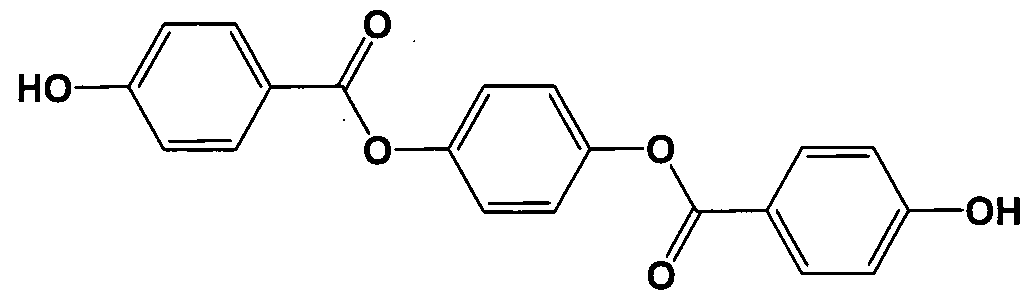
또한, 상기 화학식 4로 표시되는 단량체는 프리이스 전위 ( fr ies rearrangement )가가능한구조로인해 장기 내후성의 효과를나타낼수있다.
2019/156432 1»(:1^1{2019/001384
상기 화학식 5로 표시되는 단량체는, 비스(4 -히드록시페닐)메탄, 비스(4 -히드록시페닐)에테르, 비스(4 -히드록시페닐)설폰, 비스(4- 히드록시페닐)설폭사이드, 비스(4 -히드록시페닐)설파이드, 비스(4- 히드록시페닐)케톤, 1, 1 -비스(4 -히드록시페닐)에탄, 비스페놀 A, 2, 2 -비스(4- 히드록시페닐)부탄, 1, 1-비스(4 -히드록시페닐)시클로핵산, 2, 2 -비스(4- 히드록시 -3 , 5 -디브로모페닐)프로판 2 2 -비스(4 -히드록시 -3 5 - 디클로로페닐)프로판, 2, 2 -비스(4 -히드록시 -3 -브로모페닐)프로판, 2,2 -비스(4- 히드록시 -3 -클로로페닐)프로판, 2,2 -비스(4 -히드록시 -3 -메틸페닐)프로판, 2,2- 비스(4 -히드록시- 3, 5 -디메틸페닐)프로판, 1, 1 -비스(4 -히드록시페닐)- 1- 페닐에탄, 비스(4 -히드록시페닐)디페닐메탄, 및 a, 0)-비스[3-( 0 - 히드록시페닐)프로필]폴리디메틸실록산으로이루어진군으로부터 선택되는 1종 이상일수있다.
바람직하게는, 상기 화학식 5로 표시되는 단량체는 비스페놀 A일 수 있다. 상기 화학식 6으로표시되는방향족디올은중합시 코폴리카보네이트의 분자량 조절을 위하여 사용되는 말단 캡핑제인 것으로, 케토-에놀 호변이성화(Keto-enol tautomer i zat ion)가 가능한 구조로 인해 내후성이 우수한효과를나타낼수있다.
상기 화학식 6으로표시되는방향족디올은카르보닐기의 양쪽에 치환 또는비치환된페놀이 결합된 것으로, 구체적으로, 카르보닐기와히드록시기가 오쏘(ortho)치환된페놀기, 및 카르보닐기와히드록시기가파라(para) 치환된 페놀기가포함될수있다.
상기 파라 치환된 페놀기에 포함된 히드록시기는 상대적으로 카르보닐기와거리가멀어 상기 화학식 4및 화학식 5로표시되는단량체와의 중합 반응에 대한 반응선택성이 높아 말단 캡핑제로써 작용하는 반면, 상기 오쏘 치환된 페놀기에 포함된 히드록시기는 상대적으로 카르보닐기와 거리가 가까워 중합 반응에 대한 선택성이 낮아 단량체와 중합되지 않을 수 있다. 따라서, 상기 화학식 6로 표시되는 방향족 디올은 2개의 히드록시기를 포함함에도 상기 파라 치환된 페놀기에 포함된 히드록시기만이 중합 반응
2019/156432 1»(:1^1{2019/001384
참여하여 말단 캡핑제로써 작용함으로써, 상기 방향족 디올을 포함하는 코폴리카보네이트는내후성이 우수한효과가있다 .
상기 화학식 6으로 표시되는 방향족 디올은, 예를 들어, 하기 화학식 6-1로표시되는방향족디올일수있다.
[화학식 6-1]


상기 말단 캡핑제의 함량은 전술한 바와 같이, 최종적으로 제조된 코폴리카보네이트 총 함량에 대하여, 0.0001 내지 0.1중량%로 포함될 수 있으며, 바람직하게는, 0.001 내지 0.05중량%, 더욱 바람직하게는 0.01 내지 0.03중량%로포함될수있다. 상기 카보네이트 전구체는 상기 화학식 4로 표시되는 단량체, 상기 화학식 5로 표시되는 단량체 및/또는 상기 화학식 6으로 표시되는 방향족 디올을연결하는역할을하는것으로, 이의 구체적인 예로포스겐, 트리포스겐, 디포스겐, 브로모포스겐, 디메틸 카보네이트, 디에틸 카보네이트, 디부틸 카보네이트, 디시클로핵실카보네이트, 디페닐카보네이트, 디토릴카보네이트, 비스(클로로페닐) 카보네이트 , 01 -크레실 카보네이트, 디나프틸카보네이트 , 비스(디페닐) 카보네이트 및 비스할로포르메이트로 이루어진 군에서 선택된 1종이상일수있다.
상기 카보네이트전구체는, 화학식 4로표시되는단량체 및화학식 5로
2019/156432 1»(:1^1{2019/001384
표시되는 단량체 총 함량에 대하여, 10 내지 7◦몰%로 포함될 수 있으며, 바람직하게는, 15 내지 50몰% 또는 더욱 바람직하게는 20 내지 40몰%일 수 있다.
상기 카보네이트 전구체가 10몰%미만으로 포함되는 경우, 미량으로 목적하는 효과를 구현하기 어렵고, 특히, 미반응의 디올계 모노머에 의해 제품의 품질 저하가 유발될 수 있다. 또한, 카보네이트 전구체가 70몰%를 초과하는경우경우, 상업적으로비용이 크게증가하는문제가발생할수있다. 본 발명의 일 구현예에 있어서, 상기 중합 반응은 폴리카보네이트의 제조시에 사용되는방법이 특별한제한없이 적용될수있으며, 계면중합으로 수행하는것이 바람직하며, 계면 중합 시 상압과낮은온도에서 중합 반응이 가능하며 분자량조절이 용이하다.
상기 중합 온도는 01: 내지 400 , 반응 시간은 10분 내지 5시간이 바람직하다. 또한, 반응 중 는 9 이상 또는 11 이상으로 유지하는 것이 바람직하다.
상기 중합에사용할수있는용매로는, 당업계에서 코폴리카보네이트의 중합에 사용되는용매이면특별히 제한되지 않으며, 일례로메틸렌클로라이드, 클로로벤젠등의 할로겐화탄화수소를사용할수있다.
또한, 상기 중합은 산결합제의 존재 하에 수행하는 것이 바람직하며, 상기 산결합제로 수산화나트륨, 수산화칼륨 등의 알칼리금속 수산화물 또는 피리딘등의 아민화합물을사용할수있다.
또한, 상기 중합 반응의 족진을 위하여, 트리에틸아민, 테트라- 11- 부틸암모늄브로마이드 , 테트라- II -부틸포스포늄브로마이드 등의 3차 아민 화합물, 4차 암모늄 화합물, 4차 포스포늄 화합물 등과 같은 반응 촉진제를 추가로사용할수있다.
12.코폴리카보네이트를포함하는성형품
본발명의 일 구현 예에 따르면, 전술한코폴리카보네이트를포함하는 성형품이 제공된다.
본 발명에 따른 성형품은, 바람직하게는 자동차 내외장재, 조명용 하우징, 건축용 내외장재 등에 적용될 수 있으며, 기존의 폴리카보네이트가
2019/156432 1»(:1^1{2019/001384
갖는 고유한 특성인 충격강도 , 수치안정성 , 내열성 및 투명성 등이 우수하면서도, 내후성 및 경도등이 우수한특성을나타낼수있다.
특히, 제품의 제조공정이나, 제품이 실제사용되는응용분야에서 빛, 고온, 고압등의 조건에 놓이게 되는 경우에도우수한 장 ·단기 내후성 유지 효과가뛰어나다.
【발명의 효과】
본 발명에 따르면, 내후성이 우수한 코폴리카보네이트와 이를 제조할 수있는방법이 제공될수있다.
【발명을실시하기 위한구체적인내용】
이하, 발명의 이해를 돕기 위하여 바람직한 실시예들을 제시한다. 그러나하기의 실시예들은발명을 예시하기 위한 것일 뿐, 발명을 이들만으로 한정하는것은아니다. 실시예및비교예:코폴리카보네이트의 제조
실시예 1
21 글라스 (이크 반응기에 비스페놀 쇼犯시 1,014.57§(4.4½01 ) , 犯예 40% 수용액 1,785용, 하기 하이드로 퀴논비스 (4- 하이드록시벤조에이트 ) (}¾선1"0(¾1^110116 3 (4-1¾선1'0\ 61120 6) )
156.64§(0.4¾101 ) , 증류수 7,500§을 투입하고, 질소 분위기하에서
 완전히 녹은것을확인한후, 메틸렌클로라이드 4,70 을투입하여 혼합하였다. 여기에 트리포스겐 565.3g l.9mol )을 녹인 메틸렌클로라이드 3,850§을 1시간 동안 적가하였다. 이 때, 此예수용액을 12로 유지하였다. 적가 완료 후 메틸렌클로라이드 40¾에 녹인 2,4-디하이드록시벤조페논(2,4_
1) :7(11'(«5 )61^01)1½110116) ¾(¾(0.2811101 )을 적가하였다. 60융적가완료후 15분간 방치하였고, 트리에틸아민 1(¾을 투입하였다. 10분 후, 염산 수용액으로 를 3으로 맞춘 후, 증류수로 3회 수세하고, 메틸렌클로라이드 상을 분리한 다음, 메탄올에 침전시켜 분말상의 코폴리카보네이트수지를수득하였다.
최종 얻어진 코폴리카보네이트 수지는 하기의 반복단위를 포함하는
2019/156432 1»(:1^1{2019/001384
것으로서, 제 1 반복단위와제 2-쇼반복단위의 몰비 (%)는약 9:91이었다.

상기 실시예 1에서, 하이드로 퀴논비스 (4- 하이드록시벤조에이트 )(¾년1"0(111111이16 3 (4-1¾선1 0乂5사61120 6) ) 316요(0.¾101 )을 투입한 것을 제외하고는, 동일한 방법으로 분말상의 코폴리카보네이트를 수득하였다.
최종 얻어진 코폴리카보네이트 수지는 실시예 1과 동일한 반복단위를 포함하는 것으로서 , 제 1 반복 단위와 제 2 반복 단위의 몰비 (%)는 약
17:83이었다. 실시예 3
상기 실시예 1에서, 말단제로 2,4-디하이드록시벤조페논(2,4_
I)오 1¾선1 0X^611201)116110116) 60당 대신에 30용으로 사용하고, 추가로
 부틸페놀 (的¾미 22§ 투입한 것을 제외하고는, 동일한 방법으로 분말상의 코폴리카보네이트를수득하였다.
최종 얻어진 코폴리카보네이트 수지는 실시예 1과 동일한 반복단위를 포함하는 것으로서, 제 1 반복 단위와 제 2 반복 단위의 몰비 («는 약
9:91이었다. 실시예 4
2019/156432 1»(:1^1{2019/001384
상기 실시예 1에서, 말단제로 2,4 -디하이드록시벤조페논(2,4_
I)오뇨 0X^611201)116110116) 60용외에 추가로 1)_1 <: -부틸페놀 ( 3) 22당 투입한 것을제외하고는,동일한방법으로분말상의 코폴리카보네이트를수득하였다. 최종 얻어진 코폴리카보네이트 수지는 실시예 1과 동일한 반복단위를 포함하는 것으로서, 제 1 반복 단위와 제 2 반복 단위의 몰비 (%)는 약 9:91이었다. 비교예 1
2此 글라스 (이크 반응기에 비스페놀 쇼犯시 978.4§(4, 2^01), 3?0쇼( 3(4-(2-(4 -느7 0 에 1)1)1( 311-2-: 1) 61¾,1)

3.927요(0.0061¥1). 加抑 32% 수용액 1,620§, 증류수 7,500§을 넣고 질소 분위기에서
 완전히 녹은 것을확인한후, 메틸렌클로라이드 3,670§, I) - 七라卜부틸페놀 (的¾的 17.9§(0.110101)을 투입하여 혼합하였다. 여기에 트리포스겐 542.5용( 1.80101)을 녹인 메틸렌클로라이드 3,85½을 1시간 동안 적가하였다. 이때,
 수용액을如 12로유지하였다. 적가완료 후 15분간 방치하였고, 트리에틸아민 195. ¾을 메틸렌클로라이드에 녹여 투입하였다. 10분 후, 염산 수용액으로 를 3으로 맞춘 후, 증류수로 3회 수세하고 나서, 메틸렌클로라이드 상을 분리한 다음, 메탄올에 침전시켜 분말상의 코폴리카보네이트수지를수득하였다 . 비교예 2
20匕글라스 ½1333) 반응기에 비스페놀쇼犯므시 232§(1.02 1) ,加(犯 32% 수용액 385§, 증류수 1,784§을넣고질소분위기에서
 완전히 녹은것을 확인한 후, 1)아6 -부틸페놀 (的¾미 14.3용(0.1 11101)과, ¾3(2 -알릴페놀- 치환-폴리디메틸실록산) 12.54§(0.00½01) 및 쌔볘구» 2 -메틸- 1- 부텐하이드록시벤조산-치환-폴리디메틸실록산) 0.66 0.000111101) 의 혼합액 (중량비 95: 5로 혼합됨)을 투입하여 혼합하였다. 여기에 트리포스겐 128£(0.4細01), 을녹인 메틸렌클로라이드 3,850용을 1시간동안적가하였다. 이때,加예수용액을 12로유지하였다. 적가완료후 15분간숙성하였고, 트리에틸아민 46요을 메틸렌클로라이드에 녹여 투입하였다. 10분 후, 염산
2019/156432 1»(:1/10公019/001384
완전히 녹은것을 확인한 후, 1)아6 -부틸페놀 (的¾미 14.3용(0.1 11101)과, ¾3(2 -알릴페놀- 치환-폴리디메틸실록산) 12.54§(0.00½01) 및 쌔볘구» 2 -메틸- 1- 부텐하이드록시벤조산-치환-폴리디메틸실록산) 0.66 0.000111101) 의 혼합액 (중량비 95: 5로 혼합됨)을 투입하여 혼합하였다. 여기에 트리포스겐 128£(0.4細01), 을녹인 메틸렌클로라이드 3,850용을 1시간동안적가하였다. 이때,加예수용액을 12로유지하였다. 적가완료후 15분간숙성하였고, 트리에틸아민 46요을 메틸렌클로라이드에 녹여 투입하였다. 10분 후, 염산
2019/156432 1»(:1/10公019/001384
수용액으로 를 3으로 맞춘 후, 증류수로 3회 수세하고 나서, 메틸렌클로라이드 상을 분리한 다음, 메탄올에 침전시켜 분말상의 코폴리카보네이트수지를수득하였다 .
상기
 하기 화학식 쇼로 표시되는 화합물이며,

하기 화학식 8로표시되는화합물이다.
[화학식 A]

비교예 1의 코폴리카보네이트 70중량%및 비교예 2의 코폴리카보네이트 30중량%를혼합하였다. 비교예 4
비교예 1의 코폴리카보네이트 50중량%및 비교예 2의 코폴리카보네이트 50중량%를혼합하였다. 비교예 5
21 글라스에크드 반응기에 비스페놀 쇼犯쇼) 1,014.5^(4.440101), 他(犯 40% 수용액 1,7852, (2 -하이드록시페닐)(4 -하이드록시페닐)메타논((2 - 1¾년] >뱐1161171)(4-1¾년1¥ 1)]1611 1)01 113110116) 130요(0.61 1) , 비스(3- 하이드록시페닐) 이소프탈레이트 0 3(3_117(11'(»13】161171) 01>111;1131 6)
130§(0.3711101), 증류수 7,50½을 투입하고, 질소 분위기하에서 완전히
2019/156432 1»(:1^1{2019/001384
녹은것을확인한후, 메틸렌클로라이드 4,700g, 하기 비스 (3 -하이드록시페닐) 테레프탈레이트 (b i s ( 3-hydr oxypheny 1 ) t erepht halate) 64g ( 0.18mo 1 )을 투입하여 혼합하였다. 여기에 트리포스겐 565.3g(1.90mol ) , 을 녹인 메틸렌클로라이드 3,850g을 1시간동안적가하였다. 이 때, NaOH수용액을 pH 12로 유지하였다. 적가 완료 후 메틸렌 클로라이드 400g에 녹인 p-tert- 부틸페놀 (PTBP)44g(0.29mol)을 적가한다. 6g적가완료후 15분간숙성하였고, 트리에틸아민 10g을 투입하였다. 10분 후, 1N 염산 수용액으로 pH를 3으로 맞춘 후, 증류수로 3회 수세하고, 메틸렌클로라이드 상을 분리한 다음, 메탄올에 침전시켜 분말상의 코폴리카보네이트수지를수득하였다 . 비교예 6
비교예 5에서, p-tert-부틸페놀 (PTBP)대신 2,4’ -디하이드록시벤조페논 60g(0.28tnol)을사용하여 코폴리카보네이트를제조하였다. 시험예 :코폴리카보네이트의물성 평가
상기 실시예 및 비교예에서 제조한코폴리카보네이트수지 1중량부에 대하여, 트리스 (2,4 -디 -tert-부틸페닐)포스파이트 0.050 중량부를 첨가하여 Bau Tech소형 아축압출기를사용하여, 펠릿화한후, HAKKE소형 사출성형기를 사용하여 실린더 온도 300 °C , 금형 온도 80°C로 사출성형하여 시편을 제조하였다.
상기 실시예 및 비교예에서 제조된수지의 중량평균분자량은 Agi lent 1200 ser i es를 이용하여 PC 스텐다드 (Standard)를 이용한 GPC로 측정하였고, 그결과를하기의 표 1에 나타내었다. 1)내후성 평가실험
상기 실시예 및 비교예에서 제조한 코폴리카보네이트 시편에 대하여, ffeatherometer (ATLAS, CI5000)의 장치를 사용하여, UL746C UV & Water Exposure Test에 따라, ASTM G151, G155에 준한파장의 UV를조사하였다.
먼저, 시편의 제조 후 별도의 UV 조사하지 않는 경우, 500시간 동안 UV를조사한경우, 1,000시간 ( 를조사한경우에 대하여, ASTM D630에 따라,
2019/156432 1»(:1^1{2019/001384
황변지수 (Y. I . , yel low index)를 즉정하였으며, 그 결과를 하기 표 1에 나타내었다.
2)충격 강도 (kJ/m2)
상기 실시예 및 비교예에서 제조한 코폴리카보네이트 시편에 대하여,
Toyoseiki사의 충격 강도 장치를 사용하여, ASTM D256에 따라, 충격 강도 (kJ/m2)를측정하였으며, 그결과를하기 표 1에 나타내었다.
【표 1】

이와 대비하여, 비교예들의 경우, 충격 강도는실시예와동등 수준을 구현하였으나, 광 조사 시간이 증가할수록 황변도가 현저히 증가한 것을 확인하였다.
Claims
[화학삭 1]

상기 화학식 1에서,
¾내지 ¾은각각독립적으로, 수소, 또는치환또는비치환된 -60의 알킬이고,
1 및 :는각각독립적으로, 1내지 4의 정수이고,
[화학식 2]

상기 화학식 2에서,
2는비치환되거나또는페닐로치환된 01-10알킬텐, 비치환되거나또는 01-10알킬로치환된 03-15사이클로알킬렌, 0, 엤, 2 , 또는 (X)이고,
¾ 및 ¾는 각각 독립적으로, 수소, 또는 치환 또는 비치환된 -60의 알킬이고,
1및근는각각독립적으로, 1내지 4의 정수이고,
[화학식 3]

상기 화학식 3에서
2019/156432 1»(:1^1{2019/001384
¾ 및 R7은 각각 독립적으로, 수소, 또는 치환 또는 비치환된 CL의 알킬이고,
m및 n은각각독립적으로, 1내지 4의 정수이고,
별표 (* )는결합점 (bonding point )을의미한다.
【청구항 2]
제 1항에 있어서,
상기 화학식 1에서, ¾ 내지 ¾은 각각 독립적으로, 수소인, 코폴리카보네이트.
【청구항 3】
제 1항에 있어서,
상기 화학식 2로 표시되는 제 2 반복 단위는 하기 화학식 2-1로 표시되는반복단위인, 코폴리카보네이트:
[화학식 2-1]

【청구항 4]
제 1항에 있어서,
상기 화학식 2에서,
 및 ¾는 각각 독립적으로, 수소인 코폴리카보네이트 .
【청구항 5]
제 1항에 있어서,
상기 화학식 3에서, ¾ 및 取은 각각 독립적으로, 수소인, 코폴리카보네이트.
【청구항 6]
2019/156432 1»(:1^1{2019/001384
제 1항에 있어서,
상기 화학식 1로표시되는 제 1반복 단위와상기 화학식 2로표시되는 제 2반복단위의몰비는, 1 :99내지 50 : 50인, 코폴리카보네이트.
【청구항 7]
제 1항에 있어서,
상기 화학식 3으로 표시되는 말단 캡핑기는, 코폴리카보네이트 총 함량에 대하여, 0.001내지 0.1중량%로포함되는, 코폴리카보네이트.
【청구항 8】
제 1항에 있어서,
중량평균분자량이 10,000내지 100,⑷始加이인, 코폴리카보네이트 .
【청구항 9】
하기 화학식 4로 표시되는 단량체, 하기 화학식 5로 표시되는 단량체 및 하기 화학식 6으로 표시되는 방향족 디올을 포함하는 말단 캡핑제, 및 카보네이트 전구체를 포함하는 조성물을 중합하는 단계;를 포함하는 코폴리카보네이트의 제조방법 :

알킬이고,
I)및 는각각독립적으로, 1내지 4의 정수이고,
[화학식 5]
2019/156432 1»(:1/10公019/001384

상기 화학식 5에서,
2는비치환되거나또는페닐로치환된 01-10알킬렌, 비치환되거나또는 01-10알킬로치환된 03-15사이클로알킬텐, 0, 엤, 2 , 또는아이고,
¾ 및 ¾는 각각 독립적으로, 수소, 또는 치환 또는 비치환된 ( 60의 알킬이고’
(1및 6는각각독립적으로, 1내지 4의 정수이고,
[화학식 6]

상기 화학식 6에서,
¾ 및 ¾은 각각 독립적으로, 수소, 또는 치환 또는 비치환된 ( 에의 알킬이고,

【청구항 10】
제 9항에 있어서,
상기 화학식 5로 표시되는 단량체는, 비스(4 -히드록시페닐)메탄, 비스(4 -히드록시페닐)에테르, 비스(4 -히드록시페닐)설폰, 비스(4- 히드록시페닐)설폭사이드, 비스(4 -히드록시페닐)설파이드, 비스(4- 히드록시페닐)케톤, 1,1 -비스(4 -히드록시페닐)에탄, 비스페놀 2 , 2 -비스(4- 히드록시페닐)부탄, 1,1 -비스(4 -히드록시페닐)시클로핵산, 2 , 2 -비스(4- 히드록시 -3 5 -디브로모페닐)프로판 2 2 -비스(4 -히드록시 -3 5 - 디클로로페닐)프로판, 2 , 2 -비스(4 -히드록시 -3 -브로모페닐)프로판, 2, 2 -비스(4- 히드록시- 3_클로로페닐)프로판, 2 , 2 -비스(4 -히드록시- 3 -메틸페닐)프로판, 2 , 2- 비스(4 -히드록시- 3 , 5 -디메틸페닐)프로판, 1,1 -비스(4 -히드록시페닐)- 1- 페닐에탄, 비스(4 -히드록시페닐)디페닐메탄, 및 0)_비스[3-( 0 -
2019/156432 1»(:1^1{2019/001384
히드록시페닐)프로필]폴리디메틸실록산으로이루어진군으로부터 선택되는 1종 이상인, 코폴리카보네이트의 제조방법 .
【청구항 11】
제 9항에 있어서,
상기 말단 캠핑제는, I) -라卜부틸페놀, I)-쿠밀페놀, 데실페놀, 도데실페놀 , 테트라데실페놀 , 핵사데실페놀, 옥타데실페놀 , 에이코실페놀, 도코실페놀 및 트리아콘틸페놀로 이루어진 군에서 선택된 1종 이상을 더 포함하는, 코폴리카보네이트의 제조방법 .
【청구항 12】
제 9항에 있어서,
상기 카보네이트 전구체는, 포스겐, 트리포스겐, 디포스겐, 브로모포스겐, 디메틸 카보네이트, 디에틸 카보네이트, 디부틸 카보네이트, 디시클로핵실 카보네이트, 디페닐 카보네이트, 디토릴 카보네이트, 비스(클로로페닐) 카보네아트, 이 -크레실 카보네이트, 디나프틸카보네이트, 비스(디페닐) 카보네이트 및 비스할로포르메이트로 이루어진 군에서 선택된 1종이상인, 코폴라카보네이트의 제조방법. 【청구항 13】
제 1항내지 제 8항중어느한항에 따른코폴리카보네이트를포함하는, 성형품.
Priority Applications (4)
| Application Number | Priority Date | Filing Date | Title |
|---|---|---|---|
| US16/632,847 US11186682B2 (en) | 2018-02-07 | 2019-01-31 | Copolycarbonate and method for preparing the same |
| JP2019564411A JP6913767B2 (ja) | 2018-02-07 | 2019-01-31 | コポリカーボネートおよびその製造方法 |
| EP19751867.3A EP3628699B1 (en) | 2018-02-07 | 2019-01-31 | Copolycarbonate and preparation method therefor |
| CN201980003253.5A CN110809594B (zh) | 2018-02-07 | 2019-01-31 | 共聚碳酸酯及其制备方法 |
Applications Claiming Priority (2)
| Application Number | Priority Date | Filing Date | Title |
|---|---|---|---|
| KR10-2018-0015214 | 2018-02-07 | ||
| KR1020180015214A KR102241910B1 (ko) | 2018-02-07 | 2018-02-07 | 코폴리카보네이트 및 이의 제조방법 |
Publications (1)
| Publication Number | Publication Date |
|---|---|
| WO2019156432A1 true WO2019156432A1 (ko) | 2019-08-15 |
Family
ID=67549502
Family Applications (1)
| Application Number | Title | Priority Date | Filing Date |
|---|---|---|---|
| PCT/KR2019/001384 Ceased WO2019156432A1 (ko) | 2018-02-07 | 2019-01-31 | 코폴리카보네이트 및 이의 제조방법 |
Country Status (7)
| Country | Link |
|---|---|
| US (1) | US11186682B2 (ko) |
| EP (1) | EP3628699B1 (ko) |
| JP (1) | JP6913767B2 (ko) |
| KR (1) | KR102241910B1 (ko) |
| CN (1) | CN110809594B (ko) |
| TW (1) | TWI722380B (ko) |
| WO (1) | WO2019156432A1 (ko) |
Cited By (2)
| Publication number | Priority date | Publication date | Assignee | Title |
|---|---|---|---|---|
| EP3904420A4 (en) * | 2019-09-05 | 2022-03-09 | LG Chem, Ltd. | DIOL COMPOUND, POLYCARBONATE AND PROCESS FOR PRODUCTION THEREOF |
| EP4306588A4 (en) * | 2021-10-18 | 2024-10-09 | Lg Chem, Ltd. | PROCESS FOR PREPARATION OF RECYCLED POLYCARBONATE AND RECYCLED POLYCARBONATE |
Families Citing this family (2)
| Publication number | Priority date | Publication date | Assignee | Title |
|---|---|---|---|---|
| KR102219311B1 (ko) | 2018-08-10 | 2021-02-24 | 주식회사 엘지화학 | 폴리카보네이트 및 이의 제조방법 |
| WO2025143212A1 (ja) * | 2023-12-27 | 2025-07-03 | 富士フイルム株式会社 | 熱可塑性樹脂、成形体、及び光学部材 |
Citations (5)
| Publication number | Priority date | Publication date | Assignee | Title |
|---|---|---|---|---|
| US6486293B1 (en) * | 1998-07-07 | 2002-11-26 | Ricoh Company, Ltd. | Electrophotographic photoconductor and method of producing aromatic polycarbonate resin for use in the photoconductor |
| US7514522B2 (en) * | 2004-02-19 | 2009-04-07 | Idemitsu Kosan Co., Ltd. | Method for producing polycarbonate copolymer |
| KR20140035482A (ko) * | 2011-06-07 | 2014-03-21 | 사빅 이노베이티브 플라스틱스 아이피 비.브이. | 비스페놀 화합물을 포함하는 폴리카보네이트 중합체 |
| US9481761B2 (en) * | 2012-12-20 | 2016-11-01 | Sabic Global Technologies B.V. | Cross-linked polycarbonate resin with improved chemical and flame resistance |
| US20170313815A1 (en) * | 2014-11-19 | 2017-11-02 | Sabic Global Technologies B.V. | A method of polymerizing end-capped polycarbonate and end-capped polycarbonates derived therefrom |
Family Cites Families (19)
| Publication number | Priority date | Publication date | Assignee | Title |
|---|---|---|---|---|
| DE2930787A1 (de) * | 1979-07-28 | 1981-02-12 | Bayer Ag | Vernetzbare polycarbonat-elastomere, ein verfahren zu ihrer herstellung und ihre verwendung fuer medizinische verpackungen nach erfolgter vernetzung |
| DE3325704A1 (de) * | 1983-07-16 | 1985-01-24 | Bayer Ag, 5090 Leverkusen | Mesomorphe aromatishe polyestercarbonate, verfahren zu ihrer herstellung und ihre verwendung zur herstellung von formkoerpern, filamenten, fasern und folien |
| AU610570B2 (en) | 1987-04-15 | 1991-05-23 | Dow Chemical Company, The | Polycarbonate compositions and process for preparing the same |
| US5034496A (en) | 1987-04-15 | 1991-07-23 | The Dow Chemical Company | Polycarbonate compositions |
| JPH0684425B2 (ja) | 1988-02-17 | 1994-10-26 | 帝人株式会社 | ポリエステルの製造法 |
| KR930004119B1 (ko) * | 1990-08-13 | 1993-05-20 | 금성일렉트론 주식회사 | 다결정 실리콘막의 정경사 식각방법 |
| JP3348473B2 (ja) | 1993-08-24 | 2002-11-20 | 三菱化学株式会社 | 芳香族ポリカーボネート |
| JP2001040083A (ja) * | 1998-07-07 | 2001-02-13 | Ricoh Co Ltd | 芳香族ポリカーボネート樹脂の製造法 |
| JP3730054B2 (ja) | 1999-04-08 | 2005-12-21 | 株式会社リコー | 電子写真用感光体 |
| JP4713750B2 (ja) | 2001-02-06 | 2011-06-29 | 帝人株式会社 | 共重合ポリカーボネート、その製造方法および樹脂組成物 |
| JP2007056216A (ja) | 2005-08-26 | 2007-03-08 | Fujifilm Corp | ポリアリレート、光学フィルム、および、画像表示装置 |
| US7999037B2 (en) | 2008-12-31 | 2011-08-16 | Sabic Innovative Plastics Ip B.V. | Polycarbonate compositions |
| JP2014113961A (ja) | 2012-12-11 | 2014-06-26 | Fujifilm Corp | タイヤ、タイヤの製造方法およびタイヤの日射による温度上昇を抑制する方法 |
| CN105143304A (zh) * | 2013-03-13 | 2015-12-09 | 沙特基础全球技术有限公司 | 具有光活性单体和端帽的光活性添加剂 |
| KR101620168B1 (ko) | 2013-07-01 | 2016-05-12 | 주식회사 엘지화학 | 히드록시 캡핑 단량체, 이의 폴리카보네이트 및 이를 포함하는 물품 |
| US20170166742A1 (en) | 2014-06-19 | 2017-06-15 | Sabic Global Technologies B.V. | Reinforced cross-linkable polycarbonate compositions |
| US20170184971A1 (en) | 2014-06-20 | 2017-06-29 | Sabic Global Technologies B.V. | Structured illumination of crosslinkable polycarbonate |
| DE202015009117U1 (de) | 2014-06-20 | 2016-10-24 | Google Inc. | Integration von Online-Navigationsdaten mit gecachten Navigationsdaten während der aktiven Navigation |
| WO2015193864A1 (en) | 2014-06-20 | 2015-12-23 | Sabic Global Technologies B.V. | Melt reaction process for crosslinkable polycarbonates |
-
2018
- 2018-02-07 KR KR1020180015214A patent/KR102241910B1/ko active Active
-
2019
- 2019-01-31 WO PCT/KR2019/001384 patent/WO2019156432A1/ko not_active Ceased
- 2019-01-31 EP EP19751867.3A patent/EP3628699B1/en active Active
- 2019-01-31 US US16/632,847 patent/US11186682B2/en active Active
- 2019-01-31 JP JP2019564411A patent/JP6913767B2/ja active Active
- 2019-01-31 CN CN201980003253.5A patent/CN110809594B/zh active Active
- 2019-02-01 TW TW108104140A patent/TWI722380B/zh active
Patent Citations (5)
| Publication number | Priority date | Publication date | Assignee | Title |
|---|---|---|---|---|
| US6486293B1 (en) * | 1998-07-07 | 2002-11-26 | Ricoh Company, Ltd. | Electrophotographic photoconductor and method of producing aromatic polycarbonate resin for use in the photoconductor |
| US7514522B2 (en) * | 2004-02-19 | 2009-04-07 | Idemitsu Kosan Co., Ltd. | Method for producing polycarbonate copolymer |
| KR20140035482A (ko) * | 2011-06-07 | 2014-03-21 | 사빅 이노베이티브 플라스틱스 아이피 비.브이. | 비스페놀 화합물을 포함하는 폴리카보네이트 중합체 |
| US9481761B2 (en) * | 2012-12-20 | 2016-11-01 | Sabic Global Technologies B.V. | Cross-linked polycarbonate resin with improved chemical and flame resistance |
| US20170313815A1 (en) * | 2014-11-19 | 2017-11-02 | Sabic Global Technologies B.V. | A method of polymerizing end-capped polycarbonate and end-capped polycarbonates derived therefrom |
Non-Patent Citations (1)
| Title |
|---|
| See also references of EP3628699A4 * |
Cited By (3)
| Publication number | Priority date | Publication date | Assignee | Title |
|---|---|---|---|---|
| EP3904420A4 (en) * | 2019-09-05 | 2022-03-09 | LG Chem, Ltd. | DIOL COMPOUND, POLYCARBONATE AND PROCESS FOR PRODUCTION THEREOF |
| US12312322B2 (en) | 2019-09-05 | 2025-05-27 | Lg Chem, Ltd. | Diol compound, polycarbonate, and preparation method thereof |
| EP4306588A4 (en) * | 2021-10-18 | 2024-10-09 | Lg Chem, Ltd. | PROCESS FOR PREPARATION OF RECYCLED POLYCARBONATE AND RECYCLED POLYCARBONATE |
Also Published As
| Publication number | Publication date |
|---|---|
| KR102241910B1 (ko) | 2021-04-16 |
| CN110809594B (zh) | 2021-12-31 |
| JP6913767B2 (ja) | 2021-08-04 |
| EP3628699A1 (en) | 2020-04-01 |
| TW201934606A (zh) | 2019-09-01 |
| TWI722380B (zh) | 2021-03-21 |
| EP3628699B1 (en) | 2022-12-28 |
| EP3628699A4 (en) | 2020-07-29 |
| JP2020521025A (ja) | 2020-07-16 |
| US20200148818A1 (en) | 2020-05-14 |
| CN110809594A (zh) | 2020-02-18 |
| US11186682B2 (en) | 2021-11-30 |
| KR20190095790A (ko) | 2019-08-16 |
Similar Documents
| Publication | Publication Date | Title |
|---|---|---|
| JP6049113B2 (ja) | コポリカーボネート樹脂およびこれを含む物品 | |
| CN105980446A (zh) | 共聚碳酸酯以及含有该共聚碳酸酯的组合物 | |
| WO2019156432A1 (ko) | 코폴리카보네이트 및 이의 제조방법 | |
| JP6085819B2 (ja) | ヒドロキシキャッピング単量体、そのポリカーボネート及びそれを含む物品 | |
| JPH1135815A (ja) | ポリカーボネート組成物 | |
| WO2010010703A1 (ja) | ポリカーボネート樹脂組成物、及びそれを用いた光学材料 | |
| US10364327B2 (en) | Polyorganosiloxane and copolycarbonate prepared by using the same | |
| JP5266599B2 (ja) | 高屈折率ポリカーボネート共重合体 | |
| TW202122457A (zh) | 共聚碳酸酯及含彼之聚碳酸酯組成物 | |
| KR102178646B1 (ko) | 코폴리카보네이트 및 이의 제조방법 | |
| US12584013B2 (en) | Polycarbonate compound composition and method for preparing the same | |
| JP3841120B2 (ja) | ポリカーボネート樹脂組成物 | |
| WO2016089026A1 (ko) | 코폴리카보네이트 및 이를 포함하는 조성물 | |
| WO2016089171A1 (ko) | 코폴리카보네이트 및 이를 포함하는 조성물 | |
| CN107849254B (zh) | 聚有机硅氧烷和使用该聚有机硅氧烷制备的共聚碳酸酯 | |
| JP4513949B2 (ja) | ポリカーボネート樹脂 | |
| KR102086051B1 (ko) | 코폴리카보네이트 및 이를 이용하여 제조되는 성형품 | |
| CN107108876A (zh) | 共聚碳酸酯和包含该共聚碳酸酯的组合物 | |
| WO2016089118A2 (ko) | 코폴리카보네이트 및 이를 포함하는 조성물 | |
| TW202313768A (zh) | 聚碳酸酯共聚物及其製備方法 | |
| KR20240014712A (ko) | 폴리카보네이트 컴파운드 조성물 및 이의 제조 방법 | |
| KR20220166200A (ko) | 폴리카보네이트 컴파운드 조성물 및 이의 제조 방법 | |
| WO2016089025A1 (ko) | 코폴리카보네이트 및 이를 포함하는 조성물 |
Legal Events
| Date | Code | Title | Description |
|---|---|---|---|
| 121 | Ep: the epo has been informed by wipo that ep was designated in this application |
Ref document number: 19751867 Country of ref document: EP Kind code of ref document: A1 |
|
| ENP | Entry into the national phase |
Ref document number: 2019564411 Country of ref document: JP Kind code of ref document: A |
|
| ENP | Entry into the national phase |
Ref document number: 2019751867 Country of ref document: EP Effective date: 20191227 |
|
| NENP | Non-entry into the national phase |
Ref country code: DE |