WO2019166304A1 - Herbizid wirksame bizyklische benzamide - Google Patents
Herbizid wirksame bizyklische benzamide Download PDFInfo
- Publication number
- WO2019166304A1 WO2019166304A1 PCT/EP2019/054252 EP2019054252W WO2019166304A1 WO 2019166304 A1 WO2019166304 A1 WO 2019166304A1 EP 2019054252 W EP2019054252 W EP 2019054252W WO 2019166304 A1 WO2019166304 A1 WO 2019166304A1
- Authority
- WO
- WIPO (PCT)
- Prior art keywords
- plants
- alkyl
- compounds
- event
- methyl
- Prior art date
- Legal status (The legal status is an assumption and is not a legal conclusion. Google has not performed a legal analysis and makes no representation as to the accuracy of the status listed.)
- Ceased
Links
- 0 *C(c1ccc(*)c(*)c1*)=O Chemical compound *C(c1ccc(*)c(*)c1*)=O 0.000 description 6
Classifications
-
- C—CHEMISTRY; METALLURGY
- C07—ORGANIC CHEMISTRY
- C07D—HETEROCYCLIC COMPOUNDS
- C07D411/00—Heterocyclic compounds containing two or more hetero rings, at least one ring having oxygen and sulfur atoms as the only ring hetero atoms
- C07D411/02—Heterocyclic compounds containing two or more hetero rings, at least one ring having oxygen and sulfur atoms as the only ring hetero atoms containing two hetero rings
- C07D411/12—Heterocyclic compounds containing two or more hetero rings, at least one ring having oxygen and sulfur atoms as the only ring hetero atoms containing two hetero rings linked by a chain containing hetero atoms as chain links
-
- A—HUMAN NECESSITIES
- A01—AGRICULTURE; FORESTRY; ANIMAL HUSBANDRY; HUNTING; TRAPPING; FISHING
- A01N—PRESERVATION OF BODIES OF HUMANS OR ANIMALS OR PLANTS OR PARTS THEREOF; BIOCIDES, e.g. AS DISINFECTANTS, AS PESTICIDES OR AS HERBICIDES; PEST REPELLANTS OR ATTRACTANTS; PLANT GROWTH REGULATORS
- A01N43/00—Biocides, pest repellants or attractants, or plant growth regulators containing heterocyclic compounds
- A01N43/713—Biocides, pest repellants or attractants, or plant growth regulators containing heterocyclic compounds having rings with four or more nitrogen atoms as the only ring hetero atoms
-
- C—CHEMISTRY; METALLURGY
- C07—ORGANIC CHEMISTRY
- C07D—HETEROCYCLIC COMPOUNDS
- C07D407/00—Heterocyclic compounds containing two or more hetero rings, at least one ring having oxygen atoms as the only ring hetero atoms, not provided for by group C07D405/00
- C07D407/02—Heterocyclic compounds containing two or more hetero rings, at least one ring having oxygen atoms as the only ring hetero atoms, not provided for by group C07D405/00 containing two hetero rings
- C07D407/12—Heterocyclic compounds containing two or more hetero rings, at least one ring having oxygen atoms as the only ring hetero atoms, not provided for by group C07D405/00 containing two hetero rings linked by a chain containing hetero atoms as chain links
-
- C—CHEMISTRY; METALLURGY
- C07—ORGANIC CHEMISTRY
- C07D—HETEROCYCLIC COMPOUNDS
- C07D409/00—Heterocyclic compounds containing two or more hetero rings, at least one ring having sulfur atoms as the only ring hetero atoms
- C07D409/02—Heterocyclic compounds containing two or more hetero rings, at least one ring having sulfur atoms as the only ring hetero atoms containing two hetero rings
- C07D409/12—Heterocyclic compounds containing two or more hetero rings, at least one ring having sulfur atoms as the only ring hetero atoms containing two hetero rings linked by a chain containing hetero atoms as chain links
Definitions
- the invention relates to the technical field of herbicides, in particular that of herbicides for the selective control of weeds and weeds in crops.
- stereoisomers can be selectively prepared by using stereoselective reactions using optically active starting materials and / or auxiliaries.
- B is N or CH
- R a , R b , R c , R d are each independently hydrogen, fluorine, chlorine, hydroxy, (G-G) -alkyl, halo (C 1 -C 6 ) -alkyl, (GG) -alkyloxy, (C iG,) - alkylthio, cyano, or
- R a and R b or R c and R d together represent an oxo or a thiooxo group
- R is trifluoromethyl, difluoromethyl or pentafluoroethyl
- R x is methyl, ethyl, propyl, methoxymethyl, methoxyethyl, 2-methoxy-2-methyl-1-propyl, phenyl, n is 0, 1 or 2.
- X 1 , X 2 are O or S (O) n , where X 1 and X 2 are not simultaneously O or S (O) n ,
- R a , R b , R c , R d are each independently hydrogen, fluorine, chlorine, hydroxyl, (GG) - alkyl, halogeno (Ci-C 6 ) alkyl, (GG) -alkyloxy, (Ci-G ,) - alkylthio, cyano, or
- R a and R b or R c and R d together are an oxo or a thiooxo group, n is 0, 1 or 2.
- the compounds according to the invention are applied to the surface of the earth before germination, either the emergence of the weed seedlings is completely prevented or the weeds grow up to the cotyledon stage stage, but then stop their growth.
- the active compounds can also be used for controlling harmful plants in crops of known or yet to be developed genetically modified plants.
- the transgenic plants are usually characterized by particular advantageous properties, for example by resistance to certain active ingredients used in the agricultural industry, especially certain herbicides,
- Plant diseases or pathogens of plant diseases such as certain insects or microorganisms such as fungi, bacteria or viruses.
- Other special properties concern e.g. the goods in terms of quantity, quality, shelf life, composition and special ingredients.
- transgenic plants with increased starch content or altered quality of the starch or those with other fatty acid composition of Emteguts are known.
- Other particular properties are tolerance or resistance to abiotic stressors, e.g. Heat, cold, drought, salt and ultraviolet radiation.
- new plants can be used modified properties can be generated using genetic engineering methods (see, for example, EP 0221044, EP 0131624).
- genetic modifications of crop plants have been described for the purpose of modifying the starch synthesized in the plants (eg WO 92/011376 A, WO 92/014827 A, WO 91/019806 A), transgenic crop plants which are resistant to certain glufosinate-type herbicides (US Pat.
- herbicides by "gene stacking" resistant, such as transgenic crops z.
- transgenic crops z For example, corn or soybean with the trade name or designation Optimum TM GAT TM (Glyphosate ALS Tolerant).
- nucleic acid molecules can be introduced into plasmids that allow mutagenesis or sequence alteration by recombination of DNA sequences.
- base exchanges can be made, partial sequences removed or natural or synthetic sequences added.
- adapters or linkers can be attached to the fragments, see eg Sambrook et al., 1989, Molecular Cloning, A Laboratory Manual, 2nd Ed.
- the production of plant cells having a reduced activity of a gene product can be achieved, for example, by the expression of at least one corresponding antisense RNA, a sense RNA to obtain a cosuppression effect or the expression of at least one appropriately engineered ribozyme which specifically cleaves transcripts of the above gene product.
- DNA molecules may be used which comprise the entire coding sequence of a gene product, including any flanking sequences that may be present, as well as DNA molecules which comprise only parts of the coding sequence, which parts must be long enough to be present in the cells to cause an antisense effect. It is also possible to use DNA sequences which have a high degree of homology to the coding sequences of a gene product, but are not completely identical.
- the synthesized protein may be located in any compartment of the plant cell.
- the coding region is linked to DNA sequences which ensure localization in a particular compartment.
- sequences are known to those skilled in the art (see, for example, Braun et al., EMBO J. 11 (1992), 3219-3227; Wolter et al., Proc. Natl. Acad., U.S.A. 85 (1988), 846-850; Sonnewald et al., Plant J. 1 (1991), 95-106).
- the expression of the nucleic acid molecules can also take place in the organelles of the plant cells.
- Plant species that is, both monocotyledonous and dicotyledonous plants.
- the compounds (I) according to the invention can be used in transgenic cultures which are resistant to growth factors, such as e.g. 2,4-D, dicamba or against herbicides containing essential plant enzymes, e.g. Acetolactate synthases (ALS), EPSP synthases, glutamine synthases (GS) or Hydoxyphenylpyruvat dioxygenases (HPPD) inhibit or herbicides from the group of sulfonylureas, the glyphosate, glufosinate or benzoylisoxazole and analogues, or against any combination of these agents are resistant.
- growth factors such as e.g. 2,4-D, dicamba or against herbicides containing essential plant enzymes, e.g. Acetolactate synthases (ALS), EPSP synthases, glutamine synthases (GS) or Hydoxyphenylpyruvat dioxygenases (HPPD) inhibit or herbicides from the group of sulfonyl
- the invention therefore also relates to the use of the compounds of the formula (1) according to the invention as herbicides for controlling harmful plants in transgenic crop plants.
- the compounds of the invention can be used in the form of Spritzpulvem, emulsifiable concentrates, sprayable solutions, dusts or granules in the usual preparations.
- the invention therefore also relates to herbicidal and plant growth-regulating agents which contain the compounds according to the invention.
- Formulation options are, for example: wettable powders (WP), water-soluble powders (SP), water-soluble concentrates, emulsifiable concentrates (EC), emulsions (EW), such as oil-in-water and water-in-oil emulsions, sprayable solutions, Suspension concentrates (SC), oil- or water-based dispersions, oil-miscible solutions, capsule suspensions (CS), dusts (DP), mordants, granules for litter and soil application, granules (GR) in the form of micro, spray, elevator and adsorption granules, water-dispersible granules (WG), water-soluble granules (SG), ULV formulations, microcapsules and waxes.
- WP wettable powders
- SP water-soluble powders
- EC emulsifiable concentrates
- EW emulsions
- SC Suspension concentrates
- SC oil- or water-based dispers
- Producing growth regulators e.g. in the form of a ready-made formulation or as a tank mix.
- combination partners for the compounds according to the invention in mixture formulations or in the tank mix are known active compounds which are based on an inhibition of, for example, acetolactate synthase, acetyl-CoA carboxylase, cellulose synthase, enolpyruvylshikimate-3-phosphate synthase, glutamine synthetase, p-hydroxyphenylpyruvate dioxygenase, phytoene desaturase,
- Photosystem I photosystem 11 or protoporphyrinogen oxidase
- Photosystem I can be used, as e.g. from Weed Research 26 (1986) 441-445 or "The Pesticide Manual", 16 th edition, The British Crop Protection Council and the Royal Soc. of Chemistry, 2006 and cited therein.
- the following are examples of known herbicides or plant growth regulators, which can be combined with the compounds of the invention, these agents either with their "common name" in the English version according to International Organization for Standardization (1SO) or with the chemical name or with the code number are designated. All forms of use, such as, for example, acids, salts, esters, as well as all isomeric forms, such as stereoisomers and optical isomers, are always included, even if these are not explicitly mentioned.
- herbicidal mixture partners examples include:
- methabenzothiazuron metam, metamifop, metamitron, metazachlor, metazosulfuron,
- plant growth regulators as possible mixing partners are:
- Combinations with other agents are preferably selected from the group consisting of:
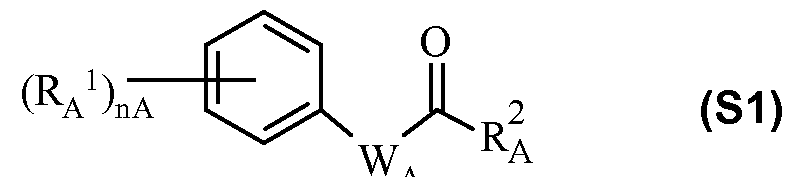
- n A is a natural number from 0 to 5, preferably 0 to 3;
- R A 1 is halogen, (Ci-C i) alkyl, (Ci-C i) alkoxy, nitro or (Ci-C4) haloalkyl;
- WA is an unsubstituted or substituted divalent heterocyclic radical selected from the group consisting of the monounsaturated or aromatic five-membered heterocycles having 1 to 3 hetero ring atoms from the group N and O, where at least one N atom and at most one O atom are present in the ring, preferably one Remainder of the group (WA 1 ) to (WA 4 ),
- n 0 or 1
- RA 2 is ORA 3 , SRA 3 or NRA 3 RA 4 or a saturated or unsaturated 3- to 7-membered one
- Heterocycle having at least one N atom and up to 3 heteroatoms, preferably from the group O and S, which is connected via the N atom to the carbonyl group in (S1) and unsubstituted or by radicals from the group (Ci-C i) Alkyl, (Ci-C i) alkoxy or optionally substituted phenyl is substituted, preferably a radical of the formula ORA 3 , NHRA 4 or N (CH 3) 2, in particular of the formula ORA 3 ;
- R A 3 is hydrogen or an unsubstituted or substituted aliphatic hydrocarbon radical, preferably having a total of 1 to 18 C atoms;
- R A 4 is hydrogen, (Ci-C 6 ) alkyl, (Ci-C 6 ) alkoxy or substituted or unsubstituted phenyl;
- RB 1 is halogen, (Ci-C4) alkyl, (Ci-C i) alkoxy, nitro or (Ci-C4) haloalkyl;
- P B is a natural number from 0 to 5, preferably 0 to 3;
- R B 2 is OR B 3 , SR B 3 or NR B 3 R B 4 or a saturated or unsaturated 3- to 7-membered heterocycle having at least one N atom and up to 3
- Heteroatoms preferably from the group O and S, which is connected via the N-atom with the carbonyl group in (S2) and unsubstituted or by radicals from the group (Ci-C i) alkyl, (Ci-C4) alkoxy or optionally substituted Phenyl, preferably a radical of the formula OR B 3 , NHR B 4 or N (CH 3) 2, in particular of the formula OR B 3 ;
- RB 3 is hydrogen or an unsubstituted or substituted aliphatic hydrocarbon radical, preferably having a total of 1 to 18 C atoms;
- RB 4 is hydrogen, (C 1 -C 6 ) alkyl, (C 1 -C 6 ) alkoxy or substituted or unsubstituted phenyl;
- T B is a (Ci or C2) alkanediyl chain which is unsubstituted or substituted by one or two (Ci-C i) alkyl radicals or by [(Ci-C3) alkoxy] carbonyl; preferably: a) compounds of the 8-quinolinoxyacetic acid type (S2 a ), preferably
- Rc 2 , Rc 3 are identical or different hydrogen, (Ci-C 4 ) alkyl, (C 2 -C 4 ) alkenyl, (C 2 -C 4 ) alkynyl, (Ci- C 4 ) haloalkyl, (C 2 -C 4) haloalkenyl, (Ci-C 4) alkylcarbamoyl (Ci-C4) alkyl, (C 2 -C 4) Alkenylcarbamoyl- (Ci-C 4) alkyl, (Ci-C 4) alkoxy (Ci-C 4 ) alkyl, dioxolanyl- (C 1 -C 4 ) alkyl, thiazolyl, furyl, furylalkyl, thienyl, piperidyl, substituted or unsubstituted phenyl, or Rc 2 and Rc 3 together form a substituted or unsubstituted heterocyclic ring, preferably
- R-29148 (3-dichloroacetyl-2,2,5-trimethyl-1,3-oxazolidine) from Stauffer (S3-2),
- R-28725" (3-dichloroacetyl-2,2, -dimethyl-1,3-oxazolidine) from Stauffer (S3-3),
- Benoxacor (4-dichloroacetyl-3,4-dihydro-3-methyl-2H-1,4-benzoxazine) (S3-4),
- PPG-1292 N-allyl-N - [(1,3-dioxolan-2-yl) -methyl] -dichloroacetamide
- TI-35 (1-dichloroacetyl-azepane) from TRI-Chemical RT (S3-8),
- a D is S0 2 -NR D 3 -C0 or C0-NR D 3 -S0 2 XD is CH or N;
- RD 1 is CO-NR D 5 RD 6 or NHCO-RD 7 ;
- RD 2 is halogen, (Ci-C 4) haloalkyl, (Ci-C 4) haloalkoxy, nitro, (Ci-C 4) alkyl, (Ci-C 4) alkoxy, (Ci C 4) alkylsulfonyl, (Ci- C 4 ) alkoxycarbonyl or (C 1 -C 4 ) alkylcarbonyl;
- R D 3 is hydrogen, (Ci-C 4) alkyl, (C 2 -C 4) alkenyl or (C 2 -C 4) alkynyl; RD 4 is halogen, nitro, (Ci-C 4) alkyl, (Ci-C 4) haloalkyl, (Ci-C 4) haloalkoxy, (C 3 -C 6) cycloalkyl,
- Phenyl (Ci-C 4) alkoxy, cyano, (Ci-C 4) alkylthio, (Ci-C 4) alkylsulfinyl, (Ci-C 4) alkylsulfonyl, (Ci C 4) alkoxycarbonyl or (Ci-C 4) alkylcarbonyl;
- RD 5 is hydrogen, (C 1 -C 6 ) alkyl, (C 3 -C 6 ) cycloalkyl, (C 2 -C 6 ) alkenyl, (C 2 -C 6 ) alkynyl, (C 5 -C 6 ) cycloalkenyl, phenyl or 3- to 6-membered heterocyclyl containing V D heteroatoms from the group consisting of nitrogen, oxygen and sulfur, wherein the latter seven radicals by V D
- RD 6 is hydrogen, (Ci-C 6) alkyl, (C 2 -C 6) alkenyl or (C 2 -C 6) -alkynyl, where the three last-mentioned radicals are substituted by V D radicals from the group halogen, hydroxy, (Ci- C 4 ) alkyl, (C 1 -C 4 ) alkoxy and (C 1 -C 4 ) alkylthio are substituted, or
- RD 7 is hydrogen, (Ci-C 4 ) alkylamino, di- (Ci-C 4 ) alkylamino, (Ci-C 6 ) alkyl, (C 3 -C 6 ) cycloalkyl, wherein the latter two radicals by V D substituents the group halogen, (C 1 -C 4 ) alkoxy, Ce) haloalkoxy and (Ci-C4) alkylthio and in the case of cyclic radicals also (Ci-C i) alkyl and
- (C 1 -C 4) haloalkyl are substituted; n D is 0, 1 or 2; m D is 1 or 2; V D is 0, 1, 2 or 3; Of these, preference is given to compounds of the N-acylsulfonamide type, for example of the following formula (S4 a ), which are, for example, B.
- RD 7 (Ci-C 6) alkyl, (C3-C6) -cycloalkyl, where the 2 last-mentioned radicals are substituted by V D substituents from the group halogen, (Ci-C4) alkoxy, (Ci-C 6) haloalkoxy and (Ci- C4) alkylthio and in the case of cyclic radicals are also (Ci-C4) alkyl and (Ci-C4) haloalkyl substituted;
- RD 4 is halogen, (C 1 -C 4 ) alkyl, (C 1 -C 4 ) alkoxy, CF 3; m D 1 or 2; V D is 0, 1, 2 or 3; such as
- Acylsulfamoylbenzoeklareamide for example, the following formula (S4 b ), for example, are known from WO-A-99/16744,
- RD 8 and RD 9 independently of one another are hydrogen, (Ci-Cg) alkyl, (C3-Cg) cycloalkyl, (C3-C6) alkenyl, (C 3 -C 6 ) alkynyl,
- RD 4 is halogen, (C 1 -C 4 ) alkyl, (C 1 -C 4 ) alkoxy, CF 3 m D 1 or 2; for example, 1- [4- (N-2-methoxybenzoylsulfamoyl) phenyl] -3-methylurea,
- N-phenylsulfonylterephthalamides of the formula (S4 d ) which are known, for example, from CN 101838227,
- RD 4 is halogen, (C 1 -C 4 ) alkyl, (C 1 -C 4 ) alkoxy, CF 3; m D 1 or 2;
- RD 5 is hydrogen, (C 1 -C 6 ) alkyl, (C 3 -C 6 ) cycloalkyl, (C 2 -C 6 ) alkenyl, (C 2 -C 6 ) alkynyl, (C 5 -
- Carboxylic acid derivatives (S5) e.g.
- RE 1 , RE 2 are each independently halogen, (Ci-C i) alkyl, (Ci-C i) alkoxy, (Ci-C i) haloalkyl,
- RE 3 , RE 4 are, independently of one another, hydrogen, (C 1 -C 4 ) -alkyl, (C 2 -C 6 ) -alkenyl,
- RF 2 is hydrogen or (Ci-C4) alkyl RF 3 hydrogen, (Ci-CsjAlkyl, (C 2 -C 4) alkenyl, (C 2 -C 4) alkynyl, or aryl, wherein each of the aforementioned C-containing radicals unsubstituted or by one or more , preferably up to three identical or different radicals from the group consisting of halogen and alkoxy, or salts thereof, preferably compounds in which X is F , F is an integer from 0 to 2,
- RF 2 is hydrogen or (Ci-C4) alkyl
- RF 3 is hydrogen, (C 1 -C 6) alkyl, (C 2 -C 4) alkenyl, (C 2 -C 4) alkynyl, or aryl, where each of the aforementioned C-containing radicals is unsubstituted or substituted by one or more, preferably up to three identical or different radicals from the group consisting of halogen and alkoxy is substituted, mean
- Y G , Z G independently of one another O or S, no an integer from 0 to 4,
- RG 2 (C 1 -C 6 ) alkyl, (C 2 -C 6 ) alkenyl, (C 3 -C 6 ) cycloalkyl, aryl; Benzyl, halobenzyl,
- RG 3 is hydrogen or (Ci-C 6 ) alkyl.
- Sl 1 active substances of the type of oxyimino compounds (Sl 1), which are known as seed dressings, such as. B.
- Oxabetrinil ((Z) -1,3-dioxolan-2-ylmethoxyimino (phenyl) acetonitrile) (Sl l-1), which is known as a seed safener for millet against damage by metolachlor,
- Fluorofenim (1- (4-chlorophenyl) -2,2,2-trifluoro-1-ethanone-0- (1,3-dioxolan-2-ylmethyl) -oxime) (S1-2) used as seed dressing -Safener for millet is known against damage from metolachlor, and "Cyometrinil” or “CGA-43089” ((Z) -cyanomethoxyimino (phenyl) acetonitrile) (Sl l-3), which is known as a seed dressing safener for millet against damage from metolachlor.
- Isothiochromanone (S12) class agents e.g. Methyl- [(3-oxo-1H-2-benzothiopyran-4 (3H) -ylidene) methoxy] acetate (CAS Reg. No. 205121-04-6) (S12-1) and related compounds of WO-A- 1998/13361.
- Naphthalene anhydride (l, 8-naphthalenedicarboxylic anhydride) (S13-1), which is known as a seed safener for corn against damage by thiocarbamate herbicides.
- MG 191 (CAS Reg. No. 96420-72-3) (2-dichloromethyl-2-methyl-1,3-dioxolane) (S13-5) from Nitrokemia, which is known as safener for corn,
- NK 049 3,3'-dimethyl-4-methoxy-benzophenone known as safener for rice against damage of some herbicides
- COD (1-bromo-4- (chloromethylsulfonyl) benzene) by Kumiai, (CAS No. 54091-06-4), which is known as a safener against damage of some herbicides in rice.
- R H 1 is a (Ci-C 6 ) haloalkyl radical and R H 2 is hydrogen or halogen and
- R H 3 , R H 4 are each independently hydrogen, (Ci-Ci 6 ) alkyl, (C 2 -C 16) alkenyl or
- each of the last-mentioned 3 radicals is unsubstituted or substituted by one or more radicals selected from the group halogen, hydroxy, cyano, (C 1 -C 4 ) alkoxy, (C 1 -C 4 ) haloalkoxy, (C 1 -C 4 ) alkylthio,
- RH 3 is (Ci-C i) alkoxy, (C 2 -C i) alkenyloxy, (C 2 -C 6) alkynyloxy or (C 2 -C 12) haloalkoxy and RH 4 is hydrogen or (Ci-C i) -alkyl or
- RH 3 and RH 4 together with the directly attached N atom form a four- to eight-membered one
- heterocyclic ring which, in addition to the N atom, may also contain further hetero ring atoms, preferably up to two further hetero ring atoms from the group consisting of N, O and S, and which may be unsubstituted or substituted by one or more radicals from the group consisting of halogen, cyano, nitro, C i) alkyl, (Ci-C i) haloalkyl, (Ci-C i) alkoxy, (Ci-C4) haloalkoxy and (Ci-C i) alkylthio substituted, means.
- Particularly preferred safeners are mefenpyr-diethyl, cyprosulfamide, isoxadifen-ethyl, cloquintocetmexyl and dichloromide.
- Injectable powders are preparations which are uniformly dispersible in water and contain surfactants of the ionic and / or nonionic type (wetting agents, dispersants) in addition to the active ingredient except a diluent or inert substance.
- surfactants of the ionic and / or nonionic type (wetting agents, dispersants) in addition to the active ingredient except a diluent or inert substance.
- the herbicidal active compounds are, for example, in customary apparatus such as hammer mills, fan mills and air-jet mills finely ground and mixed simultaneously or subsequently with the formulation auxiliaries.
- Emulsifiable concentrates are prepared by dissolving the active ingredient in an organic solvent, e.g. Butanol, cyclohexanone, dimethylformamide, xylene or higher-boiling aromatics or hydrocarbons or mixtures of organic solvents with the addition of one or more surfactants of ionic and / or nonionic type (emulsifiers).
- organic solvent e.g. Butanol, cyclohexanone, dimethylformamide, xylene or higher-boiling aromatics or hydrocarbons or mixtures of organic solvents
- surfactants of ionic and / or nonionic type emulsifiers
- alkylarylsulfonic acid calcium salts such as
- Ca-dodecylbenzenesulfonate or nonionic emulsifiers such as fatty acid polyglycol ester
- Alkylaryl polyglycol ethers fatty alcohol polyglycol ethers, propylene oxide-ethylene oxide condensation products, alkyl polyethers, sorbitan esters such as e.g. Sorbitan fatty acid esters or polyoxethylenesorbitan esters such as e.g. Polyoxyethylenesorbitan fatty acid ester.
- Dusts are obtained by milling the active ingredient with finely divided solids, e.g.
- Talc natural clays such as kaolin, bentonite and pyrophyllite, or diatomaceous earth.
- Suspension concentrates may be water or oil based. They can be prepared, for example, by wet milling using commercially available bead mills and, if appropriate, addition of surfactants, as described, for example, in US Pat. are already listed above for the other formulation types.
- Emulsions e.g. Oil-in-water emulsions (EW), for example, by means of stirrers,
- Solvents and optionally surfactants such as e.g. above in the other formulation types are already listed, produce.
- Granules can either be prepared by spraying the active ingredient onto adsorptive, granulated inert material or by applying active substance concentrates by means of
- Adhesives e.g. Polyvinyl alcohol, polyacrylic acid sodium or mineral oils, on the
- Water dispersible granules are generally prepared by the usual methods such as spray drying, fluidized bed granulation, plate granulation, high speed mixing and extrusion without solid inert material.
- spray drying fluidized bed granulation
- plate granulation high speed mixing and extrusion without solid inert material.
- the agrochemical preparations generally contain from 0.1 to 99% by weight, in particular from 0.1 to 95% by weight, of compounds according to the invention.
- the active compound concentration is e.g. about 10 to 90% wt .-%, the balance to 100 wt .-% consists of conventional formulation ingredients.
- the active ingredient concentration may be about 1 to 90%, preferably 5 to 80% by weight.
- Dusty formulations contain 1 to 30 wt .-% of active ingredient, preferably usually 5 to 20 wt .-% of active ingredient, sprayable solutions contain about 0.05 to 80%, preferably 2 to 50 wt .-% active ingredient.
- the active ingredient content depends, in part, on whether the active compound is liquid or solid and which granulating aids, fillers, etc. are used.
- the content of active ingredient is, for example, between 1 and 95% by weight, preferably between 10 and 80% by weight.
- the active substance formulations mentioned optionally contain the customary adhesion, wetting, dispersing, emulsifying, penetrating, preserving, antifreeze and solvent, fillers, carriers and dyes, antifoams, evaporation inhibitors and the pH and the Viscosity-influencing agent.
- the formulations present in commercial form are optionally diluted in a customary manner, e.g. for Spritzpulvem, emulsifiable concentrates, dispersions and water-dispersible granules by means of water. Dust-like preparations, soil or
- Spreading granulates and sprayable solutions are usually no longer diluted with other inert substances before use.
- the external conditions such as temperature, humidity, the type of herbicide used, inter alia, the required application rate of the compounds of the formula (I) varies. It can vary within wide limits, for example between 0.001 and 1.0 kg / ha or more of active substance, but is preferably between 0.005 and 750 g / ha.
- Carrier means a natural or synthetic, organic or inorganic substance, with which the active ingredients for better applicability, v.a. for application to plants or
- the carrier which may be solid or liquid, is generally inert and should be useful in agriculture.
- Suitable solid or liquid carriers are: e.g. Ammonium salts and natural rock minerals, such as kaolins, clays, talc, chalk, quartz, attapulgite, montmorillonite or diatomaceous earth, and ground synthetic minerals, such as fumed silica, alumina and natural or synthetic silicates, resins, waxes, solid fertilizers, water, alcohols, especially butanol , organic solvents, mineral and vegetable oils and derivatives thereof. Mixtures of such carriers can also be used.
- Suitable solid carriers for granules are: e.g.
- Cracked and fractionated natural rocks such as calcite, marble, pumice, sepiolite, dolomite and synthetic granules of inorganic and organic flours and granules of organic material such as sawdust, coconut shells, corn cobs and tobacco stems.
- Suitable liquefied gaseous diluents or carriers are those liquids which are gaseous at normal temperature and under normal pressure, e.g. Aerosol propellants, such as halogenated hydrocarbons, as well as butane, propane, nitrogen and carbon dioxide.
- Aerosol propellants such as halogenated hydrocarbons, as well as butane, propane, nitrogen and carbon dioxide.
- Adhesives such as carboxymethyl cellulose, natural and synthetic powdery, granular or latex polymers, such as gum arabic, can be used in the formulations.
- Other additives may be mineral and vegetable oils
- Suitable liquid solvents are essentially: aromatics such as xylene, toluene or alkylnaphthalenes, chlorinated aromatics or chlorinated aliphatic hydrocarbons such as chlorobenzenes, chloroethylenes or dichloromethane, aliphatic hydrocarbons such as cyclohexane or paraffins, e.g.
- Petroleum fractions mineral and vegetable oils, alcohols such as butanol or glycol and their ethers and esters, ketones such as acetone, methyl ethyl ketone, methyl isobutyl ketone or cyclohexanone, strongly polar solvents such as dimethylformamide and dimethyl sulfoxide, and water.
- alcohols such as butanol or glycol and their ethers and esters
- ketones such as acetone, methyl ethyl ketone, methyl isobutyl ketone or cyclohexanone
- strongly polar solvents such as dimethylformamide and dimethyl sulfoxide, and water.
- the agents of the invention may additionally contain other ingredients, e.g.
- surfactants As surface-active substances are emulsifying and / or foam producing agents, dispersants or wetting agents with ionic or nonionic
- Naphthalene sulphonic acid polycondensates of ethylene oxide with fatty alcohols or with fatty amines, substituted phenols (preferably alkylphenols or arylphenols), salts of sulphosuccinic esters, taurine derivatives (preferably alkyl taurates), phosphoric acid esters of polyethoxylated alcohols or phenols, fatty acid esters of polyols, and derivatives of the compounds containing sulphates , Sulphonates and phosphates, eg Alkylaryl polyglycol ethers, alkylsulfonates, alkyl sulfates, arylsulfonates, protein hydrolysates, lignin-sulphite liquors and methylcellulose.
- the presence of a surfactant is necessary when one of the active ingredients and / or one of the inert carriers is not soluble in water and when applied in water.
- the proportion of surface-active substances is between 5 and 40 percent by weight
- Dyes such as inorganic pigments, e.g. Iron oxide, titanium oxide, ferrocyan blue and organic dyes such as alizarin, azo and metal phthalocyanine dyes and trace nutrients such as salts of iron, manganese, boron, copper, cobalt, molybdenum and zinc.
- inorganic pigments e.g. Iron oxide, titanium oxide, ferrocyan blue and organic dyes such as alizarin, azo and metal phthalocyanine dyes and trace nutrients such as salts of iron, manganese, boron, copper, cobalt, molybdenum and zinc.
- the active ingredients can be combined with any solid or liquid additive commonly used for formulation purposes.
- the agents and formulations according to the invention contain between 0.05 and 99% by weight, 0.01 and 98% by weight, preferably between 0.1 and 95% by weight, particularly preferably between 0.5 and 90%. % Active ingredient, most preferably between 10 and 70 weight percent.
- the active compounds or compositions according to the invention can be used as such or as a function of their respective physical and / or chemical properties in the form of their formulations or the use forms prepared therefrom, such as aerosols, capsule suspensions, cold mist concentrates, hot mist concentrates, encapsulated granules, fine granules, flowable concentrates for the
- Seed treatment ready-to-use solutions, dustable powders, emulsifiable concentrates, oil-in-water emulsions, water-in-oil emulsions, macrogranules, microgranules, oil-dispersible powders, oil-miscible flowable concentrates, oil-miscible liquids, foams, pastes, Pesticide-coated seeds, suspension concentrates, suspension-emulsion concentrates, soluble concentrates, suspensions, wettable powders, soluble powders, dusts and granules, water-soluble granules or tablets, water-soluble powders for seed treatment, wettable powders, active substance-impregnated natural and synthetic substances and Feinstverkapselitch in polymeric materials and in coating compositions for seeds, as well as ULV cold and warm mist formulations are used.
- the formulations mentioned can be prepared in a manner known per se, for example by mixing the active compounds with at least one customary diluent, solvent or diluent, emulsifier, dispersing and / or binding or fixing agent, wetting agent, water repellent, if appropriate Desiccant and UV stabilizers and optionally dyes and pigments, defoamers, preservatives, secondary thickeners, adhesives, gibberellins and other processing aids.
- compositions according to the invention comprise not only formulations which are already ready for use and which can be applied to the plant or the seed with a suitable apparatus, but also commercial concentrates which have to be diluted with water before use.
- the active compounds according to the invention as such or in their (commercial) formulations and in the formulations prepared from these formulations in admixture with other (known) agents such as insecticides, attractants, sterilants, bactericides, acaricides, nematicides, fungicides, growth regulators, herbicides , Fertilizers, safeners or semiochemicals.
- the treatment according to the invention of the plants and plant parts with the active ingredients or agents is carried out directly or by acting on their environment, habitat or storage space according to the usual treatment methods, e.g. by dipping, spraying, spraying, sprinkling, evaporating, atomizing, atomizing, sprinkling, foaming, brushing, spreading, drenching, drip irrigation and propagating material, in particular for seeds by dry pickling, wet pickling, slurry pickling, encrusting, single or multilayer coating, etc. It is also possible to apply the active ingredients by the ultra-low-volume method or to inject the active ingredient preparation or the active ingredient itself into the soil.
- transgenic seed As also described below, the treatment of transgenic seed with the erfindungsge MAESSEN agents or agents is of particular importance.
- This relates to the seed of plants containing at least one heterologous gene which allows expression of a polypeptide or protein having insecticidal properties.
- the heterologous gene in transgenic seed may e.g. come from microorganisms of the species Bacillus, Rhizobium, Pseudomonas, Serratia, Trichoderma, Clavibacter, Glomus or Gliocladium.
- this heterologous gene is derived from Bacillus sp., Wherein the gene product has an activity against the European corn borer and / or Western Com Rootworm.
- the heterologous gene is from Bacillus thuringiensis.
- the agent according to the invention is applied to the seed alone or in a suitable formulation.
- the seed is treated in a condition that is so stable that no damage occurs during the treatment.
- the treatment of the seed can be done at any time between harvesting and sowing.
- seed may be used which has been harvested, cleaned and dried to a moisture content below 15% by weight.
- seed may also be used which, after drying, e.g. treated with water and then dried again.
- agents according to the invention can be applied directly, ie without further
- Suitable formulations and methods for seed treatment are known to those skilled in the art and are described e.g. in the following documents: US 4,272,417 A, US 4,245,432 A, US 4,808,430, US 5,876,739, US 2003/0176428 A1, WO 2002/080675 A1, WO 2002/028186 A2.
- the active compounds according to the invention can be converted into the customary seed dressing formulations, such as solutions, emulsions, suspensions, powders, foams, slurries or other seed coating compositions, as well as ULV formulations.
- formulations are prepared in a known manner by mixing the active ingredients with conventional additives, such as conventional extenders and solution or
- Diluents dyes, wetting agents, dispersants, emulsifiers, defoamers, preservatives, secondary thickeners, adhesives, gibberellins and also water.
- Dyes which may be present in the seed dressing formulations which can be used according to the invention are all dyes customary for such purposes. Both water-insoluble pigments and water-soluble dyes are useful in this case. Examples which may be mentioned under the names rhodamine B, C.I. Pigment Red 112 and C.I. Solvent Red 1 known dyes.
- Suitable wetting agents which may be present in the seed dressing formulations which can be used according to the invention are all wetting-promoting substances customary for the formulation of agrochemical active compounds. Preference is given to using alkylnaphthalene sulfonates, such as diisopropyl or diisobutyl naphthalene sulfonates. As dispersants and / or emulsifiers which may be present in the seed dressing formulations which can be used according to the invention, all are used for the formulation of agrochemicals
- Nonionic, anionic and cationic dispersants are nonionic or anionic dispersants or mixtures of nonionic or anionic dispersants.
- Particularly suitable nonionic dispersants are, in particular, ethylene oxide-propylene oxide, block polymers, alkylphenol polyglycol ethers and tristryrylphenol polyglycol ethers and their phosphated or sulfated derivatives.
- Suitable anionic dispersants are in particular lignosulfonates, polyacrylic acid salts and arylsulfonate-formaldehyde condensates.
- Defoamers which may be present in the seed-dressing formulations which can be used according to the invention are all foam-inhibiting substances customary for the formulation of agrochemical active compounds.
- Preferably usable are silicone defoamers and magnesium stearate.
- Preservatives which may be present in the seed dressing formulations which can be used according to the invention are all substances which can be used for such purposes in agrochemical compositions. Examples include dichlorophen and Benzylalkoholhemiformal.
- Suitable secondary thickeners which may be present in the seed dressing formulations which can be used according to the invention are all substances which can be used for such purposes in agrochemical compositions. Preference is given to cellulose derivatives, acrylic acid derivatives, xanthan, modified clays and finely divided silica.
- Suitable adhesives which may be present in the seed dressing formulations which can be used according to the invention are all customary binders which can be used in pickling agents.
- Preferably mentioned are polyvinylpyrrolidone, polyvinyl acetate, polyvinyl alcohol and Tylose.
- the seed dressing formulations which can be used according to the invention can be used either directly or after prior dilution with water for the treatment of seed of various kinds, including seed of transgenic plants. In this case, additional synergistic effects may occur in interaction with the substances formed by expression.
- the seed dressing is introduced into a mixer which respectively desired amount of seed dressing formulations either added as such or after prior dilution with water and mixed until uniform distribution of the formulation on the seed. If necessary, followed by a drying process.
- the active compounds according to the invention are suitable for good plant tolerance, more favorable
- plants which can be treated according to the invention the following main crops are mentioned: maize, soybean, cotton, Brassica oilseeds such as Brassica napus (eg canola), Brassica rapa, B. juncea (eg (field) mustard) and Brassica carinata, rice, Wheat sugar beet, cane,
- Brassica oilseeds such as Brassica napus (eg canola), Brassica rapa, B. juncea (eg (field) mustard) and Brassica carinata, rice, Wheat sugar beet, cane,
- Rosaceae sp. for example, pome fruits such as apple and pear, but also drupes such as apricots, cherries, almonds and peaches and soft fruits such as strawberries
- Ribesioidae sp. Juglandaceae sp.
- Betulaceae sp. Anacardiaceae sp., Fagaceae sp., Moraceae sp., Oleaceae sp., Actinidaceae sp., Lauraceae sp., Musaceae sp. (for example
- Rubiaceae sp. for example, coffee
- Theaceae sp. Sterculiceae sp.
- Rutaceae sp. for example, lemons, organs and grapefruit
- Solanaceae sp. for example, tomatoes, potatoes, peppers, eggplants
- Liliaceae sp. Compositae sp.
- lettuce, artichoke and chicory - including root chicory, endive or common chicory for example, Umbelliferae sp. (for example, carrots, parsley, celery and celeriac),
- Cucurbitaceae sp. for example cucumber - including gherkin, squash, watermelon, gourd and melons
- Alliaceae sp. for example, leek and onion
- Leguminosae sp. e.g., peanuts, peas, and beans - such as barley bean and field bean
- Chenopodiaceae sp. for example, Swiss chard, fodder beet, spinach, beetroot
- Malvaceae for example okra
- asparagaceae for example asparagus
- all plants and their parts can be treated.
- wild or plant species and plant cultivars obtained by conventional biological breeding methods, such as crossing or protoplast fusion, and parts thereof are treated.
- transgenic plants and plant cultivars are optionally combined by genetic engineering methods obtained by conventional methods (Genetically Modified Organisms) and their parts treated.
- the term "parts” or “parts of plants” or “plant parts” has been explained above. It is particularly preferred according to the invention to treat plants of the respective commercially available or in use plant cultivars. Plant varieties are plants with new ones
- the treatment method of the invention may be used in the treatment of genetically modified organisms (GMOs), e.g. Plants (such as crops and trees) or seeds.
- GMOs genetically modified organisms
- Genetically modified plants are plants in which a heterologous gene has been stably integrated into the genome.
- heterologous gene essentially means a gene which is provided or assembled outside the plant or plant cell and which, when incorporated into the cell nucleatoma, the chloropiastic genome or the
- Mitochondrial genome that confers new or improved agronomic or other traits to the transformed plant by expressing a protein or polypeptide of interest or that it has another gene present in the plant or other genes present in the plant Present, downregulated or switched off (eg by means of antisense technology,
- RNA interference technology RNA interference technology
- miRNA technology microRNA technology
- a heterologous gene that has been integrated into the genome is also called a transgene.
- a transgene that has been integrated into the plant genome is called a transformation event or transgenic event.
- the active compound combinations according to the invention can also exert a strengthening effect on plants. They are therefore suitable for mobilizing the plant defense system against attack by unwanted microorganisms. This may possibly be one the reasons for the increased effectiveness of the combinations according to the invention, for example against fungi.
- Plant strengthening (resistance inducing) substances in the present context should also mean those substances or substance combinations capable of stimulating the plant defense system so that the treated plants, when subsequently inoculated with undesirable microorganisms, have a considerable degree of resistance to these microorganisms , In the present case, phytopathogenic fungi, bacteria and viruses are understood to mean undesirable microorganisms.
- the substances according to the invention can therefore be employed for the protection of plants against attack by the above-mentioned pathogens within a certain period of time after the treatment.
- the period of time over which a protective effect is achieved generally extends from 1 to 10 days, preferably 1 to 7 days, after the treatment of the plants with the active substances.
- Plants and plant varieties which are preferably treated according to the invention include all plants which have genetic material conferring on these plants particularly advantageous, useful features (whether obtained by breeding and / or biotechnology).
- Plants and plant varieties which are also preferably treated according to the invention are resistant to one or more biotic stressors, i. H. These plants have an improved defense against animal and microbial pests such as nematodes, insects, mites, phytopathogenic fungi, bacteria, viruses and / or viroids.
- Examples of nematode or insect resistant plants are e.g. in U.S. Patent Application Nos. 11 / 765,491, 11 / 765,494, 10 / 926,819, 10 / 782,020, 12 / 032,479, 10 / 783,417, 10 / 782,096, 11 / 657,964, 12 / 192,904, 11 / 396,808, 12 / 166,253, 12 / 166,239, 12 / 166,124, 12 / 166,209, 11 / 762,886, 12 / 364,335, 11 / 763,947, 12 / 252,453, 12 / 209,354, 12 / 491,396, 12 / 497,221, 12 / 644,632, 12 / 646,004, 12 / 701,058 , 12 / 718,059, 12 / 721,595, 12 / 638,591 and in WO 11/002992
- WO 2014126986A1 WO 2014138339, WO 2014003769, WO 2015021367, WO 2015021354, WO 2015077525, WO 2015038262, WO 2015041769, WO 2015088937A.
- Examples of plant resistance to other pathogen species are e.g. in WO 13/050410, WO 2013127988, WO 2013135726, WO 2015036378, WO 2015036469, WO 2015177206.
- Plants and plant varieties which can also be treated according to the invention are those plants which are resistant to one or more abiotic stress factors.
- Abiotic stress conditions may include drought, cold and heat conditions, osmotic stress, waterlogging, increased soil salinity, increased exposure to minerals, ozone conditions, high light conditions, limited availability of nitrogen nutrients, limited availability of phosphorous nutrients, or avoidance of shadows.
- Plants and plant varieties which can also be treated according to the invention are those plants which are characterized by increased yield properties. An increased yield can in these plants z. B. based on improved plant physiology, improved plant growth and improved plant development, such as water efficiency, water retention efficiency, improved nitrogen utilization, increased carbon assimilation, improved photosynthesis, increased germination and accelerated Abreife.
- the yield may also be influenced by improved plant architecture (under stress and non-stress conditions), including early flowering, control of flowering for hybrid seed production, seedling vigor,
- Plant size Intemode number and distance, Root growth, Seed size, Fruit size,
- Other yield-related traits include seed composition such as
- Carbohydrate content, protein content, oil content and oil composition Carbohydrate content, nutritional value, reduction of nontoxic compounds, improved processability and improved shelf life.
- Plants which can be treated according to the invention are hybrid plants which already have the
- Heterosis or hybrid effect characteristics which generally results in higher yield, higher vigor, better health and better resistance to biotic and abiotic stresses.
- Such plants are typically produced by crossing an inbred male sterile parental line (the female crossover partner) with another inbred male fertile parent line (the male crossover partner).
- Hybrid seed is typically harvested from the male sterile plants and sold to growers.
- Pollen sterile plants can sometimes (eg in the case of maize) be produced by delaving, ie mechanical removal of the male sexual organs (or the male flowers); however, it is more common for male sterility to be due to genetic determinants in the plant genome, especially when the desired seed to be harvested from the hybrid plants is the seed, it is usually ensured that pollen fertility is restored in hybrid plants , This can be accomplished by ensuring that the male crossing partners possess appropriate fertility restorer genes capable of restoring pollen fertility in hybrid plants containing the genetic determinants responsible for male sterility. Genetic determinants of pollen sterility may be localized in the cytoplasm.
- CMS cytoplasmic male sterility
- Brassica species WO 92/05251, WO 95/09910, WO 98/27806, WO 05/002324, WO 06/021972 and US 6,229,072
- genetic determinants of male sterility may also be localized in the cell nucleus.
- Pollen sterile plants can also be obtained using plant biotechnology methods such as genetic engineering.
- a particularly favorable means for the production of male sterile plants is described in WO 89/10396, wherein, for example, a ribonuclease such as a Bamase selectively into the Tapetumzellen is expressed in the Staubblätern.
- the fertility can then be restorated by expression of a ribonuclease inhibitor such as barstar in the tapetum cells (eg WO 91/02069).
- Plants or plant varieties obtained by methods of plant biotechnology, such as genetic engineering which can be treated according to the invention are also herbicide-tolerant plants, i. Plants tolerant to one or more given herbicides. Such plants can be obtained either by genetic transformation or by selection of plants containing a mutation conferring such herbicide tolerance.
- Herbicide-resistant plants are, for example, glyphosate-tolerant plants, ie plants which have been rendered tolerant to the herbicide glyphosate or its salts.
- Plants can be rendered glyphosate-tolerant in several ways.
- glyphosate-tolerant plants can be obtained by transforming the plant with a gene encoding the enzyme 5-enolpyruvylshikimate-3-phosphate synthase (EPSPS).
- EPSPS 5-enolpyruvylshikimate-3-phosphate synthase
- Examples of such EPSPS genes are the AroA gene (mutant CT7) of the bacterium Salmonella typhimurium ( ⁇ Science 1983, 221, 370-371), the CP4 gene of the bacterium Agrobacterium sp.
- Glyphosate-tolerant plants can also be obtained by expressing a gene coding for a glyphosate oxidoreductase enzyme as described in US 5,776,760 and US 5,463,175.
- Glyphosate-tolerant plants can also be obtained by expressing a gene encoding a glyphosate acetyltransferase enzyme as described, for example, in WO 02/036782, WO 03/092360, WO 05/012515 and WO 07/024782 , coded.
- Glyphosate-tolerant plants can also be obtained by selecting plants containing naturally occurring mutations of the abovementioned genes, as described, for example, in WO 01/024615 or WO 03/013226.
- Plants expressing glyphosate tolerance-conferring EPSPS genes are described, for example, in U.S. Patent Application Nos. 11 / 517,991, 10 / 739,610, 12 / 139,408, 12 / 352,532, 11 / 312,866, 11 / 315,678, 12 / 421,292, 11 / 400,598 , 11 / 651,752, 11 / 681,285, 11 / 605,824, 12 / 468,205, 11 / 760,570, 11 / 762,526, 11 / 769,327, 11 / 769,255, 11/943801 or 12 / 362,774.
- Plants containing other glyphosate tolerance-conferring genes are described, for example, in US Patent Application Nos. 11 / 588,811, 11 / 185,342, 12 / 364,724, 11 / 185,560 or 12 / 423,926.
- Other herbicidally resistant plants are, for example, plants which have been tolerated against herbicides which inhibit the enzyme glutamine synthase, such as bialaphos, phosphinothricin or glufosinate.
- Such plants can be obtained by expressing an enzyme that detoxifies the herbicide or using a mutant of the enzyme glutamine synthase
- Such an effective detoxifying enzyme is e.g. an enzyme encoding a phosphinothricin acetyltransferase (such as the bar or pat protein from Streptomyces species). Plants expressing an exogenous phosphinothricin acetyltransferase are known e.g. in U.S. Patents 5,561,236; 5,648,477; 5,646,024; 5,273,894; 5,637,489; 5,276,268; 5,739,082; 5,908,810 and 7,112,665.
- HPPD hydroxyphenylpyruvate dioxygenase
- HPPD is an enzyme that catalyzes the reaction in which para-hydroxyphenylpyruvate (HPP) is converted to homogentisate.
- Plants tolerant to HPPD inhibitors may be treated with a gene encoding a naturally occurring resistant HPPD enzyme or a gene encoding a mutant or chimeric HPPD enzyme as described in WO 96/38567, WO 99/24585, WO 99/24586,
- HPPD inhibitors can also be achieved by transforming plants with genes encoding such enzymes that inhibit the formation of homogentisate
- Allow inhibition of the native HPPD enzyme by the HPPD inhibitor Such plants and genes are described in WO 99/34008 and WO 02/36787.
- the tolerance of plants to HPPD inhibitors can also be improved by transforming plants in addition to a gene coding for an HPPD-tolerant enzyme with a gene coding for an enzyme with prephenate dehydrogenase (PDH) activity as described in WO 04/024928.
- plants can be made more tolerant of HPPD inhibitor herbicides by adding to their genome a gene encoding an enzyme which is useful for metabolizing or degrading HPPD inhibitors, such as those described in WO 07/103567 and WO 08/150473 shown CYP450 enzymes.
- ALS inhibitors include sulfonylurea, imidazolinone, triazolopyrimidines, pyrimidinyloxy (thio) benzoates and / or sulfonylaminocarbonyltriazolinone herbicides.
- ALS also known as acetoxy-hydroxy acid synthase, AHAS
- AHAS acetoxy-hydroxy acid synthase
- the preparation of sulfonylurea-tolerant plants and imidazolinone-tolerant plants is described in U.S. Patents 5,605,011; 5,013,659; 5,141,870; 5,767,361; 5,731,180; 5,304,732; 4,761,373;
- Sulfonylurea and imidazolinone tolerant plants are also useful in e.g. WO 07/024782, WO
- plants which are tolerant to imidazolinone and / or sulfonylurea can be obtained by induced mutagenesis, selection in cell cultures in the presence of the herbicide or by mutagenesis, e.g. for the soybean in US 5,084,082, for rice in WO 97/41218, for the sugar beet in US 5,773,702 and WO 99/057965, for salad in US 5,198,599 or for the sunflower in WO 01/065922.
- Plants tolerant of 2,4-D or dicamba are e.g. in US6153401.
- Plants or plant varieties obtained by plant biotechnology methods such as genetic engineering which can also be treated according to the invention are insect-resistant transgenic plants, i. Plants that have been made resistant to attack by certain target insects. Such plants can be obtained by genetic transformation or by selection of plants containing a mutation conferring such insect resistance.
- insect-resistant transgenic plant includes any plant containing at least one transgene comprising a coding sequence encoding:
- an insecticidal crystal protein from Bacillus thuringiensis or an insecticidal portion thereof such as the insecticidal crystal proteins described by Crickmore et al (Microbiology and Molecular Biology Reviews 1998, 62, 807-813), by Crickmore et al. (2005) in the Bacillus thuringiensis toxin nomenclature, online at:
- insecticidal parts thereof e.g. Cry protein class proteins CrylAb, CrylAc, CrylB, CrylC, CrylD, CrylF, Cry2Ab, Cry3Aa or Cry3Bb or insecticidal portions thereof (e.g., EP-A 1999141 and WO 07/107302), or such proteins encoded by synthetic genes, e.g. in WO 2013134523, WO 2013134535 and US Patent Application 12 / 249,016; or
- a Bacillus thuringiensis crystal protein or a part thereof which is insecticidal in the presence of a second crystal protein other than Bacillus thuringiensis or a part thereof such as the binary toxin consisting of the crystal proteins Cry34 and Cry35 (Nat. Biotechnol., 2001, 19, 668-72, Applied Environment Microbiol., 2006, 71, 1765-1774), or the binary toxin derived from the CrylA or CrylF protein and the Cry2Aa or Cry2Ab or Cry2Ae protein consists (US Patent Application 12 / 214,022 and EP-A 2,300,618); or
- a hybrid insecticidal protein comprising parts of different Bacillus thuringiensis insecticidal crystal proteins, e.g. a hybrid of the proteins of 1) above or a hybrid of the proteins of 2) above, e.g. The protein CrylA.105 produced by the corn event MON89034 (WO 07/027777); or
- VIPs vegetative insecticidal proteins
- a secreted protein from Bacillus thuringiensis or Bacillus cereus which is insecticidal in the presence of a second secreted protein from Bacillus thuringiensis or B. cereus, such as the binary toxin consisting of the proteins VIP1A and VIP2A (WO 94/21795) or
- a hybrid insecticidal protein comprising parts of various secreted proteins of Bacillus thuringiensis or Bacillus cereus, such as a hybrid of the proteins of 1) above or a hybrid of the proteins of 2) above; or
- an insecticidal protein such as the VlP3Aa protein in cotton event COT 102; or 9
- a secreted protein from Bacillus thuringiensis or Bacillus cereus which is insecticidal in the presence of a crystal protein from Bacillus thuringiensis, such as the binary toxin consisting of VIP3 and CrylA or CrylF (US patent applications 61/126083 and 61/195019), or the binary toxin consisting of the protein VIP3 and the proteins Cry2Aa or Cry2Ab or Cry2Ae (US patent application 12 / 214,022 and EP-A 2 300 618
- a protein according to 9) above in which some, in particular 1 to 10, amino acids have been replaced by another amino acid, in order to achieve a higher insecticidal activity against a target insect species, and / or to broaden the spectrum of the affected target insect species, and or because of changes introduced into the coding DNA during cloning or transformation (preserving the coding for an insecticidal protein).
- insect-resistant transgenic plants in the present context include any plant comprising a combination of genes coding for the proteins of any of the above-mentioned classes 1 to 10.
- an insect-resistant plant contains more than one transgene encoding a protein of any one of the above classes 1 to 10 in order to extend the spectrum of target insect species involved when using different proteins targeting different target insect species, or to increase the development of resistance of the insects to the plants by using various proteins that are insecticidal to the same target insect species but have a different mode of action, such as binding to different receptor binding sites in the insect.
- An "insect-resistant transgenic plant” as used herein further includes any plant containing at least one transgene which comprises a sequence which upon expression produces a double-stranded RNA which, when ingested by a plant pest insect, inhibits the growth of that pest insect, e.g. in WO 07/080126, WO 06/129204, WO 07/074405, WO 07/080127 and WO 07/035650.
- Plants or plant varieties obtained by methods of plant biotechnology, such as genetic engineering), which can also be treated according to the invention, are tolerant to abiotic stressors. Such plants can be obtained by genetic transformation or by selection of plants containing a mutation conferring such stress resistance. Particularly useful plants with stress tolerance include the following:
- Plants or plant cultivars obtained by plant biotechnology methods such as genetic engineering which can also be treated according to the invention have an altered quantity, quality and / or storability of the enceary product and / or altered properties of certain components of the enceary product; such as:
- These transgenic plants synthesizing a modified starch are e.g. in EP-A 0 571 427, WO 95/04826, EP-A 0 719 338, WO 96/15248,
- Polyfructose in particular of the inulin and levan type, produce, as described in EP-A 0 663 956, WO 96/01904, WO 96/21023, WO 98/39460 and WO 99/24593, plants which contain alpha-1,4 Produce glucans, as described in WO 95/31553, US 2002031826, US 6,284,479,
- Transgenic plants or hybrid plants such as onions with characteristics such as 'high soluble solids content', 'low pungency' (LP) and / or 'long storage' (LS), as described in US patent applications 12 / 020,360 is described.
- plants including transgenic plants, which provide fruits or vegetables with improved properties, as described in WO 2013156204, WO 2013120781, WO 2014090968, WO 2014049002, WO 2014079896, WO 2014118150, WO 2015040098A1.
- Plants or plant varieties are plants such as cotton plants with altered fiber properties. Such plants can be obtained by genetic transformation or by selection of plants containing a mutation conferring such altered fiber properties; These include: a) plants such as cotton plants containing an altered form of cellulose synthase genes as described in WO 98/00549; b) plants, such as cotton plants, which contain an altered form of rsw2 or rsw3 homologous nucleic acids, as described in WO 04/053219; c) plants such as cotton plants with an increased expression of the sucrose phosphate synthase, as described in WO 01/17333; d) plants such as cotton plants with an increased expression of sucrose synthase, as described in WO 02/45485; e) plants, such as cotton plants, where the timing of the passage control of the
- Plasmodesms is changed at the base of the fiber cell, z.
- plants such as cotton plants with altered reactivity fibers, e.g. by
- N-acetylglucosamine transferase gene including nodC
- chitin synthase genes as described in WO 06/136351, WO 2011/089021, WO 2011/089021,
- Plants or plant varieties (which can be obtained by plant biotechnology methods, such as genetic engineering), which can also be treated according to the invention, are plants such as oilseed rape or related brassic acid with altered properties of the oil composition. Such plants can be obtained by genetic transformation or by selection of plants containing a mutation conferring such altered oil properties; These include: a) plants such as oilseed rape plants that produce high oleic oil, as described e.g.
- Plants or plant varieties (which can be obtained by methods of plant biotechnology, such as genetic engineering), which can also be treated according to the invention are plants such as oilseed rape or related . ⁇ ravyzca plants with altered seed scattering properties. Such plants can be obtained by genetic transformation or by selection of plants containing a mutation conferring such altered seed dispersal properties; These include rape plants with delayed or reduced seed scattering, as described in US Patent Application 61 / 135,230, WO 09/068313 and WO 10/006732.
- Plants or plant varieties (which can be obtained by plant biotechnology methods such as genetic engineering), which can also be treated according to the invention, are plants such as Tobacco plants with altered post-translational protein modification, as described for example in WO 10/121818 and WO 10/145846.
- Transgenic crops that can be treated according to the invention are preferably plants that have transformation events or a combination of
- Event 531 / PV-GHBK04 Cotton, Insect Control, described in WO 2002/040677
- Event 1143-14A cotton, insect control, not deposited, described in WO 06/128569
- Event 1143-51B cotton, insect control, not deposited, described in WO 06/128570
- Event 1445 cotton, herbicide tolerance, unpublished, described in US-A 2002-120964 or WO 02/034946
- Event 17053 rice, herbicide tolerance, deposited as PTA-9843 described in WO 10/117737
- Event 17314 (Rice, herbicide tolerance, deposited as PTA-9844, described in WO 10/117735)
- Event 281-24-236 cotton,
- Event 40416 (corn, insect control - herbicide tolerance, deposited as ATCC PTA-11508 described in WO 11/075593); Event 43A47 (corn, insect control - herbicide tolerance deposited as ATCC PTA-I 1509 described in WO 11/075595); Event 5307 (corn, insect control deposited as ATCC PTA-9561 described in WO 10/077816); Event ASR-368 [bent grass herbicide tolerance deposited as ATCC PTA-4816 described in US-A 2006-162007 or WO 04/053062]; Event B16 (corn, herbicide tolerance, not deposited, described in US-A 2003-126634); Event BPS-CV127-9 (Soybean, herbicide tolerance, deposited as NCIMB No.
- Event BLR1 Rape plants, recultivation of male sterility, deposited as NCIMB 41193, described in WO 2005/074671
- event CE43-67B cotton, insect control, deposited as DSM ACC2724 described in US-A 2009-217423 or WO 06/128573
- Event CE44- 69D cotton, insect control, not deposited, described in US-A 2010-0024077
- Event CE44-69D cotton, insect control, not deposited, described in WO 06/128571
- Event CE46-02A cotton, insect control, not deposited, described in WO 06/128572
- Event COT102 cotton, insect control, not deposited, described in US-A 2006-130175 or WO 04/039986
- Event COT202 cotton, insect control, not deposited, described in US-A 2007-067868 or WO 05/054479
- Event COT203 cotton, insect control, not deposited,
- Event DP-098140-6 Maize, herbicide tolerance, deposited as ATCC PTA-8296, described in US-A 2009-137395 or WO 08/112019
- Event DP-305423-1 Soybean, quality feature, not deposited, described in US-A 2008-312082 or WO 08/054747
- Event DP-32138-1 corn,
- Event DP-356043-5 Soybean, herbicide tolerance, deposited as ATCC PTA-8287, described in US-A 2010-0184079 or WO 08/002872
- Event EE-1 eggplant, insect control, not deposited, described in WO 07/091277
- Event FI117 corn, herbicide tolerance deposited as ATCC 209031 described in US-A 2006-059581 or WO 98/044140
- Event FG72 (soybean, herbicide tolerance, deposited as PTA-1 1041 described in WO 2011/063413),
- Event GA21 corn, herbicide tolerance deposited as ATCC 209033 described in US-A 2005-086719 or WO
- Event GG25 corn, herbicide tolerance deposited as ATCC 209032 described in US-A 2005-188434 or WO 98/044140
- Event GHB119 cotton, insect control - herbicide tolerance, deposited as ATCC PTA-8398 described in WO 08/151780
- Event GHB614 cotton,
- Event GJ11 corn, herbicide tolerance deposited as ATCC 209030 described in US-A 2005-188434 or WO 98/044140
- Event GM RZ13 Sudgar beet, virus resistance deposited as NCIMB-41601 described in WO 10/076212
- Event H7-1 soil beet, herbicide tolerance deposited as NCIMB 41158 or NCIMB 41159 described in US-A 2004-172669 or WO 04/074492
- Event JOPLIN1 (wheat, fungal resistance, not deposited, described in US-A 2008-064032
- Event LL27 Soybean, herbicide tolerance, deposited as NCIMB41658 described in WO 06/108674 or US-A 2008-320616
- Event LL55 Soybean, herbicide tolerance, deposited as NCIMB 41660 described in WO 06/108675 or US-A 2008-196127
- Event LLcotton25 cotton, herbicide tolerance, deposited as ATCC PTA-33
- MON87460 (maize, stress tolerance, deposited as ATCC PTA-8910 described in WO 09/111263 or US-A 2011-0138504); Event MON87701 (Soybean, insect control deposited as ATCC PTA-8194 described in US-A 2009-130071 or WO 09/064652); Event MON87705 (soybean, quality feature - herbicide tolerance, deposited as ATCC PTA-9241, described in US-A 2010-0080887 or WO 10/037016); Event MON87708 (Soybean, herbicide tolerance, deposited as ATCC PTA-9670, described in WO 11/034704); Event MON87712 (Soybean, Yield, deposited as ATCC PTA-10296 described in WO 12/051199); Event MON87754 (soybean, quality feature, deposited as ATCC PTA-9385, described in WO 10/024976); Event MON87769 (soybean, quality feature deposited
- Event MS11 rape, pollination control - herbicide tolerance deposited as ATCC PTA-850 or PTA-2485 described in WO 01/031042
- Event MS8 rape, pollination control - herbicide tolerance, deposited as ATCC PTA-730 described in WO 01/041558 or US-A 2003-188347
- Event NK603 corn, herbicide tolerance deposited as ATCC PTA-2478 described in US-A 2007-292854
- Event PE-7 rice, insect control, not deposited, described in WO 08/114282
- Event RF3 Rape, Pollination Control - Herbicide Tolerance, deposited as ATCC PTA-730 described in WO 01/041558 or US-A 2003-188347
- Event RT73 rape, herbicide tolerance, not deposited, described in WO 02/036831 or US-A 2008-070260
- Event SYHT0H2 / SYN-00H2-5 siybean, herbicide tolerance, deposited as
- Event VIP1034 (corn, insect control - herbicide tolerance, deposited as ATCC PTA-3925 described in WO 03/052073); Event 32316 (corn, insect control - herbicide tolerance, deposited as PTA-I 1507, described in WO 11/084632); Event 4114 (corn, insect control - herbicide tolerance deposited as PTA-I 1506 described in WO 11/084621); Event EE-GM3 / FG72 (soybean, herbicide tolerance, ATCC accession number PTA-l 1041, WO 2011 / 063413A2); Event DAS-68416-4 (Soybean, herbicide tolerance, ATCC accession number PTA-10442, WO02 / 066360A1); Event DAS-68416-4 (Soybean, herbicide tolerance, ATCC accession number PTA-10442, WO02 / 066360A1); Event DAS-68416-4 (Soybean, herbicide tolerance, ATCC accession number PTA-10442, WO
- Event DP-040416-8 Maize, Insect Control, ATCC accession number PTA-1 1508, WO 2011 / 075593A1; Event DP-043A47-3 (Maize, Insect Control, ATCC Accession Number PTA-11509, WO 2011 / 075595A1), Event DP-004114-3 (Maize, Insect Control, ATCC accession number PTA-1 1506, WO 2011/084621 A1); Event DP-032316-8 (corn, insect control, ATCC
- Herbicide tolerance ATCC accession number PTA-10955, WO 2011 / 153186A1; Event DAS-21606-3 (Soybean, herbicide tolerance, ATCC accession number PTA-1 1028, WO 2012 / 033794A2); Event MON-87712-4 (Soybean plant, quality feature, ATCC accession number PTA-10296, WO 2012 / 051199A2); Event DAS-44406-6 (soybean, stacked herbicide tolerance, ATCC accession number PTA-l 1336, WO 2012 / 075426A1); Event DAS-14536-7 (soybean, stacked herbicide tolerance, ATCC accession number PTA-l 1335, WO 2012 / 075429A1); Event SYN-000H2-5 (soybean, stacked herbicide tolerance, ATCC Accession Number PTA-1226, WO 2012 / 082548A2); Event DP-061061-7 (rape plant,
- Herbicide tolerance ATCC accession number PTA-l 1336, WO 2012075426A2; Event 8291.45.36.2 (soybean, stacked herbicide tolerance, ATCC accession number PTA-l 1335, WO 2012075429A2); Event SYHT0H2 (soybean, ATCC accession number PTA-1 1226, WO 2012 / 082548A2); Event MON88701 (cotton, ATCC accession number PTA-I 1754, WO 2012 / 134808A1); Event KK179-2 (Alfalfa, ATCC accession number PTA-l 1833, W02013003558A1); Event pDAB8264.42.32.1 (soybean, stacked herbicide tolerance, ATCC accession number PTA-l 1993, WO 2013010094A1); Event MZDT09Y (maize, ATCC accession number PTA-13025, WO 2013012775A1); Event KK179-2 (Alfalfa
- Herbicide tolerance ATCC accession number PTA-12006, WO2013016527A1
- Event HCEM485 corn, herbicide tolerance, ATCC accession number PTA-12014, W02013025400A1
- Event pDAB4468.18.07.1 cotton, herbicide tolerance, ATCC accession number PTA-12456, WO2013112525A2
- Event pDAB4468.l9.l0.3 cotton, herbicide tolerance, ATCC accession number PTA-12457
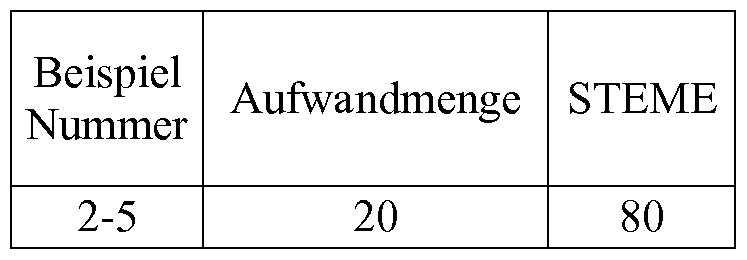
- Example 2-5 Synthesis of 5- (trifluoromethyl) -2,3-dihydro-1,4-benzodithiin-N- (1-methyltetrazol-5-yl) -8-carboxylic acid amide
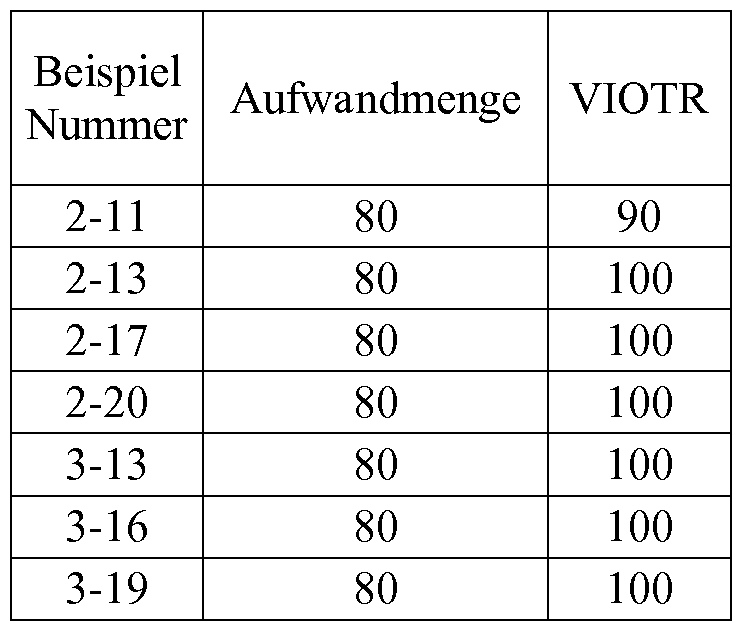
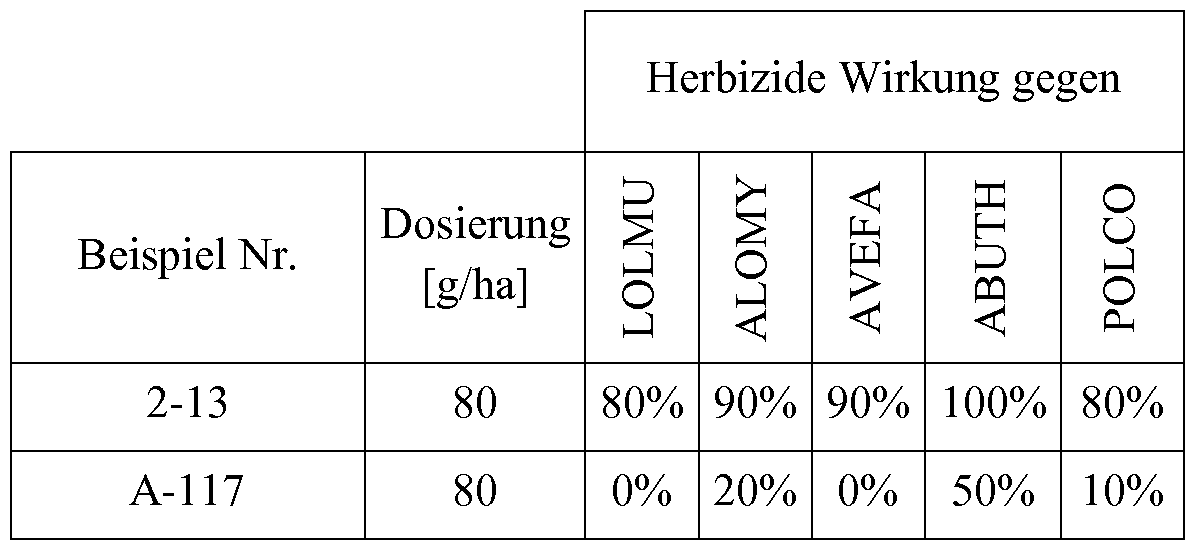
- Example 2-13 Synthesis of 5- (trifluoromethyl) -2,3-dihydro-1,4-benzoxathiin-N- (1-methyltetrazol-5-yl) -8-carboxylic acid amide
- Example 2-17 Synthesis of 5- (trifluoromethyl) -2,3-dihydro-1,4-benzoxathiin-4-oxide-N- (1-methyltetrazol-5-yl) -8-carboxylic acid amide
- Hydrogen peroxide (30%) and then heated to 50 ° C until no more educt is detectable. Then it is diluted with ethyl acetate and washed with sodium bisulfite solution and sat.
- Example 2-20 Synthesis of 5- (trifluoromethyl) -2,3-dihydro-1,4-benzoxathiin-4,4-dioxide-N- (1-methyltetrazol-5-yl) -8-carboxylic acid amide
- Example 3-13 Synthesis of 5- (trifluoromethyl) -2,3-dihydro-1,4-benzoxathiin-N- (1-ethyltetrazol-5-yl) -8-carboxylic acid amide
- the NMR data of disclosed examples are listed either in classical form (d values, number of H atoms, multiplet splitting) or as so-called NMR peak lists.
- the NMR data of selected examples are noted in the form of NMR peak lists, with the d value in ppm and then the signal intensity separated by a space for each signal peak.
- the d-value signal intensity-number pairs of different signal peaks are listed separated by semicolons.
- the peak list of an example therefore has the form: di (Intensity ⁇ ; 8 2 (Intensity2);.; D; (Intensity ⁇ ;;; d h (Intensity n )
- the intensity of sharp signals correlates with the height of the signals in a printed example of an NMR spectrum in cm and shows the true ratios of the signal intensities. For broad signals, multiple peaks or the center of the signal and their relative intensity can be shown compared to the most intense signal in the spectrum.
- tetramethylsilane is used and / or the chemical shift of the solvent, especially in the case of spectra measured in DMSO. Therefore, the tetramethylsilane peak may occur in NMR peaks, but it does not have to.
- stereoisomers and / or impurities may be typical of each
- An expert calculating the peaks of the target compounds by known methods can isolate the peaks of the target compounds as needed, using additional intensity filters if necessary. This isolation would be similar to peak picking in the classical 1H NMR interpretation.
- a dust is obtained by mixing 10 parts by weight of a compound of formula (I) and 90% by weight of talc as inert and comminuting in a hammer mill. 2. Dispersible powder
- a wettable powder readily dispersible in water is obtained by reacting 25 parts by weight of a compound of formula (I), 64 parts by weight of kaolin-containing quartz as inert material, 10 parts by weight of lignosulfonic acid potassium and 1 part by weight of oleoylmethyltaurine sodium as wetting agent
- Dispersant mixed and ground in a pin mill.
- a dispersion concentrate which is readily dispersible in water is obtained by reacting 20 parts by weight of a compound of the formula (I), 6 parts by weight of alkylphenol polyglycol ether (®Triton X 207), 3% by weight. Parts of isotridecanol polyglycol ether (8 EO) and 71 parts by weight paraffinic mineral oil (boiling range, for example, about 255 to about 277 ° C) mixed and ground in a ball mill to a fineness of less than 5 microns.
- An emulsifiable concentrate is obtained from 15 parts by weight of a compound of the formula (I), 75 parts by weight of cyclohexanone as solvent and 10 parts by weight of ethoxylated nonylphenol as emulsifier.
- a water-dispersible granule is obtained by
- a water-dispersible granule is also obtained by
- ABUTH Abutilon theophrasti ALOMY Alopecurus myosuroides
- AMARE Amaranthus retrqflexus AVEFA: Avena fatua
- CYPES Cyperus esculentus ECHCG: Echinochloa crus-galli LOLMU: Lotium multiflorum MATIN: Matricaria inodora
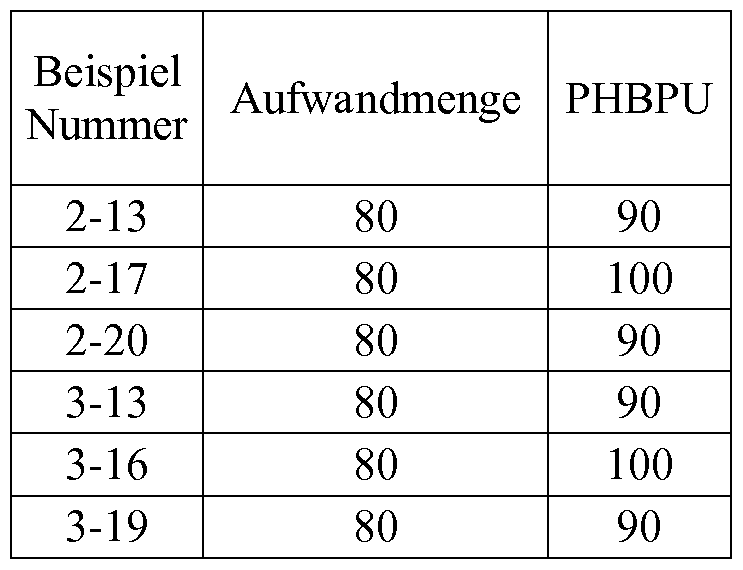
- PHBPU Ipomoea purpurea
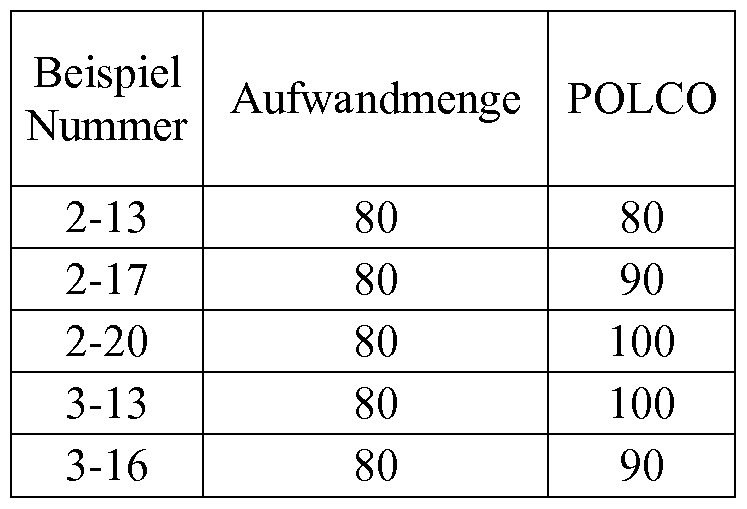
- POLCO Polygonum convolvulus
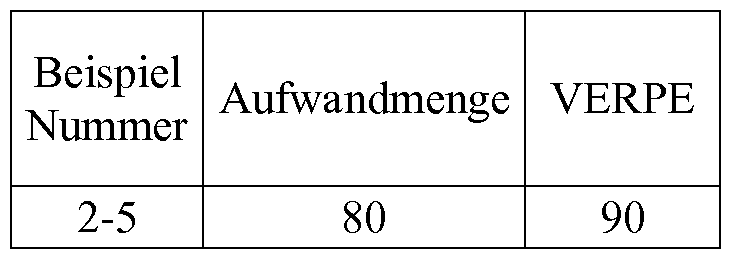
- VERPE Veronica persica VIOTR: Viola tricolor
- PE Herbicidal action and pre-emergent culture compatibility
- Seeds of monocotyledonous or dicotyledonous weeds and crops are laid out in plastic or organic plant pots and covered with soil.
- the compounds according to the invention formulated in the form of wettable powders (WP) or as emulsion concentrates (EC) are then applied to the surface of the cover soil as an aqueous suspension or emulsion with the addition of 0.5% of additive at a water application rate of 600 l / ha. After treatment, the pots are left in the greenhouse and kept under good growth conditions for the test plants. After about 3 weeks, the effect of the preparations is scored visually in comparison to untreated controls in percentages.
- the following tables show the herbicidal action of numerous compounds according to the invention against important harmful plants.
- Seeds of monocotyledonous or dicotyledonous crops are placed in sandy loam soil in plastic or organic plant pots, covered with soil and grown in the greenhouse under controlled growth conditions. 2 to 3 weeks after sowing, the test plants are treated in the single leaf stage.
- the compounds of the invention formulated in the form of wettable powders (WP) or as emulsion concentrates (EC) are then sprayed onto the green plant parts as an aqueous suspension or emulsion with the addition of 0.5% of additive at a water dosage of 600 l / ha.
- WP wettable powders
- EC emulsion concentrates
Landscapes
- Chemical & Material Sciences (AREA)
- Organic Chemistry (AREA)
- Life Sciences & Earth Sciences (AREA)
- Agronomy & Crop Science (AREA)
- Pest Control & Pesticides (AREA)
- Plant Pathology (AREA)
- Health & Medical Sciences (AREA)
- Engineering & Computer Science (AREA)
- Dentistry (AREA)
- General Health & Medical Sciences (AREA)
- Wood Science & Technology (AREA)
- Zoology (AREA)
- Environmental Sciences (AREA)
- Agricultural Chemicals And Associated Chemicals (AREA)
- Nitrogen Condensed Heterocyclic Rings (AREA)
- Nitrogen And Oxygen Or Sulfur-Condensed Heterocyclic Ring Systems (AREA)
- Catching Or Destruction (AREA)
- Plural Heterocyclic Compounds (AREA)
- Organic Low-Molecular-Weight Compounds And Preparation Thereof (AREA)
Abstract
Description









Claims


Priority Applications (5)
| Application Number | Priority Date | Filing Date | Title |
|---|---|---|---|
| CN201980016090.4A CN111788199B (zh) | 2018-02-28 | 2019-02-20 | 除草活性的双环苯甲酰胺 |
| US16/975,642 US12286425B2 (en) | 2018-02-28 | 2019-02-20 | Herbicidally active bicyclic benzamides |
| JP2020545291A JP7252245B2 (ja) | 2018-02-28 | 2019-02-20 | 除草活性二環式ベンズアミド |
| BR112020017570-6A BR112020017570A2 (pt) | 2018-02-28 | 2019-02-20 | Benzamidas bicíclicas herbicidamente ativas |
| EP19708964.2A EP3759105B1 (de) | 2018-02-28 | 2019-02-20 | Herbizid wirksame bizyklische benzamide |
Applications Claiming Priority (2)
| Application Number | Priority Date | Filing Date | Title |
|---|---|---|---|
| EP18159079.5 | 2018-02-28 | ||
| EP18159079 | 2018-02-28 |
Publications (1)
| Publication Number | Publication Date |
|---|---|
| WO2019166304A1 true WO2019166304A1 (de) | 2019-09-06 |
Family
ID=61521424
Family Applications (1)
| Application Number | Title | Priority Date | Filing Date |
|---|---|---|---|
| PCT/EP2019/054252 Ceased WO2019166304A1 (de) | 2018-02-28 | 2019-02-20 | Herbizid wirksame bizyklische benzamide |
Country Status (9)
| Country | Link |
|---|---|
| US (1) | US12286425B2 (de) |
| EP (1) | EP3759105B1 (de) |
| JP (1) | JP7252245B2 (de) |
| CN (1) | CN111788199B (de) |
| AR (1) | AR114999A1 (de) |
| BR (1) | BR112020017570A2 (de) |
| PY (1) | PY1915809A (de) |
| UY (1) | UY38112A (de) |
| WO (1) | WO2019166304A1 (de) |
Cited By (1)
| Publication number | Priority date | Publication date | Assignee | Title |
|---|---|---|---|---|
| WO2020246418A1 (ja) * | 2019-06-04 | 2020-12-10 | 日本曹達株式会社 | ベンズアミド化合物および除草剤 |
Citations (1)
| Publication number | Priority date | Publication date | Assignee | Title |
|---|---|---|---|---|
| WO2013076315A2 (en) * | 2012-04-27 | 2013-05-30 | Basf Se | Substituted n-(tetrazol-5-yl)- and n-(triazol-5-yl)arylcarboxamide compounds and their use as herbicides |
Family Cites Families (10)
| Publication number | Priority date | Publication date | Assignee | Title |
|---|---|---|---|---|
| EP0888343B1 (de) | 1996-02-24 | 2002-06-05 | Basf Aktiengesellschaft | Pyrazol-4-yl-hetaroylderivate als herbizide |
| GB9724586D0 (en) * | 1997-11-20 | 1998-01-21 | Rhone Poulenc Agriculture | New herbicides |
| EP2519103B1 (de) * | 2009-12-28 | 2014-08-13 | Bayer Intellectual Property GmbH | Fungizide Hydroximoyl-Tetrazol-Derivate |
| RS54643B1 (sr) * | 2010-06-29 | 2016-08-31 | Fmc Corporation | Derivat 6-acil-1,2,4-triazin-3,5-diona i herbicidi |
| RS53519B1 (sr) | 2010-09-01 | 2015-02-27 | Bayer Intellectual Property Gmbh | N-(tetrazol-5-il)- i n-(triazol-5-il)aril amidi karboksilne kiseline i njihova upotreba kao herbicida |
| JP5844827B2 (ja) | 2011-03-15 | 2016-01-20 | バイエル・インテレクチュアル・プロパティ・ゲゼルシャフト・ミット・ベシュレンクテル・ハフツングBayer Intellectual Property GmbH | N−(1,2,5−オキサジアゾール−3−イル)−、n−(テトラゾール−5−イル)−およびn−(トリアゾール−5−イル)ビシクロアリールカルボキサミド類およびそれらの除草剤としての使用 |
| IN2014DN00176A (de) | 2011-08-03 | 2015-07-10 | Bayer Ip Gmbh | |
| KR102079116B1 (ko) | 2012-12-14 | 2020-02-19 | 바이엘 크롭사이언스 악티엔게젤샤프트 | 4-할로알킬-3-머캅토-치환된 2-하이드록시벤조산 유도체의 제조방법 |
| WO2014184073A1 (en) | 2013-05-15 | 2014-11-20 | Basf Se | Substituted n-(tetrazol-5-yl)- and n-(triazol-5-yl)arylcarboxamide compounds and their use as herbicides |
| WO2016196019A1 (en) * | 2015-05-29 | 2016-12-08 | E I Du Pont De Nemours And Company | Substituted cyclic amides as herbicides |
-
2019
- 2019-02-20 JP JP2020545291A patent/JP7252245B2/ja active Active
- 2019-02-20 EP EP19708964.2A patent/EP3759105B1/de active Active
- 2019-02-20 WO PCT/EP2019/054252 patent/WO2019166304A1/de not_active Ceased
- 2019-02-20 CN CN201980016090.4A patent/CN111788199B/zh active Active
- 2019-02-20 US US16/975,642 patent/US12286425B2/en active Active
- 2019-02-20 BR BR112020017570-6A patent/BR112020017570A2/pt not_active Application Discontinuation
- 2019-02-28 PY PY201901915809A patent/PY1915809A/es unknown
- 2019-02-28 AR ARP190100501A patent/AR114999A1/es unknown
- 2019-02-28 UY UY38112A patent/UY38112A/es not_active Application Discontinuation
Patent Citations (1)
| Publication number | Priority date | Publication date | Assignee | Title |
|---|---|---|---|---|
| WO2013076315A2 (en) * | 2012-04-27 | 2013-05-30 | Basf Se | Substituted n-(tetrazol-5-yl)- and n-(triazol-5-yl)arylcarboxamide compounds and their use as herbicides |
Cited By (1)
| Publication number | Priority date | Publication date | Assignee | Title |
|---|---|---|---|---|
| WO2020246418A1 (ja) * | 2019-06-04 | 2020-12-10 | 日本曹達株式会社 | ベンズアミド化合物および除草剤 |
Also Published As
| Publication number | Publication date |
|---|---|
| JP7252245B2 (ja) | 2023-04-04 |
| CN111788199A (zh) | 2020-10-16 |
| EP3759105A1 (de) | 2021-01-06 |
| JP2021514998A (ja) | 2021-06-17 |
| US20200404920A1 (en) | 2020-12-31 |
| CN111788199B (zh) | 2024-05-03 |
| EP3759105B1 (de) | 2022-04-06 |
| AR114999A1 (es) | 2020-11-18 |
| US12286425B2 (en) | 2025-04-29 |
| UY38112A (es) | 2019-10-01 |
| PY1915809A (es) | 2020-03-09 |
| BR112020017570A2 (pt) | 2020-12-22 |
Similar Documents
| Publication | Publication Date | Title |
|---|---|---|
| EP3638665A1 (de) | Herbizid wirksame 3-phenylisoxazolin-5-carboxamide von tetrahydro- und dihydrofurancarbonsäuren und -estern | |
| EP3793977A1 (de) | 2-brom-6-alkoxyphenyl-substituierte pyrrolin-2-one und deren verwendung als herbizide | |
| EP3938348A1 (de) | Neue 3-(2-brom-4-alkinyl-6-alkoxyphenyl)-3-pyrrolin-2-one und deren verwendung als herbizide | |
| WO2019219584A1 (de) | Neue spirocyclohexylpyrrolin-2-one und deren verwendung als herbizide | |
| EP4132916A1 (de) | Substituierte isophtalsäurediamide und ihre verwendung als herbizide | |
| WO2019228788A1 (de) | 2-brom-6-alkoxyphenyl-substituierte pyrrolin-2-one und deren verwendung als herbizide | |
| EP3759105B1 (de) | Herbizid wirksame bizyklische benzamide | |
| WO2019166305A1 (de) | Herbizid wirksame bizyklische benzamide | |
| WO2019096884A1 (de) | Herbizid wirksame bizyklische benzamide | |
| WO2021204884A1 (de) | 3-(4-alkenyl-phenyl)-3-pyrrolin-2-one und deren verwendung als herbizide | |
| WO2019228787A1 (de) | Speziell substituierte 2-alkyl-6-alkoxyphenyl-3-pyrrolin-2-one und deren verwendung als herbizide | |
| EP3911633A1 (de) | Herbizide substituierte n-tetrazolylarylcarboxamide | |
| EP3802521A1 (de) | Herbizid wirksame bizyklische benzoylpyrazole | |
| WO2023280772A1 (de) | N-(1,3,4-oxadiazol-2-yl)phenylcarboxamide als herbizide | |
| WO2022253700A1 (de) | Speziell substituierte pyrrolin-2-one und deren verwendung als herbizide | |
| WO2023274869A1 (de) | 3-(4-alkenyl-phenyl)-3-pyrrolin-2-one und deren verwendung als herbizide | |
| EP3938349A1 (de) | Speziell substituierte 3-(2-alkoxy-6-alkyl-4-propinylphenyl)-3-pyrrolin-2-one und deren verwendung als herbizide | |
| WO2021209486A1 (de) | Speziell substituierte pyrrolin-2-one und deren verwendung als herbizide | |
| EP3938347A1 (de) | Speziell substituierte 3-phenyl-5-spirocyclopentyl-3-pyrrolin-2-one und deren verwendung als herbizide | |
| WO2019219588A1 (de) | Speziell substituierte 2-alkyl-6-alkoxyphenyl-3-pyrroliin-2-one und deren verwendung als herbizide | |
| EP3938350A1 (de) | 3-(2-brom-4-alkinyl-6-alkoxyphenyl)-substituierte 5-spirocyclohexyl-3-pyrrolin-2-one und deren verwendung als herbizide | |
| EP3938346A1 (de) | Speziell substituierte 3-(2-halogen-6-alkyl-4-propinylphenyl)-3-pyrrolin-2-one und deren verwendung als herbizide | |
| EP4157851A1 (de) | Substituierte pyrrolin-2-one und deren verwendung als herbizide | |
| WO2019219585A1 (de) | Neue 3-(4-alkinyl-6-alkoxy-2-chlorphenyl)-3-pyrrolin-2-one und deren verwendung als herbizide | |
| WO2020245097A1 (de) | Substituierte pyridinyloxypyridine sowie deren salze und ihre verwendung als herbizide wirkstoffe |
Legal Events
| Date | Code | Title | Description |
|---|---|---|---|
| 121 | Ep: the epo has been informed by wipo that ep was designated in this application |
Ref document number: 19708964 Country of ref document: EP Kind code of ref document: A1 |
|
| ENP | Entry into the national phase |
Ref document number: 2020545291 Country of ref document: JP Kind code of ref document: A |
|
| NENP | Non-entry into the national phase |
Ref country code: DE |
|
| ENP | Entry into the national phase |
Ref document number: 2019708964 Country of ref document: EP Effective date: 20200928 |
|
| REG | Reference to national code |
Ref country code: BR Ref legal event code: B01A Ref document number: 112020017570 Country of ref document: BR |
|
| ENP | Entry into the national phase |
Ref document number: 112020017570 Country of ref document: BR Kind code of ref document: A2 Effective date: 20200828 |
|
| WWG | Wipo information: grant in national office |
Ref document number: 16975642 Country of ref document: US |