WO2019169687A1 - Procédé et appareil de réglage audio, et dispositif audio - Google Patents
Procédé et appareil de réglage audio, et dispositif audio Download PDFInfo
- Publication number
- WO2019169687A1 WO2019169687A1 PCT/CN2018/082040 CN2018082040W WO2019169687A1 WO 2019169687 A1 WO2019169687 A1 WO 2019169687A1 CN 2018082040 W CN2018082040 W CN 2018082040W WO 2019169687 A1 WO2019169687 A1 WO 2019169687A1
- Authority
- WO
- WIPO (PCT)
- Prior art keywords
- audio
- obstacle
- photodiode
- distance
- infrared
- Prior art date
- Legal status (The legal status is an assumption and is not a legal conclusion. Google has not performed a legal analysis and makes no representation as to the accuracy of the status listed.)
- Ceased
Links
Images


Classifications
-
- G—PHYSICS
- G06—COMPUTING OR CALCULATING; COUNTING
- G06F—ELECTRIC DIGITAL DATA PROCESSING
- G06F3/00—Input arrangements for transferring data to be processed into a form capable of being handled by the computer; Output arrangements for transferring data from processing unit to output unit, e.g. interface arrangements
- G06F3/16—Sound input; Sound output
- G06F3/165—Management of the audio stream, e.g. setting of volume, audio stream path
-
- G—PHYSICS
- G01—MEASURING; TESTING
- G01S—RADIO DIRECTION-FINDING; RADIO NAVIGATION; DETERMINING DISTANCE OR VELOCITY BY USE OF RADIO WAVES; LOCATING OR PRESENCE-DETECTING BY USE OF THE REFLECTION OR RERADIATION OF RADIO WAVES; ANALOGOUS ARRANGEMENTS USING OTHER WAVES
- G01S17/00—Systems using the reflection or reradiation of electromagnetic waves other than radio waves, e.g. lidar systems
- G01S17/02—Systems using the reflection of electromagnetic waves other than radio waves
- G01S17/06—Systems determining position data of a target
- G01S17/42—Simultaneous measurement of distance and other co-ordinates
-
- G—PHYSICS
- G01—MEASURING; TESTING
- G01S—RADIO DIRECTION-FINDING; RADIO NAVIGATION; DETERMINING DISTANCE OR VELOCITY BY USE OF RADIO WAVES; LOCATING OR PRESENCE-DETECTING BY USE OF THE REFLECTION OR RERADIATION OF RADIO WAVES; ANALOGOUS ARRANGEMENTS USING OTHER WAVES
- G01S17/00—Systems using the reflection or reradiation of electromagnetic waves other than radio waves, e.g. lidar systems
- G01S17/02—Systems using the reflection of electromagnetic waves other than radio waves
- G01S17/06—Systems determining position data of a target
- G01S17/46—Indirect determination of position data
Definitions
- the invention relates to the field of smart home technology, in particular to an audio adjustment method, device and audio device.
- Intelligent audio equipment can sense the surrounding environment. When the surrounding environment changes, adjust the audio output characteristics, optimize the audio effect, and provide the user with the best listening experience.
- Existing smart audio devices primarily sense the surrounding environment through ultrasonic sensors.
- the cost of the ultrasonic sensor is high, and the ultrasonic wave has an adverse effect on the surrounding environment, such as affecting pets such as cats and dogs.
- a primary object of the present invention is to provide an audio adjustment method, apparatus, and audio apparatus that achieve low cost and are environmentally friendly.
- an embodiment of the present invention provides an audio adjustment method, where the method includes the following steps:
- the audio output characteristics are adjusted according to the distribution information of the obstacle.
- the speckle projection device and the infrared receiving device are arranged in plurality and alternately.
- the speckle projection device and the infrared receiving device are arranged in an arc shape.
- the speckle projection device and the infrared receiving device are arranged in a circle.
- the distribution information of the obstacle includes a direction and a distance of the obstacle.
- the infrared receiving device is a photodiode
- the step of determining distribution information of surrounding obstacles according to the reflected light includes:
- the direction and distance of the obstacle are calculated based on the induced current and normal of the photodiode.
- the step of calculating the direction and distance of the obstacle according to the induced current and the normal direction of the photodiode includes:
- the direction and distance of the obstacle of an area are determined by a group of two adjacent infrared receiving devices.
- the audio output characteristic comprises at least one of an audio volume, an audio track, and an audio equalization parameter.
- the step of adjusting audio output characteristics according to the distribution information of the obstacle includes:
- the audio volume is adjusted separately for the distance of the obstacles in the respective directions, the magnitude of the audio volume being inversely proportional to the distance of the obstacle in the corresponding direction.
- An embodiment of the present invention also provides an audio adjustment apparatus, where the apparatus includes:
- a projection module for projecting an infrared spot outward through the speckle projection device
- a receiving module configured to receive, by the infrared receiving device, the reflected light reflected by the infrared spot
- a determining module configured to determine distribution information of surrounding obstacles according to the reflected light
- an adjustment module configured to adjust an audio output characteristic according to the distribution information of the obstacle.
- the infrared receiving device is a photodiode
- the determining module includes:
- a reading unit for reading an induced current of the photodiode
- a calculating unit configured to calculate a direction and a distance of the obstacle according to an induced current and a normal of the photodiode.
- the calculating unit calculates the direction and distance of the obstacle according to the following formula:
- the determining module is configured to determine a direction and a distance of an obstacle of an area by using a group of two adjacent infrared receiving devices.
- the audio output characteristic comprises at least one of an audio volume, an audio track, and an audio equalization parameter.
- the adjusting module is configured to: respectively adjust an audio volume for a distance of an obstacle in each direction, the magnitude of the audio volume being inversely proportional to a distance of an obstacle in a corresponding direction.
- Embodiments of the present invention also provide an audio device including a memory, a processor, and at least one application stored in the memory and configured to be executed by the processor, the application being configured to be used for Perform the aforementioned audio adjustment method.
- An audio adjustment method provided by an embodiment of the present invention utilizes a speckle projection device and an infrared receiving device to implement active detection and adaptive adjustment of the environment by using infrared rays as an active beacon for environment sensing.
- the infrared detection has a low implementation cost, and the infrared detection is friendly to the surrounding environment, and does not adversely affect the surrounding environment (such as pets), thereby improving the user experience.
- FIG. 1 is a flow chart of an embodiment of an audio adjustment method of the present invention
- FIG. 2 is a schematic structural diagram of an example of an audio device to which an audio adjustment method according to an embodiment of the present invention is applied;
- 3 is a schematic view showing the arrangement of a speckle projection device and an infrared receiving device in an embodiment of the present invention
- FIG. 5 is a schematic diagram of an infrared receiving device receiving reflected light according to an embodiment of the present invention
- Figure 6 is a block diagram showing an embodiment of an audio adjusting device of the present invention.
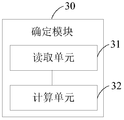
- Figure 7 is a block diagram of the determination module of Figure 6.
- the audio adjustment method and device of the embodiment of the present invention are mainly applied to an audio device, and may of course be applied to other sounding devices, which is not limited by the present invention.
- the following is a detailed description of the application to the audio equipment.
- the method includes the following steps:
- the acoustic device of the embodiment of the present invention is as shown in FIG. 2, and an environment sensing component 100 is disposed at the top thereof, and the environment sensing component 100 is composed of a speckle projection device and an infrared receiving device.
- the speckle projection device 101 and the infrared receiving device 102 are arranged in plurality and alternately, and the speckle projection device 101 and the infrared receiving device 102 are preferably arranged in an arc shape to expand the sensing range of the environment sensing component.
- the speckle projection device 101 and the infrared receiving device 102 are arranged in a circle, and 360 degrees without dead angle perception can be realized for the surrounding environment.
- the audio device projects the infrared spot outwardly through the speckle projection device 101 in real time or at a time. After the infrared spot is projected onto an obstacle (such as a wall), it is reflected back, and the audio device passes through the infrared receiving device 102. Receives reflected light reflected from the infrared spot. Depending on the direction and intensity of the reflected light, the audio equipment can determine the distribution of information such as the direction and distance of the surrounding obstacles (distance from the audio equipment).
- the infrared receiving device 102 is an infrared photosensitive element, preferably a photodiode.
- the photodiode When the reflected light hits the photodiode, the photodiode generates an induced current.
- the induced current of the photodiode is related to the received light intensity of the reflected light. The greater the light intensity, the larger the induced current.
- the reflected light reflected from the spot projected by the speckle projection device 101 is received by two adjacent infrared receiving devices 102 (photodiodes), and the normal directions of the two infrared receiving devices 102 (photodiodes) (normal) Direction)
- the angle between the infrared receiving device 102 (photodiode) and the horizontal line is ⁇ . Assuming that the light source (infrared spot) is far away from the infrared receiving device 102 (photodiode) and much larger than the distance between the two infrared receiving devices 102 (photodiodes), the reflected light is approximately parallel light, and the direction is
- the illumination intensity of the reflected light received by the infrared receiving device 102 is related to the incident angle of the reflected light on the infrared receiving device 102 (photodiode), and the distance between the obstacle reflecting the infrared spot and the acoustic device is different, and the incident angle is different.
- the incident angle is actually related to the normal direction of the infrared receiving device 102 (photodiode) and the direction of the reflected light. It has been found that the induced current on the infrared receiving device 102 (photodiode) and the infrared receiving device 102 (photodiode)
- the normal direction is proportional to the dot product of the direction of the reflected light, that is:
- k is the scale factor
- the acoustic device reads the induced current of the infrared receiving device 102 (photodiode), and can calculate the direction and approximate of the obstacle according to the induced current and the normal direction of the infrared receiving device 102 (photodiode). distance.
- the audio device can calculate the direction and distance of the obstacle according to the following formula:
- T For the induced current of the infrared receiving device 102 (photodiode), T represents vector conversion.
- the direction of the obstacle is the same as the direction of the reflected light, and the distance is proportional to the intensity of the reflected light.
- the audio device preferably determines the direction and distance of the obstacle of an area by using two adjacent infrared receiving devices 102 (photodiodes) as a group. Finally, the distribution information of all obstacles around is determined by all the infrared receiving devices 102 (photodiodes).
- the audio device adjusts the audio output characteristics accordingly.
- the audio output characteristics may include one or a combination of at least two of audio volume, audio track, audio equalization parameters, and the like. Among them, the audio equalization parameters can be adjusted by the audio equalizer.
- the audio device adjusts the audio volume separately for the distance of the obstacle in each direction, and the magnitude of the audio volume is inversely proportional to the distance of the obstacle in the corresponding direction. That is, the direction farther from the obstacle increases the output power and increases the audio volume; the direction closer to the obstacle reduces the output power and lowers the audio volume.
- Other methods for adjusting the audio output characteristics are similar to the above, and the description of the embodiments of the present invention will not be repeated.
- the adaptive dynamic adjustment of the audio through the sensing environment is realized, so that the listeners in all directions can obtain the best audio effect, or the listener can get the best audio effect when approaching or away from the audio device, thereby improving the user's hearing experience.
- the audio equipment can automatically adjust the audio according to the surrounding environment, which improves the intelligence of the audio equipment.
- the audio adjustment method of the embodiment of the invention uses the speckle projection device and the infrared receiving device to implement active detection and adaptive adjustment of the environment by using infrared rays as an active beacon for environment sensing.
- the infrared detection has a low implementation cost, and the infrared detection is friendly to the surrounding environment, and does not adversely affect the surrounding environment (such as pets), thereby improving the user experience.
- the apparatus includes a projection module 10, a receiving module 20, a determining module 30, and an adjusting module 40, wherein: the projection module 10 is configured to extend outward through the speckle projection device. The infrared light spot is projected; the receiving module 20 is configured to receive the reflected light reflected by the infrared spot through the infrared receiving device; the determining module 30 is configured to determine the distribution information of the surrounding obstacle according to the reflected light; and the adjusting module 40 is configured to use the obstacle The distribution information adjusts the audio output characteristics.
- the speckle projection device 101 and the infrared receiving device 102 are arranged in multiple and alternately, and the speckle projection device 101 and the infrared receiving device 102 are preferably arranged in an arc shape to expand the environment. Perceive the perceived range of components.
- the speckle projection device 101 and the infrared receiving device 102 are arranged in a circle, and 360 degrees without dead angle perception can be realized for the surrounding environment.
- the projection module 10 projects the infrared spot outwardly through the speckle projection device 101 in real time or at a time. After the infrared spot is projected onto an obstacle (such as a wall), it is reflected back, and the receiving module 20 receives the infrared light. Device 102 receives the reflected light reflected from the infrared spot. Based on the direction and intensity of the reflected light, the determination module 30 is capable of determining distribution information such as the direction and distance of the surrounding obstacles (distance from the acoustic device).
- the infrared receiving device 102 is an infrared photosensitive element, preferably a photodiode.
- the photodiode When the reflected light hits the photodiode, the photodiode generates an induced current.
- the induced current of the photodiode is related to the received light intensity of the reflected light. The greater the light intensity, the larger the induced current.
- the reflected light reflected from the spot projected by the speckle projection device 101 is received by two adjacent infrared receiving devices 102 (photodiodes), and the normal directions of the two infrared receiving devices 102 (photodiodes) (normal) Direction)
- the angle between the infrared receiving device 102 (photodiode) and the horizontal line is ⁇ . Assuming that the light source (infrared spot) is far away from the infrared receiving device 102 (photodiode) and much larger than the distance between the two infrared receiving devices 102 (photodiodes), the reflected light is approximately parallel light, and the direction is
- the illumination intensity of the reflected light received by the infrared receiving device 102 is related to the incident angle of the reflected light on the infrared receiving device 102 (photodiode), and the distance between the obstacle reflecting the infrared spot and the acoustic device is different, and the incident angle is different.
- the incident angle is actually related to the normal direction of the infrared receiving device 102 (photodiode) and the direction of the reflected light. It has been found that the induced current on the infrared receiving device 102 (photodiode) and the infrared receiving device 102 (photodiode)
- the normal direction is proportional to the dot product of the direction of the reflected light, that is:
- k is the scale factor
- the determining module 30 includes a reading unit 31 and a calculating unit 32, as shown in FIG. 7, wherein: the reading unit 31 is configured to read an induced current of the infrared receiving device 102 (photodiode); The calculating unit 32 is configured to calculate the direction and distance of the obstacle according to the induced current and the normal direction of the infrared receiving device 102 (photodiode).
- the calculation unit 32 calculates the direction and distance of the obstacle according to the following formula:
- T For the induced current of the infrared receiving device 102 (photodiode), T represents vector conversion.
- the direction of the obstacle is the same as the direction of the reflected light, and the distance is proportional to the intensity of the reflected light.
- the determining module 30 preferably determines the direction and distance of the obstacle of an area by using two adjacent infrared receiving devices 102 (photodiodes) as a group. Finally, the distribution information of all obstacles around is determined by all the infrared receiving devices 102 (photodiodes).
- the adjustment module 40 adjusts the audio output characteristics accordingly.
- the audio output characteristics may include one or a combination of at least two of audio volume, audio track, audio equalization parameters, and the like. Among them, the audio equalization parameters can be adjusted by the audio equalizer.
- the adjustment module 40 adjusts the audio volume separately for the distance of the obstacle in each direction, and the magnitude of the audio volume is inversely proportional to the distance of the obstacle in the corresponding direction. That is, the direction farther from the obstacle increases the output power and increases the audio volume; the direction closer to the obstacle reduces the output power and lowers the audio volume.
- Other methods for adjusting the audio output characteristics are similar to the above, and the description of the embodiments of the present invention will not be repeated.
- the adaptive dynamic adjustment of the audio through the sensing environment is realized, so that the listeners in all directions can obtain the best audio effect, or the listener can get the best audio effect when approaching or away from the audio device, thereby improving the user's hearing experience.
- the audio equipment can automatically adjust the audio according to the surrounding environment, which improves the intelligence of the audio equipment.
- the audio adjusting device of the embodiment of the invention realizes active detection and adaptive adjustment of the environment by using the speckle projection device and the infrared receiving device, and adopting infrared rays as an active beacon for environment sensing.
- the infrared detection has a low implementation cost, and the infrared detection is friendly to the surrounding environment, and does not adversely affect the surrounding environment (such as pets), thereby improving the user experience.
- the present invention also contemplates an audio device comprising a memory, a processor and at least one application stored in the memory and configured to be executed by the processor, the application being configured to perform the aforementioned audio adjustment method.
- the audio adjustment method includes the steps of: projecting an infrared spot outward through the speckle projection device; receiving the reflected light reflected by the infrared spot through the infrared receiving device; determining distribution information of the surrounding obstacle according to the reflected light; and distributing according to the obstacle Information adjusts the audio output characteristics.
- the audio adjustment method described in this embodiment is the audio adjustment method in the foregoing embodiment of the present invention, and details are not described herein again.
- the present invention includes apparatus that is directed to performing one or more of the operations described herein. These devices may be specially designed and manufactured for the required purposes, or may also include known devices in a general purpose computer. These devices have computer programs stored therein that are selectively activated or reconfigured.
- Such computer programs may be stored in a device (eg, computer) readable medium or in any type of medium suitable for storing electronic instructions and coupled to a bus, respectively, including but not limited to any Types of disks (including floppy disks, hard disks, optical disks, CD-ROMs, and magneto-optical disks), ROM (Read-Only Memory), RAM (Random Access Memory), EPROM (Erasable Programmable Read-Only Memory) , EEPROM (Electrically Erasable Programmable Read-Only Memory), flash memory, magnetic card or light card.
- a readable medium includes any medium that is stored or transmitted by a device (eg, a computer) in a readable form.
- each block of the block diagrams and/or block diagrams and/or flow diagrams and combinations of blocks in the block diagrams and/or block diagrams and/or flow diagrams can be implemented by computer program instructions. .
- these computer program instructions can be implemented by a general purpose computer, a professional computer, or a processor of other programmable data processing methods, such that the processor is executed by a computer or other programmable data processing method.
Landscapes
- Engineering & Computer Science (AREA)
- Physics & Mathematics (AREA)
- Electromagnetism (AREA)
- Theoretical Computer Science (AREA)
- General Physics & Mathematics (AREA)
- Health & Medical Sciences (AREA)
- Remote Sensing (AREA)
- Multimedia (AREA)
- Radar, Positioning & Navigation (AREA)
- Audiology, Speech & Language Pathology (AREA)
- General Health & Medical Sciences (AREA)
- Human Computer Interaction (AREA)
- General Engineering & Computer Science (AREA)
- Computer Networks & Wireless Communication (AREA)
- Optical Radar Systems And Details Thereof (AREA)
- Measurement Of Velocity Or Position Using Acoustic Or Ultrasonic Waves (AREA)
Abstract
La présente invention concerne un procédé et un appareil de réglage audio, et un dispositif audio. Le procédé comprend les étapes suivantes : projeter des points lumineux infrarouges vers l'extérieur au moyen d'appareils de projection à speckle; recevoir, au moyen d'appareils de réception infrarouge, la lumière réfléchie par les points lumineux infrarouge; déterminer la distribution des informations des obstacles voisins selon la lumière réfléchie; et ajuster la caractéristique des sorties audio selon la distribution des informations des obstacles. La méthode d'ajustement audio fournie par les incarnations de la présente invention permet la détection active de l'environnement et l'ajustement adaptatif en utilisant les appareils de projection de speckle et les appareils de réception infrarouge de manière à utiliser la lumière infrarouge comme une balise active pour effectuer la détection d'environnement. Par rapport aux procédés de détection par ultrasons existants et à d'autres procédés, la détection par infrarouge est peu coûteuse à mettre en œuvre et respectueuse de l'environnement, ne nuit pas à l'environnement environnant (comme celui des animaux domestiques) et améliore l'expérience utilisateur.
Applications Claiming Priority (2)
| Application Number | Priority Date | Filing Date | Title |
|---|---|---|---|
| CN201810183351.9 | 2018-03-06 | ||
| CN201810183351.9A CN108388418B (zh) | 2018-03-06 | 2018-03-06 | 音频调整方法、装置和音响设备 |
Publications (1)
| Publication Number | Publication Date |
|---|---|
| WO2019169687A1 true WO2019169687A1 (fr) | 2019-09-12 |
Family
ID=63069983
Family Applications (1)
| Application Number | Title | Priority Date | Filing Date |
|---|---|---|---|
| PCT/CN2018/082040 Ceased WO2019169687A1 (fr) | 2018-03-06 | 2018-04-04 | Procédé et appareil de réglage audio, et dispositif audio |
Country Status (2)
| Country | Link |
|---|---|
| CN (1) | CN108388418B (fr) |
| WO (1) | WO2019169687A1 (fr) |
Families Citing this family (2)
| Publication number | Priority date | Publication date | Assignee | Title |
|---|---|---|---|---|
| CN108388418B (zh) * | 2018-03-06 | 2021-03-16 | 深圳市无限动力发展有限公司 | 音频调整方法、装置和音响设备 |
| CN109309758B (zh) * | 2018-08-28 | 2021-01-08 | 维沃移动通信有限公司 | 一种音频处理装置、终端设备及信号处理方法 |
Citations (6)
| Publication number | Priority date | Publication date | Assignee | Title |
|---|---|---|---|---|
| JPH01109899A (ja) * | 1987-10-22 | 1989-04-26 | Matsushita Electric Ind Co Ltd | ステレオ用リモコン位置検出装置 |
| CN1489702A (zh) * | 2001-01-26 | 2004-04-14 | ���ṫ˾ | 通过红外线辐射进行障碍探测及距离测量的方法和装置 |
| CN1747533A (zh) * | 2004-09-06 | 2006-03-15 | 三星电子株式会社 | 视听系统及其调谐方法 |
| WO2013115748A1 (fr) * | 2012-01-30 | 2013-08-08 | Echostar Ukraine, L.L.C. | Appareil, systèmes et procédés de réglage du volume de sortie audio sur la base d'une position d'utilisateur |
| CN105744441A (zh) * | 2016-03-30 | 2016-07-06 | 苏州合欣美电子科技有限公司 | 基于距离感应的自适应音量调节的音箱 |
| CN108388418A (zh) * | 2018-03-06 | 2018-08-10 | 深圳市沃特沃德股份有限公司 | 音频调整方法、装置和音响设备 |
Family Cites Families (7)
| Publication number | Priority date | Publication date | Assignee | Title |
|---|---|---|---|---|
| CN201708910U (zh) * | 2010-06-29 | 2011-01-12 | 深圳Tcl新技术有限公司 | 一种智能感应音箱 |
| CN102355215B (zh) * | 2011-05-20 | 2013-10-02 | 武汉艾立卡电子有限公司 | 非接触式音频设备音量控制器及控制方法 |
| CN104182097B (zh) * | 2014-08-26 | 2017-11-10 | Tcl通讯(宁波)有限公司 | 用于防止接近传感器误判断的触控终端及其方法 |
| CN106840034A (zh) * | 2015-12-04 | 2017-06-13 | 宁波舜宇光电信息有限公司 | 具有散斑投射器的三维扫描系统及其应用 |
| JP2017122673A (ja) * | 2016-01-08 | 2017-07-13 | 富士通株式会社 | レーザ距離測定装置、測定方法及び測定プログラム |
| CN106060703A (zh) * | 2016-07-21 | 2016-10-26 | 太仓怡泰霖智能科技有限公司 | 一种红外线测距的节能音响 |
| CN206698412U (zh) * | 2017-05-12 | 2017-12-01 | 湖北工程学院 | 智能音箱及影音系统 |
-
2018
- 2018-03-06 CN CN201810183351.9A patent/CN108388418B/zh active Active
- 2018-04-04 WO PCT/CN2018/082040 patent/WO2019169687A1/fr not_active Ceased
Patent Citations (6)
| Publication number | Priority date | Publication date | Assignee | Title |
|---|---|---|---|---|
| JPH01109899A (ja) * | 1987-10-22 | 1989-04-26 | Matsushita Electric Ind Co Ltd | ステレオ用リモコン位置検出装置 |
| CN1489702A (zh) * | 2001-01-26 | 2004-04-14 | ���ṫ˾ | 通过红外线辐射进行障碍探测及距离测量的方法和装置 |
| CN1747533A (zh) * | 2004-09-06 | 2006-03-15 | 三星电子株式会社 | 视听系统及其调谐方法 |
| WO2013115748A1 (fr) * | 2012-01-30 | 2013-08-08 | Echostar Ukraine, L.L.C. | Appareil, systèmes et procédés de réglage du volume de sortie audio sur la base d'une position d'utilisateur |
| CN105744441A (zh) * | 2016-03-30 | 2016-07-06 | 苏州合欣美电子科技有限公司 | 基于距离感应的自适应音量调节的音箱 |
| CN108388418A (zh) * | 2018-03-06 | 2018-08-10 | 深圳市沃特沃德股份有限公司 | 音频调整方法、装置和音响设备 |
Also Published As
| Publication number | Publication date |
|---|---|
| CN108388418A (zh) | 2018-08-10 |
| CN108388418B (zh) | 2021-03-16 |
Similar Documents
| Publication | Publication Date | Title |
|---|---|---|
| Jakobsen et al. | Vespertilionid bats control the width of their biosonar sound beam dynamically during prey pursuit | |
| CN110933558B (zh) | 一种定向发声方法、装置、超声换能器及电子设备 | |
| US9924290B2 (en) | Method and system for generation of sound fields | |
| CN114788304B (zh) | 用于减少环境噪声补偿系统中的误差的方法 | |
| CN108303697B (zh) | 一种障碍物的超声波检测方法、装置及系统 | |
| CN108769509A (zh) | 控制摄像头的方法、装置、电子设备及存储介质 | |
| JP2023508002A (ja) | オーディオデバイス自動場所選定 | |
| WO2019062164A1 (fr) | Procédé de chargement et appareil de chargement de robot de service, et robot de service | |
| JP2013531785A5 (fr) | ||
| CN111917489A (zh) | 音频信号处理方法、装置和电子设备 | |
| CN110716642B (zh) | 一种调节显示界面的方法与设备 | |
| US20200245090A1 (en) | Sound production device, display system, and sound production method | |
| CN107371097A (zh) | 智能化向用户提供提示声音的方法 | |
| US11546688B2 (en) | Loudspeaker device, method, apparatus and device for adjusting sound effect thereof, and medium | |
| CN110377066B (zh) | 一种巡检设备的控制方法、装置和设备 | |
| WO2019169687A1 (fr) | Procédé et appareil de réglage audio, et dispositif audio | |
| CN108595145A (zh) | 可穿戴设备的语音播放控制方法、装置及可穿戴设备 | |
| CN108008394B (zh) | 仿生声纳二维经历图绘制方法、存储介质及设备 | |
| Arditi et al. | Object localization using a biosonar beam: how opening your mouth improves localization | |
| CN112104962B (zh) | 一种基于图像识别的跟随式机器人扩声方法及扩声系统 | |
| CN110164443B (zh) | 用于电子设备的语音处理方法、装置以及电子设备 | |
| CN107396237A (zh) | 自定位的智能音箱 | |
| KR102778750B1 (ko) | 로봇 청소기를 이용한 인공지능 스피커의 음성 인식 강화 시스템 및 그 방법 | |
| CN114765031B (zh) | 一种收音装置、收音方法、终端和计算机可读存储介质 | |
| TW201019740A (en) | Sounder control circuit, sounder system and method for vehicle |
Legal Events
| Date | Code | Title | Description |
|---|---|---|---|
| 121 | Ep: the epo has been informed by wipo that ep was designated in this application |
Ref document number: 18908510 Country of ref document: EP Kind code of ref document: A1 |
|
| NENP | Non-entry into the national phase |
Ref country code: DE |
|
| 122 | Ep: pct application non-entry in european phase |
Ref document number: 18908510 Country of ref document: EP Kind code of ref document: A1 |