WO2019172279A1 - 虚血性疾患の治療及び/又は予防の為の細胞製剤、及び、その細胞製剤のスクリーニング方法 - Google Patents
虚血性疾患の治療及び/又は予防の為の細胞製剤、及び、その細胞製剤のスクリーニング方法 Download PDFInfo
- Publication number
- WO2019172279A1 WO2019172279A1 PCT/JP2019/008701 JP2019008701W WO2019172279A1 WO 2019172279 A1 WO2019172279 A1 WO 2019172279A1 JP 2019008701 W JP2019008701 W JP 2019008701W WO 2019172279 A1 WO2019172279 A1 WO 2019172279A1
- Authority
- WO
- WIPO (PCT)
- Prior art keywords
- cells
- white blood
- cell preparation
- blood cells
- cell
- Prior art date
- Legal status (The legal status is an assumption and is not a legal conclusion. Google has not performed a legal analysis and makes no representation as to the accuracy of the status listed.)
- Ceased
Links
Images




Classifications
-
- A—HUMAN NECESSITIES
- A61—MEDICAL OR VETERINARY SCIENCE; HYGIENE
- A61K—PREPARATIONS FOR MEDICAL, DENTAL OR TOILETRY PURPOSES
- A61K35/00—Medicinal preparations containing materials or reaction products thereof with undetermined constitution
- A61K35/12—Materials from mammals; Compositions comprising non-specified tissues or cells; Compositions comprising non-embryonic stem cells; Genetically modified cells
- A61K35/14—Blood; Artificial blood
- A61K35/18—Erythrocytes
-
- A—HUMAN NECESSITIES
- A61—MEDICAL OR VETERINARY SCIENCE; HYGIENE
- A61K—PREPARATIONS FOR MEDICAL, DENTAL OR TOILETRY PURPOSES
- A61K35/00—Medicinal preparations containing materials or reaction products thereof with undetermined constitution
- A61K35/12—Materials from mammals; Compositions comprising non-specified tissues or cells; Compositions comprising non-embryonic stem cells; Genetically modified cells
- A61K35/28—Bone marrow; Haematopoietic stem cells; Mesenchymal stem cells of any origin, e.g. adipose-derived stem cells
-
- A—HUMAN NECESSITIES
- A61—MEDICAL OR VETERINARY SCIENCE; HYGIENE
- A61K—PREPARATIONS FOR MEDICAL, DENTAL OR TOILETRY PURPOSES
- A61K35/00—Medicinal preparations containing materials or reaction products thereof with undetermined constitution
- A61K35/12—Materials from mammals; Compositions comprising non-specified tissues or cells; Compositions comprising non-embryonic stem cells; Genetically modified cells
- A61K35/14—Blood; Artificial blood
- A61K35/19—Platelets; Megacaryocytes
-
- A—HUMAN NECESSITIES
- A61—MEDICAL OR VETERINARY SCIENCE; HYGIENE
- A61K—PREPARATIONS FOR MEDICAL, DENTAL OR TOILETRY PURPOSES
- A61K40/00—Cellular immunotherapy
- A61K40/10—Cellular immunotherapy characterised by the cell type used
-
- A—HUMAN NECESSITIES
- A61—MEDICAL OR VETERINARY SCIENCE; HYGIENE
- A61K—PREPARATIONS FOR MEDICAL, DENTAL OR TOILETRY PURPOSES
- A61K40/00—Cellular immunotherapy
- A61K40/40—Cellular immunotherapy characterised by antigens that are targeted or presented by cells of the immune system
-
- A—HUMAN NECESSITIES
- A61—MEDICAL OR VETERINARY SCIENCE; HYGIENE
- A61P—SPECIFIC THERAPEUTIC ACTIVITY OF CHEMICAL COMPOUNDS OR MEDICINAL PREPARATIONS
- A61P1/00—Drugs for disorders of the alimentary tract or the digestive system
-
- A—HUMAN NECESSITIES
- A61—MEDICAL OR VETERINARY SCIENCE; HYGIENE
- A61P—SPECIFIC THERAPEUTIC ACTIVITY OF CHEMICAL COMPOUNDS OR MEDICINAL PREPARATIONS
- A61P1/00—Drugs for disorders of the alimentary tract or the digestive system
- A61P1/18—Drugs for disorders of the alimentary tract or the digestive system for pancreatic disorders, e.g. pancreatic enzymes
-
- A—HUMAN NECESSITIES
- A61—MEDICAL OR VETERINARY SCIENCE; HYGIENE
- A61P—SPECIFIC THERAPEUTIC ACTIVITY OF CHEMICAL COMPOUNDS OR MEDICINAL PREPARATIONS
- A61P11/00—Drugs for disorders of the respiratory system
-
- A—HUMAN NECESSITIES
- A61—MEDICAL OR VETERINARY SCIENCE; HYGIENE
- A61P—SPECIFIC THERAPEUTIC ACTIVITY OF CHEMICAL COMPOUNDS OR MEDICINAL PREPARATIONS
- A61P13/00—Drugs for disorders of the urinary system
- A61P13/12—Drugs for disorders of the urinary system of the kidneys
-
- A—HUMAN NECESSITIES
- A61—MEDICAL OR VETERINARY SCIENCE; HYGIENE
- A61P—SPECIFIC THERAPEUTIC ACTIVITY OF CHEMICAL COMPOUNDS OR MEDICINAL PREPARATIONS
- A61P25/00—Drugs for disorders of the nervous system
-
- A—HUMAN NECESSITIES
- A61—MEDICAL OR VETERINARY SCIENCE; HYGIENE
- A61P—SPECIFIC THERAPEUTIC ACTIVITY OF CHEMICAL COMPOUNDS OR MEDICINAL PREPARATIONS
- A61P25/00—Drugs for disorders of the nervous system
- A61P25/28—Drugs for disorders of the nervous system for treating neurodegenerative disorders of the central nervous system, e.g. nootropic agents, cognition enhancers, drugs for treating Alzheimer's disease or other forms of dementia
-
- A—HUMAN NECESSITIES
- A61—MEDICAL OR VETERINARY SCIENCE; HYGIENE
- A61P—SPECIFIC THERAPEUTIC ACTIVITY OF CHEMICAL COMPOUNDS OR MEDICINAL PREPARATIONS
- A61P3/00—Drugs for disorders of the metabolism
- A61P3/08—Drugs for disorders of the metabolism for glucose homeostasis
- A61P3/10—Drugs for disorders of the metabolism for glucose homeostasis for hyperglycaemia, e.g. antidiabetics
-
- A—HUMAN NECESSITIES
- A61—MEDICAL OR VETERINARY SCIENCE; HYGIENE
- A61P—SPECIFIC THERAPEUTIC ACTIVITY OF CHEMICAL COMPOUNDS OR MEDICINAL PREPARATIONS
- A61P9/00—Drugs for disorders of the cardiovascular system
-
- A—HUMAN NECESSITIES
- A61—MEDICAL OR VETERINARY SCIENCE; HYGIENE
- A61P—SPECIFIC THERAPEUTIC ACTIVITY OF CHEMICAL COMPOUNDS OR MEDICINAL PREPARATIONS
- A61P9/00—Drugs for disorders of the cardiovascular system
- A61P9/04—Inotropic agents, i.e. stimulants of cardiac contraction; Drugs for heart failure
-
- A—HUMAN NECESSITIES
- A61—MEDICAL OR VETERINARY SCIENCE; HYGIENE
- A61P—SPECIFIC THERAPEUTIC ACTIVITY OF CHEMICAL COMPOUNDS OR MEDICINAL PREPARATIONS
- A61P9/00—Drugs for disorders of the cardiovascular system
- A61P9/10—Drugs for disorders of the cardiovascular system for treating ischaemic or atherosclerotic diseases, e.g. antianginal drugs, coronary vasodilators, drugs for myocardial infarction, retinopathy, cerebrovascula insufficiency, renal arteriosclerosis
-
- A—HUMAN NECESSITIES
- A61—MEDICAL OR VETERINARY SCIENCE; HYGIENE
- A61K—PREPARATIONS FOR MEDICAL, DENTAL OR TOILETRY PURPOSES
- A61K2239/00—Indexing codes associated with cellular immunotherapy of group A61K40/00
- A61K2239/31—Indexing codes associated with cellular immunotherapy of group A61K40/00 characterized by the route of administration
-
- A—HUMAN NECESSITIES
- A61—MEDICAL OR VETERINARY SCIENCE; HYGIENE
- A61K—PREPARATIONS FOR MEDICAL, DENTAL OR TOILETRY PURPOSES
- A61K2239/00—Indexing codes associated with cellular immunotherapy of group A61K40/00
- A61K2239/38—Indexing codes associated with cellular immunotherapy of group A61K40/00 characterised by the dose, timing or administration schedule
Definitions
- Ischemic disease is a disease in which organ ischemia occurs due to occlusion or stenosis of an artery that feeds the organ, and the tissue becomes necrotic or dysfunctional due to lack of oxygen or nutrients.
- Myocardial infarction, limb ischemia, brain There are various diseases such as infarction, renal infarction, pulmonary infarction, splenic infarction, intestinal infarction, and cerebrovascular dementia.
- Non-Patent Document 1 using a model animal of ischemic disease, administration of bone marrow stem cells obtained by specific gravity centrifugation to myocardial infarction increases the blood vessel density of the heart's microvascular network and improves cardiac function. It is described.
- Non-patent Document 2 using a model animal of ischemic disease, administration of bone marrow stem cells obtained by specific gravity centrifugation to extremity ischemia increases the blood vessel density of the microvascular network of the extremities and improves ischemic symptoms. It is described to bring about.
- Non-patent document 4 regarding clinical trials for patients with ischemic disease shows that administration of bone marrow stem cells obtained by specific gravity centrifugation to myocardial infarction patients has no therapeutic effect.
- Non-Patent Document 5 it was pointed out that erythrocytes mixed in the administered cells may be a cause of inhibiting the therapeutic effect, but in the clinical trial of Non-Patent Document 4 conducted based on the hypothesis, erythrocytes It has been shown that administration of bone marrow stem cells obtained by specific gravity centrifugation has no clinical therapeutic effect even if the contamination is prevented.
- Non-patent document 6 regarding clinical trials for patients with ischemic disease, in bone marrow stem cell administration obtained by specific gravity centrifugation for limb ischemic patients, in patients with arteriosclerotic limb ischemia, ischemia is observed in all cases after bone marrow stem cell administration. It has been shown that ischemic limb amputation or sudden death due to deterioration (cases 2, 3, 4 and 6 in the literature).
- Non-patent document 7 regarding clinical trials for patients with ischemic disease shows that administration of bone marrow stem cells obtained by specific gravity centrifugation to patients with cerebral infarction has no therapeutic effect.
- bone marrow stem cells obtained by specific gravity centrifugation are often highly effective in animal experiments, but in patients with ischemic disease, administration of bone marrow stem cells obtained by specific gravity centrifugation is very high. Non-responders that do not have a therapeutic effect at all occur frequently. In view of the foregoing, it is very important to supply therapeutic cells that are sufficiently effective for more patients.
- the cell preparation according to the present invention comprises a normal form of white blood cells and a non-target component including at least one selected from the group consisting of red blood cells, deformed cells, platelets and aggregates, and the ratio of the number of non-target components / The number of white blood cells is not more than a predetermined value.
- the screening method for cell preparations according to the present invention comprises a normal form of white blood cells and a non-target component comprising at least one selected from the group consisting of red blood cells, deformed cells, platelets and aggregates, It has the process of screening the thing whose number of non-target components / white blood cell number is below a predetermined value, It is characterized by the above-mentioned.
- the present invention it is possible to provide a cell preparation for treatment and / or prevention that exhibits a sufficient effect for a patient having an ischemic disease.
- A Phase contrast micrograph of the administered cell suspension in Case 1.
- White frames B and C indicate the locations of FIGS. 1B and 1C, respectively.
- B Agglomerates thought to be formed of cocoon fibrin net were observed.
- C By examining the phase contrast microscope with the focus up and down, a large number of clearly deformed cells and the like were observed rather than the white blood cells expected to have a therapeutic effect.
- the cytoplasm is condensed due to the cause considered to be apoptosis, and it is clearly different from leukocytes having cell functions for which a therapeutic effect is expected.
- the shape of the whole cell has already begun to collapse and it is difficult to identify the cell type, but it is clearly different from leukocytes that are expected to have a therapeutic effect.
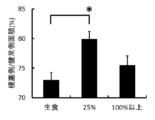
- the group that received the leukocyte suspension (25%) whose number of non-target components / white blood cells was 25% was statistically significant in promoting brain regeneration. Admitted.
- the group (100% or more) to which the leukocyte suspension in which the number of non-target components / the number of white blood cells was 100% or more was administered did not show a significant therapeutic effect. It is a figure which shows the influence of mixing of the extracellular component with respect to the inflammatory reaction in a brain regeneration promotion effect and an ischemia surrounding area (outside of a cerebral infarction focus).
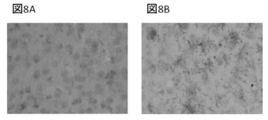
- A An image obtained by staining an ischemic region of a cerebral infarction model mouse administered with a leukocyte suspension in which the number of non-target components / the number of white blood cells is 25%, with an anti-CD11b antibody.
- B An image obtained by staining an ischemic region of an individual administered with a leukocyte suspension in which the number of non-target components / the number of white blood cells is 100% or more with an anti-CD11b antibody. It can be seen that in the individual administered with the leukocyte suspension in which the mixing ratio of the non-target component is large, CD11b-positive microglia / macrophages are activated and inflammation is induced.
- the present inventor In the administration of bone marrow-derived stem cells to patients with ischemic diseases, the present inventor has mononuclear cells as the main target component for revascularization, but there are a large amount of non-target components mixed in the cell suspension. In some cases, a surprising new finding that the therapeutic effect is remarkably reduced was found, and the present invention was completed based on this fact.
- leukocytes are divided into granulocytes and mononuclear cells and immature cells that differentiate into them (hematopoietic stem cells, progenitor cells, lymphoblasts, monoblasts, myeloblasts, etc.).
- hematopoietic stem cells progenitor cells, lymphoblasts, monoblasts, myeloblasts, etc.
- white blood cells that is, cells in which condensation of the whole cell is observed due to the cause considered to be apoptosis, a cell whose shape is collapsed and it is difficult to identify the cell type, and part or all of the cell membrane is destroyed.
- White blood cells excluding cells.
- the target component is a normal form of white blood cell (preferably mononuclear cell) population containing hematopoietic stem cells.
- the non-target component is a component containing at least one selected from the group consisting of (a) non-target cells, (b) platelets, and (c) aggregates.
- the non-target component can be a mixture of red blood cells, deformed cells, platelets and aggregates.
- Non-target cells are (i) red blood cells and / or (ii) deformed cells in which white blood cells or red blood cells are deformed.
- An aggregate is a mass composed of fibrin and activated platelets and / or denatured blood cells bound to the fibrin.
- bone marrow stem cells and “bone marrow-derived stem cells” mean hematopoietic stem cells derived from bone marrow.
- the cell preparation according to the present invention is a cell containing hematopoietic stem cells, characterized in that the number of non-target components / the number of white blood cells is not more than a predetermined value in the proportion of normal form leukocytes and non-target components. It means a preparation, and the number of white blood cells includes the number of hematopoietic stem cells.
- a hematopoietic stem cell means a CD34-positive cell, and the origin of the cell (eg, bone marrow-derived, umbilical cord blood-derived) is not particularly limited.
- the number of non-target components / the number of white blood cells ⁇ 35.0% in the ratio of the normal form of white blood cells and non-target components. More preferably, the number of non-target components / the number of white blood cells ⁇ 20.0%. More preferably, the number of non-target components / the number of white blood cells ⁇ 14.0%. It is also preferable that the number of non-target components / the number of white blood cells ⁇ 37.0%, 25.0%, 12.0%, 10.6%, or 8.3%. In addition, among the non-target components that are inevitably mixed in the cell preparation, especially when agglomerates are mixed, the therapeutic effect is remarkably reduced.
- the number of aggregates / the number of white blood cells ⁇ 1.0% is preferable.
- the above example uses a cell preparation containing bone marrow-derived hematopoietic stem cells, but even when a cell preparation containing hematopoietic stem cells other than bone marrow-derived hematopoietic stem cells, such as cord blood-derived hematopoietic stem cells, is used.
- the ratio of the number of non-target components / the number of white blood cells is also applied to cell preparations containing hematopoietic stem cells other than bone marrow-derived hematopoietic stem cells. obtain.
- the number thereof is considered to be sufficiently smaller than the number of mononuclear cells, and the target component that exerts a therapeutic effect is Since it is considered to be mononuclear cells mainly containing hematopoietic stem cells, the number of white blood cells in the above ratio can be replaced with the number of mononuclear cells containing hematopoietic stem cells.
- the cell preparation according to the present invention is for the treatment and / or prevention of ischemic diseases.
- treatment includes curing symptoms, improving symptoms and symptoms. Includes inhibiting progress.
- prevention includes suppressing and delaying the onset of a disease, and includes not only prevention before becoming a disease, but also prevention against recurrence of the disease after treatment.
- the cell preparation according to the present invention reduces the inflammatory response in the ischemic region in cerebral ischemia, which is harmful to the regeneration process of tissue damage, thereby causing tissue damage. It has been demonstrated to promote the regeneration of It is known that not only cerebral ischemia but also ischemic diseases in general, an inflammatory reaction is induced in the peri-ischemic region. Therefore, the cell preparation according to the present invention can exert an effect in general ischemic diseases.
- the cell preparation according to the present invention is intended for ischemic diseases, and the target diseases are, for example, cerebral infarction, myocardial infarction, limb ischemia, renal infarction, lung infarction, splenic infarction, intestinal infarction, Buerger disease, Cerebrovascular dementia, diabetic nephropathy microcirculation disorder, diabetic heart failure, etc.
- the treatment and / or prevention method of the said ischemic disease which administers the cell formulation concerning this invention to a mammal is also contained in this invention.
- the animal include mice, rats, hamsters, rabbits, cats, dogs, cows, sheep, monkeys, and humans, and preferably humans.
- the chronic phase is more than 2 weeks after onset. On the other hand, it can be suitably used for chronic ischemic diseases such as limb ischemia due to chronic circulatory disorder regardless of the time.
- the administration route is preferably intravenous administration, intraarterial administration, intraportal administration, or local tissue administration.
- the number of cells as the target component to be administered is not particularly limited, but for intravenous administration, it can be, for example, 1 ⁇ 10 5 cells / kg to 1 ⁇ 10 9 cells / kg. 1 ⁇ 10 6 pieces / kg to 5 ⁇ 10 8 pieces / kg, particularly preferably 2 ⁇ 10 8 pieces / kg.
- the blood vessel regeneration promoting factor is not particularly limited, for example, VEGF, angiopoietin, PDGF, TGF- ⁇ , FGF, PlGF, matrix metalloprotease, plasminogen activator and the like can be used.
- Angiopoietin is preferable.
- Angiopoietin is a glycoprotein growth factor that promotes vasculogenesis or angiogenesis.
- Angiopoietin includes angiopoietin 1 (Ang1), angiopoietin 2 (Ang2), angiopoietin 3 (Ang3), and angiopoietin 4
- Ang1 angiopoietin 1
- Ang2 angiopoietin 2
- Ang3 angiopoietin 3
- angiopoietin 4 angiopoietin 4
- Ang4 angiopoietin-related proteins
- ANGPTL angiopoietin-related protein or angiopoietin-like protein
- additives usually used in the art can be appropriately used.
- the additive include isotonic agents, stabilizers, buffers, preservatives, chelating agents, and antioxidants.
- the isotonic agent include sugars such as glucose, sorbitol and mannitol, sodium chloride, glycerin, propylene glycol, polyethylene glycol and the like.
- the stabilizer include sodium sulfite.
- the buffer include borate buffer, phosphate buffer, citrate buffer, tartaric acid buffer, and acetate buffer.
- Examples of the preservative include paraoxybenzoic acid ester, benzyl alcohol, chlorocresol, phenethyl alcohol, benzethonium chloride and the like.
- Examples of chelating agents include sodium edetate and sodium citrate.
- Examples of the antioxidant include sodium sulfite, sodium hydrogen sulfite, sodium ascorbate, sodium thiosulfate and the like.
- the method for producing a cell preparation according to the present invention is not particularly limited as long as the number of non-target components / the number of white blood cells is not more than a predetermined value.
- a method using a mechanical method using a device is possible. It is. Specifically, it exists in a centrifuge that centrifuges a container into which a centrifuge medium and a blood sample are injected, and a mononuclear cell layer (a buffy coat layer that is a layer in which a mononuclear cell exists) after centrifugation. It is possible to use a separation device having detection means for detecting a non-target component, removal means for removing the detected non-target component, and means for counting the ratio of the number of non-target components / the number of white blood cells. It is.
- the detecting means is obtained by photographing with an upper photographing means for photographing the mononuclear sphere layer in the container from above in the vertical direction, a side photographing means for photographing the mononuclear sphere layer in the container from the horizontal direction, and the upper photographing means.
- Position information detecting means for detecting position information of non-target components existing in the mononuclear sphere based on the obtained image and shape information obtained from the image obtained by photographing with the side photographing means.
- non-target cells, platelets and aggregates can be distinguished from normal forms of white blood cells based on shape information. Further, it is confirmed that the ratio of the number of non-target components / the number of white blood cells is not more than a predetermined value by counting the number of non-target components / the number of white blood cells within a certain range.
- the screening method for cell preparations according to the present invention includes a step of screening for normal forms of white blood cells and non-target components in which the number of non-target components / the number of white blood cells is a predetermined value or less. According to the screening method of the present invention, it is possible to evaluate whether or not it has a sufficient therapeutic effect before administering a cell preparation to an actual ischemic disease patient. be able to.
- NIHSS National Institutes of Health
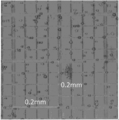
- a phase contrast micrograph of the administered cells is shown in FIG.
- a phase-contrast microscope is an optical microscope that can be observed by converting the phase difference of light rays into contrast, and can be observed non-invasively, so it is often used especially when observing biological cells in detail. It is done.
- a disposable cell counter manufactured by C-Chip Neubauer manufactured by Digital Bio Inc. was used, and the cell suspension was injected into the cell counter and immediately examined.
- FIG. 1B there is a mixture of components other than white blood cells that are expected to have a therapeutic effect and have no obvious degeneration, such as aggregates (FIG. 1B), non-target cells and platelets (FIG. 1C). It was.
- the leukocytes that are expected to have a therapeutic effect are spheres with a diameter of about 7-25 ⁇ m, and when observing with a phase-contrast microscope, the whole image of the cells can be examined while moving the focus of the microscope up and down. It is not difficult to distinguish the difference between non-target components.
- the cell number ratio between white blood cells and non-target cells and the cell number ratio between white blood cells and platelets were examined (the number of aggregates and the number of platelets were combined to calculate the number of platelets. .).
- the number of white blood cells, non-target cells, and platelets present in a square with a side of 0.2 mm was counted in 12 randomly selected fields as shown in FIG.
- the mixing ratio of non-target cells to white blood cells that is, the number of non-target cells / white blood cells was 42.1 ⁇ 6.4% (mean ⁇ standard error, the same applies hereinafter), and similarly, the mixing ratio of platelets to white blood cells, Platelet count / white blood cell count was 25.5 ⁇ 5.2%.
- the number of leukocytes administered was 2.7 ⁇ 10 8 .
- CD34 positive cells which are hematopoietic stem cells, are considered to have an important therapeutic effect (Taguchi et al. J Clin Invest. 2004; 114 (3): 330-8)
- the frequency of CD34 positive cells in the administered cells was 1.19%.
- the NIHSS at discharge was 13 points.
- the Japan Stroke Scale indicating the severity of other cerebral infarction was 12.76 points.
- the Barthel Index was 20.
- the NIHSS at 3 months after cell administration was 12 points, the improvement was 1 point compared to just before the cell administration, and the improvement was 1 point even compared to the time of discharge.
- the score after 3 months of JSS cell administration was 14.82 points, a deterioration of 2.06 points compared to the time of discharge.
- the score after 3 months of BI cell administration was 15 points, which was 5 points worse than when discharged.
- FIG. 1 A phase contrast micrograph of the administered cells is shown in FIG. The clot as seen in Case 1 was not observed, and contamination of unintended cells and platelets was clearly low.
- the number of white blood cells, non-target cells, and platelets were counted in 12 randomly selected fields.
- the number of non-target cells / white blood cells was 1.8 ⁇ 1.0%
- the number of platelets / white blood cells was 6.5 ⁇ 2.7% (Note that the number of aggregates and the number of platelets were combined to calculate the number of platelets. did.).
- the number of administered white blood cells was 2.4 ⁇ 10 8 .
- CD34 positive cells which are hematopoietic stem cells, are said to have an important therapeutic effect, but the frequency of CD34 positive cells in the administered cells was 1.70%.
- the NIHSS at discharge (one month after cell administration) was 10 points.
- the JSS indicating other cerebral infarction severity was 5.23 points.
- the BI that shows daily life ability was 30 points.
- the NIHSS at 3 months after cell administration was 7 points, the improvement was 8 points compared to just before the cell administration, and the improvement was 3 points compared to the time of discharge.
- the score after 3 months of JSS cell administration was 3.43 points, an improvement of 0.80 points compared to the time of discharge.
- the score of BI cells after 3 months was 65 points, an improvement of 35 points compared to the time of discharge.
- This case had 15 NIHSS immediately before cell therapy, compared to Case 1 (13 NIHSS immediately before cell therapy), and had a more severe cerebral infarction before the cell therapy. Furthermore, the number of cells administered was smaller than in case 1.
- FIG. 1 A phase contrast micrograph of the administered cells is shown in FIG. The clot as seen in Case 1 was not observed, and contamination of unintended cells and platelets was clearly low.
- the number of white blood cells, non-target cells, and platelets were counted in 12 randomly selected fields.
- the number of non-target cells / white blood cells was 2.8 ⁇ 1.6%
- the number of platelets / white blood cells was 7.8 ⁇ 1.8% (Note that the number of aggregates and the number of platelets were combined to calculate the number of platelets. did.).
- the NIHSS at discharge (1 month after cell administration) was 12 points.
- the JSS for other cerebral infarction severity was 5.11.
- the BI that shows the ability of daily living was 10 points.
- the NIHSS at 3 months after cell administration was 9 points, the improvement was 8 points compared to just before the cell administration, and the improvement was 3 points compared to the time of discharge.
- the score after 3 months of JSS cell administration was 4.08 points, an improvement of 1.03 points compared to the time of discharge.
- the score of BI cells after 3 months was 65 points, which was an improvement of 55 points compared to the time of discharge.
- FIG. 5 shows the ratio (%) of the non-target cell number / white blood cell number in each case.
- ANOVA statistical analysis
- JMP software manufactured by SAS Co., Ltd.
- the cell preparation according to the present invention has a normal form of white blood cells and non-target components, and the ratio of the number of non-target components / the number of white blood cells ⁇ 35.0%. It was shown to be preferable. In comparison between case 2 and case 3, neurological recovery was better in case 2, and the mixing ratio of platelets was lower in case 2 although there was no statistically significant difference.
- Cerebral infarction model mice were prepared by the following method. An 8-week-old SCID mouse was anesthetized with halothane anesthesia and approached from the left zygomatic region, and a perforation of about 1.5 mm was made in the base of the skull to reach the left middle cerebral artery directly. The left middle cerebral artery immediately after passing through the olfactory cord (distal side of the olfactory cord intersection) was coagulated with a bipolar electric scalpel and cut after coagulation to permanently occlude the left middle cerebral artery.
- This cerebral infarction model mouse is excellent in reproducibility of the ischemic site and ischemic intensity limited to the cortex of the left middle cerebral artery region.
- Human bone marrow was purchased from Lonza and white blood cells were separated by specific gravity centrifugation using Ficoll-Paque® PREMIUM.
- leukocytes were prepared only from the buffy coat layer obtained after specific gravity centrifugation.
- Leukocyte suspensions that allow inclusion of unintended components are present in the white blood cells of the buffy coat layer and the upper and lower layers (plasma fraction layer [there are many platelets] and Ficoll-Paque PREMIUM layer [there are some red blood cells]) Cells to be collected were also collected.
- the number of unintended components / white blood cells was 25 ⁇ 12% in the leukocyte suspension in which contamination of unintended components was suppressed.
- the leukocyte suspension that allowed the contamination was 100% or more. Since the red blood cell count / white blood cell count was 0% ⁇ 0%, the platelet count / white blood cell count was 25 ⁇ 12%. From this result, it was found that the number of non-target components / the number of white blood cells ⁇ 37.0 (25% + 12%)% was preferable. It is also preferable that the number of non-target components / the number of white blood cells ⁇ 25.0%.
- Example 4 Examination of the effect of the incorporation of extracellular components on the inflammatory response in the ischemic damage repair effect (brain regeneration promoting effect) and the ischemic surrounding region (outside the cerebral infarction lesion)
- FIG. 8A shows the brain of a mouse administered with a leukocyte suspension in which contamination of unintended components is suppressed, stained with an anti-CD11b antibody, and CD11b-positive microglia / macrophages are almost observed in the area around ischemia.
- FIG. 8B is a stained image of a mouse administered with a leukocyte suspension in which mixing of an unintended component was allowed, and many CD11b positive microglia / macrophages activated in the ischemic region were observed.
- Example 3 From the results of Example 3 and Example 4, the leukocyte suspension in which mixing of unintended components was suppressed (the number of unintended components / the number of leukocyte cells was 25 ⁇ 12%) had a brain tissue regeneration promoting action and was CD11b positive microglia / macrophage activation (inflammatory response) in the perivascular region is shown to be weak, and CD11b positive in the peri-ischemic region 72 hours after cerebral infarction (24 hours after leukocyte suspension administration) It was speculated that the state of microglia / macrophage activation (inflammatory reaction) could be one of the indicators of the effect of promoting leukocyte suspension brain regeneration.
- the CD11b positive microglia / macrophage activation (inflammatory reaction) was examined on the outer side of CD11b.
- a white blood cell suspension having a non-target component number / white blood cell number of 35% was prepared by the following method.
- Infarct model mice used for verification were prepared in the same manner as in Example 3 using 8-week-old SCID mice. 48 hours after the preparation of cerebral infarction, a leukocyte suspension (containing 1 ⁇ 10 5 target cells) having a non-target component number / white blood cell number of 35% was administered, and the ischemic region (brain) was treated in the same manner as in Example 4. The state of activation (inflammatory reaction) of CD11b-positive microglia / macrophages (outside the infarct region) was verified. The results are shown in FIG. As can be seen from FIG.
- the cell preparation of the present invention can be used for the treatment and / or prevention of ischemic diseases.
Landscapes
- Health & Medical Sciences (AREA)
- Life Sciences & Earth Sciences (AREA)
- Veterinary Medicine (AREA)
- Animal Behavior & Ethology (AREA)
- General Health & Medical Sciences (AREA)
- Public Health (AREA)
- Engineering & Computer Science (AREA)
- Chemical & Material Sciences (AREA)
- Pharmacology & Pharmacy (AREA)
- Medicinal Chemistry (AREA)
- Bioinformatics & Cheminformatics (AREA)
- Organic Chemistry (AREA)
- Nuclear Medicine, Radiotherapy & Molecular Imaging (AREA)
- General Chemical & Material Sciences (AREA)
- Chemical Kinetics & Catalysis (AREA)
- Epidemiology (AREA)
- Biomedical Technology (AREA)
- Hematology (AREA)
- Immunology (AREA)
- Developmental Biology & Embryology (AREA)
- Cell Biology (AREA)
- Cardiology (AREA)
- Biotechnology (AREA)
- Virology (AREA)
- Zoology (AREA)
- Neurology (AREA)
- Diabetes (AREA)
- Heart & Thoracic Surgery (AREA)
- Neurosurgery (AREA)
- Urology & Nephrology (AREA)
- Hospice & Palliative Care (AREA)
- Psychiatry (AREA)
- Pulmonology (AREA)
- Emergency Medicine (AREA)
- Endocrinology (AREA)
- Obesity (AREA)
- Vascular Medicine (AREA)
- Medicines Containing Material From Animals Or Micro-Organisms (AREA)
Abstract
Description
Claims (14)
- 正常形態の白血球と、
赤血球、変形細胞、血小板及び凝集塊からなる群から選択される少なくとも一つを含む目的外成分とが、
その割合において、目的外成分数/白血球細胞数が所定値以下であることを特徴とする細胞製剤。 - 目的外成分数/白血球細胞数≦37.0%であることを特徴とする請求項1記載の細胞製剤。
- 目的外成分数/白血球細胞数≦35.0%であることを特徴とする請求項1記載の細胞製剤。
- 目的外成分数/白血球細胞数≦14.0%であることを特徴とする請求項1記載の細胞製剤。
- 前記目的外成分に凝集塊を含まないことを特徴とする請求項1乃至4の何れか1項に記載の細胞製剤。
- 虚血性疾患の治療及び/又は予防のために使用されることを特徴とする請求項1乃至5の何れか1項に記載の細胞製剤。
- 前記虚血性疾患は、脳梗塞、心筋梗塞、四肢虚血、腎梗塞、肺梗塞、脾梗塞、腸管梗塞、Buerger病、脳血管性認知症、糖尿病性腎症微小循環障害、又は、糖尿病性心不全であることを特徴とする請求項6に記載の細胞製剤。
- 正常形態の白血球と、
赤血球、変形細胞、血小板及び凝集塊からなる群から選択される少なくとも一つを含む目的外成分とが、
その割合において、目的外成分数/白血球細胞数が所定値以下であるものをスクリーニングする工程を有する細胞製剤のスクリーニング方法。 - 前記スクリーニング工程は、目的外成分数/白血球細胞数≦37.0%であるものをスクリーニングすることを特徴とする請求項8記載の細胞製剤のスクリーニング方法。
- 前記スクリーニング工程は、目的外成分数/白血球細胞数≦35.0%であるものをスクリーニングすることを特徴とする請求項8記載の細胞製剤のスクリーニング方法。
- 前記スクリーニング工程は、目的外成分数/白血球細胞数≦14.0%であるものをスクリーニングすることを特徴とする請求項8記載の細胞製剤のスクリーニング方法。
- 前記目的外成分に凝集塊を含まないことを特徴とする請求項8乃至11の何れか1項に記載の細胞製剤のスクリーニング方法。
- 前記スクリーニング工程は、虚血性疾患の治療及び/又は予防のために使用される細胞製剤のスクリーニングであることを特徴とする請求項8乃至12の何れか1項に記載の細胞製剤のスクリーニング方法。
- 前記虚血性疾患は、脳梗塞、心筋梗塞、四肢虚血、腎梗塞、肺梗塞、脾梗塞、腸管梗塞、Buerger病、脳血管性認知症、糖尿病性腎症微小循環障害、又は、糖尿病性心不全であることを特徴とする請求項13に記載の細胞製剤のスクリーニング方法。
Priority Applications (3)
| Application Number | Priority Date | Filing Date | Title |
|---|---|---|---|
| JP2020505062A JP7246366B2 (ja) | 2018-03-08 | 2019-03-05 | 虚血性疾患の治療及び/又は予防の為の細胞製剤、及び、その細胞製剤のスクリーニング方法 |
| EP19763545.1A EP3763375A4 (en) | 2018-03-08 | 2019-03-05 | CELL PREPARATION FOR TREATMENT AND / OR PREVENTION OF ISCHEMIC DISEASE AND METHOD OF SCREENING A CELL PREPARATION |
| US16/977,951 US20210038642A1 (en) | 2018-03-08 | 2019-03-05 | Cell preparation for treatment and/or prevention of ischemic disease, and method for screening cell preparation |
Applications Claiming Priority (2)
| Application Number | Priority Date | Filing Date | Title |
|---|---|---|---|
| JP2018-041841 | 2018-03-08 | ||
| JP2018041841 | 2018-03-08 |
Publications (1)
| Publication Number | Publication Date |
|---|---|
| WO2019172279A1 true WO2019172279A1 (ja) | 2019-09-12 |
Family
ID=67845689
Family Applications (1)
| Application Number | Title | Priority Date | Filing Date |
|---|---|---|---|
| PCT/JP2019/008701 Ceased WO2019172279A1 (ja) | 2018-03-08 | 2019-03-05 | 虚血性疾患の治療及び/又は予防の為の細胞製剤、及び、その細胞製剤のスクリーニング方法 |
Country Status (4)
| Country | Link |
|---|---|
| US (1) | US20210038642A1 (ja) |
| EP (1) | EP3763375A4 (ja) |
| JP (1) | JP7246366B2 (ja) |
| WO (1) | WO2019172279A1 (ja) |
Cited By (2)
| Publication number | Priority date | Publication date | Assignee | Title |
|---|---|---|---|---|
| WO2021140773A1 (ja) * | 2020-01-08 | 2021-07-15 | 公益財団法人神戸医療産業都市推進機構 | 身体機能回復促進剤 |
| WO2023277114A1 (ja) * | 2021-07-02 | 2023-01-05 | 公益財団法人神戸医療産業都市推進機構 | 放射線照射造血幹細胞を含む医薬組成物 |
Families Citing this family (2)
| Publication number | Priority date | Publication date | Assignee | Title |
|---|---|---|---|---|
| US8148598B2 (en) | 2006-02-22 | 2012-04-03 | Dsg Technology Holdings Limited | Method of making an absorbent composite and absorbent articles employing the same |
| CN120570842B (zh) * | 2025-08-05 | 2025-09-26 | 成都医学院 | 靶向脂质体作为活性成分在用于制备治疗缺血性脑损伤的药物中的用途 |
Citations (1)
| Publication number | Priority date | Publication date | Assignee | Title |
|---|---|---|---|---|
| JP2018041841A (ja) | 2016-09-07 | 2018-03-15 | 富士ゼロックス株式会社 | 粘性剤温調装置、搭載装置、基板装置の製造方法 |
Family Cites Families (1)
| Publication number | Priority date | Publication date | Assignee | Title |
|---|---|---|---|---|
| US20120009166A1 (en) * | 2005-02-24 | 2012-01-12 | The Scripps Research Institute | Isolated monocyte populations and related therapeutic applications |
-
2019
- 2019-03-05 EP EP19763545.1A patent/EP3763375A4/en not_active Withdrawn
- 2019-03-05 US US16/977,951 patent/US20210038642A1/en not_active Abandoned
- 2019-03-05 WO PCT/JP2019/008701 patent/WO2019172279A1/ja not_active Ceased
- 2019-03-05 JP JP2020505062A patent/JP7246366B2/ja active Active
Patent Citations (1)
| Publication number | Priority date | Publication date | Assignee | Title |
|---|---|---|---|---|
| JP2018041841A (ja) | 2016-09-07 | 2018-03-15 | 富士ゼロックス株式会社 | 粘性剤温調装置、搭載装置、基板装置の製造方法 |
Non-Patent Citations (15)
| Title |
|---|
| AKIHIKO TAGUCHI; CHIAKI SAKAI; TOSHIHIRO SOMA; YUKIKO KASAHARA; DAVID M STERN; KATSUFUMI KAJIMOTO; MASAFUMI IHARA; TAKASHI DAIMON;: "Intravenous Autologous Bone Marrow Mononuclear Cell Transplantation for Stroke: Phase1/2a Clinical Trial in a Homogeneous Group of Stroke Patients", STEM CELLS AND DEVELOPMENT, vol. 24, no. 19, 31 October 2015 (2015-10-31), pages 2207 - 2218, XP055638287, ISSN: 1547-3287, DOI: 10.1089/scd.2015.0160 * |
| ASSMUS B ET AL., J AM COLL CARDIOL., vol. 55, no. 13, 30 March 2010 (2010-03-30), pages 1385 - 1394 |
| ASSMUS B; TONN T; SEEGER F H; YOON C H; LEISTNER D; KLOTSCHE J; SCHACHINGER V; SEIFRIED E; ZEIHER A M; DIMMELER S: "Red Blood Cell Contamination of the Final Cell Product Impairs the Efficacy of Autologous Bone Marrow Mononuclear Cell Therapy", JOURNAL OF THE AMERICAN COLLEGE OF CARDIOLOGY, vol. 55, no. 13, 30 March 2010 (2010-03-30), pages 1385 - 94, XP026983698, ISSN: 0735-1097 * |
| BRENES RA ET AL., J VASE SURG., vol. 56, no. 6, December 2012 (2012-12-01), pages 1669 - 1679 |
| KAJIGUCHI M ET AL., CIRC J., vol. 71, no. 2, February 2007 (2007-02-01), pages 196 - 201 |
| KOCH, S.; DOSS, F.; ALTRICHTER, J.; MITZNER, S.: "Newly Developed Cell Purification Method Allowing Storage of Purified Granulocyte Concentrates for 72 Hour", TRANSFUSION, vol. 55, no. 3, 2015, pages 60A, XP009523168, ISSN: 0041-1132 * |
| LIN ET AL., ACTA PHARMACOL SIN, vol. 25, no. 7, July 2004 (2004-07-01), pages 876 - 886 |
| NAKANO-DOI ET AL., STEM CELLS, vol. 28, no. 7, July 2010 (2010-07-01), pages 1292 - 302 |
| OSAMU HONMOU , KIYOHIRO HOUKIN , TAKUYA MATSUNAGA , YOSHIRO NIITSU , SUMIO ISHAI , RIE ONODERA , STEPHEN G WAXMAN , JEFFREY D KOCS: "Intravenous administration of auto serum-expanded autologous mesenchymal stem cells in stroke", BRAIN, vol. 134, no. 6, 14 April 2011 (2011-04-14), pages 1790 - 807, XP055253698, ISSN: 0006-8950, DOI: :10.1093/brain/awr063 * |
| PRASAD K, STROKE, vol. 45, no. 12, December 2014 (2014-12-01), pages 3618 - 3624 |
| SEAN I SAVITZ; VIVEK MISRA; MALLIK KASAM; HARRINDER JUNEJA; CHARLES S COX; SUSAN ALDERMAN; IMO AISIKU; SIDDHARTHA KAR; ADRIAN GEE;: "Intravenous Autologous Bone Marrow Mononuclear Cells for Ischemic Stroke", ANNALS OF NEUROLOGY, vol. 70, no. 1, 31 July 2011 (2011-07-31), pages 59 - 69, XP055638281, ISSN: 0364-5134, DOI: 10.1002/ana.22458 * |
| See also references of EP3763375A4 |
| TAGUCHI A; OHTANI M; SOMA T; WATANABE M; KINOSITA N: "Therapeutic Angiogenesis by Autologous Bone-marrow Transplantation in a General Hospital Setting", EUROPEAN JOURNAL OF VASCULAR & ENDOVASCULAR SURGERY, vol. 25, no. 3, 31 March 2003 (2003-03-31), pages 276 - 8, XP055638195, ISSN: 1078-5884, DOI: 10.1053/ejvs.2002.1831 * |
| TAGUCHI ET AL., J CLIN INVEST., vol. 114, no. 3, 2004, pages 330 - 8 |
| TRAVERSE JH ET AL., JAMA, vol. 308, no. 22, 12 December 2012 (2012-12-12), pages 2380 - 2389 |
Cited By (2)
| Publication number | Priority date | Publication date | Assignee | Title |
|---|---|---|---|---|
| WO2021140773A1 (ja) * | 2020-01-08 | 2021-07-15 | 公益財団法人神戸医療産業都市推進機構 | 身体機能回復促進剤 |
| WO2023277114A1 (ja) * | 2021-07-02 | 2023-01-05 | 公益財団法人神戸医療産業都市推進機構 | 放射線照射造血幹細胞を含む医薬組成物 |
Also Published As
| Publication number | Publication date |
|---|---|
| JPWO2019172279A1 (ja) | 2021-02-18 |
| EP3763375A4 (en) | 2021-09-08 |
| EP3763375A1 (en) | 2021-01-13 |
| US20210038642A1 (en) | 2021-02-11 |
| JP7246366B2 (ja) | 2023-03-27 |
Similar Documents
| Publication | Publication Date | Title |
|---|---|---|
| US20200268850A1 (en) | Methods and compositions for mobilizing stem cells | |
| US10869886B2 (en) | Cell suspension for use in the treatment of lower extremity peripheral artery disease | |
| JP7246366B2 (ja) | 虚血性疾患の治療及び/又は予防の為の細胞製剤、及び、その細胞製剤のスクリーニング方法 | |
| US20200000852A1 (en) | Platelet rich plasma formulations | |
| Lunardon et al. | Growth factor and cytokine characterization of canine platelet lysate with variable leukocyte concentration, plasma content, and heat-sensitive proteins | |
| US9393269B2 (en) | Rapid infusion of autologous bone marrow derived stem cells | |
| WO2015174087A1 (ja) | 脳梗塞の予防及び/又は治療の為の医薬 | |
| JP2026050576A (ja) | 血栓治療剤およびその製造方法並びに製造のためのキット。 | |
| Abdelhadi et al. | Histological study on the effect of transplanted human umbilical cord blood CD34+ stem cells on albino rats subjected to myocardial infarction | |
| US11744858B2 (en) | Medicine for treatment and/or prevention of ischemic diseases, method for improving angiogenesis-promoting activity of cells, or method for producing medicine | |
| JP2016506954A (ja) | 神経変性の治療のための細胞療法 | |
| King et al. | Bone Marrow-Derived Cells: From the Laboratory to the Clinic | |
| CN118900693A (zh) | 细胞制剂 | |
| NZ791839A (en) | Cell suspension for use in the treatment of lower extremity peripheral artery disease | |
| US20180271908A1 (en) | Intramuscular administraton of autologous bone marrow for treatment | |
| JP2017206476A (ja) | 血小板接着促進剤及び血管内皮細胞修復促進剤のスクリーニング方法 | |
| HK1098964B (en) | Fibroblast-mobilizing agent containing g-csf and wound remedy | |
| HK1098964A1 (zh) | 含有g-csf的成纤维细胞动员剂及创伤治疗剂 | |
| WO2014021682A1 (ko) | CD11b+ CX3CR1+ 세포, 이의 이용 및 이의 대량 수집 방법 |
Legal Events
| Date | Code | Title | Description |
|---|---|---|---|
| 121 | Ep: the epo has been informed by wipo that ep was designated in this application |
Ref document number: 19763545 Country of ref document: EP Kind code of ref document: A1 |
|
| ENP | Entry into the national phase |
Ref document number: 2020505062 Country of ref document: JP Kind code of ref document: A |
|
| NENP | Non-entry into the national phase |
Ref country code: DE |
|
| WWE | Wipo information: entry into national phase |
Ref document number: 2019763545 Country of ref document: EP |
|
| ENP | Entry into the national phase |
Ref document number: 2019763545 Country of ref document: EP Effective date: 20201008 |
|
| WWW | Wipo information: withdrawn in national office |
Ref document number: 2019763545 Country of ref document: EP |