WO2019172425A1 - 空気調和装置 - Google Patents
空気調和装置 Download PDFInfo
- Publication number
- WO2019172425A1 WO2019172425A1 PCT/JP2019/009352 JP2019009352W WO2019172425A1 WO 2019172425 A1 WO2019172425 A1 WO 2019172425A1 JP 2019009352 W JP2019009352 W JP 2019009352W WO 2019172425 A1 WO2019172425 A1 WO 2019172425A1
- Authority
- WO
- WIPO (PCT)
- Prior art keywords
- heat exchanger
- module
- control
- source side
- exchanger module
- Prior art date
- Legal status (The legal status is an assumption and is not a legal conclusion. Google has not performed a legal analysis and makes no representation as to the accuracy of the status listed.)
- Ceased
Links
Images






Classifications
-
- F—MECHANICAL ENGINEERING; LIGHTING; HEATING; WEAPONS; BLASTING
- F24—HEATING; RANGES; VENTILATING
- F24F—AIR-CONDITIONING; AIR-HUMIDIFICATION; VENTILATION; USE OF AIR CURRENTS FOR SCREENING
- F24F1/00—Room units for air-conditioning, e.g. separate or self-contained units or units receiving primary air from a central station
- F24F1/06—Separate outdoor units, e.g. outdoor unit to be linked to a separate room comprising a compressor and a heat exchanger
- F24F1/14—Heat exchangers specially adapted for separate outdoor units
- F24F1/16—Arrangement or mounting thereof
-
- F—MECHANICAL ENGINEERING; LIGHTING; HEATING; WEAPONS; BLASTING
- F24—HEATING; RANGES; VENTILATING
- F24F—AIR-CONDITIONING; AIR-HUMIDIFICATION; VENTILATION; USE OF AIR CURRENTS FOR SCREENING
- F24F1/00—Room units for air-conditioning, e.g. separate or self-contained units or units receiving primary air from a central station
- F24F1/06—Separate outdoor units, e.g. outdoor unit to be linked to a separate room comprising a compressor and a heat exchanger
- F24F1/46—Component arrangements in separate outdoor units
- F24F1/48—Component arrangements in separate outdoor units characterised by air airflow, e.g. inlet or outlet airflow
-
- F—MECHANICAL ENGINEERING; LIGHTING; HEATING; WEAPONS; BLASTING
- F24—HEATING; RANGES; VENTILATING
- F24F—AIR-CONDITIONING; AIR-HUMIDIFICATION; VENTILATION; USE OF AIR CURRENTS FOR SCREENING
- F24F1/00—Room units for air-conditioning, e.g. separate or self-contained units or units receiving primary air from a central station
- F24F1/06—Separate outdoor units, e.g. outdoor unit to be linked to a separate room comprising a compressor and a heat exchanger
- F24F1/60—Arrangement or mounting of the outdoor unit
- F24F1/68—Arrangement of multiple separate outdoor units
-
- F—MECHANICAL ENGINEERING; LIGHTING; HEATING; WEAPONS; BLASTING
- F24—HEATING; RANGES; VENTILATING
- F24F—AIR-CONDITIONING; AIR-HUMIDIFICATION; VENTILATION; USE OF AIR CURRENTS FOR SCREENING
- F24F11/00—Control or safety arrangements
- F24F11/62—Control or safety arrangements characterised by the type of control or by internal processing, e.g. using fuzzy logic, adaptive control or estimation of values
- F24F11/63—Electronic processing
- F24F11/64—Electronic processing using pre-stored data
-
- F—MECHANICAL ENGINEERING; LIGHTING; HEATING; WEAPONS; BLASTING
- F24—HEATING; RANGES; VENTILATING
- F24F—AIR-CONDITIONING; AIR-HUMIDIFICATION; VENTILATION; USE OF AIR CURRENTS FOR SCREENING
- F24F11/00—Control or safety arrangements
- F24F11/70—Control systems characterised by their outputs; Constructional details thereof
- F24F11/72—Control systems characterised by their outputs; Constructional details thereof for controlling the supply of treated air, e.g. its pressure
- F24F11/74—Control systems characterised by their outputs; Constructional details thereof for controlling the supply of treated air, e.g. its pressure for controlling air flow rate or air velocity
- F24F11/77—Control systems characterised by their outputs; Constructional details thereof for controlling the supply of treated air, e.g. its pressure for controlling air flow rate or air velocity by controlling the speed of ventilators
-
- F—MECHANICAL ENGINEERING; LIGHTING; HEATING; WEAPONS; BLASTING
- F24—HEATING; RANGES; VENTILATING
- F24F—AIR-CONDITIONING; AIR-HUMIDIFICATION; VENTILATION; USE OF AIR CURRENTS FOR SCREENING
- F24F11/00—Control or safety arrangements
- F24F11/70—Control systems characterised by their outputs; Constructional details thereof
- F24F11/80—Control systems characterised by their outputs; Constructional details thereof for controlling the temperature of the supplied air
- F24F11/83—Control systems characterised by their outputs; Constructional details thereof for controlling the temperature of the supplied air by controlling the supply of heat-exchange fluids to heat-exchangers
-
- F—MECHANICAL ENGINEERING; LIGHTING; HEATING; WEAPONS; BLASTING
- F24—HEATING; RANGES; VENTILATING
- F24F—AIR-CONDITIONING; AIR-HUMIDIFICATION; VENTILATION; USE OF AIR CURRENTS FOR SCREENING
- F24F11/00—Control or safety arrangements
- F24F11/70—Control systems characterised by their outputs; Constructional details thereof
- F24F11/80—Control systems characterised by their outputs; Constructional details thereof for controlling the temperature of the supplied air
- F24F11/87—Control systems characterised by their outputs; Constructional details thereof for controlling the temperature of the supplied air by controlling absorption or discharge of heat in outdoor units
- F24F11/871—Control systems characterised by their outputs; Constructional details thereof for controlling the temperature of the supplied air by controlling absorption or discharge of heat in outdoor units by controlling outdoor fans
-
- F—MECHANICAL ENGINEERING; LIGHTING; HEATING; WEAPONS; BLASTING
- F24—HEATING; RANGES; VENTILATING
- F24F—AIR-CONDITIONING; AIR-HUMIDIFICATION; VENTILATION; USE OF AIR CURRENTS FOR SCREENING
- F24F13/00—Details common to, or for air-conditioning, air-humidification, ventilation or use of air currents for screening
- F24F13/30—Arrangement or mounting of heat-exchangers
-
- F—MECHANICAL ENGINEERING; LIGHTING; HEATING; WEAPONS; BLASTING
- F24—HEATING; RANGES; VENTILATING
- F24F—AIR-CONDITIONING; AIR-HUMIDIFICATION; VENTILATION; USE OF AIR CURRENTS FOR SCREENING
- F24F5/00—Air-conditioning systems or apparatus not covered by F24F1/00 or F24F3/00, e.g. using solar heat or combined with household units such as an oven or water heater
-
- F—MECHANICAL ENGINEERING; LIGHTING; HEATING; WEAPONS; BLASTING
- F24—HEATING; RANGES; VENTILATING
- F24F—AIR-CONDITIONING; AIR-HUMIDIFICATION; VENTILATION; USE OF AIR CURRENTS FOR SCREENING
- F24F5/00—Air-conditioning systems or apparatus not covered by F24F1/00 or F24F3/00, e.g. using solar heat or combined with household units such as an oven or water heater
- F24F5/0007—Air-conditioning systems or apparatus not covered by F24F1/00 or F24F3/00, e.g. using solar heat or combined with household units such as an oven or water heater cooling apparatus specially adapted for use in air-conditioning
- F24F5/001—Compression cycle type
-
- F—MECHANICAL ENGINEERING; LIGHTING; HEATING; WEAPONS; BLASTING
- F24—HEATING; RANGES; VENTILATING
- F24F—AIR-CONDITIONING; AIR-HUMIDIFICATION; VENTILATION; USE OF AIR CURRENTS FOR SCREENING
- F24F2140/00—Control inputs relating to system states
- F24F2140/20—Heat-exchange fluid temperature
-
- Y—GENERAL TAGGING OF NEW TECHNOLOGICAL DEVELOPMENTS; GENERAL TAGGING OF CROSS-SECTIONAL TECHNOLOGIES SPANNING OVER SEVERAL SECTIONS OF THE IPC; TECHNICAL SUBJECTS COVERED BY FORMER USPC CROSS-REFERENCE ART COLLECTIONS [XRACs] AND DIGESTS
- Y02—TECHNOLOGIES OR APPLICATIONS FOR MITIGATION OR ADAPTATION AGAINST CLIMATE CHANGE
- Y02B—CLIMATE CHANGE MITIGATION TECHNOLOGIES RELATED TO BUILDINGS, e.g. HOUSING, HOUSE APPLIANCES OR RELATED END-USER APPLICATIONS
- Y02B30/00—Energy efficient heating, ventilation or air conditioning [HVAC]
- Y02B30/70—Efficient control or regulation technologies, e.g. for control of refrigerant flow, motor or heating
Definitions
- Patent Document 1 Japanese Patent Laid-Open No. 10-170034
- At least one compressor module and at least one heat source side heat exchanger module are separated from each other and connected via a pipe, and are combined with the use side heat exchanger module.
- the heat source side heat exchanger module is a first type heat exchanger module in which air is blown upward, a second type heat exchanger module in which air is blown sideways, and air is blown in an oblique direction. Selected from any one or any combination of the third type heat exchanger modules.
- the air conditioner according to the second aspect is the air conditioner according to the first aspect, and includes a plurality of heat source side heat exchanger modules and includes at least different types of heat exchanger modules. In situations where it is preferable to use multiple types of heat exchanger modules, an air conditioner with an optimal configuration can be introduced.
- An air conditioner according to a third aspect is the air conditioner according to the first aspect or the second aspect, and a plurality of heat source side heat exchanger modules are connected to one compressor module via a pipe. .
- the heat exchange performance can be optimized according to the installation location.
- the air conditioner of the fourth aspect is the air conditioner of the first to third aspects, and a plurality of compressor modules exist in one refrigerant cycle. With such a configuration, the heat exchange performance can be optimized according to the installation location.
- An air conditioner according to a fifth aspect is the air conditioner according to the first to fourth aspects, wherein at least one compressor module is a first for controlling each device constituting one or more refrigerant cycles. It has a control part.
- the module other than the compressor module having the first control unit has a second control for controlling components in the module other than the compressor module having the first control unit according to the control information via the first control unit. Parts are provided. With such a configuration, each module can be centrally controlled using the first control unit.
- the air conditioner of the sixth aspect is the air conditioner of the fifth aspect, and the control information includes a control target value to be controlled that is set for each component device in the module. Further, the second control unit determines the control value of the control target so as to realize the control target value for the predetermined control target, and controls the control target. With such a configuration, efficient centralized control can be realized via the first control unit.
- the air conditioner of the seventh aspect is the air conditioner of the sixth aspect, and the heat source side heat exchanger module has at least a temperature sensor, a fan, and an expansion mechanism. And a 2nd control part controls the rotation speed of a fan and the opening degree of an expansion mechanism based on the detection information and control target value of a temperature sensor. With such a configuration, the communication amount between the compressor module and the heat source side heat exchanger module can be reduced.
- An air conditioner according to an eighth aspect is the air conditioner according to the first to sixth aspects, wherein the heat source side heat exchanger module stores a control target value for a control target in the heat source side heat exchanger module. Has a part.
- the heat source side heat exchanger module includes a third control unit that determines a control value of the control target so as to realize a control target value for a predetermined control target, and controls the control target. Yes. With such a configuration, efficient distributed control can be realized as the entire air conditioner.
- the air conditioner according to the ninth aspect is the air conditioner according to the eighth aspect, and the heat source side heat exchanger module has at least a temperature sensor, a fan, and an expansion mechanism. And a 3rd control part controls the rotation speed of a fan and the opening degree of an expansion mechanism based on the detection information and control target value of a temperature sensor. With such a configuration, the third control unit controls the fan speed and the opening degree of the expansion mechanism independently of the first control unit.
- the air conditioner according to the tenth aspect is the air conditioner according to the first aspect to the ninth aspect, and is provided with a connection port through which the heat source side heat exchanger module is detachably connected. With such a configuration, the heat source side heat exchanger module can be arranged at an optimum place.
- (Second type) It is a figure which shows an example of the specific form of the heat-source side exchange module 50 which concerns on the embodiment.
- (Third type) It is a schematic diagram which shows an example of the air conditioning apparatus for a comparison. It is a schematic diagram which shows an example of the introduction form of the air conditioning apparatus 10 which concerns on the embodiment. It is a schematic diagram which shows an example of the introduction form of the air conditioning apparatus 10 which concerns on the embodiment. It is a schematic diagram which shows an example of the introduction form of the air conditioning apparatus 10 which concerns on the embodiment. It is a schematic diagram which shows the specific example of the refrigerant cycle of the air conditioning apparatus 10 which concerns on modification 1B, 1C.
- FIG. 1 is a schematic diagram for explaining the concept of an air conditioner 10 according to the first embodiment.
- FIG. 2 is a schematic diagram illustrating an example of the refrigerant cycle 15 of the air-conditioning apparatus 10 according to the embodiment.
- the use side unit 20 and the heat source side unit 30 are combined to form a refrigerant cycle 15.
- the usage side unit 20 includes at least a usage side heat exchanger module 21.
- the use side heat exchanger module 21 has at least a heat exchanger and a fan, and performs heat exchange with air in a predetermined space R. And the utilization side unit 20 sends out the heat-exchanged air to the space R as conditioned air directly from the utilization side heat exchanger module 21 or via another module.
- the refrigerant cycle 15 is provided with a use side shutoff valve 25 (connection port) to which the use side heat exchanger module 21 is detachably connected.
- the heat source side unit 30 at least one compressor module 40 and at least one heat source side heat exchanger module 50 are separated from each other and connected via a heat source side pipe 33.
- the heat source unit 30 is installed outside the space R for sending conditioned air.
- the heat source side pipe 33 is provided with a heat source side shut-off valve 35 (connection port) to which the heat source side heat exchanger module 50 is detachably connected.
- FIG. 3 is a schematic diagram showing a control system of the heat source side unit 30 according to the embodiment.
- the casing of the compressor module 40 and the casing of the heat source side heat exchanger module 50 are configured by different members. Thereby, the compressor module 40 and the heat source side heat exchanger module 50 can be installed separately.
- the compressor module 40 includes at least a compressor 46.
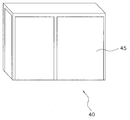
- the compressor module has a rectangular parallelepiped casing 45 as shown in FIG. 4, and stores the compressor 46, the four-way switching valve 47, and the like therein.
- at least one compressor module 40 a includes the first control unit 41.
- the first control unit 41 controls each device constituting the refrigerant cycle 15. That is, the 1st control part 41 controls not only the compressor module 40a which has the 1st control part 41, but the other compressor module 40b and the heat source side heat exchanger module 50.
- FIG. Specifically, the 1st control part 41 controls the component apparatus of the modules 40b and 50 which have the 2nd control parts 42 and 52 by transmitting control information to the 2nd control parts 42 and 52 mentioned later.
- the “control information” includes a control target value of a control target (for example, the number of fan rotations) set for each component device (for example, a fan) in each module.
- the air conditioner 10 it is sufficient that at least one compressor module 40a having the first control unit 41 exists. Therefore, the other compressor module 40b which does not have the 1st control part 41 may exist, and does not need to exist.
- the compressor module 40b includes the second control unit 42.
- the 2nd control part 42 controls the component apparatus of the compressor module 40b according to the control information which passed through the 1st control part 41 of the compressor module 40a.
- the heat-source-side heat exchanger module 50 includes at least a heat exchanger 56, a fan 57, a temperature sensor 58, and an expansion mechanism 59 as components, and controls these components.
- 2nd control part 52 (refer FIG.2, 3).
- the “expansion mechanism” refers to one that can depressurize the refrigerant, and examples thereof include an expansion valve and a capillary tube.
- the second controller 52 controls the components in the heat source side heat exchanger module 50 according to the control information via the first controller 41 of the compressor module 40. That is, the second control unit 52 controls the control target based on the control information transmitted from the first control unit 41 as needed. Further, the second control unit 52 determines the control value of the control target so as to realize the control target value for the predetermined control target, and controls the control target. That is, the second control unit 52 can control the control target independently of the first control unit 41 after obtaining the control target value once.
- control may be set for the rotational speed of the fan 57 and the opening of the expansion mechanism 59 as a predetermined control target for the fan 57 and the expansion mechanism 59 which are constituent devices.
- the second control unit 52 controls the rotation speed of the fan 57 and the opening degree of the expansion mechanism 59 based on the detection information of the temperature sensor 58 and the control target value. That is, after acquiring the control target value once, the second control unit 52 controls the rotational speed of the fan 57 and the opening degree of the expansion mechanism 59 independently of the first control unit 41.
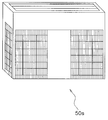
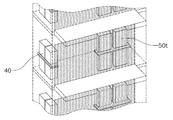
- the heat source side exchanger module 50 As specific forms of the heat source side exchanger module 50, a first type heat exchanger module 50s (FIG. 5) in which air is blown upward, and a second type heat exchanger module 50t in which air is blown sideways. (FIGS. 6A to 6C), and a third type heat exchanger module 50u (FIG. 7) in which air is blown in an oblique direction.
- the heat source side exchanger module 50 is selected from any one of these first type to third type heat exchanger modules 50s, 50t, 50u, or any combination.
- a plurality of heat source side heat exchanger modules 50 are connected to one compressor module 40 via the heat source side piping 33.
- the second type heat exchanger module 50t can be further selected from a plurality of configurations 50t1, 50t2, and 50t3 according to the arrangement of the fans.
- the air conditioner 10 can be installed by dividing the heat source side unit 30 into a plurality of modules 40 and 50, and thus is optimal according to the appearance and configuration of the building.
- the air conditioner 10 can be introduced.
- the heat source side heat exchanger module 50 includes a first type heat exchanger module 50s in which air is blown upward, a second type heat exchanger module 50t in which air is blown sideways, and a third type. Since any one or any combination of the heat exchanger modules 50u can be selected, the air conditioner 10 having an optimal configuration can be introduced according to the design specifications of the building.
- the heat source unit 30 may be required to arrange the heat source unit 30 on the evacuation floor.
- an installation area may be able to be reduced by arrange
- it is the air conditioning apparatus 10 which concerns on this embodiment as shown in FIG. 9, it can reduce an installation area by utilizing the 2nd type (side blowing type) heat exchanger module 50t. There are cases where it is possible.
- the short circuit may be prevented by arranging the compressor module 40 and the heat source side heat exchanger module 50 separately.
- the heat source side heat exchanger module 50 in a well-ventilated place on the wall surface of the building, the heat-exchanged air immediately circulates to the heat source side heat exchanger module 50.
- the compressor module 40 and the heat source side heat exchanger module 50 are separated and arranged to reduce noise. May be realized.
- FIG. 11 by installing the compressor module 40 in the machine room of a building, the noise source compressor module 50 can be kept away from the space used by many people, thereby reducing noise. .
- the air conditioning apparatus 10 which concerns on this embodiment has the 1st control part 41 for at least 1 compressor module 40a to control each apparatus which comprises the refrigerant cycle 15.
- FIG. 10 the modules 40b and 50 other than the compressor module 40a having the first control unit 41 are provided with a second control unit 42 that controls the components in the modules 40b and 50 according to the control information via the first control unit 41. , 52 are provided. With such a configuration, the modules 40b and 50 can be controlled using the first controller 41.
- control information includes a control target value for the control target in the module.
- the 2nd control part 52 of the heat source side heat exchanger modules 50 other than the compressor module 40a which has the 1st control part 41 controls a control object so that a control target value may be realized to a predetermined control object. The value is determined and the control target is controlled.
- the second control unit 52 can control the control target independently of the first control unit 41 after acquiring the control target value once. Therefore, efficient centralized control is realizable as the air conditioning apparatus 10 whole.
- the heat source side heat exchanger module 50 includes at least a temperature sensor 58, a fan 57, and an expansion mechanism 59.
- the 2nd control part 52 controls the rotation speed of the fan 57 and the opening degree of the expansion mechanism 59 based on the detection information of the temperature sensor 58, and a control target value.
- the second control unit 52 controls the rotational speed of the fan 57 and the opening degree of the expansion mechanism 59 independently of the first control unit 41 after obtaining the control target value once. Thereby, the communication amount between the compressor module 40 and the heat source side heat exchanger module 50 can be reduced.
- the air conditioning apparatus 10 which concerns on this embodiment is provided with the heat source side shut-off valve 35 (connection port) to which the heat source side heat exchanger module 50 is detachably connected to the heat source side piping 33.
- the heat source side heat exchanger module 50 can be arranged at an optimal place.
- the air conditioning apparatus 10 which concerns on this embodiment is provided with the utilization side shut-off valve 25 (connection port) to which the utilization side heat exchanger module 21 is detachably connected to the refrigerant cycle.
- the use-side heat exchanger module 21 can be arranged at an optimal place.
- the power consumption can be reduced by adding the heat source side heat exchanger module 50.
- an electricity bill can be reduced.
- electricity charges can be reduced depending on the contract with the power company.
- the use side heat exchanger module 21 is installed. Insufficient capacity may occur, or the heat exchange efficiency may decrease due to a decrease in the air volume, and the power consumption of the compressor may increase. Furthermore, during the heating operation, the evaporation temperature of the heat exchanger in the heat source side heat exchanger module 50 is lowered and frost formation is likely to occur, which may result in insufficient heating capacity. In such a case, the heat source side heat exchanger module 50 is moved, the form of the heat source side heat exchanger module 50 is changed to avoid an obstacle, or the capacity of the heat source side heat exchanger module 50 is changed. The problem can be solved by such measures as increasing the size or adding the heat source side heat exchanger module 50.
- the air conditioner 10 may include a plurality of heat source side heat exchanger modules 50 and include at least different types of heat exchanger modules. For example, at least one first type heat exchanger module 50s and at least one second type heat exchanger module 50t may be selected. Thereby, in a situation where it is preferable to use a plurality of types of heat exchanger modules 50s and 50t, the air conditioner 10 having an optimal configuration can be introduced.
- the air conditioner 10 may include a plurality of compressor modules 40 a and 40 b in one refrigerant cycle 15. With such a configuration, the heat exchange performance can be optimized according to the installation location.
- the air conditioner 10 can connect modules other than the compressor module 40 and the heat source side heat exchanger module 50 to the heat source side unit 30.
- modules other than the compressor module 40 and the heat source side heat exchanger module 50 for example, in the example shown in FIG. 12, an additional compressor module 40b, a switching valve module 60 having a four-way switching valve 47, and a long pipe correspondence module 61 having a heat exchanger and an expansion mechanism are connected.
- the 1st control part 41 of the air conditioning apparatus 10 which concerns on this embodiment is all the components of the refrigerant cycle introduced into the some outdoor unit system 5a, 5b, 5c, and also the utilization side heat exchanger module 21 (indoor unit). May be transmitted to the management device 1 (also referred to herein as an intelligent P board). Thereby, the management apparatus 1 can manage the states of all the component devices.
- a line connecting each module means a signal line. In the system shown in FIG. 13, information is transmitted sequentially via modules.
- the management device 1 has operation control functions such as mode setting, operation / stop, temperature setting, wind direction setting, air volume setting, schedule setting, etc. of the use side heat exchanger module 21, and the use side heat exchanger module 21. It can be controlled collectively.
- the management device 1 can be connected to the Internet via a router, and can manage data and control operations at a distance.
- FIG. 14 is a schematic diagram showing a control system of the heat source side unit 30S according to the second embodiment.
- the heat source side heat exchanger module 50S further includes a third control unit 53 and a storage unit 54.
- storage part 54 memorize
- the third control unit 53 determines the control value of the control target so as to realize the control target value for the predetermined control target, and controls the control target.
- the third control unit 53 is capable of controlling a control target independently of the first control unit 41 after being activated once.
- control may be set for the rotation speed of the fan 57 and the opening degree of the expansion mechanism 59.
- the third control unit 53 controls the rotational speed of the fan 57 and the opening degree of the expansion mechanism 59 based on the detection information of the temperature sensor 58 and the control target value.
- the air conditioner 10S according to the second embodiment changes a part of the configuration of the air conditioner 10 according to the first embodiment in addition to the configuration of the air conditioner 10 according to the first embodiment.
- the heat source side heat exchanger module 50 ⁇ / b> S includes the third control unit 53.
- the air conditioning apparatus 10S according to the second embodiment includes all the configurations of the air conditioning apparatus 10 according to the first embodiment, the above-described features (3-1) to (3-6) and modifications (4-1) to (4-3) are applied as they are.
- the heat source side heat exchanger module 50S further includes the third control unit 53. Therefore, after the module 50S is activated, the third control unit 53 performs the first control. Control of component devices is executed independently of the unit 41. For example, the third control unit 53 independently controls the rotational speed of the fan 57 and the opening degree of the expansion mechanism 59 based on the detection information of the temperature sensor 58 and the control target value. With such a configuration, efficient distributed control can be realized as the entire air conditioner 10S.
- a plurality of refrigerant cycles introduced into the plurality of outdoor unit systems 5a, 5b, and 5c are mounted on one compressor module 40a.
- the one controlled by the control unit 41 may be used.
- the compressor modules 40 b and 40 c that do not have the first control unit 41 are provided with the second control unit 42 and are controlled based on the control information from the first control unit 41.
- the heat source side heat exchanger module 50S is provided with a second control unit 52 and a third control unit 53. Thereby, the components of each heat source side heat exchanger module 50S are controlled by the second controller 52 based on the control information from the first controller 41, or the control information from the first controller 41 is It is independently controlled by the third control unit 53.
- reference numerals 50Ss, 50St, and 50Su denote a first type heat exchanger module, a second type heat exchanger module, and a third type heat exchanger module according to the second embodiment, respectively. doing.
- maximum 64 installation shows an example of the number of connected use side heat exchanger modules 21 (indoor units). This is merely an example, and the air conditioner 10 according to the present embodiment may include more usage-side heat exchanger modules 21.
- the present disclosure is not limited to the above embodiments as they are.
- the present disclosure can be embodied by modifying the components without departing from the scope of the disclosure in the implementation stage. Further, the present disclosure can form various disclosures by appropriately combining a plurality of constituent elements disclosed in the respective embodiments. For example, some components may be deleted from all the components shown in the embodiment. Furthermore, constituent elements may be appropriately combined in different embodiments.
Landscapes
- Engineering & Computer Science (AREA)
- Chemical & Material Sciences (AREA)
- Combustion & Propulsion (AREA)
- Mechanical Engineering (AREA)
- General Engineering & Computer Science (AREA)
- Physics & Mathematics (AREA)
- Signal Processing (AREA)
- Life Sciences & Earth Sciences (AREA)
- Sustainable Development (AREA)
- Fuzzy Systems (AREA)
- Mathematical Physics (AREA)
- Fluid Mechanics (AREA)
- Thermal Sciences (AREA)
- Air Conditioning Control Device (AREA)
Abstract
空気調和装置(10)は、少なくとも1つの圧縮機モジュール(40a)と、少なくとも1つの熱源側熱交換器モジュール(50)とが、互いに分離して配管を介して接続されており、利用側熱交換器モジュール(21)と組になって冷媒サイクルを構成する。また、熱源側熱交換器モジュール(50)が、空気が上方に吹き出される第1タイプの熱交換器モジュール(50a)、空気が側方に吹き出される第2タイプの熱交換器モジュール(50b)、及び空気が斜め方向に吹き出される第3タイプの熱交換器モジュール(50c)のいずれか一つ若しくは任意の組み合わせから選択される。このような構成により、建物の設計仕様に応じて最適な構成の空気調和装置(10)を導入できる。
Description
空気調和装置に関する。
室外機を圧縮機ユニットと熱交換器ユニットとに分割した空気調和機が検討されている(例えば、特許文献1(特開平10-170034号公報))。
近年では建物の外観又は周辺環境等に起因して、建物に導入する設備機器の設置場所に対し、要求が多様化している。また、納入後に室内側の負荷が増加したり、室外機の設置場所の周辺の環境が変化したりする場合がある。この場合には、能力不足となり、新たな設備機器を増設する必要がある。
第1観点の空気調和装置は、少なくとも1つの圧縮機モジュールと、少なくとも1つの熱源側熱交換器モジュールとが、互いに分離して配管を介して接続されており、利用側熱交換器モジュールと組になって冷媒サイクルを構成する。また、熱源側熱交換器モジュールが、空気が上方に吹き出される第1タイプの熱交換器モジュール、空気が側方に吹き出される第2タイプの熱交換器モジュール、及び空気が斜め方向に吹き出される第3タイプの熱交換器モジュールのいずれか一つ若しくは任意の組み合わせから選択される。このような構成により、建物の設計仕様に応じて最適な構成の空気調和装置を導入できる。さらに、複数の熱源側熱交換器モジュールを使用することにより、一つだけ接続した場合と比較して、同じ空調能力を実現する場合に圧縮機モジュールの消費電力を低減できる。また、圧縮機モジュールの最大能力も向上できる。
第2観点の空気調和装置は、第1観点の空気調和装置であって、熱源側熱交換器モジュールが複数存在し、少なくとも異なるタイプの熱交換器モジュールを含むものである。複数のタイプの熱交換器モジュールを使用することが好ましい状況において、最適な構成の空気調和装置を導入できる。
第3観点の空気調和装置は、第1観点または第2観点の空気調和装置であって、1つの圧縮機モジュールに対して、複数の熱源側熱交換器モジュールが配管を介して接続されている。このような構成により、設置場所に応じて熱交換性能を最適化できる。
第4観点の空気調和装置は、第1観点から第3観点の空気調和装置であって、1つの冷媒サイクルに、複数の圧縮機モジュールが存在する。このような構成により、設置場所に応じて熱交換性能を最適化できる。
第5観点の空気調和装置は、第1観点から第4観点の空気調和装置であって、少なくともの1つ圧縮機モジュールは、1以上の冷媒サイクルを構成する各機器を制御するための第1制御部を有する。また、第1制御部を有する圧縮機モジュール以外のモジュールには、第1制御部を経由した制御情報に従って、第1制御部を有する圧縮機モジュール以外のモジュール内の構成機器を制御する第2制御部が設けられる。このような構成により、第1制御部を用いて、各モジュールを集中制御することができる。
第6観点の空気調和装置は、第5観点の空気調和装置であって、制御情報には、モジュール内の構成機器毎に設定される制御対象の制御目標値が含まれている。また、第2制御部が、所定の制御対象に対して、制御目標値を実現するように制御対象の制御値を決定して、制御対象の制御を行なう。このような構成により、第1制御部を介して、効率的な集中制御を実現できる。
第7観点の空気調和装置は、第6観点の空気調和装置であって、熱源側熱交換器モジュールは、少なくとも、温度センサ、ファン、及び、膨張機構を有する。そして、第2制御部が、温度センサの検出情報及び制御目標値に基づいて、ファンの回転数及び膨張機構の開度を制御する。このような構成により、圧縮機モジュールと熱源側熱交換器モジュールとの間の通信量を減らすことができる。
第8観点の空気調和装置は、第1観点から第6観点の空気調和装置であって、熱源側熱交換器モジュールが、熱源側熱交換器モジュール内の制御対象に対する制御目標値を記憶する記憶部を有している。また、熱源側熱交換器モジュールは、所定の制御対象に対して、制御目標値を実現するように制御対象の制御値を決定して、制御対象の制御を行なう第3制御部を有している。このような構成により、空気調和装置全体として、効率的な分散制御を実現できる。
第9観点の空気調和装置は、第8観点の空気調和装置であって、熱源側熱交換器モジュールが、少なくとも、温度センサ、ファン、及び、膨張機構を有する。そして、第3制御部が、温度センサの検出情報及び制御目標値に基づいて、ファンの回転数及び膨張機構の開度を制御する。このような構成により、第3制御部が、第1制御部とは独立して、ファンの回転数及び膨張機構の開度を制御する。
第10観点の空気調和装置は、第1観点から第9観点の空気調和装置であって、配管に、熱源側熱交換器モジュールが脱着自在に接続する接続口が設けられている。このような構成により、最適な場所に熱源側熱交換器モジュールを配置できる。
<第1実施形態>
(1)全体構成
図1は第1実施形態に係る空気調和装置10の概念を説明するための模式図である。図2は同実施形態に係る空気調和装置10の冷媒サイクル15の一例を示す模式図である。
(1)全体構成
図1は第1実施形態に係る空気調和装置10の概念を説明するための模式図である。図2は同実施形態に係る空気調和装置10の冷媒サイクル15の一例を示す模式図である。
なお、以下の説明において、同様の機能を有する複数の装置について共通の説明をする場合は同一符号を付して説明する。また、同様の機能を有する複数の装置から、一の装置を区別して説明するときには英小文字の添え字を付して説明する。
空気調和装置10は、利用側ユニット20と、熱源側ユニット30とが組になって冷媒サイクル15を構成する。
利用側ユニット20は、少なくとも利用側熱交換器モジュール21を有する。利用側熱交換器モジュール21は、少なくとも熱交換器及びファンを有し、所定の空間Rの空気と熱交換を行う。そして、利用側ユニット20は、利用側熱交換器モジュール21から直接又は他のモジュールを介して、熱交換された空気を調和空気として当該空間Rへ送出する。ここで、冷媒サイクル15には、利用側熱交換器モジュール21が脱着自在に接続する利用側閉鎖弁25(接続口)が設けられている、
熱源側ユニット30は、少なくとも1つの圧縮機モジュール40と、少なくとも1つの熱源側熱交換器モジュール50とが、互いに分離して熱源側配管33を介して接続されている。熱源側ユニット30は、調和空気を送出する空間Rの外に設置される。また、熱源側配管33には、熱源側熱交換器モジュール50が脱着自在に接続する熱源側閉鎖弁35(接続口)が設けられている。
熱源側ユニット30は、少なくとも1つの圧縮機モジュール40と、少なくとも1つの熱源側熱交換器モジュール50とが、互いに分離して熱源側配管33を介して接続されている。熱源側ユニット30は、調和空気を送出する空間Rの外に設置される。また、熱源側配管33には、熱源側熱交換器モジュール50が脱着自在に接続する熱源側閉鎖弁35(接続口)が設けられている。
(2)熱源側ユニットの詳細
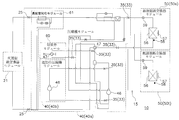
図3は同実施形態に係る熱源側ユニット30の制御系統を示す模式図である。
図3は同実施形態に係る熱源側ユニット30の制御系統を示す模式図である。
熱源側ユニット30では、圧縮機モジュール40のケーシングと、熱源側熱交換器モジュール50のケーシングとが別の部材により構成されている。これにより、圧縮機モジュール40と熱源側熱交換器モジュール50とを分離して設置できるようになっている。
(2-1)圧縮機モジュール
圧縮機モジュール40は、少なくとも圧縮機46を具備する。例えば、圧縮機モジュールは、図4に示すような直方体形状のケーシング45を有し、圧縮機46、四路切換弁47等を内部に格納する。また、圧縮機モジュール40が複数接続されている場合、少なくともの1つの圧縮機モジュール40aが第1制御部41を有する。
圧縮機モジュール40は、少なくとも圧縮機46を具備する。例えば、圧縮機モジュールは、図4に示すような直方体形状のケーシング45を有し、圧縮機46、四路切換弁47等を内部に格納する。また、圧縮機モジュール40が複数接続されている場合、少なくともの1つの圧縮機モジュール40aが第1制御部41を有する。
第1制御部41は、冷媒サイクル15を構成する各機器を制御するものである。すなわち、第1制御部41は、第1制御部41を有する圧縮機モジュール40aのみならず、その他の圧縮機モジュール40b及び熱源側熱交換器モジュール50を制御する。具体的には、第1制御部41は、制御情報を後述する第2制御部42,52に送信することで、第2制御部42,52を有するモジュール40b,50の構成機器を制御する。また、「制御情報」には、各モジュール内の構成機器(例えば、ファン)毎に設定される制御対象(例えば、ファンの回転数)の制御目標値が含まれる。
なお、空気調和装置10には、第1制御部41を有する圧縮機モジュール40aが少なくとも1つ存在すればよい。したがって、第1制御部41を有さない他の圧縮機モジュール40bが存在していてもよいし、存在しなくてもよい。
また、空気調和装置10が、第1制御部41を有さない圧縮機モジュール40bを備える場合、当該圧縮機モジュール40bは第2制御部42を有する。第2制御部42は、圧縮機モジュール40aの第1制御部41を経由した制御情報に従って、圧縮機モジュール40bの構成機器の制御を行うものである。
(2-2)熱源側熱交換器モジュール
熱源側熱交換器モジュール50は、少なくとも、熱交換器56、ファン57、温度センサ58、及び膨張機構59を構成機器として有し、これらを制御するための第2制御部52を有する(図2,3参照)。なお、本実施形態において「膨張機構」とは、冷媒を減圧できるものをいい、例えば膨張弁、キャピラリーチューブがこれに該当する。
熱源側熱交換器モジュール50は、少なくとも、熱交換器56、ファン57、温度センサ58、及び膨張機構59を構成機器として有し、これらを制御するための第2制御部52を有する(図2,3参照)。なお、本実施形態において「膨張機構」とは、冷媒を減圧できるものをいい、例えば膨張弁、キャピラリーチューブがこれに該当する。
第2制御部52は、圧縮機モジュール40の第1制御部41を経由した制御情報に従って、熱源側熱交換器モジュール50内の構成機器の制御を行うものである。すなわち、第2制御部52は、第1制御部41から随時送信される制御情報に基づいて制御対象を制御する。また、第2制御部52は、所定の制御対象に対して、制御目標値を実現するように制御対象の制御値を決定して、制御対象の制御を行なう。すなわち、第2制御部52は、制御目標値を一旦取得した後は、第1制御部41とは独立して制御対象を制御することが可能なものである。
例えば、構成機器であるファン57及び膨張機構59に対する所定の制御対象として、ファン57の回転数及び膨張機構59の開度に対して制御を設定することがある。この場合、第2制御部52は、温度センサ58の検出情報及び制御目標値に基づいて、ファン57の回転数及び膨張機構59の開度を制御する。すなわち、第2制御部52は、制御目標値を一旦取得した後は、第1制御部41とは独立して、ファン57の回転数及び膨張機構59の開度を制御する。
熱源側交換機モジュール50の具体的形態としては、空気が上方に吹き出される第1タイプの熱交換器モジュール50s(図5)、空気が側方に吹き出される第2タイプの熱交換器モジュール50t(図6(a)~6(c))、及び空気が斜め方向に吹き出される第3タイプの熱交換器モジュール50u(図7)が挙げられる。本実施形態では、熱源側交換機モジュール50は、これらの第1タイプから第3タイプの熱交換器モジュール50s,50t,50uのいずれか一つ若しくは任意の組み合わせから選択される。また、本実施形態では、1つの圧縮機モジュール40に、複数の熱源側熱交換器モジュール50が熱源側配管33を介して接続されている。なお、第2タイプの熱交換器モジュール50tは、ファンの配置に応じて、さらに複数の形態50t1,50t2,50t3から選択することが可能である。
(3)特徴
(3-1)
以上説明したように、本実施形態に係る空気調和装置10は、熱源側ユニット30を複数のモジュール40,50に分割して設置することができるので、建物の外観及び構成等に応じて最適な空気調和装置10を導入することができる。特に、熱源側熱交換器モジュール50を、空気が上方に吹き出される第1タイプの熱交換器モジュール50s、空気が側方に吹き出される第2タイプの熱交換器モジュール50t、及び第3タイプの熱交換器モジュール50uのいずれか一つ若しくは任意の組み合わせから選択できるので、建物の設計仕様に応じて最適な構成の空気調和装置10を導入できる。
(3-1)
以上説明したように、本実施形態に係る空気調和装置10は、熱源側ユニット30を複数のモジュール40,50に分割して設置することができるので、建物の外観及び構成等に応じて最適な空気調和装置10を導入することができる。特に、熱源側熱交換器モジュール50を、空気が上方に吹き出される第1タイプの熱交換器モジュール50s、空気が側方に吹き出される第2タイプの熱交換器モジュール50t、及び第3タイプの熱交換器モジュール50uのいずれか一つ若しくは任意の組み合わせから選択できるので、建物の設計仕様に応じて最適な構成の空気調和装置10を導入できる。
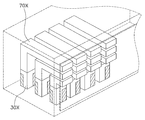
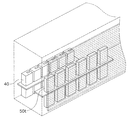
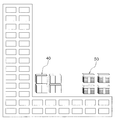
例えば、ビルの設計仕様によっては、避難階に熱源側ユニット30を配置するように要求されることがある。このような場合に、本実施形態に係る空気調和装置10であれば、圧縮機モジュール40と熱源側熱交換器モジュール50を分離して配置することで、設置面積を減らすことができる場合がある。すなわち、圧縮機モジュールと熱源側熱交換器モジュールとが分離されていない(一体となった)熱源側ユニットであって、空気を上方に吹き出すタイプの熱源側ユニット30Xを設置する場合、図8に示すように、上方に吹き出された風を誘導するためのガイド部材70Xが必要となる。そのため、設置面積を減らすことが困難なことが多い。これに対し、本実施形態に係る空気調和装置10であれば、図9に示すように、第2タイプ(横吹きタイプ)の熱交換器モジュール50tを利用することで、設置面積を減らすことができる場合がある。
また、例えば、本実施形態に係る空気調和装置であれば、圧縮機モジュール40と熱源側熱交換器モジュール50を分離して配置することで、ショートサーキットを防止できる場合がある。例えば、図10に示すように、ビルの壁面で風通しのよいところに熱源側熱交換器モジュール50を配置することで、熱交換された空気がすぐに循環して熱源側熱交換器モジュール50に流入するショートサーキットが生じる事態を回避できる
また、例えば、本実施形態に係る空気調和装置10であれば、圧縮機モジュール40と熱源側熱交換器モジュール50を分離して配置することで、低騒音化を実現できる場合がある。例えば、図11に示すように、ビルの機械室内に圧縮機モジュール40を設置することで、多くの人が利用する空間から騒音元の圧縮機モジュール50を遠ざけることで、低騒音化を実現できる。
また、例えば、本実施形態に係る空気調和装置10であれば、圧縮機モジュール40と熱源側熱交換器モジュール50を分離して配置することで、低騒音化を実現できる場合がある。例えば、図11に示すように、ビルの機械室内に圧縮機モジュール40を設置することで、多くの人が利用する空間から騒音元の圧縮機モジュール50を遠ざけることで、低騒音化を実現できる。
(3-2)
また、本実施形態に係る空気調和装置10は、1つの圧縮機モジュール40に、複数の熱源側熱交換器モジュール50s,50tが配管を介して接続されている(図2参照)。このような構成により、設置場所に応じて熱交換性能を最適化できる。
また、本実施形態に係る空気調和装置10は、1つの圧縮機モジュール40に、複数の熱源側熱交換器モジュール50s,50tが配管を介して接続されている(図2参照)。このような構成により、設置場所に応じて熱交換性能を最適化できる。
(3-3)
また、本実施形態に係る空気調和装置10は、少なくとも1つの圧縮機モジュール40aが、冷媒サイクル15を構成する各機器を制御するための第1制御部41を有する。また、第1制御部41を有する圧縮機モジュール40a以外のモジュール40b,50には、第1制御部41を経由した制御情報に従って、モジュール40b,50内の構成機器を制御する第2制御部42,52が設けられる。このような構成により、第1制御部41を用いて、各モジュール40b,50を制御することができる。
また、本実施形態に係る空気調和装置10は、少なくとも1つの圧縮機モジュール40aが、冷媒サイクル15を構成する各機器を制御するための第1制御部41を有する。また、第1制御部41を有する圧縮機モジュール40a以外のモジュール40b,50には、第1制御部41を経由した制御情報に従って、モジュール40b,50内の構成機器を制御する第2制御部42,52が設けられる。このような構成により、第1制御部41を用いて、各モジュール40b,50を制御することができる。
また、制御情報には、モジュール内の制御対象に対する制御目標値が含まれている。そして、第1制御部41を有する圧縮機モジュール40a以外の熱源側熱交換器モジュール50の第2制御部52は、所定の制御対象に対して、制御目標値を実現するように制御対象の制御値を決定して、制御対象の制御を行なう。このような構成により、第2制御部52は、制御目標値を一旦取得した後は、第1制御部41とは独立して制御対象を制御することが可能となる。したがって、空気調和装置10全体として、効率的な集中制御を実現できる。
(3-4)
また、本実施形態に係る空気調和装置10は、熱源側熱交換器モジュール50が、少なくとも、温度センサ58、ファン57、及び、膨張機構59を有する。
また、本実施形態に係る空気調和装置10は、熱源側熱交換器モジュール50が、少なくとも、温度センサ58、ファン57、及び、膨張機構59を有する。
そして、第2制御部52が、温度センサ58の検出情報及び制御目標値に基づいて、ファン57の回転数及び膨張機構59の開度を制御する。このような構成により、第2制御部52は、制御目標値を一旦取得した後は、第1制御部41とは独立して、ファン57の回転数及び膨張機構59の開度を制御する。これにより、圧縮機モジュール40と熱源側熱交換器モジュール50との間の通信量を減らすことができる。
(3-5)
また、本実施形態に係る空気調和装置10は、熱源側配管33に、熱源側熱交換器モジュール50が脱着自在に接続する熱源側閉鎖弁35(接続口)が設けられている。このような構成により、最適な場所に熱源側熱交換器モジュール50を配置することができる。
また、本実施形態に係る空気調和装置10は、熱源側配管33に、熱源側熱交換器モジュール50が脱着自在に接続する熱源側閉鎖弁35(接続口)が設けられている。このような構成により、最適な場所に熱源側熱交換器モジュール50を配置することができる。
(3-6)
また、本実施形態に係る空気調和装置10は、冷媒サイクルに、利用側熱交換器モジュール21が脱着自在に接続する利用側閉鎖弁25(接続口)が設けられている。このような構成により、最適な場所に利用側熱交換器モジュール21を配置することができる。
また、本実施形態に係る空気調和装置10は、冷媒サイクルに、利用側熱交換器モジュール21が脱着自在に接続する利用側閉鎖弁25(接続口)が設けられている。このような構成により、最適な場所に利用側熱交換器モジュール21を配置することができる。
(3-7)
また、利用側熱交換器モジュール21の負荷の増加により熱源側熱交換器モジュール50の能力が不足した場合は、初期設置の後で熱源側熱交換器モジュール50を容易に追加することができる。これにより別系統で負荷を補う場合に比べて設置スペースや工事時間、機器のコストなどを大幅に削減できる。
また、利用側熱交換器モジュール21の負荷の増加により熱源側熱交換器モジュール50の能力が不足した場合は、初期設置の後で熱源側熱交換器モジュール50を容易に追加することができる。これにより別系統で負荷を補う場合に比べて設置スペースや工事時間、機器のコストなどを大幅に削減できる。
(3-8)
また、建物の使用率の増加に伴い、建物の最大電力が増加することを抑えたい場合に、熱源側熱交換器モジュール50を増設することにより消費電力を低減できる。これにより、電気料金を低減できる。また、ピーク負荷時の最大電力を低減することで建物の受電設備の増設を回避できる。さらに、電力会社との契約によっては電気料金を低減できる。
また、建物の使用率の増加に伴い、建物の最大電力が増加することを抑えたい場合に、熱源側熱交換器モジュール50を増設することにより消費電力を低減できる。これにより、電気料金を低減できる。また、ピーク負荷時の最大電力を低減することで建物の受電設備の増設を回避できる。さらに、電力会社との契約によっては電気料金を低減できる。
(3-9)
また、熱源側熱交換器モジュール50の設置場所の環境変化があった場合、たとえば、別の熱源機器が設置され、吹出口に障害物が設置された場合には、利用側熱交換器モジュール21の能力不足が生じたり、風量の低下により熱交換効率が低下し、圧縮機の消費電力が増加したりすることがある。さらに、暖房運転時は熱源側熱交換器モジュール50内の熱交換器の蒸発温度が低下して着霜が発生しやすくなり、暖房能力不足になる場合がある。こういった場合にも、熱源側熱交換器モジュール50を移設したり、熱源側熱交換器モジュール50の形態を変更して障害物を避けたり、熱源側熱交換器モジュール50の容量を変更したり(サイズアップ)、熱源側熱交換器モジュール50を追加したりするなどの対応で問題を解決できる。
また、熱源側熱交換器モジュール50の設置場所の環境変化があった場合、たとえば、別の熱源機器が設置され、吹出口に障害物が設置された場合には、利用側熱交換器モジュール21の能力不足が生じたり、風量の低下により熱交換効率が低下し、圧縮機の消費電力が増加したりすることがある。さらに、暖房運転時は熱源側熱交換器モジュール50内の熱交換器の蒸発温度が低下して着霜が発生しやすくなり、暖房能力不足になる場合がある。こういった場合にも、熱源側熱交換器モジュール50を移設したり、熱源側熱交換器モジュール50の形態を変更して障害物を避けたり、熱源側熱交換器モジュール50の容量を変更したり(サイズアップ)、熱源側熱交換器モジュール50を追加したりするなどの対応で問題を解決できる。
(4)変形例
(4-1)変形例1A
本実施形態に係る空気調和装置10は、熱源側熱交換器モジュール50が複数存在し、少なくとも異なるタイプの熱交換器モジュールを含むものであってもよい。例えば、少なくとも1つの第1タイプの熱交換器モジュール50sと、少なくとも1つの第2タイプの熱交換器モジュール50tを選択するものでもよい。これにより、複数のタイプの熱交換器モジュール50s,50tを使用することが好ましい状況において、最適な構成の空気調和装置10を導入できる。
(4-1)変形例1A
本実施形態に係る空気調和装置10は、熱源側熱交換器モジュール50が複数存在し、少なくとも異なるタイプの熱交換器モジュールを含むものであってもよい。例えば、少なくとも1つの第1タイプの熱交換器モジュール50sと、少なくとも1つの第2タイプの熱交換器モジュール50tを選択するものでもよい。これにより、複数のタイプの熱交換器モジュール50s,50tを使用することが好ましい状況において、最適な構成の空気調和装置10を導入できる。
(4-2)変形例1B
本実施形態に係る空気調和装置10は、図12に示すように、1つの冷媒サイクル15に、複数の圧縮機モジュール40a,40bが存在するものでもよい。このような構成により、設置場所に応じて熱交換性能を最適化できる。
本実施形態に係る空気調和装置10は、図12に示すように、1つの冷媒サイクル15に、複数の圧縮機モジュール40a,40bが存在するものでもよい。このような構成により、設置場所に応じて熱交換性能を最適化できる。
(4-3)変形例1C
本実施形態に係る空気調和装置10は、図12に示すように、熱源側ユニット30には、圧縮機モジュール40及び熱源側熱交換器モジュール50以外のモジュールも接続可能である。例えば、図12に示す例では、追加の圧縮機モジュール40b、四路切換弁47を有する切換弁モジュール60、及び熱交換器と膨張機構を有する長配管対応モジュール61が接続されている。
本実施形態に係る空気調和装置10は、図12に示すように、熱源側ユニット30には、圧縮機モジュール40及び熱源側熱交換器モジュール50以外のモジュールも接続可能である。例えば、図12に示す例では、追加の圧縮機モジュール40b、四路切換弁47を有する切換弁モジュール60、及び熱交換器と膨張機構を有する長配管対応モジュール61が接続されている。
(4-4)変形例1D
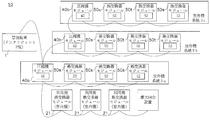
本実施形態に係る空気調和装置10の第1制御部41は、複数の室外機系統5a,5b,5c、さらに利用側熱交換器モジュール21(室内機)に導入される冷媒サイクルの全て構成機器の状態情報等を管理装置1(ここでは、インテリジェントP板ともいう)に送信するものでもよい。これにより、管理装置1が全ての構成機器の状態を管理することができる。なお、図13において、各モジュール間を結ぶ線は信号線を意味している。図13に示すシステムでは、順次モジュールを経由して情報伝達が行なわれる。また、管理装置1が利用側熱交換器モジュール21のモード設定、運転・停止、温度設定、風向設定、風量設定、スケジュール設定などの運転制御機能を有して、利用側熱交換器モジュール21を一括して制御することができる。この管理装置1はルータを介してインターネットに接続することができ、遠方でデータの管理や運転コントロールが可能である。
本実施形態に係る空気調和装置10の第1制御部41は、複数の室外機系統5a,5b,5c、さらに利用側熱交換器モジュール21(室内機)に導入される冷媒サイクルの全て構成機器の状態情報等を管理装置1(ここでは、インテリジェントP板ともいう)に送信するものでもよい。これにより、管理装置1が全ての構成機器の状態を管理することができる。なお、図13において、各モジュール間を結ぶ線は信号線を意味している。図13に示すシステムでは、順次モジュールを経由して情報伝達が行なわれる。また、管理装置1が利用側熱交換器モジュール21のモード設定、運転・停止、温度設定、風向設定、風量設定、スケジュール設定などの運転制御機能を有して、利用側熱交換器モジュール21を一括して制御することができる。この管理装置1はルータを介してインターネットに接続することができ、遠方でデータの管理や運転コントロールが可能である。
さらに、運転状態を収集、蓄積することにより、利用側熱交換器モジュール21の負荷の過不足を把握できる。負荷に対して能力が不足している場合は、(3-7)に示す方法で熱源側熱交換器モジュール50を増設することで、他の機器を追加せずに、設置スペース、工事時間、コスト低減等を実現できる。
なお、図13には「最大64台設置」との文言が示されているが、これは利用側熱交換器モジュール21(室内機)の接続台数の一例を示したものである。単なる例示であり、本実施形態に係る空気調和装置10は、これ以上の台数の利用側熱交換器モジュール21を備えていてもよいものである。
<第2実施形態>
(5)熱源側ユニットの詳細
図14は第2実施形態に係る熱源側ユニット30Sの制御系統を示す模式図である。
(5)熱源側ユニットの詳細
図14は第2実施形態に係る熱源側ユニット30Sの制御系統を示す模式図である。
以下、既に説明した部分と同一の部分には略同一の符号を付し、重複した説明を省略する。なお、他の実施形態と区別するために、本実施形態では英大文字の添え字Sを付すことがある。
第2実施形態に係る熱源側ユニット30Sは、熱源側熱交換器モジュール50Sが、第3制御部53及び記憶部54をさらに有する。記憶部54は、熱源側熱交換器モジュール50S内の構成機器毎に設定される制御対象に対する制御目標値を記憶するものである。
第3制御部53は、所定の制御対象に対して、制御目標値を実現するように制御対象の制御値を決定して、制御対象の制御を行なうものである。ここで、第3制御部53は、第2制御部52とは異なり、一旦起動した後は、第1制御部41とは独立して制御対象を制御することが可能なものである。
例えば、所定の制御対象として、ファン57の回転数及び膨張機構59の開度に対して制御を設定することがある。この場合、第3制御部53は、温度センサ58の検出情報及び制御目標値に基づいて、ファン57の回転数及び膨張機構59の開度を制御する。
(6)特徴
第2実施形態に係る空気調和装置10Sは、第1実施形態に係る空気調和装置10の構成に加え、又は、第1実施形態に係る空気調和装置10の構成の一部を変更して、熱源側熱交換器モジュール50Sが第3制御部53を備えるものである。
第2実施形態に係る空気調和装置10Sは、第1実施形態に係る空気調和装置10の構成に加え、又は、第1実施形態に係る空気調和装置10の構成の一部を変更して、熱源側熱交換器モジュール50Sが第3制御部53を備えるものである。
したがって、第2実施形態に係る空気調和装置10Sが、第1実施形態に係る空気調和装置10の構成を全て含む場合には、上述した特徴(3-1)~(3-6)及び変形例(4-1)~(4-3)がそのまま適用される。
また、第2実施形態に係る空気調和装置10Sは、熱源側熱交換器モジュール50Sが第3制御部53をさらに有するので、当該モジュール50Sが起動した後は、第3制御部53が第1制御部41とは独立して構成機器の制御を実行する。例えば、第3制御部53は、温度センサ58の検出情報及び制御目標値に基づいて、ファン57の回転数及び膨張機構59の開度を独立して制御する。このような構成により、空気調和装置10S全体として、効率的な分散制御を実現できる。
(7)変形例2
本実施形態に係る空気調和装置10Sは、図15に示すように、複数の室外機系統5a,5b,5cに導入される複数の冷媒サイクルを、1台の圧縮機モジュール40aに搭載される第1制御部41で制御するものでもよい。この場合、第1制御部41を有さない圧縮機モジュール40b,40cには、第2制御部42が設けられ、第1制御部41からの制御情報に基づいて制御される。また、熱源側熱交換器モジュール50Sには、第2制御部52及び第3制御部53が設けられる。これにより、各熱源側熱交換器モジュール50Sの構成機器は、第1制御部41からの制御情報に基づいて第2制御部52により制御されるか、第1制御部41からの制御情報とは独立に第3制御部53により制御される。
本実施形態に係る空気調和装置10Sは、図15に示すように、複数の室外機系統5a,5b,5cに導入される複数の冷媒サイクルを、1台の圧縮機モジュール40aに搭載される第1制御部41で制御するものでもよい。この場合、第1制御部41を有さない圧縮機モジュール40b,40cには、第2制御部42が設けられ、第1制御部41からの制御情報に基づいて制御される。また、熱源側熱交換器モジュール50Sには、第2制御部52及び第3制御部53が設けられる。これにより、各熱源側熱交換器モジュール50Sの構成機器は、第1制御部41からの制御情報に基づいて第2制御部52により制御されるか、第1制御部41からの制御情報とは独立に第3制御部53により制御される。
なお、図15において、符号50Ss,50St,50Suは、それぞれ、第2実施形態に係る第1タイプの熱交換器モジュール、第2タイプの熱交換器モジュール、第3タイプの熱交換器モジュールを意味している。
なお、図15には「最大64台設置」との文言が示されているが、これは利用側熱交換器モジュール21(室内機)の接続台数の一例を示したものである。単なる例示であり、本実施形態に係る空気調和装置10は、これ以上の台数の利用側熱交換器モジュール21を備えていてもよいものである。
<他の実施形態>
以上、実施形態を説明したが、特許請求の範囲の趣旨及び範囲から逸脱することなく、形態や詳細の多様な変更が可能なことが理解されるであろう。
以上、実施形態を説明したが、特許請求の範囲の趣旨及び範囲から逸脱することなく、形態や詳細の多様な変更が可能なことが理解されるであろう。
すなわち、本開示は、上記各実施形態そのままに限定されるものではない。本開示は、実施段階ではその要旨を逸脱しない範囲で構成要素を変形して具体化できるものである。また、本開示は、上記各実施形態に開示されている複数の構成要素の適宜な組み合わせにより種々の開示を形成できるものである。例えば、実施形態に示される全構成要素から幾つかの構成要素は削除してもよいものである。さらに、異なる実施形態に構成要素を適宜組み合わせてもよいものである。
1 管理装置
5a 室外機系統
5b 室外機系統
5c 室外機系統
10 空気調和装置
10S 空気調和装置
15 冷媒サイクル
20 利用側ユニット
21 利用側熱交換器モジュール
25 利用側閉鎖弁(接続口)
30 熱源側ユニット
33 熱源側配管
35 熱源側閉鎖弁(接続口)
40 圧縮機モジュール
40a 圧縮機モジュール(第1制御部を有する)
40b 圧縮機モジュール(第1制御部を有さない)
40c 圧縮機モジュール(第1制御部を有さない)
41 第1制御部
42 第2制御部
45 ケーシング
46 圧縮機
47 四路切換弁
50 熱源側熱交換器モジュール
50S 熱源側熱交換器モジュール
50s 第1タイプの熱交換器モジュール
50t 第2タイプの熱交換器モジュール
50u 第3タイプの熱交換器モジュール
50Ss 第1タイプの熱交換器モジュール
50St 第2タイプの熱交換器モジュール
50Su 第3タイプの熱交換器モジュール
52 第2制御部
53 第3制御部
56 熱交換器
57 ファン
58 温度センサ
59 膨張機構
5a 室外機系統
5b 室外機系統
5c 室外機系統
10 空気調和装置
10S 空気調和装置
15 冷媒サイクル
20 利用側ユニット
21 利用側熱交換器モジュール
25 利用側閉鎖弁(接続口)
30 熱源側ユニット
33 熱源側配管
35 熱源側閉鎖弁(接続口)
40 圧縮機モジュール
40a 圧縮機モジュール(第1制御部を有する)
40b 圧縮機モジュール(第1制御部を有さない)
40c 圧縮機モジュール(第1制御部を有さない)
41 第1制御部
42 第2制御部
45 ケーシング
46 圧縮機
47 四路切換弁
50 熱源側熱交換器モジュール
50S 熱源側熱交換器モジュール
50s 第1タイプの熱交換器モジュール
50t 第2タイプの熱交換器モジュール
50u 第3タイプの熱交換器モジュール
50Ss 第1タイプの熱交換器モジュール
50St 第2タイプの熱交換器モジュール
50Su 第3タイプの熱交換器モジュール
52 第2制御部
53 第3制御部
56 熱交換器
57 ファン
58 温度センサ
59 膨張機構
Claims (10)
- 少なくとも1つの圧縮機モジュール(40)と、少なくとも1つの熱源側熱交換器モジュール(50)とが、互いに分離して配管(33)を介して接続されており、利用側熱交換器モジュール(21)と組になって冷媒サイクル(15)を構成し、
前記熱源側熱交換器モジュールが、空気が上方に吹き出される第1タイプの熱交換器モジュール(50s,50Ss)、空気が側方に吹き出される第2タイプの熱交換器モジュール(50t,50St)、及び空気が斜め方向に吹き出される第3タイプの熱交換器モジュール(50u,50Su)のいずれか一つ若しくは任意の組み合わせから選択されることを特徴とする、空気調和装置(10,10S)。 - 前記熱源側熱交換器モジュールが複数存在し、少なくとも異なるタイプの熱交換器モジュールを含む、空気調和装置。
請求項1に記載の空気調和装置。 - 1つの前記圧縮機モジュールに、複数の前記熱源側熱交換器モジュールが配管を介して接続されている、
請求項1または2に記載の空気調和装置。 - 1つの前記冷媒サイクルに、複数の前記圧縮機モジュールが存在する、
請求項1から3のいずれか1項に記載の空気調和装置。 - 少なくとも1つの前記圧縮機モジュール(40a)が、1以上の冷媒サイクルを構成する各機器を制御するための第1制御部(41)を有し、
前記第1制御部を有する圧縮機モジュール以外のモジュールが、前記第1制御部を経由した制御情報に従って、前記第1制御部を有する圧縮機モジュール以外のモジュール内の構成機器を制御する第2制御部(42,52)を有する、
請求項1から4のいずれか1項に記載の空気調和装置。 - 前記制御情報には、モジュール内の構成機器毎に設定される制御対象に関する制御目標値が含まれており、
第2制御部が、所定の制御対象に対して、前記制御目標値を実現するように前記制御対象の制御値を決定して、前記制御対象の制御を行なう、
請求項5に記載の空気調和装置。 - 前記熱源側熱交換器モジュールは、少なくとも、温度センサ(58)、ファン(57)、及び、膨張機構(59)を有し、
前記第2制御部が、前記温度センサの検出情報及び前記制御目標値に基づいて、前記ファンの回転数及び前記膨張機構の開度を制御する、
請求項6に記載の空気調和装置。 - 前記熱源側熱交換器モジュール(50S)は、
前記熱源側熱交換器モジュール内の制御対象に対する制御目標値を記憶する記憶部(54)と、
所定の制御対象に対して、前記制御目標値を実現するように前記制御対象の制御値を決定して、前記制御対象の制御を行なう第3制御部(53)と、をさらに有する、
請求項1から6のいずれか1項に記載の空気調和装置(10S)。 - 前記熱源側熱交換器モジュールは、少なくとも、温度センサ、ファン、及び、膨張機構を有し、
前記第3制御部が、前記温度センサの検出情報及び前記制御目標値に基づいて、前記ファンの回転数及び前記膨張機構の開度を制御する、
請求項8に記載の空気調和装置。 - 前記配管に、前記熱源側熱交換器モジュールが脱着自在に接続する接続口(35)が設けられている、
請求項1から9のいずれか1項に記載の空気調和装置。
Applications Claiming Priority (2)
| Application Number | Priority Date | Filing Date | Title |
|---|---|---|---|
| CN201810194771.7A CN110243030B (zh) | 2018-03-09 | 2018-03-09 | 空调装置 |
| CN201810194771.7 | 2018-03-09 |
Publications (1)
| Publication Number | Publication Date |
|---|---|
| WO2019172425A1 true WO2019172425A1 (ja) | 2019-09-12 |
Family
ID=67846532
Family Applications (1)
| Application Number | Title | Priority Date | Filing Date |
|---|---|---|---|
| PCT/JP2019/009352 Ceased WO2019172425A1 (ja) | 2018-03-09 | 2019-03-08 | 空気調和装置 |
Country Status (2)
| Country | Link |
|---|---|
| CN (1) | CN110243030B (ja) |
| WO (1) | WO2019172425A1 (ja) |
Families Citing this family (5)
| Publication number | Priority date | Publication date | Assignee | Title |
|---|---|---|---|---|
| CN113883608B (zh) * | 2021-10-14 | 2023-03-17 | 青岛海信日立空调系统有限公司 | 一种多联机室外机 |
| CN116772302B (zh) * | 2023-05-18 | 2026-04-14 | 广州万二二麦工程技术有限公司 | 一种立体送风的空调主机及其设备平台 |
| CN116608513B (zh) * | 2023-05-18 | 2026-04-10 | 广州万二二麦工程技术有限公司 | 一种翅片管换热器总成及其沿长边设置多负压腔的双制冷系统空调主机和设备平台 |
| CN116624933B (zh) * | 2023-05-18 | 2026-04-14 | 广州万二二麦工程技术有限公司 | 一种多只负压腔沿长边设置的空调主机及其设备平台 |
| CN116857724B (zh) * | 2023-05-18 | 2026-04-14 | 广州万二二麦工程技术有限公司 | 一种外廊式中央空调主机设备平台 |
Citations (7)
| Publication number | Priority date | Publication date | Assignee | Title |
|---|---|---|---|---|
| JPS63129139U (ja) * | 1987-02-18 | 1988-08-24 | ||
| JPH05240522A (ja) * | 1992-02-28 | 1993-09-17 | Sanyo Electric Co Ltd | 空気調和装置 |
| JPH06221620A (ja) * | 1993-01-28 | 1994-08-12 | Sanyo Electric Co Ltd | 空気調和装置 |
| JPH10170034A (ja) * | 1996-12-10 | 1998-06-26 | Hitachi Ltd | マルチ型空気調和機 |
| JP2004028359A (ja) * | 2002-06-21 | 2004-01-29 | Mitsubishi Electric Corp | 空調・冷凍装置、熱源側ユニット、負荷側ユニット、圧縮機の交換方法、熱交換器の増設方法 |
| JP2005188770A (ja) * | 2003-12-24 | 2005-07-14 | Samsung Electronics Co Ltd | 空気調和装置用室外機 |
| JP2008267727A (ja) * | 2007-04-23 | 2008-11-06 | Mitsubishi Electric Corp | 冷凍空調装置 |
Family Cites Families (5)
| Publication number | Priority date | Publication date | Assignee | Title |
|---|---|---|---|---|
| TW212224B (ja) * | 1992-02-28 | 1993-09-01 | Sanyo Denki Kk | |
| CN2735216Y (zh) * | 2004-07-23 | 2005-10-19 | 熊晓强 | 空调室外机 |
| CN101644274B (zh) * | 2009-08-26 | 2011-01-05 | 广东美的电器股份有限公司 | 一种双轴流风轮系统 |
| JP3199864U (ja) * | 2012-09-28 | 2015-09-17 | トレイン・インターナショナル・インコーポレイテッド | エアコン室外機 |
| CN107166639B (zh) * | 2017-05-10 | 2020-08-04 | 青岛海尔空调器有限总公司 | 一种空调器除霜控制方法、控制装置以及空调器 |
-
2018
- 2018-03-09 CN CN201810194771.7A patent/CN110243030B/zh active Active
-
2019
- 2019-03-08 WO PCT/JP2019/009352 patent/WO2019172425A1/ja not_active Ceased
Patent Citations (7)
| Publication number | Priority date | Publication date | Assignee | Title |
|---|---|---|---|---|
| JPS63129139U (ja) * | 1987-02-18 | 1988-08-24 | ||
| JPH05240522A (ja) * | 1992-02-28 | 1993-09-17 | Sanyo Electric Co Ltd | 空気調和装置 |
| JPH06221620A (ja) * | 1993-01-28 | 1994-08-12 | Sanyo Electric Co Ltd | 空気調和装置 |
| JPH10170034A (ja) * | 1996-12-10 | 1998-06-26 | Hitachi Ltd | マルチ型空気調和機 |
| JP2004028359A (ja) * | 2002-06-21 | 2004-01-29 | Mitsubishi Electric Corp | 空調・冷凍装置、熱源側ユニット、負荷側ユニット、圧縮機の交換方法、熱交換器の増設方法 |
| JP2005188770A (ja) * | 2003-12-24 | 2005-07-14 | Samsung Electronics Co Ltd | 空気調和装置用室外機 |
| JP2008267727A (ja) * | 2007-04-23 | 2008-11-06 | Mitsubishi Electric Corp | 冷凍空調装置 |
Also Published As
| Publication number | Publication date |
|---|---|
| CN110243030B (zh) | 2022-04-12 |
| CN110243030A (zh) | 2019-09-17 |
Similar Documents
| Publication | Publication Date | Title |
|---|---|---|
| CN110243030B (zh) | 空调装置 | |
| US7669433B2 (en) | Multi-air conditioner central control system | |
| US20160252284A1 (en) | Air conditioning system and control method thereof | |
| AU2010259838B2 (en) | Refrigeration apparatus | |
| JP5772904B2 (ja) | 熱回収型冷凍装置 | |
| JP5030640B2 (ja) | 空気調和システム | |
| EP1662212A3 (en) | Air conditioning system and method for controlling the same | |
| JP2016191502A (ja) | 冷媒流路切換ユニット | |
| JP6021768B2 (ja) | 空調システム | |
| WO2018110388A1 (ja) | 空気調和システム | |
| EP2950015A1 (en) | Air-conditioning control system | |
| JP2019045129A (ja) | 空調システム | |
| JP4214198B2 (ja) | 空気調和機 | |
| EP1804007B1 (en) | Air conditioner integrated management system and control method of the same | |
| JP2010007996A (ja) | 空気調和装置の試運転方法および空気調和装置 | |
| KR101271588B1 (ko) | 공기열 멀티 항온항습기 | |
| EP1890094A2 (en) | Cogeneration system | |
| CN114867970A (zh) | 空气调节器系统 | |
| CN102878643A (zh) | 多联机空调的保护方法 | |
| JP5538070B2 (ja) | 空気調和装置 | |
| EP2015005B1 (en) | Air conditioner | |
| JPH05157336A (ja) | 空調料金算出システム | |
| JP6966690B2 (ja) | 空気調和システム | |
| JP2010156485A (ja) | マルチ型空気調和機 | |
| JP2019045138A (ja) | 空調システム |
Legal Events
| Date | Code | Title | Description |
|---|---|---|---|
| 121 | Ep: the epo has been informed by wipo that ep was designated in this application |
Ref document number: 19764304 Country of ref document: EP Kind code of ref document: A1 |
|
| NENP | Non-entry into the national phase |
Ref country code: DE |
|
| 122 | Ep: pct application non-entry in european phase |
Ref document number: 19764304 Country of ref document: EP Kind code of ref document: A1 |
|
| NENP | Non-entry into the national phase |
Ref country code: JP |