WO2019181961A1 - β―NMNの製造方法およびその含有組成物 - Google Patents
β―NMNの製造方法およびその含有組成物 Download PDFInfo
- Publication number
- WO2019181961A1 WO2019181961A1 PCT/JP2019/011527 JP2019011527W WO2019181961A1 WO 2019181961 A1 WO2019181961 A1 WO 2019181961A1 JP 2019011527 W JP2019011527 W JP 2019011527W WO 2019181961 A1 WO2019181961 A1 WO 2019181961A1
- Authority
- WO
- WIPO (PCT)
- Prior art keywords
- nmn
- nad
- enzyme
- yeast
- yeast extract
- Prior art date
- Legal status (The legal status is an assumption and is not a legal conclusion. Google has not performed a legal analysis and makes no representation as to the accuracy of the status listed.)
- Ceased
Links
Images





Classifications
-
- C—CHEMISTRY; METALLURGY
- C12—BIOCHEMISTRY; BEER; SPIRITS; WINE; VINEGAR; MICROBIOLOGY; ENZYMOLOGY; MUTATION OR GENETIC ENGINEERING
- C12N—MICROORGANISMS OR ENZYMES; COMPOSITIONS THEREOF; PROPAGATING, PRESERVING, OR MAINTAINING MICROORGANISMS; MUTATION OR GENETIC ENGINEERING; CULTURE MEDIA
- C12N9/00—Enzymes; Proenzymes; Compositions thereof; Processes for preparing, activating, inhibiting, separating or purifying enzymes
- C12N9/14—Hydrolases (3)
- C12N9/16—Hydrolases (3) acting on ester bonds (3.1)
-
- C—CHEMISTRY; METALLURGY
- C12—BIOCHEMISTRY; BEER; SPIRITS; WINE; VINEGAR; MICROBIOLOGY; ENZYMOLOGY; MUTATION OR GENETIC ENGINEERING
- C12N—MICROORGANISMS OR ENZYMES; COMPOSITIONS THEREOF; PROPAGATING, PRESERVING, OR MAINTAINING MICROORGANISMS; MUTATION OR GENETIC ENGINEERING; CULTURE MEDIA
- C12N9/00—Enzymes; Proenzymes; Compositions thereof; Processes for preparing, activating, inhibiting, separating or purifying enzymes
- C12N9/10—Transferases (2.)
- C12N9/12—Transferases (2.) transferring phosphorus containing groups, e.g. kinases (2.7)
-
- C—CHEMISTRY; METALLURGY
- C12—BIOCHEMISTRY; BEER; SPIRITS; WINE; VINEGAR; MICROBIOLOGY; ENZYMOLOGY; MUTATION OR GENETIC ENGINEERING
- C12N—MICROORGANISMS OR ENZYMES; COMPOSITIONS THEREOF; PROPAGATING, PRESERVING, OR MAINTAINING MICROORGANISMS; MUTATION OR GENETIC ENGINEERING; CULTURE MEDIA
- C12N9/00—Enzymes; Proenzymes; Compositions thereof; Processes for preparing, activating, inhibiting, separating or purifying enzymes
- C12N9/14—Hydrolases (3)
-
- C—CHEMISTRY; METALLURGY
- C12—BIOCHEMISTRY; BEER; SPIRITS; WINE; VINEGAR; MICROBIOLOGY; ENZYMOLOGY; MUTATION OR GENETIC ENGINEERING
- C12P—FERMENTATION OR ENZYME-USING PROCESSES TO SYNTHESISE A DESIRED CHEMICAL COMPOUND OR COMPOSITION OR TO SEPARATE OPTICAL ISOMERS FROM A RACEMIC MIXTURE
- C12P19/00—Preparation of compounds containing saccharide radicals
- C12P19/26—Preparation of nitrogen-containing carbohydrates
- C12P19/28—N-glycosides
- C12P19/30—Nucleotides
-
- C—CHEMISTRY; METALLURGY
- C12—BIOCHEMISTRY; BEER; SPIRITS; WINE; VINEGAR; MICROBIOLOGY; ENZYMOLOGY; MUTATION OR GENETIC ENGINEERING
- C12P—FERMENTATION OR ENZYME-USING PROCESSES TO SYNTHESISE A DESIRED CHEMICAL COMPOUND OR COMPOSITION OR TO SEPARATE OPTICAL ISOMERS FROM A RACEMIC MIXTURE
- C12P19/00—Preparation of compounds containing saccharide radicals
- C12P19/26—Preparation of nitrogen-containing carbohydrates
- C12P19/28—N-glycosides
- C12P19/30—Nucleotides
- C12P19/32—Nucleotides having a condensed ring system containing a six-membered ring having two N-atoms in the same ring, e.g. purine nucleotides, nicotineamide-adenine dinucleotide
Definitions
- the present invention comprises ⁇ -Nicotinamide adenine dinucleotide (NAD) or a metabolic composition prepared from an Aspergillus genus such as Aspergillus oryzae from a NAD-containing solution obtained from yeast Candida utilis or the like.
- NAD ⁇ -Nicotinamide adenine dinucleotide
- the present invention relates to a method for producing Nicotinamide mononucleotide ( ⁇ -NMN) and a composition containing ⁇ -NMN.
- ⁇ -Nicotinamide mononucleotide is an intermediate metabolite of ⁇ -Nicotinamide adenine dinucleotide (NAD) in the Salvage pathway in the living body (Patent Documents 1 to 4, Non-Patent Document 1).
- NAD ⁇ -Nicotinamide adenine dinucleotide
- Non-Patent Document 1 When ⁇ -NMN is taken into a living body, it can directly induce biosynthesis of NAD and improve the NAD concentration in the living body (Non-patent Document 2).
- ⁇ -NMN activates sirtuin family proteins such as SIRT1, a NAD-dependent deacetylase (SIRT2, SIRT3, SIRT4, SIRT5, SIRT6, SIRT7) using NAD whose biosynthesis is induced as a substrate Is done.
- Non-patent Document 1 a wide range of physiological activities such as metabolic improvement, anti-disease, and anti-aging effects related to lifespan of life are expressed (Non-patent Document 1).
- ⁇ -NMN As detailed functions related to ⁇ -NMN, “Improvement of abnormal sugar metabolism (Non-patent document 2)”, “Involvement in circadian rhythm (Non-patent document 3) 4)”, “Improved function of aging mitochondria (Non-patent document) 5) ”,“ Protection of the heart from ischemia-reperfusion (Non-patent document 6) ”,“ Suppression of decrease in neural stem cells due to aging (Non-patent document 7) ”,“ Epigenetic control mechanism of Claudin-1 Reduced albuminuria in diabetic nephropathy (Non-patent document 8) ”,“ Control of programmed cell death (Non-patent document 9) ”,“ Improvement of Parkinson's disease (Non-patent document 10) ”,“ Recovery of oxidative
- ⁇ -NMN is known not only to activate sirtuin family proteins and the like, but also to improve eye function (Patent Document 5).
- Patent Document 5 a number of negative physiological phenomena at the cell, tissue, or organ level increase the biosynthesis of NAD by administration of ⁇ -NMN, and SIRT2, SIRT3, SIRT4, SIRT5, SIRT6, SIRT7 centered on SIRT1. Recovery, improvement, and prevention can be expected by activating sirtuin family proteins and the like.
- Torula yeast (Candida utilis) is an edible yeast that has been evaluated for higher nutritional functionality and safety from eating experience than the US Food and Drug Administration (FDA). For this reason, it has been used effectively for many years in medicines, supplements and seasonings.
- the present invention is as follows.
- A a method for producing ⁇ -nicotinamide mononucleotide comprising a step of reacting ⁇ -nicotinamide adenine dinucleotide with a metabolic composition of a microorganism belonging to the genus Aspergillus
- B A method for producing ⁇ -nicotinamide mononucleotide, comprising a step of reacting with a protein belonging to the genus Aspergillus and having enzymatic activity having the following properties.
- a phosphoric anhydride bond (pyrophosphate bond), which is a high energy phosphate bond in a ⁇ -nicotinamide adenine dinucleotide structure, is hydrolyzed to generate ⁇ -nicotinamide mononucleotide and AMP.
- Pyrophosphatase activity (3) Optimum pH: pH 3.0 to 7.0 (4) Optimal temperature: 40 ° C to 70 ° C.
- (C) A step of reacting with ⁇ -nicotinamide adenine dinucleotide or ⁇ -nicotinamide adenine dinucleotide contained in the yeast extract as a substrate and using an enzyme derived from a microorganism belonging to the genus Aspergillus and having the following properties: A method for producing a composition comprising 1% (w / w) or more of ⁇ -nicotinamide mononucleotide containing.
- ⁇ -nicotinamide adenine dinucleotide structure hydrolyzes phosphoric anhydride bond (pyrophosphate bond), which is a high energy phosphate bond, to produce ⁇ -nicotinamide mononucleotide.
- ⁇ -NMN can be obtained using NAD as a substrate.
- ⁇ -NMN can be easily obtained from a yeast extract with experience in eating.
- Torula yeast is a yeast that has been eating for a long time, and the yeast extract obtained from this is highly safe.
- Such a yeast extract containing a high amount of ⁇ -NMN can be ingested as a pharmaceutical, a supplement, a functional food or the like.
- the yeast extract with a high content of ⁇ -NMN of the present invention also generates AMP (5′-adenylic acid), it can be used not only as a ⁇ -NMN but also as a yeast extract with a high content of AMP.
- Optimal reaction conditions 1 (30 ° C / 1 pH 1, 2, 3, 4, 5, 6, 7, 8, 9, 10)
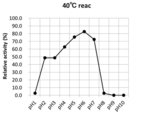
- Optimum reaction conditions 2 40 °C 1, 2, 3, 4, 5, 6, 7, 8, 9, 10)
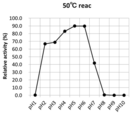
- Optimal reaction conditions 3 50 °C / pH 1, 2, 3, 4, 5, 6, 7, 8, 9, 10)
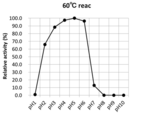
- Optimal reaction conditions 4 60 °C / pH 1, 2, 3, 4, 5, 6, 7, 8, 9, 10)
- Optimal reaction conditions 5 70 °C / pH 1, 2, 3, 4, 5, 6, 7, 8, 9, 10)
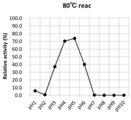
- Optimum reaction conditions 6 80 ° C / pH 1, 2, 3, 4, 5, 6, 7, 8, 9, 10) It is a chromatogram which shows NAD in the yeast extract obtained from the reaction of the extract prepared from Candida utilis IAM 4264 and the crude enzyme derived from Aspergillus niger. It is a chromatogram which shows the composition containing (beta) -NMN in the yeast extract obtained from the reaction of the extract prepared from Candida (utilis) IAM (4264), and the crude enzyme derived from Asper
- the metabolic composition, crude enzyme, or purified enzyme of the present invention is an enzyme that produces ⁇ -NMN using NAD as a substrate, but NAD can also use NAD contained in yeast or yeast extract as a substrate. If the NAD is generally available, the composition of the present invention can be used.
- yeast extract edible yeast can be used as yeast.
- yeast belonging to the genus Saccharomyces, Kluyveromyces genus, Candida genus, Pichia genus and the like can be mentioned, among which Candida genus Candida utilis is preferable.
- Candidaandutilis IAM 4264, Candida utilis ATCC 9950, Candida utilis ATCC 9550, Candida utilis IAM 4233, Candida utilis AHU 3259 and the like More specifically, the use of yeast with a high glutathione content increases the ⁇ -NMN content.
- yeast having a high glutathione content yeasts obtained by known methods can be used (Japanese Patent Laid-Open Nos. 59-151894, 60-156379, etc.).
- Culture conditions such as culture temperature and pH can be applied without particular limitation, and may be set according to the yeast strain used and cultured.
- the culture temperature is 21 to 37 ° C., preferably 25 to 34 ° C.
- the pH is 3.0 to 8.0, particularly 3.5 to 7.0.
- the culture format of the present invention may be either batch culture or continuous culture, but the latter is desirable industrially. Conditions such as agitation and aeration during culture are not particularly limited and may be a general method.
- an extract is prepared by pretreatment. Extraction is performed after washing the wet yeast cells after cell culture by suspending in ion-exchanged water and repeating centrifugation.
- the extraction method may be adjusted as appropriate according to the type of yeast used, but it is desirable to increase the ⁇ -NMN content under conditions such that NAD and ⁇ -NMN in the yeast are not degraded. .
- the self-digestion method, the alkali extraction method, the acid extraction method, the hot water extraction method, or a combination thereof is used.
- the cells are resuspended in ion-exchanged water so that the bacterial cell concentration is 7 to 10%, preferably 8 to 9% in terms of dry weight.
- the pH is adjusted as necessary.
- the extraction pH is 1.5 to 7.0, and most preferably, the pH during extraction is adjusted to around 6.0.
- the pH may be adjusted by a known method.
- Extraction temperature is 50 to 90 ° C, preferably 50 to 65 ° C.
- a known method can be used without particular limitation as long as the extract reaches the above temperature.
- Extraction time may be 5 minutes or more. It is desirable to stir during extraction. The stirring speed and the like may be adjusted as appropriate and are not particularly limited. Further, when the extraction time is 40 to 50 minutes, the content of ⁇ -NMN increases, which is more preferable.
- the cell suspension After extraction, the cell suspension is removed by centrifugation to obtain a supernatant. This supernatant was used as an extract and a substrate solution for the enzyme reaction according to the present invention.
- the solution extracted from the yeast by the method described above can be used as it is, but after the NAD in the yeast extract is purified, concentrated, etc., the subsequent steps may be performed.
- the enzyme used is an enzyme that produces ⁇ -NMN using NAD contained in the solution obtained up to the previous stage as a substrate.
- an enzyme derived from a microorganism belonging to the genus Aspergillus is used.
- the genus Aspergillus include Aspergillus melleus (NBRC 4339 and the like), Aspergillus oryzae (NBRC 100959 and the like), Aspergillus niger (ATCC 10254 and the like), and the like.
- a crude enzyme prepared from a microorganism belonging to the genus Aspergillus as described above can be used.
- Aspergillus microorganisms may be strains used in the food industry and the like.
- Aspergillus microorganisms may be generally available strains.
- the microorganisms belonging to the genus Aspergillus may be strains obtained from strain distribution agencies such as ATCC and NBRC, or commercially available seed strain sales companies.
- the crude enzyme used in the present invention can be prepared by a general enzyme preparation method.
- As the medium a general medium used in the genus Aspergillus can be used, and a general method can be used for adjusting the protein composition after the culture.
- the culture conditions are usually pH 5.5 to 8.5, preferably pH 6 to 8, and the temperature is 25 to 42 ° C., preferably 30 to 37 ° C.
- the culture time varies depending on conditions such as the strain used, but is usually cultured for 2 to 7 days.
- a metabolic composition containing a crude enzyme, a crude enzyme or a purified enzyme from a microorganism belonging to the genus Aspergillus can be used.
- the metabolic composition containing the crude enzyme is a fraction containing the protein group from the culture supernatant culture, or a fraction containing the intracellular protein group by crushing the culture solution and microorganisms such as Aspergillus niger. is there.
- the present inventors found for the first time an enzyme activity for producing ⁇ -NMN using NAD as a substrate, and not only NAD in yeast but also a composition other than yeast containing NAD or a pure NAD product. As a substrate, it can also be used for an enzyme that produces ⁇ -NMN. NAD can use what is generally available.
- the enzyme used in the present invention has a pyrophosphatase activity that cleaves high energy phosphate bonds such as pyrophosphate bonds (phosphate anhydride bonds) of NAD.
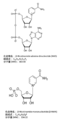
- the reaction of the present invention is shown in FIG. Since the enzyme used in the present invention has the activity, a composition containing ⁇ -NMN and Adenosine 5′-Monophosphate (AMP, 5′-adenylic acid) is produced using NAD as a substrate. To do.
- a yeast extract containing ⁇ -NMN and AMP in the yeast extract can be obtained.
- NAD in the yeast extract is used as a substrate, a step of increasing the content of NAD in the yeast extract may be provided.
- the NAD in the yeast extract can be concentrated by passing the extract through a general cation exchange resin or the like used for food production.
- the ⁇ -NMN content in the yeast extract varies depending on the NAD content before the enzyme reaction, and the higher the NAD content, the higher the ⁇ -NMN content after the reaction.
- the amount of the enzyme used for the reaction varies depending on the enzyme preparation method. Usually, the total protein content is 0.1% (w / w) to 20 (with respect to the total amount of NAD of the substrate contained in the solution). w / w). More preferably, 1 to 10 (w / w) is added.
- the measurement method of ⁇ -NMN and the ⁇ -NMN-containing composition used in the examination of the optimum reaction conditions of the enzyme in the present application is based on the HPLC measurement conditions described in the examples.
- the optimum temperature for the reaction of the crude enzyme is 40 to 70 ° C, preferably 50 ° C to 60 ° C, and most preferably 60 ° C.
- the measurement method of ⁇ -NMN and the ⁇ -NMN-containing composition used in the examination of the optimum reaction conditions of the enzyme in the present application is based on the HPLC measurement conditions described in the examples.
- the optimum pH for the reaction of the crude enzyme is 3.0 to 7.0, preferably 4.0 to 6.0, and most preferably pH 5.0.
- the measuring method of ⁇ -NMN and the ⁇ -NMN-containing composition used for the examination of the optimal reaction conditions of the enzyme in the present application is based on the HPLC measuring conditions described in the examples.
- the enzyme reaction is performed under the optimal reaction conditions, for example, the dry solid content of the yeast extract.
- Yeast extract containing 1.0% (w / w) or more of ⁇ -NMN can be obtained.
- yeast with a high substrate (NAD) content before the enzyme reaction, a yeast extract containing 5% (w / w) or more of ⁇ -NMN can be obtained, although it depends on the concentration of the substrate.
- NAD in the yeast extract is concentrated to 30 to 50% (w / w)
- a yeast extract containing 20% (w / w) or more of ⁇ -NMN can be obtained.
- the ⁇ -NMN of the present invention differs in the content of ⁇ -NMN produced by the NAD content in yeast. Increasing the NAD content contained in the substrate solution for enzyme reaction extracted from yeast cells can further increase ⁇ -NMN.
- the measurement method of ⁇ -NMN and the ⁇ -NMN-containing composition used in the examination of the optimum reaction conditions of the enzyme in the present application is based on the HPLC measurement conditions described in the examples.
- the extract subjected to the enzyme reaction can be made into a ⁇ -NMN-containing yeast extract by concentrating and then freeze-drying or hot-air drying.
- the composition which further enriched yeast-derived ⁇ -NMN can be obtained by further purifying ⁇ -NMN from the ⁇ -NMN-containing yeast extract.
- the composition which enriched yeast-derived ⁇ -NMN can also be obtained by purifying ⁇ -NMN from the yeast extract before drying in the previous stage.
- a purification method a general chromatographic purification method using activated carbon, an ion exchange resin, or the like can be used.
- ⁇ -NMN can be produced in the same manner as in the method using NAD in the yeast extract as a substrate.
- the method for ingesting the yeast extract or yeast-derived ⁇ -NMN-containing composition of the present invention is not particularly limited, and examples thereof include oral administration, parenteral administration such as intravenous, intraperitoneal or subcutaneous administration.
- oral preparations such as tablets, powders, granules, pills, suspensions, emulsions, soaking and decoction, capsules, syrups, solutions, elixirs, extracts, tinctures, fluid extracts,
- parenteral preparations such as injections, drops, coatings, patches, aerosols, oral preparations, nasal drops, eye drops, suppositories and the like may be used.
- the yeast extract when manufactured as a yeast extract, can be ingested not only as a pharmaceutical product but also as a food product, and can also be consumed as a functional food product, a dietary supplement, a supplement, and the like.
- the present invention can be used in combination with other compositions that do not decrease the activity of ⁇ -NMN or enhance the activity of ⁇ -NMN.
- excipient diluent dextrin, maltitol, sorbitol, starch and the like.
- the activity of ⁇ -NMN can be exemplified by, for example, Sirtune activity.
- the amount of intake of the present invention may be an amount that can express the activity of ⁇ -NMN.
- the dosage required for ⁇ -NMN activity is determined by the choice of composition administered, the age, weight and response of the consumer, the condition of the consumer, and the like. In general, take about 100 mg / day to 1000 mg / day.
- ⁇ Preparation of protein composition Spores of Aspergillus niger (ATCC 10254) cut out from a potato dextrose agar slope medium at 30 ° C. for 3 days, YPDS liquid medium (starch 30 g, glucose 2.5 g, polypeptone 10 g, yeast extract 5 g, yellow powder 1 g, biotin 0 .02 mg arginine hydrochloride (0.55 g / L).
- ATCC 10254 Aspergillus niger
- Reaction temperature 30 °C, 40 °C, 50 °C, 60 °C, 70 °C, 80 °C
- Reaction pH pH1.0, pH2.0, pH3.0, pH4.0, pH5.0, pH6.0, pH7.0, pH8.0, pH9.0, pH10.0
- Solvent composition 100 mM KCl-HCl (pH 1.0) 100 mM KCl-HCl (pH 2.0) 100 mM KHC 8 H 4 O 4 -HCl (pH3.0) 100 mM KHC 8 H 4 O 4 -NaOH (pH 4.0) 100 mM MES-NaOH (pH 5.0) 100 mM MES-NaOH (pH 6.0) 100 mM PIPES-NaOH (pH 7.0) 100 mM HEPES-NaOH (pH 8.0) 100 mM CHES-NaOH (pH9.0) 100 mM CHES-NaOH (pH10.0) Reaction time: 30 minutes
- Candida utilis IAM 4264 was seed-cultured in an Erlenmeyer flask containing YPD medium (yeast extract 1%, polypeptone 2%, glucose 2%) in advance, and this was inoculated in a 30 L fermentor by 1-2% in 18 L medium.
- Medium composition glucose 4%, monoammonium phosphate 0.3%, ammonium sulfate 0.161%, potassium chloride 0.137%, magnesium sulfate 0.08%, copper sulfate 1.6 ppm, iron sulfate 14 ppm, manganese sulfate 16 ppm and 14 ppm zinc sulfate were used.
- the culture conditions were pH 4.0, culture temperature 30 ° C., aeration rate 1 vvm, stirring 600 rpm, and ammonia was added to control the pH. After culturing the cells for 16 hours, the culture solution was collected and collected by centrifugation to obtain 180 g of wet yeast cells. The obtained yeast cells were washed by suspending them in distilled water and repeating the centrifugation. Resuspended in distilled water to a dry solids concentration of 82.88 g / L. At this time, the pH was 5.8.
- ⁇ Extraction of yeast extract> The cell suspension is heated to 60 ° C. while gently stirring the suspension in a 70 ° C. water bath, and subjected to an extraction treatment for 10 minutes while stirring. After the extraction treatment, 25 mL of the sampled cell suspension was cooled under ice and centrifuged at 10,000 rpm for 10 minutes at 4 ° C. to obtain a supernatant. The same amount of ultrapure water as the supernatant was added to the precipitate, suspended, and centrifuged again to obtain the supernatant. The supernatant obtained by the first centrifugation and the supernatant obtained by the second centrifugation were pooled, and the extract was filled up to 50 mL with ultrapure water.
- ⁇ Measurement of ⁇ -NMN content under optimum enzyme reaction conditions Using Candida utilis IAM 4264, the yeast was cultured and extracted as described above, the temperature of the yeast extract was adjusted to 50 ° C., the reaction pH was adjusted to pH 6.0 with 9 N HCl or 9 N NaOH, and the aforementioned Aspergillus The crude enzyme prepared from oryzae and the crude enzyme prepared from Aspergillus niger (ATCC10254) in the same manner as Aspergillus oryzae were added at 5% per total amount of NAD contained in the yeast extract, and an optimal reaction was performed for 7 hours. Thereafter, a dried yeast extract containing ⁇ -NMN and the composition was obtained by a drying process.
- the dried product was quantitatively analyzed under the above measurement conditions.
- the chromatograms are as shown in FIGS.
- the ⁇ -NMN content in the yeast extract under the optimal enzyme reaction conditions was quantified, it was 10% (w / w) (Aspergillus oryzae) and 20% (w / w) (Aspergillus niger) per dry solid content.
- NAD is contained at 25% (w / w) per dry solid content.
- NAD is reduced to 2% by weight per dry solid content, and AMP is produced with ⁇ -NMN. . From this, the mechanism as shown in FIG. 2 is predicted for the production of ⁇ -NMN by this enzyme reaction.
- a yeast extract was prepared, and commercially available enzymes “Denateam AP (genus Aspergillus)” (manufactured by Nagase ChemteX), “Deamizyme G (Aspergillus melleus)” (manufactured by Amano Enzyme), “ Phytase Amano 3000 (Aspergillus niger) (Amano Enzyme), Sumiteam LP50D (Aspergillus oryzae) (Shin Nihon Chemical Industry), Sumiteam PHY-G (Aspergillus niger) (Shin Nihon Chemical Industry) , “Sumiteam PHYF-L (Aspergillus niger)” (manufactured by Shinnippon Chemical Industry Co., Ltd.), “Sumiteam PHY (Aspergillus niger)” (manufactured by Shinnippon Chemical Co., Ltd.), “Sumiteam PHY (Aspergillus
- a composition containing ⁇ -NMN and AMP can be obtained from NAD, and a yeast extract composition containing ⁇ -NMN and AMP can be obtained from edible safe yeast. According to the present invention, it can be ingested not only as a pharmaceutical product but also as a functional food and a dietary supplement, and the functionality possessed by ⁇ -NMN can be obtained by ingesting the product of the present invention.
Landscapes
- Chemical & Material Sciences (AREA)
- Life Sciences & Earth Sciences (AREA)
- Health & Medical Sciences (AREA)
- Organic Chemistry (AREA)
- Engineering & Computer Science (AREA)
- Wood Science & Technology (AREA)
- Zoology (AREA)
- Genetics & Genomics (AREA)
- Bioinformatics & Cheminformatics (AREA)
- Molecular Biology (AREA)
- Biotechnology (AREA)
- General Health & Medical Sciences (AREA)
- Microbiology (AREA)
- Biochemistry (AREA)
- General Engineering & Computer Science (AREA)
- Chemical Kinetics & Catalysis (AREA)
- General Chemical & Material Sciences (AREA)
- Medicinal Chemistry (AREA)
- Biomedical Technology (AREA)
- Preparation Of Compounds By Using Micro-Organisms (AREA)
- Medicines Containing Material From Animals Or Micro-Organisms (AREA)
- Coloring Foods And Improving Nutritive Qualities (AREA)
- Enzymes And Modification Thereof (AREA)
- Pharmaceuticals Containing Other Organic And Inorganic Compounds (AREA)
Abstract
【課題】 食経験のある酵母からβ―NMNを得ること、及びNAD含有組成物からβ―NMN組成物を得ることを課題とする。 【解決手段】 酵母抽出物などのNADを含む組成物などにAspergillus属の微生物から調製した粗酵素を含む代謝組成物を特定条件で反応を行うことにより、β―NMNが生成されることを見出した。酵母抽出物には、NADが含まれており、当該NADを基質とし、Aspergillus属の微生物から調製した粗酵素等により、β―NMNが生成される。
Description
本発明は、β―Nicotinamide adenine dinucleotide(NAD)又は酵母Candida utilis等より得られるNAD含有溶液からAspergillus oryzae等のAspergillus属から調製した代謝組成物、粗酵素又は精製酵素を作用させる工程を有するβ―Nicotinamide mononucleotide (β―NMN)製造方法、及びβ―NMNを含有する組成物に関する。
β―Nicotinamide mononucleotide(β―NMN)は、生体内のSalvage経路のβ―Nicotinamide adenine dinucleotide(NAD)の中間代謝物である (特許文献1~4、非特許文献1)。β―NMNは、生体に取り込まれることにより、NADの生合成を直接に誘導、生体内のNAD濃度を向上させることが出来る (非特許文献2)。β―NMNによって、生合成が誘導されたNADを基質に、NAD依存性脱アセチル化酵素であるSIRT1に代表されるサーチュインファミリータンパク質等 (SIRT2、SIRT3、SIRT4、SIRT5、SIRT6、SIRT7)が活性化される。サーチュインファミリータンパク質等が活性化されることにより、生命の寿命に関与する、代謝改善・抗疾病・抗老化作用等の幅広い生理活性を発現させる (非特許文献1)。β―NMNが関わる詳細な機能として、「糖代謝異常の改善 (非特許文献2)」、「サーカディアンリズムへの関与 (非特許文献3)4)」、「老化ミトコンドリアの機能改善 (非特許文献5)」、「虚血再灌流からの心臓の保護 (非特許文献6)」、「老化による神経幹細胞の減少の抑制 (非特許文献7)」、「エピジェネティク制御機構によりClaudin―1の発現を抑制し、糖尿病性腎症のアルブミン尿の低下 (非特許文献8)」、「プログラム細胞死の制御 (非特許文献9)」、「パーキンソン病の改善 (非特許文献10)」、「老化による酸化ストレスや血管機能障害の回復 (非特許文献11)」などが報告されている。また、β―NMNは、サーチュインファミリータンパク質等の活性化だけでなく、眼機能の改善などが知られている(特許文献5)。このように、細胞または組織、臓器レベルでの数多くのネガティブな生理現象は、β―NMNの投与によってNADの生合成を高め、SIRT1を中心としたSIRT2、SIRT3、SIRT4、SIRT5、SIRT6、SIRT7のサーチュインファミリータンパク質等の活性化によって、回復、改善、予防が期待できる。
酵母は各種食品等に使用されている。さらに、トルラ酵母(Candida utilis)はアメリカ食品医薬品局(FDA)より高い栄養機能性と食経験からの安全性が評価されている食用酵母である。このことより、長年にわたって医薬品やサプリメント、調味料などに有効活用されている。
Liana, R Stein . et al. The dynamic regulation of NADmetabolism in mitochondria. Trends in Endocrinology and Metabolism. 2012, Vol. 23, No. 9
J, Yoshino . et al. Nicotinamide Mononucleotide, a Key NAD+ Intermediate, Treats the Pathophysiology of Diet― and Age―Induced Diabetes in Mice . Cell Metab. 2011, 14(4), P. 528―536.
Clara Bien Peek1 . et al. Circadian Clock NAD+ Cycle Drives Mitochondrial Oxidative Metabolism in Mice . Science. 2013, 342(6158), 1243417.
Ramsey, KM . et al. Circadian clock feedback cycle through NAMPT―mediated NAD+ biosynthesis . Science. 2009, 324(5927), P. 651―654.
Ana, P. Gomes . et al. Declining NAD+ Induces a Pseudohypoxic State Disrupting Nuclear―Mitochondrial Communication during Aging . Cell. 2013, 155(7), P. 1624―1638.
T, Yamamoto . et al. Nicotinamide mononucleotide, an intermediate of NAD+ synthesis, protects the heart from ischemia and reperfusion . PLoS One. 2014, 9(6), e98972.
Liana, R Stein . et al. Specific ablation of Nampt in adult neural stem cells recapitulates their functional defects during aging . EMBO J. 2014, 33(12), P. 1321―1340
K, Hasegawa . et al. Renal tubular Sirt1 attenuates diabetic albuminuria by epigenetically suppressing Claudin―1 overexpression in podocytes . Nat Med. 2013, 19(11), P. 1496―1504
Nicolas Preyat. et al. Complex role of nicotinamide adenine dinucleotide in the regulation of programmed cell death pathways . Biochem Pharmacology. 2015, S0006―2952(15)
Lei lu . et al. Nicotinamide mononucleotide improves energy activity and survival rate in an in vitro model of Parkinson’s disease . Exp Ther Med. 2014, 8(3), P. 943―950.
Natalie E.de Picciotto . et al. Nicotinamide mononucleotide supplementation reverses vascular dysfunction and oxidative stress with aging in mice. Aging cell. 2016, 15, P. 522―530.
β―NMNを生成する酵素を得ること、さらに、食品適用も可能な、β―NMNを製造する方法、例えば、食経験のある酵母からβ―NMNを高含有化させた組成物を得ることを課題とする。
本発明者は、Aspergillus属に属する微生物から得られた代謝組成物、粗酵素、又は精製酵素で、最適化(温度50~70度、pH3.0~7.0)した酵素反応を行うことで、β―NMNを効率よく得られることを見出し、本発明を完成させた。
本発明は、以下のような発明である。
(A)β-ニコチンアミドアデニンジヌクレオチドを基質として、Aspergillus 属に属する微生物の代謝組成物を用いて反応させる工程含むβ―ニコチンアミドモノヌクレオチドの製造方法、
(B)Aspergillus 属に属する微生物に由来し、次の性質を有する酵素活性を示すタンパク質を用いて反応させる工程を含むβ‐ニコチンアミドモノヌクレオチドの製造方法。
(1)作用:β-ニコチンアミドアデニンジヌクレオチド構造中の高エネルギーリン酸結合であるリン酸無水結合(ピロリン酸結合)加水分解し、β―ニコチンアミドモノヌクレオチドとAMPを生成させる。
(2)ピロフォスファターゼ活性
(3)至適pH:pH3.0~7.0
(4)至適温度:40℃~70℃。
(C)酵母抽出物に含まれるβ-ニコチンアミドアデニンジヌクレオチド、又はβ-ニコチンアミドアデニンジヌクレオチドを基質とし、Aspergillus 属に属する微生物に由来し、次の性質を有する酵素を用いて反応させる工程を含むβ―ニコチンアミドモノヌクレオチドを1%(w/w)以上含む組成物の製造方法。
(1)作用:β―ニコチンアミドアデニンジヌクレオチド構造中の高エネルギーリン酸結合であるリン酸無水結合(ピロリン酸結合)加水分解し、β―ニコチンアミドモノヌクレオチドを生成させる。
(2)ピロフォスファターゼ活性
(3)至適pH:pH3.0~7.0
(4)至適温度:40℃~70℃
(D)次の理化学的性質を有する、Aspergillus 属に属する微生物に由来の酵素。
(1)作用:β-ニコチンアミドアデニンジヌクレオチド構造中の高エネルギーリン酸結合であるリン酸無水結合(ピロリン酸結合)加水分解し、β―ニコチンアミドモノヌクレオチドを生成させる。
(2)ピロフォスファターゼ活性
(3)至適pH:pH3.0~7.0
(4)至適温度:40℃~70℃
(A)β-ニコチンアミドアデニンジヌクレオチドを基質として、Aspergillus 属に属する微生物の代謝組成物を用いて反応させる工程含むβ―ニコチンアミドモノヌクレオチドの製造方法、
(B)Aspergillus 属に属する微生物に由来し、次の性質を有する酵素活性を示すタンパク質を用いて反応させる工程を含むβ‐ニコチンアミドモノヌクレオチドの製造方法。
(1)作用:β-ニコチンアミドアデニンジヌクレオチド構造中の高エネルギーリン酸結合であるリン酸無水結合(ピロリン酸結合)加水分解し、β―ニコチンアミドモノヌクレオチドとAMPを生成させる。
(2)ピロフォスファターゼ活性
(3)至適pH:pH3.0~7.0
(4)至適温度:40℃~70℃。
(C)酵母抽出物に含まれるβ-ニコチンアミドアデニンジヌクレオチド、又はβ-ニコチンアミドアデニンジヌクレオチドを基質とし、Aspergillus 属に属する微生物に由来し、次の性質を有する酵素を用いて反応させる工程を含むβ―ニコチンアミドモノヌクレオチドを1%(w/w)以上含む組成物の製造方法。
(1)作用:β―ニコチンアミドアデニンジヌクレオチド構造中の高エネルギーリン酸結合であるリン酸無水結合(ピロリン酸結合)加水分解し、β―ニコチンアミドモノヌクレオチドを生成させる。
(2)ピロフォスファターゼ活性
(3)至適pH:pH3.0~7.0
(4)至適温度:40℃~70℃
(D)次の理化学的性質を有する、Aspergillus 属に属する微生物に由来の酵素。
(1)作用:β-ニコチンアミドアデニンジヌクレオチド構造中の高エネルギーリン酸結合であるリン酸無水結合(ピロリン酸結合)加水分解し、β―ニコチンアミドモノヌクレオチドを生成させる。
(2)ピロフォスファターゼ活性
(3)至適pH:pH3.0~7.0
(4)至適温度:40℃~70℃
本発明によると、NADを基質として、β―NMNを取得でき、例えば、β―NMNを食経験のある酵母エキスから簡便に取得できる。特にトルラ酵母は古くから食経験のある酵母であり、これから取得した酵母エキスは安全性が高い。このような、β―NMNを高含有する酵母エキスは、医薬品、サプリメント、機能性食品等として摂取できる。さらに、本発明のβ―NMNを高含有する酵母エキスは、AMP(5’―アデニル酸)も生成するため、β―NMNだけでなく、AMP高含有酵母エキスとしても利用可能である。
本発明の代謝組成物、粗酵素、又は精製酵素は、NADを基質としてβ―NMNを生成する酵素であるが、NADは、酵母又は酵母エキス中に含有するNADを基質とすることもできる。NADは一般に入手可能なものであれば、本発明の組成物を利用できる。
酵母エキスを使用する場合は、酵母として食用酵母が使用できる。例えばSaccharomyces属に属する酵母、Kluyveromyces属、Candida属、Pichia属などが挙げられ、中でも、Candida属のCandida utilisが好ましい。より具体的には、Candida utilis IAM 4264、Candida utilis ATCC 9950、Candida utilis ATCC 9550、Candida utilis IAM 4233、Candida utilis AHU 3259などである。さらに好ましくは、グルタチオンを高含有する酵母を使用すると、β―NMNの含量が高まる。グルタチオンを高含有する酵母は、公知の方法で得られる酵母を使用可能である(特開昭59―151894、特開昭60―156379など)。
酵母を培養する際の培地には、炭素源として、ブドウ糖、酢酸、エタノール、グリセロール、糖蜜、亜硫酸パルプ廃液等が用いられ、窒素源としては、尿素、アンモニア、硫酸アンモニウム、塩化アンモニウム、硝酸塩などが使用される。リン酸、カリウム、マグネシウム源も過リン酸石灰、リン酸アンモニウム、塩化カリウム、水酸化カリウム、硫酸マグネシウム、塩化マグネシウム等の通常の工業用原料でよく、その他亜鉛、銅、マンガン、鉄イオン等の無機塩を添加する。その他は、ビタミン、アミノ酸、核酸関連物質等を使用しないでも培養可能であるが、これらを添加しても良い。コーンスチーブリカー、カゼイン、酵母エキス、肉エキス、ペプトン等の有機物を添加しても良い。
培養温度やpH等の培養条件は、特に制限なく適用でき、使用する酵母菌株に合わせて設定し、培養すれば良い。一般的には、培養温度は21~37℃、好ましくは25~34℃が良く、pHは3.0~8.0、特に3.5~7.0が好ましい。
本発明の培養形式としては、バッチ培養、あるいは連続培養のいずれでも良いが、工業的には後者が望ましい。培養時の撹拌、通気等の条件は特に制限なく、一般的な方法でよい。
培養後の菌体は、前処理により抽出液の調製を行う。菌体培養後の湿潤酵母菌体をイオン交換水に懸濁して遠心分離を繰り返すことで洗浄した後に、抽出を行う。抽出法は、使用する酵母菌体の種類に応じて適宜調整すればよいが、β―NMNの含量を高めるには、酵母中のNAD及びβ―NMNが分解されないような条件で行うことが望ましい。自己消化法、アルカリ抽出法、酸抽出、温水抽出法、又はこれらの組み合わせにより行う。Candida utilisを用いた場合の方法は菌体濃度が乾燥重量換算7~10%、好ましくは8~9%になるようにイオン交換水に再懸濁する。この菌体懸濁液の抽出の際に、必要に応じてpH調を行う。例えば、酸抽出の場合には、抽出pHは1.5~7.0最も好ましくは抽出時のpHを6.0付近に調整する。pH調整は、公知の方法でよい。
抽出温度は50~90℃、好ましくは、50~65℃とする。温度の調整法は、抽出液が前記の温度になれば特に制限なく公知の方法が利用できる。
抽出時間は、5分以上行えばよい。抽出中は、撹拌することが望ましい。撹拌速度等は、適宜調整すればよく、特に制限はない。また、抽出時間を40~50分とすると、β‐NMNの含量が高まるので、さらに好ましい。
抽出後は、菌体懸濁液を遠心分離で除去し、上清を得る。この上清を抽出液とし、本発明である酵素反応の基質溶液とした。本願の方法では、前述までの方法で酵母から抽出した溶液をそのまま用いることもできるが、酵母抽出液中のNADを精製、濃縮等を行ってから、次段以降の工程を行っても良い。
使用する酵素は、前段までで得られた溶液中に含まれるNADを基質とし、β―NMNを生成する酵素を用いる。具体的には、Aspergillus属に属する微生物由来の酵素を用いる。Aspergillus属は、Aspergillus melleus(NBRC 4339等)、Aspergillus oryzae(NBRC 100959等)、Aspergillus niger (ATCC 10254 等)などがあげられ、食経験のある Aspergillus属由来の酵素を用いることができる。
本発明で使用する酵素は、前述のようにAspergillus属の微生物から調製した粗酵素を用いることができる。Aspergillus属の微生物は、食品工業等で使用される株で良い。Aspergillus属の微生物は、一般的に入手可能な株で良い。Aspergillus属の微生物は、ATCC、NBRC等の菌株分譲機関、又は市販の種菌株販売会社等から入手した株でも良い。本発明で用いる粗酵素の調製は、一般的な酵素調製法で可能である。培地は、Aspergillus属に用いられる、一般的な培地を用いることができ、培養後のタンパク質組成物の調整も一般的な方法を用いることができる。例えば、特開2010―004760、特開特開2009―232835などに記載の菌体培養方法、抽出や溶媒分画による粗精製工程を経て酵素などのタンパク質群を含む画分を取得する。
より具体的には、Aspergillus. oryzae No.2007(樋口松之助商店社製)などAspergillus属の微生物の胞子を液体培地(ポテトデキストロース培地等)で培養する。培養条件は、通常pH5.5~8.5、好ましくはpH6~8、温度は、25~42℃ 、好適には30 ~37℃の条件で行うことができる。培養時間は、使用する菌株等の条件によって異なるが、通常2~7日間程度培養する。
本願は、Aspergillus属の微生物から粗酵素を含む代謝組成物、粗酵素又は精製酵素を用いることができる。粗酵素を含む代謝組成物は、培養上清培からタンパク質群を含む画分、又は、培養液とAspergillus niger等の微生物を破砕し、細胞内のタンパク質群を含む画分を分取したものである。さらに、粗酵素又は精製酵素として使用する場合は、公知のタンパク質精製方法、例えばイオン交換クロマトグラフィー、順相クロマトグラフィー、逆相クロマトグラフィー、ゲル濾過クロマトグラフィー、ゲル浸透クロマトグラフィー、吸着クロマトグラフィー、親水性相互作用クロマトグラフィー、アフィニティクロマトグラフィー、超臨界クロマトグラフィーなどの各種クロマトグラフィーにより、目的とする粗酵素又は精製酵素を単離し回収したものを使用することもできる。乾燥工程を経て乾燥物としても良い。さらに、Aspergillus属由来の酵素は、酵素製剤として各種市販されており、このような市販酵素の多くは、夾雑酵素を含んでいるため、本願の方法に用いることができる酵素も入手可能である。
以上のような酵素は、本発明者らが、NADを基質としてβ-NMNを生成する酵素活性を初めて見出し、酵母中のNADだけでなく、NADを含む酵母以外の組成物又はNAD純品を基質として、β―NMNを生成する酵素にも用いることができる。NADは、一般的に入手可能なものを利用できる。
本発明で使用する酵素は、NADのピロリン酸結合(リン酸無水結合)等の高エネルギーリン酸結合を切断するピロフォスファターゼ活性を有するものである。本発明の反応は図2に示す。本発明で使用する酵素は、当該活性を有するものを使用するため、NADを基質に生成物としてβ―NMNとAdenosine 5'-Monophosphate (AMP、5’―アデニル酸)を含有する組成物を生成する。
本発明で使用する酵素は、上記のような活性を有するため、酵母エキス中のNADを基質とした場合、酵母エキス中にβ―NMN及びAMPを含有する酵母エキスを得ることができる。酵母エキス中のNADを基質とする場合、酵母エキス中のNADを高含有化させる工程を設けても良い。例えば、酵母エキスを抽出後、当該抽出物を食品製造等に用いられている、一般的な陽イオン交換樹脂等に通液することで、酵母エキス中のNADを濃縮することができる。酵母エキス中のβ―NMN含量は、酵素反応前のNAD含量によって異なり、NAD含量が高いほど、反応後のβ―NMN含量も高くなる。
反応に用いる酵素の添加量に関しては、酵素の調製方法によって異なるが、通常は、溶液中に含まれる基質のNAD総量に対して、総タンパク質含量が0.1%(w/w)~20(w/w)になるように添加する。より好ましくは1~10(w/w)添加する。なお、本願で酵素の至適反応条件の検討に用いたβ―NMN、及びβ―NMN含有組成物の測定方法は、実施例中に記載したHPLCの測定条件による。
粗酵素の反応の至適温度は、40~70℃、好ましくは50℃~60℃、もっとも好ましくは60℃である。なお、本願で酵素の至適反応条件の検討に用いたβ―NMN、及びβ―NMN含有組成物の測定方法は、実施例中に記載したHPLCの測定条件による。
粗酵素の反応の至適pHは、3.0~7.0、好ましくは4.0~6.0、もっとも好ましくはpH5.0ある。なお、本願で酵素の至適反応条件の検討に用いたβ―NMN、及びβ―NMN含有組成物の測定方法は、実施例中に記載したHPLCの測定条件による。
前述のように培養した酵母から調製した抽出液にAspergillus属由来の総タンパク質、粗酵素、又は精製酵素を添加し、至適反応条件で酵素反応を行うことで、例えば、酵母エキスの乾燥固形分に対して1.0%(w/w)以上のβ―NMNを含有する酵母エキスを得ることが出来る。酵素反応前の基質(NAD)含量が高い酵母を使用することで、基質の濃縮にもよるが、β―NMNを5%(w/w)以上含有する酵母エキスを得ることができる。さらに、酵母エキス中のNADを30~50%(w/w)に濃縮した場合は、β―NMNを20%(w/w)以上含む酵母エキスを得ることができる。本発明β―NMNは、酵母中のNAD含量により生成されるβ―NMNの含量は異なる。酵母菌体から抽出する酵素反応の基質溶液中に含まれるNAD含量を高めると、さらにβ―NMNを高含有化することができる。なお、本願で酵素の至適反応条件の検討に用いたβ―NMN、及びβ―NMN含有組成物の測定方法は、実施例中に記載したHPLCの測定条件による。
酵素反応を施した抽出液は、濃縮後、凍結乾燥又は熱風乾燥することで、β―NMN含有酵母エキスとすることもできる。
また、別の形態として、さらに、β―NMN含有酵母エキスから、β―NMNを精製することで、酵母由来のβ―NMNをさらに高含有化した組成物を得ることができる。また、前段の乾燥前の酵母抽出液からβ―NMNを精製することでも、酵母由来のβ―NMNを高含有化した組成物を得ることが出来る。精製法は、活性炭並びにイオン交換樹脂等を用いた一般的なクロマト精製法が利用できる。なお、 酵母エキス中のNADではないNADを基質とする場合も、酵母エキス中のNADを基質とする方法と同様にβ―NMNを生成することができる。
また、別の形態として、さらに、β―NMN含有酵母エキスから、β―NMNを精製することで、酵母由来のβ―NMNをさらに高含有化した組成物を得ることができる。また、前段の乾燥前の酵母抽出液からβ―NMNを精製することでも、酵母由来のβ―NMNを高含有化した組成物を得ることが出来る。精製法は、活性炭並びにイオン交換樹脂等を用いた一般的なクロマト精製法が利用できる。なお、 酵母エキス中のNADではないNADを基質とする場合も、酵母エキス中のNADを基質とする方法と同様にβ―NMNを生成することができる。
本発明の酵母エキス又は酵母由来のβ―NMN含有組成物の摂取方法は、特に限定されず、経口投与、静脈内、腹膜内もしくは皮下投与等の非経口投与をあげることが出来る。具体的には、錠剤、散剤、顆粒剤、丸剤、懸濁剤、乳剤、浸剤・煎剤、カプセル剤、シロップ剤、液剤、エリキシル剤、エキス剤、チンキ剤、流エキス剤等の経口剤、又は注射剤、点滴剤、塗布剤、貼付剤、エアゾール剤、口腔剤、点鼻剤、点眼剤、坐剤等の非経口剤のいずれでもよい。
本願発明では、酵母エキスとして製造した場合には、酵母エキスは、医薬品だけでなく、食品として摂取可能であり、機能性食品、栄養補助食品、サプリメント等としても摂取出来る。
また、本発明は、β―NMNの活性を低下させない又はβ―NMNの活性を増強させる他の組成物と併用することも可能である。例えば、賦形剤、希釈剤となるデキストリン、マルチトール、ソルビトール、デンプンなどである。β―NMNの活性とは、例えばサーチューン活性などを例示することができる。
本発明の摂取量は、β―NMNの活性が発現される量を投与すればよい。一般的に、β―NMNの活性に必要な投与量を決定するには、投与される組成物の選択、摂取者の年齢、体重、および応答、摂取者の状態などによって決定される。通常は、100mg/day~1000mg/day程度摂取する。
以下に、本願発明を具体的に示すが、本願発明は、これに限定されるものではない。
<β―NMNならびに組成物の検出に用いたHPLCの測定条件>
ポンプ: Chromaster 5110 (HITACHIハイテクノロジーズ社)
オートサンプラー: Chromaster 5210 (HITACHIハイテクノロジーズ社)
UV検出器: Chromaster 5410 (HITACHIハイテクノロジーズ社)
カラムオーブン: Chromaster 5310 (HITACHIハイテクノロジーズ社)
移動相: 50 mM リン酸バッファー (pH2.8)
・ 0.5% リン酸二水素アンモニウム (Wako社)
・ 85% リン酸 - 高速クロマトグラフ用 (Wako社)を用いてpH2.8に調整。
カラム: Unison UK-C18 φ4.6 mm x W 150 mm 粒子径3.0 um (Intakt社)
カラムオーブン温度: 30℃
流速: 1.2 mL/min
溶出形態: アイソクラテック
検出UV波長: 210 nm
分析時間: 25分
検体注入量: 5 uL
検体冷却温度: 3℃±2℃
ポンプ: Chromaster 5110 (HITACHIハイテクノロジーズ社)
オートサンプラー: Chromaster 5210 (HITACHIハイテクノロジーズ社)
UV検出器: Chromaster 5410 (HITACHIハイテクノロジーズ社)
カラムオーブン: Chromaster 5310 (HITACHIハイテクノロジーズ社)
移動相: 50 mM リン酸バッファー (pH2.8)
・ 0.5% リン酸二水素アンモニウム (Wako社)
・ 85% リン酸 - 高速クロマトグラフ用 (Wako社)を用いてpH2.8に調整。
カラム: Unison UK-C18 φ4.6 mm x W 150 mm 粒子径3.0 um (Intakt社)
カラムオーブン温度: 30℃
流速: 1.2 mL/min
溶出形態: アイソクラテック
検出UV波長: 210 nm
分析時間: 25分
検体注入量: 5 uL
検体冷却温度: 3℃±2℃
<タンパク質組成物の調整>
ポテトデキストロース寒天斜面培地から切り出したAspergillus. niger( ATCC 10254)の胞子を、30℃ で3日間、YPDS液体培地(デンプン 30g、グルコース 2.5g、ポリペプトン 10g、イーストエキストラクト 5g、黄粉 1g、ビオチン 0.02mgアルギニン塩酸塩 0.55g/ L) で培養した。次いで、培養上清100μlを真空乾燥して得た酵素組成物で、以下のβ―NMNの生成を確認した。
ポテトデキストロース寒天斜面培地から切り出したAspergillus. niger( ATCC 10254)の胞子を、30℃ で3日間、YPDS液体培地(デンプン 30g、グルコース 2.5g、ポリペプトン 10g、イーストエキストラクト 5g、黄粉 1g、ビオチン 0.02mgアルギニン塩酸塩 0.55g/ L) で培養した。次いで、培養上清100μlを真空乾燥して得た酵素組成物で、以下のβ―NMNの生成を確認した。
<NADを基質とした至適酵素反応pHの検討>
市販のNAD(興人ライフサイエンス社製)を用いて、前段で得られた酵素組成物の至適酵素反応pHの検討を行った。反応条件は以下の通りである。
反応温度: 30℃、40℃、50℃、60℃、70℃、80℃
反応pH: pH1.0、pH2.0、pH3.0、pH4.0、pH5.0、pH6.0、pH7.0、pH8.0、pH9.0、pH10.0
溶媒組成:
100 mM KCl-HCl (pH1.0)
100 mM KCl-HCl (pH2.0)
100 mM KHC8H4O4-HCl (pH3.0)
100 mM KHC8H4O4-NaOH (pH4.0)
100 mM MES-NaOH (pH5.0)
100 mM MES-NaOH (pH6.0) 100 mM PIPES-NaOH (pH7.0)
100 mM HEPES-NaOH (pH8.0)
100 mM CHES-NaOH (pH9.0)
100 mM CHES-NaOH (pH10.0)
反応時間: 30分
酵素添加量: NAD総量当たり1%(w/w)のAspergillus nigerから調整した酵素組成物を添加。
基質濃度: 終濃度1% (w/v)NAD
市販のNAD(興人ライフサイエンス社製)を用いて、前段で得られた酵素組成物の至適酵素反応pHの検討を行った。反応条件は以下の通りである。
反応温度: 30℃、40℃、50℃、60℃、70℃、80℃
反応pH: pH1.0、pH2.0、pH3.0、pH4.0、pH5.0、pH6.0、pH7.0、pH8.0、pH9.0、pH10.0
溶媒組成:
100 mM KCl-HCl (pH1.0)
100 mM KCl-HCl (pH2.0)
100 mM KHC8H4O4-HCl (pH3.0)
100 mM KHC8H4O4-NaOH (pH4.0)
100 mM MES-NaOH (pH5.0)
100 mM MES-NaOH (pH6.0) 100 mM PIPES-NaOH (pH7.0)
100 mM HEPES-NaOH (pH8.0)
100 mM CHES-NaOH (pH9.0)
100 mM CHES-NaOH (pH10.0)
反応時間: 30分
酵素添加量: NAD総量当たり1%(w/w)のAspergillus nigerから調整した酵素組成物を添加。
基質濃度: 終濃度1% (w/v)NAD
結果を図3~8に示す。
なお、本願で酵素の至適反応条件の検討に用いたβ―NMNならびに含有組成物の測定方法は、実施例中に記載したHPLCの測定条件による。各β―NMN生成活性能に関しては、pH6.0、30℃での反応した際のβ―NMN生成を最大活性100とした相対活性で示す。
なお、本願で酵素の至適反応条件の検討に用いたβ―NMNならびに含有組成物の測定方法は、実施例中に記載したHPLCの測定条件による。各β―NMN生成活性能に関しては、pH6.0、30℃での反応した際のβ―NMN生成を最大活性100とした相対活性で示す。
<酵母の培養>
Candida utilis IAM 4264を予めYPD培地(酵母エキス1%、ポリペプトン2%、グルコース2%)を含む三角フラスコで種母培養し、これを30L容発酵槽に18L培地に1~2%植菌した。培地組成は、グルコース4%、燐酸一アンモニウム0.3%、硫酸アンモニウム0.161%、塩化カリウム0.137%、硫酸マグネシウム0.08%、硫酸銅1.6 ppm、硫酸鉄14 ppm、硫酸マンガン16 ppm、硫酸亜鉛14 ppmを用いた。培養条件は、pH4.0、培養温度30℃、通気量1 vvm、撹拌600 rpmで行い、アンモニアを添加しpHのコントロールを行った。16時間の菌体培養した後、培養液を回収し、遠心分離により集菌し、180gの湿潤酵母菌体を得た。
得られた酵母菌体を蒸留水に懸濁して遠心分離を繰り返すことで洗浄した。乾燥固形分濃度82.88 g/Lとなるよう蒸留水に再懸濁した。この時pH 5.8であった。
Candida utilis IAM 4264を予めYPD培地(酵母エキス1%、ポリペプトン2%、グルコース2%)を含む三角フラスコで種母培養し、これを30L容発酵槽に18L培地に1~2%植菌した。培地組成は、グルコース4%、燐酸一アンモニウム0.3%、硫酸アンモニウム0.161%、塩化カリウム0.137%、硫酸マグネシウム0.08%、硫酸銅1.6 ppm、硫酸鉄14 ppm、硫酸マンガン16 ppm、硫酸亜鉛14 ppmを用いた。培養条件は、pH4.0、培養温度30℃、通気量1 vvm、撹拌600 rpmで行い、アンモニアを添加しpHのコントロールを行った。16時間の菌体培養した後、培養液を回収し、遠心分離により集菌し、180gの湿潤酵母菌体を得た。
得られた酵母菌体を蒸留水に懸濁して遠心分離を繰り返すことで洗浄した。乾燥固形分濃度82.88 g/Lとなるよう蒸留水に再懸濁した。この時pH 5.8であった。
<酵母エキスの抽出>
上記菌体懸濁液に70℃のウォーターバス下で緩やかに懸濁液を撹拌しながら60℃まで昇温し、撹拌しながら10分間の抽出処理を行う。抽出処理後、サンプリングした菌体懸濁液25 mLを氷中下で冷却し、10000 rpmで10分、4℃下で遠心分離し、上清を取得した。沈殿物に上清と等量の超純水を添加、懸濁し、再び度遠心分離し、上清を取得した。最初の遠心分離で取得した上清と2回目に遠心分離して取得した上清をプールし、超純水で50 mLにフィルアップしたものを抽出液とした。
上記菌体懸濁液に70℃のウォーターバス下で緩やかに懸濁液を撹拌しながら60℃まで昇温し、撹拌しながら10分間の抽出処理を行う。抽出処理後、サンプリングした菌体懸濁液25 mLを氷中下で冷却し、10000 rpmで10分、4℃下で遠心分離し、上清を取得した。沈殿物に上清と等量の超純水を添加、懸濁し、再び度遠心分離し、上清を取得した。最初の遠心分離で取得した上清と2回目に遠心分離して取得した上清をプールし、超純水で50 mLにフィルアップしたものを抽出液とした。
<酵母エキスからNADの高度分画>
抽出液を陽イオン交換樹脂に通液し、NADを濃縮した。濃縮後の酵母抽出物中のNAD含量は、45%(w/w)であった。
抽出液を陽イオン交換樹脂に通液し、NADを濃縮した。濃縮後の酵母抽出物中のNAD含量は、45%(w/w)であった。
<至適酵素反応条件でのβ―NMN含量の測定>
Candida utilis IAM 4264を用いて、前記と同様に酵母を培養、抽出処理し、酵母抽出液の温度を50℃、反応pHを9 N HClまたは9 N NaOHでpH6.0に調整し、前述のAspergillus oryzaeから調製した粗酵素及びAspergillus niger(ATCC10254)をAspergillus oryzaeと同様の方法で調整した粗酵素を酵母エキスに含まれるNAD総量当たり5%添加量後、7時間の至適反応を行った。その後、乾燥工程によりβ―NMNと組成物を含む酵母エキスの乾燥物を得た。乾燥物は前記の測定条件で定量分析を行った。クロマトグラムに関しては、図10,11に示すようになった。至適酵素反応条件における酵母エキス中のβ―NMN含量を定量した所、乾燥固形分あたり10%(w/w)(Aspergillus oryzae)、20%(w/w)(Aspergillus niger)であった。反応前では、NADが乾燥固形分あたり25%(w/w)含まれており、反応後にはNADが乾燥固形分あたり2重量%まで減少するとともに、β―NMNとがAMPが生成されている。このことから、本酵素反応によるβ―NMNの生成は、図2に示すような機構が予測される。
Candida utilis IAM 4264を用いて、前記と同様に酵母を培養、抽出処理し、酵母抽出液の温度を50℃、反応pHを9 N HClまたは9 N NaOHでpH6.0に調整し、前述のAspergillus oryzaeから調製した粗酵素及びAspergillus niger(ATCC10254)をAspergillus oryzaeと同様の方法で調整した粗酵素を酵母エキスに含まれるNAD総量当たり5%添加量後、7時間の至適反応を行った。その後、乾燥工程によりβ―NMNと組成物を含む酵母エキスの乾燥物を得た。乾燥物は前記の測定条件で定量分析を行った。クロマトグラムに関しては、図10,11に示すようになった。至適酵素反応条件における酵母エキス中のβ―NMN含量を定量した所、乾燥固形分あたり10%(w/w)(Aspergillus oryzae)、20%(w/w)(Aspergillus niger)であった。反応前では、NADが乾燥固形分あたり25%(w/w)含まれており、反応後にはNADが乾燥固形分あたり2重量%まで減少するとともに、β―NMNとがAMPが生成されている。このことから、本酵素反応によるβ―NMNの生成は、図2に示すような機構が予測される。
市販されているAspergillus属の酵素を用いて、β―NMNの生成を確認した。NAD(興人ライフサイエンス社製)を本願実施例と同様の条件で、下記の市販酵素を使用し、β―NMNの生成を確認した。さらに、本願実施例と同様に、酵母抽出液を作成し、市販酵素「デナチームAP(Aspergillus属)」(ナガセケムテックス社製)、「デアミザイムG(Aspergillus melleus)」(天野エンザイム社製)、「フィターゼ アマノ3000(Aspergillus niger)」(天野エンザイム社製)、「スミチーム LP50D (Aspergillus oryzae)」(新日本化学工業社製)、「スミチームPHY―G(Aspergillus niger)」(新日本化学工業社製)、「スミチームPHYF―L(Aspergillus niger)」(新日本化学工業社製)、「スミチームPHY(Aspergillus niger)」(新日本化学工業社製)、をNAD総量当たり1%(w/w)添加量後、1時間の至適反応を行った。反応条件は、pH6.0、温度60℃で行った。その結果、それぞれ、β―NMNが生成されることを確認した。
本発明によると、NADからβ―NMNとAMPを含む組成物も取得することができ、さらに、食用として安全な酵母からβ―NMNとAMPを含む酵母エキス組成物を得ることができる。本発明により、医薬品だけでなく、機能性食品、栄養補助食品としても摂取可能であり、本発明品の摂取により、β―NMNの有する機能性を得ることが出来る。
符号の説明
1 NAD
2 β―NMN
3 AMP
4 Aspergillus 属に属する微生物に由来の粗酵素
1 NAD
2 β―NMN
3 AMP
4 Aspergillus 属に属する微生物に由来の粗酵素
Claims (4)
- β―ニコチンアミドアデニンジヌクレオチドを基質として、Aspergillus 属に属する微生物の代謝組成物を用いて反応させる工程含むβ―ニコチンアミドモノヌクレオチドの製造方法。
- Aspergillus 属に属する微生物に由来し、次の性質を有する酵素活性を示すタンパク質を用いて反応させる工程を含むβ―ニコチンアミドモノヌクレオチドの製造方法。
(1)作用:β-ニコチンアミドアデニンジヌクレオチド構造中の高エネルギーリン酸結合であるリン酸無水結合(ピロリン酸結合)加水分解し、β―ニコチンアミドモノヌクレオチドとAMPを生成させる
(2)ピロフォスファターゼ活性
(3)至適pH:pH3.0~7.0
(4)至適温度:40℃~70℃
- 酵母抽出物に含まれるβ―ニコチンアミドアデニンジヌクレオチド、又はβ―ニコチンアミドアデニンジヌクレオチドを基質とし、Aspergillus 属に属する微生物に由来し、次の性質を有する酵素を用いて反応させる工程を含むβ‐ニコチンアミドモノヌクレオチドを1.0%(w/w)以上含む組成物の製造方法。
(1)作用:β―ニコチンアミドアデニンジヌクレオチド構造中の高エネルギーリン酸結合であるリン酸無水結合(ピロリン酸結合)加水分解し、β―ニコチンアミドモノヌクレオチドを生成させる
(2)ピロフォスファターゼ活性
(3)至適pH:pH3.0~7.0
(4)至適温度:40℃~70℃
- 次の理化学的性質を有する、Aspergillus 属に属する微生物に由来の酵素。
(1)作用:β―ニコチンアミドアデニンジヌクレオチド構造中の高エネルギーリン酸結合であるリン酸無水結合(ピロリン酸結合)加水分解し、β―ニコチンアミドモノヌクレオチドを生成させる
(2)ピロフォスファターゼ活性
(3)至適pH:pH3.0~7.0
(4)至適温度:40℃~70℃
Priority Applications (4)
| Application Number | Priority Date | Filing Date | Title |
|---|---|---|---|
| US16/981,913 US20210108242A1 (en) | 2018-03-20 | 2019-03-19 | Method for producing beta-nmn and composition containing the same |
| EP19772153.3A EP3770268A4 (en) | 2018-03-20 | 2019-03-19 | METHOD OF PRODUCTION OF ß-NMN AND COMPOSITION IN CONTAINER |
| CN201980020002.8A CN111954718A (zh) | 2018-03-20 | 2019-03-19 | β-NMN的制造方法以及含有其的组合物 |
| JP2020507847A JP7416684B2 (ja) | 2018-03-20 | 2019-03-19 | β―NMNの製造方法およびその含有組成物 |
Applications Claiming Priority (2)
| Application Number | Priority Date | Filing Date | Title |
|---|---|---|---|
| JP2018053238 | 2018-03-20 | ||
| JP2018-053238 | 2018-03-20 |
Publications (1)
| Publication Number | Publication Date |
|---|---|
| WO2019181961A1 true WO2019181961A1 (ja) | 2019-09-26 |
Family
ID=67987191
Family Applications (1)
| Application Number | Title | Priority Date | Filing Date |
|---|---|---|---|
| PCT/JP2019/011527 Ceased WO2019181961A1 (ja) | 2018-03-20 | 2019-03-19 | β―NMNの製造方法およびその含有組成物 |
Country Status (5)
| Country | Link |
|---|---|
| US (1) | US20210108242A1 (ja) |
| EP (1) | EP3770268A4 (ja) |
| JP (1) | JP7416684B2 (ja) |
| CN (1) | CN111954718A (ja) |
| WO (1) | WO2019181961A1 (ja) |
Cited By (3)
| Publication number | Priority date | Publication date | Assignee | Title |
|---|---|---|---|---|
| CN111593083A (zh) * | 2020-05-29 | 2020-08-28 | 江苏易诺维生物医学研究院有限公司 | 一种制备β-烟酰胺单核苷酸的方法 |
| CN114062555A (zh) * | 2021-11-22 | 2022-02-18 | 中国标准化研究院 | 一种膳食补充剂类产品中nmn含量的测定方法 |
| WO2022042615A1 (zh) * | 2020-08-25 | 2022-03-03 | 大江生医股份有限公司 | 富含烟酰胺单核苷酸的酵母粉、其制备方法及用途 |
Families Citing this family (5)
| Publication number | Priority date | Publication date | Assignee | Title |
|---|---|---|---|---|
| CN113151378B (zh) * | 2021-04-13 | 2023-06-06 | 百瑞全球有限公司 | 制备烟酸或其衍生物的核苷、烟酸腺嘌呤二核苷酸、烟酸单核苷酸的方法、酶组合物及应用 |
| CN113106132A (zh) * | 2021-04-13 | 2021-07-13 | 百瑞全球有限公司 | 制备β-烟酰胺单核苷酸的方法、酶组合物及其应用 |
| CN113549663B (zh) * | 2021-06-29 | 2022-09-16 | 康盈红莓(中山)生物科技有限公司 | 一种腺苷参与的全酶法nmn合成方法 |
| CN116947946A (zh) * | 2022-04-13 | 2023-10-27 | 湖北远大生命科学与技术有限责任公司 | β-烟酰胺单核苷酸制品及其制备方法 |
| CN117530396A (zh) * | 2023-11-07 | 2024-02-09 | 百色学院 | 一种富含β-烟酰胺单核苷酸的发酵食品及其制备方法 |
Citations (10)
| Publication number | Priority date | Publication date | Assignee | Title |
|---|---|---|---|---|
| JPS59151894A (ja) | 1983-02-18 | 1984-08-30 | Kohjin Co Ltd | グルタチオン高含有酵母の製造法 |
| JPS60156379A (ja) | 1984-01-27 | 1985-08-16 | Kohjin Co Ltd | グルタチオン高含有酵母の製造方法 |
| JP2009232835A (ja) | 2008-03-04 | 2009-10-15 | Amano Enzyme Inc | 新規プロテアーゼ及びその製造法 |
| CN101601679A (zh) | 2009-03-17 | 2009-12-16 | 中国人民解放军第二军医大学 | 一种烟酰胺单核苷酸的应用 |
| JP2010004760A (ja) | 2008-06-24 | 2010-01-14 | Gekkeikan Sake Co Ltd | 糸状菌プロテアーゼの生産方法 |
| US7737158B2 (en) | 2005-10-11 | 2010-06-15 | Washington University | Processes for regulating blood glucose in a mammal |
| US20110123510A1 (en) | 2009-09-24 | 2011-05-26 | Washington University | Methods of Affecting Biological Function Through Circadian Clock Feedback Cycle by NAMPT-Mediated NAD+ Biosynthesis |
| WO2014146044A1 (en) | 2013-03-15 | 2014-09-18 | Washington University | Administration of nicotinamide mononucleotide in the treatment of disease |
| WO2016171152A1 (ja) | 2015-04-20 | 2016-10-27 | 学校法人 慶應義塾 | 角膜障害の治療剤、改善剤または予防剤 |
| WO2017200050A1 (ja) * | 2016-05-19 | 2017-11-23 | 興人ライフサイエンス株式会社 | β-NMN高含有酵母エキス |
Family Cites Families (2)
| Publication number | Priority date | Publication date | Assignee | Title |
|---|---|---|---|---|
| TW201713774A (zh) * | 2015-08-06 | 2017-04-16 | Kohjin Life Sciences Co Ltd | 含有β-菸鹼醯胺單核苷酸的酵母萃取物及其製造方法 |
| JP6595270B2 (ja) * | 2015-09-07 | 2019-10-23 | 昭和産業株式会社 | 食品改良剤 |
-
2019
- 2019-03-19 EP EP19772153.3A patent/EP3770268A4/en not_active Withdrawn
- 2019-03-19 CN CN201980020002.8A patent/CN111954718A/zh active Pending
- 2019-03-19 US US16/981,913 patent/US20210108242A1/en not_active Abandoned
- 2019-03-19 JP JP2020507847A patent/JP7416684B2/ja active Active
- 2019-03-19 WO PCT/JP2019/011527 patent/WO2019181961A1/ja not_active Ceased
Patent Citations (10)
| Publication number | Priority date | Publication date | Assignee | Title |
|---|---|---|---|---|
| JPS59151894A (ja) | 1983-02-18 | 1984-08-30 | Kohjin Co Ltd | グルタチオン高含有酵母の製造法 |
| JPS60156379A (ja) | 1984-01-27 | 1985-08-16 | Kohjin Co Ltd | グルタチオン高含有酵母の製造方法 |
| US7737158B2 (en) | 2005-10-11 | 2010-06-15 | Washington University | Processes for regulating blood glucose in a mammal |
| JP2009232835A (ja) | 2008-03-04 | 2009-10-15 | Amano Enzyme Inc | 新規プロテアーゼ及びその製造法 |
| JP2010004760A (ja) | 2008-06-24 | 2010-01-14 | Gekkeikan Sake Co Ltd | 糸状菌プロテアーゼの生産方法 |
| CN101601679A (zh) | 2009-03-17 | 2009-12-16 | 中国人民解放军第二军医大学 | 一种烟酰胺单核苷酸的应用 |
| US20110123510A1 (en) | 2009-09-24 | 2011-05-26 | Washington University | Methods of Affecting Biological Function Through Circadian Clock Feedback Cycle by NAMPT-Mediated NAD+ Biosynthesis |
| WO2014146044A1 (en) | 2013-03-15 | 2014-09-18 | Washington University | Administration of nicotinamide mononucleotide in the treatment of disease |
| WO2016171152A1 (ja) | 2015-04-20 | 2016-10-27 | 学校法人 慶應義塾 | 角膜障害の治療剤、改善剤または予防剤 |
| WO2017200050A1 (ja) * | 2016-05-19 | 2017-11-23 | 興人ライフサイエンス株式会社 | β-NMN高含有酵母エキス |
Non-Patent Citations (16)
Cited By (4)
| Publication number | Priority date | Publication date | Assignee | Title |
|---|---|---|---|---|
| CN111593083A (zh) * | 2020-05-29 | 2020-08-28 | 江苏易诺维生物医学研究院有限公司 | 一种制备β-烟酰胺单核苷酸的方法 |
| WO2022042615A1 (zh) * | 2020-08-25 | 2022-03-03 | 大江生医股份有限公司 | 富含烟酰胺单核苷酸的酵母粉、其制备方法及用途 |
| CN114062555A (zh) * | 2021-11-22 | 2022-02-18 | 中国标准化研究院 | 一种膳食补充剂类产品中nmn含量的测定方法 |
| CN114062555B (zh) * | 2021-11-22 | 2023-09-22 | 中国标准化研究院 | 一种膳食补充剂类产品中nmn含量的测定方法 |
Also Published As
| Publication number | Publication date |
|---|---|
| CN111954718A (zh) | 2020-11-17 |
| JP7416684B2 (ja) | 2024-01-17 |
| US20210108242A1 (en) | 2021-04-15 |
| EP3770268A4 (en) | 2021-12-22 |
| JPWO2019181961A1 (ja) | 2021-04-01 |
| EP3770268A1 (en) | 2021-01-27 |
Similar Documents
| Publication | Publication Date | Title |
|---|---|---|
| JP7416684B2 (ja) | β―NMNの製造方法およびその含有組成物 | |
| JP6997080B2 (ja) | β-NMN高含有酵母エキス | |
| JP7249101B2 (ja) | β-ニコチンアミドモノヌクレオチド含有酵母エキス及びその製造方法 | |
| US9084435B2 (en) | Yeast mutant and yeast extract | |
| US7816514B2 (en) | Glucosamine and method of making glucosamine from microbial biomass | |
| TWI558722B (zh) | 酵母萃取物萃取殘渣之利用方法 | |
| JPS643877B2 (ja) | ||
| Díez-Municio et al. | A sustainable biotechnological process for the efficient synthesis of kojibiose | |
| CN108350474B (zh) | 小分子糖基化的方法 | |
| JP7377353B2 (ja) | グルタチオンを生産する酵母菌株及びそれを用いたグルタチオン生産方法 | |
| JP6172700B2 (ja) | トルラ酵母由来グルコシルセラミドの線維芽細胞増殖促進剤としての利用 | |
| EP2742943B1 (en) | Composition containing s-adenosyl-l-methionine with excellent storage stability | |
| TW200621170A (en) | 5'-ribonucleotide-rich yeast extract and its production | |
| Zhang et al. | Enzymatic transformation of 2-O-α-D-glucopyranosyl-L-ascorbic acid by α-cyclodextrin glucanotransferase from recombinant Escherichia coli | |
| JP7632853B2 (ja) | 6,3’-ジヒドロキシエクオールの産生のための組成物 | |
| Watanabe et al. | Enzymatic deglycation of fructosyl-lysine | |
| KR100832344B1 (ko) | 진세노사이드 Rg3가 함유된 효모의 제조방법 | |
| CA3155978C (en) | Yeast strain producing glutathione and method of producing glutathione using the same | |
| AU2014256403B2 (en) | Yeast mutant and yeast extract | |
| CN116369504B (zh) | 一种富含香菇嘌呤的香菇提取液、香菇残渣蛋白水解肽液及其制备方法和应用 | |
| JP2014111577A (ja) | トルラ酵母由来グルコシルセラミドの大腸癌抑制剤としての利用 | |
| JP5943587B2 (ja) | ジンゲロール配糖体、その製造方法およびその用途 | |
| JP2026007319A (ja) | ヒドロキシチロソール4-o-グルコシド含有組成物 | |
| JP2023169807A (ja) | Namnのメラニン産生抑制剤としての利用 | |
| JPH1099072A (ja) | アスペルギルス・アワモリの変異株及び植物組織の崩壊方法 |
Legal Events
| Date | Code | Title | Description |
|---|---|---|---|
| 121 | Ep: the epo has been informed by wipo that ep was designated in this application |
Ref document number: 19772153 Country of ref document: EP Kind code of ref document: A1 |
|
| ENP | Entry into the national phase |
Ref document number: 2020507847 Country of ref document: JP Kind code of ref document: A |
|
| NENP | Non-entry into the national phase |
Ref country code: DE |
|
| ENP | Entry into the national phase |
Ref document number: 2019772153 Country of ref document: EP Effective date: 20201020 |