WO2019189064A1 - Dispositif pour la production en continu d'un anticorps à partir d'un milieu de culture cellulaire liquide utilisant de multiples modules dotés d'un mélangeur en ligne et d'un hydrocyclone combinés et procédé de production d'anticorps l'utilisant - Google Patents
Dispositif pour la production en continu d'un anticorps à partir d'un milieu de culture cellulaire liquide utilisant de multiples modules dotés d'un mélangeur en ligne et d'un hydrocyclone combinés et procédé de production d'anticorps l'utilisant Download PDFInfo
- Publication number
- WO2019189064A1 WO2019189064A1 PCT/JP2019/012669 JP2019012669W WO2019189064A1 WO 2019189064 A1 WO2019189064 A1 WO 2019189064A1 JP 2019012669 W JP2019012669 W JP 2019012669W WO 2019189064 A1 WO2019189064 A1 WO 2019189064A1
- Authority
- WO
- WIPO (PCT)
- Prior art keywords
- module
- resin
- protein
- slurry
- hydrocyclone
- Prior art date
- Legal status (The legal status is an assumption and is not a legal conclusion. Google has not performed a legal analysis and makes no representation as to the accuracy of the status listed.)
- Ceased
Links
Images
Classifications
-
- B—PERFORMING OPERATIONS; TRANSPORTING
- B01—PHYSICAL OR CHEMICAL PROCESSES OR APPARATUS IN GENERAL
- B01D—SEPARATION
- B01D15/00—Separating processes involving the treatment of liquids with solid sorbents; Apparatus therefor
- B01D15/02—Separating processes involving the treatment of liquids with solid sorbents; Apparatus therefor with moving adsorbents
-
- B—PERFORMING OPERATIONS; TRANSPORTING
- B04—CENTRIFUGAL APPARATUS OR MACHINES FOR CARRYING-OUT PHYSICAL OR CHEMICAL PROCESSES
- B04C—APPARATUS USING FREE VORTEX FLOW, e.g. CYCLONES
- B04C9/00—Combinations with other devices, e.g. fans, expansion chambers, diffusors, water locks
-
- C—CHEMISTRY; METALLURGY
- C07—ORGANIC CHEMISTRY
- C07K—PEPTIDES
- C07K1/00—General methods for the preparation of peptides, i.e. processes for the organic chemical preparation of peptides or proteins of any length
- C07K1/14—Extraction; Separation; Purification
-
- C—CHEMISTRY; METALLURGY
- C12—BIOCHEMISTRY; BEER; SPIRITS; WINE; VINEGAR; MICROBIOLOGY; ENZYMOLOGY; MUTATION OR GENETIC ENGINEERING
- C12M—APPARATUS FOR ENZYMOLOGY OR MICROBIOLOGY; APPARATUS FOR CULTURING MICROORGANISMS FOR PRODUCING BIOMASS, FOR GROWING CELLS OR FOR OBTAINING FERMENTATION OR METABOLIC PRODUCTS, i.e. BIOREACTORS OR FERMENTERS
- C12M1/00—Apparatus for enzymology or microbiology
-
- C—CHEMISTRY; METALLURGY
- C12—BIOCHEMISTRY; BEER; SPIRITS; WINE; VINEGAR; MICROBIOLOGY; ENZYMOLOGY; MUTATION OR GENETIC ENGINEERING
- C12M—APPARATUS FOR ENZYMOLOGY OR MICROBIOLOGY; APPARATUS FOR CULTURING MICROORGANISMS FOR PRODUCING BIOMASS, FOR GROWING CELLS OR FOR OBTAINING FERMENTATION OR METABOLIC PRODUCTS, i.e. BIOREACTORS OR FERMENTERS
- C12M3/00—Tissue, human, animal or plant cell, or virus culture apparatus
-
- C—CHEMISTRY; METALLURGY
- C12—BIOCHEMISTRY; BEER; SPIRITS; WINE; VINEGAR; MICROBIOLOGY; ENZYMOLOGY; MUTATION OR GENETIC ENGINEERING
- C12P—FERMENTATION OR ENZYME-USING PROCESSES TO SYNTHESISE A DESIRED CHEMICAL COMPOUND OR COMPOSITION OR TO SEPARATE OPTICAL ISOMERS FROM A RACEMIC MIXTURE
- C12P21/00—Preparation of peptides or proteins
Definitions
- the present invention relates to an apparatus comprising a module combining an in-line mixer and a hydrocyclone for separating and purifying a protein such as an antibody produced by cell culture technology, and a method for producing a protein such as an antibody using the apparatus.
- Proteins, glycoproteins, peptides, nucleic acids, and the like that have been recently used as biopharmaceuticals are separated and purified from blood, other body fluids, or homogenates of living tissues by precipitation, filtration, centrifugation, or chromatographic separation.
- proteins and peptides are expressed by genetic recombination of microorganisms such as Escherichia coli (abbreviation: E. coli) and produced as inclusion body granules (inclusion bodies) in the cells, followed by denaturation and solubilization.
- E. coli Escherichia coli
- inclusion bodies inclusion bodies
- the target product regenerated by refolding has been purified by centrifugation, filtration, chromatography, and the like.
- CHO Chinese Hamster Ovary
- various separation agents such as affinity chromatography, ion exchange chromatography, and hydrophobic interaction chromatography were finely packed into a cylindrical casing (column) for chromatography and clarified. It has been purified by a combination of chromatographic separation operation and membrane separation operation by flowing glycoprotein or a solution containing protein.
- Non-Patent Document 2 As a protein purification apparatus that avoids using a column packed with resin, “a system for purifying a target substance from a liquid source, a container for contacting the liquid source with a chromatography resin, and chromatography.
- a cross-flow filter also referred to as CFF or tangential filter: TFF
- the container and the cross-flow filter are connected to each other, and the flow A flow circuit for flowing a liquid containing the chromatography resin through the circuit; a chromatography resin in the flow circuit, the container, and the cross-flow filter; and the liquid supply connected to be sent out to the container Source and the flow circuit And means for circulating liquid and chromatography resin I, the system (Patent Document 1).
- CFF tangential filter
- Patent Document 2 a reverse flow cross-flow chromatography module
- a chromatography resin slurry and an unpurified sample are continuously mixed by a mixer, and the mixture is concentrated and separated by a filter.
- clogging of the filter and complicated maintenance cannot be avoided.
- Cyclone separators that separate large-mass substances from two-phase liquids using centrifugal force of the flow have been used for a long time, but they are used in systems that separate slurry containing chemical substances and washing methanol. Although it is known (Patent Document 3), it is not used for the purpose of collecting a target substance in a slurry using a hydrocyclone, nor is it used for purifying proteins such as antibodies. Furthermore, although a method of mixing a slurry separated by a hydrocyclone with an in-line mixer is known, an apparatus that combines an in-line mixer with a hydrocyclone, and mixes and reacts with the in-line mixer with a hydrocyclone is known. Absent.
- the affinity chromatographic separation agent or the like is used after removing the culture solution containing cells or fragments thereof directly or by removing the solid components in the suspension using a hydrocyclone (however, it is not necessary to completely remove them).
- a separation agent in which an unadsorbed component and a target protein component are combined is separated by a hydrocyclone.
- the separated and discharged protein-binding separation agent is guided to the next device (module) that combines the in-line mixer and hydrocyclone, washed, and then a solution that inhibits the binding of the target protein and the resin, or a solution that can be dissociated.
- the target protein and the adsorbing / separating agent are separated by being guided to a third in-line mixer and hydrocyclone apparatus, and the target protein overflows from the top of the hydrocyclone and is recovered.
- the separating agent dissociated from the protein is introduced into the next in-line mixer and hydrocyclone device, regenerated with the washing and regenerating solution, then introduced into the first in-line mixer and continuously introduced to the target protein such as cell culture solution. It is subjected to reaction with the containing suspension.
- the present invention is based on a solution containing proteins, glycoproteins, peptides, nucleic acids, etc. without causing clogging (Fouling) even in a suspension containing cells, cell debris, or some aggregates or precipitates. It is a method that can continuously separate components containing the target protein, and is an apparatus that can be used in such a continuous separation and purification method.
- the target protein expressed by animal cell culture or microbial culture is made into a clear solution from which solid matter has been removed by centrifugation or multistage filter filtration. It has been purified using multiple stages such as a chromatography packed column and a filter packed in a container called a cartridge or a housing. However, a column or filter that is closely packed in a hermetic container is clogged, so that continuous operation is difficult.
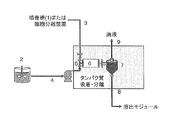
- FIG. 1 and FIG. [1] An apparatus for continuously purifying protein from a cell culture solution using a module in which an in-line mixer and a cyclone are combined, (a) a pipe (3) connecting the culture tank (1) or the cell separator (D) and the first module to the inlet of the in-line mixer (6) of the first module (A: reaction module); A pipe (4) connecting the first storage tank (2) and the first module is connected via a branch valve (5), and the discharge port of the in-line mixer (6) is the introduction of a hydrocyclone (7). A pipe (8) connecting the first reaction module and the second module is connected to the lower outlet of the hydrocyclone (7), and a pipe (8) is connected to the upper outlet of the hydrocyclone (7).
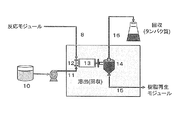
- the present invention as shown in FIG. [2]
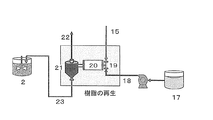
- the other module is a third module (C: regeneration module), and a pipe (15) connecting the second module (B) and the third module to the inlet of the in-line mixer (20),
- a pipe (18) connecting the third storage tank (17) and the third module is connected via a branch valve (19), and the discharge port of the in-line mixer (20) and the introduction port of the hydrocyclone (21).
- Is connected to the lower discharge port of the hydrocyclone (21) and the pipe (23) connecting the third module and the first storage tank (2) is coupled to the upper discharge port of the hydrocyclone (21).
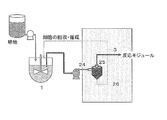
- the pipe (24) connecting the culture vessel (1) and the cell separator is coupled to the inlet of the hydrocyclone (25), and the lower outlet of the hydrocyclone (25) Is connected to a pipe (26) connecting the cell separation device and the culture tank (1), and the upper outlet is a cell separation unit comprising a pipe (3) connecting the cell culture device and the first module.
- the present invention relates to the apparatus according to [1] or [2].
- the present invention also includes one aspect shown in FIG. [4]
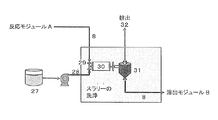
- the apparatus according to any one of [1] to [3], and [5] the fourth module is an inlet of the in-line mixer (30) of the fourth module (E)
- the pipe (8) connecting the first module and the fourth module and the pipe (28) connecting the fourth storage tank (27) and the fourth module are connected via the branch valve (29).
- the discharge port of the in-line mixer (30) and the introduction port of the hydrocyclone (31) are connected, and a pipe (8) connected to the second module or a new cleaning module is connected to the discharge port below the hydrocyclone.
- Hydrocyclone (3 1) The apparatus according to claim 4, wherein a pipe (32) for transferring the cleaning liquid to the discharge port is coupled to the upper discharge port.
- the present invention provides [6] A method for continuously producing a protein from a cell culture solution using a plurality of modules in which an inline mixer and a cyclone are combined, (a) The cell culture solution containing the protein transferred from the culture tank and the slurry containing the resin transferred from the first storage tank are mixed into the in-line mixer of the first module, and the protein in the cell culture solution is mixed.
- Process and (e) a method comprising a step of transferring the slurry for elution obtained in the mixing step by the in-line mixer of the second module to a cyclone and separating the slurry into a slurry containing protein and a resin not bound to the protein; [7]
- a method characterized by including a cleaning step using a third module between step b and step c according to [6], [8]
- the cleaning method according to [7] in the in-line mixer of the third module, the slurry containing the resin bound to the protein and the cleaning liquid transferred from the fourth storage tank are mixed, and after the cleaning
- the method is characterized in that the mixed liquid is transferred to a cyclone and separated.
- the cells and the cell culture solution containing the protein are separated via a cyclone, and the separated cells are cultured.
- the present invention also provides [11] An apparatus for continuously purifying protein from a cell culture solution using a plurality of modules in which an inline mixer and a cyclone are combined, [12] The apparatus according to [1], wherein the slurry containing the cell culture solution and the resin is mixed by an in-line mixer, the protein in the cell culture solution is combined with the resin in the slurry, and the slurry containing the resin combined with the protein
- the reaction module with the function of separating the resin-containing slurry and the resin-free cell culture solution with a cyclone, the slurry containing the resin bound to the protein and the eluate are mixed in an in-line mixer, and the hydrocyclone
- [15] In the apparatus according to any one of [12] to [14], in which the reaction module and the elution module are combined, the resin slurry discharged from the elution module of the apparatus is transferred to the reaction module or the resin slurry storage tank.
- the present invention relates to a device that enables cycle utilization of a resin slurry, and a protein production method using the device according to any one of [16], [11] to [15].
- the present invention further includes [17] An apparatus for continuously purifying a protein from a cell culture medium using a module in which an in-line mixer and a cyclone are combined, wherein the protein is obtained by mixing a cell culture liquid containing protein and a slurry containing a resin.
- a first module for producing a slurry bonded to the resin, a slurry purified by the first module and an eluate, and a second eluting the protein from the slurry
- a protein purification apparatus comprising a module (elution module), [18]
- a third module for producing a regenerated resin slurry containing a resin by mixing the slurry from which the protein has been separated in the second module and a regenerated liquid.
- the protein purification apparatus according to 17, [19]
- Protein purification equipment [20] A slurry containing a resin bound to a protein produced by the first module and a washing solution are mixed between the first module and the second module to bind to the protein.
- the cell culture solution and the slurry containing the resin are mixed, the protein in the cell culture solution is combined with the resin in the slurry, and a slurry containing the resin combined with the protein is generated.
- the protein purification apparatus according to claim 17, comprising: one in-line mixer; a slurry containing resin; and a first hydrocyclone that separates into a cell culture solution not containing resin.
- the second module includes a second in-line mixer for mixing the slurry containing the resin bound to the protein and the eluate, and a second hydrocyclone for separating the protein and the resin slurry.
- the apparatus according to claim 19, further comprising a hydrocyclone for transferring a culture solution to the first module, and [25] the slurry containing the resin bound to the protein and the washing solution 21.
- the apparatus according to claim 20, further comprising: a fourth in-line mixer for mixing, a slurry containing a resin combined with protein, and a fourth hydrocyclone for separating into a waste liquid.
- the present invention provides a method and apparatus for recovering and purifying a target protein continuously in a short time even from a suspended sample containing a small amount of cells, cell debris, or host microorganisms. To do.
- the ability to continuously collect and purify the target protein directly from the sample, including a small amount of solids, makes it possible to obtain a large amount of product relatively easily even with a small-scale culture facility depending on the equipment operation time.
- the productivity is high, and the continuous production enables efficient production with reduced production costs.
- a target protein such as an antibody molecule can be continuously separated from a culture solution of animal cells without highly separating and removing cells, cell debris or precipitates.
- Proteins can be separated continuously without using a chromatography column packed with a separation material conventionally used according to the present invention.
- the present invention enables perfusion culture of animal cells without using a hollow fiber or a continuous centrifuge, and continuously separates the target protein from the extracted culture solution without using a filtration filter or a chromatography column. I can do it.
- proteins can be separated continuously without using facilities such as a large membrane separation apparatus, a chromatography apparatus, and a large chromatography column.
- the adsorbing / separating agent can be regenerated and circulated in the flow path of the apparatus, so that continuous separation of proteins and the like can be repeated with a small amount of the adsorbing / separating agent.
- the present invention allows the target protein to be dissociated within a short time after reacting with the slurry-like adsorbing / separating agent in the flow path of the apparatus without separating the adsorbing / separating agent in the column and separating it from impurities. Structural denaturation due to adsorption of the target protein can be suppressed.
- the present invention allows impurities such as host proteins, host DNA or RNA to be reacted in a slurry state and washed in a slurry state without filling an adsorption / separation agent in a column or other container.
- the target protein with high purity can be obtained by avoiding unnecessary adsorption.
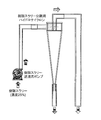
- FIG. 1 shows a reaction module A that performs adsorption and separation of an antibody on a resin.
- FIG. 2 shows an elution module B that separates the antibody from the resin.
- FIG. 3 shows a regeneration module C for resin regeneration.
- FIG. 4 shows a cell separation apparatus D for separating cells during reflux culture.
- FIG. 5 shows a cleaning module E for cleaning the resin to which an antibody or the like is bound.
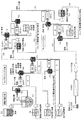
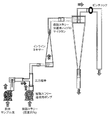
- FIG. 6 shows an apparatus for continuously purifying antibodies from a culture solution.
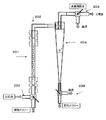
- FIG. 7 shows the reaction module of the present invention.
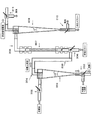
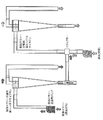
- FIG. 8 shows a reaction module equipped with a cell sorting device.
- FIG. 9 is a schematic diagram of a hydrocyclone evaluation module.
- FIG. 10 is a schematic diagram of an evaluation module in the case where the first hydrocyclone and the second hydrocyclone are connected in a second manner.
- FIG. 11 is a schematic view of a module used in a test for confirming that an antibody can be recovered by mixing an antibody sample solution and a purification chromatographic resin with an in-line mixer and then separating and recovering the resin with a hydrocyclone.
- the in-line mixer may be any static mixing device without a drive unit, but preferably a static mixer or a fluidized bed type mixer without moving parts in consideration of damage to cells and resin. Is preferably used.
- the in-line mixer has a simple structure that mixes and discharges two fluids that are usually introduced by the flow of the liquid, so it has an inlet in one of the cylindrical shapes and an outlet in the liquid outflow direction.
- the in-line mixer has a shape in which a mixture of two fluids is introduced into one inlet.
- the discharge port may have one discharge port in the liquid discharge direction.
- the hydrocyclone refers to a hydrocyclone, and may be any device that does not have a drive unit that has the ability to separate, classify, and concentrate by injecting a treatment liquid into a hydrocyclone stationary device.
- various types of hydrocyclone such as Mozley type, Dorr-Oliver type, Bradley type, Rietema type, Krebs type, CBV / DEMCO type are used, but considering damage to cells and resin, Bradley
- a type or Rietema type hydrocyclone is used.
- hydrocyclones usually have a funnel-like shape, the inlet of the mixture separating on the funnel-type upper wall, the upper outlet of the purified material separated on the funnel-type upper ceiling, the funnel-type There is a lower outlet for the mixture excluding the purified material at the lower end.
- a feature of the present invention is that a plurality of modules in which an in-line mixer and a cyclone are combined are used, and each module has individual functions of adsorption and separation of antibodies to the resin, separation of the antibodies from the resin, and regeneration of the resin.
- a simple and trouble-free antibody purification apparatus can be provided.
- the feature of the present invention is that the cell culture solution and the slurry containing the resin are mixed by an in-line mixer, the protein in the cell culture solution is combined with the resin in the slurry, and the slurry containing the resin combined with the protein is obtained.
- the present invention relates to a reaction module having a function of generating and separating a resin-containing slurry and a cell culture solution containing no resin by a cyclone.
- the reaction module may be used alone, but a device in which a plurality of reaction modules are arranged in parallel to increase capacity, a device in which reaction modules are arranged in series to increase efficiency, or a plurality of reaction modules in parallel and It can also be used as a device arranged in series.
- Proteins in the present invention are antibodies, hematopoietic proteins such as erythropoietin, enzymes such as t-PA, cytokines such as G-CSF and interferon ⁇ , hormones such as insulin and human growth hormone, vaccines such as hepatitis B vaccine, blood coagulation Any substance may be used as long as it is used for pharmaceuticals such as factors, but antibodies are particularly preferred.
- a monoclonal antibody is preferably used, and a mouse antibody, a humanized antibody, a human antibody, or a chimeric antibody is particularly preferable.
- the cell culture solution any culture solution may be used as long as the protein-producing cell is cultured and the protein is produced.
- Examples of the cells that produce the protein include microbial cells such as E. coli, yeast, and insect cells such as Sf9 and Sf21 ⁇ , but also animal cells such as CHO cells, BHK cells, NSO cells, and SP2 / 0 cells. It is preferable to use animal cells.
- the resin in the present invention includes a resin used for affinity chromatography or ion exchange chromatography, and a resin bound with a ligand for binding to and separating from the protein is preferable.
- a resin used for affinity chromatography or ion exchange chromatography when the protein to be bound is an antibody, it is preferable to use protein A, protein G, protein L and derivatives thereof, and particularly preferably protein A and derivatives thereof.
- synthetic ligands such as HIS tags and GST tags, antibodies corresponding to various proteins, receptors for various proteins, various proteins and their low or high molecular weight inhibitors can be used as ligands.
- metal chelate affinity resins carrying metal ions such as Cu2 + and Zn2 + can also be used.
- any resin can be used as long as these ligands are bonded and have excellent fluidity, but in order to improve separation by hydrocyclone, a resin or synthetic polymer based on an inorganic material with a certain density is used.
- a resin based on an organic polymer such as a natural polymer and a resin obtained by combining an organic material with an inorganic material.
- the inorganic material include glass, silica, zirconium, or an alloy using stainless steel or tungsten.
- examples of the synthetic polymer include polystyrene resin and methacrylate resin
- examples of the natural polymer include resins composed of agarose, dextran, cellulose, chitin, chitosan, mannan and the like.
- it is composed of a base material in which inert metals such as stainless steel and tungsten alloys are mixed with natural polymers such as agarose and synthetic polymers such as vinyl polymers. Resin to be used.
- the resin used in the ion exchange chromatography used in the present invention may be any of an anion exchange resin or a cation exchange resin, but it is particularly preferable to use a strong anion exchange resin or a strong cation exchange resin.
- an anion exchange resin as a ligand, diethylaminoethyl (DEAE) group, trimethylaminoethyl (TAME) group, quaternary aminoethyl (QAE) group, primary amino (—NH 2 ) or secondary (—NHR), Examples thereof include resins having substituents such as tertiary amino group (—NR1R2) and quaternary amino (Q) group.
- cation exchange resins include carboxymethyl (CM), sulfomethyl (SM), sulfoethyl (SE), Resins having substituents such as sulfopropyl (SP), phosphate (P), and sulfonate (S) groups.
- the resin used for ion exchange may be any resin as long as these ligands are bonded and has excellent fluidity. However, in order to improve separation by hydrocyclone, a certain density of inorganic material is used as a base material.
- resins based on organic polymers such as resins, synthetic polymers or natural polymers
- natural polymers and synthetic polymers are mixed with inert metals such as stainless steel and tungsten alloys to increase the specific gravity.
- a resin composed of a base material It is preferable to use a resin composed of a base material.
- the inorganic material include glass, silica, zirconium, or an alloy using stainless steel or tungsten.
- synthetic polymers include polystyrene resins and methacrylate resins, and examples of natural polymers include resins composed of agarose, dextran, and cellulose.
- the reaction module is connected to the culture tank by piping through a cell separator as necessary.
- the culture tank can be any device that can cultivate cells producing the protein and can produce the protein, and even a stainless steel culture tank is made of plastic or resin for single use. It may be a culture tank.
- Any culture method may be used, but it is preferable to use a culture method by a fed-batch method, a continuous culture method, or the like, particularly preferably a continuous culture method.
- Proteins are produced by culturing cells that produce the protein in a culture vessel under the culture conditions and culture medium normally used by those skilled in the art, and a cell culture solution containing the protein produced by the culture is used in the present invention. .
- the concentration of cells in the cell culture medium is preferably about 20% (v / v) or less in a packed cell volume (Packed cell volume).
- the pipe for transferring the culture medium may be any pipe that can be used as a flow path through which the cell culture medium flows smoothly. However, natural or synthetic pipes such as stainless steel pipes, single-use plastics, rubber, or silica may be used.
- a tube made of resin may be used.
- the reaction module is also connected to a storage tank storing a resin slurry by a pipe, and can mix the resin slurry and the cell culture solution.
- the resin slurry is adjusted to a concentration close to physiological conditions by a pH buffer solution near the neutrality in order to suppress the denaturation of the protein, preferably the pH at which the resin and the target substance are efficiently bound. Is preferably used.
- Piping has the same meaning as described above, and it is preferable to incorporate a pump as necessary to keep the transfer concentration constant.
- the pipe for transferring the cell culture solution and the pipe for transferring the resin slurry are connected to the in-line mixer of the reaction module through a branch valve as necessary.
- the branch valve may be any one as long as it is normally used in protein production apparatuses, but a three-way valve is preferably used.
- the feature of the present invention is that the cells present in the cell culture medium containing the protein flowing out from the culture tank are separated by a hydrocyclone, the collected cells are transferred to the culture tank, and the protein is removed from the cells. It is related with the cell separation unit which transfers the cell culture solution containing this to the following refinement
- the next purification means may be any means as long as it is a means for purifying ordinary proteins such as an ion exchange chromatography apparatus and an affinity chromatography apparatus, but it is particularly preferable to use the reaction module.
- a feature of the present invention relates to an elution module in which a slurry containing a resin bonded to a protein and an eluate are mixed by an in-line mixer and separated into a protein and a resin slurry by a hydrocyclone. Although the separated protein is stored, the separated slurry is transferred again to the slurry storage tank, and the apparatus for supplying the antibody bound to the protein to the elution module includes a tank having a stirring device, etc. Any device can be used as long as it mixes the cell culture solution and the resin slurry and can bind to the protein in the cell culture solution and the resin ligand in the resin slurry, but it is preferable to use the reaction module of the present invention. .
- Elution modules may be used alone, but devices with multiple elution modules arranged in parallel to increase capacity, devices with elution modules arranged in series to increase efficiency, or multiple elution modules in parallel and It can also be used as a device arranged in series.
- any eluate may be used as long as it is usually used for protein affinity chromatography or ion exchange chromatography.
- the pH of the eluate is preferably 5 or less, preferably pH 4 to pH 2, particularly preferably pH 2.5 to pH 2.
- acetic acid buffer, citrate buffer, phosphate buffer, or dilute solutions such as phosphoric acid and hydrochloric acid are used.
- it is preferable to increase the salt concentration of the eluate and use sodium chloride, potassium chloride or the like to reduce the salt concentration to 1 M or less, preferably 0.1 M to 0. .5M, particularly preferably 0.1M to 0.3M.
- Tris-HCl buffer, acetate buffer, citrate buffer, phosphate buffer, or the like is used.
- the feature of the present invention relates to a cleaning module that mixes a slurry containing a resin bonded to a protein and a cleaning liquid using an in-line mixer, and separates the slurry containing a resin bonded to a protein and a waste liquid using a cyclone.
- the washing module is preferably installed between the reaction module and a device for separating proteins bound to the resin, preferably between the reaction modules.
- an aqueous medium having a pH of 5 to 8, preferably 6.5 to 8.0 is preferably used.
- Tris-HCl buffer, acetate buffer, citrate buffer, phosphate buffer, or the like is used. .
- a salt of 0.1 to 1M sodium chloride, potassium chloride or the like can be added to the medium.
- the present invention relates to a device for producing protein from a cell culture solution by combining a reaction module and an elution module, and transferring resin slurry discharged from the elution module of the device to a reaction module or a resin slurry reservoir.
- the present invention also relates to an apparatus for producing a protein from a cell culture solution that enables cycle utilization of a resin slurry.
- a feature of the present invention relates to an apparatus for producing a protein from a cell culture medium having a cell circulation system by combining a cell separation apparatus with these production apparatuses.
- a slurry containing a cell culture solution and a resin is mixed by an in-line mixer, the protein in the cell culture solution is combined with the resin in the slurry, and a slurry containing the resin combined with the protein is generated.
- the present invention also relates to a method of separating a slurry containing a resin and a cell culture solution not containing a resin by a cyclone.
- the definitions of the in-line mixer, cell culture solution, slurry containing resin, and hydrocyclone in the present invention are the same as described above.
- the present invention includes a protein obtained by separating cells present in a cell culture solution containing a protein flowing out of a culture tank using a hydrocyclone, transferring the collected cells to the culture tank, and removing the cells.
- the present invention relates to a method for transferring a cell culture solution to the next purification means.
- the next purification means may be any means as long as it is a means for purifying ordinary proteins such as an ion exchange chromatography apparatus and an affinity chromatography apparatus, but it is particularly preferable to use the reaction module.
- the present invention relates to a method of mixing a slurry containing a resin bonded to a protein and an eluate with an in-line mixer and separating the protein and the resin slurry by a cyclone.
- the definition of the eluate is as defined above.
- the present invention relates to a washing method in which a slurry containing a resin bonded to a protein and a washing liquid are mixed by an in-line mixer and separated into a slurry containing a resin bonded to a protein and a waste liquid by a cyclone.
- the definition of the cleaning liquid is the same as described above, and the cleaning temperature is 4 ° C. to 40 ° C.
- FIG. Cell Separation Step In the protein production apparatus of FIG. 6, the culture tank (101) provided with a storage tank (102) for supplying a culture medium is used to purify the cell culture medium produced in the culture tank. Is connected to a cell separator (103) for circulating use. In the cell separator, only the cells are separated from the cell culture solution and sent to the culture tank (101), and the cell culture solution containing the proteins separated from the cells is transferred to the in-line mixer (105) of module A used in the capturing process.
- the Capture process refers to an initial purification process when a protein is produced using a plurality of purification means.
- the cell separator (103) is connected to the inline mixer (105) of the module A, and the inline mixer (105) of the module A is also connected to the storage tank (104) for the adsorption resin (A) such as protein A
- the cell culture solution from which the cells have been separated in the cell separation step is mixed with the resin (A) in an in-line mixer, and the protein and the resin (A) in the cell culture solution bind to each other.
- the cell culture solution is discharged from the upper outlet, and the resin (A) bonded to the protein is discharged from the lower outlet.
- the lower outlet of the cyclone (106) of the module A is connected to the inline mixer (108) of the module B, and the inline mixer is also connected to the resin (A) eluate storage tank (104).
- the resin (A) bound to the protein and the eluate are mixed, and the protein is released from the resin (A). Since the discharge port of the in-line mixer is connected to the introduction port of the cyclone (109) of the module B, the protein and the resin (A) are separated in the cyclone (109) of the module B, and the protein is discharged from the cyclone upper discharge port.
- the resin (A) is discharged from the lower discharge port.
- the protein is sent to the in-line mixer (111) of the module D used for the next polishing step through the pipe (110).
- the lower discharge port of the cyclone (109) of the module B is connected to the inline mixer (116) of the module C, and the inline mixer is also connected to the resin regenerated liquid storage tank (117). 109)
- the resin (A) discharged from the lower discharge port is mixed with the regenerated liquid in the inline mixer (116) of the module C, and the regenerated liquid is mixed with the regenerated liquid in the cyclone (118) of the module C connected to the inline mixer.
- the separated resin A is sent from the cyclone lower outlet of the module C to the resin (A) storage tank (104) via the pipe (119).
- polishing Step 1 refers to a purification step after the medium-term step when protein is produced using a plurality of purification means. Polishing process 1 Since the in-line mixer (111) of the module D is connected to the cyclone and the resin (B) storage tank (123) such as the ion exchange resin of the module B in the capturing process by the pipe (110), it is obtained in the capturing process. The obtained protein and the resin (B) are mixed in the in-line mixer to form a slurry of the resin (B) bonded to the protein.
- the discharge port of the in-line mixer (111) of the module D is connected to the introduction port of the cyclone (112) of the module D, the slurry of the resin (B) bound to the protein in the cyclone (112) of the module D and the remaining The solution is separated, and the waste liquid is discharged from the upper discharge port, and the slurry of the resin (B) bonded to the protein is discharged from the lower discharge port.
- the cyclone (112) lower discharge port of module D is connected to the inline mixer (121) of module E, and the inline mixer is also connected to the eluate storage tank (124) for resin (B).
- the resin (B) slurry bound to the protein in (1) is mixed with the eluate, and the protein is released from the resin (B).
- the discharge port of the in-line mixer (121) of the module E is connected to the introduction port of the cyclone (122) of the module E, the protein and the resin (B) are separated in the cyclone.
- Protein is discharged from the upper outlet of the cyclone (122) of module E, and resin (B) is discharged from the lower outlet.
- the protein is transferred via a pipe (115) to the in-line mixer of module E performing the polishing step 2.
- the resin (B) slurry discharged from the cyclone lower discharge port is transferred to the resin (B) storage tank through the pipe (125) and reused.
- Polishing process 2 The in-line mixer (113) of the module F is connected to the cyclone and the resin (C) storage tank (133) such as a hydrophobic resin of the module E of the polishing process 1 by the pipe (115).
- the obtained crude protein and resin (C) are mixed in the in-line mixer to form a slurry of resin (C) bonded to protein.
- the discharge port of the in-line mixer (113) of the module F is connected to the introduction port of the cyclone (114) of the module F, the slurry of the resin (C) bonded to the protein in the cyclone (114) of the module F and the remaining The solution is separated, the waste liquid is discharged from the upper outlet, and the slurry of the resin (C) bonded to the protein is discharged from the lower outlet.
- the lower outlet of the cyclone (114) of the module F is connected to the in-line mixer (131) of the module G, and the in-line mixer is also connected to the eluate storage tank (134) for the resin (C).
- the resin (C) slurry bound to the protein in the mixer is mixed with the eluate, and the protein is released from the resin (C). Since the in-line mixer (131) outlet of the module G and the inlet of the cyclone (132) of the module G are connected, the protein and the resin (B) are separated in the cyclone.
- the obtained purified protein is converted into a purified protein from the upper discharge port of the cyclone (132) of the module G through a pipe (120) and advanced purification processes such as virus filtration and UF / DF membrane.
- the resin (C) slurry discharged from the cyclone (132) lower discharge port of the module G is transferred to the resin (C) storage tank through the pipe (135) and reused.
- the above aspect is a positional aspect of the present invention, and the present invention is not limited to this. It is also possible to add a resin conventionally used for protein purification and its elution and regeneration methods. is there.
- FIG. 7 shows the module of the present invention.
- a three-way joint (202) is connected to the inlet of an in-line mixer (201, outer diameter 8 mm, inner diameter 5 mm, total length 145 mm, product name Static Mixer N40-172-0, manufactured by Noritake Co., Ltd.), and mixed with the in-line mixer. Two types of fluid are introduced through the other two joints.
- the outlet of the in-line mixer is connected to an inlet of a hydrocyclone (204, outer diameter 8 mm, inner diameter 5 mm, total length 190 mm, self-made) through a connecting tube (203).
- a three-way cock (205) that can be connected to two flow paths for discharging the separated slurry and cleaning liquid is connected to the lower part of the cyclone, and a flow rate adjusting device that adjusts the flow rate of the liquid at the upper discharge port of the cyclone (206, air control bass, single type, manufactured by Azu Japan) is installed.
- FIG. 8 shows a reaction module equipped with a cell separation unit.
- the hydrocyclone (301, outer diameter: 16 mm, inner diameter: 13 mm, total length: 150 mm, made of polyacrylic, self-made) of the cell separation unit is provided with an inlet (302) for injecting a cell culture solution from the culture tank. Is connected to a three-way joint (303) which can be switched between a lead-out port for circulating the cells again into the culture tank and a waste-solution lead-out port.
- the outlet of the upper part of the hydrocyclone is connected to a pipe (305) for transferring the culture supernatant to the reaction module via a joint (304).
- the reaction module inline mixer (307, outer diameter 8 mm, inner diameter 5 mm, total length 145 mm, product name Static mixer N40-172-0, manufactured by Noritake Co., Ltd.) has a three-way joint (306) connected to its inlet, inline Two types of fluids, a cell supernatant mixed with a mixer and a gel slurry, are introduced through the three-way joint (306).
- the outlet of the in-line mixer is connected to an inlet of a hydrocyclone (309, outer diameter 8 mm, inner diameter 5 mm, total length 190 mm, self-made) through a connection tube (308).
- a three-way joint (310) that can be connected to two flow paths for discharging the separated slurry and cleaning liquid is connected to the lower part of the hydrocyclone, and the flow rate adjustment for adjusting the flow rate of the liquid is made to the outlet of the upper part of the cyclone.
- the device (311, air control bass, single type, manufactured by Azure Japan Co., Ltd.) is installed.
- Example 3 it was confirmed that the resin could be concentrated and separated from the resin slurry liquid by a hydrocyclone.
- FIG. 9 is a schematic diagram of the module used at that time.
- silica gel (Osaka Soda) having an average particle diameter of 50 ⁇ m was used.
- a 25% slurry solution was prepared by mixing 250 mL of the resin and 750 mL of solvent (pure water). This slurry liquid is injected into the hydrocyclone inlet using a pump (Model RD-05, manufactured by Iwaki Co., Ltd.), and the slurry liquid flowing out from the upper outlet and lower outlet of the hydrocyclone is discharged for a certain period of time.
- the degree of separation of the resin was confirmed by measuring the volume of the resin and the solvent (pure water) that were collected and contained therein. The situation of the experiment was filmed and analyzed after the experiment to determine the time taken for each task. Hydrocyclone with a total length of 75 mm and 100 mm was used, the flow rate was adjusted by changing the strength of the pump, and the difference in the degree of separation depending on the size of the cyclone and the flow rate was confirmed. The degree of separation was based on the resin and solvent flow rates at the lower and upper hydrocyclone outlets and the resin ratio. Table 1A shows the results for a hydrocyclone with a total length of 75 mm, and Table 1B shows the results for a hydrocyclone with a total length of 100 mm.
- Example 4 In this example, two hydrocyclones are connected, and the slurry liquid flowing out from the lower outlet of the first upstream cyclone and the solvent (pure water) are ejected (model made by Asahi Organic Materials Co., Ltd .: DAEJH18012). ) And sent to the downstream second cyclone where it was confirmed that the resin could be separated.
- FIG. 10 is a schematic diagram of the module used at that time.
- a 25% slurry of silica gel (Osaka Soda Co.) was used.
- the resin was supplied to the second cyclone, and the resin was separated there. That is, 0.55 L of resin and 0.6 L of solvent (pure water) flow out from the lower outlet in one minute (resin ratio: 47.9%), and 0.02 L of resin and 2 from the upper outlet. 49 L of solvent (pure water) was flowing out (resin ratio: 1.0%).
- the resin may not be supplied to the downstream second cyclone, so it is desirable to use an ejector.
- Example 5 it was confirmed that the antibody could be recovered by mixing the antibody sample solution and the chromatographic resin for purification with an in-line mixer and then separating and recovering the resin with a hydrocyclone.
- FIG. 11 is a schematic diagram of the module used at that time.
- an antibody solution (1 mg / mL) diluted with a phosphate buffer was used as an antibody sample solution, and silica gel (average particle size 50 ⁇ m, Osaka Soda Co., Ltd.) with immobilized protein A was used as a chromatographic resin for antibody purification. .
- the antibody sample solution (1 mg / mL: 1 L) and the resin slurry solution (25% resin: 1 L) are merged at a three-way joint, introduced into an in-line mixer, mixed thoroughly, and then introduced into a hydrocyclone for separation. I tried to flow into my mouth. After each solution started to flow steadily, each of the slurry liquids flowing out from the upper outlet and lower outlet of the hydrocyclone was collected for about 16 seconds. Regarding the slurry liquid flowing out from the lower outlet, the resin and the solvent (antibody sample liquid) were quickly separated by filter filtration immediately after the outflow, and only the resin was recovered.
- the recovered resin was washed twice with 100 mL of phosphate buffer, and then 100 mL of elution buffer (0.1 M glycine hydrochloric acid, pH 2.5) was added to elute the adsorbed antibody. This operation was repeated 7 times, the eluted antibody was collected, and the antibody was quantified by measuring the absorbance at 280 nm.
- the situation of the experiment was filmed and analyzed after the experiment to determine the time taken for each task.
- an inline mixer in which a hydrocyclone with a closed upper outlet was installed upside down was used. Moreover, the outflow of the solution from an upper outlet was suppressed by setting a pinch cock in the upper outlet of the separation hydrocyclone.
- Table 3 shows the slurry solution flow rate, the cyclone lower discharge port, the resin flow rate at the upper discharge port, the solution flow rate, and the resin ratio before the hydrocyclone introduction.
- Table 4 shows the antibody recovery rate, the adsorption amount, the antibody feeding amount, and the treatment time.
- the resin was separated by the separation hydrocyclone, and about 66% of the input amount of the antibody was recovered from the resin.
- Example 6 it was confirmed that the antibody could be purified from the culture supernatant (the supernatant obtained by removing cells from the antibody-expressing cell culture medium) using the module shown in FIG.
- the culture supernatant was an antibody concentration of 1.16 mg / mL as the culture supernatant, and the same protein A-immobilized silica gel as in Example 5 was used as the chromatographic resin for purification.
- the experiment was performed in the same manner as in Example 5, but the recovered resin was washed 5 times with 200 mL of phosphate buffer, and elution after the washing was performed 5 times with 200 mL of elution buffer.
- Table 5 shows the slurry solution flow rate, the cyclone lower discharge port, the resin flow rate at the upper discharge port, the solution flow rate, and the resin ratio by the pump before the introduction of the hydrocyclone.
- Table 6 shows the antibody recovery rate, the adsorption amount, the antibody feeding amount, and the treatment time.
- Example 5 the resin was separated by the separation hydrocyclone, and about 69.4% of the input amount of antibody was recovered from the resin (Tables 5 and 6).
- Example 7 it was confirmed that the antibody could be purified from the culture solution (including antibody-expressing cells) using the module shown in FIG.
- a culture solution the same protein A-immobilized silica gel as in Example 5 was used as a chromatographic resin for purification with a culture solution having an antibody concentration of 3.15 g / L and a cell number of 34 ⁇ 10 6 cells / mL.
- the experiment was performed in the same manner as in Example 5. However, the recovered resin was washed 12 times with 300 mL of phosphate buffer, and elution after the washing was performed 7 times with 100 mL of elution buffer, and the amount was collected and quantified.
- Table 7 shows the slurry solution flow rate, the cyclone lower discharge port, the resin flow rate at the upper discharge port, the solution flow rate, and the resin ratio before the introduction of the hydrocyclone.
- Table 8 shows the antibody recovery rate, the amount of adsorption, the amount of antibody delivered, and the treatment time.
- Example 5 the resin was separated by the separation hydrocyclone, and about 78.4% of the input antibody was recovered from the resin (Tables 7 and 8).
- a module used for a protein particularly a biopharmaceutical production apparatus, which is suitable for continuous production of protein, is maintenance-free, and has improved resin regeneration efficiency.
- Three-way cock, 206. Flow rate adjusting device, 301. Hydrocyclone, 302. Introduction port, 303. Three-way joint, 304. Bonding member, 305. Pipe, 306. Three-way joint, 307. In-line mixer, 309. Hydrocyclone, 310. Three-way joint, 311. Flow regulators All publications, patents and patent applications cited herein are hereby incorporated by reference in their entirety.
Landscapes
- Chemical & Material Sciences (AREA)
- Life Sciences & Earth Sciences (AREA)
- Organic Chemistry (AREA)
- Health & Medical Sciences (AREA)
- Engineering & Computer Science (AREA)
- Wood Science & Technology (AREA)
- Zoology (AREA)
- Bioinformatics & Cheminformatics (AREA)
- Biotechnology (AREA)
- Genetics & Genomics (AREA)
- General Health & Medical Sciences (AREA)
- Biochemistry (AREA)
- Biomedical Technology (AREA)
- Microbiology (AREA)
- General Engineering & Computer Science (AREA)
- Medicinal Chemistry (AREA)
- Sustainable Development (AREA)
- Chemical Kinetics & Catalysis (AREA)
- Analytical Chemistry (AREA)
- Molecular Biology (AREA)
- Virology (AREA)
- General Chemical & Material Sciences (AREA)
- Cell Biology (AREA)
- Biophysics (AREA)
- Proteomics, Peptides & Aminoacids (AREA)
- Peptides Or Proteins (AREA)
- Preparation Of Compounds By Using Micro-Organisms (AREA)
- Apparatus Associated With Microorganisms And Enzymes (AREA)
- Treatment Of Liquids With Adsorbents In General (AREA)
- Cyclones (AREA)
Abstract
Dans un procédé de production d'une protéine à partir de cellules animales, l'engorgement d'une colonne ou d'un filtre très tassé dans un récipient étanche à l'air rend toute opération en continu difficile. Pour résoudre ce problème, l'invention porte sur un module dans lequel : une suspension épaisse contenant un milieu de culture cellulaire liquide et une résine est mélangée à l'aide d'un mélangeur en ligne pour obtenir une suspension épaisse contenant la résine liée à la protéine ; où la suspension épaisse contenant la résine est séparée du milieu de culture cellulaire liquide exempt de résine à l'aide d'un cyclone ; puis la protéine est éluée à partir de la suspension épaisse de résine.
Priority Applications (1)
| Application Number | Priority Date | Filing Date | Title |
|---|---|---|---|
| JP2020510845A JP6991312B2 (ja) | 2018-03-26 | 2019-03-26 | インラインミキサーとハイドロサイクロンを統合したモジュールを複数用いて抗体を細胞培養液から連続的に製造する装置および当該装置を用いた抗体の製造方法 |
Applications Claiming Priority (2)
| Application Number | Priority Date | Filing Date | Title |
|---|---|---|---|
| JP2018-058853 | 2018-03-26 | ||
| JP2018058853 | 2018-03-26 |
Publications (1)
| Publication Number | Publication Date |
|---|---|
| WO2019189064A1 true WO2019189064A1 (fr) | 2019-10-03 |
Family
ID=68061649
Family Applications (1)
| Application Number | Title | Priority Date | Filing Date |
|---|---|---|---|
| PCT/JP2019/012669 Ceased WO2019189064A1 (fr) | 2018-03-26 | 2019-03-26 | Dispositif pour la production en continu d'un anticorps à partir d'un milieu de culture cellulaire liquide utilisant de multiples modules dotés d'un mélangeur en ligne et d'un hydrocyclone combinés et procédé de production d'anticorps l'utilisant |
Country Status (2)
| Country | Link |
|---|---|
| JP (1) | JP6991312B2 (fr) |
| WO (1) | WO2019189064A1 (fr) |
Cited By (2)
| Publication number | Priority date | Publication date | Assignee | Title |
|---|---|---|---|---|
| WO2025094385A1 (fr) * | 2023-11-02 | 2025-05-08 | 株式会社ノリタケカンパニーリミテド | Dispositif de purification de protéine et procédé de production de protéine purifiée |
| WO2025187375A1 (fr) * | 2024-03-08 | 2025-09-12 | ノリタケ株式会社 | Procédé d'adsorption de protéine, procédé de purification de protéine et appareil de purification de protéine |
Citations (5)
| Publication number | Priority date | Publication date | Assignee | Title |
|---|---|---|---|---|
| JPH07503458A (ja) * | 1991-12-16 | 1995-04-13 | ノボザイムス アクティーゼルスカブ | 蛋白の製造 |
| JP2000509325A (ja) * | 1996-04-30 | 2000-07-25 | エナジー バイオシステムズ コーポレーション | 油/水/生体触媒三相分離方法 |
| US20100193434A1 (en) * | 2009-02-05 | 2010-08-05 | Oleg Shinkazh | Countercurrent tangential chromatography methods, systems, and apparatus |
| US20110177582A1 (en) * | 2008-06-12 | 2011-07-21 | Olev Trass | Production of protein isolates |
| JP2013542710A (ja) * | 2010-04-27 | 2013-11-28 | キベルディ インコーポレイテッド | 無機炭素源および/またはc1炭素源から有用有機化合物への非光合成炭素の回収および変換のための酸水素微生物の使用 |
-
2019
- 2019-03-26 WO PCT/JP2019/012669 patent/WO2019189064A1/fr not_active Ceased
- 2019-03-26 JP JP2020510845A patent/JP6991312B2/ja active Active
Patent Citations (5)
| Publication number | Priority date | Publication date | Assignee | Title |
|---|---|---|---|---|
| JPH07503458A (ja) * | 1991-12-16 | 1995-04-13 | ノボザイムス アクティーゼルスカブ | 蛋白の製造 |
| JP2000509325A (ja) * | 1996-04-30 | 2000-07-25 | エナジー バイオシステムズ コーポレーション | 油/水/生体触媒三相分離方法 |
| US20110177582A1 (en) * | 2008-06-12 | 2011-07-21 | Olev Trass | Production of protein isolates |
| US20100193434A1 (en) * | 2009-02-05 | 2010-08-05 | Oleg Shinkazh | Countercurrent tangential chromatography methods, systems, and apparatus |
| JP2013542710A (ja) * | 2010-04-27 | 2013-11-28 | キベルディ インコーポレイテッド | 無機炭素源および/またはc1炭素源から有用有機化合物への非光合成炭素の回収および変換のための酸水素微生物の使用 |
Cited By (3)
| Publication number | Priority date | Publication date | Assignee | Title |
|---|---|---|---|---|
| WO2025094385A1 (fr) * | 2023-11-02 | 2025-05-08 | 株式会社ノリタケカンパニーリミテド | Dispositif de purification de protéine et procédé de production de protéine purifiée |
| WO2025187375A1 (fr) * | 2024-03-08 | 2025-09-12 | ノリタケ株式会社 | Procédé d'adsorption de protéine, procédé de purification de protéine et appareil de purification de protéine |
| JP2025136947A (ja) * | 2024-03-08 | 2025-09-19 | ノリタケ株式会社 | タンパク質吸着方法、タンパク質精製方法、ならびにタンパク質精製装置 |
Also Published As
| Publication number | Publication date |
|---|---|
| JPWO2019189064A1 (ja) | 2021-03-25 |
| JP6991312B2 (ja) | 2022-01-12 |
Similar Documents
| Publication | Publication Date | Title |
|---|---|---|
| CN110121646B (zh) | 磁性免疫球蛋白-结合粒子 | |
| JP2017502666A (ja) | 細胞培養のための装置 | |
| EP2867256A1 (fr) | Purification de molécules biologiques | |
| CN110769909B (zh) | 质粒的周期逆流色谱分离 | |
| KR102828839B1 (ko) | 생체분자의 분리 방법 | |
| US20080264849A1 (en) | Single pass method and apparatus for separating a target molecule from a liquid mixture | |
| JP2022526153A5 (fr) | ||
| JP6991312B2 (ja) | インラインミキサーとハイドロサイクロンを統合したモジュールを複数用いて抗体を細胞培養液から連続的に製造する装置および当該装置を用いた抗体の製造方法 | |
| US10843104B2 (en) | System and process for biopolymer chromatography | |
| US11110374B2 (en) | Continuous countercurrent spiral chromatography | |
| JP2023145471A (ja) | 容積測定ローディング流量を低減し、そして結合及び溶出クロマトグラフィー精製の生産性を増大するためのインライン生成物濃縮 | |
| JP2023548714A (ja) | 異なる混合物から成分を連続的に分離するための自動遠心分離装置および方法 | |
| US20220169991A1 (en) | Viral vector purification apparatus and method | |
| CN209362021U (zh) | 一种复用对流色谱系统 | |
| JP2023501693A (ja) | ウイルスベクターの調製方法 | |
| CN115894604B (zh) | 重组蛋白澄清纯化方法 | |
| JP2025137366A (ja) | タンパク質吸着方法、タンパク質精製方法、ならびにタンパク質精製装置 | |
| WO2003010512A2 (fr) | Separation solide-liquide a grande vitesse | |
| Ghosh | Bioseparations using integrated membrane processes |
Legal Events
| Date | Code | Title | Description |
|---|---|---|---|
| 121 | Ep: the epo has been informed by wipo that ep was designated in this application |
Ref document number: 19777014 Country of ref document: EP Kind code of ref document: A1 |
|
| ENP | Entry into the national phase |
Ref document number: 2020510845 Country of ref document: JP Kind code of ref document: A |
|
| NENP | Non-entry into the national phase |
Ref country code: DE |
|
| 122 | Ep: pct application non-entry in european phase |
Ref document number: 19777014 Country of ref document: EP Kind code of ref document: A1 |