WO2019189090A1 - Procédé de fabrication de carte de circuit imprimé isolante avec dissipateur thermique - Google Patents
Procédé de fabrication de carte de circuit imprimé isolante avec dissipateur thermique Download PDFInfo
- Publication number
- WO2019189090A1 WO2019189090A1 PCT/JP2019/012703 JP2019012703W WO2019189090A1 WO 2019189090 A1 WO2019189090 A1 WO 2019189090A1 JP 2019012703 W JP2019012703 W JP 2019012703W WO 2019189090 A1 WO2019189090 A1 WO 2019189090A1
- Authority
- WO
- WIPO (PCT)
- Prior art keywords
- layer
- heat sink
- aluminum
- metal layer
- circuit board
- Prior art date
- Legal status (The legal status is an assumption and is not a legal conclusion. Google has not performed a legal analysis and makes no representation as to the accuracy of the status listed.)
- Ceased
Links
Images






Classifications
-
- H—ELECTRICITY
- H10—SEMICONDUCTOR DEVICES; ELECTRIC SOLID-STATE DEVICES NOT OTHERWISE PROVIDED FOR
- H10W—GENERIC PACKAGES, INTERCONNECTIONS, CONNECTORS OR OTHER CONSTRUCTIONAL DETAILS OF DEVICES COVERED BY CLASS H10
- H10W40/00—Arrangements for thermal protection or thermal control
- H10W40/01—Manufacture or treatment
- H10W40/03—Manufacture or treatment of arrangements for cooling
- H10W40/037—Assembling together parts thereof
-
- H—ELECTRICITY
- H10—SEMICONDUCTOR DEVICES; ELECTRIC SOLID-STATE DEVICES NOT OTHERWISE PROVIDED FOR
- H10W—GENERIC PACKAGES, INTERCONNECTIONS, CONNECTORS OR OTHER CONSTRUCTIONAL DETAILS OF DEVICES COVERED BY CLASS H10
- H10W40/00—Arrangements for thermal protection or thermal control
- H10W40/10—Arrangements for heating
-
- C—CHEMISTRY; METALLURGY
- C04—CEMENTS; CONCRETE; ARTIFICIAL STONE; CERAMICS; REFRACTORIES
- C04B—LIME, MAGNESIA; SLAG; CEMENTS; COMPOSITIONS THEREOF, e.g. MORTARS, CONCRETE OR LIKE BUILDING MATERIALS; ARTIFICIAL STONE; CERAMICS; REFRACTORIES; TREATMENT OF NATURAL STONE
- C04B37/00—Joining burned ceramic articles with other burned ceramic articles or other articles by heating
- C04B37/02—Joining burned ceramic articles with other burned ceramic articles or other articles by heating with metallic articles
- C04B37/021—Joining burned ceramic articles with other burned ceramic articles or other articles by heating with metallic articles in a direct manner, e.g. direct copper bonding [DCB]
-
- H—ELECTRICITY
- H10—SEMICONDUCTOR DEVICES; ELECTRIC SOLID-STATE DEVICES NOT OTHERWISE PROVIDED FOR
- H10W—GENERIC PACKAGES, INTERCONNECTIONS, CONNECTORS OR OTHER CONSTRUCTIONAL DETAILS OF DEVICES COVERED BY CLASS H10
- H10W40/00—Arrangements for thermal protection or thermal control
- H10W40/20—Arrangements for cooling
- H10W40/22—Arrangements for cooling characterised by their shape, e.g. having conical or cylindrical projections
-
- H—ELECTRICITY
- H10—SEMICONDUCTOR DEVICES; ELECTRIC SOLID-STATE DEVICES NOT OTHERWISE PROVIDED FOR
- H10W—GENERIC PACKAGES, INTERCONNECTIONS, CONNECTORS OR OTHER CONSTRUCTIONAL DETAILS OF DEVICES COVERED BY CLASS H10
- H10W40/00—Arrangements for thermal protection or thermal control
- H10W40/20—Arrangements for cooling
- H10W40/25—Arrangements for cooling characterised by their materials
- H10W40/255—Arrangements for cooling characterised by their materials having a laminate or multilayered structure, e.g. direct bond copper [DBC] ceramic substrates
-
- H—ELECTRICITY
- H10—SEMICONDUCTOR DEVICES; ELECTRIC SOLID-STATE DEVICES NOT OTHERWISE PROVIDED FOR
- H10W—GENERIC PACKAGES, INTERCONNECTIONS, CONNECTORS OR OTHER CONSTRUCTIONAL DETAILS OF DEVICES COVERED BY CLASS H10
- H10W40/00—Arrangements for thermal protection or thermal control
- H10W40/20—Arrangements for cooling
- H10W40/25—Arrangements for cooling characterised by their materials
- H10W40/258—Metallic materials
-
- H—ELECTRICITY
- H10—SEMICONDUCTOR DEVICES; ELECTRIC SOLID-STATE DEVICES NOT OTHERWISE PROVIDED FOR
- H10W—GENERIC PACKAGES, INTERCONNECTIONS, CONNECTORS OR OTHER CONSTRUCTIONAL DETAILS OF DEVICES COVERED BY CLASS H10
- H10W70/00—Package substrates; Interposers; Redistribution layers [RDL]
- H10W70/60—Insulating or insulated package substrates; Interposers; Redistribution layers
-
- H—ELECTRICITY
- H10—SEMICONDUCTOR DEVICES; ELECTRIC SOLID-STATE DEVICES NOT OTHERWISE PROVIDED FOR
- H10W—GENERIC PACKAGES, INTERCONNECTIONS, CONNECTORS OR OTHER CONSTRUCTIONAL DETAILS OF DEVICES COVERED BY CLASS H10
- H10W70/00—Package substrates; Interposers; Redistribution layers [RDL]
- H10W70/60—Insulating or insulated package substrates; Interposers; Redistribution layers
- H10W70/67—Insulating or insulated package substrates; Interposers; Redistribution layers characterised by their insulating layers or insulating parts
- H10W70/68—Shapes or dispositions thereof
- H10W70/6875—Shapes or dispositions thereof being on a metallic substrate, e.g. insulated metal substrates [IMS]
-
- B—PERFORMING OPERATIONS; TRANSPORTING
- B23—MACHINE TOOLS; METAL-WORKING NOT OTHERWISE PROVIDED FOR
- B23K—SOLDERING OR UNSOLDERING; WELDING; CLADDING OR PLATING BY SOLDERING OR WELDING; CUTTING BY APPLYING HEAT LOCALLY, e.g. FLAME CUTTING; WORKING BY LASER BEAM
- B23K20/00—Non-electric welding by applying impact or other pressure, with or without the application of heat, e.g. cladding or plating
-
- C—CHEMISTRY; METALLURGY
- C04—CEMENTS; CONCRETE; ARTIFICIAL STONE; CERAMICS; REFRACTORIES
- C04B—LIME, MAGNESIA; SLAG; CEMENTS; COMPOSITIONS THEREOF, e.g. MORTARS, CONCRETE OR LIKE BUILDING MATERIALS; ARTIFICIAL STONE; CERAMICS; REFRACTORIES; TREATMENT OF NATURAL STONE
- C04B2237/00—Aspects relating to ceramic laminates or to joining of ceramic articles with other articles by heating
- C04B2237/30—Composition of layers of ceramic laminates or of ceramic or metallic articles to be joined by heating, e.g. Si substrates
- C04B2237/32—Ceramic
- C04B2237/34—Oxidic
- C04B2237/343—Alumina or aluminates
-
- C—CHEMISTRY; METALLURGY
- C04—CEMENTS; CONCRETE; ARTIFICIAL STONE; CERAMICS; REFRACTORIES
- C04B—LIME, MAGNESIA; SLAG; CEMENTS; COMPOSITIONS THEREOF, e.g. MORTARS, CONCRETE OR LIKE BUILDING MATERIALS; ARTIFICIAL STONE; CERAMICS; REFRACTORIES; TREATMENT OF NATURAL STONE
- C04B2237/00—Aspects relating to ceramic laminates or to joining of ceramic articles with other articles by heating
- C04B2237/30—Composition of layers of ceramic laminates or of ceramic or metallic articles to be joined by heating, e.g. Si substrates
- C04B2237/32—Ceramic
- C04B2237/36—Non-oxidic
- C04B2237/365—Silicon carbide
-
- C—CHEMISTRY; METALLURGY
- C04—CEMENTS; CONCRETE; ARTIFICIAL STONE; CERAMICS; REFRACTORIES
- C04B—LIME, MAGNESIA; SLAG; CEMENTS; COMPOSITIONS THEREOF, e.g. MORTARS, CONCRETE OR LIKE BUILDING MATERIALS; ARTIFICIAL STONE; CERAMICS; REFRACTORIES; TREATMENT OF NATURAL STONE
- C04B2237/00—Aspects relating to ceramic laminates or to joining of ceramic articles with other articles by heating
- C04B2237/30—Composition of layers of ceramic laminates or of ceramic or metallic articles to be joined by heating, e.g. Si substrates
- C04B2237/32—Ceramic
- C04B2237/36—Non-oxidic
- C04B2237/366—Aluminium nitride
-
- C—CHEMISTRY; METALLURGY
- C04—CEMENTS; CONCRETE; ARTIFICIAL STONE; CERAMICS; REFRACTORIES
- C04B—LIME, MAGNESIA; SLAG; CEMENTS; COMPOSITIONS THEREOF, e.g. MORTARS, CONCRETE OR LIKE BUILDING MATERIALS; ARTIFICIAL STONE; CERAMICS; REFRACTORIES; TREATMENT OF NATURAL STONE
- C04B2237/00—Aspects relating to ceramic laminates or to joining of ceramic articles with other articles by heating
- C04B2237/30—Composition of layers of ceramic laminates or of ceramic or metallic articles to be joined by heating, e.g. Si substrates
- C04B2237/32—Ceramic
- C04B2237/36—Non-oxidic
- C04B2237/368—Silicon nitride
-
- C—CHEMISTRY; METALLURGY
- C04—CEMENTS; CONCRETE; ARTIFICIAL STONE; CERAMICS; REFRACTORIES
- C04B—LIME, MAGNESIA; SLAG; CEMENTS; COMPOSITIONS THEREOF, e.g. MORTARS, CONCRETE OR LIKE BUILDING MATERIALS; ARTIFICIAL STONE; CERAMICS; REFRACTORIES; TREATMENT OF NATURAL STONE
- C04B2237/00—Aspects relating to ceramic laminates or to joining of ceramic articles with other articles by heating
- C04B2237/30—Composition of layers of ceramic laminates or of ceramic or metallic articles to be joined by heating, e.g. Si substrates
- C04B2237/40—Metallic
- C04B2237/402—Aluminium
-
- H—ELECTRICITY
- H10—SEMICONDUCTOR DEVICES; ELECTRIC SOLID-STATE DEVICES NOT OTHERWISE PROVIDED FOR
- H10W—GENERIC PACKAGES, INTERCONNECTIONS, CONNECTORS OR OTHER CONSTRUCTIONAL DETAILS OF DEVICES COVERED BY CLASS H10
- H10W90/00—Package configurations
- H10W90/701—Package configurations characterised by the relative positions of pads or connectors relative to package parts
- H10W90/731—Package configurations characterised by the relative positions of pads or connectors relative to package parts of die-attach connectors
- H10W90/734—Package configurations characterised by the relative positions of pads or connectors relative to package parts of die-attach connectors between a chip and a stacked insulating package substrate, interposer or RDL
Definitions
- an insulating circuit board having a circuit layer formed on one surface of the insulating layer and a metal layer formed on the other surface of the insulating layer is bonded to the metal layer side of the insulating circuit board.
- the present invention relates to a method for manufacturing an insulated circuit board with a heat sink, comprising a heat sink.
- the power module, the LED module, and the thermoelectric module have a structure in which a power semiconductor element, an LED element, and a thermoelectric element are bonded to an insulating circuit board in which a circuit layer made of a conductive material is formed on one surface of the insulating layer.
- a power semiconductor element for high power control used for controlling wind power generation, electric vehicles, hybrid vehicles, etc. has a large amount of heat generated during operation, and as a substrate on which it is mounted, for example, aluminum nitride or 2.
- an insulated circuit board including a ceramic substrate made of silicon nitride or the like and a circuit layer formed by bonding a metal plate having excellent conductivity to one surface of the ceramic substrate has been widely used.
- As an insulating circuit board a board in which a metal layer is formed by bonding a metal plate to the other surface of a ceramic substrate is also provided.
- Patent Document 1 discloses an insulated circuit board in which a circuit layer and a metal layer made of an aluminum plate or a copper plate are formed on one surface and the other surface of a ceramic substrate. A heat sink is bonded to the other surface side of the insulating circuit board, and the heat transmitted from the semiconductor element to the insulating circuit board side is dissipated to the outside through the heat sink.
- the heat sink As a material for the heat sink, aluminum-based materials such as aluminum alloys and aluminum-based composite materials in which aluminum or an aluminum alloy is filled in a silicon carbide member typified by AlSiC as shown in Patent Document 2, for example, are widely used. ing.
- the heat sink is made of an aluminum alloy having a low solidus temperature, it can have a relatively complicated structure, and heat dissipation characteristics can be improved.
- the heat sink is made of an aluminum-based composite material in which aluminum or aluminum alloy is filled in a silicon carbide member, the thermal expansion coefficient approximates that of an insulating circuit board, and thermal strain under a cold cycle load Can be kept low.
- Patent Document 3 As a means for joining a metal layer made of aluminum and a heat sink made of an aluminum-based material, for example, in Patent Document 3, a bonding material made of copper or a copper alloy is disposed between a metal layer made of aluminum and a heat sink. A method of solid phase diffusion bonding of a metal layer and a bonding material and a bonding material and a heat sink has been proposed.
- the thermal strain at the time of a cold cycle load is caused by deformation of the metal layer. It is possible to absorb and suppress cracking of the insulating layer.
- the joining surface of the heat sink is composed of, for example, an aluminum alloy such as ADC12, and these are solid-phase diffusion joined by the method described in Patent Document 3, the joining of the metal layer and the heat sink is performed. Since the solidus temperature differs greatly from the surface, the temperature condition during solid phase diffusion bonding must be lower than the solidus temperature of the aluminum alloy, and high purity 4N aluminum has a high activation energy for diffusion. Since the diffusion phenomenon is difficult to occur, the solid phase diffusion of Al of the metal layer made of 4N aluminum having a high solidus temperature and the Cu of the bonding material becomes insufficient, and the bonding reliability between the metal layer and the heat sink decreases. There was a fear.
- the present invention has been made in view of the circumstances described above, and the metal layer is made of aluminum having a relatively low deformation resistance, and the joining surface of the heat sink is made of an aluminum alloy having a relatively low solidus temperature. Even so, it is an object of the present invention to provide a method of manufacturing an insulating circuit board with a heat sink that can reliably solid-phase diffusion-bond the metal layer and the heat sink.
- a method for manufacturing an insulated circuit board with a heat sink includes a circuit layer formed on one surface of an insulating layer and the other surface of the insulating layer.
- a method of manufacturing an insulated circuit board with a heat sink comprising: an insulated circuit board having a metal layer formed thereon; and a heat sink bonded to the metal layer side of the insulated circuit board, wherein the metal layer is made of aluminum. configured, indentation hardness thick central portion of the metal layer is less than 50 mgf / [mu] m 2, the heat sink, junction surface between said insulating circuit board, in solidus temperature of 650 ° C.
- a core material and a clad material in which a brazing material layer is formed on both sides of the core material are laminated and heated in a region of the metal layer opposite to the insulating layer, and the brazing material is heated.
- the alloy element high concentration which forms the alloy element high concentration part where the alloy element concentration is higher than the central portion of the thickness of the metal layer and the solidus temperature is 650 ° C.
- a copper bonding material made of copper or a copper alloy is laminated between the metal layer and the bonding surface of the heat sink, and the metal layer, the copper bonding material, the copper bonding material, and the heat sink;
- a heat sink joining step for joining heat sinks by solid phase diffusion joining, and a ratio tb / ta of the thickness ta of the core material and the thickness tb of the brazing material layer of the clad material is 0.1. It is characterized by being in the range of 0.3 or less and above.
- the concentration of the alloy element is higher in the region on the opposite side of the metal layer than the insulating layer than the central portion of the thickness of the metal layer, and the solid layer is fixed.
- Copper or copper between the alloy element high concentration portion forming step of forming the alloy element high concentration portion having a phase line temperature of 650 ° C. or less and the alloy element high concentration portion of the metal layer and the joining surface of the heat sink A heat sink joining step of joining a heat sink by laminating a copper joining material made of an alloy and solid-phase diffusion joining the metal layer on which the high concentration portion of the alloy element is formed, the copper joining material, and the copper joining material and the heat sink.
- the difference in the solidus temperature between the alloy element high concentration part of the metal layer and the aluminum alloy constituting the joint surface of the heat sink can be reduced, and solid phase diffusion can be performed at relatively low temperature conditions.
- Al of the metal layer (alloy element high concentration portion) and Cu of the copper bonding material, Cu of the copper bonding material and Al of the bonding surface of the heat sink can be sufficiently diffused, and the insulating circuit board and The heat sink can be securely bonded.
- the metal layer is made of aluminum and has an indentation hardness of less than 50 mgf / ⁇ m 2 at the center of the thickness. Therefore, when the cooling circuit is loaded on the insulated circuit board with the heat sink, the metal layer By deforming, thermal strain can be alleviated and the occurrence of cracks in the insulating layer can be suppressed. Furthermore, since the joining surface of the heat sink is made of an aluminum alloy having a solidus temperature of 650 ° C. or lower, a heat sink suitable for the required performance can be formed.
- the alloy element high concentration part forming step a core material and a clad material in which a brazing material layer is formed on both surfaces of the core material are laminated on the surface of the metal layer opposite to the insulating layer. Therefore, by diffusing the alloying element of the brazing material layer, the alloying element concentration in the region of the metal layer opposite to the insulating layer is larger than that of the central portion of the thickness of the metal layer. It is possible to form an alloy element high concentration portion that is high and has a solidus temperature of 650 ° C. or lower. By adjusting the heating conditions to control the diffusion state of the alloy element, it is possible to form the alloy element high concentration portion having a predetermined thickness.
- the ratio tb / ta between the thickness ta of the core material of the clad material and the thickness tb of the brazing material layer is within a range of 0.1 or more and 0.3 or less, An alloy element high concentration portion having an alloy element concentration higher than the central portion of the metal layer and a solidus temperature of 650 ° C. or lower is reliably formed in a region opposite to the insulating layer. be able to.
- the high concentration portion of the alloy element is within a range of Si concentration of 2.0 mass% to 7.0 mass%, and Mn concentration of 0.3 mass% to 1.5 mass. % Or less is preferable.
- the difference in the solidus temperature between the alloy element high concentration portion of the metal layer and the aluminum alloy constituting the joining surface of the heat sink can be surely reduced, and solid phase diffusion bonding is performed at a relatively low temperature condition. Even so, the insulating circuit board and the heat sink can be more reliably bonded.
- the said alloy element high concentration part formation process is good also as a structure implemented simultaneously with the metal layer formation process which forms the said metal layer in the said insulating layer.
- the metal layer forming step for forming the metal layer on the insulating layer and the alloy element high-concentration portion forming step are simultaneously performed, so that the manufacturing process is omitted and the insulating circuit board with a heat sink is efficiently manufactured. It becomes possible.
- the heat load on the insulating layer can be reduced, and deterioration of the insulating layer can be suppressed.
- the circuit layer includes an aluminum layer formed on the insulating layer side, and a copper layer laminated on the aluminum layer.
- the second alloy element high concentration in which the alloy element concentration is higher than the central portion of the thickness of the aluminum layer and the solidus temperature is 650 ° C. or less in the region opposite to the insulating layer in the aluminum layer A portion may be formed, and in the alloy element high concentration portion forming step, the alloy element high concentration portion and the second alloy element high concentration portion may be formed.
- the circuit layer has a structure in which an aluminum layer and a copper layer are laminated, the heat of the heating element mounted on the circuit layer can be spread in the plane direction by the copper layer, and the heat dissipation characteristics are excellent.
- An insulated circuit board with a heat sink can be manufactured.
- the second alloy element high concentration part is formed between the aluminum layer and the copper layer, the alloy element high concentration part and the second alloy element high concentration part, the aluminum constituting the joining surface of the heat sink, and The difference in the solidus temperature from the aluminum alloy can be reduced, and even when solid phase diffusion bonding is performed under relatively low temperature conditions, Al in the metal layer (alloy element high concentration part) and Cu in the copper bonding material , Cu in the copper bonding material and Al in the bonding surface of the heat sink, Al in the aluminum layer (second alloy element high concentration portion) and Cu in the copper layer can be sufficiently diffused, and the insulating circuit board and the heat sink can be reliably In addition to being able to be joined, a circuit layer in which an aluminum layer and a copper layer are stacked can be formed.
- the metal layer is made of aluminum having a relatively low deformation resistance and the joining surface of the heat sink is made of an aluminum alloy having a relatively low solidus temperature, the metal layer and the heat sink are It is possible to provide a method for manufacturing an insulated circuit board with a heat sink that can be reliably solid-phase diffusion bonded.
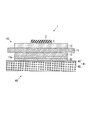
- FIG. 2 is an enlarged explanatory view of a bonding interface between a metal layer and a heat sink in the insulated circuit board with a heat sink shown in FIG. 1.
- FIG. 1 It is a schematic explanatory drawing of the heat sink used for the insulated circuit board with a heat sink shown in FIG.
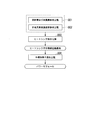
- FIG. 1 It is a flowchart which shows the manufacturing method of the insulated circuit board with a heat sink which is embodiment of this invention.
- FIG. 1 shows an insulating circuit board 40 with a heat sink manufactured by the method for manufacturing an insulating circuit board with a heat sink according to an embodiment of the present invention, and a power module 1 using the insulating circuit board 40 with a heat sink.
- a power module 1 shown in FIG. 1 includes an insulating circuit board 10, a semiconductor element 3 bonded to one surface (upper surface in FIG. 1) of the insulating circuit board 10 via a solder layer 2, and an insulating circuit board 10. And a heat sink 41 joined to the lower side.
- the insulated circuit board 10 to which the heat sink 41 is bonded is the insulated circuit board 40 with a heat sink in the present embodiment.
- the semiconductor element 3 is made of a semiconductor material such as Si.
- the solder layer 2 that joins the insulating circuit board 10 and the semiconductor element 3 is, for example, a Sn—Ag, Sn—Cu, Sn—In, or Sn—Ag—Cu solder material (so-called lead-free solder material). It is said that.
- the insulating circuit board 10 includes a ceramic substrate 11 serving as an insulating layer, a circuit layer 12 disposed on one surface (the upper surface in FIG. 1) of the ceramic substrate 11, and the ceramic substrate 11. And a metal layer 13 disposed on the other surface (the lower surface in FIG. 1).
- the ceramic substrate 11 prevents electrical connection between the circuit layer 12 and the metal layer 13, and has high insulating properties such as aluminum nitride (AlN), silicon nitride (Si 3 N 4 ), alumina (Al 2 O 3 ) and the like. In this embodiment, it is made of aluminum nitride.
- the thickness of the ceramic substrate 11 is set within a range of 0.2 mm or more and 1.5 mm or less, and is set to 0.635 mm in this embodiment.
- the circuit layer 12 is formed by bonding a conductive metal plate to one surface of the ceramic substrate 11.
- the circuit layer 12 is formed by joining an aluminum plate 22 made of aluminum or an aluminum alloy.
- the aluminum plate 22 constituting the circuit layer 12 a rolled plate of aluminum (2N aluminum) having a purity of 99 mass% or more, or an aluminum alloy such as A3003 or A6063 is used.
- a circuit pattern is formed on the circuit layer 12, and one surface (the upper surface in FIG. 1) is a mounting surface on which the semiconductor element 3 is mounted.
- the thickness of the circuit layer 12 is set within a range of 0.1 mm to 2.0 mm, and is set to 0.4 mm in the present embodiment.
- the metal layer 13 is bonded to the other surface of the ceramic substrate 11 with an aluminum plate 23 made of aluminum, and a clad material 51 is laminated on the other surface of the aluminum plate 23 to perform heat treatment. It is formed by doing.
- the indentation hardness at the central portion of the thickness of the metal layer 13 is less than 50 mgf / ⁇ m 2 . This indentation hardness is a value at 25 ° C. of the insulated circuit board 40 with the heat sink.
- the aluminum plate 23 constituting the metal layer 13 aluminum having a purity of 99 mass% or more (2N aluminum), aluminum having a purity of 99.9 mass% or more (3N aluminum), aluminum having a purity of 99.99 mass% or more (4N aluminum), or the like is used. be able to.
- an aluminum (4N aluminum) rolled plate having a purity of 99.99 mass% or more is used as the aluminum plate 23 constituting the metal layer 13.
- the thickness t0 of the metal layer 13 is set in the range of 0.2 mm to 1.0 mm, and is set to 0.4 mm in the present embodiment.
- the alloy element concentration is higher than the central portion of the thickness of the metal layer 13 and the solidus temperature is 650 ° C. or less.
- the alloy element high concentration portion 13a is formed. That is, in the metal layer 13 in this embodiment, the concentration distribution of the alloy element exists in the thickness direction.
- the alloy element Si, Mn, or the like is preferably used.
- Si and Mn are contained as alloy elements, the Si concentration is in the range of 2.0 mass% to 7.0 mass%, and the Mn concentration is 0.3 mass% to 1.5 mass%.
- the region within the range is the alloy element high concentration portion 13a.
- the thickness t1 of the alloy element high concentration portion 13a is preferably in the range of 0.05 mm or more and 0.3 mm or less.
- the heat sink 41 is for cooling the above-described insulated circuit board 10, and in the present embodiment, as shown in FIG. 1, it is a heat radiating plate made of a material having good thermal conductivity.
- the heat sink 41 in the present embodiment is made of an Al—SiC composite material (so-called AlSiC) made of a porous body made of SiC and an aluminum material made of an aluminum alloy impregnated in the porous body.
- AlSiC Al—SiC composite material
- ADC12 solidus temperature 570 ° C.
- the heat sink 41 includes a skin layer 43 made of an aluminum material (ADC 12 in this embodiment) impregnated in a porous body on the surface of a heat sink body 42 made of AlSiC. Is formed.
- the thickness of the heat sink body 42 is in the range of 0.5 mm or more and 5.0 mm or less, and the thickness ts of the skin layer 43 is 0.01 times or more of the thickness of the heat sink body 42. It is preferable to make it 1 times or less.
- the temperature difference between the solidus temperature of the alloy element high-concentration portion 13a and the solidus temperature of the aluminum alloy constituting the joining surface of the heat sink 41 (skin layer 43 in the present embodiment) is set to be in the range of 80 ° C. or less. ing.
- the metal layer 13 and the heat sink 41 of the insulated circuit board 10 are bonded via the copper bonding layer 32.
- the copper bonding layer 32 is made of copper or a copper alloy.
- the copper bonding layer 32 is formed by bonding a copper plate 52 made of an oxygen-free copper rolled plate, as shown in FIG.
- the thickness tc of the copper bonding layer 32 is in the range of 0.05 mm or more and 5.0 mm or less.
- the metal layer 13 (alloy element high concentration portion 13a) and the copper bonding layer 32, and the copper bonding layer 32 and the heat sink 41 (skin layer 43) are bonded by solid phase diffusion bonding.
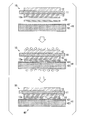
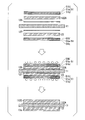
- the clad material 51 is laminated on the other surface side (lower side in FIG. 5) of the aluminum plate 23 to be the metal layer 13.
- the clad material 51 includes a core material 51a and a brazing material layer 51b formed on both surfaces of the core material 51a.
- the core material 51a is made of an A3003 alloy
- the brazing material layer 51b is made of an A4045 alloy.
- the ratio tb / ta between the thickness ta of the core material 51a of the clad material 51 and the thickness tb of the brazing material layer 51b is in the range of 0.1 to 0.3.
- the above-described aluminum plate 22, ceramic substrate 11, aluminum plate 23, and clad material 51 are heated in a state of being pressurized in the stacking direction, and the ceramic substrate 11 and the aluminum plates 22 and 23 are joined to each other.
- the metal layer 13 and diffusing the alloy element of the brazing material layer 51b of the clad material 51 to the core material 51a and the aluminum plate 23 side in the region of the metal layer 13 opposite to the ceramic substrate 11, An alloy element high concentration portion 13a having a higher alloy element concentration than the central portion of the metal layer 13 and a solidus temperature of 650 ° C. or lower is formed.
- the circuit layer and metal layer forming step S01 and the alloy element high concentration portion forming step S02 are performed collectively.
- the joining conditions of the circuit layer and metal layer forming step S01 / alloy element high concentration portion forming step S02 are that the atmosphere is vacuum, the pressure load is in the range of 0.1 MPa to 3.5 MPa, and the heating temperature is 560 ° C. to 630 ° C. It is preferable that the holding time is in the range of 15 min or more and 60 min or less in the range of ° C or less. In order to control the diffusion state of the alloy element, it is preferable to adjust the bonding temperature and the holding time within the above-described ranges. As described above, the insulated circuit board 10 according to the present embodiment is formed.
- Heat sink joining step S03 Next, as shown in FIG. 7, on the other surface side (lower side in FIG. 7) of the metal layer 13 on which the alloy element high concentration portion 13a is formed, a copper plate made of a rolled plate of oxygen-free copper as a copper bonding material
- the heat sink 41 is laminated via 52.
- the heat sink 41 is laminated so that the skin layer 43 faces the copper plate 52 side.
- the insulating circuit board 10, the insulating circuit board 10 on which the alloy element high concentration portion 13a is formed, the copper plate 52, and the heat sink 41 are pressurized and heated in the stacking direction, and the alloy element high concentration portion 13a of the metal layer 13 and the copper plate are heated.
- the load in the stacking direction is set in the range of 0.6 MPa to 3.5 MPa.
- the bonding temperature is in the range of 460 ° C. to 540 ° C., preferably in the range of 480 ° C. to 520 ° C.
- the holding time was in the range of 30 min to 240 min.
- semiconductor element bonding step S04 Next, the semiconductor element 3 is laminated on the circuit layer 12 of the insulating circuit board 40 with the heat sink via the solder material, and the circuit layer 12 of the insulating circuit board 40 with the heat sink and the semiconductor element 3 are joined in the reduction furnace. .
- the power module 1 shown in FIG. 1 is manufactured as described above.
- Alloy element high concentration portion forming step S02 for forming alloy element high concentration portion 13a having a higher alloy element concentration and a solidus temperature of 650 ° C. or lower, and alloy element high concentration portion 13a of metal layer 13 A copper plate 52 made of copper or a copper alloy is laminated between the joint surface of the heat sink 41 and the heat sink 41 (skin layer 43 in this embodiment), and the alloy element high concentration portion 13a of the metal layer 13 and the copper plate 52, the copper plate 52 and the heat sink.
- the difference in solidus temperature between aluminum and aluminum alloy constituting the bonding surface 41 (skin layer 43 in this embodiment) can be reduced, and even when solid phase diffusion bonding is performed at relatively low temperature conditions.
- Al of the alloy element high concentration portion 13a of the metal layer 13 and Cu of the copper plate 52, Cu of the copper plate 52 and Al of the joint surface of the heat sink 41 can be sufficiently diffused, and the insulating circuit board 10 and the heat sink 41 can be securely connected. It becomes possible to join to.
- the metal layer 13 is made of aluminum (4N aluminum in the present embodiment), and the indentation hardness at the center of the thickness of the metal layer 13 is 50 mgf / ⁇ m 2. Therefore, when a cooling cycle is applied to the insulating circuit board 40 with the heat sink, the thermal distortion can be reduced by deforming the metal layer 13, and the ceramic substrate 11 can be cracked. Can be suppressed.
- the heat sink 41 is made of an Al—SiC composite material (so-called AlSiC) composed of a porous body made of SiC and an aluminum material made of an aluminum alloy impregnated in the porous body.
- AlSiC Al—SiC composite material
- ADC12 solidus temperature 570 ° C.
- the thermal expansion coefficient of the heat sink 41 approximates the thermal expansion coefficient of the insulating circuit board 10, Generation of thermal strain at the time of cycle load can be suppressed.
- alloy element high concentration part formation process S02 carries out the brazing material layer 51b on the surface on the opposite side to the ceramic substrate 11 among the metal layers 13, and the brazing material layer 51b on both surfaces of this core material 51a. Since the formed clad material 51 is laminated and heated to diffuse the alloy element of the brazing material layer 51 b to form the alloy element high concentration portion 13 a, the ceramic substrate 11 of the metal layer 13 is formed. An alloy element high concentration portion 13a having a higher alloy element concentration than the central portion of the metal layer 13 and having a solidus temperature of 650 ° C. or lower can be reliably formed in a region opposite to it can.
- the ratio tb / ta between the thickness ta of the core material 51a of the clad material 51 and the thickness tb of the brazing material layer 51b used in the alloy element high concentration portion forming step S02 is 0.1 or more. Since it is within the range of 0.3 or less, the alloy element concentration is higher in the region of the metal layer 13 opposite to the ceramic substrate 11 than the central portion of the thickness of the metal layer 13, and the solid line.
- the alloy element high concentration portion 13a having a temperature of 650 ° C. or lower can be reliably formed.
- the solidus temperature of the alloy element high concentration portion 13a of the metal layer 13 and the solidus temperature of the aluminum alloy constituting the bonding surface of the heat sink 41 (skin layer 43 in the present embodiment) Therefore, even when solid phase diffusion bonding is performed at a relatively low temperature condition in the heat sink bonding step S03, the Al of the metal layer 13 (alloy element high concentration portion 13a) is reduced. And Cu of the copper plate 52, Cu of the copper plate 52, and Al of the bonding surface of the heat sink 41 can be sufficiently diffused, and the insulating circuit board 10 and the heat sink 41 can be surely solid-phase diffusion bonded.
- the ceramic substrate 11 has been described by taking aluminum nitride (AlN) as an example.
- AlN aluminum nitride
- the present invention is not limited to this, and alumina (Al 2 O 3 ), silicon nitride (Si 3 N 4 ) is not limited thereto.
- an insulating resin or the like may be used.
- the heat sink has been described as an example of the heat sink, the heat sink is not limited thereto, and a cooler or the like having a flow path through which a cooling medium flows may be used.
- the heat sink has been described as being composed of an Al—SiC composite material (so-called AlSiC) in which an SiC porous body is impregnated with an aluminum material made of ADC12.
- AlSiC Al—SiC composite material
- the present invention is not limited to this. If the joining surface of the heat sink is made of an aluminum alloy having a solidus temperature of 650 ° C. or lower, the material and structure are not limited.
- the circuit layer has been described as being made of aluminum or an aluminum alloy.
- the present invention is not limited to this, and the circuit layer may be made of another metal such as copper or a copper alloy.
- an aluminum layer made of aluminum or an aluminum alloy and a copper layer made of copper or a copper alloy may be laminated.
- the clad material is stacked on the metal layer and heat-treated to form the alloy element high-concentration part.
- the means for the alloy element high-concentration part forming step is not particularly limited. .
- the circuit layer 112 includes an aluminum layer 112A formed on the ceramic substrate 11 side serving as an insulating layer, and a copper layer 112B laminated on the aluminum layer 112A.
- the second alloy element high concentration in which the alloy element concentration is higher than the central portion of the thickness of the aluminum layer 112A and the solidus temperature is 650 ° C. or less.
- the insulating circuit board 110 on which the portion 112C is formed and the insulating circuit board 140 with a heat sink may be used.
- the insulating circuit board with heat sink 140 also includes the metal layer 13, the aluminum bonding layer 31, the copper bonding layer 32, and the heat sink 41.
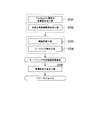
- the insulated circuit board 140 with a heat sink shown in FIG. 8 is manufactured as follows.
- Al layer and metal layer forming step S101 / alloy element high-concentration portion forming step S102 First, as shown in FIG. 10, aluminum is placed on one surface (upper surface in FIG. 10) of the ceramic substrate 11 via a brazing material 126.
- the aluminum plate 122A to be a layer is laminated, and the clad material 51 is further laminated on one surface of the aluminum plate 122A.
- an aluminum plate 23 to be the metal layer 13 is laminated on the other surface (the lower surface in FIG. 10) of the ceramic substrate 11 via a brazing material 127, and a clad material 51 is further applied to the other surface of the aluminum plate 23.
- Laminate Laminate.
- the aluminum plate 122A to be the aluminum layer 112A and the aluminum plate 23 to be the metal layer 13 are made of, for example, aluminum having a purity of 99.99 mass% or more (4N aluminum) and aluminum having a purity of 99 mass% or more (2N aluminum).
- the brazing materials 126 and 127 are made of an Al—Si—Mg alloy.
- the clad material 51, the aluminum plate 122A, the brazing material 126, the ceramic substrate 11, the brazing material 127, the aluminum plate 23, and the clad material 51 are heated while being pressed in the laminating direction, so that the ceramic substrate 11 and aluminum
- the plates 122A and 23 are joined to form the aluminum layer 112A and the metal layer 13.
- the thickness of the aluminum layer 112A is formed in a region of the aluminum layer 112A opposite to the ceramic substrate 11.
- a second alloy element high concentration portion 112C having a higher alloy element concentration than the central portion and a solidus temperature of 650 ° C.
- the thickness of the metal layer 13 is formed in a region of the metal layer 13 opposite to the ceramic substrate 11.
- An alloy element high concentration portion 13a having a higher alloy element concentration than the central portion and a solidus temperature of 650 ° C. or lower is formed.
- the joining conditions are preferably that the atmosphere is vacuum, the pressure load is in the range of 0.1 MPa to 3.5 MPa, and the heating temperature is in the range of 600 ° C. to 640 ° C.
- a copper plate 122B to be a copper layer 112B is laminated on one surface (upper side in FIG. 11) of the aluminum layer 112A on which the second alloy element high concentration portion 112C is formed. Further, on the other surface side (lower side in FIG. 11) of the metal layer 13 in which the alloy element high concentration portion 13a is formed, a heat sink 41 is provided via a copper plate 52 made of a rolled plate of oxygen-free copper as a copper bonding material. Laminate. The heat sink 41 is laminated so that the skin layer 43 faces the copper plate 52 side to form a laminate.
- the laminated body is pressurized and heated in the laminating direction, and the aluminum layer 112A (second alloy element high concentration portion 112C) and the copper plate 122B, the metal layer 13 (alloy element high concentration portion 13a), the copper plate 52, and the copper plate 52.
- the heat sink 41 (skin layer 43) are solid phase diffusion bonded.
- the load in the stacking direction is set in the range of 0.6 MPa to 3.5 MPa.
- the bonding temperature is in the range of 460 ° C. to 540 ° C., preferably in the range of 480 ° C. to 520 ° C.
- the holding time is preferably in the range of 30 min to 240 min.
- Al-7.5 mass% Si-0.01 mass% Mg brazing foil (thickness: 15 ⁇ m) was used for joining the ceramic substrate to the aluminum plate serving as the circuit layer and metal layer.
- a clad material having the structure shown in Table 1 was laminated on the surface of the aluminum plate that is the metal layer opposite to the ceramic substrate. And it heat-processed on the conditions shown in Table 1.
- a heat sink (50 mm ⁇ 60 mm ⁇ thickness 5.0 mm / thickness) made of an Al—SiC composite material (so-called AlSiC) obtained by impregnating a metal layer with aluminum having a solidus temperature shown in Table 1 in a SiC porous body.
- a skin layer thickness of 0.1 mm is laminated through a copper bonding material (rolling of oxygen-free copper: 37 mm ⁇ 37 mm ⁇ thickness 1.0 mm), and this is pressurized at 21 MPa in the laminating direction and 150 minutes at 490 ° C.
- the metal layer and the copper bonding material, and the copper bonding material and the heat sink were held by solid phase diffusion bonding.
- an aluminum plate (50 mm ⁇ 60 mm ⁇ thickness 5.0 mm) having a purity of 99.99 mass% or more (4N—Al) was used when the heat sink was made of 4N—Al.
- the obtained insulated circuit board with a heat sink was evaluated for each item in the following procedure.
- peeling rate ⁇ (initial bonding area) ⁇ (peeling area) ⁇ / (initial bonding area)
- peeling is indicated by a white portion in the bonding layer, and thus the area of the white portion is defined as a peeling area.
- the indentation hardness of the metal layer is less than 50 mgf / ⁇ m 2
- the ratio tb / ta between the thickness ta of the core material of the clad material and the thickness tb of the brazing material layer is 0.1 or more and 0.00.
- Example 1-6 which was within the range of 3 or less, the joining rate was 90% or more, and the joining state was good. Moreover, no ceramic cracks were observed after the heat cycle load. It is presumed that because the metal layer was relatively soft, the metal layer was deformed when a cooling cycle was applied, and the thermal strain could be alleviated.
- the metal layer is made of aluminum having a relatively low deformation resistance and the joining surface of the heat sink is made of an aluminum alloy having a relatively low solidus temperature, It was confirmed that it is possible to provide a method for manufacturing an insulating circuit board with a heat sink capable of reliably solid-phase diffusion bonding the layer and the heat sink.
- the metal layer is made of aluminum having a relatively low deformation resistance and the joining surface of the heat sink is made of an aluminum alloy having a relatively low solidus temperature, the metal layer and the heat sink are It is possible to provide a method for manufacturing an insulated circuit board with a heat sink that can be reliably solid-phase diffusion bonded.
- Insulated circuit board 11 Ceramic substrate (insulating layer) DESCRIPTION OF SYMBOLS 12 Circuit layer 13 Metal layer 13a High concentration part 32 of alloying elements Copper joint layer 40 Insulated circuit board 41 with a heat sink Heat sink 43 Skin layer (joint surface) 51 Cladding material 51a Core material 51b Brazing material layer 52 Copper plate (copper bonding material)
Landscapes
- Chemical & Material Sciences (AREA)
- Engineering & Computer Science (AREA)
- Ceramic Engineering (AREA)
- Materials Engineering (AREA)
- Structural Engineering (AREA)
- Organic Chemistry (AREA)
- Cooling Or The Like Of Semiconductors Or Solid State Devices (AREA)
- Mechanical Engineering (AREA)
- Pressure Welding/Diffusion-Bonding (AREA)
Abstract
L'invention concerne un procédé de fabrication d'une carte de circuit imprimé isolante avec un dissipateur thermique qui comprend une carte de circuit imprimé isolante et un dissipateur thermique lié au côté de la couche métallique de la carte de circuit imprimé isolante. La couche métallique est conçue à partir d'aluminium. Le dissipateur thermique a une surface pour une liaison avec la carte de circuit imprimé isolante qui est conçue à partir d'un alliage d'aluminium ayant une température de solidus inférieure ou égale à 650 °C. Le procédé comprend : une étape de formation de partie à haute concentration d'élément d'alliage (S02) consistant à former une partie à haute concentration d'élément d'alliage ; et une étape de liaison de dissipateur thermique (S03) consistant à lier le dissipateur thermique. Le rapport tb/ta d'une épaisseur ta d'un matériau centrale du matériau de gainage et une épaisseur tb de l'épaisseur d'une couche de matériau de brasage est dans une plage de 0,1 à 0,3 inclus.
Priority Applications (4)
| Application Number | Priority Date | Filing Date | Title |
|---|---|---|---|
| KR1020207027511A KR102392568B1 (ko) | 2018-03-27 | 2019-03-26 | 히트 싱크가 부착된 절연 회로 기판의 제조 방법 |
| CN201980016961.2A CN111801790B (zh) | 2018-03-27 | 2019-03-26 | 带散热器的绝缘电路基板的制造方法 |
| EP19777648.7A EP3780088B1 (fr) | 2018-03-27 | 2019-03-26 | Procédé de fabrication de carte de circuit imprimé isolante avec dissipateur thermique |
| US16/980,054 US11355408B2 (en) | 2018-03-27 | 2019-03-26 | Method of manufacturing insulating circuit board with heatsink |
Applications Claiming Priority (2)
| Application Number | Priority Date | Filing Date | Title |
|---|---|---|---|
| JP2018-059917 | 2018-03-27 | ||
| JP2018059917A JP6911805B2 (ja) | 2018-03-27 | 2018-03-27 | ヒートシンク付き絶縁回路基板の製造方法 |
Publications (1)
| Publication Number | Publication Date |
|---|---|
| WO2019189090A1 true WO2019189090A1 (fr) | 2019-10-03 |
Family
ID=68061671
Family Applications (1)
| Application Number | Title | Priority Date | Filing Date |
|---|---|---|---|
| PCT/JP2019/012703 Ceased WO2019189090A1 (fr) | 2018-03-27 | 2019-03-26 | Procédé de fabrication de carte de circuit imprimé isolante avec dissipateur thermique |
Country Status (7)
| Country | Link |
|---|---|
| US (1) | US11355408B2 (fr) |
| EP (1) | EP3780088B1 (fr) |
| JP (1) | JP6911805B2 (fr) |
| KR (1) | KR102392568B1 (fr) |
| CN (1) | CN111801790B (fr) |
| TW (1) | TWI765145B (fr) |
| WO (1) | WO2019189090A1 (fr) |
Families Citing this family (2)
| Publication number | Priority date | Publication date | Assignee | Title |
|---|---|---|---|---|
| US11587799B2 (en) * | 2019-12-02 | 2023-02-21 | Applied Materials, Inc. | Methods and apparatus for processing a substrate |
| CN115802712B (zh) * | 2022-11-30 | 2025-12-12 | 华为数字能源技术有限公司 | 一种金属基板散热结构和光伏功率优化器 |
Citations (6)
| Publication number | Priority date | Publication date | Assignee | Title |
|---|---|---|---|---|
| JPH10270596A (ja) * | 1997-03-26 | 1998-10-09 | Mitsubishi Materials Corp | ヒートシンク付セラミック回路基板 |
| JP2000281468A (ja) | 1998-11-12 | 2000-10-10 | Denki Kagaku Kogyo Kk | 炭化珪素質複合体及びその製造方法とそれを用いた放熱部品 |
| JP2014060215A (ja) | 2012-09-14 | 2014-04-03 | Mitsubishi Materials Corp | ヒートシンク付パワーモジュール用基板、ヒートシンク付パワーモジュール、及びヒートシンク付パワーモジュール用基板の製造方法 |
| JP2015216370A (ja) * | 2014-04-25 | 2015-12-03 | 三菱マテリアル株式会社 | ヒートシンク付きパワーモジュール用基板及びパワーモジュール |
| JP2018046265A (ja) * | 2016-09-16 | 2018-03-22 | 三菱マテリアル株式会社 | 絶縁回路基板の製造方法、及び、絶縁回路基板、パワーモジュール、ledモジュール、熱電モジュール |
| JP2018059917A (ja) | 2016-10-05 | 2018-04-12 | 三星電子株式会社Samsung Electronics Co.,Ltd. | バッテリを管理する装置、方法、及びシステム |
Family Cites Families (12)
| Publication number | Priority date | Publication date | Assignee | Title |
|---|---|---|---|---|
| US6033787A (en) | 1996-08-22 | 2000-03-07 | Mitsubishi Materials Corporation | Ceramic circuit board with heat sink |
| JP4918856B2 (ja) * | 2004-04-05 | 2012-04-18 | 三菱マテリアル株式会社 | パワーモジュール用基板及びパワーモジュール |
| EP2217043B1 (fr) * | 2007-11-06 | 2019-01-30 | Mitsubishi Materials Corporation | Procédé de fabrication d'un substrat pour un module de puissance |
| JP3171234U (ja) | 2011-08-09 | 2011-10-20 | 正宜 田辺 | 簡易温室 |
| JP5935292B2 (ja) * | 2011-11-01 | 2016-06-15 | 三菱マテリアル株式会社 | パワーモジュール用基板の製造方法、ヒートシンク付パワーモジュール用基板の製造方法 |
| JP2013229579A (ja) * | 2012-03-30 | 2013-11-07 | Mitsubishi Materials Corp | パワーモジュール用基板、ヒートシンク付パワーモジュール用基板及びパワーモジュール |
| JP6621076B2 (ja) * | 2013-03-29 | 2019-12-18 | 三菱マテリアル株式会社 | パワーモジュール用基板、ヒートシンク付パワーモジュール用基板及びパワーモジュール |
| JP6432208B2 (ja) | 2014-08-18 | 2018-12-05 | 三菱マテリアル株式会社 | パワーモジュール用基板の製造方法、及び、ヒートシンク付パワーモジュール用基板の製造方法 |
| JP6432466B2 (ja) * | 2014-08-26 | 2018-12-05 | 三菱マテリアル株式会社 | 接合体、ヒートシンク付パワーモジュール用基板、ヒートシンク、接合体の製造方法、ヒートシンク付パワーモジュール用基板の製造方法、及び、ヒートシンクの製造方法 |
| JP6696214B2 (ja) * | 2015-04-16 | 2020-05-20 | 三菱マテリアル株式会社 | 接合体、ヒートシンク付パワーモジュール用基板、ヒートシンク、及び、接合体の製造方法、ヒートシンク付パワーモジュール用基板の製造方法、ヒートシンクの製造方法 |
| JP6822247B2 (ja) * | 2016-03-25 | 2021-01-27 | 三菱マテリアル株式会社 | ヒートシンク付絶縁回路基板の製造方法 |
| EP3605601B1 (fr) * | 2017-03-29 | 2023-09-13 | Mitsubishi Materials Corporation | Procédé de production d'une carte de circuit imprimé isolée pourvue d'un dissipateur thermique |
-
2018
- 2018-03-27 JP JP2018059917A patent/JP6911805B2/ja not_active Expired - Fee Related
-
2019
- 2019-03-26 CN CN201980016961.2A patent/CN111801790B/zh active Active
- 2019-03-26 EP EP19777648.7A patent/EP3780088B1/fr active Active
- 2019-03-26 WO PCT/JP2019/012703 patent/WO2019189090A1/fr not_active Ceased
- 2019-03-26 US US16/980,054 patent/US11355408B2/en active Active
- 2019-03-26 KR KR1020207027511A patent/KR102392568B1/ko not_active Expired - Fee Related
- 2019-03-27 TW TW108110600A patent/TWI765145B/zh not_active IP Right Cessation
Patent Citations (7)
| Publication number | Priority date | Publication date | Assignee | Title |
|---|---|---|---|---|
| JPH10270596A (ja) * | 1997-03-26 | 1998-10-09 | Mitsubishi Materials Corp | ヒートシンク付セラミック回路基板 |
| JP3171234B2 (ja) | 1997-03-26 | 2001-05-28 | 三菱マテリアル株式会社 | ヒートシンク付セラミック回路基板 |
| JP2000281468A (ja) | 1998-11-12 | 2000-10-10 | Denki Kagaku Kogyo Kk | 炭化珪素質複合体及びその製造方法とそれを用いた放熱部品 |
| JP2014060215A (ja) | 2012-09-14 | 2014-04-03 | Mitsubishi Materials Corp | ヒートシンク付パワーモジュール用基板、ヒートシンク付パワーモジュール、及びヒートシンク付パワーモジュール用基板の製造方法 |
| JP2015216370A (ja) * | 2014-04-25 | 2015-12-03 | 三菱マテリアル株式会社 | ヒートシンク付きパワーモジュール用基板及びパワーモジュール |
| JP2018046265A (ja) * | 2016-09-16 | 2018-03-22 | 三菱マテリアル株式会社 | 絶縁回路基板の製造方法、及び、絶縁回路基板、パワーモジュール、ledモジュール、熱電モジュール |
| JP2018059917A (ja) | 2016-10-05 | 2018-04-12 | 三星電子株式会社Samsung Electronics Co.,Ltd. | バッテリを管理する装置、方法、及びシステム |
Also Published As
| Publication number | Publication date |
|---|---|
| KR20200135960A (ko) | 2020-12-04 |
| JP2019175915A (ja) | 2019-10-10 |
| TWI765145B (zh) | 2022-05-21 |
| EP3780088A4 (fr) | 2022-01-05 |
| EP3780088B1 (fr) | 2023-10-25 |
| US20210020536A1 (en) | 2021-01-21 |
| JP6911805B2 (ja) | 2021-07-28 |
| EP3780088A1 (fr) | 2021-02-17 |
| CN111801790B (zh) | 2024-03-29 |
| CN111801790A (zh) | 2020-10-20 |
| KR102392568B1 (ko) | 2022-04-28 |
| US11355408B2 (en) | 2022-06-07 |
| TW201943320A (zh) | 2019-11-01 |
Similar Documents
| Publication | Publication Date | Title |
|---|---|---|
| JP6696215B2 (ja) | 接合体、ヒートシンク付パワーモジュール用基板、ヒートシンク、及び、接合体の製造方法、ヒートシンク付パワーモジュール用基板の製造方法、ヒートシンクの製造方法 | |
| TWI591774B (zh) | 功率模組用基板,附散熱座功率模組用基板及功率模組 | |
| JP6696214B2 (ja) | 接合体、ヒートシンク付パワーモジュール用基板、ヒートシンク、及び、接合体の製造方法、ヒートシンク付パワーモジュール用基板の製造方法、ヒートシンクの製造方法 | |
| CN105009278B (zh) | 功率模块用基板、自带散热器的功率模块用基板及功率模块 | |
| JP6958441B2 (ja) | ヒートシンク付き絶縁回路基板の製造方法 | |
| JP7196799B2 (ja) | 銅/セラミックス接合体、絶縁回路基板、及び、銅/セラミックス接合体の製造方法、絶縁回路基板の製造方法 | |
| JP2014112732A (ja) | ヒートシンク付パワーモジュール用基板及びパワーモジュール | |
| JP2014143407A (ja) | パワーモジュール | |
| JP7081686B2 (ja) | 接合体、ヒートシンク付絶縁回路基板、及び、ヒートシンク | |
| WO2019189090A1 (fr) | Procédé de fabrication de carte de circuit imprimé isolante avec dissipateur thermique | |
| JP2018167275A (ja) | 接合体の製造方法、絶縁回路基板の製造方法、及び、接合体、絶縁回路基板 | |
| JP2015095624A (ja) | 接合体及びパワーモジュール用基板 | |
| JP2019087608A (ja) | 接合体、絶縁回路基板、ヒートシンク付絶縁回路基板、ヒートシンク、及び、接合体の製造方法、絶縁回路基板の製造方法、ヒートシンク付絶縁回路基板の製造方法、ヒートシンクの製造方法 | |
| WO2016167217A1 (fr) | Corps lié, substrat pour module d'alimentation pourvu d'un dissipateur thermique, dissipateur thermique, procédé de fabrication de corps lié, procédé de fabrication de substrat pour module d'alimentation pourvu d'un dissipateur thermique, et procédé de fabrication de dissipateur thermique | |
| JP2018137277A (ja) | 銅/アルミニウム接合体の製造方法、絶縁回路基板の製造方法、ヒートシンク付き絶縁回路基板の製造方法 | |
| JP5303936B2 (ja) | パワーモジュール用基板及びパワーモジュール並びにパワーモジュール用基板の製造方法 | |
| JP2022169003A (ja) | ヒートシンク、および、ヒートシンク一体型絶縁回路基板 |
Legal Events
| Date | Code | Title | Description |
|---|---|---|---|
| 121 | Ep: the epo has been informed by wipo that ep was designated in this application |
Ref document number: 19777648 Country of ref document: EP Kind code of ref document: A1 |
|
| NENP | Non-entry into the national phase |
Ref country code: DE |
|
| ENP | Entry into the national phase |
Ref document number: 2019777648 Country of ref document: EP Effective date: 20201027 |