WO2019189908A1 - Dispositif d'assistance à la conduite, véhicule, système de détection d'action fautive de conduite, et dispositif serveur - Google Patents
Dispositif d'assistance à la conduite, véhicule, système de détection d'action fautive de conduite, et dispositif serveur Download PDFInfo
- Publication number
- WO2019189908A1 WO2019189908A1 PCT/JP2019/014373 JP2019014373W WO2019189908A1 WO 2019189908 A1 WO2019189908 A1 WO 2019189908A1 JP 2019014373 W JP2019014373 W JP 2019014373W WO 2019189908 A1 WO2019189908 A1 WO 2019189908A1
- Authority
- WO
- WIPO (PCT)
- Prior art keywords
- vehicle
- information
- delinquency
- driving
- delinquent
- Prior art date
- Legal status (The legal status is an assumption and is not a legal conclusion. Google has not performed a legal analysis and makes no representation as to the accuracy of the status listed.)
- Ceased
Links
Images




Classifications
-
- B—PERFORMING OPERATIONS; TRANSPORTING
- B60—VEHICLES IN GENERAL
- B60W—CONJOINT CONTROL OF VEHICLE SUB-UNITS OF DIFFERENT TYPE OR DIFFERENT FUNCTION; CONTROL SYSTEMS SPECIALLY ADAPTED FOR HYBRID VEHICLES; ROAD VEHICLE DRIVE CONTROL SYSTEMS FOR PURPOSES NOT RELATED TO THE CONTROL OF A PARTICULAR SUB-UNIT
- B60W60/00—Drive control systems specially adapted for autonomous road vehicles
- B60W60/001—Planning or execution of driving tasks
-
- G—PHYSICS
- G06—COMPUTING OR CALCULATING; COUNTING
- G06Q—INFORMATION AND COMMUNICATION TECHNOLOGY [ICT] SPECIALLY ADAPTED FOR ADMINISTRATIVE, COMMERCIAL, FINANCIAL, MANAGERIAL OR SUPERVISORY PURPOSES; SYSTEMS OR METHODS SPECIALLY ADAPTED FOR ADMINISTRATIVE, COMMERCIAL, FINANCIAL, MANAGERIAL OR SUPERVISORY PURPOSES, NOT OTHERWISE PROVIDED FOR
- G06Q50/00—Information and communication technology [ICT] specially adapted for implementation of business processes of specific business sectors, e.g. utilities or tourism
- G06Q50/10—Services
- G06Q50/26—Government or public services
- G06Q50/265—Personal security, identity or safety
-
- B—PERFORMING OPERATIONS; TRANSPORTING
- B60—VEHICLES IN GENERAL
- B60W—CONJOINT CONTROL OF VEHICLE SUB-UNITS OF DIFFERENT TYPE OR DIFFERENT FUNCTION; CONTROL SYSTEMS SPECIALLY ADAPTED FOR HYBRID VEHICLES; ROAD VEHICLE DRIVE CONTROL SYSTEMS FOR PURPOSES NOT RELATED TO THE CONTROL OF A PARTICULAR SUB-UNIT
- B60W30/00—Purposes of road vehicle drive control systems not related to the control of a particular sub-unit, e.g. of systems using conjoint control of vehicle sub-units
- B60W30/08—Active safety systems predicting or avoiding probable or impending collision or attempting to minimise its consequences
- B60W30/095—Predicting travel path or likelihood of collision
- B60W30/0956—Predicting travel path or likelihood of collision the prediction being responsive to traffic or environmental parameters
-
- G—PHYSICS
- G01—MEASURING; TESTING
- G01C—MEASURING DISTANCES, LEVELS OR BEARINGS; SURVEYING; NAVIGATION; GYROSCOPIC INSTRUMENTS; PHOTOGRAMMETRY OR VIDEOGRAMMETRY
- G01C21/00—Navigation; Navigational instruments not provided for in groups G01C1/00 - G01C19/00
- G01C21/26—Navigation; Navigational instruments not provided for in groups G01C1/00 - G01C19/00 specially adapted for navigation in a road network
- G01C21/34—Route searching; Route guidance
- G01C21/3407—Route searching; Route guidance specially adapted for specific applications
- G01C21/3415—Dynamic re-routing, e.g. recalculating the route when the user deviates from calculated route or after detecting real-time traffic data or accidents
-
- G—PHYSICS
- G01—MEASURING; TESTING
- G01C—MEASURING DISTANCES, LEVELS OR BEARINGS; SURVEYING; NAVIGATION; GYROSCOPIC INSTRUMENTS; PHOTOGRAMMETRY OR VIDEOGRAMMETRY
- G01C21/00—Navigation; Navigational instruments not provided for in groups G01C1/00 - G01C19/00
- G01C21/26—Navigation; Navigational instruments not provided for in groups G01C1/00 - G01C19/00 specially adapted for navigation in a road network
- G01C21/34—Route searching; Route guidance
- G01C21/3453—Special cost functions, i.e. other than distance or default speed limit of road segments
- G01C21/3461—Preferred or disfavoured areas, e.g. dangerous zones, toll or emission zones, intersections, manoeuvre types or segments such as motorways, toll roads or ferries
-
- G—PHYSICS
- G01—MEASURING; TESTING
- G01C—MEASURING DISTANCES, LEVELS OR BEARINGS; SURVEYING; NAVIGATION; GYROSCOPIC INSTRUMENTS; PHOTOGRAMMETRY OR VIDEOGRAMMETRY
- G01C21/00—Navigation; Navigational instruments not provided for in groups G01C1/00 - G01C19/00
- G01C21/26—Navigation; Navigational instruments not provided for in groups G01C1/00 - G01C19/00 specially adapted for navigation in a road network
- G01C21/34—Route searching; Route guidance
- G01C21/36—Input/output arrangements for on-board computers
- G01C21/3691—Retrieval, searching and output of information related to real-time traffic, weather, or environmental conditions
-
- G—PHYSICS
- G06—COMPUTING OR CALCULATING; COUNTING
- G06F—ELECTRIC DIGITAL DATA PROCESSING
- G06F16/00—Information retrieval; Database structures therefor; File system structures therefor
- G06F16/20—Information retrieval; Database structures therefor; File system structures therefor of structured data, e.g. relational data
- G06F16/23—Updating
- G06F16/2379—Updates performed during online database operations; commit processing
-
- G—PHYSICS
- G06—COMPUTING OR CALCULATING; COUNTING
- G06F—ELECTRIC DIGITAL DATA PROCESSING
- G06F16/00—Information retrieval; Database structures therefor; File system structures therefor
- G06F16/20—Information retrieval; Database structures therefor; File system structures therefor of structured data, e.g. relational data
- G06F16/29—Geographical information databases
-
- G—PHYSICS
- G06—COMPUTING OR CALCULATING; COUNTING
- G06F—ELECTRIC DIGITAL DATA PROCESSING
- G06F16/00—Information retrieval; Database structures therefor; File system structures therefor
- G06F16/90—Details of database functions independent of the retrieved data types
- G06F16/95—Retrieval from the web
- G06F16/953—Querying, e.g. by the use of web search engines
- G06F16/9537—Spatial or temporal dependent retrieval, e.g. spatiotemporal queries
-
- G—PHYSICS
- G06—COMPUTING OR CALCULATING; COUNTING
- G06Q—INFORMATION AND COMMUNICATION TECHNOLOGY [ICT] SPECIALLY ADAPTED FOR ADMINISTRATIVE, COMMERCIAL, FINANCIAL, MANAGERIAL OR SUPERVISORY PURPOSES; SYSTEMS OR METHODS SPECIALLY ADAPTED FOR ADMINISTRATIVE, COMMERCIAL, FINANCIAL, MANAGERIAL OR SUPERVISORY PURPOSES, NOT OTHERWISE PROVIDED FOR
- G06Q30/00—Commerce
- G06Q30/018—Certifying business or products
- G06Q30/0185—Product, service or business identity fraud
-
- G—PHYSICS
- G06—COMPUTING OR CALCULATING; COUNTING
- G06Q—INFORMATION AND COMMUNICATION TECHNOLOGY [ICT] SPECIALLY ADAPTED FOR ADMINISTRATIVE, COMMERCIAL, FINANCIAL, MANAGERIAL OR SUPERVISORY PURPOSES; SYSTEMS OR METHODS SPECIALLY ADAPTED FOR ADMINISTRATIVE, COMMERCIAL, FINANCIAL, MANAGERIAL OR SUPERVISORY PURPOSES, NOT OTHERWISE PROVIDED FOR
- G06Q50/00—Information and communication technology [ICT] specially adapted for implementation of business processes of specific business sectors, e.g. utilities or tourism
- G06Q50/40—Business processes related to the transportation industry
-
- G—PHYSICS
- G08—SIGNALLING
- G08G—TRAFFIC CONTROL SYSTEMS
- G08G1/00—Traffic control systems for road vehicles
- G08G1/01—Detecting movement of traffic to be counted or controlled
- G08G1/017—Detecting movement of traffic to be counted or controlled identifying vehicles
-
- G—PHYSICS
- G08—SIGNALLING
- G08G—TRAFFIC CONTROL SYSTEMS
- G08G1/00—Traffic control systems for road vehicles
- G08G1/16—Anti-collision systems
- G08G1/166—Anti-collision systems for active traffic, e.g. moving vehicles, pedestrians, bikes
-
- G—PHYSICS
- G08—SIGNALLING
- G08G—TRAFFIC CONTROL SYSTEMS
- G08G1/00—Traffic control systems for road vehicles
- G08G1/20—Monitoring the location of vehicles belonging to a group, e.g. fleet of vehicles, countable or determined number of vehicles
-
- G—PHYSICS
- G08—SIGNALLING
- G08G—TRAFFIC CONTROL SYSTEMS
- G08G1/00—Traffic control systems for road vehicles
- G08G1/22—Platooning, i.e. convoy of communicating vehicles
-
- H—ELECTRICITY
- H04—ELECTRIC COMMUNICATION TECHNIQUE
- H04L—TRANSMISSION OF DIGITAL INFORMATION, e.g. TELEGRAPHIC COMMUNICATION
- H04L67/00—Network arrangements or protocols for supporting network services or applications
- H04L67/01—Protocols
- H04L67/12—Protocols specially adapted for proprietary or special-purpose networking environments, e.g. medical networks, sensor networks, networks in vehicles or remote metering networks
-
- H—ELECTRICITY
- H04—ELECTRIC COMMUNICATION TECHNIQUE
- H04L—TRANSMISSION OF DIGITAL INFORMATION, e.g. TELEGRAPHIC COMMUNICATION
- H04L67/00—Network arrangements or protocols for supporting network services or applications
- H04L67/01—Protocols
- H04L67/12—Protocols specially adapted for proprietary or special-purpose networking environments, e.g. medical networks, sensor networks, networks in vehicles or remote metering networks
- H04L67/125—Protocols specially adapted for proprietary or special-purpose networking environments, e.g. medical networks, sensor networks, networks in vehicles or remote metering networks involving control of end-device applications over a network
-
- B—PERFORMING OPERATIONS; TRANSPORTING
- B60—VEHICLES IN GENERAL
- B60W—CONJOINT CONTROL OF VEHICLE SUB-UNITS OF DIFFERENT TYPE OR DIFFERENT FUNCTION; CONTROL SYSTEMS SPECIALLY ADAPTED FOR HYBRID VEHICLES; ROAD VEHICLE DRIVE CONTROL SYSTEMS FOR PURPOSES NOT RELATED TO THE CONTROL OF A PARTICULAR SUB-UNIT
- B60W2552/00—Input parameters relating to infrastructure
-
- B—PERFORMING OPERATIONS; TRANSPORTING
- B60—VEHICLES IN GENERAL
- B60W—CONJOINT CONTROL OF VEHICLE SUB-UNITS OF DIFFERENT TYPE OR DIFFERENT FUNCTION; CONTROL SYSTEMS SPECIALLY ADAPTED FOR HYBRID VEHICLES; ROAD VEHICLE DRIVE CONTROL SYSTEMS FOR PURPOSES NOT RELATED TO THE CONTROL OF A PARTICULAR SUB-UNIT
- B60W2556/00—Input parameters relating to data
- B60W2556/45—External transmission of data to or from the vehicle
-
- H—ELECTRICITY
- H04—ELECTRIC COMMUNICATION TECHNIQUE
- H04L—TRANSMISSION OF DIGITAL INFORMATION, e.g. TELEGRAPHIC COMMUNICATION
- H04L67/00—Network arrangements or protocols for supporting network services or applications
- H04L67/01—Protocols
- H04L67/10—Protocols in which an application is distributed across nodes in the network
Definitions
- the present disclosure relates to a driving support device, a vehicle, a delinquency detection system, and a server device.
- Patent Document 1 discloses one or more pieces of sensor information indicating respective driving characteristics of a plurality of other vehicles that are traveling near the first vehicle while the first vehicle that is an autonomous driving vehicle is traveling on a road. And a technique for specifying a second vehicle that performs an aggressive driving action on the first vehicle based on the sensor information is disclosed.
- autonomous driving vehicles are delinquent (for example, lane change such as harassment of other vehicles, intentional jumping of other vehicles forward, etc.) ) May be encountered.
- delinquency for example, countermeasures such as recording a running image as evidence by a drive recorder mounted on a vehicle have been considered.
- Patent Document 1 discloses that after the aggressive driving behavior of the second vehicle is specified, the driving is controlled so that the first vehicle avoids the second vehicle. However, even if the technique of Patent Literature 1 is used, it is possible to temporarily escape from delinquency driving, but it is considered difficult to effectively suppress the aggressive driving behavior itself by the second vehicle.
- the autonomous driving vehicle specifically has a means to counter effective delinquency, it is expected that the probability of encountering an accident of the autonomous driving vehicle is expected.
- Business development is also expected.
- An object of the present invention is to provide a driving support device, a vehicle, a delinquency detection system, and a server device that generate information about the vehicle as evidence and register or update the information in a predetermined database to effectively prevent delinquency execution. .
- the present disclosure determines whether or not there is a change in a route during automatic driving based on sensor information obtained from a sensor included in the vehicle, and outputs a detection instruction for automatic driving according to the determination result to the vehicle control unit,
- a delinquency operation has been performed in the other vehicle by using at least one of information on one or more other vehicles around the vehicle being driven and area information including a point where the vehicle is located
- a delinquency detection unit that inquires of an external database whether or not a delinquent driving vehicle is present, and detects whether or not delinquency driving occurs by the other vehicle based on a query result from the database;
- the delinquency operation includes ID information of the delinquent operation vehicle that performed the delinquency operation, and the trajectory information of the delinquent operation vehicle and the vehicle. It generates both information, to request registration or updating of the delinquency driving vehicle information in the database, to provide a driving support device.
- the present disclosure is a vehicle equipped with a driving support device, wherein the driving support device determines whether there is a change in a route during automatic driving based on sensor information obtained from a sensor included in the vehicle, and Among the detection unit that outputs an execution instruction of automatic driving according to the determination result to the vehicle control unit, information on one or more other vehicles around the vehicle during automatic driving, and area information including a point where the vehicle is located Using at least one, inquires of an external database whether there is a delinquent driving vehicle that has been delinquent in the other vehicle, and based on the inquiry result from the database, A delinquency driving detection unit that detects presence / absence of occurrence, and when the delinquency operation occurs, the delinquency driving detection unit includes ID information of the delinquent operation vehicle that has performed the delinquency operation and the information Generates a delinquency driven vehicle information including the respective traveling locus information line driving vehicle and the vehicle, requests registration or updating of the delinquency driving vehicle
- the present disclosure is a delinquent operation detection system in which a server device capable of accessing a database holding information on a delinquent driving vehicle that has been delinquent and a vehicle are connected to be communicable, and the vehicle includes: Determining whether or not there is a change in a route during automatic driving based on sensor information obtained from a sensor included in the vehicle, outputting an execution instruction of automatic driving according to the determination result to the vehicle control unit, and the vehicle during automatic driving The presence or absence of a delinquent driving vehicle that has performed a delinquency operation in the other vehicle using at least one of information on one or more other vehicles in the vicinity of the vehicle and area information including a point where the vehicle is located The server device accesses the database in response to a query from the vehicle and receives a query result according to the query from the vehicle.
- the vehicle detects the occurrence of delinquency operation by the other vehicle based on the inquiry result transmitted from the server device.
- the server device When the delinquency operation occurs, The server device generates the delinquent driving vehicle information including the ID information of the delinquent driving vehicle that has driven, and the trajectory information of the delinquent driving vehicle and each of the vehicles, and requests the registration or update of the delinquent driving vehicle information.
- the present disclosure is a server device that is connected so as to be accessible to a database that holds information related to a delinquent driving vehicle that has performed delinquency driving, and is one or more other vehicles around the vehicle that is automatically driving
- a reference request for inquiring whether or not there is a delinquent driving vehicle that has performed a delinquency operation in the other vehicle including at least one of information on the area and area information including a point where the vehicle is located
- Inquiry including presence / absence of a delinquent driving vehicle that has performed a delinquency operation in the other vehicle based on the information related to the other vehicle and the area information included in the received inquiry request.
- a processor that accesses the database via the communication unit, and sends a query result from the database to the vehicle via the communication unit.
- the processor generates ID information of the delinquent driving vehicle that has performed the delinquency operation generated by the vehicle when occurrence of delinquency operation by the other vehicle is detected by the vehicle, and each of the delinquency driving vehicle and the vehicle Provided is a server device that receives delinquent driving vehicle information including travel locus information and registers or updates the information in the database.
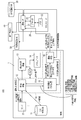
- FIG. 1 The block diagram which shows the system structural example of the delinquency detection system containing the vehicle carrying the driving assistance device which concerns on Embodiment 1.
- FIG. The figure which shows the data structure example of the delinquency operation table hold
- the flowchart which shows an example of the operation
- FIG. The flowchart which shows an example of the operation
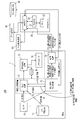
- FIG. 1 The block diagram which shows the system configuration example of the delinquency detection system containing the vehicle carrying the driving assistance device which concerns on Embodiment 2.
- FIG. 2 The flowchart which shows an example of the operation
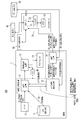
- the block diagram which shows the system configuration example of the delinquency detection system containing the vehicle carrying the driving assistance device which concerns on a 2nd modification.
- the block diagram which shows the system configuration example of the delinquency detection system containing the vehicle carrying the driving assistance device which concerns on a 3rd modification.
- the vehicle 1 equipped with the driving support device 10 (hereinafter sometimes referred to as “own vehicle”) is one or more other vehicles traveling around the own vehicle during automatic driving.
- Information (see below) and area information of the host vehicle.
- the vehicle 1 uses the information related to other nearby vehicles and the area information of the host vehicle to query the cloud server 20 as to whether there are any delinquent driving vehicles that have been in the past in the other surrounding vehicles. To do.
- the vehicle 1 detects the occurrence of delinquency by other vehicles in the vicinity of the host vehicle based on the inquiry result from the cloud server 20 (see below).
- the delinquent driving vehicle information including the ID information (see below) of the delinquent driving vehicle and the traveling trajectory information of the delinquent driving vehicle and the own vehicle is generated.
- the vehicle 1 requests the cloud server 20 to register or update the generated delinquent driving vehicle information.
- delinquency is malicious driving that is harassed or dangerous, which other vehicles intentionally perform on the vehicle 1, for example, lanes such as width adjustment by other vehicles, jumping forward, etc. It is an action such as a change, sudden sudden braking in front, and tilting from behind.
- delinquency driving is not limited to these acts, and may include malicious acts (delinquency acts) performed by obstacles (for example, persons) other than vehicles.
- FIG. 1 is a block diagram showing a system configuration example of a delinquency detection system 100 including a vehicle 1 equipped with a driving support apparatus 10 according to the first embodiment.
- the delinquency detection system 100 includes a vehicle 1, a cloud server 20, a delinquency operation database 30, a third party terminal 40, and an external engine terminal 50.
- the vehicle 1 and the cloud server 20 are connected to be communicable with each other via a network (not shown).
- the network is a wireless communication network such as the Internet network or a wireless local area network (LAN).
- the delinquency operation database 30, the third party terminal 40, and the external institution terminal 50 are connected to each other via the cloud server 20 so as to communicate with each other. That is, the delinquency operation database 30 and the cloud server 20, the third party terminal 40 and the cloud server 20, and the external organization terminal 50 and the cloud server 20 are connected to each other via a network (not shown) so as to communicate with each other.
- the network is a wireless communication network such as an Internet network or a wireless LAN.
- the vehicle 1 includes a plurality of sensors S1, a memory M1, a DM (Dynamic Map) information database 11, a driving support device 10, a vehicle control device 13, and an actuator 14.
- the vehicle 1 is a vehicle at an automatic driving level 1 or higher, and in the following description, a vehicle at an automatic driving level 3 is assumed for easy understanding of the description.
- the plurality of sensors S1, the memory M1, the DM information database 11, the driving support device 10, the vehicle control device 13, and the actuator 14 are mutually connected to each other via an in-vehicle network such as CAN (Controller Area Network). Input and output of information is connected.
- CAN Controller Area Network
- the vehicle 1 is equipped with a driving support device 10 for controlling the automatic driving of the vehicle 1.
- the driving assistance device 10 is configured using, for example, a single or a plurality of ECUs (Electronic Control Unit).
- the driving support device 10 includes a detection device 12, a delinquency detection device 15, and a communication device 16.
- the communication device 16 may be configured not to be included in the driving support device 10.
- the driving support device 10 operates according to the program and data stored in the memory M1. Specifically, the driving support device 10 generates a route toward a destination specified by an operation on an HMI (Human Machine Interface, not shown) such as a driver, and each of the plurality of sensors S1 detects according to this route. Based on the output value (hereinafter referred to as “sensor information”), the execution of the automatic driving according to the generated route is supported.
- HMI Human Machine Interface, not shown
- sensor information Based on the output value (hereinafter referred to as “sensor information”), the execution of the automatic driving according to the generated route is supported.
- the driving support device 10 is a control for controlling the operation of various control target equipment (for example, steering, accelerator pedal, brake, direction indicator, etc.) in the vehicle 1 during automatic driving according to the route to the destination.
- An instruction is output to the vehicle control device 13.
- the automatic driving of the vehicle 1 activates the brake immediately before it is about to collide with an obstacle (for example, other vehicles, motorcycles, motorcycles, pedestrians, guardrails, utility poles, poles, stores, etc.).
- the automatic driving of the vehicle 1 includes a function of following a vehicle 1 while keeping a certain distance from other vehicles running in front of the vehicle 1.
- the automatic driving of the vehicle 1 includes a function of controlling the steering of the vehicle 1 so as not to protrude from the white line (that is, the lane), but each function described above is an example of automatic driving and is limited to these functions. Not.
- Each of the plurality of sensors S1 detects the situation around the vehicle 1, and outputs information of the detection result (that is, the sensor information described above) to the driving support device 10.
- the traveling information as an example of the sensor information is the traveling direction of the vehicle 1 and the vehicle speed.
- the travel information includes travel information of one or more other vehicles traveling around the vehicle 1 (for example, a distance between the vehicle 1 and the other vehicle, an existing direction of the other vehicle viewed from the vehicle 1). May include.
- Each sensor S1 may include, for example, a camera, an around view camera, a radar, and a plurality of laser range finders.
- the sensor is not limited to any one of a camera, an around view camera, a radar, and a plurality of laser range finders.
- a gyro sensor, an acceleration sensor, a geomagnetic sensor, a tilt sensor, a temperature sensor, an atmospheric pressure sensor, a humidity sensor, An illuminance sensor may be included.
- a camera as an example of a sensor includes an image sensor such as a CCD (Charge Coupled Device) or a CMOS (Complementary Metal Oxide Semiconductor).
- the camera is installed, for example, in the center of the front part of the vehicle body of the vehicle 1 and images a range in the center of the front as a detection range.
- the camera detects an obstacle (for example, another vehicle, a two-wheeled vehicle, a bicycle, a pedestrian, and so on) existing in front of the vehicle 1.
- the camera can execute image processing using captured image data.
- the camera can detect the position and traveling direction of the obstacle based on the position of the vehicle 1 by image processing.
- the around view camera as an example of the sensor includes a plurality of units (for example, two at the front of the vehicle, two at the rear of the vehicle, two at the rear of the vehicle, and two at the side of the vehicle). (Total of 6 cameras).
- the around view camera detects a pedestrian in the vicinity of the vehicle 1, a white line, other vehicles in the adjacent lane, and the like.
- the radar as an example of the sensor is configured by using a plurality of (for example, two) radars installed on the front and rear of the vehicle 1 respectively. Note that the radar may be installed only in front of the vehicle 1.
- the radar is configured using, for example, a millimeter wave radar, a sonar radar, or a rider (LiDAR: Light Detection and Ranging, Laser Imaging Detection and Ranging). Radar irradiates an electromagnetic wave such as an ultrasonic wave or millimeter wave while scanning within a limited angle range, receives the reflected light, and detects the time difference between the irradiation start time and the reflected light receiving time, The own vehicle and the obstacle, the distance, and the direction of the obstacle viewed from the own vehicle are detected.
- a laser range finder as an example of the sensor is installed on the vehicle body front right side, vehicle body front left side, vehicle body side right side, vehicle body side left side, vehicle body rear right side, and vehicle body rear left side, respectively.
- the laser range finder detects obstacles (see above) and the like existing on the front right side, front left side, side right side, side left side, rear right side, and rear left side of the vehicle 1, respectively.
- the laser range finder irradiates each laser beam while scanning within a certain wide angle range, receives the reflected light, and detects the time difference between the irradiation start time and the reflected light receiving time.
- the distance between the vehicle 1 and the obstacle and the direction of the obstacle viewed from the vehicle 1 are detected.
- a GPS receiver as an example of a sensor receives and receives a plurality of signals indicating times and positions (that is, three-dimensional coordinates) of the GPS satellites transmitted from a plurality of GPS (Global Positioning System) satellites.
- the position of the GPS receiver (that is, the current position of the vehicle 1) is calculated based on the plurality of signals.
- the GPS receiver outputs information on the current position of the vehicle 1 (hereinafter referred to as “own vehicle position information”) to the detection device 12 and the delinquency detection device 15 of the driving support device 10, respectively.
- the memory M1 is configured by using, for example, a RAM (Random Access Memory) and a ROM (Read Only Memory), and programs and data necessary for executing the operations of the driving support device 10 and the vehicle control device 13, and also in operation.
- the data or information generated in is temporarily stored.
- the RAM is a work memory used when the driving support device 10 and the vehicle control device 13 are operated, for example.
- the ROM stores and holds programs and data for controlling the driving support device 10 and the vehicle control device 13 in advance.
- the DM information database 11 is configured using, for example, an HDD (Hard Disk Drive) or an SSD (Solid State Drive) and holds a dynamic map that is dynamic road structure information necessary for realizing the automatic driving of the vehicle 1.
- the dynamic map data is received by the detection device 12 and the delinquency detection device 15.
- the DM information database 11 may receive and update dynamic map data periodically provided from a dynamic map providing server (not shown).
- DM information DB is abbreviated as “DM information DB” for convenience.
- a dynamic map is, for example, a combination of static high-precision three-dimensional map data with information on road traffic congestion and information on locations where dynamic changes such as traffic restrictions due to accidents or road construction have occurred.
- the vehicle 1 uses the dynamic map data that can be read from the DM information database 11 as sensor information of a plurality of sensors S1 (for example, a millimeter wave radar, an ultrasonic sensor, an optical camera, etc.) mounted on the vehicle 1. Based on this, automatic driving can be performed while accurately estimating the surrounding information of the vehicle 1.
- sensors S1 for example, a millimeter wave radar, an ultrasonic sensor, an optical camera, etc.
- the detection device 12 as an example of the detection unit receives the sensor information detected by each of the plurality of sensors S1 and the vehicle position information of the vehicle 1 calculated by the GPS receiver as an example of the sensor S1.
- the detection device 12 also receives dynamic map data necessary for automatic driving of the vehicle 1 from the DM information database 11.
- the detection device 12 generates a route when traveling in the automatic driving to the destination of the vehicle 1 by using the various information and data received, and the vehicle control device 13 issues an execution instruction of the automatic driving according to the route. Output to.
- the detection device 12 detects whether there is another vehicle that satisfies the delinquency alert information around the vehicle 1.
- the detection device 12 determines the delinquent vehicle avoidance route according to the delinquency driving pattern and the frequency information included in the delinquent caution information.
- the vehicle control device 13 is caused to perform automatic driving that generates a certain distance from the delinquent driving vehicle. Details of the operation of the detection device 12 will be described later with reference to FIG.
- the delinquency detection device 15 as an example of the delinquency detection unit includes sensor information detected by each of the plurality of sensors S1 and own vehicle position information of the vehicle 1 calculated by a GPS receiver as an example of the sensor S1. receive.
- the delinquency detection device 15 receives dynamic map data necessary for automatic driving of the vehicle 1 from the DM information database 11.
- the delinquency driving detection device 15 includes one or more vehicles running around the vehicle 1 during the automatic driving based on the sensor information detected by each of the plurality of sensors S1, the vehicle position information, and the dynamic map data. Information on other vehicles (for example, vehicle ID information described later) and area information of the host vehicle are recognized.
- the area information is information on a wide area including a point where the vehicle 1 (own vehicle) is located.
- the delinquency detection device 15 has performed a delinquency operation in other surrounding vehicles in the past using information related to other vehicles in the vicinity (for example, vehicle ID information described later) and area information of the host vehicle.
- the cloud server 20 is inquired about the presence or absence of the delinquent driving vehicle via the communication device 16.
- the delinquency detection device 15 determines other information around the vehicle based on the inquiry result from the cloud server 20 (for example, delinquency vehicle information obtained from the delinquency database 30 described later) and sensor information obtained from the sensor S1. Detects the occurrence of delinquency by vehicles.
- the delinquency detection device 15 when delinquency driving by another vehicle around the host vehicle occurs (that is, when the delinquency operation is received), ID information (that is, delinquency driving) of the delinquent operation vehicle that has performed the delinquency operation.
- Delegated driving vehicle information (see below) is generated including vehicle ID information included in the delinquent driving vehicle information obtained from the database 30 and traveling trajectory information (see below) of the delinquent driving vehicle and the host vehicle.
- the delinquency detection device 15 requests the cloud server 20 to register or update the generated delinquency vehicle information via the communication device 16. Details of the operation of the delinquency detection device 15 will be described later with reference to FIG.
- the communication device 16 has a role as a communication interface with the cloud server 20 and is configured using a communication circuit capable of wireless communication with the cloud server 20.
- the communication device 16 transmits an inquiry request including the vehicle ID information passed from the delinquency detection device 15 and the area information of the host vehicle to the cloud server 20.
- the communication device 16 passes the inquiry result from the cloud server 20 (that is, delinquency vehicle information obtained from the delinquency database 30 described later) to the delinquency detection device 15.
- the communication device 16 transmits to the cloud server 20 a request for registration or update of delinquency vehicle information including delinquency vehicle information (described later) generated by the delinquency detection device 15.
- the vehicle control device 13 as an example of the vehicle control unit, for example, based on the automatic driving execution instruction output from the detection device 12, for example, the throttle throttle opening of the vehicle 1, the braking force of the vehicle 1, the steering angle, Calculate control values for controlling the control target equipment necessary for automatic operation such as blinking timing.
- the vehicle control device 13 causes the actuator 14 to execute the operation of the control target equipment mounted on the vehicle 1 according to the calculated control value.
- the control value is calculated so as to travel according to a route generated by the detection device 12 included in the driving support device 10.
- the route is calculated and generated by the detection device 12 and input to the vehicle control device 13.
- the vehicle control device 13 uses the calculated control values for the actuators 14 (that is, the steering actuator, the accelerator pedal actuator, the brake) for driving the respective control target equipment (for example, steering, accelerator pedal, brake, and direction indicator). Actuator, blinker blinking controller).
- the control target equipment is equipment provided in the vehicle 1 and is controlled by the vehicle control device 13 during the automatic operation of the vehicle 1.
- the operation of the control target equipment is controlled by the actuator 14.
- the steering actuator is connected to a steering disposed in the vehicle 1, and in accordance with a steering (not shown) control signal input from the vehicle control device 13, the steering operation during automatic driving (in other words, the traveling direction of the vehicle 1). Control or maintenance).
- the accelerator pedal actuator is connected to an accelerator pedal disposed in the vehicle 1 and operates the accelerator pedal during automatic operation (in other words, the vehicle) according to an accelerator pedal (not shown) control signal input from the vehicle control device 13. (Maintenance or increase / decrease of vehicle speed 1).
- the brake actuator is connected to a brake mechanism (that is, a brake) disposed in the vehicle 1, and operates the brake during automatic operation (in other words, in accordance with a brake (not shown) control signal input from the vehicle control device 13). , Maintaining or changing braking against the progress of the vehicle 1).
- a brake mechanism that is, a brake
- the blinker blinking controller is connected to a blinking mechanism (hereinafter abbreviated as “winker”) of a direction indicator disposed in the vehicle 1, and according to a winker (not shown) control signal input from the vehicle control device 13.
- winker a blinking mechanism
- winker not shown
- the cloud server 20 as an example of a server device is a server device constructed by a system administrator of the delinquency detection system 100, for example, and includes at least a communication interface 21, a memory 22, and a processor 23.
- the communication interface 21, the memory 22, and the processor 23 are connected to each other via an internal bus so as to be able to input / output data or information.
- the communication interface 21 as an example of a communication unit is connected to external devices (for example, the vehicle 1, the delinquency database 30, the third party terminal 40, and the external engine terminal 50) connected via a network (not shown). It is configured using a communication circuit capable of communicating data or information.
- the communication interface 21 receives data or information transmitted from the above-described external device and outputs it to the memory 22 or the processor 23, or transmits data or information input from the processor 23 to the external device (see above). .
- the communication interface is abbreviated as “communication I / F” for convenience.
- the memory 22 is configured by using, for example, a RAM and a ROM, and temporarily stores programs and data necessary for executing the operation of the cloud server 20 and further data or information generated during the operation.
- the RAM is a work memory used when the cloud server 20 operates, for example.
- the ROM stores and holds in advance a program and data for controlling the cloud server 20, for example.
- the processor 23 is configured using, for example, a CPU (Central Processing Unit), an MPU (Micro Processing Unit), a DSP (Digital Signal Processor), or an FPGA (Field-Programmable Gate Array).
- the processor 23 functions as a control unit of the cloud server 20, performs control processing for overall control of operations of each unit of the cloud server 20, data input / output processing with each unit of the cloud server 20, and data calculation (Calculation) processing and data storage processing are performed.
- the processor 23 operates according to the program and data stored in the memory 22.
- the processor 23 accesses the delinquency database 30 (see FIG.
- the processor 23 transmits (responds) to the vehicle 1 via the communication interface 21, the delinquent driving vehicle information (see later) obtained as the inquiry result of the delinquency driving database 30. Details of the operation of the cloud server 20 will be described later with reference to FIG.
- the delinquency driving database 30 as an example of an external database includes a delinquency driving table TBL1 in which feature information of a delinquent driving vehicle that has been delinquent in the past is associated with vehicle ID information that can identify the delinquent driving vehicle.
- vehicle ID information as an example of the ID information is information that can identify the vehicle, and specifically, vehicle identification number (No.) information and vehicle characteristic information (for example, vehicle type, vehicle color, etc.). Information) and characteristic information of the driver (driver) (for example, information on the face and appearance of the driver).
- the delinquency operation database 30 is connected so as to be accessible from any of the cloud server 20, the third party terminal 40, and the external engine terminal 50.
- the delinquency operation database 30 may be provided in the cloud server 20.
- the delinquency operation database is abbreviated as “delinquency operation DB” for convenience.
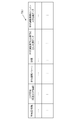
- FIG. 2 is a diagram illustrating a data structure example of the delinquency operation table TBL1 held in the delinquency operation database 30.
- the delinquency operation table TBL1 includes area information (that is, area information in which delinquency has occurred), delinquency pattern, frequency, travel trajectory data of the delinquency vehicle and the vehicle 1 (own vehicle).
- the numbered photo data of the delinquent driving vehicle are held in association with vehicle ID information (see above) which is identification information of one delinquent driving vehicle.
- the delinquency driving pattern indicates the type of delinquency driving performed by the delinquent driving vehicle specified by the vehicle ID information.
- the aforementioned lane change such as width adjustment, jumping forward, sudden sudden braking in front, For example, driving with tilt.
- the frequency indicates the frequency of delinquency driving performed by the delinquent driving vehicle specified by the vehicle ID information.
- the travel trajectory data of the delinquent driving vehicle and the vehicle 1 (own vehicle) are the data of the delinquent driving vehicle and the vehicle 1 for a predetermined period including the time point when the delinquent driving vehicle is detected to be delinquent. It is the data which shows the locus
- Photo data with a number of delinquent driving vehicles is a captured image (ie, a camera) of a license plate of another vehicle (that is, delinquent driving vehicle) that has performed delinquency operation on the vehicle 1. , Photo) data.
- the third-party terminal 40 is a computer (for example, a PC (Personal Computer)) arranged in a building of a third-party organization such as an administrative local government or a traffic safety association, for example, of the cloud server 20 and the delinquent operation database 30. Each is accessible.
- the number of third party terminals 40 is one, but may be arranged for each third party organization described above.
- the third party terminal 40 accesses the delinquent driving database 30 and periodically acquires delinquent driving vehicle information of the corresponding area information (that is, the region where the third party organization is located), and is specified by the delinquent driving vehicle information. It is determined whether or not the frequency of delinquency driving of a vehicle that is delinquent is greater than or equal to a threshold value. The details of the operation of the third party terminal 40 will be described later with reference to FIG.
- the external organization terminal 50 is a computer (for example, a PC) disposed in a building of an external organization such as a police station or a car insurance company, and can access the cloud server 20 and the delinquency operation database 30.
- the number of external engine terminals 50 is one, but may be arranged for each external engine described above.
- the external engine terminal 50 is a delinquent driver who desires sanction from a terminal (not shown) of an autonomous driving operator (for example, an operator that uses an autonomous driving vehicle such as the vehicle 1 for taxi, bus, car sharing services).
- an autonomous driving operator for example, an operator that uses an autonomous driving vehicle such as the vehicle 1 for taxi, bus, car sharing services.
- the external institution terminal 50 prompts a staff member of the external institution (see above) to execute the predetermined sanctions when the acquired delinquent driving vehicle information satisfies the predetermined sanctions execution conditions (for example, pops up a predetermined message) indicate). Details of the operation of the external engine terminal 50 will be described later with reference to FIG.
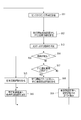
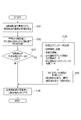
- FIG. 3 is a flowchart illustrating an example of an operation procedure of the detection device 12 mounted on the driving support device 10 according to the first embodiment.
- the vehicle 1 is automatically driving toward a destination designated by a user operation such as a driver.
- the detection device 12 constantly receives sensor information from a plurality of sensors S1 (St1). If the detection device 12 is a delinquent driving vehicle in which one of one or more other vehicles running around the vehicle 1 (self-vehicle) that is automatically driving has been delinquent in the past, If detected by the detection device 15, delinquent caution information is received from the delinquent operation detection device 15 (St2). When the delinquent caution information is a delinquent driving vehicle in which any of one or more other vehicles traveling around the vehicle 1 (self-vehicle) that is driving automatically has been delinquent in the past, It is information indicating the characteristics of the delinquent driving vehicle.
- the delinquent caution information includes vehicle ID information, delinquency driving pattern information, frequency information, and position information of a vehicle (that is, another vehicle) specified by the vehicle ID information.
- the detection device 12 receives the delinquency warning information from the delinquency detection device 15, thereby receiving a warning that there is a delinquent driving vehicle that has been delinquent in the past around the vehicle 1. be able to.
- step S2 the process in step St2 may be omitted.
- the detection device 12 Based on the sensor information from the plurality of sensors S1 and the dynamic map data from the DM information database 11, the detection device 12 has a risk to the vehicle 1 that is running by automatic driving (for example, a collision with another vehicle occurs. (The other vehicle has entered the travel area of the vehicle 1) (St3).
- the detection device 12 determines that there is a danger to the traveling vehicle 1 by automatic driving (St4, YES), the detection device 12 generates a route (danger avoidance route) for avoiding a danger with other nearby vehicles. (St5).
- the detection device 12 outputs the danger avoidance route information generated in step St5 to the vehicle control device 13 (St6), and causes the vehicle control device 13 to execute automatic driving according to the danger avoidance route. After step St6, the process of the detection device 12 returns to step St1.
- the detection device 12 determines that there is no danger to the vehicle 1 that is traveling by automatic driving (St4, NO)
- the delinquent warning received in step St2 based on the sensor information from the plurality of sensors S1. It is determined whether there is another vehicle that satisfies the information in the vicinity (St7).
- the detection device 12 determines whether or not the delinquency driving pattern and the frequency included in the delinquent caution information depend on at least the delinquent driving pattern.
- a route for avoiding another vehicle (a delinquent vehicle avoidance route) is generated (St8).
- the detection device 12 actively avoids other vehicles around the vehicle 1 (the host vehicle) (that is, a delinquent driving vehicle that has been delinquent in the past) to safely operate the vehicle 1 automatically. Can be achieved.
- Detecting device 12 can generate a delinquent vehicle avoidance route for changing lanes, for example, when a nearby other vehicle has been brought closer as a delinquency driving pattern. Moreover, the detection apparatus 12 can generate
- the detection device 12 when the frequency included in the delinquent caution information is higher than a predetermined threshold, the detection device 12 generates a delinquent vehicle avoidance route in which avoidance measures are performed more aggressively and in advance than the above-described delinquent vehicle avoidance route.
- the detection device 12 can generate a delinquent vehicle avoidance route in which a lane change is made so as to leave immediately when other vehicles in the vicinity have frequently moved up as a delinquency driving pattern.
- the detection device 12 avoids a delinquent vehicle, for example, when a nearby other vehicle has braked frequently and suddenly as a delinquency driving pattern to ensure a certain distance further away from the other vehicle.
- a route can be generated.
- the detection device 12 is a delinquent vehicle avoidance route in which, for example, as a delinquency driving pattern, when other surrounding vehicles have frequently been driven and have been driven, a speeding down, a shoulder stop, a route change, etc. are quickly performed. Can be generated.
- the detection apparatus 12 is the frequency of delinquency driving of other vehicles (specifically, other vehicles specified by the delinquency information received in step St2) around the vehicle 1 (own vehicle) (for example, up to now). Only when it is determined that the total number of executions of delinquency is equal to or greater than a predetermined value (for example, 3), a route for avoiding the corresponding other vehicle (a delinquent vehicle avoidance route) may be generated. (St8).
- the predetermined value is 3 or more because the registration of the delinquent driving vehicle information (see FIG. 2) to the delinquent driving database 30 is automatically performed according to the information mainly based on the sensor information.
- the detection device 12 has performed a number of delinquency operations that are more than a predetermined value in the past (that is, in the past, among other vehicles in the vicinity of the vehicle 1 (own vehicle)) that is likely to perform the delinquency operation.
- the other vehicle can be selected early and easily, and the vehicle 1 (own vehicle) can be supported to realize safer automatic driving.
- the detection device 12 performs the frequency of delinquency of other vehicles (specifically, other vehicles specified by the delinquency information received in step St2) around the vehicle 1 (own vehicle) (for example, up to now). Only when it is determined that the total number of executions of delinquency is equal to or greater than a predetermined value (for example, 3), in order to avoid other vehicles in consideration of the content of the delinquency pattern of the corresponding other vehicle (A delinquent vehicle avoidance route) may be generated (St8).
- the predetermined value is set to 3 or more for the same reason as described above.
- the detection device 12 has performed a number of delinquency operations that are more than a predetermined value in the past (that is, in the past, among other vehicles in the vicinity of the vehicle 1 (own vehicle)) that is likely to perform the delinquency operation. Realize safer automatic driving of the vehicle 1 (own vehicle) so that other vehicles) can be selected early and easily, and the other vehicles can escape from the delinquency driving pattern that has been carried out in the past. Can support.
- the vehicle control device 13 is caused to execute automatic driving using the currently set route. It is executed (St9).
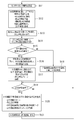
- FIG. 4 is a flowchart illustrating an example of an operation procedure of the delinquency detection device 15 mounted on the driving support device 10 according to the first embodiment.
- the vehicle 1 is in an automatic driving toward a destination designated by a user operation such as a driver.
- the delinquency detection device 15 receives sensor information from a plurality of sensors S1 constantly or periodically (St11).
- the delinquency detection device 15 uses the sensor information obtained in step St11 to generate vehicle ID information (see above) for each of one or more other vehicles in the vicinity of the vehicle 1 (own vehicle).
- Area information is generated based on the position information of 1 (own vehicle) (St12). For example, if the position information of the vehicle 1 is “AA city BB ward CC town”, the delinquency detection device 15 generates area information that becomes a wide area “AA city” including the “CC town”.
- the delinquency detection device 15 generates wide area information from the position information of the vehicle 1 and uses the area information for an inquiry request to the cloud server 20. Thereby, the cloud server 20 can quickly make an inquiry specialized for the current area in which the vehicle 1 travels.
- the delinquency detection device 15 inquires of the cloud server 20 whether there is a delinquency vehicle that has been delinquent in the past among one or more other vehicles around the vehicle 1 (own vehicle). Therefore, an inquiry request including the vehicle ID information and the area information generated in step St12 is generated. The delinquency detection device 15 transmits the generated inquiry request to the cloud server 20 via the communication device 16 (St13).
- the cloud server 20 determines whether or not another vehicle that satisfies the vehicle ID information in the past in the area information included in the inquiry request has been delinquent. Is determined by searching the delinquency operation database 30.
- the cloud server 20 transmits the search result (that is, the inquiry result) of the delinquency operation database 30 to the vehicle 1.
- the inquiry result includes, for example, the corresponding vehicle ID information in the delinquency database 30 shown in FIG. 2 and various information (for example, delinquency pattern and frequency information) associated with the vehicle ID information.
- the delinquency detection device 15 receives the inquiry result of the delinquency database 30 transmitted from the cloud server 20 via the communication device 16 (St14).
- the delinquency detection device 15 determines whether the vehicle ID information generated in step St12 is registered in the delinquency operation database 30 based on the inquiry result of the delinquency operation database 30 (in other words, other vehicles around the vehicle 1). Is determined whether or not delinquency driving has been performed in the past (St15).
- the delinquency detection device 15 can easily predict the type of delinquency operation such as slowing down or widening in consideration of the inquiry result of the delinquency operation database 30 (for example, information on delinquency operation pattern and frequency). Therefore, it is possible to quickly determine whether or not delinquency occurs.
- the delinquent operation detection device 15 determines that the vehicle ID information is registered in the delinquency operation database 30 (St15, YES), the vehicle ID information is registered in the object vehicle (that is, the delinquency operation database 30). Then, delinquent caution information (see above) is generated using the position information of the other vehicle traveling around the vehicle 1 (in other words, the position information of the vehicle 1) (St16). The delinquency detection device 15 sends the generated delinquency warning information to the detection device 12 (St16).
- the delinquency detection device 15 determines the vehicle 1 (own vehicle) based on the delinquency pattern and frequency information included in the inquiry result of the delinquency database 30 and the sensor information obtained in step St11.
- the state of occurrence of delinquency by one or more other vehicles in the vicinity of the vehicle is determined (St17).
- the delinquency detection device 15 takes into account the delinquency pattern and frequency information and quickly monitors whether one or more other vehicles are delinquent while monitoring one or more other vehicles in the vicinity. Can be determined.
- the delinquency detection device 15 determines whether the vehicle 1 (automatic operation) is based on the sensor information obtained in step St11. Determining the occurrence of delinquency operation (in other words, whether or not delinquency has occurred) by one or more other vehicles in the vicinity of the vehicle) (that is, other vehicles that have not been delinquent in the past) (St18) . In addition, after step St17 or step St18, when the delinquency operation by one or more other vehicles around the vehicle 1 does not occur (St19, NO), the delinquency detection device 15 returns to step St11.
- the delinquent operation vehicle information generated in step St20 includes, for example, area information in which delinquency has occurred, delinquency driving pattern information, delinquency driving vehicles (that is, other vehicles that have been delinquent to vehicle 1).
- This delinquent driving vehicle information includes data indicating the travel trajectory of the vehicle 1 (own vehicle) and photograph data (that is, captured image data) obtained by capturing the license plate of the delinquent driving vehicle.
- This delinquent driving vehicle information is used as evidence information used when, for example, a police station or an external organization such as a car insurance company (see above) determines whether there is sanctions.
- the delinquency detection device 15 generates a registration request including the delinquency vehicle information generated in step St20 and the vehicle ID information of the delinquency vehicle that performed the delinquency operation (St21), and the registration request is transmitted to the communication device. 16 to the cloud server 20. Thereby, according to the registration request transmitted from the vehicle 1, the cloud server 20 newly registers or updates the vehicle ID information included in the registration request and the delinquent operation vehicle information corresponding to the vehicle ID information in the delinquency operation database 30. To do. After the process of step St21, the process of the delinquency detection device 15 returns to step St11.
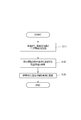
- FIG. 5 is a flowchart illustrating an example of an operation procedure of the third party terminal 40. The process shown in FIG. 5 is periodically executed.
- the third party terminal 40 accesses the delinquent operation database 30 via the cloud server 20 and acquires the delinquency vehicle information registered or updated from the previous access from the delinquency operation database 30 (St31). ).
- the third party terminal 40 uses the delinquent operation database 30 in which a large amount of data or information is registered as the area information as the corresponding district or area. It is possible to easily acquire the delinquent driving vehicle information.
- the third party terminal 40 has, for each of the one or more delinquent driving vehicle information acquired in step St41, the frequency included in the delinquency driving vehicle information (that is, the frequency of delinquency driving) is a predetermined threshold or more. It is determined individually whether there is (St32). When the frequency included in each delinquent operation vehicle information (that is, the frequency of occurrence of delinquency) does not exceed a predetermined threshold (St32, NO), the process of the third party terminal 40 ends.
- the delinquency driving database 30 is transmitted via the cloud server 20.
- Information obtained by removing the personal information from the acquired delinquent driving vehicle information as caution information is disclosed on a homepage (not shown) of a third party organization (St33). Therefore, information on areas where delinquency frequently occurs, patterns of delinquency driving in those areas, and characteristics of vehicles that conduct delinquency are widely disclosed on the website of third-party organizations, and are known to a large number of unspecified drivers. Become.
- the third party terminal 40 belongs to personal information among the delinquent driving vehicle information.
- the information excluding information (specifically, the driving trajectory data of the delinquent driving vehicle and the own vehicle shown in FIG. 2, the numbered photo data of the delinquent driving vehicle) is obtained from the third party organization corresponding to the third party terminal 40. It is made public on the website so that it can be accessed from an unspecified number of PCs.
- the third party terminal 40 publishes characteristic information of the sensitive driving vehicle that is required to be publicly disclosed on a third party website that is widely open to the public. It is expected to be planned.
- FIG. 6 is a flowchart illustrating an example of an operation procedure of the cloud server 20.
- the cloud server 20 receives an inquiry request including vehicle ID information and area information from the vehicle 1 (St41).
- the cloud server 20 determines whether there is registration information that matches the inquiry request (that is, vehicle ID information in the past in the area information included in the inquiry request). It is determined by searching the delinquent operation database 30 whether or not the other vehicle to be satisfied has performed the delinquency operation (St42). Since the cloud server 20 includes area information in the inquiry request from the vehicle 1, the cloud server 20 simply deletes the delinquent driving vehicle information having the corresponding area information from the delinquent operation database 30 in which a large amount of data or information is registered. You can search and get search results.
- the cloud server 20 transmits the search result (that is, the inquiry result) of the delinquency database 30 to the vehicle 1 (St43).
- the inquiry result includes, for example, the corresponding vehicle ID information in the delinquency database 30 shown in FIG. 2 and various information (for example, delinquency pattern and frequency information) associated with the vehicle ID information.
- FIG. 7 is a flowchart showing an example of the operation procedure of the external engine terminal 50.
- the external engine terminal 50 is a PC arranged in the office of an autonomous driving operator (for example, an operator that uses an autonomous driving vehicle such as the vehicle 1 for services such as taxis, buses, and car sharing).
- the vehicle ID information of the delinquent driving vehicle desired to be sanctioned transmitted from the terminal (not shown) is received (St51).
- the external engine terminal 50 accesses the delinquency operation database 30 via the cloud server 20 based on the vehicle ID information received in step St51, and obtains delinquency vehicle information corresponding to the vehicle ID information from the delinquency operation database 30. Obtain (St52).
- the external institution terminal 50 holds conditions for executing sanctions specific to each external institution (for example, condition information for recognizing malicious delinquent driving criminals defined by a combination of delinquency driving pattern and frequency), step St52 It is determined whether the delinquent driving vehicle information acquired by the above condition satisfies the sanctions execution condition described above (St53). If it is determined that the delinquent driving vehicle information acquired in step St52 does not satisfy the above-described sanctions execution condition (St53, NO), the processing of the external engine terminal 50 proceeds to step St56.
- condition information for recognizing malicious delinquent driving criminals defined by a combination of delinquency driving pattern and frequency for example, condition information for recognizing malicious delinquent driving criminals defined by a combination of delinquency driving pattern and frequency
- the external engine terminal 50 determines that the delinquent driving vehicle information acquired in step St52 satisfies the sanctions execution conditions described above (St53, YES), it generates sanctions evidence data (St54).
- the sanctions evidence data generated in step St54 includes, for example, data indicating the date and place and frequency of delinquency driving, the travel trajectory of the delinquent driving vehicle and the vehicle 1 (own vehicle), and the license plate of the delinquent driving vehicle. Includes photographed image data (that is, captured image data).
- the external institution terminal 50 prompts the staff of the external institution to execute the predetermined sanctions processing as described below (St55).
- the police officer will crack down on the driver who owns the delinquent driving vehicle.
- the external organization is an automobile insurance company
- a person in charge of the automobile insurance company charges a predetermined insurance money to the driver who is the owner of the delinquent driving vehicle.
- the external institution terminal 50 generates the sanctions evidence data in step St54, so that it is possible to smoothly prompt the police officer or the staff to execute effective sanctions using the sanctions evidence data.
- the external engine terminal 50 generates sanctions implementation status data based on the sanctions processing result executed in step St55, and transmits the data to the terminal (not shown) of the autonomous driving operator (St56). If there is no data that satisfies the sanctions execution condition, the external engine terminal 50 generates sanctions implementation status data indicating that and transmits it to the terminal (not shown) of the autonomous driving operator. (St56).
- the driving support device 10 or the vehicle 1 determines whether or not there is a change in the route during the automatic driving based on the sensor information of the plurality of sensors S1 provided in the vehicle 1, and automatically follows the determination result.
- a detection device 12 is provided for outputting a driving execution instruction to the vehicle control device 13.
- the driving support device 10 or the vehicle 1 has performed a delinquency operation in another vehicle using information related to one or more other vehicles around the vehicle 1 being automatically driven and area information of the vehicle 1.
- a delinquency driving detection device 15 that inquires the delinquency driving database 30 of the presence or absence of a delinquency driving vehicle and detects whether or not delinquency driving by another vehicle occurs based on the inquiry result from the delinquency driving database 30 is provided.
- the driving support device 10 or the vehicle when delinquency occurs, displays delinquent driving vehicle information including the ID information of the delinquent driving vehicle that performed the delinquency operation and the travel locus information of the delinquent driving vehicle and the vehicle 1. It generates and requests the delinquency operation database 30 to register or update the delinquency vehicle information.
- the vehicle 1 determines whether or not each of one or more other vehicles traveling around the vehicle 1 (the host vehicle) has performed delinquency operation such as shifting the width of the vehicle 1 during automatic driving. Can be judged efficiently.
- the vehicle 1 can generate information on other vehicles that have performed delinquency as evidence data for sanctions, and can newly register or update the information in the delinquent operation database 30 that is widely open to the public. It is possible to effectively prevent the execution of driving.
- the inquiry result from the delinquency database 30 includes information on the delinquency pattern and frequency of other vehicles that have been delinquent in the past.
- the delinquency detection device 15 detects the occurrence of delinquency by other vehicles based on information on the pattern and frequency of delinquency operation. This makes it easier for the vehicle 1 to predict the types of delinquency operations, such as slowing down and widening, in consideration of the inquiry results (for example, delinquency operation pattern and frequency information) of the delinquency operation database 30. The presence or absence of delinquency can be determined quickly.
- the delinquency detection device 15 uses the inquiry result from the delinquency operation database 30 to generate delinquency warning information indicating the characteristics of the delinquency driving vehicle and sends it to the detection device 12.
- the detection device 12 When detecting at least one other vehicle that satisfies the delinquent caution information, the detection device 12 generates a delinquency avoidance route corresponding to the delinquency caution information and outputs it to the vehicle control device 13.
- the vehicle 1 actively avoids other vehicles around the vehicle 1 (the host vehicle) (that is, a delinquent driving vehicle that has performed delinquency in the past), and is based on safe automatic driving of the vehicle 1. Driving can be realized.
- the delinquency information includes delinquency pattern information.
- the detection device 12 generates a delinquency avoidance route corresponding to the delinquency pattern.
- the vehicle 1 takes into account the past types of delinquency driving by other vehicles traveling around the vehicle 1 and can avoid a collision even if delinquency driving that has been performed in the past is performed. Since it can be generated, automatic driving can be continued safely.
- the delinquent caution information includes delinquency driving pattern and delinquency frequency information.
- the detection device 12 generates a delinquency avoidance route according to the delinquency driving pattern and the frequency of delinquency driving.
- the vehicle 1 is frequently operated in the past in consideration of both the past type and frequency of delinquency driving by other vehicles traveling around the vehicle 1.
- a route can be generated so that a collision can be avoided in advance, automatic driving can be continued safely.
- the delinquent driving detection device 15 includes other vehicle identification number information (for example, vehicle identification number information), other vehicle and driver characteristic information included in the sensor information from the plurality of sensors S1, and information related to the other vehicle. Receive as.
- vehicle identification number information for example, vehicle identification number information
- other vehicle and driver characteristic information included in the sensor information from the plurality of sensors S1 and information related to the other vehicle. Receive as.
- the vehicle 1 can always receive the latest sensor information during automatic driving, and can easily search the delinquency database 30 using that information, so the presence / absence of delinquency driving is detected with high accuracy. it can.
- the cloud server 20 is connected so as to be accessible to a delinquency database 30 that holds information about delinquency vehicles that have been delinquent in the past (that is, delinquency vehicle information). .
- the cloud server 20 includes information on one or more other vehicles in the vicinity of the vehicle 1 that is being automatically driven and the area information of the vehicle 1, and whether or not there is a delinquent driving vehicle that has performed delinquency in the other vehicle.
- a query request for querying is received.
- the cloud server 20 includes the presence / absence of a delinquent driving vehicle that has performed a delinquency operation in the other vehicle based on the information related to the other vehicle and the area information of the vehicle 1 included in the received inquiry request.
- the cloud server 20 includes the ID information of the delinquent driving vehicle that has performed the delinquency operation generated by the vehicle 1 when the occurrence of the delinquency operation by another vehicle is detected by the vehicle 1, and each run of the delinquent operation vehicle and the vehicle 1.
- the delinquent driving vehicle information including the trajectory information is received and registered or updated in the delinquency driving database 30.
- the cloud server 20 uses the vehicle 1 as the evidence that the delinquency operation has been performed, from the vehicle 1 as the evidence that the delinquency operation has been performed. You can get it. Therefore, the cloud server 20 can register or update the delinquent driving vehicle information generated as evidence in the delinquency driving database 30 that is widely open to the public, and can effectively promote the suppression of delinquency execution.
- the data or information used by the delinquent operation detection device 15 of the vehicle 1 to detect the presence or absence of the delinquency is different from that in the first embodiment. Specifically, the delinquency detection device 15 does not input the sensor information from the plurality of sensors S1 and the dynamic map data from the DM information database 11 together. The delinquency detection device 15 receives danger determination information (see later) from the detection device 12, and detects the occurrence of delinquency using the risk determination information (see FIG. 8).
- FIG. 8 is a block diagram illustrating a system configuration example of the delinquency detection system 100 including the vehicle 1 on which the driving support device 10 according to the second embodiment is mounted. Since the configuration of the delinquency detection system 100 according to the second embodiment is the same as the configuration of the delinquency detection system 100 according to the first embodiment, the same reference numerals are assigned to those performing the same processing. Simplified or omitted, different contents will be described.
- the delinquency detection device 15 receives the risk determination information from the detection device 12.
- the risk determination information is used to detect whether or not the delinquency operation is performed by one other vehicle that is traveling around the vehicle 1 during the automatic operation in the delinquency detection device 15 according to the second embodiment. Used.
- the risk determination information is obstacle information, other vehicle behavior information, own vehicle position information, own vehicle travel area information, road structure information, and vehicle identification number (No.) information.
- the obstacle information is position information of an obstacle (for example, a structure such as another vehicle, a person, a guardrail, etc.), and is obtained by the detection device 12 based on sensor information from a plurality of sensors S1, for example. .
- the other vehicle behavior information is information indicating the most recent traveling trajectory of each of one or more other vehicles included in an obstacle (for example, a structure such as another vehicle, a person, a guardrail, etc.), for example, from a plurality of sensors S1. Obtained by the detection device 12 on the basis of the sensor information, and so on.
- an obstacle for example, a structure such as another vehicle, a person, a guardrail, etc.
- the vehicle position information as an example of the position information is information on the current position of the vehicle 1 during automatic driving, and is obtained by the detection device 12 based on sensor information from the plurality of sensors S1, for example, and so on.
- the own vehicle traveling region information as an example of the traveling region information is information indicating a region in a predetermined range that includes the current position of the vehicle 1 during automatic driving and exceeds the width of the road on which the vehicle 1 is traveling. It is obtained by the detection device 12 based on sensor information from the plurality of sensors S1, and so on.
- the road structure information is information indicating the structure of the road on which the vehicle 1 during automatic driving is traveling, and is obtained by the detection device 12 based on dynamic map data from the DM information database 11, for example, and so on. .
- Vehicle identification number information is number information that can identify other vehicles, and is obtained by the detection device 12 based on sensor information from a plurality of sensors S1, for example, and so on.
- FIG. 9 is a flowchart illustrating an example of an operation procedure of the detection device mounted on the driving support device 10 according to the second embodiment.
- the vehicle 1 is in an automatic driving toward a destination designated by a user operation such as a driver.
- step St1 the detection device 12 generates the risk determination information described above using the sensor information from the plurality of sensors S1 obtained in step St1 (St61), and the generated risk Information for determination is sent to the delinquency detection device 15 (St62).
- the processing after Step St62 is the same as the processing after Step St1 in FIG.
- FIG. 10 is a flowchart illustrating an example of an operation procedure of the delinquency detection device 15 mounted on the driving support device 10 according to the second embodiment.
- the vehicle 1 is in an automatic driving toward a destination designated by a user's operation such as a driver.
- the delinquency detection device 15 receives the danger determination information sent from the detection device 12 constantly or periodically (St71).
- the delinquency detection device 15 generates area information based on the vehicle position information included in the risk determination information obtained in step St71 (St72). For example, if the position information of the vehicle 1 is “AA city BB ward CC town”, the delinquency detection device 15 generates area information that becomes a wide area “AA city” including the “CC town”.
- the delinquency detection device 15 generates wide area information from the position information of the vehicle 1 and uses the area information for an inquiry request to the cloud server 20. Thereby, the cloud server 20 can quickly make an inquiry specialized for the current area in which the vehicle 1 travels.
- the delinquency detection device 15 makes an inquiry to the cloud server 20 as to whether or not there is a delinquency vehicle that has been delinquent in the past in one or more other vehicles around the vehicle 1.
- An inquiry request including the vehicle identification number information included in the risk determination information received in St71 and the area information generated in Step St72 is generated.
- the delinquency detection device 15 transmits the generated inquiry request to the cloud server 20 via the communication device 16 (St73).
- the cloud server 20 in response to the inquiry request generated by the delinquency detection device 15, other vehicles that satisfy vehicle ID information (specifically, vehicle identification number information) in the past in the area information included in the inquiry request. It is determined by searching the delinquent operation database 30 whether or not the delinquency operation has been performed.
- the cloud server 20 transmits the search result (that is, the inquiry result) of the delinquency operation database 30 to the vehicle 1.
- the inquiry result includes, for example, vehicle identification number information included in the corresponding vehicle ID information in the delinquency operation database 30 shown in FIG. 2 and various types of information associated with the vehicle identification number information (for example, delinquency operation pattern and frequency Information).
- the delinquency detection device 15 receives the inquiry result of the delinquency database 30 transmitted from the cloud server 20 via the communication device 16 (St14). The delinquency detection device 15 determines whether or not the vehicle identification number information received in step St71 is registered in the delinquency operation database 30 based on the inquiry result of the delinquency operation database 30 (in other words, other information around the vehicle 1). It is determined whether or not the vehicle has been delinquent in the past (St15). When it is determined that the vehicle identification number information is not registered in the delinquency database 30 (St15, NO), the process of the delinquency detection device 15 proceeds to Step St75.
- the delinquency detection device 15 receives the obstacle information received in step St71 (that is, around the vehicle 1). Is used to generate delinquency warning information (see above) (St74). The delinquency driving detection device 15 sends the generated delinquency warning information to the detection device 12 (St74).
- the delinquency detection device 15 detects the occurrence of delinquency operation by one or more other vehicles in the vicinity of the vehicle 1 (own vehicle) based on the risk determination information received in step St71 after step St74 (in other words, The presence or absence of delinquency is determined (St75). When the delinquency operation by one or more other vehicles around the vehicle 1 does not occur (St19, NO), the process of the delinquency detection device 15 returns to Step St71.
- step St75 If the delinquency detection device 15 determines that delinquency operation by one or more other vehicles around the vehicle 1 (own vehicle) has occurred after step St75 (St19, YES), the delinquency operation detection is performed.
- the delinquent operation vehicle information corresponding to the other vehicle is generated (St76).
- the delinquency driving vehicle information generated in step St76 includes, for example, area information in which delinquency has occurred, delinquency driving pattern information, delinquency driving vehicles (that is, other vehicles that have delinquently operated on the vehicle 1). And data indicating each travel locus of the vehicle 1 (own vehicle).
- Step St76 is the same as the processing after Step St20 in FIG.
- the delinquency detection device 15 of the vehicle 1 receives the obstacle information, the other vehicle behavior information, and the other vehicle identification number information (for example, vehicle identification number information) is received as information related to other vehicles.
- the delinquency detection device 15 receives the vehicle travel area information of the vehicle 1, the vehicle location information of the vehicle 1, and road structure information sent from the detection device 12.
- These obstacle information, other vehicle behavior information, own vehicle position information, own vehicle travel area information, road structure information, and vehicle identification number information are risk determination information.
- the vehicle 1 does not use the sensor information from the plurality of sensors S1 as compared with the first embodiment when detecting the presence or absence of the delinquent operation in the delinquent operation detection device 15, and the amount of information is larger than the sensor information. Since less risk determination information is used, the processing load when detecting the presence or absence of delinquency can be reduced.
- the data or information used by the delinquent operation detection device 15 of the vehicle 1 to detect the presence or absence of the delinquency is different from that in the first and second embodiments.
- the delinquency detection device 15 does not input dynamic map data from the DM information database 11.
- the delinquency detection device 15 inputs risk determination information (see later) from the detection device 12 and sensor information from the plurality of sensors S1, and uses these various pieces of information to generate delinquency operation. Is detected (see FIG. 11).
- FIG. 11 is a block diagram illustrating a system configuration example of the delinquent operation detection system 100 including the vehicle 1 on which the driving support device 10 according to the first modification is mounted. Since the configuration of the delinquency detection system 100 according to the first modification is the same as the configuration of the delinquency detection system 100 according to the first embodiment, the same reference numerals are given to those performing the same processing, and the description is given. Simplified or omitted, different contents will be described.
- the delinquency detection device 15 receives danger determination information from the detection device 12.
- the risk determination information according to the first modified example is based on whether or not the delinquency operation is performed by one other vehicle traveling around the vehicle 1 during the automatic operation in the delinquent operation detection device 15 according to the first modified example.
- the risk determination information is obstacle information, other vehicle behavior information, own vehicle position information, own vehicle travel area information, and road structure information. That is, unlike the danger determination signal according to the second embodiment, vehicle identification number (No.) information is not included. This is because the sensor information from the plurality of sensors S ⁇ b> 1 is input to the delinquency detection device 15, so that the detection device 12 does not need to send vehicle identification number (No.) information to the delinquency detection device 15.
- the operation procedures of the detection device 12 and the delinquency detection device 15 of the vehicle 1 according to the first modification are different in the information input to the delinquency detection device 15, but the operation of the detection device 12 is shown in FIGS.
- the operation procedures shown are combined, and the operation of the delinquency detection device 15 is a combination of the operation procedures shown in FIG. 4 and FIG.
- the delinquency detection device 15 of the vehicle 1 receives the obstacle information and the other vehicle behavior information sent from the detection device 12 as information related to the other vehicle. . Moreover, the delinquency detection device 15 receives the vehicle travel area information, the vehicle location information, and the road structure information transmitted from the detection device 12. These obstacle information, other vehicle behavior information, own vehicle position information, own vehicle travel area information, and road structure information are risk determination information. Thereby, since the vehicle 1 uses the risk determination information from the detection device 12 as compared with the first embodiment when detecting the presence or absence of the delinquency operation in the delinquency detection device 15, the presence or absence of the delinquency operation is detected. The processing load at the time can be reduced.
- the delinquency detection device 15 of the vehicle 1 for detecting whether or not the delinquency operation is performed is different from that in the first and second embodiments.
- the delinquency detection device 15 does not input dynamic map data from the DM information database 11.
- the delinquency detection device 15 inputs risk determination information (see later) from the detection device 12 and sensor information from the plurality of sensors S1, and uses these various pieces of information to generate delinquency operation. Is detected (see FIG. 12).
- FIG. 12 is a block diagram illustrating a system configuration example of the delinquent operation detection system 100 including the vehicle 1 on which the driving support device 10 according to the second modification is mounted. Since the configuration of the delinquency detection system 100 according to the second modified example is the same as the configuration of the delinquency detection system 100 according to the first embodiment, the same reference numerals are given to those performing the same processing. Simplified or omitted, different contents will be described.
- the delinquency detection device 15 receives the risk determination information from the detection device 12.
- the risk determination information according to the second modified example is based on whether or not the delinquency operation is performed by one other vehicle traveling around the vehicle 1 during automatic driving in the delinquent operation detection device 15 according to the second modified example. It is used as trigger information for starting such detection processing.
- the risk determination information is travel area entry information and own vehicle position information.
- the travel area intrusion information is information indicating that other nearby vehicles have entered within a predetermined distance from the vehicle 1 (the host vehicle).
- the predetermined distance is a distance a little further than the distance at which a collision can be avoided, for example, when another vehicle performs a delinquency operation (for example, when sudden braking is applied).
- the operation procedures of the detection device 12 and the delinquency detection device 15 of the vehicle 1 according to the second modification are different in information input to the delinquency detection device 15, but the operation of the detection device 12 is shown in FIGS.
- the operation procedures shown are combined, and the operation of the delinquency detection device 15 is a combination of the operation procedures shown in FIG. 4 and FIG.
- the delinquency operation detection device 15 starts to determine whether or not delinquency has occurred.
- the delinquency detection device 15 of the vehicle 1 receives and detects the sensor information including the vehicle identification number information of the other vehicle sent from the plurality of sensors S1.
- the intrusion information that is, the travel area intrusion information
- the own vehicle position information sent from the device 12 to the travel area of the vehicle 1 by another vehicle are received.
- the vehicle 1 receives the travel region intrusion information even when the sensor information from the plurality of sensors S1 is input as compared to the first embodiment when detecting the presence or absence of the delinquency operation in the delinquency detection device 15. Since the detection of the presence or absence of the delinquency operation is started for the first time, the processing load when the presence or absence of the delinquency operation is detected can be reduced.
- the delinquent operation detection device 15 of the vehicle 1 for detecting whether or not the vehicle is delinquent is different from the first and second embodiments.
- the delinquency detection device 15 does not input sensor information from the plurality of sensors S ⁇ b> 1 and dynamic map data from the DM information database 11.
- the delinquency detection device 15 receives the risk determination information (described later) from the detection device 12, and detects the occurrence of delinquency using the input risk determination information (see FIG. 13). .
- FIG. 13 is a block diagram illustrating a system configuration example of the delinquent operation detection system 100 including the vehicle 1 on which the driving support device 10 according to the third modification is mounted. Since the configuration of the delinquency detection system 100 according to the third modification is the same as the configuration of the delinquency detection system 100 according to the first embodiment, the same reference numerals are given to those performing the same processing. Simplified or omitted, different contents will be described.
- the delinquency detection device 15 receives the danger determination information from the detection device 12.
- the risk determination information according to the third modified example is based on whether or not the delinquency operation is performed by one other vehicle traveling around the vehicle 1 during the automatic operation in the delinquent operation detection device 15 according to the third modified example. Used to detect Specifically, the risk determination information is travel area entry information, host vehicle position information, and vehicle identification number (No.) information.
- the operation procedures of the detection device 12 and the delinquency detection device 15 of the vehicle 1 according to the third modified example are different in information input to the delinquency detection device 15, but the operation of the detection device 12 is the operation shown in FIG. According to the procedure, the operation of the delinquency detection device 15 follows the operation procedure shown in FIG.
- the delinquency detection device 15 of the vehicle 1 transmits the intrusion information (that is, the travel) to the travel area of the vehicle 1 sent from the detection device 12.
- Area intrusion information that is, the travel
- own vehicle position information that is, the travel
- other vehicle identification number information are risk determination information.
- the vehicle 1 does not input the sensor information from the plurality of sensors S1 compared to the first embodiment when detecting the presence or absence of the delinquency operation in the delinquency detection device 15, but based on the travel area intrusion information. Since the presence or absence of delinquency is detected, the processing load when detecting the presence or absence of delinquency can be further reduced.
- an inquiry request including vehicle ID information and area information of the vehicle 1 is used when making an inquiry from the vehicle 1 to the delinquency operation database 30 via the cloud server 20.
- the inquiry may be made using at least one of the vehicle ID information and the area information of the vehicle 1.
- the present disclosure efficiently determines whether or not a delinque operation such as width-shifting has been performed on the host vehicle during automatic driving, generates information on other vehicles that have performed the delinquency operation as evidence, and generates a predetermined database. It is useful as a driving support device, a vehicle, a delinquency detection system, and a server device that effectively register or update the vehicle and effectively suppress the execution of delinquency.
Landscapes
- Engineering & Computer Science (AREA)
- Physics & Mathematics (AREA)
- General Physics & Mathematics (AREA)
- Business, Economics & Management (AREA)
- Remote Sensing (AREA)
- Radar, Positioning & Navigation (AREA)
- Theoretical Computer Science (AREA)
- Databases & Information Systems (AREA)
- Automation & Control Theory (AREA)
- Tourism & Hospitality (AREA)
- Economics (AREA)
- General Business, Economics & Management (AREA)
- Strategic Management (AREA)
- Health & Medical Sciences (AREA)
- Marketing (AREA)
- General Health & Medical Sciences (AREA)
- Data Mining & Analysis (AREA)
- General Engineering & Computer Science (AREA)
- Development Economics (AREA)
- Primary Health Care (AREA)
- Human Resources & Organizations (AREA)
- Transportation (AREA)
- Mechanical Engineering (AREA)
- Environmental & Geological Engineering (AREA)
- Computer Security & Cryptography (AREA)
- Educational Administration (AREA)
- Signal Processing (AREA)
- Computer Networks & Wireless Communication (AREA)
- Medical Informatics (AREA)
- Computing Systems (AREA)
- Environmental Sciences (AREA)
- Ecology (AREA)
- Biodiversity & Conservation Biology (AREA)
- Entrepreneurship & Innovation (AREA)
- Accounting & Taxation (AREA)
- Finance (AREA)
- Atmospheric Sciences (AREA)
- Life Sciences & Earth Sciences (AREA)
- Human Computer Interaction (AREA)
- Traffic Control Systems (AREA)
Abstract
L'invention concerne un dispositif d'assistance à la conduite comprenant : une unité de détection destinée à déterminer, sur la base d'informations de capteur, la présence/l'absence d'un changement d'itinéraire pendant la conduite automatique, et délivrer en sortie, à une unité de commande de véhicule, une instruction d'exécution de conduite automatique correspondant au résultat de la détermination ; et une unité de détection d'action fautive de conduite qui, à l'aide d'informations de zone comprenant l'emplacement d'un véhicule qui est conduit automatiquement et/ou des informations relatives à un ou plusieurs autres véhicules autour du véhicule qui est conduit automatiquement, interroge une base de données afin de savoir si les autres véhicules comprennent ou non un véhicule d'action fautive de conduite qui a accompli une action fautive de conduite et détecte, sur la base du résultat de l'interrogation, si une action fautive de conduite par un autre véhicule s'est produite ou non. Lorsqu'une action fautive de conduite se produit, l'unité de détection d'action fautive de conduite génère des informations de véhicule d'action fautive de conduite, lesquelles contiennent des informations d'ID du véhicule d'action fautive de conduite et des informations de trajectoire de déplacement respectives pour le véhicule et le véhicule d'action fautive de conduite, et demande à la base de données d'enregistrer ou de mettre à jour les informations de véhicule d'action fautive de conduite.
Priority Applications (3)
| Application Number | Priority Date | Filing Date | Title |
|---|---|---|---|
| JP2020509375A JP7373752B2 (ja) | 2018-03-30 | 2019-03-29 | 車両制御装置および車両制御方法 |
| CN201980024158.3A CN111971720B (zh) | 2018-03-30 | 2019-03-29 | 驾驶辅助装置、车辆、不当驾驶探测系统以及服务器装置 |
| US17/033,309 US20210009157A1 (en) | 2018-03-30 | 2020-09-25 | Driving assistance apparatus, vehicle, delinquent driving detection system, and server device |
Applications Claiming Priority (2)
| Application Number | Priority Date | Filing Date | Title |
|---|---|---|---|
| JP2018070018 | 2018-03-30 | ||
| JP2018-070018 | 2018-03-30 |
Related Child Applications (1)
| Application Number | Title | Priority Date | Filing Date |
|---|---|---|---|
| US17/033,309 Continuation US20210009157A1 (en) | 2018-03-30 | 2020-09-25 | Driving assistance apparatus, vehicle, delinquent driving detection system, and server device |
Publications (1)
| Publication Number | Publication Date |
|---|---|
| WO2019189908A1 true WO2019189908A1 (fr) | 2019-10-03 |
Family
ID=68060225
Family Applications (1)
| Application Number | Title | Priority Date | Filing Date |
|---|---|---|---|
| PCT/JP2019/014373 Ceased WO2019189908A1 (fr) | 2018-03-30 | 2019-03-29 | Dispositif d'assistance à la conduite, véhicule, système de détection d'action fautive de conduite, et dispositif serveur |
Country Status (4)
| Country | Link |
|---|---|
| US (1) | US20210009157A1 (fr) |
| JP (1) | JP7373752B2 (fr) |
| CN (1) | CN111971720B (fr) |
| WO (1) | WO2019189908A1 (fr) |
Cited By (2)
| Publication number | Priority date | Publication date | Assignee | Title |
|---|---|---|---|---|
| WO2023233455A1 (fr) * | 2022-05-30 | 2023-12-07 | 三菱電機株式会社 | Dispositif et procédé d'aide à la conduite |
| CN119169847A (zh) * | 2024-07-08 | 2024-12-20 | 重庆赛力斯凤凰智创科技有限公司 | 驾驶信息展示方法、装置、设备及存储介质 |
Families Citing this family (4)
| Publication number | Priority date | Publication date | Assignee | Title |
|---|---|---|---|---|
| US10460534B1 (en) * | 2015-10-26 | 2019-10-29 | Allstate Insurance Company | Vehicle-to-vehicle accident detection |
| US12573292B2 (en) | 2021-03-24 | 2026-03-10 | Neology, Inc. | Vehicle identification using advanced driver assistance systems (ADAS) |
| KR20230019334A (ko) * | 2021-07-30 | 2023-02-08 | 현대자동차주식회사 | 차량 경로 제어 장치 및 차량의 경로 제어 방법 |
| CN115100868B (zh) * | 2022-07-27 | 2022-11-04 | 沧州市交通运输局 | 一种基于大数据分析的交通运输车流结点风险度判定方法 |
Citations (4)
| Publication number | Priority date | Publication date | Assignee | Title |
|---|---|---|---|---|
| JP2002342883A (ja) * | 2001-05-21 | 2002-11-29 | Yasushi Fujimoto | 危険運転抑制装置 |
| WO2012081096A1 (fr) * | 2010-12-15 | 2012-06-21 | トヨタ自動車株式会社 | Dispositif d'aide au déplacement, procédé d'aide au déplacement et véhicule |
| JP2016139282A (ja) * | 2015-01-28 | 2016-08-04 | 三菱自動車工業株式会社 | 運転支援装置 |
| JP2016143092A (ja) * | 2015-01-29 | 2016-08-08 | 住友電気工業株式会社 | 運転支援システム及び車載情報処理装置 |
Family Cites Families (32)
| Publication number | Priority date | Publication date | Assignee | Title |
|---|---|---|---|---|
| JP4311647B2 (ja) * | 2004-02-19 | 2009-08-12 | 三菱電機株式会社 | 管理装置及び管理システム及び管理方法及びプログラム |
| JP2006085285A (ja) * | 2004-09-14 | 2006-03-30 | Matsushita Electric Ind Co Ltd | 危険車両予測装置 |
| US8718928B2 (en) * | 2008-04-23 | 2014-05-06 | Verizon Patent And Licensing Inc. | Traffic monitoring systems and methods |
| JP2010066827A (ja) * | 2008-09-08 | 2010-03-25 | Fujitsu Ten Ltd | 運転支援システム、運転支援装置及び運転支援方法 |
| US8930123B2 (en) * | 2010-11-19 | 2015-01-06 | International Business Machines Corporation | Systems and methods for determining traffic intensity using information obtained through crowdsourcing |
| US8983632B2 (en) * | 2011-03-29 | 2015-03-17 | Honeywell International Inc. | Function block execution framework |
| US9014632B2 (en) * | 2011-04-29 | 2015-04-21 | Here Global B.V. | Obtaining vehicle traffic information using mobile bluetooth detectors |
| CN103366590A (zh) * | 2012-04-06 | 2013-10-23 | 上海博泰悦臻电子设备制造有限公司 | 基于车载终端的信息查询系统及方法 |
| US8972175B2 (en) * | 2013-03-14 | 2015-03-03 | Qualcomm Incorporated | Navigation using crowdsourcing data |
| KR102113769B1 (ko) * | 2013-11-26 | 2020-05-21 | 현대모비스 주식회사 | V2x 기반 안전운전지원서비스를 위한 운전자 맞춤형 다운 경고 중재 장치 및 방법 |
| JP6684714B2 (ja) * | 2013-12-24 | 2020-04-22 | ボルボ トラック コーポレイション | 車両の運転者支援のための方法及びシステム |
| JP6537780B2 (ja) * | 2014-04-09 | 2019-07-03 | 日立オートモティブシステムズ株式会社 | 走行制御装置、車載用表示装置、及び走行制御システム |
| CN105023450B (zh) * | 2014-04-23 | 2017-12-12 | 宇龙计算机通信科技(深圳)有限公司 | 一种安全驾驶的预警方法及系统 |
| JP6459220B2 (ja) | 2014-05-26 | 2019-01-30 | 株式会社リコー | 事故防止システム、事故防止装置、事故防止方法 |
| CN104332054A (zh) * | 2014-11-12 | 2015-02-04 | 钛牛科技(北京)有限公司 | 一种基于obd设备的汽车驾驶事故防范系统 |
| US10024684B2 (en) * | 2014-12-02 | 2018-07-17 | Operr Technologies, Inc. | Method and system for avoidance of accidents |
| JP6598019B2 (ja) * | 2015-04-21 | 2019-10-30 | パナソニックIpマネジメント株式会社 | 運転支援方法およびそれを利用した運転支援装置、運転制御装置、車両、運転支援プログラム |
| CN105303764A (zh) * | 2015-10-09 | 2016-02-03 | 深圳市凯立德科技股份有限公司 | 一种驾驶安全提示方法及行车记录仪设备 |
| US9905131B2 (en) * | 2015-12-29 | 2018-02-27 | Thunder Power New Energy Vehicle Development Company Limited | Onboard vehicle notification system |
| US9786171B2 (en) * | 2016-01-26 | 2017-10-10 | Toyota Motor Engineering & Manufacturing North America, Inc. | Systems and methods for detecting and distributing hazard data by a vehicle |
| US9711851B1 (en) * | 2016-02-04 | 2017-07-18 | Proxy Technologies, Inc. | Unmanned vehicle, system and method for transmitting signals |
| US9792575B2 (en) * | 2016-03-11 | 2017-10-17 | Route4Me, Inc. | Complex dynamic route sequencing for multi-vehicle fleets using traffic and real-world constraints |
| US10234870B2 (en) * | 2016-03-14 | 2019-03-19 | Yosef Benraz | Autonomous public transportation system |
| CN106052702B (zh) * | 2016-05-23 | 2019-06-07 | 百度在线网络技术(北京)有限公司 | 车辆导航方法和装置 |
| US20180144636A1 (en) * | 2016-06-30 | 2018-05-24 | Faraday&Future Inc. | Distracted driver detection, classification, warning, avoidance system |
| CN106335512B (zh) * | 2016-11-04 | 2019-05-24 | 快创科技(大连)有限公司 | 基于ar增强现实和车辆违章记录查询的驾驶辅助系统 |
| CN206961331U (zh) * | 2016-12-15 | 2018-02-02 | 江苏大学 | 一种高威胁车辆监测预警系统 |
| CN108288312A (zh) * | 2017-03-06 | 2018-07-17 | 腾讯科技(深圳)有限公司 | 驾驶行为确定方法及装置 |
| CN107103774A (zh) * | 2017-06-19 | 2017-08-29 | 京东方科技集团股份有限公司 | 一种车辆监控方法和车辆监控装置 |
| CN107702728A (zh) * | 2017-09-04 | 2018-02-16 | 深圳支点电子智能科技有限公司 | 一种车辆行驶道路确定方法和装置 |
| JP6936669B2 (ja) * | 2017-09-13 | 2021-09-22 | 株式会社日立製作所 | 渋滞回避支援システムおよび渋滞回避支援方法 |
| CN114768268A (zh) * | 2017-09-14 | 2022-07-22 | 环球城市电影有限责任公司 | 自主运输技术 |
-
2019
- 2019-03-29 WO PCT/JP2019/014373 patent/WO2019189908A1/fr not_active Ceased
- 2019-03-29 JP JP2020509375A patent/JP7373752B2/ja active Active
- 2019-03-29 CN CN201980024158.3A patent/CN111971720B/zh active Active
-
2020
- 2020-09-25 US US17/033,309 patent/US20210009157A1/en not_active Abandoned
Patent Citations (4)
| Publication number | Priority date | Publication date | Assignee | Title |
|---|---|---|---|---|
| JP2002342883A (ja) * | 2001-05-21 | 2002-11-29 | Yasushi Fujimoto | 危険運転抑制装置 |
| WO2012081096A1 (fr) * | 2010-12-15 | 2012-06-21 | トヨタ自動車株式会社 | Dispositif d'aide au déplacement, procédé d'aide au déplacement et véhicule |
| JP2016139282A (ja) * | 2015-01-28 | 2016-08-04 | 三菱自動車工業株式会社 | 運転支援装置 |
| JP2016143092A (ja) * | 2015-01-29 | 2016-08-08 | 住友電気工業株式会社 | 運転支援システム及び車載情報処理装置 |
Cited By (4)
| Publication number | Priority date | Publication date | Assignee | Title |
|---|---|---|---|---|
| WO2023233455A1 (fr) * | 2022-05-30 | 2023-12-07 | 三菱電機株式会社 | Dispositif et procédé d'aide à la conduite |
| JPWO2023233455A1 (fr) * | 2022-05-30 | 2023-12-07 | ||
| JP7686151B2 (ja) | 2022-05-30 | 2025-05-30 | 三菱電機モビリティ株式会社 | 運転支援装置及び運転支援方法 |
| CN119169847A (zh) * | 2024-07-08 | 2024-12-20 | 重庆赛力斯凤凰智创科技有限公司 | 驾驶信息展示方法、装置、设备及存储介质 |
Also Published As
| Publication number | Publication date |
|---|---|
| CN111971720A (zh) | 2020-11-20 |
| CN111971720B (zh) | 2022-08-30 |
| US20210009157A1 (en) | 2021-01-14 |
| JP7373752B2 (ja) | 2023-11-06 |
| JPWO2019189908A1 (ja) | 2021-04-01 |
Similar Documents
| Publication | Publication Date | Title |
|---|---|---|
| WO2019189908A1 (fr) | Dispositif d'assistance à la conduite, véhicule, système de détection d'action fautive de conduite, et dispositif serveur | |
| US12459468B2 (en) | Vehicle control device and vehicle control method | |
| CN109515434B (zh) | 车辆控制装置、车辆控制方法及存储介质 | |
| US12346989B2 (en) | Safety performance evaluation apparatus, safety performance evaluation method, information processing apparatus, and information processing method | |
| US9620008B2 (en) | Method and system for using global scene context for adaptive prediction and corresponding program, and vehicle equipped with such system | |
| US10699578B2 (en) | Collision avoidance support device provided with braking release means and collision avoidance support method | |
| CN113442947B (zh) | 车辆控制装置、车辆控制方法及存储介质 | |
| EP3010004B1 (fr) | Appareil de sortie d'alarme de véhicule | |
| US10392028B1 (en) | Autonomous driving system | |
| US20200189596A1 (en) | Apparatus and method for controlling running of vehicle | |
| CN114590247B (zh) | 车辆控制装置、车辆控制方法及存储介质 | |
| CN115443234A (zh) | 车辆行为推定方法、车辆控制方法及车辆行为推定装置 | |
| AU2022200562A1 (en) | Malicious event detection for autonomous vehicles | |
| JP2017111498A (ja) | 運転支援装置 | |
| CN113147755A (zh) | 一种车辆视联网防碰撞系统和方法 | |
| KR20240083264A (ko) | 운전자 보조 장치 및 운전자 보조 방법 | |
| JP7213265B2 (ja) | 車両制御システム | |
| CN115230732B (zh) | 远程功能选择装置 | |
| JP7165907B2 (ja) | 車両制御装置、車両、車両制御方法およびプログラム | |
| JP7677249B2 (ja) | 車両制御システム、車両制御方法、及び車両制御プログラム | |
| CN115880913A (zh) | 用于检测及处理交通违规行为的方法及系统 | |
| US20220410904A1 (en) | Information processing device, information processing system and information processing method | |
| JP7781134B2 (ja) | 車両制御装置、車両制御方法、およびプログラム | |
| JP7781135B2 (ja) | 車両制御装置、車両制御方法、およびプログラム | |
| JP7843795B2 (ja) | 制御装置、制御方法、およびプログラム |
Legal Events
| Date | Code | Title | Description |
|---|---|---|---|
| 121 | Ep: the epo has been informed by wipo that ep was designated in this application |
Ref document number: 19777303 Country of ref document: EP Kind code of ref document: A1 |
|
| ENP | Entry into the national phase |
Ref document number: 2020509375 Country of ref document: JP Kind code of ref document: A |
|
| 122 | Ep: pct application non-entry in european phase |
Ref document number: 19777303 Country of ref document: EP Kind code of ref document: A1 |