WO2019193731A1 - Terminal utilisateur, et station de base sans fil - Google Patents
Terminal utilisateur, et station de base sans fil Download PDFInfo
- Publication number
- WO2019193731A1 WO2019193731A1 PCT/JP2018/014642 JP2018014642W WO2019193731A1 WO 2019193731 A1 WO2019193731 A1 WO 2019193731A1 JP 2018014642 W JP2018014642 W JP 2018014642W WO 2019193731 A1 WO2019193731 A1 WO 2019193731A1
- Authority
- WO
- WIPO (PCT)
- Prior art keywords
- transmission
- field
- uplink
- pusch
- user terminal
- Prior art date
- Legal status (The legal status is an assumption and is not a legal conclusion. Google has not performed a legal analysis and makes no representation as to the accuracy of the status listed.)
- Ceased
Links
Images



Classifications
-
- H—ELECTRICITY
- H04—ELECTRIC COMMUNICATION TECHNIQUE
- H04W—WIRELESS COMMUNICATION NETWORKS
- H04W72/00—Local resource management
- H04W72/04—Wireless resource allocation
-
- H—ELECTRICITY
- H04—ELECTRIC COMMUNICATION TECHNIQUE
- H04W—WIRELESS COMMUNICATION NETWORKS
- H04W72/00—Local resource management
- H04W72/12—Wireless traffic scheduling
Definitions
- the present disclosure relates to a user terminal and a radio base station in a next-generation mobile communication system.
- LTE Long Term Evolution
- Non-patent Document 1 LTE Advanced, LTE Rel. 10, 11, 12, 13
- LTE Rel. 8, 9 LTE Advanced, LTE Rel. 10, 11, 12, 13
- LTE successor systems for example, FRA (Future Radio Access), 5G (5th generation mobile communication system), 5G + (plus), NR (New Radio), NX (New radio access), FX (Future generation radio access), LTE Also referred to as Rel.
- a user terminal In an existing LTE system (for example, LTE Rel. 8-13), a user terminal (UE: User Equipment) has an uplink shared channel (for example, PUSCH: Physical Uplink Shared Channel) and an uplink control channel (for example, PUCCH: Physical Uplink). Uplink control information (UCI) is transmitted using at least one of the control channels.
- PUSCH Physical Uplink Shared Channel
- PUCCH Physical Uplink Control channel
- UCI is, for example, retransmission control information (HARQ-ACK (Hybrid Automatic Repeat reQuest Acknowledgement), ACK / NACK, A / N, etc.), scheduling request (SR: Scheduling) for downlink shared channel (PDSCH). Request), channel state information (CSI: Channel State Information), and the like.
- HARQ-ACK Hybrid Automatic Repeat reQuest Acknowledgement
- ACK / NACK ACK / NACK
- a / N etc.
- SR Scheduling for downlink shared channel (PDSCH). Request
- CSI Channel State Information
- the UE transmits transmission timing of uplink data (for example, UL-SCH (Uplink-Shared Channel)), transmission timing of uplink control information (UCI), Are overlapped, uplink data and UCI are transmitted using an uplink shared channel (PUSCH) (UCI on PUSCH).
- uplink data for example, UL-SCH (Uplink-Shared Channel)
- UCI uplink control information
- PUSCH uplink shared channel
- UCI can be transmitted by PUSCH without transmitting uplink data (UL-SCH) (UCI on PUSCH without uplink data (UCI on PUSCH without UL-SCH)).
- NR also plans to support UCI on PUSCH without uplink data. However, how to control UCI on PUSCH without uplink data has not yet been studied. If a method for controlling UCI on PUSCH without uplink data is not properly defined, communication throughput, frequency utilization efficiency, and the like may be reduced.
- an object of the present disclosure is to provide a user terminal and a radio base station that can appropriately transmit UCI on PUSCH without uplink data.
- a user terminal includes a receiving unit that receives downlink control information instructing transmission of uplink control information without uplink data in an uplink shared channel, and one or more specific fields of the downlink control information And a control unit that uses the one or more specific fields as a bit string that expands another field.
- UCI on PUSCH without uplink data can be appropriately transmitted.
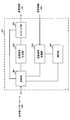
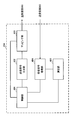
- FIG. 1 is a conceptual explanatory diagram of DCI instructing UCI on PUSCH without uplink data according to the first embodiment.
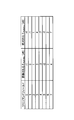
- FIG. 2 is a diagram illustrating an example of an extended table showing a correspondence relationship between a TPC command field and a correction value related to power control according to a modification of the embodiment.
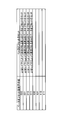
- FIG. 3 is a diagram illustrating an example of an extended table showing a correspondence relationship between a beta offset indicator field and a set of beta offsets according to a modification of the embodiment.
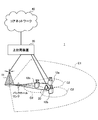
- FIG. 4 is a diagram illustrating an example of a schematic configuration of a wireless communication system according to an embodiment.
- FIG. 5 is a diagram illustrating an example of the overall configuration of a radio base station according to an embodiment.
- FIG. 1 is a conceptual explanatory diagram of DCI instructing UCI on PUSCH without uplink data according to the first embodiment.
- FIG. 2 is a diagram illustrating an example of an extended table showing a correspondence relationship between a TPC command field and a correction value related to power control
- FIG. 6 is a diagram illustrating an example of a functional configuration of a radio base station according to an embodiment.
- FIG. 7 is a diagram illustrating an example of an overall configuration of a user terminal according to an embodiment.
- FIG. 8 is a diagram illustrating an example of a functional configuration of a user terminal according to an embodiment.
- FIG. 9 is a diagram illustrating an example of a hardware configuration of a radio base station and a user terminal according to an embodiment.
- UCI and uplink data are multiplexed and transmitted on PUSCH (UCI multiplexing on PUSCH, UCI piggyback on PUSCH, UCI on PUSCH, etc.) are supported.
- UCI on PUSCH low PAPR (Peak-to-Average Power Patio), low inter-modulation distortion (IMD), etc. can be achieved in UL transmission.
- UCI can be transmitted by PUSCH without transmitting uplink data (UL-SCH) (UCI on PUSCH without uplink data (UCI on PUSCH without UL-SCH)).
- the UCI is CSI (aperiodic CSI (A-CSI)) transmitted in response to a trigger (transmission instruction) notified from the base station.
- the A-CSI trigger is included in downlink control information (DCI) transmitted using a downlink control channel (PDCCH: Physical Downlink Control Channel).
- DCI including the A-CSI trigger is an uplink scheduling grant (UL grant) for scheduling UL data transmission, and is at least one of DCI formats 0 and 4.
- the user terminal uses the uplink shared channel (PUSCH) specified by the UL grant according to the A-CSI trigger included in the UL grant, and performs CSI. Send.
- PUSCH uplink shared channel
- I MCS Modulation and Coding Scheme
- the UL grant is DCI format 4, it includes information corresponding to one transport block (TB) and one layer.
- the UL grant indicating UCI on PUSCH without uplink data satisfies one of the following (a) to (c):
- (A) The CSI request field is 1 bit, the A-CSI report is triggered, and the number of physical resource blocks (PRB) is 4 or less
- (B) The CSI request field is 2 bits, an A-CSI report for one serving cell is triggered, and the number of PRBs is 4 or less.
- (C) The CSI request field is 2 bits, an A-CSI report for more than one serving cell is triggered, and the number of PRBs is 20 or less.
- QPSK Quadrature Phase Shift Keying
- the channel coding and rate matching scheme of UCI on PUSCH without uplink data is the same as UCI on PUSCH with uplink data.
- UCI on PUSCH without uplink data is also planned to be supported in NR.
- how to control UCI on PUSCH without uplink data has not yet been studied. If a method for controlling UCI on PUSCH without uplink data is not properly defined, communication throughput, frequency utilization efficiency, and the like may be reduced.
- the present inventors have conceived a method of controlling UCI on PUSCH without uplink data using DCI.
- the UE may transmit UCI on PUSCH without uplink data based on the DCI format used for PUSCH scheduling.
- the DCI format may be DCI format 0_1 or DCI format 0_0.
- the DCI format 0_0 may be replaced with words such as DCI format used for scheduling of the fallback DCI, fallback UL grant, and PUSCH of one cell.
- the fallback DCI (fallback DCI) is, for example, DCI transmitted in at least one of a common search space (C-SS) and a UE-specific search space (UE-SS). DCI whose configuration cannot be set by UE-specific upper layer signaling may be used.
- the upper layer signaling may be, for example, RRC (Radio Resource Control) signaling, MAC (Medium Access Control) signaling, broadcast information, or a combination thereof.
- RRC Radio Resource Control
- MAC Medium Access Control
- Broadcast information includes, for example, a master information block (MIB: Master Information Block), a system information block (SIB: System Information Block), minimum system information (RMSI: Remaining Minimum System Information), and other system information (OSI: Other). System Information).
- MIB Master Information Block
- SIB System Information Block
- RMSI Remaining Minimum System Information
- OSI Other system information
- the DCI format 0_1 may be replaced with words such as a non-fallback DCI, a non-fallback UL grant, and a DCI format having a larger payload (number of bits) than the DCI format 0_0.
- Non-fallback DCI is, for example, DCI transmitted in UE-SS, and its configuration (contents, payload, etc.) can be set by UE-specific higher layer signaling (for example, RRC signaling). It may be DCI.
- the configuration (contents, payload, etc.) of the fallback DCI may also be set by higher layer signaling common to the UE (for example, broadcast information, system information, etc.).
- FIG. 1 is a conceptual explanatory diagram of DCI that indicates UCI on PUSCH without uplink data according to an embodiment.
- DCI indicating UCI on PUSCH without uplink data includes one or a plurality of fields (hereinafter, also referred to as “unused fields”) corresponding to information not used for the UCI transmission. May be included.
- the UE uses a DCI redundancy version (RV) field, a new data indicator (NDI) field, a MCS (Modulation and Coding Scheme) field, etc., and the UCI with no uplink data. It may be determined that the DCI indicates ON PUSCH.
- RV DCI redundancy version
- NDI new data indicator
- MCS Modulation and Coding Scheme
- the one or more unused fields may be specific values (or bit strings).
- the unused field may have a value of 0 (all bits are 0), a value of 1 (all bits are 1), a specific sequence, a specific bit pattern, etc. It may be.
- the UE may determine that the field is an unnecessary field and that the DCI indicates UCI on PUSCH without uplink data.
- the UE may use the unused field as a virtual CRC (Cyclic Redundancy Check) bit.
- the UE can use the virtual CRC bit for error correction as a known bit value included in the payload of the DCI format.
- the unused fields include, for example, a phase tracking reference signal (PTRS) -demodulation reference signal (DMRS) related field ('PTRS-DMRS association' field), code block group transmission information (CBGTI: Code Block Group Transmission Information field, precoding information and number of layers field ('precoding information and number of layers' field) and UL (UpLink) / SUL (Supplemental UpLink) indicator field ('UL / SUL indicator' field) There may be at least one. These are fields included in the DCI format 0_1, for example.
- PTRS phase tracking reference signal
- DMRS demodulation reference signal
- CBGTI Code Block Group Transmission Information field
- precoding information and number of layers field 'precoding information and number of layers' field
- UL (UpLink) / SUL (Supplemental UpLink) indicator field 'UL / SUL indicator' field
- the PTRS-DMRS related field is a field indicating the correspondence between the PTRS port and the DMRS port.
- PTRS for example, UL PTRS
- the PTRS-DMRS related field is usually not included in DCI.
- the DCI indicating UCI on PUSCH without uplink data may include a PTRS-DMRS related field having a predetermined number of bits.
- the UE may interpret the PTRS-DMRS related field as an unnecessary field.
- the PTRS-DMRS related field included in DCI indicating UCI on PUSCH without uplink data may be interpreted as an unnecessary field. Since PTRS is transmitted when the modulation order of PUSCH is high, when a relatively low modulation order is used for UCI on PUSCH without uplink data (using a modulation method with a small number of bits (such as QPSK)), This is because it is not necessary to multiplex PTRS on UCI on PUSCH without uplink data.
- the CBGTI field is a field related to transmission of a code block group (CBG) for each TB of PUSCH. Since UCI on PUSCH without uplink data does not include TB, CBG, and CB, the CBGTI field may be interpreted as an unnecessary field in DCI indicating UCI on PUSCH without uplink data.
- CBG code block group
- the precoding information and the number of layers field are fields for specifying PUSCH precoding and the number of layers.
- codebook based transmission is not configured for the UE by higher layer signaling (eg, when the UE is configured for non-codebook based transmission by the upper layer parameter “txConfig (ulTxConfig)”)
- the UE uses the codebook for UL transmission
- DCI does not include precoding information and the number of layers field.
- the DCI indicating UCI on PUSCH without uplink data may include precoding information having a predetermined number of bits and a layer number field.
- the UE may interpret the precoding information and the layer number field as unnecessary fields.
- the UL / SUL indicator field is a field for designating a UL carrier used for PUSCH transmission (normal UL carrier or SUL carrier).
- the SUL may be referred to as an unpaired UL (UL) and may be included in a time division duplex (TDD) carrier.
- TDD time division duplex
- the DCI indicating UCI on PUSCH without uplink data in the cell may include a UL / SUL indicator field having a predetermined number of bits. Good.
- the UE may interpret the UL / SUL indicator field as an unnecessary field.
- the UL / SUL indicator field included in the DCI indicating the UCI on PUSCH without uplink data in the cell may be interpreted as an unnecessary field. Good. This is because the UL / SUL indicator field is not used for UCI on PUSCH without uplink data when UCI on PUSCH without uplink data is transmitted on a fixed UL carrier (UL carrier or SUL carrier).
- the UE may control the transmission processing (encoding, precoding, etc.) of UCI on PUSCH without uplink data based on fields other than unnecessary fields.
- the UE performs DCI notification for UCI on PUSCH without uplink data with the same number of bits as DCI notification for UCI on PUSCH (or normal PUSCH) with uplink data. be able to.
- the UE may use at least one of the above unnecessary fields as a bit string that expands other fields.
- the unnecessary field used for expansion may not be the above-described specific value (or bit string).
- the UE may determine that the DCI indicates UCI on PUSCH without uplink data based on the unused field that is not used for extension.
- the other field is, for example, at least one of a transmission power control (TPC) command field ('TPC command' field), a CSI request field, and a beta offset indicator field ('Beta_offset indicator' field). May be.
- TPC transmission power control
- CSI request field CSI request field
- beta offset indicator field 'Beta_offset indicator' field
- the TPC command field included in the DCI indicating UCI on PUSCH without data is 2 bits, but the UE has a total of 3 bits combined with 1 bit of the UL / SUL indicator field, which is one of the unnecessary fields. May be read as the TPC command field.
- the UE may refer to a table extended in accordance with the extension of the TPC command field to 3 bits as a table indicating the correspondence between the TPC command field and the correction value related to power control.
- FIG. 2 is a diagram illustrating an example of an extended table showing a correspondence relationship between a TPC command field and a correction value related to power control according to a modification of the embodiment.
- FIG. 2 shows the value of the TPC command field (decimal notation) and the corresponding accumulated ⁇ PUSCH, c [dB] value and absolute ⁇ PUSCH, c [dB] value. Has been.
- the TPC command is used to correct the UE transmission power error.
- the TPC command indicates a value for correcting the PUSCH transmission power for each slot.
- the correction value may be an accumulated value (accumulation value) obtained by accumulating the transmission power increase / decrease value corresponding to the TPC command field value (accumulation mode), or the transmission power increase / decrease value corresponding to the TPC command field value itself (absolu value) (non-cumulative mode). Whether to use a cumulative value or an absolute value (cumulative mode or non-cumulative mode) may be set in the UE by higher layer signaling.
- FIG. 3 is a diagram illustrating an example of an extended table showing a correspondence relationship between a beta offset indicator field and a set of beta offsets according to a modification of the embodiment.
- FIG. 3 shows the value of the beta offset indicator field (in binary notation) and the corresponding set of beta offsets.
- the beta offset (also referred to as beta offset, ⁇ offset, etc.) may be used for determining the amount of UCI resources (for example, the number of symbols) transmitted using the PUSCH, determining the transmission power of the PUSCH, and the like.
- the UE may determine a beta offset value to be used based on a set of beta offsets specified by a table as shown in FIG. 3 and the number of UCI bits.
- “beta offset set” in FIG. 3 may be read as an offset index, an offset set index, or the like.
- Each set includes, for example, HARQ-ACK up to 2 bits, HARQ-ACK up to 11 bits, HARQ-ACK larger than 11 bits, CSI part 1 up to 11 bits (CSI part 1), larger than 11 bits
- CSI part 1 up to 11 bits (CSI part 1)
- CSI part 2 up to 11 bits
- CSI part 2 larger than 11 bits
- the UE selects a set corresponding to the beta offset indicator field, and if the transmitted UCI includes HARQ-ACK, based on the number of bits of the HARQ-ACK, for the HARQ-ACK included in the selected set Determine the beta offset value of. Even when the UCI includes CSI part 1 or CSI part 2, it is possible to determine the beta offset value by the process of replacing the HARQ-ACK.
- the part corresponding to the field value 0-3 (“000” to “011”) may be the same as or different from the existing table that is not expanded.
- the portion corresponding to the field value 4-7 (“100” to “111”) may define a correspondence not defined in the existing table.
- the correspondence not defined in the existing table may be defined by the specification, may be implicitly determined based on the value of the field, or may be set by higher layer signaling, for example. .
- ⁇ PUSCH, c can be defined with a finer step size than the existing table, or ⁇ PUSCH, c in a wider range can be defined. For this reason, when transmitting UCI on PUSCH without data, UE can implement TPC different from UCI on PUSCH with uplink data (or normal PUSCH). For example, the base station may notify the UE of DCI instructing UCI on PUSCH without data in order to cause the UE to perform control to greatly change the PUSCH transmission power.
- the extended table in FIG. 3 can specify a different set of beta offsets than the existing table. For this reason, UE can utilize a beta offset more suitable when transmitting UCI on PUSCH without data.
- the UE can specify a CSI trigger different from UCI on PUSCH (or normal PUSCH) with uplink data when transmitting UCI on PUSCH without data.
- information on an extension table corresponding to another field extended by an unnecessary field may be set in the UE by higher layer signaling.
- the unused field can be used effectively, and the transmission accuracy (or efficiency) of UCI on PUSCH without uplink data can be improved.
- DCI indicating UCI on PUSCH without data may be scrambled by CRC (Cyclic Redundancy Check) by a cell-radio network temporary identifier (Cell-Radio Network Temporary Identifier).
- CRC Cyclic Redundancy Check
- Cell-Radio Network Temporary Identifier Cell-Radio Network Temporary Identifier
- DCI indicating UCI on PUSCH without data may be CRC scrambled by RNTI different from C-RNTI. If the UE determines that the detected DCI is CRC scrambled by the other RNTI, the UE may determine that the DCI is a DCI indicating UCI on PUSCH without data. In this case, the DCI indicating the UCI on PUSCH without data may have a different size (or format) from the DCI indicating the UCI on PUSCH (or normal PUSCH) with data.
- the UE also includes DCI indicating UCI on PUSCH without data and DCI indicating UCI on PUSCH (or normal PUSCH) with data, and a predetermined field (field indicating presence / absence of UL data) included in DCI. Or the like).
- wireless communication system Wireless communication system
- communication is performed using any one or a combination of the wireless communication methods according to the above-described embodiments of the present disclosure.
- FIG. 4 is a diagram illustrating an example of a schematic configuration of a wireless communication system according to an embodiment.
- the wireless communication system 1 at least one of carrier aggregation (CA) and dual connectivity (DC) in which a plurality of fundamental frequency blocks (component carriers) each having a system bandwidth (for example, 20 MHz) of the LTE system as one unit is integrated. Can be applied.
- CA carrier aggregation
- DC dual connectivity
- the wireless communication system 1 includes LTE (Long Term Evolution), LTE-A (LTE-Advanced), LTE-B (LTE-Beyond), SUPER 3G, IMT-Advanced, 4G (4th generation mobile communication system), 5G. (5th generation mobile communication system), NR (New Radio), FRA (Future Radio Access), New-RAT (Radio Access Technology), etc., or a system that realizes these.
- LTE Long Term Evolution
- LTE-A LTE-Advanced
- LTE-B LTE-Beyond
- SUPER 3G IMT-Advanced
- 4G 4th generation mobile communication system
- 5G. 5th generation mobile communication system
- NR New Radio
- FRA Full Radio Access
- New-RAT Radio Access Technology
- the radio communication system 1 includes a radio base station 11 that forms a macro cell C1 having a relatively wide coverage, and a radio base station 12 (12a-12c) that is arranged in the macro cell C1 and forms a small cell C2 that is narrower than the macro cell C1. It is equipped with. Moreover, the user terminal 20 is arrange
- the user terminal 20 can be connected to both the radio base station 11 and the radio base station 12. It is assumed that the user terminal 20 uses the macro cell C1 and the small cell C2 at the same time using CA or DC. Moreover, the user terminal 20 may apply CA or DC using a plurality of cells (CC).
- CC a plurality of cells
- Communication between the user terminal 20 and the radio base station 11 can be performed using a carrier having a relatively low frequency band (for example, 2 GHz) and a narrow bandwidth (also referred to as an existing carrier or a legacy carrier).
- a carrier having a relatively high frequency band for example, 3.5 GHz, 5 GHz, etc.
- the same carrier may be used.
- the configuration of the frequency band used by each radio base station is not limited to this.
- the user terminal 20 can perform communication in each cell using at least one of time division duplex (TDD) and frequency division duplex (FDD).
- TDD time division duplex
- FDD frequency division duplex
- a single neurology may be applied, or a plurality of different neurology may be applied.
- Numerology may be a communication parameter applied to at least one of transmission and reception of a certain signal or channel, for example, subcarrier interval, bandwidth, symbol length, cyclic prefix length, subframe length, At least one of a TTI length, the number of symbols per TTI, a radio frame configuration, a specific filtering process performed by the transceiver in the frequency domain, and a specific windowing process performed by the transceiver in the time domain may be indicated.
- a communication parameter applied to at least one of transmission and reception of a certain signal or channel for example, subcarrier interval, bandwidth, symbol length, cyclic prefix length, subframe length, At least one of a TTI length, the number of symbols per TTI, a radio frame configuration, a specific filtering process performed by the transceiver in the frequency domain, and a specific windowing process performed by the transceiver in the time domain may be indicated.
- the subcarrier interval and the number of OFDM symbols of a configured OFDM symbol may be referred to as having a different neurology.
- the wireless base station 11 and the wireless base station 12 are connected by wire (for example, optical fiber compliant with CPRI (Common Public Radio Interface), X2 interface, etc.) or wirelessly. May be.
- the radio base station 11 and each radio base station 12 are connected to the higher station apparatus 30 and connected to the core network 40 via the higher station apparatus 30.
- the upper station device 30 includes, for example, an access gateway device, a radio network controller (RNC), a mobility management entity (MME), and the like, but is not limited thereto.
- RNC radio network controller
- MME mobility management entity
- Each radio base station 12 may be connected to the higher station apparatus 30 via the radio base station 11.
- the radio base station 11 is a radio base station having a relatively wide coverage, and may be called a macro base station, an aggregation node, an eNB (eNodeB), a transmission / reception point, or the like.
- the radio base station 12 is a radio base station having local coverage, and includes a small base station, a micro base station, a pico base station, a femto base station, a HeNB (Home eNodeB), an RRH (Remote Radio Head), and transmission / reception. It may be called a point.
- the radio base stations 11 and 12 are not distinguished, they are collectively referred to as a radio base station 10.
- Each user terminal 20 is a terminal that supports various communication schemes such as LTE and LTE-A, and may include not only a mobile communication terminal (mobile station) but also a fixed communication terminal (fixed station).
- orthogonal frequency division multiple access (OFDMA) is applied to the downlink, and single carrier-frequency division multiple access (SC-FDMA) is used for the uplink.
- SC-FDMA single carrier-frequency division multiple access
- Frequency Division Multiple Access and / or OFDMA are applied.
- OFDMA is a multi-carrier transmission scheme that performs communication by dividing a frequency band into a plurality of narrow frequency bands (subcarriers) and mapping data to each subcarrier.
- SC-FDMA is a single carrier transmission in which the system bandwidth is divided into bands each composed of one or continuous resource blocks for each terminal, and a plurality of terminals use different bands to reduce interference between terminals. It is a method.
- the uplink and downlink radio access schemes are not limited to these combinations, and other radio access schemes may be used.
- a downlink shared channel (PDSCH: Physical Downlink Shared Channel), a broadcast channel (PBCH: Physical Broadcast Channel), a downlink control channel, and the like that are shared by the user terminals 20 are used as downlink channels.
- PDSCH Physical Downlink Shared Channel
- PBCH Physical Broadcast Channel
- SIB System Information Block
- MIB Master Information Block
- Downlink control channels include PDCCH (Physical Downlink Control Channel), EPDCCH (Enhanced Physical Downlink Control Channel), PCFICH (Physical Control Format Indicator Channel), PHICH (Physical Hybrid-ARQ Indicator Channel), and the like.
- Downlink control information (DCI: Downlink Control Information) including at least one of scheduling information of PDSCH and PUSCH is transmitted by PDCCH.
- DCI for scheduling DL data reception may be referred to as DL assignment
- DCI for scheduling UL data transmission may be referred to as UL grant.
- the number of OFDM symbols used for PDCCH may be transmitted by PCFICH.
- Delivery confirmation information for example, retransmission control information, HARQ-ACK, ACK / NACK, etc.
- HARQ Hybrid Automatic Repeat reQuest
- EPDCCH is frequency-division multiplexed with PDSCH (downlink shared data channel), and is used for transmission of DCI and the like in the same manner as PDCCH.
- an uplink shared channel (PUSCH) shared by each user terminal 20
- an uplink control channel (PUCCH: Physical Uplink Control Channel)
- a random access channel (PRACH: Physical Random Access Channel)
- User data, higher layer control information, etc. are transmitted by PUSCH.
- downlink radio quality information CQI: Channel Quality Indicator
- delivery confirmation information SR
- scheduling request etc.
- a random access preamble for establishing connection with the cell is transmitted by the PRACH.
- a cell-specific reference signal CRS
- CSI-RS channel state information reference signal
- DMRS demodulation reference signal
- PRS Positioning Reference Signal
- a measurement reference signal SRS: Sounding Reference Signal
- a demodulation reference signal DMRS
- the DMRS may be referred to as a user terminal specific reference signal (UE-specific Reference Signal). Further, the transmitted reference signal is not limited to these.
- FIG. 5 is a diagram illustrating an example of the overall configuration of a radio base station according to an embodiment.
- the radio base station 10 includes a plurality of transmission / reception antennas 101, an amplifier unit 102, a transmission / reception unit 103, a baseband signal processing unit 104, a call processing unit 105, and a transmission path interface 106.
- the transmission / reception antenna 101, the amplifier unit 102, and the transmission / reception unit 103 may each be configured to include one or more.
- User data transmitted from the radio base station 10 to the user terminal 20 via the downlink is input from the higher station apparatus 30 to the baseband signal processing unit 104 via the transmission path interface 106.
- PDCP Packet Data Convergence Protocol
- RLC Radio Link Control
- MAC Medium Access
- Retransmission control for example, HARQ transmission processing
- scheduling transmission format selection, channel coding, Inverse Fast Fourier Transform (IFFT) processing, precoding processing, and other transmission processing
- IFFT Inverse Fast Fourier Transform
- precoding processing precoding processing, and other transmission processing
- the downlink control signal is also subjected to transmission processing such as channel coding and inverse fast Fourier transform, and is transferred to the transmission / reception unit 103.
- the transmission / reception unit 103 converts the baseband signal output by precoding for each antenna from the baseband signal processing unit 104 to a radio frequency band and transmits the converted signal.
- the radio frequency signal frequency-converted by the transmission / reception unit 103 is amplified by the amplifier unit 102 and transmitted from the transmission / reception antenna 101.
- the transmission / reception unit 103 can be configured by a transmitter / receiver, a transmission / reception circuit, or a transmission / reception device described based on common recognition in the technical field according to the present disclosure.
- the transmission / reception part 103 may be comprised as an integral transmission / reception part, and may be comprised from a transmission part and a receiving part.
- the radio frequency signal received by the transmission / reception antenna 101 is amplified by the amplifier unit 102.
- the transmission / reception unit 103 receives the uplink signal amplified by the amplifier unit 102.
- the transmission / reception unit 103 converts the frequency of the received signal into a baseband signal and outputs it to the baseband signal processing unit 104.
- the baseband signal processing unit 104 performs fast Fourier transform (FFT) processing, inverse discrete Fourier transform (IDFT: Inverse Discrete Fourier Transform) processing, and error correction on user data included in the input upstream signal.
- FFT fast Fourier transform
- IDFT inverse discrete Fourier transform
- Decoding, MAC retransmission control reception processing, RLC layer and PDCP layer reception processing are performed and transferred to the upper station apparatus 30 via the transmission path interface 106.
- the call processor 105 performs communication channel call processing (setting, release, etc.), status management of the radio base station 10, radio resource management, and the like.
- the transmission path interface 106 transmits and receives signals to and from the higher station apparatus 30 via a predetermined interface.
- the transmission path interface 106 transmits / receives signals (backhaul signaling) to / from other radio base stations 10 via an interface between base stations (for example, an optical fiber compliant with CPRI (Common Public Radio Interface), X2 interface). May be.
- CPRI Common Public Radio Interface
- X2 interface May be.
- FIG. 6 is a diagram illustrating an example of a functional configuration of a radio base station according to an embodiment of the present disclosure.
- the functional block of the characteristic part in this embodiment is mainly shown, and it may be assumed that the wireless base station 10 also has other functional blocks necessary for wireless communication.
- the baseband signal processing unit 104 includes at least a control unit (scheduler) 301, a transmission signal generation unit 302, a mapping unit 303, a reception signal processing unit 304, and a measurement unit 305. These configurations may be included in the radio base station 10, and a part or all of the configurations may not be included in the baseband signal processing unit 104.
- the control unit (scheduler) 301 controls the entire radio base station 10.
- the control unit 301 can be configured by a controller, a control circuit, or a control device described based on common recognition in the technical field according to the present disclosure.
- the control unit 301 controls, for example, signal generation in the transmission signal generation unit 302, signal allocation in the mapping unit 303, and the like.
- the control unit 301 also controls signal reception processing in the reception signal processing unit 304, signal measurement in the measurement unit 305, and the like.
- the control unit 301 schedules system information, downlink data signals (for example, signals transmitted using a downlink shared channel), and downlink control signals (for example, signals transmitted using a downlink control channel) (for example, resource allocation). ) To control. In addition, the control unit 301 controls generation of a downlink control signal, a downlink data signal, and the like based on a result of determining whether or not retransmission control is necessary for the uplink data signal.
- the control unit 301 controls scheduling of synchronization signals (for example, PSS (Primary Synchronization Signal) / SSS (Secondary Synchronization Signal)), downlink reference signals (for example, CRS, CSI-RS, DMRS) and the like.
- synchronization signals for example, PSS (Primary Synchronization Signal) / SSS (Secondary Synchronization Signal)
- downlink reference signals for example, CRS, CSI-RS, DMRS
- the control unit 301 includes an uplink data signal (for example, a signal transmitted using an uplink shared channel), an uplink control signal (for example, a signal transmitted using an uplink control channel), a random access preamble, an uplink reference signal, and the like. Control scheduling.
- the transmission signal generation unit 302 generates a downlink signal (downlink control signal, downlink data signal, downlink reference signal, etc.) based on an instruction from the control unit 301, and outputs it to the mapping unit 303.
- the transmission signal generation unit 302 can be configured by a signal generator, a signal generation circuit, or a signal generation device described based on common recognition in the technical field according to the present disclosure.
- the transmission signal generation unit 302 generates, for example, at least one of a DL assignment for notifying downlink data allocation information and a UL grant for notifying uplink data allocation information based on an instruction from the control unit 301.
- the DL assignment and UL grant are both DCI and follow the DCI format.
- the downlink data signal is subjected to coding processing and modulation processing according to a coding rate, a modulation scheme, and the like determined based on channel state information (CSI: Channel State Information) from each user terminal 20.
- CSI Channel State Information
- the mapping unit 303 maps the downlink signal generated by the transmission signal generation unit 302 to a predetermined radio resource based on an instruction from the control unit 301, and outputs it to the transmission / reception unit 103.
- the mapping unit 303 can be configured by a mapper, a mapping circuit, or a mapping device described based on common recognition in the technical field according to the present disclosure.
- the reception signal processing unit 304 performs reception processing (for example, demapping, demodulation, decoding, etc.) on the reception signal input from the transmission / reception unit 103.
- the received signal is, for example, an uplink signal (uplink control signal, uplink data signal, uplink reference signal, etc.) transmitted from the user terminal 20.
- the reception signal processing unit 304 can be configured by a signal processor, a signal processing circuit, or a signal processing device described based on common recognition in the technical field according to the present disclosure.
- the reception signal processing unit 304 outputs the information decoded by the reception processing to the control unit 301. For example, when receiving PUCCH including HARQ-ACK, HARQ-ACK is output to control section 301.
- the reception signal processing unit 304 outputs at least one of the reception signal and the signal after reception processing to the measurement unit 305.
- the measurement unit 305 performs measurement on the received signal.
- the measurement unit 305 can be configured from a measurement device, a measurement circuit, or a measurement device described based on common recognition in the technical field according to the present disclosure.
- the measurement unit 305 may perform RRM (Radio Resource Management) measurement, CSI (Channel State Information) measurement, and the like based on the received signal.
- the measurement unit 305 includes received power (for example, RSRP (Reference Signal Received Power)), received quality (for example, RSRQ (Reference Signal Received Quality), SINR (Signal to Interference plus Noise Ratio), SNR (Signal to Noise Ratio)).
- Signal strength for example, RSSI (Received Signal Strength Indicator)
- propagation path information for example, CSI
- the measurement result may be output to the control unit 301.
- the transmission / reception unit 103 may transmit downlink control information (DCI).
- the DCI may be DCI in which one or a plurality of specific fields are predetermined values (that is, determined as unnecessary fields).
- the transmission / reception unit 103 may receive the PUSCH transmitted based on the DCI.
- control unit 301 may perform control related to transmission of uplink control information without uplink data in the uplink shared channel of the user terminal 20.
- FIG. 7 is a diagram illustrating an example of an overall configuration of a user terminal according to an embodiment.
- the user terminal 20 includes a plurality of transmission / reception antennas 201, an amplifier unit 202, a transmission / reception unit 203, a baseband signal processing unit 204, and an application unit 205.
- the transmission / reception antenna 201, the amplifier unit 202, and the transmission / reception unit 203 may be configured to include one or more.
- the radio frequency signal received by the transmission / reception antenna 201 is amplified by the amplifier unit 202.
- the transmission / reception unit 203 receives the downlink signal amplified by the amplifier unit 202.
- the transmission / reception unit 203 converts the frequency of the received signal into a baseband signal and outputs it to the baseband signal processing unit 204.
- the transmission / reception unit 203 can be configured by a transmitter / receiver, a transmission / reception circuit, or a transmission / reception device described based on common recognition in the technical field according to the present disclosure.
- the transmission / reception unit 203 may be configured as an integral transmission / reception unit, or may be configured from a transmission unit and a reception unit.
- the baseband signal processing unit 204 performs FFT processing, error correction decoding, retransmission control reception processing, and the like on the input baseband signal.
- the downlink user data is transferred to the application unit 205.
- the application unit 205 performs processing related to layers higher than the physical layer and the MAC layer. Also, broadcast information of downlink data may be transferred to the application unit 205.
- uplink user data is input from the application unit 205 to the baseband signal processing unit 204.
- the baseband signal processing unit 204 performs transmission processing for retransmission control (for example, HARQ transmission processing), channel coding, precoding, discrete Fourier transform (DFT) processing, IFFT processing, etc. 203.
- the transmission / reception unit 203 converts the baseband signal output from the baseband signal processing unit 204 into a radio frequency band and transmits it.
- the radio frequency signal frequency-converted by the transmission / reception unit 203 is amplified by the amplifier unit 202 and transmitted from the transmission / reception antenna 201.
- FIG. 8 is a diagram illustrating an example of a functional configuration of a user terminal according to an embodiment.
- the functional block of the characteristic part in this embodiment is mainly shown, and it may be assumed that the user terminal 20 also has other functional blocks necessary for wireless communication.
- the baseband signal processing unit 204 included in the user terminal 20 includes at least a control unit 401, a transmission signal generation unit 402, a mapping unit 403, a reception signal processing unit 404, and a measurement unit 405. Note that these configurations may be included in the user terminal 20, and some or all of the configurations may not be included in the baseband signal processing unit 204.
- the control unit 401 controls the entire user terminal 20.
- the control unit 401 can be configured by a controller, a control circuit, or a control device described based on common recognition in the technical field according to the present disclosure.
- the control unit 401 controls, for example, signal generation in the transmission signal generation unit 402, signal allocation in the mapping unit 403, and the like.
- the control unit 401 also controls signal reception processing in the reception signal processing unit 404, signal measurement in the measurement unit 405, and the like.
- the control unit 401 acquires the downlink control signal, the downlink data signal, and the like transmitted from the radio base station 10 from the received signal processing unit 404. As a result of determining whether or not retransmission control is required for the downlink data signal, the control unit 401 controls generation of an uplink control signal, an uplink data signal, and the like based on the downlink control signal and the like.
- control unit 401 When the control unit 401 acquires various types of information notified from the radio base station 10 from the reception signal processing unit 404, the control unit 401 may update parameters used for control based on the information.
- the transmission signal generation unit 402 generates an uplink signal (uplink control signal, uplink data signal, uplink reference signal, etc.) based on an instruction from the control unit 401 and outputs the uplink signal to the mapping unit 403.
- the transmission signal generation unit 402 can be configured by a signal generator, a signal generation circuit, or a signal generation device described based on common recognition in the technical field according to the present disclosure.
- the transmission signal generation unit 402 generates an uplink control signal related to delivery confirmation information, channel state information (CSI), and the like based on an instruction from the control unit 401, for example. In addition, the transmission signal generation unit 402 generates an uplink data signal based on an instruction from the control unit 401. For example, the transmission signal generation unit 402 is instructed by the control unit 401 to generate an uplink data signal when the UL grant is included in the downlink control signal notified from the radio base station 10.
- CSI channel state information
- the mapping unit 403 maps the uplink signal generated by the transmission signal generation unit 402 to a radio resource based on an instruction from the control unit 401, and outputs the radio signal to the transmission / reception unit 203.
- the mapping unit 403 can be configured by a mapper, a mapping circuit, or a mapping device described based on common recognition in the technical field according to the present disclosure.
- the reception signal processing unit 404 performs reception processing (for example, demapping, demodulation, decoding, etc.) on the reception signal input from the transmission / reception unit 203.
- the received signal is, for example, a downlink signal (downlink control signal, downlink data signal, downlink reference signal, etc.) transmitted from the radio base station 10.
- the reception signal processing unit 404 can be configured by a signal processor, a signal processing circuit, or a signal processing device described based on common recognition in the technical field according to the present disclosure. Further, the reception signal processing unit 404 can constitute a reception unit according to the present disclosure.
- the reception signal processing unit 404 outputs the information decoded by the reception processing to the control unit 401.
- the reception signal processing unit 404 outputs, for example, broadcast information, system information, RRC signaling, DCI, and the like to the control unit 401.
- the reception signal processing unit 404 outputs at least one of the reception signal and the signal after reception processing to the measurement unit 405.
- the measurement unit 405 performs measurement on the received signal.
- the measurement unit 405 can be configured from a measurement device, a measurement circuit, or a measurement device described based on common recognition in the technical field according to the present disclosure.
- the measurement unit 405 may perform RRM measurement, CSI measurement, and the like based on the received signal.
- the measurement unit 405 may measure reception power (for example, RSRP), reception quality (for example, RSRQ, SINR, SNR), signal strength (for example, RSSI), propagation path information (for example, CSI), and the like.
- the measurement result may be output to the control unit 401.
- the transmission / reception unit 203 may receive downlink control information (DCI) instructing transmission of uplink control information without uplink data in the uplink shared channel.
- DCI downlink control information
- the transmission / reception unit 203 may transmit the PUSCH based on DCI.
- the control unit 401 Based on the redundancy version (RV: Redundancy Version) field, the new data indication (NDI) field, the MCS (Modulation and Coding Scheme) field, etc., the control unit 401 transmits the downlink control information to the uplink shared channel. May be determined to be DCI instructing transmission of uplink control information without uplink data.
- RV Redundancy Version
- NDI new data indication
- MCS Modulation and Coding Scheme
- the control unit 401 may assume that one or more specific fields of the DCI have predetermined values.
- the predetermined value may be, for example, a value of 0 (all bits are 0), a value of 1 (all bits are 1), a specific sequence, a specific Or a bit pattern of
- control part 401 is a case where one or some specific field of the downlink control information (DCI) acquired from the received signal processing part 404 is a predetermined value (for example, it is judged as an unnecessary field).
- DCI downlink control information
- transmission of uplink control information without uplink data (UCI on PUSCH without uplink data (UCI on PUSCH without UL-SCH)) in the uplink shared channel may be controlled.
- the one or more specific fields are at least one of a phase tracking reference signal-demodulation reference signal related field, a code block group transmission information field, precoding information and layer number field, and a UL / SUL indicator field. There may be.
- the control unit 401 may use at least one of the one or more specific fields as a bit string extending another field.
- the other field may be at least one of a transmission power control command field, a channel state information request field, and a beta offset indicator field.
- each functional block is realized using one device physically or logically coupled, or two or more devices physically or logically separated may be directly or indirectly (for example, (Using wired, wireless, etc.) and may be implemented using these multiple devices.
- a wireless base station, a user terminal, and the like may function as a computer that performs processing of the wireless communication method of the present disclosure.
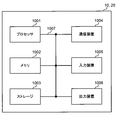
- FIG. 9 is a diagram illustrating an example of a hardware configuration of a radio base station and a user terminal according to an embodiment.
- the wireless base station 10 and the user terminal 20 described above may be physically configured as a computer device including a processor 1001, a memory 1002, a storage 1003, a communication device 1004, an input device 1005, an output device 1006, a bus 1007, and the like. Good.
- the term “apparatus” can be read as a circuit, a device, a unit, or the like.
- the hardware configurations of the radio base station 10 and the user terminal 20 may be configured to include one or a plurality of each device illustrated in the figure, or may be configured not to include some devices.
- processor 1001 may be implemented by one or more chips.
- Each function in the radio base station 10 and the user terminal 20 is calculated by causing the processor 1001 to perform calculations by reading predetermined software (programs) on hardware such as the processor 1001 and the memory 1002, for example, via the communication device 1004. This is realized by controlling communication or controlling at least one of reading and writing of data in the memory 1002 and the storage 1003.
- the processor 1001 controls the entire computer by operating an operating system, for example.
- the processor 1001 may be configured by a central processing unit (CPU) including an interface with peripheral devices, a control device, an arithmetic device, a register, and the like.
- CPU central processing unit
- the baseband signal processing unit 104 (204) and the call processing unit 105 described above may be realized by the processor 1001.
- the processor 1001 reads a program (program code), a software module, data, and the like from at least one of the storage 1003 and the communication device 1004 to the memory 1002, and executes various processes according to these.
- a program program code
- the control unit 401 of the user terminal 20 may be realized by a control program stored in the memory 1002 and operating in the processor 1001, and may be realized similarly for other functional blocks.
- the memory 1002 is a computer-readable recording medium such as a ROM (Read Only Memory), an EPROM (Erasable Programmable ROM), an EEPROM (Electrically EPROM), a RAM (Random Access Memory), or any other suitable storage medium. It may be configured by one.
- the memory 1002 may be called a register, a cache, a main memory (main storage device), or the like.
- the memory 1002 can store a program (program code), a software module, and the like that can be executed to perform the wireless communication method according to an embodiment of the present disclosure.
- the storage 1003 is a computer-readable recording medium such as a flexible disk, a floppy (registered trademark) disk, a magneto-optical disk (for example, a compact disk (CD-ROM (Compact Disc ROM)), a digital versatile disk, Blu-ray® disk), removable disk, hard disk drive, smart card, flash memory device (eg, card, stick, key drive), magnetic stripe, database, server, or other suitable storage medium It may be constituted by.
- the storage 1003 may be referred to as an auxiliary storage device.
- the communication device 1004 is hardware (transmission / reception device) for performing communication between computers via at least one of a wired network and a wireless network, and is also referred to as a network device, a network controller, a network card, a communication module, or the like.
- the communication device 1004 includes, for example, a high-frequency switch, a duplexer, a filter, a frequency synthesizer, etc. in order to realize at least one of frequency division duplex (FDD) and time division duplex (TDD). It may be constituted by.
- FDD frequency division duplex
- TDD time division duplex
- the transmission / reception antenna 101 (201), the amplifier unit 102 (202), the transmission / reception unit 103 (203), the transmission path interface 106, and the like described above may be realized by the communication device 1004.
- the input device 1005 is an input device (for example, a keyboard, a mouse, a microphone, a switch, a button, a sensor, etc.) that accepts an input from the outside.
- the output device 1006 is an output device (for example, a display, a speaker, an LED (Light Emitting Diode) lamp, etc.) that performs output to the outside.
- the input device 1005 and the output device 1006 may have an integrated configuration (for example, a touch panel).
- the devices such as the processor 1001 and the memory 1002 are connected by a bus 1007 for communicating information.
- the bus 1007 may be configured using a single bus, or may be configured using a different bus for each device.
- the radio base station 10 and the user terminal 20 include a microprocessor, a digital signal processor (DSP), an ASIC (Application Specific Integrated Circuit), a PLD (Programmable Logic Device), an FPGA (Field Programmable Gate Array), and the like. It may be configured including hardware, and a part or all of each functional block may be realized using the hardware. For example, the processor 1001 may be implemented using at least one of these hardware.
- DSP digital signal processor
- ASIC Application Specific Integrated Circuit
- PLD Programmable Logic Device
- FPGA Field Programmable Gate Array
- the terms described in the present disclosure and the terms necessary for understanding the present disclosure may be replaced with terms having the same or similar meaning.
- the signal may be a message.
- the reference signal may be abbreviated as RS (Reference Signal), and may be referred to as a pilot, a pilot signal, or the like depending on an applied standard.
- a component carrier CC: Component Carrier
- CC Component Carrier
- the radio frame may be configured by one or a plurality of periods (frames) in the time domain.
- Each of the one or more periods (frames) constituting the radio frame may be referred to as a subframe.
- a subframe may be composed of one or more slots in the time domain.
- the subframe may have a fixed length of time (eg, 1 ms) that does not depend on numerology.
- the neurology may be a communication parameter applied to at least one of transmission and reception of a certain signal or channel.
- SCS SubCarrier Spacing
- bandwidth For example, subcarrier spacing (SCS: SubCarrier Spacing), bandwidth, symbol length, cyclic prefix length, transmission time interval (TTI: Transmission Time Interval), number of symbols per TTI, radio frame configuration, transceiver in frequency domain
- TTI Transmission Time Interval
- number of symbols per TTI radio frame configuration
- transceiver in frequency domain It may indicate at least one of a specific filtering process to be performed and a specific windowing process to be performed by the transceiver in the time domain.
- a slot may be configured with one or a plurality of symbols (OFDM (Orthogonal Frequency Division Multiplexing) symbol, SC-FDMA (Single Carrier Frequency Division Multiple Access) symbol, etc.) in the time domain. Further, the slot may be a time unit based on the numerology.
- OFDM Orthogonal Frequency Division Multiplexing
- SC-FDMA Single Carrier Frequency Division Multiple Access
- the slot may include a plurality of mini slots. Each minislot may be configured with one or more symbols in the time domain. The minislot may also be called a subslot. A mini-slot may be composed of fewer symbols than slots.
- PDSCH (or PUSCH) transmitted in units of time larger than a minislot may be referred to as PDSCH (PUSCH) mapping type A.
- PDSCH (or PUSCH) transmitted using a minislot may be referred to as a PDSCH (PUSCH) mapping type B.
- Radio frame, subframe, slot, minislot, and symbol all represent time units when transmitting signals. Different names may be used for the radio frame, subframe, slot, minislot, and symbol.
- one subframe may be called a transmission time interval (TTI)
- TTI transmission time interval
- TTI transmission time interval
- TTI transmission time interval
- TTI transmission time interval
- TTI transmission time interval
- TTI slot or one minislot
- at least one of the subframe and the TTI may be a subframe (1 ms) in the existing LTE, a period shorter than 1 ms (for example, 1-13 symbols), or a period longer than 1 ms. It may be.
- a unit representing TTI may be called a slot, a minislot, or the like instead of a subframe.
- TTI means, for example, a minimum time unit for scheduling in wireless communication.
- a radio base station performs scheduling to allocate radio resources (frequency bandwidth, transmission power, etc. that can be used in each user terminal) to each user terminal in units of TTI.
- the definition of TTI is not limited to this.
- the TTI may be a transmission time unit such as a channel-encoded data packet (transport block), a code block, or a code word, or may be a processing unit such as scheduling or link adaptation.
- a time interval for example, the number of symbols
- a transport block, a code block, a code word, etc. may be shorter than the TTI.
- one or more TTIs may be the minimum scheduling unit. Further, the number of slots (the number of mini-slots) constituting the minimum time unit of the scheduling may be controlled.
- a TTI having a time length of 1 ms may be called a normal TTI (TTI in LTE Rel. 8-12), a normal TTI, a long TTI, a normal subframe, a normal subframe, or a long subframe.
- a TTI shorter than a normal TTI may be called a shortened TTI, a short TTI, a partial TTI (partial or fractional TTI), a shortened subframe, a short subframe, a minislot, or a subslot.
- a long TTI (eg, normal TTI, subframe, etc.) may be read as a TTI having a time length exceeding 1 ms, and a short TTI (eg, shortened TTI) is less than the TTI length of the long TTI and 1 ms. It may be replaced with a TTI having the above TTI length.
- a resource block (RB) is a resource allocation unit in the time domain and the frequency domain, and may include one or a plurality of continuous subcarriers (subcarriers) in the frequency domain.
- the RB may include one or a plurality of symbols in the time domain, and may have a length of 1 slot, 1 mini slot, 1 subframe, or 1 TTI.
- One TTI and one subframe may each be composed of one or a plurality of resource blocks.
- One or more RBs include physical resource blocks (PRB), sub-carrier groups (SCG), resource element groups (REG), PRB pairs, RB pairs, etc. May be called.
- PRB physical resource blocks
- SCG sub-carrier groups
- REG resource element groups
- PRB pairs RB pairs, etc. May be called.
- the resource block may be configured by one or a plurality of resource elements (RE: Resource Element).
- RE Resource Element
- 1RE may be a radio resource region of 1 subcarrier and 1 symbol.
- the structure of the above-described radio frame, subframe, slot, minislot, symbol, etc. is merely an example.
- the number of subframes included in a radio frame, the number of slots per subframe or radio frame, the number of minislots included in the slot, the number of symbols and RBs included in the slot or minislot, and included in the RB The number of subcarriers, the number of symbols in the TTI, the symbol length, the cyclic prefix (CP) length, and the like can be variously changed.
- information, parameters, and the like described in the present disclosure may be expressed using absolute values, may be expressed using relative values from predetermined values, or may be expressed using other corresponding information. May be represented.
- the radio resource may be indicated by a predetermined index.
- the names used for parameters and the like in this disclosure are not limited names in any way.
- various channels PUCCH (Physical Uplink Control Channel), PDCCH (Physical Downlink Control Channel), etc.
- information elements can be identified by any suitable name, so the various channels and information elements assigned to them.
- the name is not limited in any way.
- the information, signals, etc. described in this disclosure may be represented using any of a variety of different technologies.
- data, commands, commands, information, signals, bits, symbols, chips, etc. that may be referred to throughout the above description are voltages, currents, electromagnetic waves, magnetic fields or magnetic particles, light fields or photons, or any of these May be represented by a combination of
- information, signals, and the like can be output from the upper layer to at least one of the lower layer and the lower layer to the upper layer.
- Information, signals, and the like may be input / output via a plurality of network nodes.
- the input / output information, signals, etc. may be stored in a specific location (for example, a memory) or may be managed using a management table. Input / output information, signals, and the like can be overwritten, updated, or added. The output information, signals, etc. may be deleted. Input information, signals, and the like may be transmitted to other devices.
- information notification includes physical layer signaling (eg, downlink control information (DCI), uplink control information (UCI)), upper layer signaling (eg, RRC (Radio Resource Control) signaling), It may be implemented by broadcast information (master information block (MIB), system information block (SIB), etc.), MAC (Medium Access Control) signaling), other signals, or a combination thereof.
- DCI downlink control information
- UCI uplink control information
- RRC Radio Resource Control
- MIB master information block
- SIB system information block
- MAC Medium Access Control
- the physical layer signaling may be referred to as L1 / L2 (Layer 1 / Layer 2) control information (L1 / L2 control signal), L1 control information (L1 control signal), or the like.
- the RRC signaling may be referred to as an RRC message, and may be, for example, an RRC connection setup (RRCConnectionSetup) message, an RRC connection reconfiguration (RRCConnectionReconfiguration) message, or the like.
- the MAC signaling may be notified using, for example, a MAC control element (MAC CE (Control Element)).
- notification of predetermined information is not limited to explicit notification, but implicitly (for example, by not performing notification of the predetermined information or other information) May be performed).
- the determination may be performed by a value represented by 1 bit (0 or 1), or may be performed by a boolean value represented by true or false.
- the comparison may be performed by numerical comparison (for example, comparison with a predetermined value).
- software, instructions, information, etc. may be transmitted / received via a transmission medium.
- the software uses websites using at least one of wired technology (coaxial cable, fiber optic cable, twisted pair, digital subscriber line (DSL), etc.) and wireless technology (infrared, microwave, etc.) When transmitted from a server or other remote source, at least one of these wired and wireless technologies is included within the definition of a transmission medium.
- system and “network” as used in this disclosure may be used interchangeably.
- base station BS
- radio base station fixed station
- NodeB NodeB
- eNodeB eNodeB
- gNodeB gNodeB
- a base station may also be called terms such as a macro cell, a small cell, a femto cell, and a pico cell.
- the base station can accommodate one or a plurality of (for example, three) cells (also called sectors). If the base station accommodates multiple cells, the entire coverage area of the base station can be partitioned into multiple smaller areas, each smaller area being a base station subsystem (eg, an indoor small base station (RRH: Remote Radio Head)) can also provide communication services.
- a base station subsystem eg, an indoor small base station (RRH: Remote Radio Head)
- RRH Remote Radio Head
- the terms “cell” or “sector” refer to part or all of the coverage area of at least one of a base station and a base station subsystem that provides communication services in this coverage.
- MS mobile station
- UE user equipment
- Mobile station subscriber station, mobile unit, subscriber unit, wireless unit, remote unit, mobile device, wireless device, wireless communication device, remote device, mobile subscriber station, access terminal, mobile terminal, wireless terminal, remote terminal , Handset, user agent, mobile client, client or some other suitable term.
- At least one of the base station and the mobile station may be referred to as a transmission device, a reception device, or the like.
- the base station and the mobile station may be a device mounted on the mobile body, the mobile body itself, or the like.
- the moving body may be a vehicle (for example, a car, an airplane, etc.), an unattended moving body (for example, a drone, an autonomous driving vehicle, etc.), or a robot (manned or unmanned).
- at least one of the base station and the mobile station includes a device that does not necessarily move during a communication operation.
- the radio base station in the present disclosure may be replaced with a user terminal.
- the communication between the radio base station and the user terminal is replaced with communication between a plurality of user terminals (for example, D2D (Device-to-Device), V2X (Vehicle-to-Everything), etc. may be called))
- a plurality of user terminals for example, D2D (Device-to-Device), V2X (Vehicle-to-Everything), etc. may be called)
- the user terminal 20 may have a function that the wireless base station 10 has.
- words such as “up” and “down” may be read as words corresponding to communication between terminals (for example, “side”).
- an uplink channel, a downlink channel, etc. may be read as a side channel.
- the user terminal in the present disclosure may be replaced with a radio base station.
- the wireless base station 10 may have a function that the user terminal 20 has.
- the operation performed by the base station may be performed by the upper node in some cases.
- various operations performed for communication with a terminal may include a base station and one or more network nodes other than the base station (for example, It is obvious that this can be done by MME (Mobility Management Entity), S-GW (Serving-Gateway), etc., but not limited thereto) or a combination thereof.
- MME Mobility Management Entity
- S-GW Serving-Gateway
- each aspect / embodiment described in the present disclosure may be used alone, may be used in combination, or may be switched according to execution.
- the order of the processing procedures, sequences, flowcharts, and the like of each aspect / embodiment described in the present disclosure may be changed as long as there is no contradiction.
- the methods described in this disclosure present elements of the various steps in an exemplary order and are not limited to the specific order presented.
- Each aspect / embodiment described in the present disclosure includes LTE (Long Term Evolution), LTE-A (LTE-Advanced), LTE-B (LTE-Beyond), SUPER 3G, IMT-Advanced 4G (4th generation mobile communication). system), 5G (5th generation mobile communication system), FRA (Future Radio Access), New-RAT (Radio Access Technology), NR (New Radio), NX (New radio access), FX (Future generation radio access), GSM (Registered trademark) (Global System for Mobile communications), CDMA2000, UMB (Ultra Mobile Broadband), IEEE 802.11 (Wi-Fi (registered trademark)), IEEE 802.16 (WiMAX (registered trademark)), IEEE 802.
- the present invention may be applied to a system using other appropriate wireless communication methods, a next-generation system extended based on these, and the like.
- a plurality of systems may be combined and applied (for example, a combination of LTE or LTE-A and 5G).
- the phrase“ based on ”does not mean“ based only on, ”unless expressly specified otherwise.
- the phrase “based on” means both “based only on” and “based at least on.”
- any reference to elements using designations such as “first”, “second”, etc. as used in this disclosure does not generally limit the amount or order of those elements. These designations can be used in this disclosure as a convenient way to distinguish between two or more elements. Thus, reference to the first and second elements does not mean that only two elements can be employed or that the first element must precede the second element in some way.
- determining may encompass a wide variety of actions. For example, “determination (decision)” includes determination, calculation, calculation, processing, derivation, investigating, looking up (eg, table, (Searching in a database or another data structure), ascertaining, etc. may be considered to be “determining”.
- determination (decision) includes receiving (for example, receiving information), transmitting (for example, transmitting information), input (input), output (output), access ( accessing) (e.g., accessing data in memory), etc. may be considered to be “determining”.
- determination is considered to be “determination (resolving)”, “selecting”, “choosing”, “establishing”, “comparing”, etc. Also good. That is, “determination (determination)” may be regarded as “determination (determination)” of some operation.
- connection is any direct or indirect connection or coupling between two or more elements. And may include the presence of one or more intermediate elements between two elements “connected” or “coupled” to each other.
- the coupling or connection between the elements may be physical, logical, or a combination thereof. For example, “connection” may be read as “access”.
- radio frequency domain microwave It can be considered to be “connected” or “coupled” to each other using electromagnetic energy having a wavelength in the region, light (both visible and invisible) region, and the like.
Landscapes
- Engineering & Computer Science (AREA)
- Computer Networks & Wireless Communication (AREA)
- Signal Processing (AREA)
- Mobile Radio Communication Systems (AREA)
Abstract
Selon un aspect de la présente invention, un terminal d'utilisateur est caractérisé en ce qu'il comprend : une unité de réception qui reçoit des informations de commande de liaison descendante qui commandent la transmission d'informations de commande de liaison montante sans données de liaison montante dans un canal partagé de liaison montante ; et une unité de commande qui suppose qu'un ou plusieurs champs spécifiques des informations de commande de liaison descendante ont respectivement des valeurs prédéterminées, ou qui utilise le ou les champs spécifiques en tant qu'un flux binaire qui étend un autre champ. Selon un aspect de la présente invention, des UCI sans les données de liaison montante peuvent être transmises sur un PUSCH de manière appropriée.
Priority Applications (1)
| Application Number | Priority Date | Filing Date | Title |
|---|---|---|---|
| PCT/JP2018/014642 WO2019193731A1 (fr) | 2018-04-05 | 2018-04-05 | Terminal utilisateur, et station de base sans fil |
Applications Claiming Priority (1)
| Application Number | Priority Date | Filing Date | Title |
|---|---|---|---|
| PCT/JP2018/014642 WO2019193731A1 (fr) | 2018-04-05 | 2018-04-05 | Terminal utilisateur, et station de base sans fil |
Publications (1)
| Publication Number | Publication Date |
|---|---|
| WO2019193731A1 true WO2019193731A1 (fr) | 2019-10-10 |
Family
ID=68100251
Family Applications (1)
| Application Number | Title | Priority Date | Filing Date |
|---|---|---|---|
| PCT/JP2018/014642 Ceased WO2019193731A1 (fr) | 2018-04-05 | 2018-04-05 | Terminal utilisateur, et station de base sans fil |
Country Status (1)
| Country | Link |
|---|---|
| WO (1) | WO2019193731A1 (fr) |
Cited By (13)
| Publication number | Priority date | Publication date | Assignee | Title |
|---|---|---|---|---|
| CN114285155A (zh) * | 2022-01-05 | 2022-04-05 | 南京赤勇星智能科技有限公司 | 5g基站用远程智能差异化直流输出备电续航的控制方法 |
| CN114731531A (zh) * | 2019-10-11 | 2022-07-08 | 株式会社Ntt都科摩 | 终端以及无线通信方法 |
| CN114731597A (zh) * | 2019-11-28 | 2022-07-08 | 株式会社Ntt都科摩 | 无线通信节点 |
| CN114762378A (zh) * | 2019-10-11 | 2022-07-15 | 株式会社Ntt都科摩 | 终端以及无线通信方法 |
| CN114946228A (zh) * | 2019-11-18 | 2022-08-26 | 株式会社Ntt都科摩 | 终端以及无线通信方法 |
| CN115004746A (zh) * | 2019-11-28 | 2022-09-02 | 株式会社Ntt都科摩 | 终端以及无线通信方法 |
| CN115039428A (zh) * | 2019-11-26 | 2022-09-09 | 株式会社Ntt都科摩 | 终端以及无线通信方法 |
| CN115136689A (zh) * | 2020-02-13 | 2022-09-30 | 株式会社Ntt都科摩 | 终端、无线通信方法以及基站 |
| CN115336362A (zh) * | 2020-03-27 | 2022-11-11 | 华为技术有限公司 | 通信方法及相关产品 |
| CN116325961A (zh) * | 2020-08-05 | 2023-06-23 | 株式会社Ntt都科摩 | 终端、无线通信方法以及基站 |
| CN116458187A (zh) * | 2020-08-28 | 2023-07-18 | 株式会社Ntt都科摩 | 终端、无线通信方法以及基站 |
| CN116491145A (zh) * | 2020-09-15 | 2023-07-25 | 株式会社Ntt都科摩 | 终端、无线通信方法以及基站 |
| RU2824788C1 (ru) * | 2019-11-18 | 2024-08-13 | Нтт Докомо, Инк. | Терминал и способ радиосвязи |
-
2018
- 2018-04-05 WO PCT/JP2018/014642 patent/WO2019193731A1/fr not_active Ceased
Non-Patent Citations (2)
| Title |
|---|
| QUALCOMM INCORPORATED: "Remaining issues for multiplexing UCI on PUSCH", 3GPP TSG RAN WG1 MEETING #92 R1-1802839, 17 February 2018 (2018-02-17), XP051398252 * |
| VIVO: "Remaining issues on UCI multiplexing", 3GPP TSG RAN WG1 MEETING #92 R1-1801537, 15 February 2018 (2018-02-15), XP051396789 * |
Cited By (17)
| Publication number | Priority date | Publication date | Assignee | Title |
|---|---|---|---|---|
| CN114731531A (zh) * | 2019-10-11 | 2022-07-08 | 株式会社Ntt都科摩 | 终端以及无线通信方法 |
| CN114762378A (zh) * | 2019-10-11 | 2022-07-15 | 株式会社Ntt都科摩 | 终端以及无线通信方法 |
| CN114762378B (zh) * | 2019-10-11 | 2024-06-11 | 株式会社Ntt都科摩 | 终端以及无线通信方法 |
| CN114946228A (zh) * | 2019-11-18 | 2022-08-26 | 株式会社Ntt都科摩 | 终端以及无线通信方法 |
| RU2824788C1 (ru) * | 2019-11-18 | 2024-08-13 | Нтт Докомо, Инк. | Терминал и способ радиосвязи |
| CN115039428B (zh) * | 2019-11-26 | 2024-01-16 | 株式会社Ntt都科摩 | 终端以及无线通信方法 |
| CN115039428A (zh) * | 2019-11-26 | 2022-09-09 | 株式会社Ntt都科摩 | 终端以及无线通信方法 |
| CN114731597A (zh) * | 2019-11-28 | 2022-07-08 | 株式会社Ntt都科摩 | 无线通信节点 |
| CN115004746A (zh) * | 2019-11-28 | 2022-09-02 | 株式会社Ntt都科摩 | 终端以及无线通信方法 |
| CN115004746B (zh) * | 2019-11-28 | 2024-04-09 | 株式会社Ntt都科摩 | 终端以及无线通信方法 |
| CN115136689A (zh) * | 2020-02-13 | 2022-09-30 | 株式会社Ntt都科摩 | 终端、无线通信方法以及基站 |
| CN115336362A (zh) * | 2020-03-27 | 2022-11-11 | 华为技术有限公司 | 通信方法及相关产品 |
| CN116325961A (zh) * | 2020-08-05 | 2023-06-23 | 株式会社Ntt都科摩 | 终端、无线通信方法以及基站 |
| CN116458187A (zh) * | 2020-08-28 | 2023-07-18 | 株式会社Ntt都科摩 | 终端、无线通信方法以及基站 |
| CN116491145A (zh) * | 2020-09-15 | 2023-07-25 | 株式会社Ntt都科摩 | 终端、无线通信方法以及基站 |
| CN114285155B (zh) * | 2022-01-05 | 2022-11-25 | 南京赤勇星智能科技有限公司 | 5g基站用远程智能差异化直流输出备电续航的控制方法 |
| CN114285155A (zh) * | 2022-01-05 | 2022-04-05 | 南京赤勇星智能科技有限公司 | 5g基站用远程智能差异化直流输出备电续航的控制方法 |
Similar Documents
| Publication | Publication Date | Title |
|---|---|---|
| US11496344B2 (en) | Terminal, radio communication method, base station, and system to communicate using hybrid automatic repeat request acknowledgement | |
| CN111819894B (zh) | 终端、基站、系统以及无线通信方法 | |
| WO2020053978A1 (fr) | Équipement d'utilisateur et procédé de communication sans fil | |
| CN112514476B (zh) | 终端、无线通信方法、基站以及系统 | |
| WO2019193731A1 (fr) | Terminal utilisateur, et station de base sans fil | |
| EP3764560A1 (fr) | Terminal utilisateur et procédé de communication sans fil | |
| WO2020053942A1 (fr) | Terminal utilisateur, et procédé de communication sans fil | |
| CN111801960B (zh) | 终端、基站、系统以及无线通信方法 | |
| JP6928007B2 (ja) | 端末、無線通信方法及び基地局 | |
| WO2020016934A1 (fr) | Équipement utilisateur | |
| JP7116157B2 (ja) | 端末、無線通信方法、基地局及びシステム | |
| WO2019220595A1 (fr) | Terminal utilisateur et station de base sans fil | |
| WO2018124032A1 (fr) | Terminal utilisateur et procédé de communication sans fil | |
| WO2019234929A1 (fr) | Terminal utilisateur et procédé de communication sans fil | |
| WO2019225689A1 (fr) | Terminal utilisateur et procédé de communication sans fil | |
| WO2019021473A1 (fr) | Dispositif de transmission, dispositif de réception et procédé de communication sans fil | |
| CN111670593B (zh) | 用户终端以及无线通信方法 | |
| JP7438933B2 (ja) | 端末、無線通信方法及びシステム | |
| US20200221422A1 (en) | User terminal and radio communication method | |
| WO2018207370A1 (fr) | Terminal utilisateur et procédé de communication sans fil | |
| KR102476067B1 (ko) | 유저단말 및 무선 통신 방법 | |
| KR20200139705A (ko) | 단말, 무선 통신 방법 및 기지국 | |
| EP3783978A1 (fr) | Terminal utilisateur et procédé de communication sans fil | |
| WO2019225655A1 (fr) | Terminal utilisateur | |
| WO2020016933A1 (fr) | Station de base |
Legal Events
| Date | Code | Title | Description |
|---|---|---|---|
| 121 | Ep: the epo has been informed by wipo that ep was designated in this application |
Ref document number: 18913518 Country of ref document: EP Kind code of ref document: A1 |
|
| NENP | Non-entry into the national phase |
Ref country code: DE |
|
| 122 | Ep: pct application non-entry in european phase |
Ref document number: 18913518 Country of ref document: EP Kind code of ref document: A1 |
|
| NENP | Non-entry into the national phase |
Ref country code: JP |