WO2019194062A1 - Enzyme dérivée de p aenibacillus pabuli et capable de produire un galacto-oligosaccharide, et procédé de production d'un galacto-oligosaccharide - Google Patents
Enzyme dérivée de p aenibacillus pabuli et capable de produire un galacto-oligosaccharide, et procédé de production d'un galacto-oligosaccharide Download PDFInfo
- Publication number
- WO2019194062A1 WO2019194062A1 PCT/JP2019/013549 JP2019013549W WO2019194062A1 WO 2019194062 A1 WO2019194062 A1 WO 2019194062A1 JP 2019013549 W JP2019013549 W JP 2019013549W WO 2019194062 A1 WO2019194062 A1 WO 2019194062A1
- Authority
- WO
- WIPO (PCT)
- Prior art keywords
- enzyme
- paenibacillus
- amino acid
- acid sequence
- galactooligosaccharide
- Prior art date
- Legal status (The legal status is an assumption and is not a legal conclusion. Google has not performed a legal analysis and makes no representation as to the accuracy of the status listed.)
- Ceased
Links
Images


Classifications
-
- C—CHEMISTRY; METALLURGY
- C12—BIOCHEMISTRY; BEER; SPIRITS; WINE; VINEGAR; MICROBIOLOGY; ENZYMOLOGY; MUTATION OR GENETIC ENGINEERING
- C12N—MICROORGANISMS OR ENZYMES; COMPOSITIONS THEREOF; PROPAGATING, PRESERVING, OR MAINTAINING MICROORGANISMS; MUTATION OR GENETIC ENGINEERING; CULTURE MEDIA
- C12N9/00—Enzymes; Proenzymes; Compositions thereof; Processes for preparing, activating, inhibiting, separating or purifying enzymes
- C12N9/14—Hydrolases (3)
- C12N9/24—Hydrolases (3) acting on glycosyl compounds (3.2)
- C12N9/2402—Hydrolases (3) acting on glycosyl compounds (3.2) hydrolysing O- and S- glycosyl compounds (3.2.1)
- C12N9/2468—Hydrolases (3) acting on glycosyl compounds (3.2) hydrolysing O- and S- glycosyl compounds (3.2.1) acting on beta-galactose-glycoside bonds, e.g. carrageenases (3.2.1.83; 3.2.1.157); beta-agarase (3.2.1.81)
- C12N9/2471—Beta-galactosidase (3.2.1.23), i.e. exo-(1-->4)-beta-D-galactanase
-
- C—CHEMISTRY; METALLURGY
- C12—BIOCHEMISTRY; BEER; SPIRITS; WINE; VINEGAR; MICROBIOLOGY; ENZYMOLOGY; MUTATION OR GENETIC ENGINEERING
- C12N—MICROORGANISMS OR ENZYMES; COMPOSITIONS THEREOF; PROPAGATING, PRESERVING, OR MAINTAINING MICROORGANISMS; MUTATION OR GENETIC ENGINEERING; CULTURE MEDIA
- C12N9/00—Enzymes; Proenzymes; Compositions thereof; Processes for preparing, activating, inhibiting, separating or purifying enzymes
- C12N9/14—Hydrolases (3)
- C12N9/24—Hydrolases (3) acting on glycosyl compounds (3.2)
- C12N9/2402—Hydrolases (3) acting on glycosyl compounds (3.2) hydrolysing O- and S- glycosyl compounds (3.2.1)
-
- C—CHEMISTRY; METALLURGY
- C12—BIOCHEMISTRY; BEER; SPIRITS; WINE; VINEGAR; MICROBIOLOGY; ENZYMOLOGY; MUTATION OR GENETIC ENGINEERING
- C12P—FERMENTATION OR ENZYME-USING PROCESSES TO SYNTHESISE A DESIRED CHEMICAL COMPOUND OR COMPOSITION OR TO SEPARATE OPTICAL ISOMERS FROM A RACEMIC MIXTURE
- C12P19/00—Preparation of compounds containing saccharide radicals
-
- C—CHEMISTRY; METALLURGY
- C12—BIOCHEMISTRY; BEER; SPIRITS; WINE; VINEGAR; MICROBIOLOGY; ENZYMOLOGY; MUTATION OR GENETIC ENGINEERING
- C12P—FERMENTATION OR ENZYME-USING PROCESSES TO SYNTHESISE A DESIRED CHEMICAL COMPOUND OR COMPOSITION OR TO SEPARATE OPTICAL ISOMERS FROM A RACEMIC MIXTURE
- C12P19/00—Preparation of compounds containing saccharide radicals
- C12P19/04—Polysaccharides, i.e. compounds containing more than five saccharide radicals attached to each other by glycosidic bonds
-
- C—CHEMISTRY; METALLURGY
- C12—BIOCHEMISTRY; BEER; SPIRITS; WINE; VINEGAR; MICROBIOLOGY; ENZYMOLOGY; MUTATION OR GENETIC ENGINEERING
- C12P—FERMENTATION OR ENZYME-USING PROCESSES TO SYNTHESISE A DESIRED CHEMICAL COMPOUND OR COMPOSITION OR TO SEPARATE OPTICAL ISOMERS FROM A RACEMIC MIXTURE
- C12P19/00—Preparation of compounds containing saccharide radicals
- C12P19/14—Preparation of compounds containing saccharide radicals produced by the action of a carbohydrase (EC 3.2.x), e.g. by alpha-amylase, e.g. by cellulase, hemicellulase
-
- C—CHEMISTRY; METALLURGY
- C12—BIOCHEMISTRY; BEER; SPIRITS; WINE; VINEGAR; MICROBIOLOGY; ENZYMOLOGY; MUTATION OR GENETIC ENGINEERING
- C12Y—ENZYMES
- C12Y302/00—Hydrolases acting on glycosyl compounds, i.e. glycosylases (3.2)
- C12Y302/01—Glycosidases, i.e. enzymes hydrolysing O- and S-glycosyl compounds (3.2.1)
- C12Y302/01023—Beta-galactosidase (3.2.1.23), i.e. exo-(1-->4)-beta-D-galactanase
-
- C—CHEMISTRY; METALLURGY
- C12—BIOCHEMISTRY; BEER; SPIRITS; WINE; VINEGAR; MICROBIOLOGY; ENZYMOLOGY; MUTATION OR GENETIC ENGINEERING
- C12Y—ENZYMES
- C12Y302/00—Hydrolases acting on glycosyl compounds, i.e. glycosylases (3.2)
- C12Y302/01—Glycosidases, i.e. enzymes hydrolysing O- and S-glycosyl compounds (3.2.1)
- C12Y302/01108—Lactase (3.2.1.108)
Definitions
- the present invention relates to an enzyme capable of producing a galactooligosaccharide.
- the present invention also relates to DNA encoding the enzyme and a method for producing galactooligosaccharides using the enzyme.
- the present invention also relates to a method for producing a galactooligosaccharide.
- Galactoligosaccharide is useful as a nutrient source for useful bacteria such as bifidobacteria that inhabit human intestinal bacterial flora. For this reason, various methods have been proposed for producing galactooligosaccharides (for example, Patent Documents 1 to 6).
- the enzyme used therein is lactase
- the microorganism used therein is a lactase-producing microorganism. Lactase ( ⁇ -galactosidase) hydrolyzes lactose into ⁇ -galactose and glucose.
- a reaction of transferring a ⁇ -galactosyl group obtained by degrading a lactose molecule to another lactose molecule or the like can be caused, and a galactooligosaccharide can be produced by this reaction.
- lactase for producing galactooligosaccharides that is commercially available mainly is lactase derived from Bacillus circulans.
- the lactase derived from Bacillus circulans has the advantage that the production efficiency of galactooligosaccharide is relatively high.
- this lactase has a demerit that it is easy to produce galactooligosaccharides having 4 or more sugars.
- a galactooligosaccharide having 4 or more sugars has a lower yield than a trisaccharide galactooligosaccharide.
- the present application is derived from microorganisms other than Bacillus circulans, has high production selectivity for trisaccharide galactooligosaccharides, and can efficiently produce galactooligosaccharides and galactooligosaccharides using the same.
- the first object is to provide a manufacturing method.
- galactooligosaccharide production methods include a method using a lactase-producing microorganism and a method using lactase purified from the microorganism.
- the production method using lactase-producing microorganisms eliminates the step of enzyme purification, and can be removed by assimilating monosaccharides such as glucose as a side reaction product. There are advantages such as certain points. However, the examination is still insufficient.
- the genus Bacillus is well known as a galactooligosaccharide-producing microorganism, but many species of pathogenicity such as Bacillus anthracis and Bacillus cereus are also known in the genus Bacillus, and a safer galactooligosaccharide-producing bacterium is desired. It has been.
- the second object of the present application is to identify a microorganism suitable for the production of galactooligosaccharide and to provide a method for producing a galactooligosaccharide using this microorganism.
- an enzyme having an amino acid sequence selected from the group consisting of the following (a) to (f) is provided.
- the amino acid sequence of an enzyme having galactooligosaccharide production activity (d) An amino acid sequence in which 1 to 10 amino acids are substituted, deleted, or inserted in the amino acid sequence shown in SEQ ID NO: 2,
- DNA encoding the enzyme is also provided.
- a DNA having a base sequence selected from the group consisting of the following (A) to (G) is provided.
- F A base sequence that hybridizes with a base sequence complementary to the base sequence shown in SEQ ID NO: 6 under stringent conditions and encodes Containing nucleo
- the stringent condition may be a condition of washing at a salt concentration and temperature corresponding to 60 ° C., 1 ⁇ SSC, 0.1% SDS.
- an enzyme having galactooligosaccharide production activity encoded by the DNA is also provided.
- a recombinant vector containing the DNA is provided.
- a transformant having the DNA or the recombinant vector is also provided.
- a method for preparing an enzyme having galactooligosaccharide production activity comprising the steps of culturing the transformant and recovering an enzyme having galactooligosaccharide production activity from the cultured transformant. Is done.
- an enzyme-containing composition comprising the enzyme as an active ingredient.
- a method for producing a galactooligosaccharide comprising contacting lactose with an enzyme having a galactooligosaccharide-producing activity produced by Paenibacillus pabuli.
- a method for producing a galactooligosaccharide comprising contacting lactose with the enzyme.
- the present inventors have identified a microorganism that has not been known to produce galactooligosaccharides, and further produces galactooligosaccharides in the entire genus to which the microorganism belongs. As a result, the present invention has been completed.
- the present invention 2 is a method for producing a galacto-oligosaccharide comprising contacting bacterial cells belonging to the genus Paenibacillus and / or a galactooligosaccharide-producing enzyme of the bacterium with lactose.
- the bacteria belonging to the genus Paenibacillus may be Paenibacillus-themophilus, Paenibacillus-popilliae, Paenibacillus-thiaminolyticus, Paenibacillus-pabuli, Paenibacillus-alvei, Paenibacillus-polymyxa.
- the production selectivity of a trisaccharide galactooligosaccharide is high, and a galactooligosaccharide can be produced with high efficiency.
- the left lane is a marker.
- the left lane is a marker. It is the chart which showed the comparison of GOS produced
- oligosaccharide means a polysaccharide compound having 3 to 10 sugars.
- galacto-oligosaccharide mainly means an oligosaccharide represented by the following general formula.
- GOS oligosaccharide represented by the following general formula.
- Gal represents a galactose residue
- Glc represents a glucose residue
- n is an integer of 1 to 8, particularly an integer of 1 to 3.
- the binding mode of each bond between sugars is not particularly limited, but is typically a ⁇ -1,4-glycoside bond.
- the bonding mode between sugars may be ⁇ -1,3-glycoside bonding.
- the yield (mass%) of galactooligosaccharide means a percentage obtained by dividing “production amount of galactooligosaccharide” by “consumption amount of lactose”.
- the lactase activity of an enzyme is defined by one of the following two methods.
- An enzyme to be measured is added to a lactose solution (lactose concentration 10%), and the amount of glucose produced under conditions of pH 6.5 and 40 ° C. is measured and quantified.
- the enzyme activity that produces 1 ⁇ mol of glucose per minute is defined as 1 LU.
- the enzyme to be measured was added to an o-nitrophenyl- ⁇ -galactopyranoside (ONPG) solution (ONPG concentration 1.65 mM), and the amount of o-nitrophenyl produced under conditions of pH 6.5 and 40 ° C. was measured. To quantify.
- the enzymatic activity that produces 1 ⁇ mol of o-nitrophenyl per minute is defined as 1 OU.
- the enzyme may be determined to be lactase. More specifically, lactase may be determined if it is 0.2 LU / mL or more or 0.5 OU / mL or more.
- the enzyme has lactase activity, it does not necessarily have galactooligosaccharide production activity (also referred to as GOS production activity).
- the galactooligosaccharide production activity of the enzyme is evaluated by the method described below.
- lactose concentration 60% lactose concentration 60%
- GOS GOS is produced from lactose during this period.
- the reaction solution is analyzed by HPLC.
- Examples of columns used in HPLC include Transgenec's CARBOSep CHO-620 ⁇ 6.5 ⁇ ⁇ 300 mm.
- the mobile phase is water, the flow rate is 0.4 mL / min, the temperature is 85 ° C., and the detection is performed under RI conditions.
- the reference value is usually 1%.
- the larger the ratio the higher the enzyme has a galactooligosaccharide production activity.
- a high reference value may be set. Therefore, the reference value may be set to 1%, 3%, 5%, 10%, 20%, 25%, 30%, 35%, 40%.
- BgaD is currently the most commercially available lactase for producing GOS and is a lactase derived from Bacillus circulans. From the studies so far, BgaD has been classified into four types of enzymes having different molecular weights: a lactase having a molecular weight of 195 kDa (BgaD-A, SEQ ID NO: 3, GenBank code: BAJ61032), a lactase having a molecular weight of 160 kDa (BgaD-B), and a molecular weight of 135 kDa.
- BgaD-C lactase
- BgaD-D molecular weight 86 kDa lactase
- SEQ ID NO: 4 a molecular weight 86 kDa lactase
- BgaD-D of the smallest size is known to have the highest GOS production activity, and is also included in many of the lactase preparations “Biolacta” for GOS production sold by Amano Enzyme.
- the GOS yield when BgaD-D is used as a lactase for GOS production is about 60 to 70%.
- GOS yield (%) is the percentage of GOS production / lactose consumption.
- the amount of GOS produced and the amount of lactose consumed can be determined by HPLC analysis.
- the production selectivity of trisaccharide GOS when BgaD-D is used as a lactase for GOS production is about 60% at the maximum.
- the production selectivity (%) of trisaccharide GOS means the percentage of the production amount of trisaccharide GOS with respect to the total production amount of GOS. A higher value means that trisaccharide GOS is mainly produced.
- the total amount of GOS produced and the amount of trisaccharide GOS produced can be determined by HPLC analysis.
- the production selectivity of the trisaccharide GOS is preferably 60% or more, more preferably 70% or more, further preferably 75% or more, and particularly preferably 80% or more.
- a novel enzyme having galactooligosaccharide production activity and DNA encoding the enzyme are provided.
- the present inventors have found an enzyme that has low homology with BgaD, which is a Bacillus circulans-derived GOS-producing enzyme, and has high yield and high GOS production selectivity.
- the enzyme is an enzyme consisting of the amino acid sequence shown in SEQ ID NO: 1, an enzyme consisting of the amino acid sequence shown in SEQ ID NO: 2 and homologues thereof.
- the enzyme consisting of the amino acid sequence shown in SEQ ID NO: 1 and the enzyme consisting of the amino acid sequence shown in SEQ ID NO: 2 are both enzymes produced by Paenibacillus pabuli. These amino acid sequences are first identified and reported by the present inventors.
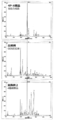
- the molecular weight of the enzyme consisting of the amino acid sequence shown in SEQ ID NO: 1 is about 114 kDa (see FIG. 1A).
- the homology to BgaD-D is about 15%.
- This enzyme is an enzyme that functions as a lactase and was found to be usable for GOS production using lactose as a raw material.
- the GOS yield is about 45 to about 60% when an enzyme consisting of the amino acid sequence shown in SEQ ID NO: 1 is used as the lactase for GOS production.
- the production selectivity of trisaccharide GOS among the GOS produced is about 75% or more.
- the enzyme is superior to BgaD-D in Km value indicating the performance of the enzyme.
- Enzyme comprising the amino acid sequence shown in SEQ ID NO: 2 The molecular weight of the enzyme consisting of the amino acid sequence shown in SEQ ID NO: 2 is about 50 kDa (see FIG. 1B). The homology to BgaD-D is about 8%.
- This enzyme is an enzyme that functions as a lactase and was found to be usable for GOS production using lactose as a raw material.
- the GOS yield is about 60 to about 70% when an enzyme consisting of the amino acid sequence shown in SEQ ID NO: 2 is used as the lactase for GOS production. Moreover, the production selectivity of trisaccharide GOS is about 80% or more.
- the enzyme consisting of the amino acid sequence shown in SEQ ID NO: 2 transfers a ⁇ -galactosyl group ( ⁇ -galactose residue) to a sugar (eg, lactose) highly selectively so as to form a ⁇ -1,3-glycoside bond.
- a sugar eg, lactose
- GOS trisaccharide GOS in which ⁇ -galactosyl groups are linked by ⁇ -1,3-glycosides.
- enterobacteria only Bifidobacterium can degrade ⁇ -1,3-glycosidic bonds.
- the galactosyl group is bonded to lactose by forming a ⁇ -1,4-glycoside bond or a ⁇ -1,6-glycoside bond.
- the enzyme consisting of the amino acid sequence shown in SEQ ID NO: 1 and the enzyme consisting of the amino acid sequence shown in SEQ ID NO: 2 have high enzyme chemical properties and high trisaccharide GOS selectivity while realizing a high GOS yield. Both are compatible.
- these enzymes derived from Paenibacillus pabuli it is possible to reduce the generation of GOS of 4 or more sugars that cause a deterioration in yield as compared with the conventional case.
- the enzyme may have an additional region as long as the function is not impaired.
- additional regions include regions such as tag domains.
- the position to which these are added may be either one or both of the N-terminal and C-terminal.
- an enzyme consisting of the amino acid sequence shown in SEQ ID NO: 1 an enzyme consisting of the amino acid sequence shown in SEQ ID NO: 2 (3) a family enzyme (or homologue) of the enzyme consisting of the amino acid sequence shown in SEQ ID NO: 1 (4) Family enzyme (or homologue) of the enzyme consisting of the amino acid sequence shown in SEQ ID NO: 2 (5)
- An enzyme E1 is a family (or homologue) of another enzyme E2 means that homology (or may be expressed as identity or similarity) based on the amino acid sequence of E1 and E2 is 80% or more, 85 % Or more, 90% or more, 91% or more, 92% or more, 93% or more, 94% or more, 95% or more, 96% or more, 97% or more, 98% or more, or 99% or more To do.
- E1 is a family (or homologue) of another enzyme E2 means that homology (or may be expressed as identity or similarity) based on the amino acid sequence of E1 and E2 is 80% or more, 85 % Or more, 90% or more, 91% or more, 92% or more, 93% or more, 94% or more, 95% or more, 96% or more, 97% or more, 98% or more, or 99% or more To do.
- An enzyme E1 is a family (or homologue) of another enzyme E2, in particular, when the amino acid sequence of the enzyme E1 is a substitution or deletion of 1 to 10 amino acids relative to the amino acid sequence of the enzyme E2.
- Substitution means that an amino acid at a specific site has been replaced with another amino acid.
- Deletion means deletion of an amino acid at a specific site.
- Insertion means that a non-existing amino acid is added inside the amino acid sequence.
- an enzyme E1 and another enzyme E2 are a family (or a homolog) means that the enzyme E1 and the enzyme E2 can exhibit the same function.
- the activity ratio in this function is no particular limitation. For example, when the more active enzyme is E1 and the activity is 100%, the activity of the less active enzyme E2 is 1% or more, 5% or more, 10% or more, 20% or more, 30% or more, 40% % Or more, 50% or more, 60% or more, 70% or more, 80% or more, or 90% or more.
- the family enzyme of the enzyme consisting of the amino acid sequence shown in SEQ ID NO: 1 means an enzyme having 80% or more and less than 100% homology to the amino acid sequence shown in SEQ ID NO: 1 and having galactooligosaccharide production activity To do.
- it means an enzyme having an amino acid sequence in which 1 to 10 amino acids are substituted, deleted or inserted in the amino acid sequence shown in SEQ ID NO: 1 and having galactooligosaccharide production activity.
- the family enzyme of the enzyme consisting of the amino acid sequence shown in SEQ ID NO: 1 has a lower limit of homology to the amino acid sequence shown in SEQ ID NO: 1 of 85% or more, 90% or more, 91% or more, 92% or more, 93% or more, It may be 94% or more, 95% or more, 96% or more, 97% or more, 98% or more, or 99% or more. Even in these cases where the lower limit of homology is, the upper limit is less than 100%.
- the family enzyme of the enzyme consisting of the amino acid sequence shown in SEQ ID NO: 2 has a homology of 80% or more and less than 100% with respect to the amino acid sequence shown in SEQ ID NO: 2, and has a galactooligosaccharide-producing activity.
- the family enzyme of the enzyme consisting of the amino acid sequence shown in SEQ ID NO: 2 has a lower limit of homology to the amino acid sequence shown in SEQ ID NO: 2 of 85%, 90%, 91%, 92%, 93%, It may be 94% or more, 95% or more, 96% or more, 97% or more, 98% or more, or 99% or more. Even in these cases where the lower limit of homology is, the upper limit is less than 100%.
- an enzyme consisting of the amino acid sequence shown in SEQ ID NO: 1 (2) An enzyme consisting of the amino acid sequence shown in SEQ ID NO: 2 (3) 1-10 amino acids are substituted, deleted or inserted in the amino acid sequence shown in SEQ ID NO: 1
- An enzyme having a galactooligosaccharide production activity (4) an enzyme having an amino acid sequence in which 1 to 10 amino acids are substituted, deleted, or inserted in the amino acid sequence shown in SEQ ID NO: 2 ,
- An enzyme having galactooligosaccharide production activity (5) an enzyme comprising an amino acid sequence having an amino acid sequence of 80% or more and less than 100% with respect to the amino acid sequence shown in SEQ ID NO: 1, and having a galactooligosaccharide production activity (6)
- SEQ ID NO: 2 an enzyme comprising an amino acid sequence having a homology of 80% or more and less than 100% to the amino acid sequence shown in Enzyme (7) said with
- an enzyme having the following amino acid sequences (a) to (f) or consisting of the amino acid sequences (a) to (f) is provided as the first aspect of the present invention.
- the amino acid sequence of an enzyme having galactooligosaccharide production activity (d) An amino acid sequence in which 1 to 10 amino acids are substituted, deleted, or inserted in the amino acid sequence shown in SEQ ID NO: 2, Amino acid sequence (e) Amino acid sequence having 80% or more and less than 100% homology to the amino acid sequence shown in SEQ ID NO: 1, and an amino acid sequence of an enzyme having galactooligosaccharide production activity (f)
- the first aspect of the present invention also provides DNA encoding the enzyme as described above.
- DNA having any base sequence is within the scope of the present invention.
- a DNA having a base sequence described in detail below is a typical example of such a DNA.
- the DNA consisting of the base sequence shown in SEQ ID NO: 5 encodes an enzyme consisting of the amino acid sequence shown in SEQ ID NO: 1 (including the 3 'terminal codon).
- the DNA consisting of the base sequence shown in SEQ ID NO: 6 encodes the enzyme consisting of the amino acid sequence shown in SEQ ID NO: 2 (including the 3 'terminal termination codon).
- both of the enzymes consisting of the amino acid sequences shown in SEQ ID NO: 1 and SEQ ID NO: 2 have good galactooligosaccharide production activity. Therefore, an enzyme encoded by a DNA consisting of a base sequence highly homologous to these base sequences is an enzyme having a galactooligosaccharide production activity with high probability.
- DNA comprising a base sequence in which conservative base substitution is performed on the above DNA is also included in the present invention.
- the conservative base substitution of the base sequence means a substitution in which the amino acid sequence of the encoded enzyme does not change among the substitutions of the base in the base sequence. That is, it means that two or more DNAs are in a relationship in which each base sequence is different from each other but encodes an enzyme having the same amino acid sequence.
- the DNA may have an additional region as long as it does not impair the function of itself or the encoded enzyme.
- additional region include a repeat structure of the DNA itself, a stop codon, an operator sequence, a region corresponding to a tag peptide, and the like. The position where these are added may be either one or both of the 5 'end and the 3' end.
- DNA consisting of the base sequence shown in SEQ ID NO: 5 (2) DNA consisting of the base sequence shown in SEQ ID NO: 6 (3) DNA consisting of a base sequence having high homology to the base sequence shown in SEQ ID NO: 5, wherein the encoding enzyme has galactooligosaccharide production activity (4) DNA consisting of a base sequence having high homology to the base sequence shown in SEQ ID NO: 6, wherein the encoding enzyme has galactooligosaccharide production activity (5) DNA comprising a base sequence in which conservative base substitutions are made for any of the base sequences of (1) to (4) above (6) A DNA obtained by adding the DNA of (1) to (5), a stop codon, an operator sequence, etc. to the DNA of (1) to (5), wherein the encoded enzyme has galactooligosaccharide production activity.
- a DNA consisting of a base sequence having high homology (or may be expressed as identity or similarity) to the base sequence of a certain DNA has a homology to the base sequence of a certain DNA of 80% or more, 85% or more, It means DNA having a base sequence of 90% or more, 91% or more, 92% or more, 93% or more, 94% or more, 95% or more, 96% or more, 97% or more, 98% or more, or 99% or more.
- the upper limit is not particularly limited and is less than 100%.
- the base sequence homology of DNA can be easily calculated using known software using the BLAST algorithm and the BLAST 2.0 algorithm.
- a DNA comprising a base sequence having high homology to the base sequence of a certain DNA is a stringent condition on a DNA comprising a base sequence complementary to the base sequence of the certain DNA. It means DNA that hybridizes underneath or is capable of hybridizing.
- stringent conditions mean conditions under which so-called specific hybrids are formed and non-specific hybrids are not formed. Hybridization stringency is primarily determined by temperature, ionic strength, and denaturant conditions. Examples of stringent conditions include washing conditions at a salt concentration and a temperature corresponding to 60 ° C., 1 ⁇ SSC, and 0.1% SDS. Washing at a salt concentration and temperature corresponding to 60 ° C., 0.1 ⁇ SSC, 0.1% SDS, washing at a salt concentration and temperature corresponding to 68 ° C., 0.1 ⁇ SSC, 0.1% SDS It is good also as conditions.
- DNA (1) to (8) are provided as the first aspect of the present invention.
- DNA consisting of the base sequence shown in SEQ ID NO: 5 (2) DNA consisting of the base sequence shown in SEQ ID NO: 6 (3) DNA comprising a base sequence having a homology of 80% or more and less than 100% to the base sequence shown in SEQ ID NO: 5, wherein the encoding enzyme has galactooligosaccharide production activity (4) DNA comprising a base sequence having a homology of 80% or more and less than 100% to the base sequence shown in SEQ ID NO: 6, wherein the encoded enzyme has galactooligosaccharide production activity (5) DNA comprising a base sequence complementary to the base sequence shown in SEQ ID NO: 5 and a base sequence that hybridizes under stringent conditions, wherein the encoding enzyme has galactooligosaccharide-producing activity (6) A DNA comprising a base sequence complementary to the base sequence shown in SEQ ID NO: 6 and a base sequence that hybridizes under stringent conditions, wherein the encoding
- a DNA having the following base sequences (A) to (G) or consisting of the base sequences (A) to (G) is provided as the first aspect of the present invention.
- A a base sequence shown in SEQ ID NO: 5
- B a base sequence shown in SEQ ID NO: 6
- C a base sequence having a homology of 80% or more and less than 100% to the base sequence shown in SEQ ID NO: 5
- D a nucleotide sequence having a homology of 80% or more and less than 100% to the nucleotide sequence shown in SEQ ID NO: 6, wherein the encoding enzyme is a galactooligosaccharide producing activity
- E a base sequence that hybridizes with a base sequence complementary to the base sequence shown in SEQ ID NO: 5 under stringent conditions, wherein the encoding enzyme has a galactooligosaccharide producing activity
- F A base sequence that hybridizes with a base sequence complementary to the base sequence shown in SEQ ID NO: 6 under
- the DNA as described above can be obtained, for example, by collecting genomic DNA from Paenibacillus genus bacteria (particularly Paenibacillus pabuli) and then using PCR as a template.
- Primer 1 5'-GAACACAAGGTCATGAAAGCAGCAAAGGCAGAT-3
- Primer 2 5'-CATCCTGTTAAGCTTTTACAATGCCCGAATGAC-3 '
- Primer 3 5'-GAACACAAGGTCATGACCATTTTTCAATTTCCG-3 '
- Primer 4 5'-CATCCTGTTAAGCTTTTAACGGATTTCCAGCCAATTG-3 '
- an enzyme consisting of the amino acid sequence shown in SEQ ID NO: 1 and a structural gene encoding the homologue thereof for example, DNA consisting of the base sequence shown in SEQ ID NO: 5
- an enzyme consisting of the amino acid sequence shown in SEQ ID NO: 2 and homologues thereof A structural gene encoding the body (for example, DNA comprising the base sequence shown in SEQ ID NO: 6) can be obtained.
- a recombinant vector comprising the DNA of the first aspect.
- This recombinant vector makes it possible to produce a transformant and to express a large amount of enzyme.
- vector there are no particular restrictions on the vector, and any commonly used vector can be used.
- plasmid bacteriophage, cosmid, phagemid and the like can be mentioned.
- plasmids examples include pK4, pRK401, pRF31, pBR322, pBR325, pUC118, pUC119, pUC18, pBIC, pUB110, pTP5, YEp13, YEp24, and YCp50.
- phage examples include ⁇ phage ( ⁇ gt10, ⁇ gt11, ⁇ ZAP, etc.).
- animal viruses such as retrovirus or vaccinia virus, and insect virus vectors such as baculovirus can also be used.
- Cis-elements such as promoters and enhancers, splicing signals, poly A addition signals, selection markers, ribosome binding sequences (SD sequences), start codons, stop codons, and the like can be linked to the vector.
- a tag sequence for facilitating purification of the enzyme to be produced can also be linked.
- a known tag such as a His tag, a GST tag, or an MBP tag can be used.
- the vector may also contain an antibiotic resistance gene for selection.
- the method for inserting DNA into the vector there is no particular limitation on the method for inserting DNA into the vector, and any commonly used method can be used. Usually, the following method is used. First, the purified DNA is cleaved with an appropriate restriction enzyme, inserted into a restriction enzyme site of a vector DNA or a multicloning site, and ligated to a vector.
- a transformant comprising (or introduced) the DNA of the first aspect and / or the recombinant vector of the second aspect.
- any of prokaryotes, archaea, and eukaryotes can be used, and examples include eubacteria (such as E. coli), yeast, plant cells, animal cells (such as COS cells and CHO cells), and insect cells.
- Bacillus genus Bacillus genus, Paenibacillus genus, Brevibacillus genus (eg Brevibacillus chosinensis), Escherichia genus (eg Escherichia coli), Corynebacterium genus, Saccharomyces genus, Shizosaccharomyces genus, Kluyveromyces genus, Pichia genus, Pichia genus, Pichia And microorganisms of the genus.
- microorganisms with food experience such as lactic acid bacteria and acetic acid bacteria, are mentioned.
- the method for introducing DNA and / or recombinant vectors into these hosts includes an electroporation method, a spheroplast method, a lithium acetate method, a calcium phosphate method, and a lipofection method. It may be inserted or added into the host genome using homologous recombination or the like.
- any method can be used for confirming whether DNA or a recombinant vector has been introduced into the host.
- it can be performed by PCR method, Southern hybridization method, Northern hybridization method and the like.
- the enzyme of the present invention and a composition containing the same can be prepared by a conventionally known method using the transformant. For example, it can be prepared by the method described below.
- the above transformant introduced with the target gene is cultured in a large volume in a liquid medium.
- a predetermined inducer may be administered to the transformant to induce expression of the target gene.
- IPTG can be administered to induce expression of the target gene.
- the culture supernatant or the disrupted solution obtained by disrupting the cells with ultrasound or cell wall lysing enzyme is collected.
- the supernatant and crushed liquid contain a large amount of the enzyme of the present invention.
- the supernatant or crushed liquid may be used as it is as an enzyme-containing liquid composition, or the liquid composition may be subjected to a purification treatment and recovered as a purified enzyme.
- This purification treatment can be performed, for example, by salting out, membrane separation, or column chromatography. One or more of these operations can be combined.
- the type of column chromatography is not limited, but a column containing an antibody that specifically acts on these enzymes may be used, or a column capable of interacting with a tag domain such as a His tag previously added to the enzyme. May be used.
- an enzyme consisting of the amino acid sequence shown in SEQ ID NO: 1 or a homologue thereof, or an enzyme consisting of the amino acid sequence shown in SEQ ID NO: 2 or a homologue thereof can be prepared in large quantities. These enzymes can be used for the production of galactooligosaccharides.
- GOS can be produced from lactose using this.
- the method and conditions for manufacturing GOS are not limited. One example will be described below, but the present invention is not limited to this.
- the method for producing GOS of the present invention includes a step of bringing an enzyme into contact with lactose and a step of producing GOS by this contact. A step of isolating and purifying the optionally produced GOS may be included.
- the GOS production method of the present invention includes contacting the above enzyme with lactose.
- the enzyme that is brought into contact with lactose may be purified from a microorganism that produces the enzyme (purified enzyme).
- the microorganism itself may be brought into contact with lactose, or a mixture containing other factors such as a crushed microorganism or an extract may be brought into contact with lactose. It is preferable to contact the purified enzyme with lactose in terms of preventing side reactions.
- Purified enzyme means an enzyme solution or an enzyme solid obtained by a predetermined purification treatment. It means that it is substantially free of enzymes other than that enzyme, or other enzymes are reduced.
- a reaction system (a mixture containing a solvent, lactose and the enzyme of the present invention) is formed by mixing an enzyme or the like with a solution containing lactose or by mixing lactose with a solution containing the enzyme or the like. Is done.
- the solvent is arbitrary, but is usually water or an aqueous solvent containing water as a main component.
- the content of lactose in the reaction system is not particularly limited and can be arbitrarily set. For example, it may be 1 to 80% by mass, 2 to 70% by mass, or 4 to 60% by mass based on the total amount of the reaction system. In an embodiment, the content may be further 4 to 50% by mass, 4 to 40% by mass, 4 to 30% by mass, 4 to 20% by mass, and 4 to 10% by mass.
- an enzyme consisting of the amino acid sequence shown in SEQ ID NO: 1 and its family enzyme are preferably used. This is because these are excellent in Km value and have sufficient activity even at a low substrate concentration.
- it may be 5 to 60% by mass, 10 to 60% by mass, 20 to 60% by mass, 30 to 60% by mass, or 40 to 60% by mass.
- an enzyme comprising the amino acid sequence shown in SEQ ID NO: 2 and its family enzyme are preferably used. These have both good GOS production activity and trisaccharide GOS selection activity, and can produce a large amount of trisaccharide GOS in a short time.
- the content of the enzyme of the present invention in the reaction system is not particularly limited and can be arbitrarily set. In the reaction system, for example, it may be 0.1 to 10 LU / mL or 0.1 to 10 OU / mL.
- the content of the enzyme of the present invention may be determined as follows.
- a first step in a specific reaction system (lactose content, content of the enzyme of the present invention, reaction pH, reaction temperature, reaction time, etc.), the amount of GOS produced relative to the content of the enzyme of the present invention is confirmed.
- the lactase activity at least one of LU / mL or OU / mL
- the amount of the enzyme of the present invention contained in the reaction system is adjusted using the lactase activity measured in the second step as an index (the content of the enzyme of the present invention is increased or decreased).
- a 4th process it is included so that it may become the value which adjusted content of the enzyme of this invention contained in a reaction system. In addition, you may perform said 1st process and 2nd process reversely.
- the pH of the reaction system is not particularly limited and can be set arbitrarily. For example, it may be 3 to 9, 4 to 8, or 5 to 7. Of course, the pH may be constant or may vary.
- the temperature of the reaction system is not particularly limited and can be set arbitrarily.
- the temperature may be 20 to 75 ° C, 30 to 75 ° C, 40 to 75 ° C, 50 to 70 ° C, or 60 to 70 ° C.
- the temperature may be constant or variable. It is preferable to select a temperature at which lactose contained in the reaction system is dissolved.
- the reaction time is not particularly limited and can be set arbitrarily. For example, it may be 1 to 100 hours, 12 to 60 hours, or 24 to 48 hours.
- These series of manufacturing methods may be either batch type or continuous type.
- a predetermined amount of enzyme and raw lactose are charged into a reactor to generate GOS for a predetermined time, and then a mixture containing GOS is recovered from the reactor.
- the enzyme and / or raw lactose are continuously or intermittently charged into the reactor. And while producing
- the state of lactose used as a raw material is not particularly limited.
- a lactose solution dissolved in an arbitrary solvent may be used.
- GOS solution may be used as it is, or GOS may be purified from this.
- the method for purifying GOS is not particularly limited, and any method can be adopted.
- each fraction can be separated by column chromatography using a cation exchange resin coordinated with activated carbon or metal ions, or a gel filtration resin.
- oligosaccharide means a polysaccharide compound having 3 to 10 sugars.
- galacto-oligosaccharide mainly means an oligosaccharide represented by the following general formula.
- GOS oligosaccharide represented by the following general formula.
- Gal represents a glassose residue
- Glc represents a glucose residue
- n is an integer of 1 to 8, particularly an integer of 1 to 3.
- the binding mode of each bond between sugars is not particularly limited, but is typically a ⁇ -1,4-glycoside bond.
- the method for producing a galactooligosaccharide of the present invention uses a bacterium belonging to the genus Paenibacillus as a lactase-producing microorganism. It has not been reported so far that bacteria of the genus Paenibacillus generally produce galactooligosaccharides.
- bacteria belonging to the genus Paenibacillus include the following bacteria. Any of the following bacteria can be isolated from soil, deposited in a public institution, or easily available to those skilled in the art.
- Paenibacillus themophilus eg deposit number DSM 24746)
- Paenibacillus popilliae eg deposit number DSM 22700
- Paenibacillus thiaminolyticus eg deposit number NBRC 15656
- Paenibacillus pabuli eg deposit number NBRC 13638
- Paenibacillus alvei eg deposit number NBRC 3343
- Paenibacillus alginolyticus eg deposit number NBRC 15375
- Paenibacillus chibensis eg deposit number NBRC 15958)
- Paenibacillus chitinolyticus eg deposit number NBRC 15660
- Paenibacillus chondroitinus eg deposit number NBRC
- microorganisms produce oligosaccharides is to make sugar difficult to be assimilated by different microorganisms by changing sugar to oligosaccharides, and to store oligosaccharides as storage substances during rich nutrition and to use these oligosaccharides during poor nutrition. It is possible to prevent / reduce osmotic pressure change accompanying lactose decomposition. Neighboring species of microorganisms can carry out similar survival strategies with similar genes, and therefore neighboring species of microorganisms are considered to be capable of producing similar oligosaccharides. From these facts, it was speculated that galactooligosaccharides were produced in all microorganisms belonging to the genus Paenibacillus. It is also possible to use mutants of these Paenibacillus bacteria, recombinants produced by genetic recombination techniques, and the like.
- Paenibacillus bacteria generally have a fast growth rate. In addition, it has antibacterial properties against various microorganisms. Therefore, when producing galactooligosaccharides, it is easier to cultivate these bacteria in large quantities compared to yeast and the like.
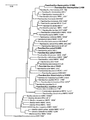
- Fig. 4 shows the phylogenetic tree analyzed for these Paenibacillus and Bacillus bacteria.
- the genus Paenibacillus is a genus that clearly branches from the genus Bacillus.
- a galactooligosaccharide is produced by bringing bacterial cells of the genus Paenibacillus and / or a galactooligosaccharide-producing enzyme of the bacterium into contact with lactose.
- a galactooligosaccharide-producing enzyme a purified enzyme may be used.
- the enzyme-containing mixture include processed microbial cells such as crushed cells and extracts.
- the processed product may be solid or liquid.
- These series of manufacturing methods may be either batch type or continuous type.
- a predetermined amount of Paenibacillus genus bacteria and raw lactose are charged into a reactor to generate GOS for a predetermined time, and then a mixture containing GOS is recovered from the reactor.
- a mixture containing GOS is recovered from the reactor.
- Paenibacillus genus bacteria and their enzymes and / or raw lactose are continuously or intermittently charged into the reactor. And while producing
- the state of lactose used as a raw material is not particularly limited.
- a lactose solution dissolved in an arbitrary solvent may be used.
- lactose or Paenibacillus genus and / or galactooligosaccharide-producing enzyme is preferably fluidized with an appropriate solvent for convenience of operation.
- the solvent is optional, but is typically water or an aqueous solvent containing water as a main component.
- bacteria of the genus Paenibacillus are cultured before contacting with lactose.
- the culture conditions for Paenibacillus bacteria are not limited and are arbitrary.
- the cells may be cultured at about 30 ° C. for about 3 days in a liquid medium under anaerobic or aerobic conditions.
- limiting in the kind of liquid culture medium Arbitrary things can be used.
- soy bean casein digest (SCD) medium, brain heart infusion (BHI) medium, and the like can be mentioned.
- a Paenibacillus genus bacterium obtained by culturing can be advantageously used regardless of whether it is live or dead.
- the culture may be concentrated.
- a liquid culture medium and a microbial cell are isolate
- examples of the treated product of the culture include a sonicated product, a lysed enzyme-treated product, a surfactant-treated product, and a mechanically ground treated product. These can be suspended in a suitable solvent to obtain a fluid containing bacteria and / or enzymes of the genus Paenibacillus.
- a reaction system (a mixture containing a solvent, lactose, cells of Paenibacillus bacteria and / or enzymes) for producing galactooligosaccharide is formed by mixing lactose and Paenibacillus bacteria.
- the content of Paenibacillus bacteria in the reaction system is not particularly limited and can be appropriately set.
- the wet cell may be 10 to 200 g / L, 30 to 150 g / L, 50 to 100 g / L.
- the enzyme is contained using an enzyme-containing mixture such as a crushed material, an extract, or a culture medium, the content may be adjusted to an amount such that the original strain falls within the above range.
- the content of lactose in the reaction system is not particularly limited and can be appropriately set. For example, it may be 5 to 60% by mass or 30 to 60% by mass based on the total amount of the reaction system. As the lactose is consumed, the lactose may be appropriately supplemented.
- the ratio (kg / kg) of the Paenibacillus genus content to the lactose content in the reaction system is not particularly limited and can be appropriately set. For example, it may be 1/30 to 1/1, 1/20 to 1/2, or 1/10 to 1/5 with respect to the amount of lactose.
- the enzyme is contained using an enzyme-containing mixture such as a crushed material, an extract, or a culture medium, the content may be adjusted to an amount such that the original strain falls within the above range.
- the temperature of the reaction system is not particularly limited and can be set as appropriate.
- the temperature may be 10 to 75 ° C, 20 to 60 ° C, or 30 to 50 ° C.
- the temperature may be constant or variable.
- the pH of the reaction system is not particularly limited and can be set as appropriate. For example, it may be 3 to 9, 5 to 8, 6 to 8, 6 to 7.5, or 6 to 7. Of course, the pH may be constant or may vary.
- the reaction time of the reaction system is not particularly limited and can be set as appropriate. For example, it may be 1 to 50 hours, 5 to 30 hours, or 12 to 24 hours.
- the reaction system may contain inorganic salts and the like.
- the content of inorganic salts and the like is, for example, 0.00001 to 10% by mass and 0.0001 to 1% by mass based on the total amount of the reaction system.
- a liquid medium such as an SCD medium and a BHI medium may be used as the solvent containing inorganic salts.
- the microbial cell-containing GOS solution may be used as it is, or the microbial cell may be removed and used as a GOS solution, or GOS may be purified from this.
- the method for removing the bacterial cells from the bacterial cell-containing GOS solution is arbitrary. Examples thereof include sterilization by centrifugation, filtering, heating, and the like.
- the method for purifying GOS is not particularly limited, and any method can be adopted. Each fraction can be separated by column chromatography using a cation exchange resin coordinated with activated carbon or metal ions, or a gel filtration resin.
- Examples 1-2 Enzymes consisting of the amino acid sequences shown in SEQ ID NO: 1 and SEQ ID NO: 2
- Genomic DNA was collected from Paenibacillus pabuli, and DNAs (structural genes) encoding enzymes having the amino acid sequences shown in SEQ ID NO: 1 and SEQ ID NO: 2 were amplified by PCR using the DNA as a template.
- primer pair used to amplify the structural gene encoding the enzyme consisting of the amino acid sequence shown in SEQ ID NO: 1 (that is, the DNA consisting of the base sequence shown in SEQ ID NO: 5) is primers 1 and 2.
- Primer 1 5'-GAACACAAGGTCATGAAAGCAGCAAAGGCAGAT-3
- Primer 2 5'-CATCCTGTTAAGCTTTTACAATGCCCGAATGAC-3 '
- primers 3 and 4 The pair of primers used to amplify the structural gene encoding the enzyme consisting of the amino acid sequence shown in SEQ ID NO: 2 (that is, the DNA consisting of the base sequence shown in SEQ ID NO: 6) is primers 3 and 4.
- Primer 3 5'-GAACACAAGGTCATGACCATTTTTCAATTTCCG-3 '
- Primer 4 5'-CATCCTGTTAAGCTTTTAACGGATTTCCAGCCAATTG-3 '
- Each amplified structural gene was inserted into plasmid pBIC by homologous recombination using BIC System (TaKaRa). Each plasmid was introduced into Brevibacillus chosinensis to express a large amount of the enzyme.
- FIG. 1A shows the result of SDS-PAGE of an enzyme having the amino acid sequence shown in SEQ ID NO: 1
- FIG. 1B shows the enzyme consisting of the amino acid sequence shown in SEQ ID NO: 2.
- the prepared cell lysate was ultrafiltered as necessary to concentrate the enzyme.
- An enzyme-enriched disruption solution consisting of the amino acid sequence shown in SEQ ID NO: 1 was used in Example 1, and an enzyme-enriched disruption solution consisting of the amino acid sequence shown in SEQ ID NO: 2 was used as Example 2.
- the lactose decomposition activity of Example 1 was 0.4 LU / mL, and the ONPG decomposition activity was 11.7 OU / mL.
- the lactase activity of Example 2 the lactose decomposition activity was 51.7 LU / mL, and the ONPG decomposition activity was 240 OU / mL.
- the reaction rate parameter when ONPG of the enzyme of Example 1 was used as a substrate was determined by the following method.
- the specific activity ( ⁇ mol / mg protein / min) when reacted at 40 ° C. for 10 minutes at a substrate concentration of 0.075 to 7.5 mM was calculated, and the specific activity was plotted against each substrate concentration. At this time, 100 mM sodium phosphate (pH 6.5) was used as a buffer solution.
- ⁇ -galII is an enzyme obtained by purifying only a low molecular weight lactase from a culture solution of Bacillus circulans, and is a main enzyme of Biolacta (manufactured by Amano Enzyme Co., Ltd.) (Non-patent Document 1).
- the enzyme of Example 1 has the same maximum reaction rate as that of the enzyme contained in violacta, but the K m representing the affinity for the substrate ONPG is remarkably low. Therefore, using the enzyme of the present invention, it is considered that GOS can be efficiently produced even at a lower substrate concentration than violacter.
- an enzyme consisting of the amino acid sequence shown in SEQ ID NO: 4 (Bacillus circulans-derived lactase BgaD-D) was used.
- genomic DNA was collected from Bacillus sp. ATCC 31382 (former name: Bacillus circulans), and a structural gene encoding an enzyme consisting of the amino acid sequence shown in SEQ ID NO: 4 was amplified by PCR using this as a template. did.
- a start codon was added to the N-terminal side of this gene and a stop codon was added to the C-terminal side, which was introduced into Brevibacillus chosinensis to express a large amount of the enzyme. After production of the enzyme, this transformant was sonicated to obtain a cell lysate.
- Example 2 The GOS generating ability of each sample of Example 1, Example 2 and Comparative Example was evaluated.
- lactose was added to 0.1 M potassium phosphate buffer (pH 6.5) containing 1 mM magnesium sulfate and 0.064 mM EDTA so that the final concentration was 30% by mass based on the total amount of the system, and the activity The enzyme was added so as to be 1.5 LU / mL.
- lactose was added to 0.1 M sodium phosphate buffer (pH 6.5) so that the final concentration was 60% by mass based on the total amount of the system, and the activity was 5.0 LU. Enzyme was added to make / mL.
- the reaction temperature was 30 ° C. for the enzyme of Example 1 and 50 ° C. for the enzymes of Example 2 and Comparative Example, and the GOS production reaction was performed for 24 hours. After a predetermined time, a 20 wt% sulfosalicylic acid solution was added to 1/20 of the reaction solution to stop the reaction.
- HPLC HPLC was performed on each sample of Examples 1 and 2 and the comparative example, and the amount of produced GOS was analyzed.
- As the column CARBOSep CHO-620 6.5 ⁇ ⁇ 300 mm manufactured by Transgenomic was used, the mobile phase was water, the flow rate was 0.4 mL / min, the temperature was 85 ° C., and the detection was performed under RI conditions.
- Table 2 shows the HPLC results of each sample.
- GOS in Table 2 means the GOS content ratio. More specifically, it is the percentage of the HPLC area of GOS with respect to the total HPLC area of GOS (pentose, tetrasaccharide, trisaccharide), disaccharide (unreacted lactose or transfer disaccharide), and monosaccharide (glucose, galactose). . “Yield” means GOS production efficiency. More specifically, it is the percentage of GOS production / lactose consumption (GOS production and lactose consumption are calculated from HPLC). In addition, sugars having 6 or more sugars could not be confirmed in Examples 1 and 2 and the comparative example.
- the enzymes of Examples 1 and 2 have higher selectivity for trisaccharide GOS than the enzymes of Comparative Examples. It was revealed that the enzyme of the present invention has a good function in this respect.
- the enzyme of Example 2 has the same GOS yield as that of the enzyme of the comparative example, and can achieve both high GOS production yield and trisaccharide selectivity.
- GOS sugar composition There are 3 types of GOS in human breast milk: 4'-GL (Gal ⁇ 1-4Gal ⁇ 1-4Glc), 3'-GL (Gal ⁇ 1-3Gal ⁇ 1-4Glc) and 6'-GL (Gal ⁇ 1-6Gal ⁇ 1-4Glc) It is known that most of the commercially available lactases for producing GOS mainly produce 4′-GL and 6′-GL. On the other hand, many bifidobacteria constantly express transporters that take 3′-GL into the cells (Non-patent Document 2). That is, the merit of GOS containing 3′-GL is that Bifidobacteria are easy to grow.
- HPAEC-PAD high performance anion exchange chromatography-pulsed amperometric detection
- ICS-3000 Thermo Scientific
- CarboPac PA1 ⁇ 4 mm x 250 mm, Thermo Scientific
- the mobile phase is 100 mM sodium hydroxide solution (A), 100 mM sodium hydroxide-containing 600 mM sodium acetate solution B (B), water syrup (C), 50 mM sodium acetate solution (D) did.
- the conditions are shown in Table 3.
- the reaction solution was prepared so that the sugar concentration was 0.5 mg / mL and used as a sample for analysis. This was analyzed with a flow rate of 1.0 mL / min, an injection volume of 25 ⁇ L, a column temperature of 20 ° C., and a detector PAD.
- the main GOS produced by the lactase of Example 2 may be 3′-GL from its peak position, unlike the GOS produced by the lactase of the comparative example in which 4′-GL is the main sugar. It turned out to be expensive (Table 4). Further, among the GOS produced by the lactase of Example 2, the structure was analyzed by separating three sugars, and the 1 H-NMR spectrum and the 13 C-NMR spectrum were consistent with the 3′-GL pattern. Non-patent document 3). From this, it was considered that the main GOS produced by this enzyme is 3′-GL.
- each platinum strain is inoculated into 0.5 mL of SCD medium containing 2% lactose placed in a 48-well plate and cultured for 4 days with shaking at 30 ° C. and 500 rpm (amplitude 2 mm). The culture broth was collected.
- a lactose solution dissolved with 0.2 M acetate buffer (pH 6.0) was added so that the final concentration of lactose was 25 to 30% by mass. Thereafter, a transfer reaction was performed at 30 ° C. and 500 rpm for 24 hours.
- the reaction solution was centrifuged and the supernatant was collected.
- a sample diluted appropriately with pure water was used as an analytical sample.
- the amount of GOS in each sample was measured by HPLC analysis (column is Transgenec CARBOSep CHO-620 6.5 ⁇ ⁇ 300 mm, mobile phase is water, flow rate is 0.5 mL / min, temperature is 85 ° C., detection is RI). .
- the presence of GOS in a sample means that the strain of the sample has GOS transfer ability. Thus, a strain having GOS transfer ability was selected.
- Some of the resulting strains were Paenibacillus popilliae, Paenibacillus themophilus, Paenibacillus pabuli, Paenibacillus alvei, Paenibacillus thiaminolyticus. That is, it was suggested that bacteria belonging to the genus Paenibacillus have the ability to produce GOS from lactose.
- GOS in Table 5 means the GOS content ratio. More specifically, it is the percentage of the HPLC area of GOS with respect to the total HPLC area of GOS (3 or more sugars, mainly 5 sugars, 4 sugars and 3 sugars), lactose, glucose and galactose.
- Yield in Table 5 means GOS production efficiency. More specifically, it is the percentage of GOS production / lactose consumption (GOS production and lactose consumption are calculated from HPLC).
- the homology rate in the column of “homology search (BLAST)” in Table 5 is the highest when the BLAST search is performed on the 16S rDNA base sequence of each strain using the site of DNA Data Bank of Japan. Means homology with other species (corresponding strain). A species was identified when it showed a homology of 99.5% or higher.
- FIG. 4 shows a simple molecular phylogenetic tree based on the 16S rDNA partial nucleotide sequences of the genus Paenibacillus and Bacillus.
Landscapes
- Chemical & Material Sciences (AREA)
- Organic Chemistry (AREA)
- Life Sciences & Earth Sciences (AREA)
- Engineering & Computer Science (AREA)
- Zoology (AREA)
- Wood Science & Technology (AREA)
- Health & Medical Sciences (AREA)
- Bioinformatics & Cheminformatics (AREA)
- Genetics & Genomics (AREA)
- General Health & Medical Sciences (AREA)
- General Engineering & Computer Science (AREA)
- Biochemistry (AREA)
- Biotechnology (AREA)
- Microbiology (AREA)
- General Chemical & Material Sciences (AREA)
- Chemical Kinetics & Catalysis (AREA)
- Medicinal Chemistry (AREA)
- Molecular Biology (AREA)
- Biomedical Technology (AREA)
- Preparation Of Compounds By Using Micro-Organisms (AREA)
- Enzymes And Modification Thereof (AREA)
- Micro-Organisms Or Cultivation Processes Thereof (AREA)
Abstract
Le problème à résoudre par la présente invention concerne la fourniture : d'une nouvelle enzyme dérivée d'un micro-organisme autre que Bacillus circulans et qui est hautement sélective pour la production d'un galacto-trisaccharide et grâce à laquelle un galacto-oligosaccharide peut être produit de manière très efficace ; ainsi qu'un nouveau procédé capable de produire le galacto-oligosaccharide. La solution selon l'invention concerne un procédé de production d'un galacto-oligosaccharide, le procédé comprenant les étapes consistant à mettre en contact une enzyme ayant une séquence d'acides aminés choisie dans le groupe constitué par (a) à (f) et des cellules d'une bactérie appartenant au genre Paenibacillus et/ou une enzyme de production de galacto-oligosaccharide pour la bactérie, avec du lactose. (a) une séquence d'acides aminés, séquence numéro 1. (b) une séquence d'acides aminés, séquence numéro 2. (c) une séquence d'acides aminés d'une enzyme ayant une activité de production de galacto-oligosaccharide, la séquence d'acides aminés étant la séquence d'acides aminés numéro 1, dont un à dix acides aminés ont été remplacés, retirés ou insérés. (d) une séquence d'acides aminés d'une enzyme ayant une activité de production de galacto-oligosaccharide, la séquence d'acides aminés étant la séquence d'acides aminés du numéro de séquence 2 dans laquelle un à dix acides aminés ont été remplacés, retirés ou insérés. (e) une séquence d'acides aminés d'une enzyme ayant une activité de production de galacto-oligosaccharide, la séquence d'acides aminés ayant une homologie de 80 % ou plus mais inférieure à 100 % à la séquence d'acides aminés numéro 1. (f) une séquence d'acides aminés d'une enzyme ayant une activité de production de galacto-oligosaccharide, la séquence d'acides aminés ayant une homologie de 80 % ou plus mais inférieure à 100 % à la séquence d'acides aminés numéro 2.
Priority Applications (4)
| Application Number | Priority Date | Filing Date | Title |
|---|---|---|---|
| JP2020512196A JP7344195B2 (ja) | 2018-04-05 | 2019-03-28 | Paenibacillus pabuli由来のガラクトオリゴ糖を製造可能な酵素、およびガラクトオリゴ糖を製造する方法 |
| US17/045,149 US12012622B1 (en) | 2018-04-05 | 2019-03-28 | Paenibacillus pabuli-derived enzyme capable of producing galacto-oligosaccharide, and method for producing galacto-oligosaccharide |
| CN201980024686.9A CN112351990B (zh) | 2018-04-05 | 2019-03-28 | 来自饲料类芽孢杆菌(Paenibacillus pabuli)的能够制造低聚半乳糖的酶及制造低聚半乳糖的方法 |
| EP19782446.9A EP3778625A4 (fr) | 2018-04-05 | 2019-03-28 | Enzyme dérivée de p aenibacillus pabuli et capable de produire un galacto-oligosaccharide, et procédé de production d'un galacto-oligosaccharide |
Applications Claiming Priority (4)
| Application Number | Priority Date | Filing Date | Title |
|---|---|---|---|
| JP2018-073181 | 2018-04-05 | ||
| JP2018073181 | 2018-04-05 | ||
| JP2018-073180 | 2018-04-05 | ||
| JP2018073180 | 2018-04-05 |
Publications (1)
| Publication Number | Publication Date |
|---|---|
| WO2019194062A1 true WO2019194062A1 (fr) | 2019-10-10 |
Family
ID=68100501
Family Applications (1)
| Application Number | Title | Priority Date | Filing Date |
|---|---|---|---|
| PCT/JP2019/013549 Ceased WO2019194062A1 (fr) | 2018-04-05 | 2019-03-28 | Enzyme dérivée de p aenibacillus pabuli et capable de produire un galacto-oligosaccharide, et procédé de production d'un galacto-oligosaccharide |
Country Status (5)
| Country | Link |
|---|---|
| US (1) | US12012622B1 (fr) |
| EP (1) | EP3778625A4 (fr) |
| JP (1) | JP7344195B2 (fr) |
| CN (1) | CN112351990B (fr) |
| WO (1) | WO2019194062A1 (fr) |
Cited By (4)
| Publication number | Priority date | Publication date | Assignee | Title |
|---|---|---|---|---|
| JP2021093954A (ja) * | 2019-12-17 | 2021-06-24 | 合同酒精株式会社 | ガラクトオリゴ糖を製造可能な酵素、およびガラクトオリゴ糖を製造する方法 |
| CN114574409A (zh) * | 2022-05-07 | 2022-06-03 | 广东省科学院微生物研究所(广东省微生物分析检测中心) | 一株假芽孢杆菌和其发酵产物及其在溶藻中的应用 |
| EP3926043A4 (fr) * | 2020-09-29 | 2023-02-08 | Tianjin University Of Science And Technology | Enzyme spéciale pour la production de galacto-oligosaccharides, sa préparation et son utilisation |
| WO2023038057A1 (fr) | 2021-09-07 | 2023-03-16 | 合同酒精株式会社 | Lactase, préparation de lactase, gène, vecteur recombiné et transformant |
Families Citing this family (5)
| Publication number | Priority date | Publication date | Assignee | Title |
|---|---|---|---|---|
| CN113667661B (zh) * | 2021-07-26 | 2023-11-07 | 青岛大学 | 一种β-葡萄糖苷酶及其在制备葡萄糖和昆布寡糖中的应用 |
| CN118056903B (zh) * | 2022-11-20 | 2025-04-08 | 山东恒鲁生物科技有限公司 | 一种合成寡糖的成熟多肽 |
| CN118931882A (zh) * | 2023-05-11 | 2024-11-12 | 山东恒鲁生物科技有限公司 | 一种改良的成熟多肽 |
| EP4533961A1 (fr) | 2023-10-04 | 2025-04-09 | FrieslandCampina Nederland B.V. | Préparation destinée à être utilisée dans la prévention et le traitement d'une infection pathogène enterococcus faecalis |
| CN117987395B (zh) * | 2024-02-18 | 2025-08-26 | 中国农业科学院农产品加工研究所 | β-半乳糖苷酶突变体及其应用 |
Citations (4)
| Publication number | Priority date | Publication date | Assignee | Title |
|---|---|---|---|---|
| JPS5643756B2 (fr) | 1973-12-22 | 1981-10-14 | ||
| JPH05236981A (ja) | 1992-02-28 | 1993-09-17 | Ajinomoto Co Inc | ガラクトオリゴ糖の製造方法 |
| JP2652049B2 (ja) | 1988-10-06 | 1997-09-10 | 株式会社ヤクルト本社 | ガラクトオリゴ糖の製造法 |
| JP2739335B2 (ja) | 1989-02-17 | 1998-04-15 | 株式会社ヤクルト本社 | ガラクトオリゴ糖の製造法 |
Family Cites Families (15)
| Publication number | Priority date | Publication date | Assignee | Title |
|---|---|---|---|---|
| NZ230882A (en) | 1988-10-06 | 1992-09-25 | Yakult Honsha Kk | Preparation of a mixture of related galactooligosaccharides by fermentation of lactose with beta-galactosidase, having sweetening properties |
| JP2008199963A (ja) * | 2007-02-20 | 2008-09-04 | Nippon Shokubai Co Ltd | ネガティブ選択マーカー遺伝子およびその利用 |
| BRPI0813359A2 (pt) * | 2007-05-22 | 2014-10-14 | Ls9 Inc | Ácidos nucleicos isolados, vetor, células, métodos para produzir um hidrocarboneto, para produzir uma cetona alifática, para produzir um polipeptídeo purificado, para produzir um hidrocarboneto, para produzir biocombustíveis, hidrocarboneto, biocombustível, polipeptídeo isolado, ácido nucleico isolado, organismos geneticamente engenheirados, método para identificar uma enzima útil para a produção de hidrocarbonetos |
| US10676751B2 (en) * | 2008-02-29 | 2020-06-09 | The Trustees Of The University Of Pennsylvania | Production and use of plant degrading materials |
| EP2252699B1 (fr) | 2008-03-12 | 2015-05-27 | Tata Chemicals Limited | Production de galacto-oligosaccharides par Bullera singularis et Saccharomyces sp. |
| CA2747223C (fr) * | 2008-12-23 | 2020-07-21 | Danisco A/S | Polypeptides dotes d'une activite xylanase |
| CA2751957C (fr) * | 2009-02-10 | 2018-07-24 | Peter Stougaard | Beta-galactosidase active a froid, son procede de fabrication et utilisation d'une telle enzyme |
| AU2010255150B2 (en) | 2009-06-05 | 2014-02-27 | Amano Enzyme Inc. | Beta-galactosidase derived from Bacillus circulans |
| US9974318B2 (en) | 2009-06-05 | 2018-05-22 | Amano Enzyme Inc. | Method for producing a low-lactose milk, medicine, supplement, or galacto-oligosaccharide |
| IT1395068B1 (it) | 2009-08-07 | 2012-09-05 | Inalco Spa | Processo per la produzione di galatto-oligosaccaridi ultrapuri |
| JP2013168438A (ja) * | 2012-02-14 | 2013-08-29 | Elpida Memory Inc | 半導体装置の製造方法 |
| JP6096179B2 (ja) * | 2012-05-10 | 2017-03-15 | 国立大学法人岩手大学 | ラクターゼ活性を有するタンパク質、該タンパク質をコードする遺伝子、該遺伝子を含有する組み換えベクター、形質転換体、及びその製造方法並びに用途 |
| CN104877942B (zh) * | 2015-06-11 | 2018-04-06 | 上海大学 | 类芽孢杆菌新菌种及其培养方法和应用 |
| WO2017091533A1 (fr) * | 2015-11-26 | 2017-06-01 | E. I. Du Pont De Nemours And Company | Polypeptides capables de produire des glucanes ayant des ramifications de type alpha-1,2 et leurs utilisations |
| CN106957832A (zh) | 2016-01-08 | 2017-07-18 | 中国农业大学 | 一种细菌β-半乳糖苷酶及其编码基因与应用 |
-
2019
- 2019-03-28 EP EP19782446.9A patent/EP3778625A4/fr active Pending
- 2019-03-28 WO PCT/JP2019/013549 patent/WO2019194062A1/fr not_active Ceased
- 2019-03-28 US US17/045,149 patent/US12012622B1/en active Active
- 2019-03-28 JP JP2020512196A patent/JP7344195B2/ja active Active
- 2019-03-28 CN CN201980024686.9A patent/CN112351990B/zh active Active
Patent Citations (4)
| Publication number | Priority date | Publication date | Assignee | Title |
|---|---|---|---|---|
| JPS5643756B2 (fr) | 1973-12-22 | 1981-10-14 | ||
| JP2652049B2 (ja) | 1988-10-06 | 1997-09-10 | 株式会社ヤクルト本社 | ガラクトオリゴ糖の製造法 |
| JP2739335B2 (ja) | 1989-02-17 | 1998-04-15 | 株式会社ヤクルト本社 | ガラクトオリゴ糖の製造法 |
| JPH05236981A (ja) | 1992-02-28 | 1993-09-17 | Ajinomoto Co Inc | ガラクトオリゴ糖の製造方法 |
Non-Patent Citations (13)
| Title |
|---|
| "GenBank", Database accession no. BAJ61032 |
| BENESOVA, EVA ET AL.: "beta -D-Galactosidase from Paenibacillus thiaminolyticus catalyzing transfucosylation reactions", GLYCOBIOLOGY, vol. 20, 2010, pages 442 - 451, XP055645233 * |
| ISORNA, PABLO ET AL.: "Crystal Structures of Paenibacillus polymyxa beta -Glucosidase B Complexes Reveal the Molecular Basis of Substrate Specificity and Give New Insights into the Catalytic Machinery of Family I Glycosidases", J. MOL. BIOL., vol. 371, 2007, pages 1204 - 1218, XP022189922 * |
| IVY, REID A. ET AL.: "Identification and Characterization of Psychrotolerant Sporeformers Associated with Fluid Milk Production and Processing", APPLIED AND ENVIRONMENTAL MICROBIOLOGY, vol. 78, 2012, pages 1853 - 1864, XP055645260 * |
| LEE, JAE-CHAN ET AL.: "Paenibacillus woosongensis sp. nov. , a xylanolytic bacterium isolated from forest soil", INTERNATIONAL JOURNAL OF SYSTEMATIC AND EVOLUTIONARY MICROBIOLOGY, vol. 58, 2008, pages 612 - 616, XP055429335 * |
| LIU, YU ET AL.: "Biochemical characterization of a novel beta -galactosidase from Paenibacillus barengoltzii suitable for lactose hydrolysis and galactooligosaccharides synthesis", INTERNATIONAL JOURNAL OF BIOLOGICAL MACROMOLECULES, vol. 104, 2017, pages 1055 - 1063, XP085163373 * |
| RIVAS, RAUL ET AL.: "Paenibacillus xylanilyticus sp. nov. , an airborne xylanolytic bacterium", INTERNATIONAL JOURNAL OF SYSTEMATIC AND EVOLUTIONARY MICROBIOLOGY, vol. 55, 2005, pages 405 - 408, XP055645243 * |
| See also references of EP3778625A4 |
| SOTOYA ET AL.: "Identification of genes involved in galacto-oligosaccharide utilization in Bifidobacterium breve strain YIT 4014T.", MICROBIOLOGY, vol. 163, 2017, pages 1420 - 1428 |
| SUMIDA, TOMOMI ET AL.: "Utilization of Ganglioside-Degrading Paenibacillus sp. Strain TS12 for Production of Glucosylceramide", APPLIED AND ENVIRONMENTAL MICROBIOLOGY, vol. 68, 2002, pages 5241 - 5248, XP055645271 * |
| T. MORIYAN. NAGAHATAR. ODAKAH. NAKAMURAJ. YOSHIKAWAK. KURASHIMAT. SAITO: "Synthesis of an allergy inducing tetrasaccharide ''4P-X''.", CARBOHYDRATES. RES., vol. 439, 2017, pages 44 - 49, XP029901089, DOI: 10.1016/j.carres.2016.11.013 |
| VAN LEEUWEN, S. S.: "1H NMR analysis of the lactose/0-galactosidase-derived galacto-oligosaccharide components of Vivinal(R) GOS up to DP5.", CARBOHYDRATES. RES., vol. 400, 2014, pages 59 - 73, XP055393241, DOI: 10.1016/j.carres.2014.08.012 |
| Z. MOZAFFARK. NAKANISHIR. MATSUNOT. KAMIKUBO: "Purification and Properties of β-Galactosidases from Bacillus circulans", AGRIC. BIOL. CHEM., vol. 48, 1986, pages 3053 - 3061, XP001312745 |
Cited By (6)
| Publication number | Priority date | Publication date | Assignee | Title |
|---|---|---|---|---|
| JP2021093954A (ja) * | 2019-12-17 | 2021-06-24 | 合同酒精株式会社 | ガラクトオリゴ糖を製造可能な酵素、およびガラクトオリゴ糖を製造する方法 |
| JP7553238B2 (ja) | 2019-12-17 | 2024-09-18 | 合同酒精株式会社 | ガラクトオリゴ糖を製造可能な酵素、およびガラクトオリゴ糖を製造する方法 |
| EP3926043A4 (fr) * | 2020-09-29 | 2023-02-08 | Tianjin University Of Science And Technology | Enzyme spéciale pour la production de galacto-oligosaccharides, sa préparation et son utilisation |
| WO2023038057A1 (fr) | 2021-09-07 | 2023-03-16 | 合同酒精株式会社 | Lactase, préparation de lactase, gène, vecteur recombiné et transformant |
| CN114574409A (zh) * | 2022-05-07 | 2022-06-03 | 广东省科学院微生物研究所(广东省微生物分析检测中心) | 一株假芽孢杆菌和其发酵产物及其在溶藻中的应用 |
| CN114574409B (zh) * | 2022-05-07 | 2022-07-26 | 广东省科学院微生物研究所(广东省微生物分析检测中心) | 一株假芽孢杆菌和其发酵产物及其在溶藻中的应用 |
Also Published As
| Publication number | Publication date |
|---|---|
| JPWO2019194062A1 (ja) | 2021-07-01 |
| JP7344195B2 (ja) | 2023-09-13 |
| EP3778625A1 (fr) | 2021-02-17 |
| CN112351990A (zh) | 2021-02-09 |
| EP3778625A4 (fr) | 2022-02-09 |
| US12012622B1 (en) | 2024-06-18 |
| CN112351990B (zh) | 2024-04-26 |
Similar Documents
| Publication | Publication Date | Title |
|---|---|---|
| JP7344195B2 (ja) | Paenibacillus pabuli由来のガラクトオリゴ糖を製造可能な酵素、およびガラクトオリゴ糖を製造する方法 | |
| JP5643756B2 (ja) | バチルス・サーキュランス由来のβ−ガラクトシダーゼ | |
| CN108699549B (zh) | β-半乳糖苷酶 | |
| AU2015223025B2 (en) | Enzymatic hydrolysis of disaccharides and oligosaccharides using alpha-glucosidase enzymes | |
| RU2435856C2 (ru) | Бета-галактозидаза с трансгалактозилирующей активностью | |
| CN115003814A (zh) | Hmo产生 | |
| JP2003534007A (ja) | Bifidobacteriumから単離された新たな酵素 | |
| US11248246B2 (en) | Beta-glucosidase for producing glucose and laminarioligosaccharide from sea weed | |
| TWI363093B (fr) | ||
| US9974318B2 (en) | Method for producing a low-lactose milk, medicine, supplement, or galacto-oligosaccharide | |
| NO341882B1 (no) | DNA sekvens, β galaktosidase, rekombinant vektor, vertscelle og enzym samt anvendelse derav, samt fremgangsmåte for fremstilling av en blanding av oligosakkarider og enzym. | |
| JP7535620B2 (ja) | ガラクトオリゴ糖の製造方法 | |
| KR20160141123A (ko) | 고당전이 활성의 베타-갈락토시다제 변이체 및 그 용도 | |
| JP2004313074A (ja) | 新規α−1,2−マンノシダーゼおよびその遺伝子、ならびに該酵素を用いたα−マンノシル糖化合物の製造方法 | |
| WO2024043297A1 (fr) | Procédé de production de composition, composition contenant un oligosaccharide ainsi obtenue et utilisation dudit procédé et de ladite composition | |
| JP7553238B2 (ja) | ガラクトオリゴ糖を製造可能な酵素、およびガラクトオリゴ糖を製造する方法 | |
| KR20110115905A (ko) | 신규한 베타-아가라제 및 그 용도 | |
| WO2005003343A1 (fr) | Nouveau micro-organisme, maltose phosphorylase, trehalose phosphorylase, et leurs procedes de production | |
| CN117980483A (zh) | 乳糖酶、乳糖酶制剂、基因、重组载体和转化体 | |
| JP3557271B2 (ja) | 酵素をコードするdnaとそれを含む組換えdna並びに形質転換体 | |
| JP5858566B2 (ja) | ヒアルロン酸の製造方法 | |
| KR20150102394A (ko) | 덱스트라나아제 활성을 갖는 신규 미생물 및 이의 용도 | |
| JPH0819393A (ja) | β−ガラクトシダーゼ |
Legal Events
| Date | Code | Title | Description |
|---|---|---|---|
| 121 | Ep: the epo has been informed by wipo that ep was designated in this application |
Ref document number: 19782446 Country of ref document: EP Kind code of ref document: A1 |
|
| ENP | Entry into the national phase |
Ref document number: 2020512196 Country of ref document: JP Kind code of ref document: A |
|
| NENP | Non-entry into the national phase |
Ref country code: DE |
|
| ENP | Entry into the national phase |
Ref document number: 2019782446 Country of ref document: EP Effective date: 20201105 |