WO2019208564A1 - Neural network learning device, neural network learning method, and program - Google Patents
Neural network learning device, neural network learning method, and program Download PDFInfo
- Publication number
- WO2019208564A1 WO2019208564A1 PCT/JP2019/017216 JP2019017216W WO2019208564A1 WO 2019208564 A1 WO2019208564 A1 WO 2019208564A1 JP 2019017216 W JP2019017216 W JP 2019017216W WO 2019208564 A1 WO2019208564 A1 WO 2019208564A1
- Authority
- WO
- WIPO (PCT)
- Prior art keywords
- neural network
- model
- group
- network learning
- distribution
- Prior art date
- Legal status (The legal status is an assumption and is not a legal conclusion. Google has not performed a legal analysis and makes no representation as to the accuracy of the status listed.)
- Ceased
Links
Images
Classifications
-
- G—PHYSICS
- G06—COMPUTING OR CALCULATING; COUNTING
- G06N—COMPUTING ARRANGEMENTS BASED ON SPECIFIC COMPUTATIONAL MODELS
- G06N3/00—Computing arrangements based on biological models
- G06N3/02—Neural networks
- G06N3/08—Learning methods
-
- G—PHYSICS
- G06—COMPUTING OR CALCULATING; COUNTING
- G06N—COMPUTING ARRANGEMENTS BASED ON SPECIFIC COMPUTATIONAL MODELS
- G06N3/00—Computing arrangements based on biological models
- G06N3/02—Neural networks
- G06N3/08—Learning methods
- G06N3/082—Learning methods modifying the architecture, e.g. adding, deleting or silencing nodes or connections
-
- G—PHYSICS
- G06—COMPUTING OR CALCULATING; COUNTING
- G06N—COMPUTING ARRANGEMENTS BASED ON SPECIFIC COMPUTATIONAL MODELS
- G06N3/00—Computing arrangements based on biological models
- G06N3/02—Neural networks
- G06N3/04—Architecture, e.g. interconnection topology
- G06N3/047—Probabilistic or stochastic networks
-
- G—PHYSICS
- G06—COMPUTING OR CALCULATING; COUNTING
- G06N—COMPUTING ARRANGEMENTS BASED ON SPECIFIC COMPUTATIONAL MODELS
- G06N3/00—Computing arrangements based on biological models
- G06N3/02—Neural networks
- G06N3/04—Architecture, e.g. interconnection topology
- G06N3/0495—Quantised networks; Sparse networks; Compressed networks
-
- G—PHYSICS
- G06—COMPUTING OR CALCULATING; COUNTING
- G06N—COMPUTING ARRANGEMENTS BASED ON SPECIFIC COMPUTATIONAL MODELS
- G06N3/00—Computing arrangements based on biological models
- G06N3/02—Neural networks
- G06N3/08—Learning methods
- G06N3/09—Supervised learning
Definitions
- the present invention relates to a neural network learning apparatus, a neural network learning method, and a program that sparsely learn model parameters of a neural network.
- Non-Patent Document 1 is disclosed as an example of a general neural network learning method. Hereinafter, this learning method is referred to as Conventional Technique 1.
- a method for learning a neural network type acoustic model for speech recognition (hereinafter simply referred to as “acoustic model” or simply “model”) is disclosed. Yes.
- a pair (teacher data) of a feature quantity (real vector) extracted from each sample of learning data in advance and a correct unit number (correct answer label) corresponding to each feature quantity, and an appropriate initial model are prepared.
- an initial model a neural network in which a random number is assigned to each parameter, a neural network that has already been learned with different learning data, or the like can be used.
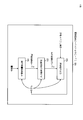
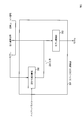
- the neural network learning apparatus 100 includes an intermediate feature amount extraction unit 101, an output probability distribution calculation unit 102, and a model update unit 103.
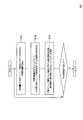
- the operation of each component will be described with reference to FIG.
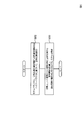
- the intermediate feature quantity extraction unit 101 extracts an intermediate feature quantity (formula (1) of Non-Patent Document 1) for making it easy to identify the correct unit in the output probability distribution calculation unit 102 from the input feature quantity (S101). ).
- the intermediate feature amount extraction unit 101 is constructed by a neural network having a plurality of layers, and performs calculation for extracting intermediate feature amounts by the number of layers.
- Output probability distribution calculation unit 102 Input: Intermediate feature output: Output probability distribution processing: The output probability distribution calculation unit 102 inputs the intermediate feature amount extracted by the intermediate feature amount extraction unit 101 to the current model, and outputs the probability distribution of the units in the output layer (formula (2 in Non-Patent Document 1) )) Is calculated (S102).
- the output probability distribution calculation unit 102 calculates which speech output symbol (phoneme state) is an intermediate feature that makes it easy to identify a speech feature, and uses it as a feature of the input speech. Get the corresponding output probability distribution.
- Model update unit 103 Input: Model (before update), Output probability distribution, Correct unit number
- model parameters are the weight w and the bias b in Equation (1) of Non-Patent Document 1.
- model parameters For each pair of learning data features and correct unit numbers, repeat the above extraction of intermediate features ⁇ output probability distribution calculation ⁇ model update process a predetermined number of times (usually tens of millions to hundreds of millions) The model at the time when the iteration is completed is used as the learned model.
- Non-Patent Document 2 discloses a learning method while reducing the model size in a neural network.
- this learning method is referred to as Prior Art 2.
- a loss function in learning of a general neural network is expressed by the following equation.
- L (w) E (w)
- E (w) is C in Equation (3) of Non-Patent Document 1
- w is a model parameter that the intermediate feature amount extraction unit 101 and the output probability calculation unit 102 learn in the prior art 1.
- learning is performed such that a part of the model parameters of the neural network becomes sparse (a value close to 0) by adding regularization to the above equation.
- the model parameter update unit is referred to as a sparse model update unit.
- the model update is executed by The second term ⁇ R (w) of this equation is a regularization term.
- a regularization term called Ridge (L2) and Group Lasso is used.
- ⁇ is a hyperparameter for adjusting the influence of the regularization term.
- the regularization terms of L2 (R L2 (w)) and Group Lasso (R group (w)) when only the weight parameter w in each layer l is updated are shown below.
- the unit of a group is an element of a neural network (for each row or column of the matrix W).
- R group (w) is an element of a neural network (for each row or column of the matrix W).
- Regularization term is a technology that avoids overlearning, and there are various regularization terms depending on the purpose.
- Group Lasso and Ridge (L2) are used.
- Non-Patent Document 2 uses Group Lasso to learn to be sparse for each group (eg, each row in the matrix) as determined by the user, and the user decides from the model parameters after learning. It is disclosed that the size of the entire model is reduced by deleting a model parameter of a group having a value smaller than the threshold value.
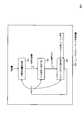
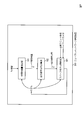
- the neural network learning apparatus 200 includes an intermediate feature amount extraction unit 101, an output probability distribution calculation unit 102, and a sparse model update unit 201.
- the unit 102 executes the same operation as the configuration requirement of the same name in the related art 1.
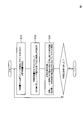
- the operation of the sparse model updating unit 201 will be described with reference to FIG.
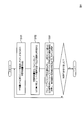
- the sparse model updating unit 201 calculates a regularization term ⁇ R (w), calculates a loss function from the correct unit number, output probability distribution, and regularization term ⁇ R (w), and reduces the value of the loss function. And a model that is sparser than the model obtained by the model updating unit 103 that does not perform regularization is output (S201).
- the sparse model update unit 201 includes a regularization term calculation unit 202 and a model update unit 203.
- FIG. 6 the operation of each component in the sparse model update unit 201 will be described.
- the regularization term uses a hyperparameter ⁇ for adjusting the influence on the loss function.
- Model update unit 203 Input: Model (before update), Output probability distribution, correct answer unit number, regularization term output: Model (after update) processing:
- the model update unit 203 includes an output probability distribution obtained by inputting a correct unit number (correct label in the teacher data) and an intermediate feature amount corresponding to the correct unit number (correct label in the teacher data) to the neural network model, and regular
- the prior art 2 proposes a method for reducing the model size by deleting unnecessary model parameters (values close to 0) while learning the model as usual.
- normal L2 regularization described above
- the value of the entire parameter decreases (the number of elements close to 0 in the matrix increases), but the model size and the amount of calculation cannot be reduced because it is not possible to delete each row or column.
- Prior art 2 uses Group Lasso (described above) that makes the norm value of each group close to 0, so that the row or column is grouped, and after learning, the model size is deleted by deleting the row or column whose norm value is close to 0 And reduced the amount of calculation.
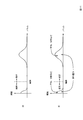
- Group Lasso rows or columns are grouped, and the frequency when the norm value is calculated for each group as shown in FIG. 11A is regarded as a distribution, and the value corresponding to the boundary between the distributions is used as a threshold value.
- the model size is reduced by deleting the model parameter corresponding to the row or column corresponding to the group whose norm is smaller than the threshold.
- Group Lasso cannot adjust the frequency distribution of the norm value, there is a problem that the number of model parameters to be reduced cannot be adjusted (Problem 2). Due to the problem 2, it is difficult to adjust the reduction amount of the model size in the method of reducing the model size of the neural network using the current Group Lasso.
- an object of the present invention is to provide a neural network learning apparatus that can adjust the reduction amount of the model size.
- the neural network learning device of the present invention includes a group parameter generation unit, a regularization term calculation unit, and a model update unit.
- the group parameter generation unit divides the model parameters of the neural network model into arbitrarily defined groups, and generates group parameters representing the characteristics of each group.
- the regularization term calculation unit calculates the regularization term on the assumption that the distribution of the group parameter follows the distribution defined by the hyperparameter that is a parameter that defines the characteristics of the distribution.
- the model update unit calculates the loss function from the correct label in the teacher data and the output probability distribution obtained by inputting the feature quantity corresponding to the correct label in the teacher data to the neural network model and the regularization term. Update the neural network model to decrease the value.
- the reduction amount of the model size can be adjusted.
- FIG. 10 is a flowchart showing the operation of the neural network learning device of the prior art 1; The block diagram which shows the structure of the neural network learning apparatus of the prior art 2.
- FIG. 10 is a flowchart showing the operation of the neural network learning device of the conventional technique 2; The block diagram which shows the structure of the sparse model update part of the prior art 2.
- FIG. 9 is a flowchart showing the operation of a sparse model update unit of Conventional Technique 2.
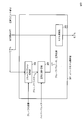
- 1 is a block diagram illustrating a configuration of a neural network learning device according to a first embodiment.
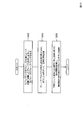
- 3 is a flowchart showing the operation of the neural network learning apparatus according to the first embodiment.
- FIG. 3 is a block diagram illustrating a configuration of a sparse model update unit according to the first embodiment.
- 6 is a flowchart illustrating an operation of a sparse model update unit according to the first embodiment.
- FIG. 11A is a conceptual diagram for explaining the difference between the prior art 2 and the neural network learning apparatus of the first embodiment, and FIG. 11A is a diagram showing an outline of model parameter deletion of the neural network learning apparatus of the prior art 2.
- FIG. 5B is a diagram illustrating an outline of model parameter deletion of the neural network learning device according to the first embodiment.
- the regularization technique in the conventional technique 2 is improved.
- the neural network learning apparatus of the first embodiment can adjust the reduction amount of the model size by introducing a parameter that affects the reduction amount of the model size. it can.
- the neural network learning apparatus 300 includes an intermediate feature amount extraction unit 101, an output probability distribution calculation unit 102, and a sparse model update unit 301.
- the operation of the sparse model updating unit 301 will be described with reference to FIG.
- the sparse model update unit 301 includes a group parameter generation unit 302, a regularization term calculation unit 303, and a model update unit 203.
- the model update unit 203 performs the same operation as the configuration requirement of the same name in the related art 2.
- FIG. 10 the operation of each component in the sparse model updating unit 301 will be described.
- Group Parameter Generation Unit 302 Input: Model (before update), group definition (specific grouping methods such as rows and columns) Output: Group parameter processing: The group parameter generation unit 302 groups the model parameters of the input model (before update) into groups that are arbitrarily defined according to the group definition (a specific grouping method such as rows and columns), and features of each group Is generated (S302). In another expression, the group parameter generation unit 302 defines a group based on the definition of the group for the input model parameter, and acquires a group parameter based on the distribution in the group space. Specific examples of group parameters include, for example, a model parameter as a matrix, and a group definition that defines a group as a row or column of a matrix of model parameters, and a norm value for each row vector or column vector. It is.
- Regularization term calculation unit 303 Input: Group parameter, Hyperparameter output: Regularization term processing: The regularization term calculation unit 303 calculates the regularization term on the assumption that the distribution of the group parameter follows the distribution defined by the hyperparameter that is a parameter that defines the characteristics of the distribution (S303). The regularization term calculation unit 303 performs processing different from that of the regularization term calculation unit 202 in that the regularization term R proposed (w) that assumes that the group parameter w g follows the distribution as described below is used.
- w g is an arbitrary parameter (for example, norm) in a group (vector or matrix) that can be arbitrarily determined, and according to the related art 2, an arbitrary parameter (for example, norm) in the row vector or column vector of the matrix of model parameters.
- ⁇ * ⁇ in the above equation represent a mixed Gaussian distribution
- j and m represent the number of mixed distributions assuming a group parameter distribution.
- the mixing weight ⁇ j , average ⁇ j , and variance ⁇ j are hyperparameters for adjusting the distribution of group parameters.
- the second term is a mixed Laplace distribution
- the mixture weight ⁇ k , average ⁇ ′ k , and variance ⁇ ′ k are hyperparameters that adjust the reduction amount of the model size in the same manner as the hyperparameter of the first term.
- the mixing weight ⁇ j , average ⁇ j , and variance ⁇ j represent hyperparameters of an arbitrary distribution function.
- the amount of model size reduction can be adjusted, and customization such as reducing the model size over Group Lasso while maintaining recognition accuracy is possible. Therefore, in incorporating a model using a neural network into a local system, it is very effective in terms of model size and calculation amount.
- the apparatus of the present invention includes, for example, a single hardware entity as an input unit to which a keyboard or the like can be connected, an output unit to which a liquid crystal display or the like can be connected, and a communication device (for example, a communication cable) capable of communicating outside the hardware entity.
- a communication unit a CPU (Central Processing Unit, may include a cache memory or a register), a RAM or ROM that is a memory, an external storage device that is a hard disk, and an input unit, an output unit, or a communication unit thereof ,
- the hardware entity may be provided with a device (drive) that can read and write a recording medium such as a CD-ROM.
- a physical entity having such hardware resources includes a general-purpose computer.
- the processing functions in the hardware entity (the device of the present invention) described in the above embodiment are realized by a computer, the processing contents of the functions that the hardware entity should have are described by a program. Then, by executing this program on a computer, the processing functions in the hardware entity are realized on the computer.
- the program describing the processing contents can be recorded on a computer-readable recording medium.
- a computer-readable recording medium for example, any recording medium such as a magnetic recording device, an optical disk, a magneto-optical recording medium, and a semiconductor memory may be used.
- a magnetic recording device a hard disk device, a flexible disk, a magnetic tape or the like, and as an optical disk, a DVD (Digital Versatile Disc), a DVD-RAM (Random Access Memory), a CD-ROM (Compact Disc Read Only) Memory), CD-R (Recordable) / RW (ReWritable), etc., magneto-optical recording media, MO (Magneto-Optical disc), etc., semiconductor memory, EEP-ROM (Electronically Erasable and Programmable-Read Only Memory), etc. Can be used.
- this program is distributed by selling, transferring, or lending a portable recording medium such as a DVD or CD-ROM in which the program is recorded. Furthermore, the program may be distributed by storing the program in a storage device of the server computer and transferring the program from the server computer to another computer via a network.
- a computer that executes such a program first stores a program recorded on a portable recording medium or a program transferred from a server computer in its own storage device.
- the computer reads a program stored in its own recording medium and executes a process according to the read program.
- the computer may directly read the program from a portable recording medium and execute processing according to the program, and the program is transferred from the server computer to the computer.
- the processing according to the received program may be executed sequentially.
- the program is not transferred from the server computer to the computer, and the above-described processing is executed by a so-called ASP (Application Service Provider) type service that realizes the processing function only by the execution instruction and result acquisition. It is good.
- ASP Application Service Provider
- the program in this embodiment includes information that is used for processing by an electronic computer and that conforms to the program (data that is not a direct command to the computer but has a property that defines the processing of the computer).
- the hardware entity is configured by executing a predetermined program on the computer.
- a predetermined program on the computer.
- at least a part of these processing contents may be realized in hardware.
Landscapes
- Engineering & Computer Science (AREA)
- Physics & Mathematics (AREA)
- Theoretical Computer Science (AREA)
- Evolutionary Computation (AREA)
- Molecular Biology (AREA)
- Artificial Intelligence (AREA)
- Biomedical Technology (AREA)
- Biophysics (AREA)
- Computational Linguistics (AREA)
- Data Mining & Analysis (AREA)
- Health & Medical Sciences (AREA)
- General Health & Medical Sciences (AREA)
- Life Sciences & Earth Sciences (AREA)
- Computing Systems (AREA)
- General Engineering & Computer Science (AREA)
- General Physics & Mathematics (AREA)
- Mathematical Physics (AREA)
- Software Systems (AREA)
- Probability & Statistics with Applications (AREA)
- Image Analysis (AREA)
- Information Retrieval, Db Structures And Fs Structures Therefor (AREA)
Abstract
Description
本発明はニューラルネットワークのモデルパラメタをスパースに学習するニューラルネットワーク学習装置、ニューラルネットワーク学習方法、およびプログラムに関する。 The present invention relates to a neural network learning apparatus, a neural network learning method, and a program that sparsely learn model parameters of a neural network.
<従来技術1>
一般的なニューラルネットワーク学習方法の例として非特許文献1が開示されている。以下、この学習方法を従来技術1と呼称する。非特許文献1の“TRAINING DEEP NEURAL NETWORKS”の節には、音声認識用のニューラルネットワーク型音響モデル(以下、単に「音響モデル」または単に「モデル」とも呼称する)を学習する方法が開示されている。
<Prior Art 1>
Non-Patent Document 1 is disclosed as an example of a general neural network learning method. Hereinafter, this learning method is referred to as Conventional Technique 1. In the section “TRAINING DEEP NEURAL NETWORKS” of Non-Patent Document 1, a method for learning a neural network type acoustic model for speech recognition (hereinafter simply referred to as “acoustic model” or simply “model”) is disclosed. Yes.
従来技術1では、事前に学習データの各サンプルから抽出した特徴量(実数ベクトル)と各特徴量に対応する正解ユニット番号(正解ラベル)のペア(教師データ)、および適当な初期モデルを用意する。初期モデルとしては、各パラメタに乱数を割り当てたニューラルネットワークや、既に別の学習データで学習済みのニューラルネットワークなどが利用できる。 In the prior art 1, a pair (teacher data) of a feature quantity (real vector) extracted from each sample of learning data in advance and a correct unit number (correct answer label) corresponding to each feature quantity, and an appropriate initial model are prepared. . As an initial model, a neural network in which a random number is assigned to each parameter, a neural network that has already been learned with different learning data, or the like can be used.
以下、図1を参照して従来技術1のニューラルネットワーク学習方法を実行する、ニューラルネットワーク学習装置100の構成について説明する。同図に示すように、ニューラルネットワーク学習装置100は、中間特徴量抽出部101と、出力確率分布計算部102と、モデル更新部103を含む構成である。以下、図2を参照して、各構成要件の動作について説明する。
Hereinafter, the configuration of the neural network learning apparatus 100 that executes the neural network learning method of the prior art 1 will be described with reference to FIG. As shown in the figure, the neural network learning apparatus 100 includes an intermediate feature
[中間特徴量抽出部101]
入力:特徴量
出力:中間特徴量
処理:
中間特徴量抽出部101は、入力された特徴量から、出力確率分布計算部102において正解ユニットを識別しやすくするための中間特徴量(非特許文献1の式(1))を抽出する(S101)。この中間特徴量抽出部101は複数の層のニューラルネットワークで構築されており、層の数だけ中間特徴量を抽出する計算が行われる。
[Intermediate feature quantity extraction unit 101]
Input: Feature output: Intermediate feature processing:
The intermediate feature
[出力確率分布計算部102]
入力:中間特徴量
出力:出力確率分布
処理:
出力確率分布計算部102は、中間特徴量抽出部101で抽出した中間特徴量を現在のモデルに入力して出力層の各ユニットの確率を並べた出力確率分布(非特許文献1の式(2))を計算する(S102)。
[Output probability distribution calculation unit 102]
Input: Intermediate feature output: Output probability distribution processing:
The output probability
この出力確率分布計算部102では、音声認識の場合、音声の特徴量を識別しやすくした中間特徴量がどの音声の出力シンボル(音素状態)であるかを計算し、入力した音声の特徴量に対応した出力確率分布を得る。
In the case of speech recognition, the output probability
[モデル更新部103]
入力:モデル(更新前)、出力確率分布、正解ユニット番号
出力:モデル(更新後)
処理:
モデル更新部103は、正解ユニット番号と出力確率分布計算部102より得られる出力確率分布から損失関数L(w)=E(w)(非特許文献1の式(3))を計算し、損失関数L(w)=E(w)の値を減少させるように(非特許文献1の式(4)によって)モデルを更新する(S103)。
[Model update unit 103]
Input: Model (before update), Output probability distribution, Correct unit number Output: Model (after update)
processing:
The
更新されるニューラルネットワークモデル内のパラメタ(以下、モデルパラメタと呼称する)は非特許文献1の式(1)の重みwとバイアスbである。学習データの特徴量と正解ユニット番号の各ペアに対して、上記の中間特徴量の抽出→出力確率分布計算→モデル更新の処理を繰り返し、所定回数(通常、数千万~数億回)の繰り返しが完了した時点のモデルを学習済みモデルとして利用する。 The parameters in the neural network model to be updated (hereinafter referred to as model parameters) are the weight w and the bias b in Equation (1) of Non-Patent Document 1. For each pair of learning data features and correct unit numbers, repeat the above extraction of intermediate features → output probability distribution calculation → model update process a predetermined number of times (usually tens of millions to hundreds of millions) The model at the time when the iteration is completed is used as the learned model.
<従来技術2>
一方、非特許文献2には、ニューラルネットワークにおけるモデルサイズを削減しながら学習する方法が示されている。以下、この学習方法を従来技術2と呼称する。
<Conventional technology 2>
On the other hand, Non-Patent Document 2 discloses a learning method while reducing the model size in a neural network. Hereinafter, this learning method is referred to as Prior Art 2.
一般的なニューラルネットワークの学習における損失関数は以下の式で表される。
L(w)=E(w)
このE(w)は非特許文献1の式(3)のCであり、wは従来技術1において中間特徴量抽出部101および出力確率計算部102が学習するモデルパラメタである。非特許文献2では上式に正則化を加えることでニューラルネットワークのモデルパラメタの一部がスパース(0に近い値)となるような学習を行う。従来技術2では、モデルパラメタの更新部をスパースモデル更新部と呼ぶ。スパースモデル更新部は一般的な損失関数に正則化項を加えた式
L(w)=E(w)+λR(w)
によりモデル更新を実行する。この式の第2項λR(w)は正則化項であり、非特許文献2ではRidge(L2)とGroup Lassoと呼ばれる正則化項が用いられる。λは正則化項の影響を調整するためのハイパーパラメタである。以下に各層lにおける重みパラメタwのみを更新する場合のL2(RL2(w))とGroup Lasso(Rgroup(w))の正則化項を示す。
A loss function in learning of a general neural network is expressed by the following equation.
L (w) = E (w)
E (w) is C in Equation (3) of Non-Patent Document 1, and w is a model parameter that the intermediate feature
L (w) = E (w) + λR (w)
The model update is executed by The second term λR (w) of this equation is a regularization term. In Non-Patent Document 2, a regularization term called Ridge (L2) and Group Lasso is used. λ is a hyperparameter for adjusting the influence of the regularization term. The regularization terms of L2 (R L2 (w)) and Group Lasso (R group (w)) when only the weight parameter w in each layer l is updated are shown below.

Group Lassoではパラメタ間で任意のグルーピングを行うことが可能であり、非特許文献2ではグループの単位をニューラルネットの素子(行列Wの行あるいは列ごと)としている。Rgroup(w)における In Group Lasso, it is possible to perform arbitrary grouping between parameters. In Non-Patent Document 2, the unit of a group is an element of a neural network (for each row or column of the matrix W). In R group (w)
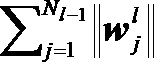
はl層の1つの素子とl-1層の全素子(j=1,…,Nl-1)間のパラメタである重みの和を表している。 Represents a sum of weights as a parameter between one element in the l layer and all elements in the l-1 layer (j = 1,..., N l-1 ).
正則化項は本来過学習を避ける技術であり、目的によって様々な正則化項が存在する。非特許文献2の式(2)ではGroup LassoやRidge(L2)を用いている。非特許文献2にはGroup Lassoを用いることで自分で決めたグループ(例:行列における1行ずつをグループとする)ごとにスパースとなるように学習し、学習後のモデルパラメタから利用者が決めた閾値よりも小さい値をもつグループのモデルパラメタを削除することでモデル全体のサイズを削減したことが開示されている。 Regularization term is a technology that avoids overlearning, and there are various regularization terms depending on the purpose. In Equation (2) of Non-Patent Document 2, Group Lasso and Ridge (L2) are used. Non-Patent Document 2 uses Group Lasso to learn to be sparse for each group (eg, each row in the matrix) as determined by the user, and the user decides from the model parameters after learning. It is disclosed that the size of the entire model is reduced by deleting a model parameter of a group having a value smaller than the threshold value.
以下、図3を参照して従来技術2のニューラルネットワーク学習方法を実行する、ニューラルネットワーク学習装置200の構成について説明する。同図に示すように、ニューラルネットワーク学習装置200は、中間特徴量抽出部101と、出力確率分布計算部102と、スパースモデル更新部201を含み、中間特徴量抽出部101と、出力確率分布計算部102については、従来技術1の同名の構成要件と同じ動作を実行する。以下、図4を参照して、スパースモデル更新部201の動作について説明する。
Hereinafter, the configuration of the neural network learning apparatus 200 that executes the neural network learning method of the related art 2 will be described with reference to FIG. As shown in the figure, the neural network learning apparatus 200 includes an intermediate feature
[スパースモデル更新部201]
入力:モデル(更新前)、出力確率分布、正解ユニット番号、ハイパーパラメタ
出力:スパースなモデル(更新後)
処理:
スパースモデル更新部201は、正則化項λR(w)を計算し、正解ユニット番号と出力確率分布と正則化項λR(w)から損失関数を計算し、損失関数の値を減少させるようにモデルを更新し、正則化を行わないモデル更新部103で得られるモデルよりもスパースなモデルを出力する(S201)。正則化項を用いる場合の損失関数を以下に示す。
L(w)=E(w)+λR(w)
以下、図5を参照して、スパースモデル更新部201の詳細について説明する。同図に示すように、スパースモデル更新部201は、正則化項計算部202と、モデル更新部203を含む構成である。以下、図6を参照して、スパースモデル更新部201内の各構成要件の動作について説明する。
[Sparse model update unit 201]
Input: Model (before update), Output probability distribution, correct unit number, Hyperparameter output: Sparse model (after update)
processing:
The sparse
L (w) = E (w) + λR (w)
Hereinafter, the details of the sparse
[正則化項計算部202]
入力:モデル(更新前)、ハイパーパラメタ
出力:正則化項
処理:
正則化項計算部202は、モデルパラメタと、損失関数への影響を調整するためのハイパーパラメタλに基づいて、正則化項λR(w)を計算する(S202)。R(w)は入力するモデルパラメタから算出され、非特許文献2ではL2
[Regularization term calculation unit 202]
Input: Model (before update), Hyperparameter output: Regularization term processing:
The regularization

やGroup Lasso And Group Lasso

が用いられている。正則化項には、損失関数への影響を調整するためのハイパーパラメタλを用いる。 Is used. The regularization term uses a hyperparameter λ for adjusting the influence on the loss function.
[モデル更新部203]
入力:モデル(更新前)、出力確率分布、正解ユニット番号、正則化項
出力:モデル(更新後)
処理:
モデル更新部203は、正解ユニット番号(教師データにおける正解ラベル)と、正解ユニット番号(教師データにおける正解ラベル)に対応する中間特徴量をニューラルネットワークモデルに入力して得られる出力確率分布と、正則化項から損失関数を計算し、損失関数L(w)=E(w)+λR(w)の値を減少させるようにニューラルネットワークモデルを更新する(S203)。
[Model update unit 203]
Input: Model (before update), Output probability distribution, correct answer unit number, regularization term output: Model (after update)
processing:
The
従来技術1では、ニューラルネットワークの学習は指定したパラメタ数をもとにモデルの構築が行われる。すなわち構築されたモデルのサイズは設計者に依存する。しかしながら、このモデルの内部には不要なパラメタが存在しており、ローカルで動作するための音声認識システムを構築するにはモデルサイズや計算量の面でコストがかかるという課題がある(課題1)。 In the prior art 1, learning of the neural network builds a model based on the specified number of parameters. That is, the size of the constructed model depends on the designer. However, there are unnecessary parameters inside this model, and there is a problem that it takes cost in terms of model size and calculation amount to construct a speech recognition system for local operation (Problem 1). .
この課題1に対して従来技術2ではモデルを従来通り学習しながら不要なモデルパラメタ(0に近い値)を削除することでモデルサイズを削減する方法が提案されている。通常のL2正則化(上述)ではパラメタ全体の値は小さくなる(行列の0に近い要素が増える)が、行あるいは列ごと削除できないためモデルサイズおよび計算量は削減できない。従来技術2ではグループごとのノルムの値を0に近づけるGroup Lasso(上述)を用いることで、行あるいは列をグループとし、学習後にノルムの値が0に近い行あるいは列を削除することでモデルサイズと計算量の削減を実現した。具体的にはGroup Lassoでは行あるいは列をグループとし、図11の(a)に示すようにグループごとにノルムの値を計算したときの頻度を分布とみなし、分布間の境界にあたる値を閾値とし、その閾値よりも小さいノルムとなるグループに該当する行あるいは列に対応するモデルパラメタを削除することでモデルサイズの削減を行う。このとき、Group Lassoではこのノルムの値の頻度の分布を調整できないため、削減するモデルパラメタの数を調整できないという課題がある(課題2)。課題2により、現状のGroup Lassoを用いたニューラルネットワークのモデルサイズ削減方法ではモデルサイズの削減量を調整することは困難である。 For this problem 1, the prior art 2 proposes a method for reducing the model size by deleting unnecessary model parameters (values close to 0) while learning the model as usual. In normal L2 regularization (described above), the value of the entire parameter decreases (the number of elements close to 0 in the matrix increases), but the model size and the amount of calculation cannot be reduced because it is not possible to delete each row or column. Prior art 2 uses Group Lasso (described above) that makes the norm value of each group close to 0, so that the row or column is grouped, and after learning, the model size is deleted by deleting the row or column whose norm value is close to 0 And reduced the amount of calculation. Specifically, in Group Lasso, rows or columns are grouped, and the frequency when the norm value is calculated for each group as shown in FIG. 11A is regarded as a distribution, and the value corresponding to the boundary between the distributions is used as a threshold value. The model size is reduced by deleting the model parameter corresponding to the row or column corresponding to the group whose norm is smaller than the threshold. At this time, since Group Lasso cannot adjust the frequency distribution of the norm value, there is a problem that the number of model parameters to be reduced cannot be adjusted (Problem 2). Due to the problem 2, it is difficult to adjust the reduction amount of the model size in the method of reducing the model size of the neural network using the current Group Lasso.
そこで本発明では、モデルサイズの削減量を調整することができるニューラルネットワーク学習装置を提供することを目的とする。 Therefore, an object of the present invention is to provide a neural network learning apparatus that can adjust the reduction amount of the model size.
本発明のニューラルネットワーク学習装置は、グループパラメタ生成部と、正則化項計算部と、モデル更新部を含む。 The neural network learning device of the present invention includes a group parameter generation unit, a regularization term calculation unit, and a model update unit.
グループパラメタ生成部は、ニューラルネットワークモデルのモデルパラメタを、任意に定義したグループにグループ分けし、各グループの特徴を表すグループパラメタを生成する。 The group parameter generation unit divides the model parameters of the neural network model into arbitrarily defined groups, and generates group parameters representing the characteristics of each group.
正則化項計算部は、グループパラメタの分布が、分布の特徴を規定するパラメタであるハイパーパラメタによって規定される分布に従うことを仮定して正則化項を計算する。 The regularization term calculation unit calculates the regularization term on the assumption that the distribution of the group parameter follows the distribution defined by the hyperparameter that is a parameter that defines the characteristics of the distribution.
モデル更新部は、教師データにおける正解ラベルと、教師データにおける正解ラベルに対応する特徴量をニューラルネットワークモデルに入力して得られる出力確率分布と、正則化項から損失関数を計算し、損失関数の値を減少させるようにニューラルネットワークモデルを更新する。 The model update unit calculates the loss function from the correct label in the teacher data and the output probability distribution obtained by inputting the feature quantity corresponding to the correct label in the teacher data to the neural network model and the regularization term. Update the neural network model to decrease the value.
本発明のニューラルネットワーク学習装置によれば、モデルサイズの削減量を調整することができる。 According to the neural network learning apparatus of the present invention, the reduction amount of the model size can be adjusted.
以下、本発明の実施の形態について、詳細に説明する。なお、同じ機能を有する構成部には同じ番号を付し、重複説明を省略する。 Hereinafter, embodiments of the present invention will be described in detail. In addition, the same number is attached | subjected to the structure part which has the same function, and duplication description is abbreviate | omitted.
実施例1のニューラルネットワーク学習装置では、従来技術2における正則化技術を改善した。従来技術2ではモデルサイズの削減量を定義できなかったが、実施例1のニューラルネットワーク学習装置ではモデルサイズの削減量に影響するパラメタを導入することにより、モデルサイズの削減量を調整することができる。 In the neural network learning apparatus of the first embodiment, the regularization technique in the conventional technique 2 is improved. Although the prior art 2 could not define the reduction amount of the model size, the neural network learning apparatus of the first embodiment can adjust the reduction amount of the model size by introducing a parameter that affects the reduction amount of the model size. it can.
以下、図7を参照して実施例1のニューラルネットワーク学習装置300の構成について説明する。同図に示すように、ニューラルネットワーク学習装置300は、中間特徴量抽出部101と、出力確率分布計算部102と、スパースモデル更新部301を含み、中間特徴量抽出部101と、出力確率分布計算部102については、従来技術1、従来技術2の同名の構成要件と同じ動作を実行する。以下、図8を参照して、スパースモデル更新部301の動作について説明する。
Hereinafter, the configuration of the neural network learning apparatus 300 according to the first embodiment will be described with reference to FIG. As shown in the figure, the neural network learning apparatus 300 includes an intermediate feature
[スパースモデル更新部301]
入力:モデル(更新前)、出力確率分布、正解ユニット番号
出力:スパースなモデル(更新後)
処理:
スパースモデル更新部301は、グループパラメタと正則化項λR(w)を生成し、正解ユニット番号と出力確率分布とグループパラメタと正則化項λR(w)から損失関数を計算し、損失関数の値を減少させるようにモデルを更新し、スパースなモデルを出力する(S301)。
[Sparse model update unit 301]
Input: Model (before update), Output probability distribution, Correct unit number Output: Sparse model (after update)
processing:
The sparse
以下、図9を参照して、スパースモデル更新部301の詳細について説明する。同図に示すように、スパースモデル更新部301は、グループパラメタ生成部302と、正則化項計算部303と、モデル更新部203を含む構成である。モデル更新部203は、従来技術2における同名の構成要件と同じ動作を実行する。以下、図10を参照して、スパースモデル更新部301内の各構成要件の動作について説明する。
Hereinafter, the details of the sparse
[グループパラメタ生成部302]
入力:モデル(更新前)、グループの定義(行、列といった具体的なグルーピングの方法)
出力:グループパラメタ
処理:
グループパラメタ生成部302は、入力したモデル(更新前)のモデルパラメタを、上記グループの定義(行、列といった具体的なグルーピングの方法)によって任意に定義したグループにグループ分けし、各グループの特徴を表すグループパラメタを生成する(S302)。別の表現では、グループパラメタ生成部302は、入力したモデルパラメタに対して、上記グループの定義によってグループを定義し、グループ空間における分布に基づくグループパラメタを取得する。グループパラメタの具体例としては、例えば、モデルパラメタを行列とし、グループの定義により、グループをモデルパラメタの行列のうちの行または列と定義したときに、行ベクトルまたは列ベクトルごとのノルムの値などである。
[Group Parameter Generation Unit 302]
Input: Model (before update), group definition (specific grouping methods such as rows and columns)
Output: Group parameter processing:
The group
[正則化項計算部303]
入力:グループパラメタ、ハイパーパラメタ
出力:正則化項
処理:
正則化項計算部303は、グループパラメタの分布が、分布の特徴を規定するパラメタであるハイパーパラメタによって規定される分布に従うことを仮定して正則化項を計算する(S303)。正則化項計算部303は、以下に示すようなグループパラメタwgが分布に従うことを仮定した正則化項Rproposed(w)を用いる点において、正則化項計算部202と異なる処理を実行する。
[Regularization term calculation unit 303]
Input: Group parameter, Hyperparameter output: Regularization term processing:
The regularization

wgは任意に決めることができるグループ(ベクトルあるいは行列)における任意のパラメタ(例えばノルム)であり、従来技術2に合わせるとモデルパラメタの行列の行ベクトルあるいは列ベクトルにおける任意のパラメタ(例えばノルム)を示す。上式の括弧{*}内は混合ガウス分布を表しており、jおよびmはグループパラメタの分布を仮定した場合の分布の混合数を表す。混合重みαj、平均μj、分散σjはグループパラメタの分布を調整するためのハイパーパラメタであり、これらのハイパーパラメタを調整(例:混合重みαjの比を変えることで平均μjに属するパラメタの重要度を調整)することでモデルサイズの削減量を調整することが可能となる。また、上式では混合ガウス分布を仮定したが実際はガウス分布以外に任意の分布を組み合わせることが可能である。ラプラス分布とガウス分布を組み合わせた場合の正則化項を以下に示す。 w g is an arbitrary parameter (for example, norm) in a group (vector or matrix) that can be arbitrarily determined, and according to the related art 2, an arbitrary parameter (for example, norm) in the row vector or column vector of the matrix of model parameters. Indicates. The parentheses {*} in the above equation represent a mixed Gaussian distribution, and j and m represent the number of mixed distributions assuming a group parameter distribution. The mixing weight α j , average μ j , and variance σ j are hyperparameters for adjusting the distribution of group parameters. These hyperparameters are adjusted (eg, changing the ratio of the mixing weight α j to the average μ j It is possible to adjust the reduction amount of the model size by adjusting the importance of the parameter to which it belongs. In the above equation, a mixed Gaussian distribution is assumed, but it is actually possible to combine arbitrary distributions other than the Gaussian distribution. The regularization term when the Laplace distribution and the Gaussian distribution are combined is shown below.

第二項は混合ラプラス分布であり、混合重みβk,平均μ'k,分散σ'kも第一項のハイパーパラメタ同様にモデルサイズの削減量を調整するハイパーパラメタである。上式では微分不可能な点を持つラプラス分布を用いることも可能であることを示しているが実利用では全区間で微分可能であることが望ましい。最後に任意の分布関数F(*)を用いて一般化した場合を以下に示す。 The second term is a mixed Laplace distribution, and the mixture weight β k , average μ ′ k , and variance σ ′ k are hyperparameters that adjust the reduction amount of the model size in the same manner as the hyperparameter of the first term. Although the above formula shows that it is possible to use a Laplace distribution having non-differentiable points, it is desirable that it can be differentiated in all sections in actual use. Finally, a generalized case using an arbitrary distribution function F (*) is shown below.

混合重みαj、平均μj、分散σjは任意の分布関数のハイパーパラメタを表す。 The mixing weight α j , average μ j , and variance σ j represent hyperparameters of an arbitrary distribution function.
従来技術2におけるGroup Lassoによるグループ正則化は行や列をグループとしているがグループパラメタの分布は仮定しておらず、分布の形状などの調整はできない。従来技術2におけるGroup Lassoによるグループ正則化では、図11(a)に示すように、モデルの更新に伴って分布の形状は一通りに収束していくため、削除対象となるグループと残すグループの区分の方法が1通りに限定される。そのため、Group Lassoはグループ空間上におけるモデルパラメタの正則化は可能であるが、グループパラメタの分布を調整するような仕組みが定義されていないため分布の大きさなどを調整できず、不要なモデルパラメタの量を調整することが不可能である。 [Regular grouping by Group Lasso in Prior Art 2 uses rows and columns as groups, but does not assume the distribution of group parameters, so the shape of the distribution cannot be adjusted. In group regularization by Group Lasso in the prior art 2, as shown in FIG. 11 (a), the distribution shape converges as the model is updated. The classification method is limited to one. For this reason, Group Lasso can regularize model parameters in the group space, but since the mechanism to adjust the distribution of group parameters is not defined, the size of the distribution cannot be adjusted, and unnecessary model parameters It is impossible to adjust the amount.
一方、本実施例のニューラルネットワーク学習装置300によるグループ正則化では、図11(b)に示すように、グループパラメタの分布の特徴を規定するハイパーパラメタ(例:混合重み、平均、分散など)を生成したため、削除対象となるグループ、残すグループの各分布の形状をカスタマイズすることができ、削除対象となるモデルパラメタの量を調整することができる。 On the other hand, in the group regularization by the neural network learning device 300 of the present embodiment, as shown in FIG. 11B, hyperparameters (eg, mixture weight, average, variance, etc.) that define the characteristics of the group parameter distribution are used. Since it was generated, the shape of each distribution of the group to be deleted and the group to be left can be customized, and the amount of model parameters to be deleted can be adjusted.
<効果>
本実施例のニューラルネットワーク学習装置300により作成したニューラルネットワークを用いることでモデルサイズの削減量を調整することができ、認識精度を維持しながらGroup Lassoよりもモデルのサイズを削減するといったカスタマイズが可能となるため、ニューラルネットワークを用いたモデルをローカルのシステムに組み込む上でモデルサイズおよび計算量の面で非常に効果的である。
<Effect>
By using the neural network created by the neural network learning apparatus 300 of this embodiment, the amount of model size reduction can be adjusted, and customization such as reducing the model size over Group Lasso while maintaining recognition accuracy is possible. Therefore, in incorporating a model using a neural network into a local system, it is very effective in terms of model size and calculation amount.
<補記>
本発明の装置は、例えば単一のハードウェアエンティティとして、キーボードなどが接続可能な入力部、液晶ディスプレイなどが接続可能な出力部、ハードウェアエンティティの外部に通信可能な通信装置(例えば通信ケーブル)が接続可能な通信部、CPU(Central Processing Unit、キャッシュメモリやレジスタなどを備えていてもよい)、メモリであるRAMやROM、ハードディスクである外部記憶装置並びにこれらの入力部、出力部、通信部、CPU、RAM、ROM、外部記憶装置の間のデータのやり取りが可能なように接続するバスを有している。また必要に応じて、ハードウェアエンティティに、CD-ROMなどの記録媒体を読み書きできる装置(ドライブ)などを設けることとしてもよい。このようなハードウェア資源を備えた物理的実体としては、汎用コンピュータなどがある。
<Supplementary note>
The apparatus of the present invention includes, for example, a single hardware entity as an input unit to which a keyboard or the like can be connected, an output unit to which a liquid crystal display or the like can be connected, and a communication device (for example, a communication cable) capable of communicating outside the hardware entity. Can be connected to a communication unit, a CPU (Central Processing Unit, may include a cache memory or a register), a RAM or ROM that is a memory, an external storage device that is a hard disk, and an input unit, an output unit, or a communication unit thereof , A CPU, a RAM, a ROM, and a bus connected so that data can be exchanged between the external storage devices. If necessary, the hardware entity may be provided with a device (drive) that can read and write a recording medium such as a CD-ROM. A physical entity having such hardware resources includes a general-purpose computer.
ハードウェアエンティティの外部記憶装置には、上述の機能を実現するために必要となるプログラムおよびこのプログラムの処理において必要となるデータなどが記憶されている(外部記憶装置に限らず、例えばプログラムを読み出し専用記憶装置であるROMに記憶させておくこととしてもよい)。また、これらのプログラムの処理によって得られるデータなどは、RAMや外部記憶装置などに適宜に記憶される。 The external storage device of the hardware entity stores a program necessary for realizing the above functions and data necessary for processing the program (not limited to the external storage device, for example, reading a program) It may be stored in a ROM that is a dedicated storage device). Data obtained by the processing of these programs is appropriately stored in a RAM or an external storage device.
ハードウェアエンティティでは、外部記憶装置(あるいはROMなど)に記憶された各プログラムとこの各プログラムの処理に必要なデータが必要に応じてメモリに読み込まれて、適宜にCPUで解釈実行・処理される。その結果、CPUが所定の機能(上記、…部、…手段などと表した各構成要件)を実現する。 In the hardware entity, each program stored in an external storage device (or ROM or the like) and data necessary for processing each program are read into a memory as necessary, and are interpreted and executed by a CPU as appropriate. . As a result, the CPU realizes a predetermined function (respective component requirements expressed as the above-described unit, unit, etc.).
本発明は上述の実施形態に限定されるものではなく、本発明の趣旨を逸脱しない範囲で適宜変更が可能である。また、上記実施形態において説明した処理は、記載の順に従って時系列に実行されるのみならず、処理を実行する装置の処理能力あるいは必要に応じて並列的にあるいは個別に実行されるとしてもよい。 The present invention is not limited to the above-described embodiment, and various modifications can be made without departing from the spirit of the present invention. In addition, the processing described in the above embodiment may be executed not only in time series according to the order of description but also in parallel or individually as required by the processing capability of the apparatus that executes the processing. .
既述のように、上記実施形態において説明したハードウェアエンティティ(本発明の装置)における処理機能をコンピュータによって実現する場合、ハードウェアエンティティが有すべき機能の処理内容はプログラムによって記述される。そして、このプログラムをコンピュータで実行することにより、上記ハードウェアエンティティにおける処理機能がコンピュータ上で実現される。 As described above, when the processing functions in the hardware entity (the device of the present invention) described in the above embodiment are realized by a computer, the processing contents of the functions that the hardware entity should have are described by a program. Then, by executing this program on a computer, the processing functions in the hardware entity are realized on the computer.
この処理内容を記述したプログラムは、コンピュータで読み取り可能な記録媒体に記録しておくことができる。コンピュータで読み取り可能な記録媒体としては、例えば、磁気記録装置、光ディスク、光磁気記録媒体、半導体メモリ等どのようなものでもよい。具体的には、例えば、磁気記録装置として、ハードディスク装置、フレキシブルディスク、磁気テープ等を、光ディスクとして、DVD(Digital Versatile Disc)、DVD-RAM(Random Access Memory)、CD-ROM(Compact Disc Read Only Memory)、CD-R(Recordable)/RW(ReWritable)等を、光磁気記録媒体として、MO(Magneto-Optical disc)等を、半導体メモリとしてEEP-ROM(Electronically Erasable and Programmable-Read Only Memory)等を用いることができる。 The program describing the processing contents can be recorded on a computer-readable recording medium. As the computer-readable recording medium, for example, any recording medium such as a magnetic recording device, an optical disk, a magneto-optical recording medium, and a semiconductor memory may be used. Specifically, for example, as a magnetic recording device, a hard disk device, a flexible disk, a magnetic tape or the like, and as an optical disk, a DVD (Digital Versatile Disc), a DVD-RAM (Random Access Memory), a CD-ROM (Compact Disc Read Only) Memory), CD-R (Recordable) / RW (ReWritable), etc., magneto-optical recording media, MO (Magneto-Optical disc), etc., semiconductor memory, EEP-ROM (Electronically Erasable and Programmable-Read Only Memory), etc. Can be used.
また、このプログラムの流通は、例えば、そのプログラムを記録したDVD、CD-ROM等の可搬型記録媒体を販売、譲渡、貸与等することによって行う。さらに、このプログラムをサーバコンピュータの記憶装置に格納しておき、ネットワークを介して、サーバコンピュータから他のコンピュータにそのプログラムを転送することにより、このプログラムを流通させる構成としてもよい。 Also, this program is distributed by selling, transferring, or lending a portable recording medium such as a DVD or CD-ROM in which the program is recorded. Furthermore, the program may be distributed by storing the program in a storage device of the server computer and transferring the program from the server computer to another computer via a network.
このようなプログラムを実行するコンピュータは、例えば、まず、可搬型記録媒体に記録されたプログラムもしくはサーバコンピュータから転送されたプログラムを、一旦、自己の記憶装置に格納する。そして、処理の実行時、このコンピュータは、自己の記録媒体に格納されたプログラムを読み取り、読み取ったプログラムに従った処理を実行する。また、このプログラムの別の実行形態として、コンピュータが可搬型記録媒体から直接プログラムを読み取り、そのプログラムに従った処理を実行することとしてもよく、さらに、このコンピュータにサーバコンピュータからプログラムが転送されるたびに、逐次、受け取ったプログラムに従った処理を実行することとしてもよい。また、サーバコンピュータから、このコンピュータへのプログラムの転送は行わず、その実行指示と結果取得のみによって処理機能を実現する、いわゆるASP(Application Service Provider)型のサービスによって、上述の処理を実行する構成としてもよい。なお、本形態におけるプログラムには、電子計算機による処理の用に供する情報であってプログラムに準ずるもの(コンピュータに対する直接の指令ではないがコンピュータの処理を規定する性質を有するデータ等)を含むものとする。 For example, a computer that executes such a program first stores a program recorded on a portable recording medium or a program transferred from a server computer in its own storage device. When executing the process, the computer reads a program stored in its own recording medium and executes a process according to the read program. As another execution form of the program, the computer may directly read the program from a portable recording medium and execute processing according to the program, and the program is transferred from the server computer to the computer. Each time, the processing according to the received program may be executed sequentially. Also, the program is not transferred from the server computer to the computer, and the above-described processing is executed by a so-called ASP (Application Service Provider) type service that realizes the processing function only by the execution instruction and result acquisition. It is good. Note that the program in this embodiment includes information that is used for processing by an electronic computer and that conforms to the program (data that is not a direct command to the computer but has a property that defines the processing of the computer).
また、この形態では、コンピュータ上で所定のプログラムを実行させることにより、ハードウェアエンティティを構成することとしたが、これらの処理内容の少なくとも一部をハードウェア的に実現することとしてもよい。 In this embodiment, the hardware entity is configured by executing a predetermined program on the computer. However, at least a part of these processing contents may be realized in hardware.
Claims (7)
前記グループパラメタの分布が、分布の特徴を規定するパラメタであるハイパーパラメタによって規定される分布に従うことを仮定して正則化項を計算する正則化項計算部と、
教師データにおける正解ラベルと、前記教師データにおける前記正解ラベルに対応する特徴量を前記ニューラルネットワークモデルに入力して得られる出力確率分布と、前記正則化項から損失関数を計算し、損失関数の値を減少させるように前記ニューラルネットワークモデルを更新するモデル更新部を含む
ニューラルネットワーク学習装置。 A group parameter generation unit for grouping model parameters of the neural network model into arbitrarily defined groups, and generating group parameters representing the characteristics of each group;
A regularization term calculation unit that calculates a regularization term on the assumption that the distribution of the group parameter follows a distribution defined by a hyperparameter that is a parameter that defines the characteristics of the distribution;
A loss function is calculated from the correct label in the teacher data, the output probability distribution obtained by inputting the feature quantity corresponding to the correct label in the teacher data to the neural network model, and the regularization term, and the value of the loss function A neural network learning apparatus, comprising: a model updating unit that updates the neural network model so as to reduce the number of the neural network models.
前記モデルパラメタを行列とし、前記グループを前記モデルパラメタの行列のうちの行または列とし、前記グループパラメタを行ベクトルまたは列ベクトルのノルムとした
ニューラルネットワーク学習装置。 The neural network learning device according to claim 1,
The neural network learning device, wherein the model parameter is a matrix, the group is a row or column of the matrix of model parameters, and the group parameter is a norm of a row vector or a column vector.
前記ハイパーパラメタは、混合重み、平均、分散のうち少なくとも何れか一つを含む
ニューラルネットワーク学習装置。 The neural network learning device according to claim 1 or 2,
The neural network learning device, wherein the hyperparameter includes at least one of mixture weight, average, and variance.
ニューラルネットワークモデルのモデルパラメタを、任意に定義したグループにグループ分けし、各グループの特徴を表すグループパラメタを生成するステップと、
前記グループパラメタの分布が、分布の特徴を規定するパラメタであるハイパーパラメタによって規定される分布に従うことを仮定して正則化項を計算するステップと、
教師データにおける正解ラベルと、前記教師データにおける前記正解ラベルに対応する特徴量を前記ニューラルネットワークモデルに入力して得られる出力確率分布と、前記正則化項から損失関数を計算し、損失関数の値を減少させるように前記ニューラルネットワークモデルを更新するステップを含む
ニューラルネットワーク学習方法。 A neural network learning method executed by a neural network learning device,
Grouping the model parameters of the neural network model into arbitrarily defined groups, and generating group parameters representing the characteristics of each group;
Calculating a regularization term assuming that the distribution of the group parameters follows a distribution defined by a hyperparameter that is a parameter that defines the characteristics of the distribution;
The loss function is calculated from the correct label in the teacher data, the output probability distribution obtained by inputting the feature quantity corresponding to the correct label in the teacher data to the neural network model, and the regularization term, and the value of the loss function A method of learning a neural network, comprising the step of updating the neural network model so as to reduce.
前記モデルパラメタを行列とし、前記グループを前記モデルパラメタの行列のうちの行または列とし、前記グループパラメタを行ベクトルまたは列ベクトルのノルムとした
ニューラルネットワーク学習方法。 The neural network learning method according to claim 4, wherein
A neural network learning method, wherein the model parameter is a matrix, the group is a row or column of the matrix of model parameters, and the group parameter is a norm of a row vector or a column vector.
前記ハイパーパラメタは、混合重み、平均、分散のうち少なくとも何れか一つを含む
ニューラルネットワーク学習方法。 The neural network learning method according to claim 4 or 5, wherein
The neural network learning method, wherein the hyperparameter includes at least one of mixture weight, average, and variance.
Priority Applications (2)
| Application Number | Priority Date | Filing Date | Title |
|---|---|---|---|
| JP2020515482A JP7085158B2 (en) | 2018-04-26 | 2019-04-23 | Neural network learning device, neural network learning method, program |
| US17/050,265 US12159222B2 (en) | 2018-04-26 | 2019-04-23 | Neural network learning apparatus, neural network learning method and program |
Applications Claiming Priority (2)
| Application Number | Priority Date | Filing Date | Title |
|---|---|---|---|
| JP2018-084760 | 2018-04-26 | ||
| JP2018084760 | 2018-04-26 |
Publications (1)
| Publication Number | Publication Date |
|---|---|
| WO2019208564A1 true WO2019208564A1 (en) | 2019-10-31 |
Family
ID=68295050
Family Applications (1)
| Application Number | Title | Priority Date | Filing Date |
|---|---|---|---|
| PCT/JP2019/017216 Ceased WO2019208564A1 (en) | 2018-04-26 | 2019-04-23 | Neural network learning device, neural network learning method, and program |
Country Status (3)
| Country | Link |
|---|---|
| US (1) | US12159222B2 (en) |
| JP (1) | JP7085158B2 (en) |
| WO (1) | WO2019208564A1 (en) |
Cited By (4)
| Publication number | Priority date | Publication date | Assignee | Title |
|---|---|---|---|---|
| CN111275183A (en) * | 2020-01-14 | 2020-06-12 | 北京迈格威科技有限公司 | Visual task processing method and device and electronic system |
| CN113762327A (en) * | 2020-06-05 | 2021-12-07 | 宏达国际电子股份有限公司 | Machine learning method, machine learning system and non-transitory computer readable medium |
| WO2022007349A1 (en) * | 2020-07-09 | 2022-01-13 | 中国科学院深圳先进技术研究院 | Neural network tuning method and system, terminal, and storage medium |
| WO2025178022A1 (en) * | 2024-02-22 | 2025-08-28 | 国立大学法人 東京大学 | Time-stretch spectroscopy device and time-stretch spectroscopy method |
Family Cites Families (6)
| Publication number | Priority date | Publication date | Assignee | Title |
|---|---|---|---|---|
| US20160040236A1 (en) * | 2013-03-15 | 2016-02-11 | Biogen Ma Inc. | Systems and methods for characterization of multiple sclerosis |
| CN110378731B (en) * | 2016-04-29 | 2021-04-20 | 腾讯科技(深圳)有限公司 | Method, device, server and storage medium for obtaining user portrait |
| US20180121814A1 (en) * | 2016-10-31 | 2018-05-03 | Microsoft Technology Licensing, Llc | Hyperparameter tuning |
| US10679129B2 (en) * | 2017-09-28 | 2020-06-09 | D5Ai Llc | Stochastic categorical autoencoder network |
| CN110832596B (en) * | 2017-10-16 | 2021-03-26 | 因美纳有限公司 | Deep Learning-Based Deep Convolutional Neural Network Training Method |
| US11295232B2 (en) * | 2017-10-30 | 2022-04-05 | Microsoft Technology Licensing, Llc | Learning the structure of hierarchical extraction models |
-
2019
- 2019-04-23 WO PCT/JP2019/017216 patent/WO2019208564A1/en not_active Ceased
- 2019-04-23 JP JP2020515482A patent/JP7085158B2/en active Active
- 2019-04-23 US US17/050,265 patent/US12159222B2/en active Active
Non-Patent Citations (2)
| Title |
|---|
| SCARDAPANE, S. ET AL., GROUP SPARSE REGULARIZATION FOR DEEP NEURAL NETWORKS, 2 July 2016 (2016-07-02), pages 1 - 10, XP029946330, Retrieved from the Internet <URL:URL:https://arxiv.org/pdf/1607.00485.pdf> [retrieved on 20190610] * |
| U, X. F. ET AL., BAYESIAN VARIABLE SELECTION AND ESTIMATION FOR GROUP LASSO, vol. 10, no. 4, 3 December 2015 (2015-12-03), pages 909 - 936, XP055648755, Retrieved from the Internet <URL:https://arxiv.org/pdf/1512.01013.pdf> [retrieved on 20190610] * |
Cited By (5)
| Publication number | Priority date | Publication date | Assignee | Title |
|---|---|---|---|---|
| CN111275183A (en) * | 2020-01-14 | 2020-06-12 | 北京迈格威科技有限公司 | Visual task processing method and device and electronic system |
| CN111275183B (en) * | 2020-01-14 | 2023-06-16 | 北京迈格威科技有限公司 | Vision task processing method, device and electronic system |
| CN113762327A (en) * | 2020-06-05 | 2021-12-07 | 宏达国际电子股份有限公司 | Machine learning method, machine learning system and non-transitory computer readable medium |
| WO2022007349A1 (en) * | 2020-07-09 | 2022-01-13 | 中国科学院深圳先进技术研究院 | Neural network tuning method and system, terminal, and storage medium |
| WO2025178022A1 (en) * | 2024-02-22 | 2025-08-28 | 国立大学法人 東京大学 | Time-stretch spectroscopy device and time-stretch spectroscopy method |
Also Published As
| Publication number | Publication date |
|---|---|
| US20210081792A1 (en) | 2021-03-18 |
| US12159222B2 (en) | 2024-12-03 |
| JP7085158B2 (en) | 2022-06-16 |
| JPWO2019208564A1 (en) | 2021-04-22 |
Similar Documents
| Publication | Publication Date | Title |
|---|---|---|
| US11081105B2 (en) | Model learning device, method and recording medium for learning neural network model | |
| US20210303970A1 (en) | Processing data using multiple neural networks | |
| US20210073641A1 (en) | Learning device, learning system, and learning method | |
| JP7085158B2 (en) | Neural network learning device, neural network learning method, program | |
| US12099955B2 (en) | Machine learning models based methods and systems for determining prospective acquisitions between business entities | |
| JP6925546B1 (en) | Arithmetic system, information processing device, and optimal solution search processing method | |
| JP6827911B2 (en) | Acoustic model learning devices, speech recognition devices, their methods, and programs | |
| US20220405639A1 (en) | Information processing apparatus, information processing method and program | |
| US12182711B2 (en) | Generation of neural network containing middle layer background | |
| JP7624420B2 (en) | Information processing system, information processing method, and information processing program | |
| CN111967941B (en) | A method of building a sequence recommendation model and a sequence recommendation method | |
| CN118922838A (en) | Synthetic data generation using deep reinforcement learning | |
| US20180082167A1 (en) | Recurrent neural network processing pooling operation | |
| CN115936802A (en) | Personalized marketing method, device, equipment and storage medium based on user portrait and sequence modeling | |
| JP7036054B2 (en) | Acoustic model learning device, acoustic model learning method, program | |
| JP7425210B2 (en) | Information processing system and optimal solution search processing method | |
| CN116304607A (en) | Automated Feature Engineering for Predictive Modeling Using Deep Reinforcement Learning | |
| US20220004868A1 (en) | Acoustic model learning apparatus, model learning apparatus, method and program for the same | |
| US11321424B2 (en) | Predicting variables where a portion are input by a user and a portion are predicted by a system | |
| WO2019194128A1 (en) | Model learning device, model learning method, and program | |
| US20220092380A1 (en) | Optimization device, optimization method, and computer-readable recording medium storing optimization program | |
| JP2019095599A (en) | Acoustic model learning device, speech recognition device, and method and program for them | |
| Zhu et al. | A hybrid model for nonlinear regression with missing data using quasilinear kernel | |
| JP7470019B2 (en) | Information Processing System | |
| CN117112858A (en) | Object screening method, processor and storage medium based on association rule mining |
Legal Events
| Date | Code | Title | Description |
|---|---|---|---|
| 121 | Ep: the epo has been informed by wipo that ep was designated in this application |
Ref document number: 19791569 Country of ref document: EP Kind code of ref document: A1 |
|
| ENP | Entry into the national phase |
Ref document number: 2020515482 Country of ref document: JP Kind code of ref document: A |
|
| NENP | Non-entry into the national phase |
Ref country code: DE |
|
| 122 | Ep: pct application non-entry in european phase |
Ref document number: 19791569 Country of ref document: EP Kind code of ref document: A1 |